Migration Timeline of HPC Hardware to chip
The DoIT Research Computing Team has deployed a new High-Performance Computing Cluster, chip. This new cluster is better equipped to handle the variety of research workflows than ada or taki. The chip cluster has an updated software stack, redundant and more reliable head nodes, and a high-speed connection to the newly deployed ceph storage cluster which provides more than 2PB of storage within Retriever Research Storage (RRStor).
With the chip cluster now available to contributing faculty, the DoIT Research Computing Team will begin to migrate the older CPU and GPU hardware from ada and taki to chip. The timeline for this migration is separated into three phases.
Phase 1: February 20 - March 2
All users and groups will be duplicated on chip as they exist on ada & taki
Deploy of new RT form for account & group creation on chip
All account, group, and software requests will be redirected to chip
Phase 2: March 3 - April 2
All ada & taki users will be able to login to ada, taki, & chip
Half of the machines from ada & taki will be migrated to chip
Phase 3: April 3 - April 10
We know this transition may be disruptive to current research groups using the cluster and apologize in advance for any inconvenience this may cause.
Please note that all research storage available on ada or taki is available on chip.
]]>
The DoIT Research Computing Team has deployed a new High-Performance Computing Cluster, chip. This new cluster is better equipped to handle the variety of research workflows than ada or taki. The...
https://beta.my.umbc.edu/api/v0/pixel/news/147513/guest@my.umbc.edu/0a74827cf53e4500000d8f83021a5306/api/pixel
website
HPCF
https://beta.my.umbc.edu/groups/hpcf
https://assets2-beta.my.umbc.edu/system/shared/avatars/groups/000/001/659/63ae3e64663572042ecdd0ef493c16e1/xsmall.png?1596736674
https://assets3-beta.my.umbc.edu/system/shared/avatars/groups/000/001/659/63ae3e64663572042ecdd0ef493c16e1/original.png?1596736674
https://assets4-beta.my.umbc.edu/system/shared/avatars/groups/000/001/659/63ae3e64663572042ecdd0ef493c16e1/xxlarge.png?1596736674
https://assets3-beta.my.umbc.edu/system/shared/avatars/groups/000/001/659/63ae3e64663572042ecdd0ef493c16e1/xlarge.png?1596736674
https://assets1-beta.my.umbc.edu/system/shared/avatars/groups/000/001/659/63ae3e64663572042ecdd0ef493c16e1/large.png?1596736674
https://assets3-beta.my.umbc.edu/system/shared/avatars/groups/000/001/659/63ae3e64663572042ecdd0ef493c16e1/medium.png?1596736674
https://assets3-beta.my.umbc.edu/system/shared/avatars/groups/000/001/659/63ae3e64663572042ecdd0ef493c16e1/small.png?1596736674
https://assets2-beta.my.umbc.edu/system/shared/avatars/groups/000/001/659/63ae3e64663572042ecdd0ef493c16e1/xsmall.png?1596736674
https://assets1-beta.my.umbc.edu/system/shared/avatars/groups/000/001/659/63ae3e64663572042ecdd0ef493c16e1/xxsmall.png?1596736674
HPCF
1
0
false
Thu, 20 Feb 2025 13:58:03 -0500
Wed, 16 Apr 2025 09:05:23 -0400
CPN Cookies and Crafts!
Happening from 1:00 - 2:00 TODAY!
Visit the Engineering Atrium RIGHT NOW to do some crafts and get some cookies!
]]>
Visit the Engineering Atrium RIGHT NOW to do some crafts and get some cookies!
https://beta.my.umbc.edu/api/v0/pixel/news/147511/guest@my.umbc.edu/f66834b9fb2a9fbe9a26029be19b327c/api/pixel
College of Engineering & Information Technology Advising
https://beta.my.umbc.edu/groups/coeitadvising
https://assets4-beta.my.umbc.edu/images/avatars/group/1/xsmall.png?1778631743
https://assets2-beta.my.umbc.edu/images/avatars/group/1/original.png?1778631743
https://assets1-beta.my.umbc.edu/images/avatars/group/1/xxlarge.png?1778631743
https://assets1-beta.my.umbc.edu/images/avatars/group/1/xlarge.png?1778631743
https://assets3-beta.my.umbc.edu/images/avatars/group/1/large.png?1778631743
https://assets1-beta.my.umbc.edu/images/avatars/group/1/medium.png?1778631743
https://assets1-beta.my.umbc.edu/images/avatars/group/1/small.png?1778631743
https://assets4-beta.my.umbc.edu/images/avatars/group/1/xsmall.png?1778631743
https://assets4-beta.my.umbc.edu/images/avatars/group/1/xxsmall.png?1778631743
Engineering & Computer Science Advising
0
0
true
Thu, 20 Feb 2025 13:13:36 -0500
"There's an App for That" Workshop Recap
Want some suggestions for productivity apps?
This week, your Student Success Coach Emma spent the Wednesday Workshop talking all about different apps you can use to help with productivity, studying, and mindfulness. We covered topics like:
- How to use the digital Google suite available to you as a UMBC student
- Checking in with classmates/professors
- Habit-tracking apps to start that productivity journey today
- Apps that can help you stay OFF your phone (sounds crazy? we know!)
- Flashcard apps to practice active recall every day and ace your exams
- How to organize your notes across multiple devices
- All-in-one apps to keep track of your assignments, schedule, and more
- Mindfulness/meditation apps to help you de-stress and get on a good sleep schedule
As always, our Wednesday Workshops take place from 12-1 every week in UC115. Click the link below to check out the rest of our February offerings! But we'll be recapping them every week for you if you can't make it IRL.
]]>
This week, your Student Success Coach Emma spent the Wednesday Workshop talking all about different apps you can use to help with productivity, studying, and mindfulness. We covered topics like:...
https://cnmsadvising.umbc.edu/student-success-workshop-series/
https://beta.my.umbc.edu/api/v0/pixel/news/147510/guest@my.umbc.edu/4f5f8ee8bdd16e22ceb9e92d3f6bacb0/api/pixel
College of Natural and Mathematical Sciences Advising
https://beta.my.umbc.edu/groups/cnmsadvising
https://assets4-beta.my.umbc.edu/system/shared/avatars/groups/000/000/475/61f5727176d8301926b7c19064396eb6/xsmall.png?1654873031
https://assets1-beta.my.umbc.edu/system/shared/avatars/groups/000/000/475/61f5727176d8301926b7c19064396eb6/original.png?1654873031
https://assets4-beta.my.umbc.edu/system/shared/avatars/groups/000/000/475/61f5727176d8301926b7c19064396eb6/xxlarge.png?1654873031
https://assets1-beta.my.umbc.edu/system/shared/avatars/groups/000/000/475/61f5727176d8301926b7c19064396eb6/xlarge.png?1654873031
https://assets3-beta.my.umbc.edu/system/shared/avatars/groups/000/000/475/61f5727176d8301926b7c19064396eb6/large.png?1654873031
https://assets3-beta.my.umbc.edu/system/shared/avatars/groups/000/000/475/61f5727176d8301926b7c19064396eb6/medium.png?1654873031
https://assets3-beta.my.umbc.edu/system/shared/avatars/groups/000/000/475/61f5727176d8301926b7c19064396eb6/small.png?1654873031
https://assets4-beta.my.umbc.edu/system/shared/avatars/groups/000/000/475/61f5727176d8301926b7c19064396eb6/xsmall.png?1654873031
https://assets2-beta.my.umbc.edu/system/shared/avatars/groups/000/000/475/61f5727176d8301926b7c19064396eb6/xxsmall.png?1654873031
College of Natural and Mathematical Sciences Advising
https://assets4-beta.my.umbc.edu/system/shared/thumbnails/news/000/147/510/5b1c97b10814aa6e49e448e35abc46b0/xxlarge.jpg?1740074672
https://assets2-beta.my.umbc.edu/system/shared/thumbnails/news/000/147/510/5b1c97b10814aa6e49e448e35abc46b0/xlarge.jpg?1740074672
https://assets2-beta.my.umbc.edu/system/shared/thumbnails/news/000/147/510/5b1c97b10814aa6e49e448e35abc46b0/large.jpg?1740074672
https://assets2-beta.my.umbc.edu/system/shared/thumbnails/news/000/147/510/5b1c97b10814aa6e49e448e35abc46b0/medium.jpg?1740074672
https://assets1-beta.my.umbc.edu/system/shared/thumbnails/news/000/147/510/5b1c97b10814aa6e49e448e35abc46b0/small.jpg?1740074672
https://assets3-beta.my.umbc.edu/system/shared/thumbnails/news/000/147/510/5b1c97b10814aa6e49e448e35abc46b0/xsmall.jpg?1740074672
https://assets1-beta.my.umbc.edu/system/shared/thumbnails/news/000/147/510/5b1c97b10814aa6e49e448e35abc46b0/xxsmall.jpg?1740074672
1
0
true
Thu, 20 Feb 2025 13:10:13 -0500
Bio-inspired ‘batteries’ will use phytoplankton to power underwater sensors
A new $7.8 million award from the Defense Advanced Research Projects Agency (DARPA) will support the development of biologically-powered underwater sensors. Right now, a vast network of underwater sensing devices in oceans around the world conducts environmental monitoring and supports national security—and most of these devices rely on batteries and underwater cables for power.
“The motivation of the project is to eliminate the requirement for periodic battery replacement or recharging, which is expensive and logistically demanding,” says Kevin Sowers, professor of marine biotechnology and a co-PI on the award, which is led by Stephanie Lansing, a professor in the Department of Environmental Science and Technology at the University of Maryland, College Park. The project is supported by DARPA’s BioLogical Undersea Energy (BLUE) program and includes researchers from nine universities and companies.
A new fuel source for underwater sensors
The proposed devices, called the Persistent Oceanographic Device Power (PODPower) system, will autonomously draw phytoplankton from the surrounding water into a fermentation chamber. There, microorganisms will break down the phytoplankton into simpler chemical compounds. Finally, other microorganisms in a microbial fuel cell will use those compounds to generate electricity, Sowers explains. Sowers, a microbiologist, will work on engineering bacteria that can break down the phytoplankton into chemicals such as acetic acid that the microbes in the fuel cell can use.
Sowers will also lead efforts to develop a testing environment in the Aquaculture Research Center (ARC) at the Institute of Marine and Environmental Technology (IMET) in downtown Baltimore to evaluate components and a complete prototype of the new devices. The current award will support development of a functioning prototype, and there is the potential for $3.4 million more for testing in the open ocean.
“This unique collaboration of interdisciplinary experts will produce a bio-inspired system that has game-changing potential to provide direct electric power to improve sensing capabilities while protecting and limiting the impact to the environment through use of this unique bioenergy system,” Lansing said.
]]>
A new $7.8 million award from the Defense Advanced Research Projects Agency (DARPA) will support the development of biologically-powered underwater sensors. Right now, a vast network of underwater...
https://umbc.edu/quick-posts/bio-inspired-underwater-sensors/
https://beta.my.umbc.edu/api/v0/pixel/news/147517/guest@my.umbc.edu/78caaf78f68e3a8f70df4fcfaf7a6394/api/pixel
cnms
marinebiotech
news
quick-post
research
science-and-tech
UMBC News & Magazine
https://beta.my.umbc.edu/groups/umbc-news-magazine
https://assets1-beta.my.umbc.edu/system/shared/avatars/groups/000/001/943/24435aa6207c452e7bc15cc74b42c7bb/xsmall.png?1748556657
https://assets1-beta.my.umbc.edu/system/shared/avatars/groups/000/001/943/24435aa6207c452e7bc15cc74b42c7bb/original.png?1748556657
https://assets2-beta.my.umbc.edu/system/shared/avatars/groups/000/001/943/24435aa6207c452e7bc15cc74b42c7bb/xxlarge.png?1748556657
https://assets2-beta.my.umbc.edu/system/shared/avatars/groups/000/001/943/24435aa6207c452e7bc15cc74b42c7bb/xlarge.png?1748556657
https://assets3-beta.my.umbc.edu/system/shared/avatars/groups/000/001/943/24435aa6207c452e7bc15cc74b42c7bb/large.png?1748556657
https://assets1-beta.my.umbc.edu/system/shared/avatars/groups/000/001/943/24435aa6207c452e7bc15cc74b42c7bb/medium.png?1748556657
https://assets2-beta.my.umbc.edu/system/shared/avatars/groups/000/001/943/24435aa6207c452e7bc15cc74b42c7bb/small.png?1748556657
https://assets1-beta.my.umbc.edu/system/shared/avatars/groups/000/001/943/24435aa6207c452e7bc15cc74b42c7bb/xsmall.png?1748556657
https://assets2-beta.my.umbc.edu/system/shared/avatars/groups/000/001/943/24435aa6207c452e7bc15cc74b42c7bb/xxsmall.png?1748556657
UMBC News & Magazine
2
0
false
Thu, 20 Feb 2025 12:38:03 -0500
Thu, 20 Feb 2025 12:38:03 -0500
Physicist Adi Foord sheds light on a new research project, UMBC’s supportive environment, and her favorite black hole

Adi Foord, assistant professor of physics, loves studying black holes. She also loves sharing her enthusiasm for the sky with others, including writing popular articles about time travel and the James Webb Space Telescope for The Conversation. Last fall, Foord was named a Scialog Early Science with LSST Fellow.
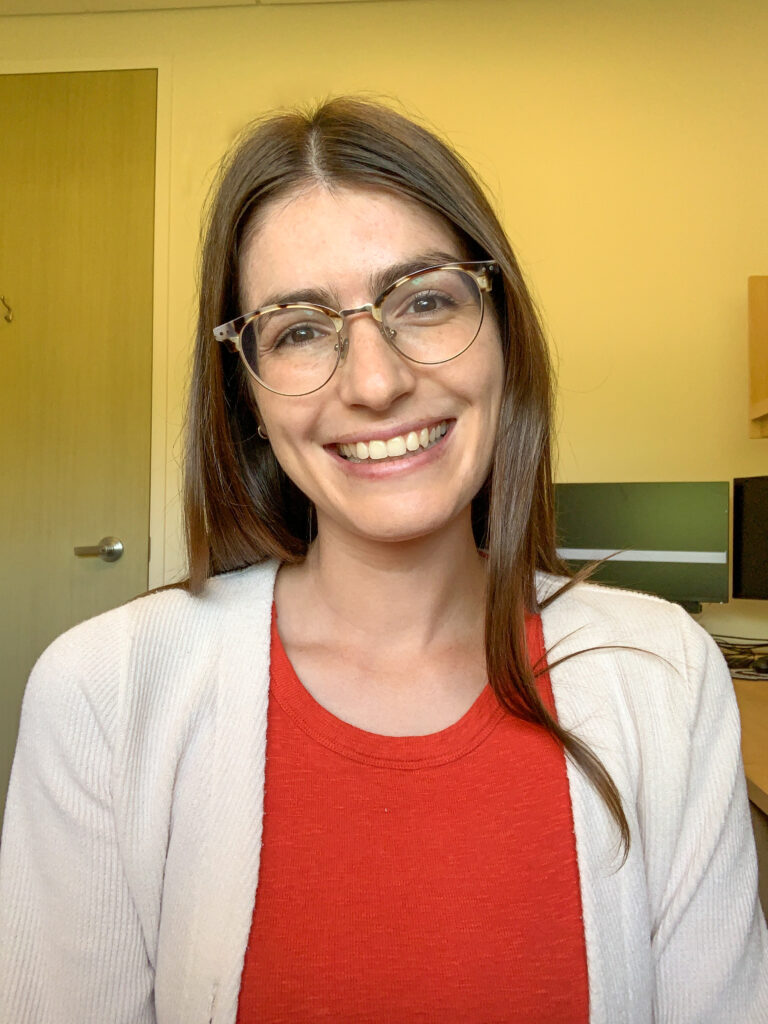 Adi Foord is a Scialog Early Science with LSST Fellow. (courtesy of Foord)
In this role, Foord has the opportunity to propose research analyzing data coming from the Vera C. Rubin Observatory, the largest ground-based telescope in the world. Over the next 10 years, it will carry out the Legacy Survey of Space and Time (LSST), scanning the entire sky every three days. Construction of the observatory, in Chile, is nearly complete, and its first images of the sky are expected later this year. LSST will collect an unprecedented amount of astronomical data ripe for analysis—and full of discoveries just waiting to be uncovered.
The Scialog fellowship is designed to hasten those discoveries. A cohort of 50 fellows includes early-career researchers in a wide range of fields: astrophysicists like Foord, theoretical physicists, data scientists, software engineers, and more. Each year of the three-year fellowship, the fellows gather for a multi-day workshop designed to facilitate development of innovative research proposals that would use LSST data.
Foord’s first proposal, in collaboration with Krista Lynne Smith at Texas A&M University, is one of eight proposals selected for funding out of the 33 submitted after the first Scialog workshop.
Below, Foord answers questions about the fellowship, her research at UMBC, and her passion for physics, and shares advice for aspiring astronomers.
Q: How is this fellowship unique?
A: LSST’s open-access dataset will be higher in volume and complexity than any previous astrophysics survey and will contain unexpected data that will provide insights into fundamental questions about the universe.
This fellowship addresses two key challenges to unlocking the discoveries in LSST data: 1) the lack of seed funding to support early LSST discoveries, and 2) the need to create cross-disciplinary connections to address the ambitious questions LSST is poised to answer. By facilitating creative proposals from interdisciplinary teams and then funding those proposals, the fellowship program addresses both of these challenges.
On top of this, I was really excited by the interdisciplinary nature of the program. The most creative and innovative ideas often emerge when scientists from diverse fields come together. By fostering collaboration—over food, coffee, and discussions—the fellowship provides an ideal environment for sparking ideas.
Q: What are the goals of your funded proposal?
A: My proposal is focused on building and using a “Dual Active Galactic Nuclei (AGN) Finder” on LSST data. Dual AGN are pairs of actively accreting supermassive black holes whose galaxies are merging. They are very difficult to find, because they generally just look like one source, instead of two.
Thankfully, the brightness of different kinds of objects in the sky varies predictably over time, so a graph called a “lightcurve” that represents an object’s varying brightness can be used to identify an unknown object. Our tool will use the unique lightcurve expected from dual AGN systems to search for pairs of merging AGN. As of right now, there are less than 100 confirmed pairs of merging AGN, so we hope to dramatically expand this sample size using our tool. LSST scans the full sky every three days, so it will have millions of lightcurves of AGN. It’s the perfect observatory to carry out such an analysis.
This new project with LSST nicely bridges my Ph.D. work on dual AGN with my current interests in how galaxy mergers influence supermassive black hole growth. It also opens the door to utilizing a completely different type of data.
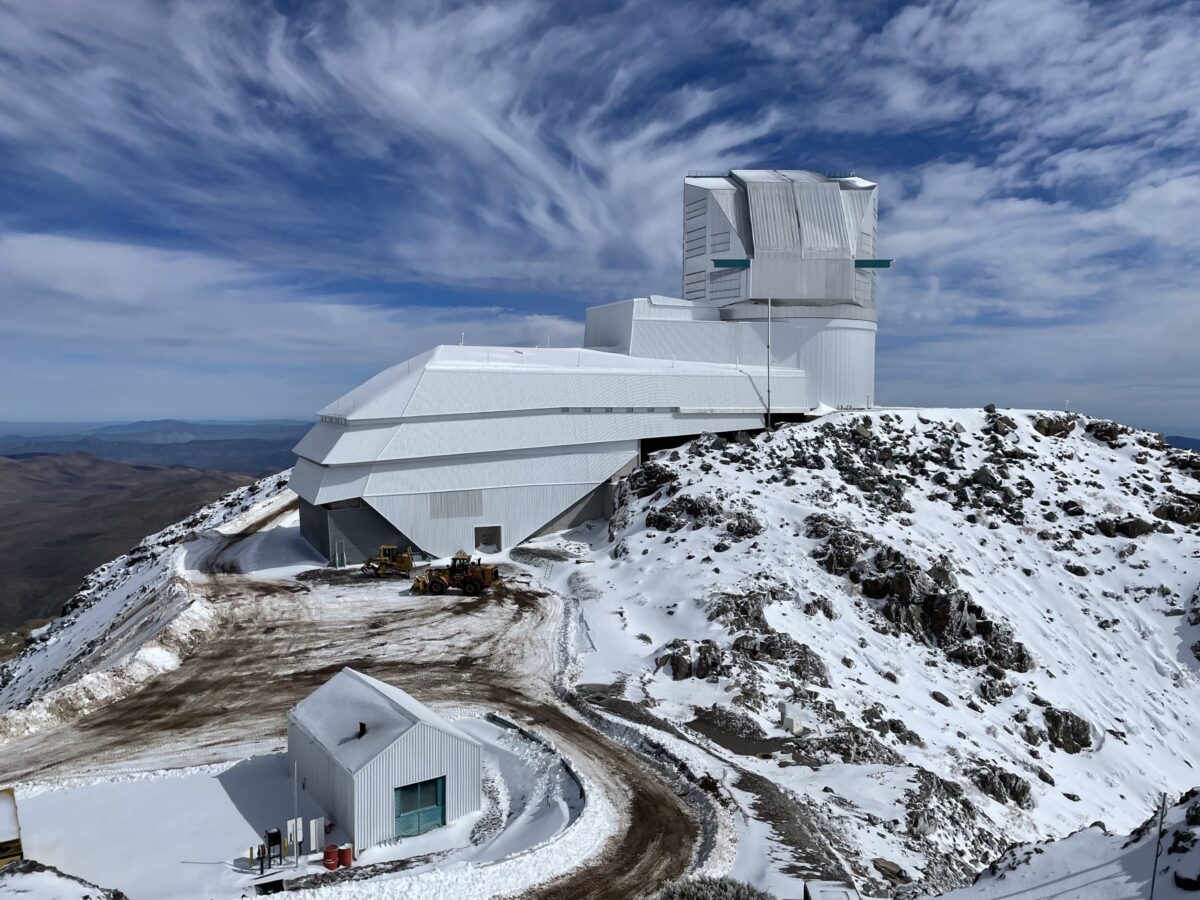 Snowfall blanketed the mountains of northern Chile on August 4, 2024, including Cerro Pachón, where Rubin Observatory is located. (NOIRLab/NSF/AURA/F. Bruno)
Q: Why are you passionate about this field, and how did you find your way to it?
A: I wasn’t sure what I wanted to pursue in college until my senior year in high school, when I had the opportunity to take an observational astronomy class. Prior to that, I enjoyed physics and math, but I hadn’t found the applications particularly exciting. That all changed the first time I looked through a telescope and held a meteorite that had originated from a collision on Earth about 50,000 years ago. The sheer excitement I felt in those moments made me realize that astrophysics was the perfect intersection of math, physics, and an interesting environment. The support I received from my high school physics (Mr. Woosnam) and astronomy (Mr. P) teachers gave me the confidence to pursue this path.
I still experience that thrill every time I open new data, not knowing what discoveries await, but eagerly anticipating what the data will reveal. The unwavering support of my mentors and friends has enabled me to stay the course and be successful in this field. Now, as a professor, I strive to inspire that same excitement in my students and help them discover their own passions.
Q: What do you enjoy about being a member of the physics department and the UMBC community more broadly?
A: Since joining UMBC in fall 2023, I have been truly impressed by the students. The undergraduates are incredibly passionate about joining research teams and learning about astrophysics. It has been a rewarding experience to start building my own research group of graduate students and mentor them through their first graduate research projects.
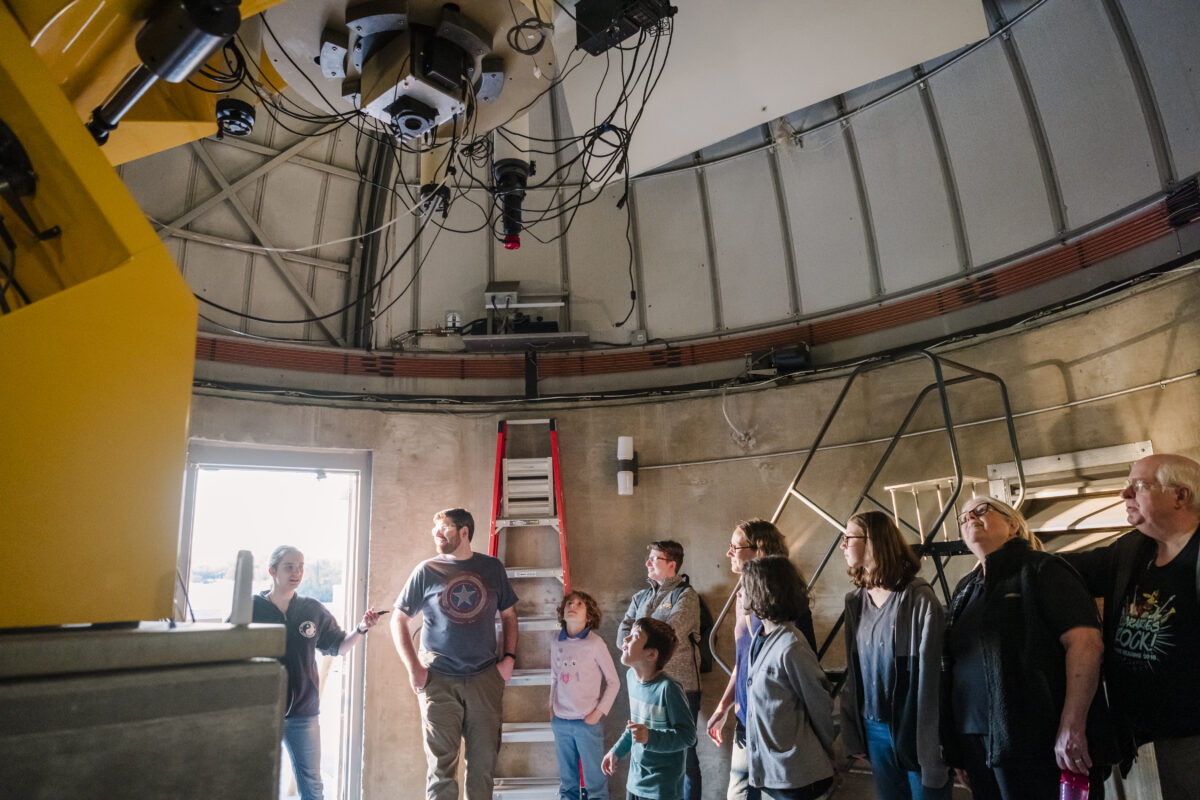 A UMBC physics student gives a tour of the observatory on top of the Physics Building to members of the local community. (Marlayna Demond ’11/UMBC)
I also particularly appreciate the amount of resources available for new faculty. In my first year, I participated in three different programs that introduced me to faculty across various departments, which I found invaluable. The Eminent Scholar Mentoring Program is especially unique—it has allowed me to professionally and personally connect with a seminal scientist in the field, someone I may not have had the opportunity to easily meet otherwise. These resources truly set you up for success and make you feel incredibly supported.
Q: What advice do you have for aspiring astronomers?
A: At the undergraduate level, actively seek out research opportunities wherever you can. Look for options at your own institution, nearby universities, and through programs offered by various agencies. Even if the research isn’t in an area you originally wanted to pursue, these experiences will help you develop critical thinking, problem-solving skills, and the ability to ask important questions.
I also encourage you to surround yourself with supportive mentors and colleagues. Every successful scientist got to where they are because they had people backing them along the way—the “lone genius” is rarely the full story. Being part of a supportive community not only helps you move forward but also fosters creativity and passion in your research, which is ultimately what drives us.
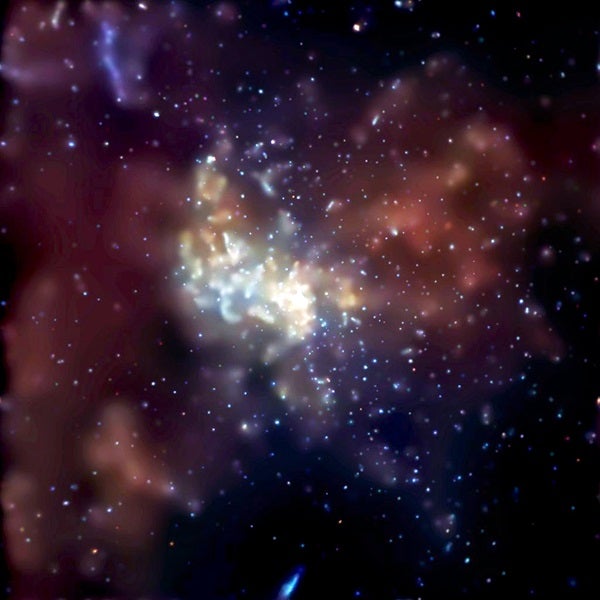 Sagittarius A*, the black hole at the center of our Milky Way galaxy, is located at the brightest, central point in this image. (NASA/CXC/MIT/Frederick K. Baganoff, et al.)
Q: Anything else you are burning to share?
A: My favorite supermassive black hole, of course! It’s Sagittarius A*, the supermassive black hole at the center of our Milky Way galaxy. While it’s puny (only about four million times the mass of our Sun, which is relatively small for a supermassive black hole) and not particularly active, its proximity to us makes it an incredibly intriguing object. Despite being so close, there are still many unanswered questions about its growth and activity. Most of my research focuses on supermassive black holes in other galaxies, but if I had unlimited time, I would love to dedicate more of my work to studying Sagittarius A*.
]]>
Adi Foord, assistant professor of physics, loves studying black holes. She also loves sharing her enthusiasm for the sky with others, including writing popular articles about time travel and the...
https://umbc.edu/stories/adi-foord-qa-favorite-black-hole/
https://beta.my.umbc.edu/api/v0/pixel/news/147508/guest@my.umbc.edu/39bbc6617aae9fefbdb931eddc8791e7/api/pixel
cnms
news
physics
research
science-and-tech
story
UMBC News & Magazine
https://beta.my.umbc.edu/groups/umbc-news-magazine
https://assets1-beta.my.umbc.edu/system/shared/avatars/groups/000/001/943/24435aa6207c452e7bc15cc74b42c7bb/xsmall.png?1748556657
https://assets1-beta.my.umbc.edu/system/shared/avatars/groups/000/001/943/24435aa6207c452e7bc15cc74b42c7bb/original.png?1748556657
https://assets2-beta.my.umbc.edu/system/shared/avatars/groups/000/001/943/24435aa6207c452e7bc15cc74b42c7bb/xxlarge.png?1748556657
https://assets2-beta.my.umbc.edu/system/shared/avatars/groups/000/001/943/24435aa6207c452e7bc15cc74b42c7bb/xlarge.png?1748556657
https://assets3-beta.my.umbc.edu/system/shared/avatars/groups/000/001/943/24435aa6207c452e7bc15cc74b42c7bb/large.png?1748556657
https://assets1-beta.my.umbc.edu/system/shared/avatars/groups/000/001/943/24435aa6207c452e7bc15cc74b42c7bb/medium.png?1748556657
https://assets2-beta.my.umbc.edu/system/shared/avatars/groups/000/001/943/24435aa6207c452e7bc15cc74b42c7bb/small.png?1748556657
https://assets1-beta.my.umbc.edu/system/shared/avatars/groups/000/001/943/24435aa6207c452e7bc15cc74b42c7bb/xsmall.png?1748556657
https://assets2-beta.my.umbc.edu/system/shared/avatars/groups/000/001/943/24435aa6207c452e7bc15cc74b42c7bb/xxsmall.png?1748556657
UMBC News & Magazine
3
0
false
Thu, 20 Feb 2025 11:50:14 -0500
Thu, 20 Feb 2025 11:50:14 -0500
New Online (Sync) Summer 2025 Course: SOCY 497/698 – Enroll Now!
Interdisciplinary Social Science Research Training

]]>
Flyer
https://assets4-beta.my.umbc.edu/system/shared/attachments/fdd5beb390ff0dc07a29181586b8fd23/6a03eda3/news/000/147/505/7eeb15d6027a367ea82bc7c5e9f25abd/Summer2025_ISSRT.jpg?1740067938
https://beta.my.umbc.edu/api/v0/pixel/news/147505/guest@my.umbc.edu/f315dcab2555c19573867e1169c30b37/api/pixel
Department of Sociology, Anthropology, and Public Health
https://beta.my.umbc.edu/groups/socy
https://assets1-beta.my.umbc.edu/system/shared/avatars/groups/000/000/942/b31b6920f096faf37f1e50abdb0c0448/xsmall.png?1700597336
https://assets4-beta.my.umbc.edu/system/shared/avatars/groups/000/000/942/b31b6920f096faf37f1e50abdb0c0448/original.png?1700597336
https://assets1-beta.my.umbc.edu/system/shared/avatars/groups/000/000/942/b31b6920f096faf37f1e50abdb0c0448/xxlarge.png?1700597336
https://assets2-beta.my.umbc.edu/system/shared/avatars/groups/000/000/942/b31b6920f096faf37f1e50abdb0c0448/xlarge.png?1700597336
https://assets3-beta.my.umbc.edu/system/shared/avatars/groups/000/000/942/b31b6920f096faf37f1e50abdb0c0448/large.png?1700597336
https://assets3-beta.my.umbc.edu/system/shared/avatars/groups/000/000/942/b31b6920f096faf37f1e50abdb0c0448/medium.png?1700597336
https://assets2-beta.my.umbc.edu/system/shared/avatars/groups/000/000/942/b31b6920f096faf37f1e50abdb0c0448/small.png?1700597336
https://assets1-beta.my.umbc.edu/system/shared/avatars/groups/000/000/942/b31b6920f096faf37f1e50abdb0c0448/xsmall.png?1700597336
https://assets4-beta.my.umbc.edu/system/shared/avatars/groups/000/000/942/b31b6920f096faf37f1e50abdb0c0448/xxsmall.png?1700597336
Department of Sociology, Anthropology, and Public Health
0
0
true
Thu, 20 Feb 2025 11:21:34 -0500
Mon, 31 Mar 2025 10:59:22 -0400
A fiscal crisis is looming for many US cities

Written by John Rennie Short, professor emeritus of public policy, UMBC
Five years after the start of the COVID-19 pandemic, many U.S. cities are still adjusting to a new normal, with more people working remotely and less economic activity in city centers. Other factors, such as underfunded pension plans for municipal employees, are pushing many city budgets into the red.
Urban fiscal struggles are not new, but historically they have mainly affected U.S. cities that are small, poor or saddled with incompetent managers. Today, however, even large cities, including Chicago, Houston and San Francisco, are under serious financial stress.
This is a looming nationwide threat, driven by factors that include climate change, declining downtown activity, loss of federal funds and large pension and retirement commitments.
Why cities struggle
Many U.S. cities have faced fiscal crises over the past century, for diverse reasons. Most commonly, stress occurs after an economic downturn or sharp fall in tax revenues.
Florida municipalities began to default in 1926 after the collapse of a land boom. Municipal defaults were common across the nation in the 1930s during the Great Depression: As unemployment rose, relief burdens swelled and tax collections dwindled.
 The New York Daily News, Oct. 30, 1975, after U.S. President Gerald Ford ruled out providing federal aid to save the city from bankruptcy. Several months later, Ford signed legislation authorizing federal loans. Edward Stojakovic/Flickr, CC BY
In 1934 Congress amended the U.S. bankruptcy code to allow municipalities to file formally for bankruptcy. Subsequently, 27 states enacted laws that authorized cities to become debtors and seek bankruptcy protection.
Declaring bankruptcy was not a cure-all. It allowed cities to refinance debt or stretch out payment schedules, but it also could lead to higher taxes and fees for residents, and lower pay and benefits for city employees. And it could stigmatize a city for many years afterward.
In the 1960s and 1970s, many urban residents and businesses left cities for adjoining suburbs. Many cities, including New York, Cleveland and Philadelphia, found it difficult to repay debts as their tax bases shrank.
In the wake of the 2008-2009 housing market collapse, cities including Detroit, San Bernardino, California, and Stockton, California, filed for bankruptcy. Other cities faced similar difficulties but were located in states that did not allow municipalities to declare bankruptcy.
Even large, affluent jurisdictions could go off the financial rails. For example, Orange County, California, went bankrupt in 2002 after its treasurer, Robert Citron, pursued a risky investment strategy of complex leveraging deals, losing some $1.65 billion in taxpayer funds.
Today, cities face a convergence of rising costs and decreasing revenues in many places. As I see it, the urban fiscal crisis is now a pervasive national challenge.
Climate-driven disasters
Climate change and its attendant increase in major disasters are putting financial pressure on municipalities across the country.
Events like wildfires and flooding have twofold effects on city finances. First, money has to be spent on rebuilding damaged infrastructure, such as roads, water lines and public buildings. Second, after the disaster, cities may either act on their own or be required under state or federal law to make expensive investments in preparation for the next storm or wildfire.
 Los Angeles Mayor Karen Bass (center) discusses wildfire recovery in Pacific Palisades, Calif., Jan. 27, 2025. Cleaning up after the wildfires, which destroyed more than 16,000 structures, will include disposing of several million tons of toxic ash and debris. Drew A. Kelley/MediaNews Group/Long Beach Press-Telegram via Getty Images
In Houston, for example, court rulings after multiple years of severe flooding are forcing the city to spend $100 million on street repairs and drainage by mid-2025. This requirement will expand the deficit in Houston’s annual budget to $330 million.
In Massachusetts, towns on Cape Cod are spending millions of dollars to switch from septic systems to public sewer lines and upgrade wastewater treatment plants. Population growth has sharply increased water pollution on the Cape, and climate change is promoting blooms of toxic algae that feed on nutrients in wastewater.
Increasing uncertainty about the total costs of mitigating and adapting to climate change will inevitably lead rating agencies to downgrade municipal credit ratings. This raises cities’ costs to borrow money for climate-related projects like protecting shorelines and improving wastewater treatment.
Underfunded pensions
Cities also spend a lot of money on employees, and many large cities are struggling to fund pensions and health benefits for their workforces. As municipal retirees live longer and require more health care, the costs are mounting.
For example, Chicago currently faces a budget deficit of nearly $1 billion, which stems partly from underfunded retirement benefits for nearly 30,000 public employees. The city has $35 billion in unfunded pension liabilities and almost $2 billion in unfunded retiree health benefits. Chicago’s teachers are owed $14 billion in unfunded benefits.
Policy studies have shown for years that politicians tend to underfund retirement and pension benefits for public employees. This approach offloads the real cost of providing police, fire protection and education onto future taxpayers.
Struggling downtowns and less federal support
Cities aren’t just facing rising costs – they’re also losing revenues. In many U.S. cities, retail and commercial office economies are declining. Developers have overbuilt commercial properties, creating an excess supply. More unleased properties will mean lower tax revenues.
At the same time, pandemic-related federal aid that cushioned municipal finances from 2020 through 2024 is dwindling.
State and local governments received $150 billion through the 2020 Coronavirus Aid, Relief, and Economic Security (CARES) Act and an additional $130 billion through the 2021 American Rescue Plan Act. Now, however, this federal largesse – which some cities used to fill mounting fiscal cracks – is at an end.
In my view, President Donald Trump’s administration is highly unlikely to bail out urban areas – especially more liberal cities like Detroit, Philadelphia and San Francisco. Trump has portrayed large cities governed by Democrats in the darkest terms – for example, calling Baltimore a “rodent-infested mess” and Washington, D.C., a “dirty, crime-ridden death trap.” I expect that Trump’s animus against big cities, which was a staple of his 2024 campaign, could become a hallmark of his second term.
Resistance to new taxes
Cities can generate revenue from taxes on sales, businesses, property and utilities. However, increasing municipal taxes – particularly property taxes – can be very difficult.
In 1978, California adopted Proposition 13 – a ballot measure that limited property tax increases to the rate of inflation or 2% per year, whichever is lower. This high-profile campaign created a widespread narrative that property taxes were out of control and made it very hard for local officials to support property tax increases.
Thanks to caps like Prop 13, a persistent public view that taxes are too high and political resistance, property taxes have tended to lag behind inflation in many parts of the country.
The crunch
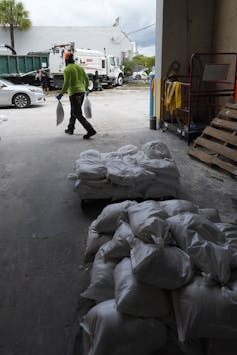 Workers in North Miami Beach, Fla., distribute sandbags to residents to help prevent flooding as Hurricane Milton approaches the state on Oct. 8, 2024. AP Photo/Wilfredo Lee
Taking these factors together, I see a fiscal crunch coming for U.S. cities. Small cities with low budgets are particularly vulnerable. But so are larger, more affluent cities, such as San Francisco with its collapsing downtown office market, or Houston, New York and Miami, which face growing costs from climate change.
One city manager who runs an affluent municipality in the Pacific Northwest told me that in these difficult circumstances, politicians need to be more frank and open with their constituents and explain convincingly and compellingly how and why taxpayer money is being spent.
Efforts to balance city budgets are opportunities to build consensus with the public about what municipalities can do, and at what cost. The coming months will show whether politicians and city residents are ready for these hard conversations.
This article is republished from The Conversation under a Creative Commons license. Read the original article and see more than 250 UMBC articles available in The Conversation.
]]>
Written by John Rennie Short, professor emeritus of public policy, UMBC Five years after the start of the COVID-19 pandemic, many U.S. cities are still adjusting to a new normal, with more...
https://umbc.edu/stories/a-fiscal-crisis-is-looming-for-many-us-cities/
https://beta.my.umbc.edu/api/v0/pixel/news/147507/guest@my.umbc.edu/fc65968ee4ebe77a7381c45111887c53/api/pixel
cahss
cahss-research
discovery
magazine
publicpolicy
research
story
UMBC News & Magazine
https://beta.my.umbc.edu/groups/umbc-news-magazine
https://assets1-beta.my.umbc.edu/system/shared/avatars/groups/000/001/943/24435aa6207c452e7bc15cc74b42c7bb/xsmall.png?1748556657
https://assets1-beta.my.umbc.edu/system/shared/avatars/groups/000/001/943/24435aa6207c452e7bc15cc74b42c7bb/original.png?1748556657
https://assets2-beta.my.umbc.edu/system/shared/avatars/groups/000/001/943/24435aa6207c452e7bc15cc74b42c7bb/xxlarge.png?1748556657
https://assets2-beta.my.umbc.edu/system/shared/avatars/groups/000/001/943/24435aa6207c452e7bc15cc74b42c7bb/xlarge.png?1748556657
https://assets3-beta.my.umbc.edu/system/shared/avatars/groups/000/001/943/24435aa6207c452e7bc15cc74b42c7bb/large.png?1748556657
https://assets1-beta.my.umbc.edu/system/shared/avatars/groups/000/001/943/24435aa6207c452e7bc15cc74b42c7bb/medium.png?1748556657
https://assets2-beta.my.umbc.edu/system/shared/avatars/groups/000/001/943/24435aa6207c452e7bc15cc74b42c7bb/small.png?1748556657
https://assets1-beta.my.umbc.edu/system/shared/avatars/groups/000/001/943/24435aa6207c452e7bc15cc74b42c7bb/xsmall.png?1748556657
https://assets2-beta.my.umbc.edu/system/shared/avatars/groups/000/001/943/24435aa6207c452e7bc15cc74b42c7bb/xxsmall.png?1748556657
UMBC News & Magazine
0
0
false
Thu, 20 Feb 2025 11:02:22 -0500
Thu, 20 Feb 2025 11:02:22 -0500
UMBC delegates build international connections at prestigious science and technology conference in India
A six-person UMBC team built international connections at the “PIWOT – World of Technology” conference, held in late January in Mumbai, India. The conference is organized by the alumni association for graduates of the prestigious Indian Institutes of Technology (IITs), and attracts many of the leaders in science and technology in India and around the world. The CEO of Alphabet, Inc. (Google’s parent company), the co-founder of Sun Microsystems, and the CEO of IBM are all graduates of IITs.
UMBC was represented at the conference by Anupam Joshi, acting dean of the College of Engineering and Information Technology; Upal Ghosh, professor in the Department of Chemical, Biochemical and Environmental Engineering; Ramana Vinjamuri, associate professor in the Department of Computer Science and Electrical Engineering and director of the NSF IUCRC BRAIN Center; Govind Rao, director of the Center for Advanced Sensor Technology and professor in the Department of Chemical, Biochemical and Environmental Engineering; Karuna Pande Joshi, professor in the Department of Information Systems and director of the NSF IUCRC Center for Accelerated Real Time Analytics; and David Di Maria, senior international officer and associate vice provost for international education at UMBC.
 Dean Joshi spoke at the conference about the impact of technology on education. (Photo courtesy of Govind Rao)
The UMBC team staffed a well-trafficked booth in the Expo Hall. As an extension of the meeting, they also visited IITs at Mumbai, Hyderabad, and Tirupati, and met with the directors of these institutions to discuss institutional agreements and lay the groundwork for international faculty and student exchanges.
This year’s PIWOT conference focused on the impact of technology across multiple dimensions of life, from the professional to the personal. Dean Joshi took part as a speaker on a panel about the impact of technology on education. The UMBC booth also displayed the low-cost infant incubator developed by Professor Govind Rao.
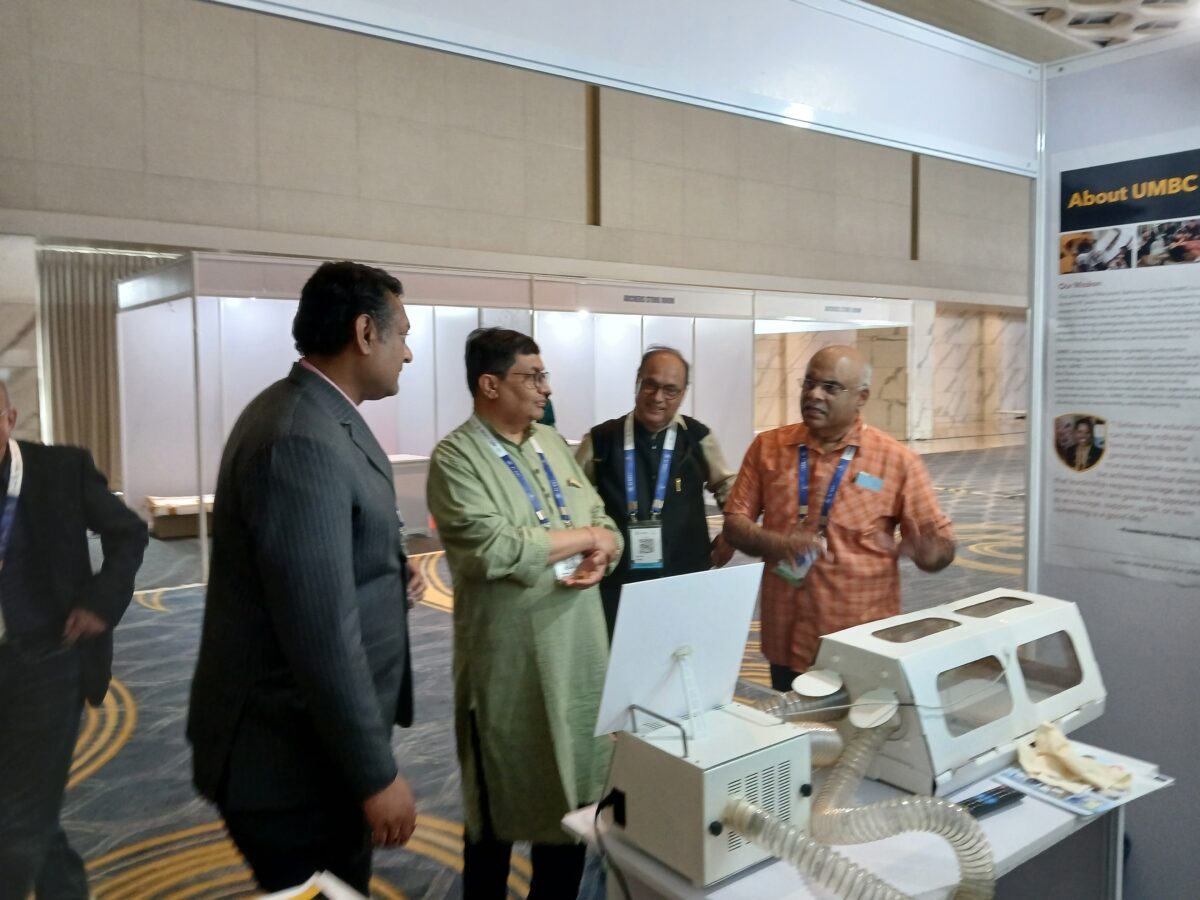 The UMBC booth displayed the low-cost infant incubator developed by Professor Govind Rao. (Photo courtesy of Karuna Joshi)
]]>
A six-person UMBC team built international connections at the “PIWOT – World of Technology” conference, held in late January in Mumbai, India. The conference is organized by the alumni association...
https://umbc.edu/quick-posts/umbc-delegates-conference-in-india/
https://beta.my.umbc.edu/api/v0/pixel/news/147504/guest@my.umbc.edu/2ca42895565c719a71f1ff4ad75d0dfb/api/pixel
cbee
coeit
csee
international
is
news
quick-post
science-and-tech
UMBC News & Magazine
https://beta.my.umbc.edu/groups/umbc-news-magazine
https://assets1-beta.my.umbc.edu/system/shared/avatars/groups/000/001/943/24435aa6207c452e7bc15cc74b42c7bb/xsmall.png?1748556657
https://assets1-beta.my.umbc.edu/system/shared/avatars/groups/000/001/943/24435aa6207c452e7bc15cc74b42c7bb/original.png?1748556657
https://assets2-beta.my.umbc.edu/system/shared/avatars/groups/000/001/943/24435aa6207c452e7bc15cc74b42c7bb/xxlarge.png?1748556657
https://assets2-beta.my.umbc.edu/system/shared/avatars/groups/000/001/943/24435aa6207c452e7bc15cc74b42c7bb/xlarge.png?1748556657
https://assets3-beta.my.umbc.edu/system/shared/avatars/groups/000/001/943/24435aa6207c452e7bc15cc74b42c7bb/large.png?1748556657
https://assets1-beta.my.umbc.edu/system/shared/avatars/groups/000/001/943/24435aa6207c452e7bc15cc74b42c7bb/medium.png?1748556657
https://assets2-beta.my.umbc.edu/system/shared/avatars/groups/000/001/943/24435aa6207c452e7bc15cc74b42c7bb/small.png?1748556657
https://assets1-beta.my.umbc.edu/system/shared/avatars/groups/000/001/943/24435aa6207c452e7bc15cc74b42c7bb/xsmall.png?1748556657
https://assets2-beta.my.umbc.edu/system/shared/avatars/groups/000/001/943/24435aa6207c452e7bc15cc74b42c7bb/xxsmall.png?1748556657
UMBC News & Magazine
3
0
false
Thu, 20 Feb 2025 10:37:23 -0500
Thu, 20 Feb 2025 10:37:23 -0500
Amber N. Mitchell to give the Annual Low Lecture
Wednesday, April 16, 4:00 in the Library Gallery
The UMBC booth displayed the low-cost infant incubator developed by Professor Govind Rao. (Photo courtesy of Karuna Joshi)
]]>
A six-person UMBC team built international connections at the “PIWOT – World of Technology” conference, held in late January in Mumbai, India. The conference is organized by the alumni association...
https://umbc.edu/quick-posts/umbc-delegates-conference-in-india/
https://beta.my.umbc.edu/api/v0/pixel/news/147504/guest@my.umbc.edu/2ca42895565c719a71f1ff4ad75d0dfb/api/pixel
cbee
coeit
csee
international
is
news
quick-post
science-and-tech
UMBC News & Magazine
https://beta.my.umbc.edu/groups/umbc-news-magazine
https://assets1-beta.my.umbc.edu/system/shared/avatars/groups/000/001/943/24435aa6207c452e7bc15cc74b42c7bb/xsmall.png?1748556657
https://assets1-beta.my.umbc.edu/system/shared/avatars/groups/000/001/943/24435aa6207c452e7bc15cc74b42c7bb/original.png?1748556657
https://assets2-beta.my.umbc.edu/system/shared/avatars/groups/000/001/943/24435aa6207c452e7bc15cc74b42c7bb/xxlarge.png?1748556657
https://assets2-beta.my.umbc.edu/system/shared/avatars/groups/000/001/943/24435aa6207c452e7bc15cc74b42c7bb/xlarge.png?1748556657
https://assets3-beta.my.umbc.edu/system/shared/avatars/groups/000/001/943/24435aa6207c452e7bc15cc74b42c7bb/large.png?1748556657
https://assets1-beta.my.umbc.edu/system/shared/avatars/groups/000/001/943/24435aa6207c452e7bc15cc74b42c7bb/medium.png?1748556657
https://assets2-beta.my.umbc.edu/system/shared/avatars/groups/000/001/943/24435aa6207c452e7bc15cc74b42c7bb/small.png?1748556657
https://assets1-beta.my.umbc.edu/system/shared/avatars/groups/000/001/943/24435aa6207c452e7bc15cc74b42c7bb/xsmall.png?1748556657
https://assets2-beta.my.umbc.edu/system/shared/avatars/groups/000/001/943/24435aa6207c452e7bc15cc74b42c7bb/xxsmall.png?1748556657
UMBC News & Magazine
3
0
false
Thu, 20 Feb 2025 10:37:23 -0500
Thu, 20 Feb 2025 10:37:23 -0500
Amber N. Mitchell to give the Annual Low Lecture
Wednesday, April 16, 4:00 in the Library Gallery
Amber
N. Mitchell will discuss the unique intersections of Black history,
preservation, and memory that have presented opportunities and
challenges in her career as a Public Historian and Museum Worker
and look toward the future of African American storytelling in American
public spaces.
Amber
N. Mitchell is a public historian, museum educator, and
community-rooted cultural strategist. Currently, she serves as the
founding Curator of Black History at The Henry Ford Museum of American
Innovation. As a public historian, Amber strives to empower communities
of color to tell our own stories in cultural institutions and beyond,
while transforming nonprofit structures into accessible reflections of
our communities. Before joining the Henry Ford staff, Amber worked
at Whitney Plantation, the National WWII Museum, and the American
Association for State and Local History.
This event is open for full
participation by all individuals regardless of race, color, religion,
sex, national origin, or any other protected category under applicable
federal law, state law, and the University's nondiscrimination policy.
]]>
Amber N. Mitchell will discuss the unique intersections of Black history, preservation, and memory that have presented opportunities and challenges in her career as a Public Historian and...
https://beta.my.umbc.edu/api/v0/pixel/news/147502/guest@my.umbc.edu/0dd5a53efb5678f83f099c0423291bd0/api/pixel
History Department News and Events
https://beta.my.umbc.edu/groups/history
https://assets3-beta.my.umbc.edu/system/shared/avatars/groups/000/000/496/0e975254c6e211f21a5cca6eb2cf1a82/xsmall.png?1582059722
https://assets2-beta.my.umbc.edu/system/shared/avatars/groups/000/000/496/0e975254c6e211f21a5cca6eb2cf1a82/original.png?1582059722
https://assets3-beta.my.umbc.edu/system/shared/avatars/groups/000/000/496/0e975254c6e211f21a5cca6eb2cf1a82/xxlarge.png?1582059722
https://assets3-beta.my.umbc.edu/system/shared/avatars/groups/000/000/496/0e975254c6e211f21a5cca6eb2cf1a82/xlarge.png?1582059722
https://assets3-beta.my.umbc.edu/system/shared/avatars/groups/000/000/496/0e975254c6e211f21a5cca6eb2cf1a82/large.png?1582059722
https://assets4-beta.my.umbc.edu/system/shared/avatars/groups/000/000/496/0e975254c6e211f21a5cca6eb2cf1a82/medium.png?1582059722
https://assets2-beta.my.umbc.edu/system/shared/avatars/groups/000/000/496/0e975254c6e211f21a5cca6eb2cf1a82/small.png?1582059722
https://assets3-beta.my.umbc.edu/system/shared/avatars/groups/000/000/496/0e975254c6e211f21a5cca6eb2cf1a82/xsmall.png?1582059722
https://assets2-beta.my.umbc.edu/system/shared/avatars/groups/000/000/496/0e975254c6e211f21a5cca6eb2cf1a82/xxsmall.png?1582059722
History Department News and Events
https://assets3-beta.my.umbc.edu/system/shared/thumbnails/news/000/147/502/74349b40e9dd00da7d5770fea1c6f163/xxlarge.jpg?1740063535
https://assets1-beta.my.umbc.edu/system/shared/thumbnails/news/000/147/502/74349b40e9dd00da7d5770fea1c6f163/xlarge.jpg?1740063535
https://assets4-beta.my.umbc.edu/system/shared/thumbnails/news/000/147/502/74349b40e9dd00da7d5770fea1c6f163/large.jpg?1740063535
https://assets1-beta.my.umbc.edu/system/shared/thumbnails/news/000/147/502/74349b40e9dd00da7d5770fea1c6f163/medium.jpg?1740063535
https://assets2-beta.my.umbc.edu/system/shared/thumbnails/news/000/147/502/74349b40e9dd00da7d5770fea1c6f163/small.jpg?1740063535
https://assets2-beta.my.umbc.edu/system/shared/thumbnails/news/000/147/502/74349b40e9dd00da7d5770fea1c6f163/xsmall.jpg?1740063535
https://assets4-beta.my.umbc.edu/system/shared/thumbnails/news/000/147/502/74349b40e9dd00da7d5770fea1c6f163/xxsmall.jpg?1740063535
4
0
true
Thu, 20 Feb 2025 10:20:59 -0500
Wed, 02 Apr 2025 11:53:01 -0400
Free Farmers Market TODAY! New Timings for Today!!
Apartment Community Center at 1:30pm till 2:30pm
 ]]>
Image
https://assets3-beta.my.umbc.edu/system/shared/attachments/ec0c6eab4b57249b1dc447a558812b5a/6a03eda3/news/000/147/503/a80b0d78801cbc324e13fa9e0df7e4b5/Changed Time FREE Farmers Market.png?1740063981
https://beta.my.umbc.edu/api/v0/pixel/news/147503/guest@my.umbc.edu/c3e7f59c4a0784338d497cc8ecdf0b15/api/pixel
Retriever Essentials
https://beta.my.umbc.edu/groups/retrieveressentials
https://assets4-beta.my.umbc.edu/system/shared/avatars/groups/000/001/389/07b12dca5bf1da16311c6d47125fe746/xsmall.png?1762874117
https://assets2-beta.my.umbc.edu/system/shared/avatars/groups/000/001/389/07b12dca5bf1da16311c6d47125fe746/original.png?1762874117
https://assets3-beta.my.umbc.edu/system/shared/avatars/groups/000/001/389/07b12dca5bf1da16311c6d47125fe746/xxlarge.png?1762874117
https://assets3-beta.my.umbc.edu/system/shared/avatars/groups/000/001/389/07b12dca5bf1da16311c6d47125fe746/xlarge.png?1762874117
https://assets3-beta.my.umbc.edu/system/shared/avatars/groups/000/001/389/07b12dca5bf1da16311c6d47125fe746/large.png?1762874117
https://assets1-beta.my.umbc.edu/system/shared/avatars/groups/000/001/389/07b12dca5bf1da16311c6d47125fe746/medium.png?1762874117
https://assets2-beta.my.umbc.edu/system/shared/avatars/groups/000/001/389/07b12dca5bf1da16311c6d47125fe746/small.png?1762874117
https://assets4-beta.my.umbc.edu/system/shared/avatars/groups/000/001/389/07b12dca5bf1da16311c6d47125fe746/xsmall.png?1762874117
https://assets3-beta.my.umbc.edu/system/shared/avatars/groups/000/001/389/07b12dca5bf1da16311c6d47125fe746/xxsmall.png?1762874117
Retriever Essentials
0
0
true
Thu, 20 Feb 2025 10:06:54 -0500
]]>
Image
https://assets3-beta.my.umbc.edu/system/shared/attachments/ec0c6eab4b57249b1dc447a558812b5a/6a03eda3/news/000/147/503/a80b0d78801cbc324e13fa9e0df7e4b5/Changed Time FREE Farmers Market.png?1740063981
https://beta.my.umbc.edu/api/v0/pixel/news/147503/guest@my.umbc.edu/c3e7f59c4a0784338d497cc8ecdf0b15/api/pixel
Retriever Essentials
https://beta.my.umbc.edu/groups/retrieveressentials
https://assets4-beta.my.umbc.edu/system/shared/avatars/groups/000/001/389/07b12dca5bf1da16311c6d47125fe746/xsmall.png?1762874117
https://assets2-beta.my.umbc.edu/system/shared/avatars/groups/000/001/389/07b12dca5bf1da16311c6d47125fe746/original.png?1762874117
https://assets3-beta.my.umbc.edu/system/shared/avatars/groups/000/001/389/07b12dca5bf1da16311c6d47125fe746/xxlarge.png?1762874117
https://assets3-beta.my.umbc.edu/system/shared/avatars/groups/000/001/389/07b12dca5bf1da16311c6d47125fe746/xlarge.png?1762874117
https://assets3-beta.my.umbc.edu/system/shared/avatars/groups/000/001/389/07b12dca5bf1da16311c6d47125fe746/large.png?1762874117
https://assets1-beta.my.umbc.edu/system/shared/avatars/groups/000/001/389/07b12dca5bf1da16311c6d47125fe746/medium.png?1762874117
https://assets2-beta.my.umbc.edu/system/shared/avatars/groups/000/001/389/07b12dca5bf1da16311c6d47125fe746/small.png?1762874117
https://assets4-beta.my.umbc.edu/system/shared/avatars/groups/000/001/389/07b12dca5bf1da16311c6d47125fe746/xsmall.png?1762874117
https://assets3-beta.my.umbc.edu/system/shared/avatars/groups/000/001/389/07b12dca5bf1da16311c6d47125fe746/xxsmall.png?1762874117
Retriever Essentials
0
0
true
Thu, 20 Feb 2025 10:06:54 -0500


