<?xml version="1.0"?>
<News hasArchived="true" page="4743" pageCount="10616" pageSize="10" timestamp="Mon, 11 May 2026 16:22:24 -0400" url="https://beta.my.umbc.edu/posts.xml?mode=recent&amp;page=4743">
<NewsItem contentIssues="false" id="77194" important="false" status="posted" url="https://beta.my.umbc.edu/posts/77194">
<Title>Howard County Arts Council Seeks Gallery and Programs Assistant</Title>
<Body>
<![CDATA[
    <div class="html-content"><p>The Howard County Arts Council, a multi-purpose non-profit arts agency, seeks a self-directed, outgoing individual for an entry to mid-level Gallery and Programs position in a small, fast-paced office environment.</p></div>
]]>
</Body>
<Summary>The Howard County Arts Council, a multi-purpose non-profit arts agency, seeks a self-directed, outgoing individual for an entry to mid-level Gallery and Programs position in a small, fast-paced...</Summary>
<Website>https://www.baltimoreculture.org/programs/jobsplus/17580</Website>
<TrackingUrl>https://beta.my.umbc.edu/api/v0/pixel/news/77194/guest@my.umbc.edu/b7d1747793596a1a035cbd64961d4626/api/pixel</TrackingUrl>
<Tag>administration</Tag>
<Tag>alliance</Tag>
<Tag>arts</Tag>
<Tag>baltimore</Tag>
<Tag>cultural</Tag>
<Tag>culture</Tag>
<Tag>greater</Tag>
<Tag>jobs</Tag>
<Tag>museum</Tag>
<Tag>nonprofit</Tag>
<Tag>opportunities</Tag>
<Tag>organizations</Tag>
<Tag>positions</Tag>
<Tag>studies</Tag>
<Group token="museumpractice">Museum Practice</Group>
<GroupUrl>https://beta.my.umbc.edu/groups/museumpractice</GroupUrl>
<AvatarUrl>https://assets2-beta.my.umbc.edu/system/shared/avatars/groups/000/000/780/ec390e445f99f5d8c57a847f02552fbc/xsmall.png?1384380461</AvatarUrl>
<AvatarUrl size="original">https://assets3-beta.my.umbc.edu/system/shared/avatars/groups/000/000/780/ec390e445f99f5d8c57a847f02552fbc/original.png?1384380461</AvatarUrl>
<AvatarUrl size="xxlarge">https://assets1-beta.my.umbc.edu/system/shared/avatars/groups/000/000/780/ec390e445f99f5d8c57a847f02552fbc/xxlarge.png?1384380461</AvatarUrl>
<AvatarUrl size="xlarge">https://assets4-beta.my.umbc.edu/system/shared/avatars/groups/000/000/780/ec390e445f99f5d8c57a847f02552fbc/xlarge.png?1384380461</AvatarUrl>
<AvatarUrl size="large">https://assets2-beta.my.umbc.edu/system/shared/avatars/groups/000/000/780/ec390e445f99f5d8c57a847f02552fbc/large.png?1384380461</AvatarUrl>
<AvatarUrl size="medium">https://assets3-beta.my.umbc.edu/system/shared/avatars/groups/000/000/780/ec390e445f99f5d8c57a847f02552fbc/medium.png?1384380461</AvatarUrl>
<AvatarUrl size="small">https://assets2-beta.my.umbc.edu/system/shared/avatars/groups/000/000/780/ec390e445f99f5d8c57a847f02552fbc/small.png?1384380461</AvatarUrl>
<AvatarUrl size="xsmall">https://assets2-beta.my.umbc.edu/system/shared/avatars/groups/000/000/780/ec390e445f99f5d8c57a847f02552fbc/xsmall.png?1384380461</AvatarUrl>
<AvatarUrl size="xxsmall">https://assets1-beta.my.umbc.edu/system/shared/avatars/groups/000/000/780/ec390e445f99f5d8c57a847f02552fbc/xxsmall.png?1384380461</AvatarUrl>
<Sponsor>Museum Practice</Sponsor>
<PawCount>0</PawCount>
<CommentCount>0</CommentCount>
<CommentsAllowed>true</CommentsAllowed>
<PostedAt>Fri, 15 Jun 2018 11:46:17 -0400</PostedAt>
</NewsItem>

<NewsItem contentIssues="false" id="77179" important="false" status="posted" url="https://beta.my.umbc.edu/posts/77179">
<Title>UMBC Across the Sea: Keeping in touch with home</Title>
<Body>
<![CDATA[
    <div class="html-content">
    <p>Years ago, studying abroad meant a near total removal from life at home. The only lines of contact available were unreliable, expensive and slow. Even as letters and telegrams gave way to long-distance phone calls, students could go months without direct contact with friends. This all changed in the age of the internet.</p>
    <p>Now with email, social media and online video calls, being halfway around the world does not seem quite so far. Contacts that were few and far between have become daily, and the sense of isolation associated with travel has diminished greatly.</p>
    <p>However, there is still a significant degree of control an exchange student has over how deeply they would like to embrace what remains of this sense of isolation. Many students choose to break completely from social media during their stays abroad, while others dive headfirst into the convenience of technology to stay completely connected.</p>
    <p>Both of these approaches seem too heavy-handed. The usefulness of technology certainly is not total, nor is it nonexistent. Rather, like many aspects of the study abroad experience, this must be taken in moderation and at personal discretion.</p>
    <p>A good rule of thumb for first starting out abroad is making sure to be in contact with home at least once a week. After a bit of this, the frequency of contact can be adjusted. If being abroad leaves a student needing more contact from home, by all means they should contact home more frequently. If a student feels too comfortable and wants to get more outside of their comfort zone, it is relatively easy to limit calls to less than a weekly basis.</p>
    <p>Online activity is a bit more difficult to regulate, but it can be done. One easy way to do so is by getting connected on platforms used locally. For instance, the most popular social media platform in Korea is a program that is relatively obscure in the West: Kakao. Because it is extremely popular in the country, it allows a student to stay connected socially without tying themselves back home.</p>
    <p>Obviously this does not mean abandoning other platforms during a stay abroad, but splitting time spent on social media between local platforms and platforms from back home does lead to more time spent immersed in the culture of one’s host country.</p>
    <p>Emails are a bit trickier. It is not feasible today to wholly ignore them, as that can lead to missing anything from class announcements to bills or alerts from the study abroad office. If one hopes to go more off the grid, it may be advisable to set up an automatic response to emails expressing the circumstances of your time studying abroad. This can help preemptively explain any delays in response.</p>
    <p>For those who would like to remain a bit more connected, it is advisable to set at least one day a week to check emails and stick to it. This solid deadline helps to prevent one from being overwhelmed by correspondence and ensures regular replies.</p>
    <p>Essentially, communication while abroad in this day and age is what you make of it. It can be almost ever present or it can be almost nonexistent. Finding what works individually and using strategies to keep to it is the key to managing it.</p>
    </div>
]]>
</Body>
<Summary>Years ago, studying abroad meant a near total removal from life at home. The only lines of contact available were unreliable, expensive and slow. Even as letters and telegrams gave way to...</Summary>
<Website>https://retriever.umbc.edu/umbc-across-the-sea-keeping-in-touch-with-home/</Website>
<TrackingUrl>https://beta.my.umbc.edu/api/v0/pixel/news/77179/guest@my.umbc.edu/da75e3565d08eabb3eed9d86d057264d/api/pixel</TrackingUrl>
<Tag>opinions</Tag>
<Group token="retriever">The Retriever</Group>
<GroupUrl>https://beta.my.umbc.edu/groups/retriever</GroupUrl>
<AvatarUrl>https://assets1-beta.my.umbc.edu/system/shared/avatars/groups/000/000/961/a4bec01b91ae747ba7a6d93ed7db9687/xsmall.png?1580494471</AvatarUrl>
<AvatarUrl size="original">https://assets1-beta.my.umbc.edu/system/shared/avatars/groups/000/000/961/a4bec01b91ae747ba7a6d93ed7db9687/original.jpg?1580494471</AvatarUrl>
<AvatarUrl size="xxlarge">https://assets1-beta.my.umbc.edu/system/shared/avatars/groups/000/000/961/a4bec01b91ae747ba7a6d93ed7db9687/xxlarge.png?1580494471</AvatarUrl>
<AvatarUrl size="xlarge">https://assets1-beta.my.umbc.edu/system/shared/avatars/groups/000/000/961/a4bec01b91ae747ba7a6d93ed7db9687/xlarge.png?1580494471</AvatarUrl>
<AvatarUrl size="large">https://assets4-beta.my.umbc.edu/system/shared/avatars/groups/000/000/961/a4bec01b91ae747ba7a6d93ed7db9687/large.png?1580494471</AvatarUrl>
<AvatarUrl size="medium">https://assets2-beta.my.umbc.edu/system/shared/avatars/groups/000/000/961/a4bec01b91ae747ba7a6d93ed7db9687/medium.png?1580494471</AvatarUrl>
<AvatarUrl size="small">https://assets2-beta.my.umbc.edu/system/shared/avatars/groups/000/000/961/a4bec01b91ae747ba7a6d93ed7db9687/small.png?1580494471</AvatarUrl>
<AvatarUrl size="xsmall">https://assets1-beta.my.umbc.edu/system/shared/avatars/groups/000/000/961/a4bec01b91ae747ba7a6d93ed7db9687/xsmall.png?1580494471</AvatarUrl>
<AvatarUrl size="xxsmall">https://assets1-beta.my.umbc.edu/system/shared/avatars/groups/000/000/961/a4bec01b91ae747ba7a6d93ed7db9687/xxsmall.png?1580494471</AvatarUrl>
<Sponsor>The Retriever</Sponsor>
<PawCount>6</PawCount>
<CommentCount>0</CommentCount>
<CommentsAllowed>true</CommentsAllowed>
<PostedAt>Fri, 15 Jun 2018 10:00:20 -0400</PostedAt>
</NewsItem>

<NewsItem contentIssues="false" id="77177" important="false" status="posted" url="https://beta.my.umbc.edu/posts/77177">
<Title>NCURA workshop "Building Blocks" at UMBC</Title>
<Body>
<![CDATA[
    <div class="html-content">
    <p>Dear Colleagues, on August 23 UMBC/OSP will be hosting an NCURA workshop called "Building Blocks for Research Administration". This full-day workshop (9 AM to 4 PM) will provide you with knowledge, strategies, and tools needed to manage sponsored projects effectively.<span>  </span>The discussion will cover the federal regulations upon which institutional compliance is based;<span>  </span>the administrative concepts of proposal submission; costing issues; the concept of effort; post-award management; project closeout; compliance and audits.<span>  </span><br></p>
    
    <p>Learning Objectives:<span>  </span></p>
    
    <ul>
    <li><div>Provide participants with a broad overview of the various aspects of Research Administration;</div></li>
    <li><div>Overview of pre-award processes;</div></li>
    <li><div>Gather basic understanding of post-award activities such as allowability of costs, effort reporting, cost sharing, closeout, and audits.<span>    </span>
    </div></li>
    </ul>
    
    <p>This workshop is dedicated to everyone who has a basic understanding of the management of sponsored projects. Participants will benefit from a better understanding of the various concepts of Research Administration.<br></p>
    
    <p>The registration form is available at <a href="https://ncuraregionii.org/wp-content/uploads/2018/06/UMBC-Building-Blocks-WORKSHOP-FORM.pdf">https://ncuraregionii.org/wp-content/uploads/2018/06/UMBC-Building-Blocks-WORKSHOP-FORM.pdf</a></p>
    
    <br>
    </div>
]]>
</Body>
<Summary>Dear Colleagues, on August 23 UMBC/OSP will be hosting an NCURA workshop called "Building Blocks for Research Administration". This full-day workshop (9 AM to 4 PM) will provide you with...</Summary>
<TrackingUrl>https://beta.my.umbc.edu/api/v0/pixel/news/77177/guest@my.umbc.edu/b4a5b92450232e55ec2551071c567af8/api/pixel</TrackingUrl>
<Group token="osp">Office of Sponsored Programs (OSP)</Group>
<GroupUrl>https://beta.my.umbc.edu/groups/osp</GroupUrl>
<AvatarUrl>https://assets3-beta.my.umbc.edu/system/shared/avatars/groups/000/000/752/3408b8d8a758db7c66b435a2c13352e4/xsmall.png?1382454455</AvatarUrl>
<AvatarUrl size="original">https://assets3-beta.my.umbc.edu/system/shared/avatars/groups/000/000/752/3408b8d8a758db7c66b435a2c13352e4/original.jpg?1382454455</AvatarUrl>
<AvatarUrl size="xxlarge">https://assets1-beta.my.umbc.edu/system/shared/avatars/groups/000/000/752/3408b8d8a758db7c66b435a2c13352e4/xxlarge.png?1382454455</AvatarUrl>
<AvatarUrl size="xlarge">https://assets4-beta.my.umbc.edu/system/shared/avatars/groups/000/000/752/3408b8d8a758db7c66b435a2c13352e4/xlarge.png?1382454455</AvatarUrl>
<AvatarUrl size="large">https://assets1-beta.my.umbc.edu/system/shared/avatars/groups/000/000/752/3408b8d8a758db7c66b435a2c13352e4/large.png?1382454455</AvatarUrl>
<AvatarUrl size="medium">https://assets4-beta.my.umbc.edu/system/shared/avatars/groups/000/000/752/3408b8d8a758db7c66b435a2c13352e4/medium.png?1382454455</AvatarUrl>
<AvatarUrl size="small">https://assets2-beta.my.umbc.edu/system/shared/avatars/groups/000/000/752/3408b8d8a758db7c66b435a2c13352e4/small.png?1382454455</AvatarUrl>
<AvatarUrl size="xsmall">https://assets3-beta.my.umbc.edu/system/shared/avatars/groups/000/000/752/3408b8d8a758db7c66b435a2c13352e4/xsmall.png?1382454455</AvatarUrl>
<AvatarUrl size="xxsmall">https://assets1-beta.my.umbc.edu/system/shared/avatars/groups/000/000/752/3408b8d8a758db7c66b435a2c13352e4/xxsmall.png?1382454455</AvatarUrl>
<Sponsor>Office of Sponsored Programs (OSP)</Sponsor>
<PawCount>0</PawCount>
<CommentCount>0</CommentCount>
<CommentsAllowed>true</CommentsAllowed>
<PostedAt>Fri, 15 Jun 2018 09:01:03 -0400</PostedAt>
<EditAt>Fri, 15 Jun 2018 09:01:35 -0400</EditAt>
</NewsItem>

<NewsItem contentIssues="true" id="77176" important="false" status="posted" url="https://beta.my.umbc.edu/posts/77176">
<Title>LEGO Maniacs &#8211; STEM Learning in Action</Title>
<Body>
<![CDATA[
    <div class="html-content">
    <div>
    <a href="https://magazine.umbc.edu/" rel="nofollow external" class="bo">UMBC Magazine</a> | <span><a href="https://magazine.umbc.edu/author/megan-hanks/" rel="nofollow external" class="bo">Megan Hanks</a></span><span> | <a href="https://magazine.umbc.edu/lego-maniacs-stem-learning-umbc/" rel="nofollow external" class="bo">May 24, 2018</a></span> <br>
    </div>
    <div><br></div>
    <div><div>
        		<div>
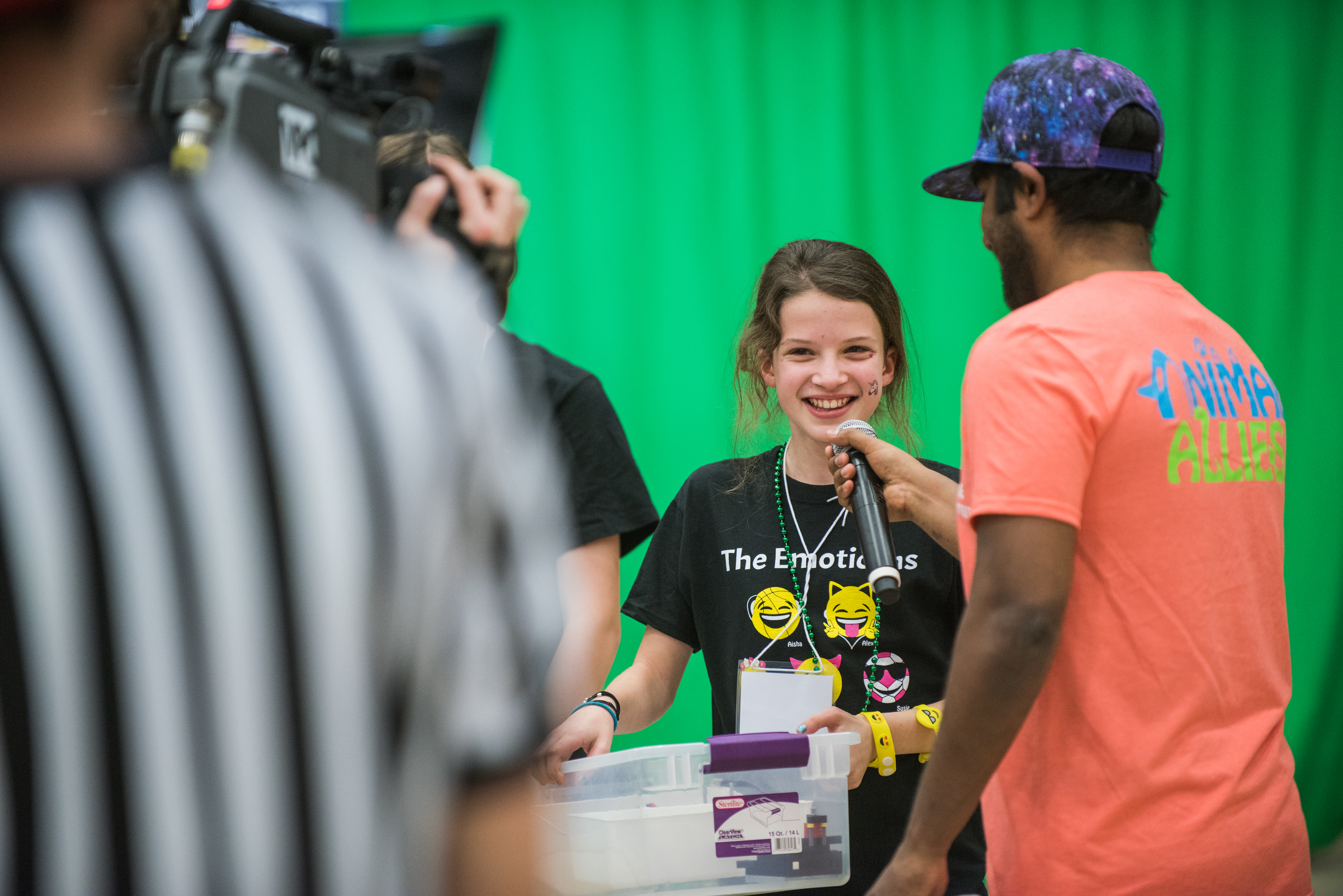
        		<p><strong>Jennifer Sleeman</strong>, Ph.D ’17, computer science, loves programming. So, when she was asked to coach the <a href="https://me.umbc.edu/first-lego-league/" rel="nofollow external" class="bo">Einstein Narwhals</a>,
     her son’s FIRST LEGO League team, the visiting assistant professor was 
    excited to be able to share her passion and spend more time with her 
    10-year-old all at once.</p>
    <p>The team competed in the Maryland FIRST LEGO League competition, held
     at UMBC, in February, taking first place for Robot Strategies and 
    Innovation. With that win, the team of eight elementary and middle 
    schoolers participated in the FIRST LEGO League World Championship, held
     in Detroit in late April. Among 104 teams, they won the Judge’s Award 
    trophy, and walked away with lots of new ideas.</p>
    <p><br></p>
    <h4>LEGO Learning</h4>
    <p>“FIRST LEGO League inspires young children to work as scientists and 
    engineers. It requires them to program a robot and complete missions 
    that are built with Legos,” says Sleeman. “It also allows them to 
    discover a real problem, research possible solutions, meet with experts 
    in the field to understand the problem better, and to get feedback on 
    their proposed solution and present their solution to others.”</p>
    <p><span>There are three components of the 
    competition: project, robot design, and core values. During the robot 
    design portion of the event, the team must build the attachments and 
    robot completely out of LEGOs, according to themed challenges. </span></p>
    <p><span>At the beginning of the season, the 
    team took some field trips to local businesses, including a fire station
     in Clarksville, MD, to choose a grassroots issue that they would work 
    to address over the course of the season. The firefighters told the 
    students that one challenge they face in the colder months is fire hoses
     freezing when the water is not flowing. To prevent the hoses from 
    freezing, the firefighters resort to letting the water run, which poses 
    dangers and is wasteful. </span></p>
    <p>The Einstein Narwhals decided to come up with a way to prevent fire 
    hoses from freezing by developing a hose heater that generates energy 
    that can be used to keep the hoses warm enough. <span>Sleeman’s
     son and his teammates developed a water wheel that stores energy 
    generated by the wheels in a battery and uses it to heat the hoses. The 
    team has applied for a provisional patent for one of the ideas that they
     developed during the season.</span></p>
    <a href="https://magazine.umbc.edu/wp-content/uploads/2018/05/First-Lego-League17-3474.jpg" rel="nofollow external" class="bo"><img src="https://magazine.umbc.edu/wp-content/uploads/2018/05/First-Lego-League17-3474.jpg" alt="" width="3596" height="2400" style="max-width: 100%; height: auto;"></a><br><br>From the 2017 First LEGO League Competition at UMBC. Photos by Marlayna Demond ’11.
    <h4><br></h4>
    <h4>“The Team Loves Working Together”</h4>
    <p><span>Throughout the season, the team met 
    once or twice each week for a couple of hours to work on their project. 
    Students wind up helping out with every aspect of the project, from 
    programming to engineering, so that they have a broad range of skills. 
    “It’s great because the team loves working together,” says Sleeman, 
    adding that it allows the students to have more time with their friends 
    during the week. </span></p>
    <p>For Sleeman, the most rewarding part about being a coach has been 
    getting to mentor the students, particularly the girls on the team, 
    because she says it’s important for the girls to have role models in 
    STEM who are women.</p>
    <p><a href="https://magazine.umbc.edu/keeping-up-with-the-doyles/" rel="nofollow external" class="bo"><strong>Damian Doyle </strong></a><span>‘99,
     computer science, senior director of enterprise infrastructure at UMBC,
     has been involved with FIRST LEGO League because his son Leo has been a
     participant for several years. </span></p>
    <p><span>“I’ve watched him become invested in 
    his team, engaging with teammates, and truly partnering to accomplish 
    more than any of them could accomplish individually,” he explained, 
    adding that his son loves working with his team on robots, and that he 
    learns new things each year. “Leo found he really enjoys the programming
     aspect, developing that skill and sharing that knowledge has really 
    helped to boost his confidence in himself, which is wonderful.”</span></p>
    <p><em>— Megan Hanks</em></p>
        	</div>
    <br>
    </div></div>
    </div>
]]>
</Body>
<Summary>UMBC Magazine | Megan Hanks | May 24, 2018                        Jennifer Sleeman, Ph.D ’17, computer science, loves programming. So, when she was asked to coach the Einstein Narwhals,  her son’s...</Summary>
<Website>https://magazine.umbc.edu/lego-maniacs-stem-learning-umbc/</Website>
<TrackingUrl>https://beta.my.umbc.edu/api/v0/pixel/news/77176/guest@my.umbc.edu/ec8ce579fb5979d7fe858b2806aac206/api/pixel</TrackingUrl>
<Tag>coeit</Tag>
<Tag>csee</Tag>
<Group token="retired-95">College of Engineering and Information Technology</Group>
<GroupUrl>https://beta.my.umbc.edu/groups/retired-95</GroupUrl>
<AvatarUrl>https://assets3-beta.my.umbc.edu/system/shared/avatars/groups/000/000/095/c2a784a6cda726ef5f845e9192adb64b/xsmall.png?1496851664</AvatarUrl>
<AvatarUrl size="original">https://assets1-beta.my.umbc.edu/system/shared/avatars/groups/000/000/095/c2a784a6cda726ef5f845e9192adb64b/original.jpg?1496851664</AvatarUrl>
<AvatarUrl size="xxlarge">https://assets3-beta.my.umbc.edu/system/shared/avatars/groups/000/000/095/c2a784a6cda726ef5f845e9192adb64b/xxlarge.png?1496851664</AvatarUrl>
<AvatarUrl size="xlarge">https://assets3-beta.my.umbc.edu/system/shared/avatars/groups/000/000/095/c2a784a6cda726ef5f845e9192adb64b/xlarge.png?1496851664</AvatarUrl>
<AvatarUrl size="large">https://assets2-beta.my.umbc.edu/system/shared/avatars/groups/000/000/095/c2a784a6cda726ef5f845e9192adb64b/large.png?1496851664</AvatarUrl>
<AvatarUrl size="medium">https://assets3-beta.my.umbc.edu/system/shared/avatars/groups/000/000/095/c2a784a6cda726ef5f845e9192adb64b/medium.png?1496851664</AvatarUrl>
<AvatarUrl size="small">https://assets3-beta.my.umbc.edu/system/shared/avatars/groups/000/000/095/c2a784a6cda726ef5f845e9192adb64b/small.png?1496851664</AvatarUrl>
<AvatarUrl size="xsmall">https://assets3-beta.my.umbc.edu/system/shared/avatars/groups/000/000/095/c2a784a6cda726ef5f845e9192adb64b/xsmall.png?1496851664</AvatarUrl>
<AvatarUrl size="xxsmall">https://assets2-beta.my.umbc.edu/system/shared/avatars/groups/000/000/095/c2a784a6cda726ef5f845e9192adb64b/xxsmall.png?1496851664</AvatarUrl>
<Sponsor>College of Engineering and Information Technology</Sponsor>
<ThumbnailUrl size="xxlarge">https://assets1-beta.my.umbc.edu/system/shared/thumbnails/news/000/077/176/3d5331792ef47237cdd913a5a6d3f431/xxlarge.jpg?1529066902</ThumbnailUrl>
<ThumbnailUrl size="xlarge">https://assets3-beta.my.umbc.edu/system/shared/thumbnails/news/000/077/176/3d5331792ef47237cdd913a5a6d3f431/xlarge.jpg?1529066902</ThumbnailUrl>
<ThumbnailUrl size="large">https://assets2-beta.my.umbc.edu/system/shared/thumbnails/news/000/077/176/3d5331792ef47237cdd913a5a6d3f431/large.jpg?1529066902</ThumbnailUrl>
<ThumbnailUrl size="medium">https://assets3-beta.my.umbc.edu/system/shared/thumbnails/news/000/077/176/3d5331792ef47237cdd913a5a6d3f431/medium.jpg?1529066902</ThumbnailUrl>
<ThumbnailUrl size="small">https://assets2-beta.my.umbc.edu/system/shared/thumbnails/news/000/077/176/3d5331792ef47237cdd913a5a6d3f431/small.jpg?1529066902</ThumbnailUrl>
<ThumbnailUrl size="xsmall">https://assets1-beta.my.umbc.edu/system/shared/thumbnails/news/000/077/176/3d5331792ef47237cdd913a5a6d3f431/xsmall.jpg?1529066902</ThumbnailUrl>
<ThumbnailUrl size="xxsmall">https://assets1-beta.my.umbc.edu/system/shared/thumbnails/news/000/077/176/3d5331792ef47237cdd913a5a6d3f431/xxsmall.jpg?1529066902</ThumbnailUrl>
<PawCount>0</PawCount>
<CommentCount>0</CommentCount>
<CommentsAllowed>false</CommentsAllowed>
<PostedAt>Fri, 15 Jun 2018 08:48:31 -0400</PostedAt>
<EditAt>Fri, 15 Jun 2018 15:38:12 -0400</EditAt>
</NewsItem>

<NewsItem contentIssues="true" id="77175" important="false" status="posted" url="https://beta.my.umbc.edu/posts/77175">
<Title>Entrepreneurs Rising</Title>
<Tagline>UMBC Magazine June 1, 2018</Tagline>
<Body>
<![CDATA[
    <div class="html-content">
    <div>
    <a href="https://magazine.umbc.edu/" rel="nofollow external" class="bo">UMBC Magazine</a> | <span><a href="https://magazine.umbc.edu/author/shansen/" rel="nofollow external" class="bo">Sarah Hansen M.S. '15</a></span> | <span><a href="https://magazine.umbc.edu/entrepreneurs-rising/" rel="nofollow external" class="bo">June 1, 2018</a><br></span>
    </div>
    <div><br></div>
    <div>
    <div>
        		<h5>Every day, UMBC researchers work tirelessly to make and build 
    upon discoveries in their fields. For many, these successes lead to 
    scientific publications, opportunities for further funding, or both. For
     some, however, a discovery is also the first step in a long and often 
    winding pathway to entrepreneurship.</h5>
    <p><em><br>Written by Sarah Hansen M.S. ’15</em><br>
    <em>Illustrated by Ruth Chan </em></p>
    <p>Jumping into business can be a risk, but at UMBC, budding faculty 
    entrepreneurs have a support system that includes the Technology 
    Development Corporation (TEDCO) at the state level, which offers 
    Maryland Innovation Initiative (MII) grants to support budding 
    entrepreneurs. UMBC has a remarkable 50 percent acceptance rate for MII 
    proposals. On campus, the Office of Technology Development and 
    bwtech@UMBC research park provide great resources, including 
    “Entrepreneurs in residence” who seek out research that could be a good 
    fit for commercial development and support faculty from start to finish.</p>
    <p>“You set the tone,” says <strong>Tom Sadowski ’89</strong>, political
     science, and current vice chancellor for economic development for the 
    University System of Maryland, of UMBC’s efforts to support its faculty 
    entrepreneurs. “You set up the model that other institutions are now 
    following.”</p>
    <p>From start-up funding sources to access to experienced entrepreneurs 
    and more, the available support lowers the entry barrier to 
    entrepreneurship and creates opportunities for faculty to impact the 
    world in positive ways. “We focus here on innovation that matters,” says
     <strong>Karl Steiner</strong>, UMBC vice president for research, 
    “whether it be in the classroom, working with our communities, or 
    creating new solutions to some of today’s most pressing societal 
    challenges.”</p>
    <p>Read on to see how professors and their collaborators are using 
    research and new-found entrepreneurial know-how to bring their 
    inventions to life.</p>
    <h4>3-D Printed Solutions</h4>
    <p><strong><a href="https://magazine.umbc.edu/wp-content/uploads/2018/06/LT_Jeffrey-Gardner.jpg" rel="nofollow external" class="bo"><img src="https://magazine.umbc.edu/wp-content/uploads/2018/06/LT_Jeffrey-Gardner.jpg" alt="" width="360" height="494" style="max-width: 100%; height: auto;"></a><br></strong></p>
    <p><strong>Jeffrey Gardner</strong>,
     associate professor of biological sciences and one of two Up-and-Coming
     UMBC Inventor awardees, had a problem. Gardner’s research focuses on 
    “how bacteria eat dead plants,” which has applications from renewable 
    fuels to removing plastics from the ocean to improved composting 
    methods. But the technique for measuring how efficiently different 
    bacteria could digest plant materials was lengthy and labor-intensive.</p>
    <p>So, Gardner created a tiny solution — a plastic widget similar to a 
    tea-strainer — that makes his research on bacteria-driven decomposition 
    faster and lower-cost while increasing the accuracy of the results. 
    Gardner collaborated with <strong>Tagide deCarvalho</strong>, manager of UMBC’s Keith Porter Imaging Facility, to solve the problem “with a little bit of engineering and 3D printing.”</p>
    <p>Gardner received a Maryland Innovation Initiative (MII) grant through
     TEDCO to complete prototype development on the widget and do a market 
    assessment. Now his newly-created company, Gardner Industries, LLC, 
    exists on paper, and a patent is pending on the product. He’s waiting to
     find out if he’ll receive phase-three funding from MII, which would 
    enable the company to pursue increased production of the widgets and 
    send them to labs around the country for feedback.</p>
    <p>Gardner suggests that academics who may be curious about entering the
     entrepreneurial space simply “find someone who’s done it successfully 
    and talk to them about it. If you try to do it in a vacuum or try to 
    guess, you could end up with a lot of misconceptions or think it’s going
     to be too hard or too easy.”</p>
    <p>For Gardner, that person was <strong>Chuck Bieberich</strong>, 
    professor of biological sciences and the Herbert Bearman Foundation 
    Chair in Entrepreneurship. Gardner encourages adventurous faculty to 
    take the leap because the available support lowers the barriers to 
    entry.</p>
    <p><br></p>
    <h4>Saving the Bay — With Bacteria?</h4>
    <p><strong><a href="https://magazine.umbc.edu/wp-content/uploads/2018/06/LT_Kevin-Sowers.jpg" rel="nofollow external" class="bo"><img src="https://magazine.umbc.edu/wp-content/uploads/2018/06/LT_Kevin-Sowers.jpg" alt="" width="360" height="493" style="max-width: 100%; height: auto;"></a><br></strong></p>
    <p><strong>Kevin Sowers</strong>,
     professor of marine biotechnology, has been studying anaerobic bacteria
     (bacteria that don’t require oxygen) for more than 20 years. In that 
    time, he’s discovered a bacterium that can break down polycyclic 
    biphenyls (PCBs) very efficiently. PCBs were considered a “miracle 
    chemical” when they came out in the 1930s, but since then, researchers 
    have identified some potentially hazardous forms as neurotoxins, 
    carcinogens, endocrine disruptors, and more.</p>
    <p>Although banned today, because of their ubiquity in their first 
    several decades of existence, PCBs are now common in wetland sediments 
    around the world. Sedimentary invertebrates ingest them, and they make 
    their way up the food chain from there. Now people are searching for 
    ways to get rid of them safely. Current techniques include dredging and 
    “capping” (piling a thick layer of sand on top of the sediment), but, 
    both techniques are devastating to wetland ecosystems.</p>
    <p>Sowers and <strong>Upal Gosh</strong>, professor of chemical, 
    biochemical, and environmental engineering at UMBC, joined forces to 
    come up with an alternative. Funding from an MII phase-one grant allowed
     them to develop a carbon pellet as a delivery mechanism for the 
    PCB-degrading bacteria. After bonding the bacteria to the pellets, the 
    researchers spray the pellets out over a wetland or under a pier. The 
    pellets are one to two centimeters in diameter, and they spray 25 kg per
     cubic meter. The pellets sink, and the bacteria do their work in the 
    sediment. Carbon and this bacterium are both found naturally in 
    sediments, but the low bacterial concentration present would take many, 
    many years to remove the unnaturally high level of PCBs.</p>
    <p>A new UMBC Catalyst Fund grant supports the duo’s efforts to develop a
     method to measure the effectiveness of the treatment by comparing the 
    predicted amount of time it would take for the PCBs to degrade naturally
     versus with treatment.</p>
    <p>Sowers and Gosh have patented the product, and in 2017 they formed a 
    company, Rembac. While it’s still somewhat of an experimental procedure,
     “we’re hoping that we’ll build up a reputation and we’ll be able to 
    show that this is working well in different environments, and it will 
    become more of a mainstream application,” says Sowers.</p>
    <p><br></p>
    <h4>Bio-Batteries for Green Medicine</h4>
    <p><strong><a href="https://magazine.umbc.edu/wp-content/uploads/2018/06/LT_Gymama-Slaughter.jpg" rel="nofollow external" class="bo"><img src="https://magazine.umbc.edu/wp-content/uploads/2018/06/LT_Gymama-Slaughter.jpg" alt="" width="289" height="420" style="max-width: 100%; height: auto;"></a><br></strong></p>
    <p><strong>Gymama Slaughter</strong>’s
     invention is an outgrowth of her work to develop glucose-based power 
    sources for use in implantable devices, such as pacemakers. By using the
     body’s own supply of sugars to power the devices, these “bio-batteries”
     would remove the need for repeat surgeries to replace failing 
    traditional batteries.</p>
    <p>“This project is important to me because of all the issues that human
     beings face. I give a lot of thought to that, and how we as researchers
     can really touch people in the community,” says Slaughter, professor of
     chemical engineering and a UMBC Up-and- Coming Inventor.</p>
    <p>“Our primary activities are transforming diagnostic tools, 
    reinventing the manufacturing of these tools — and creating the next 
    generation of scientists and engineers. We now get approached by 
    students all over the world who are interested in what we’re doing.”</p>
    <p>“This is not just about chemistry, it’s about vision and bringing the
     right people together to solve a problem,” Slaughter says. The goal is 
    to “benefit the maximum number of people in the world, not just people 
    in our community.”</p>
    <p><br></p>
    <h4>Classical Music for the Masses</h4>
    <p><strong><a href="https://magazine.umbc.edu/wp-content/uploads/2018/06/LT_LInda-Dusman.jpg" rel="nofollow external" class="bo"><img src="https://magazine.umbc.edu/wp-content/uploads/2018/06/LT_LInda-Dusman.jpg" alt="" width="338" height="376" style="max-width: 100%; height: auto;"></a><br></strong></p>
    <p><strong>Linda Dusman</strong>,
     professor of music and the UMBC Entrepreneur of the Year, is helping 
    more people make positive connections with classical music via a mobile 
    app called EnCue. The app provides customized information in real time 
    during a performance, which could include facts about the composer, 
    quotes from the performers or conductor, or historical context for the 
    piece. World-class orchestras like the London Symphony are already using
     EnCue.</p>
    <p>Dusman has MII phase-three funding to pursue further business 
    development and fine-tuning of the product, such as allowing orchestras 
    to design their own presentations rather than drawing from a library 
    generated by Dusman and her business partner, <strong>Eric Smallwood ’08</strong>, interdisciplinary studies, former assistant professor of visual arts at UMBC.</p>
    <p>You don’t need a certain kind of education to appreciate classical 
    music, Dusman says. “What kills me is when I see newcomers in the 
    audience and they’re embarrassed about not knowing when to clap, or they
     leave feeling stupid — that is a tragedy, a tragedy. And EnCue helps 
    make me feel like I’m doing my best so that doesn’t happen. People leave
     concerts using EnCue excited about what they learned.”</p>
    <p>Asked if she would recommend taking the plunge into the business 
    world, she says, “If you believe in what you’re doing, then yes. In a 
    way, I had to do it, if I really believed in this idea of real-time 
    education.” But the process has not been without its challenges and 
    frustrations.</p>
    <p>“Anything worth doing, if you had known what it was going to take to 
    get it to work before you did it, you’d probably never do it,” she says.
     “But if you believe in something, you do what it takes to make it 
    happen. The value is worth the effort.”</p>
    <p><br></p>
    <h4>Better Sleep With Engineering</h4>
    <p>Ever wake up feeling groggy and wonder why, because you’re sure you slept through the night? <strong>Nilanjan Banerjee</strong>, associate professor, and <strong>Ryan Robucci ’02</strong>,
     computer engineering, assistant professor of computer science and 
    electrical engineering, have invented a device that may help you answer 
    that question. In collaboration with researchers at Johns Hopkins 
    University, Banerjee and Robucci have developed an anklet users wear at 
    night to monitor “sleep texture” by measuring leg movements in a way 
    that wrist monitors currently can’t.</p>
    <p>The device is currently in the FDA approval process as a diagnostic 
    tool for sleep-related disorders such as restless leg syndrome, 
    attention deficit disorder, or iron deficiency. “People usually do this 
    in a sleep lab, with EEG electrodes, and it’s very expensive,” says 
    Banerjee. “We’ve been trying to see if we can move it to the home.”</p>
    <p>The research team has received MII phases one through three funding, 
    and is currently seeking larger grants from NIH — but none of this might
     have happened without the support of entrepreneurs in residence (also 
    known as “site miners”) at bwtech@UMBC. Banerjee and Robucci originally 
    sought to use their motion-sensing technology in assistive devices for 
    people with limited mobility, but <strong>Dave Fink</strong>, one of 
    UMBC’s site miners, knew a counterpart from Hopkins who had a researcher
     in need of motion-sensing for sleep monitoring. “They took the steps to
     help us form the company by understanding what our technology was and 
    pairing it with exactly what the medical need was,” says Robucci.</p>
    <p><br></p>
    <h4>Enterpreneur in Residence Spotlight: Dave Fink</h4>
    <p>In conversations with entrepreneurs at UMBC, one name keeps popping up: <strong>Dave Fink</strong>.
     He’s an entrepreneur in residence (also known as a “site miner”) at 
    UMBC’s bwtech@UMBC Research and Technology Park. His task? Identify UMBC
     faculty research projects that have commercialization potential, and 
    then steward the researchers through the entrepreneurship process, from 
    brainstorming initial ideas to applying for start-up funding to seeking 
    patents. Fink and other entrepreneurs in residence are critical to the 
    success of fledgling ideas, but their work goes largely unseen.</p>
    <p>For example, it’s not always easy for academic faculty to tell if an 
    invention would be relevant to a wide range of potential customers or if
     it solves a problem unique to their research. Only in the former case 
    is commercialization worth pursuing. “The site miners are really good at
     sussing out whether something will work or not,” says Jeffrey Gardner 
    (see “3D-printing solutions”).</p>
    <p>Like Gardner, Gymama Slaughter (“Bio-batteries”) has benefited from 
    the support system in place for inventors at UMBC and in Maryland. “I 
    was able to establish a wonderful relationship with David Fink at UMBC 
    and Ken Malone at BioHealth Innovation,” she says. “They did such an 
    amazing job with the logistics of the product and just helping out any 
    way they could.”</p>
    <p>Fink also guided Kevin Sowers and Upal Gosh (“Saving the Bay — with 
    bacteria?”) in their entrepreneurship journey. “Dave was very supportive
     with our MII and with the Catalyst Fund grant. He advised on what to 
    write and what the evaluators would be looking for,” Sowers says. “He’s 
    been very supportive all along the way.”</p>
        	</div>
    <br>
    </div>
    </div>
]]>
</Body>
<Summary>UMBC Magazine | Sarah Hansen M.S. '15 | June 1, 2018               Every day, UMBC researchers work tirelessly to make and build  upon discoveries in their fields. For many, these successes lead...</Summary>
<Website>https://magazine.umbc.edu/entrepreneurs-rising/</Website>
<TrackingUrl>https://beta.my.umbc.edu/api/v0/pixel/news/77175/guest@my.umbc.edu/e64023723ac8f196e3ab8517a6ab12a3/api/pixel</TrackingUrl>
<Tag>cbee</Tag>
<Tag>coeit</Tag>
<Tag>csee</Tag>
<Group token="retired-95">College of Engineering and Information Technology</Group>
<GroupUrl>https://beta.my.umbc.edu/groups/retired-95</GroupUrl>
<AvatarUrl>https://assets3-beta.my.umbc.edu/system/shared/avatars/groups/000/000/095/c2a784a6cda726ef5f845e9192adb64b/xsmall.png?1496851664</AvatarUrl>
<AvatarUrl size="original">https://assets1-beta.my.umbc.edu/system/shared/avatars/groups/000/000/095/c2a784a6cda726ef5f845e9192adb64b/original.jpg?1496851664</AvatarUrl>
<AvatarUrl size="xxlarge">https://assets3-beta.my.umbc.edu/system/shared/avatars/groups/000/000/095/c2a784a6cda726ef5f845e9192adb64b/xxlarge.png?1496851664</AvatarUrl>
<AvatarUrl size="xlarge">https://assets3-beta.my.umbc.edu/system/shared/avatars/groups/000/000/095/c2a784a6cda726ef5f845e9192adb64b/xlarge.png?1496851664</AvatarUrl>
<AvatarUrl size="large">https://assets2-beta.my.umbc.edu/system/shared/avatars/groups/000/000/095/c2a784a6cda726ef5f845e9192adb64b/large.png?1496851664</AvatarUrl>
<AvatarUrl size="medium">https://assets3-beta.my.umbc.edu/system/shared/avatars/groups/000/000/095/c2a784a6cda726ef5f845e9192adb64b/medium.png?1496851664</AvatarUrl>
<AvatarUrl size="small">https://assets3-beta.my.umbc.edu/system/shared/avatars/groups/000/000/095/c2a784a6cda726ef5f845e9192adb64b/small.png?1496851664</AvatarUrl>
<AvatarUrl size="xsmall">https://assets3-beta.my.umbc.edu/system/shared/avatars/groups/000/000/095/c2a784a6cda726ef5f845e9192adb64b/xsmall.png?1496851664</AvatarUrl>
<AvatarUrl size="xxsmall">https://assets2-beta.my.umbc.edu/system/shared/avatars/groups/000/000/095/c2a784a6cda726ef5f845e9192adb64b/xxsmall.png?1496851664</AvatarUrl>
<Sponsor>College of Engineering and Information Technology</Sponsor>
<ThumbnailUrl size="xxlarge">https://assets3-beta.my.umbc.edu/system/shared/thumbnails/news/000/077/175/fc37033f20a23f1d2c5eec9a593418b3/xxlarge.jpg?1529065683</ThumbnailUrl>
<ThumbnailUrl size="xlarge">https://assets4-beta.my.umbc.edu/system/shared/thumbnails/news/000/077/175/fc37033f20a23f1d2c5eec9a593418b3/xlarge.jpg?1529065683</ThumbnailUrl>
<ThumbnailUrl size="large">https://assets3-beta.my.umbc.edu/system/shared/thumbnails/news/000/077/175/fc37033f20a23f1d2c5eec9a593418b3/large.jpg?1529065683</ThumbnailUrl>
<ThumbnailUrl size="medium">https://assets4-beta.my.umbc.edu/system/shared/thumbnails/news/000/077/175/fc37033f20a23f1d2c5eec9a593418b3/medium.jpg?1529065683</ThumbnailUrl>
<ThumbnailUrl size="small">https://assets2-beta.my.umbc.edu/system/shared/thumbnails/news/000/077/175/fc37033f20a23f1d2c5eec9a593418b3/small.jpg?1529065683</ThumbnailUrl>
<ThumbnailUrl size="xsmall">https://assets4-beta.my.umbc.edu/system/shared/thumbnails/news/000/077/175/fc37033f20a23f1d2c5eec9a593418b3/xsmall.jpg?1529065683</ThumbnailUrl>
<ThumbnailUrl size="xxsmall">https://assets2-beta.my.umbc.edu/system/shared/thumbnails/news/000/077/175/fc37033f20a23f1d2c5eec9a593418b3/xxsmall.jpg?1529065683</ThumbnailUrl>
<PawCount>0</PawCount>
<CommentCount>0</CommentCount>
<CommentsAllowed>false</CommentsAllowed>
<PostedAt>Fri, 15 Jun 2018 08:28:42 -0400</PostedAt>
<EditAt>Fri, 15 Jun 2018 15:39:28 -0400</EditAt>
</NewsItem>

<NewsItem contentIssues="true" id="77174" important="false" status="posted" url="https://beta.my.umbc.edu/posts/77174">
<Title>Rhodes to Success</Title>
<Tagline>Naomi Mburu &#8217;18 -- UMBC&#8217;s very first Rhodes Scholar</Tagline>
<Body>
<![CDATA[
    <div class="html-content">
    <div>
    <a href="https://magazine.umbc.edu/" rel="nofollow external" class="bo">UMBC Magazine</a> | <a href="https://magazine.umbc.edu/rhodes/" rel="nofollow external" class="bo">June 7, 2018</a> | <a href="https://magazine.umbc.edu/author/jogrady/" rel="nofollow external" class="bo"> Jenny O'Grady</a> <br>
    </div>
    <div><br></div>
    <div>
    <h5>Becoming an academic superstar doesn’t happen overnight. It takes 
    grit, character, and a community of true believers. Luckily for Naomi 
    Mburu ’18 — UMBC’s very first Rhodes Scholar — she has all three.</h5>
    <p><em><br></em>To read her resume, and to sense the shining future ahead of her, it would be easy to guess that <strong>Naomi Mburu</strong> was born an academic star. And, to a certain extent that is true.</p>
    <p>In her senior year of studying chemical engineering, UMBC’s first 
    Rhodes Scholar is predictably a whiz in the classroom and the lab. She’s
     also generous and patient, serving as a mentor to fellow engineering 
    students and Meyerhoff Scholars, and a natural leader, exuding a quiet 
    confidence beyond her years.</p>
    <p>But, what makes Mburu special — and what has made her successful — is
     not some innate key to knowledge unattainable to others, but a deep 
    desire to question the world around her, and the support system of 
    family, professors, and friends at UMBC and elsewhere who have stoked 
    and nurtured that flame from her earliest years.</p>
    <p>As Mburu finishes out her final semester at UMBC, her packed schedule
     reflects the magnitude of her academic achievements — from an 
    invitation to Washington, D.C., to hear the State of the Union Address, 
    to a standing ovation at UMBC’s first basketball game in its new Event 
    Center.</p>
    <p>Amid all of the attention and interviews about the Rhodes, she and 
    her family also continue to mourn the loss of her older brother, 
    Nicholas, who unexpectedly passed away following a car accident just 
    after the winter holiday. The loss shook them all, while also 
    strengthening the bonds of her family and their local Kenyan community.</p>
    <p>To handle so much takes strength, poise, and a true sense of self. One of her biggest fans, UMBC <strong>President Freeman Hrabowski</strong> — who told the <em>Washington Post</em> he cried upon hearing the news of her award in November — has watched her adjust these past months.</p>
    <p>“What’s so impressive about Naomi is that she is as grounded as 
    ever,” he said. “One senses her humility and authenticity in that great 
    smile. She talks comfortably about the research that she’s done, about 
    her future in England in nuclear engineering. She shows us the true 
    Renaissance spirit.”</p>
    <p>And in so many ways, this is just the beginning.</p>
    <h6>* * * * *</h6>
    <h6>Over in the student apartments, Naomi Mburu ruins a pot of noodles.</h6>
    <h6>It’s true: UMBC’s very first winner of 
    “the oldest and most celebrated international fellowship awards in the 
    world,” as defined by Rhodes, is still a bit wobbly with her cooking. 
    She’s working on it, though, especially since hearing mixed reactions 
    about the food options in England.</h6>
    <h6>In the fall, she’ll continue her 
    education in the Oxford lab of Dr. Peter Ireland studying heat transfer 
    applications for nuclear fusion reactors. Over the summer, she’ll visit 
    family in Kenya, and travel to Lindau, Germany, for an invitation-only 
    Nobel conference. And in this, her final semester, where in addition to 
    taking a full course load, she’s also TA-ing and coaching Lakeland 
    Elementary students in math, and traveling many weekends for the 
    National Society of Black Engineers, she’s also fielding media 
    interviews, giving speeches — the whole nine yards.</h6>
    <h6>Amid it all, she knows her weaknesses, and works to strengthen herself. Amid it all, she’s figuring out the noodles.</h6>
    <h6>* * * * *</h6>
    <a href="https://magazine.umbc.edu/wp-content/uploads/2018/02/Naomi-Mburu-groups-9769.jpg" rel="nofollow external" class="bo"><img src="https://magazine.umbc.edu/wp-content/uploads/2018/02/Naomi-Mburu-groups-9769-1024x757.jpg" alt="Naomi Mburu, Rhodes Scholar, with her high school teachers." width="834" height="617" style="max-width: 100%; height: auto;"></a><br>“She
     had to find herself. I think she knew she was intelligent, but she had 
    to dig deep and see how much potential she had. Funny enough, sometimes 
    it takes a math class for you to see it.” — Douraine Donaldson (left), 
    with Naomi and fellow Mount Hebron High School teacher Mary Ann Sankey.
    <h4><br></h4>
    <h4>The Early Bird</h4>
    <p>As a kid, Mburu struggled with math. Like so many, she just “didn’t 
    get it.” But instead of complaining, and instead of letting her studies 
    lag, she got up extra early each day to meet with her teacher <strong>Mary Ann Sankey</strong>, who was in at 6 a.m. to start setting up for class.</p>
    <p>Together, they hashed out the numbers. Even though she had no idea of
     what she’d be studying five years later, Mburu somehow already knew 
    that math would be the key to so much more. In her teachers at Mount 
    Hebron High School and beyond, she found people who not only believed in
     her, but pushed her to challenge herself.</p>
    <p>“Naomi came in before school started, and she was into it, 
    wholeheartedly,” said Sankey. “She didn’t just want to know what the 
    answer was, but how and why it was working. It’s a wonderful thing to 
    see in a student.”</p>
    <p>As a little girl, Mburu had a few jobs in mind for herself: inventor,
     spy, or pediatrician (although she ditched the last idea when she 
    realized she hated blood). As her teachers broadened her view of what 
    was possible, they also helped her shape her questions and her study 
    habits.</p>
    <p>When <strong>Douraine Donaldson</strong>, Mburu’s AP Calculus teacher
     recently heard President Hrabowski mention the word “grit” in a speech,
     she immediately thought of her former student, who she recalls never 
    shied away from asking anything.</p>
    <p>“I saw that level of determination as it was starting to emerge…you 
    know, the no-fear attitude, the ability to question and wonder why, and 
    push the boundaries,” said Donaldson, who described Mburu as a center of
     inquiry, drawing other students in to discuss a range of topics. “I 
    think it really started to emerge in her junior year. And by the time 
    Naomi graduated, she was just ready to take it on and challenge things 
    even more.”</p>
    <a href="https://magazine.umbc.edu/wp-content/uploads/2018/02/Naomi-Mburu-groups-9790.jpg" rel="nofollow external" class="bo"><img src="https://magazine.umbc.edu/wp-content/uploads/2018/02/Naomi-Mburu-groups-9790-683x1024.jpg" alt="" width="345" height="897" style="max-width: 100%; height: auto;"></a><br>“One
     of the great things about Naomi is that she’s going to be a person that
     a lot of other young women and young black women look at as a role 
    model and success story. I think she’s going to inspire a lot of 
    people.” — Lee Blaney, associate professor of chemical, biochemical and  environmental engineering
    <p><br></p>
    <p>As she began to figure out what types of work she enjoyed, Mburu knew
     she wanted to get into a lab environment. As a junior in high school, 
    she attended an admissions event at UMBC where she met now-retired 
    professor of biological sciences <strong>Lasse Lindahl</strong>, who offered her a position in his lab that summer.</p>
    <p>“There were a ton of freshmen in the lab and juniors, and they didn’t
     treat me any differently” as a high schooler, she said. “I had to read a
     lot for the first couple of weeks to understand what was going on, but 
    after I had my grounding, they let me run experiments.” By the end of 
    the summer, she was invited to present at the Summer Undergraduate 
    Research Festival with her college-level colleagues — an experience that
     helped her get over a fear of talking about her work, she said.</p>
    <p>It wasn’t long before Mburu was a freshman at UMBC, figuring out her next steps with the help of a new cast of teachers.</p>
    <p>Unsure of her major choice and looking for more hands-on experience, she approached <strong>Gymama Slaughter</strong>,
     associate professor of computer science and electrical engineering, 
    during her freshman year, and left the meeting with a permanent spot on 
    Slaughter’s team. In that role, the lone undergraduate chemical engineer
     among graduate-level researchers, Mburu learned quickly to stretch 
    herself as a questioner and communicator.</p>
    <p>“She’s a go-getter, she always hits the ground running, and she’s 
    never afraid of whatever you’re going to give her…she’s excited and 
    ready to do it,” said Slaughter, who has encouraged Mburu to follow her 
    imagination in terms of what she studies, and has watched her student 
    learn as much from her missteps as her successes.</p>
    <p>“We all do fail miserably at times,” laughed Slaughter. “It’s 
    important to allow students to fail rather than give them the answer all
     time…or they’re not really learning. It’s nice when a student like 
    Naomi comes to you and says, ‘I read this, and I think this will work 
    for us’…and I say: ‘Sure. Let’s try it.’”</p>
    <p>Even in college, some old habits die hard. When she had trouble wrapping her head around a concept in <strong>Lee Blaney</strong>’s
     class on chemical manufacturing type processes, Mburu showed up early 
    for office hours — and stayed for a full hour and a half, he said.</p>
    <p>“I could tell that if I had to call the office hours closed and not 
    get to that closure point with her, that it would drive her crazy,” said
     Blaney, an associate professor of chemical, biochemical and 
    environmental engineering. “She wouldn’t give up on it.”</p>
    <p>Both professors agreed she has the spark to take her work far — both 
    as a researcher and as someone who can change the face of science.</p>
    <p>“It’s a wonderful and a fulfilling feeling to see somebody that works
     with you is able to make such huge leaps in their own academic career, 
    and I think that having the Rhodes and having the opportunity to go to 
    Oxford and work with people from all around the world is wonderful,” 
    said Slaughter. “I am simply overjoyed.”</p>
    <a href="https://magazine.umbc.edu/wp-content/uploads/2018/02/Naomi-Mburu-Slaughter-lab18-0269.jpg" rel="nofollow external" class="bo"><img src="https://magazine.umbc.edu/wp-content/uploads/2018/02/Naomi-Mburu-Slaughter-lab18-0269-1024x683.jpg" alt="Naomi Mburu, Rhodes Scholar, with Gymama Slaughter" width="834" height="556" style="max-width: 100%; height: auto;"></a><br>“She
     has great relationships with other students in the lab. We all joke 
    that we want to be like Naomi. It’s true.” — Gymama Slaughter, associate
     professor of computer science and electrical engineering
    <h6>* * * * *</h6>
    <h6>Last year, Naomi willingly enlisted in a
     10-mile race called the Tough Mudder — an obstacle course filled with 
    pits to cross, walls to climb, and mud as far as the eye can see. She 
    and her friends came out of it covered from head to toe in dirt, tired 
    but smiling like crazy.</h6>
    <div><br></div>
    <h6>If life is a race, Naomi is cool with 
    it. She’s one of those people who genuinely loves the rush of air into 
    the lungs. Running clears the mind, and keeps her level.</h6>
    <div><br></div>
    <h6>And if life is an obstacle course, she’s more than prepared for whatever challenges may come.</h6>
    <h6>* * * * *</h6>
    <h4>Keys To Success</h4>
    <p>The process of applying for the Rhodes Scholarship is nothing close 
    to easy. It involves writing multiple essays, asking for up to eight 
    letters of recommendation, and participating in a series of increasingly
     pressure-filled interviews spanning a range of knowledge beyond one’s 
    chosen field.</p>
    <a href="https://magazine.umbc.edu/wp-content/uploads/2018/02/AprilHouseholderandNaomionAdminRoof.jpg" rel="nofollow external" class="bo"><img src="https://magazine.umbc.edu/wp-content/uploads/2018/02/AprilHouseholderandNaomionAdminRoof-1024x769.jpg" alt="" width="496" height="509" style="max-width: 100%; height: auto;"></a><br>On the roof of the Administration Building with Dr. April Householder ’95, director of undergraduate research.
    <p><br></p>
    <p>So, last August, when Mburu told <strong>April Householder ’95</strong>,
     director of undergraduate research and head of UMBC’s then-brand-new 
    office of prestigious scholarships, she wanted to apply for all three of
     the UK’s top prizes (the Rhodes, the Gates Cambridge, and the 
    Marshall), Householder admits her first thought was, “You’re crazy.”</p>
    <p>But Mburu pushed on, taking Householder’s challenge to think it over 
    seriously. The following week, she returned to the office, paperwork in 
    hand, ever more determined to get it done. In the weeks that followed, 
    Mburu worked with Householder and staff in other campus offices to get 
    her applications ready, practice mock interviews, and — in short — train
     for the marathon that is prestigious scholarship competition.</p>
    <p>“One of the things that made her successful in this whole process is 
    that she took every opportunity that UMBC had on offer and she followed 
    through on it,” said Householder. And she did it so well that she 
    actually won all three awards (though she could accept only one).</p>
    <p>“She knows her worth, she knows herself, she’s taken the time to really get to know what she’s capable of,” said<strong> Jackie King</strong>,
     associate director of the MARC*U*STAR Program, in which Mburu 
    participates. “So I was not surprised when she said, ‘I won the Rhodes.’
     I said, ‘Of course you did.’”</p>
    <p>Outside of the Rhodes, and despite the newness of UMBC’s specialized 
    office, the university has a solid history of success with prestigious 
    scholarships. In previous years, staff in the Honors College and 
    elsewhere have coached applicants, many of whom have gone on to win the 
    top UK prizes, as well as Fulbrights, Goldwaters, and others. <a href="http://magazine.umbc.edu/seriousscholarship" rel="nofollow external" class="bo">(See “Serious Scholarship”.) </a></p>
    <p><strong>Simon Stacy</strong>, director of the Honors College, who has
     worked with a number of them over the years says that while many 
    applicants to these top scholarships nationwide come from the Ivies — 
    and with years of grooming for just such situations — UMBC students come
     to the table with grit and the willingness to quickly learn how to play
     the game.</p>
    <p>“Naomi is open and self-confident, which I think is absolutely 
    crucial for the Rhodes process because everybody is accomplished by the 
    time they get to an interview, and an awful lot depends on the ability 
    of an applicant to connect with the interviewers and to represent 
    themselves as effective leaders — as someone like Naomi can,” he said. 
    “Her ability to make herself known in a way that does her credit without
     seeming self-aggrandizing is such a striking thing.”</p>
    <p>Add to that the four years of support and fellowship she’s received 
    as part of the acclaimed Meyerhoff Scholars Program — which stands at 
    the forefront of efforts to increase diversity among future leaders in 
    science, technology, engineering, and related fields — and you can see 
    how the community has truly stood behind her efforts. It’s a place where
     “we are all looking out for each other,” Mburu says.</p>
    <p>“We always tell students there’s no limit to what they can do if they
     work hard, as long as they do their part to hold up a high personal 
    standard of excellence,” said Keith Harmon, director of the Meyerhoff 
    program. “The talent is here.”</p>
    <h6>* * * * *</h6>
    <h6>Where do you find your strength?</h6>
    <div><br></div>
    <h6>For Naomi, it’s a combination of things:
     It’s her family and friends, who keep her grounded, who bring her joy. 
    It’s the Kenyan community in and around her neighborhood experiencing 
    the highs and lows of life together. And — above all — it’s her 
    spirituality, her faith in God, that pushes her through the tough times.</h6>
    <h6><br></h6>
    <h6>“It’s a big part of who I am,” she says of her Christianity, her parents nodding beside her.</h6>
    <h6>* * * * *</h6>
    <a href="https://magazine.umbc.edu/wp-content/uploads/2018/02/Mburu-family-interview-0741.jpg" rel="nofollow external" class="bo"><img src="https://magazine.umbc.edu/wp-content/uploads/2018/02/Mburu-family-interview-0741-1024x683.jpg" alt="Naomi Mburu, Rhodes Scholar, with her parents." width="834" height="556" style="max-width: 100%; height: auto;"></a><br>“We all have a mission in this world, and it’s great when you can find yours.” — Joyce Mburu (center), at home with Naomi and father, Joseph.
    <h4><br></h4>
    <h4>Those Most Dear</h4>
    <p>At the very beginning of Mburu’s journey are <strong>Joseph and Joyce Mburu</strong>,
     her parents, who emigrated from Kenya in the 1980s. Kind and 
    hardworking, they fell in love while students at the University of 
    Baltimore, both earning multiple graduate degrees as they built a family
     with Naomi and her older brother, Nicholas, a 2016 financial economics 
    alumnus.</p>
    <p>In their comfortable home, mother and daughter wear matching 
    bracelets woven to spell the word “Kenya.” As the parents have infused a
     love of their heritage and spirituality in their daughter, so have they
     nurtured a deep desire to learn.</p>
    <p>Joyce’s parents were both teachers, and her father was a pastor; 
    Joseph’s father was a businessman who wasn’t able to go to college, so 
    “going to college was very important to him, and he did the best he 
    could to send us to the best schools,” he said.</p>
    <a href="https://magazine.umbc.edu/wp-content/uploads/2018/02/Naomiandfamily.jpg" rel="nofollow external" class="bo"><img src="https://magazine.umbc.edu/wp-content/uploads/2018/02/Naomiandfamily-1024x819.jpg" alt="" width="450" height="369" style="max-width: 100%; height: auto;"></a><br>A family photo with brother Nicholas, who passed away in January.
    <p><br></p>
    <p>They try to be supportive without babying her, they laugh. When she 
    started exploring prestigious scholarship options, they stood by her — 
    even giving her a subscription to <em>The Economist</em> for Christmas to expand her world view — knowing full well a win would take their daughter to the other side of the Atlantic.</p>
    <p>“You have to step away, but keep a watchful eye,” said Joseph. “You 
    let her find her way — because that’s how they grow. That’s how they 
    develop.”</p>
    <p>“We are so proud of her,” agreed Joyce, who for years worked in the 
    business office at UMBC and was able to be close to both of her children
     as they attended school.</p>
    <p>When her brother, Nicholas, passed away in January, the family was 
    comforted by the close-knit Kenyan community, both in Maryland and afar.
     But Naomi found herself dealing with an uncomfortable imbalance between
     the best and worst pieces of news of her life.</p>
    <p>“I was flipping between those two emotions all the time — the extreme
     happiness about winning the scholarship, and then the sadness of him 
    not being here,” she said, adding that he had looked forward to being 
    interviewed for this article.</p>
    <p>Through it all, Mburu’s friends have also proven a powerful positive 
    force in her life, offering emotional support, laughter, late night 
    snacks, and unflinching love. Her friend <strong>Anna Gifty Opoku-Agyeman</strong>,
     a math and econ major, uses the words of King Solomon to describe their
     friendship: “As iron sharpens iron, so does one sharpen another.”</p>
    <p>The night Mburu found out she won the Rhodes, Anna and friends 
    scooped her up and took her for her favorite meal — Kabab Hut — and some
     delicious Korean bakery treats. As they chowed down, her roommates and 
    neighbors in the Hillside Apartments pulled together a surprise party 
    for when she returned, complete with confetti, cake, and about a 
    thousand hugs.</p>
    <p>“They have all been just super, super, super supportive of everything
     I’ve done,” Mburu said of her friends. “We’re not competing necessarily
     against each other; we’re more so trying to make sure we’re getting 
    better together.”</p>
    <p>In fact, many of them played key roles in her Rhodes journey, 
    providing serious feedback on her essays, and tossing potential 
    interview questions back and forth between them. One of those people was
     <strong>Adrian Davey</strong>, who befriended Mburu the summer before their freshman year.</p>
    <p>“I jumped with joy and yelled in my room,” he said, out of joy for his friend.</p>
    <p>“The icing on the cake is that through it all, she remains humble,” said<strong> Olanike Awotunde</strong>, another friend from the Meyerhoff program.</p>
    <a href="https://magazine.umbc.edu/wp-content/uploads/2018/02/Naomi-Mburu-groups-9806.jpg" rel="nofollow external" class="bo"><img src="https://magazine.umbc.edu/wp-content/uploads/2018/02/Naomi-Mburu-groups-9806-1024x936.jpg" alt="Naomi Mburu, Rhodes Scholar, with friends from UMBC." width="834" height="762" style="max-width: 100%; height: auto;"></a>“My
     friends have all been super, super, super supportive of everything I’ve
     done, helping me all the way.” – Naomi Mburu. Above, Naomi with Anna 
    Gifty Opoku-Agyeman and Olanike Awotunde. Below left: With friend Adrian
     Davey at the 2017 National Society of Black Engineers Fall Regional 
    Conference in Greensboro, NC. At right: With friend Olanike Awotunde at 
    the surprise party following Naomi’s Rhodes announcement.
    <div>
    			<div>
    				<a href="https://magazine.umbc.edu/rhodes/wfriendadrianatnsbe-2/" rel="nofollow external" class="bo"><img src="https://magazine.umbc.edu/wp-content/uploads/2018/02/WFriendAdrianatNSBE-1.jpg" alt="" width="3890" height="3600" style="max-width: 100%; height: auto;"></a>
    			</div>
    			<div>
    				<a href="https://magazine.umbc.edu/rhodes/img-5454-3/" rel="nofollow external" class="bo"><img src="https://magazine.umbc.edu/wp-content/uploads/2018/02/IMG-5454-2.jpg" alt="" width="1013" height="967" style="max-width: 100%; height: auto;"></a>
    			</div>
    		</div>
    
    <h6>* * * * *</h6>
    <h6>The night UMBC opened its new Event 
    Center, the seats were packed with fans. On the sidelines, behind the 
    video cameras, Naomi stood waiting for her cue, decked out in a black 
    t-shirt with gold paws across the front.</h6>
    <div><br></div>
    <h6>“Ladies and Gentlemen, UMBC Athletics 
    would like to offer a special welcome to Naomi Mburu, the first Rhodes 
    Scholar in UMBC History!” As she walks to the center of the court, the 
    crowd erupts in applause and a full-on standing ovation, cheering 
    wildly.</h6>
    <div><br></div>
    <h6>This is a very UMBC moment, and Naomi is very much a UMBC star.</h6>
    <h6>* * * * *</h6>
    <h4>The Big Picture</h4>
    <p>Speaking to a group of high schoolers from Baltimore City this 
    spring, Mburu fields a common question: “Have you ever felt like you 
    couldn’t do something?</p>
    <p>“I guess sometimes it seems like, ‘Oh, this person’s never failed at 
    anything, but I fail at things all the time,’” she reflects. “I really 
    enjoy talking to them at their level and explaining that I struggle with
     things all the time. I’ve failed tests before…I still fail tests.”</p>
    <p>This one-on-one is a huge part of who Mburu is, and who she hopes to 
    be for others. Besides studying nuclear fission and trying to solve the 
    energy crisis for future generations — no biggie, right? — she’s also 
    hoping to act as a positive role model, just as so many of her teachers 
    have for her.</p>
    <p>“There are so many people who have helped me along the way,” she 
    says. “I think it’s really important for people who aren’t in science to
     understand what’s going on in the scientific world — especially young 
    people who are deciding what they want to do, because sometimes it can 
    seem like a hurdle that they can’t surpass if they’ve never even had 
    anyone to talk to about science in a way that they understood.”</p>
    <p>Speaking of relatability, Mburu found out some exciting news about 
    her new lab at Oxford: She’ll actually be the second Kenyan woman Rhodes
     there.</p>
    <p>“I sent her an email and she emailed me back instantly,” she said, smiling. “I’m so excited.”</p>
    <p>Soon she will be packing for her summer travels, and figuring out a 
    new life in England. As she reflects on the last half a year, and thinks
     about all that lies ahead, she feels good. She’s on the right track.</p>
    <p>“Sometimes it’s been exhausting having to go from thing to thing to 
    thing, but I really enjoy what I’m doing,” she says. “I get excited to 
    think that someone would think that my story is inspirational, and they 
    could do the same thing, it it makes it all worth it.”</p>
    </div>
    </div>
]]>
</Body>
<Summary>UMBC Magazine | June 7, 2018 |  Jenny O'Grady        Becoming an academic superstar doesn’t happen overnight. It takes  grit, character, and a community of true believers. Luckily for Naomi  Mburu...</Summary>
<Website>https://magazine.umbc.edu/rhodes/</Website>
<TrackingUrl>https://beta.my.umbc.edu/api/v0/pixel/news/77174/guest@my.umbc.edu/226992c9ce0819669a6a500bae642f0b/api/pixel</TrackingUrl>
<Tag>cbee</Tag>
<Tag>coeit</Tag>
<Group token="retired-95">College of Engineering and Information Technology</Group>
<GroupUrl>https://beta.my.umbc.edu/groups/retired-95</GroupUrl>
<AvatarUrl>https://assets3-beta.my.umbc.edu/system/shared/avatars/groups/000/000/095/c2a784a6cda726ef5f845e9192adb64b/xsmall.png?1496851664</AvatarUrl>
<AvatarUrl size="original">https://assets1-beta.my.umbc.edu/system/shared/avatars/groups/000/000/095/c2a784a6cda726ef5f845e9192adb64b/original.jpg?1496851664</AvatarUrl>
<AvatarUrl size="xxlarge">https://assets3-beta.my.umbc.edu/system/shared/avatars/groups/000/000/095/c2a784a6cda726ef5f845e9192adb64b/xxlarge.png?1496851664</AvatarUrl>
<AvatarUrl size="xlarge">https://assets3-beta.my.umbc.edu/system/shared/avatars/groups/000/000/095/c2a784a6cda726ef5f845e9192adb64b/xlarge.png?1496851664</AvatarUrl>
<AvatarUrl size="large">https://assets2-beta.my.umbc.edu/system/shared/avatars/groups/000/000/095/c2a784a6cda726ef5f845e9192adb64b/large.png?1496851664</AvatarUrl>
<AvatarUrl size="medium">https://assets3-beta.my.umbc.edu/system/shared/avatars/groups/000/000/095/c2a784a6cda726ef5f845e9192adb64b/medium.png?1496851664</AvatarUrl>
<AvatarUrl size="small">https://assets3-beta.my.umbc.edu/system/shared/avatars/groups/000/000/095/c2a784a6cda726ef5f845e9192adb64b/small.png?1496851664</AvatarUrl>
<AvatarUrl size="xsmall">https://assets3-beta.my.umbc.edu/system/shared/avatars/groups/000/000/095/c2a784a6cda726ef5f845e9192adb64b/xsmall.png?1496851664</AvatarUrl>
<AvatarUrl size="xxsmall">https://assets2-beta.my.umbc.edu/system/shared/avatars/groups/000/000/095/c2a784a6cda726ef5f845e9192adb64b/xxsmall.png?1496851664</AvatarUrl>
<Sponsor>College of Engineering and Information Technology</Sponsor>
<ThumbnailUrl size="xxlarge">https://assets4-beta.my.umbc.edu/system/shared/thumbnails/news/000/077/174/02925217c4600837afef63c889b4bf37/xxlarge.jpg?1529065135</ThumbnailUrl>
<ThumbnailUrl size="xlarge">https://assets3-beta.my.umbc.edu/system/shared/thumbnails/news/000/077/174/02925217c4600837afef63c889b4bf37/xlarge.jpg?1529065135</ThumbnailUrl>
<ThumbnailUrl size="large">https://assets3-beta.my.umbc.edu/system/shared/thumbnails/news/000/077/174/02925217c4600837afef63c889b4bf37/large.jpg?1529065135</ThumbnailUrl>
<ThumbnailUrl size="medium">https://assets1-beta.my.umbc.edu/system/shared/thumbnails/news/000/077/174/02925217c4600837afef63c889b4bf37/medium.jpg?1529065135</ThumbnailUrl>
<ThumbnailUrl size="small">https://assets3-beta.my.umbc.edu/system/shared/thumbnails/news/000/077/174/02925217c4600837afef63c889b4bf37/small.jpg?1529065135</ThumbnailUrl>
<ThumbnailUrl size="xsmall">https://assets1-beta.my.umbc.edu/system/shared/thumbnails/news/000/077/174/02925217c4600837afef63c889b4bf37/xsmall.jpg?1529065135</ThumbnailUrl>
<ThumbnailUrl size="xxsmall">https://assets4-beta.my.umbc.edu/system/shared/thumbnails/news/000/077/174/02925217c4600837afef63c889b4bf37/xxsmall.jpg?1529065135</ThumbnailUrl>
<PawCount>2</PawCount>
<CommentCount>0</CommentCount>
<CommentsAllowed>false</CommentsAllowed>
<PostedAt>Fri, 15 Jun 2018 08:20:16 -0400</PostedAt>
<EditAt>Mon, 18 Jun 2018 08:06:01 -0400</EditAt>
</NewsItem>

<NewsItem contentIssues="true" id="120386" important="false" status="posted" url="https://beta.my.umbc.edu/posts/120386">
<Title>School safety commission misses the mark by ignoring guns</Title>
<Body>
<![CDATA[
    <div class="html-content">
    <img width="150" height="150" src="https://umbc.edu/wp-content/uploads/2018/06/classroom-150x150.jpg" alt="" style="max-width: 100%; height: auto;"><p><em><a href="https://theconversation.com/profiles/f-chris-curran-247829" rel="nofollow external" class="bo">F. Chris Curran</a>, Assistant Professor of Public Policy</em><br>
    <em><a href="http://theconversation.com/institutions/university-of-maryland-baltimore-county-1667" rel="nofollow external" class="bo">University of Maryland, Baltimore County</a></em></p>
    <p>A <a href="https://www.ed.gov/school-safety" rel="nofollow external" class="bo">federal school safety commission</a> that formed after the <a href="https://www.cnn.com/2018/02/18/us/parkland-florida-school-shooting-accounts/index.html" rel="nofollow external" class="bo">Parkland, Florida, school massacre</a> won’t be focusing on guns.</p>
    <p>That’s according to Secretary of Education <a href="https://www2.ed.gov/news/staff/bios/devos.html?src=hp" rel="nofollow external" class="bo">Betsy DeVos</a>, who <a href="https://www.nytimes.com/2018/06/05/us/politics/devos-guns-school-safety-commission.html" rel="nofollow external" class="bo">stated</a> recently that firearms were “not part of the commission’s charge per se.” She made the remark in response to a U.S. senator who asked if the commission would consider the role of firearms in school violence.</p>
    <p>Of course, if the commission were to focus on just guns, they would miss the mark. But as a <a href="https://scholar.google.com/citations?user=MTcxlxMAAAAJ&amp;hl=en&amp;oi=ao" rel="nofollow external" class="bo">scholar who studies school safety</a>, I similarly believe if the commission ignores one of the main contributors to <a href="https://www.cnn.com/2018/03/02/us/school-shootings-2018-list-trnd/index.html" rel="nofollow external" class="bo">school shootings</a> – particularly one as important as the instruments used to carry out the shootings – it could discredit any other recommendations the commission makes.</p>
    <h2>A broad approach needed</h2>
    <p>Given the composition of the <a href="https://www.ed.gov/school-safety" rel="nofollow external" class="bo">Federal Commission on School Safety</a> – which includes the attorney general, the secretary of Health and Human Services, and the secretary of Homeland Security – the commission is poised to take a broad view on solutions to school violence. That broad view includes education and mental health issues as well as law enforcement and security.</p>
    <p>Such a broad approach is what’s needed. As Americans have seen in recent school shootings, these tragic events often are the result of a variety of factors. Those factors include <a href="https://www.tandfonline.com/doi/full/10.1080/00131725.2018.1381792" rel="nofollow external" class="bo">mental health issues</a>, <a href="https://content.iospress.com/articles/international-journal-of-developmental-science/dev140129" rel="nofollow external" class="bo">interpersonal conflict</a>, a <a href="http://journals.sagepub.com/doi/10.1177/0192636517727347" rel="nofollow external" class="bo">failure to identify</a> students of concern and intervene before they become violent – and, yes, <a href="http://journals.sagepub.com/doi/pdf/10.1177/0886260510372948" rel="nofollow external" class="bo">access to firearms.</a></p>
    <p>In fairness, the importance of addressing guns is not entirely lost on the commission. When it was formed in the wake of the Parkland shooting, U.S. Attorney General <a href="https://www.ed.gov/news/press-releases/secretary-DeVos-forms-school-safety-commission" rel="nofollow external" class="bo">Jeff Sessions stated</a> that his department had “taken new steps” to ban bump stocks, get better information on background check systems, and aggressively prosecute those who lie on background checks. Likewise, the commission’s <a href="https://www.whitehouse.gov/briefings-statements/president-donald-j-trump-taking-immediate-actions-secure-schools/" rel="nofollow external" class="bo">original charge</a> included considering age restrictions on firearms.</p>
    <p>Shortly after DeVos stated that the commission would not focus on firearms, the Department of Education issued <a href="https://www.washingtonpost.com/news/answer-sheet/wp/2018/06/05/senator-asks-betsy-devos-if-her-school-safety-commission-will-look-at-role-of-guns-her-answer-not-per-se/?noredirect=on&amp;utm_term=.bfc444703ddb" rel="nofollow external" class="bo">a clarifying statement</a> that DeVos and the commission “continue to look at all issues the President asked the committee to study and are focused on making recommendations that the agencies, states and local communities can implement.” However, the statement added this caveat: “It’s important to note that the commission cannot create or amend current gun laws – that is the Congress’ job.”</p>
    <p>While DeVos is correct that the commission is not in a position to change federal firearms laws, I believe it should still provide guidance to state and local jurisdictions that may want to address school violence through further regulating firearms.</p>
    <h2>Local action taken</h2>
    <p>In the last several months, a number of states and locales have <a href="https://www.cnn.com/2018/04/09/us/gun-laws-since-parkland/index.html" rel="nofollow external" class="bo">moved to enact gun control laws</a>. Some states have <a href="http://nymag.com/daily/intelligencer/2018/06/rhode-island-is-latest-state-to-pass-new-gun-reform-laws.html" rel="nofollow external" class="bo">banned bump stocks</a> and others have <a href="https://www.cnn.com/2018/04/09/us/gun-laws-since-parkland/index.html" rel="nofollow external" class="bo">limited the capacity</a> of magazines. Similar <a href="http://www.nj.com/politics/index.ssf/2018/06/here_are_6_new_gun_control_measures_likely_soon_to.html" rel="nofollow external" class="bo">proposals</a> are currently moving through state legislatures. They are also being discussed by candidates for political office.</p>
    <p>In contrast, DeVos’ <a href="https://www.politico.com/story/2018/03/07/devos-armed-teachers-schools-750386" rel="nofollow external" class="bo">most direct discussions</a> of firearms in the wake of the recent school shootings have been the potential for schools to arm teachers. She has suggested more than once that this option <a href="http://www.newsweek.com/betsy-devos-parkland-florida-arming-teachers-donald-trump-school-shooting-840603" rel="nofollow external" class="bo">should be on the table</a> and at the discretion of state and local leaders.</p>
    <p>DeVos could just as easily apply this local control argument to removing guns from schools. While some states and locales are already taking steps to better regulate firearms, the backing of recommendations from a federal commission could both serve to summarize evidence on the most effective approaches while also providing political support to such efforts.</p>
    <p>Additionally, while the appetite for federal action on gun control may be limited at the moment, providing recommendations to Congress with regard to firearms’ role in school violence is a proper role for the commission. Just as the Department of Education’s recent <a href="https://www.washingtonpost.com/news/answer-sheet/wp/2018/06/05/senator-asks-betsy-devos-if-her-school-safety-commission-will-look-at-role-of-guns-her-answer-not-per-se/?noredirect=on&amp;utm_term=.bfc444703ddb" rel="nofollow external" class="bo">statement</a> indicates, Congress has the power to take action on gun control. Congress would, however, be in a better position to do so with concrete recommendations from the commission.</p>
    <p>Making recommendations to policymakers, whether local or federal, would be consistent with the commission’s likely action around other contributors to school violence. These include consideration of medication for troubled youth, the effects of press coverage on school shootings, and rating systems for entertainment or video games. In short, lacking direct control over federal gun laws is no more a reason to not consider the issue than a lack of direct control over other contributors to school violence.</p>
    <p>The bottom line is students deserve to be safe in school. The Federal Commission on School Safety can only make schools safer if it takes an honest look at all of the factors that contribute to school violence. In my opinion, the role of firearms is not an issue the commission can afford to ignore.</p>
    <p><em><a href="https://theconversation.com/profiles/f-chris-curran-247829" rel="nofollow external" class="bo">F. Chris Curran</a>, Assistant Professor of Public Policy, <a href="http://theconversation.com/institutions/university-of-maryland-baltimore-county-1667" rel="nofollow external" class="bo">University of Maryland, Baltimore County</a></em></p>
    <p><em>This article was originally published on <a href="http://theconversation.com" rel="nofollow external" class="bo">The Conversation</a>. Read the <a href="https://theconversation.com/school-safety-commission-misses-the-mark-by-ignoring-guns-98115" rel="nofollow external" class="bo">original article</a>.</em></p>
    <p><em>Header image: 1/28/2010 – Waiting for the Bell by <a title="Go to Eric Langhorst's photostream" href="https://www.flickr.com/photos/speakingofhistory/" rel="nofollow external" class="bo">Eric Langhorst</a></em></p>
    </div>
]]>
</Body>
<Summary>F. Chris Curran, Assistant Professor of Public Policy  University of Maryland, Baltimore County   A federal school safety commission that formed after the Parkland, Florida, school massacre won’t...</Summary>
<Website>https://umbc.edu/stories/school-safety-commission-misses-the-mark-by-ignoring-guns/</Website>
<TrackingUrl>https://beta.my.umbc.edu/api/v0/pixel/news/120386/guest@my.umbc.edu/4bec6f4bb08e40c6719e8f85b8b29b17/api/pixel</TrackingUrl>
<Tag>perspectives</Tag>
<Tag>public-policy</Tag>
<Tag>the-conversation</Tag>
<Group token="umbc-news-magazine">UMBC News &amp;amp; Magazine</Group>
<GroupUrl>https://beta.my.umbc.edu/groups/umbc-news-magazine</GroupUrl>
<AvatarUrl>https://assets1-beta.my.umbc.edu/system/shared/avatars/groups/000/001/943/24435aa6207c452e7bc15cc74b42c7bb/xsmall.png?1748556657</AvatarUrl>
<AvatarUrl size="original">https://assets1-beta.my.umbc.edu/system/shared/avatars/groups/000/001/943/24435aa6207c452e7bc15cc74b42c7bb/original.png?1748556657</AvatarUrl>
<AvatarUrl size="xxlarge">https://assets2-beta.my.umbc.edu/system/shared/avatars/groups/000/001/943/24435aa6207c452e7bc15cc74b42c7bb/xxlarge.png?1748556657</AvatarUrl>
<AvatarUrl size="xlarge">https://assets2-beta.my.umbc.edu/system/shared/avatars/groups/000/001/943/24435aa6207c452e7bc15cc74b42c7bb/xlarge.png?1748556657</AvatarUrl>
<AvatarUrl size="large">https://assets3-beta.my.umbc.edu/system/shared/avatars/groups/000/001/943/24435aa6207c452e7bc15cc74b42c7bb/large.png?1748556657</AvatarUrl>
<AvatarUrl size="medium">https://assets1-beta.my.umbc.edu/system/shared/avatars/groups/000/001/943/24435aa6207c452e7bc15cc74b42c7bb/medium.png?1748556657</AvatarUrl>
<AvatarUrl size="small">https://assets2-beta.my.umbc.edu/system/shared/avatars/groups/000/001/943/24435aa6207c452e7bc15cc74b42c7bb/small.png?1748556657</AvatarUrl>
<AvatarUrl size="xsmall">https://assets1-beta.my.umbc.edu/system/shared/avatars/groups/000/001/943/24435aa6207c452e7bc15cc74b42c7bb/xsmall.png?1748556657</AvatarUrl>
<AvatarUrl size="xxsmall">https://assets2-beta.my.umbc.edu/system/shared/avatars/groups/000/001/943/24435aa6207c452e7bc15cc74b42c7bb/xxsmall.png?1748556657</AvatarUrl>
<Sponsor>UMBC News &amp; Magazine</Sponsor>
<PawCount>0</PawCount>
<CommentCount>0</CommentCount>
<CommentsAllowed>false</CommentsAllowed>
<PostedAt>Fri, 15 Jun 2018 01:13:45 -0400</PostedAt>
</NewsItem>

<NewsItem contentIssues="true" id="120387" important="false" status="posted" url="https://beta.my.umbc.edu/posts/120387">
<Title>Jurassic Park&#8217; made a dinosaur-sized leap forward in computer-generated animation on screen, 25 years ago</Title>
<Body>
<![CDATA[
    <div class="html-content">
    <img width="150" height="150" src="https://umbc.edu/wp-content/uploads/2018/06/dino-150x150.png" alt="" style="max-width: 100%; height: auto;"><p><em><a href="https://theconversation.com/profiles/adam-bargteil-394985" rel="nofollow external" class="bo">by Adam Bargteil</a>,</em> Assistant Professor, Computer Science and Electrical Engineering<br>
    <em><a href="http://theconversation.com/institutions/university-of-maryland-baltimore-county-1667" rel="nofollow external" class="bo">University of Maryland, Baltimore County</a></em></p>
    <p>With 25 years of hindsight, “Jurassic Park” marks a pivotal point in the history of visual effects in film. It came 11 years after 1982’s “Star Trek II: The Wrath of Khan” debuted computer-generated imagery for a visual effect with a <a href="https://doi.org/10.1145/357318.357320" rel="nofollow external" class="bo">particle system</a> developed by George Lucas’s Industrial Light and Magic to animate a demonstration of a life-creating technology called Genesis. And “Tron,” also in 1982, included 15 minutes of fully computer-generated imagery, including the notable <a href="https://www.youtube.com/watch?v=-BZxGhNdz1k" rel="nofollow external" class="bo">light cycle race</a> sequence.</p>
    <div class="embed-container"><iframe src="https://www.youtube.com/embed/52XlyMbxxh8?wmode=transparent&amp;start=0" frameborder="0" webkitallowfullscreen="webkitAllowFullScreen" mozallowfullscreen="mozallowfullscreen" allowfullscreen="allowFullScreen">[Video]</iframe></div>
    <span>The Genesis demonstration from ‘Star Trek II: The Wrath of Khan.’</span>
    <p>Yet “Jurassic Park” stands out historically because it was the first time computer-generated graphics, and even characters, <a href="http://www.businessinsider.com/how-cgi-works-in-jurassic-park-2014-7" rel="nofollow external" class="bo">shared the screen with human actors</a>, drawing the audience into the illusion that the dinosaurs’ world was real. Even back then, upon seeing the initial digital test shots, George Lucas was stunned: He’s often quoted as saying “<a href="https://www.theatlantic.com/entertainment/archive/2013/04/the-i-jurassic-park-i-period-how-cgi-dinosaurs-transformed-film-forever/274669/" rel="nofollow external" class="bo">it was like one of those moments in history</a>, like the invention of the light bulb or the first telephone call … A major gap had been crossed and things were never going to be the same.”</p>
    <p>Since then, computer graphics researchers have been working to constantly improve the realism of visual effects and have achieved great success, scholarly, commercial and artistic. Today, nearly every film contains computer-generated imagery: Explosions, tsunamis and even the <a href="https://www.youtube.com/watch?v=3vGBUu2iafg" rel="nofollow external" class="bo">wholesale destruction of cities</a> are <a href="https://doi.org/10.1145/1837026.1837059" rel="nofollow external" class="bo">simulated</a>, <a href="https://www.youtube.com/watch?v=w_Z7YUyCEGE" rel="nofollow external" class="bo">virtual characters</a> <a href="https://www.youtube.com/watch?v=9Jw7R4AwSQA" rel="nofollow external" class="bo">replace human actors</a> and detailed 3D models and green-screen backgrounds have <a href="https://www.fxguide.com/featured/by-the-people-and-for-the-people-the-vfx-of-lincoln/" rel="nofollow external" class="bo">replaced traditional sets</a>.</p>
    <h2>Years of progress</h2>
    <p>I have been <a href="https://scholar.google.com/citations?user=fArWdfAAAAAJ" rel="nofollow external" class="bo">researching computer animation</a> for nearly two decades and witnessed the transition from practical to virtual effects; it didn’t happen overnight. In 1993, the film industry didn’t really trust computer graphics. For decades, filmmakers had relied on physical models, stop motion and <a href="https://mashable.com/2016/09/27/best-practical-effects-in-film/" rel="nofollow external" class="bo">practical special effects</a>, many of them provided by ILM, which was founded to create the effects in the <a href="https://www.starwars.com/news/the-5-most-grueling-star-wars-visual-effects" rel="nofollow external" class="bo">original “Star Wars” trilogy</a> and, notably, provided effects for <a href="http://www.indianajones.de/indy1/texte/making_of_07.php" rel="nofollow external" class="bo">the “Indiana Jones” movie series</a>. When he made “Jurassic Park,” therefore, director Steven Spielberg approached computer-generated sequences with caution.</p>
    <p>By some counts, <a href="https://www.youtube.com/watch?v=KWsbcBvYqN8" rel="nofollow external" class="bo">computer-generated dinosaurs</a> were <a href="https://news.avclub.com/here-s-how-jurassic-park-changed-the-special-effects-ga-1798269391" rel="nofollow external" class="bo">on screen for only six minutes</a> of the two-hour movie. They were supplemented with physical models and animatronics. This juxtaposition of computer-generated and real-world imagery gave audiences the illusion of realism because the computer-generated images were on screen along with real footage.</p>
    <div class="embed-container"><iframe src="https://www.youtube.com/embed/PJlmYh27MHg?wmode=transparent&amp;start=0" frameborder="0" webkitallowfullscreen="webkitAllowFullScreen" mozallowfullscreen="mozallowfullscreen" allowfullscreen="allowFullScreen">[Video]</iframe></div>
    <span>Computers bring the extinct back to life.</span>
    <p>The 3D animated movies that followed in the late 1990s – like “<a href="https://www.youtube.com/watch?v=KYz2wyBy3kc" rel="nofollow external" class="bo">Toy Story</a>” series and “<a href="https://www.youtube.com/watch?v=iX_qRwVXWYQ" rel="nofollow external" class="bo">Antz</a>” – were stylized, cartoonish films limited even by the era’s best computing power, lighting models, and geometric modeling and animation packages.</p>
    <p>The bar for realism is much higher when computer-generated images are mixed with live-action footage: <a href="https://www.theguardian.com/film/filmblog/2010/dec/06/jeff-bridges-tron-legacy" rel="nofollow external" class="bo">Audiences and critics complained</a> that mapping an actor’s face onto a younger virtual body didn’t work well in 2010’s “Tron: Legacy.” (Even the director <a href="https://www.theguardian.com/film/filmblog/2010/dec/06/jeff-bridges-tron-legacy" rel="nofollow external" class="bo">admitted the effect wasn’t perfect</a>.) In fact, <a href="https://spectrum.ieee.org/automaton/robotics/humanoids/an-uncanny-mind-masahiro-mori-on-the-uncanny-valley" rel="nofollow external" class="bo">small infidelities can be especially jarring</a> when they look quite close but just a little bit off.</p>
    <p>Early successes of computer special effects – such as “<a href="https://www.youtube.com/watch?v=1CqOTqnguEM" rel="nofollow external" class="bo">Starship Troopers</a>,” “<a href="https://www.youtube.com/watch?v=xhtdD4hHboU" rel="nofollow external" class="bo">Armageddon</a>” and “<a href="https://www.youtube.com/watch?v=Sv1niwxQgoY" rel="nofollow external" class="bo">Pearl Harbor</a>” – focused on adding events like explosions and other large-scale destruction. Those can be less true to real life because most of the audience hasn’t experienced similar events in person. Over the years, though, computer graphics researchers and practitioners tackled <a href="https://doi.org/10.1145/1198555.1198573" rel="nofollow external" class="bo">cloth</a>, <a href="https://www.youtube.com/watch?v=W9Tdw5nG4dQ" rel="nofollow external" class="bo">water</a>, <a href="https://www.youtube.com/watch?v=rCZ3SN65kIs" rel="nofollow external" class="bo">crowds</a>, <a href="https://www.khanacademy.org/partner-content/pixar/simulation/hair-simulation-101/v/hair-simulation-intro" rel="nofollow external" class="bo">hair</a> and <a href="https://www.fxguide.com/featured/the_curious_case_of_aging_visual_effects/" rel="nofollow external" class="bo">faces</a>.</p>
    <h2>Learning to use the innovations</h2>
    <p>There were important practical advances as well. Consider the evolution of <a href="https://www.yahoo.com/entertainment/a-brief-history-of-motion-capture-in-the-movies-91372735717.html" rel="nofollow external" class="bo">performance capture for virtual characters</a>. In the early days, live actors would have to imagine their interactions with computer-generated characters. The people playing the computer-generated characters would stand nearby, describing their actions out loud, as the human actors pretended to see it happening. Then the virtual-characters’ actors would record their performance in a motion capture lab, supplying data to 3D animators, who would refine the performance and render it to be incorporated in the scene.</p>
    <p>The process was painstaking and especially difficult for the live-action actors, who couldn’t interact with the virtual characters during filming. Now, more <a href="https://www.youtube.com/watch?v=DpRLTfVEhMk" rel="nofollow external" class="bo">advanced performance capture systems</a> allow virtual characters to be interactive on the set, even on locations, and provide much richer data to the animators.</p>
    <div class="embed-container"><iframe src="https://www.youtube.com/embed/DpRLTfVEhMk?wmode=transparent&amp;start=0" frameborder="0" webkitallowfullscreen="webkitAllowFullScreen" mozallowfullscreen="mozallowfullscreen" allowfullscreen="allowFullScreen">[Video]</iframe></div>
    <span>Performance capture pioneer Andy Serkis explains how his work has transformed over the years.</span>
    <p>With all this technological ability, directors have to make big choices. Michael Bay is famous – among fans and critics – for <a href="https://filmmakermagazine.com/86534-what-is-bayhem-the-secret-of-michael-bays-shots/" rel="nofollow external" class="bo">extensive use of computer-generated special effects</a>. True masters remember Spielberg’s lesson and skillfully combine the virtual and real worlds. In the “Lord of the Rings” movies, for example, it would have been easy to use computer graphics techniques to make the hobbit characters seem smaller than their human counterparts. Instead director Peter Jackson used <a href="https://www.popularmechanics.com/culture/movies/g1028/how-director-peter-jackson-shrank-the-hobbit-actors/" rel="nofollow external" class="bo">carefully chosen camera locations</a> <a href="https://www.wired.com/2012/12/how-to-make-a-hobbit-with-forced-perspective/" rel="nofollow external" class="bo">and staging</a> to achieve this effect. Similarly, the barrel escape scene from “The Hobbit: The Desolation of Smaug” <a href="https://www.wired.com/2014/03/the-hobbit-fx-barrel-scene/" rel="nofollow external" class="bo">combined footage from real river rapids</a> with computer-generated liquids.</p>
    <p>More recently, makeup and computer magic were combined to <a href="https://www.theverge.com/2018/1/17/16898382/the-shape-of-water-special-effects-vfx-cgi" rel="nofollow external" class="bo">create a merman lead actor</a> in <a href="https://variety.com/2018/film/in-contention/oscars-how-the-shape-of-water-rallied-a-consensus-1202719566/" rel="nofollow external" class="bo">much-lauded</a> “The Shape of Water.” Looking toward the future, as synthetic images and video become <a href="https://www.theverge.com/tldr/2018/4/17/17247334/ai-fake-news-video-barack-obama-jordan-peele-buzzfeed" rel="nofollow external" class="bo">ever more realistic and easy to produce</a>, people will need to be on guard that those techniques can be used not just for entertainment but to <a href="https://www.theverge.com/2018/1/24/16929148/fake-celebrity-porn-ai-deepfake-face-swapping-artificial-intelligence-reddit" rel="nofollow external" class="bo">mislead and misinform the public</a>.</p>
    <p><em><a href="https://theconversation.com/profiles/adam-bargteil-394985" rel="nofollow external" class="bo">Adam Bargteil</a>, Professor of Computer Science and Electrical Engineering, <a href="http://theconversation.com/institutions/university-of-maryland-baltimore-county-1667" rel="nofollow external" class="bo">University of Maryland, Baltimore County</a></em></p>
    <p><em>This article was originally published on <a href="http://theconversation.com" rel="nofollow external" class="bo">The Conversation</a>. Read the <a href="https://theconversation.com/jurassic-park-made-a-dinosaur-sized-leap-forward-in-computer-generated-animation-on-screen-25-years-ago-97822" rel="nofollow external" class="bo">original article</a>.</em></p>
    <p><em>Header image: Computer-generated dinosaurs walk the Earth. <span><span>Universal Pictures Studios</span></span></em></p>
    </div>
]]>
</Body>
<Summary>by Adam Bargteil, Assistant Professor, Computer Science and Electrical Engineering  University of Maryland, Baltimore County   With 25 years of hindsight, “Jurassic Park” marks a pivotal point in...</Summary>
<Website>https://umbc.edu/stories/jurassic-park-a-dinosaur-sized-leap-forward-in-visual-effects/</Website>
<TrackingUrl>https://beta.my.umbc.edu/api/v0/pixel/news/120387/guest@my.umbc.edu/dab41d9a560e7286fb00598076eb3ae5/api/pixel</TrackingUrl>
<Tag>coeit</Tag>
<Tag>csee</Tag>
<Tag>discovery</Tag>
<Tag>the-conversation</Tag>
<Group token="umbc-news-magazine">UMBC News &amp;amp; Magazine</Group>
<GroupUrl>https://beta.my.umbc.edu/groups/umbc-news-magazine</GroupUrl>
<AvatarUrl>https://assets1-beta.my.umbc.edu/system/shared/avatars/groups/000/001/943/24435aa6207c452e7bc15cc74b42c7bb/xsmall.png?1748556657</AvatarUrl>
<AvatarUrl size="original">https://assets1-beta.my.umbc.edu/system/shared/avatars/groups/000/001/943/24435aa6207c452e7bc15cc74b42c7bb/original.png?1748556657</AvatarUrl>
<AvatarUrl size="xxlarge">https://assets2-beta.my.umbc.edu/system/shared/avatars/groups/000/001/943/24435aa6207c452e7bc15cc74b42c7bb/xxlarge.png?1748556657</AvatarUrl>
<AvatarUrl size="xlarge">https://assets2-beta.my.umbc.edu/system/shared/avatars/groups/000/001/943/24435aa6207c452e7bc15cc74b42c7bb/xlarge.png?1748556657</AvatarUrl>
<AvatarUrl size="large">https://assets3-beta.my.umbc.edu/system/shared/avatars/groups/000/001/943/24435aa6207c452e7bc15cc74b42c7bb/large.png?1748556657</AvatarUrl>
<AvatarUrl size="medium">https://assets1-beta.my.umbc.edu/system/shared/avatars/groups/000/001/943/24435aa6207c452e7bc15cc74b42c7bb/medium.png?1748556657</AvatarUrl>
<AvatarUrl size="small">https://assets2-beta.my.umbc.edu/system/shared/avatars/groups/000/001/943/24435aa6207c452e7bc15cc74b42c7bb/small.png?1748556657</AvatarUrl>
<AvatarUrl size="xsmall">https://assets1-beta.my.umbc.edu/system/shared/avatars/groups/000/001/943/24435aa6207c452e7bc15cc74b42c7bb/xsmall.png?1748556657</AvatarUrl>
<AvatarUrl size="xxsmall">https://assets2-beta.my.umbc.edu/system/shared/avatars/groups/000/001/943/24435aa6207c452e7bc15cc74b42c7bb/xxsmall.png?1748556657</AvatarUrl>
<Sponsor>UMBC News &amp; Magazine</Sponsor>
<PawCount>0</PawCount>
<CommentCount>0</CommentCount>
<CommentsAllowed>false</CommentsAllowed>
<PostedAt>Fri, 15 Jun 2018 00:56:52 -0400</PostedAt>
</NewsItem>

<NewsItem contentIssues="false" id="106195" important="false" status="posted" url="https://beta.my.umbc.edu/posts/106195">
<Title>School safety commission misses the mark by ignoring guns</Title>
<Body>
<![CDATA[
    <div class="html-content">F. Chris Curran, Assistant Professor of Public Policy University of Maryland, Baltimore County A federal school safety commission that formed …</div>
]]>
</Body>
<Summary>F. Chris Curran, Assistant Professor of Public Policy University of Maryland, Baltimore County A federal school safety commission that formed …</Summary>
<Website>https://magazine.umbc.edu/school-safety-commission-misses-the-mark-by-ignoring-guns/</Website>
<TrackingUrl>https://beta.my.umbc.edu/api/v0/pixel/news/106195/guest@my.umbc.edu/4e3d9bfcf68673055260351bcdf711ee/api/pixel</TrackingUrl>
<Tag>perspectives</Tag>
<Tag>public-policy</Tag>
<Tag>the-conversation</Tag>
<Group token="umbc-magazine">UMBC Magazine</Group>
<GroupUrl>https://beta.my.umbc.edu/groups/umbc-magazine</GroupUrl>
<AvatarUrl>https://assets1-beta.my.umbc.edu/images/avatars/group/5/xsmall.png?1778114318</AvatarUrl>
<AvatarUrl size="original">https://assets3-beta.my.umbc.edu/images/avatars/group/5/original.png?1778114318</AvatarUrl>
<AvatarUrl size="xxlarge">https://assets2-beta.my.umbc.edu/images/avatars/group/5/xxlarge.png?1778114318</AvatarUrl>
<AvatarUrl size="xlarge">https://assets1-beta.my.umbc.edu/images/avatars/group/5/xlarge.png?1778114318</AvatarUrl>
<AvatarUrl size="large">https://assets3-beta.my.umbc.edu/images/avatars/group/5/large.png?1778114318</AvatarUrl>
<AvatarUrl size="medium">https://assets3-beta.my.umbc.edu/images/avatars/group/5/medium.png?1778114318</AvatarUrl>
<AvatarUrl size="small">https://assets2-beta.my.umbc.edu/images/avatars/group/5/small.png?1778114318</AvatarUrl>
<AvatarUrl size="xsmall">https://assets1-beta.my.umbc.edu/images/avatars/group/5/xsmall.png?1778114318</AvatarUrl>
<AvatarUrl size="xxsmall">https://assets4-beta.my.umbc.edu/images/avatars/group/5/xxsmall.png?1778114318</AvatarUrl>
<Sponsor>UMBC Magazine</Sponsor>
<PawCount>0</PawCount>
<CommentCount>0</CommentCount>
<CommentsAllowed>false</CommentsAllowed>
<PostedAt>Thu, 14 Jun 2018 21:13:45 -0400</PostedAt>
</NewsItem>

<NewsItem contentIssues="false" id="106196" important="false" status="posted" url="https://beta.my.umbc.edu/posts/106196">
<Title>&#8216;Jurassic Park&#8217; made a dinosaur-sized leap forward in computer-generated animation on screen, 25 years ago</Title>
<Body>
<![CDATA[
    <div class="html-content">With 25 years of hindsight, “Jurassic Park” marks a pivotal point in the history of visual effects in film.</div>
]]>
</Body>
<Summary>With 25 years of hindsight, “Jurassic Park” marks a pivotal point in the history of visual effects in film.</Summary>
<Website>https://magazine.umbc.edu/jurassic-park-a-dinosaur-sized-leap-forward-in-visual-effects/</Website>
<TrackingUrl>https://beta.my.umbc.edu/api/v0/pixel/news/106196/guest@my.umbc.edu/0cdaa8e000993b6e7e86bbc664cf277c/api/pixel</TrackingUrl>
<Tag>coeit</Tag>
<Tag>csee</Tag>
<Tag>discovery</Tag>
<Tag>the-conversation</Tag>
<Group token="umbc-magazine">UMBC Magazine</Group>
<GroupUrl>https://beta.my.umbc.edu/groups/umbc-magazine</GroupUrl>
<AvatarUrl>https://assets1-beta.my.umbc.edu/images/avatars/group/5/xsmall.png?1778114318</AvatarUrl>
<AvatarUrl size="original">https://assets3-beta.my.umbc.edu/images/avatars/group/5/original.png?1778114318</AvatarUrl>
<AvatarUrl size="xxlarge">https://assets2-beta.my.umbc.edu/images/avatars/group/5/xxlarge.png?1778114318</AvatarUrl>
<AvatarUrl size="xlarge">https://assets1-beta.my.umbc.edu/images/avatars/group/5/xlarge.png?1778114318</AvatarUrl>
<AvatarUrl size="large">https://assets3-beta.my.umbc.edu/images/avatars/group/5/large.png?1778114318</AvatarUrl>
<AvatarUrl size="medium">https://assets3-beta.my.umbc.edu/images/avatars/group/5/medium.png?1778114318</AvatarUrl>
<AvatarUrl size="small">https://assets2-beta.my.umbc.edu/images/avatars/group/5/small.png?1778114318</AvatarUrl>
<AvatarUrl size="xsmall">https://assets1-beta.my.umbc.edu/images/avatars/group/5/xsmall.png?1778114318</AvatarUrl>
<AvatarUrl size="xxsmall">https://assets4-beta.my.umbc.edu/images/avatars/group/5/xxsmall.png?1778114318</AvatarUrl>
<Sponsor>UMBC Magazine</Sponsor>
<PawCount>0</PawCount>
<CommentCount>0</CommentCount>
<CommentsAllowed>false</CommentsAllowed>
<PostedAt>Thu, 14 Jun 2018 20:56:52 -0400</PostedAt>
</NewsItem>

</News>