GIS permeates those parts of our lives that are often overlooked by the general population, and this is just one of the many aspects that UMBC’s GIS graduate program addresses in its instruction.
In this week’s Industry Roundup, we take a look at how Canada is working to create accessible maps for the deaf and hearing impaired communities by adding sign language to them. We also take a look at the impact of data recording blockchains, 3 women pioneers in bio being honored for their contributions, and a controversial concept in AI – manufacturing artificial people.
]]>
GIS permeates those parts of our lives that are often overlooked by the general population, and this is just one of the many aspects that UMBC’s GIS graduate program addresses in its instruction....http://gritinaction.umbc.edu/accessibility-technology/?utm_campaign=industry%20roundup%20GIS%20tech&utm_source=my.umbc.edu&utm_medium=referral&utm_content=bloghttps://beta.my.umbc.edu/api/v0/pixel/news/81377/guest@my.umbc.edu/2d7416d5777d008b54819892a5a8c4d6/api/pixelgisUMBC Professional Programshttps://beta.my.umbc.edu/groups/dpshttps://assets2-beta.my.umbc.edu/system/shared/avatars/groups/000/000/513/2e72ed76b7b3b9ce2f15fce64178dfaf/xsmall.png?1642086701https://assets2-beta.my.umbc.edu/system/shared/avatars/groups/000/000/513/2e72ed76b7b3b9ce2f15fce64178dfaf/original.png?1642086701https://assets2-beta.my.umbc.edu/system/shared/avatars/groups/000/000/513/2e72ed76b7b3b9ce2f15fce64178dfaf/xxlarge.png?1642086701https://assets4-beta.my.umbc.edu/system/shared/avatars/groups/000/000/513/2e72ed76b7b3b9ce2f15fce64178dfaf/xlarge.png?1642086701https://assets2-beta.my.umbc.edu/system/shared/avatars/groups/000/000/513/2e72ed76b7b3b9ce2f15fce64178dfaf/large.png?1642086701https://assets2-beta.my.umbc.edu/system/shared/avatars/groups/000/000/513/2e72ed76b7b3b9ce2f15fce64178dfaf/medium.png?1642086701https://assets3-beta.my.umbc.edu/system/shared/avatars/groups/000/000/513/2e72ed76b7b3b9ce2f15fce64178dfaf/small.png?1642086701https://assets2-beta.my.umbc.edu/system/shared/avatars/groups/000/000/513/2e72ed76b7b3b9ce2f15fce64178dfaf/xsmall.png?1642086701https://assets1-beta.my.umbc.edu/system/shared/avatars/groups/000/000/513/2e72ed76b7b3b9ce2f15fce64178dfaf/xxsmall.png?1642086701UMBC Professional Programshttps://assets2-beta.my.umbc.edu/system/shared/thumbnails/news/000/081/377/537b594c0c49cf9608f2b33e005f5522/xxlarge.jpg?1547215665https://assets3-beta.my.umbc.edu/system/shared/thumbnails/news/000/081/377/537b594c0c49cf9608f2b33e005f5522/xlarge.jpg?1547215665https://assets1-beta.my.umbc.edu/system/shared/thumbnails/news/000/081/377/537b594c0c49cf9608f2b33e005f5522/large.jpg?1547215665https://assets4-beta.my.umbc.edu/system/shared/thumbnails/news/000/081/377/537b594c0c49cf9608f2b33e005f5522/medium.jpg?1547215665https://assets1-beta.my.umbc.edu/system/shared/thumbnails/news/000/081/377/537b594c0c49cf9608f2b33e005f5522/small.jpg?1547215665https://assets3-beta.my.umbc.edu/system/shared/thumbnails/news/000/081/377/537b594c0c49cf9608f2b33e005f5522/xsmall.jpg?1547215665https://assets2-beta.my.umbc.edu/system/shared/thumbnails/news/000/081/377/537b594c0c49cf9608f2b33e005f5522/xxsmall.jpg?154721566500trueFri, 11 Jan 2019 09:07:58 -0500Countering Russian disinformation the Baltic nations’ way
Countering Russian disinformation the Baltic nations’ way
As the new Congress begins, it will soon discuss the comprehensive reports to the U.S. Senate on the disinformation campaign of half-truths, outright fabrications and misleading posts made by agents of the Russian government on social media in the run-up to the 2016 presidential election.
After years of anemic responses to Russian influence efforts, official U.S. government policy now includes taking action to combat disinformation campaigns sponsored by Russia or other countries. In May 2018, the Senate Intelligence Committee endorsed the concept of treating attacks on the nation’s election infrastructure as hostile acts to which the U.S. “will respond accordingly.” In June, the Pentagon unleashed U.S. Cyber Command to respond to cyberattacks more aggressively, and the National Cyber Strategy published in September 2018 clarified that “all instruments of national power are available to prevent, respond to, and deter malicious cyber activity against the United States.”
There are already indications that Cyber Command conducted operations against Russian disinformation on social media, including warning specific Russians not to interfere with the 2018 elections. However, low-level cyberwarfare is not necessarily the best way. European countries, especially the Baltic states of Estonia, Latvia and Lithuania, have confronted Russian disinformation campaigns for decades. Their experience may offer useful lessons as the U.S. joins the battle.
The Baltic Sea region of northern Europe. Estonia, Latvia and Lithuania are in light green in the center, west of Russia in blue. Stefan Ertmann/ Wikimedia Commons, CC BY-SA
The Baltic experience
Beginning in 1940 and continuing until they declared independence in the early 1990s, the Baltic countries were subjected to systematic Russian gaslighting designed to make people doubt their national history, culture and economic development.
The Soviets rewrote history books to falsely emphasize Russian protection of the Baltic people from invading hordes in the Middle Ages, and to convey the impression that the cultural evolution of the three countries was enabled by their allegiance and close ties to Russia. Even their national anthems were rewritten to pay homage to Soviet influence.
Since the fall of the Soviet Union and the independence of the Baltic countries, the Russian Federation has continued to deliver disinformation to the region, making extensive use of Russian-language social media. Some themes characterize the Baltic people as ungrateful for Soviet investment and aid after World War II. Another common message criticizes Baltic historians for “falsification of history” when really they are describing the real nature of the Soviet occupation.
A massive Russian attack
After independence, and as the internet grew, Estonia led the way in applying technology to accelerate economic development. The country created systems for a wide range of government and commercial services, including voting, banking and filing tax returns electronically. Today, Estonia’s innovative e-residency system is being adopted in many other countries.
These advances made the Baltics a prime target for cyberattacks. In the spring of 2007, the Russians struck. When Estonia moved a monument memorializing Soviet soldiers from downtown Tallinn, the country’s capital, to a military cemetery a couple of miles away, it provoked the ire of ethnic Russians living in Estonia as well as the Russian government.
For three weeks, Estonian government, financial and media computer systems were bombarded with enormous amounts of internet traffic in a “distributed denial of service” attack. In these situations, an attacker sends overwhelming amounts of data to the targeted internet servers, clogging them up with traffic and either slowing them down or knocking them offline entirely. Despite concerns about the first “cyber war,” however, these attacks resulted in little damage. Although Estonia was cut off from the global internet temporarily, the country’s economy suffered no lasting harm.
These attacks could have severely damaged the country’s financial system or power grid. But Estonia was prepared. The country’s history with Russian disinformation had led Estonia to expect Russian attacks on computer and information systems. In anticipation, the government spearheaded partnerships with banks, internet service providers and other organizations to coordinate responses to cyberattacks. In 2006, Estonia was one of the first countries to create a Computer Emergency Response Team to manage security incidents.
The Baltic response
After the 2007 attack, the Baltic countries upped their game even more. For example, Estonia created the Cyber Defense League, an army of volunteer specialists in information technology. These experts focus on sharing threat information, preparing society for responding to cyber incidents and participating in international cyber defense activities.
Internationally, Estonia gained approval in 2008 to establish NATO’s Cooperative Cyber Defense Center of Excellence in Tallinn. Its comprehensive research into global cyber activities helps identify best practices in cyber defense and training for NATO members.
In 2014, Riga, the capital of neighboring Latvia, became home to another NATO organization combating Russian influence, the Strategic Communications Center of Excellence. It publishes reports on Russian disinformation activities, such as the May 2018 study of the “Virtual Russian World in the Baltics.” That report analyzes Russian social media activities targeting Baltic nations with a “toxic mix of disinformation and propaganda.” It also provides insight into identifying and detecting Russian disinformation campaigns.
The Baltic countries also rely on a European Union agency formed in 2015 to combat Russian disinformation campaigns directed against the EU. The agency identifies disinformation efforts and publicizes accurate information that the Russians are seeking to undermine. A new effort will issue rapid alerts to the public when potential disinformation is directed against the 2019 European Parliament elections.
Will the ‘Baltic model’ work in the US?
Because of their political acknowledgment of threats and actions taken by their governments to fight disinformation, a 2018 study rated Estonia, Latvia and Lithuania the three European Union members best at responding to Russian disinformation.
]]>
Countering Russian disinformation the Baltic nations’ way Terry Thompson, University of Maryland, Baltimore County As the new Congress begins, it will soon discuss the comprehensive...https://www.csee.umbc.edu/2019/01/countering-russian-disinformation-the-baltic-nations-way/https://beta.my.umbc.edu/api/v0/pixel/news/81374/guest@my.umbc.edu/6a56cd8e77e6d6a745f0e216f89bd73e/api/pixelcybersecuritydata-sciencenewsComputer Science and Electrical Engineeringhttps://beta.my.umbc.edu/groups/cseehttps://assets3-beta.my.umbc.edu/system/shared/avatars/groups/000/000/099/d117dca133c64bf78a4b7696dd007189/xsmall.png?1314043393https://assets1-beta.my.umbc.edu/system/shared/avatars/groups/000/000/099/d117dca133c64bf78a4b7696dd007189/original.png?1314043393https://assets1-beta.my.umbc.edu/system/shared/avatars/groups/000/000/099/d117dca133c64bf78a4b7696dd007189/xxlarge.png?1314043393https://assets4-beta.my.umbc.edu/system/shared/avatars/groups/000/000/099/d117dca133c64bf78a4b7696dd007189/xlarge.png?1314043393https://assets3-beta.my.umbc.edu/system/shared/avatars/groups/000/000/099/d117dca133c64bf78a4b7696dd007189/large.png?1314043393https://assets1-beta.my.umbc.edu/system/shared/avatars/groups/000/000/099/d117dca133c64bf78a4b7696dd007189/medium.png?1314043393https://assets2-beta.my.umbc.edu/system/shared/avatars/groups/000/000/099/d117dca133c64bf78a4b7696dd007189/small.png?1314043393https://assets3-beta.my.umbc.edu/system/shared/avatars/groups/000/000/099/d117dca133c64bf78a4b7696dd007189/xsmall.png?1314043393https://assets3-beta.my.umbc.edu/system/shared/avatars/groups/000/000/099/d117dca133c64bf78a4b7696dd007189/xxsmall.png?1314043393Computer Science and Electrical Engineering30trueThu, 10 Jan 2019 22:25:39 -0500Thu, 10 Jan 2019 22:25:39 -0500Countering Russian disinformation the Baltic nations’ way
Countering Russian disinformation the Baltic nations’ way
As the new Congress begins, it will soon discuss the comprehensive reports to the U.S. Senate on the disinformation campaign of half-truths, outright fabrications and misleading posts made by agents of the Russian government on social media in the run-up to the 2016 presidential election.
After years of anemic responses to Russian influence efforts, official U.S. government policy now includes taking action to combat disinformation campaigns sponsored by Russia or other countries. In May 2018, the Senate Intelligence Committee endorsed the concept of treating attacks on the nation’s election infrastructure as hostile acts to which the U.S. “will respond accordingly.” In June, the Pentagon unleashed U.S. Cyber Command to respond to cyberattacks more aggressively, and the National Cyber Strategy published in September 2018 clarified that “all instruments of national power are available to prevent, respond to, and deter malicious cyber activity against the United States.”
There are already indications that Cyber Command conducted operations against Russian disinformation on social media, including warning specific Russians not to interfere with the 2018 elections. However, low-level cyberwarfare is not necessarily the best way. European countries, especially the Baltic states of Estonia, Latvia and Lithuania, have confronted Russian disinformation campaigns for decades. Their experience may offer useful lessons as the U.S. joins the battle.
The Baltic Sea region of northern Europe. Estonia, Latvia and Lithuania are in light green in the center, west of Russia in blue. Stefan Ertmann/ Wikimedia Commons, CC BY-SA
The Baltic experience
Beginning in 1940 and continuing until they declared independence in the early 1990s, the Baltic countries were subjected to systematic Russian gaslighting designed to make people doubt their national history, culture and economic development.
The Soviets rewrote history books to falsely emphasize Russian protection of the Baltic people from invading hordes in the Middle Ages, and to convey the impression that the cultural evolution of the three countries was enabled by their allegiance and close ties to Russia. Even their national anthems were rewritten to pay homage to Soviet influence.
Since the fall of the Soviet Union and the independence of the Baltic countries, the Russian Federation has continued to deliver disinformation to the region, making extensive use of Russian-language social media. Some themes characterize the Baltic people as ungrateful for Soviet investment and aid after World War II. Another common message criticizes Baltic historians for “falsification of history” when really they are describing the real nature of the Soviet occupation.
A massive Russian attack
After independence, and as the internet grew, Estonia led the way in applying technology to accelerate economic development. The country created systems for a wide range of government and commercial services, including voting, banking and filing tax returns electronically. Today, Estonia’s innovative e-residency system is being adopted in many other countries.
These advances made the Baltics a prime target for cyberattacks. In the spring of 2007, the Russians struck. When Estonia moved a monument memorializing Soviet soldiers from downtown Tallinn, the country’s capital, to a military cemetery a couple of miles away, it provoked the ire of ethnic Russians living in Estonia as well as the Russian government.
For three weeks, Estonian government, financial and media computer systems were bombarded with enormous amounts of internet traffic in a “distributed denial of service” attack. In these situations, an attacker sends overwhelming amounts of data to the targeted internet servers, clogging them up with traffic and either slowing them down or knocking them offline entirely. Despite concerns about the first “cyber war,” however, these attacks resulted in little damage. Although Estonia was cut off from the global internet temporarily, the country’s economy suffered no lasting harm.
These attacks could have severely damaged the country’s financial system or power grid. But Estonia was prepared. The country’s history with Russian disinformation had led Estonia to expect Russian attacks on computer and information systems. In anticipation, the government spearheaded partnerships with banks, internet service providers and other organizations to coordinate responses to cyberattacks. In 2006, Estonia was one of the first countries to create a Computer Emergency Response Team to manage security incidents.
The Baltic response
After the 2007 attack, the Baltic countries upped their game even more. For example, Estonia created the Cyber Defense League, an army of volunteer specialists in information technology. These experts focus on sharing threat information, preparing society for responding to cyber incidents and participating in international cyber defense activities.
Internationally, Estonia gained approval in 2008 to establish NATO’s Cooperative Cyber Defense Center of Excellence in Tallinn. Its comprehensive research into global cyber activities helps identify best practices in cyber defense and training for NATO members.
In 2014, Riga, the capital of neighboring Latvia, became home to another NATO organization combating Russian influence, the Strategic Communications Center of Excellence. It publishes reports on Russian disinformation activities, such as the May 2018 study of the “Virtual Russian World in the Baltics.” That report analyzes Russian social media activities targeting Baltic nations with a “toxic mix of disinformation and propaganda.” It also provides insight into identifying and detecting Russian disinformation campaigns.
The Baltic countries also rely on a European Union agency formed in 2015 to combat Russian disinformation campaigns directed against the EU. The agency identifies disinformation efforts and publicizes accurate information that the Russians are seeking to undermine. A new effort will issue rapid alerts to the public when potential disinformation is directed against the 2019 European Parliament elections.
Will the ‘Baltic model’ work in the US?
Because of their political acknowledgment of threats and actions taken by their governments to fight disinformation, a 2018 study rated Estonia, Latvia and Lithuania the three European Union members best at responding to Russian disinformation.
]]>
Countering Russian disinformation the Baltic nations’ way Terry Thompson, University of Maryland, Baltimore County As the new Congress begins, it will soon discuss the comprehensive...https://www.csee.umbc.edu/2019/01/countering-russian-disinformation-the-baltic-nations-way/https://beta.my.umbc.edu/api/v0/pixel/news/81375/guest@my.umbc.edu/a350d593836de7c81b20d53551d95590/api/pixelcybersecuritydata-sciencenewsUMBC Cybersecurity Institute Grouphttps://beta.my.umbc.edu/groups/cybersecurityhttps://assets3-beta.my.umbc.edu/system/shared/avatars/groups/000/000/485/196da6a7ec6f4c31eab2e474c17a9ab7/xsmall.png?1734891477https://assets3-beta.my.umbc.edu/system/shared/avatars/groups/000/000/485/196da6a7ec6f4c31eab2e474c17a9ab7/original.png?1734891477https://assets4-beta.my.umbc.edu/system/shared/avatars/groups/000/000/485/196da6a7ec6f4c31eab2e474c17a9ab7/xxlarge.png?1734891477https://assets4-beta.my.umbc.edu/system/shared/avatars/groups/000/000/485/196da6a7ec6f4c31eab2e474c17a9ab7/xlarge.png?1734891477https://assets2-beta.my.umbc.edu/system/shared/avatars/groups/000/000/485/196da6a7ec6f4c31eab2e474c17a9ab7/large.png?1734891477https://assets3-beta.my.umbc.edu/system/shared/avatars/groups/000/000/485/196da6a7ec6f4c31eab2e474c17a9ab7/medium.png?1734891477https://assets3-beta.my.umbc.edu/system/shared/avatars/groups/000/000/485/196da6a7ec6f4c31eab2e474c17a9ab7/small.png?1734891477https://assets3-beta.my.umbc.edu/system/shared/avatars/groups/000/000/485/196da6a7ec6f4c31eab2e474c17a9ab7/xsmall.png?1734891477https://assets3-beta.my.umbc.edu/system/shared/avatars/groups/000/000/485/196da6a7ec6f4c31eab2e474c17a9ab7/xxsmall.png?1734891477UMBC Center for Cybersecurity41trueThu, 10 Jan 2019 22:25:39 -0500Thu, 10 Jan 2019 22:25:39 -0500Revisions to the Common Rule - IIThe January 21 2019 compliance date is fast approaching!
Here's information we've gleaned so far from guidance from the Office of Human Research Protections:
1) all non-exempt (expedited) protocols approved by the IRB before 1/21/19 will continue to follow pre-2018 provisions. This means continuing as normal, including continuing renewal of annual reports through the term of the approved projects. Currently enrolled participants will not need to be re-consented with a revised (2018 version) consent version.
2) new participants enrolled in current protocols continuing after 1/21/19 will need to be consented using the revised consent document format.
3) current exempt approved protocols will follow the above steps as well.
4) exempt and expedited protocols submitted on or after 1/21/19 will follow the new application forms and procedures.
The ORPC will be in contact the PIs by early next week informing them of the above.
The IRB webpages are continuing to be updated. These updated pages will be posted to the IRB website (as well as updates to application forms and consent templates) during the Jan 19-20 weekend.
Stay tuned to the IRB webpage for information and further updates.
]]>
Here's information we've gleaned so far from guidance from the Office of Human Research Protections: 1) all non-exempt (expedited) protocols approved by the IRB before 1/21/19 will continue to...https://research.umbc.edu/institutional-review-board-human-subjects/https://beta.my.umbc.edu/api/v0/pixel/news/81373/guest@my.umbc.edu/df8b94fa84ce921d3d2e89a5f806afd1/api/pixelOffice of Research Protections and Compliancehttps://beta.my.umbc.edu/groups/compliancehttps://assets2-beta.my.umbc.edu/system/shared/avatars/groups/000/000/163/aea9789988c08f28538422f1c3427388/xsmall.png?1406813901https://assets2-beta.my.umbc.edu/system/shared/avatars/groups/000/000/163/aea9789988c08f28538422f1c3427388/original.jpg?1406813901https://assets1-beta.my.umbc.edu/system/shared/avatars/groups/000/000/163/aea9789988c08f28538422f1c3427388/xxlarge.png?1406813901https://assets1-beta.my.umbc.edu/system/shared/avatars/groups/000/000/163/aea9789988c08f28538422f1c3427388/xlarge.png?1406813901https://assets1-beta.my.umbc.edu/system/shared/avatars/groups/000/000/163/aea9789988c08f28538422f1c3427388/large.png?1406813901https://assets2-beta.my.umbc.edu/system/shared/avatars/groups/000/000/163/aea9789988c08f28538422f1c3427388/medium.png?1406813901https://assets4-beta.my.umbc.edu/system/shared/avatars/groups/000/000/163/aea9789988c08f28538422f1c3427388/small.png?1406813901https://assets2-beta.my.umbc.edu/system/shared/avatars/groups/000/000/163/aea9789988c08f28538422f1c3427388/xsmall.png?1406813901https://assets1-beta.my.umbc.edu/system/shared/avatars/groups/000/000/163/aea9789988c08f28538422f1c3427388/xxsmall.png?1406813901Office of Research Protections and Compliance00falseThu, 10 Jan 2019 21:16:19 -0500Tue, 27 Apr 2021 11:55:58 -0400Hour of Code brings Baltimore 3rd and 4th graders to UMBC for fun intro to computing
UMBC’s Computer Science Education student group recently hosted the third annual Hour of Code event on campus. This popular community event is an opportunity for both local K-12 students and current UMBC students in other majors to learn more about computing through engaging, hands-on activities.
Hour of Code is part of Computer Science Education Week, an international initiative that aims to increase the participation underrepresented groups in computing, including women and people of color. A major aspect of this work is supporting expanded computer science access for K-12 students.
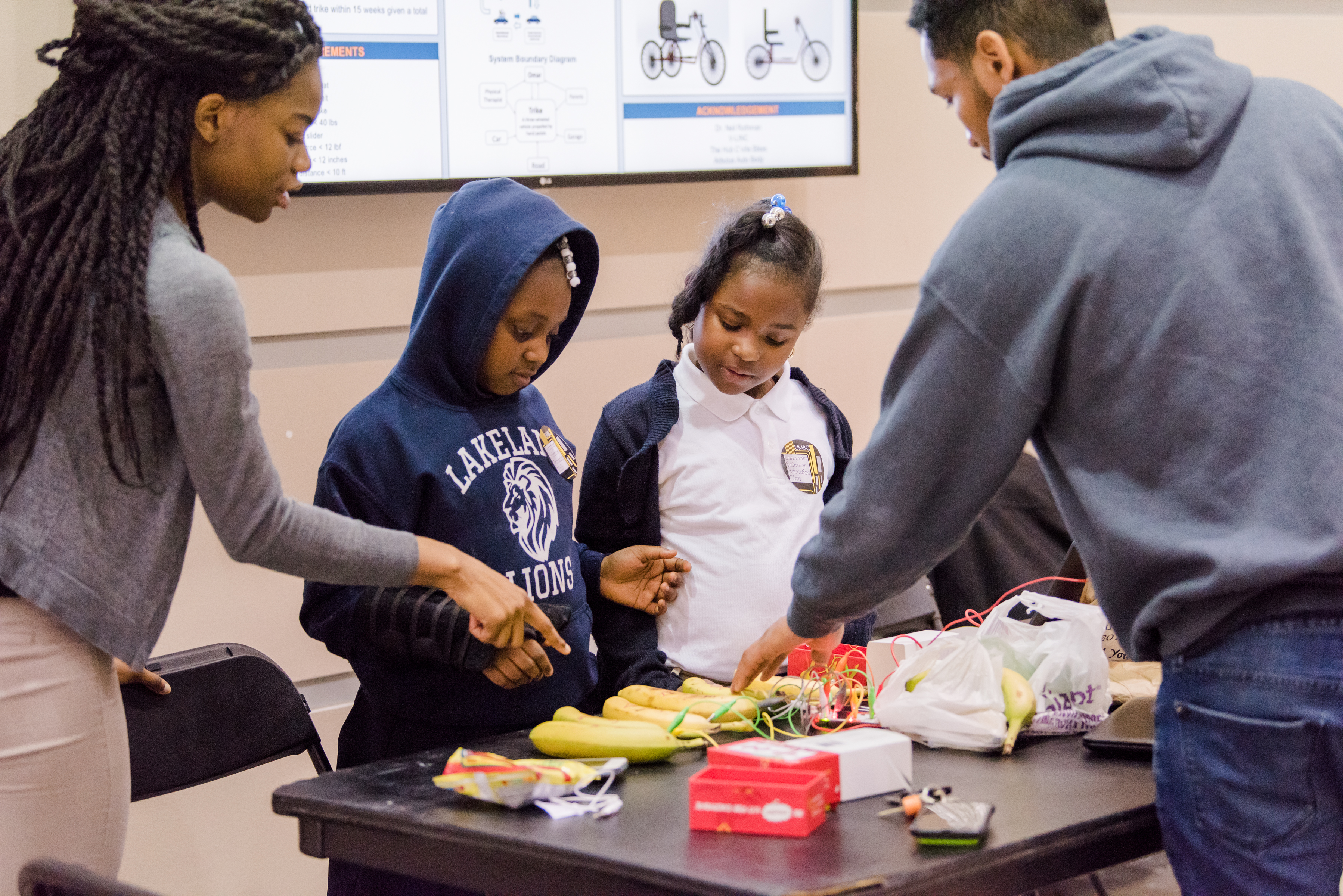
Third- and fourth-grade students from Baltimore’s Lakeland Elementary/Middle School participated in this year’s hands-on activities, including playing music on a banana keyboard. The bananas are connected by wires and when the fruit is touched it completes the circuit and plays a musical note.
UMBC students mentor Lakeland students at the Hour of Code.
“It’s important for UMBC to have an impact in our local community. UMBC is a public university and we are part of the community,” says Fayo Ojo ‘20, computer science, who helped coordinate the event. “Hosting events like this shows that UMBC is committed to education beyond the courses offered here.”
Ojo, treasurer of the Computer Science Education club, right, helped the visiting elementary school students play “Mary Had a Little Lamb” on the banana keyboard. “My favorite part of working with the Lakeland students is seeing how excited they were,” she says.
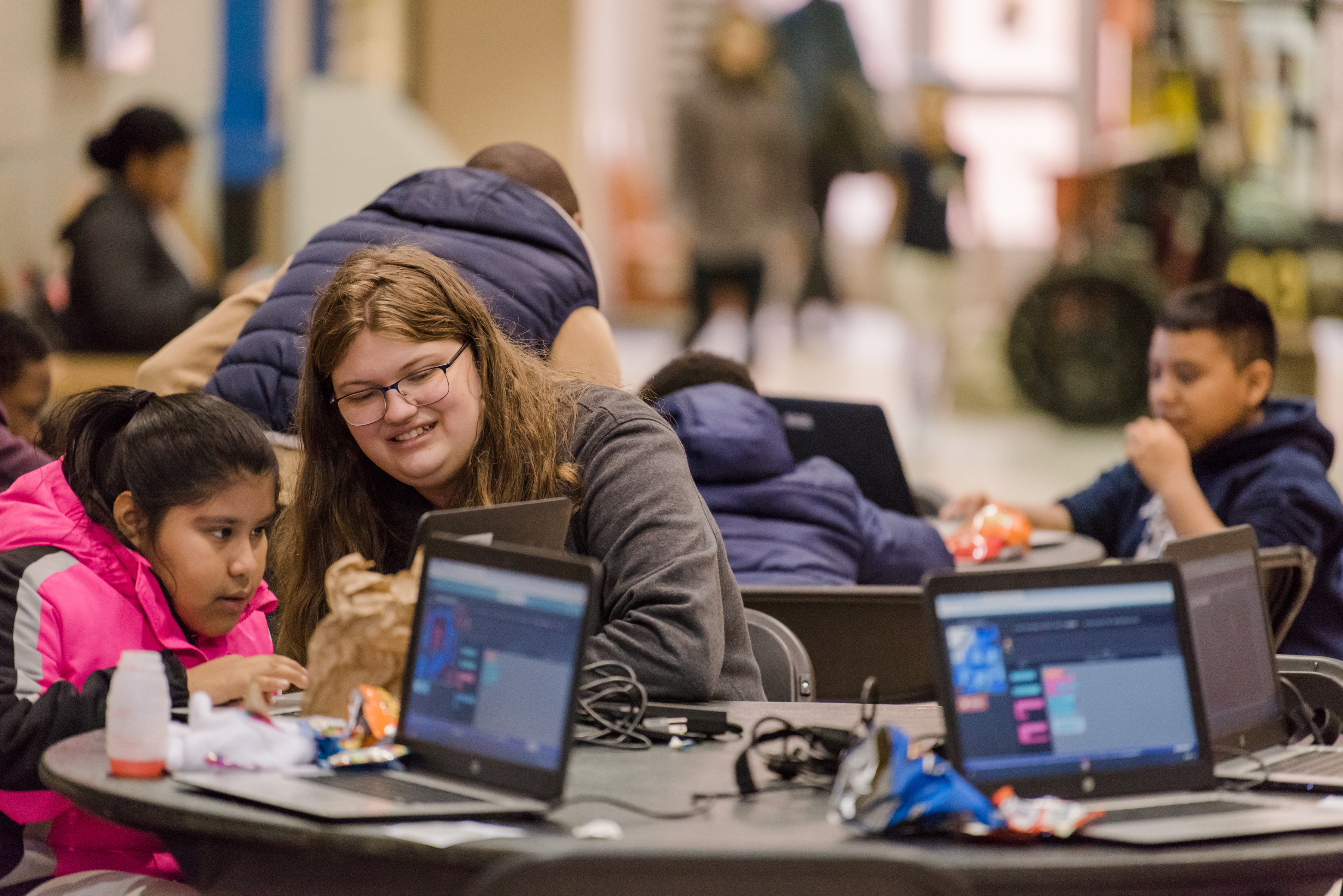
Members of the Computer Science Education club also set up laptops and guided their guests through coding activities, giving them an introduction to the creative work they might do in computing.
A UMBC student guides a Lakeland student through coding activities during the 2018 Hour of Code.
“Most of the students from Lakeland Elementary that visited UMBC for Hour of Code have never been to a college campus before,” says Ojo. She explains, “They received their first glimpse into what post-secondary education has to offer from UMBC. This experience will have a major impact on these students as they matriculate through school and prepare to go to college themselves.”
When it comes to her group’s motivation and broader goals, Ojo shares, “We want to support initiatives that bring programming classes and programs to students at the K-12 level. Working with these students and seeing how excited they were to learn…reminded me why I decided to pursue computer science in the first place: we love to solve problems and we love technology.”
Banner image: A UMBC student guides a Lakeland student through coding activities during the 2018 Hour of Code. All photos by Marlayna Demond ’11 for UMBC.
]]>
UMBC’s Computer Science Education student group recently hosted the third annual Hour of Code event on campus. This popular community event is an opportunity for both local K-12 students and...https://umbc.edu/stories/hour-of-code-brings-baltimore-3rd-and-4th-graders-to-umbc-for-fun-intro-to-computing/https://beta.my.umbc.edu/api/v0/pixel/news/120230/guest@my.umbc.edu/2bcc4d827d4b6bda79df4d7fe8784986/api/pixelceccoeitcseediversityandinclusionscience-and-technologystrategic-planningUMBC News & Magazinehttps://beta.my.umbc.edu/groups/umbc-news-magazinehttps://assets1-beta.my.umbc.edu/system/shared/avatars/groups/000/001/943/24435aa6207c452e7bc15cc74b42c7bb/xsmall.png?1748556657https://assets1-beta.my.umbc.edu/system/shared/avatars/groups/000/001/943/24435aa6207c452e7bc15cc74b42c7bb/original.png?1748556657https://assets2-beta.my.umbc.edu/system/shared/avatars/groups/000/001/943/24435aa6207c452e7bc15cc74b42c7bb/xxlarge.png?1748556657https://assets2-beta.my.umbc.edu/system/shared/avatars/groups/000/001/943/24435aa6207c452e7bc15cc74b42c7bb/xlarge.png?1748556657https://assets3-beta.my.umbc.edu/system/shared/avatars/groups/000/001/943/24435aa6207c452e7bc15cc74b42c7bb/large.png?1748556657https://assets1-beta.my.umbc.edu/system/shared/avatars/groups/000/001/943/24435aa6207c452e7bc15cc74b42c7bb/medium.png?1748556657https://assets2-beta.my.umbc.edu/system/shared/avatars/groups/000/001/943/24435aa6207c452e7bc15cc74b42c7bb/small.png?1748556657https://assets1-beta.my.umbc.edu/system/shared/avatars/groups/000/001/943/24435aa6207c452e7bc15cc74b42c7bb/xsmall.png?1748556657https://assets2-beta.my.umbc.edu/system/shared/avatars/groups/000/001/943/24435aa6207c452e7bc15cc74b42c7bb/xxsmall.png?1748556657UMBC News & Magazine00falseThu, 10 Jan 2019 20:03:43 -0500Room for rent in townhouse2 minute drive from campus, safe neighborhood
My roommate and I are looking for someone to take a room in our townhouse - $500 for rent, utilities separate. House is in a safe, family friendly neighborhood and near plenty of restaurants, giant, banks, etc. Girls only please.
]]>
My roommate and I are looking for someone to take a room in our townhouse - $500 for rent, utilities separate. House is in a safe, family friendly neighborhood and near plenty of restaurants,...https://beta.my.umbc.edu/api/v0/pixel/news/81372/guest@my.umbc.edu/d42fa247697ecc4221135b72ec18d25b/api/pixelClassifiedshttps://beta.my.umbc.edu/groups/classifiedshttps://assets4-beta.my.umbc.edu/system/shared/avatars/groups/000/001/081/27816fed47150f6fda5f96e75013749f/xsmall.png?1434550723https://assets2-beta.my.umbc.edu/system/shared/avatars/groups/000/001/081/27816fed47150f6fda5f96e75013749f/original.png?1434550723https://assets1-beta.my.umbc.edu/system/shared/avatars/groups/000/001/081/27816fed47150f6fda5f96e75013749f/xxlarge.png?1434550723https://assets1-beta.my.umbc.edu/system/shared/avatars/groups/000/001/081/27816fed47150f6fda5f96e75013749f/xlarge.png?1434550723https://assets3-beta.my.umbc.edu/system/shared/avatars/groups/000/001/081/27816fed47150f6fda5f96e75013749f/large.png?1434550723https://assets3-beta.my.umbc.edu/system/shared/avatars/groups/000/001/081/27816fed47150f6fda5f96e75013749f/medium.png?1434550723https://assets3-beta.my.umbc.edu/system/shared/avatars/groups/000/001/081/27816fed47150f6fda5f96e75013749f/small.png?1434550723https://assets4-beta.my.umbc.edu/system/shared/avatars/groups/000/001/081/27816fed47150f6fda5f96e75013749f/xsmall.png?1434550723https://assets3-beta.my.umbc.edu/system/shared/avatars/groups/000/001/081/27816fed47150f6fda5f96e75013749f/xxsmall.png?1434550723Classifieds00trueThu, 10 Jan 2019 18:25:15 -0500Fri, 11 Jan 2019 13:31:22 -0500Missing transponderRoon 241All,
The laptop transponder for room 241 is missing. If you have used the wireless system in the last month, please check your laptop bags to see if it inadvertently was carried away from the room.
Thanks!
]]>
All, The laptop transponder for room 241 is missing. If you have used the wireless system in the last month, please check your laptop bags to see if it inadvertently was carried away from the...https://beta.my.umbc.edu/api/v0/pixel/news/81371/guest@my.umbc.edu/93105502e2bf4b3208c125af96a5e754/api/pixelCGSAhttps://beta.my.umbc.edu/groups/cgsahttps://assets1-beta.my.umbc.edu/system/shared/avatars/groups/000/001/076/791b8be7a85b67b9f4c4cb57f8927fac/xsmall.png?1531066668https://assets4-beta.my.umbc.edu/system/shared/avatars/groups/000/001/076/791b8be7a85b67b9f4c4cb57f8927fac/original.png?1531066668https://assets4-beta.my.umbc.edu/system/shared/avatars/groups/000/001/076/791b8be7a85b67b9f4c4cb57f8927fac/xxlarge.png?1531066668https://assets4-beta.my.umbc.edu/system/shared/avatars/groups/000/001/076/791b8be7a85b67b9f4c4cb57f8927fac/xlarge.png?1531066668https://assets3-beta.my.umbc.edu/system/shared/avatars/groups/000/001/076/791b8be7a85b67b9f4c4cb57f8927fac/large.png?1531066668https://assets2-beta.my.umbc.edu/system/shared/avatars/groups/000/001/076/791b8be7a85b67b9f4c4cb57f8927fac/medium.png?1531066668https://assets2-beta.my.umbc.edu/system/shared/avatars/groups/000/001/076/791b8be7a85b67b9f4c4cb57f8927fac/small.png?1531066668https://assets1-beta.my.umbc.edu/system/shared/avatars/groups/000/001/076/791b8be7a85b67b9f4c4cb57f8927fac/xsmall.png?1531066668https://assets3-beta.my.umbc.edu/system/shared/avatars/groups/000/001/076/791b8be7a85b67b9f4c4cb57f8927fac/xxsmall.png?1531066668CGSA00trueThu, 10 Jan 2019 16:35:24 -0500Using Digital Storytelling to Unlock Grassroots KnowledgePublic talk 2/7 and Digital Storytelling Workshop 2/8
From Personal to Collective: Using Digital Storytelling to Unlock Grassroots Knowledge
Public Talk Thursday, February 7, 2019
4:30 p.m. - 6:00 p.m.
UMBC, Fine Arts Building, Room 427
Hands-on Digital Storytelling Workshop Friday, February 8, 2019 10:00 a.m. - 12:00 p.m.
UMBC, Fine Arts Building, Room 427
Psychologist
Jerome Bruner said that narrative is a “principle by which people
organize their experience in, knowledge about, and transactions with the
social world.” Stories make information more understandable, memorable,
and persuasive, unlocking grassroots knowledge and using the power of
emotions to shape decisions. Digital storytelling has also emerged as an
effective action research method to engage communities in collective
participation and action, grounded in their sense of place and their
distinctive cultural knowledge. As a tool, digital storytelling can
challenge hierarchies of expertise, amplify unheard voices, and convey
important emotions.
Dr. Antonia LiguoriLecturer in Applied Storytelling
School of the Arts, English and Drama
Loughborough University, UK
Arts and Humanities Research Council
(AHRC) Fellow
Smithsonian Center for Learning and
Digital Access
Dr. Antonia Liguori will lead a two-part Inclusion Imperative Humanities Teaching Lab on digital storytelling and community-engaged research.
On Thursday, February 7th, Dr. Liguori will present a public talk on her
journey in co-designing and developing digital storytelling projects
that foster collective participation in knowledge production and
activism. Based on her work with communities across the globe, Dr.
Liguori will offer insight into the potential for digital storytelling
to unlock shared knowledge and address critical issues such as climate
change, public health, and refugee rights. She will reflect on a recent
project that combined digital storytelling with songwriting as a way of
translating individual stories about people’s relationship to place into
something meaningful for the whole community.
Then, on Friday, February 8th, in a hands-on workshop, UMBC faculty and
graduate students will learn some of the key elements of digital
storytelling focused on questions of inclusion and justice. They will
practice storyboarding and editing audio/visual materials as well as
discuss how narrative structure and modes of storytelling vary in the
diverse culture contexts in which we work and live.
Registration is required to attend the workshop. Please register by February 1, 2019.
Through the Inclusion Imperative Program, partners UMBC, Bowie State University, Coppin State University, and Howard University are
cultivating a regional network of scholars, who are committed to
diversity and inclusion in the humanities. Inclusion Imperative Humanities Teaching Labs
introduce faculty and students to new media tools and methods for
community-engaged humanities teaching and learning experiences.
Questions: Vernise Bolden, Inclusion Imperative Program Associate
]]>
From Personal to Collective: Using Digital Storytelling to Unlock Grassroots Knowledge...https://beta.my.umbc.edu/api/v0/pixel/news/81370/guest@my.umbc.edu/714228de7a28378d91674de6d0b0ff6b/api/pixelLanguage, Literacy and Culture Doctoral Programhttps://beta.my.umbc.edu/groups/llchttps://assets4-beta.my.umbc.edu/system/shared/avatars/groups/000/000/537/e594b22cf15b445f7476775aa508e9c3/xsmall.png?1375383725https://assets4-beta.my.umbc.edu/system/shared/avatars/groups/000/000/537/e594b22cf15b445f7476775aa508e9c3/original.jpg?1375383725https://assets3-beta.my.umbc.edu/system/shared/avatars/groups/000/000/537/e594b22cf15b445f7476775aa508e9c3/xxlarge.png?1375383725https://assets1-beta.my.umbc.edu/system/shared/avatars/groups/000/000/537/e594b22cf15b445f7476775aa508e9c3/xlarge.png?1375383725https://assets4-beta.my.umbc.edu/system/shared/avatars/groups/000/000/537/e594b22cf15b445f7476775aa508e9c3/large.png?1375383725https://assets1-beta.my.umbc.edu/system/shared/avatars/groups/000/000/537/e594b22cf15b445f7476775aa508e9c3/medium.png?1375383725https://assets1-beta.my.umbc.edu/system/shared/avatars/groups/000/000/537/e594b22cf15b445f7476775aa508e9c3/small.png?1375383725https://assets4-beta.my.umbc.edu/system/shared/avatars/groups/000/000/537/e594b22cf15b445f7476775aa508e9c3/xsmall.png?1375383725https://assets2-beta.my.umbc.edu/system/shared/avatars/groups/000/000/537/e594b22cf15b445f7476775aa508e9c3/xxsmall.png?1375383725Dresher Center Inclusion Imperative00trueThu, 10 Jan 2019 16:14:08 -0500Cellomics Technology seeks p/t and f/t lab techs!Open to BS/MS/PhDs
Cellonics Technology, LLC, a producer of products and custom services for scientific researches in institutes, biotechnolgy and pharmaceutical companies, seeks a laboratory technician (part-time or full-time) to support the R&D research/product manufacture. Primary responsibility is to perform routine cell culture maintenance including cell transfection.
Required Skills/Abilities: Excellent skills in cell culture. Experience in transfection a plus; minimum 2 years' experience in cell culture
Education: BS, MS or PhD
Eligibility: US Citizenship or US Permanent Resident
UMBCworks ID: 9304613
Application Deadline: March 10, 2019
]]>
Cellonics Technology, LLC, a producer of products and custom services for scientific researches in institutes, biotechnolgy and pharmaceutical companies, seeks a laboratory technician (part-time...https://beta.my.umbc.edu/api/v0/pixel/news/81369/guest@my.umbc.edu/b5c1e9f2682a8b72b4030a8c8570d634/api/pixelCareer Centerhttps://beta.my.umbc.edu/groups/careershttps://assets2-beta.my.umbc.edu/system/shared/avatars/groups/000/000/018/729f2c7eeeab66f50f4ab3677539a585/xsmall.png?1411655278https://assets4-beta.my.umbc.edu/system/shared/avatars/groups/000/000/018/729f2c7eeeab66f50f4ab3677539a585/original.jpg?1411655278https://assets2-beta.my.umbc.edu/system/shared/avatars/groups/000/000/018/729f2c7eeeab66f50f4ab3677539a585/xxlarge.png?1411655278https://assets1-beta.my.umbc.edu/system/shared/avatars/groups/000/000/018/729f2c7eeeab66f50f4ab3677539a585/xlarge.png?1411655278https://assets2-beta.my.umbc.edu/system/shared/avatars/groups/000/000/018/729f2c7eeeab66f50f4ab3677539a585/large.png?1411655278https://assets3-beta.my.umbc.edu/system/shared/avatars/groups/000/000/018/729f2c7eeeab66f50f4ab3677539a585/medium.png?1411655278https://assets3-beta.my.umbc.edu/system/shared/avatars/groups/000/000/018/729f2c7eeeab66f50f4ab3677539a585/small.png?1411655278https://assets2-beta.my.umbc.edu/system/shared/avatars/groups/000/000/018/729f2c7eeeab66f50f4ab3677539a585/xsmall.png?1411655278https://assets2-beta.my.umbc.edu/system/shared/avatars/groups/000/000/018/729f2c7eeeab66f50f4ab3677539a585/xxsmall.png?1411655278Career Centerhttps://assets3-beta.my.umbc.edu/system/shared/thumbnails/news/000/081/369/b1c805789c3b0c36f2b797fc6120deb3/xxlarge.jpg?1547153117https://assets4-beta.my.umbc.edu/system/shared/thumbnails/news/000/081/369/b1c805789c3b0c36f2b797fc6120deb3/xlarge.jpg?1547153117https://assets1-beta.my.umbc.edu/system/shared/thumbnails/news/000/081/369/b1c805789c3b0c36f2b797fc6120deb3/large.jpg?1547153117https://assets1-beta.my.umbc.edu/system/shared/thumbnails/news/000/081/369/b1c805789c3b0c36f2b797fc6120deb3/medium.jpg?1547153117https://assets3-beta.my.umbc.edu/system/shared/thumbnails/news/000/081/369/b1c805789c3b0c36f2b797fc6120deb3/small.jpg?1547153117https://assets1-beta.my.umbc.edu/system/shared/thumbnails/news/000/081/369/b1c805789c3b0c36f2b797fc6120deb3/xsmall.jpg?1547153117https://assets3-beta.my.umbc.edu/system/shared/thumbnails/news/000/081/369/b1c805789c3b0c36f2b797fc6120deb3/xxsmall.jpg?154715311700trueThu, 10 Jan 2019 15:56:53 -0500Thu, 10 Jan 2019 16:18:05 -0500Hour of Code brings Baltimore 3rd and 4th graders to UMBCstudents come to campus for introduction to computing
UMBC’s Computer Science Education
student group recently hosted the third annual Hour of Code event on
campus. This popular community event is an opportunity for both local
K-12 students and current UMBC students in other majors to learn more
about computing through engaging, hands-on activities.
Hour of Code is part of Computer
Science Education Week, an international initiative that aims to
increase the participation underrepresented groups in computing,
including women and people of color. A major aspect of this work is
supporting expanded computer science access for K-12 students.
Third- and fourth-grade students from
Baltimore’s Lakeland Elementary/Middle School participated in this
year’s hands-on activities, including playing music on a banana
keyboard. The bananas are connected by wires and when the fruit is
touched it completes the circuit and plays a musical note.
UMBC students mentor Lakeland students at the Hour of Code.
“It’s important for UMBC to have an impact in our local community. UMBC is a public university and we are part of the community,” says Fayo Ojo
‘20, computer science, who helped coordinate the event. “Hosting events
like this shows that UMBC is committed to education beyond the courses
offered here.”
Ojo, treasurer of the Computer
Science Education club, right, helped the visiting elementary school
students play “Mary Had a Little Lamb” on the banana keyboard. “My favorite part of working with the Lakeland students is seeing how excited they were,” she says.
Members of the Computer Science
Education club also set up laptops and guided their guests through
coding activities, giving them an introduction to the creative work they
might do in computing.
A UMBC student guides a Lakeland student through coding activities during the 2018 Hour of Code.
“Most
of the students from Lakeland Elementary that visited UMBC for Hour of
Code have never been to a college campus before,” says Ojo. She
explains, “They received their first glimpse into what post-secondary
education has to offer from UMBC. This experience will have a major
impact on these students as they matriculate through school and prepare
to go to college themselves.”
When it comes to her group’s
motivation and broader goals, Ojo shares, “We want to support
initiatives that bring programming classes and programs to students at
the K-12 level. Working with these students and seeing how excited they
were to learn…reminded me why I decided to pursue computer science in
the first place: we love to solve problems and we love technology.”
Banner image: A UMBC student guides a Lakeland student through
coding activities during the 2018 Hour of Code. All photos by Marlayna
Demond ’11 for UMBC.
]]>
January 10, 2019 by Megan Hanks UMBC’s Computer Science Education student group recently hosted the third annual Hour of Code event on campus. This popular community event is an...https://news.umbc.edu/hour-of-code-brings-baltimore-3rd-and-4th-graders-to-umbc-for-fun-intro-to-computing/https://beta.my.umbc.edu/api/v0/pixel/news/81367/guest@my.umbc.edu/352835a5a218eddfbede75ab77454562/api/pixelcoeitcseeCollege of Engineering and Information Technologyhttps://beta.my.umbc.edu/groups/retired-95https://assets3-beta.my.umbc.edu/system/shared/avatars/groups/000/000/095/c2a784a6cda726ef5f845e9192adb64b/xsmall.png?1496851664https://assets1-beta.my.umbc.edu/system/shared/avatars/groups/000/000/095/c2a784a6cda726ef5f845e9192adb64b/original.jpg?1496851664https://assets3-beta.my.umbc.edu/system/shared/avatars/groups/000/000/095/c2a784a6cda726ef5f845e9192adb64b/xxlarge.png?1496851664https://assets3-beta.my.umbc.edu/system/shared/avatars/groups/000/000/095/c2a784a6cda726ef5f845e9192adb64b/xlarge.png?1496851664https://assets2-beta.my.umbc.edu/system/shared/avatars/groups/000/000/095/c2a784a6cda726ef5f845e9192adb64b/large.png?1496851664https://assets3-beta.my.umbc.edu/system/shared/avatars/groups/000/000/095/c2a784a6cda726ef5f845e9192adb64b/medium.png?1496851664https://assets3-beta.my.umbc.edu/system/shared/avatars/groups/000/000/095/c2a784a6cda726ef5f845e9192adb64b/small.png?1496851664https://assets3-beta.my.umbc.edu/system/shared/avatars/groups/000/000/095/c2a784a6cda726ef5f845e9192adb64b/xsmall.png?1496851664https://assets2-beta.my.umbc.edu/system/shared/avatars/groups/000/000/095/c2a784a6cda726ef5f845e9192adb64b/xxsmall.png?1496851664College of Engineering and Information Technologyhttps://assets1-beta.my.umbc.edu/system/shared/thumbnails/news/000/081/367/64881bd77f9a3ab0878b4913aba8684a/xxlarge.jpg?1547152501https://assets1-beta.my.umbc.edu/system/shared/thumbnails/news/000/081/367/64881bd77f9a3ab0878b4913aba8684a/xlarge.jpg?1547152501https://assets2-beta.my.umbc.edu/system/shared/thumbnails/news/000/081/367/64881bd77f9a3ab0878b4913aba8684a/large.jpg?1547152501https://assets3-beta.my.umbc.edu/system/shared/thumbnails/news/000/081/367/64881bd77f9a3ab0878b4913aba8684a/medium.jpg?1547152501https://assets1-beta.my.umbc.edu/system/shared/thumbnails/news/000/081/367/64881bd77f9a3ab0878b4913aba8684a/small.jpg?1547152501https://assets1-beta.my.umbc.edu/system/shared/thumbnails/news/000/081/367/64881bd77f9a3ab0878b4913aba8684a/xsmall.jpg?1547152501https://assets3-beta.my.umbc.edu/system/shared/thumbnails/news/000/081/367/64881bd77f9a3ab0878b4913aba8684a/xxsmall.jpg?154715250100falseThu, 10 Jan 2019 15:37:36 -0500

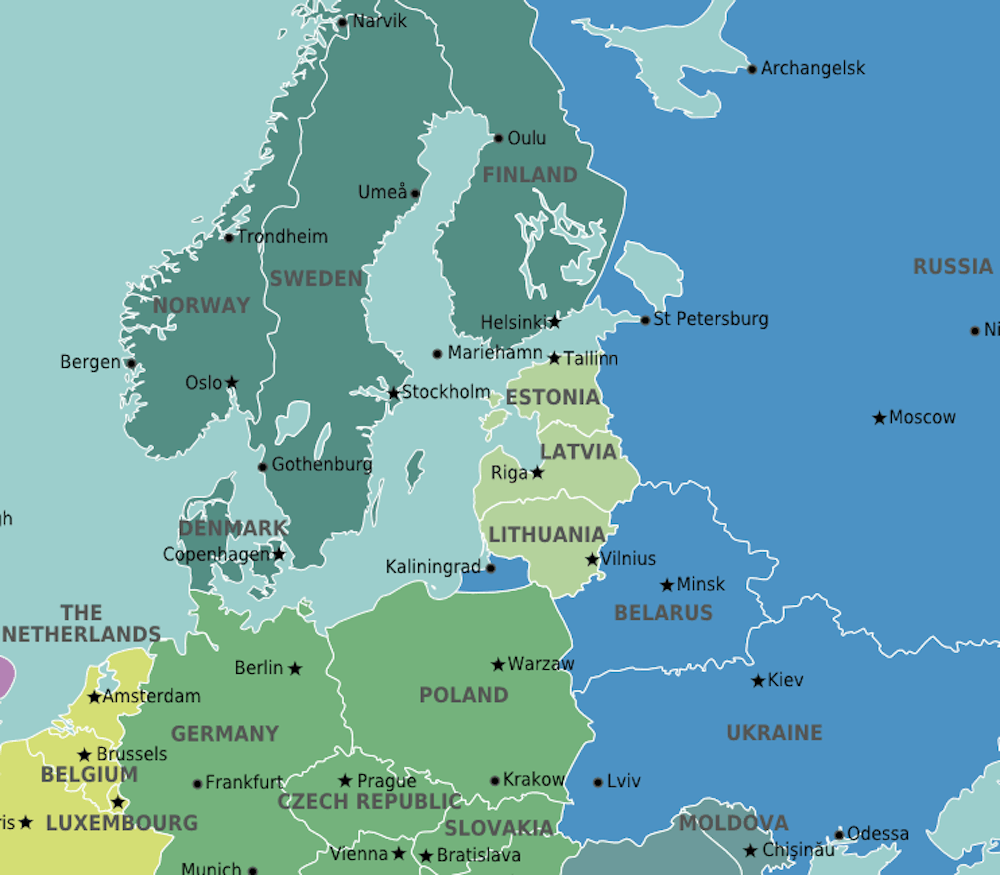 The Baltic Sea region of northern Europe. Estonia, Latvia and Lithuania are in light green in the center, west of Russia in blue. Stefan Ertmann/ Wikimedia Commons, CC BY-SA
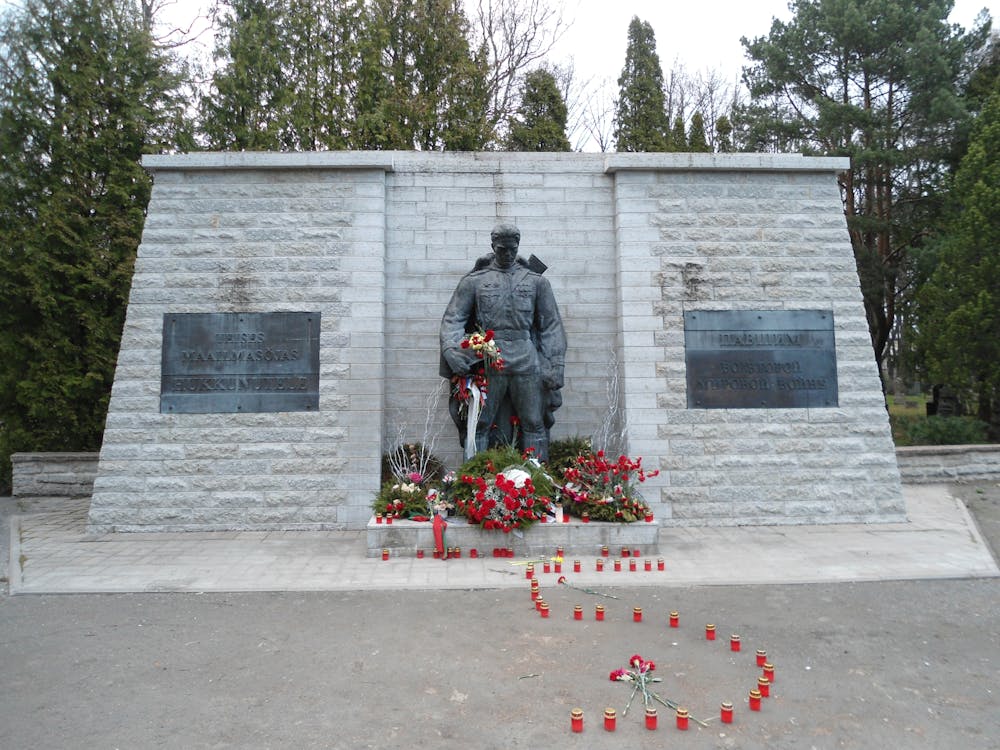 The relocation of the Bronze Soldier of Tallinn sparked a Russian cyberattack on Estonia in 2007.