The Family Connection: Paying it Forward

“To whom much is given, much is required.” Meyerhoff scholars internalize this message, which is introduced during Summer Bridge and is almost as ubiquitous as “Focus, Focus, Focus,” and Langston Hughes’ “Dreams” at Meyerhoff gatherings. For many of the scholars, giving back has become a foundational principle in their lives, as they mentor colleagues, students, and interns in their roles as researchers, medical professionals, biotech entrepreneurs, and more.
This extension of the Meyerhoff program beyond UMBC amplifies its impact. Like a family tree, the DNA for the Meyerhoff program’s values and practices travels through generations of researchers as scholars graduate from UMBC and carry their experiences with the program wherever they go, cultivating the Meyerhoff culture in their new environments. Perhaps no simile is required—members of the Meyerhoff community feel that it is, indeed, a family.
“We truly are a family, full of people who accept and love each other as we are,” says Rhea Brooking-Dixon ’02, M10, biological sciences. After UMBC, she earned her Ph.D. from Duke University in experimental pathology, and today she is a scientist at Booz Allen Hamilton. She is married to Jason Dixon ’02, M10, computer engineering, so for them, Meyerhoff means family in multiple ways.

Families always help each other out, and that stuck with Dixon and Brooking-Dixon after graduation. They remember being asked by advisors at UMBC about participation in a study group, both to receive and give support to their classmates. “That showed us that the Meyerhoff Scholars Program wanted us to consider not just what a community could do for us,” they share, “but what we could also do for our community, whatever the scale, to help everyone develop into their best selves.”
Cultivating each Meyerhoff cohort as a family begins with Summer Bridge, a six-week experience that combines academics and social activities. Students learn together, eat together, and play together, forming bonds that buoy them through their years at UMBC and beyond.
“We’re developing a community. So to generate this concept of a community, they’ve got to have a shared experience,” says Keith Harmon, director of the Meyerhoff Scholars Program. “So a big part of Bridge is doing everything together. You do nothing in Bridge as an individual.”
The mentality of giving back and supporting one’s community has been inherent to the program since its early days. Crystal Watkins-Johansson ’95, M3, biological sciences, earned her M.D./Ph.D. at Johns Hopkins University and now serves as director of the memory clinic in the neuropsychiatry program in the Sheppard Pratt Health System, and as an assistant professor of psychiatry at the Johns Hopkins School of Medicine.
“When we recruit, we don’t talk a lot about Ph.D.s and M.D./Ph.D.s. We talk about legacy,
and we talk about service. We talk about leadership. We talk about being a part of
something that’s bigger than yourself.”
– Keith Harmon, Director, Meyerhoff Scholars Program
“As a graduate of the Meyerhoff Scholars Program at UMBC, I have developed a tradition of mentoring undergraduate and graduate students from the Meyerhoff program,” Watkins-Johansson says, “as the mentoring I received through the program continues to be the foundation of my success.”
Isaac Newton said, “I have only seen farther by standing on the shoulders of giants,” and that phrase, too, has resonated with Meyerhoff Scholars. Erwin Cabrera ’10, M18, biological sciences, shares, “The Meyerhoff staff, program alumni, and UMBC faculty were my giants, so I strive to be a giant for those students who come after me.”
Cabrera’s current role aligns directly with his commitment to mentoring the next generation of biomedical professionals. After earning his Ph.D. at the New York University School of Medicine, he now serves as the associate director for the Research Aligned Mentorship program at Farmingdale State University, a program that provides additional supports—similar in ways to the Meyerhoff Scholars Program—to annual cohorts of Farmingdale students.
For some Meyerhoff scholars, it was the group experience that helped them see their true potential. “Being surrounded by a critical mass of high-achieving African Americans was extremely important to my growth as an individual,” says Kamili (Shaw) Jackson ’97, M5, M.S. ’99, mechanical engineering. “It gave me confidence and humility at the same time.”
Mentoring the next generation of scientists and engineers, and changing their lives in the process, is a worthy goal and a laudable outcome of the Meyerhoff Scholars Program. But the ripple effect goes even farther. Those researchers, many of whom are from underrepresented groups in STEM, bring fresh perspectives and energy to their work, and the results of their efforts can impact an even larger set of people.

“My research experience in Dr. [Michael] Summers’ lab helped me recognize the lasting impact that biomedical research could have on the lives of patients,” shares Chelsea Pinnix ’99, M7, biochemistry and molecular biology. “I began to envision myself as more than a future physician, and instead as a young woman with the potential to heal patients in my clinic and improve medical care for patients that I would never meet through meaningful research.”
As the Meyerhoff Scholars Program enters its fourth decade, the emphasis on paying it forward is just as strong as it was at the program’s founding in 1989. Except now, there already exists a network—a family—of hundreds of Meyerhoff alumni ready to support upcoming students in all that they wish to pursue, which goes far beyond earning a degree (or three).
And that message of changing the world is part of the conversation from the start. Teaching students to think beyond the degree toward thinking about a career where they can make real change in the world, both by doing meaningful research and mentoring others, is an important part of the Meyerhoff program.
“When we recruit, we don’t talk a lot about Ph.D.s and M.D./Ph.D.s.,” Harmon says. “We talk about legacy,
and we talk about service. We talk about leadership. We talk about being a part of something that’s bigger than yourself.”
Learn more about the Meyerhoff Scholars Program at meyerhoff.umbc.edu.
Photos courtesy of the Meyerhoff Scholars Program.
]]>
“To whom much is given, much is required.” Meyerhoff scholars internalize this message, which is introduced during Summer Bridge and is almost as ubiquitous as “Focus, Focus, Focus,” and Langston...
https://umbc.edu/stories/the-family-connection-paying-it-forward/
https://beta.my.umbc.edu/api/v0/pixel/news/120123/guest@my.umbc.edu/e88ea7dfafa01c505ffc020a04c7c694/api/pixel
meyerhoff
mhoff
stories
UMBC News & Magazine
https://beta.my.umbc.edu/groups/umbc-news-magazine
https://assets1-beta.my.umbc.edu/system/shared/avatars/groups/000/001/943/24435aa6207c452e7bc15cc74b42c7bb/xsmall.png?1748556657
https://assets1-beta.my.umbc.edu/system/shared/avatars/groups/000/001/943/24435aa6207c452e7bc15cc74b42c7bb/original.png?1748556657
https://assets2-beta.my.umbc.edu/system/shared/avatars/groups/000/001/943/24435aa6207c452e7bc15cc74b42c7bb/xxlarge.png?1748556657
https://assets2-beta.my.umbc.edu/system/shared/avatars/groups/000/001/943/24435aa6207c452e7bc15cc74b42c7bb/xlarge.png?1748556657
https://assets3-beta.my.umbc.edu/system/shared/avatars/groups/000/001/943/24435aa6207c452e7bc15cc74b42c7bb/large.png?1748556657
https://assets1-beta.my.umbc.edu/system/shared/avatars/groups/000/001/943/24435aa6207c452e7bc15cc74b42c7bb/medium.png?1748556657
https://assets2-beta.my.umbc.edu/system/shared/avatars/groups/000/001/943/24435aa6207c452e7bc15cc74b42c7bb/small.png?1748556657
https://assets1-beta.my.umbc.edu/system/shared/avatars/groups/000/001/943/24435aa6207c452e7bc15cc74b42c7bb/xsmall.png?1748556657
https://assets2-beta.my.umbc.edu/system/shared/avatars/groups/000/001/943/24435aa6207c452e7bc15cc74b42c7bb/xxsmall.png?1748556657
UMBC News & Magazine
0
0
false
Fri, 31 May 2019 19:37:47 -0400
Q&A: Earnestine Baker, Executive Director Emerita, Meyerhoff Scholars Program
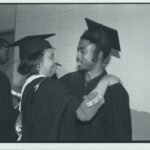
From its very first days, Earnestine Baker, Executive Director Emerita, has been an integral part of the Meyerhoff Scholars Program. UMBC Magazine sat down with Baker to talk about some of the ways she — along with other staff and students — laid the foundation for the program’s successes over the last thirty years.
UMBC Magazine: What are some of your first memories of how the Meyerhoff Scholars Program came to be?
Earnestine Baker: Immediately what comes to mind is the phone call I received from Dr.Hrabowski, inviting me to a meeting in his conference room. I was working in the Office of Financial Aid as the Associate Director of Financial Aid and Scholarships; UMBC did not have a scholarship program at that time. Tom Taylor, the Director of Financial Aid, initiated UMBC’s formal scholarship program.
So in that capacity, I worked to establish the scholarship program for incoming freshmen. One afternoon in the summer of 1988, I received a life-changing call from the Assistant to the Vice Provost, Dr. Freeman Hrabowski, inviting me to come to a meeting to discuss scholarships. I was thinking that we would talk about my work and plans for UMBC’s scholarship program, but instead he laid out his plan for recruiting, to UMBC, African American men who would go on and achieve Ph.D.s in science. He met with Mr. and Mrs. [Robert] Meyerhoff, and he wanted to develop this program. I hesitated a little but finally said “Okay,” and he said, “I want to create the environment that we had when we were undergraduates [at Hampton Institute now Hampton University.]” And when he said that, I knew immediately what he was talking about. … During the meeting he asked if I would look into developing an application for the Meyerhoff Scholars Program. I went back to my office, developed a design and that’s how I began working with the Meyerhoff Scholars Program. By the way, the first application received for the Meyerhoff Scholars Program was from Chester Hedgepeth now an M.D./Ph.D. from the University of Pennsylvania.

UMBC Magazine: How did you initially spread the word about it?
Earnestine Baker: So that’s an excellent question, because what happened after that meeting I thought was very smart of Doc. He sent letters to all the state superintendents of schools, principals, the heads of private and parochial schools, letters to guidance counselors throughout the state, community leaders, inviting them all to come to UMBC for a meeting. During this meeting, he again laid out his plan for the Program; first buy-in approach I thought.
Additionally, we asked students who were the people who made an impact in their lives educationally. And they said, “My teacher in biology,” or “My guidance counselor,” or, “My minister,” “My pastor of my church,” or “Someone down the street.” We collected names and addresses of individuals and invited them also to this meeting, and … asked them to nominate students for the scholarship. From this came the Meyerhoff Nomination Process.
UMBC Magazine: How did folks react to the program at the very beginning?
Earnestine Baker: That’s what was great about this meeting with the superintendents, principal and others …yes we announced the scholarship, but we also wanted support, buy-in, plus community ownership for the Program we were about to launch.
UMBC Magazine: So in a way, you were opening the door to the people who were most likely to make it successful, because someone coming to the meeting was already going to believe in what you’re talking about. That seems like just such a smart move.
Earnestine Baker: Right, it was a very wise decision. We let our leaders in education know that UMBC will provide another opportunity for them to support students whose goal is to increase the number of scientists who will teach and become researchers.
UMBC Magazine: What was it like bringing students into research opportunities for the first time, when you were still figuring pieces of the experience out?
Earnestine Baker: The students were very excited. We knew for them to have a competitive application for graduate and professional schools, they needed strong research experiences, be it in industry or in higher education. Initially, a larger number of students were completing research in industry and not in higher education, at the NIH, National Science Foundation, NSA, and NASA; we had more connections in industry at that time.
At UMBC, the first faculty member to take one of our students in his lab was Dr. Frank Hanson in the Biology Department. I said to Frank, “I need to find a lab placement for one of our students,” and he said, “Well, let’s look at it and see what we can do.”
It took many, many meetings with high schools, universities, federal and state agencies and individuals to get our message “out.” Many of these meetings included Charles “Tot” Woolston – you don’t hear much about his efforts, but he gave tremendously while promoting the Meyerhoff mission and goals. Dr. Phyllis Robinson, Biology Department was extremely helpful in advising the program for internships and graduate school placements. A major breakthrough for research opportunities came when Dr. Hrabowski connected with Leadership Alliance, whose executive office is at Brown University.
Dr. James “Jim” Wyche was the director of the Leadership Alliance as well as a faculty member at Brown. This partnership, provided opportunities for our students to participate in research at the top leading institutions across the nation. There are about 38 schools in the Alliance now. I invited one of the Leadership Alliance faculty members from Harvard University to visit UMBC, meet faculty and the Meyerhoff Scholars. From this meeting – the next two summers, she (the late Dr. Jocelyn Spragg) selected three Meyerhoff Scholars for summer research at Harvard. The Meyerhoffs Scholars were Crystal Watkins M3, Damon Tweedy M4, and Andrew Atiemo M4. Their work was exceptional and created an interest in Meyerhoff Scholars at other top tier universities. This was a very exciting time, and my confirmation that “yes, we can do this.” Jocelyn invited me to visit Harvard while Damon and Andrew were there. She remained a good friend and strong supporter of UMBC and the Meyerhoff Program.
UMBC Magazine: I would love to talk about Summer Bridge, because that is what comes up so often with everyone as a really pivotal moment of the Meyerhoff experience.
Earnestine Baker: I feel Summer Bridge is the key component. It is the beginning stages of becoming a Meyerhoff Scholar and truly understanding the goals of the Program and what it means to work together as a family; the true feeling of the Meyerhoff family. I often say to students “you don’t have to love each other, you don’t have to like each other, but you have to help each other.”
It’s not only about working together as students, but also learning how to work with faculty, staff and administrators; teaching the UMBC way, the Meyerhoff way. Academically, we talked about high expectations and goals. We had regular meetings and talked about how the Program expected students to perform academically, personally, socially … in all aspects of their undergraduate career.
What is critically important, and what we have tried to communicate over the years, is that you cannot be successful in STEM trying to do it alone, nor should you try. Interdependence is taught during Summer Bridge, and it’s very important. Some students’ approach is similar to high school, “I have to do this by myself. I cannot – I don’t – I shouldn’t ask questions, because if I ask questions it shows that I’m not smart, I’m not capable, and I’m not intelligent.” Hence some don’t want to ask questions or reach out for help. Some have the mindset, “It’s me. It’s mine. And that’s the way it’s going to be.” I know it’s a part of their growing-up experience. For some, it’s the first time — hearing when you gain knowledge and achieve you should, and we expect you to, share what you have gained with others. When one wins we all win. When one fails we all fail. In Meyerhoff failure is not an option. Can you imagine the reaction in a calculus class when the lowest grade on a test – let’s say 69 – becomes the grade for everyone in the class? Not happy campers. Over the years I have enjoyed and appreciated the lesson learned in this class; seeing the class come together and work to achieve an “A” was just what I hoped would happen. It’s a powerful lesson and it has been passed forward. During Summer Bridge scholars are expected to move about campus together – a part of the bonding process. I remember once a group of scholars decided to leave their cohort early for lunch. Upon my arrival to the dining hall one of the dining hall staff members reported to me that some Meyerhoffs had arrived early and she knew that they were not supposed to do that. This to me was a wonderful example of institutional buy-in. This staff member knew and supported our mission.
It begins with Summer Bridge, and the lessons learned hopefully will continue. I’m told it continues at the graduate level and in the work place. Summer Bridge is not easy. LaMont (Toliver) and I used to plan, plot, and scheme to make each Meyerhoff co-hort the best they could be. No gaps in the line while walking to class together, 6 a.m. wake-up calls, never late to anything, sit in the front of class … Scholars were not always happy with us, I know, but I hope they realize the reasons and can see and appreciate the benefits. For what we have accomplished over thirty years – “it is worth it.”

UMBC Magazine: What’s it like talking with students about Summer Bridge now, especially those who didn’t initially understand what you were trying to do?
Earnestine Baker: It was a challenge seeing Meyerhoff Scholars go through Summer Bridge and initially not understanding its purpose, not getting it. Sometimes I saw hurt on their faces, or anger, and I said to them, ‘ Just listen. Just listen and you’ll come to understand what it is that we are trying to do.’ … And now I hear – ‘Okay, I’m out. I’ve graduated now, and I get Summer Bridge. I understand’…and they find themselves repeating some of the same principals not only to their students and colleagues, but to their kids…. I feel this part of my life has been so worthwhile. At the end of the day, I exhale and reflect, and I say, ‘Thank you, God.’” Many scholars have expressed their gratitude for my support over the years and I am grateful. But the only thank you I desire is to see them give back to others.
Learn more about the Meyerhoff Scholars Program at meyerhoff.umbc.edu.
Photos, top to bottom, provided by the Meyerhoff Scholars Program: Baker with Lamont Dozier, a member of the second Meyerhoff cohort; Early Meyerhoff students studying; Baker with members of the Meyerhoff Parents Association; Meyerhoff student activity on the Quad.
]]>
From its very first days, Earnestine Baker, Executive Director Emerita, has been an integral part of the Meyerhoff Scholars Program. UMBC Magazine sat down with Baker to talk about some of the...
https://umbc.edu/stories/qa-earnestine-baker-executive-director-emerita-meyerhoff-scholars-program/
https://beta.my.umbc.edu/api/v0/pixel/news/120124/guest@my.umbc.edu/8c3e01aa8723b4daf270895d548e566d/api/pixel
meyerhoff
mhoff
stories
UMBC News & Magazine
https://beta.my.umbc.edu/groups/umbc-news-magazine
https://assets1-beta.my.umbc.edu/system/shared/avatars/groups/000/001/943/24435aa6207c452e7bc15cc74b42c7bb/xsmall.png?1748556657
https://assets1-beta.my.umbc.edu/system/shared/avatars/groups/000/001/943/24435aa6207c452e7bc15cc74b42c7bb/original.png?1748556657
https://assets2-beta.my.umbc.edu/system/shared/avatars/groups/000/001/943/24435aa6207c452e7bc15cc74b42c7bb/xxlarge.png?1748556657
https://assets2-beta.my.umbc.edu/system/shared/avatars/groups/000/001/943/24435aa6207c452e7bc15cc74b42c7bb/xlarge.png?1748556657
https://assets3-beta.my.umbc.edu/system/shared/avatars/groups/000/001/943/24435aa6207c452e7bc15cc74b42c7bb/large.png?1748556657
https://assets1-beta.my.umbc.edu/system/shared/avatars/groups/000/001/943/24435aa6207c452e7bc15cc74b42c7bb/medium.png?1748556657
https://assets2-beta.my.umbc.edu/system/shared/avatars/groups/000/001/943/24435aa6207c452e7bc15cc74b42c7bb/small.png?1748556657
https://assets1-beta.my.umbc.edu/system/shared/avatars/groups/000/001/943/24435aa6207c452e7bc15cc74b42c7bb/xsmall.png?1748556657
https://assets2-beta.my.umbc.edu/system/shared/avatars/groups/000/001/943/24435aa6207c452e7bc15cc74b42c7bb/xxsmall.png?1748556657
UMBC News & Magazine
0
0
false
Fri, 31 May 2019 19:15:49 -0400
UMBC’s Glenn Wolfe develops new method to gauge atmosphere’s ability to clear methane, a potent greenhouse gas
New research by UMBC’s Glenn Wolfe and collaborators is shaping how scientists understand the fate of methane, a potent greenhouse gas, in Earth’s atmosphere.
Of the greenhouse gases, methane has the second greatest overall effect on climate after carbon dioxide. And the longer it stays in the atmosphere, the more heat it traps. That’s why it’s essential for climate models to properly represent how long methane lasts before it’s broken down. That happens when a methane molecule reacts with a hydroxyl radical—an oxygen atom bound to a hydrogen atom, represented as OH—in a process called oxidation. Hydroxyl radicals also destroy other hazardous air pollutants.
“OH is really the most central oxidizing agent in the lower atmosphere. It controls the lifetime of nearly every reactive gas,” explains Wolfe, an assistant research professor at UMBC’s Joint Center for Earth Systems Technology. However, “globally, we don’t have a way to directly measure OH.” More than that, it’s well understood that current climate models struggle to accurately simulate OH. With existing methods, scientists can infer OH at a coarse scale, but there is scant information on the where, when, and why of variations in OH.
New research published in Proceedings of the National Academy of Sciences and led by Wolfe puts scientists on the path to changing that. Wolfe and colleagues have developed a unique way to infer how global OH concentrations vary over time and in different regions. Better understanding of OH levels can help scientists understand how much of the ups and downs in global methane levels are due to changing emissions, such as from oil and natural gas production or wetlands, versus being caused by changing levels of OH.
A flying laboratory
NASA satellites have been measuring atmospheric formaldehyde concentrations for over 15 years. Wolfe’s new research relies on that data, plus new observations collected during NASA’s recent Atmospheric Tomography (ATom) mission. ATom has flown four around-the-world circuits, sampling air with the aid of a NASA research aircraft.
This “flying laboratory,” as Wolfe describes it, collected data on atmospheric formaldehyde and OH levels that illustrates a remarkably simple relationship between the two gases. This did not surprise the scientists, because formaldehyde is a major byproduct of methane oxidation, but this study provides the first concrete observation of the correlation between formaldehyde and OH. The findings also showed that the formaldehyde concentrations the plane measured are consistent with those measured by the satellites. That will allow Wolfe’s team and others to use existing satellite data to infer OH levels throughout most of the atmosphere.
 The “flying laboratory”: Instruments inside the NASA research aircraft used for Glenn Wolfe’s research. Photo courtesy NASA.
“So the airborne measurements give you a ground truth that that relationship exists,” Wolfe says, “and the satellite measurements let you extend that relationship around the whole globe.”
Wolfe, however, is the first to acknowledge that the work to improve global models is far from done. The airplane measured OH and formaldehyde levels over the open ocean, where the air chemistry is relatively simple. It would be more complicated over a forest, and even more so over a city.
While the relationship the researchers determined provides a solid baseline, as most of Earth’s air does, indeed, float above oceans, more work is needed to see how OH levels differ in more complex environments. Potentially, different data from existing NASA satellites, such as those tracking emissions from urban areas or wildfires, could help.
Wolfe hopes to keep refining this work, which he says is at “the nexus of the chemistry and climate research communities. And they’re very interested in getting OH right.”
Getting it right
The current study did consider seasonal variations in OH, by analyzing measurements taken in February and August. “The seasonality is one aspect of this study that’s important,” Wolfe says, “because the latitude where OH is at its maximum moves around.” Considering seasonal shifts in OH concentrations, or even multi-year shifts caused by phenomena like El Niño and La Niña, could be one angle to explore when trying to improve global climate models.
Looking further at OH levels on a global scale using satellite data validated by airplane data could also help scientists refine their models. “You can use the spatial variability and the seasonality to understand at the process level what’s driving OH, and then ask if the model gets that right or not,” Wolfe says. “The idea is to be able to poke at all these features, where we haven’t really had any data to do that with before.”
This new research is one step in the journey to enhancing our understanding of the global climate, even as it is rapidly changing. More accurately understanding how, for example, cutting methane emissions would affect the climate, and how quickly, could even influence policy decisions.
“It’s not perfect. It needs work,” Wolfe says. “But the potential is there.”
Image: The NASA research aircraft used for the ATom mission. Photo by Susan McFadden for NASA.
]]>
New research by UMBC’s Glenn Wolfe and collaborators is shaping how scientists understand the fate of methane, a potent greenhouse gas, in Earth’s atmosphere. Of the greenhouse gases, methane...
https://umbc.edu/stories/umbcs-glenn-wolfe-develops-new-method-to-gauge-atmospheres-ability-to-clear-methane-a-potent-greenhouse-gas/
https://beta.my.umbc.edu/api/v0/pixel/news/120125/guest@my.umbc.edu/67b9b952b762bc4669dd07424b73421d/api/pixel
jcet
physics
research
science-and-technology
UMBC News & Magazine
https://beta.my.umbc.edu/groups/umbc-news-magazine
https://assets1-beta.my.umbc.edu/system/shared/avatars/groups/000/001/943/24435aa6207c452e7bc15cc74b42c7bb/xsmall.png?1748556657
https://assets1-beta.my.umbc.edu/system/shared/avatars/groups/000/001/943/24435aa6207c452e7bc15cc74b42c7bb/original.png?1748556657
https://assets2-beta.my.umbc.edu/system/shared/avatars/groups/000/001/943/24435aa6207c452e7bc15cc74b42c7bb/xxlarge.png?1748556657
https://assets2-beta.my.umbc.edu/system/shared/avatars/groups/000/001/943/24435aa6207c452e7bc15cc74b42c7bb/xlarge.png?1748556657
https://assets3-beta.my.umbc.edu/system/shared/avatars/groups/000/001/943/24435aa6207c452e7bc15cc74b42c7bb/large.png?1748556657
https://assets1-beta.my.umbc.edu/system/shared/avatars/groups/000/001/943/24435aa6207c452e7bc15cc74b42c7bb/medium.png?1748556657
https://assets2-beta.my.umbc.edu/system/shared/avatars/groups/000/001/943/24435aa6207c452e7bc15cc74b42c7bb/small.png?1748556657
https://assets1-beta.my.umbc.edu/system/shared/avatars/groups/000/001/943/24435aa6207c452e7bc15cc74b42c7bb/xsmall.png?1748556657
https://assets2-beta.my.umbc.edu/system/shared/avatars/groups/000/001/943/24435aa6207c452e7bc15cc74b42c7bb/xxsmall.png?1748556657
UMBC News & Magazine
0
0
false
Fri, 31 May 2019 18:02:57 -0400
Dr. Jessica Berman has been named the Lipitz Professor
Jessica Berman, Professor of English and Director of the Dresher Center, has been named the Lipitz Professor of the Arts, Humanities, and Social Sciences for 2019-20.
As the Lipitz Professor, Dr. Berman will work on her current book project, Media Relations: Modernism and Global Radio. In this project, she studies global radio environments and the power of media to create complex transnational and often interlinguistic relationships. A truly global undertaking, Media Relations will connect voices, languages, literatures, and music from India to the Caribbean and from Argentina and Peru to Francophone West Africa.
]]>
Jessica Berman, Professor of English and Director of the Dresher Center, has been named the Lipitz Professor of the Arts, Humanities, and Social Sciences for 2019-20. As the Lipitz Professor,...
https://dreshercenter.umbc.edu/news/?id=84474
https://beta.my.umbc.edu/api/v0/pixel/news/84814/guest@my.umbc.edu/a6934009cd393a42168ce19e7bf66cc9/api/pixel
College of Arts, Humanities, and Social Sciences
https://beta.my.umbc.edu/groups/cahss
https://assets3-beta.my.umbc.edu/system/shared/avatars/groups/000/000/527/9580d8d23af7f51eda1073b791a8c9cf/xsmall.png?1467654860
https://assets4-beta.my.umbc.edu/system/shared/avatars/groups/000/000/527/9580d8d23af7f51eda1073b791a8c9cf/original.png?1467654860
https://assets2-beta.my.umbc.edu/system/shared/avatars/groups/000/000/527/9580d8d23af7f51eda1073b791a8c9cf/xxlarge.png?1467654860
https://assets3-beta.my.umbc.edu/system/shared/avatars/groups/000/000/527/9580d8d23af7f51eda1073b791a8c9cf/xlarge.png?1467654860
https://assets2-beta.my.umbc.edu/system/shared/avatars/groups/000/000/527/9580d8d23af7f51eda1073b791a8c9cf/large.png?1467654860
https://assets3-beta.my.umbc.edu/system/shared/avatars/groups/000/000/527/9580d8d23af7f51eda1073b791a8c9cf/medium.png?1467654860
https://assets4-beta.my.umbc.edu/system/shared/avatars/groups/000/000/527/9580d8d23af7f51eda1073b791a8c9cf/small.png?1467654860
https://assets3-beta.my.umbc.edu/system/shared/avatars/groups/000/000/527/9580d8d23af7f51eda1073b791a8c9cf/xsmall.png?1467654860
https://assets1-beta.my.umbc.edu/system/shared/avatars/groups/000/000/527/9580d8d23af7f51eda1073b791a8c9cf/xxsmall.png?1467654860
College of Arts, Humanities, and Social Sciences
3
0
true
Fri, 31 May 2019 17:58:54 -0400
Basement for Rent. 2 min drive from UMBC, on shuttle route
Very close to campus, all females
I live in a townhouse with 2 other female roommates. We are looking to rent out our basement. It is available starting now and can be extended into the school year if wanted. The house is in a very safe, family friendly neighborhood. Many restaurants and Giant in walking distance. Rent would be $500 a month + utilities. Feel free to reach out if interested.
cell: 240-779-1563
]]>
I live in a townhouse with 2 other female roommates. We are looking to rent out our basement. It is available starting now and can be extended into the school year if wanted. The house is in a...
https://beta.my.umbc.edu/api/v0/pixel/news/84813/guest@my.umbc.edu/40003e26ef32b21d04b731d6ca9b2577/api/pixel
Classifieds
https://beta.my.umbc.edu/groups/classifieds
https://assets4-beta.my.umbc.edu/system/shared/avatars/groups/000/001/081/27816fed47150f6fda5f96e75013749f/xsmall.png?1434550723
https://assets2-beta.my.umbc.edu/system/shared/avatars/groups/000/001/081/27816fed47150f6fda5f96e75013749f/original.png?1434550723
https://assets1-beta.my.umbc.edu/system/shared/avatars/groups/000/001/081/27816fed47150f6fda5f96e75013749f/xxlarge.png?1434550723
https://assets1-beta.my.umbc.edu/system/shared/avatars/groups/000/001/081/27816fed47150f6fda5f96e75013749f/xlarge.png?1434550723
https://assets3-beta.my.umbc.edu/system/shared/avatars/groups/000/001/081/27816fed47150f6fda5f96e75013749f/large.png?1434550723
https://assets3-beta.my.umbc.edu/system/shared/avatars/groups/000/001/081/27816fed47150f6fda5f96e75013749f/medium.png?1434550723
https://assets3-beta.my.umbc.edu/system/shared/avatars/groups/000/001/081/27816fed47150f6fda5f96e75013749f/small.png?1434550723
https://assets4-beta.my.umbc.edu/system/shared/avatars/groups/000/001/081/27816fed47150f6fda5f96e75013749f/xsmall.png?1434550723
https://assets3-beta.my.umbc.edu/system/shared/avatars/groups/000/001/081/27816fed47150f6fda5f96e75013749f/xxsmall.png?1434550723
Classifieds
0
1
true
Fri, 31 May 2019 17:49:13 -0400
UMBC communications team wins CASE writing award for research news coverage
UMBC’s communications team has earned an Excellence in News Writing Award for research, medicine, and science news writing from the Council for Advancement and Support of Education (CASE). UMBC was one of just two universities to receive the award in the mid-Atlantic, CASE’s largest district, representing 700 U.S. and Canadian colleges and independent schools.
The UMBC entry, “Big Reach, Big Impact,” focused on how writers in UMBC’s Office of Institutional Advancement collaborate with partners across the university to produce and distribute stories that resonate with broad audiences. While Retriever Nation is a core audience for UMBC News, articles also often reach news media, organizations that support research, and prospective students, faculty, and staff, who are still getting a sense of what UMBC is all about.
Using new tools to understand nature
“Big Reach, Big Impact” included four articles from diverse research fields.

Sarah Hansen
“Two species of ravens nevermore?”, written by Sarah Hansen, M.S. ’15, biological sciences, highlights a groundbreaking study, almost 20 years in the making, on “speciation reversal” in ravens. This term describes two distinct lineages hybridizing and eventually merging into one.
“We examined genomic data from hundreds of ravens collected across North America,” says Anna Kearns, the study’s first author. She’s a former UMBC postdoc who is now at the Smithsonian Center for Conservation Genomics.
Kearns explains that advances in next-generation genomics have made new findings possible, but there are still major hurdles. She shares, “Integrating all of the results across so many individuals, and from such diverse datasets, has been one of the most challenging aspects of this study.”

Two ravens preening. Photo by John Marzluff.
Joining Kearns in authoring the Nature Communications paper were PI Kevin Omland, professor of biological sciences, and researchers from multiple universities in the U.S. and abroad. In the typical UMBC way, undergraduates played an important role in the research, analyzing mitochondrial DNA. Both Jin Kim ’16, biological sciences, and Hayley Richardson ’17, statistics, are coauthors on the study.
 Kevin Omland
“The bottom line is [speciation reversal] is a natural evolutionary process, and it’s probably happened in hundreds or almost certainly thousands of lineages all over the planet,” explains Omland.
He notes, “One of our biggest goals is to just have people aware of this process, so when they see interesting patterns in their data, they won’t say, ‘That must be a mistake,’ or, ‘That’s too complicated to be correct.’”
The Washington Post, The Guardian, National Geographic, Atlas Obscura, Science Magazine, and several other news outlets covered this research.
UMBC’s CASE award entry also included an article by Hansen on how UMBC physicists discovered that African wildfires are impacting climate in unexpected ways. The study was the work of Zhibo Zhang, associate professor of atmospheric physics, Ph.D. students Chamara Rajapakshe and Zhifeng Yang, and collaborators from across the U.S. and China.
The team examined what happens in clouds when smoke from fires in central and southern Africa is swept westward over the Atlantic Ocean. They used data from a LiDAR system on the International Space Station to solve this highly complex puzzle.

View from a data-collecting aircraft over the Atlantic Ocean, where a layer of smoke is visible above the clouds. Photo from NASA/Kirk Knobelspiesse.
Honoring a collaborative community of scholars

Catalina Sofia Dansberger Duque
Another article in UMBC’s winning entry highlights the research achievements of several history faculty. Written by Catalina Sofia Dansberger Duque, the piece opens by introducing Christy Ford Chapin, associate professor and author of Ensuring America’s Health. After writing her in-depth history of the U.S. health insurance system, Ford Chapin received a Kluge Fellowship to immerse herself in the banking and finance collections of the U.S. Library of Congress.
The article describes that Chapin “loves how historians seek answers buried in documents, archives, museums, libraries, basements, attics and forgotten filing cabinets.”
“We have to be like private investigators,” Chapin told Dansberger Duque. “I was really intimidated by the research aspect early on in my graduate career, but then I fell in love with the hunt for primary sources and the process of putting together pieces of the evidence puzzle.”
 Christy Ford Chapin presents a talk on her book Ensuring America’s Health at UMBC.
Also featured in the article is Meredith Oyen, associate professor, who held a U.S. Holocaust Memorial Museum Fellowship, studying the resettlement of refugees in China after WWII. Oyen followed a paper trail from Shanghai to Taipei, London, and Washington, DC to gather clues on what occurred.
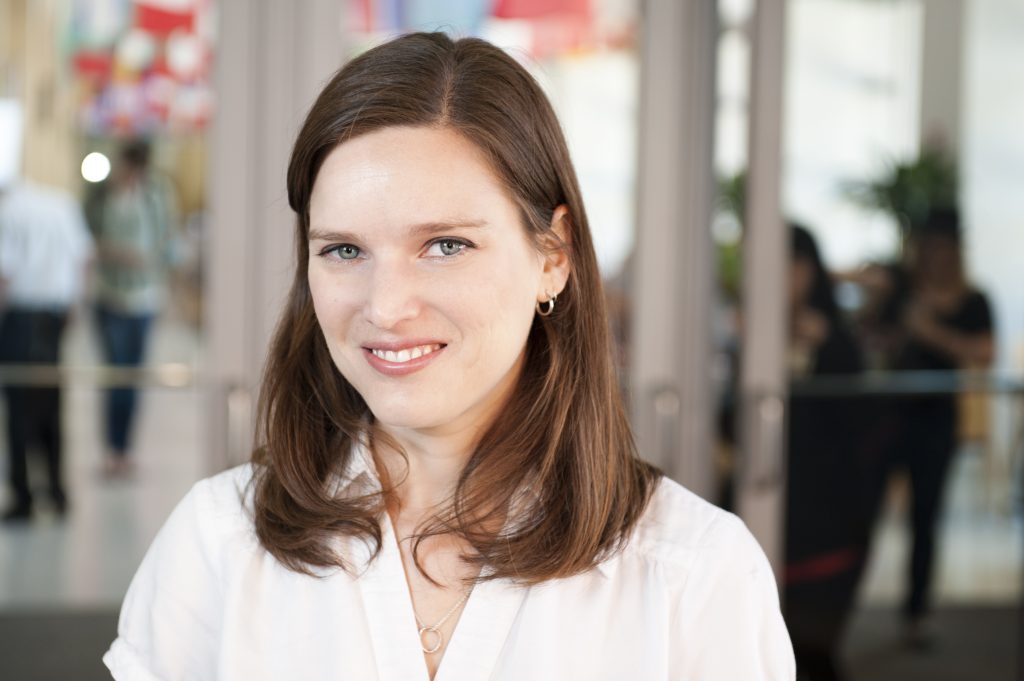
Meredith Oyen in the UMBC Commons.
Marjoleine Kars, associate professor and chair, and Kate Brown, former professor, who is now at MIT, completed Braudel Senior Fellowships at the European University Institute. While there, Kars worked on her book about one of the largest rebellions of enslaved people in Atlantic history. Brown continued her research on the lasting impacts of the Chernobyl nuclear disaster.
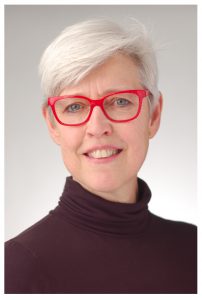 Marjoleine Kars. Photo courtesy of Kars.
What made these faculty fellowships possible? Kars shared, “One core aspect of UMBC comes to mind: our collaborative community of scholars. This is what makes it possible for us to explore unique research opportunities around the world, and what draws us back to UMBC each time, to share what we’ve learned.”
Building international cybersecurity connections

Megan Hanks Mastrola
A series of articles on UMBC’s research impact would be incomplete without highlighting the bwtech@UMBC Research and Technology Park. An article by Megan Hanks Mastrola announced UMBC’s new iCyberCenter, designed to help international cybersecurity companies establish a U.S. presence.
Maryland Governor Larry Hogan announced plans for the center during a trade mission to the United Kingdom in 2017. The iCyberCenter later launched with a focus on intensive training for the executives of select international companies seeking to connect with the U.S. market. The Baltimore Sun, Baltimore Business Journal, and Technical.ly Baltimore covered this important news and later developments in UMBC’s cybersecurity collaborations.

UMBC Pres. Freeman Hrabowski announces the launch of UMBC’s iCyberCenter@bwtech.
Always more stories

Dinah Winnick
Dinah Winnick, director of communications and content strategy and UMBC News editor, accepted the award on behalf of UMBC at the CASE District II conference in Philadelphia earlier this spring. The communications team previously received an Excellence in News Writing Award in 2017 for a series of stories demonstrating UMBC’s joint commitment to research and teaching.
2018 CASE Achievement Awards included articles written through June 2018. Since then, UMBC News and UMBC Magazine have published dozens more articles highlighting a remarkable diversity of UMBC research projects.
Among popular pieces in the last few months are articles on faculty mentors helping undergraduates build their research skills, award-winning aquatic research by Ph.D. students, more inclusive scholarship on medieval women, and laser-based IED detection technology for combat zones.
Sign up on UMBC News to receive UMBC’s weekly Top Stories email.
Featured image: UMBC’s campus in spring 2019. Photos are by Marlayna Demond ’11 for UMBC, unless otherwise noted.
]]>
UMBC’s communications team has earned an Excellence in News Writing Award for research, medicine, and science news writing from the Council for Advancement and Support of Education (CASE). UMBC...
https://umbc.edu/stories/umbc-communications-team-wins-case-writing-award-for-research-news-coverage/
https://beta.my.umbc.edu/api/v0/pixel/news/120126/guest@my.umbc.edu/b8858c9c9d6065b53f23212ba641b0de/api/pixel
community
UMBC News & Magazine
https://beta.my.umbc.edu/groups/umbc-news-magazine
https://assets1-beta.my.umbc.edu/system/shared/avatars/groups/000/001/943/24435aa6207c452e7bc15cc74b42c7bb/xsmall.png?1748556657
https://assets1-beta.my.umbc.edu/system/shared/avatars/groups/000/001/943/24435aa6207c452e7bc15cc74b42c7bb/original.png?1748556657
https://assets2-beta.my.umbc.edu/system/shared/avatars/groups/000/001/943/24435aa6207c452e7bc15cc74b42c7bb/xxlarge.png?1748556657
https://assets2-beta.my.umbc.edu/system/shared/avatars/groups/000/001/943/24435aa6207c452e7bc15cc74b42c7bb/xlarge.png?1748556657
https://assets3-beta.my.umbc.edu/system/shared/avatars/groups/000/001/943/24435aa6207c452e7bc15cc74b42c7bb/large.png?1748556657
https://assets1-beta.my.umbc.edu/system/shared/avatars/groups/000/001/943/24435aa6207c452e7bc15cc74b42c7bb/medium.png?1748556657
https://assets2-beta.my.umbc.edu/system/shared/avatars/groups/000/001/943/24435aa6207c452e7bc15cc74b42c7bb/small.png?1748556657
https://assets1-beta.my.umbc.edu/system/shared/avatars/groups/000/001/943/24435aa6207c452e7bc15cc74b42c7bb/xsmall.png?1748556657
https://assets2-beta.my.umbc.edu/system/shared/avatars/groups/000/001/943/24435aa6207c452e7bc15cc74b42c7bb/xxsmall.png?1748556657
UMBC News & Magazine
0
0
false
Fri, 31 May 2019 16:41:38 -0400
The Family Connection: Paying it Forward
“To whom much is given, much is required.” Meyerhoff scholars internalize this message, which is introduced during Summer Bridge and …
]]>
“To whom much is given, much is required.” Meyerhoff scholars internalize this message, which is introduced during Summer Bridge and …
https://magazine.umbc.edu/the-family-connection-paying-it-forward/
https://beta.my.umbc.edu/api/v0/pixel/news/106082/guest@my.umbc.edu/20e8f24320579fe8ae5438c8f0c37a73/api/pixel
meyerhoff
mhoff
stories
UMBC Magazine
https://beta.my.umbc.edu/groups/umbc-magazine
https://assets1-beta.my.umbc.edu/images/avatars/group/5/xsmall.png?1778114318
https://assets3-beta.my.umbc.edu/images/avatars/group/5/original.png?1778114318
https://assets2-beta.my.umbc.edu/images/avatars/group/5/xxlarge.png?1778114318
https://assets1-beta.my.umbc.edu/images/avatars/group/5/xlarge.png?1778114318
https://assets3-beta.my.umbc.edu/images/avatars/group/5/large.png?1778114318
https://assets3-beta.my.umbc.edu/images/avatars/group/5/medium.png?1778114318
https://assets2-beta.my.umbc.edu/images/avatars/group/5/small.png?1778114318
https://assets1-beta.my.umbc.edu/images/avatars/group/5/xsmall.png?1778114318
https://assets4-beta.my.umbc.edu/images/avatars/group/5/xxsmall.png?1778114318
UMBC Magazine
0
0
false
Fri, 31 May 2019 15:37:47 -0400
Q&A: Earnestine Baker, Executive Director Emerita, Meyerhoff Scholars Program
From its very first days, Earnestine Baker, Executive Director Emerita, has been an integral part of the Meyerhoff Scholars Program. …
]]>
From its very first days, Earnestine Baker, Executive Director Emerita, has been an integral part of the Meyerhoff Scholars Program. …
https://magazine.umbc.edu/qa-earnestine-baker-executive-director-emerita-meyerhoff-scholars-program/
https://beta.my.umbc.edu/api/v0/pixel/news/106083/guest@my.umbc.edu/2d3e844a7f97c5a341830ef5e302be4d/api/pixel
meyerhoff
mhoff
stories
UMBC Magazine
https://beta.my.umbc.edu/groups/umbc-magazine
https://assets1-beta.my.umbc.edu/images/avatars/group/5/xsmall.png?1778114318
https://assets3-beta.my.umbc.edu/images/avatars/group/5/original.png?1778114318
https://assets2-beta.my.umbc.edu/images/avatars/group/5/xxlarge.png?1778114318
https://assets1-beta.my.umbc.edu/images/avatars/group/5/xlarge.png?1778114318
https://assets3-beta.my.umbc.edu/images/avatars/group/5/large.png?1778114318
https://assets3-beta.my.umbc.edu/images/avatars/group/5/medium.png?1778114318
https://assets2-beta.my.umbc.edu/images/avatars/group/5/small.png?1778114318
https://assets1-beta.my.umbc.edu/images/avatars/group/5/xsmall.png?1778114318
https://assets4-beta.my.umbc.edu/images/avatars/group/5/xxsmall.png?1778114318
UMBC Magazine
0
0
false
Fri, 31 May 2019 15:15:49 -0400
Summer Staff Book Club
Are you looking for a way to connect with other UMBC staff members this summer?
Do you enjoy local authors, thrillers, or just looking for a reason to pick up a good book?
Join our faculty and staff book club at the Albin O. Kuhn Library and Gallery!!!!
We will be discussing the book, over snacks, on Wednesday June 26th at 12pm in Library room 259.
Our first book club pick will be Wilde Lake by local author Laura Lippman. Books are on reserve and available for a 28-day loan at the Check Out Desk in the Library.
If you have any questions at all please contact Allison at ajenningsroche@umbc.edu
]]>
Are you looking for a way to connect with other UMBC staff members this summer? Do you enjoy local authors, thrillers, or just looking for a reason to pick up a good book? Join our faculty and...
Flyer
https://assets1-beta.my.umbc.edu/system/shared/attachments/92da88d763681ae503c70b890e1a7187/69fed1ab/news/000/084/810/0df5627695c1aaf2a2be5c738a80f0c3/UMBC Summer (2).pdf?1559326892
https://beta.my.umbc.edu/api/v0/pixel/news/84810/guest@my.umbc.edu/113ff717cad342968c3e5aacfae1809e/api/pixel
Albin O. Kuhn Library & Gallery
https://beta.my.umbc.edu/groups/library
https://assets1-beta.my.umbc.edu/system/shared/avatars/groups/000/000/016/854d6fae5ee42911677c739ee1734486/xsmall.png?1279120404
https://assets2-beta.my.umbc.edu/system/shared/avatars/groups/000/000/016/854d6fae5ee42911677c739ee1734486/original.png?1279120404
https://assets2-beta.my.umbc.edu/system/shared/avatars/groups/000/000/016/854d6fae5ee42911677c739ee1734486/xxlarge.png?1279120404
https://assets4-beta.my.umbc.edu/system/shared/avatars/groups/000/000/016/854d6fae5ee42911677c739ee1734486/xlarge.png?1279120404
https://assets2-beta.my.umbc.edu/system/shared/avatars/groups/000/000/016/854d6fae5ee42911677c739ee1734486/large.png?1279120404
https://assets1-beta.my.umbc.edu/system/shared/avatars/groups/000/000/016/854d6fae5ee42911677c739ee1734486/medium.png?1279120404
https://assets2-beta.my.umbc.edu/system/shared/avatars/groups/000/000/016/854d6fae5ee42911677c739ee1734486/small.png?1279120404
https://assets1-beta.my.umbc.edu/system/shared/avatars/groups/000/000/016/854d6fae5ee42911677c739ee1734486/xsmall.png?1279120404
https://assets1-beta.my.umbc.edu/system/shared/avatars/groups/000/000/016/854d6fae5ee42911677c739ee1734486/xxsmall.png?1279120404
Albin O. Kuhn Library & Gallery
https://assets3-beta.my.umbc.edu/system/shared/thumbnails/news/000/084/810/a6a55efeaa80dc7c7ac653bbc3da861c/xxlarge.jpg?1559326770
https://assets3-beta.my.umbc.edu/system/shared/thumbnails/news/000/084/810/a6a55efeaa80dc7c7ac653bbc3da861c/xlarge.jpg?1559326770
https://assets1-beta.my.umbc.edu/system/shared/thumbnails/news/000/084/810/a6a55efeaa80dc7c7ac653bbc3da861c/large.jpg?1559326770
https://assets4-beta.my.umbc.edu/system/shared/thumbnails/news/000/084/810/a6a55efeaa80dc7c7ac653bbc3da861c/medium.jpg?1559326770
https://assets2-beta.my.umbc.edu/system/shared/thumbnails/news/000/084/810/a6a55efeaa80dc7c7ac653bbc3da861c/small.jpg?1559326770
https://assets2-beta.my.umbc.edu/system/shared/thumbnails/news/000/084/810/a6a55efeaa80dc7c7ac653bbc3da861c/xsmall.jpg?1559326770
https://assets2-beta.my.umbc.edu/system/shared/thumbnails/news/000/084/810/a6a55efeaa80dc7c7ac653bbc3da861c/xxsmall.jpg?1559326770
3
0
true
Fri, 31 May 2019 14:21:51 -0400
UMBC’s Glenn Wolfe develops new method to gauge atmosphere’s ability to clear methane, a potent greenhouse gas
"Hydroxyl radicals control the lifetime of nearly every reactive gas,” including methane, explains Glenn Wolfe. However, “globally, we don’t have a way to directly measure them.” His new research puts scientists on the path to changing that, and toward improving global climate models.
]]>
"Hydroxyl radicals control the lifetime of nearly every reactive gas,” including methane, explains Glenn Wolfe. However, “globally, we don’t have a way to directly measure them.” His new research...
https://news.umbc.edu/umbcs-glenn-wolfe-develops-new-method-to-gauge-atmospheres-ability-to-clear-methane-a-potent-greenhouse-gas/
https://beta.my.umbc.edu/api/v0/pixel/news/107991/guest@my.umbc.edu/9c47d13e5bca8d1a55c088daa0541946/api/pixel
jcet
physics
research
science-and-technology
UMBC News
https://beta.my.umbc.edu/groups/umbc-news
https://assets2-beta.my.umbc.edu/system/shared/avatars/groups/000/001/944/2c79aeea85b1abb37f8cf9fbcdc382b0/xsmall.png?1632921809
https://assets4-beta.my.umbc.edu/system/shared/avatars/groups/000/001/944/2c79aeea85b1abb37f8cf9fbcdc382b0/original.png?1632921809
https://assets4-beta.my.umbc.edu/system/shared/avatars/groups/000/001/944/2c79aeea85b1abb37f8cf9fbcdc382b0/xxlarge.png?1632921809
https://assets1-beta.my.umbc.edu/system/shared/avatars/groups/000/001/944/2c79aeea85b1abb37f8cf9fbcdc382b0/xlarge.png?1632921809
https://assets1-beta.my.umbc.edu/system/shared/avatars/groups/000/001/944/2c79aeea85b1abb37f8cf9fbcdc382b0/large.png?1632921809
https://assets1-beta.my.umbc.edu/system/shared/avatars/groups/000/001/944/2c79aeea85b1abb37f8cf9fbcdc382b0/medium.png?1632921809
https://assets4-beta.my.umbc.edu/system/shared/avatars/groups/000/001/944/2c79aeea85b1abb37f8cf9fbcdc382b0/small.png?1632921809
https://assets2-beta.my.umbc.edu/system/shared/avatars/groups/000/001/944/2c79aeea85b1abb37f8cf9fbcdc382b0/xsmall.png?1632921809
https://assets4-beta.my.umbc.edu/system/shared/avatars/groups/000/001/944/2c79aeea85b1abb37f8cf9fbcdc382b0/xxsmall.png?1632921809
UMBC News
0
0
false
Fri, 31 May 2019 14:02:57 -0400