Presidential Voices Interview Series: Wim Wiewel, Portland State University
AASHE’s Presidential Voices interview series features conversations with heads of higher education institutions who are inspiring sustainability leaders. To recommend a president or chancellor for this series, contact Judy Walton, AASHE’s Chief Publications Officer, at judy@aashe.org.
Wim Wiewel, President of Portland State University, is our guest for this interview. Dr. Wiewel serves on the steering committee of the American College & University Presidents’ Climate Commitment. Under his leadership, PSU received the largest gift in its history, the $25 million James F. and Marion L. Miller Foundation challenge grant for sustainability. In 2011, the university was awarded an AASHE STARS Gold rating. Dr. Wiewel’s books include Global Universities and Urban Development and The University as Urban Developer. He holds degrees in sociology and urban planning from the University of Amsterdam in the Netherlands and a Ph.D. in sociology from Northwestern University.
Judy Walton: In 2008, soon after arriving at Portland State, you announced that a $25 million, 10-year challenge grant from the James F and Marion L Miller Foundation (at that time the largest single gift for sustainability in higher education) would be put toward sustainability research, engagement, and education. Why was sustainability chosen as the focus, and in what ways has the Miller grant made an impact?
Wim Wiewel: The Miller Foundation wanted to make a long-term catalytic investment in our region, via education. They saw Portland State as a natural partner, because of our mission of community engagement. We convinced them that sustainability was where we could make the biggest impact. 
At that time, PSU had been working on various initiatives under the banner of “sustainability” for nearly a decade. Sustainability is something that emerged very organically at the institution, building on strong programs in urban studies and planning, environmental science, interdisciplinary approaches to curricula, and our location in a region that values the sustainability ethos.
With the Miller Foundation investment, we were able to accelerate and amplify those efforts, in part by developing a university-wide infrastructure for sustainability activities that enhance the student experience, expand faculty excellence, and strengthen community engagement. Since then we’ve experienced rapid growth in scope and ambition, and have learned a lot along the way.
When we first put out a request for proposals from faculty, we had nearly 100 responses. That showed the level of excitement around this topic (the funding helped of course).
I’d say that we’re now positioned to effectively implement programming, expand partnerships both within and outside the university, and really position ourselves as a leader in the field.
JW: What is your role in the American College & University Presidents’ Climate Commitment, and what are you working on lately with your ACUPCC colleagues? What are PSU’s own climate targets?
WW: I’m a member of the ACUPCC Steering Committee. This is such an impressive organization: on a totally volunteer basis over 600 colleges and universities have developed detailed plans to cut down on their carbon emissions. It’s in the best spirit of American grassroots efforts, without any governmental directive or regulation. ACUPCC assists universities in reaching their greenhouse goals; educating the public about the threat of climate change; and developing plans to adapt to the climate change that’s already happening.
As an ACUPCC signatory, PSU has committed to reaching net-zero greenhouse gas emissions by 2040. We focus on a number of areas: Buildings and energy are major contributors to our carbon footprint. We’re increasing energy from local and renewable sources, upgrading HVAC systems and a closed loop energy system, and changing how we schedule these buildings to consolidate usage and increase efficiencies.
Although we now have about 3,000 students living on campus, PSU is still primarily a commuter campus. We’re right downtown, and space is tight, so we’ve worked hard to get students, faculty, and staff out of their cars and onto transit—less than 25 percent drive alone. Our campus is the number one transit destination in the metro system, served by bus, light rail and streetcar. We have partnerships with companies like ZipCar on campus, for those who need a car occasionally, and are constantly installing new bike racks and parking facilities for the growing number of cyclists.
We continue to work on diverting waste from the landfill through improved recycling, expanded composting, and education campaigns. My office is in a nine-story building, and volunteers recently conducted a waste audit—literally digging through two days’ worth of garbage, quantifying the results, and then running an education campaign on how the building occupants performed. We compost and recycle, but we also throw out a lot of empty Starbucks cups. So, there’s room for improvement.
JW: Congratulations on receiving the 2012 inaugural Presidential Leadership Award from the U.S. Green Building Council's Center for Green Schools. What key projects or policies on your campus led to this award?
WW: I had the pleasure of accepting this award at the GreenBuild conference—which is just an incredible event if you’ve never been, with something on the order of 40,000 attendees from all over the world. This award recognizes the hard work and commitment of our campus to sustainability, through operations, capital projects, research, and community outreach.
PSU is home to eight LEED-certified buildings, including the Platinum Lincoln Hall, which I’ll describe later. We’re partners with Oregon Health Sciences University and Oregon State University in a new Collaborative Life Sciences Building now under construction, with a goal of LEED Platinum. When it opens in fall 2013, it will be the largest academic building ever built in Oregon. We’re also assessing some of our current properties for LEED:EB (Existing Buildings) designation.
You can see green design all around campus. The new Shattuck Ecological Learning Plaza is a stormwater and “living wall” demonstration project that was collaboratively designed by architecture and engineering students and faculty. Students can monitor the performance of different commercially available planting systems here, and it’s also just a nice space to walk through.
As an an urban campus, we have 50 blocks comprised primarily of charming, hand-me-down facilities. An example is Lincoln Hall - which I mentioned earlier - a turn-of-the-century high school now home to our performing arts programs. Through a massive renovation, we transformed the run-down building into a LEED Platinum certified facility that’s helping us recruit and retain quality students and faculty while conserving resources.
Another model green building on campus is The Broadway, a mixed-use housing facility, rated LEED Silver. At the time it was built (in 2004) the ecoroof on top was the largest in Portland, at 20,000 square feet. Students and faculty have been monitoring the roof’s performance over time to get a better understanding of how green design functions.
JW: PSU’s motto is “Let Knowledge Serve the City” and it’s located right in downtown Portland. In what ways is PSU advancing sustainability in the city?
 WW: One example is Electric Avenue, a research and technology showcase that features several of the latest EV charging stations along one city block on campus. It gives commuters a spot to plug in their hybrid and electric vehicles, and it’s part of a larger research initiative around EV use, adoption, and driver behavior. We’re working with government, utilities, and private companies to help define a roadmap for sustainability mobility, while supporting an industry that’s growing here in Oregon.
Another initiative is the Green Modular Classroom Partnership, which started with a couple of our architecture faculty—Margarette Leite and Sergio Palleroni—who saw portable classrooms as a low-cost, high-impact way to bring green design to schools. Traditional portables are short-term solutions to over-crowding that end up in use for decades. They’re poorly lit, energy inefficient, and loaded with off-gassing chemicals. Working with students, Leite and Palleroni designed an environmentally friendly alternative. Since then, they’ve partnered with schools, industry, and the state to begin manufacturing these. They brought a prototype to GreenBuild this year, and now have a couple dozen on order for schools in Oregon and Washington.
Our School of Business Administration’s Impact Entrepreneurs program helps bring social and environmental change through the power of business. One of their initiatives is the Social Innovation Incubator, which gives local start-ups a crash course in building skills, strategies and networks necessary to bring their ideas to scale. The program supports student learning, local business, and social causes.
Impact Entrepreneurs also helped connect PSU with the Ashoka University program, which has since designated PSU as an official Changemaker Campus.
JW: Last spring I taught a class at PSU on “Sustainable Cities,” and you graciously accepted an invitation to give a guest lecture. Students were not only inspired by your talk, but were touched that you made time for them (thank you again!). What are some other ways you get involved with students and faculty on sustainability?
WW: This past year we established the Sustainable Drinking Water Task Force with students in PSU's Take Back the Tap campaign, which includes students, staff, and faculty. The goals are simple: increase the availability of clean and free water while decreasing consumption of bottled water. As president, I don’t have a magic wand that says, “Let there be sustainability,” but I can say, “If you’re hosting a meeting on campus, serve tap water.” Portland has one of the nation’s cleanest municipal water supplies, and it costs about three cents per gallon.
Initiatives that lack support from leadership don’t go very far—that’s true of large organizations in academia, business, or government. I didn’t bring sustainability to PSU, but it’s one of the primary reasons I took the position of president, and I’ve tried to create and maintain a space for it to flourish, so I talk about it all the time. Having $25 million in seed funding has helped create that space as well.
JW: What would you say are the biggest challenges to advancing sustainability in higher education?
WW: In short: the chronic instability of funding from the state of Oregon.
With no sales tax, and capped property taxes, the state relies on income taxes for biennial budget planning. So, economists make their best guesses on how much money we’ll have in the next two years. In a declining economy, we may be forced to make cuts 18 months into our two-year budget. But if they underestimate revenues by more than 2 percent, the state sends that surplus back to taxpayers.
These ongoing revisions are a challenge to long-term investment commitments. But the general trend is a public divestment in higher education. We now get about 12 percent of our funding from the state. That has shifted the burden to students, who make up for it by working and taking fewer classes, and going into debt.
Another challenge is, we’re victims of our own (modest) success—as a university and as a community here in Portland. We’ve accomplished some of the “easy” stuff, and now we’re having to reach a little higher to pick the fruit.
There are also limits to how broadly we define (and fund) “sustainability”— it’s not a fit for everyone’s teaching or research agenda. Sustainability is an important perspective, but it’s a means to our mission, not the meaning of the mission.
JW: What would you like to see accomplished next in terms of sustainability at PSU?
WW: We’ve put a lot of effort into building an infrastructure of support for these key initiatives, with our Institute for Sustainable Solutions serving as the hub and heart of sustainability on campus. We’ve identified three focal areas for research—urban sustainability, ecosystem services, and social determinants of health—that best leverage our location and expertise.
We’re also looking at ways to scale sustainability ideas and efforts. PSU is part of a group of public, private, and nonprofit organizations working toward a regional economic “greenprint” that will position the Portland-Vancouver metro area as a leader in clean technology.
For our students, these economic concerns are more personal—will I find a job after graduating? Can I afford these loans? Part of the Miller Foundation money has gone to support career pathways to green careers, with advising and internship opportunities that help students land jobs in their fields of interest.
We’ll continue to integrate operations, research, and scholarships in ways that improve the campus and enhance the student experience. Our Climate Action Plan gives us a number of opportunities for that.
On the teaching side, we’re concerned with delivery and financial models for how we continue to grow and meet statewide education objectives while limiting our carbon footprint. To that end, we’ve launched a major initiative, ReTHINK PSU, that’s exploring new ideas and approaches to education delivery. We’re seeing disruptive innovation in higher education—such as Massive Open Online Courses (MOOCs) that offer content for free from the Harvards and MITs to anyone with an Internet connection. In an approach similar to the way we launched our sustainability initiatives, we’ve asked faculty to put forth their best ideas on adapting to and capitalizing on this changing environment. We’ll fund the most promising of the more than 160 proposals, and see where they take us.
I’d say we’re enjoying the blessing and the curse of living in interesting times.
JW: What do you do in your free time?
WW: One of the most wonderful things about Oregon is its amazing natural beauty. Over the last four-and-a-half years my wife Alice and I have traveled all across the state, rafted, and camped in the mountains and along the coast - and we often spend weekends (if we can get away) in a cottage on the coast. But we also attend lots of performances and games in town, and like any president I have lots of receptions and dinners with friends and donors. Portland is one of the most liveable cities in the world, and PSU’s commitment to sustainability is helping to keep it that way.
]]>
AASHE’s Presidential Voices interview series features conversations with heads of higher education institutions who are inspiring sustainability leaders. To recommend a president or chancellor...
http://feedproxy.google.com/~r/CampusSustainabilityPerspectives/~3/d7n-n5h9Ihc/presidential-voices-interview-series-wim-wiewel-portland-state-university
https://beta.my.umbc.edu/api/v0/pixel/news/24580/guest@my.umbc.edu/6d828bfca26b132b3a16d6302da4ca46/api/pixel
interviews
presidents-and-chancellors
Sustainability Matters at UMBC
https://beta.my.umbc.edu/groups/sustainability
https://assets1-beta.my.umbc.edu/system/shared/avatars/groups/000/000/086/91091ac32f525d88daa6d6b721420ac1/xsmall.png?1586269437
https://assets3-beta.my.umbc.edu/system/shared/avatars/groups/000/000/086/91091ac32f525d88daa6d6b721420ac1/original.png?1586269437
https://assets4-beta.my.umbc.edu/system/shared/avatars/groups/000/000/086/91091ac32f525d88daa6d6b721420ac1/xxlarge.png?1586269437
https://assets2-beta.my.umbc.edu/system/shared/avatars/groups/000/000/086/91091ac32f525d88daa6d6b721420ac1/xlarge.png?1586269437
https://assets2-beta.my.umbc.edu/system/shared/avatars/groups/000/000/086/91091ac32f525d88daa6d6b721420ac1/large.png?1586269437
https://assets4-beta.my.umbc.edu/system/shared/avatars/groups/000/000/086/91091ac32f525d88daa6d6b721420ac1/medium.png?1586269437
https://assets4-beta.my.umbc.edu/system/shared/avatars/groups/000/000/086/91091ac32f525d88daa6d6b721420ac1/small.png?1586269437
https://assets1-beta.my.umbc.edu/system/shared/avatars/groups/000/000/086/91091ac32f525d88daa6d6b721420ac1/xsmall.png?1586269437
https://assets3-beta.my.umbc.edu/system/shared/avatars/groups/000/000/086/91091ac32f525d88daa6d6b721420ac1/xxsmall.png?1586269437
UMBC SUSTAINABILITY
0
0
false
Fri, 22 Feb 2013 13:35:01 -0500
Fri, 22 Feb 2013 13:35:01 -0500
47 Metric Tons of Greenhouse Gas Reductions from recycling
Recyclemania sucesses making a difference in our CO2 levels!
In our 3rd week of Recyclemania
UMBC's Cumulative Greenhouse Gas Reductions:
47 Metric Tons of CO2 Equivalent,
or 29 cars off the road,
or the energy consumption of 13 households
![]()
Want more? http://www.recyclemaniacs.org/scoreboard/participating-schools/list?geo_aa=MD&node_id=9738
]]>
In our 3rd week of Recyclemania UMBC's Cumulative Greenhouse Gas Reductions: 47 Metric Tons of CO2 Equivalent, or 29 cars off the road, or the energy consumption of 13 households Want...
https://beta.my.umbc.edu/api/v0/pixel/news/24530/guest@my.umbc.edu/406108fdb516b43839666592cb471296/api/pixel
Sustainability Matters at UMBC
https://beta.my.umbc.edu/groups/sustainability
https://assets1-beta.my.umbc.edu/system/shared/avatars/groups/000/000/086/91091ac32f525d88daa6d6b721420ac1/xsmall.png?1586269437
https://assets3-beta.my.umbc.edu/system/shared/avatars/groups/000/000/086/91091ac32f525d88daa6d6b721420ac1/original.png?1586269437
https://assets4-beta.my.umbc.edu/system/shared/avatars/groups/000/000/086/91091ac32f525d88daa6d6b721420ac1/xxlarge.png?1586269437
https://assets2-beta.my.umbc.edu/system/shared/avatars/groups/000/000/086/91091ac32f525d88daa6d6b721420ac1/xlarge.png?1586269437
https://assets2-beta.my.umbc.edu/system/shared/avatars/groups/000/000/086/91091ac32f525d88daa6d6b721420ac1/large.png?1586269437
https://assets4-beta.my.umbc.edu/system/shared/avatars/groups/000/000/086/91091ac32f525d88daa6d6b721420ac1/medium.png?1586269437
https://assets4-beta.my.umbc.edu/system/shared/avatars/groups/000/000/086/91091ac32f525d88daa6d6b721420ac1/small.png?1586269437
https://assets1-beta.my.umbc.edu/system/shared/avatars/groups/000/000/086/91091ac32f525d88daa6d6b721420ac1/xsmall.png?1586269437
https://assets3-beta.my.umbc.edu/system/shared/avatars/groups/000/000/086/91091ac32f525d88daa6d6b721420ac1/xxsmall.png?1586269437
UMBC SUSTAINABILITY
https://assets4-beta.my.umbc.edu/system/shared/thumbnails/news/000/024/530/56bc2ffafe5268122fb8c00807dea91f/xxlarge.jpg?1361549735
https://assets2-beta.my.umbc.edu/system/shared/thumbnails/news/000/024/530/56bc2ffafe5268122fb8c00807dea91f/xlarge.jpg?1361549735
https://assets1-beta.my.umbc.edu/system/shared/thumbnails/news/000/024/530/56bc2ffafe5268122fb8c00807dea91f/large.jpg?1361549735
https://assets3-beta.my.umbc.edu/system/shared/thumbnails/news/000/024/530/56bc2ffafe5268122fb8c00807dea91f/medium.jpg?1361549735
https://assets3-beta.my.umbc.edu/system/shared/thumbnails/news/000/024/530/56bc2ffafe5268122fb8c00807dea91f/small.jpg?1361549735
https://assets4-beta.my.umbc.edu/system/shared/thumbnails/news/000/024/530/56bc2ffafe5268122fb8c00807dea91f/xsmall.jpg?1361549735
https://assets1-beta.my.umbc.edu/system/shared/thumbnails/news/000/024/530/56bc2ffafe5268122fb8c00807dea91f/xxsmall.jpg?1361549735
4
0
true
Fri, 22 Feb 2013 11:16:30 -0500
Fri, 22 Feb 2013 11:17:20 -0500
Apply for a Campus Ecology Fellowship Grant by March 31st
With National Wildlife Federation’s Campus Ecology Program
Calling all student environmental leaders!
Are you looking to take your environmental leadership to the next level?
National Wildlife Federation’s Campus Ecology Program is currently accepting applications for our 2013 class of Campus Ecology Fellows. 
NWF’s Campus Ecology Fellows confront climate change on their campuses and help to educate andengage the campus community on
climate action solutions. Monetary fellowship grants are awarded to undergraduate and graduate students working with members of the faculty, staff, or administration on projects designed to help address climate change impacts and to protect wildlife and habitat on campus and beyond. In addition to a modest grant, Fellows also receive project support, leadership development, recognition of their accomplishments and other perks.
This year’s Fellows will have the unique opportunity to work with one of four of NWF’s crucial “Keep The Wild Alive” campaigns:
•Stopping Expansion of Dirty Energy
•Safeguarding Wildlife and Habitat in the Appalachian Forests
•Protecting Wildlife in Urban and Suburban Habitats
•Clean Energy Solutions
Please visit www.nwf.org/Fellows to learn more and access application materials
Don’t delay! Applications are due March 31st!
]]>
Calling all student environmental leaders! Are you looking to take your environmental leadership to the next level? National Wildlife Federation’s Campus Ecology Program is currently accepting...
http://www.nwf.org/fellows
https://beta.my.umbc.edu/api/v0/pixel/news/24476/guest@my.umbc.edu/007d01ed86d1c2417daea5e8677752b7/api/pixel
Sustainability Matters at UMBC
https://beta.my.umbc.edu/groups/sustainability
https://assets1-beta.my.umbc.edu/system/shared/avatars/groups/000/000/086/91091ac32f525d88daa6d6b721420ac1/xsmall.png?1586269437
https://assets3-beta.my.umbc.edu/system/shared/avatars/groups/000/000/086/91091ac32f525d88daa6d6b721420ac1/original.png?1586269437
https://assets4-beta.my.umbc.edu/system/shared/avatars/groups/000/000/086/91091ac32f525d88daa6d6b721420ac1/xxlarge.png?1586269437
https://assets2-beta.my.umbc.edu/system/shared/avatars/groups/000/000/086/91091ac32f525d88daa6d6b721420ac1/xlarge.png?1586269437
https://assets2-beta.my.umbc.edu/system/shared/avatars/groups/000/000/086/91091ac32f525d88daa6d6b721420ac1/large.png?1586269437
https://assets4-beta.my.umbc.edu/system/shared/avatars/groups/000/000/086/91091ac32f525d88daa6d6b721420ac1/medium.png?1586269437
https://assets4-beta.my.umbc.edu/system/shared/avatars/groups/000/000/086/91091ac32f525d88daa6d6b721420ac1/small.png?1586269437
https://assets1-beta.my.umbc.edu/system/shared/avatars/groups/000/000/086/91091ac32f525d88daa6d6b721420ac1/xsmall.png?1586269437
https://assets3-beta.my.umbc.edu/system/shared/avatars/groups/000/000/086/91091ac32f525d88daa6d6b721420ac1/xxsmall.png?1586269437
UMBC SUSTAINABILITY
0
0
true
Thu, 21 Feb 2013 14:27:36 -0500
Divestment at Unity College
The below blog article was originally published on the Unity College Sustainability Monitor blog. Jesse works as the Sustainability Director at Unity College in Unity, Maine.
We’ve gotten a lot of deserved attention for our recent fossil fuel divestment announcement. By now there are nearly three hundred (and climbing) divestment campaigns – mostly student-led – at colleges all over the country. The aim, as you no doubt know by now, is to keep our endowment money from supporting the fossil fuel industry through stock purchases or other financial investment. As a college fully dedicated to sustainability science education that meets climate change head on, our Board of Trustees and administration have asserted that we cannot directly support an industry that has as its core business model, the destruction of the planet. You can read all about the decision to divest on Unity’s website. But let’s explore below what this actually means for the College.
Endowment Basics: Stewardship of the endowment is a primary function of the College’s Board of Trustees; they make sure it’s invested wisely to support the central aim of the institution in perpetuity – namely, providing an education for our students. We don’t spend the endowment directly on operations at the College. Rather, we invest the money in stocks and funds, and use the profitable return on those investments to offset operating expenses. A big chunk of those expenses for us – more than $4 million – is direct financial aid for students. With our 2011 endowment gift of $10 million, we expect about half a million dollars of income from investment profits per year. So essentially, we’re investing our endowment to help pay for our students’ education.
College Finances: It may be helpful to think about Unity’s annual budget picture more broadly. Consider the revenue side (see figure below): tuition and fees, auxiliary enterprises (e.g., bookstore and dining sales), grants, gifts, and endowment investment income (green at the top) amount to about $18 million a year. As mentioned, we give more than $4 million of that in financial aid to students (black at the bottom), bringing our net revenue down to roughly $14 million annually. Over the last few years, we’ve spent just about that amount to run the school – the expense side: instruction, student services, institutional support/administration, facilities/physical plant, debt payments, and additional scholarships, etc.. $14 million in, $14 million out, a balanced budget.

Photo Courtesy of Unity College
Endowment practices impact revenue. The more money we can make off of our endowment investments, the bigger the endowment draw we can add into our annual operating budget on the revenue side – adding more to the top (green) to offset what we give back to students in institutional aid. As with many small private schools, Unity is a tuition-driven college, and the bulk of our annual operating budget comes from tuition and fees with only a small fraction coming from investment revenue. As you might imagine, colleges and universities with greater percentages of their revenue coming from endowment draw might find challenges to their traditional investment practices unsettling. After all, these Board and Foundation stewards have been doing their best to maximize return and reduce risk for their institutions – often relying on a presumed sure bet: fossil fuel investments.
Divestment at Unity: About five years ago, our Board of Trustees made a concerted effort with our investment manager to move away from what they called “big energy” investments, citing Unity’s focus on environmental and sustainability programming and an interest in pursuing clean energy investments. At the time, an estimated 10% of Unity’s endowment was invested in fossil fuels. By 2012, only 2.5% of the investment portfolio was supporting the fossil fuel industry. When we caught wind of last fall’s Do the Math Tour and related divestment campaign, we knew we had already done most of the math. A review of our current holdings against the Carbon Tracker Initiative's list of 200 companies with the greatest fossil fuel reserves mapped out a clear path to minimize portfolio exposure to fossil fuels: avoid investments in those 200 companies, and shift exchange traded funds (ETFs) where possible to non-energy sectors. Debbie Cronin, Unity’s VP for Finance & Administration, explains:
"Investments in emerging international countries cannot be moved specifically out of fossil fuels, as there are no sector-specific ETFs at this time. Thus, the endowment target is <1%, not 0, as the emerging international sector needs some fossil fuel tolerance."
The loudest recent objection to college and university divestment is a concern that moving funds from fossil fuels will negatively impact endowment returns. Unity’s experience drawing down investments in “big energy” over the last many years suggests otherwise; even through the market downturn, our returns tracked with market benchmarks. The recent Aperio Group study, “Do the Investment Math,” demonstrates that the impact on returns from screening out fossil fuels is minimal, and the risk – though higher than conventional investment – is much lower than commonly asserted by divestment skeptics.
We’re fortunate at Unity College to have a Board of Trustees committed to the sustainability mission of the college. And Cronin points out that having a flexible, proactive fund manager is key to a successful divestment effort.
For more on fossil fuel divestment and Unity’s leadership on the issue, join Sustainability Director, Jesse Pyles, and representatives from 350.org and the Responsible Endowments Coalition on February 26th for the upcoming AASHE Webinar, “Investment and Divestment: Making Sustainable Choices with Campus Endowments.”
]]>
The below blog article was originally published on the Unity College Sustainability Monitor blog. Jesse works as the Sustainability Director at Unity College in Unity, Maine. We’ve gotten a lot...
http://feedproxy.google.com/~r/CampusSustainabilityPerspectives/~3/enPShSZRGws/divestment-unity-college
https://beta.my.umbc.edu/api/v0/pixel/news/24456/guest@my.umbc.edu/880c8ef0b966a8048ee4d18b79dec9cb/api/pixel
climate
energy
financing
Sustainability Matters at UMBC
https://beta.my.umbc.edu/groups/sustainability
https://assets1-beta.my.umbc.edu/system/shared/avatars/groups/000/000/086/91091ac32f525d88daa6d6b721420ac1/xsmall.png?1586269437
https://assets3-beta.my.umbc.edu/system/shared/avatars/groups/000/000/086/91091ac32f525d88daa6d6b721420ac1/original.png?1586269437
https://assets4-beta.my.umbc.edu/system/shared/avatars/groups/000/000/086/91091ac32f525d88daa6d6b721420ac1/xxlarge.png?1586269437
https://assets2-beta.my.umbc.edu/system/shared/avatars/groups/000/000/086/91091ac32f525d88daa6d6b721420ac1/xlarge.png?1586269437
https://assets2-beta.my.umbc.edu/system/shared/avatars/groups/000/000/086/91091ac32f525d88daa6d6b721420ac1/large.png?1586269437
https://assets4-beta.my.umbc.edu/system/shared/avatars/groups/000/000/086/91091ac32f525d88daa6d6b721420ac1/medium.png?1586269437
https://assets4-beta.my.umbc.edu/system/shared/avatars/groups/000/000/086/91091ac32f525d88daa6d6b721420ac1/small.png?1586269437
https://assets1-beta.my.umbc.edu/system/shared/avatars/groups/000/000/086/91091ac32f525d88daa6d6b721420ac1/xsmall.png?1586269437
https://assets3-beta.my.umbc.edu/system/shared/avatars/groups/000/000/086/91091ac32f525d88daa6d6b721420ac1/xxsmall.png?1586269437
UMBC SUSTAINABILITY
0
0
false
Thu, 21 Feb 2013 11:22:41 -0500
How Many Dots to Connect? Defining Sustainability in the Curriculum Pt. 1
By Julian Dautremont-Smith
Chief Sustainability Officer
Alfred State College
In an effort to track progress in sustainability education and promote sustainability courses, many colleges and universities have attempted to identify which courses they offer integrate sustainability concepts. As Alfred State is starting to move in this direction, I recently analyzed almost 160 definitions of “sustainability in the curriculum” submitted by participants in the Sustainability Tracking, Assessment & Rating System (STARS). To enhance the comparability over time and with other institutions, I was hoping to find examples of definitions that are clear, specific, and require little subjective interpretation. At a minimum, I was looking for definitions that were explicit in how to deal with potential grey areas.
Unfortunately, I found many of the definitions to be fairly ambiguous. Perhaps as a result, even institutions that used similar definitions often seemed to interpret them differently when it came time to classify courses. The experience confirmed what a number of STARS users and reviewers have argued - the curriculum data available through STARS do not allow for meaningful comparisons between institutions. This post, the first of a two-part article, summarizes my findings. In Part 2, I’ll actually propose some new definitions for sustainability courses that I believe will generate better and more comparable data.
Overall, I found that the definitions of sustainability in the curriculum that institutions provided could be organized into 4 main groups:
- Roughly a quarter repeat the definitions of “sustainability-focused” and “sustainability-related” courses from the STARS Technical Manual almost verbatim.
- About 17 percent provide only a general definition of sustainability (often the standard Brundtland definition) and don’t say anything directly about what it means in the curriculum.
- Another 30 percent define sustainability education, but do not distinguish between sustainability-focused and sustainability-related courses.
- The remaining 28 percent provide an institution-specific definition of sustainability-focused and sustainability-related courses that went beyond upon the generic definition provided in the Technical Manual.
Disconcertingly, this means that although classifying courses as sustainability-focused or -related is necessary to earn many of the curriculum points in STARS, almost half (47%) of STARS participants submitted definitions that are clearly inadequate for this task. And, almost half of those who did distinguish between sustainability-focused and -related courses just used the definition supplied by STARS, which was intended as a starting point rather than a complete definition. Even many of those institutions that took the time to develop their own definitions ended up with definitions that contained substantial wiggle room and left a lot to individual judgment.
Given the room for interpretation in many definitions of sustainability in the curriculum, it’s no surprise that STARS participants ended up with quite different approaches when applying the definitions to their course lists. For example, some institutions seemed to take a very inclusive approach to classifying “sustainability-focused” courses - including courses that seemed to be about a more traditional topic e.g. Meteorology, Swine Production, Principles of Accounting, American Economic History, Petroleum Geology, Family Resource Management, Fundamentals of Marketing, Contemporary China, Beginning Tai Chi Chi Kung - while others took a more conservative approach, basically only including only courses with “sustainability” in the title. As a result, the scores on ER Credit 6 “Sustainability-Focused Courses” range from 0.03 to 10. The situation is similar for ER Credit 7 “Sustainability-Related Courses,” where scores range from 0.05 to 10.
This is a serious problem for STARS.˚ ER credits 6 and 7 are worth 20 points collectively. Choices about which courses to classify as sustainability-focused or related could easily bump an institution up a whole rating. The large number of points involved, subjective nature of the definitions, and difficulty of determining if a course has been correctly categorized without reviewing a syllabus or talking to the professor, may tempt institutions to over-report their numbers of sustainability-focused and -related courses. Over time, it’s easy imagine that this dynamic could result in the course count figures becoming more and more inflated and less reflective of the real trends in sustainability education. At a minimum, wide differences in approaches to course class classification make meaningful benchmarking on this issue almost impossible.
This analysis suggests that the campus sustainability community would be better served if AASHE were to offer greater guidance on this matter rather than asking campuses to define terms themselves. Less than a third are really taking advantage of the flexibility for participants to develop their own definitions offered under the current version of STARS anyway. A key question then is how broad such a definition should be or, put another way, how many dots should we connect in our course classifications. I’ll provide my answer to this question in Part 2.
˚Admittedly, as one of the original creators of STARS and current chair of the STARS Steering Committee, I deserve a sizable share of the blame for this problem. I hope this post is a step towards remedying it.
]]>
By Julian Dautremont-Smith Chief Sustainability Officer Alfred State College In an effort to track progress in sustainability education and promote sustainability courses, many colleges and...
http://feedproxy.google.com/~r/CampusSustainabilityPerspectives/~3/MZvZTli221Y/how-many-dots-connect-defining-sustainability-curriculum-pt-1
https://beta.my.umbc.edu/api/v0/pixel/news/24257/guest@my.umbc.edu/e6c04d201dc85293e8626943eca9ab00/api/pixel
connecting-the-dots
Sustainability Matters at UMBC
https://beta.my.umbc.edu/groups/sustainability
https://assets1-beta.my.umbc.edu/system/shared/avatars/groups/000/000/086/91091ac32f525d88daa6d6b721420ac1/xsmall.png?1586269437
https://assets3-beta.my.umbc.edu/system/shared/avatars/groups/000/000/086/91091ac32f525d88daa6d6b721420ac1/original.png?1586269437
https://assets4-beta.my.umbc.edu/system/shared/avatars/groups/000/000/086/91091ac32f525d88daa6d6b721420ac1/xxlarge.png?1586269437
https://assets2-beta.my.umbc.edu/system/shared/avatars/groups/000/000/086/91091ac32f525d88daa6d6b721420ac1/xlarge.png?1586269437
https://assets2-beta.my.umbc.edu/system/shared/avatars/groups/000/000/086/91091ac32f525d88daa6d6b721420ac1/large.png?1586269437
https://assets4-beta.my.umbc.edu/system/shared/avatars/groups/000/000/086/91091ac32f525d88daa6d6b721420ac1/medium.png?1586269437
https://assets4-beta.my.umbc.edu/system/shared/avatars/groups/000/000/086/91091ac32f525d88daa6d6b721420ac1/small.png?1586269437
https://assets1-beta.my.umbc.edu/system/shared/avatars/groups/000/000/086/91091ac32f525d88daa6d6b721420ac1/xsmall.png?1586269437
https://assets3-beta.my.umbc.edu/system/shared/avatars/groups/000/000/086/91091ac32f525d88daa6d6b721420ac1/xxsmall.png?1586269437
UMBC SUSTAINABILITY
0
0
false
Mon, 18 Feb 2013 17:56:37 -0500
Resilience vs. Campus Sustainability?
The below is an excerpt from Dave Newport's Department of Change blog.
Dave Newport
Director of the Environmental Center
University of Colorado-Boulder
The transition from an exploitive business plan for the planet to a sustainable one has gone through a few iterations—and we are definitely not there yet—but we keep trying.
In the 1950s public health concerns on the heels of the Donora, PA et al air pollution incidents aroused enough angst to pass the first federal laws protective of air quality. The 1960s were marked by Rachel Carson-induced endangered species protections. The 1970s spawned “past sins” Superfund legislation to begin cleaning up/preventing the Love Canals of the world. In the 1980s we fixed the ozone hole. And in the 1990s, “sustainability” began creeping into our lexicon.
Along the way we chased trends and words like Kyoto, Agenda 21, Corporate Social Responsibility, Triple Bottom Line, Eco Efficiency, Socially Responsible Investing, Biomimicry, Industrial Ecology, Renewable Portfolio Standards, Transition, Permaculture, Adaptation, etcetera… and lately: Resilience.
The history lesson is meant to remind us that it is normal to morph our approaches as we get smarter. So the idea of moving past sustainability isn’t radical or anti-environment. On the contrary, we have a need for “new and improved.”
So now what? Is it time for the Next Big Thing? Has “sustainability” run its course? Before we think about that, what has sustainability accomplished?
Well, on campuses at least, there are more courses, majors, schools, colleges and certificates in sustainability than ever; fairly rapid growth because many students want to learn about it. More campuses are offering sustainability curricula. More students are signing up for these classes. This is no small feat and a very hopeful sign.
Likewise, campus carbon emissions are moderating or even going down. Green buildings are going up. Zero waste efforts are also on the rise. Local food programs/campus gardens are taking root. Renewable energy is up. And we are getting better at measuring all these impacts (STARS!). Great environmental improvements.
Yet missing from the list of sustainability’s accomplishments are two important categories: fiscal equity and social justice.
In terms of finance, sustainability programs are still woefully underinvested. More importantly, campuses are still investing in exploitive enterprises. The recent fossil fuel divestment campaign makes this point very clear. While Unity College is leading the divestment effort, they are a lone voice so far. Indeed, the Chronicle last year reported socially responsible investing on campuses was decreasing despite a growth in that industry and demonstrably more favorable returns on investment.
As for social justice, only a little progress targeting sustainability’s benefits towards those in the most need is reported. And while I don’t have any data, I am going to bet that even the rapid expansion of sustainability curriculum nationwide has disproportionately targeted richer, white students. For instance, despite a couple notable exceptions, there has been disappointing growth of sustainability coursework in the HBCUs. There is a reason: sustainability’s unifying theme and beneficial impacts don’t default to the breadth of society—only the privileged classes.
Read the full column here.
]]>
The below is an excerpt from Dave Newport's Department of Change blog. Dave Newport Director of the Environmental Center University of Colorado-Boulder The transition from an exploitive...
http://feedproxy.google.com/~r/CampusSustainabilityPerspectives/~3/8lh1dQC9ASg/resilience-vs-campus-sustainability
https://beta.my.umbc.edu/api/v0/pixel/news/23768/guest@my.umbc.edu/59a914889234b4547a299219fc3adaca/api/pixel
connecting-the-dots
Sustainability Matters at UMBC
https://beta.my.umbc.edu/groups/sustainability
https://assets1-beta.my.umbc.edu/system/shared/avatars/groups/000/000/086/91091ac32f525d88daa6d6b721420ac1/xsmall.png?1586269437
https://assets3-beta.my.umbc.edu/system/shared/avatars/groups/000/000/086/91091ac32f525d88daa6d6b721420ac1/original.png?1586269437
https://assets4-beta.my.umbc.edu/system/shared/avatars/groups/000/000/086/91091ac32f525d88daa6d6b721420ac1/xxlarge.png?1586269437
https://assets2-beta.my.umbc.edu/system/shared/avatars/groups/000/000/086/91091ac32f525d88daa6d6b721420ac1/xlarge.png?1586269437
https://assets2-beta.my.umbc.edu/system/shared/avatars/groups/000/000/086/91091ac32f525d88daa6d6b721420ac1/large.png?1586269437
https://assets4-beta.my.umbc.edu/system/shared/avatars/groups/000/000/086/91091ac32f525d88daa6d6b721420ac1/medium.png?1586269437
https://assets4-beta.my.umbc.edu/system/shared/avatars/groups/000/000/086/91091ac32f525d88daa6d6b721420ac1/small.png?1586269437
https://assets1-beta.my.umbc.edu/system/shared/avatars/groups/000/000/086/91091ac32f525d88daa6d6b721420ac1/xsmall.png?1586269437
https://assets3-beta.my.umbc.edu/system/shared/avatars/groups/000/000/086/91091ac32f525d88daa6d6b721420ac1/xxsmall.png?1586269437
UMBC SUSTAINABILITY
0
0
false
Tue, 12 Feb 2013 14:18:16 -0500
Tue, 12 Feb 2013 14:18:16 -0500
Recirculating aquaculture to farm fish more sustainably
UMBC’s Dept. of Marine Biotech. is taking on the challenge
Fishing Without a Net

In UMBC’s Department of Marine Biotechnology, Yonathan Zohar and his colleagues are creating sustainable fish farms that may revolutionize our notions of fishing and seafood.
Source: UMBC Magazine
- By Anthony Lane
A well-known proverb appears on a wall near the entrance to the Columbus Center on Baltimore’s Inner Harbor: Give a man a fish, he eats for a day. Teach a man to fish and he eats for a lifetime.
A worthy sentiment, yes. But what happens if we use up the bounty of the world’s oceans and seas? Talk for a few minutes with aquaculture pioneer Yonathan Zohar and you might be moved to coin a new proverb:
Teach too many people to fish, and there might one day be nothing left to catch.
Zohar is chair of UMBC’s new Department of Marine Biotechnology. At the Columbus Center, he and his colleagues develop new techniques and technologies to protect the world’s oceans and seas and preserve the life inside them.

Pollution, climate change and gushing oil wells are all threats to aquatic systems. But even the act of fishing itself has advanced to a point of deadly efficiency: high-tech fishing fleets use spotters in airplanes and other techniques to maximize their catch and meet a growing global demand for seafood.
“If we don’t do anything about it,” Zohar observes, “the oceans could be out of 90 percent-plus of the major fishery stocks by the year 2050.” Many fisheries are already in serious trouble in 2011, he adds: “Cod used to be one of the most abundant fish out there. Now the cod fishery is almost gone. The giant bluefin tuna has been fished almost beyond repair.”
One answer to overfishing of natural waters is fish farms. But much of the news there is also troubling. Marine fish such as salmon and sea bass are typically raised in offshore floating net pens, where they cause pollution, absorb toxins, and exchange diseases with their wild cousins. Selectively bred farmed fish sometimes escape from their pens, displacing the natives or getting cozy with them.
So where will seafood come from in the future?
Zohar and his colleagues think they have an answer: a sustainable aquaculture system that they have developed in the Columbus Center’s basement. It uses a system of filters and pumps to clean and recirculate artificial seawater, providing ideal conditions for marine fish to grow and breed in safety. The fish can’t escape, and the design eliminates the risk of transmitting diseases or polluting coastal waters. Even the fish wastes are put to productive use: they are converted to methane, which can be used to help power the whole aquaculture system.
Humans have domesticated an array of animals and plants over the course of centuries to meet most of our food needs, Zohar observes. That still hasn’t happened with seafood.
“You don’t go to the wild to catch poultry or bovines,” he says. “Seafood is the only hunt-and-gather crop.”
Zohar believes that the aquaculture system at the Columbus Center – which could be used in landlocked Iowa just as easily as it can be used near the Inner Harbor – could be a green, clean and efficient way to raise fish anywhere.
A Tricky Business
Zohar grew up in Jerusalem, and he developed an early fascination with oceans and marine life studying magazines such as National Geographic. Though he was close to the Mediterranean Sea all his life, it was not until he was teenager that he first visited the water during a school trip to the beach. “I loved it from first sight,” he says.
This passion for the sea eventually brought Zohar to Baltimore. In 1990, he joined the Center of Marine Biotechnology at the University System of Maryland to conduct aquaculture research. He later became the director of that center, remaining in that position until July 2010, when the center became the Institute of Marine and Environmental Technology (IMET), a partnership between UMBC, the University of Maryland Center for Environmental Science and the University of Maryland, Baltimore. Zohar continued on as IMET’s interim director, and he is chair of the new Department of Marine Biotechnology at UMBC.
Aquaculture was in its early stages when Zohar studied biology as an undergraduate at the Hebrew University of Jerusalem. Completing his master’s degree in oceanography in the mid-1970s, the young researcher started working at a national lab in Israel dedicated to developing techniques for raising marine fish such as European sea bass and sea bream. But progress in aquaculture in that era was stalled by a roadblock: The fish would not reproduce in captivity.
“We had to go collect juvenile fish in the wild,” Zohar recalls. “It was very clear this was not practical or reliable.”
Zohar eventually became an expert in reproduction, completing his Ph.D. in comparative endocrinology at the University of Pierre and Marie Curie in Paris in 1982. Reproduction is a tricky business with marine fish. In the wild, they will migrate hundreds or even thousands of miles to reach the spawning grounds where their offspring are most likely to survive. During these migrations, changes in temperature, water depth, salinity and other environmental factors essentially serve as an elemental sort of foreplay. The fish spawn only when these conditions are just right.
One way around the reproduction roadblock would be to mimic these environmental conditions in captivity. This approach wasn’t working, so Zohar decided to try something different, examining instead how the fishes’ hormonal systems respond to the environmental changes that lead to reproduction.
In an effort to understand why fish held in confinement fail to reproduce, Zohar’s research team collected spawning fish from the wild to compare them with their captive, reproductively challenged cousins. It became clear that a surge of a particular hormone resulted in spawning. His group traced the failure of captive fish to release this hormone to a malfunction in a related hormone system in the brain that produces what are known as gonadotropin-releasing hormones (GnRHs). They eventually found completely new forms of GnRH, a breakthrough that spurred reproductive research in animals and humans.
Zohar and his colleagues learned to synthesize a specific type of GnRH, and they discovered that injecting it into captive fish would trigger the reproductive response. Or the start of it, at least. After the injection, it turned out that enzymes in the fish would naturally break the hormone apart. So Zohar’s team spent a period of years developing a novel form of the hormone resistant to that process. They also engineered a “sustained delivery system” so that the hormone could be released at just the right pace to induce spawning.
That approach effectively cleared a path for the field of aquaculture to develop. In the recent New York Times bestseller Four Fish, Paul Greenberg details Zohar’s aquaculture research, characterizing his impact in bold terms. “Over the years he has gained a reputation as one of the world’s best at cracking the reproductive codes of the marine world.”
A Sustainable System

Challenges in marine aquaculture are not limited to reproduction. For a system to be sustainable, it must be engineered to reproduce in miniature the microbial processes that support life in the oceans.
The system Zohar and his colleagues have developed over the last 15 years now sprawls across 18,000 square feet in the Columbus Center’s basement. Zohar beams proudly as he leads tours through the facility, explaining how it defines a new level of sophistication in aquaculture systems.
“Ours is the first system in the world to be fully and completely self-contained,” Zohar says.
The Columbus Center is only two blocks from the National Aquarium in downtown Baltimore, and its aquaculture facility feels in many ways like an industrial version of its tourist-oriented neighbor. Massive round tanks brim with European sea bass, sea bream, cobia and other fish species. The fish circle intently, abruptly striking with open mouths when Zohar throws in a handful of food pellets.
Next to each tank, water churns through towering filtration units filled with what appear to be wagon-wheel pasta pieces. A labyrinth of pipes and tubes connects with a web of filters and sensors to keep the water within healthy limits for the fish.
The “seawater” in the tanks is actually manufactured; the system starts with dechlorinated tap water, which is mixed with salt and other trace elements to simulate what is found in the oceans. In this water, the fish go about their daily business, leaving behind wasted food and producing ammonia and feces that would soon turn the water into inhospitable sludge.
A network of filtration systems keeps the water in pristine condition. The first separates out the food and feces, producing a viscous, salty sludge. In freshwater systems, the sludge can be used as fertilizer. This can cause pollution, however, and it’s not an option given the leftover salt in marine systems.
Enter Kevin Sowers, a professor in the Department of Marine Biotechnology who is an expert on methane-producing bacteria. Over the years, he has helped find a blend of organisms that can effectively devour the sludge created in the Columbus Center aquaculture system and convert it into methane.
“It’s very critical that all these organisms stay in balance,” Sowers observes. And when they do, 90 percent of the waste can be converted to methane.
The aquaculture system developed by Zohar and the marine biotechnology team has already been licensed to a private company for commercial production. When that system is up and running, Sowers says, it should be able to meet at least five to 10 percent of its electricity needs by burning this methane.
The other major waste product created by the system is ammonia. It’s relatively simple to convert ammonia into less toxic nitrogen compounds: Those filters filled with wagon-wheel-shaped pieces are designed specifically for this purpose. The plastic pieces are coated with a film of bacteria that thrive on ammonia, converting it into the nitrogen compounds nitrite and nitrate.
That’s only part of the process, however. The nitrogen compounds build up in the system over time. The nitrate, in particular, renders the water toxic. To get rid of it, aquarium owners and the operators of other land-based aquaculture systems are accustomed to frequently changing their water, but doing that in a commercial marine aquaculture system would be both costly and unsustainable.
Marine biotechnology faculty members Hal Schreier and Keiko Saito, along with other colleagues at the Columbus Center, developed a parallel filtration system that keeps the nitrate in check.
This system amounts to something of a high-wire act. Sulfate is a compound that occurs naturally in aquaculture systems, but aquaculture engineers have shied away from trying to use it productively due to an undesirable side reaction that produces toxic hydrogen sulfide, which could turn the water into an acidic broth.
The Columbus Center aquaculture system harnesses that reaction. Hydrogen sulfide is produced in one step by the bacteria residing in one waste chamber, and the compound is then channeled to another chamber where it is available to a special crop of finicky bacteria. Some of these bacteria consume a cocktail of hydrogen sulfide and nitrate, and churn out sulfate, hydrogen and harmless nitrogen gas in the process.
“We used the process that everyone wanted to avoid,” Schreier explains, “and we turned it to our advantage.”
Fishing for the Future
So where does the aquaculture system developed by Zohar and his colleagues go from here?
Adapting it to a commercial scale is one challenge. It could happen soon: A start-up company called Maryland Sustainable Mariculture has licensed the technology and is now looking for warehouse space that can accommodate an expanded operation. Zohar and his team will help with that effort.
Schreier says there are still parts of the innovative set-up that could be fine-tuned. Though the present aquaculture system minimizes pollution, it still produces a minimal amount of phosphate. The compound shows up as white flakes that must be collected and removed.
Schreier imagines that researchers will one day find a chemical or biological pathway to eliminate this waste product.
Marine biotechnology members are also continuing research on other fronts, including the use of bacteria to break down contaminants in the ocean, the development of algae that can be used in the production of biofuels and the exploration of the seas as a source of new pharmaceuticals.
Zohar envisions a future where aquaculture and marine biotechnology both contribute to the health of the world’s oceans.
“We have too many fishermen,” Zohar says, “and too many fishing boats.”
For now, anyway. Zohar predicts a more sustainable future: “Fishermen, I think, can readily become aquaculturists.”
GREEN AND CLEAN
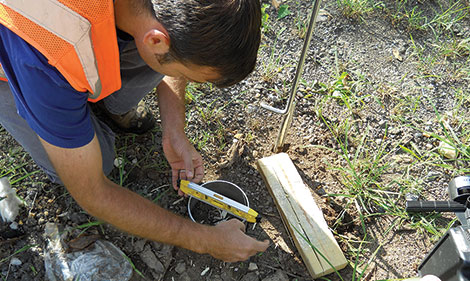
Can Maryland’s green spaces help keep the Chesapeake Bay cleaner?
Source: UMBC Magazine
Stuart S. Schwartz, a senior research scientist at UMBC’s Center for Urban Environmental Research and Education (CUERE) is developing new methods that may help minimize potentially harmful runoff from green spaces into the Chesapeake Bay.
“What we find when you look around at construction sites is the way that we develop the landscape deeply disturbs [the soil],” says Schwartz.
One particular culprit is soil compaction, which allows runoff to flow more readily into the Chesapeake Bay or other bodies of water. So Schwartz and his team have devised a plan to loosen urban soils and mix them with vegetative compost to create a thicker, deeper soil that also allows more rainfall to infiltrate it and be retained in the soil, thus producing less runoff.
Schwartz’s plan adapts “subsoiling” – a technique commonly used in agriculture to break up the shallow compaction of soil that develops when farm vehicles go back and forth across fields. The researchers at CUERE are using deep ripping with heavy steel blades ripping (18 to 24 inches down) to pulverize the soil then they till organic material compost back into the ground.
The technique likely won’t have immediate applications in small residential yards where deep ripping would also tear up water, gas, and electrical utilities, though Schwartz says that in the right conditions (utilities on one side of houses, for instance), a collection of 25 to 50 homeowners on the same street who agreed to have it done might provide the proper economy of scale.
So in the meantime, Schwartz and his colleagues have secured a grant to test their method on vacant lots in Baltimore City where access is easier to obtain – and the researchers can also test other sustainable methods aimed at reducing pollutants even further.
Schwartz says that the tests on vacant lots are “also incorporating biochar, a very specialized form of black carbon, which has a high affinity for binding certain pollutants.”
Indeed, biochar might turn such sample lots (and any other space in which it is employed) into high-performance pollutant filters that will retain hydrocarbons, heavy metals and nutrients above and beyond what a normal soil can hold.
To accelerate the adoption of the deep ripping technique, the CUERE researchers hope to convince developers to use subsoiling at the time of building construction. Though challenges such as demolition debris that might pose constraints to deep ripping do remain, such collaborations would achieve the goal of reducing runoff and also minimize costs, since the technique requires just a little bit of extra time, an inexpensive commodity (compost) and a piece of equipment typically onsite already.
— Nicole Ruediger
]]>
GREEN AND CLEAN Can Maryland’s green spaces help keep the Chesapeake Bay cleaner? Source: UMBC Magazine Stuart S. Schwartz, a senior research scientist at UMBC’s Center for Urban...
http://umbcmagazine.wordpress.com/umbc-magazine-winter-2013/discovery-winter-2013/
https://beta.my.umbc.edu/api/v0/pixel/news/23661/guest@my.umbc.edu/2a3a27f968290c9547c847ddf0fba7b4/api/pixel
chesapeake
green
sustainability
umbc
Sustainability Matters at UMBC
https://beta.my.umbc.edu/groups/sustainability
https://assets1-beta.my.umbc.edu/system/shared/avatars/groups/000/000/086/91091ac32f525d88daa6d6b721420ac1/xsmall.png?1586269437
https://assets3-beta.my.umbc.edu/system/shared/avatars/groups/000/000/086/91091ac32f525d88daa6d6b721420ac1/original.png?1586269437
https://assets4-beta.my.umbc.edu/system/shared/avatars/groups/000/000/086/91091ac32f525d88daa6d6b721420ac1/xxlarge.png?1586269437
https://assets2-beta.my.umbc.edu/system/shared/avatars/groups/000/000/086/91091ac32f525d88daa6d6b721420ac1/xlarge.png?1586269437
https://assets2-beta.my.umbc.edu/system/shared/avatars/groups/000/000/086/91091ac32f525d88daa6d6b721420ac1/large.png?1586269437
https://assets4-beta.my.umbc.edu/system/shared/avatars/groups/000/000/086/91091ac32f525d88daa6d6b721420ac1/medium.png?1586269437
https://assets4-beta.my.umbc.edu/system/shared/avatars/groups/000/000/086/91091ac32f525d88daa6d6b721420ac1/small.png?1586269437
https://assets1-beta.my.umbc.edu/system/shared/avatars/groups/000/000/086/91091ac32f525d88daa6d6b721420ac1/xsmall.png?1586269437
https://assets3-beta.my.umbc.edu/system/shared/avatars/groups/000/000/086/91091ac32f525d88daa6d6b721420ac1/xxsmall.png?1586269437
UMBC SUSTAINABILITY
1
0
true
Mon, 11 Feb 2013 12:35:38 -0500
Mon, 11 Feb 2013 12:36:24 -0500
Recyclemania is ON! Event Calendar:
Let's win Recyclemania- make the effort to recycle!
Recyclemania is ON! For 8 weeks from the start of February to the end of March, we are partnering with organizations across campus to promote recycling during this nationwide competition!
Join us every Wednesday from 12-1pm on Commons Mainstreet! Wear green and snap a picture with the Green Man to win prizes!
Week 1: Recyclemania kick off at RAC in Black (Game Day Challenge)- We (would love volunteers to help) with trivia & prizes and half time recycle-ball!
Week 2: (February 13th & 14th): Join us on Commons mainstreet both days for fun recycled Valentine making crafts, not to mention treats and give-aways!
Week 3 (February 20th): Plastic film and grocery bags
Week 4 (February 27th): E-cycling
Week 5 (March 6th): Waste minimization (reduce & reuse!)
Week 6 (March 13th): Composting
Week 7 (March 20th): Spring break
Week 8 (March 27th): UMBC recycling overview: from history to progress to plans!
Week 8 (March 27th): UMBC recycling overview: from our history to past progress to upcoming plans!
Thanks to all the volunteers and supporters joining us tonight at 7 at RAC in Black to kick off Recyclemania from trivia and prizes in the lobby, to a halftime game, to waste station attendents. Special thanks to ReSET, Sustainability Interns, and SEA!
UMBC KICKS OF RECYCLEMANIA
By Stefanie Rapp
Many students and staff may have seen the RecyleMania posters plastered throughout campus, but what exactly is RecyleMania?
RecyleMania is a competition held every spring at college campuses throughout the United States and Canada. The competition officially begins on February 3 and will continue for eight weeks.
As a member of RecyleMania’s competition division, UMBC will be ranked among other schools based on the weight of its trash and recycling each week. If enough recycling is collected, UMBC could be nationally recognized as an environmentally conscious campus.
In addition to committing to recycling, UMBC has also promised to work on using reusable plates and utensils in the dining hall, creating incentives for reusable cups, reusing envelopes, using compostable dinnerware and setting up compost bins.
In reference to this year’s campaign, Stephanie Bertran, a junior English literature major, said, “The competition part is interesting because from what I’ve seen, college students tend to like to compete and, [RecycleMania] helps create some school spirit.”
While adhering to all of these measures will better our campus’ chances of winning this competition and bolster its spirit, these choices will also have major positive impacts on the environment.
This begs a question: What can members of the UMBC community do to help? The answer is simple: reduce, reuse, recycle.
Students are encouraged to not only recycle, but also to reduce the amount of waste that they throw away. Taking just one napkin instead of a handful or recycling a coffee cup are just a few of the small ways that the UMBC community can reduce it’s impact and succeed in the competition.
However, efforts don’t have to stop there. Commuting students can try carpooling or taking one of UMBC’s buses to campus. Or to stay active while moving around campus, utilize the trails and bike racks to travel with ease while cutting down on the use of fuels that pollute the air.
Nick Springer, junior and music technology major, also suggested considering your diet’s effects on the environment. Talking about the food on campus, he said “Supporting the dining hall’s local food displays can reduce the strain of big industry agriculture on the environment.”
RecycleMania is an exciting competition for UMBC to take part in, but the efforts put forth have greater implications. While winning this contest could improve our already environmentally-friendly campus, by working hard to excel as competitors in RecyleMania, the UMBC community can also benefit the environment on a larger scale.
]]>
Thanks to all the volunteers and supporters joining us tonight at 7 at RAC in Black to kick off Recyclemania from trivia and prizes in the lobby, to a halftime game, to waste station attendents....
http://www.retrieverweekly.com/news/umbc-kicks-off-recyclemania-competition-1.2982439
https://beta.my.umbc.edu/api/v0/pixel/news/23455/guest@my.umbc.edu/3b1fe609dec90e4961250a68bf272eda/api/pixel
Sustainability Matters at UMBC
https://beta.my.umbc.edu/groups/sustainability
https://assets1-beta.my.umbc.edu/system/shared/avatars/groups/000/000/086/91091ac32f525d88daa6d6b721420ac1/xsmall.png?1586269437
https://assets3-beta.my.umbc.edu/system/shared/avatars/groups/000/000/086/91091ac32f525d88daa6d6b721420ac1/original.png?1586269437
https://assets4-beta.my.umbc.edu/system/shared/avatars/groups/000/000/086/91091ac32f525d88daa6d6b721420ac1/xxlarge.png?1586269437
https://assets2-beta.my.umbc.edu/system/shared/avatars/groups/000/000/086/91091ac32f525d88daa6d6b721420ac1/xlarge.png?1586269437
https://assets2-beta.my.umbc.edu/system/shared/avatars/groups/000/000/086/91091ac32f525d88daa6d6b721420ac1/large.png?1586269437
https://assets4-beta.my.umbc.edu/system/shared/avatars/groups/000/000/086/91091ac32f525d88daa6d6b721420ac1/medium.png?1586269437
https://assets4-beta.my.umbc.edu/system/shared/avatars/groups/000/000/086/91091ac32f525d88daa6d6b721420ac1/small.png?1586269437
https://assets1-beta.my.umbc.edu/system/shared/avatars/groups/000/000/086/91091ac32f525d88daa6d6b721420ac1/xsmall.png?1586269437
https://assets3-beta.my.umbc.edu/system/shared/avatars/groups/000/000/086/91091ac32f525d88daa6d6b721420ac1/xxsmall.png?1586269437
UMBC SUSTAINABILITY
1
0
true
Wed, 06 Feb 2013 17:07:03 -0500
Wed, 06 Feb 2013 17:18:43 -0500

