On Board for a Mission of Mercy

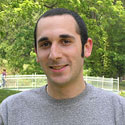
Photo Caption: Devin Hagerty on the flight deck of the U.S.S. Tarawa.
He’s more accustomed to students in flip-flops instead of combat boots, but Associate Professor of Political Science Devin Hagerty was proud to sail with the U.S. Navy and Marines as he educated officers en route to South Asia.
For a week in November 2007, Hagerty was one of three “embedded Ph.D.s” through a U.S. Navy program that looks to include lessons from academic experts as part of military mission training.
Hagerty sailed from San Diego, California to Pearl Harbor, Hawaii with an Expeditionary Strike Group led by the amphibious assault ship U.S.S. Tarawa, as it headed to the Indian Ocean. Originally slated to conduct joint exercises with regional militaries, the Group was chosen to lead humanitarian relief efforts in Bangladesh after Cyclone Sidr struck the region on Nov. 15, killing over 3,200 people.
Hagerty commuted from ship to ship by helicopter or inflatable speedboat to deliver briefings on Bangladesh, the Maldives, Asian-Pacific culture, and U.S. strategic interests in the region. His deployment was part of the Regional Security Education Program, run by the Naval Postgraduate School in Monterrey, California.
During his week aboard, he picked up naval lingo like “cranials” (ear plugs and goggles for braving flight deck and helicopter winds and noise), “floaties” (life preservers), and “mobys” (cellphone-size, salt-water-detecting beacons to alert the bridge in case of a person overboard). Hagerty bonded so well with his hosts that by week’s end the Marines offered to give him a regulation flattop haircut and take him to the Indian Ocean with them.
“It was a blast, but more importantly, I felt like my efforts had some immediate relevance as our sailors and Marines helped victims of the cyclone,” said Hagerty.
]]>
Photo Caption: Devin Hagerty on the flight deck of the U.S.S. Tarawa. He’s more accustomed to students in flip-flops instead of combat boots, but Associate Professor of Political Science Devin...
http://www.umbc.edu/research/blog/2008/01/on_board_for_a_mission_of_merc_1.html
https://beta.my.umbc.edu/api/v0/pixel/news/46551/guest@my.umbc.edu/555b1efb92ed4c52539d15e8f4358738/api/pixel
ovpr-news-2008
Archived RCA News
https://beta.my.umbc.edu/groups/research
https://assets4-beta.my.umbc.edu/system/shared/avatars/groups/000/000/794/4bca2aa331eb7e472d63d97e0798b600/xsmall.png?1743706368
https://assets2-beta.my.umbc.edu/system/shared/avatars/groups/000/000/794/4bca2aa331eb7e472d63d97e0798b600/original.jpg?1743706368
https://assets3-beta.my.umbc.edu/system/shared/avatars/groups/000/000/794/4bca2aa331eb7e472d63d97e0798b600/xxlarge.png?1743706368
https://assets4-beta.my.umbc.edu/system/shared/avatars/groups/000/000/794/4bca2aa331eb7e472d63d97e0798b600/xlarge.png?1743706368
https://assets2-beta.my.umbc.edu/system/shared/avatars/groups/000/000/794/4bca2aa331eb7e472d63d97e0798b600/large.png?1743706368
https://assets4-beta.my.umbc.edu/system/shared/avatars/groups/000/000/794/4bca2aa331eb7e472d63d97e0798b600/medium.png?1743706368
https://assets4-beta.my.umbc.edu/system/shared/avatars/groups/000/000/794/4bca2aa331eb7e472d63d97e0798b600/small.png?1743706368
https://assets4-beta.my.umbc.edu/system/shared/avatars/groups/000/000/794/4bca2aa331eb7e472d63d97e0798b600/xsmall.png?1743706368
https://assets3-beta.my.umbc.edu/system/shared/avatars/groups/000/000/794/4bca2aa331eb7e472d63d97e0798b600/xxsmall.png?1743706368
Office of the Vice President for Research
0
0
false
Wed, 09 Jan 2008 12:00:00 -0500
Putting People in the Map: Ecologists Remap Biosphere to Include Humans

Photo Caption: Ecologist Erle Ellis has helped design a new way of mapping the Earth to include human impact.
Editor’s Note: Since its publication, Ellis and Ramankutty’s research has received international media attention, including coverage in Science and a video feature on Discover.com.
Other coverage included: Wired magazine’s “Wired Science” blog, United Press International, Der Spiegel, Earth & Sky, Earthtimes UK, DailyIndia.com, Science Daily, Digg.com, Propellor.com, the Agricultural Biodiversity Blog, www.terradaily.com and others.
Pristine wilderness is a thing of the past and it’s time to adjust our vision of the biosphere accordingly, say a team of American and Canadian eco-geographers in newly published research.
Erle Ellis, associate professor of Geography and Environmental Systems at UMBC, and Navin Ramankutty, assistant professor in McGill University’s Department of Geography and Earth System Science Program, used global data from satellites and land management statistics to map a new system of “anthropogenic biomes” or human biomes, that describe the biosphere as it exists today, the result of human shepherding and reshaping of ecosystems. Their map provides a 21st century challenge to the classic images of Earth's wild ecosystems that appear in nearly every ecology and earth science textbook.
Their research was published in the Nov. 26 issue of the journal Frontiers in Ecology and the Environment together with maps viewable in Google Earth and Google Maps at the Encyclopedia of Earth (a sort of Wikipedia for earth scientists and ecologists) and a printable classroom wall map for use by ecologists, educators and the public.
“The fact that an area is now covered by forests depends more on human decisions than it does on climate” said Ellis, who has studied anthropogenic landscapes in the field across rural China since 1992. He was inspired to investigate human landscapes globally during a research sabbatical at the Department of Global Ecology of the Carnegie Institute of Washington at Stanford University.

Photo Caption: Ellis has studied human biomes in rural China since 1992.
“The classic biomes, such as tropical rainforests or grasslands, were based on differences in vegetation caused by on climate,” said Ellis. “Now that humans have fundamentally altered global patterns of ecosystems and biodiversity, these biomes are rarely present across large areas any more. It is time for our map of the biosphere to reflect this new reality- that nature is now embedded within human systems” said Ellis.
Another key message from Ellis and Ramankutty was that ecologists should turn their focus to the changing ecosystems right underneath their feet. “A section of our paper is entitled ‘ecologists go home,’” said Ramankutty, an expert on global agriculture’s connection to environmental change. “Ecologists go to remote parts of the planet to study pristine ecosystems, but no one studies it in their back yard,” he said.
“We can no longer study ecology while ignoring humans,” Ellis said. “Humans are now as much a part of nature as the weather and human and ecological systems are so intricately linked that focusing just on nature gets in the way of conserving nature for future generations. We need to sustain positive interactions between human systems and ecosystems, not avoid these interactions. Focusing on so-called wilderness areas ignores more than four-fifths of Earth’s ice-free land. Ecologists need to do more research in places where humans live,” said Ellis.
Other key findings of the research:
- More than three-quarters of our ice-free land surface is human altered. Wildlands cover just 22 percent of ice-free land today, and most of this land is barren and relatively unproductive.
- Rangelands are the largest anthropogenic biomes, followed by cropland and forested biomes.
- More than 80 percent of people live in dense settlements and village biomes, though these cover just seven percent of the Earth’s ice-free land surface. Village biomes are about five times as extensive as urban biomes and are home to about a quarter of Earth’s human population.
- Anthropogenic biomes are mosaics. Instead of distinct vegetation or land-use types, anthropogenic biomes are complex mixtures of different land uses (settlements, crops, pastures, forests) that are classified by degree and type of human influence. For example, village biomes, which are found mostly in Asia and Africa, are crowded networks of towns and rural settlements embedded in intensively managed croplands and rice paddies alongside patches of less disturbed vegetation in hilly areas.
UMBC’s national reputation for excellence in earth and environmental science is growing. According to Thomson Scientific's Science Watch, UMBC's geoscience research ranked third nationally in citation impact for 2001-2005. The only other U.S. universities producing more frequently cited geoscience research papers were Harvard University and the Georgia Institute of Technology.
UMBC ranks third nationally in NASA research funding and is home to two major collaborative NASA earth science research centers and the U.S. Geological Survey’s Maryland/Delaware/D.C. Water Science Center.
]]>
Photo Caption: Ecologist Erle Ellis has helped design a new way of mapping the Earth to include human impact. Editor’s Note: Since its publication, Ellis and Ramankutty’s research has received...
http://www.umbc.edu/research/blog/2007/11/putting_people_in_the_map_ecol_1.html
https://beta.my.umbc.edu/api/v0/pixel/news/46552/guest@my.umbc.edu/d21ec385329f8091b3dbac8c7d5539f2/api/pixel
ovpr-news-2007
Archived RCA News
https://beta.my.umbc.edu/groups/research
https://assets4-beta.my.umbc.edu/system/shared/avatars/groups/000/000/794/4bca2aa331eb7e472d63d97e0798b600/xsmall.png?1743706368
https://assets2-beta.my.umbc.edu/system/shared/avatars/groups/000/000/794/4bca2aa331eb7e472d63d97e0798b600/original.jpg?1743706368
https://assets3-beta.my.umbc.edu/system/shared/avatars/groups/000/000/794/4bca2aa331eb7e472d63d97e0798b600/xxlarge.png?1743706368
https://assets4-beta.my.umbc.edu/system/shared/avatars/groups/000/000/794/4bca2aa331eb7e472d63d97e0798b600/xlarge.png?1743706368
https://assets2-beta.my.umbc.edu/system/shared/avatars/groups/000/000/794/4bca2aa331eb7e472d63d97e0798b600/large.png?1743706368
https://assets4-beta.my.umbc.edu/system/shared/avatars/groups/000/000/794/4bca2aa331eb7e472d63d97e0798b600/medium.png?1743706368
https://assets4-beta.my.umbc.edu/system/shared/avatars/groups/000/000/794/4bca2aa331eb7e472d63d97e0798b600/small.png?1743706368
https://assets4-beta.my.umbc.edu/system/shared/avatars/groups/000/000/794/4bca2aa331eb7e472d63d97e0798b600/xsmall.png?1743706368
https://assets3-beta.my.umbc.edu/system/shared/avatars/groups/000/000/794/4bca2aa331eb7e472d63d97e0798b600/xxsmall.png?1743706368
Office of the Vice President for Research
0
0
false
Mon, 26 Nov 2007 12:00:00 -0500
Civil and Environmental Engineering to Host Biosolids Conference
UMBC’s department of Civil and Environmental Engineering (CEE) will host environmental professionals from around the region on Nov. 7 at a conference on bio-solids, byproducts of water treatment that can be recycled into fertilizer.
The conference, “Hot Topics/Hot Tools for Effective Biosolids Management,” will bring members of the Mid-Atlantic Biosolids Association (MABA) to campus for a full day of idea-sharing on environmentally sound biosolids management.
“MABA is comprised of environmental professionals in the water pollution control field,” said CEE professor and chair Brian Reed. “We are committed to keeping waters in our rivers, lakes and aquifers clean. MABA and its members are clean water experts who know that biosolids recycling is often the best tool for managing biosolids.”
CEE is part of a growing cluster of collaborative environmental research entities headquartered at UMBC, including the Center for Urban Environmental Research and Education (CUERE), the Baltimore Ecosystem Study (BES) and the U.S. Geological Survey's MD/DE/DC Water Science Center.
The conference will be held starting at 7:15 a.m. on Wednesday, Nov. 7 in the University Center Ballroom. For more information or to register, visit
http://www.mabiosolids.org/index.asp
]]>
UMBC’s department of Civil and Environmental Engineering (CEE) will host environmental professionals from around the region on Nov. 7 at a conference on bio-solids, byproducts of water treatment...
http://www.umbc.edu/research/blog/2007/11/civil_and_environmental_engine.html
https://beta.my.umbc.edu/api/v0/pixel/news/46553/guest@my.umbc.edu/7baec69f930a02405065129ed7e08103/api/pixel
ovpr-news-2007
Archived RCA News
https://beta.my.umbc.edu/groups/research
https://assets4-beta.my.umbc.edu/system/shared/avatars/groups/000/000/794/4bca2aa331eb7e472d63d97e0798b600/xsmall.png?1743706368
https://assets2-beta.my.umbc.edu/system/shared/avatars/groups/000/000/794/4bca2aa331eb7e472d63d97e0798b600/original.jpg?1743706368
https://assets3-beta.my.umbc.edu/system/shared/avatars/groups/000/000/794/4bca2aa331eb7e472d63d97e0798b600/xxlarge.png?1743706368
https://assets4-beta.my.umbc.edu/system/shared/avatars/groups/000/000/794/4bca2aa331eb7e472d63d97e0798b600/xlarge.png?1743706368
https://assets2-beta.my.umbc.edu/system/shared/avatars/groups/000/000/794/4bca2aa331eb7e472d63d97e0798b600/large.png?1743706368
https://assets4-beta.my.umbc.edu/system/shared/avatars/groups/000/000/794/4bca2aa331eb7e472d63d97e0798b600/medium.png?1743706368
https://assets4-beta.my.umbc.edu/system/shared/avatars/groups/000/000/794/4bca2aa331eb7e472d63d97e0798b600/small.png?1743706368
https://assets4-beta.my.umbc.edu/system/shared/avatars/groups/000/000/794/4bca2aa331eb7e472d63d97e0798b600/xsmall.png?1743706368
https://assets3-beta.my.umbc.edu/system/shared/avatars/groups/000/000/794/4bca2aa331eb7e472d63d97e0798b600/xxsmall.png?1743706368
Office of the Vice President for Research
0
0
false
Fri, 02 Nov 2007 12:00:00 -0400
IBM Gift to Bring 'Orchestra' of Powerful Computer Chips to UMBC


Photo Caption:
According to UMBC computer scientists Milt Halem (left) and Yelena
Yesha (right), the Multicore Computing Center will give UMBC researchers
access to some of the world's most powerful information engines.
UMBC and IBM have announced a new collaboration to create The Multicore Computing Center (MC2), a unique facility that will focus on supercomputing research related to aerospace/defense, financial services, medical imaging and weather/climate change prediction. IBM awarded UMBC a significant gift to support the development of this new center, which researchers describe as an “orchestra” of one of the world’s most powerful supercomputing chips.
The MC2 will bring to UMBC a high-performance computational test laboratory based on the Cell Broadband Engine (Cell/B.E.), jointly developed by IBM, Sony Corp., Sony Computer Entertainment Inc. (SCE) and Toshiba Corp. This ground breaking processor is used in products such as SCE's PlayStation3 and Toshiba's Cell/B.E. Reference Set, a development tool for Cell/B.E. applications, as well as the IBM BladeCenter QS20.
Cells have a wide range of capability – able to serve as engines for image and video-intensive computing tasks like virtual reality, simulations and imaging for aerospace, medicine and defense; high-definition TV and high-speed video for wireless devices; and highly complex physics based computer models to better predict weather, climate change and biochemistry.
The MC2 is the latest development in a strong, long-time partnership between IBM and UMBC. IBM employs over 100 UMBC alumni, and UMBC faculty have received numerous IBM research awards and fellowships over the past decade.
The MC2 at UMBC is expected to focus on supercomputing research related to aerospace/defense, financial services, medical imaging and weather/climate change prediction.
One of the challenges for researchers at the MC2 will be making clusters consisting of hundreds of the powerful information engines run effectively together. “Cell processors are groups of eight very fast, independent but simple PC’s with their own tiny memory all on a single chip each with its own leader,” said Milt Halem, director of the MC2 and professor of computer science at UMBC.
“The challenge is choreographing all the chips to work efficiently in parallel. It’s like a distributed orchestra with 224 musicians and 28 conductors connected with head phones trying to play Beethoven’s Fifth Symphony together,” said Halem, who retired in 2002 from NASA Goddard Space Flight Center, where he served as Assistant Director for Information Sciences and Chief Information Officer.
"The Multicore Computing Center highlights UMBC's role as a national leader in information technology research and education, and will contribute to Maryland's economic growth and national security," said Freeman Hrabowski, president of UMBC.
“We are so pleased to become an early adopter of this revolutionary shift in semi-conductor chip design,” Halem said. “UMBC is committed to growing its computational science expertise and hopes this collaboration with IBM will allow the university to become a national leader in the applications of future multicore computers as they grow more massive.”
UMBC is a member of IBM’s Academic Initiative, a program sponsored by IBM to upgrade IT skills for a more competitive workforce. Through the Academic Initiative, IBM works with more than 2,200 institutions, 11,000 faculty members and 650,000 students worldwide to build integrated business, science and technology skills to be applied in today’s global economy.
"The opening of the UMBC Multicore Computer Center is yet another example of how IBM innovations are being used to help further the advancement of research and science that benefits business and our communities," said Rod Adkins, senior vice president of development & manufacturing, IBM Systems & Technology Group. "We are convinced of the endless possibilities that can, and will, emerge from this type of collaborative relationship, and are proud to play a role in the launch of the new information technology research center."
In the future, UMBC and IBM officials plan to collaborate on new interdisciplinary research possibilities in chemistry, mathematics and other fields of engineering and information technology.
The Multicore Computing Center is expected to be installed and operational by fall 2007.
]]>
Photo Caption: According to UMBC computer scientists Milt Halem (left) and Yelena Yesha (right), the Multicore Computing Center will give UMBC researchers access to some of the world's most...
http://www.umbc.edu/research/blog/2007/08/ibm_gift_to_bring_orchestra_of_1.html
https://beta.my.umbc.edu/api/v0/pixel/news/46554/guest@my.umbc.edu/cef0f03c59ce4d5abbdc597eb374ad91/api/pixel
ovpr-news-2007
Archived RCA News
https://beta.my.umbc.edu/groups/research
https://assets4-beta.my.umbc.edu/system/shared/avatars/groups/000/000/794/4bca2aa331eb7e472d63d97e0798b600/xsmall.png?1743706368
https://assets2-beta.my.umbc.edu/system/shared/avatars/groups/000/000/794/4bca2aa331eb7e472d63d97e0798b600/original.jpg?1743706368
https://assets3-beta.my.umbc.edu/system/shared/avatars/groups/000/000/794/4bca2aa331eb7e472d63d97e0798b600/xxlarge.png?1743706368
https://assets4-beta.my.umbc.edu/system/shared/avatars/groups/000/000/794/4bca2aa331eb7e472d63d97e0798b600/xlarge.png?1743706368
https://assets2-beta.my.umbc.edu/system/shared/avatars/groups/000/000/794/4bca2aa331eb7e472d63d97e0798b600/large.png?1743706368
https://assets4-beta.my.umbc.edu/system/shared/avatars/groups/000/000/794/4bca2aa331eb7e472d63d97e0798b600/medium.png?1743706368
https://assets4-beta.my.umbc.edu/system/shared/avatars/groups/000/000/794/4bca2aa331eb7e472d63d97e0798b600/small.png?1743706368
https://assets4-beta.my.umbc.edu/system/shared/avatars/groups/000/000/794/4bca2aa331eb7e472d63d97e0798b600/xsmall.png?1743706368
https://assets3-beta.my.umbc.edu/system/shared/avatars/groups/000/000/794/4bca2aa331eb7e472d63d97e0798b600/xxsmall.png?1743706368
Office of the Vice President for Research
0
0
false
Thu, 23 Aug 2007 12:00:00 -0400
Michael Summers, UMBC/HHMI, Discusses STEM Education in Science Magazine

Michael Summers, Howard Hughes Medical Institute investigator and professor of chemistry and biochemistry, was part of a recent panel discussion sponsored by Science magazine on improving science, technology, engineering and mathematics (STEM) education in the U.S. “Straight Talk About STEM Education” appeared in the July 6 issue of Science.
]]>
Michael Summers, Howard Hughes Medical Institute investigator and professor of chemistry and biochemistry, was part of a recent panel discussion sponsored by Science magazine on improving science,...
http://www.umbc.edu/research/blog/2007/07/michael_summers_umbchhmi_discu_1.html
https://beta.my.umbc.edu/api/v0/pixel/news/46555/guest@my.umbc.edu/283756a301bc6bda11d4e6c891aa30b2/api/pixel
ovpr-news-2007
Archived RCA News
https://beta.my.umbc.edu/groups/research
https://assets4-beta.my.umbc.edu/system/shared/avatars/groups/000/000/794/4bca2aa331eb7e472d63d97e0798b600/xsmall.png?1743706368
https://assets2-beta.my.umbc.edu/system/shared/avatars/groups/000/000/794/4bca2aa331eb7e472d63d97e0798b600/original.jpg?1743706368
https://assets3-beta.my.umbc.edu/system/shared/avatars/groups/000/000/794/4bca2aa331eb7e472d63d97e0798b600/xxlarge.png?1743706368
https://assets4-beta.my.umbc.edu/system/shared/avatars/groups/000/000/794/4bca2aa331eb7e472d63d97e0798b600/xlarge.png?1743706368
https://assets2-beta.my.umbc.edu/system/shared/avatars/groups/000/000/794/4bca2aa331eb7e472d63d97e0798b600/large.png?1743706368
https://assets4-beta.my.umbc.edu/system/shared/avatars/groups/000/000/794/4bca2aa331eb7e472d63d97e0798b600/medium.png?1743706368
https://assets4-beta.my.umbc.edu/system/shared/avatars/groups/000/000/794/4bca2aa331eb7e472d63d97e0798b600/small.png?1743706368
https://assets4-beta.my.umbc.edu/system/shared/avatars/groups/000/000/794/4bca2aa331eb7e472d63d97e0798b600/xsmall.png?1743706368
https://assets3-beta.my.umbc.edu/system/shared/avatars/groups/000/000/794/4bca2aa331eb7e472d63d97e0798b600/xxsmall.png?1743706368
Office of the Vice President for Research
0
0
false
Wed, 11 Jul 2007 12:00:00 -0400
Two UMBC Students Receive Prestigious NSF Graduate Research Fellowships
Columbia Natives Patricia Ordóñez, Jason Reid to Pursue Ph.D.s at UMBC, MIT
Note to Readers: Click on photos below to view high-resolution version.

Patricia Ordóñez, a UMBC second year graduate student, and Jason Reid, a UMBC class of 2007 graduate, both from Columbia, MD, have received National Science Foundation Graduate Research Fellowships (NSFGRF), which are among the most competitive and prestigious academic awards for American college students as they begin graduate studies. Both students are products of UMBC’s College of Engineering and Information Technology.
The NSFGRF is a three-year award that funds tuition and an annual stipend to support graduate studies for students showing the potential to contribute significantly to research, teaching and innovations in science and engineering. About 1,000 were awarded across the U.S. this year.
Ordóñez, who received a B.A. in Hispanic and Italian Studies in 1989 from Johns Hopkins University, began to pursue her career in computer science attending UMBC part-time in the fall of 2001. She was admitted to the graduate school full-time in the fall of 2005 and will remain at UMBC to pursue a Ph.D. in her field as well as continue research developing medical applications using pervasive computing to help personalize operating rooms for patients and surgeons.
“I would be crazy to leave such an encouraging and supportive environment,” she said. “I love being somewhere where the president of the university greets you as he walks by and takes a personal interest in the students.”
Reid, who received a B.S. in mechanical engineering, will attend the Massachusetts Institute of Technology to pursue an M.S./Ph.D. in mechanical engineering and conduct research in the use of robotics to accelerate rehabilitation in stroke and spinal cord injury patients.
“The NSF award is great because you can work on pretty much anything that interests you,” said Reid. “While I look forward to embarking on the new experiences and challenges of the future, I will always appreciate my time spent at UMBC.”
A Meyerhoff Scholar, Reid also received a Society of Automotive Engineers Scholarship, the UMBC Mechanical Engineering Alumni Award and the Hillel of Greater Baltimore President’s Award. Reid’s winning research proposal for the NSFGRF came from his work in the lab of UMBC mechanical engineering professor Dwayne Arola, with whom he studied ways to improve dental tools and practices for senior citizen patients as the enamel of their teeth grows brittle with age.
For Ordóñez, the award makes her doctoral dreams obtainable. “Without it I think I would have settled for the masters rather than the PhD because I am 40 years old and have the financial responsibilities of a 40-year-old,” she said. “Now I have the financial support I need to focus solely on my research.”
Ordóñez, part of the UMBC computer science and electrical engineering department’s eBiquity Research Group, thanked UMBC faculty members Anupam Joshi, Marie desJardins, Renetta Tull, Tim Finin, Penny Rheingans, Janet Rutledge, Charles Nicholas, Krishna Sivalingam, and Marc Olano for supporting her in her graduate studies and Shon Vick in her undergraduate studies.
]]>
Columbia Natives Patricia Ordóñez, Jason Reid to Pursue Ph.D.s at UMBC, MIT Note to Readers: Click on photos below to view high-resolution version. Patricia Ordóñez, a UMBC...
http://www.umbc.edu/research/blog/2007/06/two_umbc_students_receive_pres_1.html
https://beta.my.umbc.edu/api/v0/pixel/news/46556/guest@my.umbc.edu/0f49620a5481edfbdbea38f44eaa8057/api/pixel
ovpr-news-2007
Archived RCA News
https://beta.my.umbc.edu/groups/research
https://assets4-beta.my.umbc.edu/system/shared/avatars/groups/000/000/794/4bca2aa331eb7e472d63d97e0798b600/xsmall.png?1743706368
https://assets2-beta.my.umbc.edu/system/shared/avatars/groups/000/000/794/4bca2aa331eb7e472d63d97e0798b600/original.jpg?1743706368
https://assets3-beta.my.umbc.edu/system/shared/avatars/groups/000/000/794/4bca2aa331eb7e472d63d97e0798b600/xxlarge.png?1743706368
https://assets4-beta.my.umbc.edu/system/shared/avatars/groups/000/000/794/4bca2aa331eb7e472d63d97e0798b600/xlarge.png?1743706368
https://assets2-beta.my.umbc.edu/system/shared/avatars/groups/000/000/794/4bca2aa331eb7e472d63d97e0798b600/large.png?1743706368
https://assets4-beta.my.umbc.edu/system/shared/avatars/groups/000/000/794/4bca2aa331eb7e472d63d97e0798b600/medium.png?1743706368
https://assets4-beta.my.umbc.edu/system/shared/avatars/groups/000/000/794/4bca2aa331eb7e472d63d97e0798b600/small.png?1743706368
https://assets4-beta.my.umbc.edu/system/shared/avatars/groups/000/000/794/4bca2aa331eb7e472d63d97e0798b600/xsmall.png?1743706368
https://assets3-beta.my.umbc.edu/system/shared/avatars/groups/000/000/794/4bca2aa331eb7e472d63d97e0798b600/xxsmall.png?1743706368
Office of the Vice President for Research
0
0
false
Mon, 25 Jun 2007 12:00:00 -0400
UMBC/NASA Study Shows Increasing Snowmelt in Greenland
New Area the Size of Maryland Starts to Melt Each Year; Long-term Satellite Data Showed First-Ever High Altitude Melting in 2002

Some sobering findings on the extent of Greenland's melting ice sheets were published today as part of a long-term study of earth observing satellites’ data by researchers with the University of Maryland, Baltimore County (UMBC) and NASA-Goddard Space Flight Center.
Marco Tedesco, a scientist at the Joint Center for Earth Systems Technology (JCET) of UMBC and NASA-Goddard Space Flight Center, was lead author of a study published in the American Geophysical Union's journal Eos. By using a new method for detecting melting snow from satellites, Tedesco found that in 2006 Greenland experienced more days of melting snow and at higher altitudes than the previous trends from the past 18 years.
Tedesco used a new method for detecting melting snow based on readings from the Special Sensor Microwave Imaging radiometer (SSM/I), an instrument aboard the U.S. Air Force’s Defense Meteorological Satellite Program spacecraft. The SSM/I can see through clouds and can measure data without sunlight. Tedesco has tracked the data annually since 1988, allowing him to study big-picture trends in the duration and extent of Greenland's snowmelt.
Certain areas of Greenland were melting over 10 days longer than average in 2006. Greenland’s 2006 melt index, or the number of melting days times the melting area, continued on an upward trend seen in data from 1988 to 2005.
Results from another study by Tedesco published on Geophysical Research Letters on January 2007 show that the year 2002 showed signs of extreme melting. “We identified an extreme melting event in June 2002 that showed for the first time in 18 years snow melting in inner Greenland at high altitudes,” said Tedesco.
“During the same year, over 80 percent of the entire Greenland ice sheet surface experienced at least one day of melting. This corresponds to an area the size of France, Spain and Italy put together,” he said. The area experiencing at least one day of melting has been increasing since 1992 at a rate of 35,000 square kilometers per year, or about two percent of the entire Greenland surface. “That means that, on the average, every year since 1992 an area equivalent to the state of Maryland has been subject to new melting,” Tedesco said.
 Left: UMBC JCET Researcher Marco Tedesco
According to Tedesco, tracking melting snow in Greenland, which contains enough water to raise global sea level by approximately 7 meters, is important for several reasons. “Although wet and dry snow look similar, they absorb sun’s radiation in a different way, with melting snow absorbing three to four times as much energy as dry snow, greatly affecting Earth’s energy budget,” said Tedesco.
“Also, melting snow produces liquid water that will seep down to the interface of ice and bedrock, lubricating the ice sheet and increasing the speed with which ice moves,” Tedesco said. “This means that ice might react to a warm climate faster than thought, contributing more rapidly to sea level than previously thought.”
]]>
New Area the Size of Maryland Starts to Melt Each Year; Long-term Satellite Data Showed First-Ever High Altitude Melting in 2002 Some sobering findings on the extent of Greenland's...
http://www.umbc.edu/research/blog/2007/05/umbcnasa_study_shows_increasin.html
https://beta.my.umbc.edu/api/v0/pixel/news/46557/guest@my.umbc.edu/30bd1332d2d2072cbec4053014136c0c/api/pixel
ovpr-news-2007
Archived RCA News
https://beta.my.umbc.edu/groups/research
https://assets4-beta.my.umbc.edu/system/shared/avatars/groups/000/000/794/4bca2aa331eb7e472d63d97e0798b600/xsmall.png?1743706368
https://assets2-beta.my.umbc.edu/system/shared/avatars/groups/000/000/794/4bca2aa331eb7e472d63d97e0798b600/original.jpg?1743706368
https://assets3-beta.my.umbc.edu/system/shared/avatars/groups/000/000/794/4bca2aa331eb7e472d63d97e0798b600/xxlarge.png?1743706368
https://assets4-beta.my.umbc.edu/system/shared/avatars/groups/000/000/794/4bca2aa331eb7e472d63d97e0798b600/xlarge.png?1743706368
https://assets2-beta.my.umbc.edu/system/shared/avatars/groups/000/000/794/4bca2aa331eb7e472d63d97e0798b600/large.png?1743706368
https://assets4-beta.my.umbc.edu/system/shared/avatars/groups/000/000/794/4bca2aa331eb7e472d63d97e0798b600/medium.png?1743706368
https://assets4-beta.my.umbc.edu/system/shared/avatars/groups/000/000/794/4bca2aa331eb7e472d63d97e0798b600/small.png?1743706368
https://assets4-beta.my.umbc.edu/system/shared/avatars/groups/000/000/794/4bca2aa331eb7e472d63d97e0798b600/xsmall.png?1743706368
https://assets3-beta.my.umbc.edu/system/shared/avatars/groups/000/000/794/4bca2aa331eb7e472d63d97e0798b600/xxsmall.png?1743706368
Office of the Vice President for Research
0
0
false
Tue, 29 May 2007 12:00:00 -0400
Anne Spence, Mechanical Engineering, Honored by FIRST LEGO League of Maryland

Anne Spence, assistant professor of mechanical engineering, received the Outstanding Volunteer of the Year award at the 2007 FIRST Chesapeake Regional, held March 15-17, 2007 at the United States Naval Academy.
FIRST (For Inspiration and Recognition of Science and Technology) is an international non-profit organization that creates accessible, innovative programs that build self confidence, knowledge and life skills in young people while motivating them to pursue a future in science, technology, and engineering.
Spence was recognized in front of thousands of students, mentors, families and VIP's for her work on the Chesapeake Regional Planning Committee, as Lead Pit Administrator at the Regional for the past 3 years, as the FIRST LEGO League Affiliate Partner for Maryland and for her other volunteer and mentorship work with Project Lead the Way and students at UMBC.
]]>
Anne Spence, assistant professor of mechanical engineering, received the Outstanding Volunteer of the Year award at the 2007 FIRST Chesapeake Regional, held March 15-17, 2007 at the United States...
http://www.umbc.edu/research/blog/2007/03/anne_spence_mechanical_enginee.html
https://beta.my.umbc.edu/api/v0/pixel/news/46558/guest@my.umbc.edu/b865062c6b210a3a595f2ee4d3841be6/api/pixel
ovpr-news-2007
Archived RCA News
https://beta.my.umbc.edu/groups/research
https://assets4-beta.my.umbc.edu/system/shared/avatars/groups/000/000/794/4bca2aa331eb7e472d63d97e0798b600/xsmall.png?1743706368
https://assets2-beta.my.umbc.edu/system/shared/avatars/groups/000/000/794/4bca2aa331eb7e472d63d97e0798b600/original.jpg?1743706368
https://assets3-beta.my.umbc.edu/system/shared/avatars/groups/000/000/794/4bca2aa331eb7e472d63d97e0798b600/xxlarge.png?1743706368
https://assets4-beta.my.umbc.edu/system/shared/avatars/groups/000/000/794/4bca2aa331eb7e472d63d97e0798b600/xlarge.png?1743706368
https://assets2-beta.my.umbc.edu/system/shared/avatars/groups/000/000/794/4bca2aa331eb7e472d63d97e0798b600/large.png?1743706368
https://assets4-beta.my.umbc.edu/system/shared/avatars/groups/000/000/794/4bca2aa331eb7e472d63d97e0798b600/medium.png?1743706368
https://assets4-beta.my.umbc.edu/system/shared/avatars/groups/000/000/794/4bca2aa331eb7e472d63d97e0798b600/small.png?1743706368
https://assets4-beta.my.umbc.edu/system/shared/avatars/groups/000/000/794/4bca2aa331eb7e472d63d97e0798b600/xsmall.png?1743706368
https://assets3-beta.my.umbc.edu/system/shared/avatars/groups/000/000/794/4bca2aa331eb7e472d63d97e0798b600/xxsmall.png?1743706368
Office of the Vice President for Research
0
0
false
Wed, 21 Mar 2007 12:00:00 -0400
Best-Selling Author Naomi Wolf to Speak at UMBC

‘Beauty Myth’ Author to Discuss “The Changemakers: Ethical Leadership & Real Power” at UMBC Humanities Forum on March 14
Best –selling author Naomi Wolf will give a lecture on ethics and leadership on Wednesday, March 14 at 7 p.m. at UMBC as part of the University’s annual Humanities Forum speaker series. The lecture is free and open to the public.
Wolf has written essays for The New Republic, The Wall Street Journal, Glamour and The New York Times. She is the author of a number of best-selling books including "The Beauty Myth" (1991), which was named one of the most important books of the 20th century by The New York Times.
The lessons Wolf passionately shares raise awareness of society's pervasive inequities and encourage her audiences to voice their concerns, and enact change. In her lecture, Wolf will address ethics and leadership, drawing on models using courage, justice, compassion, and a respect for all to change the world for the better. Her talk will spell out how we can be ethical leaders and make a monumental difference.
Wolf is co-founder of The Woodhull Institute for Ethical Leadership, an organization that teaches young women how to become leaders and agents of change in the 21st century.
Wolf will speak Wednesday, March 14, at 7:00 p.m. in Lecture Hall VII, on the first floor of UMBC’s Information Technology and Engineering (ITE) Building. The event is sponsored by the UMBC Center for the Humanities.
]]>
‘Beauty Myth’ Author to Discuss “The Changemakers: Ethical Leadership & Real Power” at UMBC Humanities Forum on March 14 Best –selling author Naomi Wolf will give a lecture on ethics and...
http://www.umbc.edu/research/blog/2007/03/bestselling_author_naomi_wolf_1.html
https://beta.my.umbc.edu/api/v0/pixel/news/46559/guest@my.umbc.edu/551fb220dbe086b71870dbb4edb25a0e/api/pixel
ovpr-news-2007
Archived RCA News
https://beta.my.umbc.edu/groups/research
https://assets4-beta.my.umbc.edu/system/shared/avatars/groups/000/000/794/4bca2aa331eb7e472d63d97e0798b600/xsmall.png?1743706368
https://assets2-beta.my.umbc.edu/system/shared/avatars/groups/000/000/794/4bca2aa331eb7e472d63d97e0798b600/original.jpg?1743706368
https://assets3-beta.my.umbc.edu/system/shared/avatars/groups/000/000/794/4bca2aa331eb7e472d63d97e0798b600/xxlarge.png?1743706368
https://assets4-beta.my.umbc.edu/system/shared/avatars/groups/000/000/794/4bca2aa331eb7e472d63d97e0798b600/xlarge.png?1743706368
https://assets2-beta.my.umbc.edu/system/shared/avatars/groups/000/000/794/4bca2aa331eb7e472d63d97e0798b600/large.png?1743706368
https://assets4-beta.my.umbc.edu/system/shared/avatars/groups/000/000/794/4bca2aa331eb7e472d63d97e0798b600/medium.png?1743706368
https://assets4-beta.my.umbc.edu/system/shared/avatars/groups/000/000/794/4bca2aa331eb7e472d63d97e0798b600/small.png?1743706368
https://assets4-beta.my.umbc.edu/system/shared/avatars/groups/000/000/794/4bca2aa331eb7e472d63d97e0798b600/xsmall.png?1743706368
https://assets3-beta.my.umbc.edu/system/shared/avatars/groups/000/000/794/4bca2aa331eb7e472d63d97e0798b600/xxsmall.png?1743706368
Office of the Vice President for Research
0
0
false
Mon, 12 Mar 2007 12:00:00 -0400
Andrew Sears, UMBC Information Systems, Discusses Booming IT Job Market on Maryland Public Television


Andrew Sears, chair and professor of UMBC's Information Systems department, was recently an in-studio guest for Maryland Public Television's "Business Connection."
Sears discussed how the information technology (IT) job market is doing much better than conventionally thought. According to Sears, trends like decreased outsourcing, increased hiring and even signing bonuses for talented IT grads all add up to a booming IT job market for the Class of 2007.
Sears was invited by the show's producers based on UMBC's growing reputation as a statewide and national leader. According to the January 2007 issue of Computing Research News, UMBC ranks # 2 in IT degrees awarded by major US research universities. UMBC also continues to be the largest producer of information technology graduates in Maryland.
To watch the video online, visit the UMBC Informations Systems department's website.
]]>
Andrew Sears, chair and professor of UMBC's Information Systems department, was recently an in-studio guest for Maryland Public Television's "Business Connection." Sears discussed how the...
http://www.umbc.edu/research/blog/2007/02/andrew_sears_umbc_information.html
https://beta.my.umbc.edu/api/v0/pixel/news/46560/guest@my.umbc.edu/685488b928d1cb86382b3cc85bdb62dd/api/pixel
ovpr-news-2007
Archived RCA News
https://beta.my.umbc.edu/groups/research
https://assets4-beta.my.umbc.edu/system/shared/avatars/groups/000/000/794/4bca2aa331eb7e472d63d97e0798b600/xsmall.png?1743706368
https://assets2-beta.my.umbc.edu/system/shared/avatars/groups/000/000/794/4bca2aa331eb7e472d63d97e0798b600/original.jpg?1743706368
https://assets3-beta.my.umbc.edu/system/shared/avatars/groups/000/000/794/4bca2aa331eb7e472d63d97e0798b600/xxlarge.png?1743706368
https://assets4-beta.my.umbc.edu/system/shared/avatars/groups/000/000/794/4bca2aa331eb7e472d63d97e0798b600/xlarge.png?1743706368
https://assets2-beta.my.umbc.edu/system/shared/avatars/groups/000/000/794/4bca2aa331eb7e472d63d97e0798b600/large.png?1743706368
https://assets4-beta.my.umbc.edu/system/shared/avatars/groups/000/000/794/4bca2aa331eb7e472d63d97e0798b600/medium.png?1743706368
https://assets4-beta.my.umbc.edu/system/shared/avatars/groups/000/000/794/4bca2aa331eb7e472d63d97e0798b600/small.png?1743706368
https://assets4-beta.my.umbc.edu/system/shared/avatars/groups/000/000/794/4bca2aa331eb7e472d63d97e0798b600/xsmall.png?1743706368
https://assets3-beta.my.umbc.edu/system/shared/avatars/groups/000/000/794/4bca2aa331eb7e472d63d97e0798b600/xxsmall.png?1743706368
Office of the Vice President for Research
0
0
false
Wed, 07 Feb 2007 12:00:00 -0500

