UMBC Excels at National Student Research Conference
 Photo Caption: UMBC students, staff and faculty pause for a group picture to celebrate their ABRCMS excellence.
UMBC and the College of Natural and Mathematical Sciences were well represented at the 2008 Annual Biomedical Research Conference for Minority Students (ABRCMS), the largest multidisciplinary student conference in the United States. UMBC students – including Meyerhoff, MARC U*STAR and HHMI scholars -- received nearly 10 percent of the overall awards given at the event.
45 UMBC undergraduates and three graduate students were selected to present their research at the ABRCMS, which was held Nov. 5 – 8 in Orlando, FL and featured UMBC president Freeman Hrabowski as a keynote speaker. The annual event is funded by the National Institute of General Medical Sciences and managed by the American Society for Microbiology. The ABRCMS’s goal is to support the success of students pursuing advanced degrees in the biomedical sciences.
At the conference’s closing ceremony, UMBC students received 11 of the 120 awards that were given in ten categories to recognize the most outstanding presentations among the excellent 1200 undergraduate posters and 80 oral talks:
Biochemical Sciences - Nicholas Pinkin, M18, MARC, HHMI Scholar, oral presentation; George Cutsail, M18, MARC Scholar, poster presentation; Yohance Allette, M18, MARC Scholar poster presentation.
Cell Biology - Ashleigh Bouchelion, M18, MARC, HHMI Scholar, poster presentation
Molecular Biology - Gowry Kulandaivel, M19, poster presentation
Chemical Sciences - Melvin Velasquez, M18, MARC Scholar, poster presentation
Microbiological Sciences - Gabrielle McRae, M18, MARC, HHMI Scholar, poster presentation
Neuroscience - Sara Stockman, M19, poster presentation
Physiological Sciences - Anupama Divakaruni, M19, poster presentation
Quantitative Sciences - Richard Blissett, poster presentation
Developmental - Alexandria Scott, M18, MARC, HHMI Scholar, oral presentation
“I was so impressed by our students who participated in the ABRCMS,” said Hrabowski. “I must give special kudos to the faculty members who mentor these students: Lasse Lindahl for his special leadership of the MARC program, and to Ernie Baker, LaMont Toliver, and all our colleagues for their work associated with undergraduate research such as the MARC and Meyerhoff scholars programs.”
“I received several comments about the excellent performance of our students,” said Lasse Lindahl, professor and chair of biological sciences, director of the MARC U*STAR program at UMBC, and organizer of UMBC’s participation in the conference. “I congratulate all award winners, but also want to thank the staff who provided excellent support for our large student group. Everyone reinforced the image of UMBC as a place where quality is expected and delivered.”
* UMBC Research News thanks Kahy Sutphin & Ernie Baker for help with this story.
]]>
Photo Caption: UMBC students, staff and faculty pause for a group picture to celebrate their ABRCMS excellence. UMBC and the College of Natural and Mathematical Sciences were well represented...
http://www.umbc.edu/research/blog/2008/11/umbc_excels_at_national_studen.html
https://beta.my.umbc.edu/api/v0/pixel/news/46543/guest@my.umbc.edu/bcc925e1f227faa5f6bc95a716591c3d/api/pixel
ovpr-news-2008
Archived RCA News
https://beta.my.umbc.edu/groups/research
https://assets4-beta.my.umbc.edu/system/shared/avatars/groups/000/000/794/4bca2aa331eb7e472d63d97e0798b600/xsmall.png?1743706368
https://assets2-beta.my.umbc.edu/system/shared/avatars/groups/000/000/794/4bca2aa331eb7e472d63d97e0798b600/original.jpg?1743706368
https://assets3-beta.my.umbc.edu/system/shared/avatars/groups/000/000/794/4bca2aa331eb7e472d63d97e0798b600/xxlarge.png?1743706368
https://assets4-beta.my.umbc.edu/system/shared/avatars/groups/000/000/794/4bca2aa331eb7e472d63d97e0798b600/xlarge.png?1743706368
https://assets2-beta.my.umbc.edu/system/shared/avatars/groups/000/000/794/4bca2aa331eb7e472d63d97e0798b600/large.png?1743706368
https://assets4-beta.my.umbc.edu/system/shared/avatars/groups/000/000/794/4bca2aa331eb7e472d63d97e0798b600/medium.png?1743706368
https://assets4-beta.my.umbc.edu/system/shared/avatars/groups/000/000/794/4bca2aa331eb7e472d63d97e0798b600/small.png?1743706368
https://assets4-beta.my.umbc.edu/system/shared/avatars/groups/000/000/794/4bca2aa331eb7e472d63d97e0798b600/xsmall.png?1743706368
https://assets3-beta.my.umbc.edu/system/shared/avatars/groups/000/000/794/4bca2aa331eb7e472d63d97e0798b600/xxsmall.png?1743706368
Office of the Vice President for Research
0
0
false
Wed, 12 Nov 2008 12:00:00 -0500
Nobel Winner Tom Cech Headlines 'Look Ahead' Life Sciences Symposium

Tom Cech, winner of the 1989 Nobel Prize for Chemistry and a longtime mentor to UMBC students, headlines the 12th annual "A Look Ahead" life sciences symposium from 3:30 to 7 p.m. on Wednesday, Nov. 12 in the Engineering and Computer Science building atrium and Lecture Hall 5.
Cech, who recently stepped down from leading the Howard Hughes Medical Institute at the University of Colorado, Boulder to return to teaching, will give a lecture titled "Crawling out of the RNA World" at the event. Since 1994, Cech has mentored 20 UMBC Meyerhoff Scholars during summer internships at his lab.
Cech is joined at "A Look Ahead" by fellow esteemed scientist and speaker George Georgiou, professor of molecular genetics and microbiology at the University of Texas at Austin, who will give The Janice Antoine Lumpkin Memorial Lecture, to be titled "Engineering the Next Generation of Protein Therapeutics."
"A Look Ahead" is UMBC's premiere life sciences symposium, drawing several hundred students, scientists, educators and biotechnology business leaders annually to network, present research and learn from other members of Maryland's bioscience community.
]]>
Tom Cech, winner of the 1989 Nobel Prize for Chemistry and a longtime mentor to UMBC students, headlines the 12th annual "A Look Ahead" life sciences symposium from 3:30 to 7 p.m. on Wednesday,...
http://www.umbc.edu/research/blog/2008/11/nobel_winner_tom_cech_headline.html
https://beta.my.umbc.edu/api/v0/pixel/news/46544/guest@my.umbc.edu/c82679b0b463538e6a5d7ee69d0575aa/api/pixel
ovpr-news-2008
Archived RCA News
https://beta.my.umbc.edu/groups/research
https://assets4-beta.my.umbc.edu/system/shared/avatars/groups/000/000/794/4bca2aa331eb7e472d63d97e0798b600/xsmall.png?1743706368
https://assets2-beta.my.umbc.edu/system/shared/avatars/groups/000/000/794/4bca2aa331eb7e472d63d97e0798b600/original.jpg?1743706368
https://assets3-beta.my.umbc.edu/system/shared/avatars/groups/000/000/794/4bca2aa331eb7e472d63d97e0798b600/xxlarge.png?1743706368
https://assets4-beta.my.umbc.edu/system/shared/avatars/groups/000/000/794/4bca2aa331eb7e472d63d97e0798b600/xlarge.png?1743706368
https://assets2-beta.my.umbc.edu/system/shared/avatars/groups/000/000/794/4bca2aa331eb7e472d63d97e0798b600/large.png?1743706368
https://assets4-beta.my.umbc.edu/system/shared/avatars/groups/000/000/794/4bca2aa331eb7e472d63d97e0798b600/medium.png?1743706368
https://assets4-beta.my.umbc.edu/system/shared/avatars/groups/000/000/794/4bca2aa331eb7e472d63d97e0798b600/small.png?1743706368
https://assets4-beta.my.umbc.edu/system/shared/avatars/groups/000/000/794/4bca2aa331eb7e472d63d97e0798b600/xsmall.png?1743706368
https://assets3-beta.my.umbc.edu/system/shared/avatars/groups/000/000/794/4bca2aa331eb7e472d63d97e0798b600/xxsmall.png?1743706368
Office of the Vice President for Research
0
0
false
Tue, 11 Nov 2008 12:00:00 -0500
11th Annual UMBC Undergraduate Research Symposium Explores Intersections of Chemistry, Biology
UMBC hosted more than 400 participants including undergraduate researchers and their mentors from across the East Coast on Sat., Oct. 11, for the 11th Annual Undergraduate Research Symposium. This year’s event focused on the interface of chemistry, biology and biochemistry, a specialty of UMBC faculty researchers and one that continues to drive new discoveries in biotechnology, pharmaceuticals and medicine.
Sponsored by the National Institutes of Health, the day-long symposium consisted of over 200 research poster presentations.
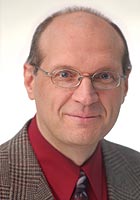 Photo Caption: UMBC chemistry/biochemistry chair William LaCourse.
“UMBC is deeply committed to giving undergraduates early, real-world research experience, which sets us apart from other universities,” said William R. LaCourse, chair of chemistry and biochemistry at UMBC. “The Undergraduate Research Symposium is exciting for faculty mentors and student participants because it not only exposes UMBC undergraduates to some of the best researchers in the country; it also sharpens skills that are vital for future careers or graduate school.”
A panel of participating mentors and attendees judged each poster session and awarded first and second place rankings for each category.
This year’s winners by category are viewable online at:
http://www.umbc.edu/chem-biochem/news/announcements.php?year=2008#100
Student presenters and faculty mentors came from universities and hospitals from across the U.S., including: Georgetown University, University of Massachusetts, Baylor College of Medicine, University of Nebraska Medical Center, the University of North Carolina at Chapel Hill, Pennsylvania State University College of Medicine, North Carolina State University, the Johns Hopkins University Bloomberg School of Public Health, Carnegie Institution of Washington, King College, Bloomsburg University, University of Maryland School of Medicine, East Tennessee State University, Medgar Evers College, University of California San Francisco, Howard University, University of Maryland, La Salle University, The College of New Jersey, State University of New York at Geneseo, Morgan State University, Hampton University, Ursinus College, Towson University, James Madison University, McDaniel College, the University of Delaware, Lebanon Valley College, Slippery Rock University, University of Pittsburgh at Greensburg, Hood College, Lycoming College, Delaware Biotechnology Institute, William Patterson University, Goucher College, Montclair State University and many others.
To view photo galleries of all the day's poster presentations, please visit:
http://asp1.umbc.edu/newmedia/cbe/2008_pics/pm/index.html
and
http://asp1.umbc.edu/newmedia/cbe/2008_pics/am/index.html
]]>
UMBC hosted more than 400 participants including undergraduate researchers and their mentors from across the East Coast on Sat., Oct. 11, for the 11th Annual Undergraduate Research Symposium. This...
http://www.umbc.edu/research/blog/2008/10/11th_annual_umbc_undergraduate.html
https://beta.my.umbc.edu/api/v0/pixel/news/46545/guest@my.umbc.edu/c273b4f35de7929e2682ad9c24f1d206/api/pixel
ovpr-news-2008
Archived RCA News
https://beta.my.umbc.edu/groups/research
https://assets4-beta.my.umbc.edu/system/shared/avatars/groups/000/000/794/4bca2aa331eb7e472d63d97e0798b600/xsmall.png?1743706368
https://assets2-beta.my.umbc.edu/system/shared/avatars/groups/000/000/794/4bca2aa331eb7e472d63d97e0798b600/original.jpg?1743706368
https://assets3-beta.my.umbc.edu/system/shared/avatars/groups/000/000/794/4bca2aa331eb7e472d63d97e0798b600/xxlarge.png?1743706368
https://assets4-beta.my.umbc.edu/system/shared/avatars/groups/000/000/794/4bca2aa331eb7e472d63d97e0798b600/xlarge.png?1743706368
https://assets2-beta.my.umbc.edu/system/shared/avatars/groups/000/000/794/4bca2aa331eb7e472d63d97e0798b600/large.png?1743706368
https://assets4-beta.my.umbc.edu/system/shared/avatars/groups/000/000/794/4bca2aa331eb7e472d63d97e0798b600/medium.png?1743706368
https://assets4-beta.my.umbc.edu/system/shared/avatars/groups/000/000/794/4bca2aa331eb7e472d63d97e0798b600/small.png?1743706368
https://assets4-beta.my.umbc.edu/system/shared/avatars/groups/000/000/794/4bca2aa331eb7e472d63d97e0798b600/xsmall.png?1743706368
https://assets3-beta.my.umbc.edu/system/shared/avatars/groups/000/000/794/4bca2aa331eb7e472d63d97e0798b600/xxsmall.png?1743706368
Office of the Vice President for Research
0
0
false
Tue, 14 Oct 2008 12:00:00 -0400
Can a Parking Lot Be Good for the Bay?
UMBC Workshop to Teach Builders, Planners
About ‘Green Concrete’ in Classroom, With Cement Truck
Can a Wal-Mart parking lot be good for the Bay?
The answer could be yes, if it’s made of pervious concrete, a ‘green’ building material that is the subject of a how-to workshop hosted by UMBC's Center for Urban Environmental Research and Education (CUERE) on Wednesday, Aug. 27 from 8 to 11 a.m.
Pervious concrete allows stormwater to slowly drain through it like a sponge. This prevents the rapid runoff of rainwater from traditional concrete that erodes waterways and carries pollution into the Chesapeake Bay. Voids left in the mix give pervious concrete a bumpy texture and allow water to soak through.
Experts from UMBC and Cleveland State University will give contractors, tradesmen, architects and municipal planners a classroom session on best practices for working with the material and for navigating Maryland's recent changes in development laws, such as the Maryland Stormwater Management Act of 2007, which calls for “environmental site design” for new construction and development.
At 10 a.m. a concrete mixer truck will arrive for a hands-on lesson in the proper pouring and installation of the material. Several test beds of pervious concrete will be installed outside of the CUERE facilities.
The test beds will be equipped with scientific instruments to give UMBC researchers long-term data on pervious concrete's effectiveness both as a building material and as a tool for environmental stewardship. Gwen Stanko, a doctoral student in CUERE's prestigious IGERT program, and other UMBC students will help monitor the test beds.

Photo Caption: Stu Schwartz (right) and UMBC Ph.D. student Gwen Stanko with pervious concrete samples near a future test site.
The event was organized by Stu Schwartz, a senior research scientist at UMBC CUERE with over 15 years of experience in land use and water quality issues.
Schwartz says the workshop’s goal is to improve understanding of pervious concrete. While there are differences in how to mix, pour and maintain pervious versus traditional, when properly installed and maintained, it is effective for light-traffic parking lots, roads and sidewalks.
“In the past, people have promoted pervious concrete as a magic pavement that makes all your water problems go away," said Schwartz. "There's no such thing as a magic bullet like that. Many of the negative stereotypes associated with the material have been caused by improper design and installation. So we want to provide information for contractors, engineers and planners to know when and how to use it effectively.”
According to Schwartz, industry is starting to invest more in pervious concrete as both a way to comply with environmental rules and as a boost to the bottom line. He noted a Wal-Mart parking lot in Denver, Co., made of pervious concrete and a seven-acre paved storage yard and parking lot by Shelter Systems, a Westminster, Md., roofing truss company.
“Pervious concrete allowed Shelter Systems to use their entire seven-acre site instead of losing an acre or acre and a half to stormwater ponds, saving the cost of a $400,000 stormwater management system,” said Schwartz.
The workshop and research effort is funded by the Chesapeake Bay Trust, part of the organization's new Pioneer Grant Program, which focuses on larger, higher-impact grants to improve the health of the Bay.

Photo Caption: Stanko demonstrates how a pervious concrete sample lets water flow through.
]]>
UMBC Workshop to Teach Builders, Planners About ‘Green Concrete’ in Classroom, With Cement Truck Can a Wal-Mart parking lot be good for the Bay? The answer could be yes, if it’s made of...
http://www.umbc.edu/research/blog/2008/08/can_a_parking_lot_be_good_for_1.html
https://beta.my.umbc.edu/api/v0/pixel/news/46546/guest@my.umbc.edu/18e9a3bb89fbc4c95039ee51ac5a0686/api/pixel
ovpr-news-2008
Archived RCA News
https://beta.my.umbc.edu/groups/research
https://assets4-beta.my.umbc.edu/system/shared/avatars/groups/000/000/794/4bca2aa331eb7e472d63d97e0798b600/xsmall.png?1743706368
https://assets2-beta.my.umbc.edu/system/shared/avatars/groups/000/000/794/4bca2aa331eb7e472d63d97e0798b600/original.jpg?1743706368
https://assets3-beta.my.umbc.edu/system/shared/avatars/groups/000/000/794/4bca2aa331eb7e472d63d97e0798b600/xxlarge.png?1743706368
https://assets4-beta.my.umbc.edu/system/shared/avatars/groups/000/000/794/4bca2aa331eb7e472d63d97e0798b600/xlarge.png?1743706368
https://assets2-beta.my.umbc.edu/system/shared/avatars/groups/000/000/794/4bca2aa331eb7e472d63d97e0798b600/large.png?1743706368
https://assets4-beta.my.umbc.edu/system/shared/avatars/groups/000/000/794/4bca2aa331eb7e472d63d97e0798b600/medium.png?1743706368
https://assets4-beta.my.umbc.edu/system/shared/avatars/groups/000/000/794/4bca2aa331eb7e472d63d97e0798b600/small.png?1743706368
https://assets4-beta.my.umbc.edu/system/shared/avatars/groups/000/000/794/4bca2aa331eb7e472d63d97e0798b600/xsmall.png?1743706368
https://assets3-beta.my.umbc.edu/system/shared/avatars/groups/000/000/794/4bca2aa331eb7e472d63d97e0798b600/xxsmall.png?1743706368
Office of the Vice President for Research
0
0
false
Wed, 20 Aug 2008 12:00:00 -0400
A Climate Connection in the Clouds
UMBC Physics Professor Co-Authors Science Paper on How Aerosols Impact Cloud Formation, Climate

Researchers at UMBC, NASA-Goddard Space Flight Center and the Weizmann Institute in Rehovot, Israel studying the connection between the burning of vegetation and cloud cover in the Amazon region have found a clearer picture of how aerosols – the tiny particles that make up dust, soot, smoke and ocean spray – may impact cloud formation and climate change on a global scale. The study was published in the Aug. 15 issue of the journal Science.
Scientists have long known that aerosols play a role in cloud formation, but were puzzled by the fact that aerosols’ impact was inconsistent, causing more cloud cover over the Atlantic Ocean while causing less in South America’s Amazon basin.
Aerosol particles are carried by the wind into the atmosphere, where they become encased by water to form rain droplets that cluster into clouds. Aerosol-rich clouds are more spread out by wind, last longer and produce less rain. Aerosol-rich clouds also trap heat in the atmosphere, making cloud growth and rain less likely.
The research team focused on the Amazon region as a test area, using NASA’s Terra satellite to study cloud and aerosol data. “During the (2005) dry season in the Amazon, the only aerosols of any magnitude are from smoke emerging from human-initiated fires,” said study co-author Lorraine Remer, a physical scientist at NASA’s Goddard Space Flight Center, in a NASA press release.
The end result of the research was an analytical model that should work across the globe.
“As we’d expected in applying our model, increased smoke from the fires created clouds rife with a more pronounced radiative effect -- rich with human-caused aerosols that absorbed sunlight, warmed the local atmosphere, and blocked evaporation. This led to reduced cloud cover over the Amazon,” study co-author Vanderlei Martins, associate professor of physics at UMBC, said in the NASA press release. “And it’s encouraging to know the science behind our model should stand no matter the region.”
The paper, “Smoke Invigoration Versus Inhibition of Clouds over the Amazon,” can be found in the Aug. 15 issue of Science.
A Science podcast featuring the Amazon aerosol research is available at:
http://www.sciencemag.org/cgi/content/full/321/5891/981b
]]>
UMBC Physics Professor Co-Authors Science Paper on How Aerosols Impact Cloud Formation, Climate Researchers at UMBC, NASA-Goddard Space Flight Center and the Weizmann Institute in...
http://www.umbc.edu/research/blog/2008/08/a_climate_connection_in_the_cl_1.html
https://beta.my.umbc.edu/api/v0/pixel/news/46547/guest@my.umbc.edu/b77412e8133e8ab4cec0c71ceab72328/api/pixel
ovpr-news-2008
Archived RCA News
https://beta.my.umbc.edu/groups/research
https://assets4-beta.my.umbc.edu/system/shared/avatars/groups/000/000/794/4bca2aa331eb7e472d63d97e0798b600/xsmall.png?1743706368
https://assets2-beta.my.umbc.edu/system/shared/avatars/groups/000/000/794/4bca2aa331eb7e472d63d97e0798b600/original.jpg?1743706368
https://assets3-beta.my.umbc.edu/system/shared/avatars/groups/000/000/794/4bca2aa331eb7e472d63d97e0798b600/xxlarge.png?1743706368
https://assets4-beta.my.umbc.edu/system/shared/avatars/groups/000/000/794/4bca2aa331eb7e472d63d97e0798b600/xlarge.png?1743706368
https://assets2-beta.my.umbc.edu/system/shared/avatars/groups/000/000/794/4bca2aa331eb7e472d63d97e0798b600/large.png?1743706368
https://assets4-beta.my.umbc.edu/system/shared/avatars/groups/000/000/794/4bca2aa331eb7e472d63d97e0798b600/medium.png?1743706368
https://assets4-beta.my.umbc.edu/system/shared/avatars/groups/000/000/794/4bca2aa331eb7e472d63d97e0798b600/small.png?1743706368
https://assets4-beta.my.umbc.edu/system/shared/avatars/groups/000/000/794/4bca2aa331eb7e472d63d97e0798b600/xsmall.png?1743706368
https://assets3-beta.my.umbc.edu/system/shared/avatars/groups/000/000/794/4bca2aa331eb7e472d63d97e0798b600/xxsmall.png?1743706368
Office of the Vice President for Research
0
0
false
Fri, 15 Aug 2008 12:00:00 -0400
UMBC/NASA Research on Beijing Olympics Smog in the New York Times

UMBC's long-standing partnership with NASA-Goddard Space Flight Center to monitor global air quality is in the media spotlight today, as the world's attention focuses on the start of the 2008 Summer Olympic Games in Beijing, China and the effects of the city's air pollution on athletes and spectators.
Simon Carn, an assistant research scientist at UMBC's Joint Center for Earth Systems Technology (JCET), was quoted in an Aug. 6 New York Times "Dot Earth" blog post. "Dot Earth" is a blog about the earth, the environment and sustainability by noted science writer Andrew Revkin.
Revkin's post looked at comparisons of sulfur dioxide (SO2) levels in the U.S., Europe and China. SO2, the pollutant that contributes to acid rain, has been banned for years in the U.S. and Europe.
Carn and colleagues in the SO2 Monitoring Group of UMBC JCET/Goddard Space Flight Center studied how satellite images and analysis of the SO2 levels in the air over the three continents showed how China's emphasis on economic growth and lack of expensive, Euro/U.S.-style "smokestack scrubbing" technology for coal-burning power plants and anti-SO2 regulations have left China with backwards-in-time air quality compared to the West.
UMBC/NASA also partner on the "Smog Blog," a daily look at U.S. and global air quality using NASA satellite data. The Smog Blog has also been keeping a close eye on Beijing's air.
]]>
UMBC's long-standing partnership with NASA-Goddard Space Flight Center to monitor global air quality is in the media spotlight today, as the world's attention focuses on the start of the 2008...
http://www.umbc.edu/research/blog/2008/08/umbcnasa_research_on_beijing_o.html
https://beta.my.umbc.edu/api/v0/pixel/news/46548/guest@my.umbc.edu/cf3d8a43cf1c2129a9808acf2db366d5/api/pixel
ovpr-news-2008
Archived RCA News
https://beta.my.umbc.edu/groups/research
https://assets4-beta.my.umbc.edu/system/shared/avatars/groups/000/000/794/4bca2aa331eb7e472d63d97e0798b600/xsmall.png?1743706368
https://assets2-beta.my.umbc.edu/system/shared/avatars/groups/000/000/794/4bca2aa331eb7e472d63d97e0798b600/original.jpg?1743706368
https://assets3-beta.my.umbc.edu/system/shared/avatars/groups/000/000/794/4bca2aa331eb7e472d63d97e0798b600/xxlarge.png?1743706368
https://assets4-beta.my.umbc.edu/system/shared/avatars/groups/000/000/794/4bca2aa331eb7e472d63d97e0798b600/xlarge.png?1743706368
https://assets2-beta.my.umbc.edu/system/shared/avatars/groups/000/000/794/4bca2aa331eb7e472d63d97e0798b600/large.png?1743706368
https://assets4-beta.my.umbc.edu/system/shared/avatars/groups/000/000/794/4bca2aa331eb7e472d63d97e0798b600/medium.png?1743706368
https://assets4-beta.my.umbc.edu/system/shared/avatars/groups/000/000/794/4bca2aa331eb7e472d63d97e0798b600/small.png?1743706368
https://assets4-beta.my.umbc.edu/system/shared/avatars/groups/000/000/794/4bca2aa331eb7e472d63d97e0798b600/xsmall.png?1743706368
https://assets3-beta.my.umbc.edu/system/shared/avatars/groups/000/000/794/4bca2aa331eb7e472d63d97e0798b600/xxsmall.png?1743706368
Office of the Vice President for Research
0
0
false
Wed, 06 Aug 2008 12:00:00 -0400
Studying Moon Dust to Aid Astronauts and Robots

Timothy Stubbs, a scientist at UMBC and NASA-Goddard Space Flight Center, recently won funding for a project that sounds like equal parts Ray Bradbury and early David Bowie: studying how electrically charged dust moves across the moon and how it could be a hazard to humans and robots exploring the lunar surface.
Stubbs was selected by NASA to join the science team for the Lunar Reconnaissance Orbiter (LRO) mission, being built at Goddard and scheduled for launch later this year. The LRO is NASA's first step in plans to return humans to the moon by 2020. Stubbs is an assistant research scientist with UMBC’s Goddard Earth Sciences and Technology Center.
Most of the evidence for a lunar dust “atmosphere” dates back to the Apollo mission era. NASA scientists analyzing images returned by the Surveyor landers noticed a ‘horizon glow’ close to the surface after lunar sunset, believed to be caused by sunlight scattered by ultra-tiny (smaller than a few microns – a millionth of a meter) dust particles. While astronauts in orbit observed a high-altitude horizon glow (over 62 miles high) just as their spacecraft was passing out of the shadow of the Moon.
According to the “dust fountain” model developed by Stubbs and colleagues at NASA Goddard, the high-altitude dust grains inferred from the horizon glow are probably highly-charged and have been lofted upward by electric fields close to the lunar surface. Once above the lunar surface electric field, the dust grains then fall back toward the Moon under gravity, with their trajectories resembling the arc of a water fountain.
Like the rest of the lunar soil, the dust was created over billions of years by the countless impacts of tiny meteorites. It gets its electrical charge from the sun’s ultraviolet light, X-rays and the moon’s surrounding plasma (electrified gas of ions and electrons) environment. The dust’s electrostatic charge makes it move about the moon’s surface and also gives it a static-cling stickiness that can be hazardous to astronauts and their equipment.
The tiny dust fragments are sharp and jagged since there is no air or water on the moon to smooth them over time. The dust was a nuisance to the Apollo astronauts, sticking to their spacesuits and tracking inside their spacecraft.
But what was a minor annoyance for the relatively brief Apollo missions could be dangerous during the next-generation, long-duration missions being planned by NASA. Astronauts who regularly inhale the sharp dust fragments over time could develop lung diseases similar to those caused by asbestos or coal dust. The dust could also cause problems with sensitive equipment and instruments.
“I feel very fortunate to have the opportunity to be directly involved with NASA’s return to the moon, as well as very excited about all the great new science that will be achieved with this historic mission,” said Stubbs.
Stubbs’ project will use instruments on the LRO and other spacecraft to measure how much lunar dust there is and map the moon’s electric fields to better understand when and where the dust is most likely to be a problem for the manned missions planned for 2020 and beyond.
]]>
Timothy Stubbs, a scientist at UMBC and NASA-Goddard Space Flight Center, recently won funding for a project that sounds like equal parts Ray Bradbury and early David Bowie: studying how...
http://www.umbc.edu/research/blog/2008/04/studying_moon_dust_to_aid_astr_1.html
https://beta.my.umbc.edu/api/v0/pixel/news/46549/guest@my.umbc.edu/ea74b4c360ce8ed7693ba6fff3e0cd13/api/pixel
ovpr-news-2008
Archived RCA News
https://beta.my.umbc.edu/groups/research
https://assets4-beta.my.umbc.edu/system/shared/avatars/groups/000/000/794/4bca2aa331eb7e472d63d97e0798b600/xsmall.png?1743706368
https://assets2-beta.my.umbc.edu/system/shared/avatars/groups/000/000/794/4bca2aa331eb7e472d63d97e0798b600/original.jpg?1743706368
https://assets3-beta.my.umbc.edu/system/shared/avatars/groups/000/000/794/4bca2aa331eb7e472d63d97e0798b600/xxlarge.png?1743706368
https://assets4-beta.my.umbc.edu/system/shared/avatars/groups/000/000/794/4bca2aa331eb7e472d63d97e0798b600/xlarge.png?1743706368
https://assets2-beta.my.umbc.edu/system/shared/avatars/groups/000/000/794/4bca2aa331eb7e472d63d97e0798b600/large.png?1743706368
https://assets4-beta.my.umbc.edu/system/shared/avatars/groups/000/000/794/4bca2aa331eb7e472d63d97e0798b600/medium.png?1743706368
https://assets4-beta.my.umbc.edu/system/shared/avatars/groups/000/000/794/4bca2aa331eb7e472d63d97e0798b600/small.png?1743706368
https://assets4-beta.my.umbc.edu/system/shared/avatars/groups/000/000/794/4bca2aa331eb7e472d63d97e0798b600/xsmall.png?1743706368
https://assets3-beta.my.umbc.edu/system/shared/avatars/groups/000/000/794/4bca2aa331eb7e472d63d97e0798b600/xxsmall.png?1743706368
Office of the Vice President for Research
0
0
false
Mon, 14 Apr 2008 12:00:00 -0400
UMBC Presents "Ethical Implications of Synthetic Life" Symposium
April 2, 2008
4:00-5:30 pm
(reception to follow)
Albin O. Kuhn Library
7th Floor Conference Room
UMBC
The J. Craig Venter Institute recently announced the creation of the world's first wholly synthetic bacterial genome. For better or worse, this achievement by the celebrated and controversial scientist and his team marked the beginning of human-designed life on Earth.
On April 2, the entire campus community and the public are invited to an interdisciplinary symposium, "The Ethical Implications of Synthetic Life," featuring discussions from top experts in bioethics, genomics and policy on the social, political and moral implications of this rapidly growing technology with vast potential to be either friendly or a 21st-century Frankenstein.
Directions to UMBC and Parking Information.
Welcome and Introductions by:

Andrea L. Kalfoglou, Ph.D.
Department of Sociology/Anthropology
Health Administration and Policy Program
UMBC
Moderator:

Stephen Freeland, Ph.D.
Associate Professor
Department of Biological Sciences
UMBC
Panelists:

Glenn McGee, Ph.D.
Director
Alden March Bioethics Institute
Albany Medical College
Albany, New York
Glenn McGee is the founding director of Alden March Bioethics Institute, a comprehensive, university-based bioethics research, clinical and outreach program in New York's state capital. His research focuses on the impact of new technologies on our personal, social and political lives. He is the Editor-in-Chief of The American Journal of Bioethics. Prof. McGee is the author of five books, including Beyond Genetics (2004). His upcoming book explores ethical issues in the diagnosis and treatment of autism. Professor McGee has authored hundreds of essays and articles in journals of medicine, science and bioethics such as Science, JAMA, and Nature Genetics. In addition, his work reaches a wider readership through his regular columns for MSNBC (2000-2003) and for Hearst Newspapers, distributed by the NYT News Service. Prof. McGee has testified in 23 state legislatures, and before committees of the U.S. House of Representatives and Senate. He has assisted California, New York and Rhode Island in the authorship of proposed legislation dealing with cloning and stem cells. He has conducted bioethics training for incoming members of Congress and for the Counsel of Chief Judges of the Courts of Appeals. He was recently named one of the top ten influential people in Albany, and in 2006, was named to the inaugural Google, Nature and O'Reilly Science Foo Camp. He is one of the 2004 Seed magazine’s Third Culture, "scientists and thinkers who have a propensity for writing directly and very eloquently for the general public." Prof. McGee holds a Ph.D. in philosophy from Vanderbilt University and completed a post-doc through the National Human Genome Research Institute’s Ethical, Legal, and Social Issues program.

Jaydee Hanson, M.A.
Policy Director/Political Activist
International Center for Technology Assessment
Washington, DC
Jaydee Hanson directs the CTA's work on human genetics, including work on stem cell research, cloning, and gene/embryo patenting. He also works on the convergence of biotechnology and nanotechnology. He is a fellow of the Institute on Biotechnology and the Human Future. Prior to coming to CTA in 2004, he served as The United Methodist Church's staff director of genetics and bioethics issues from 1981 to 2004. From 1991 to 2004, he also was the legislative director for the church. Mr. Hanson has testified to many state and US congressional hearings on human cloning, animal and gene patenting, and related issues. He coordinated the 1995 religious leaders' statement opposing gene and animal patenting, which was endorsed by over 200 leaders from every US religious tradition. Hanson has served on many committees related to public policy and genetics. He chaired the National Council of Churches' Exploratory Commission on the New Human Genetics and chaired the National Council of Churches' Eco-justice Working Group biotechnology taskforce. He is a member of the World Council of Churches' genetics and nanotechnology committees, which developed new policy for that world-wide body of 400 denominations. He served on the American Association for the Advancement of Science's Science and Religion Advisory Committee and the Ecumenical Roundtable on Science and Religion.

Jef Boeke, Ph.D.
Professor Molecular Biology & Genetics
Johns Hopkins Medical Institute
Baltimore, MD
Dr. Jef D. Boeke is Professor of Molecular Biology & Genetics, Professor of Oncology, and Director of the High Throughput Biology Center at Johns Hopkins University School of Medicine. He elucidated one of the major forms of DNA movement (transposition) in yeast cells, in which Ty1 elements move via reverse transcription of RNA. He coined the term “retotransposition” to describe this unusual process. His work elucidated the intricate molecular mechanisms involved in retrotransposition in yeast and human cells. Retrotransposition formed about half of all human DNA and has been a major force in the evolution of the genomes of many organisms. His recent work suggests that retrotransposition may have profound effects on the expression of those genes and could thus contribute to common genetic diseases. His laboratory has also constructed highly active synthetic retrotransposons with a wide variety of practical and academic uses. His interest in Synthetic Biology has led to an interdisciplinary effort to redesign and synthesize the genome of the brewer’s yeast, in part using a team of undergraduates in the new course “Build A Genome” being taught at Johns Hopkins.

Gautam Mukunda, Ph.D.(c)
Political Science
Massachusetts Institute of Technology (MIT)
Mr. Gautam’s doctoral research is focused on international relations. He was a consultant with McKinsey & Company focusing in the pharmaceutical and financial sectors. He is currently the Founding Managing Director of the Two Rivers Group, a consulting firm that brings the insights and knowledge of the academic world to bear on the problems facing the private, public, and non-profit sectors. He was Administrator of the Russian Investment Symposium and Program Coordinator of the Kommersant Program on Executive Education in Russia at the Kennedy School of Government. His current research interests include leadership in competitive organizations, the implications of black swan events on international politics, and the security and economic implications of emerging technologies, particularly Synthetic Biology. He is a member of MIT’s Security Studies Program and Program on Emerging Technologies, and he is the social sciences representative on the Student Leadership Council of the National Science Foundaton’s Synthetic Biology Engineering Research Center (SynBERC). He graduated from Harvard College with a degree in Government in 2001, magna cum laude. He is a 2005 Paul and Daisy Soros New American Fellow, a 2006 Carnegie Endowment Biosecurity Fellow, and a 2007-2009 National Science Foundation IGERT Fellow.
Sponsored by:
The Dresher Center for the Humanities
UMBC Department of Sociology and Anthropology
UMBC Department of Biological Sciences
UMBC College of Natural and Mathematical Sciences
UMBC College of Arts, Humanities, and Social Sciences
The UMBC Bioethics Student Association
For more information, please contact Prof. Andrea Kalfoglou at akalfogl@umbc.edu or 410-455-2061.
]]>
April 2, 2008 4:00-5:30 pm (reception to follow) Albin O. Kuhn Library 7th Floor Conference Room UMBC The J. Craig Venter Institute recently announced the creation of the world's first...
http://www.umbc.edu/research/blog/2008/03/umbc_presents_ethical_implicat.html
https://beta.my.umbc.edu/api/v0/pixel/news/46550/guest@my.umbc.edu/ed2ac4b4ff4f60b4632b702c557e89be/api/pixel
ovpr-news-2008
Archived RCA News
https://beta.my.umbc.edu/groups/research
https://assets4-beta.my.umbc.edu/system/shared/avatars/groups/000/000/794/4bca2aa331eb7e472d63d97e0798b600/xsmall.png?1743706368
https://assets2-beta.my.umbc.edu/system/shared/avatars/groups/000/000/794/4bca2aa331eb7e472d63d97e0798b600/original.jpg?1743706368
https://assets3-beta.my.umbc.edu/system/shared/avatars/groups/000/000/794/4bca2aa331eb7e472d63d97e0798b600/xxlarge.png?1743706368
https://assets4-beta.my.umbc.edu/system/shared/avatars/groups/000/000/794/4bca2aa331eb7e472d63d97e0798b600/xlarge.png?1743706368
https://assets2-beta.my.umbc.edu/system/shared/avatars/groups/000/000/794/4bca2aa331eb7e472d63d97e0798b600/large.png?1743706368
https://assets4-beta.my.umbc.edu/system/shared/avatars/groups/000/000/794/4bca2aa331eb7e472d63d97e0798b600/medium.png?1743706368
https://assets4-beta.my.umbc.edu/system/shared/avatars/groups/000/000/794/4bca2aa331eb7e472d63d97e0798b600/small.png?1743706368
https://assets4-beta.my.umbc.edu/system/shared/avatars/groups/000/000/794/4bca2aa331eb7e472d63d97e0798b600/xsmall.png?1743706368
https://assets3-beta.my.umbc.edu/system/shared/avatars/groups/000/000/794/4bca2aa331eb7e472d63d97e0798b600/xxsmall.png?1743706368
Office of the Vice President for Research
0
0
false
Fri, 07 Mar 2008 12:00:00 -0500
On Board for a Mission of Mercy

Photo Caption: Devin Hagerty on the flight deck of the U.S.S. Tarawa.
He’s more accustomed to students in flip-flops instead of combat boots, but Associate Professor of Political Science Devin Hagerty was proud to sail with the U.S. Navy and Marines as he educated officers en route to South Asia.
For a week in November 2007, Hagerty was one of three “embedded Ph.D.s” through a U.S. Navy program that looks to include lessons from academic experts as part of military mission training.
Hagerty sailed from San Diego, California to Pearl Harbor, Hawaii with an Expeditionary Strike Group led by the amphibious assault ship U.S.S. Tarawa, as it headed to the Indian Ocean. Originally slated to conduct joint exercises with regional militaries, the Group was chosen to lead humanitarian relief efforts in Bangladesh after Cyclone Sidr struck the region on Nov. 15, killing over 3,200 people.
Hagerty commuted from ship to ship by helicopter or inflatable speedboat to deliver briefings on Bangladesh, the Maldives, Asian-Pacific culture, and U.S. strategic interests in the region. His deployment was part of the Regional Security Education Program, run by the Naval Postgraduate School in Monterrey, California.
During his week aboard, he picked up naval lingo like “cranials” (ear plugs and goggles for braving flight deck and helicopter winds and noise), “floaties” (life preservers), and “mobys” (cellphone-size, salt-water-detecting beacons to alert the bridge in case of a person overboard). Hagerty bonded so well with his hosts that by week’s end the Marines offered to give him a regulation flattop haircut and take him to the Indian Ocean with them.
“It was a blast, but more importantly, I felt like my efforts had some immediate relevance as our sailors and Marines helped victims of the cyclone,” said Hagerty.
]]>
Photo Caption: Devin Hagerty on the flight deck of the U.S.S. Tarawa. He’s more accustomed to students in flip-flops instead of combat boots, but Associate Professor of Political Science Devin...
http://www.umbc.edu/research/blog/2008/01/on_board_for_a_mission_of_merc_1.html
https://beta.my.umbc.edu/api/v0/pixel/news/46551/guest@my.umbc.edu/555b1efb92ed4c52539d15e8f4358738/api/pixel
ovpr-news-2008
Archived RCA News
https://beta.my.umbc.edu/groups/research
https://assets4-beta.my.umbc.edu/system/shared/avatars/groups/000/000/794/4bca2aa331eb7e472d63d97e0798b600/xsmall.png?1743706368
https://assets2-beta.my.umbc.edu/system/shared/avatars/groups/000/000/794/4bca2aa331eb7e472d63d97e0798b600/original.jpg?1743706368
https://assets3-beta.my.umbc.edu/system/shared/avatars/groups/000/000/794/4bca2aa331eb7e472d63d97e0798b600/xxlarge.png?1743706368
https://assets4-beta.my.umbc.edu/system/shared/avatars/groups/000/000/794/4bca2aa331eb7e472d63d97e0798b600/xlarge.png?1743706368
https://assets2-beta.my.umbc.edu/system/shared/avatars/groups/000/000/794/4bca2aa331eb7e472d63d97e0798b600/large.png?1743706368
https://assets4-beta.my.umbc.edu/system/shared/avatars/groups/000/000/794/4bca2aa331eb7e472d63d97e0798b600/medium.png?1743706368
https://assets4-beta.my.umbc.edu/system/shared/avatars/groups/000/000/794/4bca2aa331eb7e472d63d97e0798b600/small.png?1743706368
https://assets4-beta.my.umbc.edu/system/shared/avatars/groups/000/000/794/4bca2aa331eb7e472d63d97e0798b600/xsmall.png?1743706368
https://assets3-beta.my.umbc.edu/system/shared/avatars/groups/000/000/794/4bca2aa331eb7e472d63d97e0798b600/xxsmall.png?1743706368
Office of the Vice President for Research
0
0
false
Wed, 09 Jan 2008 12:00:00 -0500
Putting People in the Map: Ecologists Remap Biosphere to Include Humans

Photo Caption: Ecologist Erle Ellis has helped design a new way of mapping the Earth to include human impact.
Editor’s Note: Since its publication, Ellis and Ramankutty’s research has received international media attention, including coverage in Science and a video feature on Discover.com.
Other coverage included: Wired magazine’s “Wired Science” blog, United Press International, Der Spiegel, Earth & Sky, Earthtimes UK, DailyIndia.com, Science Daily, Digg.com, Propellor.com, the Agricultural Biodiversity Blog, www.terradaily.com and others.
Pristine wilderness is a thing of the past and it’s time to adjust our vision of the biosphere accordingly, say a team of American and Canadian eco-geographers in newly published research.
Erle Ellis, associate professor of Geography and Environmental Systems at UMBC, and Navin Ramankutty, assistant professor in McGill University’s Department of Geography and Earth System Science Program, used global data from satellites and land management statistics to map a new system of “anthropogenic biomes” or human biomes, that describe the biosphere as it exists today, the result of human shepherding and reshaping of ecosystems. Their map provides a 21st century challenge to the classic images of Earth's wild ecosystems that appear in nearly every ecology and earth science textbook.
Their research was published in the Nov. 26 issue of the journal Frontiers in Ecology and the Environment together with maps viewable in Google Earth and Google Maps at the Encyclopedia of Earth (a sort of Wikipedia for earth scientists and ecologists) and a printable classroom wall map for use by ecologists, educators and the public.
“The fact that an area is now covered by forests depends more on human decisions than it does on climate” said Ellis, who has studied anthropogenic landscapes in the field across rural China since 1992. He was inspired to investigate human landscapes globally during a research sabbatical at the Department of Global Ecology of the Carnegie Institute of Washington at Stanford University.

Photo Caption: Ellis has studied human biomes in rural China since 1992.
“The classic biomes, such as tropical rainforests or grasslands, were based on differences in vegetation caused by on climate,” said Ellis. “Now that humans have fundamentally altered global patterns of ecosystems and biodiversity, these biomes are rarely present across large areas any more. It is time for our map of the biosphere to reflect this new reality- that nature is now embedded within human systems” said Ellis.
Another key message from Ellis and Ramankutty was that ecologists should turn their focus to the changing ecosystems right underneath their feet. “A section of our paper is entitled ‘ecologists go home,’” said Ramankutty, an expert on global agriculture’s connection to environmental change. “Ecologists go to remote parts of the planet to study pristine ecosystems, but no one studies it in their back yard,” he said.
“We can no longer study ecology while ignoring humans,” Ellis said. “Humans are now as much a part of nature as the weather and human and ecological systems are so intricately linked that focusing just on nature gets in the way of conserving nature for future generations. We need to sustain positive interactions between human systems and ecosystems, not avoid these interactions. Focusing on so-called wilderness areas ignores more than four-fifths of Earth’s ice-free land. Ecologists need to do more research in places where humans live,” said Ellis.
Other key findings of the research:
- More than three-quarters of our ice-free land surface is human altered. Wildlands cover just 22 percent of ice-free land today, and most of this land is barren and relatively unproductive.
- Rangelands are the largest anthropogenic biomes, followed by cropland and forested biomes.
- More than 80 percent of people live in dense settlements and village biomes, though these cover just seven percent of the Earth’s ice-free land surface. Village biomes are about five times as extensive as urban biomes and are home to about a quarter of Earth’s human population.
- Anthropogenic biomes are mosaics. Instead of distinct vegetation or land-use types, anthropogenic biomes are complex mixtures of different land uses (settlements, crops, pastures, forests) that are classified by degree and type of human influence. For example, village biomes, which are found mostly in Asia and Africa, are crowded networks of towns and rural settlements embedded in intensively managed croplands and rice paddies alongside patches of less disturbed vegetation in hilly areas.
UMBC’s national reputation for excellence in earth and environmental science is growing. According to Thomson Scientific's Science Watch, UMBC's geoscience research ranked third nationally in citation impact for 2001-2005. The only other U.S. universities producing more frequently cited geoscience research papers were Harvard University and the Georgia Institute of Technology.
UMBC ranks third nationally in NASA research funding and is home to two major collaborative NASA earth science research centers and the U.S. Geological Survey’s Maryland/Delaware/D.C. Water Science Center.
]]>
Photo Caption: Ecologist Erle Ellis has helped design a new way of mapping the Earth to include human impact. Editor’s Note: Since its publication, Ellis and Ramankutty’s research has received...
http://www.umbc.edu/research/blog/2007/11/putting_people_in_the_map_ecol_1.html
https://beta.my.umbc.edu/api/v0/pixel/news/46552/guest@my.umbc.edu/d21ec385329f8091b3dbac8c7d5539f2/api/pixel
ovpr-news-2007
Archived RCA News
https://beta.my.umbc.edu/groups/research
https://assets4-beta.my.umbc.edu/system/shared/avatars/groups/000/000/794/4bca2aa331eb7e472d63d97e0798b600/xsmall.png?1743706368
https://assets2-beta.my.umbc.edu/system/shared/avatars/groups/000/000/794/4bca2aa331eb7e472d63d97e0798b600/original.jpg?1743706368
https://assets3-beta.my.umbc.edu/system/shared/avatars/groups/000/000/794/4bca2aa331eb7e472d63d97e0798b600/xxlarge.png?1743706368
https://assets4-beta.my.umbc.edu/system/shared/avatars/groups/000/000/794/4bca2aa331eb7e472d63d97e0798b600/xlarge.png?1743706368
https://assets2-beta.my.umbc.edu/system/shared/avatars/groups/000/000/794/4bca2aa331eb7e472d63d97e0798b600/large.png?1743706368
https://assets4-beta.my.umbc.edu/system/shared/avatars/groups/000/000/794/4bca2aa331eb7e472d63d97e0798b600/medium.png?1743706368
https://assets4-beta.my.umbc.edu/system/shared/avatars/groups/000/000/794/4bca2aa331eb7e472d63d97e0798b600/small.png?1743706368
https://assets4-beta.my.umbc.edu/system/shared/avatars/groups/000/000/794/4bca2aa331eb7e472d63d97e0798b600/xsmall.png?1743706368
https://assets3-beta.my.umbc.edu/system/shared/avatars/groups/000/000/794/4bca2aa331eb7e472d63d97e0798b600/xxsmall.png?1743706368
Office of the Vice President for Research
0
0
false
Mon, 26 Nov 2007 12:00:00 -0500

