Research excellence, from a tropical field site to the lab

Ellie Bare
Degree: B.S., Biochemistry & Molecular Biology
Hometown: Sharpsburg, MD
Post-grad plans: Postbaccalaureate program, National Institutes of Health
Ellie Bare has been a core member of Kevin Omland’s research team, focused on bird evolution, ecology, behavior, and conservation, since 2021.
Bare, a member of the Honors College, has proven to be an adept field researcher as well as excellent in the laboratory, Omland says. On three research trips to Puerto Rico, she collected field data starting at 4:30 a.m. through midday heat, day in and day out. She also initiated a new project monitoring nocturnal bird behavior. In the lab, she independently developed molecular analysis protocols for determining a bird’s sex. That ability is especially valuable for tropical birds, because males and females often have the same plumage.
Bare’s work was partially funded by a National Science Foundation International Research Experience for Students grant. “She was an indispensable asset to our project, and she was a great team member,” Omland says. She has also supported fellow UMBC students as a tutor and mentor, and interned with the Folded Crane Foundation, which focuses on women’s education and empowerment.
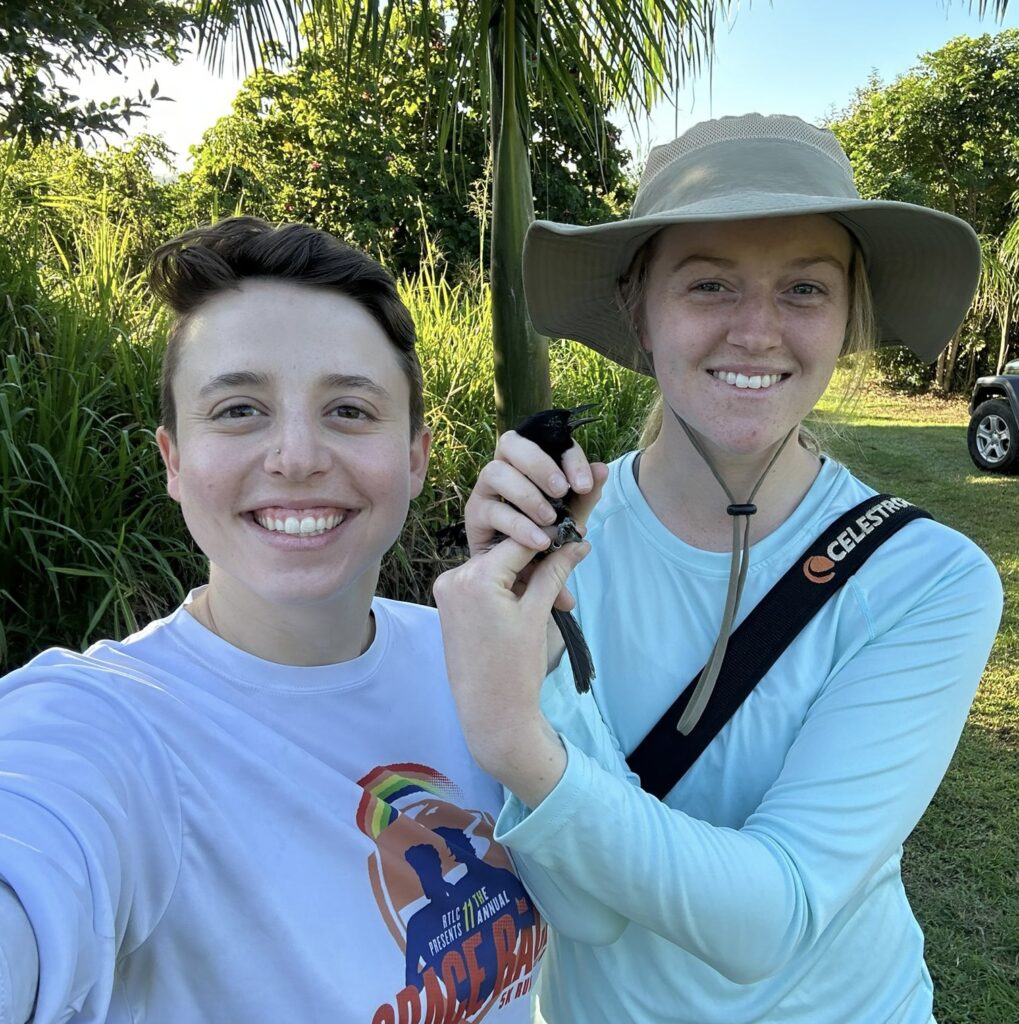 Michelle Moyer (left) and Ellie Bare, holding a Puerto Rican Oriole, at their research site in Puerto Rico. (Image by Michelle Moyer)
Has there been a mentor or fellow student who influenced your time at UMBC?
“I joined the Omland lab to help Ph.D. student Michelle Moyer with her field research project studying Orchard Oriole female song in spring 2021. We’ve grown close over four more field seasons. Her confidence, passion, and positivity are contagious. She has given me invaluable advice about my career path and about life as a whole. I’m very thankful to have met and worked with her.”
What has been the best part of your UMBC experience?
“My favorite UMBC experience has been getting involved with research. I love being able to apply what I learn in the classroom to hands-on work. I’ve been lucky enough to network with accomplished scientists at conferences, have ownership over my own projects, and learn from great mentors and peers. My research experiences have given me the expertise to enter the next stage of my career with confidence and excitement.”
]]>
Ellie Bare Degree: B.S., Biochemistry & Molecular Biology Hometown: Sharpsburg, MD Post-grad plans: Postbaccalaureate program, National Institutes of Health Ellie Bare has been a...
https://umbc.edu/stories/research-excellence-from-a-tropical-field-site-to-the-lab/
https://beta.my.umbc.edu/api/v0/pixel/news/132904/guest@my.umbc.edu/28d6ceb7cfb263060b4ee492bfafd20a/api/pixel
biology
class-of-2023
cnms
news
undergraduate-research
UMBC News & Magazine
https://beta.my.umbc.edu/groups/umbc-news-magazine
https://assets1-beta.my.umbc.edu/system/shared/avatars/groups/000/001/943/24435aa6207c452e7bc15cc74b42c7bb/xsmall.png?1748556657
https://assets1-beta.my.umbc.edu/system/shared/avatars/groups/000/001/943/24435aa6207c452e7bc15cc74b42c7bb/original.png?1748556657
https://assets2-beta.my.umbc.edu/system/shared/avatars/groups/000/001/943/24435aa6207c452e7bc15cc74b42c7bb/xxlarge.png?1748556657
https://assets2-beta.my.umbc.edu/system/shared/avatars/groups/000/001/943/24435aa6207c452e7bc15cc74b42c7bb/xlarge.png?1748556657
https://assets3-beta.my.umbc.edu/system/shared/avatars/groups/000/001/943/24435aa6207c452e7bc15cc74b42c7bb/large.png?1748556657
https://assets1-beta.my.umbc.edu/system/shared/avatars/groups/000/001/943/24435aa6207c452e7bc15cc74b42c7bb/medium.png?1748556657
https://assets2-beta.my.umbc.edu/system/shared/avatars/groups/000/001/943/24435aa6207c452e7bc15cc74b42c7bb/small.png?1748556657
https://assets1-beta.my.umbc.edu/system/shared/avatars/groups/000/001/943/24435aa6207c452e7bc15cc74b42c7bb/xsmall.png?1748556657
https://assets2-beta.my.umbc.edu/system/shared/avatars/groups/000/001/943/24435aa6207c452e7bc15cc74b42c7bb/xxsmall.png?1748556657
UMBC News & Magazine
0
0
false
Mon, 24 Apr 2023 13:23:10 -0400
Mon, 24 Apr 2023 13:23:10 -0400
Mock Trial champ pursuing economics for public good
Zinedine Partipilo Cornielles
Degree: B.S., Financial Economics; B.A., Mathematics
Hometown: Barquisimeto, Venezuela
Post-grad plans: Predoctoral research fellow
Zinedine Partipilo Cornielles fled Venezuela at age 16 with his family to seek asylum in the U.S., an experience that has fueled his passion for public service, from his research to his work with communities he identifies with.
PartipiloCornielles, a Sondheim Public Affairs Scholar and member of the Honors College, has conducted independent research projects with Tim Gindling, professor of economics, and Salem Abo-Zaid, associate professor of economics. His project with Gindling on the impact of financial literacy on student loan decisions among undergraduates across the United States earned the Economics Department Chair Award in 2022. Meanwhile, he has served as a teaching assistant and tutor for fellow students and has taught English to local immigrants through the Esperanza Center and UMBC’s Shriver Center.
PartipiloCornielles is also a member of UMBC Mock Trial and helped the team win the American Mock Trial Association National Championship in 2021 against perennial frontrunner Yale University. He is part of the Sloan Predoctoral Program through the UMBC economics department and, after pursuing a Ph.D. in economics, plans to conduct research on labor economics with a focus on Latin America.
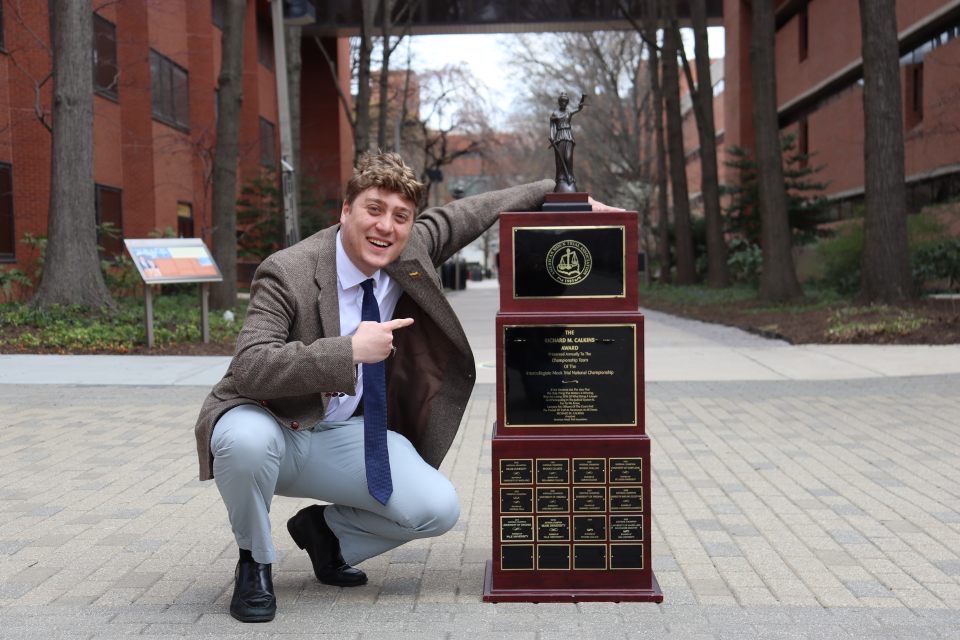 Zinedine Partipilo Cornielles with the 2021 Mock Trial championship trophy. (Image courtesy of Partipilo Cornielles)
Has there been a mentor or fellow student who influenced your time at UMBC?
“Professor Tim Gindling provided me with great insights as a research mentor, course instructor, and academic advisor. Thanks to Professor Gindling, I was supported in my research interests and gained invaluable experiences that have helped me fall in love with the research process. Brevin Franklin and Seth Thomas, fellow Sondheim Scholars who graduated in 2022, also helped me navigate through college when I first came to UMBC, and I appreciate their friendship.”
What has been the best part of your UMBC experience?
“On one hand, winning a Mock Trial National Championship against the odds, through Zoom, and against Yale, was incredible. On the other hand, I also want to highlight my service learning experiences as great experiences I have had. I was able to give back to the community by helping others and understand first-hand the value of education and human capital.”
]]>
Zinedine Partipilo Cornielles Degree: B.S., Financial Economics; B.A., Mathematics Hometown: Barquisimeto, Venezuela Post-grad plans: Predoctoral research fellow Zinedine Partipilo...
https://umbc.edu/stories/mock-trial-champ-pursuing-economics-for-public-good/
https://beta.my.umbc.edu/api/v0/pixel/news/132905/guest@my.umbc.edu/1b28a2d108bb60125841c853587c2929/api/pixel
cahss
class-of-2023
cnms
economics
mathstat
news
undergraduate-research
UMBC News & Magazine
https://beta.my.umbc.edu/groups/umbc-news-magazine
https://assets1-beta.my.umbc.edu/system/shared/avatars/groups/000/001/943/24435aa6207c452e7bc15cc74b42c7bb/xsmall.png?1748556657
https://assets1-beta.my.umbc.edu/system/shared/avatars/groups/000/001/943/24435aa6207c452e7bc15cc74b42c7bb/original.png?1748556657
https://assets2-beta.my.umbc.edu/system/shared/avatars/groups/000/001/943/24435aa6207c452e7bc15cc74b42c7bb/xxlarge.png?1748556657
https://assets2-beta.my.umbc.edu/system/shared/avatars/groups/000/001/943/24435aa6207c452e7bc15cc74b42c7bb/xlarge.png?1748556657
https://assets3-beta.my.umbc.edu/system/shared/avatars/groups/000/001/943/24435aa6207c452e7bc15cc74b42c7bb/large.png?1748556657
https://assets1-beta.my.umbc.edu/system/shared/avatars/groups/000/001/943/24435aa6207c452e7bc15cc74b42c7bb/medium.png?1748556657
https://assets2-beta.my.umbc.edu/system/shared/avatars/groups/000/001/943/24435aa6207c452e7bc15cc74b42c7bb/small.png?1748556657
https://assets1-beta.my.umbc.edu/system/shared/avatars/groups/000/001/943/24435aa6207c452e7bc15cc74b42c7bb/xsmall.png?1748556657
https://assets2-beta.my.umbc.edu/system/shared/avatars/groups/000/001/943/24435aa6207c452e7bc15cc74b42c7bb/xxsmall.png?1748556657
UMBC News & Magazine
3
0
false
Mon, 24 Apr 2023 13:22:25 -0400
Mon, 24 Apr 2023 13:22:25 -0400
New UMBC/Los Alamos research on megafire smoke plumes clarifies what they contain, how they move, and their potential impacts

In recent years, large, intense wildfires, known as megafires, have increasingly caused severe damage to forests, homes, and crops. In addition to megafires fatally impacting humans and wildlife alike, they may also be impacting climate change. New research led by UMBC’s Stephen Guimond provides insight into how the large smoke plumes produced by megafires can be more accurately modeled and characterized to improve our understanding of how they might impact the earth.
Guimond, an associate research professor of physics, collaborated with scientists at the Los Alamos National Laboratory to determine the long-term effects of smoke plumes from megafires. Their findings, recently published in the Journal of Advances in Modeling Earth Systems, demonstrates how previous research utilized a model grid spacing that does not sample smoke plumes accurately. These inaccuracies in defining the dynamics of the problem lead to errors in interpretation of the smoke’s properties, vertical and horizontal movement of the plume, and potential climatic effects.
Tracking how smoke rises
The smoke plumes from megafires are voluminous and can rise very high into the upper atmosphere. Initially, the plumes get transported upwards by convective cells and travel into the stratosphere, explains Guimond, who is also a scientist at UMBC’s Goddard Earth Sciences Technology and Research (GESTAR) II (previously known as the Joint Center for Earth Systems Technology).
 Stephen Guimond. (Photo courtesy of Stephen Guimond)
“Once it gets up into the stratosphere, the smoke can stay around for many months, even up to a year or more. The fact that it can stay up there so long means that you can get effects on the solar radiation reaching the surface,” says Guimond. “If you have a big, dark-colored blanket of smoke up there, it’s going to absorb most of the sunlight, which will lead to less sunlight reaching the surface of the earth. Because of this, you could get, over a long period of time, a cooling that happens on the surface of the earth,” among other impacts.
For three years, scientists at Los Alamos studied the chemical properties of smoke plumes by burning objects like trees in a controlled setting to determine the percentages of carbon that the smoke emitted. The scientists evaluated atmospheric particulates, or aerosols, which have a major effect on climate. Guimond used a NASA climate model to determine the carbon characteristics of the smoke plumes, how they rise into the atmosphere, and the underlying causes of rotation within the plumes.
“The measurements we looked at included particle types, the spectrum of the particles, and their sizes,” says Guimond. “We also looked at the contributions of different chemical species such as black carbon, organic carbon, and other chemical compounds that come off of burning materials.”
Assessing previous smoke plume research
The color of the smoke is an important factor, Guimond notes, as different types of smoke have different radiative properties. White smoke is composed mostly of organic carbon: brightly-colored aerosol particles that in large part reflect radiation back into the atmosphere. Black smoke is composed mostly of black carbon: dark-colored aerosol particles that absorb radiation.
The researchers determined that previous models didn’t accurately sample the types of carbon within smoke plumes, leading to miscalculations or incorrect assumptions about the percentage of black carbon the plumes contained.
As the black smoke absorbs solar radiation, the smoke heats up, which can create a lofting effect that pushes the smoke higher into the atmosphere. The higher the smoke rises, the longer it stays in the stratosphere. The longer it stays, the more time it has to impact the surface of the earth. This means that inaccurate characterization of the percentage of black carbon in wildfire smoke can lead to inaccurate calculations of the lofting effect, height of the plume and stratospheric lifetime, as well as climatic effects.
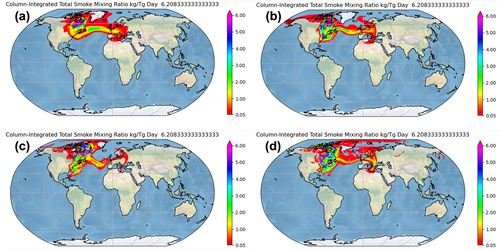 Figure 1
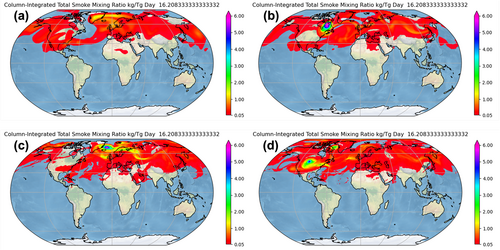 Figure 2
Figure 1 (left): The horizontal structure of the smoke plume at 6.2 days by vertically integrating the total smoke mixing ratio over the entire model atmosphere into the simulations for varying resolutions: (a) 2.0° (b) 1.0° (c) 0.25° and (d) 7 km.

    Figure 2 (right): The same as figure 1, except at 16.2 days. The horizontal structure of the smoke plume is significantly different between the various resolution simulations. (Images courtesy of Stephen Guimond and the Journal of Advances in Modeling Earth Systems)
Limits in how previous research represented the atmosphere also made for less accurate smoke plume simulations, Guimond said. He notes that prior smoke plume research used “coarse representation of the smoke plume in the model calculations, which has significant downstream effects on all other components of this problem, including the conclusions drawn from the research.”
Guimond hopes that his research can improve understanding of the dynamics of this problem: tracking of atmospheric motion and forces in three-dimensions, and how phenomena like rotating smoke plumes form and decay.
“Scientists need to accurately simulate the dynamics in order to get more accurate answers about aerosol properties inside the smoke plumes,” Guimond says, “such as how much of the smoke is black carbon, how long it is going to last in the stratosphere, how high it rises, and its effects on the radiation of the earth.”
With more accurate models and simulations, future research will be able to better inform climate policy and megafire response.
]]>
In recent years, large, intense wildfires, known as megafires, have increasingly caused severe damage to forests, homes, and crops. In addition to megafires fatally impacting humans and wildlife...
https://umbc.edu/stories/research-megafire-smoke-plumes/
https://beta.my.umbc.edu/api/v0/pixel/news/132851/guest@my.umbc.edu/1e34f79fff48056e08945b2093816fad/api/pixel
cnms
gestar
jcet
news
physics
rca-2
research
science-and-tech
UMBC News & Magazine
https://beta.my.umbc.edu/groups/umbc-news-magazine
https://assets1-beta.my.umbc.edu/system/shared/avatars/groups/000/001/943/24435aa6207c452e7bc15cc74b42c7bb/xsmall.png?1748556657
https://assets1-beta.my.umbc.edu/system/shared/avatars/groups/000/001/943/24435aa6207c452e7bc15cc74b42c7bb/original.png?1748556657
https://assets2-beta.my.umbc.edu/system/shared/avatars/groups/000/001/943/24435aa6207c452e7bc15cc74b42c7bb/xxlarge.png?1748556657
https://assets2-beta.my.umbc.edu/system/shared/avatars/groups/000/001/943/24435aa6207c452e7bc15cc74b42c7bb/xlarge.png?1748556657
https://assets3-beta.my.umbc.edu/system/shared/avatars/groups/000/001/943/24435aa6207c452e7bc15cc74b42c7bb/large.png?1748556657
https://assets1-beta.my.umbc.edu/system/shared/avatars/groups/000/001/943/24435aa6207c452e7bc15cc74b42c7bb/medium.png?1748556657
https://assets2-beta.my.umbc.edu/system/shared/avatars/groups/000/001/943/24435aa6207c452e7bc15cc74b42c7bb/small.png?1748556657
https://assets1-beta.my.umbc.edu/system/shared/avatars/groups/000/001/943/24435aa6207c452e7bc15cc74b42c7bb/xsmall.png?1748556657
https://assets2-beta.my.umbc.edu/system/shared/avatars/groups/000/001/943/24435aa6207c452e7bc15cc74b42c7bb/xxsmall.png?1748556657
UMBC News & Magazine
0
0
false
Fri, 21 Apr 2023 08:02:38 -0400
Fri, 21 Apr 2023 08:02:38 -0400
Lighting design to flu treatment: UMBC students share research and creative work at URCAD 2023

In 2020, Renata Taylor-Smith ’24, theatre, eagerly prepared for her first trip to Munich, Germany to study theatrical lighting design, but a week before she was meant to fly to Germany, her trip was canceled due to COVID-19. She learned that the show she helped to prepare the lighting design for, a production of Jessica Dickey’s The Amish Project, would be postponed indefinitely.
“That roadblock forced me to think creatively about how I could redesign my project,” says Taylor-Smith. With the help of her faculty mentor Adam Mendelson, senior lecturer in theatre, Taylor-Smith sought new ways to gain hands-on experience in lighting design research. Mendelson connected her with other Baltimore-based lighting designers and encouraged her to attend the Live Design International conference and trade show to network with industry professionals.
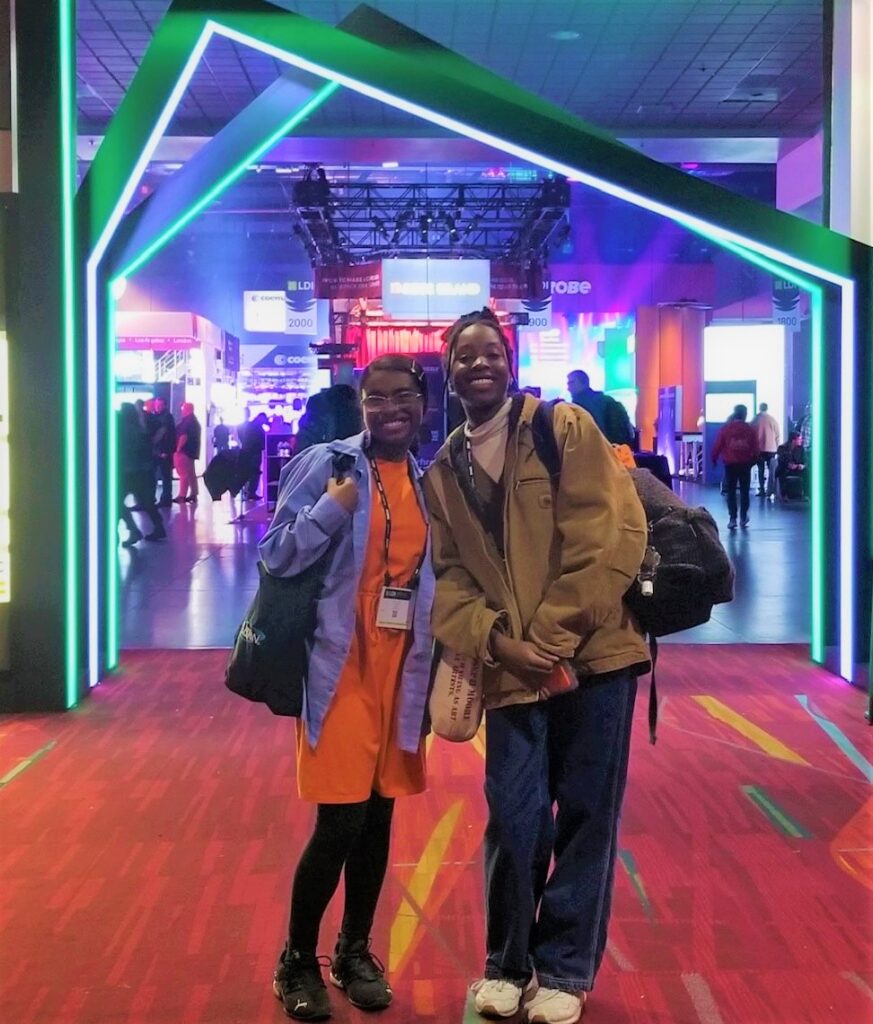 Renata Taylor-Smith (R) with Niya John ’24, theatre, at the Live Design International conference and trade show in November 2022. (Photo curtesy of Renata Taylor-Smith)
Taylor-Smith says, “I was able to meet the intended goal of my research project while also expanding the scope of my project to include opportunities to learn from other designers.” It came full-circle this year when Taylor-Smith worked as the assistant lighting designer, and later transitioned to head designer, for a production of The Amish Project at UMBC’s Black Box Theatre.
Last week Taylor-Smith showcased that work at UMBC’s 2023 Undergraduate Research and Creative Achievement Day (URCAD), held in person for the first time since COVID-19. There, she and nearly 200 other UMBC students convened to present their research and creative projects.
“I was really stressed about presenting my research,” says Taylor-Smith, sharing a feeling that many first-time URCAD presenters initially experience. “I had to remind myself that I spent almost a whole year working on this and all I had to do was talk about what I’ve done. I’m taking the experience that I’ve gained from doing shows to become more confident in my voice as a lighting designer and in my design choices.”
Lighting in the final scene of The Amish Project, designed by Renata Taylor-Smith. (Video courtesy of Renata Taylor-Smith)
Mendelson shares that he was excited to support Taylor-Smith with her URCAD project because hands-on research “allows students who have an interest to really get started, grow, and think through their ideas.”
With support from UMBC’s William T. Brown Shakespeare on Wheels Research Award and an Undergraduate Research Award, Taylor-Smith expects to finally make her way to Germany later this year.
“When someone believes in you…believe them.”
This year’s URCAD featured a talk by special guest Alicia Wilson’04, political science, who is the managing director and global head of philanthropy for the North America region for JPMorgan Chase. Wilson captivated an audience of URCAD presenters and attendees, sharing her personal journey, the value of her research experience, and the power of mentorship.
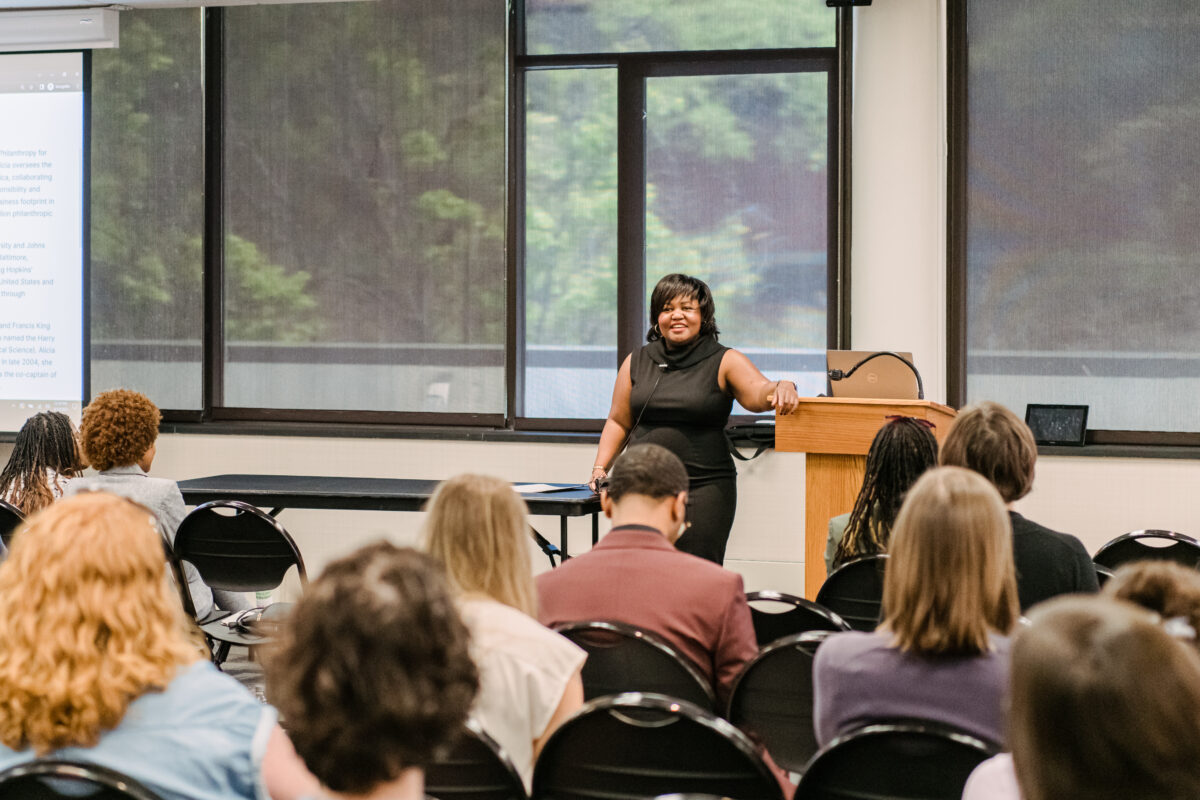 Alicia Wilson delivering the keynote speech at URCAD 2023. (Marlayna Demond ’11/UMBC)
“UMBC, for me, represents so much of who I am and what I want to be in the world,” says Wilson. “My pathway to where I am now is rooted in relationships, being able to care for my community and people regardless of their background. I learned at UMBC to treat everyone well and to research and understand things.”
She advised students to “explore any type of research that you might be interested in,” saying that “it all leads to a great place.” Wilson also encouraged students to take heed of their supporters’ belief in their abilities: “When someone believes in you—even if you can’t believe in yourself—believe them. Don’t believe your doubts. Believe in their belief in you.”
Wilson, who presented her research on community-building at UMBC’s 2022 GRIT-X event, also shared her experience building and sustaining connections, from an 8-year-old who became her mentee to former first lady Michelle Obama.
The language of toys
Theo Reinhert ’23, media and communications studies, is one of the hundreds of UMBC students who presented their work at URCAD this year. Reinhert engaged a crowd of URCAD observers with a display of children’s toys, gathered to demonstrate his analysis of how gender ideologies can be coded in toys.
“While growing up and struggling with my own gender, toys were one of those media that impacted and had power over how I viewed my gender,” Reinhert explained after his presentation. It made him curious to understand how material objects can have the power to carry ideas.
Reinhert found presenting at URCAD to be an important learning experience. “As I presented my research, I understood my ideas better,” he said. “Creating a presentation was a step for me to understand the final research outcomes.”
He also found the support of his faculty mentor, Jason Loviglio, associate professor of media and communication studies, to be essential. “Whenever I would feel lost, Dr. Loviglio would assure me that I was experiencing a normal stage in humanities research” and he’d provide valuable insight, Reinhart said.
Balancing privacy and utility in smart devices
Several students worked together to complete complex group research projects. Tartela Tabassum ’23, information systems; Luke Zimmermann ’24, computer science; Ruhshana Bobojonova ’24, biological sciences; and Joshua Cheeks ’25, computer science, collaborated to explore the tradeoffs that exist between privacy and utility when using smart devices at home.
The group worked in the DAta Management and Semantics (DAMS) research lab led by Roberto Yus, assistant professor of computer science and electrical engineering. They built a prototype of a framework to generate inferences about a person based on audio and video input like speech data collected by a smart speaker and images from a smart security camera, using open-source code and artificial intelligence and machine learning algorithms.
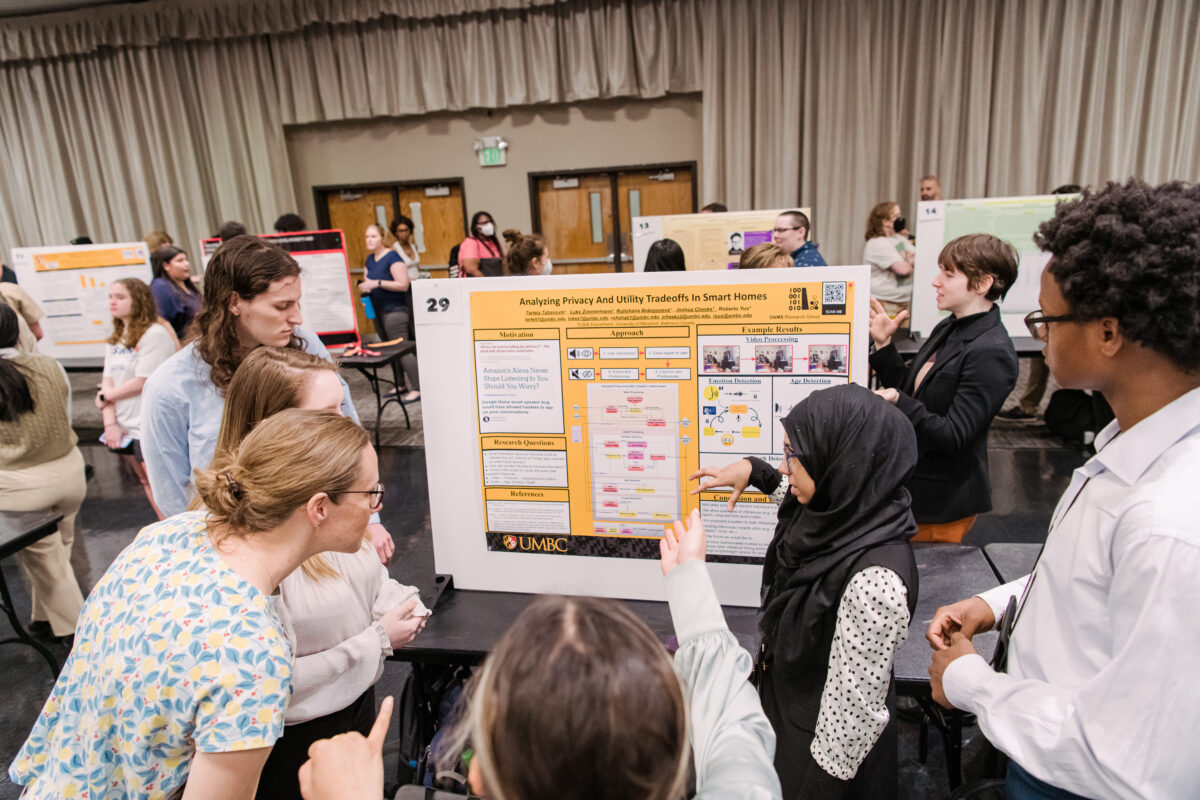 Tartela Tabassum (in black) with her group explaining their research at URCAD 2023 (Marlayna Demond ’11/UMBC)
“We think that privacy is a rising issue,” says Tabassum. “There are things going on with the government trying to ban social media platforms like Tik Tok because of these privacy issues. We want to give users more autonomy with their own privacy.”
Developing flu treatments
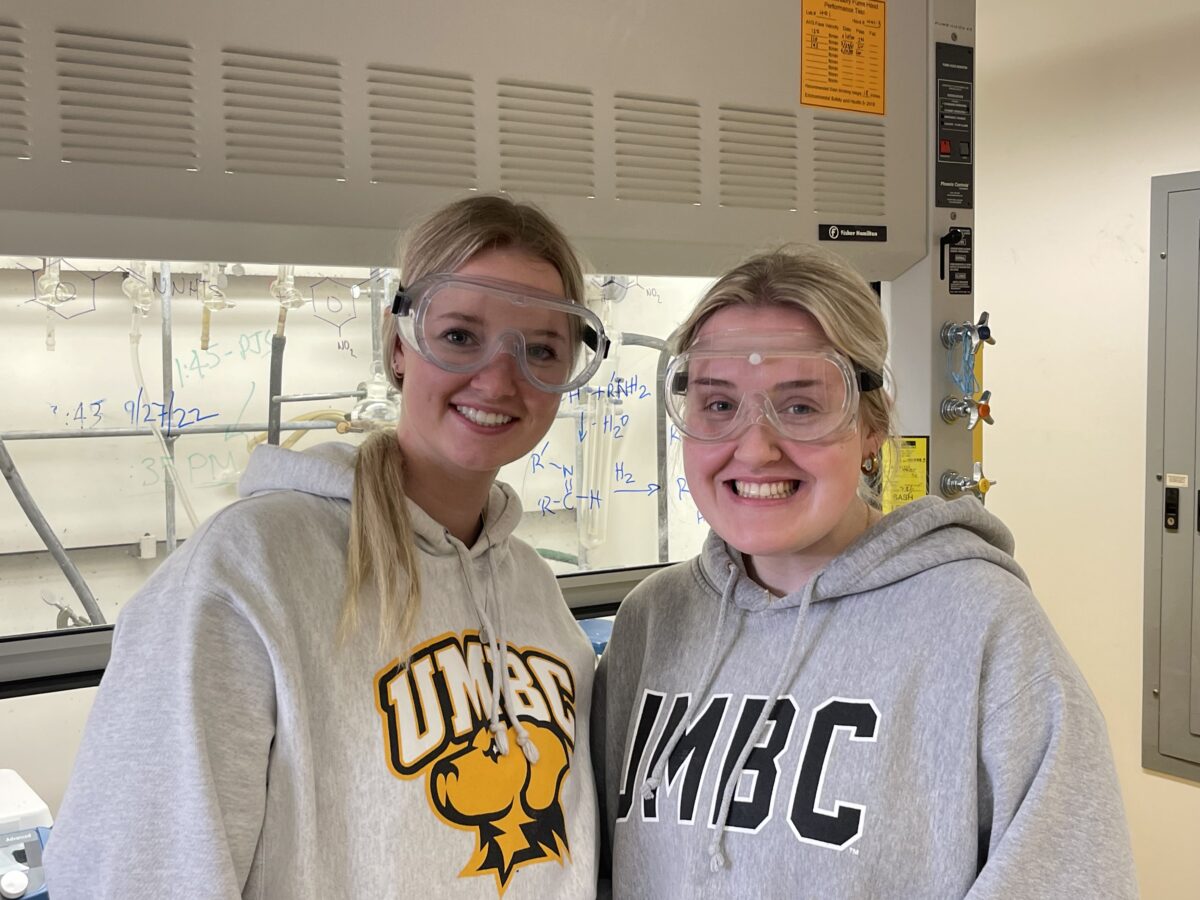 Brooke Nelson (left) and Lillian Kidd. (Photo courtesy of Lillian Kidd)
Lillian Kidd ’24, biochemistry and molecular biology, explored the design and synthesis of palmitoyltransferase inhibitors as potential therapeutics for influenza, or the flu, with her research partner Brooke Nelson ’23, biological sciences. Kidd and Nelson received an Undergraduate Research Award to support their work with faculty mentor Paul Smith, associate professor of chemistry and biochemistry.
“I think doing research is a lot like standing in front of a mirror. It exposes you to what you’re scared of and inversely, what you’re excited about. I learned a lot about my approaches to problem solving and discovered a deep interest in biochemistry,” says Kidd.
She shares that her preparation leading up to URCAD helped her to grow as a research scientist: “There is so much specificity to every single step in our synthesis of palmitoyltransferase inhibitors that pushed me beyond what I had learned in the class environment. Actively using all of the information I studied to carry out research in the lab was such a fundamental experience to my growth as a research scientist.”
A history of Baltimore’s LGBTQ+ nightlife
Ava Sekowski ’24, political science and media and communication studies, was inspired to explore the history of LGBTQ+ nightlife in Baltimore after growing up hearing stories about The Hippo, a now-defunct LGBTQ+ bar where her parents met. Sekowski created the short film “Out in the Open: Tracing the History of Gay Nightlife in Baltimore,” which chronicles the decline in LGBTQ+ nightlife establishments in the city.
“In coming to UMBC, I wanted to explore more about the history of Baltimore through the lens of the LGBTQ+ community,” shares Sekowski. For this project, she says, “I wanted to explore why The Hippo is gone. I heard about the bar my whole life being this amazing club that was welcoming, and I wanted to explore if that was true and who it was welcoming for.”
Ava Sekowski’s short film “Out in the Open: Tracing the History of Gay Nightlife in Baltimore.”
The project enabled Sekowski to practice her editing and interviewing skills and taught her how to navigate the post-production process. “The process was much harder than I thought it would be,” she shares. “I was a one-person filming and editing crew. The hardest part, for me, was filming and getting the lighting correct, but in the end, I’m pretty happy with how it turned out.”
A bioinformatics approach to understanding DNA
In his research, Emmanuel Mekasha ’25, biological sciences, explores promoter regions located in DNA structures and how they are fundamental to our understanding of how gene expression is regulated. He is helping to tackle the challenge of designing generic computational programs capable of finding promoters across different organisms, with the guidance of his mentor Ivan Erill, professor of biological sciences, and biological sciences Ph.D. student Elia Mascolo.
“I have always been an interdisciplinary learner. Based on bioinformatics approaches, my project combines the best aspects of mathematics, statistics, computation, and biology,” says Mekasha. “I thoroughly enjoyed everything that went into this project, from the literature review to the experimental design.”
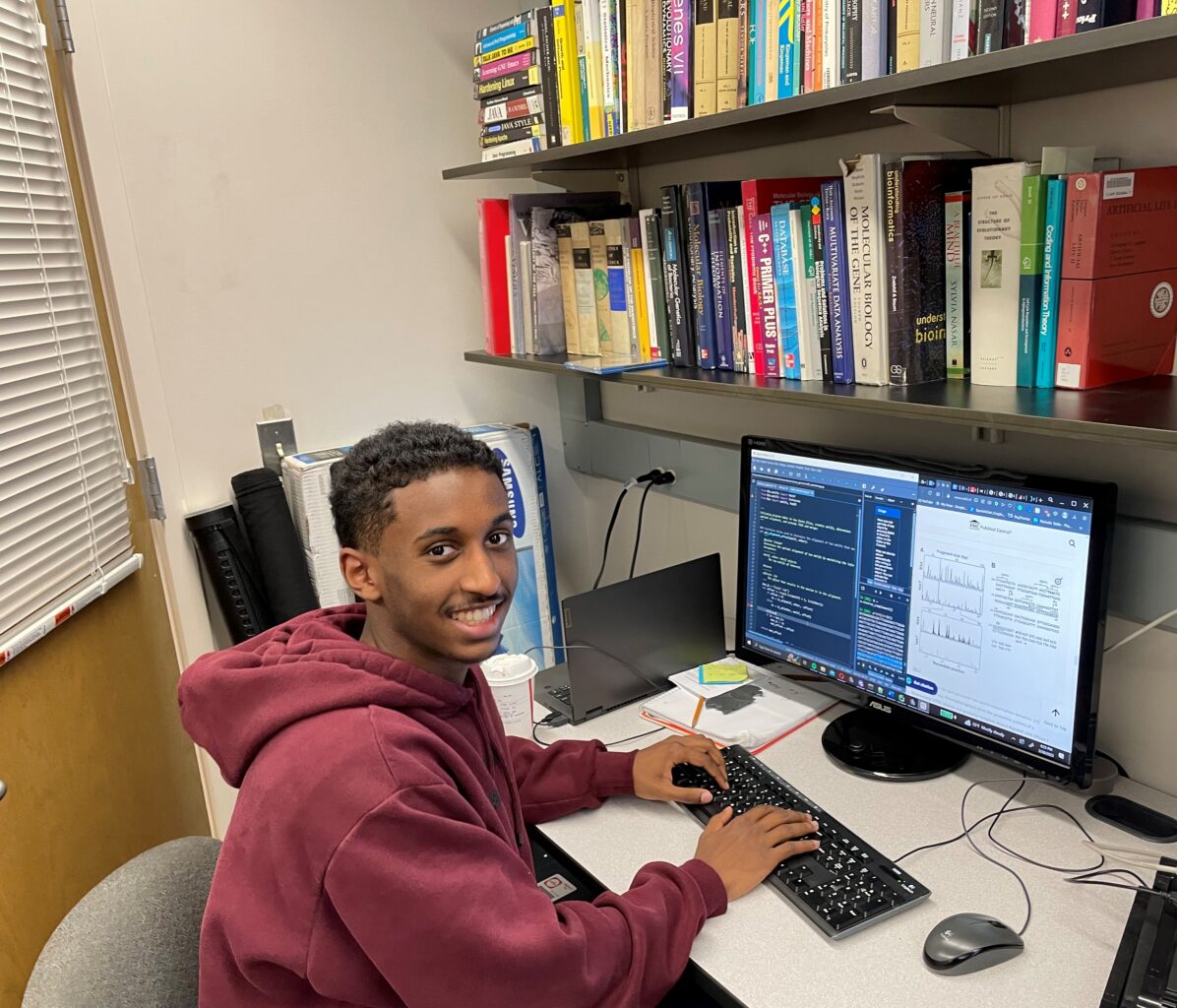 Emmanuel Mekasha (Photo courtesy of Emmanuel Mekasha)
Mekasha already has his sights set on continuing his research pursuits beyond his time at UMBC. “This project, and previous research experiences, have made me certain that I want to do research in the future, leading me to my goal of achieving an MD-Ph.D. degree.”
Implicit bias in healthcare
Thu Dinh ’23, biological sciences; Maryamah Ndao ’23, psychology; and Jorge Saucedo ’23, psychology, worked as research assistants in the Social Determinants of Health Inequities Lab (SoDHI), led by their faculty mentor Danielle Beatty Moody, associate professor of psychology. The group examined the systemic impact of implicit bias from healthcare providers on patient health outcomes. For Ndao, this was a research topic she’s been interested in since her first year at UMBC.
Ndao describes her main focus as “making sure that the healthcare needs…of Black people, especially Black women, are heard.”
 Maryamah Ndao (left) with President Valerie Sheares Ashby at URCAD 2023. (Marlayna Demond ’11/UMBC)
“The data is very clear and the disparities are clear but there’s a lack of action,” Ndao shared during the group’s poster presentation. “Having this opportunity at URCAD to be able to speak to people directly is beneficial because a lot of people [may not] know about this.”
For Saucedo, this research interested him on a personal level, as someone who has lived with chronic pain and felt that medical professionals didn’t believe the amount of pain he was experiencing.
“As a minority myself, I’ve faced a lot of discrepancies and had people not take my pain seriously. I’ve had experiences through the healthcare system that made me feel as if I wasn’t fully represented culturally. I felt as if I was neglected from having proper care because of that,” says Saucedo. Because of his experiences, Saucedo was interested in exploring the research being done at the SoDHI lab.
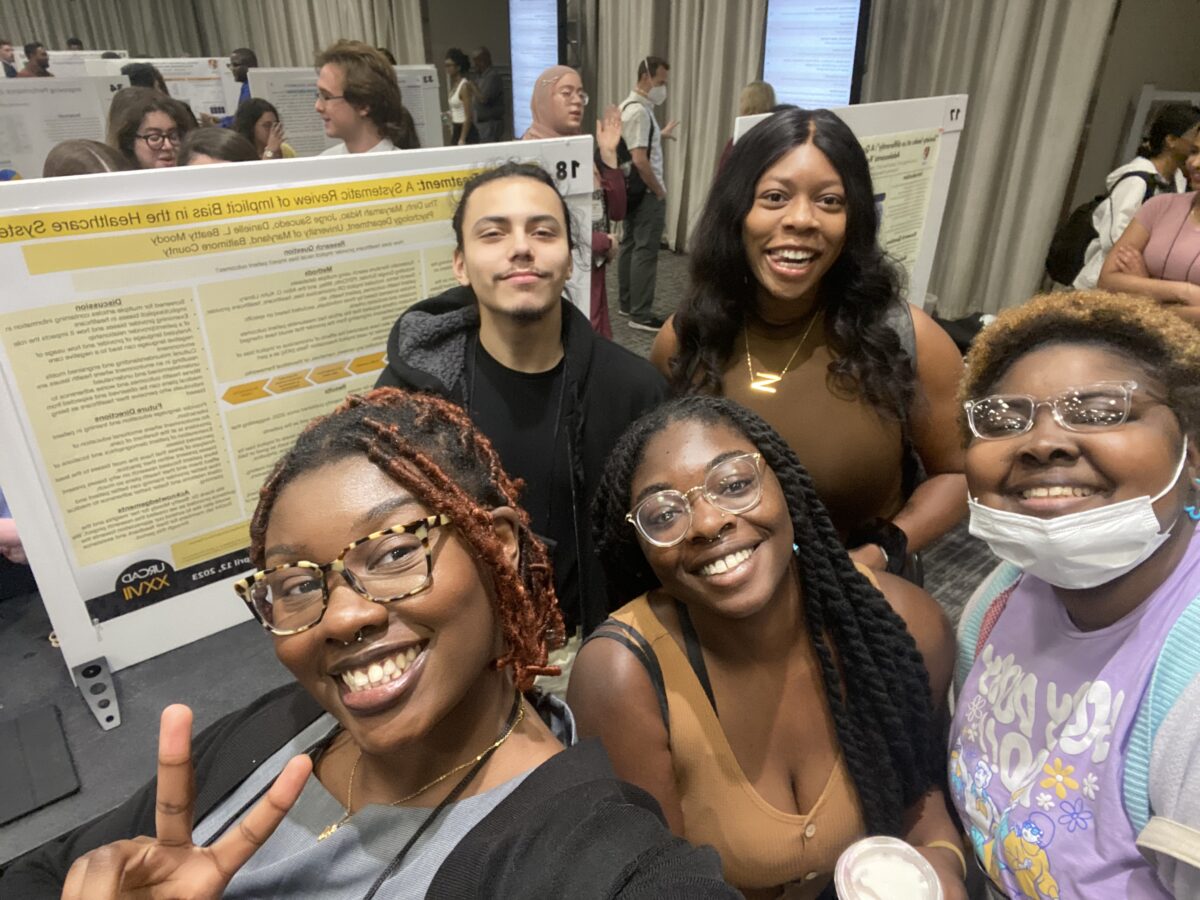 Maryamah Ndao (front row, left) with Jorge Saucedo (back row, left) and friends at URCAD 2023. (Photo courtesy of Maryamah Ndao)
Ndao hopes to one day open her own mental health medical practice to better help individuals from marginalized groups, and also impact the conversation on bias in healthcare. “I want to do more advocating. I love speaking about this topic,” says Ndao.
Reducing pain after shoulder surgery
Supported by UMBC’s Mechanical Engineering S-STEM program, Jacob Lombardo ’25, mechanical engineering, explored how the use of a cooling pad could be beneficial in the healing of surgical repair sites of shoulder injuries. His research asserts that effective cooling may temporarily reduce nerve activity by disrupting the transmission of pain signals and could be a cost-effective approach to decrease the use of painkiller medications during surgical recovery.
With the help of his faculty mentor Liang Zhu, professor of mechanical engineering, Lombardo learned how to circumvent obstacles that arose during the research process. “Research allows you to overcome problems that don’t have a textbook answer,” says Lombardo.
For example, he explains, “My research included the use of a blood flow measurement device. I initially encountered difficulties getting meaningful results from the device. With the encouragement of my advisor, I got in contact with the manufacturer.” Their engineers explained in more detail how the device worked and shared best practices for using it effectively in research.
This experience learning more about medical technologies has inspired him to continue to pursue biomedical engineering. He says, “I am motivated by the possibility of improving patient care through research, and I am eager to expand upon my experience in future projects.”
UMBC Review
Several URCAD presenters and other student researchers have shared the results of their research and creative work in UMBC Review, a peer-reviewed research publication completely directed by UMBC undergraduate students. Free print copies of the new 24th edition are available in the Office of Undergraduate Research and Prestigious Scholarships, located in the Albin O. Kuhn Library and Gallery.
]]>
In 2020, Renata Taylor-Smith ’24, theatre, eagerly prepared for her first trip to Munich, Germany to study theatrical lighting design, but a week before she was meant to fly to Germany, her trip...
https://umbc.edu/stories/urcad-2023/
https://beta.my.umbc.edu/api/v0/pixel/news/132830/guest@my.umbc.edu/488530977e3b461f9c2f11bb6ff1f78e/api/pixel
arts-and-culture
cahss
cnms
coeit
community
news
rca-2
research
science-and-tech
urcad
UMBC News & Magazine
https://beta.my.umbc.edu/groups/umbc-news-magazine
https://assets1-beta.my.umbc.edu/system/shared/avatars/groups/000/001/943/24435aa6207c452e7bc15cc74b42c7bb/xsmall.png?1748556657
https://assets1-beta.my.umbc.edu/system/shared/avatars/groups/000/001/943/24435aa6207c452e7bc15cc74b42c7bb/original.png?1748556657
https://assets2-beta.my.umbc.edu/system/shared/avatars/groups/000/001/943/24435aa6207c452e7bc15cc74b42c7bb/xxlarge.png?1748556657
https://assets2-beta.my.umbc.edu/system/shared/avatars/groups/000/001/943/24435aa6207c452e7bc15cc74b42c7bb/xlarge.png?1748556657
https://assets3-beta.my.umbc.edu/system/shared/avatars/groups/000/001/943/24435aa6207c452e7bc15cc74b42c7bb/large.png?1748556657
https://assets1-beta.my.umbc.edu/system/shared/avatars/groups/000/001/943/24435aa6207c452e7bc15cc74b42c7bb/medium.png?1748556657
https://assets2-beta.my.umbc.edu/system/shared/avatars/groups/000/001/943/24435aa6207c452e7bc15cc74b42c7bb/small.png?1748556657
https://assets1-beta.my.umbc.edu/system/shared/avatars/groups/000/001/943/24435aa6207c452e7bc15cc74b42c7bb/xsmall.png?1748556657
https://assets2-beta.my.umbc.edu/system/shared/avatars/groups/000/001/943/24435aa6207c452e7bc15cc74b42c7bb/xxsmall.png?1748556657
UMBC News & Magazine
0
0
false
Thu, 20 Apr 2023 14:16:37 -0400
Thu, 20 Apr 2023 14:16:37 -0400
Meet a Retriever—Rachel Brubaker, M.A. ’00, faculty funding connector
Meet Rachel Brubaker, M.A. ’00, historical studies, assistant director for grants and program development at the Dresher Center for the Humanities. Brubaker, a self-proclaimed humanities nerd, has worked in different positions at UMBC for 22 years, but her current seat in the Dresher Center allows her to combine her UMBC degree with her passion for public humanities and education to collaborate with faculty members on research proposals and help connect them to prestigious funding opportunities. Take it away, Rachel!
Q: What’s one essential thing you’d want another Retriever to know about you?
 Rachel Brubaker, M.A. ’00 (Marlayna Demond ’11/UMBC)
A: I have been assistant director for grants and program development in the Dresher Center for the Humanities for nearly 10 years. In that capacity, I assist faculty in the arts and humanities get prestigious grants and fellowships. It’s a joy to learn about their research projects and help bring them to fruition.
Before that I worked for 12 years in the history department on “Teaching American History” professional development grants with eight area school districts. I received my master’s degree in historical studies from UMBC in 2000 and prior to that directed the National History Day Program for middle- and high-school students.
In a different life, I was a graphic designer and education communications professional, but that’s old news. I am a proud history/public history/humanities nerd, and I love working with our faculty!
Q: Tell us what you love about your place of work.
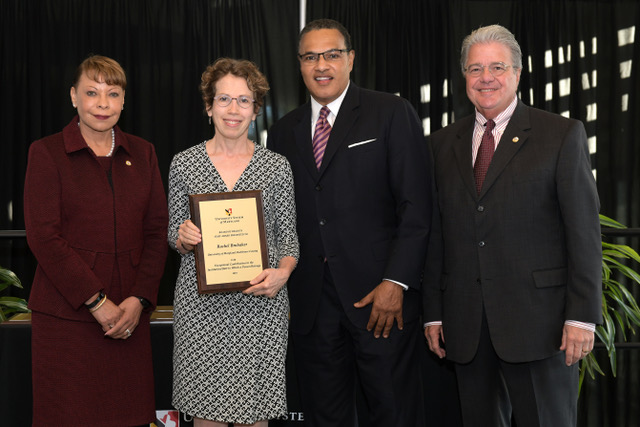 In 2019, Brubaker received the University System of Maryland Board of Regents’ Staff Award for exceptional contribution to the institution. Photo courtesy of Brubaker.
A: The Dresher Center is an interdisciplinary intellectual community in the truest sense. Our programs and grants support and promote faculty and graduate student research in the humanities at UMBC. We run a number of fellowship programs for faculty at all stages of their careers, and provide a temporary home for visiting and internal fellows to research, write, and think about the humanities in conversation with each other.
Our multi-year Inclusion Imperative program, funded by the Mellon Foundation, challenged us to put the tools of the humanities to use to further equity, inclusion, and social justice. With that charge, we have expanded our support for the public humanities at UMBC and formed a regional diversity teaching network of humanities scholars at area institutions who are doing similar work.
Q: What part of your job do you enjoy the most and why?
A: Collaborating with faculty on their research proposals. This often begins in learning about them and their works in progress. Finding the right support for them to write books, create digital projects, and collaborate with community scholars and partners is supremely gratifying!
Think about UMBC not as an office, but as a community of like-minded people who value and produce knowledge and look to make a difference.
Rachel Brubaker, M.A. ’00
Q: Tell us about your primary WHY, and how it led you to UMBC.
A: I came to UMBC because I was transitioning from one career to another, and UMBC became the place to do it. I began as a freelance designer in OIA, then entered the M.A. program in historical studies. After finishing the program, I came back to help run grant programs in the Center for History Education in the history department. That led to my present position in the Dresher Center.
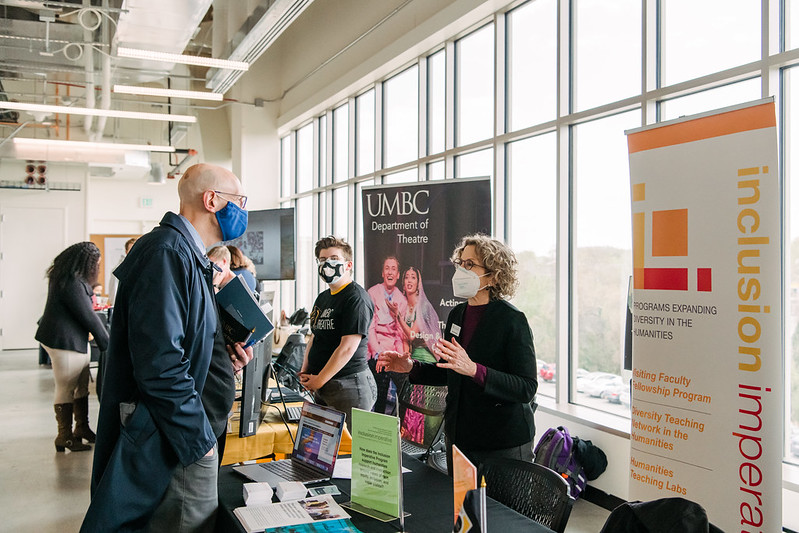 Brubaker presented at the RetriEVER Empowered event in May 2022. (Marlayna Demond ’11/UMBC)
Q: Tell us about the people who have helped you at UMBC, and why their HOW made such a difference to you.
A: There are many people who have made a difference…too many to list, but I have truly appreciated the caliber of support and kindness from colleagues, who have challenged me and helped me grow in my career. I have become a better writer and thinker with their help.
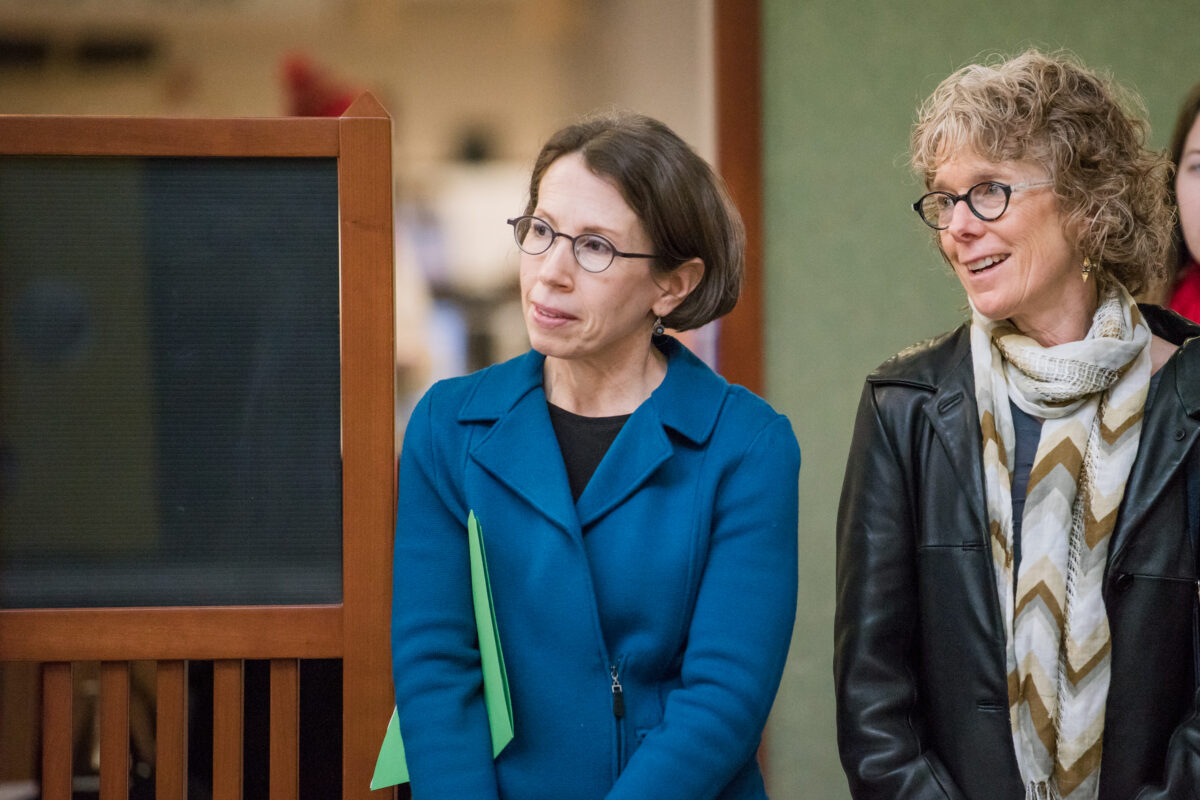 An activity that came out of the Inclusion Imperative are Humanities Teaching Labs (HTLabs). In 2018, a popular HTLab for faculty and students was the “Transcribe-a-thon,” commemorating the 200th anniversary of Frederick Douglass’s birth. Participants transcribed a portion of the Freedmen’s Bureau Papers for the Smithsonian Transcription Center and the National Museum of African American History and Culture. The national event was organized by the Colored Conventions program. Photo courtesy of Brubaker.
Q: Tell us about someone in the community who has inspired you or supported you, and how they did it.
A: Kriste Lindenmeyer was professor of history and chair of the department at UMBC for a number of years (now retired). Kris was a true force of nature. She inspired me with her dedication to the department, students, faculty and to her scholarship.
Q: What would you tell someone who is considering a career at UMBC?
A: Think about UMBC not as an office, but as a community of like-minded people who value and produce knowledge and look to make a difference. As a long-time staff member and former student, I have had the pleasure of seeing the campus evolve to become a place that is inclusive, creative, and original!
* * * * *
UMBC’s greatest strength is its people. When people meet Retrievers and hear about the passion they bring, the relationships they create, the ways they support each other, and the commitment they have to inclusive excellence, they truly get a sense of our community. That’s what “Meet a Retriever” is all about.
Learn more about how UMBC can help you achieve your goals.
]]>
Meet Rachel Brubaker, M.A. ’00, historical studies, assistant director for grants and program development at the Dresher Center for the Humanities. Brubaker, a self-proclaimed humanities nerd, has...
https://umbc.edu/stories/meet-retriever-rachel-brubaker-historical-studies/
https://beta.my.umbc.edu/api/v0/pixel/news/132653/guest@my.umbc.edu/623a683ca89c2b9d41f4d1cd37a85837/api/pixel
alumni
cahss
dreshercenter
graduateschool
historical-studies
impact
magazine
meet-a-retriever
perspectives
staff
UMBC News & Magazine
https://beta.my.umbc.edu/groups/umbc-news-magazine
https://assets1-beta.my.umbc.edu/system/shared/avatars/groups/000/001/943/24435aa6207c452e7bc15cc74b42c7bb/xsmall.png?1748556657
https://assets1-beta.my.umbc.edu/system/shared/avatars/groups/000/001/943/24435aa6207c452e7bc15cc74b42c7bb/original.png?1748556657
https://assets2-beta.my.umbc.edu/system/shared/avatars/groups/000/001/943/24435aa6207c452e7bc15cc74b42c7bb/xxlarge.png?1748556657
https://assets2-beta.my.umbc.edu/system/shared/avatars/groups/000/001/943/24435aa6207c452e7bc15cc74b42c7bb/xlarge.png?1748556657
https://assets3-beta.my.umbc.edu/system/shared/avatars/groups/000/001/943/24435aa6207c452e7bc15cc74b42c7bb/large.png?1748556657
https://assets1-beta.my.umbc.edu/system/shared/avatars/groups/000/001/943/24435aa6207c452e7bc15cc74b42c7bb/medium.png?1748556657
https://assets2-beta.my.umbc.edu/system/shared/avatars/groups/000/001/943/24435aa6207c452e7bc15cc74b42c7bb/small.png?1748556657
https://assets1-beta.my.umbc.edu/system/shared/avatars/groups/000/001/943/24435aa6207c452e7bc15cc74b42c7bb/xsmall.png?1748556657
https://assets2-beta.my.umbc.edu/system/shared/avatars/groups/000/001/943/24435aa6207c452e7bc15cc74b42c7bb/xxsmall.png?1748556657
UMBC News & Magazine
0
0
false
Fri, 14 Apr 2023 13:18:27 -0400
Let’s celebrate! UMBC marks the inauguration of President Valerie Sheares Ashby with community events, April 18 – 27
The University System of Maryland (USM) will formally install Valerie Sheares Ashby as UMBC’s sixth president on April 27, 2023, after UMBC warmly welcomed her to the community last August. A longstanding tradition throughout academia, a presidential inauguration (including the formal Investiture ceremony) is a historic milestone in the life of a university, one not to be missed.
At the Investiture, USM will formally endow President Sheares Ashby with the powers of the office. For several days before that ceremony, UMBC will celebrate with a series of inauguration events honoring the occasion.
These events will offer opportunities for UMBC community members to connect with the new president and each other. Each event, in its own way, will recognize the university’s continued commitment to welcoming and inspiring inquisitive minds from all backgrounds as UMBC enters a new era.
Since her arrival, President Sheares Ashby has dedicated herself to getting to know UMBC and its people. She has offered weekly office hours for students since her first week on campus. Throughout March and April, she has also attended dozens of UMBC Bold conversations to hear faculty, staff, and student perspectives on topics such as shared governance, supportive community, research infrastructure, and the undergraduate experience.
“These first…months have been energizing, inspiring, and joyful. The more people I meet, and the more I start to make connections, the more I love this place,” Sheares Ashby recently told UMBC Magazine. “It has been especially rewarding to engage with students, see who they already are, and imagine what they will become as a result of their experiences at UMBC.”
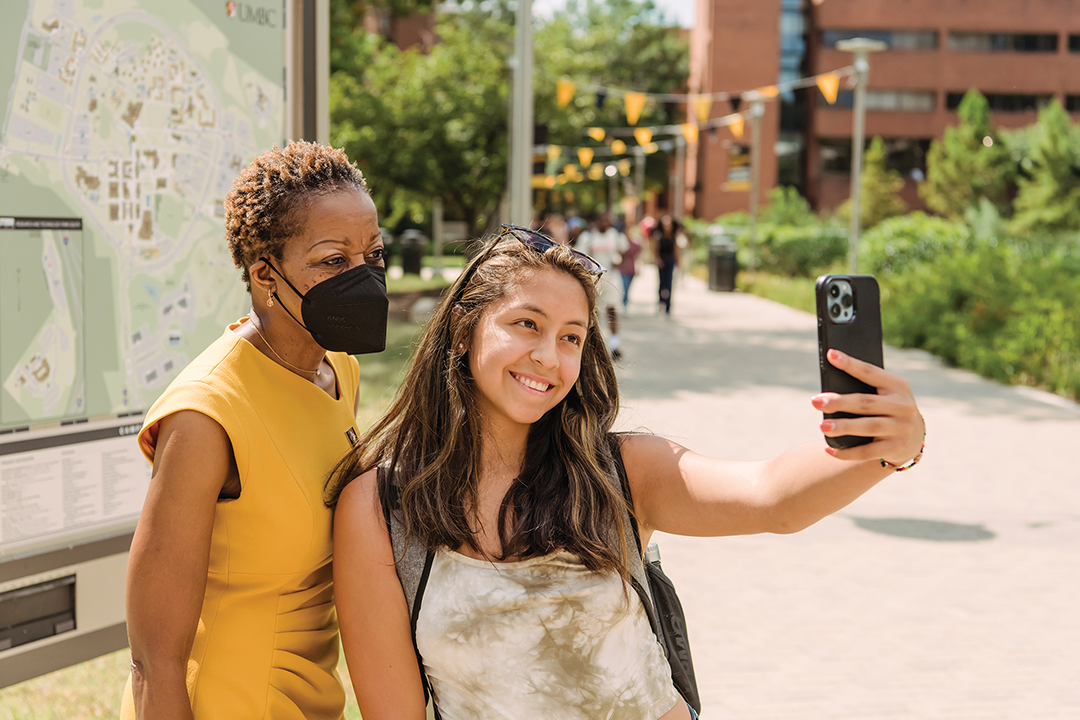 Valerie Sheares Ashby poses for a selfie with a student. (Marlayna Demond ’11/UMBC)
Something for everyone
The festivities will kick off on April 18 with a special reception at the Universities of Shady Grove, recognizing the strength of the UMBC community throughout the Baltimore–Washington region. On April 21, the main UMBC campus will mark the occasion in the annual Quadmania Campus Talent Showcase. This event will include music, dance, spoken word, and more in celebration of UMBC’s talented students.
A lunch on April 24 will provide an opportunity for graduate students—critical contributors to UMBC’s teaching and research missions—to meet with President Sheares Ashby. The next day, a faculty and staff reception will offer a chance for camaraderie among colleagues and friends in recognition of the essential role UMBC’s faculty and staff play in moving the university forward.
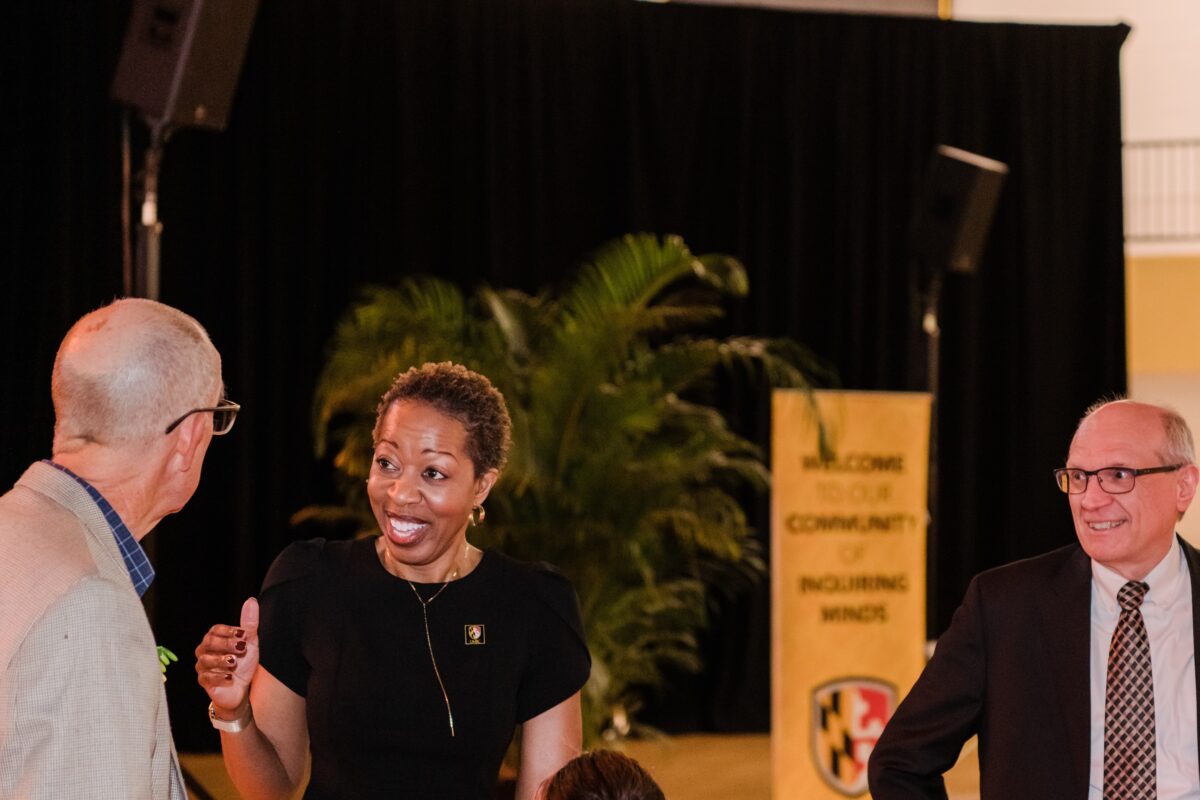 Pres. Valerie Sheares Ashby (center) at the 2023 Presidential Faculty and Staff Awards. Dean Bill LaCourse is at right. (Marlayna Demond ’11/UMBC)
On Wednesday, April 26, the Faculty Salon: Community-Engaged Scholarship will celebrate the role of faculty as scholars, researchers, and teachers, as well as UMBC’s distinction as a Carnegie-classified community-engaged institution and R1 research university. Faculty across the disciplines whose scholarship is community-based will offer brief remarks, including Kate Drabinski, principal lecturer of gender, women’s, and sexuality studies; Lynn Cazabon, professor of visual arts; Felipe A. Filomeno, associate professor of political science and global studies; Belay Demoz, professor of physics; and Ian Stockwell, associate professor of information systems.
A new era
The Inauguration Week events will culminate with the formal Investiture at 1 p.m. on April 27 at the Chesapeake Employers Insurance Arena. The university welcomes students, faculty, staff, alumni, family members, and friends and community members to attend. Tickets are free, but must be reserved. The event will also stream live.
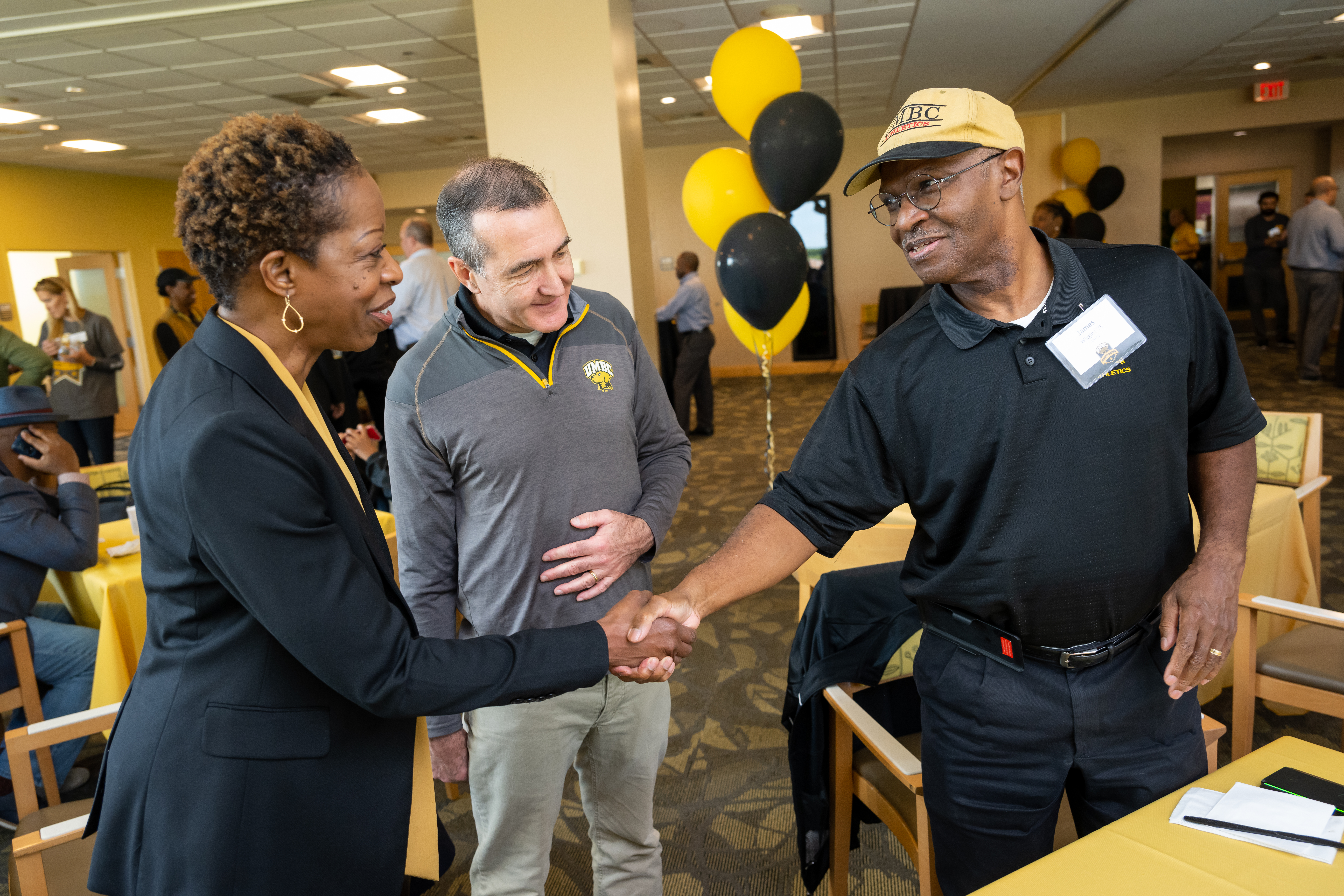 President Sheares Ashby shakes hands with an alumnus at a Homecoming event. (Maximilian Franz/UMBC)
“This is a particularly important moment for the UMBC community. The Inauguration is a chance for us to reaffirm our values as a university as we officially welcome Dr. Sheares Ashby as our president,” says Greg Simmons, M.P.P. ’04, vice president for institutional advancement. “It is a wonderful opportunity to celebrate the significant progress we have made together, while looking toward the future of UMBC—it is exciting in so many ways.”
Guests will hear President Sheares Ashby share her thoughts on UMBC’s future, which will be deeply informed by recent UMBC Bold conversations. As Sheares Ashby told UMBC Magazine, “It’s becoming more clear every day what the possibilities are for what we can do together going forward.”
Following the ceremony, all are welcome to a campus celebration on the Commons Quad, 2:30 – 5 p.m., with games, treats from local businesses, and joyful UMBC community spirit.
Reserve your tickets through the Inauguration website.
]]>
The University System of Maryland (USM) will formally install Valerie Sheares Ashby as UMBC’s sixth president on April 27, 2023, after UMBC warmly welcomed her to the community last August. A...
https://umbc.edu/stories/president-valerie-sheares-ashby-inauguration/
https://beta.my.umbc.edu/api/v0/pixel/news/132645/guest@my.umbc.edu/1faad7b5105b8ec215c017f14ac92ffa/api/pixel
campus
community
news
UMBC News & Magazine
https://beta.my.umbc.edu/groups/umbc-news-magazine
https://assets1-beta.my.umbc.edu/system/shared/avatars/groups/000/001/943/24435aa6207c452e7bc15cc74b42c7bb/xsmall.png?1748556657
https://assets1-beta.my.umbc.edu/system/shared/avatars/groups/000/001/943/24435aa6207c452e7bc15cc74b42c7bb/original.png?1748556657
https://assets2-beta.my.umbc.edu/system/shared/avatars/groups/000/001/943/24435aa6207c452e7bc15cc74b42c7bb/xxlarge.png?1748556657
https://assets2-beta.my.umbc.edu/system/shared/avatars/groups/000/001/943/24435aa6207c452e7bc15cc74b42c7bb/xlarge.png?1748556657
https://assets3-beta.my.umbc.edu/system/shared/avatars/groups/000/001/943/24435aa6207c452e7bc15cc74b42c7bb/large.png?1748556657
https://assets1-beta.my.umbc.edu/system/shared/avatars/groups/000/001/943/24435aa6207c452e7bc15cc74b42c7bb/medium.png?1748556657
https://assets2-beta.my.umbc.edu/system/shared/avatars/groups/000/001/943/24435aa6207c452e7bc15cc74b42c7bb/small.png?1748556657
https://assets1-beta.my.umbc.edu/system/shared/avatars/groups/000/001/943/24435aa6207c452e7bc15cc74b42c7bb/xsmall.png?1748556657
https://assets2-beta.my.umbc.edu/system/shared/avatars/groups/000/001/943/24435aa6207c452e7bc15cc74b42c7bb/xxsmall.png?1748556657
UMBC News & Magazine
1
0
false
Fri, 14 Apr 2023 11:53:29 -0400
Fri, 14 Apr 2023 11:53:29 -0400
Amid surging demand for computing education, UMBC initiatives boost student success
On a Friday afternoon in late February, two students hoisted a pair of oversized scissors and cut the ribbon for the space housing one of UMBC’s newest tutoring programs: the Computing Success Center. The Center is designed to provide peer-to-peer support to students from any major, taking any course, who have computing questions.
“The Computing Success Center started as just a few tables in the library,” says Amanda Knapp, who leads UMBC’s broader Academic Success Center. Since the Computing Success Center tutoring program launched in 2020, it has seen skyrocketing demand.
“We are so happy for our students to now have a dedicated space for computing support, as a result of successful collaborations and valued partnerships from across the university,” says Knapp, associate vice provost and assistant dean for Undergraduate Academic Affairs. “We are thrilled to introduce new tutoring options to the growing portfolio of academic support offerings available to all undergraduate students.”
The growing demand for Computing Success Center services reflects in part increased demand for computing education. Over the past ten years, the number of UMBC students pursuing a computing-related bachelor’s degree in the College of Engineering and Information Technology (COEIT) has increased by more than 60%. During that same time, the number of computing degrees awarded to women and students from racial and ethnic groups traditionally underrepresented in computing fields increased at an even higher rate.
The Computing Success Center is one of many UMBC initiatives that is boosting the success of diverse students in high-demand computing fields.
“At both the undergraduate and graduate level, applications for our programs from a broad diversity of students are incredibly strong,” says Keith Bowman, the dean of COEIT. “New students have shared that more senior students’ positive views of our programs inspired them to pursue computing degrees, which we find very gratifying.”
Careful course design
When Annamaria Palmiero came to UMBC as a freshman in 2021, she had never programmed before. Still, she was curious about the subject, and a good friend encouraged her to try it out. So, she enrolled in a class—called Computational Design and Thinking, or COMP101—designed with students like her in mind.
The course, which debuted in 2012 and has become increasingly popular, assumes no prior experience with computing. It provides students with a broad overview of the field, builds their technical and professional skills, and gives them opportunities to work on group projects. Since 2019, it has also focused on ethical considerations in computing, a component of the course that was designed and implemented under the leadership of UMBC’s Engineering and Computing Education Program.
“Many students say the course helps them feel less intimidated by coding. It also helps them decide which computing program is best for them,” says Mark Berczynski, a lecturer who has been teaching the course since 2019. UMBC offers a broad range of computing pathways, such as majors and minors in computer science and information systems and majors in business technology administration and computer engineering.
The course has been shown to increase the likelihood that students, especially women, will stay in a computing major. For Palmiero, the experience in the course convinced her to pursue a computer science degree in addition to her already planned statistics degree. She has also become a teaching fellow for the course.
“COMP101 provided a safe space for me to launch into programming, without the overwhelmingly fast-paced nature of other introductory computing courses. I’m unsure if I would have ever become a computer science major, let alone tried programming, if it wasn’t for the course,” Palmiero says.
Other students who have taken COMP101 agree. Drew Barlow took the course in 2019 because he hadn’t taken the precalculus math classes required for a typical first computer science course. He is now pursuing a Ph.D. in computer science at UMBC. “I can definitely attribute my love for this subject in many ways to my experience in COMP101,” he said.
The ethos behind the design of COMP101—to break down barriers to success in computing for students from a variety of backgrounds—also pervades other curriculum decisions in COEIT, from adding courses to help transfer students with backgrounds in different coding languages, to forging pathways for students who wish to transfer between computing degree programs.
Easy access to support
Carefully designed computing courses start students on the road to success, while services such as the Computing Success Center help students deepen their knowledge as they progress in their studies. The center offers drop-in tutoring, including both course-specific resources and general guidance in programming languages. All of the course-specific tutors are supporting students in classes they have taken themselves.
The Computing Success Center responds to expanding demand for this kind of support. In fall 2022, the Center logged nearly 1,500 student visits, a more than ten-fold increase from when it launched in fall 2020.
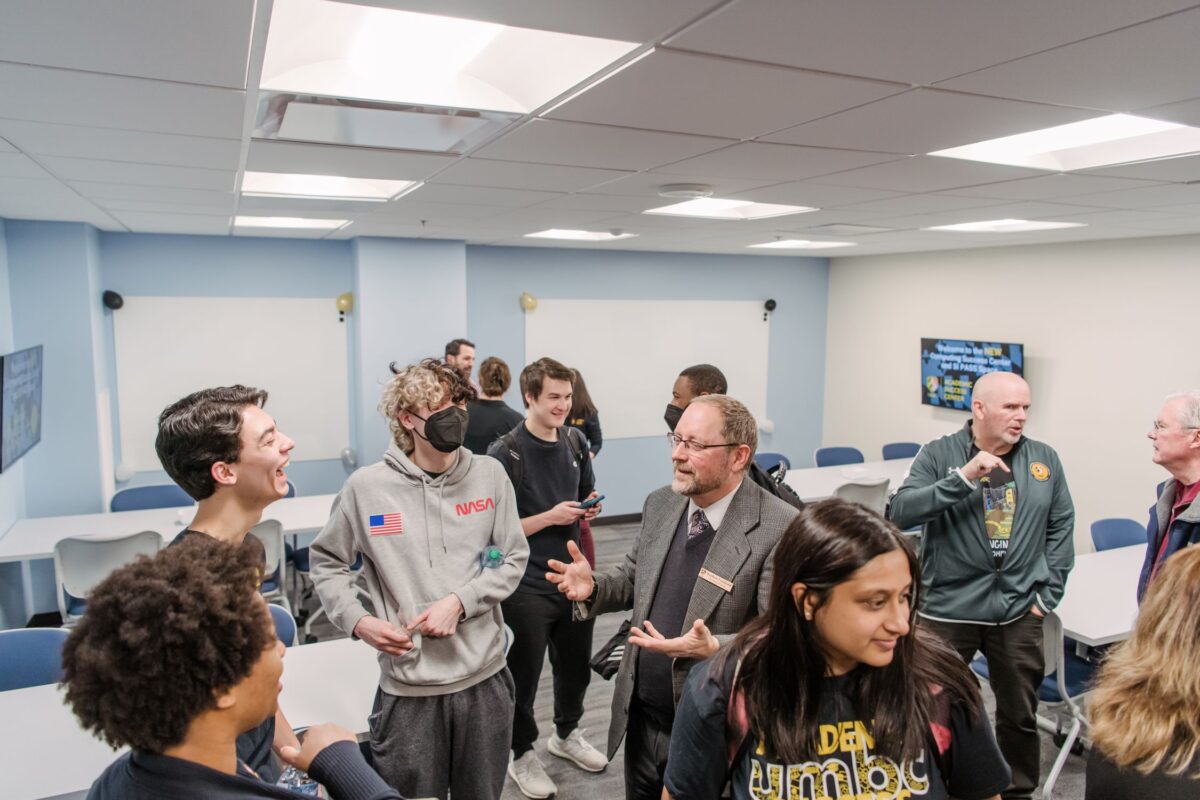 Students, faculty and staff gather to celebrate the opening of the new tutoring space on campus. (Marlayna Demond ’11/UMBC)
Ariana Pray, a sophomore computer science major, says the tutoring at the Center goes beyond helping her complete assignments, offering conceptual guidance that has made her a more efficient coder. She appreciates the wide range of tutoring times available and the opportunity to learn from her peers in person.
“I definitely recommend going to the Computing Success Center,” she says. “You’ll come away with a better understanding of the material and will be better prepared when it comes time for exams.”
Students can also access mentoring in study skills and time management, personalized assistance from academic advocates, and other support through the broader Academic Success Center. Meanwhile, departments that offer computing degrees have worked to foster a culture where students make it a habit to access additional learning resources early and often.
Opportunities to connect and explore
While supporting academic success is a priority for computing programs, that goes far beyond coursework. UMBC faculty and staff mentor students as they seek to discover their passions and find pathways to meaningful careers.
Shaniah Reece is a senior information systems major and Center for Women in Technology Scholar who credits the culture of UMBC for helping her discover how to connect a technical career to her values and passions.
“I care about social justice and equity,” she says. “I’ve realized I can apply technical tools to study and address these issues.”
Recently, Reece has been working with James Foulds, assistant professor of information systems, to identify biases in artificial intelligence systems and work to improve their fairness. She plans to continue her research career and is currently deciding between graduate programs at Emory University, the University of Southern California, and the University of Pittsburgh.
Reece says her classwork and her mentors helped her think outside the box and identify career options that were truly meaningful to her. She shares, “My whole experience at UMBC, not just in research but throughout my time here, helped me discover who I am.”
]]>
On a Friday afternoon in late February, two students hoisted a pair of oversized scissors and cut the ribbon for the space housing one of UMBC’s newest tutoring programs: the Computing Success...
https://umbc.edu/stories/amid-surging-demand-for-computing-education-umbc-initiatives-boost-student-success/
https://beta.my.umbc.edu/api/v0/pixel/news/132646/guest@my.umbc.edu/f95777d2b18ddad1bdf2f6bf3c969c53/api/pixel
coeit
community
csee
cwit
is
news
UMBC News & Magazine
https://beta.my.umbc.edu/groups/umbc-news-magazine
https://assets1-beta.my.umbc.edu/system/shared/avatars/groups/000/001/943/24435aa6207c452e7bc15cc74b42c7bb/xsmall.png?1748556657
https://assets1-beta.my.umbc.edu/system/shared/avatars/groups/000/001/943/24435aa6207c452e7bc15cc74b42c7bb/original.png?1748556657
https://assets2-beta.my.umbc.edu/system/shared/avatars/groups/000/001/943/24435aa6207c452e7bc15cc74b42c7bb/xxlarge.png?1748556657
https://assets2-beta.my.umbc.edu/system/shared/avatars/groups/000/001/943/24435aa6207c452e7bc15cc74b42c7bb/xlarge.png?1748556657
https://assets3-beta.my.umbc.edu/system/shared/avatars/groups/000/001/943/24435aa6207c452e7bc15cc74b42c7bb/large.png?1748556657
https://assets1-beta.my.umbc.edu/system/shared/avatars/groups/000/001/943/24435aa6207c452e7bc15cc74b42c7bb/medium.png?1748556657
https://assets2-beta.my.umbc.edu/system/shared/avatars/groups/000/001/943/24435aa6207c452e7bc15cc74b42c7bb/small.png?1748556657
https://assets1-beta.my.umbc.edu/system/shared/avatars/groups/000/001/943/24435aa6207c452e7bc15cc74b42c7bb/xsmall.png?1748556657
https://assets2-beta.my.umbc.edu/system/shared/avatars/groups/000/001/943/24435aa6207c452e7bc15cc74b42c7bb/xxsmall.png?1748556657
UMBC News & Magazine
0
0
false
Fri, 14 Apr 2023 11:35:34 -0400
UMBC welcomes Tanyka M. Barber as vice president for institutional equity and chief diversity officer

UMBC President Valerie Sheares Ashby has appointed Tanyka M. Barber as the university’s inaugural vice president for institutional equity and chief diversity officer. She will officially join the UMBC community on Monday, April 17.
“This role is of critical importance and value to UMBC’s long-held vision for inclusive excellence,” says President Sheares Ashby. “We all will benefit from the exceptional depth and breadth of expertise, along with the strength of commitment that Tanyka will bring to the work.”
Sharing what drew her to the role, Barber notes, “I desired a position at an institution that had a genuine commitment to advancing diversity, equity, and inclusion.”
“Being a Maryland native,” she says, “I was familiar with UMBC and its stellar academic and research reputation, and as I progressed through the hiring process, the genuine commitment to diversity, equity, and inclusion was evident. That is what confirmed for me that this was a place I wanted to be.”
Public health to civil rights
Barber holds a bachelor’s degree from Morgan State University, a master of health sciences degree from the Johns Hopkins University Bloomberg School of Public Health, and a law degree from the University of Baltimore.
She joins UMBC from TNG, one of the nation’s largest education-focused law and consulting practices, where she served as partner. TNG serves K-12 schools, colleges and universities, and other organizations, and Barber had the opportunity to work with a wide range of educational institutions nationwide.
Prior to her work with TNG, Barber served as director of diversity and EEO/Title IX coordinator at Morgan State University. There she drafted Morgan State’s first comprehensive policy and procedures to address gender- and sex-based harassment and violence. She also developed and implemented a comprehensive Title IX grievance process and prevention policy, and prioritized initiatives seeking to prevent discrimination and harassment and to increase reporting.
In addition to these roles, Barber has worked as the equal employment opportunity officer for Baltimore County Public Schools, assistant general counsel for the Maryland Commission on Civil Rights, and a law clerk for the Maryland Legal Aid Bureau. Prior to earning her law degree, she also held roles in public health with Morgan State University and the NAACP.
“My background is in health education and policy, and I worked in the public health field for seven years prior to attending law school,” Barber explains. “My intention upon starting law school was to gain a firmer foundation in health policy. However, during my second year of law school I began working at the Maryland Commission on Civil Rights and I was hooked. My passion for advancing civil rights and ensuring equitable access grew from there.”
National and local leadership
Barber frequently writes about Title IX topics, sharing best practices. She also serves in leadership roles, such as on the advisory board for the Association of Title IX Administrators and on the board of directors for Community Law in Action, a Baltimore-based nonprofit focused on helping young people become leaders and advocates for positive community change.
“It is to UMBC’s great advantage that in this inaugural vice presidential role, we will have a leader whose career has been as a practitioner in both the legal compliance space and the diversity, equity, and inclusion space,” says President Sheares Ashby. “We also will have someone whose personal perspective, including as a first-generation college student and a nontraditional law school student, deeply informs her understanding of this work and the communities she serves.”
Of her own experience, Barber says, “As a college student, I stepped onto campus with no frame of reference for college life beyond what was portrayed on television. Since then, my career path has focused on strategizing, implementing, and enacting change.”
Barber shares, “I want to be a partner and a resource to ensure that UMBC students, faculty, and staff have what they need to navigate the UMBC community and achieve success as they define it. I am eager to engage those already doing this work at UMBC and to bring new voices to the table.”
]]>
UMBC President Valerie Sheares Ashby has appointed Tanyka M. Barber as the university’s inaugural vice president for institutional equity and chief diversity officer. She will officially join the...
https://umbc.edu/stories/umbc-welcomes-tanyka-m-barber/
https://beta.my.umbc.edu/api/v0/pixel/news/132636/guest@my.umbc.edu/a16c51618639464dbc0dc419a3ec07e2/api/pixel
campus
community
diversityandinclusion
news
UMBC News & Magazine
https://beta.my.umbc.edu/groups/umbc-news-magazine
https://assets1-beta.my.umbc.edu/system/shared/avatars/groups/000/001/943/24435aa6207c452e7bc15cc74b42c7bb/xsmall.png?1748556657
https://assets1-beta.my.umbc.edu/system/shared/avatars/groups/000/001/943/24435aa6207c452e7bc15cc74b42c7bb/original.png?1748556657
https://assets2-beta.my.umbc.edu/system/shared/avatars/groups/000/001/943/24435aa6207c452e7bc15cc74b42c7bb/xxlarge.png?1748556657
https://assets2-beta.my.umbc.edu/system/shared/avatars/groups/000/001/943/24435aa6207c452e7bc15cc74b42c7bb/xlarge.png?1748556657
https://assets3-beta.my.umbc.edu/system/shared/avatars/groups/000/001/943/24435aa6207c452e7bc15cc74b42c7bb/large.png?1748556657
https://assets1-beta.my.umbc.edu/system/shared/avatars/groups/000/001/943/24435aa6207c452e7bc15cc74b42c7bb/medium.png?1748556657
https://assets2-beta.my.umbc.edu/system/shared/avatars/groups/000/001/943/24435aa6207c452e7bc15cc74b42c7bb/small.png?1748556657
https://assets1-beta.my.umbc.edu/system/shared/avatars/groups/000/001/943/24435aa6207c452e7bc15cc74b42c7bb/xsmall.png?1748556657
https://assets2-beta.my.umbc.edu/system/shared/avatars/groups/000/001/943/24435aa6207c452e7bc15cc74b42c7bb/xxsmall.png?1748556657
UMBC News & Magazine
0
0
false
Fri, 14 Apr 2023 09:40:09 -0400
Robots are everywhere – improving how they communicate with people could advance human-robot collaboration

Written by Ramana Vinjamuri, assistant professor of computer science and electrical engineering, UMBC
Robots are machines that can sense the environment and use that information to perform an action. You can find them nearly everywhere in industrialized societies today. There are household robots that vacuum floors and warehouse robots that pack and ship goods. Lab robots test hundreds of clinical samples a day. Education robots support teachers by acting as one-on-one tutors, assistants and discussion facilitators. And medical robotics composed of prosthetic limbs can enable someone to grasp and pick up objects with their thoughts.
Figuring out how humans and robots can collaborate to effectively carry out tasks together is a rapidly growing area of interest to the scientists and engineers that design robots as well as the people who will use them. For successful collaboration between humans and robots, communication is key.
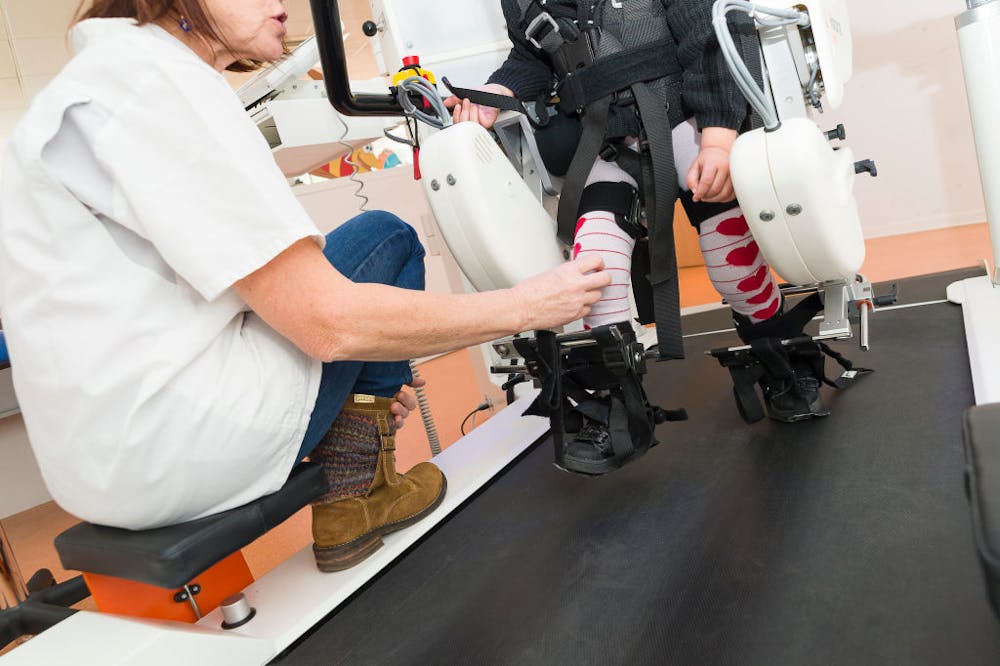
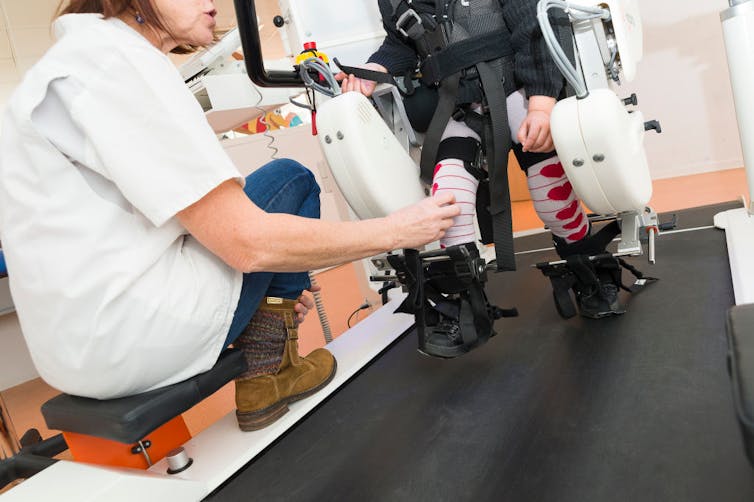 Robotics can help patients recover physical function in rehabilitation. BSIP/Universal Images Group via Getty Images
How people communicate with robots
Robots were originally designed to undertake repetitive and mundane tasks and operate exclusively in robot-only zones like factories. Robots have since advanced to work collaboratively with people with new ways to communicate with each other.
Cooperative control is one way to transmit information and messages between a robot and a person. It involves combining human abilities and decision making with robot speed, accuracy and strength to accomplish a task.
For example, robots in the agriculture industry can help farmers monitor and harvest crops. A human can control a semi-autonomous vineyard sprayer through a user interface, as opposed to manually spraying their crops or broadly spraying the entire field and risking pesticide overuse.
Robots can also support patients in physical therapy. Patients who had a stroke or spinal cord injury can use robots to practice hand grasping and assisted walking during rehabilitation.
Another form of communication, emotional intelligence perception, involves developing robots that adapt their behaviors based on social interactions with humans. In this approach, the robot detects a person’s emotions when collaborating on a task, assesses their satisfaction, then modifies and improves its execution based on this feedback.
For example, if the robot detects that a physical therapy patient is dissatisfied with a specific rehabilitation activity, it could direct the patient to an alternate activity. Facial expression and body gesture recognition ability are important design considerations for this approach. Recent advances in machine learning can help robots decipher emotional body language and better interact with and perceive humans.
Robots in rehab
Questions like how to make robotic limbs feel more natural and capable of more complex functions like typing and playing musical instruments have yet to be answered.
I am an electrical engineer who studies how the brain controls and communicates with other parts of the body, and my lab investigates in particular how the brain and hand coordinate signals between each other. Our goal is to design technologies like prosthetic and wearable robotic exoskeleton devices that could help improve function for individuals with stroke, spinal cord and traumatic brain injuries.
One approach is through brain-computer interfaces, which use brain signals to communicate between robots and humans. By accessing an individual’s brain signals and providing targeted feedback, this technology can potentially improve recovery time in stroke rehabilitation. Brain-computer interfaces may also help restore some communication abilities and physical manipulation of the environment for patients with motor neuron disorders.
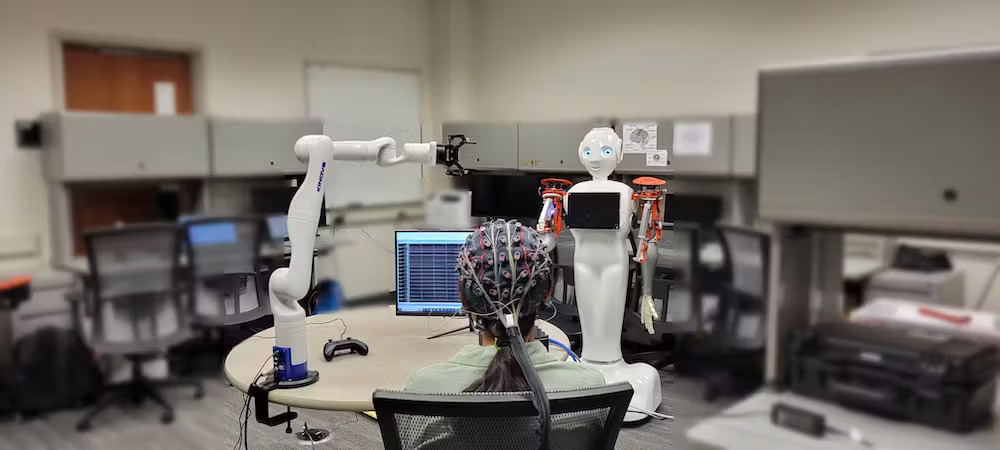 Brain-computer interfaces could allow people to control robotic arms by thought alone. Ramana Kumar Vinjamuri, CC BY-ND
The future of human-robot interaction
Effective integration of robots into human life requires balancing responsibility between people and robots, and designating clear roles for both in different environments.
As robots are increasingly working hand in hand with people, the ethical questions and challenges they pose cannot be ignored. Concerns surrounding privacy, bias and discrimination, security risks and robot morality need to be seriously investigated in order to create a more comfortable, safer and trustworthy world with robots for everyone. Scientists and engineers studying the “dark side” of human-robot interaction are developing guidelines to identify and prevent negative outcomes.
Human-robot interaction has the potential to affect every aspect of daily life. It is the collective responsibility of both the designers and the users to create a human-robot ecosystem that is safe and satisfactory for all.
This article is republished from The Conversation under a Creative Commons license. Read the original article and see more than 250 UMBC articles available in The Conversation.
]]>
Written by Ramana Vinjamuri, assistant professor of computer science and electrical engineering, UMBC Robots are machines that can sense the environment and use that information to perform an...
https://umbc.edu/stories/robots-are-everywhere-improving-how-they-communicate-with-people-could-advance-human-robot-collaboration/
https://beta.my.umbc.edu/api/v0/pixel/news/132616/guest@my.umbc.edu/de8bed1f8222b30dfc66aa7462765386/api/pixel
coeit
csee
discovery
magazine
research
the-conversation
UMBC News & Magazine
https://beta.my.umbc.edu/groups/umbc-news-magazine
https://assets1-beta.my.umbc.edu/system/shared/avatars/groups/000/001/943/24435aa6207c452e7bc15cc74b42c7bb/xsmall.png?1748556657
https://assets1-beta.my.umbc.edu/system/shared/avatars/groups/000/001/943/24435aa6207c452e7bc15cc74b42c7bb/original.png?1748556657
https://assets2-beta.my.umbc.edu/system/shared/avatars/groups/000/001/943/24435aa6207c452e7bc15cc74b42c7bb/xxlarge.png?1748556657
https://assets2-beta.my.umbc.edu/system/shared/avatars/groups/000/001/943/24435aa6207c452e7bc15cc74b42c7bb/xlarge.png?1748556657
https://assets3-beta.my.umbc.edu/system/shared/avatars/groups/000/001/943/24435aa6207c452e7bc15cc74b42c7bb/large.png?1748556657
https://assets1-beta.my.umbc.edu/system/shared/avatars/groups/000/001/943/24435aa6207c452e7bc15cc74b42c7bb/medium.png?1748556657
https://assets2-beta.my.umbc.edu/system/shared/avatars/groups/000/001/943/24435aa6207c452e7bc15cc74b42c7bb/small.png?1748556657
https://assets1-beta.my.umbc.edu/system/shared/avatars/groups/000/001/943/24435aa6207c452e7bc15cc74b42c7bb/xsmall.png?1748556657
https://assets2-beta.my.umbc.edu/system/shared/avatars/groups/000/001/943/24435aa6207c452e7bc15cc74b42c7bb/xxsmall.png?1748556657
UMBC News & Magazine
0
0
false
Thu, 13 Apr 2023 13:25:16 -0400
UMBC’s Arjun Kanjarpane and Anya Viswanathan receive prestigious Goldwater Scholarships

Arjun Kanjarpane ’24, M32, biochemistry and molecular biology, and Soujanya “Anya” Viswanathan ’24, M32, biological sciences, are the latest UMBC students to be named Goldwater Scholars. By pursuing their research interests—virology for Kanjarpane and neuroscience for Viswanathan—with rigor and dedication, both have the potential to make a major impact in their fields and in people’s lives.
The Barry Goldwater Scholarship and Excellence in Education Program is designed to provide the United States with “a continuing source of highly qualified scientists, mathematicians, and engineers.” More than 1,200 students applied from over 425 institutions across the country this year, and the program ultimately selected 413 scholars to receive Goldwater Scholarships for 2023 – 2024.
As Scholars, Kanjarpane and Viswanathan will receive substantial funding that advances their undergraduate work and supports their educational paths. They will also gain access to a network of current and former Goldwater Scholars, many of whom are conducting research at the leading edge of their fields.
“We are delighted that UMBC has continued its impressive string of Goldwater awards for this year,” says April Householder ’95, visual arts, director of undergraduate research and prestigious scholarships. “This indicates just how strong STEM education at UMBC is—indeed, it’s among the best in the country.”
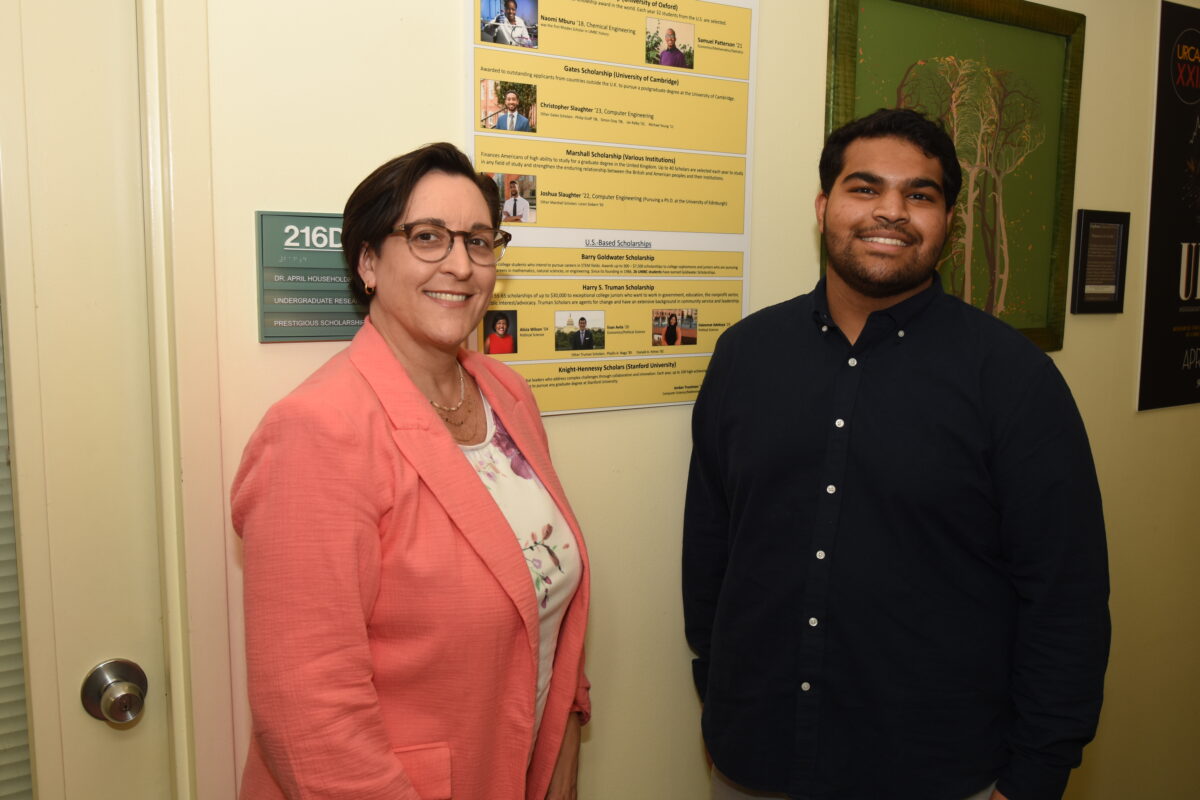 April Householder (left) and Arjun Kanjarpane stand by a poster recognizing some of UMBC’s prestigious scholars. (Mike Mower/UMBC)
Making the connection
Kanjarpane and Viswanathan are both conducting their own research—Kanjarpane in the laboratory of Michael Summers, Howard Hughes Medical Institute Investigator & Distinguished University Professor of chemistry and biochemistry, and Viswanathan with Rachel Brewster, professor of biological sciences.
One of the projects in Brewster’s lab seeks to tease out how the embryos of zebrafish (small, hardy, freshwater fish) can survive for up to 50 hours without any oxygen at all and then return to normal functioning once oxygen becomes available. “We are looking at the genes and molecular mechanisms involved in allowing zebrafish to survive and recover from such extreme conditions,” Viswanathan says.
Viswanathan started in Brewster’s lab in summer 2021. She immediately saw connections between Brewster’s research on hypoxia (or lack of oxygen) in zebrafish and the same condition in some COVID-19 patients. “It was interesting to me,” she says, “to look at what genes and molecular mechanisms could potentially help humans withstand hypoxia just like zebrafish.”
Her Goldwater research proposal extends the work she’s done over the last two years, but Viswanathan hopes to shift her focus to neurological disorders like Alzheimer’s Disease in an M.D./Ph.D. program after UMBC. She worked on a cutting-edge Alzheimer’s project last summer at MIT with postdoctoral fellow Matheus Victor. A neurobiology Ph.D. combined with a medical education will enable her to investigate the underlying mechanisms of disease, treat patients, and then take any new research questions that arise back to the lab, Viswanathan explains.
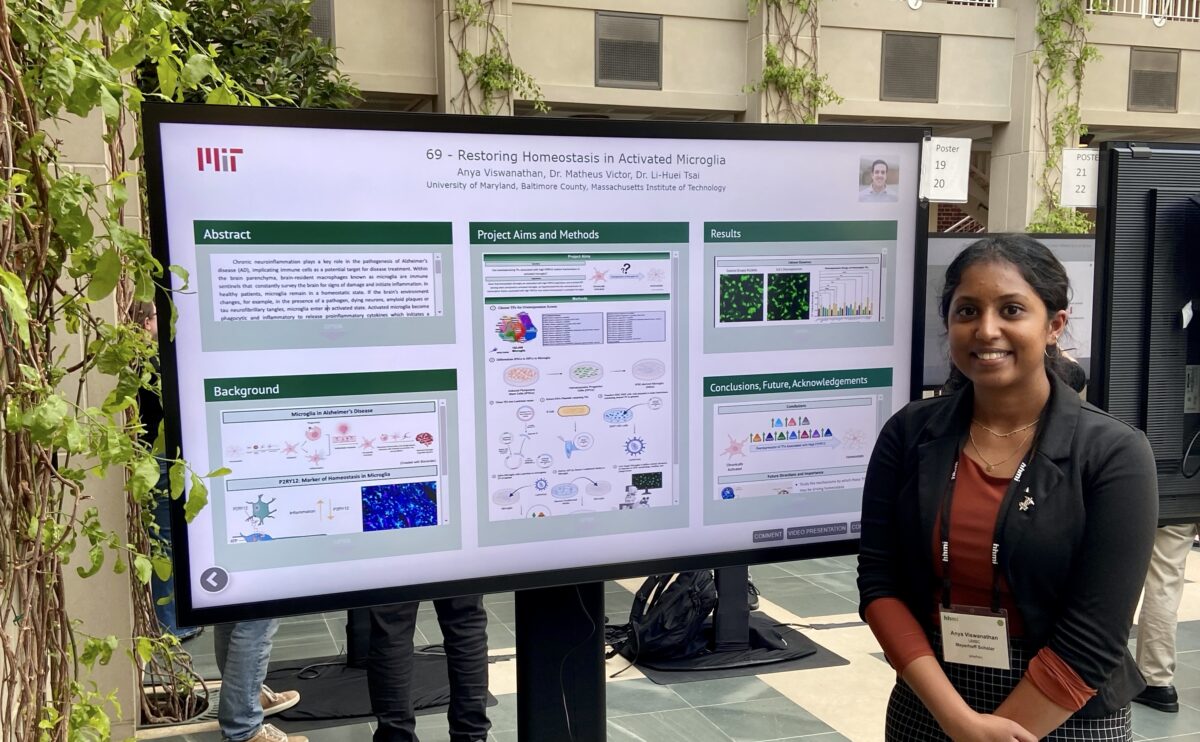 Anya Viswanathan presents research from her summer internship at MIT. (Image courtesy of Viswanathan)
Targeting HIV
Kanjarpane’s research focuses on improving understanding of the molecular mechanisms behind HIV replication. A complex sequence of steps governs exporting the viral genome out of the host cell’s nucleus and then packaging it into new infectious particles. Interactions between proteins and the virus’s genetic material regulate this process, and those interactions aren’t fully understood.
The end goal of Kanjarpane’s work is to build “a more complete understanding of these viral processes,” so that down the line, researchers can “develop drugs or therapeutics that might be able to target one or several of their components,” Kanjarpane says. His Goldwater proposal builds on this work.
This summer, Kanjarpane will conduct virology research under Paul Bieniasz at Rockefeller University. After graduation, he’s planning to pursue a Ph.D. in virology or structural biology. “I would be interested in exploring viruses in a multi-dimensional approach,” he says.
Lifting up others
Beyond their research and academic studies, both Viswanathan and Kanjarpane are committed to supporting their peers and neighbors. “What impresses me most about Arjun and Anya is that they use their talents to help lift up others,” Householder says. “This dedication to others beyond the classroom is what makes them special.”
Both serve as tutors in the Chemistry Tutorial Center at UMBC and enjoy supporting students in introductory chemistry courses. Viswanathan also volunteers weekly at the Y in Catonsville with MS Aquatics, where she works with multiple sclerosis patients on their mobility and flexibility. After each session, the volunteers and participants share a meal.
Viwanathan and Kanjarpane also serve as role models for younger children and help get them excited about STEM. Viswanathan volunteers with the UMB CURE Scholars Program, which exposes students in West Baltimore to research and STEM careers in middle and high school. Opportunities with MS Aquatics and UMB CURE Scholars are both organized through the UMBC Shriver Center.
Kanjarpane founded a non-profit, Scientific Minds of America (SMOA), as a middle school student. The non-profit’s goal is “to reduce social and youth educational inequity through a youth-to-youth system,” he says. During remote instruction at the start of the COVID-19 pandemic, he spearheaded the development of an online tutoring program for Baltimore City youth through SMOA. Over 300 tutors and students have been involved.
He was inspired to form the non-profit after teaching robotics skills to enthusiastic students at a Baltimore elementary school with his FIRST Lego League team. “From that moment we decided we should work to change things, because students should have every opportunity to succeed and achieve their dreams,” regardless of their zip code, Kanjarpane says.
The business skills he’s gained as CEO and now a board member at Scientific Minds also come in handy for his role as treasurer of the Hindu Student Association at UMBC.
Turning points
Kanjarpane and Viswanathan’s desire to reach back to students coming up behind them is driven in part by the network of support that has helped each of them create their own successful paths. Both credit Meyerhoff Selection Weekend as a turning point in their STEM careers.
“Initially, I didn’t even know what a Ph.D. or an M.D./Ph.D. was. I didn’t know that research was a career path that I could take,” Viswanathan says. But at selection weekend, “I realized that my career goals aligned with the M.D./Ph.D. and the Meyerhoff Scholars Program. So that’s why I chose UMBC.”
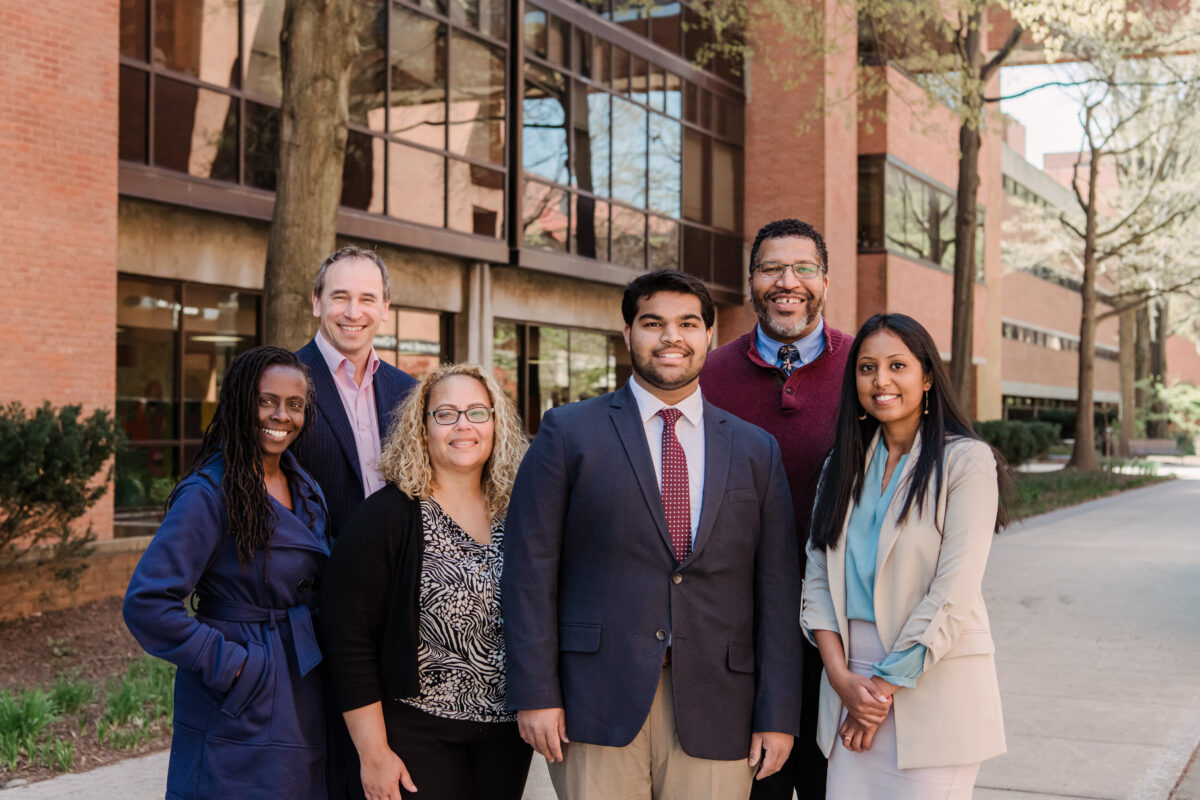 Kanjarpane and Viswanathan with some of their mentors. From left to right: Jacqueline King, associate director of the U-RISE Scholars Program; Simon Stacey, director of the UMBC Honors College; Mitsue Wiggs, assistant director of the Meyerhoff Scholars Program; Arjun Kanjarpane; Keith Harmon, director of the Meyerhoff Scholars Program; Anya Viswanathan. (Marlayna Demond ’11/UMBC)
Kanjarpane took his first UMBC class as a high school student and later applied to be a Meyerhoff Scholar. He came out of selection weekend thinking, “‘Wow.’ It’s UMBC all the way,” he says. The Meyerhoff and U-RISE programs “have really helped me to feel supported in college, and that has helped me to achieve my goals and learn with confidence.”
On top of their scholars programs, both students’ research mentors have played a significant role in their growth. “I treasure my lab,” Kanjarpane says, reflecting on how having such a large research team, from high school students to Professor Summers, provides a range of perspectives that pushes the research forward.
For Viswanathan, support from Brewster and Jong Park, Ph.D. ’21, biological sciences, have been key. “Dr. Brewster helped me a lot through the process of applying to Goldwater,” Viswanathan says. “Even with non-research things, she’s always there to talk to me.”
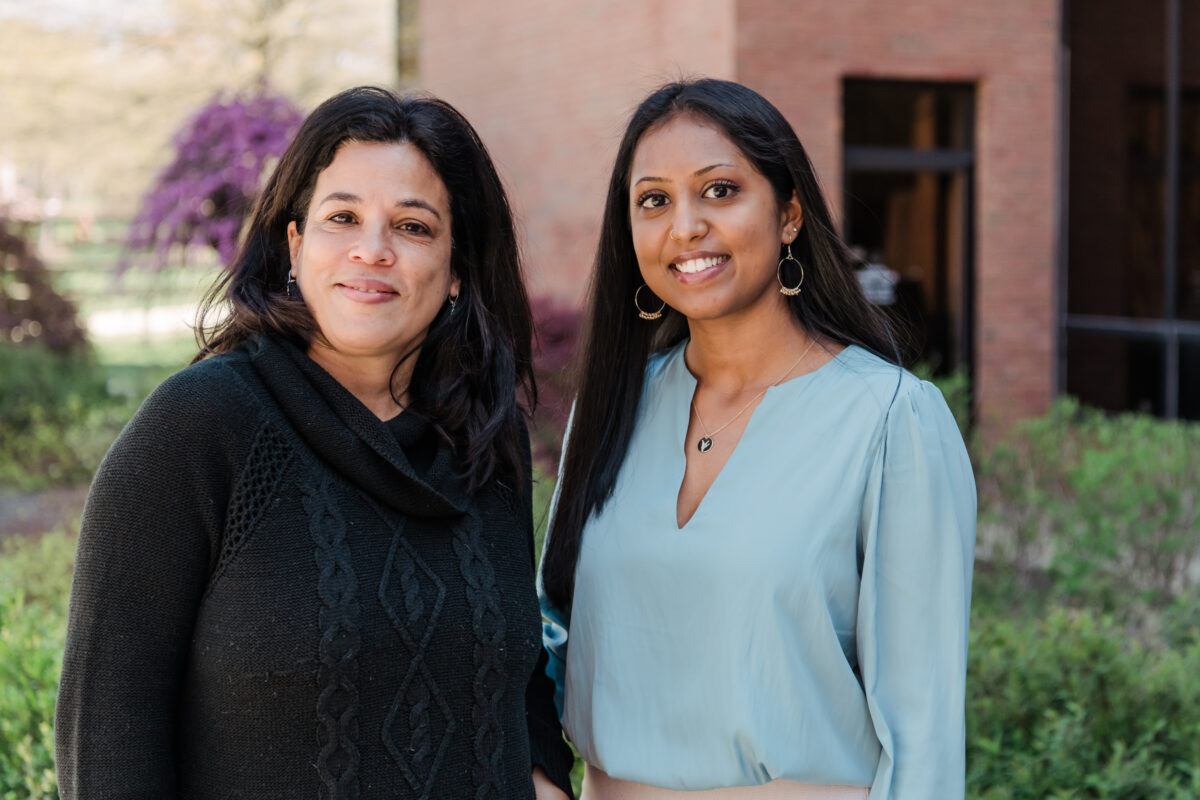 Anya Viswanathan with her research mentor, Rachel Brewster. (Marlayna Demond ’11/UMBC)
Confidence boost
As freshly minted Goldwater Scholars, Viswanathan and Kanjarpane are excited to connect with others in the program. “What I’ve learned from scientific conferences is that science is all about sharing knowledge and creating new ideas, so I hope to do that with this community as well,” Kanjarpane says.
In addition to the financial support and large network they’ll gain, being named a Goldwater Scholar can also offer scholars a confidence boost. Through this experience, they are welcomed into another community rich in encouragement, talent, and optimism that they can use as a springboard for further success.
“Finding out about this just made me more invested and committed to my goals for my future,” Viswanathan says. “Getting that recognition makes me believe that a research career is a real possibility for me in the future.”
]]>
Arjun Kanjarpane ’24, M32, biochemistry and molecular biology, and Soujanya “Anya” Viswanathan ’24, M32, biological sciences, are the latest UMBC students to be named Goldwater Scholars. By...
https://umbc.edu/stories/goldwater-scholars-kanjarpane-and-viswanathan/
https://beta.my.umbc.edu/api/v0/pixel/news/132539/guest@my.umbc.edu/df71d9b7892460b0b5ad040c4b5e9c00/api/pixel
biology
chembiochem
cnms
majoraward
news
rca-1
research
science-and-tech
undergraduate-research
UMBC News & Magazine
https://beta.my.umbc.edu/groups/umbc-news-magazine
https://assets1-beta.my.umbc.edu/system/shared/avatars/groups/000/001/943/24435aa6207c452e7bc15cc74b42c7bb/xsmall.png?1748556657
https://assets1-beta.my.umbc.edu/system/shared/avatars/groups/000/001/943/24435aa6207c452e7bc15cc74b42c7bb/original.png?1748556657
https://assets2-beta.my.umbc.edu/system/shared/avatars/groups/000/001/943/24435aa6207c452e7bc15cc74b42c7bb/xxlarge.png?1748556657
https://assets2-beta.my.umbc.edu/system/shared/avatars/groups/000/001/943/24435aa6207c452e7bc15cc74b42c7bb/xlarge.png?1748556657
https://assets3-beta.my.umbc.edu/system/shared/avatars/groups/000/001/943/24435aa6207c452e7bc15cc74b42c7bb/large.png?1748556657
https://assets1-beta.my.umbc.edu/system/shared/avatars/groups/000/001/943/24435aa6207c452e7bc15cc74b42c7bb/medium.png?1748556657
https://assets2-beta.my.umbc.edu/system/shared/avatars/groups/000/001/943/24435aa6207c452e7bc15cc74b42c7bb/small.png?1748556657
https://assets1-beta.my.umbc.edu/system/shared/avatars/groups/000/001/943/24435aa6207c452e7bc15cc74b42c7bb/xsmall.png?1748556657
https://assets2-beta.my.umbc.edu/system/shared/avatars/groups/000/001/943/24435aa6207c452e7bc15cc74b42c7bb/xxsmall.png?1748556657
UMBC News & Magazine
0
0
false
Tue, 11 Apr 2023 15:05:01 -0400
Tue, 11 Apr 2023 15:05:01 -0400