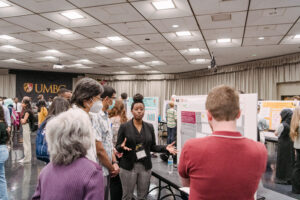
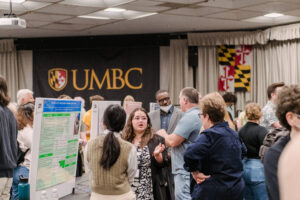
UMBC hosts 11th International Digital Storytelling Conference

For nearly two decades, UMBC faculty and students have been deeply engaged in story-driven research. The UMBC community’s contributions to this humanities-centered scholarship has included documenting the stories of former workers of the historic and now-defunct Sparrows Point steel mill in Baltimore County, and projects such as “A Place Called Poppleton,” which chronicles the history and culture of Baltimore City’s Poppleton neighborhood.
UMBC’s commitment to highlighting storytelling research continued this summer as the university co-hosted the first state-side edition of the 11th International Digital Storytelling Conference—a four-day event showcasing an expansive range of storytelling-focused projects and initiatives. The conference was a collaborative effort in partnership with the Smithsonian Institution, StoryCenter, and Montgomery College, who previously partnered with UMBC on digital storytelling projects.
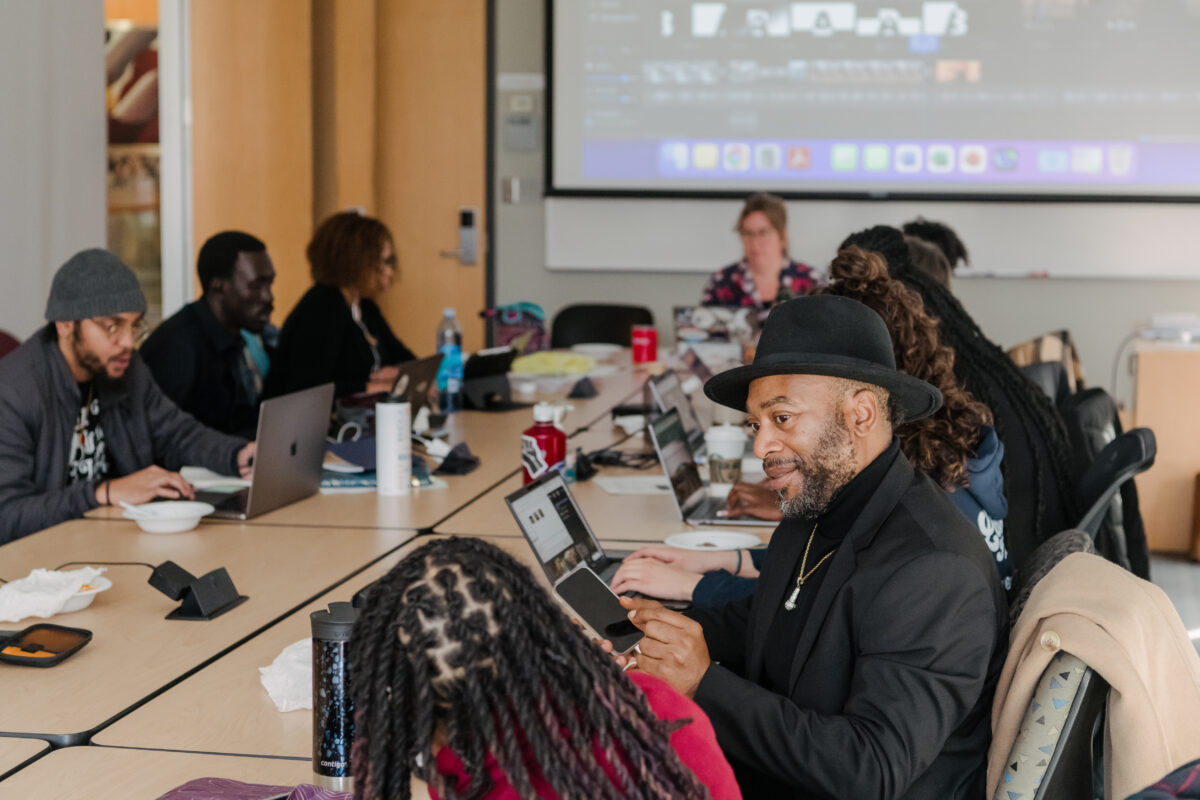 UMBC students learning about digital storytelling. (Marlayna Demond ’11/UMBC)
A commitment to community storytelling
The multi-day conference included workshops, presentations, storytelling tours, and site visits to partner institutions illuminating the impact of digital storytelling. Julissa Gómez Ruvalcaba, M.A. ’23, applied sociology, was one of the featured presenters at this year’s conference, her work adding to UMBC’s ongoing research of Latinx immigrant communities in Baltimore. During a site visit on the first day of the conference to the Creative Alliance, a non-profit art space in Baltimore City, Ruvalcaba discussed her capstone research project that included an ethnographic study of the city’s Latinx community.
Ruvalcaba shared that she felt a sense of “culture shock” when originally moving to Baltimore to study at UMBC. She is from a predominantly Mexican community in Northern California and took note of the drastically smaller Latinx population in Baltimore City, which, according to the 2020 Census, makes up about eight percent of the city’s population.
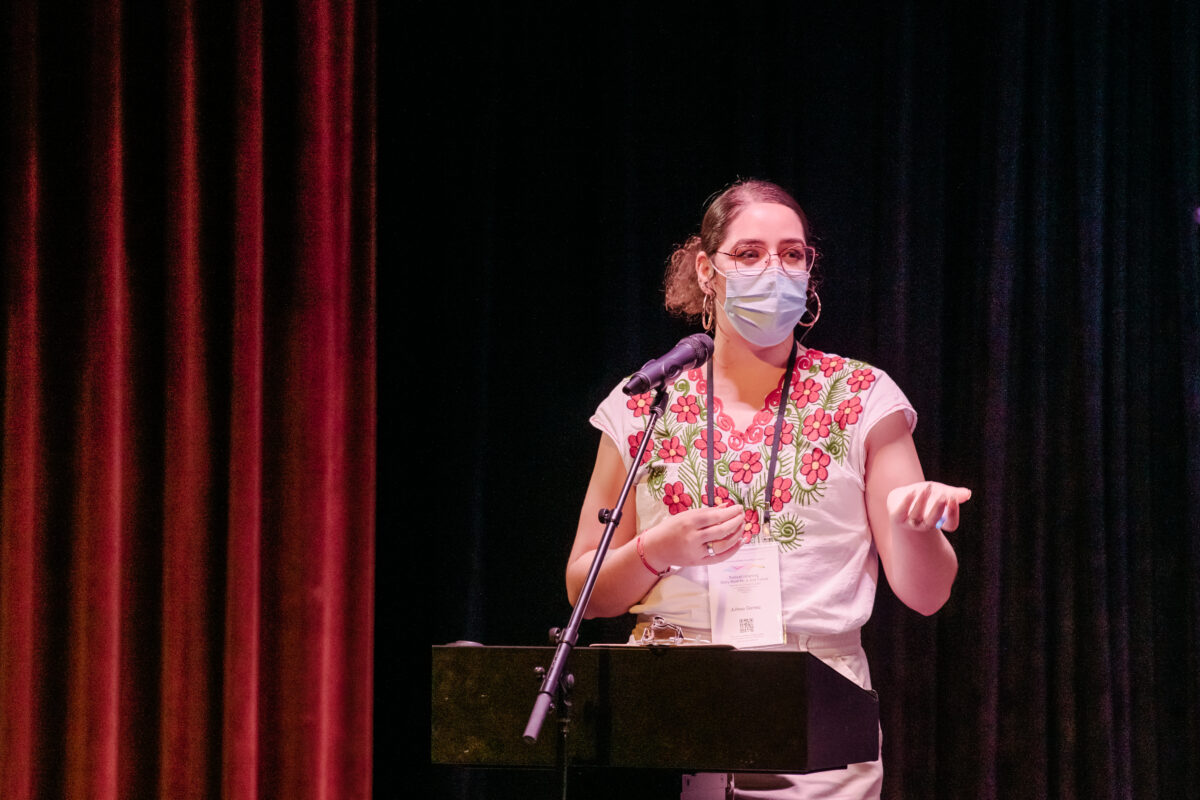 Julissa Gómez Ruvalcaba discussing her short film “Nest Making” at the Creative Alliance during the 11th International Digital Storytelling Conference. (Marlayna Demond ’11/UMBC)
“I became curious about how Latinx people understood their cultural identity and how they expressed themselves while living in a city that is predominately Black and white. That was the starting point to my thesis.”
That curiosity culminated in “Nest Making,” a short film that Ruvalcaba created documenting the Latinx community living in Highlandtown, a neighborhood in Southeast Baltimore that Ruvalcaba says is often referred to as “Latino Baltimore.” During the conference, Ruvalcaba held a screening of the film, which captures Ruvalcaba’s year-long research journey of examining how Latinx people are building their homes and communities in Highlandtown as they express parts of their culture and heritage.
“Digital storytelling is a medium that I’m really excited about. I thought about how to make my research accessible to all, including my family who may not understand all of the research jargon,” says Ruvalcaba. “Showing your story in a way that’s visually engaging, along with audio, captures [many] of the senses, which is something that I want to show people that can’t really be shown on paper.”
Digital storytelling history at UMBC
Bill Shewbridge ’80, history, a professor of practice in media and communication studies, attended a StoryCenter workshop in 2004 and was excited to bring the practice back to UMBC. The university’s cultivation of storytelling research grew following a series of several StoryCenter workshops organized in 2006 by UMBC’s New Media Studio, the university’s multimedia production hub. Faculty and staff learned about digital storytelling as a pedagogical tool and have since brought the practice into the classroom.
“Over the years, UMBC has become an active participant in a growing international community of the digital storytelling practice through conferences and collaborative projects,” explains Shewbridge. “[Bringing] the international conference to our region grew out of discussions had at the 2018 conference in Zakinthos, Greece, so it was in the works for a long time.”
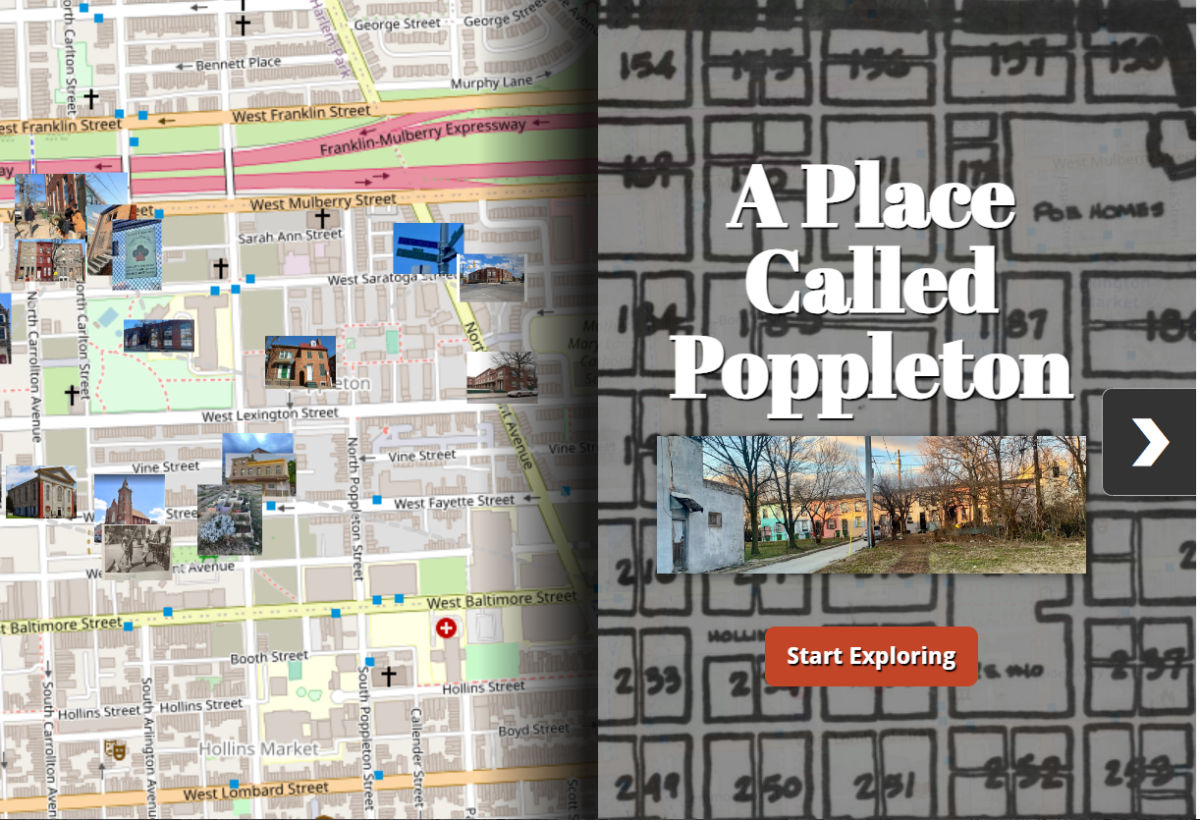 In spring 2021 “A Place Called Poppleton” debuted to document the history and culture of the Poppleton neighborhood of Southwest Baltimore. UMBC students produced a Story Map digital walking tour of the neighborhood with a focus on the area’s Black history and places lost or endangered due to redevelopment.
UMBC’s Digital Storytelling and Civic Agency in Higher Education working group, which Shewbridge leads, collaborated with Loughborough University in England, Montgomery College, the Smithsonian Office of Educational Technology, and StoryCenter to bring the international conference stateside for the first time.
“It was a great experience to be able to share our work in the Baltimore region with this very special group of colleagues,” says Shewbridge.
That sentiment was echoed by Charlotte Keniston, MFA ’14, intermedia and digital art, associate director of UMBC’s Shriver Peaceworker Fellows program. “What’s significant about UMBC hosting the conference is that it represents nearly 20 years of digital storytelling work that’s been happening here on campus,” she noted.
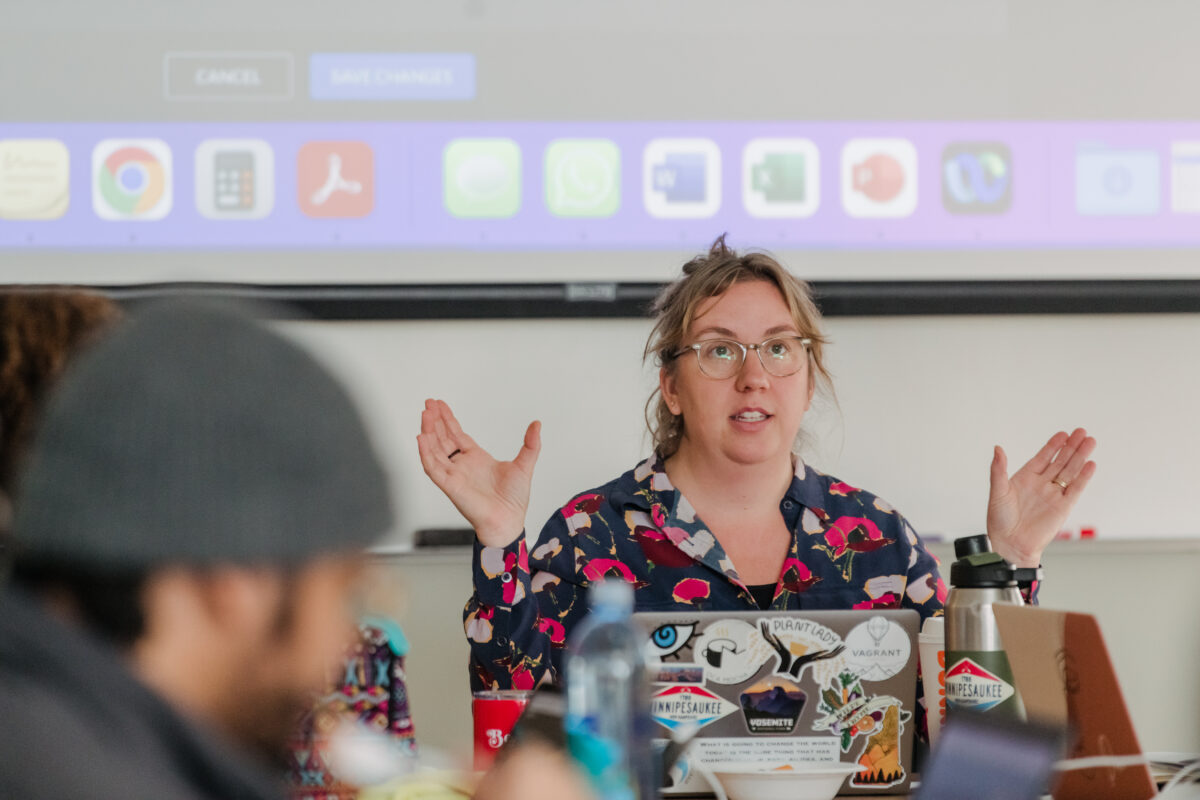 Charlotte Keniston teaching a digital storytelling class. (Marlayna Demond ’11/UMBC)
Keniston, who co-chaired this year’s conference, has championed digital storytelling research since she was a student at UMBC: “I have been using digital storytelling, teaching it, and facilitating others in using it since my start at the university. There are hundreds of students who have used it in the classroom, and dozens of faculty who teach it in their curricula as a way to engage students in reflection.”
For more information on storytelling research happening at UMBC, review a collection of UMBC’s digital storytelling projects here.
]]>
For nearly two decades, UMBC faculty and students have been deeply engaged in story-driven research. The UMBC community’s contributions to this humanities-centered scholarship has included...
https://umbc.edu/stories/international-digital-storytelling-conference/
https://beta.my.umbc.edu/api/v0/pixel/news/135612/guest@my.umbc.edu/7fd0645d98f1d5d211f614d4ba223237/api/pixel
cahss
community
humanities
media-and-communication-studies
news
research
shriver-center
UMBC News & Magazine
https://beta.my.umbc.edu/groups/umbc-news-magazine
https://assets1-beta.my.umbc.edu/system/shared/avatars/groups/000/001/943/24435aa6207c452e7bc15cc74b42c7bb/xsmall.png?1748556657
https://assets1-beta.my.umbc.edu/system/shared/avatars/groups/000/001/943/24435aa6207c452e7bc15cc74b42c7bb/original.png?1748556657
https://assets2-beta.my.umbc.edu/system/shared/avatars/groups/000/001/943/24435aa6207c452e7bc15cc74b42c7bb/xxlarge.png?1748556657
https://assets2-beta.my.umbc.edu/system/shared/avatars/groups/000/001/943/24435aa6207c452e7bc15cc74b42c7bb/xlarge.png?1748556657
https://assets3-beta.my.umbc.edu/system/shared/avatars/groups/000/001/943/24435aa6207c452e7bc15cc74b42c7bb/large.png?1748556657
https://assets1-beta.my.umbc.edu/system/shared/avatars/groups/000/001/943/24435aa6207c452e7bc15cc74b42c7bb/medium.png?1748556657
https://assets2-beta.my.umbc.edu/system/shared/avatars/groups/000/001/943/24435aa6207c452e7bc15cc74b42c7bb/small.png?1748556657
https://assets1-beta.my.umbc.edu/system/shared/avatars/groups/000/001/943/24435aa6207c452e7bc15cc74b42c7bb/xsmall.png?1748556657
https://assets2-beta.my.umbc.edu/system/shared/avatars/groups/000/001/943/24435aa6207c452e7bc15cc74b42c7bb/xxsmall.png?1748556657
UMBC News & Magazine
1
0
false
Wed, 20 Sep 2023 13:36:40 -0400
Wed, 20 Sep 2023 13:36:40 -0400
U.S. News ranks UMBC among the nation’s best colleges in undergraduate research, teaching, innovation, and value
UMBC continues to show its strengths in undergraduate research, innovation, value, teaching programs, and several other areas highlighted in the 2023–24 U.S. News and World Report Best Colleges undergraduate rankings. This year, the university moved up in the national rankings in numerous categories, showcasing UMBC’s growth in several key areas.
The 2023–24 U.S. News college rankings, released today, were calculated using 19 key measures of academic quality, evaluating nearly 1,500 four-year bachelor’s degree-granting institutions in the country. For the second consecutive year, UMBC has moved up several slots on the list of Best National Universities (tied at #133). UMBC also climbed 38 slots in the category of best value schools, coming in at #69 nationally.
The university remains a leader in undergraduate teaching programs, ranking #12 nationally. UMBC also maintains its longstanding position as one of the nation’s most innovative universities, ranking #15 this year.
UMBC students presenting their research and creative projects at the 2023 Undergraduate Research and Creative Achievement Day (URCAD).
Since receiving a Research 1 Carnegie designation in 2022, UMBC has advanced nearly 20 slots in the undergraduate research and creative projects rankings, now nationally ranked at #27. Those research efforts culminated in UMBC students receiving prestigious Goldwater and Gates Cambridge scholarship awards within the last year.
“This impressive jump shows that internal and external stakeholders have really taken notice of the incredible work that our undergraduates are engaged in,” says April Householder ’95, visual and performing arts, UMBC’s director of undergraduate research and prestigious scholarships. “The faculty and staff at UMBC nurture a culture of research across all disciplines, supporting academic excellence from the humanities to the sciences.”
UMBC remains within the nation’s top-100 public universities, ranking #70 overall, and also moving up to #87 in the nation as one of the best colleges for veterans. While the rankings are primarily university-wide, they also include top-100 recognition for several specific undergraduate programs. The university advanced to #82 in computer science programs, sharing the ranking with other universities such as Auburn University, University of Georgia, and the University of Delaware. In engineering programs, UMBC also ascended to #90 nationally, joined by Howard University, Oklahoma State University, and the University of Alabama.
Read more about UMBC’s national rankings recognition here.
]]>
UMBC continues to show its strengths in undergraduate research, innovation, value, teaching programs, and several other areas highlighted in the 2023–24 U.S. News and World Report Best Colleges...
https://umbc.edu/stories/us-news-best-colleges-2023-24/
https://beta.my.umbc.edu/api/v0/pixel/news/135537/guest@my.umbc.edu/90ca15fcde01347e04306267d0cf9e5c/api/pixel
cahss
cnms
coeit
community
feature
news
rankings
UMBC News & Magazine
https://beta.my.umbc.edu/groups/umbc-news-magazine
https://assets1-beta.my.umbc.edu/system/shared/avatars/groups/000/001/943/24435aa6207c452e7bc15cc74b42c7bb/xsmall.png?1748556657
https://assets1-beta.my.umbc.edu/system/shared/avatars/groups/000/001/943/24435aa6207c452e7bc15cc74b42c7bb/original.png?1748556657
https://assets2-beta.my.umbc.edu/system/shared/avatars/groups/000/001/943/24435aa6207c452e7bc15cc74b42c7bb/xxlarge.png?1748556657
https://assets2-beta.my.umbc.edu/system/shared/avatars/groups/000/001/943/24435aa6207c452e7bc15cc74b42c7bb/xlarge.png?1748556657
https://assets3-beta.my.umbc.edu/system/shared/avatars/groups/000/001/943/24435aa6207c452e7bc15cc74b42c7bb/large.png?1748556657
https://assets1-beta.my.umbc.edu/system/shared/avatars/groups/000/001/943/24435aa6207c452e7bc15cc74b42c7bb/medium.png?1748556657
https://assets2-beta.my.umbc.edu/system/shared/avatars/groups/000/001/943/24435aa6207c452e7bc15cc74b42c7bb/small.png?1748556657
https://assets1-beta.my.umbc.edu/system/shared/avatars/groups/000/001/943/24435aa6207c452e7bc15cc74b42c7bb/xsmall.png?1748556657
https://assets2-beta.my.umbc.edu/system/shared/avatars/groups/000/001/943/24435aa6207c452e7bc15cc74b42c7bb/xxsmall.png?1748556657
UMBC News & Magazine
0
0
false
Mon, 18 Sep 2023 16:36:02 -0400
Mon, 18 Sep 2023 16:36:02 -0400
‘Big Bang of Numbers’ – The Conversation’s book club explores with author Manil Suri how math alone could create the universe

The Conversation U.S. launched its new book club with a bang – talking to mathematician Manil Suri about his nonfiction work “The Big Bang of Numbers: How to Build the Universe Using Only Math.” Suri, a previous author in The Conversation, has also written an award-winning fiction trilogy, in addition to being a professor of mathematics and statistics at the University of Maryland, Baltimore County.
Below is an edited excerpt from the book club discussion between Maggie Villiger, senior science editor for The Conversation US and Suri.
Watch the full book club meeting and leave your own question in the comments at the bottom of this article.
What is the Big Bang of numbers and where do you go from there in the book?
I think the story for me started way back when I was an undergraduate in Bombay. My algebra professor told us this very famous saying by Leopold Kronecker, the famous mathematician, that God gave us the integers and all the rest is the work of human beings. What he meant was that once you have the whole numbers – 1, 2, 3, 4 – which are somehow coming from heaven, then you can build up the rest of mathematics from it.
And then he went on and said, Hey, I can actually do better. I don’t need God. I can actually, as a mathematician, create the numbers out of nothing. And he showed us this marvelous, almost magic trick, where you start with something called the empty set and then you start building the numbers.
It was the closest I’ve been to a religious experience, almost like the walls just dissolved and suddenly there were numbers everywhere.
Once I started writing my novels, I was meeting a lot of people who were artists and writers. And they would always say, you know, we used to love math when we were in school, but afterward we never had a chance to really pursue it. And can you tell us something about your mathematics?
So, I started building a kind of talk, which started with this big bang, as I call it, building the numbers out of nothing. I finally decided I should write a math book, and it would be aimed at a wide audience.
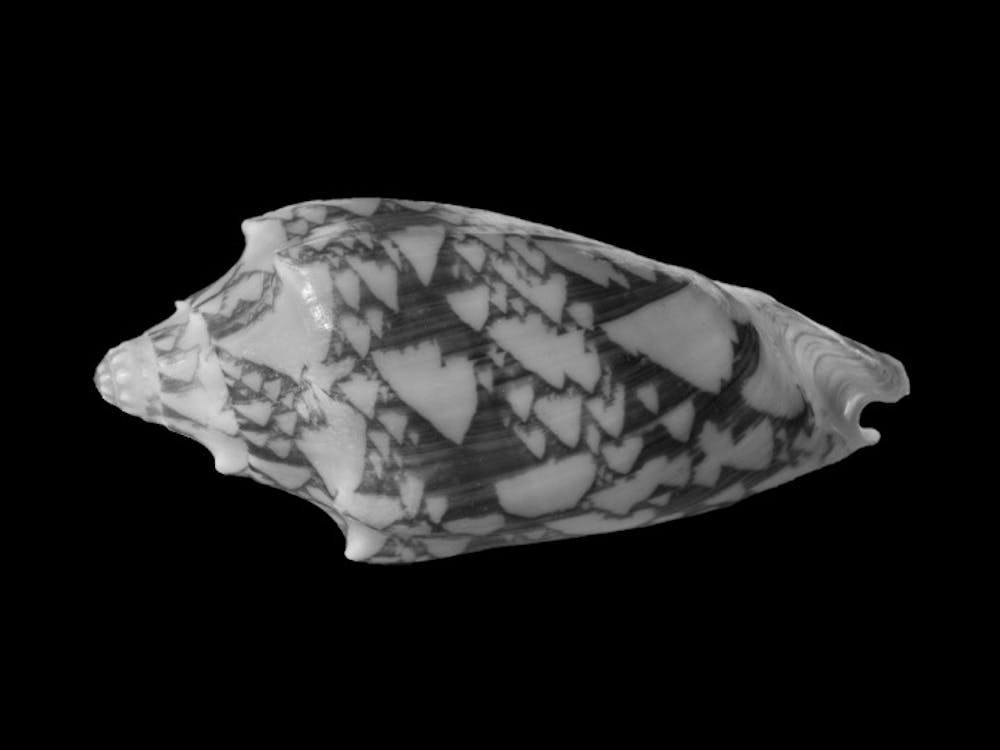
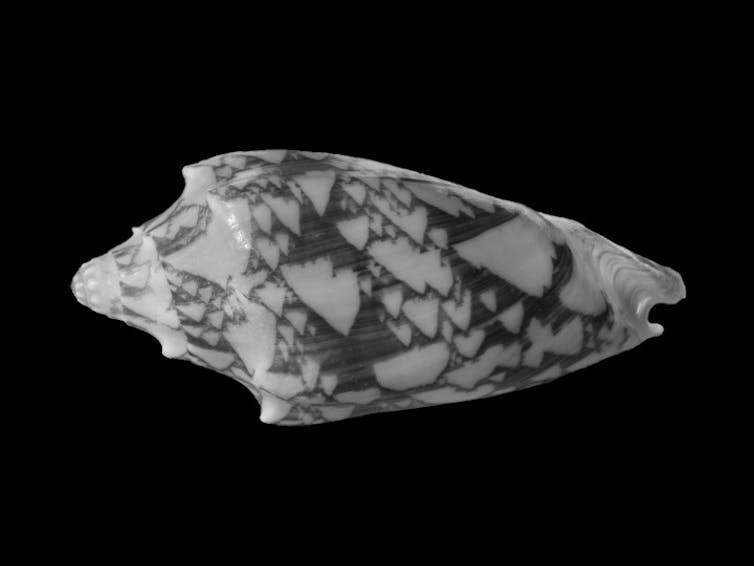 Patterns in nature, like the triangles on this shell, can be explained by simple mathematical rules. Larry Cole
And I said, well, can you go further? You can create the numbers, but can you actually start building everything, including the whole universe from that? So that was a way to try to lay out mathematics almost as a story where one thing follows from the other and everything is embedded in one narrative.
Who were you imagining to be your readers as you were writing the book?
There’s just so much joy to be had out of mathematics, so many things that you don’t really see in normal courses where the emphasis is always on doing the calculations, finding the right answer. So this book is written for people who want to really engage with mathematics on the level of ideas rather than get into computations and calculations.
After you set off your Big Bang of numbers, you dig in to some of life’s big questions. What do you see as math’s role in grappling with those big thoughts, like where the universe came from, why we even exist and so on?
Once you start talking about the Big Bang, what comes into your mind is creation. There is a doctrine called creatio ex nihilo, which is basically creating everything out of nothing.
That’s a cornerstone of many religions where God creates the universe out of nothing. It’s also in some sense being explored by physicists, where you have some sort of singularity and from that, everything emerges in the Big Bang.
So my thought was, both these areas, religion and physics, are in the public’s imagination much more than mathematics is. Is there a way to posit math as the creative force of everything?
Physicist Eugene Wigner, who was a Nobel laureate, talked about the “unreasonable effectiveness” of mathematics at describing everything in our physical universe. It’s so good at modeling physics and what have you. Could it be that math is really the true driving force of the universe? Rather than us just inventing it and using it to describe the universe, could the universe really be describing mathematics? Then the universe is just a physical manifestation, an approximation, if you will, of those mathematical ideas. It’s a completely different view of math.
There’s an ongoing debate over whether math is something that people invented or whether it’s something that exists independently of us. In the book, you say that perhaps the deepest insight that math can offer us is that it’s both of those things.
So the glib answer to your question whether math’s invented or discovered is that you have to create a new word. Instead of discovered or invented it’s “disvented.”
What I mean by that is simply that there are some questions we really can’t get to any kind of logical or supportable answer. One is the question of our own existence – people might believe one thing or the other, but it always comes down to: Is there some real purpose to our lives, or is our creation just something that happened randomly – you know, molecules getting together?
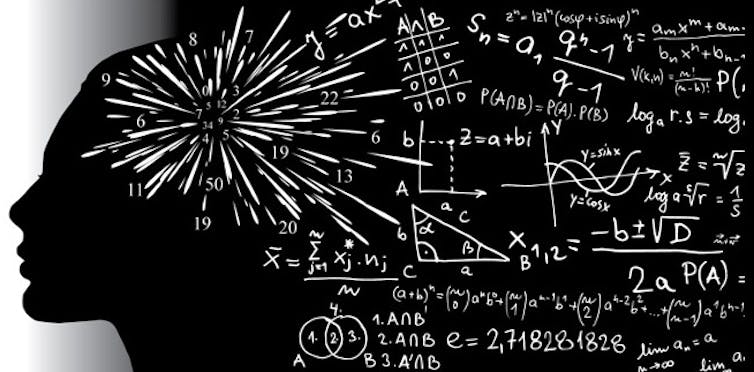 Is math something that is born from the human mind? ‘The Big Bang of Numbers’
Now if we invent mathematics, then we’re inventing it for a purpose. If it just generates by itself, starting with emptiness, building around numbers in some strange realm that we don’t know about, then it’s just wafting around, purposeless.
Math has that duality that can’t be resolved. So it’s a metaphor, telling us, hey, you can’t decide for math, and you’ll never be able to decide for yourself about your own existence.
Can you tell us a bit about your previous books, the Indian novels?
The first one was called “The Death of Vishnu.” I went back to visit my parents in Mumbai in around 1995, and this man Vishnu, who used to live in our building and do errands, was dying on our steps. I started writing this as a short story.
It started going into a more philosophical realm when a writing teacher said, you know, Vishnu is also the name of the caretaker of the universe in Hindu mythology. So if you name somebody Vishnu, you need to somehow explore that. So that’s what opened up this whole new world for me.
The second book was “The Age of Shiva.” That one’s the journey of a woman right after India’s independence in 1947. She’s making her way in a very male-dominated world, and she’s not perfect.
Then the third one, I decided, OK, I need to put in some science and math characters. So “The City of Devi” actually has both a physicist and a statistician. Again it’s in Mumbai, set in the future with the threat of a nuclear war with Pakistan and a love triangle unfolding in front of that.
It’s kind of interesting. I thought that I was done with this mythical “where do we come from?” kind of philosophy that I had in the three books, but apparently not, because now “The Big Bang of Numbers” looks at it from a mathematical perspective.
This article is republished from The Conversation under a Creative Commons license. Read the original article and see more than 250 UMBC articles available in The Conversation.
]]>
The Conversation U.S. launched its new book club with a bang – talking to mathematician Manil Suri about his nonfiction work “The Big Bang of Numbers: How to Build the Universe Using Only Math.”...
https://umbc.edu/stories/big-bang-of-numbers-book-club-explores-how-math-could-create-the-universe/
https://beta.my.umbc.edu/api/v0/pixel/news/135534/guest@my.umbc.edu/dab203a6ad90ae97a91aa23633fa7bc4/api/pixel
cnms
discovery
magazine
mathstat
the-conversation
UMBC News & Magazine
https://beta.my.umbc.edu/groups/umbc-news-magazine
https://assets1-beta.my.umbc.edu/system/shared/avatars/groups/000/001/943/24435aa6207c452e7bc15cc74b42c7bb/xsmall.png?1748556657
https://assets1-beta.my.umbc.edu/system/shared/avatars/groups/000/001/943/24435aa6207c452e7bc15cc74b42c7bb/original.png?1748556657
https://assets2-beta.my.umbc.edu/system/shared/avatars/groups/000/001/943/24435aa6207c452e7bc15cc74b42c7bb/xxlarge.png?1748556657
https://assets2-beta.my.umbc.edu/system/shared/avatars/groups/000/001/943/24435aa6207c452e7bc15cc74b42c7bb/xlarge.png?1748556657
https://assets3-beta.my.umbc.edu/system/shared/avatars/groups/000/001/943/24435aa6207c452e7bc15cc74b42c7bb/large.png?1748556657
https://assets1-beta.my.umbc.edu/system/shared/avatars/groups/000/001/943/24435aa6207c452e7bc15cc74b42c7bb/medium.png?1748556657
https://assets2-beta.my.umbc.edu/system/shared/avatars/groups/000/001/943/24435aa6207c452e7bc15cc74b42c7bb/small.png?1748556657
https://assets1-beta.my.umbc.edu/system/shared/avatars/groups/000/001/943/24435aa6207c452e7bc15cc74b42c7bb/xsmall.png?1748556657
https://assets2-beta.my.umbc.edu/system/shared/avatars/groups/000/001/943/24435aa6207c452e7bc15cc74b42c7bb/xxsmall.png?1748556657
UMBC News & Magazine
0
0
false
Mon, 18 Sep 2023 16:14:23 -0400
Mon, 18 Sep 2023 16:14:23 -0400
Need a fun activity? UMBC iFest delivers with 200+ student organizations and tons to explore

As waves of students swarmed the Retriever Activity Center last week, senior Micah Polsky of the UMBC Crafting Club quietly stood knitting a pale blue merino wool sock with three tiny needles. Behind Polsky, on a presentation board the UMBC Crafters made to lure prospective new club members, was pinned the mate to the sock in progress.
“Knitting is a lot of trial and error and a surprising amount of math…but it can be very relaxing or very stimulating depending on the kinds of projects you make,” says Polsky, an environmental science major. Together with club president Emily Bolt (a senior chemical engineering major and avid embroiderer), they talked yarns and technique with students shopping for new clubs and organizations to join at this year’s Involvement Fest.
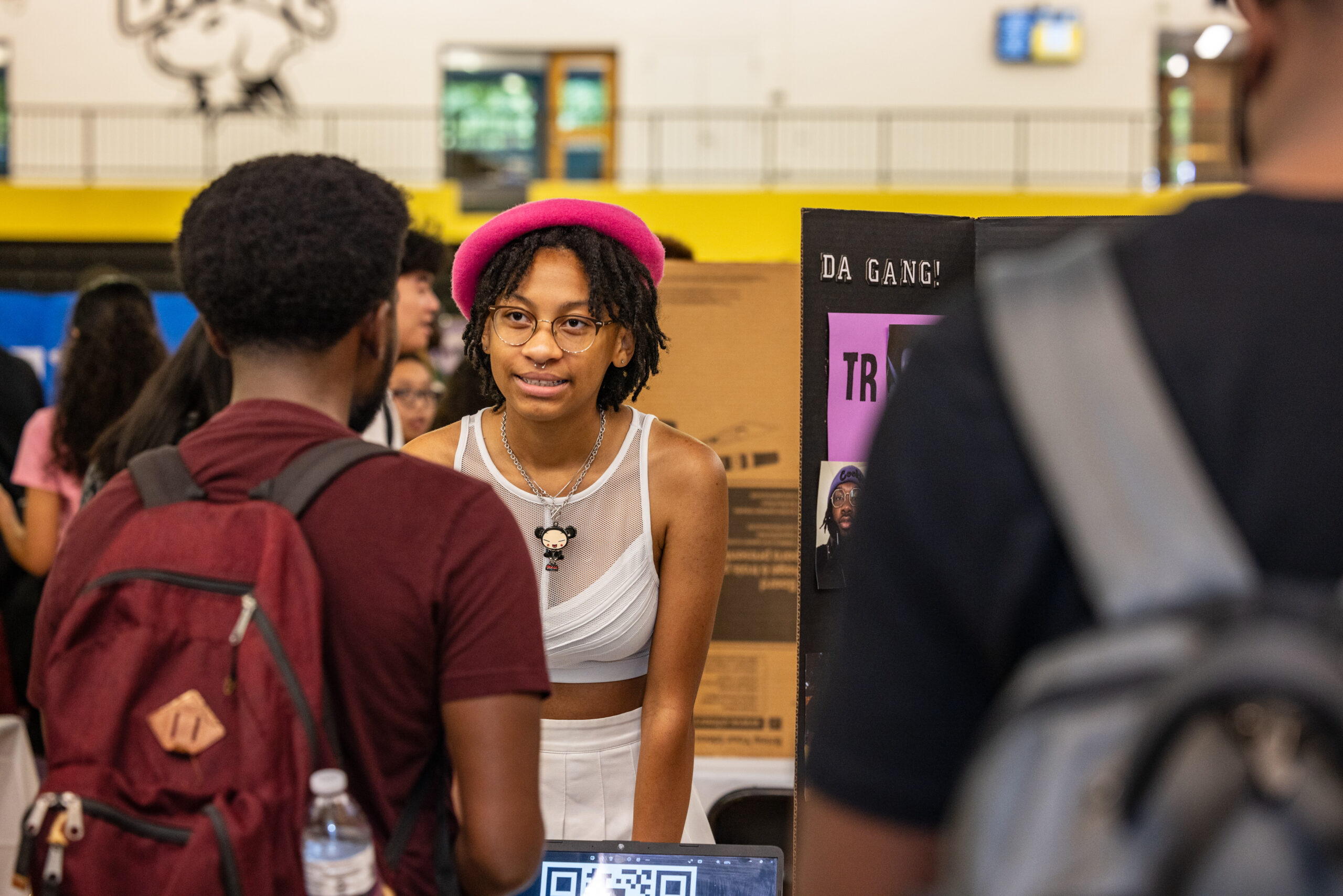
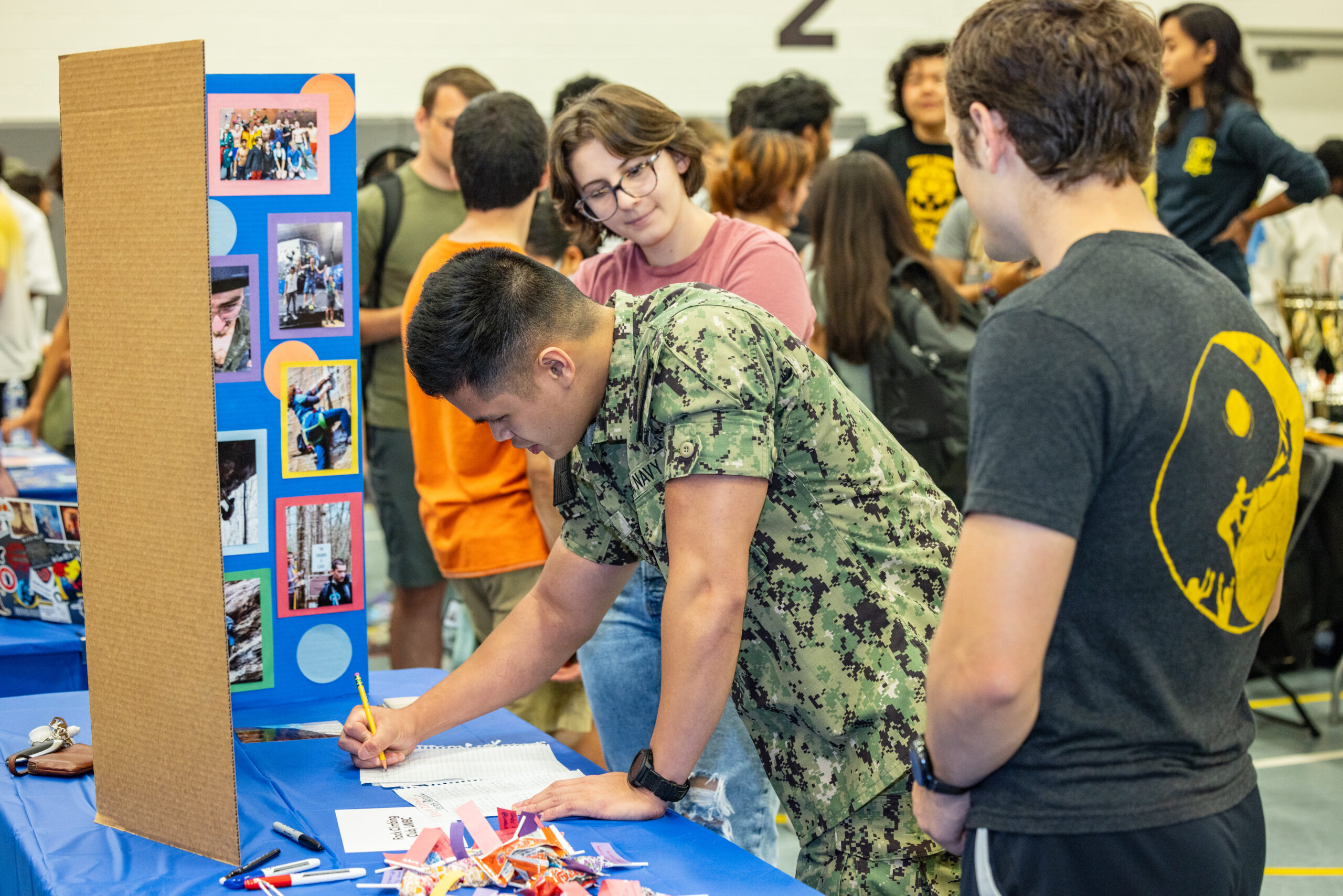
Beyond a meet and greet, and far beyond posters and tchotchke giveaways, iFest is a key moment for students looking to meet new people and try something new. An estimated 2,000 students attended this year’s event, according to Tori Ciorra, assistant director for student organizations. With more than 200 UMBC clubs representing everything from career pathways to religion, to service, recreation, sports, and more—not to mention an open door for students to create new orgs of their own—there is something for everyone to enjoy.
“Involvement Fest is an exciting opportunity for new and returning students to join a student organization and find a community where they can foster new relationships and experiences. Each organization is incredibly unique and creates a wonderful opportunity for students to get involved outside of the classroom,” said Ciorra, who was pleased to see the crowds of interested students.
“I am always in awe of the organizations that our students have created, and watching the creative ways they market their organization. Hearing leaders talk about the number of sign-ups they received and their excitement for the year is extremely rewarding and sets a wonderful tone for the rest of the year.”
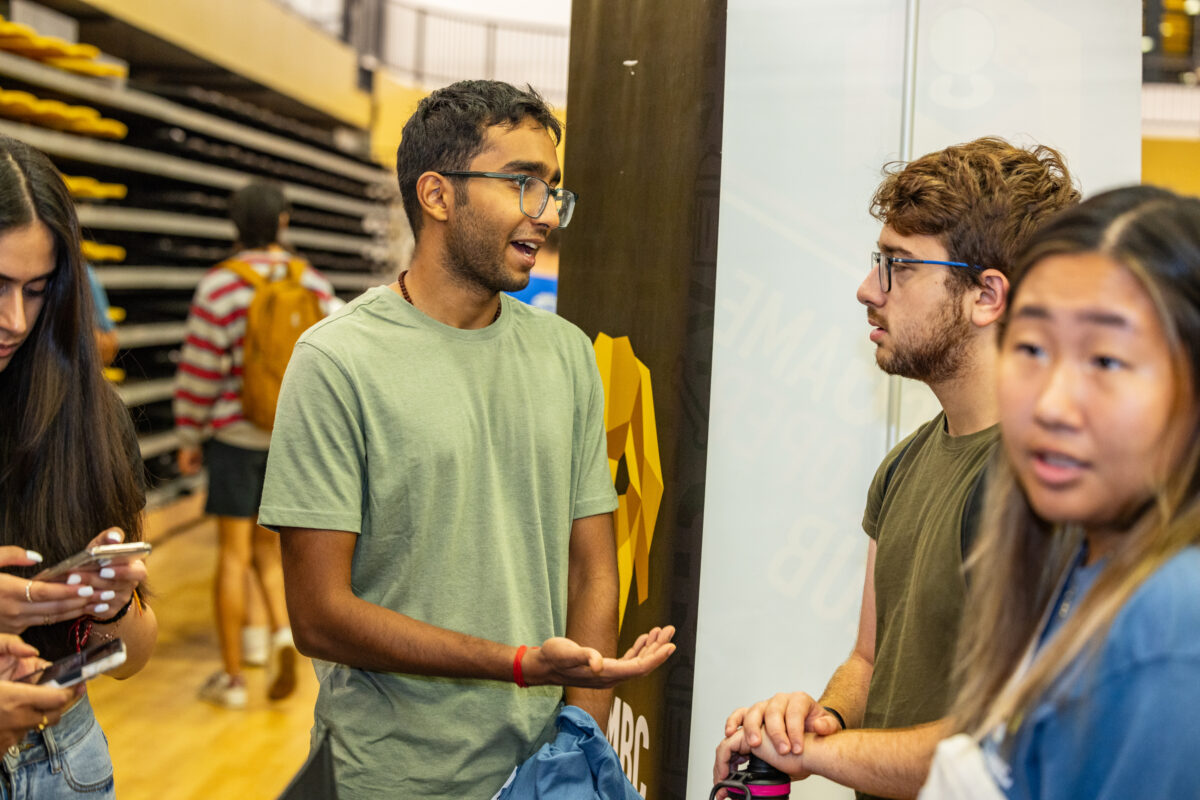 Pranav Vedasendur Senthiluel, a junior computer science student, at left, has been attending Hack UMBC events for the last two years, but signed up to join the club at this year’s iFest, “because I actually like hacking. I do a lot of software development and it’s a good opportunity to meet people and actually develop something.” Also pictured: Ahmad Sayad, center, and Claire Kim.
A smorgasbord of choices
Surveying one of two huge rooms of club displays, first-year computer science student Emma Popoko flipped through the event program to pinpoint tables she especially wanted to visit.
“Film club could be interesting. And I’m definitely interested in the African Student Association because I’m African…and possibly the National Society of Black Engineers,” she said. Her added motivation to be there? “So I don’t just stay in my dorm all day. I can interact with people and get a feel for the place and feel like I’m part of the community and not just here for classes.”
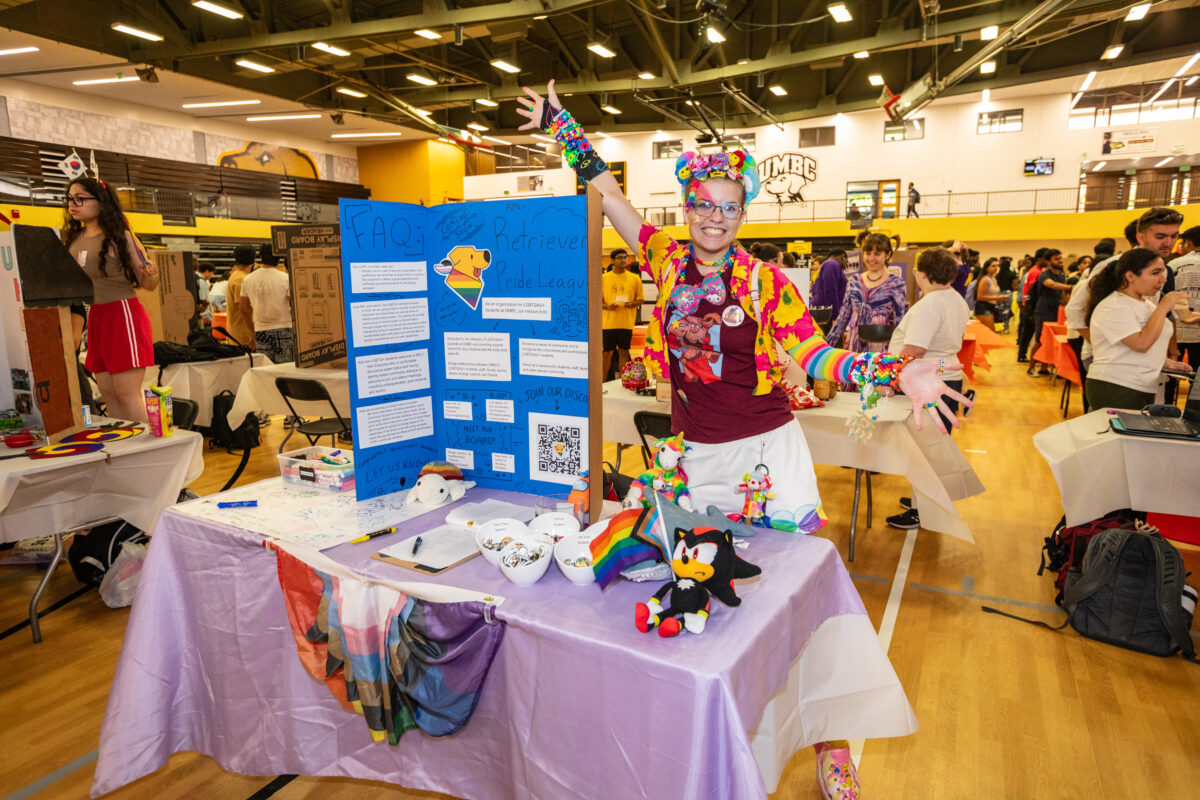 Annie Fowler, a senior history major and education minor, spent iFest sharing information with students about the Retriever Pride League. Fowler, a transfer student, helped re-name the group recently to be more inclusive. “I love the idea that I can change the world, so being able to have a tangible change on something like a university…it does mean a lot to me,” said Fowler.
Sophomore Ayan Chaudry, a biology major, joined a couple of clubs in his first year at UMBC, but came to iFest specifically looking for something new—possibly a pre-med fraternity. Taking part in student organizations—especially as a commuter student—made his first year feel “less lonely.”
“I know some people like to just go home and back and forth to school, but I feel like if you stay on campus a bit longer…there’s more to it than just studying,” he said.
 Abby Parke, a senior psychology major, center, visited the UMBC Crafters display, wondering about a green sweater Micah Parke spent a month knitting. “What did you use? It’s so soft!” Parke raved.
As folks passed the table for The Garden, a physical gardening space on campus that also grows food for Retriever Essentials and other partners, club president and senior biology/psychology major Eli Gooding handed out lollipops and made a solid case for why getting one’s hands dirty—while growing veggies, that is—is such a great form of self-care.
“For me, gardening is really therapeutic and it’s how I relieve stress,” said Gooding. “It’s really good to have a hobby.”
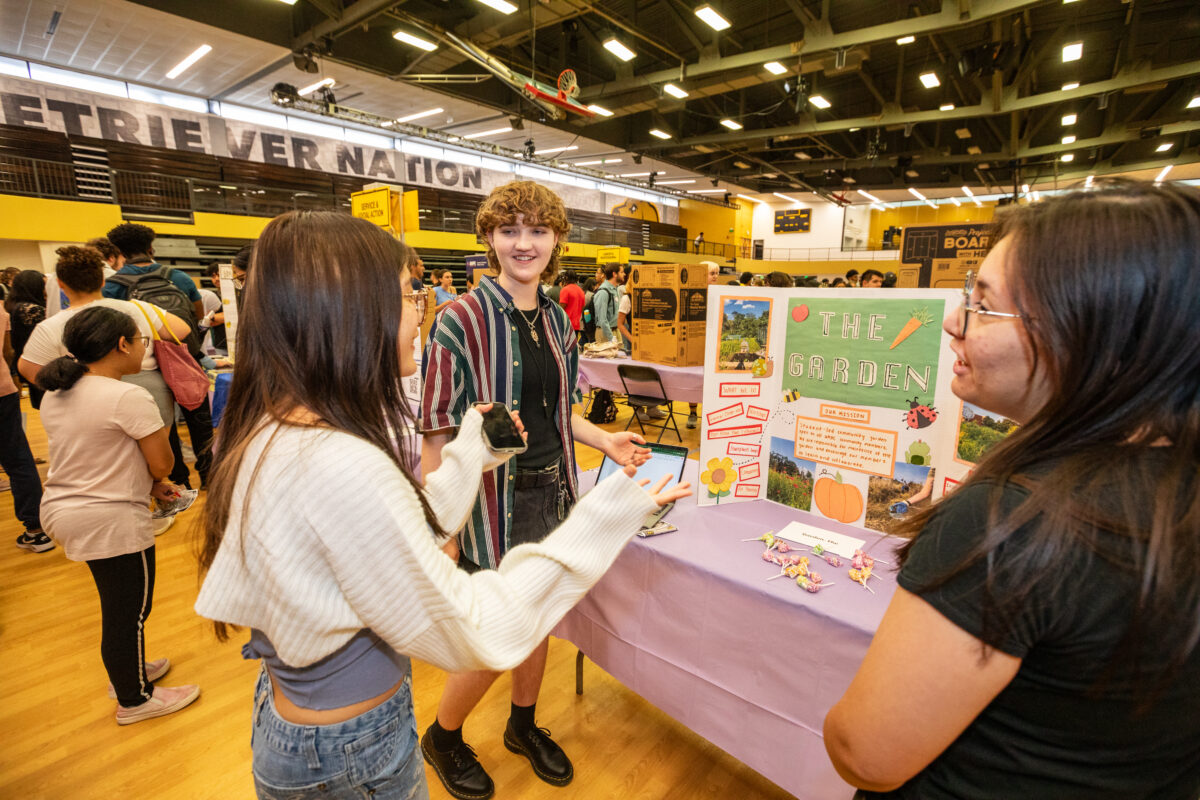 Eli Gooding and Angela Sanchez, president and vice president of The Garden, handed out lollipops and shared their love of growing vegetables. “We’ve had a lot of interest today,” said Gooding. “A lot of new students came in who aren’t familiar with where the garden’s located. They don’t even know we have a garden…so I was really excited to tell them, ‘Hey, we have this amazing place on campus!’’’
Learn more about UMBC’s 200+ student organizations.
]]>
As waves of students swarmed the Retriever Activity Center last week, senior Micah Polsky of the UMBC Crafting Club quietly stood knitting a pale blue merino wool sock with three tiny needles....
https://umbc.edu/stories/200-student-organizations-to-explore/
https://beta.my.umbc.edu/api/v0/pixel/news/135390/guest@my.umbc.edu/9aa96d2e7f1b325e083a549eb6f01582/api/pixel
cahss
campus-life
chemical-engineering
cnms
coeit
ges
magazine
UMBC News & Magazine
https://beta.my.umbc.edu/groups/umbc-news-magazine
https://assets1-beta.my.umbc.edu/system/shared/avatars/groups/000/001/943/24435aa6207c452e7bc15cc74b42c7bb/xsmall.png?1748556657
https://assets1-beta.my.umbc.edu/system/shared/avatars/groups/000/001/943/24435aa6207c452e7bc15cc74b42c7bb/original.png?1748556657
https://assets2-beta.my.umbc.edu/system/shared/avatars/groups/000/001/943/24435aa6207c452e7bc15cc74b42c7bb/xxlarge.png?1748556657
https://assets2-beta.my.umbc.edu/system/shared/avatars/groups/000/001/943/24435aa6207c452e7bc15cc74b42c7bb/xlarge.png?1748556657
https://assets3-beta.my.umbc.edu/system/shared/avatars/groups/000/001/943/24435aa6207c452e7bc15cc74b42c7bb/large.png?1748556657
https://assets1-beta.my.umbc.edu/system/shared/avatars/groups/000/001/943/24435aa6207c452e7bc15cc74b42c7bb/medium.png?1748556657
https://assets2-beta.my.umbc.edu/system/shared/avatars/groups/000/001/943/24435aa6207c452e7bc15cc74b42c7bb/small.png?1748556657
https://assets1-beta.my.umbc.edu/system/shared/avatars/groups/000/001/943/24435aa6207c452e7bc15cc74b42c7bb/xsmall.png?1748556657
https://assets2-beta.my.umbc.edu/system/shared/avatars/groups/000/001/943/24435aa6207c452e7bc15cc74b42c7bb/xxsmall.png?1748556657
UMBC News & Magazine
1
0
false
Tue, 12 Sep 2023 17:20:23 -0400
Tue, 12 Sep 2023 17:20:23 -0400
The UMBC International Scholar Newsletter
The Fall 2023 issue is out!
Highlights:
- Plenty of fall outings ideas
- Immigration reminders - please read carefully so you stay compliant!
]]>
Highlights: Plenty of fall outings ideas Immigration reminders - please read carefully so you stay compliant!
https://www.canva.com/design/DAFsddy_nrQ/c3BTWohFVkVmF_p8wiqJQg/edit?utm_content=DAFsddy_nrQ&utm_campaign=designshare&utm_medium=link2&utm_source=sharebutton
Image
https://assets1-beta.my.umbc.edu/system/shared/attachments/40b53f1463deee440b2bb1a5fcf7f57f/6a08d311/news/000/134/123/36bddf5b1a3c2410ac9a49a4fbb22a07/Screenshot 2023-09-11 141637.png?1694456225
https://beta.my.umbc.edu/api/v0/pixel/news/134123/guest@my.umbc.edu/8f572602c4efb9a4dce900ed84f7998a/api/pixel
Exchange Visitors
https://beta.my.umbc.edu/groups/j-1
https://assets3-beta.my.umbc.edu/system/shared/avatars/groups/000/001/488/175f9f6b6c231ae5de90058948f6228c/xsmall.png?1525966942
https://assets3-beta.my.umbc.edu/system/shared/avatars/groups/000/001/488/175f9f6b6c231ae5de90058948f6228c/original.jpg?1525966942
https://assets2-beta.my.umbc.edu/system/shared/avatars/groups/000/001/488/175f9f6b6c231ae5de90058948f6228c/xxlarge.png?1525966942
https://assets1-beta.my.umbc.edu/system/shared/avatars/groups/000/001/488/175f9f6b6c231ae5de90058948f6228c/xlarge.png?1525966942
https://assets2-beta.my.umbc.edu/system/shared/avatars/groups/000/001/488/175f9f6b6c231ae5de90058948f6228c/large.png?1525966942
https://assets1-beta.my.umbc.edu/system/shared/avatars/groups/000/001/488/175f9f6b6c231ae5de90058948f6228c/medium.png?1525966942
https://assets1-beta.my.umbc.edu/system/shared/avatars/groups/000/001/488/175f9f6b6c231ae5de90058948f6228c/small.png?1525966942
https://assets3-beta.my.umbc.edu/system/shared/avatars/groups/000/001/488/175f9f6b6c231ae5de90058948f6228c/xsmall.png?1525966942
https://assets4-beta.my.umbc.edu/system/shared/avatars/groups/000/001/488/175f9f6b6c231ae5de90058948f6228c/xxsmall.png?1525966942
Exchange Visitors
https://assets4-beta.my.umbc.edu/system/shared/thumbnails/news/000/134/123/42b18cc0776bb1831911057a013e5a86/xxlarge.jpg?1687811973
https://assets4-beta.my.umbc.edu/system/shared/thumbnails/news/000/134/123/42b18cc0776bb1831911057a013e5a86/xlarge.jpg?1687811973
https://assets2-beta.my.umbc.edu/system/shared/thumbnails/news/000/134/123/42b18cc0776bb1831911057a013e5a86/large.jpg?1687811973
https://assets1-beta.my.umbc.edu/system/shared/thumbnails/news/000/134/123/42b18cc0776bb1831911057a013e5a86/medium.jpg?1687811973
https://assets3-beta.my.umbc.edu/system/shared/thumbnails/news/000/134/123/42b18cc0776bb1831911057a013e5a86/small.jpg?1687811973
https://assets3-beta.my.umbc.edu/system/shared/thumbnails/news/000/134/123/42b18cc0776bb1831911057a013e5a86/xsmall.jpg?1687811973
https://assets2-beta.my.umbc.edu/system/shared/thumbnails/news/000/134/123/42b18cc0776bb1831911057a013e5a86/xxsmall.jpg?1687811973
1
0
true
Mon, 11 Sep 2023 12:06:22 -0400
Mon, 11 Sep 2023 14:54:41 -0400
Justin Webster receives NSF grant to study mathematical models behind oscillation of plane wings, bridges, energy harvesters

Although objects like bridges, buildings, and airplane wings may seem quite rigid, by design they are capable of a surprising deal of bending. This elasticity allows them to deform safely and temporarily in windy conditions. However, very rarely, “Elastic systems like bridges, buildings, and planes can become oscillatory or unstable in the presence of everyday wind, with potential for the oscillations to become damaging,” says Justin Webster, associate professor of mathematics and statistics. “Understanding this has big implications for fields like civil engineering or alternative energy.”
Webster has received a new $290,000 National Science Foundation Division of Mathematical Sciences grant to “look at the mathematical models that describe these wind-structure systems,” he says, “and try to answer the questions, ‘What gives rise to these self-destabilization effects? And do I understand it well enough to stop it, or better yet, to prevent it altogether?’” In other words, can we prevent the bridge collapsing or the wings snapping off the plane in windy conditions?
The Tacoma Narrows Bridge collapse in November 1940 is a classic example of wind-induced oscillations having catastrophic effects.
In contrast, certain energy harvesting devices require oscillation to function. As wind flows over one of these flag-like surfaces, it flaps, or “flutters,” generating electrical current. With these energy harvesters—as opposed to planes and bridges—says Webster, “It’s the opposite: You want the oscillations to happen. Not only do we want this to happen, but we want it to happen in an optimal way.”
For some of these systems, there are no existing mathematical models. For others, models exist, but they don’t seem to capture the way these systems behave in the physical world very well. As a first step, Webster and his students, including new members brought on board with the NSF support, will work to generate new, relevant models or refine existing ones. Next, they will analyze how the models address key questions in three applications: a bridge, an airfoil (like a plane wing), and a flutter-driven energy harvesting device.
In each scenario, Webster and his team will ask, “What conditions give rise to flow-induced oscillations that appear to be spontaneous? And if they do happen, can the model predict what they will look like—such as bending, or, more dangerously, twisting?” Right now, the answer to the latter is “no.” The new grant will help Webster get closer to “yes,” and as a result, eventually improve infrastructure safety and the efficiency of some alternative energy devices.
]]>
Although objects like bridges, buildings, and airplane wings may seem quite rigid, by design they are capable of a surprising deal of bending. This elasticity allows them to deform safely and...
https://umbc.edu/stories/math-models-behind-oscillation/
https://beta.my.umbc.edu/api/v0/pixel/news/135195/guest@my.umbc.edu/ad3595c026f0b7b2f9c7eee2ffa44460/api/pixel
cnms
mathstat
news
rca-2
research
science-and-tech
UMBC News & Magazine
https://beta.my.umbc.edu/groups/umbc-news-magazine
https://assets1-beta.my.umbc.edu/system/shared/avatars/groups/000/001/943/24435aa6207c452e7bc15cc74b42c7bb/xsmall.png?1748556657
https://assets1-beta.my.umbc.edu/system/shared/avatars/groups/000/001/943/24435aa6207c452e7bc15cc74b42c7bb/original.png?1748556657
https://assets2-beta.my.umbc.edu/system/shared/avatars/groups/000/001/943/24435aa6207c452e7bc15cc74b42c7bb/xxlarge.png?1748556657
https://assets2-beta.my.umbc.edu/system/shared/avatars/groups/000/001/943/24435aa6207c452e7bc15cc74b42c7bb/xlarge.png?1748556657
https://assets3-beta.my.umbc.edu/system/shared/avatars/groups/000/001/943/24435aa6207c452e7bc15cc74b42c7bb/large.png?1748556657
https://assets1-beta.my.umbc.edu/system/shared/avatars/groups/000/001/943/24435aa6207c452e7bc15cc74b42c7bb/medium.png?1748556657
https://assets2-beta.my.umbc.edu/system/shared/avatars/groups/000/001/943/24435aa6207c452e7bc15cc74b42c7bb/small.png?1748556657
https://assets1-beta.my.umbc.edu/system/shared/avatars/groups/000/001/943/24435aa6207c452e7bc15cc74b42c7bb/xsmall.png?1748556657
https://assets2-beta.my.umbc.edu/system/shared/avatars/groups/000/001/943/24435aa6207c452e7bc15cc74b42c7bb/xxsmall.png?1748556657
UMBC News & Magazine
0
0
false
Wed, 06 Sep 2023 14:15:07 -0400
Wed, 06 Sep 2023 14:15:07 -0400
Should AI be permitted in college classrooms? 4 scholars weigh in

Written by Nicholas Tampio, Fordham University; Asim Ali, Auburn University; Patricia A. Young, professor of education UMBC, and Shital Thekdi, University of Richmond
One of the most intense discussions taking place among university faculty is whether to permit students to use artificial intelligence in the classroom. To gain perspective on the matter, The Conversation reached out to four scholars for their take on AI as a learning tool and the reasons why they will or won’t be making it a part of their classes.
Nicholas Tampio, professor of political science: Learn to think for yourself
 Nicholas Tampio, Fordham University.
As a professor, I believe the purpose of a college class is to teach students to think: to read scholarship, ask questions, formulate a thesis, collect and analyze data, draft an essay, take feedback from the instructor and other students, and write a final draft.
One problem with ChatGPT is that it allows students to produce a decent paper without thinking or writing for themselves.
In my American political thought class, I assign speeches by Martin Luther King Jr. and Malcolm X and ask students to compose an essay on what King and X might say about a current American political debate, such as the Supreme Court’s recent decision on affirmative action.
Students could get fine grades if they used ChatGPT to “write” their papers. But they will have missed a chance to enter a dialogue with two profound thinkers about a topic that could reshape American higher education and society.
The point of learning to write is not simply intellectual self-discovery. My students go on to careers in journalism, law, science, academia and business. Their employers often ask them to research and write about a topic.
Few employers will likely hire someone to use large language models that rely on an algorithm scraping databases filled with errors and biases. Already, a lawyer has gotten in trouble for using ChatGPT to craft a motion filled with fabricated cases. Employees succeed when they can research a topic and write intelligently about it.
Artificial intelligence is a tool that defeats a purpose of a college education – to learn how to think, and write, for oneself.
Patricia A. Young, professor of education: ChatGPT doesn’t promote advanced thinking
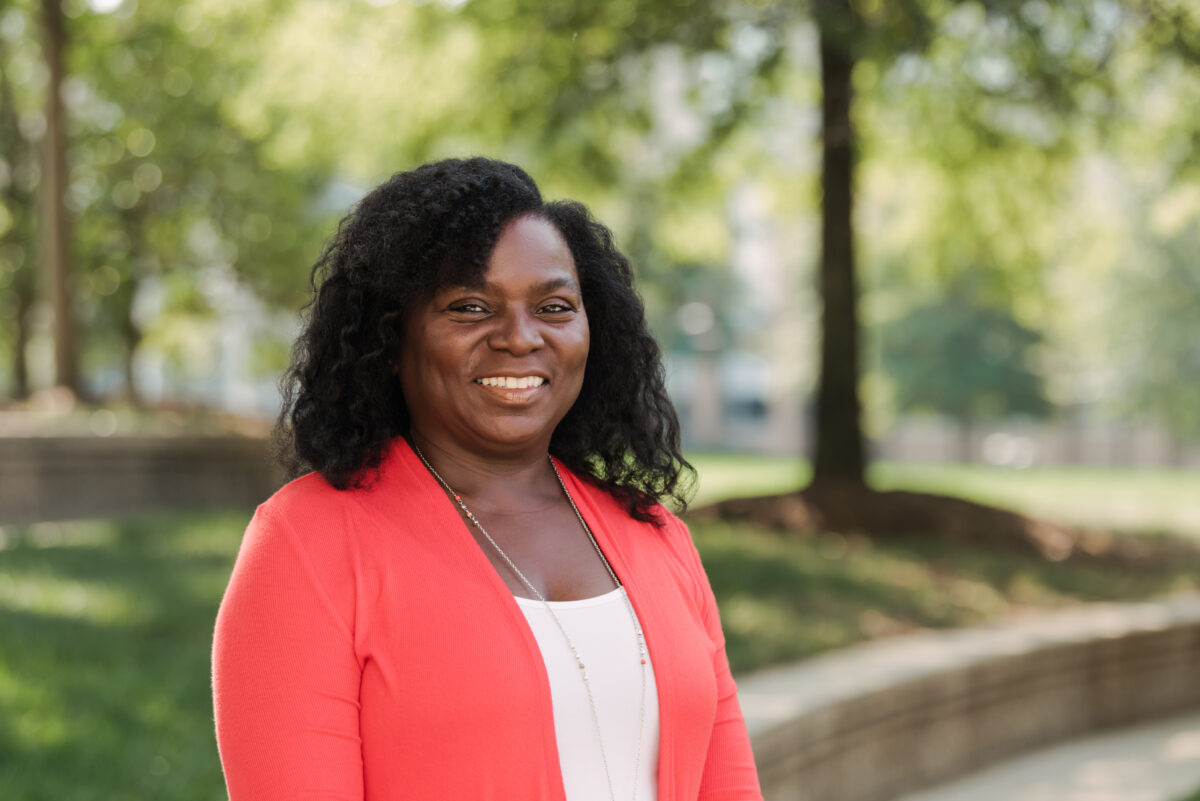 Patricia Young. (Marlayna Demond ’11/UMBC)
College students who are operating from a convenience or entitlement mentality – one in which they think, “I am entitled to use whatever technology is available to me” – will naturally gravitate toward using ChatGPT with or without their professor’s permission. Using ChatGPT and submitting a course assignment as your own creation is called AI-assisted plagiarism.
The proliferation of free AI means students won’t have to think much while writing – just engage in a high level of copy and paste. We used to call that plagiarism. With AI-assisted plagiarism, this brings in the potential for a new era of academic misconduct.
Some professors allow the use of ChatGPT as long as students cite ChatGPT as the source. As a researcher who specializes in the use of technology in education, I believe this practice needs to be thought through. Does this mean that ChatGPT would need to cite its sources, so that students could cite ChatGPT as a type of secondary source according to APA style, a standard academic style of citing papers? What Pandora’s box are we opening? Some users report that ChatGPT never reveals its sources anyway.
The concern will come when students take higher-level courses or land a job and lack the literacy skills to perform on an exceptional level. We will have created a generation of functionally illiterate adults who lack the capacity to engage in advanced thinking – like critiquing, comparing or contrasting information.
Yes, students can and should use smart tools, but we need to hypothesize and measure the costs to human ingenuity and the future of the human race.
Asim Ali, instructor of information systems management: AI is another teacher
I teach information systems management, and in the spring of 2023, I had students use ChatGPT for an essay assignment and then record a video podcast discussing how AI will impact their careers. This semester I am being more intentional by providing guidance on the possibilities and limitations of AI tools for each assignment. For example, students learn that using generative AI on a self-reflection assignment may not help, but using AI to analyze a case study is potentially a great way to find insights they may have overlooked. This emulates their future jobs in which they may use AI tools to enhance the quality of their work product.
 Asim Ali, Auburn University
My experience with adapting to AI for my own course inspired me to create a resource for all my colleagues. As executive director of the Biggio Center for the Enhancement of Teaching and Learning, I oversee the instructional design and educational development teams at Auburn University. We created a self-paced, online course called Teaching With AI.
Now there are over 600 faculty at Auburn and hundreds of faculty at almost 35 institutions engaging with the content and each other through discussion boards and practical exercises.
I receive messages from faculty sharing ways they are changing their assignments or discussing AI with their students. Some see AI as a threat to humans, but discussing AI with my students and with colleagues across the country has actually helped me develop human connections.
Shital Thekdi, associate professor of analytics & operations: What can you do that AI can’t?
This semester, I will ask students in my Statistics for Business and Economics course to discuss the question, “What is your value beyond the AI tools?” I want them to reframe the conversation beyond one of academic integrity and instead as a challenge. I believe students must recognize that the jobs they imagine will exist for them could be eliminated because of these new technologies. So the pressure is on students to understand not only how to use these tools but also how to be better than the tools.
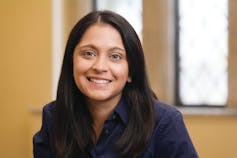 Shital Thekdi. University of Richmond.
I hope my students will consider ethical reasoning and the role of human connections. While AI can be trained to make value-based decisions, individuals and groups have their own values that can differ considerably from those used by AI. And AI tools do not have the capacity to form human connections and experiences.
Students will remain vital contributors to business and society as AI tools develop. I believe it’s our responsibility as educators to prepare our students for a rapidly evolving cultural and technological landscape.
This article is republished from The Conversation under a Creative Commons license. Read the original article and see more than 250 UMBC articles available in The Conversation.
]]>
Written by Nicholas Tampio, Fordham University; Asim Ali, Auburn University; Patricia A. Young, professor of education UMBC, and Shital Thekdi, University of Richmond One of the most intense...
https://umbc.edu/stories/should-ai-be-permitted-in-college-classrooms/
https://beta.my.umbc.edu/api/v0/pixel/news/135176/guest@my.umbc.edu/c693314229ef43bad5161dd2bea488a5/api/pixel
cahssresearch
discovery
education
magazine
research
the-conversation
UMBC News & Magazine
https://beta.my.umbc.edu/groups/umbc-news-magazine
https://assets1-beta.my.umbc.edu/system/shared/avatars/groups/000/001/943/24435aa6207c452e7bc15cc74b42c7bb/xsmall.png?1748556657
https://assets1-beta.my.umbc.edu/system/shared/avatars/groups/000/001/943/24435aa6207c452e7bc15cc74b42c7bb/original.png?1748556657
https://assets2-beta.my.umbc.edu/system/shared/avatars/groups/000/001/943/24435aa6207c452e7bc15cc74b42c7bb/xxlarge.png?1748556657
https://assets2-beta.my.umbc.edu/system/shared/avatars/groups/000/001/943/24435aa6207c452e7bc15cc74b42c7bb/xlarge.png?1748556657
https://assets3-beta.my.umbc.edu/system/shared/avatars/groups/000/001/943/24435aa6207c452e7bc15cc74b42c7bb/large.png?1748556657
https://assets1-beta.my.umbc.edu/system/shared/avatars/groups/000/001/943/24435aa6207c452e7bc15cc74b42c7bb/medium.png?1748556657
https://assets2-beta.my.umbc.edu/system/shared/avatars/groups/000/001/943/24435aa6207c452e7bc15cc74b42c7bb/small.png?1748556657
https://assets1-beta.my.umbc.edu/system/shared/avatars/groups/000/001/943/24435aa6207c452e7bc15cc74b42c7bb/xsmall.png?1748556657
https://assets2-beta.my.umbc.edu/system/shared/avatars/groups/000/001/943/24435aa6207c452e7bc15cc74b42c7bb/xxsmall.png?1748556657
UMBC News & Magazine
0
0
false
Wed, 06 Sep 2023 10:16:33 -0400
Wed, 06 Sep 2023 10:16:33 -0400
School’s in Session

The feel of a pen as it clicks open and closed, pointed for note taking (or probably more likely the feel of an electronic stylus). The sound of pages rustling in a notebook during the first class of the day (or more likely the sound of keys clacking on a laptop). The smell of a new textbook as it opens for the first time (or probably more likely still the laptop thing). No matter what it looks like, the start of a new school year is officially here! This year, UMBC welcomes a pack of over 3,800 new Retrievers as they embark on the black and gold journey of a lifetime.
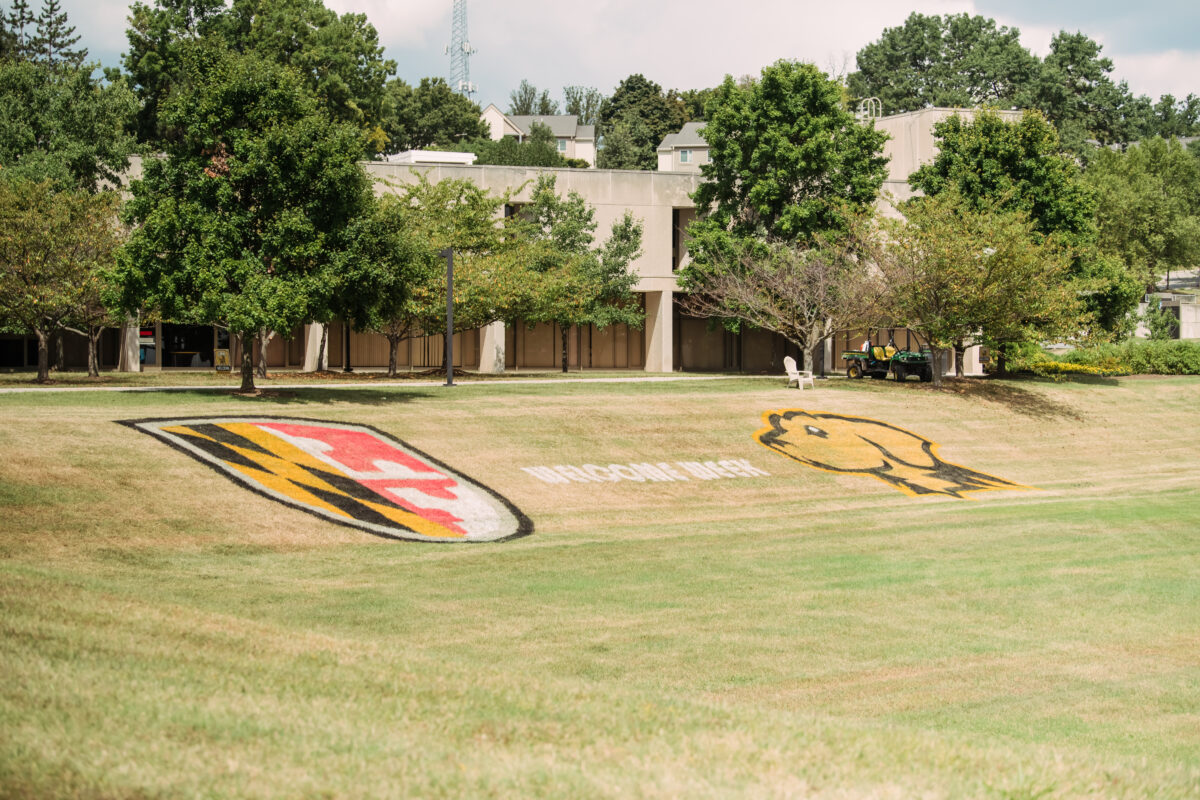
Last weekend, new Retrievers bundled up their belongings and arrived on campus to unpack in their new home. Once clothes were in drawers, posters were hung, and minifridges were stocked, students and families headed to Retriever Fest to learn more about campus resources and departments…and maybe pet a farm animal or two. After saying goodbye to families, students settled into their rooms and then got to know one another over games and a fireworks display.

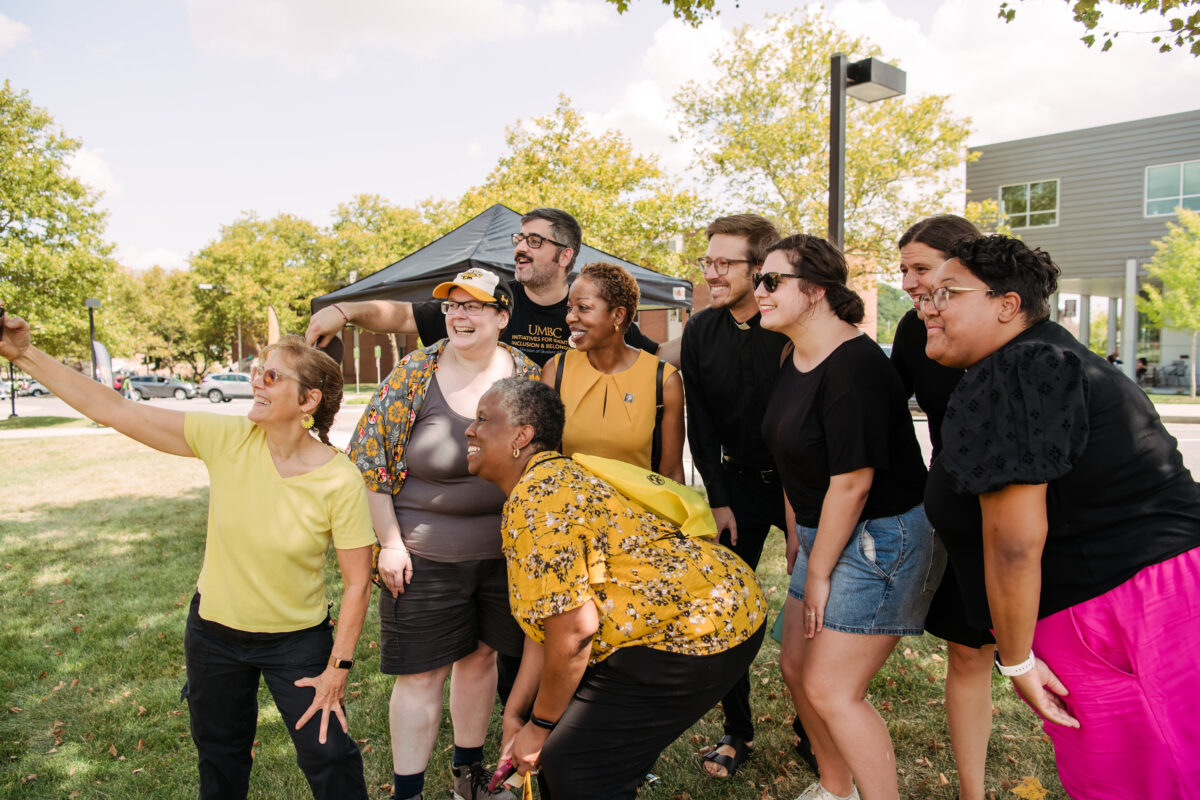

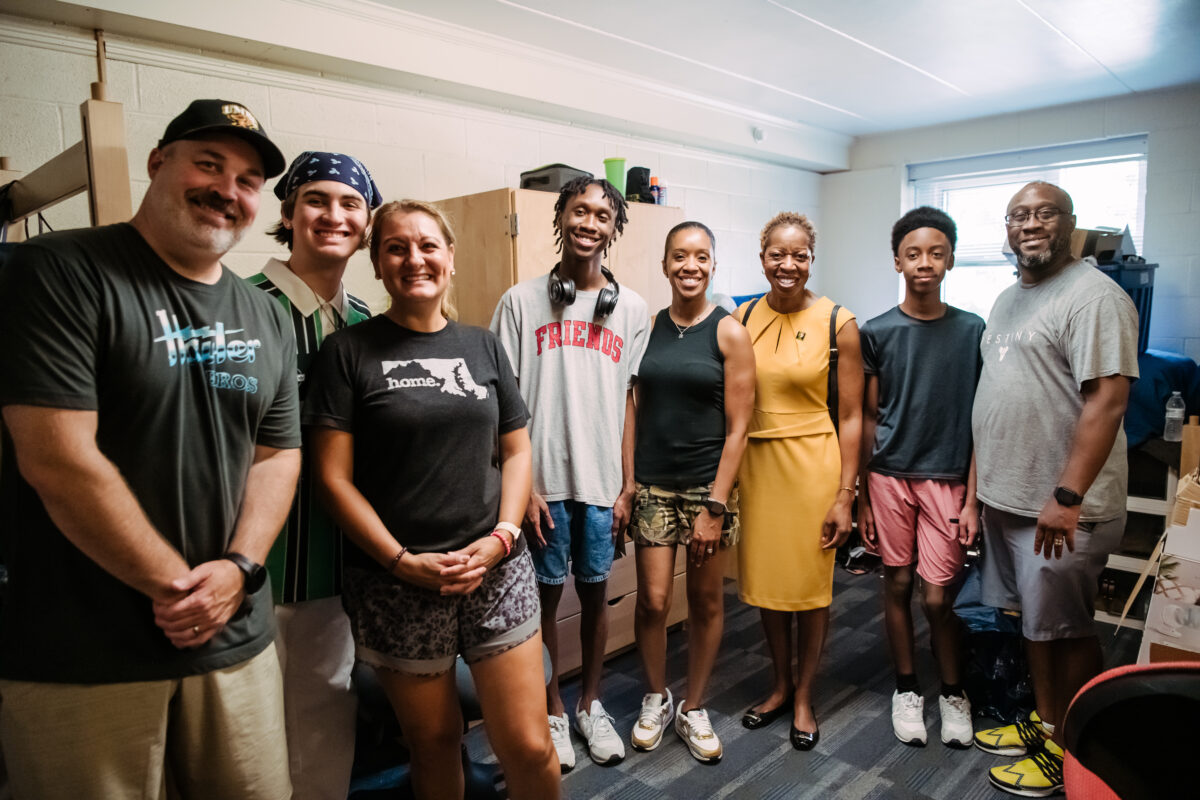


During Convocation on Tuesday, new Retrievers received a UMBC pin, officially signifying the start of their UMBC career. Incoming UMBC Student Government Association (SGA) president Musa Jafri ’24, political science, assured the attendees saying, “I know being a new student can be overwhelming at times. Remember that it is okay to ask for help. You are part of this community, and we want you to know that you belong here, and we want you to succeed.”
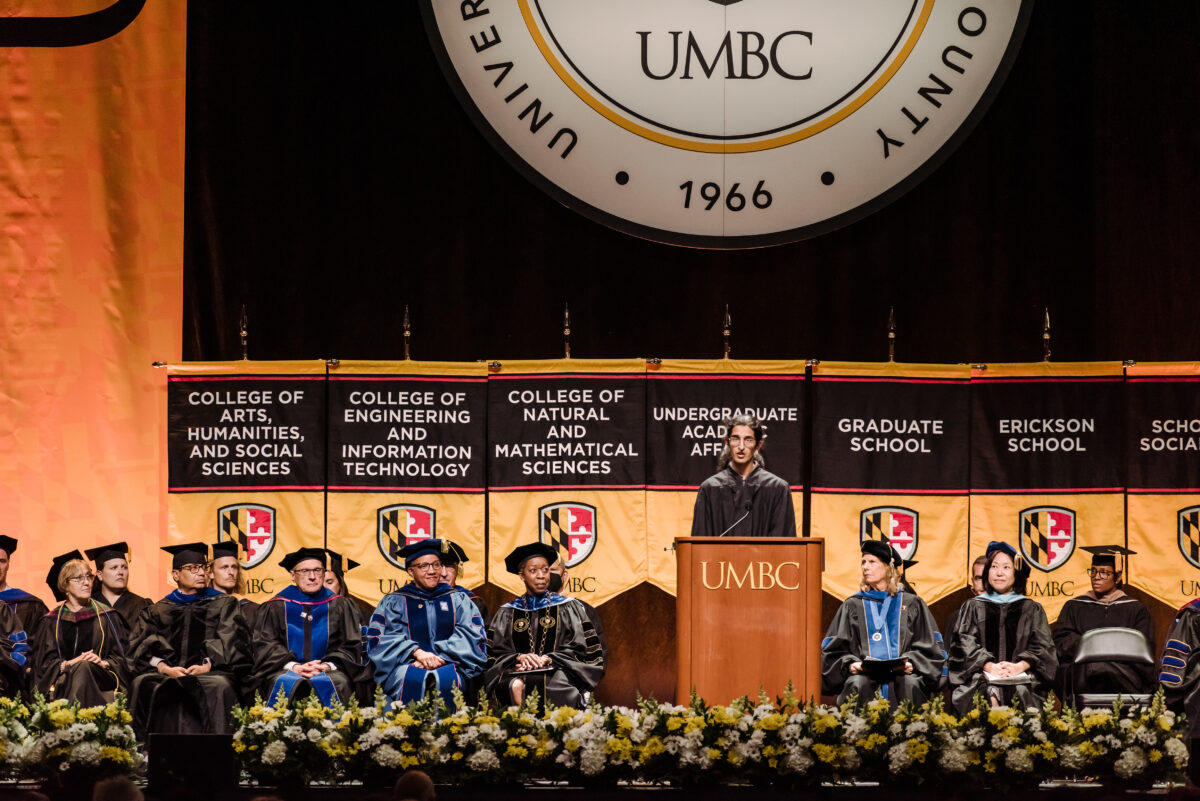

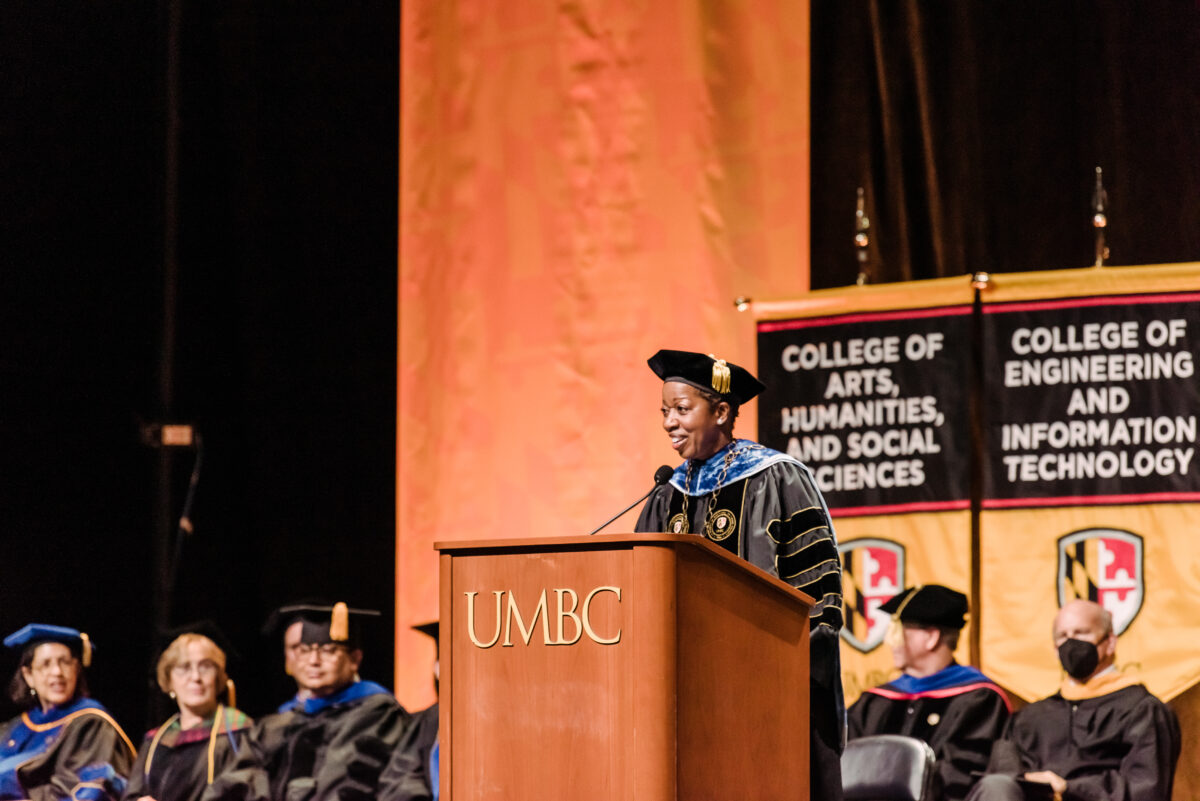
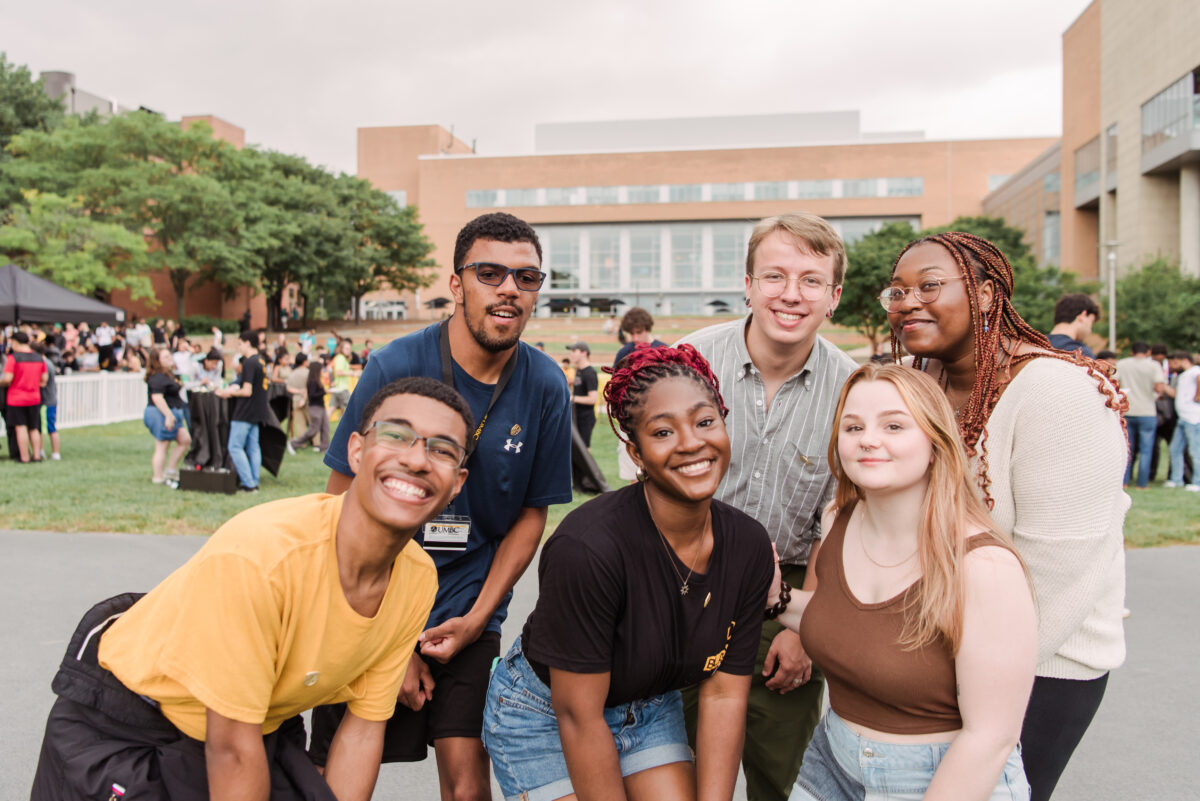


As the first day of classes dawned on Wednesday, the entire campus came to life with new and returning students filling sidewalks, classrooms, and the Starbucks line (the real sign that school is officially back in session).
Happy first day @UMBC!!! My black
]]>
The feel of a pen as it clicks open and closed, pointed for note taking (or probably more likely the feel of an electronic stylus). The sound of pages rustling in a notebook during the first class...
https://umbc.edu/stories/schools-in-session/
https://beta.my.umbc.edu/api/v0/pixel/news/135016/guest@my.umbc.edu/a012440d45aa857aa61c18c354f1c139/api/pixel
cahss
campus-life
cnms
coeit
magazine
UMBC News & Magazine
https://beta.my.umbc.edu/groups/umbc-news-magazine
https://assets1-beta.my.umbc.edu/system/shared/avatars/groups/000/001/943/24435aa6207c452e7bc15cc74b42c7bb/xsmall.png?1748556657
https://assets1-beta.my.umbc.edu/system/shared/avatars/groups/000/001/943/24435aa6207c452e7bc15cc74b42c7bb/original.png?1748556657
https://assets2-beta.my.umbc.edu/system/shared/avatars/groups/000/001/943/24435aa6207c452e7bc15cc74b42c7bb/xxlarge.png?1748556657
https://assets2-beta.my.umbc.edu/system/shared/avatars/groups/000/001/943/24435aa6207c452e7bc15cc74b42c7bb/xlarge.png?1748556657
https://assets3-beta.my.umbc.edu/system/shared/avatars/groups/000/001/943/24435aa6207c452e7bc15cc74b42c7bb/large.png?1748556657
https://assets1-beta.my.umbc.edu/system/shared/avatars/groups/000/001/943/24435aa6207c452e7bc15cc74b42c7bb/medium.png?1748556657
https://assets2-beta.my.umbc.edu/system/shared/avatars/groups/000/001/943/24435aa6207c452e7bc15cc74b42c7bb/small.png?1748556657
https://assets1-beta.my.umbc.edu/system/shared/avatars/groups/000/001/943/24435aa6207c452e7bc15cc74b42c7bb/xsmall.png?1748556657
https://assets2-beta.my.umbc.edu/system/shared/avatars/groups/000/001/943/24435aa6207c452e7bc15cc74b42c7bb/xxsmall.png?1748556657
UMBC News & Magazine
0
0
false
Thu, 31 Aug 2023 14:11:42 -0400
Thu, 31 Aug 2023 14:11:42 -0400
Deepak Koirala to explore how RNA viruses hijack cellular machinery, with eye to future drug treatments
Viruses must hijack their hosts’ cellular machinery to make more viruses, so preventing this hijacking could lead to a host of new treatments for viral diseases. However, much is unknown about how the viruses actually accomplish their takeover. Scientific understanding is especially murky for RNA viruses, which use RNA as their genetic material, rather than DNA like animals. These viruses’ RNA serves as their genome and also codes directly for viral proteins.
With support from an NSF CAREER Award, Deepak Koirala, assistant professor of chemistry and biochemistry, has been working on figuring out how enteroviruses, a large group of RNA viruses, replicate their RNA genomes. Enteroviruses include viruses that cause polio, the common cold, and many more diseases that affect humans and other animals. Now Koirala has received a five-year, $1.8 million grant from the National Institutes of Health to solve another part of this puzzle: How do these viruses commandeer proteins in the host cell to produce viral proteins? The cell must build these viral proteins before the virus can replicate.
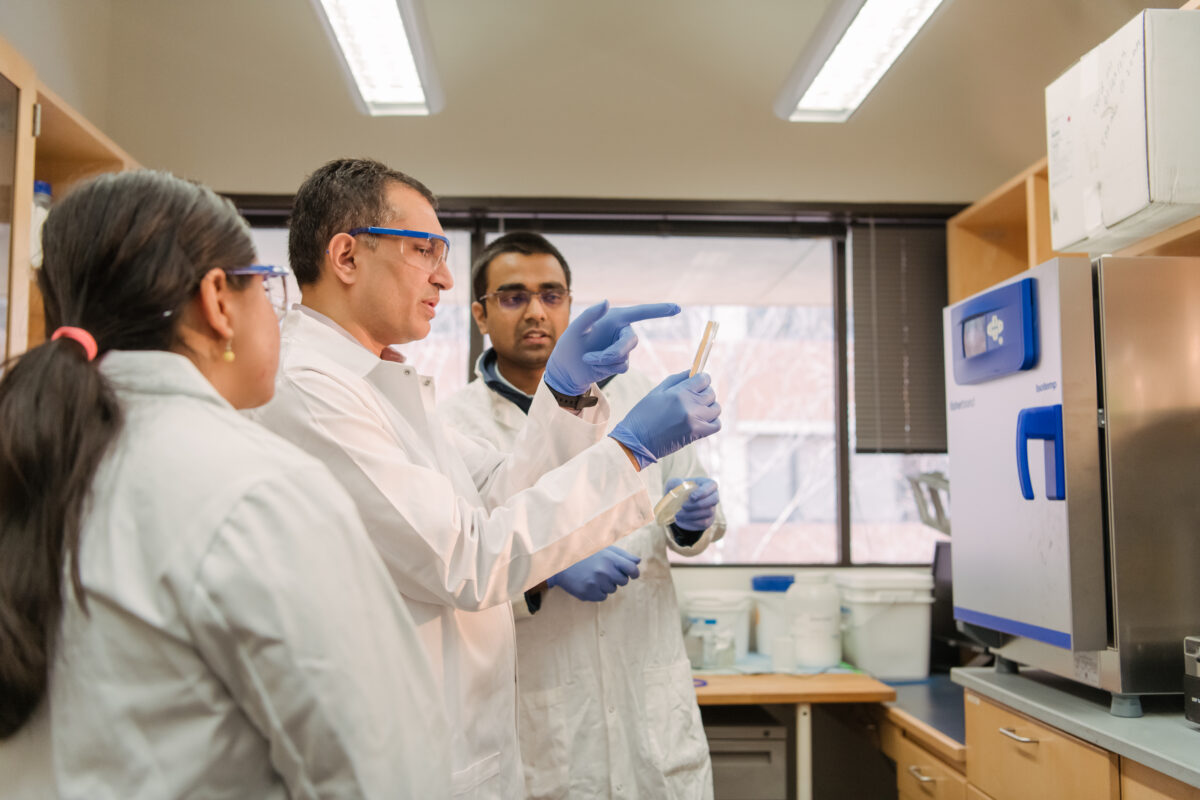 Deepak Koirala (pointing at petri dish) uses a wide range of techniques to answer scientific questions about RNA viruses. Naba Krishna Das (right), a Ph.D. student in Koirala’s lab, is a key contributor to the group’s viral replication research. (Marlayna Demond ’11/UMBC)
A new biological mechanism?
When a cell makes its own proteins, the cellular mRNA, a type of RNA that carries the instructions for building proteins, interacts with the protein-building machinery via a special structure at one end called a “cap,” Koirala explains. Enteroviral mRNAs lack this cap—and yet they are still perfectly capable of forcing the cell to do their bidding. Koirala is trying to figure out how.
Koirala has been studying unique structures at the ends of viral RNAs for their role in replication, but they may be doing double duty by initiating protein production as well, he believes. Koirala and his team, which includes undergraduate and graduate students, will use a technique called X-ray crystallography to deduce the precise molecular makeup of these special RNA structures.
At the same time, they will run experiments to learn how the structures interact with the cellular machinery. These two lines of investigation complement one another. “If we have the structure, that would allow us to pinpoint the critical nucleotide or amino acid that is important for the interaction,” Koirala says. “And then we can mutate that one, to see how that changes the interaction.”
By using a range of techniques, the team seeks to determine what the structures look like and how they work in the cell. “It could be a new biological mechanism we’ve never seen before,” Koirala says.
The team already has some early data supporting their goals, Koirala says. A related publication is under review at a top-tier academic journal. Several lab members are authors on the paper—including three undergraduates. “We are really excited about that,” Koirala says.
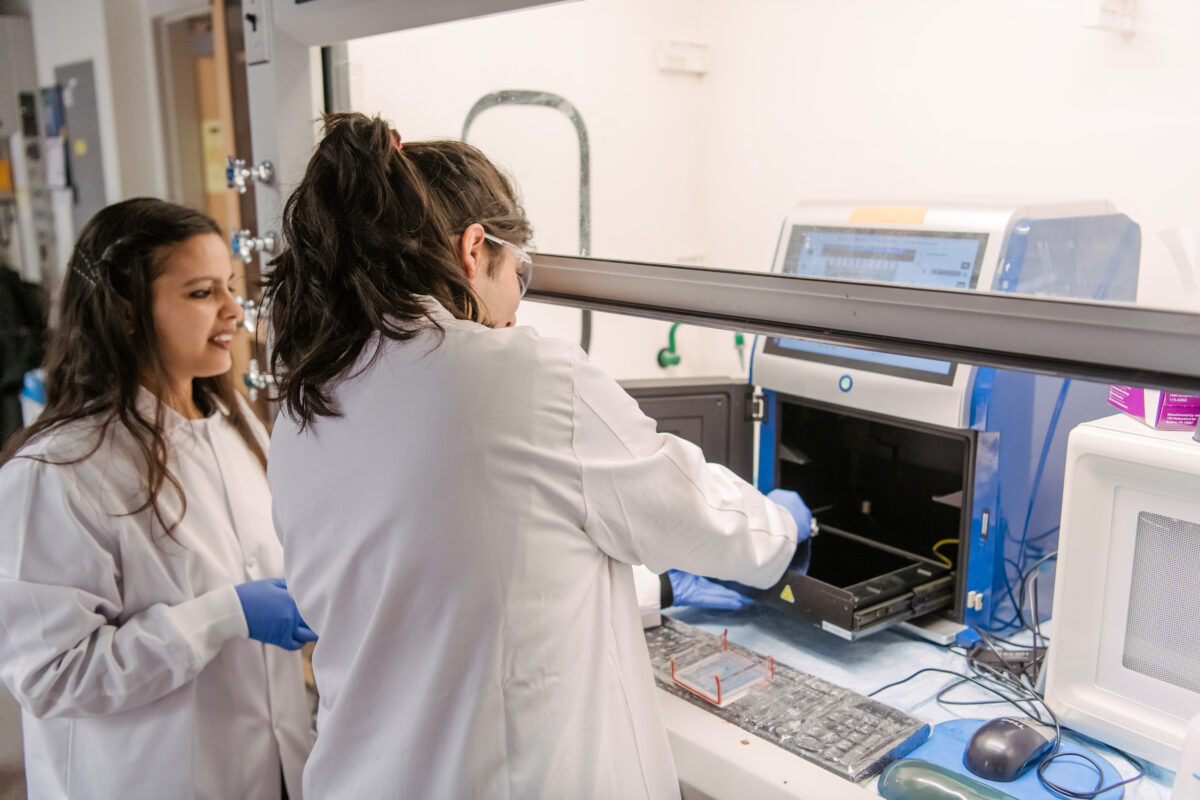 Manju Ojha, a Ph.D. student in Koirala’s lab, mentors undergraduate Zohra Mian. Ojha will have a leading role in the work related to viral protein production for the new grant. (Image by Marlayna Demond ’11/UMBC)
One drug, many targets
The project is likely to end up supporting other researchers, as well. In the course of the team’s work, “We are developing tools that facilitate our understanding of these RNA structures,” Koirala says. “The tools we develop may be useful not only for the particular system we are working on, but they could be useful in general for many other RNA structures in other fields of research.”
In addition, RNA structures found in one species of enterovirus are very similar to those found in other enteroviruses that cause different diseases—even some that infect very different kinds of organisms, Koirala discovered. That opens the door to developing antiviral treatments that are able to target many different viruses.
With the RNA structures in hand, the next step might be to use artificial intelligence to screen for other molecules that bind to the structures, preventing the viruses from taking over the cell and causing illness. Scientists could then take steps to develop new drugs using these molecules.
“Once we understand the structure, and we have a better understanding of the mechanism, we can better design drugs,” Koirala says. “But right now we are at the fundamental level of how these things even work.”
]]>
Viruses must hijack their hosts’ cellular machinery to make more viruses, so preventing this hijacking could lead to a host of new treatments for viral diseases. However, much is unknown about how...
https://umbc.edu/stories/research-on-rna-viruses-may-lead-to-future-drugs/
https://beta.my.umbc.edu/api/v0/pixel/news/134966/guest@my.umbc.edu/112a48703f85194c24ad1fc2c7225fe5/api/pixel
chembiochem
cnms
news
rca-2
research
science-and-tech
UMBC News & Magazine
https://beta.my.umbc.edu/groups/umbc-news-magazine
https://assets1-beta.my.umbc.edu/system/shared/avatars/groups/000/001/943/24435aa6207c452e7bc15cc74b42c7bb/xsmall.png?1748556657
https://assets1-beta.my.umbc.edu/system/shared/avatars/groups/000/001/943/24435aa6207c452e7bc15cc74b42c7bb/original.png?1748556657
https://assets2-beta.my.umbc.edu/system/shared/avatars/groups/000/001/943/24435aa6207c452e7bc15cc74b42c7bb/xxlarge.png?1748556657
https://assets2-beta.my.umbc.edu/system/shared/avatars/groups/000/001/943/24435aa6207c452e7bc15cc74b42c7bb/xlarge.png?1748556657
https://assets3-beta.my.umbc.edu/system/shared/avatars/groups/000/001/943/24435aa6207c452e7bc15cc74b42c7bb/large.png?1748556657
https://assets1-beta.my.umbc.edu/system/shared/avatars/groups/000/001/943/24435aa6207c452e7bc15cc74b42c7bb/medium.png?1748556657
https://assets2-beta.my.umbc.edu/system/shared/avatars/groups/000/001/943/24435aa6207c452e7bc15cc74b42c7bb/small.png?1748556657
https://assets1-beta.my.umbc.edu/system/shared/avatars/groups/000/001/943/24435aa6207c452e7bc15cc74b42c7bb/xsmall.png?1748556657
https://assets2-beta.my.umbc.edu/system/shared/avatars/groups/000/001/943/24435aa6207c452e7bc15cc74b42c7bb/xxsmall.png?1748556657
UMBC News & Magazine
0
0
false
Wed, 30 Aug 2023 12:03:15 -0400
Wed, 30 Aug 2023 12:03:15 -0400
UMBC’s Steve Freeland co-leads $1.8 million research grant to predict the biochemical foundations of life beyond Earth

Every living thing on Earth, from bacteria to humans, uses the same set of 20 amino acids to build all of its proteins, called our “amino acid alphabet.” But why that particular set of 20? If other amino acids are possible, what makes a good alphabet? And how might we recognize life beyond Earth that’s using an alphabet other than our own?
These are all questions that Stephen Freeland, professor of biological sciences, has been asking for over a decade in his theoretical research at UMBC. Now he and colleagues at the Tokyo Institute of Technology, Charles University in the Czech Republic, and Johns Hopkins University will take this work into the laboratory for the first time.
 Stephen Freeland has been studying the origins of life for decades; now he’s taking the work into a new realm with international colleagues. (Image courtesy of UMBC Individualized Study Program)
The team seeks to marry Freeland’s theoretical work with his colleagues’ unique laboratory expertise to link together known alternative amino acids to form proteins. The Human Frontier Science Program (HFSP) is supporting the work with a new three-year, $1.8 million grant. The HFSP is a major international funding agency for basic life science research that specializes in supporting collaborations across continents.
The overarching question the project seeks to answer, Freeland says, is “What can we learn about how life could be different at the most fundamental level of biochemistry?” It’s a daunting question, with significant implications from biomedical applications to increasing our chances of detecting life on other planets.
Researchers have already created alternative amino acids in the lab and added individual alternative amino acids to proteins otherwise made of standard ones. However, no one has built entire proteins from scratch using nothing but a set of alternative amino acids. “This work is genuinely novel,” Freeland says. “Nobody knows what will happen. This is a first.”
Finding the essence
Freeland’s prior work has focused on determining what characteristics are necessary for a set of amino acids to function well as a basis for life. He and his students determined what differentiates our set of 20 amino acids from other random sets of 20 taken from a digital library of about 4,000 mathematically-generated amino acid structures.
That work led to a group of four equations that can be used to describe any set of 20 amino acids. “So it’s almost as if conceptually we boiled it and got the essence of it,” Freeland says, “We identified really unusual, simple characteristics that distinguish life on Earth’s set of 20 amino acids from random.”
With those factors in hand—what Freeland calls “design principles”—his team is now using a powerful computer program they developed to look at other sets of 20 amino acids and find examples that meet the same criteria. And this time around, they are taking the amino acids from a catalog of about 300 that can be obtained commercially—so any “good” set they find can be tested in the lab.
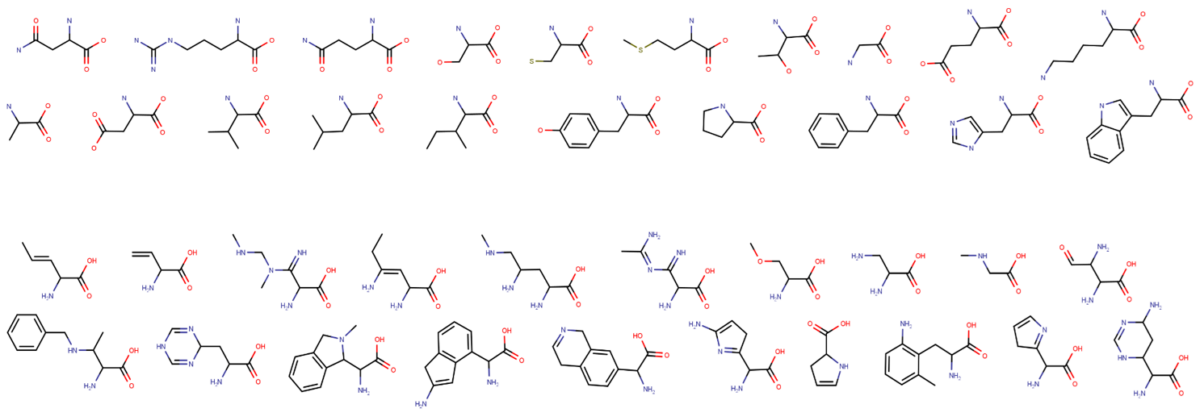 The top row includes molecular structures of the 20 amino acids found in all life on Earth. The bottom row is Xeno-ꞵ, an amino acid alphabet of 20 amino acids unlike any found within the genetic code of life on Earth. Yet, Xeno-ꞵ matches unusual mathematical properties of the chemical structures found in life’s alphabet. (Figure adapted from a 2022 paper published in Astrobiology and co-authored by UMBC Ph.D. candidate Sean Brown, collaborator Václav Voráček, and Stephen Freeland, courtesy of Freeland)
Going back in time to leap forward
This summer, the work entered a new phase. Sean Brown, a UMBC Ph.D. candidate in biological sciences working with Freeland, traveled to the Czech Republic to work in Klara Hlouchova’s lab, where they are preparing the technology to produce proteins with proposed alternative amino acid alphabets. “Basically, we’re asking, ‘Do our design principles work’?” Freeland says.
In some ways, this work will be like going back in time to the mid-20th century, when researchers were first discovering how life behaves at the molecular level. Since then, techniques for building and analyzing proteins have come to rely on everything we’ve learned about life’s amino acid alphabet. As such, these tools cannot be applied to alternative amino acid alphabets. For this project, the team will return to older approaches and techniques, in which the Czech researchers have retained expertise, to see if their alternative amino acids can actually form proteins.
If the experiments are successful, the team will be able to further hone the design principles for a generic life-producing amino acid alphabet, rather than basing the principles solely on the characteristics of life on Earth.
“If we can show that unusual, abstract properties of life as we know it are necessary, it helps us to understand why evolution on Earth went the path it did,” Freeland says. “It’s part of our own history, and it answers the question, ‘Why those 20?’”

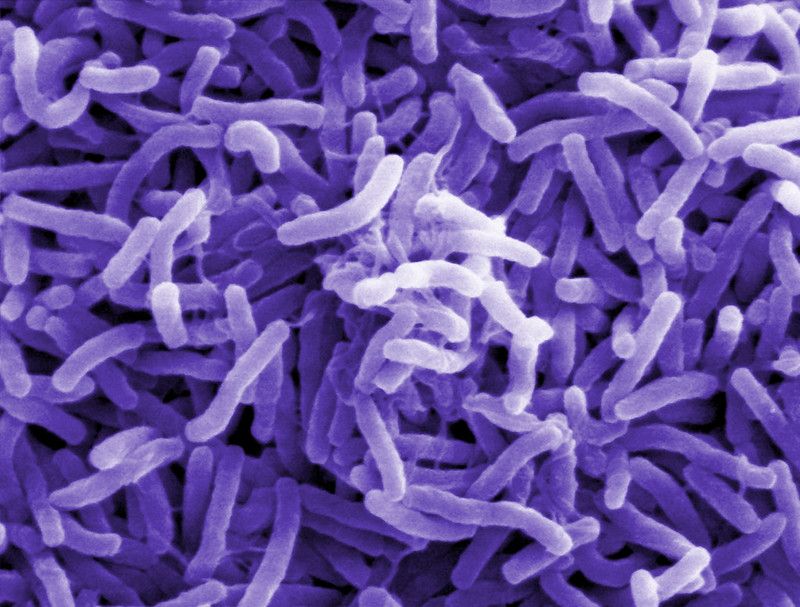


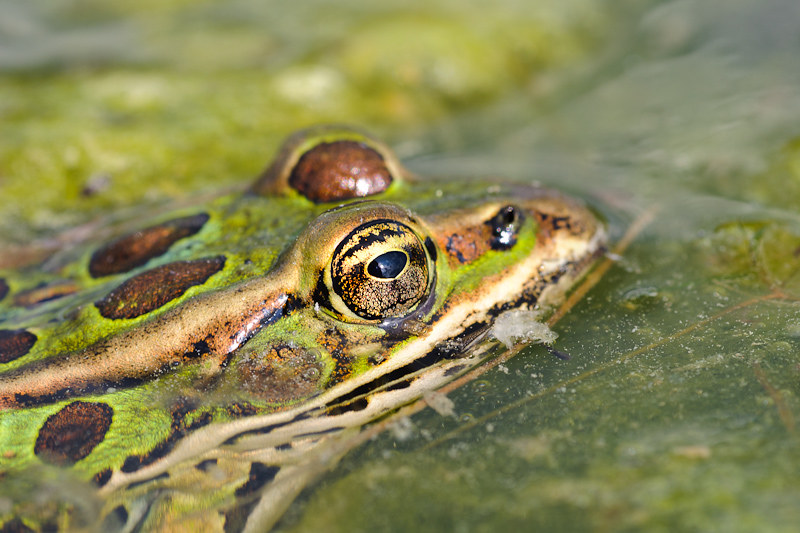 Organisms on Earth display remarkable diversity—but all of them without exception use the same set of 20 amino acids to build proteins. Stephen Freeland is part of team trying to figure out why those 20, and possibly help humans discover life that operates on a different basis elsewhere. (Frog by Breic, CC BY 2.0; sunflower by r44flyer, CC BY-NC-ND 2.0; tropicbird by Doug Greenberg, CC BY-NC 2.0; cholera bacteria by Sanofi, CC BY-NC-ND 2.0; koala by Azri, CC BY-NC-ND 2.0)
Knowing what to look for around the universe
Beyond understanding our own history, refining the design principles would better inform our approach to seeking life on other planets, Freeland says. Scientists generally agree that other life forms are most likely to be microbial, but “most of the ways we currently detect microbes absolutely rely on the molecules in use for life on Earth,” Freeland adds. This work could help researchers know how to detect a “molecular signature” of amino acids that are most likely to show up in life forms that originated independent of Earth.
Like all technologies, these developments come with great promise alongside risk. Freeland isn’t particularly concerned about individual synthetic proteins getting into the wild in the current stage of research, because proteins can’t replicate on their own. But he notes that there are important questions to ask about future, more advanced research. For example, there is potential for scientists working with DNA to build programmable genetic codes. Once this technology merges with fully synthetic proteins, he says, “is where the story takes a really interesting turn.”
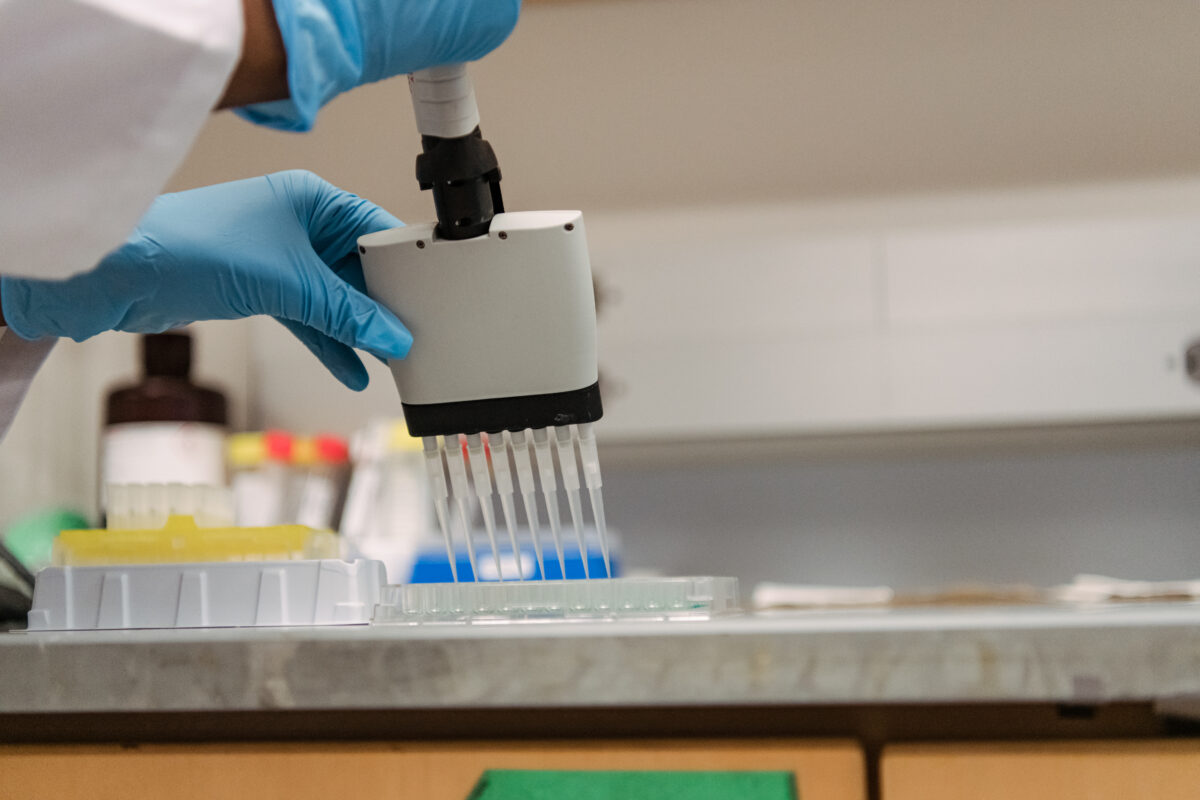 Synthetic DNA and proteins have many potential beneficial applications. But they also come with a host of ethical concerns. By putting their work in the public domain, Freeland and his team are working hard to make possible a transparent, public debate about whether and how these technologies should be used. (Image by Marlayna Demond ’11/UMBC)
Open-source proteins
Possible beneficial applications of synthetic proteins abound, and could include medical treatments or removing toxins from the environment. But without proper oversight, the technology could potentially also lead to harm, Freeland cautions.
Freeland is hoping to avoid the synthetic protein field following in the footsteps of synthetic DNA research. That field is much further ahead, but has mostly been carried out by private companies out of public view, “lending itself to patents and commercial ownership rather than to healthy, transparent debate and legislation,” Freeland says.
To create the best chance for responsible regulation around the use of synthetic proteins, Freeland and his colleagues are trying to quickly get their research into the public domain, he says, to make as robust as possible “what I think will be one of the more important debates of the 21st century when it comes to biotechnology: What are the laws, what are the ethics guiding our use of synthetic proteins and DNA?”
“Life on Earth is an example”
As Freeland and his colleagues lead the way into a new era of synthetic protein research, questions abound. Will proteins form from the amino acid combinations recommended by the algorithm? How can and should we use synthetic proteins, and who will decide? Will the research help us discover life on other planets? As the work develops and more researchers join this burgeoning field, researchers and the public will be constantly reminded of what Freeland describes as “one of the deepest principles of astrobiology.”
“Life on Earth is an example,” he says. “It would seem surprising to think it’s the only example.”
]]>
Every living thing on Earth, from bacteria to humans, uses the same set of 20 amino acids to build all of its proteins, called our “amino acid alphabet.” But why that particular set of 20? If...
https://umbc.edu/stories/predicting-the-foundations-of-life-beyond-earth/
https://beta.my.umbc.edu/api/v0/pixel/news/134872/guest@my.umbc.edu/4dd2628185b3257a1eab6158046be8a6/api/pixel
biology
cnms
news
rca-2
research
science-and-tech
UMBC News & Magazine
https://beta.my.umbc.edu/groups/umbc-news-magazine
https://assets1-beta.my.umbc.edu/system/shared/avatars/groups/000/001/943/24435aa6207c452e7bc15cc74b42c7bb/xsmall.png?1748556657
https://assets1-beta.my.umbc.edu/system/shared/avatars/groups/000/001/943/24435aa6207c452e7bc15cc74b42c7bb/original.png?1748556657
https://assets2-beta.my.umbc.edu/system/shared/avatars/groups/000/001/943/24435aa6207c452e7bc15cc74b42c7bb/xxlarge.png?1748556657
https://assets2-beta.my.umbc.edu/system/shared/avatars/groups/000/001/943/24435aa6207c452e7bc15cc74b42c7bb/xlarge.png?1748556657
https://assets3-beta.my.umbc.edu/system/shared/avatars/groups/000/001/943/24435aa6207c452e7bc15cc74b42c7bb/large.png?1748556657
https://assets1-beta.my.umbc.edu/system/shared/avatars/groups/000/001/943/24435aa6207c452e7bc15cc74b42c7bb/medium.png?1748556657
https://assets2-beta.my.umbc.edu/system/shared/avatars/groups/000/001/943/24435aa6207c452e7bc15cc74b42c7bb/small.png?1748556657
https://assets1-beta.my.umbc.edu/system/shared/avatars/groups/000/001/943/24435aa6207c452e7bc15cc74b42c7bb/xsmall.png?1748556657
https://assets2-beta.my.umbc.edu/system/shared/avatars/groups/000/001/943/24435aa6207c452e7bc15cc74b42c7bb/xxsmall.png?1748556657
UMBC News & Magazine
10
0
false
Fri, 25 Aug 2023 12:04:42 -0400
Fri, 25 Aug 2023 12:04:42 -0400