The News – Fall 2011
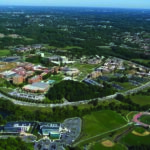
WONDERFUL WORKPLACE
UMBC’s reputation as an “honors university in Maryland” and as a place that revels in the diversity of its community have made it a destination for students. But what do the university’s faculty and staff members think about working at UMBC?
If the Chronicle of Higher Education’s annual survey of “Great Colleges to Work For” is any indication, professor and staffers alike are finding UMBC to be a destination as well. The university was one of only 42 colleges and universities in the nation – and the only four-year institution in Maryland – to make the newspaper’s Honor Roll of workplaces.
The Chronicle conducts an institutional audit of demographics and workplace policies, and then surveys more than 43,000 faculty and staff at 310 institutions across the United States, in order to compile its list. UMBC ranked highly in eight of the 12 categories surveyed, including “collaborative governance,” “professional/career development programs,” “work/life balance,” “confidence in senior leadership,” “respect and appreciation,” and “diversity.”
Employee responses were the key factor in the rankings, and faculty and staff members were selected at random. To make the Chronicle’s Honor Roll of “Great Colleges to Work For,” a university needed to place in the top ten in one of three respective categories of enrollment.
Stanyell Bruce, associate director of alumni relations and the president of UMBC’s Professional Staff Senate, says “It’s no surprise to me that the university won this distinction. UMBC is a place where people truly care about one another, and a place that encourages innovation and out of the box thinking.”
— Richard Byrne ’86
STEPPING UP
 When UMBC provost Elliot Hirshman departed in June to become the new president of San Diego State University, the university quickly tapped two of its distinguished academic leaders to fill key positions for the upcoming academic year.
On June 17, UMBC President Freeman A. Hrabowski, III, named Philip J. Rous, dean of the College of Natural and Mathematical Sciences (CNMS) as the university’s interim provost and senior vice president for academic affairs. Rous came to UMBC in 1990 as an assistant professor of physics, rising to positions as professor of physics and as vice president and president of the university’s Faculty Senate from 2003 to 2007.
William R. LaCourse, chair of UMBC’s chemistry and biochemistry department, was tapped to replace Rous as interim dean of the College of Natural and Mathematical sciences. He arrived at UMBC in 1992 as an assistant professor of chemistry.

Both Rous and LaCourse have been in the forefront of UMBC’s nationally recognized efforts to reshape the institution’s curriculum and improve student outcomes. Interim provost Rous spearheaded the creation of CNMS’ Active Science Teaching and Learning Environment (CASTLE), which is reinventing teaching practice with an emphasis on student engagement. He is also principal investigator (PI) for the Howard Hughes Medical Institute’s National Experiment in Undergraduate Science and Co-PI for the National Science Foundation’s Innovation Through Institutional Integration.
Interim dean LaCourse founded the Chemistry Discovery Center, which has become a national model in teaching innovation in the sciences, and he has been at the forefront of efforts to weave entrepreneurship in disciplines across the university through the Kauffman Entrepreneurship Initiative.
— Richard Byrne ’86
ALUMNI ACCOLADES
Among the highlights of UMBC’s Homecoming 2011 is a ceremony that honors university alumni who have achieved distinction in a wide range of disciplines and careers.
The UMBC Alumni Association – which selects recipients and presents the awards – moved the annual Outstanding Alumni of the Year ceremony back to campus in 2009, and it has since become a key element of the university’s celebration of school spirit.
This year’s recipients of the awards – which will be presented on Thursday, October 13 at 7:30 p.m. in the Albin O. Kuhn Library Gallery – include alumni who’ve reached prominence in the fields of technology, medicine, journalism and business. This year’s recipients are:
 Ralph Semmel ’92, Ph.D., computer science, is the UMBC Alumnus of the Year in Engineering and Information Technology. In 2010, Semmel was named as the eighth director of The Johns Hopkins University Applied Physics Laboratory – one of the most prominent hubs of advanced technological research in the world.
 Ronita Marple, ’05, Ph.D., chemistry, is the UMBC Alumna of the Year in the Natural and Mathematical Sciences. She is an analytical chemist and senior scientist for consumer goods giant Procter & Gamble.
 Jamie Smith Hopkins ’98, English, is the UMBC Alumna of the Year in the Humanities. She has been a reporter at The Baltimore Sun since 1999, and writes and blogs for the paper on the housing industry in the Baltimore metropolitan region. (UMBC Magazine profiled Hopkins in its Summer 2010 issue.)
 Garrett Wright ’01, theatre, is the UMBC Alumnus of the Year in the Visual and Performing Arts. Wright is a staff attorney at the Urban Justice Center’s Community Development Project, where he provides legal support to low-income tenants and tenant organizations.
 Dr. Jeffery Wilkinson ’89, interdisciplinary studies, is the UMBC Alumnus of the Year in the Social Sciences. He works at the University of North Carolina’s School of Medicine, and he has won renown as a global leader in combating obstetric fistula in some of the poorest regions of the world – including Asia and sub-Saharan Africa. (Wilkinson was profiled in the Summer 2009 issue of UMBC Magazine.)
 Delali Dzirasa ’04, computer engineering, is UMBC’s Young Alumni Rising Star. He is the owner of Fearless Solutions, a cybersecurity company based in the bwtech@UMBC Research Park that focuses on secure software development, and already boasts several contracts with the federal government.
— Richard Byrne ’86
]]>
WONDERFUL WORKPLACE UMBC’s reputation as an “honors university in Maryland” and as a place that revels in the diversity of its community have made it a destination for students. But what do the...
https://umbc.edu/stories/the-news-fall-2011/
https://beta.my.umbc.edu/api/v0/pixel/news/124518/guest@my.umbc.edu/5ed9ed667cdec33ecc773c497c5b0d28/api/pixel
campus-life
fall-2011
the-news
UMBC News & Magazine
https://beta.my.umbc.edu/groups/umbc-news-magazine
https://assets1-beta.my.umbc.edu/system/shared/avatars/groups/000/001/943/24435aa6207c452e7bc15cc74b42c7bb/xsmall.png?1748556657
https://assets1-beta.my.umbc.edu/system/shared/avatars/groups/000/001/943/24435aa6207c452e7bc15cc74b42c7bb/original.png?1748556657
https://assets2-beta.my.umbc.edu/system/shared/avatars/groups/000/001/943/24435aa6207c452e7bc15cc74b42c7bb/xxlarge.png?1748556657
https://assets2-beta.my.umbc.edu/system/shared/avatars/groups/000/001/943/24435aa6207c452e7bc15cc74b42c7bb/xlarge.png?1748556657
https://assets3-beta.my.umbc.edu/system/shared/avatars/groups/000/001/943/24435aa6207c452e7bc15cc74b42c7bb/large.png?1748556657
https://assets1-beta.my.umbc.edu/system/shared/avatars/groups/000/001/943/24435aa6207c452e7bc15cc74b42c7bb/medium.png?1748556657
https://assets2-beta.my.umbc.edu/system/shared/avatars/groups/000/001/943/24435aa6207c452e7bc15cc74b42c7bb/small.png?1748556657
https://assets1-beta.my.umbc.edu/system/shared/avatars/groups/000/001/943/24435aa6207c452e7bc15cc74b42c7bb/xsmall.png?1748556657
https://assets2-beta.my.umbc.edu/system/shared/avatars/groups/000/001/943/24435aa6207c452e7bc15cc74b42c7bb/xxsmall.png?1748556657
UMBC News & Magazine
0
0
false
Fri, 02 Sep 2011 19:36:45 -0400
Targeting Tastes – Maggie Lebherz '08, MLL
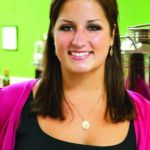
Some students studying abroad fall in love with a place. Maggie Lebherz ’08, modern languages and linguistics, fell in love with some new tastes during her semester at the University of Salamanca.
“Tasting fresh olive oil added an entirely new dimension to it, and I also learned about the health benefits of olive oil,” she says. “I had never had true balsamic vinegar, and even the best ones on the market here could not compare to what I had in Spain.”
The love affair that Lebherz developed with balsamic vinegar and fresh olive oil while studying in Spain has translated into a most unusual business venture: Lebherz Oil & Vinegar Emporium (LOVE) in her hometown of Frederick.
After graduating from UMBC, Lebherz returned to Frederick, working as a translator for the local school system. However, when a redistricting left her with a job as a secretary, she began to consider opening her own store focused on the two products she loved: olive oil and vinegar. Many people thought she was nuts to build a business on two products. But, as Lebherz says, “I told people that Baskin-Robbins ‘just’ sells ice cream.”
Working with the local Small Business Development Center (created by a collaboration of federal, state and local agencies), Lebherz put together a business plan. “My saving grace was Chris Olson, a retired businessman who helped me pull everything together and make projections,” she says. “But it was difficult because there were no other similar businesses to compare what I wanted to do.”
After extensive research and contributions from her own savings and financial help from family and friends, Lebherz threw open the doors of her store, Lebherz Oil & Vinegar Emporium, in June 2010.
Lebherz imports her olive oil from eight different countries and her vinegars from three countries. She buys in small quantities to keep the products fresh. The emporium boasts 25 different vinegars (including lavender and vanilla balsamic) and 30 different oils, including a blood orange and a Persian lime olive oil.
Most first-time visitors expect to see bottles waiting to be picked off the shelves. But Lebherz keep all her product on tap in “fustis,” which resemble ornate samovars. Cubes of fresh bread and small paper cups allow customers to sample oils and vinegars before making a purchase. “The stainless steel fustis ha
ve gaskets on top, which prevent oxidation and are key to keeping the oil from deteriorating,” says Lebherz, “and they also block the sunlight.”
Of course, Lebherz is on hand to offer suggestions to customers. “Believe it or not, wild blueberry balsamic vinegar is great on vanilla ice cream,” she says. “It really is a great complement to a number of desserts.” And her customers come up with their own twists – reducing wild blueberry balsamic and pouring it on pancakes, or using a dark chocolate balsamic to craft a terrific mole sauce. Indeed, a Frederick gelato store rustles up one of its flavors with that wild blueberry balsamic, which is so popular that Lebherz has a hard time keeping in stock.
Frederick is increasingly being seen as a food destination, and the emporium has forged a strong local following. But the shop does face challenges. A two-week period between ordering olive oil and actually receiving it requires some fine tuning in managing inventory. And when winter weather delayed a delivery of bottles from a California factory, she had to close the store for several days last year. “The trucks that were bringing the bottles got stuck in a snowstorm, and by law I can only sell the oil and vinegar in my store’s own bottles,” notes Lebherz.
Lebherz credits her family for providing practical assistance as well as investments. Her father helped make the store’s shelving. An aunt designed the shop’s website. And her mother and sister worked part-time in the store for no financial compensation for a few months. But the business has done well enough that her mother is now on the payroll on a part-time basis, and Lebherz has also hired another part-time staffer. And while the emporium isn’t showing a profit yet, Lebherz is very optimistic about the future.
“My main reason for doing this is for the health benefits of fresh olive oil and it is something that everyone can enjoy,” she says. “And this store feels like it is a little piece of Europe.”
— Mary Medland
]]>
Some students studying abroad fall in love with a place. Maggie Lebherz ’08, modern languages and linguistics, fell in love with some new tastes during her semester at the University of Salamanca....
https://umbc.edu/stories/targeting-tastes-maggie-lebherz-08-mll-2-2/
https://beta.my.umbc.edu/api/v0/pixel/news/124519/guest@my.umbc.edu/5dd8a3df47149d028b8257c365208f79/api/pixel
alumni
fall-2011
maggie-lebherz
mll
olive-oil
UMBC News & Magazine
https://beta.my.umbc.edu/groups/umbc-news-magazine
https://assets1-beta.my.umbc.edu/system/shared/avatars/groups/000/001/943/24435aa6207c452e7bc15cc74b42c7bb/xsmall.png?1748556657
https://assets1-beta.my.umbc.edu/system/shared/avatars/groups/000/001/943/24435aa6207c452e7bc15cc74b42c7bb/original.png?1748556657
https://assets2-beta.my.umbc.edu/system/shared/avatars/groups/000/001/943/24435aa6207c452e7bc15cc74b42c7bb/xxlarge.png?1748556657
https://assets2-beta.my.umbc.edu/system/shared/avatars/groups/000/001/943/24435aa6207c452e7bc15cc74b42c7bb/xlarge.png?1748556657
https://assets3-beta.my.umbc.edu/system/shared/avatars/groups/000/001/943/24435aa6207c452e7bc15cc74b42c7bb/large.png?1748556657
https://assets1-beta.my.umbc.edu/system/shared/avatars/groups/000/001/943/24435aa6207c452e7bc15cc74b42c7bb/medium.png?1748556657
https://assets2-beta.my.umbc.edu/system/shared/avatars/groups/000/001/943/24435aa6207c452e7bc15cc74b42c7bb/small.png?1748556657
https://assets1-beta.my.umbc.edu/system/shared/avatars/groups/000/001/943/24435aa6207c452e7bc15cc74b42c7bb/xsmall.png?1748556657
https://assets2-beta.my.umbc.edu/system/shared/avatars/groups/000/001/943/24435aa6207c452e7bc15cc74b42c7bb/xxsmall.png?1748556657
UMBC News & Magazine
0
0
false
Fri, 02 Sep 2011 19:34:52 -0400
Targeting Tastes – Maggie Lebherz ’08, MLL
Some students studying abroad fall in love with a place. Maggie Lebherz ’08, modern languages and linguistics, fell in love with some new tastes during her semester at the University of Salamanca.
“Tasting fresh olive oil added an entirely new dimension to it, and I also learned about the health benefits of olive oil,” she says. “I had never had true balsamic vinegar, and even the best ones on the market here could not compare to what I had in Spain.”
The love affair that Lebherz developed with balsamic vinegar and fresh olive oil while studying in Spain has translated into a most unusual business venture: Lebherz Oil & Vinegar Emporium (LOVE) in her hometown of Frederick.
After graduating from UMBC, Lebherz returned to Frederick, working as a translator for the local school system. However, when a redistricting left her with a job as a secretary, she began to consider opening her own store focused on the two products she loved: olive oil and vinegar. Many people thought she was nuts to build a business on two products. But, as Lebherz says, “I told people that Baskin-Robbins ‘just’ sells ice cream.”
Working with the local Small Business Development Center (created by a collaboration of federal, state and local agencies), Lebherz put together a business plan. “My saving grace was Chris Olson, a retired businessman who helped me pull everything together and make projections,” she says. “But it was difficult because there were no other similar businesses to compare what I wanted to do.”
After extensive research and contributions from her own savings and financial help from family and friends, Lebherz threw open the doors of her store, Lebherz Oil & Vinegar Emporium, in June 2010.
Lebherz imports her olive oil from eight different countries and her vinegars from three countries. She buys in small quantities to keep the products fresh. The emporium boasts 25 different vinegars (including lavender and vanilla balsamic) and 30 different oils, including a blood orange and a Persian lime olive oil.
Most first-time visitors expect to see bottles waiting to be picked off the shelves. But Lebherz keep all her product on tap in “fustis,” which resemble ornate samovars. Cubes of fresh bread and small paper cups allow customers to sample oils and vinegars before making a purchase. “The stainless steel fustis ha
ve gaskets on top, which prevent oxidation and are key to keeping the oil from deteriorating,” says Lebherz, “and they also block the sunlight.”
Of course, Lebherz is on hand to offer suggestions to customers. “Believe it or not, wild blueberry balsamic vinegar is great on vanilla ice cream,” she says. “It really is a great complement to a number of desserts.” And her customers come up with their own twists – reducing wild blueberry balsamic and pouring it on pancakes, or using a dark chocolate balsamic to craft a terrific mole sauce. Indeed, a Frederick gelato store rustles up one of its flavors with that wild blueberry balsamic, which is so popular that Lebherz has a hard time keeping in stock.
Frederick is increasingly being seen as a food destination, and the emporium has forged a strong local following. But the shop does face challenges. A two-week period between ordering olive oil and actually receiving it requires some fine tuning in managing inventory. And when winter weather delayed a delivery of bottles from a California factory, she had to close the store for several days last year. “The trucks that were bringing the bottles got stuck in a snowstorm, and by law I can only sell the oil and vinegar in my store’s own bottles,” notes Lebherz.
Lebherz credits her family for providing practical assistance as well as investments. Her father helped make the store’s shelving. An aunt designed the shop’s website. And her mother and sister worked part-time in the store for no financial compensation for a few months. But the business has done well enough that her mother is now on the payroll on a part-time basis, and Lebherz has also hired another part-time staffer. And while the emporium isn’t showing a profit yet, Lebherz is very optimistic about the future.
“My main reason for doing this is for the health benefits of fresh olive oil and it is something that everyone can enjoy,” she says. “And this store feels like it is a little piece of Europe.”
— Mary Medland
]]>
Some students studying abroad fall in love with a place. Maggie Lebherz ’08, modern languages and linguistics, fell in love with some new tastes during her semester at the University of Salamanca....
https://umbc.edu/stories/targeting-tastes-maggie-lebherz-08-mll-2/
https://beta.my.umbc.edu/api/v0/pixel/news/124520/guest@my.umbc.edu/a55b857a4606841737078097c2dd976c/api/pixel
alumni
fall-2011
maggie-lebherz
mll
olive-oil
UMBC News & Magazine
https://beta.my.umbc.edu/groups/umbc-news-magazine
https://assets1-beta.my.umbc.edu/system/shared/avatars/groups/000/001/943/24435aa6207c452e7bc15cc74b42c7bb/xsmall.png?1748556657
https://assets1-beta.my.umbc.edu/system/shared/avatars/groups/000/001/943/24435aa6207c452e7bc15cc74b42c7bb/original.png?1748556657
https://assets2-beta.my.umbc.edu/system/shared/avatars/groups/000/001/943/24435aa6207c452e7bc15cc74b42c7bb/xxlarge.png?1748556657
https://assets2-beta.my.umbc.edu/system/shared/avatars/groups/000/001/943/24435aa6207c452e7bc15cc74b42c7bb/xlarge.png?1748556657
https://assets3-beta.my.umbc.edu/system/shared/avatars/groups/000/001/943/24435aa6207c452e7bc15cc74b42c7bb/large.png?1748556657
https://assets1-beta.my.umbc.edu/system/shared/avatars/groups/000/001/943/24435aa6207c452e7bc15cc74b42c7bb/medium.png?1748556657
https://assets2-beta.my.umbc.edu/system/shared/avatars/groups/000/001/943/24435aa6207c452e7bc15cc74b42c7bb/small.png?1748556657
https://assets1-beta.my.umbc.edu/system/shared/avatars/groups/000/001/943/24435aa6207c452e7bc15cc74b42c7bb/xsmall.png?1748556657
https://assets2-beta.my.umbc.edu/system/shared/avatars/groups/000/001/943/24435aa6207c452e7bc15cc74b42c7bb/xxsmall.png?1748556657
UMBC News & Magazine
0
0
false
Fri, 02 Sep 2011 19:34:52 -0400
Over Coffee – Fall 2011

UMBC Homecoming has undergone major changes over the past three years, and a trio of dedicated staffers who lead the university’s Homecoming Committee – Kevin Gibbons O’Neill ’86, economics, assistant athletic director, Jen Dress, coordinator of major events in the Office of Student Life and Stanyell Bruce, associate director of alumni relations – have spearheaded the makeover. We got them together to talk about why the university has spent so much time and energy improving the Homecoming experience – and just what’s in store when you visit us over the weekend of October 12 through 15!
* * * *
Why did UMBC decide to shift more emphasis to celebrating Homecoming as an event for students and alumni? And what’s changed as the university has done so?
Jen Dress: I think about the student who’s been here for four years. Our focus has been building an experience that students will think about when they are here – and that makes them want to come back as alumni. Four years ago, we had a lot of the same events, but they felt isolated from each other. Now we’re connecting them and increasing them in size and scope.
Take the Wednesday night bonfire. We now need an agricultural permit for the bonfire – which means a bigger, better, blazing fire. Students had skepticism about it: Will this really be cool? But you look at pictures and see how students are real close at the beginning and then have to move back as the bonfire ramps up. They see it’s a much bigger thing.
Kevin Gibbons-O’Neill: We in the athletics department have become better partners. For instance, we moved the soccer game to Friday night under the lights, and that’s created an amazing atmosphere. From Midnight Madness on Wednesday through the 5K Dawg Chase and club sport games on Saturday, we’re trying to make the experience fun. If students don’t have fun as freshmen and sophomores, they won’t come when they’re juniors or seniors – or when they are 40 years old.
What recent changes do you think will attract alumni – who are, after all, the traditional audience for Homecoming?
Stanyell Bruce: The alumni piece is challenging. But we’re getting better at it. We’ve only been doing Homecoming for 11 years, so alumni who graduated before 1999 really don’t identify with the event as much.
So we’re trying to let alumni know that there are a lot of options for them – and many events on the calendar are designed to appeal to different audiences. We have a community picnic on Saturday because we know that a lot of our alumni have families – and we wanted to have an event with an atmosphere that makes them comfortable bringing the entire family. But we’re also having a number of more grown-up events in the afternoon and evening, including a Taste of UMBC with live music from alumni bands. There is something for everyone.
Dress: Last year, the community picnic was a real gamble. We didn’t know what it was going to look like. But it was cool, because the event really does epitomize what sort of community we have at UMBC. There were athletics alumni coming over after a club game in the morning, or alumni coming for afternoon events stopping to eat first.
Bruce: We’ve put a lot of the day’s activities under the umbrella of “UMBC Festival” – the community picnic, carnival attractions, the Taste of UMBC. For me, it’s going to be exciting to see what the Quad looks like from 11 a.m. to 7 p.m. on Homecoming Saturday.
Gibbons-O’Neill: Stanyell mentioned that we’ve only been doing Homecoming for 11 years. And as a university, we’re only 45 years old. You have to wonder what Homecoming was like at Harvard in 1681. Right now, we’re still the founders of what the tradition of Homecoming will be at UMBC.
— Richard Byrne ’86
]]>
UMBC Homecoming has undergone major changes over the past three years, and a trio of dedicated staffers who lead the university’s Homecoming Committee – Kevin Gibbons O’Neill ’86, economics,...
https://umbc.edu/stories/over-coffee-fall-2011/
https://beta.my.umbc.edu/api/v0/pixel/news/124521/guest@my.umbc.edu/6cbf16db3f8641cf989b8ee45f8b92cb/api/pixel
alumni
fall-2011
homecoming
jen-dress
kevin-gibbons-oneill
stanyell-bruce
UMBC News & Magazine
https://beta.my.umbc.edu/groups/umbc-news-magazine
https://assets1-beta.my.umbc.edu/system/shared/avatars/groups/000/001/943/24435aa6207c452e7bc15cc74b42c7bb/xsmall.png?1748556657
https://assets1-beta.my.umbc.edu/system/shared/avatars/groups/000/001/943/24435aa6207c452e7bc15cc74b42c7bb/original.png?1748556657
https://assets2-beta.my.umbc.edu/system/shared/avatars/groups/000/001/943/24435aa6207c452e7bc15cc74b42c7bb/xxlarge.png?1748556657
https://assets2-beta.my.umbc.edu/system/shared/avatars/groups/000/001/943/24435aa6207c452e7bc15cc74b42c7bb/xlarge.png?1748556657
https://assets3-beta.my.umbc.edu/system/shared/avatars/groups/000/001/943/24435aa6207c452e7bc15cc74b42c7bb/large.png?1748556657
https://assets1-beta.my.umbc.edu/system/shared/avatars/groups/000/001/943/24435aa6207c452e7bc15cc74b42c7bb/medium.png?1748556657
https://assets2-beta.my.umbc.edu/system/shared/avatars/groups/000/001/943/24435aa6207c452e7bc15cc74b42c7bb/small.png?1748556657
https://assets1-beta.my.umbc.edu/system/shared/avatars/groups/000/001/943/24435aa6207c452e7bc15cc74b42c7bb/xsmall.png?1748556657
https://assets2-beta.my.umbc.edu/system/shared/avatars/groups/000/001/943/24435aa6207c452e7bc15cc74b42c7bb/xxsmall.png?1748556657
UMBC News & Magazine
0
0
false
Fri, 02 Sep 2011 19:27:18 -0400
How To Grow Your Big Idea
 With Vivian Armor ’73, director, Alex. Brown Center for Entrepreneurship
You wake up one morning with a big, bright light bulb bobbing above your head. You start your day, feed the dog, the light getting brighter by the minute. Pretty soon, it’s keeping you up at night. Well, congratulations. Your “big idea” has arrived – and with it, a world of possibility.
So, now what? Do you cash in your life savings for seed money? Get a fancy business degree? Buy the book by that guy in the suit covered in question marks?
Maybe you take some (absolutely) free advice from Vivian Armor ’73, American studies. She is director of UMBC’s Alex. Brown Center for Entrepreneurship and has some tips about how to move ahead safely and smartly so you can make all your wildest dreams come true.
— Jenny O’Grady
Step 1:
Reality Check
our idea is precious and perfect and unique like a snowflake. But, how does it stand up to the scrutiny of others?
“Nobody wants to hear the baby’s ugly, but maybe it needs braces,” says Armor. She suggests running your brainchild past a few friends or family members you trust to be honest with you, as well as professionals in the industry related to your idea. Doing so can help you step away from your idea, and more objectively assess the pros and cons. The more feedback you get and the more open-minded you are about tweaking your idea to address potential flaws, the better chance you have of starting off strong.
Step 2:
Write a Business Plan
Once you’ve put your idea through the blender, it’s time to write up some solid plans. Questions to consider: What is your timeline? What kind of support will you need to execute your plan? How will you promote your idea to potential buyers? Who are your competitors and why is your idea better? How much work is this really going to be?
“It helps to take out a piece of paper and really think about these things,” says Armor. Questions like these may take a bit of the wind out of your sails, but they’re important to answer early on.
Step 3:
Perfect Your Pitch
A concept is never enough on its own – you also need to be able to quickly convince investors why it’s a great idea that they should care enough about to support. And that means perfecting your so-called “elevator speech.”
“Look, I don’t know what you’re selling, but if you can describe it well, you’ll help people to connect the dots,” says Armor, who again suggests turning to friends for practice. If you find you can’t describe your plan quickly and easily, you might need to take a quick detour back to Step 2.
Step 4:
Know There’s Help Out There
As in so many steps before, one fact rises above the rest in the world of entrepreneurship: it’s rarely a one-person show. Counting on trusted partners to refine your plan and give you new ideas is crucial, but so is relying on the many resources available to you as a budding entrepreneur.
Armor cites the Alex. Brown Center for Entrepreneurship as a one-stop shop for all things “start-up.” The center works with faculty to help infuse courses across UMBC’s curriculum with entrepreneurial material. It also offers a campus “Idea Lab” and mentoring and internship opportunities. In addition, Armor touts the center’s Raymond V. Haysbert, Sr. Entrepreneurship Lecture Series, which provides a platform for successful entrepreneurs to candidly share their experiences and insights with the public.
“People are here to help you,” she says. “We want you to succeed.”
* * * * *
Video: Intro to Entrepreneurship
What’s it really take to succeed as an entrepreneur? UMBC entrepreneurship experts Armor, “serial entrepreneur” Gib Mason ’95, economics, and Interim Dean of the College of Natural and Mathematical Sciences William R. LaCourse discuss how passion, creativity, determination – and a combination of the right skills – can open up a world of opportunity to young entrepreneurs. WATCH THE VIDEO
]]>
With Vivian Armor ’73, director, Alex. Brown Center for Entrepreneurship You wake up one morning with a big, bright light bulb bobbing above your head. You start your day, feed the dog, the...
https://umbc.edu/stories/how-to-grow-your-big-idea/
https://beta.my.umbc.edu/api/v0/pixel/news/124522/guest@my.umbc.edu/eac13dc1a064d9be08693c74d09a8e1f/api/pixel
alex-brown-center-for-entrepreneurship
alexbrowncenter
discovery
entrepreneurship
gib-mason
how-to
vivian-armour
william-lacourse
UMBC News & Magazine
https://beta.my.umbc.edu/groups/umbc-news-magazine
https://assets1-beta.my.umbc.edu/system/shared/avatars/groups/000/001/943/24435aa6207c452e7bc15cc74b42c7bb/xsmall.png?1748556657
https://assets1-beta.my.umbc.edu/system/shared/avatars/groups/000/001/943/24435aa6207c452e7bc15cc74b42c7bb/original.png?1748556657
https://assets2-beta.my.umbc.edu/system/shared/avatars/groups/000/001/943/24435aa6207c452e7bc15cc74b42c7bb/xxlarge.png?1748556657
https://assets2-beta.my.umbc.edu/system/shared/avatars/groups/000/001/943/24435aa6207c452e7bc15cc74b42c7bb/xlarge.png?1748556657
https://assets3-beta.my.umbc.edu/system/shared/avatars/groups/000/001/943/24435aa6207c452e7bc15cc74b42c7bb/large.png?1748556657
https://assets1-beta.my.umbc.edu/system/shared/avatars/groups/000/001/943/24435aa6207c452e7bc15cc74b42c7bb/medium.png?1748556657
https://assets2-beta.my.umbc.edu/system/shared/avatars/groups/000/001/943/24435aa6207c452e7bc15cc74b42c7bb/small.png?1748556657
https://assets1-beta.my.umbc.edu/system/shared/avatars/groups/000/001/943/24435aa6207c452e7bc15cc74b42c7bb/xsmall.png?1748556657
https://assets2-beta.my.umbc.edu/system/shared/avatars/groups/000/001/943/24435aa6207c452e7bc15cc74b42c7bb/xxsmall.png?1748556657
UMBC News & Magazine
0
0
false
Fri, 02 Sep 2011 16:59:23 -0400
Highways to Healing – Omolola Eniola-Adefeso '99, ChemEng
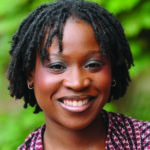
Once upon a time, Omolola Eniola-Adefeso ’99, chemical engineering, was on track to attend medical school. But she became a chemical engineer instead – so she could better attack problems such as her number one target: heart disease.
Eniola-Adefeso, an assistant professor of chemical engineering at the University of Michigan, investigates radical ways of delivering medicine that could prove efficient and effective than current practice. And she may succeed because she is thinks like an engineer – and not a doctor. Eniola-Adefeso came to Maryland from her native Nigeria the age of 16. She began her studies at Catonsville Community College, before transferring to UMBC, where she met the late Janice Lumpkin, an African-American chemical engineering professor. Lumpkin not only guided her student into a field where her passion for technology and medicine could intersect, but also helped her become a member of the first class of UMBC students in the Minority Access to Research Careers program.
After graduating from UMBC, she took a doctorate at the University of Pennsylvania in 2004. Her scholarship for graduate studies there was actually named after Lumpkin – who also attended Penn and died tragically after childbirth in 1997.
In 2006, Eniola-Adefeso (pronounced ah-DAY-feso and known to everyone as “Lola”) joined the faculty at Michigan where her lab seeks ways to create and use miniscule synthetic pellets to mimic white blood cells and deliver medicine more efficiently.
So far, she is succeeding with laboratory mice specially bred to have cardiovascular disease. She is moving next to larger animals before she attempts experiments on humans.
Why white blood cells? When there is an infection or injury in the body, nearby cells send out a chemical alarm. On receiving that signal, white blood cells – especially those known as neutrophils – leap to action.
Normally, neutrophils are spherical, but they can change their shape as they charge to the scene of injury, producing a sticky surface protein to match proteins at the target site. As the neutrophils pass injured tissue, their protein grabs onto proteins on the tissue and the neutrophils hoist themselves out of the blood stream, infiltrate the cell walls and go about the work of healing.
The system is incredibly efficient and it’s the reason most of us recover from our illnesses by doing nothing but letting the immune system do its thing.
But sometimes the forces of healing need help (such as antibiotics) which come in the form of pills or injections. And that’s where Eniola-Adefeso’s research comes in.
Current methods of drug delivery lack efficiency. A pill goes through the digestive system and is absorbed into the blood stream. Injections take a more direct route into the blood stream. But in both cases, only some of the drug winds up at the target site. Plus, extra medicine can occasionally cause serious and even fatal side effects.
Eniola-Adefeso’s proposed technique solves both issues. And because her father died of a heart attack five years ago, she’s focused her attention on cardiovascular disease. She’s trying to produce pellets that mimic white blood cells and go straight to heart muscle or blood vessels to repair them. Injected into your body, Eniola-Adefeso’s pellets – loaded with the right proteins and medicine – would find their way directly to damaged heart muscles or arteries and deliver medicine contained within it. Ideally the pellets would be designed to release the medicine for weeks or months, possibly even years.
The complexities include identifying target proteins in the cardiovascular system and factoring in significant variations in blood flow in the body. When the heart pumps blood, the arteries proximate to it surge like a river. But by the time the blood gets to your big toe or the skin of your elbow, it has slowed to a mild stream without the surge.
To actually deliver the medicine, Eniola-Adefeso’s pellets must also be biodegradable, so she is also working on testing polymers and plastics, seeking substances which degrade at just the right rate for what she wants to accomplish.
Then there is size. Eniola-Adefeso needs pellets about the same size as the neutrophils, which measure about 100 nanometers to about three micrometers and require a microscope to be seen. “Shape and size matter,” she says.
Eniola-Adefeso also believes the system would work for other diseases as well, including cancer. And her work is already receiving recognition. In April, she was the 2011 recipient of the Lloyd N. Ferguson Young Scientist from the National Organization for the Professional Advancement of Black Chemists and Chemical Engineers (NOBCChE), an award that recognizes and honors scientific contributions and achievements and dedication to research.
— Joel N. Shurkin
]]>
Once upon a time, Omolola Eniola-Adefeso ’99, chemical engineering, was on track to attend medical school. But she became a chemical engineer instead – so she could better attack problems such as...
https://umbc.edu/stories/highways-to-healing-omolola-eniola-adefeso-99-chemeng-2/
https://beta.my.umbc.edu/api/v0/pixel/news/124523/guest@my.umbc.edu/241476e2779cb2593a8d4bd3e3a638f1/api/pixel
alumni
cbee
chemeng
coeit
fall-2011
omolola-eniola-adefeso
UMBC News & Magazine
https://beta.my.umbc.edu/groups/umbc-news-magazine
https://assets1-beta.my.umbc.edu/system/shared/avatars/groups/000/001/943/24435aa6207c452e7bc15cc74b42c7bb/xsmall.png?1748556657
https://assets1-beta.my.umbc.edu/system/shared/avatars/groups/000/001/943/24435aa6207c452e7bc15cc74b42c7bb/original.png?1748556657
https://assets2-beta.my.umbc.edu/system/shared/avatars/groups/000/001/943/24435aa6207c452e7bc15cc74b42c7bb/xxlarge.png?1748556657
https://assets2-beta.my.umbc.edu/system/shared/avatars/groups/000/001/943/24435aa6207c452e7bc15cc74b42c7bb/xlarge.png?1748556657
https://assets3-beta.my.umbc.edu/system/shared/avatars/groups/000/001/943/24435aa6207c452e7bc15cc74b42c7bb/large.png?1748556657
https://assets1-beta.my.umbc.edu/system/shared/avatars/groups/000/001/943/24435aa6207c452e7bc15cc74b42c7bb/medium.png?1748556657
https://assets2-beta.my.umbc.edu/system/shared/avatars/groups/000/001/943/24435aa6207c452e7bc15cc74b42c7bb/small.png?1748556657
https://assets1-beta.my.umbc.edu/system/shared/avatars/groups/000/001/943/24435aa6207c452e7bc15cc74b42c7bb/xsmall.png?1748556657
https://assets2-beta.my.umbc.edu/system/shared/avatars/groups/000/001/943/24435aa6207c452e7bc15cc74b42c7bb/xxsmall.png?1748556657
UMBC News & Magazine
0
0
false
Fri, 02 Sep 2011 16:50:39 -0400
Highways to Healing – Omolola Eniola-Adefeso ’99, ChemEng
Once upon a time, Omolola Eniola-Adefeso ’99, chemical engineering, was on track to attend medical school. But she became a chemical engineer instead – so she could better attack problems such as her number one target: heart disease.
Eniola-Adefeso, an assistant professor of chemical engineering at the University of Michigan, investigates radical ways of delivering medicine that could prove efficient and effective than current practice. And she may succeed because she is thinks like an engineer – and not a doctor. Eniola-Adefeso came to Maryland from her native Nigeria the age of 16. She began her studies at Catonsville Community College, before transferring to UMBC, where she met the late Janice Lumpkin, an African-American chemical engineering professor. Lumpkin not only guided her student into a field where her passion for technology and medicine could intersect, but also helped her become a member of the first class of UMBC students in the Minority Access to Research Careers program.
After graduating from UMBC, she took a doctorate at the University of Pennsylvania in 2004. Her scholarship for graduate studies there was actually named after Lumpkin – who also attended Penn and died tragically after childbirth in 1997.
In 2006, Eniola-Adefeso (pronounced ah-DAY-feso and known to everyone as “Lola”) joined the faculty at Michigan where her lab seeks ways to create and use miniscule synthetic pellets to mimic white blood cells and deliver medicine more efficiently.
So far, she is succeeding with laboratory mice specially bred to have cardiovascular disease. She is moving next to larger animals before she attempts experiments on humans.
Why white blood cells? When there is an infection or injury in the body, nearby cells send out a chemical alarm. On receiving that signal, white blood cells – especially those known as neutrophils – leap to action.
Normally, neutrophils are spherical, but they can change their shape as they charge to the scene of injury, producing a sticky surface protein to match proteins at the target site. As the neutrophils pass injured tissue, their protein grabs onto proteins on the tissue and the neutrophils hoist themselves out of the blood stream, infiltrate the cell walls and go about the work of healing.
The system is incredibly efficient and it’s the reason most of us recover from our illnesses by doing nothing but letting the immune system do its thing.
But sometimes the forces of healing need help (such as antibiotics) which come in the form of pills or injections. And that’s where Eniola-Adefeso’s research comes in.
Current methods of drug delivery lack efficiency. A pill goes through the digestive system and is absorbed into the blood stream. Injections take a more direct route into the blood stream. But in both cases, only some of the drug winds up at the target site. Plus, extra medicine can occasionally cause serious and even fatal side effects.
Eniola-Adefeso’s proposed technique solves both issues. And because her father died of a heart attack five years ago, she’s focused her attention on cardiovascular disease. She’s trying to produce pellets that mimic white blood cells and go straight to heart muscle or blood vessels to repair them. Injected into your body, Eniola-Adefeso’s pellets – loaded with the right proteins and medicine – would find their way directly to damaged heart muscles or arteries and deliver medicine contained within it. Ideally the pellets would be designed to release the medicine for weeks or months, possibly even years.
The complexities include identifying target proteins in the cardiovascular system and factoring in significant variations in blood flow in the body. When the heart pumps blood, the arteries proximate to it surge like a river. But by the time the blood gets to your big toe or the skin of your elbow, it has slowed to a mild stream without the surge.
To actually deliver the medicine, Eniola-Adefeso’s pellets must also be biodegradable, so she is also working on testing polymers and plastics, seeking substances which degrade at just the right rate for what she wants to accomplish.
Then there is size. Eniola-Adefeso needs pellets about the same size as the neutrophils, which measure about 100 nanometers to about three micrometers and require a microscope to be seen. “Shape and size matter,” she says.
Eniola-Adefeso also believes the system would work for other diseases as well, including cancer. And her work is already receiving recognition. In April, she was the 2011 recipient of the Lloyd N. Ferguson Young Scientist from the National Organization for the Professional Advancement of Black Chemists and Chemical Engineers (NOBCChE), an award that recognizes and honors scientific contributions and achievements and dedication to research.
— Joel N. Shurkin
]]>
Once upon a time, Omolola Eniola-Adefeso ’99, chemical engineering, was on track to attend medical school. But she became a chemical engineer instead – so she could better attack problems such as...
https://umbc.edu/stories/highways-to-healing-omolola-eniola-adefeso-99-chemeng/
https://beta.my.umbc.edu/api/v0/pixel/news/124524/guest@my.umbc.edu/5c6a03044dd615c2aada929e59564289/api/pixel
alumni
cbee
chemeng
coeit
fall-2011
omolola-eniola-adefeso
UMBC News & Magazine
https://beta.my.umbc.edu/groups/umbc-news-magazine
https://assets1-beta.my.umbc.edu/system/shared/avatars/groups/000/001/943/24435aa6207c452e7bc15cc74b42c7bb/xsmall.png?1748556657
https://assets1-beta.my.umbc.edu/system/shared/avatars/groups/000/001/943/24435aa6207c452e7bc15cc74b42c7bb/original.png?1748556657
https://assets2-beta.my.umbc.edu/system/shared/avatars/groups/000/001/943/24435aa6207c452e7bc15cc74b42c7bb/xxlarge.png?1748556657
https://assets2-beta.my.umbc.edu/system/shared/avatars/groups/000/001/943/24435aa6207c452e7bc15cc74b42c7bb/xlarge.png?1748556657
https://assets3-beta.my.umbc.edu/system/shared/avatars/groups/000/001/943/24435aa6207c452e7bc15cc74b42c7bb/large.png?1748556657
https://assets1-beta.my.umbc.edu/system/shared/avatars/groups/000/001/943/24435aa6207c452e7bc15cc74b42c7bb/medium.png?1748556657
https://assets2-beta.my.umbc.edu/system/shared/avatars/groups/000/001/943/24435aa6207c452e7bc15cc74b42c7bb/small.png?1748556657
https://assets1-beta.my.umbc.edu/system/shared/avatars/groups/000/001/943/24435aa6207c452e7bc15cc74b42c7bb/xsmall.png?1748556657
https://assets2-beta.my.umbc.edu/system/shared/avatars/groups/000/001/943/24435aa6207c452e7bc15cc74b42c7bb/xxsmall.png?1748556657
UMBC News & Magazine
0
0
false
Fri, 02 Sep 2011 16:50:39 -0400
Formula For Success – Ronita Marple '05, Ph.D., Chemistry

As an analytical chemist and senior scientist for consumer goods giant Proctor & Gamble, Ronita Marple ’05 Ph.D., chemistry, observes that it’s not unusual for her to walk past a lab and catch a glimpse of a robot testing a product by performing a household chore over and over again, for hours on end, to identify a product’s weaknesses without stressing out human testers in the process.
Such grueling tests are part of how all of the nearly 125 products marketed by Proctor & Gamble end up in a consumer’s shopping cart. So is Marple’s own job mundane and robotic? “Never,” laughs the recipient of UMBC Alumna of the Year Award in the Sciences, who manages a team of chemists that unravel the technology behind each line of personal care at the corporation’s Cincinnati headquarters.
“Maybe there’s a new ingredient [in a product]: It’s my job to come up with a method to measure it,” she explains. Shampoo, for example. “There are just tons of ingredients in every bottle,” she says. Her team can scan a dollop of shampoo using a technique known as “whole product NMR” to determine the identity and concentration of each ingredient in the formula.
Marple and her team must also help ensure that most important ingredients of all – those responsible for cleaning and conditioning hair – remain stable and optimally concentrated between factory and shower. After all, that dollop of shampoo must trek cross country in a sweltering delivery truck before it becomes lather on a lustrous head of hair.
You don’t want to feel like you’re washing your hair with dish soap,” says Marple. “On the other hand, you want enough conditioning that it feels good.”
To get that balance just right, Marple’s team needs hair. And lots of it. “We probably spend more than a million dollars a year just buying hair to test on,” she says. The company purchases real human hair from suppliers in the form of ponytails (or “switches” as Marple calls them), which are sent off to a lab for testing. Once a shampoo has been developed for a specific hair type, the final formulation is tested by consumers in the company’s on-site salon.
Before any of the nearly 125 products marketed by Proctor & Gamble end up in a consumer’s shopping cart, each one – personal care or not – must be beaten, battered, diluted, pressured and manipulated in every imaginable way to see how it holds up under the most grueling conditions. Growing up in the small town of Bellaire, OH, Marple’s early exposure to science was relatively simple. “We didn’t have things like AP classes or weighted graded systems,” she says. “It was just a basic public school education.”
Graduate school is never easy, but Marple remembers her time at UMBC in the doctoral program in chemistry with great fondness. “Even though it was really, really difficult,” she recalls, “probably one of the most difficult times in my life, trying to do all the research and pass my qualifying exams and finish my dissertation. I just had so much fun. It was such a satisfying experience.”
The research that she did at UMBC made it even more worthwhile, Marple says. “A lot of times you’re doing really cutting edge things that no one has ever done before,” she says. And the best part? “That whole sense of discovery; just knowing that you’re really pushing the limit and discovering new things.”
After graduation, Marple began working at Proctor & Gamble. In addition to her work as a chemist, she also encourages mentoring and networking relationships among emerging female scientists from all corners of the world through the company’s Analytical Women of Excellence program. The job also has her traveling the world – including India, Sweden, Russia, Italy, Germany, England and Belgium – to connect with Proctor & Gamble’s other technical centers and establish projects through the company’s Connect and Development program.
But regardless of how far she’s traveled on her road to becoming a chemist, she credits “the family-like culture” at UMBC with teaching her the lesson of a lifetime: “You can be what you want to be. There might be obstacles but you can overcome them,” Marple says. “Just do what you have your heart set on.”
— Ann Griswold
]]>
As an analytical chemist and senior scientist for consumer goods giant Proctor & Gamble, Ronita Marple ’05 Ph.D., chemistry, observes that it’s not unusual for her to walk past a lab and catch...
https://umbc.edu/stories/formula-for-success-ronita-marple-05-ph-d-chemistry-2-2/
https://beta.my.umbc.edu/api/v0/pixel/news/124525/guest@my.umbc.edu/38b1f57f56e298742dc30412834ec972/api/pixel
alumni
fall-2011
ronita-marple
UMBC News & Magazine
https://beta.my.umbc.edu/groups/umbc-news-magazine
https://assets1-beta.my.umbc.edu/system/shared/avatars/groups/000/001/943/24435aa6207c452e7bc15cc74b42c7bb/xsmall.png?1748556657
https://assets1-beta.my.umbc.edu/system/shared/avatars/groups/000/001/943/24435aa6207c452e7bc15cc74b42c7bb/original.png?1748556657
https://assets2-beta.my.umbc.edu/system/shared/avatars/groups/000/001/943/24435aa6207c452e7bc15cc74b42c7bb/xxlarge.png?1748556657
https://assets2-beta.my.umbc.edu/system/shared/avatars/groups/000/001/943/24435aa6207c452e7bc15cc74b42c7bb/xlarge.png?1748556657
https://assets3-beta.my.umbc.edu/system/shared/avatars/groups/000/001/943/24435aa6207c452e7bc15cc74b42c7bb/large.png?1748556657
https://assets1-beta.my.umbc.edu/system/shared/avatars/groups/000/001/943/24435aa6207c452e7bc15cc74b42c7bb/medium.png?1748556657
https://assets2-beta.my.umbc.edu/system/shared/avatars/groups/000/001/943/24435aa6207c452e7bc15cc74b42c7bb/small.png?1748556657
https://assets1-beta.my.umbc.edu/system/shared/avatars/groups/000/001/943/24435aa6207c452e7bc15cc74b42c7bb/xsmall.png?1748556657
https://assets2-beta.my.umbc.edu/system/shared/avatars/groups/000/001/943/24435aa6207c452e7bc15cc74b42c7bb/xxsmall.png?1748556657
UMBC News & Magazine
0
0
false
Fri, 02 Sep 2011 16:48:51 -0400
Formula For Success – Ronita Marple ’05, Ph.D., Chemistry
As an analytical chemist and senior scientist for consumer goods giant Proctor & Gamble, Ronita Marple ’05 Ph.D., chemistry, observes that it’s not unusual for her to walk past a lab and catch a glimpse of a robot testing a product by performing a household chore over and over again, for hours on end, to identify a product’s weaknesses without stressing out human testers in the process.
Such grueling tests are part of how all of the nearly 125 products marketed by Proctor & Gamble end up in a consumer’s shopping cart. So is Marple’s own job mundane and robotic? “Never,” laughs the recipient of UMBC Alumna of the Year Award in the Sciences, who manages a team of chemists that unravel the technology behind each line of personal care at the corporation’s Cincinnati headquarters.
“Maybe there’s a new ingredient [in a product]: It’s my job to come up with a method to measure it,” she explains. Shampoo, for example. “There are just tons of ingredients in every bottle,” she says. Her team can scan a dollop of shampoo using a technique known as “whole product NMR” to determine the identity and concentration of each ingredient in the formula.
Marple and her team must also help ensure that most important ingredients of all – those responsible for cleaning and conditioning hair – remain stable and optimally concentrated between factory and shower. After all, that dollop of shampoo must trek cross country in a sweltering delivery truck before it becomes lather on a lustrous head of hair.
You don’t want to feel like you’re washing your hair with dish soap,” says Marple. “On the other hand, you want enough conditioning that it feels good.”
To get that balance just right, Marple’s team needs hair. And lots of it. “We probably spend more than a million dollars a year just buying hair to test on,” she says. The company purchases real human hair from suppliers in the form of ponytails (or “switches” as Marple calls them), which are sent off to a lab for testing. Once a shampoo has been developed for a specific hair type, the final formulation is tested by consumers in the company’s on-site salon.
Before any of the nearly 125 products marketed by Proctor & Gamble end up in a consumer’s shopping cart, each one – personal care or not – must be beaten, battered, diluted, pressured and manipulated in every imaginable way to see how it holds up under the most grueling conditions. Growing up in the small town of Bellaire, OH, Marple’s early exposure to science was relatively simple. “We didn’t have things like AP classes or weighted graded systems,” she says. “It was just a basic public school education.”
Graduate school is never easy, but Marple remembers her time at UMBC in the doctoral program in chemistry with great fondness. “Even though it was really, really difficult,” she recalls, “probably one of the most difficult times in my life, trying to do all the research and pass my qualifying exams and finish my dissertation. I just had so much fun. It was such a satisfying experience.”
The research that she did at UMBC made it even more worthwhile, Marple says. “A lot of times you’re doing really cutting edge things that no one has ever done before,” she says. And the best part? “That whole sense of discovery; just knowing that you’re really pushing the limit and discovering new things.”
After graduation, Marple began working at Proctor & Gamble. In addition to her work as a chemist, she also encourages mentoring and networking relationships among emerging female scientists from all corners of the world through the company’s Analytical Women of Excellence program. The job also has her traveling the world – including India, Sweden, Russia, Italy, Germany, England and Belgium – to connect with Proctor & Gamble’s other technical centers and establish projects through the company’s Connect and Development program.
But regardless of how far she’s traveled on her road to becoming a chemist, she credits “the family-like culture” at UMBC with teaching her the lesson of a lifetime: “You can be what you want to be. There might be obstacles but you can overcome them,” Marple says. “Just do what you have your heart set on.”
— Ann Griswold
]]>
As an analytical chemist and senior scientist for consumer goods giant Proctor & Gamble, Ronita Marple ’05 Ph.D., chemistry, observes that it’s not unusual for her to walk past a lab and catch...
https://umbc.edu/stories/formula-for-success-ronita-marple-05-ph-d-chemistry-2/
https://beta.my.umbc.edu/api/v0/pixel/news/124526/guest@my.umbc.edu/8599d1db4e807d574f82d23f84fd63d7/api/pixel
alumni
fall-2011
ronita-marple
UMBC News & Magazine
https://beta.my.umbc.edu/groups/umbc-news-magazine
https://assets1-beta.my.umbc.edu/system/shared/avatars/groups/000/001/943/24435aa6207c452e7bc15cc74b42c7bb/xsmall.png?1748556657
https://assets1-beta.my.umbc.edu/system/shared/avatars/groups/000/001/943/24435aa6207c452e7bc15cc74b42c7bb/original.png?1748556657
https://assets2-beta.my.umbc.edu/system/shared/avatars/groups/000/001/943/24435aa6207c452e7bc15cc74b42c7bb/xxlarge.png?1748556657
https://assets2-beta.my.umbc.edu/system/shared/avatars/groups/000/001/943/24435aa6207c452e7bc15cc74b42c7bb/xlarge.png?1748556657
https://assets3-beta.my.umbc.edu/system/shared/avatars/groups/000/001/943/24435aa6207c452e7bc15cc74b42c7bb/large.png?1748556657
https://assets1-beta.my.umbc.edu/system/shared/avatars/groups/000/001/943/24435aa6207c452e7bc15cc74b42c7bb/medium.png?1748556657
https://assets2-beta.my.umbc.edu/system/shared/avatars/groups/000/001/943/24435aa6207c452e7bc15cc74b42c7bb/small.png?1748556657
https://assets1-beta.my.umbc.edu/system/shared/avatars/groups/000/001/943/24435aa6207c452e7bc15cc74b42c7bb/xsmall.png?1748556657
https://assets2-beta.my.umbc.edu/system/shared/avatars/groups/000/001/943/24435aa6207c452e7bc15cc74b42c7bb/xxsmall.png?1748556657
UMBC News & Magazine
0
0
false
Fri, 02 Sep 2011 16:48:51 -0400
Discovery – Fall 2011
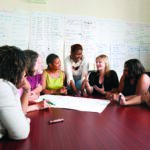
LEARNING (FROM) THE LINGO
“Baldamoreans do not speak the king’s English.”
That’s how one Lexington Market patron jokingly described the city’s linguistic style to Inte’a DeShields ’13 in a podcast that was produced as a class assignment by the language, literacy and culture Ph.D. student.
But that’s exactly how Christine Mallinson, an assistant professor in the program, likes it.
“Not that much linguistic research has been done on the unique accents of Baltimore, but the city is a good laboratory for studying language variation,” Mallinson explains.
Charm City is a living laboratory for Mallinson’s research and pedagogy. The podcast, for example, was a product of firsthand research on linguistic variations in Baltimore by students in Mallinson’s “Language in Diverse Schools and Communities” class.
DeShields’ research and podcast explored common pronunciations among African American communities in Baltimore, especially a tendency to pronounce the city’s name as “Baldamore.” Other students researched language in multilingual communities and what Baltimore’s women say about themselves when they claim the word “hon.”
Mallinson created her own podcast, too, featuring teachers who discuss how language variation affects students and the strategies they’ve used to improve their teaching. Working with these teachers is the current focus of Mallinson’s research, and the subject of her recent book, Understanding English Language Variation in U.S. Schools, which she co-authored with Charity Hudley, an associate professor of English, linguistics, and Africana studies at the College of William and Mary.
“Language really matters in everything we do,” says Mallinson. She argues language is an important part of social identity: a definitional marker not only for others but for one’s self.
For students without a background in academic English, she continues, language can often be a barrier to achievement.
Mallinson is committed not only to describing that classroom challenge, but also to giving teachers tools to combat it. One teacher in Mallinson’s podcast tells the story of a non-native English speaker who was reluctant to participate in classroom discussions. However, when that teacher had the class read a story containing a Spanish word, the student eagerly joined in the discussion.
Mallinson has recently turned her focus to science and math teaching in K-12 classrooms, organizing workshops that train teachers to recognize and help students who struggle with the language elements of math and science curricula. If students understand the arithmetic in a word problem but produce a wrong answer because they misunderstand the question’s syntax, Mallinson and Hudley offer strategies to assist both students and teachers.
“Linguistically diverse students don’t leave their language patterns at the door when they come to math and science classrooms,” Mallinson explains. She and Hudley were recently awarded a three-year grant from the National Science Foundation to continue conducting workshops in Maryland and Virginia and follow up with teachers to learn which strategies are most successful.
“Linguists have usually studied language variation with respect to English classrooms,” Mallinson says. “Teachers are really excited that somebody is paying attention to language in math and science.”
— Chelsea Haddaway
(All of the podcasts are available at www.BaltimoreLanguage.com.)
A COLLECTING CALL
 It took Marie Spiro five decades – and a bit of heavy lifting – to create her personal collection of ancient artifacts. “Anytime I came back from a site,” she quips, “I had the heaviest suitcase.”
Spiro is an associate professor emerita of art and archaeology at the University of Maryland, College Park, and her dramatic recounting of a particular object’s discovery can quiet a rowdy classroom. The collection features over 1,000 Greek, Roman and Byzantine artifacts, and contains mosaics, pottery, figurines and other pieces that date back as far as 15,000 years.
Indeed, students were at the heart of Spiro’s enterprise. She relished sharing the pieces she brought home with them in classes, encouraging them to touch and handle the objects in ways that they couldn’t at a museum, or by looking at a photograph.
So when Spiro decided to donate her collection, she looked for a place that would follow her example. She settled on UMBC’s ancient studies department, where the first third of Spiro’s collection was used in classrooms this past February. (The next third of the artifacts will come to campus in early 2012, with the final portion arriving in 2013.)
“I think the ancient studies program [at UMBC] is the best, I really do,” says Spiro. “I’m so happy that the collection has found a home. That’s my dream fulfilled.”
Hands-on learning is a priority for Marilyn Goldberg, chair of ancient studies, who says she is delighted with the gift. She points to the value in the number of objects in the collection that ancient people used in their everyday lives, and how students can now physically interact with ancient artifacts without even leaving campus.
 “Students can look at a piece in its entirety, look at the back of it and the profile of it, see how it’s made,” Goldberg says. “You can’t turn a picture over.”
Goldberg and other campus leaders secured the financial support of local Greek organizations – including the Baltimore-Piraeus Sister City Committee and the American Hellenic Educational Progressive Associations of Baltimore and Washington, DC – to bring the collection to UMBC. UMBC’s plans for the collection include an archaeology lab that will be part of the second phase of construction of the university’s Performing Arts and Humanities Building. It will be a space where students can study the artifacts and display the exhibits they curate.
Students enrolled in a museum studies class taught by Esther Read, lecturer in ancient studies, in the spring semester were the first to use the collection. The class was a lecture/lab hybrid in which students discussed issues faced by museums in each session before working with the Spiro’s artifacts.
“I want them to see that these objects are more than just pretty things in cases. Whoever owned that piece originally, it had meaning to them. It had meaning to Marie Spiro when she collected it. It has different meaning now that she’s given it to us, and it’ll have a meaning here at the institution and for the student who works with it,” says Read. “You have so many groups and so many relationships with one object. Which story do you present?”
— Chelsea Haddaway
THE WRITE STUFF
 Many doctoral candidates will tell you that the biggest obstacle they face in obtaining a Ph.D. is a task that’s completely in their own hands: their doctoral dissertation.
That’s why nine UMBC graduate students have assembled on the third floor of The Commons bright and early on a Monday in July to attend “Dissertation House” – a weeklong session of goal-setting, dedicated working time and concrete advice from experts aimed at getting them closer to finishing the capstone of their graduate experience.
The week of coaching was created by PROMISE – Maryland’s Alliance for Graduate Education and the Professoriate, which includes UMBC as well as the University of Maryland campuses at Baltimore and College Park. PROMISE is one of 21 alliances created by the National Science Foundation (NSF) to increase the number of U.S. students receiving Ph.D.’s in science, technology, engineering and mathematics (or “STEM”) disciplines, with a special focus on boosting the numbers of doctorates taken by minority students.
The “head coach” of Dissertation House is Wendy Carter, a nationally renowned expert on strategies for dissertation completion. (She’s even written a book and created a company – TADA!: Thesis and Dissertation Accomplished – to tackle the completion problems that students face.)
Carter shares her mantra with the assembled graduate students: “A good dissertation is a done dissertation.” After laying out challenges and offering tips (“When you read journal articles, always do a summary”), she has the students write their goals for the week on large sheets of white paper hung on the walls of the room.
The coaching starts as soon as the students present those goals to the group. Carter urges some students to clarify their tasks, and revise them towards greater self-accountability. “They need to be measurable,” she tells the group.
Renetta Garrison Tull, the director of the PROMISE program, says that participants gain valuable tips and advice from Carter and a wide range of guest speakers throughout the week – including Janet Rutledge, the dean of UMBC’s Graduate School and vice provost for graduate education, who stresses the importance of developing a strong mentoring relationship with one’s thesis advisor.
Tull also sees personal transformation and the acquisition of clarity, direction and self-discipline in the dissertation process as the key benefit of the weeklong experience. She tells the students that such things don’t come easily – and that Dissertation House is intended to be a catalyst to get them there. “We don’t leave you where you are,” she tells the group. “We move you forward. And sometimes that’s uncomfortable.” The Dissertation House was founded in 2006 and has shepherded over 70 students to Ph.D. completion in its first five years.
And when Friday rolls around for the Summer 2011 class, the sense that these nine students are on their way to joining those other alumni is palpable. The room is abuzz with activity, and the lists of goals placed on the wall on Monday are now emblazoned with items crossed out or checked off.
Look for them in a commencement ceremony soon.
— Richard Byrne ’86
DECADE OF SERVICE
 When Jason Woody ’04, sociology, received his acceptance letter to be part of the first class of the Shriver Living Learning Center (SLLC) ten years ago, he wanted to be a film major. And though he was interested in the social justice focus of the new center, he was also enticed by Erickson Hall, the sleek new dorm on campus that SLLC students would call home.
Woody found the SLLC’s service mentality contagious and it quickly came to define his worldview. In his sophomore year, he came across a poster asking students to dedicate service hours to honor those killed in the 9/11 attacks and took that call to heart. Back in his dorm room, he paged through biographies of the victims.
The story of Deora Bodley – a college student who died aboard United Flight 93, which crashed near Shanksville, Pennsylvania – gripped him most personally. Friends remembered Bodley for her own dedication to serving others. In her name, Woody launched a mentorship program for elementary-aged Baltimore youth to learn team-building skills: Project Team. The Shriver Center offered a van, help recruiting volunteers and credibility with partner organizations.
Shriver Center Director Michele Wolff remembers designing the SLLC to reflect “the true essence of service-learning.” Community members are required to complete both regular service throughout their residency and coursework that provides context and promotes reflection. As an affinity program, the SLLC also offers students a purposeful living experience with a built-in peer support network to help them confront the demands of service commitments.
Woody credits the support of fellow SLLC residents for his growth as a service leader. Kelly Subramanian ’08, biology and psychology, a former SLLC resident assistant, understands his perspective. “Personal relationships develop where you’re not only living together, you’re also serving together,” she says.
By the time Subramanian arrived a few years after Woody, the SLLC had already developed a reputation for its unique way of fostering students’ intellectual and personal growth. The program itself – more than the sleek new dorm – had become the attraction. “You’re helping other people and learning about what’s out there, but you’re also learning about yourself, what you value and what you want to do with your life,” Subramanian reflects.
Senior Benjamin Davis ’12, who hopes to teach in Baltimore City after graduation, calls the SLLC “a home for people just like me who expressed passion or interest in volunteering.” Davis tackled personal hardships and shyness, he says, by “working with other civically engaged individuals.”
Jason Woody never did take a single film class at UMBC. Instead, he pursued a career serving adults with mental illness. His organization, B’more Clubhouse, offers transitional employment and social and educational programs to help adults with mental illness develop confidence, skills and meaningful relationships, and reduce stigma against mental illness in the broader community. “I’ve seen people achieve milestones, big and small, that are life-changing,” he says.
Woody adds that he is still learning from others through service. His work has helped him develop patience and understanding. In this way, he says, the members of B’more Clubhouse are now his teachers.
— Dinah Winnick
]]>
LEARNING (FROM) THE LINGO “Baldamoreans do not speak the king’s English.” That’s how one Lexington Market patron jokingly described the city’s linguistic style to Inte’a DeShields ’13 in a...
https://umbc.edu/stories/discovery-fall-2011/
https://beta.my.umbc.edu/api/v0/pixel/news/124527/guest@my.umbc.edu/d8548a657f9e68ad8c1ebbeacff923bb/api/pixel
ancs
christine-mallinson
discovery
esther-read
fall-2011
intea-deshields
janet-rutledge
llc
marie-spiro
marilyn-goldberg
michele-wolff
renetta-tull
UMBC News & Magazine
https://beta.my.umbc.edu/groups/umbc-news-magazine
https://assets1-beta.my.umbc.edu/system/shared/avatars/groups/000/001/943/24435aa6207c452e7bc15cc74b42c7bb/xsmall.png?1748556657
https://assets1-beta.my.umbc.edu/system/shared/avatars/groups/000/001/943/24435aa6207c452e7bc15cc74b42c7bb/original.png?1748556657
https://assets2-beta.my.umbc.edu/system/shared/avatars/groups/000/001/943/24435aa6207c452e7bc15cc74b42c7bb/xxlarge.png?1748556657
https://assets2-beta.my.umbc.edu/system/shared/avatars/groups/000/001/943/24435aa6207c452e7bc15cc74b42c7bb/xlarge.png?1748556657
https://assets3-beta.my.umbc.edu/system/shared/avatars/groups/000/001/943/24435aa6207c452e7bc15cc74b42c7bb/large.png?1748556657
https://assets1-beta.my.umbc.edu/system/shared/avatars/groups/000/001/943/24435aa6207c452e7bc15cc74b42c7bb/medium.png?1748556657
https://assets2-beta.my.umbc.edu/system/shared/avatars/groups/000/001/943/24435aa6207c452e7bc15cc74b42c7bb/small.png?1748556657
https://assets1-beta.my.umbc.edu/system/shared/avatars/groups/000/001/943/24435aa6207c452e7bc15cc74b42c7bb/xsmall.png?1748556657
https://assets2-beta.my.umbc.edu/system/shared/avatars/groups/000/001/943/24435aa6207c452e7bc15cc74b42c7bb/xxsmall.png?1748556657
UMBC News & Magazine
0
0
false
Fri, 02 Sep 2011 16:38:18 -0400
 When UMBC provost Elliot Hirshman departed in June to become the new president of San Diego State University, the university quickly tapped two of its distinguished academic leaders to fill key positions for the upcoming academic year.
 Ralph Semmel ’92, Ph.D., computer science, is the UMBC Alumnus of the Year in Engineering and Information Technology. In 2010, Semmel was named as the eighth director of The Johns Hopkins University Applied Physics Laboratory – one of the most prominent hubs of advanced technological research in the world.
 Ronita Marple, ’05, Ph.D., chemistry, is the UMBC Alumna of the Year in the Natural and Mathematical Sciences. She is an analytical chemist and senior scientist for consumer goods giant Procter & Gamble.
 Jamie Smith Hopkins ’98, English, is the UMBC Alumna of the Year in the Humanities. She has been a reporter at The Baltimore Sun since 1999, and writes and blogs for the paper on the housing industry in the Baltimore metropolitan region. (UMBC Magazine profiled Hopkins in its Summer 2010 issue.)
 Garrett Wright ’01, theatre, is the UMBC Alumnus of the Year in the Visual and Performing Arts. Wright is a staff attorney at the Urban Justice Center’s Community Development Project, where he provides legal support to low-income tenants and tenant organizations.
 Dr. Jeffery Wilkinson ’89, interdisciplinary studies, is the UMBC Alumnus of the Year in the Social Sciences. He works at the University of North Carolina’s School of Medicine, and he has won renown as a global leader in combating obstetric fistula in some of the poorest regions of the world – including Asia and sub-Saharan Africa. (Wilkinson was profiled in the Summer 2009 issue of UMBC Magazine.)
 Delali Dzirasa ’04, computer engineering, is UMBC’s Young Alumni Rising Star. He is the owner of Fearless Solutions, a cybersecurity company based in the bwtech@UMBC Research Park that focuses on secure software development, and already boasts several contracts with the federal government.


