Tower Transformer – Kelley Bell '06, MFA

Picture this: It’s a cool, crisp night and you’re cruising north up Interstate 95, with the city of Baltimore rising up before you. The image of a metropolis can rise and fall with its skyline and its immense iconic representation of the city’s civic aspirations.
Much of Baltimore’s story is written in its skyline. There’s the urban renewal that spawned the National Aquarium and the twin stadiums of South Baltimore, for instance. The city’s history is also etched there in places such as the famous and distinctive Emerson Bromo-Seltzer Tower, which was built in 1911 at the corner of Eutaw and Lombard Streets.
Kelley Bell ’06, M.F.A., a graphic designer and professor at UMBC, was recently given an opportunity to transform the city’s skyline by creating art within the tower’s distinctive clock faces. Her exhibit is based on the renowned astronomical clock in Prague, and features the sun, the moon, and planets and stars circling in orbit around the tower. Bell even did careful calculations to ensure that her representations of heavenly bodies synched up with their celestial counterparts.
Bell moved to Baltimore in 2002, and quickly fell in love with the local art scene. “People are willing to share ideas and collaborate, and that’s an integral part of the work I do,” she explains.
Not long after her arrival, Bell enrolled in UMBC’s Imaging and Graphic Design M.F.A. program. She says the program’s faculty and her fellow students exposed her to new opportunities and ideas within her field, and she ultimately decided to take four years to complete her studies. “That fourth year [at UMBC] was the best thing I’ve done in terms of my development as an artist,” she says.
That last year, in fact, was when Bell started working with a projector as a means of enriching and showcasing her work.
“One of the challenges, for me, was figuring out how to get my work off the screen,” says Bell. “As long as you have that piece of glass separating you from the work, there’s a barrier.”
Bell began the push to move away from the screen by creating a series of expansive gallery installation pieces, but she ultimately moved to using a projector because it allowed for a more manageable and portable experience.
One of the artist’s early projector-based pieces was called “White Light, Black Birds.” It involved Bell driving around Baltimore City and beaming her depictions of ravens on to various historical buildings, as well as sites of less importance, such as gas tanks.
“White Light, Black Birds” was meant to highlight how the natural and necessary act of urban development also has a downside. “There’s so much of Baltimore’s character being lost,” Bell says. “I wanted to see if people were noticing this and if they cared.”
The “White Light, Black Birds” project gave Bell a new insight into her own artistic passions and how they might express her concerns about architecture as history and the use of public space. It drove her to experiment with projection, to see how light would look on different buildings. And it ultimately led to her work with the Bromo-Seltzer Tower, which Bell sees as a great honor.
This most recent exhibition is actually Bell’s second project with the Bromo-Seltzer Tower. A few years ago, Bell met with the tower’s manager because she was interested in projecting art on the outside of the building. Instead, he showed her the glass faces of the clocks, and Bell was hooked. After months of testing, she projected blue bubbles onto the clock faces, echoing the fizz and pop of the tower’s antacid namesake. This bubbly project set the stage for the new celestial exhibit, and Bell couldn’t be more pleased with the results.
“This is the highest point you can get to,” she says. “I go up in that tower and I think, ‘I’m the luckiest person in Baltimore. This is my office.’ How many people can say that?”
— Meredith Purvis
Photo: Josh Sisk/joshsisk.com
]]>
Picture this: It’s a cool, crisp night and you’re cruising north up Interstate 95, with the city of Baltimore rising up before you. The image of a metropolis can rise and fall with its skyline and...
https://umbc.edu/stories/tower-transformer-kelley-bell-06-mfa-2-2/
https://beta.my.umbc.edu/api/v0/pixel/news/124268/guest@my.umbc.edu/98fc321d3364c692848e0fe1bad63ae8/api/pixel
alumni
kelley-bell
visual-arts
winter-2012
UMBC News & Magazine
https://beta.my.umbc.edu/groups/umbc-news-magazine
https://assets1-beta.my.umbc.edu/system/shared/avatars/groups/000/001/943/24435aa6207c452e7bc15cc74b42c7bb/xsmall.png?1748556657
https://assets1-beta.my.umbc.edu/system/shared/avatars/groups/000/001/943/24435aa6207c452e7bc15cc74b42c7bb/original.png?1748556657
https://assets2-beta.my.umbc.edu/system/shared/avatars/groups/000/001/943/24435aa6207c452e7bc15cc74b42c7bb/xxlarge.png?1748556657
https://assets2-beta.my.umbc.edu/system/shared/avatars/groups/000/001/943/24435aa6207c452e7bc15cc74b42c7bb/xlarge.png?1748556657
https://assets3-beta.my.umbc.edu/system/shared/avatars/groups/000/001/943/24435aa6207c452e7bc15cc74b42c7bb/large.png?1748556657
https://assets1-beta.my.umbc.edu/system/shared/avatars/groups/000/001/943/24435aa6207c452e7bc15cc74b42c7bb/medium.png?1748556657
https://assets2-beta.my.umbc.edu/system/shared/avatars/groups/000/001/943/24435aa6207c452e7bc15cc74b42c7bb/small.png?1748556657
https://assets1-beta.my.umbc.edu/system/shared/avatars/groups/000/001/943/24435aa6207c452e7bc15cc74b42c7bb/xsmall.png?1748556657
https://assets2-beta.my.umbc.edu/system/shared/avatars/groups/000/001/943/24435aa6207c452e7bc15cc74b42c7bb/xxsmall.png?1748556657
UMBC News & Magazine
0
0
false
Thu, 19 Jan 2012 21:26:07 -0500
Tower Transformer – Kelley Bell ’06, MFA
Picture this: It’s a cool, crisp night and you’re cruising north up Interstate 95, with the city of Baltimore rising up before you. The image of a metropolis can rise and fall with its skyline and its immense iconic representation of the city’s civic aspirations.
Much of Baltimore’s story is written in its skyline. There’s the urban renewal that spawned the National Aquarium and the twin stadiums of South Baltimore, for instance. The city’s history is also etched there in places such as the famous and distinctive Emerson Bromo-Seltzer Tower, which was built in 1911 at the corner of Eutaw and Lombard Streets.
Kelley Bell ’06, M.F.A., a graphic designer and professor at UMBC, was recently given an opportunity to transform the city’s skyline by creating art within the tower’s distinctive clock faces. Her exhibit is based on the renowned astronomical clock in Prague, and features the sun, the moon, and planets and stars circling in orbit around the tower. Bell even did careful calculations to ensure that her representations of heavenly bodies synched up with their celestial counterparts.
Bell moved to Baltimore in 2002, and quickly fell in love with the local art scene. “People are willing to share ideas and collaborate, and that’s an integral part of the work I do,” she explains.
Not long after her arrival, Bell enrolled in UMBC’s Imaging and Graphic Design M.F.A. program. She says the program’s faculty and her fellow students exposed her to new opportunities and ideas within her field, and she ultimately decided to take four years to complete her studies. “That fourth year [at UMBC] was the best thing I’ve done in terms of my development as an artist,” she says.
That last year, in fact, was when Bell started working with a projector as a means of enriching and showcasing her work.
“One of the challenges, for me, was figuring out how to get my work off the screen,” says Bell. “As long as you have that piece of glass separating you from the work, there’s a barrier.”
Bell began the push to move away from the screen by creating a series of expansive gallery installation pieces, but she ultimately moved to using a projector because it allowed for a more manageable and portable experience.
One of the artist’s early projector-based pieces was called “White Light, Black Birds.” It involved Bell driving around Baltimore City and beaming her depictions of ravens on to various historical buildings, as well as sites of less importance, such as gas tanks.
“White Light, Black Birds” was meant to highlight how the natural and necessary act of urban development also has a downside. “There’s so much of Baltimore’s character being lost,” Bell says. “I wanted to see if people were noticing this and if they cared.”
The “White Light, Black Birds” project gave Bell a new insight into her own artistic passions and how they might express her concerns about architecture as history and the use of public space. It drove her to experiment with projection, to see how light would look on different buildings. And it ultimately led to her work with the Bromo-Seltzer Tower, which Bell sees as a great honor.
This most recent exhibition is actually Bell’s second project with the Bromo-Seltzer Tower. A few years ago, Bell met with the tower’s manager because she was interested in projecting art on the outside of the building. Instead, he showed her the glass faces of the clocks, and Bell was hooked. After months of testing, she projected blue bubbles onto the clock faces, echoing the fizz and pop of the tower’s antacid namesake. This bubbly project set the stage for the new celestial exhibit, and Bell couldn’t be more pleased with the results.
“This is the highest point you can get to,” she says. “I go up in that tower and I think, ‘I’m the luckiest person in Baltimore. This is my office.’ How many people can say that?”
— Meredith Purvis
Photo: Josh Sisk/joshsisk.com
]]>
Picture this: It’s a cool, crisp night and you’re cruising north up Interstate 95, with the city of Baltimore rising up before you. The image of a metropolis can rise and fall with its skyline and...
https://umbc.edu/stories/tower-transformer-kelley-bell-06-mfa-2/
https://beta.my.umbc.edu/api/v0/pixel/news/124269/guest@my.umbc.edu/98a0b4e4f3bb025b8fc7d3b1fca8d806/api/pixel
alumni
kelley-bell
visual-arts
winter-2012
UMBC News & Magazine
https://beta.my.umbc.edu/groups/umbc-news-magazine
https://assets1-beta.my.umbc.edu/system/shared/avatars/groups/000/001/943/24435aa6207c452e7bc15cc74b42c7bb/xsmall.png?1748556657
https://assets1-beta.my.umbc.edu/system/shared/avatars/groups/000/001/943/24435aa6207c452e7bc15cc74b42c7bb/original.png?1748556657
https://assets2-beta.my.umbc.edu/system/shared/avatars/groups/000/001/943/24435aa6207c452e7bc15cc74b42c7bb/xxlarge.png?1748556657
https://assets2-beta.my.umbc.edu/system/shared/avatars/groups/000/001/943/24435aa6207c452e7bc15cc74b42c7bb/xlarge.png?1748556657
https://assets3-beta.my.umbc.edu/system/shared/avatars/groups/000/001/943/24435aa6207c452e7bc15cc74b42c7bb/large.png?1748556657
https://assets1-beta.my.umbc.edu/system/shared/avatars/groups/000/001/943/24435aa6207c452e7bc15cc74b42c7bb/medium.png?1748556657
https://assets2-beta.my.umbc.edu/system/shared/avatars/groups/000/001/943/24435aa6207c452e7bc15cc74b42c7bb/small.png?1748556657
https://assets1-beta.my.umbc.edu/system/shared/avatars/groups/000/001/943/24435aa6207c452e7bc15cc74b42c7bb/xsmall.png?1748556657
https://assets2-beta.my.umbc.edu/system/shared/avatars/groups/000/001/943/24435aa6207c452e7bc15cc74b42c7bb/xxsmall.png?1748556657
UMBC News & Magazine
0
0
false
Thu, 19 Jan 2012 21:26:07 -0500
To You – Winter 2012
Back in 1985 and 1986, when I was the editor of UMBC’s literary magazine, Bartleby, one of my professors gave me something I have kept for more than 25 years: a copy of the UMBC literary magazine distributed to students in February 1969.
The 1969 literary magazine is a part of the university’s folklore, largely because the inclusion of a series of soft-focus photographs of two nude dancers caused a sensation off-campus among the local community and state legislators. But the magazine’s appearance also kicked off an era of student and faculty protest at UMBC – and provided the first serious test to the leadership of founding president Albin O. Kuhn.
In this issue of UMBC Magazine (“Blow Up”), I trace the story behind the campus turmoil caused by the publication, and excavate the events at UMBC in that spring and summer.
Some of those involved in the literary magazine controversy generously volunteered their recollections of the event, including distinguished photographer and painter Robert Stark, whose photographs graced the magazine all those years ago. (To see what Stark has been up to since 1969, when the photographs published in the magazine were also hanging in a one-man show at the Corcoran Gallery of Art, see his website: susquehannastudio.blogspot.com)
Other participants in the 1969 drama are now deceased, or proved unwilling to talk or impossible to find. Thus, the help that I received from the Special Collections division of the Albin O. Kuhn Library & Gallery proved essential to filling in the gaps. Chief curator Tom Beck opened up the tremendous holdings of the library’s collection of UMBC history to me, and university archivist Lindsey Loeper ’04 proved a patient and invaluable guide to the university’s holdings – including back issues of The Retriever and Kuhn’s presidential papers.
In associate editor Jenny O’Grady’s story on some of the delightful and unusual jobs that help keep UMBC at the forefront of innovation and excellence in higher education (“The Coolest Jobs at UMBC”), you can read more about Loeper and how she is helping collect and make sense of documents that will allow future generations to discover how UMBC was founded and grew into one of Maryland’s renowned universities.
Along with the entire staff of UMBC Magazine, I am extraordinarily proud of the magazine that we send to you three times a year. In November, we had even more reason to be proud of our efforts when we were notified that UMBC Magazine had received a gold medal in the Magazine category in the District II awards for 2012 handed out by the Council for Advancement and Support of Education (CASE).
— Richard Byrne ’86
]]>
Back in 1985 and 1986, when I was the editor of UMBC’s literary magazine, Bartleby, one of my professors gave me something I have kept for more than 25 years: a copy of the UMBC literary magazine...
https://umbc.edu/stories/to-you-winter-2012/
https://beta.my.umbc.edu/api/v0/pixel/news/124270/guest@my.umbc.edu/e74cbadc508174cfc014ffb9c4052bd5/api/pixel
perspectives
winter-2012
UMBC News & Magazine
https://beta.my.umbc.edu/groups/umbc-news-magazine
https://assets1-beta.my.umbc.edu/system/shared/avatars/groups/000/001/943/24435aa6207c452e7bc15cc74b42c7bb/xsmall.png?1748556657
https://assets1-beta.my.umbc.edu/system/shared/avatars/groups/000/001/943/24435aa6207c452e7bc15cc74b42c7bb/original.png?1748556657
https://assets2-beta.my.umbc.edu/system/shared/avatars/groups/000/001/943/24435aa6207c452e7bc15cc74b42c7bb/xxlarge.png?1748556657
https://assets2-beta.my.umbc.edu/system/shared/avatars/groups/000/001/943/24435aa6207c452e7bc15cc74b42c7bb/xlarge.png?1748556657
https://assets3-beta.my.umbc.edu/system/shared/avatars/groups/000/001/943/24435aa6207c452e7bc15cc74b42c7bb/large.png?1748556657
https://assets1-beta.my.umbc.edu/system/shared/avatars/groups/000/001/943/24435aa6207c452e7bc15cc74b42c7bb/medium.png?1748556657
https://assets2-beta.my.umbc.edu/system/shared/avatars/groups/000/001/943/24435aa6207c452e7bc15cc74b42c7bb/small.png?1748556657
https://assets1-beta.my.umbc.edu/system/shared/avatars/groups/000/001/943/24435aa6207c452e7bc15cc74b42c7bb/xsmall.png?1748556657
https://assets2-beta.my.umbc.edu/system/shared/avatars/groups/000/001/943/24435aa6207c452e7bc15cc74b42c7bb/xxsmall.png?1748556657
UMBC News & Magazine
0
0
false
Thu, 19 Jan 2012 21:24:58 -0500
The News – Winter 2012
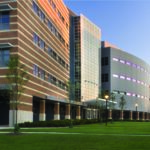
CENTER OF ATTENTION
When the Universities at Shady Grove (USG) opened in Montgomery County in the fall of 2000, the project was an innovative concept in higher education: a place where part-time students could attend classes offered by a variety of public institutions.
UMBC has been a key part of Shady Grove from the beginning, and this fall, UMBC celebrated its 10th anniversary as part of the endeavor, which has grown now into a state-of-the-art center offering more than 60 degree programs in partnership with nine University System of Maryland schools and serving more than 3,650 undergraduate and graduate students.
UMBC offers a wide range of degrees at the Shady Grove center, including bachelor’s degrees in management of aging services, history, political science, psychology and social work, and graduate degrees in industrial/organizational psychology and geographic information systems.
“Many of my students have responsibilities to their families and communities and are unable to pursue a traditional college route by leaving home,” says Katie Morris, program director of UMBC’s baccalaureate social work program at USG. “UMBC at Shady Grove allows them to pursue an excellent education and remain connected to their home community.”
UMBC plans to expand its role at USG, especially in science and technology – a development welcomed by USG Executive Director Stewart Edelstein.
“I look forward to the day when UMBC brings its mechanical engineering program to USG,” Edelstein says, “building on their nationally recognized success in graduating highly skilled scientists and engineers, specifically among minority student populations.”
— Gavin St. Ours
PHILANTHROPY MADE EASY
 Universities reach out to alumni and other donors in a number of ways. But with UMBC’s new giving website, you can track all the reasons that your philanthropy to the university makes a difference with a simple mouse click.
The new website offers a wide sampling of the latest social media trends with a Retriever twist – including multimedia presentations, a Tumblr account that clues you to daily campus happenings and a new blog on giving.
The blog is where you’ll discover introductions to some of the UMBC students who work in the university’s recently opened Phonathon Center in Alumni House, find your name on the university’s online Donor Roll, meet some of the recipients of the scholarships that exist only because of the generosity of donors and see a slideshow of a recent dinner with President Freeman A. Hrabowski, III that the university hosted for The 1966 Society – UMBC’s community of those who’ve made planned gifts to the university.
UMBC’s giving website also has a comprehensive FAQ page (What’s a gift-in-kind?) and a link where you can make your donation whenever the impulse to give back to UMBC strikes you.
The larger world of university communications has already taken note of UMBC’s new cyber-initiative. The website itself – which was designed by Jim Lord ’99, design director of UMBC’s Creative Services department, and Jenny O’Grady, director of alumni and development communications – won a 2012 Region II silver medal in the Website: Fundraising/Development category from the Council for Advancement and Support of Education (CASE).
— Richard Byrne ’86
AN AUTUMN TO REMEMBER
 UMBC and its president Freeman A. Hrabowski, III have gathered many kudos over the past few years both for the university’s innovations in increasing diversity in the so-called “STEM” fields (science, technology, engineering and mathematics) and for reshaping courses to improve student outcomes.
But November and December 2011 brought an avalanche of attention to the achievements of the university and its president – including a prestigious award, a coveted feature on the award-winning CBS news magazine 60 Minutes and an invitation to the White House.
Early in November, Hrabowski was selected as the recipient of the Centennial Academic Leadership Award from the Carnegie Corporation. The Carnegie award brought with it a $500,000 prize, which UMBC’s president has given to the university to create a new Hrabowski Fund for Academic Innovation.
The new fund will help anchor UMBC’s successes in revising its curriculum, extend those efforts across the university, and further connect the school’s use of the power of technology and entrepreneurship to achieve those ends. (See “Up on the Roof”)
On November 13, American television viewers got to hear about UMBC’s success and the philosophy behind it from the university’s president himself. Hrabowski was interviewed by 60 Minutes correspondent Byron Pitts in a feature that focused largely on the university’s remarkable record in fostering minority achievement in the STEM fields through the Meyerhoff Scholars program and other initiatives.
But Hrabowski says that the response he’s received as a result of UMBC’s appearance on such a prominent national stage has been “much broader” than a celebration of UMBC’s prowess in one particular aspect of its mission.
“The 60 Minutes feature conveyed an old-fashioned message that hard work and discipline and structure and support can make a big difference,” Hrabowski observes. “That’s what people from all walks of life, of different ages and politics, whether they are in the field of education or outside of it, have said to me. UMBC is a place that really cares about students. So it wasn’t just a reaction about one specific issue, but more about the university’s approach to students – and that we expect the most from students – and that we are obtaining results that are among the most impressive in the country.”
It isn’t just a national television audience that’s taking notice. On the heels of the 60 Minutes appearance, Hrabowski was one of a select group of national college and university leaders (including the University System of Maryland’s chancellor, William E. “Brit” Kirwan) invited by President Barack Obama to the White House on December 5 to discuss hot-button issues of college affordability, productivity and innovation.
Hrabowski says that he’s still getting a lot of response to a very busy autumn. “I had not appreciated the power of the media,” he observes.
“Anywhere I go in the nation now – Charlotte, North Carolina, or Houston, Texas, or Chicago, Illinois – people say: ‘ 60 Minutes. UMBC.’”
— Richard Byrne ’86
]]>
CENTER OF ATTENTION When the Universities at Shady Grove (USG) opened in Montgomery County in the fall of 2000, the project was an innovative concept in higher education: a place where...
https://umbc.edu/stories/the-news-winter-2012/
https://beta.my.umbc.edu/api/v0/pixel/news/124271/guest@my.umbc.edu/a9477cdaf183c69b11e1ecdb87cc481f/api/pixel
campus-life
winter-2012
UMBC News & Magazine
https://beta.my.umbc.edu/groups/umbc-news-magazine
https://assets1-beta.my.umbc.edu/system/shared/avatars/groups/000/001/943/24435aa6207c452e7bc15cc74b42c7bb/xsmall.png?1748556657
https://assets1-beta.my.umbc.edu/system/shared/avatars/groups/000/001/943/24435aa6207c452e7bc15cc74b42c7bb/original.png?1748556657
https://assets2-beta.my.umbc.edu/system/shared/avatars/groups/000/001/943/24435aa6207c452e7bc15cc74b42c7bb/xxlarge.png?1748556657
https://assets2-beta.my.umbc.edu/system/shared/avatars/groups/000/001/943/24435aa6207c452e7bc15cc74b42c7bb/xlarge.png?1748556657
https://assets3-beta.my.umbc.edu/system/shared/avatars/groups/000/001/943/24435aa6207c452e7bc15cc74b42c7bb/large.png?1748556657
https://assets1-beta.my.umbc.edu/system/shared/avatars/groups/000/001/943/24435aa6207c452e7bc15cc74b42c7bb/medium.png?1748556657
https://assets2-beta.my.umbc.edu/system/shared/avatars/groups/000/001/943/24435aa6207c452e7bc15cc74b42c7bb/small.png?1748556657
https://assets1-beta.my.umbc.edu/system/shared/avatars/groups/000/001/943/24435aa6207c452e7bc15cc74b42c7bb/xsmall.png?1748556657
https://assets2-beta.my.umbc.edu/system/shared/avatars/groups/000/001/943/24435aa6207c452e7bc15cc74b42c7bb/xxsmall.png?1748556657
UMBC News & Magazine
0
0
false
Thu, 19 Jan 2012 21:12:03 -0500
The Coolest Jobs (You Never Knew Existed) at UMBC
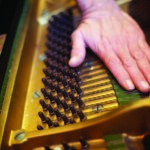
It takes a lot of hands to keep UMBC running. Fingers typing in the information to get your transcript in the mail. Gloved hands that keep an experiment in a chemistry or biology lab on course. The fingers of a professor, grasping chalk or a dry-erase pen. Yet there is some work at UMBC that requires a special touch. We’d like you to meet five such employees – members of the university community with jobs that are both surprising and essential to making UMBC a better place.
By Jenny O’Grady
Photos by Chris Hartlove
The Guru of Glass
 Name: Tony Baney
Occupation: Glass Blower
Time sheet: 13 years at UMBC
 Glass may be fragile. But the process of making it is not for the delicate of hand or heart. Tony Baney, a second-generation glass blower who works in UMBC’s glass shop, manages to keep his cool even while working with his hands ungloved amid Pyrex as hot as 1,500 degrees Celsius. On the floor near his feet, a cardboard box of broken shards bears the sign: “Tony FIX ME please!” A nearby radio blares “Beast of Burden” by the Rolling Stones.
He quickly wipes the sweat away and moves on to his next job, the repair of a piece of glassware used for short path distillation. It first passed through his hands when he made it for the chemistry department. “It’s cheaper to fix it,” he explains, coaxing a seemingly weightless bubble of glass into a U-shape that will allow liquids to flow through like a bendy soda straw. “Hopefully, this doesn’t break, or I have to start all over again.”
Baney learned this dying trade from his father, Narine Baney, who worked in the glass blowing trade at UMBC and elsewhere for 27 years. In addition to fixing dozens of pipettes and other pieces each day, he also works with graduate students to bring to life the complex, Dr. Seuss-esque designs they need for unique experiments.
“I had a design in my head, and I knew I wouldn’t be able to find it anywhere [in catalogs], so I gave it to Tony,” says Margaret Grow, a doctoral candidate in chemistry, who needed a piece of glassware that would allow for dialysis under inert conditions. “It worked perfectly.”
And if it hadn’t? It’d go back to the lathe, to be reshaped, re-curled, and recalibrated under Baney’s watchful eye.
Web Extra: Tony Baney
The Caretaker of Creatures
 Name: Rosie Mills
Occupation: Lab Animal Technician
Time sheet: 26 years at UMBC
 The rat notices a new person in the room. Rosie Mills notices the rat nervously noticing, and pulls him from his cage, patting him gently on the head. She whispers to him: “I know who is a grump.”
Mills has cared for and monitored the rats used in UMBC’s psychology research for more than 25 years, and has never changed her perfume so as not to scare the skittish creatures. “They’re used to their people. Did you know rats scare easier than birds, even?”
A self-professed “animal person,” Mills has filled her cubicle with photos of her personal pets – two doves, a cat (“Nesene,” Cheyenne for “my friend”), “Happy” the hedgehog (a Mother’s Day gift from her children). She would study wolves in the wild if she could, she says, but she feels that time in her life has passed.
The rats in this lab follow a purposely repetitive sort of schedule: feeding, pressing bars for treats, cleaning, weighing, repeat. Mills’ day mirrors theirs, so she moves quickly from task to task according to a communal biological clock she knows by heart. Without her, the lab could not function – the science would literally stop. And the rats? They’d miss a gentle woman who bathes them and slips them the occasional contraband Cheerio.
“I talk to them. I guess people think I’m nuts,” she says. “I stroke them, I scratch them behind the ears. Anything that’s alive needs some love.”
Web Extra: Rosie Mills
The Queen of Green
 Name: Donna Anderson
Occupation: Manager of Landscape and Grounds
Time sheet: 5 years at UMBC
 Nobody sees UMBC’s campus quite like Donna Anderson sees it. To her, every snowflake and drop of water has a destination, every plant a Latin name, and every goose dropping a potential repercussion for the ground underfoot.
“I look at the university as a small city,” says Anderson, who along with her crew oversees approximately 130 of UMBC’s 500 acres, including 3,500 trees, sidewalks, lawns, animal guests (everything from UMBC’s ubiquitous squirrels to yellow jackets to bagworms) and snow removal.
“To me, it is a place where people come to experience spaces and colors and textures,” she says. “To me, it’s not about the buildings, because I hardly go in the buildings.… It’s what’s outside. It’s what people see from point A to point B.”
A horticulturist by trade, Anderson spent years at public gardens and overseeing the landscape of the city of Frederick, Maryland, before coming to UMBC. Once here, she learned every nook and cranny of the campus – from the curving trails of the Knoll (a section of woods protected from the bulldozers during construction of the Retriever Activities Center) to a treasured beech behind the Math/Psych building.
“There are areas on campus that are such peaceful, comforting spaces,” she says, listing the Joseph Beuys Sculpture Park among her favorites. “I’m lucky to be able to spend so much of my time outside.”
Anderson also serves as the “unofficial head of recycling” on campus, as well as a liaison to UMBC’s landscape and stewardship committee, which last year helped organize the planting of 300 new trees behind Commons garage. She worked with True Grits, the campus dining hall, to institute a composting program, and is a big supporter of the green roof on the new wing of Patapsco Hall that opened last fall.
And then there’s the snow. Anderson is the first in the string of assessments and early morning phone calls that determine how late the campus community gets to sleep in. Much to her chagrin.
“I do dread the winter,” she admits. “Each year I pray for the snow not to start until after the Christmas break.”
Web Extra: Donna Anderson
The Surveyor of the Stacks
 Name: Lindsey Loeper ’04, American studies
Occupation: Archivist, Special Collections
Time sheet: 4 years at UMBC
 Lindsey Loeper ’04 acknowledges the futility of trying to keep pace with the hands of the watch and the rapidly turning pages of the calendar. No matter how quickly she and other members of the Special Collections team archive the stacks of UMBC documents they receive every day, there are always more coming. History never stops happening at a university that’s still building its story.
“We’re often asked when we’ll have everything digitized and we never will,” smiles Loeper, who earned her master’s of library sciences at College Park. “Instead, we try to create an online record that can lead you back [to the library], into the stacks.”
Already, the cool, darkened aisles contain 250 shelves stacked with nearly 750 linear feet of physical records, all neatly arranged in gray boxes. Add to that the online digital archives – launched in 2008 to make UMBC’s earliest documents, including many issues of The Retriever Weekly, easily available to the public – and you’re talking years and years of history waiting to be explored.
Just as she was inspired to pursue archive studies by Ed Orser, professor emeritus of American studies, Loeper now enjoys showing current students how to mine the archives, and how to interpret clues within photos, documents and films to make meaningful connections in their own research.
And even though it means perpetually more work down the road, Loeper spends a good deal of time pressing colleagues across campus for copies of magazines, pamphlets – anything that might help researchers of the future better understand the UMBC of today.
“Usually what they say is ‘Do you really want this?’ and I say ‘Yes, yes, yes!’” she says, describing the sometimes incredulous looks she gets when she asks for the contents of faculty and staff closets. “They may not understand why anyone would want to look at this, or why it’s important, but it is. We don’t necessarily think of ourselves as creating history in our everyday work. But it depends on how you look at it.”
Web Extra: Lindsey Loeper ’04
The Maker of Music
 Name: Ferdinand Maisel
Occupation: Music Coordinator/Dance Accompanist
Time sheet: On, off and around UMBC since 1979
 Before the first note sounds, the dance studio – with its heavy black tape stripes lining the floor – is like an enormous blank page of sheet music. Then, Ferdinand Maisel leans into the keys of the black grand piano in the corner, and suddenly students in sweats and bare feet dot the staff with whole-note pliés and staccato jumps.
Maisel – one of several accomplished accompanists in the dance program – watches the dancers, not the keys. He follows no score, improvising every phrase, looking to the instructor for signs – a snap, a nod, a clap – that a new beat is needed on the floor.
“Ferd knows more than almost anyone, what dancers need from the music,” says founding dance instructor Liz Walton. “Because he is a composer and not just an accompanist, he can tailor the music to fit what the dancer or instructor needs. Good musicians who simply accompany are not able to do that because they are relying on music they know how to play.”
For the beginner class, Maisel knows to emphasize the beat with a traveling right hand to help keep student leaps in line.
“Ferd is my favorite person in this department,” says senior dance major Ravae Duhaney. “He knows how to work with dancers. He can tell if we are having trouble, and he’ll work to help us. He’s so good at what he does.”
As the mood of movement shifts in class, his internal song shifts: first we had a tango, and now Maisel infuses the room with a Middle Eastern beat found in many of his personal compositions. At times, he switches to a silver QS6.2 electronic keyboard so students can work with other sounds: a violin, or a marimba, an entire orchestra.
“You know, I come to this with gobs of music history,” he says, moving into a new melody. “In a fantasy world, I like to think I’ve helped broaden these students’ perspectives about music.”
Web Extra: Ferdinand Maisel
]]>
It takes a lot of hands to keep UMBC running. Fingers typing in the information to get your transcript in the mail. Gloved hands that keep an experiment in a chemistry or biology lab on course....
https://umbc.edu/stories/the-coolest-jobs-you-never-knew-existed-at-umbc/
https://beta.my.umbc.edu/api/v0/pixel/news/124272/guest@my.umbc.edu/25a2b9b4425cef78b524c0bf12c3b8a0/api/pixel
campus-life
winter-2012
UMBC News & Magazine
https://beta.my.umbc.edu/groups/umbc-news-magazine
https://assets1-beta.my.umbc.edu/system/shared/avatars/groups/000/001/943/24435aa6207c452e7bc15cc74b42c7bb/xsmall.png?1748556657
https://assets1-beta.my.umbc.edu/system/shared/avatars/groups/000/001/943/24435aa6207c452e7bc15cc74b42c7bb/original.png?1748556657
https://assets2-beta.my.umbc.edu/system/shared/avatars/groups/000/001/943/24435aa6207c452e7bc15cc74b42c7bb/xxlarge.png?1748556657
https://assets2-beta.my.umbc.edu/system/shared/avatars/groups/000/001/943/24435aa6207c452e7bc15cc74b42c7bb/xlarge.png?1748556657
https://assets3-beta.my.umbc.edu/system/shared/avatars/groups/000/001/943/24435aa6207c452e7bc15cc74b42c7bb/large.png?1748556657
https://assets1-beta.my.umbc.edu/system/shared/avatars/groups/000/001/943/24435aa6207c452e7bc15cc74b42c7bb/medium.png?1748556657
https://assets2-beta.my.umbc.edu/system/shared/avatars/groups/000/001/943/24435aa6207c452e7bc15cc74b42c7bb/small.png?1748556657
https://assets1-beta.my.umbc.edu/system/shared/avatars/groups/000/001/943/24435aa6207c452e7bc15cc74b42c7bb/xsmall.png?1748556657
https://assets2-beta.my.umbc.edu/system/shared/avatars/groups/000/001/943/24435aa6207c452e7bc15cc74b42c7bb/xxsmall.png?1748556657
UMBC News & Magazine
0
0
false
Thu, 19 Jan 2012 20:31:40 -0500
Primary Colorist

 UMBC professor of political science Thomas Schaller’s 2006 book Whistling Past Dixie offered a controversial roadmap for the Democratic Party’s path back to electoral success – and thrust him into the D.C. spotlight. What does he see ahead in an already fractious 2012 electoral cycle?
By Richard Byrne ’86
Illustrations by William L. Brown
Professor of political science Thomas Schaller is an affable and loquacious fellow – a consistent pick among UMBC undergraduates as one of the university’s top teachers, as well as a fan of the rock band Wilco and the Washington Capitals hockey team. But Schaller has attracted as much (if not more) attention off-campus as one of the national media’s go-to sources for commentary on America’s polarized politics and as author of the 2006 book Whistling Past Dixie (Simon & Schuster).
The premise of Whistling Past Dixie was breathtaking. Schaller combed through electoral history and crunched the numbers to fashion an argument that the path to reinvigorating the Democratic Party’s moribund electoral prospects lay in shifting attention from increasingly failed attempts to win over the culturally conservative and racially polarized voters of America’s Deep South (South Carolina, Alabama, Louisiana, Mississippi and Georgia). He proposed that Democrats forge a new coalition stretching north from the party’s strongholds in the Northeast across the Midwest and Southwest and then along the nation’s Pacific Coast.
The argumentation – and the writing – in Whistling Past Dixie were sharp and witty. “Rather than trying to compete in Alabama,” Schaller quipped, “the [Democratic] party should first figure out how to convert Arizona, or even Alaska.” But the book’s crackling attack on the South as the “electoral graveyard” of the Democratic Party also elicited controversy and pushback.
On the website Salon, for instance, Democratic pundit and strategist Ed Kilgore dubbed Schaller’s recipe for success as a “run against the South prescription,” and warned that “the idea that Democrats will do well by attacking Southern culture is just plain dangerous.” At the end of the day, however, Schaller’s arguments triumphed where it counted most – at the ballot box. In both 2006 and 2008, the U.S. electoral map was very blue in the places where Schaller urged Democrats to focus – and remained quite red in the Dixie that he urged the party to whistle past.
Predicting this recipe for electoral success has made Schaller a force in the analysis of America’s political scene in newspapers (The New York Times, The Washington Post, The Baltimore Sun, The Guardian), in magazines (The New Republic, The American Prospect, Salon) and in appearances on local and national television and radio.
In many ways, Schaller has been able to marry his early training in communications to his training as a political scientist. He took a B.A. in the former from SUNY-Oswego, before studying political science at Florida State University (M.S.) and the University of North Carolina at Chapel Hill (Ph.D.). He also co-authored a book, Devolution and Black State Legislators: Challenges and Choices in the Twenty-First Century, with UMBC colleague Tyson King-Meadows, an associate professor of political science.
UMBC Magazine caught up with Schaller to talk about the American politics of the recent past, present and future as the nation enters another fractious political season.
Q: As a political scientist, what effect does America’s election cycle have on your research?
A: Elections come around every two years for Congress and every four years for the presidency. And the United States has been around for a long time. So you can actually generalize about American presidential and congressional elections. We’ve had them without fail for more than two centuries. Compare that, say, with some of the democracies that arose out of the Second World War, which have only been electing public officials for 60 years or so. So it’s nice to have a rich, deep set of data that’s being updated every other or every fourth November.
You can do the same with budgets or Congressional roll calls. Some political scientists have looked at roll calls going back to the very first Congress in 1789. That’s just remarkable. It’s the blessing of having a long and stable democracy, whatever its failings or faults, and regular uninterrupted elections without coups or takeovers or generals usurping the power of a government and banning or barring elections for a decade or two.
 Q: What first excited you about political science?
A: I always struggled in graduate school with what many graduate students struggle with: How is what I’m doing meaningful? How is it relevant? How is it exciting? Those questions made me gravitate toward American politics. Contemporary politics, more specifically. And, even more specifically, practical politics. I always felt that criticism that political science was becoming increasingly disconnected from practical politics was real. There was a famous article written by Jonathan Cohn in The New Republic in the late 1990s called “Irrational Exuberance” that essentially said: “Political scientists used to advise presidents, governors and other politicians. Now they’re devising complex models and discussing them on a panel with 12 people in the audience at a political science conference. It’s become a navel-gazing science at a time when it should be even more relevant to practical politics and policy.”
I was always one of those people who felt that disconnect, and wanted to be a political scientist who was following current events and writing and reading and thinking about them.
Q: Was there a light bulb moment for Whistling Past Dixie?
A: I was at a wedding in Berkeley sometime after the 2000 election. A friend of mine, Jim Cox, who also got his Ph.D. at the University of North Carolina and teaches at Cal State Sacramento, was getting married. And I’m standing at the bar during the cocktail hour and saw Jon Gordon, with whom I also went to graduate school. And at that time, I was as much a victim (if you will) as everyone else of the conventional wisdom of that time, which was that Democrats needed to get back to reaching working class white voters – and especially Southern white voters – and that if they didn’t they would be a minority party in perpetuity. And Jon said to me: Why? And I didn’t have an answer, other than everybody said so. The Democratic leadership. The [pollster] Stan Greenbergs of the world. The [political consultant] James Carvilles. The people who had elected [President Bill] Clinton. So they must be right.
But it had been almost 10 years since that election and the country had changed. So I just started from scratch. Looking at the numbers. How many electoral votes did Clinton get outside the South? Actually, he did get more than 270. So it had already been done. Then I looked at regional representation: congressional delegations, governors, state legislatures. And I started thinking: “Wow, this is so counter-conventional wisdom that it might be cheeky to argue it but it might be right. It might be possible and true.”
By fall 2003, I had written a piece that I was shopping around and getting a lot of doors closed in my face. But then I pitched it to Steve Luxenberg, who used to work at The Baltimore Sun and was at that time the deputy editor of the “Outlook” section of the Sunday Washington Post. He thought it was a brilliant piece and ran it on the front page of the “Outlook” section in mid-November. And then I started getting calls from people whose work I really respected – people like [political writer] Larry Sabato and [pollster] Charlie Cook. And I thought: It’s more than just a counterintuitive notion.
Then I went back and read what had been written 40 years ago by Kevin Phillips about how the GOP could win in the South. I realized the time had come for a non-Southern strategy and a non-Southern realignment of the Democratic Party.
Q: Whistling Past Dixie drew a lot of pushback from the Southern Democratic establishment.
A: Your audience when you write a book for Simon & Schuster is a lot different than when you’re writing for an academic press. A lot more people are paying attention. But the people who weren’t happy with the book basically fell into three categories. The punditocracy was one group. Then there were people in the field of Southern politics and political science. And the third group was practical people: party people and pollsters. And the biggest blowback came from the final group. It’s in their vested interest not to take a cold and clear-eyed look at the book.
Whistling Past Dixie is an argument in game theory, though I don’t use those terms in the book. Given scarce resources, where can you win? Well, if you look at the demography of the country these are the places that can give you the highest rate of return. It’s not an anti-South book. It’s a “where can you win?” book in the economy of partisan politics.
But it wasn’t shocking that people who make their living as experts on Southern politics like [political strategist] David “Mudcat” Saunders told me to “kiss their rebel ass.” Or Donnie Fowler Sr. – a longtime giant in South Carolina politics – whom I saw at a conference talking about me without him knowing I was there. He called me some unprintable names. You can understand how people feel it was a personal attack, but it wasn’t.
 Q: People often see universities as “ivory towers,” but the book placed you squarely in the mudslinging of the political arena of politics.
A: If I’m honest with myself, it was an itch that I wanted to scratch. When you feel like you have the right argument, you want to be heard and you can be heard in academic circles, and that’s important, but when you can move the national debate a little, you want to do that. The novelty and the thrill of it have worn off quite a bit, but it was something inside me and I needed to check that box off. You feel like you have to go up and ring the bell one time, and I did.
Q: Your argument in Whistling Past Dixie was validated in spectacular fashion when you look at the 2008 presidential electoral map. Obama’s winning coalition was precisely the one you laid out: Northeast and Pacific coast states, with big inroads in the Midwest and gains in the Southwest.
A: I’m even more proud of the 2006 electoral results. Eighty-five percent of the Democrats’ net pickup in seats was won outside the South in that cycle. This literally happened six weeks after the book went into print. Those gains were across the board and at all levels – top to bottom of the ballot.
Latecomers to the argument in 2008 noticed it because Obama was the second Democratic candidate to win a non-Southern Electoral College majority. Obama’s victory meant more because Clinton was a Southerner and was able to carry some states like Tennessee and Arkansas and Louisiana. Clinton didn’t need those states to get to 270 electoral votes but it did validate some who thought getting Southern voters was important. Obama did carry the three New South states – Florida, North Carolina and Virginia – and he even got more electoral votes from the South than Clinton did because he won big states. But he did it as a community organizer and an African-American coming from Chicago with an exotic background. A very non-Southern background.
The South is changing, and places like North Carolina and Virginia don’t fit the Whistling Past Dixie model the way they did 10 years ago, and that’s because of the infiltration of people who have moved there. The South is becoming more like the rest of the country. But as I say clearly in the book, one strategy is to wait 30 years until the differences between the regions don’t matter anymore. And if that’s your strategy, call me in 30 years. But if you want a majority now, and want to miss a generation or two of Republican rule, then you need to figure out how to do it without these voters and without these states. And Whistling Past Dixie was a path to do it.
Q. Political science isn’t a crystal ball. But considering the losses that Democrats took in 2010, and without knowing exactly which Republican candidate will be nominated, what will President Obama have to do to win reelection?
A: The one thing that Obama doesn’t have to do is improve his splits in any groups. The groups that he’s winning are growing and the groups that he’s losing are shrinking. The country is becoming less white, less married and more secular. All Obama needs is to get the same groups and the same shares, because their shares are getting larger. The only parts of the Democratic coalition that are shrinking are union families, basically, and some senior citizens, because of longevity as share of the electorate.
The reason for the defeats in 2010 has something to do with bad performance, and something to do with a rebuke of Obama, but it has a lot to do with the fact that the electorate in off-year elections is fundamentally different than it is in presidential election years. Younger and non-white and poorer people drop off in their turnout rates and older and whiter and more affluent voters turn out at higher rates.
Q. What are you working on now?
A: I’m working on a book on the history of the Republican Party between the end of the Reagan era in 1988 and the election of Obama in 2008. I was focusing on how the Republicans went from a party that won three presidential elections in a row – the only time that had happened in the past 60 years – to a party that just got destroyed in the 2008 elections, despite running against an African-American candidate with a funky name. In fact, as well as Obama did, the Democrats outperformed the Republicans in congressional races by an even wider margin, which shows that a lot of people voted for John McCain then voted for Democrats further down the ballot.
I’m writing the book in chronological order, and as I got into the Newt Gingrich era and the rise of the Congressional Republicans, I figured out I had the wrong focus. The Republicans have become a congressionalized party – and in particular a “House-ified” party. The GOP is a more House-tilted party than it has been in its history. The ratio of House seats to Senate seats for the Republicans is at an all-time high.
The Republicans made short term decisions that made sense and they were rewarded for them. Take racial gerrymandering. Creating majority/minority districts was a brilliant short-term strategy. Pack all the minorities into a few districts and we can win the rest of them. And there were a lot of Republicans and blacks elected to Congress in 1992 and 1994. But long term, it leads you to think that you don’t have to talk to the rest of the country. And the minorities that were six percent of the country when Eisenhower was elected in 1952 are now 26 percent of the electorate.
It has led to the decimation of the Republican Party – and especially on the presidential level. What does it say that four of the ten 2012 GOP candidates are or were House members? House members rarely get nominated for the presidency and even more rarely get elected. The last time it happened was James Garfield in 1880. So what it’s saying is that the Republicans are having a hard time generating saleable national figures from their governors and senators.
Choices by party elites and political leaders over the past two decades have reinforced that tilt toward the House – and increased the party’s self-marginalization until now it’s a conservative rump subset of the once proud and far-reaching national Republican Party.
]]>
UMBC professor of political science Thomas Schaller’s 2006 book Whistling Past Dixie offered a controversial roadmap for the Democratic Party’s path back to electoral success – and thrust him into...
https://umbc.edu/stories/primary-colorist/
https://beta.my.umbc.edu/api/v0/pixel/news/124273/guest@my.umbc.edu/42a2329b49ed99329b25e9adc6794d79/api/pixel
discovery
tom-schaller
winter-2012
UMBC News & Magazine
https://beta.my.umbc.edu/groups/umbc-news-magazine
https://assets1-beta.my.umbc.edu/system/shared/avatars/groups/000/001/943/24435aa6207c452e7bc15cc74b42c7bb/xsmall.png?1748556657
https://assets1-beta.my.umbc.edu/system/shared/avatars/groups/000/001/943/24435aa6207c452e7bc15cc74b42c7bb/original.png?1748556657
https://assets2-beta.my.umbc.edu/system/shared/avatars/groups/000/001/943/24435aa6207c452e7bc15cc74b42c7bb/xxlarge.png?1748556657
https://assets2-beta.my.umbc.edu/system/shared/avatars/groups/000/001/943/24435aa6207c452e7bc15cc74b42c7bb/xlarge.png?1748556657
https://assets3-beta.my.umbc.edu/system/shared/avatars/groups/000/001/943/24435aa6207c452e7bc15cc74b42c7bb/large.png?1748556657
https://assets1-beta.my.umbc.edu/system/shared/avatars/groups/000/001/943/24435aa6207c452e7bc15cc74b42c7bb/medium.png?1748556657
https://assets2-beta.my.umbc.edu/system/shared/avatars/groups/000/001/943/24435aa6207c452e7bc15cc74b42c7bb/small.png?1748556657
https://assets1-beta.my.umbc.edu/system/shared/avatars/groups/000/001/943/24435aa6207c452e7bc15cc74b42c7bb/xsmall.png?1748556657
https://assets2-beta.my.umbc.edu/system/shared/avatars/groups/000/001/943/24435aa6207c452e7bc15cc74b42c7bb/xxsmall.png?1748556657
UMBC News & Magazine
0
0
false
Thu, 19 Jan 2012 20:26:22 -0500
Over Coffee – Winter 2012

There’s always a pot of coffee brewing at the UMBC Women’s Center, which has made its home on the ground floor of The Commons since 2004. So it seemed like the right place to grab a cup with Jess Myers, acting director of the Women’s Center, and Simmona Simmons ’74, American studies, services development librarian, who helped to found the center 20 years ago. The Women’s Center is marking that landmark anniversary with events throughout the academic year, and the two women took a break from those celebrations to talk about the center’s past, present and future.
How would you describe the Women’s Center’s role at UMBC over the years?
Simmona Simmons: The original idea was just to raise awareness about women’s accomplishments and history, and to have a place for women to come together. I didn’t think much about the future; of course I hoped that it would be thriving, but mostly I was just excited. I had no idea I was making history.
The earlier locations [including Gym I and the Mathematics/Psychology building] were not the best, but we’re thankful for those beginnings. One of the things we talked about in those early meetings was making sure that the center would be in the path of traffic, where students could come and go. We talked about a place like this.
Jess Myers: Now that The Commons is in the same location that Gym I used to be, it’s kind of like we’re back “home” in our original location again.
I always think of the Women’s Center as a transformer; we can transform into whatever the person walking through the door needs us to be. The Women’s Center has become not just a place for feminists and people who need help, but a home for students who wouldn’t otherwise have an affiliation on campus. It’s a space for more than just filling a need, it’s a community. Twenty years ago, people asked why we needed a Women’s Center.
Simmons: Now the question people are asking is, “What would we do if we didn’t have the Women’s Center?”
The theme of the anniversary celebration is “100,000 Stories.” What have you been learning as you’re hearing some of these stories from alumni?
Myers: It’s been really rewarding to hear the stories, because each one is so different. The neatest part of the story is that the Women’s Center has helped so many people understand who they are, or who they want to be or who they can be.
Simmons: It’s that transformative piece.
Myers: Definitely, even if the transformation is as simple as “I was really stressed out, so I came to the meditation room and was able to find peace.”
How do you see the Women’s Center growing and changing over the next 20 years?
Myers: What I’d really like is to see it have more of a holistic approach, not just focusing on women but focusing on gender as a whole. It’s so exciting to see men come into the Women’s Center, because men have a hard time with their gender roles, too. It needs to be a safe space for everybody, no matter what their gender is, to really explore and dive in.
Simmons: I was so happy to see men here today. It should be a center for all, women, men, whomever.
— Richard Byrne ’86
]]>
There’s always a pot of coffee brewing at the UMBC Women’s Center, which has made its home on the ground floor of The Commons since 2004. So it seemed like the right place to grab a cup with Jess...
https://umbc.edu/stories/over-coffee-winter-2012/
https://beta.my.umbc.edu/api/v0/pixel/news/124274/guest@my.umbc.edu/8854e550264b59d413359aacd4fd7e55/api/pixel
over-coffee
perspectives
winter-2012
womens-center
UMBC News & Magazine
https://beta.my.umbc.edu/groups/umbc-news-magazine
https://assets1-beta.my.umbc.edu/system/shared/avatars/groups/000/001/943/24435aa6207c452e7bc15cc74b42c7bb/xsmall.png?1748556657
https://assets1-beta.my.umbc.edu/system/shared/avatars/groups/000/001/943/24435aa6207c452e7bc15cc74b42c7bb/original.png?1748556657
https://assets2-beta.my.umbc.edu/system/shared/avatars/groups/000/001/943/24435aa6207c452e7bc15cc74b42c7bb/xxlarge.png?1748556657
https://assets2-beta.my.umbc.edu/system/shared/avatars/groups/000/001/943/24435aa6207c452e7bc15cc74b42c7bb/xlarge.png?1748556657
https://assets3-beta.my.umbc.edu/system/shared/avatars/groups/000/001/943/24435aa6207c452e7bc15cc74b42c7bb/large.png?1748556657
https://assets1-beta.my.umbc.edu/system/shared/avatars/groups/000/001/943/24435aa6207c452e7bc15cc74b42c7bb/medium.png?1748556657
https://assets2-beta.my.umbc.edu/system/shared/avatars/groups/000/001/943/24435aa6207c452e7bc15cc74b42c7bb/small.png?1748556657
https://assets1-beta.my.umbc.edu/system/shared/avatars/groups/000/001/943/24435aa6207c452e7bc15cc74b42c7bb/xsmall.png?1748556657
https://assets2-beta.my.umbc.edu/system/shared/avatars/groups/000/001/943/24435aa6207c452e7bc15cc74b42c7bb/xxsmall.png?1748556657
UMBC News & Magazine
0
0
false
Thu, 19 Jan 2012 20:22:53 -0500
Leaving a Legacy: George Vitak '73

“There are not that many of me left,” George Vitak ’73, biological sciences, says jovially as we walk together from the Library Pond back to his office in the University Center on a blustery late November day.
The “me” in this case is a select group of faculty and staff who have witnessed UMBC’s rise to national prominence almost in its entirety. And at least as far as the University System of Maryland payroll is concerned, today is the day that another “me” bids UMBC farewell.
On December 1, Vitak retired from his position as director of campus card and mail services. He entered UMBC as a fresh-faced undergraduate from Archbishop Curley High School in 1968. Fate – and President Richard M. Nixon – kept him at the university for another 38 years, during which he helped supervise the campus’ physical growth and then shifted gears to become a key mover in UMBC’s early digital telecommunication services.
Very few people have George Vitak’s deep and intimate knowledge of the UMBC campus as living organism. There were only seven buildings when he arrived in 1968. Ask him about the Library Pond where he’s being photographed today, and he tells you that it was designed by RTKL Architects and is filled by a manmade stream carrying runoff down the hill from boilers in UMBC’s Central Plant.
“RTKL Architects made that into one of the distinguishing architectural features of the campus,” he says of the pond. “We used to have tug of wars across it.”
Vitak started his career at UMBC as a student worker in the Facilities Planning department. “We physically drove the truck to the buildings to get them ready: Desks. Study carrels. Lights.”
He also met his wife, Eugenie Vitak ’73, biological sciences, as a UMBC student. (She currently works in the Albin O. Kuhn Library as the student and stacks manager.) They married the same year that they graduated, and both had been accepted for employment as federal consumer safety officers after commencement.
That was when President Nixon intervened to keep Vitak at UMBC by initiating a nationwide federal hiring freeze. Fortunately, his student work at UMBC paid off with a job as a “space analyst” in Facilities Planning. In the age of the Apollo mission, Vitak says his family and friends had “a lot of fun with that title.”
Vitak rose through the ranks to deputy director of Facilities Planning, where he was involved with many of the key developments in the campus’ physical growth in its first two decades.
Yet shaping UMBC’s physical environment was only part of the arc of Vitak’s career, which altered its trajectory shortly after the university opted to drop Bell Atlantic and buy its own digital phone system for the campus in 1983.
Two years into the great experiment, UMBC administrators weren’t seeing the expected savings. They asked Vitak to put together an analysis.
“I gave them my white paper,” he recalls. “Among other things it said that we weren’t taking advantage of the full capabilities of the system.” The university asked Vitak to consider switching portfolios to establish a department of communications and become director of telecommunications. He demurred initially, but after attending a systems administration training course, he saw new career possibilities – and that he possessed the skills to excel in a new career.
“My eureka moment was during the training, when one of the instructors couldn’t get a simulation up and running. I managed to do it, and suddenly realized: ‘This isn’t magic.’”
Vitak handled that portfolio until 2008, when voice services moved to the university’s information technology wing. He then reorganized his other responsibilities into a new department of Campus Card and Mail Services, into which he successfully integrated the business operations of the university’s food services.
As far as a legacy, Vitak eschews any talk of his own accomplishments. Instead, he focuses on his and his wife’s pride in their family’s continuing involvement in UMBC’s journey as an institution. His eldest daughter, Stephanie Vitak Bohn ’97, ancient studies, was an honors graduate of UMBC and is now a teacher in Baltimore County. “Many of the children nurtured and influenced by her efforts will go on to become future UMBC students,” he observes.
And Vitak’s younger daughter, Jessica, will also join the UMBC community this coming spring, when she will be a visiting scholar in the American studies department after completing her doctorate in communications at Michigan State.
“Our legacy to UMBC will be reflected well beyond us through the activities of our children,” says Vitak.
— Richard Byrne ’86
]]>
“There are not that many of me left,” George Vitak ’73, biological sciences, says jovially as we walk together from the Library Pond back to his office in the University Center on a blustery late...
https://umbc.edu/stories/leaving-a-legacy-george-vitak-73-2/
https://beta.my.umbc.edu/api/v0/pixel/news/124275/guest@my.umbc.edu/2a7d3dd51f095dfa0eb1712cda4db5fc/api/pixel
alumni
winter-2012
UMBC News & Magazine
https://beta.my.umbc.edu/groups/umbc-news-magazine
https://assets1-beta.my.umbc.edu/system/shared/avatars/groups/000/001/943/24435aa6207c452e7bc15cc74b42c7bb/xsmall.png?1748556657
https://assets1-beta.my.umbc.edu/system/shared/avatars/groups/000/001/943/24435aa6207c452e7bc15cc74b42c7bb/original.png?1748556657
https://assets2-beta.my.umbc.edu/system/shared/avatars/groups/000/001/943/24435aa6207c452e7bc15cc74b42c7bb/xxlarge.png?1748556657
https://assets2-beta.my.umbc.edu/system/shared/avatars/groups/000/001/943/24435aa6207c452e7bc15cc74b42c7bb/xlarge.png?1748556657
https://assets3-beta.my.umbc.edu/system/shared/avatars/groups/000/001/943/24435aa6207c452e7bc15cc74b42c7bb/large.png?1748556657
https://assets1-beta.my.umbc.edu/system/shared/avatars/groups/000/001/943/24435aa6207c452e7bc15cc74b42c7bb/medium.png?1748556657
https://assets2-beta.my.umbc.edu/system/shared/avatars/groups/000/001/943/24435aa6207c452e7bc15cc74b42c7bb/small.png?1748556657
https://assets1-beta.my.umbc.edu/system/shared/avatars/groups/000/001/943/24435aa6207c452e7bc15cc74b42c7bb/xsmall.png?1748556657
https://assets2-beta.my.umbc.edu/system/shared/avatars/groups/000/001/943/24435aa6207c452e7bc15cc74b42c7bb/xxsmall.png?1748556657
UMBC News & Magazine
0
0
false
Thu, 19 Jan 2012 20:20:02 -0500
Leaving a Legacy: George Vitak ’73
“There are not that many of me left,” George Vitak ’73, biological sciences, says jovially as we walk together from the Library Pond back to his office in the University Center on a blustery late November day.
The “me” in this case is a select group of faculty and staff who have witnessed UMBC’s rise to national prominence almost in its entirety. And at least as far as the University System of Maryland payroll is concerned, today is the day that another “me” bids UMBC farewell.
On December 1, Vitak retired from his position as director of campus card and mail services. He entered UMBC as a fresh-faced undergraduate from Archbishop Curley High School in 1968. Fate – and President Richard M. Nixon – kept him at the university for another 38 years, during which he helped supervise the campus’ physical growth and then shifted gears to become a key mover in UMBC’s early digital telecommunication services.
Very few people have George Vitak’s deep and intimate knowledge of the UMBC campus as living organism. There were only seven buildings when he arrived in 1968. Ask him about the Library Pond where he’s being photographed today, and he tells you that it was designed by RTKL Architects and is filled by a manmade stream carrying runoff down the hill from boilers in UMBC’s Central Plant.
“RTKL Architects made that into one of the distinguishing architectural features of the campus,” he says of the pond. “We used to have tug of wars across it.”
Vitak started his career at UMBC as a student worker in the Facilities Planning department. “We physically drove the truck to the buildings to get them ready: Desks. Study carrels. Lights.”
He also met his wife, Eugenie Vitak ’73, biological sciences, as a UMBC student. (She currently works in the Albin O. Kuhn Library as the student and stacks manager.) They married the same year that they graduated, and both had been accepted for employment as federal consumer safety officers after commencement.
That was when President Nixon intervened to keep Vitak at UMBC by initiating a nationwide federal hiring freeze. Fortunately, his student work at UMBC paid off with a job as a “space analyst” in Facilities Planning. In the age of the Apollo mission, Vitak says his family and friends had “a lot of fun with that title.”
Vitak rose through the ranks to deputy director of Facilities Planning, where he was involved with many of the key developments in the campus’ physical growth in its first two decades.
Yet shaping UMBC’s physical environment was only part of the arc of Vitak’s career, which altered its trajectory shortly after the university opted to drop Bell Atlantic and buy its own digital phone system for the campus in 1983.
Two years into the great experiment, UMBC administrators weren’t seeing the expected savings. They asked Vitak to put together an analysis.
“I gave them my white paper,” he recalls. “Among other things it said that we weren’t taking advantage of the full capabilities of the system.” The university asked Vitak to consider switching portfolios to establish a department of communications and become director of telecommunications. He demurred initially, but after attending a systems administration training course, he saw new career possibilities – and that he possessed the skills to excel in a new career.
“My eureka moment was during the training, when one of the instructors couldn’t get a simulation up and running. I managed to do it, and suddenly realized: ‘This isn’t magic.’”
Vitak handled that portfolio until 2008, when voice services moved to the university’s information technology wing. He then reorganized his other responsibilities into a new department of Campus Card and Mail Services, into which he successfully integrated the business operations of the university’s food services.
As far as a legacy, Vitak eschews any talk of his own accomplishments. Instead, he focuses on his and his wife’s pride in their family’s continuing involvement in UMBC’s journey as an institution. His eldest daughter, Stephanie Vitak Bohn ’97, ancient studies, was an honors graduate of UMBC and is now a teacher in Baltimore County. “Many of the children nurtured and influenced by her efforts will go on to become future UMBC students,” he observes.
And Vitak’s younger daughter, Jessica, will also join the UMBC community this coming spring, when she will be a visiting scholar in the American studies department after completing her doctorate in communications at Michigan State.
“Our legacy to UMBC will be reflected well beyond us through the activities of our children,” says Vitak.
— Richard Byrne ’86
]]>
“There are not that many of me left,” George Vitak ’73, biological sciences, says jovially as we walk together from the Library Pond back to his office in the University Center on a blustery late...
https://umbc.edu/stories/leaving-a-legacy-george-vitak-73/
https://beta.my.umbc.edu/api/v0/pixel/news/124276/guest@my.umbc.edu/ca636df591bbe20ae3368cd1142f25b9/api/pixel
alumni
winter-2012
UMBC News & Magazine
https://beta.my.umbc.edu/groups/umbc-news-magazine
https://assets1-beta.my.umbc.edu/system/shared/avatars/groups/000/001/943/24435aa6207c452e7bc15cc74b42c7bb/xsmall.png?1748556657
https://assets1-beta.my.umbc.edu/system/shared/avatars/groups/000/001/943/24435aa6207c452e7bc15cc74b42c7bb/original.png?1748556657
https://assets2-beta.my.umbc.edu/system/shared/avatars/groups/000/001/943/24435aa6207c452e7bc15cc74b42c7bb/xxlarge.png?1748556657
https://assets2-beta.my.umbc.edu/system/shared/avatars/groups/000/001/943/24435aa6207c452e7bc15cc74b42c7bb/xlarge.png?1748556657
https://assets3-beta.my.umbc.edu/system/shared/avatars/groups/000/001/943/24435aa6207c452e7bc15cc74b42c7bb/large.png?1748556657
https://assets1-beta.my.umbc.edu/system/shared/avatars/groups/000/001/943/24435aa6207c452e7bc15cc74b42c7bb/medium.png?1748556657
https://assets2-beta.my.umbc.edu/system/shared/avatars/groups/000/001/943/24435aa6207c452e7bc15cc74b42c7bb/small.png?1748556657
https://assets1-beta.my.umbc.edu/system/shared/avatars/groups/000/001/943/24435aa6207c452e7bc15cc74b42c7bb/xsmall.png?1748556657
https://assets2-beta.my.umbc.edu/system/shared/avatars/groups/000/001/943/24435aa6207c452e7bc15cc74b42c7bb/xxsmall.png?1748556657
UMBC News & Magazine
0
0
false
Thu, 19 Jan 2012 20:20:02 -0500
Discovery – Winter 2012

SWEET RELIEF?

Think of sugar and you likely think of the tasty treats to which they lend sweetness – candies and soda and ice cream – or the way that a spoonful of it helps the medicine go down.
But sugars have a potential medical role past helping Mary Poppins get some bitter but healing syrup down the hatch. Certain complex sugars, known as polysaccharides, can also play a role in improving the health of children according to UMBC researchers.
Polysaccharides are attached to the outside of bacteria. These polysaccharides come in different types (or flavors, if you like), and wave around on the surface of a bacteria’s coating like trees in a breeze.
The polysaccharide type can determine how serious an illness will be in the bacteria’s human host. Some sugars in the outer coat of the bacteria mimic the sugars on the surfaces of human cells, making it difficult for immune cells to seek out and destroy them. Other bacteria have polysaccharides in their coats that immune cells recognize and treat as foreign invaders, marking the invading bacteria for destruction.
“These complex sugars play an important role in [bacteria] talking to the outside world,” says Allen Bush, a professor of biochemistry at UMBC. “They interact with antibodies, creating immunity in the patient when used in a vaccine.”
Scientists need to better understand the structures of polysaccharides in order to fully exploit their potential role in vaccine development. Here at UMBC, Bush and his colleagues have already discovered the chemical structures of five key polysaccharides attached to the Streptococcus pneumoniae bacteria and published their findings in The Journal of Biological Chemistry.
Bush observes that knowing these sugars’ structure is especially promising for children’s health. Pneumonia vaccines used for adults are composed only of polysaccharides, but those same vaccines don’t work in children, who respond to vaccines that combine a polysaccharide and a protein. Drug companies need the detailed understanding of polysaccharide structure that Bush and his fellow researchers are providing to fashion those vaccines.
Determining that structure required a bit of technology. Bush and his colleagues dissolved a small polysaccharide sample in a liquid known as “heavy water” – a form of water that, because of its molecular properties, is heavier than regular water. The researchers then put a tiny fraction of the dissolved sample in a small tube and placed it inside a Nuclear Magnetic Resonance (NMR) machine. This instrument (about the size of a small subcompact car) operates on principles similar to those involved in now-familiar Magnetic Resonance Imaging (MRI) techniques used to detect human ailments. Performing NMR on a polysaccharide is like using an MRI machine on a molecule.
“The resulting structures were surprising,” says Bush. “We just didn’t understand a lot about polysaccharide assembly. The current technology for identifying the bacterial types relies on genetic and antigenic methods that give rise to a lot of mistakes and misleading information about their structure.”
Bush says there are at least 90 recognized distinct pneumococcal types and the detailed chemical structures of many of them still are not accurately known. But using NMR, Bush hopes his team and other scientists will give vaccine developers new tools to make their vaccines even better – and the children who get those vaccines healthier.
— Nicole Ruediger

SIEGE MENTALITY
The Siege of Sziget is among the great works of Renaissance Europe, but you probably haven’t ever heard of it.
Likely that’s because this verse narrative of an epic battle between Ottoman invaders and embattled Christian defenders of the city of Sziget – written in Hungarian by Count Miklos Zrinyi and first published in 1651 in Vienna – has never been translated into English until this year, when Laszlo Korossy, a graduate student in UMBC’s public policy program, had his version published by The Catholic University of America Press.
The translation was a labor of love for Korossy, who became intrigued by the poem as a child and spent a number of years working on his version before finding a home for it at the university press run by his alma mater. (He has a B.A. and an M.A. from Catholic University of America.) He arrived at UMBC this year to pursue his interest in researching the “megalopolis” phenomenon with John Rennie Short, a UMBC professor of public policy and one of the world’s foremost scholars on urban issues.
“The text attracted me,” he says, “because it was so unlike anything I had ever read.”
The Siege of Sziget is very much a product of its era. Miklos Zrinyi was a successful military leader in the wars between the Ottoman Empire and the Hapsburg Empire, and his poem refashions his own family history – notably his great grandfather Ban Miklos Zrini’s heroic but failed defense of Sziget against the Ottoman ruler Suleyman the Magnificent in 1566 – into a cosmic battle that ends in his relative’s glorious martyrdom and ascent to heavenly reward.
The Siege of Sziget is more than a work of religious devotion and anti-Ottoman propaganda. It is a key text in Hungarian literary history, filled with vivid and realistic tableaux of the warfare of that era:
Some half dead but still alive cry for their companions
Some on the horribly hard ground whimper
Between blood and arms sound the wretched appeals,
You would think from afar, that the sky had fallen.
While Zrinyi’s poem is bookended by scenes of vast cosmological drama (God sends demons to incite the Turks and then sends in angelic hordes to vanquish a demonic horde at the poem’s end), a subtle psychology is woven through The Seige of Sziget: the fierce interior battles of men fighting their pride, their anger, their lust and their grief as they wage war upon each other.
“Zrinyi is a man of humanism and a man of faith,” Korossy observes. “My own faith is important to me, and this is something I could really understand in him.”
Korossy’s grasp of the poem’s dual nature shines through in his translation of The Seige of Sziget, revealing Zrinyi to be a poet deeply in touch with life’s vicissitudes and able to articulate them across the centuries:
Man scrambles, fatigues, grasps at the world,
He expects it to yield constant happiness;
He does not believe that Fortune will snap apart
In his hands, and after a little sweetness will yield a hundred agonies.
— Richard Byrne ’86
Image: The Attack of Zrinyi by Johann Peter Krafft 1825, Hungarian National Gallery, Budapest
 LANGUAGE ARTIST
When John E. Nelson joined the Peace Corps in 1965, he thought he was signing up to be a history teacher. But when Nelson’s plane landed in Ethiopia, the headmaster of the school where he’d been assigned told him, “No, you’ll teach English instead.”
Nelson had no idea how to teach English as a second language (ESL); he’d never even learned a second language himself. With twelve hours’ warning, he was put in charge of six classes of adolescents – a total of 250 students. He bought himself a little time by memorizing every student’s name, but he knew that he desperately needed to learn effective methods of teaching ESL.
To his surprise, Nelson fell in love with that challenge. Forty-six years later, he still hasn’t stopped looking for better ways to teach English-language learners. After a long and varied series of jobs in the field, Nelson became director of UMBC’s highly regarded program in Teaching English as a Second Language (TESOL) in 2004. And his efforts of a lifetime have not gone unnoticed. In October 2011, Nelson received a lifetime achievement award from the Maryland TESOL Association.
“He has a scholarly understanding of language acquisition, and he also has deep practical knowledge of how school systems operate,” says Eugene Schaffer, the chair of UMBC’s education department.
“I don’t know if Americans appreciate how important English has become in the last 20 years,” Nelson says. “I’ve read one estimate that more than a billion people are learning English as a second language. I don’t think we often do a very good job helping English language learners in this country. But I hope that our program can help push districts to do a little better.”
The path that brought Nelson from the Peace Corps to UMBC went through Los Angeles, Cairo, Montreal, and Washington. After earning degrees at UCLA and McGill University and teaching in Egypt, in 1980 Nelson joined the staff of the Center for Applied Linguistics, a nonprofit organization in Washington. In that post, Nelson began serving as a consultant to the Prince George’s County Public Schools. The role eventually led to full-time jobs in the Prince George’s school district, where Nelson served as a staff developer for ESL instruction and as the director of parental involvement for the ESL program.
Along the way, in 1988, Nelson began teaching evening courses at UMBC. So when he applied to direct the TESOL program in 2004, he was hardly a stranger to the university. “This is probably the only job that I’ve competed for in my entire life,” Nelson says. “And it’s been a godsend. I still have fun teaching every night.”
This fall, Nelson extended his reach by giving online instruction via Skype to a training program for English teachers in Guayaquil, Ecuador. The UMBC TESOL program largely consisted of three-week summer visits by UMBC faculty members, but online conferences, Nelson says, have the potential to make the relationship much deeper.
“It was a fabulous experience,” Nelson says. “I was able to sit here in my office and answer their questions about principles of grammar instruction.”
Photo: John Nelson, in Ethiopian formal dress, with some of the students he taught as a Peace Corps volunteer in 1965. The students collected funds to purchase the suit as a farewell present.
— David Glenn
 CHANTING THE UNIVERSE
Don’t pick up a book of Michael Fallon’s verse if you’re scared of depths – or heights. In works such as Since You Have No Body (Plan B Press) and The Great Before and After (Brick House Book), Fallon delves deeply into the subtle power of grief and ponders epic mysteries of astronomy and metaphysics.
A senior lecturer and associate director of the writing and rhetoric division in UMBC’s English Department, Fallon says the university has been a congenial place for him since he arrived in 1984.
“I can make a living and teach what I’m interested in,” Fallon says. “And I can learn, too… I’ve kept learning.”
Much of what Fallon gleans from teaching and learning makes its way into his work. Since You Have No Body consists of 30 powerful elegies in loose blank verse which is sculpted into almost-sonnetic shape and fueled by keen recollection of landscapes and lived experience.
“Part of what the book wrestles with is the idea of whether there is an afterlife or not,” Fallon says.
Among the most powerful works in Since You Have No Body is “Ascent,” a poem in which Fallon offers his own vision of the dead leaving the world. “Do they ever turn and look back at us,” the poem begins, See the distorted mouths, the dumbstruck faces….”
The abrupt reversal of perspective from deeply-felt and deeply-observed griefs to a falling away of cares leaves the reader breathless. “When you read about people who’ve had near-death experiences,” Fallon explains, “all of them say something about the fact that they don’t want to come back. They don’t want to look back. Why should they?”
The way in which scientists and philosophers looking backward into time and space to read the destiny of the universe and our own planet is among the most powerful themes of Fallon’s other recent book, The Great Before and After.
Much of the book is written in the voice of Tumulty, whom Fallon describes as “a guy who’s trying to understand all this – a comic everyman.” The poems in The Great Before and After are not the measured iambs of Since You Have No Body, but a more playful yet musical free verse such as this stanza from “Tumulty Meditates on the Human Enterprise”:
How strange,
reflected Tumulty,
for it occurred to him—
like the builders of Babel
like Prometheus,
thief of fire,
like the fallen angels—
that humanity wanted to be God.
“The trouble is writing a poem about ideas that isn’t boring or abstract,” says Fallon. “Open form seemed the way to do it. Something like jazz.”
The Great Before and After pulsates with a comic intensity that reflects Fallon’s own view of the cosmos.
“The poems are written from the position that those of us who aren’t scientists are in,” he observes. “You read deeply and find that the scientists themselves argue and call each other fools. So everyone becomes a fool in the end.”
— Richard Byrne ’86
]]>
SWEET RELIEF? Think of sugar and you likely think of the tasty treats to which they lend sweetness – candies and soda and ice cream – or the way that a spoonful of it helps the medicine go...
https://umbc.edu/stories/discovery-winter-2012/
https://beta.my.umbc.edu/api/v0/pixel/news/124277/guest@my.umbc.edu/f3dbd48012ad8fe8bb81e350c5932c7c/api/pixel
discovery
winter-2012
UMBC News & Magazine
https://beta.my.umbc.edu/groups/umbc-news-magazine
https://assets1-beta.my.umbc.edu/system/shared/avatars/groups/000/001/943/24435aa6207c452e7bc15cc74b42c7bb/xsmall.png?1748556657
https://assets1-beta.my.umbc.edu/system/shared/avatars/groups/000/001/943/24435aa6207c452e7bc15cc74b42c7bb/original.png?1748556657
https://assets2-beta.my.umbc.edu/system/shared/avatars/groups/000/001/943/24435aa6207c452e7bc15cc74b42c7bb/xxlarge.png?1748556657
https://assets2-beta.my.umbc.edu/system/shared/avatars/groups/000/001/943/24435aa6207c452e7bc15cc74b42c7bb/xlarge.png?1748556657
https://assets3-beta.my.umbc.edu/system/shared/avatars/groups/000/001/943/24435aa6207c452e7bc15cc74b42c7bb/large.png?1748556657
https://assets1-beta.my.umbc.edu/system/shared/avatars/groups/000/001/943/24435aa6207c452e7bc15cc74b42c7bb/medium.png?1748556657
https://assets2-beta.my.umbc.edu/system/shared/avatars/groups/000/001/943/24435aa6207c452e7bc15cc74b42c7bb/small.png?1748556657
https://assets1-beta.my.umbc.edu/system/shared/avatars/groups/000/001/943/24435aa6207c452e7bc15cc74b42c7bb/xsmall.png?1748556657
https://assets2-beta.my.umbc.edu/system/shared/avatars/groups/000/001/943/24435aa6207c452e7bc15cc74b42c7bb/xxsmall.png?1748556657
UMBC News & Magazine
0
0
false
Thu, 19 Jan 2012 20:10:02 -0500


