<?xml version="1.0"?>
<News hasArchived="true" page="608" pageCount="723" pageSize="10" timestamp="Sun, 17 May 2026 15:11:55 -0400" url="https://beta.my.umbc.edu/groups/j-1/posts.xml?page=608">
<NewsItem contentIssues="false" id="124148" important="false" status="posted" url="https://beta.my.umbc.edu/groups/j-1/posts/124148">
<Title>UMBC Selected to Participate in Study on Underrepresented Minorities in STEM Doctoral Programs</Title>
<Body>
<![CDATA[
    <div class="html-content">
    <p>Today the Council of Graduate Schools (CGS) announced that UMBC is one of 21 graduate schools selected to participate in a study to examine completion and attrition among underrepresented minorities in STEM doctoral programs. The project, is funded by a grant from the National Science Foundation (NSF.) and will compare data across a diverse set of institutions, including some that have been funded by NSF’s Alliances for Graduate Education and the Professoriate (AGEP) program. The purpose of this research is to better understand the factors that promote successful completion and the policies and practices that hold promise for increasing completion and reducing attrition. Each institution will receive $30,000 in funding to participate.</p>
    <p>As part of the study UMBC will:</p>
    <ul>
    <li>Collect and report completion and attrition data for all underrepresented minority students entering STEM doctoral programs in academic years 1992-93 through 2011-12.</li>
    <li>Complete and submit data on program characteristics and policies, practices, and interventions that might impact completion and attrition for all STEM Ph.D. programs offered by the institution.</li>
    <li>Field a web-based student survey, developed by CGS, covering a set of topics addressing completion and attrition in STEM doctoral programs.</li>
    <li>Host a two-day site visit for CGS project staff to conduct focus groups with students and interviews with graduate deans, faculty, and other university personnel.</li>
    <li>Highlight the institution’s participation in this effort by taking part in national discussions on the topic of Ph.D. completion (e.g., at CGS Annual Meetings and/or Summer Workshop sessions).</li>
    </ul>
    <p>The projected release date of the study’s findings is June, 2014.</p>
    </div>
]]>
</Body>
<Summary>Today the Council of Graduate Schools (CGS) announced that UMBC is one of 21 graduate schools selected to participate in a study to examine completion and attrition among underrepresented...</Summary>
<Website>https://umbc.edu/stories/umbc-selected-to-participate-in-study-on-underrepresented-minorities-in-stem-doctoral-programs/</Website>
<TrackingUrl>https://beta.my.umbc.edu/api/v0/pixel/news/124148/guest@my.umbc.edu/635dca9cd62b6717f4ff110414f1a713/api/pixel</TrackingUrl>
<Tag>science-and-technology</Tag>
<Group token="umbc-news-magazine">UMBC News &amp;amp; Magazine</Group>
<GroupUrl>https://beta.my.umbc.edu/groups/umbc-news-magazine</GroupUrl>
<AvatarUrl>https://assets1-beta.my.umbc.edu/system/shared/avatars/groups/000/001/943/24435aa6207c452e7bc15cc74b42c7bb/xsmall.png?1748556657</AvatarUrl>
<AvatarUrl size="original">https://assets1-beta.my.umbc.edu/system/shared/avatars/groups/000/001/943/24435aa6207c452e7bc15cc74b42c7bb/original.png?1748556657</AvatarUrl>
<AvatarUrl size="xxlarge">https://assets2-beta.my.umbc.edu/system/shared/avatars/groups/000/001/943/24435aa6207c452e7bc15cc74b42c7bb/xxlarge.png?1748556657</AvatarUrl>
<AvatarUrl size="xlarge">https://assets2-beta.my.umbc.edu/system/shared/avatars/groups/000/001/943/24435aa6207c452e7bc15cc74b42c7bb/xlarge.png?1748556657</AvatarUrl>
<AvatarUrl size="large">https://assets3-beta.my.umbc.edu/system/shared/avatars/groups/000/001/943/24435aa6207c452e7bc15cc74b42c7bb/large.png?1748556657</AvatarUrl>
<AvatarUrl size="medium">https://assets1-beta.my.umbc.edu/system/shared/avatars/groups/000/001/943/24435aa6207c452e7bc15cc74b42c7bb/medium.png?1748556657</AvatarUrl>
<AvatarUrl size="small">https://assets2-beta.my.umbc.edu/system/shared/avatars/groups/000/001/943/24435aa6207c452e7bc15cc74b42c7bb/small.png?1748556657</AvatarUrl>
<AvatarUrl size="xsmall">https://assets1-beta.my.umbc.edu/system/shared/avatars/groups/000/001/943/24435aa6207c452e7bc15cc74b42c7bb/xsmall.png?1748556657</AvatarUrl>
<AvatarUrl size="xxsmall">https://assets2-beta.my.umbc.edu/system/shared/avatars/groups/000/001/943/24435aa6207c452e7bc15cc74b42c7bb/xxsmall.png?1748556657</AvatarUrl>
<Sponsor>UMBC News &amp; Magazine</Sponsor>
<PawCount>0</PawCount>
<CommentCount>0</CommentCount>
<CommentsAllowed>false</CommentsAllowed>
<PostedAt>Thu, 15 Mar 2012 16:29:09 -0400</PostedAt>
</NewsItem>

<NewsItem contentIssues="true" id="124149" important="false" status="posted" url="https://beta.my.umbc.edu/groups/j-1/posts/124149">
<Title>UMBC Goes Medieval</Title>
<Body>
<![CDATA[
    <div class="html-content">
    <img width="150" height="150" src="https://umbc.edu/wp-content/uploads/2022/02/hannah_hands1-150x150.jpg" alt="" style="max-width: 100%; height: auto;"><h2>UMBC Goes Medieval</h2>
    <p>As a child, Lauren Bucca loved reading fictional books about medieval times.  As she got older, she devoured historical books on the period, exploring a world populated by real events and people.</p>
    <p> So when she came to UMBC, Bucca decided to major in English to study more of the literature from her favorite period.  Last fall, at the start of Bucca’s junior year, a new opportunity opened up: UMBC began offering a minor in medieval and early modern studies. Bucca, of course, signed up.</p>
    <p> “It complements my English major very well because I can have a more focused education by studying the period I like best,” she said. “It’s been fascinating to learn how history is interwoven with literature.”</p>
    <p> This interdisciplinary minor is a natural complement to UMBC’s course offerings, said Kathryn McKinley, associate professor of English and the program’s director. “Faculty members in these periods have collaborated for a long time,” she said. “This minor is a way of pooling resources for students and enhancing and strengthening their path of study.”</p>
    <p>“In the arts, humanities and social sciences, we encourage students to take a multi-disciplinary approach to their studies because it deepens their understanding of a topic,” said John Jeffries, dean of the college of arts, humanities and social sciences.  “This new minor allows students to explore this fascinating and important period from a variety of perspectives.”</p>
    <p>   “Medieval and early modern studies is an internationally established discipline,” and McKinley said. “UMBC is uniquely situated to have access to archival materials related to the subject.” Just twenty minutes to the north, the Walters Art Museum has one of the largest collections of medieval art and books of hours in the country, and the Folger Shakespeare Library in Washington, D.C., is an invaluable source of material for Shakespeare scholars. “Universities do not always have such outstanding regional resources,” she said. </p>
    <p>   McKinley recently took advantage of these resources by taking students in her Medieval Dream Visions course, an upper level English course, to the Walters to view medieval manuscripts. “I loved hearing Mr. Will Noel [curator of manuscripts and rare books at the Walters] discuss the manuscripts,” wrote Bucca in response to the trip. “It was incredible to see how meticulously the words were drawn on the pages and the illuminations that were copied from one manuscript to the other.”</p>
    <p>   The 6-course, 18-credit medieval and early modern studies minor requires students to take two English courses, two history courses and two courses in a discipline of their choice, which might include art, music, modern languages and linguistics, or Asian studies.</p>
    <p>   Meeting the requirements was not a challenge for Elizabeth Forney ’14, English. “When I signed up for the minor, I had already taken many of the classes required,” she said. “I have yet to take the history classes required but I look forward to them.”</p>
    <p>   For Forney, and many other students, a minor in medieval and early modern studies is the first step toward more intensive study of the period. “I plan on concentrating on the medieval period in graduate school,” Forney said. “Deciding to take the minor just made sense.” She plans to focus on medieval literature in graduate school and eventually teach high school English and do research.</p>
    <p>   McKinley said that many students find themselves fascinated with the period. “It’s so distant from  modern culture,” she explained. “Students enjoy studying a period in which, for example, genres are  much more fluid and alchemy was taken seriously.” She said that courses included in the minor, such as Images of Joan of Arc (ENGL 345) and Art and Society in the Renaissance (HIST 358), are already popular offerings from the departments, and that more courses that fit with the minor are being discussed.</p>
    <p>   The first medieval and early modern studies minors are expected to graduate in Spring 2012.</p>
    <p>(3/13/12)</p>
    </div>
]]>
</Body>
<Summary>UMBC Goes Medieval   As a child, Lauren Bucca loved reading fictional books about medieval times.  As she got older, she devoured historical books on the period, exploring a world populated by...</Summary>
<Website>https://umbc.edu/stories/umbc-goes-medieval/</Website>
<TrackingUrl>https://beta.my.umbc.edu/api/v0/pixel/news/124149/guest@my.umbc.edu/5309b1e21ae2ce90f8c0cd1b0a9c8aa1/api/pixel</TrackingUrl>
<Tag>window-stories</Tag>
<Group token="umbc-news-magazine">UMBC News &amp;amp; Magazine</Group>
<GroupUrl>https://beta.my.umbc.edu/groups/umbc-news-magazine</GroupUrl>
<AvatarUrl>https://assets1-beta.my.umbc.edu/system/shared/avatars/groups/000/001/943/24435aa6207c452e7bc15cc74b42c7bb/xsmall.png?1748556657</AvatarUrl>
<AvatarUrl size="original">https://assets1-beta.my.umbc.edu/system/shared/avatars/groups/000/001/943/24435aa6207c452e7bc15cc74b42c7bb/original.png?1748556657</AvatarUrl>
<AvatarUrl size="xxlarge">https://assets2-beta.my.umbc.edu/system/shared/avatars/groups/000/001/943/24435aa6207c452e7bc15cc74b42c7bb/xxlarge.png?1748556657</AvatarUrl>
<AvatarUrl size="xlarge">https://assets2-beta.my.umbc.edu/system/shared/avatars/groups/000/001/943/24435aa6207c452e7bc15cc74b42c7bb/xlarge.png?1748556657</AvatarUrl>
<AvatarUrl size="large">https://assets3-beta.my.umbc.edu/system/shared/avatars/groups/000/001/943/24435aa6207c452e7bc15cc74b42c7bb/large.png?1748556657</AvatarUrl>
<AvatarUrl size="medium">https://assets1-beta.my.umbc.edu/system/shared/avatars/groups/000/001/943/24435aa6207c452e7bc15cc74b42c7bb/medium.png?1748556657</AvatarUrl>
<AvatarUrl size="small">https://assets2-beta.my.umbc.edu/system/shared/avatars/groups/000/001/943/24435aa6207c452e7bc15cc74b42c7bb/small.png?1748556657</AvatarUrl>
<AvatarUrl size="xsmall">https://assets1-beta.my.umbc.edu/system/shared/avatars/groups/000/001/943/24435aa6207c452e7bc15cc74b42c7bb/xsmall.png?1748556657</AvatarUrl>
<AvatarUrl size="xxsmall">https://assets2-beta.my.umbc.edu/system/shared/avatars/groups/000/001/943/24435aa6207c452e7bc15cc74b42c7bb/xxsmall.png?1748556657</AvatarUrl>
<Sponsor>UMBC News &amp; Magazine</Sponsor>
<PawCount>0</PawCount>
<CommentCount>0</CommentCount>
<CommentsAllowed>false</CommentsAllowed>
<PostedAt>Thu, 15 Mar 2012 04:00:00 -0400</PostedAt>
</NewsItem>

<NewsItem contentIssues="true" id="124150" important="false" status="posted" url="https://beta.my.umbc.edu/groups/j-1/posts/124150">
<Title>KAL, UMBC Artist-in-Residence, on Kojo Nnamdi Show</Title>
<Body>
<![CDATA[
    <div class="html-content">
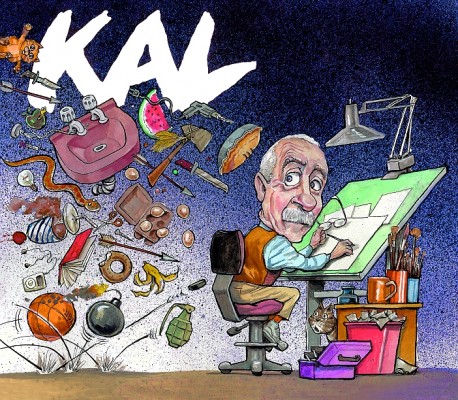
    <img width="150" height="150" src="https://umbc.edu/wp-content/uploads/2012/03/Cartoon-of-Kevin-Kallaugher-150x150.jpg" alt="" style="max-width: 100%; height: auto;"><p>Kevin “KAL” Kallaugher, editorial cartoonist for <em>The Economist</em> and UMBC artist-in-residence, was featured on WAMU’s <a href="http://thekojonnamdishow.org/audio-player?nid=20966" rel="nofollow external" class="bo">Kojo Nnamdi Show</a> last week (interview begins 19 minutes in). <img src="http://www.7iber.com/wp-content/uploads/Cartoon-of-Kevin-Kallaugher-458x400.jpg" alt="" width="258" height="230" style="max-width: 100%; height: auto;">KAL discussed his coverage of the 2012 presidential election, the power of caricature and global importance of freedom of expression, and his own career trajectory as a cartoonist.</p>
    <p>At UMBC KAL advises student bloggers in their coverage of current events and politics on <a href="http://www.usdemocrazy.net/" rel="nofollow external" class="bo">USDemocrazy</a>.</p>
    </div>
]]>
</Body>
<Summary>Kevin “KAL” Kallaugher, editorial cartoonist for The Economist and UMBC artist-in-residence, was featured on WAMU’s Kojo Nnamdi Show last week (interview begins 19 minutes in). KAL discussed his...</Summary>
<Website>https://umbc.edu/stories/kal-umbc-artist-in-residence-on-kojo-nnamdi-show/</Website>
<TrackingUrl>https://beta.my.umbc.edu/api/v0/pixel/news/124150/guest@my.umbc.edu/1da9f696c3871710f9eef38454a087af/api/pixel</TrackingUrl>
<Tag>arts-and-culture</Tag>
<Tag>cahss</Tag>
<Group token="umbc-news-magazine">UMBC News &amp;amp; Magazine</Group>
<GroupUrl>https://beta.my.umbc.edu/groups/umbc-news-magazine</GroupUrl>
<AvatarUrl>https://assets1-beta.my.umbc.edu/system/shared/avatars/groups/000/001/943/24435aa6207c452e7bc15cc74b42c7bb/xsmall.png?1748556657</AvatarUrl>
<AvatarUrl size="original">https://assets1-beta.my.umbc.edu/system/shared/avatars/groups/000/001/943/24435aa6207c452e7bc15cc74b42c7bb/original.png?1748556657</AvatarUrl>
<AvatarUrl size="xxlarge">https://assets2-beta.my.umbc.edu/system/shared/avatars/groups/000/001/943/24435aa6207c452e7bc15cc74b42c7bb/xxlarge.png?1748556657</AvatarUrl>
<AvatarUrl size="xlarge">https://assets2-beta.my.umbc.edu/system/shared/avatars/groups/000/001/943/24435aa6207c452e7bc15cc74b42c7bb/xlarge.png?1748556657</AvatarUrl>
<AvatarUrl size="large">https://assets3-beta.my.umbc.edu/system/shared/avatars/groups/000/001/943/24435aa6207c452e7bc15cc74b42c7bb/large.png?1748556657</AvatarUrl>
<AvatarUrl size="medium">https://assets1-beta.my.umbc.edu/system/shared/avatars/groups/000/001/943/24435aa6207c452e7bc15cc74b42c7bb/medium.png?1748556657</AvatarUrl>
<AvatarUrl size="small">https://assets2-beta.my.umbc.edu/system/shared/avatars/groups/000/001/943/24435aa6207c452e7bc15cc74b42c7bb/small.png?1748556657</AvatarUrl>
<AvatarUrl size="xsmall">https://assets1-beta.my.umbc.edu/system/shared/avatars/groups/000/001/943/24435aa6207c452e7bc15cc74b42c7bb/xsmall.png?1748556657</AvatarUrl>
<AvatarUrl size="xxsmall">https://assets2-beta.my.umbc.edu/system/shared/avatars/groups/000/001/943/24435aa6207c452e7bc15cc74b42c7bb/xxsmall.png?1748556657</AvatarUrl>
<Sponsor>UMBC News &amp; Magazine</Sponsor>
<PawCount>0</PawCount>
<CommentCount>0</CommentCount>
<CommentsAllowed>false</CommentsAllowed>
<PostedAt>Wed, 14 Mar 2012 21:16:15 -0400</PostedAt>
</NewsItem>

<NewsItem contentIssues="true" id="124151" important="false" status="posted" url="https://beta.my.umbc.edu/groups/j-1/posts/124151">
<Title>Picture Perfect: Monica Gallagher '01, Visual Arts</Title>
<Body>
<![CDATA[
    <div class="html-content">
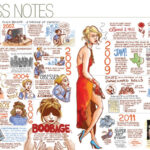
    <img width="150" height="150" src="https://umbc.edu/wp-content/uploads/2012/03/gallagher-150x150.jpg" alt="" style="max-width: 100%; height: auto;"><p>When asked to chronicle her life since college, illustrator Monica Gallagher did so in the way that meant most to her: in comic book form.<br>
    Check out her essay from the Winter 2012 issue of <em>UMBC Magazine:</em><br>
    <a href="/wp-content/uploads/2012/03/WIN12_mag_essay.jpg" rel="nofollow external" class="bo"><img src="/wp-content/uploads/2012/03/WIN12_mag_essay.jpg" alt="" width="1206" height="783" style="max-width: 100%; height: auto;"></a><br>
     <br>
    A designer, illustrator and comicker living in Baltimore, Gallagher graduated magna cum laude from UMBC in 2001 with a degree in visual arts, emphasis on animation. While at UMBC she learned Japanese, traveled to Greece with the ancient studies department, fainted in a yoga class, participated in film festivals, worked in the photo cage, stayed up way too late in the computer lab, got hit in the head with a volleyball, and has many, many other awesome memories.<br>
     </p>
    </div>
]]>
</Body>
<Summary>When asked to chronicle her life since college, illustrator Monica Gallagher did so in the way that meant most to her: in comic book form.  Check out her essay from the Winter 2012 issue of UMBC...</Summary>
<Website>https://umbc.edu/stories/picture-perfect-monica-gallagher-01-visual-arts-2/</Website>
<TrackingUrl>https://beta.my.umbc.edu/api/v0/pixel/news/124151/guest@my.umbc.edu/e232c2c1df780fea476febae02125123/api/pixel</TrackingUrl>
<Tag>comics</Tag>
<Tag>monica-gallagher</Tag>
<Tag>perspectives</Tag>
<Tag>umbc-magazine</Tag>
<Tag>winter-2012</Tag>
<Group token="umbc-news-magazine">UMBC News &amp;amp; Magazine</Group>
<GroupUrl>https://beta.my.umbc.edu/groups/umbc-news-magazine</GroupUrl>
<AvatarUrl>https://assets1-beta.my.umbc.edu/system/shared/avatars/groups/000/001/943/24435aa6207c452e7bc15cc74b42c7bb/xsmall.png?1748556657</AvatarUrl>
<AvatarUrl size="original">https://assets1-beta.my.umbc.edu/system/shared/avatars/groups/000/001/943/24435aa6207c452e7bc15cc74b42c7bb/original.png?1748556657</AvatarUrl>
<AvatarUrl size="xxlarge">https://assets2-beta.my.umbc.edu/system/shared/avatars/groups/000/001/943/24435aa6207c452e7bc15cc74b42c7bb/xxlarge.png?1748556657</AvatarUrl>
<AvatarUrl size="xlarge">https://assets2-beta.my.umbc.edu/system/shared/avatars/groups/000/001/943/24435aa6207c452e7bc15cc74b42c7bb/xlarge.png?1748556657</AvatarUrl>
<AvatarUrl size="large">https://assets3-beta.my.umbc.edu/system/shared/avatars/groups/000/001/943/24435aa6207c452e7bc15cc74b42c7bb/large.png?1748556657</AvatarUrl>
<AvatarUrl size="medium">https://assets1-beta.my.umbc.edu/system/shared/avatars/groups/000/001/943/24435aa6207c452e7bc15cc74b42c7bb/medium.png?1748556657</AvatarUrl>
<AvatarUrl size="small">https://assets2-beta.my.umbc.edu/system/shared/avatars/groups/000/001/943/24435aa6207c452e7bc15cc74b42c7bb/small.png?1748556657</AvatarUrl>
<AvatarUrl size="xsmall">https://assets1-beta.my.umbc.edu/system/shared/avatars/groups/000/001/943/24435aa6207c452e7bc15cc74b42c7bb/xsmall.png?1748556657</AvatarUrl>
<AvatarUrl size="xxsmall">https://assets2-beta.my.umbc.edu/system/shared/avatars/groups/000/001/943/24435aa6207c452e7bc15cc74b42c7bb/xxsmall.png?1748556657</AvatarUrl>
<Sponsor>UMBC News &amp; Magazine</Sponsor>
<PawCount>0</PawCount>
<CommentCount>0</CommentCount>
<CommentsAllowed>false</CommentsAllowed>
<PostedAt>Wed, 14 Mar 2012 17:06:56 -0400</PostedAt>
</NewsItem>

<NewsItem contentIssues="true" id="124152" important="false" status="posted" url="https://beta.my.umbc.edu/groups/j-1/posts/124152">
<Title>Picture Perfect: Monica Gallagher &#8217;01, Visual Arts</Title>
<Body>
<![CDATA[
    <div class="html-content">
    <img width="150" height="150" src="https://umbc.edu/wp-content/uploads/2012/03/gallagher-150x150.jpg" alt="" style="max-width: 100%; height: auto;"><p>When asked to chronicle her life since college, illustrator Monica Gallagher did so in the way that meant most to her: in comic book form.</p>
    <p>Check out her essay from the Winter 2012 issue of <em>UMBC Magazine:</em></p>
    <p><a href="/wp-content/uploads/2012/03/WIN12_mag_essay.jpg" rel="nofollow external" class="bo"><img src="/wp-content/uploads/2012/03/WIN12_mag_essay.jpg" alt="" width="1206" height="783" style="max-width: 100%; height: auto;"></a></p>
    <p> </p>
    <p>A designer, illustrator and comicker living in Baltimore, Gallagher graduated magna cum laude from UMBC in 2001 with a degree in visual arts, emphasis on animation. While at UMBC she learned Japanese, traveled to Greece with the ancient studies department, fainted in a yoga class, participated in film festivals, worked in the photo cage, stayed up way too late in the computer lab, got hit in the head with a volleyball, and has many, many other awesome memories.</p>
    <p> </p>
    </div>
]]>
</Body>
<Summary>When asked to chronicle her life since college, illustrator Monica Gallagher did so in the way that meant most to her: in comic book form.   Check out her essay from the Winter 2012 issue of UMBC...</Summary>
<Website>https://umbc.edu/stories/picture-perfect-monica-gallagher-01-visual-arts/</Website>
<TrackingUrl>https://beta.my.umbc.edu/api/v0/pixel/news/124152/guest@my.umbc.edu/9fdb856221466d293cf0e07484c7d659/api/pixel</TrackingUrl>
<Tag>comics</Tag>
<Tag>monica-gallagher</Tag>
<Tag>perspectives</Tag>
<Tag>umbc-magazine</Tag>
<Tag>winter-2012</Tag>
<Group token="umbc-news-magazine">UMBC News &amp;amp; Magazine</Group>
<GroupUrl>https://beta.my.umbc.edu/groups/umbc-news-magazine</GroupUrl>
<AvatarUrl>https://assets1-beta.my.umbc.edu/system/shared/avatars/groups/000/001/943/24435aa6207c452e7bc15cc74b42c7bb/xsmall.png?1748556657</AvatarUrl>
<AvatarUrl size="original">https://assets1-beta.my.umbc.edu/system/shared/avatars/groups/000/001/943/24435aa6207c452e7bc15cc74b42c7bb/original.png?1748556657</AvatarUrl>
<AvatarUrl size="xxlarge">https://assets2-beta.my.umbc.edu/system/shared/avatars/groups/000/001/943/24435aa6207c452e7bc15cc74b42c7bb/xxlarge.png?1748556657</AvatarUrl>
<AvatarUrl size="xlarge">https://assets2-beta.my.umbc.edu/system/shared/avatars/groups/000/001/943/24435aa6207c452e7bc15cc74b42c7bb/xlarge.png?1748556657</AvatarUrl>
<AvatarUrl size="large">https://assets3-beta.my.umbc.edu/system/shared/avatars/groups/000/001/943/24435aa6207c452e7bc15cc74b42c7bb/large.png?1748556657</AvatarUrl>
<AvatarUrl size="medium">https://assets1-beta.my.umbc.edu/system/shared/avatars/groups/000/001/943/24435aa6207c452e7bc15cc74b42c7bb/medium.png?1748556657</AvatarUrl>
<AvatarUrl size="small">https://assets2-beta.my.umbc.edu/system/shared/avatars/groups/000/001/943/24435aa6207c452e7bc15cc74b42c7bb/small.png?1748556657</AvatarUrl>
<AvatarUrl size="xsmall">https://assets1-beta.my.umbc.edu/system/shared/avatars/groups/000/001/943/24435aa6207c452e7bc15cc74b42c7bb/xsmall.png?1748556657</AvatarUrl>
<AvatarUrl size="xxsmall">https://assets2-beta.my.umbc.edu/system/shared/avatars/groups/000/001/943/24435aa6207c452e7bc15cc74b42c7bb/xxsmall.png?1748556657</AvatarUrl>
<Sponsor>UMBC News &amp; Magazine</Sponsor>
<PawCount>0</PawCount>
<CommentCount>0</CommentCount>
<CommentsAllowed>false</CommentsAllowed>
<PostedAt>Wed, 14 Mar 2012 17:06:56 -0400</PostedAt>
</NewsItem>

<NewsItem contentIssues="false" id="124153" important="false" status="posted" url="https://beta.my.umbc.edu/groups/j-1/posts/124153">
<Title>The Coolest Jobs You Never Knew Existed at UMBC: Ferdinand Maisel, Music Coordinator/Dance Accompanist</Title>
<Body>
<![CDATA[
    <div class="html-content">
    <p>[youtube <a href="http://www.youtube.com/watch?v=Slni3GRhM0Q">http://www.youtube.com/watch?v=Slni3GRhM0Q</a>]</p>
    <p>Before the first note sounds, the dance studio—with its heavy black tape stripes lining the floor—s like an enormous blank page of sheet music. Then, Ferdinand Maisel leans into the keys of the black grand piano in the corner, and suddenly students in sweats and bare feet dot the staff with whole-note pliés and staccato jumps.</p>
    <p>Read more at <a href="http://www.umbc.edu/magazine" rel="nofollow external" class="bo">umbc.edu/magazine</a>.</p>
    </div>
]]>
</Body>
<Summary>[youtube http://www.youtube.com/watch?v=Slni3GRhM0Q]   Before the first note sounds, the dance studio—with its heavy black tape stripes lining the floor—s like an enormous blank page of sheet...</Summary>
<Website>https://umbc.edu/stories/the-coolest-jobs-you-never-knew-existed-at-umbc-ferdinand-maisel-music-coordinatordance-accompanist/</Website>
<TrackingUrl>https://beta.my.umbc.edu/api/v0/pixel/news/124153/guest@my.umbc.edu/ecd81ceeca15988a5e0b223f151b0fbd/api/pixel</TrackingUrl>
<Tag>admin</Tag>
<Tag>arts-and-culture</Tag>
<Tag>music</Tag>
<Group token="umbc-news-magazine">UMBC News &amp;amp; Magazine</Group>
<GroupUrl>https://beta.my.umbc.edu/groups/umbc-news-magazine</GroupUrl>
<AvatarUrl>https://assets1-beta.my.umbc.edu/system/shared/avatars/groups/000/001/943/24435aa6207c452e7bc15cc74b42c7bb/xsmall.png?1748556657</AvatarUrl>
<AvatarUrl size="original">https://assets1-beta.my.umbc.edu/system/shared/avatars/groups/000/001/943/24435aa6207c452e7bc15cc74b42c7bb/original.png?1748556657</AvatarUrl>
<AvatarUrl size="xxlarge">https://assets2-beta.my.umbc.edu/system/shared/avatars/groups/000/001/943/24435aa6207c452e7bc15cc74b42c7bb/xxlarge.png?1748556657</AvatarUrl>
<AvatarUrl size="xlarge">https://assets2-beta.my.umbc.edu/system/shared/avatars/groups/000/001/943/24435aa6207c452e7bc15cc74b42c7bb/xlarge.png?1748556657</AvatarUrl>
<AvatarUrl size="large">https://assets3-beta.my.umbc.edu/system/shared/avatars/groups/000/001/943/24435aa6207c452e7bc15cc74b42c7bb/large.png?1748556657</AvatarUrl>
<AvatarUrl size="medium">https://assets1-beta.my.umbc.edu/system/shared/avatars/groups/000/001/943/24435aa6207c452e7bc15cc74b42c7bb/medium.png?1748556657</AvatarUrl>
<AvatarUrl size="small">https://assets2-beta.my.umbc.edu/system/shared/avatars/groups/000/001/943/24435aa6207c452e7bc15cc74b42c7bb/small.png?1748556657</AvatarUrl>
<AvatarUrl size="xsmall">https://assets1-beta.my.umbc.edu/system/shared/avatars/groups/000/001/943/24435aa6207c452e7bc15cc74b42c7bb/xsmall.png?1748556657</AvatarUrl>
<AvatarUrl size="xxsmall">https://assets2-beta.my.umbc.edu/system/shared/avatars/groups/000/001/943/24435aa6207c452e7bc15cc74b42c7bb/xxsmall.png?1748556657</AvatarUrl>
<Sponsor>UMBC News &amp; Magazine</Sponsor>
<PawCount>0</PawCount>
<CommentCount>0</CommentCount>
<CommentsAllowed>false</CommentsAllowed>
<PostedAt>Wed, 14 Mar 2012 13:04:22 -0400</PostedAt>
</NewsItem>

<NewsItem contentIssues="true" id="124154" important="false" status="posted" url="https://beta.my.umbc.edu/groups/j-1/posts/124154">
<Title>Ellen Handler Spitz, Honors College, to Visit Serbia</Title>
<Body>
<![CDATA[
    <div class="html-content">
    <p><a href="/wp-content/uploads/2012/03/art-and-psyche.jpg" rel="nofollow external" class="bo"><img src="/wp-content/uploads/2012/03/art-and-psyche.jpg?w=112" alt="" width="112" height="150" style="max-width: 100%; height: auto;"></a>Ellen Handler Spitz, honors college professor of visual arts, will visit Belgrade, Serbia over spring break to give a talk on her book “Art and Psyche.”  The book was recently translated to Serbian.</p>
    <p>While in Belgrade, Spitz will talk with faculty members at the University of Belgrade and give a lecture at Kolarac.  She will also visit the city of Novi Sad.</p>
    </div>
]]>
</Body>
<Summary>Ellen Handler Spitz, honors college professor of visual arts, will visit Belgrade, Serbia over spring break to give a talk on her book “Art and Psyche.”  The book was recently translated to...</Summary>
<Website>https://umbc.edu/stories/ellen-handler-spitz-honors-college-to-visit-serbia/</Website>
<TrackingUrl>https://beta.my.umbc.edu/api/v0/pixel/news/124154/guest@my.umbc.edu/2013be06dccd8dbae91bdcc610b9a181/api/pixel</TrackingUrl>
<Tag>policy-and-society</Tag>
<Group token="umbc-news-magazine">UMBC News &amp;amp; Magazine</Group>
<GroupUrl>https://beta.my.umbc.edu/groups/umbc-news-magazine</GroupUrl>
<AvatarUrl>https://assets1-beta.my.umbc.edu/system/shared/avatars/groups/000/001/943/24435aa6207c452e7bc15cc74b42c7bb/xsmall.png?1748556657</AvatarUrl>
<AvatarUrl size="original">https://assets1-beta.my.umbc.edu/system/shared/avatars/groups/000/001/943/24435aa6207c452e7bc15cc74b42c7bb/original.png?1748556657</AvatarUrl>
<AvatarUrl size="xxlarge">https://assets2-beta.my.umbc.edu/system/shared/avatars/groups/000/001/943/24435aa6207c452e7bc15cc74b42c7bb/xxlarge.png?1748556657</AvatarUrl>
<AvatarUrl size="xlarge">https://assets2-beta.my.umbc.edu/system/shared/avatars/groups/000/001/943/24435aa6207c452e7bc15cc74b42c7bb/xlarge.png?1748556657</AvatarUrl>
<AvatarUrl size="large">https://assets3-beta.my.umbc.edu/system/shared/avatars/groups/000/001/943/24435aa6207c452e7bc15cc74b42c7bb/large.png?1748556657</AvatarUrl>
<AvatarUrl size="medium">https://assets1-beta.my.umbc.edu/system/shared/avatars/groups/000/001/943/24435aa6207c452e7bc15cc74b42c7bb/medium.png?1748556657</AvatarUrl>
<AvatarUrl size="small">https://assets2-beta.my.umbc.edu/system/shared/avatars/groups/000/001/943/24435aa6207c452e7bc15cc74b42c7bb/small.png?1748556657</AvatarUrl>
<AvatarUrl size="xsmall">https://assets1-beta.my.umbc.edu/system/shared/avatars/groups/000/001/943/24435aa6207c452e7bc15cc74b42c7bb/xsmall.png?1748556657</AvatarUrl>
<AvatarUrl size="xxsmall">https://assets2-beta.my.umbc.edu/system/shared/avatars/groups/000/001/943/24435aa6207c452e7bc15cc74b42c7bb/xxsmall.png?1748556657</AvatarUrl>
<Sponsor>UMBC News &amp; Magazine</Sponsor>
<PawCount>0</PawCount>
<CommentCount>0</CommentCount>
<CommentsAllowed>false</CommentsAllowed>
<PostedAt>Tue, 13 Mar 2012 18:39:03 -0400</PostedAt>
</NewsItem>

<NewsItem contentIssues="true" id="124155" important="false" status="posted" url="https://beta.my.umbc.edu/groups/j-1/posts/124155">
<Title>Blow Up: 1969 Battle Over UMBC's First Literary Magazine</Title>
<Body>
<![CDATA[
    <div class="html-content">
    <img width="150" height="150" src="https://umbc.edu/wp-content/uploads/2012/03/dialogue_pg_17_extend-150x150.jpg" alt="" style="max-width: 100%; height: auto;"><p><strong>How the 1969 battle over UMBC’s literary magazine licked off an era of discontent at the university.</strong><br>
    <em>“Literary Magazine to Determine True University Status of UMBC”</em><br>
    <em>The headline in the February 10, 1969 edition of</em> The Retriever <em>seems a bit grandiose, as do the brash pronouncements of its editor, quoted in the article:</em><br>
    The staff of the magazine anticipates a lot of excitement on its debut. Editor Michael Jacobs stated in an interview that “the response to this magazine will be a kind of gauge on how far UMBC has approached being a true university.”<br>
    <strong><em>By Richard Byrne ’86</em></strong><br>
    </p>
    <a href="/wp-content/uploads/2012/03/dialogue_photo.jpg" rel="nofollow external" class="bo"><img src="/wp-content/uploads/2012/03/dialogue_photo-300x245.jpg" alt="" width="423" height="263" style="max-width: 100%; height: auto;"></a>UMBC students peruse the 1969 literary magazine, Dialogue<br>
    As <em>The Retriever’s</em> editor at the time, <strong>Diane Juknelis Tichnell ’70</strong> knew what was coming: the new magazine featured a series of soft focus nude photographs of a duet between a male and female dancer, taken by Washington, D.C. photographer <a href="http://susquehannastudio.blogspot.com" rel="nofollow external" class="bo"><strong>Robert Stark</strong></a>.<br>
    Stark’s photographs were not explicit. Indeed, they were hanging in an exhibit in The Corcoran Gallery of Art when the magazine was published. Yet Jacobs and the magazine’s staff knew it was a risky move in the Baltimore County of the late 1960s which had produced Spiro T. Agnew – the nation’s new vice president and most prominent conservative cultural warrior.<br>
    The literary magazine was distributed in a plain manila envelope to students who showed an ID card. Stark was punningly credited as “M.E. Nage” on the inside cover of the magazine.<br>
    “Michael did understand it was going to cause a firestorm,” Tichnell recalls. “But he believed that they had the right to showcase this kind of thing.”<br>
    Local media eagerly fanned the flames, egged on by the reaction of outraged state and county legislators. (One of them dubbed UMBC an “institution of pornography.”) Faculty and students quickly united against <strong>Albin O. Kuhn</strong>, UMBC’s first president, who first denied the magazine access to student activity funds and then ended its affiliation with the university.<br>
    “Those were the innocent days,” says former UMBC professor <strong>Wallace Shugg</strong>, who had an excerpt from his travel journal published in the controversial magazine. “But radicalization was growing. In the first two years [of the university], there was no politicization. It was rather quiescent.”<br>
    For a few months in 1969, UMBC’s literary magazine did define the campus and its image – vexing its leaders and ending the relative calm of the university’s early years.<br>
    * * * * *<br>
    <a href="/wp-content/uploads/2012/03/dialogue_caruso.jpg" rel="nofollow external" class="bo"><img src="/wp-content/uploads/2012/03/dialogue_caruso-234x300.jpg" alt="" width="234" height="300" style="max-width: 100%; height: auto;"></a>“There was no controversy on campus. Everything went smoothly, without any fanfare. No one took exception.” – Peter Caruso ’70<br>
    UMBC’s first literary magazine – <em>Dialogue</em> – was founded with high expectations in 1967. Indeed, <em>Dialogue’s</em> literary adviser, English department faculty member <strong>Joseph Goodman</strong>, solicited an inaugural letter for the first issue from UMBC’s president.<br>
    “Your letter would demonstrate that the university takes the magazine seriously,” Goodman wrote to Kuhn on November 17, 1967, “and I know the students working on the magazine would be flattered.”<br>
    <em>Dialogue’s</em> first issue was filled with playful and literary poems and stories, possessing only a mere whiff of politics and the emerging counterculture. Kuhn’s letter was published prominently on its inside front cover.<br>
    This era of good feeling didn’t extend beyond the following spring. The magazine’s second issue (published in Spring 1968) was a beautiful and oversized publication brimming with typographical whimsy, but one particular piece of writing – by <em>Dialogue</em> editor <strong>Glenn Blanchard</strong> – drew unwelcome attention outside the campus community.<br>
    In a play called “A Dance,” Blanchard juxtaposed voices from the African-American experience of pulpit, home and street corner. Many of the play’s characters spoke in a profane and invigorating language unlike anything else in the magazine, and the discontent articulated by the voices in “A Dance” simmered with the same racial tensions that had so recently bubbled over into the streets of Baltimore and other cities after the assassination of Dr. Martin Luther King, Jr. in April 1968.<br>
    A news story published in the October 4, 1968 issue of <em>The Diamondback</em> (the University of Maryland, <a title="Powered by Text-Enhance" href="http://www.umbc.edu/magazine/winter12/feature_blowup.html#" rel="nofollow external" class="bo">College</a> Park’s student newspaper) revealed that Baltimore printers H.G. Roebuck and Son objected to “A Dance,” and in fact printed the first issue of <em>Dialogue</em> without it. When Blanchard’s play was included again in the next issue, the printer objected for a second time. This time, however, the printing company was told by university administrators to print <em>Dialogue</em> as it was submitted to them.<br>
    Copies of <em>Dialogue</em> eventually found their way off campus. Some of those outraged by the play, such as prominent Catonsville attorney <strong>John P. Zebellean, Jr.</strong>, wrote outraged letters to Kuhn. Zebellean’s missive, dated July 29, 1968, argued that “the alleged play represents pure, unadulterated filth unfit to be found in a house of ill repute let alone upon a university campus.”<br>
    Kuhn replied affably on August 6, observing that the magazine’s funds came from student fees and diplomatically defending the play’s language. But Zebellean and other critics persisted, dragging state legislators into the fray. One of Maryland’s U.S. Senators, <strong>Daniel Brewster</strong>, even wrote demanding to see a copy of <em>Dialogue</em>.<br>
    Kuhn met with Zebellean and three state legislators on October 21, 1968, and apparently allayed their immediate concerns. UMBC’s president also publicly defended the magazine, telling <em>The Retriever</em> on September 16 that he thought Blanchard “was attempting to do something worthwhile.”<br>
    * * * * *<br>
    <a href="/wp-content/uploads/2012/03/dialogue_kuhn_sga.jpg" rel="nofollow external" class="bo"><img src="/wp-content/uploads/2012/03/dialogue_kuhn_sga-233x300.jpg" alt="" width="233" height="300" style="max-width: 100%; height: auto;"></a>“I feel that the way in which this has been resolved is the only way that I could resolve the matter, taking into account my responsibilities as Chancellor.” – Chancellor Albin O. Kuhn<br>
    Looking back, observers say that striking a balance between diplomacy with literary magazine critics and a strong defense of student expression was typical of Kuhn’s approach.<br>
    Kuhn “was a wonderful man,” recalls Shugg. “Sensible, smart and modest.”<br>
    Tichnell concurs. “I always got a sense that he wanted to preserve a climate in which we could innovate,” she says.<br>
    The fall semester also brought changes to <em>Dialogue’s</em> staff. Blanchard resigned from the magazine in September 1968 and was replaced by <strong>Michael Jacobs</strong>. <strong>Arthur Levi ’75</strong> remained the magazine’s business manager, and Jacobs added American Studies majors <strong>Bonnie Rachael Hurwitz ’70</strong> and <strong>Peter Caruso ’70</strong> to the masthead.<br>
    Hurwitz had contributed short stories to the first two issues of the magazine – portraits of men and women in quiet crises, drawn carefully from life. The 1969 <em>Skipjack</em> yearbook captures her as a pretty, dark-haired young woman with an enigmatic smile.<br>
    “That was the person I was then,” says Hurwitz, who today works as a code enforcement officer in the Baltimore suburbs. “I was always interested in writing.”<br>
    Hurwitz says her writing reflected her own personal growth. “I wasn’t a great student in high school,” she recalls. “But I really blossomed after that.”<br>
    Caruso remembers himself as an intense young man juggling an outsized class load and a brand new family – with one child already born and another on the way – when he joined the staff.<br>
    “I had flash cards taped to my mirror to try and learn chemistry,” says Caruso, who now lives in Galesburg, IL, and writes essays and other works reconciling physics and spirituality.<br>
    It was Caruso who first brought Washington, D.C., photographer Robert Stark’s photographs to the attention of other magazine staff members. “I knew Peter Caruso,” Stark recalls. “I think he saw the work in my studio, and liked it, and put it forward, and the staff liked it, too.” Stark remembers being “thrilled and flattered. I felt it was really good work.”<br>
    Caruso says that the magazine staff had the support of their adviser, Joseph Goodman. “He raised his eyebrows a bit when it came to the photographs,” says Caruso. “But he thought it was the students’ prerogative.”<br>
    <a href="http://contentdm.ad.umbc.edu/u?/UPUB,7947" rel="nofollow external" class="bo">The Fall 1968 issue was finally published – without the name <em>Dialogue</em> – as the spring semester commenced.</a> In an open letter to the UMBC community on February 17, 1969, Jacobs launched a preemptive strike against those who might criticize the decision to run Stark’s photographs:<br>
    <em>An attempt at explanation is in a sense redundant, for the material in the magazine is the intention; however, those who are not personally involved in the creative process may find it difficult to understand this concept; and at a time when some individuals seek to challenge and offend others solely for the purpose of challenge and offense, it is far too easy to place serious creative effort on the same shelf with opportunism and arrogance.</em><br>
    * * * * *<br>
    <a href="/wp-content/uploads/2012/03/dialogue_bonnie_stars.jpg" rel="nofollow external" class="bo"><img src="/wp-content/uploads/2012/03/dialogue_bonnie_stars-220x300.jpg" alt="" width="220" height="300" style="max-width: 100%; height: auto;"></a>“That was the person I was then. I was always interested in writing.” – Bonnie Rachael Hurwitz ’70<br>
    Baltimore media quickly brought the new issue of UMBC’s literary magazine to a much larger audience.<br>
    “Magazine With Nudes Accepted at UMBC” was the headline in <em>The Evening Sun’s</em> February 18, 1969 edition. The story also included a quote from the university’s dean of students, Arthur A. Libby III: “I think personally that this is the best <em>Dialogue</em> that has been distributed yet at this campus…. I think this is a form of art.”<br>
    “There was no controversy on campus,” recalls Caruso. “Everything went smoothly, without any fanfare. No one took exception.” Off-campus, however, state and local legislators were outraged. On February 23, the Sunday edition of The Baltimore Sun ran an article (“Senators Irked By Nude Pictures”) in which Baltimore County’s state senators blasted UMBC and demanded that both Kuhn and the head of Maryland’s university system, <strong>Wilson H. Elkins</strong>, appear in Annapolis to explain:<br>
    <em>“My God, it shows naked students wrasslin,’” said <strong>Senator Harry J. Connolly</strong>… as he showed his colleagues the latest edition of the literary magazine published by students at the university’s Catonsville branch.</em><br>
    Baltimore County councilmember <strong>Samuel J. Dantoni</strong> piled on two days later in <em>The Evening Sun</em>. “The councilman said that if the ‘trend’ toward ‘an institution of pornography’ continued, he felt the state should reallocate the unused land on campus for facilities for the mentally retarded and elderly,” wrote <em>Sun</em> reporter <strong>Gerald Parshall</strong>.<br>
    Shugg says that “the legislators were dinosaurs, holdovers from a previous era.” But their pungent attacks and the accompanying media attention clearly shifted Kuhn’s attitude. In a statement released on February 25, UMBC’s president made clear his frustrations with the magazine – and with Michael Jacobs in particular:<br>
    <em>The pictures have been included by the editor as art, but have been viewed by some as simply an attempt to use nude pictures to test whether I will withdraw my approval of the magazine as a campus publication. The pictures do not seem to me to have much to commend them as art or for publication in a student literary magazine at UMBC.</em><br>
    Kuhn added that he would hold discussions to “develop a way in which the best interests of the University and the desires of the students can be brought into harmony.” He also asserted that “no issues will be published until these discussions have been concluded.”<br>
    The legislative attacks on the university – and Kuhn’s refusal to defend the magazine – united both students and faculty in opposition to the lawmakers and to UMBC’s president.<br>
    Eighty-four faculty members at the university pooled almost $500 and took out an advertisement in <em>The Evening Sun</em> on March 1. The ad took aim at “certain current criticisms” that “cast unwarranted aspersions on UMBC,” and argued that “a university must cherish and defend the right of open and free expression within its faculty and student body.”<br>
    Meanwhile Jacobs forwarded letters of support from distinguished figures in the art world and clergymen to Kuhn. <strong>James Elliott</strong>, director of the Wadsworth Athaneum, wrote that “the intent of the photographer whose work appears in your magazine is so patently serious, and his presentation so reticent, that it would even have surprised me had anyone seriously questioned whether they were in ‘good taste,’ let alone calling them obscene.”<br>
    Jacobs was eager to bring this support to Kuhn’s attention. And when The Evening Sun published an editorial mocking the legislative outcry (“Annapolis Jerks”) on February 27, , Jacobs couldn’t pointing it out in an all-caps postscript to his handwritten reply to Kuhn’s request for more copies of the magazine to distribute to legislators: <em>“DID YOU SEE THE SUN EDITORIAL YESTERDAY EVENING?”</em><br>
    At <em>The Retriever</em>, editor Diane Juknelis Tichnell devoted pages and pages over the few weeks after the magazine’s publication to covering the controversy. Indeed, she was forced to respond to one letter writer who claimed that her coverage was one-sided, arguing that “ultimately it was not whether you agreed or disagreed with, were disgusted or elated by the latest literary magazine, but whether statements based on hastily researched charges leading to threats of indiscriminate censorship of a campus publication were to be passively tolerated.”<br>
    The view that the obscenity hubbub was overblown was also shared by Stark, who watched from Washington, D.C. as the controversy grew. “Everyone was posturing, but no one took the work seriously,” the photographer recalls.<br>
    Kuhn organized meetings with legislators and orchestrated apologies for the brouhaha. The media hubbub subsided. But the standoff between UMBC administrators and the rest of the campus only intensified.<br>
    UMBC’s president insisted on forming a new board to oversee student publications, comprised of administrators, faculty and students unaffiliated with the publications themselves. His ultimatum was met with outraged refusal by literary magazine staffers and faculty members alike. Both groups demanded that existing laws on obscenity and libel be the only standard for university publications.<br>
    Right before the end of the semester, magazine adviser <strong>Joseph Goodman</strong> submitted a resolution to the UMBC Assembly, the school’s joint advisory body, which consisted of both faculty and students. The resolution upbraided Kuhn and threatened a lawsuit against the university on First Amendment grounds.<br>
    Goodman also resigned from the university in a letter published in The Retriever on May 12, 1969:<br>
    <em>My decision to leave UMBC was very much contingent upon the recent controversy surrounding the UMBC Literary Magazine. While I in no way hold the institution responsible for the deplorable and moronic actions of certain Maryland officials, I cannot help but hold the institution responsible for its response to these critics. The final result of this controversy was to create an atmosphere of suppression and fear on campus, an atmosphere in which an art exhibition might suddenly disappear from campus or a magazine be suddenly banned. I was personally insulted by the criticism of the magazine in [Kuhn]’s statement, and I was personally embarrassed by the apology given to the State Senate.</em><br>
    * * * * *<br>
    When students and faculty left for the summer, Kuhn suspended the literary magazine until the publications board that he sought was in place. In a letter to Student Government Association president <strong>Darryl Hagy</strong> on July 16, 1969, Kuhn stated that “I am withdrawing the eligibility for the Literary Magazine to receive State funds and to appear as a University publication.” He added that UMBC students could publish a magazine independently, but only if that magazine received no direct (or indirect) state subsidy and made no claims to represent the university.<br>
    In a note written to dean of the faculty <strong>Homer Schamp</strong> on that same day, Kuhn confided that “I feel that the way in which this has been resolved is the only way that I could resolve the matter, taking into account my responsibilities…. I would add that this also fully expresses my personal convictions on the subject.”<br>
    The battle quickly resumed when students and faculty returned in September 1969. The UMBC Assembly amended Goodman’s May 1969 resolution, offering a firm, but milder, rebuke that demanded reinstatement of the magazine and a commitment that only a student government vote or a clear violation of national or state law could disqualify a publication from UMBC’s “support or recognition.”<br>
    Kuhn refused to reinstate the magazine, facing down his critics at a heated meeting on September 30, 1969. <em>The Retriever’s</em> headline on its coverage of the showdown unabashedly proclaimed: “Administration tops SGA in open conflict.”<br>
    The publications board was often announced but it never materialized. And it would be another full year before a new literary magazine, <em>Bartleby</em>, was published in spring 1972 with an entirely new staff – and no controversy.<br>
    Yet UMBC had changed irrevocably as a result of the literary magazine controversy. The gauntlet thrown down to students by Kuhn to publish independently was taken up by a radical student newspaper, <em>The Red Brick</em>, which stirred up just as much controversy during its own brief existence. Announcements of mixers vanished from <em>The Retriever</em>, replaced by pages dominated by the politics of war and peace and countercultural pronouncements.<br>
    Indeed, one of the last glimpses of <strong>Michael Jacobs</strong> (who, according to university records, did not graduate from UMBC) is in the pages of The Retriever as one of seven defendants in a judicial proceeding for disrupting a class.<br>
    The so-called UMBC Seven disrupted a sociology class in spring 1970 to protest the fact that the UMBC campus did not close for the killing of two Jackson State University students as it did to mourn four white students killed at Kent State University less than two weeks before. The trial turned into a rout of the administration by the defendants, who were acquitted of the charges.<br>
    The 1969 literary magazine that shook the campus and the state legislature has become part of the university’s folklore. And the photographer whose pictures stirred the controversy? Robert Stark is now a distinguished painter living in Pennsylvania and exhibiting widely. Today, he looks back on the controversy with a wry nostalgia.<br>
    “I think I only ended up getting two copies of the magazine,” says Stark. “But I’ve held on to them.”</div>
]]>
</Body>
<Summary>How the 1969 battle over UMBC’s literary magazine licked off an era of discontent at the university.  “Literary Magazine to Determine True University Status of UMBC”  The headline in the February...</Summary>
<Website>https://umbc.edu/stories/blow-up-1969-battle-over-umbcs-first-literary-magazine-2/</Website>
<TrackingUrl>https://beta.my.umbc.edu/api/v0/pixel/news/124155/guest@my.umbc.edu/2ac305f584d9372f515f51f367749a39/api/pixel</TrackingUrl>
<Tag>arthur-levi</Tag>
<Tag>bonnie-rachael-hurwitz</Tag>
<Tag>diane-juknelis-tichnell</Tag>
<Tag>joseph-goodman</Tag>
<Tag>literary-magazine</Tag>
<Tag>michael-jacobs</Tag>
<Tag>peter-caruso</Tag>
<Tag>robert-stark</Tag>
<Tag>umbc-history</Tag>
<Tag>umbc-magazine</Tag>
<Tag>wallace-shugg</Tag>
<Tag>winter-2012</Tag>
<Group token="umbc-news-magazine">UMBC News &amp;amp; Magazine</Group>
<GroupUrl>https://beta.my.umbc.edu/groups/umbc-news-magazine</GroupUrl>
<AvatarUrl>https://assets1-beta.my.umbc.edu/system/shared/avatars/groups/000/001/943/24435aa6207c452e7bc15cc74b42c7bb/xsmall.png?1748556657</AvatarUrl>
<AvatarUrl size="original">https://assets1-beta.my.umbc.edu/system/shared/avatars/groups/000/001/943/24435aa6207c452e7bc15cc74b42c7bb/original.png?1748556657</AvatarUrl>
<AvatarUrl size="xxlarge">https://assets2-beta.my.umbc.edu/system/shared/avatars/groups/000/001/943/24435aa6207c452e7bc15cc74b42c7bb/xxlarge.png?1748556657</AvatarUrl>
<AvatarUrl size="xlarge">https://assets2-beta.my.umbc.edu/system/shared/avatars/groups/000/001/943/24435aa6207c452e7bc15cc74b42c7bb/xlarge.png?1748556657</AvatarUrl>
<AvatarUrl size="large">https://assets3-beta.my.umbc.edu/system/shared/avatars/groups/000/001/943/24435aa6207c452e7bc15cc74b42c7bb/large.png?1748556657</AvatarUrl>
<AvatarUrl size="medium">https://assets1-beta.my.umbc.edu/system/shared/avatars/groups/000/001/943/24435aa6207c452e7bc15cc74b42c7bb/medium.png?1748556657</AvatarUrl>
<AvatarUrl size="small">https://assets2-beta.my.umbc.edu/system/shared/avatars/groups/000/001/943/24435aa6207c452e7bc15cc74b42c7bb/small.png?1748556657</AvatarUrl>
<AvatarUrl size="xsmall">https://assets1-beta.my.umbc.edu/system/shared/avatars/groups/000/001/943/24435aa6207c452e7bc15cc74b42c7bb/xsmall.png?1748556657</AvatarUrl>
<AvatarUrl size="xxsmall">https://assets2-beta.my.umbc.edu/system/shared/avatars/groups/000/001/943/24435aa6207c452e7bc15cc74b42c7bb/xxsmall.png?1748556657</AvatarUrl>
<Sponsor>UMBC News &amp; Magazine</Sponsor>
<PawCount>0</PawCount>
<CommentCount>0</CommentCount>
<CommentsAllowed>false</CommentsAllowed>
<PostedAt>Mon, 12 Mar 2012 17:05:21 -0400</PostedAt>
</NewsItem>

<NewsItem contentIssues="true" id="124156" important="false" status="posted" url="https://beta.my.umbc.edu/groups/j-1/posts/124156">
<Title>Blow Up: 1969 Battle Over UMBC&#8217;s First Literary Magazine</Title>
<Body>
<![CDATA[
    <div class="html-content">
    <img width="150" height="150" src="https://umbc.edu/wp-content/uploads/2012/03/dialogue_pg_17_extend-150x150.jpg" alt="" style="max-width: 100%; height: auto;"><p><strong>How the 1969 battle over UMBC’s literary magazine kicked off an era of discontent at the university.</strong></p>
    <p><em>“Literary Magazine to Determine True University Status of UMBC”</em></p>
    <p><em>The headline in the February 10, 1969 edition of</em> The Retriever <em>seems a bit grandiose, as do the brash pronouncements of its editor, quoted in the article:</em></p>
    <p>The staff of the magazine anticipates a lot of excitement on its debut. Editor Michael Jacobs stated in an interview that “the response to this magazine will be a kind of gauge on how far UMBC has approached being a true university.”</p>
    <p><strong><em>By Richard Byrne ’86</em></strong></p>
    <a href="/wp-content/uploads/2012/03/dialogue_photo.jpg" rel="nofollow external" class="bo"><img src="/wp-content/uploads/2012/03/dialogue_photo-300x245.jpg" alt="" width="423" height="263" style="max-width: 100%; height: auto;"></a>UMBC students peruse the 1969 literary magazine, Dialogue
    <p>As <em>The Retriever’s</em> editor at the time, <strong>Diane Juknelis Tichnell ’70</strong> knew what was coming: the new magazine featured a series of soft focus nude photographs of a duet between a male and female dancer, taken by Washington, D.C. photographer <a href="http://susquehannastudio.blogspot.com" rel="nofollow external" class="bo"><strong>Robert Stark</strong></a>.</p>
    <p>Stark’s photographs were not explicit. Indeed, they were hanging in an exhibit in The Corcoran Gallery of Art when the magazine was published. Yet Jacobs and the magazine’s staff knew it was a risky move in the Baltimore County of the late 1960s which had produced Spiro T. Agnew – the nation’s new vice president and most prominent conservative cultural warrior.</p>
    <p>The literary magazine was distributed in a plain manila envelope to students who showed an ID card. Stark was punningly credited as “M.E. Nage” on the inside cover of the magazine.</p>
    <p>“Michael did understand it was going to cause a firestorm,” Tichnell recalls. “But he believed that they had the right to showcase this kind of thing.”</p>
    <p>Local media eagerly fanned the flames, egged on by the reaction of outraged state and county legislators. (One of them dubbed UMBC an “institution of pornography.”) Faculty and students quickly united against <strong>Albin O. Kuhn</strong>, UMBC’s first president, who first denied the magazine access to student activity funds and then ended its affiliation with the university.</p>
    <p>“Those were the innocent days,” says former UMBC professor <strong>Wallace Shugg</strong>, who had an excerpt from his travel journal published in the controversial magazine. “But radicalization was growing. In the first two years [of the university], there was no politicization. It was rather quiescent.”</p>
    <p>For a few months in 1969, UMBC’s literary magazine did define the campus and its image – vexing its leaders and ending the relative calm of the university’s early years.</p>
    <p>* * * * *</p>
    <a href="/wp-content/uploads/2012/03/dialogue_caruso.jpg" rel="nofollow external" class="bo"><img src="/wp-content/uploads/2012/03/dialogue_caruso-234x300.jpg" alt="" width="234" height="300" style="max-width: 100%; height: auto;"></a>“There was no controversy on campus. Everything went smoothly, without any fanfare. No one took exception.” – Peter Caruso ’70
    <p>UMBC’s first literary magazine – <em>Dialogue</em> – was founded with high expectations in 1967. Indeed, <em>Dialogue’s</em> literary adviser, English department faculty member <strong>Joseph Goodman</strong>, solicited an inaugural letter for the first issue from UMBC’s president.</p>
    <p>“Your letter would demonstrate that the university takes the magazine seriously,” Goodman wrote to Kuhn on November 17, 1967, “and I know the students working on the magazine would be flattered.”</p>
    <p><em>Dialogue’s</em> first issue was filled with playful and literary poems and stories, possessing only a mere whiff of politics and the emerging counterculture. Kuhn’s letter was published prominently on its inside front cover.</p>
    <p>This era of good feeling didn’t extend beyond the following spring. The magazine’s second issue (published in Spring 1968) was a beautiful and oversized publication brimming with typographical whimsy, but one particular piece of writing – by <em>Dialogue</em> editor <strong>Glenn Blanchard</strong> – drew unwelcome attention outside the campus community.</p>
    <p>In a play called “A Dance,” Blanchard juxtaposed voices from the African-American experience of pulpit, home and street corner. Many of the play’s characters spoke in a profane and invigorating language unlike anything else in the magazine, and the discontent articulated by the voices in “A Dance” simmered with the same racial tensions that had so recently bubbled over into the streets of Baltimore and other cities after the assassination of Dr. Martin Luther King, Jr. in April 1968.</p>
    <p>A news story published in the October 4, 1968 issue of <em>The Diamondback</em> (the University of Maryland, <a title="Powered by Text-Enhance" href="http://www.umbc.edu/magazine/winter12/feature_blowup.html#" rel="nofollow external" class="bo">College</a> Park’s student newspaper) revealed that Baltimore printers H.G. Roebuck and Son objected to “A Dance,” and in fact printed the first issue of <em>Dialogue</em> without it. When Blanchard’s play was included again in the next issue, the printer objected for a second time. This time, however, the printing company was told by university administrators to print <em>Dialogue</em> as it was submitted to them.</p>
    <p>Copies of <em>Dialogue</em> eventually found their way off campus. Some of those outraged by the play, such as prominent Catonsville attorney <strong>John P. Zebellean, Jr.</strong>, wrote outraged letters to Kuhn. Zebellean’s missive, dated July 29, 1968, argued that “the alleged play represents pure, unadulterated filth unfit to be found in a house of ill repute let alone upon a university campus.”</p>
    <p>Kuhn replied affably on August 6, observing that the magazine’s funds came from student fees and diplomatically defending the play’s language. But Zebellean and other critics persisted, dragging state legislators into the fray. One of Maryland’s U.S. Senators, <strong>Daniel Brewster</strong>, even wrote demanding to see a copy of <em>Dialogue</em>.</p>
    <p>Kuhn met with Zebellean and three state legislators on October 21, 1968, and apparently allayed their immediate concerns. UMBC’s president also publicly defended the magazine, telling <em>The Retriever</em> on September 16 that he thought Blanchard “was attempting to do something worthwhile.”</p>
    <p>* * * * *</p>
    <a href="/wp-content/uploads/2012/03/dialogue_kuhn_sga.jpg" rel="nofollow external" class="bo"><img src="/wp-content/uploads/2012/03/dialogue_kuhn_sga-233x300.jpg" alt="" width="233" height="300" style="max-width: 100%; height: auto;"></a>“I feel that the way in which this has been resolved is the only way that I could resolve the matter, taking into account my responsibilities as Chancellor.” – Chancellor Albin O. Kuhn
    <p>Looking back, observers say that striking a balance between diplomacy with literary magazine critics and a strong defense of student expression was typical of Kuhn’s approach.</p>
    <p>Kuhn “was a wonderful man,” recalls Shugg. “Sensible, smart and modest.”</p>
    <p>Tichnell concurs. “I always got a sense that he wanted to preserve a climate in which we could innovate,” she says.</p>
    <p>The fall semester also brought changes to <em>Dialogue’s</em> staff. Blanchard resigned from the magazine in September 1968 and was replaced by <strong>Michael Jacobs</strong>. <strong>Arthur Levi ’75</strong> remained the magazine’s business manager, and Jacobs added American Studies majors <strong>Bonnie Rachael Hurwitz ’70</strong> and <strong>Peter Caruso ’70</strong> to the masthead.</p>
    <p>Hurwitz had contributed short stories to the first two issues of the magazine – portraits of men and women in quiet crises, drawn carefully from life. The 1969 <em>Skipjack</em> yearbook captures her as a pretty, dark-haired young woman with an enigmatic smile.</p>
    <p>“That was the person I was then,” says Hurwitz, who today works as a code enforcement officer in the Baltimore suburbs. “I was always interested in writing.”</p>
    <p>Hurwitz says her writing reflected her own personal growth. “I wasn’t a great student in high school,” she recalls. “But I really blossomed after that.”</p>
    <p>Caruso remembers himself as an intense young man juggling an outsized class load and a brand new family – with one child already born and another on the way – when he joined the staff.</p>
    <p>“I had flash cards taped to my mirror to try and learn chemistry,” says Caruso, who now lives in Galesburg, IL, and writes essays and other works reconciling physics and spirituality.</p>
    <p>It was Caruso who first brought Washington, D.C., photographer Robert Stark’s photographs to the attention of other magazine staff members. “I knew Peter Caruso,” Stark recalls. “I think he saw the work in my studio, and liked it, and put it forward, and the staff liked it, too.” Stark remembers being “thrilled and flattered. I felt it was really good work.”</p>
    <p>Caruso says that the magazine staff had the support of their adviser, Joseph Goodman. “He raised his eyebrows a bit when it came to the photographs,” says Caruso. “But he thought it was the students’ prerogative.”</p>
    <p><a href="http://contentdm.ad.umbc.edu/u?/UPUB,7947" rel="nofollow external" class="bo">The Fall 1968 issue was finally published – without the name <em>Dialogue</em> – as the spring semester commenced.</a> In an open letter to the UMBC community on February 17, 1969, Jacobs launched a preemptive strike against those who might criticize the decision to run Stark’s photographs:</p>
    <p><em>An attempt at explanation is in a sense redundant, for the material in the magazine is the intention; however, those who are not personally involved in the creative process may find it difficult to understand this concept; and at a time when some individuals seek to challenge and offend others solely for the purpose of challenge and offense, it is far too easy to place serious creative effort on the same shelf with opportunism and arrogance.</em></p>
    <p>* * * * *</p>
    <a href="/wp-content/uploads/2012/03/dialogue_bonnie_stars.jpg" rel="nofollow external" class="bo"><img src="/wp-content/uploads/2012/03/dialogue_bonnie_stars-220x300.jpg" alt="" width="220" height="300" style="max-width: 100%; height: auto;"></a>“That was the person I was then. I was always interested in writing.” – Bonnie Rachael Hurwitz ’70
    <p>Baltimore media quickly brought the new issue of UMBC’s literary magazine to a much larger audience.</p>
    <p>“Magazine With Nudes Accepted at UMBC” was the headline in <em>The Evening Sun’s</em> February 18, 1969 edition. The story also included a quote from the university’s dean of students, Arthur A. Libby III: “I think personally that this is the best <em>Dialogue</em> that has been distributed yet at this campus…. I think this is a form of art.”</p>
    <p>“There was no controversy on campus,” recalls Caruso. “Everything went smoothly, without any fanfare. No one took exception.” Off-campus, however, state and local legislators were outraged. On February 23, the Sunday edition of The Baltimore Sun ran an article (“Senators Irked By Nude Pictures”) in which Baltimore County’s state senators blasted UMBC and demanded that both Kuhn and the head of Maryland’s university system, <strong>Wilson H. Elkins</strong>, appear in Annapolis to explain:</p>
    <p><em>“My God, it shows naked students wrasslin,’” said <strong>Senator Harry J. Connolly</strong>… as he showed his colleagues the latest edition of the literary magazine published by students at the university’s Catonsville branch.</em></p>
    <p>Baltimore County councilmember <strong>Samuel J. Dantoni</strong> piled on two days later in <em>The Evening Sun</em>. “The councilman said that if the ‘trend’ toward ‘an institution of pornography’ continued, he felt the state should reallocate the unused land on campus for facilities for the mentally retarded and elderly,” wrote <em>Sun</em> reporter <strong>Gerald Parshall</strong>.</p>
    <p>Shugg says that “the legislators were dinosaurs, holdovers from a previous era.” But their pungent attacks and the accompanying media attention clearly shifted Kuhn’s attitude. In a statement released on February 25, UMBC’s president made clear his frustrations with the magazine – and with Michael Jacobs in particular:</p>
    <p><em>The pictures have been included by the editor as art, but have been viewed by some as simply an attempt to use nude pictures to test whether I will withdraw my approval of the magazine as a campus publication. The pictures do not seem to me to have much to commend them as art or for publication in a student literary magazine at UMBC.</em></p>
    <p>Kuhn added that he would hold discussions to “develop a way in which the best interests of the University and the desires of the students can be brought into harmony.” He also asserted that “no issues will be published until these discussions have been concluded.”</p>
    <p>The legislative attacks on the university – and Kuhn’s refusal to defend the magazine – united both students and faculty in opposition to the lawmakers and to UMBC’s president.</p>
    <p>Eighty-four faculty members at the university pooled almost $500 and took out an advertisement in <em>The Evening Sun</em> on March 1. The ad took aim at “certain current criticisms” that “cast unwarranted aspersions on UMBC,” and argued that “a university must cherish and defend the right of open and free expression within its faculty and student body.”</p>
    <p>Meanwhile Jacobs forwarded letters of support from distinguished figures in the art world and clergymen to Kuhn. <strong>James Elliott</strong>, director of the Wadsworth Athaneum, wrote that “the intent of the photographer whose work appears in your magazine is so patently serious, and his presentation so reticent, that it would even have surprised me had anyone seriously questioned whether they were in ‘good taste,’ let alone calling them obscene.”</p>
    <p>Jacobs was eager to bring this support to Kuhn’s attention. And when The Evening Sun published an editorial mocking the legislative outcry (“Annapolis Jerks”) on February 27, , Jacobs couldn’t pointing it out in an all-caps postscript to his handwritten reply to Kuhn’s request for more copies of the magazine to distribute to legislators: <em>“DID YOU SEE THE SUN EDITORIAL YESTERDAY EVENING?”</em></p>
    <p>At <em>The Retriever</em>, editor Diane Juknelis Tichnell devoted pages and pages over the few weeks after the magazine’s publication to covering the controversy. Indeed, she was forced to respond to one letter writer who claimed that her coverage was one-sided, arguing that “ultimately it was not whether you agreed or disagreed with, were disgusted or elated by the latest literary magazine, but whether statements based on hastily researched charges leading to threats of indiscriminate censorship of a campus publication were to be passively tolerated.”</p>
    <p>The view that the obscenity hubbub was overblown was also shared by Stark, who watched from Washington, D.C. as the controversy grew. “Everyone was posturing, but no one took the work seriously,” the photographer recalls.</p>
    <p>Kuhn organized meetings with legislators and orchestrated apologies for the brouhaha. The media hubbub subsided. But the standoff between UMBC administrators and the rest of the campus only intensified.</p>
    <p>UMBC’s president insisted on forming a new board to oversee student publications, comprised of administrators, faculty and students unaffiliated with the publications themselves. His ultimatum was met with outraged refusal by literary magazine staffers and faculty members alike. Both groups demanded that existing laws on obscenity and libel be the only standard for university publications.</p>
    <p>Right before the end of the semester, magazine adviser <strong>Joseph Goodman</strong> submitted a resolution to the UMBC Assembly, the school’s joint advisory body, which consisted of both faculty and students. The resolution upbraided Kuhn and threatened a lawsuit against the university on First Amendment grounds.</p>
    <p>Goodman also resigned from the university in a letter published in The Retriever on May 12, 1969:</p>
    <p><em>My decision to leave UMBC was very much contingent upon the recent controversy surrounding the UMBC Literary Magazine. While I in no way hold the institution responsible for the deplorable and moronic actions of certain Maryland officials, I cannot help but hold the institution responsible for its response to these critics. The final result of this controversy was to create an atmosphere of suppression and fear on campus, an atmosphere in which an art exhibition might suddenly disappear from campus or a magazine be suddenly banned. I was personally insulted by the criticism of the magazine in [Kuhn]’s statement, and I was personally embarrassed by the apology given to the State Senate.</em></p>
    <p>* * * * *</p>
    <p>When students and faculty left for the summer, Kuhn suspended the literary magazine until the publications board that he sought was in place. In a letter to Student Government Association president <strong>Darryl Hagy</strong> on July 16, 1969, Kuhn stated that “I am withdrawing the eligibility for the Literary Magazine to receive State funds and to appear as a University publication.” He added that UMBC students could publish a magazine independently, but only if that magazine received no direct (or indirect) state subsidy and made no claims to represent the university.</p>
    <p>In a note written to dean of the faculty <strong>Homer Schamp</strong> on that same day, Kuhn confided that “I feel that the way in which this has been resolved is the only way that I could resolve the matter, taking into account my responsibilities…. I would add that this also fully expresses my personal convictions on the subject.”</p>
    <p>The battle quickly resumed when students and faculty returned in September 1969. The UMBC Assembly amended Goodman’s May 1969 resolution, offering a firm, but milder, rebuke that demanded reinstatement of the magazine and a commitment that only a student government vote or a clear violation of national or state law could disqualify a publication from UMBC’s “support or recognition.”</p>
    <p>Kuhn refused to reinstate the magazine, facing down his critics at a heated meeting on September 30, 1969. <em>The Retriever’s</em> headline on its coverage of the showdown unabashedly proclaimed: “Administration tops SGA in open conflict.”</p>
    <p>The publications board was often announced but it never materialized. And it would be another full year before a new literary magazine, <em>Bartleby</em>, was published in spring 1972 with an entirely new staff – and no controversy.</p>
    <p>Yet UMBC had changed irrevocably as a result of the literary magazine controversy. The gauntlet thrown down to students by Kuhn to publish independently was taken up by a radical student newspaper, <em>The Red Brick</em>, which stirred up just as much controversy during its own brief existence. Announcements of mixers vanished from <em>The Retriever</em>, replaced by pages dominated by the politics of war and peace and countercultural pronouncements.</p>
    <p>Indeed, one of the last glimpses of <strong>Michael Jacobs</strong> (who, according to university records, did not graduate from UMBC) is in the pages of The Retriever as one of seven defendants in a judicial proceeding for disrupting a class.</p>
    <p>The so-called UMBC Seven disrupted a sociology class in spring 1970 to protest the fact that the UMBC campus did not close for the killing of two Jackson State University students as it did to mourn four white students killed at Kent State University less than two weeks before. The trial turned into a rout of the administration by the defendants, who were acquitted of the charges.</p>
    <p>The 1969 literary magazine that shook the campus and the state legislature has become part of the university’s folklore. And the photographer whose pictures stirred the controversy? Robert Stark is now a distinguished painter living in Pennsylvania and exhibiting widely. Today, he looks back on the controversy with a wry nostalgia.</p>
    <p>“I think I only ended up getting two copies of the magazine,” says Stark. “But I’ve held on to them.”</p>
    </div>
]]>
</Body>
<Summary>How the 1969 battle over UMBC’s literary magazine kicked off an era of discontent at the university.   “Literary Magazine to Determine True University Status of UMBC”   The headline in the...</Summary>
<Website>https://umbc.edu/stories/blow-up-1969-battle-over-umbcs-first-literary-magazine/</Website>
<TrackingUrl>https://beta.my.umbc.edu/api/v0/pixel/news/124156/guest@my.umbc.edu/e049416f71b4f0a875eaa220bc8dcf69/api/pixel</TrackingUrl>
<Tag>arthur-levi</Tag>
<Tag>bonnie-rachael-hurwitz</Tag>
<Tag>diane-juknelis-tichnell</Tag>
<Tag>joseph-goodman</Tag>
<Tag>literary-magazine</Tag>
<Tag>michael-jacobs</Tag>
<Tag>peter-caruso</Tag>
<Tag>robert-stark</Tag>
<Tag>umbc-history</Tag>
<Tag>umbc-magazine</Tag>
<Tag>wallace-shugg</Tag>
<Tag>winter-2012</Tag>
<Group token="umbc-news-magazine">UMBC News &amp;amp; Magazine</Group>
<GroupUrl>https://beta.my.umbc.edu/groups/umbc-news-magazine</GroupUrl>
<AvatarUrl>https://assets1-beta.my.umbc.edu/system/shared/avatars/groups/000/001/943/24435aa6207c452e7bc15cc74b42c7bb/xsmall.png?1748556657</AvatarUrl>
<AvatarUrl size="original">https://assets1-beta.my.umbc.edu/system/shared/avatars/groups/000/001/943/24435aa6207c452e7bc15cc74b42c7bb/original.png?1748556657</AvatarUrl>
<AvatarUrl size="xxlarge">https://assets2-beta.my.umbc.edu/system/shared/avatars/groups/000/001/943/24435aa6207c452e7bc15cc74b42c7bb/xxlarge.png?1748556657</AvatarUrl>
<AvatarUrl size="xlarge">https://assets2-beta.my.umbc.edu/system/shared/avatars/groups/000/001/943/24435aa6207c452e7bc15cc74b42c7bb/xlarge.png?1748556657</AvatarUrl>
<AvatarUrl size="large">https://assets3-beta.my.umbc.edu/system/shared/avatars/groups/000/001/943/24435aa6207c452e7bc15cc74b42c7bb/large.png?1748556657</AvatarUrl>
<AvatarUrl size="medium">https://assets1-beta.my.umbc.edu/system/shared/avatars/groups/000/001/943/24435aa6207c452e7bc15cc74b42c7bb/medium.png?1748556657</AvatarUrl>
<AvatarUrl size="small">https://assets2-beta.my.umbc.edu/system/shared/avatars/groups/000/001/943/24435aa6207c452e7bc15cc74b42c7bb/small.png?1748556657</AvatarUrl>
<AvatarUrl size="xsmall">https://assets1-beta.my.umbc.edu/system/shared/avatars/groups/000/001/943/24435aa6207c452e7bc15cc74b42c7bb/xsmall.png?1748556657</AvatarUrl>
<AvatarUrl size="xxsmall">https://assets2-beta.my.umbc.edu/system/shared/avatars/groups/000/001/943/24435aa6207c452e7bc15cc74b42c7bb/xxsmall.png?1748556657</AvatarUrl>
<Sponsor>UMBC News &amp; Magazine</Sponsor>
<PawCount>0</PawCount>
<CommentCount>0</CommentCount>
<CommentsAllowed>false</CommentsAllowed>
<PostedAt>Mon, 12 Mar 2012 17:05:21 -0400</PostedAt>
</NewsItem>

<NewsItem contentIssues="false" id="124157" important="false" status="posted" url="https://beta.my.umbc.edu/groups/j-1/posts/124157">
<Title>C. Allen Bush, Chemistry and Biochemistry, in Science Studio</Title>
<Body>
<![CDATA[
    <div class="html-content">
    <p>In <a href="http://www.sciencestudio.org/" rel="nofollow external" class="bo">Science Studio</a>:</p>
    <p>“Carbohydrates – Keith &amp; Russ talk to C. Allen Bush, Professor of Biochemistry, University of Maryland, Baltimore County. Bush studies carbohydrates, and in this program he’ll explain how carbohydrates are crucial in cell interaction, and how they can be helpful in developing polysaccharide vaccines for bacterial diseases.”</p>
    <p><a href="http://www.ktep.org/files/archive_2633.mp3" rel="nofollow external" class="bo">Listen to the audio</a></p>
    </div>
]]>
</Body>
<Summary>In Science Studio:   “Carbohydrates – Keith &amp; Russ talk to C. Allen Bush, Professor of Biochemistry, University of Maryland, Baltimore County. Bush studies carbohydrates, and in this program...</Summary>
<Website>https://umbc.edu/stories/c-allen-bush-chemistry-and-biochemistry-in-science-studio/</Website>
<TrackingUrl>https://beta.my.umbc.edu/api/v0/pixel/news/124157/guest@my.umbc.edu/c6f4c5a9bed5de1732b074e0986a2b13/api/pixel</TrackingUrl>
<Tag>cnms</Tag>
<Tag>policy-and-society</Tag>
<Tag>research</Tag>
<Group token="umbc-news-magazine">UMBC News &amp;amp; Magazine</Group>
<GroupUrl>https://beta.my.umbc.edu/groups/umbc-news-magazine</GroupUrl>
<AvatarUrl>https://assets1-beta.my.umbc.edu/system/shared/avatars/groups/000/001/943/24435aa6207c452e7bc15cc74b42c7bb/xsmall.png?1748556657</AvatarUrl>
<AvatarUrl size="original">https://assets1-beta.my.umbc.edu/system/shared/avatars/groups/000/001/943/24435aa6207c452e7bc15cc74b42c7bb/original.png?1748556657</AvatarUrl>
<AvatarUrl size="xxlarge">https://assets2-beta.my.umbc.edu/system/shared/avatars/groups/000/001/943/24435aa6207c452e7bc15cc74b42c7bb/xxlarge.png?1748556657</AvatarUrl>
<AvatarUrl size="xlarge">https://assets2-beta.my.umbc.edu/system/shared/avatars/groups/000/001/943/24435aa6207c452e7bc15cc74b42c7bb/xlarge.png?1748556657</AvatarUrl>
<AvatarUrl size="large">https://assets3-beta.my.umbc.edu/system/shared/avatars/groups/000/001/943/24435aa6207c452e7bc15cc74b42c7bb/large.png?1748556657</AvatarUrl>
<AvatarUrl size="medium">https://assets1-beta.my.umbc.edu/system/shared/avatars/groups/000/001/943/24435aa6207c452e7bc15cc74b42c7bb/medium.png?1748556657</AvatarUrl>
<AvatarUrl size="small">https://assets2-beta.my.umbc.edu/system/shared/avatars/groups/000/001/943/24435aa6207c452e7bc15cc74b42c7bb/small.png?1748556657</AvatarUrl>
<AvatarUrl size="xsmall">https://assets1-beta.my.umbc.edu/system/shared/avatars/groups/000/001/943/24435aa6207c452e7bc15cc74b42c7bb/xsmall.png?1748556657</AvatarUrl>
<AvatarUrl size="xxsmall">https://assets2-beta.my.umbc.edu/system/shared/avatars/groups/000/001/943/24435aa6207c452e7bc15cc74b42c7bb/xxsmall.png?1748556657</AvatarUrl>
<Sponsor>UMBC News &amp; Magazine</Sponsor>
<PawCount>0</PawCount>
<CommentCount>0</CommentCount>
<CommentsAllowed>false</CommentsAllowed>
<PostedAt>Mon, 12 Mar 2012 12:18:14 -0400</PostedAt>
</NewsItem>

</News>