How 19th-century Spiritualists ‘canceled’ the idea of hell to address social and political concerns
Written by Lindsay DiCuirci, associate professor of English at UMBC.
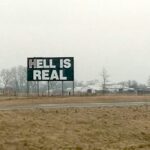
Between Columbus and Cincinnati, Ohio, drivers pass a billboard on Interstate 71 that has achieved some internet fame.
Since 2004, a black sign has risen from this flat stretch of highway declaring “HELL IS REAL.” The H in “Hell” is painted in red, a color Christians have long associated with sin and Satan.
The developer who erected the warning, Jimmy Harston, has similar signs scattered across the Midwest, including ones that ask, “If you died today, where would you spend eternity?”
For years, this confrontational sign was mostly a local attraction. But it gained wider notoriety when Ohio’s two Major League Soccer teams, Columbus Crew and FC Cincinnati, dubbed their 2017 matchup “Hell is Real.” The sign has now spawned TikTok content, T-shirt designs, mugs and decals. But it also reflects a genuine belief in hell held by a majority of Americans today, though the numbers are slipping.
A 2023 Gallup poll found that 59% of respondents believe in hell, while 67% believe in heaven. The numbers for hell belief are far higher among those who identify as Protestant Christians (81%) and Republicans (79%).
Hell belief is holding steady in the U.S., but this was not always the case. In my research on spirit communication in 19th century American culture, I have found an organized effort to “cancel” hell by Spiritualists, who made up the fastest-growing religious movement of the century.
Spiritualists believed that people could maintain communication with the living even after death. They thought communicative spirits had a principal role to play in addressing the era’s most pressing social and political concerns, which would be impossible if souls were damned. This idea was a cornerstone of their practice and a driver of their politics.
Hell hath no fury
Many traditions, including Catholic Christianity, have beliefs about eternal destiny, but Protestant beliefs predominated in America’s settler colonies.
Puritan minister Michael Wigglesworth’s epic and best-selling poem “Day of Doom,” written in 1666, scared generations of believers with its vivid depiction of “yonder Lake,/where Fire and Brimstone flameth.”
A century later, revivalist minister Jonathan Edwards warned of the “dreadful pit of the glowing flames of the wrath of God” awaiting the unrepentant.
On the edges of organized religion, though, were believers interested in alternative afterlives. Swedish theologian and scientist Emmanuel Swedenborg, for example, speculated in 1758 that “The world of spirits is not heaven, nor is it hell; but it is a place or state intermediate between the two.”
Swedenborg’s ideas gained public traction in the U.S. after sisters Kate and Margaret Fox of Hydesville, New York, reported “rapping” and “knocking” sounds in their home. The knocking seemed responsive to the sisters’ questions, and they soon claimed that they could hold conversations with the deceased. Rising from this domestic drama was a national and international phenomenon that recalibrated people’s relationship with death and offered a balm to the grieving.
Some of the Foxes’ first advocates were Quaker activists Isaac and Amy Post. Isaac Post became a writing medium, recording alleged spirit communications from luminaries like George Washington and Napoleon Bonaparte and also everyday people.
 An 1841 painting ‘Pandemonium’ by John Martin, based on John Milton’s ‘Paradise Lost,’ where Pandemonium is the capital of Hell. John Martin via Wikimedia Commons
Spiritualists held that after shedding the body in death, the spirit would continue on a celestial journey. A spirit’s assignment was to help those still in their bodies to create a better, more just world. Through mediums, séances and object manipulation, spirits were believed to be able to enlighten the living by giving them a glimpse into life on a broader plane of existence.
Spiritualists felt that embodied life was narrow and full of biases, wants, needs and conflicts. In his 1850 book, “Singular Revelations,” spirit medium Eliab W. Capron recorded an insight he claimed to receive from the spirit of radical Methodist preacher Lorenzo Dow, who had died 14 years prior: “The Presbyterians say hell is a place of fire and brimstone that burns the soul forever. This is not so. The Hell is man’s own body, and when he escapes from that he escapes from bondage.”
Fires of reform
In neutralizing the threat of hell, Spiritualists believed that even deeply corrupted spirits could spur the living toward progressive reforms.
In an 1858 gathering of self-described “friends of free thought” in Vermont known as the Rutland Free Convention, Spiritualists and social reformers debated the question of hell vis-a-vis issues like slavery, the death penalty and maternity.
Lecturer and clairvoyant Andrew Jackson Davis cheekily announced to the Rutland crowd, “Hell has undergone the most extensive alterations and improvements” in the hands of Spiritualists. By caring “less about the fear of the devil, and more about the actual necessity of goodness,” people could act expediently to address real social problems rather than fight what Davis considered imaginary ones.
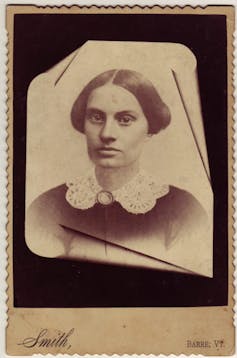 Spirit medium Achsa Sprague. vtdigger/via Wikimedia Commons
Spirit medium Ascha Sprague linked hell belief to the persistence of capital punishment in American jurisprudence, asking, “Who blames man that he hangs his brother between heaven and earth, when he has been taught to believe that the Almighty God, infinite in power and wisdom, will in a moment plunge him into a burning pit, and save him never?”
In other words, Spiritualists warned that the idea of hell allowed people to remain complacent: Let hell punish the brutal enslaver, the cruel prison warden, the merciless factory foreman, the abusive husband. Hell gave believers a way to escape the responsibility of addressing burning social ills in the here and now. By relinquishing the “bottomless pit, which they have been taught to believe in,” Isaac Post quoted a spirit saying, a new ethos of urgent and sweeping reform could materialize.
Even today, some spiritual activists consider hell belief an impediment to systemic social change. For example, prison abolitionist Hannah Bowman wrote in a 2023 collection on spirituality and abolition, “Insofar as hell is defined by coercion/confinement, separation, and retribution, it is to some degree related to any societal and state interventions reliant upon those practices.”
To hell and back
Putting out the fires of hell was not easy in the 19th century U.S., especially at the outbreak of the Civil War when mass death fed apocalyptic rhetoric. The promise of God’s “terrible swift sword” of judgment was sung out in the canonical words of suffragist Julia Ward Howe’s “Battle Hymn of the Republic.”
Spiritualism’s popularity waxed and waned after the war, and its reformist leanings largely faded. Mass casualty events like war and flu led to periodic revivals, especially of séance culture. But hell belief in America ultimately held steady and reignited by the middle of 20th century.
The reasons for this range from a decline in religious belief between the world wars to a religious revival following them, and the horrors of war itself. In his 1949 memoir, “To Hell and Back,” World War II 2nd Lt. Audie Murphy recounts a fellow soldier’s impromptu verses; “Oh, gather round me comrades and listen while / I speak / Of a war, a war, a war, where hell is six feet deep.” Hell was everywhere.
Cornell University’s Roper Center poll from 1957 – in the thick of the Cold War – found that 74% of Americans polled believed in an afterlife, but 84% felt that the dead were uncommunicative. These modern trends indicate that hell belief captures the zeitgeist of an era. It ebbs and flows along with attitudes about justice, human suffering and even the health of the planet.
The “Hell is Real” sign has experienced a similar flux. Last summer, street artist LISP pasted a cutout of a cartoonish red devil on the highway sign and shared the covert operation on Instagram. “Is nothing sacred?” one user asked, riffing on the sign’s iconic, if peculiar, status. The sign has since been replaced with a fresh one, a visible reminder that for some people, hell belief will never die.
This article is republished from The Conversation under a Creative Commons license. Read the original article and see more than 250 UMBC articles available in The Conversation.
]]>
Written by Lindsay DiCuirci, associate professor of English at UMBC. Between Columbus and Cincinnati, Ohio, drivers pass a billboard on Interstate 71 that has achieved some internet fame....
https://umbc.edu/stories/how-19th-century-spiritualists-canceled-the-idea-of-hell/
https://beta.my.umbc.edu/api/v0/pixel/news/141815/guest@my.umbc.edu/e9493bcec1f98516a303036504fe50b3/api/pixel
cahss
cahss-research
discovery
english
magazine
research
story
the-conversation
UMBC News & Magazine
https://beta.my.umbc.edu/groups/umbc-news-magazine
https://assets1-beta.my.umbc.edu/system/shared/avatars/groups/000/001/943/24435aa6207c452e7bc15cc74b42c7bb/xsmall.png?1748556657
https://assets1-beta.my.umbc.edu/system/shared/avatars/groups/000/001/943/24435aa6207c452e7bc15cc74b42c7bb/original.png?1748556657
https://assets2-beta.my.umbc.edu/system/shared/avatars/groups/000/001/943/24435aa6207c452e7bc15cc74b42c7bb/xxlarge.png?1748556657
https://assets2-beta.my.umbc.edu/system/shared/avatars/groups/000/001/943/24435aa6207c452e7bc15cc74b42c7bb/xlarge.png?1748556657
https://assets3-beta.my.umbc.edu/system/shared/avatars/groups/000/001/943/24435aa6207c452e7bc15cc74b42c7bb/large.png?1748556657
https://assets1-beta.my.umbc.edu/system/shared/avatars/groups/000/001/943/24435aa6207c452e7bc15cc74b42c7bb/medium.png?1748556657
https://assets2-beta.my.umbc.edu/system/shared/avatars/groups/000/001/943/24435aa6207c452e7bc15cc74b42c7bb/small.png?1748556657
https://assets1-beta.my.umbc.edu/system/shared/avatars/groups/000/001/943/24435aa6207c452e7bc15cc74b42c7bb/xsmall.png?1748556657
https://assets2-beta.my.umbc.edu/system/shared/avatars/groups/000/001/943/24435aa6207c452e7bc15cc74b42c7bb/xxsmall.png?1748556657
UMBC News & Magazine
0
0
false
Wed, 08 May 2024 12:11:32 -0400
Wed, 08 May 2024 12:11:32 -0400
UMBC’s first Fulbright Scholar-in-Residence shares unique research on neurodiversity in language teaching and learning

Neurodiversity inclusion and representation have been at the forefront of Michael Canale’s 20-year career in the disability services and education field. Canale, M.A. ’24, intercultural communication, is the assistant director of UMBC’s Office of Student Disability Services and teaches the first-year seminar Introduction to Disability Studies. “Sometimes parents of neurodivergent students worry that their child is incapable of learning another language,” says Canale. “I work with parents to ease their fears by showing them how their child can excel in college with the proper individualized accommodations.” These can include note-taking software, counseling services, tutoring, time management support, and more.
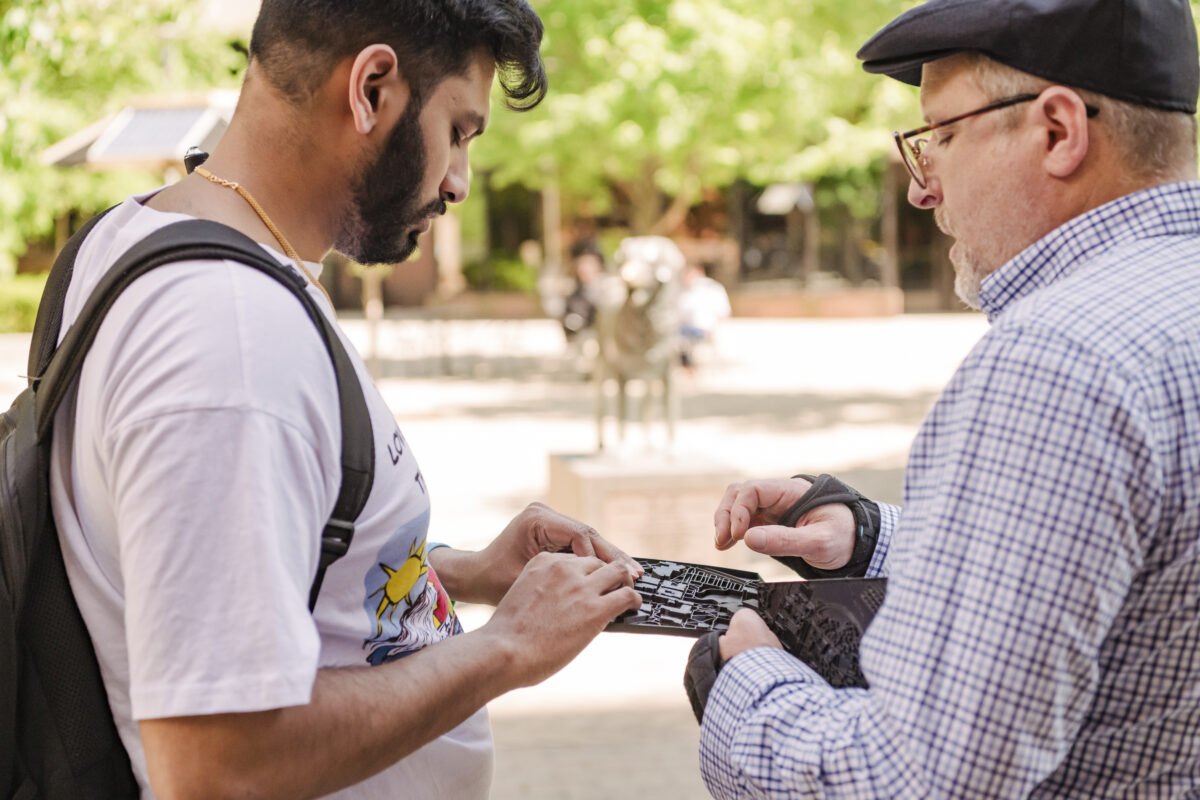 Michael Canale (r) has been working with Ph.D. students in human-centered computing to create personal tactile maps of campus for blind students at UMBC, like Shawn Abraham ’24, political science. (Marlayna Demond ’11/UMBC)
When Canele, who also received his post-master’s certificate in college teaching and learning science, heard that UMBC’s first Fulbright Scholar-in-Residence, Jules Buendgens-Kosten,would be teaching Language Learning and Special Education – Advanced Special Topics in Education, he was quick to enroll. The course, part of UMBC’s teaching English to speakers of other languages (TESOL) master’s program, was designed for anybody planning to work with heterogeneous groups of learners, including those of different neurotypes, both in special education and mainstream education settings.
Buendgens-Kosten, a research assistant at the Institute of English and American Studies at Goethe-Universität Frankfurt, Germany,began theirpartnership with UMBC as a research collaboration with Shannon Sauro, associate professor of education.Sauro recognized that Buendgens-Kosten’s expertise in English language teaching and teaching neurodivergent populations in Germany would add an international and non-U.S.-based perspective to UMBC’s TESOL program and education department.
My uni (@UMBC) just got so much geekier and cooler.
]]>
Neurodiversity inclusion and representation have been at the forefront of Michael Canale’s 20-year career in the disability services and education field. Canale, M.A. ’24, intercultural...
https://umbc.edu/stories/umbcs-first-fulbright-scholar-in-residence-research-on-neurodiversity/
https://beta.my.umbc.edu/api/v0/pixel/news/141776/guest@my.umbc.edu/9db27eba31ba49267d43df7a734d3ec0/api/pixel
cahss
cahss-research
coeit
community
education
fulbright
mlli
news
peaceworker
politicalscience
research
story
tesol
UMBC News & Magazine
https://beta.my.umbc.edu/groups/umbc-news-magazine
https://assets1-beta.my.umbc.edu/system/shared/avatars/groups/000/001/943/24435aa6207c452e7bc15cc74b42c7bb/xsmall.png?1748556657
https://assets1-beta.my.umbc.edu/system/shared/avatars/groups/000/001/943/24435aa6207c452e7bc15cc74b42c7bb/original.png?1748556657
https://assets2-beta.my.umbc.edu/system/shared/avatars/groups/000/001/943/24435aa6207c452e7bc15cc74b42c7bb/xxlarge.png?1748556657
https://assets2-beta.my.umbc.edu/system/shared/avatars/groups/000/001/943/24435aa6207c452e7bc15cc74b42c7bb/xlarge.png?1748556657
https://assets3-beta.my.umbc.edu/system/shared/avatars/groups/000/001/943/24435aa6207c452e7bc15cc74b42c7bb/large.png?1748556657
https://assets1-beta.my.umbc.edu/system/shared/avatars/groups/000/001/943/24435aa6207c452e7bc15cc74b42c7bb/medium.png?1748556657
https://assets2-beta.my.umbc.edu/system/shared/avatars/groups/000/001/943/24435aa6207c452e7bc15cc74b42c7bb/small.png?1748556657
https://assets1-beta.my.umbc.edu/system/shared/avatars/groups/000/001/943/24435aa6207c452e7bc15cc74b42c7bb/xsmall.png?1748556657
https://assets2-beta.my.umbc.edu/system/shared/avatars/groups/000/001/943/24435aa6207c452e7bc15cc74b42c7bb/xxsmall.png?1748556657
UMBC News & Magazine
0
0
false
Tue, 07 May 2024 13:43:48 -0400
Tue, 07 May 2024 13:43:48 -0400
Neediest areas are being shortchanged on government funds − even with programs designed to benefit poor communities

Written by Eric Stokan, assistant professor of political science at UMBC; Aaron Deslatte, assistant professor of public administration at Indiana University, and Michael Overton, associate professor at of political science and public administration at the University of Idaho.
If you live in one of the most economically deprived neighborhoods in your city, you might think the government is directing a smaller share of public funds to your community. And you would typically be right.
This is the case even with programs that have been specifically designed to benefit low-income communities. Over the long run, federal funds tend to flow toward areas that are relatively better off.
That’s what we found in a recent study of the U.S. Department of Housing and Urban Development’s Community Development Block Grant program.
We looked at 20 years of data from the CDBG program, which in 2022 provided about $4.3 billion to cities and states across the country. Federal rules require that 70% of these funds be spent in neighborhoods where a majority of families have low to moderate incomes – a category researchers abbreviate as “LMI.”
To count as LMI, a household must make 80% or less of the median income in an area. So, in the Baltimore metropolitan area, which in 2023 had a median household income of US$121,700, a household could make up to $97,600 and qualify. If 51% or more of the households in a census tract earn less than that income, then the tract is eligible for LMI funding.
We asked what happens as that share increases: Are those communities more likely to receive additional funding?
We found that the neighborhoods with the largest share of low- to moderate-income families, relative to the city, were less likely to receive CDBG funds than communities that were closer to the 51% threshold. In other words, the neediest places weren’t the ones most likely to receive money.
The neediest areas get less
As scholars of political science and public administration, we were not entirely surprised by our findings. Other researchers have documented similar trends for other programs, including the Opportunity Zones program, which may be targeted toward neighborhoods that have begun to gentrify.
These findings are also consistent with analyses of the CDBG program in evaluations of a few large cities. In our work, which looked at more than 15,000 census tracts in nearly 1,300 cities, we concluded that these effects aren’t limited to a small number of urban communities.
What’s more, economic development policies already worsen these effects. Property tax abatements and other tax policies aimed at attracting businesses and development often leave schools deprived of critical funding, which exacerbates social and racial inequities.
This isn’t just a problem with federal programs. The political scientist Jessica Trounstine, in her influential 2018 book “Segregation by Design,” has shown that cities distribute their public investments in ways that systematically worsen existing inequities.
In the case of the CDBG program, local governments have a lot of discretion in distributing funds. That creates a conflict between two goals: growth and equity. Will governments optimize for economic growth, seeking maximum returns on investment and increasing tax dollars with community development funds? Or will they use these funds to bolster the hardest hit and economically disadvantaged communities?
Cities, for their part, must confront trade-offs regarding the type of investments to make and where to make them. For cities, this could mean using funds to build a public park in a wealthier neighborhood or to repair a youth services center in a very low-income community.
If these examples seem stark, consider that Pharr, Texas, used a portion of its CDBG funds to buy equipment to host festivals, and the council in Comstock Township, Michigan, unanimously decided to use CDBG funds to expand the water capacity at a local craft brewery.
Both activities may be important for economic development; qualifying these activities as community development, however, neglects the focus on helping those with the least.
From the federal government down to city governments, lawmakers are increasingly focused on improving social equity. The reality is that many cities in the U.S. are profoundly unequal, and the most disinvested communities are already plagued with socioeconomic challenges. Adults and children in these environments often live with an increased risk of everything from asthma to toxic exposure to lead.
That’s why it’s so concerning that programs designed to reduce inequality in disinvested communities may be systematically targeted toward relatively better-off neighborhoods with a return-on-investment justification.
What governments can do
Fortunately, policymakers aren’t powerless. Our research indicates there are steps that all levels of government can take.
At the federal level, the U.S. Department of Housing and Urban Development might tighten the requirements around how it, as well as state and local governments, distributes CDBG dollars. Over the years, scholars have sought changes to the funding formula to improve equity.
Since states decide how CDBG funds are allocated to local governments, they could play a key role in improving social equity access. Specifically, they could get rid of competitive bidding processes for these funds and instead prioritize local governments with higher needs.
Finally, local governments could consider using redistributive spending mechanisms – such as providing CDBG funds for youth programs, services for the disabled, or even subsistence payments – to ensure that neighborhoods with the greatest need receive these funds. They should also work with community development organizations and neighborhood groups when considering their spending priorities.
Getting community input is especially important. That’s because, as our research found, the poorest neighborhoods were more likely to receive CDBG funds when community development corporations – nonprofit organizations that represent local interests – participated in decision-making.
In community development, as in so much of life, it matters who has a seat at the table.
This article is republished from The Conversation under a Creative Commons license. Read the original article and see more than 250 UMBC articles available in The Conversation.
]]>
Written by Eric Stokan, assistant professor of political science at UMBC; Aaron Deslatte, assistant professor of public administration at Indiana University, and Michael Overton, associate...
https://umbc.edu/stories/neediest-areas-are-being-shortchanged-on-government-funds-even-with-programs-designed-to-benefit-poor-communities/
https://beta.my.umbc.edu/api/v0/pixel/news/141777/guest@my.umbc.edu/ac59a34431e6290230c469f36b25024c/api/pixel
cahss
cahss-research
discovery
magazine
politicalscience
research
story
UMBC News & Magazine
https://beta.my.umbc.edu/groups/umbc-news-magazine
https://assets1-beta.my.umbc.edu/system/shared/avatars/groups/000/001/943/24435aa6207c452e7bc15cc74b42c7bb/xsmall.png?1748556657
https://assets1-beta.my.umbc.edu/system/shared/avatars/groups/000/001/943/24435aa6207c452e7bc15cc74b42c7bb/original.png?1748556657
https://assets2-beta.my.umbc.edu/system/shared/avatars/groups/000/001/943/24435aa6207c452e7bc15cc74b42c7bb/xxlarge.png?1748556657
https://assets2-beta.my.umbc.edu/system/shared/avatars/groups/000/001/943/24435aa6207c452e7bc15cc74b42c7bb/xlarge.png?1748556657
https://assets3-beta.my.umbc.edu/system/shared/avatars/groups/000/001/943/24435aa6207c452e7bc15cc74b42c7bb/large.png?1748556657
https://assets1-beta.my.umbc.edu/system/shared/avatars/groups/000/001/943/24435aa6207c452e7bc15cc74b42c7bb/medium.png?1748556657
https://assets2-beta.my.umbc.edu/system/shared/avatars/groups/000/001/943/24435aa6207c452e7bc15cc74b42c7bb/small.png?1748556657
https://assets1-beta.my.umbc.edu/system/shared/avatars/groups/000/001/943/24435aa6207c452e7bc15cc74b42c7bb/xsmall.png?1748556657
https://assets2-beta.my.umbc.edu/system/shared/avatars/groups/000/001/943/24435aa6207c452e7bc15cc74b42c7bb/xxsmall.png?1748556657
UMBC News & Magazine
0
0
false
Tue, 07 May 2024 13:38:06 -0400
Tue, 07 May 2024 13:38:06 -0400
Ryan Bloom, English, receives 2024 Guggenheim Fellowship for translation

Ryan Bloom, senior lecturer in English, has received the 2024 Guggenheim Fellowship for translation to work on the first complete edition of the French-Algerian author Albert Camus’s notebooks, journals, and other works. This year, 188 grants were awarded from more than 3,000 applicants from over 52 academic disciplines across the U.S. and Canada. Fellows are provided funding to freely pursue their creative projects through their unique process without any special conditions.
“In many ways, the situation Camus experienced in post-World War II Paris bears similarities to our own times here in the States. To give just one example, one of Camus’s great fears was a world where, in support of ideology, people were willing to excuse, if not actively cheer, the murder of other human beings,” says Bloom. “We need only turn on the news or scroll through our social media feeds to understand how some might feel that same fear today.”
Bloom has been translating Camus’s work for more than a decade. Most recently, he completed translations of Camus’s North and South American journals,Travels in the Americas: Notes and Impressions of a New World (Chicago University Press, 2023) as well as Camus’s Caligula and Three Other Plays (Penguin Random House, 2023). His translation of Albert Camus’ Notebooks 1951 – 1959, (Ivan R. Dee Publishing, 2008) was a finalist for the French-American Foundation and the Florence Gould Foundation’s Translation Prize for outstanding published English translations of prose originally written in French; his translation of Travels in the Americas is again a finalist for this year’s prize, to be awarded in June. Bloom notes that his drive to translate Camus’s work stems from the relevance the author’s work still has today, more than 65 years after Camus received the Nobel Prize in Literature in 1957.
“Humanity faces some profound existential challenges,” said Edward Hirsch, award-winning poet and president of the John Simon Guggenheim Memorial Foundation. “The Guggenheim Fellowship is a life-changing recognition. It’s a celebrated investment into the lives and careers of distinguished artists, scholars, scientists, writers, and other cultural visionaries who are meeting these challenges head-on and generating new possibilities and pathways across the broader culture as they do so.”
In 2017, Deborah Rudacille, professor of the practice in English, was the first UMBC faculty to receive a Guggenheim Fellowship. Rudacille received it for science writing.
“Ryan Bloom’s Guggenheim shows the wide range of research and teaching that takes place in the English department,” says Jessica Berman, professor of English and director of the Dresher Center for the Humanities. “That students have access to a translator of Ryan’s caliber when they sign up for his composition or creative writing classes and have the opportunity to learn from his careful approach to language adds immeasurably to their experience. UMBC is very lucky to have him in our midst.”
Learn more about UMBC’s English department.
]]>
Ryan Bloom, senior lecturer in English, has received the 2024 Guggenheim Fellowship for translation to work on the first complete edition of the French-Algerian author Albert Camus’s notebooks,...
https://umbc.edu/quick-posts/ryan-bloom-2024-guggenheim/
https://beta.my.umbc.edu/api/v0/pixel/news/141750/guest@my.umbc.edu/5c056c04639aefb0fcfbf2d063546240/api/pixel
cahss
cahss-research
english
majoraward
news
policy-and-society
quick-post
quick-posts
research
UMBC News & Magazine
https://beta.my.umbc.edu/groups/umbc-news-magazine
https://assets1-beta.my.umbc.edu/system/shared/avatars/groups/000/001/943/24435aa6207c452e7bc15cc74b42c7bb/xsmall.png?1748556657
https://assets1-beta.my.umbc.edu/system/shared/avatars/groups/000/001/943/24435aa6207c452e7bc15cc74b42c7bb/original.png?1748556657
https://assets2-beta.my.umbc.edu/system/shared/avatars/groups/000/001/943/24435aa6207c452e7bc15cc74b42c7bb/xxlarge.png?1748556657
https://assets2-beta.my.umbc.edu/system/shared/avatars/groups/000/001/943/24435aa6207c452e7bc15cc74b42c7bb/xlarge.png?1748556657
https://assets3-beta.my.umbc.edu/system/shared/avatars/groups/000/001/943/24435aa6207c452e7bc15cc74b42c7bb/large.png?1748556657
https://assets1-beta.my.umbc.edu/system/shared/avatars/groups/000/001/943/24435aa6207c452e7bc15cc74b42c7bb/medium.png?1748556657
https://assets2-beta.my.umbc.edu/system/shared/avatars/groups/000/001/943/24435aa6207c452e7bc15cc74b42c7bb/small.png?1748556657
https://assets1-beta.my.umbc.edu/system/shared/avatars/groups/000/001/943/24435aa6207c452e7bc15cc74b42c7bb/xsmall.png?1748556657
https://assets2-beta.my.umbc.edu/system/shared/avatars/groups/000/001/943/24435aa6207c452e7bc15cc74b42c7bb/xxsmall.png?1748556657
UMBC News & Magazine
14
0
false
Tue, 07 May 2024 09:33:18 -0400
Tue, 07 May 2024 09:33:18 -0400
Meet a Retriever—Camilla Sandoval ’17, M.A. ’19, program coordinator for Maryland Humanities
Meet Camilla Sandoval ’17, history, M.A. ’19, historical studies, a first-generation student who spent part of her time on each of UMBC’s campuses before graduating and putting her studies to work. Today, she spends her days as the program coordinator for grants with Maryland Humanities, where she still employs lessons learned from her time as a Retriever. Thanks for sharing your story, Camilla!
Q: Briefly introduce yourself. What’s one essential thing you’d want another Retriever to know about you?
A: I am a first-generation college student, and I studied history and public history at UMBC’s Shady Grove campus (for my bachelor’s) and main campus (for my master’s). Both experiences were instrumental to my professional and personal growth. It was at UMBC where I started recognizing the humanities as a tool for community empowerment.
Q: What’s the one thing you’d want someone to know about the support you find here?
A: It was hard for me to accept when I had to ask for help—especially when I didn’t know what I didn’t know. But once I did, I found enormous support in my professors and in my cohort. They helped the academic experience feel less isolating and pushed me to believe in myself as much as they believed in me.
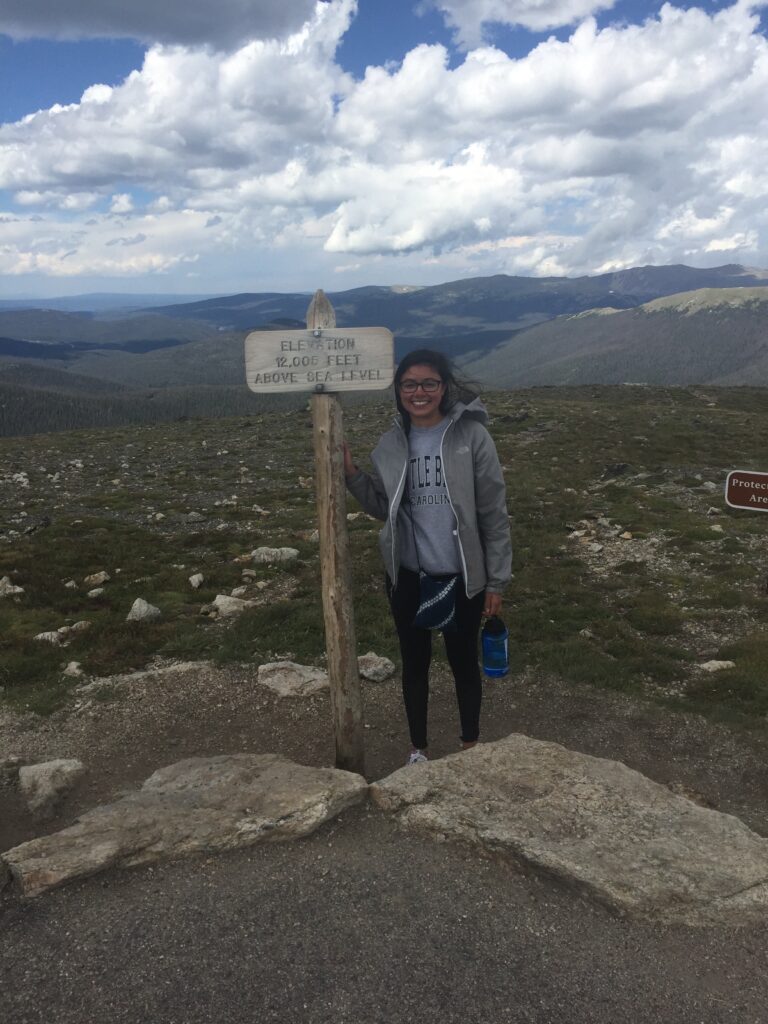
“This is me at Rocky Mountain National Park in August 2017, the summer between my undergraduate and graduate programs. I was there as part of the Latino Heritage Internship Program. Thank you to Dr. Melissa Blair for sharing the internship with me and helping with my application. This trip to Colorado has been one of the most rewarding experiences for me.”
Q: Where do you work? What do you enjoy most about it?
A: I’m currently the program coordinator for grants at Maryland Humanities, our state humanities council. In my role, I’m part of our grantmaking efforts. I’m able to help small humanities organizations across the state get access to funding that can be used for general operating expenses. I get the most joy out of hearing our grant recipients talk about using funds to continue preserving their local history or being able to keep their doors open for the communities they serve.
The history department at both UMBC- Shady Grove and the Catonsville campus were the biggest difference makers in my education and they have continued to support me in my professional career.
Camilla Sandoval ’17, history, M.A. ’19
Q: Tell us about your primary WHY, and how it led you to UMBC.
A: I came to UMBC because it was my best opportunity to study my field of interest while staying close to my family. I came with the hope of finding guidance and direction. I always loved history and knew it was important for understanding myself and the world, but I needed to learn how that translated into a career in which I could use the skills to support and lift up my community and culture. My family and community gave me everything they could, and I was committed to setting myself up on a career path in which I could contribute back in any way I could.
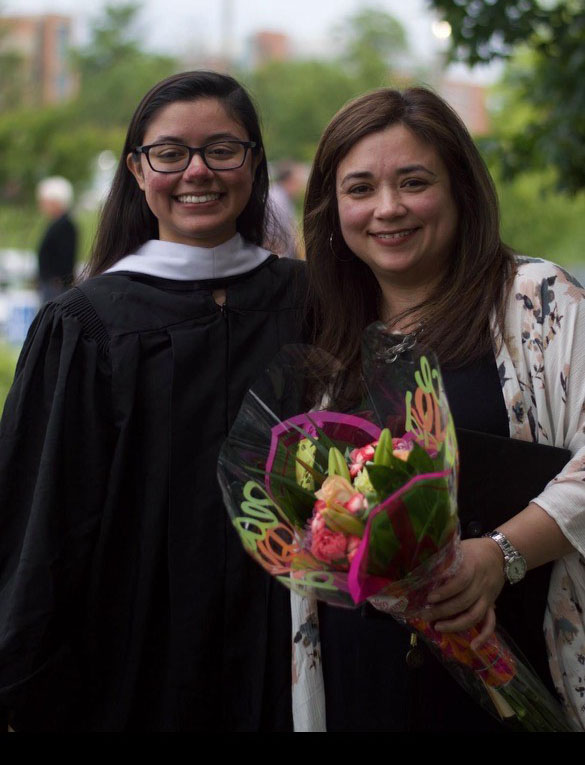 “
“
This is my mom and me at my master’s graduation on main campus in May 2019. My family here in the U.S. and in El Salvador has always been the most important and supportive part of my life. I am where I am today because of my mom.”
Q: Tell us about the people who helped you grow at UMBC, and why their HOW made such a difference to you.
A: My time at UMBC introduced me to new ideas and opened opportunities I didn’t know existed, and helped me out of my comfort zone to develop my skills. I left with deeper appreciation for history and a better belief in myself. My history and public history professors were especially impactful. They guided me as a first-generation college student, encouraged me to consider going for my master’s degree, and led me to internships that served as critical stepping stones in my career. The history department at both UMBC- Shady Grove and the Catonsville campus were the biggest difference makers in my education and they have continued to support me in my professional career.
* * * * *
UMBC’s greatest strength is its people. When people meet Retrievers and hear about the passion they bring, the relationships they create, the ways they support each other, and the commitment they have to inclusive excellence, they truly get a sense of our community. That’s what “Meet a Retriever” is all about.
Learn more about how UMBC can help you achieve your goals.
]]>
Meet Camilla Sandoval ’17, history, M.A. ’19, historical studies, a first-generation student who spent part of her time on each of UMBC’s campuses before graduating and putting her studies to...
https://umbc.edu/stories/meet-a-retriever-camilla-sandoval-humanities/
https://beta.my.umbc.edu/api/v0/pixel/news/141743/guest@my.umbc.edu/2a5eea53ba59fa924c3d4c0923f0c11d/api/pixel
alumni
cahss
history
impact
magazine
meet-a-retriever
perspectives
shady-grove
story
UMBC News & Magazine
https://beta.my.umbc.edu/groups/umbc-news-magazine
https://assets1-beta.my.umbc.edu/system/shared/avatars/groups/000/001/943/24435aa6207c452e7bc15cc74b42c7bb/xsmall.png?1748556657
https://assets1-beta.my.umbc.edu/system/shared/avatars/groups/000/001/943/24435aa6207c452e7bc15cc74b42c7bb/original.png?1748556657
https://assets2-beta.my.umbc.edu/system/shared/avatars/groups/000/001/943/24435aa6207c452e7bc15cc74b42c7bb/xxlarge.png?1748556657
https://assets2-beta.my.umbc.edu/system/shared/avatars/groups/000/001/943/24435aa6207c452e7bc15cc74b42c7bb/xlarge.png?1748556657
https://assets3-beta.my.umbc.edu/system/shared/avatars/groups/000/001/943/24435aa6207c452e7bc15cc74b42c7bb/large.png?1748556657
https://assets1-beta.my.umbc.edu/system/shared/avatars/groups/000/001/943/24435aa6207c452e7bc15cc74b42c7bb/medium.png?1748556657
https://assets2-beta.my.umbc.edu/system/shared/avatars/groups/000/001/943/24435aa6207c452e7bc15cc74b42c7bb/small.png?1748556657
https://assets1-beta.my.umbc.edu/system/shared/avatars/groups/000/001/943/24435aa6207c452e7bc15cc74b42c7bb/xsmall.png?1748556657
https://assets2-beta.my.umbc.edu/system/shared/avatars/groups/000/001/943/24435aa6207c452e7bc15cc74b42c7bb/xxsmall.png?1748556657
UMBC News & Magazine
0
0
false
Mon, 06 May 2024 12:33:42 -0400
Mon, 06 May 2024 12:33:42 -0400
UMBC celebrates our outstanding community at annual Presidential Faculty and Staff Awards

Members of the UMBC community gathered this week to celebrate members of the faculty and staff who received Presidential Faculty and Staff awards, University System of Maryland awards, and additional distinguished university awards.
Congratulations to this year’s honorees!
Presidential Teaching Professor Award
Amy Froide
Professor and Chair, History
Presidential Research Professor Award
Tülay Adali
Distinguished University Professor and Professor of Computer Science and Electrical Engineering
Presidential Distinguished Staff Award, Professional Staff
Fritzie Charne-Merriwether
Acting Associate Vice President for Student Engagement and Diversity, and Director of Parent and Family Engagement, Division of Student Affairs
Professional Distinguished Staff Award, Non-Exempt Staff
Laura A. Weathers ’80, M.A. ’87
Library Services Supervisor, Albin O. Kuhn Library and Gallery
USM Board of Regents Faculty Award for Excellence in Mentoring
Liang Zhu
Professor, Mechanical Engineering
USM Board of Regents Faculty Award for Excellence in Scholarship or Research
Vandana Janeja
Professor of Information Systems and Associate Dean for Research and Faculty Development, College of Engineering and Information Technology
USM Board of Regents Staff Award for Extraordinary Public Service to the University or Greater Community
Stanyell Odom
Director, Alumni Engagement, Office of Institutional Advancement
USM Board of Regents Staff Award for Effectiveness and Efficiency
Margo Young
Director, Earth and Space Research Administration, Goddard Planetary Heliophysics Institute
Diane M. Lee Teaching Award
Janet R. Gross
Lecturer, English and Academic Engagement and Transition First Year Seminar
Jakubik Family Endowment Award
B. Collier Jones ’16
Campus Portal Architect, Division of Information Technology
Karen L. Wensch Endowment Award for Outstanding Non-Exempt Staff
Donique J. Lewis
Executive Administrative Assistant II, College of Engineering and Information Technology
Marilyn E. Demorest Award for Faculty Advancement
Lee Blaney
Professor, Chemical, Biochemical and Environmental Engineering
Marilyn E. Demorest Award for Faculty Advancement
L.D. Timmie Topoleski
Professor, Mechanical Engineering
Teresa Lupinek Endowment Award
Sundiata Jangha, M.P.P. ’18
Director of Pipeline Programs, Upward Bound Mathematics and Science Center, Graduate School, Office of Academic Opportunity Programs
UMBC Research Faculty Excellence Award
Roberto A. Fernandez Borda
Senior Research Engineer, Joint Center for Earth Systems Technology
Learn more about the Presidential Faculty and Staff Awards.
]]>
Members of the UMBC community gathered this week to celebrate members of the faculty and staff who received Presidential Faculty and Staff awards, University System of Maryland awards, and...
https://umbc.edu/stories/celebrating-presidential-faculty-and-staff-awards/
https://beta.my.umbc.edu/api/v0/pixel/news/141724/guest@my.umbc.edu/509156ed7901ebdc32ed461ffced47d8/api/pixel
cahss
cnms
coeit
community
news
pfsa
story
UMBC News & Magazine
https://beta.my.umbc.edu/groups/umbc-news-magazine
https://assets1-beta.my.umbc.edu/system/shared/avatars/groups/000/001/943/24435aa6207c452e7bc15cc74b42c7bb/xsmall.png?1748556657
https://assets1-beta.my.umbc.edu/system/shared/avatars/groups/000/001/943/24435aa6207c452e7bc15cc74b42c7bb/original.png?1748556657
https://assets2-beta.my.umbc.edu/system/shared/avatars/groups/000/001/943/24435aa6207c452e7bc15cc74b42c7bb/xxlarge.png?1748556657
https://assets2-beta.my.umbc.edu/system/shared/avatars/groups/000/001/943/24435aa6207c452e7bc15cc74b42c7bb/xlarge.png?1748556657
https://assets3-beta.my.umbc.edu/system/shared/avatars/groups/000/001/943/24435aa6207c452e7bc15cc74b42c7bb/large.png?1748556657
https://assets1-beta.my.umbc.edu/system/shared/avatars/groups/000/001/943/24435aa6207c452e7bc15cc74b42c7bb/medium.png?1748556657
https://assets2-beta.my.umbc.edu/system/shared/avatars/groups/000/001/943/24435aa6207c452e7bc15cc74b42c7bb/small.png?1748556657
https://assets1-beta.my.umbc.edu/system/shared/avatars/groups/000/001/943/24435aa6207c452e7bc15cc74b42c7bb/xsmall.png?1748556657
https://assets2-beta.my.umbc.edu/system/shared/avatars/groups/000/001/943/24435aa6207c452e7bc15cc74b42c7bb/xxsmall.png?1748556657
UMBC News & Magazine
1
0
false
Mon, 06 May 2024 10:16:00 -0400
Mon, 06 May 2024 10:16:00 -0400
Month of Earth Day events culminates with 8th Annual Earth Day Symposium
UMBC’s strength in environmental research spans all three colleges and the university’s NASA-partnered centers, and Earth Day is always a special time on campus. This year, UMBC partnered with the Environmental Protection Agency (EPA) to host more events than ever before. A committee led at UMBC by Rhonda Plofkin, a Ph.D. student in geography and environmental systems (GES), organized 18 events throughout the month of April.
Volunteers led by enthusiastic students and Office of Sustainability staff removed invasive plants on campus; a panel at the AOK Library & Gallery discussed how various disciplines, including the arts, can engage with environmental conservation; the UMBC community watched a partial solar eclipse on campus; and much more.
The month of festivities culminated with the 8th Annual Earth Day Symposium on April 29, organized by graduate students in atmospheric physics and geography and environmental systems (GES). Nearly 150 attendees from at least six universities and five federal agencies gave talks, participated in panel discussions, presented 26 research posters, and even went on a hike through UMBC’s Conservation and Environmental Research Area on an unseasonably warm day.
“A tradition we are really proud of is that this event is 100 percent planned and implemented by our graduate students,” shared Zhibo Zhang, professor of physics at UMBC. He noted the event not only benefits the attendees, but also the planning team. “I’ve seen their confidence grow every day as the event came together,” Zhang says.
“It has been a great experience for us to invite such a wide range of people with shared enthusiasm for Earth science to UMBC,” shares Kamal Aryal, Ph.D. student in atmospheric physics and the lead organizer for the Earth Day Symposium. “Having students, early career scientists, and university professors from many universities and from NASA’s PACE mission, including the lead project scientist for PACE, attend our symposium creates great opportunities for networking and professional development.”
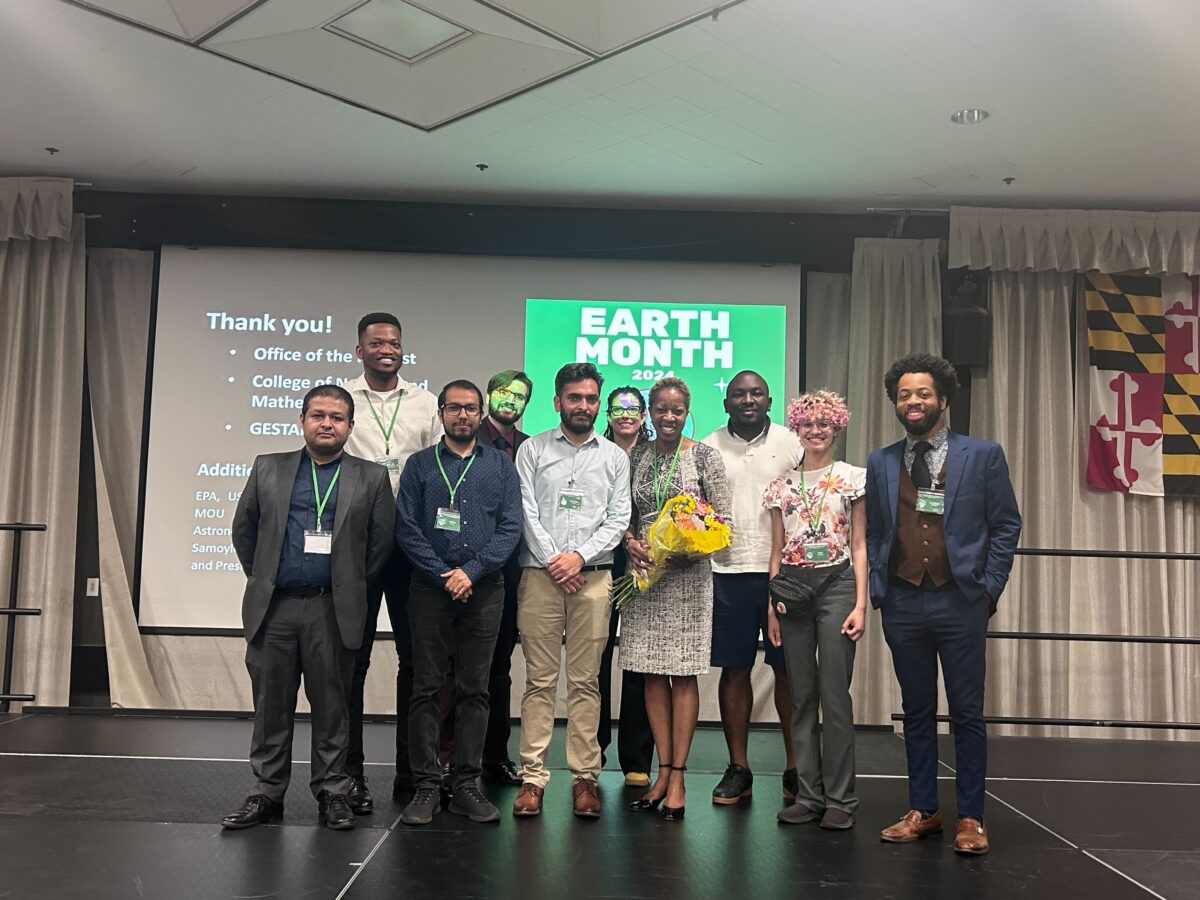 Planning committee members for the Earth Day Symposium and other Earth Day events with President Valerie Sheares Ashby. Left to right: Sharad Pandey, Adeleke Segun Ademakinwa, Kamal Aryal, Tony La Luna, Roshan Mishra, Rhonda Plofkin, Valerie Sheares Ashby, Tolulope Ale, Erin Hamner, and Maurice Roots. (Image by Zhibo Zhang)
Monitoring the environment—from above Earth’s atmosphere to underwater
First organized in 2017, the Earth Day Symposium has grown in stature, size, and scope every year. This year’s theme was “monitoring planetary health,” a nod to the recently-launched NASA PACE mission carrying HARP2, a polarimeter designed and built at UMBC. HARP2 will improve our understanding of the roles various particles in the atmosphere—like dust, water vapor, and pollutants—play in climate and health. Previous symposium themes have included the environmental impacts of COVID-19, the synergy of scientific disciplines, and equity and environmental justice.
Vanderlei Martins, professor of physics at UMBC and the HARP2 team lead, gave the first presentation, which was followed later in the morning by a panel discussion including PACE scientists from UMBC, NASA, and Morgan State University.
The three main instruments on PACE have complementary roles. Each sees Earth a little differently, and will provide important data on plankton populations in the ocean, the role of clouds in Earth’s energy balance, and much more. “Each of these instruments is unique, and together, they are amazing,” Martins says. HARP2 “has capabilities we’ve never had before,” he adds. “I cannot even imagine everything we are going to learn.”
Between Martins’ talk and the panel, Vanessa Vargas-Nguyen, a researcher with the University of Maryland Center for Environmental Science (UMCES), discussed her work on monitoring the health of the Chesapeake Bay watershed. UMCES produces one of several report cards for the Chesapeake Bay, collecting data on everything from populations of bottom-dwelling critters to concentrations of elements like phosphorus and nitrogen, which are commonly found in fertilizers. Now Vargas-Nguyen is expanding her group’s work to look at the entire watershed more holistically, including adding social factors like economic activity, governance structures, and population density.
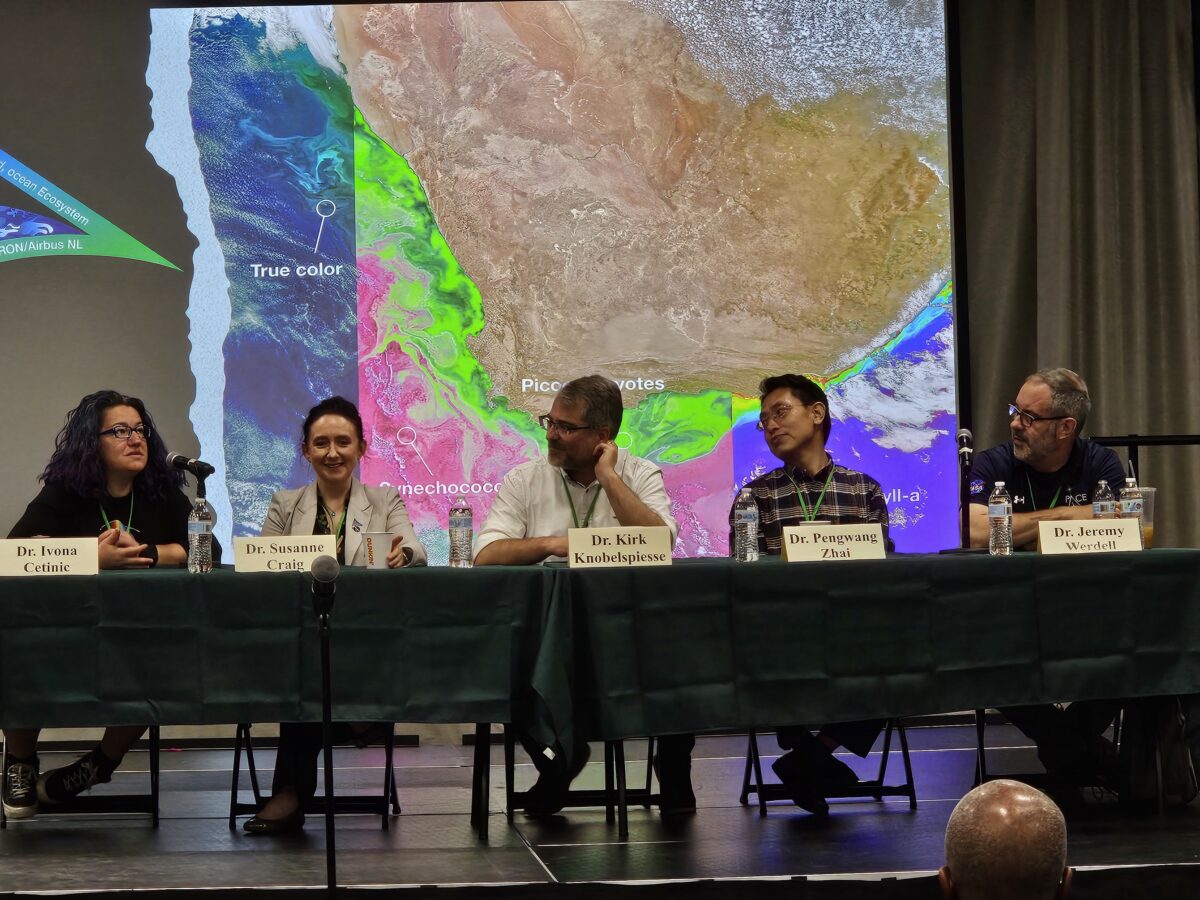 Panelists discussed the PACE mission. From left to right: Ivona Cetinic, senior research scientist with Morgan State University through the Goddard Earth Science and Technology Research Center (GESTAR) II; Susanne Craig, scientist with UMBC through GESTAR II; Kirk Knobelspiesse, researcher at NASA Goddard Space Flight Center; Pengwang Zhai, professor of physics at UMBC; and Jeremy Werdell, project scientist for the PACE mission at NASA. (Photo by Kamal Aryal)
A hub for environmental action
After the post-lunch hike, a poster session featured student and faculty research from UMBC, NASA, and the National Oceanic and Atmospheric Administration. Jing Wei, from the University of Maryland, College Park, discussed remote sensing methods for monitoring air pollution, and Robert Foster, from the U.S. Naval Research Laboratory, explained his work on monitoring microplastics in the ocean. Kandis Boyd, from the EPA, emphasized the importance of interdisciplinary and cross-sector partnerships.
Throughout the day, the ballroom buzzed with energy as students, UMBC faculty, and researchers from around the region shared their science and connected with each other. A shared sense of purpose guided the event, grounded in UMBC’s commitment to promoting a sustainable future.
As Charles Ichoku, director of the Goddard Earth Science and Technology Research Center II, one of UMBC’s NASA partnerships, and a professor of GES, put it, “UMBC is a young university that does great things.”
Whether taking immediate action to improve the campus landscape, conducting research on global climate, or training the next generation of Earth scientists, the month of Earth Day events demonstrates how UMBC has positioned itself as a hub for environmental action.
]]>
UMBC’s strength in environmental research spans all three colleges and the university’s NASA-partnered centers, and Earth Day is always a special time on campus. This year, UMBC partnered with the...
https://umbc.edu/stories/8th-annual-earth-day-symposium/
https://beta.my.umbc.edu/api/v0/pixel/news/141690/guest@my.umbc.edu/e8eaf936eeb0a780690163c7f947b912/api/pixel
cahss
cnms
coeit
ges
gestar2
information-systems
news
physics
science-and-tech
story
UMBC News & Magazine
https://beta.my.umbc.edu/groups/umbc-news-magazine
https://assets1-beta.my.umbc.edu/system/shared/avatars/groups/000/001/943/24435aa6207c452e7bc15cc74b42c7bb/xsmall.png?1748556657
https://assets1-beta.my.umbc.edu/system/shared/avatars/groups/000/001/943/24435aa6207c452e7bc15cc74b42c7bb/original.png?1748556657
https://assets2-beta.my.umbc.edu/system/shared/avatars/groups/000/001/943/24435aa6207c452e7bc15cc74b42c7bb/xxlarge.png?1748556657
https://assets2-beta.my.umbc.edu/system/shared/avatars/groups/000/001/943/24435aa6207c452e7bc15cc74b42c7bb/xlarge.png?1748556657
https://assets3-beta.my.umbc.edu/system/shared/avatars/groups/000/001/943/24435aa6207c452e7bc15cc74b42c7bb/large.png?1748556657
https://assets1-beta.my.umbc.edu/system/shared/avatars/groups/000/001/943/24435aa6207c452e7bc15cc74b42c7bb/medium.png?1748556657
https://assets2-beta.my.umbc.edu/system/shared/avatars/groups/000/001/943/24435aa6207c452e7bc15cc74b42c7bb/small.png?1748556657
https://assets1-beta.my.umbc.edu/system/shared/avatars/groups/000/001/943/24435aa6207c452e7bc15cc74b42c7bb/xsmall.png?1748556657
https://assets2-beta.my.umbc.edu/system/shared/avatars/groups/000/001/943/24435aa6207c452e7bc15cc74b42c7bb/xxsmall.png?1748556657
UMBC News & Magazine
1
0
false
Fri, 03 May 2024 15:58:22 -0400
Fri, 03 May 2024 15:58:22 -0400
Students inspire William Blake’s paper on constitutional amendments in the prestigious ‘American Political Science Review’
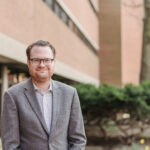
The American Political Science Review, the leading political science peer-reviewed journal, published “Social Capital, Institutional Rules, and Constitutional Amendment Rates,” a new research article by lead author William Blake, associate professor and associate chair of political science.
The study addressed why some constitutions are amended more frequently than others. The team gathered data from democratic constitutions worldwide and U.S. state constitutions for a cross-sectional and longitudinal analysis of the effect social capital has on how often constitutions are amended. The findings show social capital like group membership, civic activism, and political trust can create a more favorable political environment for amending constitutions.
“Unlike previous studies, we demonstrate how these factors affect constitutional reform over time and across the stages of the amendment process,” the authors write. “We also build upon prior research that finds social capital facilitates social movement organization and elite coalition formation.”
The research was inspired by Blake’s Contemporary Constitutional Conflict honors seminar. “The students read and critiqued a flawed article looking at the effect of constitutional culture on amendment frequency, which led me to think that I could conduct a better study,” says Blake. He also assigned a draft of the article the next time he taught the seminar. The students of the Honors College received an acknowledgment in the article.
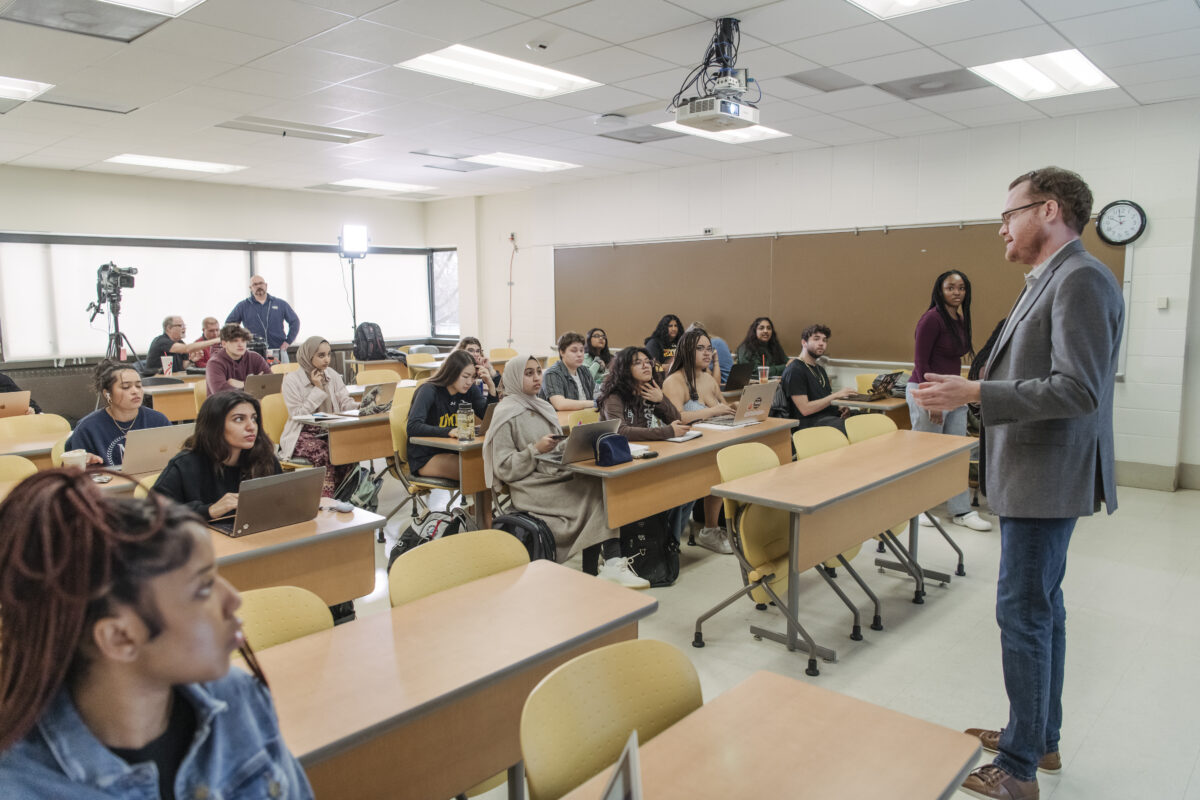 Blake’s “Women and Employment Laws in the Early 20th Century” class on laws regulating minimum wages and maximum hours for female workers on C-SPAN’s “Lectures in History” series. (Marlayna Demond ’11/UMBC)
Blake is the only UMBC faculty to publish in The American Political Science Review since Nicolas Miller, professor emeritus of political science, published “Pluralism and Social Choice” in 1983.
Blake’s co-authors for the journal article are Joseph Francesco Cozza, assistant teaching professor of political science and associate director of the Politics, Law, and Social Thought program at Rice University; David A. Armstrong II, associate professor of political science at The University of Wisconsin–Milwaukee; and Amanda Friesen, Canada research chair in political psychology at Western University in Canada.
Watch Blake’s “Women and Employment Laws in the Early 20th Century” class on laws regulating minimum wages and maximum hours for female workers on C-SPAN’s “Lectures in History” series. Enroll in his POLI 220: The Constitution and American Democracy summer course.
]]>
The American Political Science Review, the leading political science peer-reviewed journal, published “Social Capital, Institutional Rules, and Constitutional Amendment Rates,” a new research...
https://umbc.edu/quick-posts/william-blakes-constitutional-amendments-american-political-science-review/
https://beta.my.umbc.edu/api/v0/pixel/news/141689/guest@my.umbc.edu/87c15a7e8470321ae8a217fc98991df3/api/pixel
cahss
cahss-research
news
policy-and-society
politicalscience
quick-post
research
UMBC News & Magazine
https://beta.my.umbc.edu/groups/umbc-news-magazine
https://assets1-beta.my.umbc.edu/system/shared/avatars/groups/000/001/943/24435aa6207c452e7bc15cc74b42c7bb/xsmall.png?1748556657
https://assets1-beta.my.umbc.edu/system/shared/avatars/groups/000/001/943/24435aa6207c452e7bc15cc74b42c7bb/original.png?1748556657
https://assets2-beta.my.umbc.edu/system/shared/avatars/groups/000/001/943/24435aa6207c452e7bc15cc74b42c7bb/xxlarge.png?1748556657
https://assets2-beta.my.umbc.edu/system/shared/avatars/groups/000/001/943/24435aa6207c452e7bc15cc74b42c7bb/xlarge.png?1748556657
https://assets3-beta.my.umbc.edu/system/shared/avatars/groups/000/001/943/24435aa6207c452e7bc15cc74b42c7bb/large.png?1748556657
https://assets1-beta.my.umbc.edu/system/shared/avatars/groups/000/001/943/24435aa6207c452e7bc15cc74b42c7bb/medium.png?1748556657
https://assets2-beta.my.umbc.edu/system/shared/avatars/groups/000/001/943/24435aa6207c452e7bc15cc74b42c7bb/small.png?1748556657
https://assets1-beta.my.umbc.edu/system/shared/avatars/groups/000/001/943/24435aa6207c452e7bc15cc74b42c7bb/xsmall.png?1748556657
https://assets2-beta.my.umbc.edu/system/shared/avatars/groups/000/001/943/24435aa6207c452e7bc15cc74b42c7bb/xxsmall.png?1748556657
UMBC News & Magazine
1
0
false
Fri, 03 May 2024 15:11:46 -0400
Fri, 03 May 2024 15:11:46 -0400
Meet a Retriever—Christian Jassani ’27, a first-year ambassador and active student leader
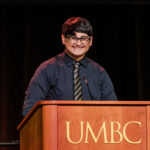
Meet Christian Jassani, a first-year political science and global studies major. Christian is a member of the Honors College, Susquehanna Community Council, Honors Council, and SGA. He has taken advantage of the many opportunities UMBC offers, which has helped him to grow, both socially, and academically. From these opportunities, he has been able to gain confidence in himself, find a family at UMBC, and make connections with staff who are there to support his academic journey every step of the way. Take it away, Christian.
Q: What’s one essential thing you’d want another Retriever to know about you?
A: I love learning! It sounds very cliché, but I truly love learning about all different kinds of topics. Whether it be history, politics, or any other areas, I really do find learning to be very fun.
Q: Tell us about someone in the community who has inspired you or supported you, and how they did it.
A: Dr. Brigid Starkey, the director of global studies. I had her my first semester and continue to stay in contact. She is always there to help guide me academically, but also reminds me to step back and enjoy college.
Q: Tell us what you love about your academic program or an organization you’re involved in.
A: I love everyone and everything about the Honors College. The staff truly care for all their students. You are also surrounded by a group of other students who love learning. The best thing about the Honors College is everyone supports each other because we are one big family.
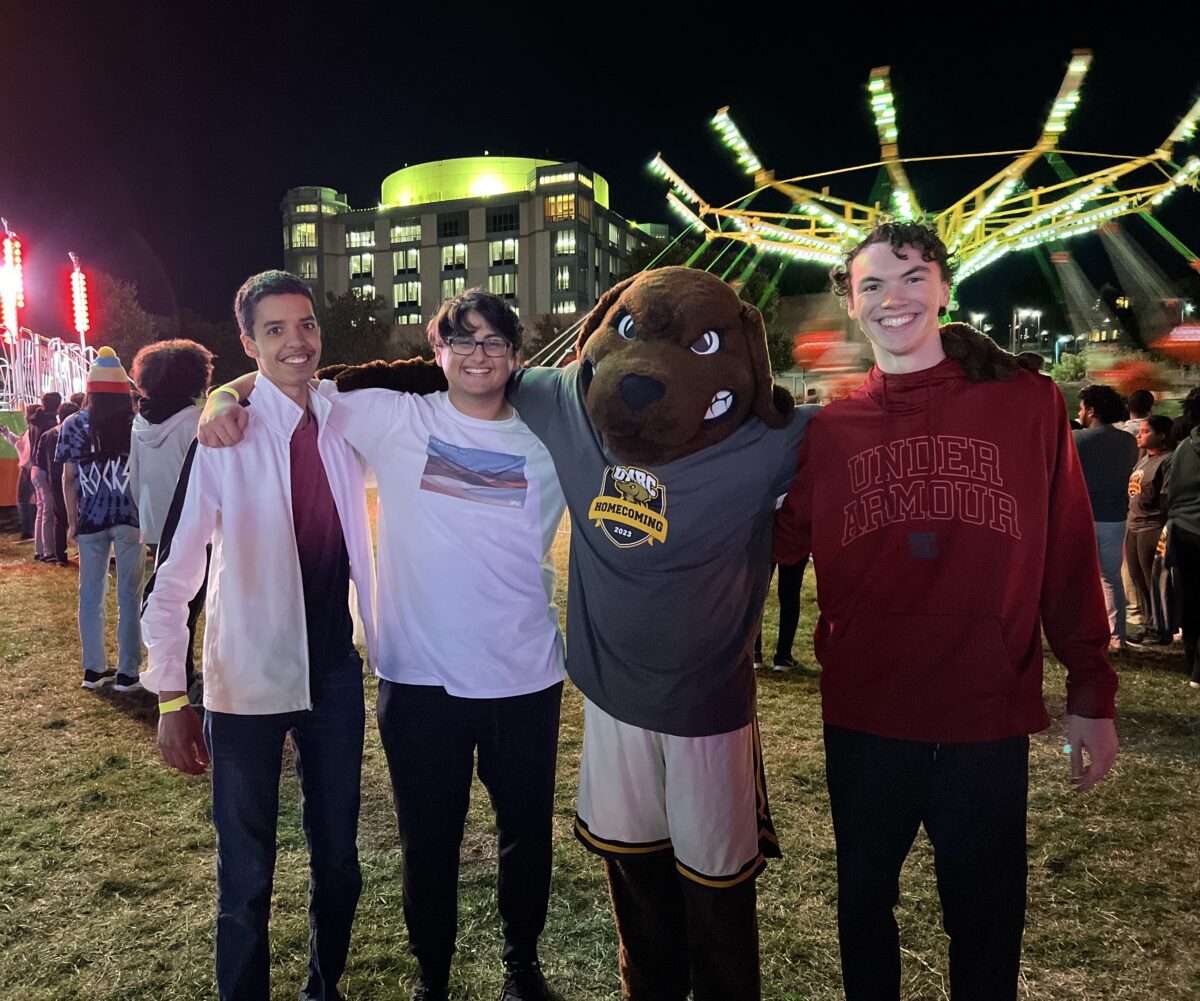
Christian, second from left, with his roommate and suitemate posing with True Grit at UMBC’s 2023 Homecoming carnival.
Q: What’s the one thing you’d want someone to know about the support you find here?
A: Connect! There are so many great opportunities as UMBC available to students. To get these opportunities you have to be willing to put your name out there. So even though I know it seems scary, send out those emails!
Q: Tell us what brought you to UMBC in the first place.
A: I chose UMBC because when I stepped on campus for my tour I truly felt like this was the place for me. I was looking for colleges where I would be challenged academically, but also be surrounded by a supportive environment. I automatically knew this was the place for me when on my tour my Grit Guide said something along the lines of, “Here at UMBC, students are not pitted against each other, but rather the students help each other grow.”
As soon as I heard that, in my head, I was committed to UMBC. I knew UMBC was a place that could give not only a great education, but also be in a supportive community that cares about me and help me flourish both academically and socially.
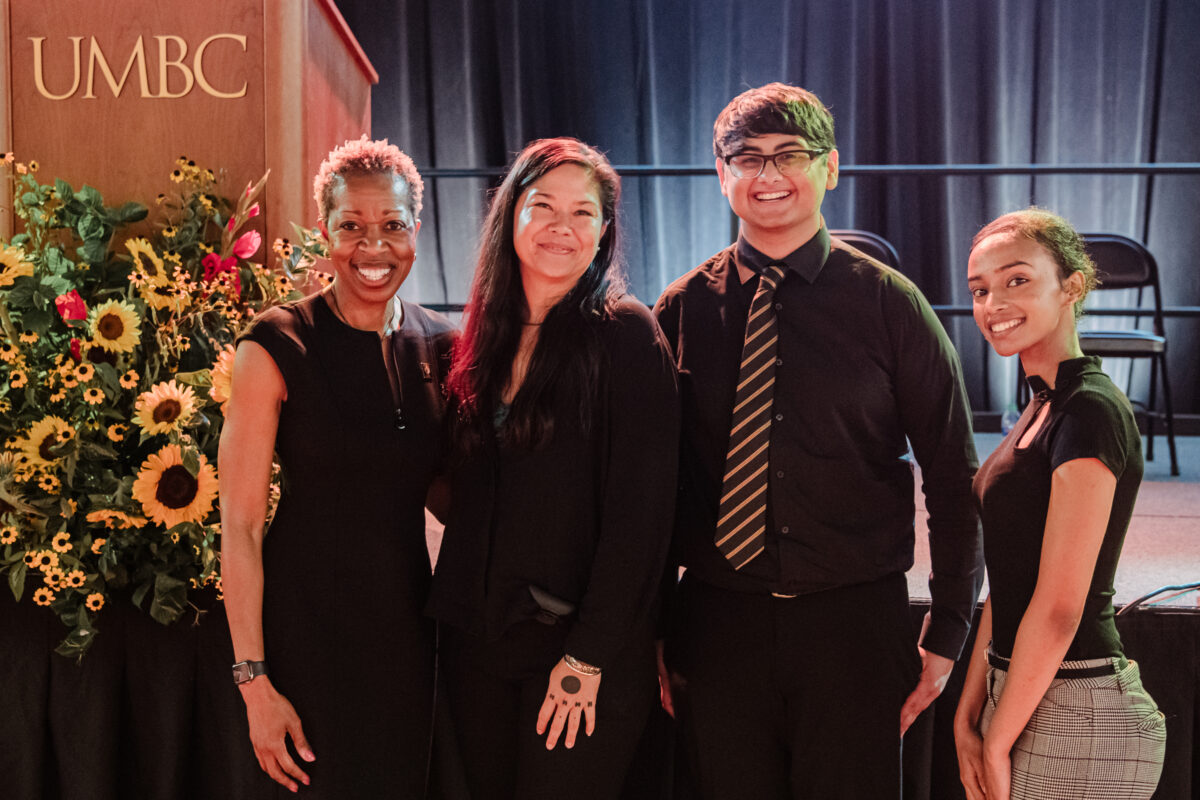 Christian with President Valerie Sheares Ashby and other student speakers at UMBC’s 2023 Fall Opening.
Q: Your HOW. Since you’ve been a part of the UMBC community, how have you found support?
A: Since I have been at UMBC I have grown so much both socially and in my academics. I am a rather shy person, but my being here has allowed me to gain more confidence in myself. I have a huge fear of presenting, so when I was chosen to be the first-year speaker for the 2023 Fall Opening, I was terrified. But through that speech, I made connections with many faculty members on campus. That kid who was terrified to speak, is now a Grit Guide and is involved in multiple clubs.
I automatically knew this was the place for me when on my tour my Grit Guide said something along the lines of, “Here at UMBC, students are not pitted against each other, but rather the students help each other grow.”
Besides helping me grow socially, UMBC has also been extremely supportive in my academic journey. I frequently meet with my professor who gives me guidance and advice on how to navigate the different academic departments. The staff at UMBC have also helped me find different internships and scholarships. Here at UMBC, it is evident you are more than just a number, the staff really do have your best interest at heart and want to see you grow as an individual.
Q: What clubs, teams, or organizations are you a part of? What do you love about them?
A: I am currently the Residential Student Life representative for Susquehanna Community Council, first-year rep for the Honors College Council, a First-Year Ambassador for SGA, and a Grit Guide. What I love about all of these groups are the people I get to work with. We all share a common purpose of wanting to create a better space for everyone at UMBC.
Q: Are you currently part of a scholars program or Living Learning Community at UMBC? Tell us about what you enjoy about it!
A: I am a member of the Honors College and live in the Honors LLC. My favorite thing about this is that I have a big family here at UMBC. The Honors College is an extremely supportive environment. What I especially love about the LLC in particular, is that I am surrounded by people who have similar experiences to me, and can directly relate to problems I may encounter.
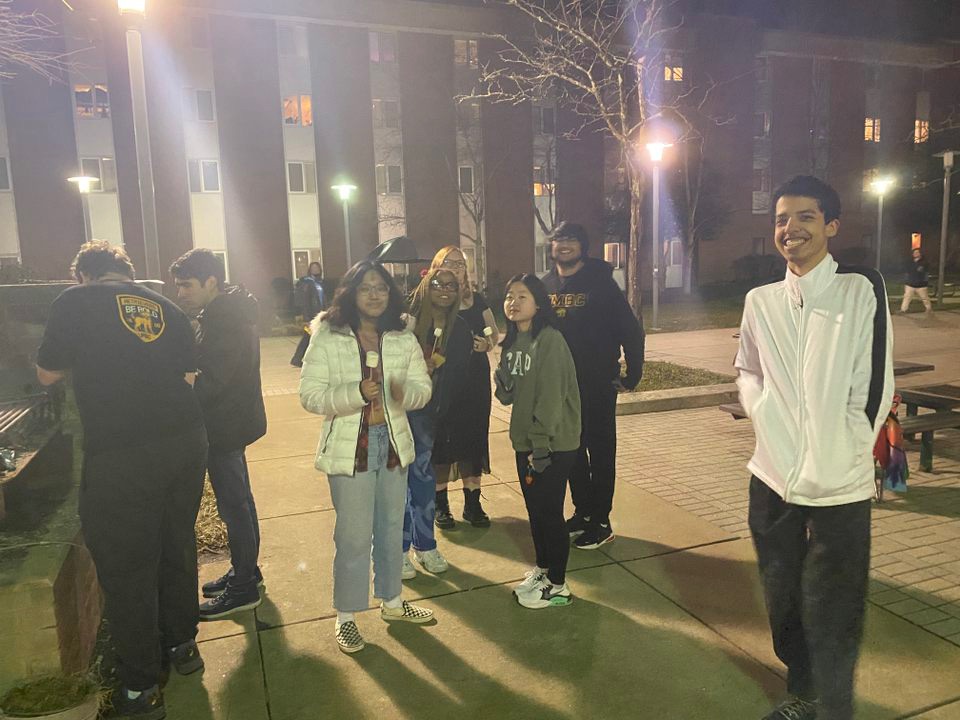
Christian and his friends from the Honors LLC in the Harbor Courtyard making s’mores on Valentine’s Day 2024.
Q: What do you enjoy most about being a student leader?
A: The best part about my leadership roles are that I have the platform to actively execute the ideas of the students I represent. I love hearing from my fellow peers about concerns they have, and being able to bring those issues to the table. But the absolute best thing about these roles is getting to plan fun events and see students take a break from academics to just enjoy college.
* * * * *
UMBC’s greatest strength is its people. When people meet Retrievers and hear about the passion they bring, the relationships they create, the ways they support each other, and the commitment they have to inclusive excellence, they truly get a sense of our community. That’s what “Meet a Retriever” is all about.
Learn more about how UMBC can help you achieve your goals.
]]>
Meet Christian Jassani, a first-year political science and global studies major. Christian is a member of the Honors College, Susquehanna Community Council, Honors Council, and SGA. He has taken...
https://umbc.edu/stories/meet-a-retriever-christian-jassani-first-year/
https://beta.my.umbc.edu/api/v0/pixel/news/141685/guest@my.umbc.edu/dee511130d2155e5edd46a0f22191d28/api/pixel
campus-life
global-studies
honors-college
magazine
meet-a-retriever
perspectives
politicalscience
sga
story
UMBC News & Magazine
https://beta.my.umbc.edu/groups/umbc-news-magazine
https://assets1-beta.my.umbc.edu/system/shared/avatars/groups/000/001/943/24435aa6207c452e7bc15cc74b42c7bb/xsmall.png?1748556657
https://assets1-beta.my.umbc.edu/system/shared/avatars/groups/000/001/943/24435aa6207c452e7bc15cc74b42c7bb/original.png?1748556657
https://assets2-beta.my.umbc.edu/system/shared/avatars/groups/000/001/943/24435aa6207c452e7bc15cc74b42c7bb/xxlarge.png?1748556657
https://assets2-beta.my.umbc.edu/system/shared/avatars/groups/000/001/943/24435aa6207c452e7bc15cc74b42c7bb/xlarge.png?1748556657
https://assets3-beta.my.umbc.edu/system/shared/avatars/groups/000/001/943/24435aa6207c452e7bc15cc74b42c7bb/large.png?1748556657
https://assets1-beta.my.umbc.edu/system/shared/avatars/groups/000/001/943/24435aa6207c452e7bc15cc74b42c7bb/medium.png?1748556657
https://assets2-beta.my.umbc.edu/system/shared/avatars/groups/000/001/943/24435aa6207c452e7bc15cc74b42c7bb/small.png?1748556657
https://assets1-beta.my.umbc.edu/system/shared/avatars/groups/000/001/943/24435aa6207c452e7bc15cc74b42c7bb/xsmall.png?1748556657
https://assets2-beta.my.umbc.edu/system/shared/avatars/groups/000/001/943/24435aa6207c452e7bc15cc74b42c7bb/xxsmall.png?1748556657
UMBC News & Magazine
2
0
false
Fri, 03 May 2024 11:42:43 -0400
Fri, 03 May 2024 11:42:43 -0400
Meet a Retriever—Monroe Kennedy, III, ’12, mechanical engineering professor at Stanford University
Meet Monroe Kennedy, III, a Meyerhoff Scholar (M20) who earned his B.S. in mechanical engineering from UMBC in 2012 before earning his M.S. in robotics and Ph.D. in mechanical engineering and applied mechanics from the University of Pennsylvania. Monroe is now an assistant professor in the mechanical engineering department at Stanford University. His work is in collaborative robotics, building systems capable of extending robotic autonomy to scenarios where robots work closely around humans and must anticipate their needs to be effective teammates. Outside of his role as a professor, Monroe serves as a national director for Black in Robotics, a nonprofit organization dedicated to enhancing diversity within the field of robotics. Take it away Monroe!
Q: What brought you to UMBC?
A: I came to UMBC for its mechanical engineering program and the Meyerhoff Scholars Program. I had a passion for invention and design and UMBC was the perfect place to gain knowledge so I could have an impactful career. During high school, I was taking courses at a community college, and one instructor was aware of the Meyerhoff program and nominated me—I am so grateful for that initial introduction.
UMBC is truly a melting pot of ideas and culture. You will find a diverse and vibrant community and a place to call home.
Monroe Kennedy, III, ’12, M20
Q: What do you love about your academic program?
A: I love mechanical engineering. When I first joined UMBC, the movie Iron Man had just come out and there was a screening on the Quad. I remember thinking “I want to do that!” Tony Stark was the only hero whose superpower was truly achievable—his ability to innovate and invent.
Mechanical engineering is one of the oldest engineering disciplines. If you follow the Ph.D. “academic tree,” you will find many of the first mechanical engineers had advisors in more fundamental sciences. Because it is a fundamental engineering discipline it covers many areas from controls, dynamics, design, fluids, vibrations, and so much more.
An individual who learns to embrace the diversity of subjects within mechanical engineering learns to think about problems and solutions holistically and brings solutions from every sub-field to solve problems in the most elegant way possible. As a roboticist, a lot of my work is endowing my robots with a form of “intelligence,” but often we find ourselves wishing our robot had an additional physical feature, and as mechanical engineers, it is not difficult for us to make such concepts a reality very quickly.
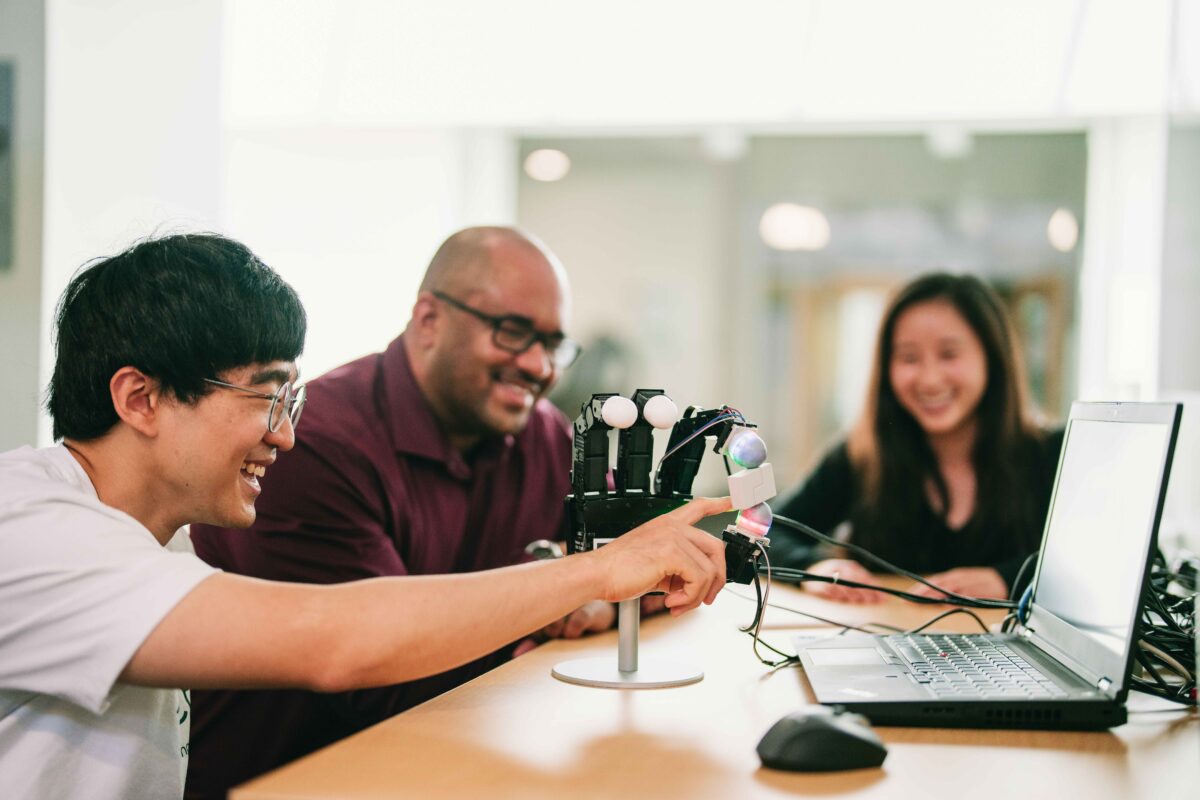 Monroe, a mechanical engineering professor at Stanford University, and his students looking at a robotic fingertip developed in the lab called DenseTact that will enable robots to perform dexterous tasks like humans in the near future.
Q: Tell us about someone in the community who has inspired you or supported you, and how they did it.
A: While at UMBC I was very fortunate to be able to work in Professor J. Vanderlei Martins‘ LACO (Laboratory for Aerosol and Cloud Optics) lab. Professor Martins was an amazing advisor who was able to use my limited experience at the time to contribute to a very impactful project involving designing the de-orbiting system for a picosatellite. Being given an opportunity to work on something that traveled to space was a key element in my ultimate trajectory, and I am very grateful to Professor Martins for his support and mentorship.
My favorite part of being a UMBC alumnus is the sense of forever community I’ve felt in the decade since graduating.
Monroe Kennedy, III, ’12, M20
Q: Tell us about your HOW.
A: The Meyerhoff community played a very big role in my career. Through the program, I was coached on applying for internships and graduate school. Additionally, having the support of professors like J. Vanderlei Martins, working in his laboratory, and receiving his recommendation was crucial to my academic trajectory.
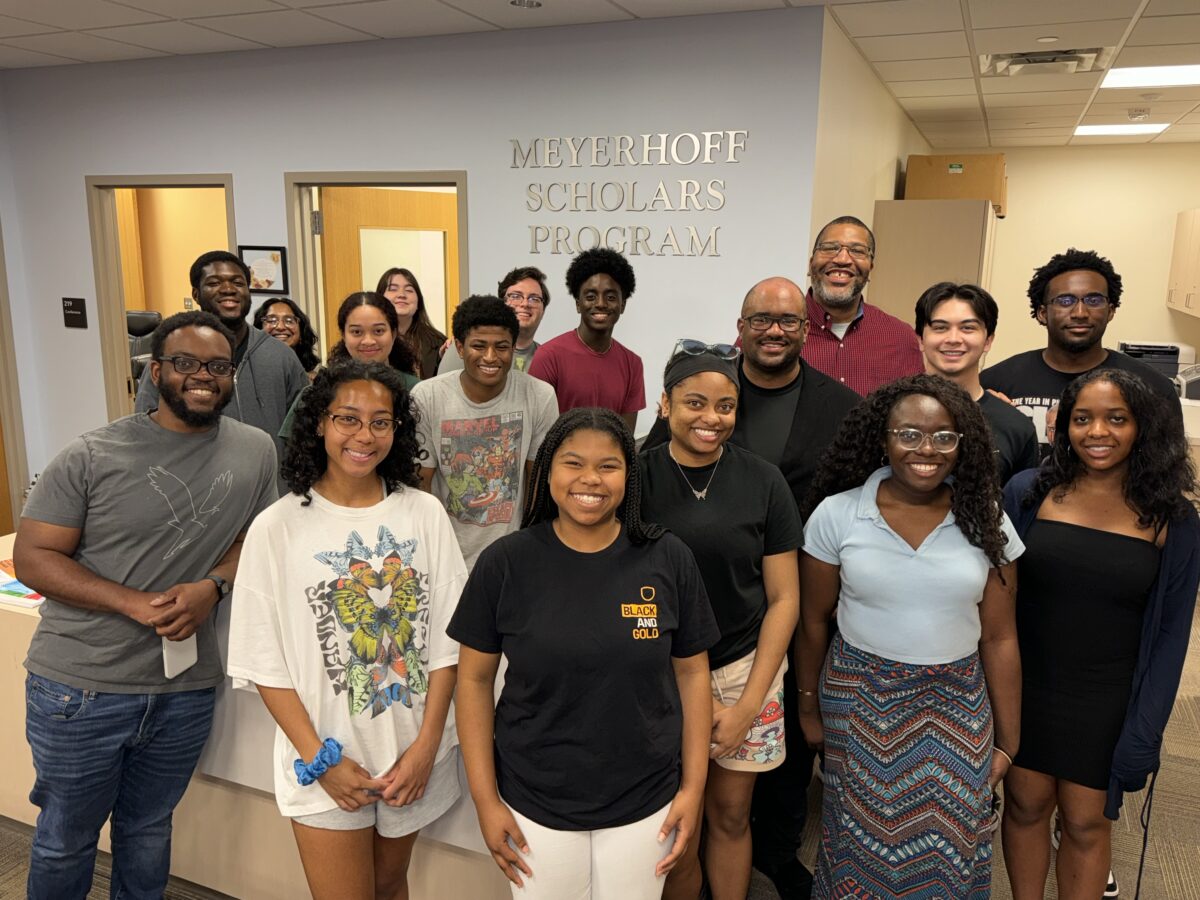 Monroe returned to campus recently to meet with current Meyerhoff students and tour faculty labs.
Q: Tell us about your current job. What do you like most about it?
A: I am an assistant professor in the mechanical engineering department with a courtesy appointment in computer science at Stanford University. My work is in collaborative robotics, building systems capable of extending robotic autonomy to scenarios where robots work closely around humans and must anticipate their needs to be effective teammates.
I love the Stanford community. You will find here that dreaming big and doing the extraordinary is quite ordinary here.
Outside of my role as a professor, I serve as a national director for Black in Robotics, a nonprofit organization dedicated to enhancing diversity within the field of robotics.
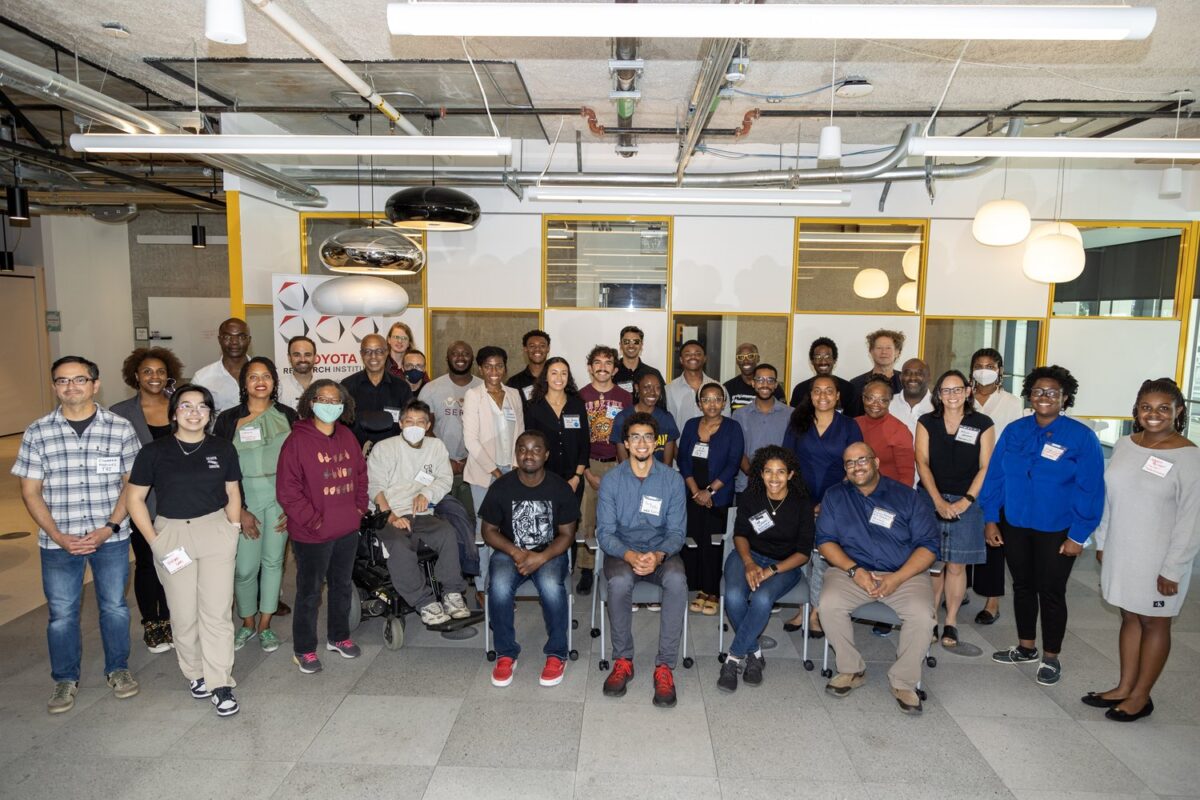 Group photo from a Black in Robotics networking event at the University of California, Berkeley.
Q: What drives you to support UMBC?
A: I want to see UMBC continue to produce leaders who are inquisitive and courageous, unafraid of setbacks, and yet very accomplished and making the world a better place.
* * * * *
UMBC’s greatest strength is its people. When people meet Retrievers and hear about the passion they bring, the relationships they create, the ways they support each other, and the commitment they have to inclusive excellence, they truly get a sense of our community. That’s what “Meet a Retriever” is all about.
Learn more about how UMBC can help you achieve your goals.
]]>
Meet Monroe Kennedy, III, a Meyerhoff Scholar (M20) who earned his B.S. in mechanical engineering from UMBC in 2012 before earning his M.S. in robotics and Ph.D. in mechanical engineering and...
https://umbc.edu/stories/mechanical-engineering-professor-monroe-kennedy/
https://beta.my.umbc.edu/api/v0/pixel/news/141656/guest@my.umbc.edu/adb4daec1996ac3764c5485836f34075/api/pixel
alumni
impact
magazine
mechanical-engineering
meet-a-retriever
meyerhoff
meyerhoff-alumni
meyerhoff-scholar
story
UMBC News & Magazine
https://beta.my.umbc.edu/groups/umbc-news-magazine
https://assets1-beta.my.umbc.edu/system/shared/avatars/groups/000/001/943/24435aa6207c452e7bc15cc74b42c7bb/xsmall.png?1748556657
https://assets1-beta.my.umbc.edu/system/shared/avatars/groups/000/001/943/24435aa6207c452e7bc15cc74b42c7bb/original.png?1748556657
https://assets2-beta.my.umbc.edu/system/shared/avatars/groups/000/001/943/24435aa6207c452e7bc15cc74b42c7bb/xxlarge.png?1748556657
https://assets2-beta.my.umbc.edu/system/shared/avatars/groups/000/001/943/24435aa6207c452e7bc15cc74b42c7bb/xlarge.png?1748556657
https://assets3-beta.my.umbc.edu/system/shared/avatars/groups/000/001/943/24435aa6207c452e7bc15cc74b42c7bb/large.png?1748556657
https://assets1-beta.my.umbc.edu/system/shared/avatars/groups/000/001/943/24435aa6207c452e7bc15cc74b42c7bb/medium.png?1748556657
https://assets2-beta.my.umbc.edu/system/shared/avatars/groups/000/001/943/24435aa6207c452e7bc15cc74b42c7bb/small.png?1748556657
https://assets1-beta.my.umbc.edu/system/shared/avatars/groups/000/001/943/24435aa6207c452e7bc15cc74b42c7bb/xsmall.png?1748556657
https://assets2-beta.my.umbc.edu/system/shared/avatars/groups/000/001/943/24435aa6207c452e7bc15cc74b42c7bb/xxsmall.png?1748556657
UMBC News & Magazine
0
0
false
Fri, 03 May 2024 07:17:57 -0400
Fri, 03 May 2024 07:17:57 -0400
 An 1841 painting ‘Pandemonium’ by John Martin, based on John Milton’s ‘Paradise Lost,’ where Pandemonium is the capital of Hell. John Martin via Wikimedia Commons