To You – Summer 2012
 Geographically, Silicon Valley is far away from UMBC.
In fact, the Apple Campus at 1 Infinite Loop in Cupertino, California is 2,850 miles from UMBC. And Google’s headquarters is 2,846 miles away in Mountain View, California.
But “Silicon Valley” isn’t just a place. It’s also an aspiration – a beacon that’s bright enough to attract some of the best global technology talents and entrepreneurs.
Considering the attention that UMBC has received in recent years for its strengths in undergraduate teaching and learning, it’s no surprise that a number of UMBC graduates have taken the education they got inside Hilltop Circle and lit out for Silicon Valley to work at some of its biggest and most innovative companies.
In this issue, UMBC Magazine sent associate editor Jenny O’Grady to Northern California to meet some of those UMBC alumni, including Harry Chen ’98, M.S. ’00, Ph.D. ’04 – a key figure in the development of Apple’s Siri, the voice-responsive “personal assistant” found inside the latest iPhones (Read it here). She also wandered around the famed Google campus and talked to a number of UMBC alumni about what it’s like to actually work there.
O’Grady also took in another sight during her West Coast trip: The Beat Museum run by alumnus Jerry Cimino ’76, history. Cimino has transformed his passion for the literature and the culture of the Beat Generation into a delightful museum located at the crossroads of the movement in San Francisco’s North Beach district (Read it here).
Also in this issue, we have an interview with the most senior member of UMBC’s academic leadership team. On July 1, Philip Rous will become the university’s provost.
Rous’ perspective on UMBC is informed by his long tenure at the university (22 years) and the many positions in which he has already served – including as a tenured professor in and chair of the physics department, vice president and president of UMBC’s Faculty Senate, and as dean of the College of Natural and Mathematical Sciences. He has approached the challenges facing the university from many angles, and has collaborated in many of its celebrated successes.
You can read a brief portion of our interview with Rous in this issue’s “Over Coffee” feature – and I hope that it whets your appetite to read the full interview online.
If you are interested in how UMBC is engineering the acclaim that it has received for its achievements in education and research and diversity, there are few more authoritative voices than UMBC’s new provost on how collaboration, hard work, innovation and analysis have transformed the campus.
— Richard Byrne ’86
]]>
Geographically, Silicon Valley is far away from UMBC. In fact, the Apple Campus at 1 Infinite Loop in Cupertino, California is 2,850 miles from UMBC. And Google’s headquarters is 2,846 miles...
https://umbc.edu/stories/to-you-summer-2012/
https://beta.my.umbc.edu/api/v0/pixel/news/123997/guest@my.umbc.edu/6b6554dbe928e439368b8e01549cf461/api/pixel
perspectives
summer-2012
UMBC News & Magazine
https://beta.my.umbc.edu/groups/umbc-news-magazine
https://assets1-beta.my.umbc.edu/system/shared/avatars/groups/000/001/943/24435aa6207c452e7bc15cc74b42c7bb/xsmall.png?1748556657
https://assets1-beta.my.umbc.edu/system/shared/avatars/groups/000/001/943/24435aa6207c452e7bc15cc74b42c7bb/original.png?1748556657
https://assets2-beta.my.umbc.edu/system/shared/avatars/groups/000/001/943/24435aa6207c452e7bc15cc74b42c7bb/xxlarge.png?1748556657
https://assets2-beta.my.umbc.edu/system/shared/avatars/groups/000/001/943/24435aa6207c452e7bc15cc74b42c7bb/xlarge.png?1748556657
https://assets3-beta.my.umbc.edu/system/shared/avatars/groups/000/001/943/24435aa6207c452e7bc15cc74b42c7bb/large.png?1748556657
https://assets1-beta.my.umbc.edu/system/shared/avatars/groups/000/001/943/24435aa6207c452e7bc15cc74b42c7bb/medium.png?1748556657
https://assets2-beta.my.umbc.edu/system/shared/avatars/groups/000/001/943/24435aa6207c452e7bc15cc74b42c7bb/small.png?1748556657
https://assets1-beta.my.umbc.edu/system/shared/avatars/groups/000/001/943/24435aa6207c452e7bc15cc74b42c7bb/xsmall.png?1748556657
https://assets2-beta.my.umbc.edu/system/shared/avatars/groups/000/001/943/24435aa6207c452e7bc15cc74b42c7bb/xxsmall.png?1748556657
UMBC News & Magazine
0
0
false
Wed, 06 Jun 2012 15:18:48 -0400
Lowering the Odds – Mary Loeken '80, M.S., BioSci

Before the discovery of insulin in 1922, children and adults who developed Type 1 diabetes usually died within a few months of the disease’s onset. That all changed when insulin became widely available, but women with diabetes still faced another challenge: significant odds that their offspring would be born with birth defects.
Even today, women diagnosed with diabetes (either Type 1 or Type 2) before they become pregnant have a greater risk of having a child with a severe birth defect than nondiabetic women.
In her laboratory at the Joslin Diabetes Center in Boston, Mary Loeken ’80, M.S., biological sciences, is studying mice to unlock the secrets of diabetic pregnancy. Eventually, she hopes to improve clinical practices so that the birth defect rate for children of diabetic and nondiabetic women is the same.
Loeken, who is also an associate professor of medicine at Harvard Medical School, began her research career at UMBC, studying under Professor Thomas F. Roth. She had previously earned an undergraduate degree in biology from Gonzaga University.
The UMBC of that era had a relatively young science faculty, with many excellent professors only a few years out of their own post-doctoral experiences. “[The faculty] were trained at really prestigious universities and laboratories,” Loeken says. “So I thought they would know what the expectations were for students to succeed in their careers, and would probably be energetic and looking for students to be involved.”
Loeken stayed in the area after graduating from UMBC, taking a Ph.D. in reproductive endocrinology at the University of Maryland’s School of Medicine, and then working as a post-doc at the National Institutes of Health in Bethesda in the then-new field of recombinant DNA technology.
The Joslin Diabetes Center, a teaching affiliate of Harvard Medical School, hired her to bring recombinant DNA technology to its program. Loeken became the co-head of the newly-formed Section on Molecular Biology, as well as the director of the center’s Molecular Biology Core Laboratory.
Loeken’s research focuses on why babies born to diabetic women are at much greater risk for birth defects – and how this risk might be lowered or prevented.
Approximately two percent of babies born to nondiabetic women develop congenital malformations. But that number rockets to three or four times higher for women who have diabetes – even if they have successfully controlled the disease and planned their pregnancies. The birth defect rate is even higher for diabetic women with unplanned pregnancies or unchecked diabetes.
Maternal diabetes can cause many kinds of birth defects, and many babies have more than one, especially congenital heart defects and neural tube defects. The neural tube defects include spina bifida (where part of the spinal cord is exposed) and anencephaly (where part of the brain is exposed).
Loeken studies the neural tube defects, partly because they also occur with high frequency in the mice she studies. She adds that these malformations are also easy to spot in mouse embryos.
The malformations have been tracked to a change in how a particular gene (Pax-3) expresses itself. Pax-3 is part of a family of genes involved in embryonic development. Contrary to what most scientists believed, Loeken and her colleagues discovered that Pax-3 regulates a tumor-suppressing protein called p53 which is either missing or mutated in almost all tumors.
“It was always thought that Pax-3 turned on genes needed for the formation of these structures” in developing embryos, Loeken observes. But she and her colleagues discovered was that if there is not enough Pax-3 present, then the embryo cells produce too much of the p53 protein.
While the p53 protein is actually doing its job in those cells to prevent cancer, the surfeit of the protein actually kills the cells needed to form structures such as the spinal cord properly. Thus, the overabundance of p53 is destructive at a crucial time in embryonic development.
In her research, Loeken has also discovered that when the embryo receives too much glucose – as occurs with diabetes – a delicate chemical balance that controls the expression of Pax-3 gene is upset.
Loeken says her investigations demonstrate why women with diabetes should endeavor to get their blood glucose levels as close to normal as possible before becoming pregnant.
“It’s still important for women to plan their pregnancies,” she says. “Most women with diabetes have healthy babies. The majority do. But because these birth defects are so devastating, as long as they are more common in diabetic pregnancies than in nondiabetic pregnancies, we will be working to understand how they occur and how to prevent them.”
— Joel N. Shurkin
]]>
Before the discovery of insulin in 1922, children and adults who developed Type 1 diabetes usually died within a few months of the disease’s onset. That all changed when insulin became widely...
https://umbc.edu/stories/lowering-the-odds-mary-loeken-80-m-s-biosci-2/
https://beta.my.umbc.edu/api/v0/pixel/news/123999/guest@my.umbc.edu/73b4953101fd0837c5f88d1de35056c4/api/pixel
alumni
summer-2012
UMBC News & Magazine
https://beta.my.umbc.edu/groups/umbc-news-magazine
https://assets1-beta.my.umbc.edu/system/shared/avatars/groups/000/001/943/24435aa6207c452e7bc15cc74b42c7bb/xsmall.png?1748556657
https://assets1-beta.my.umbc.edu/system/shared/avatars/groups/000/001/943/24435aa6207c452e7bc15cc74b42c7bb/original.png?1748556657
https://assets2-beta.my.umbc.edu/system/shared/avatars/groups/000/001/943/24435aa6207c452e7bc15cc74b42c7bb/xxlarge.png?1748556657
https://assets2-beta.my.umbc.edu/system/shared/avatars/groups/000/001/943/24435aa6207c452e7bc15cc74b42c7bb/xlarge.png?1748556657
https://assets3-beta.my.umbc.edu/system/shared/avatars/groups/000/001/943/24435aa6207c452e7bc15cc74b42c7bb/large.png?1748556657
https://assets1-beta.my.umbc.edu/system/shared/avatars/groups/000/001/943/24435aa6207c452e7bc15cc74b42c7bb/medium.png?1748556657
https://assets2-beta.my.umbc.edu/system/shared/avatars/groups/000/001/943/24435aa6207c452e7bc15cc74b42c7bb/small.png?1748556657
https://assets1-beta.my.umbc.edu/system/shared/avatars/groups/000/001/943/24435aa6207c452e7bc15cc74b42c7bb/xsmall.png?1748556657
https://assets2-beta.my.umbc.edu/system/shared/avatars/groups/000/001/943/24435aa6207c452e7bc15cc74b42c7bb/xxsmall.png?1748556657
UMBC News & Magazine
0
0
false
Wed, 06 Jun 2012 15:15:30 -0400
Lowering the Odds – Mary Loeken ’80, M.S., BioSci
Before the discovery of insulin in 1922, children and adults who developed Type 1 diabetes usually died within a few months of the disease’s onset. That all changed when insulin became widely available, but women with diabetes still faced another challenge: significant odds that their offspring would be born with birth defects.
Even today, women diagnosed with diabetes (either Type 1 or Type 2) before they become pregnant have a greater risk of having a child with a severe birth defect than nondiabetic women.
In her laboratory at the Joslin Diabetes Center in Boston, Mary Loeken ’80, M.S., biological sciences, is studying mice to unlock the secrets of diabetic pregnancy. Eventually, she hopes to improve clinical practices so that the birth defect rate for children of diabetic and nondiabetic women is the same.
Loeken, who is also an associate professor of medicine at Harvard Medical School, began her research career at UMBC, studying under Professor Thomas F. Roth. She had previously earned an undergraduate degree in biology from Gonzaga University.
The UMBC of that era had a relatively young science faculty, with many excellent professors only a few years out of their own post-doctoral experiences. “[The faculty] were trained at really prestigious universities and laboratories,” Loeken says. “So I thought they would know what the expectations were for students to succeed in their careers, and would probably be energetic and looking for students to be involved.”
Loeken stayed in the area after graduating from UMBC, taking a Ph.D. in reproductive endocrinology at the University of Maryland’s School of Medicine, and then working as a post-doc at the National Institutes of Health in Bethesda in the then-new field of recombinant DNA technology.
The Joslin Diabetes Center, a teaching affiliate of Harvard Medical School, hired her to bring recombinant DNA technology to its program. Loeken became the co-head of the newly-formed Section on Molecular Biology, as well as the director of the center’s Molecular Biology Core Laboratory.
Loeken’s research focuses on why babies born to diabetic women are at much greater risk for birth defects – and how this risk might be lowered or prevented.
Approximately two percent of babies born to nondiabetic women develop congenital malformations. But that number rockets to three or four times higher for women who have diabetes – even if they have successfully controlled the disease and planned their pregnancies. The birth defect rate is even higher for diabetic women with unplanned pregnancies or unchecked diabetes.
Maternal diabetes can cause many kinds of birth defects, and many babies have more than one, especially congenital heart defects and neural tube defects. The neural tube defects include spina bifida (where part of the spinal cord is exposed) and anencephaly (where part of the brain is exposed).
Loeken studies the neural tube defects, partly because they also occur with high frequency in the mice she studies. She adds that these malformations are also easy to spot in mouse embryos.
The malformations have been tracked to a change in how a particular gene (Pax-3) expresses itself. Pax-3 is part of a family of genes involved in embryonic development. Contrary to what most scientists believed, Loeken and her colleagues discovered that Pax-3 regulates a tumor-suppressing protein called p53 which is either missing or mutated in almost all tumors.
“It was always thought that Pax-3 turned on genes needed for the formation of these structures” in developing embryos, Loeken observes. But she and her colleagues discovered was that if there is not enough Pax-3 present, then the embryo cells produce too much of the p53 protein.
While the p53 protein is actually doing its job in those cells to prevent cancer, the surfeit of the protein actually kills the cells needed to form structures such as the spinal cord properly. Thus, the overabundance of p53 is destructive at a crucial time in embryonic development.
In her research, Loeken has also discovered that when the embryo receives too much glucose – as occurs with diabetes – a delicate chemical balance that controls the expression of Pax-3 gene is upset.
Loeken says her investigations demonstrate why women with diabetes should endeavor to get their blood glucose levels as close to normal as possible before becoming pregnant.
“It’s still important for women to plan their pregnancies,” she says. “Most women with diabetes have healthy babies. The majority do. But because these birth defects are so devastating, as long as they are more common in diabetic pregnancies than in nondiabetic pregnancies, we will be working to understand how they occur and how to prevent them.”
— Joel N. Shurkin
]]>
Before the discovery of insulin in 1922, children and adults who developed Type 1 diabetes usually died within a few months of the disease’s onset. That all changed when insulin became widely...
https://umbc.edu/stories/lowering-the-odds-mary-loeken-80-m-s-biosci/
https://beta.my.umbc.edu/api/v0/pixel/news/123998/guest@my.umbc.edu/e36500af2e489658a5ade1cb552055c3/api/pixel
alumni
summer-2012
UMBC News & Magazine
https://beta.my.umbc.edu/groups/umbc-news-magazine
https://assets1-beta.my.umbc.edu/system/shared/avatars/groups/000/001/943/24435aa6207c452e7bc15cc74b42c7bb/xsmall.png?1748556657
https://assets1-beta.my.umbc.edu/system/shared/avatars/groups/000/001/943/24435aa6207c452e7bc15cc74b42c7bb/original.png?1748556657
https://assets2-beta.my.umbc.edu/system/shared/avatars/groups/000/001/943/24435aa6207c452e7bc15cc74b42c7bb/xxlarge.png?1748556657
https://assets2-beta.my.umbc.edu/system/shared/avatars/groups/000/001/943/24435aa6207c452e7bc15cc74b42c7bb/xlarge.png?1748556657
https://assets3-beta.my.umbc.edu/system/shared/avatars/groups/000/001/943/24435aa6207c452e7bc15cc74b42c7bb/large.png?1748556657
https://assets1-beta.my.umbc.edu/system/shared/avatars/groups/000/001/943/24435aa6207c452e7bc15cc74b42c7bb/medium.png?1748556657
https://assets2-beta.my.umbc.edu/system/shared/avatars/groups/000/001/943/24435aa6207c452e7bc15cc74b42c7bb/small.png?1748556657
https://assets1-beta.my.umbc.edu/system/shared/avatars/groups/000/001/943/24435aa6207c452e7bc15cc74b42c7bb/xsmall.png?1748556657
https://assets2-beta.my.umbc.edu/system/shared/avatars/groups/000/001/943/24435aa6207c452e7bc15cc74b42c7bb/xxsmall.png?1748556657
UMBC News & Magazine
0
0
false
Wed, 06 Jun 2012 15:15:30 -0400
How to Appreciate Jazz

 With Matt Belzer, Director of Jazz Studies
UMBC’s music department is known for pushing boundaries in new music – including its jazz studies program, headed up by director Matt Belzer – who’s excelled as a teacher, composer and performer.
UMBC’s jazz studies program is four years old now, and it boasts three official ensembles (including a “large” ensemble) and many unofficial student groups.
Jazz is woven into America’s cultural fabric, but many people are still unfamiliar with or intimidated by jazz music.
“Folks sometimes feel on the outside looking in…. But that’s also part of the appeal of jazz,” Belzer says. “It’s got a set of traditions and a community.”
So how can you tune in to those traditions? Here are some of Belzer’s tips:
Step 1: DON’T WIG OUT
Jazz culture has a lingo all its own that may seem impenetrable at first. The music also has a rich tradition in which its artists build on – and challenge – previous musicians and movements.
Belzer says that shouldn’t stop you. In fact, start with jazz you hear right now in 2012. “Jazz history probably should be taught in reverse,” he says. “You start with someone who’s creatively active today, and then work backwards.”
Trusting your own ears is another must. “If you can hear it, then you’re entitled to an opinion,” Belzer says. And as you keep listening – and discover more about the music and how it’s been shaped – “you’re entitled to change your opinion.”
Step 2: OPEN UP TO IMPROV

Improvisation is integral to jazz – flights of instrumental fancy that bend and reshape a song into individual expression. Understanding it, says Belzer, is key to appreciating the music.
“It’s really about being as in the moment as you can,” he says.
Soloing also turns out to be anything but solitude. Improvisation requires a performer to be acutely aware of what’s happening around him. “Some of the best jazz recordings are evidence of mental telepathy,” Belzer says. “You are expanding your awareness. Putting your antennae up. Even into the audience. Your goal is to make everyone else sound good. It’s a giving thing.”
Step 3: DON’T TAKE COVER
Jazz has always had connections with popular music, especially through cover versions of tunes such as saxophonist John Coltrane’s classic take on The Sound of Music showpiece “My Favorite Things.”
While Belzer says that exploring the standard “jazz repertoire” is one way for a new listener to go, he argues that exploring the world of jazz composition – music written specifically for jazz ensembles by great composers like Charles Mingus, Thelonious Monk or Duke Ellington – can reveal even more about the music.
“You’re really getting that artist’s view,” says Belzer, who cites Herbie Hancock as an example of a dynamic jazz composer also known for his cover versions and explorations of other forms of music.
“If I were introducing someone to Herbie Hancock,” he observes, “I would play them ‘Dolphin Dance’ [a composition from Hancock’s first record, 1965’s Maiden Voyage].”
Step 4: HEAR JAZZ LIVE

Get in a room and hear people play, Belzer says. “The best way to introduce someone to jazz is to see it live. And even if a person is not the type to go to bars and clubs, there are plenty of institutions that have jazz concert series.”
Belzer adds that there are multiple senses touched by live music. “You get an impact on different levels – intellectually, emotionally, and viscerally,” he observes. “Literally, it’s vibrations hitting your skin.”
Belzer says hearing jazz at UMBC is a great place to start. The university’s ensembles have regular concerts each semester – and there are also many student recitals. Growing into a greater appreciation of America’s greatest indigenous art form can be as simple as strolling over to the Fine Arts Building.
(Check out the calendar of all jazz and other UMBC music department events at www.umbc.edu/music/news/index.php)
— Richard Byrne ’86
* * * * *
Matt Belzer Picks Three Jazz Records to Jump Start Your Collection
“For the impossible task of choosing three jazz albums, I’ve settled on the following selections. The beauty of jazz is that you can begin anywhere. These recordings have meant a lot to me personally. In no particular order…”
1) Kind of Blue, Miles Davis
This is a very popular choice and for good reason. Everything about this recording is transcendent. It’s also a great introduction to Davis’s long and varied career as well as to his sidemen.
2) Speak No Evil, Wayne Shorter
I’m sure I’m not alone in feeling a spiritual connection to Wayne Shorter’s music. His compositions and performances have been hugely influential, filled with magic and feeling.
3) Mingus Ah Um, Charles Mingus
If anyone represents the ability of jazz music to be appreciated intellectually, emotionally, spiritually, and viscerally, it’s Charles Mingus.
]]>
With Matt Belzer, Director of Jazz Studies UMBC’s music department is known for pushing boundaries in new music – including its jazz studies program, headed up by director Matt Belzer – who’s...
https://umbc.edu/stories/how-to-appreciate-jazz/
https://beta.my.umbc.edu/api/v0/pixel/news/124000/guest@my.umbc.edu/3e63a7ff67f2ace896a08ce0536c9a63/api/pixel
how-to
perspectives
professorsnottomiss
summer-2012
UMBC News & Magazine
https://beta.my.umbc.edu/groups/umbc-news-magazine
https://assets1-beta.my.umbc.edu/system/shared/avatars/groups/000/001/943/24435aa6207c452e7bc15cc74b42c7bb/xsmall.png?1748556657
https://assets1-beta.my.umbc.edu/system/shared/avatars/groups/000/001/943/24435aa6207c452e7bc15cc74b42c7bb/original.png?1748556657
https://assets2-beta.my.umbc.edu/system/shared/avatars/groups/000/001/943/24435aa6207c452e7bc15cc74b42c7bb/xxlarge.png?1748556657
https://assets2-beta.my.umbc.edu/system/shared/avatars/groups/000/001/943/24435aa6207c452e7bc15cc74b42c7bb/xlarge.png?1748556657
https://assets3-beta.my.umbc.edu/system/shared/avatars/groups/000/001/943/24435aa6207c452e7bc15cc74b42c7bb/large.png?1748556657
https://assets1-beta.my.umbc.edu/system/shared/avatars/groups/000/001/943/24435aa6207c452e7bc15cc74b42c7bb/medium.png?1748556657
https://assets2-beta.my.umbc.edu/system/shared/avatars/groups/000/001/943/24435aa6207c452e7bc15cc74b42c7bb/small.png?1748556657
https://assets1-beta.my.umbc.edu/system/shared/avatars/groups/000/001/943/24435aa6207c452e7bc15cc74b42c7bb/xsmall.png?1748556657
https://assets2-beta.my.umbc.edu/system/shared/avatars/groups/000/001/943/24435aa6207c452e7bc15cc74b42c7bb/xxsmall.png?1748556657
UMBC News & Magazine
0
0
false
Wed, 06 Jun 2012 15:12:02 -0400
President Hrabowski on NPR’s Tell Me More (6/6)
President Hrabowski will appear on NPR’s Tell Me More on June 6. He talks to host Michel Martin about the importance of higher education, how families can weigh the costs and benefits of college and why UMBC is investing heavily in the arts and humanities.
Locally, you can hear the program on WRAU-88.3 FM or WAMU-88.5 FM from 2 pm to 3 pm. You can also listen online. President Hrabowski’s segment is expected to air about 40 minutes into the program.
]]>
President Hrabowski will appear on NPR’s Tell Me More on June 6. He talks to host Michel Martin about the importance of higher education, how families can weigh the costs and benefits of college...
https://umbc.edu/stories/president-hrabowski-on-nprs-tell-me-more-66/
https://beta.my.umbc.edu/api/v0/pixel/news/124001/guest@my.umbc.edu/2b6496ecaa6e3a460c37ae076d56ed7c/api/pixel
policy-and-society
UMBC News & Magazine
https://beta.my.umbc.edu/groups/umbc-news-magazine
https://assets1-beta.my.umbc.edu/system/shared/avatars/groups/000/001/943/24435aa6207c452e7bc15cc74b42c7bb/xsmall.png?1748556657
https://assets1-beta.my.umbc.edu/system/shared/avatars/groups/000/001/943/24435aa6207c452e7bc15cc74b42c7bb/original.png?1748556657
https://assets2-beta.my.umbc.edu/system/shared/avatars/groups/000/001/943/24435aa6207c452e7bc15cc74b42c7bb/xxlarge.png?1748556657
https://assets2-beta.my.umbc.edu/system/shared/avatars/groups/000/001/943/24435aa6207c452e7bc15cc74b42c7bb/xlarge.png?1748556657
https://assets3-beta.my.umbc.edu/system/shared/avatars/groups/000/001/943/24435aa6207c452e7bc15cc74b42c7bb/large.png?1748556657
https://assets1-beta.my.umbc.edu/system/shared/avatars/groups/000/001/943/24435aa6207c452e7bc15cc74b42c7bb/medium.png?1748556657
https://assets2-beta.my.umbc.edu/system/shared/avatars/groups/000/001/943/24435aa6207c452e7bc15cc74b42c7bb/small.png?1748556657
https://assets1-beta.my.umbc.edu/system/shared/avatars/groups/000/001/943/24435aa6207c452e7bc15cc74b42c7bb/xsmall.png?1748556657
https://assets2-beta.my.umbc.edu/system/shared/avatars/groups/000/001/943/24435aa6207c452e7bc15cc74b42c7bb/xxsmall.png?1748556657
UMBC News & Magazine
0
0
false
Wed, 06 Jun 2012 14:43:16 -0400
Marie desJardins and Penny Rheingans, Computer Science, USA TODAY College
Should computer science be a required course for today’s college students? That’s the question posed by USA TODAY reporter Sonia Su.
UMBC’s Marie desJardins tell Su that, “Being a smart computer user is like being a smart consumer — the more you understand how it works, the more you can benefit from it,”
Su writes, “In her introductory computer science class for non-majors, desJardins said she emphasizes key concepts, one of which is that computational thinking is, as its core, about problem solving, which is useful for everyone.”
desJardins tells Su, “I find that my students often do not really know how to think clearly about a problem, identify the constraints and goals and analyze different alternative solutions,” said desJardins. “Computer science requires you to do all of these things, and to do them very clearly and precisely because computers only understand clear and precise instructions.”
But is computer science fun? Would students enjoy it?
Su writes, “UMBC Professor Penny Rheingans said she went to college expecting to major in something in the social sciences, but after taking a computer science course her first semester, she discovered something she loved.”
Rheingans told Su, “I found computing to be both incredibly frustrating and incredibly addicting,” Rheingans said in an email. “I love the challenge of building something to solve a problem and the satisfaction of figuring out why my creation isn’t working and fixing it.”
]]>
Should computer science be a required course for today’s college students? That’s the question posed by USA TODAY reporter Sonia Su. UMBC’s Marie desJardins tell Su that, “Being a smart computer...
https://umbc.edu/stories/marie-desjardins-and-penny-rheingans-computer-science-usa-today-college/
https://beta.my.umbc.edu/api/v0/pixel/news/124002/guest@my.umbc.edu/cbc84a354393f0ee703ef436a6ee2538/api/pixel
coeit
csee
policy-and-society
UMBC News & Magazine
https://beta.my.umbc.edu/groups/umbc-news-magazine
https://assets1-beta.my.umbc.edu/system/shared/avatars/groups/000/001/943/24435aa6207c452e7bc15cc74b42c7bb/xsmall.png?1748556657
https://assets1-beta.my.umbc.edu/system/shared/avatars/groups/000/001/943/24435aa6207c452e7bc15cc74b42c7bb/original.png?1748556657
https://assets2-beta.my.umbc.edu/system/shared/avatars/groups/000/001/943/24435aa6207c452e7bc15cc74b42c7bb/xxlarge.png?1748556657
https://assets2-beta.my.umbc.edu/system/shared/avatars/groups/000/001/943/24435aa6207c452e7bc15cc74b42c7bb/xlarge.png?1748556657
https://assets3-beta.my.umbc.edu/system/shared/avatars/groups/000/001/943/24435aa6207c452e7bc15cc74b42c7bb/large.png?1748556657
https://assets1-beta.my.umbc.edu/system/shared/avatars/groups/000/001/943/24435aa6207c452e7bc15cc74b42c7bb/medium.png?1748556657
https://assets2-beta.my.umbc.edu/system/shared/avatars/groups/000/001/943/24435aa6207c452e7bc15cc74b42c7bb/small.png?1748556657
https://assets1-beta.my.umbc.edu/system/shared/avatars/groups/000/001/943/24435aa6207c452e7bc15cc74b42c7bb/xsmall.png?1748556657
https://assets2-beta.my.umbc.edu/system/shared/avatars/groups/000/001/943/24435aa6207c452e7bc15cc74b42c7bb/xxsmall.png?1748556657
UMBC News & Magazine
0
0
false
Wed, 06 Jun 2012 14:10:25 -0400
Rebecca Boehling Named Director of the International Tracing Service in Germany
From Freeman Hrabowski, President, and Philip Rous, Provost Designate & Senior Vice President for Academic Affairs
We are delighted to announce that Rebecca Boehling, professor of history and director of the James T. and Virginia M. Dresher Center for the Humanities, has been named the next Director of the International Tracing Service (ITS) in Bad Arolsen, Germany. The ITS is unique in scope and significance, serving victims of Nazi persecutions and their families by documenting their fate, preserving crucial and indispensable historical records, and making its rich archive available for research.
Dr. Boehling was appointed unanimously by the eleven-member state International Commission, which supervises the work of the ITS, at its recent annual meeting in Paris. She will take a leave of absence from UMBC and begin her directorship on January 1, 2013.
Dr. Boehling’s impressive academic work makes her a natural choice for the position. She is an expert in the history of the Holocaust, World War II, and the early postwar period in Germany. She has studied and researched in Germany and had a research fellowship at the U.S. Holocaust Memorial Museum and the Leo Baeck Institute in New York. Last year, she co-authored with Uta Larkey Life and Loss in the Shadow of the Holocaust: A Jewish Family’s Untold Story, based on the family letters of Suzanne Ostrand-Rosenberg, professor of biological sciences at UMBC. She will also bring important administrative experience to the ITS.
Dr. Boehling’s appointment is a testament to the international reputation she has earned for her scholarship while at UMBC. She hopes to connect UMBC students with research opportunities at ITS. We invite you to read more about Dr. Boehling’s appointment here.
Please join us in congratulating Dr. Boehling on this exciting opportunity.
]]>
From Freeman Hrabowski, President, and Philip Rous, Provost Designate & Senior Vice President for Academic Affairs We are delighted to announce that Rebecca Boehling, professor of history...
https://umbc.edu/stories/rebecca-boehling-named-director-of-the-international-tracing-service-in-germany/
https://beta.my.umbc.edu/api/v0/pixel/news/124003/guest@my.umbc.edu/62b2a325360c8a9ddd60ad432c112d9d/api/pixel
admin
policy-and-society
UMBC News & Magazine
https://beta.my.umbc.edu/groups/umbc-news-magazine
https://assets1-beta.my.umbc.edu/system/shared/avatars/groups/000/001/943/24435aa6207c452e7bc15cc74b42c7bb/xsmall.png?1748556657
https://assets1-beta.my.umbc.edu/system/shared/avatars/groups/000/001/943/24435aa6207c452e7bc15cc74b42c7bb/original.png?1748556657
https://assets2-beta.my.umbc.edu/system/shared/avatars/groups/000/001/943/24435aa6207c452e7bc15cc74b42c7bb/xxlarge.png?1748556657
https://assets2-beta.my.umbc.edu/system/shared/avatars/groups/000/001/943/24435aa6207c452e7bc15cc74b42c7bb/xlarge.png?1748556657
https://assets3-beta.my.umbc.edu/system/shared/avatars/groups/000/001/943/24435aa6207c452e7bc15cc74b42c7bb/large.png?1748556657
https://assets1-beta.my.umbc.edu/system/shared/avatars/groups/000/001/943/24435aa6207c452e7bc15cc74b42c7bb/medium.png?1748556657
https://assets2-beta.my.umbc.edu/system/shared/avatars/groups/000/001/943/24435aa6207c452e7bc15cc74b42c7bb/small.png?1748556657
https://assets1-beta.my.umbc.edu/system/shared/avatars/groups/000/001/943/24435aa6207c452e7bc15cc74b42c7bb/xsmall.png?1748556657
https://assets2-beta.my.umbc.edu/system/shared/avatars/groups/000/001/943/24435aa6207c452e7bc15cc74b42c7bb/xxsmall.png?1748556657
UMBC News & Magazine
0
0
false
Wed, 06 Jun 2012 13:38:28 -0400
The Beats Go On
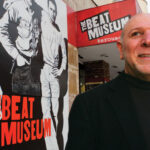

At his San Francisco museum, UMBC alumnus Jerry Cimino ’76 makes sure the world is still hep to one of America’s greatest literary movements.
By Jenny O’Grady
Photos by Mirissa Neff and Brittany Powell
The Beat Generation was a uniquely American movement – producing pockets of poetry and art across the land. You could find them in 1950s New York City in their early days clustered around Columbia University – or down in the cafes and jazz clubs of Greenwich Village. Some of them found refuge at Black Mountain College in North Carolina. And they drank and declaimed in juke joints across the Midwest and the Southwest.
That restless urge to explore great spaces is at the heart of Beat verse and prose. But if you had to pick an epicenter of the movement, you’d likely choose San Francisco’s North Beach – and specifically the crossroads of Broadway and Columbus Avenue.
That’s where you’ll find one of America’s great literary meccas: the checkerboard-floored City Lights Books, which was founded by poet/ publisher Lawrence Ferlinghetti in 1953. Right next to it is the Vesuvio Café, a popular watering hole of poets like Allen Ginsberg and Jack Kerouac. And just up the street, at 1562 Grant Avenue, young writers spent hours smoking dope on a crooked stairwell called “Poet’s Corner” – and then headed to the press next door to check galleys of the latest chapbook.
North Beach is also where you’ll find Jerry Cimino ’76, history. From the book-lined open air porch of the Beat Museum, which he founded in 2003 at 540 Broadway to pay homage to a generation of writers and artists who continue to inspire him, he takes in the rich history of this historic section of the city. He savors it. And he can’t help but share it with anyone who will listen.
“What we like to say is: ‘Welcome to the center of the universe,’” enthuses Cimino, with the flair of a modern day P.T. Barnum. “Because you’re at Broadway and Columbus right now – and everything that happened with the Beat Generation happened right here at this intersection.”
The museum’s walls reflect this, exploding with colorful posters, books, author photographs, drawings and videos covering every surface. One wall is devoted completely to editions of Kerouac’s On the Road from around the world. Another shows an early version of Ginsberg’s “Howl,” complete with scrawling edits by the author – enough to make even the biggest bookworm giddy.
More than 60 years after the Beats’ heyday, the culture has found a true evangelist in Cimino, a determined man driven by respect for the inclusive, nonconformist ideals the Beat authors represented. With a little elbow grease – and some recent attention from Hollywood – he’s on the road to making a lasting tribute to his heroes.
“IT KNOCKED ME OUT”
 Items from the Beat Museum
Cimino grew up in the suburbs of Baltimore, the son of a WWII vet-turned-postal clerk. His first encounter with the music and movement of the Beat writers came when a teacher read poems from Lawrence Ferlinghetti’s classic collection A Coney Island of the Mind to his eighth-grade class.
“That whole book of poetry literally changed my life…it knocked me out,” says Cimino, who to this day can recite the book’s fifth poem, “Sometimes During Eternity,” from memory.
“You know, 1968 is when it all happened,” Cimino recalls. “Bobby Kennedy was shot and killed. Martin Luther King was shot and killed. The Vietnam War was raging, and all of us kids were looking at each other and saying, ‘What in the hell are we inheriting?’”
When Cimino arrived at UMBC in 1972, he was among the few students actually living on campus at the time, splitting time between what were then called “Dorms 1, 2, and 3.” He says that many of the bonds that he formed in that era at UMBC – including friendships with older students freshly scarred from serving in Vietnam, and with closeted gays who trusted him with their secret – would forever change his own way of thinking. He also enjoyed some time on stage with the theatre club, sharing the bill (but, sadly, never the stage) with one-time UMBC student Kathleen Turner in a 1975 campus production of Antigone.
“For the first time in my life, I was interacting with a lot of people who weren’t like me,” says Cimino. “And that’s what the Beats were all about – coming together and really celebrating your differences… they were about tolerance and compassion and having the courage to live the most authentic life you can.”
Jonathan M. Cooperman, who roomed with Cimino at UMBC before finishing a degree in physical therapy at the University of Maryland, Baltimore, recalls a thoughtful, passionate friend who also had more hair back then.
“He is very much the same guy to me now as he was then,” says Cooperman, who is now a member of the Beat Museum’s board. “If you walked into his room at three in the morning, the door would be cracked open with light pouring out into the hall. If you walked inside, Jer would be sipping tea and reading a book – usually Kerouac.”
Although he loved history and other subjects he’d studied at UMBC, Cimino graduated without a clear career path to follow. So he went with the flow in which he found himself, relocating to California and forging a successful career in sales for both IBM and American Express.
VOICES THAT SPAN GENERATIONS
 Additional items from the Beat Museum.
Over the years, however, Cimino and his wife, Estelle, started craving something more than a career in business. His continuing affection for the Beat literature he had read as a young man led him to befriend John Cassady – the son of Kerouac’s friend Neal Cassady, who is immortalized in the character of “Dean Moriarty” in On the Road.
Cimino also began building a collection of Beat generation memorabilia which eventually became “The Beat Museum on Wheels” in 2003. And just as Dean Moriarty took off across the country with Sal Paradise (the character representing Kerouac himself in On the Road), Cimino and Cassady drove “the mighty beatmobile” across America’s highways in October 2005 – even parking it overnight in Commons Circle at UMBC.
Cimino says he reveled in the chance to share his growing collection with UMBC students and see his old campus. And faculty members were happy to have a bit of the Beats in Catonsville.
“The students enjoyed visiting the museum on wheels, with all kinds of interesting, hard-to-get publications and memorabilia, and just hanging out with Jerry and John,” says UMBC associate professor of English Piotr Gwiazda, who helped organize the appearance.
The Beats cast a spell over today’s students now just as much as ever, Gwiazda says.
“Whenever I teach ‘Howl,’ students respond with interest,” he says. “There still seems to be something magnetic about the work of Beat Generation writers: the idea of community it embodied, its counter-cultural aspects, its philosophical dimensions, and of course its sheer verbal power and vitality.”
STAR POWER
Of course, interest in the Beats has never been limited to college students reading in circles on the grass. A new Hollywood treatment of Kerouac’s On the Road – which features Kristen Stewart of Twilight fame and Viggo Mortensen from the Lord of the Rings films – is traveling the festival circuit now and scheduled for general release later this year.
Cimino couldn’t be happier about what the new film means for the legacy of the Beats – and for the future of his own museum.
“It’s just great, have you seen it?” he says, cueing up the movie trailer on a screen above the museum’s entrance. Since filming began in 2010 under director Walter Salles, Cimino says members of the film’s cast have visited the museum and asked questions about their characters.
The cast and crew even dropped off a surprise prop from the film at the museum. Just to the right of the museum’s check-in desk sits a dusty maroon 1949 Hudson Hornet used during filming and driven to its resting spot in North Beach by none other than the movie’s star Garrett Hedlund (“a really delightful young man,” says Cimino), who portrays the everrestless Dean Moriarty.
Beside it stands a sign: “Walter’s only request of us was that the dust and grime – accumulated on the car during the 5,000 miles he and Garrett spent traveling the country making the film – remain undisturbed. Walter considers this ‘the Holy Dirt of America.’”
“You know, every fingerprint has a story,” says Cimino. “It’s important to keep that history intact.”
That’s a major part of Cimino’s job as curator: making the story of the Beats accessible and fun for anyone who might wander in. He loves every second of his evangelism for the movement and its great writers.
“The museum is successful because it represents a significant part of American culture and American literary history,” says Cooperman. “The opening of the movie On the Road demonstrates how this literature is still relevant.
“Of course, the fact that Jerry is probably as knowledgeable of the Beats as any academic doesn’t hurt either,” he adds. “He’ll ultimately be successful because he has a passion for what he does.”
NOW AND LATER
Passion is one thing. But, if you’re wondering how a start-up museum makes it in such difficult economic times, here’s your answer: It ain’t easy.
But the Beat Museum now survives and thrives thanks to Cimino’s magnetic business sense and a lot of hard work.
Just above Cimino’s desk hangs a complicated organizational chart showing a collage of boxes representing duties spanning everything from marketing to merchandising to fixing the guest toilet. One line connects them all.
“And every one of those boxes has my damn name on it,” he jokes. “That’s just how it is.”
The museum’s collection has grown as fans discover it. Cimino admits that “most people who love the Beats don’t have a lot of money,” but as fans of certain writers have discovered his museum, the memorabilia contributions have flowed in steadily. There’s a plaid jacket once worn by Kerouac, and a creaky pipe organ owned by Allen Ginsberg. There’s even an original “Can YOU pass the acid test?” card from the days when Neal Cassady drove Ken Kesey and the Merry Pranksters across the country in a psychedelic bus – a trip immortalized by author Tom Wolfe in his 1968 book, The Electric Kool-Aid Acid Test. (There’s also a film version of that book in works, to be directed by Gus Van Sant.)
Over the years, Cimino also found mentors to advise him as his plans for the museum have grown. He singles out the late Kim Greer, who was president of the National Steinbeck Center in Salinas, California, until his death in 2006.
“I have people come in every day telling me what I should be doing,” he says. “But I only take advice from people who have successfully done what they’re telling me I ought to do. It’s easy to guess…but that’s not going to get you anywhere.”
Right now, the Beat Museum is just as Cimino would like it to be: full, eclectic, engaging. Not too smooth, or too uniform: that wouldn’t fit well with the artists that it celebrates. Mismatched shelves offer hand assembled chapbooks by local poets. A claw-footed bathtub filled with dime store novels invites visitors to try something new. There’s a definite flavor to the place – a sort of San Francisco sourdough bite.
Cimino would enjoy having someone else fix the toilet from time to time. More important, however, is growing the Beat Museum so that it can stand strong for generations to come. That’s his next step.
“I started this place the only way I know how. I built it from nothing,” he says. “Now we’ve built a track record, we’ve made it succeed with the blood and sweat of a lot of people. If this thing’s going to outlive me…I’m going to have to think big.”
]]>
At his San Francisco museum, UMBC alumnus Jerry Cimino ’76 makes sure the world is still hep to one of America’s greatest literary movements. By Jenny O’Grady Photos by Mirissa Neff and...
https://umbc.edu/stories/the-beats-go-on/
https://beta.my.umbc.edu/api/v0/pixel/news/124004/guest@my.umbc.edu/04229352010379587c1031180208372c/api/pixel
stories
UMBC News & Magazine
https://beta.my.umbc.edu/groups/umbc-news-magazine
https://assets1-beta.my.umbc.edu/system/shared/avatars/groups/000/001/943/24435aa6207c452e7bc15cc74b42c7bb/xsmall.png?1748556657
https://assets1-beta.my.umbc.edu/system/shared/avatars/groups/000/001/943/24435aa6207c452e7bc15cc74b42c7bb/original.png?1748556657
https://assets2-beta.my.umbc.edu/system/shared/avatars/groups/000/001/943/24435aa6207c452e7bc15cc74b42c7bb/xxlarge.png?1748556657
https://assets2-beta.my.umbc.edu/system/shared/avatars/groups/000/001/943/24435aa6207c452e7bc15cc74b42c7bb/xlarge.png?1748556657
https://assets3-beta.my.umbc.edu/system/shared/avatars/groups/000/001/943/24435aa6207c452e7bc15cc74b42c7bb/large.png?1748556657
https://assets1-beta.my.umbc.edu/system/shared/avatars/groups/000/001/943/24435aa6207c452e7bc15cc74b42c7bb/medium.png?1748556657
https://assets2-beta.my.umbc.edu/system/shared/avatars/groups/000/001/943/24435aa6207c452e7bc15cc74b42c7bb/small.png?1748556657
https://assets1-beta.my.umbc.edu/system/shared/avatars/groups/000/001/943/24435aa6207c452e7bc15cc74b42c7bb/xsmall.png?1748556657
https://assets2-beta.my.umbc.edu/system/shared/avatars/groups/000/001/943/24435aa6207c452e7bc15cc74b42c7bb/xxsmall.png?1748556657
UMBC News & Magazine
0
0
false
Wed, 06 Jun 2012 00:13:14 -0400
Ryan Bloom, English, in the New Yorker, Mentioned in Slate
The never-ending battle between advocates of the prescriptive and descriptive schools of language was touched off in the last few weeks, starting with a May 14 article in The New Yorker titled “The English Wars”, written by the magazine’s dance critic Joan Acocella. Weighing in with Acocella on the side of the prescriptive approach was lecturer Ryan Bloom, English, who in a May 29 blog post on The New Yorker‘s website noted one contradiction in particular on the part of many descriptivists:
“When it comes time for them to write their books and articles and give their speeches about the evil, élitist, racist, wrongheadedness of forcing the ‘rules’ on the masses, they always do so in flawless, prescriptive English. Ensconced behind a mask of noble ends, something obscenely disingenuous is happening here. How easy it is for a person who is already part of the linguistic élite to tell others who are not that they don’t need to be,” he wrote.
The response from many on the opposing side was swift, with Harvard psychologist/linguist Steven Pinker writing in to the online magazine Slate that “most writers who have given serious thought to language are neither kind of iptivist”, while also stating that “[t]he fact that many prescriptive rules are worth keeping does not imply that every pet peeve, bit of grammatical folklore, or dimly remembered lesson from Miss Grundy’s classroom is worth keeping. Many prescriptive rules originated for screwball reasons, impede clear and graceful prose, and have been flouted by English’s greatest writers for centuries.”
]]>
The never-ending battle between advocates of the prescriptive and descriptive schools of language was touched off in the last few weeks, starting with a May 14 article in The New Yorker titled...
https://umbc.edu/stories/ryan-bloom-english-in-the-new-yorker-also-mentioned-in-slate/
https://beta.my.umbc.edu/api/v0/pixel/news/124005/guest@my.umbc.edu/3de11321d10ce7ef350f2d975504aee7/api/pixel
cahss
english
policy-and-society
UMBC News & Magazine
https://beta.my.umbc.edu/groups/umbc-news-magazine
https://assets1-beta.my.umbc.edu/system/shared/avatars/groups/000/001/943/24435aa6207c452e7bc15cc74b42c7bb/xsmall.png?1748556657
https://assets1-beta.my.umbc.edu/system/shared/avatars/groups/000/001/943/24435aa6207c452e7bc15cc74b42c7bb/original.png?1748556657
https://assets2-beta.my.umbc.edu/system/shared/avatars/groups/000/001/943/24435aa6207c452e7bc15cc74b42c7bb/xxlarge.png?1748556657
https://assets2-beta.my.umbc.edu/system/shared/avatars/groups/000/001/943/24435aa6207c452e7bc15cc74b42c7bb/xlarge.png?1748556657
https://assets3-beta.my.umbc.edu/system/shared/avatars/groups/000/001/943/24435aa6207c452e7bc15cc74b42c7bb/large.png?1748556657
https://assets1-beta.my.umbc.edu/system/shared/avatars/groups/000/001/943/24435aa6207c452e7bc15cc74b42c7bb/medium.png?1748556657
https://assets2-beta.my.umbc.edu/system/shared/avatars/groups/000/001/943/24435aa6207c452e7bc15cc74b42c7bb/small.png?1748556657
https://assets1-beta.my.umbc.edu/system/shared/avatars/groups/000/001/943/24435aa6207c452e7bc15cc74b42c7bb/xsmall.png?1748556657
https://assets2-beta.my.umbc.edu/system/shared/avatars/groups/000/001/943/24435aa6207c452e7bc15cc74b42c7bb/xxsmall.png?1748556657
UMBC News & Magazine
0
0
false
Tue, 05 Jun 2012 20:18:19 -0400
Scholarship Success: Q&A with Melanie Dell '12

Each year, the Alumni Association Scholarship program helps amazing students succeed at UMBC. Over the next few weeks, we’ll be sharing some of their stories with you. This week, meet Melanie Dell ’12, the recipient of this year’s Alumni Association Legacy Scholarship.
 Name: Melanie Dell
Major: English
Grad Year: May 2012
Hometown: Catonsville, Maryland
What are you involved in on campus? I have been an editor of the UMBC Review: Journal of Undergraduate Research for the past two years.
Please share one of your favorite memories of your time at UMBC. There are two memories of my experience at UMBC that particularly stand out. The first one was reading the New Student Book Experience autobiography The Glass Castle for my English 100 class during my freshman year and attending a book talk at UMBC given by the author, Jeannette Walls. Reading and discussing the book in class, then hearing the author speak in person about her book was just one of the many interesting and unique learning experiences I had during my time at UMBC. My other fond memory was of a Shakespeare course (English 351) I took during my sophomore year. During the last class period of the semester, all of the students had to take part in performing an act from the play King Lear outside of the Fine Arts recital hall. We had to decide who played which parts, what act we were going to perform, and what costumes we were going to wear. Engaging this closely with the play allowed me to form a new appreciation for the Shakespeare plays that we had discussed and analyzed all semester.
What’s the most important lesson you’ve learned here? I’ve learned the value of diverse opinions and the importance of actively pursuing subjects that interest me. UMBC has cultivated my desires to increase my knowledge.
What are your plans for after graduation (if you know them)? Or, at least, what are you hoping to do? I will pursue a Master of Library Science degree at Clarion University in fall 2012. This is an entirely online program, which will allow me to concurrently work full-time at a public library.
What’s it like having a parent who is also an alum of UMBC? Did that factor into your decision to come here? When I was younger, my father would always tell me how invaluable his education was at UMBC. Although I applied to other universities, UMBC was my top choice because of the positive comments I heard from my dad about how this university provides the best resources, professors, and environment for its students.
How has the scholarship helped you? (And, do you have others?) I have funded my own education since I started at UMBC. I was awarded the President’s Fellows merit scholarship, but since that only covered a portion of UMBC’s tuition, I still had to make up the difference each semester. I would often work many hours during the week at a nearby public library to make sure that I did not have to take out loans or graduate with debts. Because of the Alumni Association Legacy scholarship, I was able to spend less time working in my senior year and more time focusing on school.
What would you say to the alumni who helped fund your scholarship? I want to express my sincerest gratitude and thanks to the alumni who helped fund my scholarship.It was an honor to receive this award.
Meet more members of the Class of 2012 here.
]]>
Each year, the Alumni Association Scholarship program helps amazing students succeed at UMBC. Over the next few weeks, we’ll be sharing some of their stories with you. This week, meet Melanie Dell...
https://umbc.edu/stories/scholarship-success-qa-with-melanie-dell-12-2/
https://beta.my.umbc.edu/api/v0/pixel/news/124006/guest@my.umbc.edu/a84a329115cc050bb5d427f702a06325/api/pixel
impact
UMBC News & Magazine
https://beta.my.umbc.edu/groups/umbc-news-magazine
https://assets1-beta.my.umbc.edu/system/shared/avatars/groups/000/001/943/24435aa6207c452e7bc15cc74b42c7bb/xsmall.png?1748556657
https://assets1-beta.my.umbc.edu/system/shared/avatars/groups/000/001/943/24435aa6207c452e7bc15cc74b42c7bb/original.png?1748556657
https://assets2-beta.my.umbc.edu/system/shared/avatars/groups/000/001/943/24435aa6207c452e7bc15cc74b42c7bb/xxlarge.png?1748556657
https://assets2-beta.my.umbc.edu/system/shared/avatars/groups/000/001/943/24435aa6207c452e7bc15cc74b42c7bb/xlarge.png?1748556657
https://assets3-beta.my.umbc.edu/system/shared/avatars/groups/000/001/943/24435aa6207c452e7bc15cc74b42c7bb/large.png?1748556657
https://assets1-beta.my.umbc.edu/system/shared/avatars/groups/000/001/943/24435aa6207c452e7bc15cc74b42c7bb/medium.png?1748556657
https://assets2-beta.my.umbc.edu/system/shared/avatars/groups/000/001/943/24435aa6207c452e7bc15cc74b42c7bb/small.png?1748556657
https://assets1-beta.my.umbc.edu/system/shared/avatars/groups/000/001/943/24435aa6207c452e7bc15cc74b42c7bb/xsmall.png?1748556657
https://assets2-beta.my.umbc.edu/system/shared/avatars/groups/000/001/943/24435aa6207c452e7bc15cc74b42c7bb/xxsmall.png?1748556657
UMBC News & Magazine
0
0
false
Tue, 05 Jun 2012 17:31:41 -0400
