Gray New World

Students in the Erickson School’s Project 2061 class have high expectations for technology and its power to meet human needs. Working across disciplines, they’ve created new possibilities for the future of senior care.
By Dinah Winnick
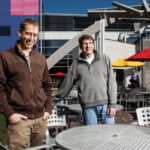
 Ashley Johnson ’12, MAgS (left), helped her team imagine the needs of “Ashley,” a 111-year-old former psychologist who loves to garden but struggles with dementia, diabetes and hearing loss. Abdulla Aljneibi ’12, mechanical engineering (right), inspired his classmates to design for “Abdulla,” an imagined 90-year-old man determined to live independently despite impairments from a stroke.
It’s hard to imagine ourselves five years into the future, let alone 50. But one group of UMBC students has confronted this challenge head-on in search of inspiration for new designs to improve the lives of older adults.
Their course, “Project 2061” was spearheaded by the Erickson School, UMBC’s newest college. Founded in 2004, the school offers undergraduate and graduate curricula that combine the studies of aging, public policy and management.
The Erickson School created Project 2061 after being invited to showcase UMBC student research at a conference on the future of aging. The project quickly attracted faculty and students from engineering, information systems, design, management of aging services (MAgS) and interdisciplinary studies (INDS) to collaboratively develop new technologies for older adults living in the year 2061.
As it turns out, the endeavor’s success hinged on something simple and personal: students’ reflections on their own imagined future needs and desires. The class created three avatars based on students’ life experiences – “Abdulla,” “Ashley,” and “Spencer” – to help them explore both the problems aging can bring and how design can meet those challenges.
“Abdulla,” for instance, was based on Project 2061 participant Abdulla Aljneibi ’12, mechanical engineering. His avatar is 90 years old and recovering from a stroke that has left him struggling with memory, speech and motor impairments. Yet he is determined to live independently and enjoy activities such as cooking, daily prayer and going to the theater.
For Judah Ronch, dean of the Erickson School, creating personas like “Abdulla” proved the key to making Project 2061 click.
“This is always the challenge in teaching about aging,” says Ronch, “Until you make it about us it’s very removed. If it’s always about them, it’s highly abstract, it’s not very real, and there is not a sense of urgency about it because [typical students] are 25 or 20 and we’re talking about 60 years down the road.”
Everything changes, Ronch observes, “once you start talking about yourself and [asking], ‘How will this affect me?’”
BUILDING A TEAM
 Assistant professors Amy Hurst and Catherine Neylan explore data visualization with Meyerhoff Scholar Jasmine Jones ’12, computer science and interdisciplinary studies (left to right).
In May 2011, LeadingAge — a research and advocacy group focused on the lives of older adults — asked the Erickson School to create an exhibit on the future of aging.
LeadingAge planned a celebration of its 50th anniversary in October 2011 with a conference that would bring 8,000 participants to Washington, D.C. The group wanted to highlight dramatic changes in senior living from 1961 to the present, and also articulate a bold vision for the next 50 years.
Ronch says the exhibit “was an opportunity we couldn’t pass up.” So he recruited faculty and students from across UMBC to create the school’s presentation as part of a new, boundary-breaking course in the Erickson School.
To teach the class, Ronch enlisted Tim Topoleski, a professor of mechanical engineering who studies mobility and the mechanics of joint replacements. Catherine Neylan, assistant professor of design, and Amy Hurst, assistant professor of information systems, followed, attracted to the course by their shared interest in design for people with disabilities.
These faculty recruited students from a range of majors. Neylan observes that technology and social problems are now so complex that “we need collective intelligence to build the things that we build.”
Eventually, 19 UMBC students joined the effort. Early in the process, MAgS major Joe Yoon proposed that the class should create specific design personas based on students in the course and then craft flexible technologies to meet those avatars’ specific needs. His idea was a game-changer.
“In all of our scenarios of how this would be used,” recalls Hurst, “we never said, ‘How would grandma use this?’ We said, ‘How would I use it in 50 years.’ I think that fundamentally changed a lot of the designs [and] helped the students be more creative and engaged.”
Yoon’s proposal also forced students to ponder uncomfortable possibilities. As Steven Hall, a junior majoring in graphic design, observes: “I don’t think anybody’s going to want to think, ‘What’s my life going to be like in 50 years? I’m going to have cataracts and be overweight. I’m going to have my foot amputated from diabetes.’”
The students had to deal with uncertainties about their lives and the world in 50 years. “You can’t take the current older adult population and simply throw them 50 years into the future,” argues Colleen Bennett, a gerontology Ph.D. student and Project 2061 teaching assistant. The project depended on young people confronting their own fears and desires for later life.
“Every generation is different, and then they age,” says Hurst. “Traditionally, people are very bad at abstracting and predicting what they would want in the future, but they can tell you what they want now and how they feel about things.”
REALIZING A VISION
The three personas gave Project 2061 students a concrete foundation to build on.
“Once we had a starting point,” says Aljneibi, “the ideas started flowing.”
The class worked quickly to conceptualize, research, and render designs for technologies to meet functional needs: eating, sleeping, hygiene, and entertainment/social engagement. Living environments in the future might be quite different, they reasoned, but basic human needs will remain the same.
Occasionally, there were hiccups. The blurred lines of interdisciplinary work and the indefinite nature of the problems that the project aimed to address frustrated some of the students, especially early in the process.
“You would think design and engineering would be closer, but they both want to have a product and their process is so different,” observes Meyerhoff Scholar Jasmine Jones ’12, computer science and INDS. At times, she adds, students misinterpreted their failure to communicate across a disciplinary “language barrier” as actual disagreement over ideas.
“They are beginning to learn that the real world is not as clear-cut as their well-designed classes,” says Hurst.
In four weeks, however, a dozen designs took shape, all of them informed by contemporary technologies and targeted to meet users’ specific needs.
One group devised a “Smart Closet” that reminds users with memory and other cognitive impairments when and how garments need to be cleaned. It also lets users know when they last wore a favorite dress or tie, and even what clothing is appropriate for particular activities or occasions.
Another design team emerged with a “Lavish Lavatory”—which auto-adjusts toilet and rail height to account for changes in strength and balance over time. The design’s flexibility means it can help communal facilities better meet the needs of diverse individuals. It also discreetly and unobtrusively monitors waste and automatically sends relevant health data to each user’s physician.
Eating properly is important at any age, so another group designed a “FoodPro,” that monitors the refrigerator and pantry, keeping track of grocery inventory, expiration dates and nutritional content. It also helps users prepare meals that meet their particular dietary needs, taking into account health conditions, lifestyle choices and food preferences.
These projects formed the core of the Erickson School’s LeadingAge exhibit— “My Surroundings, My Well-Being”— which centered on personal experiences with technology.
The student designers took the exhibit opportunity as a chance to demonstrate how individuals would use their products in home environments. They acted as docents to the conference exhibit, explaining to visitors how each invention would serve “Ashley,” “Abdulla” and “Spencer” in their future lives.
Helping people connect with the exhibit in a personal way was a priority for Aljneibi—and not simply because he lent his identity to the design process. He also belongs to a close-knit multigenerational family with a grandmother facing mobility problems.
“When she goes into the shower,” he says, “it’s always in our heads: ‘What if she slips? What if she falls?’” For his family, respecting her boundaries means resisting the impulse to help her in the shower. In what ways could his team’s designs enable her, and people like her, to more safely bathe by themselves?
Though he approached the course from a neuroscience background, Talmo Pereira, an INDS major and Meyerhoff Scholar, took the tenets of user-centered design to heart.
“Considering that the environment should adapt to the user,” he suggests, “the mutability of the environment is one of the things that will most compensate for differences in culture and preferences, and certainly limitations.”
The exhibit received an enthusiastic response from vendors, senior care professionals, and LeadingAge organizers, who immediately invited the students back for 2012.
FULL SPEED AHEAD
Creating an exhibit with an October deadline left everyone involved in Project 2061 with the question of how to best make use of the rest of the semester. Focus on prototyping the exhibit designs or generate new concepts? Continue team projects or pursue independent research? The answer was different for each participant.
Aljneibi chose to continue his team project on bath designs. “When I came to the States I wasn’t fine with communal bathing, especially in the gym,” he reflects. “I used the handicapped one because I needed my privacy.” For him, this experience— uncomfortable though it felt—was an inspiration. After all, if the United States continues to grow increasingly diverse, certainly consumers would appreciate flexible bathing technologies.
Steven Hall ’11 and Pavlo Yankovetz ’11, both in graphic design, explored how visualizing health data in particular ways may offer older adults a sense of self-awareness and empowerment. They argue that information can motivate or stifle health-seeking behaviors, depending on how it is conveyed. “If you’re just giving someone numbers, that’s not helpful or useful. We want those numbers to mean something,” says Hall.
Meyerhoff Scholar Deanna Easley ’12, mechanical engineering, worked to develop safer flooring for older adults, who are often injured in falls. Having broken her own wrist in a fall, Easley understood the mental and physical traumas of injury and lengthy recovery.
“People told me, ‘At least you didn’t break the hand you write with,’” recalls Easley. “But I’m a pianist. I need both hands.” With a deep understanding of how injury can wreak havoc on one’s sense of self, plus input from MAgS students, Easley designed flooring that would not only enhance safety, but also offer aesthetic appeal and emotional comfort to potential consumers.
INNOVATION STARTS AT HOME
Academic leaders at UMBC applaud the new class, arguing that it breaks new ground at a university already known for its commitment to promoting undergraduate success through active learning.
“Project 2061 represents a striking example of UMBC’s ability to create innovative and multi-disciplinary approaches to teaching and learning that address significant future challenges,” says Provost Philip Rous.
“In the process of researching real problems, our students not only gain knowledge, they also co-create knowledge and contribute to the field,” says Diane Lee, Vice Provost and Dean of Undergraduate Education.
Connecting research to reality and realizing its potential for lasting impact isn’t simply a hypothetical draw to students. For Meyerhoff Scholar Jasmine Jones, Project 2061 is about “actually making a difference right now” rather than just “writing up a piece of code and turning it in.”
Ashley Johnson ’12, MAgS, who helped her classmates understand the needs of “Ashley,” a 111-year-old former psychologist who loves to garden and meditate in the year 2061 but struggles with dementia, diabetes and hearing loss, agrees: “I’m never asking, ‘Will I use this in the future?’ I know I will.”
Students aren’t the only beneficiaries of this work. As Don Engel, Assistant Vice President for Research, articulates: “Universities support research both to expand human knowledge and to engage students in the forefront of their disciplines. Project 2061 demonstrates how interdisciplinarity and a focus on real-world challenges produce compelling results and provide a valuable education to students and faculty alike.”
Part of Project 2061’s success, it turns out, was also rooted in participants’ refusal to play it safe. Not only did they take risks with ideas, but students and the faculty broke out of their intellectual comfort zones when they crossed disciplinary boundaries.
When you predict the future, says Ronch, “you have to be prepared to be wrong.” This kind of risk-taking requires what he calls “a special kind of iconoclasm: looking at a blank space and seeing what could fill it.”
]]>
Students in the Erickson School’s Project 2061 class have high expectations for technology and its power to meet human needs. Working across disciplines, they’ve created new possibilities for the...
https://umbc.edu/stories/gray-new-world/
https://beta.my.umbc.edu/api/v0/pixel/news/123987/guest@my.umbc.edu/0e06047d220ce81f5b36c337e2e752c5/api/pixel
discovery
fall-2012
UMBC News & Magazine
https://beta.my.umbc.edu/groups/umbc-news-magazine
https://assets1-beta.my.umbc.edu/system/shared/avatars/groups/000/001/943/24435aa6207c452e7bc15cc74b42c7bb/xsmall.png?1748556657
https://assets1-beta.my.umbc.edu/system/shared/avatars/groups/000/001/943/24435aa6207c452e7bc15cc74b42c7bb/original.png?1748556657
https://assets2-beta.my.umbc.edu/system/shared/avatars/groups/000/001/943/24435aa6207c452e7bc15cc74b42c7bb/xxlarge.png?1748556657
https://assets2-beta.my.umbc.edu/system/shared/avatars/groups/000/001/943/24435aa6207c452e7bc15cc74b42c7bb/xlarge.png?1748556657
https://assets3-beta.my.umbc.edu/system/shared/avatars/groups/000/001/943/24435aa6207c452e7bc15cc74b42c7bb/large.png?1748556657
https://assets1-beta.my.umbc.edu/system/shared/avatars/groups/000/001/943/24435aa6207c452e7bc15cc74b42c7bb/medium.png?1748556657
https://assets2-beta.my.umbc.edu/system/shared/avatars/groups/000/001/943/24435aa6207c452e7bc15cc74b42c7bb/small.png?1748556657
https://assets1-beta.my.umbc.edu/system/shared/avatars/groups/000/001/943/24435aa6207c452e7bc15cc74b42c7bb/xsmall.png?1748556657
https://assets2-beta.my.umbc.edu/system/shared/avatars/groups/000/001/943/24435aa6207c452e7bc15cc74b42c7bb/xxsmall.png?1748556657
UMBC News & Magazine
0
0
false
Thu, 07 Jun 2012 20:27:46 -0400
Erle Ellis, Geography and Environmental Systems, in Greenwire
In a June 6 piece for E&E Publishing’s daily environmental news website Greenwire, associate professor Earl Ellis, geography and environmental systems, spoke with reporter Paul Voosen in regards to the U.N.’s release of its fifth Global Environmental Outlook (GEO-5) ahead of this month’s “Rio+20: United Nations Conference on Sustainable Development” to be held in Rio De Janeiro.
The article focused on GEO-5’s emphasis on “planetary boundaries” as an important aspect of future environmental policy, which “are roughly based on the limits estimated during the past 10,000 years of human activity, and… have been seized upon by policymakers seeking a guide to the future of life on Earth”, wrote Voosen. Ellis, a co-author of the paper “Planetary Opportunities: A Social Contract for Global Change Science to Contribute to a Sustainable Future” for BioScience with a number of other scientists which calls for a middle path that “increase[s] the probability of achieving societal benefits while reducing negative outcomes for Earth systems”, told Voosen that the “physical boundaries” concept remains questionable on a number of issues ranging from its scientific weaknesses to its overemphasis in the media, concluding that “many [scientists] are convinced that focusing on the [boundaries] approach will weaken, rather than strengthen, the role of science in informing society in environmental decision making.”
The original article “Rio+20: Ahead of summit, U.N. report embraces ‘boundaries'” can be read at Greenwire‘s website here.
]]>
In a June 6 piece for E&E Publishing’s daily environmental news website Greenwire, associate professor Earl Ellis, geography and environmental systems, spoke with reporter Paul Voosen in...
https://umbc.edu/stories/erle-ellis-geography-and-environmental-systems-in-greenwire/
https://beta.my.umbc.edu/api/v0/pixel/news/123988/guest@my.umbc.edu/534a7ff3eb4dd04cc9c3f146cdff88f8/api/pixel
cahss
cnms
ges
policy-and-society
UMBC News & Magazine
https://beta.my.umbc.edu/groups/umbc-news-magazine
https://assets1-beta.my.umbc.edu/system/shared/avatars/groups/000/001/943/24435aa6207c452e7bc15cc74b42c7bb/xsmall.png?1748556657
https://assets1-beta.my.umbc.edu/system/shared/avatars/groups/000/001/943/24435aa6207c452e7bc15cc74b42c7bb/original.png?1748556657
https://assets2-beta.my.umbc.edu/system/shared/avatars/groups/000/001/943/24435aa6207c452e7bc15cc74b42c7bb/xxlarge.png?1748556657
https://assets2-beta.my.umbc.edu/system/shared/avatars/groups/000/001/943/24435aa6207c452e7bc15cc74b42c7bb/xlarge.png?1748556657
https://assets3-beta.my.umbc.edu/system/shared/avatars/groups/000/001/943/24435aa6207c452e7bc15cc74b42c7bb/large.png?1748556657
https://assets1-beta.my.umbc.edu/system/shared/avatars/groups/000/001/943/24435aa6207c452e7bc15cc74b42c7bb/medium.png?1748556657
https://assets2-beta.my.umbc.edu/system/shared/avatars/groups/000/001/943/24435aa6207c452e7bc15cc74b42c7bb/small.png?1748556657
https://assets1-beta.my.umbc.edu/system/shared/avatars/groups/000/001/943/24435aa6207c452e7bc15cc74b42c7bb/xsmall.png?1748556657
https://assets2-beta.my.umbc.edu/system/shared/avatars/groups/000/001/943/24435aa6207c452e7bc15cc74b42c7bb/xxsmall.png?1748556657
UMBC News & Magazine
0
0
false
Thu, 07 Jun 2012 17:27:23 -0400
Search Engineers

British writer and scientist Arthur C. Clarke once wrote that “any sufficiently advanced technology is indistinguishable from magic.”
And for many of us, that’s exactly how the beeps and pings and connecting dings that keep our schedules, steer our cars to the right destination, and even maintain our bonds with family and friends over great distances seem to work. Like magic.
But to the humans behind the technologies – including Silicon Valley-based UMBC alumni at Apple and Google – it’s anything but abracadabra. It’s a combination of hard work, entrepreneurial drive and visionary imagination at its geekish best.
Let’s meet some of the minds behind the magic of our technologies.
by Jenny O’Grady
Photos by Gabriela Hasbun
Stroll down the yellow brick walkway that leads to Building 43, and a trio of girls on colorful bikes rides by, dinging their handlebar bells and singing “Hello!”
Take a right, and you’re in a garden of busts that depict everyone from Lloyd Bridges to Jacques Cousteau. Beyond that, a T-Rex skeleton feasts on helpless plastic pink flamingos. There’s a delicious savory breeze – does it come from one of the free cafeterias or the employee-run herb garden? – and a burst of laughter from a group of young engineers playing beach volleyball nearby.
Oh, right: and today’s free haircut day. That’s life in the Googleplex for you.
Google’s headquarters in Mountain View, California, is often depicted as a Willy Wonka’s Chocolate Factory of high-tech geekdom. It’s frequently listed on Top 10 lists of amazing workplaces. But what’s it really like to work at a company with a product so popular that it’s become a verb?
“It is very good to foster a culture where people are engaged, want to be at work, and that allows you to concentrate your time on what you’re trying to do in the day,” says Jeffrey Burgan ’83, computer science, director of network engineering for Google Access, which delivers high speed internet. “People work very hard here, so if the place can take the burden off in other areas – like get an oil change or a haircut, or to have washers and driers so people can do their laundry – it definitely helps.”
Google is known as much for the sheer difficulty of its confounding job interviews as it is for the replica of SpaceShipOne in its lobby. The secret to the company’s success seems to lie in its careful balance of work and play, and other UMBC alumni at Google agree that its unique culture pushes them to be more creative and constructive.
Jeetendra M. Soneja M.S. ’04, computer science, is the tech lead for Google Analytics API. He works in an outlying office, but finds the company culture persists across Google’s many campuses.
“One thing that is common across all the Google offices all over the world is the friendly and helpful nature of the fellow Googlers,” he says. “This leads to a very healthy working environment and is one of the best things why I love working here. The work environment is also fun and relaxing, and yet focused and one that promotes and rewards innovation.”
Robert Banz ’95, computer science, has worked as a site reliability engineer at Google for four years. (“We make sure Google is ‘always on,’” he says.) Before that, he worked at UMBC, which gives him a bit of special perspective about what’s extra cool about working at the Mountain View campus.
“Everyone says it’s the free food options, so I’ll go with something else. I’d say I was surprised how much it felt like a university campus,” he said.
Banz also believes the atmosphere of Silicon Valley is a significant influence on the famed Google culture. “Silicon Valley and San Francisco, but really the entire Bay Area, has this amazing critical mass of passionate creative, scientific, and engineering talent,” he says. “These groups mix socially; mutual curiosity leads to unique ideas. I think that’s the secret to the creative engine, and the source of very engaging and entertaining conversation.”
Sandor Dornbush M.S. ’06, computer science, sometimes runs to work with his black lab, Coltrane. Other times, he takes the free Google shuttle. Today, he wheels his bike into a meeting room playfully covered in a soft padded material. Photos of the Burning Man festival hang nearby.
“Despite all the games, and the food and everything, I honestly don’t think I’ve played a single game of pool in my six years here,” says Dornbush, an engineer for Google Play, who knows his work ultimately comes first.
“People talk about the Google 15 (because of the free food), but I’ve actually found the opposite,” Dornbush says. “For the first time, many people have access to really good food, and they have access to the gym, and they see people around them taking care of themselves, and they start to drop pounds. So despite the fact that there’s all this free stuff, people work really hard. And it’s a culture that encourages that.”
]]>
British writer and scientist Arthur C. Clarke once wrote that “any sufficiently advanced technology is indistinguishable from magic.” And for many of us, that’s exactly how the beeps and pings...
https://umbc.edu/stories/search-engineers-2/
https://beta.my.umbc.edu/api/v0/pixel/news/123989/guest@my.umbc.edu/7eba902e5f4f715c0df76ed1b8aff1c4/api/pixel
stories
UMBC News & Magazine
https://beta.my.umbc.edu/groups/umbc-news-magazine
https://assets1-beta.my.umbc.edu/system/shared/avatars/groups/000/001/943/24435aa6207c452e7bc15cc74b42c7bb/xsmall.png?1748556657
https://assets1-beta.my.umbc.edu/system/shared/avatars/groups/000/001/943/24435aa6207c452e7bc15cc74b42c7bb/original.png?1748556657
https://assets2-beta.my.umbc.edu/system/shared/avatars/groups/000/001/943/24435aa6207c452e7bc15cc74b42c7bb/xxlarge.png?1748556657
https://assets2-beta.my.umbc.edu/system/shared/avatars/groups/000/001/943/24435aa6207c452e7bc15cc74b42c7bb/xlarge.png?1748556657
https://assets3-beta.my.umbc.edu/system/shared/avatars/groups/000/001/943/24435aa6207c452e7bc15cc74b42c7bb/large.png?1748556657
https://assets1-beta.my.umbc.edu/system/shared/avatars/groups/000/001/943/24435aa6207c452e7bc15cc74b42c7bb/medium.png?1748556657
https://assets2-beta.my.umbc.edu/system/shared/avatars/groups/000/001/943/24435aa6207c452e7bc15cc74b42c7bb/small.png?1748556657
https://assets1-beta.my.umbc.edu/system/shared/avatars/groups/000/001/943/24435aa6207c452e7bc15cc74b42c7bb/xsmall.png?1748556657
https://assets2-beta.my.umbc.edu/system/shared/avatars/groups/000/001/943/24435aa6207c452e7bc15cc74b42c7bb/xxsmall.png?1748556657
UMBC News & Magazine
0
0
false
Thu, 07 Jun 2012 13:33:27 -0400
Tim Nohe, Visual Arts, Collaborates on “My Station North” Exhibition, Interviewed on WYPR
 Associate Professor Timothy Nohe, Visual Arts, and Charlotte Keniston ’14, Imaging and Digital Arts, recently collaborated with students from the Baltimore Montessori Public Charter School for a project documenting the school’s Station North neighborhood. The project My Station North: Sounds Surrounding Us involved Nohe and Keniston providing five students ages 10-11 simple point-and-shoot cameras and audio recorders to go and interact with the diverse collection of area residents, ranging from bricklayers, to bike shop collective members, to artists based in the Copycat Building. The results are to be exhibited at an installation opening in Gallery CA at the City Arts building on June 7th at 5:00 p.m.
Speaking on June 5th with Tom Hall for WYPR’s Maryland Morning, Nohe spoke of his and Keniston’s motivations for working with the students at Baltimore Montessori, saying, “We really wanted students to get out and walk the neighborhood and really meet people, and really see the environment. To knit the school closer into the neighborhood. That’s a neighborhood that thinks of itself as Station North, but also is Greenmount West, and we were trying to tie these two entities together.”
My Station North: Sounds Surrounding Us will be on view at the Gallery CA from June 7th to July 6th.
]]>
Associate Professor Timothy Nohe, Visual Arts, and Charlotte Keniston ’14, Imaging and Digital Arts, recently collaborated with students from the Baltimore Montessori Public Charter School for a...
https://umbc.edu/stories/tim-nohe-visual-arts-collaborates-on-my-station-north-exhibition-interviewed-on-wypr/
https://beta.my.umbc.edu/api/v0/pixel/news/123990/guest@my.umbc.edu/3526e5688157461ca380779aa2ffcdb0/api/pixel
cahss
policy-and-society
visualarts
UMBC News & Magazine
https://beta.my.umbc.edu/groups/umbc-news-magazine
https://assets1-beta.my.umbc.edu/system/shared/avatars/groups/000/001/943/24435aa6207c452e7bc15cc74b42c7bb/xsmall.png?1748556657
https://assets1-beta.my.umbc.edu/system/shared/avatars/groups/000/001/943/24435aa6207c452e7bc15cc74b42c7bb/original.png?1748556657
https://assets2-beta.my.umbc.edu/system/shared/avatars/groups/000/001/943/24435aa6207c452e7bc15cc74b42c7bb/xxlarge.png?1748556657
https://assets2-beta.my.umbc.edu/system/shared/avatars/groups/000/001/943/24435aa6207c452e7bc15cc74b42c7bb/xlarge.png?1748556657
https://assets3-beta.my.umbc.edu/system/shared/avatars/groups/000/001/943/24435aa6207c452e7bc15cc74b42c7bb/large.png?1748556657
https://assets1-beta.my.umbc.edu/system/shared/avatars/groups/000/001/943/24435aa6207c452e7bc15cc74b42c7bb/medium.png?1748556657
https://assets2-beta.my.umbc.edu/system/shared/avatars/groups/000/001/943/24435aa6207c452e7bc15cc74b42c7bb/small.png?1748556657
https://assets1-beta.my.umbc.edu/system/shared/avatars/groups/000/001/943/24435aa6207c452e7bc15cc74b42c7bb/xsmall.png?1748556657
https://assets2-beta.my.umbc.edu/system/shared/avatars/groups/000/001/943/24435aa6207c452e7bc15cc74b42c7bb/xxsmall.png?1748556657
UMBC News & Magazine
0
0
false
Wed, 06 Jun 2012 17:33:03 -0400
Up on the Roof – Summer 2012

UMBC President Freeman A. Hrabowski, III, takes your questions.
Q. What books have you been reading of late? And how do you prefer to read: ebooks or paper?
— James Polchin ’89, political science
Founding Editor, Writing in Public
A. One thing that I’ve been reading lately is Freedom from Fear: The American People in Depression and War, 1929-1945 by David Kennedy, who is a professor at Stanford University (Oxford University Press). This period in American history fascinates me, and both Franklin Delano Roosevelt and Eleanor Roosevelt fascinate me. She was very helpful in pushing the involvement of women, of blacks, and of artists in the American recovery.
Artists were particularly important. It was customary at that time to say: “We are in the middle of a depression. Why would we be doing anything to help the arts?” Yet there were people in leadership positions – including the Roosevelts – who understood that we need the arts in difficult times. Even more so, perhaps, than in times when we are thriving. We need them all the time. The arts reflect who we are. They make us whole. They express the human condition.
The theme of leadership in that era – which was expressed in FDR and in Eleanor Roosevelt – was optimism. People back then said: “The country’s going down the tubes.” They used the same language we use today. Wall Street versus Main Street. Legislation that was pushed through was being questioned by the Supreme Court, and many Americans wanted to see it overruled.
But the language that was used in recovery and the legislation that was passed spoke volumes about our values. In no case was that more true than the Social Security Act. Before that act, the vast majority of people struggled after their working years. There was no retirement. But that act said that we care about people in their time of need.
For me, the optimism and the values we embraced during that era suggest the hope that we can embrace in the period we are in right now.
As far as how I read, I do prefer books. We have every bit of technology you’d want on UMBC’s campus and at my house. But when it’s all said and done, I enjoy the book. I want to smell it. I want to turn the page. I want to turn the corners of the pages. And I like seeing where I am in relation to the end of the book. You don’t get that without the book itself.
Q. As someone who’s been called upon to make a number of commencement addresses at other universities, what is your approach to offering this important reflection for new graduates?
— Richard Byrne ’86, English
A. First, I want to know the history of the institution. And I want to know what students want to know about.
Last year, one of the most significant experiences for me was speaking at the University of Mississippi commencement. So I studied the history of Ole Miss, and discovered that this beautiful grove, with magnolia trees, where we had thousands of people gathered, had been the site where the men of Ole Miss – students and faculty – had set off for the Civil War. That group of men suffered 100 percent casualties in the Civil War. Regardless of what one feels about the Civil War, the thought of those children and men dying is sad. It’s as sad as the war itself.
And then, knowing that 100 years later, this was also the most violent site of desegregation in American higher education. Ever. Four people killed. And there I was speaking to a predominately white audience. I wanted to talk about Mississippi history as part of American history. And about how the problems of Mississippi were – and are – American problems.
The challenge to every graduating class is “What can I do to make some impact on people who don’t have what I have?” That’s what I want to say, whether it’s at Ole Miss or at the University of Maryland, Baltimore, where I will speak this year.
To send a question to President Hrabowski, click here.
]]>
UMBC President Freeman A. Hrabowski, III, takes your questions. Q. What books have you been reading of late? And how do you prefer to read: ebooks or paper? — James Polchin ’89, political...
https://umbc.edu/stories/up-on-the-roof-summer-2012/
https://beta.my.umbc.edu/api/v0/pixel/news/123991/guest@my.umbc.edu/902ec29b1fc55b62287bd5532903c30e/api/pixel
perspectives
summer-2012
UMBC News & Magazine
https://beta.my.umbc.edu/groups/umbc-news-magazine
https://assets1-beta.my.umbc.edu/system/shared/avatars/groups/000/001/943/24435aa6207c452e7bc15cc74b42c7bb/xsmall.png?1748556657
https://assets1-beta.my.umbc.edu/system/shared/avatars/groups/000/001/943/24435aa6207c452e7bc15cc74b42c7bb/original.png?1748556657
https://assets2-beta.my.umbc.edu/system/shared/avatars/groups/000/001/943/24435aa6207c452e7bc15cc74b42c7bb/xxlarge.png?1748556657
https://assets2-beta.my.umbc.edu/system/shared/avatars/groups/000/001/943/24435aa6207c452e7bc15cc74b42c7bb/xlarge.png?1748556657
https://assets3-beta.my.umbc.edu/system/shared/avatars/groups/000/001/943/24435aa6207c452e7bc15cc74b42c7bb/large.png?1748556657
https://assets1-beta.my.umbc.edu/system/shared/avatars/groups/000/001/943/24435aa6207c452e7bc15cc74b42c7bb/medium.png?1748556657
https://assets2-beta.my.umbc.edu/system/shared/avatars/groups/000/001/943/24435aa6207c452e7bc15cc74b42c7bb/small.png?1748556657
https://assets1-beta.my.umbc.edu/system/shared/avatars/groups/000/001/943/24435aa6207c452e7bc15cc74b42c7bb/xsmall.png?1748556657
https://assets2-beta.my.umbc.edu/system/shared/avatars/groups/000/001/943/24435aa6207c452e7bc15cc74b42c7bb/xxsmall.png?1748556657
UMBC News & Magazine
0
0
false
Wed, 06 Jun 2012 15:31:28 -0400
The News – Summer 2012
TAKE A SEAT
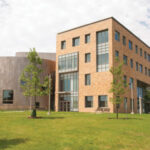
The first phase of UMBC’s Performing Arts and Humanities Building is on schedule for its Fall 2012 opening. Soon, the departments of English and theatre will move into the building – along with the James T. and Virginia M. Dresher Center for the Humanities, the Linehan Artist Scholars Program and the Humanities Scholars Program.
It’s a big event in UMBC’s history, but did you know that you can already put your personal stamp on the university’s newest building?
UMBC is offering chances to name a seat in the building’s state-of-the-art proscenium theatre. The new theatre is the anchor of the project’s first phase – and as the new home for the university’s award-winning theatre department, there are more than 200 seats available for naming. Those who participate in the campaign will have a plaque engraved with their name (or other text of their choice) affixed to a seat in the theatre.
The $500 gift required to place your name on a seat will directly benefit arts and humanities programming at UMBC through an endowment that will ensure that arts productions and other programs are available for future generations.
The new Performing Arts and Humanities Building is the capstone of UMBC’s recent efforts to highlight the arts and humanities at the university, which also includes a new campaign –“think.create. engage” – which has spurred greater attendance at campus events and communicated UMBC’s arts and humanities efforts to the wider community.
For more information on how to put your name on a seat, check out the new building’s website: www.umbc.edu/pahb/
— Richard Byrne ’86
UPWARD TRAJECTORY
 In March, UMBC President Freeman A. Hrabowski, III announced that Philip Rous had been selected to fill the university’s most senior academic administrative position: Provost and Senior Vice President for Academic Affairs.
“UMBC is very fortunate to have someone of Dr. Philip Rous’s impressive experience and talent to serve as Provost,” Hrabowski observed, “and I know he will do a superb job.”
Rous, a professor of physics, gained much of that experience at UMBC, where he has risen through leadership positions in the faculty and then in university administration over more than two decades in Catonsville. He arrived at UMBC as an assistant professor of physics in 1990, and served in a number of faculty leadership positions – including chair of the physics department and president of the university’s faculty senate.
In 2008, Rous was named interim dean of the university’s College of Natural and Mathematical Sciences. He was named dean of the college in 2010. Last year, after the departure of former UMBC provost Elliot Hirshman, Rous was named interim provost of the university.
In his time as a faculty leader and an administrator, Rous has been a key figure in advancing the university’s drive to become a first-rate public teaching and research university. He helped create the College of Natural and Mathematical Sciences’ Active Science Teaching & Learning Environment (CASTLE) which has garnered national attention for its innovative student engagement practices.
Rous received his B.Sc. degree in Physics (First Class Honours) from the University of Bristol, and his Ph.D. from the University of London’s Imperial College of Science and Technology. His tenure as Provost begins officially on July 1.
— Richard Byrne ’86
See “Over Coffee” for an interview with UMBC’s new Provost.
NUMBERS AND KNOWLEDGE
As national leaders in promoting diversity on campus, UMBC’s academic leadership and its faculty know that increasing diversity in the STEM (Science, Technology, Engineering, and Mathematics) fields at the highest levels doesn’t just require determination to make change. It also requires hard data and informed discussion.
That’s why it’s significant that UMBC is one of 21 graduate schools across the nation to participate in a new study organized by the Council of Graduate Schools to study completion and attrition among underrepresented minorities in STEM doctoral programs.
The study is funded by a grant from the National Science Foundation (NSF). It will compare data on completion and attrition among all underrepresented minority students in STEM doctoral programs culled over the past 20 years from a diverse set of institutions. The council is also developing a web-based survey for students.
That’s the data part. The study will also examine STEM doctoral programs at participating universities in depth, assessing their policies, practices and interventions that may have had an impact on completion and attrition among doctoral candidates. Schools in the study will also host visits from council program staff and take part in national discussions on Ph.D. completion.
Why study completion and attrition in such depth? The council and the NSF hope to identify and understand the factors that contribute to Ph.D. completion and help reduce attrition in these key academic programs.
The study – and its answers to those questions – will be released in June 2014.
— Nicole Ruediger and Richard Byrne ’86
AWARD OF A CENTURY
 Make way, Warren Buffett. Slide over, Rihanna.
UMBC President Freeman A. Hrabowski, III, joined both of those figures and 97 others on the 2012 TIME 100, Time magazine’s annual list of “the 100 most influential people in the world.” (See Hrabowski’s listing here.)
Hrabowski was the only college president to make this year’s list, and in the magazine’s piece on UMBC and its president, Time observed that: “When you think of the top science universities in the U.S., schools like MIT and Caltech may jump to mind. But perhaps the most envied science program in the country is at the University of Maryland, Baltimore County.”
Making the Time list also meant an invitation to a gala celebration at New York City’s Lincoln Center in April. In a toast written for the occasion, Hrabowski celebrated the aspirations of his late mother, Maggie Hrabowski, the way that his family placed “faith and education” at the center of their lives, and his love for his wife of 40 years, Jackie Hrabowski.
Hrabowski also spoke about the philosophy that has helped propel UMBC to national recognition.
“I am fortunate to work on a college campus where people are excited about the life of the mind – in fact, we are passionate about chess and serious theater and biochemistry. We take pride in telling students, ‘You don’t have to be rich to be brilliant.’ At UMBC, we say, ‘The party is in the library.’ I could never have imagined, as I marched in Birmingham in 1963, that one day I would be president of a research university with students from 150 countries.”
— Elyse Ashburn and Richard Byrne ’86
]]>
TAKE A SEAT The first phase of UMBC’s Performing Arts and Humanities Building is on schedule for its Fall 2012 opening. Soon, the departments of English and theatre will move into the building –...
https://umbc.edu/stories/the-news-summer-2012/
https://beta.my.umbc.edu/api/v0/pixel/news/123992/guest@my.umbc.edu/3af6a65fabd5f166ad5dced596f5cfde/api/pixel
campus-life
summer-2012
UMBC News & Magazine
https://beta.my.umbc.edu/groups/umbc-news-magazine
https://assets1-beta.my.umbc.edu/system/shared/avatars/groups/000/001/943/24435aa6207c452e7bc15cc74b42c7bb/xsmall.png?1748556657
https://assets1-beta.my.umbc.edu/system/shared/avatars/groups/000/001/943/24435aa6207c452e7bc15cc74b42c7bb/original.png?1748556657
https://assets2-beta.my.umbc.edu/system/shared/avatars/groups/000/001/943/24435aa6207c452e7bc15cc74b42c7bb/xxlarge.png?1748556657
https://assets2-beta.my.umbc.edu/system/shared/avatars/groups/000/001/943/24435aa6207c452e7bc15cc74b42c7bb/xlarge.png?1748556657
https://assets3-beta.my.umbc.edu/system/shared/avatars/groups/000/001/943/24435aa6207c452e7bc15cc74b42c7bb/large.png?1748556657
https://assets1-beta.my.umbc.edu/system/shared/avatars/groups/000/001/943/24435aa6207c452e7bc15cc74b42c7bb/medium.png?1748556657
https://assets2-beta.my.umbc.edu/system/shared/avatars/groups/000/001/943/24435aa6207c452e7bc15cc74b42c7bb/small.png?1748556657
https://assets1-beta.my.umbc.edu/system/shared/avatars/groups/000/001/943/24435aa6207c452e7bc15cc74b42c7bb/xsmall.png?1748556657
https://assets2-beta.my.umbc.edu/system/shared/avatars/groups/000/001/943/24435aa6207c452e7bc15cc74b42c7bb/xxsmall.png?1748556657
UMBC News & Magazine
0
0
false
Wed, 06 Jun 2012 15:29:50 -0400
Over Coffee with Provost Rous

On July 1, Philip Rous will become provost at UMBC after serving for a year as the interim provost. In his 22 years at the university, Rous has filled key leadership positions – including president of UMBC’s faculty senate and dean of the College of Natural and Mathematical Sciences (CNMS). UMBC Magazine spoke with him about his view of the university.
Q. UMBC is known for its exceptional undergraduate education experience. How has the university earned that reputation?
A. The importance attached to undergraduate education has been here ever since the founding of the university. Those who came to teach here at UMBC did not just come to be professors or to do research but to found a new university.
Many of those characteristics present at the university’s founding have remained through the years. If you look at photographs of the campus back in the 1960s and 1970s, what you notice is that when you see students, you also see faculty with them. In the classroom. In the lab. Faculty and students working together. That was very much a characteristic of the people who came here. They wanted to be closely involved with students.
That tradition and objective of a high-quality undergraduate education in a public setting – and access to it – has remained through the years. And we’ve continued to recruit faculty and staff who are similarly committed to that objective. It is a fundamental value of UMBC.
Another value here at UMBC is that we’ve always been innovative and entrepreneurial – and we always want to do better. So if you look at developments here broadly, in research and education, over the years, it’s really a story of staff and faculty working together and with students to develop new approaches to teaching, learning and scholarship with the fundamental objectives being to support student success and to be at the forefront of the discovery of new knowledge.
What specific changes in undergraduate education have occurred over the past 22 years that you have been at UMBC?
The way I look at it is that we’ve gone from a view of the educational endeavor as teaching to a view of education as learning.
There has been a gradual move away from the standard “sage on a stage” type of teaching to a more student-centered learning approach. Most recently this has been happening a great deal in the sciences, but it’s important to remember that when you look at many courses in the arts, humanities and social sciences, this type of focus on active student engagement was already there.
But the big lecture theatre format – with 300 students in the class – that was typical of a physics class when I arrived here is changing. That doesn’t mean we’ve eliminated all the lectures or that the lecture format cannot be effective. But now we have we have developed other new and interesting ways to support student learning that are now a vital part of how we approach our educational mission.
What I saw when I came here, for instance, was the development of tutorial centers on campus. The development of the Learning Resources Center (LRC) to support students, for instance. And then, as you move to the late 1990s, there was a movement toward making our lecture classes more interactive so that we could get students more engaged. So you had the introduction of “clickers” on campus as a way of being able to interact with students in the lecture theatre classroom. And we actually still use them today.
So what I saw when I looked out across campus was that faculty in all of the colleges were trying to innovate within their current facilities and classrooms to improve student learning. The clickers are a good example. Or the creation of discussion sections, which evolved into students solving problems with the support of the teaching assistants and the faculty. That was the foundation of everything. The faculty was invested in the success of their students.
And what’s happened more recently is that we’ve been able to take that to the next level.
First, we asked what do we need to take it to the next level. In the College of Natural and Mathematical Sciences (CNMS), we have the Chemistry Discovery Center, which is actually a special environment designed to help faculty facilitate what they are trying to accomplish.
These activities are very much in line with what I was hearing from the faculty: Can we think about the classroom environment now? How does that support student learning? Can we leverage technology in that area? And what about our writing courses and digital humanities? The outstanding efforts to redesign introductory psychology and the new state-of-the art writing labs in the new Performing Arts and Humanities Building are just two examples. We’re also talking about design and engineering – including spaces like the CNMS Active Science Teaching and Learning Environment (CASTLE) and the Chemistry Discovery Center.
So we’re taking a more deliberate institutional approach to student success. The environment – such as classrooms – is an important part of that. But the effort that it takes to design state-of-the-art facilities like the new writing labs in the new Performing Arts and Humanities Building, environment is nothing without faculty who are able to do all the hard work to understand the research in the field of teaching and learning, revise their curriculum to reflect how students learn, and then carefully assess what they’re doing.
That’s why we’re starting the Hrabowski Fund for Innovation – a new fund for innovation in teaching and learning at UMBC. There will be a competition across campus to actually propose and try out new ideas – and then to assess them to see if they work.
UMBC has increased its research footprint as well. How does that match up with teaching undergraduates?
Often people look at education and research as two separate activities – and it’s even somewhat reflected that way in UMBC’s mission statement.
But in my view, these are both very highly integrated in the research university like UMBC. Research is, essentially, discovery. It means creating new knowledge. But the creation of knowledge and education are very closely tied together and that is why we want our faculty to be at the frontier of their discipline. People who work at the frontier of their field are the best able to educate our undergraduate and graduate students. And faculty engaged in research or scholarship or creative activity can also work with our students so that they can engage in the process of discovery and understand the intellectual foundation of their own curiosity.
There’s also the fact that research is the discovery of new knowledge. And that’s a fundamental aspect of what it means to be human. If you could pick some things that are fundamental to our own humanity, curiosity would certainly be one of them. We are compelled to understand our own humanity and the natural world around us. From my perspective, great universities are a fundamental expression of human curiosity and the preservation and nurturing of that ideal.
Part of the growth of UMBC as a research institution can measured in numbers: The university is flirting with a total of $100 million in external research funding per annum – and is now awarding 100 Ph.D.s each year. Where are we headed next as a research university?
My view of where we are going as a modern research university is rooted in the particular context and history of our university. We were founded, primarily, as an undergraduate institution with a liberal arts base but we rapidly developed a very strong reputation for research and graduate education. As we have evolved, we have sometimes looked at large research institutions…. and wondered if that is what we will become. We have also looked at the model of the small liberal arts university, and thought that maybe that’s where we were going.
The important thing is that everything we have done over the past 40 or 50 years has earned us the right to establish for ourselves where we are headed and what we will become. And my personal perspective is that we will become the new model of a public university that continues to pursue excellence and innovation in education and scholarship without either taking anything away from the other.
External funding, for instance, is a measure of excellence in many disciplines. But we have to be a careful not to generalize that observation as far as defining the excellence piece of it, because there are many disciplines where large amounts of external funding are not available or not really appropriate. Yet a person working in those fields can be a world-class scholar in exactly the same way that a scientist or engineer who is bringing in millions of dollars. Indeed, in order to pursue world class research in the STEM fields, you generally need to have external funding, because they are technology-based. And that is expensive.
The difference is in the disciplines, not in the excellence. And excellence is our common goal. We continue to attract world-class scholars to UMBC – and we are going to continue on down that path.
What upcoming initiatives or plans at UMBC excite you the most as you assume the office of provost?
We’re moving to the next stage of the university’s strategic plan that will follow on from UMBC’s Strategic Framework for 2016. We’re four years ahead of that date but we’re already carefully thinking and beginning conversations about the university’s next strategic plan.
Over the next year, we’re also going to talk about what we have learned through our previous planning exercises. Much of what we’ve accomplished has far exceeded the vision laid out in the 2016 framework. Other things we have not done – or we have not managed to do them effectively. Why is that?
My role in these discussions is to facilitate. I am trying to help our community identify and reach goals which the community itself sets. Part of my role is also to make sure that we have a vigorous discussion about these goals and these ideas over the next few years. So that we have a clear vision about how we are going to grow – and a common vision of the university. I am looking forward to that process.
Another part of my job is to think a lot about the values of our university, and how we put those values into action. Not that we aren’t doing that already. But every one of us is busy. We are doing things that are urgent, and that are right in our face, and that have to get done.
As provost, what I have to do is to figure out what’s really important. These are things that may not be done tomorrow or next week but are critical to our university, faculty, staff and students. What sorts of larger things must we be doing to support the success of our students? What must we do to support faculty and staff reaching their professional aspirations? And also how do we develop new leaders at UMBC? We need to make sure that there are individuals who are ready to take on key leadership roles.
Your academic discipline was theoretical physics. Are there qualities that you’ve been able to transfer from that background as you’ve risen in academic leadership?
The transition to academic leadership is different for every single person who steps into such a role. When I came to the university as an assistant professor, my interest was in teaching and research. That was what I was passionate about. And I remember thinking in those days that I never ever wanted to become an administrator.
But the experience that eventually changed my mind was my involvement in departmental and university service and then having the opportunity to serve first as the vice president and then president of UMBC’s Faculty Senate. And when you are vice president or president of the Faculty Senate, you get to see a lot about how the university actually works. And though I might have thought initially that this would not be interesting, I found out that it was very interesting.
For me, the most interesting aspect of these positions was discovering that everyone here on campus is here because they want to make a difference – students, faculty and staff. And somehow I felt that my interest transitioned from making a difference through the research and teaching I was doing to being able to make a difference to our university community. And I also understood that it wasn’t because I – as an individual – would make a difference, but because I somehow sensed that I could work with people and bring people together around things that they were passionate about.
My approach to leadership is not standing on a mountaintop, waving a big flag. It’s to facilitate what our community wants to do and put our shared values into action. To bring people together who have ideas and want to do the work to get it from an idea to something that we can achieve. That is very satisfying.
“What I draw from my physics background is what most people draw from their discipline. It’s analysis. And that’s not just a skill that physicists or mathematicians possess since rigorous analytical skills are required by all disciplines. Nevertheless, navigating the current environment in higher education does require a high degree of analysis a background that gives one the ability to take a look at and ask questions of the data.
That background also lets me ask myself, and other members of the UMBC community, to think about the reasons for what¹s going on and what we see in the data. It¹s also a valuable approach to continuous improvement through assessment. We need to ask if an approach really worked. And, if it did, can we explain it?
In your biography, you mention that during your time as a theoretical physicist, you liked to shift from question to question within the discipline. How does that curiosity play out in your role as an academic leader at UMBC?
The reason I did that, I suppose, was curiosity. The desire to learn new things. The greatest thing about being an academic is that you get to learn for the rest of your life.
I never particularly liked the idea of getting into one narrow field and doing that for the rest of my life, however. I like the idea of taking knowledge and applying it to new situations. And very often science works like this: by taking knowledge and expertise from one field and looking at a question in a different field from that perspective.
The other thing this sort of curiosity does is let you think about working on bigger and more complex problems, rather than simply having one particular expertise. Going out and finding bigger problems that you might be able to approach with your perspective.
For me this is one of the most exciting things about what I do. I’m rather attracted to this kind of work and I hope to use that approach to facilitate and enhance what we do together at UMBC. That is why I feel so honored and privileged to be UMBC’s new Provost.
– Richard Byrne ’86
]]>
On July 1, Philip Rous will become provost at UMBC after serving for a year as the interim provost. In his 22 years at the university, Rous has filled key leadership positions – including...
https://umbc.edu/stories/over-coffee-with-provost-rous/
https://beta.my.umbc.edu/api/v0/pixel/news/123993/guest@my.umbc.edu/da80edd02255d22d7914a98c13672e0b/api/pixel
perspectives
summer-2012
UMBC News & Magazine
https://beta.my.umbc.edu/groups/umbc-news-magazine
https://assets1-beta.my.umbc.edu/system/shared/avatars/groups/000/001/943/24435aa6207c452e7bc15cc74b42c7bb/xsmall.png?1748556657
https://assets1-beta.my.umbc.edu/system/shared/avatars/groups/000/001/943/24435aa6207c452e7bc15cc74b42c7bb/original.png?1748556657
https://assets2-beta.my.umbc.edu/system/shared/avatars/groups/000/001/943/24435aa6207c452e7bc15cc74b42c7bb/xxlarge.png?1748556657
https://assets2-beta.my.umbc.edu/system/shared/avatars/groups/000/001/943/24435aa6207c452e7bc15cc74b42c7bb/xlarge.png?1748556657
https://assets3-beta.my.umbc.edu/system/shared/avatars/groups/000/001/943/24435aa6207c452e7bc15cc74b42c7bb/large.png?1748556657
https://assets1-beta.my.umbc.edu/system/shared/avatars/groups/000/001/943/24435aa6207c452e7bc15cc74b42c7bb/medium.png?1748556657
https://assets2-beta.my.umbc.edu/system/shared/avatars/groups/000/001/943/24435aa6207c452e7bc15cc74b42c7bb/small.png?1748556657
https://assets1-beta.my.umbc.edu/system/shared/avatars/groups/000/001/943/24435aa6207c452e7bc15cc74b42c7bb/xsmall.png?1748556657
https://assets2-beta.my.umbc.edu/system/shared/avatars/groups/000/001/943/24435aa6207c452e7bc15cc74b42c7bb/xxsmall.png?1748556657
UMBC News & Magazine
0
0
false
Wed, 06 Jun 2012 15:28:36 -0400
From You – Summer 2012
UMBC Magazine welcomes your letters to the editor on any issue related to the content of the magazine. Readers can email comments to byrne@umbc.edu. Faxed comments are accepted at 410-455-1889. Readers can also send letters to “Letters to the Editor,” UMBC Magazine, 1000 Hilltop Circle, Administration Building, Baltimore, MD 21250.
THE NAKED TRUTH
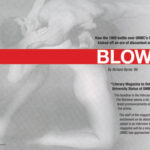
Our article in the Winter 2012 issue (“Blow Up”) drew a number of terrific responses.
It is amazing that photographs of dancers taken 42 years ago are an issue to be examined again in 2012. It is likely that these photographs still might offend the Maryland Senate as the subject is a man and woman together and nude. Certain concepts of what is permissible in a university publication are slow to change.
It was not an issue at the time but the dancers were a couple, they did not react in a sexual manner, they were dancers expressing emotions, feelings, through movement. I tried to capture those feelings, their relationship with each other. It seems natural that they were unclothed. If anything, I look at these images now and see the intimate bond and the caring that existed between them.
Neither Peter Caruso nor I had any idea at the time that those images would be so explosive, or even be discussed.
On a side note, years later I met the faculty advisor to the magazine who told me that he had been fired because of the photographs and he thought that I was dead. He was not too happy to learn that I was alive and standing in front of him.
— Robert Stark
Susquehanna Studio
Editor Richard Byrne replies: Stark’s photographs from that era will be featured in an exhibition at Keystone College this October – and much of his work can be found online at susquehannastudio.blogspot.com/
I was a student at UMBC in 1968, and graduated from there. I knew the whole cast of characters, including “Glenn” Blanchard, and not “Gary”! He was a brilliant man. His talents included being a playwright, poet, and musician. It would be a tribute to him to publish his play in the UMBC Magazine.
— A. Virginia Wolff ’73, psychology
Editor Richard Byrne replies: Thanks for correcting the error. Readers can find
early UMBC literary magazines online by searching “Dialogue” in the digital
collections of the Albin O. Kuhn Library: contentdm.ad.umbc.edu/index.php
I was at UMBC as a student at the tail end of that Dialogue implosion, but it was great getting the back story on the journal’s slow slide into cancellation. Given the events of the time, it was more than a little surprising to read of Chancellor Albin O. Kuhn’s defense of the journal and what it finally took for him to pull his support. Had we truly realized the extent of his attempts to calm things down, I’m sure it wouldn’t have changed things much, given the spirit of the times, but the article certainly changed my memory of his tenure.
What I really wanted to see at the conclusion of the piece, though, was a “to be continued” that promised a look at the founding of Bartleby – the journal that replaced Dialogue.
At 40 years old, Bartleby is one of the longer running campus literary journals in the country. The demise of Dialogue didn’t bode well for us getting funding for yet another adventure in literature that would likely outrage the administration. That we got the money, saw the project through, and didn’t incur any significant backlash is still pretty amazing to me, but more amazing is the fact that Bartleby remains in existence all these years later.
As we’ve gotten a great history of the turmoil of literary publishing on campus in its earliest days, can the rest of the picture be far behind? Operators are standing by.
— James Taylor ’73
Co-founder, Bartleby
]]>
UMBC Magazine welcomes your letters to the editor on any issue related to the content of the magazine. Readers can email comments to byrne@umbc.edu. Faxed comments are accepted at 410-455-1889....
https://umbc.edu/stories/from-you-summer-2012/
https://beta.my.umbc.edu/api/v0/pixel/news/123994/guest@my.umbc.edu/f098da1cc08577521cc79ac5f749d5cb/api/pixel
perspectives
summer-2012
UMBC News & Magazine
https://beta.my.umbc.edu/groups/umbc-news-magazine
https://assets1-beta.my.umbc.edu/system/shared/avatars/groups/000/001/943/24435aa6207c452e7bc15cc74b42c7bb/xsmall.png?1748556657
https://assets1-beta.my.umbc.edu/system/shared/avatars/groups/000/001/943/24435aa6207c452e7bc15cc74b42c7bb/original.png?1748556657
https://assets2-beta.my.umbc.edu/system/shared/avatars/groups/000/001/943/24435aa6207c452e7bc15cc74b42c7bb/xxlarge.png?1748556657
https://assets2-beta.my.umbc.edu/system/shared/avatars/groups/000/001/943/24435aa6207c452e7bc15cc74b42c7bb/xlarge.png?1748556657
https://assets3-beta.my.umbc.edu/system/shared/avatars/groups/000/001/943/24435aa6207c452e7bc15cc74b42c7bb/large.png?1748556657
https://assets1-beta.my.umbc.edu/system/shared/avatars/groups/000/001/943/24435aa6207c452e7bc15cc74b42c7bb/medium.png?1748556657
https://assets2-beta.my.umbc.edu/system/shared/avatars/groups/000/001/943/24435aa6207c452e7bc15cc74b42c7bb/small.png?1748556657
https://assets1-beta.my.umbc.edu/system/shared/avatars/groups/000/001/943/24435aa6207c452e7bc15cc74b42c7bb/xsmall.png?1748556657
https://assets2-beta.my.umbc.edu/system/shared/avatars/groups/000/001/943/24435aa6207c452e7bc15cc74b42c7bb/xxsmall.png?1748556657
UMBC News & Magazine
0
0
false
Wed, 06 Jun 2012 15:27:24 -0400
Discovery – Summer 2012

HOMEFRONT HELPERS
During World War II, millions of Americans kept snapshots and letters from loved ones deployed overseas. In the last decade’s wars, military families have had many more options to stay connected: email, cell phones, Skype, and (when the Pentagon says so) Facebook.
Thousands of military families also have acquired Flat Daddies: life-sized, laminated, waist-up photographs of absent fathers (and, less commonly, mothers).
Flat Daddies, which were first marketed in 2003, have come in for a certain amount of ridicule. (Esquire magazine honored them in its “Dubious Achievement” awards in 2007.) But Rebecca A. Adelman, an assistant professor of media and communication studies, believes they deserve serious attention. “These objects are actually functional and practical in their way,” she says “They help ease anxiety that young children won’t recognize their parents when they come home.”
That is not to say that Adelman is uncritical of Flat Daddies: She views them as part of a process in which military families learn to discipline themselves to support the war effort – and perhaps even avoid certain kinds of questions about their situation.
In an essay that will be published next year in the journal Photography and Culture, Adelman analyzes hundreds of testimonials published on the Flat Daddies website. Those testimonials may not represent the experiences of all Flat families – the company presumably wouldn’t publish letters from unhappy buyers – but they are appealingly raw and unvarnished.
“Our baby gets so excited when she sees him she squeals and kisses all over his face,” reads one statement. “It has also helped me deal with the separation as well. He sits at the table for dinner and we go around the table to discuss our day.”
Adelman says that exploring the presence of visual representations in American lives is a key element in her work. “Rather than just looking at visual representations of war,” she explains, “I want to focus on how people use those visual artifacts in their own lives, how they interpret them.”
Adelman earned her doctorate at Ohio State University in 2009 and arrived at UMBC that same year. Her Flat Daddies study is part of a larger project about how Americans have created and interpreted the visual culture of the War on Terror.
One of the most fascinating aspects of Flat Daddies, Adelman says, is that they upend some of our usual expectations about photography. “We usually read photographs as documents of absence and records of the past. But Flats are about presence, and their families use them in anticipation of a happy future.”
The images have other meaning as well. For some families, Adelman believes, the unwieldy, outsized nature of the Flat Daddy serves as a symbol of the burdens that the family is shouldering. She also argues that the Flats serve as a totem through which military families can manage their feelings of fear, anger, and ambivalence.
“Flats expose and then repair the fractures that deployment opens,” she writes, “channeling negative feelings quietly toward the Flat (rather than, for example, toward the state or war that necessitates it), whose stoic and smiling face acknowledges and then defuses them.”
— David Glenn
Image: AP Photo, Bill Lackey
GRRL POWER

American theatre today is abuzz with debate about increasing opportunities for women in the footlights – both as playwrights and as actors.
The statistics – especially for playwrights – are grim. According to a 2009 study by Emily Glassberg Sands, a graduate student at Harvard University who conducted her research as an undergraduate at Princeton University, women playwrights accounted for a mere 12.6 percent of Broadway plays in 2008-09. (A hundred years ago, in Broadway’s 1908-09 season, women wrote 12.8 percent of the plays.)
So the woman playwright in the United States has not come a long way, baby. Yet. But over the past seven years, Susan McCully, a senior lecturer in UMBC’s theatre department, has helped move the discussion forward by creating Grrl Parts – the university’s annual celebration of new plays written to highlight roles for female actors.
Like many innovations in pedagogy at UMBC, Grrl Parts got its start by improving the student experience at the university. McCully and her colleagues were having a difficult time finding plays with enough roles for women to keep all their female students active in productions.
McCully’s solution was to generate new plays featuring such roles – and offer them a home at UMBC. And as Grrl Parts has grown over the past few years, it has attracted a number of award-winning playwrights, including Tina Howe, Naomi Wallace, Ellen McLaughlin and Timberlake Wertenbaker.
“I have been surprised by how much it has resonated with the larger conversation happening about the importance of telling and hearing women’s stories,” McCully observes. “I was used to and prepared for a culture of resistance. I thought it would involve pushing boulders uphill to convince writers to participate, to get university support and to excite the students about the possibilities. But, to paraphrase the great white male dramatist Victor Hugo: One can resist armies, but there is nothing more powerful than an idea whose time has come.”
That Grrl Parts’ time has arrived is clear. The 2012 edition was not only produced on campus, but was selected for a Saturday performance at Center Stage in Baltimore that attracted an even larger audience. McCully also has an anthology of the Grrl Parts plays in the works.
Grrl Parts also demonstrates that the university itself can have a significant effect on a debate that is challenging the entire U.S. theatre community.
“I think this entire movement can be traced to universities,” says McCully. “The major female American playwrights of the last part of the 20th century – Paula Vogel, Marsha Norman, Maria Irene Fornes, and Tina Howe – have been at the forefront of this movement, not only as writers, but as professors and heads of preeminent university playwriting programs. When I stop to think about it, those women have trained many of the playwrights (male and female) produced in professional theatre today. They have trained a generation of smart and talented women writers who are fighting to be heard and expect to be heard. Their male peers studied in these same programs, and I think they too ‘get it.’ So UMBC’s project is part of a culture shift in training future artists. I know our students ‘get it.’”
— Richard Byrne ’86
TRAVELING DRY

Visualize some tiny yellow crumbs on a kitchen countertop. Now, imagine some crumbs of that same size on an asteroid, hurtling through the galaxy. Suddenly, a planet looms in the asteroid’s path.
There’s a crash. The yellow crumbs are scattered. And if they happen to land near water, those crumbs suddenly become something much bigger – life on another planet. Life on Earth, even.
Sound like science fiction? A team led by Kevin Sowers, a professor of marine biology at UMBC, says that there’s more science than fiction to the scenario. Those little yellow crumbs are real: dried-out versions of Methanosarcina barkeri, a methane-producing bacterium. In research funded by NASA, Sowers and his colleagues have found that the bacteria can remain in their dried-out state for at least 25 years and, who knows, possibly more.
“These bacteria have innate ability to survive extended periods of desiccation,” says Sowers. “And when they’re in that desiccated state they can survive in what would normally be lethal conditions.” Sowers and his team propose that this ability is a type of survival mechanism.
To determine the bacterium’s survival time in the air, which is normally toxic to such microorganisms, Sowers and his team removed the water from the bacterial cells, exposing them to conditions that simulated the driest known conditions on Earth. Researchers discovered that the bacterium could survive for 30 days in the air with negligible loss of viability.
Then, says Sowers, “I knew I had some 25-year-old desiccated cells of Methanosarcina thermophila [closely related to M. barkeri] in the lab, so once we developed the method for quantifying survival with freshly dried cells, I included the old material.”
Sure enough many of these cells also came back to life when rehydrated. “That experiment,” says Sowers, “enabled us to look at the long-term survival of cells.” Unfortunately, he adds, “I cannot take credit for planning the experiment 25 years ago.”
Sowers and his team think that the prolonged survival of these cells in a dried-out state, which could occur in environments such as drained rice paddy soils, might allow the bacteria to travel long-distances here on Earth. “Soil can be picked up by the wind,” says Sowers. “We actually have these atmospheric winds that distribute microorganisms from one continent to another.”
And space travel? Sowers says that such desiccated bacteria could possibly be carried on an asteroid to another water bearing planet, such as Mars, where they might survive. Researchers think there is water below the surface of Mars, and in theory, these bacteria would be able to survive the dry periods.
The next step in Sower’s research is to examine which genes are important for the cells to survive being dried out. Sowers and his team already know that these bacteria undergo cellular changes that prepare them for the transition from a hydrated to desiccated state. “We want to find out what the actual mechanisms are that allow these organisms to adapt and survive in that state,” says Sowers.
— Nicole Ruediger
Image: NASA/JPL-Caltech
A LOT TO LEARN
 Ask Richard Blissett ’11, bioinformatics, about the vacant lots that blight Baltimore and other cities, and he argues that enlisting an army of “superhero” volunteers to swoop in, clean up, and swoop out is not a sustainable way to revitalize them. The real long-term solution, he says, is for local youth to explore these sites as assets and transform them to meet community needs.
During a one-year AmeriCorps VISTA position with stepUP! Baltimore, supported by UMBC’s Shriver Center, Blissett created a service-learning curriculum at South Baltimore’s Ben Franklin High School to put this message into action.
First, Blissett taught his students about factors leading to vacancy and disinvestment in Baltimore and the health and environmental issues that affect neglected properties. He then asked them to imagine how they could turn vacant lots near the school into vibrant community spaces.
Blissett’s path to the classroom was far from typical. On his way to earning a bioinformatics degree at UMBC, Blissett says, “I came to the slow realization that every job I’ve had and enjoyed—where I’ve taken the initiative to do things myself and felt like part of who I was as a person was going into it—was within education.”
With the help of the Shriver Center, he began working in local schools. Before long, he created his own service-learning initiative: Major Inspiration. The program teaches K-12 students about the diversity of university majors and career paths.
Teaching also led Blissett to see bioinformatics as a tool to formulate best practices in education policy. “It’s about how to use data efficiently, effectively, and purposefully,” he says. His blending of quantitative training and classroom experience helped him earn a spot in Vanderbilt’s International Education Policy and Management doctoral program for the fall.
But before he gets to Tennessee, Blissett is finishing what he started on Baltimore’s vacant lots. As with any new program, there have been challenges. Translating student interest into engagement was harder than he imagined. And a change in the high school’s overall schedule reduced the number of students in the program and shrank the window for accomplishing their work.
Unsure if they’d be able to finish by the end of his AmeriCorps term, Blissett encouraged students to partner with community groups that could propel the project forward – including Civic Works, United Way of Central Maryland and the Parks & People Foundation.
Blissett also brought students to speak at the Greater Baltimore Children and Nature Conference, and he calls their presentation one of his “proudest moments” in the program.
He says the audience feedback – serious questions and recommendations – was particularly valuable. “It means something when it’s coming from me,” he shares, “but in the end they see me as their teacher. When they are hearing it coming from other people, it really sinks in.”
The seeds Blissett has planted are blossoming now. His students have begun engaging their neighbors in the project. They are even talking about adopting additional vacant lots.
“I think consistently keeping them connected to people from the outside reinforces that this is not just a small school project that they are going to do now and then forget about later,” Blissett says. “It’s something people are going to remember.”
— Dinah Winnick
]]>
HOMEFRONT HELPERS During World War II, millions of Americans kept snapshots and letters from loved ones deployed overseas. In the last decade’s wars, military families have had many more options...
https://umbc.edu/stories/discovery-summer-2012/
https://beta.my.umbc.edu/api/v0/pixel/news/123995/guest@my.umbc.edu/b57a7422a195d9ce0f2213b6a8dfcf51/api/pixel
discovery
summer-2012
UMBC News & Magazine
https://beta.my.umbc.edu/groups/umbc-news-magazine
https://assets1-beta.my.umbc.edu/system/shared/avatars/groups/000/001/943/24435aa6207c452e7bc15cc74b42c7bb/xsmall.png?1748556657
https://assets1-beta.my.umbc.edu/system/shared/avatars/groups/000/001/943/24435aa6207c452e7bc15cc74b42c7bb/original.png?1748556657
https://assets2-beta.my.umbc.edu/system/shared/avatars/groups/000/001/943/24435aa6207c452e7bc15cc74b42c7bb/xxlarge.png?1748556657
https://assets2-beta.my.umbc.edu/system/shared/avatars/groups/000/001/943/24435aa6207c452e7bc15cc74b42c7bb/xlarge.png?1748556657
https://assets3-beta.my.umbc.edu/system/shared/avatars/groups/000/001/943/24435aa6207c452e7bc15cc74b42c7bb/large.png?1748556657
https://assets1-beta.my.umbc.edu/system/shared/avatars/groups/000/001/943/24435aa6207c452e7bc15cc74b42c7bb/medium.png?1748556657
https://assets2-beta.my.umbc.edu/system/shared/avatars/groups/000/001/943/24435aa6207c452e7bc15cc74b42c7bb/small.png?1748556657
https://assets1-beta.my.umbc.edu/system/shared/avatars/groups/000/001/943/24435aa6207c452e7bc15cc74b42c7bb/xsmall.png?1748556657
https://assets2-beta.my.umbc.edu/system/shared/avatars/groups/000/001/943/24435aa6207c452e7bc15cc74b42c7bb/xxsmall.png?1748556657
UMBC News & Magazine
0
0
false
Wed, 06 Jun 2012 15:25:45 -0400
At Play – Summer 2012
PERFECT BLEND
The UMBC Gospel Choir started in 1976 as a small, student-run organization. These days, it’s a key part of the university’s musical community, performing on-campus and boasting more than 40 dedicated members under the direction of Janice Jackson ’79, music.
The choir’s traditions give the group both continuity and a “family feel,” says Comfort Oke ’13, the group’s official historian. Members gather every Wednesday night at 8:45 p.m. in the Fine Arts Recital Hall. Each session begins with Bible study and then an hour of practice. As rehearsals draw to a close, students link arms and share things that are happening in their lives, both good and bad.
There are no formal auditions. The choir’s weekly practices are open for anyone who wants to join. Each year the group adds more songs to its repertoire, choosing songs with the potential to speak to all faiths.
“We teach the whole gamut from spiritual to contemporary gospel,” Jackson explains. In addition to annual spring and winter concerts, the Gospel Choir sings at university events and in music festivals at other universities. The group has even gone on tours in places such Disney World and Italy.
Service is also a key element in the choir’s songbook, says Stephanie Okpara ’14, the group’s treasurer. “One of my favorite moments wasn’t an actual singing engagement,” she recalls, “but the time we volunteered at a kitchen. It was fun to serve the community with an organization I was a part of, and that made it so much more real.”
— Laura Lefavor ’13
HELPING THE HUNGRY
 In 2007, when Julie Rosenthal saw her daughter walk into their well-stocked kitchen and complain that there was nothing to eat, something nagged at her conscience. She decided to show her children just how fortunate they are by creating a group called Food on the 15th to help hungry low-income senior citizens in her family’s community.
Five years later, Food on the 15th remains true to Rosenthal’s initial impulse to demonstrate to her own kids – and the students at Pointers Run Elementary School in Clarksville, who work for the program – both the cycle of hunger and how to combat it.
“I didn’t want the [donated] food to just disappear,” explains Rosenthal, who works in UMBC’s Asian Studies program. “I wanted the students to see the process from beginning to end.”
The “15” in the program’s name is important: Social Security checks start to run out halfway through the month. That’s when students in fifth grade classes at Pointers Run swing into action: sorting donated food and delivering over 60 bags of groceries door-to-door to senior citizens at Morningside Park Apartments in Jessup. (Parent volunteers do the driving.)
Food on the 15th has grown to include more schools and additional donations – including toiletries and gift cards at local shops. It has delivered more than 12,000 bags of groceries.
Now Rosenthal hopes to bring the program to her own workplace. “UMBC is the perfect place for Food on the 15th because the people here care about the community,” she says. “All it takes is a little creativity and energy to do something that has a huge impact.”
— Laura Lefavor ’13
(Learn more about Food on the 15th here.)
CRICKET LOVELY CRICKET

Cricket is one of the world’s most popular sports, yet it has never been popular in the United States. But perhaps it is another indication of UMBC’s diversity that its club cricket team has become so prominent on campus.
UMBC’s club cricket team (“22 Yards”) is one of the best in the country, and has appeared in multiple national championship tournaments. But the club team also serves as a home away from home for many students who come from countries and regions (including India, Pakistan, and the Caribbean) where cricket is their nation’s most popular sport.
Indeed, the presence of cricket on UMBC’s campus was part of what attracted Austin Aluvathingal ’13 to the university. He came to America from India at the age of 15 and immediately missed having cricket as part of his everyday experience. “My sister mentioned UMBC had a cricket team and that interested me a lot,” he says. “I wanted to come here over other schools.”
Attendance at UMBC cricket practices averages between 30 and 40 people. Some don’t even show up to play, but simply to share cultural connections. “It’s not just a team,” Aluvathingal said. “It’s just like spending time with your family when you play cricket.”
Aluvathingal says that the cricket team has even helped him network. “When I came in as a freshman, I didn’t know much about the classes or what to expect, but most of the players gave me a lot of opinions on classes. I got an internship through cricket, too.”
— Corey Johns ’11
DISC DRIVE

Every Friday afternoon at Erickson Field, rain or shine, UMBC’s frisbee players gather for their “ultimate” experience.
Ultimate frisbee has been around for decades. But according to USA Ultimate, the national governing body for the sport, it remains one of the fastest growing sports in the world, with more than 800,000 people playing regularly each year. UMBC has fielded an ultimate team (“Booya”) since the 1990s, and players wearing hoodies emblazoned with the team’s trademark pink elephants are a regular sight on campus.
Until recently, UMBC’s Booya ultimate frisbee team was a co-ed experience, with men and women playing together. But last autumn, the team’s six female players formed their own team (“Shazam Blue”) under the auspices of Without Limits Ultimate – an offcampus organization that promotes women’s participation in the sport.
Dozens of women at UMBC have joined Shazam Blue, and the team now competes in a local women’s league. Shazam Blue captain Kim Haines’12 says that her first experiences with ultimate led to her deep involvement with UMBC’s team.
“The people who played really won my heart,” Haines says. “Experience didn’t matter as much as wanting to improve.” Since becoming captain, she adds, cultivating that same spirit among her teammates is a top priority.
And despite the formation of a women’s team, that co-ed spirit persists in ultimate at UMBC. Booya and Shazam Blue still mingle at each other’s practices and participate in pre-tournament traditions involving pink hair dye and mohawks before they divide for actual competition.
— Monica Berron ’13
]]>
PERFECT BLEND The UMBC Gospel Choir started in 1976 as a small, student-run organization. These days, it’s a key part of the university’s musical community, performing on-campus and boasting...
https://umbc.edu/stories/at-play-summer-2012/
https://beta.my.umbc.edu/api/v0/pixel/news/123996/guest@my.umbc.edu/0d724d147f593a0e37db4c0622b09512/api/pixel
campus-life
summer-2012
UMBC News & Magazine
https://beta.my.umbc.edu/groups/umbc-news-magazine
https://assets1-beta.my.umbc.edu/system/shared/avatars/groups/000/001/943/24435aa6207c452e7bc15cc74b42c7bb/xsmall.png?1748556657
https://assets1-beta.my.umbc.edu/system/shared/avatars/groups/000/001/943/24435aa6207c452e7bc15cc74b42c7bb/original.png?1748556657
https://assets2-beta.my.umbc.edu/system/shared/avatars/groups/000/001/943/24435aa6207c452e7bc15cc74b42c7bb/xxlarge.png?1748556657
https://assets2-beta.my.umbc.edu/system/shared/avatars/groups/000/001/943/24435aa6207c452e7bc15cc74b42c7bb/xlarge.png?1748556657
https://assets3-beta.my.umbc.edu/system/shared/avatars/groups/000/001/943/24435aa6207c452e7bc15cc74b42c7bb/large.png?1748556657
https://assets1-beta.my.umbc.edu/system/shared/avatars/groups/000/001/943/24435aa6207c452e7bc15cc74b42c7bb/medium.png?1748556657
https://assets2-beta.my.umbc.edu/system/shared/avatars/groups/000/001/943/24435aa6207c452e7bc15cc74b42c7bb/small.png?1748556657
https://assets1-beta.my.umbc.edu/system/shared/avatars/groups/000/001/943/24435aa6207c452e7bc15cc74b42c7bb/xsmall.png?1748556657
https://assets2-beta.my.umbc.edu/system/shared/avatars/groups/000/001/943/24435aa6207c452e7bc15cc74b42c7bb/xxsmall.png?1748556657
UMBC News & Magazine
0
0
false
Wed, 06 Jun 2012 15:22:56 -0400