Lax Alums Play in National Scrimmage
Former Retriever midfielders Terry Kimener ’09, American studies, and Peet Poillon ’10, interdisciplinary studies, were part of the United States national lacrosse team which conducted an intrasquad scrimmage yesterday (October 7) at the Capital Lacrosse Classic at Landon School in Bethesda. This was the latest step for the U.S. team as it prepares for tryouts next summer before the 2014 Federation of International Lacrosse World Championships in Commerce City, Colo.
The scrimmage was also a preview of the Champion Challenge from Jan. 25-27 in Orlando, Fla., when the defending gold medalists will scrimmage at least one NCAA team.
This will be Kimener’s first competition in the red, white and blue. In his sixth MLL season, the three-time All-American (2006-08) and 2008 America East Player of the Year had a break-out season with the Denver Outlaws in 2012, scoring 17 goals and adding 18 assists.
His Outlaw teammate Poillon tied for ninth in scoring in 2012 with 40 points (24-13-40) and surpassed the 100-point plateau (75-32-113) in his fifth MLL season. Poillon was a Second Team All-American for UMBC in 2009.
– Originally published on UMBCRetrievers.com
]]>
Former Retriever midfielders Terry Kimener ’09, American studies, and Peet Poillon ’10, interdisciplinary studies, were part of the United States national lacrosse team which conducted an...
https://umbc.edu/stories/lax-alums-play-in-national-scrimmage/
https://beta.my.umbc.edu/api/v0/pixel/news/123716/guest@my.umbc.edu/005e2ec8bbf8e6e53e1b4d3ce42ffab0/api/pixel
alumni
UMBC News & Magazine
https://beta.my.umbc.edu/groups/umbc-news-magazine
https://assets1-beta.my.umbc.edu/system/shared/avatars/groups/000/001/943/24435aa6207c452e7bc15cc74b42c7bb/xsmall.png?1748556657
https://assets1-beta.my.umbc.edu/system/shared/avatars/groups/000/001/943/24435aa6207c452e7bc15cc74b42c7bb/original.png?1748556657
https://assets2-beta.my.umbc.edu/system/shared/avatars/groups/000/001/943/24435aa6207c452e7bc15cc74b42c7bb/xxlarge.png?1748556657
https://assets2-beta.my.umbc.edu/system/shared/avatars/groups/000/001/943/24435aa6207c452e7bc15cc74b42c7bb/xlarge.png?1748556657
https://assets3-beta.my.umbc.edu/system/shared/avatars/groups/000/001/943/24435aa6207c452e7bc15cc74b42c7bb/large.png?1748556657
https://assets1-beta.my.umbc.edu/system/shared/avatars/groups/000/001/943/24435aa6207c452e7bc15cc74b42c7bb/medium.png?1748556657
https://assets2-beta.my.umbc.edu/system/shared/avatars/groups/000/001/943/24435aa6207c452e7bc15cc74b42c7bb/small.png?1748556657
https://assets1-beta.my.umbc.edu/system/shared/avatars/groups/000/001/943/24435aa6207c452e7bc15cc74b42c7bb/xsmall.png?1748556657
https://assets2-beta.my.umbc.edu/system/shared/avatars/groups/000/001/943/24435aa6207c452e7bc15cc74b42c7bb/xxsmall.png?1748556657
UMBC News & Magazine
0
0
false
Mon, 08 Oct 2012 20:23:41 -0400
Second Annual 1966 Society Dinner

 Dr. Freeman Hrabowski hosted the second annual 1966 Society dinner on September 19 in the 4th Floor English Department Conference Room in UMBC’s new Performing Arts and Humanities Building. The 1966 Society celebrates those individual members who have identified the UMBC Foundation in their estate plans.
Guests had a terrific view of the campus and the Baltimore skyline as they enjoyed their evening.
During dinner, Dr. Jessica Berman, Chair of the Department of English, welcomed them to the English department and described how introductory courses are being redesigned to improve students’ writing skills and incorporate new technology.
Earlier that day, the 1966 Society members were invited to attend the ceremonial ribbon cutting and ground breaking for the Performing Arts and Humanities Building by Maryland Governor Martin O’ Malley; a presentation on cultural spaces hosted in partnership with the Greater Baltimore Cultural Alliance, and an outdoor festival of arts and humanities. The evening ended with a Humanities Forum lecture featuring Pauline Yu, President of the
American Council of Learned Societies.
Please contact Kim Robinson at trowbrid@umbc.edu or 410-455-3700 if you have included the UMBC Foundation in your estate plans so we can invite you to next year’s dinner.
 Front (L-R): Stephen Barker, Ann Burchard ’82, Robert “Bob” Burchard. Back (L-R): Leslie Wilson ’74, ’76, Courtney Wilson, Jo Ann Sabas’77, Liz Allen ’82, Catherine Weber.

]]>
Dr. Freeman Hrabowski hosted the second annual 1966 Society dinner on September 19 in the 4th Floor English Department Conference Room in UMBC’s new Performing Arts and Humanities Building. The...
https://umbc.edu/stories/second-annual-1966-dinner/
https://beta.my.umbc.edu/api/v0/pixel/news/123717/guest@my.umbc.edu/85739f01c7218b03c239699a4f714000/api/pixel
impact
UMBC News & Magazine
https://beta.my.umbc.edu/groups/umbc-news-magazine
https://assets1-beta.my.umbc.edu/system/shared/avatars/groups/000/001/943/24435aa6207c452e7bc15cc74b42c7bb/xsmall.png?1748556657
https://assets1-beta.my.umbc.edu/system/shared/avatars/groups/000/001/943/24435aa6207c452e7bc15cc74b42c7bb/original.png?1748556657
https://assets2-beta.my.umbc.edu/system/shared/avatars/groups/000/001/943/24435aa6207c452e7bc15cc74b42c7bb/xxlarge.png?1748556657
https://assets2-beta.my.umbc.edu/system/shared/avatars/groups/000/001/943/24435aa6207c452e7bc15cc74b42c7bb/xlarge.png?1748556657
https://assets3-beta.my.umbc.edu/system/shared/avatars/groups/000/001/943/24435aa6207c452e7bc15cc74b42c7bb/large.png?1748556657
https://assets1-beta.my.umbc.edu/system/shared/avatars/groups/000/001/943/24435aa6207c452e7bc15cc74b42c7bb/medium.png?1748556657
https://assets2-beta.my.umbc.edu/system/shared/avatars/groups/000/001/943/24435aa6207c452e7bc15cc74b42c7bb/small.png?1748556657
https://assets1-beta.my.umbc.edu/system/shared/avatars/groups/000/001/943/24435aa6207c452e7bc15cc74b42c7bb/xsmall.png?1748556657
https://assets2-beta.my.umbc.edu/system/shared/avatars/groups/000/001/943/24435aa6207c452e7bc15cc74b42c7bb/xxsmall.png?1748556657
UMBC News & Magazine
0
0
false
Mon, 08 Oct 2012 20:10:18 -0400
UMBC Study on Economic Impact of Dream Act in Washington Post, Baltimore Sun, WYPR
In one month Maryland voters will decide whether to allow undocumented immigrants who graduate from Maryland high schools and meet other requirements to pay in-county/in-state tuition at local community colleges and public universities. Until now, voters had little information to go on about the Dream Act’s likely effects, but a new report from UMBC professors T.H. Gindling (economics) and Marvin Mandell (public policy) offers hard data on its economic impacts.
“Private and Government Fiscal Costs and Benefits of the Maryland Dream Act” is a working paper funded by the Maryland Institute for Policy Analysis and Research (MIPAR) at UMBC. The conclusion: For each annual cohort of students who utilize the Dream Act, total net benefits to the economy are approximately $66 million.
The Baltimore Sun heralded the study’s detailed analysis and concluded: “The emotional, philosophical and moral debates stirred by the referendum on this issue are certainly important. But on a practical level, there is no question: The Dream Act is good for Maryland.” The Washington Post and WYPR’s Maryland Morning featured additional comments from researchers Gindling and Mandell.
Access the full working paper and a policy brief summarizing the study at umbc.edu/mipar.
Update (10/16/2012): Additional coverage has appeared in the Gazette, Daily Record Baltimore Sun, Washington Post, DC Examiner, Westminster Patch and Lutherville-Timonium Patch. WYPR’s Inside Maryland Politics, Immigration Impact, Capital News Service (1, 2), ABC2News and WBAL and have also reported on this study.
]]>
In one month Maryland voters will decide whether to allow undocumented immigrants who graduate from Maryland high schools and meet other requirements to pay in-county/in-state tuition at local...
https://umbc.edu/stories/umbc-study-on-economic-impact-of-dream-act-in-washington-post-baltimore-sun-wypr/
https://beta.my.umbc.edu/api/v0/pixel/news/123718/guest@my.umbc.edu/e8e8d736f41b9958ab8b053f3d83e578/api/pixel
cahss
economics
mipar
policy-and-society
publicpolicy
UMBC News & Magazine
https://beta.my.umbc.edu/groups/umbc-news-magazine
https://assets1-beta.my.umbc.edu/system/shared/avatars/groups/000/001/943/24435aa6207c452e7bc15cc74b42c7bb/xsmall.png?1748556657
https://assets1-beta.my.umbc.edu/system/shared/avatars/groups/000/001/943/24435aa6207c452e7bc15cc74b42c7bb/original.png?1748556657
https://assets2-beta.my.umbc.edu/system/shared/avatars/groups/000/001/943/24435aa6207c452e7bc15cc74b42c7bb/xxlarge.png?1748556657
https://assets2-beta.my.umbc.edu/system/shared/avatars/groups/000/001/943/24435aa6207c452e7bc15cc74b42c7bb/xlarge.png?1748556657
https://assets3-beta.my.umbc.edu/system/shared/avatars/groups/000/001/943/24435aa6207c452e7bc15cc74b42c7bb/large.png?1748556657
https://assets1-beta.my.umbc.edu/system/shared/avatars/groups/000/001/943/24435aa6207c452e7bc15cc74b42c7bb/medium.png?1748556657
https://assets2-beta.my.umbc.edu/system/shared/avatars/groups/000/001/943/24435aa6207c452e7bc15cc74b42c7bb/small.png?1748556657
https://assets1-beta.my.umbc.edu/system/shared/avatars/groups/000/001/943/24435aa6207c452e7bc15cc74b42c7bb/xsmall.png?1748556657
https://assets2-beta.my.umbc.edu/system/shared/avatars/groups/000/001/943/24435aa6207c452e7bc15cc74b42c7bb/xxsmall.png?1748556657
UMBC News & Magazine
0
0
false
Mon, 08 Oct 2012 18:33:03 -0400
Up on the Roof – Fall 2012
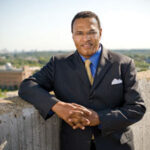

UMBC President Freeman A. Hrabowski, III, takes your questions.
Q. When you speak about UMBC’s achievements, you always stress the contribution made by your predecessor as president: the late Michael Hooker. What is his legacy at UMBC? What role did he play in your life as a mentor and friend? — Richard Byrne ’86, English
A. Michael Hooker was capable of seeing what others did not think possible. He clearly saw the great potential of UMBC to become an increasingly important institution of higher education in our country.
He had no trouble saying that UMBC was going to be the best university of its size and its kind in the country. And it sounded like hyperbole. Except he really believed it.
Michael also saw that the entire Baltimore region could go to the next level by focusing on higher education. He got a number of people to visit the university. He also began to see taking people to the roof of [the Administration Building] as a way to allow them to see the campus – and the campus connection with downtown Baltimore. I take people to the roof because Michael taught me to take people to the roof.
Wherever Michael Hooker went, whether it was to Massachusetts, or to North Carolina, or when he was here at UMBC, people called him a whirlwind. He had a way of moving with great energy and excitement. People were either fascinated with him, or they were bothered by what he said. And Michael preferred people being bothered by what he said to being boring.
I was always taken by his intellectual curiosity. He was always excited by what was new at UMBC, and he was seeking it out and asking questions – be it in the labs or in the theatre productions.
When I first visited here, and I was not necessarily thinking of moving to this university, Michael said to me: “You’d be good for UMBC. And UMBC would be good for you. It’s time for you to move to another position.” And at first it somewhat upset me. I thought: “This man doesn’t know me. How dare he say what’s best for me?” But he had a way of saying it with confidence. And as intellectual as he was, he used his gut in making decisions. He saw that he could trust me.
He told me on the first day I came to work here as vice provost: “You’re going to be president of this place one day.” And I said: “Yeah, right, Michael.” I was always saying that to him: “Yeah, right, Michael.”
We were constantly memorizing things and reciting them together. Poetry, or things we had read. He was always pushing me. Another quality Michael possessed, however, was that he listened. My argument to him was that we needed to make sure that all of UMBC’s students – graduate and undergraduate – were having a good experience. He listened, and then he said: “Well, do it. Make it happen.” He liked bringing people with good ideas around and having them take those ideas to reality.
Michael had tremendous pride in UMBC as an institution, even after he left. When you look at the True Grit statue outside the Retriever Activities Center, that was Michael, too. If you asked him what he did at UMBC that really mattered, he’d say that he wanted that dog out front. As a symbol. At the time, it seemed like a kooky idea. But whenever Michael came back to campus, he would point to it.
To the very end, when Michael was dying and I went to see him at National Institutes of Health, his eyes reflected his spirit. He was still elevating and supporting me. He wanted to hear about UMBC. He always sang UMBC’s praises.
 Photo: Maryland Governor William Donald Schaefer (left), former UMBC president Michael Hooker (center left), and future UMBC president Freeman A. Hrabowksi, III, (third from left) visit the laboratory of UMBC professor of chemical & biochemical engineering Govind Rao (center) in the mid-1980s.
To send a question to President Hrabowski, click here.
]]>
UMBC President Freeman A. Hrabowski, III, takes your questions. Q. When you speak about UMBC’s achievements, you always stress the contribution made by your predecessor as president: the late...
https://umbc.edu/stories/up-on-the-roof-fall-2012/
https://beta.my.umbc.edu/api/v0/pixel/news/123719/guest@my.umbc.edu/5aa64181504fde0bbf75fb22b66f17d4/api/pixel
fall-2012
perspectives
UMBC News & Magazine
https://beta.my.umbc.edu/groups/umbc-news-magazine
https://assets1-beta.my.umbc.edu/system/shared/avatars/groups/000/001/943/24435aa6207c452e7bc15cc74b42c7bb/xsmall.png?1748556657
https://assets1-beta.my.umbc.edu/system/shared/avatars/groups/000/001/943/24435aa6207c452e7bc15cc74b42c7bb/original.png?1748556657
https://assets2-beta.my.umbc.edu/system/shared/avatars/groups/000/001/943/24435aa6207c452e7bc15cc74b42c7bb/xxlarge.png?1748556657
https://assets2-beta.my.umbc.edu/system/shared/avatars/groups/000/001/943/24435aa6207c452e7bc15cc74b42c7bb/xlarge.png?1748556657
https://assets3-beta.my.umbc.edu/system/shared/avatars/groups/000/001/943/24435aa6207c452e7bc15cc74b42c7bb/large.png?1748556657
https://assets1-beta.my.umbc.edu/system/shared/avatars/groups/000/001/943/24435aa6207c452e7bc15cc74b42c7bb/medium.png?1748556657
https://assets2-beta.my.umbc.edu/system/shared/avatars/groups/000/001/943/24435aa6207c452e7bc15cc74b42c7bb/small.png?1748556657
https://assets1-beta.my.umbc.edu/system/shared/avatars/groups/000/001/943/24435aa6207c452e7bc15cc74b42c7bb/xsmall.png?1748556657
https://assets2-beta.my.umbc.edu/system/shared/avatars/groups/000/001/943/24435aa6207c452e7bc15cc74b42c7bb/xxsmall.png?1748556657
UMBC News & Magazine
0
0
false
Sat, 06 Oct 2012 21:42:35 -0400
To You – Fall 2012

 Traditions don’t start easily. Someone has to plant the seeds. Attract attention to them. Nurture them. Allow them both to grow and take root.
The image on the cover of the Fall 2012 issue of UMBC Magazine is one tradition that has taken root at the university. UMBC’s presidential insignia – worn by the university’s president at every commencement – was a gift from the university’s Alumni Association that recognized the school’s milestone 30th anniversary in 1996.
The insignia was purposely created to have a contemporary look that reflected the innovation that characterized the institution. The insignia’s design includes not only the university seal, but also incorporates three symbols that represent the key pillars upon which UMBC stands as a proud public university in Maryland: teaching, research and service. There are also visual references to the iconic Albin O. Kuhn Library in its design – rooting the insignia firmly in campus space.
At the time of its completion in 1998, UMBC’s director of alumni relations Joan Williams observed that she hoped the insignia was “just the beginning of many more traditions to come.” But little did she know that the president who first wore the insignia 14 years ago would still be the university’s leader in 2012.
Our cover story in this issue examines the 20 years of transformation at UMBC that have occurred under the leadership of Freeman A. Hrabowski, III. (See “From Aspiration to Achievement”).
Stability also helps nurture traditions. UMBC’s two decades with Hrabowski at the helm have given the university the ability to innovate in an environment of continuity – and thus advance the commitment to teaching, research and service that are part of the design of the university and its insignia.
As a young university with a growing sense of its legacy and its promise, the students, faculty, and staff of UMBC make history every day. And alumni can do it, too. Everything that happens at UMBC now lays the foundation for the university’s future.
For instance, every year that there is a bonfire at UMBC Homecoming brings that conflagration another step away from being an “annual event” and one step closer to being a “tradition.” And every year that The Retriever Weekly publishes during the first week of school – as it has since 1966 – makes the university’s student newspaper more of an institution.
Both the bonfire and The Retriever Weekly will figure prominently in this year’s UMBC Homecoming 2012. The bonfire will be set at dusk on Wednesday, October 10. And a reunion of staff members of The Retriever Weekly will happen on Saturday, October 13, at 2:30 p.m.
We hope to see you at Homecoming 2012. You will see how UMBC nurtures the traditions it has as it creates new ones – and you can help us make history in continuing them.
— Richard Byrne ’86
]]>
Traditions don’t start easily. Someone has to plant the seeds. Attract attention to them. Nurture them. Allow them both to grow and take root. The image on the cover of the Fall 2012 issue of...
https://umbc.edu/stories/to-you-fall-2012/
https://beta.my.umbc.edu/api/v0/pixel/news/123720/guest@my.umbc.edu/64d8346a25eee494cf1467a229d603ee/api/pixel
fall-2012
perspectives
UMBC News & Magazine
https://beta.my.umbc.edu/groups/umbc-news-magazine
https://assets1-beta.my.umbc.edu/system/shared/avatars/groups/000/001/943/24435aa6207c452e7bc15cc74b42c7bb/xsmall.png?1748556657
https://assets1-beta.my.umbc.edu/system/shared/avatars/groups/000/001/943/24435aa6207c452e7bc15cc74b42c7bb/original.png?1748556657
https://assets2-beta.my.umbc.edu/system/shared/avatars/groups/000/001/943/24435aa6207c452e7bc15cc74b42c7bb/xxlarge.png?1748556657
https://assets2-beta.my.umbc.edu/system/shared/avatars/groups/000/001/943/24435aa6207c452e7bc15cc74b42c7bb/xlarge.png?1748556657
https://assets3-beta.my.umbc.edu/system/shared/avatars/groups/000/001/943/24435aa6207c452e7bc15cc74b42c7bb/large.png?1748556657
https://assets1-beta.my.umbc.edu/system/shared/avatars/groups/000/001/943/24435aa6207c452e7bc15cc74b42c7bb/medium.png?1748556657
https://assets2-beta.my.umbc.edu/system/shared/avatars/groups/000/001/943/24435aa6207c452e7bc15cc74b42c7bb/small.png?1748556657
https://assets1-beta.my.umbc.edu/system/shared/avatars/groups/000/001/943/24435aa6207c452e7bc15cc74b42c7bb/xsmall.png?1748556657
https://assets2-beta.my.umbc.edu/system/shared/avatars/groups/000/001/943/24435aa6207c452e7bc15cc74b42c7bb/xxsmall.png?1748556657
UMBC News & Magazine
0
0
false
Sat, 06 Oct 2012 21:40:47 -0400
The News – Fall 2012
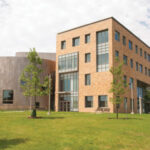
FIRST IMPRESSIONS
By the time you read this, the first phase of UMBC’s Performing Arts and Humanities Building will already be teeming with students and faculty eager to study, teach, work and play in the brand-new space.
So what are they seeing as they walk into the building? UMBC Magazine managed to get a peek as the furniture arrived – and just before faculty and staff moved into the place in late July.
One of the jewels of the new building is the 275- seat proscenium theater (1), which is a significant upgrade on the theatre department’s former performing space, which opened in 1968. The upgrade isn’t just in the sightlines and the two tiers of seating, but also in much wider and taller expanses available for set design and construction backstage.
Another feature of note in the new building is the strong use of natural light in the design. The emphasis on natural light in conference rooms and classrooms (2) also comes with impressive views of other parts of campus, including the nearby Fine Arts Building. And the open vistas of public space such as the building’s main entrance (3) allow the natural light to play on architectural features such as the pronounced curved design encompassing the Dresher Center for the Humanities.
The first phase of the Performing Arts and Humanities Building also includes a state-of-theart black box theatre (above) for smaller scale productions. The design of the black box allows for a variety of lighting possibilities within the space (4), and room for audiences of up to 120 guests.
In addition to housing the theatre department and the Dresher Center for the Humanities, the first phase of the building is also home to the English Department (5), the Linehan Artist Scholars Program, and the Humanities Scholars Program. Both on the outside (6) and the inside, students, faculty, staff, and visitors will see a building that not only is aesthetically pleasing, but advances teaching, research, and creative endeavors at UMBC.
But what those who work, study, or attend performances in the new building’s first phase won’t necessarily see may be just as important. The Performing Arts and Humanities Building is projected to incorporate enough sustainable design strategies to be designated as a LEED Silver project.
Literally from top to bottom, the building has features that are designed to advance the university’s sustainability efforts. The building’s white roof aims to reduce the structure’s “heat island” effect. The impervious area around the building has been shrunken to reduce rainwater runoff, and pervious concrete has been employed to aid with that effort. There is even a system that harvests rainwater for irrigation.
While the fences and cranes have moved from the front of the building, the work site at the north edge of campus won’t be closing down anytime soon. Construction has already begun on phase two of the building, which will open in 2014 and provide a new home for the departments of dance, music, philosophy and ancient studies, as well as a 350-seat concert hall and a 120-seat dance studio. For more information about the opening festivities on Wednesday, September 19, including a ceremonial ribbon cutting with Maryland Governor Martin O’Malley, a presentation on cultural spaces hosted in collaboration with the Greater Baltimore Cultural Alliance, an outdoor celebration of the arts and humanities, and a Humanities Forum lecture featuring American Council of Learned Societies President Pauline Yu, see our online calendar.
— Richard Byrne ’86
OVAL OFFER

Call it “Mr. Hrabowski Goes to Washington.”
UMBC’s president Freeman A. Hrabowski, III, stood with other leaders behind Barack Obama on July 26 in the Oval Office of the White House, watching as the nation’s 44th president signed an executive order creating the President’s Advisory Commission on Educational Excellence for African Americans.
Hrabowski was named chair of the new commission, which will coordinate the response of federal agencies to this critical issue and identify best practices nationwide. The commission also will lead a national dialogue on African American achievement from early childhood through adulthood.
UMBC’s president believes that the lessons learned during his 20-year tenure will inform his leadership of the commission.
“The work of my colleagues at UMBC has demonstrated that education in America can be both inclusive and excellent,” Hrabowski observed. “Our African American students study with people from all over the world and achieve at the highest levels. I am delighted that the President is again committing to the success of all students.”
Hrabowski will also draw on his other work on national education issues, including chairing a National Academy of Sciences committee that examined minority participation in the sciences. That committee’s final report concluded that the United States must significantly increase its investment in young people of all races interested in science, technology, engineering and math to remain competitive in the global economy.
— Elyse Ashburn and Richard Byrne’ 86
WELCOME BACK

Maybe it’s been a few years since you took your last exam at UMBC. So what better time to pay a return visit to campus than October 10th to 13th for Retriever Fever: Homecoming 2012?
UMBC’s Homecoming Committee has arranged for a wide array of events and activities to lure you back. Among the highlights?
-
Homecoming Bonfire & Outdoor Movie Warm up at one of UMBC’s cherished traditions and catch a free outdoor showing of The Amazing Spider-Man. (Wednesday, October 10, at dusk, Erickson Field)
-
Outstanding Alumni of the Year Awards UMBC’s Alumni Association honors distinguished alumni for their accomplishments and dedication to the university. (Thursday, October 11, 7:30 p.m., Albin O. Kuhn Library Gallery)
-
Big Prize Poetry SLAM! Get your first glimpse of the new Performing Arts and Humanities Building at a reading hosted by UMBC’s English Department. (Friday, October 11. 6-8 p.m., Performing Arts and Humanities Building Atrium)
-
Reinventing Radio: A Morning with Ira Glass Listen to the creator of This American Life, heard on more than 500 public radio stations each week. (Saturday, October 13, 10 a.m., University Center Ballroom)
-
UMBC vs. Boston University The UMBC men’s soccer team takes on Boston University in a must-see America East conference matinee (Saturday, October 13, 3 p.m., Retriever Soccer Park)
-
Taste of UMBC: Crab Feast It doesn’t get more Maryland than delicious crabs, great friends and music! (Saturday, October 13, 5-8 p.m., UMBC Quad)
You can find information on more events and how to register at the UMBC Homecoming 2012 website.
— Richard Byrne ’86
LABOR WE LOVE

UMBC is a fast-growing public university, but one of its successes is that it still retains the personal touch of a much smaller institution.
One reason that UMBC has managed to make a midsized research university so welcoming is the university’s dedicated faculty and staff – many of whom go the extra mile to ensure student success, clear up red tape, obtain resources to create environments for exceptional teaching and research, or keep the campus looking attractive and inviting.
That UMBC’s faculty and staff enjoy that work is also part of its reputation. The university’s annual faculty and staff awards program is an annual highlight on the community’s calendar. And one can find even more confirmation of that positive attitude in the latest edition of The Chronicle of Higher Education’s annual survey of “Great Colleges to Work For.”
UMBC was named to the “Honor Roll” in the Chronicle’s 2012 survey because its own faculty and staff ranked it highly in seven of the 12 areas canvassed by the newspaper. Those who work at UMBC ranked the university highly for its “collaborative governance,” “professional and career development,” “work/ life balance,” “confidence in senior leadership,” “supervisor/department chair relationship,” “respect and appreciation,” and “tenure clarity and process.”
Schools that earn mentions in a category must rank in the top ten of one of three categories, sorted by enrollment. The responses to the survey by UMBC employees selected at random are a key factor in the rankings.
— Richard Byrne ’86
THE RIGHT CHEMISTRY

William LaCourse, one of the pioneers in UMBC’s efforts to reshape its curriculum for the 21st century, has been appointed as dean of the College of Natural and Mathematical Sciences. He served for almost a year as the interim dean of the college.
UMBC provost Philip Rous lauded LaCourse’s “commitment to enhancing student success at both the undergraduate and graduate levels, to the advancement of faculty, and to forging new links with business, national agencies, and universities at both the college and university level.”
LaCourse joined UMBC’s faculty in 1992. He received his Ph.D. in analytical chemistry from Northeastern University in 1987, and worked at Iowa State University/Ames Laboratory before arriving at UMBC.
As the chair of UMBC’s Chemistry and Biochemistry Department, LaCourse was the founder of the Chemistry Discovery Center, an innovative team approach that removes distractions (no food, no cell phones) and compels students to grapple collectively with the knowledge that they imbibe in the lecture hall.
“The idea is to get them in there to share their collective thoughts,” LaCourse told UMBC Magazine in a 2010 story on the center. “Give them roles to perform, take away their pads and pencils, and make them talk.”
The Chemistry Discovery Center has served as a model for wider innovations in curriculum at UMBC, including the College of Natural and Mathematical Sciences’ Active Science Teaching and Learning Environment (CASTLE), which serves a wider range of students in the sciences and math. Both the Chemistry Discovery Center and CASTLE have been adapted at other universities across the country as well.
— Richard Byrne ’86
]]>
FIRST IMPRESSIONS By the time you read this, the first phase of UMBC’s Performing Arts and Humanities Building will already be teeming with students and faculty eager to study, teach, work and...
https://umbc.edu/stories/the-news-fall-2012/
https://beta.my.umbc.edu/api/v0/pixel/news/123721/guest@my.umbc.edu/aa5f330ede192ab28991606bd12a2761/api/pixel
campus-life
fall-2012
UMBC News & Magazine
https://beta.my.umbc.edu/groups/umbc-news-magazine
https://assets1-beta.my.umbc.edu/system/shared/avatars/groups/000/001/943/24435aa6207c452e7bc15cc74b42c7bb/xsmall.png?1748556657
https://assets1-beta.my.umbc.edu/system/shared/avatars/groups/000/001/943/24435aa6207c452e7bc15cc74b42c7bb/original.png?1748556657
https://assets2-beta.my.umbc.edu/system/shared/avatars/groups/000/001/943/24435aa6207c452e7bc15cc74b42c7bb/xxlarge.png?1748556657
https://assets2-beta.my.umbc.edu/system/shared/avatars/groups/000/001/943/24435aa6207c452e7bc15cc74b42c7bb/xlarge.png?1748556657
https://assets3-beta.my.umbc.edu/system/shared/avatars/groups/000/001/943/24435aa6207c452e7bc15cc74b42c7bb/large.png?1748556657
https://assets1-beta.my.umbc.edu/system/shared/avatars/groups/000/001/943/24435aa6207c452e7bc15cc74b42c7bb/medium.png?1748556657
https://assets2-beta.my.umbc.edu/system/shared/avatars/groups/000/001/943/24435aa6207c452e7bc15cc74b42c7bb/small.png?1748556657
https://assets1-beta.my.umbc.edu/system/shared/avatars/groups/000/001/943/24435aa6207c452e7bc15cc74b42c7bb/xsmall.png?1748556657
https://assets2-beta.my.umbc.edu/system/shared/avatars/groups/000/001/943/24435aa6207c452e7bc15cc74b42c7bb/xxsmall.png?1748556657
UMBC News & Magazine
0
0
false
Sat, 06 Oct 2012 21:35:20 -0400
Slideshow – Performing Arts & Humanities Building Phase 1

The first phase of UMBC’s Performing Arts and Humanities Building opened in Fall 2012. Read more about the building here.
[slideshow]
]]>
The first phase of UMBC’s Performing Arts and Humanities Building opened in Fall 2012. Read more about the building here.
[slideshow]
https://umbc.edu/stories/slideshow-performing-arts-humanities-building-phase-1/
https://beta.my.umbc.edu/api/v0/pixel/news/123722/guest@my.umbc.edu/0d421a7c26ddfc00e0571ad9e6ce042f/api/pixel
fall-2012
umbc-history
UMBC News & Magazine
https://beta.my.umbc.edu/groups/umbc-news-magazine
https://assets1-beta.my.umbc.edu/system/shared/avatars/groups/000/001/943/24435aa6207c452e7bc15cc74b42c7bb/xsmall.png?1748556657
https://assets1-beta.my.umbc.edu/system/shared/avatars/groups/000/001/943/24435aa6207c452e7bc15cc74b42c7bb/original.png?1748556657
https://assets2-beta.my.umbc.edu/system/shared/avatars/groups/000/001/943/24435aa6207c452e7bc15cc74b42c7bb/xxlarge.png?1748556657
https://assets2-beta.my.umbc.edu/system/shared/avatars/groups/000/001/943/24435aa6207c452e7bc15cc74b42c7bb/xlarge.png?1748556657
https://assets3-beta.my.umbc.edu/system/shared/avatars/groups/000/001/943/24435aa6207c452e7bc15cc74b42c7bb/large.png?1748556657
https://assets1-beta.my.umbc.edu/system/shared/avatars/groups/000/001/943/24435aa6207c452e7bc15cc74b42c7bb/medium.png?1748556657
https://assets2-beta.my.umbc.edu/system/shared/avatars/groups/000/001/943/24435aa6207c452e7bc15cc74b42c7bb/small.png?1748556657
https://assets1-beta.my.umbc.edu/system/shared/avatars/groups/000/001/943/24435aa6207c452e7bc15cc74b42c7bb/xsmall.png?1748556657
https://assets2-beta.my.umbc.edu/system/shared/avatars/groups/000/001/943/24435aa6207c452e7bc15cc74b42c7bb/xxsmall.png?1748556657
UMBC News & Magazine
0
0
false
Sat, 06 Oct 2012 21:33:07 -0400
Over Coffee – Fall 2012

From the moment we rise each day, we are surrounded by messages from the media: news, advertising, images, sounds, video, texts. How do we make sense of it all intellectually? Students in UMBC’s Media & Communication Studies (MCS) major are trying to do just that. UMBC Magazine sat down with Jason Loviglio, director of the program, and Donald Snyder, a lecturer and director of the MCS internship program, to find out more about one of UMBC’s fastest growing majors.
* * * * *
UMBC Magazine: People might be surprised that many of the major’s introductory classes are grounded in theory, rather than producing media.
Jason Loviglio: Any humanities discipline should have as its goal to help young minds think critically, to peel away layers of distracting information, misleading information, and misinformation to get at implicit truths and implicit facts that are harder to see. All of us on the MCS faculty see ourselves as engaged in the difficult task of encouraging students to think critically, to look for implicit meanings, and to read against the grain whenever possible.
Donald Snyder: We’ve also tried to balance the theoretical core with practical applications of media literacy in the world of today or the world of tomorrow. Students have responded overwhelmingly positively to the push toward internships. We talk to them about the importance of getting really good practical experience and figuring out what it means to be a professional. Our lab-based courses and our new course in media literacy will focus on digital and public projects. It’s very exciting with the technologies we have available to us in terms of production and distribution.
UMBC Magazine: Why is UMBC such a good place for a media and communication studies program?
Loviglio: The fact that the program exists has everything to do with the culture of collaboration at UMBC. There was an interest at the highest levels of the university to create something along these lines. It was entrusted to humanities people and we made it after our own interests: we made it rigorous, we made it critical, we made it writing intensive, and we made it interesting to us.
We also had support from our dean, John Jeffries, and from three provosts. And the most important thing is that we had massive support from other humanities departments and programs, who volunteered time and resources to build the capacity to run a major that is now one of the middle- to large-sized majors in the college. In some cases, they lost students to us. That spirit of collaboration and cross-disciplinary cooperation is a credit to an atmosphere at UMBC that has been encouraged from top-down, but that was really built from bottom-up.
Snyder: With the growth that we’ve experienced, there was certainly a demand for this type of intellectual field at UMBC.
UMBC Magazine: The job market in traditional media is shrinking. What value does an MCS degree offer?
Loviglio: The first thing we’re eager to tell students is what we’re not. We’re not a narrow pre-professional major and we’re not preparing students for specific technical positions within the media industries as they exist right now. What we’re trying to do is much more like what a classical liberal arts discipline has always tried to do, which is teach the skills of communication, critical thinking, and love of learning. The major offers skills that we think will serve students as workers and citizens in the 21st century better than anything else we can think of.
Snyder: Thinking about media in a broader way instead of just narrow media tracks is one of the reasons we built this interdisciplinary model. We’ve had students who have combined environmental science and MCS, communicating essential environmental issues to the public. We’ve had theatre students who have talked about bringing new social media platforms to that more traditional art form. The major certainly has been valuable for students to really establish themselves within all kinds of different fields.
— Stefanie Mavronis ’12
]]>
From the moment we rise each day, we are surrounded by messages from the media: news, advertising, images, sounds, video, texts. How do we make sense of it all intellectually? Students in UMBC’s...
https://umbc.edu/stories/over-coffee-fall-2012/
https://beta.my.umbc.edu/api/v0/pixel/news/123723/guest@my.umbc.edu/b0106e69f6d128fefbc3104b46a6a706/api/pixel
fall-2012
perspectives
UMBC News & Magazine
https://beta.my.umbc.edu/groups/umbc-news-magazine
https://assets1-beta.my.umbc.edu/system/shared/avatars/groups/000/001/943/24435aa6207c452e7bc15cc74b42c7bb/xsmall.png?1748556657
https://assets1-beta.my.umbc.edu/system/shared/avatars/groups/000/001/943/24435aa6207c452e7bc15cc74b42c7bb/original.png?1748556657
https://assets2-beta.my.umbc.edu/system/shared/avatars/groups/000/001/943/24435aa6207c452e7bc15cc74b42c7bb/xxlarge.png?1748556657
https://assets2-beta.my.umbc.edu/system/shared/avatars/groups/000/001/943/24435aa6207c452e7bc15cc74b42c7bb/xlarge.png?1748556657
https://assets3-beta.my.umbc.edu/system/shared/avatars/groups/000/001/943/24435aa6207c452e7bc15cc74b42c7bb/large.png?1748556657
https://assets1-beta.my.umbc.edu/system/shared/avatars/groups/000/001/943/24435aa6207c452e7bc15cc74b42c7bb/medium.png?1748556657
https://assets2-beta.my.umbc.edu/system/shared/avatars/groups/000/001/943/24435aa6207c452e7bc15cc74b42c7bb/small.png?1748556657
https://assets1-beta.my.umbc.edu/system/shared/avatars/groups/000/001/943/24435aa6207c452e7bc15cc74b42c7bb/xsmall.png?1748556657
https://assets2-beta.my.umbc.edu/system/shared/avatars/groups/000/001/943/24435aa6207c452e7bc15cc74b42c7bb/xxsmall.png?1748556657
UMBC News & Magazine
0
0
false
Sat, 06 Oct 2012 21:31:24 -0400
Staging the Struggle – Photo Essay
Essays by Maurice Berger, Research Professor and Chief Curator at UMBC’s Center for Art, Design and Visual Culture. Click on any photo to enlarge. Return to Staging the Struggle.
 |
Ernest C. Withers
Sanitation Workers Assembling for a Solidarity March, Memphis, March 28, 1968
Gelatin silver print National Museum of African American History and Culture, Smithsonian Institution
This image from the African American photographer Ernest Withers—one of the most famous pictures of the civil rights era— stands as a tribute to the slain leader Martin Luther King, Jr. and a poignant reminder of the continued urgency of the struggle he died for. The photograph also reminds us of how important visual culture was to the epic battle against racism and segregation, depicting as it does not just protestors but the placards carried by black sanitation workers in the strike that brought the civil rights leader to Memphis, Tennessee on the day of his murder in April 1968 – an event immortalized in this now iconic photograph. |
 |
Negro Baseball Pictorial Yearbook, 1945
Collection of Civil Rights Archive/ CADVC-UMBC, Baltimore, MD
For more than 75 years, black players were banned from major league baseball. In response to this unwritten policy, the Negro leagues were formed in the late nineteenth century, a collection of professional baseball associations made up of predominantly African-American teams. The Negro leagues issued posters and handbills for distribution to black audiences, typified by this Negro Leagues yearbook from 1945. Its players were routinely covered in African-American periodicals, but remained invisible in the mainstream media. |
 |
Sepia,November, 1959
Collection of Civil Rights Archive/ CADVC-UMBC, Baltimore, MD
The birth of the black pictorial magazine was an important event in civil rights history. Publications such as Ebony, Jet, and Tan (the first black women’s magazine), Our World, Say, and Sepia – the magazine illustrated here – played a major role in promoting affirmative black imagery in a popular culture awash with negative depictions. These publications emphasized photo-essays about African-American achievement and celebrity but also reported on the harsh reality of racism. The magazines’ upbeat content catered to subscribers and sponsors alike, providing readers with pictures that defied stereotypes and advertisers with stories that sold the idea of black success, stability, and affluence. |
 |
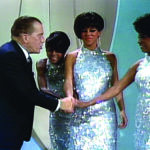
Screen Capture from The Ed Sullivan Show, c. 1966
(Ed Sullivan, The Supremes: Diana Ross, Florence Ballard, Mary Wilson) Courtesy The Ed Sullivan Show/SOFA Entertainment
While simultaneously entertaining Americans of all races, The Ed Sullivan Show (which ran from 1948 to 1971) did much to advance the cause of civil rights. If prime-time dramas and situation comedies of the civil rights era rarely featured African-American actors or subject matter, the program actively showcased black acts, making it a civil rights trailblazer. By depicting black and white performers interacting as equals, and by bringing these entertainers into the homes of millions of Americans, black and white, on a weekly basis, the program set an example of racial acceptance and integration, not just for the entertainment industry but for the nation at large. |
 |
Lunchbox and Thermos: Julia, 1969
Collection Civil Rights Archive, CADVC
Julia (NBC, 1968-1971) was one of the earliest weekly, nationally broadcast built around a contemporary black character. The series centered on the everyday life of Julia Baker, a recently widowed nurse—played by Diahann Carroll—and her young son. Many critics viewed the show as groundbreaking, because of its refusal to promote racial stereotypes: Julia was intelligent, self-sufficient, well dressed, and beautiful, a far cry from the black servants and buffoons of 1950s television. If Julia broke ground, though, it did so in ways that would not intimidate white viewers: the main character rarely interacted with black friends or associates; she readily excused white people’s bad behavior; and she never demonstrated racial awareness or pride. |
 |
Childs Family, Washington, D.C., 1958
Collection of Faith Childs, New York
The most powerful and sustained vehicle for black self-representation and celebration did not require the cooperation of the media. Far from the stage sets of Hollywood and the advertising agencies of Madison Avenue, a simple, ever-present device was stoking a quiet visual revolution: the snapshot camera. As the popularity of increasingly inexpensive and easily accessible cameras swept across the nation in the early twentieth century, the images created by these cameras did for African Americans what a century and half of mainstream representation often could not: made visible the complexity of a people too often ignored by or erased from mainstream culture. |
]]>
Essays by Maurice Berger, Research Professor and Chief Curator at UMBC’s Center for Art, Design and Visual Culture. Click on any photo to enlarge. Return to Staging the Struggle. Ernest C....
https://umbc.edu/stories/staging-the-struggle-photo-essay/
https://beta.my.umbc.edu/api/v0/pixel/news/123724/guest@my.umbc.edu/cf5936006aa49fd8546c36de4a95c2e0/api/pixel
discovery
fall-2012
UMBC News & Magazine
https://beta.my.umbc.edu/groups/umbc-news-magazine
https://assets1-beta.my.umbc.edu/system/shared/avatars/groups/000/001/943/24435aa6207c452e7bc15cc74b42c7bb/xsmall.png?1748556657
https://assets1-beta.my.umbc.edu/system/shared/avatars/groups/000/001/943/24435aa6207c452e7bc15cc74b42c7bb/original.png?1748556657
https://assets2-beta.my.umbc.edu/system/shared/avatars/groups/000/001/943/24435aa6207c452e7bc15cc74b42c7bb/xxlarge.png?1748556657
https://assets2-beta.my.umbc.edu/system/shared/avatars/groups/000/001/943/24435aa6207c452e7bc15cc74b42c7bb/xlarge.png?1748556657
https://assets3-beta.my.umbc.edu/system/shared/avatars/groups/000/001/943/24435aa6207c452e7bc15cc74b42c7bb/large.png?1748556657
https://assets1-beta.my.umbc.edu/system/shared/avatars/groups/000/001/943/24435aa6207c452e7bc15cc74b42c7bb/medium.png?1748556657
https://assets2-beta.my.umbc.edu/system/shared/avatars/groups/000/001/943/24435aa6207c452e7bc15cc74b42c7bb/small.png?1748556657
https://assets1-beta.my.umbc.edu/system/shared/avatars/groups/000/001/943/24435aa6207c452e7bc15cc74b42c7bb/xsmall.png?1748556657
https://assets2-beta.my.umbc.edu/system/shared/avatars/groups/000/001/943/24435aa6207c452e7bc15cc74b42c7bb/xxsmall.png?1748556657
UMBC News & Magazine
0
0
false
Sat, 06 Oct 2012 21:26:37 -0400
Interrogating Images: Q&A with Maurice Berger
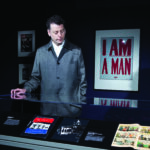
Whether he is enlightening readers on the nuances of photographs with his posts on “The Lens” blog at The New York Times, curating an exhibit such as For All the World to See, or testing the boundaries of memoir and cultural criticism (as he did with his book White Lies: Race and the Myths of Whiteness), you can count on Maurice Berger to be at the forefront of American culture’s engagement with its history and visual culture.
Berger is research professor and the chief curator at UMBC’s Center for Arts, Design and Visual Culture (CADVC). He is also a consulting curator at the Jewish Museum in New York City. He took a B.A. from Hunter College and his Ph.D. from the Graduate Center at the City University of New York. Berger’s range of activities is prolific – including cultural criticism in books and articles, curating exhibits and filmmaking. (His short film, Threshold, was screened in May at the Whitney Biennial.)
Berger’s interests range widely, and he has written about and organized exhibits taking in the grand sweep of 20th Century U.S. culture and its artistic movements. Yet it is his eagerness to tackle some of the thorniest issues in American race relations that has catapulted him to greatest prominence. Early in his career, Berger was a key voice in the debate over whether art museums were perpetuating racism (including a 1990 piece in Art in America – “Are Art Museums Racist?”). And his memoir, White Lies, dissected his own experience and attitudes about race while simultaneously conducting a rigorous yet empathetic analysis of the entire fraught concept of racial categories. (The New York Times called the book “startlingly original.”)
As Berger receives recognition and rewards for For All the World to See and his other work in cultural research (including an Emmy Award nomination for his work on a PBS Sunday Arts story about For All the World to See and the “Outstanding Exhibition in a University Art Museum 2010″ from the Association of Art Museum Curators), he is moving forward on new projects that include three future exhibits that will also appear at the CADVC in coming years: a 25th anniversary exhibit for the center and a new exhibit tracing the influence of modernism on the birth of American television.
Berger talked with UMBC Magazine recently about his career and those future exhibits. He is particularly excited about the opportunity to reach even wider audiences through his posts on “The Lens” blog.
“It’s an opportunity to explore the story of race in America through photographs,” Berger says. “The enormous audience that the Times affords will provides me with a broad, international platform to explore the fraught, but also vital, subject of race. The response to my first piece this July, on Gordon Parks’ civil rights photographs, was extraordinary. My plan is to write an essay every other month.”
– Richard Byrne ’86
UMBC Magazine: One thing that immediately stands out to me when looking at your career is that you have spent a great deal of time questioning how race works in our institutions and in our own individual lives – as you did so eloquently with your own life in White Lies.
Maurice Berger: My interest in questioning institutional attitudes about race goes back to my childhood, to growing up in an environment in which very few white people lived or worked. I saw how the system operated very early in life. I could walk around a department store and not be followed by security guards, for example, while my black friends would walk around the same stores and be followed. Even early on, I understood.
I also saw teachers who would treat black students quite differently from the way they treated me – since I for most of my early education I was one of the few white kids in the schools I attended. Even from that early vantage point, I could see things were not quite equal – and that institutions had certain kinds of collective attitudes.
I became a professor at Hunter College in the early 1980s. (First thing you know I was back as a professor at my undergraduate college.) And even there, I found it interesting that I had only one African-American colleague – and he was an artist, not an art historian. I had never heard a black artist discussed in any of my art history classes as an undergraduate or a graduate student, perhaps with the exception of a mention of Jacob Lawrence in passing.
Given that my field is 20th century American art and culture, that’s pretty amazing. And my teaching career began just about the time I began publishing in 1980. So at that point, I started to see that there was a problem. And I realized that I had to do something about it as an art historian and a cultural historian (as well as a responsible human being).
As you see with White Lies, I’ve always been thinking about these issues. But the reason that the memoir was published in 1999 and not in 1989 was that I wasn’t ready. One of the hardest things that I have accomplished as a writer was to write autobiographically. It brings up memories. It brings up things you’d rather not think about. It exposes you in a certain way. And then when you publish it, you rightfully (in an almost paranoid way) feel that what you’ve published isn’t a piece of writing, but you. If it is rejected, then you are rejected.
The good news is that White Lies was widely reviewed and almost every review was very positive and some were raves (it even was nominated for several awards). The book remains in print and it still has a relatively wide audience, especially among young people and in academia. So it turned out all right, but it was very scary at the time.
UMBC Magazine: When I went back and read the profile of you that The New York Times published shortly after White Lies came out, one of the things you noted was that readers’ responses to the book were very different and very personal. Telling your own story seemed to compel readers to share their journeys.
Berger: I think with race – and attitudes and behavior around race – if you want to change, it has to begin with personal honesty. I’ve always said that if people can’t see the problem and acknowledge the problem, then you can’t get past it.
Remember, so much of what I am writing about in White Lies is not just the domain of white supremacy in the South, it is also the domain of white liberals and leftists. Racism is not limited to conservatives or Southerners. We all need to collectively – and, even more important, intimately and privately, where there is less room to be rebuked or embarrassed – assess ourselves.
And that’s the point of White Lies. And it’s also part of the apparatus of For All the World to See. All the images and stories in the exhibit invite you to think about your own attitudes. Or, if you are older, to reflect on when you yourself first saw these images. How did they make you feel? Did they help change your attitudes? Did they awaken you to the reality of racism and segregation and the problems they presented for the country?
UMBC Magazine: Do you remember the moment when you had the vision for For All the World to See? Was there a particular image that set you in the direction you took in the exhibit?
Berger: It’s a funny thing to think about, because I can usually answer that question when someone asks it about a particular project. It’s not that I don’t remember with regard to For All the World to See, but the thing that’s different with this project – and possibly why it has been so well received and reached so many people (almost one million to date) – is that for the first time, in a dynamic and comprehensive way, I have been able to put together my two primary cultural research areas. The first is the history of American race relations – the issues of race and racism and the analysis of them.
The other interest I have been able to bring to bear on For All the World to See is how visual images manipulate, inspire, infiltrate and integrate ideas in American society and culture. As a cultural historian, my focus is on visual culture and how it operates in society.
So maybe that’s why I can’t remember a particular image. This project has been so natural. It’s the culmination of the two things I have been most driven to do and to explore, two things that have preoccupied me for most of my life.
UMBC Magazine: One of things in the exhibit that impressed me greatly was the way that the iconic journalistic images of the political and moral battles of the Civil Rights movement are juxtaposed and connected with lesser-known visual images created to build self-esteem in the African-American community and portray life in that community as very much like that in white America.
Berger: Until this project most exhibitions of Civil Rights history or Civil Rights culture focused on one particular thing: The way that photographers, and mostly well-known photographers or photojournalists (many of them white), documented the struggle for Civil Rights. And what that has meant is that these exhibitions are dominated by images of the events that we have come to associate with the Civil Rights movement: the protests, the marches, conflagrations, violence, poverty, and all the outward vestiges of racial segregation and prejudice. And that is what Civil Rights imagery has come to mean for most Americans.
For All the World to See argues that the Civil Rights movement is not just about who documented it, or the story of these protests and other events. It proposes that images of all kinds—from film and television to picture magazines and advertising (to quote the great, late photographer Gordon Parks) were employed by African Americans as a “weapon” against racism in America.
Thus, the story of the visual culture of the civil rights movement is far more complicated than we realize. For as [Supreme Court Justice] Thurgood Marshall said, the struggle for civil rights was not just about the protests or the legal cases, but also about African-American morale and legitimacy. How do you inspire a community that is continually beaten down by the realities of racism to rise up and keep the faith? How do you convince white people that the habitually negative and subservient images of black Americans in the culture at large were wrong and immoral? And, perhaps most important, how do you bolster the morale of African Americans scarred by racism and segregation? How to you reflect back to them images that showed the wholesome nature of black life, despite the onslaught of racism in myriad forms?
And, just as importantly, while much of white America did not perpetuate Jim Crow segregation, most white people remained uninformed about the African American community and the pervasive reality of racism, particularly their own. Once again, visual culture played an important role in educating white Americans about the reality of race and racism in America. Affirmative images of black people served as a very important aspect of the movement. These images not only bolstered the morale of African Americans in the face of withering prejudice, but also reminded white Americans that black people led the same kinds of lives and had the same kinds of family relationships as their white counterparts. Such imagery, in other words, powerfully appealed to the empathy of white readers and viewers.
UMBC Magazine: What’s next for you as a cultural historian and curator?
Berger: I am working on a number of projects simultaneously. Much of what I’ll continue to do revolves around the question of American race relations and the study of racism and segregation in America. I am working on another large Civil Rights exhibition and book, though it’s still a long way off, and it will be at CADVC in 2017: The Site of Memory: Reimagining the History of Civil Rights. Plus, I will be contributing regularly to the “Lens” blog at The New York Times, which I am very excited about. Writing for the Times gives me a broad, international platform through which I can share my ideas about race in America (and hopefully make a difference, even change minds and hearts).
I’ve also had a long term relationship with The Jewish Museum, where I have worked on a number of projects over the past twenty years. Last December, shortly after she came on board, newly hired Jewish Museum director Claudia Gould asked me to join the museum as consulting curator. She felt that my work and my point of view were a good fit. Over the past eight months, we’ve been working together with our colleagues to reshape the mandate of the museum and move forward in a bigger and more dynamic way.
I am also working on a collaborative project with The Jewish Museum and the CADVC, an exhibition and companion book (the latter to be published by Yale University Press): Revolution of the Eye: Modern Art and the Birth of American Television. It’s the first major research project in a long time that does not focus on the story of American race relations It tells the extraordinary story of the birth and rise of American television from the 1940s to the 1960s, and how its executives and writers and producers – most of whom were Jewish – embraced the modernist avant garde as a source of inspiration, aesthetics, and ideas. Television pioneers such as Rod Serling were actively looking at surrealism; Ernie Kovacs was embracing both Dadaist and surrealist sensibilities in his work. And CBS employed some of the top modern artists and designers of the period to help them develop what was at the time one of the most progressive design campaigns of any American company.
The exhibit also argues that television was born not just in the spirit of entertainment, some of it frivolous, but also with deeply held artistic and intellectual concepts and ambitions. This story is virtually unknown to most Americans (and even most art and cultural historians).
Yet, even an institution as famous as the Museum of Modern Art (MOMA) got into the act of producing, curating, and analyzing the medium. In the 1950s, the museum established the MOMA “Television Project,” dedicated to exploring the creative possibilities of television and producing content that sold the gospel of modern art and established the importance of modern artists. We will actually be working with MoMA to produce an array of public programs and TV screenings around the exhibition.
Ultimately, and despite the commercialism of it all, art has always been present on television. The point of “Revolution of the Eye” is that art is in the medium’s DNA.
I am also proud to say that I will also be curating CADVC’s 25th anniversary exhibition, which will open in 2014. So at UMBC alone, over the next five years, three of my projects will premiere.
– Return to Staging the Struggle
]]>
Whether he is enlightening readers on the nuances of photographs with his posts on “The Lens” blog at The New York Times, curating an exhibit such as For All the World to See, or testing the...
https://umbc.edu/stories/interrogating-images-qa-with-maurice-berger-2/
https://beta.my.umbc.edu/api/v0/pixel/news/123725/guest@my.umbc.edu/e296e6809465e02397d7ee273a61938d/api/pixel
fall-2012
perspectives
UMBC News & Magazine
https://beta.my.umbc.edu/groups/umbc-news-magazine
https://assets1-beta.my.umbc.edu/system/shared/avatars/groups/000/001/943/24435aa6207c452e7bc15cc74b42c7bb/xsmall.png?1748556657
https://assets1-beta.my.umbc.edu/system/shared/avatars/groups/000/001/943/24435aa6207c452e7bc15cc74b42c7bb/original.png?1748556657
https://assets2-beta.my.umbc.edu/system/shared/avatars/groups/000/001/943/24435aa6207c452e7bc15cc74b42c7bb/xxlarge.png?1748556657
https://assets2-beta.my.umbc.edu/system/shared/avatars/groups/000/001/943/24435aa6207c452e7bc15cc74b42c7bb/xlarge.png?1748556657
https://assets3-beta.my.umbc.edu/system/shared/avatars/groups/000/001/943/24435aa6207c452e7bc15cc74b42c7bb/large.png?1748556657
https://assets1-beta.my.umbc.edu/system/shared/avatars/groups/000/001/943/24435aa6207c452e7bc15cc74b42c7bb/medium.png?1748556657
https://assets2-beta.my.umbc.edu/system/shared/avatars/groups/000/001/943/24435aa6207c452e7bc15cc74b42c7bb/small.png?1748556657
https://assets1-beta.my.umbc.edu/system/shared/avatars/groups/000/001/943/24435aa6207c452e7bc15cc74b42c7bb/xsmall.png?1748556657
https://assets2-beta.my.umbc.edu/system/shared/avatars/groups/000/001/943/24435aa6207c452e7bc15cc74b42c7bb/xxsmall.png?1748556657
UMBC News & Magazine
0
0
false
Sat, 06 Oct 2012 21:23:12 -0400
 Dr. Freeman Hrabowski hosted the second annual 1966 Society dinner on September 19 in the 4th Floor English Department Conference Room in UMBC’s new Performing Arts and Humanities Building. The 1966 Society celebrates those individual members who have identified the UMBC Foundation in their estate plans.