ANCS Reunion Lunch, 4/6, To Feature Founding Professors
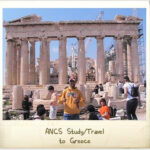
 The Ancient Studies department will hold a reunion luncheon featuring Greek foods at the Albin O. Kuhn Library (7th floor) on April 6 from noon to 3 p.m. A number of founding faculty will be present, including Walt Sherwin, Rudy Storch, and Carolyn Koehler. Jay Freyman, who is retiring this summer, will also be there.Please visit http://www.umbc.edu/blogs/ancs/events/ for more information.
WHEN: Saturday, April 6, 2013, noon – 3 p.m.
WHERE: Albin O. Kuhn Library- 7th Floor, UMBC, 1000 Hilltop Circle, Baltimore, MD 21250
COST: $30 per person for non-students; $25 per person for current UMBC students. If you would like to sponsor a UMBC student for this luncheon please note that on your registration form.
RSVP: Visit http://www.umbc.edu/blogs/ancs/events/ to download the registration form. All reservations must be received by March 22, 2013.
]]>
The Ancient Studies department will hold a reunion luncheon featuring Greek foods at the Albin O. Kuhn Library (7th floor) on April 6 from noon to 3 p.m. A number of founding faculty will be...
https://umbc.edu/stories/ancs-reunion-lunch-46-to-feature-founding-professors/
https://beta.my.umbc.edu/api/v0/pixel/news/123508/guest@my.umbc.edu/c0737a49067c3eea9e06ef13e65c79c0/api/pixel
alumni
UMBC News & Magazine
https://beta.my.umbc.edu/groups/umbc-news-magazine
https://assets1-beta.my.umbc.edu/system/shared/avatars/groups/000/001/943/24435aa6207c452e7bc15cc74b42c7bb/xsmall.png?1748556657
https://assets1-beta.my.umbc.edu/system/shared/avatars/groups/000/001/943/24435aa6207c452e7bc15cc74b42c7bb/original.png?1748556657
https://assets2-beta.my.umbc.edu/system/shared/avatars/groups/000/001/943/24435aa6207c452e7bc15cc74b42c7bb/xxlarge.png?1748556657
https://assets2-beta.my.umbc.edu/system/shared/avatars/groups/000/001/943/24435aa6207c452e7bc15cc74b42c7bb/xlarge.png?1748556657
https://assets3-beta.my.umbc.edu/system/shared/avatars/groups/000/001/943/24435aa6207c452e7bc15cc74b42c7bb/large.png?1748556657
https://assets1-beta.my.umbc.edu/system/shared/avatars/groups/000/001/943/24435aa6207c452e7bc15cc74b42c7bb/medium.png?1748556657
https://assets2-beta.my.umbc.edu/system/shared/avatars/groups/000/001/943/24435aa6207c452e7bc15cc74b42c7bb/small.png?1748556657
https://assets1-beta.my.umbc.edu/system/shared/avatars/groups/000/001/943/24435aa6207c452e7bc15cc74b42c7bb/xsmall.png?1748556657
https://assets2-beta.my.umbc.edu/system/shared/avatars/groups/000/001/943/24435aa6207c452e7bc15cc74b42c7bb/xxsmall.png?1748556657
UMBC News & Magazine
0
0
false
Tue, 05 Feb 2013 15:52:54 -0500
Inaugural Grants from the Hrabowski Fund for Innovation
FROM: Freeman Hrabowski, President
Philip Rous, Provost and Senior Vice President for Academic Affairs
We are delighted to announce the projects receiving inaugural grants from this fund. These projects build on our faculty’s strong track record of, and commitment to, reimagining what it means to teach and learn. We received a large number of outstanding applications and, unfortunately, could not fund all of the projects. Those selected for awards represent each of our colleges and a wide range of disciplines, and many of them take an interdisciplinary approach to their work.
Implementation and research grants
-
The Math Gym – A teamled by Nagaraj Neerchal, professor and chair of mathematics and statistics, will develop The Math Gym, which will feature “conditioning coaches” and “personal trainers” who will help students keep their foundational math skills in good working order. Moreover, the gym will promote healthy math habits among all our students, drawing a clear analogy between the regular work outs and conditioning needed to maintain both athletic and mathematical skill.
-
Active Computing Teaching and InnoVation Environment – A team led by Marie desJardins, professor of computer science and electrical engineering, will create ACTIVE, a dynamic “laptop laboratory.” The lab will support innovation in computing courses – with a particular focus on improving the retention and success of women, underrepresented minorities and transfer students. The laboratory will extend active-learning environments, such as CASTLE and the new English writing labs, to a new area of the university.
Seed grants
-
The Wisdom Institute – A team led by Craig Saper, professor and director of UMBC’s language, literacy, and culture program, will create an institute to expand the role for emeritus professors at UMBC.
-
Putting Students’ Language Skills to Work – A team led by Susanne Sutton, lecturer in modern languages, linguistics, and intercultural communication, will develop new experiential and service-learning course requirements for undergraduates studying German, with a particular focus on connecting students to Baltimore’s German community.
-
Service-Learning in Statics – A team led by Anne Spence, professor of the practice in mechanical engineering, will develop new service-learning requirements for undergraduates studying mechanical engineering, with a particular focus on identifying components that increase retention and student success.
-
EHS – Bruce Walz, professor and chair of emergency health services, will lead a project to integrate individual cameras into EHS exercises, so that students can receive more personalized and immediate feedback on their performance.
Begun with major grants from the Carnegie Corporation of New York and the Heinz Awards, the Innovation Fund has benefited from substantial support from alumni and friends, the local community and businesses, and State and national leaders. That support is a testament to the work we’ve already done and a vote of confidence for the national model we’re continuing to build. Projects supported by the Innovation Fund will complement the many other creative and enterprising initiatives already underway at UMBC – from the STEM Transfer Student Success Initiative to composition course redesign in English – and will build on our strong history of finding novel approaches to teaching and scholarship.
The competition for the next round of Innovation Fund grants is underway, with proposals due by Friday, February 8. For more information on how to apply, click here. We want to thank everyone who has submitted a proposal, and encourage those whose proposals could not be funded in the first round to apply again.
We are truly inspired by the creative ideas we hear each day and are delighted to be able to support more of them through this fund.
]]>
FROM: Freeman Hrabowski, President Philip Rous, Provost and Senior Vice President for Academic Affairs We are delighted to announce the projects receiving inaugural grants from this fund. These...
https://umbc.edu/stories/inaugural-grants-from-the-hrabowski-fund-for-innovation/
https://beta.my.umbc.edu/api/v0/pixel/news/123509/guest@my.umbc.edu/cf5e9b25fa18f9587ef826557e38a28e/api/pixel
admin
community
UMBC News & Magazine
https://beta.my.umbc.edu/groups/umbc-news-magazine
https://assets1-beta.my.umbc.edu/system/shared/avatars/groups/000/001/943/24435aa6207c452e7bc15cc74b42c7bb/xsmall.png?1748556657
https://assets1-beta.my.umbc.edu/system/shared/avatars/groups/000/001/943/24435aa6207c452e7bc15cc74b42c7bb/original.png?1748556657
https://assets2-beta.my.umbc.edu/system/shared/avatars/groups/000/001/943/24435aa6207c452e7bc15cc74b42c7bb/xxlarge.png?1748556657
https://assets2-beta.my.umbc.edu/system/shared/avatars/groups/000/001/943/24435aa6207c452e7bc15cc74b42c7bb/xlarge.png?1748556657
https://assets3-beta.my.umbc.edu/system/shared/avatars/groups/000/001/943/24435aa6207c452e7bc15cc74b42c7bb/large.png?1748556657
https://assets1-beta.my.umbc.edu/system/shared/avatars/groups/000/001/943/24435aa6207c452e7bc15cc74b42c7bb/medium.png?1748556657
https://assets2-beta.my.umbc.edu/system/shared/avatars/groups/000/001/943/24435aa6207c452e7bc15cc74b42c7bb/small.png?1748556657
https://assets1-beta.my.umbc.edu/system/shared/avatars/groups/000/001/943/24435aa6207c452e7bc15cc74b42c7bb/xsmall.png?1748556657
https://assets2-beta.my.umbc.edu/system/shared/avatars/groups/000/001/943/24435aa6207c452e7bc15cc74b42c7bb/xxsmall.png?1748556657
UMBC News & Magazine
0
0
false
Mon, 04 Feb 2013 22:21:03 -0500
On the Road to Plutopia

Travels and travails play a big part in award-winning UMBC historian Kate Brown’s highly-personal approach to investigating nuclear power and nationalism.
By David Glenn
A few years ago, historian Kate Brown spent several weeks in a tiny cottage in an obscure corner of Russia’s Ural Mountains. She was studying the history of Ozersk, a secret Soviet city built in the late 1940s to house the country’s first plutonium-processing plant.
Ozersk itself remains just as closed to outsiders in Vladimir Putin’s Russia as it was in Josef Stalin’s Soviet Union. So a cottage that Brown rented several miles outside the city’s gates turned out to be the closest she could get to the nuclear site.
“I would basically get up in the morning and chop the wood to take a shower,” says Brown, who is an associate professor of history at UMBC. “Carry the water in from the well. All of that stuff that you do in a village. And then I would wait for my cell phone to ring. My contact would say I have someone to meet with you – and then I would go and make my appointments.”
Brown met a number of elderly Ozersk residents who testified about the city’s early years, including a 1957 accident that released massive amounts of plutonium and led to the evacuation and destruction of more than 80 villages across the southern Urals. She also talked to younger activists who are struggling to force the Russian government to pay reparations for the slow-motion environmental devastation caused by plutonium production across the decades. Poking into the shadows of the Russian side of the Cold War decades, Brown still occasionally feared being detained or having her passport revoked.
Brown’s willingness to chop firewood or risk harassment to get closer to the history she writes is nothing new. In the late 1980s and early 1990s she traveled throughout the collapsing Soviet empire as she helped lead a glasnost-era student-exchange program. Today, at the age of 47, she commutes to UMBC by riding a bicycle across more than three miles of Washington traffic before getting on a train.
But colleagues and students observe that Brown’s physical intrepidness is matched (and even surpassed) by her willingness to take intellectual risks. For instance, her forthcoming book, Plutopia: Nuclear Families, Atomic Cities, and the Great Soviet and American Plutonium Disasters (Oxford University Press) is a tale of two cities: Ozersk and Richland, a city in Washington state that abuts the first major U.S. plutonium facility at Hanford Nuclear Reservation.
Plutopia dives deep into the history of the military, medicine, labor, culture and the environment in both Cold War powers. Yet Brown makes few explicit comparisons or contrasts between these two cities themselves, structuring the book instead as a “tandem history” that allows the reader to use each city as a prism through which to view the other entity.
Brown also frequently inserts herself into the text, explaining how she cultivated relationships with certain informants or came to a dead end in certain archives. “Historians are reluctant to be a character in their own history,” she observes. “But the fact that we’re there affects what happens. I try to set it up in a way that I can tell a story that makes the exploration, the getting of the story, a part of the journey for the reader.”
Catherine Evtuhov, a professor of history at Georgetown University, is an admirer of how Brown marries an immediacy more often found in journalism (which is, after all, history’s first draft) to the rigor of the social sciences. “Kate does her work not in some kind of theoretical way,” Evtuhov argues, “but by going and spending a good deal of time in these places, getting people to discuss their histories. She brings some of the techniques of an investigative reporter.”
THREAT ASSESSMENTS
Brown became hooked on studying Russia during six months she spent living in Leningrad in 1987, when she was a senior at the University of Wisconsin.
“Strangers would come up to me on the street and say, ‘Go home and tell them that we just want peace, and that things just aren’t working,’” she recalls.
When the regime began to crumble a few years later, Brown was not surprised. The system she saw in 1987 already seemed like something dying. She recalls being horrified that the Reagan administration had built so many nuclear warheads to counter such a hollow threat.
After she completed her Russian major at Wisconsin, Brown took a job at a Middlebury College-based student exchange program. Among other responsibilities, Brown had to keep tabs on the safety of American students who had been placed in far-flung corners of the decaying empire, especially places that had featured in previous national rebellions against the Soviet state.
“I’d take trains to Ukraine or the Baltics,” she says. “And that’s when I noticed that the real force that was pulling the Soviet Union apart was nationalism. That took us by surprise. It seems stupid now, but the thought at the time was that nationality had been tucked away.”
Brown also argues that a new openness which made it no longer dangerous to publicly excavate and talk about past crimes – even those committed by the nation’s secret police – also helped destroy the Soviet Union. “People were digging up mass graves of people who had been killed by the NKVD,” she says. “Digging up buried stories at different sites; that really put the Soviet regime on the chopping block. They just couldn’t stand up to that. That was when I understood how much history matters.”
In 1992, Brown enrolled in the doctoral program in history at the University of Washington at Seattle, which houses one of the country’s most venerable centers for the study of the Soviet Union and Eastern Europe. She was ambitious, but retained diverse interests that included the study of anthropology, literature, and other fields, and freelance reporting for National Public Radio and other venues.
“I dragged it out as long as I could,” she recalls. “Any free summer or semester I could write a grant and go study Kazakh or Polish. It was just fabulous. I did a lot of traveling under the guise of language studies.”
Brown finished her program in 2000 and did a year of postdoctoral research at Harvard University before joining the faculty at UMBC in 2001. Her investigation into how ethnic Ukrainians, Poles, Jews, and Germans coexisted in the borderland region around Chernobyl – a region that was never consolidated into any particular nation-state before it was reconfigured by the Soviets and then invaded by the Nazis before being retaken once again by the Soviets – became the subject of her first book, A Biography of No Place: From Ethnic Borderland to Soviet Heartland, which was published by Harvard University Press in 2004.
As she does in her new book, Brown blended several different modes of historical writing (including personal narrative) in A Biography of No Place, which garnered multiple prizes (including the American Historical Association’s prestigious George Louis Beer Prize for modern European international history) and has proven influential among fellow historians.
Lynne Viola, a professor of history at the University of Toronto, had never heard of Brown before Harvard sent her the manuscript, requesting a blurb. “I was very irritated, because they hadn’t asked beforehand,” Viola says. “But I looked at the manuscript and got completely pulled in. By the time I finished, I had written to Harvard and asked how I could contact Kate Brown. Because I thought this was one of the most original things I’d ever read.”
PROBING THE PARALLELS
The research project that became Plutopia had an odd birth. Knowing of her interest in the Chernobyl region, several friends sent Brown links in 2004 to a website created by a Ukrainian who had traveled by motorcycle through villages that had been abandoned after the 1986 Chernobyl nuclear disaster.
Brown was intrigued by the website. Might those empty villages be an important time capsule? Would letters or other documents reveal whether the Soviet citizens of 1986 knew that their regime was on its last legs?
When Brown went to Ukraine to investigate, it soon became clear that the motorcyclist’s website was an elaborate hoax. But as she traveled around Chernobyl with a journalist friend who was writing about the fraud, Brown began to ponder a book on nuclear disasters.
“There was a period of time when nobody was interested in nuclear issues,” she says. “We were all exhausted with it, right? The Cold War was over. We didn’t have to think about this anymore. We had to think about it for so long in so many terrifying ways. I had definitely been in that frame of mind.”
The enduring – and, in many ways, still invisible – destruction surrounding Chernobyl changed Brown’s mind. She became fascinated by the story behind the Soviet plant at Ozersk, which was built in a muddy zone with few paved roads in 1947 as the Soviets scrambled to compete with the U.S. atomic weapons program.
The Ozersk plant suffered its own Chernobyl-sized calamity: the 1957 explosion that forced the evacuation of 87 villages in the southern Urals. But the shadowy site also offered the chance to relate the decades-long destruction of the environment as well, as the Ozersk plant sent irradiated water into rivers for many years.
As Brown pondered how to tell the tale of Ozersk and the Soviet nuclear industry, she also made a connection to the other side of the Cold War divide. While studying in Seattle in the 1990s, she had been gripped by news stories about the Clinton administration’s declassification of millions of documents that revealed the extent of environmental and public-health damage associated with plutonium production across eastern Washington.
“I thought about the Hanford site,” says Brown. And the similarities between two places so far apart and yet so parallel in design and in long-term environmental destruction became insistent to her.
“I thought, what people need to know about are these military sites that have been covered up for so long,” Brown says. “They’re so much more serious in terms of environmental catastrophe than this one-off event at Chernobyl.”
COVERT CONVERSATIONS
So Brown set off on what became a six-year project, supported in part by a Guggenheim fellowship and a grant from the National Council for Eurasian and East European Research. (Brown also had support for the book from the Kennan Institute, and received a collaborative grant from the National Endowment for the Humanities.) She pored over Cold War documents at the U.S. Department of Energy and the regional Communist Party headquarters in Chelyabinsk, but also spent many months in close proximity to both sites.
In the Urals, elderly Ozersk residents shared a mixture of baroque horror stories – thousands of young workers retiring because of radiation poisoning – mixed with intense nostalgia. Though it didn’t appear on any maps, Ozersk was known as the nicest place to live in the southern Urals. Soviet authorities provided the city with parks, schools, medical care, and consumer goods that were far above the nation’s usual level. After the terrors of Stalin and World War II, Brezhnev-era Ozersk seemed like paradise.
Brown also canvassed eastern Washington state to find proud veterans of the Hanford plants and “downwinder” activists who believe plutonium contamination has caused many cancers and birth defects.
As was the case with Ozersk, Brown discovered that Richland’s proximity to the Hanford facility made it a seeming oasis of prosperity amid rural poverty. The corporate contractors who built and operated the Hanford site – Du Pont in the early years, and later General Electric – self-consciously created a “classless” model community where both nuclear engineers and blue-collar factory workers could live in single-family homes and enjoy consumer abundance.
Both the U.S. and Soviet governments used that abundance to help elite scientists reconcile themselves to lives in remote provinces. But Brown also points out that both Richland and Ozersk were anything but classless: In different ways, both plutonium complexes consigned their lowest-level workers to hardscrabble lives on the periphery.
Economic concerns were matched by both governments’ concerns about security. As the two cities evolved across the 1950s, their creators were intensely aware of each other – and even in a sort of dialogue across borders. Brown says that the questions each side asked were fundamental: “What are they doing over there? How can we do it better over here? What do we need to do to prevent them from getting our secrets or attacking us? So they’re very much in conversation with one another, but the conversation is sometimes covert.”
Brown worked hard to keep Plutopia as clear as possible, even though the book moves across national borders and contains material about a vast array of topics.
“I don’t intend to compare the cities,” Brown continues. “What I want to do is place them alongside one another, and to show how sometimes enemies that are intensely opposed to one another start to look like one another because of the force of that focus.”
LOCATING HISTORY
Getting physically close to the locales about which she writes is key to Brown’s method as a historian. Focusing on a place, she believes, allows historians to combine political, social, and scientific history in powerful ways.
“You can do all of that when you start from a place,” she says. “By circumscribing the territory you’re looking at, you can transcend these boundaries that we’ve created in these subfields of history.”
Brown pushes her students at UMBC, especially those in the master’s degree program, to pursue similarly placebased projects. To immerse them in that method, this year she is leading one class in a review of the archives of the Neighborhood Design Center, a Baltimore-based organization of activist urban planners and architects.
“Dr. Brown is incredibly supportive, but she will not hold your hand,” says Rhiannon Dowling Fredericks ’09, M.A., history, who is now in the doctoral program at the University of California at Berkeley. “She wanted us to have projects that were reasonably finished before she would review them with us. But once we got to that stage, she would have amazing suggestions about how we could expand our projects and move forward.
In moving her own work forward, Brown is now assembling a collection of historical essays tentatively titled Being There. “I hope to use this as a call to arms for doing place-based history,” she says.
She also hopes to persuade younger historians to become more comfortable with occasionally using the first person, so that they can be more candid with readers about their own biases and about the twists and turns that their research has taken.
“These stories don’t just come out of nowhere,” argues Brown. “And we’re not a god-eye looking from above. We’re on the ground. We, too, are in play.”
In the meantime, Brown is preparing for the publication of Plutopia this spring.
“What Kate has done has not been easy,” says Lynne Viola, of Toronto. “A Biography of No Place really inspired many people, and I expect that the new one will too. I think it will have a very large impact on younger scholars.”
For her part, Brown is grateful that she took that trip to Leningrad in 1987. The region has been a consuming obsession for her for the last quarter century. “It has been a wild ride,” she says, “watching this country blow itself up, put itself back together again, feud over the component parts—and now Putin is consolidating power in a way that sure feels like the Soviet Union wedded to the czarist empire. It’s been just fascinating.”
* * * *
One of the strengths of Kate Brown’s Plutopia is its sense of finding history in geography – as she does in describing a visit to Hanford in the book’s second chapter:
Gerber showed me with a sweep of her arm the site of the former Hanford Camp, set up in 1943 to house workers building the plutonium plant. I nodded unthinkingly and then looked again. She was pointing at emptiness: a flat plane, laser-graded, a few trees weakly prodding the sky. Staring, I began to make out the faint outline of streets converging at right angles. Western ghost towns usually have a few walls standing, foundations that outline a saloon or bank. This site had been expunged almost fully, although in its day the camp had been a city of 60,000 people, and for a few months had the state’s fifth largest population. Dining halls, barracks, stores, barber shops, theaters, taverns, a roller rink, dance pavilion, swimming pool, bowling alley, bank, hospital, and the state’s busiest bus depot and post office had all once stood on this site. It had been a vast camp that never slept, with round the clock shifts, or rather a place that always slept, as graveyard workers sank their blinds and hoped for quiet amidst the constant rumble of machinery. Hanford Camp went up in a few months in 1943 and disappeared in a few months in 1945. This teeming city stood all of twenty-three months, and a half-century later had vaporized back to desert.
From Plutopia: Nuclear Families, Atomic Cities, and the Great Soviet and American Plutonium Disasters (Oxford University Press)
]]>
Travels and travails play a big part in award-winning UMBC historian Kate Brown’s highly-personal approach to investigating nuclear power and nationalism. By David Glenn A few years ago,...
https://umbc.edu/stories/on-the-road-to-plutopia/
https://beta.my.umbc.edu/api/v0/pixel/news/123510/guest@my.umbc.edu/f4b60d5fde3807134e771b188214230b/api/pixel
discovery
winter-2013
UMBC News & Magazine
https://beta.my.umbc.edu/groups/umbc-news-magazine
https://assets1-beta.my.umbc.edu/system/shared/avatars/groups/000/001/943/24435aa6207c452e7bc15cc74b42c7bb/xsmall.png?1748556657
https://assets1-beta.my.umbc.edu/system/shared/avatars/groups/000/001/943/24435aa6207c452e7bc15cc74b42c7bb/original.png?1748556657
https://assets2-beta.my.umbc.edu/system/shared/avatars/groups/000/001/943/24435aa6207c452e7bc15cc74b42c7bb/xxlarge.png?1748556657
https://assets2-beta.my.umbc.edu/system/shared/avatars/groups/000/001/943/24435aa6207c452e7bc15cc74b42c7bb/xlarge.png?1748556657
https://assets3-beta.my.umbc.edu/system/shared/avatars/groups/000/001/943/24435aa6207c452e7bc15cc74b42c7bb/large.png?1748556657
https://assets1-beta.my.umbc.edu/system/shared/avatars/groups/000/001/943/24435aa6207c452e7bc15cc74b42c7bb/medium.png?1748556657
https://assets2-beta.my.umbc.edu/system/shared/avatars/groups/000/001/943/24435aa6207c452e7bc15cc74b42c7bb/small.png?1748556657
https://assets1-beta.my.umbc.edu/system/shared/avatars/groups/000/001/943/24435aa6207c452e7bc15cc74b42c7bb/xsmall.png?1748556657
https://assets2-beta.my.umbc.edu/system/shared/avatars/groups/000/001/943/24435aa6207c452e7bc15cc74b42c7bb/xxsmall.png?1748556657
UMBC News & Magazine
0
0
false
Mon, 04 Feb 2013 21:37:59 -0500
Behind the Mask
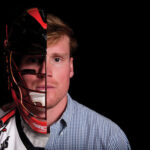

Brendan Mundorf ’07 is one of the world’s best (and toughest) lacrosse players. Now he’s bouncing back from an injury to pursue a professional championship.
By Jeff Seidel ’85
Brendan Mundorf ’07, sociology, still smiles when he remembers his first lacrosse stick: a beautiful blue STX Hi-Wall.
The stick was a gift from his grandmother, given to the two-year-old Mundorf after a trip to see his Uncle Matt play for Mount St. Mary’s lacrosse team. He used it practically non-stop in all kinds of weather, shooting balls at a goal or the side of his grandparents’ shed.
The future UMBC and professional lacrosse star played his first game when he was five.
More than two decades later, Mundorf ’s early passion for the game has blossomed into an impressive college and professional career, including two America East Player of the Year awards during his time at UMBC, professional lacrosse’s top individual honor (the 2012 Most Valuable Player award in Major League Lacrosse) and a world championship playing for the United States’ national team in 2010.
“Lacrosse was just what I loved to do,” recalls Mundorf. “I’d just be spending hours with a stick in my hand. That was my passion. I’ve known that since I was really young.”
Yet as Mundorf stands at the pinnacle of his beloved sport, he faces a new challenge. He’s spent the last few months recovering from an ankle injury that sidelined him in his pursuit of the one goal he hasn’t achieved in professional lacrosse: a team championship.
“That’s what continues to drive me to get better and improve every year,” says Mundorf. “It’s not getting old, that’s for sure.”
Those who know him best are convinced Mundorf will be back at the top of his game.
“He’s got that workhorse mentality, and I’d say he’s kind of like Terrell Suggs of the [Baltimore] Ravens,” observes Kevin Gibbons-O’Neill ’86, economics, assistant athletic director for fundraising and development at UMBC. “He knows he’s going to get killed in games, but he’ll keep going after it until he gets what he wants. He’s just a tough guy, and if I’m going to a fight, I’m taking him with me.”
DAWG DAYS
An untimely appendectomy may have played a decisive role in Mundorf becoming one of UMBC’s men’s lacrosse legends.
The young attacker was a highly regarded player at Mount St. Joseph High School, but he missed about six weeks of his junior year when he had his appendix removed. Mundorf ’s absence in a crucial recruiting period may be why he fell off the radar of some Division I lacrosse programs, but UMBC and the University of Delaware both made strong plays to lure him to their teams.
“He did not have the accolades that some other recruits have going into the recruiting process,” recalls UMBC lacrosse coach Don Zimmerman. “But we saw something we liked. It was more in his attitude, his approach, and his blue-collar work ethic. He played with passion, and you just can’t teach that.”
Mundorf chose UMBC and made an immediate impact, breaking into the starting lineup as a freshman in 2003. It was the beginning of a storied college career, during which the four-year starter tallied 111 goals and 74 assists.
Though Mundorf was in the starting lineup almost from the moment he stepped on campus, Zimmerman says Mundorf blossomed into a team leader late in 2005, during a season when the Retrievers won the America East regular season title and the then-junior earned the conference’s Player of the Year award.
“He really hit his stride [then],” observes Zimmerman. Mundorf ’s leadership continued into his senior year (2006) – which was also one of the university’s best-ever men’s lacrosse campaigns. The Retrievers went undefeated in the America East conference, won the conference tournament and earned a berth to the NCAA tournament.
Drew Westervelt ’09, economics, played with Mundorf at UMBC during that exciting season and then later in professional lacrosse leagues. “In college, you have demands of training that everyone has to do,” Westervelt remembers. “He never took short-cuts. It’s contagious. I think a lot of us tried to operate that way.”
Mundorf ’s individual excellence that season was rewarded with another America East Player of the Year award and selection as a third-team All-American. He was also named the Most Outstanding Player in the America East tournament, where he tallied five goals and one assist in UMBC’s 19-10 victory over Albany in the championship game.
Gibbons-O’Neill still remembers another game that season when Mundorf sparked a 20-9 victory over the State University of New York at Stony Brook with seven goals, including four straight goals in a span of less than two minutes in the third quarter.
“[Stony Brook] double-teamed him everywhere,” recalls Gibbons-O’Neill. “They checked him everywhere, kept hitting his arm, his shoulder, and kept trying to knock him down. He just kept going and going. It was incredible.”
TOP OF THE WORLD
Mundorf ’s excellence as a Retriever had not gone unnoticed by another lacrosse insider with Retriever connections, and the UMBC star made the leap from collegiate to professional lacrosse in less than two weeks.
Former UMBC assistant coach Jarred Testa, who was the head coach of the Denver Outlaws of Major League Lacrosse in 2006, contacted Mundorf on a Tuesday to ask the attacker if he had registered for the pro league’s draft.
Mundorf had not done so. But at Testa’s suggestion, he did. The Outlaws drafted him in the second round on Thursday and flew him out to Denver the following Friday. On Saturday night, Mundorf played his first game for the team, scoring two goals and realizing he liked the professional game.
“It just sort of worked well with me,” says Mundorf. “It just clicked right away.”
Professional lacrosse has continued to click with Mundorf ever since. Not only has he played seven seasons with the Outlaws in the outdoor professional lacrosse league, but he’s also played the indoor National Lacrosse League with the New York Titans (who selected him in the first round of that league’s draft in 2007) and the Philadelphia Wings.
Mundorf has also played in two Federation of International Lacrosse (FIL) world championships: once for Australia in the 2006 games held in Canada and most recently for the worldchampion United States team in the 2010 tournament in Manchester, England.
Mundorf ’s father is Australian, so when the Retriever standout couldn’t make the 2006 United States squad, he landed a successful four-day tryout in the Land Down Under during his senior year at UMBC. Not only did Mundorf make the Australian team, but he led it with 32 points, a tally that tied him for third place in the 2006 tournament.
Mundorf told his Australian compatriots well in advance that he wanted to play for the United States in 2010. And this time he made the American squad.
“You can be a great lacrosse player and have a great career and still not get on the world team,” observes Mundorf. “That was a goal of mine, even when I was in college. It’s at the top of the mountain.”
Mundorf was a key contributor in the United States’ gold medal effort, scoring a crucial goal in the 12-10 championship win over Canada. His 17 goals in six games also helped him earn a spot on the All-World team for the tournament.
“There are only three attackmen in the world who get that honor every four years,” says Mundorf. “It’s where every lacrosse player wants to be. The first time [with Australia], I don’t think anybody knew who I was, but I think the [World Games] are what helped put me on the map.”
LIVIN’ THE OUTLAW LIFE
The 2014 world championships will be held in Denver – a city where Mundorf ’s attacking prowess has made him one of the brightest stars of professional lacrosse.
Leading the high-powered Outlaws offense, Mundorf had his best year as a professional last year, with a tally of 32 goals and 27 assists that earned him Major League Lacrosse’s Most Valuable Player award.
Denver Outlaws general manager Tony Seaman cites Mundorf ’s physical style as a key to his success, and he often marvels at the physical toll that the game exacts on Mundorf ’s body as they travel back to Baltimore together on Sunday mornings after Outlaws games.
“I’d think how the hell is this guy walking?” says Seaman. “How does he carry a bag? I watch him get hit for two-and-a-half hours and get the crap beaten out of him. When he turns the corner, he knows he’s going to pay for that shot. He knows somebody’s coming to deck him. His body takes an incredible beating, and he just goes on.”
Eventually, however, the beating took its toll at the worst possible moment. At a late August practice just a few days before the Major League Lacrosse 2012 championship tournament, Mundorf felt something pop in his left ankle. He was diagnosed with a torn ligament and two dislocated tendons.
The Outlaws were the tournament’s top seed, and Mundorf sat out his team’s semifinal victory against the Long Island Lizards hoping that the extra day of rest might allow him to play the following day.
Before the championship game against the Chesapeake Bayhawks, Mundorf and the Outlaws’ team doctor concurred that the player’s inevitable surgery meant that he likely couldn’t do any further damage to the tendon by trying to play. Aided by a shot of novocaine, Mundorf moved around well enough in warm-ups to play early in the championship game and even score a goal. But the pain returned and cut Mundorf ’s appearance short in a game the Bayhawks eventually won 16-6. (See “Net Achievements”)
“It was tough but I think I looked at it in as positive a way as possible,” Mundorf says of having to watch and cheer from the sidelines. “It happened, and now I’ve got to do the best that I can to keep the guys focused and do what I can from the sidelines. That was just the job I had to do in that situation.”
REHAB AND REFLECTION

With a world championship and a string of personal accolades behind him, no one would blame the 28-year old Mundorf for putting his stick away after last summer’s injury. He’s certainly not in it for the money: The maximum salary in Major League Lacrosse is only $1,000 per game. (When he isn’t playing lacrosse, Mundorf works as an operations manager at his family’s business – M&M Sediment Control, based in Hanover.)
But like other elite athletes, Mundorf wants to keep competing. He focused last fall on rehabbing his ankle, not just to add to his totals as the Outlaws’ all-time leading scorer (206 goals and 100 assists), but also to help Denver win its first championship.
“We’ve had a lot of success in Denver,” observes Mundorf. “I think we’ve won more games in this past seven years than any other team, but we haven’t been able to put a championship in the books.”
And so, the boy who wouldn’t put down the stick that his grandmother gave him doesn’t plan on putting it down anytime soon.
“There was never a thought that went through my head about not rehabbing and not playing,” Mundorf says. “I still want to play. I still love the game.”
]]>
Brendan Mundorf ’07 is one of the world’s best (and toughest) lacrosse players. Now he’s bouncing back from an injury to pursue a professional championship. By Jeff Seidel ’85 Brendan Mundorf...
https://umbc.edu/stories/behind-the-mask/
https://beta.my.umbc.edu/api/v0/pixel/news/123511/guest@my.umbc.edu/31e221871f82e9ae5ae7febce2549750/api/pixel
stories
UMBC News & Magazine
https://beta.my.umbc.edu/groups/umbc-news-magazine
https://assets1-beta.my.umbc.edu/system/shared/avatars/groups/000/001/943/24435aa6207c452e7bc15cc74b42c7bb/xsmall.png?1748556657
https://assets1-beta.my.umbc.edu/system/shared/avatars/groups/000/001/943/24435aa6207c452e7bc15cc74b42c7bb/original.png?1748556657
https://assets2-beta.my.umbc.edu/system/shared/avatars/groups/000/001/943/24435aa6207c452e7bc15cc74b42c7bb/xxlarge.png?1748556657
https://assets2-beta.my.umbc.edu/system/shared/avatars/groups/000/001/943/24435aa6207c452e7bc15cc74b42c7bb/xlarge.png?1748556657
https://assets3-beta.my.umbc.edu/system/shared/avatars/groups/000/001/943/24435aa6207c452e7bc15cc74b42c7bb/large.png?1748556657
https://assets1-beta.my.umbc.edu/system/shared/avatars/groups/000/001/943/24435aa6207c452e7bc15cc74b42c7bb/medium.png?1748556657
https://assets2-beta.my.umbc.edu/system/shared/avatars/groups/000/001/943/24435aa6207c452e7bc15cc74b42c7bb/small.png?1748556657
https://assets1-beta.my.umbc.edu/system/shared/avatars/groups/000/001/943/24435aa6207c452e7bc15cc74b42c7bb/xsmall.png?1748556657
https://assets2-beta.my.umbc.edu/system/shared/avatars/groups/000/001/943/24435aa6207c452e7bc15cc74b42c7bb/xxsmall.png?1748556657
UMBC News & Magazine
0
0
false
Mon, 04 Feb 2013 21:36:33 -0500
The Write Equation


For Manil Suri, Math + Fiction + Ambition = A Career > The Sum of Its Parts
by Mark Athitakis
Last October, UMBC professor of mathematics Manil Suri planned to end a session of his Introduction to Numerical Analysis class with a short video presentation he had created called Pride and Prejudice on the Complex Plane.
The class is a 400-level course on complex matters like fixed-point iteration, Taylor series, and the mean value theorem. But Pride and Prejudice on the Complex Plane is breezy six-minute PowerPoint riff on imaginary numbers (such as the square root of -2). The presentation is styled as a pro-diversity PSA that cautions, in a tongue-in-cheek way, the barbarians who think imaginary and real numbers ought to exist in separate spheres. (The opening slides say the video is presented by “The Coalition for Digital Dignity” and the “Numerical Rights Campaign Fund.”)
Suri intends to include Pride and Prejudice, and other animations like it, in an interactive novel he’s writing. “I’ve been working on this for a long time now, trying to come up with a book for non-mathematicians on math,” he says. He adds, though it goes without saying: “It’s very difficult.”
A good storyteller might be able to pull it off, and Suri is a widely acclaimed one. The Death of Vishnu, his 2001 debut novel, was a moving chronicle of the day in the life of the residents of a Mumbai apartment building. The book earned a PEN/Robert W. Bingham Prize, given annually to the best first works of American fiction, and it was a finalist for the prestigious PEN/Faulkner Award. His follow-up novel, 2007’s The Age of Shiva, was a more expansive work about Suri’s native India after partition; it became a bestseller that the New Yorker (the first place his fiction appeared) called “a sensuous, nuanced portrait of motherhood.”
Suri has taught math at UMBC since 1983, and his CV is rich with accomplishments in that field as well. So in recent years he’s attempted to merge his dual passions in presentations, in papers, in coursework, and in videos like Pride and Prejudice on the Complex Plane. But it’s a struggle.
“I feel like I’ve got a platform in some sense, afforded by whatever success I’ve had as an author – people might say, ‘I’ve read a book by him, let me try this,’” observes Suri. “The only problem with that is, now that this is going to be a novel, I keep fighting. How much math should be in there? Is this really necessary for the story?… Even these videos, I have to look at them really carefully. Are they really stories, or am I just giving a math lecture? The second is not going to be as popular.”
That day in Introduction to Numerical Analysis, Suri had precisely the opposite problem. The 20 students in the room came ready with a host of questions in advance of a test, and there was no time for the video. You have to wonder, as Suri does: What’s the best way for math and storytelling to get along?
UNDER WRAPS
As it happens, there’s a bit of math in Suri’s third novel, The City of Devi, which is set in the near future and centers on Sarita, who loses track of her fiancé when a series of apocalyptic events – cyberattacks, blackouts, religious riots – strikes Mumbai. Sarita is a statistician whose beloved, Karun, was an anxious lover, and her diary entries assign star ratings to the couple’s early bedroom interactions. “Our performance had a weekly mean of 4.35 stars over the past five months or so, with a standard deviation of 2.72,” Suri writes.
It’s not Nabokov, but it’s not meant to be: The City of Devi is a broader and (despite its opening calamities) funnier novel than its predecessors, exploring hive mentalities, conventional wisdom about relationships, and cults of personality. That its heroine is a statistician – and not a mathematician, as Suri kept reminding his publisher – was a complicated decision. “I agonized over that, because you find so few statisticians in literature, or math-type people,” he says.
Indeed, the shelf of books of math-related fiction, or books by mathematically trained fiction writers, is a short one. Alice in Wonderland author Lewis Carroll taught math at Oxford. Edwin Abbott’s 1884 novel Flatland leveraged geometry to satirize Victorian society. Mark Haddon and Richard Powers have integrated math-based puzzles into their work. David Foster Wallace wrote a book on infinity, 2003’s Everything and More, though many mathematicians found his analytical chops wanting. (“I think he was just showing off too much,” Suri says.)
For a long time, Suri was conflicted about joining those ranks. When he began writing fiction in earnest in the mid-’90s, he kept it a secret among his academic colleagues. As he was finishing The Death of Vishnu, he was collaborating with Panos G. Charalambides, a professor in UMBC’s department of mechanical engineering, on methods to analyze materials called “woven composites” for stress and distortion. Suri’s collaborations with other researchers on analysis of structures and materials have been widely cited and have been used in software tools, but Charalambides says that he hadn’t the slightest idea about Suri’s novel as they worked together.
“Once I learned, I was tickled pink,” Charalambides says. “Often enough, scientists are unitary. There’s a stereotype that they don’t have other interests. And clearly Suri has tremendous interests.”
Tremendous interests can be tricky in the sciences, though, and the pervasiveness of that stereotype prompted Suri to keep quiet about his sideline. Early in his teaching career he was told that great mathematicians focus exclusively on math; he once heard a speaker dismissed by colleagues for being a good bridge player. “That made me realize that if I’m doing this writing, maybe it’s a good idea to keep it under wraps, at least until I get tenure,” he says.
By the time he received tenure in 1989, not talking about his fiction had become a habit. And besides, a fiction writer’s path to success is hard to explain. Suri describes his own experience as pure luck: He had the support of writing teachers like Richard McCann, Michael Cunningham, and Vikram Chandra, and a writing retreat at the MacDowell Colony introduced him to an agent and publisher who admired and supported The Death of Vishnu.
“Anywhere along the way, if that chain had broken, it could have been a long time before I’d be able to get to that stage,” observes Suri.
UNCOMMON GROUND

In the fall of 2011, Suri collaborated with Michele Osherow, an associate professor in the Department of English, to teach a freshman humanities seminar at UMBC. Osherow is also resident dramaturg at the Folger Theatre in Washington, DC, and she first worked with Suri in 2009, when she asked him to help her and the actors understand the math in a production of Tom Stoppard’s play Arcadia. She recalls, however, that she was initially intimidated about approaching him to consult on the play. “Maybe it’s something about the way our culture now and historically represents mathematicians as these brilliant but crazy people,” Osherow says.
The course they taught together (“Mathematics and What It Means to Be Human”) addressed some of those stereotypes as they emerged in movies like Good Will Hunting and Pi. Their syllabus strived to connect their disciplines: King Lear allowed the class to discuss zero as a concept; the fiction of Jorge Luis Borges was an avenue for students to ponder infinity.
But common ground eluded the two professors. In a three-part series published last fall in The Chronicle of Higher Education, the tandem described how often they split philosophically. “We sort of found a groove, but it took us a while to realize that we were never actually going to see things in the same way,” Osherow says. “Instead of trying to solve that problem, there came a point where we just sort of cherished it.”
For instance, Suri was frustrated with the way poets like Archibald MacLeish and J.V. Cunningham would casually – and, to his mind, imprecisely – use mathematical terms in their work. “We would argue about what precision was, and the word precise,” Osherow says. “We would argue about the purpose of poetry.”
Suri stresses that he enjoyed the experience, and embraced the loggerheads at which he and Osherow often found themselves. But he also understood how students were frustrated with a seminar that couldn’t cleanly connect math and literature. “We all like to learn things we already know or are comfortable with,” he says. “So what happens with these classes is that the expectations are much harder to pin down.”
It may be that the connection is impossible, an oil-and-water proposition. In the 1920s, Soviet scholar Vladimir Propp identified the structural elements of folklore and fairy tales, and in the ’60s, a French group of writers championed Oulipo, a method that applies rigorous constraints on creative writing. Suri has found such devices useless in his own fiction, though. When he first began work on The City of Devi in 2001, he devised a series of decision trees for his characters, but “the only solutions were the most trite things you can think of,” he says, adding a joke: “I was actually quite happy because I found a mathematical proof that this novel could not be written.” Nearly a decade later, such schemes abandoned, he found a way back in.
But if Suri can’t quite blend math and fiction, he also can’t pursue only one of his two main interests. When he received a Guggenheim Fellowship in 2004, he took a year off to work at home on his next novel. (He lives in Silver Spring with his partner, Larry Cole.) But he missed teaching. “When I used to be a student, and when I was beginning faculty member, I always felt that there was a gap I had to fill with creative writing or something else,” he says. “And now when I was spending all that time doing creative work, it was more like I need to do something completely logical and mathematical. There was that gap that needed to be filled.”
FINDING A SOLUTION
Pride and Prejudice on the Complex Plane is one of two videos Suri has sketched out so far for his e-book project. A second, The Bitter Tears of Petra Von Fraction, is a seriocomic take on irrational numbers like pi and e. The star of that presentation is a woman who can make herself into any integer-based fraction yet who dreams of being the square root of two. Her “journey of self-discovery” leads to the “terrible surprise” that there’s no way to render the square root of two as a clear, integer-based fraction.
Suri concludes the tale thusly: “Petra assumed forms that brought her closer and closer to her beloved, and with each step she took, with each digit she added, Petra shed another bitter tear.”
So are Suri’s Pride and Prejudice and Petra Von Fraction stories? Clever teaching aids? The first steps of the Proppian folktale morphology? Anthropomorphizing numbers, even irrational ones, has a way of being unsatisfying in the traditional literary sense. Suri recognizes that it’s not there yet, but he’s persistent. “I need to somehow make this work,” he says. “Somehow there’s an opportunity there, which can be synergistic in some way.”
Suri recently shared his PowerPoints with Lee Boot, associate director of UMBC’s Imaging Research Center. The two men had worked together on an iPad app the math department has been developing for middle-school students. Boot was struck by how far Suri had gotten on his own. “He’s getting more animation out of PowerPoint than most people would even know is in the program,” he says.
But Boot (who’s also an award-winning filmmaker) recognizes the narrative problem inherent in Suri’s effort. An e-book novel that blends conventional narrative with interstitial animations on mathematical concepts is, well, novel, and that sort of “novel” is a challenge. “People reject things just because they’re new,” Boot says. “That’s in fact a huge reason why innovative things struggle. We need to think of ourselves as innovation-seeking, and creativity-seeking, but the opposite is true.”

In the meantime, Suri is pondering a more conventional work of fiction as a follow-up to The City of Devi. This one would connect his three previous books in one unifying narrative. He’s set himself a tough task in this as well, because while Suri’s three novels share a setting and themes, the characters in each book are quite distinct.
How to resolve that problem? He wrote a mathematical paper on it.
Suri presented “On the Geometry of Metafiction” at Bridges 2012, a conference on cross-disciplinary work in the arts and mathematics sponsored by the American Mathematical Society. Sketching out how the structure of the fourth book would require a 3-D, metafictional structure, not a traditionally linear 2-D one, the four-page paper explains how the work in progress “incorporates not only the stories represented by Books 1-3, but also an observer who can look down on these stories (for purposes of commentary, interpretation, and so on).”
Suri smiles as he ponders his fourth novel-to-be. “I have the perfect title for it,” he says, amused by its paradox and its elegant merger of theory and art:
“The Trinity Quartet.”
Read more about Manil Suri’s new book, The City of Devi, and mathematics at his website. Read more…
]]>
For Manil Suri, Math + Fiction + Ambition = A Career > The Sum of Its Parts by Mark Athitakis Last October, UMBC professor of mathematics Manil Suri planned to end a session of his...
https://umbc.edu/stories/the-write-equation/
https://beta.my.umbc.edu/api/v0/pixel/news/123512/guest@my.umbc.edu/8994685765f785120c4f5453f905c244/api/pixel
stories
UMBC News & Magazine
https://beta.my.umbc.edu/groups/umbc-news-magazine
https://assets1-beta.my.umbc.edu/system/shared/avatars/groups/000/001/943/24435aa6207c452e7bc15cc74b42c7bb/xsmall.png?1748556657
https://assets1-beta.my.umbc.edu/system/shared/avatars/groups/000/001/943/24435aa6207c452e7bc15cc74b42c7bb/original.png?1748556657
https://assets2-beta.my.umbc.edu/system/shared/avatars/groups/000/001/943/24435aa6207c452e7bc15cc74b42c7bb/xxlarge.png?1748556657
https://assets2-beta.my.umbc.edu/system/shared/avatars/groups/000/001/943/24435aa6207c452e7bc15cc74b42c7bb/xlarge.png?1748556657
https://assets3-beta.my.umbc.edu/system/shared/avatars/groups/000/001/943/24435aa6207c452e7bc15cc74b42c7bb/large.png?1748556657
https://assets1-beta.my.umbc.edu/system/shared/avatars/groups/000/001/943/24435aa6207c452e7bc15cc74b42c7bb/medium.png?1748556657
https://assets2-beta.my.umbc.edu/system/shared/avatars/groups/000/001/943/24435aa6207c452e7bc15cc74b42c7bb/small.png?1748556657
https://assets1-beta.my.umbc.edu/system/shared/avatars/groups/000/001/943/24435aa6207c452e7bc15cc74b42c7bb/xsmall.png?1748556657
https://assets2-beta.my.umbc.edu/system/shared/avatars/groups/000/001/943/24435aa6207c452e7bc15cc74b42c7bb/xxsmall.png?1748556657
UMBC News & Magazine
0
0
false
Mon, 04 Feb 2013 21:34:52 -0500
Inaugural Hrabowski Fund for Innovation Grants Announced
FROM: Freeman Hrabowski, President, and Philip Rous, Provost and Senior Vice President for Academic Affairs
TO: The UMBC Community
RE: Inaugural Grants from the Hrabowski Fund for Innovation
We are delighted to announce the projects receiving inaugural grants from this fund. These projects build on our faculty’s strong track record of, and commitment to, reimagining what it means to teach and learn. We received a large number of outstanding applications and, unfortunately, could not fund all of the projects. Those selected for awards represent each of our colleges and a wide range of disciplines, and many of them take an interdisciplinary approach to their work.
IMPLEMENTATION AND RESEARCH GRANTS
The Math Gym – A team led by Nagaraj Neerchal, professor and chair of mathematics and statistics, will develop The Math Gym, which will feature “conditioning coaches” and “personal trainers” who will help students keep their foundational math skills in good working order. Moreover, the gym will promote healthy math habits among all our students, drawing a clear analogy between the regular work outs and conditioning needed to maintain both athletic and mathematical skill.
Active Computing Teaching and InnoVation Environment – A team led by Marie desJardins, professor of computer science and electrical engineering, will create ACTIVE, a dynamic “laptop laboratory.” The lab will support innovation in computing courses – with a particular focus on improving the retention and success of women, underrepresented minorities and transfer students. The laboratory will extend active-learning environments, such as CASTLE and the new English writing labs, to a new area of the university.
SEED GRANTS
The Wisdom Institute – A team led by Craig Saper, professor and director of UMBC’s language, literacy, and culture program, will create an institute to expand the role for emeritus professors at UMBC.
Putting Students’ Language Skills to Work – A team led by Susanne Sutton, lecturer in modern languages, linguistics, and intercultural communication, will develop new experiential and service-learning course requirements for undergraduates studying German, with a particular focus on connecting students to Baltimore’s German community.
Service-Learning in Statics – A team led by Anne Spence, professor of the practice in mechanical engineering, will develop new service-learning requirements for undergraduates studying mechanical engineering, with a particular focus on identifying components that increase retention and student success.
EHS – Bruce Walz, professor and chair of emergency health services, will lead a project to integrate individual cameras into EHS exercises, so that students can receive more personalized and immediate feedback on their performance.
Begun with major grants from the Carnegie Corporation of New York and the Heinz Awards, the Innovation Fund has benefited from substantial support from alumni and friends, the local community and businesses, and State and national leaders. That support is a testament to the work we’ve already done and a vote of confidence for the national model we’re continuing to build. Projects supported by the Innovation Fund will complement the many other creative and enterprising initiatives already underway at UMBC – from the STEM Transfer Student Success Initiative to composition course redesign in English – and will build on our strong history of finding novel approaches to teaching and scholarship.
The competition for the next round of Innovation Fund grants is underway, with proposals due by Friday, February 8. For more information on how to apply, click here. We want to thank everyone who has submitted a proposal, and encourage those whose proposals could not be funded in the first round to apply again.
We are truly inspired by the creative ideas we hear each day and are delighted to be able to support more of them through this fund.
]]>
FROM: Freeman Hrabowski, President, and Philip Rous, Provost and Senior Vice President for Academic Affairs TO: The UMBC Community RE: Inaugural Grants from the Hrabowski Fund for Innovation...
https://umbc.edu/stories/inaugural-hrabowski-fund-for-innovation-grants-announced/
https://beta.my.umbc.edu/api/v0/pixel/news/123513/guest@my.umbc.edu/ccf4bfbcb860994f046097bb8e3f8742/api/pixel
impact
UMBC News & Magazine
https://beta.my.umbc.edu/groups/umbc-news-magazine
https://assets1-beta.my.umbc.edu/system/shared/avatars/groups/000/001/943/24435aa6207c452e7bc15cc74b42c7bb/xsmall.png?1748556657
https://assets1-beta.my.umbc.edu/system/shared/avatars/groups/000/001/943/24435aa6207c452e7bc15cc74b42c7bb/original.png?1748556657
https://assets2-beta.my.umbc.edu/system/shared/avatars/groups/000/001/943/24435aa6207c452e7bc15cc74b42c7bb/xxlarge.png?1748556657
https://assets2-beta.my.umbc.edu/system/shared/avatars/groups/000/001/943/24435aa6207c452e7bc15cc74b42c7bb/xlarge.png?1748556657
https://assets3-beta.my.umbc.edu/system/shared/avatars/groups/000/001/943/24435aa6207c452e7bc15cc74b42c7bb/large.png?1748556657
https://assets1-beta.my.umbc.edu/system/shared/avatars/groups/000/001/943/24435aa6207c452e7bc15cc74b42c7bb/medium.png?1748556657
https://assets2-beta.my.umbc.edu/system/shared/avatars/groups/000/001/943/24435aa6207c452e7bc15cc74b42c7bb/small.png?1748556657
https://assets1-beta.my.umbc.edu/system/shared/avatars/groups/000/001/943/24435aa6207c452e7bc15cc74b42c7bb/xsmall.png?1748556657
https://assets2-beta.my.umbc.edu/system/shared/avatars/groups/000/001/943/24435aa6207c452e7bc15cc74b42c7bb/xxsmall.png?1748556657
UMBC News & Magazine
0
0
false
Mon, 04 Feb 2013 21:09:39 -0500
Maricel Kann, Translational Bioinformatics
Maricel Kann, assistant professor in the department of biological sciences, recently published a new online book, Translational Bioinformatics on PLOS-CB (first open access book in PLOS.)
This is a great resource for our students, the textbook is a good introduction to many of the topics in the emerging field of Translational Bioinformatics, and it is free to all, says Kann.
The e-pub file is downloadable from the collection page:
www.ploscollections.org/translationalbioinformatics
It’s also in mobi format for Kindle users. If you don’t have an ipad/tablet/ereader to view the epub or mobi file on, you should be able to view it on Firefox if you download this add-on: https://addons.mozilla.org/en-US/firefox/addon/epubreader/
]]>
Maricel Kann, assistant professor in the department of biological sciences, recently published a new online book, Translational Bioinformatics on PLOS-CB (first open access book in PLOS.) This...
https://umbc.edu/stories/maricel-kann-translational-bioinformatics/
https://beta.my.umbc.edu/api/v0/pixel/news/123514/guest@my.umbc.edu/ce232a7c61b3987d8701b33ce4535818/api/pixel
biology
cnms
science-and-technology
UMBC News & Magazine
https://beta.my.umbc.edu/groups/umbc-news-magazine
https://assets1-beta.my.umbc.edu/system/shared/avatars/groups/000/001/943/24435aa6207c452e7bc15cc74b42c7bb/xsmall.png?1748556657
https://assets1-beta.my.umbc.edu/system/shared/avatars/groups/000/001/943/24435aa6207c452e7bc15cc74b42c7bb/original.png?1748556657
https://assets2-beta.my.umbc.edu/system/shared/avatars/groups/000/001/943/24435aa6207c452e7bc15cc74b42c7bb/xxlarge.png?1748556657
https://assets2-beta.my.umbc.edu/system/shared/avatars/groups/000/001/943/24435aa6207c452e7bc15cc74b42c7bb/xlarge.png?1748556657
https://assets3-beta.my.umbc.edu/system/shared/avatars/groups/000/001/943/24435aa6207c452e7bc15cc74b42c7bb/large.png?1748556657
https://assets1-beta.my.umbc.edu/system/shared/avatars/groups/000/001/943/24435aa6207c452e7bc15cc74b42c7bb/medium.png?1748556657
https://assets2-beta.my.umbc.edu/system/shared/avatars/groups/000/001/943/24435aa6207c452e7bc15cc74b42c7bb/small.png?1748556657
https://assets1-beta.my.umbc.edu/system/shared/avatars/groups/000/001/943/24435aa6207c452e7bc15cc74b42c7bb/xsmall.png?1748556657
https://assets2-beta.my.umbc.edu/system/shared/avatars/groups/000/001/943/24435aa6207c452e7bc15cc74b42c7bb/xxsmall.png?1748556657
UMBC News & Magazine
0
0
false
Mon, 04 Feb 2013 15:46:24 -0500
Chiropractor Sokoloff ’82, HESP, Travels With Ravens
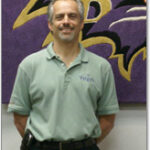
 Many of us in Baltimore were captivated by the magic of the Superbowl this weekend. But chiropractor Alan Sokoloff ’82, health science and policy, found himself truly in the thick of Ravens mania, traveling with the team to New Orleans to make sure the players’ joints were ready for the big game.
In an interview with the Annapolis Capital newspaper, Sokoloff — founder of the Yalich Clinic of Glen Burnie — talked about his work with Baltimore’s football team:
“A receiver, for example, wants to be able to run as efficiently as possible,” Sokoloff said. “But one leg might not be able to extend as far as the other. If we can open up that joint, we can get a lot more movement. His stride is going to be that much better.”
This is his second Superbowl with the team. Read the full story in the Capital here.
]]>
Many of us in Baltimore were captivated by the magic of the Superbowl this weekend. But chiropractor Alan Sokoloff ’82, health science and policy, found himself truly in the thick of Ravens mania,...
https://umbc.edu/stories/chiropractor-sokoloff-82-hesp-travels-with-ravens/
https://beta.my.umbc.edu/api/v0/pixel/news/123515/guest@my.umbc.edu/70d91246901dd4d77e3b3438253249c0/api/pixel
alumni
UMBC News & Magazine
https://beta.my.umbc.edu/groups/umbc-news-magazine
https://assets1-beta.my.umbc.edu/system/shared/avatars/groups/000/001/943/24435aa6207c452e7bc15cc74b42c7bb/xsmall.png?1748556657
https://assets1-beta.my.umbc.edu/system/shared/avatars/groups/000/001/943/24435aa6207c452e7bc15cc74b42c7bb/original.png?1748556657
https://assets2-beta.my.umbc.edu/system/shared/avatars/groups/000/001/943/24435aa6207c452e7bc15cc74b42c7bb/xxlarge.png?1748556657
https://assets2-beta.my.umbc.edu/system/shared/avatars/groups/000/001/943/24435aa6207c452e7bc15cc74b42c7bb/xlarge.png?1748556657
https://assets3-beta.my.umbc.edu/system/shared/avatars/groups/000/001/943/24435aa6207c452e7bc15cc74b42c7bb/large.png?1748556657
https://assets1-beta.my.umbc.edu/system/shared/avatars/groups/000/001/943/24435aa6207c452e7bc15cc74b42c7bb/medium.png?1748556657
https://assets2-beta.my.umbc.edu/system/shared/avatars/groups/000/001/943/24435aa6207c452e7bc15cc74b42c7bb/small.png?1748556657
https://assets1-beta.my.umbc.edu/system/shared/avatars/groups/000/001/943/24435aa6207c452e7bc15cc74b42c7bb/xsmall.png?1748556657
https://assets2-beta.my.umbc.edu/system/shared/avatars/groups/000/001/943/24435aa6207c452e7bc15cc74b42c7bb/xxsmall.png?1748556657
UMBC News & Magazine
0
0
false
Mon, 04 Feb 2013 15:23:42 -0500
VIDEO: Autism Rights Activist Ne’eman ’10, PoliSci, in Al Jazeera

 Autism rights activist Ari Ne’eman ’10, political science, was interviewed recently by Al Jazeera about the role of mental illness in the U.S. gun control debate. While still a student at UMBC, Ne’eman co-founded the Autistic Self Advocacy Network (ASAN), an advocacy organization run by and for Autistic adults seeking to increase the representation of Autistic people across society.
Watch the video interview from Al Jazeera here.
In a 2009 interview with UMBC Magazine, then student Ne’eman stated:
“I feel like I’ve set up a good foundation,” says Ne’eman, of both his advocacy and his education. “As long as I stick to my ideals, the core values that I hold, I’ll be able to continue to make a difference. That’s really what I’ve always aimed to do.
That same year, President Obama nominated Ari to the National Council on Disability, a federal agency charged with advising Congress and the President on disability policy issues. Read the UMBC Magazine story here.
]]>
Autism rights activist Ari Ne’eman ’10, political science, was interviewed recently by Al Jazeera about the role of mental illness in the U.S. gun control debate. While still a student at UMBC,...
https://umbc.edu/stories/video-autism-rights-activist-neeman-10-polisci-in-al-jazeera/
https://beta.my.umbc.edu/api/v0/pixel/news/123516/guest@my.umbc.edu/8a090a88d613e72c886b7b1cb4fca282/api/pixel
alumni
UMBC News & Magazine
https://beta.my.umbc.edu/groups/umbc-news-magazine
https://assets1-beta.my.umbc.edu/system/shared/avatars/groups/000/001/943/24435aa6207c452e7bc15cc74b42c7bb/xsmall.png?1748556657
https://assets1-beta.my.umbc.edu/system/shared/avatars/groups/000/001/943/24435aa6207c452e7bc15cc74b42c7bb/original.png?1748556657
https://assets2-beta.my.umbc.edu/system/shared/avatars/groups/000/001/943/24435aa6207c452e7bc15cc74b42c7bb/xxlarge.png?1748556657
https://assets2-beta.my.umbc.edu/system/shared/avatars/groups/000/001/943/24435aa6207c452e7bc15cc74b42c7bb/xlarge.png?1748556657
https://assets3-beta.my.umbc.edu/system/shared/avatars/groups/000/001/943/24435aa6207c452e7bc15cc74b42c7bb/large.png?1748556657
https://assets1-beta.my.umbc.edu/system/shared/avatars/groups/000/001/943/24435aa6207c452e7bc15cc74b42c7bb/medium.png?1748556657
https://assets2-beta.my.umbc.edu/system/shared/avatars/groups/000/001/943/24435aa6207c452e7bc15cc74b42c7bb/small.png?1748556657
https://assets1-beta.my.umbc.edu/system/shared/avatars/groups/000/001/943/24435aa6207c452e7bc15cc74b42c7bb/xsmall.png?1748556657
https://assets2-beta.my.umbc.edu/system/shared/avatars/groups/000/001/943/24435aa6207c452e7bc15cc74b42c7bb/xxsmall.png?1748556657
UMBC News & Magazine
0
0
false
Mon, 04 Feb 2013 15:08:09 -0500
AA-I Presents Check to Alumni Association
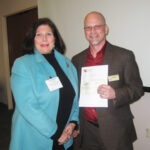
 Alumni Association – International, a Maryland-based group created to support alumni relations programs within the University System of Maryland, presented a $4,000 check to the UMBC Alumni Association Board at the board’s quarterly meeting last week.
AA-I president Janice Batzold, pictured left, presented the check to Alumni Board president Bennett Moe ’88, visual and performing arts.
The money will be incorporated into the Alumni Relations budget toward new alumni initiatives, said Alumni Relations director Stanyell Bruce.
]]>
Alumni Association – International, a Maryland-based group created to support alumni relations programs within the University System of Maryland, presented a $4,000 check to the UMBC Alumni...
https://umbc.edu/stories/aa-i-presents-check-to-alumni-association/
https://beta.my.umbc.edu/api/v0/pixel/news/123517/guest@my.umbc.edu/8d3022a76b0b462f2ae5193547bd7c32/api/pixel
alumni
UMBC News & Magazine
https://beta.my.umbc.edu/groups/umbc-news-magazine
https://assets1-beta.my.umbc.edu/system/shared/avatars/groups/000/001/943/24435aa6207c452e7bc15cc74b42c7bb/xsmall.png?1748556657
https://assets1-beta.my.umbc.edu/system/shared/avatars/groups/000/001/943/24435aa6207c452e7bc15cc74b42c7bb/original.png?1748556657
https://assets2-beta.my.umbc.edu/system/shared/avatars/groups/000/001/943/24435aa6207c452e7bc15cc74b42c7bb/xxlarge.png?1748556657
https://assets2-beta.my.umbc.edu/system/shared/avatars/groups/000/001/943/24435aa6207c452e7bc15cc74b42c7bb/xlarge.png?1748556657
https://assets3-beta.my.umbc.edu/system/shared/avatars/groups/000/001/943/24435aa6207c452e7bc15cc74b42c7bb/large.png?1748556657
https://assets1-beta.my.umbc.edu/system/shared/avatars/groups/000/001/943/24435aa6207c452e7bc15cc74b42c7bb/medium.png?1748556657
https://assets2-beta.my.umbc.edu/system/shared/avatars/groups/000/001/943/24435aa6207c452e7bc15cc74b42c7bb/small.png?1748556657
https://assets1-beta.my.umbc.edu/system/shared/avatars/groups/000/001/943/24435aa6207c452e7bc15cc74b42c7bb/xsmall.png?1748556657
https://assets2-beta.my.umbc.edu/system/shared/avatars/groups/000/001/943/24435aa6207c452e7bc15cc74b42c7bb/xxsmall.png?1748556657
UMBC News & Magazine
0
0
false
Mon, 04 Feb 2013 14:16:55 -0500
 The Ancient Studies department will hold a reunion luncheon featuring Greek foods at the Albin O. Kuhn Library (7th floor) on April 6 from noon to 3 p.m. A number of founding faculty will be present, including Walt Sherwin, Rudy Storch, and Carolyn Koehler. Jay Freyman, who is retiring this summer, will also be there.Please visit http://www.umbc.edu/blogs/ancs/events/ for more information.
