Meet a Retriever—Ridwan Islam Sifat, international doctoral student in public policy

Meet Ridwan Islam Sifat, an M.P.P. graduate student pursuing a doctoral degree at UMBC’s School of Public Policy researching healthcare disparities among intersex individuals in the United States. Ridwan joined UMBC as an international student after earning both a B.S. and M.S. in development studies from the Bangladesh University of Professionals, where he studied the social exclusion of Hijra (third gender) people in Bangladesh, examining the effects of government policies and healthcare access. Ridwan was awarded the UMBC Adam Yarmolinsky Fellowship, which supports graduate and doctoral students whose research addresses poverty alleviation, social programs for low-income populations, and international diplomacy and peace. Ridwan appreciates the opportunities UMBC has afforded him and the community that supported him through it all. Thanks for sharing, Ridwan!
Q: What’s one essential thing you’d want another Retriever to know about you?
A: I’m a public policy Ph.D. student in the School of Public Policy and a graduate teaching assistant in the Department of Sociology, Anthropology, and Public Health. I work with the American Political Science Association and the Association for Public Policy Analysis and Management, mentoring graduate students, offering support with graduate admission applications, and research guidance. I also serve as an associate editor for the International Journal of Public Health Science and an article editor for SAGE Open. I have served four times as a judge at the United Kingdom’s Queen’s Commonwealth Essay Competition, the world’s oldest international schools’ writing competition.
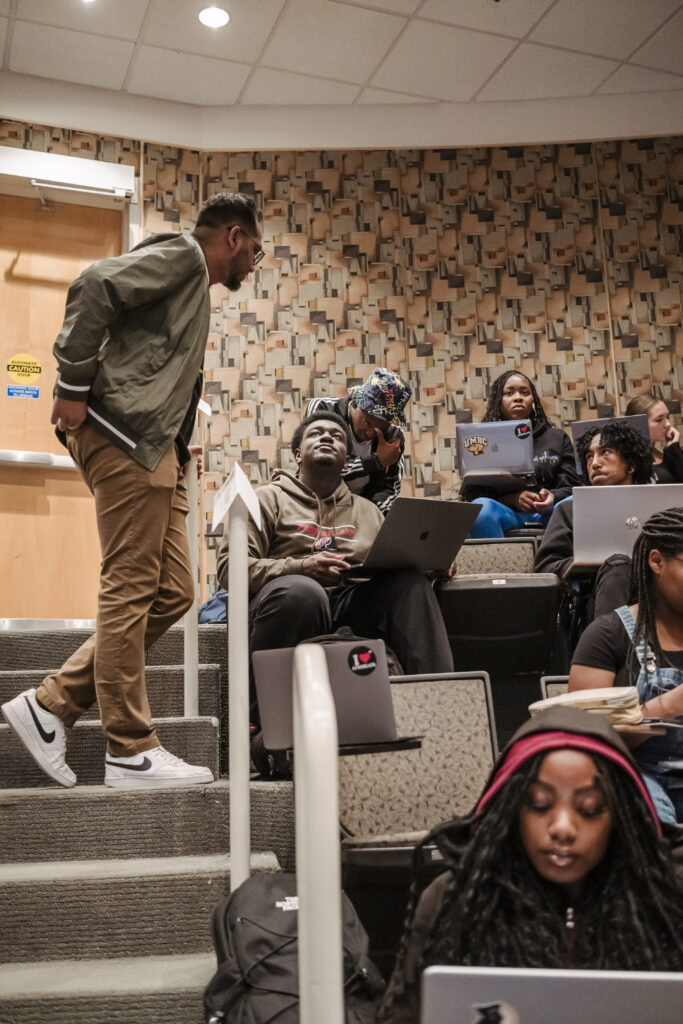 Ridwan Islam Sifat working with students in SOCY 101: Basic Concepts of Sociology. (Marlayna Demond ’11/UMBC)
Q: What brought you to UMBC in the first place?
A: I came to UMBC because of its strong public policy program, particularly, the health policy concentration. The opportunity to study in a supportive environment with access to faculty expertise and resources, aligned with my passion for researching public policy issues made UMBC the perfect place for my academic journey.
My research interests include the intersection of public health policy with artificial intelligence, equity and social justice, and global health systems. I’ve co-authored several journal articles on these topics, including “Transformative potential of artificial intelligence in global health policy,” and “Food‑based domestic violence and anemia among women in sexual unions in Nigeria.”
Q: What clubs, teams, or organizations are you a part of? What do you love about them?
A: I was a Graduate Student Association senator representing the College of Arts, Humanities, and Social Sciences and a committee member for Equity of Funds during the 2023 – 2024 term. I also worked with the Academic Engagement and Transition Programs as a graduate intern and worked with the Office for Academic and Pre-Professional Advising as an orientation advisor. UMBC’s Bangladesh Student Association promotes diversity by sharing our traditions and fostering cross-cultural understanding within the UMBC community.
Q: What’s the one thing you’d want someone who hasn’t joined the UMBC community to know about the support you find here?
A: The support at UMBC is exceptional—faculty and peers genuinely care about our success. From personalized mentorship to collaborative opportunities, the community is dedicated to helping us achieve our academic and professional goals. It’s a place where you feel valued, encouraged, and empowered to thrive.
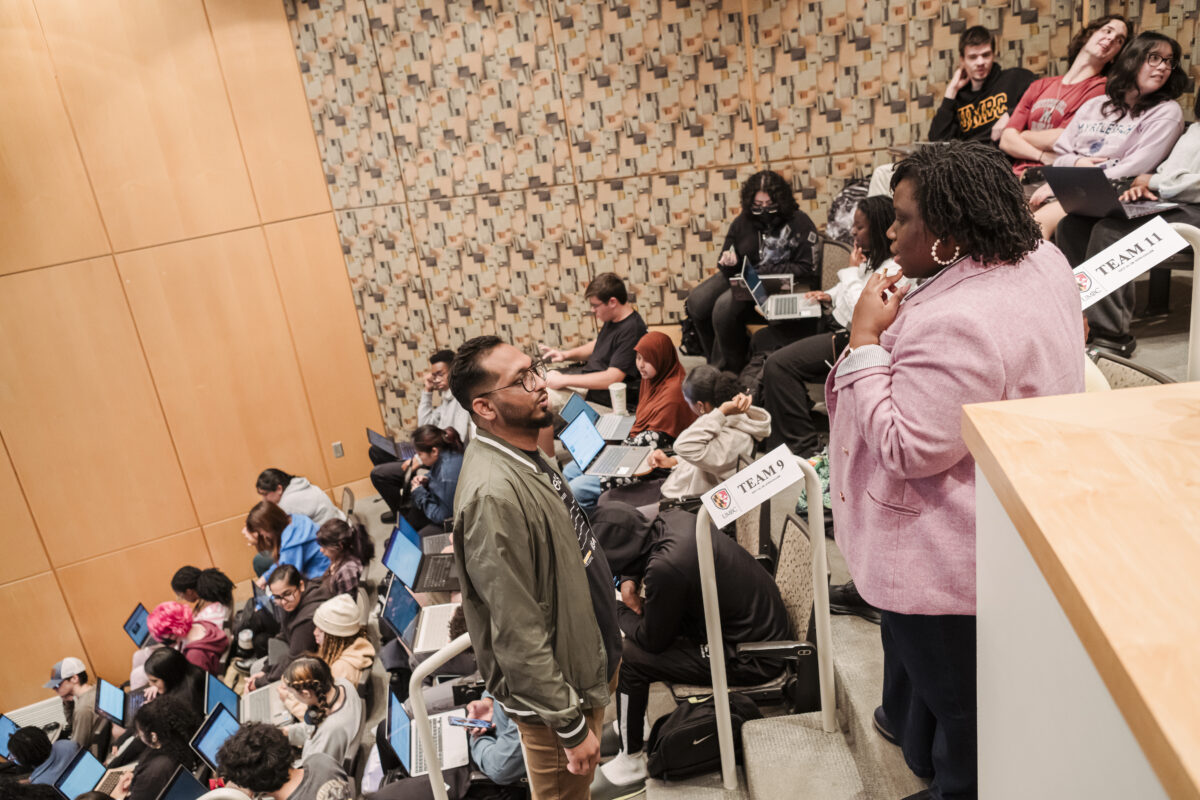 Ridwan Islam Sifat with Mercedez Dunn-Gallier, assistant professor of Sociology, Anthropology, and Public Health, in SOCY 101: Basic Concepts of Sociology. (Marlayna Demond ’11/UMBC)
Q: Tell us about someone in the community who has inspired you or supported you, and how they did it.
A: My dissertation chair, Dr. Nancy Miller, and my co-chair, Dr. Loren Henderson, offer unwavering support, encouraging me to think critically and providing invaluable feedback on my research, helping me refine my ideas and stay focused. Also, my academic advisor, Dr. Zoë McLaren, guides me with relevant resources and opportunities, ensuring that I am well-prepared for the challenges of academia. Their combined mentorship has been essential to my growth as a scholar.
Q: What have you learned from being a graduate teaching assistant?
A: As a teaching assistant, I have worked with various professors who have helped me develop teaching skill sets that will be useful when I lead my own classes. My first in-person teaching assistant roles were in Dr. Sarah Chard‘s SOCY 619: Qualitative Methods in Social Research, Dr. Aubrey Jackson Soller‘s, and Dr. Mercedez Dunn-Gallier‘s SOCY 101: Basic Concepts in Sociology. In these classes, I learned to facilitate in-class activities, which allowed me to engage directly with students and observe their understanding of course material. I continued to practice these skills in spring 2024, as a TA for Dr. Brandy Wallace‘s SOCY 101 online class. I also worked on assessing students using rubric-based grading and providing them with constructive feedback. This semester, I have returned to Dr. Jackson Soller’s and Dr. Mercedez Dunn-Gallier’s classes where I am applying all of these aspects of teaching.
Q: Tell us about what you love about your academic program or an organization you’re involved in.
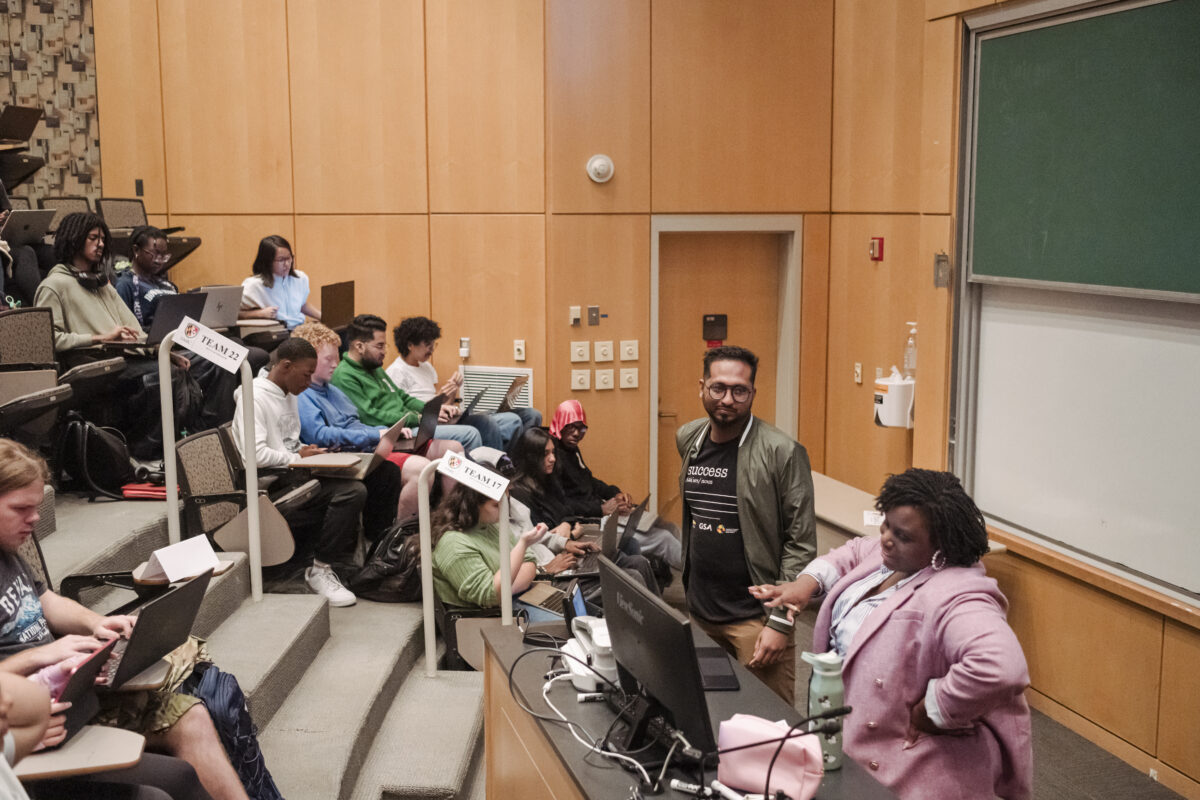 Ridwan Islam Sifat with Mercedez Dunn-Gallier, assistant professor of Sociology, Anthropology, and Public Health, in SOCY 101: Basic Concepts of Sociology. (Marlayna Demond ’11/UMBC)
A: I love the supportive and collaborative environment at the School of Public Policy, where the faculty’s dedication to student success, interdisciplinary research, and real-world policy impact creates an enriching academic experience. As a graduate teaching assistant in the Department of Sociology, Anthropology, and Public Health, I’m continually developing my skills and knowledge, preparing me for a future in academia.
* * * * *
UMBC’s greatest strength is its people. When people meet Retrievers and hear about the passion they bring, the relationships they create, the ways they support each other, and the commitment they have to inclusive excellence, they truly get a sense of our community. That’s what “Meet a Retriever” is all about.
Learn more about how UMBC can help you achieve your goals.
Explore opportunities at UMBC’s School of Public Policy and Department of Sociology, Anthropology, and Public Health.
]]>
Meet Ridwan Islam Sifat, an M.P.P. graduate student pursuing a doctoral degree at UMBC’s School of Public Policy researching healthcare disparities among intersex individuals in the United States....
https://umbc.edu/stories/meet-a-retriever_ridwan-islam-sifat-an-international-doctoral-student-in-public-policy/
https://beta.my.umbc.edu/api/v0/pixel/news/144276/guest@my.umbc.edu/df897d3cdbe204e230678c7810330641/api/pixel
cahss
cahss-research
magazine
policy-and-society
public-policy
research
saph
story
UMBC News & Magazine
https://beta.my.umbc.edu/groups/umbc-news-magazine
https://assets1-beta.my.umbc.edu/system/shared/avatars/groups/000/001/943/24435aa6207c452e7bc15cc74b42c7bb/xsmall.png?1748556657
https://assets1-beta.my.umbc.edu/system/shared/avatars/groups/000/001/943/24435aa6207c452e7bc15cc74b42c7bb/original.png?1748556657
https://assets2-beta.my.umbc.edu/system/shared/avatars/groups/000/001/943/24435aa6207c452e7bc15cc74b42c7bb/xxlarge.png?1748556657
https://assets2-beta.my.umbc.edu/system/shared/avatars/groups/000/001/943/24435aa6207c452e7bc15cc74b42c7bb/xlarge.png?1748556657
https://assets3-beta.my.umbc.edu/system/shared/avatars/groups/000/001/943/24435aa6207c452e7bc15cc74b42c7bb/large.png?1748556657
https://assets1-beta.my.umbc.edu/system/shared/avatars/groups/000/001/943/24435aa6207c452e7bc15cc74b42c7bb/medium.png?1748556657
https://assets2-beta.my.umbc.edu/system/shared/avatars/groups/000/001/943/24435aa6207c452e7bc15cc74b42c7bb/small.png?1748556657
https://assets1-beta.my.umbc.edu/system/shared/avatars/groups/000/001/943/24435aa6207c452e7bc15cc74b42c7bb/xsmall.png?1748556657
https://assets2-beta.my.umbc.edu/system/shared/avatars/groups/000/001/943/24435aa6207c452e7bc15cc74b42c7bb/xxsmall.png?1748556657
UMBC News & Magazine
1
0
false
Thu, 26 Sep 2024 16:20:23 -0400
Thu, 26 Sep 2024 16:20:23 -0400
GESTAR II center awarded $47 million extension on cooperative agreement with NASA Goddard Space Flight Center

The UMBC-led Goddard Earth Science Technology and Research (GESTAR) II center has been awarded a two-year, $47 million extension to continue its cooperative agreement with the NASA Goddard Space Flight Center (GSFC).
In fall 2021, NASA awarded $72 million for UMBC to establish GESTAR II in collaboration with primary partner Morgan State University and six other institutions. Since its launch, GESTAR II has employed more than 150 scientists who are distributed across nearly all of GSFC’s earth science division laboratories. GESTAR II scientists and engineers are currently working on active NASA earth science missions, such as the Plankton, Aerosol, Cloud, ocean Ecosystem (PACE) satellite mission, which launched into orbit earlier this year.
“Our scientists and engineers are continuing to contribute toward the advancement of earth science at NASA Goddard. We want to continue to do more of the same with this agreement extension,” said GESTAR II director Charles Ichoku. “With GSFC, we are making progress to keep our planet safe while continuing to make a lot of discoveries.”
GESTAR II is one of three cooperative agreements that UMBC has with GSFC, a partnership that began nearly 30 years ago. Earlier this month, the university collaborated with GSFC to host the “NASA-UMBC Interaction Days,” an interactive, three-day event series (concluding on September 30) that takes a closer look into the center’s current research activity, with insight into how faculty and students can engage with Goddard scientists and engineers.
In addition to contributions to NASA’s missions and earth science scholarship, GESTAR II also provides funding support for UMBC students with its undergraduate and graduate fellowships. The center also hosts a recurring seminar series for scientists.
Learn more about the research happening at the Goddard Earth Science Technology and Research (GESTAR) II center.
]]>
The UMBC-led Goddard Earth Science Technology and Research (GESTAR) II center has been awarded a two-year, $47 million extension to continue its cooperative agreement with the NASA Goddard Space...
https://umbc.edu/quick-posts/gestar-ii-center-extension/
https://beta.my.umbc.edu/api/v0/pixel/news/144266/guest@my.umbc.edu/67693ecb504c855e32d9d78a5289d181/api/pixel
gestar
gestar2
nasa
nasa-goddard-space-flight-center
quick-post
UMBC News & Magazine
https://beta.my.umbc.edu/groups/umbc-news-magazine
https://assets1-beta.my.umbc.edu/system/shared/avatars/groups/000/001/943/24435aa6207c452e7bc15cc74b42c7bb/xsmall.png?1748556657
https://assets1-beta.my.umbc.edu/system/shared/avatars/groups/000/001/943/24435aa6207c452e7bc15cc74b42c7bb/original.png?1748556657
https://assets2-beta.my.umbc.edu/system/shared/avatars/groups/000/001/943/24435aa6207c452e7bc15cc74b42c7bb/xxlarge.png?1748556657
https://assets2-beta.my.umbc.edu/system/shared/avatars/groups/000/001/943/24435aa6207c452e7bc15cc74b42c7bb/xlarge.png?1748556657
https://assets3-beta.my.umbc.edu/system/shared/avatars/groups/000/001/943/24435aa6207c452e7bc15cc74b42c7bb/large.png?1748556657
https://assets1-beta.my.umbc.edu/system/shared/avatars/groups/000/001/943/24435aa6207c452e7bc15cc74b42c7bb/medium.png?1748556657
https://assets2-beta.my.umbc.edu/system/shared/avatars/groups/000/001/943/24435aa6207c452e7bc15cc74b42c7bb/small.png?1748556657
https://assets1-beta.my.umbc.edu/system/shared/avatars/groups/000/001/943/24435aa6207c452e7bc15cc74b42c7bb/xsmall.png?1748556657
https://assets2-beta.my.umbc.edu/system/shared/avatars/groups/000/001/943/24435aa6207c452e7bc15cc74b42c7bb/xxsmall.png?1748556657
UMBC News & Magazine
0
0
false
Thu, 26 Sep 2024 13:59:40 -0400
Thu, 26 Sep 2024 13:59:40 -0400
Retrievers are upping their research game in the 2024-25 Fulbright U.S. Student Program cohort

At the height of COVID-19, Nicole Attram developed severe lower back pain which impeded her mobility and flexibility. While physical therapy helped mitigate the symptoms, the cause is still unknown. That experience determined the course of her career. After graduating from UMBC in 2023, Attram, mechanical engineering, received a 2024 – 2025 Fulbright U.S. Student award to study in Milan, Italy, in a master’s program in international healthcare management, economics, and policy specializing in pharmaceuticals and medical technology at the SDA Bocconi School of Management.
“This experience has inspired my interest in orthopedic biomechanics, particularly prosthetics, and exoskeletons, to help restore autonomy to individuals with lifelong mobility challenges,” shares Attram on her website. “I aim to conduct research at the intersection of systemic racism, healthcare policy, and orthopedic biomechanics to offer holistic care and assistive technology to underserved communities.”
Each year, more than 10,000 students apply to the Fulbright U.S. Student Program with just over 2,000 selected from hundreds of colleges and universities across the U.S. In the last decade, UMBC students and alumni have received more than 85 Fulbright U.S. Student Program awards for research and teaching placements in Africa, Asia and the Pacific, the Middle East, South America, and Europe. UMBC was named a Fulbright Top Producing Institution for the third time in five years for the 2023 – 2024 cycle.
Attram’s mentor Maria C. Sanchez, director of the Grand Challenge Scholars Program, professor of the practice, and director of the Engineering and Computing Education Program, says, “Nicole always displayed the motivation, perseverance, and inquisitiveness of a successful researcher. She also demonstrated a high level of global awareness that was refreshing to see in a non-international undergraduate student.”
Advancing global research
Attram is among eight recent graduates and alumni in UMBC’s 2024 – 2025 Fulbright U.S. Student Program class who are sharing their knowledge and building community around the world by earning a master’s degree, conducting research, or teaching English. This year is especially significant, as six of eight awards are research-focused, marking the highest number of research awards in UMBC’s Fulbright history. Students seeking research awards must develop a proposal in coordination with potential advisers in the universities and laboratories where they want to study as part of their application. Graduate degree awards require submitting both Fulbright and graduate school applications.
-
Arpita Tuladhar ’23 public health, Research Award to Germany
-
Jennifer Sorrells ’22, political science, Research Award to North Macedonia
-
Jolie Greer ’24, psychology, Research Award to Bulgaria
-
Lauren Mister ’24, teaching English to speakers of other languages, English Teaching Award to Bahrain
-
Sarah-Fatime Yoda ’24, chemical engineering, Research Award to France
-
Stuart Holton ’24, political science, English Teaching Award to Slovakia
-
Timothy Mallard, M.A. ’21, teaching English to speakers of other languages, Research Award to Uganda
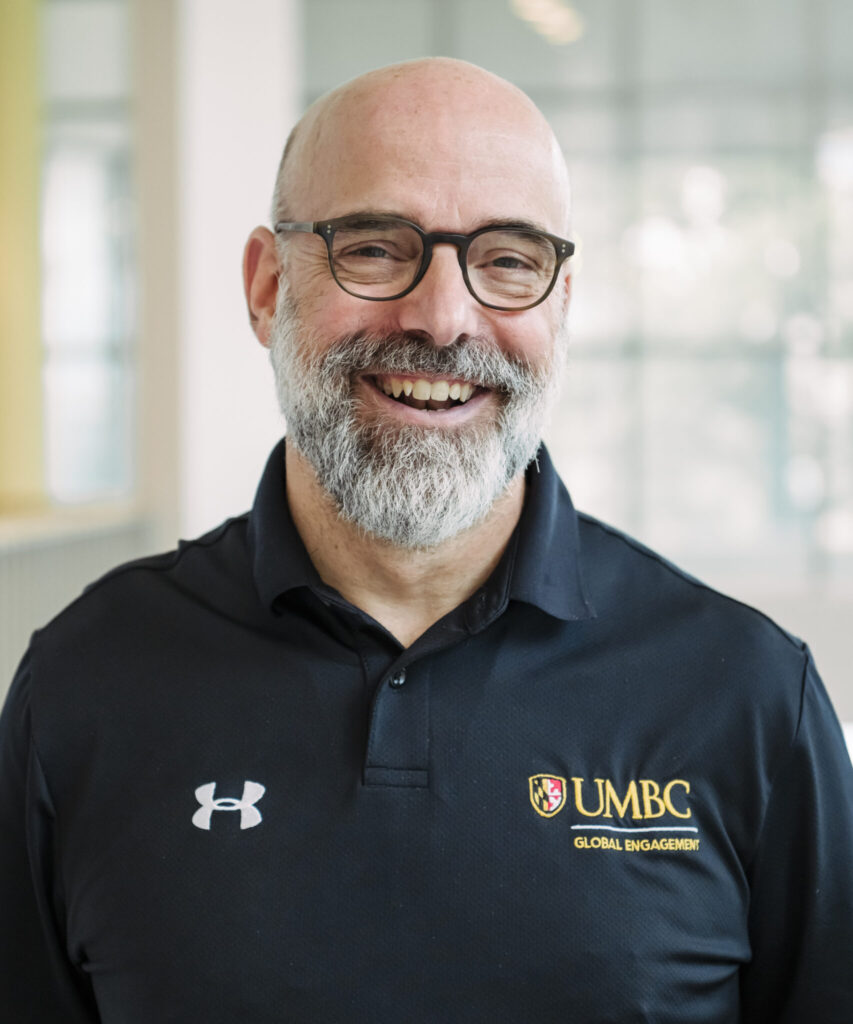
“This year’s cohort of Fulbright recipients and alternates shows the country and the globe what we at UMBC already know,” says Brian Souders, Ph.D. ’09, language, literacy, and culture, M.A.’19, TESOL, the associate director of global learning at UMBC’s Center for Global Engagement. In this role, Souders, who received a 2023 Fulbright International Education Administrator Award to Germany, has led hundreds of Retrievers through the Fulbright application process as UMBC’s Fulbright Program advisor. “We produce world-class graduates who will lead the future with their work in laboratories, in the field, and in the classrooms throughout the world.” (Image by Marlayna Demond ’11/UMBC)
Learn more about UMBC’s Fulbright Program.
]]>
At the height of COVID-19, Nicole Attram developed severe lower back pain which impeded her mobility and flexibility. While physical therapy helped mitigate the symptoms, the cause is still...
https://umbc.edu/stories/retrievers-are-upping-their-research-game-in-the-2024-2025-fulbright-u-s-student-program-cohort/
https://beta.my.umbc.edu/api/v0/pixel/news/144257/guest@my.umbc.edu/74dbeefa8c480d6930724fb40a369389/api/pixel
cahss
cbee
cge
chemical-engineering
coeit
community
feature
fulbright
international
mechanical
news
politicalscience
psychology
research
saph
story
tesol
UMBC News & Magazine
https://beta.my.umbc.edu/groups/umbc-news-magazine
https://assets1-beta.my.umbc.edu/system/shared/avatars/groups/000/001/943/24435aa6207c452e7bc15cc74b42c7bb/xsmall.png?1748556657
https://assets1-beta.my.umbc.edu/system/shared/avatars/groups/000/001/943/24435aa6207c452e7bc15cc74b42c7bb/original.png?1748556657
https://assets2-beta.my.umbc.edu/system/shared/avatars/groups/000/001/943/24435aa6207c452e7bc15cc74b42c7bb/xxlarge.png?1748556657
https://assets2-beta.my.umbc.edu/system/shared/avatars/groups/000/001/943/24435aa6207c452e7bc15cc74b42c7bb/xlarge.png?1748556657
https://assets3-beta.my.umbc.edu/system/shared/avatars/groups/000/001/943/24435aa6207c452e7bc15cc74b42c7bb/large.png?1748556657
https://assets1-beta.my.umbc.edu/system/shared/avatars/groups/000/001/943/24435aa6207c452e7bc15cc74b42c7bb/medium.png?1748556657
https://assets2-beta.my.umbc.edu/system/shared/avatars/groups/000/001/943/24435aa6207c452e7bc15cc74b42c7bb/small.png?1748556657
https://assets1-beta.my.umbc.edu/system/shared/avatars/groups/000/001/943/24435aa6207c452e7bc15cc74b42c7bb/xsmall.png?1748556657
https://assets2-beta.my.umbc.edu/system/shared/avatars/groups/000/001/943/24435aa6207c452e7bc15cc74b42c7bb/xxsmall.png?1748556657
UMBC News & Magazine
0
0
false
Mon, 23 Sep 2024 14:32:36 -0400
Mon, 23 Sep 2024 14:32:36 -0400
UMBC launches new Center for Ethics and Values as a hub for students, researchers, and the broader community
UMBC’s College of Arts, Humanities, and Social Sciences (CAHSS) opened the new Center for Ethics and Values this semester. Through a series of campus, alumni, and community events, the center will foster thoughtful, informed, and nuanced discussions and exploration of pressing ethical issues across a wide range of fields including art, humanities, health care, science, and engineering.
Leading the charge is Jessica Pfeifer, associate professor of philosophy and former executive director of the Philosophy of Science Association. Pfeifer oversaw the development of the center and organized the Public Forum series with additional funding from the CAHSS Office of the Dean. The annual speaker series will feature leading experts on significant ethical issues faced by the campus community and society. Launching the series are experts on Journalism, Ethics, and Democracy, U.S. Presidential Elections, Neuroscience, Freewill, and Moral Responsibility, and more.
“We all face ethical issues in nearly everything we do, from work to family life to our interactions with friends, to our role as citizens,” says Pfeifer. “The center will provide the campus community the opportunity to develop a more sophisticated understanding of the complexities of the ethical issues they face, as well as the relevance of ethical training for daily real-world decisions.”
Whitney Schwab, associate professor of philosophy, will lead the daily workings of the center as its inaugural director. “The Birth of Belief,” an article Schwab co-authored with Jessica Moss, professor of philosophy at New York University, received the 2019 Best Article Prize from the Board of Directors of the Journal of the History of Philosophy and was listed as one of the 10 best philosophy papers of 2019 by Philosopher’s Annual. Pfeifer notes that Schwab brings a wealth of knowledge about the history of philosophy, including the history of ethics, as well as his skills in public and student engagement to the position. “He is one of our most popular teachers,” says Pfeifer, “and is an excellent public speaker and discussant, who can hone in on central philosophical issues.”
The public forum kick-off event, Journalism, Ethics, and Democracy, on Thursday, September 26, includes Kim Yoshino, editor-in-chief of the Baltimore Banner, Melissa Block, longtime NPR host and correspondent, and Joe Saunders, associate professor of philosophy at Durham University, a public research university in Durham, England. UMBC’s Mike Nance, associate professor of philosophy, and a 2024 UMBC Dresher Center for the Humanities research fellow, will moderate the conversation.
In addition to establishing a new public forum series, the center will be home to UMBC’s Ethics Bowl team and a new host in the national line-up of the Association for Practical and Professional Ethics regional competitions. This year’s Chesapeake Regional Ethics Bowl Tournament will be held on December 7, bringing teams from colleges throughout the Mid-Atlantic region to UMBC.
“Activities like the Ethics Bowl engage students to think more critically about their own values and decisions, and thereby be better able to engage with those whose views differ,” says Pfeifer. “This will make them better scientists, doctors, programmers, entrepreneurs, lawyers, parents, and citizens.”
Pre-register for the Journalism, Ethics, and Democracy public forum.
Learn more about a major, minor, or certificate in philosophy and the philosophy honors program.
]]>
UMBC’s College of Arts, Humanities, and Social Sciences (CAHSS) opened the new Center for Ethics and Values this semester. Through a series of campus, alumni, and community events, the center will...
https://umbc.edu/quick-posts/center-for-ethics-and-values-launch/
https://beta.my.umbc.edu/api/v0/pixel/news/144158/guest@my.umbc.edu/aa705278c62cbc7cc9b12df8f60c7dad/api/pixel
cahss
cahss-research
news
philosophy
policy-and-society
quick-post
quick-posts
research
UMBC News & Magazine
https://beta.my.umbc.edu/groups/umbc-news-magazine
https://assets1-beta.my.umbc.edu/system/shared/avatars/groups/000/001/943/24435aa6207c452e7bc15cc74b42c7bb/xsmall.png?1748556657
https://assets1-beta.my.umbc.edu/system/shared/avatars/groups/000/001/943/24435aa6207c452e7bc15cc74b42c7bb/original.png?1748556657
https://assets2-beta.my.umbc.edu/system/shared/avatars/groups/000/001/943/24435aa6207c452e7bc15cc74b42c7bb/xxlarge.png?1748556657
https://assets2-beta.my.umbc.edu/system/shared/avatars/groups/000/001/943/24435aa6207c452e7bc15cc74b42c7bb/xlarge.png?1748556657
https://assets3-beta.my.umbc.edu/system/shared/avatars/groups/000/001/943/24435aa6207c452e7bc15cc74b42c7bb/large.png?1748556657
https://assets1-beta.my.umbc.edu/system/shared/avatars/groups/000/001/943/24435aa6207c452e7bc15cc74b42c7bb/medium.png?1748556657
https://assets2-beta.my.umbc.edu/system/shared/avatars/groups/000/001/943/24435aa6207c452e7bc15cc74b42c7bb/small.png?1748556657
https://assets1-beta.my.umbc.edu/system/shared/avatars/groups/000/001/943/24435aa6207c452e7bc15cc74b42c7bb/xsmall.png?1748556657
https://assets2-beta.my.umbc.edu/system/shared/avatars/groups/000/001/943/24435aa6207c452e7bc15cc74b42c7bb/xxsmall.png?1748556657
UMBC News & Magazine
0
0
false
Fri, 20 Sep 2024 10:49:51 -0400
Fri, 20 Sep 2024 10:49:51 -0400
UMBC launches new Center for Ethics and Values as a hub for students, researchers, and the broader community
UMBC’s College of Arts, Humanities, and Social Sciences (CAHSS) opened the new Center for Ethics and Values this semester. Through a series of campus, alumni, and community events, the center will foster thoughtful, informed, and nuanced discussions and exploration of pressing ethical issues across a wide range of fields including art, humanities, health care, science, and engineering.
Leading the charge is Jessica Pfeifer, associate professor of philosophy and former executive director of the Philosophy of Science Association. Pfeifer oversaw the development of the center and organized the Public Forum series with additional funding from the CAHSS Office of the Dean. The annual speaker series will feature leading experts on significant ethical issues faced by the campus community and society. Launching the series are experts on Journalism, Ethics, and Democracy, U.S. Presidential Elections, Neuroscience, Freewill, and Moral Responsibility, and more.
“We all face ethical issues in nearly everything we do, from work to family life to our interactions with friends, to our role as citizens,” says Pfeifer. “The center will provide the campus community the opportunity to develop a more sophisticated understanding of the complexities of the ethical issues they face, as well as the relevance of ethical training for daily real-world decisions.”
Whitney Schwab, associate professor of philosophy, will lead the daily workings of the center as its inaugural director. “The Birth of Belief,” an article Schwab co-authored with Jessica Moss, professor of philosophy at New York University, received the 2019 Best Article Prize from the Board of Directors of the Journal of the History of Philosophy and was listed as one of the 10 best philosophy papers of 2019 by Philosopher’s Annual. Pfeifer notes that Schwab brings a wealth of knowledge about the history of philosophy, including the history of ethics, as well as his skills in public and student engagement to the position. “He is one of our most popular teachers,” says Pfeifer, “and is an excellent public speaker and discussant, who can hone in on central philosophical issues.”
The public forum kick-off event, Journalism, Ethics, and Democracy, on Thursday, September 26, includes Kim Yoshino, editor-in-chief of the Baltimore Banner, Melissa Block, longtime NPR host and correspondent, and Joe Saunders, associate professor of philosophy at Durham University, a public research university in Durham, England. UMBC’s Mike Nance, associate professor of philosophy, and a 2024 UMBC Dresher Center for the Humanities research fellow, will moderate the conversation.
In addition to establishing a new public forum series, the center will be home to UMBC’s Ethics Bowl team and a new host in the national line-up of the Association for Practical and Professional Ethics regional competitions. This year’s Chesapeake Regional Ethics Bowl Tournament will be held on December 7, bringing teams from colleges throughout the Mid-Atlantic region to UMBC.
“Activities like the Ethics Bowl engage students to think more critically about their own values and decisions, and thereby be better able to engage with those whose views differ,” says Pfeifer. “This will make them better scientists, doctors, programmers, entrepreneurs, lawyers, parents, and citizens.”
Pre-register for the Journalism, Ethics, and Democracy public forum.
Learn more about a major, minor, or certificate in philosophy and the philosophy honors program.
]]>
UMBC’s College of Arts, Humanities, and Social Sciences (CAHSS) opened the new Center for Ethics and Values this semester. Through a series of campus, alumni, and community events, the center will...
https://umbc.edu/quick-posts/umbc-launches-new-center-for-ethics-and-values-as-a-hub-for-students-researchers-and-the-broader-community/
https://beta.my.umbc.edu/api/v0/pixel/news/144095/guest@my.umbc.edu/a14af1cbc6124bf031e6c96380b9dd31/api/pixel
cahss
cahss-research
news
philosophy
policy-and-society
quick-post
quick-posts
research
UMBC News & Magazine
https://beta.my.umbc.edu/groups/umbc-news-magazine
https://assets1-beta.my.umbc.edu/system/shared/avatars/groups/000/001/943/24435aa6207c452e7bc15cc74b42c7bb/xsmall.png?1748556657
https://assets1-beta.my.umbc.edu/system/shared/avatars/groups/000/001/943/24435aa6207c452e7bc15cc74b42c7bb/original.png?1748556657
https://assets2-beta.my.umbc.edu/system/shared/avatars/groups/000/001/943/24435aa6207c452e7bc15cc74b42c7bb/xxlarge.png?1748556657
https://assets2-beta.my.umbc.edu/system/shared/avatars/groups/000/001/943/24435aa6207c452e7bc15cc74b42c7bb/xlarge.png?1748556657
https://assets3-beta.my.umbc.edu/system/shared/avatars/groups/000/001/943/24435aa6207c452e7bc15cc74b42c7bb/large.png?1748556657
https://assets1-beta.my.umbc.edu/system/shared/avatars/groups/000/001/943/24435aa6207c452e7bc15cc74b42c7bb/medium.png?1748556657
https://assets2-beta.my.umbc.edu/system/shared/avatars/groups/000/001/943/24435aa6207c452e7bc15cc74b42c7bb/small.png?1748556657
https://assets1-beta.my.umbc.edu/system/shared/avatars/groups/000/001/943/24435aa6207c452e7bc15cc74b42c7bb/xsmall.png?1748556657
https://assets2-beta.my.umbc.edu/system/shared/avatars/groups/000/001/943/24435aa6207c452e7bc15cc74b42c7bb/xxsmall.png?1748556657
UMBC News & Magazine
0
0
false
Fri, 20 Sep 2024 10:49:51 -0400
Pagers and walkie-talkies over cellphones—a security expert explains why Hezbollah went low-tech for communications

Written by Richard Forno, principal lecturer in computer science and electrical engineering, UMBC
Electronic pagers across Lebanon exploded simultaneously on Sept. 17, 2024, killing 12 and wounding more than 2,700. The following day, another wave of explosions in the country came from detonating walkie-talkies. The attacks appeared to target members of the militant group Hezbollah.
The pagers attack involved explosives planted in the communications devices by Israeli operatives, according to U.S. officials cited by The New York Times. Hezbollah had recently ordered a shipment of pagers, according to the report.
Secretly attacking the supply chain is not a new technique in intelligence and military operations. For example, the U.S. National Security Agency intercepted computer hardware bound for overseas customers, inserted malware or other surveillance tools and then repackaged them for delivery to certain foreign buyers, a 2010 NSA internal document showed. This differs from accessing a specific person’s device, such as when Israel’s Shin Bet secretly inserted explosives into a cellphone to remotely kill a Hamas bombmaker in 1996.
Hezbollah, a longtime adversary of Israel, had increased its use of pagers in the wake of the Hamas attack on Israel on Oct. 7, 2023. By shifting to relatively low-tech communication devices, including pagers and walkie-talkies, Hezbollah apparently sought an advantage against Israel’s well-known sophistication in tracking targets through their phones.
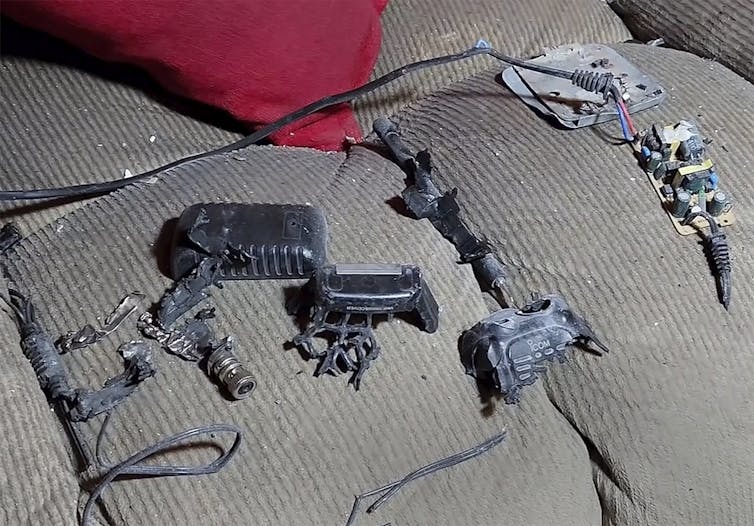 The second wave of explosions in Lebanon involved walkie-talkies. AP Photo
Cellphones: The ultimate tracker
As a former cybersecurity professional and current security researcher, I view cellular devices as the ultimate tracking tool for both government and commercial entities – in addition to users, criminals and the mobile phone provider itself. As a result, mobile phone tracking has contributed to the fight against terrorism, located missing people and helped solve crimes.
Conversely, mobile phone tracking makes it easy for anyone to record a person’s most intimate movements. This can be done for legitimate purposes such as parents tracking children’s movements, helping you find your car in a parking lot, and commercial advertising, or nefarious ends such as remotely spying on a lover suspected of cheating or tracking political activists and journalists. Even the U.S. military remains concerned with how its soldiers might be tracked by their phones.
Mobile device tracking is conducted in several ways. First, there is the network location data generated by the phone as it moves past local cell towers or Stingray devices, which law enforcement agencies use to mimic cell towers. Then there are the features built into the phone’s operating system or enabled by downloaded apps that may lead to highly detailed user tracking, which users unwittingly agree to by ignoring the software’s privacy policy or terms of service.
This collected data is sometimes sold to governments or other companies for additional data mining and user profiling. And modern smartphones also have built-in Bluetooth, Wi-Fi and GPS capabilities that can help with locating and tracking user movements around the world, both from the ground and via satellites.
Your phone contains many sensors that make it useful – and easy to track.
Mobile devices can be tracked in real time or close to it. Common technical methods include traditional radio direction-finding techniques, using intelligence satellites or drones, deploying “man in the middle” tools like Stingrays to impersonate cellular towers to intercept and isolate device traffic, or installing malware such as Pegasus, made by Israeli cyberarms company NSO to report a device’s location.
Nontechnical and slower techniques of user tracking include potentially identifying general user locations from their internet activity. This can be done from website logs or the metadata contained in content posted to social media, or contracting with data brokers to receive any collected location data from the apps that a user might install on their device.
Indeed, because of these vulnerabilities, the leader of Hezbollah earlier this year advised his members to avoid using cellular phones in their activities, noting that Israel’s “surveillance devices are in your pockets. If you are looking for the Israeli agent, look at the phone in your hands and those of your wives and children.”
Researchers have shown how these features, often intended for the user’s convenience, can be used by governments, companies and criminals to track people in their daily lives and even predict movements. Many people still aren’t aware of how much their mobile devices disclose about them.
Pagers, however, unlike mobile phones, can be harder to track depending on whether they support two-way communication.
Why go low-tech
A pager that only receives messages does not provide a signal that can facilitate tracking its owner. Therefore, Hezbollah’s use of pagers likely made it more challenging to track their operatives – thus motivating Israeli intelligence services’ purported attack on the supply chain of Hezbollah’s pagers.
Using low-tech tactics and personal couriers while avoiding the use of mobile phones and digital tools also made it difficult for the technologically superior Western intelligence agencies to locate Osama bin Laden for years after the 9/11 attacks.
In general, I believe the adversary in an asymmetric conflict using low-tech techniques, tactics and technology will almost always be able to operate successfully against a more powerful and well-funded opponent.
A well-documented demonstration of this asymmetry in action was the U.S. military’s Millennium Challenge war game in 2002. Among other things, the insurgent Red forces, led by Marine General Paul van Riper, used low-tech tactics including motorcycle couriers instead of cellphones to evade the Blue forces’ high-tech surveillance. In the initial run of the exercise, the Red team won the contest in 24 hours, forcing exercise planners to controversially reset and update the scenario to ensure a Blue team victory.
Lessons for everyone
The preference for terrorist organizations like Hezbollah and al-Qaida to avoid using smartphones is a reminder for everyone that you can be, and likely are being tracked in various ways and for various purposes.
Israel’s purported response to Hezbollah’s actions also holds a lesson for everyone. From a cybersecurity perspective, it shows that any device in your life can be tampered with by an adversary at points along the supply chain – long before you even receive it.
This article is republished from The Conversation under a Creative Commons license. Read the original article and see more than 300 UMBC articles available in The Conversation.
]]>
Written by Richard Forno, principal lecturer in computer science and electrical engineering, UMBC Electronic pagers across Lebanon exploded simultaneously on Sept. 17, 2024, killing 12 and...
https://umbc.edu/stories/pagers-and-walkie-talkies-over-cellphones-a-security-expert-explains-why-hezbollah-went-low-tech-for-communications/
https://beta.my.umbc.edu/api/v0/pixel/news/144057/guest@my.umbc.edu/632db99a5fa25784e86504f5f6bd2e0f/api/pixel
coeit
csee
discovery
magazine
story
the-conversation
UMBC News & Magazine
https://beta.my.umbc.edu/groups/umbc-news-magazine
https://assets1-beta.my.umbc.edu/system/shared/avatars/groups/000/001/943/24435aa6207c452e7bc15cc74b42c7bb/xsmall.png?1748556657
https://assets1-beta.my.umbc.edu/system/shared/avatars/groups/000/001/943/24435aa6207c452e7bc15cc74b42c7bb/original.png?1748556657
https://assets2-beta.my.umbc.edu/system/shared/avatars/groups/000/001/943/24435aa6207c452e7bc15cc74b42c7bb/xxlarge.png?1748556657
https://assets2-beta.my.umbc.edu/system/shared/avatars/groups/000/001/943/24435aa6207c452e7bc15cc74b42c7bb/xlarge.png?1748556657
https://assets3-beta.my.umbc.edu/system/shared/avatars/groups/000/001/943/24435aa6207c452e7bc15cc74b42c7bb/large.png?1748556657
https://assets1-beta.my.umbc.edu/system/shared/avatars/groups/000/001/943/24435aa6207c452e7bc15cc74b42c7bb/medium.png?1748556657
https://assets2-beta.my.umbc.edu/system/shared/avatars/groups/000/001/943/24435aa6207c452e7bc15cc74b42c7bb/small.png?1748556657
https://assets1-beta.my.umbc.edu/system/shared/avatars/groups/000/001/943/24435aa6207c452e7bc15cc74b42c7bb/xsmall.png?1748556657
https://assets2-beta.my.umbc.edu/system/shared/avatars/groups/000/001/943/24435aa6207c452e7bc15cc74b42c7bb/xxsmall.png?1748556657
UMBC News & Magazine
0
0
false
Thu, 19 Sep 2024 11:58:44 -0400
Thu, 19 Sep 2024 11:58:44 -0400
Upal Ghosh appointed to D.C. mayor’s Leadership Council for a Cleaner Anacostia River

On September 12, UMBC’s Upal Ghosh, from the Department of Chemical, Biochemical, and Environmental Engineering, was sworn in as a member of the Washington, D.C., mayor’s Leadership Council for a Cleaner Anacostia River (LCCAR). The council consists of 25 high-level government officials, community leaders, and environmental experts who support the vision of a swimmable and fishable Anacostia River. The members meet quarterly to advise the D.C. government on ongoing restoration projects.
The Anacostia River, which runs from Prince George’s County in Maryland into Washington, D.C., before joining the Potomac River and ultimately flowing into the Chesapeake Bay, has historically suffered from high levels of industrial pollution and contamination from sewage overflow. In recent years, government officials have been making concerted efforts to clean up the river. UMBC was invited to sit on the council, with Ghosh as the representative, based on the university’s key contributions to these clean-up efforts.
 On Sept. 12, Upal Ghosh (top left) and other members of the LCCAR were sworn in during a virtual meeting of the council. (Image courtesy of Ghosh)
Since 2016, Ghosh and his UMBC colleagues and students have developed innovative methods of measuring contaminants in the river and created models to elucidate where the contaminants come from and how they travel through and accumulate in the water, sediment, and aquatic life, such as fish. Nathalie Lombard, a research assistant professor at UMBC who has played a significant role in the projects, will serve as the alternate representative on the LLCAR when Ghosh cannot attend.
In addition to his work on the Anacostia, Ghosh and his students have studied and contributed to the cleanup of the waterways throughout Maryland, Delaware, and across the country. “Students learn a lot from being out in the field,” Ghosh says. “They learn how the science and engineering we do helps guide major decisions. Our ultimate goal is making a positive difference in the health of the river, lake, or bay. That gives me a lot of excitement, and it really motivates the students too.”
]]>
On September 12, UMBC’s Upal Ghosh, from the Department of Chemical, Biochemical, and Environmental Engineering, was sworn in as a member of the Washington, D.C., mayor’s Leadership Council for a...
https://umbc.edu/quick-posts/upal-ghosh-leadership-council-for-a-cleaner-anacostia-river/
https://beta.my.umbc.edu/api/v0/pixel/news/144004/guest@my.umbc.edu/ac662dc7012625b15c1987a82fdf6c04/api/pixel
cbee
coeit
news
quick-post
research
science-and-tech
UMBC News & Magazine
https://beta.my.umbc.edu/groups/umbc-news-magazine
https://assets1-beta.my.umbc.edu/system/shared/avatars/groups/000/001/943/24435aa6207c452e7bc15cc74b42c7bb/xsmall.png?1748556657
https://assets1-beta.my.umbc.edu/system/shared/avatars/groups/000/001/943/24435aa6207c452e7bc15cc74b42c7bb/original.png?1748556657
https://assets2-beta.my.umbc.edu/system/shared/avatars/groups/000/001/943/24435aa6207c452e7bc15cc74b42c7bb/xxlarge.png?1748556657
https://assets2-beta.my.umbc.edu/system/shared/avatars/groups/000/001/943/24435aa6207c452e7bc15cc74b42c7bb/xlarge.png?1748556657
https://assets3-beta.my.umbc.edu/system/shared/avatars/groups/000/001/943/24435aa6207c452e7bc15cc74b42c7bb/large.png?1748556657
https://assets1-beta.my.umbc.edu/system/shared/avatars/groups/000/001/943/24435aa6207c452e7bc15cc74b42c7bb/medium.png?1748556657
https://assets2-beta.my.umbc.edu/system/shared/avatars/groups/000/001/943/24435aa6207c452e7bc15cc74b42c7bb/small.png?1748556657
https://assets1-beta.my.umbc.edu/system/shared/avatars/groups/000/001/943/24435aa6207c452e7bc15cc74b42c7bb/xsmall.png?1748556657
https://assets2-beta.my.umbc.edu/system/shared/avatars/groups/000/001/943/24435aa6207c452e7bc15cc74b42c7bb/xxsmall.png?1748556657
UMBC News & Magazine
0
0
false
Wed, 18 Sep 2024 07:09:17 -0400
Wed, 18 Sep 2024 07:09:17 -0400
New study increases understanding of HIV drug’s negative effects on the brain
Efavirenz is an important drug for treating HIV infection, but it has negative effects that can significantly impact patients’ quality of life over time. It causes neuropsychiatric disorders and neurocognitive impairment in roughly 50 percent of patients. The drug is associated with abnormal lipid levels in blood plasma, but the molecular mechanisms responsible for negative clinical observations are unknown.
 Nav Raj Phulara (courtesy of Phulara)
A new study in ACS Pharmacology & Translational Science led by chemistry Ph.D. student Nav Raj Phulara, used a novel combination approach to increase understanding of the relevant mechanisms. First, tissue imaging showed that Efavirenz alters lipid metabolism in mouse brains. Next, the researchers investigated all of the proteins present in the mouse brain sections and found that Efavirenz downregulates certain enzymes. All of these changes could be responsible for the drug’s negative neuropsychiatric effects. If proven so, new drugs could potentially be developed to block the negative activity of Efavirenz while allowing its positive effects to continue.
“Lipid abnormalities in the brain can lead to adverse effects like brain disorders and neurodegenerative diseases, and the brain is rich in lipids overall,” says Herana Kamal Seneviratne, assistant professor of chemistry and biochemistry and senior author on the new paper. “That formed the basis for investigating lipids in this study.”
The new combination approach could also be applied to investigate lipid metabolism in other systems, such as the heart and kidney. Two other students in Seneviratne’s group, chemistry Ph.D. student Nimalee Jayasekera and junior biochemistry and molecular biology major Anderson Rivas, are already examining lipid metabolism in heart tissue. The results could eventually lead to reduced tissue damage in people taking drugs with known cardiac toxicity, such as some chemotherapy drugs.
Novel approach, new perspectives
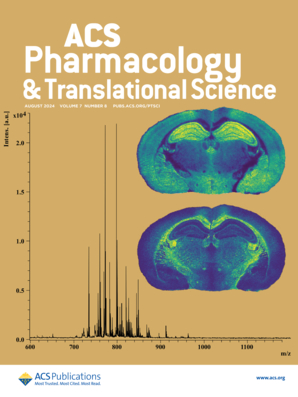 Pharmacology & Translational Science featured the study on its cover. The two images on the right show the results from mass spectrometry performed on the mouse brain samples. The different colors represent the abundance of a particular lipid at each precise location.
The approach employed in the new study improves on traditional methods. Previously, researchers were forced to grind up tissue samples into a homogeneous slurry before analyzing them. The mass spectrometry method Phulara and Seneviratne used to image the samples maintains their integrity, and therefore retains spatial information. The results indicate which lipids are present, their abundance, and precisely where each lipid is located in a heat map for each tissue section.
Comparing the results of these studies between mice who had and had not been treated with Efavirenz showed that the drug altered the abundance of multiple lipids, particularly in the hippocampus, thalamus, and corpus callosum regions.
Then, when the researchers investigated the proteins present in the samples (their “proteome”), they found that 12 enzymes were much less abundant in treated mice. That list includes proteins involved in energy metabolism and lipid production and metabolism. The enzymes associated with the lipid changes will guide further investigation into the molecular mechanisms behind the changes.
“Combining tissue imaging with proteomics is extremely powerful, and that is one of the novel aspects of this work,” Seneviratne says. Top-of-the-line instrumentation available in Seneviratne’s lab and UMBC’s Interdisciplinary Life Sciences Building made the work possible, as well as collaboration with UMBC cancer biologists Charles Bieberich and Apurv Rege, who supported the drug treatment studies and are co-authors on the paper.
Digging deeper
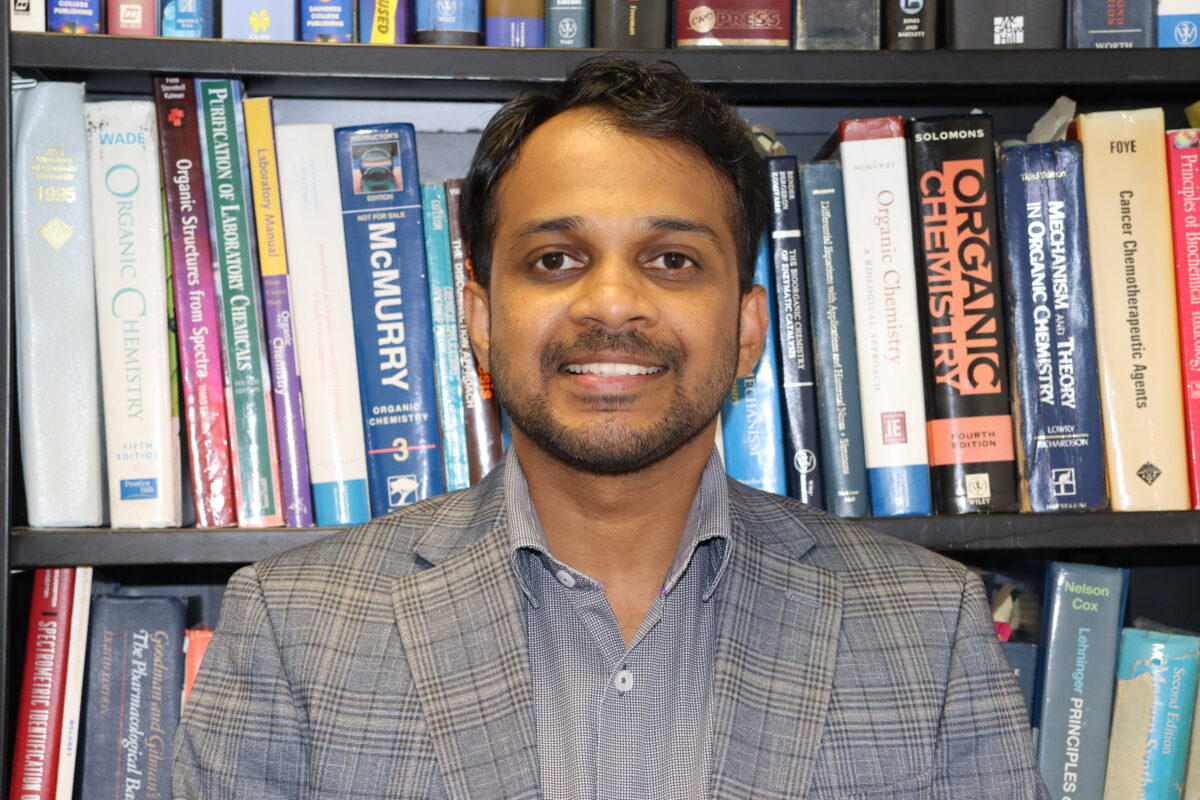 Herana Kamal Seneviratne (courtesy of Seneviratne)
Now Phulara is homing in on how the enzymes identified in the current study affect lipid metabolism. To do that, he’ll manipulate the enzymes’ expression in different brain cell types and observe the effects. Some of the cells will receive Efavirenz and some will not. Observing the effects on lipid metabolism in the two groups will help reveal how the enzymes regulate lipid metabolism under normal conditions and how the drug disrupts that process.
Phulara has started by growing mouse astrocytes, a type of brain cell. He’ll collaborate with neurologists at the Johns Hopkins School of Medicine for analyses of human cells. Seneviratne’s group is also working on developing proteomic techniques that retain spatial information, similar to the lipid mass spectrometry imaging methods the team used.
“The overall goal is, ‘How can we target the lipid metabolism in order to minimize the side effects associated with this drug?’” Seneviratne says.
Earlier detection for better outcomes
For drugs that cause heart damage, such as the common chemotherapy drug doxorubicin, looking at lipid metabolism might help discover new mechanisms by which the damage occurs and help clinicians recognize the damage earlier. Typically, damage is not detected until it is quite advanced and irreversible, Seneviratne explains.
“We want to know the earliest molecular signatures of the damage. We think lipid metabolism will give us early molecular markers,” Seneviratne says. He adds, “The approaches that we developed in this study could be broadly applicable to kidney toxicities or cardio toxicities or any toxicities, and neurodegenerative diseases as well.”
“It’s really exciting. We can even find novel molecular targets for different diseases using this approach,” Phulara says. “If we see altered lipid metabolism in response to a specific drug, then we can target that altered lipid metabolism by supplementing with another drug, so hopefully that can help combat the disease.”
]]>
Efavirenz is an important drug for treating HIV infection, but it has negative effects that can significantly impact patients’ quality of life over time. It causes neuropsychiatric disorders and...
https://umbc.edu/stories/study-hiv-drug-negative-brain-effects/
https://beta.my.umbc.edu/api/v0/pixel/news/143960/guest@my.umbc.edu/d8f8f5a01c2b5ec281498c49278f6523/api/pixel
chemistry-and-biochemistry
cnms
gradresearch
news
research
science-and-tech
story
UMBC News & Magazine
https://beta.my.umbc.edu/groups/umbc-news-magazine
https://assets1-beta.my.umbc.edu/system/shared/avatars/groups/000/001/943/24435aa6207c452e7bc15cc74b42c7bb/xsmall.png?1748556657
https://assets1-beta.my.umbc.edu/system/shared/avatars/groups/000/001/943/24435aa6207c452e7bc15cc74b42c7bb/original.png?1748556657
https://assets2-beta.my.umbc.edu/system/shared/avatars/groups/000/001/943/24435aa6207c452e7bc15cc74b42c7bb/xxlarge.png?1748556657
https://assets2-beta.my.umbc.edu/system/shared/avatars/groups/000/001/943/24435aa6207c452e7bc15cc74b42c7bb/xlarge.png?1748556657
https://assets3-beta.my.umbc.edu/system/shared/avatars/groups/000/001/943/24435aa6207c452e7bc15cc74b42c7bb/large.png?1748556657
https://assets1-beta.my.umbc.edu/system/shared/avatars/groups/000/001/943/24435aa6207c452e7bc15cc74b42c7bb/medium.png?1748556657
https://assets2-beta.my.umbc.edu/system/shared/avatars/groups/000/001/943/24435aa6207c452e7bc15cc74b42c7bb/small.png?1748556657
https://assets1-beta.my.umbc.edu/system/shared/avatars/groups/000/001/943/24435aa6207c452e7bc15cc74b42c7bb/xsmall.png?1748556657
https://assets2-beta.my.umbc.edu/system/shared/avatars/groups/000/001/943/24435aa6207c452e7bc15cc74b42c7bb/xxsmall.png?1748556657
UMBC News & Magazine
0
0
false
Mon, 16 Sep 2024 16:30:21 -0400
Mon, 16 Sep 2024 16:30:21 -0400
Hrabowski Fund for Innovation awardees announced

UMBC’s Faculty Development Center has announced the projects selected to receive grants in the 2023 – 2024 rounds of the Hrabowski Fund for Innovation competition. The Fund supports initiatives to enhance teaching and learning at UMBC, with specific emphasis on innovative approaches to increase student success.
“These high-profile awards emphasize the university’s ongoing commitment to support faculty and staff efforts in innovation in teaching and learning,” says Kerrie Kephart, interim director, Faculty Development Center. “Projects funded from the Hrabowski Fund are often catalysts for the broader adoption of innovative teaching and student success initiatives across campus.”
Proposals for the next round are due by October 25, 2024. For more information and to apply, visit UMBC’s Faculty Development Center website. Many awardees will be sharing their work during the poster/demo session at the Eighth Annual Provost’s Teaching and Learning Symposium (PT&LS) on Friday, September 27. Please see the PT&LS myUMBC post for more information and to register for the symposium.
]]>
UMBC’s Faculty Development Center has announced the projects selected to receive grants in the 2023 – 2024 rounds of the Hrabowski Fund for Innovation competition. The Fund supports initiatives...
https://umbc.edu/quick-posts/hrabowski-fund-for-innovation-award-announced/
https://beta.my.umbc.edu/api/v0/pixel/news/143946/guest@my.umbc.edu/5e826cc3c15171cd067932f0262c1f07/api/pixel
quick-post
UMBC News & Magazine
https://beta.my.umbc.edu/groups/umbc-news-magazine
https://assets1-beta.my.umbc.edu/system/shared/avatars/groups/000/001/943/24435aa6207c452e7bc15cc74b42c7bb/xsmall.png?1748556657
https://assets1-beta.my.umbc.edu/system/shared/avatars/groups/000/001/943/24435aa6207c452e7bc15cc74b42c7bb/original.png?1748556657
https://assets2-beta.my.umbc.edu/system/shared/avatars/groups/000/001/943/24435aa6207c452e7bc15cc74b42c7bb/xxlarge.png?1748556657
https://assets2-beta.my.umbc.edu/system/shared/avatars/groups/000/001/943/24435aa6207c452e7bc15cc74b42c7bb/xlarge.png?1748556657
https://assets3-beta.my.umbc.edu/system/shared/avatars/groups/000/001/943/24435aa6207c452e7bc15cc74b42c7bb/large.png?1748556657
https://assets1-beta.my.umbc.edu/system/shared/avatars/groups/000/001/943/24435aa6207c452e7bc15cc74b42c7bb/medium.png?1748556657
https://assets2-beta.my.umbc.edu/system/shared/avatars/groups/000/001/943/24435aa6207c452e7bc15cc74b42c7bb/small.png?1748556657
https://assets1-beta.my.umbc.edu/system/shared/avatars/groups/000/001/943/24435aa6207c452e7bc15cc74b42c7bb/xsmall.png?1748556657
https://assets2-beta.my.umbc.edu/system/shared/avatars/groups/000/001/943/24435aa6207c452e7bc15cc74b42c7bb/xxsmall.png?1748556657
UMBC News & Magazine
1
0
false
Mon, 16 Sep 2024 13:28:40 -0400
Mon, 16 Sep 2024 13:28:40 -0400
Creative, scientifically accurate eclipse animation selected for screening at Iron Mule Film Festival

An animated short co-directed by UMBC’s Robin Corbet, senior research scientist in the Center for Space Sciences and Technology, and Laurence Arcadias, an animation professor at the Maryland Institute College of Art, will screen at the Iron Mule Film Festival—a short comedy film fest—in New York City on October 7. Corbet and Arcadias will attend the screening and take questions from the audience about science, art, and how they can complement each other.
The playful and zany short film features animations representing the 2024 total eclipse. The soundtrack showcases a delightful and scientifically accurate track, “The Sun Song,” performed by The Chromatics, an a cappella group consisting primarily of NASA scientists.
A large group of astronomy researchers attending a meeting of the American Astronomical Society took part in a collaborative art and science workshop where they developed the animations just before viewing the eclipse.
“The Eclipse”
The final product “uses the first film ever made of an eclipse, produced by magician Nevil Maskelyne in 1900, as a basis,” Corbet explains, “but the astronomers and artists added quite a few of their own wild embellishments.”
The eclipse workshop was a project of AstroAnimation, an ongoing collaboration led by Corbet and Arcadias. AstroAnimation brings together art students at MICA and NASA scientists to produce animations based on cutting-edge science. The eclipse film represents AstroAnimation’s effort to expand its impact beyond the classroom.
]]>
An animated short co-directed by UMBC’s Robin Corbet, senior research scientist in the Center for Space Sciences and Technology, and Laurence Arcadias, an animation professor at the Maryland...
https://umbc.edu/quick-posts/eclipse-animation-at-iron-mule-film-fest/
https://beta.my.umbc.edu/api/v0/pixel/news/143936/guest@my.umbc.edu/a623c047818cfa719f6ef0d19ac34f9f/api/pixel
arts-and-culture
csst
news
quick-post
science-and-tech
UMBC News & Magazine
https://beta.my.umbc.edu/groups/umbc-news-magazine
https://assets1-beta.my.umbc.edu/system/shared/avatars/groups/000/001/943/24435aa6207c452e7bc15cc74b42c7bb/xsmall.png?1748556657
https://assets1-beta.my.umbc.edu/system/shared/avatars/groups/000/001/943/24435aa6207c452e7bc15cc74b42c7bb/original.png?1748556657
https://assets2-beta.my.umbc.edu/system/shared/avatars/groups/000/001/943/24435aa6207c452e7bc15cc74b42c7bb/xxlarge.png?1748556657
https://assets2-beta.my.umbc.edu/system/shared/avatars/groups/000/001/943/24435aa6207c452e7bc15cc74b42c7bb/xlarge.png?1748556657
https://assets3-beta.my.umbc.edu/system/shared/avatars/groups/000/001/943/24435aa6207c452e7bc15cc74b42c7bb/large.png?1748556657
https://assets1-beta.my.umbc.edu/system/shared/avatars/groups/000/001/943/24435aa6207c452e7bc15cc74b42c7bb/medium.png?1748556657
https://assets2-beta.my.umbc.edu/system/shared/avatars/groups/000/001/943/24435aa6207c452e7bc15cc74b42c7bb/small.png?1748556657
https://assets1-beta.my.umbc.edu/system/shared/avatars/groups/000/001/943/24435aa6207c452e7bc15cc74b42c7bb/xsmall.png?1748556657
https://assets2-beta.my.umbc.edu/system/shared/avatars/groups/000/001/943/24435aa6207c452e7bc15cc74b42c7bb/xxsmall.png?1748556657
UMBC News & Magazine
0
0
false
Mon, 16 Sep 2024 11:19:20 -0400
Mon, 16 Sep 2024 11:19:20 -0400