What is Salt Typhoon? A security expert explains the Chinese hackers and their attack on US telecommunications networks

Written by Richard Forno, principal lecturer in computer science and electrical engineering, UMBC
Cyberattacks linked to the Chinese government that compromised large portions of the American telecommunications network have the U.S. government sounding the alarm. The chair of the Senate Intelligence Committee, Sen. Mark Warner (D-VA), has called it the “worst telecom hack in our nation’s history” and noted that it makes prior cyberattacks by Russian operatives look like “child’s play” by comparison.
The complex cyberattack, carried out by a group of Chinese hackers dubbed Salt Typhoon, began as far back as 2022. Its purpose, according to U.S. officials, was to give Chinese operatives persistent access to telecommunications networks across the U.S. by compromising devices like routers and switches run by companies like AT&T, Verizon, Lumen and others.
This attack comes on the heels of reports that the FBI and Cybersecurity and Infrastructure Security Agency were assisting telephone companies with countering other China-connected compromises of their networks. The earlier hacking was part of an attack targeting people in the Washington area in government or political roles, including candidates for the 2024 presidential election.
But Salt Typhoon is not just targeting Americans. Research from security vendor Trend Micro shows that attacks by Salt Typhoon compromised other critical infrastructure around the world in recent years. U.S. officials have confirmed these findings as well – and their level of concern is noteworthy.
Chinese officials have denied the allegations that they’re behind this operation, as they have in response to allegations about previous cyberattacks.
As a cybersecurity researcher, I find this attack is indeed breathtaking in its scope and severity. But it’s not surprising that such an incident took place. Many organizations of all sizes still fail to follow good cybersecurity practices, have limited resources, or operate IT infrastructures that are too complex to effectively monitor, manage and secure.
How bad is it?
Salt Typhoon exploited technical vulnerabilities in some of the cybersecurity products like firewalls used to protect large organizations. Once inside the network, the attackers used more conventional tools and knowledge to expand their reach, gather information, stay hidden and deploy malware for later use.
According to the FBI, Salt Typhoon allowed Chinese officials to obtain a large amount of records showing where, when and who specific individuals were communicating with. In some cases, they noted that Salt Typhoon gave access to the contents of phone calls and text messages as well.
‘PBS News Hour’ reports on updates from the White House about Salt Typhoon.
Salt Typhoon also compromised the private portals, or backdoors, that telephone companies provide to law enforcement to request court-ordered monitoring of phone numbers pursuant to investigations. This is also the same portal that is used by U.S. intelligence to surveil foreign targets inside the United States.
As a result, Salt Typhoon attackers may have obtained information about which Chinese spies and informants counterintelligence agencies were monitoring – knowledge that can help those targets try to evade such surveillance.
On Dec. 3, the Cybersecurity and Infrastructure Security Agency, National Security Agency and FBI, along with their counterparts in Australia, New Zealand and Canada, released guidance to the public on how to address the Salt Typhoon attack. Their Enhanced Visibility and Hardening Guidance for Communications Infrastructure guide essentially reiterates best cybersecurity practices for organizations that could help mitigate the impact of Salt Typhoon or future copycat attacks.
It does, however, include recommendations to protect specific telecommunication equipment for some of the Cisco products that were targeted in this attack.
As of this writing, U.S. officials and affected companies have not been able to fully ascertain the scope, depth and severity of the attack – or remove the attackers from compromised systems – even though this attack has been ongoing for months.
What can be done?
U.S. officials have said that many of the ways Salt Typhoon penetrated its targets was through existing weaknesses with the infrastructure. As I’ve written previously, failing to implement basic cybersecurity best practices can lead to debilitating incidents for organizations of all sizes. Given how dependent the world is on networked information systems, it is more important than ever to maintain cybersecurity programs that make it difficult for attacks to succeed, especially for critical infrastructure like the phone network.
In addition to following the best practices guidance issued by the Cybersecurity and Infrastructure Security Agency earlier this week, organizations should remain vigilant. They should monitor not only the news for information about this attack but the various free, proprietary or private threat intelligence feeds and informal professional networks to stay up to date on attackers’ tactics and techniques – and ways to counter them.
Companies and governments should also ensure their IT departments and cybersecurity programs are adequately staffed and funded to meet their needs and ensure that best practices are implemented. The Federal Communications Commission is already threatening companies with fines for failing to bolster their defenses against Chinese hacking.
Although any illicit surveillance is concerning, the average American probably has little to worry about from Salt Typhoon. It’s unlikely that your family phone calls or text messages to friends are of interest to the Chinese government. However, if you want to increase your security and privacy a bit, consider using end-to-end encrypted messaging services like Signal, FaceTime or Messages.
Also make sure you’re not using default or easily guessed passwords on your devices, including your home router. And consider using two-factor authentication to further strengthen the security of any critical internet accounts.
Backdoors and bad guys
Lost in the noise of the story is that Salt Typhoon has proved that the decades of warnings by the internet security community were correct. No mandated secret or proprietary access to technology products is likely to remain undiscovered or used only by “the good guys” – and efforts to require them are likely to backfire.
So it’s somewhat ironic that one of the countermeasures recommended by the government to guard against Salt Typhoon spying is to use strongly encrypted services for phone calls and text messages – encryption capabilities that it has spent decades trying to undermine so that only “the good guys” can use it.
This article is republished from The Conversation under a Creative Commons license. Read the original article and see more than 300 UMBC articles available in The Conversation.
]]>
Written by Richard Forno, principal lecturer in computer science and electrical engineering, UMBC Cyberattacks linked to the Chinese government that compromised large portions of the American...
https://umbc.edu/stories/what-is-salt-typhoon-a-security-expert-explains-the-chinese-hackers-and-their-attack-on-us-telecommunications-networks/
https://beta.my.umbc.edu/api/v0/pixel/news/146120/guest@my.umbc.edu/e8c940e77114f1aea179b6800c6ab420/api/pixel
coeit
cybersecurity
discovery
magazine
story
the-conversation
UMBC News & Magazine
https://beta.my.umbc.edu/groups/umbc-news-magazine
https://assets1-beta.my.umbc.edu/system/shared/avatars/groups/000/001/943/24435aa6207c452e7bc15cc74b42c7bb/xsmall.png?1748556657
https://assets1-beta.my.umbc.edu/system/shared/avatars/groups/000/001/943/24435aa6207c452e7bc15cc74b42c7bb/original.png?1748556657
https://assets2-beta.my.umbc.edu/system/shared/avatars/groups/000/001/943/24435aa6207c452e7bc15cc74b42c7bb/xxlarge.png?1748556657
https://assets2-beta.my.umbc.edu/system/shared/avatars/groups/000/001/943/24435aa6207c452e7bc15cc74b42c7bb/xlarge.png?1748556657
https://assets3-beta.my.umbc.edu/system/shared/avatars/groups/000/001/943/24435aa6207c452e7bc15cc74b42c7bb/large.png?1748556657
https://assets1-beta.my.umbc.edu/system/shared/avatars/groups/000/001/943/24435aa6207c452e7bc15cc74b42c7bb/medium.png?1748556657
https://assets2-beta.my.umbc.edu/system/shared/avatars/groups/000/001/943/24435aa6207c452e7bc15cc74b42c7bb/small.png?1748556657
https://assets1-beta.my.umbc.edu/system/shared/avatars/groups/000/001/943/24435aa6207c452e7bc15cc74b42c7bb/xsmall.png?1748556657
https://assets2-beta.my.umbc.edu/system/shared/avatars/groups/000/001/943/24435aa6207c452e7bc15cc74b42c7bb/xxsmall.png?1748556657
UMBC News & Magazine
0
0
false
Fri, 06 Dec 2024 11:43:12 -0500
Fri, 06 Dec 2024 11:43:12 -0500
FIRST faculty cohort brings new research areas to College of Natural and Mathematical Sciences
In fall 2022, the College of Natural and Mathematical Sciences at UMBC and the University of Maryland School of Medicine (UMSOM) received a five-year, $13.7 million grant from the National Institutes of Health (NIH) to enhance recruitment and training of junior faculty and promote inclusive excellence at UMBC. Since then, UMBC and UMSOM teams have been planning programming for the incoming FIRST (Faculty Institutional Recruitment for Sustainable Transformation) cohort, undertaking faculty searches, and otherwise preparing for their new colleagues’ arrival.
As of this fall, four new UMBC faculty members and three new UMSOM faculty have been selected, with three more to be added at UMSOM. Two of UMBC’s hires are busy doing research, recruiting students, and settling into their new positions. The other two will officially assume their roles in January, but they are already visiting campus and starting to set up their laboratory spaces.
In November, the leads on the grant from both institutions and all the new hires gathered at UMBC for a reception to celebrate their first semester and build community among the cohort.
A talented group
“Although I have only been on board for three months, I already feel the leadership’s dedication to supporting early-career faculty, particularly those from underrepresented backgrounds, through professional development and tailored resources,” shared Cheng-Yu Li, a new assistant professor of biological sciences at UMBC hired through the program. “I am excited to work alongside this talented group of scientists and contribute to advancing neuroscience research, education, and outreach.”
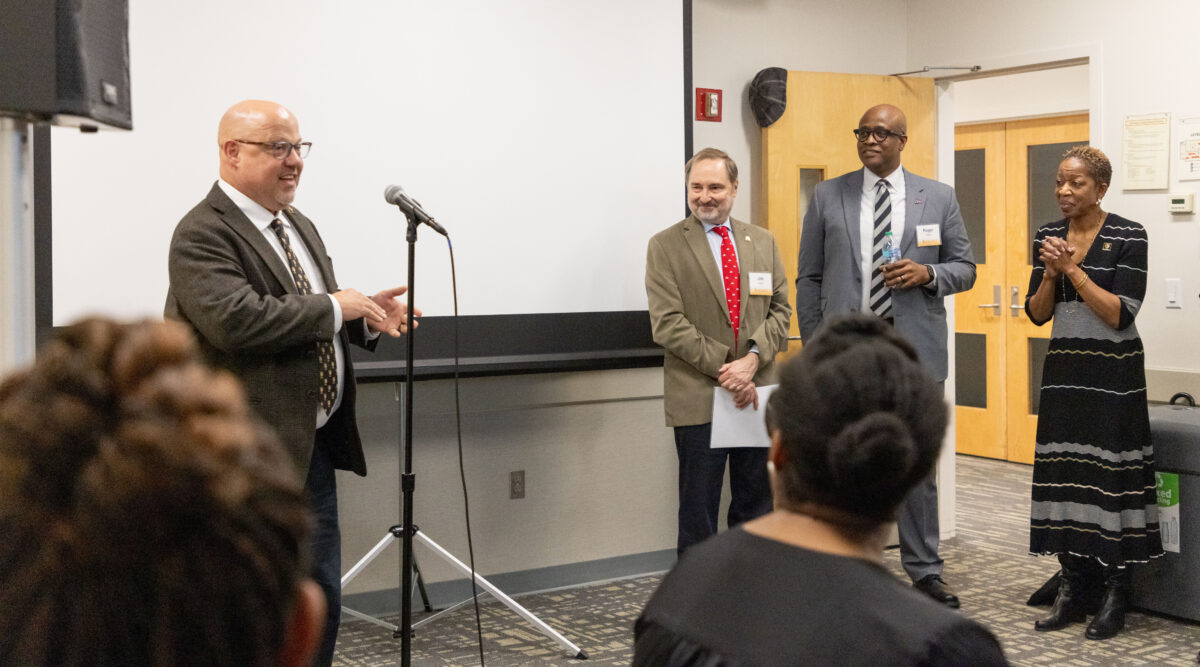
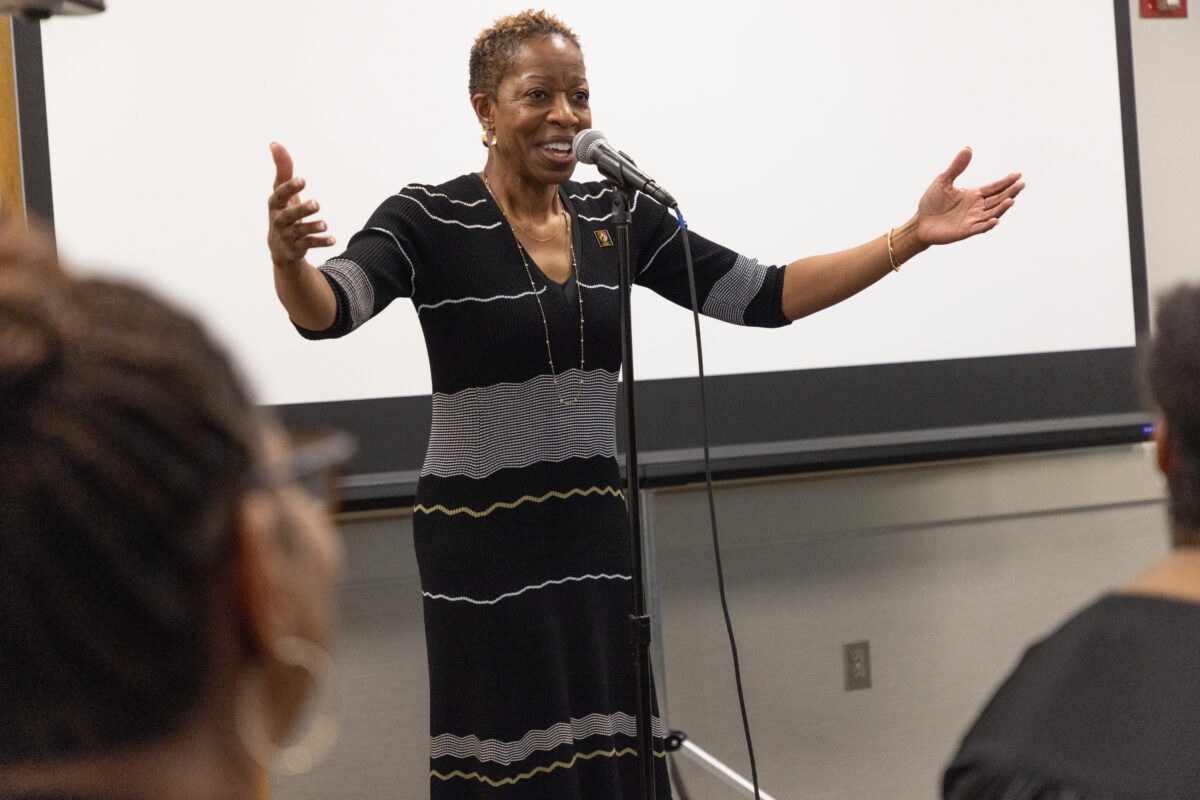 Left: Manfred Van Dulmen, UMBC’s provost, addresses attendees at the reception to celebrate the FIRST faculty. Jim Kaper, professor of microbiology and immunology and the UMSOM lead on the grant; Roger Ward, UMSOM provost; and Valerie Sheares Ashby, UMBC president, look on (from left to right). Right: Valerie Sheares Ashby, UMBC president, addresses the FIRST reception attendees. (Melissa Penley Cormier, M.F.A. ’17)
Li’s research straddles neuroscience and behavior. His model system, African cichlid freshwater fish, is useful for studying reproductive and social behaviors, such as courtship rituals and aggression. Many of the mechanisms involved are applicable across a wide range of species.
Carmen Muñoz-Ballester, another new assistant professor of biological sciences at UMBC, is finding her department colleagues and the FIRST cohort to be helpful resources as she navigates her first year.
“The Department of Biological Sciences at UMBC provides a very supportive environment for building a scientific career, and I am very happy to be part of this thriving community,” Muñoz-Ballester says. “Life as a faculty member can be overwhelming at the beginning, and having the opportunity to share challenges and small wins with people in similar situations makes it much better. I am very glad to have my peers to count on in my daily life, and I am committed to making the most of this opportunity and paying it forward to future trainees and colleagues.”
Muñoz-Ballester’s work focuses on sex differences in the response to traumatic brain injury. Severe or repeated brain injuries (such as seen in football players) are getting more attention today, and men suffer more traumatic brain injuries overall, but she notes that women tend to have worse outcomes than men after sustaining less-severe brain injuries. Muñoz-Ballester will work to unpack the neural mechanisms behind the effects of these injuries in both sexes, potentially leading to more effective treatments.
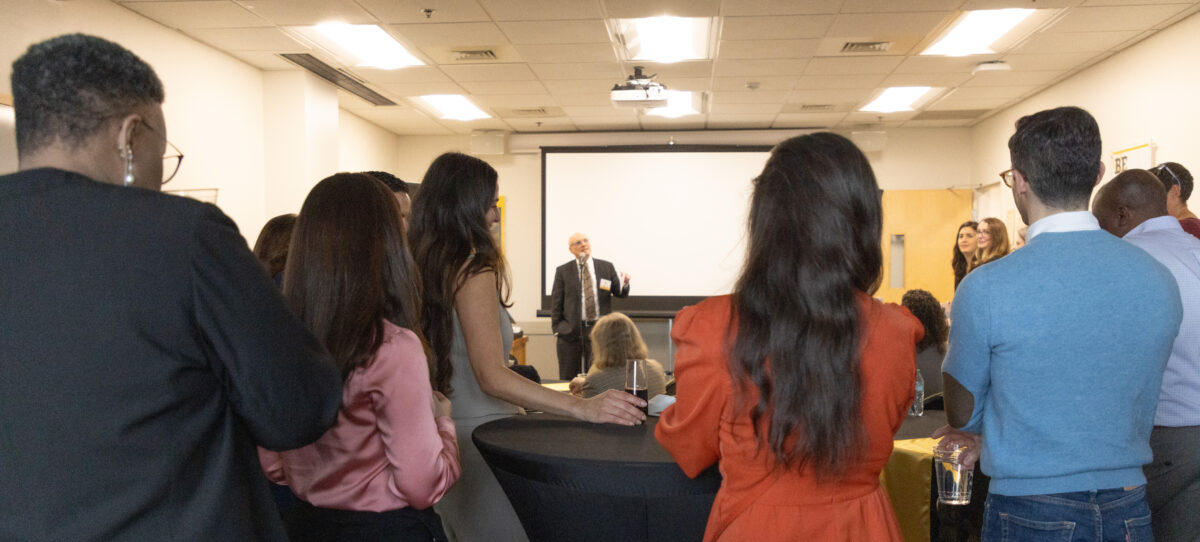 William R. LaCourse, dean of UMBC’s College of Natural and Mathematical Sciences and UMBC lead on the FIRST grant, addresses attendees at the reception. (Melissa Penley Cormier, M.F.A. ’17)
Tackling the biggest challenges
Diana Elizondo and Gretchen Alicea will round out the FIRST cohort at UMBC. Elizondo is an immunologist who uses mice to study signaling pathways involved in inflammation and metabolic disorders like diabetes and obesity. Alicea focuses on how metabolic changes in the environment immediately surrounding malignant tumors are related to the risk of metastasis. Jose Lemme, Alisha Blazer, and Amed Outtara have been brought on board at UMSOM.
William R. LaCourse, CNMS dean, is thrilled to welcome these new members of the faculty to UMBC. Their research interests include some of the most pressing issues society faces today, like cancer and obesity. These researchers are also approaching study areas that may deserve more attention from innovative angles.
“Thank you for choosing our institutions to be a part of your academic careers. We want you to know that your success goes beyond the UM FIRST program and even beyond tenure. Your success is that you always find joy in research, mentoring, teaching, and life,” LaCourse said at the reception. “This room is full of individuals who are there for you.”
]]>
In fall 2022, the College of Natural and Mathematical Sciences at UMBC and the University of Maryland School of Medicine (UMSOM) received a five-year, $13.7 million grant from the National...
https://umbc.edu/stories/welcome-first-faculty-cohort/
https://beta.my.umbc.edu/api/v0/pixel/news/146100/guest@my.umbc.edu/c2eb0c15cb321adf55d36de148713a1b/api/pixel
biology
cnms
news
research
science-and-tech
story
UMBC News & Magazine
https://beta.my.umbc.edu/groups/umbc-news-magazine
https://assets1-beta.my.umbc.edu/system/shared/avatars/groups/000/001/943/24435aa6207c452e7bc15cc74b42c7bb/xsmall.png?1748556657
https://assets1-beta.my.umbc.edu/system/shared/avatars/groups/000/001/943/24435aa6207c452e7bc15cc74b42c7bb/original.png?1748556657
https://assets2-beta.my.umbc.edu/system/shared/avatars/groups/000/001/943/24435aa6207c452e7bc15cc74b42c7bb/xxlarge.png?1748556657
https://assets2-beta.my.umbc.edu/system/shared/avatars/groups/000/001/943/24435aa6207c452e7bc15cc74b42c7bb/xlarge.png?1748556657
https://assets3-beta.my.umbc.edu/system/shared/avatars/groups/000/001/943/24435aa6207c452e7bc15cc74b42c7bb/large.png?1748556657
https://assets1-beta.my.umbc.edu/system/shared/avatars/groups/000/001/943/24435aa6207c452e7bc15cc74b42c7bb/medium.png?1748556657
https://assets2-beta.my.umbc.edu/system/shared/avatars/groups/000/001/943/24435aa6207c452e7bc15cc74b42c7bb/small.png?1748556657
https://assets1-beta.my.umbc.edu/system/shared/avatars/groups/000/001/943/24435aa6207c452e7bc15cc74b42c7bb/xsmall.png?1748556657
https://assets2-beta.my.umbc.edu/system/shared/avatars/groups/000/001/943/24435aa6207c452e7bc15cc74b42c7bb/xxsmall.png?1748556657
UMBC News & Magazine
1
0
false
Thu, 05 Dec 2024 16:11:02 -0500
Thu, 05 Dec 2024 16:11:02 -0500
UMBC’s 2024 International Education Week celebrates globally-minded Retrievers

Now in its fifth year, UMBC’s 2024 International Education Week (IEW) hosted by the Center for Global Engagement (CGE), celebrated UMBC’s commitment to international education. Events throughout the week highlighted international opportunities such as education abroad experiences, prestigious fellowships like the Fulbright U.S. Student Program, as well as international career prospects and intercultural initiatives on campus.
IEW is a nationwide event that’s a joint initiative of the U.S. Department of State and the U.S. Department of Education. This year’s first UMBC International Education Expo featured keynote speakers from the Maryland Higher Education Commission leadership—Secretary Sanjay K. Rai and vice chair Chike Aguh—who shared some of their personal international education experiences with a packed room of international students, faculty, staff, and community members.
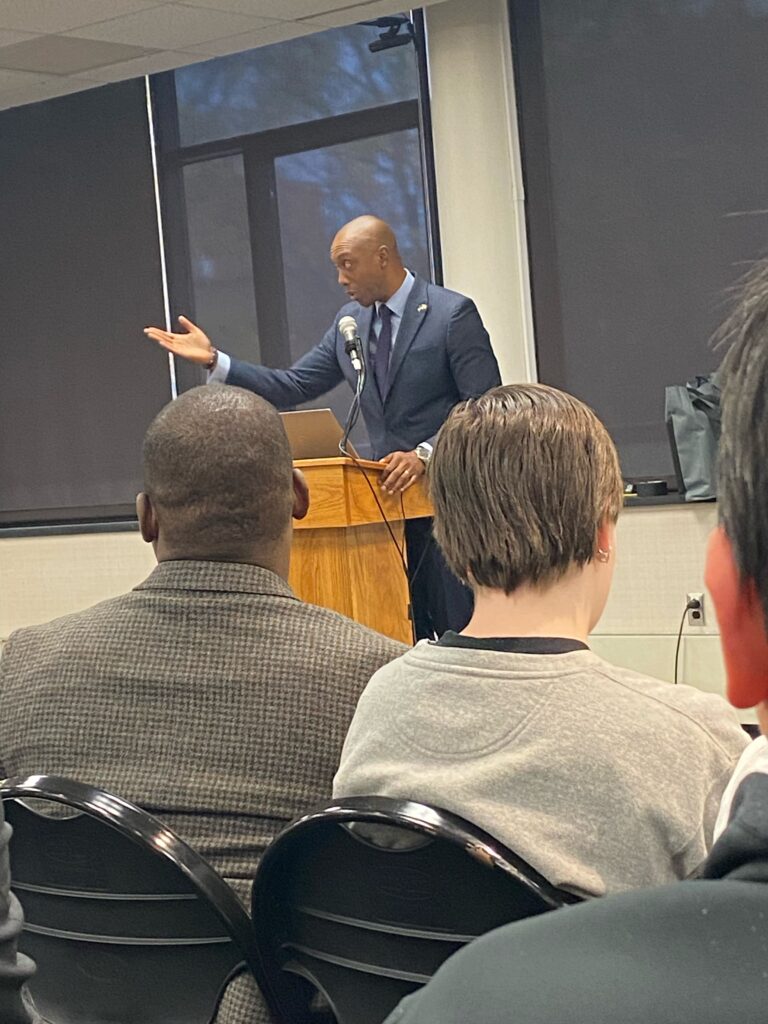 Chike Aguh. (Jenny O’Grady/UMBC)
“I’m from a very small town in Nigeria. My parents received scholarships to study in the United States of America at public universities like UMBC. Without international education I would not be here,” said Aguh, who was appointed by President Joseph Biden to serve as chief innovation officer at the U.S. Department of Labor.
“I ask you to recognize that this is a shared world and that your people have a right to live on it just like mine do,” said Aguh. That’s a very basic understanding, but it’s one that we don’t have enough of today. And many of you who are here right now are going to be the ones who hopefully help remind the rest of us of that. Maryland, America, and the world has need of you.”
According to David Di Maria, associate vice provost for international education, UMBC currently hosts 2,127 international students from nearly 100 countries. These students contribute valuable knowledge in research, performing arts, athletics, and community engagement.
One example is Ridwan Islam Sifat, an M.P.P. graduate student pursuing a doctoral degree at UMBC’s School of Public Policy who is researching healthcare disparities among intersex individuals in the United States. Sifat joined UMBC as an international student after earning both a B.S. and M.S. from the Bangladesh University of Professionals.
UMBC also has many international partnerships, including this year’s collaboration with the American Statistical Association to organize its annual African International Conference on Statistics. Additionally, UMBC’s Academic Success Center holds one of six Learning Center of Excellence designations from the International College Learning Center Association. The impact of a globally-minded campus is vast.
President Valerie Sheares Ashby also shared a personal story of her first time studying abroad and the lifelong impact that made on her.
“I spent one year doing a postdoc in Germany and it changed my life,” said Sheares Ashby at the IEW event.
“I think it made me a better teacher and it certainly made me a better researcher. And it definitely made me a better human. I think about the world globally in a way that I did not before I had that experience. So when I say we are better because you [international students] are here, it is 100 percent the truth.”
Learn more about the Center for Global Engagement.
]]>
Now in its fifth year, UMBC’s 2024 International Education Week (IEW) hosted by the Center for Global Engagement (CGE), celebrated UMBC’s commitment to international education. Events throughout...
https://umbc.edu/stories/international-education-week-global-minds/
https://beta.my.umbc.edu/api/v0/pixel/news/146097/guest@my.umbc.edu/1a1e46804792dc063a73c922a3b75c97/api/pixel
cge
community
international
news
story
UMBC News & Magazine
https://beta.my.umbc.edu/groups/umbc-news-magazine
https://assets1-beta.my.umbc.edu/system/shared/avatars/groups/000/001/943/24435aa6207c452e7bc15cc74b42c7bb/xsmall.png?1748556657
https://assets1-beta.my.umbc.edu/system/shared/avatars/groups/000/001/943/24435aa6207c452e7bc15cc74b42c7bb/original.png?1748556657
https://assets2-beta.my.umbc.edu/system/shared/avatars/groups/000/001/943/24435aa6207c452e7bc15cc74b42c7bb/xxlarge.png?1748556657
https://assets2-beta.my.umbc.edu/system/shared/avatars/groups/000/001/943/24435aa6207c452e7bc15cc74b42c7bb/xlarge.png?1748556657
https://assets3-beta.my.umbc.edu/system/shared/avatars/groups/000/001/943/24435aa6207c452e7bc15cc74b42c7bb/large.png?1748556657
https://assets1-beta.my.umbc.edu/system/shared/avatars/groups/000/001/943/24435aa6207c452e7bc15cc74b42c7bb/medium.png?1748556657
https://assets2-beta.my.umbc.edu/system/shared/avatars/groups/000/001/943/24435aa6207c452e7bc15cc74b42c7bb/small.png?1748556657
https://assets1-beta.my.umbc.edu/system/shared/avatars/groups/000/001/943/24435aa6207c452e7bc15cc74b42c7bb/xsmall.png?1748556657
https://assets2-beta.my.umbc.edu/system/shared/avatars/groups/000/001/943/24435aa6207c452e7bc15cc74b42c7bb/xxsmall.png?1748556657
UMBC News & Magazine
15
0
false
Thu, 05 Dec 2024 15:51:43 -0500
Thu, 05 Dec 2024 15:51:43 -0500
Intercultural conversations: Exploring politics in a global context, even at home
Middle school sweethearts, Ellyn Fennema and Joseph Patarini came to UMBC to pursue global studies (her) and geography and environmental studies (him). Despite their busy schedules, they were able to squeeze in a wedding between their sophomore and junior years, followed by a two-week van camping trip around Iceland. While it wasn’t their main goal for the trip, their majors seemed to align perfectly with learning about a new country and its geography. It wasn’t until Joseph found himself sitting outside Ellyn’s Research Methods in Global Studies and Approaches to Globalization classes with Felipe Filomeno, associate professor of political science and director of UMBC’s global studies program, that his interest was piqued by how to connect both their fields in a real-world setting.
“We used to carpool, so while I waited for her, I could hear Filomeno’s lecture,” says Joseph. “I was like, ‘Oh, he’s really cool and the discussions they have are really interesting.” Ellyn felt this was an excellent way to deepen his knowledge of the world. “Professor Filomeno makes learning these topics interactive and fun.”
 (l-r): Joseph Patarini and Ellyn Fennema. (Image courtesy of Joseph Patarini)
When Joseph learned about Filomeno’s 2024 Collaborative Online International Learning (COIL) Brazil project on climate change, he quickly enrolled. It equips students with the technical and interpersonal skills to thrive in professional online international and intercultural environments. COIL makes international scholarship and intercultural learning accessible by removing barriers of cost and travel while preparing students with essential skills for future in-person exchanges. COIL Brazil was part of Filomeno’s spring Global Citizenship class in collaboration with former colleague Clarissa Dri, a professor of international relations at his alma mater, Universidade Federal de Santa Catarina (UFSC, the Federal University of Santa Catarina), in southern Brazil.
Dri’s expertise includes Brazilian foreign policy, international cooperation, and human rights. “Clarissa and I teamed up because we value intercultural exchanges. We were both international students,” says Filomeno. “Clarissa earned a Ph.D. from the University of Bordeaux in France. I earned mine at Johns Hopkins Hopkins as a Fulbright Scholar.”
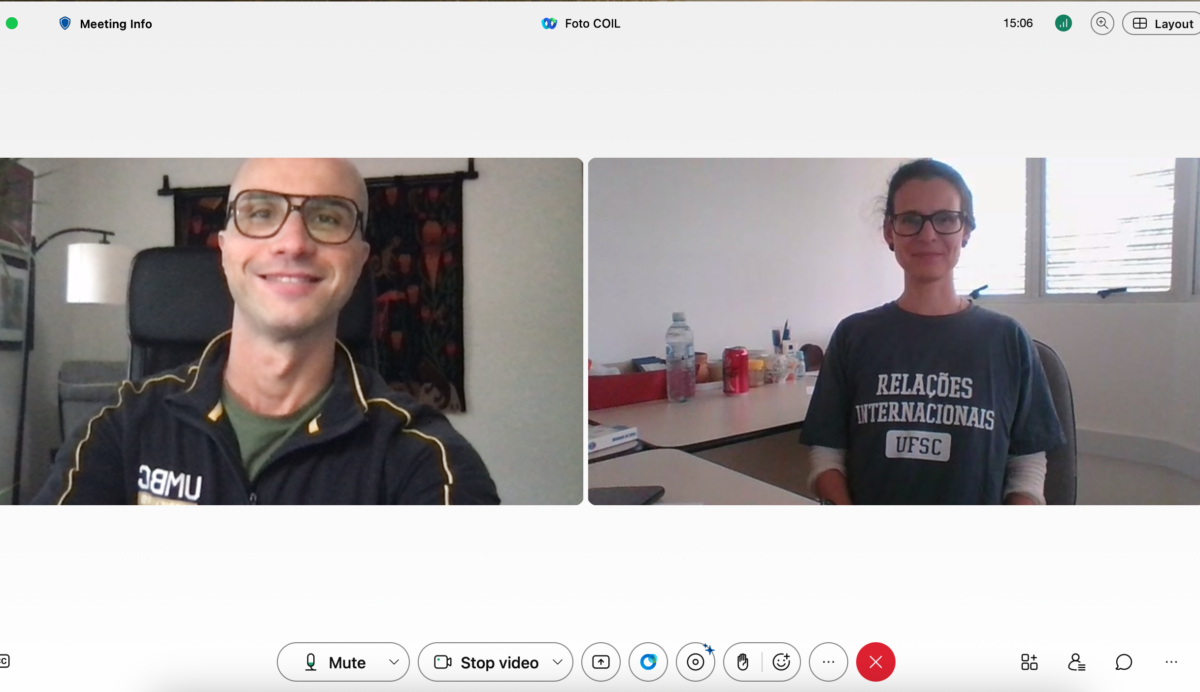 (l-r): Felipe Filomeno and Clarissa Dri. (Image courtesy of Filomeno)
The program enrolls Retrievers and Brazilian students to enhance their intercultural competence and knowledge of human rights, democracy, and climate change policy advocacy. Spring 2024 was its third iteration with plans of future offerings
“COIL has become another major pedagogical tool I use for active global learning,” says Filomeno, noting along with Dri the growing interest in COIL from one day in the first year to four weeks in spring 2025 “The students are very interested and happy with the intercultural interactions, exploring cultural differences, and the possibility to interact in English,” says Dri. “They are amazed by the concrete possibility of talking to someone who is in the U.S. right now and to listen to what they think of our country.”
Politics without borders
Ellyn saw COIL as a way for Joseph to combine his ongoing GES research with a global studies perspective. “Since Brazil holds the lungs of the earth—the Amazon rainforest—getting the ideas and perspectives of Brazilian students would be valuable for his future career.” Before participating in COIL, Joseph’s understanding of Brazil was at a more physical level. At the GES research lab, he tracked forest plantations, deforestation, and land use change using global satellite imagery. COIL was an extra opportunity to develop a personal, qualitative understanding of land-use change, deforestation, and Brazilian environmental policies.
Filomeno and Dri coordinated the classes on Webex to align with the one-hour time difference. Students implement online social science research methods to gather and analyze data in 10 to 30-minute increments before sharing their findings. Each group schedules time outside of class to further their research and final presentations.
In Joseph’s class, students took on roles from various U.S. and Brazilian constituents including political parties, worker’s unions, philanthropic organizations, and Brazilian indigenous rights groups. Teams researched their constituents’ climate stance and proposed two goals for the their country to pursue at the 2025 United Nations Climate Change Conference. Joseph’s group proposed that the Bill and Melinda Gates Foundation focus on developing and deploying green technologies in agriculture and biodiversity preservation in Brazil.
Courage in politics
Gustavo Peres, a first-year international relations student at UFSC, believes it takes courage to actively engage in international political discourse. Initially, Peres was hesitant to apply to COIL Brazil 2023 because of the English language requirement but he was intrigued by the subject material which focused on democracy in the context of the presidential elections in the U.S. in 2020 and in Brazil in 2022.
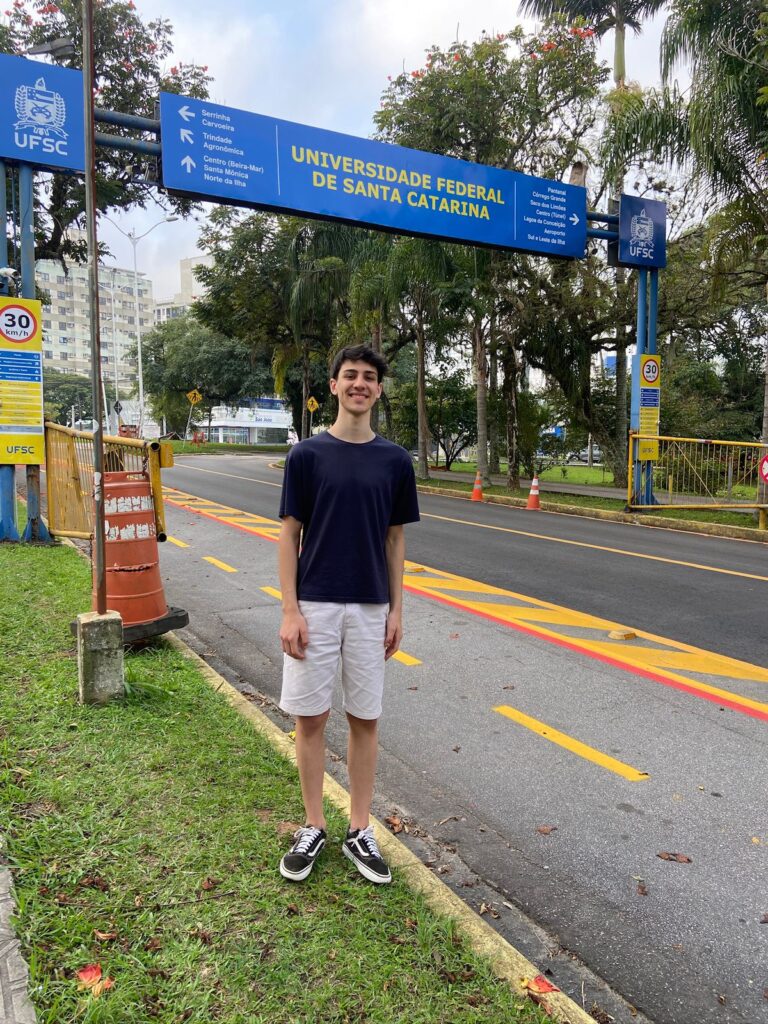 Gustavo Peres. (Image courtesy of Peres)
“I could have just seen the email and said, ‘No, it’s not for me because I felt a little bit intimidated to be judged about how I speak,” says Peres, a native Portuguese speaker and English language learner. He followed his COIL experience with an internship in international trade. “I can lose a big opportunity to practice English and also know more about other people, their culture, and other things that are very valuable to our life. The West can provide a lot of things to other countries, but I think the other countries can also give a lot to the West.”
UMBC students were surprised by Brazil’s universal public healthcare and free public education without student loans or copays to receive medical care. UFSC students were intrigued that the U.S. lacks compulsory voting. “In Brazil, if you are 18, you have to vote or pay a small tax,” says Peres. “But it’s good that in both Brazil and the U.S. you can vote. I think the voting process is something very important and valuable for democracies.”
Paths to global understanding
Filomeno says students in the U.S. often think about democracy in procedural terms—free and fair elections, the rule of law, etc. “Brazilian students tend to emphasize substantive aspects of democracy—people’s right to education and health care, equality of economic opportunity, etc.,” says Filomeno. “Through dialogue, they realize their understanding of democracy is culturally specific.”

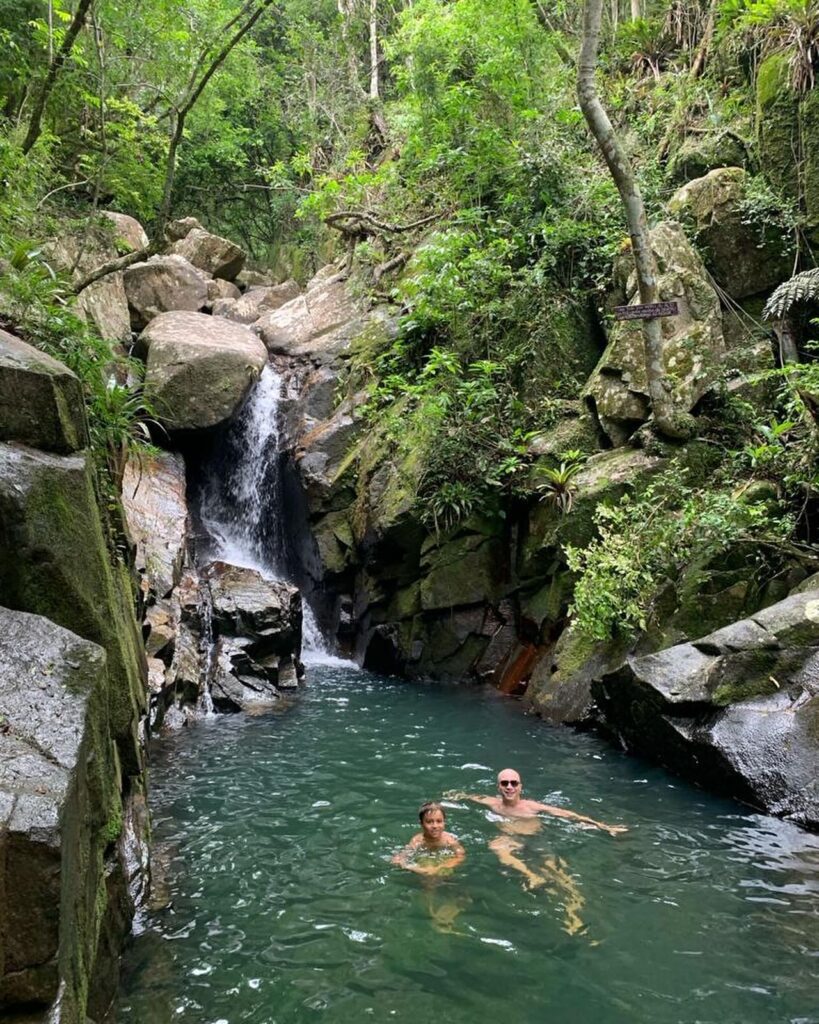 Filomeno with nephew in Brazil. (Images courtesy of Filomeno)
Filomeno is all too familiar with these cultural differences. When he left Brazil for graduate school in the U.S., he became aware of his way of being. “My ancestors came from Portugal, Lebanon, Italy, and other countries. These cultures appeared in my family’s cuisine, language, and traditions,” says Filomeno. “I realized that the food I was used to eating was not just food but Brazilian food, that the way I greeted people in hallways was not just how people greet each other but how Brazilians greet each other.”
 The Patarinis celebrating their wedding anniversary in Rabat, Morocco. (Image courtesy of Joseph Patarini)
The Patarinis were inspired to fulfill Ellyn’s global studies education abroad requirement together—spending their senior summer in Morocco and Spain. “I felt very excited and fortunate,” says Ellyn. “Many things had to line up to make it happen; however, we put a lot of effort into the application for the CAHSS Dean’s Education Abroad Scholarship process, which made it all possible.”
The Patarinis celebrated their first anniversary in traditional Moroccan style with their friends and host family in Rabat the capital of Morocco during their UMBC faculty-led Intercultural Communication in Morocco and Spain education abroad classes. COIL and education abroad lay the groundwork for students to continue learning and engaging with the world beyond the U.S. Even with busy careers, Ellyn and Joseph plan to continue making time for travel. “Reading and studying global issues is one thing, but experiencing them firsthand offers an entirely new perspective—it ignites a deeper understanding and fuels a powerful drive to create meaningful change,” says Ellyn.
Register for Global Studies Spring 2025 classes.
Learn more about UMBC’s political science department and global studies program on Instagram @global.umbc.
]]>
Middle school sweethearts, Ellyn Fennema and Joseph Patarini came to UMBC to pursue global studies (her) and geography and environmental studies (him). Despite their busy schedules, they were able...
https://umbc.edu/stories/intercultural-politics-in-a-global-contex/
https://beta.my.umbc.edu/api/v0/pixel/news/146098/guest@my.umbc.edu/c98a2e297a5e721a285305559454c190/api/pixel
cahss
discovery
ges
global-studies
international
magazine
political-science
story
UMBC News & Magazine
https://beta.my.umbc.edu/groups/umbc-news-magazine
https://assets1-beta.my.umbc.edu/system/shared/avatars/groups/000/001/943/24435aa6207c452e7bc15cc74b42c7bb/xsmall.png?1748556657
https://assets1-beta.my.umbc.edu/system/shared/avatars/groups/000/001/943/24435aa6207c452e7bc15cc74b42c7bb/original.png?1748556657
https://assets2-beta.my.umbc.edu/system/shared/avatars/groups/000/001/943/24435aa6207c452e7bc15cc74b42c7bb/xxlarge.png?1748556657
https://assets2-beta.my.umbc.edu/system/shared/avatars/groups/000/001/943/24435aa6207c452e7bc15cc74b42c7bb/xlarge.png?1748556657
https://assets3-beta.my.umbc.edu/system/shared/avatars/groups/000/001/943/24435aa6207c452e7bc15cc74b42c7bb/large.png?1748556657
https://assets1-beta.my.umbc.edu/system/shared/avatars/groups/000/001/943/24435aa6207c452e7bc15cc74b42c7bb/medium.png?1748556657
https://assets2-beta.my.umbc.edu/system/shared/avatars/groups/000/001/943/24435aa6207c452e7bc15cc74b42c7bb/small.png?1748556657
https://assets1-beta.my.umbc.edu/system/shared/avatars/groups/000/001/943/24435aa6207c452e7bc15cc74b42c7bb/xsmall.png?1748556657
https://assets2-beta.my.umbc.edu/system/shared/avatars/groups/000/001/943/24435aa6207c452e7bc15cc74b42c7bb/xxsmall.png?1748556657
UMBC News & Magazine
7
0
false
Thu, 05 Dec 2024 15:51:07 -0500
Thu, 05 Dec 2024 15:51:07 -0500
Creativity in the C-suite
As Kent Malwitz ’92, information systems, moved up through the world of technology leadership, he kept wondering if an MBA was in the cards. But what he found ultimately most useful and fulfilling, as someone already steeped in the CEO-world, was pursuing an M.F.A. in creative writing. Malwitz, who is the director of strategic partnerships at UMBC Training Centers—a nonprofit providing private workforce training in technology, cybersecurity, project management, and leadership development—nurtured this early creative emphasis as an IS student who wanted to explore the empowering and vulnerable world of writing workshops. Now, he corrals his curiosity and storyteller-instincts to become a more empathetic teammate and leader.
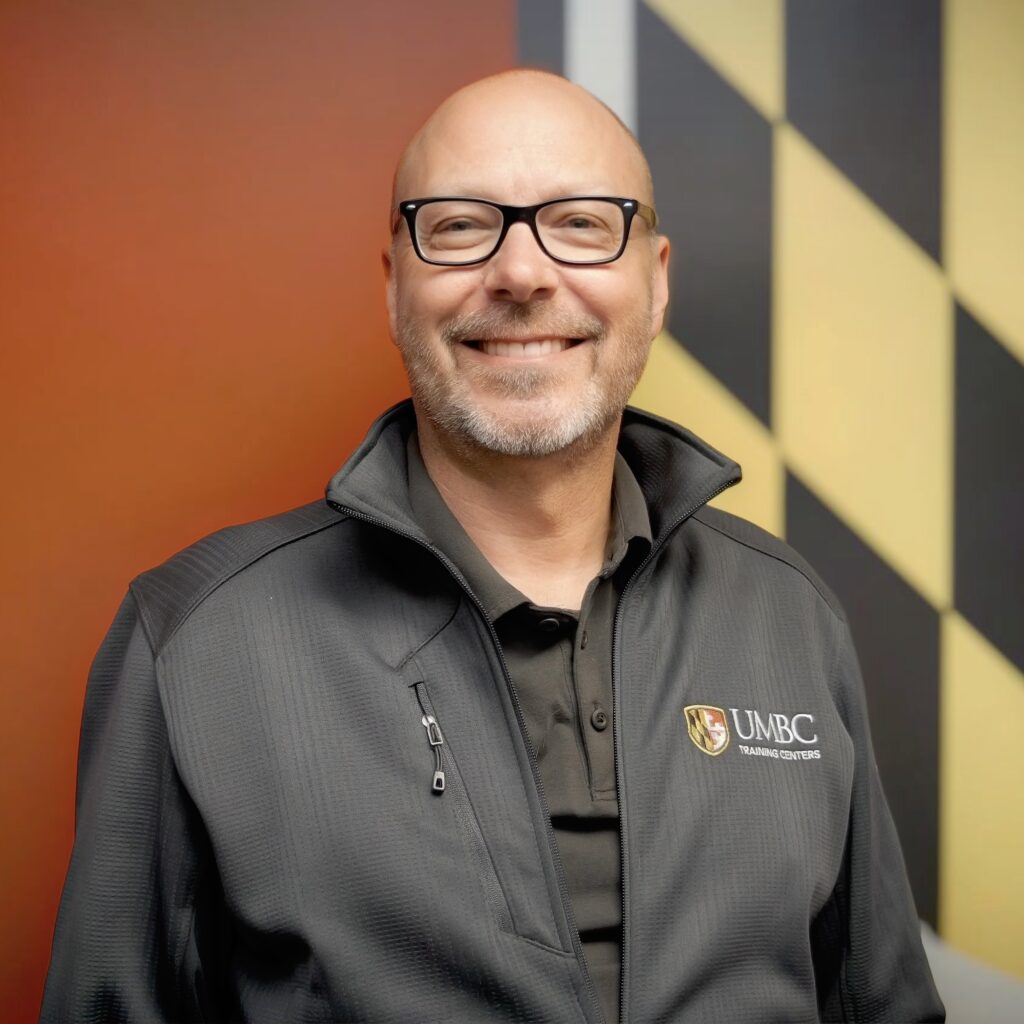 Kent Malwitz at UMBC Training Centers.
While I knew from a very young age that I loved technology, it wasn’t until my junior year at UMBC that I discovered that I also love to write. Working and playing with technology was natural to me as a kid, and since personal computers, modems, and bulletin boards were all fairly new to the public in the late ’80s, I was drawn to technology for exactly that reason—it was new. There was an element of discovery and creativity in trying to figure out how to do certain things with computers, leading me to pursue a degree in information systems at UMBC and a career in technology.
While at UMBC, I worked at a co-op with IBM, which allowed me to gain technical and business experience. I would drive to Gaithersburg daily from UMBC to provide technical support to IBM’s sales teams, and at certain times, I would take night classes alongside my 40-hour-a-week job at IBM, which gave me a heavy dose of the “real world,” as I tried to balance work, school, a social life, and a lengthy commute. The grind did not leave a lot of space for creativity.
After completing the required technical writing courses for my major, I felt a creative pull in me and acknowledged that my best chance of exploring that would be through writing, as I had shown no promise in the visual arts. I took a creative writing class and fell in love. It felt amazing to be doing something creative alongside my very technical work, and what I loved the most was sharing work with my fellow students and seeing and hearing their work—their thoughts and ideas, their fears. It made me feel extremely vulnerable, as well, but hearing my peers’ feedback was empowering, and I felt inspired by their talent.
Working to extend the university’s mission
Back then, IBM was known for having an unofficial dress code—blue suit, white shirt, red tie. I conformed. The people were very nice, and it was a great introduction into the work world, but I knew that I wanted to work in an environment with a different kind of energy.
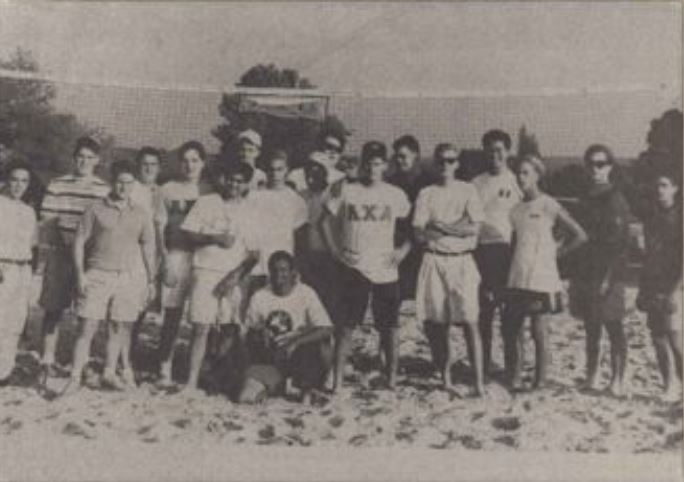 Kent Malwitz with intramural friends at UMBC.
I found myself drawn to smaller, entrepreneurial companies where you got to—and had to—do many things based on the limited resources available. I found these environments to be conducive to learning, problem solving, and creativity. Where there were many challenges, there were equal opportunities to think critically and creatively and to lead through them. I found great joy in creating elegant technical solutions to address our customers’ business needs. I loved trying to figure things out that had not yet been figured out, and as my career grew, I took on bigger and bigger projects and teams.
After 10 years of technology consulting, I learned about a non-profit that UMBC founded focused on the delivery of technical training—the UMBC Computer Certification and Training Center (UMBC CCTC—way too many Cs!). I was recruited by the president of CCTC at the time, Doug Kenzierski, my former instructor who connected me to IBM for my co-op. I got involved in 2003 to help lead business development efforts with organizations and government agencies to train their employees. We renamed UMBC CCTC to UMBC Training Centers and started winning contracts with regional businesses and key agencies in the intelligence community, the military, and civilian government.
In true grit fashion, UMBC was very early to grasp the concept of a research university that provides workforce development programs as well as having a related business entity that extends the mission of the university to new audiences. Today, UMBC Training Centers is a significant provider of workforce training in technology, cybersecurity, project management, and leadership development, serving many individuals and employers in the region through our private training programs and our robust open enrollment schedule that reaches more than 10,000 learners a year.
Nurturing curiosity
Throughout my career, I often thought about pursuing an MBA, and while I know I would have learned a lot, I already had significant hands-on experience from leading business development at UMBC Training Centers and then later becoming the CEO. Instead, I realized what I really needed was to nurture my curiosity and interest in creativity. I thought that tapping into my own personal beliefs and values and becoming a better storyteller would help me become a more empathetic and more effective teammate and leader.
After hearing from other UMBC staff who had gone this route, including Jenny O’Grady, the editor of this magazine, I applied for the Master’s of Fine Arts creative writing program at the University of Baltimore. In many ways, I was a fish out of water in the program, but I loved it. I was much older than most of the students, and I was working full-time as the CEO of UMBC Training Centers. I was the only one who would show up in a suit on many nights, but my classmates welcomed me. I delved into writing workshop after workshop.
I thought that tapping into my own personal beliefs and values and becoming a better storyteller would help me become a more empathetic and more effective teammate and leader.
Kent Malwitz '92
Director of strategic partnerships at UMBC Training Centers
Just like when I was an undergrad, sharing my work with others and having their work shared with me was my favorite part of the program. I loved the feedback and the support—both giving and receiving. While I haven’t completed the M.F.A. program, I intend to and feel that I have already benefited from it greatly as a business person and as a leader. Thinking critically and creatively and being open minded and unafraid of the unknown has been a key factor in the growth of my career.
Full-circle all the way home
After 17 years at UMBC Training Centers, I was recruited to go work again for IBM, despite my concerns from my earlier experience working there as a student. I worried about how I would feel working for such a large, corporate organization after having been in a small, entrepreneurial environment for my entire career. I was there for 4 years and learned a lot—about corporate culture, about scale, and about leadership, and I was reminded about the critical nature of strategic partnerships.
In August of this year I had the opportunity to return to my beloved UMBC and UMBC Training Centers in the capacity of director of strategic partnerships. Here, I intend to work collaboratively—and creatively—with our partners, UMBC being our most strategic partner, to scale up the impact we have on the communities we serve, including finding ways to allow UMBC students to more directly benefit from our offerings, and to make UMBC Training Centers no longer the best kept secret at UMBC.
]]>
As Kent Malwitz ’92, information systems, moved up through the world of technology leadership, he kept wondering if an MBA was in the cards. But what he found ultimately most useful and...
https://umbc.edu/stories/harnessing-creativity-in-technology-leadership/
https://beta.my.umbc.edu/api/v0/pixel/news/146073/guest@my.umbc.edu/49506833e82c0a2f8ccfb403a8f25998/api/pixel
alumni
alumni-essay
coeit
fall-2024
is
magazine
story
UMBC News & Magazine
https://beta.my.umbc.edu/groups/umbc-news-magazine
https://assets1-beta.my.umbc.edu/system/shared/avatars/groups/000/001/943/24435aa6207c452e7bc15cc74b42c7bb/xsmall.png?1748556657
https://assets1-beta.my.umbc.edu/system/shared/avatars/groups/000/001/943/24435aa6207c452e7bc15cc74b42c7bb/original.png?1748556657
https://assets2-beta.my.umbc.edu/system/shared/avatars/groups/000/001/943/24435aa6207c452e7bc15cc74b42c7bb/xxlarge.png?1748556657
https://assets2-beta.my.umbc.edu/system/shared/avatars/groups/000/001/943/24435aa6207c452e7bc15cc74b42c7bb/xlarge.png?1748556657
https://assets3-beta.my.umbc.edu/system/shared/avatars/groups/000/001/943/24435aa6207c452e7bc15cc74b42c7bb/large.png?1748556657
https://assets1-beta.my.umbc.edu/system/shared/avatars/groups/000/001/943/24435aa6207c452e7bc15cc74b42c7bb/medium.png?1748556657
https://assets2-beta.my.umbc.edu/system/shared/avatars/groups/000/001/943/24435aa6207c452e7bc15cc74b42c7bb/small.png?1748556657
https://assets1-beta.my.umbc.edu/system/shared/avatars/groups/000/001/943/24435aa6207c452e7bc15cc74b42c7bb/xsmall.png?1748556657
https://assets2-beta.my.umbc.edu/system/shared/avatars/groups/000/001/943/24435aa6207c452e7bc15cc74b42c7bb/xxsmall.png?1748556657
UMBC News & Magazine
0
0
false
Wed, 04 Dec 2024 16:52:45 -0500
Wed, 04 Dec 2024 16:52:45 -0500
Following the siren’s call to the food and beverage industry

When you walk into Kupcakes & Co. in Elkridge, Maryland, you are met with the welcoming aroma of fresh baked goods—cookies, cakes, cinnamon rolls, and, of course, cupcakes. Drawn in by the scents and scenes in front of you, you’ll soon meet the proprietor, Michelle Kupiec ’89, interdisciplinary studies. She wasn’t always an award-winning baker though. In 2007, Kupiec was a teacher and a mom, just trying to get her young son to eat food again after a series of difficult surgeries.
Without knowing it, Kupiec was traveling a well-trod path by other UMBC alumni who pivoted their careers to start their own food businesses. “The only thing stopping you is the belief that you can’t,” says Donta Henson ’13, M.P.S. ’17, Navy veteran and co-owner of Los Hermanos 1978 Tequila. This mentality led Henson out of the healthcare industry to start a tequila company with his brother in the middle of the COVID-19 pandemic. Likewise, John Williams ’04, financial economics, owner of Good Karma Creamery, flipped his life upside down (like a good pineapple cupcake) to follow his passion.
When life gives you lemons… make cupcakes
 A platter of sweet treats made by the bakery.
(Marlayna Demond ’11)
A platter of sweet treats made by the bakery.
(Marlayna Demond ’11)
For seven years,Kupiec taught for Howard County Public Schools while raising her twins, Adam and Allison. Her husband, Bill Kupiec ’89, interdisciplinary studies, worked as an IT manager at the Carnegie Institution for Science. Then, Adam started getting sick. He was in and out of the hospital 15 times over three years with severe pneumonia. Doctors couldn’t figure out what was going on until they noticed that Adam’s spine was curving at a rapid rate, putting pressure on his lungs. In 2007, Adam underwent spinal fusion surgery that left him with two 20-inch rods and 18 screws in his back. Then came the painful recovery.
“Adam wasn’t eating. Nothing was appealing to him,” remembers Kupiec. “So, Adam’s doctors encouraged us to watch shows involving food.”
Kupiec and Adam started watching the Food Network and Adam quickly fell in love with the bakers. As soon as he was physically able, Adam was in the kitchen experimenting, which helped keep his mind off the pain. “He was able to get off his pain meds because of his newfound passion for baking,” says Kupiec.
Throughout his recovery, Kupiec homeschooled Adam and the two continued to bake, sharing their creations with friends and family. It wasn’t long before a food truck entrepreneur approached Kupiec about baking for Curbside Cupcakes.
“I was like, ‘Wow! This could become a small business,’” says Kupiec.
For Donta Henson, a health administration and policy major, the transition from a full-time health IT professional for the Centers for Medicare and Medicaid Services to tequila purveyor took a slightly different route. During the COVID-19 pandemic, in lieu of other activities, Henson’s brother William would regularly visit with a bottle of tequila. With nowhere else to go, the brothers started trying different tequila brands to pass the time.
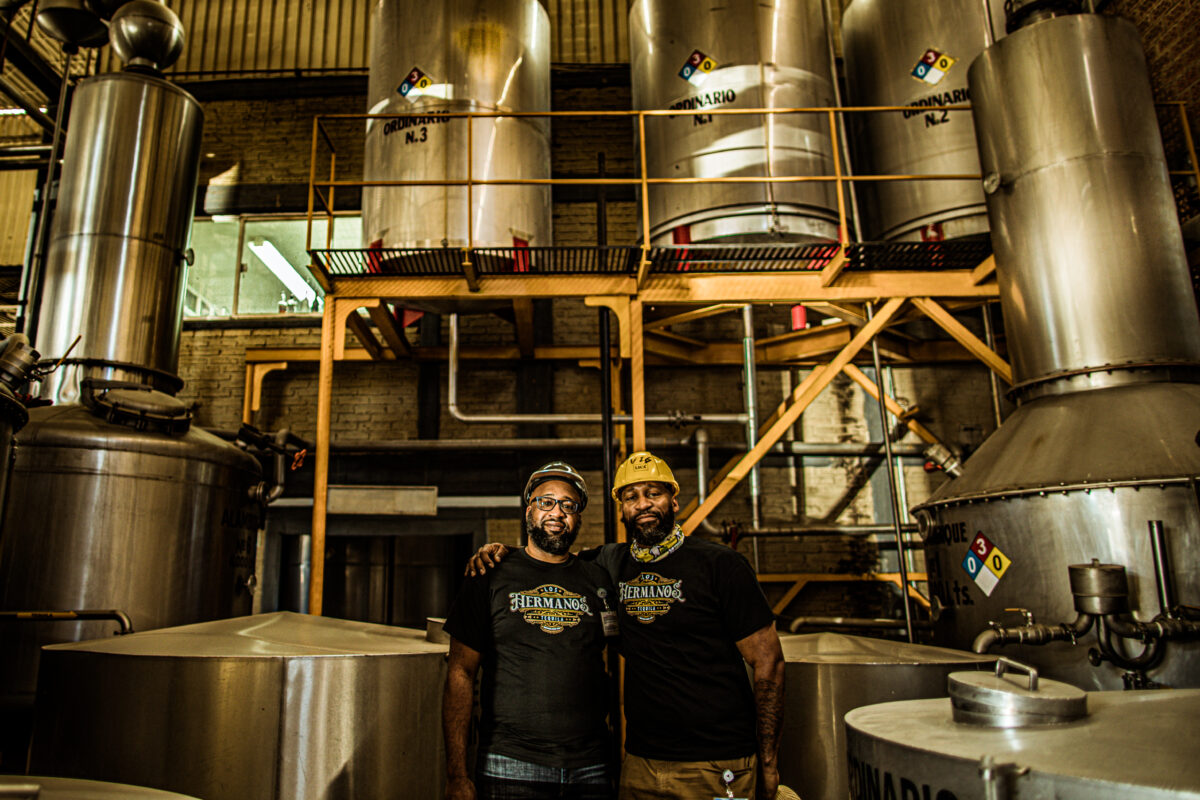 Donta and William Henson on a tour of the Casa Maestri Brewery. Photo courtesy of the Hensons.
“We probably tried 20 different tequila brands,” recalls Henson. “We started feeling like we were tequila experts.” Henson noticed that when his brother posted tequila recommendations online, people would regularly respond positively. The brothers not only knew what they were talking about when it came to good tequila, but they had influence.
“I told my brother, ‘You know what? We could probably start our own brand,’” says Henson. “If other people are doing it, then we can figure it out too. We’re doing this!”
The pandemic offered many people the chance to pivot, but John Williams, a vice president at T. Rowe Price, already knew that he wanted more than an office job, especially with a young family.“It was a very good job in a lot of ways,” says Williams, who worked there for 10 years, “intellectually stimulating, financially rewarding, but it was a high-pressure type of job.” Fortunately, Williams learned an important lesson during his time at UMBC. “I figured out the value of saving while I was in college,” he recalls. So he put money away, lived below his means, and put himself in a position to control his future at a very young age.
“The question really became, ‘What do I want to do with my time?’” says Williams. “Buying my time and the freedom to do what I want was more valuable to me than continuing to work at T. Rowe.”
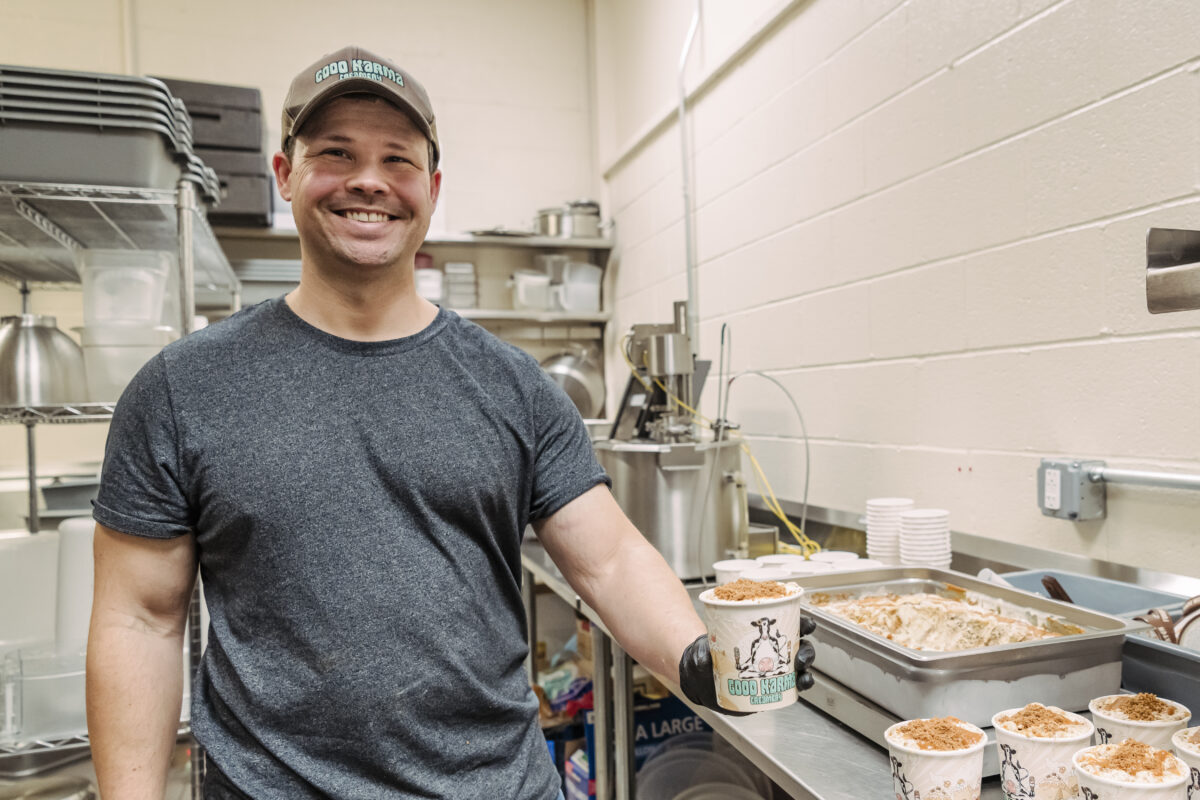 Williams packs pints of Good Karma ice cream in his business’s kitchen. (Marlayna Demond ’11/UMBC)
Williams left T. Rowe Price in 2020 to spend more time with his family and figure out his next step. “I stumbled on it a lot faster than I expected,” says Williams. “I was sitting in my driveway one day thinking about ice cream and realized I was kind of getting bored with what was at the grocery store when it just hit me. I should make ice cream.”
When the pivot pays off
To start baking for Curbside Cupcakes, Kupiec and Adam needed a commercial kitchen and to get licensed. That was the easy part. From there, the dynamic duo started baking 800 cupcakes a day, seven days a week—on top of homeschooling. Then, Curbside Cupcakes added a second truck and 800 cupcakes became 1,600. Kupiec quickly realized that she needed a kitchen of her own. In 2011, she hired additional help, and Kupcakes & Co. was born.
Eventually, with her own business growing, Kupiec cut ties with the food truck and focused her attention on Kupcakes & Co. After 14 years, business is strong and Kupiec offers a rotating assortment of 110 different flavors of cupcakes, along with other baked goods. “We turned our passion into a purpose,” says Kupiec.
To prove to his brother William that they too could turn their passion into a legitimate business, Henson started cold-calling other brands to learn more about their relationships with distilleries. That’s when Henson learned that tequila had to be made in Mexico. “I didn’t know that,” says Henson.
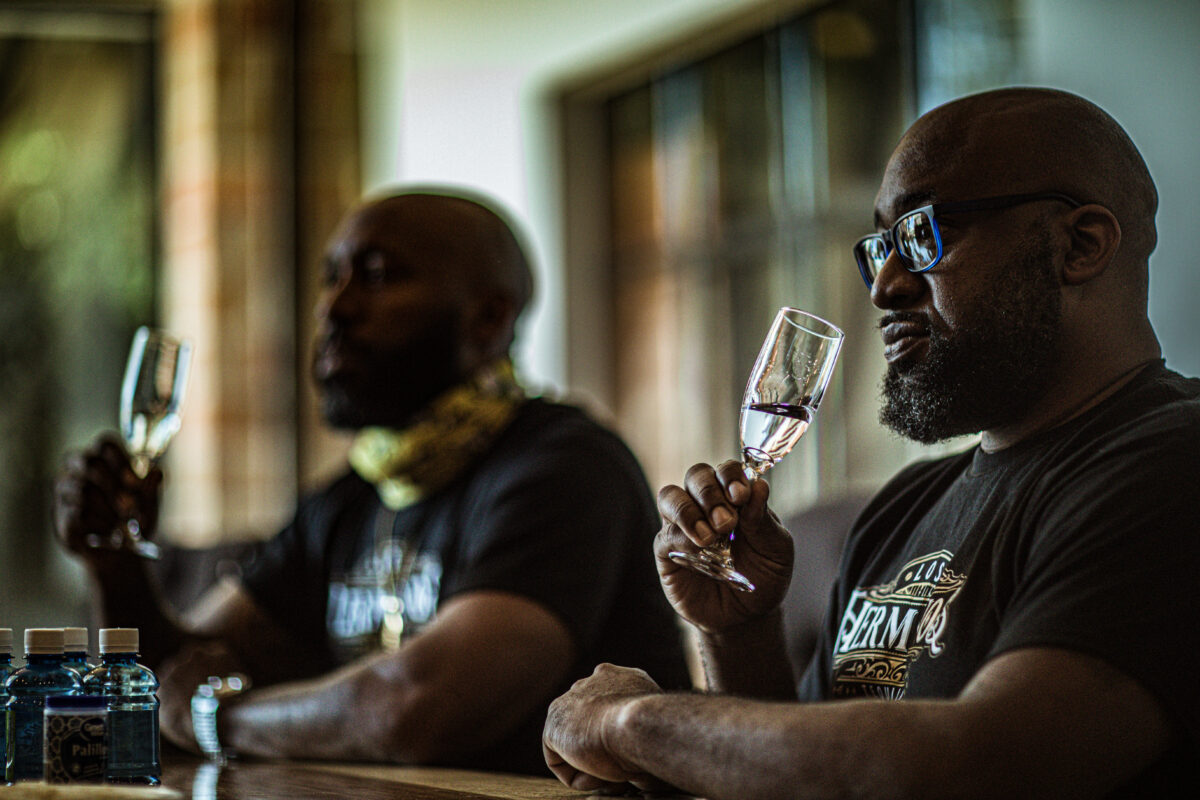 Donta Henson, right, and his brother, William, taste tequila in Mexico. Photo courtesy of the Hensons.
The brothers eventually landed on Casa Maestri, a third-generation, family-owned, full-service distillery. In November 2020, Henson and his brother traveled to Guadalajara to tour the distillery, meet with farmers, and learn what it takes to make tequila. The brothers then began working with the distiller to choose the flavor profiles for their blanco and reposado tequilas, and then it was time to design the bottles and labels. What about a name?
“I wanted a name that captured the whole familial thing,” says Henson. “That’s the whole reason we even got into tequila.” After some research to see what was already taken, Henson and William agreed on “Los Hermanos,” which means “the brothers” in Spanish.
Three years later, Los Hermanos 1978 Tequila can be found in over 300 stores across six states and has won 24 awards. “Everything hinged on the mindset that we could do it,” says Henson. “We didn’t know anything.”
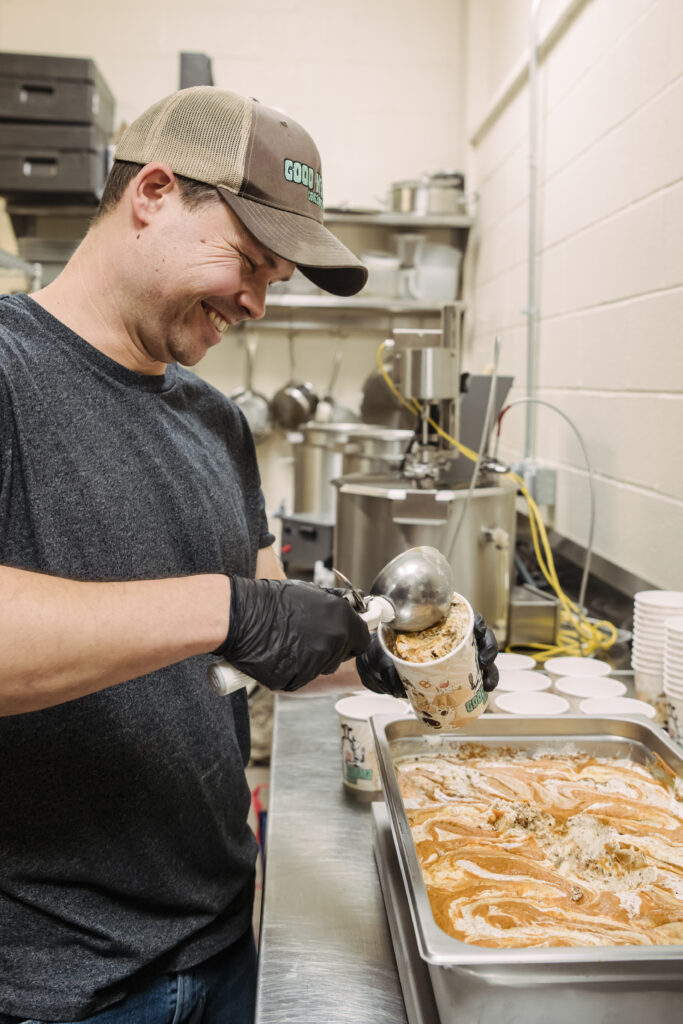 Williams scoops out one his signature flavorful pints. (Marlayna Demond ’11/UMBC)
Williams can relate. “I had never made ice cream in my life,” he jokes. So, he ordered a tabletop ice cream maker from Amazon and began experimenting. “While I was watching my young daughter, I was probably spending 10 to 15 hours a week making ice cream,” says Williams. After a year of experimenting, Williams upgraded to a slightly more sophisticated machine and began sharing his ice cream creations with his neighbors, along with anonymous surveys.
“I was getting brutally honest feedback,” says Williams.
Once Williams had a better understanding of what people liked, and his daughter was off to kindergarten, he was ready to churn out his ice cream hobby into a full-fledged business.
“I make my base from scratch,” says Williams, “which is a lot more work, but allows me to do more things with the flavors.” Williams also makes every chunk and swirl that goes into his ice cream—and there’s a lot. “I really load things up,” says Williams.
Today, Good Karma Creamery sells ice cream by the pint online, with a drop every two weeks—the pints selling out within minutes. It’s not the grind of a financial job, and he gets to taste-test a lot of delicious flavors. From Williams’ seat, he thinks he made the right decision. “I decided to take my passion for finding the best premium ice cream into my own hands,” says Williams.
]]>
When you walk into Kupcakes & Co. in Elkridge, Maryland, you are met with the welcoming aroma of fresh baked goods—cookies, cakes, cinnamon rolls, and, of course, cupcakes. Drawn in by the...
https://umbc.edu/stories/sirens-call-to-the-food-and-beverage-industry/
https://beta.my.umbc.edu/api/v0/pixel/news/146074/guest@my.umbc.edu/d991bd6333793830b4958836723fc2ae/api/pixel
alumni
at-play
fall-2024
financial-economics
health-administration-and-policy
inds
magazine
mps
story
UMBC News & Magazine
https://beta.my.umbc.edu/groups/umbc-news-magazine
https://assets1-beta.my.umbc.edu/system/shared/avatars/groups/000/001/943/24435aa6207c452e7bc15cc74b42c7bb/xsmall.png?1748556657
https://assets1-beta.my.umbc.edu/system/shared/avatars/groups/000/001/943/24435aa6207c452e7bc15cc74b42c7bb/original.png?1748556657
https://assets2-beta.my.umbc.edu/system/shared/avatars/groups/000/001/943/24435aa6207c452e7bc15cc74b42c7bb/xxlarge.png?1748556657
https://assets2-beta.my.umbc.edu/system/shared/avatars/groups/000/001/943/24435aa6207c452e7bc15cc74b42c7bb/xlarge.png?1748556657
https://assets3-beta.my.umbc.edu/system/shared/avatars/groups/000/001/943/24435aa6207c452e7bc15cc74b42c7bb/large.png?1748556657
https://assets1-beta.my.umbc.edu/system/shared/avatars/groups/000/001/943/24435aa6207c452e7bc15cc74b42c7bb/medium.png?1748556657
https://assets2-beta.my.umbc.edu/system/shared/avatars/groups/000/001/943/24435aa6207c452e7bc15cc74b42c7bb/small.png?1748556657
https://assets1-beta.my.umbc.edu/system/shared/avatars/groups/000/001/943/24435aa6207c452e7bc15cc74b42c7bb/xsmall.png?1748556657
https://assets2-beta.my.umbc.edu/system/shared/avatars/groups/000/001/943/24435aa6207c452e7bc15cc74b42c7bb/xxsmall.png?1748556657
UMBC News & Magazine
0
0
false
Wed, 04 Dec 2024 16:34:49 -0500
Wed, 04 Dec 2024 16:34:49 -0500
UMBC lab draws developmental psychology students from across the globe

Graduate students rely on internet research and word of mouth to hear about programs that align with their interests. For Hatice Gürsoy, word of mouth led her from the Republic of Türkiye to UMBC’s Culture, Child, and Adolescent Development Lab, when she was looking for developmental psychology doctoral programs that could support her interests in the resiliency of Muslim immigrants. “One of Dr. Charissa Cheah’s doctoral students also happened to be from Türkiye. She connected me with Dr. Cheah, and we bonded from that moment over my research interests,” says Gürsoy.
Gürsoy is not alone in her trajectory to Cheah’s lab. Students worldwide are drawn to lab founder and director Charissa Cheah’s hands-on approach to teaching, mentoring, and research. “I tell students that my lab is a vibrant space where they can build expertise in collaborative public impact research,” says Cheah, a professor of psychology. She studies adolescent social-emotional development and the well-being of families from minoritized backgrounds, emphasizing the experiences of those from Asian, Middle-Eastern, and North African heritage, which are frequently overlooked in psychology research, she says.
To approach this seemingly broad array of topics, Cheah offers graduate students seven ongoing research projects to choose from, including the latest project—Asian Americans’ Resilience, Identity, and Socialization of Engagement (ARISE), which focuses on the impact of racism and discrimination on Chinese, Korean, and Filipino American families parents’ and adolescents’ relationships, multiple identities, racial-ethnic socialization, civic engagement, and development.
Earlier in 2024, Cheah was invited to the White House to present the latest findings on the ARISE project with the Office of Science and Technology Policy. “It is empowering to represent the voices of marginalized groups, especially early career scholars, and to speak with individuals who aim to use this information to shape policies that decrease bias and hate,” she shared there.
Mentoring through unprecedented changes
Thanks to Cheah’s approach to mentorship, Hyun Su Cho, Ph.D. ’24, applied developmental psychology, had the support she needed to navigate unprecedented changes like COVID-19, in-person and virtual classes, and welcoming a new child. “It can all be very overwhelming,” says Cho. “Charissa is very busy, but she always finds time for you.”
Cho found her way to Cheah’s lab after reading her research while completing her master’s in developmental psychology at Seoul National University in South Korea. “I had the same master’s advisor as a former doctoral student in the lab and she introduced me to Dr. Cheah during a conference,” says Cho. “I was interested in parenting and world culture. Her lab offered opportunities to study multiple Asian communities.”
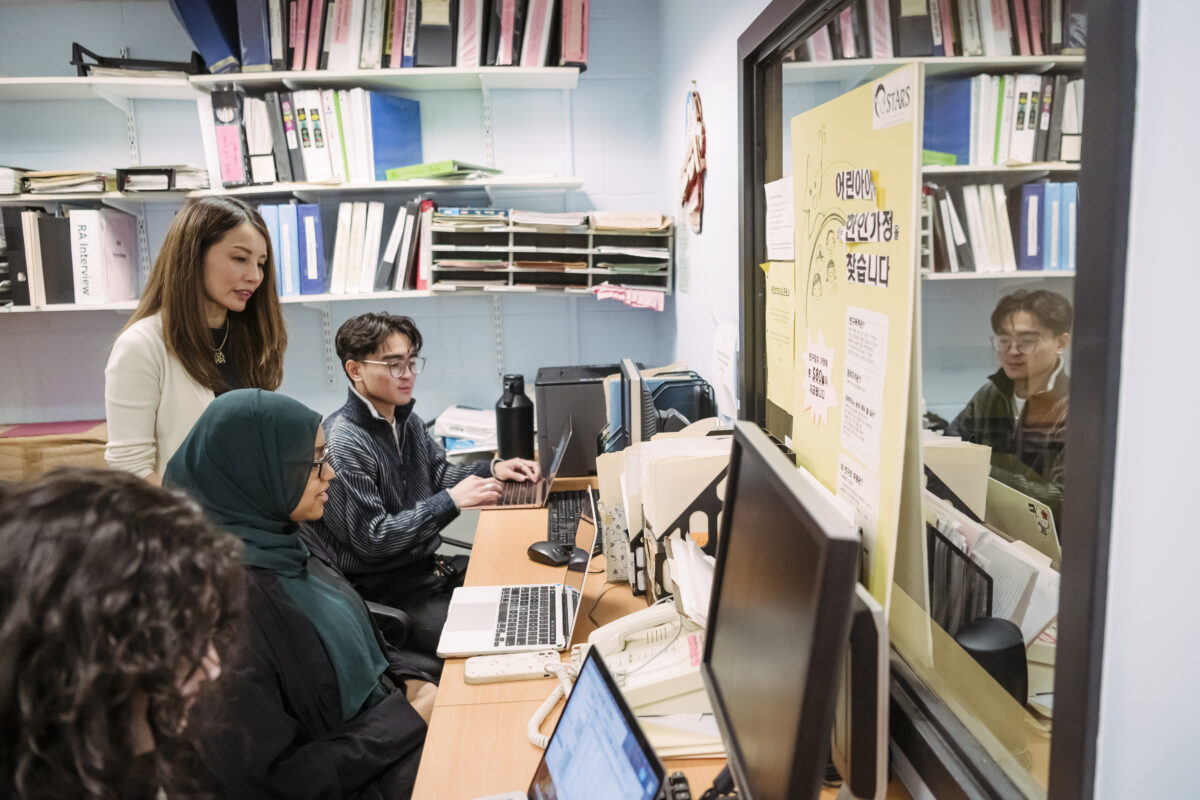 Charissa Cheah and undergraduate students discuss lab work. (Marlayna Demond ’11)
Initially, Cho collaborated with Korean American families on the Immigrant Children’s Successful Transition and Adaptation Research project. Later, she became deeply involved in the ARISE project. This work led to several publications and funding awards to complete her dissertation.
Huiguang Ren, Ph.D. ’24, applied developmental psychology, also found his way to Cheah’s lab through a recommendation. As a master’s student in developmental psychology at East China Normal University, “I wasn’t sure whether to go straight into industry or continue with a Ph.D.,” says Ren. He sought guidance from his mentor, who was researching adolescent development in Shanghai with Cheah. Ren started at UMBC as a visiting scholar before joining the doctoral program. “After working with Dr. Cheah, I decided research is something that intrigues me, and it’s a career that I want to pursue. ”
Passing on the skillset
Ren also worked on several projects in addition to ARISE. He helped set up the Strengthening Asian American Families’ Excellence and Resilience project, one of the first National Science Foundation grants to explore the influences of the COVID-19 outbreak on racial discrimination, identity development, and socialization. Ren and Cho managed classes, guided students through research methods, helped them develop scientific language, and showed them how to analyze the data they collected and disseminate it to families and scholars. He now has a faculty position at his alma mater but initially struggled with imposter syndrome about guiding undergraduates. “And then I realized I have mentored quite a few students during my time in Dr. Cheah’s lab,” Ren says. “And then I realized I have mentored quite a few students during my time in Dr. Cheah’s lab,” Ren says.
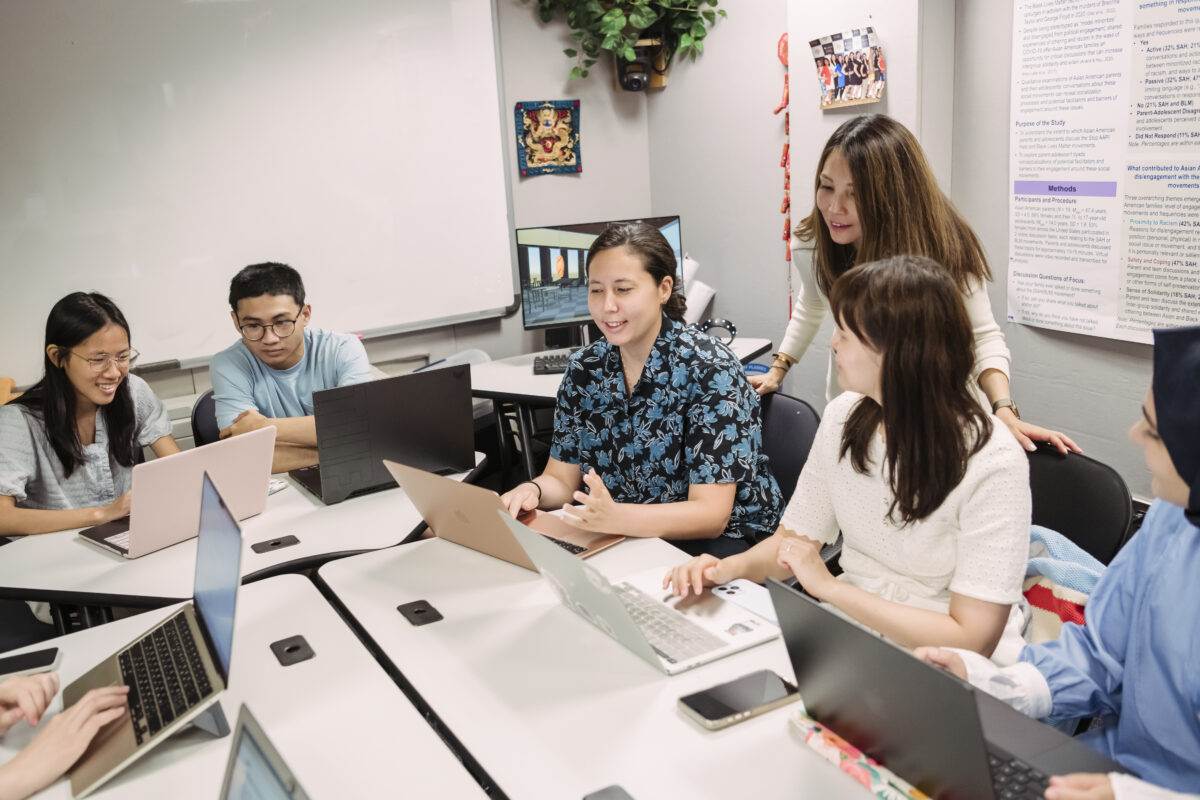 Cheah discusses work with her students. (Marlayna Demond ’11)
Gursoy is now in the fifth year of her doctoral program focused on the Identities of Muslim American Adolescents and their Growth and Excellence research study. This project explores the impact of identity, interpersonal relationships, racism, and cultural socialization factors on Muslim American development and adjustment.
Like Cho and Ren, Gürsoy mentors undergraduates, modeling Cheah’s methods and plans on taking those skills with her. “Working with undergraduates is one of the things I love doing best. They are creative, curious, and are not afraid to tell you something that might not work,” says Gürsoy. “Dr. Cheah has been holding my hand throughout my journey. Helping me learn by giving me constructive feedback. I want to give the same kindness to our undergraduates.”
Learn more about UMBC’s psychology department.
]]>
Graduate students rely on internet research and word of mouth to hear about programs that align with their interests. For Hatice Gürsoy, word of mouth led her from the Republic of Türkiye to...
https://umbc.edu/stories/destination-for-developmental-psychology/
https://beta.my.umbc.edu/api/v0/pixel/news/146071/guest@my.umbc.edu/723979288c2734c6d0dcaabf040e355a/api/pixel
cahss
fall-2024
impact
international
magazine
psychology
research
story
UMBC News & Magazine
https://beta.my.umbc.edu/groups/umbc-news-magazine
https://assets1-beta.my.umbc.edu/system/shared/avatars/groups/000/001/943/24435aa6207c452e7bc15cc74b42c7bb/xsmall.png?1748556657
https://assets1-beta.my.umbc.edu/system/shared/avatars/groups/000/001/943/24435aa6207c452e7bc15cc74b42c7bb/original.png?1748556657
https://assets2-beta.my.umbc.edu/system/shared/avatars/groups/000/001/943/24435aa6207c452e7bc15cc74b42c7bb/xxlarge.png?1748556657
https://assets2-beta.my.umbc.edu/system/shared/avatars/groups/000/001/943/24435aa6207c452e7bc15cc74b42c7bb/xlarge.png?1748556657
https://assets3-beta.my.umbc.edu/system/shared/avatars/groups/000/001/943/24435aa6207c452e7bc15cc74b42c7bb/large.png?1748556657
https://assets1-beta.my.umbc.edu/system/shared/avatars/groups/000/001/943/24435aa6207c452e7bc15cc74b42c7bb/medium.png?1748556657
https://assets2-beta.my.umbc.edu/system/shared/avatars/groups/000/001/943/24435aa6207c452e7bc15cc74b42c7bb/small.png?1748556657
https://assets1-beta.my.umbc.edu/system/shared/avatars/groups/000/001/943/24435aa6207c452e7bc15cc74b42c7bb/xsmall.png?1748556657
https://assets2-beta.my.umbc.edu/system/shared/avatars/groups/000/001/943/24435aa6207c452e7bc15cc74b42c7bb/xxsmall.png?1748556657
UMBC News & Magazine
0
0
false
Wed, 04 Dec 2024 16:11:22 -0500
Wed, 04 Dec 2024 16:11:22 -0500
New study finds specific sensory neurons associated with parental care and reproductive behaviors in male cichlids

African cichlids, a group of thousands of freshwater fish species, present a wide range of distinctive mating and parental care behaviors. However, the mechanisms that drive these behaviors are poorly understood. Cheng-Yu Li, assistant professor of biological sciences and a member of the UM FIRST faculty cohort, and colleagues have discovered a new clue in this mystery and published their results in Current Biology. A wide range of vertebrate species exhibit versions of these behaviors, so Li and colleagues hope their research will contribute to a broader understanding of the neural mechanisms that are behind them.
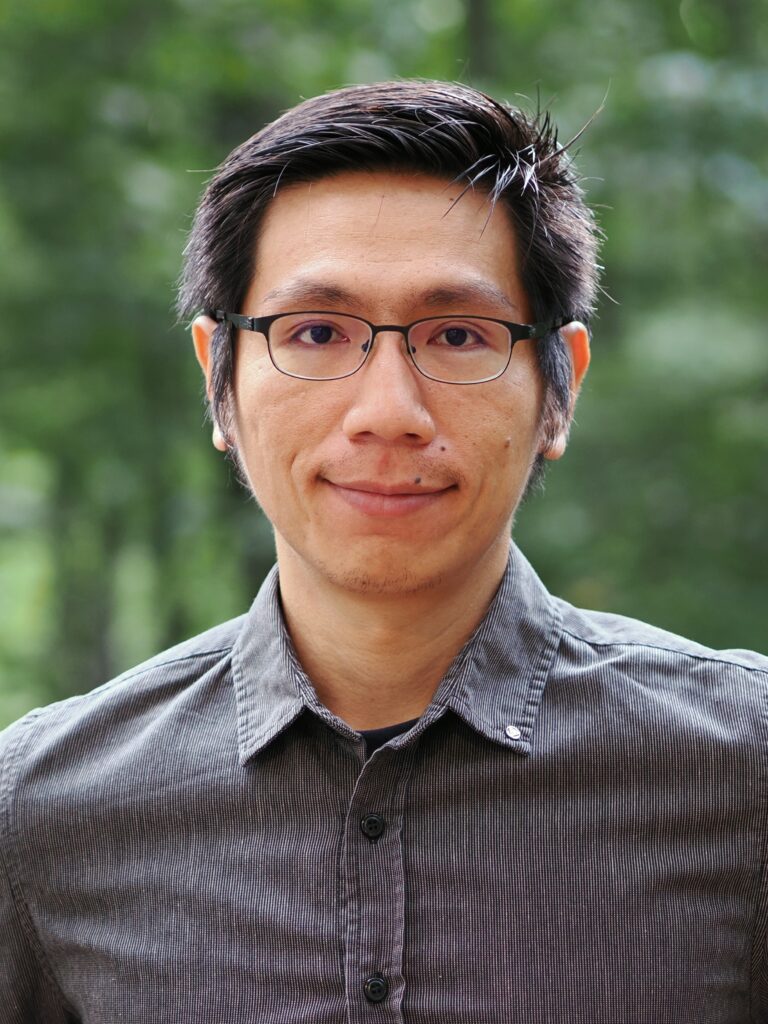 Cheng-Yu Li (courtesy of Li)
Using an African cichlid species, Astatotilapia burtoni, asthe model organism, the authors identified that a group or neurons called ciliated olfactory sensory neurons (OSNs) are the key type of cell responsible for detecting female reproductive pheromones. They further pinpointed a specific pheromone receptor, Or113a, that regulates males’ reproductive behavior.
In male cichlids, sensory neurons expressing the Or113a receptor detect cues derived from a pheromone called prostaglandin F2ɑ, or PGF2ɑ. PGF2ɑ functions both as a female hormone that regulates female mating behavior and as a pheromone that attracts males when females are reproductively receptive. Knocking out their Or113a receptors limited males’ preference for water taken from near a sexually receptive female. Silencing the males’ relevant sensory neurons by knocking out a protein called Cnga2b eliminated the preference entirely.
PGF2ɑ on its own is attractive to males in some fish species, such as zebrafish and goldfish, however, but male A. burtoni cichlids are insensitive to PGF2ɑ. This suggests that PGF2ɑ must be converted into a different chemical in reproductive females or that more than one pheromone is involved in the male attraction response. That makes evolutionary sense, Li explains, because many species of cichlids and other fish living in the African Great Lakes may use PGF2ɑ for pheromone signaling. If it was the only signal, there would be a high probability of interbreeding between cichlid species, or a male could mistakenly approach females of predator species. Using more than one signal would solve this problem. Li and colleagues are actively working on finding additional pheromone clues to further unravel this complex signaling system.
A puzzle worth brooding over
Discovering a neurological mechanism driving males’ attraction to females was exciting for Li, but an unusual observation during their trials added to the study’s impact. Many cichlids “mouth brood,” or carry their eggs in their mouths for several weeks until the larvae can swim on their own. In most species, including the one used in Li’s study, the female is the exclusive mouth brooder. However, Li’s study found that males with mutations in the genes of cnga2b or or113a would take eggs into their mouths as a female would. But only 30 percent of the males who picked up eggs would mouth brood them until hatching; the other 70 percent immediately swallowed the eggs.
Li and colleagues had expected the males with mutated receptors to alter their preference for water containing female pheromones, but the mouth brooding was a surprise. “That was kind of outside of our expectations,” Li says. “It’s something that we had never heard before, and we didn’t even predict that would happen.”
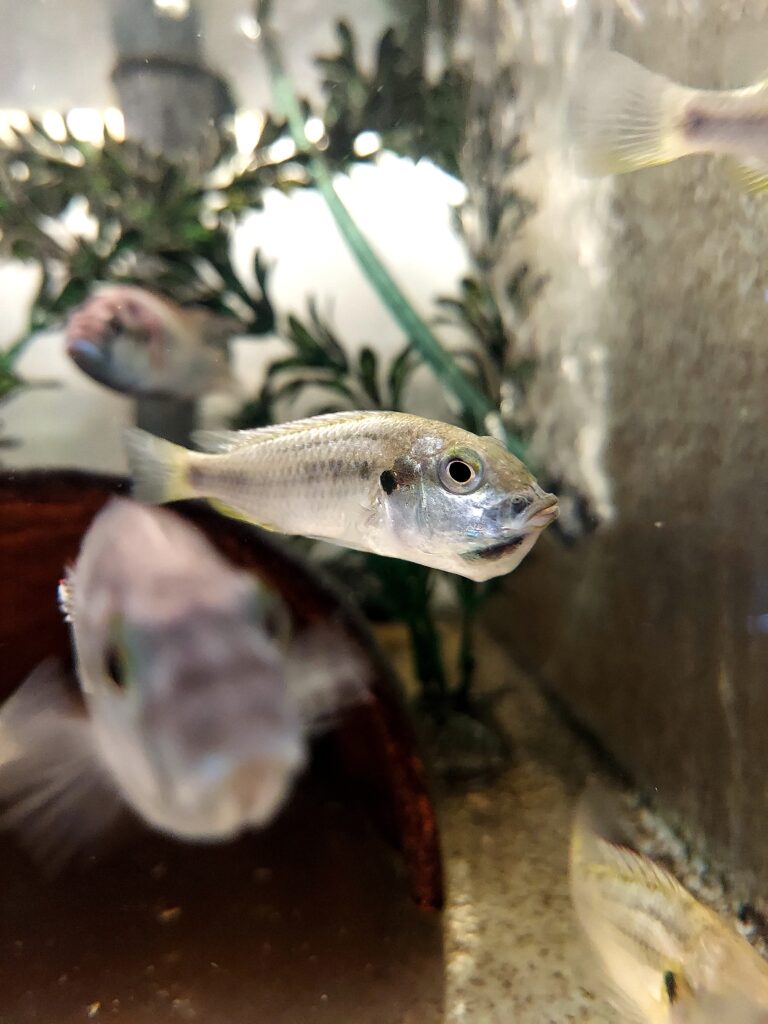
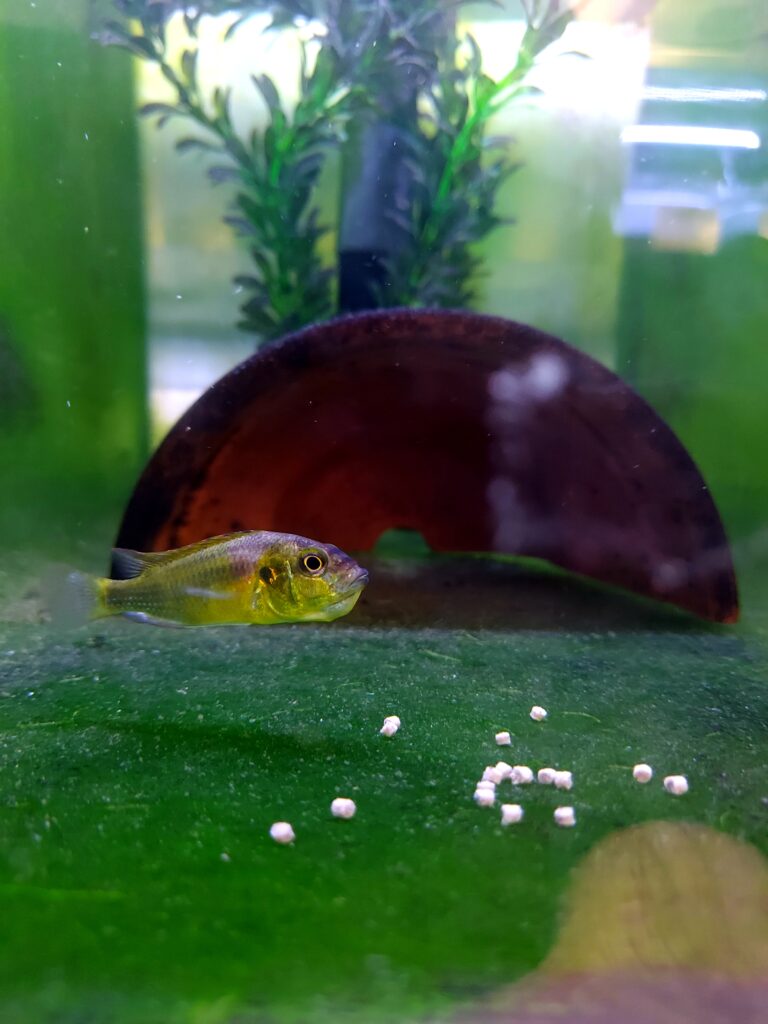
Left: A female A. burtoni holds eggs in her mouth. Right: A male A. burtoni, the cichlid species Li studies, carries eggs in his mouth and ignores nearby food pellets. (Photos courtesy of Li)
To explain the male mouth brooding, “Our first guess is that the PGF2ɑ-derived pheromone cues play dual roles,” Li says. “The first role is to attract males during mating. But it may also inhibit male mouth-brooding behavior. So once you knock out this receptor, this circuit turns on in the males, and they become mouth brooders as well.” In other words, mouth brooding may be the default behavior in both species, but some mechanism driven by pheromones normally turns it off in males.
Supporting this hypothesis, Li and his colleagues found that in blackchin tilapia, a different cichlid species where males normally mouth brood the eggs until hatching, the males may have a naturally occurring mutation in the same Or113a gene. That supports the idea that the phenomenon of male mouth-brooding, and the mechanism that regulates it, “ is a regular mechanism in the field, not just some weird example we saw in the lab,” says Li.
The next question is what additional cues may be required to induce full-term mouth brooding. Li and colleagues are investigating.
Connections across species
Cichlids have a complex social status system, demonstrate significant parental care, and present a diverse set of distinctive mating behaviors, traits they have in common with a wide range of species. Even some of the mechanisms are shared across large evolutionary distances. For example, the hormone prolactin drives parental care in fishes, mice, and even humans.
“We are using this simple model in cichlids, which are easy to breed and easy to study in the lab, and exploring mechanisms that may have broader biological relevance. It’s a wonderful model where we can bridge ecology and evolution concepts with neuroscience,” Li says. “By gaining deeper insights into what regulates parenting behavior, we can identify key neurons and genes in the brain involved in this process, with the goal of uncovering mechanisms that may be shared across various species.”
]]>
African cichlids, a group of thousands of freshwater fish species, present a wide range of distinctive mating and parental care behaviors. However, the mechanisms that drive these behaviors are...
https://umbc.edu/stories/cichlid-parental-care-study/
https://beta.my.umbc.edu/api/v0/pixel/news/146060/guest@my.umbc.edu/782fba9d420132d8478bb2af7b37d1c3/api/pixel
biology
cnms
news
research
science-and-tech
story
UMBC News & Magazine
https://beta.my.umbc.edu/groups/umbc-news-magazine
https://assets1-beta.my.umbc.edu/system/shared/avatars/groups/000/001/943/24435aa6207c452e7bc15cc74b42c7bb/xsmall.png?1748556657
https://assets1-beta.my.umbc.edu/system/shared/avatars/groups/000/001/943/24435aa6207c452e7bc15cc74b42c7bb/original.png?1748556657
https://assets2-beta.my.umbc.edu/system/shared/avatars/groups/000/001/943/24435aa6207c452e7bc15cc74b42c7bb/xxlarge.png?1748556657
https://assets2-beta.my.umbc.edu/system/shared/avatars/groups/000/001/943/24435aa6207c452e7bc15cc74b42c7bb/xlarge.png?1748556657
https://assets3-beta.my.umbc.edu/system/shared/avatars/groups/000/001/943/24435aa6207c452e7bc15cc74b42c7bb/large.png?1748556657
https://assets1-beta.my.umbc.edu/system/shared/avatars/groups/000/001/943/24435aa6207c452e7bc15cc74b42c7bb/medium.png?1748556657
https://assets2-beta.my.umbc.edu/system/shared/avatars/groups/000/001/943/24435aa6207c452e7bc15cc74b42c7bb/small.png?1748556657
https://assets1-beta.my.umbc.edu/system/shared/avatars/groups/000/001/943/24435aa6207c452e7bc15cc74b42c7bb/xsmall.png?1748556657
https://assets2-beta.my.umbc.edu/system/shared/avatars/groups/000/001/943/24435aa6207c452e7bc15cc74b42c7bb/xxsmall.png?1748556657
UMBC News & Magazine
0
0
false
Wed, 04 Dec 2024 14:42:56 -0500
Wed, 04 Dec 2024 14:42:56 -0500
The World Is (Finally) Watching

Packed and energized sporting arenas. Clinching the closing medal ceremony of the Olympics for the first time. Primetime broadcasts with viewership in the many millions—women’s sports are starting to get the time and attention they’ve deserved all along.
At UMBC, our women athletes have been gathering championship rings and lifting each other up along the way. You’re invited to join the stands and cheer on these world-class Retrievers.
By Kara Newhouse
The women of the UMBC volleyball team stood at the edge of their home court with eyes toward the rafters. To the right of the American and Maryland flags hung two banners with black cloths draped over them. The home opener match of the 2024 season would start soon, but first, a bit of pomp and circumstance for the Retrievers who won the past four America East Conference tournaments.
A game announcer directed attention to a massive video screen which showed senior Mila Ilieva, economics, blocking a hit and clinching a 3-0 sweep of the Binghamton Bearcats in the 2023 championship. On the floor, current players grinned, reliving their victory as triumphant music kicked on. All eyes returned to the rafters and up went the black cloths to reveal two black and gold banners listing the volleyball team’s three regular season titles and four tournament wins.
On its way up, one cloth got stuck, hanging at an angle as the players turned for a photo and a crew in the rafters fixed it. Not the smoothest of unveilings, but it was perhaps reflective of the trajectory of women’s sports in this country, a path punctuated by moments of great promise—the passage of Title IX, packed crowds at the 1999 Women’s World Cup, Simone Biles and Katie Ledecky’s medal dominance at the Rio Olympics—but often regressing to the status quo as a “niche interest” ignored by investors and corporate broadcasters.
This year, however, the veil keeping women’s sports from mainstream popularity has finally lifted. The final game of 2024 NCAA women’s March Madness netted over 18 million average viewers—4 million more than the men’s final. At the Paris Olympics, the women’s marathon medals were given during the closing ceremony instead of the men’s for the first time. Professional leagues are smashing attendance records and making expansion plans.
As a recent viral T-shirt declares: Everyone watches women’s sports. And Retriever athletics is full of women worth watching. In addition to volleyball victories, UMBC boasts four consecutive America East championships in softball. Swimming alumna Emily Escobedo ’17, finished third in the 200-meter breaststroke at NCAA championships as a Retriever and later won a world championship in the same event. The lacrosse team is coached by a hall-of-famer. Shot putter Cleopatra Borel ’02, was the college’s first national champion and competed in four Olympics for Trinidad and Tobago. That’s just what’s in the record books. At UMBC, student-athletes are also supported as teammates, scholars, and aspiring leaders. Are you watching with us?
It’s electric
For Kennedy Lamb ’20, English, the recent popularity of women’s sports is overdue. “It’s about time these women’s sports teams, especially at UMBC, get that attention,” said Lamb, who won an America East championship with Retriever softball in 2019.
During her time as a student-athlete, Lamb experienced a similar change in viewership to what’s happening nationally. She remembers looking out from the diamond as a first-year student to see just a few parents. “We love the parents, but you always wish that maybe another sports team or maybe a friend or someone from your math class would show up,” she said. Over the ensuing years, as the softball team turned into a winning one, her wish came true. “By the time I was a senior, the hill was filled.”
Lamb got a reminder of how that felt when she attended a Washington Mystics game against the Indiana Fever, the team on which mega-popular Caitlin Clark plays. Both times the Fever came to Washington, the arena sold out. Lamb said her friends and family who are longtime WNBA fans recalled how they used to get cheap tickets to games with middling attendance. “Now it was this sought after activity. Tickets were expensive. And seeing the electricity in the stadium reminded me of the electricity of being on the UMBC softball team,” Lamb said.
Clark’s celebrity drew large crowds across WNBA cities this year, but it wasn’t only the Clark effect bringing people in. The New York Liberty, for instance, averaged the second highest home attendance in the regular season with 12,700 fans. Five years ago, the Liberty’s home game average was 2,200 fans.
For Tiffany D. Tucker, UMBC’s new director of athletics, physical education, and recreation, the popularity of the WNBA and other women’s sports is payoff from decades of work by athletes, coaches, executives, fans, investors, and allies. It’s not that the product on the floor changed, but “sometimes people need an invitation,” Tucker said. “It’s as if they’ve been peeping in, and it’s like, ‘I want to be a part of it,’ and now everybody feels like they’ve been invited and that they’re a part of the team.”
As she dives into her new role, she plans to extend the same invitation for all to watch UMBC women’s athletics.

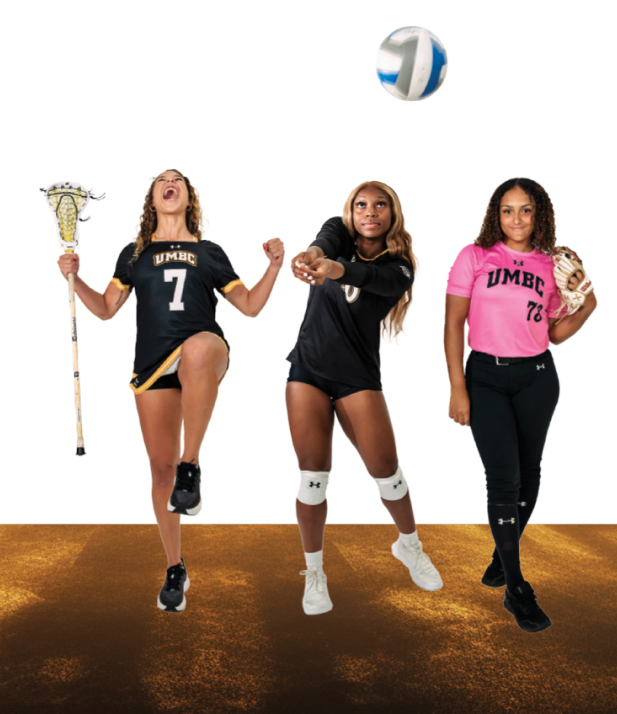
Top to bottom: LynaBeraich, Tiara Bellamy,Lexi Tepper.
A relational environment
After the volleyball banner ceremony, Tucker sat at center court with President Valerie Sheares Ashby to watch the contest against Lehigh University.
“Let’s go, Serin! You got it!” the athletics director called as setter Serin Maden, an economics junior, stepped up for a serve.
A former basketball coach who once aspired to be an author and international speaker, Tucker’s voice carried easily over the cacophony of the crowd and thwacks of palms smacking leather.
“Let’s go, Jada!” she called shortly after Maden’s serve. “Let’s go, Aysia!” a few minutes later.
Tucker was less than four weeks into the job. Asked how many names she’d learned in those weeks, she exhaled. “I try to get them all, I try,” she said. Counting both men and women student-athletes, that’s almost 400 names. “I’m going team by team,” Tucker added with a deep laugh.
At once the mark of a good leader, Tucker’s effort is also a benefit of UMBC’s size. “When you’re a student-athlete at a smaller, mid-major institution, you may know the name [of administrators], or you may know where the offices are to certain resources,” Tucker said.
“These are the same people who are here to support our women’s sporting events. These are people who are readily there to help you, not that they’re not there at a larger institution, but because of the size of the institution, I think it’s a little bit more intimate and relational.”
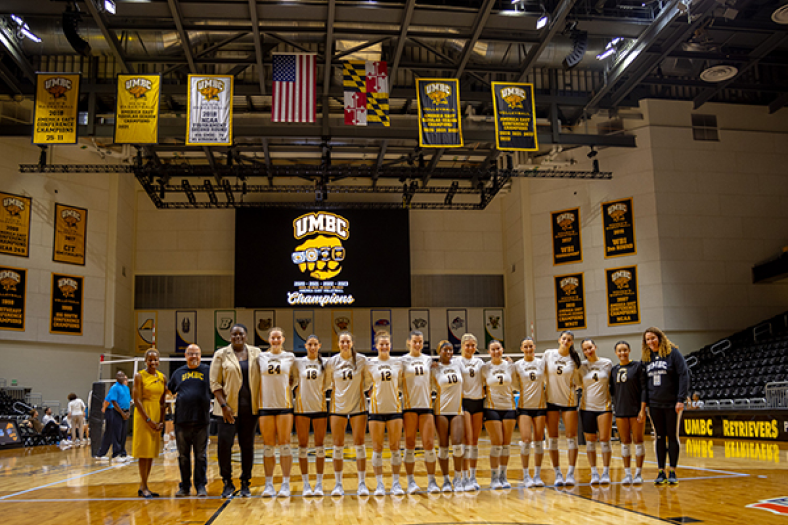
UMBC volleyball celebrated winning the last four America East Conference tournaments. Photo by Luna Siesko for UMBC.
In the grind together
In the stands behind Tucker, a row of preteen girls got into the Retriever spirit, barking loudly to support the home team. Sporting shiny red jerseys, these girls were volleyball players from Shepherdstown Middle School in West Virginia, attending their first college game. Though the Retrievers lost, the match was “really fun” and “cool,” the girls said with big smiles afterward. Their favorite part? “The rallies,” according to one. “Yeah, the rallies!” another girl echoed.
A third player had a different thought. “The way they supported each other,” she said. “They huddled after every point and high fived and cheered for each other.” At this, the rest of the tweens bobbed their heads in agreement and declared that they wanted to take that back to their own matches.
That kind of support cuts across sports at UMBC. “There’s this camaraderie when you’re all together, day in day out, waking up at 5:30 for practice,” said Lamb, who is the godmother to the child of one of her former softball teammates. “It’s one thing to have great friends who you see in your English class, but ultimately you don’t grind with them. Being a DI athlete is a grind. You have no choice but to lean on others. You can’t do it alone. And that’s a type of friendship that isn’t found everywhere.”
Left to right: Katana Nelson, Jada James, Mikayla Bryant.
Aysia Miller ’24, biological sciences, knows something about grinding with teammates. She won four America East championships in volleyball with four different pathways to the trophy. Her first year, the Retrievers were the underdogs facing the heavyweight University of Albany. Her sophomore year, the team blew out everyone in conference play but struggled in the tournament. Her junior year, they started the season strong but hit a losing stretch midway. Her senior year was the magic one.
“It was just like everything was clicking, and it was honestly pretty perfect,” said Miller, who is now a master’s student in applied molecular biology. With an extra year of athletic eligibility because of COVID-19, Miller has the unusual opportunity to achieve a five-peat. But the team struggled at the start of the season, losing nine in a row.
After the Lehigh match, Miller said she and her teammates knew they needed to improve. “Ultimately, I do believe that culturally our team is in a good spot. We have each other’s backs,” she said. “No one is turning on each other, and we’re not blaming one another about losing, about not things not going our way. And it kind of all comes down to what are our values as a team, what’s important, and how we’re able to treat each other.”
Open doors
Shared values can be the difference between a thriving locker room and a toxic one. During the women’s basketball preseason, the team spent an afternoon defining and performing skits about the core values posted in their locker room: service, toughness, family, loyalty, commitment, and consistency.
Team bonding activities like that one, as well as movie nights, a trip to the state fair, and the thrill of competition are what motivated Riley Donahue ’24, political science, to stay for another year as a master’s student in public policy. As a transfer student, Donahue has experienced multiple sets of coaches. From her perspective, positive culture starts at the top, and she loves the tone set by Coach Candice Hill and her staff. “They want to make sure everybody’s OK, and they have an open door policy if you need to come and talk to them,” Donahue said.
“I want to fill the stands. I want women athletes to really feel their value and know that they are loved.”
— Tiffany D. Tucker, athletics director
Hill isn’t the only coach with that policy. “By open door, I mean literally anyone walks through our door,” said Amy Slade, the women’s lacrosse head coach entering her 17th season with the Retrievers. “We could be meeting with a recruit, and someone walks in and we’re like, ‘Hey, what’s up?’”
Slade and her staff hold monthly “coaches’ corner” meetings with each player. The young women may discuss lighthearted topics, like their favorite TV shows. Or they may share serious matters, like a parent’s cancer diagnosis. In either case, Slade said her goal is not to solve their problems, but to validate emotions and offer mom hugs, tough love, or referrals to mental health professionals as needed. “We’re making time each month just for you. And I think that’s important,” said Slade, who was inducted into the National Lacrosse Hall of Fame in 2021.
While coaches keep doors open for student-athletes to come inward, the rest of the college opens doors to go outward and excel beyond their sports. Players and staff are proud that academics get just as much emphasis as athletics at UMBC. That’s what drew Donahue here from Auburn University as a junior. Right away, Donahue jumped into an internship fair that led to working on Brooke Lierman’s successful campaign for Maryland Comptroller. The following spring, she interned in the Maryland legislature for Delegate Cheryl Pasteur.
“It was a haul to Annapolis,” Donahue said, but she paid for gas with money she earns from NIL (name, image, likeness) deals. “It was really fun to sit in on judicial hearings, to walk through the Senate building …and I enjoyed being around it and helping draft bills, helping make scholarships for students.”
Donahue is president of UMBC’s Student Athlete Advisory Committee (SAAC) and the America East chair for the NCAA Division 1 SAAC. Eventually, she wants to be president of the United States. “This place challenges you academically, and that’s what I want. Because the career that I want to go into is not going to be easy,” she said.
“Just come and play”
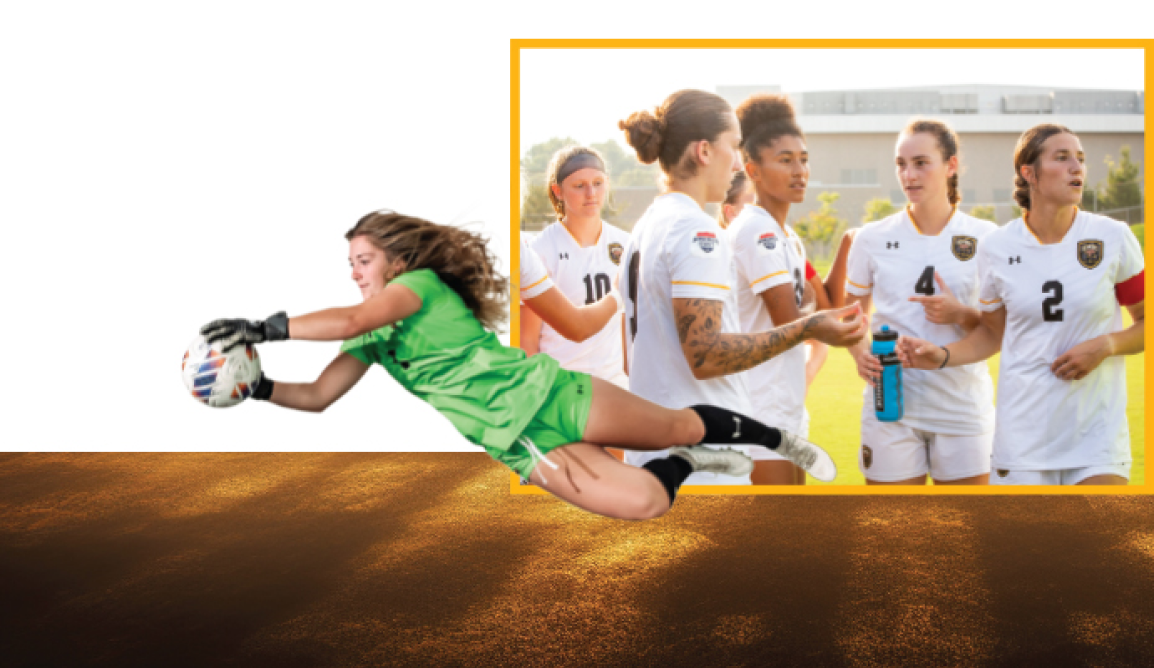 The women’s soccer team huddles on the field at Retriever Soccer Park. Photo by Jill Fannon, M.F.A. ’11.
Women’s sports have a long history at UMBC, thanks in large part to Linda “Louie” Sowers ’70, American studies. Sowers, who played volleyball in high school, arrived at UMBC in its inaugural 1966 semester. Looking around campus, she found something missing: women’s sports. So in her second year, she approached athletic director Dick Watts with a request to change that. “I was a little sophomore, and he was an intimidating person…so it took a lot of courage for me just to go in there and ask,” she recalled.
Five years before Title IX mandated equality of athletic opportunities among other things, many male athletic directors might have brushed off Sowers’ request. But according to Sowers, Watts handed her a piece of paper and asked her to get signatures of female students who wanted to play sports. If she gathered enough names, he would hire a volleyball coach.
Sowers took that paper to the cafeteria, located in one of the only campus buildings at the time. “I basically just, in between classes, went up and down all the tables and got as many girls as I could,” Sowers recalled. “I had girls that said ‘I’ve never played before,’ and I would say, ‘I don’t care. It doesn’t matter. Just come and play.’”
She collected 66 signatures, and Watts hired a volleyball coach that spring. The next fall, Watts added a women’s athletic director, plus field hockey and basketball teams. “Because we were such a small school…it was like this little core group of us that wound up playing all three sports,” Sowers said. More than 50 years later, she still attends Ravens games with one of those friends and keeps in touch with others by text and email.
Fill the stands
In Sowers’ day, spectators included just a few parents and male athletes. Even today, crowds tend to follow a team’s success. Teams that have yet to lift trophies said they’re still hoping to see more fans.
One misty September night at Retriever Soccer Park as the women’s team mounted a comeback win over Mount St. Mary’s, parents in slickers and some fellow student-athletes—including Miller—cheered from wet bleachers. One dad rang a cowbell after every Retrievers play. Center fullback Lauren Reid, psychology and visual arts, said she’s grateful for family support but wished more peers would show up.
Reid knows how it feels to put on her cleats for a packed house. Last June she traveled to soccer-mad Brazil as a member of the Jamaican women’s national team. When Brazilian legend Marta took the field, the energy shift was incredible, Reid said. “I think it would give us the same feeling here if our whole student body was showing up,” she continued.
Tucker, too, said she wants to see growth in crowds to mirror what’s happening at a national level: “I want to fill the stands. I want women athletes to really feel their value and know that they are loved.”
Tucker plans to personally visit rotary clubs, local churches, schools, and others to extend the invitation. She wants to saturate the community with her message about Retriever women’s athletics.
“We have some of the best scholars. We have some of the best athletes in the country right here on our campus, and they’re passionate about what they do. They’re very disciplined. And it’s fun. It’s action-packed. It’s right here in your backyard,” Tucker said.
Consider yourself invited.
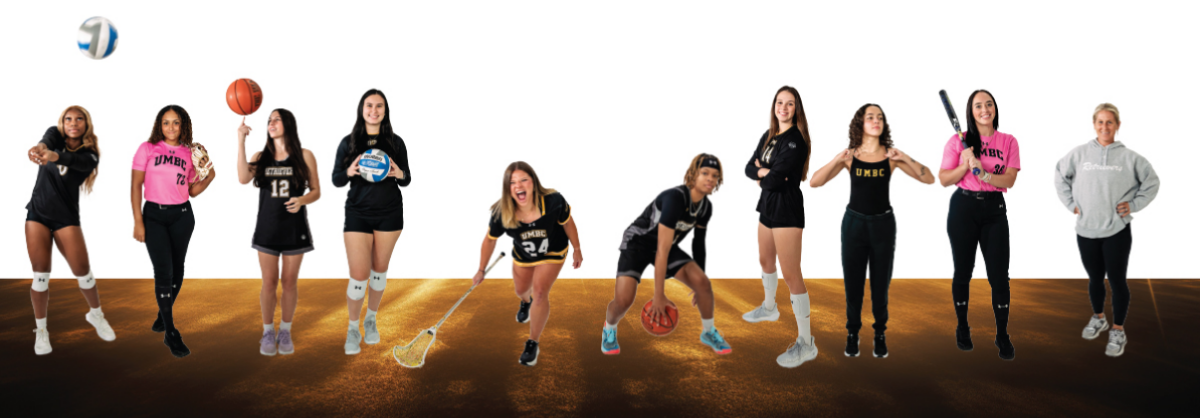 Left to right: Jada James, Mikayla Bryant, Lauren Thompson, Aysia Miller, Grace Bruce, Tiara Bellamy, Claudia Llamas, Bruna de Padua, Jerzie Nutile, and Amy Slade.
]]>
Packed and energized sporting arenas. Clinching the closing medal ceremony of the Olympics for the first time. Primetime broadcasts with viewership in the many millions—women’s sports are starting...
https://umbc.edu/stories/the-world-is-finally-watching-womens-sports/
https://beta.my.umbc.edu/api/v0/pixel/news/146125/guest@my.umbc.edu/2e75cdfb4bd5cb5a15f9eb45d77e027c/api/pixel
athletics
campus-life
fall-2024
feature
magazine
story
student-athlete
UMBC News & Magazine
https://beta.my.umbc.edu/groups/umbc-news-magazine
https://assets1-beta.my.umbc.edu/system/shared/avatars/groups/000/001/943/24435aa6207c452e7bc15cc74b42c7bb/xsmall.png?1748556657
https://assets1-beta.my.umbc.edu/system/shared/avatars/groups/000/001/943/24435aa6207c452e7bc15cc74b42c7bb/original.png?1748556657
https://assets2-beta.my.umbc.edu/system/shared/avatars/groups/000/001/943/24435aa6207c452e7bc15cc74b42c7bb/xxlarge.png?1748556657
https://assets2-beta.my.umbc.edu/system/shared/avatars/groups/000/001/943/24435aa6207c452e7bc15cc74b42c7bb/xlarge.png?1748556657
https://assets3-beta.my.umbc.edu/system/shared/avatars/groups/000/001/943/24435aa6207c452e7bc15cc74b42c7bb/large.png?1748556657
https://assets1-beta.my.umbc.edu/system/shared/avatars/groups/000/001/943/24435aa6207c452e7bc15cc74b42c7bb/medium.png?1748556657
https://assets2-beta.my.umbc.edu/system/shared/avatars/groups/000/001/943/24435aa6207c452e7bc15cc74b42c7bb/small.png?1748556657
https://assets1-beta.my.umbc.edu/system/shared/avatars/groups/000/001/943/24435aa6207c452e7bc15cc74b42c7bb/xsmall.png?1748556657
https://assets2-beta.my.umbc.edu/system/shared/avatars/groups/000/001/943/24435aa6207c452e7bc15cc74b42c7bb/xxsmall.png?1748556657
UMBC News & Magazine
2
0
false
Tue, 03 Dec 2024 14:13:57 -0500
Tue, 03 Dec 2024 14:13:57 -0500
The parallel evolution of Milt Halem and the third pillar of science
Left to right: Jada James, Mikayla Bryant, Lauren Thompson, Aysia Miller, Grace Bruce, Tiara Bellamy, Claudia Llamas, Bruna de Padua, Jerzie Nutile, and Amy Slade.
]]>
Packed and energized sporting arenas. Clinching the closing medal ceremony of the Olympics for the first time. Primetime broadcasts with viewership in the many millions—women’s sports are starting...
https://umbc.edu/stories/the-world-is-finally-watching-womens-sports/
https://beta.my.umbc.edu/api/v0/pixel/news/146125/guest@my.umbc.edu/2e75cdfb4bd5cb5a15f9eb45d77e027c/api/pixel
athletics
campus-life
fall-2024
feature
magazine
story
student-athlete
UMBC News & Magazine
https://beta.my.umbc.edu/groups/umbc-news-magazine
https://assets1-beta.my.umbc.edu/system/shared/avatars/groups/000/001/943/24435aa6207c452e7bc15cc74b42c7bb/xsmall.png?1748556657
https://assets1-beta.my.umbc.edu/system/shared/avatars/groups/000/001/943/24435aa6207c452e7bc15cc74b42c7bb/original.png?1748556657
https://assets2-beta.my.umbc.edu/system/shared/avatars/groups/000/001/943/24435aa6207c452e7bc15cc74b42c7bb/xxlarge.png?1748556657
https://assets2-beta.my.umbc.edu/system/shared/avatars/groups/000/001/943/24435aa6207c452e7bc15cc74b42c7bb/xlarge.png?1748556657
https://assets3-beta.my.umbc.edu/system/shared/avatars/groups/000/001/943/24435aa6207c452e7bc15cc74b42c7bb/large.png?1748556657
https://assets1-beta.my.umbc.edu/system/shared/avatars/groups/000/001/943/24435aa6207c452e7bc15cc74b42c7bb/medium.png?1748556657
https://assets2-beta.my.umbc.edu/system/shared/avatars/groups/000/001/943/24435aa6207c452e7bc15cc74b42c7bb/small.png?1748556657
https://assets1-beta.my.umbc.edu/system/shared/avatars/groups/000/001/943/24435aa6207c452e7bc15cc74b42c7bb/xsmall.png?1748556657
https://assets2-beta.my.umbc.edu/system/shared/avatars/groups/000/001/943/24435aa6207c452e7bc15cc74b42c7bb/xxsmall.png?1748556657
UMBC News & Magazine
2
0
false
Tue, 03 Dec 2024 14:13:57 -0500
Tue, 03 Dec 2024 14:13:57 -0500
The parallel evolution of Milt Halem and the third pillar of science

For almost 70 years, Milt Halem, now a research professor at UMBC after a career at NASA, has deployed the latest computing technology—from vacuum tubes in the ’50s to artificial intelligence today—to tackle some of science’s toughest problems.
Colorful screen prints cover the walls of Milt Halem’s Rockville, Maryland, apartment. One shows a high-altitude view of the Nile River, cutting through desert sands before emptying into a turquoise Mediterranean. In another, the fragile blue marble of the Earth rises above a desolate lunar surface.
One large picture, taking centerplace on the dining room wall, is more enigmatic—filled with alternating red, yellow, and blue patches. “This is what’s known as the quasi-biennial oscillation,” Halem explains.
Tens of thousands of feet up, in Earth’s stratosphere, the winds around the equator regularly shift direction, blowing east for many months, and then west, and then east again. A satellite measured the shifts, and Halem, a former NASA scientist and current UMBC professor, turned six years of that data into art.
Halem’s framed prints, many of which he created himself while taking evening and weekend classes at the Corcoran School of the Arts and Design in Washington, D.C., are a window into his nearly 70-year-long scientific career. For roughly 40 years of that time, he worked for NASA, the famed federal space agency. Halem harnessed NASA’s space-based instrument “eyes” and ever-evolving computer “brains” to advance humanity’s understanding of Earth and our place in the cosmos and, in 1996, was recognized with NASA’s highest award, the Distinguished Service Medal.
In 2003, after retiring from NASA, Halem joined UMBC as a research professor. In his more than two decades at the university, he has nurtured connections with government and industry, brought in research money and equipment, regularly taught a popular graduate course, and mentored more than a dozen Ph.D. students, helping them pursue their passions and propel their careers.
“I think of myself as a computational scientist: I use computers to both discover and explore new territory,” Halem says. “What I love is the computer’s ability to represent, and to explain, the world around us.”
Charting computers’ evolution
Halem began his working life at the dawn of the computing age, and his career trajectory mirrors the steady rise of those digital devices. After earning a bachelor’s degree in mathematics from the City College of New York in 1951, Halem was drafted into the Korean War effort and served on U.S. Army bases for two years, first in New Jersey and then in Arizona. After a stint clearing rocks off the golf course so that the officers could play, Halem’s skills were better put to use on some of the Army’s first attempts to use what at the time were relatively new-fangled devices called computers to improve surveillance of battlefields.
In 1955, Halem received a fellowship to work with an IBM 704 computer installed at New York University. The computer took up significant floor space with its multiple cabinet-sized components, filled with vacuum tubes for logic operations and magnetic tape for memory. It was state-of-the-art in its day, able to execute about 40,000 instructions per second.
“You could say 1955 was my start in high-performance computing,” Halem says. “I’ve been acquiring and managing and programming and doing research on computers ever since.”
In the late 1950s, NASA established the Goddard Space Flight Center (GSFC) and, shortly after, opened a New York campus—the Goddard Institute for Space Studies—focused on theoretical research.
Milt Halem delivers remarks during a conference at NASA Goddard Space Flight Center, 1986. Photo by NASA.
Because of Halem’s experience with computers, he was hired as contract support. In the subsequent years, he worked with some of the most advanced computers of the time, using them to model the Earth’s atmosphere and predict the scientific value of launching new Earth-observing instruments. In 1968, he also earned his Ph.D. in applied mathematics from NYU.
In the late ’70s, Halem moved to Goddard’s main facility, GSFC, in Maryland to continue his computing work. In 1983, he became chief of the Space Data and Computing Division and shifted from using supercomputers to being a force in their development. The division had recently developed the Goodyear Massively Parallel Processor (MPP), a trailblazing computer containing 16,384 processors working simultaneously. This degree of parallelism, which lies at the heart of today’s supercomputers, marked a radical departure from traditional computing.
“The MPP was a relatively simple concept, but it took us more than a decade to develop it,” says Jim Fischer, who managed the MPP’s fabrication contract and applications programs. “Milt found people to help and money to support the machine. And then he offered it to the U.S. science community to try it out, and they recognized its architecture as a solution. Milt pumped us to world class by force of will.”
In the ensuing years, Halem and Fischer pursued making the power of MPPs more accessible and less expensive. In 1994, their staff demonstrated the “Beowulf” computing cluster, composed entirely of mass market personal computers networked with Ethernet and running the Linux open source operating system.
Now 30 years later, the Beowulf approach sits at the core of most of the world’s supercomputers and much of the cloud infrastructure, putting vast amounts of affordable computing resources at the fingertips of scientists, engineers, and even social media users.
After Halem arrived at UMBC in his 70s, he continued to engage with the latest computing technology. He was instrumental in securing the donation of high-performance IBM computing equipment from NASA to the university, and he helped run a new computing research center. With his students, he has explored the frontiers of quantum computing and AI.
“I’ve followed the evolution of high-performance computing my entire career,” Halem says.

Computing for science
Computers can do many things—from recommending videos you might like to rendering life-like graphics—but Halem is most interested in what they can do for science.
“Science is based on the notion of observations and then explaining the observations by some theoretical process,” says Halem. “That was the way science evolved until the mid-20th century. Then computers came along and became the third pillar of science.”
Halem’s passion fit with NASA’s mission. Though the agency was born out of the Cold War and the space race with the Soviets, it has concentrated its efforts on the peaceful use of space to advance science.
NASA launches satellites that observe Earth from space with a suite of scientific instruments (including some designed at UMBC), and a large part of Halem’s research has been using computers to understand how that data can improve our understanding of the Earth’s air, water, and land and the physical processes that link them. Halem has also advanced weather forecasting through, among other techniques, finding new ways to incorporate observations into the weather models.
As an administrator at NASA, Halem always put the science first, according to his colleagues. “I believe that Milt left a legacy of making decisions that are in the best interest of science,” says Dan Duffy, the chief of the Computational and Information Sciences and Technology Office at GSFC, who sits in Halem’s old NASA office and has continued to work with him on special projects since Halem joined UMBC.
“His motivation was always driven by the scientific community’s needs,” Fischer adds. “It was very high-minded.”
Shaping students’ lives
At UMBC, Halem has continued his devotion to computing for science’s sake. In doing so, he has supported the research community and shaped his students’ lives.

Jennifer Sleeman, Ph.D. ’17, computer science, was co-mentored by Halem on her Ph.D. thesis, which involved mapping topics from past climate reports from the Intergovernmental Panel on Climate Change and trying to predict the contents of future reports.
Jim Fischer, Milt Halem, and Sophia Hamer (left to right) in Halem’s UMBC office. One of Halem’s screen prints hangs in the upper right.
“Milt and I would have discussions about my thesis, and I always like to describe it as: Milt decided to adopt me. I was close to the end of my Ph.D., and I changed my focus based on working with him,” she said. “It really changed the trajectory of my career.” After graduating, she became a research assistant professor at UMBC. She currently studies weather and climate-related topics as a senior AI research scientist at Johns Hopkins Applied Physics Laboratory while she continues to work part-time with Halem and his students.
Sophia Hamer ’22, mathematics and computer science, who is currently working with Halem as a master’s student, also credits Halem with helping her find her career footing. She first met him to discuss a research project when she was an undergraduate and just emerging from a time when she struggled with her grades and with choosing a major.
“Dr. Halem took a chance on me,” she says. “I honestly think that was the turning point for me. Before I was thinking, ‘I’m just gonna squeak out of here with a degree and hopefully my GPA isn’t too bad to get a job.’ But now, my entire perspective has shifted: I’m about to graduate with a master’s, and I’m doing impactful research in a field I really like. I never thought that would be possible.”
“Milt is tough—he pushes you—but he also works closely with you,” Sleeman adds. “I really grew from that relationship.”
AI for weather and climate forecasting
Both Sleeman and Hamer are working with Halem on a project to be the first to use AI to make regional weather predictions, one of a couple AI projects Halem is currently pursuing.
In his embrace of AI, Halem is yet again advancing alongside the technology that has defined his career. Gone are the days of mere 40,000 instructions per second. Now advanced computer chips power computationally hungry “neural networks” originally inspired by the workings of the human brain. Neural networks are behind celebrity chatbots such as ChatGPT—and forecasters are increasingly turning to them to predict the weather too.
While traditional weather models simulate the physics of the Earth and its atmosphere to make predictions about the future, AI forecasting models simply examine vast datasets of past weather and learn how to spot patterns.
So far, the main advantage of AI forecasting is speed. What can take days for a physics-based model can be done in only minutes or seconds with AI. AI weather models offer great promise for distributed, real-time weather forecasting, for example as natural disasters unfold. Halem and his students are looking in particular to predict wildfires.
While much AI weather forecasting research is undertaken by leading tech companies such as Google and Microsoft, Halem thinks his students are more than holding their own.
“I’ve got a new generation of computer scientists making breakthroughs,” says Halem. “Two students who are writing up their master’s theses are doing leading AI computations to rival what some big tech companies are doing.”
The work of weather and climate modeling is growing in importance as global warming unfolds and the Earth’s natural patterns shift. “Applying what I know to a real-world problem has been an amazing experience,” Hamer says.
The projects are also yet one more demonstration of Halem’s constant intellectual evolution.
“Milt has an amazing ability to learn new things,” says Anupam Joshi, the acting dean of the College of Engineering and Information Technology. “He was trained as a mathematician who then specialized in high-performance computing and in the last few years has become an expert in using AI systems to model weather and climate phenomena. It speaks to his intellectual capabilities but also his perseverance and his grit.”
Halem (far right) poses with (from left to right) NASA’s Jim Fischer and John Dorband, and Microsoft Fellow Jim Gray next to the first Beowulf computing cluster. Photo by NASA.
Into the future
Now in his tenth decade of life, Halem shows few signs of slowing down. When not spending time with his large family, he’s still tackling some of science’s thorniest problems, such as how to predict weather patterns months to years in advance.
“He’s like the energizer bunny,” says Fischer, his former NASA colleague.
Duffy agrees. “He has an amazing amount of energy; he never seems to stop. He has a willingness to listen, learn, and ask questions and is an amazing role model for his students.”
Halem says it’s the computation challenges that drive him. “I have to keep moving because the computational instrument continues to evolve,” he says. He continues to be on the lookout for new ideas—the latest he’s come across being an AI research scientist. “The AI agent can use large language models to read the literature; it can write computer code and conduct experiments by itself. It can write the paper on what it discovered. So that’s probably the ultimate research goal that I would like to see if I can make an impact on,” Halem explains.
“Milt is probably one of the most dedicated people I know to the research,” Sleeman says. “He’s so tenacious, and it’s just so impressive. It’s a privilege to continue to work with him.”
“Milt is incredible,” adds Joshi. “If we could replicate him, we would.” And maybe, in some sense, Halem’s AI scientist would do just that.
 ]]>
For almost 70 years, Milt Halem, now a research professor at UMBC after a career at NASA, has deployed the latest computing technology—from vacuum tubes in the ’50s to artificial intelligence...
https://umbc.edu/stories/milt-halem-and-the-third-pillar-of-science/
https://beta.my.umbc.edu/api/v0/pixel/news/146115/guest@my.umbc.edu/e9026a516fe6b98808ffc05f4258bd43/api/pixel
ai
campus-life
cfr
coeit
discovery
fall-2024
feature
gsfc
magazine
mathematics
nasa
story
UMBC News & Magazine
https://beta.my.umbc.edu/groups/umbc-news-magazine
https://assets1-beta.my.umbc.edu/system/shared/avatars/groups/000/001/943/24435aa6207c452e7bc15cc74b42c7bb/xsmall.png?1748556657
https://assets1-beta.my.umbc.edu/system/shared/avatars/groups/000/001/943/24435aa6207c452e7bc15cc74b42c7bb/original.png?1748556657
https://assets2-beta.my.umbc.edu/system/shared/avatars/groups/000/001/943/24435aa6207c452e7bc15cc74b42c7bb/xxlarge.png?1748556657
https://assets2-beta.my.umbc.edu/system/shared/avatars/groups/000/001/943/24435aa6207c452e7bc15cc74b42c7bb/xlarge.png?1748556657
https://assets3-beta.my.umbc.edu/system/shared/avatars/groups/000/001/943/24435aa6207c452e7bc15cc74b42c7bb/large.png?1748556657
https://assets1-beta.my.umbc.edu/system/shared/avatars/groups/000/001/943/24435aa6207c452e7bc15cc74b42c7bb/medium.png?1748556657
https://assets2-beta.my.umbc.edu/system/shared/avatars/groups/000/001/943/24435aa6207c452e7bc15cc74b42c7bb/small.png?1748556657
https://assets1-beta.my.umbc.edu/system/shared/avatars/groups/000/001/943/24435aa6207c452e7bc15cc74b42c7bb/xsmall.png?1748556657
https://assets2-beta.my.umbc.edu/system/shared/avatars/groups/000/001/943/24435aa6207c452e7bc15cc74b42c7bb/xxsmall.png?1748556657
UMBC News & Magazine
1
0
false
Tue, 03 Dec 2024 14:13:49 -0500
Tue, 03 Dec 2024 14:13:49 -0500
]]>
For almost 70 years, Milt Halem, now a research professor at UMBC after a career at NASA, has deployed the latest computing technology—from vacuum tubes in the ’50s to artificial intelligence...
https://umbc.edu/stories/milt-halem-and-the-third-pillar-of-science/
https://beta.my.umbc.edu/api/v0/pixel/news/146115/guest@my.umbc.edu/e9026a516fe6b98808ffc05f4258bd43/api/pixel
ai
campus-life
cfr
coeit
discovery
fall-2024
feature
gsfc
magazine
mathematics
nasa
story
UMBC News & Magazine
https://beta.my.umbc.edu/groups/umbc-news-magazine
https://assets1-beta.my.umbc.edu/system/shared/avatars/groups/000/001/943/24435aa6207c452e7bc15cc74b42c7bb/xsmall.png?1748556657
https://assets1-beta.my.umbc.edu/system/shared/avatars/groups/000/001/943/24435aa6207c452e7bc15cc74b42c7bb/original.png?1748556657
https://assets2-beta.my.umbc.edu/system/shared/avatars/groups/000/001/943/24435aa6207c452e7bc15cc74b42c7bb/xxlarge.png?1748556657
https://assets2-beta.my.umbc.edu/system/shared/avatars/groups/000/001/943/24435aa6207c452e7bc15cc74b42c7bb/xlarge.png?1748556657
https://assets3-beta.my.umbc.edu/system/shared/avatars/groups/000/001/943/24435aa6207c452e7bc15cc74b42c7bb/large.png?1748556657
https://assets1-beta.my.umbc.edu/system/shared/avatars/groups/000/001/943/24435aa6207c452e7bc15cc74b42c7bb/medium.png?1748556657
https://assets2-beta.my.umbc.edu/system/shared/avatars/groups/000/001/943/24435aa6207c452e7bc15cc74b42c7bb/small.png?1748556657
https://assets1-beta.my.umbc.edu/system/shared/avatars/groups/000/001/943/24435aa6207c452e7bc15cc74b42c7bb/xsmall.png?1748556657
https://assets2-beta.my.umbc.edu/system/shared/avatars/groups/000/001/943/24435aa6207c452e7bc15cc74b42c7bb/xxsmall.png?1748556657
UMBC News & Magazine
1
0
false
Tue, 03 Dec 2024 14:13:49 -0500
Tue, 03 Dec 2024 14:13:49 -0500