UMBC researchers invent creative approach to remove dangerous pollutant from waterways
UMBC professors Kevin Sowers and Upal Ghosh have advanced a new technique to eliminate PCBs—one of the most persistent, pervasive, and dangerous chemical pollutants found in waterway sediments. Their innovative, environmentally-friendly approach, published in Environmental Science and Technology, resulted in reducing PCBs by over 50 percent in treated areas.
Sowers, a professor of marine biotechnology, and Ghosh, a professor of chemical, biochemical, and environmental engineering, had been working on PCB removal separately for years. Only recently did they realize their separate efforts could be combined to create a new, more-effective way to get rid of dangerous PCBs, even in ecologically sensitive or hard-to-reach areas, such as around piers and in fragile wetlands. Sowers and Ghosh have now formed a company, Rembac Environmental, to help bring their process to more areas that need PCB remediation.
From required to “remove it!”
PCBs were used extensively as fire retardants—and even required in some products—until they were banned in the U.S. in 1979 because of findings suggesting they might be neurotoxic, disrupt animals’ endocrine systems, and possibly cause cancer. Despite the fact that the ban has been in place for decades, PCBs still persist in sediments around the country, including in Chesapeake Bay. In the Mid-Atlantic, PCBs are the second most common reason for public advisories against consuming fish, just behind mercury.
“If they were to be left alone, PCBs would be in the sediments for decades, and depending on the level it could be a century,” says Sowers. “They’re very stable,” he adds. “That was their selling point.”
The best techniques to deal with PCBs are dredging, which physically removes the PCBs from the area (along with loads of sediment), and capping, which involves piling gravel on top of the sediment to keep the PCBs from interacting with aquatic life above. While each method has its place in the fight against PCB contamination, both are extremely costly, cannot be deployed in ecologically sensitive areas, and are not always effective.
People have tried for decades to develop and sell methods to remove PCBs from sediments biologically. Microorganisms that can break down PCBs occur naturally in sediment, and most efforts have focused on encouraging their populations to grow by adding cocktails of nutrients. None of those prior efforts worked especially well, and Sowers remembers hearing repeatedly that biological removal of PCBs was impossible, but he wasn’t quite ready to give up on the idea.
Never give up
“The technology itself started in the 1980s,” Sowers says, when officials were trying to show that naturally-occurring microbes alone could take care of PCBs in the Hudson River. The effort was not successful, because scientists couldn’t identify the specific microbes doing the work. In the mid-1990s, Sowers and another collaborator, Hal May at the Medical University of South Carolina, identified the species, and soon after that, they developed a method for growing them in the lab without sediment.
“Once we could isolate them, we could study them. We learned enough about them to scale them up and inject them back into sediment,” he says. And finally, about nine years ago, “We found that if we added them in high numbers, we could get rid of the PCBs.” Bingo.
Upal Ghosh (left) and Kevin Sowers in Sowers’s lab at the Institute of Marine and Environmental Technology. Photo by Marlayna Demond ’11 for UMBC.
Well, almost. Sowers was still delivering the PCB-eating microbes to sediment set up in the lab. How could he inject the microbes over huge bodies of water in the real world?
Sowers’s microbes need to enter the sediment and settle there, not float around in the water. He needed a delivery method that was safe for sensitive areas, relatively quick, and ideally much less expensive than dredging or capping.
Collaboration opens doors
In parallel with Sowers’s work, Ghosh had also been working for years on PCB remediation, but he’d taken a different approach. He had developed pellets made of activated carbon. When the pellets enter the sediment, they bond tightly to PCBs.
“It doesn’t eliminate the PCBs, but it reduces the risk of PCBs getting into the food chain,” he explains. This, in turn, reduces the danger to aquatic life, and the need for fish consumption advisories.
Because carbon is one of the key building blocks of all life, it also wasn’t a significant environmental threat. Ghosh founded a company called Sediment Solutions to produce the pellets, known as SediMite. But it wasn’t until Ghosh and Sowers met that they realized their projects could complement each other.
“Working together allowed us to see the bottlenecks,” Ghosh says.
One breakthrough for the new team was figuring out why the naturally occurring PCB-eaters weren’t enough to have a substantial impact in bodies of water. As an environmental engineer, Ghosh dived into examining the energy balance in the sediment environment, and found it just wouldn’t facilitate growth of those populations in large enough numbers. “You need the microbes in higher levels to see PCB degradation happen in months, and not decades or centuries,” he explains.
With that realization, they began to see the tremendous potential of their partnership. Sowers could produce the microbes that could eliminate PCBs, and Ghosh had pellets that would settle into the sediment—a novel delivery mechanism for the microbes. “When we started working and talking together, we realized, ‘I can solve your problem and you can solve my problem,’” Ghosh says.
Scaling up
Their new publication is the result of the first field trial of the new combined technology. Sowers and Ghosh found a way to bind the microbes to the pellets, and sprayed them into a polluted body of water on the Quantico Marine Corps Base, which drains into the Potomac River. The Department of Defense funded the trial as part of its commitment to clean up PCB contamination at military bases.
The experiment was a success, showing not only that the method is effective at removing PCBs, but also that it didn’t negatively impact the local environment in any detectable way. Ghosh and Sowers also found that the plot treated with the combined microbes and pellets showed a greater reduction in PCBs than a plot treated with the carbon pellets alone. This is the first concrete evidence that a biological approach to removing PCBs can work if delivered in the right way.
Ghosh and Sowers hope the technique will become popular for use in sensitive and hard-to-reach areas. For now, their company is working with another biotech firm to produce the microbes at large scale, but as they take on more remediation projects, they hope to expand their company and start growing the organisms themselves, Sowers says.
It’s taken a long time to get to this point, partly because environmental work of this sort is scrutinized so heavily, “for good reasons,” Ghosh says. But now, Sowers adds, “The most exciting thing is seeing it out there in the field.”
Banner image: Kevin Sowers (left) and Upal Ghosh in Sowers’s lab at the Institute of Marine and Environmental Technology. Photo by Marlayna Demond ’11 for UMBC.
]]>
UMBC professors Kevin Sowers and Upal Ghosh have advanced a new technique to eliminate PCBs—one of the most persistent, pervasive, and dangerous chemical pollutants found in waterway sediments....https://umbc.edu/stories/umbc-researchers-invent-creative-approach-to-remove-dangerous-pollutant-from-waterways/https://beta.my.umbc.edu/api/v0/pixel/news/120168/guest@my.umbc.edu/d3c394b3e6772ff71c1366fbdd56b793/api/pixelcbeecirscacnmscoeitinterdisciplinarymarinebiotechresearchscience-and-technologyUMBC News & Magazinehttps://beta.my.umbc.edu/groups/umbc-news-magazinehttps://assets1-beta.my.umbc.edu/system/shared/avatars/groups/000/001/943/24435aa6207c452e7bc15cc74b42c7bb/xsmall.png?1748556657https://assets1-beta.my.umbc.edu/system/shared/avatars/groups/000/001/943/24435aa6207c452e7bc15cc74b42c7bb/original.png?1748556657https://assets2-beta.my.umbc.edu/system/shared/avatars/groups/000/001/943/24435aa6207c452e7bc15cc74b42c7bb/xxlarge.png?1748556657https://assets2-beta.my.umbc.edu/system/shared/avatars/groups/000/001/943/24435aa6207c452e7bc15cc74b42c7bb/xlarge.png?1748556657https://assets3-beta.my.umbc.edu/system/shared/avatars/groups/000/001/943/24435aa6207c452e7bc15cc74b42c7bb/large.png?1748556657https://assets1-beta.my.umbc.edu/system/shared/avatars/groups/000/001/943/24435aa6207c452e7bc15cc74b42c7bb/medium.png?1748556657https://assets2-beta.my.umbc.edu/system/shared/avatars/groups/000/001/943/24435aa6207c452e7bc15cc74b42c7bb/small.png?1748556657https://assets1-beta.my.umbc.edu/system/shared/avatars/groups/000/001/943/24435aa6207c452e7bc15cc74b42c7bb/xsmall.png?1748556657https://assets2-beta.my.umbc.edu/system/shared/avatars/groups/000/001/943/24435aa6207c452e7bc15cc74b42c7bb/xxsmall.png?1748556657UMBC News & Magazine00falseWed, 10 Apr 2019 17:09:34 -0400Get Out and Explore DC: In Peak Bloom
Editorial intern Briana Franco ‘19 explores a unique art installation just a metro ride away from campus. Pictured above, Hana Fubukiby artist Akiko Yamashita.
Finally making an appearance, Washington D.C.’ s Sakura cherry blossoms recently reached their full bloom on April 1st. With boldness and vulnerability wrapped up into one much-anticipated flower, their arrival was an unforgettable sight.
Alas, their delicate petals will be gone before most have had the chance to witness them, but along with the cherry blossoms comes the warm, breezy weather of spring and the opportunity to easily and comfortably venture off of the UMBC campus to experience Artechouse’s current art exhibition: In Peak Bloom.
In Peak Bloom explores the life of the Sakura tree and our connection to its short life and fragile beauty. If you are unable to visit DC in time to witness the city painted in shades of rosy pink, the blossoms of Artechouse, showing until May 27th, could just be the next best thing.
Located a short walk from the Smithsonian metro station, and open since 2017, Artechouse offers visitors “experiential and technology-driven work” created by celebrated artists who push the boundaries of immersive art. A modern, edgy space, with clean lines, crisp white interior and purple fluorescents illuminating its corridors, the building works as a blank canvas, preparing the audience for complete absorption into the installation experience.
This season’s exhibit of InPeak Bloom highlights women in the arts as they pay artistic tribute to the “ephemeral” quality of the blossoms. Boasting five unique spaces, the venue invites its guests to soak up the entrancing work at their own pace and in a way which suits them.
Hang out in the interactive gallery where your body creates Hana Fubuki or a “cherry blossom blizzard,” by artist Akiko Yamashita. Step into the Enchanted Garden where augmented reality (AR) brings Japanese folklore to life. And if you happen to be over 21, check out Artechouse After Hours, where their bar serves up delicious cocktails in an innovative AR setting.
If you’re an art or technology buff or if you’re simply looking for something different to do in our nation’s capital, and possibly get some social media worthy pics, Artechouse will not disappoint.
To get to Artechouse, jump on the UMBC bus to BWI Marc train station and take it into Union Station where you can transfer to the Smithsonian stop. It’s just a few minutes walk from there. Click here to check out the website for ticket information.
Photographs by Briana Franco ’19 for UMBC Magazine.
]]>
Editorial intern Briana Franco ‘19 explores a unique art installation just a metro ride away from campus. Pictured above, Hana Fubuki by artist Akiko Yamashita. Finally making an appearance,...https://umbc.edu/stories/get-out-and-explore-dc-in-peak-bloom/https://beta.my.umbc.edu/api/v0/pixel/news/120169/guest@my.umbc.edu/c1f07328bded39a6f635f5143ead5a7a/api/pixelperspectivesUMBC News & Magazinehttps://beta.my.umbc.edu/groups/umbc-news-magazinehttps://assets1-beta.my.umbc.edu/system/shared/avatars/groups/000/001/943/24435aa6207c452e7bc15cc74b42c7bb/xsmall.png?1748556657https://assets1-beta.my.umbc.edu/system/shared/avatars/groups/000/001/943/24435aa6207c452e7bc15cc74b42c7bb/original.png?1748556657https://assets2-beta.my.umbc.edu/system/shared/avatars/groups/000/001/943/24435aa6207c452e7bc15cc74b42c7bb/xxlarge.png?1748556657https://assets2-beta.my.umbc.edu/system/shared/avatars/groups/000/001/943/24435aa6207c452e7bc15cc74b42c7bb/xlarge.png?1748556657https://assets3-beta.my.umbc.edu/system/shared/avatars/groups/000/001/943/24435aa6207c452e7bc15cc74b42c7bb/large.png?1748556657https://assets1-beta.my.umbc.edu/system/shared/avatars/groups/000/001/943/24435aa6207c452e7bc15cc74b42c7bb/medium.png?1748556657https://assets2-beta.my.umbc.edu/system/shared/avatars/groups/000/001/943/24435aa6207c452e7bc15cc74b42c7bb/small.png?1748556657https://assets1-beta.my.umbc.edu/system/shared/avatars/groups/000/001/943/24435aa6207c452e7bc15cc74b42c7bb/xsmall.png?1748556657https://assets2-beta.my.umbc.edu/system/shared/avatars/groups/000/001/943/24435aa6207c452e7bc15cc74b42c7bb/xxsmall.png?1748556657UMBC News & Magazine00falseWed, 10 Apr 2019 15:46:04 -0400UMBC’s Meyerhoff Scholars model heads to UC Berkeley and UCSD through a $6.9M investment from the Chan Zuckerberg Initiative
“The key to accelerating discoveries in science or the next tech breakthrough will be dependent on our ability to bring fresh perspectives to STEM fields,” says Priscilla Chan, co-founder of the Chan Zuckerberg Initiative (CZI). Now, CZI has turned to UMBC for a model of how to make that happen.
CZI announced today that it has awarded $6.9 million to support a unique partnership to replicate UMBC’s Meyerhoff Scholars Program at UC San Diego and UC Berkeley.
“California’s openness to new ways of thinking is what has made this state an innovation engine for the world,” says Chan. “With these new grants, we hope to help bring even more diversity of perspective and experience to our state—and to Silicon Valley.”
The UMBC Meyerhoff program, founded in 1989, is recognized as one of the most effective models in the nation to help engage and retain underrepresented students pursuing undergraduate and graduate degrees in STEM fields. Program participants have already earned 300 Ph.D. degrees, 130 M.D. degrees, 54 M.D.-Ph.D. degrees, and 253 master’s degrees. Hundreds more are currently pursuing graduate degrees.
Abby Cruz ‘18, a Meyerhoff affiliate and MARC U*STAR Scholar, works in Fernando Vonhoff’s biology lab.
These achievements are particularly striking in a national context. UMBC graduates more African American students who go on to earn dual M.D.-Ph.D. degrees than any other college in the U.S.—a credit to the Meyerhoff program model. UMBC is also second in the nation when it comes to graduating African American students who go on to earn a Ph.D. in any STEM field.
A thrilling combination
“It is truly thrilling to think about the national and global impact the Meyerhoff Scholars Program will have through partnerships like this,” says Michael Summers, Robert E. Meyerhoff Chair for Excellence in Research and Mentoring and Distinguished University Professor at UMBC. “By working together we can help shape the future of our national Ph.D. pipeline, with inclusive excellence as a core shared value of our work.”
Michael Summers (left) with two of the students who have worked in his lab, which focuses 3D structures of protein components that make up HIV-1.
The University of California system is the largest undergraduate and graduate educator of underrepresented and low-income students in the country within the Association of American Universities, and UC Berkeley and UC San Diego are major sources of top talent for Silicon Valley and STEM fields more broadly.
The CZI support announced today will enable UC San Diego and UC Berkeley to apply many of the strategies successfully used at UMBC. These include outreach to high achieving underrepresented high school students, robust research experiences, team learning, peer counseling, intensive advising, preparation in the summer before matriculation, and engagement with students’ families.
Informed by UMBC’s own approach to measuring the impact of student support initiatives, UC San Diego and UC Berkeley will provide rigorous data to measure the effects of their new programs over the five-year grant period. In this way, they hope to determine what approaches work best to create a welcoming and supportive environment for underrepresented groups, and ultimately to improve education for all in STEM fields.
As UMBC recognizes, these findings can also help a university support students beyond STEM, in any field, as they work to discover and fulfill their potential.
Extending community
UMBC Meyerhoff alumni pursuing graduate degrees at UC Berkeley and UC San Diego are particularly excited to see this new partnership grow.
President Hrabowski congratulates Meyerhoff Scholar and valedictorian Eudorah Vital after she delivers commencement remarks, May 2018.
“Seeing a version of the program come to Berkeley is exciting because it means there is another initiative to increase the support for students of color. It means building and extending the community that wants to see us in academic spaces,” says Robyn Jasper ‘17, M25, biological sciences, who is currently a Ph.D. student at UC Berkeley in plant and microbial biology.
“Being a Meyerhoff Scholar has connected me and continues to connect me with advocates for my personal growth and institutional change,” she shares.
Rockford “Rocky” Sison ‘13, M21, mathematics, a current Ph.D. candidate in applied mathematics at Berkeley, feels similarly. “As an alum of the Meyerhoff Scholars Program, I’m so excited to see other programs spring up across the country,” they share. “It means a lot to me that more students will receive the type of financial, professional, and emotional support I received as an undergraduate. Ideally, every student would get this level of support.”
For Sison, “being a Meyerhoff Scholar meant that I hit the ground running in college.” The Summer Bridge program before their first year and subsequent programming meant “I knew what internships were, office hours weren’t as scary because I knew a couple faculty members, and I was friends with a bunch of people that would also be in my classes.”
Rocky Sison ’13, M21, speaks at a press conference in California announcing the Chan Zuckerberg Initiative support for replication of the Meyerhoff Scholars in the University of California system. Photo courtesy Chan Zuckerberg Initiative.
Sison carries on that legacy of support, sharing, “When I graduated from UMBC, being a Meyerhoff Scholar meant that I was dedicated to paying it forward, and I had a sprawling network of people with the same commitment.”
Now, UMBC’s Meyerhoff Scholars Program model will reach more people than ever before, reshaping the future of STEM in California and the nation, and unlocking new opportunities for students.
Featured image: Naomi Mburu ’18, chemical engineering, a Meyerhoff Scholar and UMBC’s first Rhodes Scholar. She is now studying nuclear engineering at Oxford. All photos by Marlayna Demond ’11 for UMBC.
]]>
“The key to accelerating discoveries in science or the next tech breakthrough will be dependent on our ability to bring fresh perspectives to STEM fields,” says Priscilla Chan, co-founder of the...https://umbc.edu/stories/meyerhoff-czi/https://beta.my.umbc.edu/api/v0/pixel/news/120170/guest@my.umbc.edu/3ff8a8acefca38207471570c65051c3e/api/pixelalumnibiologychembiochemcnmscoeitcommunityicpmathstatmeyerhoffscholarspage1science-and-technologysestrategic-planningUMBC News & Magazinehttps://beta.my.umbc.edu/groups/umbc-news-magazinehttps://assets1-beta.my.umbc.edu/system/shared/avatars/groups/000/001/943/24435aa6207c452e7bc15cc74b42c7bb/xsmall.png?1748556657https://assets1-beta.my.umbc.edu/system/shared/avatars/groups/000/001/943/24435aa6207c452e7bc15cc74b42c7bb/original.png?1748556657https://assets2-beta.my.umbc.edu/system/shared/avatars/groups/000/001/943/24435aa6207c452e7bc15cc74b42c7bb/xxlarge.png?1748556657https://assets2-beta.my.umbc.edu/system/shared/avatars/groups/000/001/943/24435aa6207c452e7bc15cc74b42c7bb/xlarge.png?1748556657https://assets3-beta.my.umbc.edu/system/shared/avatars/groups/000/001/943/24435aa6207c452e7bc15cc74b42c7bb/large.png?1748556657https://assets1-beta.my.umbc.edu/system/shared/avatars/groups/000/001/943/24435aa6207c452e7bc15cc74b42c7bb/medium.png?1748556657https://assets2-beta.my.umbc.edu/system/shared/avatars/groups/000/001/943/24435aa6207c452e7bc15cc74b42c7bb/small.png?1748556657https://assets1-beta.my.umbc.edu/system/shared/avatars/groups/000/001/943/24435aa6207c452e7bc15cc74b42c7bb/xsmall.png?1748556657https://assets2-beta.my.umbc.edu/system/shared/avatars/groups/000/001/943/24435aa6207c452e7bc15cc74b42c7bb/xxsmall.png?1748556657UMBC News & Magazine00falseTue, 09 Apr 2019 22:05:54 -0400Biology graduate students from UMBC earn national honors for unique aquatic research
Colorful mantis shrimps and freshwater darter fish took the spotlight at the recent annual meeting of the Society for Integrative Biology (SICB) in Tampa, Florida. UMBC biological sciences Ph.D. candidates Ricky Patel, Alice Chou, and Natalie Roberts, who study these intriguing creatures, earned four of the top student prizes awarded at the meeting, bringing well-earned attention to their own research and UMBC’s strong graduate programs.
Patel received the best student paper award for the Division of Neurobiology, Neuroethology, and Sensory Biology, and the best student oral presentation award from The Crustacean Society. Roberts was a finalist for the best student paper award for the Division of Animal Behavior. Chou received an honorable mention for the best student oral presentation from The Crustacean Society.
Quirky critters
Chou and Patel are studying mantis shrimp—small, colorful crustaceans that are “usually famous for two reasons: their very complex visual system and their very ballistic strike,” says Chou.
Patel is figuring out how mantis shrimp navigate to and from holes they call home. His inventive project has shown that at any point in time, a mantis shrimp can measure the most direct path back to its starting location—a skill humans can’t claim.
Ricky Patel checks on his “arenas,” the experimental setup he uses to study mantis shrimp navigation. Photo by Natalie Roberts.
Chou is learning more about a region of the mantis shrimp brain called the central complex, which combines sensory information to help the animal decide what to do next. While much of the mantis shrimp changes drastically as it develops “from a weird little scrunchy larva to a big punching adult,” Chou recently discovered that one part of the central complex doesn’t change much at all. Now she’s asking why.
Roberts studies freshwater fish called darters. It’s common for multiple darter species to live in the same area, leading evolutionary biologists like Tamra Mendelson, professor of biological sciences, to wonder how they prevent interbreeding. Scientists had long assumed that female choice was the dominant driver, but Roberts and other students in Mendelson’s lab have shown that males are “probably much more important than we anticipated” in preventing interbreeding, Roberts says.
Independent thought
Chou and Patel both work closely with Tom Cronin, professor of biological sciences, and greatly value his approach to mentorship—encouraging them to take ownership over their work and pursue the questions that drive their passion for research. “My main philosophy is if graduate students are going to be successful career scientists, then they need to be able to work without a lot of direction,” Cronin says.
That attitude “fosters incredible independence,” says Patel. “I think we’re pretty strong at this point,” he adds, “because we had to work hard to establish exactly what we’re going to do and how we’re going to do it.”
Alice Chou with her poster at the International Congress of Neuroethology in 2018. Photo by Taylor Rupp.
Giving his students the freedom to explore their interests and choose a thesis project independently sometimes means they choose topics outside Cronin’s own wheelhouse, as in Chou’s case. Even so, she says, “He’s been trying as hard as he can to get me the resources I need to answer the questions I want to ask.”
Mendelson, too, works to ensure her graduate students leave her lab as confident and experienced independent researchers. “That’s my biggest goal,” she says.
Roberts can vouch for that. “Tamra was really open to me trying techniques that she wasn’t as familiar with herself,” she says. And when Roberts has a gut feeling about which direction to take her work, Mendelson trusts her to run with it. “Her confidence in my skills and my intuition for what I’m doing has been really helpful,” Roberts reflects.
Grateful for guidance
Paired with that freedom is a level of support that helps Cronin and Mendelson’s students build compelling research projects and enhance their communication skills, which can lead to awards from big events like SICB.
Natalie Roberts (left) and Sam Hulse collect fish for their research. Photo by Tamra Mendelson.
“I feel like one of the reasons that we do well in the student competitions is that we have mentors who are giving us constructive feedback,” says Roberts. All three Ph.D. students expressed gratitude for the support they’ve received in preparing for presentations, from their first research talk to today.
Plus, Roberts adds, Mendelson and Cronin “help us design research questions that don’t overlap with what’s already being done. They’re cutting edge.”
“I’m happy to sit down with them constantly,” says Cronin, whether it’s to talk about their research progress or help them sort out more personal challenges. Mendelson, too, is there for her students, in the classroom and in the field. When Roberts was struggling to collect fish for her experiments, “She and I together went out into the stream,” Roberts remembers.
Community of support
Beyond the individual relationships Patel, Chou, and Roberts enjoy with Cronin and Mendelson, they also support each other. “The grad student community here, especially in our cohort, is very close,” says Chou, “and whenever we go to conferences we feel well-represented and supported in the audience of our talks.”
In preparation for SICB, Cronin shares that the students “all supported each other and each one of them made the other ones better.”
While his mentorship style focuses on independent thought, Cronin also thinks of science as a team sport. “My lab is very much a culture of people who work together,” he says. “We all want to rise together so all the boats are floating. That’s the kind of science I believe in.”
Ricky Patel, Natalie Roberts, and Alice Chou hike in a Florida cypress swamp after SICB 2019. Photo by Alice Chou.
That collegiality benefits scientific progress. “We get a lot more done together than any one person could, and it’s non-linear,” Mendelson says. “The more people you have in the lab, you exponentially grow in productivity, and thinking, and directions you could go.”
Every person in the lab brings something unique to the mix. “From each of my students,” Mendelson shares, “I have found at least one unique characteristic that I admire and try to incorporate into my own work ethic.”
At SICB, says Chou, “You often see graduate students presenting their work right alongside high-flying lead investigators.” With the support they’ve received to pursue innovative research, and the recognition they’ve earned, Chou and her fellow Ph.D. candidates are already seeing themselves as that next generation of leaders.
]]>
Colorful mantis shrimps and freshwater darter fish took the spotlight at the recent annual meeting of the Society for Integrative Biology (SICB) in Tampa, Florida. UMBC biological sciences Ph.D....https://umbc.edu/stories/biology-graduate-students-from-umbc-earn-national-honors-for-unique-aquatic-research/https://beta.my.umbc.edu/api/v0/pixel/news/120171/guest@my.umbc.edu/5b67fab414ff4ad96eaf0dda20121baa/api/pixelbiologycnmscommunitygradresearchgraduateschoolresearchscience-and-technologyUMBC News & Magazinehttps://beta.my.umbc.edu/groups/umbc-news-magazinehttps://assets1-beta.my.umbc.edu/system/shared/avatars/groups/000/001/943/24435aa6207c452e7bc15cc74b42c7bb/xsmall.png?1748556657https://assets1-beta.my.umbc.edu/system/shared/avatars/groups/000/001/943/24435aa6207c452e7bc15cc74b42c7bb/original.png?1748556657https://assets2-beta.my.umbc.edu/system/shared/avatars/groups/000/001/943/24435aa6207c452e7bc15cc74b42c7bb/xxlarge.png?1748556657https://assets2-beta.my.umbc.edu/system/shared/avatars/groups/000/001/943/24435aa6207c452e7bc15cc74b42c7bb/xlarge.png?1748556657https://assets3-beta.my.umbc.edu/system/shared/avatars/groups/000/001/943/24435aa6207c452e7bc15cc74b42c7bb/large.png?1748556657https://assets1-beta.my.umbc.edu/system/shared/avatars/groups/000/001/943/24435aa6207c452e7bc15cc74b42c7bb/medium.png?1748556657https://assets2-beta.my.umbc.edu/system/shared/avatars/groups/000/001/943/24435aa6207c452e7bc15cc74b42c7bb/small.png?1748556657https://assets1-beta.my.umbc.edu/system/shared/avatars/groups/000/001/943/24435aa6207c452e7bc15cc74b42c7bb/xsmall.png?1748556657https://assets2-beta.my.umbc.edu/system/shared/avatars/groups/000/001/943/24435aa6207c452e7bc15cc74b42c7bb/xxsmall.png?1748556657UMBC News & Magazine00falseTue, 09 Apr 2019 21:48:47 -0400UMBC Mock Trial takes 8th place at AMTA National Championship
UMBC Mock Trial has finished the most successful season in its eight-year history, placing eighth at the American Mock Trial Association National Championship Tournament in Philadelphia. This impressive ranking concludes a season where over 750 teams competed across the nation. Sophomore Sydney Gaskins received the All-American Attorney Award, the highest individual honor in college mock trial.
The team swept Penn State in the first round and tied with University of California, Berkeley and Columbia University in the second and third rounds, respectively. In the fourth round, UMBC fought Yale University, the eventual champion, to a draw, narrowly missing advancing to the final round.
Each round highlighted the team’s preparation and allowed for individuals to demonstrate expertise gained over a rigorous season. “I am so honored to make my community proud and represent not only our program but UMBC as a whole in such a positive way,” says Gaskins.
UMBC Mock Trial A-Team in front of Franklin Institute in Philadelphia.
UMBC’s leading Mock Trial A-Team includes Gaskins, ’21, political science;Linnea Collins ’21, global studies; Thomas Kiley ’21, chemistry; Ethan Hudson ’21, English; Natalie Murray ’21, biological sciences; Nihir Nanavaty ’19, political science; Thomas Azari‘21, individualized study, and Amrita Sarma ‘22, psychology. The team also included four non-competing alternates: Lauren Wotring ‘22, political science; Amanda Hampton‘22, biological science; Wendy Zhang ‘22, economics and psychology; and Kaitlyn Kauffman ’20, political science.
“In addition to earning an All-American Award at Nationals, Sydney earned two attorney awards at the national Opening Round Championship in 2019,” explains head coach Ben Garmoe, whoalso coached the first UMBC team to compete at nationals two years ago. “I lost count of how many coaches came up to me after the round and marveled at how Sydney is one of the greatest competitors they’ve ever seen. I am extremely proud of her and the team.”
Building success together
The UMBC Mock Trial program began in 2011. Ben Garmoe ’13, political science, a litigation attorney in Baltimore, co-founded the intellectual sports team with Travis Bell ’14, psychology and political science, a public defender in Alabama. Throughout the years the program’s success has drawn highly diverse, skilled, and committed student scholars, some of whom, like Garmoe, return as coaches during or after law school.
2017 UMBC Mock Trial members (l-r) Kayla Smith, Dylan Elliott, and Zuhair Riaz ’17, political science. Photo by Marlayna Demond ’11 for UMBC.
Current coaches include Summer Akhtar’18, financial economics and political science; Dylan Elliott ’17, history; and Kayla Smith’17, interdisciplinary studies, all members of the first UMBC Mock Trial team to go to nationals in 2017. Additional alumni coaches are Bell; Zachary Garmoe ’17, environmental studies; Jaedon Huie ’18, financial economics; andCheyenne Smith ’16, biological sciences and psychology.Whitney Whilder,an attorney at Bodey law firm in Baltimore City, also supports the team as a coach.
“As a competitor, qualifying for Nationals for the first time was incredible. UMBC Mock Trial was the underdog,” recalls Akhtar, now a student at the University of Maryland Francis King Carey School of Law. “That is no longer the case. As a coach, I am proud to see how students built a name for themselves as a formidable team competing and winning against the very best.”
Learning to manage challenges
For some A-Team members, the road to Philly began before UMBC. Hudson, Kiley, and Gaskins joined Mock Trial at Franklin High School. Hudson helped his team finish second out of over 120 teams in the 2016 state championship. He joined UMBC’s B-Team his freshman year and watched the A- team compete in Nationals in 2017. The following year Hudson earned a spot on the A-Team, and he was elected president two years later.
Mock Trial, for Hudson, is about following his dreams while managing severe anxiety. He says that his family, his teammates, and Garmoe have helped him to learn to manage his anxiety. “I take my victories where I can get them, day by day,” shares Hudson. “A win for me means being able to give a statement without twitches or body movements, or approaching someone whom I have anxiety to speak with.”
Hudson winning All-Region Attorney award at the 2019 regional competition.
His hard work has paid off tremendously. In addition to developing coping strategies and gaining confidence, he’s also been honored for his work on the team with an All-Region Attorney award at the 2019 regional competition.
Hudson also now shares his strategies with his teammates and his students as a coach for three high school Mock Trial teams. He plans to follow in Garmoe and Akhtar’s footsteps and give back to UMBC as a coach after law school.
Mock Trial also helped Gaskins persevere through difficult times in high school and college, and instilled in her a desire to be a lawyer. “I found my voice in high school mock trial when I felt I had nowhere to turn,” says Gaskins. “College mock trial is much harder. It helped me strengthen my voice as a self-assured woman and speak up against society’s biases about how women should act.”
Gaskins defending her case.
As Gaskins has gained confidence through the years, she has learned to enjoy and observe the impact of her performance, and to make calculated adjustments throughout the process.
“For me, this is like Division I sports,” Gaskins explains. “It’s extremely rigorous and competitive. Mock Trial demands a great deal of hard work, dedication, and commitment, to compete against some of the best teams and win. I always aim to win.”
Banner image: UMBC Mock Trial A-Team at AMTA 2019. All images courtesy of UMBC Mock Trial unless otherwise indicated.
]]>
UMBC Mock Trial has finished the most successful season in its eight-year history, placing eighth at the American Mock Trial Association National Championship Tournament in Philadelphia. This...https://umbc.edu/stories/umbc-mock-trial-takes-8th-place-at-amta-national-championship/https://beta.my.umbc.edu/api/v0/pixel/news/120172/guest@my.umbc.edu/6a4adde9649aac7e09b2053807ea26f7/api/pixelbiologycahsscnmseconomicsenglishglobalstudieshistoryindsinterdisciplinarypolicy-and-societypoliticalsciencepsychologyUMBC News & Magazinehttps://beta.my.umbc.edu/groups/umbc-news-magazinehttps://assets1-beta.my.umbc.edu/system/shared/avatars/groups/000/001/943/24435aa6207c452e7bc15cc74b42c7bb/xsmall.png?1748556657https://assets1-beta.my.umbc.edu/system/shared/avatars/groups/000/001/943/24435aa6207c452e7bc15cc74b42c7bb/original.png?1748556657https://assets2-beta.my.umbc.edu/system/shared/avatars/groups/000/001/943/24435aa6207c452e7bc15cc74b42c7bb/xxlarge.png?1748556657https://assets2-beta.my.umbc.edu/system/shared/avatars/groups/000/001/943/24435aa6207c452e7bc15cc74b42c7bb/xlarge.png?1748556657https://assets3-beta.my.umbc.edu/system/shared/avatars/groups/000/001/943/24435aa6207c452e7bc15cc74b42c7bb/large.png?1748556657https://assets1-beta.my.umbc.edu/system/shared/avatars/groups/000/001/943/24435aa6207c452e7bc15cc74b42c7bb/medium.png?1748556657https://assets2-beta.my.umbc.edu/system/shared/avatars/groups/000/001/943/24435aa6207c452e7bc15cc74b42c7bb/small.png?1748556657https://assets1-beta.my.umbc.edu/system/shared/avatars/groups/000/001/943/24435aa6207c452e7bc15cc74b42c7bb/xsmall.png?1748556657https://assets2-beta.my.umbc.edu/system/shared/avatars/groups/000/001/943/24435aa6207c452e7bc15cc74b42c7bb/xxsmall.png?1748556657UMBC News & Magazine00falseTue, 09 Apr 2019 18:43:52 -0400UMBC welcomes Donna Ruginski as executive director for cybersecurity initiatives
“Cybersecurity research is important because we live in a connected world. As a society, we have an expectation to conduct professional business in a safe and secure technology environment,” says Donna Ruginski, UMBC’s new executive director for cybersecurity initiatives. “Research is thriving at UMBC, and some of the nation’s leading cybersecurity research is being conducted at UMBC.”
Ruginski joins the Office of the Vice President for Research as the first campus leader to hold this partnership-focused cybersecurity role.
“I am delighted to join the UMBC community and to work with its visionary leadership and extraordinary faculty and staff,” she says. “UMBC’s capabilities and resources in cybersecurity contribute to the region’s economic development through a comprehensive cybersecurity focus on academic education, research, workforce development, technology incubators, and entrepreneurship. UMBC truly offers the complete package, making it an exciting place to be.”
Ruginski brings significant experience in cybersecurity to her new role at UMBC. She holds a master’s degree in computer science from Johns Hopkins University and has founded and served as a senior technology executive at software companies over the course of her career.
Karl V. Steiner, vice president for research at UMBC, says Ruginski’s role is important for UMBC, for Maryland, and for the United States. “UMBC is already recognized for its strength in the growing field of cybersecurity and through our strong relationships with federal agencies and the private sector,” Steiner explains. “Ruginski comes to us with an exceptional background and strong skill set that will enable our community to thrive and successfully pursue exciting new opportunities in the years to come.”
In her new role, Ruginski will work to enhance awareness of UMBC’s broad portfolio of cybersecurity initiatives and expand research partnerships with public and private organizations, says Steiner.
“Expanding cybersecurity research at UMBC will offer additional opportunities for faculty and students at all levels,” says Ruginski. “I’m excited to supportUMBC’s growing reputation as a leading research institution.”
Banner image: Donna Ruginski. Photo by Marlayna Demond ’11 for UMBC.
]]>
“Cybersecurity research is important because we live in a connected world. As a society, we have an expectation to conduct professional business in a safe and secure technology environment,” says...https://umbc.edu/stories/umbc-welcomes-donna-ruginski-as-executive-director-for-cybersecurity-initiatives/https://beta.my.umbc.edu/api/v0/pixel/news/120173/guest@my.umbc.edu/eeef7bd01038c7820630ce865bcda5a7/api/pixelresearchscience-and-technologyUMBC News & Magazinehttps://beta.my.umbc.edu/groups/umbc-news-magazinehttps://assets1-beta.my.umbc.edu/system/shared/avatars/groups/000/001/943/24435aa6207c452e7bc15cc74b42c7bb/xsmall.png?1748556657https://assets1-beta.my.umbc.edu/system/shared/avatars/groups/000/001/943/24435aa6207c452e7bc15cc74b42c7bb/original.png?1748556657https://assets2-beta.my.umbc.edu/system/shared/avatars/groups/000/001/943/24435aa6207c452e7bc15cc74b42c7bb/xxlarge.png?1748556657https://assets2-beta.my.umbc.edu/system/shared/avatars/groups/000/001/943/24435aa6207c452e7bc15cc74b42c7bb/xlarge.png?1748556657https://assets3-beta.my.umbc.edu/system/shared/avatars/groups/000/001/943/24435aa6207c452e7bc15cc74b42c7bb/large.png?1748556657https://assets1-beta.my.umbc.edu/system/shared/avatars/groups/000/001/943/24435aa6207c452e7bc15cc74b42c7bb/medium.png?1748556657https://assets2-beta.my.umbc.edu/system/shared/avatars/groups/000/001/943/24435aa6207c452e7bc15cc74b42c7bb/small.png?1748556657https://assets1-beta.my.umbc.edu/system/shared/avatars/groups/000/001/943/24435aa6207c452e7bc15cc74b42c7bb/xsmall.png?1748556657https://assets2-beta.my.umbc.edu/system/shared/avatars/groups/000/001/943/24435aa6207c452e7bc15cc74b42c7bb/xxsmall.png?1748556657UMBC News & Magazine00falseTue, 09 Apr 2019 13:07:12 -0400Making UMBC Shine
Alumni in the filmmaking industry are behind the scenes of UMBC’s new brand video.
Last week, UMBC rolled out a sparkling new brand based on more than a year’s worth of community input. With it launched a fresh new homepage and icon, as well as a video meant not only to pull at the heartstrings of #RetrieverNation, but to welcome new Dawgs into our special community.
Woven through the video are scenes and sentiments that many in our community will immediately recognize. But what you might not know is that there was as much Retriever effort put in behind the scenes as there was captured by the camera. Here’s a sneak peek at the Retriever alumni—directors, producers, gaffers, and makeup artists—who helped make this video a success.
Reconnecting and Directing
For UMBC’s video producer, Corey Jennings ’10, economics, this project was the culmination of months of collaboration with campus partners—partnerships that he created as a student on campus. In directing a video to announce the launch of the University’s new brand, Jennings instinctively knew the strengths of his alma mater to highlight.
In the UMBC community, he says, “we all knew in the back of our minds there’d be this flashpoint where we could say ‘look and see.’ The 2018 NCAA upset and our first Rhodes Scholar [Naomi Mburu ’18, chemical engineering] gave us an opportunity to tell our story in a larger way, and through this brand launch we’re given the chance to refocus the narrative of UMBC.”
Jennings points to an unscripted moment of the production that made the cut when President Hrabowski is chatting with students on set. “It was just Freeman being Freeman,” says Jennings. “Your character is who you are,” Hrabowski said to the small group gathered. “Through his words, we found a story we didn’t even know we were telling. Something like this happens in almost every interaction with leadership here,” says Jennings. “They truly care about the community.”
While Jennings knew that the project’s executive producer, Liz Norton, was also a fellow alum, the rest of the Retrievers on set were a surprise to him, but only slightly. “The University is deeply ingrained in the local production industry,” says Jennings, whose wife Carly Faye Engelke’08—a Linehan Scholar and a dance major—is active in the Baltimore performing arts scene. Even the project’s videographer Kyle Deitz can trace his Retriever roots through his mother, Mary M. Deitz,whoearned her degree in economics from UMBC in 1982.
Through the investment of students and alumni and staff in the UMBC community, says Jennings, “this video allows us to reflect on who we already are and the truth that we’ve always been this way, but maybe the outside world just didn’t know.”
A Makeover for the Ages
Alexis Arenas ’01, history, didn’t anticipate being the makeup artist for a film production at her alma mater, but as a history major, she knows the importance of returning to the past. “It’s an honor to play a part in telling the story of the future. I enjoyed my time here so much, I want to bring UMBC to a wider audience.”
Tucked away in a corner of The Commons, Arenas stood by her makeup staging area, ready to touch up the faces of the UMBC talent on set. In the past, she’s brushed the faces of Tony Bennett, Stevie Wonder, and Lin-Manuel Miranda, but today’s star is someone slightly more familiar: President Freeman Hrabowski. Between shots, Arenas commented on the many campus changes in the past two decades—in her time, she said, students’ central hangout space was the University Center.
As a member of the Makeup Artist Union in New York and having trained in London, Arenas sees a clear tie from her roots at UMBC to her career based in Ellicott City today. “UMBC taught me research skills, and research is necessary to what I do,” said Arenas, who often works on period piece films and vintage projects. “History is integral to being a top notch makeup artist.”
When Alexis Arenas ’01 arrived as the set’s makeup artist, she proudly claimed her alumna status.
Putting UMBC in the Best Light
Daniel Stack ’10, fine arts, the gaffer—or the chief lighting technician—of the film crew, boasts quite the UMBC family tree. His parents both graduated in the first decade of graduating student classes, and his mother is a member of the Founding Four (Anne Brant Stack ’72, English, and W. Stewart Stack ’78, interdisciplinary studies). His wife, Elise Stack ’03, English, is also a UMBC alumna, as is his brother, and several cousins.
One thing people should know about UMBC, said Stack, is this: “If one person in your family comes to UMBC, everyone else will come to UMBC, at least that’s what I’ve learned.”
Stack was a Linehan Scholar who immediately started working in the family business. His father started Serious Grip and Electric in 1983 (we recommend theirwebsite for the most thrilling About Us page on the internet). As the gaffer on set for this project, he’s literally in charge of letting the best parts of UMBC shine—from lab beakers to sports bleachers.
In charge of lighting on set, Dan Stack ’10 is part of a complex family tree of Retrievers.
Nerd Pride Production
Liz Norton ’06, visual arts, is the executive producer on set. Another former Linehan Scholar (who showed up to the first day of the shoot in her UMBC vs. University of Virginia bracket t-shirt) was clearly happy to be back on campus, repping her Retriever pride. Norton works at Three Seas, a collective of boutique creative companies. She reached out to UMBC creative services after UMBC’s NCAA 2018 upset. With reignited pride in her alma mater, she suggested collaborating on future projects.
Thinking back on what’s stayed the same since her time on campus, Norton immediately replies: “Nerd pride. We’re here and we’re ourselves. We’re proud to be excited about whatever cool is going on at the University.”
Liz Norton ’06 stands in for the basketball players as the crew gets the lighting ready for the shot.
After coordinating the project behind the scenes weeks in advance—including organizing the crew and equipment and managing the timeline and budget—Liz now watches her production advance smoothly throughout the day, Norton notes, “there’s so much diversity here that the video captures so well. There’s diversity among the students, but the students also pursue diverse interests.”
On the last day of the shoot, again wearing black and gold, Norton reflects on the project, “The creators’ vision for this video resonates with me in terms of community and character. UMBC has stayed really consistent with these things over time.”
****
All photos courtesy of Marlayna Demond ’11, Raquel Hamner ’20, and Ana Isabel Martinez Chamorro for UMBC.
****
Cast: Giavanni Powell, Kennedy Lamb, Linda Wiratan, Joe Sherburne, Ryan Odom, Lloyd Ekpe, Laura Schraven, Mia Rickenbach, Darian Garcia
Crew:
Director of Content Development: Jenny O’Grady UMBC Video Producer/Director: Corey Jennings Executive Producer: Liz Norton Producer: Dave Willis Director of Photography: Kyle Deitz Assistant Camera: Nate Spivey Gaffer: Dan Stack Audio: Lorenzo Millan Hair/Makeup: Alexis Arenas PA: Alex Papalitskas PA: Andrew Hwang
Special Thanks: UMBC Athletics, Center for Art Design and Visual Culture, Campus Life Operations, Commonvision, UMBC Dance Department, Michael Summers, Summers Lab Staff, UMBC Transportation, Residential Life
]]>
Alumni in the filmmaking industry are behind the scenes of UMBC’s new brand video. Last week, UMBC rolled out a sparkling new brand based on more than a year’s worth of community input. With it...https://umbc.edu/stories/making-umbc-shine/https://beta.my.umbc.edu/api/v0/pixel/news/120174/guest@my.umbc.edu/9f2f1c810d5f50ff5818497412179bb8/api/pixelalumnifreeman-hrabowskiretrievernationspring-2019video-shootweb-extrasUMBC News & Magazinehttps://beta.my.umbc.edu/groups/umbc-news-magazinehttps://assets1-beta.my.umbc.edu/system/shared/avatars/groups/000/001/943/24435aa6207c452e7bc15cc74b42c7bb/xsmall.png?1748556657https://assets1-beta.my.umbc.edu/system/shared/avatars/groups/000/001/943/24435aa6207c452e7bc15cc74b42c7bb/original.png?1748556657https://assets2-beta.my.umbc.edu/system/shared/avatars/groups/000/001/943/24435aa6207c452e7bc15cc74b42c7bb/xxlarge.png?1748556657https://assets2-beta.my.umbc.edu/system/shared/avatars/groups/000/001/943/24435aa6207c452e7bc15cc74b42c7bb/xlarge.png?1748556657https://assets3-beta.my.umbc.edu/system/shared/avatars/groups/000/001/943/24435aa6207c452e7bc15cc74b42c7bb/large.png?1748556657https://assets1-beta.my.umbc.edu/system/shared/avatars/groups/000/001/943/24435aa6207c452e7bc15cc74b42c7bb/medium.png?1748556657https://assets2-beta.my.umbc.edu/system/shared/avatars/groups/000/001/943/24435aa6207c452e7bc15cc74b42c7bb/small.png?1748556657https://assets1-beta.my.umbc.edu/system/shared/avatars/groups/000/001/943/24435aa6207c452e7bc15cc74b42c7bb/xsmall.png?1748556657https://assets2-beta.my.umbc.edu/system/shared/avatars/groups/000/001/943/24435aa6207c452e7bc15cc74b42c7bb/xxsmall.png?1748556657UMBC News & Magazine00falseMon, 08 Apr 2019 20:16:10 -0400UMBC ranks #3 among U.S. universities in global social and economic impact
Times Higher Education has just named UMBC #3 in the nation in achieving social and economic impact. This 2019 University Impact Ranking measures how well universities deliver on UN Sustainable Development Goals, which were adopted in 2015 by all United Nations Member States as a blueprint for global peace and prosperity.
Core values
“The new Times Higher Education impact rankings are distinct from other university rankings in that they are a measure of the difference UMBC is making in the world,” says Katharine H. Cole, vice provost and dean of Undergraduate Academic Affairs. “It is not surprising that UMBC is ranked so highly as it is this type of societal and economic impact that is at the very core of UMBC’s mission and values. This is a place where people are committed to taking on global challenges to make the world a better place.”
UMBC students participate in a Critical Social Justice workshop organized by the Women’s Center at UMBC.
The new ranking from the London-based international publication examines university performance in 11 of the 17 Sustainable Development Goals. UMBC led among U.S. universities in several categories, and ranked just after UNC Chapel Hill and Arizona State University overall. In the full global ranking, which includes hundreds of universities from 76 countries, UMBC was recognized as #62 overall.
“UMBC’s highly-recognized emphasis on inclusive excellence is well-aligned with the United Nations’ Sustainable Development Goals recognized by this impact ranking,” says Karl Steiner, vice president of research. “Our position among the top institutions recognizes our focus on social and economic impact across the nation and the world.”
Highlights
UMBC was highlighted as a top university in promoting sustainable cities and communities (#5 in the U.S., #36 in the world). This area extends across a broad range of fields. UMBC’s highlighted strengths range from atmospheric physics research to scholarship that rethinks the relationship between art institutions and the public, to the university’s work to decrease its carbon footprint, even at a time of significant growth.
UMBC’s particularly strong ranking in the area of gender equity (#5 in the U.S., #56 in the world) recognizes the university’s work to support women in STEM at all levels — undergraduate, graduate and postgraduate, and faculty. Highlights include the Center for Women in Technology and its CWIT Scholars Program, as well as UMBC ADVANCE, which supports the development, hiring, and advancement of women faculty in STEM.
Naomi Mburu ’18, UMBC’s first Rhodes Scholar, works in the lab with faculty mentor.
UMBC was also #2 in the U.S. in both work to reduce inequalities (#23 globally) and the development of partnerships for the goals (#47 globally). The University was #3 in the U.S. for climate action (#23 globally) and #5 in the U.S. for promoting decent work and economic growth (#101 globally), and #55 globally for promoting responsible consumption and production.
Featured photo: Chemical and biochemical engineering Ph.D. student Adam Day (left) works with Prof. Erin Lavik (right) in her lab, which focuses on polymer synthesis and processing, drug delivery, and stem cell biology to create new therapies. All photos by Marlayna Demond ’11 for UMBC.
]]>
Times Higher Education has just named UMBC #3 in the nation in achieving social and economic impact. This 2019 University Impact Ranking measures how well universities deliver on UN Sustainable...https://umbc.edu/stories/umbc-ranks-3-among-u-s-universities-in-global-social-and-economic-impact/https://beta.my.umbc.edu/api/v0/pixel/news/120175/guest@my.umbc.edu/25f4518e4e308a4f6d6196bbf59a1270/api/pixelcommunitypage1rankingsresearchUMBC News & Magazinehttps://beta.my.umbc.edu/groups/umbc-news-magazinehttps://assets1-beta.my.umbc.edu/system/shared/avatars/groups/000/001/943/24435aa6207c452e7bc15cc74b42c7bb/xsmall.png?1748556657https://assets1-beta.my.umbc.edu/system/shared/avatars/groups/000/001/943/24435aa6207c452e7bc15cc74b42c7bb/original.png?1748556657https://assets2-beta.my.umbc.edu/system/shared/avatars/groups/000/001/943/24435aa6207c452e7bc15cc74b42c7bb/xxlarge.png?1748556657https://assets2-beta.my.umbc.edu/system/shared/avatars/groups/000/001/943/24435aa6207c452e7bc15cc74b42c7bb/xlarge.png?1748556657https://assets3-beta.my.umbc.edu/system/shared/avatars/groups/000/001/943/24435aa6207c452e7bc15cc74b42c7bb/large.png?1748556657https://assets1-beta.my.umbc.edu/system/shared/avatars/groups/000/001/943/24435aa6207c452e7bc15cc74b42c7bb/medium.png?1748556657https://assets2-beta.my.umbc.edu/system/shared/avatars/groups/000/001/943/24435aa6207c452e7bc15cc74b42c7bb/small.png?1748556657https://assets1-beta.my.umbc.edu/system/shared/avatars/groups/000/001/943/24435aa6207c452e7bc15cc74b42c7bb/xsmall.png?1748556657https://assets2-beta.my.umbc.edu/system/shared/avatars/groups/000/001/943/24435aa6207c452e7bc15cc74b42c7bb/xxsmall.png?1748556657UMBC News & Magazine00falseFri, 05 Apr 2019 16:57:36 -0400New York Gets Serious about Traffic with the First Citywide US Congestion Pricing Plan
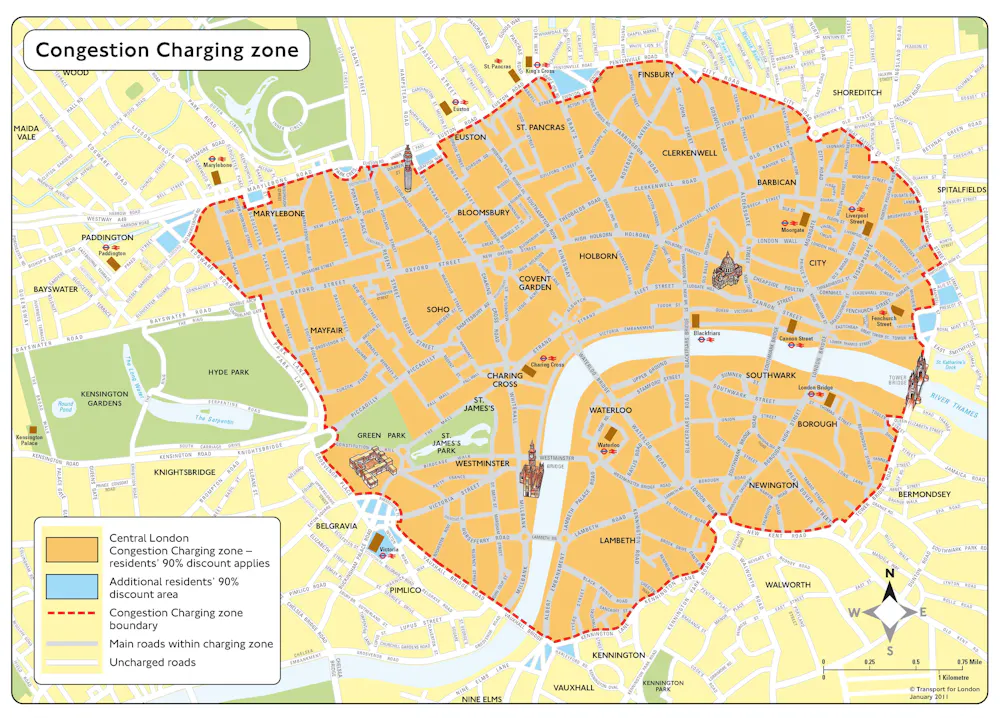
After years of debate, New York state has adopted congestion pricing to deal with traffic problems in New York City. Starting in 2021, fees will be imposed on all vehicles entering a pricing zone that covers lower Manhattan, from 60th Street at the southern edge of Central Park to the southernmost tip of the island.
This approach has succeeded in cities including London, Singapore and Stockholm. For scholars like me who focus on urban issues, New York’s decision is welcome news. Properly used, congestion pricing can make crowded cities safer, cleaner and easier for drivers, cyclists and pedestrians to navigate.
The details matter, including the size and timing of charges and the area that they cover. Congestion charges also raises equity issues, since rich people are best able to move closer to work or change their schedules to avoid the steepest costs.
But growing concentration also imposes costs, and one of the largest is traffic congestion. Drivers spend valuable time sitting idly in traffic jams, while noise, accidents and pollution impose heavy burdens on city residents.Cities concentrate people close together for good economic reasons. Clustering activities allows transfers of information, knowledge and skills. At their best, cities create deep pools of labor and large markets of consumers, and make it possible to provide public goods such as mass transit and trash collection efficiently. Planners should be encouraging cities to become bigger and more dense if we want to improve economic performance.
But growing concentration also imposes costs, and one of the largest is traffic congestion. Drivers spend valuable time sitting idly in traffic jams, while noise, accidents and pollution impose heavy burdens on city residents.
Should road use be free?
The idea of charging for use of public roads is not new. Economist Arthur Pigou discussed the issue as early as 1920 as part of his attempt to remedy the suboptimal workings of the market system. In 1963 Canadian-born economist William Vickrey argued that roads were scarce resources that should be valued by imposing costs on users.
Consumers intuitively understand differential pricing. We expect to pay more for airline tickets at peak travel times and for hotel rooms at popular times of the year. Congestion pricing also forces users to think about the cost of making a trip, and thus to evaluate their travel patterns.
A cyclist’s perspective on traffic in lower Manhattan, filmed in 2018.
And it can be effective. A 2008 study gave drivers in Seattle a hypothetical cash sum to spend on trips, charged them tolls linked to traffic congestion levels, and let them keep money they did not spend. Their cars were fitted with equipment to monitor driving patterns.
The results: Travelers altered their schedules, took different routes or collapsed multiple trips into single journeys. Collectively, these changes reduced congestion at peak time, lessened wait times and increased average travel speeds in the study’s regional traffic model.
Success in Europe and Asia
Evidence from cities around the world shows that charging motorists fees for driving into city centers during busy periods is a rarity in urban public policy: a measure that works and is cost-effective. Congestion pricing has succeeded in cities including London, Singapore and Stockholm, where it has eased traffic, sped up travel times, reduced pollution and provided funds for public transport and infrastructure investments.
It also can produce some unintended consequences. In London, house prices within the congestion charge zone increased – bid upward by consumers who were willing to pay to avoid traffic and enjoy improved environmental conditions. Over the long term, the congestion tax lubricated the gentrification of central London.
But this process is common to many other big cities, with or without congestion pricing: The rich preempt central city locations and displace the less wealthy to the suburbs.
Although the United States has over 5,000 miles of toll roads, congestion pricing is uncommon. One exception is Interstate Route 66 in the Washington, D.C. metro region, where fluctuating tolls were introduced in late 2017. Pricing for express lanes changes every six minutes during rush hour eastbound in the morning and westbound in the afternoon. The toll hit US$40 for a 10-mile stretch the day after it was introduced.
So far, local officials say the policy appears to be working. Carpooling has increased, while backups and crashes have declined. The average toll is currently $8.02 during morning hours and $4.47 during afternoon hours.
But this is just one well-used road, and there are many other routes into central Washington. The I-66 tolls are more about generating revenue on one road than reducing congestion citywide.
New York City is the best U.S. candidate for congestion pricing because it is densely developed and has an extensive public transportation system. Congestion pricing is unlikely to be as feasible in lower-density cities with limited public transportation.
Some observers, such as environmental advocates, are celebrating New York’s decision. But there is pushback from others who claim that it will be regressive. Congestion charges do raise equity issues, but only 4 percent of people who commute into New York City travel by car, and of those, only 5,000 could be classified as working poor. Funding from congestion fees will increase investment in mass transit, which New York Governor Andrew Cuomo says will benefit the vast majority of New Yorkers who commute by bus or subway.
Details remain to be decided, but under a previous proposal, cars would have been charged $11.52 to enter the zone on weekdays during business hours, while trucks would have paid $25.34. Taxis and app-based rides such as Uber and Lyft would have been charged $2 to $5. Fees will be assessed by a committee of experts and collected by the Triborough Bridge and Tunnel Authority through an electronic tolling system that is already widely used for bridges, tunnels and tolled motorways across the country.
Unlike other taxes that can be easily dismissed as imposing costs and killing jobs, congestion pricing improves market efficiencies because it forces people to think about their travel and leads to a more rational use of our public roads. It is a powerful policy whose time has definitely come.
* * * * *
This is an updated version of an article originally published on Feb. 7, 2018.
]]>
By John Rennie Short, Professor, School of Public Policy, UMBC After years of debate, New York state has adopted congestion pricing to deal with traffic problems in New York City. Starting in...https://umbc.edu/stories/new-york-gets-serious-about-traffic-with-the-first-citywide-us-congestion-pricing-plan/https://beta.my.umbc.edu/api/v0/pixel/news/120176/guest@my.umbc.edu/24a855bb0d1d5cd068061cbe3c33df48/api/pixeldiscoverypublicpolicytrafficurban-issuesUMBC News & Magazinehttps://beta.my.umbc.edu/groups/umbc-news-magazinehttps://assets1-beta.my.umbc.edu/system/shared/avatars/groups/000/001/943/24435aa6207c452e7bc15cc74b42c7bb/xsmall.png?1748556657https://assets1-beta.my.umbc.edu/system/shared/avatars/groups/000/001/943/24435aa6207c452e7bc15cc74b42c7bb/original.png?1748556657https://assets2-beta.my.umbc.edu/system/shared/avatars/groups/000/001/943/24435aa6207c452e7bc15cc74b42c7bb/xxlarge.png?1748556657https://assets2-beta.my.umbc.edu/system/shared/avatars/groups/000/001/943/24435aa6207c452e7bc15cc74b42c7bb/xlarge.png?1748556657https://assets3-beta.my.umbc.edu/system/shared/avatars/groups/000/001/943/24435aa6207c452e7bc15cc74b42c7bb/large.png?1748556657https://assets1-beta.my.umbc.edu/system/shared/avatars/groups/000/001/943/24435aa6207c452e7bc15cc74b42c7bb/medium.png?1748556657https://assets2-beta.my.umbc.edu/system/shared/avatars/groups/000/001/943/24435aa6207c452e7bc15cc74b42c7bb/small.png?1748556657https://assets1-beta.my.umbc.edu/system/shared/avatars/groups/000/001/943/24435aa6207c452e7bc15cc74b42c7bb/xsmall.png?1748556657https://assets2-beta.my.umbc.edu/system/shared/avatars/groups/000/001/943/24435aa6207c452e7bc15cc74b42c7bb/xxsmall.png?1748556657UMBC News & Magazine00falseWed, 03 Apr 2019 13:29:32 -0400Want to Fix Gerrymandering? Then the Supreme Court Needs to Listen to Mathematicians
“Are we in Maryland’s third congressional district?” Karen asked on a recent visit to the UMBC campus. Despite zooming into the district’s map on Wikipedia, neither of us could tell. With good reason – “the praying mantis,” as the third has been called, has one of the most flagrantly gerrymandered boundaries in the country. (The university sits just outside, as we later found.)
Welcome to Democrat-controlled Maryland. The state, along with Republican-controlled North Carolina, defended its congressional districting against the charge of unlawful partisan gerrymandering in hearings at the U.S. Supreme Court on March 26.
One might think that a map that confounds two mathematicians must be in clear violation of the law. Indeed, political scientists and mathematicians have worked together to propose several geometrical criteria for drawing voting districts of logical contiguous shapes, which are now in use in various U.S. states.
But here’s the rub: Gerrymandering in itself is not unconstitutional. For the Supreme Court to rule against a particular map, plaintiffs need to establish that the map infringes on some constitutional right, such as their right to equal protection or free expression. This creates a problem. Geometrical criteria don’t detect partisanship. Other traditional criteria, like ensuring each district has the same population, can also be easily satisfied in an otherwise unfairly designed state map.
How then to define a standard to identify partisan gerrymandering that is egregious enough to be illegal? Mathematical scientists have already come up with promising solutions, but we are concerned that the Supreme Court may not take their advice when it issues its decision in June.
Searching for answers
The Supreme Court has grappled with the question of manageable standards at least since 1986 – long enough for Justice Antonin Scalia to declare in a 2004 ruling that since one hadn’t emerged yet, the issue of partisan gerrymandering was not legally decidable, and therefore, no further appeals should be considered.
It was only Justice Anthony Kennedy’s separate concurrence that kept the door open. He cautioned against abandoning the search for a standard too soon, saying that “technology is both a threat and a promise.” In other words, technological advances would probably exacerbate the gerrymandering problem, but they could also provide a solution.
The problem has worsened, just as Kennedy predicted. Computer programs can now generate a profusion of redistricted maps, all of which satisfy traditional constraints such as contiguity and equal population across districts. Then, the majority party can just pick the map most favorable to it.
This was demonstrated in Wisconsin’s 2018 elections. Computer-boosted gerrymandered maps supersized the Republicans’ 13-seat edge to a 25-seat majority, even though Democrats won 53 percent of the total statewide vote.
We expect new congressional districts drawn countrywide after the 2020 census will be subject to even more ferocious computer-driven gerrymandering.
Math to the rescue
But the second part of Kennedy’s prediction has also come true. The same tools that produce drastically gerrymandered maps can be used to draw fair maps.
The first step is to generate – without partisan intent – a vast number of maps that adhere to traditional redistricting criteria. This creates a database against which any proposed map can be compared, by using a suitable mathematical formula that measures partisanship. Through this process, maps with extreme bias will appear as clear outliers, much like data points near the outer ends of a bell curve.
The “efficiency gap” is one such mathematical formula. It measures how efficiently one party’s votes get used and how much the other party’s votes get wasted. For example, a map might pack voters together to minimize their influence in other districts, or spread them out so they don’t form an effective bloc.
Alternative formulas exist as well. In fact, we recommend using a collection of formulas, rather than just one, to compensate for the limitations of each.
Recent conferences on redistricting have seen the mathematics and statistics communities coalesce around this “outlier approach.”
Overcoming skepticism
Getting the Supreme Court to accept this approach, however, will require overcoming the skepticism some conservative justices have expressed toward the use of mathematics and statistics in setting legal standards.
During October 2017 oral arguments for a challenge to the Wisconsin maps, for instance, Chief Justice John Roberts characterized the efficiency gap as “sociological gobbledygook,” while Justice Neil Gorsuch said that the idea of using multiple formulas for measuring gerrymandering was like adding “a pinch of this, a pinch of that” to his steak rub. Roberts also fretted that the country would dismiss statistical formulas as “a bunch of baloney” and suspect the court of political favoritism in adopting them.
At the March 26 hearings for the North Carolina challenge, conservative justices were more measured and mathematically savvy in expressing their reservations. This time, the “outlier approach” took center stage. Affirmed in the lower court decision and explained in an amicus brief, it was also endorsed in oral arguments by Justices Elena Kagan and Sonia Sotomayor. The key doubts came from Justices Samuel Alito, Gorsuch and Brett Kavanaugh, who questioned the feasibility of defining an “outlier” in practice – in particular, setting a range of numerical parameters that would demarcate permissible maps from nonpermissible ones.
The answer to such objections, adeptly addressed in an amicus brief by MIT’s Eric Lander, is twofold. First, the maps being challenged are so biased that they are extreme outliers. They would show up as anomalies under any test for partisanship. So there is no need for the Supreme Court to set a numerical cutoff level at this stage – though a threshold may, indeed, evolve in the future. Secondly, such an extreme outlier approach is already an indispensable tool in several areas of national importance. For example, it is used to test nuclear safety, predict hurricanes and assess the health of financial institutions.
Moreover, this approach has already been shown to work smoothly in gerrymandering cases as well, such as in one from Pennsylvania. Moon Duchin, a Tufts University math professor, used it to analyze – in a report requested by Governor Tom Wolf – newly proposed maps for fairness. A map drawn by the GOP state legislature clearly stood out as an extreme outlier among over a billion maps generated, both when evaluated using the efficiency gap and under another measure of partisanship called the mean-median score. Based on Duchin’s report, the governor rejected the map proposed by the GOP.
We expect that, pushed by citizen groups, an increasing number of states will incorporate math into redistricting procedures. Last year, for instance, Missouri approved Amendment 1, prescribing detailed mathematical rules that must be followed to ensure the fairness of redrawn districts. Although the rules rely heavily on just the efficiency gap – and lawmakers may try to altogether annul them – the fact that ordinary citizens voted overwhelmingly (62 percent to 38 percent) in favor of such a math-incorporating measure is truly precedent-setting.
Such developments were noted in the March 26 oral arguments, when some justices wondered whether, in light of state initiatives, the Supreme Court really had to step in. As the citizens’ attorneys pointed out, however, there are very few states east of the Mississippi where such citizen initiatives are allowed. (North Carolina is not one of them.) It behooves the court to take the lead nationally.
Enhanced by computer power, partisan gerrymandering poses a burgeoning threat to the American way of democracy. Workable standards based on sound mathematical principles may be the only tools to counter this threat. We urge the Supreme Court to be receptive to such standards, thereby enabling citizens to protect their right to fair representation.
]]>
By Manil Suri, Professor of Mathematics and Statistics, UMBC, and Karen Saxe, Macalester College “Are we in Maryland’s third congressional district?” Karen asked on a recent visit to the UMBC...https://umbc.edu/stories/want-to-fix-gerrymandering-then-the-supreme-court-needs-to-listen-to-mathematicians/https://beta.my.umbc.edu/api/v0/pixel/news/120177/guest@my.umbc.edu/b6aa46a78019b518a2489987e3c2b4f3/api/pixeldiscoverymathstatthe-conversationUMBC News & Magazinehttps://beta.my.umbc.edu/groups/umbc-news-magazinehttps://assets1-beta.my.umbc.edu/system/shared/avatars/groups/000/001/943/24435aa6207c452e7bc15cc74b42c7bb/xsmall.png?1748556657https://assets1-beta.my.umbc.edu/system/shared/avatars/groups/000/001/943/24435aa6207c452e7bc15cc74b42c7bb/original.png?1748556657https://assets2-beta.my.umbc.edu/system/shared/avatars/groups/000/001/943/24435aa6207c452e7bc15cc74b42c7bb/xxlarge.png?1748556657https://assets2-beta.my.umbc.edu/system/shared/avatars/groups/000/001/943/24435aa6207c452e7bc15cc74b42c7bb/xlarge.png?1748556657https://assets3-beta.my.umbc.edu/system/shared/avatars/groups/000/001/943/24435aa6207c452e7bc15cc74b42c7bb/large.png?1748556657https://assets1-beta.my.umbc.edu/system/shared/avatars/groups/000/001/943/24435aa6207c452e7bc15cc74b42c7bb/medium.png?1748556657https://assets2-beta.my.umbc.edu/system/shared/avatars/groups/000/001/943/24435aa6207c452e7bc15cc74b42c7bb/small.png?1748556657https://assets1-beta.my.umbc.edu/system/shared/avatars/groups/000/001/943/24435aa6207c452e7bc15cc74b42c7bb/xsmall.png?1748556657https://assets2-beta.my.umbc.edu/system/shared/avatars/groups/000/001/943/24435aa6207c452e7bc15cc74b42c7bb/xxsmall.png?1748556657UMBC News & Magazine00falseWed, 03 Apr 2019 12:53:16 -0400

 Upal Ghosh (left) and Kevin Sowers in Sowers’s lab at the Institute of Marine and Environmental Technology. Photo by Marlayna Demond ’11 for UMBC.




 President Hrabowski congratulates Meyerhoff Scholar and valedictorian Eudorah Vital after she delivers commencement remarks, May 2018.



 Alice Chou with her poster at the International Congress of Neuroethology in 2018. Photo by Taylor Rupp.
 Natalie Roberts (left) and Sam Hulse collect fish for their research. Photo by Tamra Mendelson.
 Ricky Patel, Natalie Roberts, and Alice Chou hike in a Florida cypress swamp after SICB 2019. Photo by Alice Chou.