Pitch Perfect

With five no hitters under her belt, first-year pitcher Courtney Coppersmith spent the semester picking off batters and picking up accolades—including several firsts for UMBC.
By Zach Seidel ’12, M.S. ’15
Flashback to April, and the UMBC Softball team’s bout against Norfolk State. The crowd roared and then began laughing out of astonishment: Coppersmith ’22, biochemistry and molecular biology, had just hit a tie-breaking (and eventual game-winning), two-out, two-strike grand slam in the bottom of the sixth (out of the seven innings in a collegiate softball game).
This hit was her first career home run, but more impressively, it happened just three days after she pitched the second perfect game in program history.
Her teammates and fans couldn’t stop shaking their heads and smiling because every time the lefthander from York, Pennsylvania, stepped on the field, it seemed like she was either breaking another record or coming up clutch.
Coppersmith helped lead UMBC to its first-ever America East championship and first appearance in the NCAA Tournament since 2002—despite the fact that the Retrievers were picked to finish last in the preseason coaches’ poll. In addition to being named UMBC Softball’s first-ever All-American, she was also the first person in America East history to be named both Pitcher of the Year and Rookie of the Year in the same season. And the list goes on.
 Coppersmith gets on base. Photo courtesy of Gail Burton.
The Retrievers entered the America East tournament in Hartford, Connecticut. as the No. 4 seed, and had to face the hosts, No. 5 Hartford, in the first round of the double-elimination tournament. Coppersmith threw an 11-strikeout no-hitter, and then followed that up the following day by throwing another no-hitter, this time against the regular season champion No. 1 UMass Lowell. She then helped lead UMBC to a pair of victories over Stony Brook to clinch the championship. Coppersmith went 4 – 0 while allowing just two runs in 28 innings pitched, a 0.50 ERA on only eight hits, and 33 strikeouts en route to being named the tournament’s Most Outstanding Player.
The previous UMBC record for strikeouts in a single game was 13, set over a decade ago. Coppersmith has already reached or surpassed that total in a game seven times this season. She absolutely shattered the record in one of the best performances in the nation this season: a 17 strikeout, no walk, one-hit masterpiece in a 1 – 0 win at UNC Wilmington, in which she scored the only run of the game on offense for UMBC. She then one-upped that with a 17 strikeout no-hitter in a 7 – 0 win over conference rival Maine.
No one has more fun on the diamond than Coppersmith, who can be seen dancing to the music in between pitches. She’s top three in the country in strikeouts (a school single-season record 346) and near the top in strikeouts per game (10.16). We sat down with the thrower of a nasty “rise ball”—and aspiring future pharmacist—for a Q&A.
Zach Seidel: You were obviously recruited to play at multiple schools, so what made UMBC your top choice?
Courtney Coppersmith: They say it’s like a wedding dress, you know it when you see it and then you cry. When I visited campus I knew it was the perfect fit. (I didn’t cry, though.) Academics are very important to me, and it’s a very good academic school. UMBC offered me a sense of community. It offers a lot programs and academic opportunities on top of being an athlete.
Seidel: You want to be a pharmacist, correct? Why is that?
Coppersmith: I like helping people and pharmacists provide medicine to people to help them do that. If I don’t end up doing that, I do want to do research and help create drugs that can cure cancer and help treat various diseases.
Seidel: What feels better for you: acing a chemistry test or striking out a batter?
Coppersmith: Acing a chemistry test. A hundred percent acing a chemistry test!
Seidel: What is the coolest thing about striking someone out?
Coppersmith: The best part is when you fall behind 3-0, and then you throw two strikes that they don’t swing at and then you get them to chase the rise ball anyway. Or, I’ll throw a low rise ball right into the edge of the zone [for a called third strike] and they’ll just look at the umpire; that’s also very amusing to watch.
Seidel: Do you prefer striking batters out swinging or looking?
Coppersmith: Oh, that’s a tough one because I get a lot of my strikeouts swinging, but I guess I like them equally. It’s really funny to watch them when they think it’s not going to be a strike and it’s a strike, but also really funny to watch them swing at a ball that’s over their head, because in no way is that going to be a strike, and they still swing at it anyway!”
Seidel: What’s your walkout song and why?
Coppersmith: For my normal walkout, I use the song “Wild Thing” from the movie Major League for the simple reason that it is one of mine and my dad’s favorite movies, and it is such an important moment in that movie. For my second walkout, it is the Little Einsteins trap remix. While it may sound super childish, I really enjoy the remix and the hype that it brings my teammates, myself, and even the other team.
Seidel: What’s the Retriever fan support like?
Coppersmith: Retriever fans are one of the major parts to the game; while we still go out and do our jobs, either way, fans only bring even more support to us as we are out there playing our game.
Seidel: If you could strike out anybody in the world, who would it be?
Coppersmith: Heck, I would love to be able to strikeout Coach [Chris] Kuhlmeyer. He always talks a lot of smack, and I know that he doesn’t think I could strike him out, so that would be a cherry on top of the ice cream!
 Coppersmith dominating from the circle. Photo courtesy of Ian Feldmann, The Retriever.
All-Star Stats
Coppersmith helped lead UMBC Softball to its first-ever America East championship. During the same season, she also became:
- UMBC Softball’s first-ever All-American (Softball America Honorable Mention)
- The first person in America East history to be named both Pitcher of the Year and Rookie of the Year in the same season
- UMBC’s first Louisville Slugger/NFCA Division 1 National Pitcher of the Week
- The first in America East Conference history to sweep the weekly awards in the same week as she was named as the Player, Pitcher, and Rookie of the Week (April 9)
-
The first member of the America East Conference to be included as a member in the 2019 Schutt Sports/NFCA Freshman of the Year Top 25, an award honoring the top freshmen in the entire nation
- The ECAC (an organization of 87 Division 1 institutions) Rookie of the Year and made the All-ECAC First Team twice, as a pitcher and a designated player (only player to make first team at two separate positions)
****
Header image courtesy of Ian Feldmann, The Retriever.
]]>
With five no hitters under her belt, first-year pitcher Courtney Coppersmith spent the semester picking off batters and picking up accolades—including several firsts for UMBC. By Zach Seidel...
https://umbc.edu/stories/first-year-pitcher-announced-as-one-of-nfca-freshmen-of-the-year-top-25/
https://beta.my.umbc.edu/api/v0/pixel/news/120158/guest@my.umbc.edu/443defdfa8d72b2cd5a4fb7d39eae272/api/pixel
campus-life
softball
spring-2019
UMBC News & Magazine
https://beta.my.umbc.edu/groups/umbc-news-magazine
https://assets1-beta.my.umbc.edu/system/shared/avatars/groups/000/001/943/24435aa6207c452e7bc15cc74b42c7bb/xsmall.png?1748556657
https://assets1-beta.my.umbc.edu/system/shared/avatars/groups/000/001/943/24435aa6207c452e7bc15cc74b42c7bb/original.png?1748556657
https://assets2-beta.my.umbc.edu/system/shared/avatars/groups/000/001/943/24435aa6207c452e7bc15cc74b42c7bb/xxlarge.png?1748556657
https://assets2-beta.my.umbc.edu/system/shared/avatars/groups/000/001/943/24435aa6207c452e7bc15cc74b42c7bb/xlarge.png?1748556657
https://assets3-beta.my.umbc.edu/system/shared/avatars/groups/000/001/943/24435aa6207c452e7bc15cc74b42c7bb/large.png?1748556657
https://assets1-beta.my.umbc.edu/system/shared/avatars/groups/000/001/943/24435aa6207c452e7bc15cc74b42c7bb/medium.png?1748556657
https://assets2-beta.my.umbc.edu/system/shared/avatars/groups/000/001/943/24435aa6207c452e7bc15cc74b42c7bb/small.png?1748556657
https://assets1-beta.my.umbc.edu/system/shared/avatars/groups/000/001/943/24435aa6207c452e7bc15cc74b42c7bb/xsmall.png?1748556657
https://assets2-beta.my.umbc.edu/system/shared/avatars/groups/000/001/943/24435aa6207c452e7bc15cc74b42c7bb/xxsmall.png?1748556657
UMBC News & Magazine
0
0
false
Thu, 18 Apr 2019 19:12:17 -0400
UMBC labs share four essentials for undergraduate research success

Undergraduate research at UMBC is booming. As Undergraduate Research and Creative Achievement Day (URCAD) approaches, students across campus are preparing talks and posters on their projects with the support of faculty and graduate student mentors. Some have presented before at national and international conferences. For others, URCAD (on April 24, 2019) will be their debut on the scientific stage.
So, what creates a culture where undergraduate research thrives? Here, students and mentors across different UMBC labs share four factors they think shape the student research experience.
#1 Encourage independence to build identity as a researcher
In collaboration with their mentors, UMBC students design and implement creative and challenging research projects that directly contribute to the research mission of the lab. That independence, and the trust their mentors and labmates place in their work, contributes to the students’ development of an identity as scientific researchers.
Building confidence
Caroline Larkin ’18, M26, bioinformatics, has been working with Daniel Lobo, assistant professor of biological sciences, since April 2016. When they first met, they discussed their research interests and created a project for her that merged them together. Since then, she’s been using machine learning to define how different kinds of cells in cancerous tumors interact, because some of those interactions can lead to tumor collapse.
 Left to right: Joy Roy ’19, bioinformatics and mathematics, Daniel Lobo, Caroline Larkin, and Eric Cheung. They’re looking at images of planaria. Lobo lab members use machine learning to study its gene expression patterns and regeneration ability.
At first, Larkin found herself darting across the hall to ask Lobo questions frequently, but he eventually advised her to sit with her challenges for a bit first. While Lobo is still available for the tough questions, “Now I believe in myself more,” Larkin says. “I know I’m capable of fixing something in my code, for example. I give it time before I ask for help.”
“It’s my philosophy to give the undergrads an independent project that they can own,” says Lobo, with the eventual goal being that they each become first authors on a scientific paper.
Larkin is a Meyerhoff and MARC Scholar, and those programs “have really shaped my identity as a scientist, and Dr. Lobo has fueled the validation of that feeling,” she says. “I’ve always been told I was going to become a scientist, but actually doing research with Dr. Lobo has really made me feel like one.”
This fall, Larkin will continue her scientific career as a Ph.D. student in the joint computational biology program at Carnegie Mellon University and Pittsburgh University.
Tackling impostor syndrome
Ruben Delgado, assistant research scientist in the Joint Center for Earth Systems Technology at UMBC, instills the same kind of independence in his students. Meredith Sperling ’19, mechanical engineering and mathematics, says, “Every undergraduate has a project that they can define when they first start and then fine tune it as they move along. Graduate students and Ruben are great at providing guidance, pointing out possible pitfalls, etc., but at the end of the day it’s really our research and where we want to take it.”
 Members of the Delgado research group discuss a data set. Left to right: Jenna Westfall, Wambugu Kironji, Ruben Delgado, Meredith Sperling.
Sperling’s labmate Julianna Posey ’19, mechanical engineering, says she has dealt with impostor syndrome as a female engineer, but in the Delgado lab, “both your peers and your professors take you seriously,” Posey says. “And that’s pretty uplifting.”
Jenna Westfall ’20, computer science, has enjoyed the opportunity to apply her coding skills to environmental science questions. “Looking at a problem in the real world and having to come up with my own way to tackle it has helped me professionally,” she says, “and I’m grateful to be able to work on something that benefits the lab directly.”
“This really is my project”
Kevin Chen ’19, M27, biological sciences, and Jeffrey Inen ’18, biological sciences, have become experts on their projects in Chuck Bieberich’s lab. After being mentored by Ph.D. student Apurv Rege, Chen is now the resident authority on some of the mouse lines the lab needs for its cancer research.
“When people started asking me about what’s going on with a mouse line, instead of asking the graduate student, it made me think, ‘Wow, this really is my project, and people are asking me for knowledge about it because I’m the primary source for that knowledge,” Chen shares. “I think the independence we’re given in the laboratory gives you that ownership and that feeling of being a researcher.”
 Jeffrey Inen works in the lab with mentor Michelle Starz-Gaiano.
This fall, Chen will take that expertise to Emory University. He’s committed to their Ph.D. program in cancer biology, where he’ll expand upon his work with Bieberich.
“He gives us a lot of independence, and I think that’s where I’ve been able to learn the most,” Inen adds. “When Dr. Bieberich starts to come to us for the answers on projects and what he needs to know for his next presentation, it makes me feel like I really belong in the lab.”
For Bieberich, investing time in his undergraduate researchers is a win-win. “As our research program has grown, it’s opened up opportunities to bring undergrads into key roles,” he says. “Having undergraduates in the lab has extended our capability to ask more complex questions than we would otherwise take on.”
#2 Support from every angle enables students to shine
Mentors who are available when you need them, understand the rigorous demands of an undergraduate science career, and can be flexible and supportive when life happens are invaluable for students deciding whether they want to start or continue in research. At UMBC, mentors proactively extend a hand to ensure their students’ success.
 Jeff Inen (center) with Chuck Bieberich and Michelle Starz-Gaiano.
Investing time and care
“What I really like about Dr. Lobo is that he’s invested a lot of time into me and my project,” Larkin shares. “I know I can have an honest conversation with him when I’m struggling with something.” For Larkin, that’s included an unexpected diagnosis that left her bedridden for months. Uncertain when she would be able to return to research, Lobo was understanding and welcomed her back when she was ready.
Chen and Inen have had similar experiences with Bieberich. During a serious rough patch, “Dr. B. sat down with me and asked, ‘How can I help you?’ and we worked out a plan for him to help me through that tough time,” Chen shares. And when Inen was in the hospital for almost a week, “Dr. B. came to visit me every day,” Inen remembers. “He definitely goes above and beyond.”
On a more regular basis, “Whenever I need anything, I can just go to Dr. Bieberich and ask,” Inen says. “He’s very open to [students] coming up to him at any time, whether it’s about something in the lab or outside of the lab.” Chen agrees, sharing, “Dr. B is very supportive of everything in my personal life and in the laboratory.”
Exposure to new possibilities
Support can also come in the form of encouraging students to pursue interests beyond what they would normally consider. “The thing that I’ve always appreciated about this lab is that it’s an outlet for me to explore things outside of my engineering program,” Posey, in the Delgado lab, shares. “I’ve always been interested in meteorology and the atmosphere, and I feel like I’ve developed more of a passion for protecting the Earth.”
 Meredith Sperling (left) and Jenna Westfall (center) work together in the Delgado lab.
Delgado sees expanding students’ horizons as a major part of his role. “It’s about making them aware that they have the capacity to go beyond their own expectations and imagination,” he says. “From my own personal experience, I’m where I am because during my undergrad others provided me opportunities to conduct research. Now I’m paying it forward.”
And while he pushes them toward their potential, Westfall, Posey, and Sperling all agree that Delgado understands the demands of undergraduate life. If they need to take a short break due to a spate of exams or a family situation, there’s understanding in the lab. Between being there for emergencies and supporting students through the routine challenges of being an undergrad, UMBC mentors like Lobo, Delgado, and Bieberich create an environment where expectations are high, but flexibility exists as well.
#3 It’s all about communication
As mentors help students prepare to share their work in venues like URCAD, they also help them understand why the ability to explain research is essential for a successful career in science.
Keeping your eye on the goal
In Delgado’s lab, the message has gotten through to Julianna Posey. “The communication part of research is one of the most important parts,” she says. “You should be able to explain your research to somebody as if they’re your younger sibling. And if you can’t do that, then why are you doing it?”
With Delgado’s guidance, Posey has presented at the American Meteorological Society’s annual conference, the National Ambient Air Monitoring Conference sponsored by the EPA, and URCAD. Next year she’ll continue her atmospheric research in UMBC’s master’s program in mechanical engineering.
Meredith Sperling agrees on the benefits of communicating one’s research. “When you work on a project every day, it’s easy to get lost in the numbers,” she says. “But to be able to take a step back and succinctly present your project on a poster within ten minutes, that really keeps you on the path to achieving something that’s ultimately worthwhile, because it forces you to keep your eye on the end goal.” In particular, she says, “URCAD is important because we get to show our work to the community here at UMBC and show how we fit in.”
 Julianna Posey and Wambugu Kironji ’19, computer science, work with an instrument that measures concentrations of particles in liquids and gases in the Delgado lab.
Getting past the fear factor
As valuable as it is, making a first presentation can be intimidating. That’s why Lobo has his students practice at weekly lab meetings. An opportunity to get feedback from trusted colleagues in a supportive setting builds confidence. So, “By the time URCAD arrives,” Lobo says, “they have presented their research ten times already, and they are not so afraid of presenting.”
It’s worked for Eric Cheung ’19, biochemistry and molecular biology, who works with Lobo. “Presenting is not really a foreign thing to me now,” he says. Plus, Lobo requires all lab members to ask at least one question following presentations. “That drove my research,” Cheung says, “to always ask one more question.”
Caroline Larkin, working in Lobo’s lab, has also benefited from gaining experience sharing her work. She and Jamshaid Shahir ‘18, mathematics and statistics, were the only two undergraduates to present at the international Winter Q-Bio conference in 2018.
#4 Diversity makes lab groups more effective
By welcoming students from all backgrounds and encouraging open communication among lab members, mentors set the stage for a research environment that is open to questions from all perspectives. That diversity in the lab benefits both students’ individual development and the research progress a lab can make.
Same questions, different tools
Lobo’s lab group includes computer scientists, biologists, and mathematicians, among other majors. That diversity benefits the work. “It’s not like the computer scientist is doing computer science, and the mathematician is doing math. Everybody is trying to answer a biological question, with different tools.”
 Members of the Lobo research group connect in the lab. From left to right: Eric Cheung, Joy Roy, Daniel Lobo, and Caroline Larkin.
Also, one of Lobo’s goals as a mentor is “to help students understand how science is made.” By working in an interdisciplinary team, they get a flavor for research as teamwork and the importance of approaching scientific questions from different perspectives. As a result, Lobo says, “They are going to be people who know how science works, and that can only benefit science.”
Valuing diversity
Chen and Inen both shared how much they value the diversity among the students in Bieberich’s lab, across gender, race and ethnicity, religion, language, and hometown (or country). For example, Inen is Catholic, and has valued a friendship and conversations he’s had with a female Muslim student in the lab, even attending her mosque for services. Chen identifies as atheist and feels equally comfortable in the lab.
“I look for undergraduates who are eager, bright, dedicated, and willing to put their heart and soul into a project,” Bieberich says. The makeup of the lab “just shows that those characteristics come from everywhere.”
“People from diverse backgrounds are drawn to this lab, because everyone knows Dr. B. is so friendly and kind,” says Chen. “It’s created this environment in the lab where we all learn from each other.” Inen agrees, saying, “We can talk about our differences, and it brings us all together.”
“If everyone recognizes that they’re all doing an essential part of a project that’s addressing a much larger problem, then it’s easy to step up to help each other out,” Bieberich says. “The only way we will succeed is as a team.”
For information about when these students, their labmates, and students from across all departments at UMBC are presenting at URCAD, see the full URCAD schedule.
Banner image: Undergraduate members of the Delgado research group at work. All photos by Marlayna Demond ’11 for UMBC.
]]>
Undergraduate research at UMBC is booming. As Undergraduate Research and Creative Achievement Day (URCAD) approaches, students across campus are preparing talks and posters on their projects with...
https://umbc.edu/stories/umbc-labs-share-four-essentials-for-undergraduate-research-success/
https://beta.my.umbc.edu/api/v0/pixel/news/120159/guest@my.umbc.edu/43617fe1aed5d4075594c04e608efcef/api/pixel
biology
cnms
coeit
community
csee
jcet
mathstat
meche
science-and-technology
undergradresearch
UMBC News & Magazine
https://beta.my.umbc.edu/groups/umbc-news-magazine
https://assets1-beta.my.umbc.edu/system/shared/avatars/groups/000/001/943/24435aa6207c452e7bc15cc74b42c7bb/xsmall.png?1748556657
https://assets1-beta.my.umbc.edu/system/shared/avatars/groups/000/001/943/24435aa6207c452e7bc15cc74b42c7bb/original.png?1748556657
https://assets2-beta.my.umbc.edu/system/shared/avatars/groups/000/001/943/24435aa6207c452e7bc15cc74b42c7bb/xxlarge.png?1748556657
https://assets2-beta.my.umbc.edu/system/shared/avatars/groups/000/001/943/24435aa6207c452e7bc15cc74b42c7bb/xlarge.png?1748556657
https://assets3-beta.my.umbc.edu/system/shared/avatars/groups/000/001/943/24435aa6207c452e7bc15cc74b42c7bb/large.png?1748556657
https://assets1-beta.my.umbc.edu/system/shared/avatars/groups/000/001/943/24435aa6207c452e7bc15cc74b42c7bb/medium.png?1748556657
https://assets2-beta.my.umbc.edu/system/shared/avatars/groups/000/001/943/24435aa6207c452e7bc15cc74b42c7bb/small.png?1748556657
https://assets1-beta.my.umbc.edu/system/shared/avatars/groups/000/001/943/24435aa6207c452e7bc15cc74b42c7bb/xsmall.png?1748556657
https://assets2-beta.my.umbc.edu/system/shared/avatars/groups/000/001/943/24435aa6207c452e7bc15cc74b42c7bb/xxsmall.png?1748556657
UMBC News & Magazine
0
0
false
Thu, 18 Apr 2019 18:38:59 -0400
Huang named Maryland’s Small Business Person of the Year

The U.S. Small Business Administration recently recognized a UMBC information systems alumnus among its 2019 Small Business Persons of the Year winners.
Zhensen Huang, M.S. ‘00, Ph.D. ‘04, information systems, was the winner of the award for Maryland. He is the CEO of Precise Software Solutions, Inc., a company that supports government agencies’ information technology needs by offering innovative solutions.
Huang explains that he has always wanted to use technology to impact people’s lives, and as an entrepreneur he’s been able to make that a reality. “I am both honored and humbled to receive this Person of the Year recognition,” he says.
In 2013, Huang started Precise and began attracting talented professionals to his company. He says that he wanted to address technological challenges and “deliver elegant technical solutions to the health and science industry’s most complex problems.” He credits the high caliber work of his team at Precise for recognition from the Small Business Administration.
The winners will attend a ceremony in Washington, D.C. in early May during National Small Business Week, where they will receive their awards. The Small Business Administration recognizes winners from each state, plus the District of Columbia, Puerto Rico, and Guam. During the ceremonies, the Small Business Administration will announce the 2019 National Small Business Person of the Year from the 53 winners from across the U.S. and territories.
]]>
The U.S. Small Business Administration recently recognized a UMBC information systems alumnus among its 2019 Small Business Persons of the Year winners. Zhensen Huang, M.S. ‘00, Ph.D. ‘04,...
https://umbc.edu/stories/huang-named-marylands-small-business-person-of-the-year/
https://beta.my.umbc.edu/api/v0/pixel/news/120160/guest@my.umbc.edu/acb805e73638cf72b5d96c33613e8b2b/api/pixel
alumni
coeit
graduateschool
is
spring-2019
UMBC News & Magazine
https://beta.my.umbc.edu/groups/umbc-news-magazine
https://assets1-beta.my.umbc.edu/system/shared/avatars/groups/000/001/943/24435aa6207c452e7bc15cc74b42c7bb/xsmall.png?1748556657
https://assets1-beta.my.umbc.edu/system/shared/avatars/groups/000/001/943/24435aa6207c452e7bc15cc74b42c7bb/original.png?1748556657
https://assets2-beta.my.umbc.edu/system/shared/avatars/groups/000/001/943/24435aa6207c452e7bc15cc74b42c7bb/xxlarge.png?1748556657
https://assets2-beta.my.umbc.edu/system/shared/avatars/groups/000/001/943/24435aa6207c452e7bc15cc74b42c7bb/xlarge.png?1748556657
https://assets3-beta.my.umbc.edu/system/shared/avatars/groups/000/001/943/24435aa6207c452e7bc15cc74b42c7bb/large.png?1748556657
https://assets1-beta.my.umbc.edu/system/shared/avatars/groups/000/001/943/24435aa6207c452e7bc15cc74b42c7bb/medium.png?1748556657
https://assets2-beta.my.umbc.edu/system/shared/avatars/groups/000/001/943/24435aa6207c452e7bc15cc74b42c7bb/small.png?1748556657
https://assets1-beta.my.umbc.edu/system/shared/avatars/groups/000/001/943/24435aa6207c452e7bc15cc74b42c7bb/xsmall.png?1748556657
https://assets2-beta.my.umbc.edu/system/shared/avatars/groups/000/001/943/24435aa6207c452e7bc15cc74b42c7bb/xxsmall.png?1748556657
UMBC News & Magazine
0
0
false
Wed, 17 Apr 2019 20:19:19 -0400
Q&A: Grollman ’07 to Speak at 2019 URCAD
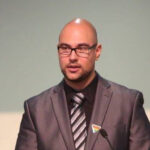
Next week, UMBC’s campus will burst with the excitement of discovery as more than 250 students from across all disciplines present their work at the annual Undergraduate Research and Creative Achievement Day (URCAD) (April 24). In addition to a day filled with performances, discussions, and poster sessions, the event will include a keynote by former undergraduate researcher Eric Grollman ’07, sociology and psychology, an associate professor of sociology at the University of Richmond. In preparation for the big day, we asked Grollman to talk about their experiences with undergraduate research at UMBC, and life beyond the loop.
We understand that you’re an assistant professor of sociology at the University of Richmond. Can you tell us a little bit about what your research and teaching entail?
I am a newly-tenured associate professor of sociology at the University of Richmond (UR), where I have worked now for six years. Though I did not know much about UR or the city of Richmond before interviewing for the position, one of the biggest draws for me was moving close to home (southern Maryland). Another was the close relationships that UR faculty develop with their students through teaching, mentorship, research, and advocacy – dynamics that I remember fondly of my own undergraduate studies at UMBC.
I have less hair on my head and more gray in my beard than I did 12 years ago as a senior completing my honors thesis in sociology at UMBC. But, my work as a scholar-activist – which first emerged at UMBC – remains consistent. I continue to use research as a vehicle for advocating for social justice. My research examines the impact of prejudice and discrimination on the health, well-being, and worldviews of oppressed groups, particularly those at the intersections of multiple systems of oppression (e.g., women of color). I continue to do work in LGBTQ studies, though now with a deeper focus on the lives of transgender and non-binary individuals – work that spurred my efforts to create Sociologists for Trans Justice to use sociological insights to advance public understanding of trans issues.
There is, however, one area of scholarship and advocacy that is new: academic justice. My latest project is an anthology entitled Counternarratives from Women of Color Academics: Bravery, Vulnerability, and Resistance, about which I and a few contributors will be speaking at UMBC on Wednesday, April 17 (5 p.m. in the Albin O. Kuhn Library). This project is a product of a blog I founded and edited for four and a half years called ConditionallyAccepted.com, now a weekly career advice column on Inside Higher Ed for marginalized academics. That is, I’ve turned my critical scholarly lens back on higher education itself to challenge the pervasive practices of sexual harassment, discrimination, microaggressions, and tokenizing that occur in academia. In related work, I examine the limits of acceptance of marginalized populations – that is, the conditions we must meet in order for the dominant group to consider us acceptable (e.g., “professionalism,” and activist approaches that effectively do nothing to challenge the status quo).
Were there any particular mentors at UMBC who helped you along the way?
 Retired sociology professors Dr. Ilsa Lottes and Dr. Fred L. Pincus were two faculty mentors who were most instrumental in teaching me how to use research to make a difference in the world. Dr. Pincus and Dr. Lottes worked with me to turn my LGBTQ campus activism (i.e., the push to create the “Rainbow Center” at UMBC for LGBTQ students) into research and, in turn, to use empirical findings from my thesis research as evidence for the need for such a campus center.
Additionally, I was pleasantly surprised to find other professors who supported me in my scholar-activist pursuits. Dr. Jodi Kelber-Kaye, Dr. Carole McCann, Elizabeth M. Salisbury, and other GWST faculty provided guidance in employing feminist theories and principles in my own advocacy. Dr. Michelle Scott particularly stands out in introducing me to Black feminist thought and the history of Black women’s activism in the U.S., which laid the groundwork for my intersectional politics.
I also found mentorship and support for my scholar-activism outside of the classroom context, namely in Student Affairs and Residential Life. Jennifer Dress, Candace Martinez-Doane, Erin Hundley-Carter, David Hoffman, Lisa Gray, Darci Graves, Dr. Patty Perillo, Dr. Lee Hawthorne Calizo, Erin Stampp, and Matt Soldner were the other half of my huge team of mentors at UMBC. (You may not recognize some of these names, as amazing people are often called to share their gifts with students at other universities.) They showed me that the academic and student affairs sides of a university are most effective for a student’s development when they work together – not as independent divisions. The incredible impact they had (and still have) on my life led me to seriously consider pursuing a career in student affairs. I ultimately continued in sociology, but I am quite active in campus life now as a professor at UR.
Tell us about your URCAD experience and how it may have shaped your future research in graduate school and beyond.
I received an Undergraduate Research Award to conduct a survey on UMBC students’ attitudes toward lesbian women and gay men – the focus of my honors thesis. The following year, I presented my findings at URCAD, and subsequently published my final thesis in the UMBC Review. Shortly into graduate school, Dr. Lottes and I expanded my thesis research, subsequently publishing an article in the International Journal of Sexual Health. Altogether, these opportunities were the beginnings of my career as a researcher. I entered my Ph.D. studies with research experience already under my belt, and with my first article already published and the second shortly soon after. I humbly admit that I am very productive as a researcher, and my URCAD experiences were fundamental in propelling me into a successful research career.
Why do you believe it’s so important to celebrate and support undergraduate research?
Teaching college students how to think is a core part of the mission of any college. So, too, is knowledge-production in the form of scholarly research. For the most part, research is thought to be part of what faculty do outside of their teaching responsibilities. But, students must be involved in research activities, as well.
For students, producing – not merely consuming – academic knowledge deepens the college experience. One learns so much more by doing. Student researchers can see the full research process, from conception to publication – things they may only learn about abstractly in a methods course. Student-researchers gain so much more when they are invested in the outcomes of a given study, feeling a sense of ownership. Even if academia or other research-oriented careers are not in a student’s future, she will get more out of her undergraduate studies by experiencing research first-hand.
For science in general, we all stand to benefit when a new generation of scholars begins conducting research that challenges existing ways of doing things. Today’s college students have views on gender, race, sexuality, social justice, activism, the environment, and so forth that are uniquely expansive and fluid. We, as a society, cannot afford to wait any longer for their views on the world to change the direction of scholarship. And, we lose out when students who do not pursue research careers decide not to conduct research during college.
What advice would you give to students who are interested in being a part of URCAD?
I highly recommend URCAD, especially for students majoring in fields outside of STEM (e.g., the social sciences, humanities, arts, education). If you’re even slightly interested, go for it!
Independent research can be time-consuming, but it will be rewarding. So, I recommend pursuing a topic of study about which you are passionate. As exhausting as research is, and as long as it takes to complete, you run the risk of feeling burnt out or even bored with your topic (at least temporarily). These risks are much lower if you are actually invested in the subject. Avoid picking a topic that you feel will appease your professors, or parents, or friends, or grad school admissions committees. Studying something that reflects your passions will make it easier to articulate why others should care. Do not confuse rigorous, dare I even say “objective,” research with not caring about the subject; if you do not care about it, then it will be harder to convince others to care.
“We all stand to benefit when a new generation of scholars begins
conducting research that challenges existing ways of doing things.”
As you work, I recommend staying organized and setting firm deadlines to complete tasks. You will be shifting from hard deadlines imposed by professors in your classes to having no firm structure as an independent researcher. I recommend self-imposing a timeline so that you are not left panicked with too much to do as the year ends. That timetable should account for other personal and academic demands in your life. Talk through your proposed timeline with your research mentors, and be open to making changes as necessary. And, you might find creating an accountability group with fellow student-researchers useful – meeting weekly, biweekly, or monthly to check in on your progress and workshop through challenges that have come up during your research.
I suggest that you aim to do your research thoughtfully and carefully so that you could do further research with it in the future; don’t think of your work as a finite project that is completed within a year. Though you’re “just an undergrad,” you can get one or even multiple publications out of your research! (I did.)
As a novice researcher, it may prove difficult channeling personal interests and passions into research. You many not feel that you know enough about the field to effectively pinpoint research that has not already been done. So, selecting an advisor who knows the field and knows you (as a student and a whole person) is crucial. Expertise is only half of what makes a great research mentor. The other half is guidance that fits with what you need and your goals.
I would suggest that it is ideal to actually start making connections with professors outside of the classroom before you begin independent research. Chat with them before or after class. Visit them during office hours. Communicate via email. Let your professors know who you are, why you are studying your major field, what your career goals are, and what you are getting out of their class(es). This will help them become invested in your undergraduate studies, or at least have more information about your aspirations. This strategy will also let you see that a given professor isn’t invested (enough) and/or isn’t available (enough) and probably is a poor fit for you.
You might also ask fellow students or even recent graduates about their experiences working with a particular faculty member. Again, brilliance does not translate into effective mentoring or even good teaching (there is actual research on this!). The mentor one student loves may not be as useful for another student; so, take others’ experiences with a grain of salt. When asking if a professor will serve as your research mentor, you might even have a frank conversation about what you need and want in a mentor and ask them what they can offer to you as a mentor.
I found it was best to have multiple mentors, even if only one or two are officially recognized as your mentors. No one person knows everything, nor can they offer you everything. Some mentors may be stronger at offering emotional support, others at teaching you a new method, and still others at writing and publishing. I recommend avoiding the common pitfall of relying on a single mentor for everything.
Without giving everything away, can you give us a taste of what you’ll be talking about as this year’s URCAD Alumni Keynote Speaker?
I’ve been advised not to give a boring speech about tips for student-researchers. So, I’ll probably talk about myself – my journey as a scholar-activist. That’s about as far as I’ve gotten in my planning!
* * * * *
UMBC’s 23rd annual Undergraduate Research and Creative Achievement Day (URCAD) will be held on Wednesday, April 24, at locations around campus. Grollman’s keynote will take place from noon to 1 p.m. in University Center 312. Visit urcad.umbc.edu for the full schedule.
Photos provided by Eric Grollman.
]]>
Next week, UMBC’s campus will burst with the excitement of discovery as more than 250 students from across all disciplines present their work at the annual Undergraduate Research and Creative...
https://umbc.edu/stories/qa-grollman-07-to-speak-at-2019-urcad/
https://beta.my.umbc.edu/api/v0/pixel/news/120161/guest@my.umbc.edu/522eae766fc3e28e3cb4bf4db77d4386/api/pixel
alumni
eric-grollman
socanth
urcad
UMBC News & Magazine
https://beta.my.umbc.edu/groups/umbc-news-magazine
https://assets1-beta.my.umbc.edu/system/shared/avatars/groups/000/001/943/24435aa6207c452e7bc15cc74b42c7bb/xsmall.png?1748556657
https://assets1-beta.my.umbc.edu/system/shared/avatars/groups/000/001/943/24435aa6207c452e7bc15cc74b42c7bb/original.png?1748556657
https://assets2-beta.my.umbc.edu/system/shared/avatars/groups/000/001/943/24435aa6207c452e7bc15cc74b42c7bb/xxlarge.png?1748556657
https://assets2-beta.my.umbc.edu/system/shared/avatars/groups/000/001/943/24435aa6207c452e7bc15cc74b42c7bb/xlarge.png?1748556657
https://assets3-beta.my.umbc.edu/system/shared/avatars/groups/000/001/943/24435aa6207c452e7bc15cc74b42c7bb/large.png?1748556657
https://assets1-beta.my.umbc.edu/system/shared/avatars/groups/000/001/943/24435aa6207c452e7bc15cc74b42c7bb/medium.png?1748556657
https://assets2-beta.my.umbc.edu/system/shared/avatars/groups/000/001/943/24435aa6207c452e7bc15cc74b42c7bb/small.png?1748556657
https://assets1-beta.my.umbc.edu/system/shared/avatars/groups/000/001/943/24435aa6207c452e7bc15cc74b42c7bb/xsmall.png?1748556657
https://assets2-beta.my.umbc.edu/system/shared/avatars/groups/000/001/943/24435aa6207c452e7bc15cc74b42c7bb/xxsmall.png?1748556657
UMBC News & Magazine
0
0
false
Wed, 17 Apr 2019 14:39:28 -0400
UMBC celebrates 2019 Presidential Faculty and Staff Award winners

UMBC’s Presidential Faculty and Staff Awards offer the campus community an opportunity to reflect on the essential contributions of university employees to making UMBC a supportive and successful learning community. This year’s ceremony, on April 3, recognized eight members of the UMBC community for their commitment to inclusive excellence.
Passion for pedagogy
Carolyn Forestiere, associate professor and chair of political science, received the Presidential Teaching Professor Award in recognition of her exemplary teaching, mentorship, and pedagogical innovation. She is known for challenging students to develop a deeper understanding of course material and to apply their learning through real-world examples. Her approach to guiding students through the process of writing a research paper, outlined in the 2017 textbook Beginning Research in Political Science, has been adopted across departments.
In accepting her award, Forestiere focused on the importance of educators actively connecting students with the subjects they are teaching by modeling excitement for each topic. “Show genuine enthusiasm in any subject that you teach…The key is to find what you’re passionate about and to try to give that to our students,” she says. “It’s that enthusiasm that engages our students.”
Sarah Leupen, senior lecturer in biological sciences, is the 2019 recipient of the University System of Maryland Board of Regents’ Faculty Award for Excellence in Teaching. Her creativity and innovation in teaching have extended far beyond her own classroom, inspiring faculty across UMBC and the world.
When she arrived at UMBC, Leupen launched a Biology Teaching Circle as a space for faculty to explore and discuss pedagogy that could be implemented in classrooms across campus. She has also been involved with UMBC’s Faculty Development Center, leading workshops on a range of topics and techniques. In 2016, she received a Fulbright Award to extend her work abroad. She spent the year at Charles University in the Czech Republic, training medical school faculty in the use of evidence-based teaching practices.
In receiving her award, Leupen thanked her students for teaching her something new each day. She also echoed Forestiere’s remarks, sharing that being enthusiastic for her students takes their classroom engagement to the next level.
Innovative research
Govind Rao, professor of chemical, biochemical, and environmental engineering and director of the Center for Advanced Sensor Technology, is this year’s Presidential Research Professor. Rao is known for the collaborative nature of his work and for bringing together student and faculty researchers from across disciplines to produce innovative solutions to challenges.
Rao described the question, “What have you done for others?” as the driving force behind his work. His lab has created low-cost sensors to monitor bioprocesses and provide crucial medical care to people in remote places and in communities with limited resources.
Lorraine Remer, research professor for the Joint Center for Earth Systems Technology, received the 2019 UMBC Research Faculty Excellence Award. A leader in the field of remote sensing, Remer has received numerous accolades and awards recognizing her significant contributions to the atmospheric sciences. Recently, she was a named a Fellow of the American Geophysical Union and one of the most cited researchers in her field.
Remer came to UMBC seven years ago after 21 years at NASA and a successful career in the private sector. She serves as CEO and owner of Airphoton LLC, a start-up company founded in 2012 at bwtech@UMBC business incubator.
Supporting students and promoting well-being
Liz Steenrod, program management specialist for the Language, Literacy, and Culture doctoral program, was recognized with the Presidential Distinguished Non-Exempt Staff Award. Steenrod has advanced the program throughout the past six years — a time of tremendous growth, with the program expanding to serve more than 75 doctoral students.
Steenrod has implemented new processes and practices that support faculty and students in the program, particularly tools to help graduate students see their progress and stay on track to reach key milestones. In her remarks, Steenrod highlighted how helpful and supportive people at UMBC are and the ways dedicated and hardworking colleagues have inspired her work.
 Jessica Hammond-Graf speaking during the award ceremony.
Jessica Hammond-Graf, senior associate athletic director and senior woman administrator for student-athlete well-being, received the Jakubik Family Endowment Award. During her more than 15 years of leadership at UMBC, she has led the advising and support of hundreds of student-athletes. Her efforts have significantly reduced the number of student-athletes earning below a 2.0 GPA. Today, more than 50 percent student-athletes earn a 3.0 GPA or higher each semester.
Hammond-Graf also created the Retriever Leadership Institute, which brings student-athletes together to develop and strengthen their leadership skills. Students focus on effective teamwork, managing conflict, and recognizing their roles as leaders at UMBC. Groups across UMBC have modeled other programs on the Retriever Leadership Institute.
In speaking at the awards ceremony, Hammond-Graf shared how the leaving things better than you find them is a value that resonated with her as a child, and that continues to motivate her work through today. “By leaving it better than you found it, you continue to move yourself, others, and the organization along a path of growth,” she says.
Shelly Graham, executive administrative assistant for student affairs, received the Karen L. Wensch Endowment Award for Outstanding Non-Exempt Staff. A member of the UMBC community for over 30 years, Graham is often the first person that people connect with when they are reaching out to Student Affairs. She provides training and support for people across campus, and handles delicate and confidential situations with professionalism and compassion.
Valerie Thomas, chief human resources officer and associate vice president for human resources, and a member of the UMBC community for 17 years, received the Presidential Distinguished Staff Award. During her time at UMBC, she has implemented several initiatives to promote the wellbeing of university employees. This includes, among other projects, growing work-life balance initiatives and co-chairing a committee that was responsible for implementing UMBC’s smoke-free campus policy.
President Freeman Hrabowski thanked the honorees by highlighting common themes in their remarks that particularly resonated with him: staff and faculty supporting each other and the passion and excitement that are core to the UMBC community. “We are celebrating…the people who make UMBC such a special community,” he said. “It’s your collective contributions that are the UMBC experience and story. You are what makes UMBC, UMBC.”
Banner image: Govind Rao speaking during the Presidential Faculty and Staff Award event. All photos by Marlayna Demond ’11 for UMBC.
]]>
UMBC’s Presidential Faculty and Staff Awards offer the campus community an opportunity to reflect on the essential contributions of university employees to making UMBC a supportive and successful...
https://umbc.edu/stories/umbc-celebrates-2019-presidential-faculty-and-staff-award-winners/
https://beta.my.umbc.edu/api/v0/pixel/news/120162/guest@my.umbc.edu/fa4bd6ef4003e0f31cc6528e31c2afa1/api/pixel
community
UMBC News & Magazine
https://beta.my.umbc.edu/groups/umbc-news-magazine
https://assets1-beta.my.umbc.edu/system/shared/avatars/groups/000/001/943/24435aa6207c452e7bc15cc74b42c7bb/xsmall.png?1748556657
https://assets1-beta.my.umbc.edu/system/shared/avatars/groups/000/001/943/24435aa6207c452e7bc15cc74b42c7bb/original.png?1748556657
https://assets2-beta.my.umbc.edu/system/shared/avatars/groups/000/001/943/24435aa6207c452e7bc15cc74b42c7bb/xxlarge.png?1748556657
https://assets2-beta.my.umbc.edu/system/shared/avatars/groups/000/001/943/24435aa6207c452e7bc15cc74b42c7bb/xlarge.png?1748556657
https://assets3-beta.my.umbc.edu/system/shared/avatars/groups/000/001/943/24435aa6207c452e7bc15cc74b42c7bb/large.png?1748556657
https://assets1-beta.my.umbc.edu/system/shared/avatars/groups/000/001/943/24435aa6207c452e7bc15cc74b42c7bb/medium.png?1748556657
https://assets2-beta.my.umbc.edu/system/shared/avatars/groups/000/001/943/24435aa6207c452e7bc15cc74b42c7bb/small.png?1748556657
https://assets1-beta.my.umbc.edu/system/shared/avatars/groups/000/001/943/24435aa6207c452e7bc15cc74b42c7bb/xsmall.png?1748556657
https://assets2-beta.my.umbc.edu/system/shared/avatars/groups/000/001/943/24435aa6207c452e7bc15cc74b42c7bb/xxsmall.png?1748556657
UMBC News & Magazine
0
0
false
Mon, 15 Apr 2019 20:10:56 -0400
April 15 Is the Day Tobacco Companies Pay $9 Billion for Tobacco Illnesses, but Is It Enough?

By Charles Betley, Senior Policy Analyst, UMBC
Cigarettes have been known for years to cause many diseases. Tobacco companies now have to pay $9 billion each year to help states pay for the costs of treatment to people they sickened.
April 15 is Tax Day in the U.S., and it is a bitter pill for many.
For state Medicaid plans, though, which pay a heavy price for tobacco-related illnesses, it can be a shot in the arm of sorts. April 15 is also the day when the five largest tobacco companies pay US$9 billion dollars to state governments, each and every year, forever, because of a 1998 legal settlement meant to compensate states for the costs of tobacco-related illness such as cancer, emphysema and heart disease. Actual payments made by the tobacco companies vary year to year because of adjustment factors written into the settlement; each of the states’ payments varies as well.
Payments from tobacco companies, as well as tobacco taxes, help to support health care and other services for low-income people served by state Medicaid programs. Even though the federal government supports each state’s Medicaid program by paying at least half the costs, many states have difficulty finding revenues to pay the remaining share.
Determining how much tobacco use costs states’ Medicaid programs puts the payments from tobacco companies into perspective. One estimate found 15% of nationwide Medicaid costs were caused by tobacco use. But such estimates based on national surveys may not account for which tobacco-related diseases are most prevalent in a particular state. How many of the state’s Medicaid participants smoke, and how hospitals and doctors are paid, also affect a state’s Medicaid costs.
The Center for Mississippi Health Policy was interested in estimating the actual costs to Mississippi Medicaid for treating tobacco-related disease. The center wanted a price tag that more accurately reflected the health-related behaviors of people in Mississippi and health care services available in the state. Our team of researchers from The Hilltop Institute at the University of Maryland, Baltimore County (UMBC) conducted the study. We think our study is the first to focus on Medicaid costs using actual state Medicaid data.
Getting a truer picture
Instead of applying estimates of total costs of smoking from national surveys to individual states as previous studies have done, our research assessed how specific, individual smoking-related illnesses create costs for Mississippi. This lets the state better understand how much it differs from nationwide averages for both its total Medicaid costs and the sources of those costs.
First, we reviewed medical literature for studies that identified how tobacco use or exposure changes the risk of acquiring a particular illness. Many studies of how much smoking increases the risk of getting particular diseases have been conducted since the U.S. surgeon general first reported on the health hazards of smoking in 1964. In 2014, the surgeon general summarized many of these studies in a 50th anniversary report.
Some of the diseases we studied, such as prostate cancer, may have many causes in addition to tobacco use. Others, such as lung cancer, are almost always caused by tobacco. Once we found a number specifying how much smoking increased the risk for contracting each disease, we multiplied those risk scores by the percentage of people in Mississippi Medicaid who smoked. That enabled us to estimate what percentage of Mississippi Medicaid spending for each of these diseases was smoking-related. The Mississippi Medicaid program gave us data to determine the cost of each service paid to treat each person with the specific diagnosis.
We then adjusted this initial estimate for other factors that were not captured in the Medicaid payment data. We added adjusted costs for prescription drugs that could be used to treat smoking-related conditions. In addition, many Medicaid participants are in nursing homes because of diseases acquired from smoking. So we added the costs of nursing home stays based on residents’ diagnoses and the same risk scores.
Tobacco use can also affect the health of nonsmokers exposed to second-hand smoke. Mississippi had estimated the costs of second-hand smoke using national estimates. We updated those numbers based on relative risk of tobacco-related diseases we found in the more recent data.
An expensive set of illnesses
In total, we estimated that the cost of tobacco-related illness to Mississippi Medicaid was $388 million in 2016 and $396 million in 2017. This made up about 9% of Mississippi’s annual spending on Medicaid. Our estimates were somewhat lower than the national cost estimates of 15%. We believe this is because Mississippi Medicaid covers large numbers of children and younger adults – a tobacco-related disease may appear only after many years of smoking.
Many Mississippi Medicaid participants may still be too young to be diagnosed with tobacco-related illnesses. Furthermore, our estimates only included diseases with measures of increased risks because of smoking that are presented in the medical literature or the 2014 surgeon general’s report. So, our estimates are relatively conservative.
We believe our study results will help policymakers in Mississippi assess the benefits of policies affecting tobacco. These could include increasing tobacco cessation services, raising the minimum age for buying tobacco products, raising taxes on tobacco products and requiring smoke-free public places. Our approach to estimating costs could also be used by other states to conduct their own analyses of tobacco-related costs to Medicaid to inform their policy choices.
****
Charles Betley, Senior Policy Analyst, University of Maryland, Baltimore County
This article is republished from The Conversation under a Creative Commons license. Read the original article.
Header image courtesy of Public Domain Pictures from Pexels.
]]>
By Charles Betley, Senior Policy Analyst, UMBC Cigarettes have been known for years to cause many diseases. Tobacco companies now have to pay $9 billion each year to help states pay for the...
https://umbc.edu/stories/tobacco-companies-pay-9-billion-for-tobacco-illnesses-but-is-it-enough/
https://beta.my.umbc.edu/api/v0/pixel/news/120163/guest@my.umbc.edu/bb679693390d68ae9bd20acfe195122c/api/pixel
discovery
hilltop-institute
public-policy
tax-day
UMBC News & Magazine
https://beta.my.umbc.edu/groups/umbc-news-magazine
https://assets1-beta.my.umbc.edu/system/shared/avatars/groups/000/001/943/24435aa6207c452e7bc15cc74b42c7bb/xsmall.png?1748556657
https://assets1-beta.my.umbc.edu/system/shared/avatars/groups/000/001/943/24435aa6207c452e7bc15cc74b42c7bb/original.png?1748556657
https://assets2-beta.my.umbc.edu/system/shared/avatars/groups/000/001/943/24435aa6207c452e7bc15cc74b42c7bb/xxlarge.png?1748556657
https://assets2-beta.my.umbc.edu/system/shared/avatars/groups/000/001/943/24435aa6207c452e7bc15cc74b42c7bb/xlarge.png?1748556657
https://assets3-beta.my.umbc.edu/system/shared/avatars/groups/000/001/943/24435aa6207c452e7bc15cc74b42c7bb/large.png?1748556657
https://assets1-beta.my.umbc.edu/system/shared/avatars/groups/000/001/943/24435aa6207c452e7bc15cc74b42c7bb/medium.png?1748556657
https://assets2-beta.my.umbc.edu/system/shared/avatars/groups/000/001/943/24435aa6207c452e7bc15cc74b42c7bb/small.png?1748556657
https://assets1-beta.my.umbc.edu/system/shared/avatars/groups/000/001/943/24435aa6207c452e7bc15cc74b42c7bb/xsmall.png?1748556657
https://assets2-beta.my.umbc.edu/system/shared/avatars/groups/000/001/943/24435aa6207c452e7bc15cc74b42c7bb/xxsmall.png?1748556657
UMBC News & Magazine
0
0
false
Mon, 15 Apr 2019 18:37:22 -0400
Retriever Courage partners take stock of community work to prevent and respond to sexual assault

Sexual Assault Awareness Month is a national campaign focused on preventing sexual assault, harassment, and abuse, and it’s a month of great significance for the UMBC community. This year’s programming at UMBC is especially meaningful as the University responds to a call by students, faculty, and staff to do more to prevent sexual assault and other forms of sexual misconduct.
Retriever Courage: Speak, listen, learn, act
Retriever Courage was formed in fall 2018 in response to specific recommendations from students, faculty, and staff on how the university administration could improve community safety and wellbeing. The initiative outlined a shared governance process to better prevent and respond to sexual assault and other forms of sexual misconduct in ways that are inclusive, proactive, caring, and transparent.
This work involves dozens of partners across the university. They include the University Steering Committee, Retriever Courage Implementation Team, student and faculty/staff advisory committees, a prevention and response training implementation team, and procurement groups that assisted with the selection of an external consultant team now reviewing all related UMBC policies, practices, and resources.
“The thoughtful efforts of students, and the responsiveness of the University administration, faculty, and staff has been groundbreaking,” says University Steering Committee Chair Adam Harvey ’17, Ph.D. ’21, physics, who also serves as vice president of the Graduate Student Association. “Retriever Courage is beginning to transform the culture at UMBC and how people support each other in the campus community.”
At the same time, Retriever Courage partners say continuing to increase campus-wide involvement is critical to the long-term work of creating lasting change and growing a community where everyone feels safe and supported.
“Preventing sexual violence and misconduct is a collective and ongoing responsibility,” says Susan McDonough, associate professor of history, and affiliate faculty of gender, women’s, and sexuality studies.
McDonough serves as faculty co-chair for the Retriever Courage Faculty/Staff Advisory Committee. She shares, “We have joined together to show up and do what we do best – to learn about the history of our own policies and practices, to research ways that other institutions have tackled these issues, and to educate for awareness and prevention.”
“Sexual violence is not a special interest issue, but rather a social justice issue that impacts us all,” says Student Advisory Committee Co-chair Aliya Weberman Ph.D. ’21, clinical and community psychology. “Whether it is attending a Sexual Assault Awareness Month event, such as Take Back the Night; joining a group or committee working on these issues, such as We Believe You or Retriever Courage; or just telling someone impacted by sexual violence that you believe them and it’s not their fault; we can all make a difference.”
 Take Back the Night march through campus. Photo courtesy of the Women’s Center at UMBC.
Commitment to action
Committee members share that several Retriever Courage projects directly responding to UMBC community input have been completed or are underway.
UMBC is currently distributing new campus ID cards that prominently display emergency resource information, and two Retriever Courage displays, including both on- and off-campus resources, were installed in The Commons. The displays are part of a pilot project proposed by the student activist/advocacy group We Believe You.
 A new Retriever Courage display in the UMBC Commons includes both on- and off-campus resources. Photo by Marlayna Demond ’11 for UMBC.
UMBC hired Jody Shipper, J.D., and Cherie Scricca, Ed.D. of Grand River Solutions, Inc. to work with Retriever Courage partners and the UMBC community during the spring semester. The consultants are reviewing UMBC policies, practices, and resources related to sexual assault prevention and response, and will share their recommendations in May.
Over 2,000 UMBC community members have participated in mandatory, in-person Title IX/sexual misconduct prevention and response training since December, and faculty and staff also completed a complementary online training. About 200 students are participating in an in-person pilot training project in April that will help determine a plan for training all students.
Facilities Management also continues to repair and add lighting in areas of concern to students.
Elle Everhart, staff co-chair of the Faculty-Staff Advisory Group and program management specialist in gender, women’s, and sexuality studies, says, “We are only just beginning to address the broader issues of toxic masculinity and rape culture on our campus, but the work done to date is a strong first step.”
“A 365-days-a-year undertaking”
As this work moves forward, the Retriever Courage partners are continually thinking about how the university can better support survivors of all identities and experiences. “We truly all know survivors whether we know them by name or not,” says Jess Myers, director of UMBC’s Women’s Center. “Our efforts to support survivors and cultivate a survivor-responsive campus need to be a 365-days-a-year undertaking,” Myers adds. “We all are responsible for this work.”
Implementation Team Co-Chair and Vice President for Student Affairs Nancy Young feels heartened by the work to date and committed to the work ahead. “We are encouraged by the engagement and collaborative spirit of our Retriever Courage partners and the UMBC community,” she shares. “The safety and wellbeing of our students and our entire community have been and must remain our priority in the long term.”
“The work of Retriever Courage is just the beginning,” says Young. “We encourage everyone to be involved as we make broader and far-reaching improvements in order to have a lasting impact.”
The UMBC community is invited to participate in Sexual Assault Awareness Month workshops and events organized by the Women’s Center and campus partners, including Take Back the Night on Thursday, April 18, 6 to 9 p.m.
UMBC community members can also get involved with Retriever Courage by contacting committee members and learning other ways to help prevent and respond to sexual violence/misconduct at UMBC.
Featured photo: A Take Back the Night survivor speak-out event. Photo courtesy of the Women’s Center at UMBC.
]]>
Sexual Assault Awareness Month is a national campaign focused on preventing sexual assault, harassment, and abuse, and it’s a month of great significance for the UMBC community. This year’s...
https://umbc.edu/stories/retriever-courage-partners-take-stock-of-community-work-to-prevent-and-respond-to-sexual-assault/
https://beta.my.umbc.edu/api/v0/pixel/news/120164/guest@my.umbc.edu/71a60e684ce9aa8d24982e69cc13205b/api/pixel
community
retrievercourage
womenscenter
UMBC News & Magazine
https://beta.my.umbc.edu/groups/umbc-news-magazine
https://assets1-beta.my.umbc.edu/system/shared/avatars/groups/000/001/943/24435aa6207c452e7bc15cc74b42c7bb/xsmall.png?1748556657
https://assets1-beta.my.umbc.edu/system/shared/avatars/groups/000/001/943/24435aa6207c452e7bc15cc74b42c7bb/original.png?1748556657
https://assets2-beta.my.umbc.edu/system/shared/avatars/groups/000/001/943/24435aa6207c452e7bc15cc74b42c7bb/xxlarge.png?1748556657
https://assets2-beta.my.umbc.edu/system/shared/avatars/groups/000/001/943/24435aa6207c452e7bc15cc74b42c7bb/xlarge.png?1748556657
https://assets3-beta.my.umbc.edu/system/shared/avatars/groups/000/001/943/24435aa6207c452e7bc15cc74b42c7bb/large.png?1748556657
https://assets1-beta.my.umbc.edu/system/shared/avatars/groups/000/001/943/24435aa6207c452e7bc15cc74b42c7bb/medium.png?1748556657
https://assets2-beta.my.umbc.edu/system/shared/avatars/groups/000/001/943/24435aa6207c452e7bc15cc74b42c7bb/small.png?1748556657
https://assets1-beta.my.umbc.edu/system/shared/avatars/groups/000/001/943/24435aa6207c452e7bc15cc74b42c7bb/xsmall.png?1748556657
https://assets2-beta.my.umbc.edu/system/shared/avatars/groups/000/001/943/24435aa6207c452e7bc15cc74b42c7bb/xxsmall.png?1748556657
UMBC News & Magazine
0
0
false
Mon, 15 Apr 2019 18:24:59 -0400
UMBC’s David Di Maria briefs Congressional staff on opportunities to support international students

UMBC’s David Di Maria recently visited Capitol Hill to brief Congressional staff on a key issue affecting higher education and the U.S. economy: opportunities for international students. To attend a U.S. university, international students must complete a student visa process, which can be both long and confusing for prospective students, their families, and the U.S. colleges and universities they hope to attend. With numerous immigration and education policy bills pending before Congress, Di Maria and colleagues in the higher education community offered their international education expertise to inform the debate.
Di Maria, associate vice provost for international education, spoke during the session “Student Visas, International Students, and the American Innovation Ecosystem.” He and other experts from the education and business communities provided perspectives on issues like visa processing and renewal procedures, the importance of international students to the U.S. economy, and ways to retain international students as members of the U.S. workforce after graduation.
 David Di Maria speaks at a Congressional staff briefing on policies impacting international students, 2019. Photo courtesy of APLU.
Economic impacts
Di Maria, who is known as a U.S. expert in the international education community, highlighted that international students “boost innovation, support 455,000 U.S. jobs, contribute nearly $40 billion to the U.S. economy, bring unique diversity to our campuses, and bolster U.S. foreign policy.” According to NAFSA: Association of International Educators, during the 2017-18 academic year, the nearly 20,000 international students enrolled at Maryland institutions of higher education contributed more than $700 million to the State’s economy, and supported more than 8,600 jobs.
UMBC has maintained strong international student enrollment, with more than 1,000 international students attending UMBC annually over the past several years. However, many other universities across the country have been challenged by declines in international student enrollments, which can, in turn, negatively affect the economies of individual states and the U.S. as a whole.
Opportunities for students and the nation
In addition to speaking about international student enrollments, Di Maria also discussed employment for these students after graduation.
Di Maria noted that visa caps and related policies result in U.S. schools producing “highly trained individuals and sending them somewhere else” for employment. He explained that in addition to affecting opportunities for the students, this prevents the U.S. from reaping the economic benefits that these recent graduates will provide when they enter the workforce, a point reiterated by panelist Jon Baselice from the U.S. Chamber of Commerce.
Kinu Harichandran, an international student from Pakistan, shared her experience as a graduate student at Georgetown University, where she earned a master’s and is working on a Ph.D. in vaccine research. She recounted the process for renewing her visa during her doctoral studies, and the toll it took on her research because she had to return to Pakistan for the renewal process.
During the several months Ms. Harichandran was in Pakistan, her professor monitored her research to keep it from being lost. She said her story is not unique, noting “professors are hesitant to take international Ph.D. students because of the possibility for gaps in research.”
When asked for one takeaway for the assembled Congressional staff, Di Maria recommended that the U.S. implement a national-level international education strategy, improve support for students, and adopt immigration policies that allow the U.S. to retain top graduates in our workforce. This, he suggested, could have a major impact by helping the U.S. attract international students, improving their experience, and encouraging them to contribute their skills and talents as members of the U.S. workforce.
This story was written by Mary Ann Richmond ’93, history. Featured image: David Di Maria, associate vice provost for international education, in the UMBC Commons. Photo by Marlayna Demond ’11 for UMBC.
]]>
UMBC’s David Di Maria recently visited Capitol Hill to brief Congressional staff on a key issue affecting higher education and the U.S. economy: opportunities for international students. To attend...
https://umbc.edu/stories/umbcs-david-di-maria-briefs-congressional-staff-on-opportunities-to-support-international-students/
https://beta.my.umbc.edu/api/v0/pixel/news/120165/guest@my.umbc.edu/0cb730406e0fda2b0c26d3a1e88fab39/api/pixel
community
international
UMBC News & Magazine
https://beta.my.umbc.edu/groups/umbc-news-magazine
https://assets1-beta.my.umbc.edu/system/shared/avatars/groups/000/001/943/24435aa6207c452e7bc15cc74b42c7bb/xsmall.png?1748556657
https://assets1-beta.my.umbc.edu/system/shared/avatars/groups/000/001/943/24435aa6207c452e7bc15cc74b42c7bb/original.png?1748556657
https://assets2-beta.my.umbc.edu/system/shared/avatars/groups/000/001/943/24435aa6207c452e7bc15cc74b42c7bb/xxlarge.png?1748556657
https://assets2-beta.my.umbc.edu/system/shared/avatars/groups/000/001/943/24435aa6207c452e7bc15cc74b42c7bb/xlarge.png?1748556657
https://assets3-beta.my.umbc.edu/system/shared/avatars/groups/000/001/943/24435aa6207c452e7bc15cc74b42c7bb/large.png?1748556657
https://assets1-beta.my.umbc.edu/system/shared/avatars/groups/000/001/943/24435aa6207c452e7bc15cc74b42c7bb/medium.png?1748556657
https://assets2-beta.my.umbc.edu/system/shared/avatars/groups/000/001/943/24435aa6207c452e7bc15cc74b42c7bb/small.png?1748556657
https://assets1-beta.my.umbc.edu/system/shared/avatars/groups/000/001/943/24435aa6207c452e7bc15cc74b42c7bb/xsmall.png?1748556657
https://assets2-beta.my.umbc.edu/system/shared/avatars/groups/000/001/943/24435aa6207c452e7bc15cc74b42c7bb/xxsmall.png?1748556657
UMBC News & Magazine
0
0
false
Fri, 12 Apr 2019 21:15:22 -0400
Evan Avila is named a Truman Scholar, the fourth in UMBC history
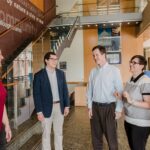
“I want to pursue a career in economics to inform policy that can dismantle structural barriers to economic equality for immigrant communities,” says Evan Avila a junior majoring in economics and political science.
“As a first-generation American from a Mexican-Peruvian immigrant family, I understand well how mastery of English is fundamental to economic prosperity in this country,” Avila says. “Through the Esperanza Center,” he explains, reflecting on a community group he maintains a strong connection with, “I help my community refine their English skills to better defend their rights as essential participants in U.S. economic growth.”
Now, he’ll be even better positioned to do this work. Avila, a Sondheim Public Affairs Scholar, has just been named a 2019 recipient of the distinguished Harry S. Truman Scholarship, an affirming recognition of both his achievements and his potential.
Avila becomes the fourth Truman Scholar in UMBC history. He follows Alicia Wilson ‘04, political science, who was selected in 2003 and now serves as a senior vice president and senior legal counsel for Port Covington Investments.
 Photo courtesy of Alicia Wilson.
“It is thrilling to welcome Evan into the Truman Scholarship Program. I have had the pleasure of having dinner with him and entrusted with knowing his dreams,” says Wilson. “This award is a huge step in the direction of fulfilling his vision to help some of the most vulnerable populations realize their dreams.”
After an intensive application and panel interview process, Avila was chosen for one of just sixty scholar positions out of 840 applicants nationwide. Now, he joins a network, built over the past 40 years, of over 3,000 scholars dedicated to public service in the United States and around the world. These past recipients now serve in leadership positions at the highest levels.
https://vimeo.com/171802452
The award grants Avila $30,000 toward a competitive graduate school of his choice. In addition, scholars gain access to continuous leadership development programs, such as the Truman Scholars Leadership Week and the Summer Institute. Scholars also benefit from mentorship by top leaders in government agencies, nonprofit organizations, public and private educational institutions, and advocacy organizations.
UMBC has a rigorous selection process to nominate a student for a Truman Scholarship. It begins with recruitment from scholars programs, research initiatives, and departments across campus. April Householder, director of undergraduate research and prestigious scholarships, guides a committee that works with candidates. They prioritize the most important factor for Truman applicants: their ability to demonstrate a strong potential as a change agent in their chosen field.
“Evan has taken on endeavors that some students might not see as exciting-—income tax preparation, working for the U.S. Census Bureau, being an English language tutor, and writing policy proposals about retirement—and turned them into deeply meaningful experiences,” reflects Householder. “His work is inextricably linked to empowering people that are invisible to many: immigrants, retirees, and the poor.”
Dreams, words, actions
Avila will spend his senior year finalizing his law school applications. He plans to pursue both a J.D. degree and a master’s of law in taxation, to specialize in taxation and employee benefits law. His goal is to work for the IRS before informing policy on Capitol Hill.
 Avila in his internship at the U.S. Census Bureau. Photo by Marlayna Demond ’11 for UMBC.
Avila began to prepare for these opportunities last summer as an intern at the U.S. Census Bureau and Treasury Department. This summer he will begin to fulfill his dream of working in Capitol Hill as an intern in the Senate Committee on Health, Education, Labor, and Pensions.
He will also present his winning iOME challenge policy proposal, Rethinking Millennial Retirement: Policy Recommendations for a Gig Economy, at the inaugural Latinxs Making Money Moves Conference hosted by Latinos for a Secure Retirement coalition in Washington, D.C. The proposal provides innovative policies to help millennials save for retirement. It will also soon become course material at UMBC in the Erickson School of Aging Studies course How Boomers are Revolutionizing Aging.
As workers, families, and students face unpredictable retirement, Avila, who has worked with these communities, takes these issues personally. “These trends will lead to greater wealth inequality and division,” says Avila. “My driving ambition is to combine the intersections of financial services, taxation, and employee benefits to address this significant challenge.”
A purpose-driven life
UMBC’s Sondheim Public Affairs Scholars program has nurtured Avila’s desire to serve communities most affected by structural inequalities. Notably, the program requires scholars to engage in, and reflect on, applied learning opportunities. Avila began by volunteering as a tax preparer with the UMBC Volunteer Income Tax Assistance (VITA) program, which helps low-income households prepare their taxes for free.
 Avila with the Sondheim 2017 cohort. Photo courtesy of the Sondheim program.
During his sophomore year, when VITA’s leadership was graduating, Avila secured funding to continue the program and became its president and site manager. This year VITA reached a milestone by helping 500 clients for the season, 145 more clients than last year.
While he worked in the VITA program, Avila received support from the Shriver Center, which provides opportunities for engaged scholarship and applied learning, for his work at the Esperanza Center. The Shriver Center acknowledged Avila as a France-Merrick Scholar for his commitment to service, leadership, and civic engagement on the UMBC campus and in Baltimore City. He is also a member of UMBC’s Honors College and board member of UMBC’s Financial Literacy Education Committee.
Avila credits Arthur Johnson, provost emeritus and former director of the Sondheim program, for his mentorship in shaping his path in public service. Johnson has written and spoken often about the meaningful legacy of Walter Sondheim, the program’s namesake. In 2015, he wrote in USM’s The Faculty Voice, “Mr. Sondheim’s career was an ideal model for illustrating the values of public service and dedication to the public interest.”
Johnson explained that Sondheim “led Baltimore City school integration and the transformation of Baltimore’s inner harbor.” He wrote, “We want our students to understand what a ‘life of purpose’ looks like and the good it can accomplish, no matter their chosen career path.”
 2018 Sondheim class picture. Photo courtesy of the Sondheim program.
In becoming a Truman Scholar, Avila joins other Sondheim Scholars who have been recognized through prestigious honors. Rosa Rada ‘17, food systems policy, was a Truman Scholar finalist and became a Bill Emerson National Hunger Fellow through the Congressional Hunger Center. In 2016, Zainab Alkebsi ’09, political science, was admitted to the Bar of the United States Supreme Court through a historic swearing-in of deaf and hard of hearing attorneys. Ari Ne’eman ’10, political science, co-founder of the Autism Self-Advocacy Network, was appointed by President Obama to the National Council on Disability. The Financial Times named Greg Lowe ’05, political science, among its Top 100 LGBT+ executives in 2017, as global head of resilience and sustainability at Aon.
The Sondheim program also has strong global reach and regional impact, with seven Fulbright Student Scholars and three Newman Civic Fellows.
“In the Sondheim Public Affairs Scholars Program, we seek to support students who want to live impactful lives,” says Laura Hussey, associate professor of political science, and director of the program. “Evan is already doing that and with great excellence, integrity, and care for people.”
Banner image (l to r): Simon Stacey, director of the Honors College, and members of the UMBC Truman Selection Committee: Lori Hardesty, associate director of the Shriver Center; Avila; David Hoffman, director of the Center for Democracy and Civic Life; Householder; Brian Souders, Fulbright program advisor.
]]>
“I want to pursue a career in economics to inform policy that can dismantle structural barriers to economic equality for immigrant communities,” says Evan Avila a junior majoring in economics and...
https://umbc.edu/stories/evan-avila-is-named-a-truman-scholar-the-fourth-in-umbc-history/
https://beta.my.umbc.edu/api/v0/pixel/news/120166/guest@my.umbc.edu/097232284c629c827eb09650b99483a0/api/pixel
cahss
economics
honorscollege
inds
international
majoraward
page1
policy-and-society
politicalscience
sondheimscholars
UMBC News & Magazine
https://beta.my.umbc.edu/groups/umbc-news-magazine
https://assets1-beta.my.umbc.edu/system/shared/avatars/groups/000/001/943/24435aa6207c452e7bc15cc74b42c7bb/xsmall.png?1748556657
https://assets1-beta.my.umbc.edu/system/shared/avatars/groups/000/001/943/24435aa6207c452e7bc15cc74b42c7bb/original.png?1748556657
https://assets2-beta.my.umbc.edu/system/shared/avatars/groups/000/001/943/24435aa6207c452e7bc15cc74b42c7bb/xxlarge.png?1748556657
https://assets2-beta.my.umbc.edu/system/shared/avatars/groups/000/001/943/24435aa6207c452e7bc15cc74b42c7bb/xlarge.png?1748556657
https://assets3-beta.my.umbc.edu/system/shared/avatars/groups/000/001/943/24435aa6207c452e7bc15cc74b42c7bb/large.png?1748556657
https://assets1-beta.my.umbc.edu/system/shared/avatars/groups/000/001/943/24435aa6207c452e7bc15cc74b42c7bb/medium.png?1748556657
https://assets2-beta.my.umbc.edu/system/shared/avatars/groups/000/001/943/24435aa6207c452e7bc15cc74b42c7bb/small.png?1748556657
https://assets1-beta.my.umbc.edu/system/shared/avatars/groups/000/001/943/24435aa6207c452e7bc15cc74b42c7bb/xsmall.png?1748556657
https://assets2-beta.my.umbc.edu/system/shared/avatars/groups/000/001/943/24435aa6207c452e7bc15cc74b42c7bb/xxsmall.png?1748556657
UMBC News & Magazine
0
0
false
Thu, 11 Apr 2019 20:39:16 -0400
A Conversation About the End

March of this year marked an important month for Marylanders— it saw the passing of a bill that would have put terminally ill patients in control of their own fate. Passed through the House of Delegates on March 7th before a highly amended version met its defeat on March 27th, the End-of-Life Act would have allowed terminal patients to peacefully end their lives at a time and place of their choosing.
Over the years, my own personal experience with death has helped to create my strong and continued support of the laws which give and protect a terminal person’s right to choose how they live and end their life. With only six states and Washington, D.C. recognizing physician-assisted dying as law, it’s clear the idea is a controversial one, but one I, and many others, believe deserves more attention.
Mark’s story
I was eighteen when my father passed away unexpectedly. He was there and then he wasn’t – his heart attack leaving behind a trail of confusion, along with a desire to understand why. A few years later, my closest friend from high school lost her father Mark*, but for her family, his death was preceded by years of suffering.
Although diagnosed with Multiple Sclerosis (MS) while we were still in high school, Mark did not pass until we were in our early twenties. MS causes the body’s immune system to attack the central nervous system, and while some may have mild or moderate symptoms, easily managed through medications, others deal with a monstrous disease which progressively robs both the body of its ability to function normally and the afflicted person of their independence. Mark experienced the latter. MS may not take your life directly, but it will deteriorate the body, causing a host of other issues that can.
Over the life of his diagnosis, I watched Mark go from a healthy, vital man to someone who could no longer walk or feed himself without assistance, someone who lived with daily pain. Barely able to function without support from those around him, slowly losing his awareness, I witnessed his quality of life drastically diminish in his final months while those around him struggled to see their father, husband, best friend, lose his life. Losing a parent, regardless of circumstance, leaves a hollowness inside of you. While the death of my father still hurts and confuses me to this day, I can’t help but feel grateful that his pain was short-lived. My father was brought swiftly to peace, something many have shared they wished for Mark.
Because MS by itself is not terminal, it’s considered a chronic disease and is not covered under the physician-assisted dying umbrella of illnesses, although many advocates are currently attempting to add certain degenerative diseases, such as the late stage MS and Parkinson’s, to the approved list. Knowing if an end-of-life option would have been the right choice for Mark and his family is impossible, but having the option is a right I wish had been granted not only to Mark but other terminally ill patient’s living outside of the scope of physician-assisted dying laws.
Death with dignity
Until Mark’s passing in 2009, I was unaware that these laws existed within the United States. It wasn’t until I stumbled across the documentary How to Die in Oregon that I was introduced to the first approved Death with Dignity Act passed in that state back in 1994. While watching the documentary, it became clear that those considering end-of-life options are not doing so rashly – a common misconception.
Often missing among legal rhetoric surrounding the various physician-assisted-dying laws is the viewpoint of the patient and their families, a crucial perspective. Death with Dignity laws are not about wanting to escape life — they’re about putting power back into the hands of the terminally ill, giving them options and control. Those who choose physician-assisted-dying desire to end life on their own terms, in a physical and mental state that offers peace to themselves, as well as to their families.
The passing of the Maryland End of Life Act through the House of Delegates generated a great deal of criticism over the past weeks. Viewing them as a “slippery slope,” those in opposition of laws believe they are likely to erode our society. Misinformed about of how physician-assisted-dying functions, many are unaware that there are safeguards which protect from abuse.
What it is
Maryland’s Richard E. Israel and Roger “Pip” Moyer End-of-Life Option Act allowed residents 18 years or older and diagnosed with a terminal illness to request aid-in-dying medication from a physician. Seeking this end of life option would have required residents to ask their physician on three separate occasions (once in writing and witnessed by two other individuals) to prescribe a lethal dose of medicine that would end their lives peacefully, in a place and time of the patient’s choosing.
What it isn’t
End-of-life acts are not euthanasia. While a physician must perform a mental health assessment, as well as provide a prescription, they do not administer any medication. To comply with the act, the patient requesting the prescription must ingest the medication themselves and often does so surrounded by family and under the guidance of an end-of-life counselor.
Why the conversation matters
This is the fourth time an attempt to bring physician-assisted dying to Maryland has been defeated, but many still hold hope. As Del. Shane Pendergrass said, “Every person is one bad death away from supporting the bill.” For me, that death was Mark’s. Currently awaiting the expected signature of Governor Murphy, New Jersey recently passed their own version of death with dignity, a fact which I applaud.
I understand the uncomfortable nature of discussing the end of life. Often, our unwillingness to explore this sensitive topic has much to do with our own relationship to death and the loneliness that goes along with it. Allowing the terminally ill to leave this earth gracefully and with dignity is not selfish. We owe it to each other, to the ones we love, to exhaust every option in pursuit of a peaceful and comfortable end. We owe it to each other to keep the conversation going.
*Name has been changed
****
Briana Franco ’19 is an editorial intern for UMBC Magazine. These are her opinions.
Header image courtesy of Arvin Chingcuangco on Unsplash.
Video courtesy of Capital News Service.
]]>
March of this year marked an important month for Marylanders— it saw the passing of a bill that would have put terminally ill patients in control of their own fate. Passed through the House of...
https://umbc.edu/stories/a-conversation-about-the-end/
https://beta.my.umbc.edu/api/v0/pixel/news/120167/guest@my.umbc.edu/2d956ac6ceef05cb8fdb759907d3e000/api/pixel
end-of-life-act
multiple-sclerosis
perspectives
student-perspective
UMBC News & Magazine
https://beta.my.umbc.edu/groups/umbc-news-magazine
https://assets1-beta.my.umbc.edu/system/shared/avatars/groups/000/001/943/24435aa6207c452e7bc15cc74b42c7bb/xsmall.png?1748556657
https://assets1-beta.my.umbc.edu/system/shared/avatars/groups/000/001/943/24435aa6207c452e7bc15cc74b42c7bb/original.png?1748556657
https://assets2-beta.my.umbc.edu/system/shared/avatars/groups/000/001/943/24435aa6207c452e7bc15cc74b42c7bb/xxlarge.png?1748556657
https://assets2-beta.my.umbc.edu/system/shared/avatars/groups/000/001/943/24435aa6207c452e7bc15cc74b42c7bb/xlarge.png?1748556657
https://assets3-beta.my.umbc.edu/system/shared/avatars/groups/000/001/943/24435aa6207c452e7bc15cc74b42c7bb/large.png?1748556657
https://assets1-beta.my.umbc.edu/system/shared/avatars/groups/000/001/943/24435aa6207c452e7bc15cc74b42c7bb/medium.png?1748556657
https://assets2-beta.my.umbc.edu/system/shared/avatars/groups/000/001/943/24435aa6207c452e7bc15cc74b42c7bb/small.png?1748556657
https://assets1-beta.my.umbc.edu/system/shared/avatars/groups/000/001/943/24435aa6207c452e7bc15cc74b42c7bb/xsmall.png?1748556657
https://assets2-beta.my.umbc.edu/system/shared/avatars/groups/000/001/943/24435aa6207c452e7bc15cc74b42c7bb/xxsmall.png?1748556657
UMBC News & Magazine
0
0
false
Thu, 11 Apr 2019 16:33:26 -0400


