In the new 2020 THE World University Rankings, UMBC is listed as among the top 800 universities worldwide, and #130 among U.S. universities on the global list. UMBC performs particularly well on an important measure of faculty research: citation impact. This reflects the visibility of UMBC faculty research on a global stage.
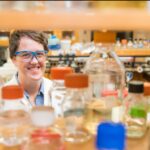
MARC U*STAR Scholar Abby Cruz ‘18, biological sciences, and neurobiologist Fernando Vonhoff.
The Wall Street Journal / Times Higher Education College Rankings 2020 were also released earlier this month, with a focus on U.S. institutions. In this ranking, UMBC performs particularly well in student outcomes and learning environment. Outcomes include factors like graduate salary, university reputation, and debt after graduation, as well as graduation rate. Environment includes faculty and student diversity, international students, and student inclusion.
While recognizing that there is so much more to UMBC than rankings, President Freeman Hrabowski recently shared that UMBC’s standing reflects the university’s continued growth and the respect that colleagues at universities across the country and around the world have for UMBC.
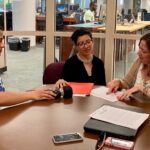
Students and faculty connect in UMBC’s public policy building, in front of meaningful quotes in several languages.
Earlier this year, Times Higher Education spotlighted UMBC for advancements in graduating more low-income and minority students in the sciences, referring to this strength as “the holy grail of academia.” As President Hrabowski explained in the article, lessons learned in one area can inform others, and UMBC’s work to support underrepresented students in STEM has led to investments in supports for students of all backgrounds and in a broad array of majors across UMBC.
At UMBC, says Karl Steiner, vice president for research, “We take pride in our culture of inclusive excellence.”
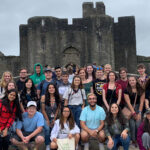
New students spell out “UMBC” during Welcome Week, fall 2019.
The administration has a real dedication to issues like shared governance and increasing diversity. This isn’t a stance that they take because they think it would help them look better. The university knows these things matter and does everything it can to achieve them. I believe that our university is legitimately a model in these two areas.
UMBC has now appeared on the Great Colleges to Work For list for ten years.
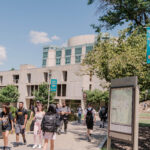
Featured image: Students on the stairs in front of the UMBC library. All photos by Marlayna Demond ’11 for UMBC.
Information about UMBC’s “Great Colleges” ranking went live on Sept. 16, and was added after initial article publication.
]]>
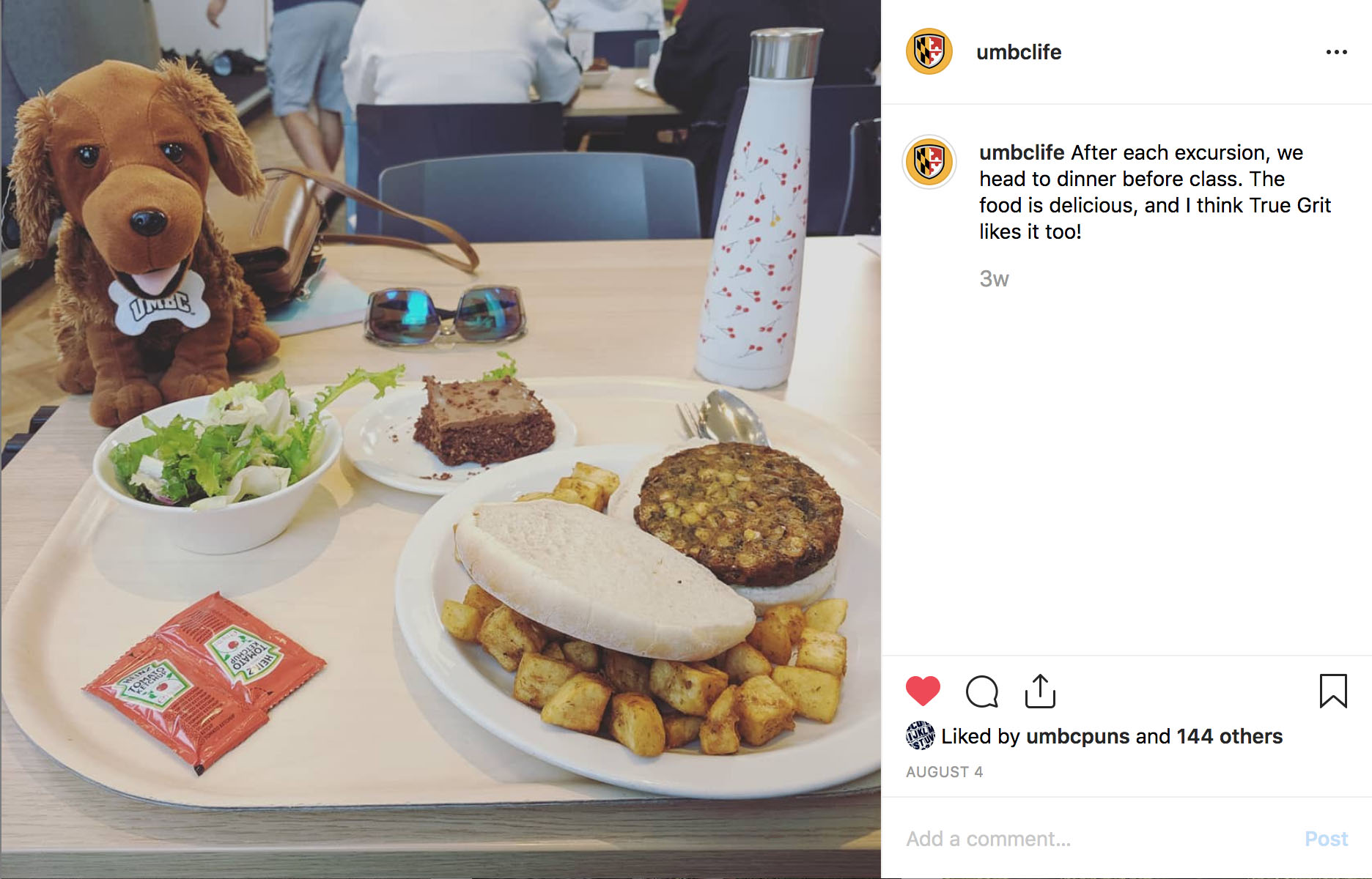
Just days after U.S. News again recognized UMBC as one of the nation’s top universities for teaching and innovation, the Times Higher Education (THE) World University Rankings have named UMBC a...https://umbc.edu/stories/times-higher-ed-and-wall-street-journal-again-name-umbc-a-leading-global-and-u-s-university/https://beta.my.umbc.edu/api/v0/pixel/news/120048/guest@my.umbc.edu/00b273e5efff17a7ba30fe9f4e799670/api/pixelcommunityrankingsresearchUMBC News & Magazinehttps://beta.my.umbc.edu/groups/umbc-news-magazinehttps://assets1-beta.my.umbc.edu/system/shared/avatars/groups/000/001/943/24435aa6207c452e7bc15cc74b42c7bb/xsmall.png?1748556657https://assets1-beta.my.umbc.edu/system/shared/avatars/groups/000/001/943/24435aa6207c452e7bc15cc74b42c7bb/original.png?1748556657https://assets2-beta.my.umbc.edu/system/shared/avatars/groups/000/001/943/24435aa6207c452e7bc15cc74b42c7bb/xxlarge.png?1748556657https://assets2-beta.my.umbc.edu/system/shared/avatars/groups/000/001/943/24435aa6207c452e7bc15cc74b42c7bb/xlarge.png?1748556657https://assets3-beta.my.umbc.edu/system/shared/avatars/groups/000/001/943/24435aa6207c452e7bc15cc74b42c7bb/large.png?1748556657https://assets1-beta.my.umbc.edu/system/shared/avatars/groups/000/001/943/24435aa6207c452e7bc15cc74b42c7bb/medium.png?1748556657https://assets2-beta.my.umbc.edu/system/shared/avatars/groups/000/001/943/24435aa6207c452e7bc15cc74b42c7bb/small.png?1748556657https://assets1-beta.my.umbc.edu/system/shared/avatars/groups/000/001/943/24435aa6207c452e7bc15cc74b42c7bb/xsmall.png?1748556657https://assets2-beta.my.umbc.edu/system/shared/avatars/groups/000/001/943/24435aa6207c452e7bc15cc74b42c7bb/xxsmall.png?1748556657UMBC News & Magazine00falseThu, 12 Sep 2019 13:44:43 -0400UMBC’s Erle Ellis crowdsources global archaeological research to trace the history of human impacts on Earth
For decades, UMBC’s Erle Ellis, professor of geography and environmental systems, has examined the history of humanity’s impact on the planet, but he’s had lingering questions about just how far back in time scientists can trace that impact. To answer these questions, he and a team of colleagues from all over the world created ArchaeoGLOBE, an international collaborative for archaeologists to document the history of human impacts on the environment. Their crowdsourced findings, dating back thousands of years, now appear in Science and the New York Times.
Archaeological perspective
The ArchaeoGLOBE crowdsourcing project brought together research from over 250 archaeologists from around the world. The experts shared their historical knowledge on how humans have used land across 146 regions, spanning all continents except Antarctica, through a questionnaire.
“Archaeologists have unrivaled tools for investigating human changes in environments over the long term,” explains Ellis. “The ArchaeoGLOBE project brought this expertise together at global scale.”
The results represent the first global inventory of archaeological research about how humans have impacted the Earth through hunting and gathering, raising livestock, and cultivating crops for millennia. Findings suggest that foraging was common around the world 10,000 years ago, raising livestock began 8,000 years ago (originating in Southwest Asia), and by 6,000 years ago agriculture was practiced in some form across nearly half of the world, becoming common by 3,000 years ago.
ArchaeoGLOBE world map of hunting and gathering from 10,000 to 100 years ago. (Click to view GIF)
From this data the first global archaeological map of long-term changes in land use was created. “Human use of land created the transformed planet of the Anthropocene that we live in now, by driving species extinct, deforesting the planet, tilling Earth’s soils, and releasing carbon into the atmosphere, changing Earth’s climate,” explains Ellis.
Importantly, the research team found that these changes began earlier than other studies have reported. ArchaeoGLOBE brings clarity to this transformation by using archaeological expertise to map global land use, the underlying cause of these changes, past, present, and future.
Collaborative approach to research
Ellis and former UMBC post-doctoral fellow Lucas Stephens, current senior research analyst at the Environmental Law & Policy Center, led the process of analyzing data from the 250 archaeologists, with critical support from three undergraduate researchers. Alexa Thornton ‘18, environmental science and geography; Santiago Munevar Garcia ‘18,environmental science and geography; and Jeremy Powell ‘18, geography, made essential contributions to the work, focusing on geospatial analysis and mapping the data set.
(L to R) Thorton, Ellis, and Powell working in the GES lab. Image courtesy of Erle Ellis.
Stephens recollects how challenging it was to collect a data set that would be a first approximation of the global history of land use. “Figuring out how to split the world up into analytical regions was a big challenge in and of itself. Clicking through an unsolicited email to participate in someone else’s project is a very generous act, so to receive over 700 contributions from over 250 archaeologists was fantastic,” remembers Stephens.
He notes that the response from the scholarly community was, “surprising and uplifting,” and he hopes this example will spur more synthetic research in the future.
ArchaeoGLOBE map on the growth of urban centers 10,000 to 100 years ago. (Click GIF to view)
“Our hope is that this is only the first achievement of what will become a new, massively collaborative scientific approach to understanding the global environmental changes caused by humans over the long term,” shares Ellis.
The ArchaeoGLOBE project was conducted in collaboration with theGlobal Land Programme. The Programme is scientific community promoting the study of land systems and the co-design of solutions for global sustainability. ArchaeoGLOBE is also an extension of the NSF-fundedGLOBE (Global Collaboration Engine) project. GLOBE is a platform for researchers to share, compare, and integrate local and regional studies with global data, and to measure the global relevance of their research.
The Conversation published an article by Ellis and Stephens, as well as Ben Marwick of the University of Washington and Nicole Boivin of the Max Planck Institute, which reviews different points of view on the history of human impacts on the Earth. This piece has surpassed 120,000 views and has been republished by Popular Science, EcoWatch, ScienceAlert, EarthSky, and Live Science. (Click here for a complete list of media coverage.)
Banner image: Val de Navarrés, País Valenciano, Spain with permission from Michael Barton. All maps courtesy of Lucas Stephens.
]]>
For decades, UMBC’s Erle Ellis, professor of geography and environmental systems, has examined the history of humanity’s impact on the planet, but he’s had lingering questions about just how far...https://umbc.edu/stories/umbcs-erle-ellis-crowdsources-global-archaeological-research-to-trace-the-history-of-human-impacts-on-earth/https://beta.my.umbc.edu/api/v0/pixel/news/120049/guest@my.umbc.edu/e3e76e9fc484dc2878a090eedac839d7/api/pixelcahssgespolicy-and-societyresearchundergradresearchUMBC News & Magazinehttps://beta.my.umbc.edu/groups/umbc-news-magazinehttps://assets1-beta.my.umbc.edu/system/shared/avatars/groups/000/001/943/24435aa6207c452e7bc15cc74b42c7bb/xsmall.png?1748556657https://assets1-beta.my.umbc.edu/system/shared/avatars/groups/000/001/943/24435aa6207c452e7bc15cc74b42c7bb/original.png?1748556657https://assets2-beta.my.umbc.edu/system/shared/avatars/groups/000/001/943/24435aa6207c452e7bc15cc74b42c7bb/xxlarge.png?1748556657https://assets2-beta.my.umbc.edu/system/shared/avatars/groups/000/001/943/24435aa6207c452e7bc15cc74b42c7bb/xlarge.png?1748556657https://assets3-beta.my.umbc.edu/system/shared/avatars/groups/000/001/943/24435aa6207c452e7bc15cc74b42c7bb/large.png?1748556657https://assets1-beta.my.umbc.edu/system/shared/avatars/groups/000/001/943/24435aa6207c452e7bc15cc74b42c7bb/medium.png?1748556657https://assets2-beta.my.umbc.edu/system/shared/avatars/groups/000/001/943/24435aa6207c452e7bc15cc74b42c7bb/small.png?1748556657https://assets1-beta.my.umbc.edu/system/shared/avatars/groups/000/001/943/24435aa6207c452e7bc15cc74b42c7bb/xsmall.png?1748556657https://assets2-beta.my.umbc.edu/system/shared/avatars/groups/000/001/943/24435aa6207c452e7bc15cc74b42c7bb/xxsmall.png?1748556657UMBC News & Magazine00falseWed, 11 Sep 2019 19:54:03 -0400Sherman Center for Early Learning in Urban Communities hosts literacy-focused institute for Baltimore teachers
UMBC’s Sherman Center for Early Learning in Urban Communities recently welcomed to campus early childhood educators from four Baltimore City public schools. They gathered for a Summer Teacher Institute focuses on improving literacy and outcomes for pre-K-2 students, particularly young English language learners.
Participants represented four of UMBC’s partner elementary/middle schools: Lakeland, Maree G. Farring, Curtis Bay, and Bay-Brook. These schools have strong connections with UMBC, including providing placements for UMBC student teachers and welcoming volunteer tutors. The institute addresses topics identified by the teachers as essential focus areas, explored through a series of interactive, research-based workshops.
Our language toolbox
Jennifer Mata-McMahon, associate professor of early childhood education, led the main two-day workshop. She shared with the teachers her research on translanguaging and early literacy strategies for diverse learners. Translanguaging, the use of a person’s unique linguistic repertoire shaped by their cultural and social context, can be a powerful instructional tool.
Mata-McMahon offered teachers a deep dive into how to use students’ formal, informal, home, school, and playground languages to access curriculum content. Her presentation responded to a crucial need teachers are experiencing: effective strategies to support the increasing number of English language learners in their schools.
Mata-McMahon (third from left) working with Baltimore City teachers.
Quiana Zamarron, a first grade teacher at Curtis Bay Elementary/Middle School, experienced the benefits of having additional resources to support English language learners last year. UMBC literacy volunteer, Maia Parker ’22, English, a Sherman STEM Teacher Scholar, worked with students in Zammarron’s class as part of the Sherman Center/Shriver Center Literacy Fellows Program.
“Many of my students are English language learners. Maia, who was learning Spanish at UMBC, was not only able to work with small groups but also to provide support to my Spanish non-English speaking students,” explains Zamarron. “What she gave my class was something I wasn’t able to offer.”
She notes that continuing to learn about literacy strategies for English language learners will make her more confident in her classroom, and help her meet the needs of her students.
Quiana Zamarron (third from left) with fellow teachers from Curtis Bay.
Diverse books
The institute also focused on how teachers can use diverse books in the classroom as an effective translanguaging strategy. Each teacher received a copy of Derrick Barnes’ TheKing of Kindergarten and Crown:Ode to the Fresh Cut. Mavis Sanders, director of the Sherman Center, invited Barnes as the keynote speaker to share his path as an award-winning author of children’s literature and perspectives on the importance of culturally diverse books in early childhood classrooms.
Barnes described his core motivations for writing books that place the experiences of young black families front and center. “I set out to write the blackest children’s books I could write to show the diversity within black culture and simply because there are so few that show that strength,” he said. “Teachers need more books that reflect not only their students’ cultural and social experiences, but also their language.”
Sanders (left) with Barnes reviewing The King of Kindergarten.
Patricia Escafer has been teaching since 1997 and is currently teaching second grade at Lakeland Elementary/Middle School. She finds translanguaging training through the use of diverse books has been pivotal for her and her students.
“This training is about representing the whole child. It gives me and the children hope because it shows how they can also be heroes and that they matter,” says Escarfuller. “Through diverse books students can reflect on their talents and know that those career choices are an option for them. Learning through diverse books is about respecting all of who a child is, socially and academically.”
The science lesson guide and diverse books given to teachers at the Institute.
Reading together
Kindel Nash, associate professor of early childhood education, and doctoral student Josh Michael ’10, political science and education, assistant director of UMBC’s Sherman STEM Teachers Scholars Program, also presented their Read Two Impress Plus research, funded by the Sherman Center.
Nash discusses this new research in the article, “Parents can help kids catch up in reading with a 10-minute daily routine,” published in The Conversation. “By activating the senses of hearing, seeing and touch, this approach makes recognizing familiar words easier and faster, increasing fluency,” explains Nash. “The strategy works best when it’s repeated regularly – ideally 10-15 minutes per day.”
Nash points out that this approach is enhanced by involving family members. Further, she writes, “We also found that when families read books that reflected their culture and language, they enjoyed reading together more.”
(L to R) Michael, Nash, and Grimes discussing Grimes’ new science lesson guide.
Skill integration
Teachers walked away from the conversations on translanguaging, literacy, and diverse books with strategies to help their students access content knowledge at a higher level. Olivia Grimes ‘19, individualized study, also demonstrated how the educators could apply their new strategies to teaching specific topics in a science classroom.
Grimes, a current first year early childhood teacher at Maree G. Farring Elementary/Middle School, presented each teacher with a copy of Integrated Learning: Science Through Diverse Books, a lesson guide she created. The guide is based on her research as a Sherman STEM Scholar and program assistant at the Sherman Center for Early Learning in Urban Communities. The center funded and provided support for the research, development, creation, and dissemination of the guide. It provides lesson plans and learning activities based on 13 books covering ecology, space, engineering and design, the senses, and weather from the Sherman Center’s Diverse Books Collection.
This type of applied, research-based resource is the reason teachers value this professional development event and want to return for future trainings.
“Integrating science into our lessons, along with diverse texts, exposes students to science content beyond state-tested subjects. The books help reflect the diversity of the science field and allow students to see themselves as scientists, making science personal,” explains Grimes. “These strategies support and build on the skills students have and open worlds of unexplored possibilities.”
Banner image: Zamarron with colleague reviewing Crown: An Ode to the Fresh Cut. All images by Marlayna Demond ’11 for UMBC.
]]>
UMBC’s Sherman Center for Early Learning in Urban Communities recently welcomed to campus early childhood educators from four Baltimore City public schools. They gathered for a Summer Teacher...https://umbc.edu/stories/sherman-center-for-early-learning-in-urban-communities-hosts-literacy-focused-institute-for-baltimore-teachers/https://beta.my.umbc.edu/api/v0/pixel/news/120050/guest@my.umbc.edu/b218c05f425aa60d79db09d70e8124c0/api/pixelcahsspolicy-and-societyshermanscholarsUMBC News & Magazinehttps://beta.my.umbc.edu/groups/umbc-news-magazinehttps://assets1-beta.my.umbc.edu/system/shared/avatars/groups/000/001/943/24435aa6207c452e7bc15cc74b42c7bb/xsmall.png?1748556657https://assets1-beta.my.umbc.edu/system/shared/avatars/groups/000/001/943/24435aa6207c452e7bc15cc74b42c7bb/original.png?1748556657https://assets2-beta.my.umbc.edu/system/shared/avatars/groups/000/001/943/24435aa6207c452e7bc15cc74b42c7bb/xxlarge.png?1748556657https://assets2-beta.my.umbc.edu/system/shared/avatars/groups/000/001/943/24435aa6207c452e7bc15cc74b42c7bb/xlarge.png?1748556657https://assets3-beta.my.umbc.edu/system/shared/avatars/groups/000/001/943/24435aa6207c452e7bc15cc74b42c7bb/large.png?1748556657https://assets1-beta.my.umbc.edu/system/shared/avatars/groups/000/001/943/24435aa6207c452e7bc15cc74b42c7bb/medium.png?1748556657https://assets2-beta.my.umbc.edu/system/shared/avatars/groups/000/001/943/24435aa6207c452e7bc15cc74b42c7bb/small.png?1748556657https://assets1-beta.my.umbc.edu/system/shared/avatars/groups/000/001/943/24435aa6207c452e7bc15cc74b42c7bb/xsmall.png?1748556657https://assets2-beta.my.umbc.edu/system/shared/avatars/groups/000/001/943/24435aa6207c452e7bc15cc74b42c7bb/xxsmall.png?1748556657UMBC News & Magazine00falseWed, 11 Sep 2019 18:21:20 -0400Don’t ignore serious nonmilitary threats to US national security
By Richard Forno, assistant director, UMBC Center for Cybersecurity, director, Cybersecurity Graduate Program, UMBC
Almost two decades after thousands died in the attacks of 9/11, there remain many active efforts underway to protect America from international terrorism.
Since 9/11, American domestic and international security policy has been focused on individual terrorists, terrorist groups and rogue countries as the primary threats. The country’s defensive response has been focused on the military and law enforcement capabilities. That’s natural, because the military knows how to shoot, drop and launch things at threats like that. And those dangers still exist.
However, as someone who routinely analyzes threats, vulnerabilities and risks, I see the U.S. again falling prey to a decades-old problem, which the 9/11 Commission termed a “failure of imagination.” That’s when leaders miss important, relevant connections or alternatives to what they’re focused on.
Specifically, there are other, equally, if not more, dangerous risks to American national sovereignty and security, not to mention citizens’ peace of mind that they are able to live and work in a safe and secure society. The economy, climate, transportation and public utilities are all vulnerable to nonmilitary threats. Unfortunately, those weaknesses tend to receive little attention from elected officials – much less any meaningful efforts to solve them. I believe this is because dealing with such concerns isn’t immediately evident, easily profitable, politically expedient or exciting to show on TV.
Borrowing weakness
I see America’s growing indebtedness as a huge economic vulnerability.
The United States government is US$22 trillion in debt, its highest level ever, and $2 trillion more than in 2017. The national debt is expected to rise to just below the amount the entire nation’s economy produces in a single year by 2029.
If an external adversary intentionally caused or worsened U.S. economic problems, the effects in the U.S. and on the global economy could present extremely significant risks to American security, domestic stability and peace of mind.
Many countries invest some of their national treasuries in U.S. debt, such as Treasury bonds or government-backed mortgage securities, because they are viewed as low-risk. However, a country holding large amounts of American national debt might decide to suddenly sell some or all of its bonds, as Russia threatened to do in 2008. Certainly, nations like Japan hold significant amounts of debt, but presumably these countries are not likely to sell it for political leverage. By contrast, Russia or China, who also hold large quantities, may be more inclined to do so, especially during a prolonged trade war.
A bulk sale of American debt would roil U.S. and global financial markets, slow economy grown by raising the costs of borrowing and rattle global investors’ confidence in the stable value of the U.S. dollar.
Can the U.S. dollar keep its value? Photo by Burst from Pexels.
Admittedly, if China or Russia sold significant amounts of their American debt, it would hurt them too. For example, the U.S. dollar likely would weaken, making multinational companies more competitive, and American bond prices would fall, reducing the value of those countries’ remaining holdings.
To put this in perspective, the 2008 financial crisis gave Americans a taste of economic unrest, with job losses, evictions, billions lost in retirement accounts and citizens of all ages forced to reassess their personal financial, career, family or life plans.
As climate effects worsen, both in the United States and around the world, flooding and storm damage may drive some people from their homes. Many others may suffer from poor air quality, higher commodity prices, grocery prices or even outright food shortages. Moreover, the consequences of climate incidents, such as flooding, can threaten public health with poor sanitation, diseases and epidemics, and disrupt global supply chains.
Climate change has many marching to have their voice heard. Photo by Bob Blob on Unsplash.
Climate change also affects the U.S. armed forces. Drought, heat, flooding and wildfires are all increasing global worries for the Pentagon. A 2019 Pentagon report found that climate change is affecting military operations, including threatening two-thirds of the 79 critical military bases the report’s authors surveyed.
Beyond creating problems for U.S. military operations, parts of coastal Florida are looking at multi-billion-dollar costs just to build sea walls to protect against rising ocean levels. The city of Honolulu is planning to reduce development near its coastline, in an organized retreat from rising seas. And it’s not just the United States that’s affected by climate change, either.
None of this damage has been caused by an outside enemy, but rather by neglect on the home front.
Photo by Ricardo Gomez Angel on Unsplash,2
It could cost trillions of dollars to fix everything that needs fixing – but money to fix these problems always is in short supply and often diverted to other priorities. Politicians can’t even agree to commit the dollars needed to fix roads and bridges – which means the repairs won’t come anytime soon, and the risks to everyday life and business will worsen.
Looking more broadly at all threats
The United States remains vulnerable not only to foreign terrorist attacks and mass shootings by domestic terrorists, but to many other problems that people may not think of as seriously as they do terrorism. Unfortunately, the “military-industrial complex” that former President Dwight Eisenhower warned about in 1961 continues to dominate U.S. security thinking.
If the United States is to remain a leading world power into the future, it must continue to be economically productive and competitive on the world stage in ways beyond military firepower. Its planning to meet the contingencies described above must embrace a wider perspective that provides citizens and companies alike peace of mind – namely, assuring them a safe, secure and stable future society.
At some crisis point, Americans will be forced to confront the effects of these other vulnerabilities within their lives, families, communities and companies. The solutions to these problems won’t come from more aircraft carriers, fighter jets, airport body scanners and upgraded nuclear weapons. Rather, they will come from objective research, evidence-based planning and investment in long-term projects at home to address these critical problems and ultimately provide lasting security in return.
*****
Header image: Ominous clouds gathering. Photo by Andree Brennan from Pexels.
]]>
By Richard Forno, assistant director, UMBC Center for Cybersecurity, director, Cybersecurity Graduate Program, UMBC Almost two decades after thousands died in the attacks of 9/11, there remain...https://umbc.edu/stories/dont-ignore-serious-nonmilitary-threats-to-us-national-security/https://beta.my.umbc.edu/api/v0/pixel/news/120051/guest@my.umbc.edu/abacb3611659becf3ba09f6e2c58c1d3/api/pixelcybersecurityperspectivesthe-conversationUMBC News & Magazinehttps://beta.my.umbc.edu/groups/umbc-news-magazinehttps://assets1-beta.my.umbc.edu/system/shared/avatars/groups/000/001/943/24435aa6207c452e7bc15cc74b42c7bb/xsmall.png?1748556657https://assets1-beta.my.umbc.edu/system/shared/avatars/groups/000/001/943/24435aa6207c452e7bc15cc74b42c7bb/original.png?1748556657https://assets2-beta.my.umbc.edu/system/shared/avatars/groups/000/001/943/24435aa6207c452e7bc15cc74b42c7bb/xxlarge.png?1748556657https://assets2-beta.my.umbc.edu/system/shared/avatars/groups/000/001/943/24435aa6207c452e7bc15cc74b42c7bb/xlarge.png?1748556657https://assets3-beta.my.umbc.edu/system/shared/avatars/groups/000/001/943/24435aa6207c452e7bc15cc74b42c7bb/large.png?1748556657https://assets1-beta.my.umbc.edu/system/shared/avatars/groups/000/001/943/24435aa6207c452e7bc15cc74b42c7bb/medium.png?1748556657https://assets2-beta.my.umbc.edu/system/shared/avatars/groups/000/001/943/24435aa6207c452e7bc15cc74b42c7bb/small.png?1748556657https://assets1-beta.my.umbc.edu/system/shared/avatars/groups/000/001/943/24435aa6207c452e7bc15cc74b42c7bb/xsmall.png?1748556657https://assets2-beta.my.umbc.edu/system/shared/avatars/groups/000/001/943/24435aa6207c452e7bc15cc74b42c7bb/xxsmall.png?1748556657UMBC News & Magazine00falseTue, 10 Sep 2019 19:30:19 -0400National Institute on Aging funds UMBC’s Erin Green to investigate how cells do “quality control” as we age
As we get older, our body systems just don’t work quite like they used to. Why this happens is still somewhat murky. Erin Green, assistant professor of biological sciences, has just received a two-year, $500,000 exploratory grant from the National Institute on Aging to help unravel one piece of the aging puzzle.
Green and her team study how adding a small group of atoms called a methyl group—three hydrogen atoms bound to a carbon atom—to certain proteins affects how the cell functions. The new grant will allow her to focus on a specific protein, an enzyme called Set6, that adds methyl groups to other proteins. Based on preliminary data, Green believes Set6 adds methyl groups to proteins involved in the body’s ability to do “quality control” when it produces proteins.
When a protein is made, it starts as a string of building blocks called amino acids. Then, with the help of a set of enzymes, the protein folds into a three-dimensional shape that allows it to do its job. Usually, the folding process goes off without a hitch. And if there is a problem, usually a misfolded protein is quickly destroyed by the cell. But as we age, proteins are misfolded more often, at the same time that the mechanisms for protein destruction start to fail. That means more problem proteins build up in the cell. In severe cases, this can lead to diseases like Alzheimer’s and Parkinson’s.
Erin Green (right) and graduate student Khoa Tran examine plates of budding yeast in the lab. Photo by Marlayna Demond ’11 for UMBC.
A lot to learn
Green’s team conducts its research in budding yeast. Yeast is a valuable study organism because it’s one of the simplest eukaryotes, a type of organism whose cells have the same fundamental characteristics as human cells. They’re easy to work with, and they still have enough in common with humans to provide useful information.
“Genetic and biochemical manipulation in yeast is all very easy and available,” Green says. “We can combine information from many different tests to get a much more comprehensive look at the molecular role of these proteins in a faster, easier, cheaper way.” Some of those tests will be conducted by Green’s collaborators at Stanford University in California and the Van Andel Institute in Michigan.
Set6, the methyl group-adding enzyme that’s the focus of the new grant, is in a group of enzymes called the SMYD family. There are two SMYD proteins in yeast and five in humans. One of the yeast proteins has been studied extensively by Green’s group and others, but little is known about Set6.
Deepika Jaiswal, a postdoc in Green’s lab, has been studying Set6 since 2016. “I started working on Set6 when there was no strong information about what it does in the cell,” she says. It is her work that has started to reveal the role of Set6. “It has been a long journey, but it’s satisfying to see it going in the right direction.”
“Because Set6 is so closely linked to the same family of enzymes in humans, we thought we could take advantage of the fact that there’s still a lot to learn,” Green adds, “and hopefully break open a broader understanding in the field of what its role is, especially in the context of protein quality control.”
Deepika Jaiswal, a postdoc in Erin Green’s lab, will take the lead on research funded by the new NIA grant.
Uncharted territory
Green will employ several techniques to gain a better understanding of the role Set6 plays in protein quality control. She wants to find out exactly which other proteins it adds methyl groups to, and also learn more about when in the protein production process Set6 is adding the methyl groups. Initial data suggest that it’s very early in the protein production and folding process.
Since much of what she’ll be exploring is uncharted territory with Set6, Green expects occasional setbacks. However, she’s optimistic that the endeavor will provide valuable insights into the role of Set6. The results could eventually have implications for pharmaceutical development, particularly for the SMYD family of enzymes. Today, companies are exploring possible targets for therapies without fully understanding their functions. Knowing more about proteins like Set6 could point them toward new targets, or help them avoid heading down dead ends.
“It may not work exactly how we think, but I think at the end we’ll learn something about this particular enzyme family,” Green says, “and uncover more of its biological role in the protein quality control pathway.”
Banner image: Erin Green in the lab. Photo by Marlayna Demond ’11 for UMBC.
]]>
As we get older, our body systems just don’t work quite like they used to. Why this happens is still somewhat murky. Erin Green, assistant professor of biological sciences, has just received a...https://umbc.edu/stories/national-institute-on-aging-funds-umbcs-erin-green-to-investigate-how-cells-do-quality-control-as-we-age/https://beta.my.umbc.edu/api/v0/pixel/news/120052/guest@my.umbc.edu/742d04d3591240e7419415251ae47830/api/pixelbiologycnmsresearchscience-and-technologyUMBC News & Magazinehttps://beta.my.umbc.edu/groups/umbc-news-magazinehttps://assets1-beta.my.umbc.edu/system/shared/avatars/groups/000/001/943/24435aa6207c452e7bc15cc74b42c7bb/xsmall.png?1748556657https://assets1-beta.my.umbc.edu/system/shared/avatars/groups/000/001/943/24435aa6207c452e7bc15cc74b42c7bb/original.png?1748556657https://assets2-beta.my.umbc.edu/system/shared/avatars/groups/000/001/943/24435aa6207c452e7bc15cc74b42c7bb/xxlarge.png?1748556657https://assets2-beta.my.umbc.edu/system/shared/avatars/groups/000/001/943/24435aa6207c452e7bc15cc74b42c7bb/xlarge.png?1748556657https://assets3-beta.my.umbc.edu/system/shared/avatars/groups/000/001/943/24435aa6207c452e7bc15cc74b42c7bb/large.png?1748556657https://assets1-beta.my.umbc.edu/system/shared/avatars/groups/000/001/943/24435aa6207c452e7bc15cc74b42c7bb/medium.png?1748556657https://assets2-beta.my.umbc.edu/system/shared/avatars/groups/000/001/943/24435aa6207c452e7bc15cc74b42c7bb/small.png?1748556657https://assets1-beta.my.umbc.edu/system/shared/avatars/groups/000/001/943/24435aa6207c452e7bc15cc74b42c7bb/xsmall.png?1748556657https://assets2-beta.my.umbc.edu/system/shared/avatars/groups/000/001/943/24435aa6207c452e7bc15cc74b42c7bb/xxsmall.png?1748556657UMBC News & Magazine00falseTue, 10 Sep 2019 16:57:16 -0400U.S. News again names UMBC a national leader in teaching and innovation
U.S. News & World Report rankings announced today affirm that UMBC’s strength in teaching and innovation go hand in hand. UMBC is once again a leader on two closely-watched lists, ranked the #9 most innovative university and #12 top university for undergraduate teaching in the nation.
“We are encouraged by our success in these rankings,” says UMBC President Freeman Hrabowski. “Our standing reflects the respect that colleagues at universities across the country have for the quality of teaching and innovation at UMBC.”
The university appears on these innovation and teaching lists alongside universities like MIT, Stanford, Carnegie Mellon, Princeton, and Dartmouth. UMBC is the only university in Maryland to appear in the top 20 on either list.
“UMBC’s continued recognition affirms our unwavering commitment to delivering a top-notch education,” says Yvette Mozie-Ross ’88, health science and policy, vice provost of enrollment management and planning.
The UMBC experience
U.S. News also recognized UMBC as the #79 top public university in the nation and one of the country’s Best Value colleges, as well as a top university for ethnic diversity and for veterans. Still, numbers don’t tell the whole story.
“UMBC is unique in that we are pushed to have agency over our own journey throughout our time here,” says Vrinda Deshpande ‘20, biological sciences, president of UMBC’s Student Government Association.
“I’ve experienced this firsthand in so many aspects of campus,” Deshpande explains. “On the social side, it’s student organizations planning every detail of their events that create our exciting campus life. On the academic side, it’s professors that emphasize the use of peer-led review sessions and group discussions. We, as undergraduates, have the power and autonomy to build the campus around ourselves.”
SGA President Vrinda Deshpande at UMBC Convocation 2019.
Katharine H. Cole, vice provost and dean of Undergraduate Academic Affairs, echoes this feeling. “We are delighted that UMBC was recognized for our extraordinary undergraduate educational experience,” she says. “This external recognition reflects our inclusive learning environment, which provides students with broad perspectives and innovative experiences that empower them to shape the future.”
UMBC student dancers.
Top engineering programs
In addition to the overall rankings, this year’s publication highlights the nation’s top engineering programs. UMBC appears on the list at #93, tied with the University of Alabama, Tulane, Villanova, and Texas Tech.
Keith J Bowman, dean of the College of Engineering and Information Technology (COEIT), shares that faculty, staff, and students have been hard at work, making the most of new opportunities brought by the College’s growth. “We have hired twenty-one full-time faculty across the past two years that will help us continue to produce outstanding engineering and computing graduates who help fulfill the workforce and research demands of our region.”
Greg Szeto (right), assistant professor of chemical, biochemical, and environmental engineering, and a student explore one of the ILSB’s new open-concept labs.
COEIT also continues to grow its connections with UMBC’s College of Natural and Mathematical Science and College of Arts, Humanities, and Social Sciences. Faculty in all three colleges are collaborating on creative and impactful research in UMBC’s brand new Interdisciplinary Life Sciences Building. The facility offers innovative features that set it apart as a space for learning and discovery.
For Karl Steiner, vice president for research, the latest U.S. News rankings recognize UMBC’s long tradition of innovation and research with impact.
“At UMBC we take pride in our culture of inclusive excellence,” says Steiner. “Here, undergraduate and graduate students, representing the diversity of the communities we serve, work closely together to address some of today’s most pressing societal and technological issues while creating new economic opportunities in the state. Our research motto ‘Innovation that Matters’ provides exciting opportunities for our students to succeed.”
Beyond U.S. News, the Wall Street Journal/Times HigherEducation college rankings also recently recognized UMBC as one of the top 300 universities in the nation. This came just a few months after Times Higher Education’s new impact ranking named UMBC #3 in the nation for achieving social and economic impact.
“It is not surprising that UMBC is ranked so highly as it is this type of societal and economic impact that is at the very core of UMBC’s mission and values,” said Vice Provost Cole, when the news was announced. “This is a place where people are committed to taking on global challenges to make the world a better place.”
Featured image: Orientation Peer Advisors celebrate the start of a new school year. All photos by Marlayna Demond ’11 for UMBC.
Video produced by Corey Jennings ’10 for UMBC.
]]>
U.S. News & World Report rankings announced today affirm that UMBC’s strength in teaching and innovation go hand in hand. UMBC is once again a leader on two closely-watched lists, ranked the...https://umbc.edu/stories/u-s-news-again-names-umbc-a-national-leader-in-teaching-and-innovation/https://beta.my.umbc.edu/api/v0/pixel/news/120053/guest@my.umbc.edu/43aca65cb20711bcb1e75e541dc65cdf/api/pixelcoeitcommunityrankingsUMBC News & Magazinehttps://beta.my.umbc.edu/groups/umbc-news-magazinehttps://assets1-beta.my.umbc.edu/system/shared/avatars/groups/000/001/943/24435aa6207c452e7bc15cc74b42c7bb/xsmall.png?1748556657https://assets1-beta.my.umbc.edu/system/shared/avatars/groups/000/001/943/24435aa6207c452e7bc15cc74b42c7bb/original.png?1748556657https://assets2-beta.my.umbc.edu/system/shared/avatars/groups/000/001/943/24435aa6207c452e7bc15cc74b42c7bb/xxlarge.png?1748556657https://assets2-beta.my.umbc.edu/system/shared/avatars/groups/000/001/943/24435aa6207c452e7bc15cc74b42c7bb/xlarge.png?1748556657https://assets3-beta.my.umbc.edu/system/shared/avatars/groups/000/001/943/24435aa6207c452e7bc15cc74b42c7bb/large.png?1748556657https://assets1-beta.my.umbc.edu/system/shared/avatars/groups/000/001/943/24435aa6207c452e7bc15cc74b42c7bb/medium.png?1748556657https://assets2-beta.my.umbc.edu/system/shared/avatars/groups/000/001/943/24435aa6207c452e7bc15cc74b42c7bb/small.png?1748556657https://assets1-beta.my.umbc.edu/system/shared/avatars/groups/000/001/943/24435aa6207c452e7bc15cc74b42c7bb/xsmall.png?1748556657https://assets2-beta.my.umbc.edu/system/shared/avatars/groups/000/001/943/24435aa6207c452e7bc15cc74b42c7bb/xxsmall.png?1748556657UMBC News & Magazine00falseMon, 09 Sep 2019 13:01:44 -0400UMBC partners with Latino Racial Justice Circle and Maryland Humanities in community-engaged research in Baltimore
In their work with communities in Baltimore, the Latino Racial Justice Circle (LRJC) observed a recurring issue: immigrant, white American, and African American communities share faith-based spaces but rarely engage in community dialogue. As a result, members of these communities may never get to know each other – or may even live in fear of each other.
Through a partnership with LRJC, UMBC’s Felipe Filomeno, professor of political science and global studies, a member of LRJC, and Tania Lizarazo, assistant professor of modern languages, linguistics, and intercultural communication and global studies, worked to develop, design, execute, evaluate, and disseminate the Honest Conversations on Immigration project. Through a course of dialogue, interviews, and digital storytelling, the program aims to foster dialogue between U.S.-born citizens and immigrants.
(L to R) Lizarazo and Filomeno preparing for the first Honest Conversations public forum.
“Our goal as researchers was to use dialogue and digital stories as two ways to bring different communities together around religion, race, and immigration,” explains Filomeno, “and through that process create the potential to change the relationships within individuals, and between communities and society for the better.”
Community intersections
The Latino Racial Justice Circle (LJRC) is a volunteer, faith-based, immigrant support group based in Baltimore. It funds legal services, scholarships, and advocacy for federal immigration reform on behalf of Latino communities. This new project – similar to one addressing racism that has been implemented in more than 18 Catholic parishes in Baltimore – aims to bring faith-based groups from different backgrounds together to reveal their commonalities and build on shared strengths.
“We fear what we don’t know. And what we need to learn is vast,” shares Ryan Settler, president of the Maryland Chapter of Call To Action (CTA), a progressive social justice organization that created the Racial Justice Circle (RJC ) five years ago. “Immigrant and refugee stories in the media leave us confused, concerned, and even fearful. Honest Conversations begins to address those concerns.”
Through the Honest Conversations projects, volunteers from the LRJC, immigrants, and U.S.-born citizens in faith communities agree to engage in dialogue about perceptions of immigration and race. These initial steps towards understanding highly politicized issues can lead to collective action for racial justice and immigrant rights.
“Our project crosses boundaries between the humanities and the social sciences, academia and community, between immigrants and U.S.-born citizens, inner-city and suburbs,” explains Filomeno.
The goal of the Maryland Humanities-funded project is for communities to move from confusion and anger to collaboration. For that to happen, participants first took part in two group dialogues consisting of 12-14 members from three faith-based communities. The dialogues were followed by the collection and sharing of personal experiences of religion, race, and immigration in Baltimore through digital storytelling. Both processes centered around the power of community dialogue to create respectful places in which difficult conversations might be had.
“Dialogue is a process of listening to others with the purpose of understanding. It does not aim to pass judgment, ‘just talk,’ mediate, debate, or negotiate,” explains Filomeno. He led the scientific implementation of structured dialogue and provided a framework for active listening. He also served as the facilitator at four churches in and around Baltimore: St. Ann’s Catholic Church; St. Michael the Archangel Catholic Church; Church of the Annunciation; and St. Clement Mary Hofbauer Church.
Filomeno facilitating a session.
“Because the dialogues happened in a familiar shared faith space the participants began with prayer, which was an entry point into a shared experience,” explains Filomeno. “I was then able to support where the participants wanted to take the conversation and guide them through clarifications,” he reflects.
Giuliana Valencia, co-chair for the LRJC, found the structured talks powerful and hopes other faith-based organizations will begin the program in their communities. “We recognize dialogue is the best way to change the human heart,” Valencia shares. “No matter how controversial the topic, you can always find common ground.”
Dialogue through digital storytelling
Digital storytelling is another key aspect of community-engaged research because it shifts the focus from the researcher creating information towards information being created by the community.
“Collaborative audiovisual pieces can share personal perspectives. These not only complement academic writing but help disrupt mainstream narratives as the only sources of knowledge,” explains Lizarazo. They can also create new ways for academics to think about primary sources. “Digital stories can serve as primary sources in different fields because they engage audiences and give access in ways writing doesn’t.”
This type of community-based digital storytelling also addresses the issue of access. Lizarazo explains how academic journals, while useful in academic circles, also limit who shares in the knowledge. The power of digital storytelling is in its accessibility – often opening spaces for nonacademic conversations through social media networks. “These stories where the narrative and the message is controlled by the community member can be used for pedagogical and research purposes,” notes Lizarazo.
The digital stories Lizarazo helped create for Honest Conversations on Immigration present personal experiences of faith, race, and immigration in Baltimore. Some delve into the first reactions of relocation to Baltimore. Others focus on employment experiences as well as how faith-based organizations supported their transition into Baltimore.
The research also shows lived experience is linked to scholarship and the context in which it’s produced, explains Lizarazo, who brings a personal component to her work. “As a Colombian immigrant, I understand first-hand global hierarchies of passports that affects mobility. I also know how stereotypes affect people’s daily life and recognize the privilege a tourist, student, and work visa brings.”
Romi Pal ‘20, assisted Lizarazo in recording, transcribing, and producing the video testimonials along with a multimedia story for the overall project. Pal appreciated the opportunity to see the theories about race and immigration, learned through her global studies and political science majors, play out first-hand in a unique and relevant project.
Similar to Lizarazo, Pal was drawn to the project because of her immigrant background. “The dialogue emphasized how immigrant communities are not a monolith,” notes Pal. “As the daughter of immigrants myself, it made me feel thankful for the sacrifices my parents made when they came to the U.S. Baltimore still has a long way to improve race relations within religious communities.”
Lessons from Baltimore communities help others
After the talks, Filomeno and Lizarazo presented the research results to the general public at the Enoch Pratt Southeast Anchor Library in Highlandtown. The data revealed that private structured group dialogues had great advantages.
With the support of faith leaders and in collaboration with familiar community organizations, Honest Conversations on Immigration helped facilitate critical dialogue about controversial topics in a respectful manner. Participants also developed empathy toward each other and organized a multi-parish potluck as an initial step to collaborate across differences.
This initial project serves as a foundation for organizations across the United States who are working with similar issues and need support. Filomeno has created a digital guide for communities outside of Baltimore to implement their own Honest Conversations on Immigration project.
“As xenophobic discourses become mainstream,” notes Lizarazo, “I’m committed to learning and collaborating with members of immigrant communities. I want to help produce knowledge and show the nuances of our experiences.”
Learn more about Honest Conversations on September 10, 4 – 5:30 p.m., in the Theatre Rehearsal Space of the Performance Arts and Humanities Building (PAHB 127) at UMBC.
Banner image: (L-R) Pal getting ready to record and Lizarazo storyboarding with participant. All images and digital stories courtesy of the Honest Conversations project.
]]>
In their work with communities in Baltimore, the Latino Racial Justice Circle (LRJC) observed a recurring issue: immigrant, white American, and African American communities share faith-based...https://umbc.edu/stories/umbc-partners-with-latino-racial-justice-circle-and-maryland-humanities-in-community-engaged-research-in-southeast-baltimore/https://beta.my.umbc.edu/api/v0/pixel/news/120054/guest@my.umbc.edu/7976b43d96c34a505e7767c4e3ead4f6/api/pixelcahssglobalstudiesmllipolicy-and-societypoliticalscienceresearchUMBC News & Magazinehttps://beta.my.umbc.edu/groups/umbc-news-magazinehttps://assets1-beta.my.umbc.edu/system/shared/avatars/groups/000/001/943/24435aa6207c452e7bc15cc74b42c7bb/xsmall.png?1748556657https://assets1-beta.my.umbc.edu/system/shared/avatars/groups/000/001/943/24435aa6207c452e7bc15cc74b42c7bb/original.png?1748556657https://assets2-beta.my.umbc.edu/system/shared/avatars/groups/000/001/943/24435aa6207c452e7bc15cc74b42c7bb/xxlarge.png?1748556657https://assets2-beta.my.umbc.edu/system/shared/avatars/groups/000/001/943/24435aa6207c452e7bc15cc74b42c7bb/xlarge.png?1748556657https://assets3-beta.my.umbc.edu/system/shared/avatars/groups/000/001/943/24435aa6207c452e7bc15cc74b42c7bb/large.png?1748556657https://assets1-beta.my.umbc.edu/system/shared/avatars/groups/000/001/943/24435aa6207c452e7bc15cc74b42c7bb/medium.png?1748556657https://assets2-beta.my.umbc.edu/system/shared/avatars/groups/000/001/943/24435aa6207c452e7bc15cc74b42c7bb/small.png?1748556657https://assets1-beta.my.umbc.edu/system/shared/avatars/groups/000/001/943/24435aa6207c452e7bc15cc74b42c7bb/xsmall.png?1748556657https://assets2-beta.my.umbc.edu/system/shared/avatars/groups/000/001/943/24435aa6207c452e7bc15cc74b42c7bb/xxsmall.png?1748556657UMBC News & Magazine00falseThu, 05 Sep 2019 18:29:06 -0400Dawg Days Abroad: The scoop on UMBC’s newest summer program
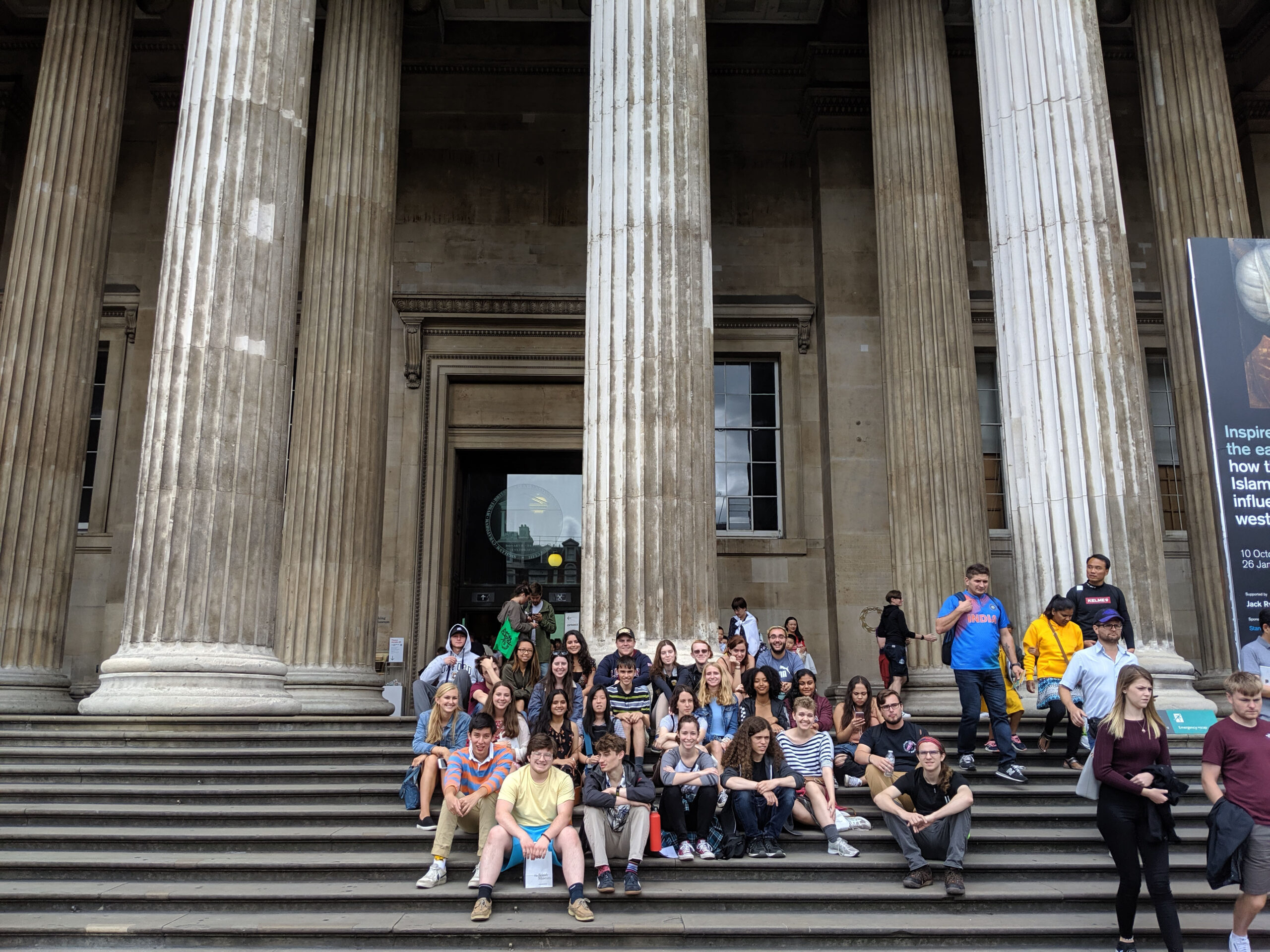
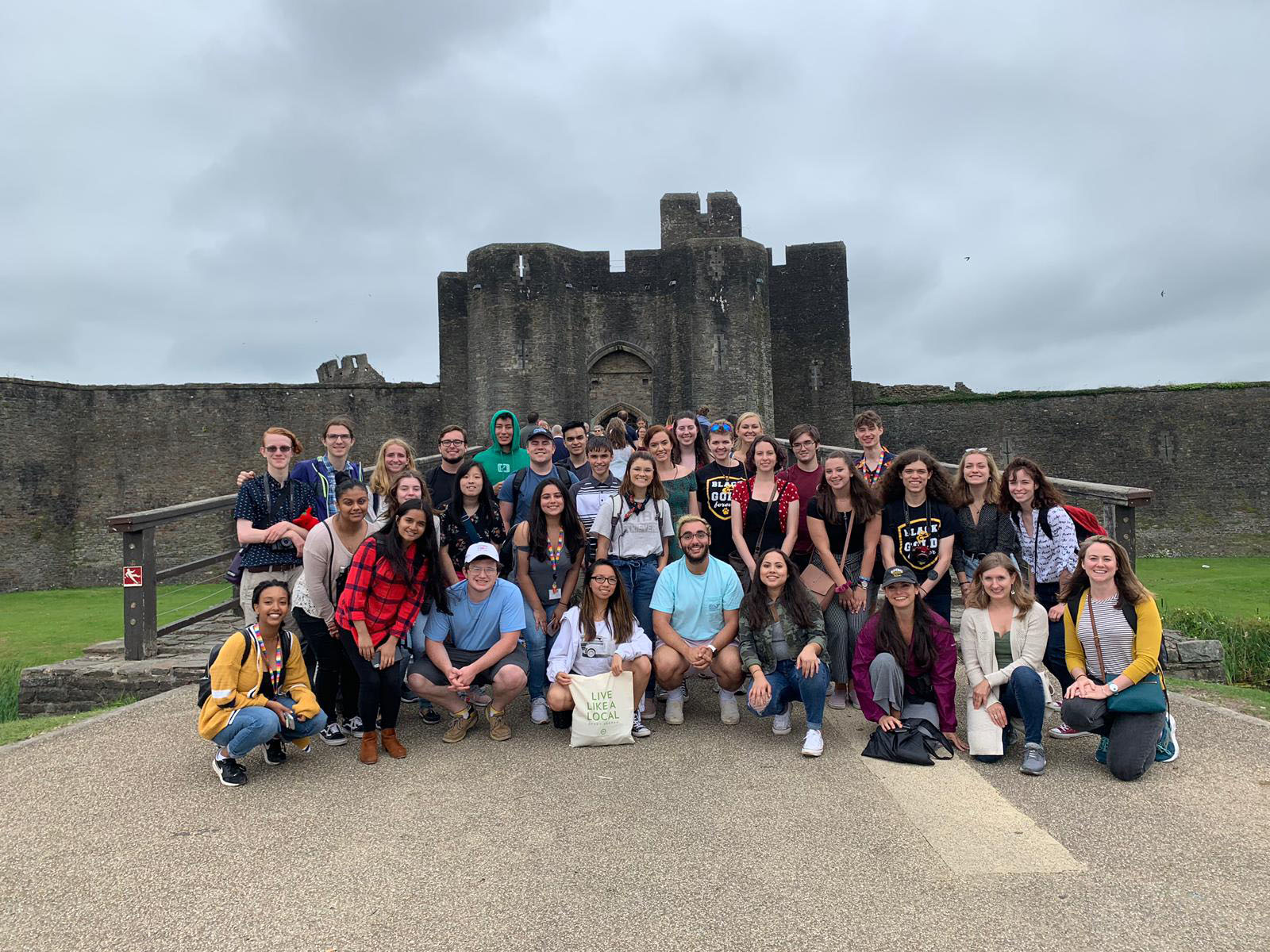
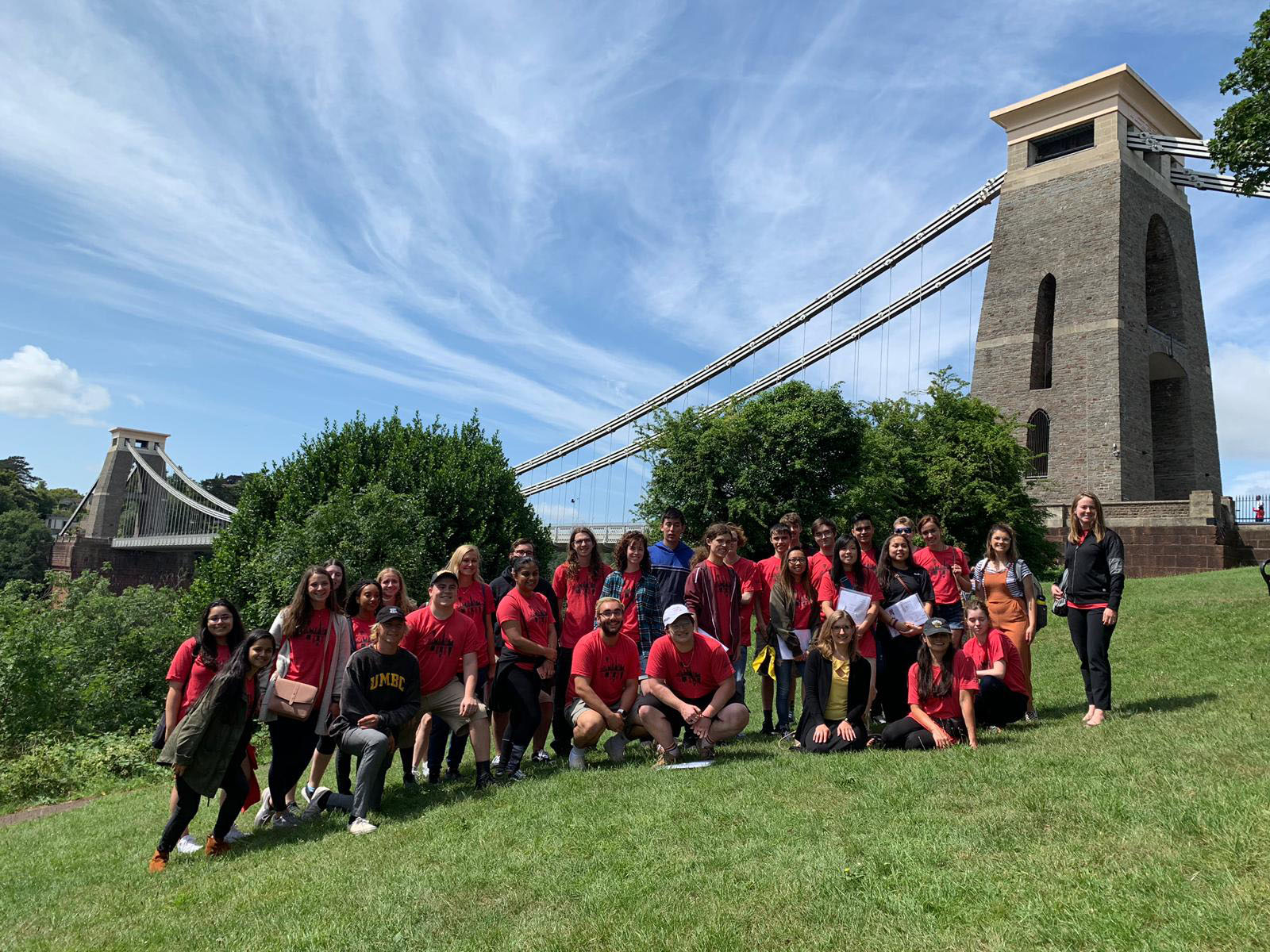
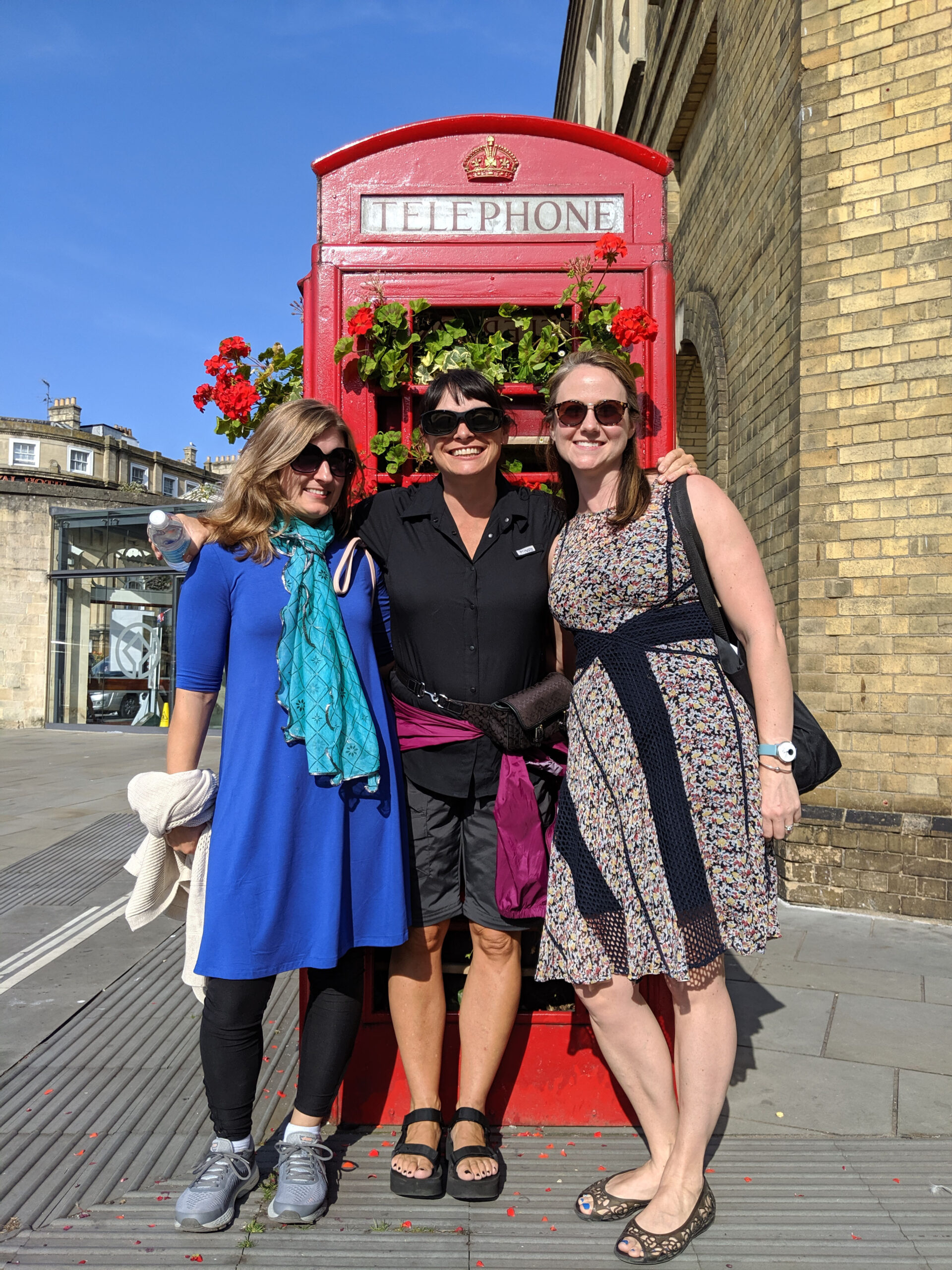
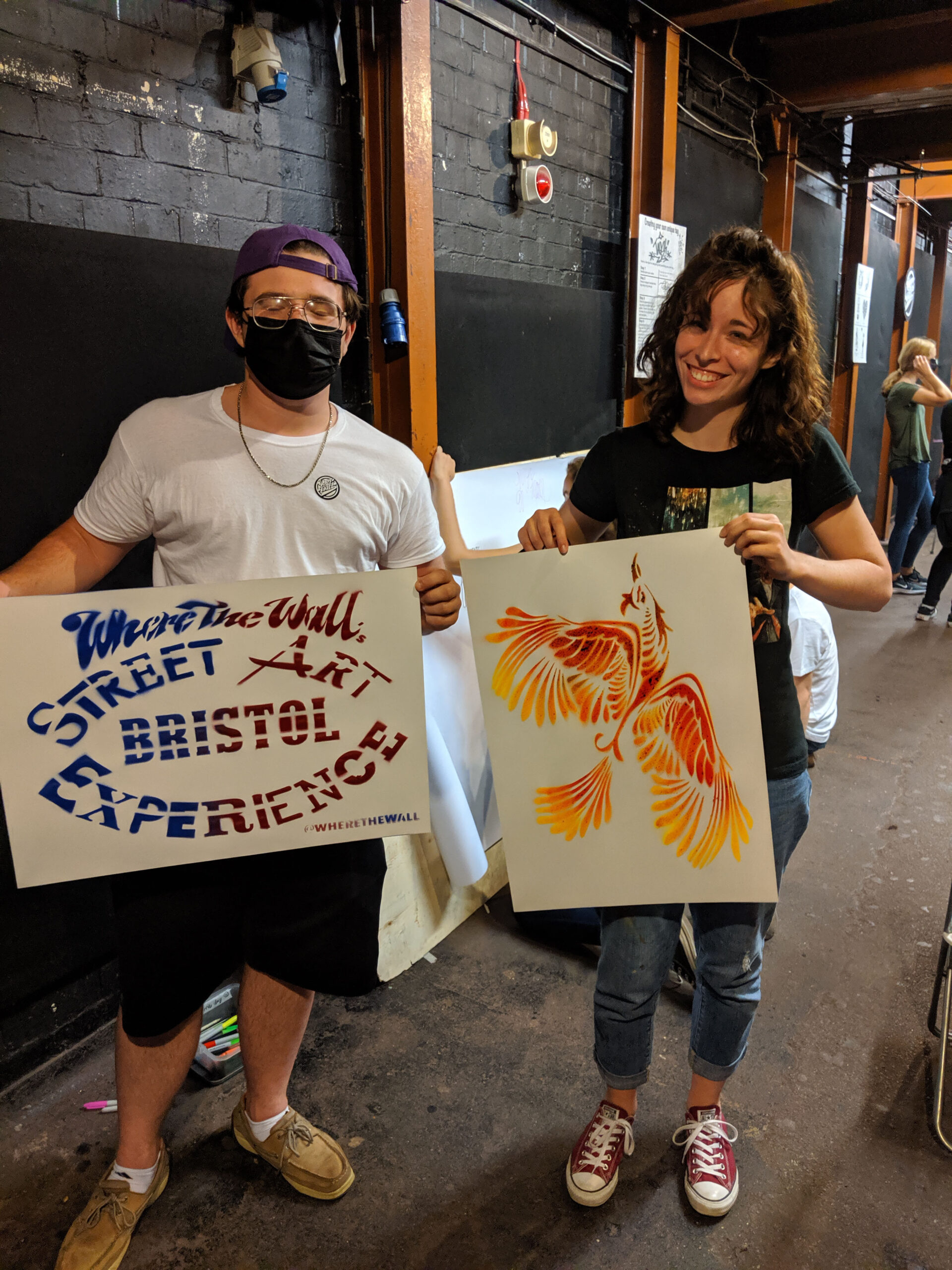
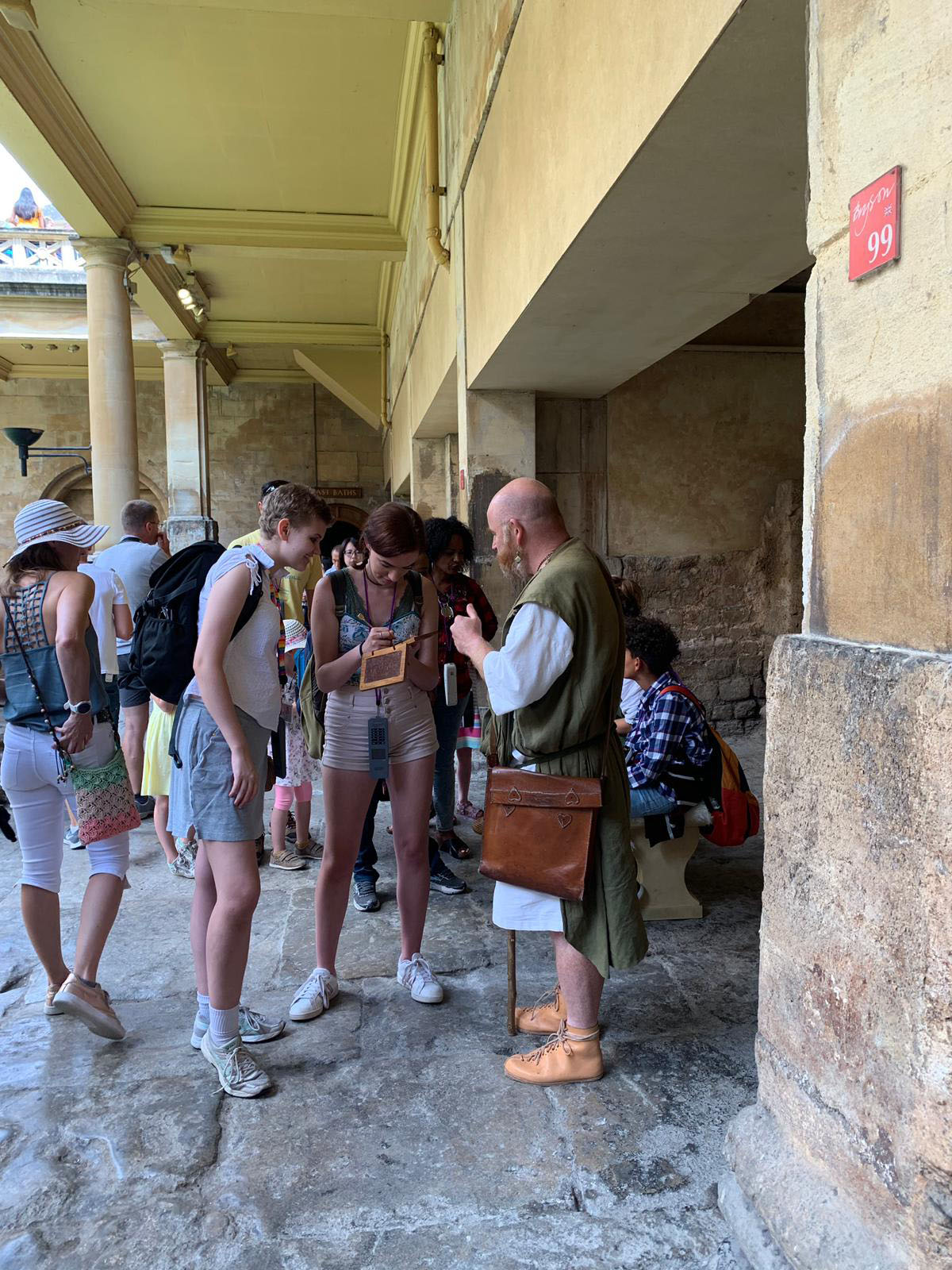
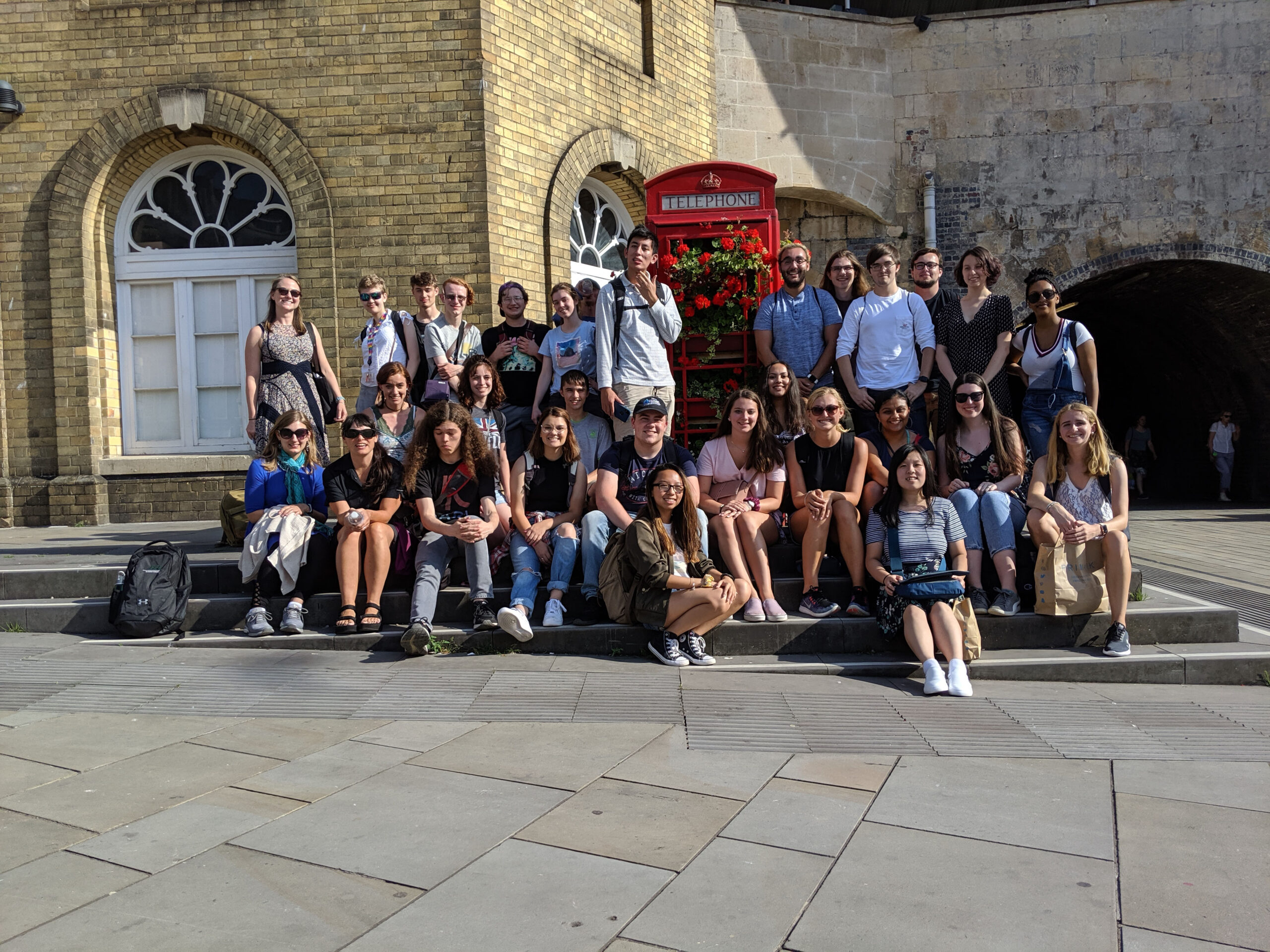
Most new students can’t wait to get their college careers started. This group of dedicated Retrievers really couldn’t wait. Through UMBC’s new Dawg Days Abroad program, nearly 30 incoming students had the chance to travel to Bristol, England as part of a two-week international excursion. Students were able to gain college credits and start making lasting memories before classes even began.
Developing the pilot program, navigating piles of paperwork, coordinating travel logistics, and wrangling a few dozen college students in a foreign country…seems easy, right? Caylie Middleton ‘08, associate director of international education, told us just how this exciting new adventure unfolded.
This is the first time UMBC has offered a program like this. What was the process for getting Dawg Days Abroad off the ground?
This program has been in the works for about three years and has been a personal dream of mine. I’ve always wanted to reach newly-admitted students because oftentimes once students come to our office, they don’t have as much time to think about studying abroad amidst their other responsibilities and priorities.
Dawg Days Abroad is a really rare type of study abroad program that few universities in the United States offer. To start, I met with campus partners such as Admissions, the Office Academic Engagement and Transition Programs, and potential faculty leaders. I also had to start to identify external providers to map our logistic support and explore possible locations for the program.
Once everyone was on board with the program, we identified the faculty whose courses would be the best fit for potential students. Then we had to narrow down the location options to one that fit within our anticipated budget.
That’s all the easy part. The hard part comes when you start to promote the program. We had to get enough students to make our minimum enrollment. We were aiming for at least 20 students and we ended up with 29.
This program had many moving pieces and so many different parties involved. I couldn’t have done it without the collaborative effort of everyone who was a part of it.
You mentioned that not many universities are doing this type of program. What makes it so unique?
This is a study abroad program that UMBC students complete before they start their first semester on campus. Most students don’t study abroad until their junior year, so Dawg Days students got international experience well before most others.
During their two weeks abroad, students earn four credits and get a chance to complete research, which makes this program particularly unique and valuable. Students have guided instruction on selecting a research topic and mentor, creating a poster presentation, and presenting a poster in a professional setting. Those four credits also include a one-credit “Introduction to an Honors University” component, which I taught to help students develop the skills to become successful Retrievers.
Our goals for this program are to give the students a snapshot and head start into university life and the potential they can reach. We want students to get an international and intercultural experience, form a group of friends before they start their time on campus, develop relationships with mentor on UMBC staff, and learn about the resources available to them.
The big question: What did students actually do while they were abroad?
The program started with a day and a half on campus so students could develop some rapport with each other, get the pre-departure safety information, and do introductory coursework. We all left together to go to the airport and then flew together to London.
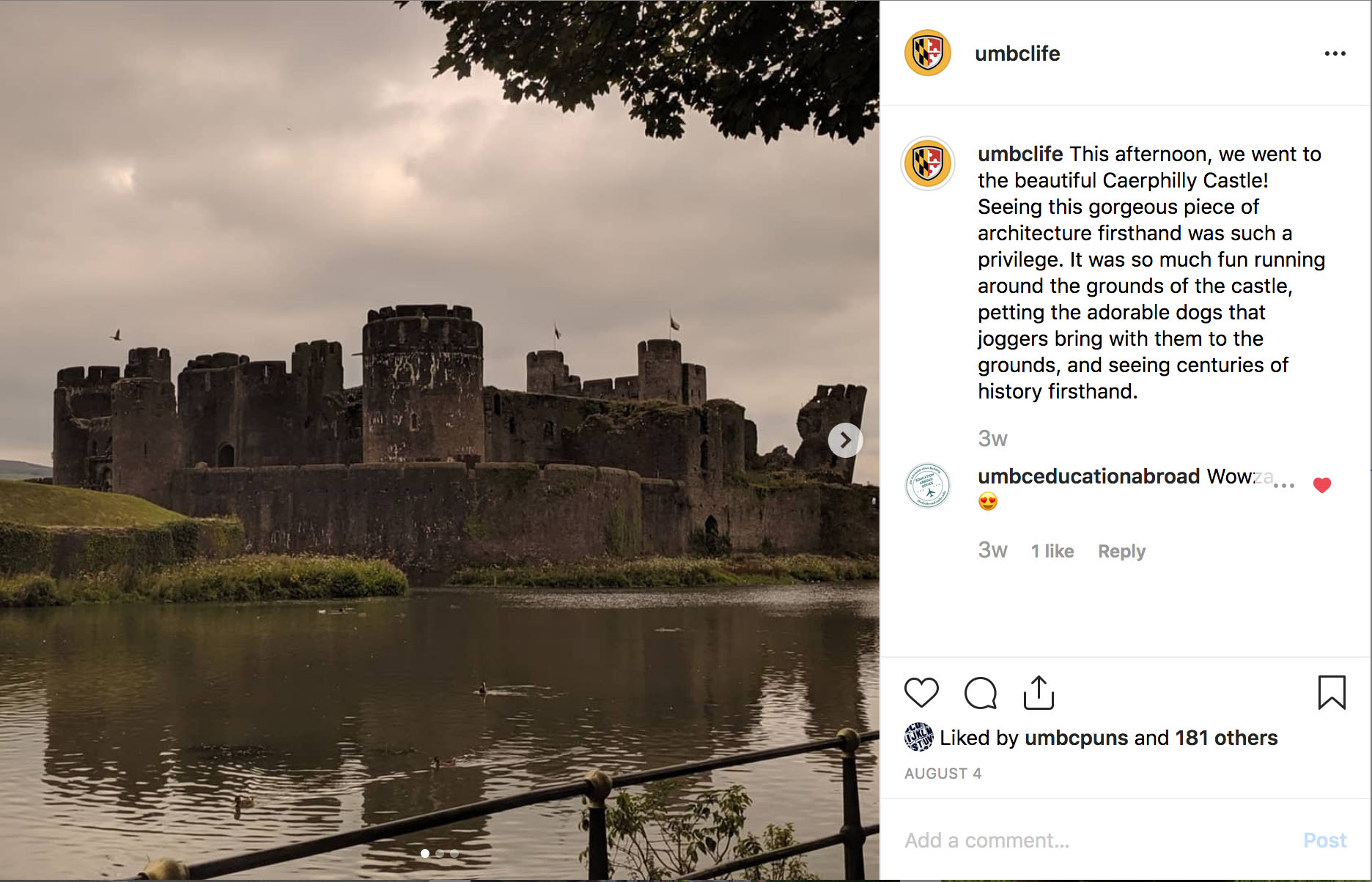
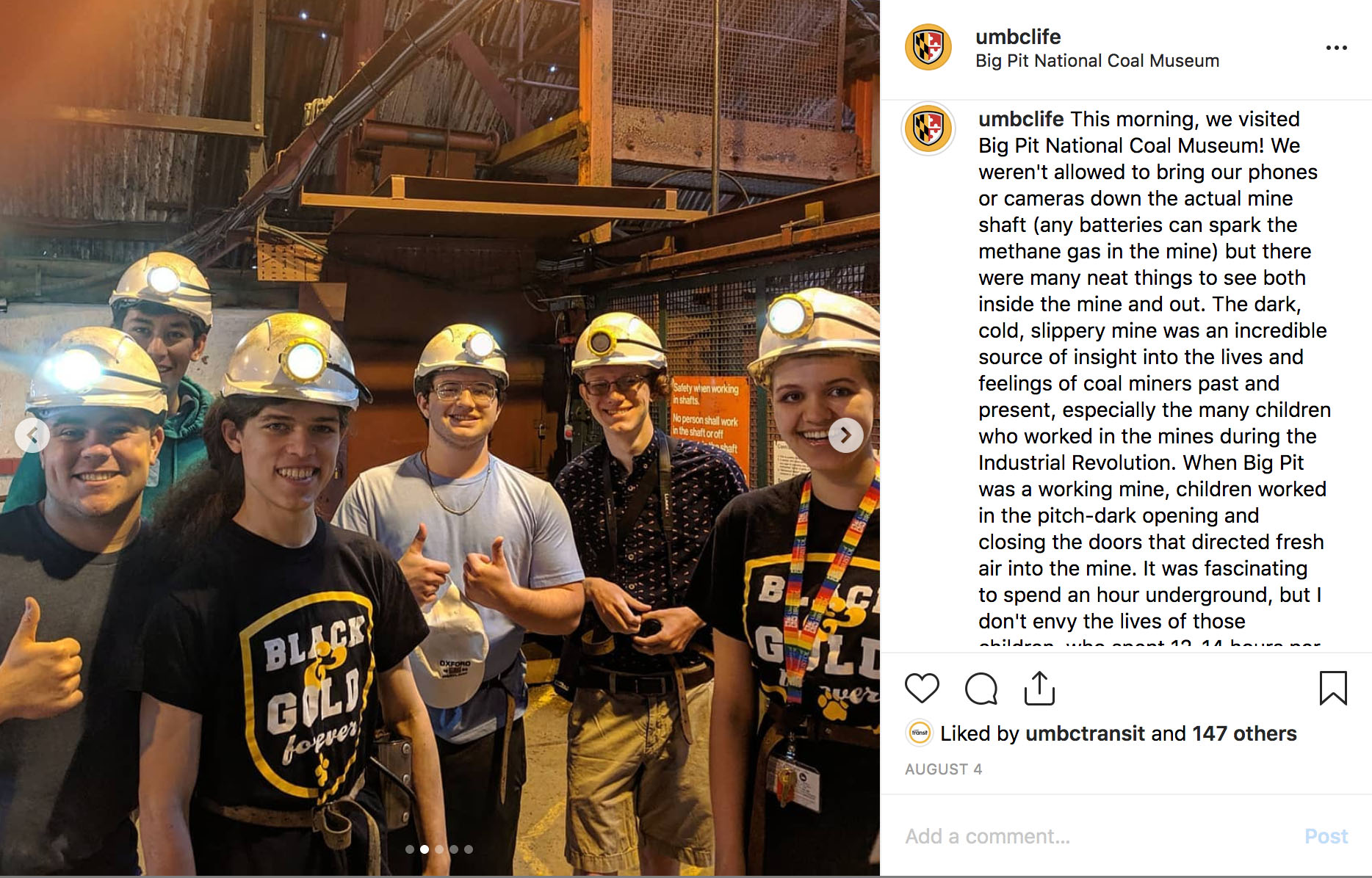
Once we arrived, we spent the majority of the time in Bristol, a city about two hours west of London. From there, students attended class daily and we enjoyed excursions every few days. We visited Bath to see the Roman Baths, went into the Welsh countryside, saw the Big Pit National Coal Museum, and explored social and political history on a tour of a coal mine. We did get to see a few traditional English castles while we were in the neighborhood, but most of our activities tied directly to the course content.
Other excursions included The National Gallery in London, the British Museum (to see the Rosetta Stone and explore representations of Orientalism), the National Assembly for Wales, and the Palestine Museum and Cultural Centre in Bristol. The students’ days were packed with activities and classes.
After such a successful first venture, what are your hopes for the future of the program?
Seeing this program come to fruition was so exciting. My next steps are to continue to improve and run it for the next few years. In the long term, I hope we can offer a few different pre-freshman/transfer study abroad programs in different locations for students to choose from. I believe this experience is so beneficial for both the students and our university. At least two students who participated who said they chose UMBC because we offered this study abroad program. It’s a great way to introduce future Retrievers to the fun and fascinating experiences they can access as a UMBC student.
All photos courtesy of Caylie Middleton ’08.
]]>
Most new students can’t wait to get their college careers started. This group of dedicated Retrievers really couldn’t wait. Through UMBC’s new Dawg Days Abroad program, nearly 30 incoming students...https://umbc.edu/stories/dawg-days-abroad-the-scoop-on-umbcs-newest-summer-program/https://beta.my.umbc.edu/api/v0/pixel/news/120055/guest@my.umbc.edu/17cbf7b21fe82f0173e38791a098e158/api/pixelbaltimorecampus-lifecolleges-and-universitiesUMBC News & Magazinehttps://beta.my.umbc.edu/groups/umbc-news-magazinehttps://assets1-beta.my.umbc.edu/system/shared/avatars/groups/000/001/943/24435aa6207c452e7bc15cc74b42c7bb/xsmall.png?1748556657https://assets1-beta.my.umbc.edu/system/shared/avatars/groups/000/001/943/24435aa6207c452e7bc15cc74b42c7bb/original.png?1748556657https://assets2-beta.my.umbc.edu/system/shared/avatars/groups/000/001/943/24435aa6207c452e7bc15cc74b42c7bb/xxlarge.png?1748556657https://assets2-beta.my.umbc.edu/system/shared/avatars/groups/000/001/943/24435aa6207c452e7bc15cc74b42c7bb/xlarge.png?1748556657https://assets3-beta.my.umbc.edu/system/shared/avatars/groups/000/001/943/24435aa6207c452e7bc15cc74b42c7bb/large.png?1748556657https://assets1-beta.my.umbc.edu/system/shared/avatars/groups/000/001/943/24435aa6207c452e7bc15cc74b42c7bb/medium.png?1748556657https://assets2-beta.my.umbc.edu/system/shared/avatars/groups/000/001/943/24435aa6207c452e7bc15cc74b42c7bb/small.png?1748556657https://assets1-beta.my.umbc.edu/system/shared/avatars/groups/000/001/943/24435aa6207c452e7bc15cc74b42c7bb/xsmall.png?1748556657https://assets2-beta.my.umbc.edu/system/shared/avatars/groups/000/001/943/24435aa6207c452e7bc15cc74b42c7bb/xxsmall.png?1748556657UMBC News & Magazine00falseThu, 05 Sep 2019 16:04:53 -0400Parents can help kids catch up in reading with a 10-minute daily routine
Because I conduct research about reading, parents often ask me the same question: “What can I do to help my child become a better reader?”
I always give them the same advice: “Read with your children. Enjoy books together, and whatever you do, don’t worry about teaching them to read. Leave the teaching to the teachers.”
This reply draws on my research regarding the literacy practices of high-performing teachers, as well as my experiences as a parent, teacher and literacy specialist. Ample evidence indicates that a solid foundation of reading, writing, talking and playing with words fosters a love for books at an early age and leads to later success as a reader.
But what happens when children do not learn to read, or when they struggle with reading? That problem is all too prevalent. Only about a third of all eighth-graders can read at or above grade level.
Successful teachers
I have studied how successful teachers at multiple high-performing urban schools in New York, Ohio, Missouri and Maryland that are helping struggling readers dramatically improve their reading fluency. Many are getting children to read passages multiple times.
For kids, this strategy is a lot like learning a new song by reading lyrics while singing along with a music video. When children practice reading this way, they listen to and echo a more experienced reader while tracking the print with their eyes and touching the phrases of the book as they read and reread the book together.
Psychologist Robert G. Heckelman first identified this method of repeated reading in the 1960s. He encountered an adolescent whose reading level increased by three grades after being tutored using this system. Heckelman repeated the method with 24 middle and high school students who were struggling with reading.
After just 7.5 hours of instruction in what he called Neurological Impress Method, students advanced by an average of two grade levels.
Those findings were later replicated with greater numbers of children, leading to a study published in 2016. In that study, the literacy researchers Chase Young, Timothy Rasinski, and Kathleen Mohr called the method “Read Two Impress.”
This new name reflected a change in the method: Kids had to read each page aloud after their tutors finished reading it to them. In addition to making kids better readers, Read Two Impress also helps them become more confident and spend more time reading.
Empowering families
Yet the Read Two Impress method, until now, has never formally involved a child’s family. Additionally, no studies of this strategy have investigated the impact of using books that reflect student culture and language.
To see if his strategy would be effective as a tool for families to use to improve their children’s reading, I partnered with co-researchers, Joshua Michael and Kris’tina Ackerman. Together, we conducted a study over 10 weeks at a school in a large Northeastern city.
There were some hurdles. For example, the grandmother of a thoughtful and inquisitive child expressed anxiety about her lack of confidence and perceived ability to read. “I’m not much of a reader myself,” she told us during the first training. “I don’t know if I can help my grandchild with reading.”
She, along with 25 second-graders and some of their relatives, participated in five training sessions.
In the final one, the adult participants described how they were teaching this strategy to others. They told us they believed similar opportunities should be broadly available. This in turn prompted us to host an open training for the whole school and a group of teachers-in-training.
This time, the grandmother, once apprehensive, helped facilitate the training. She had gained confidence in her ability to teach this learning strategy to others.
We also found that when families read books that reflected their culture and language, they enjoyed reading together more. In particular, we learned through surveys and focus groups that parents and other guardians took pride in playing a role in helping their kids become better readers.
We will publish the results of the more expansive approach to the strategy, which we call “Read Two Impress Plus,” in an academic journal.
]]>
By Kindel Turner Nash, associate professor, early childhood education, UMBC Because I conduct research about reading, parents often ask me the same question: “What can I do to help my child...https://umbc.edu/stories/parents-can-help-kids-catch-up-in-reading-with-a-10-minute-daily-routine/https://beta.my.umbc.edu/api/v0/pixel/news/120056/guest@my.umbc.edu/5592558b12119031268c833b76ff5e66/api/pixeldiscoveryearly-childhood-educationthe-conversationUMBC News & Magazinehttps://beta.my.umbc.edu/groups/umbc-news-magazinehttps://assets1-beta.my.umbc.edu/system/shared/avatars/groups/000/001/943/24435aa6207c452e7bc15cc74b42c7bb/xsmall.png?1748556657https://assets1-beta.my.umbc.edu/system/shared/avatars/groups/000/001/943/24435aa6207c452e7bc15cc74b42c7bb/original.png?1748556657https://assets2-beta.my.umbc.edu/system/shared/avatars/groups/000/001/943/24435aa6207c452e7bc15cc74b42c7bb/xxlarge.png?1748556657https://assets2-beta.my.umbc.edu/system/shared/avatars/groups/000/001/943/24435aa6207c452e7bc15cc74b42c7bb/xlarge.png?1748556657https://assets3-beta.my.umbc.edu/system/shared/avatars/groups/000/001/943/24435aa6207c452e7bc15cc74b42c7bb/large.png?1748556657https://assets1-beta.my.umbc.edu/system/shared/avatars/groups/000/001/943/24435aa6207c452e7bc15cc74b42c7bb/medium.png?1748556657https://assets2-beta.my.umbc.edu/system/shared/avatars/groups/000/001/943/24435aa6207c452e7bc15cc74b42c7bb/small.png?1748556657https://assets1-beta.my.umbc.edu/system/shared/avatars/groups/000/001/943/24435aa6207c452e7bc15cc74b42c7bb/xsmall.png?1748556657https://assets2-beta.my.umbc.edu/system/shared/avatars/groups/000/001/943/24435aa6207c452e7bc15cc74b42c7bb/xxsmall.png?1748556657UMBC News & Magazine00falseTue, 03 Sep 2019 18:49:20 -0400Six Baltimore City Schools in UMBC Math Project partnership see math test score gains
Newly released Maryland PARCC test results reveal that Baltimore City schools partnering with UMBC have seen dramatic growth in student math performance. The Baltimore Sun has called this trend one of the “bright spots” at a challenging moment, when many schools across the state are struggling to move the needle on student learning in math.
Math test scores for the six city schools involved with the UMBC Math Project grew by an average of five percentage points this year. Included are Liberty Elementary School, Mary Rodman Elementary School, James McHenry Elementary/Middle School, Federal Hill Preparatory Elementary School, Lakeland Elementary/Middle School, and Maree G. Farring Elementary/Middle School.
In comparison with this proficiency increase, Baltimore’s overall PARCC math scores remained flat and the state of Maryland experienced a drop of 1.1 percent. This year’s growth also builds on last year’s average increase of 6.9 percentage points at UMBC Math Project partner schools.
Liberty Elementary School Teachers analyze student data as part of the UMBC Math Project.
UMBC Math Project
To achieve this growth, the UMBC Math Project supports teachers and school leaders in elementary and middle grades through ongoing coaching and professional development. The project has involved 60 educators and supported over 2,000 city school students.
Kevin Older, an eighth grade teacher, and Christina Krasias ’18, mathematics, ’19 M.A.T, a UMBC Sherman Scholar and teacher intern, discuss a lesson during a collaborative planning meeting at Maree G. Farring EMS.
Professional development sessions build teachers’ math content knowledge. They also provide teachers with data analysis techniques to understand where students face challenges, and instructional practices to improve student learning outcomes.
UMBC’s current approach builds on an early partnership with Lakeland Elementary/Middle School supported by the Sherman Family Foundation, with professional development provided by Christopher Rakes of UMBC’s education department.
Today, UMBC facilitators connect with each school in the project in slightly different ways, based on school structures and needs. For some, support is very hands on. For others, consultation focuses on work with school leaders, who then implement professional development strategies with their teachers.
Intentional focus on early grades
Joshua Michael ‘10, political science, and a doctoral student studying education policy, serves as assistant director of the Sherman STEM Teacher Scholars Program at UMBC. He meets with educators in each school every two weeks for collaborative planning and professional development sessions.
“Our focus on elementary and middle grades mathematics is intentional,” Michael says. “Over 50 percent of students are performing notably below grade-level by third grade. We must adapt what and how we teach to meet students where they are and set a plan to meet rigorous standards. We know that algebra readiness is a key link to success in high school and beyond.”
Michael, a graduate of the UMBC Sondheim Public Service Scholars Program, taught in city schools earlier in his career, and he enjoys helping educators develop a renewed sense that they can have a measurable impact on student learning.
“Teachers want to do this work, and will go above and beyond when they are empowered as professionals,” Michael says. “Classroom teachers have great insight into what works for students, and when we honor that knowledge and support teachers in developing more tools to do their work, we see students grow.”
Rehana Shafi, director of the Sherman STEM Teacher Scholars Program, at left, and Josh Michael, assistant director of the program, at right, stand with UMBC alumni who are now teachers in Maryland, at a May 2018 Celebration of Teaching event. Photo by Marlayna Demond ’11 for UMBC.
Data-informed approach sees results
Michael has found that schools particularly value learning how to use data analysis as a tool to determine what’s working in class, and what they should adjust. As UMBC President Freeman Hrabowski has explained, “We’re bringing more specificity to the work.” And it’s paying off.
From 2016 to 2019, Liberty Elementary School saw an increase from 21.7 to 26 percent in math proficiency. Sara Krauss, assistant principal and math lead at Liberty shares, “Working with the UMBC Math Project has broadened our view on how to attack data. Each teacher now has the tools to make predictions about student growth based on their current math levels using several sources.”
“We use this information to monitor students’ growth, have conversations with students about where they are, and set learning goals,” Krauss explains. “Including students in conversations about their learning is essential.”
Sara Krauss, assistant principal; Takira Fields, fifth grade teacher; and Joe Manko, principal, start the year by analyzing and recording data for each student at Liberty Elementary School.
Over the same four years, Lakeland Elementary/Middle School saw an increase in math proficiency from 16.7 to 31.8 percent.
From 2017 to 2019, Mary E. Rodman Elementary School has grown from 2.2 to 22.8 proficient in math. “The partnership that our math team formed with UMBC has been transformational,” says third grade teacher Emily Campbell. “The triangulation of data from multiple sources has allowed us to group students in ways which meet their individual needs. It’s taken differentiation to a new level.”
Sara Bielat, a third grade teacher at Federal Hill Prep, updates and analyzes student achievement data.
Within that same time frame, Federal Hill Preparatory Academy has also seen incredibly strong results, growing from 17.9 to 43.3 percent. Sara Long, principal of Federal Hill Prep, says, “The partnership provided me with an opportunity to grow as an instructional leader. The planning, collaboration, data analysis, and instructional strategies that we developed allowed our staff to implement differentiated high quality instruction that was individually tailored to meet the needs of all of our students.”
James McHenry Elementary/Middle School has also seen steady growth. Of the partner schools, James McHenry started with the most challenging test results, with just 1.7 percent of students reaching proficiency in math in 2017. Just two years later, that has increased nearly three-fold, to 4.9 percent.
Maree G. Farring Elementary/Middle School is the newest UMBC Math Project partner. Over the past year, the school grew its math test scores from 9.2 to 13.1 percent proficient.
Access for all students
Although the current trends are significant, UMBC Math Project leaders and participants also recognize the importance of expanding partnerships like this to more schools across the city and the state. And the partners are beginning to explore the possibility of summer programs to accelerate student learning.
UMBC’s Susan Sonnenschein, professor of psychology, and a team of graduate students are currently evaluating the UMBC Math Project. This is an essential step to ensure future investments are driven by detailed knowledge about how the program works and how it can have the most impact.
“We approach this work with the mindset that these are our students,” says Michael, “and we design learning experiences that we would expect for our own children.”
“Student engagement has sky-rocketed as more and more students are gaining confidence through accessible instruction and high expectations,” he notes. “This is the education our children deserve—an experience where they can build on their strengths and grow to their fullest potential.”
Featured photo: Sherman STEM Teacher Scholar Vanessa Gonzalez ’19, American studies, works with Lakeland Elementary/Middle School students. Photo by Marlayna Demond ’11 for UMBC. Photos not by Demond are by Josh Michael for UMBC.
]]>
Newly released Maryland PARCC test results reveal that Baltimore City schools partnering with UMBC have seen dramatic growth in student math performance. The Baltimore Sun has called this trend...https://umbc.edu/stories/six-baltimore-city-schools-in-umbc-math-project-partnership-see-math-test-score-gains/https://beta.my.umbc.edu/api/v0/pixel/news/120057/guest@my.umbc.edu/f6a8d7d2dd75da9d8be0c33c5f4bf043/api/pixelalumnicahsscommunityeducationpage1policy-and-societypsychologypublicpolicyshermanscholarssondheimscholarsUMBC News & Magazinehttps://beta.my.umbc.edu/groups/umbc-news-magazinehttps://assets1-beta.my.umbc.edu/system/shared/avatars/groups/000/001/943/24435aa6207c452e7bc15cc74b42c7bb/xsmall.png?1748556657https://assets1-beta.my.umbc.edu/system/shared/avatars/groups/000/001/943/24435aa6207c452e7bc15cc74b42c7bb/original.png?1748556657https://assets2-beta.my.umbc.edu/system/shared/avatars/groups/000/001/943/24435aa6207c452e7bc15cc74b42c7bb/xxlarge.png?1748556657https://assets2-beta.my.umbc.edu/system/shared/avatars/groups/000/001/943/24435aa6207c452e7bc15cc74b42c7bb/xlarge.png?1748556657https://assets3-beta.my.umbc.edu/system/shared/avatars/groups/000/001/943/24435aa6207c452e7bc15cc74b42c7bb/large.png?1748556657https://assets1-beta.my.umbc.edu/system/shared/avatars/groups/000/001/943/24435aa6207c452e7bc15cc74b42c7bb/medium.png?1748556657https://assets2-beta.my.umbc.edu/system/shared/avatars/groups/000/001/943/24435aa6207c452e7bc15cc74b42c7bb/small.png?1748556657https://assets1-beta.my.umbc.edu/system/shared/avatars/groups/000/001/943/24435aa6207c452e7bc15cc74b42c7bb/xsmall.png?1748556657https://assets2-beta.my.umbc.edu/system/shared/avatars/groups/000/001/943/24435aa6207c452e7bc15cc74b42c7bb/xxsmall.png?1748556657UMBC News & Magazine00falseTue, 03 Sep 2019 16:14:42 -0400
 MARC U*STAR Scholar Abby Cruz ‘18, biological sciences, and neurobiologist Fernando Vonhoff.
 Students and faculty connect in UMBC’s public policy building, in front of meaningful quotes in several languages.
 New students spell out “UMBC” during Welcome Week, fall 2019.