Entrepreneurship and Philanthropy Go Hand-in-Hand for this Alumni Award Winner

Co-founder and Chairman of the Board of Bart & Associates, Paul Mangus ’86, information systems management, has been integral to developing some of the United States’ most critical homeland security systems created over the last 20 years. Winner of the 2019 Outstanding Alumni of the Year Award for Engineering and Information Technology, Mangus came to campus to sit down and chat with UMBC’s director of the Alex. Brown Center for Entrepreneurship, Vivian Armor ’73, American studies.
Vivian Armor: It’s been a while since you graduated from UMBC, but it’s been longer for me. What was it like then, for you as a student?
Paul Mangus: I initially went to community college because I couldn’t get into any colleges because my grades were really bad. I’m dyslexic, so education was very hard for me.
VA: That seems to be common for entrepreneurs.
PM: But when I got into this campus atmosphere, I just flourished. For some odd reason, classwork became a lot easier for me. Maybe because it wasn’t as structured as it was in school, where you had set assignments and set timeframes you had to get things done in, which is very difficult for dyslexic people. So then, I started flourishing.
VA: What about the IT program caught your attention?
PM: I initially wanted to be an accountant because I like numbers. I went to my first accounting class and I just got super, super bored. So then, that’s when I discovered computers and IT, and changed my degree into information systems.
 A photo of Mangus in a 1982 edition of The Retriever—not sleeping in the computer lab—but in a lounge.
The IT department was a very small group of people, and we got to know each other very quickly. We got along, although there was some competition there. The only computers available to us were in a lab that closed at night, and we’d have to sign up for time slots in advance. I got to know the guy that managed the room, and he would allow me to spend the night in the lab, but the room would be locked after 11 p.m. I would go in with food and whatever I needed, and he would shut me in there to do my work. Then, at 7 in the morning, the door would open and there would be a line of students to get in, and I’d be walking out with all my assignments done.
They got back at me because at the time, you also had to use computer cards—it was before you had CRTs or computers and keyboards—you did everything on these cards. So, when the other students found out that I was going into the computer lab at night, they would chase me down the hallway and tackle me, then 1,000 cards would go everywhere.
VA: Did you always know you’d probably start a company, or not? Was this a surprise even to you?
PM: It was a surprise to me. I guess you could call me an entrepreneur when I was young because I used to always walk around the neighborhood and knock on doors, ask to mow your grass, rake your leaves, shovel your sidewalks, and all that other stuff. I’d collect bottles, turn them in for five cents apiece.
But I never had a vision of running my own company until I started working and realized I’d be better suited to create something of my own.
VA: Then, that major opportunity after 9/11, an unfortunate opportunity.
PM: I so happened to be right where I needed to be after 9/11. Out of tragedy comes opportunities, I guess. It was something we got involved in because the systems our company had built were for identifying drug trafficking, child pornography, people trying to smuggle drugs and people into the United States. After 9/11, the government asked if we had systems in place to monitor people. It so happened that, yes, we had built the system already.
VA: I think of you every time I go through an airport.
PM: It was a great experience for me. I traveled the world, meeting with various airlines on developing interfaces with their systems so we could communicate with the reservation systems to gather all the data we needed. We ingest all of that and do the analytics.
 Paul Mangus ’86 and Vivian Armor ’73 sit down to talk about entrepreneurship and philanthropy. Photo by Marlayna Demond ’11.
VA: I’ve met a lot of entrepreneurs and they just have this incredible confidence, and they do whatever it takes to start. They take these risks, like starting out with lots of credit card debt. You were one of those entrepreneurs. What gave you the confidence to do that?
PM: I was single. I didn’t have any responsibilities, which is huge. I don’t know if I’d do it again, but I have a wonderful wife and she supports me.
The confidence and credit cards were a necessity because when we started the company, the bank refused to give us a loan. The bank officer wanted to see hard assets, like “Where are your trucks? Where’s your manufacturing equipment?” We didn’t have any of that.
Cash flow is huge. So, out of necessity, one day I was at home and I got an envelope in the mail, and it was the classic thing: open up a credit card today and you could write a check for $3,000. So, I called up my partner, and I was like, “Hey, are you getting these in the mail?” He goes, “Yes.” I was like, “Game on.”
VA: Obviously, it paid off, but it’s a risk.
PM: It paid off because it allowed us to hire people. But, it’s a huge risk, yes.
VA: Paul, I know any time I’ve asked you to do anything, you’ve said yes. You’ve been a speaker for us in a speaker series. You’ve been a judge in our competition. You’ve been a mentor to our teams. You’ve worked with the digital students. Any time I ask you, and you’re incredibly busy, you say yes. What got you involved as an alum with UMBC?
PM: It is because of you.
VA: Is that right?
PM: When I became successful financially, I started donating back. Then, you sent me a polite email saying, “Hey, would you like a tour of the campus?” You brought me on a tour and we ate lunch. You said your goodbye and that was it. I was like, that’s nice.
My wife and I have a pay-it-forward attitude. We’ve been blessed with success. I’m not driven by money, so that was never in the equation—that I want to be a rich man, and be wealthy, and show off wealth—that was never a driving factor.
VA: One of the many things I like about you.
PM: Money actually makes us uncomfortable in some ways. There’s a lot of responsibility associated with money. So, we decided we need to start giving back to the community.
VA: Things obviously have changed so much for entrepreneurs. What would be your advice for students here, who have that entrepreneurial spirit?
PM: Our lives are too short to learn everything we need to learn, so that’s why universities are here, so we can jump-start our understanding by coming to institutions like this to learn from other people’s experience. When you’re an entrepreneur, you leave college, you’re still learning, and you need to find, constantly seeking out those mentors.
It’s constantly maintaining a Rolodex of people that you meet. I wish I had done that earlier in my career because there’s a lot of wonderful people I’ve met early in my career that I’ve lost touch with that would have really helped me to be more successful.
The mentors and the relationships with other professionals… it allows all that noise to dissipate, and you can really focus on why you got into business in the first place.
*****
Learn more about the 2019 Alumni Award winners and register to attend the October 2 ceremony.
Header image by Marlayna Demond ’11.
]]>
Co-founder and Chairman of the Board of Bart & Associates, Paul Mangus ’86, information systems management, has been integral to developing some of the United States’ most critical homeland...
https://umbc.edu/stories/entrepreneurship-and-philanthropy-go-hand-in-hand-for-this-alumni-award-winner/
https://beta.my.umbc.edu/api/v0/pixel/news/120038/guest@my.umbc.edu/62f2f4cd9a7a919f63abc30f53ca46d5/api/pixel
alumni
alumni-awards-2019
coeit
information-technology
UMBC News & Magazine
https://beta.my.umbc.edu/groups/umbc-news-magazine
https://assets1-beta.my.umbc.edu/system/shared/avatars/groups/000/001/943/24435aa6207c452e7bc15cc74b42c7bb/xsmall.png?1748556657
https://assets1-beta.my.umbc.edu/system/shared/avatars/groups/000/001/943/24435aa6207c452e7bc15cc74b42c7bb/original.png?1748556657
https://assets2-beta.my.umbc.edu/system/shared/avatars/groups/000/001/943/24435aa6207c452e7bc15cc74b42c7bb/xxlarge.png?1748556657
https://assets2-beta.my.umbc.edu/system/shared/avatars/groups/000/001/943/24435aa6207c452e7bc15cc74b42c7bb/xlarge.png?1748556657
https://assets3-beta.my.umbc.edu/system/shared/avatars/groups/000/001/943/24435aa6207c452e7bc15cc74b42c7bb/large.png?1748556657
https://assets1-beta.my.umbc.edu/system/shared/avatars/groups/000/001/943/24435aa6207c452e7bc15cc74b42c7bb/medium.png?1748556657
https://assets2-beta.my.umbc.edu/system/shared/avatars/groups/000/001/943/24435aa6207c452e7bc15cc74b42c7bb/small.png?1748556657
https://assets1-beta.my.umbc.edu/system/shared/avatars/groups/000/001/943/24435aa6207c452e7bc15cc74b42c7bb/xsmall.png?1748556657
https://assets2-beta.my.umbc.edu/system/shared/avatars/groups/000/001/943/24435aa6207c452e7bc15cc74b42c7bb/xxsmall.png?1748556657
UMBC News & Magazine
0
0
false
Mon, 30 Sep 2019 14:27:18 -0400
Empathy and Compassion — Alumni Award Winners Take on Public Health Challenges
Health is one of the many things we take for granted until we don’t have it. Like a software glitch, you don’t notice the apparatus providing you a service until it fails to follow a command.
Three of UMBC’s 2019 Alumni Award winners play a role in smoothing out the flaws in health care access—designing apps to create an easier pathway to medical care, serving the United States as the “nation’s doctor,” and on a global scale, improving the medical supply chain for remote locations.
The way they overlap in their missions stems from their shared Retriever roots and a common empathy for the people they serve, ultimately influencing millions of lives at home and abroad.
Design with empathy in mind
Kelsey Krach ’14, anthropology, recipient of the 2019 Rising Star award, leans heavily on her background as a Sondheim Public Affairs scholar when thinking about designing information so that it’s accessible to people—creating a seamless software experience through research, so that users achieve their end goal without frustration. Currently she works for Fearless, a UMBC alumni-founded digital services firm, a job that started with “really loving to understand what people need and want,” she says. As someone in the tech world with an anthropology major, Krach says that her degree allows her “to look at critical problems that people and cultures and societies interact with, and critically think about what it means to approach those problems.”
 Kelsey Krach guest lecturing on human-centered design at a local university. Photo courtesy of Krach.
Krach underwent a personal health crisis shortly before leaving for Spain to pursue her master’s in visual and digital media at IE Business School—one that made her reexamine the American health system with a critical lens. Grappling with the consequences of her health issues, she was left with a question after studying in Madrid: “What are the ethical obligations that we have as designers to ensure that we’re doing good stuff in the world?” When she returned to the States after completing her master’s program, Krach took a position through Baltimore Corps and was able to start addressing that question through her work with the Baltimore City Health Department.
One of her projects included approaching public health challenges in the city using human-centric design methodology—designing information in a way that is accessible to people. This involved partnering with tech companies to create prototypes that would address issues like the opioid epidemic. “Right then, I realized that this is the power that technology has to elevate what’s happening for citizens, to provide better solutions for citizens, provide better services. It was just pure civic tech engagement.”
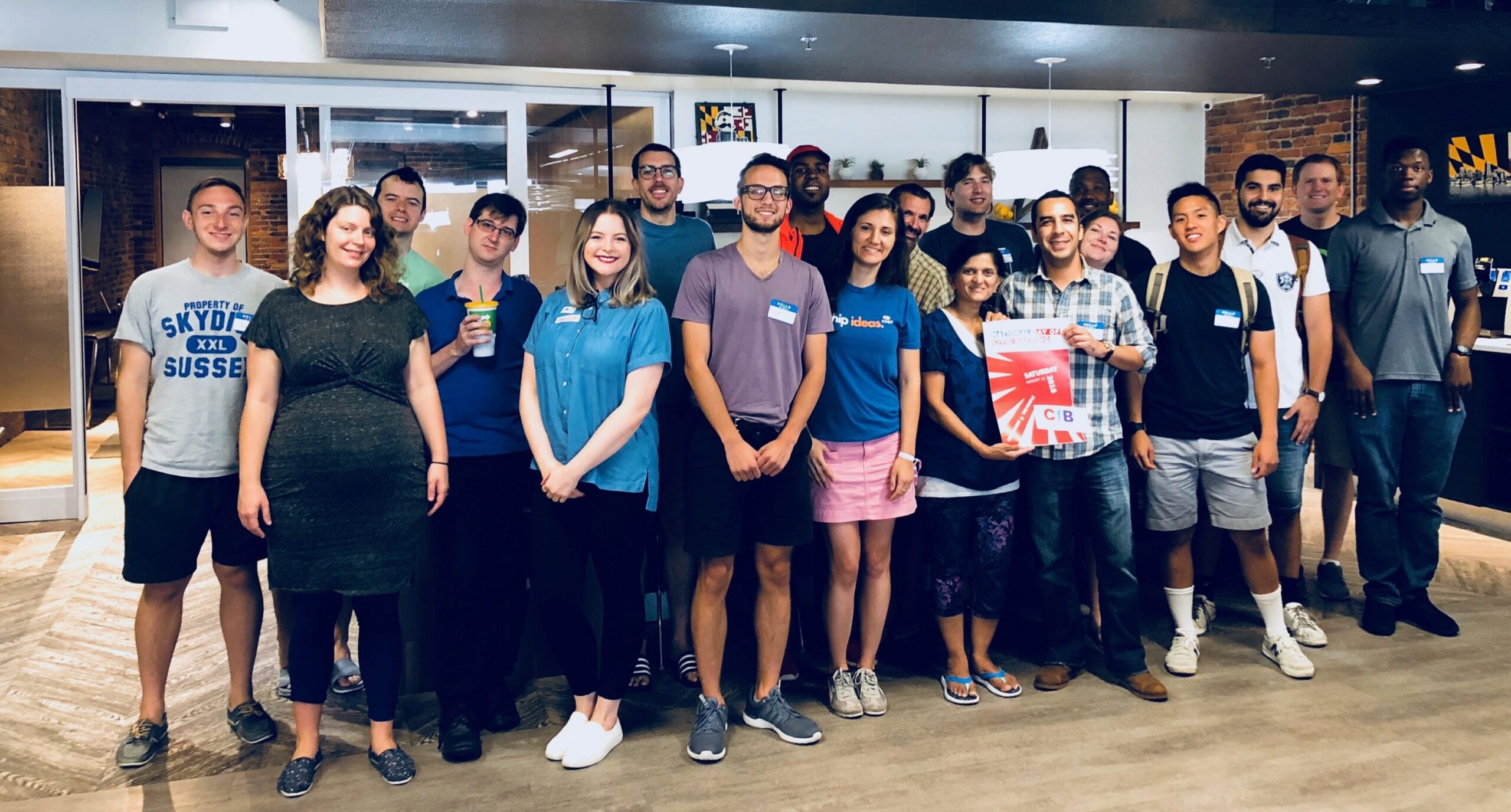
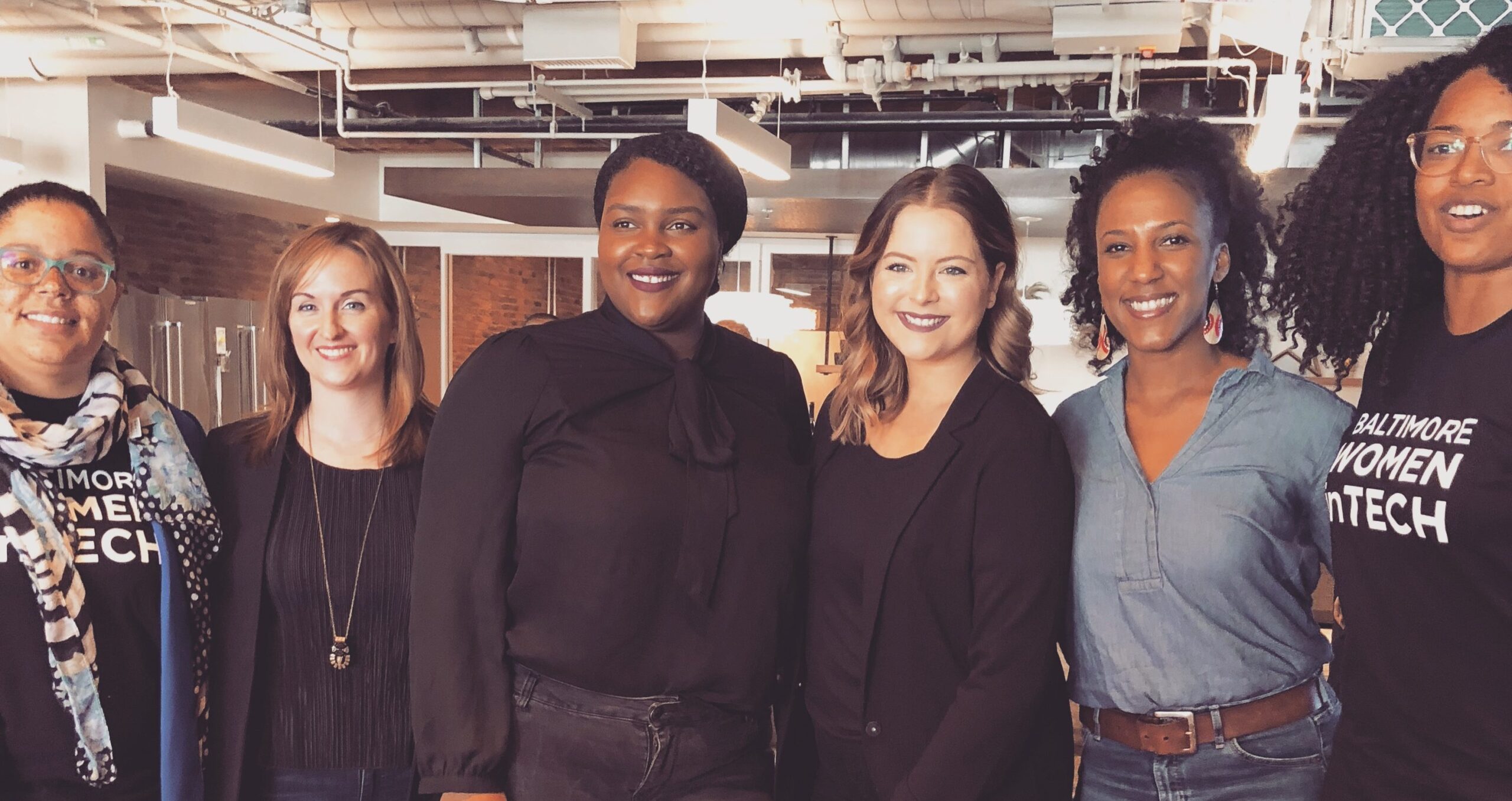
Subsequently she worked on the launch of an app for LifeBridge Health by researching patient experience, specifically those suffering from heart failure. Krach interviewed more than 40 patients while shadowing doctors and nurses and listening in on emergency room conversation. She says she recognized the fear on the patients’ faces because it mirrored her own fear when her health failed her. “I think at the end of the day, the empathy that a designer needs to have for the people they’re designing for is so powerful.”
Compassion as part of the cure
For Jerome Adams ’97, M4, biochemistry and molecular biology and psychology, that empathy also forms the bedrock of his mission as the 20th U.S. Surgeon General. This year’s recipient of the Outstanding Alumni of the Year award for natural and mathematical sciences, Adams has often shared his personal story about his younger brother, who suffers from substance use disorders. “Even as the surgeon general, I’m not immune to this,” Adams says. “I was not able to prevent my family from going down the pathway of addiction.”
 Far from just being a political talking point, Adams has plans on how to address the opioid crisis with methods that more effectively reach those suffering from addiction. As a graduate of one of the early Meyerhoff Scholar Program cohorts, Adams intimately knows the benefits and necessity of relying on your community for accountability and support. The mandatory six-week Meyerhoff Summer Bridge program builds close-knit connections between the young scholars through a “we rise together” mentality.
That reliance on one another is a building block of medication-assisted treatment (MAT) programs. Increasing access to this type of treatment is among Adams’ proposed steps toward addressing the opioid crisis in America. MAT combines medication with behavioral support and is often referred to as “whole-patient” treatment. Community organizations like churches are encouraged to step in and build relationships with the participants in the program to further strengthen their ties to the community and available support options. Adams is working to increase the number of MAT programs in the country.
“We know that the only way we’re going to turn this thing around is by everyone owning their part of it and not pointing fingers,” Adams told Mediaplanet. “One of the things I’ve tried to help people understand is that addiction touches all of us. People with opioid use disorder are our friends, our neighbors, our family.”
While compassion is not a cure-all, he says, it’s the right step toward valuing those struggling with substance use disorders.
A good reason to go to work in the morning
Projecting that empathy even further afield is Kim Shelsby ’85, geography. While at UMBC, the 2019 recipient of the Outstanding Alumni of the Year award for social sciences decided that he wanted to travel the world. He just needed a good reason to do so.
Shelsby cycled through several majors before taking a class with Sandy Parker, former chair of the department of geography and environmental systems. “Parker made the first and most lasting impression on me,” says Shelsby. “I recall him describing his work with a tribe in the Amazon, and I was hooked.” And what Shelsby ultimately took away from UMBC is that “geographers study everything from anthropology to zoology but their primary question is about the distribution—why things happen where they happen.”
This focus on distribution would shape Shelsby’s career. In his current position with Chemonics International, his team focuses on improving supply chains, mostly for medicine reaching remote health facilities. “Our job is to get the right medicine to the right patient, anywhere in the world, as efficiently as possible.”
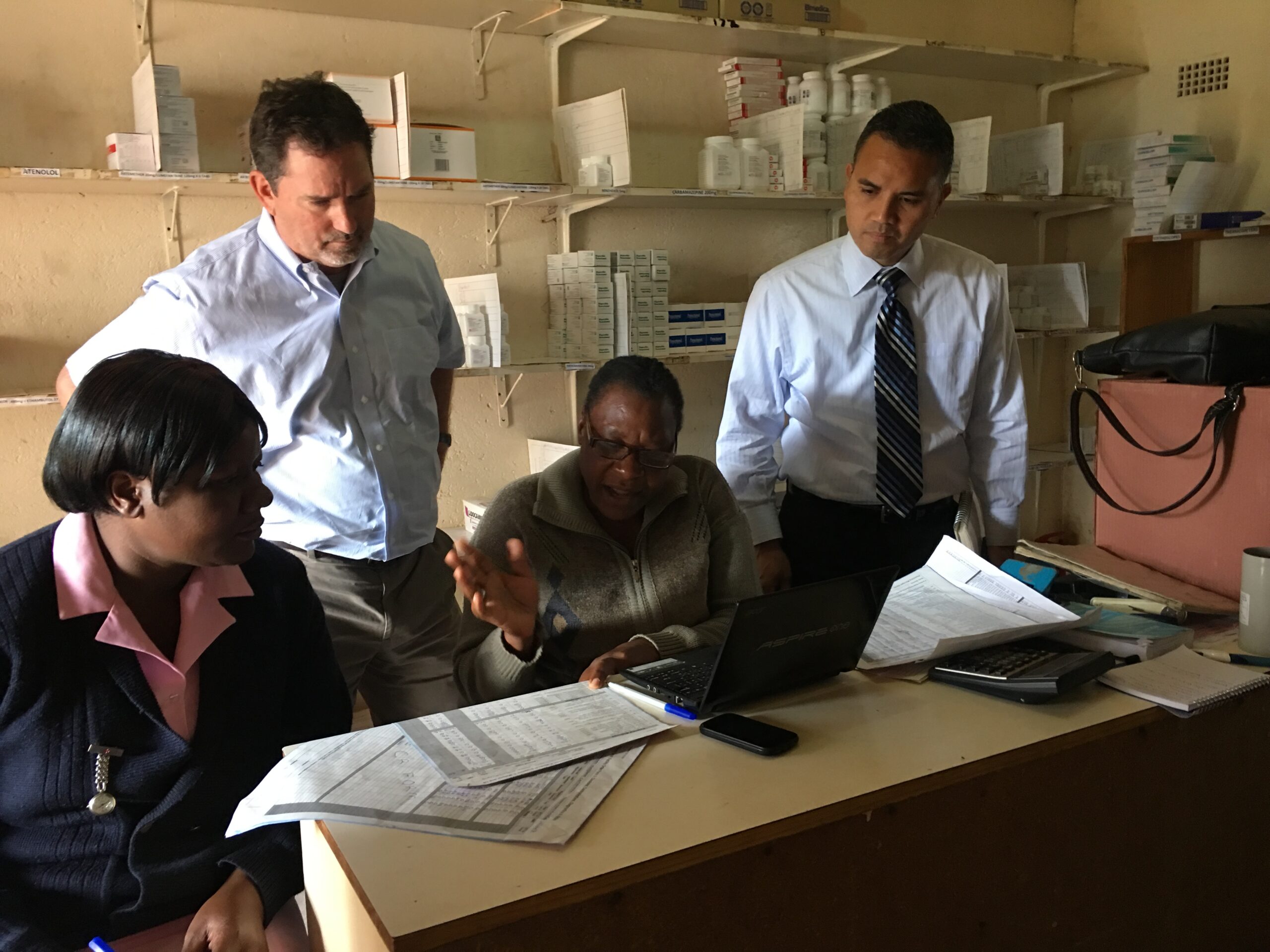

His role in an international development organization has allowed him to fulfill his goal of traveling the world for the right reasons. “My company’s mission is to help people live healthier, more productive and independent lives. That’s a good reason to go to work in the morning.”
As manager director on the largest U.S. Agency for International Development (USAID) project ever—an eight-year, $9.5 billion Global Health Supply Chain Procurement and Supply Management program—Shelsby helped provide medicine and health commodities to more than 60 countries. “It was a massive undertaking,” he put it bluntly. “The first few years were crazy, and it had some rough times, but it is now delivering with about 90 percent on-time delivery.”
Making the mundane meaningful
Shelsby admits that even though traveling abroad for his job is exciting and fulfills many of his wishes as a student, the day-to-day program management can grow humdrum even while producing so many positive health outcomes. And this is where his advice for students who want to change the world comes in: “Even the mundane tasks can be meaningful when it serves a greater purpose.”
Krach builds on that theme for students looking to make a difference through their work. “I really hate saying, ‘make the world a better place,’ because that’s so subjective to everybody—but at least do things in a way that you can analyze and try to work with other people to make their situations better toward the collective betterment for our society.”
 Adams representing his UMBC pride from one of his social media accounts.
Using your voice to promote and protect others’ health is a platform Adams has embraced. After his 2017 appointment to the position of surgeon general, Adams spoke out about the change from being the health commissioner for the state of Indiana to his current role. “I don’t have a lot of programs under me, I don’t have a lot of funding to go out there and fund different grants or programs. What I do have is the bully pulpit.”
Adams has accepted that national microphone through his natural repartee on Twitter as well as through issuing the first Surgeon General’s Advisory in 13 years, urging more Americans to carry naloxone, an FDA-approved medication that can reverse the effects of opioid overdoses.
While there are no quick fixes for most major health problems, the different roles Krach, Adams, and Shelsby play in designing healthier communities make evident that faithful work in service of those suffering from disease and addiction combined with empathy and compassion will be the bedrock of positive changes in the future.
In recognition of their service to others and giving back to UMBC with their time and skills, the UMBC community will honor these alumni and others at an award ceremony on October 2 at 6:30 p.m. Admission is free, but please register in advance.
]]>
Health is one of the many things we take for granted until we don’t have it. Like a software glitch, you don’t notice the apparatus providing you a service until it fails to follow a command. ...
https://umbc.edu/stories/empathy-and-compassion-alumni-award-winners-take-on-public-health-challenges/
https://beta.my.umbc.edu/api/v0/pixel/news/120039/guest@my.umbc.edu/7c195a38f78faf643687b39c400fa020/api/pixel
alumni
alumni-awards-2019
anthropology
geography
meyerhoff
surgeon-general
UMBC News & Magazine
https://beta.my.umbc.edu/groups/umbc-news-magazine
https://assets1-beta.my.umbc.edu/system/shared/avatars/groups/000/001/943/24435aa6207c452e7bc15cc74b42c7bb/xsmall.png?1748556657
https://assets1-beta.my.umbc.edu/system/shared/avatars/groups/000/001/943/24435aa6207c452e7bc15cc74b42c7bb/original.png?1748556657
https://assets2-beta.my.umbc.edu/system/shared/avatars/groups/000/001/943/24435aa6207c452e7bc15cc74b42c7bb/xxlarge.png?1748556657
https://assets2-beta.my.umbc.edu/system/shared/avatars/groups/000/001/943/24435aa6207c452e7bc15cc74b42c7bb/xlarge.png?1748556657
https://assets3-beta.my.umbc.edu/system/shared/avatars/groups/000/001/943/24435aa6207c452e7bc15cc74b42c7bb/large.png?1748556657
https://assets1-beta.my.umbc.edu/system/shared/avatars/groups/000/001/943/24435aa6207c452e7bc15cc74b42c7bb/medium.png?1748556657
https://assets2-beta.my.umbc.edu/system/shared/avatars/groups/000/001/943/24435aa6207c452e7bc15cc74b42c7bb/small.png?1748556657
https://assets1-beta.my.umbc.edu/system/shared/avatars/groups/000/001/943/24435aa6207c452e7bc15cc74b42c7bb/xsmall.png?1748556657
https://assets2-beta.my.umbc.edu/system/shared/avatars/groups/000/001/943/24435aa6207c452e7bc15cc74b42c7bb/xxsmall.png?1748556657
UMBC News & Magazine
0
0
false
Thu, 26 Sep 2019 00:40:47 -0400
Retriever Courage one year later: UMBC community listens, learns, and acts

One year ago, the UMBC community spoke out about experiences, urgent concerns, and hopes for change related to sexual and gender-based harassment and violence. This September 18, student, faculty, staff, and administrative leaders of the Retriever Courage initiative hosted an open gathering to update the campus on early progress and next steps toward fostering a campus climate in which all feel a sense of belonging, safety, and support. The event drew about 150 UMBC community members.
 Candace Dodson-Reed
“This is an important time in UMBC’s history, and we all must show up in this work,” said Candace Dodson-Reed ‘96, English, chief of staff in the President’s Office. Dodson-Reed will now also serve as executive director of the newly created Office of Equity and Inclusion, which will promote and coordinate the university’s core values of inclusive excellence, equity, and diversity.
“I am constantly inspired by the students, faculty, and staff who are dedicating their time to Retriever Courage. I tell people that I dropped my daughter off at college this fall, and I want the same level of care for our UMBC students as I want for her.”
The event began with opportunities for community members to speak one-on-one with representatives of groups that have been implementing change on campus, including the Division of Information Technology, Counseling Center, UMBC Police (including the department’s new comfort dog, Chip), University Health Services, We Believe You, and the Women’s Center.
 UMBC’s new comfort dog, Chip, at the Retriever Courage Gathering Session, Sept. 2019.
Next, UMBC’s Retriever Courage Implementation Team spoke in a panel discussion. This included a Q&A session with attendees asking questions via notecards and an online submission form.
Facilitated by Dodson-Reed, the panel discussion included members of the Implementation Team. Student Advisory Committee Co-chairs Nadia BenAissa ‘20, gender, women’s, and sexuality studies, and Aliya Webermann, Ph.D. ’21, clinical and community psychology, participated. They were joined by Faculty/Staff Advisory Committee Co-chair Christine Mallinson, director of the Center for Social Science Scholarship and professor of language, literacy, and culture. Faculty/Staff Advisory Committee members Jess Myers, director of the Women’s Center, and Christopher Murphy, professor of psychology, also participated, along with Morgan Thomas ‘13, assistant general counsel.
Community voices, community action
The discussion included powerful reflections by BenAissa and Webermann, on their feelings of anger and frustration a year ago, and the hard work, difficult conversations, and changes they have seen at UMBC since then.
BenAissa, who also serves as president of We Believe You, described the past year as an emotional time for her and for those involved in this work. “Last year, I was We Believe You’s discussion group leader, and I heard stories of how fellow student survivors were being let down,” she shared. “The University had not done well by our survivor community and something had to change. I can confidently say now that we are doing something, that Retriever Courage shows that the University cares about this issue and is working to make changes.”
Today, BenAissa also serves as a member of Baltimore County’s Sexual Assault Investigations Task Force, created by County Executive John Olszewski, Jr., Ph.D. ’17.
Webermann, providing a graduate student perspective on the Student Advisory Committee, shares, “I feel we are making significant changes beyond sitting here and saying we are. I’m really excited by it. Students have been a big part of Retriever Courage. We’re not overlooked and ignored, and I appreciate that. We want you to know that change is happening.”
Mallinson spoke to the engagement of faculty, staff, and students over the past year to move forward in a way that truly reflected the experiences, values, and needs of people within the UMBC community. “Student activism really galvanized this initiative, but is has become overwhelmingly community-based,” she said. “The level of commitment by a diverse group of faculty and staff from across the University speaks to how this issue hits home for all of us as we do this work on behalf of all members of the UMBC community.”
“There is more to do”
UMBC President Freeman Hrabowski closed the event by thanking everyone involved in this effort, and specifically crediting the broader gender and women’s studies community and We Believe You students for their guidance.
“People are…being honest in saying what we are doing well and what we could do better,” he told the group. “We need to continue to be vigilant and make this work part of our DNA at UMBC. Resources matter, and we are determined to be as responsive and supportive as possible. We’ve made considerable progress, but there is more to do.”
 The campus community gathers to learn more about the work of Retriever Courage at the Retriever Courage Gathering Session, Sept. 2019.
Progress shared at the gathering session stems from the spring 2019 release of three reports with recommendations on sexual violence/misconduct prevention and response. These reports were compiled by three groups: the Student Advisory Committee, Faculty/Staff Advisory Committee, and external consultants Jody Shipper, J.D., and Cherie Scricca, Ed.D. of Grand River Solutions, Inc.
In summer 2019, the Retriever Courage Implementation Team created workgroups focusing on core areas highlighted by the three reports. The groups focused on care and support, student training, the Title IX process, and communications. Their goal was to carry forward action items recommended in the reports.
The UMBC community can learn more about these items and progress to date through a new dashboard, developed by members of the communications workgroup.
Featured image: “Know About IX” informational poster at the Retriever Courage Gathering Session, Sept. 2019. All photos by Marlayna Demond ’11 for UMBC.
]]>
One year ago, the UMBC community spoke out about experiences, urgent concerns, and hopes for change related to sexual and gender-based harassment and violence. This September 18, student, faculty,...
https://umbc.edu/stories/retriever-courage-one-year-later-umbc-community-listens-learns-and-acts/
https://beta.my.umbc.edu/api/v0/pixel/news/120040/guest@my.umbc.edu/aa731a9ffcf19006f516a27b62902416/api/pixel
community
retrievercourage
UMBC News & Magazine
https://beta.my.umbc.edu/groups/umbc-news-magazine
https://assets1-beta.my.umbc.edu/system/shared/avatars/groups/000/001/943/24435aa6207c452e7bc15cc74b42c7bb/xsmall.png?1748556657
https://assets1-beta.my.umbc.edu/system/shared/avatars/groups/000/001/943/24435aa6207c452e7bc15cc74b42c7bb/original.png?1748556657
https://assets2-beta.my.umbc.edu/system/shared/avatars/groups/000/001/943/24435aa6207c452e7bc15cc74b42c7bb/xxlarge.png?1748556657
https://assets2-beta.my.umbc.edu/system/shared/avatars/groups/000/001/943/24435aa6207c452e7bc15cc74b42c7bb/xlarge.png?1748556657
https://assets3-beta.my.umbc.edu/system/shared/avatars/groups/000/001/943/24435aa6207c452e7bc15cc74b42c7bb/large.png?1748556657
https://assets1-beta.my.umbc.edu/system/shared/avatars/groups/000/001/943/24435aa6207c452e7bc15cc74b42c7bb/medium.png?1748556657
https://assets2-beta.my.umbc.edu/system/shared/avatars/groups/000/001/943/24435aa6207c452e7bc15cc74b42c7bb/small.png?1748556657
https://assets1-beta.my.umbc.edu/system/shared/avatars/groups/000/001/943/24435aa6207c452e7bc15cc74b42c7bb/xsmall.png?1748556657
https://assets2-beta.my.umbc.edu/system/shared/avatars/groups/000/001/943/24435aa6207c452e7bc15cc74b42c7bb/xxsmall.png?1748556657
UMBC News & Magazine
0
0
false
Wed, 25 Sep 2019 21:24:10 -0400
World View — Ryan Monroe, M.A. ’84, Ph.D. ’06

By Caitlin James ’01
When asked how the Peace Corps has changed in the past 35 years, Ryan Monroe, M.A. ’84, Ph.D. ’06, reflects thoughtfully. As the current director of programming and training for the Peace Corps in Kyrgyzstan and a returned Peace Corps volunteer who trained rural literacy volunteers in Honduras in the mid-80s, Monroe brings a unique perspective to the question.
He laughs as he recalls that when he was a volunteer in Honduras, he was told only the name of a town, and it was up to him to find a place to live.
“The training is a lot better now than when I was in it [as a volunteer]. It’s really on target and well thought out,” Monroe begins. “Once we decide which village a volunteer is going to work in, multiple people go to train the community, train the families they’ll live with. Selecting the right family, the right house—a lot of careful thought is put into it.”
In addition, Monroe had a license and rode a motorcycle while he was in Honduras—something the Peace Corps now forbids. The more cautious approach has resulted in fewer tragedies involving volunteers, according to Monroe.
 At The Carlos Rosario International Public Charter School in Washington, D.C., with culinary arts students.
Monroe comes to his new post with over 30 years of experience in immigrant education in California and the Washington, D.C., area and three degrees in the field, including two from UMBC: an MA in instructional systems development in bilingual education and a Ph.D. in language, literacy, and culture. His prior administrative posts at the Carlos Rosario International Public Charter School in Washington, D.C.—the first public charter school for adult immigrants in the United States—prepared him particularly well for the job in Kyrgyzstan.
“In Kyrgyzstan, the program is all teaching English, so as a principal at Carlos Rosario, it was all about English instruction, so it’s a very good match,” Monroe says.
When Monroe arrived in Kyrgyzstan last October, one of his first responsibilities was to play a supervisory role in the 11-week pre-service training of about 40 newly-arrived trainees. In addition to managing the logistics of the annual training in Kyrgyz language and culture and English instruction, he also gets to know the trainees, before they officially become “volunteers.” Monroe says he applies what he learned about training design at UMBC when developing training programs in Kyrgyzstan.
As a doctoral student at UMBC, Monroe did qualitative research involving 5th grade Latino students and their families in Prince George’s County, Maryland, focusing on their experiences with standardized testing. He later used his research to create workshops to explain state assessments to parents.
Although Monroe completed his Ph.D. in 2006, Sarah Shin, UMBC associate provost for academic affairs, doesn’t even stop to take a breath when asked to describe Monroe, one of her very first doctoral advisees back when she was an associate professor of education.
“Ryan really approached that whole subject (of testing) very humanistically, looking at it from where the students were,” Shin says. “I learned a lot about the families because his dissertation had to do with really meeting the needs of ESOL students in terms of accommodations and family issues, and I felt like he really brought such richness to the whole topic.”
“As a Peace Corps director you really have to be thinking creatively about a lot of things.
Ryan is perfect for that kind of position, and I think Peace Corps
lucked out in getting him.” — Sarah Shin
Monroe is one of three Americans working with 30 Kyrgyz Peace Corps staff in the capital, Bishkek. He finds the work enriching but challenging—just what he had hoped for as he prepares to retire in four years. And he’s studying Russian with a tutor so he can get around better in Bishkek.
“I live alone and work in English all day, and I think being 60, I’m more forgetful and have to practice the words a lot more than I did learning Spanish,” he explains. “I love writing in Cyrillic, but it’s a very complicated language.”
Another challenge Monroe faces is being a gay man in a post-Soviet country, where it has been like stepping back to a time in the States when the community was underground. “There’s a strong connection to Russia, and Russia is not accepting of the LGBTQ+ community legally and socially,” Monroe says.
Despite all this, Monroe says he is out to the Peace Corps staff and that they are looking forward to meeting his husband, Victor, when he visits Kyrgyzstan for the first time this fall. He also notes that the Peace Corps as an entity and the U.S. Embassy are very supportive of LGBTQ+ rights.
Shin says it’s no stretch of the imagination to envision Monroe having an impact in Kyrgyzstan.
“As a Peace Corps director you really have to be thinking creatively about a lot of things,” Shin says. “He needs to be able to navigate cross cultural global things very well, and Ryan is perfect for that kind of position, and I think Peace Corps lucked out in getting him.”
Images provided by Ryan Monroe. Header image: Monroe, center right, visits with Peace Corps volunteers at a host family’s home.
]]>
By Caitlin James ’01 When asked how the Peace Corps has changed in the past 35 years, Ryan Monroe, M.A. ’84, Ph.D. ’06, reflects thoughtfully. As the current director of programming and training...
https://umbc.edu/stories/world-view-ryan-monroe-m-a-84-ph-d-06/
https://beta.my.umbc.edu/api/v0/pixel/news/120041/guest@my.umbc.edu/597e4862e5e222faf586314608512aa5/api/pixel
alumni
coeit
graduateschool
is
llc
UMBC News & Magazine
https://beta.my.umbc.edu/groups/umbc-news-magazine
https://assets1-beta.my.umbc.edu/system/shared/avatars/groups/000/001/943/24435aa6207c452e7bc15cc74b42c7bb/xsmall.png?1748556657
https://assets1-beta.my.umbc.edu/system/shared/avatars/groups/000/001/943/24435aa6207c452e7bc15cc74b42c7bb/original.png?1748556657
https://assets2-beta.my.umbc.edu/system/shared/avatars/groups/000/001/943/24435aa6207c452e7bc15cc74b42c7bb/xxlarge.png?1748556657
https://assets2-beta.my.umbc.edu/system/shared/avatars/groups/000/001/943/24435aa6207c452e7bc15cc74b42c7bb/xlarge.png?1748556657
https://assets3-beta.my.umbc.edu/system/shared/avatars/groups/000/001/943/24435aa6207c452e7bc15cc74b42c7bb/large.png?1748556657
https://assets1-beta.my.umbc.edu/system/shared/avatars/groups/000/001/943/24435aa6207c452e7bc15cc74b42c7bb/medium.png?1748556657
https://assets2-beta.my.umbc.edu/system/shared/avatars/groups/000/001/943/24435aa6207c452e7bc15cc74b42c7bb/small.png?1748556657
https://assets1-beta.my.umbc.edu/system/shared/avatars/groups/000/001/943/24435aa6207c452e7bc15cc74b42c7bb/xsmall.png?1748556657
https://assets2-beta.my.umbc.edu/system/shared/avatars/groups/000/001/943/24435aa6207c452e7bc15cc74b42c7bb/xxsmall.png?1748556657
UMBC News & Magazine
0
0
false
Mon, 23 Sep 2019 16:22:43 -0400
UMBC receives $2.8M from NSF for master’s program to prepare a diverse environmental science workforce
An interdisciplinary team of UMBC professors has received $2.8 million from the National Science Foundation to create a new master’s program focused on developing a more diverse environmental science workforce. The program, called the Interdisciplinary Consortium for Applied Research in Ecology and Evolution (ICARE), is funded by a highly competitive NSF Research Traineeship (NRT) grant.
Student projects through the program will focus on environmental issues faced by the Baltimore Harbor and the surrounding region. To ensure students are developing research projects with tangible impacts, they will collaborate with partners in all levels of government as well as non-profit and community organizations focused on the environment.
 Tamra Mendelson at a research field site. Photo courtesy Tamra Mendelson.
The ICARE NRT also creates new opportunities to build a more diverse environmental workforce. “The primary mission of UMBC is inclusive excellence, and our NRT applies that mission to the environmental sciences,” says Tamra Mendelson, professor of biological sciences and the lead on the project. “Our main objectives are to bring a diversity of backgrounds to the environmental workforce and to improve the way that scientific research is applied to environmental problems.”
Baltimore in focus
UMBC is known for its links to Baltimore City, and ICARE’s deliberate focus on the Baltimore Harbor and its surroundings builds on that connection. “The students’ thesis projects need to be tied directly to solving problems in the Baltimore Harbor, which is in the spirit of what UMBC does,” says Chris Swan, professor of geography and environmental systems.
 Lee Blaney and Daniel Ocasio ’17, chemical engineering, working in UMBC’s Engineering Building.
The challenges the region is facing reflect environmental challenges the country and planet are facing on a larger scale, from shifting weather patterns, to air pollution and heat island effects, to water quality concerns.
“The health of the Baltimore Harbor is improving, and I am hopeful that the work of ICARE will bolster ongoing efforts to make the Baltimore Harbor a model for the whole country,” says Lee Blaney, associate professor of chemical, biochemical, and environmental engineering. “It is my hope that the research focus on the Baltimore Harbor will set up ICARE and UMBC to make lasting, sustainable, and positive impacts in our city.”
 Colleen Burge in her lab at the Institute of Marine and Environmental Technology.
For faculty who live in the city, the new program is personal. “As a UMBC employee who lives in Baltimore and works at the Institute of Marine and Environmental Technology in Baltimore’s Inner Harbor, I am especially looking forward to the opportunity to train students who can impact the quality of the environment in Baltimore,” shares Colleen Burge, assistant professor of marine biotechnology. “I’m extremely hopeful that this program will attract local students who will be trained to be the next generation of scientists in their communities.”
 From left to right: Postdoc Sarah Stellwagen, Ph.D. student Tyler Brown, assistant professor Mercedes Burns, and two undergraduate students check out a harvestman, a type of arachnid related to spiders, in a research lab in the Interdisciplinary Life Sciences Building (ILSB).
“As part of developing the ICARE NRT proposal, we identified a number of stakeholders in and around Baltimore City that have a strong interest in better understanding and improving the community,” adds Mercedes Burns, assistant professor of biological sciences, “and since I live in the city, I consider myself a beneficiary, too.”
Many of UMBC’s students come from the region, so this program is also an opportunity for them to make a difference to a resource that is at the center of city life, both literally and figuratively. “Baltimore’s harbor is really integral to the fabric of the city,” says Kevin Omland, professor of biological sciences, “the same way that the Chesapeake Bay is embedded in the culture of the state of Maryland.”
 Kevin Omland, rear, goes birdwatching near UMBC’s Library Pond with some of his students. Left to right: Jon Sikora ’20, Ph.D. student Janine Antalffy, Ph.D. student Evangeline Rose, and Aiman Raza ’22.
Direct career development
The unique structure of the program will create opportunities that students might not find in a more traditional master’s program. “We provide a degree program that allows students to get real-world experience in environmental problems, by partnering with government agencies, nonprofits, industry, and community stakeholders,” shares Mendelson.
Students are required to have someone from outside UMBC—in fact, outside any academic institution—on their master’s thesis committee. In that way, “The program is a catalyst for partnerships,” Swan says.
Maggie Holland, associate professor of geography and environmental systems, agrees. “We have been able to involve partner organizations working actively in the city from the very beginning of our planning for this program,” she says. “It’s thrilling to think that we can continue to deepen those collaborations and extend the network over the next several years. Their involvement is part of what will help us to innovate and adapt graduate student training as we move forward.”
 Maggie Holland (right) and Chris Swan in an ILSB lab.
The environment needs everyone
Creating a master’s program that serves as a direct pathway to environmental careers, and funding students to participate (which is rare in master’s programs), opens the door to a wider range of people who want to pursue this line of work, but who may not be in a position to commit to a five-plus year Ph.D. program or an unfunded master’s degree.
“I’m excited to help diversify environmental science through this program,” shares Burns, “as I think the perspectives of people of color are desperately needed in this field.”
“Big picture, the planet is being challenged in huge ways. So it’s totally a situation of needing all hands on deck,” Omland says. “We think this is a really good way to help broaden the kinds of people who are able to make contributions to basic research and applied action. Ultimately, some of these people might end up working for environmental non-profits, on the policy end, or in other capacities.”
 Kevin Omland and Sheridan Danquah ’20, biological sciences.
This program builds on successes UMBC has had in diversifying other fields. “UMBC has done a singularly outstanding job preparing underrepresented students for careers in the biomedical sciences,” Mendelson says. “We’re thrilled to apply these best practices to the environmental sciences and tackle some of the biggest problems facing our city, nation, and planet.”
Now, everyone involved is excited to get to work designing new courses, cultivating partnerships, and, overall, making a difference in Baltimore and beyond. In short, “We’re super jazzed about this,” says Swan. “It’s something we can be really proud of.”
Banner image: Mercedes Burns (left), Maggie Holland (center), and Chris Swan are all part of the ICARE NRT project. All photos by Marlayna Demond ’11 for UMBC unless otherwise noted.
]]>
An interdisciplinary team of UMBC professors has received $2.8 million from the National Science Foundation to create a new master’s program focused on developing a more diverse environmental...
https://umbc.edu/stories/umbc-receives-2-8m-from-nsf-for-masters-program-to-prepare-a-diverse-environmental-science-workforce/
https://beta.my.umbc.edu/api/v0/pixel/news/120042/guest@my.umbc.edu/478c50d75222bb5c7fe1a006a1aa11a0/api/pixel
biology
cahss
cbee
cnms
coeit
ges
graduateschool
marinebiotech
page1
policy-and-society
science-and-technology
UMBC News & Magazine
https://beta.my.umbc.edu/groups/umbc-news-magazine
https://assets1-beta.my.umbc.edu/system/shared/avatars/groups/000/001/943/24435aa6207c452e7bc15cc74b42c7bb/xsmall.png?1748556657
https://assets1-beta.my.umbc.edu/system/shared/avatars/groups/000/001/943/24435aa6207c452e7bc15cc74b42c7bb/original.png?1748556657
https://assets2-beta.my.umbc.edu/system/shared/avatars/groups/000/001/943/24435aa6207c452e7bc15cc74b42c7bb/xxlarge.png?1748556657
https://assets2-beta.my.umbc.edu/system/shared/avatars/groups/000/001/943/24435aa6207c452e7bc15cc74b42c7bb/xlarge.png?1748556657
https://assets3-beta.my.umbc.edu/system/shared/avatars/groups/000/001/943/24435aa6207c452e7bc15cc74b42c7bb/large.png?1748556657
https://assets1-beta.my.umbc.edu/system/shared/avatars/groups/000/001/943/24435aa6207c452e7bc15cc74b42c7bb/medium.png?1748556657
https://assets2-beta.my.umbc.edu/system/shared/avatars/groups/000/001/943/24435aa6207c452e7bc15cc74b42c7bb/small.png?1748556657
https://assets1-beta.my.umbc.edu/system/shared/avatars/groups/000/001/943/24435aa6207c452e7bc15cc74b42c7bb/xsmall.png?1748556657
https://assets2-beta.my.umbc.edu/system/shared/avatars/groups/000/001/943/24435aa6207c452e7bc15cc74b42c7bb/xxsmall.png?1748556657
UMBC News & Magazine
0
0
false
Wed, 18 Sep 2019 20:44:36 -0400
New UMBC study shows powerful effects of road salt and urban infrastructure on waterways

Increasing development worldwide, driven by urbanization and a growing human population, is having significant effects on our waterways. Baltimore is no exception to this trend. Because of its location on the Chesapeake Bay and its proximity to the Patapsco and Gwynns Falls rivers, Baltimore, like many coastal urban areas, has an outsize effect on water quality in the region.
Matthew Baker, professor of geography and environmental systems, has just published new results in Water Resources Research on the relationship between urbanization and water chemistry in Baltimore. At a basic level, his findings were not surprising: as urbanization increases, water chemistry changes in a way that diminishes biodiversity in streams and threatens human health. However, when he looked a little deeper, Baker says, “We found it was more complex than we thought.”
Going to extremes
Baker, Matt Schley ‘13, environmental science, and their industry colleague Joseph Sexton used two 30-year data sets to tease out the complex relationship between urbanization and water chemistry.
One data set included maps of impervious surface within 12 local watersheds developed annually from satellite images collected from 1985 to 2015. Using the annual information, the authors were able to track urbanization in each watershed through time.
Baker and his collaborators compared that information with another 30-year data set collected by the Maryland Department of Natural Resources that measured the monthly specific conductivity in the same dozen watersheds. Conductivity is a proxy for the amount of dissolved solids in the water, because most dissolve as conductive ions.
 Matt Schley ’13 in his current role with the National Park Service. Photo courtesy Matt Schley.
The team wasn’t surprised to find that as impervious surfaces expanded, more dissolved material ended up in streams and rivers. Instead of rainwater soaking into the ground and being filtered by plants, it would flow quickly into waterways, picking up contaminants from asphalt and concrete along the way. However, that wasn’t the full story.
“What really ticks up is the variability,” says Baker. In the watersheds that urbanized the most during the study period, short-term changes in water chemistry became much more extreme.
This is one clue as to why aquatic organisms may be struggling. “Because unlike invertebrates such as worms, snails, and crustaceans, many aquatic insects are adapted to a very narrow range of water chemistry,” Baker says, “they’re not able to withstand the erratic changes.”
A big villain
The researcher’s findings pointed to a particular culprit: road salt. Wintertime conductivity values spiked in more urbanized watersheds, and the spikes were markedly worse in years with extreme winter weather events, when more road salt was applied.
“When watersheds become increasingly connected to streams through storm sewers, road salting and other kinds of salt accumulation have a much more immediate and more extreme impact,” says Baker. And for highly developed areas with a lot of impervious cover, the impact lasts, because it accumulates through time.
“Once you get above a certain level of development, you start to see the signal of a particular winter event show up in a stream and then echo for up to a year,” Baker explains. When an area surpasses around 12 percent impervious cover, he notes, sensitive insects are almost totally eliminated—insects that are essential for an ecosystem to thrive.
“We definitely have to lower the amount of road salt we’ve been applying, and we’re seeing some signs of that now,” Baker says, pointing to recent changes in the way the Maryland State Highway Administration preps for winter storms. “The problem is, many others have yet to adjust,” such as local jurisdictions and private landowners, he adds.
 A truck being loaded with salt near Hampton Roads, Virginia. Photo courtesy Virginia Department of Transportation, used under CC BY-NC-ND 2.0.
Even with less than five percent impervious cover—a relatively small amount of development—Baker’s results show there’s still a chemical signal in the water that may be enough to harm sensitive species. Only at higher levels of development, where the road salt effect is more pronounced, do hardier species also suffer.
“So road salt is a big villain here, but it’s the big villain of getting rid of more tolerant organisms,” Baker says. “There’s something else contributing to the elimination of sensitive organisms from dilute waters.”
Baker says weathering infrastructure, such as concrete culverts, may be to blame. “We need to pay closer attention to the materials we’re using in and on infrastructure,” he says, “because it’s the constant leaching of those materials that seems closely associated with species loss at lower levels of development.”
Doing things differently
The winter spikes also suggest that the way data is collected to study water chemistry and its effects on aquatic life may be inadequate.
Invertebrate and water chemistry data tend to be collected together in the spring. According to the long-term data set, streams that were saltier in the spring were also saltier in winter, but a small change in spring conductivity translated to a huge change in winter concentrations. So, Baker says, “Measuring water quality in the spring is a misleading way of appreciating how bad it can be at other times of the year.”
Overall, “monitoring efforts need to be expanded,” says Schley, who today is a hydrologist for the U.S. National Park Service—a career path he credits in part to his experience working with Baker on this research. “The results of the study suggest that more continuous monitoring efforts would be a welcome change,” particularly if data were collected across a broad range of locations, he says. “Understanding trends in stream chemistry on a site-by-site basis would allow for more effective management of our critical stream ecosystems.”
Although there are certainly challenges ahead for documenting and mitigating the detrimental effects of urbanization on waterways, the new results provide powerful information that policymakers can use to inform their decisions affecting the environment, such as salt usage and regulating new development.
Baker and his colleagues are currently working on describing relationships between salts and aquatic life in greater detail to make the potential consequences of policy decisions clearer. They hope to inspire more scientifically-informed policies and planning throughout the region.
Image: Matthew Baker; photo by Marlayna Demond ’11 for UMBC.
]]>
Increasing development worldwide, driven by urbanization and a growing human population, is having significant effects on our waterways. Baltimore is no exception to this trend. Because of its...
https://umbc.edu/stories/new-umbc-study-shows-powerful-effects-of-road-salt-and-urban-infrastructure-on-waterways/
https://beta.my.umbc.edu/api/v0/pixel/news/120043/guest@my.umbc.edu/17b9462264390817b880ff6af5fcdd30/api/pixel
alumni
cahss
ges
policy-and-society
research
science-and-technology
UMBC News & Magazine
https://beta.my.umbc.edu/groups/umbc-news-magazine
https://assets1-beta.my.umbc.edu/system/shared/avatars/groups/000/001/943/24435aa6207c452e7bc15cc74b42c7bb/xsmall.png?1748556657
https://assets1-beta.my.umbc.edu/system/shared/avatars/groups/000/001/943/24435aa6207c452e7bc15cc74b42c7bb/original.png?1748556657
https://assets2-beta.my.umbc.edu/system/shared/avatars/groups/000/001/943/24435aa6207c452e7bc15cc74b42c7bb/xxlarge.png?1748556657
https://assets2-beta.my.umbc.edu/system/shared/avatars/groups/000/001/943/24435aa6207c452e7bc15cc74b42c7bb/xlarge.png?1748556657
https://assets3-beta.my.umbc.edu/system/shared/avatars/groups/000/001/943/24435aa6207c452e7bc15cc74b42c7bb/large.png?1748556657
https://assets1-beta.my.umbc.edu/system/shared/avatars/groups/000/001/943/24435aa6207c452e7bc15cc74b42c7bb/medium.png?1748556657
https://assets2-beta.my.umbc.edu/system/shared/avatars/groups/000/001/943/24435aa6207c452e7bc15cc74b42c7bb/small.png?1748556657
https://assets1-beta.my.umbc.edu/system/shared/avatars/groups/000/001/943/24435aa6207c452e7bc15cc74b42c7bb/xsmall.png?1748556657
https://assets2-beta.my.umbc.edu/system/shared/avatars/groups/000/001/943/24435aa6207c452e7bc15cc74b42c7bb/xxsmall.png?1748556657
UMBC News & Magazine
0
0
false
Tue, 17 Sep 2019 20:57:23 -0400
What Nigerian cities can learn from the rest of the world

By John Rennie Short, professor, School of Public Policy, UMBC
Africa is the world’s most rapidly urbanising region. By 2050 more than one billion people will live in cities across the continent.
Nigeria is Africa’s urban growth giant. In 1950, the West African nation’s urban population was under 375 000 spread across only 99 cities. Now there are close to 100 million people in over 780 cities.
Villages have mushroomed into large towns and small cities have expanded into giant metropolises. The population of Lagos, for example has swelled from under 300 000 in 1950 to over 11 million today. And that is only the official figure. Other estimates put the metro population closer to 21 million.
This rapid rate of urban population growth, fuelled by massive rural to urban migration, has overwhelmed public sector resources. It’s also hampered the private sector’s ability to provide either housing or jobs. As a result urban dwellers build their own accommodation and make their own economic fortunes. Most live in informal housing on the most marginal of lands.
They survive in poor environmental conditions and have limited access to public services like water, sewerage, police security, and fire protection. Infant mortality is high and residents battle with poor physical and mental health.
Informal employment is also precarious, subject to costs imposed by corruption and criminal gangs, often in poor working conditions and with uncertain incomes. Because the informal economy avoids taxation the government has little financial room for urban service provision.
But Nigeria is not the only country in the world that has a rapid urbanisation problem. Informal settlements house almost one billion people around the world. What can Nigeria learn from the experiments of others?
What to do
First, attempts to “eradicate slums”, dislodge communities, and “clean up” cities ultimately fail.
Sadly, these projects continue apace especially where informal communities sit on valuable land or on sites where major development are planned. In my book “The Unequal City: Urban Resurgence, Displacement and the Making of Inequality in Global Cities”, published in 2017, I discuss the negative impacts of slum eradication on cities as varied as Delhi and Manila. There “slum clearance” policies simply displaced people from central areas to distant peripheries often making the communities even more marginal in the process.
We now have better policies that focus on the improvement of existing communities rather than on their eradication.
Second, it is important to change the narrative. In reality, there is no easy distinction between the formal and informal sectors. They are inextricably linked. Describing informal communities as illegal or squatter settlements devalues them.
They are human beings just like everyone else. In fact, the makeshift urbanism of Nigeria, and the one billion people in informal cities around the world, is a testament to their resilience, innovation, sense of community, and positive outlook. They survive with little help from private markets or governments.
These communities represent huge reservoirs of hard work, self-reliance and a practice of sustainability. We need to build on their hard work. One way to do this could be by regularising the ownership of the land in informal settlements. This would provide the security people need to upgrade and improve their homes.
We could also make it easier for street vendors in the informal economy to have safe and secure places to conduct their business. The starting point is a recognition that the people in informal cities are the solution, not the problem.
Third, we should be wary of the big plans fronted by foreign aid donors, international agencies, and central governments. One study of a World Bank slum improvement project in Nigeria found that considerable funds were misdirected or wasted.
Smaller, local initiatives are better. They can involve residents in creating strategies and implementing plans. Policies need to be tailored and crafted for the needs of local communities, with ongoing and effective participation. There are numerous examples of similar schemes in Latin America, which has a longer tradition of rapid informal urbanisation.
Fourth, there is a huge infrastructure deficit in Nigeria’s informal settlements. The informal sector needs to be more effectively linked into the vital circuits of the city: fresh water supply, steady power, and the critical service provision of police, fire and medical services.
In Medellin, Colombia, for example, one strategy was to build efficient transport to link the informal settlements on the hillside to the low-lying central business district. Such schemes more tightly integrate the informal into the formal.
Finally, there is clearly a role for the private sector.
There are already private companies eager to invest in low cost housing. Improvements in technology make housing production much quicker and cheaper. We have the engineering technology to build a cheap, energy efficient, sustainable dwelling in little over two days. All low-income earners need are accessible housing finance mechanisms.
Going forward
A long-term commitment to turning informal settlements into liveable communities involves ensuring security, improving infrastructure, and creating strong links between informal and formal cities.
It also involves a commitment to participatory planning, an openness to policy experimentation, the realisation that one big plan cannot solve it all.
Informal settlements are not a temporary problem. They’re a vital part of global cities. There is no easy solution and no quick fix. We live in an urban world where turning the makeshift and the informal into the liveable and sustainable is our greatest challenge.
*****
Header image: The infamous Makoko slum in Lagos, Nigeria. Stefan Magdalinski/Wikimedia Commons
John Rennie Short, Professor, School of Public Policy, University of Maryland, Baltimore County
This article is republished from The Conversation under a Creative Commons license. Read the original article.
]]>
By John Rennie Short, professor, School of Public Policy, UMBC Africa is the world’s most rapidly urbanising region. By 2050 more than one billion people will live in cities across the...
https://umbc.edu/stories/what-nigerian-cities-can-learn-from-the-rest-of-the-world/
https://beta.my.umbc.edu/api/v0/pixel/news/120044/guest@my.umbc.edu/890ee9e1717c771e707734fab5479a3a/api/pixel
perspectives
public-policy
the-conversation
UMBC News & Magazine
https://beta.my.umbc.edu/groups/umbc-news-magazine
https://assets1-beta.my.umbc.edu/system/shared/avatars/groups/000/001/943/24435aa6207c452e7bc15cc74b42c7bb/xsmall.png?1748556657
https://assets1-beta.my.umbc.edu/system/shared/avatars/groups/000/001/943/24435aa6207c452e7bc15cc74b42c7bb/original.png?1748556657
https://assets2-beta.my.umbc.edu/system/shared/avatars/groups/000/001/943/24435aa6207c452e7bc15cc74b42c7bb/xxlarge.png?1748556657
https://assets2-beta.my.umbc.edu/system/shared/avatars/groups/000/001/943/24435aa6207c452e7bc15cc74b42c7bb/xlarge.png?1748556657
https://assets3-beta.my.umbc.edu/system/shared/avatars/groups/000/001/943/24435aa6207c452e7bc15cc74b42c7bb/large.png?1748556657
https://assets1-beta.my.umbc.edu/system/shared/avatars/groups/000/001/943/24435aa6207c452e7bc15cc74b42c7bb/medium.png?1748556657
https://assets2-beta.my.umbc.edu/system/shared/avatars/groups/000/001/943/24435aa6207c452e7bc15cc74b42c7bb/small.png?1748556657
https://assets1-beta.my.umbc.edu/system/shared/avatars/groups/000/001/943/24435aa6207c452e7bc15cc74b42c7bb/xsmall.png?1748556657
https://assets2-beta.my.umbc.edu/system/shared/avatars/groups/000/001/943/24435aa6207c452e7bc15cc74b42c7bb/xxsmall.png?1748556657
UMBC News & Magazine
0
0
false
Mon, 16 Sep 2019 16:23:23 -0400
Part-Time Novelist Wins New York Times Praise
 If you saw a senior engineering student sitting on a bench on Academic Row, furiously typing away on his laptop, you might assume he was working on a lab report or a capstone presentation. If that student was Zack Smedley ’17, chemical engineering, though, you’d be wrong. While his peers were fretting about classes, finals, and post-graduation plans, Smedley spent the first half of his senior year working on the manuscript that eventually became his debut young adult novel, Deposing Nathan.
Garnering praise from the likes of Kirkus and the New York Times since its May 2019 publication, Deposing Nathan centers around Nathan and Cam, two high school-aged boys from very different backgrounds whose tumultuous relationship eventually results in a brutal fight, leaving Nathan stabbed in the stomach. As Nathan delivers a deposition about the events leading up to the fight, he unveils a year-long story of friendships, adventures, secrets, and tragedies, eventually revealing the unexpected truth of his injury.
Smedley has been surprised and moved by the effect his book has had on readers. “Every week, I get really, really long emails from a few readers saying it helped them,” he says. “I wasn’t expecting that kind of a response.”
The composition of Nathan’s deposition
The idea for his debut novel didn’t come to Smedley all at once; he describes it instead as an amalgam of several smaller ideas. He knew that he wanted to write a “courtroom drama that was a little less soap opera-ish,” which is how he got the idea to use a deposition as a framing device. He also knew that he wanted to write a book about LGBTQ+ teenagers. A bisexual man himself, Smedley felt that a lot of mainstream young adult LGBTQ+ literature was fluffy and unrealistic, and wanted to come up with a story that was more gritty and complex. From there, he began working to construct a story that incorporated each of these ideas.
The process began with almost six months of outlining and conducting research—including taking both a biomedical engineering class and a medical terminology class at UMBC in order to better write the character of Cam, a self-taught genius of all things medicine. After completing the manuscript, he started sending query letters to literary agents over winter break. The daunting process was old hat to Smedley; he had queried agents before, once for one of the many novels he wrote in high school, and again for a project he completed during his freshman year at UMBC. However, Deposing Nathan was his first successful venture—he received an offer of representation from an agency just after graduation.
You never know where inspiration will strike
UMBC was the perfect place for Smedley to launch his writing career; he credits the campus’s environment as a huge motivator for starting Deposing Nathan. In high school, he explains, writing was more of a hobby than something he wanted to seriously pursue. But that changed when he came to UMBC. “The atmosphere it established, I’m convinced, is what helped pull this book out of me,” he says. “I still think of it, a little bit, as my home.”
Though Smedley didn’t study English or creative writing at UMBC, he did take one screenwriting class the summer before his junior year. That class ended up being a favorite of his—and it was a major source of inspiration during the book’s early stages. “[Deposing Nathan] actually started in my head as a screenplay,” Smedley explains, but he later decided to write the story as a novel instead.
 During the course of his college career, Smedley advanced from coil-bound manuscripts to a published novel.
The course’s professor, John Carillo, also played an important role in the novel’s early stages. “He took a look at my opening book pages and gave me feedback on them and encouragement,” Smedley says. “That was the summer I had started writing the book, so it definitely had an influence on me.”
Other than Carillo, Smedley also cites two of his chemical engineering professors, Taryn Bayles, who now works at the University of Pittsburgh, and Mariajose Castellanos, senior lecturer and undergraduate program director of chemical engineering, as great supporters of his creative work. “During my senior year, [Castellanos] knew I was writing a book, and she kept saying, ‘Hey Zack, some day, when it’s published, be sure to give me a signed copy,’” he recalls. Two years later, he received a Facebook message from her asking for that signed copy. Smedley replied, “I’ll do you one better. You’re in the acknowledgements.”
 Smedley celebrates the end of college and the completion of his manuscript with mentor Mariajose Castellanos.
“My engineering students have such full schedules that when I learned that Zack was writing a book, it floored me!” Castellanos says, explaining that while many of her students have creative hobbies and interests, Zack was unique in his ability to balance his studies with his writing. “That, I don’t see very much, and I’ve been teaching here for 15 years.”
Post-publication plans
Since Deposing Nathan’s publication, it has received enthusiastic responses from readers and reviewers alike. The Kirkus Review gave it a coveted starred review, and it appeared on lists published by Book Riot and Publisher’s Weekly. It even received a glowing review in the New York Times’ list of “Y.A. Novels That Let Teenage Boys Be Vulnerable,” where it was called “a superb story, told in an original and masterly way.”
 Zack Smedley ’17 signs copies of his book.
But the most fulfilling feedback Smedley gets is from his fans themselves, many of whom are moved by the book’s depiction of a young Christian boy from a strict family struggling to understand his sexuality. “I got an email one day that was four paragraphs long that said, ‘This is the book I’ve been waiting for. This is like the missing piece in my life,’” he says. Since then, he’s received many similar emails from fans expressing their gratitude.
So, what does the future hold for this emerging author? Originally, he hadn’t planned to start another book right away, but after Deposing Nathan accrued so much positive attention, he and his agent agreed that he should put out another in order to avoid losing momentum. Now, he’s working diligently to complete the first draft of what will eventually become his sophomore novel, all while working full-time as a chemical engineer. His fans are sure to be waiting eagerly to see what he comes up with.
Smedley and his book will be available at the
Homecoming Carnival at the Bookstore Pop-up which will be located next to the Alumni Tent from 1 p.m to 4 p.m.
*****
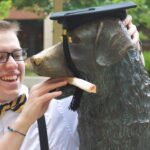
Header image: Zack Smedley ’17 celebrates graduation with True Grit. All photos provided by Smedley.
]]>
If you saw a senior engineering student sitting on a bench on Academic Row, furiously typing away on his laptop, you might assume he was working on a lab report or a capstone presentation. If that...
https://umbc.edu/stories/part-time-novelist-wins-new-york-times-praise/
https://beta.my.umbc.edu/api/v0/pixel/news/120045/guest@my.umbc.edu/215e68cc1c2dc4df70a3c5cf46ce9dc9/api/pixel
alumni
chemical-engineering
creative-writing
UMBC News & Magazine
https://beta.my.umbc.edu/groups/umbc-news-magazine
https://assets1-beta.my.umbc.edu/system/shared/avatars/groups/000/001/943/24435aa6207c452e7bc15cc74b42c7bb/xsmall.png?1748556657
https://assets1-beta.my.umbc.edu/system/shared/avatars/groups/000/001/943/24435aa6207c452e7bc15cc74b42c7bb/original.png?1748556657
https://assets2-beta.my.umbc.edu/system/shared/avatars/groups/000/001/943/24435aa6207c452e7bc15cc74b42c7bb/xxlarge.png?1748556657
https://assets2-beta.my.umbc.edu/system/shared/avatars/groups/000/001/943/24435aa6207c452e7bc15cc74b42c7bb/xlarge.png?1748556657
https://assets3-beta.my.umbc.edu/system/shared/avatars/groups/000/001/943/24435aa6207c452e7bc15cc74b42c7bb/large.png?1748556657
https://assets1-beta.my.umbc.edu/system/shared/avatars/groups/000/001/943/24435aa6207c452e7bc15cc74b42c7bb/medium.png?1748556657
https://assets2-beta.my.umbc.edu/system/shared/avatars/groups/000/001/943/24435aa6207c452e7bc15cc74b42c7bb/small.png?1748556657
https://assets1-beta.my.umbc.edu/system/shared/avatars/groups/000/001/943/24435aa6207c452e7bc15cc74b42c7bb/xsmall.png?1748556657
https://assets2-beta.my.umbc.edu/system/shared/avatars/groups/000/001/943/24435aa6207c452e7bc15cc74b42c7bb/xxsmall.png?1748556657
UMBC News & Magazine
0
0
false
Fri, 13 Sep 2019 19:33:53 -0400
Meet six Retrievers who went from internship to career success with UMBC Career Center support

Decades after the start of the internship boom, internships continue to be invaluable for both undergraduate and graduate students. As UMBC students demonstrate, gaining real-world experience and networking within an area of interest can have a lasting impact when it comes time to search for a full-time position.
“Most employers use internships as a recruiting tool to find their future full-time employees,” says Christine Routzahn, director of the Career Center. “Nearly 60 percent of our recent graduates who were employed at graduation indicated that they accepted full-time offers with an organization that they interned or worked for while at UMBC.”
These students were able to use the skills and tools they acquired as interns to transition to full-time positions after their UMBC graduation. Many took advantage of the opportunities afforded by UMBC’s Career Center to secure their positions. According to Susan Plitt, associate director of the UMBC Career Center, “Nearly 800 employers visited the UMBC campus last year to connect with our students. Each semester, we coordinate career and internship fairs to aid in making these connections.”
This year’s Fall Career and Internship Fair on September 25 will host 160 organizations, many of whom are seeking summer 2020 interns, from first-year undergraduates to advanced graduate students.
Here, six recent UMBC alumni share how they used campus resources and connections to secure full-time positions and move forward in their career, with advice for today’s UMBC students.
#1 Don’t worry if it doesn’t go according to plan
Jordyn McKenzie ‘19 thought she was coming to UMBC with it all figured out. She’d earn a degree in biology, then pursue a career in the field. A graduate of North Hagerstown High School in Maryland, McKenzie focused on taking STEM courses at UMBC, but over time she found her passion shifting.
After switching to a major in media and communication studies at the end of her first year, McKenzie wasted no time in working towards her new career goals. She completed three internships by the start of her senior year, including one with a local news station in her hometown.
 Jordyn McKenzie ‘19, media and communication studies, poses behind the news desk at Fox45.
“That experience provided me the knowledge and courage I needed to continue pursuing television,” says McKenzie. Then, when it came time to establish connections for her post-graduation career, she says,“I did what most UMBC students do in times of career-related problems—I turned to the Career Center.”
After polishing her resume and getting advice from the Career Center, McKenzie attended UMBC’s Fall Internship and Career Fair in 2018 and sought out WBFF Fox45. This meeting led to an internship with BMORE Lifestyle, a lifestyle show that’s part of the WBFF corporation. As McKenzie geared up to graduate in spring 2019, a production assistant position opened at Fox45—perfect timing for her next move.
McKenzie’s current position requires a cool head, strong communication skills, and the ability to wake up before sunrise without hitting the snooze button. The morning news show she works on runs from 4:30 to 10 a.m. throughout the week. McKenzie is charged with keeping anchors aware of upcoming camera shots, running the teleprompter, and communicating with the control room.
The Career Center was an enormous help to McKenzie as she prepared to make the transition from intern to employee. “The support I was given throughout the entire process was incredible, and I am so lucky to have had such a smooth transition,” she says.
 McKenzie walking the red carpet at the Chesapeake Bay Emmy Awards before Fox45 took home 22 Emmy awards.
In addition to receiving professional guidance from the Career Center, McKenzie also served as their social media intern, where she connected closely with her mentor Caroline Bodnar, assistant director for career development in the UMBC Career Center.
“Mentor, to me, doesn’t necessarily mean someone you work alongside or shadow. I think it’s someone you go to in times of need,” reflects McKenzie. “Caroline is someone that I leaned on throughout my time at UMBC. She helped me navigate my way through career and intern ups and downs and provided meaningful advice.”
 Baltimore County Executive Johnny Olszewski, Jr., Ph.D. ’17, public policy, snapped a photo with McKenzie before his morning segment.
“I’ve spent some time reflecting on my experiences as a Retriever. When I’m asked, ‘If you could do it all again, would you?,’ my answer is ‘yes’ every time,” McKenzie shares. “UMBC truly became a home to me.”
#2 Distinguish yourself by getting involved
Mamadou Diallo ‘19, mechanical engineering, took advantage of numerous professional organizations while at UMBC to help prepare himself for his future career. He was an active member of the National Society of Black Engineers, the American Society of Mechanical Engineers, and was a Mechanical Engineering S-STEM Scholar. When he began connecting with employers, this high level of involvement helped distinguish him among other candidates.
“My advice to other students is to be involved in extracurricular activities. After being hired [for my internship], I spoke with one of the recruiters as to why I was selected out of the many applicants. She replied that my involvement outside of the classroom were what stood out the most,” says Diallo.
To find this dream internship, Diallo didn’t have to go any farther than the Retriever Activity Center (RAC). At the annual Career Fair, he met with representatives from Regal Beloit and followed up through UMBCworks to secure his internship, which later led to a full-time engineering position.
 Mamadou Diallo ‘19, mechanical engineering, poses for a headshot.
As an engineering design and applications intern for a manufacturer of electric motors, Diallo worked to best meet the needs of customers. This included making recommendations to ensure pricing was fair and accurate, and tools continued to meet industry standards.
Diallo was able to boost workflow efficiencies at the company. Thanks to his strong track record as an intern, he was hired as a full-time application engineer prior to graduating from UMBC this past spring.
“UMBC was invaluable in helping me to secure my internship and career,” says Diallo. “The Career Center helped me work on my resume and practice my interviewing skills, and reverse interviews allowed me to interview alumni and learn so many valuable lessons from them.”
#3 Pursue your passions
A long way from her hometown of Albuquerque, New Mexico, Shannon Cole ‘18, biological sciences, works at the U.S. Food and Drug Administration (FDA) in Silver Spring, Maryland. As an Oak Ridge Institute for Science and Education (ORISE) fellow for the Center for Drug Evaluation and Research (CDER) Patient-Focused Drug Development (PFDD) program, she works to ensure that patients’ voices are heard throughout the processes of developing and evaluating medical products.
As a UMBC student, Cole had a strong interest in public health, which led to internships with the Red Cross, the Institute of Fluorescence, and the ORISE program at the FDA.
 Shannon Cole walks the halls of the FDA amidst historical advertisements through the years. Photo by Marlayna Demond ‘11.
While she was working to advance her career with multiple internships, Cole was also greatly involved at UMBC. She was a Sondheim Public Affairs Scholar, a member of the Honors College, a Global Brigades participant, and a mentor with the Refugee Youth Project’s College JUMP program, among others activities.
Cole took advantage of UMBCworks and the Career Fair to make connections and find internship and job opportunities. She also sought help from her professors and mentors.
“Jodi Kelber-Kaye, associate director of the UMBC Honors College, put me in touch with a contact from the FDA before I even knew about the ORISE internship,” explains Cole.
 Cole taking a break from her work at the FDA. Photo by Marlayna Demond ‘11.
This contact would later help Cole transition to her current position. Utilizing UMBC’s Career Center, she was able to confirm that her resume was polished and professional, and she was presenting the best version of herself in interviews.
“The people I was fortunate enough to interact with regularly gave me helpful advice and access to resources that ultimately allowed me to tie all of these experiences together,” says Cole.
#4 Take advantage of the Career Fair
When Erin Patrice ‘19 was deciding where to go to college, she chose to follow in her older brother’s footsteps. Well, more accurately, she decided to run in them.
Older brother Randolph graduated from UMBC in 2015 as a financial economics major and an accomplished sprinter. Patrice followed the same path with the same major and the same love of running. Patrice’s twin sister Kara also continued the family tradition, attending UMBC and pursuing biology while running.
Patrice feels her decision was an easy one, saying, “I chose UMBC because I wanted to attend a school that could create a strong base for me, academically and athletically, to build from.”
Just like Patrice knew what she wanted out of her college experience, she also knew what she was looking for in an internship. “When I started my internship search, I was looking for an experience that would allow me to collaborate with individuals my age, and provide me with an environment where I could constantly be tested,” she says.
 Erin Patrice ‘19, financial economics, at her Morgan Stanley job.
After networking at the Career and Internship Fair and uploading her resume through UMBCworks, Patrice secured a summer internship in fixed income derivative confirmation operations with Morgan Stanley. After completing the internship, Patrice was offered a full-time position as a trading operations analyst upon graduation.
Patrice credits the lessons she learned from both athletics and academics for her career success. “The skills I acquired while learning to handle athletics and the rigorous course load made my transition into working full-time very smooth,” says Patrice. “I was able to prioritize my duties easily and allocate my time efficiently.”
#5 Continue your work outside the classroom
As a computer science major, Chris Mills ‘19 figured out how to stand out from the crowd when vying for a position with one of the biggest names in technology: Google.
“I think what set me apart from other students (especially ones applying from big name schools such as MIT) was the amount of programming outside of class I did,” he explains. “HackUMBC played a large part in my practical proficiency, allowing me to create a product from scratch, to utilize other people’s libraries, and to work with other teammates on a singular project.”
Mills attended on-campus career fairs and spoke with recruiters on-site to find an internship that best suited his interests. His goal was to work in a well-established business in the technology industry with a strong work/life balance and positive workplace culture. He was offered a position as a software engineer intern at Google for summer 2017 and returned the following summer to continue his work.
 Chris Mills ‘19 working on his research for Google.
The coursework Mills completed while at UMBC benefited him greatly in his position at Google, he says. “In many of my required courses, the class lectures gave a good foundation of the theoretical knowledge, while the projects/homework showed practical applications that can and will be used in a software engineer’s career,” he explains.
Since Mills completed two Google internships, he was able to bypass the traditional interview process and start full-time at Google this past summer, immediately after graduation. Mills now works with the Google shopping team as a software engineer building solutions to reduce both latency and space of shopping data that is served to users.
#6 Build relationships with those around you
It was love at first sight when Priyanka Ranade ’18, M.S. ’19, information systems, joined the UMBC community.
“As soon as I stepped foot onto UMBC’s campus, I could see that it replicated the world I wished to see around me,” says Ranade. “The level of diversity, sense of community, as well as UMBC’s clear repertoire of grit and support showed me right away that this was the community I wanted to learn in.”
 Priyanka Rande ’18, M.S. ’19, information systems at Northrop Grumman.
Ranade found an incredibly strong support system in her campus mentors: Anupam Joshi, chair and professor of computer science and electrical engineering; Karuna Joshi, information systems; and Cindy Greenwood, assistant director of the Cyber Scholars program. Ranade actually discovered her internship through an on-campus event through the Center for Women in Technology, a partnership with the Cyber Scholars Program.
“I knew I wanted to learn about cybersecurity issues beyond the undergraduate classroom level,” she says. She actively sought out opportunities through networking, which led to an internship at Northrop Grumman. “Northrop Grumman gave me a big picture idea of cyber and allowed me to spend time in different parts of the company, as well as hear the experiences and journeys of other employees,” Ranade explains.
To prepare for her interview, Ranade had her resume reviewed by UMBC’s Career Center and took advantage of mock interview opportunities to be fully prepared. After a successful summer as a cyber strategy intern, Ranade’s manager recommended her to the Pathways Program, one of three rotational programs at Northrop Grumman.
 Ranade with mentor Lauren Mazzoli Zavala ‘15, computer science, M.S. ‘17, computer science. Photo by Marlayna Demond ‘11.
Ranade currently works in research and development doing machine learning work for military systems at Northrop Grumman. She credits the relationship-building skills she developed at UMBC for her success.
“Out of the many lessons UMBC has taught me, the most prominent one is the strong combination of sincerity in your work as well as fruitful relationships. Relationships are key in building your career,” says Ranade. “Sharpening your skills is one thing, but having mentors who see your potential and guide you to greater heights than you could imagine is key.”
Banner image: Shannon Cole at the U.S. Food and Drug Administration. Photo by Marlayna Demond ’11 for UMBC. All other photos supplied by alumni unless otherwise noted.
]]>
Decades after the start of the internship boom, internships continue to be invaluable for both undergraduate and graduate students. As UMBC students demonstrate, gaining real-world experience and...
https://umbc.edu/stories/meet-six-retrievers-who-went-from-internship-to-career-success-with-umbc-career-center-support/
https://beta.my.umbc.edu/api/v0/pixel/news/120046/guest@my.umbc.edu/272f7bbf263d027250a1c367374b8964/api/pixel
alumni
biology
cahss
careercenter
cnms
coeit
community
csee
cyberscholars
cybersecurity
economics
honorscollege
meche
page1
sondheimscholars
undergradresearch
UMBC News & Magazine
https://beta.my.umbc.edu/groups/umbc-news-magazine
https://assets1-beta.my.umbc.edu/system/shared/avatars/groups/000/001/943/24435aa6207c452e7bc15cc74b42c7bb/xsmall.png?1748556657
https://assets1-beta.my.umbc.edu/system/shared/avatars/groups/000/001/943/24435aa6207c452e7bc15cc74b42c7bb/original.png?1748556657
https://assets2-beta.my.umbc.edu/system/shared/avatars/groups/000/001/943/24435aa6207c452e7bc15cc74b42c7bb/xxlarge.png?1748556657
https://assets2-beta.my.umbc.edu/system/shared/avatars/groups/000/001/943/24435aa6207c452e7bc15cc74b42c7bb/xlarge.png?1748556657
https://assets3-beta.my.umbc.edu/system/shared/avatars/groups/000/001/943/24435aa6207c452e7bc15cc74b42c7bb/large.png?1748556657
https://assets1-beta.my.umbc.edu/system/shared/avatars/groups/000/001/943/24435aa6207c452e7bc15cc74b42c7bb/medium.png?1748556657
https://assets2-beta.my.umbc.edu/system/shared/avatars/groups/000/001/943/24435aa6207c452e7bc15cc74b42c7bb/small.png?1748556657
https://assets1-beta.my.umbc.edu/system/shared/avatars/groups/000/001/943/24435aa6207c452e7bc15cc74b42c7bb/xsmall.png?1748556657
https://assets2-beta.my.umbc.edu/system/shared/avatars/groups/000/001/943/24435aa6207c452e7bc15cc74b42c7bb/xxsmall.png?1748556657
UMBC News & Magazine
0
0
false
Fri, 13 Sep 2019 15:16:33 -0400
UMBC’s Sander Goossens determines structure of Mercury’s core as part of NASA team

UMBC’s Sander Goossens designed and implemented code that’s helping NASA scientists better understand the evolution of planets, starting with Mercury.
He’s part of a research team applying sophisticated new computer programs to data collected by NASA’s MESSENGER mission, which orbited Mercury between 2011 and 2015. They’ve “put together a self-consistent model of the interior of Mercury,” including its inner core, outer core, mantle, and other layers, explains Goossens, associate research scientist at UMBC’s Center for Space Science and Technology.
The study initially sought to confirm scientists’ understanding of Mercury’s gravity and spin. Instruments on the MESSENGER satellite detected variations in the planet’s density as they passed over its surface, to better understand its gravity. By tracking MESSENGER’s location compared to the planet’s surface, the scientists were also able to precisely locate its poles, which determine the axis along which the planet rotates.
Instruments on Earth had suggested measurements for Mercury’s spin state—the combination of how long it takes the planet to rotate on its axis (how long each day is on the planet), and the orientation of that axis. The Earth-based measurements confirmed that the relationship between Mercury’s angles of rotation and orbit were very close to an equilibrium state, but couldn’t say for sure if the planet’s spin was exactly in equilbrium. So when Goossens and his team’s new analysis of the MESSENGER data showed that the planet is exactly in the equilibrium state, “We thought, ‘Wow, this is really good!'”, Goossens says. “To be able to confirm it really is in that state was pretty exciting.”
Taking it further
Confirming Mercury’s spin and gravity opened up an opportunity to take the study to the next level. Goossens says that the team decided to “interpret the data to see if there was anything we could say about the planet’s deep interior that people hadn’t been able to say before, because the measurements weren’t good enough.”
To do that, Goossens had to design new code to analyze the data in a fresh way and get at the underlying core structure of Mercury. The team was particularly curious to know how much molten metal was in the planet’s core, which contributes to its magnetic field and influences how it spins.
“We had to use information from different disciplines to do this, then put that all together into a computer program,” Goossens explains.
Before this study, scientists already knew that Mercury’s core occupied 85 percent of the planet’s total volume, and that the core was at least partly molten metal, as opposed to solid. The new analysis determined that the core was about 52 percent solid. Earth’s core is only about one-third solid.
 A representation of Mercury’s layers. Credit: NASA Goddard Space Flight Center
Data makes the difference
Learning more about Mercury “gives you a clue about the evolution of the planet,” Goossens says. Much of the study of outer space is limited by the data we are able to collect on planets, other bodies, and events that happen extraordinarily far from Earth. So adding just one more set of observations can powerfully inform future work.
This project is also special to Goossens because of his connection to MESSENGER. He joined the NASA team in 2011, just as the MESSENGER mission was embarking on its journey to Mercury. “We have a long history of working with the MESSENGER data,” he says.
Goossens is now excited for future work that builds on previous research and takes advantage of the new findings and the new code. For example, the method has been applied to Mars before, and in fact some of the efforts of Goossens’ team were based on that work. Now, Goossens would love to see the method applied to new, more accurate Mars data coming in from the InSight lander, a mission currently on the surface of Mars.
“Getting clues to Mercury’s structure will help people modeling the evolution of planets,” Goossens says. “It will give them better constraints to test their models and see what kind of predictions they can now make.”
Banner image: An artist’s depiction of the MESSENGER spacecraft approaching Mercury. Credit: NASA.
]]>
UMBC’s Sander Goossens designed and implemented code that’s helping NASA scientists better understand the evolution of planets, starting with Mercury. He’s part of a research team applying...
https://umbc.edu/stories/umbcs-sander-goossens-determines-structure-of-mercurys-core-as-part-of-nasa-team/
https://beta.my.umbc.edu/api/v0/pixel/news/120047/guest@my.umbc.edu/15cf30d7c247fde17653a8f0689e781f/api/pixel
csst
research
science-and-technology
UMBC News & Magazine
https://beta.my.umbc.edu/groups/umbc-news-magazine
https://assets1-beta.my.umbc.edu/system/shared/avatars/groups/000/001/943/24435aa6207c452e7bc15cc74b42c7bb/xsmall.png?1748556657
https://assets1-beta.my.umbc.edu/system/shared/avatars/groups/000/001/943/24435aa6207c452e7bc15cc74b42c7bb/original.png?1748556657
https://assets2-beta.my.umbc.edu/system/shared/avatars/groups/000/001/943/24435aa6207c452e7bc15cc74b42c7bb/xxlarge.png?1748556657
https://assets2-beta.my.umbc.edu/system/shared/avatars/groups/000/001/943/24435aa6207c452e7bc15cc74b42c7bb/xlarge.png?1748556657
https://assets3-beta.my.umbc.edu/system/shared/avatars/groups/000/001/943/24435aa6207c452e7bc15cc74b42c7bb/large.png?1748556657
https://assets1-beta.my.umbc.edu/system/shared/avatars/groups/000/001/943/24435aa6207c452e7bc15cc74b42c7bb/medium.png?1748556657
https://assets2-beta.my.umbc.edu/system/shared/avatars/groups/000/001/943/24435aa6207c452e7bc15cc74b42c7bb/small.png?1748556657
https://assets1-beta.my.umbc.edu/system/shared/avatars/groups/000/001/943/24435aa6207c452e7bc15cc74b42c7bb/xsmall.png?1748556657
https://assets2-beta.my.umbc.edu/system/shared/avatars/groups/000/001/943/24435aa6207c452e7bc15cc74b42c7bb/xxsmall.png?1748556657
UMBC News & Magazine
0
0
false
Thu, 12 Sep 2019 19:15:10 -0400


