3 Global Conditions—and a Map—for Saving Nature and Using it Wisely

By Erle C. Ellis, professor of geography and environmental systems, UMBC, and James Watson, professor, The University of Queensland
Nature urgently needs our help. Wild creatures, from songbirds to butterflies and from primates to tortoises, are disappearing so rapidly that they could be lost forever together with the wild forests, grasslands and other habitats that long sustained them. We humans already use nearly half of all Earth’s land to sustain ourselves, and the most productive parts at that. Meanwhile, the habitats remaining for the rest of life are shrinking to levels too low to sustain themselves.
To ensure a future in which humanity thrives together with the rest of nature, people around the world will need to work together like never before.
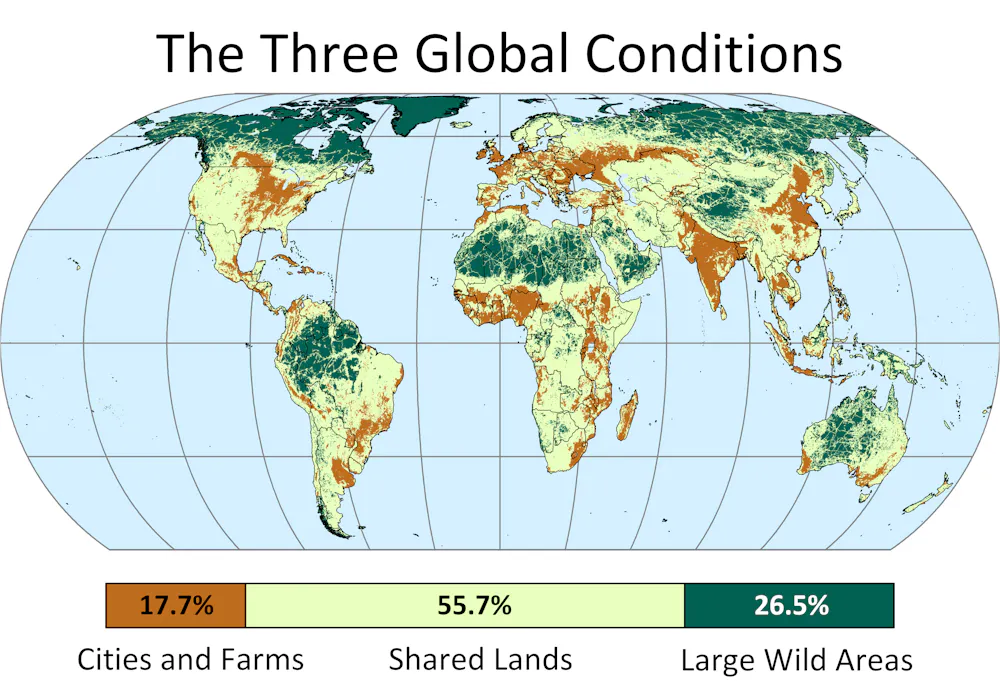
To help make this happen, our team of scientists and conservation experts have developed a new world map highlighting three conditions of landscapes across the planet that will need to be approached differently if we are to succeed in conserving biodiversity globally. These conditions are cities and farms, large wild areas and shared lands.
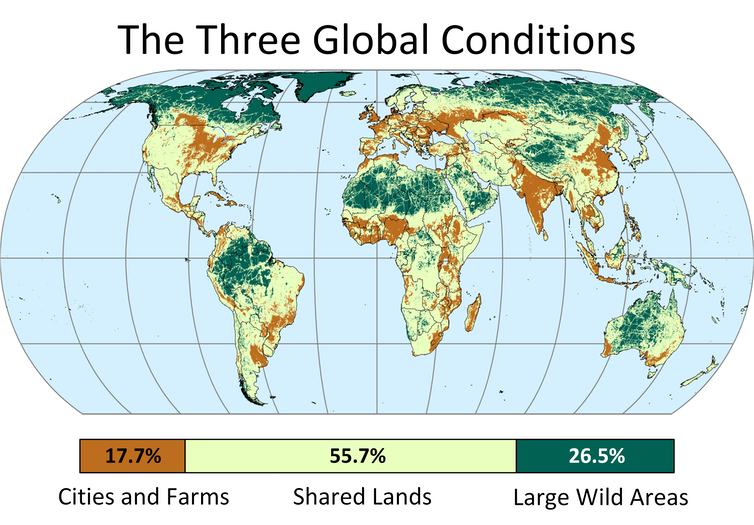 Cities and Farms are more than half covered by intensive agriculture and cities, Large Wild Areas are scarcely altered, and Shared Lands have a level of use somewhere in between. Each landscape condition requires a different conservation strategy. Harvey Locke et al. (2019), CC BY-ND
In a commentary accompanying our map, we argue that for too long, efforts to conserve nature globally have acted as if this entire planet is equally influenced by the human world. Yet different landscapes differ profoundly in how they are used and influenced by people, demanding different strategies to conserve biodiversity. Our map aims to clarify these conditions to enable people to work together to conserve biodiversity more fairly and equitably.
Biodiversity is our natural heritage
The extraordinary richness of life we’ve inherited is an irreplaceable treasure that makes the world an immeasurably better place for people. Biodiversity underpins many of the ecological functions that sustain us, from healthy soils to a stable climate, and provides a wide variety of benefits to human health – mental and physical.
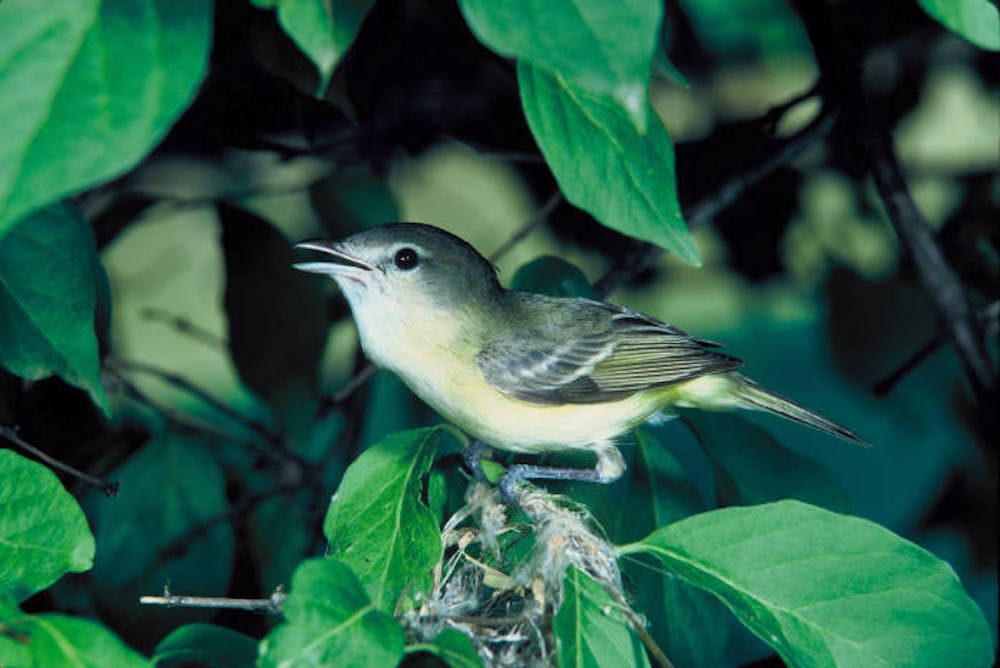
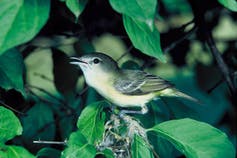 An endangered Bell’s vireo. Steve Maslowski/US Fish & Wildlife Service, CC BY
Yet the ultimate value of our biodiverse natural heritage is beyond any economic measure. Wild nature is our lifeblood and our heritage, connecting us with each other and the rest of life on this planet.
The good news is that people have already begun to rise to the challenge. For example, international commitments now aim to protect 17% of Earth’s land. But it is widely agreed that these and other existing conservation efforts are not nearly strong enough to halt nature’s decline.
In October 2020, nations working together through the global Convention on Biological Diversity will meet in Kunming, China to negotiate more ambitious international targets for conserving nature across the planet. One of the bolder proposals is to develop international commitments to officially protect 30% of Earth’s land area by 2030, and 50% by 2050.
But for any bold conservation agenda to succeed, an unprecedented level of international commitment will be needed. Perhaps the greatest obstacle is the many profound differences in social, economic and natural conditions that persist around the world. Some nations remain rich in unprotected biodiversity and wild habitats but are much less developed economically. Some are the opposite.
So how can such different nations and regions join together to make shared commitments and investments to save nature across this entire planet?
Three conditions for conserving nature
The first step is to build a basic consensus that conserving biodiversity can benefit all people, as long we share the efforts fairly at every level, from backyards to biosphere reserves, and across every social, economic and natural context, from the densest of cities to the most remote wild areas. To succeed, strategies need to be suited to the many different types of landscapes to conserve.
 Buffalo grazing near Denver, Colorado, in Rocky Mountain Arsenal National Wildlife Refuge. Mark Byzewski, CC BY
Let’s start with the parts of the world where most of us live and most of our food comes from – the cities and farmlands that take up 18% of Earth’s land surface. These are not just full of people, crops and livestock, but also include some of the densest concentrations of vertebrate diversity on Earth, including many imperiled species of mammals and birds.
In these parts of the world, there needs to be widespread adoption of wildlife-friendly farming practices. Remnant and recovering habitats must be conserved within farmlands and agrichemical production reduced, even while increasing agricultural production. And even in the densest of cities, interconnecting small areas of protected habitat, such as parks and nature reserve networks, can successfully sustain some populations of highly endangered species. In the Indian city of Mumbai, for example, a national park conserves leopards.
 A bridge for wildlife in Banff National Park in Canada, one way to enhance biodiversity in protect lands. David Fulmer, CC BY
Large wild areas, where human influences are lowest, including large parts of Amazonia and Canadian boreal forests, still cover about a quarter of Earth’s land. Here, an emphasis on large-scale protection, such as the Five Great Forests Initiative in Central America, will be the most effective strategy. To avoid damaging the last of Earth’s unaltered ecosystems, new infrastructure and land uses, including mining, should be limited as much as possible. Recognizing indigenous people’s rights to land, so they can conserve their own lands, can also be highly effective; a large proportion of large wild areas are indigenous-owned and managed lands.
Perhaps the greatest conservation opportunities of all may reside within the most common condition of Earth’s land today – shared landscapes. Though parts of these working landscapes are still used intensively for agriculture and settlements, most of their area is composed of remnant and recovering habitats and areas lightly used for extensive grazing and forestry.
 Maasai in Tanzania work on shared lands. jjmusgrove, CC BY
Conservation in shared lands can include regional protected area networks, such as the Yellowstone to Yukon Conservation Initiative, community conservation reserves, and conservation-friendly farms and cities that prioritize the needs of local people. For example, the Lewa community conservancy in Kenya, which protects habitat for endangered black rhinos, includes programs to assist local farmers to maximize their production while minimizing any negative impacts to protected habitats.
Shared lands are also home to almost half of Earth’s indigenous sovereign lands, another reason why expanding and empowering indigenous land sovereignty is considered essential to global efforts to expand conservation.
Doing your part to save nature
Distant wildlands are critical habitat for so many species, but effective conservation also depends on efforts in our own neighborhoods and the regions where our food comes from.
Think of nature when making new friends, caring for family, shopping, working, casting your vote, or donating your time or money to make the world a better place. The challenges ahead are not small, but working together across our farms and cities, shared landscapes, and large wild areas, we can make the nature of our planet whole and healthy again.
*****
Header image: The Snake River in Idaho is an area of ‘critical environmental concern.’ U.S. Bureau of Land Management, CC BY-SA
Contributors to the creation of the Three Conditions map include Harvey Locke of the International Union for Conservation of Nature World Commission on Protected Areas, Oscar Venter of University of Northern British Columbia, Richard Schuster of Carleton University, Keping Ma of the Chinese Academy of Sciences, Xiaoli Shen of the Chinese Academy of Sciences, Stephen Woodley, IUCN World Commission on Protected Areas, Naomi Kingston and Nina Bhola of the UN Environment Programme World Conservation Monitoring Centre, Bernardo B. N. Strassburg of the Pontifícia Universidade Católica and International Institute for Sustainability in Brazil, Axel Paulsch of the Institute for Biodiversity in Regensburg, Germany and Brooke Williams, University of Queensland.
 Erle Ellis is a member of the American Association of Geographers. The association is a funding partner of The Conversation US.
Erle C. Ellis, Professor of Geography and Environmental Systems, University of Maryland, Baltimore County and James Watson, Professor, The University of Queensland
This article is republished from The Conversation under a Creative Commons license. Read the original article.
]]>
By Erle C. Ellis, professor of geography and environmental systems, UMBC, and James Watson, professor, The University of Queensland Nature urgently needs our help. Wild creatures, from songbirds...
https://umbc.edu/stories/3-global-conditions%e2%81%a0-and-a-map%e2%81%a0-for-saving-nature-and-using-it-wisely/
https://beta.my.umbc.edu/api/v0/pixel/news/120025/guest@my.umbc.edu/bc72ab50576ff2c852f85400ea3fa764/api/pixel
cahss
erle-ellis
ges
perspectives
the-conversation
UMBC News & Magazine
https://beta.my.umbc.edu/groups/umbc-news-magazine
https://assets1-beta.my.umbc.edu/system/shared/avatars/groups/000/001/943/24435aa6207c452e7bc15cc74b42c7bb/xsmall.png?1748556657
https://assets1-beta.my.umbc.edu/system/shared/avatars/groups/000/001/943/24435aa6207c452e7bc15cc74b42c7bb/original.png?1748556657
https://assets2-beta.my.umbc.edu/system/shared/avatars/groups/000/001/943/24435aa6207c452e7bc15cc74b42c7bb/xxlarge.png?1748556657
https://assets2-beta.my.umbc.edu/system/shared/avatars/groups/000/001/943/24435aa6207c452e7bc15cc74b42c7bb/xlarge.png?1748556657
https://assets3-beta.my.umbc.edu/system/shared/avatars/groups/000/001/943/24435aa6207c452e7bc15cc74b42c7bb/large.png?1748556657
https://assets1-beta.my.umbc.edu/system/shared/avatars/groups/000/001/943/24435aa6207c452e7bc15cc74b42c7bb/medium.png?1748556657
https://assets2-beta.my.umbc.edu/system/shared/avatars/groups/000/001/943/24435aa6207c452e7bc15cc74b42c7bb/small.png?1748556657
https://assets1-beta.my.umbc.edu/system/shared/avatars/groups/000/001/943/24435aa6207c452e7bc15cc74b42c7bb/xsmall.png?1748556657
https://assets2-beta.my.umbc.edu/system/shared/avatars/groups/000/001/943/24435aa6207c452e7bc15cc74b42c7bb/xxsmall.png?1748556657
UMBC News & Magazine
0
0
false
Fri, 25 Oct 2019 17:56:42 -0400
UMBC’s Livewire new music festival celebrates its 10th anniversary
From October 24 through 27, UMBC’s department of music celebrates the tenth anniversary of its fall Livewire festival, an annual event that explores the classical music of our time through concerts, lecture-recitals, paper presentations, multimedia installations, and conversation.
This year’s festival, Livewire 10: Rewind / Fast Forward, features guest composers Mercedes Otero and Mischa Salkind-Pearl, who earned a post-baccalaureate certificate in contemporary American music at UMBC in 2007. Public performances will feature the Inscape Chamber Orchestra, the Third Practice ensemble, sopranos Susan Botti and Tony Arnold, clarinetist Gleb Kasenevich, the Ruckus faculty ensemble, and UMBC students.
 The Microkingdom ensemble performs in the Music Box during the 2016 Livewire festival.
During its ten years, including events this forthcoming weekend, Livewire has presented works by hundreds of composers and has featured dozens of leading new music performers from around the world. Additionally, the festival has attained statistics that position it as a leading national voice in new music:
- 426 compositions
- 36 world premieres
- 4 United States premieres
- 73 electro-acoustic works
- 250 chamber pieces
- 87 solo (unaccompanied) works
- 16 electronic compositions
“Ten years of the Livewire festival speak to the commitment of UMBC and the music department here to embracing the ever-changing present while we continue to teach the past,” says Linda Dusman, chair of the department. “The liveliness of engagement of our students and faculty at this time of year has become a verb: we all are livewired at the end of October!”
 Violinist Malcolm Goldstein was a previous composer-performer in residence.
While many college and university music programs across the country focus primarily on the music of the 17th, 18th and 19th centuries, faculty at UMBC have embraced the exploration of the music of the 20th and 21st centuries. UMBC’s faculty have been advocates of new music for decades, stretching well beyond the inaugural Livewire festival in 2010.
“Before Mobtown Modern hit the scene or the Evolution Contemporary Music Series evolved,” critic Tim Smith noted in The Baltimore Sun during a previous Livewire, “Baltimore-area fans of new sounds could get an earful at the University of Maryland, Baltimore County, where the music department continues to champion adventurous repertoire.”
For Livewire’s 10th anniversary, major financial support was provided by the Center for Innovation, Research, and Creativity in the Arts (CIRCA), with additional funding from the College of Arts, Humanities and Social Sciences and the Office of the Provost.
A complete schedule for Livewire 10: Rewind / Fast Forward can be found on the Arts and Culture Calendar.
 At a previous Livewire festival, guest pianist Paul Hoffman joined UMBC’s Lisa Cella and Tom Goldstein in a performance of music by Morton Feldman.
Featured image: Members of the Ruckus ensemble perform in 2016. Photos by Marlayna Demond ’11 for UMBC.
]]>
From October 24 through 27, UMBC’s department of music celebrates the tenth anniversary of its fall Livewire festival, an annual event that explores the classical music of our time through...
https://umbc.edu/stories/umbcs-livewire-new-music-festival-celebrates-its-10th-anniversary/
https://beta.my.umbc.edu/api/v0/pixel/news/120026/guest@my.umbc.edu/20c5124ac11499155e4331f0e813305e/api/pixel
arts
arts-and-culture
cahss
livewire
music
UMBC News & Magazine
https://beta.my.umbc.edu/groups/umbc-news-magazine
https://assets1-beta.my.umbc.edu/system/shared/avatars/groups/000/001/943/24435aa6207c452e7bc15cc74b42c7bb/xsmall.png?1748556657
https://assets1-beta.my.umbc.edu/system/shared/avatars/groups/000/001/943/24435aa6207c452e7bc15cc74b42c7bb/original.png?1748556657
https://assets2-beta.my.umbc.edu/system/shared/avatars/groups/000/001/943/24435aa6207c452e7bc15cc74b42c7bb/xxlarge.png?1748556657
https://assets2-beta.my.umbc.edu/system/shared/avatars/groups/000/001/943/24435aa6207c452e7bc15cc74b42c7bb/xlarge.png?1748556657
https://assets3-beta.my.umbc.edu/system/shared/avatars/groups/000/001/943/24435aa6207c452e7bc15cc74b42c7bb/large.png?1748556657
https://assets1-beta.my.umbc.edu/system/shared/avatars/groups/000/001/943/24435aa6207c452e7bc15cc74b42c7bb/medium.png?1748556657
https://assets2-beta.my.umbc.edu/system/shared/avatars/groups/000/001/943/24435aa6207c452e7bc15cc74b42c7bb/small.png?1748556657
https://assets1-beta.my.umbc.edu/system/shared/avatars/groups/000/001/943/24435aa6207c452e7bc15cc74b42c7bb/xsmall.png?1748556657
https://assets2-beta.my.umbc.edu/system/shared/avatars/groups/000/001/943/24435aa6207c452e7bc15cc74b42c7bb/xxsmall.png?1748556657
UMBC News & Magazine
0
0
false
Wed, 23 Oct 2019 20:52:20 -0400
In Baltimore Revisited, UMBC and community authors reflect on the city’s history of inequality and resistance

UMBC’s Nicole King, American studies, and Kate Drabinski, gender, women’s, and sexuality studies, have published Baltimore Revisited. The anthology, edited with the University of Baltimore’s Joshua Clark Davis, reflects the complex history of Charm City and efforts currently underway to address the city’s pervasive inequalities. These issues continue to resonate with Baltimore residents almost five years after the death of Freddie Gray and the Baltimore Uprising that followed.
 (L to R) King, Davis, and Drabinski at the Baltimore Revisited launch. Photo by Dinah Winnick.
“Many issues in our city are the result of long histories, whether it’s about the history of policing, environmental justice, vacancy, redlining, or gentrification,” shares Davis. “The roots of these issues are much deeper than a lot of us are aware of. History is not about dusty things in the past. It has usefulness today.”
Baltimore Revisited is a compilation of perspectives from activists, artists, community members, and academics, including several from UMBC. It is also accompanied by a website, Baltimorerevisited.org, for the community to access more information about the project and related events.
“We hope the book raises questions about how history can inform the present to understand the roots of the city’s many inequalities,” says Drabinski. “We wish readers to imagine new ways of being in and organizing for Baltimore in the future.”
Community focus
King and Drabinski, trained as interdisciplinary scholars, are long-time collaborators. The inspiration for Baltimore Revisited came a few years ago when they taught a Humanities Scholar seminar at UMBC. During a labor history walking tour with the class, they realized the content of the tour did not sufficiently incorporate gender, sexuality, race, ethnicity, and other points of view to give a holistic picture of Baltimore.
King and Drabinski recognized the need for an updated history of Baltimore, written by and for scholars and community members alike, so they took up the task. “We wanted our work to reach beyond the academy because these histories belong to everyone,” shares Drabinski. “We hope readers can find pieces that speak to them.”
 Nicole King opening the Baltimore Revisited launch.
The book reflects a wide range of methodological approaches to keep up with changes in the fields of history and American studies. The five sections cover a wide range of topics from the Jim Crow era to the present. They include: Place and Power: Roots of (In)Justice in the City; Histories of Contestation and Activism in a Legacy City; Voices from Here: Listening to the Past; Surviving in the Neoliberal City: Redevelopment in Baltimore; and Democratizing the Archives.
The book’s contributors approached these themes through writing in several different formats, such as interviews, analysis of archival research, poetry, and essays. The breadth and diversity of material in the book makes it accessible and useful for a range of audiences. Baltimore Revisited is already being applied at UMBC in media and communication studies and American studies courses.
UMBC perspectives
The authors and supportive community members recently gathered at Red Emma’s restaurant and bookstore in Baltimore City to celebrate the book’s launch. Some read excerpts from the book and others shared reflections. Of the many book contributors, several are from UMBC.
Shawntay Stocks Ph.D. ‘19, language, literacy, and culture, read two poems at the book launch event, including “Placed Love,” which appears at the very start of the book. Ashley Minner, American studies, also spoke at the event, about the chapter she contributed on her Lumbee community in Baltimore’s Fells Point neighborhood.
 Stocks doing a poetry reading at the Baltimore Revisited launch. Photo by Dinah Winnick.
Additional UMBC contributors include Denise Meringolo, history, who shared her public archive project to preserve the Baltimore Uprising. Joe Tropea ’06, history, and M.A. ’08, historical studies, explored censorship by Maryland’s Board of Motion Pictures. April Householder, visual and performing arts, and M.A. ‘00, comparative literature, and Jodi Kelber-Kaye wrote about Baltimore’s socialist feminists, with coauthor Elizabeth Morrow Nix. Householder is director of undergraduate research and prestigious scholarships at UMBC and Kelber-Kaye serves as associate director of the Honors College. And Michael Casiano, American studies, wrote about criminalizing Black neighborhoods in Baltimore during the Jim Crow era.
Public humanities
 While King and Drabinski worked to include a broad range of voices in a way not often seen in academic volumes, they also note that this is just the beginning. “There are many change agents in Baltimore whose voices need to be heard and many histories that have yet to be documented,” says Drabinski, who also co-authored a chapter with Louise Parker Kelley on Baltimore’s LGBTQ community.
Supporting the collection and sharing of research by and for the communities Baltimore represents is an essential aspect of King and Drabinski’s work and the book. “We can not forget the public in public humanities,” shares King, who also wrote a chapter about development in Baltimore.
During the launch event, the editors emphasized the importance of public-serving institutions, particularly public libraries. “Without institutions like the public library, these histories would not have as much of an opportunity to reach the communities they represent,” said King. With this in mind, the editors are donating all proceeds of the book to the Enoch Pratt Free Library, which they note remained open for city residents during the Baltimore Uprising.
Ultimately, says Drabinski, “The book comes from our love of Baltimore, a city both of us now call home.”
Banner image: Stocks doing a poetry reading at the Baltimore Revisited launch. Photo by Dinah Winnick.
]]>
UMBC’s Nicole King, American studies, and Kate Drabinski, gender, women’s, and sexuality studies, have published Baltimore Revisited. The anthology, edited with the University of Baltimore’s...
https://umbc.edu/stories/in-baltimore-revisited-umbc-and-community-authors-reflect-on-the-citys-history-of-inequality-and-resistance/
https://beta.my.umbc.edu/api/v0/pixel/news/120027/guest@my.umbc.edu/10c90913995b01ae1cdba9fdb7166d17/api/pixel
alumni
americanstudies
cahss
gwst
history
honorscollege
policy-and-society
UMBC News & Magazine
https://beta.my.umbc.edu/groups/umbc-news-magazine
https://assets1-beta.my.umbc.edu/system/shared/avatars/groups/000/001/943/24435aa6207c452e7bc15cc74b42c7bb/xsmall.png?1748556657
https://assets1-beta.my.umbc.edu/system/shared/avatars/groups/000/001/943/24435aa6207c452e7bc15cc74b42c7bb/original.png?1748556657
https://assets2-beta.my.umbc.edu/system/shared/avatars/groups/000/001/943/24435aa6207c452e7bc15cc74b42c7bb/xxlarge.png?1748556657
https://assets2-beta.my.umbc.edu/system/shared/avatars/groups/000/001/943/24435aa6207c452e7bc15cc74b42c7bb/xlarge.png?1748556657
https://assets3-beta.my.umbc.edu/system/shared/avatars/groups/000/001/943/24435aa6207c452e7bc15cc74b42c7bb/large.png?1748556657
https://assets1-beta.my.umbc.edu/system/shared/avatars/groups/000/001/943/24435aa6207c452e7bc15cc74b42c7bb/medium.png?1748556657
https://assets2-beta.my.umbc.edu/system/shared/avatars/groups/000/001/943/24435aa6207c452e7bc15cc74b42c7bb/small.png?1748556657
https://assets1-beta.my.umbc.edu/system/shared/avatars/groups/000/001/943/24435aa6207c452e7bc15cc74b42c7bb/xsmall.png?1748556657
https://assets2-beta.my.umbc.edu/system/shared/avatars/groups/000/001/943/24435aa6207c452e7bc15cc74b42c7bb/xxsmall.png?1748556657
UMBC News & Magazine
0
0
false
Tue, 22 Oct 2019 16:31:17 -0400
UMBC supports emerging higher ed leaders through ACE Fellows program

One of the pillars of UMBC is a commitment to supporting emerging leaders from all backgrounds and across all disciplines. This includes supporting the growth of diverse university faculty and administrators on their path to top-level leadership positions, particularly through the American Council on Education (ACE) Fellows program.
The ACE Fellows Program has provided intensive professional development opportunities to 2,000 higher education leaders nationwide. UMBC has played a key role in this work, serving as a welcoming community and source of mentorship for leaders from other universities, and nominating UMBC leaders to pursue training opportunities at universities across the country.
The newest ACE Fellow to arrive on campus is a two-time UMBC alumna who is now shadowing UMBC leaders, including President Freeman Hrabowski, Provost Philip Rous, and Candace Dodson-Reed ‘96, English, chief of staff in the President’s Office, for the year.
A Retriever returns to explore something new
Kate Tracy M.A. ‘01, Ph.D. ‘03, psychology, was one of 39 people from across the country to be named ACE Fellows for the 2019-2020 academic year. Tracy is a professor of epidemiology and public health at the University of Maryland School of Medicine.
A core aspect of the ACE Fellowship program is that fellows spend time at a host campus learning from the host president, provost, and senior leadership team. Tracy knew early in the application process that she would love to return to her alma mater if she was selected as a fellow. When she learned she would spend the year at UMBC, she says, “I was ecstatic.”
She explains that she has been inspired to work alongside President Hrabowski by his powerful personal story, his tremendous track record of effective leadership, and his reputation as an innovator in higher education. “Dr. Hrabowski is an example of how your story informs your leadership,” she says. “This is an opportunity in my professional career where I will have mentorship from someone who is internationally known and respected for his leadership and transformative accomplishments at UMBC.”
Tracy’s research focuses on health disparities, specifically cervical cancer prevention in underserved groups of women. She has spent time in sub-Saharan Africa working with communities, public health officials, and health professionals to develop approaches to cervical cancer screening that would be locally sustainable.
Through her work, Tracy helped create a program that provided Gardasil vaccines to about 11,000 girls in Mali. The challenge, Tracy explained, is that the Gardasil vaccine is administered in three doses. This means medical staff administering vaccines must connect with each patient three times in order to make sure they receive the full vaccine series. She recognized the cross-cultural communication and logistical challenges involved, and saw careful preparation and close collaboration with the local community as critical to the vaccination program’s success.
With experiences like this on her mind, Tracy was excited to return to UMBC for her ACE Fellowship. “Something that’s often overlooked is that education and health are closely linked. Those with more education live healthier and longer lives. Under President Hrabowski’s leadership, UMBC is not only positively influencing equity in education, but in long-term health and well-being of its students,” she says.
“As a health disparities and equity researcher,” Tracy shares, “I am excited about being an ACE Fellow at UMBC because it opens opportunities to address health equity through leadership in the higher education space.”
Supporting UMBC faculty and administrators
Several UMBC faculty have been ACE Fellows in recent years, including one faculty member selected for the 2019-2020 ACE Fellows class. Tyson King-Meadows, associate professor of political science, Humanities and Social Sciences (CAHSS) is spending the year in the Provost’s Office at Case Western Reserve University. He is focusing on learning more about strategic planning, research infrastructure, faculty development, and external partnership development.
Additional recent ACE Fellows from UMBC include Sarah Shin, professor of education and associate provost for academic initiatives, and Anne Brodsky, professor and chair of psychology.
Two other recent UMBC ACE Fellows have advanced to senior leadership roles at other universities, taking with them UMBC values and experiences. Marie desJardins, former professor of computer science and associate dean for academic affairs in UMBC’s College of Engineering and Information Technology (COEIT), now serves as dean of the College of Organizational, Computational, and Information Sciences at Simmons College. Julie Ross, former dean of COEIT, is now the dean of the College of Engineering at Virginia Tech and the first woman to serve in this role.
“The ACE Fellowship Program provides invaluable opportunities for aspiring leaders to learn from some of the nation’s best leaders and their teams. It is one of the most comprehensive and successful leadership development programs available in higher education with 80% of fellows serving as chief academic officers, other cabinet level positions, deans, or presidents,” explains Tracy.
She shares, “I am deeply grateful to President Hrabowski, Provost Rous, the senior leadership team, and the UMBC students, staff, and faculty who have welcomed me to campus for the year, and are supporting my continued development as a proud UMBC alumna and a leader in higher education.”
Banner image: Candace Dodson-Reed (left), and Kate Tracy. Photo by Marlayna Demond ’11 for UMBC.
]]>
One of the pillars of UMBC is a commitment to supporting emerging leaders from all backgrounds and across all disciplines. This includes supporting the growth of diverse university faculty and...
https://umbc.edu/stories/umbc-supports-emerging-higher-ed-leaders-through-ace-fellows-program/
https://beta.my.umbc.edu/api/v0/pixel/news/120028/guest@my.umbc.edu/edad84a1cd8beb359990c4bca36b52ac/api/pixel
alumni
cahss
community
hrabowski
majoraward
politicalscience
UMBC News & Magazine
https://beta.my.umbc.edu/groups/umbc-news-magazine
https://assets1-beta.my.umbc.edu/system/shared/avatars/groups/000/001/943/24435aa6207c452e7bc15cc74b42c7bb/xsmall.png?1748556657
https://assets1-beta.my.umbc.edu/system/shared/avatars/groups/000/001/943/24435aa6207c452e7bc15cc74b42c7bb/original.png?1748556657
https://assets2-beta.my.umbc.edu/system/shared/avatars/groups/000/001/943/24435aa6207c452e7bc15cc74b42c7bb/xxlarge.png?1748556657
https://assets2-beta.my.umbc.edu/system/shared/avatars/groups/000/001/943/24435aa6207c452e7bc15cc74b42c7bb/xlarge.png?1748556657
https://assets3-beta.my.umbc.edu/system/shared/avatars/groups/000/001/943/24435aa6207c452e7bc15cc74b42c7bb/large.png?1748556657
https://assets1-beta.my.umbc.edu/system/shared/avatars/groups/000/001/943/24435aa6207c452e7bc15cc74b42c7bb/medium.png?1748556657
https://assets2-beta.my.umbc.edu/system/shared/avatars/groups/000/001/943/24435aa6207c452e7bc15cc74b42c7bb/small.png?1748556657
https://assets1-beta.my.umbc.edu/system/shared/avatars/groups/000/001/943/24435aa6207c452e7bc15cc74b42c7bb/xsmall.png?1748556657
https://assets2-beta.my.umbc.edu/system/shared/avatars/groups/000/001/943/24435aa6207c452e7bc15cc74b42c7bb/xxsmall.png?1748556657
UMBC News & Magazine
0
0
false
Tue, 22 Oct 2019 15:05:18 -0400
UMBC spotlights the power of collaboration and community in opening of new science building, GRIT-X talks
During the height of UMBC Homecoming festivities on October 12, the university community and supporters from across Maryland gathered to celebrate the opening of UMBC’s Interdisciplinary Life Sciences Building (ILSB). “With the addition of this incredible, world-class facility, the state of Maryland will continue to lead the way,” Governor Larry Hogan told the crowd, speaking from behind a festive ribbon twisted in the form of a double helix . “And UMBC will continue to push the boundaries, achieve significant breakthroughs, and shine as a national and global leader in innovation.”
 Dean Bill LaCourse cuts the ribbon, surrounded by distinguished guests, at the ILSB opening celebration on the building’s terrace.
Vision for the future
When thinking about how this building came to be, Bill LaCourse, dean of the College of Natural and Mathematical Sciences, sees convergence—people and ideas coming together from different directions to create something new and meaningful—as the central concept.
“Already there are research teams working in this building on such complex issues as age-related disease, environmental degradation, and health disparities,” he notes. Why these topics? Solutions to our most complex challenges “are found through a convergence of talent and effort,” bringing together the perspectives of people from different fields and backgrounds, he shared at the opening event. This is what the new building is designed to achieve.
 Visitors explore the ILSB after the ribbon-cutting ceremony.
The ILSB is a physical space where people from all over UMBC converge to learn and discover, and it was developed with that goal in mind. “This was a shared effort,” LaCourse said. “This building belongs to everybody on this campus.”
But the benefits of the building will extend far beyond those who study, experiment, and collaborate inside it. “The vision is that we prepare the citizens of this state for the workforce, so everybody has a better life,” shared UMBC President Freeman Hrabowski. “This building will lead to so many people in science, in engineering, and in medicine, saving lives. And it’s that vision I want everyone to think about.”
Alumni leaders reflect
In addition to Governor Hogan, several local and state leaders, who are also UMBC alumni, joined in to celebrate what the new building represents: UMBC’s investment in inclusive, problem-oriented, team-based approaches to teaching and research that will also support economic and workforce development in the state.
Baltimore County Executive John “Johnny O.” Olszewski, Ph.D. ’17, public policy, lauded the numerous and diverse UMBC graduates who go on to own local STEM-oriented businesses and employ other Marylanders. “UMBC is a special place, and I couldn’t be prouder to have a degree from this incredible institution,” he added.
 John Olszewski, Ph.D. ’17, (right) chats with Dean Bill LaCourse (left) and other attendees outside the ILSB before the ribbon-cutting ceremony.
Maryland Speaker of the House Adrienne Jones ’76, psychology, also expressed her appreciation for UMBC. “UMBC is really setting the bar high in terms of science, and I commend you for what you continue to do,” she shared. “I’m proud to be an alumna.”
Alumni delegates Mark Chang ’99, psychology, and Charles Sydnor III ’00, policy sciences, also attended. Senate President Mike Miller gave remarks, as did Ken Skrzesz, executive director of the Maryland Arts Council, which supported the construction of the ILSB’s public art installation.
 Maryland Speaker of the House Adrienne Jones ’76 speaks at the ILSB opening celebration.
Environment for growth
Following the ribbon-cutting ceremony, the ILSB opened for building tours and hands-on, family-friendly science activities in the teaching labs, including making slime and using microscopes. The building also hosted an active learning demonstration in a tech-enabled classroom and UMBC’s fourth annual GRIT-X talks.
 A family enjoys making black and gold slime in one of the ILSB’s teaching labs at the building’s opening celebration.
Nine GRIT-X speakers shared their stories of discovery, creativity, collaboration, and perseverance with a standing-room-only crowd in the ILSB. They included two alumni, six faculty members, and one graduate student, representing all three UMBC colleges.
Crystal Watkins-Johannson ’95, M3, biological sciences, reflected on how her experience at UMBC shaped her future. Today, she combines her expertise in neuroscience with her passion for education and patient care as director of the memory clinic in the Sheppard Pratt Health System and assistant professor of psychiatry and behavioral sciences at Johns Hopkins University.
 Crystal Watkins-Johannson ’95 speaks at GRIT-X 2019. Photo by Arionna Gonsalves.
“I’d always felt like I was different, but when I came to UMBC for the accepted Meyerhoff Scholars weekend, everyone around me had accomplished just as much as I had,” Watkins-Johannson shared. “It really inspired me that I was going to have an environment that would allow me to grow, think about new ideas, and propel me to the next step.”
Today, she uses the grit she internalized at UMBC to help her patients with memory loss. “I’m able to help other people look at memory loss and persevere through it,” she says.
Empowering experiences
Fellow alumnus Premal Shah ’98, biochemistry and molecular biology, earned his Ph.D. in biochemistry and molecular biophysics at Caltech, and then launched a career as a socially-conscious entrepreneur. In 2018, he co-founded Citizen, a company that helps people access their healthcare data for free. The goal is to improve health outcomes by empowering people to take a more active role in their healthcare.
 Premal Shah ’98 speaks at GRIT-X 2019. Photo by Arionna Gonsalves.
Like Watkins-Johannson, Shah’s UMBC experience was pivotal in his development. “I want to emphasize that I’ve been fortunate enough to have very good people in my life,” he shared at GRIT-X. “People who have taken an interest in me, people who have cared about me, people who’ve shown me the difference between right and wrong—and therefore I’ve been able to achieve what I have in my career.”
Other speakers included Kevin Omland, professor of biological sciences; Tinoosh Mohsenin, associate professor of computer science and electrical engineering; Lisa Moren, professor of visual arts; Mustafa Al-Adhami, Ph.D. ’20, mechanical engineering; Greg Szeto, assistant professor of chemical, biochemical, and environmental engineering; Carolyn Forestiere, associate professor of political science; and Yonathan Zohar, professor of marine biotechnology. Their talks covered a range of topics including the value of study abroad experiences, sustainable aquaculture, artificial intelligence, and the need for diversity among scientists.
 Mustafa Al-Adhami, Ph.D. ’20, mechanical engineering, speaks at GRIT-X 2019. Photo by Arionna Gonsalves.
At the ribbon-cutting, President Hrabowski reflected on the broad and impactful work members of the UMBC community have already accomplished, and which the ILSB will continue to support for current and future Retrievers.
Whether it’s changing the world through research or training the next generation, “When you have a great goal, it’s important to build a large and diverse community,” to work toward that goal, Hrabowski said. “This building is really teaching us the power of convergence.”
Banner image: Supporters gather outside the ILSB in advance of the ribbon-cutting ceremony. All photos by Marlayna Demond ’11 for UMBC unless otherwise noted.
]]>
During the height of UMBC Homecoming festivities on October 12, the university community and supporters from across Maryland gathered to celebrate the opening of UMBC’s Interdisciplinary Life...
https://umbc.edu/stories/umbc-spotlights-the-power-of-collaboration-and-community-in-opening-of-new-science-building-grit-x-talks/
https://beta.my.umbc.edu/api/v0/pixel/news/120029/guest@my.umbc.edu/2eac17fa01ba25408debbc6c18ac7105/api/pixel
biology
cahss
cbee
chembiochem
cnms
coeit
community
hrabowski
marinebiotech
meche
page1
politicalscience
psychology
publicpolicy
science-and-technology
visual-arts
UMBC News & Magazine
https://beta.my.umbc.edu/groups/umbc-news-magazine
https://assets1-beta.my.umbc.edu/system/shared/avatars/groups/000/001/943/24435aa6207c452e7bc15cc74b42c7bb/xsmall.png?1748556657
https://assets1-beta.my.umbc.edu/system/shared/avatars/groups/000/001/943/24435aa6207c452e7bc15cc74b42c7bb/original.png?1748556657
https://assets2-beta.my.umbc.edu/system/shared/avatars/groups/000/001/943/24435aa6207c452e7bc15cc74b42c7bb/xxlarge.png?1748556657
https://assets2-beta.my.umbc.edu/system/shared/avatars/groups/000/001/943/24435aa6207c452e7bc15cc74b42c7bb/xlarge.png?1748556657
https://assets3-beta.my.umbc.edu/system/shared/avatars/groups/000/001/943/24435aa6207c452e7bc15cc74b42c7bb/large.png?1748556657
https://assets1-beta.my.umbc.edu/system/shared/avatars/groups/000/001/943/24435aa6207c452e7bc15cc74b42c7bb/medium.png?1748556657
https://assets2-beta.my.umbc.edu/system/shared/avatars/groups/000/001/943/24435aa6207c452e7bc15cc74b42c7bb/small.png?1748556657
https://assets1-beta.my.umbc.edu/system/shared/avatars/groups/000/001/943/24435aa6207c452e7bc15cc74b42c7bb/xsmall.png?1748556657
https://assets2-beta.my.umbc.edu/system/shared/avatars/groups/000/001/943/24435aa6207c452e7bc15cc74b42c7bb/xxsmall.png?1748556657
UMBC News & Magazine
0
0
false
Mon, 21 Oct 2019 14:09:20 -0400
Homecoming 2019 — A Wild Ride

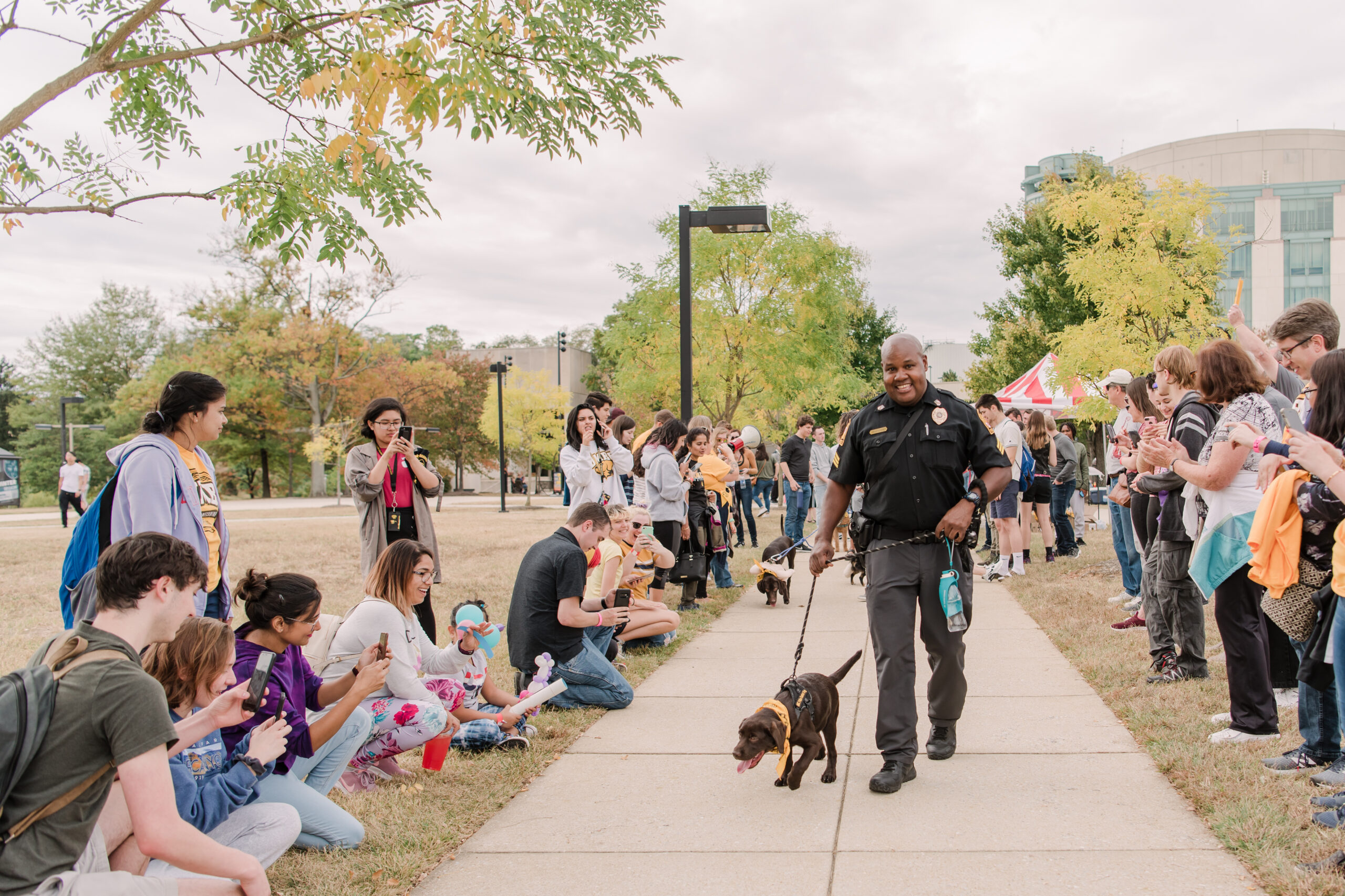
Dogs…carnival rides…dogs…ribbon cutting ceremonies…dogs…Alumni Awards…did we mention dogs? All that means Homecoming season at UMBC!
So grab your pumpkin spiced latte and a nice warm blanket as we dive into the events that make October such a fun month for current, past, and future Retrievers. Since we promised you dogs, we’ll start off with the evergreen puppy parade!




Homecoming is the obvious place for different graduating classes to meet up, but it’s so much more special when that fellow Retriever is your relative! We also love the dedication future Retrievers have years before they even apply.


At UMBC, Homecoming isn’t confined to one weekend, we celebrate the festivities with as many events as possible, including our 31st annual Alumni Award ceremony, complete with the Surgeon General, Jerome Adams ’97, M4, biochemistry & molecular biology and psychology, lifting his daughter onto the stage in this magical photo.

Another special guest on campus meant that students and alumni spent an evening with Trevor Noah, who brought his usual wit along with a more serious side to talk about about his personal narrative and give advice on how students can best tackle college before taking their next steps.

And some more good dogs and other animals, because we know why you’re really here.


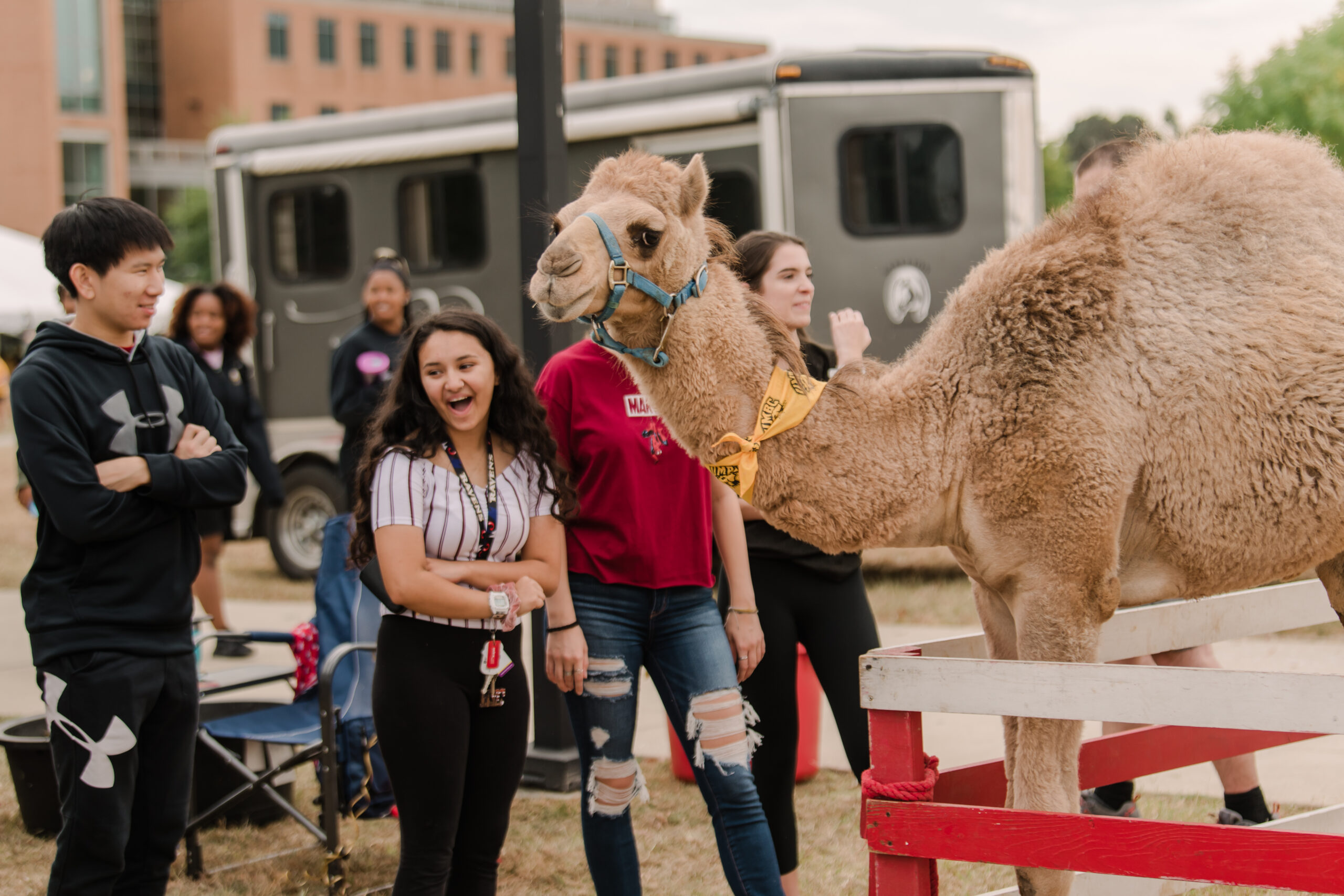
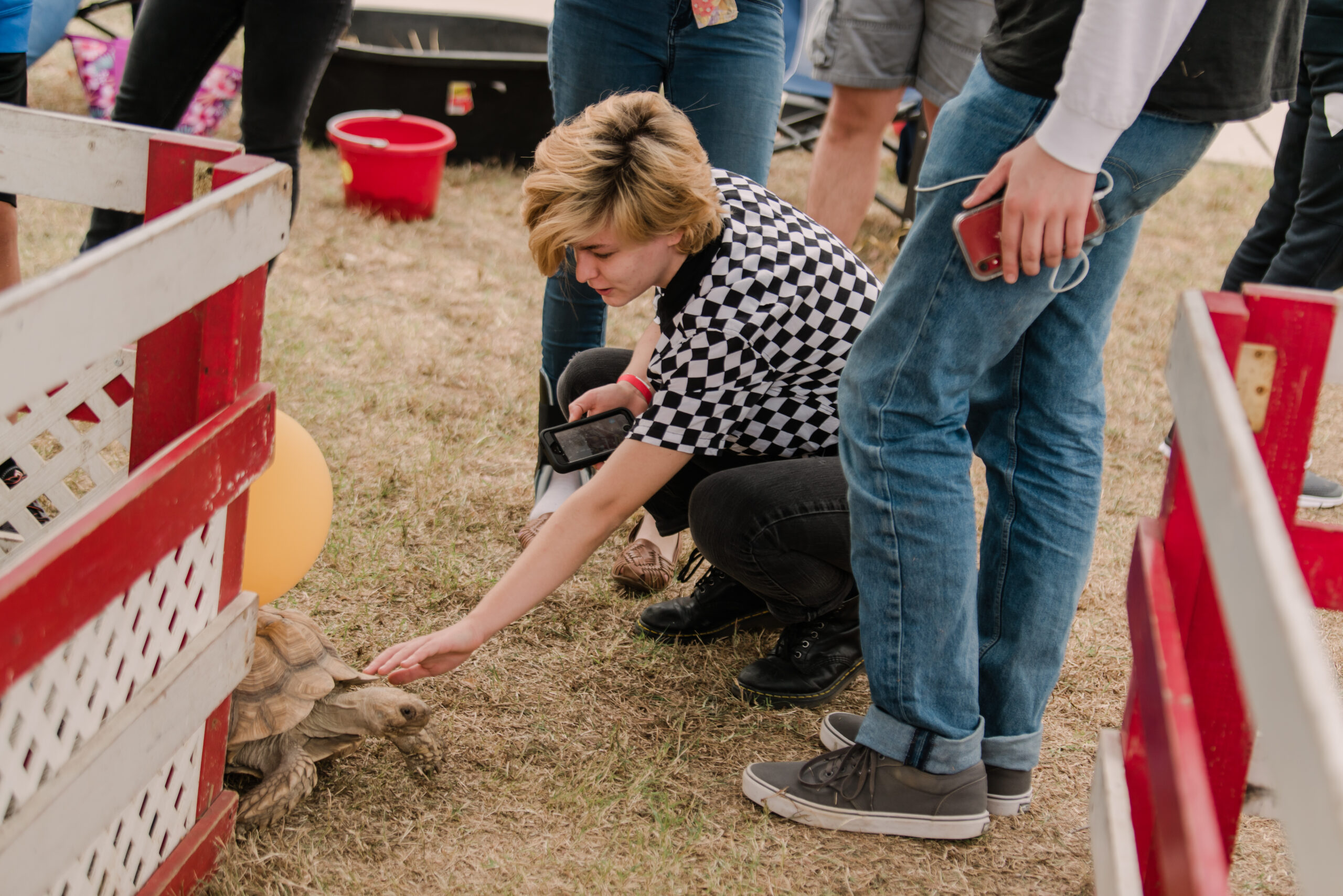
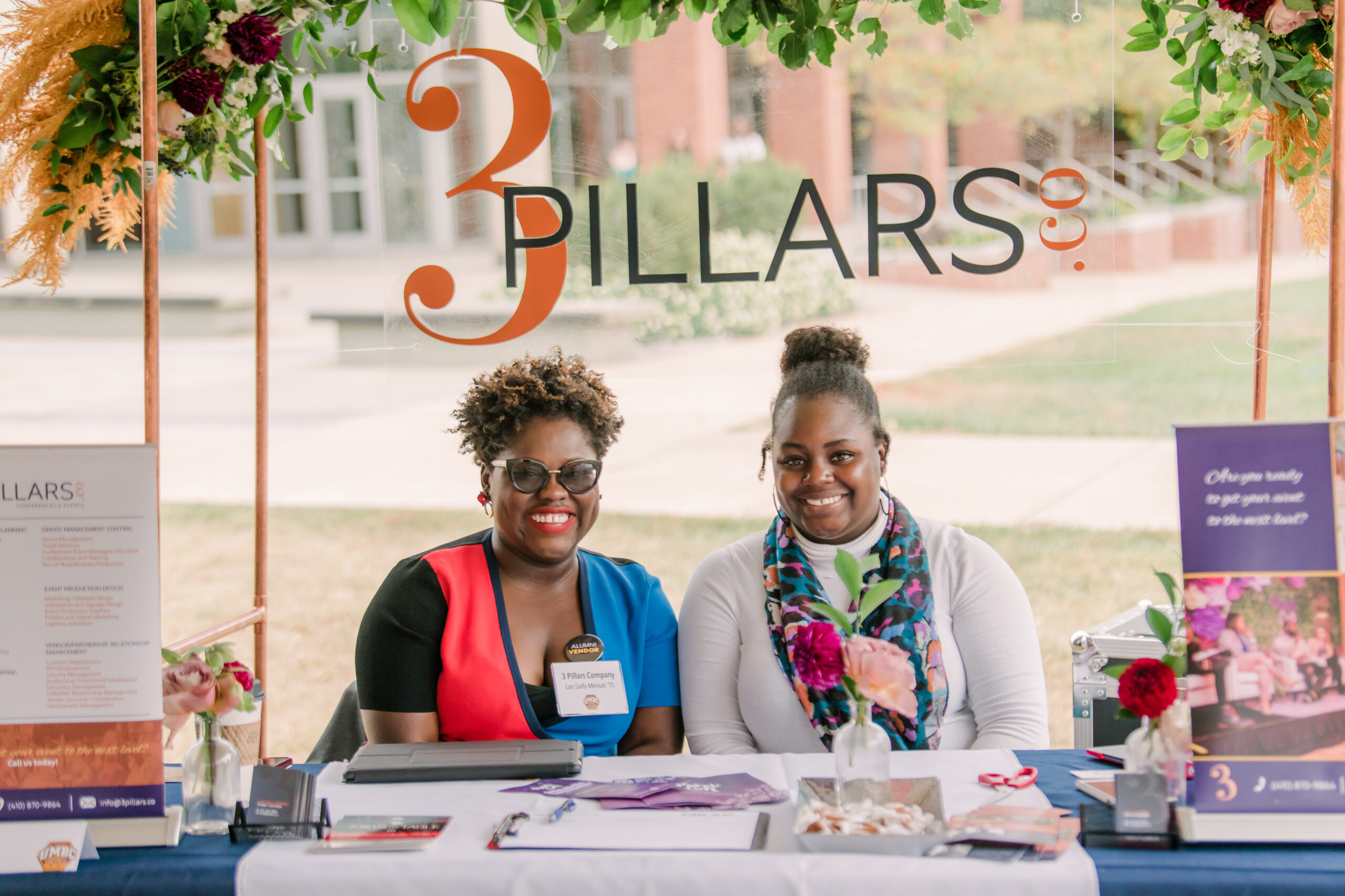
The carnival rides Retrievers have come to love and expect took up most of Erickson field, and nearby, alumni-owned businesses set up their wares.



Other notable events we celebrated as a community included the ribbon cutting for the new Interdisciplinary Life Sciences Building, attended by a few familiar faces. After the DNA double helix was cut, people gathered to listen to Grit-X, three engaging talks by some of UMBC’s brightest minds.

The alumni community gathered across campus to reconnect and make new memories. A small collection of photos below showcase the spirit filled days of UMBC Homecoming. See a more comprehensive look at all the events here.


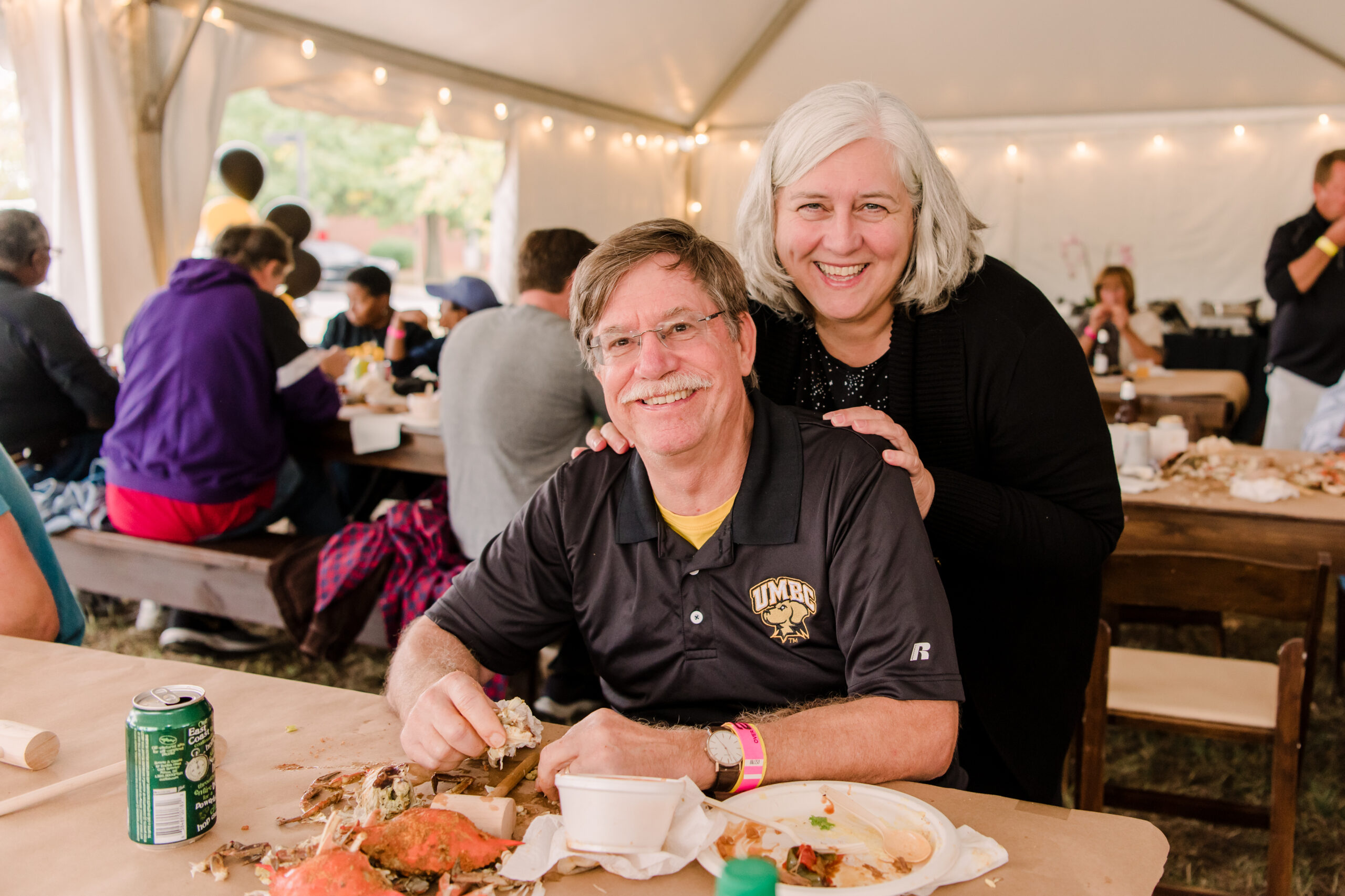
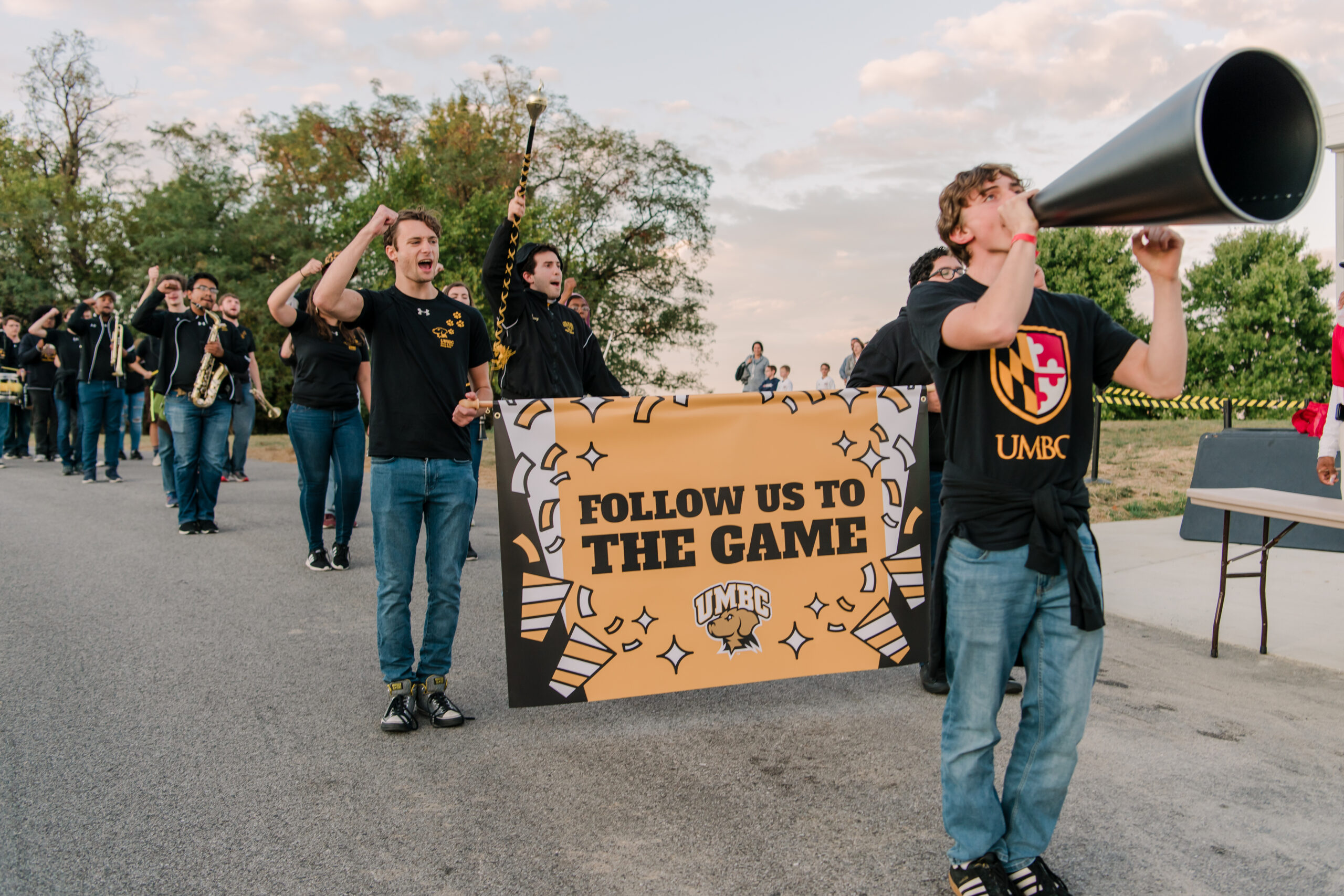



And to close it out, the annual bonfire lit up the night. Rendered here by UMBC’s Commonvision.
*****
All photos by Marlayna Demond ’11 and Arionna Gonsalves ’19.
]]>
Dogs…carnival rides…dogs…ribbon cutting ceremonies…dogs…Alumni Awards…did we mention dogs? All that means Homecoming season at UMBC! [Video] So grab your pumpkin spiced latte and a nice warm...
https://umbc.edu/stories/homecoming-2019-a-wild-ride/
https://beta.my.umbc.edu/api/v0/pixel/news/120030/guest@my.umbc.edu/7422f9aee9146c6e1b2ce63e68ad20cb/api/pixel
alumni
alumni-awards
governor-hogan
grit-x
homecoming-2019
ilsb
trevor-noah
u-s-surgeon-general
UMBC News & Magazine
https://beta.my.umbc.edu/groups/umbc-news-magazine
https://assets1-beta.my.umbc.edu/system/shared/avatars/groups/000/001/943/24435aa6207c452e7bc15cc74b42c7bb/xsmall.png?1748556657
https://assets1-beta.my.umbc.edu/system/shared/avatars/groups/000/001/943/24435aa6207c452e7bc15cc74b42c7bb/original.png?1748556657
https://assets2-beta.my.umbc.edu/system/shared/avatars/groups/000/001/943/24435aa6207c452e7bc15cc74b42c7bb/xxlarge.png?1748556657
https://assets2-beta.my.umbc.edu/system/shared/avatars/groups/000/001/943/24435aa6207c452e7bc15cc74b42c7bb/xlarge.png?1748556657
https://assets3-beta.my.umbc.edu/system/shared/avatars/groups/000/001/943/24435aa6207c452e7bc15cc74b42c7bb/large.png?1748556657
https://assets1-beta.my.umbc.edu/system/shared/avatars/groups/000/001/943/24435aa6207c452e7bc15cc74b42c7bb/medium.png?1748556657
https://assets2-beta.my.umbc.edu/system/shared/avatars/groups/000/001/943/24435aa6207c452e7bc15cc74b42c7bb/small.png?1748556657
https://assets1-beta.my.umbc.edu/system/shared/avatars/groups/000/001/943/24435aa6207c452e7bc15cc74b42c7bb/xsmall.png?1748556657
https://assets2-beta.my.umbc.edu/system/shared/avatars/groups/000/001/943/24435aa6207c452e7bc15cc74b42c7bb/xxsmall.png?1748556657
UMBC News & Magazine
0
0
false
Fri, 18 Oct 2019 20:20:17 -0400
Alumni Playwrights Produce Proxy and The Possible Place

Writing duo Alex Reeves ’16, acting, and Nell Quinn-Gibney ’17, acting, originally teamed up to create a parody of the Nickelodeon cartoon Kim Possible, performed in a lecture hall in the Information Technology and Engineering building. “That was our first toe-dip into writing together,” says Reeves.
Now, two of their shows opened the same weekend: Proxy, a science fiction play about a world in the near-future where people’s consciousnesses can be immortalized by AI technology, premiered at Baltimore’s Rapid Lemon Productions on October 11. The very next day, The Possible Place, a play about mental health and coping mechanisms, opened as a part of Charm City Fringe Festival. Both shows will run through October 20.
“It’s one of those things where, when you’re telling people about it, unless they’re in theatre, they don’t understand how exciting it is to have your play produced,” Reeves says. “It’s extremely exciting because we wrote [Proxy] and we thought the only people who would care about it would be us and our friends.”
In actuality, their work has garnered far more attention than they anticipated, especially Proxy. Like The Possible Place, Proxy started as a one-act written for Charm City Fringe Festival. The process of writing took a month, only for Quinn-Gibney and Reeves to find themselves a week away from auditions with no idea how the show would end. Eventually, they scrapped the whole thing and started a new draft, finishing it within a week. That is the version that was performed at Fringe Fest, with many UMBC alums rounding out the cast.
 A scene from Proxy at the 2018 Charm City Fringe Fest, starring Mason Catharini ’16, English, and Hannah Kelly ’17, acting. Photo by Jason Fowler ’18, psychology and theatre.
“We call our little Fringe group Out of Ink Productions,” Quinn-Gibney explains. “Because we tend to do a lot of very last minute, very intensive, very fast writing.”
But the pair knew there was more to be done with the story. They submitted a portion of the script to a local podcast called Inkubator News Works, which subsequently helped produce a staged reading of the show. Quinn-Gibney and Reeves used this opportunity to add a second act. It was the director of that reading that later brought the script to Rapid Lemon Productions.
But Proxy’s reach has extended even beyond Maryland—its first act is being performed at Gadfly Theatre’s Final Frontier Festival in Minneapolis this November. Quinn-Gibney described Final Frontier as “a queer, science fiction theatre festival. What a niche that we happen to fill!”
Though the productions at Rapid Lemon and in Minneapolis have been fairly hands-off for Reeves and Quinn-Gibney, they’ve been spending much of their time working towards the opening of The Possible Place. They spent the months of August and September writing the show, and began rehearsals in September, while edits were still being made to the script.
Now that the show has opened, those months of hard work have finally come to fruition. Quinn-Gibney calls opening night “a blast. Extremely high energy, lots of nerves, and an amazing, fun show.”
In the cases of both Proxy and The Possible Place, most of Reeves and Quinn-Gibney’s cast and technical teams are composed of friends they made doing theatre at UMBC—both in the theatre department and in various student organizations. In club theatre, Quinn-Gibney says she “definitely built a really tight core of people who wanted to make the same kind of art as I did.”
Ali Mark ’17, mechanical engineering, originally met Quinn-Gibney and Reeves doing shows with them in student organizations like the Musical Theatre Club. Now, she works with the pair regularly; she designed props for both Proxy and The Possible Place, and is also starring in the latter show.
For Mark, her long-standing friendships with Reeves and Quinn-Gibney are a big part of what makes it so easy to create theatre with them. “We have all seen each other at our best and worst, which makes the production feel like a safe space where we can throw out any idea and see where it takes us,” she says.
 A scene from Proxy at the 2018 Charm City Fringe Fest, starring Hannah Kelly ’17 (left) and MaryBeth Kerley ’17, acting (right). Photo by Jason Fowler ’18.
Creative collaboration was a prominent theme of Reeves’s and Quinn-Gibney’s years at undergraduates at UMBC. Reeves was strongly influenced by her time in the Linehan Scholars Program. “The first seminar you take within that program is wonderful because you’re working with so many artists from so many different mediums, and you learn to be a really good collaborator,” she says.
And those expert collaborating skills reach their peak when she is working with Quinn-Gibney. Both of them describe their writing styles as opposite, but complementary. Reeves is a planner, skilled at mapping out a workable story arc, while Quinn-Gibney can write a scene with impressive speed.
“We balance each other out really well,” Quinn-Gibney shares with a smile.
Both productions run through October 20. Find tickets and information about Proxy at Rapid Lemon Productions. Tickets and more information about The Possible Place can be found at Charm City Fringe Festival.
*****
Header image: A scene from Proxy at the 2018 Charm City Fringe Fest, starring Hannah Kelly ’17, Mason Catharini ’16, and MaryBeth Kerley ’17. Photo by Jason Fowler ’18.
]]>
Writing duo Alex Reeves ’16, acting, and Nell Quinn-Gibney ’17, acting, originally teamed up to create a parody of the Nickelodeon cartoon Kim Possible, performed in a lecture hall in the...
https://umbc.edu/stories/alumni-playwrights-produce-proxy-and-the-possible-place/
https://beta.my.umbc.edu/api/v0/pixel/news/120031/guest@my.umbc.edu/59f29afa9d23d7132f1a96ebf4d856cc/api/pixel
alumni
cahss
fringe-fest
theatre
UMBC News & Magazine
https://beta.my.umbc.edu/groups/umbc-news-magazine
https://assets1-beta.my.umbc.edu/system/shared/avatars/groups/000/001/943/24435aa6207c452e7bc15cc74b42c7bb/xsmall.png?1748556657
https://assets1-beta.my.umbc.edu/system/shared/avatars/groups/000/001/943/24435aa6207c452e7bc15cc74b42c7bb/original.png?1748556657
https://assets2-beta.my.umbc.edu/system/shared/avatars/groups/000/001/943/24435aa6207c452e7bc15cc74b42c7bb/xxlarge.png?1748556657
https://assets2-beta.my.umbc.edu/system/shared/avatars/groups/000/001/943/24435aa6207c452e7bc15cc74b42c7bb/xlarge.png?1748556657
https://assets3-beta.my.umbc.edu/system/shared/avatars/groups/000/001/943/24435aa6207c452e7bc15cc74b42c7bb/large.png?1748556657
https://assets1-beta.my.umbc.edu/system/shared/avatars/groups/000/001/943/24435aa6207c452e7bc15cc74b42c7bb/medium.png?1748556657
https://assets2-beta.my.umbc.edu/system/shared/avatars/groups/000/001/943/24435aa6207c452e7bc15cc74b42c7bb/small.png?1748556657
https://assets1-beta.my.umbc.edu/system/shared/avatars/groups/000/001/943/24435aa6207c452e7bc15cc74b42c7bb/xsmall.png?1748556657
https://assets2-beta.my.umbc.edu/system/shared/avatars/groups/000/001/943/24435aa6207c452e7bc15cc74b42c7bb/xxsmall.png?1748556657
UMBC News & Magazine
0
0
false
Thu, 17 Oct 2019 16:09:16 -0400
MHEC selects UMBC’s Jordan Troutman, who bridges technology and policy, as student commissioner

UMBC’s Jordan Troutman ‘21, M29, enjoys challenging assumptions. Recently named the student commissioner for the Maryland Higher Education Commission (MHEC), Troutman isn’t studying public policy or political science, like many students involved in governance. He’s a computer science and mathematics major passionate about applying his work at the intersection of technology and policy to improve society.
Troutman’s research focuses on eliminating biases in algorithms that can lead to unfair outcomes and even impact life-changing decisions. Now, he’s turning his analytical approach and commitment to equity to work representing Maryland college students at the state level.
Representing students across Maryland
Troutman is a thoughtful, organized student whose energy and excitement for tackling new challenges shines through his beaming smile. He will serve as a voting member of MHEC for the 2019-2020 academic year, and sees his role as essential to “provide perspective on what it’s like to be a student right now,” he shares.
 Jordan Troutman. Photo by Marlayna Demond ’11 for UMBC.
MHEC is responsible for establishing policies for public and private colleges and universities across the state of Maryland. Troutman explains that he learned about the opportunity to apply for the student commissioner role from Dan Barnhart, director of campus life at UMBC. The application process included a recommendation from Barnhart and a nomination letter from President Freeman Hrabowski.
Making an impact as a leader
Troutman served as a senator on UMBC’s Student Government Association during his freshman and sophomore years. It was through SGA that he learned about how groups like MHEC can impact the experiences of Maryland students at a high level.
As a senator, “Jordan has taken on such issues as academic conduct, more representative information technology, and more activity space for undergraduate students,” says Barnhart. “He communicates well with his peers, models outstanding leadership skills, and is a consummate team player.”
Troutman’s effective leadership style is what inspired Barnhart to recommend him for the MHEC role. “He understands the political system of a campus and works well in that system to accomplish his goals,” Barnhart explains. “All of the work he does in shared governance helps the student leaders, and the campus life department in co-creating amazing experiences for students at UMBC and beyond.”
Identifying biases in technology
Troutman is a Meyerhoff Scholar and a member of the Honors College who has been engaged in both research and student groups throughout his UMBC years. He conducts research with James Foulds, assistant professor of information systems, on identifying biases in machine learning technologies. Troutman received an Undergraduate Research Award to pursue a new line of research and will present his work at the annual Undergraduate Research and Creative Achievement Day in the spring.
 Jordan Troutman, far left, attends a lab meeting with Professor James Foulds and fellow student researchers. Photo by Marlayna Demond ’11 for UMBC.
After he graduates, Troutman plans to pursue a Ph.D. in computer science, with his sights set on working in both higher education as a professor and in industry research settings. He hopes to build collaborations among computer scientists, educators, and policymakers to develop technologies that do social good and benefit people around the world.
As MHEC’s student commissioner, Troutman looks forward to learning more about the challenges and issues that higher education institutions are facing today, particularly affordability and accessibility. “My role and intention is that when I’m speaking, I’m not speaking for me,” he says, “I’m speaking for students across Maryland.”
Banner image: Jordan Troutman, left, and Dan Barnhart. Photo by Marlayna Demond ’11 for UMBC.
]]>
UMBC’s Jordan Troutman ‘21, M29, enjoys challenging assumptions. Recently named the student commissioner for the Maryland Higher Education Commission (MHEC), Troutman isn’t studying public policy...
https://umbc.edu/stories/mhec-selects-umbcs-jordan-troutman-who-bridges-technology-and-policy-as-student-commissioner/
https://beta.my.umbc.edu/api/v0/pixel/news/120032/guest@my.umbc.edu/2da11741da2f786eecc95bc48f5db53b/api/pixel
cnms
coeit
community
csee
honorscollege
is
mathstat
meyerhoffscholars
page1
science-and-technology
UMBC News & Magazine
https://beta.my.umbc.edu/groups/umbc-news-magazine
https://assets1-beta.my.umbc.edu/system/shared/avatars/groups/000/001/943/24435aa6207c452e7bc15cc74b42c7bb/xsmall.png?1748556657
https://assets1-beta.my.umbc.edu/system/shared/avatars/groups/000/001/943/24435aa6207c452e7bc15cc74b42c7bb/original.png?1748556657
https://assets2-beta.my.umbc.edu/system/shared/avatars/groups/000/001/943/24435aa6207c452e7bc15cc74b42c7bb/xxlarge.png?1748556657
https://assets2-beta.my.umbc.edu/system/shared/avatars/groups/000/001/943/24435aa6207c452e7bc15cc74b42c7bb/xlarge.png?1748556657
https://assets3-beta.my.umbc.edu/system/shared/avatars/groups/000/001/943/24435aa6207c452e7bc15cc74b42c7bb/large.png?1748556657
https://assets1-beta.my.umbc.edu/system/shared/avatars/groups/000/001/943/24435aa6207c452e7bc15cc74b42c7bb/medium.png?1748556657
https://assets2-beta.my.umbc.edu/system/shared/avatars/groups/000/001/943/24435aa6207c452e7bc15cc74b42c7bb/small.png?1748556657
https://assets1-beta.my.umbc.edu/system/shared/avatars/groups/000/001/943/24435aa6207c452e7bc15cc74b42c7bb/xsmall.png?1748556657
https://assets2-beta.my.umbc.edu/system/shared/avatars/groups/000/001/943/24435aa6207c452e7bc15cc74b42c7bb/xxsmall.png?1748556657
UMBC News & Magazine
0
0
false
Thu, 17 Oct 2019 13:22:08 -0400
UMBC’s Ann Sofie Clemmensen explores The Kennedy Center’s REACH through choreography

On October 18 and 19, choreography by Ann Sofie Clemmensen, assistant professor of dance, will be presented at the new REACH expansion of the John F. Kennedy Center for the Performing Arts in Washington, D.C. Featuring 20 dancers, Clemmensen’s three-part experience — In To and Out Of — transports audiences through different spaces of the REACH using the unique characteristics of each location to explore concepts in pattern and timing, light and dark, and limitation and transformation. The work was commissioned by the Kennedy Center as part of the 2019 Local Dance Commissioning Project.
“In To and Out Of is a three-part site-inspired performance that examines the physical and invisible qualities of a place,” explains Clemmensen. “All three works seek to embody the REACH building’s inquisitive nature traceable in the texture of the walls, the array of light diffusion and breathtaking verticality.”
In the second part of the work, for example, two dancers — Linehan Artist Scholars Deven Fuller and Emily Godfrey — perform against a long narrow wall, often leaning or pressing on its surface. “The flow of people moving in and through a space doesn’t happen in isolation,” says Clemmensen. “The spaces around us have an impact on how we move around.”
 Linehan Artist Scholars Deven Fuller and Emily Godfrey rehearse In To and Out Of
Part One of the work, Welcome Pavilion, features eight dancers. “The group work draws abstractly from the physical site and its function, engaging with direct and indirect patterns through gestural movements amplified using group unison and prolong time sensibility,” offers Clemmensen. She adds that “traditional meets contemporary in the use of voluminous tulle skirts — a playful reference to the artistic breath of the Kennedy Center.”
Part Two, Peace Corps Gallery, “is a duet exploring the notion of space-between-space; literally the space between wall and body as well as the space share and created by two moving bodies.” Part Three, Sky Pavilion, featuring five professional dancers from the Washington, D.C. area, explores a long panoramic window and a gravity-defying tall curved wall.
Other UMBC colleagues are involved in the performances. In addition to Fuller and Godfrey, In To and Out Of features students Jody Cole, Joshua Gray, Sylvia Lagas, Kayla Massey, Kasey Mannion, Jahnaye Samuel, Michelle Ye, Gretta Zinski, and Katie Blake.
Timothy Nohe, director of the Center for Innovation, Research and Creativity in the Arts (CIRCA), created music for the first section of the dance, making “acoustic choices in the score that complement the unique architecture and reverberant signature of the REACH.” Nohe explains, “The score will be reproduced on wireless Bluetooth speakers, adding an element of mobility that responds to the movement of the dancers.”
Admission to the performances is free. Information is available on the performance pages for October 18 and October 19.
Update: The Kennedy Center has added videos of the performances held on October 18 and October 19.
 Ann Sofie Clemmensen works with Deven Fuller and Emily Godfrey as they rehearse, while Katie Blake accompanies on viola
Featured image: Deven Fuller and Emily Godfrey rehearse In To and Out Of. Photos by Marlayna Demond ’11 for UMBC.
]]>
On October 18 and 19, choreography by Ann Sofie Clemmensen, assistant professor of dance, will be presented at the new REACH expansion of the John F. Kennedy Center for the Performing Arts in...
https://umbc.edu/stories/umbcs-ann-sofie-clemmensen-explores-the-kennedy-centers-reach-through-choreography/
https://beta.my.umbc.edu/api/v0/pixel/news/120033/guest@my.umbc.edu/0ca9d8d5153ae1d027bbb83260ce1374/api/pixel
arts
arts-and-culture
cahss
dance
linehanscholars
page1
UMBC News & Magazine
https://beta.my.umbc.edu/groups/umbc-news-magazine
https://assets1-beta.my.umbc.edu/system/shared/avatars/groups/000/001/943/24435aa6207c452e7bc15cc74b42c7bb/xsmall.png?1748556657
https://assets1-beta.my.umbc.edu/system/shared/avatars/groups/000/001/943/24435aa6207c452e7bc15cc74b42c7bb/original.png?1748556657
https://assets2-beta.my.umbc.edu/system/shared/avatars/groups/000/001/943/24435aa6207c452e7bc15cc74b42c7bb/xxlarge.png?1748556657
https://assets2-beta.my.umbc.edu/system/shared/avatars/groups/000/001/943/24435aa6207c452e7bc15cc74b42c7bb/xlarge.png?1748556657
https://assets3-beta.my.umbc.edu/system/shared/avatars/groups/000/001/943/24435aa6207c452e7bc15cc74b42c7bb/large.png?1748556657
https://assets1-beta.my.umbc.edu/system/shared/avatars/groups/000/001/943/24435aa6207c452e7bc15cc74b42c7bb/medium.png?1748556657
https://assets2-beta.my.umbc.edu/system/shared/avatars/groups/000/001/943/24435aa6207c452e7bc15cc74b42c7bb/small.png?1748556657
https://assets1-beta.my.umbc.edu/system/shared/avatars/groups/000/001/943/24435aa6207c452e7bc15cc74b42c7bb/xsmall.png?1748556657
https://assets2-beta.my.umbc.edu/system/shared/avatars/groups/000/001/943/24435aa6207c452e7bc15cc74b42c7bb/xxsmall.png?1748556657
UMBC News & Magazine
0
0
false
Thu, 17 Oct 2019 00:48:43 -0400
A Doctor’s Dilemma

Decentering whiteness while working as a doctor abroad has made alumnus Matthew Loftus examine his medical methods and motivations again and again.
If you’re a foreign doctor practicing in an African country, there are important questions to keep asking yourself: How am I allowing my whiteness to shape my perception of my work and life here? Am I using my medical skills to equip the next generation of local doctors? Am I letting local leadership guide my steps?
In fact, if you’re Matthew Loftus ’07, chemistry, you started asking these questions earlier in your life, as a doctor in Baltimore City. They all still applied.
But for Loftus, the questions actually started before the medical license, before the move with his family to South Sudan, before getting displaced by a civil war that made its way to the hospital’s doorsteps, before visiting medical centers across East Africa to find a new location to serve, before spending nine months learning another new language, before his wife—a nurse—and three children settled in to a small house in Kenya, across the street from the hospital where he’s now still asking those questions.
“This is a continuous conversation,” Loftus says, sitting down for an interview over tea during a trip to Kenya’s capital, Nairobi. There is the way things have been done previously in medicine or in mission settings or in low-income American neighborhoods: “A sort of a very top-down, you know, people from outside making all the decisions,” says Loftus. “And that, that is ultimately unsustainable.”
Relocation, redistribution, and reconciliation
Loftus grew up attending a Presbyterian church with his parents and 14 siblings in Bel Air, Maryland. After graduating from UMBC and marrying his wife Maggie, Loftus moved to the Sandtown-Winchester neighborhood of West Baltimore to join another Presbyterian congregation, New Song Community Church—this one founded on the principles laid out by the Christian Community Development Association (CCDA). Author Lawrence Lanahan describes the practice in an article for Al-Jazeera called Downwardly Mobile for Jesus that profiled the Loftus family.
 The Loftus family is based in Litein, a small town in western Kenya. Photo by Randianne Leyshon.
“The CCDA’s model is similar to asset-based community development, which tries to build out from a community’s strengths rather than fix its deficiencies. But the CCDA asks more of its practitioners across the nation: that they have something personally at stake in the development. Leaders at New Song talked to Loftus about the core of the CCDA’s philosophy, the three R’s—relocation, redistribution and reconciliation.”
Those three “R”s—which essentially ask white Christians to question their privilege and seek local leaders of color to work under—would grow to influence and define Loftus’s personal life and medical career.
Retriever roots
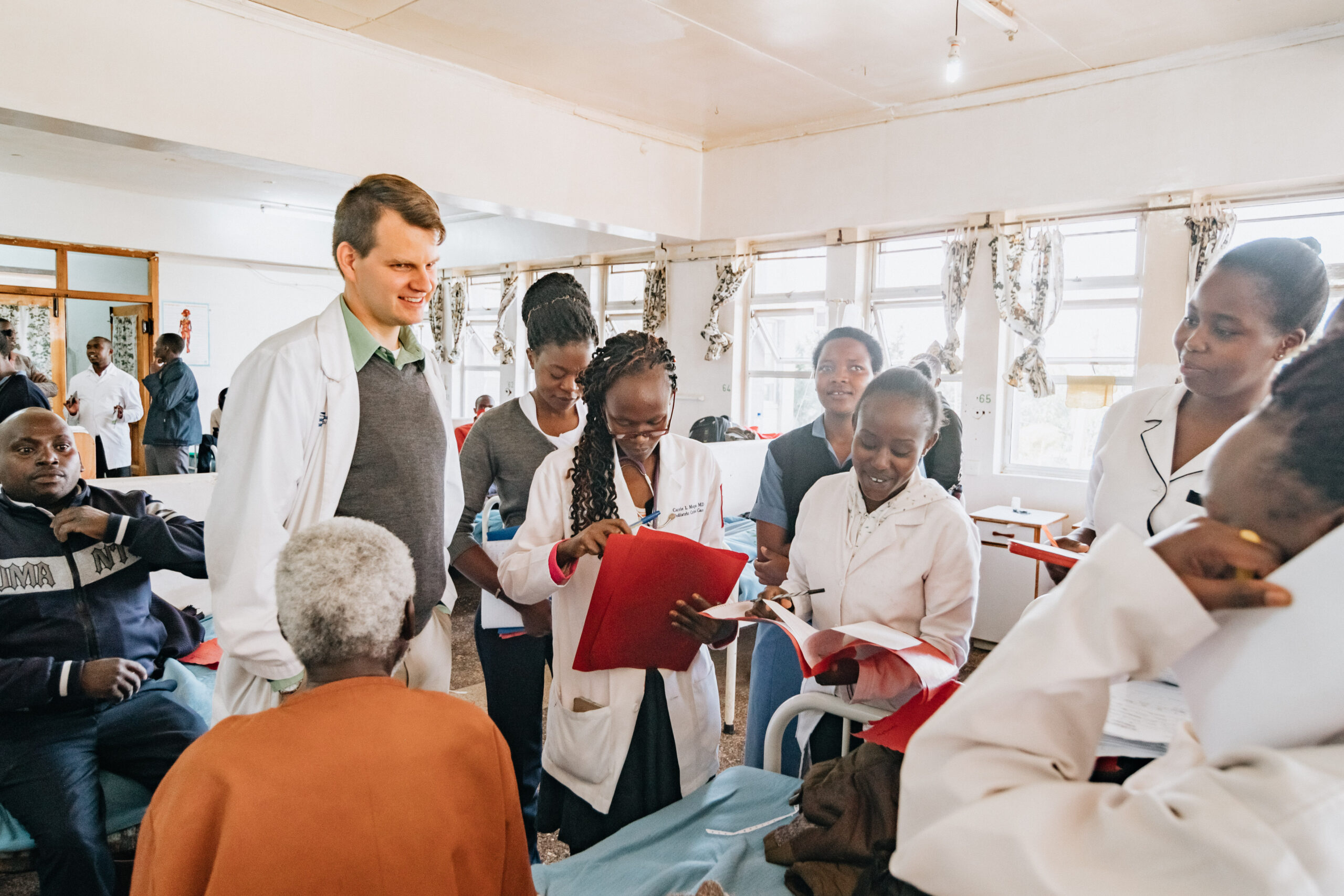
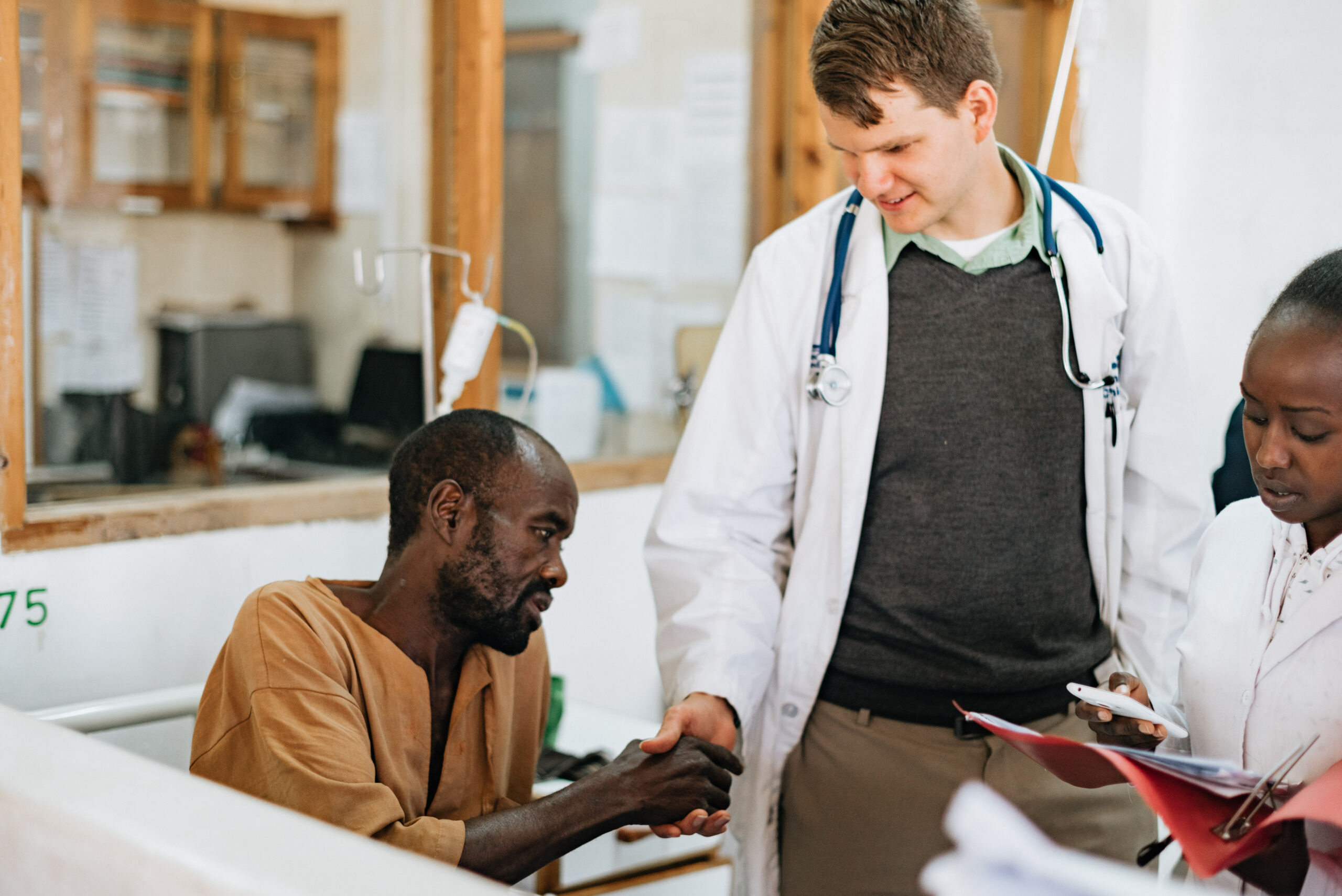
In Litein, Kenya, where he’s the family medicine consultant and program coordinator for the Kabarak University Family Medicine Residency, Loftus specializes in seeing patients with mental health problems and also supervises the medical residents’ time on the wards and in the clinics.
It was his time at UMBC that helped prepare him for many aspects of his life in Kenya, says Loftus. The personal reference letter he got from President Hrabowski for his admission to the University of Maryland School of Medicine didn’t hurt, but more specifically, Loftus points to his Arabic classes and his semester abroad in Egypt that helped in exposing him to new aspects of international life. UMBC’s Office of Pre-Professional advising also played a huge role, he says, in helping him get into medical school and graduate debt-free. His involvement, including a year as vice president, with UMBC’s chapter of InterVarsity Christian Fellowship gave him lasting ties to other Retrievers, but also taught him the importance of spiritual discipleship.
It’s been a year and a half since the Loftus family settled into their life in Litein, a high-altitude town in western Kenya that is most well known for its verdant tea fields. Loftus juggles his resident supervisor role with extended clinic hours, rounds, and spiritual development with the other medical professionals.


 Photos of Litein and surrounding areas by Dixie Gaultney when visiting the Loftus family with her husband, Peter Gaultney, ’08.
“When I was at UMBC, I knew I wanted to do medicine. I wanted to serve people through health care,” says Loftus. But over the years, after listening to people who are on the field and learning about what the needs were—there was just too much that any one person could do, he discovered. The answer for him, was then to get involved in health care education.
It was under the guidance of Lisa Kelly in the Department of Chemistry and Biochemistry, “who was very patient with me,” says Loftus, “despite the fact that it was while working in her lab that I realized I was not cut out for a life of research. But I do appreciate all the work that she did on my behalf and helping me move in a good direction.”
While researching where he could join an existing health care education program that had opportunities for his wife, a perinatal nurse, to work and where his children (ages seven, four, and two) could also flourish, Loftus eventually found Litein. There, “health care education was already happening to some degree but they really wanted to ramp it up,” he says.
An additional aspect that appealed to Loftus, was that after supervising the residents for four years, they would then move on to other locations, using their advanced medical skills to treat and train people from all over East Africa.
Attending to growing needs
Phillip Blasto, a general surgeon who works closely with Loftus, grew up in the coastal region of Kenya but has worked at the hospital in Litein for the past four years.
The arrival of Loftus and another set of American doctors (Blasto refers to them as consultants, but in the States, they’re called attendings) has lifted a significant load from Blasto and the other physicians. Sitting at the table in the Loftus’s cozy living room, drinking local tea made sweet with milk and sugar, Blasto shares his thoughts on the addition of the medical missionaries. “He took a lot of weight,” Blasto says, taking care of “patients of mine and patients of the ICU…with Matthew here, the care of patients has improved, particularly in intensive care because he and the other consultants are available. If there was one biggest change, that would be that our intensive care patients now have someone to call and to see them anytime day or night or weekends.”
Ultimately, this elevates the reputation of Litein’s hospital and builds long term trust between the patients and medical practitioners, which has allowed the practice to grow, creating a new set of problems to manage. “We’ve grown in terms of patient numbers and people who trust us, which is significant,” says Blasto. “Nowadays bed space is an issue and theater space is an issue, so depending on some days, we have to put people in the corridors to be seen.”
 The Loftus family lives across the street from the hospital, which has plans to grow in the near future. Photo by Dixie Gaultney.
The hospital—a long, bright green building situated on the highest ground in the town of around 2,500 people—is responding to the increased influx of patients by growing as well, increasing the number of respirators, adding new radiology equipment, and eventually expanding the building to include more bed space. The outside attendings have played a significant role in these changes by extending the consulting sessions by several hours each day and by taking turns for overnight on-call shifts. “That availability and the humbleness that people have seen have increased people’s faith in the facility,” Blasto concludes.
Forward progress requires humility
One of the questions Loftus sees as a critical aspect of his “continual conversation” involves asking himself how he can submit to local leadership—a tenet emphasized by CCDA and a foundational element of Loftus’s approach to the mission field. “I think submission is a hard word to think about, in our context, in the West,” says Loftus. “I think it’s such an important part of faith, of Christ’s life in us—of humility—that I think this sort of work is impossible without it.”
Loftus’s word choice of humility resonates with Sarah Fouts, assistant professor of American studies at UMBC. Fouts, whose research centers on accompaniment theory—a methodology for allies that supports movements led by people of color—guides her students to leverage their privilege in helping others navigate systemic barriers. “It’s really hard because you want to make yourself so important, so special. But you need to decenter yourself in those situations, and that’s really challenging,” says Fouts. “So how to create a sustainable project means exactly that, not making everything so reliant on you.”
Students and professors often have this I-want-to-do-it-all-mentality, continues Fouts, “but bringing other people into the project, as leaders, helping elevate not just your own research… maybe it takes more time and effort but ultimately, it’s going to be better for everyone involved. You know, it’s humbling.”
A continuous conversation
As a way to get more people involved in conversations about privilege and responsibility, Loftus collaborates with two other UMBC alumni and fellow InterVarsity members, Peter Gaultney ’08, computer science, and Timothy Milligan ’09, computer science, to create a weekly newsletter called Read In Case of Emergency, where they share articles and thoughts on ethics, policy, and society. Loftus has also published extensively, writing articles responding to people asking if it’s dangerous to take your children to live overseas, advocating for more than “good intentions” in thinking about solutions to poverty, and letting local communities speak for themselves in the wake of tragedy.
 Two of the Loftus children play in the tea fields near Litein. Photo by Randianne Leyshon.
These articles and dozens more that Loftus has penned while living in West Baltimore and then in East Africa contrast sharply with a 2005 Retriever Weekly article that set the stage early on for how Loftus navigated the waters of being a privileged white doctor in under-resourced communities. As a teenager, Loftus participated in medical missionary trips to Kenya, and UMBC’s student paper wrote about his summers there. The resulting article—not written by Loftus—is, to say the least, not woke.
Correctly so, UMBC’s African Student Association responded strongly to the tone and vocabulary of the piece—it dripped with White Savior-ness. Loftus met with the ASA and listened to their reactions, opening himself up for more in depth dialogue than the article allowed. This experience added another layer to Loftus’s growing conviction that in order for him to continue pursuing a career in medical missionary work overseas, he would have to immerse himself in better ways of approaching his role in a field with a very troubled history of white supremacy and colonialism.
“I think, because there is still a default way that we think and talk about interventions in impoverished communities, oftentimes it does take a moment of ‘oh, I need to be doing it differently than the way that I would normally, as a white privileged, you know, wealthy outsider,’” says Loftus.
“But then once you get to that point, you have to be continuously assessing it and asking yourself and asking the people around you, like, ‘Are we doing this well? Are we involving the people that are, you know, that are most affected by this? Am I working to equip people with the skills that they need to lead themselves, and to serve themselves, to help themselves?’” Loftus trails off as the list of relevant questions mount.
“So I think that’s a really big part of it, is the fact that that process is never done.”
*****
Header image: Loftus listens while on rounds with his residents. Photo by Dixie Gaultney.
]]>
Decentering whiteness while working as a doctor abroad has made alumnus Matthew Loftus examine his medical methods and motivations again and again. If you’re a foreign doctor practicing in an...
https://umbc.edu/stories/a-doctors-dilemma/
https://beta.my.umbc.edu/api/v0/pixel/news/120034/guest@my.umbc.edu/561a89ff8b2a681e01bc14c9af1e8ff2/api/pixel
alumni
alumni-profile
chemistry
fall-2019
international
UMBC News & Magazine
https://beta.my.umbc.edu/groups/umbc-news-magazine
https://assets1-beta.my.umbc.edu/system/shared/avatars/groups/000/001/943/24435aa6207c452e7bc15cc74b42c7bb/xsmall.png?1748556657
https://assets1-beta.my.umbc.edu/system/shared/avatars/groups/000/001/943/24435aa6207c452e7bc15cc74b42c7bb/original.png?1748556657
https://assets2-beta.my.umbc.edu/system/shared/avatars/groups/000/001/943/24435aa6207c452e7bc15cc74b42c7bb/xxlarge.png?1748556657
https://assets2-beta.my.umbc.edu/system/shared/avatars/groups/000/001/943/24435aa6207c452e7bc15cc74b42c7bb/xlarge.png?1748556657
https://assets3-beta.my.umbc.edu/system/shared/avatars/groups/000/001/943/24435aa6207c452e7bc15cc74b42c7bb/large.png?1748556657
https://assets1-beta.my.umbc.edu/system/shared/avatars/groups/000/001/943/24435aa6207c452e7bc15cc74b42c7bb/medium.png?1748556657
https://assets2-beta.my.umbc.edu/system/shared/avatars/groups/000/001/943/24435aa6207c452e7bc15cc74b42c7bb/small.png?1748556657
https://assets1-beta.my.umbc.edu/system/shared/avatars/groups/000/001/943/24435aa6207c452e7bc15cc74b42c7bb/xsmall.png?1748556657
https://assets2-beta.my.umbc.edu/system/shared/avatars/groups/000/001/943/24435aa6207c452e7bc15cc74b42c7bb/xxsmall.png?1748556657
UMBC News & Magazine
0
0
false
Wed, 09 Oct 2019 18:19:39 -0400
 Cities and Farms are more than half covered by intensive agriculture and cities, Large Wild Areas are scarcely altered, and Shared Lands have a level of use somewhere in between. Each landscape condition requires a different conservation strategy. Harvey Locke et al. (2019), CC BY-ND
 An endangered Bell’s vireo. Steve Maslowski/US Fish & Wildlife Service, CC BY
 A bridge for wildlife in Banff National Park in Canada, one way to enhance biodiversity in protect lands. David Fulmer, CC BY
 Maasai in Tanzania work on shared lands. jjmusgrove, CC BY


