Keeping Pace with Theatrical Intimacy

If you’ve ever watched a movie with anything higher than a PG rating, chances are you’ve seen two actors perform an on-screen kiss. Perhaps at the time, you didn’t think much about what went into staging that kiss. But in reality, staging intimacy—which includes everything from holding hands to simulated sex—can be one of the most challenging parts of producing a play.
“There seems to be a lot of opportunity for miscommunication, misunderstanding, and, in the very worst cases, abuses of power,” Chelsea Pace, assistant professor of theatre, explains. Pace is one of the founding members of Theatrical Intimacy Education, a consulting group that helps theatre and film companies develop their best practices for staging intimacy. TIE usually does this not by staging the intimacy themselves, but by conducting workshops and trainings to teach those who are already a part of the company how to direct intimacy.
 Chelsea Pace. Photo courtesy of Shealyn Jae.
“If we can make the people who are already in the room better at being in the room,” Pace says, “then we’re actually working towards a cultural change in our industry.”
Pace originally took an interest in how intimacy was directed when she noticed that directors shied away from staging intimate scenes, leaving it up to the actors to figure out for themselves. It seemed, to her, to be the only part of the creative process that didn’t have a designated designer or director.
That lack of direction impacts the performance, says Pace. “Directors would just ask two actors, ‘okay, do the kiss, do the make-out,’” Pace says. “And if the actors didn’t know how to do that, or they did something weird, you were stuck with it.”
Pace has studied theatrical intimacy for over 10 years and has been helping the UMBC Theatre Department develop their own best practices for staging intimacy since she began working here in 2017. Not only has she conducted trainings and workshops with theatre students and faculty, but she also worked with the department to develop their new Theatrical Intimacy and Instructional Touch Policy.
Formed from the input of students, faculty, and staff in the department, the policy aims to set standards for touch in the classroom, including obtaining consent and making it clear that there are alternative practices for students who don’t want to be touched. “That’s a really large part of a lot of pedagogical systems for teaching theatre. There’s a lot of contact,” Pace says, explaining the need for such standards. “We have a lot of needs in this department because of what we do that you may not necessarily discover in a physics department.”
One of the four UMBC shows Pace worked on last year, She Like Girls, featured a young woman discovering her sexuality. The show handled both moments of intimacy as well as instances of sexual violence; in one scene, a character named Andre, played by Lloyd Ekpe ’20, acting, attempts to coerce his friend into having sex.
 Majenta Thomas ’21 and Maria Marsalis ’20 in a scene from “She Like Girls.” Photo courtesy of Chelsea Pace.
According to Ekpe, Pace’s methods made staging such a dark moment infinitely easier. “The initial meeting with Chelsea at rehearsal is going through the best practices for touching and initiating contact, and with that comes the language of contact—the distance, the levels of touch, the lines and shapes,” he explains. When it came time to stage the assault, “one thing [Pace] kept hammering into my head was: It’s just choreography. It’s just choreography. You’re just closing the distance, you’re just lifting her up here, you’re just putting her down there.”
Divorcing the motions of the scene from the feelings of the actor are an important part of Pace’s practices for staging intimacy. “In stage combat, it’s very clear that I’m not punching my scene partner in the face. When you’re staging a kiss? Your faces actually go on each others faces,” Pace says. “And that creates a lot of muddiness between what is real and what’s just real in the scene.”
Purposefully, carefully choreographed intimacy helps to clear up that muddiness by creating what she calls a “container of technique” that separates the movements of the scene from real-life emotions.
 Pace observes a rehearsal for “The Diary of Anne Frank” at Chesapeake Shakespeare Company, featuring Hannah Kelly ’17, acting, and Clay Vanderbeek ’17, theatre. Photo by Molly Prunty.
All of the best practices Pace has developed with TIE and as part of her own research will soon be catalogued for other educators, students, and professionals in her upcoming book, Staging Sex, which is forthcoming from Routledge Publishing. Like TIE’s workshops or the theatre department’s new Theatrical Intimacy and Instructional Touch Policy, Staging Sex is yet just another step in changing the theatre industry to be a more ethical and consent-driven space.
“We can do a lot [of] good if every undergraduate coming out of a BFA program across the country comes out knowing how to establish their boundaries with a scene partner…and every student director coming out of these programs starts asking actors questions about their boundaries,” Pace says. “That’s going to create a cultural change a lot faster than just insisting every production needs an intimacy choreographer.”
*****
Header image: UMBC Alumnae Sanjana Taskar ’19, acting and sociology, and Hannah Kelly ’17, acting, pose for the cover of Staging Sex. Photo courtesy of Shealyn Jae.
]]>
If you’ve ever watched a movie with anything higher than a PG rating, chances are you’ve seen two actors perform an on-screen kiss. Perhaps at the time, you didn’t think much about what went into...
https://umbc.edu/stories/keeping-pace-with-theatrical-intimacy/
https://beta.my.umbc.edu/api/v0/pixel/news/120002/guest@my.umbc.edu/3edeb8175ab43df29245e18b9a11e2a2/api/pixel
cahss
discovery
fall-2019
professorsnottomiss
theatre
UMBC News & Magazine
https://beta.my.umbc.edu/groups/umbc-news-magazine
https://assets1-beta.my.umbc.edu/system/shared/avatars/groups/000/001/943/24435aa6207c452e7bc15cc74b42c7bb/xsmall.png?1748556657
https://assets1-beta.my.umbc.edu/system/shared/avatars/groups/000/001/943/24435aa6207c452e7bc15cc74b42c7bb/original.png?1748556657
https://assets2-beta.my.umbc.edu/system/shared/avatars/groups/000/001/943/24435aa6207c452e7bc15cc74b42c7bb/xxlarge.png?1748556657
https://assets2-beta.my.umbc.edu/system/shared/avatars/groups/000/001/943/24435aa6207c452e7bc15cc74b42c7bb/xlarge.png?1748556657
https://assets3-beta.my.umbc.edu/system/shared/avatars/groups/000/001/943/24435aa6207c452e7bc15cc74b42c7bb/large.png?1748556657
https://assets1-beta.my.umbc.edu/system/shared/avatars/groups/000/001/943/24435aa6207c452e7bc15cc74b42c7bb/medium.png?1748556657
https://assets2-beta.my.umbc.edu/system/shared/avatars/groups/000/001/943/24435aa6207c452e7bc15cc74b42c7bb/small.png?1748556657
https://assets1-beta.my.umbc.edu/system/shared/avatars/groups/000/001/943/24435aa6207c452e7bc15cc74b42c7bb/xsmall.png?1748556657
https://assets2-beta.my.umbc.edu/system/shared/avatars/groups/000/001/943/24435aa6207c452e7bc15cc74b42c7bb/xxsmall.png?1748556657
UMBC News & Magazine
0
0
false
Tue, 26 Nov 2019 15:36:27 -0500
In 2019 Idea Competition, UMBC students focus on inclusion

Necessity can inspire innovation and sometimes, UMBC’s Emma Neubert will tell you, that innovation comes in the form of a cuddly critter with eight limbs that makes silly sounds. Neubert ‘21, biochemistry, earned first prize in UMBC’s annual Idea Competition, hosted this month by the Alex. Brown Center for Entrepreneurship. She was one of eight students selected to participate in the pitch competition, where students present their innovative ideas to a panel of judges.
Participants spend hours refining their presentations and receiving feedback from their mentors, as well as faculty, staff, family, and friends, says George Karabatis, associate professor of information systems and director of UMBC’s entrepreneurship and innovation minor. Their goal: to gain the funding and professional advice needed to make their ideas a reality.
Leading up to the competition, Neil Rothman, professor of practice in mechanical engineering and faculty fellow through the Alex. Brown Center, always reminds students that their presentations are stories. “Being able to frame the story and present it in a concise way is the most important part of the competition,” Rothman explains.
Helping kids communicate
Neubert’s story begins with babysitting a young child who was frustrated with not being able to communicate his feelings and needs. In response, she developed the concept for Octotalk, a knit octopus that makes noises to help young children share their emotions.
Hoping to avoid future stress and tears, Neubert began brainstorming on ways to help the child she babysits to express his thoughts and feelings. “He loves soft toys and really likes watching me knit,” Neubert says. “When I learned to knit the octopus, I thought, it has eight arms that could be used to cue different responses.”
In Neubert’s design, each arm is associated with a specific emoji and a unique sound that will help a child “answer simple questions and share how they are feeling.”
When it came time to present Octotalk to the judges, Neubert was confident in her vision. “This project is near and dear to me, and I knew what I wanted people to know about it,” she says.
More efficient hair styling
The Braid Saver is an automatic braiding and twisting tool that styles hair and eliminates the need to intertwine sections of hair by hand, explains second-prize winner Elyssa Ferguson ‘20, mechanical engineering. Ferguson was inspired by her desire to spend less time styling her naturally curly hair without using chemical straighteners.
“With little time to spare, I have turned to braids as my go-to low-maintenance style during the semesters. Although braids do not require as much time as other styles, doing them still takes up time that could be used to study or do other things,” Ferguson says. “After continually becoming frustrated with the time I had to set aside to braid my hair, I was inspired to create a braiding and twisting device that would make hair styling more efficient.”
Encouraged to enter the Idea Competition by entrepreneurship instructor Aaron Altscher, Ferguson began sketching iterations of her ideal solution to visualize how the components would look and work. “I hope to develop this tool and sell it in salons and to anyone who wants an easier way to braid or twist hair,” she says. “Inclusivity is very important, so the Braid Saver will be designed to intertwine all textures of hair.”
 The 2019 Idea Competition winners. From left, Niky Sicilia, Laura Holland, Elyssa Ferguson, and Emma Neubert. Photo courtesy of Vivian Armor.
Low-cost alternatives to fast food
Third place prize winner Laura Holland ‘22, computer science, wants to use her passion for technology to connect people with low-cost alternatives to fast food. Holland’s awareness of food deserts in Baltimore City led her to the idea for MyPlateAwaits, an app to connect local businesses, community gardens, and markets with people in the community who are looking for healthy, affordable food options.
She explains that the goal of MyPlateAwaits is to offer food that is as inexpensive as fast food, but that is healthier. The app will allow people to purchase meal plans, such as five or ten meals a week, to accommodate their schedules and needs. The more meals people buy, the lower their cost per meal. “My goal is to facilitate growth in these communities,” Holland says.
Holland is the secretary for the new UMBC Entrepreneurs student group, which works to create opportunities for students to develop ideas and get feedback from each other in an informal setting. “You can’t do it alone, so it’s great to collaborate,” Holland says.
Taking the leap
Niky Sicilia ‘21, business technology administration, received “best presentation” recognition at the Idea Competition for InPulse, software that would collect data related to concerts and other performances, from both performers and audience members, to help shape future experiences.
Sicilia’s goal is to eventually start and own a company. He was eager to get connected with the Alex. Brown Center after transferring to UMBC from Howard Community College, and he’s already looking ahead to UMBC’s Cangialosi Business Innovation Competition in the spring.
“The resources at UMBC are unlimited,” Sicilia says. “You just have to be willing to talk to people. Coming to UMBC has been the best thing for my career.”
Green buildings
One competitor, Randy Deinlein ‘20, mechanical engineering, has already presented his ideas on an international stage. Deinlein is a Grand Challenge Scholar with an interest in sustainability who is pursuing a minor in entrepreneurship. He represented UMBC at the Global Grand Challenges Summit in London this past summer, and seeing London’s dense cityscape gave him fresh ideas about the potential of green rooftops. At this month’s competition, Deinlein shared his concept for Roof Roots, a green roof project.
Deinlein says that attending Alex. Brown Center seminars and having the opportunity to do a practice presentation and receive feedback allowed him to refine his pitch before the competition. As he’s developed his presentation skills over the past several months he’s learned, “Don’t be scared to share your ideas. It’s okay to take risks.”
The Alex. Brown Center offers a wide variety of initiatives, competitions and resources to assist students in developing their entrepreneurial skills and interests, explains Vivian Armor ‘73, American studies, director of the Alex. Brown Center for Entrepreneurship. “The annual Idea Competition is a wonderful way for us to showcase the incredible creativity of our students and to help them flesh out their ideas,” she says.
Banner image: Campus at dusk. Photo by Marlayna Demond ’11 for UMBC.
]]>
Necessity can inspire innovation and sometimes, UMBC’s Emma Neubert will tell you, that innovation comes in the form of a cuddly critter with eight limbs that makes silly sounds. Neubert ‘21,...
https://umbc.edu/stories/in-2019-idea-competition-umbc-students-focus-on-inclusion/
https://beta.my.umbc.edu/api/v0/pixel/news/120003/guest@my.umbc.edu/b11c140848b507f5b56b9e9e0cbaa95f/api/pixel
alexbrowncenter
chembiochem
cnms
coeit
community
csee
is
meche
UMBC News & Magazine
https://beta.my.umbc.edu/groups/umbc-news-magazine
https://assets1-beta.my.umbc.edu/system/shared/avatars/groups/000/001/943/24435aa6207c452e7bc15cc74b42c7bb/xsmall.png?1748556657
https://assets1-beta.my.umbc.edu/system/shared/avatars/groups/000/001/943/24435aa6207c452e7bc15cc74b42c7bb/original.png?1748556657
https://assets2-beta.my.umbc.edu/system/shared/avatars/groups/000/001/943/24435aa6207c452e7bc15cc74b42c7bb/xxlarge.png?1748556657
https://assets2-beta.my.umbc.edu/system/shared/avatars/groups/000/001/943/24435aa6207c452e7bc15cc74b42c7bb/xlarge.png?1748556657
https://assets3-beta.my.umbc.edu/system/shared/avatars/groups/000/001/943/24435aa6207c452e7bc15cc74b42c7bb/large.png?1748556657
https://assets1-beta.my.umbc.edu/system/shared/avatars/groups/000/001/943/24435aa6207c452e7bc15cc74b42c7bb/medium.png?1748556657
https://assets2-beta.my.umbc.edu/system/shared/avatars/groups/000/001/943/24435aa6207c452e7bc15cc74b42c7bb/small.png?1748556657
https://assets1-beta.my.umbc.edu/system/shared/avatars/groups/000/001/943/24435aa6207c452e7bc15cc74b42c7bb/xsmall.png?1748556657
https://assets2-beta.my.umbc.edu/system/shared/avatars/groups/000/001/943/24435aa6207c452e7bc15cc74b42c7bb/xxsmall.png?1748556657
UMBC News & Magazine
0
0
false
Tue, 26 Nov 2019 14:47:36 -0500
Setting the Bar — The Impact of a Judicial Internship

As a student in Towson High School’s Law and Public Policy program, Randall Ainsworth ’19, history and philosophy, created a peer mentoring program for other young African American men there. In a predominantly white school, Ainsworth envisioned a support system for students who were struggling to succeed as they dealt with violence and poverty at home and then were placed in an environment that expected them to conform. The group sought to overcome their circumstances through mentorship, brotherhood, and community service.Their motto, Ainsworth says, was, “Once you’ve been restored, go back and restore your brother.”
After a four-semester internship with Chief Judge Wanda Keyes Heard ’79, political science, of the Circuit Court for Baltimore City, 8th Judicial Circuit of Maryland, Ainsworth has wrestled with what restoration might look like for each person making their way through the criminal justice system. In his first semester, Heard handed him a thick file for someone in prison. His task was to review a request to have a sentence reduced.
“Just so you know, this is a real person. You have to look through here, see what his record is, and tell me what to do,” the judge told Ainsworth, he recalls.
These types of hands-on tasks with real-life application are par for the course for an internship with Heard. In her 20-year career as a judge, she’s mentored 26 interns from UMBC alone.
 Ainsworth and Heard at a recent Hilltop Society Dinner, honoring the generosity of alumni and friends.
Ainsworth says that Heard has been instrumental in holding open the door for the next generation of lawyers and judges. “She has, like, an army of little children, just all over the place, doing good work.”
Getting a foot in the door
The summer before Ainsworth began his studies at UMBC, he met Heard serendipitously at an award ceremony, where he was being honored for his high school mentoring program. Hearing about Ainsworth’s background and his acceptance to UMBC, Heard approached him with her business card and told him to get in touch, despite the fact that he hadn’t even started college yet.
“When I was coming along, the most frustrating thing was not being able to get experience,” says Heard, sitting in her wood paneled office downtown. Her mother was a nurse and her father was an educator. “But there were no lawyers in my family. There were no lawyers around that looked like me—African American and a woman—and I found it very, very difficult to get my foot in the door.”
While Heard was at UMBC in the ’70s, she went to Capitol Hill to search out internships. Discouraged but undeterred by warnings that she wouldn’t be able to secure a position, Heard approach Shirley Chisholm, the first African American in Congress and the first woman and the first African American to seek a presidential nomination from one of the two major political parties. Chisholm’s mentorship was invaluable, says Heard, who learned all the steps for how a bill gets from point A to point B, solicited co-sponsors for Chisholm’s bills, and eventually drafted her own bill—to establish a stipend for interns to receive compensation for their work.
Seeing representation mattered, and Heard has strived to set a similar example for the interns who work in her office but also for younger children, who come into the courthouse with their classmates and recreate mock trials for scenarios like Jack and the Beanstalk. In a recent rendition, Ainsworth participated in the role of Jack, who was on trial for breaking into the giant’s house and stealing his goose that lays the golden eggs, and ultimately attempted murder of the giant by cutting down the stalk that held up his house.
“We bring in kids from the area’s public schools and nonprofits…they are the attorneys, they serve as the judge, they’re the jurors,” says Heard. “And we show them the jobs like the clerk and the sheriff…to encourage them into careers in the law.”
“If I show young people,” continues Heard, “that there’s an alternative to what they see on the street by bringing them to the courthouse and showing them jobs or a female judge, I’m offering them an opportunity that I may not have had. That’s where my mentoring Randall comes in. He comes from a rough background, and a very rough neighborhood, but he’s brilliant. You only need to talk to him. Give him an assignment. And his brilliance shines through.”
Heard, says Ainsworth, has been instrumental in setting him on this path. And from Heard’s perspective, “I truly feel like a mentor, because he’s outgrown my office.”
Legal bootcamp
Working with the judge is like “legal bootcamp,” says Ainsworth. “Basically, she gives you an assignment and then she’s like, ‘Go do it.’ But it’s really a hands-on thing where you’re figuring out the law, you’re also figuring out the circumstances of the case, and then you’re figuring out how it applies.”
Ainsworth has been struck and shaped by the way Heard’s passion for the law translates as a passion for helping people in the system. “She does this whole thing with her probation that’s a little different, where she gives people stipulations, but the stipulations are things like, ‘Leave town. Get a job. Go to school,’ you know? And you’ll see people that you would think are hardcore criminals come in six months, a year later, and they’re completely different people.”
The judge has also taken time with Ainsworth to go through his law school applications, providing a much needed voice of experience. “I always wanted to be an attorney, but no one in my family and no one that’s connected to my family has ever done anything like this before,” says Ainsworth, unconsciously echoing Heard’s own words about her first foray into studying law.
 Ainsworth graduates from UMBC in December 2019, the same month Heard will retire after 20 years on the bench.
“My relationship with the judge has definitely opened doors to opportunities that I didn’t think were possible,” continues Ainsworth. “Having the opportunity to gain experience with the law and network with leaders in the legal field has made me confident that I can succeed as an attorney.”
Changing the narrative
Other formative experiences shaped Ainsworth’s pursuit of this career. On the way home from volunteering at a nursing home with members of his peer mentoring group, Ainsworth says, someone called the police on the group as they walked into a convenience store. “You know, we’re being orderly,” Ainsworth remembers explaining. “We’re not doing anything. Why are you calling the police?” Ainsworth managed to deescalate the situation, but for him, the experience underscored that “African Americans do not have the same experience with the law and the justice system as other groups of people in America.”
Ainsworth, who after graduating will work as a legislative aide in the Maryland General Assembly and apply for law school, sees his career goal clearly: “I want to help reverse a cycle of historical injustice, create opportunities for others like me, and make it easier for African Americans to have faith that the law will be just and treat them fairly.”
*****
All photos, including header, by Marlayna Demond ’11.
]]>
As a student in Towson High School’s Law and Public Policy program, Randall Ainsworth ’19, history and philosophy, created a peer mentoring program for other young African American men there. In a...
https://umbc.edu/stories/setting-the-bar/
https://beta.my.umbc.edu/api/v0/pixel/news/120004/guest@my.umbc.edu/48ac0c8c5217cba3030fc5e990f97a3d/api/pixel
cahss
fall-2019
hilltop-society
impact
internship
UMBC News & Magazine
https://beta.my.umbc.edu/groups/umbc-news-magazine
https://assets1-beta.my.umbc.edu/system/shared/avatars/groups/000/001/943/24435aa6207c452e7bc15cc74b42c7bb/xsmall.png?1748556657
https://assets1-beta.my.umbc.edu/system/shared/avatars/groups/000/001/943/24435aa6207c452e7bc15cc74b42c7bb/original.png?1748556657
https://assets2-beta.my.umbc.edu/system/shared/avatars/groups/000/001/943/24435aa6207c452e7bc15cc74b42c7bb/xxlarge.png?1748556657
https://assets2-beta.my.umbc.edu/system/shared/avatars/groups/000/001/943/24435aa6207c452e7bc15cc74b42c7bb/xlarge.png?1748556657
https://assets3-beta.my.umbc.edu/system/shared/avatars/groups/000/001/943/24435aa6207c452e7bc15cc74b42c7bb/large.png?1748556657
https://assets1-beta.my.umbc.edu/system/shared/avatars/groups/000/001/943/24435aa6207c452e7bc15cc74b42c7bb/medium.png?1748556657
https://assets2-beta.my.umbc.edu/system/shared/avatars/groups/000/001/943/24435aa6207c452e7bc15cc74b42c7bb/small.png?1748556657
https://assets1-beta.my.umbc.edu/system/shared/avatars/groups/000/001/943/24435aa6207c452e7bc15cc74b42c7bb/xsmall.png?1748556657
https://assets2-beta.my.umbc.edu/system/shared/avatars/groups/000/001/943/24435aa6207c452e7bc15cc74b42c7bb/xxsmall.png?1748556657
UMBC News & Magazine
0
0
false
Mon, 25 Nov 2019 17:58:55 -0500
Peace of Mind
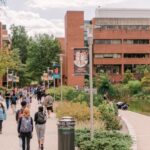
Today’s 18 to 24-year-old college students are expressing anxiety, depression, suicidal ideation, and other related disorders at rates higher than previous generations, according to recent studies. The number of students treated by college counseling centers, according to the 2015 Center for Collegiate Mental Health Annual Report, has grown by more than five times the rate of institutional enrollment. The number of attended appointments has grown at more than seven times the pace of institutional enrollment. To address these changes on our own campus the last several years, UMBC has responded with a holistic approach to its health services and additional preventative and support resources for its students.
“We’ve begun integrating health and counseling with the goal of treating the whole person,” says Kim Leisey, UMBC associate vice president for student affairs. “We know some mental health issues manifest physically and vice versa, so our University Health Services (UHS) and Counseling Center staff work together to help students who may need support from both a physical and emotional perspective.”
This means, for example, therapists ask students when they had their last physical, and nurse practitioners screen for alcohol and drug disorders. Psychiatrists consult with both UHS and counseling staff, while case managers in each department work together on referrals and the insurance process.
The integrated approach will continue to expand and be implemented in a new combined health and counseling building, scheduled to open in 2021. In both formal assessments and individual interactions, UMBC students expressed strong desires to create integrated health structures that reduce stigma and promote self care. Vice President for Student Affairs Nancy Young says, “The new building will allow us to streamline and enhance services supporting the physical, behavioral, and emotional well-being of our students as a foundation for academic success.”
In a step beyond the traditional offerings, UMBC became the fourth U.S. university to add a trained comfort dog to its list of holistic services for students when Chip, a floppy-eared brown Labrador, joined the UMBC Police Department in fall 2019. The University’s Community Resource Sergeant, Jamie Cheatem, serves as the dog’s handler and says that one of Chip’s roles is to provide comfort to students during times of crisis and also during stressful periods during the academic year such as midterms and finals.
UMBC also began offering new recovery and sober living services to students this fall. The Haven at UMBC is part of a partnership between the Division of Student Affairs and The Haven at College, the leading national provider of treatment services and recovery support for college students with substance use and co-occurring disorders. At UMBC, Haven includes a recovery residence and outpatient center in separate locations near campus as well as mentoring and monitoring programs.
In addition to their traditional services, UHS and the Counseling Center offer a variety of support groups, workshops, and screenings to provide students with tools to cope with the stress of college life and managing emotions and distress. “We’re paying attention to wellness programs as well as in-person and online services that can help us reach a broader range of students,” says Bruce Herman, UMBC’s director of health and counseling.
Student peer health educators also assist in educating fellow students on a variety of physical and mental health issues. “Being able to go into the UMBC community and talk with different student groups about various behaviors and topics that impact their health is incredibly meaningful,” says Olivia Hardy ’20, health administration and policy, who works as a peer health educator.
“I love being able to actively contribute in minimizing students’ knowledge gaps,” continues Hardy. “We’re by no means professors or graduate students or staff—and in that, I think that we aren’t daunting. We’re just people students see in their classes, excited to help in any way we can.”
UMBC students, faculty, and staff have an opportunity to play a role in supporting students and other community members by participating in mental health training workshops offered by UHS and the Counseling Center. In addition to its support groups and resources, the Women’s Center offers workshops on supporting survivors of sexual assault and misconduct, while Campus Life’s The Mosaic: Center for Culture and Diversity launched a wellness series for students who identify as LGBTQ+.
UMBC community members who need help addressing situations where a person is displaying disruptive or threatening behavior can contact the interdisciplinary Behavioral Risk Assessment and Consultation Team, which includes Herman along with representatives from student affairs, psychology, human resources, UMBC police, and general counsel. Athletics’ new #RetrieverProject will work closely with student-athletes and members of the UMBC and Catonsville communities to help break stigmas associated with mental health through education and support.
Herman adds that campuswide involvement is critical for the university to address the growing need for mental health support and student success and focus on stigma reduction. “We have to see this work as not just about treatment but instead about co-creating an environment that supports students and their health, including mental health.”
— Eleanor Lewis
****
Header image by Marlayna Demond ’11.
]]>
Today’s 18 to 24-year-old college students are expressing anxiety, depression, suicidal ideation, and other related disorders at rates higher than previous generations, according to recent...
https://umbc.edu/stories/peace-of-mind/
https://beta.my.umbc.edu/api/v0/pixel/news/120005/guest@my.umbc.edu/801c801bdcef9c0b973a0d5a1ddbe54c/api/pixel
bract
campus-life
counseling
fall-2019
news
retrieverproject
student-life
the-mosaic
the-womens-center
uhs
UMBC News & Magazine
https://beta.my.umbc.edu/groups/umbc-news-magazine
https://assets1-beta.my.umbc.edu/system/shared/avatars/groups/000/001/943/24435aa6207c452e7bc15cc74b42c7bb/xsmall.png?1748556657
https://assets1-beta.my.umbc.edu/system/shared/avatars/groups/000/001/943/24435aa6207c452e7bc15cc74b42c7bb/original.png?1748556657
https://assets2-beta.my.umbc.edu/system/shared/avatars/groups/000/001/943/24435aa6207c452e7bc15cc74b42c7bb/xxlarge.png?1748556657
https://assets2-beta.my.umbc.edu/system/shared/avatars/groups/000/001/943/24435aa6207c452e7bc15cc74b42c7bb/xlarge.png?1748556657
https://assets3-beta.my.umbc.edu/system/shared/avatars/groups/000/001/943/24435aa6207c452e7bc15cc74b42c7bb/large.png?1748556657
https://assets1-beta.my.umbc.edu/system/shared/avatars/groups/000/001/943/24435aa6207c452e7bc15cc74b42c7bb/medium.png?1748556657
https://assets2-beta.my.umbc.edu/system/shared/avatars/groups/000/001/943/24435aa6207c452e7bc15cc74b42c7bb/small.png?1748556657
https://assets1-beta.my.umbc.edu/system/shared/avatars/groups/000/001/943/24435aa6207c452e7bc15cc74b42c7bb/xsmall.png?1748556657
https://assets2-beta.my.umbc.edu/system/shared/avatars/groups/000/001/943/24435aa6207c452e7bc15cc74b42c7bb/xxsmall.png?1748556657
UMBC News & Magazine
0
0
false
Mon, 25 Nov 2019 14:57:59 -0500
1 bedroom apartment for rent near UMBC
Available from January
Clean, comfortable and well maintained apartment on Edmondson Ave, Catonsville. Perfect for 1 or 2 people available from January 2020. Only 6 minutes away from UMBC campus, conveniently located close to bus lines and the i695. Laundry, appliances and parking included. $945/month. Please text or call 608-422-9400 for more information. ]]>
Clean, comfortable and well maintained apartment on Edmondson Ave, Catonsville. Perfect for 1 or 2 people available from January 2020. Only 6 minutes away from UMBC campus, conveniently located...
Image
https://assets3-beta.my.umbc.edu/system/shared/attachments/fdcccc0293c1df82597ff0bb75b90639/6a0dcb9c/news/000/088/761/333d6bebeea23dd5a84b478a2b939f68/35a12b3f8a9a81bd582dfbb24e2475ef-p_f.jpg?1574653725
https://beta.my.umbc.edu/api/v0/pixel/news/88761/guest@my.umbc.edu/19826ae4bd6553f9b934f7ae03506cf9/api/pixel
International Student and Scholar Services (ISSS)
https://beta.my.umbc.edu/groups/ies
https://assets4-beta.my.umbc.edu/system/shared/avatars/groups/000/000/431/46ad84ea8ba0baeed7c3faf29d1fd4ef/xsmall.png?1693323874
https://assets3-beta.my.umbc.edu/system/shared/avatars/groups/000/000/431/46ad84ea8ba0baeed7c3faf29d1fd4ef/original.jpeg?1693323874
https://assets1-beta.my.umbc.edu/system/shared/avatars/groups/000/000/431/46ad84ea8ba0baeed7c3faf29d1fd4ef/xxlarge.png?1693323874
https://assets1-beta.my.umbc.edu/system/shared/avatars/groups/000/000/431/46ad84ea8ba0baeed7c3faf29d1fd4ef/xlarge.png?1693323874
https://assets4-beta.my.umbc.edu/system/shared/avatars/groups/000/000/431/46ad84ea8ba0baeed7c3faf29d1fd4ef/large.png?1693323874
https://assets3-beta.my.umbc.edu/system/shared/avatars/groups/000/000/431/46ad84ea8ba0baeed7c3faf29d1fd4ef/medium.png?1693323874
https://assets1-beta.my.umbc.edu/system/shared/avatars/groups/000/000/431/46ad84ea8ba0baeed7c3faf29d1fd4ef/small.png?1693323874
https://assets4-beta.my.umbc.edu/system/shared/avatars/groups/000/000/431/46ad84ea8ba0baeed7c3faf29d1fd4ef/xsmall.png?1693323874
https://assets3-beta.my.umbc.edu/system/shared/avatars/groups/000/000/431/46ad84ea8ba0baeed7c3faf29d1fd4ef/xxsmall.png?1693323874
IES Marketplace
1
0
true
Sun, 24 Nov 2019 22:53:12 -0500
Sun, 24 Nov 2019 22:54:14 -0500
Room for rent near UMBC
]]>
Clean, comfortable and well maintained apartment on Edmondson Ave, Catonsville. Perfect for 1 or 2 people available from January 2020. Only 6 minutes away from UMBC campus, conveniently located...
Image
https://assets3-beta.my.umbc.edu/system/shared/attachments/fdcccc0293c1df82597ff0bb75b90639/6a0dcb9c/news/000/088/761/333d6bebeea23dd5a84b478a2b939f68/35a12b3f8a9a81bd582dfbb24e2475ef-p_f.jpg?1574653725
https://beta.my.umbc.edu/api/v0/pixel/news/88761/guest@my.umbc.edu/19826ae4bd6553f9b934f7ae03506cf9/api/pixel
International Student and Scholar Services (ISSS)
https://beta.my.umbc.edu/groups/ies
https://assets4-beta.my.umbc.edu/system/shared/avatars/groups/000/000/431/46ad84ea8ba0baeed7c3faf29d1fd4ef/xsmall.png?1693323874
https://assets3-beta.my.umbc.edu/system/shared/avatars/groups/000/000/431/46ad84ea8ba0baeed7c3faf29d1fd4ef/original.jpeg?1693323874
https://assets1-beta.my.umbc.edu/system/shared/avatars/groups/000/000/431/46ad84ea8ba0baeed7c3faf29d1fd4ef/xxlarge.png?1693323874
https://assets1-beta.my.umbc.edu/system/shared/avatars/groups/000/000/431/46ad84ea8ba0baeed7c3faf29d1fd4ef/xlarge.png?1693323874
https://assets4-beta.my.umbc.edu/system/shared/avatars/groups/000/000/431/46ad84ea8ba0baeed7c3faf29d1fd4ef/large.png?1693323874
https://assets3-beta.my.umbc.edu/system/shared/avatars/groups/000/000/431/46ad84ea8ba0baeed7c3faf29d1fd4ef/medium.png?1693323874
https://assets1-beta.my.umbc.edu/system/shared/avatars/groups/000/000/431/46ad84ea8ba0baeed7c3faf29d1fd4ef/small.png?1693323874
https://assets4-beta.my.umbc.edu/system/shared/avatars/groups/000/000/431/46ad84ea8ba0baeed7c3faf29d1fd4ef/xsmall.png?1693323874
https://assets3-beta.my.umbc.edu/system/shared/avatars/groups/000/000/431/46ad84ea8ba0baeed7c3faf29d1fd4ef/xxsmall.png?1693323874
IES Marketplace
1
0
true
Sun, 24 Nov 2019 22:53:12 -0500
Sun, 24 Nov 2019 22:54:14 -0500
Room for rent near UMBC
There will be bedrooms available in January 2020(lease 9 month or longer)
price : $420 /month about + utilities (average $50/month/per month)+ wifi $10/per month
Location: Walking distance to UMBC about 5 minutes.
If interesting, please contact me :
text 4432979266 to me for the message and tell your name and your
email@UMBC.edu, I will back to you ASAP. Thanks!
]]>
There will be bedrooms available in January 2020(lease 9 month or longer) price : $420 /month about + utilities (average $50/month/per month)+ wifi $10/per month Location: Walking...
https://beta.my.umbc.edu/api/v0/pixel/news/88753/guest@my.umbc.edu/a0e999075412ddde560e3bebb81f9d0d/api/pixel
International Student and Scholar Services (ISSS)
https://beta.my.umbc.edu/groups/ies
https://assets4-beta.my.umbc.edu/system/shared/avatars/groups/000/000/431/46ad84ea8ba0baeed7c3faf29d1fd4ef/xsmall.png?1693323874
https://assets3-beta.my.umbc.edu/system/shared/avatars/groups/000/000/431/46ad84ea8ba0baeed7c3faf29d1fd4ef/original.jpeg?1693323874
https://assets1-beta.my.umbc.edu/system/shared/avatars/groups/000/000/431/46ad84ea8ba0baeed7c3faf29d1fd4ef/xxlarge.png?1693323874
https://assets1-beta.my.umbc.edu/system/shared/avatars/groups/000/000/431/46ad84ea8ba0baeed7c3faf29d1fd4ef/xlarge.png?1693323874
https://assets4-beta.my.umbc.edu/system/shared/avatars/groups/000/000/431/46ad84ea8ba0baeed7c3faf29d1fd4ef/large.png?1693323874
https://assets3-beta.my.umbc.edu/system/shared/avatars/groups/000/000/431/46ad84ea8ba0baeed7c3faf29d1fd4ef/medium.png?1693323874
https://assets1-beta.my.umbc.edu/system/shared/avatars/groups/000/000/431/46ad84ea8ba0baeed7c3faf29d1fd4ef/small.png?1693323874
https://assets4-beta.my.umbc.edu/system/shared/avatars/groups/000/000/431/46ad84ea8ba0baeed7c3faf29d1fd4ef/xsmall.png?1693323874
https://assets3-beta.my.umbc.edu/system/shared/avatars/groups/000/000/431/46ad84ea8ba0baeed7c3faf29d1fd4ef/xxsmall.png?1693323874
IES Marketplace
1
0
true
Sun, 24 Nov 2019 14:11:23 -0500
The Driving Force of Chemistry
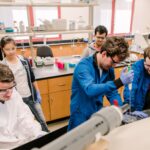
In a chemical engineering lab, students huddle around a bench layering aluminum foil and steel wool together to build a battery. Another group pipettes solutions into a pressure vessel to test various reactions. The end result of the students’ experimentations will be two autonomous shoebox-sized vehicles that are powered by chemical reactions. Think of your second-grade volcano project, but the baking soda and vinegar “eruption” is happening inside an enclosed vessel, propelling it forward down a track.
When the UMBC Chem-E-Car chapter launched in early spring 2019, there were 10 students who came together to grow the group. Today, less than one year after they became formally recognized by UMBC and the American Institute of Chemical Engineers, there are about 30 students working together to build vehicles powered by chemical reactions, putting the information and skills they learn in their classes into practice.
Students work in three groups on two vehicle projects. One team focuses on developing the stopping mechanism that uses a color changing reaction, the second team works on refining the car propelled by a pressure-generating reaction, and the third team develops a battery-driven vehicle.
“One car moves using a chemical reaction that produces a large volume of gas, and the gas is used to move a pneumatic motor, which is kind of like a water wheel for air,” explains Sammie Maygers ’20, chemical engineering, who is leading the group in charge of developing the stopping mechanism. “The second car is powered by a battery. We are experimenting with different chemical reactions to optimize the amount of current and voltage that we can produce to run an electric motor.”

As the group was ramping up, the founding students spent the semester learning about the structure of the competitions and attended the regional competition as onlookers. Alex Von Gunten ’20, chemical engineering, current chair of the Chem-E-Car Project, says that it was helpful for UMBC students to experience the competitions and to take note of the vehicles that other teams built. An additional layer of pressure for competitors is that no one knows how far their car will need travel until a couple of hours before the race, when the judges release the specifications that the car must meet. Just before the car is set to race, the students work through a series of calculations to determine the amount of chemicals that are needed to propel the vehicle a specific distance.
Jason Ewart ’20, chemical engineering, who is a member of the pressure team, explains that safety is a very important component of the Chem-E-Car competitions. The students who are taking part rely on the knowledge they’ve learned in the courses they have taken at UMBC, including the safety course that all chemical, biochemical, and environmental engineering students must complete.
The Chem-E-Car group joins a rich history of student organizations on campus that design and build vehicles based on skills learned in the classroom. On a human scale, UMBC’s Baja SAE team builds vehicles that are driven by one student and are designed to withstand challenging terrain and weather while keeping budget, vehicle weight, and agility in mind. In the 2018–2019 season, the Baja team finished with the second highest total points in the program’s 30-year history.
The Chem-E-Car team has yet to test the mettle of their designs, but they plan on competing in the regional competition at Virginia Tech in April 2020, with their sights set on advancing to the national competition.
***
All photos, including header, by Marlayna Demond ’11.
]]>
In a chemical engineering lab, students huddle around a bench layering aluminum foil and steel wool together to build a battery. Another group pipettes solutions into a pressure vessel to test...
https://umbc.edu/stories/mini-vehicles-powered-by-chemical-reactions/
https://beta.my.umbc.edu/api/v0/pixel/news/120006/guest@my.umbc.edu/2574760c7d6a055cbaeaa01d50047c08/api/pixel
at-play
campus-life
chemistry
coiet
fall-2019
sae-baja
UMBC News & Magazine
https://beta.my.umbc.edu/groups/umbc-news-magazine
https://assets1-beta.my.umbc.edu/system/shared/avatars/groups/000/001/943/24435aa6207c452e7bc15cc74b42c7bb/xsmall.png?1748556657
https://assets1-beta.my.umbc.edu/system/shared/avatars/groups/000/001/943/24435aa6207c452e7bc15cc74b42c7bb/original.png?1748556657
https://assets2-beta.my.umbc.edu/system/shared/avatars/groups/000/001/943/24435aa6207c452e7bc15cc74b42c7bb/xxlarge.png?1748556657
https://assets2-beta.my.umbc.edu/system/shared/avatars/groups/000/001/943/24435aa6207c452e7bc15cc74b42c7bb/xlarge.png?1748556657
https://assets3-beta.my.umbc.edu/system/shared/avatars/groups/000/001/943/24435aa6207c452e7bc15cc74b42c7bb/large.png?1748556657
https://assets1-beta.my.umbc.edu/system/shared/avatars/groups/000/001/943/24435aa6207c452e7bc15cc74b42c7bb/medium.png?1748556657
https://assets2-beta.my.umbc.edu/system/shared/avatars/groups/000/001/943/24435aa6207c452e7bc15cc74b42c7bb/small.png?1748556657
https://assets1-beta.my.umbc.edu/system/shared/avatars/groups/000/001/943/24435aa6207c452e7bc15cc74b42c7bb/xsmall.png?1748556657
https://assets2-beta.my.umbc.edu/system/shared/avatars/groups/000/001/943/24435aa6207c452e7bc15cc74b42c7bb/xxsmall.png?1748556657
UMBC News & Magazine
0
0
false
Thu, 21 Nov 2019 14:46:59 -0500
Building Bonds: Jody Grandier ’17

To teach in a particularly challenging school, it might just help to have gone through a few challenges of your own. At least, that is the case for Jody Grandier ’17, American studies. The 39-year-old single mom went from living on the streets in downtown Baltimore to teaching first grade at the city’s North Bend Elementary School.
Last spring, she was recognized by Baltimore City Schools CEO Sonja Santelises, as one of three “Amazing Teachers,” an award given after the completion of the first year teaching.
“My number one goal in my classroom is to build relationships and bonds, not just with children but with their family and the communities,” says Grandier. She does that by helping the kids get what they need, from school supplies to socks, and making sure to not be judgmental about their circumstances. After all, her understanding of some of their hardships comes from first-hand knowledge.
Turning Point
Grandier says that when she was 18 she moved to Baltimore with a boyfriend and “once I moved down there I ended up getting into drugs and getting into a lot of trouble and living on the street and being in a lot of abusive relationships.” After moving home and spending time in rehab she began to recover–only to discover that she was pregnant. To provide for herself and her child, she decided to turn back to a childhood dream of being a teacher.
After a few years at Howard Community College, she says, “I went to visit UMBC and I loved it. I thought the campus was really beautiful. Everybody there was so nice and I just couldn’t have asked for a better experience.” She was eventually accepted into the Sherman STEM Teacher Scholars Program. Integral to her journey at UMBC was Nicole King, associate professor and chair of the Department of American Studies, and her classes on gentrification in Baltimore. “I really enjoyed her classes. I absolutely loved it. She’s one of the best human beings I’ve ever met in my whole life, actually,” says Grandier.
Soon after graduation, she got the job at North Bend in southwest Baltimore City. Now she spends her days helping kids from the city learn and grow as she did. Field trips, lunches with the kids, and other fun moments make it rewarding, she says. That said, her job presents unique challenges.
“I definitely am in situations that would prefer not to be in. But I think that it’s part of the job and that if we all said, we don’t want to be in danger, then who would be there teaching? It has to get done. Every child deserves an education,” she says.
Educational Advocate
The education that children get is not always equal, however. Grandier has a unique perspective since her own daughter, now 10, attends a better-funded Howard County school.
“They have brand new computers, [and] when you walk in the building it’s gorgeous. They have a lot of extra activities. We don’t have a lot of that in the city,” she says, where “the buildings are pretty dilapidated, they’re not very nice and they have bugs and they’re hot or they’re cold and we can’t drink the water. I can’t imagine many parents in the county being ok with that.”
On top of that, Grandier says that her students face other obstacles, like homelessness and hunger. “I don’t really know how you can come into a classroom and learn when you’ve been up all night because your parents are fighting or you’re homeless or you’re hungry. That, to a child, has to be completely devastating.”
Grandier advocates for more mental health opportunities for city kids as well as for better funding. Given the resources and a steady stream of dedicated teachers–as well as her unflinching faith in the nature of people–she says that she has hope for the city.
“I think it’s going to be a long road and a lot more people are going to have to be informed and get involved but I definitely believe that one day Baltimore City schools will be at the top,” she says.
– Karen Stysley
* * * * *
Header Image: Grandier (left) with Baltimore City Schools CEO Sonja Santelises.
]]>
To teach in a particularly challenging school, it might just help to have gone through a few challenges of your own. At least, that is the case for Jody Grandier ’17, American studies. The...
https://umbc.edu/stories/building-bonds-jody-grandier-17/
https://beta.my.umbc.edu/api/v0/pixel/news/120007/guest@my.umbc.edu/8c0687e39836156fa54e2d01823ed128/api/pixel
alumni
UMBC News & Magazine
https://beta.my.umbc.edu/groups/umbc-news-magazine
https://assets1-beta.my.umbc.edu/system/shared/avatars/groups/000/001/943/24435aa6207c452e7bc15cc74b42c7bb/xsmall.png?1748556657
https://assets1-beta.my.umbc.edu/system/shared/avatars/groups/000/001/943/24435aa6207c452e7bc15cc74b42c7bb/original.png?1748556657
https://assets2-beta.my.umbc.edu/system/shared/avatars/groups/000/001/943/24435aa6207c452e7bc15cc74b42c7bb/xxlarge.png?1748556657
https://assets2-beta.my.umbc.edu/system/shared/avatars/groups/000/001/943/24435aa6207c452e7bc15cc74b42c7bb/xlarge.png?1748556657
https://assets3-beta.my.umbc.edu/system/shared/avatars/groups/000/001/943/24435aa6207c452e7bc15cc74b42c7bb/large.png?1748556657
https://assets1-beta.my.umbc.edu/system/shared/avatars/groups/000/001/943/24435aa6207c452e7bc15cc74b42c7bb/medium.png?1748556657
https://assets2-beta.my.umbc.edu/system/shared/avatars/groups/000/001/943/24435aa6207c452e7bc15cc74b42c7bb/small.png?1748556657
https://assets1-beta.my.umbc.edu/system/shared/avatars/groups/000/001/943/24435aa6207c452e7bc15cc74b42c7bb/xsmall.png?1748556657
https://assets2-beta.my.umbc.edu/system/shared/avatars/groups/000/001/943/24435aa6207c452e7bc15cc74b42c7bb/xxsmall.png?1748556657
UMBC News & Magazine
0
0
false
Wed, 20 Nov 2019 14:00:20 -0500
UMBC broadens international learning opportunities: Stories from five continents

Heading into International Education Week, November 18 – 22, UMBC is celebrating the expansion of international learning opportunities and partnerships. UMBC is reaching beyond traditional study abroad frameworks to prepare students for global careers, including through virtual exchange programs. At the same time, UMBC continues to welcome talented scholars from around the world to join the campus community, honoring their contributions to UMBC and the relationships they grow during their time on campus.
 Graduate students from India officially become Retrievers during international student orientation.
Virtual international learning at home: Engineering with Portugal
Many college students pursuing STEM majors assume that international learning isn’t an option for them. This might be because they need to complete specific, sequential course requirements, or because they want to focus on internship and research opportunities. In recent years, however, many UMBC STEM students have taken advantage of international learning opportunities where they can fulfill course requirements, complete internships, or do research while abroad, or build international connections while on campus at UMBC.
Aliyah Smith’s experience shows one way to approach this. Smith ‘19, mechanical engineering, completed a nine-week research internship at the University of Oxford, followed by a semester studying in the United Arab Emirates. Some of her engineering classmates have taken a different approach: virtual international learning.
That virtual experience is the innovation of Marc Zupan, associate professor of mechanical engineering. Zupan’s Global Engineering course helps UMBC students prepare to solve complex, large-scale challenges by collaborating remotely with engineering students in Portugal. Students apply advanced technical knowledge as well as communication, teamwork, and cultural awareness skills to their projects. Teammates in the U.S. and Portugal connect through communication tools like Skype and Slack.
 Global Engineering UMBC class in Catonsville and Porto campuses. Photo courtesy of Zupan.
The Global Engineering class has been held with the University of Porto in Portugal for five years. Three years ago Zupan added to the course a collaboration with La Universidad de Los Andes in Colombia, and he’s working to expand it further.
The class is guided by one principle, Zupan says: “The answer to the planet’s environmental and social problems can be met and overcome through collaborative cross-cultural engineering.”
“This isn’t treated as a class project, but a simulated professional experience to prepare students for an international workplace,” Zupan explains. “The cross-cultural aspect of the course is crucial. By learning how to manage a project with classmates that have a completely different cultural and social framework, students must work through differences and learn how to solve a problem together. Cross-cultural engineering delivers a more unique creative solution to engineering challenges.”
Building empathy online through Spanish history
Ana Oscoz, professor of modern languages, linguistics, and intercultural communication, has created the virtual course Spanish Cultures and History, designed to provide a robust international experience for students who aren’t able to travel abroad.
Oscoz worked with colleagues at the Universitat de València and La Universidad Complutense de Madrid to create a Spanish-language course focused on how Spain’s past affects its current social and political climate. Students work in small groups and use a variety of digital communication tools to manage their collaborative class projects through different time zones.
“For me, the class is not only about history but about learning how to empathize with others who have different histories,” says Oskoz. “The greatest takeaway is having students in both countries say, ‘I didn’t know this could be looked at another way.’”
Learning from non-native English speakers in an online TESOL exchange
When Shannon Sauro, assistant professor of education, came to UMBC, she brought with her a virtual exchange program for Teachers of English to Speakers of Other Languages (TESOL) that she began in Sweden five years ago. The future educators she has worked with hail from countries around the globe, and many are not native English speakers. “For many students,” she says, “English was their third or fourth language,” and their perspectives have proved invaluable for classmates who are native English speakers.
 Students in Sweden corresponding with their virtual exchange partners in Israel and Spain. Photo courtesy of Shannon Sauro.
At UMBC, Sauro offers upper-level courses that integrate virtual exchange to challenge and build students’ critical thinking, teamwork, and cross-cultural skills. She also offers training in virtual collaboration to interested faculty across all fields.
“Teaching TESOL means working often with vulnerable populations and deepening the knowledge of the role of the teacher,” shares Sauro. “Virtual exchanges build empathy and emphasize the humanity in all of us.”
Refining language skills: Bilingual exchange with Japan
Virtual exchanges are also useful for students working to learn a second language, as they can enhance students’ pronunciation skills and their understanding of a language’s cultural context. Tomoko Hoogenboom, senior lecturer in modern languages, linguistics, and intercultural communication, worked with colleagues at Nanzan University in Japan to implement a bilingual virtual exchange for Nanzan students studying English and UMBC students studying Japanese.
The Collaborative Online International Learning (COIL) program is part of a partnership between the American Council of Education and Japan’s Ministry of Education, Culture, Sports, Science and Technology. The institutions have provided a combined $9.8 million to fund such collaborations between U.S. and Japanese institutions from 2018 through 2023.
Hoogenboom explains that UMBC students in this upper-level course work on group projects with Japanese students through tools like Slack. At the end of the course, participating UMBC students have an opportunity to study in Japan on a full scholarship.
“COIL is about a deep language and cultural learning experience. Through class projects students expand their understanding of Japanese/U.S. linguistic and cultural differences and similarities,” says Hoogenboom. “Students then leverage this knowledge to foster long-term bicultural and bilingual collaboration through their study abroad opportunity.”
Growing through shared interests: Health and athletics
Throughout the summer and fall 2019, UMBC’s partnerships with Japanese universities have continued to grow. In addition to developing a five-year agreement with Kogakuin University of Technology and Engineering, focused on research collaboration, UMBC established a new kind of partnership with Nippon Sport Science University that explores broader elements of the student experience.
 Jessica Hammond-Graf (left) walks around UMBC with representatives of Nippon Sport Science University.
UMBC has an existing collaboration with Nippon Sport Science University in the area of emergency health services education. For eight days, two faculty members and five students from Nippon Sport Science University visited UMBC to develop their knowledge of English-language medical terminology and to shadow emergency responders. During the visit, Kazumi Hasegawa, director of international marketing at UMBC’s English Language Institute, connected these guests with UMBC Athletics, to explore collaboration opportunities related to athletics, recreation, and the student experience.
“We are looking forward to the opportunity to collaborate with and learn from Nippon Sport Science University,” says Jessica Hammond-Graf, UMBC’s interim director of athletics. “Sport is a wonderful way to celebrate our shared values and it can and should serve as a great unifier between our cultures.”
 Kazumi Hasegawa (left), Jessica Hammond Graf (second from right), and Sarah Gardenghi (right) with representatives of Nippon Sport Science University.
Hosting professional development for visiting faculty through the Fulbright program
UMBC also regularly hosts faculty and students from other countries on campus for longer periods of time through international exchanges and through professional development opportunities. Recently, education instructors Doaa Rashed, M.A. ’08, ESOL and bilingual instructional systems development, and Ph.D. ’17, language, literacy and culture, and Mary Tabaa, M.A.‘00, ESOL and instructional development systems, hosted a Fulbright Junior Faculty Development Program professional development with TESOL and linguistics faculty from Egypt. This specific Fulbright program is a collaboration between the U.S. Department of State and AMIDEAST, a U.S. nonprofit that works to strengthen cooperation between Americans and the peoples of the Middle East and North Africa.
 Scott Casper, dean of the College of Arts, Humanities, and Social Sciences, speaking with a faculty member from Egypt. Photo courtesy of UMBC TESOL.
Visiting faculty represented Pharos University, the University of Modern Sciences and Arts, Minoufiya University, Zewail City of Science and Technology, Al-Azhar University, and the American University in Cairo. Each was paired with a UMBC faculty mentor for their ten-week stay, working together to conduct TESOL and linguistics research and examine best practices in those fields, as well as providing student support with diverse learning styles and internship and employment support. Their goal was to gather new insights to implement at their home campus.
“It is one thing for international partners to hear how UMBC is diverse and inclusive, it is another to actually see how it works in person,” reflects Rashed. “The success of this program, one we hope to continue, depends on the continued committed of the entire campus to the preparation of teachers from all over the world. This is where the real-life implementation of diversity and inclusion is invaluable.”
 Visiting Egyptian faculty with Tabaa (l) and Rashed (r).
Since the participants have returned to their home institutions, their joint research has continued through virtual collaboration. In December, the Egyptian faculty will present their work to Fulbright Egypt.
Combining science and cultural immersion in Spain
While UMBC continues to expand the range of available international learning experiences, some students are still looking for a more traditional study abroad, but don’t quite know how to access it in a way that works for them.
Like Marc Zupan, Ivan Erill, associate professor of biological sciences, wanted to help STEM students see international learning as a real possibility. Erill developed a STEM study abroad program at La Universitat Pompeu Fabra in his hometown of Barcelona, Spain. Students earn UMBC credit for biology and Spanish courses, while also being immersed in Spanish culture.
The six-week program ran for the first time in summer 2019. “I have learned that our students are very receptive to other cultures and ways of seeing life, and that being exposed to other cultures makes them both challenge and appreciate their own culture,” Erill says.
 Ivan Erill (center) at a study abroad fair in February 2019.
Erill’s goal for the program is to help students expand their sense of what is possible in their future careers as scientists. This includes the options of completing a graduate study abroad or collaborating with scientists in other countries. “I have witnessed a gradual change in students’ perception of the quality and breadth of scientific research outside the U.S.,” he shares.
Pauline Rozario ’20, biological sciences, says the program has expanded her vision of her future career. “I would love to travel abroad for my future career path in medicine after I graduate from UMBC,” she shares.
Jessica Kweon ’22, biological sciences, had a similar reaction after visiting the Institute for Research in Biomedicine in Barcelona, which she noted had “incredible image-processing capabilities.” In addition to thinking more deeply about a possible research career in biology, she’s increasingly reflecting on the cultural factors that shape her perspective, as a scientist and as a person.
Throughout International Education Week, UMBC is hosting a range of opportunities for all community members to connect with Retrievers with different cultural and linguistic backgrounds, and to learn about international learning and teaching programs.
This news story was reported in collaboration with Sarah Hansen, M.S.’15, biology, and Megan Hanks.
Banner image: UMBC Commons international flags. All images by Marlayna Demond ’11, unless otherwise noted.
]]>
Heading into International Education Week, November 18 – 22, UMBC is celebrating the expansion of international learning opportunities and partnerships. UMBC is reaching beyond traditional study...
https://umbc.edu/stories/umbc-broadens-international-learning-opportunities-stories-from-five-continents/
https://beta.my.umbc.edu/api/v0/pixel/news/120008/guest@my.umbc.edu/1e98c7ac1a2aa30ab8b6f1e743684ca5/api/pixel
arts-and-culture
athletics
biology
cahss
coeit
education
ehs
meche
mlli
page1
policy-and-society
science-and-technology
UMBC News & Magazine
https://beta.my.umbc.edu/groups/umbc-news-magazine
https://assets1-beta.my.umbc.edu/system/shared/avatars/groups/000/001/943/24435aa6207c452e7bc15cc74b42c7bb/xsmall.png?1748556657
https://assets1-beta.my.umbc.edu/system/shared/avatars/groups/000/001/943/24435aa6207c452e7bc15cc74b42c7bb/original.png?1748556657
https://assets2-beta.my.umbc.edu/system/shared/avatars/groups/000/001/943/24435aa6207c452e7bc15cc74b42c7bb/xxlarge.png?1748556657
https://assets2-beta.my.umbc.edu/system/shared/avatars/groups/000/001/943/24435aa6207c452e7bc15cc74b42c7bb/xlarge.png?1748556657
https://assets3-beta.my.umbc.edu/system/shared/avatars/groups/000/001/943/24435aa6207c452e7bc15cc74b42c7bb/large.png?1748556657
https://assets1-beta.my.umbc.edu/system/shared/avatars/groups/000/001/943/24435aa6207c452e7bc15cc74b42c7bb/medium.png?1748556657
https://assets2-beta.my.umbc.edu/system/shared/avatars/groups/000/001/943/24435aa6207c452e7bc15cc74b42c7bb/small.png?1748556657
https://assets1-beta.my.umbc.edu/system/shared/avatars/groups/000/001/943/24435aa6207c452e7bc15cc74b42c7bb/xsmall.png?1748556657
https://assets2-beta.my.umbc.edu/system/shared/avatars/groups/000/001/943/24435aa6207c452e7bc15cc74b42c7bb/xxsmall.png?1748556657
UMBC News & Magazine
0
0
false
Tue, 19 Nov 2019 18:20:46 -0500
UMBC Cyber Dawgs are named CyberForce national champions

UMBC’s Cyber Defense Team, known as the Cyber Dawgs, emerged the national champion team in the U.S. Department of Energy’s fifth annual CyberForce Competition. The Cyber Dawgs earned first place overall out of more than 100 teams from universities across the country.
Ten national laboratories hosted competing teams this year, November 15 – 16. UMBC competed at the Argonne National Laboratory near Chicago, Illinois, while other teams traveled to sites like the Pacific Northwest National Laboratory in Washington state and Oak Ridge National Laboratory in Tennessee. Competing teams hailed from a broad range of institutions, including Virginia Tech, Carnegie Mellon, Georgia Tech, Texas A&M and the U.S. Air Force Academy.
The competition tasks students with defending critical energy infrastructure during simulated cyberattacks. The scenarios are designed to be realistic, focused on water and power systems and including real-world constraints, such as insufficient budget for system upkeep and limited information on system needs. During the competition, “red teams,” including industry professionals, attack the system, while the students work to ensure that the infrastructure is available to their customers, or “green teams,” who test system usability.
The teams receive points based on how successfully they address attacks, while still allowing users to access the infrastructure they need. The teams are also awarded points for innovative defense tactics and ideas. This year’s competition saw several leading teams with neck-and-neck scores until the final round, when UMBC’s Cyber Dawgs pulled ahead for the victory.
The competition offers students a unique opportunity to develop their cybersecurity skills in relation to critical infrastructure, and have hands-on experience in a realistic cyberattack situation.
“The CyberForce competition is the most unique of our annual events, allowing us to experiment with network configurations to defend an industrial control system against adversaries while playing the roles of an IT organization,” explains RJ Joyce ’18, M.S. ’20, computer science, a member of the winning team. “The hard work, dedication, and creativity that each member brought to the team lifted us from a regional win last year to a national win this year.”
In addition to Joyce, last weekend’s winning team included Anna Staats ’20, computer science; Drew Barrett ’20, computer science; Grant Spencer ’20, computer science; Cyrus Bonyadi, Ph.D. ’23, computer science; and Seamus Burke ’20, computer science.
“The team’s second national championship in three years shows the enthusiasm, grit, and tenacity of our students in demonstrating their technical cyber expertise in a competitive arena,” says Rick Forno, senior lecturer of computer science and assistant director of UMBC’s Center for Cybersecurity.
Forno advises the Cyber Dawgs with Charles Nicholas, professor of computer science and electrical engineering. “It’s an awesome thing not just for the team and university,” he says, “but for each competitor individually, as they prepare to enter the cybersecurity workforce after graduation.”
UMBC students have a strong record in state and national competition. In 2018, UMBC computer science and information systems students won the top prize at the Maryland Cyber Challenge. A year earlier, the UMBC Cyber Dawgs won the National Collegiate Cyber Defense Competition.
Update: In early December 2019, the Cyber Dawgs won the 2019 Maryland Cyber Challenge, with a team comprised of Staats, Spencer, and Burke. They competed against several skilled challengers, including a team from the U.S. Air Force Academy.
Banner image: The Cyber Dawgs at the CyberForce competition. From left, Charles Nicholas, Anna Staats, Drew Barrett, Grant Spencer, Cyrus Bonyadi, and Seamus Burke. Photo courtesy of Argonne National Lab.
]]>
UMBC’s Cyber Defense Team, known as the Cyber Dawgs, emerged the national champion team in the U.S. Department of Energy’s fifth annual CyberForce Competition. The Cyber Dawgs earned first place...
https://umbc.edu/stories/umbc-cyber-dawgs-are-named-cyberforce-national-champions/
https://beta.my.umbc.edu/api/v0/pixel/news/120009/guest@my.umbc.edu/19af7e2723e3f8ee0a2cd9f9a5b6de7b/api/pixel
coeit
csee
cybersecurity
majoraward
science-and-technology
UMBC News & Magazine
https://beta.my.umbc.edu/groups/umbc-news-magazine
https://assets1-beta.my.umbc.edu/system/shared/avatars/groups/000/001/943/24435aa6207c452e7bc15cc74b42c7bb/xsmall.png?1748556657
https://assets1-beta.my.umbc.edu/system/shared/avatars/groups/000/001/943/24435aa6207c452e7bc15cc74b42c7bb/original.png?1748556657
https://assets2-beta.my.umbc.edu/system/shared/avatars/groups/000/001/943/24435aa6207c452e7bc15cc74b42c7bb/xxlarge.png?1748556657
https://assets2-beta.my.umbc.edu/system/shared/avatars/groups/000/001/943/24435aa6207c452e7bc15cc74b42c7bb/xlarge.png?1748556657
https://assets3-beta.my.umbc.edu/system/shared/avatars/groups/000/001/943/24435aa6207c452e7bc15cc74b42c7bb/large.png?1748556657
https://assets1-beta.my.umbc.edu/system/shared/avatars/groups/000/001/943/24435aa6207c452e7bc15cc74b42c7bb/medium.png?1748556657
https://assets2-beta.my.umbc.edu/system/shared/avatars/groups/000/001/943/24435aa6207c452e7bc15cc74b42c7bb/small.png?1748556657
https://assets1-beta.my.umbc.edu/system/shared/avatars/groups/000/001/943/24435aa6207c452e7bc15cc74b42c7bb/xsmall.png?1748556657
https://assets2-beta.my.umbc.edu/system/shared/avatars/groups/000/001/943/24435aa6207c452e7bc15cc74b42c7bb/xxsmall.png?1748556657
UMBC News & Magazine
0
0
false
Mon, 18 Nov 2019 16:16:29 -0500


