Support comes full circle: When students become mentors
In 2015, Cherie Tebah’s dream of providing dental care in marginalized communities was shattered when she sustained injuries while in the U.S. military. Tebah, who is originally from Ghana, had nurtured her dream for years as a dental assistant stationed in Japan. But with the guidance of her medical team, she had to accept that her disability would make achieving that dream impossible.
Tebah had just completed an associates degree at Montgomery College, and at first, she struggled to move on. But after three years of deep reflection, working with a psychologist and social worker, and starting her own business, Tebah found a new path.
The support she received from her own social worker, and shadowing a social worker who had graduated from UMBC, helped her decide to apply to UMBC’s social work program at The Universities at Shady Grove (USG). Visiting campus and finding a tight-knit, diverse community so close to home sealed the deal.
This spring, Tebah will graduate from UMBC with a double major in social work and psychology. Now, she has big plans to channel her passion for serving others into a social work career.
Cherie Tebah was featured in a video about the UMBC social work program at the Universities at Shady Grove.
Resources for success
Going back to school wasn’t easy. “As a student with a disability, I had trouble getting my tasks done on time. There were days when it was really hard for me to even walk,” Tebah says. “But my professors worked with me, empowered me, and supported me through everything.” Even when she struggled, “they were there to encourage me to carry on.”
The support Tebah received from her faculty mentors and other resources on campus helped her persist through challenges. The Macklin Center for Academic Success helped her improve her writing. Librarians helped her find sources for assignments. Retriever Essentials provided food when times were especially tough. Counseling services supported her mental health. Zumba classes helped her blow off steam.
The Veteran’s Lounge was most important. “When it was too much for me to handle, I would go to the Veteran’s Lounge,” she says. “There I would connect with other veterans and learn about other resources they had used.”
“At UMBC,” Tebah says, “I’ve gained confidence and learned appropriate ways to advocate for myself.”
Spreading the love
Once she became familiar with campus resources and realized how much they had helped her, Tebah decided to pay it forward. “I love to help people succeed, so for me, if others have put time into my career and my future, I feel that it’s only right to reciprocate that love to other students,” she says.
Tebah joined the Peer Advisory Team, which staffs orientation and conducts monthly check-ins with students. She also became a leader in the Social Work Student Association. “Connecting students with resources that can help them has been very fulfilling for me,” she says.
 Nicole Belfiore, clinical isntructor of social work at USG, is one of Cherie Tebah’s mentors.
In August, Tebah will begin her master’s degree in social work at University of Maryland, Baltimore. She’s asked Nicole Belfiore, a clinical instructor in social work at USG, to continue serving as her mentor. “At USG we’re like a family,” Tebah says. And family members stick with each other.
Chasing his potential
Brian Carroll ‘14, physics, Ph.D. ’20, atmospheric physics, has also already begun to pay forward the mentorship he received while pursuing both of his UMBC degrees.
As an undergrad, he joined the Atmospheric Lidar Group, led by Ruben Delgado and Belay Demoz. He then chose to continue in the group for his Ph.D. Both Delgado, assistant research scientist in the Joint Center for Earth Systems Technology (JCET), and Demoz, JCET director, have been key mentors and role models for Carroll.
“Ruben does a great job of pushing you to chase your own potential and offering you opportunities to excel,” Carroll says. “And Belay is especially good at giving professional advice…he offers a lot of what you can’t get in a classroom.”
From them, and others, he’s learned how to support younger students in his field.
Finding the edge
Throughout Carroll’s Ph.D., he’s had many opportunities to mentor undergraduates, and his approach has shifted over the years. He’s learned that rather than explaining everything in detail up front, the best mentors “get someone to the edge of their understanding, and then let them wander for a bit,” he says.
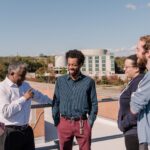
 Brian Carroll (center, blue shirt), Ruben Delgado (third from left), Belay Demoz (third from right in front row) and other members of the Atmospheric Lidar Group gather in front of the rooftop telescope at UMBC.
If they get stuck in the dark, “then you kind of light up the area around them. They keep wandering until they get to the edge of the light again, and then push beyond it until they need some more help.”
This summer Carroll will begin a postdoctoral fellowship at NASA Langley in Hampton, Virginia. As he continues his career, “I want to carry on a lot of what Ruben and Belay have taught me and to try to provide that push and help people realize their potential,” Carroll says.
It’s especially important to him to support students from underrepresented backgrounds in atmospheric science, as Delgado and Demoz have modeled so well. “I really want to reach out to as many students as possible,” Carroll says, “especially…from populations that may not have as many opportunities, and help make their success a reality.”
New beginnings
STEM BUILD at UMBC is a program designed to do just that.The College of Natural and Mathematical Sciences (CNMS) runs the multi-pronged, NIH-funded program, which is designed to enhance diversity in the biomedical workforce. In 2018, as a non-traditional student at Montgomery College, Shehar Yar Awan ’20, biological sciences, became a BUILD a Bridge to STEM intern. Little did he know how much the experience would affect his future.
 Shehar Yar Awan ’20 gives a presentation on the research he did during the 2018 BUILD a Bridge to STEM internship.
As an intern, Awan conducted research with Erin Green, assistant professor of biological sciences, and presented his work at UMBC’s Summer Undergraduate Research Fest. Because he had such a positive summer experience, Awan decided to transfer to UMBC and apply to be a STEM BUILD Trainee, another arm of the BUILD program. He was accepted.
Spot-on advice
Awan started his STEM BUILD experience as a Retriever with a summer bridge program designed to kick-start his time at UMBC. He shares that program leaders like Lucie Blauvelt, assistant director of student engagement initiatives in CNMS, and Laura Ott, director of the CNMS Science Education Research Unit, made an impact right away.
“It was really great to have someone showing you around campus, introducing you to people, and giving you insight on what it was going to be like and what you needed to do to be successful—and their advice was spot on,” Awan says.
 STEM BUILD Trainees, including Shehar Yar Awan (back row, second from left) with advisors Lucie Blauvelt (far right, front) and Laura Ott (far left, front). Photo courtesy Shehar Yar Awan.
“Lucie always gave us the confidence to succeed. She always said if we were ever in trouble, we could reach out to her for help.”
In his first semester at UMBC, Awan was taking a challenging course load and started to flounder. Blauvelt kept her promise and helped him connect with a physics tutor, while also offering emotional support. By the end of the semester, Awan “blew physics out of the water.”
Caitlin Kowalewski, assistant director for undergraduate initiatives, also influenced Awan’s experience. In his first full semester at UMBC, he participated in the Undergraduate Research Symposium in Chemical and Biological Sciences. “I won first place because of the way that Ms. K. mentored us on our presentations and our posters,” Awan says.
Honored to give back
In his second semester at UMBC, Awan resumed research with Green. The following summer, he served as a mentor to three new BUILD a Bridge to STEM interns in Green’s lab. The trio of interns he supported worked on some of the same techniques he initially struggled with, such as molecular cloning.
“It feels great to be able to give back. Research was something I was completely new to, and it really gave me an appreciation for science that I never had before,” he says. “And now, being able to give that back to other people and show them what it’s all about… It’s amazing and it’s an honor.”
 Shehar Yar Awan (far right, back row) with Erin Green (third from right, back row) and the rest of the lab group at a summer’s end party in 2019 to celebrate the team’s accomplishments. Photo courtesy Shehar Yar Awan.
In addition to supporting the interns, as an older student, many of Awan’s fellow BUILD trainees look to him for guidance. “I try to help everyone as much as I can,” he says.
Awan credits STEM BUILD with reshaping his path forward, a sentiment he also shared with the news outlet Open Campus. He now plans to pursue dental school. He also hopes to continue doing research.
“I never knew that I wanted to do research. It’s something that developed in me over my entire undergraduate career at UMBC,” he says. “STEM BUILD helped me discover this part of myself that I never knew about. I’ll never forget the gratitude I have for people in the program that have opened my eyes along the way. It’s been wonderful.”
Banner image: Brian Carroll (far right) with Belay Demoz (second from left) and other members of the Atmospheric Lidar Group on the rooftop of the UMBC Physics Building.
All photos by Marlayna Demond ’11 for UMBC unless otherwise noted.
]]>
In 2015, Cherie Tebah’s dream of providing dental care in marginalized communities was shattered when she sustained injuries while in the U.S. military. Tebah, who is originally from Ghana, had...
https://umbc.edu/stories/support-comes-full-circle-when-students-become-mentors/
https://beta.my.umbc.edu/api/v0/pixel/news/119883/guest@my.umbc.edu/9bebbdfd5c4203c40cf215e7ae211e93/api/pixel
biology
cahss
cnms
page1
physics
policy-and-society
psychology
science-and-technology
socialwork
UMBC News & Magazine
https://beta.my.umbc.edu/groups/umbc-news-magazine
https://assets1-beta.my.umbc.edu/system/shared/avatars/groups/000/001/943/24435aa6207c452e7bc15cc74b42c7bb/xsmall.png?1748556657
https://assets1-beta.my.umbc.edu/system/shared/avatars/groups/000/001/943/24435aa6207c452e7bc15cc74b42c7bb/original.png?1748556657
https://assets2-beta.my.umbc.edu/system/shared/avatars/groups/000/001/943/24435aa6207c452e7bc15cc74b42c7bb/xxlarge.png?1748556657
https://assets2-beta.my.umbc.edu/system/shared/avatars/groups/000/001/943/24435aa6207c452e7bc15cc74b42c7bb/xlarge.png?1748556657
https://assets3-beta.my.umbc.edu/system/shared/avatars/groups/000/001/943/24435aa6207c452e7bc15cc74b42c7bb/large.png?1748556657
https://assets1-beta.my.umbc.edu/system/shared/avatars/groups/000/001/943/24435aa6207c452e7bc15cc74b42c7bb/medium.png?1748556657
https://assets2-beta.my.umbc.edu/system/shared/avatars/groups/000/001/943/24435aa6207c452e7bc15cc74b42c7bb/small.png?1748556657
https://assets1-beta.my.umbc.edu/system/shared/avatars/groups/000/001/943/24435aa6207c452e7bc15cc74b42c7bb/xsmall.png?1748556657
https://assets2-beta.my.umbc.edu/system/shared/avatars/groups/000/001/943/24435aa6207c452e7bc15cc74b42c7bb/xxsmall.png?1748556657
UMBC News & Magazine
0
0
false
Tue, 19 May 2020 14:55:38 -0400
Mentorship matters: UMBC connections help three students create their own paths
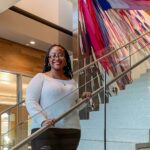
Like many new UMBC students, Jana Burns ‘20, information systems, was interested in so many topics when she stepped on campus that choosing a major initially proved challenging. When she transferred to UMBC from Brown’s Town Community College in Jamaica, she thought she wanted to study psychology and art. But she had also taken several programming courses and began to see the significant ways that technology impacts how people live.
The connections she made on campus led her to become a Cyber Scholar, which then opened more doors. She accessed the right opportunities at the right moments, and is now graduating with an exciting position in her field and a support network to carry her forward.
 Jana Burns, center, with two of her sorority sisters. Photo courtesy of Burns.
This experience is one many UMBC students share—building relationships that expand possibilities, for careers and for life.
Right mentors, right internship
Burns chose UMBC after experiencing the university’s welcoming and friendly environment during a campus tour. Once she became a Cyber Scholar, she connected with students and mentors on a new level through the Center for Women in Technology. “It seemed like a family,” she says.

Jana Burns with Richard Tapia at the Tapia Conference. Photo courtesy of Burns.
As a first-generation college student, says Burns, her UMBC community has been essential to her success in her academics, research, and personal life. “I was put in touch with people who I would not have met otherwise,” she shares, adding that she regularly texts with her industry mentor, Kijafa Saunders ‘02, information systems, M.S. ‘11, engineering management.
On campus, Burns has formed close connections with Vandana Janeja, professor and interim chair of information systems, and Cindy Greenwood, assistant director of the Cyber Scholars Program. They are always there and always supportive, says Burns.
Her experience in the Cyber Scholars Program has also encouraged her to become a leader in other communities on campus. She is the secretary and an executive board member of the Alpha Sigma Alpha sorority. She’s also a member of the UMBC Caribbean Student Council, which she calls her “cultural home on campus.”
Learning with a team
Last summer, as Burns began to take concrete steps toward her career after graduation, she completed an internship at Booz Allen Hamilton, a leading management and IT consulting firm. Burns was connected to the internship through Saunders, who had worked at Booz Allen as an associate systems engineer.
There, Burns worked alongside about 60 other interns from other institutions across the country. She had the opportunity to collaborate with a small group of other students to create an image change detection application for surveillance drones. Together, they tested and presented their work.
After graduation, Burns will work at Northrop Grumman as a systems engineer in the company’s rotational program—a program she learned about fromGreenwood. She will have the opportunity to work in different departments to learn which areas interest her most.
Community of support within the lab
Harper Montgomery ‘20, biochemistry, knew he wanted to be an entomologist since he was seven years old. He became fascinated by insects through spending time outdoors in Southern California, where he lived before moving to Howard County.
Once at UMBC, Montgomery began looking for the right research opportunity—something that would prepare him for a career studying the creatures he found so intriguing. Through another student, he heard about Mercedes Burns and her work on arachnids and daddy long legs, which is close to his interest in entomology. He reached out to Burns, assistant professor of biological sciences, was invited for an interview to work in her lab, and the rest is history.
 Mercedes Burns. Photo by Marlayna Demond ’11 for UMBC.
Montgomery shares that the lab has provided him with much more than the opportunity to do research. “I absolutely love my lab. It’s my home in the sciences,” he says. “The way that Burns approaches research and mentoring is one of the best that I’ve ever seen. She is a fantastic mentor who pushes her students.”
Not only does Montgomery get to work alongside Burns, but he says that the graduate students in the lab have been mentors to him. And everyone encourages each other to pursue unique opportunities and take their research to the next level.
Exploring different angles
Even as an undergraduate, Montgomery had the opportunity to present a poster, with two other students, at the American Arachnological Society meeting. He’s also presented his research at UMBC’s Undergraduate Research and Creative Achievement Day in 2019 and 2020.
 Montgomery presenting at the 2019 American Arachnological Society Conference. Photo by Genevieve Ahearn.
And like Jana Burns, Montgomery has accessed particular opportunities that have opened doors for his developing career.
Through a high school classmate, Montgomery was connected with an internship with the U.S. Department of Agriculture. For two summers, he was involved with genetics research focused on the microbiology of soybeans. Looking back at the experience, Montgomery says the internship inspired him to take a microbiology course at UMBC, and also enabled him to become well-versed on a broader range of biology topics, which has proven useful in connecting with mentors and industry professionals.
 Montgomery, center, with Kevin Omland, professor of biology, and a classmate. Photo courtesy of Rojin Najmabadi.
After graduation, Montgomery will pursue a Ph.D. in entomology at the University of California, Riverside, a top program. He consulted with Burns during the application and decision process, and describes her mentorship and support “invaluable.”
A nurturing network
Olusayo Adeleye ‘20, M28, mathematics, looks back on her experience during the summer bridge program of UMBC’s Meyerhoff Scholars Program fondly. She was drawn to the program because of its emphasis on community and supporting students academically and personally. “It was one of the best decisions that I made before college,” Adeleye says.
When Adeleye arrived on campus, she planned to major in mechanical engineering, but was drawn to mathematics and economics. She was eager to connect with people on topics that impact decisions they make every day.
Mentorship has played a significant role in her UMBC experience, and will continue to be a part of her academic journey after she graduates. Her mentors include Ivanna Abreu, program coordinator of the Meyerhoff Scholars Program, Mitsue Wiggs, assistant director of the Meyerhoff Scholars Program, as well as other students, particularly Anna Gifty Opoku-Agyeman, M26, ‘19, mathematics.
When Adeleye changed her major to math, Opoku-Agyeman quickly began introducing her to contacts on and off campus. She also recommended internship opportunities that she should apply for.
“Lifting others as I climb”
Eventually, Adeleye joined Opoku-Agyeman as a member of the organizing committee that launched the Sadie Collective. The group’s inaugural Sadie Tanner Mossell Alexander Conference for Economics and Related Fields, in 2019, was the first conference for black women economists in the United States.
Adeleye says that the Sadie Collective enabled her to develop important “soft skills” that she hadn’t focused on much before, in leadership, teamwork, and communication. “I believe so much in the goal of the Collective,” she explains. By being part of a group designed to support and increase the number of black women in economics, she says, “I am lifting others as I climb.”
 Olusayo Adeleye, third from right, with her friends after the first Sadie T.M Alexander Conference for Economics and Economics Related Fields. Photo courtesy of Adeleye.
Adeleye attended the American Economic Association’s annual conference in San Diego this year, where she connected with leading economics researchers.
Building on these unique, impactful experiences, Adeleye has earned a highly selective predoctoral fellowship at NYU’s Stern School of Business. The fellowship is supported by the Alfred P. Sloan Foundation, which provided funding to UMBC beginning in 2017 to support underrepresented students at the highest levels of economics.
Adeleye will be one of just two students selected for the program. She will be mentored by economist Peter Henry, who is the former dean of the NYU Stern School of Business. After her pre-doctoral fellowship, Adeleye plans to pursue her Ph.D. in business with a focus on corporate social responsibility and corporate strategy.
Banner image: Jana Burns in the ILSB. Photo courtesy of Burns.
]]>
Like many new UMBC students, Jana Burns ‘20, information systems, was interested in so many topics when she stepped on campus that choosing a major initially proved challenging. When she...
https://umbc.edu/stories/mentorship-matters-umbc-connections-help-three-students-create-their-own-paths/
https://beta.my.umbc.edu/api/v0/pixel/news/119884/guest@my.umbc.edu/64ed3847601e71b3f284c432ed308580/api/pixel
cahss
chembiochem
classof2020
cnms
coeit
cyberscholars
economics
is
mathstat
meyerhoffscholars
policy-and-society
science-and-technology
undergradresearch
UMBC News & Magazine
https://beta.my.umbc.edu/groups/umbc-news-magazine
https://assets1-beta.my.umbc.edu/system/shared/avatars/groups/000/001/943/24435aa6207c452e7bc15cc74b42c7bb/xsmall.png?1748556657
https://assets1-beta.my.umbc.edu/system/shared/avatars/groups/000/001/943/24435aa6207c452e7bc15cc74b42c7bb/original.png?1748556657
https://assets2-beta.my.umbc.edu/system/shared/avatars/groups/000/001/943/24435aa6207c452e7bc15cc74b42c7bb/xxlarge.png?1748556657
https://assets2-beta.my.umbc.edu/system/shared/avatars/groups/000/001/943/24435aa6207c452e7bc15cc74b42c7bb/xlarge.png?1748556657
https://assets3-beta.my.umbc.edu/system/shared/avatars/groups/000/001/943/24435aa6207c452e7bc15cc74b42c7bb/large.png?1748556657
https://assets1-beta.my.umbc.edu/system/shared/avatars/groups/000/001/943/24435aa6207c452e7bc15cc74b42c7bb/medium.png?1748556657
https://assets2-beta.my.umbc.edu/system/shared/avatars/groups/000/001/943/24435aa6207c452e7bc15cc74b42c7bb/small.png?1748556657
https://assets1-beta.my.umbc.edu/system/shared/avatars/groups/000/001/943/24435aa6207c452e7bc15cc74b42c7bb/xsmall.png?1748556657
https://assets2-beta.my.umbc.edu/system/shared/avatars/groups/000/001/943/24435aa6207c452e7bc15cc74b42c7bb/xxsmall.png?1748556657
UMBC News & Magazine
0
0
false
Tue, 19 May 2020 12:35:41 -0400
Treasured Moments

In his more than a decade of service to UMBC through the Alumni Association Board of Directors, outgoing president John Becker ’01, information systems, has seen a little bit of everything. As he passes the torch of leadership, Becker thinks back to some of the moments—and the people of our community—that have meant the most to him.
I’m writing this column from my dining room table, while my wife leads my two children in a home-schooling session on peregrine falcons. There are no pressing activities. There is nowhere to be—in fact, we are not allowed to be anywhere else. (I can’t say “gotta run” at the end of phone calls anymore.) This is strange for us, and I’m sure some of you have also felt a sense of surrealism. We’re sheltered in place, waiting for the seemingly inevitable house call we will be receiving from the novel coronavirus.
While our inability to work during this lock-down is a dark cloud on the horizon, I am finding silver linings. We are spending more time (and more meaningful time) together. We are closer now than ever with our neighbors and we are in touch daily with our out-of-state parents. I have also had time to pause and reflect on the past several years in a way that I rarely can when we are rushing around with daily routines and extra curriculars.
The 10 years that I have served on the UMBC Alumni Association Board of Directors have been among the most rewarding years of my life. Some of that reward comes from a sense of debt repayment—a sense of fulfilling an obligation for the many gifts I was given while I was a student here in the late ’90s. But in thinking about it more deeply, I realize it is something else— Retriever pride—that feeds the beast.
Reaching Together
Our UMBC has been accomplishing great things for decades socially, academically and athletically. There are bread crumbs trailing all the way back to 1966 that a nostalgic alum or prospective Board member could discover or remember that would kindle that fire—that pride—within them. Among my fellow Board members, I found a common interest in recalling formative years, assisting those students we recognize so clearly as a reflection of ourselves, and planning for an enduring legacy.
The highlights of my time on the Board could fill this magazine, but one thread that shines through is that the alumni have become increasingly involved over time. This truth reflects the hard work of our Director of Alumni Engagement, Stanyell Odom, and her team, the acknowledgement of the role we play in the university by Vice President of Institutional Advancement, Greg Simmons, M.P.P. ’04, and of course the curiosity of our great alumni, which often foments into a desire to return and help in a meaningful way.
Exceptional by Example
I vividly recall meeting Naomi Mburu ’18, M26, chemical engineering, UMBC’s first Rhodes Scholar at our Annapolis Alumni Reception, learning her story and being inspired by her determination. This reception, held in winter each year and hosted by the Board of Directors has allowed us to meet our state’s leaders who are UMBC alumni themselves, learn their perspectives, and find common interests through our ties to UMBC.
-
 Naomi Mburu ’18, M26, chemical engineering, UMBC’s first Rhodes Scholar speaks at the 2018 Annapolis Alumni Reception.
-
 Jerome Adams ’97, M4, biochemistry and molecular biology, the Surgeon General of the United States speaks at the 2019 Alumni Awards.
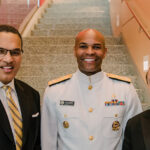
The growth of the annual Alumni Awards gala has been another source of pride for me. What began for me as an intimate affair in our library’s gallery has blossomed into a spectacle with hundreds of guests held in the Linehan Concert Hall in the Performing Arts and Humanities Building. I’m stunned every year by the unique, inspirational alumni I meet across all disciplines and from all walks of life. Last year I had a chance to speak with Jerome Adams ’97, M4, biochemistry and molecular biology, the Surgeon General of the United States, who is now at the tip of the spear in handling the COVID-19 pandemic. What struck me about Dr. Adams was how down to earth and family-oriented he was. He demonstrated a sense of perspective that was refreshing to see in a person in his position of national leadership.
And I am proud of leading the effort to develop and successfully reach an audacious fundraising campaign for the Alumni Endowed Scholarship, doubling our market value in four years and allowing the funds raised by the Board to leave an enduring legacy of scholarship on generations of deserving students.
A Proud Legacy
The thread linking these events and milestones is the people. UMBC is ripe with talented alumni, faculty, staff and, of course, talented students and student-athletes. My engagement with bright, energetic, and driven individuals is what keeps me coming back for more. If you haven’t been back to campus lately, please accept this invitation. I want you to see the intelligence, diversity, passion, grit, and greatness that I have enjoyed, and maybe in the process find something you left behind.
Dr. Hrabowski likes to remind us every year at Commencement that “success is never final.” As we embark on a new fundraising campaign for the Alumni Endowed Scholarship and I pass the torch to Brian Frazee ’11, M.P.P. ’12, I am at ease knowing that our success will continue and our future is bright. Thank you for the opportunity to serve you.
*****
Learn more about ways of engaging with UMBC at alumni.umbc.edu.
Header image: John Becker with President Hrabowski and the U.S. Surgeon General, Jerome Adams. All photos by Marlayna Demond ’11.
]]>
In his more than a decade of service to UMBC through the Alumni Association Board of Directors, outgoing president John Becker ’01, information systems, has seen a little bit of everything. As he...
https://umbc.edu/stories/alumni-association-president-passes-the-retriever-torch/
https://beta.my.umbc.edu/api/v0/pixel/news/119885/guest@my.umbc.edu/a4b7546227914666bcd5100af528dbd7/api/pixel
alumni
alumni-essay
meyerhoff
spring-2020
UMBC News & Magazine
https://beta.my.umbc.edu/groups/umbc-news-magazine
https://assets1-beta.my.umbc.edu/system/shared/avatars/groups/000/001/943/24435aa6207c452e7bc15cc74b42c7bb/xsmall.png?1748556657
https://assets1-beta.my.umbc.edu/system/shared/avatars/groups/000/001/943/24435aa6207c452e7bc15cc74b42c7bb/original.png?1748556657
https://assets2-beta.my.umbc.edu/system/shared/avatars/groups/000/001/943/24435aa6207c452e7bc15cc74b42c7bb/xxlarge.png?1748556657
https://assets2-beta.my.umbc.edu/system/shared/avatars/groups/000/001/943/24435aa6207c452e7bc15cc74b42c7bb/xlarge.png?1748556657
https://assets3-beta.my.umbc.edu/system/shared/avatars/groups/000/001/943/24435aa6207c452e7bc15cc74b42c7bb/large.png?1748556657
https://assets1-beta.my.umbc.edu/system/shared/avatars/groups/000/001/943/24435aa6207c452e7bc15cc74b42c7bb/medium.png?1748556657
https://assets2-beta.my.umbc.edu/system/shared/avatars/groups/000/001/943/24435aa6207c452e7bc15cc74b42c7bb/small.png?1748556657
https://assets1-beta.my.umbc.edu/system/shared/avatars/groups/000/001/943/24435aa6207c452e7bc15cc74b42c7bb/xsmall.png?1748556657
https://assets2-beta.my.umbc.edu/system/shared/avatars/groups/000/001/943/24435aa6207c452e7bc15cc74b42c7bb/xxsmall.png?1748556657
UMBC News & Magazine
0
0
false
Mon, 18 May 2020 23:54:20 -0400
Where math and medicine meet: Jeremy Rubin is one of UMBC’s nine new NSF Graduate Research Fellows
When he was 16, Jeremy Rubin ’20, M28, mathematics and statistics, tagged along to one of his sister’s doctor appointments. Six years his senior and a 2014 UMBC alumna, she was recovering from a complete spinal fusion to treat her scoliosis. Doctors had been monitoring her condition for years before the surgery, and she had worn a brace for 18 months in preparation. At the appointment, Rubin’s mother suggested the doctor examine his back as well, just in case.
“And then, right there in the doctor’s office, they said I should have the same surgery in a month,” Rubin recalls. “What’s really fascinating, I think, is that we both needed the surgery, yet we had very different diagnosis and pre-treatment experiences. So it made me think, how can I use my interest in statistics to help the field of precision medicine? How can we tailor diagnoses and treatments to the individual?”
The contrast between Rubin’s and his sister’s experiences with scoliosis, and his skill and passion for statistics, have driven Rubin to success in his UMBC coursework and in several research experiences on and off campus. This year, he applied for the National Science Foundation (NSF) Graduate Research Fellowship, which he, Danilo Symonette ’20, computer science, and seven UMBC alumni received this year. These prestigious fellowships offer full funding for three years of graduate study at any accredited institution in the U.S.
Piecing it together
Rubin began his research career during his first year at UMBC with Bradford Peercy, professor of mathematics and statistics. They used math to better model cell migration in fruit flies. “That was really exciting,” Rubin says, “because it gave me my first hands-on experience using theoretical math techniques, but applying it to a real-world biological situation.”
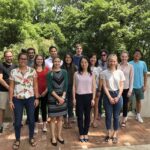
 The Green lab is a family. Here, they celebrate a birthday. Erin Green is at the far left; Jeremy Rubin is second from right in the back row.
That summer, he pursued an internship at the National Institute of Standards and Technology. There, he worked to develop better methods to process images generated by virtual reality environments.
Back at UMBC the next fall, he contributed to efforts using statistical techniques to analyze genetic data related to the structure of DNA. The project was a collaboration between Erin Green, assistant professor of biological sciences, and DoHwan Park, assistant professor of mathematics and statistics.
All of these experiences led Rubin to a project at the University of Pennsylvania’s Perleman School of Medicine in 2018. The project combines his mathematical skill, desire to use math to address biological questions, and image processing background. He’s still working on it today, and plans to continue to pursue it as a Ph.D. student at Penn’s Perleman School this fall.
“We’re interested in seeing if we can make an association between certain brain regions and the onset of mild cognitive impairment in patients with Alzheimer’s. That’s the end goal,” Rubin says. “It’s a really nice combination of my previous work with imaging and also looking at biological data.”
Support from every angle
Rubin attributes his success, especially in obtaining research opportunities such as the NSF fellowship, in part to the incredible support he’s received from the Meyerhoff and MARC U*STAR Scholars programs.
 Jeremy Rubin (back row, light gray t-shirt) with the MARC U*STAR 2019 – 2020 cohort in front of the UMBC Interdisciplinary Life Sciences Building.
“Maybe the single greatest thing I’m thankful for is the individual coaching,” Rubin says. As an example, he was in the Meyerhoff office when he found out that he would have a graduate school interview in less than 72 hours. When he told Jackie King, associate director of the MARC U*STAR program, she gave him a mock interview on the spot.
The intensive peer mentoring offered through the programs has also had a major impact on Rubin. “I like that I can now pay it forward,” Rubin says, by advising two younger Meyerhoff Scholars.
As his career progresses, Rubin plans to stay connected to teaching and advising. “I really want to combine my passion for teaching with doing research,” he says. As a result, he plans to pursue a path in academia. “I think an academic setting would best balance the ability to teach and mentor students while also doing research.”
Contributions across the country
Even once he’s in Philadelphia, Rubin plans to stay connected to UMBC. “The MARC and Meyerhoff programs encourage you to not just be a good student, but also be an academic leader in any way you can—to give back to your community, and really show excellence in all aspects of your career,” Rubin says.
After four years at UMBC, “I feel well-equipped to go to Penn,” Rubin says. At the same time, his advisor, Elizabeth Stanwyck, senior lecturer in mathematics and statistics, suggested he might give a department seminar back at UMBC sometime during his graduate study. “I want to stay connected and tell the students anything I can to help them out for the future,” he says.
 Jeremy Rubin (seated) makes smoothies with his Math 390 students.
While Rubin is at Penn, UMBC’s other Graduate Research Fellowship recipients will be earning doctorates across the country, including two other alumni at Penn’s Perelman School: Maya Hale ’18, biological sciences and psychology, and Sam Giannakoulias ’18, biochemistry and molecular biology and mathematics.
The other recipients are also conducting research as Ph.D. students at top-tier institutions. Stephanie Korenic ’12, media and communication studies and psychology, is working to improve the way neuroimaging is used in the study of psychosis at Temple University. Jason Hughes ’18, M26, chemical engineering, and Ann Cirincione ‘18, M26, bioinformatics and computational biology, are studying biological systems using big data. Hughes is pursuing his Ph.D. at Vanderbilt University, and Cirincione is at Princeton. Shannon Clancy ‘19, mechanical engineering, is focusing on internal combustion engines at the University of Michigan, and Fatima Touma ’09, anthropology, is at University of North Carolina at Chapel Hill, studying health disparities with a focus on immigrant communities
Whether examining biological systems or human-designed machines, UMBC alumni are making important contributions everywhere they go. Their new NSF Graduate Research Fellowships will help them do even more and go even farther.
Banner image: Jeremy Rubin with the Penn Statistics in Imaging and Visualization Endeavor (PennSIVE) lab group during his summer internship there in 2018. This fall, he’ll embark on a Ph.D. with the same team.
All photos courtesy of Jeremy Rubin.
]]>
When he was 16, Jeremy Rubin ’20, M28, mathematics and statistics, tagged along to one of his sister’s doctor appointments. Six years his senior and a 2014 UMBC alumna, she was recovering from a...
https://umbc.edu/stories/where-math-and-medicine-meet-jeremy-rubin-is-one-of-umbcs-nine-new-nsf-graduate-research-fellows/
https://beta.my.umbc.edu/api/v0/pixel/news/119886/guest@my.umbc.edu/0cc1b6cd1bc31d8a7ddeaee5bcc7135c/api/pixel
classof2020
cnms
mathstat
science-and-technology
undergradresearch
UMBC News & Magazine
https://beta.my.umbc.edu/groups/umbc-news-magazine
https://assets1-beta.my.umbc.edu/system/shared/avatars/groups/000/001/943/24435aa6207c452e7bc15cc74b42c7bb/xsmall.png?1748556657
https://assets1-beta.my.umbc.edu/system/shared/avatars/groups/000/001/943/24435aa6207c452e7bc15cc74b42c7bb/original.png?1748556657
https://assets2-beta.my.umbc.edu/system/shared/avatars/groups/000/001/943/24435aa6207c452e7bc15cc74b42c7bb/xxlarge.png?1748556657
https://assets2-beta.my.umbc.edu/system/shared/avatars/groups/000/001/943/24435aa6207c452e7bc15cc74b42c7bb/xlarge.png?1748556657
https://assets3-beta.my.umbc.edu/system/shared/avatars/groups/000/001/943/24435aa6207c452e7bc15cc74b42c7bb/large.png?1748556657
https://assets1-beta.my.umbc.edu/system/shared/avatars/groups/000/001/943/24435aa6207c452e7bc15cc74b42c7bb/medium.png?1748556657
https://assets2-beta.my.umbc.edu/system/shared/avatars/groups/000/001/943/24435aa6207c452e7bc15cc74b42c7bb/small.png?1748556657
https://assets1-beta.my.umbc.edu/system/shared/avatars/groups/000/001/943/24435aa6207c452e7bc15cc74b42c7bb/xsmall.png?1748556657
https://assets2-beta.my.umbc.edu/system/shared/avatars/groups/000/001/943/24435aa6207c452e7bc15cc74b42c7bb/xxsmall.png?1748556657
UMBC News & Magazine
0
0
false
Mon, 18 May 2020 21:29:05 -0400
Unique research experiences open doors for UMBC’s Class of 2020
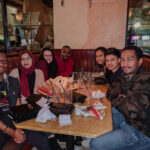
Danilo Symonette, Robin Bailey, and Hye-Jin Park are earning their UMBC degrees this month having researched in top labs and being invited to present their findings to colleagues across the country. They sound like phenomenal Ph.D. students, but they’re actually all undergraduates.
Symonette ‘20, computer science, has earned one of the most prestigious graduate fellowships in the U.S. after completing years of research in artificial intelligence. Bailey ‘20, biological sciences, conducted research at Harvard Medical School’s Joslin Diabetes Center. Hye-Jin Park ‘20, psychology, researched the experiences of Asian immigrants in the United States, including discrimination and resilience.
Their interests vary greatly, but each celebrates the impact that UMBC mentors have had on their college careers, including the chance to access incredible opportunities.
Finding a community
When Symonette transferred to UMBC from the College of Southern Maryland in La Plata, Maryland, he knew he wanted to study computer science and conduct research on artificial intelligence, which he sees as a “revolutionary” field. He quickly found a supportive community of friends and mentors at UMBC, and became a McNair Scholar.
UMBC’s McNair Scholars program is a Federal TRIO program that supports students from disadvantaged and underrepresented groups in preparing for graduate education. The program emphasizes intensive research experiences and mentoring. Symonette’s McNair mentors helped him define and achieve his goals and navigate challenges along the way.
 Danilo Symonette, left, and two of his friends at UMBC. Photo courtesy of Symonette.
“Being a McNair Scholar has entirely shaped my experience at UMBC and given me the community I needed to support my ambitions and pursue opportunities,” says Symonette. The program also introduced him to some of his favorite people at UMBC.
The value of mentorship
Don Engel, assistant vice president for research, is Symonette’s advisor on the award that supports his artificial intelligence work. He has been one of his most impactful mentors over the years. “Don Engel gave me the freedom to explore any and all of my ideas,” says Symonette. “He advised me on career decisions, wrote countless letters of recommendation, and always supported and believed in me no matter how lofty my goals seemed.”
Engel connected Symonette with the neuro-AI lab at the Johns Hopkins Applied Physics Lab, where Symonette is currently interning. Symonette accepted a full-time job offer to work at APL starting in June. This allowed him to explore his interests at the intersection of computer science, neuroscience, and psychology, and further refine his graduate school career goals.
“Danilo is one of the most talented and motivated students with whom I’ve had the pleasure to work. He has been a wonderful teammate to a broad range of student, faculty, and external research collaborators,” shares Engel. “I’m looking forward to following Danilo’s career, which I’m sure will be exciting and impactful.”
Symonette has also found mentors outside his discipline who have helped him develop a well-rounded perspective. They include Simon Stacey, director of the Honors College; former UMBC professor Marie DesJardins, now a dean at Simmons College; and Christy Ford Chapin, associate professor of history. Symonette says that Chapin helped him elevate his grad school essays and fellowship applications “to the highest level they could be.”
Exploring opportunities beyond UMBC
In addition to connecting Symonette with mentors, the McNair Scholars program also provided him with travel funding to visit several graduate schools across the country.
In 2018, he completed the Louis Stokes Alliances for Minority Participation (LSAMP) summer research program and focused on machine learning. The following year, he attended the NSF Graduate Research Fellowship Program at the Institute on Teaching and Mentoring, which was sponsored by the Southern Regional Education Board. “I saw a slew of Ph.D. students from underrepresented backgrounds come on stage and encourage me to pursue graduate education,” Symonette shares.
In 2019, he headed to MIT and studied models that detect confusion in features that rely on voice. His work was used as a foundation to develop sensors for a teacher education platform, to make it more effective.
“That experience equipped me with the inspiration, motivation, and knowledge to plan my next steps,” he says. Over the next 18 months, Symonette explains, “I was accepted to the top computer science Ph.D. programs in the world and won the NSF Graduate Research Fellowship.”
Today, he describes the LSAMP and McNair programs as “the vehicles through which I arrived at many of the pivotal moments in my journey.”
Inspiring younger students
While focusing on his courses and research at UMBC, Symonette also enjoyed gaining early experience as an educator. He served as a teaching assistant for Computer Science 202, inspired by his own earlier challenges with the course.
“I struggled a lot in CS202 when I came from community college,” Symonette recalls. “Seeing all the errors and mistakes troubling students during office hours and being able to help them through those same situations…was extremely rewarding.”
Symonette also found ways to connect with younger students, to encourage them to pursue degrees and careers in computing. He served as the head of outreach for UMBC’s Computer Science Education Club, establishing strong partnerships with local high schools.
“I wanted to expand our outreach efforts so that more people could volunteer,” he says. He connected with Lori Hardesty, associate director for applied learning and community engagement at UMBC’s Shriver Center, to ensure the program would have the structure to be successful in the long term.
“We managed to get a consistent group of students volunteering at Landsdowne High School last semester and supporting the high school’s computer science and robotics club,” says Symonette. “It’s been great to connect with high school students, especially at a school like Landsdowne. There are students from similar backgrounds as me that I have a chance to inspire. It continues to motivate me to do research in AI and education.”
After working at APL for a year, Symonette will begin a Ph.D. program in computer science at Stanford University in fall 2021, with the goal of becoming a professor. “I’m looking forward to broadening my perspective, accessing opportunities, and developing as a researcher and educator—everything that comes with studying in a top-tier Ph.D. program,” he says. “I can’t wait to bring all of that back to my community.”
The importance of connections
Like Symonette, Bailey is a transfer student who found support within a scholars program. When she transferred to UMBC from Howard Community College, she was eager to find a welcoming group of friends and mentors. She found that community in the MARC U*STAR Scholars program.
The MARC program is designed to increase diversity and inclusion in the biomedical research field, with an emphasis on preparing undergraduate students for Ph.D. programs. “I was the only transfer student to enter my cohort, and feared I would feel like the new kid,” she shares. “Fortunately, the MARC community welcomed me with open arms and treated me as though I had always been at UMBC.”

Robin Bailey with an award from UMBC. Photo courtesy of Bailey.
The MARC program connected Bailey with faculty across campus who supported her during her UMBC career. Phyllis Robinson, professor of biological sciences and director of the MARC program, is one of Bailey’s research mentors, who has provided her with a safe space to share her worries.
“Dr. Robinson has been an unwavering pillar of support in my journey at UMBC,” Bailey says. “She pushes me to be the best I can be in my education and in my personal life.”
Jacqueline King, assistant director of the MARC program, has also supported Bailey’s academic career. “She always encourages me to get out of my comfort zone,” Bailey explains.
Bailey has found a mentor Juan Valdez ‘12, M.S. ‘13, Ph.D. ‘20, biological sciences, as well. “Juan never fails to remind me that I am capable of doing anything I set my mind to,” she says. “He has unconditionally supported me even when I doubt myself.”
From UMBC to Harvard and UPenn
Bailey also valued the chance to connect MARC U*STAR Scholars at other institutions. This includes participating in the 2018 Annual Biomedical Research Conference for Minority Students in Indianapolis, Indiana. There, she received an award for her oral presentation on light-sensitive retinal proteins.

Robin Bailey at the Annual Biomedical Research Conference for Minority Students. Photo courtesy of Bailey.
She was invited to participate in a summer internship at Harvard Medical School. There she conducted research at the Joslin Diabetes Center under Alexsandar Kostic, an assistant professor of microbiology. She and research technician Melissa Tran investigated the role of bacteria in pancreatic development.

Robin Bailey at Harvard. Photo courtesy of Bailey.
Through that experience, Bailey learned new research techniques that helped prepare her for a future career in science. “The friendships in the Kostic lab made Boston feel like a home away from home,” she says.
Bailey will graduate with departmental honors in recognition of her thesis, based on research she conducted in the Robinson lab. She will also receive the Faculty Award for Excellence in Biological Sciences. After graduation, Bailey will pursue her Ph.D. in cellular and molecular biology with an emphasis on gene therapy and vaccines at the University of Pennsylvania’s Perelman School of Medicine.
Finding your own path
Hye-Jin Park initially connected with UMBC through her sister, Hyun Jung Lee ‘16, visual arts, an alumna. She recalls coming to UMBC, noticing the diversity of the campus, and being excited to make friends, but also feeling incredibly shy. After a few months of accompanying her sister to meetings for groups on campus, she realized she was ready to branch out and explore her own interests.
One of these interests was psychology, which Park became fascinated with through a high school AP psychology course. She heard a graduate student talk about research being conducted in the lab of Charissa Cheah, professor of psychology, on the experiences of Asian immigrants. Her interest was piqued—she had to apply.
Conducting meaningful research
Born in Korea, Park and her family immigrated to the United States when she was about five years old. Her Korean heritage played a big role in her UMBC experience, including as a researcher, in an unexpected way.
 Hye-Jin Park, right, spending time with two friends on campus. Photo courtesy of Park.
When she started working in Cheah’s lab, Park had not spoken the Korean language regularly in about 15 years. She was no longer fluent in Korean and couldn’t read or recognize the Korean alphabet, but she knew that speaking Korean would be a great asset in her research. She decided to teach herself Korean, relying on her mom and sisters to re-learn the basics.
As a freshman, Park supported the lab’s research through data entry, but her responsibilities quickly grew. Before long, she was administering behavioral tasks to children and interviewing parents for data collection.
By her junior year, Cheah had become one of Park’s closest mentors and a guide to meeting others in her field. “Dr. Cheah has been the biggest influence in my UMBC experience,” she says.
Building confidence, growing impact
Park’s experience in the lab also helped her build confidence and a commitment to supporting younger students. She worked as a writing fellow in the psychology department, helping other students develop their skills writing and formatting academic papers. She joined CRU, a Christian student group, and became a member of Psi Chi, the international honors society for psychology.
Park also presented research at UMBC’s Undergraduate Research and Creative Achievement Day in both 2019 and 2020, after earning Undergraduate Research Awards each year.
 Hye-Jin Park presenting at URCAD. Photo courtesy of Park.
Off campus, Park completed an internship at Verbal Beginnings, an organization that provides applied behavioral analysis therapy and teaches various skills to children on the autism spectrum. This experience gave her an opportunity to plan lessons and learn from a professional team coordinator how to modify plans to meet the children’s needs.
Park was recently selected for the 2020 Society for Research on Adolescence Undergraduate Scholars Program. This honor would have funded her participation in the group’s annual conference in San Diego, set for March 2020 prior to the COVID-19 pandemic. “It was an honor to be accepted into the program. Even though the program got canceled due to the pandemic, I was able to connect with my mentors in the program,” she shares.
After graduation, Park will pursue her Ph.D. in human development at Michigan State University.
Banner image: Danilo Symonette, right, with his friends at a restaurant. Photo courtesy of Symonette.
]]>
Danilo Symonette, Robin Bailey, and Hye-Jin Park are earning their UMBC degrees this month having researched in top labs and being invited to present their findings to colleagues across the...
https://umbc.edu/stories/unique-research-experiences-open-doors-for-umbcs-class-of-2020/
https://beta.my.umbc.edu/api/v0/pixel/news/119887/guest@my.umbc.edu/41e4b708a7cb9c38e55458ab1d23ad7b/api/pixel
biology
cahss
classof2020
cnms
coeit
csee
marcustar
mcnairscholars
psychology
science-and-technology
shrivercenter
undergradresearch
UMBC News & Magazine
https://beta.my.umbc.edu/groups/umbc-news-magazine
https://assets1-beta.my.umbc.edu/system/shared/avatars/groups/000/001/943/24435aa6207c452e7bc15cc74b42c7bb/xsmall.png?1748556657
https://assets1-beta.my.umbc.edu/system/shared/avatars/groups/000/001/943/24435aa6207c452e7bc15cc74b42c7bb/original.png?1748556657
https://assets2-beta.my.umbc.edu/system/shared/avatars/groups/000/001/943/24435aa6207c452e7bc15cc74b42c7bb/xxlarge.png?1748556657
https://assets2-beta.my.umbc.edu/system/shared/avatars/groups/000/001/943/24435aa6207c452e7bc15cc74b42c7bb/xlarge.png?1748556657
https://assets3-beta.my.umbc.edu/system/shared/avatars/groups/000/001/943/24435aa6207c452e7bc15cc74b42c7bb/large.png?1748556657
https://assets1-beta.my.umbc.edu/system/shared/avatars/groups/000/001/943/24435aa6207c452e7bc15cc74b42c7bb/medium.png?1748556657
https://assets2-beta.my.umbc.edu/system/shared/avatars/groups/000/001/943/24435aa6207c452e7bc15cc74b42c7bb/small.png?1748556657
https://assets1-beta.my.umbc.edu/system/shared/avatars/groups/000/001/943/24435aa6207c452e7bc15cc74b42c7bb/xsmall.png?1748556657
https://assets2-beta.my.umbc.edu/system/shared/avatars/groups/000/001/943/24435aa6207c452e7bc15cc74b42c7bb/xxsmall.png?1748556657
UMBC News & Magazine
0
0
false
Mon, 18 May 2020 16:00:52 -0400
Graduating CNMS Scholars carry on a commitment to support women in STEM
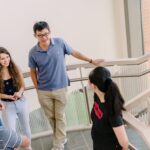
UMBC has made great strides in increasing its number of women faculty members in STEM through the ADVANCE program. Now, through the CNMS Scholars Program, these women are serving as mentors to the next generation of scientists and engineers committed to the advancement of women in STEM. The CNMS Scholars program is specifically designed to boost the representation of women in STEM fields that haven’t reached gender parity, from physics and bioinformatics to chemical engineering.
This spring, five women will graduate from UMBC as CNMS Scholars, including Olivia Norman ’20, physics, and Jada Damond ’20, chemical engineering. The financial support, mentorship, and sense of community the program offered created an environment that helped them thrive. Importantly, “CNMS Scholars are paired with our most experienced faculty, who go beyond mentoring to act as champions of these promising future leaders,” says Bill LaCourse, dean of the College of Natural and Mathematical Sciences (CNMS).
Norman’s CNMS Scholars mentor was Theodosia Gougousi, professor of physics and a member of UMBC’s Women in Science and Engineering (WISE) group, affiliated with the ADVANCE program. Damond worked with Jennie Leach, an associate professor of chemical, biochemical, and environmental engineering (CBEE), and a member of UMBC’s 4th ADVANCE cohort.
A nudge in the right direction
The coming weeks will hold excitement for new beginnings and also poignant goodbyes for Olivia Norman, as she prepares to leave UMBC and Maryland. After graduation, she will head to a Ph.D. program in atmospheric science at MIT—a goal realized through research opportunities during her time as a Retriever.
Norman chose to transfer to UMBC as a sophomore specifically to access UMBC’s unique research opportunities. She has been working with Zhibo Zhang, associate professor of physics, on a project involving “polluted dust”—dust particles mixed with pollutants in the atmosphere. They are working to understand how this dust affects cloud formation and climate.
 Olivia Norman ’20 (center, rear) participates in a lab group meeting with Zhibo Zhang (far right) and other lab members.
Zhang and Norman have found their work together rewarding. “He always pushes you to ask questions and seek out things that you’re interested in to inform your research, while also helping nudge you in the right direction if you are feeling a little lost,” Norman shares.
Zhang suggested that Norman join the lab when he noticed her performing exceptionally well in one of his courses. Since then she has made significant contributions to the group’s progress. Now she is participating in the NSF-funded Cyber Training program, which brings together researchers from data science, atmospheric physics, and high-performance computing—a program initially designed for graduate students and early-career faculty.
While it is bittersweet for Zhang to see Norman leave UMBC for her graduate studies, “I have no doubt that Olivia will soon rise as a young star in my field who will lead us to new and exciting scientific discoveries,” he says.
Growth and discovery
CNMS Scholar Jada Damond is also heading to an exceptional Ph.D. program—UMBC’s program in environmental engineering. This offers her a chance to continue research she is committed to moving forward.
Through the CNMS Scholars program, Damond realized the value of mentorship and a community of support. “I gained a really powerful network, and I learned a lot more about the opportunities the campus has to offer,” she shares. In particular, she’s grateful to her program mentor, Jennie Leach, who has offered her both professional and personal support.
“Dr. Leach facilitated my transition to UMBC’s Ph.D. program by offering advice about the program and sharing her own experiences with getting a Ph.D.,” Damond says.
 Jennie Leach works with a student in her lab.
“It’s been really fun to know Jada first as a sophomore, new to engineering, and now, as a senior entering graduate school,” Leach says. “I am so excited to witness all the great things she will accomplish in her career ahead.”
Damond looks forward to continuing research with Upal Ghosh, professor of CBEE, and collaborators at the Smithsonian Environmental Research Center on methods for better measuring mercury levels in water. She’s passionate about the work, she explains, because measuring mercury is a difficult problem and also an important one to solve to protect human health.
She’s also grateful for Ghosh’s ongoing support. At the numerous national and regional conferences Damond has attended with the lab, “Dr. Ghosh always makes sure to introduce his students to other professionals in the field relevant to the specific work that they do, so I have been able to broaden my network,” she says.
 Jada Damond ’20, chemical engineering, introduces herself at the CNMS Scholars opening reception in 2017.
On the academic side, Ghosh “is always making sure his students are on track in their studies,” she says. “He was eager to spend time reviewing concepts that were new to me, and would give me resources to point me in the right direction.”
Damond’s goal is to pursue environmental consulting work. She enjoyed tutoring chemical engineering courses and mentoring younger CNMS Scholars so much that she also hopes to find a way to teach throughout her career.
“Tutoring helped to improve my communication skills, as I had to explain concepts in a way that the students would understand, while making sure that they could replicate those explanations,” she says. “It was very rewarding when they left a tutoring session feeling more confident about the subject than they did going in.”
 Upal Ghosh (right) and Kevin Sowers, professor of marine biotechnology, at the Institute of Marine and Environmental Technology.
Building a network
In addition to supporting young women on their way toward success in STEM fields, the CNMS Scholars program is also all about building a community among the scholars. Caitlin Kowalewski, assistant director of undergraduate initiatives in CNMS, coordinates regular activities for the group. This helps the scholars build relationships with each other and with others members of the UMBC community, such as potential research mentors, leading administrators, and alumni in STEM careers.
“I think the main thing I’ve gained from being a CNMS Scholar was this ability to build a network with people in different levels of their education and professional careers, both in and outside of my department,” Norman shares. “That has been a major plus of being in the program.”
Regular lunches and informal activities like craft projects with just the scholars “allowed us to connect with each other over shared experiences,” Damond says. “Caitlin was really good about getting us together,” adds Norman. “It gave us that opportunity to reach out to other people in a low-key setting.”
Representation in STEM
Both Norman and Damond feel strongly that the program has shaped their futures. Damond wasn’t sure about pursuing a Ph.D. until Leach helped her see the career options the degree could offer her, even if academia is not her goal. For Norman, the program has made her want to do more than make advances in atmospheric science.
 Caitlin Kowalewski, center, at the launch event for the CNMS Scholars program in 2017.
“Being a CNMS Scholar has made me interested in not just doing research, but making sure that where I do research and how I do research is reflective of the scholars program itself,” Norman shares. “I want where I am to have an ongoing conversation about progress being made toward fair representation in STEM.”
Kowalewski is confident Norman and the other scholars will make a difference wherever they go. “I could not be more proud of all that these bright, engaging young women have accomplished during their time at UMBC,” she says. “I have no doubt they will help to pave a stronger path for the advancement of women in STEM in their future careers.”
Additional graduating CNMS Scholars include Ashley Mitchell ’20, biochemistry and molecular biology; Alida Hartwell ’20, bioinformatics and computational biology; and Laina Colony ’20, chemical engineering. To support UMBC’s CNMS Scholars program visit giving.umbc.edu.
Banner image: Olivia Norman ’20 (left of center) relaxes with Zhibo Zhang (center) and other members of the lab group. All photos by Marlayna Demond ’11 for UMBC.
]]>
UMBC has made great strides in increasing its number of women faculty members in STEM through the ADVANCE program. Now, through the CNMS Scholars Program, these women are serving as mentors to the...
https://umbc.edu/stories/graduating-cnms-scholars-carry-on-a-commitment-to-support-women-in-stem/
https://beta.my.umbc.edu/api/v0/pixel/news/119888/guest@my.umbc.edu/7dc89c471b2b6a1d2526a8119bff3e8a/api/pixel
cbee
classof2020
cnms
coeit
physics
science-and-technology
undergradresearch
UMBC News & Magazine
https://beta.my.umbc.edu/groups/umbc-news-magazine
https://assets1-beta.my.umbc.edu/system/shared/avatars/groups/000/001/943/24435aa6207c452e7bc15cc74b42c7bb/xsmall.png?1748556657
https://assets1-beta.my.umbc.edu/system/shared/avatars/groups/000/001/943/24435aa6207c452e7bc15cc74b42c7bb/original.png?1748556657
https://assets2-beta.my.umbc.edu/system/shared/avatars/groups/000/001/943/24435aa6207c452e7bc15cc74b42c7bb/xxlarge.png?1748556657
https://assets2-beta.my.umbc.edu/system/shared/avatars/groups/000/001/943/24435aa6207c452e7bc15cc74b42c7bb/xlarge.png?1748556657
https://assets3-beta.my.umbc.edu/system/shared/avatars/groups/000/001/943/24435aa6207c452e7bc15cc74b42c7bb/large.png?1748556657
https://assets1-beta.my.umbc.edu/system/shared/avatars/groups/000/001/943/24435aa6207c452e7bc15cc74b42c7bb/medium.png?1748556657
https://assets2-beta.my.umbc.edu/system/shared/avatars/groups/000/001/943/24435aa6207c452e7bc15cc74b42c7bb/small.png?1748556657
https://assets1-beta.my.umbc.edu/system/shared/avatars/groups/000/001/943/24435aa6207c452e7bc15cc74b42c7bb/xsmall.png?1748556657
https://assets2-beta.my.umbc.edu/system/shared/avatars/groups/000/001/943/24435aa6207c452e7bc15cc74b42c7bb/xxsmall.png?1748556657
UMBC News & Magazine
0
0
false
Mon, 18 May 2020 15:30:23 -0400
Graduating UMBC student advocates keep building community in an unprecedented time
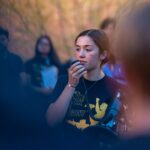
For Nadia BenAissa ’20, gender, women’s, and sexuality studies (GWST), and Sam Hertl ’20, social work, UMBC has been a place to grow as leaders and advocates. Their college experiences have been defined by their work to educate, speak out, and create resources for survivors of sexual assault and LGBTQIA+ students at UMBC.
As the university community has responded to COVID-19 and transitioned to a virtual environment, BenAissa and Hertl have held steadfast in their commitments. They have continued working to create supportive spaces online and make sure that survivor and LGBTQIA+ voices are heard. At the same time, as seniors graduating during a pandemic, they have been managing their own sense of loss.
Centering the experience of survivors
BenAissa became involved with the Women’s Center as a sophomore after supporting her best friend through the Title IX process. “We needed to do something with our grief, and our sadness at the outcome of the process, but at the time there was no discussion group around the shared experience of trauma when we needed it most,” she explains.
BenAissa began researching Title IX, the federal law that proxihibits sex discrimination, sexual assault, and sexual harassment in education settings, for a class. “Nadia’s incredible focus and sharp intellect showed in her fine work in that course,” says her professor, GWST Chair Carole McCann.

Nadia BenAissa (c) and Haley Owens ’21 (l) speak with Pres. Hrabowski about We Believe You.
Photo by Marlayna Demond ’11 for UMBC.
Then, in 2017, she and her friend founded We Believe You, an activist/advocacy and discussion group centered around survivors, with help from Women’s Center Director Jess Myers and Assistant Director Amelia Meman. BenAissa’s detailed research “prepared her to lead the We Believe You group through its subsequent challenges and successes,” says McCann.
While We Believe You was getting ready to celebrate its one-year anniversary in 2018, UMBC launched Retriever Courage. UMBC created this campus-wide initiative in response to a call from students, faculty, and staff for the university to better prevent and respond to sexual assault and violence.
Seeing results
As president of We Believe You, BenAissa met with President Freeman Hrabowski and other campus leaders to discuss major challenges and possible steps forward. She then stepped into additional leadership roles as a member of the Retriever Courage implementation team and co-chair of the Student Advisory Committee.
 Retriever Courage mission statement. Photo by Marlayna Demond ’11 for UMBC.
At the same time, BenAissa accepted an invitation from Baltimore County Executive John Olszewski, Ph.D. ’17, public policy, to join the County’s newly created sexual assault investigations task force.
BenAissa’s collaborative work with students, faculty, and staff led to UMBC launching mandatory Title IX training and an Office of Equity and Inclusion, and hiring more counseling staff. As part of We Believe You, BenAissa also worked with the implementation team to develop two resource stands in The Commons. They will eventually be replicated at other locations across campus.
 Retriever Courage resource station in The Commons. Photo by Marlayna Demond ’11 for UMBC.
“Through her leadership of Retriever Courage, Nadia has already changed the campus for the better in how we confront sexual violence,” says Kate Drabinski, GWST senior lecturer and director of the Women Involved in Learning and Leadership program.
“Nadia is a fierce advocate who consistently speaks truth to power on behalf of survivors,” Myers adds. I believe she’s helped all of us be braver in this work.”
Building space for LGBTQIA+ students
Hertl became increasingly involved in advocacy for LGBTQIA+ students, particularly trans students, as a member of UMBC’s University Health Services (UHS) Student Health Advisory Council. They used their voice to help find ways for UHS and the Counseling Center to be more affirming of trans students. Some of their solutions were simple to implement, but powerful, such as placing pronoun buttons in the waiting rooms for students to wear.
In their junior year, they attended a Women’s Center program and quickly became involved in the Center’s work. Eventually, they became a Women’s Center intern for their social work field placement.

Sam Hertl (l) at a Women’s Center event in the breezeway.
Photo courtesy of the Women’s Center.
In that role they served as a facilitator for Between Women. This discussion-based program centers the experience of women students who identify as LGBTQIA+. They also supported We Believe You, promoted Women’s Center events and resources, and began writing about LGBTQIA+ and accessibility issues.
 Hertl (r) tables for the Women’s Center in the breezeway. Photo courtesy of the Women’s Center.
This was all on top of the work supporting students as a residential assistant and social work courses, preparing for a public service career.
“In everything that they do, Sam strives to build an affirming, compassionate space for the LGBTQIA+ community,” says Meman. “Whether that’s in Residential Life, the classroom, or the Women’s Center, they are a truly rare person who is able to both bring people together and challenge them to be better human beings.”
Online community-building
The transition to online learning has been especially disruptive for the survivor and LGBTQIA+ communities, BenAissa and Hertl share. Both groups rely on communities of support, and have had to find new ways to connect online. BenAissa and Hertl have been determined to offer them continuity and community when they need it most.
Women’s Center groups like We Believe You’s discussion group continue to meet online. “I was especially impressed to see Sam easily replicate their skills of support once we moved online,” says Myers. “In virtual discussions they’ve modeled that care and compassion can be translated across distance and via our computer screens.”

Hertl, second from right, with other members of The Women’s Center, including Myers (l) and Meman (r).
Photo courtesy of the Women’s Center.
Still, online group meetings don’t meet the needs of all students. Hertl explains, “It’s challenging because survivors and LGBTQIA+ students may be in an unsafe environment—home with perpetrators or with family members who aren’t aware of how they identify or who don’t approve of their choices.”
BenAissa and Hertl have also focused on using social media, which can be more anonymous, to connect students with resources. During Sexual Assault Awareness month, the Women’s Center created an online zine where survivors could tell their stories. They then hosted an Instagram Live event for contributors to read their submissions, or just tune in to hear others speak.
“It’s all new territory,” says BenAissa. “We look at what we as individuals can do, continue providing resources on social media, and keep speaking out about issues like consent and boundaries. We can hold space for one another and be kind.”
Coping with loss, strengthening connections
During the distance learning period, BenAissa and Hertl also missed seeing their own support communities in person. They grieved the loss of spring community activities and the graduation experiences they were expecting.
“I miss being on campus, leading the Take Back the Night march, and keeping people invested in what we’ve been building. There’s a lack of closure,” explains BenAissa.

Nadia BenAissa walks with Take Back the Night. This sexual assault awareness event works to expose rape culture and to enable survivors and allies to share personal stories.
Photo by Ian Feldmann ’21.
Still, she is doing her best. Over the last two months, BenAissa adapted her URCAD research on inequities in university Title IX processes into an online presentation. As captain of the Women’s Ultimate Frisbee team, she dealt with the disappointment of a canceled season. Still, she keeps in touch with teammates online, and she looks forward to joining the club’s active alumni community.
 BenAissa at an ultimate frisbee tournament in February. Photo by Alexander Wright.
Hertl feels melancholy at times, and thinks about missing out on this year’s Quadmania and Take Back the Night. Continuing to support other students as a residential assistant and through work with the Women’s Center keeps them centered and engaged.
“There are so many unknowns right now,” says Hertl. “I just want to make sure people know what’s happening and where they can go for help.”
Continuing their commitment
Following graduation, Hertl will enter the University of Maryland, Baltimore’s accelerated master’s in social work program. There, they will focus on social policy and community action, particularly in working with trans and nonbinary people, as well as people with disabilities and people who are experiencing homelessness.
Hertl has also accepted a 2020 – 21 graduate assistantship at UMBC. This means the university will continue to benefit from their commitment to inclusivity.
 Before leaving campus due to COVID-19, Hertl and fellow RA Julia Corns ’21, biological sciences, made “PAL”entine grams for residents. Photo courtesy of Hertl.
BenAissa plans to continue advocating for survivors in higher education. “I want to work to ensure survivors are centered in the policies that affect them and make sure they get the resources they need,” she says. “I’m not finished with this work, and I’m not finished being part of We Believe You, Retriever Courage, or UMBC.”
“The work we’ve done through Retriever Courage is a step in the right direction,” BenAissa continues. “We’re headed toward the standard we need to have here, and we will exceed that standard because we are UMBC. And UMBC has been great at giving me ways to be my best.”
Article written by Eleanor Lewis, communication specialist in the Division of Student Affairs.
Featured image: BenAissa speaks at Take Back the Night. Photo by Ian Feldmann.
]]>
For Nadia BenAissa ’20, gender, women’s, and sexuality studies (GWST), and Sam Hertl ’20, social work, UMBC has been a place to grow as leaders and advocates. Their college experiences have been...
https://umbc.edu/stories/graduating-umbc-student-advocates-keep-building-community-in-an-unprecedented-time/
https://beta.my.umbc.edu/api/v0/pixel/news/119889/guest@my.umbc.edu/7ad1e8aad4f33f3a82a8c5f0514433ae/api/pixel
cahss
classof2020
community
gwst
page1
retrievercourage
socialwork
womenscenter
UMBC News & Magazine
https://beta.my.umbc.edu/groups/umbc-news-magazine
https://assets1-beta.my.umbc.edu/system/shared/avatars/groups/000/001/943/24435aa6207c452e7bc15cc74b42c7bb/xsmall.png?1748556657
https://assets1-beta.my.umbc.edu/system/shared/avatars/groups/000/001/943/24435aa6207c452e7bc15cc74b42c7bb/original.png?1748556657
https://assets2-beta.my.umbc.edu/system/shared/avatars/groups/000/001/943/24435aa6207c452e7bc15cc74b42c7bb/xxlarge.png?1748556657
https://assets2-beta.my.umbc.edu/system/shared/avatars/groups/000/001/943/24435aa6207c452e7bc15cc74b42c7bb/xlarge.png?1748556657
https://assets3-beta.my.umbc.edu/system/shared/avatars/groups/000/001/943/24435aa6207c452e7bc15cc74b42c7bb/large.png?1748556657
https://assets1-beta.my.umbc.edu/system/shared/avatars/groups/000/001/943/24435aa6207c452e7bc15cc74b42c7bb/medium.png?1748556657
https://assets2-beta.my.umbc.edu/system/shared/avatars/groups/000/001/943/24435aa6207c452e7bc15cc74b42c7bb/small.png?1748556657
https://assets1-beta.my.umbc.edu/system/shared/avatars/groups/000/001/943/24435aa6207c452e7bc15cc74b42c7bb/xsmall.png?1748556657
https://assets2-beta.my.umbc.edu/system/shared/avatars/groups/000/001/943/24435aa6207c452e7bc15cc74b42c7bb/xxsmall.png?1748556657
UMBC News & Magazine
0
0
false
Fri, 15 May 2020 20:57:54 -0400
UMBC’s Naghmeh Karimi receives NSF CAREER Award to develop long-lasting security for cryptographic chips
Naghmeh Karimi is the most recent UMBC faculty member to receive a prestigious CAREER Award from the National Science Foundation (NSF). The grant, totaling approximately $500,000 over five years, will support her work to investigate how device-aging related risks compromise the security of cryptographic devices.
Karimi explains that cryptographic chips offer continued advances in authenticating messages and devices as well as preserving the integrity and confidentiality of sensitive information. They do so by implementing cryptographic algorithms in hardware. These chips combine the benefits of cryptographic applications with the speed and power advantage of hardware implementations.
Despite their significant benefits, cryptographic chips can be compromised by adversaries who have gained physical access to the chips. Current protections against such attacks do not consider the aging of devices, which can shift device parameters over time.
Addressing security vulnerabilities
Aging makes cryptographic chips operate slower and, ultimately, results in their malfunction, says Karimi. She explains that the typical lifetime of integrated circuits is 7 to 8 years. As the devices age, their performance decreases. Karimi is exploring the specific security vulnerabilities of aged devices and how they can be protected.
“We want to preserve the security of devices over their lifetime,” Karimi says.
Karimi and her research team will study whether the success of the side-channel analysis and fault-injection attacks increase in older devices. Karimi will create and test several countermeasures to protect devices against such attacks.
Connecting students with opportunities in tech security
The CAREER Award funding will support several UMBC undergraduate and graduate student researchers working with Karimi to develop long-lasting security solutions for hardware platforms.
At the same time, Karimi will also develop and launch a new course in UMBC’s computer science and electrical engineering department on cryptography, hardware security, and testing. She will also work with the UMBC Cyber Scholars Program to connect students with internship opportunities focused on hardware security, to give them additional hands-on experience in the field.
“The success of this project will enable us to develop long-lasting security for trusted hardware platforms,” Karimi says. “This will result in aging-resistant security solutions that benefit society through devices that remain secure over their lifetime.”
Banner image: UMBC’s ITE building. Photo by Marlayna Demond ’11 for UMBC.
]]>
Naghmeh Karimi is the most recent UMBC faculty member to receive a prestigious CAREER Award from the National Science Foundation (NSF). The grant, totaling approximately $500,000 over five years,...
https://umbc.edu/stories/umbcs-naghmeh-karimi-receives-nsf-career-award-to-develop-long-lasting-security-for-cryptographic-chips/
https://beta.my.umbc.edu/api/v0/pixel/news/119890/guest@my.umbc.edu/4cf239ba32673a88d85d286708ec2049/api/pixel
coeit
csee
majoraward
research
science-and-technology
UMBC News & Magazine
https://beta.my.umbc.edu/groups/umbc-news-magazine
https://assets1-beta.my.umbc.edu/system/shared/avatars/groups/000/001/943/24435aa6207c452e7bc15cc74b42c7bb/xsmall.png?1748556657
https://assets1-beta.my.umbc.edu/system/shared/avatars/groups/000/001/943/24435aa6207c452e7bc15cc74b42c7bb/original.png?1748556657
https://assets2-beta.my.umbc.edu/system/shared/avatars/groups/000/001/943/24435aa6207c452e7bc15cc74b42c7bb/xxlarge.png?1748556657
https://assets2-beta.my.umbc.edu/system/shared/avatars/groups/000/001/943/24435aa6207c452e7bc15cc74b42c7bb/xlarge.png?1748556657
https://assets3-beta.my.umbc.edu/system/shared/avatars/groups/000/001/943/24435aa6207c452e7bc15cc74b42c7bb/large.png?1748556657
https://assets1-beta.my.umbc.edu/system/shared/avatars/groups/000/001/943/24435aa6207c452e7bc15cc74b42c7bb/medium.png?1748556657
https://assets2-beta.my.umbc.edu/system/shared/avatars/groups/000/001/943/24435aa6207c452e7bc15cc74b42c7bb/small.png?1748556657
https://assets1-beta.my.umbc.edu/system/shared/avatars/groups/000/001/943/24435aa6207c452e7bc15cc74b42c7bb/xsmall.png?1748556657
https://assets2-beta.my.umbc.edu/system/shared/avatars/groups/000/001/943/24435aa6207c452e7bc15cc74b42c7bb/xxsmall.png?1748556657
UMBC News & Magazine
0
0
false
Fri, 15 May 2020 17:21:47 -0400
This spring, UMBC’s Returning Women Student Scholars achieve dreams long deferred

Graduating during a pandemic means students won’t be able to celebrate in the ways they expected, with family and friends cheering in a packed UMBC Event Center. But earning their degrees will still be a joyful achievement that honors years of hard work and opens doors. For UMBC’s adult learners in particular, including Returning Women Student (RWS) Scholars, holding that diploma will mean the achievement of dreams long deferred.
“Once I made the first step, everything opened up”
This month Karla Gonzalez ‘20, social work, will become the first in her family to graduate from college, at age 34. For much of her life, college didn’t really seem like a possibility. She was proud to be one of the first in her family to finish high school, and to have a job that could support her three children. But as the years passed, Gonzalez realized something was missing—she had yet to reach her full potential.
Pursuing college involved significant change in Gonzalez’s life. She ended her marriage, left full-time work, and began to prioritize her dreams for the first time. She chose a career path that would build on the skills and talents she already had, and open up new possibilities. “Returning to college was the next stepping point that would allow me to stand on my own two feet,” she explains. “Once I made the first step, everything opened up.”
 Jumina Ito (left) and Karla Gonzalez (center) at an RWS orientation event. Photo courtesy of the Women’s Center
Gonzalez was very conscious that as an adult learner her experience didn’t follow a traditional timeline. It was her son who reminded Karla that she would be the first in their entire extended family to graduate college. Then, other family members joined in on the refrain, “You’re the first. You’re the first!”
“I never saw myself as a leader, but at UMBC I learned that I was one”
Gonzalez now sees her achievement not just as a brave step for herself, but as clearing the path for her family members to move forward with their own college dreams. “Even though I’m in my 30s, it is special and it should be celebrated,” Gonzalez shares. ”I am that example that will tell them they can go for whatever goals they have.”
 Karla Gonzalez celebrates her graduation with her children. Photo courtesy of Gonzalez.
She also celebrates the friendships she has built along the way, and how her peers and professors transformed the way she saw herself. “It isn’t just about getting a degree, but it’s also about those connections,” says Gonzalez. “I never saw myself as a leader, but at UMBC I learned that I was one.”
Gonzalez is this year’s Title IV-E Student of the Year, an honor recognizing a talented social work student who is dedicated to a career in public child welfare practice. She’ll next pursue a master’s in social work (MSW) through the advanced standing program at the University of Maryland, Baltimore.
 Karla Gonzalez in front of a University of Maryland School of Social Work building. Photo courtesy of Gonzalez.
“It’s been almost a 30-year journey”
Like her classmate, Nia Latimer ‘20, social work, entered UMBC at the age of 42 as a single parent, no longer willing to defer her dreams. After graduating from high school, Latimer went right to college, but withdrew due to financial constraints. Over the years, she would re-enroll in college, but be forced to pause to focus on other life events. She shares, “It’s been almost a 30-year journey.”
Latimer has had a fulfilling job with Baltimore City Public Schools, but the dream of a college degree always remained in the back of her mind. After the death of her husband, she realized that now was the time to finish her degree, while continuing to work full-time. She began listening to the way others described her strengths and skills and decided to pursue a degree and career in social work.
When Latimer arrived at UMBC, she shared, she finally felt like she “was home.” She felt welcomed into a community with students of all ages and was impressed by how inclusive UMBC’s social work program was for adult learners.
 Returning Women Student Scholars orientation, fall 2019, including Latimer (second row from the front, center) and Pres. Hrabowski (left, near front). Photo courtesy of the Women’s Center.
“It’s never too late to do this”
Latimer joined UMBC’s Returning Women Student Scholars + Affiliates program in her senior year. She found that other adult learners provided her with an additional layer of support that proved crucial to her success. The experience “validated that this is my time,” she says. “It’s never too late to do this.”
 Nia Latimer (left) and Karla Gonzalez (center) at an RWS orientation event. Photo courtesy of the Women’s Center.
Graduating this May finally “feels like closure,” Latimer shares. She will become the first of her siblings to graduate with a college degree. And she has earned an award as Outstanding BSW Student Graduate, recognizing her academic achievements.
Latimer also knows this is just the beginning of a new chapter. She’ll soon begin an MSW through the advanced standing program at the University of Maryland, Baltimore.
Feeling “behind,” racing to catch up, and pausing to breathe
For Jumina Ito ‘20, biochemistry, “It was never a question as to whether I would return to school, only a question of when.”
 Jumina Ito in front of the UMBC Library. Photo by Marlayna Demond ’11 for UMBC.
Between the time of graduating high school and enrolling at UMBC in the fall of 2016 at the age of 26, Ito traveled across the U.S. and internationally, working on farms. Taking this time to explore her interests helped her develop a better understanding of herself, she says, but it also left her feeling “behind” when she got to college.
Once at UMBC, she felt an urgency to blaze through, taking as many credits as possible while also working to support her family. Eventually, Ito realized this approach was not sustainable. If she was going to finish, she’d need to slow down and to find a community of support.
“The slow and steady climb is worth it”
Ito found her community in the Returning Women Student Scholars + Affiliates program, which also connected her with the Sherman STEM Teacher Scholars Program. These two programs provided her space to explore new possibilities for herself, including as an educator.
 Jumina Ito (r) at an RWS orientation event. Photo courtesy of the Women’s Center.
Now, she’s excited to pursue a STEM teaching career that will help her serve as a model and mentor for girls interested in science. This fall, Ito will begin teaching chemistry and aquaponics full-time at Green Street Academy, where she completed her applied learning experience as a Sheman Scholar.
Ito will be the first of her four siblings to graduate. She hopes her graduation will be a helpful example for others, reflecting that we “inherently put limitations on ourselves, but you can rise above them.” Looking back at her life’s twists and turns over the past decade, she shares, “The slow and steady climb is worth it.”
“I could do this on my own”
When Lauren Hall graduated with her bachelor’s degree from UMBC at the age of 29, she kept right on going to pursue a master of arts in teaching (M.A.T.). But her college path wasn’t always so clear. “If you asked me ten years ago, I never would have thought I’d have a master’s degree,” she says.
Hall ‘18, English literature, M.A.T. ‘20, became a mother at age 18, and devoted her years after high school to raising her two young children and supporting her then-husband’s pursuit of higher education. After her marriage ended, she decided to return to college. Even while feeling afraid to leave the comfort of the life she knew, she also determined, “I could do this on my own.”
 Lauren Hall (l) and Jess Myers (r) at the RSW Graduation Celebration, fall 2018. Photo courtesy of the Women’s Center.
Another new beginning
What began as small steps in returning to college quickly became a sprint. She took classes at the Community College of Baltimore County before transferring to UMBC. Once on campus, she focused on building a community where she could thrive even while juggling work and single parenthood.

Lauren Hall celebrates receiving her UMBC bachelor’s degree.
Photo courtesy of Hall.
Hall enjoyed the chance to connect with students of all ages through shared values, interests, and a mutual commitment to each other. She shares that some of her younger classmates not only became friends, but also an integral part of her support system, helping with childcare and carpool duty.
Hall has been a rock for her family for years, but jokes that her master’s degree means, “Now, I’m a full grown-up!” It’s another step forward—another new beginning. She looks forward to working as an English teacher, in either Baltimore City or Howard County Public Schools, and is committed to helping students believe in their potential.
For information about the Women’s Center and the RWS Scholars + Affiliates program that supports adult learners seeking their first undergraduate degree, visit womenscenter.umbc.edu.
In addition to the students featured above, the Women’s Center’s RWS Scholars + Affiliates Program celebrates May 2020 graduates Shanice Bramwell, health administration and policy (HAPP); Josephine Gyasi-Baaye, social work; Samantha Homa, geography and environmental studies; Victoria Hughes, social work; Tatiana Pearson, information systems; Joanna Riley, social work; Aieda Solomon, HAPP and sociology; and Sheila Yeelon, social work. UMBC also honors the numerous other adult learners earning degrees this spring, from across the university.
Article written by Jess Myers, director of the Women’s Center at UMBC.
Featured image: RWS Scholars (including Jumina Ito and Lauren Hall) meet with President Freeman Hrabowski during fall 2018 orientation. Photo courtesy of the Women’s Center.
]]>
Graduating during a pandemic means students won’t be able to celebrate in the ways they expected, with family and friends cheering in a packed UMBC Event Center. But earning their degrees will...
https://umbc.edu/stories/this-spring-umbcs-returning-women-student-scholars-achieve-dreams-long-deferred/
https://beta.my.umbc.edu/api/v0/pixel/news/119891/guest@my.umbc.edu/8dc4af0421c599bd3951f196e9269bc0/api/pixel
cahss
chembiochem
classof2020
cnms
community
education
graduateschool
policy-and-society
science-and-technology
socialwork
womenscenter
UMBC News & Magazine
https://beta.my.umbc.edu/groups/umbc-news-magazine
https://assets1-beta.my.umbc.edu/system/shared/avatars/groups/000/001/943/24435aa6207c452e7bc15cc74b42c7bb/xsmall.png?1748556657
https://assets1-beta.my.umbc.edu/system/shared/avatars/groups/000/001/943/24435aa6207c452e7bc15cc74b42c7bb/original.png?1748556657
https://assets2-beta.my.umbc.edu/system/shared/avatars/groups/000/001/943/24435aa6207c452e7bc15cc74b42c7bb/xxlarge.png?1748556657
https://assets2-beta.my.umbc.edu/system/shared/avatars/groups/000/001/943/24435aa6207c452e7bc15cc74b42c7bb/xlarge.png?1748556657
https://assets3-beta.my.umbc.edu/system/shared/avatars/groups/000/001/943/24435aa6207c452e7bc15cc74b42c7bb/large.png?1748556657
https://assets1-beta.my.umbc.edu/system/shared/avatars/groups/000/001/943/24435aa6207c452e7bc15cc74b42c7bb/medium.png?1748556657
https://assets2-beta.my.umbc.edu/system/shared/avatars/groups/000/001/943/24435aa6207c452e7bc15cc74b42c7bb/small.png?1748556657
https://assets1-beta.my.umbc.edu/system/shared/avatars/groups/000/001/943/24435aa6207c452e7bc15cc74b42c7bb/xsmall.png?1748556657
https://assets2-beta.my.umbc.edu/system/shared/avatars/groups/000/001/943/24435aa6207c452e7bc15cc74b42c7bb/xxsmall.png?1748556657
UMBC News & Magazine
0
0
false
Thu, 14 May 2020 02:22:59 -0400
How To Spot Maryland’s State Bird
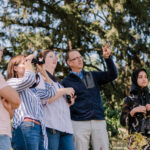
With Kevin Omland, professor of biological sciences
UMBC is teeming with wildlife—the infamous frenzied squirrels, the occasional wandering deer, a curious woodchuck or two, and lots and lots of birds. Melodic chirping can be heard from the wee hours of the morning all the way until the last night classes let out. And not just any birds; the areas surrounding UMBC and campus alike are home to a special species, one that is widely revered around the entire state—the Baltimore Oriole.
Having researched orioles and ravens for decades, it’s not surprising that Kevin Omland, a biological sciences professor, calls himself the mascot biologist for the state of Maryland. Since joining UMBC in 2000, Omland’s work has almost exclusively centered on orioles. Along with members of his lab, the Presidential Research Professor studies a range of topics in avian evolution, behavior, and conservation. We asked the life-long ornithophilehow to spot the Baltimore Oriole, our state bird, in its natural habitat.

Tools of the Trade
- A good pair of binoculars
- A smartphone or tablet to access the website “All About Birds”
- A device to play an imitation of the Oriole’s song
- Patience—and lots of it!
Step One – Pick a Park
Baltimore Orioles can be found all around suburban parks in Baltimore County and City. Omland estimates that there are at least 100 oriole territories between the Inner Harbor and the Pennsylvania/Maryland border.
“The Baltimore Oriole loves hanging out in local suburban parks,” he notes. “I’ve even seen them in the trees near the entrance to the Maryland Zoo in Druid Park. You have a good chance of seeing them in Patapsco State Park, too.”
To find a Baltimore Oriole on UMBC’s campus Omland suggests scoping out Pig Pen Pond and the Conservation Environmental Research Area (CERA) located south of bwtech, UMBC’s business park. Omland notes that it may be harder to spot Baltimore Orioles on campus due to an increase of construction here in the past twenty years, but it is still possible to find the occasional oriole flying near the green spaces on campus.
Step Two: Look (and Listen!) High in the Sky
After you’ve picked your park, it’s important to know how to find the elusive bird. According to Omland, the state bird may be harder to spot than you think. He recommends looking and listening up toward the treeline.
“You’ll never see a Baltimore Oriole on the ground to save your life,” he joked, noting that he is also known to be the worst exaggerator in the world. “But in all seriousness, it is very rare to see [them] on the ground. Some particularly adventurous orioles may forage for food on the ground, but it’s rare.”

Omland says that your best bet is to grab a pair of binoculars and look in the tops of tall trees near rivers, ponds, and even golf courses.
As for the signature colors, Omland says that there’s no other bird around that boasts the bright orange coloring complemented by the jet black feathers—it’s unmistakable. He notes that adult males will have vibrant, discernible colors, while females and adolescents will be a bit more muted, but still identifiable.
“You’re sure to recognize the colors. It’s the same ones on the baseball caps for the O’s team,” Omland says. “Historically speaking, it’s called Lord Baltimore’s Orange, and there’s no other bird that carries that indisputable color. If you know that color, you’re on the right track!”
Step Three: Work on Your Whistle
No less important than the distinct colorings of the Baltimore Oriole is the sound that it makes—a low, loud, clear whistle that can often be heard from far distances.
“It is difficult for humans to imitate the sounds of many other birds,” says Omland, “but for the Baltimore Oriole, it can be fairly easy to imitate if you practice. If you get really good at their whistle, there’s a chance that they will answer back!”
Step Four: Take Your Skills Farther Afield
The Baltimore Oriole is just one of more than 30 different species of orioles found all over the world, and Omland doesn’t limit himself to studying just one kind.
Omland’s research also includes the Bahama Oriole, a critically endangered species native only to Andros Island. Thanks to an International Research Experience for Students grant funded by the National Science Foundation, Omland has been taking students to the remote island in the Bahamas since 2016 to study how climate change is impacting weather patterns and creating natural disasters that have nearly decimated the species.
“It gives students the chance to be on the front lines of climate change,” Omland says. “This is where climate change is killing people, destroying homes, and eliminating ecosystems…the students care about what happens to these islands and want to make a difference.”
Omland extends the invitation to his students and beyond to participate in what he calls “adventure biology”—getting outdoors and sharing intimate opportunities with the surrounding wildlife, especially in readily accessible areas. “The Baltimore Orioles are one of the many spectacular birds that are here in our forests,” he said. “If people stop, look up, and start paying attention, Maryland has a lot of wonderful diversity to offer us.”
*****
Photos of Omland and his class by Marlayna Demond ’11. Oriole image courtesy of Kevin Omland.
]]>
With Kevin Omland, professor of biological sciences UMBC is teeming with wildlife—the infamous frenzied squirrels, the occasional wandering deer, a curious woodchuck or two, and lots and lots...
https://umbc.edu/stories/how-to-spot-marylands-state-bird/
https://beta.my.umbc.edu/api/v0/pixel/news/119892/guest@my.umbc.edu/b55c7a7d32bdb62ca5cab51b0b7f456d/api/pixel
cnms
discovery
how-to
professorsnottomiss
spring-2020
UMBC News & Magazine
https://beta.my.umbc.edu/groups/umbc-news-magazine
https://assets1-beta.my.umbc.edu/system/shared/avatars/groups/000/001/943/24435aa6207c452e7bc15cc74b42c7bb/xsmall.png?1748556657
https://assets1-beta.my.umbc.edu/system/shared/avatars/groups/000/001/943/24435aa6207c452e7bc15cc74b42c7bb/original.png?1748556657
https://assets2-beta.my.umbc.edu/system/shared/avatars/groups/000/001/943/24435aa6207c452e7bc15cc74b42c7bb/xxlarge.png?1748556657
https://assets2-beta.my.umbc.edu/system/shared/avatars/groups/000/001/943/24435aa6207c452e7bc15cc74b42c7bb/xlarge.png?1748556657
https://assets3-beta.my.umbc.edu/system/shared/avatars/groups/000/001/943/24435aa6207c452e7bc15cc74b42c7bb/large.png?1748556657
https://assets1-beta.my.umbc.edu/system/shared/avatars/groups/000/001/943/24435aa6207c452e7bc15cc74b42c7bb/medium.png?1748556657
https://assets2-beta.my.umbc.edu/system/shared/avatars/groups/000/001/943/24435aa6207c452e7bc15cc74b42c7bb/small.png?1748556657
https://assets1-beta.my.umbc.edu/system/shared/avatars/groups/000/001/943/24435aa6207c452e7bc15cc74b42c7bb/xsmall.png?1748556657
https://assets2-beta.my.umbc.edu/system/shared/avatars/groups/000/001/943/24435aa6207c452e7bc15cc74b42c7bb/xxsmall.png?1748556657
UMBC News & Magazine
0
0
false
Thu, 14 May 2020 00:10:11 -0400