Up on the Roof—Spring 2020
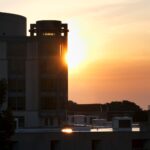
UMBC Magazine caught up with UMBC President Freeman Hrabowski at his home office to talk about alumni leadership during the pandemic, UMBC’s Golden Commencement, and a symbol of hope in tough times.
UMBC Magazine: Given the challenges we’re all facing, it’s wonderful to hear about UMBC alumni making a difference in so many ways. We see Retrievers in health leadership, such as Kizzmekia Corbett ’08, M16, working at the National Institutes of Health on COVID-19 vaccines; U.S. Surgeon General Jerome Adams ’97, M4; Baltimore Health Commissioner Letitia Dzirasa ‘03, M11; and Kaitlyn Sadtler ’11, leading a new COVID study at NIH on asymptomatic patients. We have Mark Doms ’86, the new chief economist of the Congressional Budget Office, and artists like Jill Fannon, M.F.A. ’11, photographing healthcare providers…and so many other inspiring people. How does it make you feel to see our alumni making their mark in these ways?
Freeman Hrabowski: We have produced well-prepared leaders who are committed to the public good all along, from the Maryland Speaker of the House and the Baltimore County Executive to the Chief of Staff for the Governor and the Maryland Secretary of Labor, all the way over to the heads of the Associated Black Charities and the Center for Urban Families. All of these people in a variety of policy and public service roles are leading our country and our communities in supporting children and families.
And we’ve got alumni leading and doing important work across the board, from the arts to the sciences. So across the disciplines, looking through different sets of lenses, people are working to understand and support people in their time of need. And it is very inspiring.
UMBC Magazine: We’ve been thinking a lot about our graduating class, the Class of 2020, and what this semester meant to them, but it’s also the 50th anniversary of UMBC’s first Commencement. Do you feel there are connecting points between the Class of 1970 and our newest graduates?
Hrabowski: I think many people would call the period of the ’60s another generation-defining moment in American history. From the Civil Rights Movement to Vietnam to changes in voting rights in our country, we saw civil unrest, and we also saw some progress. We saw the assassination of a president, John Kennedy, the assassination of Martin Luther King Jr., and the assassination of Senator Robert Kennedy—all in an eight-month period during the ’60s. People who were graduating in the ’70s had been through those times of great uncertainty and tragedy, very much so, and I relate to and resonate with UMBC’s Class of 1970 because that is also the year I graduated from college. My wife and I were supposed to be going down to Hampton University this spring for our 50th reunion.
The Class of 1970 experienced those things in high school and college—the unrest, the tragedy, and fear—and right now our graduating class of 2020 is having the same type of experiences. Yet beyond the fear about the future, the uncertainty, and the tragedy, we also are seeing Americans come together with people from around the world to help each other. The most important message in both periods, in the midst of the uncertainty, is that we will get through this.
And so there’s this theme of hope in the midst of the chaos and fear and uncertainty. In 2020, as in 1970, we are at a point where we are being tested as human beings and as a society to show who we are at our very core. And the good news, the encouraging news, is that when we as human beings get knocked down, we have this indomitable spirit that pushes us to get back up and to say we can do this. We can go through this, and we can do this. And that’s why the celebration of 2020, as it was in 1970, is a message of hope for humanity.
You know, I saw this picture of the sunrise on campus, and one word popped into my head—hope. My grandmother used to always say, “Just remember that the sun will come back.” That’s a powerful message.
****
Have a question for President Hrabowski? Share it with us at magazine@umbc.edu, and read more interviews online at https://umbc.edu/tag/up-on-the-roof/.
Header image by Corey Jennings ’10.
]]>
UMBC Magazine caught up with UMBC President Freeman Hrabowski at his home office to talk about alumni leadership during the pandemic, UMBC’s Golden Commencement, and a symbol of hope in tough...
https://umbc.edu/stories/up-on-the-roof-spring-2020/
https://beta.my.umbc.edu/api/v0/pixel/news/119874/guest@my.umbc.edu/1061dae5f839360292e84ac478e23354/api/pixel
covidresearch
golden-commencement
perspectives
spring-2020
up-on-the-roof
UMBC News & Magazine
https://beta.my.umbc.edu/groups/umbc-news-magazine
https://assets1-beta.my.umbc.edu/system/shared/avatars/groups/000/001/943/24435aa6207c452e7bc15cc74b42c7bb/xsmall.png?1748556657
https://assets1-beta.my.umbc.edu/system/shared/avatars/groups/000/001/943/24435aa6207c452e7bc15cc74b42c7bb/original.png?1748556657
https://assets2-beta.my.umbc.edu/system/shared/avatars/groups/000/001/943/24435aa6207c452e7bc15cc74b42c7bb/xxlarge.png?1748556657
https://assets2-beta.my.umbc.edu/system/shared/avatars/groups/000/001/943/24435aa6207c452e7bc15cc74b42c7bb/xlarge.png?1748556657
https://assets3-beta.my.umbc.edu/system/shared/avatars/groups/000/001/943/24435aa6207c452e7bc15cc74b42c7bb/large.png?1748556657
https://assets1-beta.my.umbc.edu/system/shared/avatars/groups/000/001/943/24435aa6207c452e7bc15cc74b42c7bb/medium.png?1748556657
https://assets2-beta.my.umbc.edu/system/shared/avatars/groups/000/001/943/24435aa6207c452e7bc15cc74b42c7bb/small.png?1748556657
https://assets1-beta.my.umbc.edu/system/shared/avatars/groups/000/001/943/24435aa6207c452e7bc15cc74b42c7bb/xsmall.png?1748556657
https://assets2-beta.my.umbc.edu/system/shared/avatars/groups/000/001/943/24435aa6207c452e7bc15cc74b42c7bb/xxsmall.png?1748556657
UMBC News & Magazine
0
0
false
Wed, 27 May 2020 15:03:06 -0400
Six Ways a Drop in International Students Could Set Back US Higher Education

By David L. Di Maria, associate vice provost for International Education, UMBC
Even before the COVID-19 pandemic, fewer and fewer international students were coming to study in the United States.
While the number of international students who newly enrolled in U.S. colleges and universities during the 2015-2016 school year stood at more than 300,000, by the 2018-2019 school year, that number had fallen by about 10% to less than 270,000.
This trend will undoubtedly accelerate in the fall of 2020 due to the coronavirus pandemic. The American Council on Education predicts that overall international enrollment for the next academic year will decline by as much as 25%. That means there could be 220,000 fewer international students in the U.S. than the approximately 870,000 there are now.
One reason is that the U.S. has more COVID-19 cases than any other country. Other reasons include disapproval among international students regarding the U.S. response to COVID-19 compared to other nations, the ongoing suspension of the processing of U.S. visas and negative perceptions of the Trump administration’s immigration policies and rhetoric.
As an international education professional, I foresee six major ways that the expected steep decline in international enrollment will change U.S. higher education and the economy.
1. Higher tuition
International students often pay full tuition, which averages more than US$26,000 per year at public four-year institutions and $36,000 at private nonprofit four-year institutions. That matters because the tuition from foreign students provides extra funds to subsidize the costs of enrolling more students from the U.S. At public colleges and universities, the revenue generated from international enrollment also helps to make up for cuts in state funding for higher education.
One study found that for every 10% drop in state funding for higher education, international enrollment increased by 12-17% at public research universities from 1996 to 2012.
According to the Institute of International Education’s 2019 Open Doors Report, 872,214 international students are enrolled in U.S. colleges and universities.
As states cut budgets due to the loss of tax revenue brought on by the economic crisis caused by COVID-19, many institutions of higher education will be forced to raise tuition. While this may help college and university finances in the short term, in the long term it will make it more difficult for international students to be able to afford to study in the U.S., which in turn will make the U.S. a less attractive study destination.
2. A weaker economy
International students contribute an estimated $41 billion to the U.S. economy. However, the actual figure is surely much higher considering these students also pay various taxes to federal, state and local governments.
While a decline in international enrollment will financially hurt American colleges and universities, it will also decrease the profits of local businesses and the tax revenues of state and local governments. While college towns are likely to be the first affected, the long-term impact of fewer international students will ultimately be fewer jobs for Americans. How? Well, consider the fact that former international students founded nearly 1 out of every 4 startup companies in the U.S. individually valued at $1 billion dollars or more. Fewer international students now means fewer startups later.
3. Less innovation
One of the strongest factors that influences future international scientific cooperation is having students study in different countries. This ability to collaborate across borders is critical to addressing the world’s greatest challenges, from combating climate change to eliminating COVID-19.
Additionally, economists at the World Bank estimate that a 10% increase in the number of international graduate students in the United States raises patent applications in the U.S. by 4.5% and university patent grants by 6.8%.
Worldwide, research and development is valued at nearly $2 trillion. The U.S. share of that research and development is smaller today than it was in 2000. I believe having fewer international students will only serve to make it even smaller.
4. Job losses
One analysis found that international students support 455,000 U.S. jobs.
International students who participate in Optional Practical Training – a program that allows these students to gain practical experience in their field of study by working temporarily in the U.S. – help employers fill critical positions when they are unable to locate qualified U.S. workers. This is particularly true in certain science and engineering fields. The Trump administration is looking at putting restrictions on the program, it was reported on May 24.
As international enrollment declines, U.S. employers will have a harder time filling jobs. This may lead companies to look for talent in other countries – or possibly relocate jobs abroad.
5. Less exposure to diversity
When students interact with people from cultures other than their own, it enhances their ability to think more critically. It also reduces prejudice.
Since only 10% of U.S. students study abroad prior to earning their bachelor’s degree, international students play an important role in exposing U.S. students who never go abroad to international perspectives. In essence, international students bring the world to campus and increase access to global learning for all. The result is a more globally competent workforce, which is important considering that 1 in 5 jobs in the U.S. is tied to international trade and 93% of employers value employees who can work effectively across national and cultural boundaries.
6. Less U.S. influence
While more than 300 current and former world leaders were at one time international students in the U.S., other nations are making concerted efforts to catch up. If there are fewer students from other countries studying in the U.S., it will lessen the ability of the United States to touch the hearts and minds of future world leaders.
*****
]]>
By David L. Di Maria, associate vice provost for International Education, UMBC Even before the COVID-19 pandemic, fewer and fewer international students were coming to study in the United...
https://umbc.edu/stories/six-ways-a-drop-in-international-students-could-set-back-us-higher-education/
https://beta.my.umbc.edu/api/v0/pixel/news/119875/guest@my.umbc.edu/e333a5722ee2eb2407ede7c03b328deb/api/pixel
covidreseach
international
international-students
perspectives
the-conversation
umbctogether
UMBC News & Magazine
https://beta.my.umbc.edu/groups/umbc-news-magazine
https://assets1-beta.my.umbc.edu/system/shared/avatars/groups/000/001/943/24435aa6207c452e7bc15cc74b42c7bb/xsmall.png?1748556657
https://assets1-beta.my.umbc.edu/system/shared/avatars/groups/000/001/943/24435aa6207c452e7bc15cc74b42c7bb/original.png?1748556657
https://assets2-beta.my.umbc.edu/system/shared/avatars/groups/000/001/943/24435aa6207c452e7bc15cc74b42c7bb/xxlarge.png?1748556657
https://assets2-beta.my.umbc.edu/system/shared/avatars/groups/000/001/943/24435aa6207c452e7bc15cc74b42c7bb/xlarge.png?1748556657
https://assets3-beta.my.umbc.edu/system/shared/avatars/groups/000/001/943/24435aa6207c452e7bc15cc74b42c7bb/large.png?1748556657
https://assets1-beta.my.umbc.edu/system/shared/avatars/groups/000/001/943/24435aa6207c452e7bc15cc74b42c7bb/medium.png?1748556657
https://assets2-beta.my.umbc.edu/system/shared/avatars/groups/000/001/943/24435aa6207c452e7bc15cc74b42c7bb/small.png?1748556657
https://assets1-beta.my.umbc.edu/system/shared/avatars/groups/000/001/943/24435aa6207c452e7bc15cc74b42c7bb/xsmall.png?1748556657
https://assets2-beta.my.umbc.edu/system/shared/avatars/groups/000/001/943/24435aa6207c452e7bc15cc74b42c7bb/xxsmall.png?1748556657
UMBC News & Magazine
0
0
false
Tue, 26 May 2020 17:57:18 -0400
House near UMBC
There will be bedrooms available for summer break or fall semester student(lease 9 months or longer)
price : $420 /month about(depend on room) + utilities (average $50/month/per month)+ wifi $10/per month
Location: Walking distance to UMBC about 5 minutes.
If interesting, please contact me with your name and your umbc email address;
my e-mail is ; lidimin@gmail.com (please write "Re room")
]]>
There will be bedrooms available for summer break or fall semester student(lease 9 months or longer) price : $420 /month about(depend on room) + utilities (average $50/month/per month)+...
https://beta.my.umbc.edu/api/v0/pixel/news/93384/guest@my.umbc.edu/a49f5bdfd207607bd8d17f07ca912030/api/pixel
International Student and Scholar Services (ISSS)
https://beta.my.umbc.edu/groups/ies
https://assets4-beta.my.umbc.edu/system/shared/avatars/groups/000/000/431/46ad84ea8ba0baeed7c3faf29d1fd4ef/xsmall.png?1693323874
https://assets3-beta.my.umbc.edu/system/shared/avatars/groups/000/000/431/46ad84ea8ba0baeed7c3faf29d1fd4ef/original.jpeg?1693323874
https://assets1-beta.my.umbc.edu/system/shared/avatars/groups/000/000/431/46ad84ea8ba0baeed7c3faf29d1fd4ef/xxlarge.png?1693323874
https://assets1-beta.my.umbc.edu/system/shared/avatars/groups/000/000/431/46ad84ea8ba0baeed7c3faf29d1fd4ef/xlarge.png?1693323874
https://assets4-beta.my.umbc.edu/system/shared/avatars/groups/000/000/431/46ad84ea8ba0baeed7c3faf29d1fd4ef/large.png?1693323874
https://assets3-beta.my.umbc.edu/system/shared/avatars/groups/000/000/431/46ad84ea8ba0baeed7c3faf29d1fd4ef/medium.png?1693323874
https://assets1-beta.my.umbc.edu/system/shared/avatars/groups/000/000/431/46ad84ea8ba0baeed7c3faf29d1fd4ef/small.png?1693323874
https://assets4-beta.my.umbc.edu/system/shared/avatars/groups/000/000/431/46ad84ea8ba0baeed7c3faf29d1fd4ef/xsmall.png?1693323874
https://assets3-beta.my.umbc.edu/system/shared/avatars/groups/000/000/431/46ad84ea8ba0baeed7c3faf29d1fd4ef/xxsmall.png?1693323874
IES Marketplace
0
0
true
Fri, 22 May 2020 19:44:16 -0400
UMBC-affiliated artists receive Zaentz fellowships for new collaborative projects

Three UMBC-affiliated artists have each received 2020-2021 fellowship awards from the Saul Zaentz Innovation Fund (SZIF) in Film and Media at Johns Hopkins University. SZIF cash awards are granted to nurture unique project ideas that have the potential for socio-political impact and that advance the art and craft of audiovisual media.
In addition to receiving financial support for project development or production, selected fellows participate in ongoing mentorship and workshops with industry professionals.
Losing Winter
Lynn Cazabon is a professor in visual arts and CIRCA-IMET 2019-2020 artist-in-residence, and was recently named as the next director of UMBC’s Center for Innovation, Research, and Creativity in the Arts (CIRCA). She has received funding to develop Losing Winter.
Cazabon will work with Lee Boot, associate research professor and director of UMBC’s Imaging Research Center (IRC), to develop the Losing Winter mobile app. It centers on shared memories and emotions about the season of winter. The app will collect memories connected to the season of winter in the form of videos from participants all around the world. Cazabon will then incorporate them into an augmented reality audio-visual experience.
Under the Bay
Lisa Moren, professor of visual arts and graduate program director of the intermedia and digital art MFA program, received an award to create Under the Bay. This augmented reality project will include collaborators Tsvetan Bachvaroff, a professor of biology at the University of Maryland Center for Environmental Science, and Marc Olano, associate professor of computer science at UMBC and director of the game development track.
Under the Bay will invite users to interact with the waters of the Chesapeake Bay, beneath the surface, delivering a story through augmented reality.
 Professor Lisa Moren. Photo courtesy of Lisa Moren.
Moren was previously part of the first cohort of SZIF Fellows, receiving support to develop the app NONUMENT 01::The McKeldin Fountain.
Legacies
Angela N. Carroll ’06, visual arts, an adjunct professor at Stevenson University, received funding to develop a pilot episode for Legacies. She envisions this project as a 10-episode docuseries that chronicles a radical generation of artists active between 1960 and 1990. Each profiled artist will be someone known for substantial bodies of work that have critiqued, resisted, and engaged tumultuous and revelatory eras of political and social upheaval in the United States.
 Angela N. Carroll ’06. Photo courtesy of Angela N. Caroll.
Describing herself as an artist-archivist, research has been an integral part of Carroll’s art practice, traced to her time at UMBC and as a McNair Scholar.
Cazabon, Moren, and Carroll’s projects are among 19 funded for the 2020-2021 fellowship year. They were selected from among 27 artists chosen in January as 2020-2021 fellows in the SZIF mentorship program, which also includes Emma Ayala ’18, visual arts.
Johns Hopkins founded the fund in March 2016 through a $1 million grant from the Saul Zaentz Charitable Foundation. Zaentz was an Oscar-winning producer who died in 2014. The incubator supports Baltimore artists by helping them to connect with each other to develop and realize their ideas in Baltimore.
Banner image: Lynn Cazabon with her installation version of Losing Winter at the National Museum of Contemporary Art (MNAC) in Bucharest, Romania. Photo by Josef Polleross.
]]>
Three UMBC-affiliated artists have each received 2020-2021 fellowship awards from the Saul Zaentz Innovation Fund (SZIF) in Film and Media at Johns Hopkins University. SZIF cash awards are granted...
https://umbc.edu/stories/umbc-affiliated-artists-receive-zaentz-fellowships-for-new-collaborative-projects/
https://beta.my.umbc.edu/api/v0/pixel/news/119876/guest@my.umbc.edu/cf392cc6ad0fcb8ce4ceb6d7971efaca/api/pixel
alumni
arts-and-culture
cahss
visualarts
UMBC News & Magazine
https://beta.my.umbc.edu/groups/umbc-news-magazine
https://assets1-beta.my.umbc.edu/system/shared/avatars/groups/000/001/943/24435aa6207c452e7bc15cc74b42c7bb/xsmall.png?1748556657
https://assets1-beta.my.umbc.edu/system/shared/avatars/groups/000/001/943/24435aa6207c452e7bc15cc74b42c7bb/original.png?1748556657
https://assets2-beta.my.umbc.edu/system/shared/avatars/groups/000/001/943/24435aa6207c452e7bc15cc74b42c7bb/xxlarge.png?1748556657
https://assets2-beta.my.umbc.edu/system/shared/avatars/groups/000/001/943/24435aa6207c452e7bc15cc74b42c7bb/xlarge.png?1748556657
https://assets3-beta.my.umbc.edu/system/shared/avatars/groups/000/001/943/24435aa6207c452e7bc15cc74b42c7bb/large.png?1748556657
https://assets1-beta.my.umbc.edu/system/shared/avatars/groups/000/001/943/24435aa6207c452e7bc15cc74b42c7bb/medium.png?1748556657
https://assets2-beta.my.umbc.edu/system/shared/avatars/groups/000/001/943/24435aa6207c452e7bc15cc74b42c7bb/small.png?1748556657
https://assets1-beta.my.umbc.edu/system/shared/avatars/groups/000/001/943/24435aa6207c452e7bc15cc74b42c7bb/xsmall.png?1748556657
https://assets2-beta.my.umbc.edu/system/shared/avatars/groups/000/001/943/24435aa6207c452e7bc15cc74b42c7bb/xxsmall.png?1748556657
UMBC News & Magazine
0
0
false
Fri, 22 May 2020 17:48:32 -0400
How the darter got its stripes: New UMBC research expands on sexual selection theory to explain complicated animal patterns
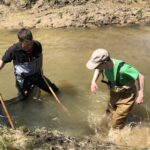
Samuel Hulse, Ph.D. candidate in biological sciences, has spent a lot of time in waders over the last two years. He has traipsed from stream to stream across the eastern U.S., carefully collecting live specimens of small, colorful freshwater fish known as darters and taking photos of their habitats. Then he’s brought them back to the lab to capture high-quality images of their coloration patterns.
Hulse developed a precise, quantitative analysis of those visual patterns, such as stripes, spots, and various mottled looks. His work shows, for the first time, a strong correlation between the complicated patterns on male fish and the fishes’ highly variable environments. The results were published today in Nature Communications.
These findings represent a major expansion of a theory in sexual selection known as “sensory drive,” which emphasizes how an animal’s environment can influence what sexual signals—like visual patterns—are selected for over time.
 “Gaudy Darters” by Kate Feller, Ph.D. ’14, biological sciences. Watercolor and ink. These are realistic renderings of darters in the genus Etheostoma.
Driving progress
So far, sensory drive has successfully explained examples such as coloration in cichlids, a group of freshwater fish in Africa. Hulse was working to expand on this research.
Different species of cichlids live at different depths, and which colors the fish can easily see changes as you go deeper and there is less light. Why does this matter? The idea of sensory drive is that animals perceive visual signals, like colors, as more attractive when they are easier for their brains to process. And which signals are easier to process is dependent on the environment. When male fish are perceived as more attractive, they are more likely to reproduce, and their colors are more likely to be passed to the next generation of fish. So, if the theory of sensory drive is true, eventually, most male fish will have colors that are easy for mates to perceive in their particular environment.
In the cichlid fish, “you see this depth-dependent change in the male colors as you go deeper,” Hulse says. With the new work, “we were able to expand on this theory to explain more complicated traits, such as visual patterns,” like stripes and spots.
 Sam Hulse with Natalie Roberts, Ph.D. ’19, biological sciences, collecting darters. During their time together in the Mendelson lab, Hulse says, “It was really great having Natalie as a peer, because I could help her out with more of the computational aspects and she could help me out with some of the more biological questions.” Photo courtesy Tamra Mendelson.
Using math to understand biology
Hulse, who is also taking courses toward an M.S. in mathematics at UMBC, brought his quantitative skills to bear on this research. He used a measure called Fourier analysis to examine his fish images, looking at variations in color contrast.
For example, if you were to look at a photo of a grassy hill under a bright blue sky, the greatest contrast in brightness would be between the large areas above and below the horizon line. That contrast is on a larger scale than the differences in brightness between, say, tiny blades of grass. The differences between each blade are small, but occur frequently across the image.
Fourier analysis can translate the contrast patterns in an image into a representative set of mathematical sine and cosine waves. The low-frequency waves, which only swoop up and down once or twice across the entire image, represent large-scale differences, like above and below the horizon. High-frequency waves swoop up and down many times across an image and represent small-scale differences, like between blades of grass.
Researchers can look at the relationships between those waves—how much high-frequency versus low-frequency contrast there is in the image. Hulse’s work looked at that measure to examine the visual relationship between a habitat and the fish that lived in it. And sure enough, his calculations revealed a strong correlation, providing evidence of sensory drive in male darters.
 Samuel Hulse takes a photo of darter habitat for analysis. He captured fish and habitat photos of three distinct populations each of 10 different darter species. Photo courtesy Tamra Mendelson.
Moving past “wishy-washy terminology”
One argument against the idea that these patterns are attractive to females is the idea of camouflage. Wouldn’t it make sense for animals to match the visual patterns of their environment to avoid getting eaten, rather than to attract females? Darters are under strong predation pressure, so, Hulse says, it’s a valid point.
However, the fact that he found that only male fish (not female fish) match their environment is a strong argument in favor of sensory drive. Predators don’t discriminate between males and females, so you would expect females to also match their environment if camouflage was the reason.
“Quantitatively describing visual patterns is a big challenge, and there’s not one easy way to do that, so being able to use tools like Fourier analysis is wonderful,” Hulse says. “That actually lets us quantify some of these things that have historically been very hard to describe other than with wishy-washy terminology.”
Perfect timing
Tamra Mendelson, professor of biological sciences, is Hulse’s advisor and a co-author on the new paper. She had just begun formulating the ideas for this research with visual ecologist Julien Renoult, a colleague at Centre National de la Recherche Scientifique (CNRS) in Montpellier, France and a co-author, when Hulse joined her laboratory in 2016.
“Julien had inspired me to take concepts from a field called human empirical aesthetics, which is the mathematical and biological basis of human appreciation of art, and apply them to animals’ appreciation of other animals,” Mendelson says. “I was super excited about it, but I didn’t have the mathematical chops to really take it as far as it could go.”
 Tamra Mendelson at a research field site, courtesy Tamra Mendelson.
So, when Hulse arrived, “It was a perfect match. Sam is the ideal student to be doing this project.”
And for Hulse, Mendelson was the ideal mentor. “I think she strikes a really good balance of not being too hands on, but always being there when I am confused with something,” he says. “I feel like her mentorship style allowed me to develop on my own, and at the same time, I’ve never felt like there isn’t help there.”
Hulse also spent several months in France working with Renoult to iron out some of the statistical challenges of the work—which were many. “The data analysis became a lot more complicated than we thought, and there were a lot of technical snags,” Hulse says. “So it was really great to be able to be there working directly with Julien, who has a lot of background with these sorts of methods.”
Bringing it all together
Hulse was drawn to this work by the unique blend of skills it requires. “I love the interdisciplinary nature of it. We’re bringing together field biology, sensory biology, a little bit of neurobiology, and image analysis,” he says. “That’s one of the most attractive things about this project for me—how much I get to learn and how much I get to take little pieces from so many different areas.”
Now, Hulse, Mendelson, and Renoult are excited to see where their new work leads. “There’s not a lot of theory in sexual selection that can be used to explain why you see one pattern evolve in one animal where you see a different one evolve in a closely related species,” Hulse says.
The new findings open the door to much more exploration with different species, including animals that live on land. In any group of animals that relies on vision, has visually distinct environments, and where the animals have distinct habitat preferences, Hulse argues, “this theory should hold.”
Banner image: Samuel Hulse (right) and Julien Renoult collect darters in a stream. Photo courtesy Tamra Mendelson.
]]>
Samuel Hulse, Ph.D. candidate in biological sciences, has spent a lot of time in waders over the last two years. He has traipsed from stream to stream across the eastern U.S., carefully collecting...
https://umbc.edu/stories/how-the-darter-got-its-stripes-new-umbc-research-expands-on-sexual-selection-theory-to-explain-complicated-animal-patterns/
https://beta.my.umbc.edu/api/v0/pixel/news/119877/guest@my.umbc.edu/b9a04cfc750949908ac06db4010c2b7a/api/pixel
biology
cnms
gradresearch
research
science-and-technology
UMBC News & Magazine
https://beta.my.umbc.edu/groups/umbc-news-magazine
https://assets1-beta.my.umbc.edu/system/shared/avatars/groups/000/001/943/24435aa6207c452e7bc15cc74b42c7bb/xsmall.png?1748556657
https://assets1-beta.my.umbc.edu/system/shared/avatars/groups/000/001/943/24435aa6207c452e7bc15cc74b42c7bb/original.png?1748556657
https://assets2-beta.my.umbc.edu/system/shared/avatars/groups/000/001/943/24435aa6207c452e7bc15cc74b42c7bb/xxlarge.png?1748556657
https://assets2-beta.my.umbc.edu/system/shared/avatars/groups/000/001/943/24435aa6207c452e7bc15cc74b42c7bb/xlarge.png?1748556657
https://assets3-beta.my.umbc.edu/system/shared/avatars/groups/000/001/943/24435aa6207c452e7bc15cc74b42c7bb/large.png?1748556657
https://assets1-beta.my.umbc.edu/system/shared/avatars/groups/000/001/943/24435aa6207c452e7bc15cc74b42c7bb/medium.png?1748556657
https://assets2-beta.my.umbc.edu/system/shared/avatars/groups/000/001/943/24435aa6207c452e7bc15cc74b42c7bb/small.png?1748556657
https://assets1-beta.my.umbc.edu/system/shared/avatars/groups/000/001/943/24435aa6207c452e7bc15cc74b42c7bb/xsmall.png?1748556657
https://assets2-beta.my.umbc.edu/system/shared/avatars/groups/000/001/943/24435aa6207c452e7bc15cc74b42c7bb/xxsmall.png?1748556657
UMBC News & Magazine
0
0
false
Fri, 22 May 2020 12:44:41 -0400
Stay Golden, Retrievers
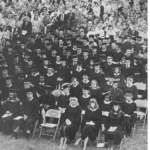
Fifty years ago, UMBC’s very first class crossed the stage for the university’s inaugural Commencement ceremony. Among the faces of the 239-member founding class captured in black and white in the Skipjack 1970 yearbook are men and women eager to explore their world. Together with brand-new faculty and staff, they helped set the foundation of UMBC as a true community of inquiring minds.
Although they are decades apart, the graduating Class of 2020 has made just as indelible a mark on UMBC. Like their 1970 counterparts, they have contributed fresh takes on timeless conversations, challenged norms for the public good, created timely scholarship of all types, and pioneered entirely new ways of learning.
As we celebrate UMBC’s Golden Commencement, we hope you will enjoy these conversations between members of the Classes of 1970 and 2020 and take pride in what it means to be a Retriever—and how those principles have remained consistent year after year.
Timeless Teammates—Louie & Kaya
For decades, many students’ UMBC experiences have been shaped by the teams they cheered for and the championships they competed in. But when Linda “Louie” Sowers ’70, American studies, first arrived at UMBC in the school’s inaugural year, athletics were hardly a blip on the map of the school’s three-building campus—and women’s sports did not exist at all. It was Sowers herself who made the change.
Formerly a high school volleyball player, she approached the school’s athletic director and struck a deal: If she could gather enough interest, the school would sanction a women’s volleyball team.
In the end, sixty-six women—around a tenth of the school’s entire population—signed on, demanding women’s athletics. A volleyball team was formed, followed by field hockey and basketball, and the rest is history.
“I often wondered what would’ve happened if I hadn’t…said, ‘hey, we have girls that are interested in playing,’” Sowers told Kaya Knake ’20, computer science, a member of the Track and Field team, over lunch at True Grit’s early last semester. “How many years would’ve gone by with no women’s sports here?”
-
 Louie Sowers ’70
-
 Kaya Knake ’20
The women’s teams at the time had few resources at their disposal; they initially practiced in their gym uniforms, had difficulty finding schools to compete against, and were relegated to practicing in the late evening, once the boys were done using the field.
Even once they did get their own uniforms, girls who played more than one sport got only one uniform that they used year-round—including Sowers, who wore lucky number 13 for all three teams. You can spot the jersey scattered across the pages of UMBC’s 1970 yearbook, which Knake and Sowers flipped through together as they chatted.
Now, 50 years later, women’s athletics at UMBC not only persists but thrives, with eight NCAA teams, including basketball and volleyball; field hockey, sadly, did not stand the test of time.
 Sowers and Knake at True Grit’s looking at photos of UMBC’s women sports teams from 1970 and today.
Knake, who will graduate this semester into a new career at Northrop Grumman, is one of the many students whose UMBC experience is inextricably tied to athletics. After all, Knake is a Michigan native who would not have heard about UMBC if she hadn’t been recruited by the university’s Track and Field team.
Unlike in Sowers’s time, Knake’s team has never had any dearth of schools to compete against. One of the most memorable experiences she has had as part of the Track and Field team, she said, was when UMBC hosted the America East Outdoor Track and Field Championships at the end of her sophomore year, bringing nine teams and tons of fans to campus. There, Knake won two events and even set an America East record for the outdoor 800 meter. But it was the support of the community that really made the occasion special, Knake told Sowers while sharing some of the team photos she keeps on her phone
“It meant a lot because my parents came down from Michigan, and then some people from UMBC came to watch, and we had a ton of alumni who came out as well,” Knake explained. “It was really special to have everyone here and feel like a big team.”
A World to Discover—Dale & Pat
It might come as a surprise to today’s UMBC students to learn that study abroad has been a part of the university’s fabric since almost the very beginning. In 1969, UMBC’s third year, a group of 42 students traveled abroad as part of a winter session course (then called the “mini-mester”), traversing Europe and visiting important historical landmarks.
Dale Gough ’70, American studies, was not on that trip. He did, however, end up going abroad after his senior year, but it was not for a class, nor for a vacation. At the time—the tail end of the Vietnam War—there was a draft lottery, in which young men were selected based on their birthdates to serve in the military. When Gough realized he was going to be drafted, he decided to get ahead of the curve by going to the military recruitment office, resume in hand, in hopes of getting placed somewhere other than active duty.
“[The recruiter] said, ‘Well, have you ever considered military intelligence?’ And I said, ‘Oh, you mean like James Bond?’” Gough recalled as he and Pat Michael ’20, mathematics and global studies, took a walking tour of campus together this spring.
 On a walk around campus in early 2020, Gough and Micheal discuss the benefits of having experiences abroad.
Thus began Gough’s assignment in Panama, where he worked as the non-commissioned officer in charge of source administration and research analysis. Since then, he has visited six times and has become quite well-versed in Panamanian politics, culture, and history, as evidenced by the stream of facts and anecdotes he related to Michael as the duo turned off of Academic Row and made their way across the quad towards the Interdisciplinary Life Sciences Building.
Now, the class of 1970 is donating $25,000 to support international education in hopes of boosting the number of UMBC students who are able to study abroad — the Education Abroad Access Fund. Even though Gough did not personally have the opportunity to study abroad while in school, his time in Panama taught him that immersing oneself in another culture “fundamentally changes your DNA.”
-
 Dale Gough ’70
-
 Pat Michael ’20
The sentiment was echoed by Michael, who studied abroad in Colombia—which shares a border with Panama—during their junior year at UMBC. “It rocks your world,” said Michael, who described their experience in Colombia as that of a “investigator,” constantly trying to gain a deeper understanding of the country’s customs and culture over the course of their semester-long experience.
While Michael managed to get used to some aspects of Colombian culture, like the blunt way the people talk with one another and the nation’s proclivity for long days that start early in the morning, they know that they still have much to learn. They plan to return someday soon and even applied to teach there as a Fulbright Scholar.
Gough and Michael ended their campus tour in The Commons, where they sat below the colorful swath of international flags that hang from the ceiling. There, Michael told Gough about working as a peer advisor in the Education Abroad Office. Part of the job of a peer advisor involves explaining to their fellow students what study abroad was like—a duty that has turned out to be mutually beneficial.
“Talking about my experience has helped me ground it, but it has also inspired other people,” Michael says. “It’s fun to see some people’s faces when they light up.”
Supplemental Learning—Donna & Kara
When Donna Helm ’70, French, came to UMBC, she wasn’t entirely sure what she wanted to study; the career options at the time were limited for women, she recalls, but she did have an interest in teaching. Luckily, though, she wasn’t alone in her uncertainty. Most of the professors who taught her were playing it by ear, as well.
“Many of our professors were brand-newly minted Ph.D.s who had never taught, and this was their chance to sort of figure it out, too,” Helm said in a phone call with Kara Gavin ’20, an English major and Humanities Scholar.
-
 Donna Helm ’70
-
 Kara Gavin ’20
This led to a sort of camaraderie between the professors and students, who worked together to navigate the beginnings of a brand-new school; there was a sense that everyone on campus was constantly trying new things, learning from mistakes, and improvising.
“They had requirements, but we had a certain amount of freedom to design … what we wanted to do,” Helm said.
This led to a handful of educational experiences that may strike today’s students as a little bit unusual. Some of the most notable were the weekend excursions Helm—along with her professor and twenty classmates—used to take to an off-campus estate called the Donaldson Brown Center, located in Cecil County on the Susquehanna River.
There, the students would fully immerse themselves in the language. “It was an opportunity to just speak French and to interact on a different level with our professors because we weren’t at the school,” Helm says. “That was really a lot of fun.”
 Members of the graduating class of 1970 read an issue of
 The Retriever.
After the COVID-19 pandemic forced universities to switch to distance learning this spring, UMBC’s students and professors faced moments of uncertainty and improvisation not unlike what Helm’s class experienced in the school’s first year.
Just as Helm’s professors tried to find interesting ways to engage their students, Gavin’s professors have had to completely rearrange their courses to accommodate the new online environment. The professor for her costuming class altered the final project so that students who do not own a sewing machine can either create a costume design plan, including budget and materials, or write a research essay.
Degree requirements were also somewhat looser when Helm was a student, mirroring the temporary changes to grading policies this semester to afford students an unprecedented amount of flexibility for completing their graduation requirements under the stress of a pandemic.”
And just as Helm and her professors supported one another through the often-challenging work of building a university from the ground up, Gavin said her professors have been more than understanding of what their students are going through in this difficult time.
“My teachers also have been helpful just by asking, ‘How are you guys doing?’ In the first Zoom session of my English Technical Communication course, we spent the first 15 minutes just talking about how we were, how our families were,” Kara said. “As often as I can, I try to make sure to thank my teachers for how they have helped us in this transition.”
*****
All 1970s images are from the university’s 1970 Skipjack. All other photos by Marlayna Demond ’11, except for Kara Gavin’s image, submitted by the subject. Infographic designed by Layla Thompson-Koch.
Read more stories about the Class of 2020.
]]>
Fifty years ago, UMBC’s very first class crossed the stage for the university’s inaugural Commencement ceremony. Among the faces of the 239-member founding class captured in black and white in the...
https://umbc.edu/stories/golden-commencement-highlights-retrievers-enduring-true-grit/
https://beta.my.umbc.edu/api/v0/pixel/news/119878/guest@my.umbc.edu/b904b52de2a16fd3edc1f698445d34b8/api/pixel
alumni
classof2020
golden-commencement
spring-2020
umbctogether
UMBC News & Magazine
https://beta.my.umbc.edu/groups/umbc-news-magazine
https://assets1-beta.my.umbc.edu/system/shared/avatars/groups/000/001/943/24435aa6207c452e7bc15cc74b42c7bb/xsmall.png?1748556657
https://assets1-beta.my.umbc.edu/system/shared/avatars/groups/000/001/943/24435aa6207c452e7bc15cc74b42c7bb/original.png?1748556657
https://assets2-beta.my.umbc.edu/system/shared/avatars/groups/000/001/943/24435aa6207c452e7bc15cc74b42c7bb/xxlarge.png?1748556657
https://assets2-beta.my.umbc.edu/system/shared/avatars/groups/000/001/943/24435aa6207c452e7bc15cc74b42c7bb/xlarge.png?1748556657
https://assets3-beta.my.umbc.edu/system/shared/avatars/groups/000/001/943/24435aa6207c452e7bc15cc74b42c7bb/large.png?1748556657
https://assets1-beta.my.umbc.edu/system/shared/avatars/groups/000/001/943/24435aa6207c452e7bc15cc74b42c7bb/medium.png?1748556657
https://assets2-beta.my.umbc.edu/system/shared/avatars/groups/000/001/943/24435aa6207c452e7bc15cc74b42c7bb/small.png?1748556657
https://assets1-beta.my.umbc.edu/system/shared/avatars/groups/000/001/943/24435aa6207c452e7bc15cc74b42c7bb/xsmall.png?1748556657
https://assets2-beta.my.umbc.edu/system/shared/avatars/groups/000/001/943/24435aa6207c452e7bc15cc74b42c7bb/xxsmall.png?1748556657
UMBC News & Magazine
0
0
false
Thu, 21 May 2020 00:15:43 -0400
Curating COVID-19
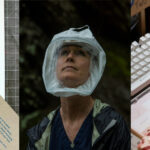
At times of momentous change some take solace in creating. The UMBC community is no exception, adding to a long history of artists and writers recording everyday life during pandemics. From writing diaries and journals to creating art books and developing archives, Retrievers are finding ways to continue to support and create community during the COVID-19 pandemic.
“We rely on scientists, policy makers, and government officials for information,” explains Amy Froide, professor of history, who researches 17th century Britain, including the last great plague epidemic of 1666.
“We need this information. However, it is artists, writers, painters, and musicians who help us understand and process our daily life during this unprecedented time.”
Historians turn to journals and diaries written during the plague of the 17th century in Britain because they painted a picture of everyday life. Artifacts that chronicle how people live, feel, and react to a catastrophic event on a daily basis help us understand the devastating effects across different sections of society. These mundane acts were as important to understanding the impact of a devastating time as were major headline stories.
Early on in the pandemic, Froide encouraged her students and colleagues to document the COVID-19 era through journals and diaries of their own to help future historians understand how daily life changed. Julia Arbutus ’20, English and financial economics, the editor of The Retriever, was inspired by Froide’s post and wrote, “‘The more mundane, the better’: Mass observation during the coronavirus.”
“The arts and the humanities are what we depend on to sustain us,” says Froide.
Paying homage
Jill Fannon, MFA ’11, intermedia and digital arts, is trying to balance the fine line between being a partner, mother, independent professional photographer, and a concerned citizen living within a global pandemic. At the beginning of the stay-at-home orders she took pictures of her family and of artists from a distance, but it didn’t feel quite right.
“These small projects weren’t clicking for me,” says Fannon. “I realized that during this historic moment capturing the experience of health care workers would be very meaningful both in the short and long term.”
Fannon’s “Care In The Garden” is a series of photographic stories about women health care workers. Therapists, physician assistants, and nurses are captured in their uniforms with different types of personal protective equipment in nature. Capturing the workers in nature serves as a contrast between a sterile and structured medical environment with the natural blooming world of spring. It also serves as a reminder of places where we would usually enjoy breathing in the scents of new blooms but that now pose a threat with a virus that attacks the respiratory system.
The first set of images were compiled in Womanly Magazine, a Brooklyn, NY-based magazine dedicated to serving women and marginalized communities. The series also lives on Jill Fannon’s Photography website.
Pieces from Jill Fannon’s photo series “Care In The Garden.”
Another source of inspiration is Fannon’s family of first responders. Both parents served in Baltimore City and County. Her mother is a retired ICU nurse and her father a retired fire chief, while her brother is a Baltimore City fire chief.
“I wanted to document the people that were working really hard,” says Fannon. “It was a way to share the lives of workers whom the public was depending on and are taking extraordinary risks.” Fannon adds that growing up she remembers her mom taking nostalgic family portraits which she drew inspiration from as well.
In addition to documenting the pandemic, Fannon is also mobilizing fellow artists to give back to the community as a co-creator of Feral Kids – Benefits Maryland Food Bank. The project asks area artists to donate a print they created to sell online with 100 percent of the benefits going to the food bank. This endeavor is co-led by Nick Prevas ’03, visual arts, and has received support from Justin Plakas ’04, visual and performing arts, former student Kyle Hurley, Joseph Faura, M.F.A. ’11, intermedia and digital arts; and Carrie Rennolds, M.F.A. ’14, intermedia and digital arts.
Giving voice to the voiceless
Conor Donnan ’16, history, a doctoral student in history at the University of Pennsylvania, is taking a similar approach. He is the co-creator of the Coronavirus Chronicles: Sharing Stories Through Isolation, a large digital archive collecting diaries, stories, academic articles, video, photography, paintings, wall art, memes, lyrics, and social media from people who want to document and share their lives during the pandemic. The archive is managed by a team of historians and scholars from Singapore, China, the United Kingdom, Ireland, Hong Kong, Japan, and the United States.
Donnan researches the history of the relationship between Native Americans and Irish immigrants, a partnership that has typically not been included in history. “History is a dialogue,” says Donnan. “One of the main reasons for my academic career is diversifying the voices who are heard in these narratives.”
Donnan grew up in Northern Ireland during tumultuous times. After the conflict, he noticed that the history of Northern Ireland rarely included the accounts of everyday people who had to endure the violence, poverty, and famine. Donnan wanted to prevent this from happening during this COVID-19 pandemic.
“In the future, people are going to write about COVID-19 and they are going to analyze presidential speeches and CDC press releases,” explains Donnan. “This archive will be a place where people can now and later learn about what all kinds of people were thinking on the day-to-day. The ones the news and history books rarely document.”
Acknowledging the lost and found
Associate professor of media and communications studies, Rebecca A. Adelman, also took to the digital world, creating the Coronavirus Lost and Found archive. One of the topics that Adelman researches is the role of emotion in public culture, and the forms of suffering that often get overlooked in times of crisis.
“I am interested in non-spectacular forms of suffering. I wanted to capture the stories that would never make the news but still matter,” says Adelman.
The collection so far is as varied as its contributors. In “I Lost First Grade” a first grader talks about her sadness about missing math, her friends, and her beloved teacher. Another person shares their frustration about losing their most cherished “Alone Time;” and in “My [Health] Recovery, readers learn about the anger and hopelessness felt about losing access to doctors for ongoing recovery treatment. In Order and Time for Creativity, contributor Jason Tremblay writes about a “found”—time to be creative and embrace passions.
“I felt it was important to create a forum where people’s losses and finds could be recorded, shared, and acknowledged even if they seemed small in the greater scheme of things,” said Adelman.
Losing a conference, finding stories
Writing and reading stories to help us process what it’s like to live through a pandemic is a long-held practice. In 1348 during the Black Death, Giovanni Boccaccio, an Italian writer, wrote The Decameron, a story that tells of a group of people who told 10 stories a day for 10 days to pass the time during the bubonic plague. Kate McKinley, professor of English, explains how The Decameron revealed how different economic classes dealt with the Black Death in her article “How the rich reacted to the bubonic plague has eerie similarities to today’s pandemic.”
UMBC’s digital story working group in the humanities, led by Bill Shewbridge ’80, history, M.S. ’85, instructional technology, professor of the practice in media and communication studies, had originally planned a Digital Storytelling Conference in March with the University of Loughborough in the United Kingdom. When the conference was postponed, the group found an opportunity to start a Decameron of their own.
UMBC’s version is collecting 10 stories a week for 10 weeks during the COVID-19 pandemic. The stories in The Digital Decameron offer a space to document our current life through digital stories about any topic.
Charlotte Keniston, MFA ’14, intermedia and digital art, associate director of the Peaceworker Program, curated the second week. Over 7,000 Peace Corps volunteers had to be evacuated throughout the world and returned to their homes due to the pandemic, so Keniston used the platform to highlight the digital stories of returned UMBC Peace Corps Volunteers and the lessons their Peace Corps service taught them. All the videos record a meaningful event marking the first time they became truly aware of being a Peace Corps Volunteer either through a ritual they were invited to participate in, a meaningful conversation they had with local community members, or challenging experiences in a new culture.
Calling all artists
Visual artist Nicole Ringel ’19, M.F.A., intermedia and digital arts, and adjunct professor of visual arts, found herself in need of keeping and widening her artist community during the pandemic shelter-in-place orders. Ringel, who through her work investigates the layered historical and ecological nuances of shared landscapes, had one powerful tool to meet this goal—a risograph machine.
A cross between a silk screen press and a copy machine, the risograph is popular with artists for its ability to make high quality prints at low cost. She found herself equipped with a tool that could create a print book and serve as a platform for artists cut off from their creative communities. In the absence of being able to meet in person, the book would at least bring together their stories, poetry, and photography.
 Ringel and her risograph machine. Photo courtesy of Ringel.
COVID Landscapes is the inaugural book of Ringel’s small press Sense of Press. Over forty artists share their perspectives on how home, work, and social environments have changed as a result of COVID-19. Ringel was inspired by the changes she experienced in her own spaces. Her house is now a work, classroom, and home space. She says that even mundane spaces such as the grocery store have changed. They are now charged with anxiety and fear of contagion.
“The book is a way to bring mindfulness into the act of creating things in the wake of all the systemic problems we face every day,” says Ringel. “It is about an exchange of art and labor, a vehicle that brings something precious that we can touch and feel, to remind us of the power of purposeful connection and community especially during a time of isolation and uncertainty.”
Header images, L-R: Nicole Ringel’s Covid Landscapes project, Jill Fannon’s “Care In The Garden,” and class journaling from The Retriever newspaper.
Share your own stories of Retriever Resilience by using the #UMBCtogether hashtag, and read more at umbc.edu/together.
]]>
At times of momentous change some take solace in creating. The UMBC community is no exception, adding to a long history of artists and writers recording everyday life during pandemics. From...
https://umbc.edu/stories/curating-covid-19/
https://beta.my.umbc.edu/api/v0/pixel/news/119879/guest@my.umbc.edu/949a973b7baad9a40f1dca742cb28ca3/api/pixel
alumni
cahss
covidresearch
english
graduateschool
history
imda
impact
resilience
umbctogether
UMBC News & Magazine
https://beta.my.umbc.edu/groups/umbc-news-magazine
https://assets1-beta.my.umbc.edu/system/shared/avatars/groups/000/001/943/24435aa6207c452e7bc15cc74b42c7bb/xsmall.png?1748556657
https://assets1-beta.my.umbc.edu/system/shared/avatars/groups/000/001/943/24435aa6207c452e7bc15cc74b42c7bb/original.png?1748556657
https://assets2-beta.my.umbc.edu/system/shared/avatars/groups/000/001/943/24435aa6207c452e7bc15cc74b42c7bb/xxlarge.png?1748556657
https://assets2-beta.my.umbc.edu/system/shared/avatars/groups/000/001/943/24435aa6207c452e7bc15cc74b42c7bb/xlarge.png?1748556657
https://assets3-beta.my.umbc.edu/system/shared/avatars/groups/000/001/943/24435aa6207c452e7bc15cc74b42c7bb/large.png?1748556657
https://assets1-beta.my.umbc.edu/system/shared/avatars/groups/000/001/943/24435aa6207c452e7bc15cc74b42c7bb/medium.png?1748556657
https://assets2-beta.my.umbc.edu/system/shared/avatars/groups/000/001/943/24435aa6207c452e7bc15cc74b42c7bb/small.png?1748556657
https://assets1-beta.my.umbc.edu/system/shared/avatars/groups/000/001/943/24435aa6207c452e7bc15cc74b42c7bb/xsmall.png?1748556657
https://assets2-beta.my.umbc.edu/system/shared/avatars/groups/000/001/943/24435aa6207c452e7bc15cc74b42c7bb/xxsmall.png?1748556657
UMBC News & Magazine
0
0
false
Wed, 20 May 2020 21:32:15 -0400
Acting locally and globally: Four UMBC students embark on community-engaged careers

Community-engaged work has been integral to the UMBC experience for Joseph Mayhew, M.A. ‘20, TESOL; Kiplyn Jones, M.A. ‘20, public policy; Malgorzata Bondyra ‘20, management of aging services; and Thao “Rosemary” Do ‘20, biological sciences. Despite coming from such different academic programs, they have all been able to connect in meaningful ways with local and international communities. And after graduating this week, they’ll each apply their talents, skills, and sense of commitment to community-engaged careers.
Using Peace Corps skills at home
Joseph Mayhew, a Catonsville local, left Baltimore over ten years ago for the University of South Carolina. After studying political science, he worked for the Federal Emergency Management Agency (FEMA) as an AmeriCorps volunteer. Mayhew helped set up shelters for refugees and immigrant youth and helped manage FEMA’s news desk hotline. He decided to follow his AmeriCorps service with the Peace Corps in San Bernardino, Paraguay.
Mayhew was excited to improve his Spanish skills and immerse himself in Paraguay’s culture. He taught English, leadership, and entrepreneurial skills to San Bernardino’s youth.
“We were sharing strategies for the community to do their own development work based on their needs and identity as a community,” he shares. “It wasn’t about us staying and directing what needed to happen. It was about us stepping back so communities could move forward in the direction they wanted with new tools.”

Jones (front row, center, in yellow) and Mayhew (back row, third from left) with their Shriver Peaceworker cohort.
Photo courtesy of Jones.
After the Peace Corps, Mayhew searched for a graduate program that would build on the skills he gained there. He didn’t know it would take him back home to Baltimore. The more he learned about UMBC’s Shriver Peaceworker Fellows Program, the more he knew it fit his career goals, integrating graduate study, community service, social change leadership, and ethical reflection.
Seeing Baltimore through fresh eyes
The Peaceworker program reintroduced Mayhew to Baltimore, including the history of local communities and the disparities they experience, which he had not learned growing up. Mayhew began to dedicate his time working with Baltimore’s refugee and immigrant communities.
“After his Peace Corps service in Paraguay, Joe was eager to return and connect his grad studies to work that supported our region’s newcomer communities,” explains Joby Taylor Ph.D. ’05, language, literacy, and culture, director of UMBC’s Shriver Peaceworker Program.
 Mayhew (blue shirt) and Kiplyn Jones (first on right in back row) on a Peaceworker Baltimore history tour with Taylor (right, with beard and glasses). Photo courtesy of Jones.
Mayhew worked at a refugee and immigrant shelter. He also used the Spanish skills he learned in Paraguay to support the English Speakers of Other Languages (ESOL) program and to develop high school and college readiness programs for the Latino youth at Commodore John Rodgers Elementary/Middle School (CJR).
“Chances are that if you saw young kids and families touring UMBC in the past two years, you saw Joe with his CJR students,” shares Taylor. “He’s led literally hundreds of families on their first ever college visit—that all-important first step to college access and a sense of belonging for newcomers and first-generation students.”
Bridging the language gap
Mayhew’s work with Baltimore’s Southeast community helped him to define a new career path. There, he witnessed first-hand how bridging the language gap helps English language learners access educational opportunities. He decided that the best way for him to help create positive social change was to become an ESOL teacher.
 Mayhew (on stage) with CJR students at an end of the year Collegiates Program celebration event at UMBC. Photo courtesy of Taylor.
“I’m a language learner also,” says Mayhew. “Being able to move through multiple worlds and using all of your linguistic repertoire to express yourself is powerful. There are certain things that I can say in Spanish that I can’t express in English.”
“I want students who live anywhere in Baltimore to be able to speak English while preserving their culture and language,” Mayhew shares. “They should be able to hang on to their identity and not have to live with this hierarchy that English is a language above other languages.”
Mayhew will teach ESOL full-time in Baltimore City’s John Ruhrah Elementary/Middle School, working with another Peaceworker alum, Newcomer Center Lead Kevin Okun, M.A. ‘09, TESOL.
Building relationships in Java
Kiplyn Jones grew up in Florida surrounded by a diverse international community that inspired her to broaden her linguistic and cultural knowledge. During high school she worked at a restaurant and began to learn Turkish and about Islam from the family that owned the business. This led her to learn Arabic and earn a B.A. in linguistics from the University of Florida.
The next step on Jones’s journey was the Peace Corps, which placed her with a linguistically diverse (Javanese, Sundanese, and Indonesian ) speaking Muslim community in Java, Indonesia where she taught English, leadership, and teamwork skills to teens. “Anything I do, I try to do it meaningfully,” explains Jones. She was committed to having a positive impact and to learning as much as she could.
 Jones with at home with her host family in Pangandaran, Indonesia.
Photo courtesy of Jones.
“In Indonesia personal relationships are very important for developing professional relationships,” Jones says. Both her host mother and co-teachers at a local high school helped her connect with the community.

Jones with fellow co-teachers from SMA1 school in Pangandaran, Java. Photo courtesy of Jones.
“I was the first Peace Corps volunteer in this part of Java. The closest volunteer was six hours away,” remembers Jones. “Being the first one meant I had the unique responsibility of learning how to be a part of the community and collaborate on creating programs for future Peace Corps volunteers to build upon.”

Jones facilitating an after school English Club.
Photo courtesy of Jones.
Envisioning positive change in the world
Jones’s Peace Corps experience strengthened her desire to pursue a career in international development. She knew the Peaceworker Program would help her meet these goals.
“We have seen Kiplyn grow as a researcher as she dived into the public policy master’s program,” shares Charlotte Keniston, M.F.A ’14, intermedia and digital art, associate director of the Peaceworker Program. “Kiplyn discovered a love for program evaluation and data analysis as she completed each step of the program.”
Building on the skills she learned in Indonesia, Jones also learned to support the students in UMBC’s Grand Challenge Scholars Program (GCSP). The program is designed for undergraduate students interested in developing solutions to global challenges in areas such as sustainability, security, and health.
 Jones (third from left) with GCSP director Maria Sanchez, mechanical engineering, (second from right) and mentees at GCSP meeting in Washington, DC. Photo courtesy of Jones.
“Initially, Kiplyn was apprehensive about working with students from STEM fields, as that was very different from her own background in linguistics,” remembers Keniston. “She was able to find a common ground of working together to envision positive change in the world. She’s really helped to grow and shape that program and has been a fantastic mentor to those students.”
 Jones (first on left) and Sanchez (first on right) with graduating GCSP scholars.
Jones’s dedication to international development work earned her a Fulbright U.S. Student Program award to Jordan. Fulbright programs are now on pause due to the COVID-19 pandemic, but she looks forward to having the chance to travel again, and to supporting communities wherever she finds herself.
Touring Polish violinist finds home at UMBC
Malgorzata Bondyra came to the United States as a violinist in a Polish folk band. Before she returned to Poland to finish her degree in economics, a friend asked her to replace her in a nanny position in Maryland. Bondyra accepted. She worked and enrolled as an international student in Dundalk Community College, where she earned her associate’s degree.
 Malgorzata Bondyra’s original UMBC ID. Photo courtesy of Bondyra.
Bondyra next pursued a degree in music performance at UMBC, but during her sophomore year decided to take time off to raise her daughter.
Eighteen years later, she returned to complete her undergraduate degree in the management of aging services. And this time she had company. Bondyra’s daughter, Dominika Bondyra ‘21, computer science, was already a student at UMBC.
 Bondyra’s three children. Photo courtesy of Bondyra.
Finding a career within the Polish community
Just as Bondyra’s Polish culture inspired her pursuit of a career in the performing arts when she was younger, the local Polish community in Baltimore inspired her more recent interest in working with older adults.
While raising her daughter, Bondyra had various jobs and volunteered to translate medical forms for older community members. She then began accompanying them to doctor’s visits and helping them ask questions about their healthcare. She enjoyed the experience so much she became a certified Polish language medical translator.
“I really enjoyed working with the Polish seniors,” shared Malgorzata. “When I learned about UMBC’s Erickson School of Aging Studies I was excited to finally complete my degree in this new career path to better serve the elderly in my community.”
An internship with a twist
This spring Bondyra was to begin her final internship at Seven Oaks Senior Center in Baltimore County, home to a large Polish community. There she would help with recreation activities to help members bond with each other and support continued learning and mobility.
After the facility temporarily closed due to COVID-19, the center continued to support its members by providing some services online. And they had a special idea for their intern. “The center asked me to finish my internship by having an online cooking class,” says Bondyra. “I really had to think about it because I am very shy.” In the end, she agreed.
 Bondyra cooking pierogi for Seven Oaks Senior Center’s online cooking class.
Photo courtesy of Bondyra.
“Cooking with Gosia” (short for Malgorzata) quickly became a hit with the members of the senior center. Bondyra drew on her knowledge of traditional Polish recipes she had grown up eating and cooking. She began with the more familiar recipes, like stuffed cabbage and pierogi, then moved on to lesser known dishes. The online classes drew not only the local Polish community, but also other viewers from around the world interested in Polish cooking.
While the internship offered an entirely new way for Bondyra to support others, her success in the position also reflects two decades of connection to Baltimore’s Polish community. Bondyra plays the violin for a Polish church, serves as vice president of the Baltimore chapter of the Polish National Alliance, and is the artistic director and choreographer for a local Polish folk dancing group.
This spring, in addition to her bachelor’s degree from UMBC, she’ll earn a bachelor’s degree in Polish folk dancing from University of Rzeszow in Poland.
 Bondyra (with violin) with a Polish folk dancing group at her church in Baltimore. Photo courtesy of Bondyra.
“I work very hard in everything I am passionate about,” says Bondrya. Next, she’ll pursue a master’s degree through the Erickson School. “I look forward to graduate school at UMBC,” she shares. “Who knows where this next adventure will take me.”
Holistic medicine from Vietnam to UMBC
Rosemary Do chose to attend UMBC at the recommendation of her brother, Duy Do ‘07, biochemistry. UMBC gave him the strong STEM foundation he needed to then attend the Harvard School of Dental Medicine and later Columbia University College of Dental Medicine to specialize as an endodontist. Rosemary heeded his advice and moved from Vietnam to the United States to also pursue a career in dentistry.

This illustration by Rosemary Do depicts Vietnam and Vietnamese geographic and cultural icons within an eye. Features include Hạ Long Bay (a UNESCO World Heritage Site) and the Thiên Mụ Pagoda (a historic temple).
Image courtesy of Rosemary Do.
Rosemary Do’s interest in dentistry comes from a very personal experience. “My father had periodontal disease and diabetes,” she shares. “Dentists in Vietnam did not take into consideration his diabetes limiting the effectiveness of his periodontal surgeries. I want to be able to practice dentistry from a holistic point of view to help the most people.”
Finding a lab and a band
Do’s first trip from Vietnam to Virginia was quite a journey, but she had family in Virginia, so it went smoothly. More daunting was traveling from Virginia to UMBC, Do explains. UMBC meant the beginning of an independent journey with no quick access to family. She made a conscious decision to get out of her comfort zone and find community.
Do knew that she wanted to enrich her academic experience through lab research. She reached out to Jeff Leips, biological sciences, who invited her to support his lab’s developmental biology research with fruit flies. During her three years with the lab, she learned the importance of being meticulous as well as the value of learning from mistakes.
“My attention to detail grew, which is very important in dentistry,” explains Do. “Dr. Leips created a safe environment to learn and be innovative by encouraging us to explore, lead experiments, and make mistakes.”
 Rosemary Do (right) with her band The Leips and the Flies. Photo courtesy of Do.
Leips’s lab also gave Do meaningful social connections. This past December, Leips and the students created a band, The Leips and the Flies, with Do on guitar. Their first performance was at the department’s end of the year party.
“Rosemary is one of the most impressive students I’ve had the pleasure of working with,” shares Leips. “She is an amazing student, an impressive young scientist, and an awesome rhythm guitar player in the lab band. We are really going to miss her but wish her well in the next step of her career.”
A better version of myself
Always focused on new opportunities to grow, Do also joined UMBC’s Aikido Club. Before joining she had never played a sport or studied a martial art, but she wanted to try. Eventually, she became the vice president of the club and helped run Women’s Self Defense Seminars.
With a fulfilling and balanced campus experience, Do sought ways in which to engage with UMBC’s surrounding community. She began volunteering in the oncology department at Saint Agnes Hospital in Southwest Baltimore, delivering food to patients. Later she worked with UMBC’s Shriver Center to volunteer in the Multiple Sclerosis Aquatics Program at the Catonsville YMCA.
“I have been a very privileged person all of my life. My mother is a doctor and my father is an engineer. I’ve never had to worry about anything,” shares Do. “My experience with the Shriver Center helped me learn a sense of responsibility to be a better version of myself for the betterment of others.”
Every weekend for six semesters Do assisted patients with stretches in the pool to alleviate their pain and increase their range of motion. Two years ago, she became the student coordinator.
 Do (wearing UMBC T-shirt) with the Multiple Sclerosis Aquatics Program at the Catonsville YMCA. Photo courtesy of Do.
As she transitions to the University of Pennsylvania School of Dental Medicine, Rosemary Do knows she made the right decision following her brother’s advice. “Looking back from when I left Vietnam to now, it has been a great journey,” she shares. “Everyone here at UMBC has shaped who I am today and I am grateful for that.”
Banner image: Malgorzata Bondyra (center of first row) at a folk dance festival in Poland. Photo courtesy of Bondyra.
]]>
Community-engaged work has been integral to the UMBC experience for Joseph Mayhew, M.A. ‘20, TESOL; Kiplyn Jones, M.A. ‘20, public policy; Malgorzata Bondyra ‘20, management of aging services; and...
https://umbc.edu/stories/acting-locally-and-globally-four-umbc-students-embark-on-community-engaged-careers/
https://beta.my.umbc.edu/api/v0/pixel/news/119880/guest@my.umbc.edu/579bc110b7f17aaef234c3fb891500ef/api/pixel
biology
classof2020
education
ericksonschool
policy-and-society
politicalscience
science-and-technology
shrivercenter
UMBC News & Magazine
https://beta.my.umbc.edu/groups/umbc-news-magazine
https://assets1-beta.my.umbc.edu/system/shared/avatars/groups/000/001/943/24435aa6207c452e7bc15cc74b42c7bb/xsmall.png?1748556657
https://assets1-beta.my.umbc.edu/system/shared/avatars/groups/000/001/943/24435aa6207c452e7bc15cc74b42c7bb/original.png?1748556657
https://assets2-beta.my.umbc.edu/system/shared/avatars/groups/000/001/943/24435aa6207c452e7bc15cc74b42c7bb/xxlarge.png?1748556657
https://assets2-beta.my.umbc.edu/system/shared/avatars/groups/000/001/943/24435aa6207c452e7bc15cc74b42c7bb/xlarge.png?1748556657
https://assets3-beta.my.umbc.edu/system/shared/avatars/groups/000/001/943/24435aa6207c452e7bc15cc74b42c7bb/large.png?1748556657
https://assets1-beta.my.umbc.edu/system/shared/avatars/groups/000/001/943/24435aa6207c452e7bc15cc74b42c7bb/medium.png?1748556657
https://assets2-beta.my.umbc.edu/system/shared/avatars/groups/000/001/943/24435aa6207c452e7bc15cc74b42c7bb/small.png?1748556657
https://assets1-beta.my.umbc.edu/system/shared/avatars/groups/000/001/943/24435aa6207c452e7bc15cc74b42c7bb/xsmall.png?1748556657
https://assets2-beta.my.umbc.edu/system/shared/avatars/groups/000/001/943/24435aa6207c452e7bc15cc74b42c7bb/xxsmall.png?1748556657
UMBC News & Magazine
0
0
false
Wed, 20 May 2020 15:51:30 -0400
Black & Gold Forever—Celebrating the Class of 2020

We can all agree it was not supposed to be this way. Commencement—as President Freeman Hrabowski often reminds graduates during the ceremony—is a dignified occasion, deserving of the phrase “pomp and circumstance.” It’s also a day for jitters, lining up with your classmates in the hallways of the Event Center, and being mindful of your feet when crossing the stage. It’s a day for loud, celebratory shouts and enough clapping to make your palms feel sore afterward. Commencement is a day for shaking hands with your mentors, for hugging your suitemates and best friends so hard your mortarboard cap falls off. In short, the culmination of your time at UMBC is a full-body experience, and our class of 2020 deserved to have that day.
With traditional end-of-studies rites of passage not possible this May, our 2020 graduates are finding ways to acknowledge what they’ve lost but also celebrate their hard-earned achievements. Until we’re able to commemorate them in person, UMBC Magazine wanted to give a special shout out and send off to our 50th graduating class.
Visit umbc.edu/classof2020 and umbc.edu/together for more Class of 2020 celebratory content.
In This Together
I never planned to walk at graduation.
Graduating college was just something everyone in my life expected me to do—why celebrate it in a three-hour ceremony? The diploma would be mailed either way.
But as the second semester of my senior year got closer and closer, I started thinking about my “lasts” and I realized that I wanted to experience the culmination of four years’ worth of blood, sweat, and grit, and I wanted to do it with my friends.
 Julia Arbutusis the outgoing editor-in-chief of the campus newspaper,
 The Retriever
, and a proud member of the Class of 2020.
We’ve all spent four years of our lives—some, even more—working towards our degrees, and it’s difficult to think of the last moments we have missed.
We’ll never get to experience our last day of classes, or our last club meetings, or our last late night chicken tenders. We’ll never get to experience the butterflies in our stomachs as we wait for our names to be called so we can walk across the stage after a (last) week of finals, pretending that we can pick out our moms in the crowd.
While it hurts that we weren’t able to have the same May graduation ceremony as the 49 classes before us, it helps to know that if we could make it through college, we can make it through this, too. And though the future’s uncertain, one thing I know for sure is that we’re all in this together, just as we have been for the last several years.
We’ve conquered Chem 101, given our first 15-minute presentation, written countless essays, and survived distance learning. We’ve pulled all-nighters in the Retriever Learning Center to complete assignments due at 8 a.m. the next day, spent days running on coffee, and have ordered more Domino’s pizza than we might care to admit.
We’ll remember the “plagues” that struck campus, causing campus-wide losses of power and water; the tree that mysteriously appeared on Erikson Field during the 2017 fall semester finals week—appropriately dubbed the Finalmas tree—and the first time we got really and truly spooked by a campus squirrel eating Chick-fil-A. We’ll remember the feeling of staying up late with friends, living exclusively on Admin sandwiches, and scrambling to find last-minute parking.
Personally, I’ll also miss the baristas at Starbucks, who remembered my name and my order, the newsroom tucked away on the second floor of the University Center, and the ground floor of Fine Arts, where I could often be found pretending to dance for an upcoming Musical Theatre Club production.
All of these memories have people attached to them, and they’re perhaps the most important. We haven’t done it alone, and while it was hard to have to give up our last, perhaps most formative, semester, it’s easy to remember the people who were there by our sides, helping us through.
Professors who have had our backs from the beginning and don’t mind if we drop by their office hours unannounced. Staff who have taught us more than we seem to be able to get from a classroom. Advisors who have checked in on us outside of advising season to make sure we’re okay. Friends who have been there since freshman orientation, and friends we were only just beginning to make this semester.
Though we may not have been able to give everyone a proper goodbye, and we might now wish that we took a little extra time to relax, we will remember the moments with each other more than anything else.
So I think we deserve it when I say:
Congratulations, Class of 2020.
We made it.
Julia Arbutus is the outgoing editor-in-chief of the campus newspaper, The Retriever, and a proud member of the Class of 2020. A double major in financial economics and English, her next step is a master’s in journalism at the University of Maryland, College Park.
Nothing Left to Say, but ‘Thanks’
We reached out to the graduating class to ask about warm memories and shout-outs to fellow Retrievers they’d like to share. From an ode to the campus squirrel population to words of gratitude to mentors; from virtual hugs of suitemates-turned-best friends to memories of closing curtain bows, what we heard was a genuine outpouring of love for our UMBC community.
As a biology major who spends a lot of time in labs, I’ve always joked that Stella-Blue—my sweet Labrador Retriever—is my “lab assistant” or my best “lab partner.” For the UMBC Homecoming Puppy Parade, I brought Stella to campus dressed as a scientist, complete with an Einstein wig! I was delighted when Stella won the Puppy Parade Costume Contest. Finally, her role as a “lab assistant” was made official!
—
Anna Marie Schuster, biological sciences with her “lab partner” and human friends.
One of my favorite memories is the last day of my first semester of teaching the cinematic/animation course Visual Concepts 4. It was my first time teaching a college-level course, and I felt a great sense of accomplishment in myself and in my students as we screened their impressive short films.

—
Adan Martinez Rodriguez, M.F.A., intermedia and digital art,
at Homecoming 2019.
Residential Life Facilities is a group that made my time at UMBC amazing. I was a maintenance assistant for three years. Every year, the group’s dynamic changed with new MA’s added, but yet every semester was always so memorable. Working with the MA’s, I learned about how to fix various things in the residential buildings, but I also learned about each MA’s different cultures and experiences at UMBC. My entire UMBC experience would be very different if I was not an MA.

—
Sarah Sinnokrot, mechanical engineering, back row, fifth from left, with the other members of the maintenance assistance staff.
One person who has made my time at UMBC amazing is Professor Susan Blunck, part of the elementary education department. Dr. Blunck has been not just my professor for many years, but my friend, support system, mentor, and confidant. She’s pushed me to my full capacity and I cannot wait to take everything she has taught me into my future elementary classroom this fall. You rock, Dr. Blunck!

—
Brooke Lauren Edwards, psychology, interning at Relay Elementary School. She’s since accepted an elementary teacher position at this same school in the fall.
I remember the first day I walked into the Women’s Center. I finally found a space where I felt that I belonged. This was so important to me because I felt as though I was the only non-traditional student and would not find a community where I felt I belonged. As a single parent, this gave me a safe place to concentrate on work, and if I needed anything such as extra food, supplies, or just to talk to someone, I had Jess and her wonderful staff.

—
Joanna Riley, social work, with her son Christian Jackson at Patapsco State Park.
I came to UMBC because of Cyberdawgs. My first year on the team, we placed second at Mid-Atlantic CCDC and failed to qualify for nationals. Being a newcomer, I always believed it was my fault. The next year, I resolved to work harder. That was also the point when I was named team captain, something I also wasn’t expecting. Then at Mid-Atlantic CCDC, we fell short again. As captain, I still felt that a large chunk of the blame could be placed on me. With a little shoving from my teammates Zack Orndorff, Seamus Burke, RJ Joyce, and Cyrus Bonyadi I realized it couldn’t entirely be my fault. They eventually pushed me to run for president. Since then, we’ve won the Department of Energy’s Cyberforce Competition, Maryland Cyber Challenge, SANS Netwars Tournament of Champions, and most recently Mid-Atlantic CCDC. I am constantly amazed at the brilliance of the people I’m surrounded by. I truly believe I’m working with the best in the field.

—
Anna Tegla Staats, computer science,
has been a member of the UMBC Running Club all four years and was a walk-on track and field athlete.
Just one of my favorite memories at UMBC is my first day of work as a Graduate Assistant for Assessment in Residential Life. It was my first day interacting with the department and also my first department meeting where we had homemade ice cream made with dry ice as an “ice breaker.” What makes that memory so special to me was the amount of warmth and level of inclusivity I felt from my supervisor, the department, and my fellow graduate assistants. I did not attend UMBC for my undergraduate years, so I was beyond touched by how welcomed I was made to feel. That feeling has absolutely continued throughout the last two years and I will be sad to leave upon graduating next month.
—Katherine Edwards, MPP, with her fellow graduate assistants.
Special thanks has to be given to my parents who always support and encourage me. I am eternally grateful. My fellow Humanities Scholars have helped to make my time at UMBC amazing. I’ve gained and learned so much from having classes with you, living with you, and just being with you. To each of the graduating Humanities Scholars (as well as those to come), I am so proud of you. You will amaze the world with your brilliance.
 —Kara Deonna Gavin, English
,
center, with friends on the first day of school in 2016.
Retriever Rally
To encourage the class of 2020, UMBC alumni from the past five decades of graduating classes submitted notes to cheer them on as they launch to their next adventure. Here is a small selection.
The next few months will feel like being pushed off a cliff and being expected to fly. While it can feel scary, embrace and enjoy this time of growth—the world is just starting to open for you.
—Mandy ’09, psychology
Incredible opportunity will come from every circumstance, if you continue to apply your grit!
—Bennett Moe ’88, visual and performing arts
Sharp, friendly graduates are always in high demand. Celebrate your accomplishment and keep moving forward fearlessly—you got this!
—Kristen Avery ’16, MLLI
Through your strength and creativity, confidence and humility, you will lift every voice and solve the hardest problems ever faced.
—Patrick Ellis ’04, geography
You have worked so hard, and deserve to celebrate yourself and your huge accomplishment! You are enough and filled with good for yourself and the world.
—Fio Haire, ’17, computer science and mathematics
Tune in!
Even without an in-person Commencement this May, you can still hear the Class of 2020’s valedictorian speeches and more graduation celebration content online at umbc.edu/classof2020 and umbc.edu/together.
-
 Lydia Coley, Valedictorian for CAHSS, Erickson, and Social Work
-
 Zakary Newberry, Valedictorian for COIET, CNMS, and INDS
*****
Header image by Marlayna Demond ’11. All other images submitted courtesy of the subjects.
]]>
We can all agree it was not supposed to be this way. Commencement—as President Freeman Hrabowski often reminds graduates during the ceremony—is a dignified occasion, deserving of the phrase “pomp...
https://umbc.edu/stories/black-gold-forever/
https://beta.my.umbc.edu/api/v0/pixel/news/119881/guest@my.umbc.edu/dfccda30d11a5f5c852ead1ca2af952e/api/pixel
campus-life
classof2020
spring-2020
umbcgrad
umbctogether
UMBC News & Magazine
https://beta.my.umbc.edu/groups/umbc-news-magazine
https://assets1-beta.my.umbc.edu/system/shared/avatars/groups/000/001/943/24435aa6207c452e7bc15cc74b42c7bb/xsmall.png?1748556657
https://assets1-beta.my.umbc.edu/system/shared/avatars/groups/000/001/943/24435aa6207c452e7bc15cc74b42c7bb/original.png?1748556657
https://assets2-beta.my.umbc.edu/system/shared/avatars/groups/000/001/943/24435aa6207c452e7bc15cc74b42c7bb/xxlarge.png?1748556657
https://assets2-beta.my.umbc.edu/system/shared/avatars/groups/000/001/943/24435aa6207c452e7bc15cc74b42c7bb/xlarge.png?1748556657
https://assets3-beta.my.umbc.edu/system/shared/avatars/groups/000/001/943/24435aa6207c452e7bc15cc74b42c7bb/large.png?1748556657
https://assets1-beta.my.umbc.edu/system/shared/avatars/groups/000/001/943/24435aa6207c452e7bc15cc74b42c7bb/medium.png?1748556657
https://assets2-beta.my.umbc.edu/system/shared/avatars/groups/000/001/943/24435aa6207c452e7bc15cc74b42c7bb/small.png?1748556657
https://assets1-beta.my.umbc.edu/system/shared/avatars/groups/000/001/943/24435aa6207c452e7bc15cc74b42c7bb/xsmall.png?1748556657
https://assets2-beta.my.umbc.edu/system/shared/avatars/groups/000/001/943/24435aa6207c452e7bc15cc74b42c7bb/xxsmall.png?1748556657
UMBC News & Magazine
0
0
false
Wed, 20 May 2020 00:30:19 -0400
Creating new pathways: Meet ten UMBC arts graduates advancing their fields

Majoring in the arts requires intense levels of stamina and self-discipline—long hours rehearsing, creating, writing, designing, interpreting—coupled with an inner drive for inquiry and perfection. UMBC’s undergraduate and graduate students in the arts are no exception, reaching forward even in this era of social distancing.
UMBC’s 2020 graduates in dance, theatre, music, and visual arts include scholars looking forward to graduate study, teaching, and professional creative work in their fields. Some have been able to move ahead with long-planned next steps. Others have been making adjustments in response this unique and challenging moment.
Listening to the natural world
Percussionist Jonathan Sotelo ’20, music, came to UMBC to study music education, but discovered his love of timpani by playing in the UMBC Symphony. Since then, he has been a member of the UMBC Percussion Ensemble and studied with associate professor Tom Goldstein and Baltimore Symphony principal timpanist James Wyman.
With a strong interest in new music, Sotelo has commissioned a number of his student composer colleagues to write solo percussion pieces for him.
 Jonathan Sotelo (far right) performs in the UMBC Percussion Ensemble’s rendition of Ben Johnston’s Knocking Piece 2 during the music department’s 2017 Livewire festival.
“My most important achievement at UMBC,” says Sotelo, “was learning how to listen. I’ve learned how to listen to the natural world, and how to apply it to music. Because of that, I am able to make my performances more connective to the audience, in any type of music—improvisations to the orchestral repertoire.”
He looks forward to attending graduate school at the University of Maryland, College Park, with the goal of becoming an orchestral timpanist.
An athlete, an artist
Linehan Artist Scholar and Division I soccer player Courtney Culp ’20, visual arts, has combined her loves of sport and visual arts to create impactful works during her time at UMBC.
The National Civil Rights Museum in Memphis screened her film A Mile in My Cleats as the opening presentation of the 2020 Race and Sports Day, held just before Martin Luther King Day. Through her documentary, she gave others space to share their stories of what it’s like to be a black female athlete. She shares, “I finished the project with an immense amount of new knowledge of my craft and closer relationships with my peers at UMBC.”
 Courtney Culp’s capstone senior project, Pieces of Me, explores the challenges of tracing her roots as an African American. It was planned as a mural-scale illustration for the Center for Art, Design and Visual Culture. Image courtesy of Culp.
Studying Italian art and culture in Rome in 2019, with UMBC visual arts faculty Kimberly Anderson and Lynn Cazabon, also played a significant role in Culp’s UMBC experience. “I have gained lifelong friends at UMBC that have pushed and challenged me for the better,” she says. “I will forever be grateful for my time here.”
Culp will begin an M.F.A. program in illustration with minors in production design and themed entertainment design at the Savannah College of Art and Design (SCAD) this fall. “My hope is to become a visual designer for animation, film, and interactive entertainment projects.” She is also slated to play soccer at SCAD.
Contemporary musician
Few musicians are equally adept at more than one instrument, but Christian Hartman ’20, music, is an exception. He has made a name for himself as both a cellist and percussionist.
The principal cellist of the UMBC Symphony and a Linehan Artist Scholar, Hartman will attend the University of Delaware in the fall for graduate studies in cello performance. While at UMBC, he received a Music Performance Fellowship and Music Achievement Award.
 Christian Hartman practices cello in solitude near the Library Pond. Photo by Emily Godfrey ’20.
“I’m considering an academic career, which would allow me to perform, teach, and research,” says Hartman, “especially in the fields of contemporary and early music in which I’m most interested.”
His interest in contemporary music has led to collaborations with composers, and he has premiered a number of new compositions. A composer and arranger himself, he has written and arranged music for a variety of ensembles, including works premiered by high schools, honor groups, dance companies, and collegiate ensembles.
As a percussionist, Hartman plays snare drum in the Baltimore’s Marching Ravens Drumline, which he intends to continue through graduate school. He also drums for the Baltimore-based rock band The Negative Men and serves as percussion director for Manchester Valley High School marching band, his high school alma mater.
Lighting a new path
Linehan Artist Scholar Corey Goulden-Naitove ’20, theatre, has already had the opportunity to work professionally as a lighting designer at the Annapolis Shakespeare Company, Abington Friends School, and Long Lake Camp for the Arts. He had planned to continue this path when he graduated. But as coronavirus stay-at-home orders rolled out, and show after show was cancelled, he watched as five months of work evaporated in 24 hours.
Remarkably, the next day Goulden-Naitove received a call from Indiana University, Bloomington, inviting him to their Design + Technology program. At the time, it seemed “out of the blue.”
“They called up to offer me a spot in the M.F.A. program, with an assistantship with a living wage and tuition remission,” he says. Now, he will have a chance to continue studying his craft and remain connected to the theatre industry during COVID-19 closures.
 Corey Goulden-Naitove’s award-winning lighting design for the 2019 theatre department production of Anon(ymous) by Naomi Iizuka. Photo by Raquel Hamner ’20.
This past winter at the Southeastern Theatre Conference, Goulden-Naitove presented his lighting design for the 2019 UMBC production of Anon(ymous), and won First Place in the Undergraduate Lighting Competition. He would later learn that it was that lighting design and award that caught the attention of the University of Indiana.
“UMBC was definitely the right choice for me—I have had opportunities here that I don’t think I would have found anywhere else in the world,” Goulden-Naitove says. “I am very grateful to all of my professors, to the university, and to Earl and Darielle Linehan for helping to make this happen.”
Inspiring the next generation of students
It’s no wonder that Linehan Artist Scholar Teresa Whittemore received the dance department’s Outstanding Senior in Choreography Award—her work has been twice featured at the American College Dance Festival. This includes the work Giving Skin, performed this spring.
Whittemore has also twice presented for UMBC’s Undergraduate and Creative Achievement Day, and through departmental dance showcases. And Arts by the People has presented her choreography in New York.
 Dancers Sarah Brewer (l) and Michelle Ye (r) in Teresa Whittemore’s 2019 choreography When Eve and Eve Bit The Apple. Photo by Francisco Jarauregui.
In addition to choreography, Whittemore also loves to teach. Following graduation, she plans to teach at three area studios—JMD Studios, EMC Performing Arts, and Kinetics Dance Theatre, where she is currently assistant school manager.
Everyday activities become something more
Brandon Ables, who earns his M.F.A. in Intermedia and Digital Arts this spring, had expected to travel to Romania this September as a Fulbright scholar. Fortunately, although coronavirus complications have delayed his travel, it will still move forward in February 2021. In Romania, he’ll teach English at a university and will conduct an arts research project on the Romanian deadlift weightlifting form and history.
In the meantime, Ables will continue his research in the U.S. His work replays dreams, notes, and ideas using everyday environments and actions, accompanied with hypnotic suggestions. “I’m interested in discovering and creating triggerable actions within daily routines to score with audio and visual self-help style suggestions, guiding the subconscious to solve practical and absurd challenges,” he says.
“Activities like lying in bed, chewing, and looking in the pantry become opportunities to carve the subconscious into a desirable shape with no extra effort required.”
 In One Man Trance, Brandon Ables recreates his studio apartment, demonstrating how he programs his subconscious by scoring everyday gestures with audio and visual accompaniment. Different areas of the installation can be activated when viewers chew food, use mouthwash, practice an instrument, exercise, and lie in bed watching TV. Image courtesy of Ables.
This summer, Ables will complete an interactive novel about parking, autonomous cars, and impulse purchases. He will also develop a one-man-band live performance to add more complexity to the actions he’s using to trigger self-hypnotic audio and visuals. And then, onward to Romania.
Performer, producer, teacher
Raymond Robinson ’17, music technology and jazz studies, and ’20 M.A.T., music, came to UMBC in 2013 as Linehan Artist Scholar and a multifaceted musician. He already was a skilled pianist and saxophonist, but he credits UMBC and his professors for his mastery of music theory and music technology.
“Now I produce, engineer, and know advanced jazz theory, arrangement, and composition,” he says. “I would not be the musician and educator that I am today without the guidance of all my teachers. I feel like I owe it to them to also be a teacher.”
 Raymond Robinson in performance. Photo courtesy of Robinson.
Robinson feels that it’s important to have more men in the education system, especially black men. “I hope to have the opportunity to teach students of all ethnicities about acceptance and open-mindedness before perspectives and deeper implicit biases get locked-in,” he says. And he hopes to be a role model for black boys and young men.
He looks forward to teaching instrumental and general music in Baltimore County and Anne Arundel County public schools. He also looks forward to resuming performances at popular venues around Washington’s U Street corridor and with A.B.M and New Impressionz, two of the major Go-Go bands in the District.
Intensive training, unique opportunities
Linehan Artist Scholar Emily Godfrey ’20, dance, has performed at the Kennedy Center not once, but twice. Godfrey first appeared there in 2018 at the American College Dance Festival, performing choreography by Maia Schechter ’18, dance. She then appeared again in 2019 in choreography by assistant professor Ann Sofie Clemmensen.
Godfrey’s own choreography, terminal, was chosen in 2020 for the American College Dance Association (ADCA) Mid-Atlantic North Conference Gala, along with Giving Skin by Teresa Whittemore. At UMBC, she has appeared on stage with Baltimore Dance Project and in many dance department programs.
 Emily Godfrey balances on the back of Deven Fuller ’23, dance, as they perform In To and Out Of by Ann Sofie Clemmensen on Baltimore Dance Project’s spring 2020 concerts.
With the financial support of the Linehan Summer Award and the Dance Department Summer Award, Godfrey attended several intensive programs. These include the Hubbard Street Dance Chicago Summer Intensive, the Paul Taylor American Modern Dance Summer Intensive, the Peridance Blueprint Summer Intensive, and study at the Gerlev Sports Academy in Denmark.
Following graduation, Godfrey plans to pursue a professional career in dance performance with national and international companies.
Satisfying “my creative side”
Double majoring in the arts and sciences can be daunting, but Linehan Artist Scholar and Honors College student Sarah Brewer ’20 will graduate with a B.A. in dance and a B.S. in biology. She credits open communication with dance and biology faculty, a team of advisors, and her own focus on time management for making it work.
 Sarah Brewer onstage at UMBC.
As she prepares to leave UMBC, Brewer remains committed to both art and science. She is interning at a molecular biology lab within the Johns Hopkins Applied Physics Laboratory, and recently interviewed for a full-time position. She says the work at the lab “satisfies some of my creative side and all of my scientific side.” Still, she’s already reaching out to contacts at local companies to find ways to continue her work in dance.
Brewer says her proudest undergraduate moment was a duet performance choreographed by Teresa Whittemore ’20, When Eve and Eve Bit the Apple, at an ACDA gala performance in spring 2019. The piece was one of only two undergraduate works among twelve selected for the gala.
She shares, “To be a part of Teresa’s choreographic process, and build a creative relationship with her and my duet partner Michelle Ye ’22 was one of the most rewarding experiences I’ve had at UMBC.”
The perfect fit
Some UMBC students dream of attending the university for years before they arrive on campus. Linehan Artist Scholar Olivia Mills ’20, visual arts, had a different experience.
“I’m not from Maryland, and I wasn’t familiar with UMBC until the end of my college search,” Mills says, “but once I researched it and was offered the Linehan Artist Scholarship, it rose to being my first choice—and it was the perfect fit for me,” she says.
Mills’s focus has been on animation. Her senior capstone project and 2020 URCAD presentation, the animated film Creatures in Crisis, challenged the notion that robust animated film projects emerge only from major studios.
 Animation studies for Olivia Mills’s 2020 frame-by-frame animation Creatures in Crisis. Image courtesy of Mills.
As an artist at UMBC, she especially enjoyed Commonvision programs, and made a point to share her work during annual Art Week festivities and in seasonal zines.
Given the impact of coronavirus on the arts, Mills plans to use her time immediately following graduation to build her artistic portfolio. “While the coronavirus situation saddens me and has been a source of stress, a silver lining is I now have to stay in and work on my art,” she says. “I’m also glad there is a virtual network through UMBC’s Career Center and Alumni Association to get on-track with my professional goals.”
Catherine Borg contributed to this article.
Banner image: Emily Godfrey ’20 performs with colleagues in Baltimore Dance Project’s 2020 concerts at UMBC.
All Photos by Marlayna Demond ’11 for UMBC unless otherwise noted.
]]>
Majoring in the arts requires intense levels of stamina and self-discipline—long hours rehearsing, creating, writing, designing, interpreting—coupled with an inner drive for inquiry and...
https://umbc.edu/stories/creating-new-pathways-meet-ten-umbc-arts-graduates-advancing-their-fields/
https://beta.my.umbc.edu/api/v0/pixel/news/119882/guest@my.umbc.edu/570ab23e65818998abb9d6b8a6d50139/api/pixel
arts
arts-and-culture
cahss
classof2020
dance
linehanscholars
music
theatre
undergradresearch
visual-arts
UMBC News & Magazine
https://beta.my.umbc.edu/groups/umbc-news-magazine
https://assets1-beta.my.umbc.edu/system/shared/avatars/groups/000/001/943/24435aa6207c452e7bc15cc74b42c7bb/xsmall.png?1748556657
https://assets1-beta.my.umbc.edu/system/shared/avatars/groups/000/001/943/24435aa6207c452e7bc15cc74b42c7bb/original.png?1748556657
https://assets2-beta.my.umbc.edu/system/shared/avatars/groups/000/001/943/24435aa6207c452e7bc15cc74b42c7bb/xxlarge.png?1748556657
https://assets2-beta.my.umbc.edu/system/shared/avatars/groups/000/001/943/24435aa6207c452e7bc15cc74b42c7bb/xlarge.png?1748556657
https://assets3-beta.my.umbc.edu/system/shared/avatars/groups/000/001/943/24435aa6207c452e7bc15cc74b42c7bb/large.png?1748556657
https://assets1-beta.my.umbc.edu/system/shared/avatars/groups/000/001/943/24435aa6207c452e7bc15cc74b42c7bb/medium.png?1748556657
https://assets2-beta.my.umbc.edu/system/shared/avatars/groups/000/001/943/24435aa6207c452e7bc15cc74b42c7bb/small.png?1748556657
https://assets1-beta.my.umbc.edu/system/shared/avatars/groups/000/001/943/24435aa6207c452e7bc15cc74b42c7bb/xsmall.png?1748556657
https://assets2-beta.my.umbc.edu/system/shared/avatars/groups/000/001/943/24435aa6207c452e7bc15cc74b42c7bb/xxsmall.png?1748556657
UMBC News & Magazine
0
0
false
Tue, 19 May 2020 22:20:03 -0400


