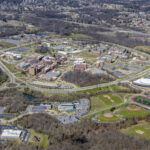
Looking at aerial photos from UMBC’s first several years—in this case, 1969—it’s hard not to think, “But where is everything?” Most of the distinctive landmarks of today’s campus are missing, and even our ubiquitous Hilltop Circle (then called Loop Road) is only half there.
As different as campus looks now, most of the buildings in this early photograph still serve their original function. This picture was taken the year after the opening of the library’s first wing—or “Phase I,” as it was called at the time, a nod to the planned expansion. Over the years, the building would be extended by two more phases, the last of which was completed in 1995.
In the upper-left-hand corner of campus, you can spot the school’s first dormitories under construction. The first residential hall was completed the year after this photo was taken and was named, unceremoniously, Dorm I. It, along with Dorms II and III, were finally given their current names—Susquehanna, Chesapeake, and Patapsco, respectively— in 1979.
Though the landscape of our campus has changed to be almost unrecognizable from this 1969 image, it has also been altered considerably in just the past few years. The aerial photo of UMBC in 2019 shows two new landmarks that did not exist in 2016, when members of this year’s graduating class were freshmen.
The Interdisciplinary Life Sciences Building and the UMBC Events Center are only the latest additions to UMBC’s landscape. It’s likely that by the time today’s first-year students have their commencement in 2023, UMBC’s skyline will have shifted once more, making our “now” their “then.”
]]>
Looking at aerial photos from UMBC’s first several years—in this case, 1969—it’s hard not to think, “But where is everything?” Most of the distinctive landmarks of today’s campus are missing, and...https://umbc.edu/stories/change-of-scenery-then-now/https://beta.my.umbc.edu/api/v0/pixel/news/119862/guest@my.umbc.edu/d9b4ef30f90eac57c5bd361fa815622a/api/pixelspring-2020then-and-nowumbc-historyUMBC News & Magazinehttps://beta.my.umbc.edu/groups/umbc-news-magazinehttps://assets1-beta.my.umbc.edu/system/shared/avatars/groups/000/001/943/24435aa6207c452e7bc15cc74b42c7bb/xsmall.png?1748556657https://assets1-beta.my.umbc.edu/system/shared/avatars/groups/000/001/943/24435aa6207c452e7bc15cc74b42c7bb/original.png?1748556657https://assets2-beta.my.umbc.edu/system/shared/avatars/groups/000/001/943/24435aa6207c452e7bc15cc74b42c7bb/xxlarge.png?1748556657https://assets2-beta.my.umbc.edu/system/shared/avatars/groups/000/001/943/24435aa6207c452e7bc15cc74b42c7bb/xlarge.png?1748556657https://assets3-beta.my.umbc.edu/system/shared/avatars/groups/000/001/943/24435aa6207c452e7bc15cc74b42c7bb/large.png?1748556657https://assets1-beta.my.umbc.edu/system/shared/avatars/groups/000/001/943/24435aa6207c452e7bc15cc74b42c7bb/medium.png?1748556657https://assets2-beta.my.umbc.edu/system/shared/avatars/groups/000/001/943/24435aa6207c452e7bc15cc74b42c7bb/small.png?1748556657https://assets1-beta.my.umbc.edu/system/shared/avatars/groups/000/001/943/24435aa6207c452e7bc15cc74b42c7bb/xsmall.png?1748556657https://assets2-beta.my.umbc.edu/system/shared/avatars/groups/000/001/943/24435aa6207c452e7bc15cc74b42c7bb/xxsmall.png?1748556657UMBC News & Magazine00falseThu, 11 Jun 2020 16:14:38 -0400UMBC celebrates Dean Scott Casper, next president of the American Antiquarian Society
This fall, UMBC will bid farewell to one of its senior leaders as Scott Casper, dean of the College of Arts, Humanities and Social Sciences (CAHSS), departs the university to assume the presidency of the American Antiquarian Society (AAS). His new position speaks not only to his administrative skills, but also to his national eminence as a scholar of 19th-century U.S. history.
“We are very proud of our colleague Scott Casper, and know he will do a superb job as president of the American Antiquarian Society,” says President Freeman A. Hrabowski, III. “He is one of UMBC’s most admired leaders—as a scholar, academic administrator, and human being, and he has done a masterful job as dean of our College of Arts, Humanities, and Social Sciences.”
“Most important, Dean Casper lives the values we consider most significant in the humanities, including intellectual curiosity, compassion for others, and an abiding commitment to social justice,” Hrabowski says. “He will always be part of the UMBC community.”
“I want to express my gratitude to everyone at UMBC,” Casper shares. “This extraordinary community has changed me in deep, powerful ways, and UMBC’s values will go with me on this next step in my journey.”
Scott Casper and Darielle Linehan welcome Christopher Dew ’13, theatre, to the 2018 Linehan Artist Scholars reception.
Transformative leadership
Under Dean Casper’s leadership, UMBC received the distinguished Community Engagement Classification from The Carnegie Foundation for the Advancement of Teaching in January 2020. This achievement required a rigorous campus-wide self-study of UMBC’s work with communities in Greater Baltimore and beyond, a process that involved more than 120 members of the UMBC community as well as dozens of community partners.
During Casper’s tenure as dean, CAHSS scaled up research in significant ways, including the creation of the Center for Social Science Scholarship. The college’s commitment to community engagement and civic agency has been notable, reflected in UMBC’s most recent Mellon Foundation grant, in hosting the Imagining America conference in 2015, in establishing studios and a classroom at the Lion Brothers building in downtown Baltimore, and in the new Community Leadership MPS and Public Humanities minor.
Scott Casper joins students at the exhibition A Designed Life, curated by associate professor Peggy Re, at the Center for Art, Design and Visual Culture.
And, in the time since Dean Casper’s arrival, CAHSS has hired one third of its current faculty, enriching the campus with the addition of an extraordinary, diverse cohort of brilliant scholars and artists, and outstanding teachers.
“Everything we’ve accomplished these past seven years has come from collective effort by so many people—faculty and staff and students across the college and the university,” says Casper. “We have an exceptional college—broad and diverse and also truly collegial and supportive. It’s been a privilege and a joy to serve it and UMBC.”
Scott Casper with Derek Musgrove ’97, associate professor of history, at a “bar talk” event to discuss Musgrove’s book Chocolate City.
Building community relationships
Dean Casper has also worked to develop robust relationships with external organizations. Under his guidance, UMBC signed an MOU with The Walters Art Museum. And Casper served on the advisory committee for the reinstallation of The Walters’s 1 West Mount Vernon Place. He also serves on the boards of Maryland Humanities and the Greater Baltimore Cultural Alliance.
“In my former role as executive director of Maryland Humanities, I saw the impact of Scott’s many community contributions,” says Phoebe Stein, president of the Federation of State Humanities Councils. “He was consistently generous, level-headed, and a real cheerleader for the work.”
“His commitment also extends to other nonprofits,” says Stein. “On the board of the Greater Baltimore Cultural Alliance, there too he is a generous contributor and colleague who brings intellectual rigor, a passion for the humanities, and common sense.”
Scott Casper speaks to the audience at the 2018 Frederick Douglass Day Transcribe-a-thon.
Eminence as a scholar
Casper, who received his Ph.D. in American Studies from Yale University, joined the UMBC community in 2013, after many years on the faculty of the University of Nevada, Reno.
A historian of the nineteenth-century United States, he is the author of Sarah Johnson’s Mount Vernon: The Forgotten History of an American Shrine (Hill & Wang, 2008) and Constructing American Lives: Biography and Culture in Nineteenth-Century America (University of North Carolina Press, 1999). He is the co-author, editor, or co-editor of seven other books, most recently The Oxford Encyclopedia of American Cultural and Intellectual History (Oxford University Press, 2013).
The late Maurice Berger, research professor at the Center for Art, Design and Visual Culture, with Scott Casper, celebrating the opening of the exhibition Revolution of the Eye: Modern Art and the Birth of American Television.
Casper’s commitment to teaching is also evident through his publications. He edited the annual “Textbooks and Teaching” section of the Journal of American History from 2008 to 2018, and was acting editor of the William and Mary Quarterly in 2008–09. He has worked extensively with K–12 history and social studies educators through the Mount Vernon Ladies’ Association, the Center for Civic Education, and the Northern Nevada Teaching American History Project.
The American Antiquarian Society
Dean Casper will become the 8th president in the 208-year history of the American Antiquarian Society. “At a time when deepened understanding of our past has never been more important, I look forward to leading an institution that fosters the essential work of telling America’s complex, contested stories,” says Casper, reflecting on his upcoming role.
Scott Casper at the 2013 Theatre Salon.
The American Antiquarian Society was founded in 1812 by Revolutionary War patriot and printer Isaiah Thomas, and is both a learned society and a major independent research library. The AAS library, with some four million items, today houses the largest and most accessible collection of books, pamphlets, broadsides, newspapers, periodicals, music, and graphic arts material printed through 1876 in what is now the United States. It also houses manuscripts and a substantial collection of secondary texts, bibliographies, and digital resources and reference works related to all aspects of American history and culture before the twentieth century. AAS was presented with the 2013 National Humanities Medal by President Obama in a ceremony at the White House.
“We are thrilled that Scott Casper has agreed to become the next President of the American Antiquarian Society,” says John Herron, Jr., chair of the AAS Council. “Our nation’s past is as present as ever in this important time in our civic life. As a scholar, administrator, mentor and more, Scott is unusually well prepared to further leverage the Society’s long-standing commitment to evidence-based history and to preserving and sharing the stories of all Americans.”
Images by Marlayna Demond ’11 for UMBC.
]]>
This fall, UMBC will bid farewell to one of its senior leaders as Scott Casper, dean of the College of Arts, Humanities and Social Sciences (CAHSS), departs the university to assume the presidency...https://umbc.edu/stories/umbc-celebrates-dean-scott-casper-next-president-of-the-american-antiquarian-society/https://beta.my.umbc.edu/api/v0/pixel/news/119863/guest@my.umbc.edu/1b8035d1933f1ba5357bb7bc261a09b6/api/pixelartsarts-and-culturecahsscommunityhumanitiessocialsciencesUMBC News & Magazinehttps://beta.my.umbc.edu/groups/umbc-news-magazinehttps://assets1-beta.my.umbc.edu/system/shared/avatars/groups/000/001/943/24435aa6207c452e7bc15cc74b42c7bb/xsmall.png?1748556657https://assets1-beta.my.umbc.edu/system/shared/avatars/groups/000/001/943/24435aa6207c452e7bc15cc74b42c7bb/original.png?1748556657https://assets2-beta.my.umbc.edu/system/shared/avatars/groups/000/001/943/24435aa6207c452e7bc15cc74b42c7bb/xxlarge.png?1748556657https://assets2-beta.my.umbc.edu/system/shared/avatars/groups/000/001/943/24435aa6207c452e7bc15cc74b42c7bb/xlarge.png?1748556657https://assets3-beta.my.umbc.edu/system/shared/avatars/groups/000/001/943/24435aa6207c452e7bc15cc74b42c7bb/large.png?1748556657https://assets1-beta.my.umbc.edu/system/shared/avatars/groups/000/001/943/24435aa6207c452e7bc15cc74b42c7bb/medium.png?1748556657https://assets2-beta.my.umbc.edu/system/shared/avatars/groups/000/001/943/24435aa6207c452e7bc15cc74b42c7bb/small.png?1748556657https://assets1-beta.my.umbc.edu/system/shared/avatars/groups/000/001/943/24435aa6207c452e7bc15cc74b42c7bb/xsmall.png?1748556657https://assets2-beta.my.umbc.edu/system/shared/avatars/groups/000/001/943/24435aa6207c452e7bc15cc74b42c7bb/xxsmall.png?1748556657UMBC News & Magazine00falseThu, 11 Jun 2020 13:06:25 -0400UMBC’s Lucy Wilson, an infectious disease transmission expert, helps governors and the public respond to COVID-19
Governors across the United States have been working to determine what safe reopening might look during the COVID-19 pandemic. When the National Governors Association (NGA) needed experts to outline considerations, they reached out to UMBC’s Lucy Wilson.
For more than a decade, Wilson has served as a public health expert on disease response and public health planning at the international, national, and state levels. When the NGA called, she joined an interdisciplinary team of experts in developing “The Roadmap to Recovery: A Public Health Guide for Governors,” published this April.
Keeping Maryland safe
Wilson is an infectious disease physician who is also a professor and graduate program director of emergency health services at UMBC. Prior to coming to UMBC, she served as a medical epidemiologist at the Maryland Department of Health, as chief for the Center for Surveillance, Infection Prevention and Outbreak Response for ten years. There she oversaw Maryland’s infectious disease outbreak responses and infection control guidance in all types of settings.
Spring 2019 graduate school graduation ceremony. (Wilson, first on the left in the second row.) Photo courtesy of Wilson.
She has also served on the State’s Physician on Call Team, where she was one of a small group of doctors responsible for assessing potential biological, chemical, and nuclear threats. And she currently is the co-principal investigator of the Healthcare-Associated Infections (HAI) branch of Maryland’s Emerging Infections Program (EIP). Through EIP, she conducts surveillance epidemiology and antibiotic resistance research focusing on healthcare-associated infections (including COVID-19) in hospitals and nursing homes. At UMBC, her research focuses on visualizing health outcomes across the continuum of healthcare.
“I have experience working with stakeholders throughout the state to examine different areas of response…that cut across the spectrum of emergency management and response,” explains Wilson. She notes that this could range from education to agriculture to transportation. “This gave me the perspective to help make recommendations to governors about how to create a team and what type of considerations to have for COVID-19 response.”
Learning from previous outbreaks
The NGA provides governors, cabinet members, Congress, private business, and the international community with guidance related to public policy and governance. To develop a COVID-19 recovery roadmap, Wilson helped assess the various settings impacted by COVID-19. She then applied the science of infection control and disease transmission to help develop criteria to maintain the safety of settings like schools, hospitals, prisons, and nursing homes.
Wilson’s recommendations were informed by her prior work in infection control, disease surveillance, and government response to outbreaks, diseases, and pandemics at a national and international level. These include responding to the novel influenza A (H1N1) virus pandemic of 2009, Ebola, Zika, statewide food-related outbreaks, and medication recalls.
When it comes to COVID-19, Wilson says, “This level of pandemic is unprecedented in modern times.” She explains, “We can look back to 1918 to see how social distancing worked. We can look at other countries who have had different COVID-19 strategies in terms of their response and reopening. But what we need to be prepared for is that the coronavirus is difficult to control.”
Using available tools
“Governors must respond with tools we know will work, as appropriate to their region, to try to minimize illness,” states Wilson. These tools focus on minimizing physical contact between people, from using touchless purchasing and curbside pickup at businesses to adjusting work schedules to spread out employees.
The Roadmap to Recovery report divides states’ COVID-19 responses into two stages. The first stage focused on reducing the spread of infection through mandated physical distancing in the absence of comprehensive testing, treatment, or vaccines. Closing gathering spaces like schools, businesses, places of worship, and recreation areas helped to “flatten the curve.”
The second stage involves necessary measures and infrastructure needed to safely open up society. This includes continuous assessments to determine whether to keep moving forward or to return to previous restrictions.
“This is a multifactorial situation where we will likely see more cases and potentially more waves of disease,” shares Wilson. “It will be difficult to eradicate the coronavirus until we have a vaccine or valid treatment. Hopefully, as we implement and determine best practices, we can minimize the number of infections and deaths.”
Beyond the report, Wilson also provided support to policymakers as a panelist for a Johns Hopkins University Diagnostic Excellence Summit on COVID-19. The summit focused on “Diagnostic Strategy for the COVID-19 Pandemic — Bench to Bedside to Blueprint for Policymakers.” She is currently helping to develop and implement campus policy as part of UMBC’s Incident Management Team and Fall Planning Coordinating Committee.
Informing the public
Since the start of the pandemic, Wilson has also provided guidance to the general public on how to take precautions to reduce coronavirus transmission. “People are being asked to take very drastic measures, which have radically changed their lives,” she says. She takes the time to speak with the media because she knows it is essential for people to understand the reasoning behind public health guidelines.
In March, Wilson explained the need for sufficient protective equipment for healthcare workers in the New York Times. When the virus began to impact cruises she explained the quarantine process in the Washington Post.
“It is important to know what is science and what is reasonable. People want to know what actions people can take to take care of themselves,” says Wilson. Wilson was a guest on the Public Health On Call podcast, produced by Johns Hopkins. She spoke about how nursing homes and first responders can address the threat of COVID-19.
Wilson has now also begun speaking with news agencies, including CNN. She shares what the process of reopening the country might look like. Leaders are learning how to manage rapid changes on a daily basis in all aspects of life, beyond just healthcare.
Wilson expects that, moving forward, some interventions will work better than others, and communities will learn from each others’ experiences. “This is an evolving process. There will be changes in recommendations and information. Our understanding of this virus is that it affects everyone and every sector of our society,” says Wilson. “We need to have patience and be flexible because we are all learning as we go along.”
Banner image: Lucy Wilson. Photo courtesy of Wilson.
]]>
Governors across the United States have been working to determine what safe reopening might look during the COVID-19 pandemic. When the National Governors Association (NGA) needed experts to...https://umbc.edu/stories/umbcs-lucy-wilson-an-infectious-disease-transmission-expert-helps-governors-and-the-public-respond-to-covid-19/https://beta.my.umbc.edu/api/v0/pixel/news/119864/guest@my.umbc.edu/6a904e8bb66a0ddc4102716ed822be15/api/pixelcahsscahssresearchcovidresearchehspage1policy-and-societyscience-and-technologyUMBC News & Magazinehttps://beta.my.umbc.edu/groups/umbc-news-magazinehttps://assets1-beta.my.umbc.edu/system/shared/avatars/groups/000/001/943/24435aa6207c452e7bc15cc74b42c7bb/xsmall.png?1748556657https://assets1-beta.my.umbc.edu/system/shared/avatars/groups/000/001/943/24435aa6207c452e7bc15cc74b42c7bb/original.png?1748556657https://assets2-beta.my.umbc.edu/system/shared/avatars/groups/000/001/943/24435aa6207c452e7bc15cc74b42c7bb/xxlarge.png?1748556657https://assets2-beta.my.umbc.edu/system/shared/avatars/groups/000/001/943/24435aa6207c452e7bc15cc74b42c7bb/xlarge.png?1748556657https://assets3-beta.my.umbc.edu/system/shared/avatars/groups/000/001/943/24435aa6207c452e7bc15cc74b42c7bb/large.png?1748556657https://assets1-beta.my.umbc.edu/system/shared/avatars/groups/000/001/943/24435aa6207c452e7bc15cc74b42c7bb/medium.png?1748556657https://assets2-beta.my.umbc.edu/system/shared/avatars/groups/000/001/943/24435aa6207c452e7bc15cc74b42c7bb/small.png?1748556657https://assets1-beta.my.umbc.edu/system/shared/avatars/groups/000/001/943/24435aa6207c452e7bc15cc74b42c7bb/xsmall.png?1748556657https://assets2-beta.my.umbc.edu/system/shared/avatars/groups/000/001/943/24435aa6207c452e7bc15cc74b42c7bb/xxsmall.png?1748556657UMBC News & Magazine00falseWed, 10 Jun 2020 20:29:25 -0400Podcast Fever
Friendship first, story second. These have been the cornerstones of success for Count Me In, Riverdale, and Obsidian, three Retriever-made podcasts.
While their production paths differ, all three started with the same premise—to have more time to talk and create with a good friend about a topic they obsessed about. Podcasts take time and energy, so you had better love the topic you chose.
For sisters Carly Faye Engelke ’08, dance, and Hannah Mae Engelke ’14, psychology, their die-hard topics were dance and Montessori.
“We talked for hours each day, even though we lived in different time zones, to the point where my husband,”—producer Corey Jennings ’10, economics—“strongly suggested we start a podcast,” says Carly Faye. With 82 episodes covering a wide range of dance-related topics and an impressive guest list behind them, Count Me In shows no signs of slowing down.
On the other hand, Riverdale co-creator Imani Spence ’16, English and media and communication studies, produced just six episodes to coincide with her specific fandom. When Spence, a long time fan of the Archie Comics, watched the Archie-inspired teen mystery show, Riverdale, she knew she needed to share her new guilty pleasure. Spence also wanted to keep in touch with her best friend, Amanda Quinn ’16, political science and global studies, who lived across the country. Bam! The Riverdale podcast was born.
“I watched the first season and was hooked,” says Spence. “I got Amanda hooked. Next thing we knew we were watching the show, taking notes, and recording a podcast.”
As in the case of Obsidian, sometimes the obsession is an intentional artistic exploration. The narrative podcast evolved from a creative writing exercise between friends Adetola Abdulkadir ’17, bioinformatics and computational biology, and Safiyah Cheatam M.F.A, ’21, intermedia and digital art, who discovered a mutual love of science fiction and Afrofuturism, which explores the liberation and betterment of black people and black lives through different mediums.
“I wanted to write scripts again and this was a great opportunity,” says Cheatam. “I believe Afrofuturism is a good tool for black people to imagine a better future for themselves.” Over the course of a year, they worked on creative development, hired actors, a sound designer, and an artist to create one episode. They are now funded for 10 more episodes through a Rubys Artist Grant from the Robert W. Deutsch Foundation.
In addition to the importance of collaboration and topic focus, podcasts require some technical skills—and all three of these production teams had either prior experience in radio or friends who did. But, regardless of skill level, they all struggled to find time between life commitments. Their advice? Forgo the fear of lacking technical skills, time, location, an audience, or a certain number of episodes. Make it work.
In the end, they all agree, podcasting is about having fun. It is a medium that can deepen the bonds of friendship and creates a community, making all the hard work worth it.
***** Header image: Carly Faye Engelke and her sister Hannahrecord an episode of Count Me In. Photo by Corey Jennings ’10.
]]>
Friendship first, story second. These have been the cornerstones of success for Count Me In, Riverdale, and Obsidian, three Retriever-made podcasts. While their production paths differ, all...https://umbc.edu/stories/podcast-fever/https://beta.my.umbc.edu/api/v0/pixel/news/119865/guest@my.umbc.edu/793972b758b1418577550a37883d7cbb/api/pixelalumniat-playspring-2020UMBC News & Magazinehttps://beta.my.umbc.edu/groups/umbc-news-magazinehttps://assets1-beta.my.umbc.edu/system/shared/avatars/groups/000/001/943/24435aa6207c452e7bc15cc74b42c7bb/xsmall.png?1748556657https://assets1-beta.my.umbc.edu/system/shared/avatars/groups/000/001/943/24435aa6207c452e7bc15cc74b42c7bb/original.png?1748556657https://assets2-beta.my.umbc.edu/system/shared/avatars/groups/000/001/943/24435aa6207c452e7bc15cc74b42c7bb/xxlarge.png?1748556657https://assets2-beta.my.umbc.edu/system/shared/avatars/groups/000/001/943/24435aa6207c452e7bc15cc74b42c7bb/xlarge.png?1748556657https://assets3-beta.my.umbc.edu/system/shared/avatars/groups/000/001/943/24435aa6207c452e7bc15cc74b42c7bb/large.png?1748556657https://assets1-beta.my.umbc.edu/system/shared/avatars/groups/000/001/943/24435aa6207c452e7bc15cc74b42c7bb/medium.png?1748556657https://assets2-beta.my.umbc.edu/system/shared/avatars/groups/000/001/943/24435aa6207c452e7bc15cc74b42c7bb/small.png?1748556657https://assets1-beta.my.umbc.edu/system/shared/avatars/groups/000/001/943/24435aa6207c452e7bc15cc74b42c7bb/xsmall.png?1748556657https://assets2-beta.my.umbc.edu/system/shared/avatars/groups/000/001/943/24435aa6207c452e7bc15cc74b42c7bb/xxsmall.png?1748556657UMBC News & Magazine00falseTue, 09 Jun 2020 22:46:30 -0400UMBC’s Dipanjan Pan develops rapid diagnostic test for virus causing COVID-19
A team led by UMBC’s Dipanjan Pan has developed an experimental diagnostic test to rapidly detect the novel coronavirus causing COVID-19, potentially as early as the first day of infection. Researchers designed the test to show results visually, through a color change visible with the naked eye when the virus is present. Unlike other tests, it does not require advanced laboratory techniques or tools. The American Chemical Society recently published their paper on the technique in the journal ACS Nano.
Dipanjan Pan. Photo courtesy of the University of Illinois at Urbana-Champaign.
Pan is both a professor of chemical, biochemical, and environmental engineering at UMBC and professor of diagnostic radiology and nuclear medicine and pediatrics at the University of Maryland School of Medicine (UMSOM). His co-authors included UMSOM Pan Lab researchers Parikshit Moitra and Maha Alafeef, and UMBC faculty research assistant Ketan Dighe. The work also included Matthew B. Frieman, a UMSOM faculty member from the Virology Institute.
From sample to results in ten minutes
Like some other diagnostic tests, this one starts with a nasal swab or saliva sample. After the sample is retrieved, a technician extracts RNA from it through a 10-minute process. This process then uses a biosensor molecule attached to gold nanoparticles to detect a particular protein unique to the virus. When the molecule attaches to the protein, the gold nanoparticles respond by causing a chemical used in the test to turn blue.
As recent media reports have revealed, current tests that are used to diagnose COVID-19 are not always reliable, with high rates of false negatives and false positives. Pan hopes the design of this new diagnostic test will avoid some of these pitfalls.
“Many of the diagnostic tests currently on the market cannot detect the virus until several days after infection. For this reason, they have a significant rate of false negative results,” he explains. A test that can detect the presence of the virus sooner after infection would avoid this issue.
Holistic approach
“We are taking a holistic approach for sensing COVID-19 virus,” says Pan. “My lab is developing highly specific technologies for rapid sensing of the virus. A different variant of such can be deployed in the hospital settings, community-based centers, and even at home.”
Pan notes, “Our immediate goal is to continue to analyze clinical samples to confirm the laboratory-based sensitivity results with the clinical cases. If successful, this rapid detection technology will be a significant advancement in early detection of the virus.”
Pan is now pursuing emergency use authorization for the test through the U.S. Food and Drug Administration, as he develops it for commercial application.
Pan is the chief technology officer and co-founder of KaloCyte, Inc., a biotechnology company that is developing a synthetic substitute for red blood cells. KaloCyte, Inc. recently received a $300,000 investment from the University System of Maryland Momentum Fund. Pan is also a co-founder of Innsight Tech, Inc. an Illinois spin-off for developing technologies for ocular disease. His third start-up company, VitruVian Bio, has recently been formed to translate COVID-19-based biosensing technologies.
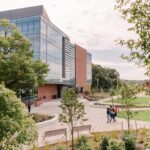
Banner image: UMBC’s Interdisciplinary Life Sciences Building, right. Photo by Marlayna Demond ’11 for UMBC.
]]>
A team led by UMBC’s Dipanjan Pan has developed an experimental diagnostic test to rapidly detect the novel coronavirus causing COVID-19, potentially as early as the first day of infection....https://umbc.edu/stories/umbcs-dipanjan-pan-develops-rapid-diagnostic-test-for-virus-causing-covid-19/https://beta.my.umbc.edu/api/v0/pixel/news/119866/guest@my.umbc.edu/6e22cf69dac9d55e61a50e682b2104ff/api/pixelcbeecoeitcovidresearchpage1science-and-technologyUMBC News & Magazinehttps://beta.my.umbc.edu/groups/umbc-news-magazinehttps://assets1-beta.my.umbc.edu/system/shared/avatars/groups/000/001/943/24435aa6207c452e7bc15cc74b42c7bb/xsmall.png?1748556657https://assets1-beta.my.umbc.edu/system/shared/avatars/groups/000/001/943/24435aa6207c452e7bc15cc74b42c7bb/original.png?1748556657https://assets2-beta.my.umbc.edu/system/shared/avatars/groups/000/001/943/24435aa6207c452e7bc15cc74b42c7bb/xxlarge.png?1748556657https://assets2-beta.my.umbc.edu/system/shared/avatars/groups/000/001/943/24435aa6207c452e7bc15cc74b42c7bb/xlarge.png?1748556657https://assets3-beta.my.umbc.edu/system/shared/avatars/groups/000/001/943/24435aa6207c452e7bc15cc74b42c7bb/large.png?1748556657https://assets1-beta.my.umbc.edu/system/shared/avatars/groups/000/001/943/24435aa6207c452e7bc15cc74b42c7bb/medium.png?1748556657https://assets2-beta.my.umbc.edu/system/shared/avatars/groups/000/001/943/24435aa6207c452e7bc15cc74b42c7bb/small.png?1748556657https://assets1-beta.my.umbc.edu/system/shared/avatars/groups/000/001/943/24435aa6207c452e7bc15cc74b42c7bb/xsmall.png?1748556657https://assets2-beta.my.umbc.edu/system/shared/avatars/groups/000/001/943/24435aa6207c452e7bc15cc74b42c7bb/xxsmall.png?1748556657UMBC News & Magazine00falseTue, 09 Jun 2020 15:23:31 -0400This Time in America
During this time in America, each of us is faced with the challenge of understanding our position in society and our role in dismantling structural racism.
It is important to say the names on our minds—George Floyd, Breonna Taylor, Ahmaud Arbery, Tony McDade, Sandra Bland, Korryn Gaines, Freddie Gray—and speak out against the police brutality that resulted in their deaths and the deaths of so many other Black people in this country. Action is essential to the future of our society, and action can take many forms, including protest, voting, and publicly acknowledging the pain of others.
It is also important to name the countless other forms of inequality that are just as deadly, including inadequate educational opportunities, lack of living wages and affordable housing, and unequal access to healthcare, healthy food, and high-quality public transportation. It is clear from recent protests across the nation and world that more people of all races and ages are seeing that structural racism permeates our society—our policies, laws, financial institutions, workplaces, academic and faith institutions, and our own actions and inactions. This recognition, while painful to many of us in different ways, should lead to actions that can build a stronger society.
Many in our community are asking what actions UMBC is taking now and how we can do more, both as individuals and as a campus. One of the most important things we can do is acknowledge that we as a campus and a community still have much work to do. We must take action, both on campus and through our engagement in the larger community, to address the impact of structural racism and inequality.
Moving forward with “business as usual” without acknowledging the lived experience of Black and other marginalized community members contributes to a pattern of harm for those directly affected. It is also important to learn about the historic roots of white supremacy, structural racism, sexual violence, gender discrimination, and other forms of systematic oppression and marginalization—in the wider world, and on our own campus.
We will continue to communicate about ways in which we are addressing these issues. Here are some examples of work that is underway.
The Division of Student Affairs has developed a five-part workshop series focused on equipping faculty and staff with the tools and skills to engage in ongoing advocacy, self-work, and self-care in response to ongoing racial injustice and our current climate. Sessions will be open to faculty and staff across campus.
There is a new [Free]dom Fridays weekly Webex. This student-centered program is designed to provide a virtual space to have an open dialogue about social justice and identity-based issues.
The Black Faculty and Staff Association will be holding a Community Care Space for a facilitated discussion focusing on self-care, healing, shared processing, and resource sharing to support community members who may be feeling overwhelmed and angry.
UMBC was founded in 1966 in the midst of the Civil Rights Movement. Our campus continues to partner with public officials and communities across the state and nation to address societal challenges. Faculty, staff, and students are supporting teachers, children, and families in Baltimore and surrounding school systems; helping young people develop job skills; activating communities to tell their stories through the arts and humanities; using the social sciences to address inequalities resulting from racial status and poverty; and working to address violence and enact criminal justice policy reforms, with special emphasis on youth.
We realize there is much more work for all of us to do. As we grieve over the many lives unjustly lost or limited by racism, we are encouraged by the outpouring of statements of solidarity and caring conversations happening within our campus community and beyond. Recalling Civil Rights protests of the 1960s led by Black children, we are moved to see people of all races and ages around the world risking their health and lives to demand an end to systemic racism. We must not let this opportunity pass.
– President Freeman Hrabowski and Provost Philip Rous
]]>
During this time in America, each of us is faced with the challenge of understanding our position in society and our role in dismantling structural racism. It is important to say the names on...https://umbc.edu/stories/this-time-in-america/https://beta.my.umbc.edu/api/v0/pixel/news/119867/guest@my.umbc.edu/2781736e8902550788f5072e0ae80622/api/pixelimpactresilienceUMBC News & Magazinehttps://beta.my.umbc.edu/groups/umbc-news-magazinehttps://assets1-beta.my.umbc.edu/system/shared/avatars/groups/000/001/943/24435aa6207c452e7bc15cc74b42c7bb/xsmall.png?1748556657https://assets1-beta.my.umbc.edu/system/shared/avatars/groups/000/001/943/24435aa6207c452e7bc15cc74b42c7bb/original.png?1748556657https://assets2-beta.my.umbc.edu/system/shared/avatars/groups/000/001/943/24435aa6207c452e7bc15cc74b42c7bb/xxlarge.png?1748556657https://assets2-beta.my.umbc.edu/system/shared/avatars/groups/000/001/943/24435aa6207c452e7bc15cc74b42c7bb/xlarge.png?1748556657https://assets3-beta.my.umbc.edu/system/shared/avatars/groups/000/001/943/24435aa6207c452e7bc15cc74b42c7bb/large.png?1748556657https://assets1-beta.my.umbc.edu/system/shared/avatars/groups/000/001/943/24435aa6207c452e7bc15cc74b42c7bb/medium.png?1748556657https://assets2-beta.my.umbc.edu/system/shared/avatars/groups/000/001/943/24435aa6207c452e7bc15cc74b42c7bb/small.png?1748556657https://assets1-beta.my.umbc.edu/system/shared/avatars/groups/000/001/943/24435aa6207c452e7bc15cc74b42c7bb/xsmall.png?1748556657https://assets2-beta.my.umbc.edu/system/shared/avatars/groups/000/001/943/24435aa6207c452e7bc15cc74b42c7bb/xxsmall.png?1748556657UMBC News & Magazine00falseMon, 08 Jun 2020 13:42:00 -0400Americans’ Deepening Financial Stress Will Make the Coronavirus a Lot Harder to Contain
Preventing deaths from COVID-19 depends on people who get it seeking treatment – which also allows authorities to track down whom they came in contact with to reduce spread.
But, as the economic pain and joblessness caused by the statewide lockdowns continue to grow, more Americans are experiencing severe strains on their personal finances. This threatens our ability to contain the pandemic because those feeling the most financial stress are much less likely to seek medical care if they experience coronavirus symptoms, according to my analysis of a recent Federal Reserve survey.
The Fed conducts a survey of the economic health of U.S. households every quarter, most recently near the end of 2019. In April, it conducted a supplementary but similar survey to quickly gauge how people were handling the coronavirus crisis. Results of both surveys were released on May 14.
The Fed tries to measure financial stress in three key ways. Its surveys ask respondents if they are unable to pay all their monthly bills, couldn’t cover a US$400 emergency expense, or are “just getting by” or worse.
Even before the pandemic hit, the picture wasn’t pretty. In October, when the fourth-quarter survey was conducted, 42% of employed respondents reported fitting at least one of these descriptions, while over 8% said they fit all three. Those figures jumped to 72% and 20% for low-income workers.
But by April, tens of millions of people who had jobs in October lost them as most nonessential businesses across the U.S. either closed or reduced their services. The unemployment rate shot up to 14.7% that month – the highest since the Great Depression – and is expected to climb further when the May data are released on June 5.
The Fed’s April survey, however, paints an even broader picture of the economic impact of the pandemic. In that survey, about 28% of the previously employed respondents said they either lost their job, were being furloughed, had their hours cut or were taking unpaid leave. This has been financially devastating to many, with 68% of this group reporting one of the stresses listed above and 28% saying they were experiencing all three, regardless of income level.
Forgoing medical care
Separate questions in the surveys demonstrate just how strong the link is between financial and physical health.
The October survey also asks those respondents if they had skipped a doctor’s visit during the previous 12 months because of the cost. More than 20% of those who reported one of these financial stresses said they had, while almost 46% of those with all three said so.
In April, the Fed asked a more timely question: “If you got sick with symptoms of the coronavirus, would you try to contact a doctor?”
A third of those respondents who also said they’re experiencing all three financial stresses said “no.” This is especially significant because, unlike the October question, it describes a current, known threat, rather than referring to a previous medical issue of unknown severity. And the widely reported urgency and seriousness of the coronavirus suggests someone wouldn’t treat the decision to seek a doctor’s care or advice lightly.
Relieving the stress
That was back in April, less than a month into the coronavirus lockdowns. If the same questions were asked today, I believe the numbers would look a lot worse.
In the middle of a serious pandemic, we don’t want sick people avoiding treatment because they’re worried they won’t be able to put food on the table. This would likely worsen the spread of the coronavirus and make it a whole lot harder to contain.
As Congress debates additional measures to mitigate the economic and financial effects of the pandemic, it would be wise to keep in mind the connection between financial stress and individual decisions to seek medical care.
]]>
By David Salkever, professor, Public Policy, UMBC Preventing deaths from COVID-19 depends on people who get it seeking treatment – which also allows authorities to track down whom they came...https://umbc.edu/stories/americans-deepening-financial-stress-will-make-the-coronavirus-a-lot-harder-to-contain/https://beta.my.umbc.edu/api/v0/pixel/news/119868/guest@my.umbc.edu/25f50f982c28eb9a352a78ffde656da1/api/pixelcovidresearchdiscoverypublic-policythe-conversationUMBC News & Magazinehttps://beta.my.umbc.edu/groups/umbc-news-magazinehttps://assets1-beta.my.umbc.edu/system/shared/avatars/groups/000/001/943/24435aa6207c452e7bc15cc74b42c7bb/xsmall.png?1748556657https://assets1-beta.my.umbc.edu/system/shared/avatars/groups/000/001/943/24435aa6207c452e7bc15cc74b42c7bb/original.png?1748556657https://assets2-beta.my.umbc.edu/system/shared/avatars/groups/000/001/943/24435aa6207c452e7bc15cc74b42c7bb/xxlarge.png?1748556657https://assets2-beta.my.umbc.edu/system/shared/avatars/groups/000/001/943/24435aa6207c452e7bc15cc74b42c7bb/xlarge.png?1748556657https://assets3-beta.my.umbc.edu/system/shared/avatars/groups/000/001/943/24435aa6207c452e7bc15cc74b42c7bb/large.png?1748556657https://assets1-beta.my.umbc.edu/system/shared/avatars/groups/000/001/943/24435aa6207c452e7bc15cc74b42c7bb/medium.png?1748556657https://assets2-beta.my.umbc.edu/system/shared/avatars/groups/000/001/943/24435aa6207c452e7bc15cc74b42c7bb/small.png?1748556657https://assets1-beta.my.umbc.edu/system/shared/avatars/groups/000/001/943/24435aa6207c452e7bc15cc74b42c7bb/xsmall.png?1748556657https://assets2-beta.my.umbc.edu/system/shared/avatars/groups/000/001/943/24435aa6207c452e7bc15cc74b42c7bb/xxsmall.png?1748556657UMBC News & Magazine00falseTue, 02 Jun 2020 14:38:50 -0400What makes something smell good or bad?
Maybe you’ve learned to dislike the smell. Maybe your socks are full of gross bacteria. Or maybe, it’s both. Our team studies the brain and sense of smell – it’s one of our favorite topics. But first, how do you smell?
What is that smell?
The air is filled with many small odor molecules which are released from “smelly” things like perfume or food. Your nose has the astonishing ability to smell thousands of different scents because in your nose are millions of smell receptors – cells that can recognize odor molecules. When you sniff the air, these special cells are alerted.
These receptor cells then send a signal to your brain. Your brain recognizes many scents when different types of odors enter your nose. The smell of baking cookies, for instance, is composed of many odor molecules. Your brain can piece together all this information and let you know there are cookies baking in the oven.
Smells that make memories
Your brain is very good at memorizing good and bad experiences and associating particular smells with them. Scientists call these “olfaction-associated memories.”
One example of this is when you smell a favorite meal. It might remind you of someone who makes it for you, which triggers your brain to release chemicals that make you feel good and comforted.
Of course, smell can also be associated with unpleasant experiences. You have probably eaten some food that went bad, and you might find that you hate that food now. This is your brain associating getting sick with a certain smell, which stops you from eating something that could be bad for you. Memories linked to smells can form because of good and bad feelings.
Smells to warn you
But what about things that you know smell good or bad even if you’ve never experienced them? Scientists have found that although a lot of the smells people like come from past experiences, instincts play a big role.
Scent tells you a lot about your environment, and your instincts help to decide what is safe or dangerous. For example, blood has been shown to repel humans and many prey species, like deer, but attract predators, like wolves. This guides people away from predators that might want to eat us, but lets the predator get its meal.
Smell can warn you when something could make you sick. When eggs rot, bacteria multiply like crazy inside them, breaking down proteins that release a toxic chemical called hydrogen sulfide. This produces a stench that makes you want to stay far away, stopping you from eating the egg and becoming ill.
As for your socks… if they smell bad now, don’t wait. Wash them with soap and water! The bacteria growing on your socks will be killed, which will stop that nasty smell.
Hello, curious kids! Do you have a question you’d like an expert to answer? Ask an adult to send your question to CuriousKidsUS@theconversation.com. Please tell us your name, age and the city where you live.
And since curiosity has no age limit – adults, let us know what you’re wondering, too. We won’t be able to answer every question, but we will do our best.
]]>
By Rakaia Kenney ’21, research assistant, UMBC; Kayla Lemons ’20, research assistant UMBC, and Weihong Lin, professor, Biological Sciences, UMBC Curious Kids is a series for children...https://umbc.edu/stories/what-makes-something-smell-good-or-bad/https://beta.my.umbc.edu/api/v0/pixel/news/119869/guest@my.umbc.edu/46bff42891078499dd7fa5b3d7897269/api/pixelbiological-sciencescnmsdiscoverythe-conversationUMBC News & Magazinehttps://beta.my.umbc.edu/groups/umbc-news-magazinehttps://assets1-beta.my.umbc.edu/system/shared/avatars/groups/000/001/943/24435aa6207c452e7bc15cc74b42c7bb/xsmall.png?1748556657https://assets1-beta.my.umbc.edu/system/shared/avatars/groups/000/001/943/24435aa6207c452e7bc15cc74b42c7bb/original.png?1748556657https://assets2-beta.my.umbc.edu/system/shared/avatars/groups/000/001/943/24435aa6207c452e7bc15cc74b42c7bb/xxlarge.png?1748556657https://assets2-beta.my.umbc.edu/system/shared/avatars/groups/000/001/943/24435aa6207c452e7bc15cc74b42c7bb/xlarge.png?1748556657https://assets3-beta.my.umbc.edu/system/shared/avatars/groups/000/001/943/24435aa6207c452e7bc15cc74b42c7bb/large.png?1748556657https://assets1-beta.my.umbc.edu/system/shared/avatars/groups/000/001/943/24435aa6207c452e7bc15cc74b42c7bb/medium.png?1748556657https://assets2-beta.my.umbc.edu/system/shared/avatars/groups/000/001/943/24435aa6207c452e7bc15cc74b42c7bb/small.png?1748556657https://assets1-beta.my.umbc.edu/system/shared/avatars/groups/000/001/943/24435aa6207c452e7bc15cc74b42c7bb/xsmall.png?1748556657https://assets2-beta.my.umbc.edu/system/shared/avatars/groups/000/001/943/24435aa6207c452e7bc15cc74b42c7bb/xxsmall.png?1748556657UMBC News & Magazine00falseMon, 01 Jun 2020 15:39:13 -0400There’s No Such Thing As Small Politics
As election season heats up and campaign posters begin to cram our sidewalks, the public eye is often drawn to government leaders. In UMBC’s own community, you’ll find alumni serving in impressive positions, including state legislators and the speaker of Maryland’s House of Delegates, a county executive, and even the surgeon general of the U.S.
But beyond the red, white, and blue banners are folks who contribute to the system in quieter—but just as vital—ways. Students learning to be engaged citizens, professionals protecting our census and voting data, artists finding ways of illustrating complex ideas, and more—Retrievers are proving that when it comes to democracy, every voice really does count.
Peek Behind the Scenes
Most of the work at all levels of government happens beyond public view. Matt Clark ’00, history, and Yaakov “Jake” Weissmann ’06, social work, know this firsthand. Clark served as chief of staff to Maryland Governor Larry Hogan while Weissmann is chief of staff to Maryland Senate President Bill Ferguson.
Both agree that the behind-the-scenes nature of their roles helps them get things done. Clark explains that “if you are doing it right, politics and public policy are all about compromise and patience” and that you need to “build coalitions and trust with others to move your agenda forward.” Weissmann emphasizes the importance of relationships, noting that his social work major has aided his work in Annapolis.
Public service is “at its core a people business,” Weissmann says. Jim Bembry, associate professor of social work, taught him that: “You need to be where your clients are”—words he says help him understand what senators and their constituents need and how to help fill those needs.
Clark says his undergraduate history studies taught him “how to blend multiple points of view to construct your own ideas and perspectives,” a helpful skill for both the political and public policy aspects of his job. Clark adds that his ongoing public policy graduate studies at UMBC “help [him] to think about how theoretical concepts and actual policy-making interact.”
Clark explains that “not all public service [jobs involve] politics,” but rather “public service is about choosing to look beyond your own needs to serve your community.” Weissmann agrees, noting that the General Assembly consists of people “who all want to make a difference,” he says, and Maryland’s legislature is an example of “how government is supposed to function.”
UMBC is well-represented in Annapolis, and both Clark and Weissmann interact with fellow alumni—including each other—on a regular basis. Clark attributes the prevalence of Retrievers in public service as “a testament to the quality of the University as well as the values and grittiness that we pick up there.” Weissmann agrees, sharing “UMBC is where I fell in love with the General Assembly” as part of a student group that met with legislators about and testified against proposed tuition increases.
Clark advises fellow Retrievers who want to pursue a career in public services to “put your heart into the work and believe in what you are doing,” noting that “it can take years to see the fruits of your labor, but it’s well worth the wait.”
— Mary Ann Richmond ’93
Predictive Polling
As the November elections draw near, we are flooded with polls anxious to tally how we will vote. But, have you ever wondered about the science behind these polls? Designing surveys to help understand American voting behavior is what gets Ian Anson out of bed and excited for the day.
During the 2018 midterm primaries, Anson, a professor of political science, saw an opportunity for his voting and polling class. Thus the 2018 UMBC Retriever Exit Poll was created.
“I wanted to expose my students to the real-life experience of tapping into the mind of the public and figuring out what the public thinks, and how they react to political stimuli,” says Anson.
The class created a 34-question, voluntary, anonymous, and scientific exit poll. Questions covered the Maryland economy, voting behavior along party lines, the state income tax, and switching party lines for specific items. On a rainy mid-term Election Day, 25 undergraduate students, wearing UMBC Political Science T-shirts, stationed themselves in eight precincts across Baltimore County in four-hour shifts. They organized and coded the answers on-site.
At the end of the day, Anson processed the data. Everyone gathered at UMBC’s Election Night Extravaganza where they presented their data and correctly predicted Governor Hogan would be reelected. The students gained insight into the voting behavior of Maryland Democrats who voted for a Republican governor and the issues that concerned them.
“We left the bubble of campus to see how real voters act and think instead of just reading and writing about them,” says Samuel Deschenaux ’20, political science, now a legislative aide in the Maryland General Assembly for state Sen. Kathy Klausmeier. Anson looks forward to the next Retriever Exit Poll this fall.
— Catalina Sofia Dansberger Duque
Outsmarting the Hackers
During election years, if there’s one thing scrutinized more than the candidates themselves, it’s the security of electronic voting machines. Because this technology can be susceptible to hacks and other vulnerabilities, it is incredibly important to know how best to keep voting safe and accessible for all.
Enter Rick Carback ’05, M.S. ’08, Ph.D. ’10, computer science, who has spent his career deflecting would-be hackers, and who helped develop Scantegrity, a technology that since 2007 has influenced improvements to election systems nationwide. At UMBC, he worked alongside and was mentored by Alan Sherman, professor of computer science and electrical engineering.
As an undergraduate at UMBC, Carback first heard David Chaum, a cryptographer known for his work on privacy-centered technology, talk about the security of voting machines and the voting technology that he was working on. Carback approached Chaum after the event and expressed his interest in being involved with the building of the technology that Chaum had discussed. From there, a lifelong interest in security took off.
First tested with student elections at the University of Ottawa and later broadened to handle higher stakes cases, Scantegrity connects each submitted vote with a confirmation number so that people can make sure their votes were counted. It helps verify election ballots submitted and allows individuals to essentially audit the election— while protecting individuals’ data.
Carback’s work also takes accessibility into account. The initial version of Scantegrity included ballot marking systems, which can make voting easier for people with disabilities. The ballot marking system used invisible ink that would not show up outside the official voting space on the ballots. With this system, the machine would only count a vote based on where the ink is most dense on the ballot, Carback explains.
“I view [voting security] as a national security issue,” says Carbeck, who also does computer security, risk assessment, and software development from Boston. “If you can control an election, you can then you can direct the entire course of a country.”
— Megan Hanks Mastrola
Stories Are Everything
In grade school, we learn about the importance of voting. At UMBC, we learn that civic life can really mean much more. It is a mindset, strengthened by places and relationships, to empower change at big and small levels. And the Civic Courage Journaling Project, launched last year by UMBC’s Center for Democracy and Civic Life, is helping students imagine exactly what that might mean on an individual basis.
Art courtesy of Tess McRae ’21.
“We give them a way to really see themselves without all of the kind of filters that are placed on you when you’re under so much pressure and when you have all these different tensions,” says Tess McRae, a junior English major who both participates and shares prompts with the group. Members respond in visuals as well as with words. Then, they all circle up to discuss and discover.
“People don’t realize that we talk about civic life everywhere, even in our day-to-day interactions, even in the conversations that we have with each other, even in spaces where we didn’t realize,” says McRae, who personally prefers using muted highlighters in her drawings. “We kind of give people a space to just really be authentic and honorable about their stories. It’s wonderful.”
— Jenny O’Grady
Safety in Numbers
Every 10 years, the U.S. Census Bureau conducts a massive survey to answer one question: Who lives in the United States? The results inform federal funding allocations for things like schools and parks and determine the number of congressional representatives for each state. The raw data are also used by researchers all over the country, whose findings can inform decisions at the state and local level about medical services, urban planning, job training programs, and so much more.
Analyzing all that data—consisting largely of personal information about members of communities across the U.S.—can lead to a lot of good, so it’s important that researchers can access it. But even with obvious identifying information like names, addresses, and social security numbers removed, it still wouldn’t be hard for skilled hackers to identify some people using the remaining information, putting them at high risk for identity theft. That’s why Bimal Sinha, professor of mathematics and statistics at UMBC, has been working with the Center for Statistical Research and Methodology at the U.S. Census Bureau for the last seven years to help safeguard people’s information.
It turns out the “raw data” the Census Bureau delivers to researchers doesn’t exactly match the real data. “Before releasing the data, some sensitive items are changed,” Sinha explains. That can include numeric responses, such as salary, or categorical ones, like whether a person owns a car and what type. The process of changing the data is called perturbation,” and the techniques used depend on the kind of data.
The tricky part is that the “perturbed” version of the data still has to accurately reflect reality in the country. Change it too much or in the wrong ways, and it becomes useless. “It’s a balance between perturbation and utility,” Sinha says. As a statistician, it’s Sinha’s job to develop techniques to change the data in ways that protect people’s privacy but don’t render it unusable.
Once that’s been done, it’s also critical to help researchers analyze the data effectively. The method for analyzing a perturbed dataset is different than for a standard data set. So Sinha also helps develop a toolkit that researchers receive with the census data.
Overall, Sinha’s work allows researchers, state and local governments, non-profits, and others nationwide to make use of the largest dataset about humanity in the United States, without compromising people’s privacy or safety.
— Sarah Hansen, M.S. ’15
Walking the Walk
We all know the importance of getting an internship—real-world experience, networking opportunities, a chance to confirm you’re on the right career path. For these UMBC students, it was also the opportunity to see the inner workings of the political realm as they embarked on semester-long internships with Maryland delegates.
You might think a legislative internship would be all work and no play, but that’s not always the case. One day when Wangui Nganga ’22, global studies, was answering phones in Del. Mike Griffith’s office, she got a bit of a surprise on the other end of the line.
“I heard ‘hello’…and they proceeded to tell me a joke and hung up,” she remembers. “I told my coworker I thought I was prank called by a constituent, but she started laughing and said it was her. This was one of my favorite moments because it showed that people don’t take everything super seriously.”
Nganga’s involvement as a research assistant for a professor in UMBC’s School of Public Policy and speaker of UMBC’s Student Government Association prepared her to do the research necessary to succeed in her internship. The environment itself is welcoming and understands that the purpose of everyone’s work, regardless of political affiliation, is to improve the lives of Marylanders.
Through the Maryland General Assembly Internship Program, Matthew Harrington ’20, political science, had the chance to explore his passions even further.
“I chose to work for Del. Julie Palakovich Carr because she sits on the Ways and Means Committee, which deals with tax policy, which is my policy area of interest,” says Harrington.
In his short time there, Harrington had the opportunity to present a bill about reforming zone programs in the Ways and Means Committee on behalf of his delegate. In addition to the numerous hands-on ways he’s able to be part of the process, Harrington also notes that the free food at Annapolis receptions doesn’t hurt either.
— Kait McCaffrey
Seeing Is Believing
Many of us have trouble digesting straight numbers. And for every hour a journalist might put into clearly explaining a complex topic in a story, an accompanying image can either support or derail that work for the reader in a matter of seconds.
That’s where Christina Animashaun ’13, visual arts and media and communication studies, comes in. As a data journalist for places like Vox, and formerly Politico and The Washington Post, she marries art and data to make the big numbers tangible.
It often starts with a simple question, says Animashaun, who grew up watching the evening news and reading comics before coming to UMBC as a Linehan Artist Scholar.
“A lot of times we have a lot of ideas, and in order to turn them into something tangible—art, or an article—you really have to be able to hone in one question. One big idea.” In the case of a recent major news topic like coronavirus, for example, that might mean drilling through dozens of numbers to help quantify a question like “What do I need to be safe?” Animashaun has made some equally beautiful and scary coronavirus charts recently but also loves to layer archival photographs in fun and surprising ways.
Of course, with great power comes great responsibility. Because Animashaun understands just how much a color or shape choice can sway opinions, she does everything she can to stay as neutral and accurate as possible and bring an ethical point of view to her work.
“You’re not going to see any pinks from me,” she says. “And if it’s blue, it’s going to be a partisan blue.”
— Jenny O’Grady
*****
Illustrations by Christina Animashaun ’13.
]]>
As election season heats up and campaign posters begin to cram our sidewalks, the public eye is often drawn to government leaders. In UMBC’s own community, you’ll find alumni serving in impressive...https://umbc.edu/stories/theres-no-such-thing-as-small-politics/https://beta.my.umbc.edu/api/v0/pixel/news/119870/guest@my.umbc.edu/c1a6937c9e9bb4851097f755f5c0963b/api/pixelfeatureimpactpoliscispring-2020umbctogetherUMBC News & Magazinehttps://beta.my.umbc.edu/groups/umbc-news-magazinehttps://assets1-beta.my.umbc.edu/system/shared/avatars/groups/000/001/943/24435aa6207c452e7bc15cc74b42c7bb/xsmall.png?1748556657https://assets1-beta.my.umbc.edu/system/shared/avatars/groups/000/001/943/24435aa6207c452e7bc15cc74b42c7bb/original.png?1748556657https://assets2-beta.my.umbc.edu/system/shared/avatars/groups/000/001/943/24435aa6207c452e7bc15cc74b42c7bb/xxlarge.png?1748556657https://assets2-beta.my.umbc.edu/system/shared/avatars/groups/000/001/943/24435aa6207c452e7bc15cc74b42c7bb/xlarge.png?1748556657https://assets3-beta.my.umbc.edu/system/shared/avatars/groups/000/001/943/24435aa6207c452e7bc15cc74b42c7bb/large.png?1748556657https://assets1-beta.my.umbc.edu/system/shared/avatars/groups/000/001/943/24435aa6207c452e7bc15cc74b42c7bb/medium.png?1748556657https://assets2-beta.my.umbc.edu/system/shared/avatars/groups/000/001/943/24435aa6207c452e7bc15cc74b42c7bb/small.png?1748556657https://assets1-beta.my.umbc.edu/system/shared/avatars/groups/000/001/943/24435aa6207c452e7bc15cc74b42c7bb/xsmall.png?1748556657https://assets2-beta.my.umbc.edu/system/shared/avatars/groups/000/001/943/24435aa6207c452e7bc15cc74b42c7bb/xxsmall.png?1748556657UMBC News & Magazine00falseFri, 29 May 2020 21:39:01 -0400Archiving the pandemic: ‘Coronavirus Lost and Found’ documents how we cope with catastrophe
There is so much to mourn at the moment. Even those of us spared the worst of the coronavirus pandemic are missing things: favorite pastimes, places and people.
At the same time, pleasure takes unexpected forms, as we find ways to sustain ourselves and others despite sadness and upheaval.
To document the everyday ways people are living and coping with this catastrophe, I launched “Coronavirus Lost and Found,” an online public archive where anyone can log any losses they’re mourning or solaces they’ve found in recent months. Since mid-April, dozens of people from across the United States and the world have contributed posts.
I never intended to inventory a pandemic. My academic research usually focuses on the role of emotion in American wartime culture, especially the forms of suffering that often get overlooked in periods of crisis.
But like most people, I spent much of the early spring unmaking plans. Canceling weekend adventures, gatherings with family and friends and professional opportunities I had worked so hard to arrange was dispiriting enough. I found the thought they would vanish without record to be unspeakably sad.
I created the archive as a space for people to memorialize what could have been – and to record what can now emerge, in its absence.
What’s been lost
Alyssa Samek, a communications professor in Southern California, is expecting her second child and had been looking forward to more frequent swims in the campus pool as her pregnancy progressed.
With the pool closed now, Samek writes, she misses “the feeling of gratitude for the gentleness of the water holding my body so softly, the beauty of the sunny blue sky above me as I lie back at the end of my swim.”
Jessica Grim of Ohio, a retired academic librarian and published poet, lost her “other life” – as a Peace Corps volunteer in Myanmar. Grim was 14 months into her 27-month term teaching English to middle schoolers there when coronavirus forced a hasty evacuation.
The pandemic snapped Grim out of a landscape of “pomelo, rambutan, snakefruit, durian, jackfruit, 15 varieties of mango, 25 varieties of banana,” she writes. Lost, too, are the “quiet streets at dawn in the Muslim quarter.”
Other contributors to the archive lament creative projects interrupted and disconnection from the communities that animated their work. For 15 years Steve Loya, an elementary school art teacher in Sterling, Virginia, has run a popular after-school art club, now canceled.
In one favorite project, Loya encourages experimenting when the kids build whatever they want out of scrap wood. Normally, the final product is a “physical testament to what young people are capable of doing when their imaginations are unlocked and free to wander,” Loya writes.
This year, the sculptures remain unbuilt.
What’s been found
I’ve been astonished by the weight of all the loss shared in “Coronavirus Lost and Found.” But I’m also amazed by the ingenuity with which people have sought and found comfort, even delight.
As the pandemic has scrambled routines, for example, some people have discovered new ways to be with their loved ones.
For weeks, the aggressive pandemic response in Israel compelled Ilana Blumberg, who teaches literature and writing at Bar Ilan University, to stay within 100 meters of her Jerusalem home. That made getting her 10,000 steps a day exasperatingly difficult.
So on “one of the many corona nights,” Blumberg writes, she and her 16-year-old daughter threw themselves an impromptu dance party. As they laughed and sweated, Blumberg found renewed wonder at parenthood, marveling “that I gave birth to the body now next to me, independent and strong and eager.”
Family is a theme of the ‘Coronavirus Lost and Found.’ okeyphotos
Jessica Sanfilippo-Schulz’s “Coronavirus Lost and Found” contribution reflects her perspective as both a mother and a daughter. Time feels different these days, she realizes, opening up new ways to experience both those roles.
Reflecting on a routine maintained for more than two months now, Sanfilippo-Schulz – who lives in Germany – says she has “found every morning a pleasure for long slow phone calls” with her mother, who lives near hard-hit Milan, Italy. And then, “I found in my teenage daughter a keenness to cook slow recipes at lunchtime with me.”
Mara, a health researcher from Seattle, wanted to set new arrangements for co-parenting her two boys, ages 3 and 9, in the midst of her pandemic routine of “juggling, improvising, cleaning, half-working, trying to breathe.”
Ensuring the kids get one-on-one time with both parents under these circumstances, Mara writes, she has learned to be more “patient, understanding, responsive, and appreciative” of her ex-partner. She has even discovered “compassion for his days without [the children], because I know that emptiness and loss.”
But as “Coronavirus Lost and Found” reveals, the losses that truly stagger us are often much smaller. They can’t easily be counted, and they’ll never make the news. The selected stories I featured here, with permission of the authors, testify to the magnitude of a calamity affecting every facet of our lives.
And although the archive requires contributors to categorize their entries as “lost” or “found,” the distinction is not so tidy. (Add an entry to “Coronavirus Lost and Found” here.)
When we grieve a loss, we realize how much something meant before it was gone – a mournful accounting of past pleasures. And any happiness we “find” during the pandemic may well be tinged with sadness.
As the archive grows, accounts of refreshed hope stack up next to stories of days emptied out. The losses and founds do not diminish one another, but simply continue to accumulate, side by side, no end in sight.
]]>
By Rebecca A. Adelman, associate professor, media & communication studies, UMBC There is so much to mourn at the moment. Even those of us spared the worst of the coronavirus pandemic are...https://umbc.edu/stories/archiving-the-pandemic-coronavirus-lost-and-found-documents-how-we-cope-with-catastrophe/https://beta.my.umbc.edu/api/v0/pixel/news/119871/guest@my.umbc.edu/5a2bc42ff238911001a5998df2d65ca5/api/pixelcahsscovidresearchmedia-and-communication-studiesperspectivesthe-conversationUMBC News & Magazinehttps://beta.my.umbc.edu/groups/umbc-news-magazinehttps://assets1-beta.my.umbc.edu/system/shared/avatars/groups/000/001/943/24435aa6207c452e7bc15cc74b42c7bb/xsmall.png?1748556657https://assets1-beta.my.umbc.edu/system/shared/avatars/groups/000/001/943/24435aa6207c452e7bc15cc74b42c7bb/original.png?1748556657https://assets2-beta.my.umbc.edu/system/shared/avatars/groups/000/001/943/24435aa6207c452e7bc15cc74b42c7bb/xxlarge.png?1748556657https://assets2-beta.my.umbc.edu/system/shared/avatars/groups/000/001/943/24435aa6207c452e7bc15cc74b42c7bb/xlarge.png?1748556657https://assets3-beta.my.umbc.edu/system/shared/avatars/groups/000/001/943/24435aa6207c452e7bc15cc74b42c7bb/large.png?1748556657https://assets1-beta.my.umbc.edu/system/shared/avatars/groups/000/001/943/24435aa6207c452e7bc15cc74b42c7bb/medium.png?1748556657https://assets2-beta.my.umbc.edu/system/shared/avatars/groups/000/001/943/24435aa6207c452e7bc15cc74b42c7bb/small.png?1748556657https://assets1-beta.my.umbc.edu/system/shared/avatars/groups/000/001/943/24435aa6207c452e7bc15cc74b42c7bb/xsmall.png?1748556657https://assets2-beta.my.umbc.edu/system/shared/avatars/groups/000/001/943/24435aa6207c452e7bc15cc74b42c7bb/xxsmall.png?1748556657UMBC News & Magazine00falseThu, 28 May 2020 13:59:39 -0400

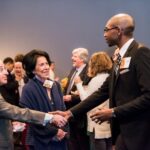
 Scott Casper and Darielle Linehan welcome Christopher Dew ’13, theatre, to the 2018 Linehan Artist Scholars reception.
 Scott Casper joins students at the exhibition A Designed Life, curated by associate professor Peggy Re, at the Center for Art, Design and Visual Culture.
 Scott Casper with Derek Musgrove ’97, associate professor of history, at a “bar talk” event to discuss Musgrove’s book Chocolate City.
 Scott Casper speaks to the audience at the 2018 Frederick Douglass Day Transcribe-a-thon.
 The late Maurice Berger, research professor at the Center for Art, Design and Visual Culture, with Scott Casper, celebrating the opening of the exhibition Revolution of the Eye: Modern Art and the Birth of American Television.
 Scott Casper at the 2013 Theatre Salon.

 Spring 2019 graduate school graduation ceremony. (Wilson, first on the left in the second row.) Photo courtesy of Wilson.

 Dipanjan Pan. Photo courtesy of the University of Illinois at Urbana-Champaign.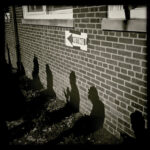





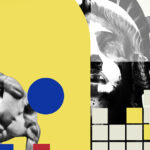


 Art courtesy of Tess McRae ’21.