Library of Congress commissions UMBC’s Daniel Pesca to bring new work of music to the public during pandemic

The Library of Congress’s Coolidge Auditorium, one of the nation’s leading performing arts venues, is typically busy year-round, bustling with performers playing to capacity audiences. Now, with the venue silenced by the coronavirus pandemic, the Library has launched a new kind of program, The Boccaccio Project.
During the darkest period of the plague in 14th-century Italy, author Giovanni Boccaccio (1313–1375) wrote the Decameron, structured as a collection of stories told by ten characters, all of whom were in self-isolation. This artistic response during a time of quarantine inspired the Library of Congress’s contemporary Boccaccio Project, in which the Library has commissioned ten composers and ten performers to create and record new works of music that will reach audiences online.
UMBC’s Daniel Pesca, a pianist and assistant professor of music, is one of these performers. He was chosen by David Plylar, music specialist and concert producer at the Library of Congress.
“I’ve known Daniel’s phenomenal work as a pianist and composer for many years,” says Plylar. “He has performed at the Library of Congress in the past, so our concert team knows him as well. We were thrilled to work with him again.”
To bring Pesca into The Boccaccio Project, the Library of Congress collaborated with the University of Chicago’s Grossman Ensemble, a nationally-recognized new music group of which Pesca is a member.
 Pesca warms up before a 2014 performance at the Library of Congress. Image by Alison Lowell.
Selecting a composer
Each commissioned performer was asked to select a composer with whom to partner. In Pesca’s case, he immediately turned to Aaron Travers, an assistant professor at Indiana University Bloomington. “I’ve long admired Aaron’s exquisite writing, and particularly love his piano solo piece Songs of Loss,” says Pesca.
“It’s a special thing as a performer when you encounter a composer who you feel understands not just what is technically possible on your instrument, but your instrument’s soul, its voice,” says Pesca. “Aaron has that affinity for the piano—I knew this from his earlier work, and I see that again in his new piece, Olcott Park. What I love here in particular is the layers of sound that he draws out of a solo instrument. I find this kind of layered writing particularly rewarding to play.”
Virtual performance
Pesca’s performance of Travers’s new composition, Olcott Park, will be broadcast on Tuesday, June 23 at 8 p.m. on the Library of Congress YouTube channel, and simultaneously on Facebook and Twitter. The performance will remain on the Library of Congress YouTube channel indefinitely. Other performances in The Boccaccio Project are already underway and will continue through Friday, June 26.
 The score of Olcott Park resting on the rack of Pesca’s piano. Image courtesy of Pesca.
“We are thrilled that Daniel Pesca will be one of the select few performers chosen to premiere new works as part of the Library of Congress’s Boccaccio Project,” says Linda Dusman, chair of music. “This marks him not only as a pianist of note, but also as a socially conscious musician who responds dynamically to important contemporary issues.”
Banner image: Daniel Pesca by Rosen-Jones Photography.
]]>
The Library of Congress’s Coolidge Auditorium, one of the nation’s leading performing arts venues, is typically busy year-round, bustling with performers playing to capacity audiences. Now, with...
https://umbc.edu/stories/library-of-congress-commissions-umbcs-daniel-pesca-to-bring-new-work-of-music-to-the-public-during-pandemic/
https://beta.my.umbc.edu/api/v0/pixel/news/119855/guest@my.umbc.edu/56068663bddc9ad50f75db15f1f47695/api/pixel
arts
arts-and-culture
cahss
music
UMBC News & Magazine
https://beta.my.umbc.edu/groups/umbc-news-magazine
https://assets1-beta.my.umbc.edu/system/shared/avatars/groups/000/001/943/24435aa6207c452e7bc15cc74b42c7bb/xsmall.png?1748556657
https://assets1-beta.my.umbc.edu/system/shared/avatars/groups/000/001/943/24435aa6207c452e7bc15cc74b42c7bb/original.png?1748556657
https://assets2-beta.my.umbc.edu/system/shared/avatars/groups/000/001/943/24435aa6207c452e7bc15cc74b42c7bb/xxlarge.png?1748556657
https://assets2-beta.my.umbc.edu/system/shared/avatars/groups/000/001/943/24435aa6207c452e7bc15cc74b42c7bb/xlarge.png?1748556657
https://assets3-beta.my.umbc.edu/system/shared/avatars/groups/000/001/943/24435aa6207c452e7bc15cc74b42c7bb/large.png?1748556657
https://assets1-beta.my.umbc.edu/system/shared/avatars/groups/000/001/943/24435aa6207c452e7bc15cc74b42c7bb/medium.png?1748556657
https://assets2-beta.my.umbc.edu/system/shared/avatars/groups/000/001/943/24435aa6207c452e7bc15cc74b42c7bb/small.png?1748556657
https://assets1-beta.my.umbc.edu/system/shared/avatars/groups/000/001/943/24435aa6207c452e7bc15cc74b42c7bb/xsmall.png?1748556657
https://assets2-beta.my.umbc.edu/system/shared/avatars/groups/000/001/943/24435aa6207c452e7bc15cc74b42c7bb/xxsmall.png?1748556657
UMBC News & Magazine
0
0
false
Tue, 23 Jun 2020 03:28:39 -0400
AI Could Help Solve the Privacy Problems It Has Created

By Zhiyuan Chen, associate professor, Information Systems, UMBC and Aryya Gangopadhyay, professor, Information Systems, UMBC
The stunning successes of artificial intelligence would not have happened without the availability of massive amounts of data, whether its smart speakers in the home or personalized book recommendations. And the spread of AI into new areas of the economy, such as AI-driven marketing and self driving vehicles, has been driving the collection of ever more data. These large databases are amassing a wide variety of information, some of it sensitive and personally identifiable. All that data in one place makes such databases tempting targets, ratcheting up the risk of privacy breaches.
The general public is largely wary of AI’s data-hungry ways. According to a survey by Brookings, 49% of people think AI will reduce privacy. Only 12% think it will have no effect, and a mere 5% think it may make it better.
As cybersecurity and privacy researchers, we believe that the relationship between AI and data privacy is more nuanced. The spread of AI raises a number of privacy concerns, most of which people may not even be aware. But in a twist, AI can also help mitigate many of these privacy problems.
Revealing models
Privacy risks from AI stem not just from the mass collection of personal data, but from the deep neural network models that power most of today’s artificial intelligence. Data isn’t vulnerable just from database breaches, but from “leaks” in the models that reveal the data on which they were trained.
Deep neural networks – which are a collection of algorithms designed to spot patterns in data – consist of many layers. In those layers are a large number of nodes called neurons, and neurons from adjacent layers are interconnected. Each node, as well as the links between them, encode certain bits of information. These bits of information are created when a special process scans large amounts of data to train the model.
For example, a facial recognition algorithm may be trained on a series of selfies so it can more accurately predict a person’s gender. Such models are very accurate, but they also may store too much information – actually remembering certain faces from the training data. In fact, that’s exactly what researchers at Cornell University discovered. Attackers could identify people in training data by probing the deep neural networks that classified the gender of facial images.
They also found that even if the original neural network model is not available to attackers, attackers may still be able to tell whether a person is in the training data. They do this by using a set of models that are trained on data similar, but not identical, to the training data. So if a man with a beard was present in the original training data, then a model trained on photos of different bearded men may be able to reveal his identity.
AI to the rescue?
On the other hand, AI can be used to mitigate many privacy problems. According to Verizon’s 2019 Data Breach Investigations Report, about 52% of data breaches involve hacking. Most existing techniques to detect cyberattacks rely on patterns. By studying previous attacks, and identifying how the attacker’s behavior deviates from the norm, these techniques can flag suspicious activity. It’s the sort of thing at which AI excels: studying existing information to recognize similar patterns in new data.
Still, AI is no panacea. Attackers can often modify their behavior to evade detection. Take the following two examples. For one, suppose anti-malware software uses AI techniques to detect a certain malicious program by scanning for a certain sequence of software code. In that case, an attacker can simply shuffle the order the code. In another example, the anti-malware software might first run the suspicious program in a safe environment, called a sandbox, where it can look for any malicious behavior. Here, an attacker can instruct the malware to detect if it’s being run in a sandbox. If it is, it can behave normally until it’s released from the sandbox – like a possum playing dead until the threat has passed.
Making AI more privacy friendly
A recent branch of AI research called adversarial learning seeks to improve AI technologies so they’re less susceptible to such evasion attacks. For example, we have done some initial research on how to make it harder for malware, which could be used to violate a person’s privacy, to evade detection. One method we came up with was to add uncertainty to the AI models so the attackers cannot accurately predict what the model will do. Will it scan for a certain data sequence? Or will it run the sandbox? Ideally, a malicious piece of software won’t know and will unwittingly expose its motives.
Another way we can use AI to improve privacy is by probing the vulnerabilities of deep neural networks. No algorithm is perfect, and these models are vulnerable because they are often very sensitive to small changes in the data they are reading. For example, researchers have shown that a Post-it note added to a stop sign can trick an AI model into thinking it is seeing a speed limit sign instead. Subtle alterations like that take advantage of the way models are trained to reduce error. Those error-reduction techniques open a vulnerability that allows attackers to find the smallest changes that will fool the model.
These vulnerabilities can be used to improve privacy by adding noise to personal data. For example, researchers from Max Planck Institute for Informatics in Germany have designed clever ways to alter Flickr images to foil facial recognition software. The alterations are incredibly subtle, so much so that they’re undetectable by the human eye.
The third way that AI can help mitigate privacy issues is by preserving data privacy when the models are being built. One promising development is called federated learning, which Google uses in its Gboard smart keyboard to predict which word to type next. Federated learning builds a final deep neural network from data stored on many different devices, such as cellphones, rather than one central data repository. The key benefit of federated learning is that the original data never leaves the local devices. Thus privacy is protected to some degree. It’s not a perfect solution, though, because while the local devices complete some of the computations, they do not finish them. The intermediate results could reveal some data about the device and its user.
Federated learning offers a glimpse of a future where AI is more respectful of privacy. We are hopeful that continued research into AI will find more ways it can be part of the solution rather than a source of problems.
*****
Header image from The Conversation.
[You’re smart and curious about the world. So are The Conversation’s authors and editors. You can read us daily by subscribing to our newsletter.]
Zhiyuan Chen, Associate Professor of Information Systems, University of Maryland, Baltimore County and Aryya Gangopadhyay, Professor, Information Systems, University of Maryland, Baltimore County
This article is republished from The Conversation under a Creative Commons license. Read the original article.
]]>
By Zhiyuan Chen, associate professor, Information Systems, UMBC and Aryya Gangopadhyay, professor, Information Systems, UMBC The stunning successes of artificial intelligence would not have...
https://umbc.edu/stories/ai-could-help-solve-the-privacy-problems-it-has-created/
https://beta.my.umbc.edu/api/v0/pixel/news/119856/guest@my.umbc.edu/c73d08a064ae7e6bc3caf968ee2c4abc/api/pixel
coeit
discovery
information-systems
the-conversation
UMBC News & Magazine
https://beta.my.umbc.edu/groups/umbc-news-magazine
https://assets1-beta.my.umbc.edu/system/shared/avatars/groups/000/001/943/24435aa6207c452e7bc15cc74b42c7bb/xsmall.png?1748556657
https://assets1-beta.my.umbc.edu/system/shared/avatars/groups/000/001/943/24435aa6207c452e7bc15cc74b42c7bb/original.png?1748556657
https://assets2-beta.my.umbc.edu/system/shared/avatars/groups/000/001/943/24435aa6207c452e7bc15cc74b42c7bb/xxlarge.png?1748556657
https://assets2-beta.my.umbc.edu/system/shared/avatars/groups/000/001/943/24435aa6207c452e7bc15cc74b42c7bb/xlarge.png?1748556657
https://assets3-beta.my.umbc.edu/system/shared/avatars/groups/000/001/943/24435aa6207c452e7bc15cc74b42c7bb/large.png?1748556657
https://assets1-beta.my.umbc.edu/system/shared/avatars/groups/000/001/943/24435aa6207c452e7bc15cc74b42c7bb/medium.png?1748556657
https://assets2-beta.my.umbc.edu/system/shared/avatars/groups/000/001/943/24435aa6207c452e7bc15cc74b42c7bb/small.png?1748556657
https://assets1-beta.my.umbc.edu/system/shared/avatars/groups/000/001/943/24435aa6207c452e7bc15cc74b42c7bb/xsmall.png?1748556657
https://assets2-beta.my.umbc.edu/system/shared/avatars/groups/000/001/943/24435aa6207c452e7bc15cc74b42c7bb/xxsmall.png?1748556657
UMBC News & Magazine
0
0
false
Mon, 22 Jun 2020 18:18:36 -0400
Request for Faculty/Staff Feedback from IES
Dear Colleagues,
My name is Adam Julian and I recently joined UMBC as the inaugural Director of International Student and Scholar Services in the Office of International Education Services. I am thrilled to join the dynamic community of people here at UMBC who are dedicated to furthering the opportunities and support of international students and scholars in support of our vision and strategic goals. I know that I will have the opportunity to meet many of you in the coming weeks and months as I learn more about the incredible work you are doing and as we explore ways that IES can support and enhance your activities.
Until that time, I am asking for your assistance to guide one initiative we are developing to increase communication and support for our faculty and staff partners. Please take a moment to let us know what we can do to best support you by completingthis very brief survey. The information will be used to design our recurring communications in the coming weeks. I also ask that you please share this message with any colleagues on your team and in your organization you think would benefit from these communications and would like to participate in the survey. Please complete this survey by Friday, July 3rd.
I look forward to hearing from you and learning more about opportunities to support your work and our community in the future.
Best,
Adam
--
Adam Julian
Director, International Student and Scholar Services
Office of International Education Services
1000 Hilltop Circle, Admin Bldg 224 | Baltimore, MD 21250
Tel: +1-410-455-2624 | Fax: +1-410-455-1130 | Email: ajulian@umbc.edu
Pronouns: he, him, his (what's this?)
--------------------------------------------------------
 |
|
|
Join our global community! #UMBCIES #UMBCInternational
--
|
NAFSA Chair, International Student and Scholar Regulatory Practice (ISS RP)
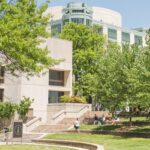
In light of the COVID-19 pandemic and its impact on high school students’ ability to access standardized admissions tests (SAT/ACT), UMBC’s undergraduate admissions will be test-optional for Fall 2021.
This will provide students the opportunity to apply for undergraduate admission with or without standardized test scores. In both cases, students will receive full consideration for admissions, merit scholarships, and other opportunities.
 Sign on UMBC’s main campus.
UMBC’s holistic admissions program
UMBC’s holistic review of applicants for undergraduate admission considers a number of factors. These include grade point average, academic trend, strength of curriculum, personal statement, letters of recommendation, other achievements, and standardized test scores (if provided).
The test-optional program for the coming year is “about offering prospective students maximum flexibility,” says Yvette Mozie-Ross ’88, health science and policy, vice provost for enrollment management and planning. “This flexibility ensures that circumstances beyond our prospective students’ control do not present barriers to pursuing a top-notch education.”
 Yvette Mozie-Ross at a 2019 UMBC spirit event.
Resources for applicants
Students considering applying to UMBC are encouraged to explore campus virtually. UMBC’s Instagram, Facebook, and Twitter accounts also give a view into campus life and university news.
UMBC offers Frequently Asked Questions for information on how COVID-19 might impact the application and enrollment process. And students can also reach out to admissions@umbc.edu with any questions.
To be considered for undergraduate admission, students should submit an application and all required documents by November 1 for Early Action and February 1 for Regular Decision.
 UMBC students walk from Academic Row toward UMBC Library.
Header image: UMBC’s Albin O. Kuhn Library. All photos by Marlayna Demond ’11 for UMBC.
]]>
In light of the COVID-19 pandemic and its impact on high school students’ ability to access standardized admissions tests (SAT/ACT), UMBC’s undergraduate admissions will be test-optional for Fall...
https://umbc.edu/stories/umbc-will-be-test-optional-for-2021-2022-applicants/
https://beta.my.umbc.edu/api/v0/pixel/news/119857/guest@my.umbc.edu/d667d5472fb8d33db009963e9be7659b/api/pixel
community
page1
UMBC News & Magazine
https://beta.my.umbc.edu/groups/umbc-news-magazine
https://assets1-beta.my.umbc.edu/system/shared/avatars/groups/000/001/943/24435aa6207c452e7bc15cc74b42c7bb/xsmall.png?1748556657
https://assets1-beta.my.umbc.edu/system/shared/avatars/groups/000/001/943/24435aa6207c452e7bc15cc74b42c7bb/original.png?1748556657
https://assets2-beta.my.umbc.edu/system/shared/avatars/groups/000/001/943/24435aa6207c452e7bc15cc74b42c7bb/xxlarge.png?1748556657
https://assets2-beta.my.umbc.edu/system/shared/avatars/groups/000/001/943/24435aa6207c452e7bc15cc74b42c7bb/xlarge.png?1748556657
https://assets3-beta.my.umbc.edu/system/shared/avatars/groups/000/001/943/24435aa6207c452e7bc15cc74b42c7bb/large.png?1748556657
https://assets1-beta.my.umbc.edu/system/shared/avatars/groups/000/001/943/24435aa6207c452e7bc15cc74b42c7bb/medium.png?1748556657
https://assets2-beta.my.umbc.edu/system/shared/avatars/groups/000/001/943/24435aa6207c452e7bc15cc74b42c7bb/small.png?1748556657
https://assets1-beta.my.umbc.edu/system/shared/avatars/groups/000/001/943/24435aa6207c452e7bc15cc74b42c7bb/xsmall.png?1748556657
https://assets2-beta.my.umbc.edu/system/shared/avatars/groups/000/001/943/24435aa6207c452e7bc15cc74b42c7bb/xxsmall.png?1748556657
UMBC News & Magazine
0
0
false
Thu, 18 Jun 2020 21:26:57 -0400
Change
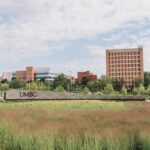
A message from President Freeman Hrabowski and Provost Philip Rous
Many faculty, staff, students, and alumni have shared deep and urgent concerns in recent weeks about structural racism, calling for change in America and within our UMBC community. We hear your concerns, and we share your sense of urgency—and we have hope, because we know that the UMBC community is committed to effecting change.
Looking in the mirror as a campus
UMBC has not always looked as it does today. When faced in the past with high drop-out rates among Black students, too few Black students in STEM fields, inadequate recruitment and retention of faculty and staff from underrepresented groups, and urgent concerns about sexual assault and hate speech, our campus has learned to look in the mirror, name the issues, listen to diverse voices, and work together to address the deeply rooted structural barriers to our becoming a more inclusive community.
We are committed to addressing issues involving the community as a whole, as well as issues in specific departments and units on campus through continued listening and appropriate actions. We will continue to communicate with our campus community on these very important issues.
At this critical time, we must be clear that our work is far from complete, while drawing strength from our successes:
- There is no overall academic achievement gap at UMBC, and we must continue to increase the retention and graduation rates for students of all backgrounds.
- UMBC has a national reputation for producing Black leaders in fields ranging from public service and the arts to STEM and healthcare, and yet we must do an even better job of supporting our students and creating an inclusive classroom and campus experience as they prepare to serve and lead in the larger society.
- Increasing the proportion of underrepresented faculty at UMBC is a strategic priority of the University. This work has been supported by numerous initiatives, and yet we recognize that we have deeper institutional work to do if we are to succeed in recruiting, retaining, and promoting meaningful numbers of Black faculty and others from diverse backgrounds.
- UMBC offers a wealth of courses and programs that explore structural racism, and yet we must ensure that the academic and co-curricular experiences of all students include meaningful engagement with issues surrounding diversity, including race, national origin, gender, religion, ability, gender identity, gender expression, sexual orientation, pregnancy, veterans status, and marital/family status. Our strategic plan, recently developed by faculty, staff, and students, recognizes this as a key priority, and we will begin planning for a major revision of our General Education Program in the coming months.
- This work has not just begun. Over the past year, we have been working on several major organizational and personnel decisions, and our proactive approach has led to the promotion and hiring of several additional Black faculty and staff in senior positions. In addition, we created a new Office of Equity and Inclusion that is working with students, faculty, and staff on critical civil rights issues. And yet we know that success is never final. We have much work to do.
Change requires courage, because it requires us to see things differently from the way they are at present. It requires us to recognize our failures as well as our successes. Most of all, it requires us to challenge ourselves to be better as individuals and as a community. The work ahead calls for awareness of self and others, honesty, humility, and the skill to both push and support one another. The work is hard. It is vital. And we believe there is no better place to advance the change we want to see than UMBC.
It is particularly important to recognize our Black faculty and other campus experts who are nationally recognized for their research addressing inequality. Their work speaks truth to power, and they inspire all of us.
We invite you to join us on Thursday, June 18, 4 – 5:30 p.m. for The Many Faces of Structural Racism: A Campus Conversationto learn more from some of these experts as we continue to consider how to address structural racism, both in America and on our campus. Presenters include:
- Dr. Kimberly Moffitt, director and professor, Language, Literacy, and Culture, and affiliate professor, Africana Studies
- Dr. Keisha Allen, assistant professor, Education
- Dr. Shawn Bediako, professor, Psychology
- Dr. Tyson King-Meadows, professor, Political Science, American Council on Education (ACE) fellow
- Ariana Arnold, Esq., Director, Office of Equity and Inclusion
- Dr. Jasmine Lee, Director of Inclusive Excellence, Student Affairs
- Dr. David Hoffman, Director, Center for Democracy and Civic Life
We know that a variety of departments and divisions have sponsored and are planning events to support our community during this time. We will be compiling and sharing these through the Office of Equity and Inclusion’s website. Please contact oei@umbc.edu if you have an event or resource to share.
]]>
A message from President Freeman Hrabowski and Provost Philip Rous Many faculty, staff, students, and alumni have shared deep and urgent concerns in recent weeks about structural racism,...
https://umbc.edu/stories/change/
https://beta.my.umbc.edu/api/v0/pixel/news/119858/guest@my.umbc.edu/a6e2ec9e845141445c9310fd53220674/api/pixel
impact
resilience
UMBC News & Magazine
https://beta.my.umbc.edu/groups/umbc-news-magazine
https://assets1-beta.my.umbc.edu/system/shared/avatars/groups/000/001/943/24435aa6207c452e7bc15cc74b42c7bb/xsmall.png?1748556657
https://assets1-beta.my.umbc.edu/system/shared/avatars/groups/000/001/943/24435aa6207c452e7bc15cc74b42c7bb/original.png?1748556657
https://assets2-beta.my.umbc.edu/system/shared/avatars/groups/000/001/943/24435aa6207c452e7bc15cc74b42c7bb/xxlarge.png?1748556657
https://assets2-beta.my.umbc.edu/system/shared/avatars/groups/000/001/943/24435aa6207c452e7bc15cc74b42c7bb/xlarge.png?1748556657
https://assets3-beta.my.umbc.edu/system/shared/avatars/groups/000/001/943/24435aa6207c452e7bc15cc74b42c7bb/large.png?1748556657
https://assets1-beta.my.umbc.edu/system/shared/avatars/groups/000/001/943/24435aa6207c452e7bc15cc74b42c7bb/medium.png?1748556657
https://assets2-beta.my.umbc.edu/system/shared/avatars/groups/000/001/943/24435aa6207c452e7bc15cc74b42c7bb/small.png?1748556657
https://assets1-beta.my.umbc.edu/system/shared/avatars/groups/000/001/943/24435aa6207c452e7bc15cc74b42c7bb/xsmall.png?1748556657
https://assets2-beta.my.umbc.edu/system/shared/avatars/groups/000/001/943/24435aa6207c452e7bc15cc74b42c7bb/xxsmall.png?1748556657
UMBC News & Magazine
0
0
false
Mon, 15 Jun 2020 23:29:21 -0400
A Career of Putting Others First—Q&A with Nicki Fiocco ’11

If volunteer coordination is “all about finding the right person to do the right job,” as Nicki Fiocco ’11, geography and environmental systems, explains, then the Hogan Administration found the exact right person to direct the Governor’s Office of Service and Volunteerism. Fiocco—who started in that role in December 2019—shares how her UMBC grit laid the foundation for her career in public service and how Marylanders can assist one another during, and after, the COVID-19 pandemic.
UMBC Magazine: You’ve worked in volunteer coordination roles since you’ve graduated. How did you get started with that career?
Nicki Fiocco: Volunteer coordination is all about finding the right person to do the right job. You could say I started by coordinating parent volunteers while coaching my kids in soccer. Then I got plugged into a regional service ecosystem, after graduating UMBC in 2011 through an internship with Smithsonian Environmental Research Center (SERC). Coordinating student volunteers for SERC, I witnessed firsthand their resilient spirit (in every imaginable kind of weather!) and was inspired to pursue a service career path.
My AmeriCorps service year with Volunteer Maryland paved the next step. Launching environmental projects allowed me to learn about volunteer program management on a larger scale. I’ve been hooked ever since! AmeriCorps has been a door-opener for my career. It led directly to my Program Director role with Volunteer Maryland, an AmeriCorps program, and my current leadership role in a state service commission for the Hogan Administration. I’m honored to engage with dedicated volunteer networks throughout Maryland.
UMBC Magazine: Your work in the Governor’s office is relatively new— what’s it been like to face such a large crisis like COVID-19 early on?
Nicki Fiocco: A decade of service-based career experiences has informed and shaped how I’m approaching the challenges we’re facing right now. No matter how “prepared” we may be on paper, in any crisis there’s no substitute for the daily workout I’ve had—listening closely, learning how to respond, and adapting with limited resources at hand.
 Fiocco joined Frostburg University’s AmeriCorps members during MLK Day 2020 celebration, making hats for terminally ill children. Photo courtesy of Fiocco.
Fortunately, being part of a strong service community also means I’m not facing these challenges alone. I’m grateful to be backed by the leadership of the Hogan Administration, and supported by over 600 boots-on-the-ground Maryland AmeriCorps members, program directors, and partners of the Governor’s Office on Service and Volunteerism (GOSV).
We’re getting things done by drawing on the deep experience of a service network that’s always had its finger on the pulse of critical community needs. I’m humbled and energized by what I’m seeing everyday in response to this crisis: a state-wide landscape of service and compassion meeting critical needs.
It’s easy to lead when things are going well. The true test is how well you function through a crisis. We are all capable of meaningful, impactful service. Marylanders have an opportunity to come out of this crisis stronger and more united through acts of service and volunteerism.
UMBC Magazine: How has your role supported efforts in fighting COVID-19?
Nicki Fiocco: Governor Hogan prioritizes getting things done, through a united response to COVID-19. We’re all being called upon to pivot where necessary, and we’re empowered to do so. For example, in addition to my regular duties, I was activated to serve in the Maryland Emergency Management Agency (MEMA), which means I’ve been working on connecting Marylanders to relevant and geographically accessible opportunities to serve their neighbors.
So far, Maryland AmeriCorps members are helping by checking on seniors through the Maryland Department of Aging; establishing support networks; addressing access to education and the digital divide; and by distributing 20,000 pounds of fresh produce and prepared meals, 5,000 bottles of hand sanitizer and bars of soap, 1,000 rolls of toilet paper, and 200 handmade face masks.
 Responding to COVID-19 by delivering food in Baltimore to seniors through an effort organized by the Salvation Army and supported by the Army National Guard. Photo courtesy of Fiocco.
For the Maryland Unites initiative, my team partnered with the Governor’s Office of Community Initiatives to launch Marylanders Serving Marylanders, a webpage for sharing coronavirus resources. GOSV’s Acting Deputy Director Kerry Ose and I are leading a collaborative effort capturing best practices for the Governor’s “Maryland Strong: Roadmap to Recovery.” Our non-profit working group listens to and elevates the voices of a diverse mix of 30 large and small non-profit organizations, with the common goal of strengthening our state’s response, recovery, and re-building after COVID-19.
UMBC Magazine: What have been some of the biggest challenges / biggest rewards (of your job)?
Nicki Fiocco: My personal philosophy is to approach challenges as opportunities and focus on removing any obstacles for the people around me. Being tapped into so many organizations and agencies, I see the pendulum swing between great needs and tremendous generosity. During this pandemic, a constant challenge has been connecting the right dots in a thoughtful and timely fashion. I bear this responsibility seriously. I’m approaching my role as a platform for solving problems.
UMBC Magazine: How does your geography and environmental systems (GES) major play a role in what you do today?
Nicki Fiocco: My GES major at UMBC really laid the framework for my thinking about ecosystems, and the unexpected relationships woven throughout. In our service ecosystem, I apply those lessons to being mindful when we’re planning and accommodating for regional, local, and cultural needs.
In the same way that my GES studies taught me knowledge of local flora (when you want to install a rain garden or increase wildflowers along a park trail), it’s also internalized the importance of socio-economic boundaries that could impact volunteer recruitment, local community buy-in, and long-term program sustainability.
UMBC Magazine: So many of us feel so useless right now—how would you encourage Marylanders outside of public service to volunteer/help right now?
Nicki Fiocco: Marylanders who are staying home and practicing physical distancing are already serving by protecting our public health and safety. It’s a tremendous sacrifice, and I want to thank Marylanders on behalf of the Hogan Administration for doing so.
 Fiocco, second from right, with a group of fellow alumni in Maryland legislature in Annapolis, February 2020. Photo by Marlayna Demond ’11.
For those who want to help more, the number one priority of GOSV is safety. We have on-site essential volunteer opportunities on Maryland Unites (Medical Reserve Corps, Maryland Food Bank, Red Cross), and virtual opportunities on Marylanders Serving Marylanders. Volunteerism can also look like sharing state and community resources to friends in your network who may not be aware, and checking in with them regularly.
UMBC Magazine: What are some UMBC lessons that have stuck with you over time?
Nicki Fiocco: GRIT. Sticking with things, doing what is right, and not letting anything throw you off course is my favorite value I gained at UMBC. I make it a point to participate in the UMBC alumni receptions in Annapolis, and I enjoy hearing President Hrabowski speak about grit!
The implications in public service—the grit to serve while putting others first—returns tenfold in growth and development. Grit is a muscle you build and take to any career or field.
UMBC Magazine: Does a specific professor’s advice come to mind, or has a particular class stayed with you?
Nicki Fiocco: My UMBC experience is something I continue to lean on. The lessons (and contacts) I’m able to draw from and share with others have been invaluable. A true mentor for me is Sandy Parker. He was my advisor, (and department chair for geography and environmental studies at the time). Funny thing is, our daughters are the same age—so we not only had ongoing conversations about school and my path forward—we were constantly talking about parenting.
I remember the semester before my graduation, Dr. Parker told me I needed to apply for graduation to finish my degree. At the time, I was resistant. There was nothing I wanted more than to stay forever at UMBC and just continue to learn. I was afraid I didn’t have what it would take to be successful; I wasn’t even sure what I would even do after school. Dr. Parker encouraged and assured me that I would find my way. Ultimately, getting my degree was about achieving a major personal milestone—I’m really glad I did it for me!
UMBC Magazine: Is there anything we haven’t asked yet, that you’d still like to share with alumni?
Nicki Fiocco: “The obstacle is the way.” Meaning, that when things are getting tough, you need to keep going through, not around. Working through the big, bad, ugly thing you may be afraid of is exactly what will make you stronger, wiser, and better. It’s not always about the big things you do, it’s about the things you do consistently. Your consistent actions provide the momentum; then suddenly—you are living your purpose.
*****
Header image: Fiocco at an Annapolis reception for alumni in Maryland legislature, February 2020. Photo by Marlayna Demond ’11.
]]>
If volunteer coordination is “all about finding the right person to do the right job,” as Nicki Fiocco ’11, geography and environmental systems, explains, then the Hogan Administration found the...
https://umbc.edu/stories/a-career-of-putting-others-first-qa-with-nicki-fiocco-11/
https://beta.my.umbc.edu/api/v0/pixel/news/119859/guest@my.umbc.edu/f486f824a5542dae70c239991d74e7a3/api/pixel
alumni
covidresearch
ges
umbctogether
UMBC News & Magazine
https://beta.my.umbc.edu/groups/umbc-news-magazine
https://assets1-beta.my.umbc.edu/system/shared/avatars/groups/000/001/943/24435aa6207c452e7bc15cc74b42c7bb/xsmall.png?1748556657
https://assets1-beta.my.umbc.edu/system/shared/avatars/groups/000/001/943/24435aa6207c452e7bc15cc74b42c7bb/original.png?1748556657
https://assets2-beta.my.umbc.edu/system/shared/avatars/groups/000/001/943/24435aa6207c452e7bc15cc74b42c7bb/xxlarge.png?1748556657
https://assets2-beta.my.umbc.edu/system/shared/avatars/groups/000/001/943/24435aa6207c452e7bc15cc74b42c7bb/xlarge.png?1748556657
https://assets3-beta.my.umbc.edu/system/shared/avatars/groups/000/001/943/24435aa6207c452e7bc15cc74b42c7bb/large.png?1748556657
https://assets1-beta.my.umbc.edu/system/shared/avatars/groups/000/001/943/24435aa6207c452e7bc15cc74b42c7bb/medium.png?1748556657
https://assets2-beta.my.umbc.edu/system/shared/avatars/groups/000/001/943/24435aa6207c452e7bc15cc74b42c7bb/small.png?1748556657
https://assets1-beta.my.umbc.edu/system/shared/avatars/groups/000/001/943/24435aa6207c452e7bc15cc74b42c7bb/xsmall.png?1748556657
https://assets2-beta.my.umbc.edu/system/shared/avatars/groups/000/001/943/24435aa6207c452e7bc15cc74b42c7bb/xxsmall.png?1748556657
UMBC News & Magazine
0
0
false
Mon, 15 Jun 2020 18:17:24 -0400
Coffee and Community

The plan began percolating in early 2017, when Gib Mason ’95, economics, presented a challenge to his Innovation, Creative Problem-Solving, and the Socialpreneur class: create a way to better connect UMBC to the community surrounding it.
Two and half years and a lot of lattes later, in fall 2019, OCA Mocha opened its doors on East Drive in neighboring Arbutus. What started as an empty shell full of potential became a warm, welcoming student-run space with a coffee bar, community meeting room, entertainment stage, and gallery wall featuring works by local artists.
As students, Michael Berardi ’19, media and communication studies, and Deep Patel ’19, biological sciences and financial economics, were in the class that created the concept; as alumni, Patel is a co-owner of the coffee shop, and Berardi is the general manager.
Since running with the idea born in Mason’s class, the OCA Mocha team has learned firsthand about planning, construction, relationship-building, and the ups and downs of starting a business from scratch. And the learning didn’t stop when OCA Mocha opened its doors; in addition to the financial and organizational aspects of making the project a reality, Patel says he has learned “how to work with a team to accomplish a goal.” Berardi adds that he is now “more comfortable with uncertainty and ambiguity” and has learned “the power of positivity—people notice it and want to be part of it.”
 Community members gather to celebrate the opening of OCA Mocha in fall 2019. Photo by Marlayna Demond ’11.
In their opening months, the place buzzed with activity from morning to night, with students studying, groups playing board games, impromptu meetings in the booths, friends and families gathering for coffee and conversation, and people running into old friends—or making new ones—over the signature OCA Mocha or frozen hot chocolate.
And even after temporarily closing its physical location due to COVID-19, the OCA Mocha team has continued its community-focused work. A virtual open mic night drew ten performers and more than 600 views on social media. In partnership with the UMBC Office of Sustainability, the team took a planned OCA Mocha Kids Club event online with video tutorials on how to make Earth Day–themed crafts from on-hand items otherwise destined for the landfill.
Building on OCA Mocha’s existing partnership with Retriever Essentials, UMBC’s food pantry, the team offered a one-time no-cost lunch delivery to local kids in need. As a result, Patel and Berardi made and delivered 35 lunches and Kids Club activity packs.
Berardi said it was eye-opening to see how many people, including in his own neighborhood, needed help. A mom posted her thanks on social media, saying this gesture “brought so much joy” to her three kids. The team continues to partner with Retriever Essentials to serve UMBC’s food insecure community.
Bettina Tebo, president of the Greater Arbutus Business Association, is one of the project’s earliest supporters. At the grand opening, she called OCA Mocha “ just the beginning of the amazing things that can happen from this relationship…and from the connections that we’re building.”
Along East Drive, other businesses noticed an uptick in foot traffic after OCA Mocha opened. A new bus route from campus to East Drive certainly helped. Sheena Herron, owner of Finders Keepers Thrift Store and Consignment Store, says, “We’ve gained so many new and loyal customers…simply because they were at OCA Mocha and noticed we were next door.“
When OCA Mocha eventually reopens, Berardi and Patel look forward to the familiar buzz of activity. They already have plans to expand the coffee shop’s menu and live entertainment offerings, enhance their community-focused programming, and “serve the community in ways we haven’t even thought of yet.”
— Mary Ann Richmond ’93
Update: OCA Mocha is now open for curbside pick-up and delivery.
*****
Header image by Marlayna Demond ’11.
]]>
The plan began percolating in early 2017, when Gib Mason ’95, economics, presented a challenge to his Innovation, Creative Problem-Solving, and the Socialpreneur class: create a way to better...
https://umbc.edu/stories/coffee-and-community/
https://beta.my.umbc.edu/api/v0/pixel/news/119860/guest@my.umbc.edu/39c9128a0ca71c5734221b393e351450/api/pixel
alumni
at-play
oca-mocha
spring-2020
UMBC News & Magazine
https://beta.my.umbc.edu/groups/umbc-news-magazine
https://assets1-beta.my.umbc.edu/system/shared/avatars/groups/000/001/943/24435aa6207c452e7bc15cc74b42c7bb/xsmall.png?1748556657
https://assets1-beta.my.umbc.edu/system/shared/avatars/groups/000/001/943/24435aa6207c452e7bc15cc74b42c7bb/original.png?1748556657
https://assets2-beta.my.umbc.edu/system/shared/avatars/groups/000/001/943/24435aa6207c452e7bc15cc74b42c7bb/xxlarge.png?1748556657
https://assets2-beta.my.umbc.edu/system/shared/avatars/groups/000/001/943/24435aa6207c452e7bc15cc74b42c7bb/xlarge.png?1748556657
https://assets3-beta.my.umbc.edu/system/shared/avatars/groups/000/001/943/24435aa6207c452e7bc15cc74b42c7bb/large.png?1748556657
https://assets1-beta.my.umbc.edu/system/shared/avatars/groups/000/001/943/24435aa6207c452e7bc15cc74b42c7bb/medium.png?1748556657
https://assets2-beta.my.umbc.edu/system/shared/avatars/groups/000/001/943/24435aa6207c452e7bc15cc74b42c7bb/small.png?1748556657
https://assets1-beta.my.umbc.edu/system/shared/avatars/groups/000/001/943/24435aa6207c452e7bc15cc74b42c7bb/xsmall.png?1748556657
https://assets2-beta.my.umbc.edu/system/shared/avatars/groups/000/001/943/24435aa6207c452e7bc15cc74b42c7bb/xxsmall.png?1748556657
UMBC News & Magazine
0
0
false
Thu, 11 Jun 2020 19:53:48 -0400
UMBC researchers receive NSF RAPID grant to speed COVID-19 detection through a deep neural network
A research team from UMBC and the University of Maryland School of Medicine (UMSOM) has received a Rapid Response Research (RAPID) grant from the National Science Foundation to detect COVID-19 infections earlier through computing. Aryya Gangopadhyay, professor of information systems at UMBC, is PI on the grant. He explains that this work will use machine learning to improve the speed and accuracy of COVID-19 diagnosis, helping to limit spread of the disease.
Developing highly accurate screening tool and synthetic datasets
Through the year-long grant totaling approximately $150,000, researchers will design, build, and train deep neural networks to detect cases of COVID-19. Gangopadhyay says this approach has a proven track record. Deep neural networks have already been used effectively in diagnosing pneumonia.

Aryya Gangopadhyay. Photo by Marlayna Demond ’11 for UMBC.
This research will combine the power of AI and medical imaging to solve a critical problem in infectious diseases with pandemic potential, including COVID-19 and others, explains Gangopadhyay. “Our focus for this research is COVID-19. The research is an example of multidisciplinary data science that combines expertise in different fields, such as medicine and computational research,” he says.
Research team
Gangopadhyay notes that the research will benefit from the infrastructure, research strength, and industrial partnerships of UMBC’s Center for Accelerated Real Time Analytics (CARTA).
UMBC’s team includes Yelena Yesha, distinguished professor of computer science and electrical engineering (CSEE) and director of CARTA; Yaacov Yesha, professor of CSEE; Phuong Nguyen, research assistant professor of CSEE; David Chapman, assistant professor of CSEE; and computer science Ph.D. students Sumeet Menon and Jayalakshmi Mangalagiri. Eliot Siegel, professor and vice chair of radiology at UMSOM and chief of imaging service at the VA Maryland Healthcare System, will contribute to the research.
The team plans to work quickly and hopes to have some results available by August. Then, the researchers will work with clinicians to validate their models and data to ensure that the tools are highly accurate in predicting COVID-19.
“We are very committed to this work,” Gangopadhyay says, recognizing the incredible potential of the research.
Collaboration during public health crisis
This is UMBC’s second NSF RAPID Grant responding to COVID-19. In early March, UMBC’s Charissa Cheah, professor of psychology, and Shimei Pan, associate professor of information systems, and Cixin Wang, assistant professor of school psychology at University of Maryland, College Park, received a grant to examine the intensified discrimination experienced by Chinese-Americans in the time of COVID-19.
Cheah shared, “Knowledge from this RAPID grant will help educators, health care providers, and policymakers to proactively support targeted marginalized groups and the larger public during future emergency events.”
Both UMBC awards demonstrate the necessity to move quickly and to collaborate strategically on research related to this public health crisis.
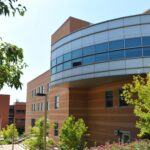
Banner image: UMBC’s Information Technology and Engineering building. Photo by Marlayna Demond ’11 for UMBC.
]]>
A research team from UMBC and the University of Maryland School of Medicine (UMSOM) has received a Rapid Response Research (RAPID) grant from the National Science Foundation to detect COVID-19...
https://umbc.edu/stories/umbc-researchers-receive-nsf-rapid-grant-to-speed-covid-19-detection-through-a-deep-neural-network/
https://beta.my.umbc.edu/api/v0/pixel/news/119861/guest@my.umbc.edu/870e8ea736c934236e26905f314928f5/api/pixel
coeit
covidresearch
csee
is
science-and-technology
UMBC News & Magazine
https://beta.my.umbc.edu/groups/umbc-news-magazine
https://assets1-beta.my.umbc.edu/system/shared/avatars/groups/000/001/943/24435aa6207c452e7bc15cc74b42c7bb/xsmall.png?1748556657
https://assets1-beta.my.umbc.edu/system/shared/avatars/groups/000/001/943/24435aa6207c452e7bc15cc74b42c7bb/original.png?1748556657
https://assets2-beta.my.umbc.edu/system/shared/avatars/groups/000/001/943/24435aa6207c452e7bc15cc74b42c7bb/xxlarge.png?1748556657
https://assets2-beta.my.umbc.edu/system/shared/avatars/groups/000/001/943/24435aa6207c452e7bc15cc74b42c7bb/xlarge.png?1748556657
https://assets3-beta.my.umbc.edu/system/shared/avatars/groups/000/001/943/24435aa6207c452e7bc15cc74b42c7bb/large.png?1748556657
https://assets1-beta.my.umbc.edu/system/shared/avatars/groups/000/001/943/24435aa6207c452e7bc15cc74b42c7bb/medium.png?1748556657
https://assets2-beta.my.umbc.edu/system/shared/avatars/groups/000/001/943/24435aa6207c452e7bc15cc74b42c7bb/small.png?1748556657
https://assets1-beta.my.umbc.edu/system/shared/avatars/groups/000/001/943/24435aa6207c452e7bc15cc74b42c7bb/xsmall.png?1748556657
https://assets2-beta.my.umbc.edu/system/shared/avatars/groups/000/001/943/24435aa6207c452e7bc15cc74b42c7bb/xxsmall.png?1748556657
UMBC News & Magazine
0
0
false
Thu, 11 Jun 2020 17:13:32 -0400
Change of Scenery—Then & Now
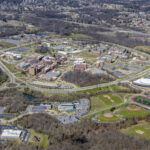
Looking at aerial photos from UMBC’s first several years—in this case, 1969—it’s hard not to think, “But where is everything?” Most of the distinctive landmarks of today’s campus are missing, and even our ubiquitous Hilltop Circle (then called Loop Road) is only half there.
As different as campus looks now, most of the buildings in this early photograph still serve their original function. This picture was taken the year after the opening of the library’s first wing—or “Phase I,” as it was called at the time, a nod to the planned expansion. Over the years, the building would be extended by two more phases, the last of which was completed in 1995.

In the upper-left-hand corner of campus, you can spot the school’s first dormitories under construction. The first residential hall was completed the year after this photo was taken and was named, unceremoniously, Dorm I. It, along with Dorms II and III, were finally given their current names—Susquehanna, Chesapeake, and Patapsco, respectively— in 1979.
Though the landscape of our campus has changed to be almost unrecognizable from this 1969 image, it has also been altered considerably in just the past few years. The aerial photo of UMBC in 2019 shows two new landmarks that did not exist in 2016, when members of this year’s graduating class were freshmen.
The Interdisciplinary Life Sciences Building and the UMBC Events Center are only the latest additions to UMBC’s landscape. It’s likely that by the time today’s first-year students have their commencement in 2023, UMBC’s skyline will have shifted once more, making our “now” their “then.”
]]>
Looking at aerial photos from UMBC’s first several years—in this case, 1969—it’s hard not to think, “But where is everything?” Most of the distinctive landmarks of today’s campus are missing, and...
https://umbc.edu/stories/change-of-scenery-then-now/
https://beta.my.umbc.edu/api/v0/pixel/news/119862/guest@my.umbc.edu/d9b4ef30f90eac57c5bd361fa815622a/api/pixel
spring-2020
then-and-now
umbc-history
UMBC News & Magazine
https://beta.my.umbc.edu/groups/umbc-news-magazine
https://assets1-beta.my.umbc.edu/system/shared/avatars/groups/000/001/943/24435aa6207c452e7bc15cc74b42c7bb/xsmall.png?1748556657
https://assets1-beta.my.umbc.edu/system/shared/avatars/groups/000/001/943/24435aa6207c452e7bc15cc74b42c7bb/original.png?1748556657
https://assets2-beta.my.umbc.edu/system/shared/avatars/groups/000/001/943/24435aa6207c452e7bc15cc74b42c7bb/xxlarge.png?1748556657
https://assets2-beta.my.umbc.edu/system/shared/avatars/groups/000/001/943/24435aa6207c452e7bc15cc74b42c7bb/xlarge.png?1748556657
https://assets3-beta.my.umbc.edu/system/shared/avatars/groups/000/001/943/24435aa6207c452e7bc15cc74b42c7bb/large.png?1748556657
https://assets1-beta.my.umbc.edu/system/shared/avatars/groups/000/001/943/24435aa6207c452e7bc15cc74b42c7bb/medium.png?1748556657
https://assets2-beta.my.umbc.edu/system/shared/avatars/groups/000/001/943/24435aa6207c452e7bc15cc74b42c7bb/small.png?1748556657
https://assets1-beta.my.umbc.edu/system/shared/avatars/groups/000/001/943/24435aa6207c452e7bc15cc74b42c7bb/xsmall.png?1748556657
https://assets2-beta.my.umbc.edu/system/shared/avatars/groups/000/001/943/24435aa6207c452e7bc15cc74b42c7bb/xxsmall.png?1748556657
UMBC News & Magazine
0
0
false
Thu, 11 Jun 2020 16:14:38 -0400
UMBC celebrates Dean Scott Casper, next president of the American Antiquarian Society
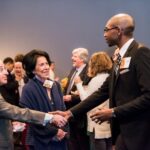
This fall, UMBC will bid farewell to one of its senior leaders as Scott Casper, dean of the College of Arts, Humanities and Social Sciences (CAHSS), departs the university to assume the presidency of the American Antiquarian Society (AAS). His new position speaks not only to his administrative skills, but also to his national eminence as a scholar of 19th-century U.S. history.
“We are very proud of our colleague Scott Casper, and know he will do a superb job as president of the American Antiquarian Society,” says President Freeman A. Hrabowski, III. “He is one of UMBC’s most admired leaders—as a scholar, academic administrator, and human being, and he has done a masterful job as dean of our College of Arts, Humanities, and Social Sciences.”
“Most important, Dean Casper lives the values we consider most significant in the humanities, including intellectual curiosity, compassion for others, and an abiding commitment to social justice,” Hrabowski says. “He will always be part of the UMBC community.”
“I want to express my gratitude to everyone at UMBC,” Casper shares. “This extraordinary community has changed me in deep, powerful ways, and UMBC’s values will go with me on this next step in my journey.”
 Scott Casper and Darielle Linehan welcome Christopher Dew ’13, theatre, to the 2018 Linehan Artist Scholars reception.
Transformative leadership
Under Dean Casper’s leadership, UMBC received the distinguished Community Engagement Classification from The Carnegie Foundation for the Advancement of Teaching in January 2020. This achievement required a rigorous campus-wide self-study of UMBC’s work with communities in Greater Baltimore and beyond, a process that involved more than 120 members of the UMBC community as well as dozens of community partners.
During Casper’s tenure as dean, CAHSS scaled up research in significant ways, including the creation of the Center for Social Science Scholarship. The college’s commitment to community engagement and civic agency has been notable, reflected in UMBC’s most recent Mellon Foundation grant, in hosting the Imagining America conference in 2015, in establishing studios and a classroom at the Lion Brothers building in downtown Baltimore, and in the new Community Leadership MPS and Public Humanities minor.
 Scott Casper joins students at the exhibition A Designed Life, curated by associate professor Peggy Re, at the Center for Art, Design and Visual Culture.
And, in the time since Dean Casper’s arrival, CAHSS has hired one third of its current faculty, enriching the campus with the addition of an extraordinary, diverse cohort of brilliant scholars and artists, and outstanding teachers.
“Everything we’ve accomplished these past seven years has come from collective effort by so many people—faculty and staff and students across the college and the university,” says Casper. “We have an exceptional college—broad and diverse and also truly collegial and supportive. It’s been a privilege and a joy to serve it and UMBC.”
 Scott Casper with Derek Musgrove ’97, associate professor of history, at a “bar talk” event to discuss Musgrove’s book Chocolate City.
Building community relationships
Dean Casper has also worked to develop robust relationships with external organizations. Under his guidance, UMBC signed an MOU with The Walters Art Museum. And Casper served on the advisory committee for the reinstallation of The Walters’s 1 West Mount Vernon Place. He also serves on the boards of Maryland Humanities and the Greater Baltimore Cultural Alliance.
“In my former role as executive director of Maryland Humanities, I saw the impact of Scott’s many community contributions,” says Phoebe Stein, president of the Federation of State Humanities Councils. “He was consistently generous, level-headed, and a real cheerleader for the work.”
“His commitment also extends to other nonprofits,” says Stein. “On the board of the Greater Baltimore Cultural Alliance, there too he is a generous contributor and colleague who brings intellectual rigor, a passion for the humanities, and common sense.”
 Scott Casper speaks to the audience at the 2018 Frederick Douglass Day Transcribe-a-thon.
Eminence as a scholar
Casper, who received his Ph.D. in American Studies from Yale University, joined the UMBC community in 2013, after many years on the faculty of the University of Nevada, Reno.
A historian of the nineteenth-century United States, he is the author of Sarah Johnson’s Mount Vernon: The Forgotten History of an American Shrine (Hill & Wang, 2008) and Constructing American Lives: Biography and Culture in Nineteenth-Century America (University of North Carolina Press, 1999). He is the co-author, editor, or co-editor of seven other books, most recently The Oxford Encyclopedia of American Cultural and Intellectual History (Oxford University Press, 2013).
 The late Maurice Berger, research professor at the Center for Art, Design and Visual Culture, with Scott Casper, celebrating the opening of the exhibition Revolution of the Eye: Modern Art and the Birth of American Television.
Casper’s commitment to teaching is also evident through his publications. He edited the annual “Textbooks and Teaching” section of the Journal of American History from 2008 to 2018, and was acting editor of the William and Mary Quarterly in 2008–09. He has worked extensively with K–12 history and social studies educators through the Mount Vernon Ladies’ Association, the Center for Civic Education, and the Northern Nevada Teaching American History Project.
The American Antiquarian Society
Dean Casper will become the 8th president in the 208-year history of the American Antiquarian Society. “At a time when deepened understanding of our past has never been more important, I look forward to leading an institution that fosters the essential work of telling America’s complex, contested stories,” says Casper, reflecting on his upcoming role.
 Scott Casper at the 2013 Theatre Salon.
The American Antiquarian Society was founded in 1812 by Revolutionary War patriot and printer Isaiah Thomas, and is both a learned society and a major independent research library. The AAS library, with some four million items, today houses the largest and most accessible collection of books, pamphlets, broadsides, newspapers, periodicals, music, and graphic arts material printed through 1876 in what is now the United States. It also houses manuscripts and a substantial collection of secondary texts, bibliographies, and digital resources and reference works related to all aspects of American history and culture before the twentieth century. AAS was presented with the 2013 National Humanities Medal by President Obama in a ceremony at the White House.
“We are thrilled that Scott Casper has agreed to become the next President of the American Antiquarian Society,” says John Herron, Jr., chair of the AAS Council. “Our nation’s past is as present as ever in this important time in our civic life. As a scholar, administrator, mentor and more, Scott is unusually well prepared to further leverage the Society’s long-standing commitment to evidence-based history and to preserving and sharing the stories of all Americans.”
Images by Marlayna Demond ’11 for UMBC.
]]>
This fall, UMBC will bid farewell to one of its senior leaders as Scott Casper, dean of the College of Arts, Humanities and Social Sciences (CAHSS), departs the university to assume the presidency...
https://umbc.edu/stories/umbc-celebrates-dean-scott-casper-next-president-of-the-american-antiquarian-society/
https://beta.my.umbc.edu/api/v0/pixel/news/119863/guest@my.umbc.edu/1b8035d1933f1ba5357bb7bc261a09b6/api/pixel
arts
arts-and-culture
cahss
community
humanities
socialsciences
UMBC News & Magazine
https://beta.my.umbc.edu/groups/umbc-news-magazine
https://assets1-beta.my.umbc.edu/system/shared/avatars/groups/000/001/943/24435aa6207c452e7bc15cc74b42c7bb/xsmall.png?1748556657
https://assets1-beta.my.umbc.edu/system/shared/avatars/groups/000/001/943/24435aa6207c452e7bc15cc74b42c7bb/original.png?1748556657
https://assets2-beta.my.umbc.edu/system/shared/avatars/groups/000/001/943/24435aa6207c452e7bc15cc74b42c7bb/xxlarge.png?1748556657
https://assets2-beta.my.umbc.edu/system/shared/avatars/groups/000/001/943/24435aa6207c452e7bc15cc74b42c7bb/xlarge.png?1748556657
https://assets3-beta.my.umbc.edu/system/shared/avatars/groups/000/001/943/24435aa6207c452e7bc15cc74b42c7bb/large.png?1748556657
https://assets1-beta.my.umbc.edu/system/shared/avatars/groups/000/001/943/24435aa6207c452e7bc15cc74b42c7bb/medium.png?1748556657
https://assets2-beta.my.umbc.edu/system/shared/avatars/groups/000/001/943/24435aa6207c452e7bc15cc74b42c7bb/small.png?1748556657
https://assets1-beta.my.umbc.edu/system/shared/avatars/groups/000/001/943/24435aa6207c452e7bc15cc74b42c7bb/xsmall.png?1748556657
https://assets2-beta.my.umbc.edu/system/shared/avatars/groups/000/001/943/24435aa6207c452e7bc15cc74b42c7bb/xxsmall.png?1748556657
UMBC News & Magazine
0
0
false
Thu, 11 Jun 2020 13:06:25 -0400
