UMBC’s Nihira Mugamba, literacy advocate, is named a Newman Civic Fellow
Nihira Mugamba ‘21, political science and Africana studies, has been named a 2020 Newman Civic Fellow—the sixth UMBC student to earn this public service award. The fellowship honors her work promoting literacy in Uganda and the United States.
Mugamba has been dedicated to this cause for years, from her days as a Girl Scout. She earned her Girl Scout Gold Award as a high school student by creating a reading program for a kindergarten class in Uganda, where her family is from. The Girl Scouts describe the Gold Award, the highest honor a Girl Scout can achieve, as “the mark of the truly remarkable.”
Committing to social change
Nihira Mugamba. Photo by Marlayna Demond ’11
Mugamba has sustained her commitment to expanding literacy during her undergraduate years at UMBC. As a sophomore she interned at the Parliament of Uganda, where she worked alongside the education committee. During her internship, she was able to continue her work with the kindergarten reading program. She has also volunteered for two years in Baltimore City Public Schools as a literacy fellow.
This type of long-term commitment to social change is precisely what the Newman Civic Fellowship honors. The year-long fellowship supports each recipient in further developing their social change and leadership skills through regional and state gatherings. Fellows are paired with mentors and become part of a national network of peers. They support each other in finding solutions for challenges facing communities locally, nationally, and internationally.
“Nihira is an exceptional volunteer, organizer, and leader passionate about working within communities in need of support,” shares President Freeman Hrabowski, who supported her nomination. “She is committed to improving educational outcomes for underserved students and families through professional practice and policy.”
Investing in literacy
Mugamba, born and raised in Silver Spring, Maryland, came to UMBC with a vision. Over the past few years, she has worked to define her specific interests within political science, and to imagine a career pursuing her commitment to social change. “This all seems so straightforward when I talk about it,” explains Mugamba. “But it was a path whose dots didn’t connect until recently.”
In her sophomore year she was referred to UMBC’s Sherman Center for Early Learning in Urban Communities. There she was introduced to her mentor, center director Mavis Sanders, professor of education, who was impressed with Mugamba’s vision. Sanders remembers Muganda telling her she wanted to become Secretary of Education.
Mugamba, wearing orange jacket, with The Shriver Center literacy fellows.
Mugamba was a great fit for the center’s Literacy Fellows program, a collaboration between the Sherman Center and UMBC’s Shriver Center. The program pairs college students with a Baltimore City elementary school. Fellows visit a classroom and work with a teacher throughout the semester, helping students develop reading and writing skills. Mugamba became a Sherman Early Literacy Fellow at Bay-Brook Elementary/Middle School.
“Nihira is exceptional. Reflective, goal-oriented, and highly organized, she has been critical to building the Literacy Fellows program at Bay-Brook,” shares Mavis Sanders.
Mugamba enjoyed the work so much she soon became the programs’ student coordinator. This experience helped her to better understand educational disparities that can exist between neighboring communities.
Education policy from the ground up
During the 2019-2020 winter break Mugamba returned to Uganda to deliver donated books to the kindergarten where she created a reading program years earlier. She was surprised at the growth of the students in the few years that passed since her first trip.
Thank you card from Ugandan kindergarten class to Mugamba.
Magamba realized the connections between her work with children in Uganda and in Baltimore. In both places, she found that consistent communication and long-term relationships led to more successful community-engaged work.
In addition to all this community work, Mugamba served as president of UMBC’s Africana Studies Council. In this role she organized important on-campus discussions about current issues in communities in the African diaspora.
Mugamba sharing information about Africana Council.
She noticed that her academic work, internships, volunteer work, and leadership positions began to have a similar theme and purpose. Each activity led her to realize her passion for bringing people together for a common cause. And often that cause centered around education.
Mugamba now sees a clear path for herself in international education policy. “I have no doubt that she will achieve her goals,” says Sanders.
Forging a future in community engagement
With a clear sense of purpose, the rising senior is embracing her new fellowship. The Newman Civic Fellowship will help her further develop the skills needed to support social change at a large scale. She is excited to have access to the program’s large peer network and is already learning about different paths to civic engagement.
Mugamba is also preparing for life after graduation. She plans to earn a master’s degree in education at UMBC and become a teacher in Baltimore City before working in education policy at the federal level. She also hopes to return to Uganda someday to create an education-focused nonprofit.
“I didn’t know when I was a Girl Scout that it would be the foundation to a life in community-engaged work,” says Mugamba. “Looking back, I now see how much I’ve learned about the real needs of communities by being an active part of them—lessons that I will carry well into the future when I help to develop and implement education policy.”
Banner image: Mugamba working with students at Bay-Brook Elementary/Middle School. All photos courtesy of Mugamba unless otherwise noted.
]]>
Nihira Mugamba ‘21, political science and Africana studies, has been named a 2020 Newman Civic Fellow—the sixth UMBC student to earn this public service award. The fellowship honors her work...https://umbc.edu/stories/umbcs-nihira-mugamba-literacy-advocate-is-named-a-newman-civic-fellow/https://beta.my.umbc.edu/api/v0/pixel/news/119845/guest@my.umbc.edu/89eb94da657087a6752eca5ade171201/api/pixelafricanastudiespolicy-and-societypoliticalscienceshrivercenterUMBC News & Magazinehttps://beta.my.umbc.edu/groups/umbc-news-magazinehttps://assets1-beta.my.umbc.edu/system/shared/avatars/groups/000/001/943/24435aa6207c452e7bc15cc74b42c7bb/xsmall.png?1748556657https://assets1-beta.my.umbc.edu/system/shared/avatars/groups/000/001/943/24435aa6207c452e7bc15cc74b42c7bb/original.png?1748556657https://assets2-beta.my.umbc.edu/system/shared/avatars/groups/000/001/943/24435aa6207c452e7bc15cc74b42c7bb/xxlarge.png?1748556657https://assets2-beta.my.umbc.edu/system/shared/avatars/groups/000/001/943/24435aa6207c452e7bc15cc74b42c7bb/xlarge.png?1748556657https://assets3-beta.my.umbc.edu/system/shared/avatars/groups/000/001/943/24435aa6207c452e7bc15cc74b42c7bb/large.png?1748556657https://assets1-beta.my.umbc.edu/system/shared/avatars/groups/000/001/943/24435aa6207c452e7bc15cc74b42c7bb/medium.png?1748556657https://assets2-beta.my.umbc.edu/system/shared/avatars/groups/000/001/943/24435aa6207c452e7bc15cc74b42c7bb/small.png?1748556657https://assets1-beta.my.umbc.edu/system/shared/avatars/groups/000/001/943/24435aa6207c452e7bc15cc74b42c7bb/xsmall.png?1748556657https://assets2-beta.my.umbc.edu/system/shared/avatars/groups/000/001/943/24435aa6207c452e7bc15cc74b42c7bb/xxsmall.png?1748556657UMBC News & Magazine00falseWed, 08 Jul 2020 16:58:12 -0400Street Vendors Make Cities Livelier, Safer, and Fairer – Here’s Why They Belong on the Post-COVID-19 Urban Scene
Cities around the world are emerging from pandemic shutdowns and gradually allowing activities to resume. National leaders are keen to promote economic recovery, with appropriate public health precautions.
I study urban policy and have researched the “informal economy” – activities that are not protected, regulated or often socially valued, including street vending. More than 2 billion people worldwide – over half the planet’s employed population – work in the informal economy, mainly in developing countries. In my view, encouraging street vending as part of COVID-19 recovery makes sense for many reasons.
Street vendors often face official harassment. Days after Chinese Premier Li Kequiang praised street vendors for generating jobs, Beijing officials forced these vendors to disperse.
A long tradition
Hawkers selling almost everything – food, books, household goods, clothes – used to be a common element of U.S. city life. The first pushcart in New York City appeared on Hester Street in 1886. By 1900 there were 25,000 pushcart vendors in the city selling everything from eyewear to mushrooms.
Street vending was a low-cost entry job for recent immigrants. It served as the vital first rung on the ladder of success and still performs this role in many U.S. cities.
But in New York and elsewhere, urban reformers viewed street vendors as nuisances and public health hazards, and tried to evict them or move them to marginal sites. Shopkeepers often complained of unwanted competition. The wealthy looked down on hawkers for being poor, foreign or both. As urban public spaces were regulated and configured to clear the streets of vendors, large-scale retail capitalism came to dominate the shopping experience.
Despite these challenges, street vending still thrives in many cities around the world.
For example, in a 2017 study I analyzed street vending in Cali, Colombia with scholar Lina Martinez. We found a sophisticated operation with multiple levels. They ranged from a well-established sector in the busy downtown, with better working conditions and relatively high incomes, to less-accessible markets that provided a gateway opportunity for the poor and recent rural migrants. We also unearthed significant flows of money, and discovered that street vending often provided higher wages than the formal economy.
Street stall in Cali, Colombia. John Rennie Short, CC BY-ND
Many development programs in low-income countries from the 1950s through the early 2000s sought to eradicate street vending. Local governments often took aggressive actions to remove street vendors from public spaces.
Recently, however, many nations have embraced street commerce as a way to reduce poverty and boost marginal groups, especially poor women from ethnic and racial minorities. As one example, since 2003 it has been illegal to remove street vendors from public spaces in Colombia without offering them compensation or guaranteed participation in income-support programs.
Nor did street vending disappear entirely from cities in wealthy countries. It survived in traditional flea markets and farmer’s markets. These lively urban spaces are now augmented by the motorized version of vendor’s street food: food trucks.
Building on food trucks’ success, more cities now are seeking to promote street vending. Advocates in New York City have campaigned since 2016 to increase the number of permits and licenses for street vending, which has been tightly limited since the early 1980s. And street food has become a tourist draw across the U.S.
Street vending during a pandemic
In my view, street vending offers many pluses for cities restarting after COVID-19 shutdowns. First, it can blunt some of the economic pain of the pandemic. Second, it can be configured to encourage social distancing more easily than the internal spaces of crowded shopping malls. Third, many cities are already being reconfigured and reimagined through steps such as widening sidewalks and creating traffic-free streets. These actions create more opportunities for street commerce.
Initial U.S. economic stimulus measures favored big business and the well-connected. Grants, training programs and low-interest loans, designed to help more street vendors get established, would steer support to Americans who are less wealthy and more ethnically diverse. Encouraging this kind of entrepreneurship, with its low entry cost, is a small but significantly more equitable way to stimulate the economy.
COVID-19 has forced us to rethink city living. I believe we should take the opportunity to reimagine a livelier, more interesting and more equitable post-pandemic city.
Header image: Street vending at Eastern Market, Washington, D.C. John Rennie Short, CC BY-ND
]]>
By John Rennie Short, professor, Public Policy, UMBC Cities around the world are emerging from pandemic shutdowns and gradually allowing activities to resume. National leaders are keen to...https://umbc.edu/stories/street-vendors-make-cities-livelier-safer-and-fairer-heres-why-they-belong-on-the-post-covid-19-urban-scene/https://beta.my.umbc.edu/api/v0/pixel/news/119846/guest@my.umbc.edu/c19e27819f3dba75ea0eab076879843c/api/pixelperspectivespublic-policythe-conversationUMBC News & Magazinehttps://beta.my.umbc.edu/groups/umbc-news-magazinehttps://assets1-beta.my.umbc.edu/system/shared/avatars/groups/000/001/943/24435aa6207c452e7bc15cc74b42c7bb/xsmall.png?1748556657https://assets1-beta.my.umbc.edu/system/shared/avatars/groups/000/001/943/24435aa6207c452e7bc15cc74b42c7bb/original.png?1748556657https://assets2-beta.my.umbc.edu/system/shared/avatars/groups/000/001/943/24435aa6207c452e7bc15cc74b42c7bb/xxlarge.png?1748556657https://assets2-beta.my.umbc.edu/system/shared/avatars/groups/000/001/943/24435aa6207c452e7bc15cc74b42c7bb/xlarge.png?1748556657https://assets3-beta.my.umbc.edu/system/shared/avatars/groups/000/001/943/24435aa6207c452e7bc15cc74b42c7bb/large.png?1748556657https://assets1-beta.my.umbc.edu/system/shared/avatars/groups/000/001/943/24435aa6207c452e7bc15cc74b42c7bb/medium.png?1748556657https://assets2-beta.my.umbc.edu/system/shared/avatars/groups/000/001/943/24435aa6207c452e7bc15cc74b42c7bb/small.png?1748556657https://assets1-beta.my.umbc.edu/system/shared/avatars/groups/000/001/943/24435aa6207c452e7bc15cc74b42c7bb/xsmall.png?1748556657https://assets2-beta.my.umbc.edu/system/shared/avatars/groups/000/001/943/24435aa6207c452e7bc15cc74b42c7bb/xxsmall.png?1748556657UMBC News & Magazine00falseWed, 08 Jul 2020 14:50:01 -0400Sending International Students Home Would Sap US Influence and Hurt the Economy
U.S. Immigration and Customs Enforcement, or ICE, made a decision on July 6 regarding international students in the U.S. that will affect far more than just the roughly 870,000 international students themselves.
Based on what I know about the power and influence of higher education in the U.S., this decision could increase the tuition American students pay, cost thousands of jobs throughout the nation and erode America’s stature in the world.
Under this new rule, international students may stay in the country only if they attend a college or university offering in-person classes this fall. Otherwise, they won’t be able to get visas, enter the country or stay here if they plan to attend one of the many schools that are teaching students entirely online.
In effect, thousands of students from other countries who attend schools that do not plan any in-person instruction this fall may have to immediately transfer to another school or leave the country. Otherwise, they could face deportation.
Against the backdrop of what top U.S. public health officials describe as an out-of-control virus, this new immigration rule puts U.S. colleges in a jam. Schools must choose between bringing students together on campus to comply with the immigration restrictions, or adhere to public health precautions related to physical distancing.
It may be hard to do both if the online option is off the table when it comes to international students. Which means U.S. colleges and universities could take a significant financial hit in the form of lost tuition revenue beyond what they were anticipating as a result of COVID-19.
Colleges must scramble
As of July 6, more than 1,000 colleges and universities have already released plans for fall instruction. Of those, 60% plan currently plan to offer in-person classes, 24% plan to offer hybrid and 9% plan to offer courses online. The remaining colleges are still undecided.
Now, some institutions will have to scramble to develop alternatives that can enable international students to remain enrolled without breaking the new rule. Schools must report how they plan to proceed by Aug. 1, based on the ICE announcement.
Far-reaching impact
The impact of this rule is not just limited to the hundreds of thousands of international students enrolled at U.S. colleges, who represent 4.39% of the 20 million people who currently attend U.S. colleges and universities. It also affects their institutions, their faculty and the local communities as well.
At a time when the U.S. is trying to overcome record unemployment and manage its biggest public health crisis in a century, international students seem to be caught in the middle of a partisan divide on reopening the country.
The new guidelines could place many colleges and universities in an impossible position: Increase the number of in-person classes and risk that COVID-19 will spread further.
What they bring to the table
Given how much international students contribute to the economy, you might assume ICE would find a way to keep them in the U.S.
The higher tuition and fees they pay helps keep tuition lower for American students. But their contributions transcend economics.
Their academic talents help advance scientific discoveries, which are more critical than ever given the nation’s ongoing battle against COVID-19. The fallout will be severe should these students choose to study in other countries instead. Australia and New Zealand, for example, have recently made their policies more welcoming.
Giving ground to other nations
Booting international students would surely reduce America’s influence in the world as well.
According to the State Department, the alumni of educational and cultural exchange programs include more than 75 Nobel Laureates and nearly 450 current and former heads of state and government. Having established personal ties, international students often return home as unofficial ambassadors for the U.S.
International alumni are more likely to look to the U.S. for ideas and trade agreements and to otherwise exert influence abroad that benefits U.S. interests.
While the share of international students studying in the U.S. has steadily declined – from 28% of the world’s 2.1 million international students in 2001 to 21% of the world’s 5.3 million international students in 2019 – other countries have made significant gains in attracting global talent due to national strategies.
Most notably, China now hosts nearly 1 in 10 students who study abroad globally, including more students from Africa than the U.K. and U.S. combined. One reason for China’s rise as a study destination is its leaders’ realization that it is lagging behind the U.S. in terms of soft power with only a few world leaders having graduated from Chinese institutions.
In my view, ICE’s new guidance is only the latest step in a steady retreat from global engagement that clears the path for other nations to attract more of the students that might otherwise study in the United States.
]]>
By David L. Di Maria, Associate Vice Provost for International Education, UMBC U.S. Immigration and Customs Enforcement, or ICE, made a decision on July 6 regarding international students in...https://umbc.edu/stories/sending-international-students-home-would-sap-us-influence-and-hurt-the-economy/https://beta.my.umbc.edu/api/v0/pixel/news/119847/guest@my.umbc.edu/8105ee43ee0f9bde6e3ab158a8bcf376/api/pixeliesinternationalperspectivestheconversationUMBC News & Magazinehttps://beta.my.umbc.edu/groups/umbc-news-magazinehttps://assets1-beta.my.umbc.edu/system/shared/avatars/groups/000/001/943/24435aa6207c452e7bc15cc74b42c7bb/xsmall.png?1748556657https://assets1-beta.my.umbc.edu/system/shared/avatars/groups/000/001/943/24435aa6207c452e7bc15cc74b42c7bb/original.png?1748556657https://assets2-beta.my.umbc.edu/system/shared/avatars/groups/000/001/943/24435aa6207c452e7bc15cc74b42c7bb/xxlarge.png?1748556657https://assets2-beta.my.umbc.edu/system/shared/avatars/groups/000/001/943/24435aa6207c452e7bc15cc74b42c7bb/xlarge.png?1748556657https://assets3-beta.my.umbc.edu/system/shared/avatars/groups/000/001/943/24435aa6207c452e7bc15cc74b42c7bb/large.png?1748556657https://assets1-beta.my.umbc.edu/system/shared/avatars/groups/000/001/943/24435aa6207c452e7bc15cc74b42c7bb/medium.png?1748556657https://assets2-beta.my.umbc.edu/system/shared/avatars/groups/000/001/943/24435aa6207c452e7bc15cc74b42c7bb/small.png?1748556657https://assets1-beta.my.umbc.edu/system/shared/avatars/groups/000/001/943/24435aa6207c452e7bc15cc74b42c7bb/xsmall.png?1748556657https://assets2-beta.my.umbc.edu/system/shared/avatars/groups/000/001/943/24435aa6207c452e7bc15cc74b42c7bb/xxsmall.png?1748556657UMBC News & Magazine00falseWed, 08 Jul 2020 14:16:21 -0400Building Community, Block By Block
Pets, playlists, and pausing for reflection—these are a few elements that go into intentionally creating online communities and classrooms.
Fist-pumping, finger snaps, and words of encouragement abound during a recent web-based McNair Scholars’ research update meeting. The “hype session,” as one student puts it, is business as usual for this group of returning scholars, even as the rest of their routines have changed so drastically. Despite the transition to the online format, these student researchers still took time to pause—sharing emotions in a restorative circle—before delving into work updates.
In the age of social distancing, programs like the McNair Scholars and other cohort model organizations on campus are finding creative ways to encourage community building, relying on equal parts vulnerability and light-hearted fun as the foundational building blocks. And this fall, instructors are leaning in to trauma-informed teaching as well as available technology to create an intentionally connected classroom in lieu of on-campus relationships.
“More engaged, happier students have a more successful college experience,” says Kate Drabinski, principal lecturer in Gender, Women’s, and Sexuality Studies. “And we’re all really committed to doing that.”
A “Deliberate and Holistic” Approach
Successful online teaching requires instructors to combine tech savvy with DIY creativity in conveying their course materials.
For biology professor Sarah Leupen, that meant using her small house critters to make a point in her spring “Physiology of Dinosaurs” course. In what is probably the only time a professor used a hamster to discuss dinosaurs, Leupen says she was struck by her pets’ coat colors and how they were perfect examples of two of the color pigments that would make up the extinct animal coat colors as well.
After pausing to appreciate just how cute hamster brothers Fafner and Mr. Paws were, Leupen’s students were amazed that despite the many millennia and the drastic size separating dinos from hamsters, these similarities could emerge.
Sarah Leupen on campus in 2016. Photo by Marlayna Demond ’11.
“They’re cute, but were also relevant,” says Leupen. The upside of teaching from home, she continues, is that students get to see a glimpse into her everyday life. Despite the many frustrations of being distant from classmates and learning from home—as well as the ongoing health concerns related to COVID-19—a common refrain from students and instructors alike is that possibly the pandemic has allowed us to be more human to each other.
Embracing this vulnerability may be the key to a successful period of online learning, and also pave the way for connections to be established when students and staff inevitably return to campus in the future. Maybe this looks like a professor opening her house to a student with nowhere else to live (as Leupen did for several weeks) or students opening up about their anxiety and health concerns with instructors.
With additional training and preparation, fall courses will be tailored to students’ online experience. The Department of Instructional Technology (DoIT) is helping professors develop their classes in ways that still aim to foster connection and academic excellence. On-campus organizations that typically spend the summer building community within their new cohorts are also turning to technology to create a connected experience. UMBC’s goal with these efforts is to offer a “deliberate and holistic” education, according to DoIT, although maybe not every professor will be using hamsters to achieve that end.
Not Your Average Zoom Meeting
Scholars programs like the Honors College rely on cohort community building as part of their models. In order to build that connection, usually students bond over orientation, ice breakers, shared meals, and living spaces. While distant because of COVID-19, programs are going the extra mile online to make sure students still have opportunities to build relationships with staff and fellow students.
Julie Oakes, assistant director of curriculum and retention in the Honors College and adjunct associate history professor, says that the “magnitude of events” they’ve planned over the summer for incoming students is higher than ever. Trivia nights, movie parties on Netflix, pet show-and-tells, and other engagements allow students to have fun with each other, Oakes emphasizes. Relationships that would happen organically in person now need to be fostered through online platforms.
Hosting classes and events online “forces us to see students more holistically—not just as learners but as family members, breadwinners, caretakers, and more.”
-Michael Stone, Honors College
Honors College Director Simon Stacey is used to telling students that they’re “an alum from day one.” But based on all the summer programming welcoming incoming students distantly, he says he’s recently changed the axiom to “alum from before day one.”
At an online lunch in June, first-year students chatted with current Honors College members as well as staff, showing off their fuzzy and slippery pet companions at home. While cats dominated the screen (Loki, Checkers, Hattie, Harlow, Octavia), Molly the beagle and Pug the pug along with many unnamed fish in a 30-gallon tank joined the video call.
Screen grab from the Honors College’s recent pet show-and-tell lunch.
Incoming Honors College student and Sondheim Scholar Polina Kassir ’24 says that “online meetings serve as a reminder that one day, people will be together again.” Kassir joined in the pet show-and-tell lunch despite not having a pet—she showed off her 5-year-old sister instead. As a first-year student, Kassir still has questions about what classes would be best for her major (she’s interested in biology and English) and how difficult the transition from high school to college level work will be, but she adds, “I haven’t felt ‘forgotten’ by UMBC because of the many online meetings where I have been spoken to by name.”
This intimate setting allows almost more human connections than some on-campus events, says Oakes. Michael Stone, assistant director of recruitment and assessment for the Honors College, adds that hosting classes and events online “forces us to see students more holistically—not just as learners but as family members, breadwinners, caretakers, and more.”
Nothing replaces in-person interactions, says Oakes, who misses the close-knit Honors College office as well as her students, but “we’re doing the best we can to create human connections and sustain that fun spirit.”
Humanizing the Online Experience
For Diane Stonestreet ’22, mechanical engineering, volunteering for the McNair Scholar Program’s online orientation in April as a peer mentor felt like the right move, knowing first-hand the benefits of the McNair support system. It’s a place “I can feel heard and understood,” says Stonestreet, “where all scholars are supporting each other’s work towards the same goal. My McNair family is the backbone in all of my other endeavors.”
Scholars gather together at the 2019 McNair Family Weekend. Photo courtesy of Stonestreet, third from right, first row.
The goal of the UMBC McNair Scholars Program is to increase the attainment of research-based doctoral degrees by students from underrepresented segments of society, says Michael Hunt ’06, M13, mathematics, program director and doctoral student in Language, Literacy, and Culture. The pandemic’s disruption to business as normal, says Hunt, allowed him to “reevaluate engagement and re-think about how best to reach students. We had to think about connectedness intentionally.”
What this looked like for the online orientation was a full three days of important workshops, interspersed with dance parties, sharing pictures of food, and introducing pets (including one student’s chickens). “It let us humanize the experience,” says Hunt. “It was not just about the work.”
“There’s no way we can adequately do this work and not look at the emotions and feelings that our students are dealing with,” emphasizes Hunt. “This includes not just academically but life—family, spiritual, mental, and financial well-being….They must know that they are not alone and have a community to help them not only think through some things but also to vent to and to just be themselves.”
We had to think about connectedness intentionally.
-Michael Hunt, McNair Scholars program director
Stonestreet, who served as a peer leader during the event, says that all the community building activities had one goal. “It was crucial,” she says, that “leaders and staff were able to be vulnerable with their responses to set the tone for the scholars and promote deep conversation. It is difficult to foster trust, understanding, and a generally familial bond in an online format,” Stonestreet says, “so we tried to create deep and thoughtful experiences where the scholars could relate to each other past the surface level.”
In Stonestreet’s words, “less serious, but equally valuable bonding activities” included creating a shared playlist of favorite songs, hanging out on a joint messaging app, playing online party games on Jackbox, and chatting in smaller groups.
A collage of incoming McNair Scholars. Image courtesy of Corris Davis, director, Academic Opportunity Programs.
“We are just waiting for the day we can come together as a community again,” says Stonestreet. In the meantime, “I believe this cohort is going to continue to bond by navigating McNair Program requirements together, learning from one another’s experiences, and helping to support each other in their journey to graduate school.”
Pivoting Because of the Pandemic
That work of building community extends to classrooms as well. For Gender, Women’s, and Sexuality Studies instructor Drabinski, this means utilizing the technology available to reproduce as close as possible the camaraderie of her discussion-based classes. Drabinski, who’s taught hybrid courses before, says she and other UMBC faculty used the summer to prepare for fully online fall courses. This includes a week or more of training from DoIT with their PIVOT program.
Kate Drabinski leads a Baltimore Walking Tour in 2017. Photo by Marlayna Demond ’11.
Planning Instructional Variety for Online Teaching (PIVOT) aims to give instructors a fluency with online tools to “to take a more deliberate and holistic approach to preparing their courses” for remote instruction, says Sherri Braxton and Mariann Hawken of DoIT’s Instructional Technology team. Faculty facing hurdles engaging their students, conducting lab-based courses, or knowing how to evaluate assignments say that PIVOT has helped their transition to the digital classroom feel purposeful instead of reactionary, like in the spring.
This deliberate approach to online teaching is not new to DoIT. For the past 12 years through their Alternative Delivery Program they’ve guided summer and winter programs to redesign delivery into an online or hybrid format. Drabinski has worked alongside DoIT for the past two years as one of their Blackboard Ambassadors—coordinating trainings and outreach for other faculty members to best utilize the education software.
Common feedback Drabinski hears is that it’s impossible to teach discussion-based classes online. “And that’s absolutely not true,” says Drabinski. “It’s just about learning what tools work, and also teaching students how to best learn online.” In fact, she adds, sometimes the online format works even better for her students, who might not feel comfortable raising their hand in class or just need a little more time to formulate a response.
If I’m being real, I can’t wait to be back in a classroom with students, live, in-person. It’s my favorite thing to do. But this is a global pandemic, so how do we use the tools we have and the innovation UMBC is known for to make the best learning experience possible for our students?
-Kate Drabinski, Women’s, Gender, and Sexuality Studies
Drabinski goes on to list other available resources. Blackboard Collaborate allows synchronous small groups to interact. The VoiceThread platform, which hosted URCAD this year, makes asynchronous interactions as seamless as possible. “It’s not the same as an in-person live discussion,” says Drabinski, “but that means that other kinds of discussion are made possible by the technology.”
In the meantime, Drabinski muses whether online interactions mediated by a machine will somehow allow her to be more human to her students, by giving them a window into her personal world. “It’s weird to think about, but maybe true,” says Drabinski, as one of her cats lounges beside her and her wife prepares lunch in the background of the video call.
Echoing the sentiment of so many, Drabinski adds, “If I’m being real, I can’t wait to be back in a classroom with students, live, in-person. It’s my favorite thing to do. But this is a global pandemic, so how do we use the tools we have and the innovation UMBC is known for to make the best learning experience possible for our students?”
Finding a Community that Cares
Students are also eager to get into the classroom, some for the first time. Dawg Days: Jumpstart is an extended orientation for first-year and transfer students that allows them to take one or two general education classes with their incoming peers. More students than ever signed up to participate this year—135 compared to last year’s 68—says program director Laila Shishineh. The online format removes the barrier of having to come to campus, even if that’s what many of the students are eagerly anticipating.
After meeting new people, respondents to a survey sent out to Dawg Days students said living on campus or taking classes in-person is what they’re looking forward to most. The Retrievers Return Roadmap, released by UMBC’s fall planning committee, emphasizes that the University will move forward with guidelines of decreased capacity, fewer students in dorms and only 10 percent of classes being held in-person. But classes with in-person priority include First Year Seminars to help facilitate community building among new students and let them get to know a few faculty, masked-face-to-masked-face.
Incoming members of UMBC’s class of 2024.
Incoming members of UMBC’s class of 2024.
Incoming members of UMBC’s class of 2024.
Incoming members of UMBC’s class of 2024.
Until then, the Dawg Days summer bridge program will serve as their introduction to campus. “Interestingly enough,” says Shishineh, this year’s online experience will not be that different from the in-person experience. “We offer all of the same opportunities in both formats: weekly skill-building opportunities, office hours, and a chance to connect with other students, plus time with our team. I’m so glad that while it looks different, the core elements are the same.”
“If nothing else, I hope the students will feel a sense of connection and belonging to UMBC after participating in the program,” she concludes.
“What people want is to feel like they’re in a community,” echoes Leupen, the biology professor with hamsters. “We want to help them find—in classes or other aspects of UMBC—connections. We want them not to feel like they’re just alone in their bedroom with their laptop. Students want to know that people care about them, that UMBC still cares about them, and we do.”
* * * * *
Are you one of our newest Retrievers? Introduce yourself!
We’re so exciting that you’re joining our community, and we’re counting down the days until we welcome you to UMBC! In the meantime, we’d like to learn more about you.
Make sure you’re signed into myUMBC, then go to our submission page to upload a video (up to 15 seconds) or a photo letting us know who you are, where you’re from, and what you’re looking forward to as a UMBC student.
When you share your story, you’ll have a chance to be featured on UMBC’s Instagram (@UMBClife), so get creative.
]]>
Pets, playlists, and pausing for reflection—these are a few elements that go into intentionally creating online communities and classrooms. Fist-pumping, finger snaps, and words of...https://umbc.edu/stories/building-a-community-block-by-block/https://beta.my.umbc.edu/api/v0/pixel/news/119848/guest@my.umbc.edu/c55514b7b44b475b45bf71c08b335435/api/pixelcampus-lifehonors-collegemcnairresilienceumbctogetherUMBC News & Magazinehttps://beta.my.umbc.edu/groups/umbc-news-magazinehttps://assets1-beta.my.umbc.edu/system/shared/avatars/groups/000/001/943/24435aa6207c452e7bc15cc74b42c7bb/xsmall.png?1748556657https://assets1-beta.my.umbc.edu/system/shared/avatars/groups/000/001/943/24435aa6207c452e7bc15cc74b42c7bb/original.png?1748556657https://assets2-beta.my.umbc.edu/system/shared/avatars/groups/000/001/943/24435aa6207c452e7bc15cc74b42c7bb/xxlarge.png?1748556657https://assets2-beta.my.umbc.edu/system/shared/avatars/groups/000/001/943/24435aa6207c452e7bc15cc74b42c7bb/xlarge.png?1748556657https://assets3-beta.my.umbc.edu/system/shared/avatars/groups/000/001/943/24435aa6207c452e7bc15cc74b42c7bb/large.png?1748556657https://assets1-beta.my.umbc.edu/system/shared/avatars/groups/000/001/943/24435aa6207c452e7bc15cc74b42c7bb/medium.png?1748556657https://assets2-beta.my.umbc.edu/system/shared/avatars/groups/000/001/943/24435aa6207c452e7bc15cc74b42c7bb/small.png?1748556657https://assets1-beta.my.umbc.edu/system/shared/avatars/groups/000/001/943/24435aa6207c452e7bc15cc74b42c7bb/xsmall.png?1748556657https://assets2-beta.my.umbc.edu/system/shared/avatars/groups/000/001/943/24435aa6207c452e7bc15cc74b42c7bb/xxsmall.png?1748556657UMBC News & Magazine00falseMon, 06 Jul 2020 18:21:02 -0400Groundbreaking fish research by UMBC’s Yonathan Zohar spawns partnership with AquaCon on $1 billion Maryland aquaculture project
More and more U.S. states, from Texas to Maine, are increasing their capacity to produce fish for human consumption in land-based facilities. These operations are less susceptible to disease and result in fresher fish for locals. They also remove the risk of releasing waste or farmed fish to the environment, and reduce costs and the carbon footprint associated with shipping. Plus, they create jobs and help decrease American reliance on seafood imports.
Decades of research led by Yonathan Zohar, UMBC professor of marine biotechnology, have led the way for these paradigm-shifting developments. For example, he is the lead on a large grant from the National Oceanic and Atmospheric Association (NOAA) National Sea Grant program designed to build capacity for land-based Atlantic salmon aquaculture in the U.S. The effort, known as the Recirculating Aquaculture Salmon Network (RAS-N), is a public-private partnership that includes academic research institutions, federal labs, and industry partners from across the country.
Zohar conducts his work in the Aquaculture Research Center (ARC) at the Institute of Marine and Environmental Technology (IMET) on Baltimore’s Inner Harbor. Work at the ARC pioneered many of the land-based aquaculture techniques now used around the country and the world.
Now, that work is coming back home.
A new take on “buy local”
AquaCon, a company led by Norwegian aquaculture leaders, is currently marshaling funds for a massive land-based Atlantic salmon aquaculture project based on Maryland’s Eastern Shore. In phase one, the company will invest $300 million, and the facility will produce 15,000 metric tons of fish. By phase three, the investment and output will triple. And that’s just for the aquaculture operation itself. The facility will also support job creation and economic development through affiliated industries, like seafood processing and distribution.
Yoni Zohar (left) and Jorge Gomezjurado (right), faculty research assistant at IMET, at the Aquaculture Research Center. Photo by Marlayna Demond ’11 for UMBC.
AquaCon executives visited IMET and the ARC in November 2019 and again in February 2020, and were struck by the many ways that UMBC, IMET, and AquaCon could work together to make the venture a success for everyone. When they toured the ARC, “They were very excited about our innovative aquaculture platforms,” Zohar says, enthusiastic to see every feature. “Now I regularly communicate with the group to help them develop the design and biological planning for the Eastern Shore operation.”
UMBC and IMET executed an memorandum of understanding with AquaCon, stating their intentions to collaborate and how they will work together. In a recent announcement about the company’s aquaculture vision, AquaCon specifically stated that UMBC and IMET were one major reason for their decision to select Maryland for their aquaculture operations.
Staying on the forefront
“For a company like AquaCon, there is a huge amount of competition,” Zohar says, “and the companies who are going to succeed are those who are at the forefront of the technology.” That’s another reason for AquaCon to choose UMBC as a strategic partner. “IMET will be in the new operation’s backyard, so we can do sponsored research for them to keep them on the forefront of the field,” Zohar says.
Salmon swimming in a tank at the Aquaculture Research Center. Photo courtesy Yonathan Zohar.
Workforce training is another critical element of the relationship. Tom Sadowski ‘89, political science, vice chancellor for economic development for the University System of Maryland, discussed opportunities with the AquaCon executives when they visited IMET. For example, students will likely get the chance to gain hands-on training at the Eastern Shore facility, and AquaCon could fund employees to pursue training and degrees through UMBC at IMET.
“Workforce development for this booming industry is a very important component to the NOAA-funded RAS-N consortium,” Zohar says.
Filling in the missing link
One thing is inevitable in a land-based aquaculture facility, besides lots of fish: lots of fish poop. Kevin Sowers, professor of marine biotechnology, and Zohar have that handled, too. They invented a system to convert organic waste (affectionately known as “sludge”) in the fish tanks to fuel-grade methane. This technology, abundantly tested and optimized at ARC and already scaled up in the Norwegian salmon industry, can generate enough energy to offset about 10 percent of the operation’s energy costs.
The duo formed a company, Silfra BioSytems LLC, that will focus on improving and scaling up the waste conversion technology. They named the company after a pristine Icelandic lake to emphasize the result of the process—clean water. Their invention completes “this missing link for how you responsibly and biologically remove the huge amounts of solid waste,” Zohar says, “And in the process, you generate biofuel.”
Kevin Sowers (right) with Upal Ghosh, professor of chemical, biochemical, and environmental engineering, in Sowers’s IMET lab. Photo by Marlayna Demond ’11 for UMBC.
The right model
On top of these developments in tech transfer, Zohar recently received a substantial National Science Foundation grant for his basic research on fish reproduction. The NSF fully funded the grant, which is for four years and a little over a million dollars.
Zohar’s basic research will influence the aquaculture industry, because if you can precisely control when fish do and do not reproduce, you can create a system where fish are constantly reaching market size. On top of that, fish that are not preparing to reproduce grow muscle faster and have immune systems that are more robust.
The research could also have implications for human health. For various reasons, “Fish are one of the best reproductive models for humans,” Zohar says. “You cannot even use rats or mice for this type of research. So it has a lot of interest from that standpoint as well.” A better understanding of the causes of infertility, for example, could be on the horizon.
A perfect storm
For IMET and the ARC facility, “It’s a perfect storm in a good sense, because everything is falling in place now,” says Zohar. “I’ve been working in Maryland for almost 30 years, and we’ve been developing a lot of these technologies. Our mission is research, education, and economic development, and we have been working to create connections between academia and industry to fulfill that mission.” And projects long underway are now bearing fruit.
Land-based aquaculture, in particular, has seen a huge rise in interest of late. “We’ve been working on this for 15 or 20 years. People said we were ahead of our time, but now things are happening,” Zohar says. “Land-based aquaculture has matured. People believe in it, and it’s going to develop at a large scale.”
Banner photo: Yonathan Zohar at the Aquaculture Research Center in the Institute of Marine and Environmental Technology. Photo by Marlayna Demond ’11 for UMBC.
]]>
More and more U.S. states, from Texas to Maine, are increasing their capacity to produce fish for human consumption in land-based facilities. These operations are less susceptible to disease and...https://umbc.edu/stories/groundbreaking-fish-research-led-by-umbcs-yonathan-zohar-draws-aquaculture-giant-aquacon-to-maryland-for-nearly-1-billion-project/https://beta.my.umbc.edu/api/v0/pixel/news/119849/guest@my.umbc.edu/b59fd107df8c74bb4ddcbd9f8b53a568/api/pixelcnmsimetmarinebiotechresearchscience-and-technologyUMBC News & Magazinehttps://beta.my.umbc.edu/groups/umbc-news-magazinehttps://assets1-beta.my.umbc.edu/system/shared/avatars/groups/000/001/943/24435aa6207c452e7bc15cc74b42c7bb/xsmall.png?1748556657https://assets1-beta.my.umbc.edu/system/shared/avatars/groups/000/001/943/24435aa6207c452e7bc15cc74b42c7bb/original.png?1748556657https://assets2-beta.my.umbc.edu/system/shared/avatars/groups/000/001/943/24435aa6207c452e7bc15cc74b42c7bb/xxlarge.png?1748556657https://assets2-beta.my.umbc.edu/system/shared/avatars/groups/000/001/943/24435aa6207c452e7bc15cc74b42c7bb/xlarge.png?1748556657https://assets3-beta.my.umbc.edu/system/shared/avatars/groups/000/001/943/24435aa6207c452e7bc15cc74b42c7bb/large.png?1748556657https://assets1-beta.my.umbc.edu/system/shared/avatars/groups/000/001/943/24435aa6207c452e7bc15cc74b42c7bb/medium.png?1748556657https://assets2-beta.my.umbc.edu/system/shared/avatars/groups/000/001/943/24435aa6207c452e7bc15cc74b42c7bb/small.png?1748556657https://assets1-beta.my.umbc.edu/system/shared/avatars/groups/000/001/943/24435aa6207c452e7bc15cc74b42c7bb/xsmall.png?1748556657https://assets2-beta.my.umbc.edu/system/shared/avatars/groups/000/001/943/24435aa6207c452e7bc15cc74b42c7bb/xxsmall.png?1748556657UMBC News & Magazine00falseFri, 03 Jul 2020 02:33:06 -0400Change Agent Behind #BlackBirdersWeek
Before she graduated from UMBC, Anna Gifty Opoku-Agyeman’19, M26, mathematics, founded the Sadie Collective. Opoku-Agyeman describes it on her website as, “the first and only organization to date dedicated to addressing the pipeline and pathway problem for Black women in economics and related fields.” Since the Collective’s inception in 2018, membership has expanded to nearly 500 members across 30 states, 120 institutions, and four continents.
This is a woman who is making change.
One of the Collective’s first orders of business was toorganize the Sadie Tanner Mossell Alexander Conference for Economics and Related Fields. The conference and the Sadie Collective offer resources, networking, and support to a community—in this case, Black women in economics—that has been historically under-resourced, -networked, and -supported.
As it happens, some members of the Sadie Collective’s leadership team are also birders.
So, when news of a White woman calling 911 on Christian Cooper, a Black birder in Central Park who asked her to follow the rules and leash her dog, made national headlines in May, the Collective leaped into action. Below, Opoku-Agyeman shares how #BlackBirdersWeek (May 31 – June 5, 2020)came to be, its extensive impact, and what’s next.
UMBC Magazine: What was your goal in creating #BlackBirdersWeek?
Anna Gifty Opoku-Agyeman: I want to first and foremost share that #BlackBirdersWeek was a joint effort with members of the BlackAFinSTEM Collective. I co-founded the initiative alongside Sheridan Alford, Danielle Belleny, Chelsea Connor, Joseph Saunders, and Tykee James, all wonderful people who, alongside others, stepped up to make the week possible.
#BlackBirdersWeek was a direct response to Christian Cooper’s unfortunate encounter with a White woman in Central Park. Although I am not a birder, many individuals in the Collective are, and each of them echoed similar experiences to Cooper’s. The conversations sparked an idea in me to amplify and prioritize the voices of Black birders, naturalists, and explorers similar to what I have done alongside my co-founder, Fanta Traore, at the Sadie Collective.
UMBC Magazine: Can you describe some of the components of the week’s programming, and how it came together?
Opoku-Agyeman: I suggested a Black Birders Day, and Tykee James suggested a week, as a way to celebrate Black people in the birding space similar to how running was used to celebrate the late Ahmaud Arbery. I did a little bit of brainstorming and came back with a pitch: a potential week-long digital campaign to amplify the experiences and expertise of Black birders, especially those within the group. The Collective loved the idea and offered suggestions to improve how we could roll out the campaign. We have well-known birders and natural scientists within our group, such as Jason Ward and Corina Newsome, and many of us had a couple thousand followers. So we knew that between all of us, this could be huge.
We were intentional about ensuring that there was a hashtag for each day, which led the wonderful Danielle Belleny, Sheridan Alford, and Chelsea Connor to create these amazing flyers that reflected our vision.
Every day had a theme and corresponding date. A brief description of what we highlighted includes:
● #BlackinNature—Showcasing Black people in nature. Black people typically don’t get to be in nature because we are viewed as a threat. This part of the campaign was intentional in that it normalized Black people in nature and also encouraged it.
● #PostABird Challenge—Posting a fun bird picture/fact/etc. This was really a campaign to get people involved regardless of race so that we could get the world talking about birds!
● #AskABlackBirder—Twitter and Instagram Q&A with Black birders. Folks submitted questions on Twitter and Instagram using the hashtag. It gave Black birders an opportunity to talk more about their own work and research.
● #BirdingWhileBlack—Live stream discussions with Christian Cooper (yes, that Christian Cooper) and Drew Laham. I actually co-moderated this session with Tykee James. To date, those streams together drew in over 1 million views. At the time we went live, nearly 60,000 people tuned in. Apparently we broke an average day record or something.
● #BlackWomenWhoBird—Amplifying Black women birders and LGBTQ+ birders, who are significantly underrepresented. Many of these individuals had an opportunity to work with national organizations such as the National Aquarium to talk about their work. It was truly awesome.
Christian Cooper saw #BlackBirdersWeek as an encouraging step towards greater diversity amongst birders as well as something that is crucial to the future survival of the birds themselves.
UMBC Magazine: What was your reaction to the huge response the campaign got?
Opoku-Agyeman: It’s funny, because when I told my mom about this idea, she kept saying we’d go global. It’s actually one of the first things I told the group: “If we do this right, this could go global,” and I am so glad it did. All of the individuals involved with the group have now been featured widely and are still being pursued for opportunities by prominent science organizations such as the National Aquarium and national agencies in the nature space. It was interesting, too, because simultaneously nationwide protests over senseless Black death at the hands of police were happening.
As a result of the campaign, the National Wildlife Federation launched a fellowship for minorities in the field, specifically with Black people in mind. The movement literally shifted power structures, something that we love to see.
At the same time, you had Black joy paralleling Black pain, which is oftentimes the experience of Black people in America.We have to balance these incredibly joyous moments with very real and deep-seated pain. While we were celebrating Black birders, our people were also being murdered. It’s a juxtaposition that is our daily lives.
UMBC Magazine: Do you have any plans to build on the success of #BlackBirdersWeek? Have you organized similar campaigns?
Opoku-Agyeman: We are currently working on building structure around the successful campaign as well as pushing forward our mission to be unapologetically Black in the STEM space. Recent campaigns that have been inspired by us include #BlackinAstro, which highlights Black people in astronomy, and #BlackHikersWeek, which aims to normalize Black people hiking outdoors. The offshoot campaigns are not ones we specifically organized, but we definitely support them!
UMBC Magazine: How does your work on #BlackBirdersWeek relate to your role as co-founder and CEO of the Sadie Collective?
Opoku-Agyeman: Both initiatives uplift Black people who are often among those marginalized in their space. The strikingly similar under-representation between birding and economics with respect to Black people is just more evidence that campaigns like #BlackBirdersWeek and additional advocacy is needed to push institutional change that allows for diverse voices to break through.
What I love about both initiatives is that they’re disruptive, political, and moving. Many people didn’t see the Sadie Collective coming when we officially announced like they didn’t see #BlackBirdersWeek coming. Both initiatives are led by young Black people who are incredibly passionate about this work, whatever it may be, and by existing in our respective spaces, we are protesting our right to be seen, heard, and celebrated. Quite literally embracing the idea of being unapologetically Black and unapologetically ourselves, encompassing our Blackness.
Header image of Opoku-Agyeman on campus by Marlayna Demond ’11.
]]>
Before she graduated from UMBC, Anna Gifty Opoku-Agyeman’19, M26, mathematics, founded the Sadie Collective. Opoku-Agyeman describes it on her website as, “the first and only organization to date...https://umbc.edu/stories/change-agent-behind-blackbirdersweek/https://beta.my.umbc.edu/api/v0/pixel/news/119850/guest@my.umbc.edu/251f6add42af5583395e6823a6b61af8/api/pixelalumnicnmsmeyerhoffmeyerhoff-scholarUMBC News & Magazinehttps://beta.my.umbc.edu/groups/umbc-news-magazinehttps://assets1-beta.my.umbc.edu/system/shared/avatars/groups/000/001/943/24435aa6207c452e7bc15cc74b42c7bb/xsmall.png?1748556657https://assets1-beta.my.umbc.edu/system/shared/avatars/groups/000/001/943/24435aa6207c452e7bc15cc74b42c7bb/original.png?1748556657https://assets2-beta.my.umbc.edu/system/shared/avatars/groups/000/001/943/24435aa6207c452e7bc15cc74b42c7bb/xxlarge.png?1748556657https://assets2-beta.my.umbc.edu/system/shared/avatars/groups/000/001/943/24435aa6207c452e7bc15cc74b42c7bb/xlarge.png?1748556657https://assets3-beta.my.umbc.edu/system/shared/avatars/groups/000/001/943/24435aa6207c452e7bc15cc74b42c7bb/large.png?1748556657https://assets1-beta.my.umbc.edu/system/shared/avatars/groups/000/001/943/24435aa6207c452e7bc15cc74b42c7bb/medium.png?1748556657https://assets2-beta.my.umbc.edu/system/shared/avatars/groups/000/001/943/24435aa6207c452e7bc15cc74b42c7bb/small.png?1748556657https://assets1-beta.my.umbc.edu/system/shared/avatars/groups/000/001/943/24435aa6207c452e7bc15cc74b42c7bb/xsmall.png?1748556657https://assets2-beta.my.umbc.edu/system/shared/avatars/groups/000/001/943/24435aa6207c452e7bc15cc74b42c7bb/xxsmall.png?1748556657UMBC News & Magazine00falseThu, 02 Jul 2020 16:08:47 -0400UMBC’s Eric Ford, Choice Program director, leads Maryland group supporting youth development
Eric Ford, director of The Choice Program at UMBC, has been appointed to serve as chair of Maryland’s State Advisory Group (SAG), a part of the Governor’s Office of Crime Prevention, Youth, and Victim Services (GOCCP).
Ford has dedicated his career to serving young people facing inequalities. As director of Choice, he guides the program in providing community-based, family-centered services for youth. Choice seeks to promote positive outcomes for young people who are incarcerated, on probation, or would benefit from support to avoid entering the juvenile justice system. Ford’s new leadership role with Maryland’s SAG extends the impact of his work across the state.
Ford, first on the right, with Choice youth unveil a mural created over spring break at Lane Manor Recreation center in partnership with Artivate Inc.1
As SAG chair, Ford will assist in the review of grant proposals, monitor juvenile justice programs, and advise the governor and legislators on compliance with the Juvenile Justice and Delinquency Prevention Act. The appointment, which began July 1, 2020, comes after four years of service. Ford also served as the vice chair of the SAG for one of those years. During this period, he helped develop a three-year plan outlining the goals and objectives for the SAG.
Dedicated to serving young people
Ford has focused on supporting youth for more than 25 years through a range of community and educational institutions. He actually began his work with Choice as a case worker in 1993, before serving as a case manager, career counselor, community schools coordinator, and in other high-impact roles.
Ford later returned to Choice in 2011 as assistant director, before becoming associate director of operations in 2014. Four years later he advanced to acting director and was then selected as director.
“I am pleased to name Eric Ford as the next Chair of Maryland’s State Advisory Group,” shares Glenn Fueston, executive director of the GOCCP and a fellow former Choice case worker. “As the SAG continues to address Maryland’s juvenile justice system needs, Eric’s background in youth development programming will help solidify the SAG’s commitment and responsibilities under the Juvenile Justice and Delinquency Prevention Act.”
Supporting reform at the state level
The SAG chair appointment is Ford’s second recent appointment from the governor. Last year he was appointed to Maryland’s first Juvenile Justice Reform Council (JJRC), a part of Maryland’s Department of Juvenile Services (DJS). The council develops a statewide framework to reform the state’s juvenile justice strategy and its implementation at the local level.
DJS and Choice have worked closely together over the years. DJS is the top funder for Choice programming, which has demonstrated over decades the value of investing in youth. Choice has supported DJS in developing practices that include youth and family voices and that recognize the importance of racial equity.
Eric Ford (second on the left) with President Freeman Hrabowski and other Hampton University alumni at the Department of Juvenile Services Leadership Conference.
“Eric’s inclusion on the JJRC is important because The Choice Program has been a great partner with DJS for decades,” said Sam Abed, secretary of DJS. “They have a tremendous trove of first-hand knowledge and experience working to support our youth in the community. That perspective is vital to help us shape the future of juvenile services in Maryland.”
Representing youth voices
Both new appointments are important to Ford. Each furthers Choice’s anti-racist mission of a collaborative mentorship process led by young people’s goals for themselves. Ford sees this work as integral to addressing current disparities in the juvenile justice system, including arrest rates and detention rates for young men of color.
Ford (on the right) presents an award to a Cherry Hill community youth during Choices yearly Jam and Slam Back to School event.
For decades, Ford has supported youth in reaching toward their futures while facing incredible challenges. Now, as Choice’s longest-tenured leader of color, chair of the SAG, and a member of the JJRC, he hopes to offer other leaders a glimpse into the experiences of young people of color in the juvenile justice system.
“I represent all young men and men of color that are still in a juvenile facility who may not have a voice,” says Ford. “I have to speak for them.”
Banner image:Ford (first on the left) Ford (first on left) with students and staff at John Bartram High School in Philadelphia. This mentoring program was run in partnership with Pride Youth Services. All photos courtesy of Eric Ford.
]]>
Eric Ford, director of The Choice Program at UMBC, has been appointed to serve as chair of Maryland’s State Advisory Group (SAG), a part of the Governor’s Office of Crime Prevention, Youth, and...https://umbc.edu/stories/umbcs-eric-ford-choice-program-director-leads-maryland-group-supporting-youth-development/https://beta.my.umbc.edu/api/v0/pixel/news/119851/guest@my.umbc.edu/33152597aa8ee693ec7d639537afbe5f/api/pixelcampuschoiceprogrampolicy-and-societyUMBC News & Magazinehttps://beta.my.umbc.edu/groups/umbc-news-magazinehttps://assets1-beta.my.umbc.edu/system/shared/avatars/groups/000/001/943/24435aa6207c452e7bc15cc74b42c7bb/xsmall.png?1748556657https://assets1-beta.my.umbc.edu/system/shared/avatars/groups/000/001/943/24435aa6207c452e7bc15cc74b42c7bb/original.png?1748556657https://assets2-beta.my.umbc.edu/system/shared/avatars/groups/000/001/943/24435aa6207c452e7bc15cc74b42c7bb/xxlarge.png?1748556657https://assets2-beta.my.umbc.edu/system/shared/avatars/groups/000/001/943/24435aa6207c452e7bc15cc74b42c7bb/xlarge.png?1748556657https://assets3-beta.my.umbc.edu/system/shared/avatars/groups/000/001/943/24435aa6207c452e7bc15cc74b42c7bb/large.png?1748556657https://assets1-beta.my.umbc.edu/system/shared/avatars/groups/000/001/943/24435aa6207c452e7bc15cc74b42c7bb/medium.png?1748556657https://assets2-beta.my.umbc.edu/system/shared/avatars/groups/000/001/943/24435aa6207c452e7bc15cc74b42c7bb/small.png?1748556657https://assets1-beta.my.umbc.edu/system/shared/avatars/groups/000/001/943/24435aa6207c452e7bc15cc74b42c7bb/xsmall.png?1748556657https://assets2-beta.my.umbc.edu/system/shared/avatars/groups/000/001/943/24435aa6207c452e7bc15cc74b42c7bb/xxsmall.png?1748556657UMBC News & Magazine00falseThu, 02 Jul 2020 15:28:06 -0400Flood Bot: UMBC researchers expand flood warning work in Ellicott City
Ellicott City, a town about five miles from UMBC, suffered devastating flooding in 2016 and 2018. These events left residents and officials wondering how technology could help predict future severe weather events, potentially saving lives and property.
In response to the 2016 flood, UMBC’s Nirmalya Roy, associate professor of information systems, received funding from the National Science Foundation to develop a rapid flood warning system for Ellicott City. The research was scheduled to conclude in August 2019, but Roy and his team decided to continue this work with the support of an extension from NSF.
They received multiple sensor systems from Howard County’s Stormwater Management Division to deploy in Ellicott City. Since installing the sensors in fall 2019, they have moved on to the next phase—testing their performance, to prepare for the possibility of another flood hitting the city.
Combining sensor data and social media
Roy has worked closely with Bipendra Basnyat M.S. ‘17, Ph.D. ‘23, information systems, to build and install a network of wireless sensors in Ellicott City to monitor rainfall levels. Aryya Gangopadhyay, professor of information systems and co-PI on the grant, and Neha Singh, Ph.D. ‘23, information systems, are working alongside Roy and Basnyat. They call the network Flood Bot.
They’ve also developed predictive algorithms and communication systems to provide real-time information to government officials about flood threats. And the researchers can now compare data collected by the sensors with information from social media, to confirm they are telling the same story.
“Collaborating with multiple vendors who are designing and developing commercial flood monitoring systems helped the team understand the real challenges in the field,” says Roy. “This helped drive the research in the lab to make meaningful impacts on the Ellicott City community.”
The Flood Bot sensors detect and monitor water levels of the river, as well as information about weather, rainfall, and water levels at other nearby locations in the area.
One of the sensors installed in Ellicott City. Photo courtesy of Basnyat.
The data being collected is available to the public through a Twitter account that is automatically updated twice each day. “The transmitted data from physical sensors are then combined with tweets from in and around Ellicott City to postulate the severity of the flash flood in the area,” says Roy.
Ongoing improvements
To build the group of sensors, Basnyat customized a Raspberry Pi, a small computer that is roughly the size of a credit card. The current system is camera-based and requires time and labor to deploy and maintain. Basnyat continues to look at improvements that could make it smarter and more automated, while maintaining accuracy.
The goal is for the system to notify people as early as possible of a potential flood event, to support the safety of the community. Roy explains that the team is continuously improving and refining the alert system so that people can trust the sensors and use their findings to make informed decisions about protecting people, homes, businesses.
Basnyat shares that his physical proximity to Ellicott City plays a role in energizing him to be a part of this collaborative work. This work is contributing to the local region, since UMBC is so close to Ellicott City, he adds.
“The most exciting part of this work for me is to go back in time and see how Ellicott City streams and surrounding areas performed during different rainfall events,” he says. “Ultimately we seek to build predictive models that put our analytics at the forefront of such rainfall events, to forecast the flooding conditions and integrate them into the community’s disaster risk and reduction plan.”
Community investment and impact
After experiencing such devastating damage from back-to-back floods, the Ellicott City community is invested in this work. Local officials, like Brian Cleary, hope it will help prevent future weather events from having catastrophic impacts on the town.
Cleary is an engineering specialist for the Stormwater Management Division of the Howard County Department of Public Works. He says that working with Roy and his team has not just been beneficial in getting the gauges set up; the collaboration will also support the community for years to come.
“These gauges will help verify conditions and provide valuable data in ongoing research,” says Cleary. “It will also assist in verifying models” that will be used to protect the area from flooding moving forward.
Roy hopes to someday deploy the flood monitoring systems in other areas of Maryland and beyond. Scaling the system will require developing ways to handle “hundreds of queries from commuters and community members”—a challenge he looks forward to solving.
Banner image: Nirmalya Roy. Photo by Marlayna Demond ’11 for UMBC.
]]>
Ellicott City, a town about five miles from UMBC, suffered devastating flooding in 2016 and 2018. These events left residents and officials wondering how technology could help predict future...https://umbc.edu/stories/flood-bot-umbc-researchers-expand-flood-warning-work-in-ellicott-city/https://beta.my.umbc.edu/api/v0/pixel/news/119852/guest@my.umbc.edu/9c684704bb96d6b3191ae8af4cc8ce03/api/pixelcoeitisresearchscience-and-technologyUMBC News & Magazinehttps://beta.my.umbc.edu/groups/umbc-news-magazinehttps://assets1-beta.my.umbc.edu/system/shared/avatars/groups/000/001/943/24435aa6207c452e7bc15cc74b42c7bb/xsmall.png?1748556657https://assets1-beta.my.umbc.edu/system/shared/avatars/groups/000/001/943/24435aa6207c452e7bc15cc74b42c7bb/original.png?1748556657https://assets2-beta.my.umbc.edu/system/shared/avatars/groups/000/001/943/24435aa6207c452e7bc15cc74b42c7bb/xxlarge.png?1748556657https://assets2-beta.my.umbc.edu/system/shared/avatars/groups/000/001/943/24435aa6207c452e7bc15cc74b42c7bb/xlarge.png?1748556657https://assets3-beta.my.umbc.edu/system/shared/avatars/groups/000/001/943/24435aa6207c452e7bc15cc74b42c7bb/large.png?1748556657https://assets1-beta.my.umbc.edu/system/shared/avatars/groups/000/001/943/24435aa6207c452e7bc15cc74b42c7bb/medium.png?1748556657https://assets2-beta.my.umbc.edu/system/shared/avatars/groups/000/001/943/24435aa6207c452e7bc15cc74b42c7bb/small.png?1748556657https://assets1-beta.my.umbc.edu/system/shared/avatars/groups/000/001/943/24435aa6207c452e7bc15cc74b42c7bb/xsmall.png?1748556657https://assets2-beta.my.umbc.edu/system/shared/avatars/groups/000/001/943/24435aa6207c452e7bc15cc74b42c7bb/xxsmall.png?1748556657UMBC News & Magazine00falseTue, 30 Jun 2020 18:32:10 -0400Medicine Without Borders
Coco Tang’s medical missions around the world would sound like a summer action movie if they weren’t a matter of life and death.
Just behind the front lines of the battle of Mosul in Iraq, Tang ’14, visual arts, history, and political science,dressed wounds of civilians and soldiers during the day and slept under windows rattling from shelling at night.
Dropped by Global Outreach Doctors into a camp surrounded by violent uprisings in the Democratic Republic of Congo, Tang—a specially trained emergency medical technician—helped assess the victims of sexual violence perpetrated during the country’s 40-year war, then got stranded with one of her crew, a few locals, and nearly nonexistent cell service. After four days, a plane finally showed up.
Tang helped women, usually arriving by mule, deliver their babies at 10,000 feet in Ethiopia. She treated Rohingya Muslim refugees in a Bangladeshi camp. Ebola in Sierra Leone, earthquake in Nepal, typhoon in the Philippines, Tang was there for them all. She has worked or volunteered as a contract paramedic with Global Rescue, Medics Without Borders, All Hands Volunteer, and other nongovernmental organizations. After a few months as a camp medic in Afghanistan, she provided medical care at a San Diego-based coronavirus quarantine ward, then started 12-hour shifts in March supervising nurses on a COVID-19 surge floor in New York City.
Coco Tang in Times Square during her time working on a COVID-19 unit.
If there’s a humanitarian emergency around the world, Tang heads into the eye of the chaos.
“I’m a bit of an adrenaline junkie,” Tang says. “I wish I could say it was all altruistic reasons, but I like being in the thick of things. I like knowing I was part of a historical moment, and that I had something to contribute. I feel strongly that if you have the ability to help, the responsibility should be on you to do what you can.”
A Life in Extreme Medicine
A management consultant by profession, Tang takes leaves of absence to volunteer around the world on medical missions. She speaks Mandarin, Arabic, Japanese, German, and Russian. With an MBA from George Mason and a master’s degree in international security from Georgetown University, Tang has nearly finished a master’s in extreme medicine from Exeter University. And though “extreme medicine” may sound like a metaphor for her life, Tang explains that the degree focuses on medicine in extreme environments, such as deserts, jungles, polar ice, and the ocean. Eventually, she wants to go to medical school.
Tang on various medical missions around the world.
Tang on various medical missions around the world.
Tang on various medical missions around the world.
Tang on various medical missions around the world.
Tang started at UMBC as a visual arts major, but her time spent studying abroad led to learning more languages and history. She found her niche in the global studies program. When looking for a job during college, she started training as an emergency medical technician simply because it paid more than most undergraduate gigs, Tang says.
On a Boren scholarship in Jordan, that training came in handy when she witnessed the Syrian refugee crisis. She volunteered as a medic, transporting wounded Syrian refugees from border crossings to field hospitals. Originally slated to study water rights, Tang changed her topic, and ended up filming a documentary about Syrian refugees fleeing ISIS and the Bashir Assad regime for her 2013 URCAD project.
Her experience in the refugee camp, which melded her travel bug, her yen for danger, and her urge to help, cemented her future as a humanitarian medical worker. She returned to Jordan for a year on a Fulbright scholarship in 2014.
Brigid Starkey, director of UMBC’s global studies program and Tang’s undergraduate advisor, recommended her for those scholarships. She remembers reading Tang’s first paper.
“I immediately recognized that her writing and her level of analysis was incredible,” Starkey says. “She’s that rare student who can move across the curriculum. She might be a kind of genius.”
Tang on various medical missions around the world.
Tang on various medical missions around the world.
Tang on various medical missions around the world.
Tang’s courage and hunger to travel, Starkey says, leads her to dangerous spots. “She’s uniquely talented and very, very dedicated to going to places that are the most grim in the world and trying to help,” Starkey says. “She does have a deep desire to go where no one has gone, not only geographically. I think that’s why she gravitates toward medical work. She has nerves of steel, an unflappability, and a curiosity.”
Eyes and Ears Around the World
In 2018, Andrew Lustig, founder and director of Global Outreach Doctors, a humanitarian medical organization, chose Tang as one of their 330 volunteers worldwide and she’s been working with the organization ever since.
“She quickly became a great asset,” Lustig says. “She’s worked in areas that require an understanding of security, a strong understanding of business and guiding people, she has humanitarian medicine experience, she’s a great networker, a logical thinker, she’s exceptionally organized, which is required in places where there’s mostly chaos. She is basically our eyes and ears for the projects.”
Lustig described Tang’s mission to Congo. The medical crew landed in Rwanda, and had to go by air over the border, deep into remote Congo, where there was danger of violence, kidnapping, rape, illness. Tang, he says, knew the team needed to release tension and bond. She organized a trip to see the gorillas in Rwanda, Lustig says, which was perfect for the task.
“She has an ability to find something social, with laughter and peace in between all the tension, because otherwise you’ll burn out your team,” Lustig says.
Coming to Peace with Fear
When Tang needs a break, she turns to playing her violin or Chinese zither, painting or drawing, or extreme sports—mixed martial arts, skydiving, SCUBA.
“If you’re standing on the edge of an airplane and have to make a decision to throw yourself out, there’s something about the Zen of it, coming to peace with that kind of fear, and overcoming it, it’s a good mental exercise for me,” Tang says.
Her dream job?
“Space doctor.” She’s not kidding. “If there ever is an opportunity for doctors to participate in space missions, or if there ever was a colonization mission where you don’t come back? I’d do that.”
Sounds like another action thriller in the works.
—Susan Thornton Hobby
*****
All photos courtesy of Coco Tang.
]]>
Coco Tang’s medical missions around the world would sound like a summer action movie if they weren’t a matter of life and death. Just behind the front lines of the battle of Mosul in Iraq,...https://umbc.edu/stories/medicine-without-borders/https://beta.my.umbc.edu/api/v0/pixel/news/119853/guest@my.umbc.edu/5a49e9b0aa907018ce5d959dca768437/api/pixelalumnicahsscovidresearchfulbright-scholarUMBC News & Magazinehttps://beta.my.umbc.edu/groups/umbc-news-magazinehttps://assets1-beta.my.umbc.edu/system/shared/avatars/groups/000/001/943/24435aa6207c452e7bc15cc74b42c7bb/xsmall.png?1748556657https://assets1-beta.my.umbc.edu/system/shared/avatars/groups/000/001/943/24435aa6207c452e7bc15cc74b42c7bb/original.png?1748556657https://assets2-beta.my.umbc.edu/system/shared/avatars/groups/000/001/943/24435aa6207c452e7bc15cc74b42c7bb/xxlarge.png?1748556657https://assets2-beta.my.umbc.edu/system/shared/avatars/groups/000/001/943/24435aa6207c452e7bc15cc74b42c7bb/xlarge.png?1748556657https://assets3-beta.my.umbc.edu/system/shared/avatars/groups/000/001/943/24435aa6207c452e7bc15cc74b42c7bb/large.png?1748556657https://assets1-beta.my.umbc.edu/system/shared/avatars/groups/000/001/943/24435aa6207c452e7bc15cc74b42c7bb/medium.png?1748556657https://assets2-beta.my.umbc.edu/system/shared/avatars/groups/000/001/943/24435aa6207c452e7bc15cc74b42c7bb/small.png?1748556657https://assets1-beta.my.umbc.edu/system/shared/avatars/groups/000/001/943/24435aa6207c452e7bc15cc74b42c7bb/xsmall.png?1748556657https://assets2-beta.my.umbc.edu/system/shared/avatars/groups/000/001/943/24435aa6207c452e7bc15cc74b42c7bb/xxsmall.png?1748556657UMBC News & Magazine00falseFri, 26 Jun 2020 19:19:25 -0400UMBC’s Tom Barclay and NASA team discover Neptune-sized planet orbiting young, nearby star
New research published today in Nature reports the discovery of a planet about the size of Neptune orbiting an especially young, nearby star. The planet, named AU Mic b, is orbiting AU Microscopii, which is relatively close to the Milky Way at 31.9 light years away. AU Microscopii is also “only” 20 or 30 million years old—at least 150 times younger than our Sun.
There are only two or three known stars that are both nearby and young, and scientists have been searching for planets orbiting them for at least a decade. This means the new finding creates a major opportunity for breakthrough research into solar system formation dynamics.
“One of the things we want to understand is, ‘When do planets form, and what do they do in their early days?’” says Tom Barclay. He’s an associate research scientist with UMBC’s Center for Space Sciences and Technology, a partnership with the NASA Goddard Space Flight Center in Greenbelt, Maryland.
Because AU Mic b is so young, Barclay adds, “studying this planet, and hopefully others like it, can give us insight into how our own solar system formed.”
Shining light on a new planet
Barclay primarily works on NASA’s Transiting Exoplanet Survey Satellite (TESS) mission. TESS observes the same section of sky for weeks at a time, collecting data about the brightness of stars in its field of view every two minutes. Thanks to this constant watchfulness, TESS can help detect planets by recording when a star’s brightness temporarily dims. That can sometimes signal a planet crossing in front of the star, or “transiting.”
“My role is to take the brightness data for the star and use that to understand what the size and other properties of the planet are,” says Barclay, who is second author on the new paper. Peter Plavchan of George Mason University leads the project. “Dips in brightness tell you about the size of the planet, and measuring how regularly spaced the transits are tells us how long it takes the planet to go around the star,” Barclay explains.
TESS detected two transits of AU Mic b, but the research team needed a third to “be confident that what we’d seen wasn’t something else in the data trying to fool us,” Barclay says. So they called on additional data collected by NASA’s Spitzer satellite and ground-based instruments in Hawaii and Chile.
Barclay analyzed the combined information and was able to confirm that AU Mic b has a mass of no more than 58 Earths and completes an orbit of AU Microscopii every 8.5 days. An orbit that short indicates that the planet is extremely close to the star.
A rendering of the system where researchers found the new planet, AU Mic b. The star AU Microscopii, which AU Mic b orbits at very close range, is at the center. A disk of dust and debris surrounds the star. Image courtesy NASA’s Goddard Space Flight Center/Chris Smith (Universities Space Research Association)
Discovery dominoes
Next, Barclay and his colleagues want to learn more about the atmosphere of the new planet. Because it only recently formed, “it may well be losing its atmosphere at a rate that we can see,” Barclay says. “It might even appear somewhat teardrop-shaped, as the planet is moving and leaving some of its atmosphere behind. So we’re going to go and look for that.”
In addition to the rate of atmosphere loss, careful observations can also help determine what the planet’s atmosphere is made of. Determining the atmosphere’s components could help the team figure out where the planet formed, because certain substances can only exist at a known distance from the star.
Knowing where the planet formed would provide clues about how it had moved since it first came into being. And knowing that would get scientists closer to understanding more generally how planets form and migrate in a new solar system.
Planet migration puzzle
AU Mic b is likely primarily comprised of gases. “This star probably hasn’t had time to form small, rocky planets yet,” Barclay says. “It gives us a chance to get a picture of what might have happened before our own terrestrial planets like Earth and Venus formed.”
But the work is not easy. “Understanding the migration of planets is a really difficult problem. One of the fun things and one of the most frustrating things about studying stars is that we can never go to them,” Barclay says. “So this discovery is just one more puzzle piece in trying to understand what’s going on.”
Banner image: An interpretation of the appearance of AU Mic b (green) and its star, Microscopii. Image courtesy NASA’s Goddard Space Flight Center/Chris Smith (Universities Space Research Association)
]]>
New research published today in Nature reports the discovery of a planet about the size of Neptune orbiting an especially young, nearby star. The planet, named AU Mic b, is orbiting AU...https://umbc.edu/stories/umbcs-tom-barclay-and-nasa-team-discover-neptune-sized-planet-orbiting-young-nearby-star/https://beta.my.umbc.edu/api/v0/pixel/news/119854/guest@my.umbc.edu/9062bebf9b96818c059e27f10bbe9998/api/pixelcsstresearchscience-and-technologyUMBC News & Magazinehttps://beta.my.umbc.edu/groups/umbc-news-magazinehttps://assets1-beta.my.umbc.edu/system/shared/avatars/groups/000/001/943/24435aa6207c452e7bc15cc74b42c7bb/xsmall.png?1748556657https://assets1-beta.my.umbc.edu/system/shared/avatars/groups/000/001/943/24435aa6207c452e7bc15cc74b42c7bb/original.png?1748556657https://assets2-beta.my.umbc.edu/system/shared/avatars/groups/000/001/943/24435aa6207c452e7bc15cc74b42c7bb/xxlarge.png?1748556657https://assets2-beta.my.umbc.edu/system/shared/avatars/groups/000/001/943/24435aa6207c452e7bc15cc74b42c7bb/xlarge.png?1748556657https://assets3-beta.my.umbc.edu/system/shared/avatars/groups/000/001/943/24435aa6207c452e7bc15cc74b42c7bb/large.png?1748556657https://assets1-beta.my.umbc.edu/system/shared/avatars/groups/000/001/943/24435aa6207c452e7bc15cc74b42c7bb/medium.png?1748556657https://assets2-beta.my.umbc.edu/system/shared/avatars/groups/000/001/943/24435aa6207c452e7bc15cc74b42c7bb/small.png?1748556657https://assets1-beta.my.umbc.edu/system/shared/avatars/groups/000/001/943/24435aa6207c452e7bc15cc74b42c7bb/xsmall.png?1748556657https://assets2-beta.my.umbc.edu/system/shared/avatars/groups/000/001/943/24435aa6207c452e7bc15cc74b42c7bb/xxsmall.png?1748556657UMBC News & Magazine00falseWed, 24 Jun 2020 15:32:47 -0400

 Nihira Mugamba.
  Mugamba, wearing orange jacket, with The Shriver Center literacy fellows.
 Thank you card from Ugandan kindergarten class to Mugamba.
 Mugamba sharing information about Africana Council.

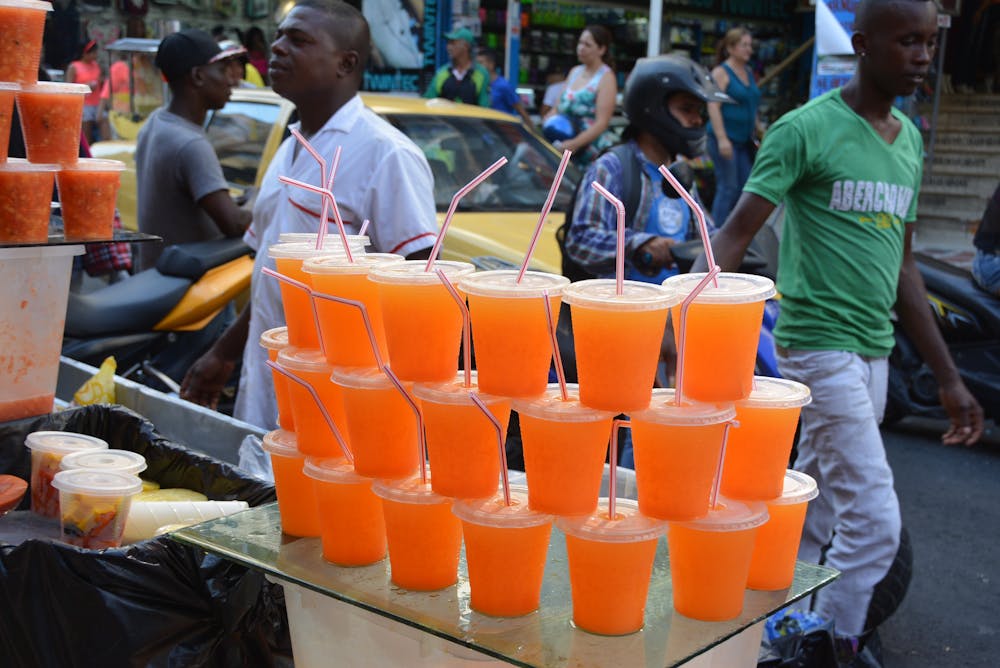

 Sarah Leupen on campus in 2016. Photo by Marlayna Demond ’11.
 Screen grab from the Honors College’s recent pet show-and-tell lunch.
 Scholars gather together at the 2019 McNair Family Weekend. Photo courtesy of Stonestreet, third from right, first row.
 A collage of incoming McNair Scholars. Image courtesy of Corris Davis, director, Academic Opportunity Programs.
 Kate Drabinski leads a Baltimore Walking Tour in 2017. Photo by Marlayna Demond ’11.
 Incoming members of UMBC’s class of 2024.
 Incoming members of UMBC’s class of 2024.
 Incoming members of UMBC’s class of 2024.
 Incoming members of UMBC’s class of 2024.
 Yoni Zohar (left) and Jorge Gomezjurado (right), faculty research assistant at IMET, at the Aquaculture Research Center. Photo by Marlayna Demond ’11 for UMBC.
 Salmon swimming in a tank at the Aquaculture Research Center. Photo courtesy Yonathan Zohar.
 Kevin Sowers (right) with Upal Ghosh, professor of chemical, biochemical, and environmental engineering, in Sowers’s IMET lab. Photo by Marlayna Demond ’11 for UMBC.

 Drawn by @/nina.draws.scientists on IG
 Ford, first on the right, with Choice youth unveil a mural created over spring break at Lane Manor Recreation center in partnership with Artivate Inc.1
 Eric Ford (second on the left) with President Freeman Hrabowski and other Hampton University alumni at the Department of Juvenile Services Leadership Conference.
 Ford (on the right) presents an award to a Cherry Hill community youth during Choices yearly Jam and Slam Back to School event.

 One of the sensors installed in Ellicott City. Photo courtesy of Basnyat.
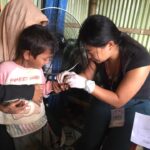
 Coco Tang in Times Square during her time working on a COVID-19 unit.
  Tang on various medical missions around the world.
 Tang on various medical missions around the world.
 Tang on various medical missions around the world.
 Tang on various medical missions around the world.
 Tang on various medical missions around the world.
 Tang on various medical missions around the world.
 Tang on various medical missions around the world.
 A rendering of the system where researchers found the new planet, AU Mic b. The star AU Microscopii, which AU Mic b orbits at very close range, is at the center. A disk of dust and debris surrounds the star. Image courtesy NASA’s Goddard Space Flight Center/Chris Smith (Universities Space Research Association)