Small satellite, big ambitions: UMBC’s HARP named SmallSat Mission of the Year

UMBC’s Hyper-Angular Rainbow Polarimeter (HARP) Satellite, which began in Vanderlei Martins’s imagination more than a decade ago, has been flying in low-Earth orbit since February 19. It contains new technology that can collect detailed information about tiny particles in the atmosphere—previously unmeasurable data that will inform climate studies for years to come. The HARP team, including a large number of students, overcame obstacles at every step of the satellite’s journey to space, and its success is already being recognized.
On August 6, the American Institute of Aeronautics and Astronautics (AIAA) named HARP the Small Satellite Mission of the Year. To qualify as a “smallsat,” satellites must weigh less than 150 kg (330 lbs.). To win, a smallsat must demonstrate significant improvement in the capability of small satellites. That could mean advances in their structural design, scientific instrumentation, communications ability, or other factors.
A popular vote informed the AAIA SmallSat Technical Committee’s final decision. After voters selected HARP as a finalist, the smallsat went up against nine other finalists, including teams from the U.S., Guatemala, Singapore, and France. Votes for HARP poured in from all over the world, including ballots from 40 states and countries on six continents. In the end, HARP emerged as the winner.
 The UMBC HARP satellite team with their families and colleagues from Space Dynamics Lab on the morning of the rocket launch (November 2, 2019). Photo by Sarah Hansen, M.S. ’15.
A moment of joy
“I would like to thank the HARP team as a whole, because HARP is really the result of the perseverance of the team over many years,” said Martins, director of UMBC’s Earth and Space Institute, as he accepted the award. “There has been no shortage of problems, but we have always worked together to overcome them.”
HARP’s innovative design and ability to collect new kinds of data that will be crucial for future research sealed the win. The HARP instrument, designed and built by a UMBC team and funded by the NASA Earth Science Technology Office, is smaller than a loaf of bread. Yet, its pioneering polarimeter (the first ever in orbit) can measure certain properties of particles in the atmosphere for the first time, offering a new look at the properties of clouds and tiny particles in the atmosphere called aerosols. The first observation from HARP arrived back on Earth on April 16, and it’s been collecting data continuously since.
The small spacecraft developed by UMBC’s partners at Space Dynamics Lab (SDL) carried HARP to space, and the SDL team manages the satellite while it is in orbit. The whole satellite (instrument plus spacecraft) is the size of a large loaf of bread and only weighs about 6 kg (13 lbs.). UMBC shares the award with Space Dynamics Lab, which is affiliated with Utah State University.
“All of us at UMBC are so very proud of the efforts and the impact of Vanderlei Martins and the Earth & Space Institute,” says Karl Steiner, UMBC’s vice president for research. “Looking back at the launch of the HARP satellite at Wallops Island this past November, I know that today’s recognition as SmallSat Mission of the Year brings a much-needed moment of joy and encouragement to our campus community during a very different time.”
 The HARP instrument (center) at the UMBC Earth and Space Institute. Photo by Marlayna Demond ’11 for UMBC.
Student-driven success
The AIAA also gave out a People’s Choice Award (PCA) at the ceremony. The awards committee selects a PCA when a project has made substantial, unique contributions, but doesn’t necessarily meet the requirements for Mission of the Year. This year, Quetzal 1, Guatemala’s first-ever satellite, received the People’s Choice Award. Quetzal 1 has “opened the whole field of space science and technology in Guatemala,” shared Emily Clemens, awards committee chair.
Guatemala currently has no engineering graduate school programs and no space agency, noted Luis Zea, one of Quetzal 1’s co-directors, “but the students here accomplished something that I think is a good example of what young people can do when they set their minds to solving problems.”
Students are at the root of HARP, as well. The team has included scientists and engineers at every level. High school students, undergraduates, and graduate students all made important contributions in collaboration with faculty researchers.
“HARP is a small satellite, but we always had very big ambitions,” Martins says. At long last, those ambitions are bearing fruit. Some of the students who worked on HARP, and some new ones, are now at work on HARP2, which will build on technology developed for HARP. HARP2 will travel on the major NASA PACE mission, scheduled to launch in 2023. HARP2 will collect data that will inform studies of air quality, clouds, precipitation, and climate.
With only a tinge of disbelief, and a big smile, Martins says, “And that’s all due to this small satellite.”
Banner image: Core HARP team members Vanderlei Martins (left); Roberto Borda, assistant research scientist with UMBC’s Joint Center for Earth Systems Technology (JCET); and Dominik Cieslak, assistant research scientist with JCET. Photo by Marlaynd Demond ’11 for UMBC.
]]>
UMBC’s Hyper-Angular Rainbow Polarimeter (HARP) Satellite, which began in Vanderlei Martins’s imagination more than a decade ago, has been flying in low-Earth orbit since February 19. It contains...
https://umbc.edu/stories/small-satellite-big-ambitions-umbcs-harp-named-smallsat-mission-of-the-year/
https://beta.my.umbc.edu/api/v0/pixel/news/119818/guest@my.umbc.edu/59f156d46874d013d1c0420b11f5bca3/api/pixel
cnms
esi
physics
research
science-and-technology
UMBC News & Magazine
https://beta.my.umbc.edu/groups/umbc-news-magazine
https://assets1-beta.my.umbc.edu/system/shared/avatars/groups/000/001/943/24435aa6207c452e7bc15cc74b42c7bb/xsmall.png?1748556657
https://assets1-beta.my.umbc.edu/system/shared/avatars/groups/000/001/943/24435aa6207c452e7bc15cc74b42c7bb/original.png?1748556657
https://assets2-beta.my.umbc.edu/system/shared/avatars/groups/000/001/943/24435aa6207c452e7bc15cc74b42c7bb/xxlarge.png?1748556657
https://assets2-beta.my.umbc.edu/system/shared/avatars/groups/000/001/943/24435aa6207c452e7bc15cc74b42c7bb/xlarge.png?1748556657
https://assets3-beta.my.umbc.edu/system/shared/avatars/groups/000/001/943/24435aa6207c452e7bc15cc74b42c7bb/large.png?1748556657
https://assets1-beta.my.umbc.edu/system/shared/avatars/groups/000/001/943/24435aa6207c452e7bc15cc74b42c7bb/medium.png?1748556657
https://assets2-beta.my.umbc.edu/system/shared/avatars/groups/000/001/943/24435aa6207c452e7bc15cc74b42c7bb/small.png?1748556657
https://assets1-beta.my.umbc.edu/system/shared/avatars/groups/000/001/943/24435aa6207c452e7bc15cc74b42c7bb/xsmall.png?1748556657
https://assets2-beta.my.umbc.edu/system/shared/avatars/groups/000/001/943/24435aa6207c452e7bc15cc74b42c7bb/xxsmall.png?1748556657
UMBC News & Magazine
0
0
false
Fri, 07 Aug 2020 22:41:52 -0400
Alumna Leads Team to Breakthrough Coronavirus Vaccine Results
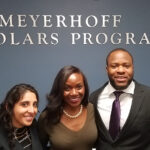
Clinical trials seeking a vaccine to prevent COVID-19 are galloping forward around the world, and Kizzmekia Corbett and Barney Graham’s research team at the National Institute of Allergy and Infectious Diseases (NIAID) continues to lead the pack.
In a study of non-human primates published in the prestigious New England Journal of Medicinelast week, the team became the first to demonstrate that their vaccine successfully stopped viral replication in both the lungs and nose. The findings were a significant advance compared to previous studies, which only showed protection in the lungs. The day after Corbett’s results were published, Johnson & Johnson published similar results for their vaccine, although the animals in the Johnson & Johnson trial were exposed to a lower amount of the virus.
“Protection in the upper airway is something that’s hard to come by, so it’s a big deal,” says Corbett ’08, M16, biological sciences and sociology, scientific lead for the Coronavirus Vaccines Team at the NIAID Vaccine Research Center. “We were very excited when we saw it.”
Next steps
The next step is a phase III human trial, which began with 30,000 participants on July 27. The participants will either receive the vaccine or a placebo, “and then they will go live their lives, and either be exposed to the coronavirus or not,” Corbett says. Over time, enough of the participants will be exposed so that researchers can measure the efficacy of the vaccine.
Our (co-inventors @McLellan_Lab) COVID-19 vaccine (spike delivered by @moderna_tx's mRNA) was just injected into the 1st human in phase 1 trial, only 66 days after viral sequence release… a testament to rapid vaccine development for emerging diseases
]]>
Clinical trials seeking a vaccine to prevent COVID-19 are galloping forward around the world, and Kizzmekia Corbett and Barney Graham’s research team at the National Institute of Allergy and...
https://umbc.edu/stories/alumna-leads-team-to-breakthrough-coronavirus-vaccine-results/
https://beta.my.umbc.edu/api/v0/pixel/news/119819/guest@my.umbc.edu/7d46675ead141ff9b930480daa11b9f2/api/pixel
biology
chemistry
cnms
covidresearch
discovery
meyerhoff
meyerhoffscholars
mhoff
resilience
UMBC News & Magazine
https://beta.my.umbc.edu/groups/umbc-news-magazine
https://assets1-beta.my.umbc.edu/system/shared/avatars/groups/000/001/943/24435aa6207c452e7bc15cc74b42c7bb/xsmall.png?1748556657
https://assets1-beta.my.umbc.edu/system/shared/avatars/groups/000/001/943/24435aa6207c452e7bc15cc74b42c7bb/original.png?1748556657
https://assets2-beta.my.umbc.edu/system/shared/avatars/groups/000/001/943/24435aa6207c452e7bc15cc74b42c7bb/xxlarge.png?1748556657
https://assets2-beta.my.umbc.edu/system/shared/avatars/groups/000/001/943/24435aa6207c452e7bc15cc74b42c7bb/xlarge.png?1748556657
https://assets3-beta.my.umbc.edu/system/shared/avatars/groups/000/001/943/24435aa6207c452e7bc15cc74b42c7bb/large.png?1748556657
https://assets1-beta.my.umbc.edu/system/shared/avatars/groups/000/001/943/24435aa6207c452e7bc15cc74b42c7bb/medium.png?1748556657
https://assets2-beta.my.umbc.edu/system/shared/avatars/groups/000/001/943/24435aa6207c452e7bc15cc74b42c7bb/small.png?1748556657
https://assets1-beta.my.umbc.edu/system/shared/avatars/groups/000/001/943/24435aa6207c452e7bc15cc74b42c7bb/xsmall.png?1748556657
https://assets2-beta.my.umbc.edu/system/shared/avatars/groups/000/001/943/24435aa6207c452e7bc15cc74b42c7bb/xxsmall.png?1748556657
UMBC News & Magazine
0
0
false
Thu, 06 Aug 2020 18:03:03 -0400
Thu, 06 Aug 2020 18:03:03 -0400
Kimberly Moffitt appointed interim dean of UMBC’s College of Arts, Humanities, and Social Sciences

UMBC’s Kimberly Moffitt, professor of Language, Literacy & Culture and affiliate professor of Africana Studies, has been appointed Interim Dean of the College of Arts, Humanities, and Social Sciences (CAHSS), effective August 17.
“UMBC has been my academic home for the last fourteen years, and I consider it an honor to be able to serve in this capacity at this particular time when my skill set can be best utilized to support the work ahead,” says Moffitt. “It will require grace and patience to successfully navigate the upcoming year, but I know the commitment of this community to our students, to our work, and to ourselves and as a result, CAHSS will thrive.”
Moffitt earned a B.A. in political science from the University of North Carolina-Charlotte, an M.A. in mass communication from Boston University, and a Ph.D. in mass communication/media studies from Howard University. She became the first Southern Regional Education Board (SREB) Fellow from Howard University and completed a teaching postdoctoral fellowship at Hope College in Holland, Michigan before holding a faculty position at DePaul University. She joined UMBC in 2006 as an assistant professor of American Studies, and, prior to her appointment as Interim Dean, served as director of the Language, Literacy & Culture doctoral program.
 Kimberly Moffitt presenting at GRIT-X in 2018 — visit here to see her presentation.
“Dr. Moffitt brings to her new position an outstanding record of scholarship and leadership in shared governance,” says Provost Philip Rous, “including serving as president and vice president of UMBC’s Faculty Senate, a member of the Faculty Senate Executive Committee, UMBC’s NCAA Faculty Athletic Representative, and as a member of several other university committees.”
As a media scholar and critic, Moffitt’s work centers on topics that encompass ideas of citizenship, identity, representations, and belonging in society. Specifically, she explores the mediated representations of the Black body and its extremities (e.g., hair), often in programming such as Disney and other media forms. Her research seeks to understand how these representations influence communication among different cultures, affect policies within institutional structures, and impact the self-esteem and self-worth of those occupying Black bodies. She has an extensive publication record, including five co-edited volumes and numerous scholarly articles and book chapters.
In addition to her service at UMBC, Moffitt also extends her expertise into the greater Baltimore community by facilitating workshops on diversity and inclusion, as well as appearing as a featured guest on several media outlets, both locally and nationally. Moffitt is the founding parent of Baltimore Collegiate School for Boys charter school and a member of Delta Sigma Theta Sorority, Inc. She remains actively involved in her disciplinary association, National Communication Association, and is also a board member of the National Association of Media Literacy Education.
 Moffitt confers with students after a class.
Moffitt will build on the remarkable legacy of Dean Scott Casper, who will step down as dean on August 17 to become Dean Emeritus and President of the American Antiquarian Society.
Photos by Marlayna Demond ’11 for UMBC.
]]>
UMBC’s Kimberly Moffitt, professor of Language, Literacy & Culture and affiliate professor of Africana Studies, has been appointed Interim Dean of the College of Arts, Humanities, and Social...
https://umbc.edu/stories/kimberly-moffitt-appointed-interim-dean-of-the-college-of-arts-humanities-and-social-sciences/
https://beta.my.umbc.edu/api/v0/pixel/news/119820/guest@my.umbc.edu/84d259745436c87867f69fc174250445/api/pixel
arts-and-culture
cahss
community
page1
policy-and-society
UMBC News & Magazine
https://beta.my.umbc.edu/groups/umbc-news-magazine
https://assets1-beta.my.umbc.edu/system/shared/avatars/groups/000/001/943/24435aa6207c452e7bc15cc74b42c7bb/xsmall.png?1748556657
https://assets1-beta.my.umbc.edu/system/shared/avatars/groups/000/001/943/24435aa6207c452e7bc15cc74b42c7bb/original.png?1748556657
https://assets2-beta.my.umbc.edu/system/shared/avatars/groups/000/001/943/24435aa6207c452e7bc15cc74b42c7bb/xxlarge.png?1748556657
https://assets2-beta.my.umbc.edu/system/shared/avatars/groups/000/001/943/24435aa6207c452e7bc15cc74b42c7bb/xlarge.png?1748556657
https://assets3-beta.my.umbc.edu/system/shared/avatars/groups/000/001/943/24435aa6207c452e7bc15cc74b42c7bb/large.png?1748556657
https://assets1-beta.my.umbc.edu/system/shared/avatars/groups/000/001/943/24435aa6207c452e7bc15cc74b42c7bb/medium.png?1748556657
https://assets2-beta.my.umbc.edu/system/shared/avatars/groups/000/001/943/24435aa6207c452e7bc15cc74b42c7bb/small.png?1748556657
https://assets1-beta.my.umbc.edu/system/shared/avatars/groups/000/001/943/24435aa6207c452e7bc15cc74b42c7bb/xsmall.png?1748556657
https://assets2-beta.my.umbc.edu/system/shared/avatars/groups/000/001/943/24435aa6207c452e7bc15cc74b42c7bb/xxsmall.png?1748556657
UMBC News & Magazine
0
0
false
Thu, 06 Aug 2020 13:12:52 -0400
Yes, most workers can collect more in coronavirus unemployment than they earn – but that doesn’t mean Congress should cut the $600 supplement
By David Salkever, professor emeritus of Public Policy, UMBC
Americans who lost their jobs because of the pandemic had been getting a US$600 bump on top of state benefits in their weekly unemployment checks since March. That ended on July 31, and lawmakers are debating whether to extend the program and if so by how much.
Senate Republicans are arguing it’s too generous to the 18 million who are unemployed and serves as a disincentive to returning to work. Their initial proposal in the ongoing negotiations would slash the benefit to $200 a week.
As an empirical economist, I wanted to see if their concerns about the disincentive were valid. So I analyzed data on earnings and unemployment benefits to estimate the share of benefit-eligible workers who could collect more on the dole than on the job.
Replacement wages
I started my analysis by looking at 2019 Current Population Survey data to estimate weekly earnings of private-sector employees, both nationally and state by state. I then adjusted the numbers for wage inflation and compared the results with jobless benefits and “replacement wages,” which vary from state to state.
Iowa is the most generous and replaces 49% of a worker’s weekly wages with a cash benefit when he or she loses a job involuntarily, while Alaska is the stingiest and replaces only 28% of income. I estimated that on average the replacement rate for all workers in the U.S. was about a third.
Once the $600 federal supplement is added in, the national average wage replacement rate soars to 127%. On an individual basis, I found that 56% of eligible workers would receive more in benefits than they would earn gainfully employed. Among those workers, the average excess benefit was $253.
This figure also varies in each state, depending on replacement rates as well as average weekly earnings. For example, benefits exceed their earnings for little more than a third of workers in Washington, D.C., while that figure is 75% in New Mexico.
If Congress passes a lower federal supplement of $200, the result would drastically change the picture. As a result, I estimate only 9.5% of workers across the country would receive more in benefits than what they could earn – on average about $61 – and the replacement rate would drop by half to about 65%.
The Republican plan would eventually have the $200 supplement replaced with a system that provides workers with a combined state and federal benefit equal to a replacement rate of 70%. The federal share would be capped at $500.
Why $600 is still important
While Republicans are right that the $600 jobless benefit may seem high, that alone does not mean it should be cut.
The unemployment insurance program started in 1935 soon after the Great Depression ended with two major objectives: to provide temporary partial wage replacement to unemployed workers and to help stimulate the economy during recessions.
The second objective is important. With the U.S. economy sinking into recession, a more generous supplement acts as a powerful stimulus. Consumer spending makes up more than 70% of the economy, and most of those who receive the benefit will spend it quickly. This powerful and ongoing jolt would help revive the economy – or at least keep it alive – as well as offset worries that economic inequality will soar as a result of the pandemic.
In addition, unemployment insurance only replaces wages. A job often comes with other benefits, such as health insurance and retirement plans. Even full-time service workers in the private sector, who as a group earn less than $15 per hour in wages, receive an average of $1.99 per hour in employer-paid insurance, mostly for health care.
Overall, non-cash job benefits amount on average to 19% of total employee pay. Factoring in that non-cash dollar value reduces the average replacement rate to 108% and lowers the share of employees receiving excess benefits from 56% to 43%.
Finally, employment insurance works in a way that limits its ability to act as a disincentive to work. People who quit their jobs voluntarily are ineligible for benefits. And someone without a job who receives a suitable offer of employment is no longer eligible to continue receiving benefits. That’s one explanation cited in a recent study by Yale economists that found no evidence that the $600 federal supplement reduced employment.
Altogether, I find Republican concerns that the $600 supplement dissuades work unpersuasive in the context of the current pandemic. A generous policy that helps support the economy and aids those at risk of losing their homes or struggling to feed their families seems more sensible than one that assumes someone collecting unemployment benefits could just as easily be working.
*****
David Salkever, Professor Emeritus of Public Policy, University of Maryland, Baltimore County
This article is republished from The Conversation under a Creative Commons license. Read the original article.
[Deep knowledge, daily. Sign up for The Conversation’s newsletter.]
Header image: The $600 federal jobless benefit expired on July 31. Joe Raedle/Getty Images
]]>
By David Salkever, professor emeritus of Public Policy, UMBC Americans who lost their jobs because of the pandemic had been getting a US$600 bump on top of state benefits in their weekly...
https://umbc.edu/stories/yes-most-workers-can-collect-more-in-coronavirus-unemployment-than-they-earn-but-that-doesnt-mean-congress-should-cut-the-600-supplement/
https://beta.my.umbc.edu/api/v0/pixel/news/119821/guest@my.umbc.edu/4c6f7204c03d6269d372afa1959c4aa5/api/pixel
covidresearch
perspectives
public-policy
the-conversation
UMBC News & Magazine
https://beta.my.umbc.edu/groups/umbc-news-magazine
https://assets1-beta.my.umbc.edu/system/shared/avatars/groups/000/001/943/24435aa6207c452e7bc15cc74b42c7bb/xsmall.png?1748556657
https://assets1-beta.my.umbc.edu/system/shared/avatars/groups/000/001/943/24435aa6207c452e7bc15cc74b42c7bb/original.png?1748556657
https://assets2-beta.my.umbc.edu/system/shared/avatars/groups/000/001/943/24435aa6207c452e7bc15cc74b42c7bb/xxlarge.png?1748556657
https://assets2-beta.my.umbc.edu/system/shared/avatars/groups/000/001/943/24435aa6207c452e7bc15cc74b42c7bb/xlarge.png?1748556657
https://assets3-beta.my.umbc.edu/system/shared/avatars/groups/000/001/943/24435aa6207c452e7bc15cc74b42c7bb/large.png?1748556657
https://assets1-beta.my.umbc.edu/system/shared/avatars/groups/000/001/943/24435aa6207c452e7bc15cc74b42c7bb/medium.png?1748556657
https://assets2-beta.my.umbc.edu/system/shared/avatars/groups/000/001/943/24435aa6207c452e7bc15cc74b42c7bb/small.png?1748556657
https://assets1-beta.my.umbc.edu/system/shared/avatars/groups/000/001/943/24435aa6207c452e7bc15cc74b42c7bb/xsmall.png?1748556657
https://assets2-beta.my.umbc.edu/system/shared/avatars/groups/000/001/943/24435aa6207c452e7bc15cc74b42c7bb/xxsmall.png?1748556657
UMBC News & Magazine
0
0
false
Tue, 04 Aug 2020 13:01:37 -0400
Single house near UMBC
There will be bedrooms available for summer break or fall semester student(lease 9 months or longer)
price : $410 /month about(depend on room) + utilities (average $50/month/per month)+ wifi $10/per month
Location: Walking distance to UMBC about 5 minutes.
If interesting, please contact me with your name and your umbc email address;
my e-mail is ; lidimin@gmail.com (please write "Re room")
]]>
There will be bedrooms available for summer break or fall semester student(lease 9 months or longer) price : $410 /month about(depend on room) + utilities (average $50/month/per month)+...
https://beta.my.umbc.edu/api/v0/pixel/news/94597/guest@my.umbc.edu/56aa7a4333370aa4557fce1dd374ff32/api/pixel
International Student and Scholar Services (ISSS)
https://beta.my.umbc.edu/groups/ies
https://assets4-beta.my.umbc.edu/system/shared/avatars/groups/000/000/431/46ad84ea8ba0baeed7c3faf29d1fd4ef/xsmall.png?1693323874
https://assets3-beta.my.umbc.edu/system/shared/avatars/groups/000/000/431/46ad84ea8ba0baeed7c3faf29d1fd4ef/original.jpeg?1693323874
https://assets1-beta.my.umbc.edu/system/shared/avatars/groups/000/000/431/46ad84ea8ba0baeed7c3faf29d1fd4ef/xxlarge.png?1693323874
https://assets1-beta.my.umbc.edu/system/shared/avatars/groups/000/000/431/46ad84ea8ba0baeed7c3faf29d1fd4ef/xlarge.png?1693323874
https://assets4-beta.my.umbc.edu/system/shared/avatars/groups/000/000/431/46ad84ea8ba0baeed7c3faf29d1fd4ef/large.png?1693323874
https://assets3-beta.my.umbc.edu/system/shared/avatars/groups/000/000/431/46ad84ea8ba0baeed7c3faf29d1fd4ef/medium.png?1693323874
https://assets1-beta.my.umbc.edu/system/shared/avatars/groups/000/000/431/46ad84ea8ba0baeed7c3faf29d1fd4ef/small.png?1693323874
https://assets4-beta.my.umbc.edu/system/shared/avatars/groups/000/000/431/46ad84ea8ba0baeed7c3faf29d1fd4ef/xsmall.png?1693323874
https://assets3-beta.my.umbc.edu/system/shared/avatars/groups/000/000/431/46ad84ea8ba0baeed7c3faf29d1fd4ef/xxsmall.png?1693323874
IES Marketplace
0
0
true
Sun, 02 Aug 2020 22:08:43 -0400
UMBC’s Meghan Grenier receives top NROTC teaching honor from the U.S. Navy

U.S. Navy Lieutenant Meghan Grenier joined the UMBC faculty as a clinical assistant professor in the Naval Reserve Officer Training Corps (NROTC) program in 2018. In two years, she has already left her mark on the program and its students. Now, she’s received national recognition for work with UMBC’s NROTC midshipmen.
“With her unlimited enthusiasm, upbeat attitude, expertise, and strong dedication to the Naval ROTC mission, she is an ideal role model for her students and peers alike,” says U.S. Navy Captain Troy Mong, professor of naval science and the commanding officer for UMBC NROTC. “Her superb mentorship and very involved academic advising of our midshipmen has enabled our students to excel in their leadership development and academic performance.”

U.S. Navy Lieutenant Meghan Grenier. Photo courtesy Meghan Grenier.
Mong isn’t the only one who noticed Grenier’s commitment to the Navy and her students. This spring, the Naval Education and Training Command selected Grenier as the NROTC Instructor of the Year out of all NROTC instructors across the U.S.
In further recognition of Grenier’s leadership skill and potential, she recently took on a competitive flag aide position for Rear Admiral Doug Vermissimo, the commander of Carrier Strike Group Nine, a group of naval vessels stationed out of San Diego, CA. Flag aides work directly with an admiral and help manage their affairs while becoming more familiar with the leadership structure and duties in the Navy. These challenging positions are designed for junior officers with outstanding performance records.
 Meghan Grenier teaches a class. Photo courtesy Meghan Grenier.
Training the Navy’s next leaders
The UMBC NROTC program was founded in 2015 as the first in the state of Maryland. It is part of the Maryland NROTC consortium, which also includes the University of Maryland, College Park. The program graduated its first students in May 2019, and they were commissioned as officers in the U.S. Navy the day after commencement.
“I am very appreciative of the opportunity to instruct the future Navy and Marine Corps officers here at the Maryland NROTC program. They are an impressive group of individuals who will go on to serve as excellent Navy and Marine Corps officers,” Grenier says. “I hope what they have learned from me and the NROTC program will enable them to find success out in the fleet and prepare them for the challenges of leadership in our Navy.”
Mong is certain she will accomplish just that. “Megan has had a significant impact in training and developing our midshipmen into the next generation of future naval officers who will lead well from their first days in the fleet.”
Banner image: UMBC NROTC inductees in 2016 with UMBC President Freeman Hrabowski (center), Rear Admiral Stephen Evans (center right), and UMBC NROTC faculty members Captain Troy Mong (center left), Lieutenant John O’Brien (third to left from center), Commander Stew Wennersten (front row, third from center on right), and Lieutenant Michael Tenaglia (front row, far left). Photo by Marlayna Demond ’11 for UMBC.
]]>
U.S. Navy Lieutenant Meghan Grenier joined the UMBC faculty as a clinical assistant professor in the Naval Reserve Officer Training Corps (NROTC) program in 2018. In two years, she has already...
https://umbc.edu/stories/umbcs-meghan-grenier-receives-top-nrotc-teaching-honor-from-the-u-s-navy/
https://beta.my.umbc.edu/api/v0/pixel/news/119822/guest@my.umbc.edu/944bc14a7a68688882c912077b0fc1ab/api/pixel
cnms
community
naval
UMBC News & Magazine
https://beta.my.umbc.edu/groups/umbc-news-magazine
https://assets1-beta.my.umbc.edu/system/shared/avatars/groups/000/001/943/24435aa6207c452e7bc15cc74b42c7bb/xsmall.png?1748556657
https://assets1-beta.my.umbc.edu/system/shared/avatars/groups/000/001/943/24435aa6207c452e7bc15cc74b42c7bb/original.png?1748556657
https://assets2-beta.my.umbc.edu/system/shared/avatars/groups/000/001/943/24435aa6207c452e7bc15cc74b42c7bb/xxlarge.png?1748556657
https://assets2-beta.my.umbc.edu/system/shared/avatars/groups/000/001/943/24435aa6207c452e7bc15cc74b42c7bb/xlarge.png?1748556657
https://assets3-beta.my.umbc.edu/system/shared/avatars/groups/000/001/943/24435aa6207c452e7bc15cc74b42c7bb/large.png?1748556657
https://assets1-beta.my.umbc.edu/system/shared/avatars/groups/000/001/943/24435aa6207c452e7bc15cc74b42c7bb/medium.png?1748556657
https://assets2-beta.my.umbc.edu/system/shared/avatars/groups/000/001/943/24435aa6207c452e7bc15cc74b42c7bb/small.png?1748556657
https://assets1-beta.my.umbc.edu/system/shared/avatars/groups/000/001/943/24435aa6207c452e7bc15cc74b42c7bb/xsmall.png?1748556657
https://assets2-beta.my.umbc.edu/system/shared/avatars/groups/000/001/943/24435aa6207c452e7bc15cc74b42c7bb/xxsmall.png?1748556657
UMBC News & Magazine
0
0
false
Thu, 30 Jul 2020 13:23:17 -0400
Parents with Children Forced to Do School at Home Are Drinking More

By Susan Sonnenschein, professor, Applied Development Psychology, UMBC and Elyse R. Grossman, M.P.P. ’08, Ph.D. ’14, public policy, policy fellow, Department of Health, Behavior and Society, Johns Hopkins Bloomberg School of Public Health
The Research Brief is a short take about interesting academic work.
The big idea
We found that parents who are stressed by having to help their children with distance learning during the COVID-19 pandemic drink seven more drinks per month than parents who do not report feeling stressed by distance learning. These stressed parents are also twice as likely to report binge drinking at least once over the prior month than parents who are not stressed, according to our results. Binge drinking, which varies by gender, is when women consume at least four, or men have at least five alcoholic beverages (which includes beer, wine, or liquor) within a couple hours of each other.
We learned this from our online survey, which 361 parents with children under 18 years old currently living with them completed in May 2020. Seventy-eight percent of the parents had children who did distance learning in the Spring of 2020. Of those, 66% reported that the experience caused them stress because they were not sure how to help.
We sent the survey out through social media sites and listservs to people throughout the U.S. However, this is not a nationally representative sample. As is common with such surveys, most of the parents who responded were middle-income or higher. The results of the study have not yet been published.
Why it matters
While many people joke about how booze is getting them through the COVID-19 pandemic, drinking can be harmful. More people die each year from drinking alcohol than from motor vehicle crashes, guns or illegal drugs. Increased drinking is also related to many public health problems, such as violence, crime, poverty and sexually transmitted diseases.
Drinking alcohol is especially dangerous during COVID-19 because alcohol use weakens your immune system. Drinking increases your likelihood of getting COVID-19 and, if you do get it, of having worse outcomes.
People increase their alcohol consumption after stressful times, such as tsunamis and hurricanes. Research has shown that this pattern has held before during disease outbreaks, including SARS in 2003, and following the 9/11 terrorist attacks.
COVID-19 is another stressful situation. One study in Poland with over 1,000 participants found that people are currently drinking more wine, beer and liquor than before the pandemic.
Given that distance learning is going to continue for the near future, we believe it is warranted to decrease stressors that lead to parents’ drinking.
What other research is being done
Parents are drinking more during the COVID-19 pandemic than people without children. Our survey is the first one to look at the relationship between alcohol use and the stress caused by distance learning during the COVID-19 pandemic.
What still isn’t known
School systems throughout the U.S. currently are planning for the upcoming year. In many cases, that will require more distance learning. For distance learning to be successful for children and parents, more needs to be known about what makes it stressful.
Another study of ours, currently underway, suggests that one reason that parents are stressed is that they are not getting enough guidance from teachers or schools. This is a particular concern for low-income families whose children, in general, already fare worse in school than more affluent children.
It is important to realize that teachers and other school staff are also experiencing stress and not getting enough guidance on how to do distance learning.
Our results were collected in May 2020. As distance learning becomes the new normal, at least for now, it is important to see what, if anything, changes in how well schools provide distance learning and how it affects parents.
*****
Susan Sonnenschein, Professor, Applied Development Psychology, University of Maryland, Baltimore County and Elyse R. Grossman, Policy Fellow, Department of Health, Behavior and Society, Johns Hopkins Bloomberg School of Public Health
This article is republished from The Conversation under a Creative Commons license. Read the original article.
[Get facts about coronavirus and the latest research. Sign up for The Conversation’s newsletter.]
Header image: More people turn to alcohol in the wake of disasters, research has found. Kerkez/GettyImages
]]>
By Susan Sonnenschein, professor, Applied Development Psychology, UMBC and Elyse R. Grossman, M.P.P. ’08, Ph.D. ’14, public policy, policy fellow, Department of Health, Behavior and Society, Johns...
https://umbc.edu/stories/parents-with-children-forced-to-do-school-at-home-are-drinking-more/
https://beta.my.umbc.edu/api/v0/pixel/news/119823/guest@my.umbc.edu/dfc7eeda54c887d26b37c92969ab0c4f/api/pixel
covidresearch
discovery
psychology
the-conversation
UMBC News & Magazine
https://beta.my.umbc.edu/groups/umbc-news-magazine
https://assets1-beta.my.umbc.edu/system/shared/avatars/groups/000/001/943/24435aa6207c452e7bc15cc74b42c7bb/xsmall.png?1748556657
https://assets1-beta.my.umbc.edu/system/shared/avatars/groups/000/001/943/24435aa6207c452e7bc15cc74b42c7bb/original.png?1748556657
https://assets2-beta.my.umbc.edu/system/shared/avatars/groups/000/001/943/24435aa6207c452e7bc15cc74b42c7bb/xxlarge.png?1748556657
https://assets2-beta.my.umbc.edu/system/shared/avatars/groups/000/001/943/24435aa6207c452e7bc15cc74b42c7bb/xlarge.png?1748556657
https://assets3-beta.my.umbc.edu/system/shared/avatars/groups/000/001/943/24435aa6207c452e7bc15cc74b42c7bb/large.png?1748556657
https://assets1-beta.my.umbc.edu/system/shared/avatars/groups/000/001/943/24435aa6207c452e7bc15cc74b42c7bb/medium.png?1748556657
https://assets2-beta.my.umbc.edu/system/shared/avatars/groups/000/001/943/24435aa6207c452e7bc15cc74b42c7bb/small.png?1748556657
https://assets1-beta.my.umbc.edu/system/shared/avatars/groups/000/001/943/24435aa6207c452e7bc15cc74b42c7bb/xsmall.png?1748556657
https://assets2-beta.my.umbc.edu/system/shared/avatars/groups/000/001/943/24435aa6207c452e7bc15cc74b42c7bb/xxsmall.png?1748556657
UMBC News & Magazine
0
0
false
Wed, 29 Jul 2020 19:48:25 -0400
Two UMBC student teams win USM COVID-19 app challenge
Earlier this summer, the University System of Maryland (USM) COVID-19 Task Force invited members of the USM community to develop mobile apps that would help Maryland residents respond to the COVID-19 pandemic. Among the six winning teams just announced are two groups from UMBC. One team developed an app to support the healthcare of people with COVID-19. The other focused on connecting residents with dining options and restaurant policies as they change during the pandemic.
Community participation
Each of the six winning teams received a $3,000 award, provided by UMBC’s Alex. Brown Center for Entrepreneurship. The apps submitted were reviewed by a panel of judges from large corporations, start-up companies, and academia.
Undergraduate and graduate students were invited to participate, as well as university staff, faculty, postdoctoral researchers, members of USM-affiliated startup companies and small businesses. Winners hailed from UMBC, University of Baltimore, Towson University, and University of Maryland, College Park.
Tracking health conditions of COVID-19 patients
-
 Kirubel Tolosa. Photo courtesy of Tolosa.
-
 Pradeep Prakash. Photo courtesy of Prakash.
-
 Raghav Deivachilai. Photo courtesy of Deivachilai.
In the community category, Kirubel Tolosa M.S. ‘23, information systems; Pradeep Margasahayam Prakash M.S. ‘21, information systems; and Raghav Deivachilai M.S. ‘23, computer science, created an app called Follow-up. The app enables healthcare providers to track the condition of people with COVID-19 who are isolating at home. By receiving regular symptom updates, physicians and nurses are able to more easily follow-up with their patients as needed.

The Follow-up app interface. Image courtesy of the Follow-up team.
The Follow-up team entered the app challenge with the goal of developing an app that would help address the spread of the virus and its impact on affected individuals. At the same time, they knew they had to design and prototype their app in a short time frame, so their scope and requirements had to be manageable.
“This challenge has taught us the value of teamwork and collaboration,” said Tolosa, on behalf of the group. “We are looking forward to working on this app further to put it to use in a real-world setting.”
Supporting restaurants during COVID-19
The app Snuggrub, developed by Emily Sullivan ‘21, computer science, and Dominic Crofoot ‘19, computer science, was a winner in the student category. Sullivan and Crofoot focused on the way that many formerly full-service restaurants shifted to pick-up only service or outdoor dining during the pandemic. At the same time, dining regulations, guidance, and options began changing frequently. They developed a way for users to stay up-to-date on information about nearby restaurants without needing to contact individual businesses to ask the same questions repeatedly.
-
 Emily Sullivan. Photo courtesy of Sullivan.
-
 Dominic Crofoot. Photo courtesy of Crofoot.
The app allows users to stay informed and receive real-time updates, while making decisions based on current information. It also supports restaurants in connecting with customers and providing them with the information they need to dine safely.
Sullivan shares that the idea for Snuggrub came from wanting to support small businesses that were facing challenges due to isolation during COVID-19. “During the time when restaurants were just opening back up for indoor or outdoor dining, it was messy trying to figure out if the hours and information posted online were accurate and updated. The only way to figure it out was to call them directly, which is time-consuming for both us and the restaurant,” she says. “So Snuggrub became a way to have all that information in one place and have it easy to understand.”

The Snuggrub app interface. Image courtesy of the Snuggrub team.
The opportunity to develop an app to help address a challenge facing people across the state was appealing to Sullivan and Crofoot because it allowed them to put their skills to the test. They met when they were both interns at the Anne Arundel County Office of Information Technology. While Sullivan is still a UMBC student (and interning with the federal government), Crofoot is currently a full stack developer for Anne Arundel County.
“Dominic and I both have experience creating applications from our jobs, but this process was totally different since we were creating something from the ground up and we were doing it with such a small team and short deadline as well,” says Sullivan. “This definitely was a learning experience in personal discipline and timeline management.”
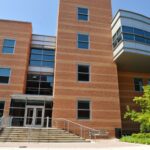
Banner image: UMBC’s ITE building. Photo by Marlayna Demond ’11 for UMBC.
]]>
Earlier this summer, the University System of Maryland (USM) COVID-19 Task Force invited members of the USM community to develop mobile apps that would help Maryland residents respond to the...
https://umbc.edu/stories/two-umbc-student-teams-win-usm-covid-19-app-challenge/
https://beta.my.umbc.edu/api/v0/pixel/news/119824/guest@my.umbc.edu/cb64d0793410957f1c09f0fd48525a90/api/pixel
coeit
csee
is
resilience
science-and-technology
UMBC News & Magazine
https://beta.my.umbc.edu/groups/umbc-news-magazine
https://assets1-beta.my.umbc.edu/system/shared/avatars/groups/000/001/943/24435aa6207c452e7bc15cc74b42c7bb/xsmall.png?1748556657
https://assets1-beta.my.umbc.edu/system/shared/avatars/groups/000/001/943/24435aa6207c452e7bc15cc74b42c7bb/original.png?1748556657
https://assets2-beta.my.umbc.edu/system/shared/avatars/groups/000/001/943/24435aa6207c452e7bc15cc74b42c7bb/xxlarge.png?1748556657
https://assets2-beta.my.umbc.edu/system/shared/avatars/groups/000/001/943/24435aa6207c452e7bc15cc74b42c7bb/xlarge.png?1748556657
https://assets3-beta.my.umbc.edu/system/shared/avatars/groups/000/001/943/24435aa6207c452e7bc15cc74b42c7bb/large.png?1748556657
https://assets1-beta.my.umbc.edu/system/shared/avatars/groups/000/001/943/24435aa6207c452e7bc15cc74b42c7bb/medium.png?1748556657
https://assets2-beta.my.umbc.edu/system/shared/avatars/groups/000/001/943/24435aa6207c452e7bc15cc74b42c7bb/small.png?1748556657
https://assets1-beta.my.umbc.edu/system/shared/avatars/groups/000/001/943/24435aa6207c452e7bc15cc74b42c7bb/xsmall.png?1748556657
https://assets2-beta.my.umbc.edu/system/shared/avatars/groups/000/001/943/24435aa6207c452e7bc15cc74b42c7bb/xxsmall.png?1748556657
UMBC News & Magazine
0
0
false
Wed, 29 Jul 2020 14:35:10 -0400
UMBC’s Foad Hamidi receives NSF RAPID grant to expand free, secure internet access in Baltimore during COVID-19 and beyond

During the COVID-19 pandemic, internet access has become more critical, with people relying on it to work, learn, and connect with family and friends. However, the internet is not equally accessible to all people. UMBC’s Foad Hamidi recently received a collaborative Rapid Response Research (RAPID) grant from the National Science Foundation (NSF) to increase high-speed wireless internet access to communities in Baltimore.
Not having access to the internet has heightened existing inequities during the pandemic, says Hamidi, assistant professor of information systems. “It impacts families in different ways, whether it’s related to education, employment, or social connections,” he explains.
Hamidi will collaborate with the Digital Harbor Foundation, Project Waves, and other community groups to increase the accessibility of wireless internet that is both free and secure.
Building and sustaining networks
The Digital Harbor Foundation (DHF) is a Baltimore-based tech center that enables youth to learn about technology through hands-on learning, including through a well-equipped makerspace. Project Waves is a non-profit organization that provides pay-what-you-can broadband internet to communities in need. Their work with Hamidi will focus on supporting residents who want to get internet access set up in their homes and to study the impact of having this access.
 The Digital Harbor Foundation in Baltimore. Photo by Maryland GovPics, used under CC 2.0.
Hamidi and his collaborators will work with other groups to amplify free and secure wireless internet in accessible spaces, such as libraries and community centers. For some groups, this work will be new. For others, the grant will allow them to speed up work they’ve already been doing.
Importantly, Hamidi notes, the community organizations will help sustain these networks over time. “The pandemic has amplified the need for internet access, but it will continue after the crisis,” he says.
“The COVID-19 crisis is a complex and multifaceted phenomenon that amplifies the inequities already present in our societies,” explains Hamidi. “In this project, we are taking into account both the social and technical aspects of providing free and secure internet access to low-income communities. More broadly, we look forward to better understanding how participatory approaches to internet access can address issues of inequity arising from the digital divide in our cities.”
Increasing access to computing skills
Hamidi’s project is also part of a larger effort, based at UMBC, to expand access to basic computing skills among students in Baltimore City as well as nearby Montgomery County. This is the goal of Megean Garvin, director of research and assessment for the Maryland Center for Computing Education (MCCE).
The COVID-19 pandemic has pushed the issue of computing education to the fore, as more and more students and educators recognize the value of computing skills in this time of physical distancing. However, Garvin says, the teaching workforce needs professional development to not only use technology, but be able to create their own computer science curricula and classroom resources.
The MCCE, initially funded by Maryland in 2018, has worked to provide professional development in computing for teachers across the state and has begun to transform teacher preparation as well. By the 2021 – 2022 school year, all public high schools in Maryland will be required to offer a high quality computer science course, and elementary and middle schools will be expected to integrate computer science into their curricula. The MCCE is working to help teachers and schools reach that target and have confidence in the quality of their computer science offerings.
 Foad Hamidi speaking with a colleague at the User Studies Lab event earlier this year. Photo by Britney Clause.
To ensure teachers can be successful in providing students with computing education, Garvin notes, it is essential to take into account the “digital divide,” particularly in Baltimore City. Even with the most advanced training and support, computing teachers can’t be effective if their students can’t access computing devices and, as Hamidi’s work highlights, the internet.
Computing education ecosystem
In response to this challenge, the MCCE and partners created the Baltimore City Computing Education Ecosystem Workgroup. This partnership includes the University System of Maryland, UMBC, University of Baltimore, Baltimore City Community College, Morgan State University, and Towson University, plus Baltimore City-based organizations such as the Digital Harbor Foundation and Code in the Schools. Their goal is to develop and deliver on strategies for a robust computing education for students from pre-kindergarten to high school, in the context of COVID-19 and remote learning.
In addition to the grant Hamidi has received to work in this area, Garvin has been awarded a two-year grant from the Spencer Foundation to study the Baltimore Urban Computing Education Ecosystem’s response to COVID-19.
The Engineering and Computing Education Program in UMBC’s College of Engineering and Information Technology has also developed a similar computing education partnership in Montgomery County. There, UMBC at the Universities at Shady Grove is working closely with Montgomery College and Montgomery County Public Schools to support a culture shift in computing education. As in Baltimore, they hope to provide technology access and learning opportunities in computing for all students.
“Access to reliable and affordable internet connectivity has become a new necessity in our dynamic and information-rich century,” says Hamidi. “We need to investigate conditions necessary for communities to have an active role in shaping, creating and taking ownership of the technologies they need.”
Banner image: Foad Hamidi. Photo by Britney Clause.
]]>
During the COVID-19 pandemic, internet access has become more critical, with people relying on it to work, learn, and connect with family and friends. However, the internet is not equally...
https://umbc.edu/stories/umbcs-foad-hamidi-receives-nsf-rapid-grant-to-expand-free-secure-internet-access-in-baltimore-during-covid-19-and-beyond/
https://beta.my.umbc.edu/api/v0/pixel/news/119825/guest@my.umbc.edu/253dc893d972a6af912b70090ba5440a/api/pixel
coeit
covidresearch
is
page1
science-and-technology
UMBC News & Magazine
https://beta.my.umbc.edu/groups/umbc-news-magazine
https://assets1-beta.my.umbc.edu/system/shared/avatars/groups/000/001/943/24435aa6207c452e7bc15cc74b42c7bb/xsmall.png?1748556657
https://assets1-beta.my.umbc.edu/system/shared/avatars/groups/000/001/943/24435aa6207c452e7bc15cc74b42c7bb/original.png?1748556657
https://assets2-beta.my.umbc.edu/system/shared/avatars/groups/000/001/943/24435aa6207c452e7bc15cc74b42c7bb/xxlarge.png?1748556657
https://assets2-beta.my.umbc.edu/system/shared/avatars/groups/000/001/943/24435aa6207c452e7bc15cc74b42c7bb/xlarge.png?1748556657
https://assets3-beta.my.umbc.edu/system/shared/avatars/groups/000/001/943/24435aa6207c452e7bc15cc74b42c7bb/large.png?1748556657
https://assets1-beta.my.umbc.edu/system/shared/avatars/groups/000/001/943/24435aa6207c452e7bc15cc74b42c7bb/medium.png?1748556657
https://assets2-beta.my.umbc.edu/system/shared/avatars/groups/000/001/943/24435aa6207c452e7bc15cc74b42c7bb/small.png?1748556657
https://assets1-beta.my.umbc.edu/system/shared/avatars/groups/000/001/943/24435aa6207c452e7bc15cc74b42c7bb/xsmall.png?1748556657
https://assets2-beta.my.umbc.edu/system/shared/avatars/groups/000/001/943/24435aa6207c452e7bc15cc74b42c7bb/xxsmall.png?1748556657
UMBC News & Magazine
0
0
false
Mon, 27 Jul 2020 14:54:19 -0400
UMBC’s Sydney Gaskins competes in the final round of Trial by Combat, a national mock trial championship

UMBC Mock Trial continues to reach new heights at a national level, even with COVID-19 impacting the competition season. Sydney Gaskins ’22, political science, finished as a runner-up in the final round of the national Trial by Combat (TBC), a head-to-head individual mock trial championship hosted this summer by the UCLA School of Law and Drexel University Thomas R. Kline School of Law.
Gaskins competed virtually against fifteen graduating seniors from the most successful mock trial teams across the country, including Harvard, Stanford, and Yale. She was the only junior to participate this year and among the first underrepresented women to compete in the championship’s history.

Gaskins presenting her case at virtual Trial by Combat 2020.
The hosts of Trial by Combat selected the sixteen contenders out of hundreds of applicants. “Sydney continues to break barriers in Mock Trial and specifically in Trial by Combat,” shares Ben Garmoe ’13, political science, a litigation attorney in Baltimore. Nine years ago he co-founded the intellectual sports team with Travis Bell ’14, psychology and political science, now a public defender in Alabama.
Garmoe notes, “She defeated some of the best competitors in the country to get to the final round.”
A recording of the entire 2020 Trial by Combat competition.
A formidable opponent
“TBC 2020 was a special and unique experience,” shares Gaskins. She says she has struggled with not being able to interact with the people she cares about because of COVID-19. “The virtual tournament was not only a much needed opportunity to reconnect, but to also make my team proud.”
Gaskins, the UMBC Mock Trial president, has a long history as a formidable opponent in her three years with the team. This year, in addition to her TBC award, she has received two Outstanding Attorney Awards and three All-National Attorney Awards. In 2019 she earned ten awards, including two All-National Attorney Awards from the Opening Round Championship Series (ORCS). Then she helped the team place eighth at the American Mock Trial Association National Championship Tournament—the team’s second trip to nationals.

UMBC Mock Trial A-Team at AMTA 2019.
At the 2019 national competition, Gaskins received an All-American Attorney Award, the highest individual honor in collegiate mock trial. Her success earned her an invitation to compete at last year’s Trial by Combat, and solidified her status as one of the top college mock trial competitors in the U.S.

Sydney Gaskins wins two trophies at Georgetown Mock Trial.
Rigorous teamwork
TBC requires students to prepare quickly for a trial and under great pressure, giving them just 24 hours between receiving the case and arguing it. Ethan Hudson ’21, English, and Garmoe were Gaskins’s support team.
Hudson helped develop the case theory and served as the “second chair” in the competition. This role is a (silent) co-counsel who is in charge of displaying exhibits and demonstrative aids, and who is permitted to communicate with the counsel. He was also responsible for managing all of Gaskins’s technology during each trial.
Together, the trio created a rigorous trial strategy for all the roles Gaskins had to perform: defense, prosecutor, and as a witness for each side. Gaskins performed each role once during the four preliminary trials, with the attorney performance carrying the most weight in scoring. Four students continued to the semi-finals as attorneys, and only two advanced to the championship trial. Gaskins was one of those final two.
Gaskins’s setup for the 2020 Trial by Combat competition.
A meaningful opportunity
Gaskins and Hudson’s experience as teammates dates back to their high school years as members of the Franklin High School Mock Trial team. Both joined the UMBC team their first year. They were set to lead UMBC’s team this spring at the 2020 National Championship Tournament before the rest of the season was cancelled due to COVID-19. This year marked the third time UMBC has qualified for the nationals in the last four years.

UMBC Mock Trial 2019. Hudson is the third on the left and Gaskins is fourth on the left.
“This tournament was special for two reasons. It was my last opportunity to compete alongside Ethan, my friend and teammate,” explains Gaskins, who plans to apply to top J.D and MBA programs in the spring. “And it was also an opportunity to once again show everyone who Sydney Gaskins is.”
Banner image: Gaskins defending her case at a Mock Trial competition. All photos are courtesy of UMBC Mock Trial.
]]>
UMBC Mock Trial continues to reach new heights at a national level, even with COVID-19 impacting the competition season. Sydney Gaskins ’22, political science, finished as a runner-up in the final...
https://umbc.edu/stories/umbcs-sydney-gaskins-competes-in-the-final-round-of-trial-by-combat-a-national-mock-trial-championship/
https://beta.my.umbc.edu/api/v0/pixel/news/119826/guest@my.umbc.edu/5993b8a1938907aa3d7e11ddc22569cf/api/pixel
cahss
english
policy-and-society
political-science
politicalscience
psychology
UMBC News & Magazine
https://beta.my.umbc.edu/groups/umbc-news-magazine
https://assets1-beta.my.umbc.edu/system/shared/avatars/groups/000/001/943/24435aa6207c452e7bc15cc74b42c7bb/xsmall.png?1748556657
https://assets1-beta.my.umbc.edu/system/shared/avatars/groups/000/001/943/24435aa6207c452e7bc15cc74b42c7bb/original.png?1748556657
https://assets2-beta.my.umbc.edu/system/shared/avatars/groups/000/001/943/24435aa6207c452e7bc15cc74b42c7bb/xxlarge.png?1748556657
https://assets2-beta.my.umbc.edu/system/shared/avatars/groups/000/001/943/24435aa6207c452e7bc15cc74b42c7bb/xlarge.png?1748556657
https://assets3-beta.my.umbc.edu/system/shared/avatars/groups/000/001/943/24435aa6207c452e7bc15cc74b42c7bb/large.png?1748556657
https://assets1-beta.my.umbc.edu/system/shared/avatars/groups/000/001/943/24435aa6207c452e7bc15cc74b42c7bb/medium.png?1748556657
https://assets2-beta.my.umbc.edu/system/shared/avatars/groups/000/001/943/24435aa6207c452e7bc15cc74b42c7bb/small.png?1748556657
https://assets1-beta.my.umbc.edu/system/shared/avatars/groups/000/001/943/24435aa6207c452e7bc15cc74b42c7bb/xsmall.png?1748556657
https://assets2-beta.my.umbc.edu/system/shared/avatars/groups/000/001/943/24435aa6207c452e7bc15cc74b42c7bb/xxsmall.png?1748556657
UMBC News & Magazine
0
0
false
Fri, 24 Jul 2020 20:00:09 -0400