Retrievers Behind the Scenes – Jamie Jaegers ’14, M.A., ’16

Every day, Retrievers are working behind the scenes to make a difference in the lives of our students. Jamie Jaegers ’14, health administration and public policy, and M.A. ’16, management of aging services, is one of them, using her work as Manager of Program Operations and Logistics with the Erickson School of Aging Studies and as a volunteer with the Maryland Charity Campaign to make her mark at UMBC.
Q: Can you tell us a little bit about your job and what you enjoy about it most?
A: I work at the Erickson School of Aging Studies and I help connect our students to people and opportunities in the field of aging. I work on building relationships with our alumni and community partners by planning and attending events and webinars that bring leaders in aging to UMBC. I also help find meaningful internship experiences for our students.
I always knew that I wanted to work in aging, but I never knew that there were so many different ways to work in the field. I love that the Erickson School finds new ways for people to get involved in aging no matter what their background is and the possibilities seem endless. The business of aging is so broad that I get the opportunity to bring things that I love outside of work to the School. I had the opportunity to start an art exhibit a couple of years ago called “The Creative Age.” I work with local retirement communities, senior centers, and art classes for older adults to showcase their artwork in our office. I get to meet new people and organizations, introduce them to our students, and learn the artists’ stories to share with our students and guests. During our first exhibit, I learned that one of the artists is Professor Emeritus in the Psychology department. His wife painted a picture of Dr. [Freeman] Hrabowski and his wife as a gift while her husband was teaching here. I love learning about UMBC’s history and how deeply tied the university is in the community when I hear stories like these through my work.
 Seniors talk about their art exhibit, “The Creative Age,” which Jaegers helped to organize with local senior centers. Photo courtesy of Jaegers.
“I want to give back in any way I can to show my appreciation and supporting
the [Maryland Charity] Campaign is one way I can show that.”
— Jamie Jaegers ’14, M.A. ’16
A: One of my first assignments as a UMBC employee was signing up to be a Coordinator for the Maryland Charity Campaign (MCC) for the Erickson School. The MCC is an annual giving campaign where state employees have the opportunity to give back to non-profit organizations that support Marylanders. I remember attending my first kickoff breakfast to find out what I just got myself into and Dr. Hrabowski told us, “for of those to whom much is given much is required.” His remarks reminded me of all of the opportunities I’ve had while being a student and employee at UMBC. I want to give back in any way I can to show my appreciation and supporting the campaign is one way I can show that. That’s why I’ve continued to volunteer to collect donations from my department every year as a Coordinator and it has become something that means a lot to me. MCC has given me the opportunity to learn about my colleagues and what matters to them outside of the workplace. It has allowed me to experience everyone on our campus coming together to give each year. UMBC usually wins an award for having the highest percentage of participation in the campaign across all of the state agencies in Maryland! That really says something about our culture at UMBC. We work on a campus that truly cares about helping others and I am very proud to be a part of that.
Q: What is one way you’ve chosen to volunteer or give back, and why?
This year I am excited to be helping in a larger role as lead coordinator while our Dean, Dr. [Dana] Bradley, chairs the campaign that launched last week. I will help the Coordinators from other departments make this campaign a success again in a year when our community needs more help than ever.
 Jamie Jaegers, bottom left, with members of the Erickson School team. Photo courtesy of Jaegers.
Q: Who is someone at UMBC who inspires you? What have they taught you?
A: I was very lucky to be a part of Jill Wardell‘s Personal Leadership and Project Management Cohort III last year. Jill inspires me to persevere through both personal and professional challenges. She is always coming up with programming and sharing resources to connect people on campus and improve our wellbeing. I admire that Jill is always willing to help and seems to know exactly what to say when you need it most. Jill taught me how to have the confidence to be a leader on campus and really helped me come out of my shell as I transitioned from my role as a student into a professional. Thank you, Jill!
Q: What is one thing you’d tell someone about why they should get involved in the UMBC community, both in your role as staff and as an alumna of UMBC?
A: I think UMBC is the most supportive and caring community you could get involved in. I felt that way when I first toured the campus as a high school junior and have continued to feel that way through my time working at the Erickson School of Aging Studies. My friends and my colleagues from UMBC are always pushing me to grow both personally and professionally and always asking how they can help along the way. Our UMBC community is filled with people who are willing to take the time to help and teach each other.
]]>
Every day, Retrievers are working behind the scenes to make a difference in the lives of our students. Jamie Jaegers ’14, health administration and public policy, and M.A. ’16, management of aging...
https://umbc.edu/stories/retrievers-behind-the-scenes-jamie-jaegers-14-m-a-16/
https://beta.my.umbc.edu/api/v0/pixel/news/119761/guest@my.umbc.edu/2da143cd33e903acac7bd6dab4ab889c/api/pixel
behindthescenes
campus-life
UMBC News & Magazine
https://beta.my.umbc.edu/groups/umbc-news-magazine
https://assets1-beta.my.umbc.edu/system/shared/avatars/groups/000/001/943/24435aa6207c452e7bc15cc74b42c7bb/xsmall.png?1748556657
https://assets1-beta.my.umbc.edu/system/shared/avatars/groups/000/001/943/24435aa6207c452e7bc15cc74b42c7bb/original.png?1748556657
https://assets2-beta.my.umbc.edu/system/shared/avatars/groups/000/001/943/24435aa6207c452e7bc15cc74b42c7bb/xxlarge.png?1748556657
https://assets2-beta.my.umbc.edu/system/shared/avatars/groups/000/001/943/24435aa6207c452e7bc15cc74b42c7bb/xlarge.png?1748556657
https://assets3-beta.my.umbc.edu/system/shared/avatars/groups/000/001/943/24435aa6207c452e7bc15cc74b42c7bb/large.png?1748556657
https://assets1-beta.my.umbc.edu/system/shared/avatars/groups/000/001/943/24435aa6207c452e7bc15cc74b42c7bb/medium.png?1748556657
https://assets2-beta.my.umbc.edu/system/shared/avatars/groups/000/001/943/24435aa6207c452e7bc15cc74b42c7bb/small.png?1748556657
https://assets1-beta.my.umbc.edu/system/shared/avatars/groups/000/001/943/24435aa6207c452e7bc15cc74b42c7bb/xsmall.png?1748556657
https://assets2-beta.my.umbc.edu/system/shared/avatars/groups/000/001/943/24435aa6207c452e7bc15cc74b42c7bb/xxsmall.png?1748556657
UMBC News & Magazine
0
0
false
Fri, 30 Oct 2020 15:21:11 -0400
Ransomware can interfere with elections and fuel disinformation – basic cybersecurity precautions are key to minimizing the damage

by Richard Forno, UMBC
Government computer systems in Hall County, Georgia, including a voter signature database, were hit by a ransomware attack earlier this fall in the first known ransomware attack on election infrastructure during the 2020 presidential election. Thankfully, county officials reported that the voting process for its citizens was not disrupted.
The attack follows on the heels of a ransomware attack last month on eResearchTechnology, a company that provides software used in clinical trials, including trials for COVID-19 tests, treatments and vaccines. Less than a week after the attack in Georgia was revealed, the FBI warned that cyber criminals have unleashed a wave of ransomware attacks targeting hospital information systems.
Attacks like these underscore the challenges that cybersecurity experts face daily – and which loom over the upcoming election. As a cybersecurity professional and researcher, I can attest that there is no silver bullet for defeating cyber threats like ransomware. Rather, defending against them comes down to the actions of thousands of IT staff and millions of computer users in organizations large and small across the country by embracing and applying the basic good computing practices and IT procedures that have been promoted for years.
What is ransomware?
Ransomware is a form of malicious software, or malware, that typically encrypts a victim’s computer files, holds the files hostage and then demands a payment to send the decryption key that unlocks the files. Individual ransomware payments usually range from a few hundred to a few thousand dollars, with the expectation that a relatively low dollar amount will motivate the victim to quickly pay the attacker to end the incident.
Ransomware attacks frequently begin through email as a typical phishing message purporting to be from someone the potential victim trusts, such as a co-worker or friend. However, emerging types of ransomware exploit existing or recently discovered security vulnerabilities – in other words, they hack in – to gain system access without requiring any user interaction at all.
Once a computer system is compromised, there are many things a ransomware attack can do. But the most common outcome is encrypting a user’s data to hold it for a ransom payment. In other cases, ransomware encrypts a victim’s data and the ransomware’s creator threatens to release personal or sensitive information onto the internet unless the ransom is paid.
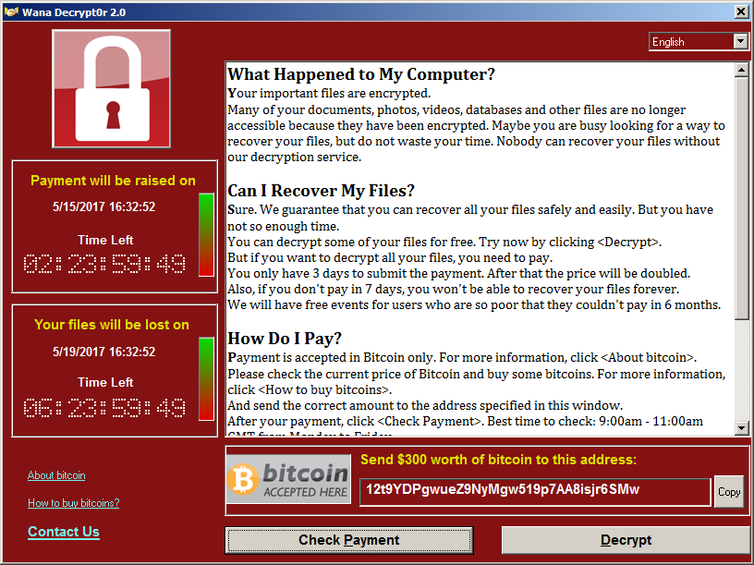 A typical ransomware attack seizes control of a victim’s computer files and holds them for ransom. So5146/Wikimedia, CC BY-SA
While ransomware attacks can affect any internet user or organization, attackers tend to target entities known for having less-robust cybersecurity defenses, including hospitals, health systems and state or local government computers. But health care remains an enticing ransomware target: In 2019, 759 health care providers in the U.S. were hit. Overall, ransomware attacks cost users and companies over US$7 billion in 2019 as a result of either ransoms paid or through costs incurred in recovering from attacks.
Ransomware’s toll
The first high-profile ransomware incident was launched by North Korea in 2017. Using malware called “Wannacry,” the attackers brought the British National Health Service to a paralyzing halt. Hospitals lost access to their computer systems and routine and emergency care was disrupted. But that was a preview of things to come: In 2020, a patient in Germany died after being diverted to another hospital due to a ransomware incident.
In 2020, during the COVID-19 pandemic, a ransomware attack crippled over 250 medical facilities run by American-based Universal Health Services. At eResearchTechnology, staff conducting COVID-19 clinical trials were locked out of their data and unable to conduct business for nearly two weeks.
And it’s not just health care organizations. The city of Atlanta was crippled by ransomware in 2018. Baltimore was similarly paralyzed in 2019. In both cases, city services – from tax collection and business licensing to real estate transactions – were unavailable to citizens. Numerous smaller cities around the world also have been affected by ransomware attacks.
However, even organizations with good IT policies and procedures find it extremely costly to investigate and recover from ransomware attacks, whether or not they pay the ransom. For example, an organization’s routine data backup can also inadvertently include ransomware code. This means victims need to ensure they are not restoring the ransomware infection when they reconstruct their systems after an attack. Depending on the victim’s backup procedures, locating a ransomware-free backup can be a very time-consuming process.
Ransomware and election 2020
The 2016 elections underscored the importance of ensuring the security and integrity of information related to government operations, including elections. Unfortunately, for many state and local governments, ransomware concerns are just another in a long line of issues that cybersecurity teams must contend with during periods of limited budgets and staffing.
Much has already been written about the vulnerable and fragile state of America’s election systems, ranging from obsolete operating systems installed on voting machines to insecure networks and systems that exchange and store vote tabulations, to ensuring the protection of voter registration databases.
Making this situation more challenging is that many local governments don’t know what’s happening on their networks. A nationwide survey conducted by University of Maryland, Baltimore County researchers in 2016 reported that nearly 30% of local government officials would not know if a cyberattack was affecting them. This lack of awareness means an attack could be well underway and causing havoc before security teams realize it – let alone respond.
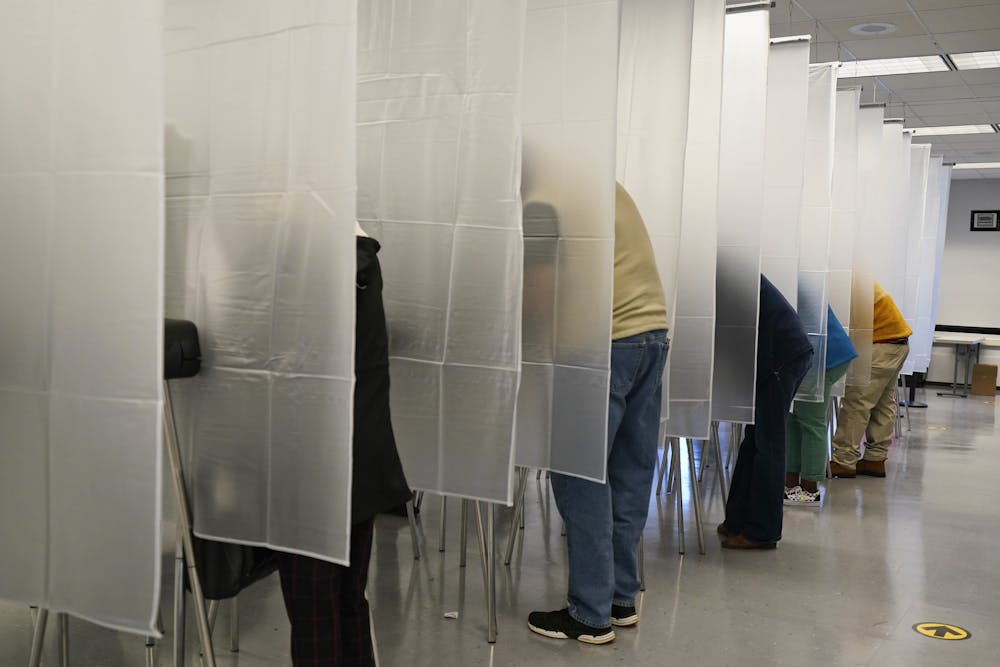
 Voting is vulnerable to cyberattacks at several points, from voter registration rolls to voter signature databases and computers that tabulate votes. AP Photo/Tony Dejak
Despite a growing awareness of the threat, ransomware has the potential to adversely affect the 2020 election. Unfortunately, if state and local election offices haven’t implemented strong cybersecurity protections by now, it’s probably too late to do anything meaningful given that voting is well underway. So it’s no surprise that election offices across America are considering potential nightmare scenarios that include cyberattacks that might disrupt election activities.
Fuel for disinformation
Elections are based on trust – trust in the voting mechanisms and procedures, trust in the voting data and trust in the overall electoral process. But trust in all these items is under active attack by adversaries both at home and from abroad using a variety of influence and disinformation techniques that have become more refined since 2016.
Thankfully, ransomware attacks are unlikely to cripple the entire U.S. election given the decentralized nature of voting jurisdictions and systems. However, even a few successful attacks could contribute to disinformation campaigns that erode confidence in the outcome of the election.
[Expertise in your inbox. Sign up for The Conversation’s newsletter and get expert takes on today’s news, every day.]
How to lower the risk
At this point, since the election is already happening, state and local governments should increase the monitoring of their computer systems and implement even more stringent security controls on any devices or computers that might touch election-related networks in any way. Sharing real-time information about threats and working with the DHS, FBI and Office of the Director of National Intelligence election security teams, along with other states’ election offices, also will help keep election officials informed. Additionally, major technology vendors and the U.S. military are taking active steps to disrupt cybersecurity threats, including ransomware, that may target the electoral process.
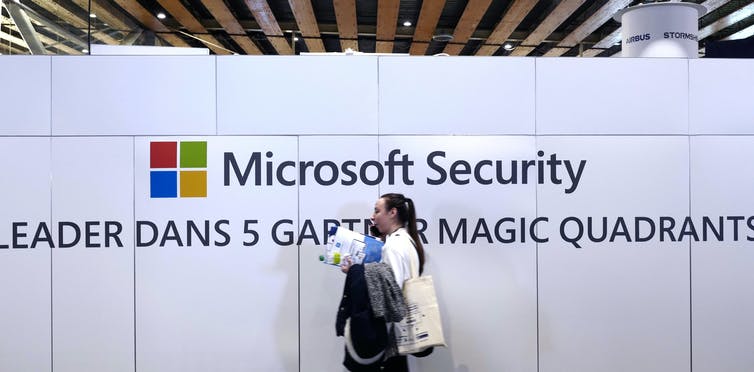 Microsoft took legal action this month to disrupt a major botnet, a cybercrime digital network that used more than 1 million zombie computers to spread ransomware. AP Photo/Michel Spingler
As with most cybersecurity problems, the ransomware threat can be minimized by implementing common-sense best practices – many of which have been recommended for decades but often are not followed. These include keeping systems up to date, ensuring security software is installed and current, monitoring network activities and implementing appropriate IT policies and procedures to include resilient backup practices. For individual users, thinking before clicking an email link – even from people you know – is excellent self-defense to make many ransomware or phishing attacks less likely to succeed.
None of these practices is specific to the ransomware threat or election security. But for this and other cyber threats, the best thing to do is continuing to implement and enforce those common-sense, decades-old best practices of information protection that can help guard against the ever-widening range of cyberthreats – including ransomware.
Header Image: Ransomware attacks often strike local government computer systems, which poses a challenge for protecting elections. PRImageFactory/iStock via Getty Images
Richard Forno, Senior Lecturer, Cybersecurity & internet researcher, University of Maryland, Baltimore County
This article is republished from The Conversation under a Creative Commons license. Read the original article.
]]>
by Richard Forno, UMBC Government computer systems in Hall County, Georgia, including a voter signature database, were hit by a ransomware attack earlier this fall in the first known...
https://umbc.edu/stories/ransomware-can-interfere-with-elections-and-fuel-disinformation-basic-cybersecurity-precautions-are-key-to-minimizing-the-damage/
https://beta.my.umbc.edu/api/v0/pixel/news/119762/guest@my.umbc.edu/f96878219b018d2f442a39393f8371d8/api/pixel
computer-science
cybersecurity
discovery
the-conversation
UMBC News & Magazine
https://beta.my.umbc.edu/groups/umbc-news-magazine
https://assets1-beta.my.umbc.edu/system/shared/avatars/groups/000/001/943/24435aa6207c452e7bc15cc74b42c7bb/xsmall.png?1748556657
https://assets1-beta.my.umbc.edu/system/shared/avatars/groups/000/001/943/24435aa6207c452e7bc15cc74b42c7bb/original.png?1748556657
https://assets2-beta.my.umbc.edu/system/shared/avatars/groups/000/001/943/24435aa6207c452e7bc15cc74b42c7bb/xxlarge.png?1748556657
https://assets2-beta.my.umbc.edu/system/shared/avatars/groups/000/001/943/24435aa6207c452e7bc15cc74b42c7bb/xlarge.png?1748556657
https://assets3-beta.my.umbc.edu/system/shared/avatars/groups/000/001/943/24435aa6207c452e7bc15cc74b42c7bb/large.png?1748556657
https://assets1-beta.my.umbc.edu/system/shared/avatars/groups/000/001/943/24435aa6207c452e7bc15cc74b42c7bb/medium.png?1748556657
https://assets2-beta.my.umbc.edu/system/shared/avatars/groups/000/001/943/24435aa6207c452e7bc15cc74b42c7bb/small.png?1748556657
https://assets1-beta.my.umbc.edu/system/shared/avatars/groups/000/001/943/24435aa6207c452e7bc15cc74b42c7bb/xsmall.png?1748556657
https://assets2-beta.my.umbc.edu/system/shared/avatars/groups/000/001/943/24435aa6207c452e7bc15cc74b42c7bb/xxsmall.png?1748556657
UMBC News & Magazine
0
0
false
Thu, 29 Oct 2020 20:10:02 -0400
To Save Threatened Plants and Animals, Restore Habitat on Farms, Ranches and Other Working Lands

By Erle C. Ellis, professor, Geography and Environmental Systems, UMBC; Lucas Alejandro Garibaldi, Universidad Nacional de Rio Negro; Claire Kremen, University of British Columbia; and Sandra Díaz, Universidad de Córdoba (Argentina)
The Research Brief is a short take about interesting academic work.
The big idea
Restoring native habitats to at least 20% of the world’s land currently being used by humans for farming, ranching and forestry is necessary to protect biodiversity and slow species loss, according to a newly published study conducted by a team of environmental scientists including us. Our analysis found that this can be done in ways that minimize trade-offs and could even make farms more productive by helping to control pests, enhancing crop pollination and preventing losses of nutrients and water from soil. These working landscapes can still be grazed, mowed, harvested or burned, as long as these activities sustain or restore native species diversity.
So-called “zero-net-loss policies” would prevent any further destruction or conversion of wild lands on developed property. There are creative and experimental options for the most heavily cultivated regions, such as incorporating strips of prairie plants into crop fields across the U.S. Midwest or planting flower strips to restore pollinators in Switzerland.
Only 38% of the 82 countries we reviewed have national laws requiring native habitat on working lands. Most were in Europe and required that just 5% be kept wild. In many countries only forest habitats are regulated, while grasslands and other highly threatened landscapes are ignored. These decisions are driven by politics, economics and cultural values, but overall they lack clear scientific guidelines.
 Through the establishment of a conservation bank on the Sparling Ranch in California, more than 2,000 acres of valuable habitat for tiger salamanders and red-legged frogs will be protected, including 14 breeding ponds, while the Sparling family continues to raise and graze cattle on their land. Steve Rottenborn, USFWS/Flickr
Why it matters
Restoring habitat creates homes for wildlife, but it also contributes to human well-being and supports all life on Earth. Native vegetation prevents erosion and purifies the water we drink and the air we breathe. It sequesters carbon, mitigating climate change, and acts as a buffer against flooding, landslides and storms. The wildlife species that move in may pollinate crops or control pests.
For more than a century, conservationists have worked to save threatened species by protecting them within large national parks and refuges. This clearly hasn’t been enough: The Earth is losing plants and animals at more than 100 times the normal rate, in what some scientists believe is the Earth’s sixth mass extinction event.
Under the 1992 Convention on Biological Diversity, an international treaty ratified by 196 nations, countries have pledged to conserve 17% of the planet’s land area in protected zones by 2020. So far, they have failed to meet that target. Now many conservationists are proposing an expanded effort that would conserve as much as 30% of land by 2030, and as much as half by 2050. Where will all this land come from?
With global land use expanding and becoming more intensive and dominated by monocultures, there is an urgent need to conserve and restore native species outside of protected areas – within landscapes managed for people.
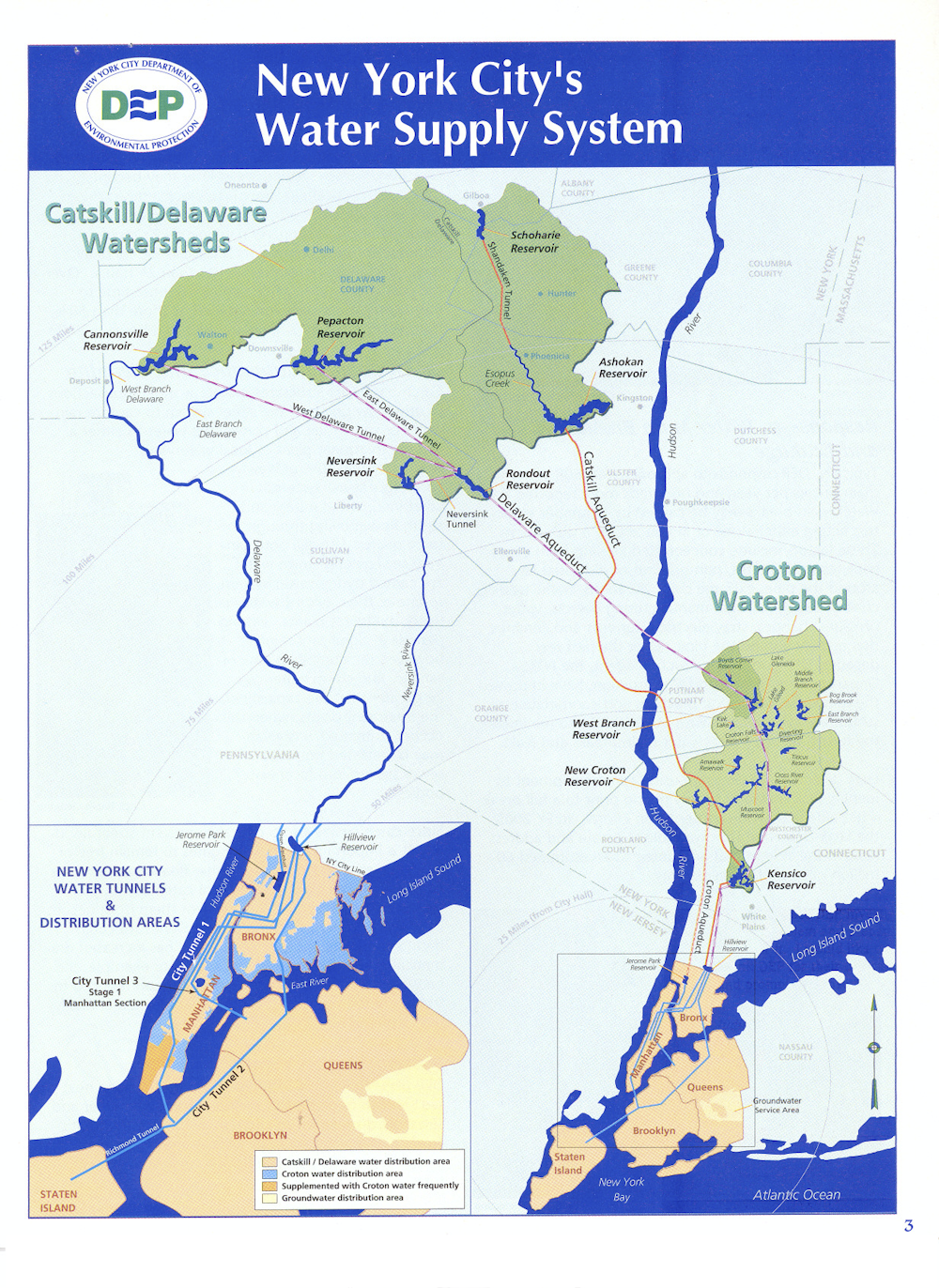
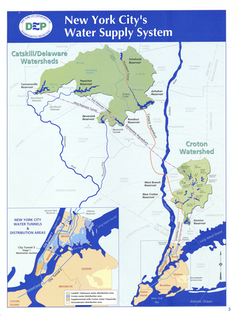 Forests in upstate New York protect and filter New York City’s drinking water supply. The forests are managed and monitored to ensure water quality; they also provide habitat for wildlife and recreation opportunities. NYDEC
What’s next
Though the benefits are many and there are numerous successful restoration models to draw upon, wild habitats continue to be degraded, razed and eliminated.
Preventing, stopping and reversing the degradation of ecosystems is also an essential strategy for meeting United Nations Sustainable Development Goals and commitments for the U.N. Decade on Ecosystem Restoration that launches next year.
Critical policy opportunities are just ahead. Europeans are now deciding how much agricultural land to devote to “landscape and habitat features.” New conservation targets will be part of the post-2020 global biodiversity framework negotiated at next spring’s 15th meeting of the Convention on Biological Diversity. Its ambitious global vision is nothing less than “living in harmony with nature” by 2050.
*****
Lucas Alejandro Garibaldi, Professor and Director, Institute for Research in Natural Resources, Agroecology and Rural Development, Universidad Nacional de Rio Negro; Claire Kremen, Professor of Resources, Environment and Sustainability and Professor of Zoology, University of British Columbia; Erle C. Ellis, Professor of Geography and Environmental Systems, University of Maryland, Baltimore County, and Sandra Díaz, Professor of Community and Ecosystem Ecology, Universidad de Córdoba (Argentina)
This article is republished from The Conversation under a Creative Commons license. Read the original article.
Header image: Planting strips of native prairie grasses on a farm in Iowa provides habitat for pollinators and protects soil and water. Omar de Kok-Mercado/Iowa State University, CC BY-ND
]]>
By Erle C. Ellis, professor, Geography and Environmental Systems, UMBC; Lucas Alejandro Garibaldi, Universidad Nacional de Rio Negro; Claire Kremen, University of British Columbia; and Sandra...
https://umbc.edu/stories/to-save-threatened-plants-and-animals-restore-habitat-on-farms-ranches-and-other-working-lands/
https://beta.my.umbc.edu/api/v0/pixel/news/119763/guest@my.umbc.edu/6879c11697aa6265b65022f91b83d31e/api/pixel
cahss
discovery
ges
the-conversation
UMBC News & Magazine
https://beta.my.umbc.edu/groups/umbc-news-magazine
https://assets1-beta.my.umbc.edu/system/shared/avatars/groups/000/001/943/24435aa6207c452e7bc15cc74b42c7bb/xsmall.png?1748556657
https://assets1-beta.my.umbc.edu/system/shared/avatars/groups/000/001/943/24435aa6207c452e7bc15cc74b42c7bb/original.png?1748556657
https://assets2-beta.my.umbc.edu/system/shared/avatars/groups/000/001/943/24435aa6207c452e7bc15cc74b42c7bb/xxlarge.png?1748556657
https://assets2-beta.my.umbc.edu/system/shared/avatars/groups/000/001/943/24435aa6207c452e7bc15cc74b42c7bb/xlarge.png?1748556657
https://assets3-beta.my.umbc.edu/system/shared/avatars/groups/000/001/943/24435aa6207c452e7bc15cc74b42c7bb/large.png?1748556657
https://assets1-beta.my.umbc.edu/system/shared/avatars/groups/000/001/943/24435aa6207c452e7bc15cc74b42c7bb/medium.png?1748556657
https://assets2-beta.my.umbc.edu/system/shared/avatars/groups/000/001/943/24435aa6207c452e7bc15cc74b42c7bb/small.png?1748556657
https://assets1-beta.my.umbc.edu/system/shared/avatars/groups/000/001/943/24435aa6207c452e7bc15cc74b42c7bb/xsmall.png?1748556657
https://assets2-beta.my.umbc.edu/system/shared/avatars/groups/000/001/943/24435aa6207c452e7bc15cc74b42c7bb/xxsmall.png?1748556657
UMBC News & Magazine
0
0
false
Thu, 29 Oct 2020 13:36:28 -0400
American Chemical Society honors UMBC’s Lee Blaney for commitment to mentoring student researchers
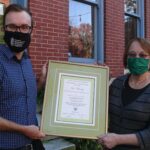
Last Thursday, UMBC’s Lee Blaney was honored for his impact as a chemistry educator and mentor who closely involves students of all levels in collaborative research.
Blaney is an associate professor of chemical, biochemical, and environmental engineering. He received the 2020 George L. Braude Award from the Maryland section of the American Chemical Society. Blaney was nominated for the award by Mark Marten, chair of chemical, biochemical, and environmental engineering at UMBC. During the virtual meeting of the society, Blaney presented his research on the occurrence of contaminants of emerging concern in the Chesapeake Bay.
Past and future mentors
Blaney shared that he was honored and humbled to receive the Braude Award for his efforts to mentor undergraduate and graduate students in research. During his lecture, he emphasized the impact of his own mentors on his mentoring approach.
Arup SenGupta (Lehigh University), Desmond Lawler (University of Texas at Austin), and Lynn Katz (University of Texas at Austin) changed his life through their mentorship, Blaney said. He has incorporated their advice and his own experiences into his mentoring approach at UMBC.
“Seeing my students succeed is the most gratifying aspect of being a professor,” he reflects.
Although the event could not be held in person due to the COVID-19 pandemic, many of Blaney’s students were able to attend the virtual lecture. He noted that the presence of his students made the celebration even more special. Upon receiving the Braude Award, Blaney emphasized to his students, “This is our award.”
 Lee Blaney, left, receiving his award from Louise Hellwig of Morgan State University. Photo courtesy of Hellwig.
Mamatha Hopanna Ph.D. ‘22, environmental engineering, conducts research in Blaney’s lab and attended the virtual lecture. “I am amazed by how much he cares to support each student’s learning style and needs, she said. “I have always felt his sincerity, commitment, and enthusiasm towards his students’ success”
She continued, “It is so encouraging to see Dr. Blaney celebrate each of his achievements as our achievements. I, personally, aspire to be a mentor to inspire and motivate other students in the same way as Dr. Blaney has inspired me.”
Combining research and student success
The Braude Award honors professors from institutions in Maryland who involve students and postdoctoral fellows in exceptional research in particularly notable ways. The award was created in memory of George Braude, who served as chair of the Maryland section of the ACS.
This latest award follows several other honors which have enabled Blaney to further his innovative research. In 2017, Blaney received an NSF CAREER Award, which focuses on how contaminants of emerging concern impact the environment. Later that year, he was recognized by the Maryland Science Center with the 2017 Outstanding Young Engineer Award.
Blaney is the third UMBC faculty member to receive the Braude Award. In 2006, then-UMBC professor Catherine Fenselau, former chair of chemistry and biochemistry, received the award. Michael Summers, distinguished professor of chemistry and biochemistry and Robert E. Meyerhoff Chair for Excellence in Research and Mentoring, received the award in 2010. Summers is internationally known for his HIV research and his work with UMBC’s Meyerhoff Scholars Program.
Update: James J. Morgan Award
In December 2020, Blaney also received the 2021 James J. Morgan Environmental Science & Technology Early Career Award from the ACS. The award is one of the most prestigious honors in environmental engineering, recognizing early-career scholars who are leading the field.
An editorial announcing Blaney’s award notes, “He is considered a leading researcher with a broad vision, innovative research ideas, and an outstanding commitment to developing a sustainable research program that is diverse and focused on grand challenges.”
Banner image: Lee Blaney. Photo by Marlayna Demond ’11 for UMBC.
]]>
Last Thursday, UMBC’s Lee Blaney was honored for his impact as a chemistry educator and mentor who closely involves students of all levels in collaborative research. Blaney is an associate...
https://umbc.edu/stories/american-chemical-society-honors-umbcs-lee-blaney-for-commitment-to-mentoring-student-researchers/
https://beta.my.umbc.edu/api/v0/pixel/news/119764/guest@my.umbc.edu/510cf49115ff0a295c945fde1c1c0941/api/pixel
cbee
coeit
science-and-technology
UMBC News & Magazine
https://beta.my.umbc.edu/groups/umbc-news-magazine
https://assets1-beta.my.umbc.edu/system/shared/avatars/groups/000/001/943/24435aa6207c452e7bc15cc74b42c7bb/xsmall.png?1748556657
https://assets1-beta.my.umbc.edu/system/shared/avatars/groups/000/001/943/24435aa6207c452e7bc15cc74b42c7bb/original.png?1748556657
https://assets2-beta.my.umbc.edu/system/shared/avatars/groups/000/001/943/24435aa6207c452e7bc15cc74b42c7bb/xxlarge.png?1748556657
https://assets2-beta.my.umbc.edu/system/shared/avatars/groups/000/001/943/24435aa6207c452e7bc15cc74b42c7bb/xlarge.png?1748556657
https://assets3-beta.my.umbc.edu/system/shared/avatars/groups/000/001/943/24435aa6207c452e7bc15cc74b42c7bb/large.png?1748556657
https://assets1-beta.my.umbc.edu/system/shared/avatars/groups/000/001/943/24435aa6207c452e7bc15cc74b42c7bb/medium.png?1748556657
https://assets2-beta.my.umbc.edu/system/shared/avatars/groups/000/001/943/24435aa6207c452e7bc15cc74b42c7bb/small.png?1748556657
https://assets1-beta.my.umbc.edu/system/shared/avatars/groups/000/001/943/24435aa6207c452e7bc15cc74b42c7bb/xsmall.png?1748556657
https://assets2-beta.my.umbc.edu/system/shared/avatars/groups/000/001/943/24435aa6207c452e7bc15cc74b42c7bb/xxsmall.png?1748556657
UMBC News & Magazine
0
0
false
Wed, 28 Oct 2020 18:57:44 -0400
UMBC’s Sherman Center for Early Learning in Urban Communities is transforming early childhood education in Maryland

UMBC’s Sherman Center for Early Learning in Urban Communities is now in its third year of strengthening and expanding early childhood education in Maryland. The center was founded with the support of a $6 million grant from the George and Betsy Sherman Family Foundation in 2017. It has developed a series of research-based initiatives to address the needs of children from birth to eight years old in Maryland, and the workforce dedicated to educating them.
 (L to R) Betsy Sherman, Mavis Sanders, Louise Corwin, and Meredith Callanan. Photo by Chris Ferenzi for UMBC.
The initial grant founding the center helped establish the Maryland Early Childhood Leadership Program (MECLP), a faculty research fellowship, and an innovative literacy program. All three elements create a body of work that is transforming early childhood education—on campus, in Baltimore City, and across the state.
Strong partnerships with researchers, schools, and families are the foundation of this work. “We never say, ‘This is what we are going to do.’ We engage our partners in conversation about what they need,” shares Mavis Sanders, professor of education and director of the Sherman Center.
“We try not to be reactive or directive, but responsive,” she says. “It is about listening. We can’t do our work without our partnerships.”
 Sanders (on the right) speaking with a parent at one of the Sherman Center’s Families, Libraries, and Early Literacy Project events at Lakeland.
Investing in early childhood research
The Sherman Center’s faculty research fellowships support faculty and their doctoral students. The funding helps them undertake research that expands knowledge about policies and practices related to early childhood education. The program encourages collaborations within and across departments, fields, and institutions. Awards range from $50,000 to $100,000.
Kindel Nash andlanguage, literacy, and culture (LLC) doctoral student Josh Michael ‘10, political science and education, were the inaugural research fellows in 2017-2018. Nash is an associate professor of education and Michael is the assistant director of UMBC’s Sherman STEM Teachers Scholars Program. Their multi-year study, in collaboration with Maree G. Farring Elementary/Middle School, examines the effects of using the Read Two Impress intervention with struggling third-grade readers.
 (L to R) Josh Michael, Kindel Nash, and Olivia Grimes’s ‘19, individualized study, discuss Grimes’s science lesson guide at the 2019 Summer Teacher Institute.
Nash explains this intervention in “Parents can help kids catch up in reading with a 10-minute daily routine” for The Conversation. Their research found that having bilingual books with culturally authentic content led to increased engagement among Latinx children and their families. Nash’s new book, Toward Culturally Sustaining Teaching, further explores this topic.
Evaluating the literacy fellows program
Two additional faculty received the award in 2018 – 2019. Susan Sonnenschein, professor of psychology, and Claudia Galindo, associate professor of education policy, University of Maryland, and former associate professor of LLC at UMBC. The team is working with Bay-Brook Elementary/Middle School and Curtis Bay Elementary/Middle School. They are studying the outcomes of the Sherman Center’s Literacy Fellows program, a collaboration with UMBC’s Shriver Center.
The program provides teachers additional classroom support from UMBC student volunteers from all majors. Sherman Center Literacy fellows volunteered for nearly 300 hours in 2018 – 2019 and more than 500 hours in 2019 – 2020.
 Nihira Mugamba ‘21, political science and Africana studies at Bay-Brook Elementary/Middle School as Shriver Literacy Fellow. Photo courtesy of Mugamba.
“Dr. Sonneschein and I have been working collaboratively for ten years. We take an interdisciplinary approach to examine family and school mechanisms. This helps to improve the educational experiences and outcomes of Black and Brown students,” explains Galindo. “We have witnessed the potential and impact of the Literacy Fellows program on students and teachers in Baltimore City.”
Latest research awards focus on Judy Centers
Research awards for 2020 – 2021 were given to two research teams. The first team includes Patricia A. Young, associate professor of education, and Deborah Kabura Kariuki, clinical instructor of computer science education. Young and Kariuki are working on a year-long study, “Infusing a Culture-based Computational Thinking Curriculum in Urban Preschools.” They will partner with the Judith P. Hoyer Center Early Learning Hub at Lakeland Elementary/Middle School. Judy Centers help prepare children from age birth through kindergarten for school readiness.

Patricia Young.
Photo courtesy of Young.
“It is imperative that disenfranchised students and communities have opportunities to explore computational thinking, to be active participants in this technological revolution,” shares Young. “Our research provides an introduction into the practices of computational thinking for preschoolers and the pedagogy for preschool teachers.”
The team will create an e-learning module and computational thinking instructional materials to help children at the Judy Center learn these concepts.
 Judy Center staff members provide free books to early readers at a 2019 Sherman Center Families, Libraries, and Early Literacy Project event at Lakeland.
The second team includes Jane Lincove, associate professor of public policy; Lieny Jeon, assistant professor at the Johns Hopkins School of Education; and Sarah Bollard, citywide coordinator for Judy Centers. They are working on a three-year study, “Judy Centers in Baltimore: Improving Data-Informed Decisions.”
Diverse books anchor literacy
The cornerstone of the Sherman Center is its focus on improving literacy experiences and outcomes for young learners in Baltimore City. “Literacy is a gateway to knowledge across all curriculum areas,” says Sanders. The Sherman Center has implemented four literacy interventions: the Diverse Books Project; Teacher Summer Institute; Literacy Fellows; and Families, Libraries, and Early Literacy Project.
 The “Integrated Learning: Science Through Diverse Books” unit developed by UMBC alumna Olivia Grimes.
The Center implements these literacy programs through close partnerships with five Baltimore City Public Schools and 50 early childhood educators. Together, they reach about 1,250 children. They also work with approximately 30 families annually who have children ages birth to three, through the Judy Centers at Lakeland Elementary/Middle School and Curtis Bay Elementary/Middle School.
 A parent reads to her toddler at a 2019 Sherman Center event.
The Diverse Books Project is a growing library of books housed at the Sherman Center. It reflects the lives and cultures of children and families of color. The books are used by UMBC teaching interns, graduate students, volunteers, and faculty, and by early childhood educators. They use the books to introduce and reinforce literacy across all subjects.
 Lakeland teachers deliver school supplies to a student’s home in summer 2020.
Photo courtesy of Sanders.
Teaching with diverse books
During the Sherman Center’s Teacher Summer Institute teachers partner schools learn to use these books as tools to support literacy. They also explore how research-based strategies like translanguaging can support more inclusive, high-achieving classrooms.
 Jennifer McMahon, associate professor of education, working with early childhood educators from Baltimore City Public Schools during the 2019 Teacher Summer Institute.
In 2019, 49 educators across the state requested 250 diverse books after working with the Sherman Center. The Institute went virtual this summer. It provided 50 early childhood educators from partner schools with nearly $15,000 worth of supplies for their students and to set up virtual classrooms.
 A student from one of the Sherman Center’s partner schools unpacks new supplies for the 2020 – 2021 school year. Photo courtesy of Sanders.
Working directly with families
In addition to working with teachers, the Sherman Center also works directly with families. They are invited to attend quarterly Families, Libraries, and Early Literacy Project events at Lakeland and Curtis Bay Elementary/Middle Schools. The events provide families a safe space in their neighborhoods to meet other families. They also learn strategies to promote their children’s kindergarten readiness, and create materials to support learning at home.
In addition to these activities, a librarian from the Enoch Pratt Free Library leads a story time session for the families at the events. Families also have a chance to select and take home diverse books for their children. In 2019, UMBC distributed 178 multicultural books to families at Curtis Bay and Lakeland Judy Centers.
 An Enoch Pratt librarian leads a story time at the 2019 Sherman Center’s Families, Libraries, and Early Literacy Project event at Lakeland.
Creating a new system
As the world copes with COVID-19, the Sherman Center’s literacy, professional development, and research programs will continue to adapt. The center will support the literacy needs of children throughout Maryland in the current virtual environment.
“We are not preparing teachers, administrators, public servants, and students to adapt strategies to work within the status quo of early childhood,” notes Sanders. Instead, the Sherman Center is preparing education professionals to be innovators. She says, “We will create a new early childhood education system that reflects and serves the diversity of today and tomorrow.”
Banner image: Sanders (in the middle, in red) surrounded by Sherman Center, Judy Center, and Enoch Pratt Free Library staff at the Families, Libraries, and Early Literacy Project event at Lakeland in February 2019. All photos by Marlayna Demond ’11 for UMBC unless otherwise noted.
]]>
UMBC’s Sherman Center for Early Learning in Urban Communities is now in its third year of strengthening and expanding early childhood education in Maryland. The center was founded with the support...
https://umbc.edu/stories/umbcs-sherman-center-for-early-learning-in-urban-communities-is-transforming-early-childhood-education-in-maryland/
https://beta.my.umbc.edu/api/v0/pixel/news/119765/guest@my.umbc.edu/a252ccf41a77da57c72c966307e05c6e/api/pixel
africanastudies
cahss
cahssresearch
education
llc
page1
policy-and-society
psychology
publicpolicy
shermancenter
shermanscholars
shrivercenter
UMBC News & Magazine
https://beta.my.umbc.edu/groups/umbc-news-magazine
https://assets1-beta.my.umbc.edu/system/shared/avatars/groups/000/001/943/24435aa6207c452e7bc15cc74b42c7bb/xsmall.png?1748556657
https://assets1-beta.my.umbc.edu/system/shared/avatars/groups/000/001/943/24435aa6207c452e7bc15cc74b42c7bb/original.png?1748556657
https://assets2-beta.my.umbc.edu/system/shared/avatars/groups/000/001/943/24435aa6207c452e7bc15cc74b42c7bb/xxlarge.png?1748556657
https://assets2-beta.my.umbc.edu/system/shared/avatars/groups/000/001/943/24435aa6207c452e7bc15cc74b42c7bb/xlarge.png?1748556657
https://assets3-beta.my.umbc.edu/system/shared/avatars/groups/000/001/943/24435aa6207c452e7bc15cc74b42c7bb/large.png?1748556657
https://assets1-beta.my.umbc.edu/system/shared/avatars/groups/000/001/943/24435aa6207c452e7bc15cc74b42c7bb/medium.png?1748556657
https://assets2-beta.my.umbc.edu/system/shared/avatars/groups/000/001/943/24435aa6207c452e7bc15cc74b42c7bb/small.png?1748556657
https://assets1-beta.my.umbc.edu/system/shared/avatars/groups/000/001/943/24435aa6207c452e7bc15cc74b42c7bb/xsmall.png?1748556657
https://assets2-beta.my.umbc.edu/system/shared/avatars/groups/000/001/943/24435aa6207c452e7bc15cc74b42c7bb/xxsmall.png?1748556657
UMBC News & Magazine
0
0
false
Tue, 27 Oct 2020 19:28:38 -0400
Entrepreneurs and experts gather for bwtech@UMBC Cybertini event on election security
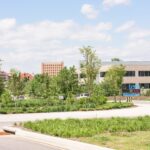
Nearly 100 industry experts and entrepreneurs gathered virtually for Cybertini 2020, hosted by bwtech@UMBC, UMBC’s research and technology park, on October 15. The annual event offers a unique opportunity for entrepreneurs to learn from industry professionals and experts in academia, and this year focused on cybersecurity related to elections. This is the second of three Cybertini events scheduled for this year.
UMBC’s Rick Forno, assistant director of the UMBC Center for Cybersecurity, joined Ron Gula, president of Gula Tech Adventures, and Sarah Lenti, executive director of the Lincoln Project, for the panel discussion. In the context of a highly contentious 2020 U.S. election season, panelists shared their perspectives on the particular cybersecurity challenges the U.S. electoral system faces today.
Gula grounded the conversation with a key point: that elections are now considered to be part of critical infrastructure, but that challenges to its security are unique. Megan Wahler, director of entrepreneurial services at bwtech@UMBC, moderated the event.
Continuous attention to security
Forno and Gula both argued that it’s important to continuously look at the security of information sharing broadly, rather than focusing on security when an election comes around.

Rick Forno. Photo by Marlayna Demond ‘11 for UMBC.
“I think you don’t look at it in the context of securing an election,” said Forno. “I think you need to look at it as securing an information ecosystem over time, not just every two or four years.” This means there will always be a need for expertise and innovations related to securing information, he noted.
Gula similarly emphasized that it is important for leaders to take cyber hygiene and data security seriously in order to protect companies, governments, and elections from vulnerabilities in the long term. “If we can educate [people running for office] before they get into office, then they’re going to make better cyber policy decisions for all of us,” he said.
Electronic voting and misinformation
The speakers also discussed how to ensure the security of future electronic voting platforms, a particularly hot-button issue in the context of the COVID-19 pandemic. Gula explained that it’s possible to develop a secure electronic voting system, but that this security might be dependent on maintaining a paper trail. Forno cautioned that the U.S. electoral system also poses particular challenges, given that each state and territory has its own process for running elections.

Ron Gula. Photo courtesy of Gula.
Returning to the present election, Forno discussed how securing information shared on social media also plays a role in elections, even if people are still voting through traditional means. He suggested that social media companies must play a major role in identifying and preventing the spread of misinformation. By blocking inaccurate information from being posted or shared online, these companies can thwart efforts to bad actors to influence elections. UMBC faculty, students, and alumni are currently working on artificial intelligence and cybersecurity technologies to address these issues.

Sarah Lenti. Photo courtesy of Lenti.
Further discussing vulnerabilities of the current election, Lenti described her organization’s work to track voter suppression efforts, to hold leaders accountable to maintaining a secure and accessible electoral process. The Lincoln Project recently announced a partnership with See Say 2020, which allows people to report acts of voter suppression and election interference in real time.
“The Lincoln Project’s role is to basically shine a light on these activities with the hopes of it leading to some remedy and creating a deterrent,” Lenti said.
Forno reflected that looking at the broad ways in which cybersecurity plays a role in current and future elections shows how “cyber touches every aspect of society.”
Banner image: The entrance to bwtech@UMBC. Photo by Marlayna Demond ‘11 for UMBC.
]]>
Nearly 100 industry experts and entrepreneurs gathered virtually for Cybertini 2020, hosted by bwtech@UMBC, UMBC’s research and technology park, on October 15. The annual event offers a unique...
https://umbc.edu/stories/entrepreneurs-and-experts-gather-for-bwtechumbc-cybertini-event-on-election-security/
https://beta.my.umbc.edu/api/v0/pixel/news/119766/guest@my.umbc.edu/0d0f079b303b8cb7ce1c80e46c420155/api/pixel
bwtech-at-umbc
coeit
community
csee
cybersecurity
science-and-technology
UMBC News & Magazine
https://beta.my.umbc.edu/groups/umbc-news-magazine
https://assets1-beta.my.umbc.edu/system/shared/avatars/groups/000/001/943/24435aa6207c452e7bc15cc74b42c7bb/xsmall.png?1748556657
https://assets1-beta.my.umbc.edu/system/shared/avatars/groups/000/001/943/24435aa6207c452e7bc15cc74b42c7bb/original.png?1748556657
https://assets2-beta.my.umbc.edu/system/shared/avatars/groups/000/001/943/24435aa6207c452e7bc15cc74b42c7bb/xxlarge.png?1748556657
https://assets2-beta.my.umbc.edu/system/shared/avatars/groups/000/001/943/24435aa6207c452e7bc15cc74b42c7bb/xlarge.png?1748556657
https://assets3-beta.my.umbc.edu/system/shared/avatars/groups/000/001/943/24435aa6207c452e7bc15cc74b42c7bb/large.png?1748556657
https://assets1-beta.my.umbc.edu/system/shared/avatars/groups/000/001/943/24435aa6207c452e7bc15cc74b42c7bb/medium.png?1748556657
https://assets2-beta.my.umbc.edu/system/shared/avatars/groups/000/001/943/24435aa6207c452e7bc15cc74b42c7bb/small.png?1748556657
https://assets1-beta.my.umbc.edu/system/shared/avatars/groups/000/001/943/24435aa6207c452e7bc15cc74b42c7bb/xsmall.png?1748556657
https://assets2-beta.my.umbc.edu/system/shared/avatars/groups/000/001/943/24435aa6207c452e7bc15cc74b42c7bb/xxsmall.png?1748556657
UMBC News & Magazine
0
0
false
Tue, 27 Oct 2020 18:27:12 -0400
Maryland State Dept. of Education invests additional $150,000 in UMBC’s Maryland Early Childhood Leadership Education Program
When COVID-19 spread across the United States, essential workers scrambled to find open childcare centers with available spots. The pandemic exposed a longstanding shortage of licensed early childhood education providers, exacerbated by the public health crisis.
Among the many causes of this shortage has been a lack of professional development and career pathways for early childhood education providers and leaders who serve children from birth to age five. This is a challenge UMBC and the State of Maryland are working to address.
Investing in early childhood leaders
UMBC’s Sherman Center for Early Childhood Learning in Urban Communities has been leading change in this field in Maryland since 2017 through its Maryland Early Childhood Leadership Education Program (MECLP). The program’s 12-month post-baccalaureate course equips current leaders in early childhood education with the skills, knowledge, and network needed to implement effective and long-lasting change in classrooms, school districts, and nonprofits across the state.

(L to R) Betsy Sherman, Sanders, Corwin, and Meredith Callanan a MECLP advisory committee member.
Photo by Chris Ferenzi for UMBC.
In 2017 the Maryland State Department of Education (MSDE) granted $100,000 to UMBC’s Sherman Center. The MSDE grant, along with $50,000 from a $6 million grant from the George and Betsy Sherman Family Foundation to the Sherman Center, helped establish MECLP. In May, MSDE granted an additional $150,000 award to the Sherman Center to sustain MECLP’s programs and initiatives.
“We are thrilled to be a founding supporter of MECLP. It is the capstone of our workforce support for the Maryland early childhood community,” explains MSDE’s Steven Hicks, assistant state superintendent in the Division of Early Childhood. “We’re creating a career ladder that ensures quality learning and development. It will also ensure a robust supply of highly qualified early childhood leaders.”
Systems to support emerging leaders
Mavis Sanders, professor of education and director of the Sherman Center, welcomed Louise Corwin to the Sherman Center in 2018. Corwin would help the Sherman Center assess Maryland’s early childhood needs and create a framework to meet those needs. As the former executive director of the Ready at Five school readiness organization, housed at bwtech@UMBC, she brought extensive experience in early childhood education.

Sanders presenting at a MECLP meeting.
Photo by Chris Ferenzi for UMBC.
“The Sherman Center decided to bring Louise onboard as an executive in residence. We wanted her to help anchor and develop this idea at UMBC,” shares Sanders. Corwin developed an advisory committee of leading voices in Maryland’s early childhood work. Sanders and Corwin have continued to work together since 2018 to further develop MECLP.

Louise Corwin.
Photo courtesy of Corwin.
After identifying the needs they wanted to help the state address, Sanders and Corwin sought researchers across the country who had successfully implemented early childhood leadership programs. This includes experts like Anne Douglass, founder and executive director of the Institute for Early Education Leadership and Innovation at University of Massachusetts Boston.
Douglass tests, studies, and implements new policies, practices, and systems that increase the capacity of early educators to lead change and improvement in the field. She conducts her research in partnership with professional, community, government, and philanthropic systems that share this vision. Sanders and Corwin partnered with Douglass to adapt Boston’s program to meet Maryland’s needs.
Putting theory into practice
Through the post-baccalaureate program, fellows learn the leadership skills necessary to create and support pathways for organizational progress. They also learn to sustain improvements in early childhood education settings.
UMBC expects to graduate 12 early childhood professionals in December at the conclusion of the first year-long course. This cohort includes diverse leaders in policy development at the school district and state levels; high-achieving early childhood program leaders; and advocates for families, children, and childcare professionals across the state.
“Exposed to training in entrepreneurial leadership, cohort members advance their knowledge,” says Douglass. “They become more effective leaders, and implement new practices and systems to better support young children, their families, and communities.
 Photo by Marlayna Demon ’11 for UMBC.
During the program participants are connected with a network of mentors in the field. They will continue to have access to them after completing the program. This community of support proved to be invaluable for the educators during the transition to virtual education due to COVID-19.
At a moment when transformative leadership is needed in education, Corwin is confident that “MECLP graduates will affect state-level change in systems, policies, and programs, and advocate for equitable high-quality early childhood care and education for all children” in the years to come.
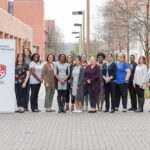
Banner image: The MECLP 2019 – 2020 cohort, fall 2019. Photo by Chris Ferenzi for UMBC.
]]>
When COVID-19 spread across the United States, essential workers scrambled to find open childcare centers with available spots. The pandemic exposed a longstanding shortage of licensed early...
https://umbc.edu/stories/maryland-state-dept-of-education-invests-additional-150000-in-umbcs-maryland-early-childhood-leadership-education-program/
https://beta.my.umbc.edu/api/v0/pixel/news/119767/guest@my.umbc.edu/fb6f9d0f34adf5a7bc5ab2f7add3cc1d/api/pixel
cahss
education
policy-and-society
shermancenter
UMBC News & Magazine
https://beta.my.umbc.edu/groups/umbc-news-magazine
https://assets1-beta.my.umbc.edu/system/shared/avatars/groups/000/001/943/24435aa6207c452e7bc15cc74b42c7bb/xsmall.png?1748556657
https://assets1-beta.my.umbc.edu/system/shared/avatars/groups/000/001/943/24435aa6207c452e7bc15cc74b42c7bb/original.png?1748556657
https://assets2-beta.my.umbc.edu/system/shared/avatars/groups/000/001/943/24435aa6207c452e7bc15cc74b42c7bb/xxlarge.png?1748556657
https://assets2-beta.my.umbc.edu/system/shared/avatars/groups/000/001/943/24435aa6207c452e7bc15cc74b42c7bb/xlarge.png?1748556657
https://assets3-beta.my.umbc.edu/system/shared/avatars/groups/000/001/943/24435aa6207c452e7bc15cc74b42c7bb/large.png?1748556657
https://assets1-beta.my.umbc.edu/system/shared/avatars/groups/000/001/943/24435aa6207c452e7bc15cc74b42c7bb/medium.png?1748556657
https://assets2-beta.my.umbc.edu/system/shared/avatars/groups/000/001/943/24435aa6207c452e7bc15cc74b42c7bb/small.png?1748556657
https://assets1-beta.my.umbc.edu/system/shared/avatars/groups/000/001/943/24435aa6207c452e7bc15cc74b42c7bb/xsmall.png?1748556657
https://assets2-beta.my.umbc.edu/system/shared/avatars/groups/000/001/943/24435aa6207c452e7bc15cc74b42c7bb/xxsmall.png?1748556657
UMBC News & Magazine
0
0
false
Mon, 26 Oct 2020 21:48:01 -0400
NASA awards UMBC team $1.4M to develop AI that improves how computers process climate data from satellites

Data archives from NASA’s Earth Observing System Data and Information System (EOSDIS), which collects data from satellites, aircraft, and ground instruments, currently contain about 31 petabytes (PB) of data. That’s 31 followed by 15 zeros, or 31 million billion bytes. Within three years, the archives are expected to hold more than 150 PB, and keep adding nearly 50 PB every year.
“Now we have so much raw data. So how do we analyze it? How do we make it useful for the research community?” asks Jianwu Wang, assistant professor of information systems and affiliated faculty at UMBC’s Joint Center for Earth Systems Technology (JCET), a partnership with NASA.
While Earth scientists are encountering this glut of satellite data, researchers in computing fields are rapidly increasing the capabilities of artificial intelligence and machine learning technologies. At the same time, there is an increasingly urgent need to better understand Earth’s systems as they shift due to climate change.
All of these factors drove Wang and his collaborators to find ways to help researchers access useful information collected by Earth-observing satellites much faster. A new $1.4 million award from NASA’s Advancing Collaborative Connections for Earth System Science (ACCESS) program will make their work possible.
 Jianwu Wang. Photo courtesy Jianwu Wang.
Taking computers to cloud school
The ACCESS project focuses specifically on improving how algorithms process and learn from the data satellites collect about clouds. At any moment, clouds cover about two-thirds of Earth’s surface, and yet understanding of their role in global climate is still lacking. Zhibo Zhang, associate professor of physics and a co-PI on the project, and his research group have been working to enhance knowledge about clouds’ role in regulating the global energy balance and precipitation.
To understand how clouds work in the global system, scientists need the data that instruments orbiting Earth on satellites collect. But the data needs some analysis before it’s useful. For example, when an instrument in a satellite looks at the Earth, it can detect things like brightness and color. But it can’t decide if it’s looking at a cloud or a clear sky. That’s the job of computer algorithms that scientists apply to the data after it’s collected.
Clouds can vary greatly in their appearance, so the computer needs to learn what different kinds of clouds look like. That way it can report “cloud” when its data meet the definition. That process of teaching the computer to learn from examples is called “machine learning.”
 Zhibo Zhang and members of his research group. Clockwise from lower left: Atmospheric physics Ph.D. students Qianqian Song, Chamara Raja, and Kevin Zheng; Zhibo Zhang; and Olivia Norman ’21, physics. Photo by Marlayna Demond ’11 for UMBC.
To train the computer algorithm, researchers feed the computer data that’s already labeled as “cloud” or “not-cloud.” Eventually, the computer learns to tell the difference on its own, and can report accurately whether an image it’s never seen before is a cloud or not. A good algorithm can learn to tell the difference between a cloud, smoke, dust, and other kinds of particles found in the atmosphere.
It’s all connected
One goal of the new project is to generate these training data sets. At the most basic level, it is somewhat similar to asking humans to complete captchas asking them to “click the boxes that include clouds,” but millions of times, and with significant added challenges and complexity.
For example, clouds cast shadows on each other and interact in other ways. So when the computer is trying to make a judgment about a given pixel in an image, it actually needs information about the surrounding pixels as well. Those interactions can extend far beyond what’s right next door. When looking at a spot in Maryland, for example, “You don’t only need to know about Maryland, you need to know about New York,” Zhang says.
 An image of clouds above Earth collected by the Visible Infrared Imaging Radiometer Suite (VIIRS) instrument, which sends its data through the Earth Observing System Data and Information System (EOSDIS). Find more images available through EOSDIS. Photo by NASA / VIIRS.
To address this challenge, the team will generate numerical simulations, as opposed to direct observational data collected by the satellite, to help define in computer code the ways clouds and other particles interact with each other in the atmosphere.
Using those complex simulations, “We can know which pixels are affecting their surroundings or being affected by their surroundings. That way, we’ll have a totally connected network that we can use to train the algorithms,” Zhang says. “Even observations cannot tell us which pixel is affecting which pixel. Only numerical simulations can do that.”
Decoding the data
Another important part of their work will make it possible to transfer knowledge between two different categories of instruments. The first type, active sensors, are extremely accurate but only observe a very small portion of the sky: All of them together only watch about 10 percent of Earth’s surface. Passive sensors, on the other hand, are a little less accurate but, combined, look at nearly the whole globe.

Sanjay Purushotham. Photo courtesy Sanjay Purushotham.
“These sensors collect different kinds of data,” and all of it is valuable, says Sanjay Purushotham, assistant professor of information systems and another co-investigator on the project. A major challenge for the team is coming up with algorithms that allow computers to use all of the available data—from both kinds of sensors—to define clouds and their interactions in ways a computer can understand.
“You cannot use any off-the-shelf machine learning or deep learning model to solve this problem,” Purushotham says.
The magic of AI
All of this algorithm development takes a lot of resources and human energy. However, the team is working to automate some parts of the process. Right now, “It’s always difficult to duplicate an algorithm designed for one instrument for other, similar instruments, or even for the same instrument on a different platform,” explains Chenxi Wang, a co-PI on the project and an assistant research scientist with JCET. “Even subtle changes in the instrument or the platform’s orbit can cause the original algorithm to fail.”
“You have to develop almost a brand new algorithm,” C. Wang adds. “You have to adjust parameters, check the stability of the algorithm, and do evaluation… You have to do everything again. And that can take from six months to several years.”
 Chenxi Wang. Photo courtesy Chenxi Wang.
C. Wang hopes to help the computer learn to do the translations itself, based on an understanding of the fundamental physics. All a human would have to do is give the program certain parameters about the instrument and the satellite it’s traveling on.
“I think that’s the magic of machine learning and artificial intelligence,” says C. Wang. “The hope is that instead of years, it will take only a few days or at most a week. It will save a lot of time and resources.”
“We’re developing this process so it can be universal and applied to any instrument,” adds Zhang. “It’ll liberate some scientists from repeating the same things again and again to fine-tune the algorithms.” It will also get data to scientists like him much faster. As he notes, “If you have to wait for many years to get that useful data, it’s harder to make progress.”
The power of partnership
UMBC’s long-term partnership with NASA has helped make this project possible. “The special connection between UMBC and NASA through JCET has definitely prepared us better for this kind of proposal,” Zhang says.
 Belay Demoz, director of JCET and professor of physics at UMBC. UMBC also maintains two other partnerships with NASA, the Geoplanetary Heliophysics Institute (GPHI) and the Center for Space Sciences and Technology (CSST). Photo by Marlayna Demond ’11 for UMBC.
In addition, a confluence of advances has given fresh impetus to this kind of work. For one thing, demand for climate data is on the rise, given the increasing visibility of the climate emergency. “Cloud observation is a high priority for NASA today. No one knows just how much clouds are contributing to climate change and other things,” J. Wang says. “That’s why we chose this topic, because it’s so important to understand Earth.”
Parallel advances in machine learning and data collection further fuel the effort. “Even two or three years ago we couldn’t have done this,” J. Wang reflects.
In the end, though, it comes down to collaboration. Each member of the team of data scientists and atmospheric physicists brings a unique perspective and knowledge base.
“We have good synergy among the team members, so we can speak the same language even though we come from different disciplines,” Purushotham says. “That helps us understand what the real problems in the data are, and what innovations we need to solve them.”
Banner image: The VIIRS instrument captured this image of bands of cirrus clouds off the southwest coast of Australia in 2019, which portend intense weather. Photo: NASA.
]]>
Data archives from NASA’s Earth Observing System Data and Information System (EOSDIS), which collects data from satellites, aircraft, and ground instruments, currently contain about 31 petabytes...
https://umbc.edu/stories/nasa-awards-umbc-team-1-4m-to-develop-ai-that-improves-how-computers-process-climate-data-from-satellites/
https://beta.my.umbc.edu/api/v0/pixel/news/119768/guest@my.umbc.edu/7c5fa40d74f9a5c7b6c2eb004dcafa2c/api/pixel
is
jcet
page1
physics
research
science-and-technology
UMBC News & Magazine
https://beta.my.umbc.edu/groups/umbc-news-magazine
https://assets1-beta.my.umbc.edu/system/shared/avatars/groups/000/001/943/24435aa6207c452e7bc15cc74b42c7bb/xsmall.png?1748556657
https://assets1-beta.my.umbc.edu/system/shared/avatars/groups/000/001/943/24435aa6207c452e7bc15cc74b42c7bb/original.png?1748556657
https://assets2-beta.my.umbc.edu/system/shared/avatars/groups/000/001/943/24435aa6207c452e7bc15cc74b42c7bb/xxlarge.png?1748556657
https://assets2-beta.my.umbc.edu/system/shared/avatars/groups/000/001/943/24435aa6207c452e7bc15cc74b42c7bb/xlarge.png?1748556657
https://assets3-beta.my.umbc.edu/system/shared/avatars/groups/000/001/943/24435aa6207c452e7bc15cc74b42c7bb/large.png?1748556657
https://assets1-beta.my.umbc.edu/system/shared/avatars/groups/000/001/943/24435aa6207c452e7bc15cc74b42c7bb/medium.png?1748556657
https://assets2-beta.my.umbc.edu/system/shared/avatars/groups/000/001/943/24435aa6207c452e7bc15cc74b42c7bb/small.png?1748556657
https://assets1-beta.my.umbc.edu/system/shared/avatars/groups/000/001/943/24435aa6207c452e7bc15cc74b42c7bb/xsmall.png?1748556657
https://assets2-beta.my.umbc.edu/system/shared/avatars/groups/000/001/943/24435aa6207c452e7bc15cc74b42c7bb/xxsmall.png?1748556657
UMBC News & Magazine
0
0
false
Mon, 26 Oct 2020 16:09:11 -0400
Career Q&A: Chris Adams ’15, economics

Every so often, we chat with an alum about what they do and how they got there. Today’s guest, investment banker Chris Adams ‘15, economics, is putting his interests in business and sports to work with his new venture, SharpRank. We caught up with Adams, who recently appeared on an “Inside Scoop Panel” offered by the UMBC Career Center, to learn more about the world of cross-sport performance ranking.
NAME: Chris Adams
MAJOR: Economics
GRAD YEAR: 2015
Q: Tell us a little about SharpRank. How did you get interested in this type of work?
A: There is always opportunity that comes out of difficult times. My business partners and I saw such opportunity in the emerging, ever-evolving landscape of sports betting. While listening to sports radio and podcasts, we would hear experts (or “Sharps”) claim to have incredible records at picking games successfully. We started thinking the general public is largely held in the dark with respect to this industry (sports betting); experts are self-proclaimed. Attributes of efficient markets are transparency and “full information,” and this particular industry was seemingly lacking both. While the sports world was completely shut down for six months we went to work creating an algorithm that incorporates metrics like accuracy, consistency, longevity, etc., to produce a “Madden” type ratings system to rate these “Sharps” that is both easy to understand and effective at performance ranking, The scores are normalized so the public can compare “Sharps” who focus on different sports on a level playing field; much like Morningstar does for funds and other securities. SharpRank was created to provide transparency for the general public in a traditional murky market. The sports gambling industry is booming and our team operates under the premise that “when there is a gold rush, don’t go digging, sell shovels.” Because of this we are now a part of the ecosystem and constantly growing/evolving.
Q: Were there any classes or professors at UMBC who really helped you or inspired you along the way?
A: I came to UMBC somewhat non-traditionally. I had helped start a business after high school and so upon entering UMBC, I knew exactly what I wanted to learn and study and where to focus my attention: statistics, game theory, economic theory, etc. Having said that, I was fortunate enough to expand my horizons and take the “What is an American” class with Professor [Kimberly] Moffitt, who challenged my views and stances. She has proven to be an incredible friend and sounding board to this day – despite still not agreeing on Disney’s values. Additionally, my independent project with Professor [R. Scott] Farrow on two-sided markets helped build the framework for the platform we use at SharpRank. Dr. [Freeman] Harbowski has been and continues to be one of the most influential leaders I have had the privilege of interacting with. He took the time to meet with me in person multiple times during my time at UMBC and remains a strong support and influencer.
Q: What’s the toughest lesson you’ve learned along the way as a new entrepreneur?
A: Time management and delegation. Over the past two years I have gotten engaged and married. Last year, my wife and I bought our first home and this January we are expecting our first child! Academically I completed my MBA at UVA Darden School of Business and professionally, I work with an incredible team in investment banking full time, at Evergreen Advisors Capital. In the off hours (between 11 p.m. and 3 a.m.) we founded SharpRank. Needless to say, time management is a skill that I have sharpened over the past few years so that I am able to participate in all the activities that I am passionate about. Additionally, I cannot be good at everything, and that is okay. Delegation is difficult but necessary when time is the constraint. At SharpRank we have built a team that allows each of us to focus on our strengths and delegate our weaknesses. The team is incredibly diverse in background and skill set – ranging from Top Gun instructor to financial planner and everything in between. Our advisory board consists of 7 team members with experience in legal, start-ups, funding, etc. We lean on them for guidance in areas our team is not as familiar. What we have found is, time management and delegation are functions of effective communication, efficiency, and trust.
Q: What advice would you give a current UMBC student interested in starting their own business?
A: Just do it! Find a passion and chase it down. Belief in the mission and passion are critical. Seventy percent of businesses fail within the first year, but the devil is in the details with statistics and in this case, be the minority. Be the example for the next generation of entrepreneurs to turn to and when that time comes openly accept that invitation to help. Harbor an environment of supporters/team members who have aligned values and will ask the tough questions. If it does not work, the photo negative is as important as the end photo; SharpRank is not the first idea my partners and I have attempted. View challenges as opportunities and do not let perfection get in the way of progress. Action, action, action. If you are interested in learning more or are interested in joining the team please reach out, info@sharprank.com. We are always looking for talent.
Header photo courtesy of Adams.
Learn more about other entrepreneurial alumni by using the UMBC Alumni Business Directory.
Read more Career Q&A stories here.
]]>
Every so often, we chat with an alum about what they do and how they got there. Today’s guest, investment banker Chris Adams ‘15, economics, is putting his interests in business and sports to work...
https://umbc.edu/stories/career-qa-chris-adams-15-economics/
https://beta.my.umbc.edu/api/v0/pixel/news/119769/guest@my.umbc.edu/0ed4eb230561948f8f7be4376f388642/api/pixel
alumni
career-q-and-a
economics
UMBC News & Magazine
https://beta.my.umbc.edu/groups/umbc-news-magazine
https://assets1-beta.my.umbc.edu/system/shared/avatars/groups/000/001/943/24435aa6207c452e7bc15cc74b42c7bb/xsmall.png?1748556657
https://assets1-beta.my.umbc.edu/system/shared/avatars/groups/000/001/943/24435aa6207c452e7bc15cc74b42c7bb/original.png?1748556657
https://assets2-beta.my.umbc.edu/system/shared/avatars/groups/000/001/943/24435aa6207c452e7bc15cc74b42c7bb/xxlarge.png?1748556657
https://assets2-beta.my.umbc.edu/system/shared/avatars/groups/000/001/943/24435aa6207c452e7bc15cc74b42c7bb/xlarge.png?1748556657
https://assets3-beta.my.umbc.edu/system/shared/avatars/groups/000/001/943/24435aa6207c452e7bc15cc74b42c7bb/large.png?1748556657
https://assets1-beta.my.umbc.edu/system/shared/avatars/groups/000/001/943/24435aa6207c452e7bc15cc74b42c7bb/medium.png?1748556657
https://assets2-beta.my.umbc.edu/system/shared/avatars/groups/000/001/943/24435aa6207c452e7bc15cc74b42c7bb/small.png?1748556657
https://assets1-beta.my.umbc.edu/system/shared/avatars/groups/000/001/943/24435aa6207c452e7bc15cc74b42c7bb/xsmall.png?1748556657
https://assets2-beta.my.umbc.edu/system/shared/avatars/groups/000/001/943/24435aa6207c452e7bc15cc74b42c7bb/xxsmall.png?1748556657
UMBC News & Magazine
0
0
false
Thu, 22 Oct 2020 19:33:44 -0400
Shoulder to shoulder: U.S. News again names UMBC one of the Best Global Universities
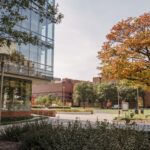
UMBC is once again one of U.S. News & World Report’s 2021 Best Global Universities, just five weeks after recognition as a national leader in undergraduate teaching and innovation. UMBC is among the top 700 universities worldwide, and ranked as a leader in geosciences, space science, and computer science specifically.
This prominent global ranking has particular significance for many in the university community. “UMBC continues to perform well on the international stage,” says David Di Maria, associate vice provost for international education. He notes, “The cross-border collaborations and contributions of our faculty, students, and staff position UMBC shoulder to shoulder amongst the top universities in the world.”
 Flags from nations around the world, in the UMBC Commons.
Reputation for quality research
UMBC is ranked an impressive #103 in geosciences globally, and is a world leader in key measures of research success. Worldwide, UMBC is #1 in percentage of papers that are among the top 1% most cited, #2 for top 10% most cited, and #2 for citation impact. UMBC also ranks highly in research reputation, emphasizing the university’s rise as a home for top researchers in this field.
Lorraine Remer, research professor for the Joint Center for Earth Systems Technology (JCET), is a leading faculty member in this area. Remer received the 2019 UMBC Research Faculty Excellence Award. She has been honored for significant contributions to the atmospheric sciences, including as a fellow of the American Geophysical Union.
 Research Professor Lorraine Remer
“It’s gratifying to see UMBC be recognized as a world-class research institution,” says Remer. “I’m happy to be a part of the UMBC community, where so much world-class research takes place.”
UMBC ranks #201 globally in space science, with a particularly strong international collaboration ranking.
“I’m very proud to be at UMBC and work with its faculty in JCET, the Goddard Planetary Heliophysics Institute (GPHI), and the Center for Space Sciences and Technology (CSST),” says physics professor Belay Demoz, director of JCET. “The opportunity it provides for geoscience research is immense. The collaboration work that is ongoing with NASA and NOAA on science and instrumentation is cutting edge.”
 Belay Demoz at a NASA facility 2016.
In computer science, UMBC is among the top 400 universities globally, with strengths in research reputation and research citations.
National leader in international outlook
UMBC also continues to rise in college rankings published by the Wall Street Journal (WSJ) and London-based Times Higher Education (THE). Of 800 universities included in the ranking, released earlier this month, UMBC placed at #270. This is up 13 places from last year and more than 100 places over the past five years.
The publications also ranked UMBC as one of the Best Public Universities in the United States. UMBC appeared in the top 75 along with two other Maryland institutions: the University of Maryland, College Park, and the U.S. Naval Academy.
 Two students walk past UMBC’s new Interdisciplinary Life Sciences Building, fall 2020.
The WSJ/THE College ranking is based on 15 performance indicators “designed to answer the questions that matter most to students and their families.” UMBC’s international outlook score increased dramatically. Di Maria shares, “Times Higher Education awarding UMBC a record score in this important category demonstrates how international outlook continues to grow at a steady pace.”
Consistent with the U.S. News global ranking, UMBC’s WSJ/THE research score saw a notable increase as well.
In new 2021 Times Higher Education World University Rankings by subject, UMBC is ranked in education, engineering, life sciences, physical sciences, psychology, social sciences, and computer science.
These positive trends are particularly meaningful at a moment of global concern regarding the impacts of the COVID-19 pandemic on national economies and higher education. They indicate UMBC’s stability as a leading public research university with national and global appeal.
Featured image: UMBC campus, fall 2020. All photos by Maryland Demond ’11 for UMBC.
Story updated November 3, 2020, to include new THE World University Rankings by subject.
]]>
UMBC is once again one of U.S. News & World Report’s 2021 Best Global Universities, just five weeks after recognition as a national leader in undergraduate teaching and innovation. UMBC is...
https://umbc.edu/stories/shoulder-to-shoulder-u-s-news-again-names-umbc-one-of-the-best-global-universities/
https://beta.my.umbc.edu/api/v0/pixel/news/119770/guest@my.umbc.edu/4d6ebe2da30487e6e102b8db1c272db1/api/pixel
community
international
page1
rankings
UMBC News & Magazine
https://beta.my.umbc.edu/groups/umbc-news-magazine
https://assets1-beta.my.umbc.edu/system/shared/avatars/groups/000/001/943/24435aa6207c452e7bc15cc74b42c7bb/xsmall.png?1748556657
https://assets1-beta.my.umbc.edu/system/shared/avatars/groups/000/001/943/24435aa6207c452e7bc15cc74b42c7bb/original.png?1748556657
https://assets2-beta.my.umbc.edu/system/shared/avatars/groups/000/001/943/24435aa6207c452e7bc15cc74b42c7bb/xxlarge.png?1748556657
https://assets2-beta.my.umbc.edu/system/shared/avatars/groups/000/001/943/24435aa6207c452e7bc15cc74b42c7bb/xlarge.png?1748556657
https://assets3-beta.my.umbc.edu/system/shared/avatars/groups/000/001/943/24435aa6207c452e7bc15cc74b42c7bb/large.png?1748556657
https://assets1-beta.my.umbc.edu/system/shared/avatars/groups/000/001/943/24435aa6207c452e7bc15cc74b42c7bb/medium.png?1748556657
https://assets2-beta.my.umbc.edu/system/shared/avatars/groups/000/001/943/24435aa6207c452e7bc15cc74b42c7bb/small.png?1748556657
https://assets1-beta.my.umbc.edu/system/shared/avatars/groups/000/001/943/24435aa6207c452e7bc15cc74b42c7bb/xsmall.png?1748556657
https://assets2-beta.my.umbc.edu/system/shared/avatars/groups/000/001/943/24435aa6207c452e7bc15cc74b42c7bb/xxsmall.png?1748556657
UMBC News & Magazine
0
0
false
Thu, 22 Oct 2020 16:08:57 -0400