Showing up for the season

Daniel Akin sat out most of his sophomore year of basketball due to a torn meniscus. When the pandemic hit last spring, he worried his senior season would be lost, as well. So, when he found out the Retrievers would play a 2020 – 21 season after all, Akin was thrilled.
“It means a lot to be able to play this year because of the initial suspense of not knowing whether we were even going to have a season,” says Akin, a senior sociology major.
Thanks to diligent, strict adherence to COVID testing guidelines, and a supportive community, both Retriever basketball teams plan to return to play this winter.
Although current state guidelines will prevent fans from attending the games to start the campaign, coaches and players alike are excited to make Retriever Nation proud from afar.
 Johnetta Hayes, UMBC Women’s Basketball head coach.
Preparing for a unique season
“This season comes with so many obstacles, but we’re ready for the highs and lows,” says Johnetta Hayes, UMBC Women’s Basketball head coach. “We’ve decided to attack this newfound, temporary way of gameplay with a positive attitude and open mind.”
So, what exactly does prepping for a season amidst a global pandemic look like? Structured. And a little bit weird. After returning to campus, players adhered to a six-week resocialization plan where they were sequestered into pods and began the process of reacclimating to training.
“The prep this season has been completely different,” says Akin. “We didn’t have summer workouts, so we had less time to get ready for the season.”
Jen Gast ‘21, psychology, a forward on the women’s team, shares, “We work out and then have to leave the gym. We do film over Zoom and other things as a team as much as we can to make it so we are closer on the court.”
Keeping up with safety protocols
With an emphasis on curtailing the possibility of injury, players continued training and ultimately transitioned to team play. While returning to full court seems normal, all COVID-19 policies had to be strictly followed. This included sanitation protocols, weekly COVID testing for anyone involved in play, no shared spaces among other sports, and vigilant symptom monitoring, among other safety precautions.
 Brianna Sliwinski ’24 (left, #4) goes against Juliet Esadah (#14).
“I am extremely proud of our student-athletes and their resiliency and adherence to our protocols during these challenging times. Our safety protocols are only effective if they are respected and adhered to,” says Stacy Carone, associate athletic director, sports medicine. “Our sports medicine team built solid protocols, but our student-athletes are the stars of this show.”
“I would say I was hesitant at first as to how it was going to work with wearing masks during playing and all of the other needed safety precautions, but Athletics is doing a good job making this transition easy and doable,” says Gast.
 Jen Gast ‘21, psychology
Retriever Nation cheers from afar
In accordance with America East and NCAA policies, this year is going to look a little different from the fan perspective, as well. When the Retrievers begin play this season, they’ll be doing so without fans in the audience to cheer them on. But even if they can’t hear the roar of the crowd, Retriever Nation is still rooting for the home team.
Local fan John Lotz shares, “Even if my wife and I can’t be there in person we want to show our support to the players. We want them to know that we will be rooting for them while watching at home as much as if we were at the games.”
 Darnell Rogers ’22, media and communications studies
To give the players a sense of audience support, fans can purchase cardboard cutouts to have displayed in the stands. Those who bought season tickets have access to exclusive streaming content.
“We wanted to create a unique season ticket package that gives our loyal fan base an opportunity to continue to support UMBC Basketball as our student-athletes return to competition,” explains Seth Nagle, assistant director for annual giving, athletics. “The familiar faces on gameday, even in cardboard cutout form, will remind our athletes of the overwhelming support we have received in offsetting costs related to the measures put in place to allow a safe return to athletic activities and competition.”
Returning to what they love
More than anything, players and coaches are just happy to get back to doing what they love.
 Ryan Odom, UMBC Men’s Basketball head coach.
“It’s been great to be around our players, staff, and overall basketball family again,” says Ryan Odom, Men’s Basketball head coach. “We’ve been working hard to prepare for the season and our players have been great. They come to work hard every day and are excited about the prospects for the season.”
Want to show your support for #RetrieverNation? Consider submitting words of encouragement and photos or videos to cheer on our teams!
Banner image: Retriever barbell. All photos by Dmitri Floyd ’21, media and communication studies.
]]>
Daniel Akin sat out most of his sophomore year of basketball due to a torn meniscus. When the pandemic hit last spring, he worried his senior season would be lost, as well. So, when he found out...
https://umbc.edu/stories/showing-up-for-the-season/
https://beta.my.umbc.edu/api/v0/pixel/news/119752/guest@my.umbc.edu/7eb8825b06cc2439cf1ac6391ccd030c/api/pixel
athletics
community
page1
resilience
UMBC News & Magazine
https://beta.my.umbc.edu/groups/umbc-news-magazine
https://assets1-beta.my.umbc.edu/system/shared/avatars/groups/000/001/943/24435aa6207c452e7bc15cc74b42c7bb/xsmall.png?1748556657
https://assets1-beta.my.umbc.edu/system/shared/avatars/groups/000/001/943/24435aa6207c452e7bc15cc74b42c7bb/original.png?1748556657
https://assets2-beta.my.umbc.edu/system/shared/avatars/groups/000/001/943/24435aa6207c452e7bc15cc74b42c7bb/xxlarge.png?1748556657
https://assets2-beta.my.umbc.edu/system/shared/avatars/groups/000/001/943/24435aa6207c452e7bc15cc74b42c7bb/xlarge.png?1748556657
https://assets3-beta.my.umbc.edu/system/shared/avatars/groups/000/001/943/24435aa6207c452e7bc15cc74b42c7bb/large.png?1748556657
https://assets1-beta.my.umbc.edu/system/shared/avatars/groups/000/001/943/24435aa6207c452e7bc15cc74b42c7bb/medium.png?1748556657
https://assets2-beta.my.umbc.edu/system/shared/avatars/groups/000/001/943/24435aa6207c452e7bc15cc74b42c7bb/small.png?1748556657
https://assets1-beta.my.umbc.edu/system/shared/avatars/groups/000/001/943/24435aa6207c452e7bc15cc74b42c7bb/xsmall.png?1748556657
https://assets2-beta.my.umbc.edu/system/shared/avatars/groups/000/001/943/24435aa6207c452e7bc15cc74b42c7bb/xxsmall.png?1748556657
UMBC News & Magazine
0
0
false
Tue, 17 Nov 2020 15:38:14 -0500
Academy for Gerontology in Higher Education honors UMBC’s innovative leadership in the field of aging

Dana Bradley, dean of UMBC’s Erickson School of Aging Studies, has presented President Freeman Hrabowski with a prominent honor from the nation’s preeminent organization devoted to research, education, and practice in the field of aging.
Bradley is incoming chair of the Gerontological Society of America (GSA). The 2020 Administrative Leadership Honor award she presented to Hrabowski is granted through the Academy for Gerontology in Higher Education (AGHE), a section of the GSA. The award recognizes twenty leaders in the field of gerontology across the United States, British Columbia, and Japan. Their outstanding work represents milestones in the history and development of gerontology.
“The award is about helping an international audience understand the impact that our scientific researchers and educators have in the field of aging,” shares Bradley.
She nominated Hrabowski for the award in collaboration with John Schumacher, associate professor of sociology, anthropology, and public health (SAHP), and Leslie Morgan, professor emerita of SAPH. Schumacher is the graduate program director of the gerontology Ph.D. program. The program is jointly offered by UMBC and the University of Maryland, Baltimore (UMB). It is complementary to the Erickson School’s bachelor’s and master’s degrees and certificate programs.

(L to R) Dana Bradley, Amy Berman,John Schumacher, and Nicole Brandt, executive director of the Lamy Center at UMB.
National leadership in aging studies
Bradley’s work in the gerontology community has created avenues and networks for scientists, educators, and students to investigate, advocate, research, and innovate in the fields of aging and longevity. This, in turn, has had a positive impact on housing, health services, community wellbeing, communication, and lifelong learning for older adults.
Bradley is a former GSA and AGHE fellow. She has long served as an elected leader within the GSA and Southern Gerontological Society. She was drawn to become dean of UMBC’s Erickson School in 2018 because of its focus “on leading and being on the edge through engaged scholarship with endless possibilities.” Hrabowski, she says, has cultivated and supported the Erickson School’s leadership in the field.
Over the last three years, Bradley has collaborated with Hrabowski, faculty, campus, and community partners to broaden and diversify UMBC’s aging services research. Last year she and Hrabowski served on a steering committee that built a partnership between UMBC and UMB to become Maryland’s first “age-friendly” universities.
They joined fifty-eight institutions worldwide that make up the Age-Friendly University Global Network, led by Dublin City University in Ireland. The “age-friendly” designation is a commitment to innovate advances in gerontology, health research, and community initiatives to support older adults in higher education.
A model for teaching, learning, and research
“Dr. Hrabowski has been at the forefront of creating and promoting a vision of how we think and talk about aging and longevity,” shares Bradley. And the inclusive, forward-looking vision that he and the Erickson School emphasize has had notable impacts, including on the student experience.
At the same time, Hrabowski shares that he sees his AGHE honor as “a reflection of the Erickson School’s innovative approach to teaching, learning, and research. I’m so proud of the work being done at the school. It has had great success preparing alumni who are now leaders in the field of aging.”
Erickson School alumni likeLauren Mortimer ‘19, and Malgorzata Bondyra ‘20, management of aging services, exemplify the innovation that UMBC fosters in their work to reach older adults in creative ways. Mortimer designed a comfort book. It provides tools for people with dementia to soothe themselves during periods of confusion and irritability. Bondyra’s internship experience in senior housing inspired her to create a virtual cooking class for the older members of her Polish community senior center.
The Erickson School has become a place where students equip themselves with the skills and knowledge to address issues in longevity care inclusively and holistically, and it continues to grow. The school is now developing a certificate in inclusion and diversity in aging services. Says Bradley, “Dr. Hrabowski inspires me to continue to envision possibilities for what the future of aging services can look like.”
Banner image: UMBC and UMB Age-Friendly University steering committee. All images by Matthew D’agostino for UMB.
]]>
Dana Bradley, dean of UMBC’s Erickson School of Aging Studies, has presented President Freeman Hrabowski with a prominent honor from the nation’s preeminent organization devoted to research,...
https://umbc.edu/stories/academy-for-gerontology-in-higher-education-honors-umbcs-innovative-leadership-in-the-field-of-aging/
https://beta.my.umbc.edu/api/v0/pixel/news/119753/guest@my.umbc.edu/c3234591b28cdd68df448bfb955e6697/api/pixel
cs3
ericksonschool
gerontology
graduateschool
hrabowski
policy-and-society
UMBC News & Magazine
https://beta.my.umbc.edu/groups/umbc-news-magazine
https://assets1-beta.my.umbc.edu/system/shared/avatars/groups/000/001/943/24435aa6207c452e7bc15cc74b42c7bb/xsmall.png?1748556657
https://assets1-beta.my.umbc.edu/system/shared/avatars/groups/000/001/943/24435aa6207c452e7bc15cc74b42c7bb/original.png?1748556657
https://assets2-beta.my.umbc.edu/system/shared/avatars/groups/000/001/943/24435aa6207c452e7bc15cc74b42c7bb/xxlarge.png?1748556657
https://assets2-beta.my.umbc.edu/system/shared/avatars/groups/000/001/943/24435aa6207c452e7bc15cc74b42c7bb/xlarge.png?1748556657
https://assets3-beta.my.umbc.edu/system/shared/avatars/groups/000/001/943/24435aa6207c452e7bc15cc74b42c7bb/large.png?1748556657
https://assets1-beta.my.umbc.edu/system/shared/avatars/groups/000/001/943/24435aa6207c452e7bc15cc74b42c7bb/medium.png?1748556657
https://assets2-beta.my.umbc.edu/system/shared/avatars/groups/000/001/943/24435aa6207c452e7bc15cc74b42c7bb/small.png?1748556657
https://assets1-beta.my.umbc.edu/system/shared/avatars/groups/000/001/943/24435aa6207c452e7bc15cc74b42c7bb/xsmall.png?1748556657
https://assets2-beta.my.umbc.edu/system/shared/avatars/groups/000/001/943/24435aa6207c452e7bc15cc74b42c7bb/xxsmall.png?1748556657
UMBC News & Magazine
0
0
false
Mon, 16 Nov 2020 15:01:55 -0500
Genocide claims in Nagorno-Karabakh make peace between Armenia and Azerbaijan unlikely, despite cease-fire
By Brian Grodsky, professor, Political Science, UMBC
A Russian-brokered cease-fire between Armenia and Azerbaijan this week halted fighting over the disputed Nagorno-Karabakh territory, where long-standing hostilities reerupted on Sept. 27.
The deal leaves Azerbaijan, which was given Nagorno-Karabakh by the Soviets in 1923, largely in control of the majority-Armenian territory. Leaders in Nagorno-Karabakh, located in Western Azerbaijan close to Armenia, continue to demand independence.
Thousands have died and an estimated 100,000 have been displaced in Nagorno-Karabakh since September. As the cease-fire took effect on Nov. 10, Azerbaijanis danced in the streets. But angry Armenians stormed the Armenian parliament and office of the prime minister.
Both sides in the conflict have claimed that fighting in Nagorno-Karabakh isn’t just about territorial control – it is a fight to prevent genocide, a fight for their lives. These grave accusations, while yet unproven, may make a lasting resolution to the conflict much harder.
Freedom fighting and genocide claims
Violence first broke out in Nagorno-Karabakh in the 1980s, when the region’s ethnic Armenian leaders sought to gain independence from Azerbaijan. There has been intermittent fighting since then, including a bloody war in the 1990s that ended in another Russia-brokered cease-fire giving Azerbaijan legal control of the region.
But Armenian leaders in Nagorno-Karabakh declared themselves an independent republic, and have repeatedly tried to secede.
In my research on self-determination, I find that genocide is often invoked by secessionist regions as a last-ditch effort to secure outside intervention in their conflict.
The United Nations defines genocide as the destruction or partial destruction of a “national, ethnical, racial or religious group.” It is a war crime under international law, and countries are supposed to “prevent and punish” it under a 1948 U.N. agreement.
Secessionist leaders often try to rally foreign powers around their cause with arguments based on geopolitical strategy, economic self-interest, religious bonds or shared ideology. Those reasons broadly explain why Iran supports the Iraqi Kurds in their quest for greater autonomy, and why the Arab states back the Palestinians’ efforts at statehood.
But when all else fails, freedom fighters will highlight their own repression in the starkest of terms to gain international assistance. In war a global campaign for victimhood is the weapon of the weaker side – and genocide claims are the most powerful weapon in this arsenal.
According to my research, more than two-thirds of members in the Unrepresented Nations and Peoples Organization, a nongovernmental organization composed of autonomy-minded minority groups like the Kurds, have alleged genocide.
Genocide makes peace hard
Genocide may be, as one scholar puts it, the “embodiment of radical evil,” but as a war crime it is incredibly difficult to prove.
Under international law, accusers must show perpetrators acted with the “intent to destroy, in whole or in part,” specified groups. Demonstrating intent is a tall order.
Armenia knows this as well as any nation. The 1915 Armenian genocide by Turkey is recognized by fewer than three dozen countries. In terms of both law and politics, declaring a deadly military campaign to be genocide – versus just the atrocities of a bloody conflict – is tricky indeed.
Genocide allegations, on the other hand, are more easily come by. But according to my research they don’t bode well for peace.
Genocide claims turn “the other side” into an enemy bent on the destruction of an entire people. Once the public sees a conflict in these terms, history shows, leaders understandably balk at the prospect of sitting down at the negotiating table with that enemy.
Genocide claims also reduce the likelihood of effective outside mediation by winnowing away the pool of “honest brokers” – that is, objective intermediaries. Opposing parties can and do reject would-be peacekeepers based on their acknowledgment of – or refusal to acknowledge – genocide accusations, my research finds.
In archived coverage of the South Ossetian region of Georgia, for example, local leaders in the 2000s insisted various European and American troops could not serve as peacekeepers since they had not defended Ossetians from an alleged 1992 genocide.
Nagorno-Karabakh and genocide
Genocide claims in the Georgia cases did eventually lead to international intervention and separation from Georgia, but not through peaceful negotiations. Instead, South Ossetia, like another breakaway Georgian state called Abkhazia, gained de facto independence after a brutal Russian military assault on Georgia in 2008.
This mirrored what occurred in Kosovo nearly a decade earlier when Serbian atrocities prompted Western intervention. Western powers recognized Kosovo’s independence in 2008, but Serbia continues to contest Kosovo’s separation.
In the case of Nagorno-Karabakh, genocide claims on both sides are nothing new. In archival research I found media reports showing that Armenian leaders have repeatedly reminded foreign powers of the 1915 Armenian genocide when pressing for outside intervention in their conflict with Azerbaijan.
Azerbaijanis, for their part, retort it is their citizens who should fear genocide. During a 1992 Armenian military campaign in Nagorno-Karabakh, Armenians committed what is now called the Khojaly massacre, when at least 613 civilians were reportedly killed. As newspapers from the era reveal, Azerbaijani leaders declared then that without international intervention, Armenians would finish the job.
It is impossible to determine whether genocide has in fact occurred in Nagorno-Karabakh without in-depth investigations. But the accusations alone may overpower any truce. And as Armenians’ angry reaction to the recent cease-fire demonstrates, peace between the two nations is fragile at best.
*****
Brian Grodsky, Professor of Political Science, University of Maryland, Baltimore County
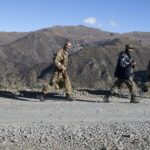
Header image: Soldiers patrol the mountainous, disputed border between Armenia and Azerbaijan, Nagorno-Karabakh, on Nov. 8. Stanislav Krasilnikov\TASS via Getty Images
This article is republished from The Conversation under a Creative Commons license. Read the original article.
]]>
By Brian Grodsky, professor, Political Science, UMBC A Russian-brokered cease-fire between Armenia and Azerbaijan this week halted fighting over the disputed Nagorno-Karabakh territory, where...
https://umbc.edu/stories/genocide-claims-in-nagorno-karabakh-make-peace-between-armenia-and-azerbaijan-unlikely-despite-cease-fire/
https://beta.my.umbc.edu/api/v0/pixel/news/119754/guest@my.umbc.edu/3ca8c0323af0a5dfd925813ccc81d714/api/pixel
cahss
perspectives
political-science
the-conversation
UMBC News & Magazine
https://beta.my.umbc.edu/groups/umbc-news-magazine
https://assets1-beta.my.umbc.edu/system/shared/avatars/groups/000/001/943/24435aa6207c452e7bc15cc74b42c7bb/xsmall.png?1748556657
https://assets1-beta.my.umbc.edu/system/shared/avatars/groups/000/001/943/24435aa6207c452e7bc15cc74b42c7bb/original.png?1748556657
https://assets2-beta.my.umbc.edu/system/shared/avatars/groups/000/001/943/24435aa6207c452e7bc15cc74b42c7bb/xxlarge.png?1748556657
https://assets2-beta.my.umbc.edu/system/shared/avatars/groups/000/001/943/24435aa6207c452e7bc15cc74b42c7bb/xlarge.png?1748556657
https://assets3-beta.my.umbc.edu/system/shared/avatars/groups/000/001/943/24435aa6207c452e7bc15cc74b42c7bb/large.png?1748556657
https://assets1-beta.my.umbc.edu/system/shared/avatars/groups/000/001/943/24435aa6207c452e7bc15cc74b42c7bb/medium.png?1748556657
https://assets2-beta.my.umbc.edu/system/shared/avatars/groups/000/001/943/24435aa6207c452e7bc15cc74b42c7bb/small.png?1748556657
https://assets1-beta.my.umbc.edu/system/shared/avatars/groups/000/001/943/24435aa6207c452e7bc15cc74b42c7bb/xsmall.png?1748556657
https://assets2-beta.my.umbc.edu/system/shared/avatars/groups/000/001/943/24435aa6207c452e7bc15cc74b42c7bb/xxsmall.png?1748556657
UMBC News & Magazine
0
0
false
Fri, 13 Nov 2020 15:05:09 -0500
First In Class

It’s no secret why first generation college students thrive at UMBC. Our network of first generation staff and faculty make it the center of their work as educators and researchers.
Sometimes, an “aha moment” appears as a bright light bulb. More often than not, though, the spark that fueled it is what really matters.
For Juwon Ajayi, that moment first happened in Nigeria. As a kid, he accidentally stuck his finger in an electrical socket. He laughs about it now, but that somewhat painful experience got his brain ticking. How was the power traveling? Why did it hurt so much?
Like many kids, Ajayi found pleasure and intellectual stimulation in Legos and dreamed of someday building his own car. When his family moved to America, he had an inkling of what he might do with his academic leanings—but college felt a bit like uncharted territory.
“It was hard. There was a big learning curve,” says Ajayi, a senior computer engineering student who started off with three years at Anne Arundel Community College while other members of his family were taking similar paths. “Everything was new. Considering my major, there was really nobody that could help me when I didn’t understand…so I basically had to try to understand it myself.”
Thankfully, when Ajayi transferred to UMBC he found a home first with the Louis Stokes Alliance for Minority Participation (LSAMP) program and then with the McNair Scholars community, a nationwide program focused on helping first generation students be successful in college and graduate school. Today, he’s on his way to earning a degree, and also making a difference by helping new McNairs find their way. But for many students, the hardest part is getting in the door in the first place.
“As far as the application process, I was pretty much on my own. I really just kind of winged it, which was not the best, looking back,” says Kaitlynn Lilly, a junior majoring in physics and mathematics. Lilly wound up landing on her feet despite the challenge of writing the dreaded personal essay for her college application. “That was the biggest curveball for me. It was scary—so much depends on how you come off on a piece of paper, right?”
 Student Julia del Carmen Aviles-Zavala (center) and her family. Photo by Marlayna Demond ’11 for UMBC Magazine.
As the first in her family to graduate from high school, Julia del Carmen Aviles-Zavala, a junior psychology major at UMBC at The Universities at Shady Grove, also found the process extremely intimidating at first.
“I was constantly feeling unsure of what class to take, and anxious as to if my classes would transfer to my major once I got to UMBC,” she says. “Honestly I was just not sure how ‘college’ worked, and I did not have a concrete idea of an outline for my next four years.”
UMBC is known for being a champion of students from all backgrounds, so it’s no surprise to find that first generation college students make up approximately 25 percent of the current student body—or that UMBC would be a huge draw for faculty and staff who come from very similar backgrounds. Fueled by their own experiences, they created the First Generation Network, resulting in programming—covering everything from social skills to financial aid to planning for grad school—and research, and a community truly dedicated to the success of first generation students.
IT’S PERSONAL
Amanda Knapp is proud of where she comes from.
As a country girl from rural West Virginia and the daughter of two parents who hadn’t finished high school (her mother later completed a BS in Nursing in 2018), Knapp took joy from the friends and ideas she found in academia. Knowing she’d need to pay her own way to college, but eager to get away, she worked multiple jobs through high school and college—including one as the bumblebee mascot for an Old Country Buffet and another loading tractor trailers with mail and heavy packages until the wee hours of night.
It was tough work, but it gave Knapp the freedom to make important connections at SUNY Buffalo, like managing a 3,000-member ski club and joining the women’s rugby team. There, not only did she find friends and professors who helped guide her, but a pathway to her current work as associate vice provost and assistant dean for Undergraduate Academic Affairs at UMBC.
“Working in this field is a way for me to give back to a profession that literally changed the course of my life,” says Knapp, whose position gives her direct ways of helping students via student success efforts, the Academic Success Center, and the year-old First Generation Network.
“To be able to help someone remove those barriers so they don’t have to face them—or just know that they have someone who cares about them—is what makes our campus so special. There are so many of us on this campus.”
 First generation faculty and staff helped celebrate their students at the 2018 First Generation Student Day. Photo courtesy of Amanda Knapp.
Faculty and staff who are first generation college graduates themselves often can see the issues their students are facing before the students themselves. That means a big part of the work is giving students tools they didn’t even know they yet need, says Michael Hunt ’06, M13, mathematics, director of the UMBC McNair Scholars Program and a current doctoral student in the Language, Literacy & Culture program at UMBC.
Hunt describes a common scenario: A student applies for summer research opportunities all over the country, and is accepted by a second choice location. The student wants to know if they have other options, but the first place is giving them a deadline to respond. The student stresses, not knowing what to do.
“So, what do I do? I say, ‘Well, did you email them? Did you pick up the phone and call them?’ And the student says, ‘We can do that? I’m allowed to do that?’” says Hunt, a graduate of both the McNair and Meyerhoff Scholars Programs. “So you get them to sort of recognize what they are able to do and help them take that to the next level. And that’s what it is for us. It’s okay; I’m going to show you how to play the game.”
Hunt has always been an outgoing person and educator, warm and affirming. In the age of social distancing, he and the McNair team have upped their game in new ways, offering fun and informal ways of socializing, including web-based “hype sessions,” student group chats to provide both academic and social structure.
As a fellow first generation college student, Bill LaCourse, dean of the College of Natural and Mathematical Sciences, loves to see and hear about these projects working for students. Growing up in Connecticut, as the first in his extended family to attend college, LaCourse worked as a bike mechanic, a hospital laundry washer, a cook, and a stock clerk in order to save up for college.
Along the way to his eventual doctorate in chemistry, LaCourse learned how personal relationships and mentorship can really make the difference for students trying to figure out their options.
“We are all mentors for each other,” he says. “We are all role models to somebody whether we are a good role model or a bad role model. That’s something that’s important to have because as I went forward, I had my good ones, but I had my bad ones as well.”
Looking back on his own experiences, LaCourse sees value in what he learned. Today he works to create inclusive environments for underserved students in his college and beyond.
“The whole mission for me is to have people not make the same stupid mistakes I did,” he admits. “They don’t have to waste their time and learn everything the hard way. I’ve done that. I’ve come through the brush and the copses to get where I needed to go. They can have it better because of what I went through.”
LOOKING DEEPLY AT CAUSES, SOLUTIONS
If personal relationships are one side of the student success coin at UMBC, the other is research.
In her work with Knapp in the Academic Success Center (ASC), Delana Gregg, M.S. ’04, instructional development systems, Ph.D. ’19, language, literacy, and culture, hears about student experiences directly. As director of assessment and analysis and a first generation student herself, Gregg’s position also lets her combine her interests and daily work into her research.
Driven by UMBC student data and surveys, Gregg’s recent doctoral dissertation focuses specifically on the experiences of first year and transfer students who are the first in their families to attend college. The goal? To determine which experiences on campus—such as service learning and internships—make the most difference, and why.
“After they had these community-based experiences, what students said was they felt socially connected, they felt like they learned how to work on a team….And they felt academically connected,” says Gregg, feeling like they were using what they learned. “And this gave them a sense of belonging. They understood what their purpose was. It wasn’t just like ‘I’m going to college because I’m supposed to.’ It’s ‘Oh, I see myself in a career that I could do with this degree.’”
As the youngest of 11 children in a low-income family, and a McNair alumna herself, McNair program coordinator Antoinette Newsome works one-on-one with students as they navigate their classes and relationships with professors, as well as plan for a future in graduate school. Because of her background, Newsome feels a deep pull to study the ways this work impacts first generation college students, and the responsibility of institutions in the retention of these students.
“It is imperative for first-generation college students to find faculty and staff who come from similar circumstances because oftentimes we feel alone in navigating this huge higher education system,” says Newsome, who is working toward a Ph.D. in Student Affairs at University of Maryland, College Park.
“Knowing that your professors and/or staff members will understand what it means when you have to miss class due to taking care of a family member or maybe have to be late since you live off campus and work multiple jobs is important,” says Newsome. “Life happens to our students and knowing that faculty understand the reality and can provide some support through it is very comforting for these students.”
 The McNair Scholars community is continuing to connect virtually during the pandemic. Photo courtesy of Michael Hunt.
At this fall’s Hill-Robinson McNair Lecture, Jasmine Lee, director of Inclusive Excellence & Initiatives for Identity, Inclusion, & Belonging in the Division of Student Affairs at UMBC, reiterated the need for mentors of color for students of color, especially within the first generation community. As a product of the Eastern Michigan University McNair Scholars program, Lee’s doctoral research uses a storytelling-based approach to identify common factors for academic resilience among certain groups of underserved students—Black, first generation, and low income—at predominantly white institutions.
“Separately, any of these challenges or barriers can feel overwhelming. They can lead to hopelessness and can lead to academic disengagement. Take them together, and it is absolutely no surprise that the fourth, fifth, and sixth year graduation rate of these populations continues to fall well below the national average,” says Lee.
However, she found, when educators take an anti deficit approach to their work, seeing the value in cultural wealth and personal stories, they can begin to face a number of common barriers to success: business continuity challenges, lack of nurturing supportive resources, and lack of representation. For Lee, the research plays into her everyday work at UMBC.
“Students need affirmation, support, and advocacy,” she says. “Affirmation shows up in our micro-affirmations. Seeing them, the sense of mattering, that they belong, that when I see you across the hallway, I smile. That I remember things about you because you matter to me.”
All of these findings help our students, these researchers say. That’s a goal and an imperative, says LaCourse.
“We need to scour the data to look for the people who have excelled without anybody’s help and give them some reward for that,” he says. “And then in the meantime, we can focus our attention on those who need it—and my thing is that everyone has potential. We let them through the door at UMBC, however we do that, we are morally and ethically committed to give them the best education possible. That’s our job.”
NETWORKS OF SUPPORT
Finding the right people in college is so important, just as much for guidance and lifting one’s spirits as for having a community to cheer you on when you’ve succeeded. That’s why UMBC offers a variety of groups for new first generation students, no matter what their background or where they hope to go.
In addition to the McNair Scholars, for 30 years, UMBC—now within the scope of the Office of Academic Opportunity Programs—has run several federally-funded programs offering services and mentorship to underrepresented minority students, as well as low income and first generation students. Educational Talent Search covers grades six through twelve, and Upward Bound focuses on high schoolers.
Corris Davis ’98, biological sciences, M.P.P. ’19, M6, who oversees the office, intentionally hires first generation students as staff because it helps the pipeline of support overall.
“My office sits in a really unique place,” says Davis, who is also pursuing a doctorate in public policy at UMBC. “We’re able to see what goes wrong in K-12, and we’re able to try to correct those things in some of our participants before they get to higher ed.”
 Julia del Carmen Aviles-Zavala connects virtually with Chelsea Moyer and Iris Schauerman, two Shady Grove campus staff who have helped her along the way. Photo by Marlayna Demond ’11 for UMBC Magazine.
Similarly, via the Achieving Collegiate Excellence and Success, or ACES Montgomery, program, senior del Carmen Aviles-Zavala received assistance en route from high school, and through her two years each at Montgomery College and UMBC at Shady Grove, respectively. Through the program, she also made friends with other first generation students, she explains.
“Any question I had about FAFSA, registering for classes, or keeping track of my credits, ACES was always there to guide me,” she says. “Although their profession is to help students, I always felt such genuine interest in my academic wellbeing. I truly have felt that my coaches want me to succeed, and I have been able to do just that because of them.”
Knowing that there are plenty of first generation college students beyond the ones directly affiliated with McNair and the other programs, Davis and others on campus started a First Generation Network to open up mentorship opportunities and connect faculty, staff, and students on campus. Even during the pandemic, the group has offered monthly virtual brown bag sessions, and a virtual First Gen Day celebration.
“We’re starting out small, but we’re always thinking, ‘What can we do to serve more?’” says Davis. “We’re growing into something we hope will be more structured. The goal is to just help build this community…when students can find people who are willing to go out of their way to make sure they’re successful, that’s a wonderful thing.”
SIGHTS SET ON SUCCESS
Once computer engineering student Juwon Ajayi got himself on track with the McNair program, his focus went from his own needs to those of others. As the lead McNair Student Ambassador, he checks on fellow scholars at least once a week. He’s even created detailed spreadsheets to help his friends track their grades and applications to graduate school—something he had to figure out on his own.
“When I was at my community college, that’s when I started developing an idea of trying to help other students mainly because if I am struggling at it, there’s a 100 percent chance they are probably struggling at it, too,” he says. “We’re kind of like a community helping together. So as an ambassador, if it’s something that I can help with, I will help with it.”
Senior psychology major Ting Huang has found assistance from the Shady Grove community as well as the McNair program, even from afar.
“At Shady Grove, many of the faculty and staff helped promote a diverse environment that made me feel comfortable reaching out for help. I think that that was the most important support I have gotten as a first-gen student because I remember being very afraid to reach out when I was in Montgomery College and I felt so afraid applying for transfer to UMBC,” she says. “But now, with the help of McNair, my mentors, and other campus resources, I’ve built confidence and I’m applying to graduate school in December.
 Amanda Knapp (left) awards first generation paraphernalia to some brand-new grads. Photo courtesy of Knapp.
While classes were happening in person physics major Kaitlynn Lilly found a special way of passing along the help she’s received – by tutoring students at Arbutus Middle School. The four hours a week she spends working on math with sixth graders is good practice; someday, she hopes to be a professor.
“I really like having an impact on somebody. And so I think it’s really – I think it’s a fun challenge to be able to take what you know and explain it in a way that somebody else will be able to understand. And just seeing the change in students as you work with them for a long time is really, really important to me,” she says. “And … means more than any accomplishment that I could have for myself, just seeing somebody else be able to go through those same things.”
Making it into college is one thing for first gens; finishing is quite another. So, when commencement day comes, UMBC’s first generation community likes to make a big deal of it. In December 2019, the last in-person commencement before the pandemic forced the ceremony to go virtual, Knapp posed with a group of graduating seniors wearing special green and white cords and “I am First Gen” pins.
Knapp gets a bit verklempt just thinking about it. Maybe that’s because she can see herself—and the journey—in those students.
“It’s just such a special moment for everyone,” says Knapp. “They’re so excited, like ‘Wow, you’re honoring me.’ And then we get to tell them how proud we are of them.”
Learn more about the First Generation Network here.
]]>
It’s no secret why first generation college students thrive at UMBC. Our network of first generation staff and faculty make it the center of their work as educators and researchers....
https://umbc.edu/stories/first-in-class/
https://beta.my.umbc.edu/api/v0/pixel/news/119755/guest@my.umbc.edu/e26da15d91b4b5af261cae56cbc30dfb/api/pixel
impact
mcnair
professorsnottomiss
UMBC News & Magazine
https://beta.my.umbc.edu/groups/umbc-news-magazine
https://assets1-beta.my.umbc.edu/system/shared/avatars/groups/000/001/943/24435aa6207c452e7bc15cc74b42c7bb/xsmall.png?1748556657
https://assets1-beta.my.umbc.edu/system/shared/avatars/groups/000/001/943/24435aa6207c452e7bc15cc74b42c7bb/original.png?1748556657
https://assets2-beta.my.umbc.edu/system/shared/avatars/groups/000/001/943/24435aa6207c452e7bc15cc74b42c7bb/xxlarge.png?1748556657
https://assets2-beta.my.umbc.edu/system/shared/avatars/groups/000/001/943/24435aa6207c452e7bc15cc74b42c7bb/xlarge.png?1748556657
https://assets3-beta.my.umbc.edu/system/shared/avatars/groups/000/001/943/24435aa6207c452e7bc15cc74b42c7bb/large.png?1748556657
https://assets1-beta.my.umbc.edu/system/shared/avatars/groups/000/001/943/24435aa6207c452e7bc15cc74b42c7bb/medium.png?1748556657
https://assets2-beta.my.umbc.edu/system/shared/avatars/groups/000/001/943/24435aa6207c452e7bc15cc74b42c7bb/small.png?1748556657
https://assets1-beta.my.umbc.edu/system/shared/avatars/groups/000/001/943/24435aa6207c452e7bc15cc74b42c7bb/xsmall.png?1748556657
https://assets2-beta.my.umbc.edu/system/shared/avatars/groups/000/001/943/24435aa6207c452e7bc15cc74b42c7bb/xxsmall.png?1748556657
UMBC News & Magazine
0
0
false
Mon, 09 Nov 2020 17:44:59 -0500
IEW 2020 Schedule NOW LIVE!
Check out our week of exciting special virtual events
 Join us for an exciting week of special events as we host International Education Week 2020!
International Education Week is an opportunity to highlight international initiatives on campus, celebrate the international student population, and expose domestic students to international experiences they would not otherwise know.
Event details and links to join are found in the events tab of this page
We look forward to bringing the world to UMBC!
]]>
Join us for an exciting week of special events as we host International Education Week 2020! International Education Week is an opportunity to highlight international initiatives on campus,...
Flyer
https://assets2-beta.my.umbc.edu/system/shared/attachments/19c94ce1c9d67927358e4ef4b3636be2/6a0b9cc6/news/000/097/254/2e2cd7615273534f691620f7033d6b76/IEW Schedule 2020.pdf?1604701333
https://beta.my.umbc.edu/api/v0/pixel/news/97254/guest@my.umbc.edu/7f63545200bf2c4ca45c49bd18a61ea6/api/pixel
International Education Week
https://beta.my.umbc.edu/groups/iew
https://assets4-beta.my.umbc.edu/system/shared/avatars/groups/000/001/526/85153144817f7683d85f0e6a1bbd4fa2/xsmall.png?1756474962
https://assets2-beta.my.umbc.edu/system/shared/avatars/groups/000/001/526/85153144817f7683d85f0e6a1bbd4fa2/original.png?1756474962
https://assets4-beta.my.umbc.edu/system/shared/avatars/groups/000/001/526/85153144817f7683d85f0e6a1bbd4fa2/xxlarge.png?1756474962
https://assets3-beta.my.umbc.edu/system/shared/avatars/groups/000/001/526/85153144817f7683d85f0e6a1bbd4fa2/xlarge.png?1756474962
https://assets3-beta.my.umbc.edu/system/shared/avatars/groups/000/001/526/85153144817f7683d85f0e6a1bbd4fa2/large.png?1756474962
https://assets2-beta.my.umbc.edu/system/shared/avatars/groups/000/001/526/85153144817f7683d85f0e6a1bbd4fa2/medium.png?1756474962
https://assets3-beta.my.umbc.edu/system/shared/avatars/groups/000/001/526/85153144817f7683d85f0e6a1bbd4fa2/small.png?1756474962
https://assets4-beta.my.umbc.edu/system/shared/avatars/groups/000/001/526/85153144817f7683d85f0e6a1bbd4fa2/xsmall.png?1756474962
https://assets3-beta.my.umbc.edu/system/shared/avatars/groups/000/001/526/85153144817f7683d85f0e6a1bbd4fa2/xxsmall.png?1756474962
International Education Week
https://assets3-beta.my.umbc.edu/system/shared/thumbnails/news/000/097/254/0bcf6cbd1e8c5ffb3524f9c9e0c0b6d2/xxlarge.jpg?1604701556
https://assets2-beta.my.umbc.edu/system/shared/thumbnails/news/000/097/254/0bcf6cbd1e8c5ffb3524f9c9e0c0b6d2/xlarge.jpg?1604701556
https://assets3-beta.my.umbc.edu/system/shared/thumbnails/news/000/097/254/0bcf6cbd1e8c5ffb3524f9c9e0c0b6d2/large.jpg?1604701556
https://assets2-beta.my.umbc.edu/system/shared/thumbnails/news/000/097/254/0bcf6cbd1e8c5ffb3524f9c9e0c0b6d2/medium.jpg?1604701556
https://assets1-beta.my.umbc.edu/system/shared/thumbnails/news/000/097/254/0bcf6cbd1e8c5ffb3524f9c9e0c0b6d2/small.jpg?1604701556
https://assets1-beta.my.umbc.edu/system/shared/thumbnails/news/000/097/254/0bcf6cbd1e8c5ffb3524f9c9e0c0b6d2/xsmall.jpg?1604701556
https://assets2-beta.my.umbc.edu/system/shared/thumbnails/news/000/097/254/0bcf6cbd1e8c5ffb3524f9c9e0c0b6d2/xxsmall.jpg?1604701556
1
0
true
Fri, 06 Nov 2020 17:22:13 -0500
Fri, 06 Nov 2020 17:28:41 -0500
Pursuing Art and Peace Through Theater of Ideas

By Susan Thornton Hobby
The second week of March 2020, the cast and crew of Asif Majid’s original play were eagerly anticipating their Friday night community reading at a black box theater. Instead of a flood of rehearsals, the play, and the world, shut down due to COVID-19.
Majid ’13, interdisciplinary studies, seized the moment. His play, “Snapshots,” is a series of phone calls between lovers and friends talking about sexuality, Islam, and cultural appropriation. The format of the play easily translated to a pandemic platform: Zoom.
The Convergence Theatre actors learned to switch cameras, mute and unmute, and make “set” changes by changing camera angles. The actors and crew rehearsed for “an insane” two weeks, Majid says, laughing. He cobbled together a livestream with an ethernet cable and a router, then ran the program from his parents’ spare office.
The play debuted March 27 on HowlRound, a theater streaming platform, when few other theater companies were making online theater. More than 400 people in 18 countries watched. After a little tinkering with the production, they streamed the play again in June, and drew nearly as many people. Majid was thrilled by the response, and by the creativity they conjured.
“How do we continue to care, and to tell the stories that really matter?” Majid asks. “This shows the possibility of digital theater, and what it can accomplish.”
On November 8, Majid will talk about the experience at TEDx UMBC.
Taking charge of his education
Majid devised his own education at UMBC, taking courses in history, Africana and global studies, and politics.
Steve McAlpine, assistant director of individualized studies (formerly interdisciplinary studies), says he had weekly conversations with Majid about his program, and watched it expand from a political take to sociological and psychological perspectives on conflict. “But what was extraordinary was his leap to the performing arts—especially theater—as a vehicle for building empathy for others,” McAlpine says.
 Storytelling in Baltimore, 2016. Photo by The Stoop.
Majid played percussion with the school’s orchestra, and McAlpine sat next to him while they were beating drums outside the University Center Friday afternoons and at gigs in Maryland, D.C., and Virginia with Straight Up Tribal. At UMBC, Majid became convinced that performance and theater could bridge divisions and resolve conflicts.
“That is one of the hallmarks of the institution, how it gives the students the capacity to take charge of their education in a real way,” Majid says.
 Majid drumming. Photo courtesy of Straight Up Tribal.
Joby Taylor, Ph.D. ’05, language, literacy, and culture, the director of UMBC’s Shriver Peacemakers Fellows Program, taught Majid in his seminar “Building a Culture of Peace,” later becoming Majid’s capstone co-advisor.
“From the very first classes he showed the qualities of intelligence, curiosity, creativity, and passion that have made him such a wonderful interdisciplinary and engaged scholar and social change agent today,” Taylor says.
“His vision of transforming intercultural conflict through participation in dialogue and creative arts has remained a steady beacon leading him into deeper research and scholarship and leadership experiences of creating spaces of hope—places where theater and musical arts facilitate with reflection and dialogue on new ways of thinking and being that bridge differences and conflicts.”
A Sondheim and Boren scholar at UMBC, Majid studied abroad for two semesters in Morocco, and wrote a play about women’s sexual harassment by young Muslim men and other human rights violations. As part of his undergraduate research project, Majid later staged the play at UMBC.
 Majid performing in Edinburgh, Scotland. Photo by Derek Goldman.
Through his master’s degree in conflict resolution from Georgetown University and a doctorate in anthropology, media, and performance from the University of Manchester, Majid maintained ties to UMBC, even teaching a few classes.
“He brought so much energy to his teaching stint with the global studies program,” says Brigid Starkey, director and senior lecturer of political science. “He is a master storyteller and knows how to involve students in a process of discovery over the course of a semester. Learning is never rote as he looks for global stories in many places that others don’t even think to look.”
Seeking art as a route to equity
During his doctoral studies at University of Manchester, the city’s arena was bombed in May 2017 by a British Muslim man who was killed in the blast along with 22 others. Majid wrote a series of articles interrogating the nation’s response.
Then he jumped into making theater with young British Muslims. He faced suspicion of working with the government’s counterterrorism efforts, the difficulty of making connections in the community, and actors’ hesitancy to perform in public. But with Majid’s guidance, the group developed a radio play, “The Wedding,” about identity, interracial relationships, and sexuality in Muslim communities.
He also played Mowgli as the only person of color in a Liverpool children’s theater December 2017 production of “The Jungle Book” and is writing a book chapter on the experience, tentatively titled “The Manipulation of Mowgli,” for the Routledge Companion to Theater and Young People.
Majid applied for academic positions for a frustrating two years, then became a Mellon/American Council of Learned Societies fellow with the San Francisco Arts Commission. He’s working to ensure grants are awarded racially equitably, and absorbing the complicated dance of public art administration.
“There’s something around the intersection of racial equity plus the arts that gives me a lot of hope,” Majid says. “I have realized…this is public service, something that I’ve been missing. It dates to when I was at UMBC as a Sondheim Scholar. That’s what I got into the university to do, to engage in public service, and here it’s coming full circle.”
*****
Tune in to all the TEDxUMBC speakers on November 8, 2020.
Header image: Headshot of Asif Majid by Marlayna Demond ’11.
]]>
By Susan Thornton Hobby The second week of March 2020, the cast and crew of Asif Majid’s original play were eagerly anticipating their Friday night community reading at a black box theater....
https://umbc.edu/stories/asif/
https://beta.my.umbc.edu/api/v0/pixel/news/119756/guest@my.umbc.edu/394b628ee07c5698bca03a5fcbefe29f/api/pixel
alumni
alumni-profile
cahss
inds
UMBC News & Magazine
https://beta.my.umbc.edu/groups/umbc-news-magazine
https://assets1-beta.my.umbc.edu/system/shared/avatars/groups/000/001/943/24435aa6207c452e7bc15cc74b42c7bb/xsmall.png?1748556657
https://assets1-beta.my.umbc.edu/system/shared/avatars/groups/000/001/943/24435aa6207c452e7bc15cc74b42c7bb/original.png?1748556657
https://assets2-beta.my.umbc.edu/system/shared/avatars/groups/000/001/943/24435aa6207c452e7bc15cc74b42c7bb/xxlarge.png?1748556657
https://assets2-beta.my.umbc.edu/system/shared/avatars/groups/000/001/943/24435aa6207c452e7bc15cc74b42c7bb/xlarge.png?1748556657
https://assets3-beta.my.umbc.edu/system/shared/avatars/groups/000/001/943/24435aa6207c452e7bc15cc74b42c7bb/large.png?1748556657
https://assets1-beta.my.umbc.edu/system/shared/avatars/groups/000/001/943/24435aa6207c452e7bc15cc74b42c7bb/medium.png?1748556657
https://assets2-beta.my.umbc.edu/system/shared/avatars/groups/000/001/943/24435aa6207c452e7bc15cc74b42c7bb/small.png?1748556657
https://assets1-beta.my.umbc.edu/system/shared/avatars/groups/000/001/943/24435aa6207c452e7bc15cc74b42c7bb/xsmall.png?1748556657
https://assets2-beta.my.umbc.edu/system/shared/avatars/groups/000/001/943/24435aa6207c452e7bc15cc74b42c7bb/xxsmall.png?1748556657
UMBC News & Magazine
0
0
false
Thu, 05 Nov 2020 15:14:29 -0500
In “Blood on the River,” UMBC’s Marjoleine Kars examines enslaved people’s accounts of a nearly successful rebellion 250 years ago

UMBC’s Marjoleine Kars has published a new book examining accounts of a nearly successful rebellion of enslaved people just over 250 years ago. Blood on the River: A Chronicle of Mutiny and Freedom on the Wild Coast (The New Press, 2020) chronicles a rebellion by enslaved people in the Dutch colony of Berbice, 1763 – 1764. This uprising took place thirty years before Toussaint L’Ouverture led a successful rebellion by enslaved people in Haiti against French colonizers.
“It is important that people know that there is a long history of African people, people of African descent, and in the African diaspora, fighting against oppression and putting their lives on the line like they are today,” says Kars, associate professor of history. “There is also a long tradition of people having different ideas about how to fight oppression and what life should look like at the other side.”
Unexpected archival find

Marjoleine Kars.
Photo by Tim Ford.
Kars traveled to the National Archives of the Netherlands in the Hague many times to study primary documents about the uprising that had not been researched before. The archives house colonial documents about the rebellion, including the journals of the governor, military reports, and correspondence between officials in Berbice and the government in the Netherlands. She also came across a rare find in colonial research that became the basis for her book: first-hand accounts by enslaved people.
The archive stores 500 pages of personal accounts from judicial investigations of people who were enslaved when the rebellion was suppressed. While these first-hand accounts are unique and essential to the book, Kars acknowledges their limitations.
The fifteen-month rebellion
“These accounts are problematic records because they were obtained under duress, translated from Creole to Dutch, summarized by the clerk, and done in third person,” shares Kars. “However, they still provide a unique and important perspective that breaks from the racist accounts of the colonial government.”
Kars uses these documents to weave an untold story about the uprising led by Coffij against the colonial government of Berbice. Like many enslaved people in the European colonies, Coffij was captured in his home of West Africa as a child and enslaved to work in the sugar plantations of the Dutch colony.
A decade before the rebellion, Berbice suffered from drought, crop failure, and the Seven Years War, which slowed the shipment of food. Enslaved people fought to stave off starvation and to survive raging epidemics, while also experiencing torture at the hands of Dutch slaveholders. As deaths rose, surviving enslaved people were at even greater risk of death through overwork.
Coffij led 4,500 enslaved African and people of African descent and 350 enslaved indigenous people in rebelling against 350 Europeans spread over five plantations. While he was leading a fight for independence from the Dutch, he was not fighting to create a democracy. Rather, Coffij sought to found a similar authoritarian government led by him and dependent on the plantation system. The rebellion lasted fifteen months.
Ideas of freedom

Cover of
Blood on the River.
Kars also examines the motivations and experiences of the many people she describes as remaining neutral in the conflict. “Rebellions are suicidal. And neither side was offering a life free from slavery,” she explains. In this way, enslaved people who wanted to be independent subsistence farmers, and be free on their own terms, faced painful choices in the rebellion.
“Blood on the River is a story about the complex political internal dynamics of a rebellion and this anticolonial fight between former slaves and former masters,” Kars shares. It’s also about “the many ideas of what freedom means.”
Award-winning scholarship
Kars’s first writing on this research topic was an article focusing on the women of the rebellion. It was published in the American Historical Review in 2016. “Dodging Rebellion: Politics and Gender in the Berbice Slave Uprising of 1763” earned four prizes in 2017. She received the Vanderwood Prize, which is awarded for a distinguished article on Latin American history. She also earned the Kimberly S. Hanger Article Prize for the quality and originality of research and writing.
The Carol Gold Best Article Award seeks to promote women’s history and to support women in the historical profession. Kars received the prize in 2017, which acknowledged her article as the best peer-reviewed journal article of the year.
The Forum on European Expansion and Global Interaction, affiliated with the American Historical Association, also gave Kars their biennial article prize. This prize recognizes “outstanding and path-breaking scholarship that furthers historical understanding of the circumstances, causes, and consequences of increased global interaction, worldwide exchanges, and cross-cultural connections in the early modern period.”
Funding for research
Research for the book spanned over a decade. During this time Kars received major funding from various organizations. Kars was a Huntington Library Fellow in 2018 – 2019. She was a Fernarnd Braudel Senior Fellow at the European Institute in Florence, Italy between 2016 and 2017. She also received a Franklin Research Grant from the American Philosophical Society, an NEH Fellowship for College Teachers, and a Mellon InterAmericas Fellowship from the John Carter Brown Library over the course of five years.
UMBC also supported Kars’s research for this book. Kars received a College of Arts, Humanities, and Social Sciences Research Fellowship. She also received a Dresher Center for the Humanities Residential Faculty Fellowship and a Dresher Center for the Humanities Summer Fellowship, and a UMBC summer fellowship.
To learn more about the book, see the reviews in the Los Angeles Times, NPR, and The Washington Post.
Banner image: Marjoleine Kars. Photo by Marlayna Demond ’11.
]]>
UMBC’s Marjoleine Kars has published a new book examining accounts of a nearly successful rebellion of enslaved people just over 250 years ago. Blood on the River: A Chronicle of Mutiny and...
https://umbc.edu/stories/in-blood-on-the-river-umbcs-marjoleine-kars-examines-enslaved-peoples-accounts-of-a-nearly-successful-rebellion-250-years-ago/
https://beta.my.umbc.edu/api/v0/pixel/news/119757/guest@my.umbc.edu/c91e9ef153f66dd2314f40da6c9ecc84/api/pixel
cahss
cahssresearch
dreshercenter
history
international
page1
policy-and-society
UMBC News & Magazine
https://beta.my.umbc.edu/groups/umbc-news-magazine
https://assets1-beta.my.umbc.edu/system/shared/avatars/groups/000/001/943/24435aa6207c452e7bc15cc74b42c7bb/xsmall.png?1748556657
https://assets1-beta.my.umbc.edu/system/shared/avatars/groups/000/001/943/24435aa6207c452e7bc15cc74b42c7bb/original.png?1748556657
https://assets2-beta.my.umbc.edu/system/shared/avatars/groups/000/001/943/24435aa6207c452e7bc15cc74b42c7bb/xxlarge.png?1748556657
https://assets2-beta.my.umbc.edu/system/shared/avatars/groups/000/001/943/24435aa6207c452e7bc15cc74b42c7bb/xlarge.png?1748556657
https://assets3-beta.my.umbc.edu/system/shared/avatars/groups/000/001/943/24435aa6207c452e7bc15cc74b42c7bb/large.png?1748556657
https://assets1-beta.my.umbc.edu/system/shared/avatars/groups/000/001/943/24435aa6207c452e7bc15cc74b42c7bb/medium.png?1748556657
https://assets2-beta.my.umbc.edu/system/shared/avatars/groups/000/001/943/24435aa6207c452e7bc15cc74b42c7bb/small.png?1748556657
https://assets1-beta.my.umbc.edu/system/shared/avatars/groups/000/001/943/24435aa6207c452e7bc15cc74b42c7bb/xsmall.png?1748556657
https://assets2-beta.my.umbc.edu/system/shared/avatars/groups/000/001/943/24435aa6207c452e7bc15cc74b42c7bb/xxsmall.png?1748556657
UMBC News & Magazine
0
0
false
Tue, 03 Nov 2020 20:43:52 -0500
Career Q&A: Melissa Penley Cormier, M.F.A. ’17
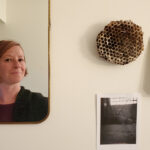
Every so often, we chat with an alum about what they do and how they got there. By day, Melissa Penley Cormier, M.F.A ’17, intermedia + digital arts (IMDA), helps faculty and students at UMBC create the graphic pieces they need for presenting their research. By night, she’s building an arts practice that draws from nature and scientific processes. Here, Cormier gives us a peek into her life as an artist.
Q: Can you tell us about the type of creative work you are doing these days?
A: I love exploring different forms and processes of photography while also mixing some of the finished results and presentation with digital media. Although the current situation makes it difficult to show work and create installations, I have a small studio in the newly renovated Long Reach Village Center in Columbia that I’ve been using for a few months to test out photography, drawings, and projected works. Finding virtual ways to show art work has been a new challenge, but also this time has made it fairly difficult to fully focus on creative endeavors. As hard as it has been, I often use my work as means of allowing myself to follow interests or take time out to just look closely. So recently, my photography has centered on my garden and nature because it has been important for me to get outside as much as possible.
 Paper wasp nest, 2019, digital photography-—one of a larger series of nests collected and imaged.
 Housefly, 2017—part of the Fret & Focus project.
Q: I know you’re also the manager of UMBC’s research graphics office. Can you talk about any ways that position and your creative life overlap?
A: My work with the sciences really fuels my curiosity in my personal work. It’s always amazing to me to see what students and faculty are researching, and talk to them about what drives them each day. The skills that I draw upon to make their work look its very best (either by printing their work for conferences, or helping with research figures and images for publications, or even taking professional portraits for announcements or lab websites) keeps my artistic skills sharp in a way that I’m truly thankful for.
 Snap-cap centrifuge tubes, 2020
Q: Could you tell us about your experience in the IMDA program? How did it help your work grow? Is there a particular professor who was especially helpful, and how?
A: The IMDA program gave me three years and the studio facilities to explore new work in an academic setting while forging new skills and professional relationships. I have a BFA in oil painting, but needed to delve deeper into more conceptual work. My thesis committee (Dan Bailey, Calla Thompson, and Timothy Nohe) were crucial in letting me fully realize my potential for the thesis project and helped support me during the intense writing, exhibition and defense process. Because my work and my writing tend to be about process and materials as much as the concepts driving the work, it can be a little difficult to nail down, and I think without their immense insight and understanding, it would have been difficult to have it be a successful direction.
 Details of installation of “Fret & Focus: worry explored through observation, projection, display, archive and documentation,” part of Cormier’s “Glass Oil Blood” 2017 MFA exhibition at the CADVC Gallery. The feather on the glass slide held by binder clips is being projected onto the long screen in the following image. Photo by Dan Bailey.
 Details of installation of “Fret & Focus”, 2017. Microscope slides of worries were collected for a year, then displayed in full on the lightbox in the center of the gallery, as well as large photographic prints, and projections from the installation found behind the long narrow screen.
Q: What would you tell prospective IMDA students about why they should join this community?
A: IMDA is sort of like being a part of this secret club of artists who really just want to make the best work they can possibly make in three years, even if they have no clue what that work is going to look like in the end. We draw such an eclectic crowd of creatives that it encourages everyone to see their own work differently while having critical discussions with faculty and fellow grads. Attending a creative MFA program at a research university certainly sets the bar high for the level of academic rigor as well as offers the opportunity for the work to truly be interdisciplinary.
* * * * * *
See more of Melissa Penley Cormier’s work at her website or on Instagram. Header image: Self portrait with test polaroids in small mirror in the Howard County Arts Council’s Long Reach Village Center Studios. All images courtesy of Cormier.
]]>
Every so often, we chat with an alum about what they do and how they got there. By day, Melissa Penley Cormier, M.F.A ’17, intermedia + digital arts (IMDA), helps faculty and students at UMBC...
https://umbc.edu/stories/career-qa-melissa-penley-cormier-m-f-a-17/
https://beta.my.umbc.edu/api/v0/pixel/news/119758/guest@my.umbc.edu/0f21efa62aab1f60af90c4e3422aad70/api/pixel
alumni
career-q-and-a
graduate-school
imda
UMBC News & Magazine
https://beta.my.umbc.edu/groups/umbc-news-magazine
https://assets1-beta.my.umbc.edu/system/shared/avatars/groups/000/001/943/24435aa6207c452e7bc15cc74b42c7bb/xsmall.png?1748556657
https://assets1-beta.my.umbc.edu/system/shared/avatars/groups/000/001/943/24435aa6207c452e7bc15cc74b42c7bb/original.png?1748556657
https://assets2-beta.my.umbc.edu/system/shared/avatars/groups/000/001/943/24435aa6207c452e7bc15cc74b42c7bb/xxlarge.png?1748556657
https://assets2-beta.my.umbc.edu/system/shared/avatars/groups/000/001/943/24435aa6207c452e7bc15cc74b42c7bb/xlarge.png?1748556657
https://assets3-beta.my.umbc.edu/system/shared/avatars/groups/000/001/943/24435aa6207c452e7bc15cc74b42c7bb/large.png?1748556657
https://assets1-beta.my.umbc.edu/system/shared/avatars/groups/000/001/943/24435aa6207c452e7bc15cc74b42c7bb/medium.png?1748556657
https://assets2-beta.my.umbc.edu/system/shared/avatars/groups/000/001/943/24435aa6207c452e7bc15cc74b42c7bb/small.png?1748556657
https://assets1-beta.my.umbc.edu/system/shared/avatars/groups/000/001/943/24435aa6207c452e7bc15cc74b42c7bb/xsmall.png?1748556657
https://assets2-beta.my.umbc.edu/system/shared/avatars/groups/000/001/943/24435aa6207c452e7bc15cc74b42c7bb/xxsmall.png?1748556657
UMBC News & Magazine
0
0
false
Tue, 03 Nov 2020 19:38:25 -0500
UMBC’s Jasmine Lee elevates diversity and inclusion work as director of new Initiatives for Identity, Inclusion, and Belonging
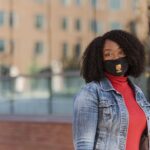
Jasmine A. Lee, director of inclusive excellence in UMBC’s Division of Student Affairs, is now also leading UMBC’s Initiatives for Identity, Inclusion and Belonging (i3B). The new i3B brings together UMBC’s Mosaic Center, Interfaith Center, and Pride Center to create “opportunities for students to build their awareness and knowledge of diverse people, cultures and belief systems.”
In a recent conversation with UMBC News, Lee discussed the intention and goals of i3B, and the support and guidance her team offers to students and staff across campus. As the featured speaker at UMBC’s recent Hill-Robinson McNair Lecture, she also shared the impact of her experience with the McNair Scholars Program. The national program, which has supported 392 students at UMBC since 1992, prepares talented college students who are first-generation, low-income, or from underrepresented minority groups, for doctoral study.
Event introduction is at 5:47. Lee’s lecture begins at 21:00.
UMBC News: What was the intention in creating i3B?
Lee: The intention was to elevate and amplify diversity and inclusion work, focusing on students. The work has been happening, but i3B gives this work a distinct space within the Division of Student Affairs.
In our work we are thinking about how to support students in their identity development, how to help them find belonging, while they also cultivate a sense of belonging for others, and how to see themselves and one another. We also do the same with faculty and staff. We support them in doing this work within the context of their social identities specifically as it relates race, ethnicity, gender and sexuality, spirituality, and religion.
i3B is equipping folks with the awareness, skills and knowledge—through dialogue, workshops, educational programming and training—to become the type of person who knows how to cultivate and create inclusive excellence at an institution. For me, what inclusive excellence means is a daily recommitment, a daily walk. I don’t think it is ever something we arrive at. I think it is something we have to be committed to and actively engage in. The work that we do in i3B is about how we get there.
UMBC News: How can students engage in social justice work when they are juggling so many responsibilities?
Lee: For folks who want to be engaged and can’t see how, it is important to start with self. Critical self-reflection is required. How do I show up? It’s important to think about the identities you represent. Pay attention to what privileges these identities provide or take away. Be aware of the access you have. How do they intersect to create my unique lived story? How does that impact how I interact with others and how others interact with me? Starting with themselves leverages their most immediate sphere of influence.
 Jasmine Lee. Photo courtesy of Lee.
I think sometimes it is easy to hop in a protest—to be engaged in an abstract vocalization of what needs to happen. I think that is easy. It is really hard to talk to your friends, parents, and co-workers about something that they did or said that was racist, homophobic, or problematic. Think of ways you can drop breadcrumbs. Plant seeds that create an environment. Even if it’s just at home. Talk about and question together. Critically reflect on the things that you are hearing. Pay attention to the way you are talking, and what you are seeing in the media.
For people who have been doing it for far too long, it is OK to take a rest. I now recognize that rest and prioritizing you matters. Audre Lorde says, “Caring for myself is not self-indulgence, it is self-preservation, and that is an act of political warfare.” If I don’t fight another day my existence is the resistance. The fact that I take up space in areas that are literally places that were not created for me—that is the resistance.
This is why I believe dialogue is so important. It is asking us to love justice more than we hate oppression or the people that are enacting it. It is really predicated on radical love, humanity, and the inherent dignity we all have as humans.
UMBC News: You were the keynote speaker at this year’s annual Hill-Robinson McNair Lecture. How did your experience as a McNair Scholar shape your work in diversity, equity, and inclusion?
Lee: I am a first-generation college student. My parents went to college after my brother and I began college. We had to figure out the college process on our own. I was never a good high school student because traditional K-12 education did not fit me as a learner. I started at community college and then transferred a couple of times to different universities for family reasons. After exploring a variety of majors over the years, I found social work. It was about connecting with people through a dialogue process. It was me. I graduated from Eastern Michigan University with a bachelor’s degree in social work.

Lee, in the middle, with her and mentor, Betty Brown-Chapell.
Photo courtesy of Lee.
Before graduating, one of my professors, Betty Brown-Chapell, emerita professor of the School of Social Work at Eastern Michigan University, noted my research skills. She suggested I join the McNair Program and pursue a Ph.D. I didn’t want to do the work. After she asked for the fifth time, I agreed. She became my mentor and my entire life changed. As a McNair, I became a nationally certified dialogue facilitator. I also published and presented my research, and worked at a center similar to i3B. The McNair Program helped me realize that exactly the way that I think and the way that I view the world is valuable and it is missing.
After completing a master’s in social work from the University of Michigan, I pursued a Ph.D. in higher, adult, and lifelong education at Michigan State University (MSU). The program shifted my understanding of what was possible for my future. Every single aspect of the life I have now is a direct result of the McNair Program.
 Lee with her mother at her doctoral commencement ceremony. Photo courtesy of Lee.
At MSU, I also led development of the Madison Academic Diversity Initiative (MADI). It connected students with mentors and other supports to increase their sense of belonging and connection and boost student retention. What I learned in the development of the program and from the students themselves continues to show up in my work.
 Lee, fourth from the left in the first row, with the second cohort of the Madison Academic Diversity Initiative. Photo courtesy of Lee.
UMBC News: What advice would you give other McNair Scholars, at UMBC or across the country?
Lee: I would want them to know that sometimes, and maybe most of the time, what might feel like a setback is a setup for something that is supposed to happen. I think it is important to understand that when things don’t happen the way you want them to, it is not inherently a “no” even if the door is shut. Perhaps that door shut so that another could open, even if it is a year later. It is also a reminder that no matter what happens—Ph.D. or E.D.D., or no terminal degree—you are still enough.
 Lee, in the middle, at her doctoral commencement with a group of undergraduate students who began their degree at the same time as Lee. Photo courtesy of Lee.
I would also say to remain humble. Be aware that your terminal degree is privileged. People who have lived experiences beyond yours are often overlooked or their voices and stories and expertise are undervalued. Always, always, always accept the privilege and responsibility that comes with having a seat at the table. Create spaces for other people. Bring other chairs or drag that table to them.
To learn more about i3B events and services visit their website. For more information on the McNair Program fill out this form.
Banner image: Jasmine Lee. Photo by Marlayna Demond ’11.
]]>
Jasmine A. Lee, director of inclusive excellence in UMBC’s Division of Student Affairs, is now also leading UMBC’s Initiatives for Identity, Inclusion and Belonging (i3B). The new i3B brings...
https://umbc.edu/stories/umbcs-jasmine-lee-elevates-diversity-and-inclusion-work-as-director-of-new-initiatives-for-identity-inclusion-and-belonging/
https://beta.my.umbc.edu/api/v0/pixel/news/119759/guest@my.umbc.edu/f8d219a8a5292ccbf7780bf84cdde364/api/pixel
cahss
community
mcnairscholars
page1
studentaffairs
UMBC News & Magazine
https://beta.my.umbc.edu/groups/umbc-news-magazine
https://assets1-beta.my.umbc.edu/system/shared/avatars/groups/000/001/943/24435aa6207c452e7bc15cc74b42c7bb/xsmall.png?1748556657
https://assets1-beta.my.umbc.edu/system/shared/avatars/groups/000/001/943/24435aa6207c452e7bc15cc74b42c7bb/original.png?1748556657
https://assets2-beta.my.umbc.edu/system/shared/avatars/groups/000/001/943/24435aa6207c452e7bc15cc74b42c7bb/xxlarge.png?1748556657
https://assets2-beta.my.umbc.edu/system/shared/avatars/groups/000/001/943/24435aa6207c452e7bc15cc74b42c7bb/xlarge.png?1748556657
https://assets3-beta.my.umbc.edu/system/shared/avatars/groups/000/001/943/24435aa6207c452e7bc15cc74b42c7bb/large.png?1748556657
https://assets1-beta.my.umbc.edu/system/shared/avatars/groups/000/001/943/24435aa6207c452e7bc15cc74b42c7bb/medium.png?1748556657
https://assets2-beta.my.umbc.edu/system/shared/avatars/groups/000/001/943/24435aa6207c452e7bc15cc74b42c7bb/small.png?1748556657
https://assets1-beta.my.umbc.edu/system/shared/avatars/groups/000/001/943/24435aa6207c452e7bc15cc74b42c7bb/xsmall.png?1748556657
https://assets2-beta.my.umbc.edu/system/shared/avatars/groups/000/001/943/24435aa6207c452e7bc15cc74b42c7bb/xxsmall.png?1748556657
UMBC News & Magazine
0
0
false
Mon, 02 Nov 2020 21:44:57 -0500
UMBC’s Alan Sherman and collaborators develop strategy for secure online voting in future U.S. elections

Over the past several months, the topic of online voting has been top of mind for millions of Americans and has been widely debated. Supporters often highlight how it would increase voter turnout through improved accessibility and convenience. Privacy and election integrity are among the top concerns about implementing an online voting system.
Researchers from UMBC and xx.network have been working to design an online voting system that is resistant to coercion and would provide a secure way for people to cast their ballots from computers, tablets, and smartphones in the future. Alan Sherman, professor of computer science and electrical engineering, is developing the system, VoteXX, with David Chaum, a cryptographer known for his work on privacy-centered technology, and Richard Carback ‘05, M.S. ‘08, Ph.D. ‘10, computer science, who has spent his career deflecting would-be hackers.
Mitigating vulnerabilities
The security of devices that voters might use to cast their ballot is a significant concern, notes Sherman. He explains that malware on the devices that voters use might change the votes or spy on the voter.
 Alan Sherman, right, talking with Rick Forno on campus in 2018. Photo by Marlayna Demond ’11 for UMBC.
As described in the researchers’ new whitepaper, VoteXX allows voters to confirm that their ballots were accurately cast, collected, and counted, without revealing how they voted. This system uses ideas from an earlier system, Remotegrity, that the collaborators developed and used in a municipal election in Takoma Park, Maryland, in 2010. Voters received secret vote codes on a scratch-off card via traditional mail, which they used to hide their votes from the software and hardware.
To address the issue of coercion, VoteXX enables voters to cancel or change their vote up to a certain deadline.
Studying voting issues
The collaborators are also urging Congress to create a non-partisan National Research Center for the Technologies of Democracy. The center would study elections, voting systems, ballot design, usability, and accessibility, in addition to other topics. They suggest the center be created as part of the existing National Cybersecurity Federally Funded Research and Developments Center.
Sherman shares that the applications of this work are widespread and significant. “The techniques developed in the VoteXX project can enhance the security of all forms of remote voting,” he notes, “including Internet voting and vote-by-mail.”
Banner image: A person typing on a computer. Photo by Marlayna Demond ’11 for UMBC.
]]>
Over the past several months, the topic of online voting has been top of mind for millions of Americans and has been widely debated. Supporters often highlight how it would increase voter turnout...
https://umbc.edu/stories/umbcs-alan-sherman-and-collaborators-develop-strategy-for-secure-online-voting-in-future-u-s-elections/
https://beta.my.umbc.edu/api/v0/pixel/news/119760/guest@my.umbc.edu/334978f892d735fe01ecbc57a3343c2b/api/pixel
coeit
csee
cybersecurity
science-and-technology
UMBC News & Magazine
https://beta.my.umbc.edu/groups/umbc-news-magazine
https://assets1-beta.my.umbc.edu/system/shared/avatars/groups/000/001/943/24435aa6207c452e7bc15cc74b42c7bb/xsmall.png?1748556657
https://assets1-beta.my.umbc.edu/system/shared/avatars/groups/000/001/943/24435aa6207c452e7bc15cc74b42c7bb/original.png?1748556657
https://assets2-beta.my.umbc.edu/system/shared/avatars/groups/000/001/943/24435aa6207c452e7bc15cc74b42c7bb/xxlarge.png?1748556657
https://assets2-beta.my.umbc.edu/system/shared/avatars/groups/000/001/943/24435aa6207c452e7bc15cc74b42c7bb/xlarge.png?1748556657
https://assets3-beta.my.umbc.edu/system/shared/avatars/groups/000/001/943/24435aa6207c452e7bc15cc74b42c7bb/large.png?1748556657
https://assets1-beta.my.umbc.edu/system/shared/avatars/groups/000/001/943/24435aa6207c452e7bc15cc74b42c7bb/medium.png?1748556657
https://assets2-beta.my.umbc.edu/system/shared/avatars/groups/000/001/943/24435aa6207c452e7bc15cc74b42c7bb/small.png?1748556657
https://assets1-beta.my.umbc.edu/system/shared/avatars/groups/000/001/943/24435aa6207c452e7bc15cc74b42c7bb/xsmall.png?1748556657
https://assets2-beta.my.umbc.edu/system/shared/avatars/groups/000/001/943/24435aa6207c452e7bc15cc74b42c7bb/xxsmall.png?1748556657
UMBC News & Magazine
0
0
false
Mon, 02 Nov 2020 20:12:00 -0500

 Azerbaijanis celebrate the end of the military conflict over Nagorno-Karabakh on Tuesday.