UMBC’s newest computing grads, from bachelor’s to Ph.D., share stories of connection, support, opportunity
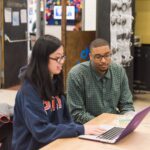
UMBC’s newest graduates in computing and data science fields include students at all stages in their education and careers. Undergraduates, master’s students seeking to access new career opportunities, and Ph.D. students completing high-impact research have thrived at UMBC. Many cite the university’s strong academics, accessible faculty, research opportunities, and connections across disciplines as drawing them to UMBC. Connections with mentors and communities of support have helped carry them over the finish line to earn their degrees.
Impacting communities through service-learning
Fikir Ejigineh ‘20, information systems, remembers feeling intrigued by UMBC in high school, when she first heard about the university’s living learning communities (LLCs). Before long, she moved into UMBC’s Shriver Center LLC, a residential floor for students committed to civic engagement, service, and community-building.

Fikir Ejigineh. Photo courtesy of The Shriver Center.
As an information systems student focused on community-based problem-solving, she was selected for UMBC’s CoLab program in 2018. Ejigineh formed the Race and Social Justice CoLab with two other students. Together, they worked with new mapping software from UMBC’s Imaging Research Center, creating a 3D space to collect and share the multimedia stories of people living in Baltimore. The purpose of the project was to highlight voices that are oftentimes suppressed by the media’s representation of Baltimore City, Ejigineh explains.
As a France-Merrick Scholar through the Shriver Center, Ejigineh helped develop a creative art contest and leadership day for Baltimore youth that posed the question, ‘How do you envision your community?’. The project was another chance for her to work on a team with students from a broad range of majors. Together, they helped launch a display of youth artwork for the grand opening of OCA Mocha, a coffee shop and community gathering space in downtown Arbutus, founded by UMBC alumni.
Ejigineh has also served as vice-president of UMBC’s Ethiopian-Eritrean Student Association. A cultural organization that aims to support philanthropic causes by hosting annual events like the Awareness Banquet.
After graduation, Ejigineh will work as a business administrator at Alakrity, an IT startup company. In the future, she looks forward to combining her technical skills and creativity by furthering her education in user experience design.
 Fikir Ejigineh, third from right, meeting with her CoLabs group and mentors in 2018. Photo by Marlayna Demond ’11 for UMBC.
Her advice to incoming students is to focus not just on excelling in the classroom, but also finding opportunities to connect with students in other fields, and with communities on and off campus. “I’ve had a great UMBC experience because of what I’ve made out of it,” she says. “I would never be where I am now if I hadn’t gotten involved.”
Building connections
As an undergraduate at UMBC, Fabiha Mahmood ‘18, political science, M.P.S. ‘20, cybersecurity, knew that it was important to establish networks right away. “When I was visiting colleges, the one thing that really struck me about UMBC was how close-knit and diverse the community is,” she says. “For me, it’s really important to have interpersonal relationships with my professors.”

Mahmood at the 16 over 1 UMBC Basketball Celebration in the UMBC Event Center in 2018. Photo courtesy of Mahmood.
Mahmood was undecided about what major to pursue, but after meeting with Eric Brown, a lecturer in the individualized studies program, she was eager to begin a first-year seminar in security studies. “He was so invested in my journey here, and from that first interaction, I knew that UMBC was different,” she shares.
That trend of building close connections in the classroom and across campus continued. Mahmood went on to support UMBC students as a resident assistant and president of UMBC’s Panhellenic Association.
After completing her bachelor’s degree, Mahmood found that she was interested in careers that required technical skills that she didn’t yet have. She identified UMBC’s cybersecurity M.P.S. program as a strong complement to her political science degree.
In January 2020, Mahmood joined Residential Life again, this time as a graduate assistant, where she supervised resident assistants, and began a “whirlwind of a semester” in her new program. While she had no idea that the experience would involve a pandemic, she says that her mentors in Residential Life helped her stay motivated and feel connected when many things moved online. “I could tell that they genuinely cared about me, and can confidently say that I wouldn’t have gotten that anywhere else,” she says.
 Fabiha Mahmood, second from right in front row, at the Division of Student Affairs Holiday Party in 2019. Photo courtesy of Mahmood.
Mahmood plans to pursue a career as an intelligence analyst, combining her knowledge of political science and cybersecurity.
Opening doors in a high-demand field
Like Mahmood, Matthew Griff ‘17, mathematics, M.P.S. ‘20, data science, also found a UMBC master’s program to complement his undergraduate degree and open up doors in a high-demand field. After earning his bachelor’s degree, Griff completed a finance internship at the American Psychological Association. A master’s in data science was his “logical next step”—helping him explore impactful ways to apply knowledge from his mathematics courses.
Griff has enjoyed connecting with the data science program’s accessible faculty. He shares that Ergun Simsek, professor of practice and graduate program director for data science, was easy to approach and has served as a mentor for him. Building this one-on-one connection has helped him feel prepared for his next steps.
How tech impacts lives
William Easley took his first course on human-computer interaction as a curious undergraduate at UMBC. Ravi Kuber, associate professor of information systems, piqued his interest in how technology impacts peoples lives, particularly for people with disabilities. Easley, who has a visual impairment, went on to complete an M.S. in human-centered computing in 2015, and is now earning his Ph.D. in the field.
 William Easley talking about his work at event introducing UMBC’s User Studies Lab in January 2020. Photo by Britney Clause ’11.
Easley loves that as a researcher he is now on the cutting edge of “creating knowledge.” “The idea of designing and building technologies to help people with disabilities is super exciting to me. It’s something that’s worthwhile and meaningful,” he explains.
But Easley wasn’t always aware of the opportunities available to him through research. He recalls how much it meant to him as an undergraduate when mentors encouraged him to get involved with research and pursue his master’s degree. They included leaders like UMBC President Freeman Hrabowski and Renetta Tull, former associate vice provost for strategic initiatives at UMBC.
3D print shop creates opportunity
As a master’s student, Easley connected with Amy Hurst, former associate professor of information systems at UMBC, known for her high-impact community-engaged research. Hurst worked with the Digital Harbor Foundation’s 3D print shop in Baltimore City, helping youth develop technical skills that would serve them in future careers.
That experience and the connections he built over the years encouraged Easley to stay at UMBC to pursue his Ph.D. His work with youth at Digital Harbor became three years of dissertation research. Two youth from the first group continued to work in the print shop for all three years and took on more senior roles. Eventually, one of the youth became the shop manager, which Easley was excited about.
 William Easley, bottom center square, with his dissertation committee after he defended his dissertation in September 2020. Photo courtesy of Easley.
Throughout his time at UMBC, Easley says that support from faculty was important to his development as a researcher. Hurst helped him find opportunities to travel to present his research and connected him with fellow researchers in human-centered computing. Easley also worked closely with Helena Mentis, associate professor of information systems, and associate dean in the College of Engineering and Information Technology. Mentis and Foad Hamidi, assistant professor of information systems, were Easley’s co-advisors for his dissertation.
“Everyone that I worked with played a big role in helping me get to the finish line,” he says.
The COVID-19 pandemic shifted Easley’s final months at UMBC. He successfully defended his dissertation virtually in September, and interviewed and accepted a job as a human factors design engineer at Apple, and is currently working remotely.
Banner image: William Easley works with youth in the makerspace at the Digital Harbor Foundation in 2017. Photo by Marlayna Demond ’11 for UMBC.
]]>
UMBC’s newest graduates in computing and data science fields include students at all stages in their education and careers. Undergraduates, master’s students seeking to access new career...
https://umbc.edu/stories/umbcs-newest-computing-grads-from-bachelors-to-ph-d-share-stories-of-connection-support-opportunity/
https://beta.my.umbc.edu/api/v0/pixel/news/119724/guest@my.umbc.edu/c4a03d79eccd747a2b0e2bb8ca24e4cd/api/pixel
classof2020
coeit
community
cybersecurity
gradresearch
inds
is
mathstat
politicalscience
shrivercenter
UMBC News & Magazine
https://beta.my.umbc.edu/groups/umbc-news-magazine
https://assets1-beta.my.umbc.edu/system/shared/avatars/groups/000/001/943/24435aa6207c452e7bc15cc74b42c7bb/xsmall.png?1748556657
https://assets1-beta.my.umbc.edu/system/shared/avatars/groups/000/001/943/24435aa6207c452e7bc15cc74b42c7bb/original.png?1748556657
https://assets2-beta.my.umbc.edu/system/shared/avatars/groups/000/001/943/24435aa6207c452e7bc15cc74b42c7bb/xxlarge.png?1748556657
https://assets2-beta.my.umbc.edu/system/shared/avatars/groups/000/001/943/24435aa6207c452e7bc15cc74b42c7bb/xlarge.png?1748556657
https://assets3-beta.my.umbc.edu/system/shared/avatars/groups/000/001/943/24435aa6207c452e7bc15cc74b42c7bb/large.png?1748556657
https://assets1-beta.my.umbc.edu/system/shared/avatars/groups/000/001/943/24435aa6207c452e7bc15cc74b42c7bb/medium.png?1748556657
https://assets2-beta.my.umbc.edu/system/shared/avatars/groups/000/001/943/24435aa6207c452e7bc15cc74b42c7bb/small.png?1748556657
https://assets1-beta.my.umbc.edu/system/shared/avatars/groups/000/001/943/24435aa6207c452e7bc15cc74b42c7bb/xsmall.png?1748556657
https://assets2-beta.my.umbc.edu/system/shared/avatars/groups/000/001/943/24435aa6207c452e7bc15cc74b42c7bb/xxsmall.png?1748556657
UMBC News & Magazine
0
0
false
Mon, 14 Dec 2020 20:40:43 -0500
UMBC’s newest biotech grads launch careers that will make a difference
UMBC’s Translational Life Science Technology (TLST) degree is the new kid on the block among UMBC undergraduate programs, and its first graduates will earn their degrees this month. These students joined the program—a partnership with Montgomery College—in fall 2019. Through TLST they have gained deep knowledge of all aspects of the biotech industry and hands-on (and virtual) experience through internships and course work. They have also developed genuine and caring relationships with their classmates and professors, and feel ready to launch biotech careers.
Jobs of the future
Take Titina Sirak ’20: She’s already received multiple job offers at biotech companies. She also plans to pursue a graduate degree in data science.
Sirak completed in-person internships in traditional wet labs at the University of Maryland and the University of Maryland School of Medicine. Then, she did a remote internship with Kite Pharma, where she helped design a system for managing workflow, minimizing waste, and maximizing efficiency in their pharmaceutical production.

Charmaine Hipolito ’20 (center) and Titina Sirak ’20 (right) speak with visitors at a celebration for the opening of USG’s new Biomedical Sciences and Engineering (BSE) Building in November 2019. Photo by USG.
“That’s the thing about the TLST major: When you’re studying biotech, you can be in any field. You could be on the data side, you could be in the lab doing manufacturing, you could be planning, you could be on the business side of it,” Sirak says. “That’s how TLST is different from other majors, because you take a whole range of classes. It helps you open up your mind to different sides of biotech.”
Sirak says she loves the manufacturing side and hands-on lab work, but plans to pursue data science because it is where jobs will be most plentiful moving forward. “Lots of things are going to be automated. But if you just look at all the systems that are required to make one pill, every step is recorded data,” she says. “Humans are just figuring out how to deal with all of it. I’m really interested in doing a graduate degree in that, because I want to learn how to analyze and manage data.”
Close-knit community
Sirak’s classmate, Charmaine Hipolito ’20, TLST, also already has more than one biotech job offer in hand. Hipolito originally planned to become a doctor, but a position as a medical assistant helped her realize she wanted to explore other possibilities in the biomedical field. Then she found TLST. “When I looked at the requirements, it seemed like it was just right for what I wanted to do,” she says. “I love lab work and research, and…you’re still helping people. So I thought, ‘Let me try this.’”
 The Universities at Shady Grove campus. Photo by Marlayna Demond ’11 for UMBC.
The program has met her expectations and more. “I really like the classes that the program offered,” Hipolito says. “I feel like those lab courses will really help me right after college, because most of the techniques that we did in class are the things that I’ll be doing in the jobs that are available.”
In addition to the academic program, Hipolito and Sirak both appreciated the closeness of the Shady Grove community.
“Even if it’s small, Shady Grove has been amazing for me,” Sirak says. “You’re close to your professors. It’s easier to develop that close mentoring relationship. There are small class sizes, which helps you feel more connected to the other students. I’m so glad that UMBC has a campus at Shady Grove.”
“It’s very much like a family, and I like that my classmates are really motivated to learn,” Hipolito adds. “When you’re in that kind of environment, it helps you as well. Everyone is really helping everybody. There’s no competition.”
To further support their classmates, Sirak and Hipolito created Club Biotech. Sirak says, “We try to expose the club members to the professional environment and help them find internships and jobs and build networks.”
 Titina Sirak (left) and Charmaine Hipolito with True Grit. Photo by USG.
Real-world connections
Pedram Miraghazadeh, M.P.S. ’20, biotechnology management, is completing a graduate degree at Shady Grove focused on biotech, and he experienced some of the same benefits as the TLST students. “When I first started, I knew I liked biotech, but I wasn’t really sure exactly what I wanted to do,” he says. “Each class was different, so you can find your passion in a specific part of biotechnology.”
Miraghazadeh also felt prepared for his internships because of the hands-on nature of the program. “When I went to the lab, I knew what this centrifuge is going to do, how to clean my hood, how to wear my gown—the simple things that I learned from a book, but now I went to the lab and practiced it.”
Miraghazadeh has a special interest in the regulatory process, which has burst into the national spotlight with the development of COVID-19 vaccines. “I was explaining to all of my friends,” he says. “They always call me asking what’s going to happen with phase 1, phase 2, etc. I learned all that stuff in class, and now I see it in the real world.”
He has also felt supported and welcome in the Shady Grove community and with his professors. Miraghazadeh formed a special connection with Antonio Moreira, vice provost for academic affairs, who taught five of his courses. “As vice provost, he’s always busy, but he always made time for me when I had questions,” he says.
 From left to right: Annica Wayman, associate dean of CNMS; Antonio Moreira, vice provost for academic affairs; Keith Bowman, dean of the College of Engineering and IT; and Bill LaCourse, dean of CNMS. Photo by Marlayna Demond ’11 for UMBC, taken at the grand opening of the Biomedical Sciences and Engineering Building at USG. The BSE is where many of the core TLST classes take place.
Changing the face of biotech
All three students shared that UMBC and the Shady Grove campus helped them find their way. Staff members Abigail Granger and Chelsea Moyer smooth TLST students’ transition from Montgomery College to UMBC and organize activities to help students connect with each other and the larger UMBC community. Grainger is assistant director of undergraduate recruitment and retention and Moyer is the director for UMBC at the Universities at Shady Grove.
Other key supporters of students in UMBC’s biotechnology programs include lecturer and active biotech professional Jeffrey Robinson ’99, biological sciences; Manik Ghosh, assistant director of the TLST program; and Annica Wayman ’99, M6, mechanical engineering, associate dean for Shady Grove affairs in the College of Natural and Mathematical Sciences.
“All of my professors have supported me, but Dr. Robinson and Dr. Ghosh have been with us through all three semesters of the program, teaching different classes,” Sirak says. Hipolito adds, “Dr. Robinson is really flexible in working with us, and very understanding when it comes to how some students work at different paces.”
Wayman’s leadership was instrumental in developing and implementing the TLST degree, and re-launching the MPS degree at Shady Grove. She firmly believes these intensive efforts have the potential to make a major difference.
“The impact is in the students we educate, who are often from underrepresented groups in STEM. It’s also in the lives that will be saved through the work they will do after graduating from the TLST program,” Wayman shares. “Additionally, we are able to have impact by addressing the biotechnology workforce crisis in the region.”
“Students leave the program with a greater business acumen and improved leadership and communication skills to complement their technical knowledge and advance their career,” she adds.
 Charmaine Hipolito (second from left) and Titina Sirak (third from left) with Associate Dean Annica Wayman (right) and Dean William LaCourse (left) at a celebration of the TLST program’s launch in May 2019. Photo by Marlayna Demond ’11 for UMBC.
A journey begins
For Wayman, the new graduates’ success is proof that her team’s vision is already coming to life: students are gaining employment in a growing field, feel empowered to make an impact, and know that they have a close network of support.
And for students like Miraghazadeh, UMBC has been more than a degree—it’s been a transformation. He came to the U.S. from Iran seven years ago, spent the first year improving his English, then attended Anne Arundel Community College before graduating from UMBC with his bachelor’s degree. Now he’s completing the biotech MPS with applied internships under his belt. He’s formed meaningful relationships with mentors and peers, and he’s confident and ready to make his own waves.
“UMBC for me,” he shares, “was the place helping me to find out what I want to be.”
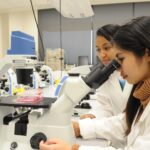
Header image: Charmaine Hipolito (right) and Titina Sirak use the microscopes in a teaching lab at the Universities at Shady Grove. Photo by USG.
]]>
UMBC’s Translational Life Science Technology (TLST) degree is the new kid on the block among UMBC undergraduate programs, and its first graduates will earn their degrees this month. These students...
https://umbc.edu/stories/umbcs-newest-biotech-grads-launch-careers-that-will-make-a-difference/
https://beta.my.umbc.edu/api/v0/pixel/news/119725/guest@my.umbc.edu/a321285186ee315d69133dff905da733/api/pixel
classof2020
cnms
page1
science-and-technology
shadygrove
tlst
UMBC News & Magazine
https://beta.my.umbc.edu/groups/umbc-news-magazine
https://assets1-beta.my.umbc.edu/system/shared/avatars/groups/000/001/943/24435aa6207c452e7bc15cc74b42c7bb/xsmall.png?1748556657
https://assets1-beta.my.umbc.edu/system/shared/avatars/groups/000/001/943/24435aa6207c452e7bc15cc74b42c7bb/original.png?1748556657
https://assets2-beta.my.umbc.edu/system/shared/avatars/groups/000/001/943/24435aa6207c452e7bc15cc74b42c7bb/xxlarge.png?1748556657
https://assets2-beta.my.umbc.edu/system/shared/avatars/groups/000/001/943/24435aa6207c452e7bc15cc74b42c7bb/xlarge.png?1748556657
https://assets3-beta.my.umbc.edu/system/shared/avatars/groups/000/001/943/24435aa6207c452e7bc15cc74b42c7bb/large.png?1748556657
https://assets1-beta.my.umbc.edu/system/shared/avatars/groups/000/001/943/24435aa6207c452e7bc15cc74b42c7bb/medium.png?1748556657
https://assets2-beta.my.umbc.edu/system/shared/avatars/groups/000/001/943/24435aa6207c452e7bc15cc74b42c7bb/small.png?1748556657
https://assets1-beta.my.umbc.edu/system/shared/avatars/groups/000/001/943/24435aa6207c452e7bc15cc74b42c7bb/xsmall.png?1748556657
https://assets2-beta.my.umbc.edu/system/shared/avatars/groups/000/001/943/24435aa6207c452e7bc15cc74b42c7bb/xxsmall.png?1748556657
UMBC News & Magazine
0
0
false
Fri, 11 Dec 2020 23:32:42 -0500
UMBC team reveals possibilities of new one-atom-thick materials

New 2D materials have the potential to transform technologies, with applications from solar cells to smartphones and wearable electronics, explains UMBC’s Can Ataca, assistant professor of physics. These materials consist of a single layer of atoms bound together in a crystal structure. In fact, they’re so thin that a stack of 10 million of them would only be 1 millimeter thick. And sometimes, Ataca says, less is more. Some 2D materials are more effective and efficient than similar materials that are much thicker.
Despite their advantages, however, 2D materials are currently difficult and expensive to make. That means the scientists trying to create them need to make careful choices about how they invest their time, energy, and funds in development.
New research by Daniel Wines, Ph.D. candidate in physics, and Ataca gives those scientists the information they need to pursue high-impact research in this field. Their theoretical work provides reliable information about which new materials might have desirable properties for a range of applications and could exist in a stable form in nature. In a recent paper published in ACS Applied Materials and Interfaces, they used cutting-edge computer modeling techniques to predict the properties of 2D materials that haven’t yet been made in real life.
“We usually are trying to stay five or so years ahead of experimentalists,” says Wines. That way, they can avoid going down expensive dead ends. “That’s time, effort, and money that they can focus on other things.”

Daniel Wines presents his research at the 2019 American Physical Society meeting in Boston. Photo courtesy Daniel Wines.
The perfect mix
The new paper focuses on the stability and properties of 2D materials called group III nitrides. These are mixtures of nitrogen and an element from group III on the periodic table, which includes aluminum, gallium, indium, and boron.
Scientists have already made some of these 2D materials in small quantities. Instead of looking at mixtures of one of the group III elements with nitrogen, however, Wines and Ataca modeled alloys—mixtures including nitrogen and two different group III elements. For example, they predicted the properties of materials made of mostly aluminum, but with some gallium added, or mostly gallium, but with some indium added.
These “in-between” materials might have intermediate properties that could be useful in certain applications. “By doing this alloying, we can say, I have orange light, but I have materials that can absorb red light and yellow light,” Ataca says. “So how can I mix that so that it can absorb the orange light?” Tuning the light absorption capabilities of these materials could improve the efficiency of solar energy systems, for example.
 This figure from Wines’s and Ataca’s paper shows some of the possible alloys made from nitrogen and the group III elements, with the different elements indicated by different colors.
Alloys of the future
Ataca and Wines also looked at the electric and thermoelectric properties of materials. A material has thermoelectric capability if it can generate electricity when one side is cold and the other is hot. The basic group III nitrides have thermoelectric properties, “but at certain concentrations, the thermoelectric properties of alloys are better than the basic group III nitrides,” Ataca says.
Wines adds, “That’s the main motivation of doing the alloying—the tunability of the properties.”
They also showed that not all of the alloys would be stable in real life. For example, mixtures of aluminum and boron at any concentrations were not stable. However, five different ratios of gallium-aluminum mixtures were stable.
Once production of the basic group III nitrides becomes more reliable and is scaled up, Wines and Ataca expect scientists to work on engineering the materials for specific applications using their results as a guide.
Back to basics…with supercomputers
Wines and Ataca modeled the materials’ properties using supercomputers. Rather than using experimental data as input for their models, “We are using the basics of quantum mechanics to create these properties. So the good part is we don’t have any experimental biases,” Ataca says. “We’re working on stuff that doesn’t have any experimental evidence before. So this is a trustable approach.”
To get the most accurate results requires huge amounts of computing power and takes a long time. Running their models at the highest accuracy level can take several days.
“It’s kind of like telling a story,” Wines says. “We go through the most basic level to screen the materials,” which only takes about an hour. “And then we go to the highest levels of accuracy, using the most powerful computers, to find the most accurate parameters possible.”
“I think the beautiful part of these studies is that we started at the basics and we literally went up to the most accurate level in our field,” Ataca adds. “But we can always ask for more.”
 Can Ataca in the UMBC Physics Building. Photo by Marlayna Demond ’11 for UMBC.
A new frontier
They have continued to move forward into uncharted scientific territory. In a different paper, published within a week of the first in ACS Applied Materials and Interfaces, Theodosia Gougousi, professor of physics; Jaron Kropp, Ph.D. ’20, physics; and Ataca demonstrated a way to integrate 2D materials into real devices.
2D materials often need to attach to an electronic circuit within a device. An in-between layer is required to make that connection—and the team found one that works. “We have a molecule that can do this, that can make a connection to the material, in order to use it for external circuit applications,” Ataca says.
This result is a big deal for the implementation of 2D materials. “This work combines fundamental experimental research on the processes that occur on the surface of 2D atomic crystals with detailed computational evaluation of the system,” Gougousi says. “It provides guidance to the device community so they can successfully integrate novel materials into traditional device architectures.”

Theodosia Gougousi. Photo courtesy Gougousi.
Collaboration across disciplines
The theoretical analyses for this work happened in Ataca’s lab, and the experiments happened in Gougousi’s lab. Kropp worked in both groups.
“The project exemplifies the synergy that is required for science and technology development and advancement,” Gougousi says. “It is also a great example of the opportunities that our graduate students have to work on problems of great technological interest, and to develop a broad knowledge basis and a unique set of technical skills.”
Kropp, who is first author on the second paper, is thrilled to have had this research experience.
“2D semiconductors are exciting because they have the potential for applications in non-traditional electronic devices, like wearable or flexible electronics, since they are so thin,” he says. “I was fortunate to have two excellent advisors, because this allowed me to combine the experimental and theoretical work seamlessly. I hope that the results of this work can help other researchers to develop new devices based on 2D materials.”
Header image: Daniel Wines (far right), Jaron Kropp (second from right), Can Ataca (second from left) and other lab members meet. Photo by Marlayna Demond ’11 for UMBC.
]]>
New 2D materials have the potential to transform technologies, with applications from solar cells to smartphones and wearable electronics, explains UMBC’s Can Ataca, assistant professor of...
https://umbc.edu/stories/umbc-team-reveals-possibilities-of-new-one-atom-thick-materials/
https://beta.my.umbc.edu/api/v0/pixel/news/119726/guest@my.umbc.edu/d6c8be75f66c50e22bd3e0084abea2d7/api/pixel
cnms
gradresearch
physics
research
science-and-technology
UMBC News & Magazine
https://beta.my.umbc.edu/groups/umbc-news-magazine
https://assets1-beta.my.umbc.edu/system/shared/avatars/groups/000/001/943/24435aa6207c452e7bc15cc74b42c7bb/xsmall.png?1748556657
https://assets1-beta.my.umbc.edu/system/shared/avatars/groups/000/001/943/24435aa6207c452e7bc15cc74b42c7bb/original.png?1748556657
https://assets2-beta.my.umbc.edu/system/shared/avatars/groups/000/001/943/24435aa6207c452e7bc15cc74b42c7bb/xxlarge.png?1748556657
https://assets2-beta.my.umbc.edu/system/shared/avatars/groups/000/001/943/24435aa6207c452e7bc15cc74b42c7bb/xlarge.png?1748556657
https://assets3-beta.my.umbc.edu/system/shared/avatars/groups/000/001/943/24435aa6207c452e7bc15cc74b42c7bb/large.png?1748556657
https://assets1-beta.my.umbc.edu/system/shared/avatars/groups/000/001/943/24435aa6207c452e7bc15cc74b42c7bb/medium.png?1748556657
https://assets2-beta.my.umbc.edu/system/shared/avatars/groups/000/001/943/24435aa6207c452e7bc15cc74b42c7bb/small.png?1748556657
https://assets1-beta.my.umbc.edu/system/shared/avatars/groups/000/001/943/24435aa6207c452e7bc15cc74b42c7bb/xsmall.png?1748556657
https://assets2-beta.my.umbc.edu/system/shared/avatars/groups/000/001/943/24435aa6207c452e7bc15cc74b42c7bb/xxsmall.png?1748556657
UMBC News & Magazine
0
0
false
Fri, 11 Dec 2020 17:30:19 -0500
TEDxUMBC brings community together through “Unmasking Uncertainty”
This fall, the student-organized TEDxUMBC gave ten speakers the opportunity to share their stories, experiences, and expertise with the world. Surprisingly, the theme, “Unmasking Uncertainty,” was actually conceived far before COVID-19 surged globally.
Tirzah Khan ‘20, information systems, led the TEDxUMBC team in organizing the event. When the planning committee chose their theme, she says, they did not anticipate the global pandemic, the resurgence in demands for racial justice, and a divisive election. “In these unprecedented circumstances, TEDxUMBC seeks to provide answers and build community,” Khan reflects.
A bumpy road to study in the U.S.
One of the speakers was Sahara Ali, Ph.D.‘26, information systems. She shared her path from Pakistan to the United States for graduate study and explained how it changed the way she approaches challenges.

Sahara Ali. Photo courtesy of Ali.
At age 21, Ali had graduated with her bachelor’s degree in computer science in Pakistan. She was eager to begin pursuing her Ph.D. at UMBC and to marry her U.S.-based fiancé. But it took over a year for Ali to obtain her visa from the U.S. Embassy. The delay changed her marriage plans and she feared it would make international graduate study impossible as well.
Facing a long and uncertain wait, Ali dedicated herself to her work in Pakistan. But just days after deciding to move on, she received her visa. She had to start over with her U.S. plans, rethinking how she would get to Maryland, where she would live, and what the experience would be like.
Ali says this situation taught her about her resilience and using creativity to work through unexpected obstacles. “Uncertainty can lead to something exciting, something innovative,” she shared, even if it means learning something “in an unconventional way.”
Today, Ali is pursuing her Ph.D. in information systems full-time at UMBC. She is working alongside Jianwu Wang, assistant professor of information systems, and collaborating with NASA scientists to study the causal effects of climate change.
Moving theater to a virtual space
Asif Majid ‘13, interdisciplinary studies, shared his passion for community theater and how he has adjusted his work (which previously depended on live, in-person audiences) to fit online formats.

Asif Majid. Photo courtesy of Majid.
Majid works at the intersection of Islam, media, marginality, and politics, and develops plays that focus on stories of racially and religiously marginalized communities. His TEDxUMBC talk took the audience back to the second week of March, when the COVID-19 pandemic first began impacting nearly every aspect of life.
At the time, Majid was in the final stages of producing a new play with a theater in Washington, D.C. Work had been underway since July 2019, and the show was scheduled to debut in front of an audience for the first time at the end of March 2020.
Majid was living with his older family members and became quite concerned that continuing to work in face-to-face settings could put his family members at risk. He decided that while the show needed to go on, it had to move to an online space.
In collaboration with the creative team, Majid figured out how the actors could perform from their own homes, and how attendees could watch the play remotely from around the world. “Over the course of two weeks, we learned about new technologies, rehearsed the tech to performance, and developed a new approach to making theater,” he said.
Ultimately, the performance attracted nearly eight times the number of people who would typically see a show in one night, and people tuned in from 18 countries.
Moving forward in uncertain times
Also featured in the event was Evangeline Kirigua ‘21, political science, who discussed the importance of empowering foreign-born nationals to engage in their communities without being able to vote. Haleemat Adekoya ‘23, political science, talked about being present in the moment, and how to face “what ifs” that can cause fear and uncertainty. Karis Barnett ‘21, chemistry, shared how to identify and address your internal critic to discover self-worth.
Other speakers gave a window into different fields. John Hebeler, a part-time lecturer in information systems, spoke about machine learning, including the impact that it is having on people now and will continue to have in the future. Maryam Elhabashy ‘21, anthropology, discussed the challenges around integrating ethnic studies into school curricula, and how attempts to celebrate diversity may inadvertently lead to otherization. Mike Spano ‘21, psychology, talked about theories related to sleep and dreams, and how to mold your dreams into reality.
Like Ali and Majid, speakers reflected on personal experiences. Rojin Najmabadi ‘21, biological sciences, discussed the decision to invest in herself on her path to success, even when that decision went against how she was raised by her family. Zareen Taj, Ph.D. ‘26, language, literacy, and culture, shared her personal story of empowerment and achievement as an Afghani woman who grew up in refugee camps.
Tess McRae ‘21, individualized studies, concluded the event by encouraging attendees to use the lessons and insights shared by the presenters in their own lives. The event coordinators plan to share the event recording on the TEDx YouTube channel so that the presenters’ messages can continue to be shared.
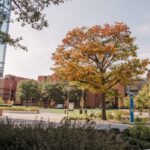
Banner image: UMBC’s campus in the fall. Photo by Marlayna Demond ’11 for UMBC.
]]>
This fall, the student-organized TEDxUMBC gave ten speakers the opportunity to share their stories, experiences, and expertise with the world. Surprisingly, the theme, “Unmasking Uncertainty,” was...
https://umbc.edu/stories/tedxumbc-brings-community-together-through-unmasking-uncertainty/
https://beta.my.umbc.edu/api/v0/pixel/news/119727/guest@my.umbc.edu/e96771e621322c78b83bb6b40076ca20/api/pixel
cahss
chemistry
coeit
community
inds
is
llc
politicalscience
psychology
saph
UMBC News & Magazine
https://beta.my.umbc.edu/groups/umbc-news-magazine
https://assets1-beta.my.umbc.edu/system/shared/avatars/groups/000/001/943/24435aa6207c452e7bc15cc74b42c7bb/xsmall.png?1748556657
https://assets1-beta.my.umbc.edu/system/shared/avatars/groups/000/001/943/24435aa6207c452e7bc15cc74b42c7bb/original.png?1748556657
https://assets2-beta.my.umbc.edu/system/shared/avatars/groups/000/001/943/24435aa6207c452e7bc15cc74b42c7bb/xxlarge.png?1748556657
https://assets2-beta.my.umbc.edu/system/shared/avatars/groups/000/001/943/24435aa6207c452e7bc15cc74b42c7bb/xlarge.png?1748556657
https://assets3-beta.my.umbc.edu/system/shared/avatars/groups/000/001/943/24435aa6207c452e7bc15cc74b42c7bb/large.png?1748556657
https://assets1-beta.my.umbc.edu/system/shared/avatars/groups/000/001/943/24435aa6207c452e7bc15cc74b42c7bb/medium.png?1748556657
https://assets2-beta.my.umbc.edu/system/shared/avatars/groups/000/001/943/24435aa6207c452e7bc15cc74b42c7bb/small.png?1748556657
https://assets1-beta.my.umbc.edu/system/shared/avatars/groups/000/001/943/24435aa6207c452e7bc15cc74b42c7bb/xsmall.png?1748556657
https://assets2-beta.my.umbc.edu/system/shared/avatars/groups/000/001/943/24435aa6207c452e7bc15cc74b42c7bb/xxsmall.png?1748556657
UMBC News & Magazine
0
0
false
Wed, 09 Dec 2020 16:47:26 -0500
UMBC researchers identify where giant jets from black holes discharge their energy

The supermassive black holes at the centers of galaxies are the most massive objects in the universe. They range from about 1 million to upwards of 10 billion times the mass of the Sun. Some of these black holes also blast out gigantic, super-heated jets of plasma at nearly the speed of light. The primary way that the jets discharge this powerful motion energy is by converting it into extremely high-energy gamma rays. However, UMBC physics Ph.D. candidate Adam Leah Harvey says,“How exactly this radiation is created is an open question.”
The jet has to discharge its energy somewhere, and previous work doesn’t agree where. The prime candidates are two regions made of gas and light that encircle black holes, called the broad-line region and the molecular torus.
A black hole’s jet has the potential to convert visible and infrared light in either region to high-energy gamma rays by giving away some of its energy. Harvey’s new NASA-funded research sheds light on this controversy by offering strong evidence that the jets mostly release energy in the molecular torus, and not in the broad-line region. The study was published in October in Nature Communications and co-authored by UMBC physicists Markos Georganopoulos and Eileen Meyer.

Adam Leah Harvey, photo courtesy A.L. Harvey.
Far out
The broad-line region is closer to the center of a black hole, at a distance of about 0.3 light-years. The molecular torus is much farther out—more than 3 light-years. While all of these distances seem huge to a non-astronomer, the new work “tells us that we’re getting energy dissipation far away from the black hole at the relevant scales,” Harvey explains.
“The implications are extremely important for our understanding of jets launched by black holes,” Harvey says. Which region primarily absorbs the jet’s energy offers clues to how the jets initially form, pick up speed, and become column-shaped. For example, “It indicates that the jet is not accelerated enough at smaller scales to start to dissipate energy,” Harvey says.
Other researchers have proposed contradictory ideas about the jets’ structure and behavior. Because of the trusted methods Harvey used in their new work, however, they expect the results to be broadly accepted in the scientific community. “The results basically help to constrain those possibilities—those different models—of jet formation.”
 Eileen Meyer. Photo by Marlayna Demond ’11 for UMBC.
On solid footing
To come to their conclusions, Harvey applied a standard statistical technique called “bootstrapping” to data from 62 observations of black hole jets. “A lot of what came before this paper has been very model-dependent. Other papers have made a lot of very specific assumptions, whereas our method is extremely general,” Harvey explains. “There isn’t much to undermine the analysis. It’s well-understood methods, and just using observational data. So the result should be correct.”
A quantity called the seed factor was central to the analysis. The seed factor indicates where the light waves that the jet converts to gamma rays come from. If the conversion happens at the molecular torus, one seed factor is expected. If it happens at the broad-line region, the seed factor will be different.

Markos Georganopoulos. Photo by Tim Ford.
Georganopolous, associate professor of physics and one of Harvey’s advisors, originally developed the seed factor concept, but “applying the idea of the seed factor had to wait for someone with a lot of perseverance, and this someone was Adam Leah,” Georganopoulos says.
Harvey calculated the seed factors for all 62 observations. They found that the seed factors fell in a normal distribution aligned almost perfectly around the expected value for the molecular torus. That result strongly suggests that the energy from the jet is discharging into light waves in the molecular torus, and not in the broad-line region.
Tangents and searches
Harvey shares that the support of their mentors, Georganopoulos and Meyer, assistant professor of physics, was instrumental to the project’s success. “I think that without them letting me go off on a lot of tangents and searches of how to do things, this would have never gotten to the level that it’s at,” Harvey says. “Because they allowed me to really dig into it, I was able to pull out a lot more from this project.”
Harvey identifies as an “observational astronomer,” but adds, “I’m really more of a data scientist and a statistician than I am a physicist.” And the statistics has been the most exciting part of this work, they say.
“I just think it’s really cool that I was able to figure out methods to create such a strong study of such a weird system that is so removed from my own personal reality.” Harvey says. “It’s going to be fun to see what people do with it.”
Header image: The remnants of a star torn apart by a black hole form a disk around the black hole’s center, while jets eject from either side. Artist’s rendering courtesy of NASA.
]]>
The supermassive black holes at the centers of galaxies are the most massive objects in the universe. They range from about 1 million to upwards of 10 billion times the mass of the Sun. Some of...
https://umbc.edu/stories/umbc-researchers-identify-where-giant-jets-from-black-holes-discharge-their-energy/
https://beta.my.umbc.edu/api/v0/pixel/news/119728/guest@my.umbc.edu/3a550f92a59c537ca467a64bc30da8c9/api/pixel
cnms
gradresearch
physics
research
science-and-technology
UMBC News & Magazine
https://beta.my.umbc.edu/groups/umbc-news-magazine
https://assets1-beta.my.umbc.edu/system/shared/avatars/groups/000/001/943/24435aa6207c452e7bc15cc74b42c7bb/xsmall.png?1748556657
https://assets1-beta.my.umbc.edu/system/shared/avatars/groups/000/001/943/24435aa6207c452e7bc15cc74b42c7bb/original.png?1748556657
https://assets2-beta.my.umbc.edu/system/shared/avatars/groups/000/001/943/24435aa6207c452e7bc15cc74b42c7bb/xxlarge.png?1748556657
https://assets2-beta.my.umbc.edu/system/shared/avatars/groups/000/001/943/24435aa6207c452e7bc15cc74b42c7bb/xlarge.png?1748556657
https://assets3-beta.my.umbc.edu/system/shared/avatars/groups/000/001/943/24435aa6207c452e7bc15cc74b42c7bb/large.png?1748556657
https://assets1-beta.my.umbc.edu/system/shared/avatars/groups/000/001/943/24435aa6207c452e7bc15cc74b42c7bb/medium.png?1748556657
https://assets2-beta.my.umbc.edu/system/shared/avatars/groups/000/001/943/24435aa6207c452e7bc15cc74b42c7bb/small.png?1748556657
https://assets1-beta.my.umbc.edu/system/shared/avatars/groups/000/001/943/24435aa6207c452e7bc15cc74b42c7bb/xsmall.png?1748556657
https://assets2-beta.my.umbc.edu/system/shared/avatars/groups/000/001/943/24435aa6207c452e7bc15cc74b42c7bb/xxsmall.png?1748556657
UMBC News & Magazine
0
0
false
Wed, 09 Dec 2020 16:39:17 -0500
Remembering Dr. William Rothstein, founding UMBC faculty member

We were deeply saddened this weekend to hear of the passing of William Rothstein, a beloved founding faculty member of UMBC. He was 83. We will remember him as one of the most exemplary professors we have known—a caring colleague, teacher, social scientist, and friend.
Bill was an emeritus professor of sociology at UMBC who devoted his career to our students. After earning his Ph.D. from Cornell University in 1965, he joined the UMBC faculty in 1966, when classes first began at the university. He was promoted to associate professor in 1969 and to professor in 1988. He continued to teach as an adjunct faculty member following his retirement, and he was a strong advocate for adjunct faculty during his career.
He touched the lives of countless students through the courses he taught, as the director of the master’s program in applied sociology, and in other ways. He was known as a thoughtful and compassionate mentor, and he remained connected with many of his students for years after graduation as they progressed in their careers.
UMBC alumni have shared wonderful memories with us. Bill was a season ticket holder for men’s and women’s basketball and was often cheering in the stands or eating pizza with graduate students while watching a game. One former student shared gratitude that Bill was able to attend her wedding, and another remarked that what he learned from Bill continues to shape his own teaching today.
Service also played a large role in Bill’s work and life. In addition to serving as graduate program director and acting chair, he served on nearly every standing committee in his department. His tenure at UMBC saw astounding growth for UMBC’s Department of Sociology, Anthropology, and Public Health.
As a researcher, Bill published widely on the history of medicine in the United States from a sociological perspective, including four books. He explored topics related to medical policy and public health, and mentored student researchers in developing new scholarship on these topics. He also published several articles in the Baltimore Sun and other outlets to increase public awareness of important health-related topics.
He continued to write during his retirement, publishing a new book in 2018 on coronary heart disease in the 20th-century United States, and more recently researching the COVID-19 pandemic. He was fascinated by the role of UMBC alumni in developing a COVID vaccine and encouraged us to stay positive about the future, even in challenging times.
A virtual funeral service will be held this Thursday, December 10, at 12 p.m., available through this link, with a number of UMBC colleagues and students speaking about his life. A virtual shiva gathering at 7 p.m., through this link, is another opportunity for friends and students to remember Bill.
Honoring his commitment to students, Bill’s family asks that contributions in his memory be made to the Graduate Student Emergency Fund that he established at UMBC. Donations can be submitted online or by check (payable to the UMBC Foundation, with Graduate Student Emergency Fund in the memo line, mailed to the UMBC Foundation, 1000 Hilltop Circle, Baltimore, MD 21250) to continue Bill’s legacy.
President Freeman Hrabowski
Provost Philip Rous
* * * * *
Note: This remembrance of Dr. William Rothstein, a founding faculty member of UMBC, was originally shared with the UMBC community via email on December 8, 2020.
Header image: William Rothstein tells a story during UMBC’s 50th Anniversary Stoop Storytelling event. Photo by Jim Burger for UMBC Magazine.
]]>
We were deeply saddened this weekend to hear of the passing of William Rothstein, a beloved founding faculty member of UMBC. He was 83. We will remember him as one of the most exemplary professors...
https://umbc.edu/stories/remembering-dr-william-rothstein-founding-umbc-faculty-member/
https://beta.my.umbc.edu/api/v0/pixel/news/119729/guest@my.umbc.edu/01527900e12b09bd04190b305ac27120/api/pixel
impact
UMBC News & Magazine
https://beta.my.umbc.edu/groups/umbc-news-magazine
https://assets1-beta.my.umbc.edu/system/shared/avatars/groups/000/001/943/24435aa6207c452e7bc15cc74b42c7bb/xsmall.png?1748556657
https://assets1-beta.my.umbc.edu/system/shared/avatars/groups/000/001/943/24435aa6207c452e7bc15cc74b42c7bb/original.png?1748556657
https://assets2-beta.my.umbc.edu/system/shared/avatars/groups/000/001/943/24435aa6207c452e7bc15cc74b42c7bb/xxlarge.png?1748556657
https://assets2-beta.my.umbc.edu/system/shared/avatars/groups/000/001/943/24435aa6207c452e7bc15cc74b42c7bb/xlarge.png?1748556657
https://assets3-beta.my.umbc.edu/system/shared/avatars/groups/000/001/943/24435aa6207c452e7bc15cc74b42c7bb/large.png?1748556657
https://assets1-beta.my.umbc.edu/system/shared/avatars/groups/000/001/943/24435aa6207c452e7bc15cc74b42c7bb/medium.png?1748556657
https://assets2-beta.my.umbc.edu/system/shared/avatars/groups/000/001/943/24435aa6207c452e7bc15cc74b42c7bb/small.png?1748556657
https://assets1-beta.my.umbc.edu/system/shared/avatars/groups/000/001/943/24435aa6207c452e7bc15cc74b42c7bb/xsmall.png?1748556657
https://assets2-beta.my.umbc.edu/system/shared/avatars/groups/000/001/943/24435aa6207c452e7bc15cc74b42c7bb/xxsmall.png?1748556657
UMBC News & Magazine
0
0
false
Tue, 08 Dec 2020 15:25:08 -0500
Remembering Dr. William Rothstein
We were deeply saddened this weekend to hear of the passing of William Rothstein, a beloved founding faculty member of UMBC. He was 83. We will remember him as one of the most exemplary professors we have known—a caring colleague, teacher, social scientist, and friend.
Bill was an emeritus professor of sociology at UMBC who devoted his career to our students. After earning his Ph.D. from Cornell University in 1965, he joined the UMBC faculty in 1966, when classes first began at the university. He was promoted to associate professor in 1969 and to professor in 1988. He continued to teach as an adjunct faculty member following his retirement, and he was a strong advocate for adjunct faculty during his career.
He touched the lives of countless students through the courses he taught, as the director of the master’s program in applied sociology, and in other ways. He was known as a thoughtful and compassionate mentor, and he remained connected with many of his students for years after graduation as they progressed in their careers.
UMBC alumni have shared wonderful memories with us. Bill was a season ticket holder for men’s and women’s basketball and was often cheering in the stands or eating pizza with graduate students while watching a game. One former student shared gratitude that Bill was able to attend her wedding, and another remarked that what he learned from Bill continues to shape his own teaching today.
Service also played a large role in Bill’s work and life. In addition to serving as graduate program director and acting chair, he served on nearly every standing committee in his department. His tenure at UMBC saw astounding growth for UMBC’s Department of Sociology, Anthropology, and Public Health.
As a researcher, Bill published widely on the history of medicine in the United States from a sociological perspective, including four books. He explored topics related to medical policy and public health, and mentored student researchers in developing new scholarship on these topics. He also published several articles in the Baltimore Sun and other outlets to increase public awareness of important health-related topics.
He continued to write during his retirement, publishing a new book in 2018 on coronary heart disease in the 20th-century United States, and more recently researching the COVID-19 pandemic. He was fascinated by the role of UMBC alumni in developing a COVID vaccine and encouraged us to stay positive about the future, even in challenging times.
A virtual funeral service will be held this Thursday, December 10, at 12 p.m., available through this link, with a number of UMBC colleagues and students speaking about his life. A virtual shiva gathering at 7 p.m., through this link, is another opportunity for friends and students to remember Bill.
Honoring his commitment to students, Bill’s family asks that contributions in his memory be made to the Graduate Student Emergency Fund that he established at UMBC. Donations can be submitted online or by check (payable to the UMBC Foundation, with Graduate Student Emergency Fund in the memo line, mailed to the UMBC Foundation, 1000 Hilltop Circle, Baltimore, MD 21250) to continue Bill’s legacy.
President Freeman Hrabowski
Provost Philip Rous
]]>
We were deeply saddened this weekend to hear of the passing of William Rothstein, a beloved founding faculty member of UMBC. He was 83. We will remember him as one of the most exemplary professors...
https://umbc.edu/stories/remembering-dr-william-rothstein/
https://beta.my.umbc.edu/api/v0/pixel/news/119730/guest@my.umbc.edu/615c97a81cc347b57843bf5e2fe66cf0/api/pixel
in-memorium
rss
UMBC News & Magazine
https://beta.my.umbc.edu/groups/umbc-news-magazine
https://assets1-beta.my.umbc.edu/system/shared/avatars/groups/000/001/943/24435aa6207c452e7bc15cc74b42c7bb/xsmall.png?1748556657
https://assets1-beta.my.umbc.edu/system/shared/avatars/groups/000/001/943/24435aa6207c452e7bc15cc74b42c7bb/original.png?1748556657
https://assets2-beta.my.umbc.edu/system/shared/avatars/groups/000/001/943/24435aa6207c452e7bc15cc74b42c7bb/xxlarge.png?1748556657
https://assets2-beta.my.umbc.edu/system/shared/avatars/groups/000/001/943/24435aa6207c452e7bc15cc74b42c7bb/xlarge.png?1748556657
https://assets3-beta.my.umbc.edu/system/shared/avatars/groups/000/001/943/24435aa6207c452e7bc15cc74b42c7bb/large.png?1748556657
https://assets1-beta.my.umbc.edu/system/shared/avatars/groups/000/001/943/24435aa6207c452e7bc15cc74b42c7bb/medium.png?1748556657
https://assets2-beta.my.umbc.edu/system/shared/avatars/groups/000/001/943/24435aa6207c452e7bc15cc74b42c7bb/small.png?1748556657
https://assets1-beta.my.umbc.edu/system/shared/avatars/groups/000/001/943/24435aa6207c452e7bc15cc74b42c7bb/xsmall.png?1748556657
https://assets2-beta.my.umbc.edu/system/shared/avatars/groups/000/001/943/24435aa6207c452e7bc15cc74b42c7bb/xxsmall.png?1748556657
UMBC News & Magazine
0
0
false
Tue, 08 Dec 2020 14:44:47 -0500
Call & Response
In a recent essay, UMBC President Freeman Hrabowski notes, “In difficult times, we come to know who we are.” Never has that been more true than this year or at this point in our nation’s history.
With the killing of George Floyd and other instances of police violence and the wave of protests that followed this spring and summer, many in our Retriever community are hearing the call to question what got us to this point and do everything they can to dismantle structural racism in our country.
In so many powerful ways, their voices echo those of some of our earliest Retriever alumni, who staged sit-ins on campus to protest the Vietnam war and civil rights injustices. In the spirit of this moment, many in our community are still protesting—but also taking to social media and finding new ways to make change from within their workplaces.
It’s difficult, but necessary, work. The moment is calling for an answer, and our Retrievers are responding. Because this is who we are.
THE LONG GAME
For several decades, Diane Bell-McKoy ’73, sociology and social work, has worked to make African American individuals and families in need become economically self-sufficient and to infuse philanthropic organizations with policies that create positive outcomes for people of color. UMBC Magazine talked with Bell-McKoy, CEO of Associated Black Charities and the Greater Baltimore Committee’s 2020 Regional Visionary awardee, about why making long-term change takes both patience and perseverance but is always worth it.
 Diane Bell-McKoy ‘73, sociology and social work. Image courtesy of Associated Black Charities.
UMBC Magazine: What are you trying to achieve through your work with philanthropic organizations, public policy makers, employers, trainers, and educators?
Bell-McKoy: Our goal is to shift the lens to provide the facts, the history, and the current policies to let people begin to really see how we ended up where we are today. Because it was very intentional—and going forward we can make different decisions to change the outcomes and the workforce ecosystem as it relates to systemic racism as a root barrier. When Black and brown people have the opportunity to move up, the greater economic opportunity means that they can also buy a house, they can start a business, and they can contribute a great deal more to their families and to the economy.
So my days are always around educating, around influencing, around advocating, around sharing our policy….It’s about meeting with our fellow philanthropists, helping them see the world differently and then giving them the desire to go deeper into those policies, their practice, and their culture.
UMBC Magazine: Your organization’s “10 Essential Questions” guide really forces folks to look at their operations through an equity lens. Is this as eye-opening as it sounds?
Bell-McKoy: I keep thinking, is that rocket science? Doesn’t this benefit all of us? But it feels like rocket science some days in having the conversation because you’re really asking people to rethink, to relearn how they were taught in terms of that history that wasn’t given to citizens. A lot of the positive history hasn’t been available about Black and brown people. I find myself on a reading journey right now learning as much as I can more about the history of black and brown people in this country.
And it’s important…for us to do the hard work now because we’re now awake much more across the country. That’s why I’m passionate about it. It’s been my journey all of my life. It was my journey at UMBC. It’s been my journey around what can I do, how can I make a difference for Black and white people?
UMBC Magazine: You’ve been doing this work for so long. What do you tell young people who are looking to make change?
Bell-McKoy: There are many ways that you can help in the now, including doing your own reading, your own research about why this exists. There are lots of opportunities locally—particularly now that we’re in a virtual world—to join lots of webinars and conversations across the country so that you can more deeply educate yourself. And because we have the ability to touch people all across the globe through the virtual environment, there are opportunities for students to be a mentor, for them to add some value to someone’s life.
Continue to use creativity, continue to use all your genius to make a difference in people’s lives. But understand that also—as you get to the next stage in your career coming out of UMBC and you’re becoming a millionaire—you need to invest back in all those organizations trying to change the system knowing that you can become a part of the patient capital needed to achieve system changes that then benefit a greater number of persons. You do have to steel yourself for the incremental. This may mean when the big change comes, many of us may not be here to benefit from it, but…that’s a part of it. It has to be an intentional journey.
RIPPLE EFFECT
For Jason Grant ’10, M17, a defining moment happened on a bus ride to a Meyerhoff Scholars event at UMBC President Freeman Hrabowski’s house his freshman year.
A senior asked Grant about his major (computer engineering) and then proceeded to pepper him with specific questions about his classes and his plans for graduate studies. That brotherly interest, says Grant, turned out to be the norm, not the exception.
“People kept telling me,” remembers Grant, now an assistant professor of computer science at Middlebury College, “if you go to UMBC and join the Meyerhoff program, you’re going to have a community of people. I didn’t actually realize how important that was, but it turned out to be extremely critical.”
In their careers, Grant and many other Meyerhoff alumni are replicating that family atmosphere—valuing the unique contributions of each member and raising up others alongside them around the country.
Immanuel Williams ’11, M18, mathematics, grew up doing math worksheet after math worksheet, his father handing him new problems to solve and instilling a desire to understand complicated equations. So later in life, when his colleagues made assumptions about how as a Black man, his father must have been missing from his life—he stopped them short.
He and his wife Kelley Williams ’13, environmental studies, wrote a book called The Adventure of Jamear: Shapes All Around, which celebrates the relationship of a father helping his son discover math. For Williams, a lecturer at California Polytechnic State University, the book launched his work at six Boys & Girls clubs around Los Angeles and San Francisco, providing math boot camps for hundreds of elementary school students for the past three summers.
Williams taps his own college students as volunteers to help personalize all the feedback students receive. “We’re reaching marginalized communities in terms of race and economic status,” says Williams, “so that feels really good.”
Grant has carried the Meyerhoff vision to Vermont, where he’s taken on leadership roles for the small population of students of color at Middlebury to see a face that looks like them. As advisor for the Black Student Union, “it allows me to network and to get a feel for the climate of all students of color here in this predominantly white institution, and how they’re trying to navigate that space,” says Grant, current president of the Meyerhoff Alumni Advisory Board.
This year at the ACM Richard Tapia Celebration of Diversity in Computing Conference, Grant served as deputy chair for research competition and poster competition. “This made me put my money where my mouth is,” says Grant. “Telling students to go to the conference was one thing, but them seeing me on the conference program allowed me to be a vocal leader in that space as a professor.”
Nicole Parker ’11, M19, biochemistry and molecular biology, now works as a lobbyist, connecting research institutions with federal dollars. She sees her role to advance policies that broaden minority participation in STEM and increase diversity in science and engineering careers. She puts it plainly: “I’m passionate about making changes so that the entire biomedical research enterprise operates like the Meyerhoff program.”
The ripple effect of the Meyerhoff program is clear—whether in K–5 after-school programing, at rural universities where representation is crucial, or lobbying Congress to fund research programs for scientists from diverse backgrounds.
“In four years at UMBC, those Meyerhoff values are so ingrained in us every day,” says Parker. “You can’t forget it when you go on to the next place.”
— Randianne Leyshon ’09
SUPPORT SYSTEM
As protests sprung up in cities across the country this spring, alumni like public historian Allison Seyler ’10, M.A. ’12, history, and computer programmer Carlos Lalimarmo ’11, computer science, found themselves compelled to participate. Today, as the nation continues to contemplate ways of making change, they, like so many others, are thinking deeply about how to be good allies to people of color.
 People march in Baltimore protesting police violence. Photo by Lalimarmo.
UMBC Magazine: What ultimately drives you to participate?
Seyler: As someone who deeply loves Baltimore City, I try to stay informed about the issues our community faces; one of those issues is police brutality. The longer I have lived here, the more I learned the necessity of making time to listen to Black leaders—women and men—who wholeheartedly devote themselves to this city; they have been calling for police reform for years. So for me, the choices I’ve made to protest this year were linked to that. I felt in order for me to show up for the Black community in Minneapolis who are mourning George Floyd, the Black community in Louisville who are mourning Breonna Taylor, and really, to show up for Black folk across the nation, I needed to show up for Baltimore.
-
 Photo courtesy of Lalimarmo.
-
 Photo courtesy of Seyler.
I had these eerie flashbacks to marching for Freddie Gray and felt an all too familiar sadness that families have lost their sons, daughters, fathers, sisters so unnecessarily. As I felt a sensation of “this is happening again,” my heart just dropped. How could we be at the same point we were in 2015? I think I’m driven to participate as a human being who cares intensely for others, but also because I believe that collectively, protestors can use their voices and actions in sustainable ways to force real change to happen.
UMBC Magazine: What do you see as your role as an ally and how do you hope it will be seen by others?
Lalimarmo: I think being informed is the baseline for participation, whether you agree with demonstrators’ message or not. You can’t participate responsibly without being informed. The protests themselves have become an issue, and the best way to understand them is to experience them firsthand. So I go when I can. When I think I understand and agree with the message of a particular protest, I’ll stand or march with the group to show support.
UMBC Magazine: What would you say to someone who isn’t sure of how to get involved but would like to?
Lalimarmo: I think a lot of people who would like to be more involved but aren’t sure how are probably more involved than they realize. Supporting the people close to them is important work that I’m sure they’re already doing. If not, strengthening personal relationships is a solid place to start.
Seyler: Honestly, I would remind them that there’s no better time. And I would channel two mantras that are said often, but get to the core of this work: This is a marathon, not a sprint. This is a movement, not a moment. If someone wants to get involved and is looking for a starting point, I would suggest starting with something small and human: read memoirs by Black authors like D. Watkins, Kondwani Fidel, and Chris Wilson. Pick up a copy of A Beautiful Ghetto by photographer Devin Allen and fill your mind with images that show the beauty of other peoples’ humanity. Sign up for a workshop by activist Britney Oliver to learn about being anti-racist in your actions and words. Your actions and involvement makes a difference.
ADVOCATES FOR CHANGE
Recently, there have been calls across the United States to defund the police and correctional facilities in response to the continued violence from police toward the Black community. But what exactly does defunding the police mean for youth currently in the juvenile justice system and for those most at risk of entering?
For 30 years, UMBC’s Choice Program has engaged, mentored, trained, and advocated for more than 25,000 youth in Maryland. It provides a series of programs to disentangle young people from the juvenile justice system and to strengthen youth and family ties to the community through increased educational and vocational opportunities.
 Eric Ford, first on the right, and Choice Program members unveil a mural created at Lane Manor Recreation center in partnership with Artivate Inc. Image courtesy of Ford.
UMBC’s Eric Ford, director of The Choice Program, and Frank Anderson, a doctoral student in language, literacy, and culture and the associate director of programs, talk about how the Choice model can provide a complex answer to a complex problem.
Anderson: What is defunding the police and what does that mean for Choice?
Ford: Defunding the police means reallocating funds to diversion programs so that youth will not get involved in the criminal justice system. It means investing in providing training to first responders in communities across America around restorative practices or providing additional mental health and substance abuse support for young people. Reallocating funds to these programs means communities will be able to provide the interventions and supports needed to individuals who are now being criminalized.
What do you think, Frank? What is our moral responsibility in this work?
Anderson: It’s important for me to reflect about what my moral and ethical responsibility is and whether my moral checkbook balances out at the end of each day. Am I creating more opportunities than what I’m taking? Am I working to share and distribute more resources than what I am taking? If not, then maybe it’s time for me to move to the side. I’m grateful you and peers are there to hold me accountable to keep pushing myself everyday to understand my role within the greater community.
What personal value of yours makes this work so important?
Ford: Truth. Being able to build on our Truth, Racial Healing, and Transformation (TRHT) framework has been such a rewarding experience for me. It has validated a lot of my personal beliefs, personal goals, and what I learned at Hampton University. For so long discussing the truth about what has happened in the past to marginalized people has been taboo in certain spaces. Being able to share the truth about my ancestors and people who have come before me and have it embraced has been transformational for me. This is exactly what our TRHT work aims to do. We support communities and a process to foster important difficult conversations around race equity and transformation. I am thankful for it every day.
Anderson: You are the longest-standing person of color to lead Choice. What about that makes the job difficult? What about that excites you?
Ford: My first position at Choice was as a caseworker. That experience led me to other opportunities. I returned to Choice to be assistant director and worked my way through the ranks. Ascending to the director of Choice is something I am very proud of. As a man of color, you always carry the weight of your racial or ethnic group and the weight and pressure to be successful. Coming into this position, I experienced some imposter syndrome sitting in spaces that I had not been before and wondering whether I belonged in those spaces. Over time I have gained confidence through feedback I have received from my peers, my mentors, and my family.
It has been a wonderful experience to not only represent Black men and represent all the participants of color and young men of color. I represent a possibility for them. One of my proudest moments at Choice was when an AmeriCorps member was introduced to me in my office. He was a young Black man. He looked around my office and was in awe. He said, ‘Wow, this could be me one day.’ It hit me that it’s not just about reports, proposals, and grant writing but it is also what I represent for Black men throughout the country.
INCLUSION MATTERS
Created in June, the UMBC Inclusion Council brings together faculty, staff, students, and alumni from all across campus to help address issues of equity and inclusion at UMBC. UMBC Magazine talked with the council co-chairs, Keith J. Bowman, dean of the College of Engineering and Information Technology, and Ariana Arnold, director of the Office of Equity and Inclusion about what’s ahead for this group.
UMBC Magazine: What have the first meetings of this group been like? How would you describe the energy in the (virtual) room?
Bowman: We began with several weeks wherein everyone could talk about their experiences, visible and non-visible elements of their backgrounds, and their commitment to the work. It was an incredible set of meetings where folks expressed their passion for the work of the Inclusion Council. It made me feel truly proud of our UMBC community and its commitment to social justice.
Arnold: It was extremely meaningful…because we never met until we were already virtual. So we felt like it was really important to make those personal connections. I think that really started us on a good path for people being able to be honest when having discussions about sometimes difficult topics, as well as being compassionate towards each other, which is really what we’re trying to build here.
UMBC Magazine: The Council no doubt has a lot to think about and plan (everything from curriculum, faculty and staff diversity, to intersectionality and restorative practices, etc.). What issue or project are you personally most excited to work on, and why?
Arnold: I would love to be on all of the committees…but I’m really excited about the work of the faculty and student retention and belonging groups. We had 146 people interested in being part of those working groups, which was amazing. And these are both places where we can have a significant impact on the campus.
Bowman: I am most excited about being able to provide a platform and mechanisms to elevate the work that many have been doing more towards substantive actions.
UMBC Magazine: What do you hope people will be saying about this work a year from now? Or five years down the road?
Arnold: What I’d like to be able to say a year from now is that we are doing the work and not just, you know, talking about the work. And that five years from now we’ve had a measurable impact on campus in terms of both inclusivity…meaning that people from all political, racial, ethnic, religious, cultural backgrounds, abilities, and nationalities have become engaged and that we’ve improved the sense of inclusion and belonging on campus.
Bowman: I hope they can see visible and defined changes, but I also hope they continue to have expectations since we know success is never final at UMBC.
CALL TO ACTION
In 2017, Christine Osazuwa ’11, interdisciplinary studies, left the country. She eventually settled in London—a place where she says she’s never seen quite so much natural integration of people of all races, cultures, and walks of life. Even so, when the news of the death of George Floyd reached her this spring, Osazuwa, director of data and insights for Warner Music Group, never felt quite comfortable expressing her feelings in the form of public protest.
“There’s nothing like a pandemic to remind you that you’re an immigrant…. I’m a guest in someone else’s country,” she says, noting she can’t vote, either.

C
hristine Osazuwa ’11, interdisciplinary studies. Photo of Christine Osazuwa by Out Since Tuesday.
So, instead, she did what she does best—she wrote about it. What started as a short series of Facebook posts fueled by her own life and experiences eventually became a longform essay titled “How To Be a Better Ally.” In five steps—consume content and goods made by Black people, question your employers and your privilege, for instance—Osazuwa implores her white friends, ultimately, to take the time to familiarize themselves with the Black experience.
Osazuwa grew up within a first-generation Nigerian American family in a predominantly white suburb of Baltimore.
“I know all about Hanukkah, I can pronounce the last names of my Polish friends, I know basically every word to Mean Girls, I can dance to “Cotton Eyed Joe,” I can sing along to “Sweet Home Alabama,” I can name all of the Kardashians, and I’ve had my fair share of meatloaf and coleslaw…. Obviously, these are mostly trivial, stereotypical examples but the point is, I have grown up surrounded by white culture,” she writes. In creating this piece, she hopes to give readers a push to learn about Black culture without adding to the weight [Black people are] already carrying.
“As a white person, you can get through life completely fine without ever understanding another person’s culture,” she explains. “There was no expectation the other way around. I had to know your shows and mine. I had to read your books and mine. I had to know your history and my own. And now, we say it is not our job to educate you because we’ve spent our entire lives learning and doing everything twice.”
Read Osazuwa’s full piece on LinkedIn.
*****
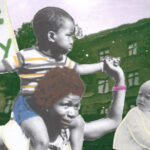
Stories and interviews by UMBC staff. Illustrations, including story header, by Elise Peterson.
]]>
In a recent essay, UMBC President Freeman Hrabowski notes, “In difficult times, we come to know who we are.” Never has that been more true than this year or at this point in our nation’s history....
https://umbc.edu/stories/call-and-response/
https://beta.my.umbc.edu/api/v0/pixel/news/119731/guest@my.umbc.edu/1c5d7e184734e2c54be0b6b54992a4f7/api/pixel
alumni
fall-2020
feature
umbctogether
UMBC News & Magazine
https://beta.my.umbc.edu/groups/umbc-news-magazine
https://assets1-beta.my.umbc.edu/system/shared/avatars/groups/000/001/943/24435aa6207c452e7bc15cc74b42c7bb/xsmall.png?1748556657
https://assets1-beta.my.umbc.edu/system/shared/avatars/groups/000/001/943/24435aa6207c452e7bc15cc74b42c7bb/original.png?1748556657
https://assets2-beta.my.umbc.edu/system/shared/avatars/groups/000/001/943/24435aa6207c452e7bc15cc74b42c7bb/xxlarge.png?1748556657
https://assets2-beta.my.umbc.edu/system/shared/avatars/groups/000/001/943/24435aa6207c452e7bc15cc74b42c7bb/xlarge.png?1748556657
https://assets3-beta.my.umbc.edu/system/shared/avatars/groups/000/001/943/24435aa6207c452e7bc15cc74b42c7bb/large.png?1748556657
https://assets1-beta.my.umbc.edu/system/shared/avatars/groups/000/001/943/24435aa6207c452e7bc15cc74b42c7bb/medium.png?1748556657
https://assets2-beta.my.umbc.edu/system/shared/avatars/groups/000/001/943/24435aa6207c452e7bc15cc74b42c7bb/small.png?1748556657
https://assets1-beta.my.umbc.edu/system/shared/avatars/groups/000/001/943/24435aa6207c452e7bc15cc74b42c7bb/xsmall.png?1748556657
https://assets2-beta.my.umbc.edu/system/shared/avatars/groups/000/001/943/24435aa6207c452e7bc15cc74b42c7bb/xxsmall.png?1748556657
UMBC News & Magazine
0
0
false
Tue, 08 Dec 2020 13:56:45 -0500
Finding Joy in the Classroom

“Why are chemists so great at solving problems?” Theresa Bruce ’09, asks her eighth grade social studies class at KIPP Harmony. Her corny joke elicits no verbal responses but doesn’t go unanswered as students engage with the icebreaker online. “Because they have all the solutions!” Bruce guffaws.
In a year where teaching looks like nothing before, Bruce and other educators are grappling with how to best reach their students, academically and relationally. But the cheesy jokes are nothing new, admits Bruce. “That’s just who I am.” A Sondheim Scholar who majored in political science and social work, Bruce was runner up for the 2020 Baltimore City Teacher of the Year. It’s easy to see why, as her energetic and enthusiastic demeanor comes through clearly, even mediated through the multiple computer windows she uses to instruct her scholars from afar.
But Bruce didn’t set out to be a teacher—she had her sights set on being a hot-shot lawyer. So how to explain her past decade working as a Baltimore City school teacher? She shares this in her own words.
Putting the common good first
When I left high school, I had my mind made up that I was going to be a lawyer. I was going to be the next Johnnie Cochran. Forget if the glove didn’t fit, I was going to have my own catchphrase and it was going to blow up. I was going to be riding in limos with all of the entertainers. Then UMBC got in the way of that fantasy.
Being a part of the Sondheim Public Affairs Scholars program made me realize that I wanted to work toward something greater than myself. My celebrity ideals weren’t putting the common good first—they certainly didn’t push for society in a way that is helpful, meaningful, and beneficial for all. When that switch happened inside me, my mentors at UMBC were instrumental in helping me pursue a new goal, nurturing me, and pushing me along a path that led to public policy.
 Bruce teaching virtually from her empty classroom in October 2020. Photo by Corey Jennings ’10.
So how did I end starting my 10th year teaching as a Baltimore City school teacher? After I got my master’s in public policy at the University of Chicago with a focus in K through 12 urban education reform, I realized that I needed to actually be in a teaching role before I could make policy that affected education. Additionally, I believe that every child deserves the opportunity to make choices in their lives. I feel like I got the best public education possible in Baltimore City, and I got it for free. A motivating factor for me is the belief that every child should get what I got.
Lifting up others’ dreams
I’ve always loved school, so UMBC was the perfect fit for me. It was undeniably cool to be smart. So that’s the atmosphere I try to create in my classroom. We all have favorite subjects, and I understand that for some of my students, social studies may not be their favorite. But I want these young people to find some joy when they come into my room—to feel like they can talk with me and connect. I want them to know that I support them in their goals. UMBC taught me the importance of lifting up other people’s dreams.
 Bruce, right, with Adrienne Hawkins ’09, at a 2008 UMBC basketball game.
Looking back on my time as a student, I have so many people I’m grateful to for putting up with me, quite honestly, because I was a headache. I always had an idea. I always wanted to do something. And I wasn’t always listening. Despite that, Dr. Roy Meyers, professor of political science and affiliate professor of public policy, was my biggest champion. Dr. Cheryl Miller, associate professor emerita, public policy and political science, challenged me to think bigger than myself. Dr. Tyson King Meadows, associate professor of political science, taught my very first poli-sci class and never stopped pushing me forward. Delana Gregg, Ph.D. ’19, language, literacy, and culture, a powerhouse in the Academic Success Center, was a constant force in helping me shape my career path while being a sounding board for all of my ideals.
So now, as an educator myself, I ask how I can best push and champion my students. The biggest step I can take—and this doesn’t matter if you’re in a brick-and-mortar building or if you’re online—is to make a relationship. Yes, they’re harder to build virtually, but when young people can relate to you as a person, they’re more apt to try. When you acknowledge them and their efforts, they’re going to try even harder. There’s an old saying I think about often: People don’t care what you know, until they know you care.
Creating community in a virtual classroom
My biggest reward right now is sparking the minds of the next generation. Our young people come to us with so many gifts. They’re talented in ways that might just take a little nudging for them to realize. But I know how many people took time for me, and I want to make my students feel the same. I want them to know I care about their success, beyond their grades. How can I help them discover who they truly are, pursue what matters to them, and be an agent for change?
 Bruce, working from her home office.
Part of the way I help them along this path is by putting books in front of them—all the time. There are over 700 books in my classroom that I’ve amassed, partly through donations via the Donors Choose platform and partly by spending my own money. Quarterly, I host a Starbooks session for my students within my classroom, usually around a theme, like non-fiction texts or graphic novels. It gives young people a chance to sample books and see what they might enjoy. Slowly but surely, I’ve been seeing an increase in my scholars’ excitement about reading books and checking them out of my classroom.
Now that we’re meeting virtually, it’s been hard to not gather in the classroom I’ve lovingly decorated and filled with books and materials. My scholars and I have created our own community in the classroom, and it’s been interesting in this pandemic to rethink the way community needs to develop. All things considered, I am thankful because even though we’re in the midst of a global virus, I’ve been pushed to rethink the way I engage the students, not only in the work, but how to grow relationships with them as well. So we’re creating a new classroom, a new virtual one. It may not be as big or as colorful, but it’s got great potential.
*****
Header image, by Corey Jennings ’10. All other photos courtesy of Theresa Bruce, unless noted.
]]>
“Why are chemists so great at solving problems?” Theresa Bruce ’09, asks her eighth grade social studies class at KIPP Harmony. Her corny joke elicits no verbal responses but doesn’t go unanswered...
https://umbc.edu/stories/theresa-bruce/
https://beta.my.umbc.edu/api/v0/pixel/news/119732/guest@my.umbc.edu/efad73ff51cf45edaf50ee94a67fa4ae/api/pixel
alumni
alumni-essay
baltimore-city-schools
cahss
fall-2020
political-science
social-work
videos
web-extra
UMBC News & Magazine
https://beta.my.umbc.edu/groups/umbc-news-magazine
https://assets1-beta.my.umbc.edu/system/shared/avatars/groups/000/001/943/24435aa6207c452e7bc15cc74b42c7bb/xsmall.png?1748556657
https://assets1-beta.my.umbc.edu/system/shared/avatars/groups/000/001/943/24435aa6207c452e7bc15cc74b42c7bb/original.png?1748556657
https://assets2-beta.my.umbc.edu/system/shared/avatars/groups/000/001/943/24435aa6207c452e7bc15cc74b42c7bb/xxlarge.png?1748556657
https://assets2-beta.my.umbc.edu/system/shared/avatars/groups/000/001/943/24435aa6207c452e7bc15cc74b42c7bb/xlarge.png?1748556657
https://assets3-beta.my.umbc.edu/system/shared/avatars/groups/000/001/943/24435aa6207c452e7bc15cc74b42c7bb/large.png?1748556657
https://assets1-beta.my.umbc.edu/system/shared/avatars/groups/000/001/943/24435aa6207c452e7bc15cc74b42c7bb/medium.png?1748556657
https://assets2-beta.my.umbc.edu/system/shared/avatars/groups/000/001/943/24435aa6207c452e7bc15cc74b42c7bb/small.png?1748556657
https://assets1-beta.my.umbc.edu/system/shared/avatars/groups/000/001/943/24435aa6207c452e7bc15cc74b42c7bb/xsmall.png?1748556657
https://assets2-beta.my.umbc.edu/system/shared/avatars/groups/000/001/943/24435aa6207c452e7bc15cc74b42c7bb/xxsmall.png?1748556657
UMBC News & Magazine
0
0
false
Mon, 07 Dec 2020 14:14:39 -0500
How to Throw a Hammer

with Andrew Haberman ’21, computer science, and Davina Orieukwu, assistant Track & Field coach
It’s widely accepted that you need to practice a skill for 10,000 hours before becoming an expert. Andrew Haberman ’21, computer science, has a different number in mind—20,000 throws. Twenty-five throws a practice, five days of practice a week, 10 months out of the year for four years. And even after that, he knows that success is never final. So he makes another throw.
Along with shot put, weight, and discus throws, Haberman specializes in the hammer throw. This is not a tool from your dad’s shed. For men’s regulation competition, it’s a 16lb metal ball attached by a steel wire to a grip. While the object of this competition is—like all throwing competitions—to launch your object the farthest, with hammer throw speed is also a big factor.
-
 Andrew Haberman
-
 Davina Orieukwu
As part of track and field, throwing is more obscure than some events, but UMBC has a storied history in this discipline. Cleopatra Borel ’02, interdisciplinary studies, is a four-time Olympian shot putter representing Trinidad and Tobago, placing 7th in Brazil in 2016.
On the practice field, again and again, the rhythmic sound of Haberman’s shoes scuffing the throwing circle are followed by a thunk as the hammer lands in the grass, a rooster tail of dirt following each toss. Haberman and his throwing coach, Davina Orieukwu, talk through foot placement, chest height, release angle, and many other minute readjustments to his technique. Over and over, Orieukwu reminds him, “push the hammer all the way around,” to get the most efficient throw. So how does anyone get to 20,000 throws? Start with the first one.
Tools of the Trade
-
A hammer—This implement is a 8.8lb (for women) or 16lb (for men) metal ball on a wire with a handhold. But in a pinch, other heavy implements attached to a chain and grip will work.
-
Wide open space—this is not a sport to practice near a lot of windows.
-
Upper body strength—this would be helpful to start, but you can always build it up while you practice.
-
A coach or mentor—no YouTube video can substitute for hands-on guidance.
Haberman’s career record toss is 55.06m (180.6 ft). That is approximately as long as the Leaning Tower of Pisa is tall. Illustration by Jim Lord ’99.
Step 1 — Hammer time
First acquire a hammer or throwing implement. These aren’t the most accessible pieces of equipment like a pair of running shoes or a soccer ball. Hammer throw isn’t a part of most high school track and field teams, but Haberman’s coach at Century in Carroll County had access to some of the heavy equipment and allowed the throwing athlete to practice on his own. Haberman saw the hammer throw as a way to extend his athletic career, gaining experience in a more uncommon discipline to make him a more attractive athlete to colleges.
But you don’t need a regulation hammer to start off. During practice, Orieukwu has Haberman and another throwing athlete, sophomore Thomas Hamby, use a variety of weighted objects. First, Haberman warms up with a literal ball and chain. This implement weighs twice as much as the hammer he’ll use in competition, so he’s gaining strength and developing better technique by handing the heavier object. Hamby throws a hefty chain looped around a handle to start.
Step 2 — When, not if, you fall, get back up again
Hone your technique. Maybe at first this is watching YoutTube tutorials by world class athletes or binging compilations of “fails,” to see all the ways that things could go wrong. As Orieukwu repeats during practice, “losing connection with the ground is losing connection with the ball.” For the uninitiated, stumbling or falling down is to be expected in the beginning. Imagine this: you are trying to balance your body while swinging a weighted ball over your head twice and then spinning anywhere from three to five times (called “the wind”), building up momentum to the moment of release. The faster the speed of your spins, the more velocity your hammer has.
 Orieukwu gives Haberman pointers for his foot placement and when to release the hammer.
Everyone, says Haberman—even with four years of experience—loses control of the ball. The key, he notes: “Be as relaxed as possible, but strong and intentional at the same time.”
Step 3 — Arm & hammer
Learn better form. Haberman says his STEM background certainly helps, as he thinks through the physics of the pull of the hammer as his body rotates to gain speed. Orieukwu tells him to watch his “flat 2.” Haberman knows that means during his second rotation, “my hammer rises really high in my orbit, so that keeps me from throwing farther,” he says.
As the ball increases velocity with each turn, it’s important to retain a triangular shape with your arms—your chest forming the base, your arms the two legs of the isosceles triangle, and the hammer at the vertex. If the hammer gets ahead or behind your triangle, you’re in trouble, says Haberman.
Step 4 — Pass it forward
Start mentoring others. So much of hammer throwing is a mind game, shares Haberman, who credits older team members with helping him learn good habits early on: relax, make jokes during practice, and stay neutral to avoid emotional highs and lows which can derail an athlete. Hamby, who just picked up the hammer throw in fall 2020, says that Haberman, now a senior, is his go-to source for advice.
 Haberman, a senior, and Hamby, a sophomore, discuss throwing techniques.
The older athlete sees his responsibility and tries not to pass long throwing neuroses. “I consistently think I can do better, but sometimes that works against me,” says Haberman. “Thomas picks up on my attitude and I don’t want it to negatively affect him.”
With that, he lifts the hammer, executes the wind, and completes another throw—number 20,001 and counting.
*****
Header image: Haberman practices with Orieukwu looking on. All photos by Marlayna Demond ’11.
]]>
with Andrew Haberman ’21, computer science, and Davina Orieukwu, assistant Track & Field coach It’s widely accepted that you need to practice a skill for 10,000 hours before becoming an...
https://umbc.edu/stories/how-to-throw-a-hammer/
https://beta.my.umbc.edu/api/v0/pixel/news/119733/guest@my.umbc.edu/28caea069fd0fddc26f7664d1653224a/api/pixel
athletics
campus-life
fall-2020
how-to
UMBC News & Magazine
https://beta.my.umbc.edu/groups/umbc-news-magazine
https://assets1-beta.my.umbc.edu/system/shared/avatars/groups/000/001/943/24435aa6207c452e7bc15cc74b42c7bb/xsmall.png?1748556657
https://assets1-beta.my.umbc.edu/system/shared/avatars/groups/000/001/943/24435aa6207c452e7bc15cc74b42c7bb/original.png?1748556657
https://assets2-beta.my.umbc.edu/system/shared/avatars/groups/000/001/943/24435aa6207c452e7bc15cc74b42c7bb/xxlarge.png?1748556657
https://assets2-beta.my.umbc.edu/system/shared/avatars/groups/000/001/943/24435aa6207c452e7bc15cc74b42c7bb/xlarge.png?1748556657
https://assets3-beta.my.umbc.edu/system/shared/avatars/groups/000/001/943/24435aa6207c452e7bc15cc74b42c7bb/large.png?1748556657
https://assets1-beta.my.umbc.edu/system/shared/avatars/groups/000/001/943/24435aa6207c452e7bc15cc74b42c7bb/medium.png?1748556657
https://assets2-beta.my.umbc.edu/system/shared/avatars/groups/000/001/943/24435aa6207c452e7bc15cc74b42c7bb/small.png?1748556657
https://assets1-beta.my.umbc.edu/system/shared/avatars/groups/000/001/943/24435aa6207c452e7bc15cc74b42c7bb/xsmall.png?1748556657
https://assets2-beta.my.umbc.edu/system/shared/avatars/groups/000/001/943/24435aa6207c452e7bc15cc74b42c7bb/xxsmall.png?1748556657
UMBC News & Magazine
0
0
false
Wed, 02 Dec 2020 21:48:13 -0500


