UMBC Mourns the Passing of Alex Rittle, GSA President
Dear UMBC Community,
It is with much sadness that we inform the campus that Alex Rittle, President of the Graduate Student Association (GSA) and a Ph.D. candidate in Geography and Environmental Systems (GES), passed away unexpectedly. We do not yet have details on services to celebrate Alex’s life but will share them with the community as they become available.
Alex will be remembered for his kindness and his commitment to helping his fellow graduate students succeed at UMBC. His involvement with GSA began as representative of the GES Graduate Student Organization from 2016 to 2018. He was later elected to serve as Chair of the Graduate Experiences, Achievement, and Research Symposium (GEARS) Committee 2018–2019. He was currently serving his second term as President of the GSA, and was active in UMBC shared governance, serving on the University Steering Committee 2019–2020. He also represented UMBC on the University System of Maryland Student Council and served on the joint Graduate Council linking UMBC and the University of Maryland, Baltimore. As a student representative from UMBC, he was both confident and eloquent as he worked to ensure the graduate student perspective was heard and understood.
Janet Rutledge, Vice Provost and Dean of the Graduate School, remembers that “Alex was a tireless and enthusiastic advocate for graduate students. It is telling that one of his last projects was spearheading an initiative to produce a graduate student survey, to learn how graduate students were doing during the pandemic, and discover ways in which GSA and the University could help.”
We will remember his authenticity, his passion for education, and his ability to make us think and laugh. All of these qualities shone through in his message of hope and congratulations for our Graduate School Class of 2020. In his pre-recorded Commencement remarks, Alex said of UMBC, “the compassion here is contagious…a UMBC grad knows that accomplishments are not about the attention or the notoriety that may or may not be received. No, we do what we do because we want to make the world, our community, and our homes…better.”
We will also remember his dedication to his academic studies. Alex began his Ph.D. program at UMBC in fall 2015 and reached Ph.D. candidacy in fall 2019. In 2017, Alex was among only four students awarded a prestigious Coastal Resilience and Sustainability Fellowship from Maryland SeaGrant. Matthew Baker, professor of Geography and Environmental Systems and Alex’s doctoral advisor, recalls that “Alex really took to the combination of applied science and outreach he was exposed to at Maryland SeaGrant. It was his dream to become a fellow for the American Association for the Advancement of Science, where he would have an opportunity to contribute to federal science and technology policy.”
Alex’s GSA colleagues remember him as a compassionate and thoughtful leader who inspired all to speak up and voice their opinions and ideas, and who did so without ever passing judgement. Fariha Khalid, former GSA Senator, said, “Alex managed to open every meeting with a lighthearted joke or funny stories that made everyone feel welcome and brought even the most important of conversations back down to earth. His ability to lead such a diverse group of graduate students looked so natural, and he always managed to find the perfect balance between professionalism and friendliness.”
A strong advocate for the UMBC graduate community, Alex spent countless hours searching for ways to improve the lives of students on topics ranging from student mental health and food and financial security to international student issues, graduate assistant rights, and opportunities for research and creative achievement. Samantha Fries, GSA Vice President says, “His heart was so big, and the genuine, deep compassion he felt for his peers was always evident in his words and actions. His loss will be felt greatly by many, and we will strive to honor him by continuing the wonderful work he has done to better the lives of the UMBC graduate student community.”
Deanna Cerquetti, former GSA Vice President, noted, “It’s hard to put into words how devastating it is to lose Alex Rittle. As the leader of the GSA, he truly worked hard to give graduate students a voice at UMBC, all with a natural charisma and sense of humor that made everyone feel welcome. Though it’s incredibly difficult to imagine UMBC without him, I know the impact he had on our community will inspire us all to be kind to one another and to continue to work together to make things better.”
Meghan Lynch, Chair of GSA Legislative Concerns, remembered, “I felt so welcomed and encouraged by Alex. I could tell he embodied all of what I know to be true of UMBC: authentically showing up, especially when times are tough, and ensuring people come together for the better. Alex made everyone feel that they were truly part of the community.” GSA Historian Kylie Hoffman added, “Alex’s compassionate leadership and actions will not be forgotten. He never failed to put a smile on the faces of those he crossed paths with, and he spent countless hours searching for ways to improve the lives of students. He will be dearly missed.”
GSA Administrative Assistant Dawn Galindo shared, “Alex was truly blessed with a wonderful sense of humor and quick wit that will forever be missed yet always remembered with great fondness. Alex was pure joy.”
We know that many in our community are deeply affected by this news. Students in need of emotional support can contact the Counseling Center at (410) 455-2472 on weekdays, 8:30 a.m. – 5 p.m., or the after-hours support line at (410) 455-3230. Employees can access support through the Employee Assistance Program.
During this challenging time in this most challenging year, we leave you with the heartfelt advice that Alex provided to the Class of 2020: “Lead, challenge, ask difficult questions, be wrong so that you can be right later, push yourself, do not let the small defeats distract you from the larger victories, and lastly, love and care for one another like your life depends on it.”
President Freeman Hrabowski
Provost Philip Rous
Janet Rutledge, Vice Provost and Dean of the Graduate School
Mehrshad Devin, President, Student Government Association
Samantha Fries, Vice President, Graduate Student Association
Bobby Lubaszewski, President, Professional Staff Senate
Orianne Smith, President, Faculty Senate
Melody Wright, President, Non-Exempt Staff Senate
]]>
Dear UMBC Community, It is with much sadness that we inform the campus that Alex Rittle, President of the Graduate Student Association (GSA) and a Ph.D. candidate in Geography and Environmental...
https://umbc.edu/stories/umbc-mourns-the-passing-of-alex-rittle-gsa-president/
https://beta.my.umbc.edu/api/v0/pixel/news/119712/guest@my.umbc.edu/a52586b18dd7166b727aec7fc8acdfdf/api/pixel
in-memorium
rss
UMBC News & Magazine
https://beta.my.umbc.edu/groups/umbc-news-magazine
https://assets1-beta.my.umbc.edu/system/shared/avatars/groups/000/001/943/24435aa6207c452e7bc15cc74b42c7bb/xsmall.png?1748556657
https://assets1-beta.my.umbc.edu/system/shared/avatars/groups/000/001/943/24435aa6207c452e7bc15cc74b42c7bb/original.png?1748556657
https://assets2-beta.my.umbc.edu/system/shared/avatars/groups/000/001/943/24435aa6207c452e7bc15cc74b42c7bb/xxlarge.png?1748556657
https://assets2-beta.my.umbc.edu/system/shared/avatars/groups/000/001/943/24435aa6207c452e7bc15cc74b42c7bb/xlarge.png?1748556657
https://assets3-beta.my.umbc.edu/system/shared/avatars/groups/000/001/943/24435aa6207c452e7bc15cc74b42c7bb/large.png?1748556657
https://assets1-beta.my.umbc.edu/system/shared/avatars/groups/000/001/943/24435aa6207c452e7bc15cc74b42c7bb/medium.png?1748556657
https://assets2-beta.my.umbc.edu/system/shared/avatars/groups/000/001/943/24435aa6207c452e7bc15cc74b42c7bb/small.png?1748556657
https://assets1-beta.my.umbc.edu/system/shared/avatars/groups/000/001/943/24435aa6207c452e7bc15cc74b42c7bb/xsmall.png?1748556657
https://assets2-beta.my.umbc.edu/system/shared/avatars/groups/000/001/943/24435aa6207c452e7bc15cc74b42c7bb/xxsmall.png?1748556657
UMBC News & Magazine
0
0
false
Thu, 17 Dec 2020 22:14:28 -0500
NSF grants UMBC’s Chris Rakes and Michele Stites $3M to transform undergraduate secondary mathematics teacher preparation programs

UMBC’s Chris Rakes and Michele Stites and colleagues have received a $3 million grant from the National Science Foundation to strengthen undergraduate secondary mathematics teacher preparation programs.
Rakes is an assistant professor of secondary mathematics education and Stites is an assistant professor of early childhood education. The grant will fund their study of the PrimeD framework in collaboration with Berea College, the University of Central Florida, and the University of Kentucky. They will examine the use of PrimeD to structure the training of over 150 undergraduate students per year for four years.
PrimeD framework

Chris Rakes.
Photo courtesy Rakes.
PrimeD stands for Professional Development: Research, Implementation, and Evaluation, an innovative approach to undergraduate secondary mathematics teacher preparation programs. Where traditional approaches to teacher preparation focus on learning how to teach specific mathematical skills, PrimeD structures teacher preparation as professional development. It creates an overarching system of learning, data collection, implementation, and evaluation based on a math teacher’s needs.
This structure supports teacher candidates with a mechanism to re-envision mathematics education as a scientific inquiry process—one that provides a unique and robust lens to examine diverse ideas and perspectives in math. PrimeD also addresses the systemic and individual challenges found in teacher preparation by incorporating culturally aware and equitable teaching practices. The PrimeD teacher preparation framework engages students as professional teacher leaders.
“I want educators to understand how mathematical ideas have meaning, and those meanings lead to procedures and skills,” says Rakes, the principal investigator. He wants everyone to learn to see mathematics as more than a set of skills and algorithms.
 Secondary education students working with math strips. Photo courtesy of Rakes.
Transforming classroom practice
Rakes is the coordinator of UMBC’s undergraduate secondary mathematics education program. Six years ago he collaborated with at team of secondary math education researchers. They evaluated a statewide math and science professional development program for secondary math teachers in Florida.
Their evaluation revealed that teachers were not implementing the strategies, tools, and activities learned through the professional development in their classroom. There was no unifying structure to connect professional development with classroom implementation and evaluation.
“We realized that what was missing was a coherent framework that was guiding the work, “ explains Rakes. “There was no common vision and nothing explicit that would help the teachers take it to the classroom. There was nothing that said, ‘This has been fun. Now, how are you going to do this?”
PrimeD, they hypothesized, could meet this need.
 Secondary mathematics students presenting their student-teacher experiences.
Photo courtesy of Rakes.
Teachers as researchers
PrimeD creates this link by equipping student-teachers, including aspiring math teachers, with the skills to conduct research on their teaching practices. They can then adjust their teaching based on their findings.
To assist teacher candidates with implementing what they’ve learned, PrimeD includes network “improvement communities.” Professors, mentor-teachers, and alumni guide aspiring teachers through the process. Research has shown this kind of peer and mentor support to be essential for teacher success and persistence in the first three years of teaching.
 Secondary math education students complete an exercise. Photo courtesy of Rakes.
Math as a change agent
Rakes will implement PrimeD at UMBC with student-teachers from the Sherman STEM Teacher Scholars Program. Stites, the co-principal investigator, will evaluate the implementation of the program at UMBC.
At the same time, researchers from partner universities will also study the implementation of PrimeD in their undergraduate secondary math teacher preparation programs. The participating researchers will gather, share, and evaluate fundamental data providing insights into PrimeD implementation in different contexts.

Michele Stites.
Photo courtesy of Stites.
If the research proves successful, Stites, who specializes in early childhood math and special education, plans to implement PrimeD in UMBC’s early childhood and elementary mathematics program in the future. She wants early childhood mathematics education candidates to learn how to teach about finding mathematics everywhere.
“Mathematics isn’t a skill. It’s a way of thinking about a problem,” says Stites. “It has to do with how we function in society.”
Both Rakes and Stites know there is much work to do, but they have a mission and a team of collaborators excited for the evolution of undergraduate mathematics teacher preparation programs. “I want the mathematics classroom to be a vibrant place,” says Rakes, “where students have the opportunity to put all the things they’ve learned together into a coherent web of knowledge, connected through mathematical thinking and understanding.”
Banner: Stock image by Monkey Business Images.
]]>
UMBC’s Chris Rakes and Michele Stites and colleagues have received a $3 million grant from the National Science Foundation to strengthen undergraduate secondary mathematics teacher preparation...
https://umbc.edu/stories/nsf-grants-umbcs-chris-rakes-and-michele-stites-3m-to-transform-undergraduate-secondary-mathematics-teacher-preparation-programs/
https://beta.my.umbc.edu/api/v0/pixel/news/119713/guest@my.umbc.edu/c55e1dfdc78710556df101591ecf9b5d/api/pixel
cahss
cahssresearch
education
policy-and-society
shermanscholars
UMBC News & Magazine
https://beta.my.umbc.edu/groups/umbc-news-magazine
https://assets1-beta.my.umbc.edu/system/shared/avatars/groups/000/001/943/24435aa6207c452e7bc15cc74b42c7bb/xsmall.png?1748556657
https://assets1-beta.my.umbc.edu/system/shared/avatars/groups/000/001/943/24435aa6207c452e7bc15cc74b42c7bb/original.png?1748556657
https://assets2-beta.my.umbc.edu/system/shared/avatars/groups/000/001/943/24435aa6207c452e7bc15cc74b42c7bb/xxlarge.png?1748556657
https://assets2-beta.my.umbc.edu/system/shared/avatars/groups/000/001/943/24435aa6207c452e7bc15cc74b42c7bb/xlarge.png?1748556657
https://assets3-beta.my.umbc.edu/system/shared/avatars/groups/000/001/943/24435aa6207c452e7bc15cc74b42c7bb/large.png?1748556657
https://assets1-beta.my.umbc.edu/system/shared/avatars/groups/000/001/943/24435aa6207c452e7bc15cc74b42c7bb/medium.png?1748556657
https://assets2-beta.my.umbc.edu/system/shared/avatars/groups/000/001/943/24435aa6207c452e7bc15cc74b42c7bb/small.png?1748556657
https://assets1-beta.my.umbc.edu/system/shared/avatars/groups/000/001/943/24435aa6207c452e7bc15cc74b42c7bb/xsmall.png?1748556657
https://assets2-beta.my.umbc.edu/system/shared/avatars/groups/000/001/943/24435aa6207c452e7bc15cc74b42c7bb/xxsmall.png?1748556657
UMBC News & Magazine
0
0
false
Thu, 17 Dec 2020 21:09:10 -0500
FDA authorized first over-the-counter COVID-19 test – useful but not a game changer
By Zoë McLaren, associate professor, Public Policy UMBC
Soon, people in the U.S. will be able to pick up a rapid antigen test for COVID-19 from their local drugstore without a prescription, test themselves and process the results at home.
The Ellume COVID-19 Home Test that was granted an emergency use authorization from the Food and Drug Administration is expected to cost US$30, is easy to use and produces results within 20 minutes.
How does the test work?
The Ellume test is currently the most versatile rapid antigen test because it is authorized for testing anyone age 2 or over, whether they have symptoms or not. It is an antigen test that detects viral proteins, as opposed to the gold-standard PCR tests that detect viral genetic material.
The Ellume test includes a smartphone app that provides step-by-step instructions explaining how to take a nasal swab and place it into the small analyzer that processes the sample. The app connects to the analyzer via Bluetooth to display the test results on the user’s phone. It is also possible to transmit test results securely and anonymously to public health authorities via the app, which helps provide data to guide COVID-19 policy decisions.
How does the Ellume test compare to other rapid tests?
Independent testing by the National Institutes of Health confirmed that the Ellume COVID-19 Home Test successfully identified 96% of PCR-confirmed COVID-19 positive cases in people with symptoms and 91% of PCR-confirmed cases in people without symptoms. This is comparable to the Abbott BinaxNOW rapid test, another commonly used rapid antigen test, that reported agreement with PCR testing for 97.1% of COVID-19 positive cases with symptoms.
Health care providers have been using the Abbott BinaxNOW test for months, and it was also authorized for home use this week. However, it is less versatile than the Ellume test since the Abbot test requires a prescription and is currently only authorized for home use in people within seven days of the onset of COVID-19 symptoms.
How can this test be useful?
Widespread rapid antigen testing to slow COVID-19 transmission remains an important goal even though the FDA has already authorized a COVID-19 vaccine. At-home tests could boost testing rates by offering a quick and convenient alternative to testing at a doctor’s office or public testing site. Since the Ellume test is authorized for everyone, it should help identify COVID-19 cases in people without symptoms, which might otherwise go undetected.
Are there enough tests to make a difference?
Home-based antigen testing is one way to improve access to testing. While this test will help identify COVID-19 cases, the planned production of 20 million Ellume tests by mid-2021 still falls far short of meeting the overall need for testing in the U.S. to bring the pandemic under control. Some experts estimate that number could be as high as 14 million tests per day.
Additionally, the $30 cost of the test poses a potential barrier to widespread and frequent use. Ideally, screening tests should cost $1-$5 to achieve the high testing rates needed to control the spread of the virus. Ultimately, the FDA may need to authorize more rapid screening tests if the U.S. is to meet the demand for testing.
Even though there aren’t enough of these tests to dramatically change the testing landscape, rapid testing can still help identify contagious cases early so infected people can avoid spreading the virus. This type of easy-to-use rapid antigen testing could also be used to screen travelers entering the U.S.
It will take months for the U.S. to reach the vaccine-driven herd immunity threshold. In the meantime, rising vaccination rates and rapid antigen testing can work together to slow transmission and suppress the virus. The Ellume test is not a game changer, but every little bit helps.
*****
Header image: The new rapid test is available without a prescription, but only 20 million are set to be sold by the middle of next year. Ellume/AP
Zoë McLaren, Associate Professor of Public Policy, University of Maryland, Baltimore County
This article is republished from The Conversation under a Creative Commons license. Read the original article.
]]>
By Zoë McLaren, associate professor, Public Policy UMBC Soon, people in the U.S. will be able to pick up a rapid antigen test for COVID-19 from their local drugstore without a prescription,...
https://umbc.edu/stories/fda-authorized-first-over-the-counter-covid-19-test-useful-but-not-a-game-changer/
https://beta.my.umbc.edu/api/v0/pixel/news/119714/guest@my.umbc.edu/6652168ce78be74d9b2178d78d557318/api/pixel
covidresearch
perspectives
public-policy
the-conversation
UMBC News & Magazine
https://beta.my.umbc.edu/groups/umbc-news-magazine
https://assets1-beta.my.umbc.edu/system/shared/avatars/groups/000/001/943/24435aa6207c452e7bc15cc74b42c7bb/xsmall.png?1748556657
https://assets1-beta.my.umbc.edu/system/shared/avatars/groups/000/001/943/24435aa6207c452e7bc15cc74b42c7bb/original.png?1748556657
https://assets2-beta.my.umbc.edu/system/shared/avatars/groups/000/001/943/24435aa6207c452e7bc15cc74b42c7bb/xxlarge.png?1748556657
https://assets2-beta.my.umbc.edu/system/shared/avatars/groups/000/001/943/24435aa6207c452e7bc15cc74b42c7bb/xlarge.png?1748556657
https://assets3-beta.my.umbc.edu/system/shared/avatars/groups/000/001/943/24435aa6207c452e7bc15cc74b42c7bb/large.png?1748556657
https://assets1-beta.my.umbc.edu/system/shared/avatars/groups/000/001/943/24435aa6207c452e7bc15cc74b42c7bb/medium.png?1748556657
https://assets2-beta.my.umbc.edu/system/shared/avatars/groups/000/001/943/24435aa6207c452e7bc15cc74b42c7bb/small.png?1748556657
https://assets1-beta.my.umbc.edu/system/shared/avatars/groups/000/001/943/24435aa6207c452e7bc15cc74b42c7bb/xsmall.png?1748556657
https://assets2-beta.my.umbc.edu/system/shared/avatars/groups/000/001/943/24435aa6207c452e7bc15cc74b42c7bb/xxsmall.png?1748556657
UMBC News & Magazine
0
0
false
Thu, 17 Dec 2020 21:04:07 -0500
A Semester Like No Other

The first half of UMBC’s academic year may have looked different from years past, but Retriever pride remained steady as the community pulled together to make the best of a challenging situation and continue to offer an exceptional learning experience for our students.
Teams of more than a hundred staff and faculty worked through the summer to plan the “Retriever Return” to campus, placing the health and safety of students, faculty, staff, and the surrounding community at the forefront of all decision-making. With 91 percent of courses fully online and 7 percent hybrid, just 2 percent took place in-person this fall. Extensive monitoring of symptoms for those on campus helped to keep the campus safe while learning and working.
“I have been amazed by the level of talent and commitment, compassion by everybody involved in the planning…Everyone has shown an unbelievable dedication to the UMBC community,” said UMBC President Freeman Hrabowski. “We have stepped up to the plate and supported our students and each other, and we should all feel inspired by this.”
A campus pivot
While the number of people working and living on campus may expand slightly in the spring, the focus will continue to be on distance learning and the safety of the community as instructors draw upon what they learned about how to best reach students remotely. Through the new Planning Instructional Variety for Online Teaching, or PIVOT, program, hundreds of faculty spent the summer training to create robust, high-quality remote classroom experiences. Many also embraced ways of making classes more personal by incorporating pets, leading group cheers, and building scientific labs in their own basements.
“I can’t wait to be back in a classroom with students…It’s my favorite thing to do. But this is a global pandemic…so how do we use the tools we have and the innovation UMBC is known for to make the best learning experience possible for our students?” said Kate Drabinski, principal lecturer in gender, women’s, and sexuality studies.
Students also took advantage of the Fostering Online Learning Improvement and Opportunity, or FOLIO, program, which offered an extra layer of asynchronous tools and support for students navigating the world of online instruction for the first time.
“My professors are being very accommodating,” says senior geography and environmental systems student Hugh O’Connor. “They all make sure students feel welcome to have a video call with them almost anytime in lieu of office hours and post recordings of lectures to help students stay on track. Some professors have even decided not to require textbooks because they know financially times are tougher for some students due to the pandemic.”
Resources for students
The cost to attend UMBC will decrease 22 percent compared to last fall for in-state undergraduate students registered for courses offered by the main campus. Since March the Stay Black & Gold Fund has distributed more than $270,000 in emergency funding and continues to assist students in need, especially those who are not eligible for funding from the federal CARES grant and have exhausted their financial aid options. Although the Retriever Essentials Food Pantry had to close for in-person visitors, organizers worked with UMBC Police to create pre-packed bags of nutritionally balanced nonperishable food and travel-sized toiletries for community members in need.
While UMBC’s incoming undergraduate students didn’t get to experience some of the firsts of a typical semester this fall, they all received a special box of swag to mirror some of the special traditions they would have experienced on campus, said Nancy Young, vice president of student affairs. Those living on campus also enjoyed Friday night bingo, Saturday night movies, and other special socially-distanced get-togethers.
“We wanted to convey the traditions to our new students and make them feel welcome,” said Young, who invited students to decorate their rooms at home with the Retriever pennants and posters they sent. “We surprised them, and it was a huge hit. They were all really excited.”
*****
Capturing the moment
Whether working from home or studying and playing (carefully) on campus, community members joyfully chronicled the strange semester in a variety of ways. Photos courtesy of Melissa Penley Cormier, M.F.A. ’17, Cindy Greenwood, Amanda Knapp, David Hoffman, Ph.D. ’13, and Marlayna Demond ’11.
]]>
The first half of UMBC’s academic year may have looked different from years past, but Retriever pride remained steady as the community pulled together to make the best of a challenging situation...
https://umbc.edu/stories/a-semester-like-no-other/
https://beta.my.umbc.edu/api/v0/pixel/news/119715/guest@my.umbc.edu/b91aca5e0c9ce4989c3049cc56384772/api/pixel
campus-life
fall-2020
umbctogether
UMBC News & Magazine
https://beta.my.umbc.edu/groups/umbc-news-magazine
https://assets1-beta.my.umbc.edu/system/shared/avatars/groups/000/001/943/24435aa6207c452e7bc15cc74b42c7bb/xsmall.png?1748556657
https://assets1-beta.my.umbc.edu/system/shared/avatars/groups/000/001/943/24435aa6207c452e7bc15cc74b42c7bb/original.png?1748556657
https://assets2-beta.my.umbc.edu/system/shared/avatars/groups/000/001/943/24435aa6207c452e7bc15cc74b42c7bb/xxlarge.png?1748556657
https://assets2-beta.my.umbc.edu/system/shared/avatars/groups/000/001/943/24435aa6207c452e7bc15cc74b42c7bb/xlarge.png?1748556657
https://assets3-beta.my.umbc.edu/system/shared/avatars/groups/000/001/943/24435aa6207c452e7bc15cc74b42c7bb/large.png?1748556657
https://assets1-beta.my.umbc.edu/system/shared/avatars/groups/000/001/943/24435aa6207c452e7bc15cc74b42c7bb/medium.png?1748556657
https://assets2-beta.my.umbc.edu/system/shared/avatars/groups/000/001/943/24435aa6207c452e7bc15cc74b42c7bb/small.png?1748556657
https://assets1-beta.my.umbc.edu/system/shared/avatars/groups/000/001/943/24435aa6207c452e7bc15cc74b42c7bb/xsmall.png?1748556657
https://assets2-beta.my.umbc.edu/system/shared/avatars/groups/000/001/943/24435aa6207c452e7bc15cc74b42c7bb/xxsmall.png?1748556657
UMBC News & Magazine
0
0
false
Wed, 16 Dec 2020 18:53:00 -0500
Supporting Our Entrepreneurs

Want to grab a drink at a brewery with ecological stewardship in mind? Looking for a vet to visit your pets at home? Feel like posting a fantastical color-changing cup of tea (with cotton candy on top) on social media? What about recommendations for a photobooth company (now with virtual options)? Entrepreneurial Retrievers are making names for themselves in almost every vocation—but a pandemic can make it difficult for small businesses to thrive.
To help showcase and support these small business owners and independent contractors, in summer 2020 the UMBC Alumni Association launched the UMBC Alumni Business Directory. The directory provides a one-stop search for Retriever-owned businesses, and helps UMBC alumni network and do business together.
 Suspended Brewing is another alumni-owned business.
“I love the idea of the Alumni Business Directory—showcasing the work and achievements of our graduates,” says Marian Saunders White ’87, information systems management, president of The Refinery, LLC, a management and business operations consulting firm. “I’m proud of the work that our firm has accomplished this far and I know I was able to start and operate the company because of the educational foundation I received at UMBC, as well as the on-going support I get now from other alumni.”
This new service launched in the midst of a pandemic to help support alumni-owned businesses that have had to adjust their operations in response to COVID-19.
“The pandemic has taken a toll on everyone, and we know many alumni-owned businesses have been negatively affected,” says Sara Lerma Jones, associate director of Alumni Engagement. “The business directory was already in progress, and we accelerated its debut as a way to highlight and support these businesses. The directory is another way for our alumni to connect with and support each other, and highlights the entrepreneurial spirit of our graduates.”
Each week, a different alumni-owned business from the ABD is highlighted and promoted on the Alumni Association’s social media channels as an additional layer of support. “I’m happy to contribute to the on-going success story of UMBC,” says Saunders White, “and to see the many different ways we are contributing to our communities.”
*****
Search or join the UMBC Alumni Business Directory.
Header image: Brittany Wight ’08, visual arts, of Wight Tea Company hands a drink to a customer at Whitehall Mill. Photos by Marlayna Demond ’11.
]]>
Want to grab a drink at a brewery with ecological stewardship in mind? Looking for a vet to visit your pets at home? Feel like posting a fantastical color-changing cup of tea (with cotton candy on...
https://umbc.edu/stories/supporting-our-entrepreneurs/
https://beta.my.umbc.edu/api/v0/pixel/news/119716/guest@my.umbc.edu/a928f97bde4b4df44cbfa475bb7a3942/api/pixel
alumni
fall-2020
impact
UMBC News & Magazine
https://beta.my.umbc.edu/groups/umbc-news-magazine
https://assets1-beta.my.umbc.edu/system/shared/avatars/groups/000/001/943/24435aa6207c452e7bc15cc74b42c7bb/xsmall.png?1748556657
https://assets1-beta.my.umbc.edu/system/shared/avatars/groups/000/001/943/24435aa6207c452e7bc15cc74b42c7bb/original.png?1748556657
https://assets2-beta.my.umbc.edu/system/shared/avatars/groups/000/001/943/24435aa6207c452e7bc15cc74b42c7bb/xxlarge.png?1748556657
https://assets2-beta.my.umbc.edu/system/shared/avatars/groups/000/001/943/24435aa6207c452e7bc15cc74b42c7bb/xlarge.png?1748556657
https://assets3-beta.my.umbc.edu/system/shared/avatars/groups/000/001/943/24435aa6207c452e7bc15cc74b42c7bb/large.png?1748556657
https://assets1-beta.my.umbc.edu/system/shared/avatars/groups/000/001/943/24435aa6207c452e7bc15cc74b42c7bb/medium.png?1748556657
https://assets2-beta.my.umbc.edu/system/shared/avatars/groups/000/001/943/24435aa6207c452e7bc15cc74b42c7bb/small.png?1748556657
https://assets1-beta.my.umbc.edu/system/shared/avatars/groups/000/001/943/24435aa6207c452e7bc15cc74b42c7bb/xsmall.png?1748556657
https://assets2-beta.my.umbc.edu/system/shared/avatars/groups/000/001/943/24435aa6207c452e7bc15cc74b42c7bb/xxsmall.png?1748556657
UMBC News & Magazine
0
0
false
Wed, 16 Dec 2020 18:40:39 -0500
Shop Talk

One of the undeniable benefits of UMBC’s relative youth is access to founding members of the institution and other individuals who’ve played a foundational role in shaping the University. What happens when you sit down three key players in Alumni Relations and Development who span the years of UMBC from the first day to this present moment? You learn that some things haven’t changed.
When Royce Bradshaw ’70, political science, was hired in 1969 by Chancellor Albin O. Kuhn to be the first director of the not-yet-formed alumni association, he worked as an office of one. Barbara Quinn’78, ancient studies, who took on the role of executive director of Alumni Relations in 1979, reiterates the need to wear multiple hats when working with a small staff that carries a large mandate—a mandate that grows larger with each graduating class.
Today, under the leadership of Stanyell Odom, the director of Alumni Engagement, UMBC boasts 83,000 Retriever alumni. These three sat down in October 2020 for a socially distanced discussion of how their work has shifted over the years.
Stanyell Odom: How would you both characterize UMBC alumni? What sets them apart from students at other schools?
Barbara Quinn: I would say that they’re extremely committed and they really believe in the institution. A lot of that has to do with Freeman because he has made UMBC into a family. Even though it’s continued to grow it still feels like the original institution it was back in the ’60s. And so people feel really committed to it and really want to see it continue to do well.
 Bradshaw featured in the 1969 Skipjack, the university yearbook at the time.
Royce Bradshaw: We’re getting to be a big family. How do you make it personal at this size? To go from representing the founding class to somehow connecting with this giant population of alumni, that’s very different.
For example—Dr. Kuhn, UMBC’s chancellor at the time I graduated—he still had his farm, and during graduation, we got to nibble on strawberries from his own garden. When you have 80,000 alumni, that relationship is much different.
Odom:Barb, during your 15 years at UMBC the alumni population jumped from 5,500 to 22,000. How did you manage to keep the alumni as a whole engaged but also develop personal relationships?
Quinn: You know what, we did a lot of stuff around Athletics, because we had a good lacrosse program, a good basketball program. We also engaged the sororities and fraternities to help us. We also did special projects, like installing the statue of the Chesapeake Bay Retriever in front of the RAC.
An early project that engaged alumni is the Second Generation Scholarship, created by a committee of African American alumni to support students trying to finish their degree. We also had an alumni board that was just really devoted, really committed to the University.
Odom: Royce, from 1970 to 1972, you went from 240 graduates to 1,200 graduates. That’s a pretty substantial increase. And I know when I started at UMBC in 2006 we had 40,000 alumni, which has more than doubled now.
So to get to your question, Royce, about how to make it personal, I think anyone working with alumni now, that’s the constant struggle. I get the opportunity to work with alumni leaders and so my personal relationships are developed through the Second Generation Scholarship committee, the alumni board, working with your group, Royce, the Founding Four.
It would be really helpful to get an understanding, Royce, of how you became the first, alumni director.
Bradshaw: I came to UMBC after getting out of the army with a wife and child. The Cold War GI bill passed and I decided to use it. My second child was born 10 days before UMBC opened.
 Part of the senior project included repainting local buildings.
I was very active in student government even though I was driving a taxi to support my family at the same time. I was the first student appointed to the faculty senate. I worked very closely with Dr. Kuhn. He was a guy you could call and get a meeting with the same day. I mean as a student, you know?
I was the second person to complete their degree requirements at UMBC, finishing in 1969. Chancellor Kuhn asked me to stay on at UMBC as his graduate assistant, and to begin planning for the alumni and development programs. In 1971, I became the first director of Alumni and Development, and served for one year. During my tenure I helped organize the class of 1970 gift.
Our senior class project was to write to corporations and ask them to donate to a student emergency loan fund, and in return we would do projects for them. We raised $13,000, which was no small amount of money at the time!
Odom: Barb, during your tenure as executive director of Alumni Relations what are some major ways that your office engaged alumni?
Quinn:There are actually two things. The first wasn’t a project that I particularly liked but it turned out to be a good thing—the first alumni directory. Creating something like this (and without a computer!) takes so much work. It was the first collective thing that we had with all the alumni listed in it.
The second thing, one of my favorite projects I mentioned earlier, was the Second Generation Scholarship.
Odom:Oh, wow. We still have that in place!
Quinn:The Second Generation Scholarship requires that scholarship candidates take a course in Africana studies and demonstrate a commitment to improving the lives of minorities through community service. It was started by James Wiggins ’75, political science, and other African American alumni. It was a lot of work but it was so much fun.
Odom: We actually think it’s one of the first, or possibly the first alumni-endowed scholarships at the University.
Quinn:It’s a huge source of pride for me. Because I know how much work went into it, and it was a really cool thing. I have to admit.
 Quinn looks through documents from UMBC’s early years.
Quinn: Stanyell, while you’ve been at UMBC, what are you most proud of?
Odom:I think for me the pinnacle of my experience at UMBC was the 50th anniversary celebration. I don’t think any of us fully knew what we were in store for, but to see thousands of alumni be engaged throughout those yearlong series of events was so satisfying.
I’ll just never forget the moment when the fireworks went off and it was done and the night was over and it was like, we did this. It was such a feeling of accomplishment because I mean we put our blood, sweat, and tears into that. And through that work I got a better relationship and a strategic partnership with the alumni board and the association.
I know that when I think about how we characterize our alumni, I see their immense pride of really being part of the school’s story. I’ve been here to see the prominence and the reputation of the University continue to evolve. It’s not that we’re without our problems—we certainly have our challenges—but I think that the way we approach problem-solving as a community, it feels really good, and I think alums have become accustomed to being a part of that.
The Second Generation committee continues to illustrate this, and our Alumni Association Board of Directors is also a perfect example. They award annual scholarships to students, and they wanted to double their endowment to $200,000 by 2020. Five years ago the endowment was at $100,000. Before the campaign ended they actually had $225,000. And so I think it’s a good example of alumni also taking the lead and saying, “No, we want to help with this fundraising. It doesn’t have to all be UMBC. Here’s what we want to do.” And that’s been really great.
Barb, doesn’t it feel good to know that things that were in place when you were here that they’re still moving forward?
Quinn: It feels like it’s coming full circle.
Odom: I think that we’re ready for the next big thing.
*****
Header image: Quinn, Bradshaw, and Odom sit outside OCA Mocha in Arbutus for a socially-distant discussion. All photos by Marlayna Demond ’11.
]]>
One of the undeniable benefits of UMBC’s relative youth is access to founding members of the institution and other individuals who’ve played a foundational role in shaping the University. What...
https://umbc.edu/stories/shop-talk/
https://beta.my.umbc.edu/api/v0/pixel/news/119717/guest@my.umbc.edu/b5ae65aaa1a04f79224fb5cc2aece8db/api/pixel
alumni
fall-2020
founding-four
impact
UMBC News & Magazine
https://beta.my.umbc.edu/groups/umbc-news-magazine
https://assets1-beta.my.umbc.edu/system/shared/avatars/groups/000/001/943/24435aa6207c452e7bc15cc74b42c7bb/xsmall.png?1748556657
https://assets1-beta.my.umbc.edu/system/shared/avatars/groups/000/001/943/24435aa6207c452e7bc15cc74b42c7bb/original.png?1748556657
https://assets2-beta.my.umbc.edu/system/shared/avatars/groups/000/001/943/24435aa6207c452e7bc15cc74b42c7bb/xxlarge.png?1748556657
https://assets2-beta.my.umbc.edu/system/shared/avatars/groups/000/001/943/24435aa6207c452e7bc15cc74b42c7bb/xlarge.png?1748556657
https://assets3-beta.my.umbc.edu/system/shared/avatars/groups/000/001/943/24435aa6207c452e7bc15cc74b42c7bb/large.png?1748556657
https://assets1-beta.my.umbc.edu/system/shared/avatars/groups/000/001/943/24435aa6207c452e7bc15cc74b42c7bb/medium.png?1748556657
https://assets2-beta.my.umbc.edu/system/shared/avatars/groups/000/001/943/24435aa6207c452e7bc15cc74b42c7bb/small.png?1748556657
https://assets1-beta.my.umbc.edu/system/shared/avatars/groups/000/001/943/24435aa6207c452e7bc15cc74b42c7bb/xsmall.png?1748556657
https://assets2-beta.my.umbc.edu/system/shared/avatars/groups/000/001/943/24435aa6207c452e7bc15cc74b42c7bb/xxsmall.png?1748556657
UMBC News & Magazine
0
0
false
Wed, 16 Dec 2020 16:20:50 -0500
UMBC’s Translational Life Science Technology program wins Workforce Champion of the Year

UMBC’s newest undergraduate degree, the bachelor of science in Translational Life Science Technology (TLST), has received the inaugural BioBuzz Workforce Champion of the Year award for its contributions to enhancing the regional biotech workforce.
Bill LaCourse, dean of the College of Natural and Mathematical Sciences, envisioned the program as a way to both support students and help fill a workforce gap in the region’s bustling biotech industry. In fall 2018, the college hired Annica Wayman ’99, M6, mechanical engineering, as associate dean for Shady Grove affairs to oversee implementation of the program. The TLST program, a partnership with Montgomery College, enrolled its first students in fall 2019, and its first graduates will earn their degrees this week.
“It was important to me to implement this program because it is innovative and impactful,” Wayman says. “A multidisciplinary curriculum that includes cell biology, bioinformatics, bioprocess design and control, and epidemiology…more accurately reflects what the drug discovery and development process in the industry looks like. It also helps to build more critical thinkers that have an intellectual curiosity.”
 Left to right: Jackelyn Flores ’21, Charmaine Hipolito ’20, and Titina Sirak ’20 are some of the first participants in UMBC’s Translational Life Science Technology program. Photo by USG.
Ready for biotech careers
In addition to establishing the TLST program, Wayman and her team have re-launched UMBC’s master’s degree in biotechnology management at The Universities at Shady Grove (USG) campus in Montgomery County. Graduates of both programs are prepared to enter a range of well-paying roles in the local biotech industry.
“UMBC’s TLST degree uniquely prepares students for the many jobs in the growing biotechnology industry where medical products are made,” Wayman writes in a USG blog post. “Among the 300-plus biotech companies in Montgomery County, there will be hundreds of jobs opening in the next few years to work on COVID-19 vaccines and treatments, cell and gene therapy products, and other novel biopharmaceuticals.”
New alumni joining these companies will also help support a leading industry in the region’s economy, particularly important in this economically challenging time.
Club Biotech
Titina Sirak ’20, TLST, is graduating this week with multiple job offers for biotech positions. Her experiences with varied coursework and multiple internships have prepared her to succeed. “From those experiences, I got my foot in the door,” Sirak says.
The support she found at Shady Grove, and in the TLST community in particular, was also key for her progress. “I wouldn’t have been able to do it without Dr. Wayman,” Sirak says. “I was new to this country—I just moved here two years ago.”
“I love the openness and the communication between the students and the professors,” adds Charmaine Hipolito ’20, TLST. Together, Sirak and Hipolito created Club Biotech to help their classmates connect with employers and learn more about the industry.
Wayman has long seen TLST as a way to get students excited about careers in biotechnology, as well as to prepare them for biotech jobs. And the experiences of the program’s first graduates show her that it’s already happening.
 Charmaine Hipolito ’20 (center left) and Titina Sirak ’20 (center right) speak with visitors at a celebration for the opening of USG’s new Biomedical Sciences and Engineering Building, November 2019. Photo by USG.
A team effort
Although Wayman has been the implementation lead, she is quick to thank the many others who have coaxed the program into existence and continue to nurture its growth. Receiving the BioBuzz Workforce Champion of the Year award, she says, is a credit to the work of a dedicated team.
“It is because of the visionary thinking of [Dean] Bill LaCourse, [Vice Provost] Chris Steele, and many others at UMBC; Sanjay Ray, Margaret Latimer, and Collins Jones at Montgomery College; Stewart Edelstein and Mary Lang at USG; and many others, that the TLST program was created, and now has the opportunity to leverage today’s opportunities and tackle today’s challenges,” Wayman said, in accepting the award. “I thank them so much.”
Wayman continued, “We’re also grateful to the many companies who have collaborated with the TLST program to support applied, practical teaching, hands-on learning, and student internships.” Wayman, LaCourse, and the rest of the TLST team look forward to continuing to create opportunities for students to thrive in the biotech industry, as they address global challenges through gene therapy, vaccine development, and future biotech innovations.
 Several members of the UMBC team involved in launching the TLST program. From left to right: Presient Freeman Hrabowski; Dean Bill LaCourse; Phil Farabaugh, professor and chair of biological sciences; Christopher Austin, vice-chair of the USG board of advisors and director of the National Center for Advancing Translational Sciences; Annica Wayman, associate dean for Shady Grove affairs; Christopher Steele, vice provost for the Division of Professional Studies; and Antonio Moreira, vice provost for academic affairs. Photo by Marlayna Demond 11 for UMBC.
Header image: Titina Sirak ’20, TLST, speaks at the TLST launch event in 2019. Montgomery College President DeRionne Pollard is behind her. The TLST program is a partnership with Montgomery College. Photo by Marlayna Demond ’11 for UMBC.
]]>
UMBC’s newest undergraduate degree, the bachelor of science in Translational Life Science Technology (TLST), has received the inaugural BioBuzz Workforce Champion of the Year award for its...
https://umbc.edu/stories/umbcs-translational-life-science-technology-program-wins-workforce-champion-of-the-year/
https://beta.my.umbc.edu/api/v0/pixel/news/119718/guest@my.umbc.edu/5bb3bd5f74679cf6825e0667c440978e/api/pixel
cnms
science-and-technology
shadygrove
tlst
UMBC News & Magazine
https://beta.my.umbc.edu/groups/umbc-news-magazine
https://assets1-beta.my.umbc.edu/system/shared/avatars/groups/000/001/943/24435aa6207c452e7bc15cc74b42c7bb/xsmall.png?1748556657
https://assets1-beta.my.umbc.edu/system/shared/avatars/groups/000/001/943/24435aa6207c452e7bc15cc74b42c7bb/original.png?1748556657
https://assets2-beta.my.umbc.edu/system/shared/avatars/groups/000/001/943/24435aa6207c452e7bc15cc74b42c7bb/xxlarge.png?1748556657
https://assets2-beta.my.umbc.edu/system/shared/avatars/groups/000/001/943/24435aa6207c452e7bc15cc74b42c7bb/xlarge.png?1748556657
https://assets3-beta.my.umbc.edu/system/shared/avatars/groups/000/001/943/24435aa6207c452e7bc15cc74b42c7bb/large.png?1748556657
https://assets1-beta.my.umbc.edu/system/shared/avatars/groups/000/001/943/24435aa6207c452e7bc15cc74b42c7bb/medium.png?1748556657
https://assets2-beta.my.umbc.edu/system/shared/avatars/groups/000/001/943/24435aa6207c452e7bc15cc74b42c7bb/small.png?1748556657
https://assets1-beta.my.umbc.edu/system/shared/avatars/groups/000/001/943/24435aa6207c452e7bc15cc74b42c7bb/xsmall.png?1748556657
https://assets2-beta.my.umbc.edu/system/shared/avatars/groups/000/001/943/24435aa6207c452e7bc15cc74b42c7bb/xxsmall.png?1748556657
UMBC News & Magazine
0
0
false
Tue, 15 Dec 2020 22:54:08 -0500
Each journey unique: UMBC students complete their degrees after returning mid-pandemic

For some fall 2020 graduates, the day they finish their final class won’t look much different from any other day of working and studying from home—they’re saving their celebration for when they snag their dream job or when it’s safe to throw a party. For others, the occasion will mark the end of a very long road, so some proper pomp is necessary.
Shelissa Kearney ’20, sociology, is one of the latter students. “I can’t go anywhere right now, but I’m going to celebrate,” says Kearney, who last took classes at UMBC in 2014. “I’ll have a nice dinner with my husband and my son. It’s nice to see all of this come to fruition, and I need to acknowledge that.”
To understand Kearney’s commitment to celebration is to know that her first semester at UMBC was in spring 1997. Kearney graduated from high school two years early to jump-start her modeling career, but didn’t want to forgo an education—two of her parents have Ph.D.s, so she knew the value of a degree.

Shelissa Kearney first attended UMBC in 1997. After some educational starts and stops, she graduates in December 2020.
Photo courtesy of Kearney.
“If I was traveling for work, I would schedule my classes to try to make it work with some juggling here and there, because I really wanted to go to school,” Kearney says. But completing her degree with a heavy work and travel schedule took longer than she’d hoped.
Early on in her studies, Kearney says one of her biology professors—in an attempt to encourage her to double down academically—said, “Shelissa, at this pace, you’re going to be 34 before you graduate.” Kearney laughs, “I’ve clearly passed that mark, but I finally did it.”
Creating a path to return
It’s standard practice for UMBC to reach out to Retrievers who have earned at least 60 credits and are in good standing academically, but not currently enrolled in classes, says Yvette Mozie-Ross ’88, vice provost for enrollment management and planning. The goal is to encourage them to return to finish the degrees they are so close to completing. This year, with the rapid move to online learning, students who paused their education have been able to return in larger numbers than ever before.
 The winter 2020 graduation ceremony will be held virtually, but some graduates look forward an eventual in-person option. Photo of 2018 Commencement by Marlayna Demond ’11.
Of the approximately 120 students who returned to complete their degree (through a program termed Finish Line), roughly a fourth of them only needed one more semester to do so, and will graduate in December 2020.
“Our staff have been energized by our engagement in the Finish Line program,” says Ken Baron, assistant vice provost for academic advising and student success. “We love to help students overcome barriers to complete degrees. Many of these students were close to graduating in the past, so enabling them to return now, especially during COVID, is particularly meaningful.”
Substantial online class offerings have been the key to students’ return, says Baron. With remote working arrangements becoming more mainstream in late spring and summer, “many of these students found themselves in the best possible time to return to college since leaving UMBC.”
Finding closure in the last class
Some students, like Kearney, needed nearly a full course load to finalize their degree; others only needed one specific course to get their diploma. Sam Oh ’20, business technology administration, was actually able to participate in the spring 2017 graduation ceremony, but needed to retake one requirement to receive his degree.
After his father had a stroke, Oh wasn’t able to immediately return to UMBC. In his time away, he began pursuing certifications in Excel and as a data analyst, becoming familiar with SQL coding. After he graduates, he’ll apply for jobs as a business or data analyst.
For Oh, retaking Introduction to Management Science online this fall, has been a “do-it-yourself experience, which I love.”
His advice for other students, who might be going through something similar to him in 2017: “Be honest and inform your current professors in advance. Based on my personal experience, most of them will be willing to give you extensions on your assignments or may even exempt whatever is due at the time based on the circumstances.”
And even though Oh has already had the Commencement experience, he says, “I will without doubt have a sense of closure after I finish my final exam next week.”
Overcoming the final obstacle
Steven Heckman is another student only one class shy of graduation. A computer science major, Heckman was held up by the final language credit he was completing abroad in summer 2019. “Unfortunately, I got sick and other things happened that didn’t allow me to earn a grade I could transfer back to UMBC,” says Heckman.
Stymied by this language requirement, Heckman says he wasn’t initially eager to return to finish his degree, but his parents encouraged him to think about how much work he had already completed to get this far in his studies.

Heckman, left, with the UMBC Game Development Club in spring 2019.
Photo courtesy of Heckman.
The process was more straightforward than he expected.“Coming back to school now has let me take the class online, and not have to commute,” says Heckman. Plus, he says, the asynchronous format of Japanese 201—his final class—is better suited for him as someone with ADD to be able to review the material at his own pace.
Heckman sees the increased online offerings, along with the detailed Blackboard calendars and other tools instructors are making use of now, as essential for reaching students who might not excel in the traditional lecture hall environment.
Looking back at his years at UMBC, he cites lecturer Kalman Nanes as particularly forward-thinking in making course resources available online. Nanes, who taught him linear algebra, took the time to record and post his lectures for students. “As someone who loses attention easily, the extra effort Professor Nunes put into his class not only made it easier for me to learn, but he also made me care about a new subject.”
Expanding access
Ken Baron agrees with Heckman’s assessment that online accessibility will benefit the entire campus community. “I believe we have learned considerably, during a remarkably short period,” says Baron, “how powerful online courses are regarding the needs of our student population.”
Whatever life looks like on campus after a vaccine is widely available, he continues, “we believe our Finish Line students are a successful case study, clearly demonstrating the need for a mix of instructional options as we move into the post-COVID era.”
An achievement at any stage
Christopher Lee, a UX content strategist for Facebook, and a Finish Line student completing his final class at UMBC, says the chance to participate in class while still engaged in his professional life has been rewarding.

The perceived stigma of returning to college to finish his degree kept Lee away longer than he planned.
Headshot courtesy of Lee.
“Having been a working professional for seven years at this point, I’ve spent more time in the ‘real world’ than in undergrad,” he says. “I understand how the world works in a deeper, more nuanced way. My experiences inform my perspectives on the topics we discussed in class, and I’m better equipped to articulate them now.”
As someone who began his academic experience more than a decade ago, Lee, a psychology major, says it took him too long to return to finish his degree.
“At first, I believed I would feel like it was a stigma, since it felt like an achievement I should’ve completed years ago,” he shares. “Thankfully, I got over that, and focused on the fact that my journey is uniquely my own, and it likely wouldn’t matter to my professor and classmates. Turns out, it didn’t.”
“A necessary step”
Shelissa Kearney is now a children’s book author. Her book I Wish, published in January 2020, focuses on not comparing yourself to others. As someone who is finishing up a 20-year journey to receive her degree, Kearney wants to celebrate the value of each person’s unique experience.

Kearney poses with a copy of her book
I Wish, published in 2020.
Photo courtesy of Kearney.
“For me, this last semester has been a shining star in the dark sky of this year,” says Kearney. “This has been a really long process, and it’s my personal goal to finish. I’ve done a lot of things in my life, but for me, this was a necessary step to complete.”
In addition to her end-of-school celebration, Kearney whole-heartedly looks forward to attending an in-person graduation ceremony, when it’s safe to hold one. Since she graduated high school early, she has never experienced walking across the stage, shaking hands with professors, and sharing those celebratory moments with family.
“This will be my first one,” says Kearney, “and I definitely plan to be there.”
Banner image: Balloons outside of the UMBC Event Center after the spring 2019 Commencement. Photo by Marlayna Demond ’11.
]]>
For some fall 2020 graduates, the day they finish their final class won’t look much different from any other day of working and studying from home—they’re saving their celebration for when they...
https://umbc.edu/stories/each-journey-unique-umbc-students-complete-their-degrees-after-returning-mid-pandemic/
https://beta.my.umbc.edu/api/v0/pixel/news/119719/guest@my.umbc.edu/8bf14553fcce2b5c5f8304a4836e720a/api/pixel
alumni
businesstech
cahss
classof2020
coeit
community
csee
finish-line
page1
psychology
resilience
saph
UMBC News & Magazine
https://beta.my.umbc.edu/groups/umbc-news-magazine
https://assets1-beta.my.umbc.edu/system/shared/avatars/groups/000/001/943/24435aa6207c452e7bc15cc74b42c7bb/xsmall.png?1748556657
https://assets1-beta.my.umbc.edu/system/shared/avatars/groups/000/001/943/24435aa6207c452e7bc15cc74b42c7bb/original.png?1748556657
https://assets2-beta.my.umbc.edu/system/shared/avatars/groups/000/001/943/24435aa6207c452e7bc15cc74b42c7bb/xxlarge.png?1748556657
https://assets2-beta.my.umbc.edu/system/shared/avatars/groups/000/001/943/24435aa6207c452e7bc15cc74b42c7bb/xlarge.png?1748556657
https://assets3-beta.my.umbc.edu/system/shared/avatars/groups/000/001/943/24435aa6207c452e7bc15cc74b42c7bb/large.png?1748556657
https://assets1-beta.my.umbc.edu/system/shared/avatars/groups/000/001/943/24435aa6207c452e7bc15cc74b42c7bb/medium.png?1748556657
https://assets2-beta.my.umbc.edu/system/shared/avatars/groups/000/001/943/24435aa6207c452e7bc15cc74b42c7bb/small.png?1748556657
https://assets1-beta.my.umbc.edu/system/shared/avatars/groups/000/001/943/24435aa6207c452e7bc15cc74b42c7bb/xsmall.png?1748556657
https://assets2-beta.my.umbc.edu/system/shared/avatars/groups/000/001/943/24435aa6207c452e7bc15cc74b42c7bb/xxsmall.png?1748556657
UMBC News & Magazine
0
0
false
Tue, 15 Dec 2020 21:10:13 -0500
Enshrined But Not Guaranteed
Michelle Scott reminisces about her grandmother’s tradition to call her grandchildren when they turned 18. “She’d call, wish us a happy birthday, and then ask if we had registered to vote.” If they hadn’t, they were asked to call back after registering.
“My grandmother knew the power of the vote,” remembers Scott, associate professor of history, and affiliate in the departments of Africana Studies and Gender, Women’s, and Sexuality Studies. “She understood voting was not just about having the privilege to vote for the president but also about voting on local issues.”
“Not the beginning or the end”
 The Alpha Suffrage Club sent Wells-Barnett to the national suffrage parade in DC in 1913. Image from the
 Chicago Daily Tribune.
The year 2020 marks the centennial of the 19th Amendment which enfranchised women. “It’s important to remember that suffrage was a push for that more perfect equality for women; it wasn’t the beginning or the end,” explains Amy Froide, professor and chair of UMBC’s history department.
Voting was almost not included in the Seneca Falls Convention of 1848, the nation’s first women’s rights conference, explains Froide. Most salient to women were the right to access higher education, hold property, manage their own wages, and be able to get a divorce, and retain custody of their children. “It wasn’t until the late 1800s that women realized the vote would help them attain these rights,” says Froide.
Another thing not included at the convention were the voices of Black women. With the exception of Frederick Douglass, only white people were invited. Scott, an expert in Black women’s history; Froide, an expert in British history and European women’s history; and Susan Sterett, professor of public policy, acknowledge how systemic racism plagued the women’s rights movement from its inauguration.
Sharing lived experiences
“Even today, celebrations about the 19th Amendment disregard the Black women who contributed to enfranchisement,” explains Scott. “Ida B. Wells-Barnett,” says Scott, who researches her anti-lynching work, “founded the Alpha Suffrage Club for African-American women in 1913.” Some of the other Black women are Frances Ellen Watkins Harper whose speech “We Are All Bound Up Together” was delivered at the Eleventh National Women’s Rights Convention of 1866. And Mary Church Terrell delivered her address “The Progress of Colored Women” at the 1898 National American Woman Suffrage Association.
To help students gain a greater perspective of what these women were up against Scott uses storytelling as a strategy. “My grandmother was an excellent storyteller,” shares Scott. “I learned a lot about her life through her stories.” Her grandmother, Marion Vincent, was born in Baton Rouge in 1919. When she was of legal age to vote Vincent was prevented from voting due to voter suppression tactics. She moved to California where she was eventually able to vote, almost 70 years after the 19th amendment was ratified.
“There was massive disenfranchisement of African Americans before the 1965 Voting Rights Act,” explains Sterett. Sharing lived experiences like Scott’s grandmother’s helps students understand the complexity of implementing constitutional law.
All three see a great need for scholarship on the contributions of Black, brown, and indigenous women leaders in the suffrage movement. The centennial can be an opportunity for this work.
Shaping the future
Maureen Evans Arthurs ’13, gender and women’s studies, agrees. Recounting her matriarchal lineage, Evans Arthurs names her family members that laid the foundation for her unique position today. Her great-grandmother, Pearl Johnson, was born to sharecroppers in 1887. Her grandmother, Irene Shepard, was born in 1918. Evans Arthurs’ mom, Renee Smith Guelce, was born in 1956. “I was born in 1986. My sister was born in 1982. We are the first people in my family to grow up with the birth right to vote.”
 Evans Arthurs poses with her mom Renee Smith Guelce on the day of her UMBC graduation. Photo courtesy of Evans Arthurs.
Evans Arthurs voted for the first time in 2004, 84 years after the 19th Amendment was ratified. Today, she is the director of government affairs for Howard County Government, helping shape the future for the next generation.
*****
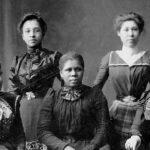
Header image: Five women officers of the Women’s League in Newport, Rhode Island, c. 1899. Source: National Women’s History Museum.
]]>
Michelle Scott reminisces about her grandmother’s tradition to call her grandchildren when they turned 18. “She’d call, wish us a happy birthday, and then ask if we had registered to vote.” If...
https://umbc.edu/stories/enshrined-but-not-guaranteed/
https://beta.my.umbc.edu/api/v0/pixel/news/119720/guest@my.umbc.edu/9dbaad0ec8ecd7315ca7cb36ee923c93/api/pixel
cahss
discovery
fall-2020
professorsnottomiss
UMBC News & Magazine
https://beta.my.umbc.edu/groups/umbc-news-magazine
https://assets1-beta.my.umbc.edu/system/shared/avatars/groups/000/001/943/24435aa6207c452e7bc15cc74b42c7bb/xsmall.png?1748556657
https://assets1-beta.my.umbc.edu/system/shared/avatars/groups/000/001/943/24435aa6207c452e7bc15cc74b42c7bb/original.png?1748556657
https://assets2-beta.my.umbc.edu/system/shared/avatars/groups/000/001/943/24435aa6207c452e7bc15cc74b42c7bb/xxlarge.png?1748556657
https://assets2-beta.my.umbc.edu/system/shared/avatars/groups/000/001/943/24435aa6207c452e7bc15cc74b42c7bb/xlarge.png?1748556657
https://assets3-beta.my.umbc.edu/system/shared/avatars/groups/000/001/943/24435aa6207c452e7bc15cc74b42c7bb/large.png?1748556657
https://assets1-beta.my.umbc.edu/system/shared/avatars/groups/000/001/943/24435aa6207c452e7bc15cc74b42c7bb/medium.png?1748556657
https://assets2-beta.my.umbc.edu/system/shared/avatars/groups/000/001/943/24435aa6207c452e7bc15cc74b42c7bb/small.png?1748556657
https://assets1-beta.my.umbc.edu/system/shared/avatars/groups/000/001/943/24435aa6207c452e7bc15cc74b42c7bb/xsmall.png?1748556657
https://assets2-beta.my.umbc.edu/system/shared/avatars/groups/000/001/943/24435aa6207c452e7bc15cc74b42c7bb/xxsmall.png?1748556657
UMBC News & Magazine
0
0
false
Tue, 15 Dec 2020 19:45:51 -0500
Virgin births from parthenogenesis: How females from some species can reproduce without males
By Mercedes Burns, assistant professor, Biological Sciences, UMBC
An Asian water dragon hatched from an egg at the Smithsonian National Zoo, and her keepers were shocked. Why? Her mother had never been with a male water dragon. Through genetic testing, zoo scientists discovered the newly hatched female, born on Aug. 24, 2016, had been produced through a reproductive mode called parthenogenesis.
Parthenogenesis is a Greek word meaning “virgin creation,” but specifically refers to female asexual reproduction. While many people may assume this behavior is the domain of science fiction or religious texts, parthenogenesis is surprisingly common throughout the tree of life and is found in a variety of organisms, including plants, insects, fish, reptiles and even birds. Because mammals, including human beings, require certain genes to come from sperm, mammals are incapable of parthenogenesis.
Creating offspring without sperm
Sexual reproduction involves a female and a male, each contributing genetic material in the form of eggs or sperm, to create a unique offspring. The vast majority of animal species reproduce sexually, but females of some species are able to produce eggs containing all the genetic material required for reproduction.
Females of these species, which include some wasps, crustaceans and lizards, reproduce only through parthenogenesis and are called obligate parthenogens.
A larger number of species experience spontaneous parthenogenesis, best documented in animals kept in zoo settings, like the Asian water dragon at the National Zoo or a blacktip shark at the Virginia Aquarium. Spontaneous parthenogens typically reproduce sexually, but may have occasional cycles that produce developmentally ready eggs.
Scientists have learned spontaneous parthenogenesis may be a heritable trait, meaning females that suddenly experience parthenogenesis might be more likely to have daughters that can do the same.
How can females fertilize their own eggs?
For parthenogenesis to happen, a chain of cellular events must successfully unfold. First, females must be able to create egg cells (oogenesis) without stimulation from sperm or mating. Second, the eggs produced by females need to begin to develop on their own, forming an early stage embryo. Finally, the eggs must successfully hatch.
Each step of this process can easily fail, particularly step two, which requires the chromosomes of DNA inside the egg to double, ensuring a full complement of genes for the developing offspring. Alternatively, the egg can be “faux fertilized” by leftover cells from the egg production process known as polar bodies. Whichever method kicks off the development of the embryo will ultimately determine the level of genetic similarity between the mother and her offspring.
The events that trigger parthenogenesis are not fully understood, but appear to include environmental change. In species that are capable of both sexual reproduction and parthenogenesis, such as aphids, stressors like crowding and predation may cause females to switch from parthenogenesis to sexual reproduction, but not the other way around. In at least one type of freshwater plankton, high salinity appears to cause the switch.
Advantages of self-reproduction
Though spontaneous parthenogenesis appears to be rare, it does provide some benefits to the female who can achieve it. In some cases, it can allow females to generate their own mating partners.
The sex of parthenogenetic offspring is determined by the same method sex is determined in the species itself. For organisms where sex is determined by chromosomes, like the XX female and XY male chromosomes in some insects, fish and reptiles, a parthenogenetic female can produce offspring only with the sex chromosomes she has at hand – which means she will always produce XX female offspring. But for organisms where females have ZW sex chromosomes (such as in snakes and birds), all living offspring produced will either be ZZ, and therefore male, or much more rarely, WW, and female.
Between 1997 and 1999, a checkered gartersnake kept at the Phoenix Zoo gave birth to two male offspring that ultimately survived to adulthood. If a female mated with her parthenogenetically produced son, it would constitute inbreeding. While inbreeding can result in a host of genetic problems, from an evolutionary perspective it’s better than having no offspring at all. The ability of females to produce male offspring through parthenogenesis also suggests that asexual reproduction in nature may be more common than scientists ever realized before.
Biologists have observed, over long periods of time, that species that are obligate parthenogens frequently die out from disease, parasitism or changes in habitat. The inbreeding inherent in parthenogenetic species appears to contribute to their short evolutionary timelines.
Current research on parthenogenesis seeks to understand why some species are capable of both sex and parthenogenesis, and whether occasional sexual reproduction might be enough for a species to survive.
*****
Mercedes Burns, Assistant Professor of Biological Sciences, University of Maryland, Baltimore County
This article is republished from The Conversation under a Creative Commons license. Read the original article.
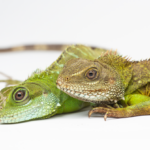
Header image: Getting the job done. A female Asian water dragon (Physignathus cocincinus) produced a daughter (left) without the assistance of a male. Skip Brown/Smithsonian’s National Zoo
]]>
By Mercedes Burns, assistant professor, Biological Sciences, UMBC An Asian water dragon hatched from an egg at the Smithsonian National Zoo, and her keepers were shocked. Why? Her mother had...
https://umbc.edu/stories/virgin-births-from-parthenogenesis-how-females-from-some-species-can-reproduce-without-males/
https://beta.my.umbc.edu/api/v0/pixel/news/119721/guest@my.umbc.edu/ca055a82e53f659c8c98bbe9286b8899/api/pixel
biological-sciences
cnms
discovery
the-conversation
UMBC News & Magazine
https://beta.my.umbc.edu/groups/umbc-news-magazine
https://assets1-beta.my.umbc.edu/system/shared/avatars/groups/000/001/943/24435aa6207c452e7bc15cc74b42c7bb/xsmall.png?1748556657
https://assets1-beta.my.umbc.edu/system/shared/avatars/groups/000/001/943/24435aa6207c452e7bc15cc74b42c7bb/original.png?1748556657
https://assets2-beta.my.umbc.edu/system/shared/avatars/groups/000/001/943/24435aa6207c452e7bc15cc74b42c7bb/xxlarge.png?1748556657
https://assets2-beta.my.umbc.edu/system/shared/avatars/groups/000/001/943/24435aa6207c452e7bc15cc74b42c7bb/xlarge.png?1748556657
https://assets3-beta.my.umbc.edu/system/shared/avatars/groups/000/001/943/24435aa6207c452e7bc15cc74b42c7bb/large.png?1748556657
https://assets1-beta.my.umbc.edu/system/shared/avatars/groups/000/001/943/24435aa6207c452e7bc15cc74b42c7bb/medium.png?1748556657
https://assets2-beta.my.umbc.edu/system/shared/avatars/groups/000/001/943/24435aa6207c452e7bc15cc74b42c7bb/small.png?1748556657
https://assets1-beta.my.umbc.edu/system/shared/avatars/groups/000/001/943/24435aa6207c452e7bc15cc74b42c7bb/xsmall.png?1748556657
https://assets2-beta.my.umbc.edu/system/shared/avatars/groups/000/001/943/24435aa6207c452e7bc15cc74b42c7bb/xxsmall.png?1748556657
UMBC News & Magazine
0
0
false
Tue, 15 Dec 2020 14:18:08 -0500