New UMBC-UMB collaborations include research to reduce stress among long-term care workers
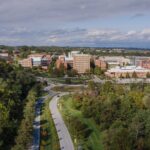
A strategic research alliance between UMBC and the University of Maryland, Baltimore (UMB) has selected four new interdisciplinary projects, each a fresh take on a complex challenge.
The Accelerated Translational Incubator Pilot (ATIP) Program funding this work brings together UMBC’s strengths in areas like cybersecurity, data science, artificial intelligence, statistics, and the social sciences with UMB expertise in medicine, pharmacy, nursing, and dentistry. The two universities have worked together on various shared graduate and research programs over the last decade. This partnership with UMB’s Institute for Clinical and Translational Research (ICTR) was launched in August 2019, and faculty have been quick to jump on the opportunity to pursue novel collaborative research.
“The UMB-ICTR is thrilled to partner with UMBC,” says ICTR Director Stephen N. Davis, chair of medicine at UMB and physician-in-chief at the University of Maryland Medical Center. “The ATIP grant program supports top quality clinical and community-based collaborative projects. The grant applications from UMBC are particularly innovative and exciting, scoring very highly in the review process.”
“All of the ATIP proposals are subject to a very rigorous internal peer review process,” says Karl V. Steiner, vice president for research at UMBC. “Their success is a strong indicator of the quality of the intellectual contributions of our faculty at UMBC.”
Meaningful research relationships
“A key goal for this strategic alliance is to develop meaningful partnerships among researchers at both institutions and to establish teams with complementary expertise,” Steiner explains.
Since early 2020, UMBC faculty have secured a total of 12 ATIP awards. This most recent round of UMBC grant recipients includes Lujie Karen Chen, information systems; Lira Yoon, psychology; Chein-I Chang, computer science and electrical engineering (CSEE); Yi Huang, mathematics and statistics; and Tinoosh Mohsenin, CSEE. UMB collaborators include Kelly Doran, School of Nursing; Mathangi Gopalakrishnan, School of Pharmacy; and Michael Domanski and Mohammad Sajadi, both of the School of Medicine.
The four new awards granted in this round focus on a broad range of topics: using machine learning algorithms for transfusion risk assessment, evaluating the effects of serum lipid levels on the progression of renal dysfunction, using a multimodal sensory machine learning framework to diagnose COVID-19, and examining how to predict and manage stress in healthcare workers who work in long-term care facilities.
These types of sustained partnerships help researchers gain insight into new fields and work with experts with whom they might not have otherwise collaborated, to generate novel findings.
Measuring stress to manage stress

UMBC’s Lujie Karen Chen
So, what does interdisciplinary research actually look like?
For the long-term care workers pilot project, Chen, Yoon, and Doran combine data science, clinical psychology, and nursing. From May 2021 through April 2022, they will examine workers’ experiences of job stress in long-term care facilities using both physiological and qualitative measures.
The challenges posed by COVID-19 have sharpened the team’s interest in supporting longer-term care workers through research.

UMBC’s Lira Yoon
“Their work has always been important, but especially given the pandemic, the importance of their work has really been highlighted,” says Yoon. “It’s a demanding job with high stress, and that’s reflected by high job turnover, which is not good for the clients at long-term care facilities.”
The goal of the project is to better identify stress triggers within moments of them happening. This could enable workers to address their stress before it gets to a higher level where it can negatively impact their health and work.
Stress monitoring in action
To identify stress on a more moment-to-moment basis, the team plans to use a combination of surveys and sensors to track exact times when workers become stressed in their workday.
Workers will wear the sensors throughout their shifts to measure heart rate and electrodermal activity, and will fill out surveys five to seven times per day. They will also complete end-of-day interviews to identify additional stressors and other critical information not captured by the surveys.
Information from the surveys and interviews will help the researchers to decipher data obtained from the sensors to understand stress triggers.
“Eventually, we want to be able to just use sensor data to be able to tell whether long-term care workers are about to experience stress or not,” Yoon says. With this knowledge, researchers can then design interventions to improve the work environment, Chen explains, to reduce stress triggers and stress experiences.
Once the pilot project is complete, the team hopes to undertake a larger scale study to collect data from multiple long-term healthcare sites.

UMB’s Kelly Doran
This work wouldn’t be possible without all three researchers bringing together their diverse expertise and perspectives. As Doran says, “The collaboration provides a support system for us to build relationships and kind of cross-train each other and build off each other’s ideas.”
“One of the reasons I love doing collaborative research,” she shares, “is because you’re expanding your networks and research to make meaningful differences.”
Article written by Allison Matyus for UMBC News.
]]>
A strategic research alliance between UMBC and the University of Maryland, Baltimore (UMB) has selected four new interdisciplinary projects, each a fresh take on a complex challenge. The...
https://umbc.edu/stories/new-umbc-umb-collaborations-include-research-to-reduce-stress-among-long-term-care-workers/
https://beta.my.umbc.edu/api/v0/pixel/news/119676/guest@my.umbc.edu/2fae8a3664a6e4bc1fe0fe72d19bb147/api/pixel
cahss
cnms
coeit
csee
is
mathstat
psychology
research
science-and-technology
UMBC News & Magazine
https://beta.my.umbc.edu/groups/umbc-news-magazine
https://assets1-beta.my.umbc.edu/system/shared/avatars/groups/000/001/943/24435aa6207c452e7bc15cc74b42c7bb/xsmall.png?1748556657
https://assets1-beta.my.umbc.edu/system/shared/avatars/groups/000/001/943/24435aa6207c452e7bc15cc74b42c7bb/original.png?1748556657
https://assets2-beta.my.umbc.edu/system/shared/avatars/groups/000/001/943/24435aa6207c452e7bc15cc74b42c7bb/xxlarge.png?1748556657
https://assets2-beta.my.umbc.edu/system/shared/avatars/groups/000/001/943/24435aa6207c452e7bc15cc74b42c7bb/xlarge.png?1748556657
https://assets3-beta.my.umbc.edu/system/shared/avatars/groups/000/001/943/24435aa6207c452e7bc15cc74b42c7bb/large.png?1748556657
https://assets1-beta.my.umbc.edu/system/shared/avatars/groups/000/001/943/24435aa6207c452e7bc15cc74b42c7bb/medium.png?1748556657
https://assets2-beta.my.umbc.edu/system/shared/avatars/groups/000/001/943/24435aa6207c452e7bc15cc74b42c7bb/small.png?1748556657
https://assets1-beta.my.umbc.edu/system/shared/avatars/groups/000/001/943/24435aa6207c452e7bc15cc74b42c7bb/xsmall.png?1748556657
https://assets2-beta.my.umbc.edu/system/shared/avatars/groups/000/001/943/24435aa6207c452e7bc15cc74b42c7bb/xxsmall.png?1748556657
UMBC News & Magazine
0
0
false
Tue, 09 Mar 2021 22:15:02 -0500
Hackathon - Embracing Neurodiversity
Hosted by AstraZeneca, Google, Microsoft, and more
Please read on for details about this event shared by a UMBC alumni!
Information on Hackathon (Flyer attached)
Hackathon – Embracing Neurodiversity
AstraZeneca and our friends at Google, Microsoft, Nvidia, Intel and ComputaCenter would like to invite you to take part in a 24 hour virtual hackathon.
On March 26th, like minded university students will come together to try and build solutions to help people with neurodiversity navigate their daily challenges.
Hear from our staff talking about what neurodiversity means to them and how they cope with the things they find difficult.
All outputs will be open source and placed in GitHub so that anyone and everyone can benefit from the work done in the hack.
You can build an app, write some code, design a process or create a physical device. Whatever helps you to help other people.
Solutions that peak the interest of our judges could get the chance to work with our partners to develop the ideas further!
The event is virtual and will run from 09:00 (26th) to 09:00 (27th) in your local timezone.
If you’re interested, click on the button below and follow the link to register for the event.
You can register yourself and a team of up to 4 others (with their permission).
Registration closes on Friday 12th March at 7pm GMT (we reserve the right to close registration early if capacity is reached)
Link: https://forms.office.com/Pages/ResponsePage.aspx?id=o4mOr6zZL0KtBsxOtCFDFIRERjBylIRGtIoIvxUPLuRUREcxV0FFS01QMU0zUEpPSUhaSDRZNlJFQi4u
]]>
Please read on for details about this event shared by a UMBC alumni! Information on Hackathon (Flyer attached) Hackathon – Embracing Neurodiversity AstraZeneca and our friends at Google,...
https://beta.my.umbc.edu/api/v0/pixel/news/99889/guest@my.umbc.edu/724fa57bec65c1cfa1c18cd562e61a24/api/pixel
International Student and Scholar Services (ISSS)
https://beta.my.umbc.edu/groups/ies
https://assets4-beta.my.umbc.edu/system/shared/avatars/groups/000/000/431/46ad84ea8ba0baeed7c3faf29d1fd4ef/xsmall.png?1693323874
https://assets3-beta.my.umbc.edu/system/shared/avatars/groups/000/000/431/46ad84ea8ba0baeed7c3faf29d1fd4ef/original.jpeg?1693323874
https://assets1-beta.my.umbc.edu/system/shared/avatars/groups/000/000/431/46ad84ea8ba0baeed7c3faf29d1fd4ef/xxlarge.png?1693323874
https://assets1-beta.my.umbc.edu/system/shared/avatars/groups/000/000/431/46ad84ea8ba0baeed7c3faf29d1fd4ef/xlarge.png?1693323874
https://assets4-beta.my.umbc.edu/system/shared/avatars/groups/000/000/431/46ad84ea8ba0baeed7c3faf29d1fd4ef/large.png?1693323874
https://assets3-beta.my.umbc.edu/system/shared/avatars/groups/000/000/431/46ad84ea8ba0baeed7c3faf29d1fd4ef/medium.png?1693323874
https://assets1-beta.my.umbc.edu/system/shared/avatars/groups/000/000/431/46ad84ea8ba0baeed7c3faf29d1fd4ef/small.png?1693323874
https://assets4-beta.my.umbc.edu/system/shared/avatars/groups/000/000/431/46ad84ea8ba0baeed7c3faf29d1fd4ef/xsmall.png?1693323874
https://assets3-beta.my.umbc.edu/system/shared/avatars/groups/000/000/431/46ad84ea8ba0baeed7c3faf29d1fd4ef/xxsmall.png?1693323874
IES Marketplace
0
0
true
Tue, 09 Mar 2021 10:26:51 -0500
Driving UMBC’s eSports reputation one win at a time

 UMBC’s Rocket League Team logo. Graphic by Sarah Stout.
After shutting down his BlackBoard Collaborate browser, freshman computer science major Ian Wagner quickly put on his game face. He joined Brian Stout, computer science, and their team captain David Paton, mechanical engineering, and substitute Tanner Mohn, computer science, on the UMBC Rocket League Discord server. It was a mere 10 minutes before the team was to play one in the first round of the America East Soccar Qualifier. Wagner, Stout, and Paton quickly collected themselves and threw themselves into the game.
Rocket League is a video game similar to soccer, except three-player teams drive around as cars trying to score goals, explains the team. The game is played inside an enclosed area with a bubbled ceiling, so, unlike soccer, there are no out-of-bounds. eSports like Rocket League are relatively new to the America East conference. Before the America East Soccar Qualifier, the conference had only hosted two other eSports tournaments in Super Smash Bros.
While eSports is new to the America East, they are not to UMBC. Stout, Wagner, and Paton have been playing Rocket League since the game first came out in 2015 and have been playing as a team since last summer. It was their team’s chemistry that allowed them to defeat New Jersey Institute of Technology, then beat the University of Massachusetts-Lowell despite the somewhat hectic start to their match. In the semi-finals, UMBC beat Hartford University 3-0 and won the qualifier, beating longtime athletics rival Stony Brook University 3-1 in February 2020.
“I was impressed with how we pulled it off,” Wagner said. “We watched our replays and played a couple of matches and really talked about our game plan, and I think that led us to a pretty one-sided victory against Stony Brook.”
 A screenshot of the UMBC Rocket League Team’s winning screen after beating Stony Brook to win the America East tournament. Photo provided by AE eSports.
Congratulations are in order
The retweets from the America East and UMBC Athletics Twitter accounts felt really validating to the team. Since eSports has yet to become a mainstay of collegiate athletics, these eSports student-athletes say that the acknowledgment of their success makes them hopeful for support in future tournaments.
“We got the school’s attention, which somewhat legitimizes what we’re doing,” said Stout. “It puts all these eyes on the sport,” added Wagner.
Some of the Rocket League team’s hopes for more investment in eSports by UMBC are already underway. Assistant Director of Club Sports Kristen Alexander said that the RAC update plans include a room dedicated to UMBC’s eSports teams.
Alexander expects the university to continue supporting the Rocket League team as they pursue other tournament wins. “When any student shows passion in something, you want to help grow that passion as much as you can,” said Alexander.
“Playing eSports on the national level gets the UMBC name out there across the nation,” she added. “I don’t think it matters what sport it needs to be, as long as it’s a positive light and showing that UMBC is competitive in all facets, whether that even be in chess, men’s lacrosse, or eSports.”
Building off luck
Winning the America East qualifier sent the team to the Collegiate eSports Invitational National Rocket League Tournament, where they played California Polytechnic State University, one of the best lower-seeded teams in the tournament. Despite losing to Cal Poly, the team believes this tournament was a step in making UMBC a Rocket League and eSports school.
“It’s an oddity to meet up at a smaller school, have three players that are all at the same level, that all have pop-off potential and that all can raise each other’s level at the same time,” said Paton, a junior. “To have that kind of team, we’re really fortunate.”
 Patton’s gaming set-up. Photo provided by David Patton.
The team feels they can build off their luck of finding each other to train up other players who will replace them when they graduate. Since the tournament, 10 people have joined the UMBC Rocket League Discord server and—with a little help from UMBC itself—Paton, Wagner, Stout, and Mohn believe they can grow even more.
UMBC is already known as a nerdy school, a fact emphasized by the 2018 UMBC men’s basketball team doing Fortnite dances on the sidelines of their historic game against the University of Virginia. The Rocket League team feels eSports could become another UMBC athletic claim to fame.
“In the next year or two, eSports are going to be pretty prevalent because we’re one of the only sports that have been playing,” said Stout. “It’s one of those things you can play rain or shine, doesn’t matter. So, I think it’s a good thing to invest in.”
]]>
UMBC’s Rocket League Team logo. Graphic by Sarah Stout. After shutting down his BlackBoard Collaborate browser, freshman computer science major Ian Wagner quickly put on his game face. He...
https://umbc.edu/stories/building-umbcs-esports-reputation-one-win-at-a-time/
https://beta.my.umbc.edu/api/v0/pixel/news/119677/guest@my.umbc.edu/a6425b7aca635175afbd47cc422fcb67/api/pixel
campus-life
esports
UMBC News & Magazine
https://beta.my.umbc.edu/groups/umbc-news-magazine
https://assets1-beta.my.umbc.edu/system/shared/avatars/groups/000/001/943/24435aa6207c452e7bc15cc74b42c7bb/xsmall.png?1748556657
https://assets1-beta.my.umbc.edu/system/shared/avatars/groups/000/001/943/24435aa6207c452e7bc15cc74b42c7bb/original.png?1748556657
https://assets2-beta.my.umbc.edu/system/shared/avatars/groups/000/001/943/24435aa6207c452e7bc15cc74b42c7bb/xxlarge.png?1748556657
https://assets2-beta.my.umbc.edu/system/shared/avatars/groups/000/001/943/24435aa6207c452e7bc15cc74b42c7bb/xlarge.png?1748556657
https://assets3-beta.my.umbc.edu/system/shared/avatars/groups/000/001/943/24435aa6207c452e7bc15cc74b42c7bb/large.png?1748556657
https://assets1-beta.my.umbc.edu/system/shared/avatars/groups/000/001/943/24435aa6207c452e7bc15cc74b42c7bb/medium.png?1748556657
https://assets2-beta.my.umbc.edu/system/shared/avatars/groups/000/001/943/24435aa6207c452e7bc15cc74b42c7bb/small.png?1748556657
https://assets1-beta.my.umbc.edu/system/shared/avatars/groups/000/001/943/24435aa6207c452e7bc15cc74b42c7bb/xsmall.png?1748556657
https://assets2-beta.my.umbc.edu/system/shared/avatars/groups/000/001/943/24435aa6207c452e7bc15cc74b42c7bb/xxsmall.png?1748556657
UMBC News & Magazine
0
0
false
Fri, 05 Mar 2021 22:11:33 -0500
UMBC student research offers hope for critically endangered Bahama Oriole
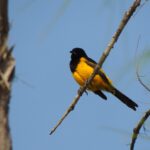
On a low-lying island in the Caribbean, the future of the critically endangered Bahama Oriole just got a shade brighter. A new study co-led by Michael Rowley ’18, M26, biological sciences, estimates that there are at least 10 times as many Bahama Orioles as scientists previously thought.
Rowley and colleagues are sharing the findings with Birdlife International, the organization that makes recommendations to the International Union for the Conservation of Nature (IUCN) about birds on its Red List of threatened species. The findings may influence IUCN to down-list the Bahama Oriole from critically endangered to endangered.
The research team surveyed roughly 25 percent of Andros Island in the Bahamas, the only place these birds live. Their data indicate that somewhere between 1300 and 2800 of these striking black and yellow birds exist in that portion of the island, suggesting that the overall population is likely several thousand. Older studies estimated the entire population at fewer than 300.
The new result “is a step forward for conservation,” Rowley says. “This makes the world a bit more informed about what we should be putting our efforts toward. There are other birds that could use attention as well.”
 Michael Rowley and Alexis Scarselletta ’16, biological sciences, with a Baltimore Oriole at Patapsco Valley State Park in Maryland in 2016. Photo by Kevin Omland.
A fresh look
Rowley’s results are the latest in a string of important discoveries led by undergraduates mentored by Kevin Omland, professor of biological sciences.
For example, earlier work had assumed that Bahama Orioles primarily nest in human-dominated habitats. But in 2018, Daniel Stonko ’17, biological sciences, upended that understanding of Bahama Oriole ecology. Stonko and colleagues reported the first three Bahama Oriole nests ever recorded in the pine forest, which is the most common land habitat on the island.
A follow-up study published in December 2020 and led by Briana Yancy ’19, M27, environmental science, further detailed nest site characteristics for the orioles on Andros. She found they prefer pine forest containing native thatch palm trees, where they frequently place their nests.
“The orioles seem to be able to nest in quite a few different habitats, which is really good for the orioles and important to know,” Omland says. The new habitat information will also be important for local conservation efforts led by the Bahamas National Trust (BNT), which has been a key partner to Omland’s research group throughout its long-standing work in the Caribbean.
“If the BNT is able to create or expand national parks, they might try to include more of the pine forest with these tall thatch palm trees in the understory,” Omland says.
 A Bahama Oriole perches in a pine tree on Andros Island in the Bahamas. Photo by Matthew Kane ’19, biological sciences.
Students in charge
In addition to being a win for the orioles, the students’ research projects were a touchstone of their UMBC experience.
“Being in Kevin’s lab is amazing, because he really lets you take charge and get to do everything,” Yancy says. “He starts you out with small tasks to get acquainted with a project, and then he has you doing your own research project. He has you doing statistics and applying for your own grants—which is a huge important skill in this field—and then ultimately publishing in peer-reviewed journals.”
For Yancy, doing fieldwork abroad was another big part of the experience. “We were constantly interacting with the local people and talking to them to find birds and show us nests that they’d seen,” she says. “That experience impacted me in that I want to find a position with that flexibility where I can still engage with people, do research, and write.”
 Briana Yancy (right) and Matthew Kane conduct Bahama Oriole research in the Bahamas in 2018. Photo by Matthew Kane.
Today, Yancy is in a master’s program offered through Miami University of Ohio. She spends most of her time in Maryland on the Chesapeake Bay, however, because her thesis focuses on coastal ecosystem conservation.
At the same time, Yancy has been serving with AmeriCorps at Rock Creek Park in Washington, DC. She conducts historical research and engages with the local community to develop historical hikes. She just accepted a new position as an environmental management staff member at the Chesapeake Research Consortium, where she supports the Chesapeake Bay Program’s diversity work group.
Broadening horizons
Rowley has been equally influenced by his time with the Omland lab. Joining the lab “was one of the best decisions I ever made, because right off the bat Kevin involves you in field work,” he says. “You’re out learning how to use the tools, being involved in a lot of the coolest aspects of the research.”
For Rowley, his first research trip to the Bahamas was also his first trip outside the lower 48 states. “It was an incredible privilege,” he says, “and it really opened me up to my current interest in conservation work and wildlife biology.”
Today, Rowley is a master’s student at Villanova University. His research focuses on how Carolina and Black-capped Chickadees interact. The two nearly identical species interbreed in a narrow band where their ranges overlap. That territory snakes from Iowa east to southern New Jersey and is moving ever-northward due to climate change.
“The undergrad research scene at UMBC is just so rich and involved,” Rowley says, “and I really appreciate that for letting me get as far as I’ve gotten with it.”
 Kevin Omland, rear, goes birdwatching on campus with some of his students. Photo by Marlayna Demond ’11 for UMBC.
Mentoring mentality
Giving undergraduates real, impactful research opportunities is a pillar of Omland’s work. After his first research trip with students to Puerto Rico in 2013, “It was so clear that the opportunity to do international field research was transformative for them as individuals and as scientists,” he says. “I just wanted to be involved with that more, and it’s worked out very well.”
The Bahama Oriole Project in particular has been a wonderful source of student projects. “It’s fun with something like this, because we know so little, that doing even very simple, elegant experiments can tell us really important things,” Omland says. “There’s 97 things we need to know right now, so when a student comes in, you have a lot of different choices to pick a project that fits their interests and skills.”
Students in the lab are pursuing a range of majors, such as biological sciences, environmental science, geography, and statistics. They each contribute their own expertise, from mapping habitat on the island, to counting birds, to running analyses of the data. The UMBC students have also had the chance to collaborate with Bahamian students.
And, Omland emphasizes, “Everything up to now with this project has been undergraduate-driven. The students have found the nests on their own, mapped the roads… A lot of these roads, I’ve never been on. UMBC students found them, mapped them, and went out and did the counts on them.”
 Susanna Campbell ’15, biological sciences, on the Omland group’s first trip to Puerto Rico in 2013. Photo by Kevin Omland.
Lasting impact
Yancy and Rowley attest that their work with Omland has indeed been transformative. Yancy’s research “ended up being a perfect experience, and it definitely has influenced me going forward,” she says. “I’m more confident in myself.”
She also shares that she’s learned “I love to do research, and I have a passion for community science—getting other people involved in science and caring about the environment—so that’s what I’m looking for in my next position.”
Rowley reflects on his most recent paper. “How many people get to work on a project when they’re an undergrad that has such a real world outcome, while also being able to do field work, and work with animals, and get involved in the community?” he says. “It’s really great to know that the work we’ve done is having such an exciting impact.”
Banner image: A Bahama Oriole perched on a branch. Photo by Matthew Kane.
]]>
On a low-lying island in the Caribbean, the future of the critically endangered Bahama Oriole just got a shade brighter. A new study co-led by Michael Rowley ’18, M26, biological sciences,...
https://umbc.edu/stories/umbc-student-research-offers-hope-for-critically-endangered-bahama-oriole/
https://beta.my.umbc.edu/api/v0/pixel/news/119678/guest@my.umbc.edu/2307c09dce8c35e344d9c5c41c9382c5/api/pixel
biology
cnms
ges
page1
research
science-and-technology
undergradresearch
UMBC News & Magazine
https://beta.my.umbc.edu/groups/umbc-news-magazine
https://assets1-beta.my.umbc.edu/system/shared/avatars/groups/000/001/943/24435aa6207c452e7bc15cc74b42c7bb/xsmall.png?1748556657
https://assets1-beta.my.umbc.edu/system/shared/avatars/groups/000/001/943/24435aa6207c452e7bc15cc74b42c7bb/original.png?1748556657
https://assets2-beta.my.umbc.edu/system/shared/avatars/groups/000/001/943/24435aa6207c452e7bc15cc74b42c7bb/xxlarge.png?1748556657
https://assets2-beta.my.umbc.edu/system/shared/avatars/groups/000/001/943/24435aa6207c452e7bc15cc74b42c7bb/xlarge.png?1748556657
https://assets3-beta.my.umbc.edu/system/shared/avatars/groups/000/001/943/24435aa6207c452e7bc15cc74b42c7bb/large.png?1748556657
https://assets1-beta.my.umbc.edu/system/shared/avatars/groups/000/001/943/24435aa6207c452e7bc15cc74b42c7bb/medium.png?1748556657
https://assets2-beta.my.umbc.edu/system/shared/avatars/groups/000/001/943/24435aa6207c452e7bc15cc74b42c7bb/small.png?1748556657
https://assets1-beta.my.umbc.edu/system/shared/avatars/groups/000/001/943/24435aa6207c452e7bc15cc74b42c7bb/xsmall.png?1748556657
https://assets2-beta.my.umbc.edu/system/shared/avatars/groups/000/001/943/24435aa6207c452e7bc15cc74b42c7bb/xxsmall.png?1748556657
UMBC News & Magazine
0
0
false
Thu, 04 Mar 2021 23:12:15 -0500
UMBC men’s basketball heads to America East championship semifinals as No. 1 seed
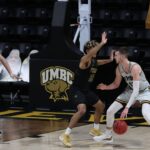
Uncertainty—that was the word going through the minds of every player, coach, and fan as the 2020-2021 UMBC men’s basketball season tipped off in the midst of the COVID-19 pandemic. The team and coaching staff were cautiously optimistic as they began preparing for a season unlike any other. Now, as the team enters the America East playoffs as No. 1 seed, that uncertainty is overwhelmed by pride and gratitude.
“This season has been different in every way you could think of. Having no fans, the travel arrangements, the COVID testing, everything really,” says R.J. Eytle-Rock ’22, psychology. But despite the numerous hoops Retrievers had to jump through, they persevered and gave supporters something to believe in.
 Daniel Akin ’21, undergraduate studies, takes a shot against UVM.
For the first time since 2007-2008, the Retrievers nabbed the America East Regular Season Title, sharing it with the University of Vermont. UMBC finished the regular season with a 10-4 conference record.
“This season has been about adapting to what is thrown at you through the pandemic and everything else,” says Brandon Horvath ’21, financial economics.
While he could stop there and reflect on the success of the season, Horvath and his teammates know this is just the beginning saying, “We aren’t finished yet. We still have more work to do.”
 Horvath weighs his options on the court.
That work kicks off this Saturday with the America East championship semifinal. The No. 1 seed Retrievers will take on No. 6 seed UMass Lowell at 2 p.m. at the UMBC Event Center. The restructured playoff schedule granted automatic byes into the America East semifinals to the top two seeds, UMBC and Vermont.
Season highlights
The hard work that carried the Retrievers through this season didn’t go unnoticed by the conference or sporting world.
Darnell Rogers ’22, media and communication studies, put the nation on notice that his 5-foot 2-inch stature doesn’t impact his success on the court. After playing against Georgetown in November, SportsCenter tweeted a highlight reel of Rogers “getting buckets.”
Of the team’s accomplishments and his own, Rogers says, “‘Do the things that lead to winning.’ That’s what we’ve preached all season.”
UMBC's Darnell Rogers is only 5-2 and is getting buckets
]]>
Uncertainty—that was the word going through the minds of every player, coach, and fan as the 2020-2021 UMBC men’s basketball season tipped off in the midst of the COVID-19 pandemic. The team and...
https://umbc.edu/stories/umbc-mens-basketball-heads-to-america-east-championship-semifinals-as-no-1-seed/
https://beta.my.umbc.edu/api/v0/pixel/news/119679/guest@my.umbc.edu/7a4e919c565f3a1d6f23703046f06cc6/api/pixel
athletics
community
UMBC News & Magazine
https://beta.my.umbc.edu/groups/umbc-news-magazine
https://assets1-beta.my.umbc.edu/system/shared/avatars/groups/000/001/943/24435aa6207c452e7bc15cc74b42c7bb/xsmall.png?1748556657
https://assets1-beta.my.umbc.edu/system/shared/avatars/groups/000/001/943/24435aa6207c452e7bc15cc74b42c7bb/original.png?1748556657
https://assets2-beta.my.umbc.edu/system/shared/avatars/groups/000/001/943/24435aa6207c452e7bc15cc74b42c7bb/xxlarge.png?1748556657
https://assets2-beta.my.umbc.edu/system/shared/avatars/groups/000/001/943/24435aa6207c452e7bc15cc74b42c7bb/xlarge.png?1748556657
https://assets3-beta.my.umbc.edu/system/shared/avatars/groups/000/001/943/24435aa6207c452e7bc15cc74b42c7bb/large.png?1748556657
https://assets1-beta.my.umbc.edu/system/shared/avatars/groups/000/001/943/24435aa6207c452e7bc15cc74b42c7bb/medium.png?1748556657
https://assets2-beta.my.umbc.edu/system/shared/avatars/groups/000/001/943/24435aa6207c452e7bc15cc74b42c7bb/small.png?1748556657
https://assets1-beta.my.umbc.edu/system/shared/avatars/groups/000/001/943/24435aa6207c452e7bc15cc74b42c7bb/xsmall.png?1748556657
https://assets2-beta.my.umbc.edu/system/shared/avatars/groups/000/001/943/24435aa6207c452e7bc15cc74b42c7bb/xxsmall.png?1748556657
UMBC News & Magazine
0
0
false
Thu, 04 Mar 2021 17:32:34 -0500
Thu, 04 Mar 2021 17:32:34 -0500
UMBC launches Biotech Boot Camp to train workers displaced by COVID-19 for in-demand jobs

This month, 11 Montgomery County residents completed a pilot Biotech Boot Camp offered by UMBC at the Universities at Shady Grove and Montgomery College. The participants were all people who had recently become unemployed or underemployed due to the pandemic. After four weeks of intensive, hands-on training in basic biotech techniques, they are now qualified to apply for in-demand, entry-level roles in the biotech industry.
While some industries have experienced significant setbacks and lost jobs during the pandemic, the biotech industry has seen explosive growth. Hundreds of biotech companies in the region are struggling to fill critical roles with qualified workers. The new program seeks to address this mismatch between available workers and available jobs.

A participant in the Biotech Boot Camp practices his skills at a fume hood. Photo by Elizabeth Friar.
UMBC and Montgomery College partnered with WorkSource Montgomery to identify eligible participants for a skills-based introductory training course. With the support of the Montgomery County government, the experience was tuition-free for participants.
Setting people up to succeed in well-paying new jobs and simultaneously filling the gap in the biotech workforce “is a win-win that we’re really excited to be a part of,” says Annica Wayman ‘99, M6, mechanical engineering. Wayman serves as associate dean for Shady Grove Affairs in UMBC’s College of Natural and Mathematical Sciences.
Leveraging skills
Some of the participants came to the program from lengthy careers in other fields, from sales to transportation. “We’re looking for ways to tie what they used to do to biotech, now that they have these new lab skills,” Wayman says. “We’re trying our best to be matchmakers—we’re racing to do that now.”
Manik Ghosh, assistant director of the Translational Life Science Technology degree program laboratories at UMBC-Shady Grove, is the lead instructor for the boot camp. He is confident that the training he designed will set participants up for success. “If they get interviewed, and they get an opportunity to join a company, we are 100 percent sure that they are capable of entry-level work,” he says.
 A participant in the Biotech Boot Camp loads samples into an incubator. Photo by Elizabeth Friar.
Because they already have extensive work experience, some of the participants may quickly ascend into mid-level positions. These roles can be especially difficult for companies to fill because of a pipeline gap.
“Leveraging their prior skills could be a great way for them to build mid-level careers in biotech very quickly,” Wayman says. A few have also already expressed interest in UMBC’s Master of Professional Studies in Biotechnology, which would help them rise even faster.
Seizing opportunity
When he heard about the project, “I got so excited!” recalls Ghosh, who also teaches courses on cancer biotechnology and biochemistry. His enthusiasm is impossible to ignore; his laughter and smile come easily as he recalls the experience of planning the boot camp and implementing it with the students. He described the planning group, including Wayman; Elizabeth Friar, TLST program director; and himself, as a “dream team.”
Offering the boot camp in person was challenging during the pandemic, though, with everyone masked, gloved, and maintaining social distance. “It’s a very dynamic and challenging environment,” Ghosh says. But at the same time, “This was a great opportunity for us, because this is a pilot program. We got a lot of great experience for if we run another boot camp, so we can change accordingly.”
 Seated at a safe social distance, participants in the Biotech Boot Camp use microscopes to observe their samples. Photo by Gabrielle Miller
Optimism in a challenging time
On top of generating a blueprint for future programs, developing the students’ lab skills, and supplying local businesses with qualified talent, the boot camp offered something even more valuable to the participants: confidence and optimism.
“It’s been amazing,” Ghosh says. “The first day, when they joined the boot camp, they looked nervous because they didn’t know anything about biotech. But as time passed, we saw a significant change in their confidence level.”
For the participants who identify with groups underrepresented in STEM, Wayman has been an inspiring presence. “Just me being an African American woman in the sciences has been encouraging for them to know that there are people like them succeeding in this high tech industry, so they can do it, too,” she says.
Wayman has also been working with the students on their resumes and supporting them through personal challenges. “It’s been amazing to make these personal connections in such a short period of time.”
Kevin Wiglesworth came to the program from a long career in sales. Now he’s excited to blaze a new path. “The most exciting thing about camp was taking something I had no experience with and feeling confident in those skills when the camp was over. It proved to me I still have the ability to pursue a new career,” he shared in a note to Ghosh after the program concluded. “Thank you again for all the work you put into teaching a newbie like me. I’ll never forget that.”
Working with students like Wiglesworth “is a great feeling, because I know we worked very hard, and they worked very hard with us,” Ghosh says. “This is a very challenging time, and at the end of the day, we are very satisfied in our hearts because we helped the people who needed it.”
Banner image: The exterior of the Biomedical Sciences and Engineering Building at The Universities at Shady Grove. Dedicated in 2019, the building contains the labs where the Biotech Boot Camp took place. Photo courtesy of USG.
]]>
This month, 11 Montgomery County residents completed a pilot Biotech Boot Camp offered by UMBC at the Universities at Shady Grove and Montgomery College. The participants were all people who had...
https://umbc.edu/stories/umbc-launches-biotech-boot-camp-to-train-workers-displaced-by-covid-19-for-in-demand-jobs/
https://beta.my.umbc.edu/api/v0/pixel/news/119680/guest@my.umbc.edu/7d4dd171bb76413c6430643bd1b85cbf/api/pixel
cnms
science-and-technology
shadygrove
tlst
UMBC News & Magazine
https://beta.my.umbc.edu/groups/umbc-news-magazine
https://assets1-beta.my.umbc.edu/system/shared/avatars/groups/000/001/943/24435aa6207c452e7bc15cc74b42c7bb/xsmall.png?1748556657
https://assets1-beta.my.umbc.edu/system/shared/avatars/groups/000/001/943/24435aa6207c452e7bc15cc74b42c7bb/original.png?1748556657
https://assets2-beta.my.umbc.edu/system/shared/avatars/groups/000/001/943/24435aa6207c452e7bc15cc74b42c7bb/xxlarge.png?1748556657
https://assets2-beta.my.umbc.edu/system/shared/avatars/groups/000/001/943/24435aa6207c452e7bc15cc74b42c7bb/xlarge.png?1748556657
https://assets3-beta.my.umbc.edu/system/shared/avatars/groups/000/001/943/24435aa6207c452e7bc15cc74b42c7bb/large.png?1748556657
https://assets1-beta.my.umbc.edu/system/shared/avatars/groups/000/001/943/24435aa6207c452e7bc15cc74b42c7bb/medium.png?1748556657
https://assets2-beta.my.umbc.edu/system/shared/avatars/groups/000/001/943/24435aa6207c452e7bc15cc74b42c7bb/small.png?1748556657
https://assets1-beta.my.umbc.edu/system/shared/avatars/groups/000/001/943/24435aa6207c452e7bc15cc74b42c7bb/xsmall.png?1748556657
https://assets2-beta.my.umbc.edu/system/shared/avatars/groups/000/001/943/24435aa6207c452e7bc15cc74b42c7bb/xxsmall.png?1748556657
UMBC News & Magazine
0
0
false
Fri, 26 Feb 2021 02:10:08 -0500
The Life-Changing Power of Giving
Little did we know that 2020’s successful Giving Day would be one of the last major on-campus events before COVID-19 moved UMBC and the rest of the world to a virtual format. Since then, two new staff members have started key roles in UMBC’s Office of Institutional Advancement. Giving Day 2021 will look different from past celebrations, not only because it’s virtual and 36 hours long, but also because its messaging and call to action are spearheaded by faces new to UMBC, but certainly not to the world of giving. Meet Stacey Sickels Locke, associate vice president for Alumni Engagement and Development, and Carl Fowlkes, director of annual giving, two new Retrievers who personally understand the impact and importance a gift can make. And despite working completely remotely since being hired, their Black & Gold pride is front and center.
UMBC Magazine: You both have a storied history with university giving—can you tell me about your first role in giving and why the career path stuck?
Stacey Sickels Locke: My first volunteer experience was as a student at Sweet Briar College. I loved my college and gave admissions tours and then was hired as a student phonathon caller. I found myself enjoying calling alumnae, hearing about their lives, and seeing how they applied their education. Rarely did I actually need to ask people to give; usually they volunteered as they knew why I was calling. At my fifth reunion, my college asked me to come work full time and my career was launched.
Carl Fowlkes: When I went to the University of Connecticut for my graduate degree, they had an opening for an assistant director to manage their student phonathon. I had experience doing survey calls, so it was a translatable skill to fundraising calls. I found that I liked working with the students and alumni, and after six months I was promoted to interim director of annual giving and I continued on that path.
-
 Sickels Locke working from home.
-
 Fowlkes in his home office.
UMBC Magazine: For those outside of the giving world, can you explain some of the day-to-day duties of your positions?
SSL: I think we have the very best jobs on a university campus—we work with generous people who love their institution and who want to give back. My favorite part of my job is working with donors. Right now I am working with someone who has fond memories of their academic department and wants to do something transformational. Each week, I meet with deans, program directors, and other university leaders to explore how alumni and philanthropy can impact their programs.
CF: Most of my day to day involves working with data and spreadsheets. I’m looking at reports to see how a previous giving appeal performed and analyzing its effectiveness with targeted audiences. I also spend a fair amount of time responding to alumni and parent questions about their individual giving and the priorities of the university.
I think we have the very best jobs on a university campus—we work with generous people who love their institution and who want to give back.
—Stacey Sickels Locke
UMBC Magazine: Is there a particular instance or story that sticks out to you that makes you say, “Yes, this is why I do this job!”?
SSL: Yes! Early in my time at UMBC last year, I had the honor of working with the Sinha family who established an endowed professorship in honor of their father, Dr. Bimal Sinha in Statistics. Hearing the stories of the Sinha children growing up on the UMBC campus inspired me. Working with the family, my colleagues, and the Statistics Department, we applied for a matching program with the State of Maryland and were able to secure a match bringing the endowment to $1.8 million.
 Sickels Locke on campus with True Grit.
CF: At a prior institution where I worked, we learned about a student living out of his car with his mom and a sibling. We were able to provide support to the student through the student emergency fund to help provide meals, buy schools books, etc. We also were able to connect the mother with childcare for the younger sibling and a generous alumni donor who provided a work opportunity for the mother. The student ended up graduating and was a featured speaker at a donor thank you event…not a dry eye was in the room.
UMBC Magazine: You are both relatively new Retrievers. How would you describe the alumni and (online) campus community so far?
SSL: UMBC is a very special community. Everyone I have met in my time working for the University System of Maryland LOVES working at UMBC. When I was approached about the new associate vice president position, I applied enthusiastically and was thrilled to join this community in May 2020.
CF: I have been struck by the family atmosphere of the UMBC community—the love the students and employees express for UMBC is truly awe-inspiring. Just recently I had a call with an alumna from the class of 1971 and she shared with me what UMBC was like during her time on campus, from the highlights of attending campus concerts to the growing pains of being a new university, and how much she treasures those memories.
UMBC Magazine: What are you looking forward to most when campus reopens?
SSL: Not feeling like I am watching the Netflix version of my job…and I hear I have an office! But seriously, what I most look forward to are the informal moments of connecting in the hallway, at the gym, at a game, or after a meeting.
CF: I miss the personal interactions with students and colleagues and particularly look forward to meeting colleagues who work in different areas on campus that I don’t get to speak with on a regular basis.
UMBC Magazine: Can you talk about the challenges of an online Giving Day and how your team has come up with solutions?
 Carl Fowlkes
SSL: Days of giving provide an opportunity to rally alumni and friends in a concentrated period of time. The best day for giving is the day when a donor is inspired to give to the project that most inspires them. After giving days, we will work all year long with generous donors making a difference at UMBC.
CF: The main challenge of Giving Day this year is how to engage the Retriever Nation when we can’t capture the on-campus excitement or have impromptu, live interactions with students and faculty to show the impact of giving. Fortunately, our team has worked with students and alumni who sent in personal videos that we will showcase. We have a wonderful student and alumni community who have stepped up to help us in this unusual time.
UMBC Magazine: What do you want Retrievers and others who give to know about where their money is going and what it will be used for?
SSL: My colleagues across campus are extremely diligent in making sure that donor funds are spent as each donor intends. The funds showcased on our Black and Gold Rush are priorities for campus and there are very dedicated people who are eager for these funds to reach students, faculty, and programs.
UMBC Magazine: What is one place outside of UMBC that you give to and why?
SSL: I give to my alma mater, Sweet Briar College, which almost closed in 2015. I joined a group of alumni raising $30M in six months to save the college. This experience (of almost losing my college) made me realize how critical every gift is. I also support my son’s college as I know how important giving from parents can be.
CF: I give to my alma maters, and I give to every university/college I have worked for. Specifically, I like to support scholarships for students in need as I received a full ride scholarship for my undergraduate education and was fortunate to not have a lot of student debt after graduation.
Learn more about supporting UMBC on Giving Day by helping the university reach the goal of 1,966 donations to honor the founding year of Retriever Nation.
*****
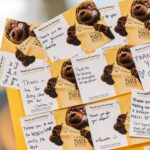
Header image of thank you cards from UMBC’s 2020 Giving Day by Marlayna Demond ’11.
]]>
Little did we know that 2020’s successful Giving Day would be one of the last major on-campus events before COVID-19 moved UMBC and the rest of the world to a virtual format. Since then, two new...
https://umbc.edu/stories/the-life-changing-power-of-giving/
https://beta.my.umbc.edu/api/v0/pixel/news/119681/guest@my.umbc.edu/0a80616c5be1c1f6e54bf042c74622dc/api/pixel
giving-day
impact
UMBC News & Magazine
https://beta.my.umbc.edu/groups/umbc-news-magazine
https://assets1-beta.my.umbc.edu/system/shared/avatars/groups/000/001/943/24435aa6207c452e7bc15cc74b42c7bb/xsmall.png?1748556657
https://assets1-beta.my.umbc.edu/system/shared/avatars/groups/000/001/943/24435aa6207c452e7bc15cc74b42c7bb/original.png?1748556657
https://assets2-beta.my.umbc.edu/system/shared/avatars/groups/000/001/943/24435aa6207c452e7bc15cc74b42c7bb/xxlarge.png?1748556657
https://assets2-beta.my.umbc.edu/system/shared/avatars/groups/000/001/943/24435aa6207c452e7bc15cc74b42c7bb/xlarge.png?1748556657
https://assets3-beta.my.umbc.edu/system/shared/avatars/groups/000/001/943/24435aa6207c452e7bc15cc74b42c7bb/large.png?1748556657
https://assets1-beta.my.umbc.edu/system/shared/avatars/groups/000/001/943/24435aa6207c452e7bc15cc74b42c7bb/medium.png?1748556657
https://assets2-beta.my.umbc.edu/system/shared/avatars/groups/000/001/943/24435aa6207c452e7bc15cc74b42c7bb/small.png?1748556657
https://assets1-beta.my.umbc.edu/system/shared/avatars/groups/000/001/943/24435aa6207c452e7bc15cc74b42c7bb/xsmall.png?1748556657
https://assets2-beta.my.umbc.edu/system/shared/avatars/groups/000/001/943/24435aa6207c452e7bc15cc74b42c7bb/xxsmall.png?1748556657
UMBC News & Magazine
0
0
false
Mon, 22 Feb 2021 21:39:42 -0500
Low-cost infant incubator developed at UMBC completes successful clinical trial in India

Innovative technologies don’t have to be expensive or complicated.
UMBC’s Govind Rao, professor of chemical, biochemical, and environmental engineering and director of the Center for Advanced Sensor Technology, has been developing a low-cost solution to improve the care of babies born prematurely.
A standard incubator found in a newborn intensive care unit costs between $1,500 and $35,000—beyond the means of many hospitals in low- and middle-income countries. Public impact research initiated by Rao and UMBC students has culminated in the successful clinical trial of an incubator that costs only $200.
 Govind Rao, center, presents a prototype incubator to then-Maryland Secretary of Commerce Mike Gill in 2017. Photo by Marlayna Demond ’11 for UMBC.
“This will be a game-changer,” says Rajeev Seth, managing trustee of BUDS, a nonprofit that advocates for the health and welfare of children in India.
Student project beginnings
The low-cost incubator traces its roots to a UMBC course on sensors in 2011. There, Rao asked students to come up with solutions for real-world problems. Kevin Tran ’12, chemical engineering, was part of a team that designed a low-cost infant incubator. He continued on the project that summer.
“As an engineer, [when] you start something, you can’t leave it half-finished,” Tran says. He and his teammates tested out prototypes built with different materials, like wood and PVC. The team ultimately took a trip to India to visit various healthcare settings and receive feedback on their design.

Govind Rao, third from left, with UMBC students and research partners, during a trip to India.
Photo courtesy of Kevin Tran.
The students encountered facilities that faced frequent power outages and lacked resources they’d taken for granted in the U.S. One healthcare center had broken incubators that sat unused, Tran says, because they couldn’t be maintained, even if it was a simple fix.
The team was accompanied by Geetha Mohanram, a retired elementary school teacher who acted as a translator. Mohanram now lives in the U.S. but is from Karnataka, one of the areas the team visited. She bridged the gap between the engineers and the nurses and doctors, not only through fluency with the local dialect, but also because of familiarity with the local culture. This helped the UMBC team access the medical staff’s observations and insights.
Feedback gathered during the trip guided updates to the design, such as smaller dimensions and cardboard construction for single use. The design work culminated in a paper published in the Journal of Laboratory Automation in 2014. It provided recommendations for a prototype suited to a clinical trial.
Cardboard incubator in action
An updated version of the cardboard incubator has now proven successful in a clinical setting. In an EClinicalMedicine study, published by The Lancet, the low-cost incubator maintained the body temperatures of premature babies as well as a more expensive, standard incubator over 48 hours.
The low-cost incubator is made up of a cardboard chamber, designed to be disposed of after use by one infant, and a reusable heating unit. The cardboard packs down flat, so it can be easily transported. It is straightforward to assemble—almost like a pop-up book, Rao says.
Careful monitoring
The clinical trial was a collaborative effort supported by the U.S. Food and Drug Administration. Subawards supported Phoenix Medical Systems, which provided the cardboard incubators, and researchers at Sri Ramachandra Institute of Higher Education and Research (SRIHER), who conducted the study.
The study involved 96 preterm babies, ranging from 32 to 36 weeks old, without health complications. By limiting the clinical trial to babies that were relatively well, the researchers were able to focus on the performance of the incubators, says Ashok Chandrasekaran, associate professor of neonatology at SRIHER.
The babies spent 48 hours in either a standard or cardboard incubator, with continued monitoring by medical staff. Skin sensors tracked the babies’ temperatures. They raised alarms if temperatures deviated over half a degree Celsius (0.9 degrees Fahrenheit) from 37 degrees Celsius (98.6 degrees Fahrenheit). Nurses also checked the infants using underarm thermometers every four hours and adjusted the incubator temperature as needed.
 A prototype of Rao’s cardboard incubator. Photos courtesy of V. Sashi Kumar.
There were cases where the babies’ temperatures were slightly low with both incubators, as well as several instances of mild hypothermia. But, overall, the performance of the low-cost incubator was on par with the standard incubator.
Avoiding hospital-acquired infections
The surfaces of the low-cost and standard incubators were disinfected daily, but in two cases the standard incubator harbored bacteria responsible for hospital-acquired infections. None of the low-cost incubators were positive for surface bacteria. The disposable nature of the cardboard incubator would also prevent infectious outbreaks, since each chamber would only be used by a single infant.
“One of the major killers of preterm babies in developing countries is infection,” Chandrasekaran says. “Especially hospital-acquired infections.”
Future studies will assess how well the low-cost incubator performs over longer periods of time and whether premature babies continue to gain weight, says Binu Ninan, director and professor of neonatology at SRIHER. Future iterations of the incubator could include sensors to track babies’ weight and cameras to monitor babies more closely.
“You don’t necessarily need to have very expensive interventions to improve outcomes,” Rao says. “You can come up with something simple that works, that can have a huge impact.”
Banner image: “Happy Foot” by Natesh Ramasamy, Flickr CC BY-NC 2.0.
Article written by Jack J. Lee for UMBC News
]]>
Innovative technologies don’t have to be expensive or complicated. UMBC’s Govind Rao, professor of chemical, biochemical, and environmental engineering and director of the Center for...
https://umbc.edu/stories/low-cost-infant-incubator-developed-at-umbc-completes-successful-clinical-trial-in-india/
https://beta.my.umbc.edu/api/v0/pixel/news/119682/guest@my.umbc.edu/36a5869ee2cc363f1bf2d7a6b0f129dd/api/pixel
alumni
cast
cbee
coeit
international
page1
research
science-and-technology
UMBC News & Magazine
https://beta.my.umbc.edu/groups/umbc-news-magazine
https://assets1-beta.my.umbc.edu/system/shared/avatars/groups/000/001/943/24435aa6207c452e7bc15cc74b42c7bb/xsmall.png?1748556657
https://assets1-beta.my.umbc.edu/system/shared/avatars/groups/000/001/943/24435aa6207c452e7bc15cc74b42c7bb/original.png?1748556657
https://assets2-beta.my.umbc.edu/system/shared/avatars/groups/000/001/943/24435aa6207c452e7bc15cc74b42c7bb/xxlarge.png?1748556657
https://assets2-beta.my.umbc.edu/system/shared/avatars/groups/000/001/943/24435aa6207c452e7bc15cc74b42c7bb/xlarge.png?1748556657
https://assets3-beta.my.umbc.edu/system/shared/avatars/groups/000/001/943/24435aa6207c452e7bc15cc74b42c7bb/large.png?1748556657
https://assets1-beta.my.umbc.edu/system/shared/avatars/groups/000/001/943/24435aa6207c452e7bc15cc74b42c7bb/medium.png?1748556657
https://assets2-beta.my.umbc.edu/system/shared/avatars/groups/000/001/943/24435aa6207c452e7bc15cc74b42c7bb/small.png?1748556657
https://assets1-beta.my.umbc.edu/system/shared/avatars/groups/000/001/943/24435aa6207c452e7bc15cc74b42c7bb/xsmall.png?1748556657
https://assets2-beta.my.umbc.edu/system/shared/avatars/groups/000/001/943/24435aa6207c452e7bc15cc74b42c7bb/xxsmall.png?1748556657
UMBC News & Magazine
0
0
false
Mon, 22 Feb 2021 18:16:28 -0500
UMBC international students build community online during COVID-19


Kirthana Kolekar.
Photo courtesy of Kolekar.
Graduate student Kirthana Kolekar began volunteering as one of UMBC’s first Global Ambassadors in summer 2020. It was a time of incredible stress. COVID-19 made personal connections challenging, federal policies for international students were in limbo, and her family was thousands of miles away in India. But serving as a resource for UMBC international students living abroad helped her feel a strong sense of purpose.
Then, in the fall, everything changed. Kolekar’s mother suddenly passed away from COVID-19 and she flew from Baltimore to Bidar, India, to be with her family. Through it all, she says, she felt supported by her UMBC community. Faculty, classmates, and fellow ambassadors reached out to offer support, as she had reached out to others before.
Kolekar ‘21, information systems, says, “They kept asking: ‘How are you doing? Do you need any help?’” And that mentality—proactively being present for a person half-way around the world—is what the Global Ambassador Peer Mentor Program is all about.
Year of rapid growth
UMBC’s Global Ambassador Program began with a few volunteers connecting with fellow students online. In less than a year, it has quickly grown into a fully-fledged, paid leadership opportunity for UMBC international students living in Baltimore to connect with peers around the globe.
Ambassadors provide peer support that transcends borders. They host panels, facilitate webchats, lead presentations, conduct workshops, and guide newly enrolled students, all online. And when, as COVID-19 recedes, more new international students can physically come to campus, they look forward to welcoming them in person.
“The mission of the Ambassador Program is to ensure you feel connected with your peers as soon as you become a part of the UMBC community,” says Natalie Lobb, a UMBC international student support specialist who oversees the program’s day-to-day operations. “It’s important to know that you are never alone, that you always have someone you can lean on.”
‘They are new, just like I was’

Nastaran Azar.
Photo courtesy of Azar.
Even in a typical year, international students face distinct challenges adjusting to campus life. “Everything was completely different,” says Nastaran Azar, a junior biology major and Global Ambassador, recalling her first semester.
Daily assignments and regular tests at UMBC were a shift from the semesterly exams in Azar’s native Iran. Outside the classroom, she had to navigate getting an apartment, a job, and a driver’s license.
Azar had two older brothers already living in Baltimore, but she realizes other students often don’t have such connections. “They are new, just like I was—uncomfortable and feeling like they don’t know how to do anything. I hope I can help them all to be comfortable and find friends,” she says.

Dmitry Pankratov. Photo courtesy of Pankratov.
Ambassador Dmitry Pankratov recalls how jarring it felt to move from Moscow to Maryland five years ago—and that was without COVID-19 closures. “I understand how awful it can be when you have just come to a new place, and you don’t have anyone around,” the data science master’s student says.
Incoming international students have a litany of questions for ambassadors—everything from how to file taxes to where to buy their favorite foods. “What kind of masalas, what are the ranges in prices, what spices do you need to bring from your home country,” Kolekar lists off, before the self-described foodie adds: “The taste slightly differs!”
Given the global pandemic, ordinary challenges quickly become complex. With that reality, receiving outreach has proven instrumental in connecting international students with university life.
Building relationships
The Global Ambassador Program has found ways to foster community as students study remotely. Many of the ambassadors lead webinars teaching students how to continue engaging in university life. One will focus on the university’s award-winning Bollywood fusion dance team, Adaa. Others spotlight UMBC resources, such as virtual gaming options accessible now and the Gameroom available for students when they eventually come to campus.
Pankratov has spoken about UMBC’s chess club at past events. He plans to deliver a session about the running club next. He’ll focus on the best trails in Maryland and how UMBC students can keep each other motivated while exercising safely outdoors.
“We have special training and people who can guide you, because when you’re just starting, it’s very hard to understand your own physical limitations,” Pankratov says. “It’s team building. You talk with people, get acquainted. Even with COVID-19, you can share your pace and time with others.”
Expanding horizons
UMBC already has a global feel, with international students making up nearly eight percent of the overall student body and a quarter of graduate students. The Global Ambassadors Program enables international students to benefit from connecting with fellow UMBC students from around the globe even if they can’t say hello to each other on Academic Row.
 Students at the Center for Global Engagement 2019 international student orientation. Photo by Marlayna Demond.
Students build trust with one other in the program, Azar says, helping them form homes away from home. They also come to understand themselves and the world in new ways. Kolekar, an aspiring business analyst, says making friends with a diverse set of viewpoints is reframing how she’ll approach her career.
Pankratov marvels at how he has met students from all across the globe, from India and China to Ecuador. “We all have different schools of thought, of literature, and so it just enlightens,” he says. “With this program, I can make friends with people who I never knew existed before.”
Banner image: Flags of the world in the UMBC Commons. Photo by Marlaynd Demond ’11 for UMBC.
Article written by Nick Ford for UMBC News.
]]>
Kirthana Kolekar. Photo courtesy of Kolekar. Graduate student Kirthana Kolekar began volunteering as one of UMBC’s first Global Ambassadors in summer 2020. It was a time of incredible...
https://umbc.edu/stories/umbc-international-students-build-community-online-during-covid-19/
https://beta.my.umbc.edu/api/v0/pixel/news/119683/guest@my.umbc.edu/320954fe3c413b58727fa65c04ef7c10/api/pixel
biology
classof2021
cnms
coeit
community
international
is
page1
UMBC News & Magazine
https://beta.my.umbc.edu/groups/umbc-news-magazine
https://assets1-beta.my.umbc.edu/system/shared/avatars/groups/000/001/943/24435aa6207c452e7bc15cc74b42c7bb/xsmall.png?1748556657
https://assets1-beta.my.umbc.edu/system/shared/avatars/groups/000/001/943/24435aa6207c452e7bc15cc74b42c7bb/original.png?1748556657
https://assets2-beta.my.umbc.edu/system/shared/avatars/groups/000/001/943/24435aa6207c452e7bc15cc74b42c7bb/xxlarge.png?1748556657
https://assets2-beta.my.umbc.edu/system/shared/avatars/groups/000/001/943/24435aa6207c452e7bc15cc74b42c7bb/xlarge.png?1748556657
https://assets3-beta.my.umbc.edu/system/shared/avatars/groups/000/001/943/24435aa6207c452e7bc15cc74b42c7bb/large.png?1748556657
https://assets1-beta.my.umbc.edu/system/shared/avatars/groups/000/001/943/24435aa6207c452e7bc15cc74b42c7bb/medium.png?1748556657
https://assets2-beta.my.umbc.edu/system/shared/avatars/groups/000/001/943/24435aa6207c452e7bc15cc74b42c7bb/small.png?1748556657
https://assets1-beta.my.umbc.edu/system/shared/avatars/groups/000/001/943/24435aa6207c452e7bc15cc74b42c7bb/xsmall.png?1748556657
https://assets2-beta.my.umbc.edu/system/shared/avatars/groups/000/001/943/24435aa6207c452e7bc15cc74b42c7bb/xxsmall.png?1748556657
UMBC News & Magazine
0
0
false
Wed, 17 Feb 2021 18:20:00 -0500
ERRANDS with Friends
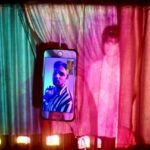
A new online exhibit featuring alumnus Zachary Z. Handler’s pandemic portraits of friends and strangers makes the most of a challenging situation.
What have you missed most during the pandemic? For many, it’s the freedom to move about the neighborhood safely, to interact with complete strangers on the street—and the magical potential of turning those strangers into friends.
Since last April, artist Zachary Z. Handler ’03, visual arts, has harnessed the creative constraints of lockdown to meet and get to know hundreds of people around the world. And by weaving video chat conversations together with DIY props and dioramas pulled from his own home, he has created a collection of nearly 300 intimate portraits to reflect that shared experience.
“Photography, for me, has always been like a gift exchange, and ERRANDS has definitely proved this true in so many, unexpected ways,” said Handler, who by day works in health care with the Deaf and Hard of Hearing Community, and who captures his subjects within the frame of an iPhone with a clear amber-colored case. “From its inception, ERRANDS was always more about the conversation we have during the call. The set-up and portrait we take are a bonus; a time capsule of this shared moment in our lives. That’s the gift. Each session is the most wonderful gift.”
A selection of Handler’s work—including behind-the-scenes peeks into his process—is now on display in ERRANDS, the first in a series of online exhibits offered by the Albin O. Kuhn Library & Gallery. Handler, a Linehan Artist Scholar, will give a virtual artist’s talk for the public at noon on February 18.
“The Library Gallery traditionally plays an important role in the intellectual, creative, and social life at UMBC. To continue filling these roles during the closure of UMBC’s physical campus, we are presenting opportunities to engage with photography and the creative community through virtual exhibitions and events,” said gallery curator Emily Cullen ’06, visual arts. “We especially hope that our effort to connect our audiences with artists and share new work and ideas offers respite and inspiration amid all the challenges of the past year.”
That spirit of connection comes through with every piece Handler creates. At the beginning of the pandemic, he began offering portrait sessions to anyone who asked. He posted them on Instagram a few at a time, and the project took off from there, to the point where he was scheduling six to eight 30-minute sessions a night after a full work day—with many more on the weekends, and each encompassing entirely new and different props, feelings, and experiences. He even recruited fellow alum Kiirstn Pagan ’11, theatre, for help with graphic design to accompany the project.
While Handler loves the chance to talk with so many people, he also finds great joy in using the existing objects in his home to build dioramas and make tiny props from scratch. One night he might be stacking slices of white bread or piling frozen peas around the phone. The next, he might be fashioning a butter dish and plate from terry cloth, or pulling the elastic from a pair of underwear to create five tiny sets of shoelaces for only-slightly-larger pairs of Converse All-Stars. It’s a peculiar pandemic-driven sensibility that really resonates with Handler.
“I think it was born out of the pandemic in the sense that I wasn’t going into stores and I didn’t want to spend money when I didn’t need to. I’d rather give that money to charities or fundraisers,” he said. “Plus I’d rather the challenge of repurposing what I already have in my house to make my sets. It worked more for the aesthetic of being quarantined.” Handler adds, “I’m more of a thrift store person than a boutique store person anyway. That’s very much my personality. I just love that objects carry meaning and stories when we receive them, and then once we pass them onto someone else, we get to add that story. “
One such beloved object—a musical album—came into play in Handler’s portrait of Carlyn Thomas ’13, visual arts, with whom he co-curated the exhibition and queer performance series, Miami is Nice, at Space Camp gallery in Baltimore a few years ago. In Thomas’ portrait, Handler evokes the cover of a Christine and the Queens album—a musical artist they both adore—with Thomas as Christine surrounded by a frame of squiggled yellow icing.
“I loved it,” said Thomas. “The month my portrait was taken was June, which is widely known as Pride month and was also around the same time that I came out as non-binary (I actually came out to Zach on that very call), so it felt very affirming for me to see myself reflected and represented in a way that gave me gender euphoria, and was just an honor to be compared to Chris. I think the finished portrait encapsulates a lot of things about Zach and I’s friendship and it’s very special to me. Icing is also just so much fun and yellow is my favorite color!”
 Zachary Z. Handler, Dr. Hrabowski. Owings Mills, MD, USA. 2020. From the series ERRANDS. Courtesy of the artist.
As a special treat for Retriever audiences, Handler also sat with UMBC President Freeman Hrabowski for a portrait session where they explored shared memories of an interaction on campus in the days just after September 11, 2001. As a photographer for the campus newspaper, Handler recalled snapping a photo of Hrabowski—a personal moment that stuck with both of them and remains in newspaper ink to this day.
“Zachary surprised me by bringing me into the process to reflect on the human condition during this challenging time,” said Hrabowski, whose portrait by Handler shows him surrounded by boxes of precious family slides. “I found myself having a substantive conversation with him about our experience years ago when he was a student at UMBC and our campus, along with the rest of the world, was reacting to the 9/11 tragedy. As he talked, he brought me back to the feeling of grabbing for hope in the midst of a storm, and I realized that we human beings go through these periods, and we get through them because of our connections to others. Zachary was masterful.”
 Zachary Z. Handler, Anne Marie & Amanda (& Bea & Carol). Baltimore, MD, USA. 2020. From the series ERRANDS. Courtesy of the artist.
ERRANDS is online now through February 28, and Handler will give a public artist’s talk on Thursday, February 18, at noon. American Sign Language interpretation will be provided. Visit https://librarygallery.umbc.edu/zach-handler-errands/ for more information about this exhibit and upcoming shows. See more of Handler’s work on Instagram or at www.zzhandler.com.
Header image: Zachary Z. Handler, Samuel Cullman. Alabama, USA. 2020. From the series ERRANDS. Courtesy of the artist.
Gallery of images, left to right, top to bottom: Allan. Guatemala City, Guatemala; Dejah. Philadelphia, Pennsylvania; Alvaro. Stuttgart, Baden-Wurttemberg, Germany; Grant (Hao-Wei). San Ramon, California; Jose. Washington, DC; Hershey. Baltimore, Maryland; Ryder. Chapel Hill, North Carolina; Yim. Chiang Mai, Thailand; Zeljko and Daniel. Razanac, Croatia. From the the series ERRANDS. Courtesy of Zachary Z. Handler.
Learn more about upcoming exhibits at the AOK Gallery here:
]]>
A new online exhibit featuring alumnus Zachary Z. Handler’s pandemic portraits of friends and strangers makes the most of a challenging situation. What have you missed most during the...
https://umbc.edu/stories/errands-with-friends/
https://beta.my.umbc.edu/api/v0/pixel/news/119684/guest@my.umbc.edu/414569ea3a092d6feb57ebad04e97699/api/pixel
alumni
UMBC News & Magazine
https://beta.my.umbc.edu/groups/umbc-news-magazine
https://assets1-beta.my.umbc.edu/system/shared/avatars/groups/000/001/943/24435aa6207c452e7bc15cc74b42c7bb/xsmall.png?1748556657
https://assets1-beta.my.umbc.edu/system/shared/avatars/groups/000/001/943/24435aa6207c452e7bc15cc74b42c7bb/original.png?1748556657
https://assets2-beta.my.umbc.edu/system/shared/avatars/groups/000/001/943/24435aa6207c452e7bc15cc74b42c7bb/xxlarge.png?1748556657
https://assets2-beta.my.umbc.edu/system/shared/avatars/groups/000/001/943/24435aa6207c452e7bc15cc74b42c7bb/xlarge.png?1748556657
https://assets3-beta.my.umbc.edu/system/shared/avatars/groups/000/001/943/24435aa6207c452e7bc15cc74b42c7bb/large.png?1748556657
https://assets1-beta.my.umbc.edu/system/shared/avatars/groups/000/001/943/24435aa6207c452e7bc15cc74b42c7bb/medium.png?1748556657
https://assets2-beta.my.umbc.edu/system/shared/avatars/groups/000/001/943/24435aa6207c452e7bc15cc74b42c7bb/small.png?1748556657
https://assets1-beta.my.umbc.edu/system/shared/avatars/groups/000/001/943/24435aa6207c452e7bc15cc74b42c7bb/xsmall.png?1748556657
https://assets2-beta.my.umbc.edu/system/shared/avatars/groups/000/001/943/24435aa6207c452e7bc15cc74b42c7bb/xxsmall.png?1748556657
UMBC News & Magazine
0
0
false
Mon, 15 Feb 2021 21:57:50 -0500
 UMBC’s Lujie Karen Chen
 UMB’s Kelly Doran


