UMBC researchers work to advance neurotechnology through emerging consortium
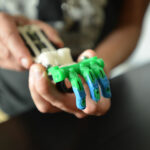
The human hand is capable of exquisitely complex, coordinated movements. Ramana Vinjamuri hopes that, in the future, people will be able to control prosthetic hands and exoskeletons just as seamlessly, using signals from their brains.
Vinjamuri’s research on the interconnections between the brain and the hand is very personal. His mother had a stroke in 2014 and developed paralysis in her right hand. “The very hand that taught me how to draw and how to write is now paralyzed,” he says.
To tackle questions about how the brain signals body movements, Vinjamuri, assistant professor of computer science and electrical engineering (CSEE) and director of Sensorimotor Control Laboratory, is gathering a team of UMBC researchers and corporate and government partners. He received an Industry University Cooperative Research Center (IUCRC) planning grant from the National Science Foundation (NSF) in 2020, and he sees UMBC as perfectly situated to move this kind of high-impact research collaboration forward.
 Ramana Vinjamuri. Courtesy of Vinjamuri.
While other U.S. universities near urban centers may also have industry partners in their areas, Maryland and Washington, D.C. uniquely host a large number of national institutes and federal agencies, in addition to companies. This includes the NIH, NSF, NASA, and others. And UMBC has a strong track record. The UMBC-led Center for Accelerated Real Time Analytics (CARTA) has already found success as an IUCRC composed of multiple universities, industry partners, and government agencies.
Vinjamuri is proposing that UMBC join the Building Reliable Advances and Innovation in Neurotechnology (BRAIN) Center, a consortium led by Arizona State University and the University of Houston. His vision is to establish an East Coast BRAIN research hub to develop technologies that can help scientists better understand the nervous system and aid people with disabilities.
Benefits of collaboration
The NSF established the IUCRC program to offer academic researchers a framework for establishing long-term partnerships with industry and government agencies. In addition to providing funding, the program gives graduate students unique research experiences that can set them on a path to high-impact careers.
“They learn how to work in a team, together with professionals from industry and the government,” says Yelena Yesha, distinguished university professor of CSEE and director of CARTA.
 Yelena Yesha, right, with faculty and students who conduct research through CARTA, 2018.
Corporate partners and government agencies also benefit since they gain the expertise of academic researchers. “It’s a win-win,” Vinjamuri says.

Dean Drake. Photo by Tim Ford for UMBC.
Representatives of each center’s member institutions meet twice a year to make updates to the consortium’s research goals. These meetings provide an opportunity for industry and government partners to highlight their priorities in particular areas, says Dean Drake, associate vice president for research at UMBC.
And the partners have a financial stake in the success of the IUCRC: Each year they pay membership fees that go toward the costs of research.
From big data to actionable data
UMBC has been the lead university for CARTA, a multi-institution IUCRC, since its inception in 2018. The consortium’s roots are in the Center for Hybrid Multicore Productivity Research (CHMPR), founded in 2009. CHMPR aimed to develop advanced computing technologies to tackle complex problems of national priority, from human health to climate change. As large datasets gained widespread use, the researchers shifted their focus to new areas and CARTA was born.
“Big data by itself is trouble; what is really needed is actionable data,” Yesha says.
CARTA researchers are focused on real-time analytics, or how to interpret large amounts of data to make decisions quickly. For example, one project is exploring the use of blockchain, the distributed technology underlying bitcoin and other cryptocurrencies, to optimize supply chains.
 Karuna Joshi (left) and Yelena Yesha (right), 2018
In addition to UMBC, CARTA includes higher education partners North Carolina State University, Rutgers University–New Brunswick, Rutgers University–Newark, and Tel Aviv University. Some of UMBC’s industry and government partners are the data management company Seagate Technology, financial services firm Morgan-Stanley, Department of Homeland Security, and NASA.
“The challenges we examine require a convergence of technologies,” Yesha says. “Having the resources that come from all these different institutions at the table—as well as the brainpower—enables us to tackle these types of problems.”
Advancing neurotechnology
In proposing UMBC as a future BRAIN site, Vinjamuri hopes to connect with medical centers, companies, and government agencies specifically seeking to accelerate neurotechnology research. Neurotechnology is a broad discipline that includes everything from methods for measuring brain activity to tools for analyzing clinical data to human-centered computing, the focus of Vinjamuri’s research.
The proposed UMBC BRAIN site will have three additional research themes: artificial intelligence, led by Nilanjan Banerjee, professor of CSEE and director of the Mobile, Pervasive, and Sensor Systems Lab; neural signal processing, led by Tülay Adali, distinguished university professor of CSEE and director of the Machine Learning for Signal Processing Lab; and virtual reality, led by Don Engel, assistant professor of CSEE and director of the Assistive Visualization and Artificial Intelligence Lab.
 Pi Squared immersive visualization wall, 2016
Due to the coronavirus pandemic, the planning grant timeline has been extended for an additional year. The funds will be used to hold a conference in upcoming fall 2021, to recruit potential industry and government partners for the proposed BRAIN site. Vinjamuri and colleagues will then prepare a formal proposal to join the BRAIN consortium.
“These collaborations across universities, industry, and government are critical to the success of carrying this research out to society,” says Drake, “to meet our most pressing needs.”
Banner image: 3D-Printed Prosthetic Hand, 2013. Photo by M.R.Nuckels. CC by 4.0. All other photos by Marlayna Demond ’11 for UMBC unless otherwise noted.
Article written by Jack J. Lee for UMBC News.
]]>
The human hand is capable of exquisitely complex, coordinated movements. Ramana Vinjamuri hopes that, in the future, people will be able to control prosthetic hands and exoskeletons just as...
https://umbc.edu/stories/umbc-researchers-work-to-advance-neurotechnology-through-emerging-consortium/
https://beta.my.umbc.edu/api/v0/pixel/news/119667/guest@my.umbc.edu/f44ae5492cc64c2e3b75a9e7b3708ea3/api/pixel
coeit
csee
research
science-and-technology
UMBC News & Magazine
https://beta.my.umbc.edu/groups/umbc-news-magazine
https://assets1-beta.my.umbc.edu/system/shared/avatars/groups/000/001/943/24435aa6207c452e7bc15cc74b42c7bb/xsmall.png?1748556657
https://assets1-beta.my.umbc.edu/system/shared/avatars/groups/000/001/943/24435aa6207c452e7bc15cc74b42c7bb/original.png?1748556657
https://assets2-beta.my.umbc.edu/system/shared/avatars/groups/000/001/943/24435aa6207c452e7bc15cc74b42c7bb/xxlarge.png?1748556657
https://assets2-beta.my.umbc.edu/system/shared/avatars/groups/000/001/943/24435aa6207c452e7bc15cc74b42c7bb/xlarge.png?1748556657
https://assets3-beta.my.umbc.edu/system/shared/avatars/groups/000/001/943/24435aa6207c452e7bc15cc74b42c7bb/large.png?1748556657
https://assets1-beta.my.umbc.edu/system/shared/avatars/groups/000/001/943/24435aa6207c452e7bc15cc74b42c7bb/medium.png?1748556657
https://assets2-beta.my.umbc.edu/system/shared/avatars/groups/000/001/943/24435aa6207c452e7bc15cc74b42c7bb/small.png?1748556657
https://assets1-beta.my.umbc.edu/system/shared/avatars/groups/000/001/943/24435aa6207c452e7bc15cc74b42c7bb/xsmall.png?1748556657
https://assets2-beta.my.umbc.edu/system/shared/avatars/groups/000/001/943/24435aa6207c452e7bc15cc74b42c7bb/xxsmall.png?1748556657
UMBC News & Magazine
0
0
false
Fri, 26 Mar 2021 14:45:14 -0400
UMBC’s Anthony Johnson honored for decades of research, mentorship, service
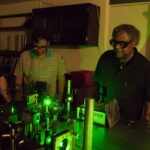
Anthony Johnson, a professor of both physics and computer science and electrical engineering (CSEE) at UMBC, has spent forty years investigating uses for ultrashort pulse lasers. Shrinking cancerous tumors, optimizing long-distance communications, inactivating viruses that commonly infect seafood species, developing new nanoscale materials—he seems to have done it all.
In addition to being an accomplished researcher, Johnson has successfully mentored dozens of students from all backgrounds as they pursued advanced degrees, maintaining contact and continuing to offer support long after graduation. And he’s held key leadership roles in his field, from co-chairing the annual Conference on Lasers and Electro-Optics (CLEO) in 1992, to serving as president of the Optical Society in 2002 and as the editor-in-chief of Optics Letters, the premier peer-reviewed optics journal, from 1995 – 2001.
This year, Johnson’s long-term commitment has resulted in a new accolade: the Stephen D. Fantone Distinguished Service Award from the Optical Society. The award is presented each year to someone who has served the Optical Society in an “outstanding way” over an extended period.

Anthony Johnson. Photo courtesy Anthony Johnson.
Ever humble, “Being a past president [of the Optical Society], being on the board, and so forth, when I saw this email about this award, my initial thought was, ‘Ok, they want me to be on the committee to select the awardee,’” Johnson recalls. “It never occurred to me that it was for me. It was quite surprising, and it’s quite an honor.”
Inclusion imperative
Beyond his work within the Optical Society, Johnson was also recently named to the Committee on Diversity and Inclusion on the Technical Advisory Board of the Institute for Electrical and Electronics Engineers (IEEE). Johnson says there hasn’t been nearly enough change in the number of non-white and women physicists and engineers since he started in the 1970s, and he has made supporting inclusion in physics and engineering a cornerstone of his career.
“There’s still a lot to be done in our professional societies to build up and attract both women and minorities,” Johnson says. “We still have work to do to expand the opportunities to a broader set of people and bring in new ideas. So being on some of these committees is important.”
Closer to home, Johnson works hard to create an inclusive environment in his own research group. “I like to think of us as a family,” he says.
 Anthony Johnson (center front) with his research group in 2011. Photo courtesy Anthony Johnson.
Johnson knows how powerful it can be for young scientists to meet researchers with more experience and have opportunities to forge connections. With this in mind, he says, “I try to give my students as many opportunities as possible to go out and give presentations and be involved in the field of science.”
When working with students of all backgrounds, Johnson’s “kindness comes through,” says Stephen Fantone, after whom the award is named. Fantone has known Johnson for many years through the Optical Society, but has no role in the awardee selection process. He shares, “Anthony understands the role of nurturing students, helping them to find their inner spring and to fulfill their potential and their own personal dreams.”
Expert, colleague, friend
Students are not the only beneficiaries of Johnson’s support. “I gained many nuggets from his advice and leadership to the American Physical Society on graduate education and diversity, long before I made it to UMBC,” shares Belay Demoz, professor of physics and director of the Joint Center for Earth Systems Technology (JCET). “As another Black physicist at UMBC, he is my go-to guy for advice on how to handle delicate things; he is generous with his time and has a calming effect on me.”
 Anthony Johnson (right) works with students in his lab on a laser setup at CASPR in 2017. Photo by Marlayna Demond ’11 for UMBC.
Johnson’s colleagues recognize the range of important contributions he has made over the years. “The CSEE department is delighted to hear of these richly deserved honors for Dr. Johnson. He is a valued colleague in the department, and a world-renowned authority in the area of optics and photonics,” shares Anupam Joshi, professor and chair of CSEE.
Joshi notes, “These awards recognize that in addition to being a great researcher, he embodies the service mission of a public university, addressing important societal challenges like diversity and inclusion through his service to the major professional organizations.”
An exhilarating beginning
Johnson got his start in optics as an undergraduate at Brooklyn Polytechnic Institute (now the NYU Tandon School of Engineering) in the 1970s. A physics instructor encouraged him to pursue an internship at Bell Labs through the company’s Summer Research Program for Women and Minorities. The experience set Johnson’s entire career in motion.
“That’s where I really got my love of science and optics,” Johnson says.
 Anthony Johnson interning at Bell Labs in 1974. At left, he is with mentor David Auston. Photos courtesy Anthony Johnson.
He earned his Ph.D. in physics from City College of New York, completing his doctoral research at Bell Labs. After his Ph.D., Johnson continued to work at Bell Labs for nearly 15 years, when the lab was in its heyday. “During my doctoral research at Bell Labs, I learned just how many celebrities in physics were there. I could walk down the hall and talk to people we put on pedestals,” Johnson remembers. “It was quite an experience.”
At Bell Labs, Johnson also had the opportunity to mentor interns coming through the same program that had gotten him started. His physics instructor’s impact on his trajectory was not lost on Johnson, and he made a concerted effort to pay it forward with his interns. Eventually, Johnson remembers, “I said, ‘You know, I could enjoy doing this at a university.’”
New home, same mission
So, Johnson made the move to academia. After eight years as a department chair at the New Jersey Institute of Technology, he joined UMBC in 2003. In 2006, he became the UMBC lead on the university’s very first inter-institutional research center when one of his former Bell Labs colleagues, now at Princeton University, suggested the idea.
 Members of Johnson’s lab group manipulate a complicated laser setup in the lab. Photo by Mralayna Demond ’11 for UMBC, taken 2017.
NSF funded the Engineering Research Center (ERC), named Mid-Infrared Technologies for Health and the Environment (MIRTHE), for 10 years. The center supported research, graduate students, and an annual weeklong meeting where the students from the participating universities shared their progress and forged lasting connections. The six-institution collaboration was headquartered at Princeton, and Johnson served as one of two deputy directors.
The center’s work largely focused on medical applications of infrared technologies. For example, one of the group’s inventions included a breathalyzer-style device to detect ammonia, which can indicate liver and kidney problems.
Today, Johnson serves as the director of UMBC’s Center for Advanced Studies in Photonics Research (CASPR). “I’m cherishing being in academia and working with faculty and students, and, in particular, having students and graduating students pursuing advanced degrees,” Johnson says. “It’s really a satisfying process and enterprise, so that has been quite enjoyable.”
Distinctive approach to leadership
Colleagues also cherish their time with Johnson. In particular, Fantone says, Johnson is well-suited to handle challenging conversations. “In conversation, you can be on opposite sides of an issue, but he doesn’t adopt polarizing tactics,” Fantone says. “He wants to have civil discourse, which leads both parties in the discussion to a better place.” Fantone has seen this play out time and again in conversations with students and colleagues.
 Another perspective on one of the laser setups in Johnson’s research laboratory. Photo by Marlayna Demond ’11 for UMBC, taken 2017.
David Auston, one of Johnson’s first mentors at Bell Labs with a lengthy career in research and academic administration, is “thrilled” that Johnson is the 2021 award recipient. “Anthony is an outstanding scientist who has fulfilled many key leadership roles with distinction both in the Optical Society and in the scientific community at large,” Auston says. “This is a most deserving recognition of his numerous important contributions.”
As he enters his fifth decade of professional life, it seems certain Johnson will keep on giving to his community by generating scientific advances, creating meaningful relationships, and inspiring others. As Fantone puts it, “Working with Anthony puts a smile on your face, even when you are working on serious problems. And when you work with Anthony, you have high confidence that the effort is going to be successful.”
“He’s just a person you want in the trenches with you,” Fantone says. “Anthony is an exemplar of a complete human being.”
Banner image: Johnson, right, examines a laser setup in his laboratory. Photo by Marlayna Demond ’11 for UMBC, taken 2017.
]]>
Anthony Johnson, a professor of both physics and computer science and electrical engineering (CSEE) at UMBC, has spent forty years investigating uses for ultrashort pulse lasers. Shrinking...
https://umbc.edu/stories/umbcs-anthony-johnson-honored-for-decades-of-research-mentorship-service/
https://beta.my.umbc.edu/api/v0/pixel/news/119668/guest@my.umbc.edu/3dbd04af6396fcb9872e9766e46b9543/api/pixel
cnms
coeit
csee
diversityandinclusion
page1
physics
science-and-technology
UMBC News & Magazine
https://beta.my.umbc.edu/groups/umbc-news-magazine
https://assets1-beta.my.umbc.edu/system/shared/avatars/groups/000/001/943/24435aa6207c452e7bc15cc74b42c7bb/xsmall.png?1748556657
https://assets1-beta.my.umbc.edu/system/shared/avatars/groups/000/001/943/24435aa6207c452e7bc15cc74b42c7bb/original.png?1748556657
https://assets2-beta.my.umbc.edu/system/shared/avatars/groups/000/001/943/24435aa6207c452e7bc15cc74b42c7bb/xxlarge.png?1748556657
https://assets2-beta.my.umbc.edu/system/shared/avatars/groups/000/001/943/24435aa6207c452e7bc15cc74b42c7bb/xlarge.png?1748556657
https://assets3-beta.my.umbc.edu/system/shared/avatars/groups/000/001/943/24435aa6207c452e7bc15cc74b42c7bb/large.png?1748556657
https://assets1-beta.my.umbc.edu/system/shared/avatars/groups/000/001/943/24435aa6207c452e7bc15cc74b42c7bb/medium.png?1748556657
https://assets2-beta.my.umbc.edu/system/shared/avatars/groups/000/001/943/24435aa6207c452e7bc15cc74b42c7bb/small.png?1748556657
https://assets1-beta.my.umbc.edu/system/shared/avatars/groups/000/001/943/24435aa6207c452e7bc15cc74b42c7bb/xsmall.png?1748556657
https://assets2-beta.my.umbc.edu/system/shared/avatars/groups/000/001/943/24435aa6207c452e7bc15cc74b42c7bb/xxsmall.png?1748556657
UMBC News & Magazine
0
0
false
Thu, 25 Mar 2021 16:37:21 -0400
UMBC offers new Research Experiences for Undergraduates in smart computing, big data

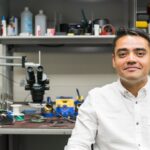
Starting out at UMBC, Meyerhoff Scholar Timothy Potteiger wasn’t certain what direction he wanted to take. However, he benefited from UMBC programs that brought the world to his doorstep, inviting universities to pitch him their summer research experiences. One conversation with Washington State University particularly resonated. They spoke about researching smart home sensor technologies to help improve the daily lives of older adults and people with disabilities.
Potteiger ’14, computer engineering, was drawn to that purpose-driven approach. Little did he know that the program manager for that undergraduate research experience in 2013, Nirmalya Roy, would soon join UMBC’s faculty and expand research opportunities for even more undergraduates.
 Nirmalya Roy
Research Experiences for Undergraduates (REUs) are critical for students like Potteiger. Roy, now associate professor of information systems at UMBC, is principal investigator leading a new REU in Smart Computing and Communications funded by the National Science Foundation (NSF). The program is accepting applications through March 31 for this summer from students nationwide.
Potteiger is excited for students to take advantage of this opportunity. “I know Dr. Roy has a good vision on how to actually impact society with research,” he shares.
Transformative experience
The program will bring together ten undergraduate students in a paid 10-week, full-time research experience from June 7 to August 13. While the summer 2021 program will be remote, each student will work closely with a research group and mentor. They will receive guidance from Roy and co-PI Dmitri Perkins, as well as other information systems and computer science and electrical engineering (CSEE) faculty.
In the final week, the students will have a chance to present their research through UMBC’s popular Summer Undergraduate Research Fest. They will also have the opportunity to develop peer-reviewed articles and continue their research throughout the year with faculty.
“The idea of this experience is not only to give them exposure to hands-on research problems, but to also help undergraduates with professional development,” says Roy. “Developing a peer network and encouraging them to build confidence talking with professors and researchers in their field will be important for their careers.”
Real-world applications
One REU project will tackle privacy protection in COVID-19 contact tracing programs, while another will study a chatbox method for studying cryptocurrency. Roy will also give students the chance to optimize smart home sensors for seniors or work on the FloodBot project, a collaboration with nearby Ellicott City to create an early flood warning system after a 2018 flash flood caused catastrophic damage.
 Sensors placed in Ellicott City through the FloodBot project. Photo courtesy of Nirmalya Roy.
Students can also work with Perkins, a CSEE professor, on research into wireless devices capable of “situational awareness,” the ability to switch from one frequency to the next along a limited radio spectrum highway. The interdisciplinary project is crucial to staving off what some experts fear is a looming, massive traffic jam for wireless devices globally.
“The hallmarks of all our projects is that they have community impact,” says Vandana Janeja, chair of information systems.
 Vandana Janeja
Expanding opportunity
Providing undergraduates with real, hands-on research experiences resonates personally with Perkins. He grew up in a no stop-light town in Mississippi and attended Tuskegee University, which had well-regarded academic programs but more limited lab research opportunities at the time. Perkins was able to gain research experience in a broader range of areas by participating in REUs at two other universities.

Dmitri Perkins. Photo courtesy of Perkins.
Recognizing that many students come from similar backgrounds where research opportunities may be rare, the REU specifically encourages applicants from community colleges and groups traditionally underrepresented in the STEM fields.
“With students from traditionally underserved communities, there is often some apprehension or insecurity about pursuing a career in research,” Perkins says. “Once students complete their UMBC summer experience, they will have more information, more understanding of what research looks like, and the knowledge that they can actually do this.”
Unique online experience
Jianwu Wang, information systems, has also joined the wave of faculty from UMBC’s College of Engineering and Information Technology (COEIT) launching new REUs. Wang is assistant professor of data science and director of the Big Data Analytics Lab. With co-PI Matthias Gobbert, professor of mathematics, he’s just received NSF funding to launch an online interdisciplinary Big Data REU.
 Jianwu Wang
They will provide an 8-week summer online research experience to undergraduates from across the country. Students will explore “how to utilize modern data science and high-performance computing techniques to process and analyze big data in many science and engineering disciplines,” Wang explains. This includes fields ranging from atmospheric science to mechanical engineering to medicine.
“We’ve designed the program to be purely online so it is particularly useful for students in remote areas or who might have health concerns or concerns about travel,” says Wang. “We also want to make sure it is accessible to students with family responsibilities and disabilities, who may not be able to leave their home for an extended period of time.”
Big data research
This program will combine formal instruction, team-based research, and experience disseminating that research. The goal is to ignite students’ interest in “how data science and high-performance computing techniques could help the scientific discovery process” while giving them essential hands-on research skills and preparing them for the workforce.
Students will learn how to identify research questions and conduct research using advanced cyberinfrastructure software technologies and hardware resources. Tentative research themes for summer 2021 research projects include big data and machine learning techniques for sea ice prediction and for medical image classification.
The summer 2021 program will run June 7 through July 31. Applications are due by April 15, 2021, and the organizers invite undergraduates in all STEM fields to apply. Students who complete the fully-funded program will also be eligible for additional funds to present their research at conferences around the country.
Roy and Wang credit COEIT for encouraging their efforts to launch new REUs. Erin Lavik, associate dean for research and faculty development and professor of chemical, biochemical, and environmental engineering, describes the new programs as “fantastic.” She shares, “This is an exciting chance to connect undergraduates from across the country with unique UMBC student research experiences and our outstanding, innovative faculty.”
 Graduate student Adam Day (left) works with Erin Lavik (right) in her lab, 2017.
Featured image: Nirmalya Roy with a student in 2018. All photos by Marlayna Demond ’11 for UMBC unless otherwise noted.
Article written by Nick Ford for UMBC News.
]]>
Starting out at UMBC, Meyerhoff Scholar Timothy Potteiger wasn’t certain what direction he wanted to take. However, he benefited from UMBC programs that brought the world to his doorstep, inviting...
https://umbc.edu/stories/umbc-offers-new-research-experiences-for-undergraduates-in-smart-computing-big-data/
https://beta.my.umbc.edu/api/v0/pixel/news/119669/guest@my.umbc.edu/4a22ba23ba6c1bc35a72077da93f5685/api/pixel
cnms
coeit
csee
is
mathstat
science-and-technology
undergradresearch
UMBC News & Magazine
https://beta.my.umbc.edu/groups/umbc-news-magazine
https://assets1-beta.my.umbc.edu/system/shared/avatars/groups/000/001/943/24435aa6207c452e7bc15cc74b42c7bb/xsmall.png?1748556657
https://assets1-beta.my.umbc.edu/system/shared/avatars/groups/000/001/943/24435aa6207c452e7bc15cc74b42c7bb/original.png?1748556657
https://assets2-beta.my.umbc.edu/system/shared/avatars/groups/000/001/943/24435aa6207c452e7bc15cc74b42c7bb/xxlarge.png?1748556657
https://assets2-beta.my.umbc.edu/system/shared/avatars/groups/000/001/943/24435aa6207c452e7bc15cc74b42c7bb/xlarge.png?1748556657
https://assets3-beta.my.umbc.edu/system/shared/avatars/groups/000/001/943/24435aa6207c452e7bc15cc74b42c7bb/large.png?1748556657
https://assets1-beta.my.umbc.edu/system/shared/avatars/groups/000/001/943/24435aa6207c452e7bc15cc74b42c7bb/medium.png?1748556657
https://assets2-beta.my.umbc.edu/system/shared/avatars/groups/000/001/943/24435aa6207c452e7bc15cc74b42c7bb/small.png?1748556657
https://assets1-beta.my.umbc.edu/system/shared/avatars/groups/000/001/943/24435aa6207c452e7bc15cc74b42c7bb/xsmall.png?1748556657
https://assets2-beta.my.umbc.edu/system/shared/avatars/groups/000/001/943/24435aa6207c452e7bc15cc74b42c7bb/xxsmall.png?1748556657
UMBC News & Magazine
0
0
false
Thu, 25 Mar 2021 16:36:10 -0400
Chronicle features UMBC as a leading voice on the future of higher ed
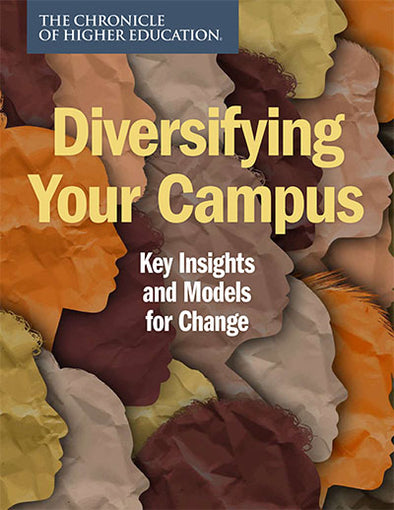
Cover of the new
Chronicle report.
A new report from the Chronicle of Higher Education features UMBC’s peer-based work to boost faculty diversity. For decades, UMBC’s strong reputation for inclusive excellence has focused on student diversity. The new UMBC case study in “Diversifying Our Campus: Key Insights and Models for Change” expands that conversation.
The article notes that UMBC received National Science Foundation support to “revamp hiring processes, write more-inclusive job postings, and craft diversity plans for hiring and recruiting” in 2003. This $3.2 million Institutional Transformation Grant sought to promote the recruitment and advancement of women in STEM, and UMBC saw a 70% increase in women tenure-track STEM faculty. At the same time, the university’s recruitment of scholars from underrepresented racial and ethnic groups lagged.
UMBC adopted a new model called STRIDE: Strategies and Tactics for Recruiting to Improve Diversity and Excellence, developed at the University of Michigan at Ann Arbor. A half-dozen faculty now serve as STRIDE fellows, working directly with search committees and departments to improve their processes.
Frank conversations
As the article notes, “fellows have frank conversations with hiring committee members about how to retool their searches.” They bring in competing institutions’ job ads and have hiring committee members critique old UMBC job listings. They also help departments shift gears from recruiting for individual faculty openings to continuously recruiting by building relationships with emerging scholars in their fields.
STRIDE Fellow Nilanjan Banerjee, professor of computer science and electrical engineering, describes in the article how he shared data with his department on the connection between more diverse faculty and greater research funding and productivity. He then helped the department retool their process to advertise positions more widely and dig deeper into the CVs of candidates.
 Nilanjan Banerjee (right) works with a student in his lab, 2017.
Seeing results
Autumn Reed, assistant vice provost for faculty affairs, directs the STRIDE program. She notes that initially, “there was a lot of resistance and a lot of skepticism” about STRIDE fellows connecting with hiring committees. But now that departments see other units successfully hiring candidates from underrepresented groups, they want to connect.
 Autumn Reed, M.A. ’08, intercultural communication, and Ph.D. ’14, language, literacy, and culture
The article also highlights UMBC’s faculty diversity postdoc programs, through which 12 former fellows have been converted into tenure-track faculty members at UMBC.
 Keisha McIntosh Allen
 is one of several scholars recruited to UMBC as a postdoctoral fellow for faculty diversity. She is now an assistant professor of education. Her research focuses on how race, culture, and identity influence the educational experiences of Black and Brown youth, including how teachers can engage students through asset-based and humanizing pedagogies.
Together, UMBC’s efforts to hire and retain more racially and ethnically diverse faculty have had an impact. In 2011-12, 9% of tenured and tenure-track faculty were Black, Latinx, or Native American. That increased to 15% in 2020-21.
Student Affairs leadership
Earlier this month, the Chronicle featured Nancy Young, vice president for student affairs, in a virtual roundtable on the Future of Student Affairs. The forum reached a national audience of more than 2,000 registrants.
Viewers were eager to learn about how the COVID-19 pandemic has heightened or made more visible students’ needs for support, particularly students from disadvantaged, underrepresented, and vulnerable communities. The event was designed to “bring together student-affairs leaders to explore how the profession is adapting to new demands and the evolving campus landscape.”
 Nancy Young, 2017
Focus on connections
Young shared UMBC’s approach to campus safety during the pandemic and the transition back to more on-campus activities. Speaking more broadly about the future, she shared, “I think that what we’re seeing right now is an acceleration of many trends that were already underway,” whether in online learning, the kinds of careers students are preparing for, or the support they need.
 Nancy Young (left), True Grit, and Kate Tracy (right) at UMBC’s COVID-19 testing pilot, July 2020.
At the same time, Young noted, “there are also many things that are going to stay the same, and that people can’t wait to get back to” post-COVID. In particular, she says, students just want to hang out with their friends.
With this in mind, Young and her team have been working closely with student leaders and student groups. They’ve sought to better understand how the university can support students’ work to connect with each other, and to engage first-year students in particular.
 Nancy Young (right) with SGA President Mehrshad Devin (left) and Communications Director Calista Ogburn (center) on campus in July 2020.
At a time when we are “no longer able to bump into people in the hallways,” she says, this means there is “more intentionality” and more active listening. And these thoughtful approaches have built lasting connections that will bolster the university community for years to come.
Banner image: Nilanjan Banerjee. All photos by Marlayna Demond ’11 for UMBC.
]]>
Cover of the new Chronicle report. A new report from the Chronicle of Higher Education features UMBC’s peer-based work to boost faculty diversity. For decades, UMBC’s strong reputation for...
https://umbc.edu/stories/chronicle-features-umbc-as-a-leading-voice-on-the-future-of-higher-ed/
https://beta.my.umbc.edu/api/v0/pixel/news/119670/guest@my.umbc.edu/08890a6a3959e07a3e6cedd964d0c1e3/api/pixel
a-featured-post
community
diversityandinclusion
feature
studentaffairs
UMBC News & Magazine
https://beta.my.umbc.edu/groups/umbc-news-magazine
https://assets1-beta.my.umbc.edu/system/shared/avatars/groups/000/001/943/24435aa6207c452e7bc15cc74b42c7bb/xsmall.png?1748556657
https://assets1-beta.my.umbc.edu/system/shared/avatars/groups/000/001/943/24435aa6207c452e7bc15cc74b42c7bb/original.png?1748556657
https://assets2-beta.my.umbc.edu/system/shared/avatars/groups/000/001/943/24435aa6207c452e7bc15cc74b42c7bb/xxlarge.png?1748556657
https://assets2-beta.my.umbc.edu/system/shared/avatars/groups/000/001/943/24435aa6207c452e7bc15cc74b42c7bb/xlarge.png?1748556657
https://assets3-beta.my.umbc.edu/system/shared/avatars/groups/000/001/943/24435aa6207c452e7bc15cc74b42c7bb/large.png?1748556657
https://assets1-beta.my.umbc.edu/system/shared/avatars/groups/000/001/943/24435aa6207c452e7bc15cc74b42c7bb/medium.png?1748556657
https://assets2-beta.my.umbc.edu/system/shared/avatars/groups/000/001/943/24435aa6207c452e7bc15cc74b42c7bb/small.png?1748556657
https://assets1-beta.my.umbc.edu/system/shared/avatars/groups/000/001/943/24435aa6207c452e7bc15cc74b42c7bb/xsmall.png?1748556657
https://assets2-beta.my.umbc.edu/system/shared/avatars/groups/000/001/943/24435aa6207c452e7bc15cc74b42c7bb/xxsmall.png?1748556657
UMBC News & Magazine
0
0
false
Tue, 23 Mar 2021 21:17:52 -0400
UMBC’s James Foulds receives NSF CAREER Award to improve the fairness, robustness of AI
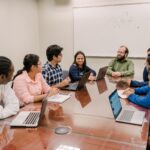
UMBC’s James Foulds was drawn to working in artificial intelligence (AI) and machine learning (ML) by “the possibility to make a direct impact on people’s lives and the health of our society” through advancing technology. He has now earned a National Science Foundation CAREER Award of nearly $550,000 over five years to support his research on improving the fairness and robustness of AI algorithms.
Foulds, assistant professor of information systems, joined UMBC in 2017. His lab focuses on human-centered approaches to AI fairness, working to address many practical limitations in the field.
Implementing an AI algorithm is often presented as a trade-off, Foulds explains. Do you want the program to be as productive as possible or as fair as possible? Foulds sees this as a false and harmful dichotomy.
Thanks to advances in AI, computers can accomplish tasks that would take a human a lifetime, but technologies built by people also perpetuate people’s biases, Foulds says. These biases can then have real impacts on people’s lives, often disproportionately harming already disadvantaged groups. For example, skewed AI and ML models have informed college admissions, credit card approvals, and recommendations for bail in court rooms.
The ethics of adopting such systems and ways to mitigate their potential harms have become focal points in Foulds’s work.
Fair AI implementation across applications
Foulds’s research demonstrates that developing an AI algorithm that prioritizes fairness can in fact yield more robust results. Models are often used to make generalizations about a population of interest, which can be helpful. But when a model is developed based on biased data, the prediction can suffer from “overfitting,” where the model describes a relationship between variables that doesn’t actually reflect reality.
In these cases, the model’s predictions can be misleading, rather than useful, and can cause real harm. A model that underscores fairness could provide more stable generalizations and help to avoid perpetuating or amplifying existing biases and false interpretations.
 James Foulds
Researchers currently quantify fairness in a variety of ways. Through his CAREER Award-supported research, Foulds wants to develop a unifying framework. From there, he will create a user interface to study how people come to a consensus on defining fairness in a given situation.
The project will target decisions or advice based on things like Medicaid waitlist data, career recommendations, and social media usage data. These all have intrinsic biases that can significantly impact trends and outcomes in society, or the way industry addresses specific problems.
For example, each U.S. state has a different way of determining who receives health coverage through Medicaid. Creating a better model to perform a needs-based ranking of the waitlist for Medicaid coverage could help officials make more informed, equitable decisions about who should receive coverage.
Bringing more people into the conversation
Foulds believes his research will mitigate barriers to responsible and effective deployment of AI technologies by showing that it is possible to develop a discipline-standard model for fairness. He hopes to make his lab a source of user-friendly AI tools for those who want to implement the model in their work.
As an educator, “I want to inspire the students I come into contact with to see how fascinating and exciting (and potentially lucrative) AI, ML, and data science are,” Foulds shares. “And I want to instill in them the importance of ethical thinking in the practice of data science.”
 James Foulds (third from right) meets with students in his lab in 2019.
Beyond his own courses, he hopes to partner with Baltimore Polytechnic Institute, a local STEM-focused high school, to provide students with exposure to a range of new career options that can have a major societal impact.
Public impact research
In addition to Foulds, UMBC is celebrating the recent CAREER Award of Ramana Vinjamuri, who joined the university’s computer science and electrical engineering faculty in 2020.
Vinjamuri’s project revolves around brain-computer interfaces and understanding the complex relation between the hand and the brain. His goal is to understand how the brain controls the hand and how the hand sends motor and sensory information back to the brain.
Ramana Vinjamuri. Courtesy of Vinjamuri.
Vinjamuri hopes to be able to demonstrate how a person might more quickly learn skilled movements (like playing the piano) or relearn lost movements after experiencing a stroke. Like Foulds, he feels energized to tackle big questions with the potential for significant public impact.
Banner image: James Foulds with his students in 2019. Photos by Marlayna Demond ’11 unless otherwise noted.
Story by Travis McKay ’19, chemical engineering, for UMBC News.
]]>
UMBC’s James Foulds was drawn to working in artificial intelligence (AI) and machine learning (ML) by “the possibility to make a direct impact on people’s lives and the health of our society”...
https://umbc.edu/stories/umbcs-james-foulds-receives-nsf-career-award-to-improve-the-fairness-robustness-of-ai/
https://beta.my.umbc.edu/api/v0/pixel/news/119671/guest@my.umbc.edu/b2fa7d7b9b30448e0dfa1ee7e577b840/api/pixel
coeit
is
majoraward
science-and-technology
UMBC News & Magazine
https://beta.my.umbc.edu/groups/umbc-news-magazine
https://assets1-beta.my.umbc.edu/system/shared/avatars/groups/000/001/943/24435aa6207c452e7bc15cc74b42c7bb/xsmall.png?1748556657
https://assets1-beta.my.umbc.edu/system/shared/avatars/groups/000/001/943/24435aa6207c452e7bc15cc74b42c7bb/original.png?1748556657
https://assets2-beta.my.umbc.edu/system/shared/avatars/groups/000/001/943/24435aa6207c452e7bc15cc74b42c7bb/xxlarge.png?1748556657
https://assets2-beta.my.umbc.edu/system/shared/avatars/groups/000/001/943/24435aa6207c452e7bc15cc74b42c7bb/xlarge.png?1748556657
https://assets3-beta.my.umbc.edu/system/shared/avatars/groups/000/001/943/24435aa6207c452e7bc15cc74b42c7bb/large.png?1748556657
https://assets1-beta.my.umbc.edu/system/shared/avatars/groups/000/001/943/24435aa6207c452e7bc15cc74b42c7bb/medium.png?1748556657
https://assets2-beta.my.umbc.edu/system/shared/avatars/groups/000/001/943/24435aa6207c452e7bc15cc74b42c7bb/small.png?1748556657
https://assets1-beta.my.umbc.edu/system/shared/avatars/groups/000/001/943/24435aa6207c452e7bc15cc74b42c7bb/xsmall.png?1748556657
https://assets2-beta.my.umbc.edu/system/shared/avatars/groups/000/001/943/24435aa6207c452e7bc15cc74b42c7bb/xxsmall.png?1748556657
UMBC News & Magazine
0
0
false
Mon, 22 Mar 2021 15:53:52 -0400
UMBC Mock Trial heads to national semifinal as undefeated regional champions
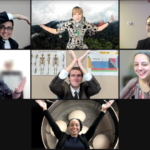
“This year’s team, they’re not afraid of anyone,” says Ben Garmoe ‘13 political science, adjunct professor and head coach of UMBC Mock Trial. “They will go into every round knowing they have a shot.”
UMBC Mock Trial will compete in the semifinals of the American Mock Trial Association’s (AMTA) annual national tournament, March 20 and 21. Garmoe’s confidence in the team is rooted in their strong performance this season, capping years of steady growth into a national powerhouse.
The team began 2002. Early members included students like Alicia Wilson ‘04 and Aaron Merki ’05, both political science, who went on to prestigious law programs and careers. After a 2009-2010 hiatus, the team came back with a vengeance in 2011. They’ve competed in the semifinals, known as the Opening Round Championship Series (ORCS), every year since 2013, and advanced to the National Championship Tournament (NCT) three out of the past four seasons.
UMBC Mock Trial is currently ranked 24th in the nation. The university’s A Team went 8-0 in regional competition leading up to the semifinals, beating schools like the University of Chicago and the University of California, Irvine.
Previous ORCS were geographically based, but this year’s online format allows UMBC to compete against a national field. Garmoe and the team appreciate the opportunity to go head to head against a wider range of top schools.
Preparing for online competition
To prepare for competition in the new online format, Garmoe took UMBC Mock Trial back to the basics. The differences in competing online and in person forced the team to rethink aspects of their performance. For example, Garmoe explained that making eye contact and holding a judge’s attention work differently in the Zoom environment.
“Over the course of this season, students have paid attention to those little details,” says Garmoe. And adjusting to the needs of a trial through Zoom has helped UMBC gain an advantage, explains Thomas Azari ‘22, political science.
Anzari is team vice president and recipient of several outstanding attorney honors. “We try to be as human as possible,” he says. “I think the thing that separates us from some other teams is we are both focused and relaxed. We make a joke out of technical issues like forgetting to unmute or mute. You just laugh it off and you move on.”
 Seven members of UMBC Mock Trial’s A Team (l to r, top to bottom): Thomas Azari, Maria Kutishcheva, Lauren Wotring, Zinedine Partipilo Cornielles, Thomas Kiley, Natalie Murray, Sydney Gaskins.
Bringing together top talent
Azari points to UMBC Mock Trial President Sydney Gaskins ‘21, political science, as another key asset to the team. Azari appreciates every opportunity to watch Gaskins compete since she is such a high caliber competitor.
 Sydney Gaskins competes for UMBC Mock Trial in 2019.
Among Gaskins’s dozens of honors is an All-American Attorney award from a prior AMTA National Championship Tournament. She also earned Best Cross Examination honors and was named a finalist in the 2020 Drexel/UCLA Trial by Combat competition. Anzari can’t wait to see what she achieves in her final season of collegiate competition.
UMBC Mock Trial’s four witnesses are also essential to the team’s success. “We have four of the most likable witnesses in the country,” says Azari.
Two of those witnesses are freshman Maria Kutishcheva, political science and Russian, and sophomore Zinedine Partipilo Cornielles, political science and financial economics. Partipilo Cornielles describes the UMBC Mock Trial team as a family. To him, the team’s sense of connection allows them to play on each others’ strengths and performances.
 Zinedine Partipilo Cornielles. Photo by Arionna Gonsalves ’19.
“We act as a unit, as a team,” says Partipilo Cornielles. “We’re all parts of this moving mechanism. The fact that we are a family really helps us and sets us apart from other teams. Some other teams might be too individualistic, but one thing we are really lucky to have is this sense of teamwork.”
Focus on the team
For each member of UMBC Mock Trial, the focus is always on the team. Even in the individual Trial By Combat 2020 competition, Gaskins shared, “The virtual tournament was not only a much needed opportunity to reconnect, but to also make my team proud.”
 Sydney Gaskins competes in Trial by Combat 2020.
Extending that idea, Kutishcheva points to inclusivity and supportiveness as strengths of UMBC Mock Trial. She explains that the team truly cares for one another, and members help each other out beyond team practice.
Kutishcheva also appreciates the diversity of the team. She has noticed that some universities’ teams don’t reflect the racial diversity and diversity of majors on their campuses. “But UMBC’s diversity is reflected here on our team, and that makes me especially happy,” says Kutishcheva.
 UMBC Mock Trial prior to competing in ORCS in 2019.
“I genuinely believe that this team is a uniquely UMBC story,” says Garmoe—a story of inclusive excellence. “I think, over the last five, six years, what we’ve grown into is a testament to what this school has built itself to be.”
Update 3/22/2021: UMBC Mock Trial has advanced to the AMTA National Championship Tournament, where they will compete April 16-18.
Featured image: UMBC Mock Trial’s 2017 trophies. Photo by Marlayna Demond ’11 for UMBC. All other photos courtesy of UMBC Mock Trial unless otherwise noted.
Article by Morgan Casey ’22, media and communication studies, for UMBC News.
]]>
“This year’s team, they’re not afraid of anyone,” says Ben Garmoe ‘13 political science, adjunct professor and head coach of UMBC Mock Trial. “They will go into every round knowing they have a...
https://umbc.edu/stories/umbc-mock-trial-heads-to-national-semifinal-as-undefeated-regional-champions/
https://beta.my.umbc.edu/api/v0/pixel/news/119672/guest@my.umbc.edu/f6ab8e5c45cc66ec0e11442ba870cbfb/api/pixel
cahss
community
economics
politicalscience
UMBC News & Magazine
https://beta.my.umbc.edu/groups/umbc-news-magazine
https://assets1-beta.my.umbc.edu/system/shared/avatars/groups/000/001/943/24435aa6207c452e7bc15cc74b42c7bb/xsmall.png?1748556657
https://assets1-beta.my.umbc.edu/system/shared/avatars/groups/000/001/943/24435aa6207c452e7bc15cc74b42c7bb/original.png?1748556657
https://assets2-beta.my.umbc.edu/system/shared/avatars/groups/000/001/943/24435aa6207c452e7bc15cc74b42c7bb/xxlarge.png?1748556657
https://assets2-beta.my.umbc.edu/system/shared/avatars/groups/000/001/943/24435aa6207c452e7bc15cc74b42c7bb/xlarge.png?1748556657
https://assets3-beta.my.umbc.edu/system/shared/avatars/groups/000/001/943/24435aa6207c452e7bc15cc74b42c7bb/large.png?1748556657
https://assets1-beta.my.umbc.edu/system/shared/avatars/groups/000/001/943/24435aa6207c452e7bc15cc74b42c7bb/medium.png?1748556657
https://assets2-beta.my.umbc.edu/system/shared/avatars/groups/000/001/943/24435aa6207c452e7bc15cc74b42c7bb/small.png?1748556657
https://assets1-beta.my.umbc.edu/system/shared/avatars/groups/000/001/943/24435aa6207c452e7bc15cc74b42c7bb/xsmall.png?1748556657
https://assets2-beta.my.umbc.edu/system/shared/avatars/groups/000/001/943/24435aa6207c452e7bc15cc74b42c7bb/xxsmall.png?1748556657
UMBC News & Magazine
0
0
false
Fri, 19 Mar 2021 22:22:38 -0400
UMBC rapidly expands live online peer tutoring to include computing fields

When Amanda Knapp heard last fall from Anupam Joshi, professor and chair of computer science and electrical engineering (CSEE), that his department wanted to offer online tutoring to students in their courses, she was ready to help make it happen. COVID or no COVID, she says, “It just made sense.”
Knapp is associate vice provost and assistant dean of Undergraduate Academic Affairs, and she manages UMBC’s Academic Success Center (ASC). “We already had an established system in place and could provide the administration, training, staffing, and assessment,” she explains. “CSEE provided the funding and identified potential tutors for a variety of computer science courses, and we did the rest.”
Just a few months after the partnership began, it expanded to include courses in the information systems (IS) department. And this semester, tutors are supporting ten IS computing courses.
 Amanda Knapp, Katharine Cole, and Delana Gregg in the Academic Success Center, 2019
In total, the ASC’s new Computing Success Center now offers tutoring for 21 courses from across the College of Engineering and Information Technology (COEIT). And the center continues to grow, supported by COEIT Dean Keith J Bowman and Dean Katharine Cole, Undergraduate Academic Affairs.
Peer tutors help students of any major, from computing fields to the arts and life sciences, learn coding and other computing skills.
“The ethos of UMBC is to share knowledge and collaborate with others instead of being proprietary,” says Helena Mentis, associate professor of information systems. Mentis is COEIT’s associate dean of academic programs and learning, and one of the College leads on the partnership.
“At the end of the day,” she says, “our goal at UMBC is to ensure that there are multiple pathways for students to get the assistance they need to succeed and remove any barriers for access to help.”
 Helena Mentis
How it works
Students can now visit the website for the new Computing Success Center to access trained and faculty-recommended peer tutors at their convenience. And the tutoring isn’t just a series of online videos—it’s live and interactive.
 Peer tutor Sumaiyah Mahmoodi ’21, health administration and policy, answers a student question online in front of a virtual background of the Academic Success Center. Photo courtesy of the ASC.
Britney Sarpong ‘21, computer science, taps into tutoring services twice a week for the CMSC 421: Operating Systems course she is taking. “I can easily log in and get help, and it’s usually the same tutor, so she and I have gotten to know each other really well,” she says.
For the operating systems course, Sarpong is learning C programming, which she likens to learning a foreign language. “I am not familiar at all with the language and terms with C programming,” says Sarpong, “so my tutor explains it in a way that I can understand while I’m working on projects.”
Moving services online
The tutoring offered by the Computing Success Center is just one of the many student support services offered by the ASC that has transitioned online during the COVID-19 pandemic. “This has been essential to enable us to continue serving UMBC students,” says Knapp.
 Amanda Knapp (standing) and Katharine Cole (second from right) speak with students in the Academic Success Center in 2019.
The Academic Success Center hires around 200 students to provide peer support each year. In addition to being paid and getting teaching experience, these student tutors also access professional development training.
Delana Gregg, director of academic learning resources, assessment, and analysis, says that the student tutors are integral to many of the services offered by the ASC.
“Faculty members recommend a student who excelled in a particular course. Then we train them on the technology and identifying strategies to help fellow students better understand the course content,” says Gregg.
The ASC provides tutoring in a range of formats, from appointment tutoring to drop-in tutoring, in the Computing Success Center, Writing Center, and the Math and Science Tutoring Center. In Fall 2020 alone, students attended over 3,000 tutoring appointments across all formats.
 Math and Science Tutoring Center session through UMBC’s Academic Success Center, 2019.
Gregg adds that peer-assisted study sessions (SI PASS) remain the most popular service utilized. “These are for courses that are historically difficult for students, often in the STEM areas,” she says. “SI Pass Leaders are students who have taken a particular course before. They attend the course again, take notes, and then hold weekly study sessions for current students.”
Emphasizing student success
The ASC also offers online learning resources for time management and study skills and academic alerts from faculty to students who are struggling in a course, to connect them with support. And the center is known for its academic advocates. They provide holistic support for students facing barriers to their academic success. These may include personal, academic, or financial issues.
“Sometimes students are unable to ask for help, are unaware that they are struggling academically, or are dealing with stress. Their stress may involve really complicated and challenging issues like the pandemic or racial inequality,” says Knapp. “We make sure they are cared for and heard.”
 Academic Advocates (l-r) Amanda Sharp, Cliff Saul, and Carlos Williams in 2019.
“UMBC students are very special, and here it’s cool to be smart,” says Gregg. “We have a large percentage of first-generation students who are very motivated to succeed, and the culture on campus emphasizes student success.”
Work like the partnership between COEIT and the Academic Success Center—where faculty and staff identify a problem and quickly partner with students to find a solution—is key to supporting student success.
Mentis shares, “The collaboration was so welcomed by faculty, department chairs of CSEE and IS, and Dean Bowman. In my time here, I believe it was the fastest initiative ever completed. Everyone said, ‘yes.’”
Banner image: Amanda Knapp speaks with a student in the ASC in 2019. Photos by Marlayna Demond ’11 for UMBC unless otherwise noted.
Article by Gregory J. Alexander for UMBC.
]]>
When Amanda Knapp heard last fall from Anupam Joshi, professor and chair of computer science and electrical engineering (CSEE), that his department wanted to offer online tutoring to students in...
https://umbc.edu/stories/umbc-rapidly-expands-live-online-peer-tutoring-to-include-computing-fields/
https://beta.my.umbc.edu/api/v0/pixel/news/119673/guest@my.umbc.edu/2e3375f69cd5913e61cbfd730159e442/api/pixel
coeit
csee
is
page1
science-and-technology
UMBC News & Magazine
https://beta.my.umbc.edu/groups/umbc-news-magazine
https://assets1-beta.my.umbc.edu/system/shared/avatars/groups/000/001/943/24435aa6207c452e7bc15cc74b42c7bb/xsmall.png?1748556657
https://assets1-beta.my.umbc.edu/system/shared/avatars/groups/000/001/943/24435aa6207c452e7bc15cc74b42c7bb/original.png?1748556657
https://assets2-beta.my.umbc.edu/system/shared/avatars/groups/000/001/943/24435aa6207c452e7bc15cc74b42c7bb/xxlarge.png?1748556657
https://assets2-beta.my.umbc.edu/system/shared/avatars/groups/000/001/943/24435aa6207c452e7bc15cc74b42c7bb/xlarge.png?1748556657
https://assets3-beta.my.umbc.edu/system/shared/avatars/groups/000/001/943/24435aa6207c452e7bc15cc74b42c7bb/large.png?1748556657
https://assets1-beta.my.umbc.edu/system/shared/avatars/groups/000/001/943/24435aa6207c452e7bc15cc74b42c7bb/medium.png?1748556657
https://assets2-beta.my.umbc.edu/system/shared/avatars/groups/000/001/943/24435aa6207c452e7bc15cc74b42c7bb/small.png?1748556657
https://assets1-beta.my.umbc.edu/system/shared/avatars/groups/000/001/943/24435aa6207c452e7bc15cc74b42c7bb/xsmall.png?1748556657
https://assets2-beta.my.umbc.edu/system/shared/avatars/groups/000/001/943/24435aa6207c452e7bc15cc74b42c7bb/xxsmall.png?1748556657
UMBC News & Magazine
0
0
false
Fri, 12 Mar 2021 23:28:02 -0500
UMBC Celebrates Women’s History Month

There are scores of UMBC alumnae who are changing the world through their contributions, leadership, and talent. Throughout Women’s History Month, we are highlighting just a few of our alumnae who we look up to as leaders in their fields. We know there are thousands in our UMBC community who deserve to be recognized, so we invite you to use #UMBCtogether on social media to share with us those who inspire you.
Sarah Butts ’07, social work
Director of Public Policy
National Association of Social Workers
As a licensed master social worker, Sarah Butts is taking her advocacy straight to the top of the policymaking world on Capitol Hill. Her next-level challenge? Making sure that professionals working to protect society’s most vulnerable populations are themselves adequately protected.
Mina Cheon, M.F.A.’02, imaging & digital arts
Professor
Maryland Institute College of Art
Dividing her time between Baltimore, New York, and Seoul, South Korea, Mina Cheon produces artwork – “Polipop” – that draws inspiration from global media and popular culture, intersecting politics and pop art in evocative ways, while maintaining her connections to UMBC and the MFA program.
Kizzmekia Corbett ’08, M16, biological sciences and sociology
Senior Research Fellow | Scientific Lead
Coronavirus Vaccines & Immunopathogenesis (coVip) Team
National Institutes of Allergy and Infectious Diseases
National Institutes of Health
As the lead researcher tasked with developing the Moderna vaccine, former Meyerhoff Scholar Kizzmekia Corbett’s work has been recognized by Time, CNN, Essence, and more. Corbett’s contributions to the scientific field, including her work with fellow Retrievers, have made an indelible mark upon the history of our world.
Gargi Dasgupta, M.S. ’01, Ph.D. ’03, computer science
Director, IBM Research India
CTO for IBM India/South Asia
Gargi Dasgupta appeared on Fortune India’s “Most Powerful Women in Business” list in 2019. In reference to the work that landed her on the list, her profile states that “one key accomplishment has been to establish IBM’s leadership in artificial intelligence (AI)-driven business process and IT automation.” Dasgupta remains active in her involvement with UMBC, recently joining the Computer Science and Electrical Engineering Advisory Board.
Stephanie Hill ’86, computer science and economics
Executive Vice President of Rotary and Mission Systems (RMS)
Lockheed Martin
When Stephanie Hillsigned up for her first computer programming class at UMBC, it was almost as an afterthought – an elective to fill out the semester. That class in the programming language COBOL led Hill to become (in her words) an “accidental engineer.” Technical.ly Baltimore just declared Hill one of “5 Black innovators in Maryland you should know.” In addition to her work at Lockheed Martin, Hill was also the first Black woman to chair the Greater Baltimore Committee board of directors.
Adrienne Jones ’76, psychology
Maryland House Speaker
Adrienne Jones made history in 2019 when she was sworn in as the first Black and the first female Maryland House Speaker. Jones’s exceptional leadership landed her on The Daily Record’s Power 100 List in 2021 for her contributions to the state of Maryland. According to Baltimore Magazine’s list of 30 women who are “shaping Baltimore’s future”, she’s part of a cohort of female leaders who are “moving Baltimore forward, shaping the future of the region in terms of its priorities, policies, and passions—and inspiring others with their compassion and empathy.”
Ruby Lu ’94, economics
Founder of Atypical Ventures
Ruby Lu is one of the earliest investors in her home country’s technology sector. Her investment in China’s e-commerce, software, and healthcare industries has helped to grow companies and create jobs. In 2019, Lu started her own firm, Atypical Ventures, and is one of a small group of women investors who have risen to the forefront of China’s venture capital world.
Patricia Ordóñez, M.S. ’10, Ph.D. ’12, computer science
Associate Professor
Department of Computer Science
University of Puerto Rico – Río Piedras
The first Latina to receive a Ph.D. in computer science at UMBC, Patricia Ordóñez’s path wasn’t always easy. She worked to overcome obstacles and has built a “university data science program and create[d] a computer science education program for K-12 public schools.” Ordóñez also founded the Symposium of Health Informatics for Latin America and the Caribbean.
Kaitlyn Sadtler ’11, biological sciences
Earl Stadtman Investigator
Chief of the Section for Immuno-Engineering
National Institute of Biomedical Imaging & Bioengineering
Without comprehensive nationwide testing, it’s been impossible to measure in real time the total number of Americans who have been exposed to SARS-CoV-2, the virus that causes COVID-19. However, there is another way to come up with a reliable estimate, and Kaitlyn Sadtler is leading the charge. Sadtler’s research found that nearly 5% of Americans surveyed contracted undiagnosed COVID-19 in the summer of 2020. Her career research has landed her on Forbes “30 Under 30” for science in 2019, and a spot as a TED Fellow.
Jennifer Walsmith ’90, computer science
Vice President, Cyber & Information Solutions (CIS)
Northrop Grumman
In 2020, Jennifer Walsmith was named one of WashingtonExec’s “Top 25 Cyber Execs to Watch.” In her role, she leads a team of over 2,000 from across the U.S. to provide critical support to the Defense Intelligence Systems Agency and protection against cyber attacks. In addition to this distinction, Walsmith was named WashingtonExec’s Intelligence Council Chair.
Alicia Wilson ’04, political science
Vice President for Economic Development
Johns Hopkins University
Alicia Wilson’s commitment to strengthening the community became even more prevalent during the COVID-19 pandemic. Through her work with Johns Hopkins and local organizations, Wilson established the East Baltimore Food Initiative to serve more than 1.5 million meals to working adults who weren’t eligible for programs that targeted children and older adults. Wilson’s dedication landed her on Baltimore Magazine’s list of 30 women who are shaping Baltimore’s future.
We know there are thousands in our UMBC community who deserve to be recognized, so we invite you to submit a Class Note about your news and use #UMBCtogether on social media to share with us those who inspire you.
]]>
There are scores of UMBC alumnae who are changing the world through their contributions, leadership, and talent. Throughout Women’s History Month, we are highlighting just a few of our alumnae who...
https://umbc.edu/stories/umbc-celebrates-womens-history-month/
https://beta.my.umbc.edu/api/v0/pixel/news/119674/guest@my.umbc.edu/453ec01421732626533f452f65897d77/api/pixel
alumni
UMBC News & Magazine
https://beta.my.umbc.edu/groups/umbc-news-magazine
https://assets1-beta.my.umbc.edu/system/shared/avatars/groups/000/001/943/24435aa6207c452e7bc15cc74b42c7bb/xsmall.png?1748556657
https://assets1-beta.my.umbc.edu/system/shared/avatars/groups/000/001/943/24435aa6207c452e7bc15cc74b42c7bb/original.png?1748556657
https://assets2-beta.my.umbc.edu/system/shared/avatars/groups/000/001/943/24435aa6207c452e7bc15cc74b42c7bb/xxlarge.png?1748556657
https://assets2-beta.my.umbc.edu/system/shared/avatars/groups/000/001/943/24435aa6207c452e7bc15cc74b42c7bb/xlarge.png?1748556657
https://assets3-beta.my.umbc.edu/system/shared/avatars/groups/000/001/943/24435aa6207c452e7bc15cc74b42c7bb/large.png?1748556657
https://assets1-beta.my.umbc.edu/system/shared/avatars/groups/000/001/943/24435aa6207c452e7bc15cc74b42c7bb/medium.png?1748556657
https://assets2-beta.my.umbc.edu/system/shared/avatars/groups/000/001/943/24435aa6207c452e7bc15cc74b42c7bb/small.png?1748556657
https://assets1-beta.my.umbc.edu/system/shared/avatars/groups/000/001/943/24435aa6207c452e7bc15cc74b42c7bb/xsmall.png?1748556657
https://assets2-beta.my.umbc.edu/system/shared/avatars/groups/000/001/943/24435aa6207c452e7bc15cc74b42c7bb/xxsmall.png?1748556657
UMBC News & Magazine
0
0
false
Thu, 11 Mar 2021 17:42:27 -0500
Leading By Giving—Alum Boosts Doctoral Students in Public Service
At 43-years-old Renny DiPentima had two decades of experience at the Social Security Administration (SSA) when he enrolled in UMBC’s new public policy doctoral program in the late 1970s. He had just earned a master’s degree in public policy from George Washington University, 16 years after graduating from NYU. DiPentima commuted to UMBC two nights a week for five years, and in 1984, DiPentima became the first graduate of UMBC’s public policy doctoral program.
“I have a great deal of gratitude for UMBC,” shares DiPentima. “I felt a real connection to the school before and after graduating.”
DiPentima rose to deputy commissioner of systems and chief information officer during his 32-year career at SSA before transitioning to the private sector where he currently dedicates his time. In 2019, he pledged $100,000 to create the Renny DiPentima Fund for Advancement in Public Policy.
In addition to making annual payments on his pledge, DiPentima is providing current use gifts so that students can benefit from the award now—including much needed assistance for projects that have required to adapt to COVID-19 restrictions. The Renny DiPentima Fund supports doctoral student success at UMBC through grants of up to $1,500 for educational and research expenses related to their dissertation.
Rudy de Leon Dinglas ’23, Stephanie Blaher ’22, Nate Pritchard ’21, and Jeevan Raj Lohani ’25 are the first recipients of the fund. As current Ph.D. students in the public policy program, these awardees—like DiPentima—are using their public policy careers to develop the framework necessary to inform transformative, inclusive, just, and sustainable policies that will engage communities and policy makers.
There is a story behind every number
“In my first job as an analyst for Domino Sugar,” remembers Rudy de Leon Dinglas, “I learned the power of data to understand a greater story.” These skills prepared him to manage and analyze data for Baltimore City. His work advised the implementation of the Baltimore City Bike Share; the Safe Route to Schools; and the Mobile Integrated Health—Community Paramedicine programs.
As an immigrant from the Philippines, de Leon Dinglas is proud to give back to the city where he grew up and is now excited to be part of the next generation of public policy leaders. UMBC’s new diverse faculty excites him. “It’s refreshing to have more representation and be able to finally experience diversity, in an academic setting, for myself,” he explains.
 Rudy de Leon Dinglas, center, at a February 2019 event with the late Congressman Cummings and the Baltimore City Fire Department and UMMS partnership on Community Paramedicine Program. Photo courtesy of de Leon Dinglas.
The DiPentima Scholarship helped with tuition costs allowing de Leon Dinglas to focus on his research and his work at the Johns Hopkins Center for Government Excellence where he supports mayors and local and state administrators utilize data. “Becoming a subject matter expert in public management will extend the reach and quality of my work,” he shares.
Why women leave STEM majors
 Headshot courtesy of Blaher.
Stephanie Blaherearned her bachelor’s and master’s degrees in history but she began her education as a STEM major. Now, as a third year doctoral student, Blaher is researching the factors that contribute to women leaving STEM fields.
“Sometimes women realize a career in STEM is not for them or it doesn’t meet their expectations,” Blaher says. Structural, organizational, and social hurdles can also influence their decision. Sexism and lack of mentoring matter, she notes.
Blaher was expecting to begin in-person interviews for her research in fall 2020. Due to COVID, her interviews became virtual and she had to submit an IRB amendment. “My timeline shifted, access to students changed, and my questions altered,” explains Blaher.
The DiPentima Scholarship helped to fund additional participants. “Broadening my participant pool will increase the depth and quality of my research and improve the outcomes,” explains Blaher, who is a collegiate associate professor at the University of Maryland Global Campus. After graduation, she wants to continue teaching first-year courses to ensure all students succeed in a major of their choice.
Understanding affordable housing today
When Nate Pritchard visited UMBC for a doctoral program interview in urban policy, he felt welcomed as an older and non-traditional disabled student. “It’s that intangible feeling that makes you feel at home,” shares Pritchard. That feeling continues.
 Headshot courtesy of Pritchard.
One notable class discussion would become the driving force behind Pritchard’s research. Pritchard was struck that affordable housing “is not just a function of money but more building materials, labor, and building units available.” He decided to research the long term self-sufficiency of rental assistance recipients. However, the present data was 12 to 15 years old. Pritchard needed to evaluate current data to identify the barriers limiting the program from helping more people faster.
The U.S. Department of Housing and Urban Development (HUD) granted Pritchard access to highly restricted data on the condition that he have a secure location to view it from. His dissertation chair, Pamela Bennett, associate professor of public policy, helped him find a private room on campus. “I felt honored for the opportunity and to have Dr. Bennett’s support,” shares Pritchard.
Unfortunately, COVID restrictions denied him access to campus. With Bennett’s guidance, Pritchard used publicly available HUD data. The new data lacked specificity so he had to focus on general questions.These unforeseeable changes extended his research and graduation date for another year, so the additional funding was invaluable, he says.
“Dr. DiPentima’s generous assistance helped me in my present circumstances, more than he can ever know,” shares Pritchard. He plans to teach in academia and return to his original research when restrictions are lifted.
A purpose-driven life
Jeevan Raj Lohani had spent a decade as a freelance global development consultant in East Africa and South Asia before joining UMBC’s public policy doctoral program. UMBC presented Lohani with the opportunity to combine program evaluation with his background in economics.
“Coming to UMBC was a calculative decision for my career,” says Lohani. He hopes his research will contribute to improving economic policies that address human needs, like labor migration, worldwide. Nepal is one of the poorest developing countries in the world, Lohani, who is Nepali, explains. Jobs are scarce, forcing Nepali workers to migrate to neighboring countries for work. “I want to investigate if migrant laborers, upon their return to Nepal, contribute to the economy by engaging in entrepreneurship,” says Lohani.
But for Lohani, informing policy makers with the resources to implement long term economic policy is one part of a greater whole. His end goal isn’t the expertise per se, but to use what he learns as one part of a much larger life mission to impact people with needs all over the world.
The DiPentima Scholarship provided the financial support Lohani needed between the end of his assistantship and the beginning of a job with the Maryland Department of Health.
The privilege of giving
DiPentima remembers that after graduating from NYU, he planned to gain some experience before moving on to the private sector. What he found in the public sector was a rewarding career with great responsibility to develop policy that would improve the lives of Americans on a daily basis. DiPentima saw the need to help broaden the research and the researchers in the field to meet the rapidly evolving needs of the United States and the world at large.
 DiPentima and his wife Pat DiPentima with JD Kathuria, founder and CEO of WashingtonExec.com. Photo courtesy of DiPentima.
However, he knew that there were barriers to graduation. Sacrifices had to be made in time away from family; balancing a job and research; as well as the financial investments that have to be made to earn a Ph.D.
As the first alum of UMBC’s public policy doctoral program, DiPentima feels privileged to give a boost to students so they can complete their research and graduate. He encourages his fellow alums to do the same through scholarship and mentorship.
“Public service is a way to contribute to your country,” shares DiPentima. “It’s about being part of something bigger than yourself.”
*****
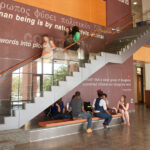
Header imager: Students walk down the staircase inside the Public Policy building in 2017. Photo by Marlayna Demond ’11.
]]>
At 43-years-old Renny DiPentima had two decades of experience at the Social Security Administration (SSA) when he enrolled in UMBC’s new public policy doctoral program in the late 1970s. He had...
https://umbc.edu/stories/leading-by-giving-alum-boosts-doctoral-students-in-public-service/
https://beta.my.umbc.edu/api/v0/pixel/news/119675/guest@my.umbc.edu/9f4be455c3b92459d5184df271fd1b0a/api/pixel
giving
impact
public-policy
scholarships
UMBC News & Magazine
https://beta.my.umbc.edu/groups/umbc-news-magazine
https://assets1-beta.my.umbc.edu/system/shared/avatars/groups/000/001/943/24435aa6207c452e7bc15cc74b42c7bb/xsmall.png?1748556657
https://assets1-beta.my.umbc.edu/system/shared/avatars/groups/000/001/943/24435aa6207c452e7bc15cc74b42c7bb/original.png?1748556657
https://assets2-beta.my.umbc.edu/system/shared/avatars/groups/000/001/943/24435aa6207c452e7bc15cc74b42c7bb/xxlarge.png?1748556657
https://assets2-beta.my.umbc.edu/system/shared/avatars/groups/000/001/943/24435aa6207c452e7bc15cc74b42c7bb/xlarge.png?1748556657
https://assets3-beta.my.umbc.edu/system/shared/avatars/groups/000/001/943/24435aa6207c452e7bc15cc74b42c7bb/large.png?1748556657
https://assets1-beta.my.umbc.edu/system/shared/avatars/groups/000/001/943/24435aa6207c452e7bc15cc74b42c7bb/medium.png?1748556657
https://assets2-beta.my.umbc.edu/system/shared/avatars/groups/000/001/943/24435aa6207c452e7bc15cc74b42c7bb/small.png?1748556657
https://assets1-beta.my.umbc.edu/system/shared/avatars/groups/000/001/943/24435aa6207c452e7bc15cc74b42c7bb/xsmall.png?1748556657
https://assets2-beta.my.umbc.edu/system/shared/avatars/groups/000/001/943/24435aa6207c452e7bc15cc74b42c7bb/xxsmall.png?1748556657
UMBC News & Magazine
0
0
false
Wed, 10 Mar 2021 21:09:59 -0500
New UMBC-UMB collaborations include research to reduce stress among long-term care workers
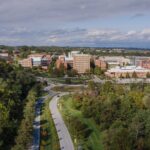
A strategic research alliance between UMBC and the University of Maryland, Baltimore (UMB) has selected four new interdisciplinary projects, each a fresh take on a complex challenge.
The Accelerated Translational Incubator Pilot (ATIP) Program funding this work brings together UMBC’s strengths in areas like cybersecurity, data science, artificial intelligence, statistics, and the social sciences with UMB expertise in medicine, pharmacy, nursing, and dentistry. The two universities have worked together on various shared graduate and research programs over the last decade. This partnership with UMB’s Institute for Clinical and Translational Research (ICTR) was launched in August 2019, and faculty have been quick to jump on the opportunity to pursue novel collaborative research.
“The UMB-ICTR is thrilled to partner with UMBC,” says ICTR Director Stephen N. Davis, chair of medicine at UMB and physician-in-chief at the University of Maryland Medical Center. “The ATIP grant program supports top quality clinical and community-based collaborative projects. The grant applications from UMBC are particularly innovative and exciting, scoring very highly in the review process.”
“All of the ATIP proposals are subject to a very rigorous internal peer review process,” says Karl V. Steiner, vice president for research at UMBC. “Their success is a strong indicator of the quality of the intellectual contributions of our faculty at UMBC.”
Meaningful research relationships
“A key goal for this strategic alliance is to develop meaningful partnerships among researchers at both institutions and to establish teams with complementary expertise,” Steiner explains.
Since early 2020, UMBC faculty have secured a total of 12 ATIP awards. This most recent round of UMBC grant recipients includes Lujie Karen Chen, information systems; Lira Yoon, psychology; Chein-I Chang, computer science and electrical engineering (CSEE); Yi Huang, mathematics and statistics; and Tinoosh Mohsenin, CSEE. UMB collaborators include Kelly Doran, School of Nursing; Mathangi Gopalakrishnan, School of Pharmacy; and Michael Domanski and Mohammad Sajadi, both of the School of Medicine.
The four new awards granted in this round focus on a broad range of topics: using machine learning algorithms for transfusion risk assessment, evaluating the effects of serum lipid levels on the progression of renal dysfunction, using a multimodal sensory machine learning framework to diagnose COVID-19, and examining how to predict and manage stress in healthcare workers who work in long-term care facilities.
These types of sustained partnerships help researchers gain insight into new fields and work with experts with whom they might not have otherwise collaborated, to generate novel findings.
Measuring stress to manage stress

UMBC’s Lujie Karen Chen
So, what does interdisciplinary research actually look like?
For the long-term care workers pilot project, Chen, Yoon, and Doran combine data science, clinical psychology, and nursing. From May 2021 through April 2022, they will examine workers’ experiences of job stress in long-term care facilities using both physiological and qualitative measures.
The challenges posed by COVID-19 have sharpened the team’s interest in supporting longer-term care workers through research.

UMBC’s Lira Yoon
“Their work has always been important, but especially given the pandemic, the importance of their work has really been highlighted,” says Yoon. “It’s a demanding job with high stress, and that’s reflected by high job turnover, which is not good for the clients at long-term care facilities.”
The goal of the project is to better identify stress triggers within moments of them happening. This could enable workers to address their stress before it gets to a higher level where it can negatively impact their health and work.
Stress monitoring in action
To identify stress on a more moment-to-moment basis, the team plans to use a combination of surveys and sensors to track exact times when workers become stressed in their workday.
Workers will wear the sensors throughout their shifts to measure heart rate and electrodermal activity, and will fill out surveys five to seven times per day. They will also complete end-of-day interviews to identify additional stressors and other critical information not captured by the surveys.
Information from the surveys and interviews will help the researchers to decipher data obtained from the sensors to understand stress triggers.
“Eventually, we want to be able to just use sensor data to be able to tell whether long-term care workers are about to experience stress or not,” Yoon says. With this knowledge, researchers can then design interventions to improve the work environment, Chen explains, to reduce stress triggers and stress experiences.
Once the pilot project is complete, the team hopes to undertake a larger scale study to collect data from multiple long-term healthcare sites.

UMB’s Kelly Doran
This work wouldn’t be possible without all three researchers bringing together their diverse expertise and perspectives. As Doran says, “The collaboration provides a support system for us to build relationships and kind of cross-train each other and build off each other’s ideas.”
“One of the reasons I love doing collaborative research,” she shares, “is because you’re expanding your networks and research to make meaningful differences.”
Article written by Allison Matyus for UMBC News.
]]>
A strategic research alliance between UMBC and the University of Maryland, Baltimore (UMB) has selected four new interdisciplinary projects, each a fresh take on a complex challenge. The...
https://umbc.edu/stories/new-umbc-umb-collaborations-include-research-to-reduce-stress-among-long-term-care-workers/
https://beta.my.umbc.edu/api/v0/pixel/news/119676/guest@my.umbc.edu/2fae8a3664a6e4bc1fe0fe72d19bb147/api/pixel
cahss
cnms
coeit
csee
is
mathstat
psychology
research
science-and-technology
UMBC News & Magazine
https://beta.my.umbc.edu/groups/umbc-news-magazine
https://assets1-beta.my.umbc.edu/system/shared/avatars/groups/000/001/943/24435aa6207c452e7bc15cc74b42c7bb/xsmall.png?1748556657
https://assets1-beta.my.umbc.edu/system/shared/avatars/groups/000/001/943/24435aa6207c452e7bc15cc74b42c7bb/original.png?1748556657
https://assets2-beta.my.umbc.edu/system/shared/avatars/groups/000/001/943/24435aa6207c452e7bc15cc74b42c7bb/xxlarge.png?1748556657
https://assets2-beta.my.umbc.edu/system/shared/avatars/groups/000/001/943/24435aa6207c452e7bc15cc74b42c7bb/xlarge.png?1748556657
https://assets3-beta.my.umbc.edu/system/shared/avatars/groups/000/001/943/24435aa6207c452e7bc15cc74b42c7bb/large.png?1748556657
https://assets1-beta.my.umbc.edu/system/shared/avatars/groups/000/001/943/24435aa6207c452e7bc15cc74b42c7bb/medium.png?1748556657
https://assets2-beta.my.umbc.edu/system/shared/avatars/groups/000/001/943/24435aa6207c452e7bc15cc74b42c7bb/small.png?1748556657
https://assets1-beta.my.umbc.edu/system/shared/avatars/groups/000/001/943/24435aa6207c452e7bc15cc74b42c7bb/xsmall.png?1748556657
https://assets2-beta.my.umbc.edu/system/shared/avatars/groups/000/001/943/24435aa6207c452e7bc15cc74b42c7bb/xxsmall.png?1748556657
UMBC News & Magazine
0
0
false
Tue, 09 Mar 2021 22:15:02 -0500
 Ramana Vinjamuri. Courtesy of Vinjamuri.
 Yelena Yesha, right, with faculty and students who conduct research through CARTA, 2018.
 Dean Drake. Photo by Tim Ford for UMBC.
 Karuna Joshi (left) and Yelena Yesha (right), 2018
 Pi Squared immersive visualization wall, 2016


