UMBC students set new record in prestigious Goldwater Scholarships for STEM research
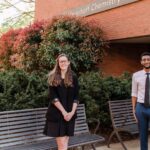
Four UMBC students have been named 2021-2022 Goldwater Scholars, setting a new university record for the most Retrievers to earn this prestigious undergraduate award in a single year. They are Joshua Slaughter ‘22, computer engineering; Kaitlynn Lilly ‘22, physics and mathematics; Gerson Kroiz ‘22, mathematics; and Karan Luthria ‘22, bioinformatics. Their awards make UMBC one of the highest-producing universities for Goldwater Scholars in the nation, directly alongside Harvard, MIT, and Johns Hopkins.
The goal of the Barry Goldwater Scholarship and Excellence in Education Program is to provide the United States with “a continuing source of highly qualified scientists, mathematicians, and engineers” to move the nation forward. UMBC’s prior Goldwater Scholars, including Rhodes Scholar Naomi Mburu ‘18, chemical engineering, have gone on to top graduate programs and promising research careers.
That four UMBC students won awards, from over 1,250 STEM student applicants across the country is remarkable, notes April Householder ’95, director of undergraduate research and prestigious scholarships at UMBC. “Winning the Goldwater means that Slaughter, Lilly, Kroiz, and Luthria join a legacy of scholars who have gone on to become this country’s leading scientists, engineers, and mathematicians,” she says.
“The impact that these students will have in their respective fields is immense,” Householder shares, “and they are ready for the challenge. All four of them had their research internships moved online because of COVID, and they have proved that they are resilient.”
 Joshua Slaughter, left, Kaitlynn Lilly, center, and Karan Luthria on campus.
Slaughter, Lilly, Kroiz, and Luthria are among the 410 winners selected this year from a highly competitive national pool of applicants. They will receive substantial scholarship funding that advances their undergraduate work and supports their educational paths.
The students met each other early in their UMBC careers and are close friends, all involved in the Meyerhoff community—Slaughter, Lilly, and Luthria as scholars, and Kroiz as an affiliate.
The impact of algorithms
Joshua Slaughter actually began doing research at UMBC when he was in high school, starting in environmental science. As he explored his interests, he discovered his fascination with using machine learning to evaluate the replicability and reproducibility of algorithms.
 Joshua Slaughter
Currently, Slaughter works with Distinguished University Professor Tulay Adali, computer science and electrical engineering (CSEE). Their machine learning research has applications in fields like neuroimaging, which uses data-driven algorithms to identify features of neurological disease. Slaughter says that it’s essential to diversify the field of machine learning and that people of all backgrounds need to be involved in the development of algorithms.
“Machine learning algorithms will be crucial in future decision-making. If they are developed without intersectionality being considered, we will have nightmarish outcomes for certain underrepresented populations,” he explains. “That’s a huge reason why I’m pursuing machine learning.”
When Slaughter applied to UMBC, he already had his sights set on the Goldwater. He was researching in the lab when he learned he won the scholarship—working alone due to COVID-19 restrictions. “I screamed,” he said, overjoyed by the news.
In addition to being a Meyerhoff Scholar, Slaughter is in the UMBC Honors College, and a member of the URISE program, which supports undergraduate juniors and seniors who are majoring in the science, engineering and mathematics. He is a member of the National Society of Black Engineers and Tau Beta Pi, the engineering honors society. He has completed research internships at Princeton University and Carnegie Mellon University, has presented his research at conferences, and has published two scientific papers.
Slaughter looks forward to pursuing a Ph.D. after his senior year, and says that receiving the Goldwater Scholarship proves to him that he can succeed in a research career. He’s thankful to UMBC for guiding him, from providing an Undergraduate Research Award to connecting him with internship opportunities.
“UMBC does a great job of putting students first,” says Slaughter. He’s already paying that forward by mentoring high school students in Baltimore and as a CSEE teaching fellow.
STEM role models matter
Kaitlynn Lilly actually applied to the Goldwater program as a sophomore but didn’t receive the award—an experience shared by Slaughter. She says the feedback she received from UMBC faculty and staff throughout the process was instrumental in her resilience and continued growth as a researcher, and earning the scholarship this year was all the more gratifying.
 Kaitlynn Lilly
Lilly’s research focuses on using partial differential equations to understand how large structures, such as bridges, interact with air flow and are impacted by aerodynamics. Lilly currently conducts research with Justin Webster, assistant professor of mathematics. Webster himself received a Goldwater Scholarship in 2007 and knows the impact of receiving the award.
Webster and Lilly are also collaborating with researchers at Carnegie Mellon University. Lilly also has experience working with Carnegie Mellon researchers through an enriching virtual internship last summer, secured after her internship at MIT’s Lincoln Lab was cancelled due to COVID-19.
In addition to conducting research at Carnegie Mellon and UMBC, she has completed internships at the Johns Hopkins Applied Physics Lab and University of Hawaii. This summer, Lilly plans to conduct research at the University of Leiden in the Netherlands.
Beyond the lab, Lilly is committed to volunteering at the local Arbutus Middle School, supporting students one-on-one who need extra help in STEM classes. “I’m a first-generation college student, and having someone that has gone through it tell you that you can do it really matters,” she says. “Being that inspiration for someone else has been very rewarding.”
Lilly, who is also a member of the Honors College, explains that receiving the Goldwater Scholarship confirms to her that “what I’m doing matters.” She plans to pursue her Ph.D. in applied mathematics when she graduates from UMBC next year.
Safer cancer treatment through math
Gerson Kroiz began his UMBC undergraduate experience at 16 years old, passionate to pursue research with public impact. He had his eye on the Goldwater Scholarship early, knowing the doors it could open. Receiving the Goldwater “really validates where I am at, and the hard work that I’ve put into my academic path,” as well as the value of UMBC support for undergraduate researchers, he says.

Gerson Kroiz. Photo courtesy of Kroiz.
Kroiz has refined his research interests through experiences at institutions across the country. This past summer, he completed a virtual internship at UCLA, adding to his resume of internships at the National Institute of Standards and Technology and UMBC.
Today, Kroiz’s research focuses on using machine learning techniques to improve real-time imaging for safer cancer treatments. The technology he studies will help physicians treat people with cancer by “reducing possible side-effects from common cancer treatment methods,” Kroiz explains.
In addition to being an affiliate of the Meyerhoff Scholars program, Kroiz is a member of the Honors College and won an Undergraduate Research Award. He volunteers with UMBC’s Creative Coders program at Arbutus Middle School. There, he helps middle school students learn about computer science through hands-on applications such as game design.
He is also a teaching assistant in mathematics, working with Matthias Gobbert, professor of mathematics and statistics. And Kroiz is vice president of the Korean Student Association, ready to serve as president in the 2021-2022 academic year.
Kroiz plans to pursue his Ph.D. in applied mathematics with a focus in high-performance computing and big data after graduating next year.
Public impact research
As an undergraduate who aspires to become a physician-scientist, Karan Luthria is inspired by the profound impact that lab research can have on patients’ treatment and health outcomes. His research focuses on studying similarities between diseases hoping to identify new avenues for drug repurposing.
 Karan Luthria
Luthria explains that he is looking at “how previously developed drugs can be used to treat different conditions.” Although he has been working on this research since freshman year, and has presented his findings at conferences around the country, he says COVID-19 has brought much attention to the value of drug repurposing.
On the day that the Goldwater Scholarship recipients were announced, Luthria refreshed the award page, awaiting the results. When he finally saw his name appear, “I was humbled,” he says. “Just seeing how I have the potential to make a difference in science and to have my research recognized by the Goldwater Committee is exciting.”
Luthria has held several internships, including at Harvard Medical School, the National Institutes of Health (NIH), and the Johns Hopkins Applied Physics Lab. Maricel Kann, associate professor of biological sciences, is his research mentor at UMBC. He says that Kann and his mentors at Harvard and at the NIH played a particularly important role in supporting him to achieve his career goals and throughout the Goldwater application process.
Outside of the lab, Luthria is a teaching assistant in math and biology, and a tutor in the Chemistry Tutorial Center. He is also the logistics director for HackUMBC, a student organization that plans 24-hour-long hackathons for students to develop technological solutions to problems that matter to them. As a member of HackUMBC, Luthria connects with corporations and campus partners to secure funding that supports the annual event, sharing his passion for collaborative public impact research.
Banner image: Karan Luthria, left; Kaitlynn Lilly, center; and Joshua Slaughter. All photos by Marlayna Demond ’11 for UMBC unless otherwise noted.
]]>
Four UMBC students have been named 2021-2022 Goldwater Scholars, setting a new university record for the most Retrievers to earn this prestigious undergraduate award in a single year. They are...
https://umbc.edu/stories/umbc-students-set-new-record-in-prestigious-goldwater-scholarships-for-stem-research/
https://beta.my.umbc.edu/api/v0/pixel/news/119655/guest@my.umbc.edu/24fe6228731f8b927730cb5c5e7871e6/api/pixel
chembiochem
cnms-csee
coeit
honorscollege
majoraward
mathstat
meyerhoffscholars
page1
physics
science-and-technology
undergradresearch
UMBC News & Magazine
https://beta.my.umbc.edu/groups/umbc-news-magazine
https://assets1-beta.my.umbc.edu/system/shared/avatars/groups/000/001/943/24435aa6207c452e7bc15cc74b42c7bb/xsmall.png?1748556657
https://assets1-beta.my.umbc.edu/system/shared/avatars/groups/000/001/943/24435aa6207c452e7bc15cc74b42c7bb/original.png?1748556657
https://assets2-beta.my.umbc.edu/system/shared/avatars/groups/000/001/943/24435aa6207c452e7bc15cc74b42c7bb/xxlarge.png?1748556657
https://assets2-beta.my.umbc.edu/system/shared/avatars/groups/000/001/943/24435aa6207c452e7bc15cc74b42c7bb/xlarge.png?1748556657
https://assets3-beta.my.umbc.edu/system/shared/avatars/groups/000/001/943/24435aa6207c452e7bc15cc74b42c7bb/large.png?1748556657
https://assets1-beta.my.umbc.edu/system/shared/avatars/groups/000/001/943/24435aa6207c452e7bc15cc74b42c7bb/medium.png?1748556657
https://assets2-beta.my.umbc.edu/system/shared/avatars/groups/000/001/943/24435aa6207c452e7bc15cc74b42c7bb/small.png?1748556657
https://assets1-beta.my.umbc.edu/system/shared/avatars/groups/000/001/943/24435aa6207c452e7bc15cc74b42c7bb/xsmall.png?1748556657
https://assets2-beta.my.umbc.edu/system/shared/avatars/groups/000/001/943/24435aa6207c452e7bc15cc74b42c7bb/xxsmall.png?1748556657
UMBC News & Magazine
0
0
false
Thu, 15 Apr 2021 16:48:32 -0400
Q&A: View from the End of the Road

When the pandemic first hit, many of us found ourselves looking closely at what surrounded us and what confined us. For Brea Souders ’01, visual arts, however, the circumstances drove her to look outward through the screen of her upstate New York window, and to wonder deeply about the lives happening beyond her driveway. End of the Road, the latest in the Albin O. Kuhn Library Gallery’s spring online exhibits, pairs Souders’ images with the poetry of UMBC writer-in-residence Lia Purpura, to create tender appreciations of the details that connect us all, even when we’re apart.
We sat down with Souders and Purpura to learn more about the making of End of the Road, on display now through the end of April.
* * * * *
UMBC Magazine: So, Brea, how did the idea for this series come about for you?
Brea Souders: In late March 2020, I moved from New York City to rural upstate New York. This was the beginning of the pandemic when contact with the outside world was abruptly cut off for many people and would be for the foreseeable future. The house is situated just before the gravel cul-de-sac of a country road and I began to observe people through my window as they wandered back and forth to the end of the road.
So it started in a space of stillness and solitude, which led to focused daily observation. I began to wonder about the people I saw; what brought them to the end of the road and what their stories were. As a photographer it’s second nature to pick up a camera and photograph something that has captured and sustained my attention, especially if it mystifies me in some way, if there is something hidden or unknowleable in what I see. Even if it’s an illusion, the camera draws a line connecting you and your subject and shortens the distance between you.
 Brea Souders, End of the Road 7, 2020. Courtesy of the artist.
UMBC Magazine: What was your mindset at that time, making them, versus where you are now?
Souders: There is solid evidence now that the world will begin to open back up and there are already some signs of that happening, but we’re still very much in this emotional and physical space of isolation and stillness. I’ve been making these pictures for a year now, and the trees are beginning to bud again just the way they did when this all started. It’s reassuring to witness some things just carrying on as they do.
UMBC Magazine: And Lia, you were brought into this exhibit by curator Beth Saunders. What did you feel when you saw Brea’s images for the first time? What was your first impression?
Lia Purpura: When I saw Brea’s photos, immediately they seemed like micro-dramas, these brief moments that enacted a form of inward reflection that’s also a part of the way many people are experiencing COVID times. Artists are able to find the under-seen, under-noticed ways of being and Brea’s work does that.
I love is the way Brea sees, and the different postures of these photos. And by “postures” I mean the place from which the eye is seeing. Postures of discovery. The intimacy, the solitude of the space, the stillness the viewer inhabits. That quiet felt inhabited by a presence, a curious eye.
UMBC Magazine: What was it like to collaborate in this way, pairing Brea’s new images with Lia’s poems from her 2015 book,It Shouldn’t Have Been Beautiful?
Souders: I love the way Lia thinks. She categorized the initial list of poems for our collaboration according to the photographer’s point of view, the subject’s point of view, the seasons, the feeling of walking, and sense of place. That approach deepened the connection between the poems and pictures and informed the selection and sequencing of both.
It was Beth’s idea to organize the images loosely by seasons. As you scroll through, you have a general sense of the seasons, although the window screen and distance impart a greyness to the images and you have the feeling of where am I? What day is it? Which of course is the way many people would describe this past year. The human condition and the seasons are so finely articulated in Lia’s poems. I love her exquisite attention to detail and the quiet observation felt in her work. In some of her poems, it feels as if she is looking through a small window just the way that I am.
Hope
To feel the slightest
breeze come on
but not expect it
to last, though
it is a lifting,
relief
that’s been scarce —
you can’t help
noting
the drop in degrees,
but it might not
be a real change
in weather,
you might overheat it,
or scare it
by speaking its name, so
hold back, learn to say
not just yet,
I won’t rush it
and no, I’m not dying
for a very small sip of
whatever that was
in the trees.
— Lia Purpura
UMBC Magazine: There’s a lot of trust involved in the process, I’m sure.
Purpura: Yes, absolutely! We didn’t know each other at all. I mean, I think Brea had read some of my work, but at the outset is the decision to trust in many things. A person’s aesthetic, their sense of good will, their collaborative ego—with this relationship in place, you can launch all kinds of thoughts and know the other will receive it in open ways.
Souders: Definitely. I felt it immediately, too. Kindred art souls.
UMBC Magazine: Brea, I understand you have a book coming out in June from Saint Lucy Books, and there are even more UMBC connections there (designer Guenet Abraham and publisher/editor Mark Alice Durant, both visual arts professors). What does it mean to see your work embraced so strongly within the UMBC community?
Souders: I’m floored by all the support. It’s a wonderful thing to be able to collaborate with a network of kind people doing exciting, interesting work in their fields. I’m truly honored to be a part of that.
* * * * *
The Albin O. Kuhn Library Gallery will host a Virtual Artist’s Talk: Brea Souders and Lia Purpura in Conversation on April 22 at noon. Visit the Albin O. Kuhn Library Gallery’s website to register for the free talk, and to see End of the Road in its entirety.
Learn more about Brea Souders: eleven years at Saint Lucy Books.
Header image: Brea Souders, End of the Road 5, 2020. Courtesy of the artist.
]]>
When the pandemic first hit, many of us found ourselves looking closely at what surrounded us and what confined us. For Brea Souders ’01, visual arts, however, the circumstances drove her to look...
https://umbc.edu/stories/qa-view-from-the-end-of-the-road/
https://beta.my.umbc.edu/api/v0/pixel/news/119656/guest@my.umbc.edu/8431c3f0305764eb233af6ae20445e46/api/pixel
alumni
aok-library-gallery
discovery
english
spring-2021
visual-arts
UMBC News & Magazine
https://beta.my.umbc.edu/groups/umbc-news-magazine
https://assets1-beta.my.umbc.edu/system/shared/avatars/groups/000/001/943/24435aa6207c452e7bc15cc74b42c7bb/xsmall.png?1748556657
https://assets1-beta.my.umbc.edu/system/shared/avatars/groups/000/001/943/24435aa6207c452e7bc15cc74b42c7bb/original.png?1748556657
https://assets2-beta.my.umbc.edu/system/shared/avatars/groups/000/001/943/24435aa6207c452e7bc15cc74b42c7bb/xxlarge.png?1748556657
https://assets2-beta.my.umbc.edu/system/shared/avatars/groups/000/001/943/24435aa6207c452e7bc15cc74b42c7bb/xlarge.png?1748556657
https://assets3-beta.my.umbc.edu/system/shared/avatars/groups/000/001/943/24435aa6207c452e7bc15cc74b42c7bb/large.png?1748556657
https://assets1-beta.my.umbc.edu/system/shared/avatars/groups/000/001/943/24435aa6207c452e7bc15cc74b42c7bb/medium.png?1748556657
https://assets2-beta.my.umbc.edu/system/shared/avatars/groups/000/001/943/24435aa6207c452e7bc15cc74b42c7bb/small.png?1748556657
https://assets1-beta.my.umbc.edu/system/shared/avatars/groups/000/001/943/24435aa6207c452e7bc15cc74b42c7bb/xsmall.png?1748556657
https://assets2-beta.my.umbc.edu/system/shared/avatars/groups/000/001/943/24435aa6207c452e7bc15cc74b42c7bb/xxsmall.png?1748556657
UMBC News & Magazine
0
0
false
Thu, 15 Apr 2021 12:17:57 -0400
UMBC’s Ryan Kramer confirms human-caused climate change with direct evidence for first time

A new analysis based on 16 years of observational data confirms that humans are heating the planet—a fact that had previously been inferred from climate models but not yet shown through direct evidence. Ryan Kramer, assistant research scientist at UMBC’s Joint Center for Earth Systems Technology, led the research, which was published in Geophysical Research Letters.
Kramer and colleagues analyzed atmospheric data collected continuously by NASA’s CERES mission from 2003 to 2018. They were able to show that a portion of the energy being trapped inside Earth’s atmosphere and causing warming is directly attributable to human activities.
The new analysis, and the novel technique Kramer employed to complete it, will create opportunities to compare and improve climate models and to track climate change mitigation efforts in nearly real time.
This animation visualizes Earth’s energy balance. Incoming radiation (energy) is presented in yellow, and outgoing radiation is in red. The human-contributed parts of the cycle, which Ryan Kramer’s study isolated from the rest, are featured from 15 seconds to the end. Animation by Adriana Manrique Gutierrez at the NASA Conceptual Image Lab, and a more thorough explanation of the animation is here.
Many factors, one main culprit: Humans
CERES tracks changes in radiation (energy) entering and exiting Earth’s atmosphere, but doesn’t parse out exactly what’s causing the changes. Kramer did that with a technique called “radiative kernels.” Atmospheric scientists often apply these “kernels” to climate models, he says, but they’ve used them with observational data very rarely, and never before in this context.
A kernel can tell you how much of the total radiation change is due to a particular factor, such as the temperature, clouds, brightness of the Earth’s surface (ice versus forest, for example), or the amount of water vapor in the atmosphere. Kramer subtracted out all the radiation changes even possibly attributable to natural changes.
“What’s left over is the radiative forcing,” he says. “And that radiative forcing is specifically caused by changes in greenhouse gases or changes in aerosols—so it’s the changes that we can specifically tie to human activity.”
“We knew the radiative forcing had to be in the CERES observations somewhere, but this was the first time we’ve really been able to pull it out, globally, and over time,” Kramer says. Many other factors have measurable effects on the overall radiation budget. Significantly, though, over the 16-year study period, Kramer says, “As far as we can see, the long-term trend in the CERES record seems to be almost entirely accounted for by the radiative forcing.”

Ryan Kramer (JCET). Courtesy Ryan Kramer.
Improving climate models
All climate models incorporate radiative forcing, as well as “radiative feedbacks,” or secondary effects caused by radiative forcing. And all climate models also have uncertainties.
“We tend to focus on the uncertainty in the feedbacks,” but there’s also uncertainty in how the different models simulate radiative forcing, Kramer says, “which is underappreciated.”
“We can use the observations to evaluate the models,” Kramer adds. The models that most closely matched the CERES observations may be more likely to accurately forecast future climate change.
Beyond determining which models were most accurate during the study period, “We can start digging into the models and see why some of the models don’t agree with the observations,” he adds. Understanding precisely what in the models causes them to disagree with real-life observations could enable improvements.
“It’s never that easy, because observations also have their uncertainties,” Kramer says, “but I think it’s a good first step toward really checking the radiative forcing in these models and understanding why they differ.”
A supercomputer model of how carbon dioxide, the gas currently having the greatest effect on climate change, swirled through the atmosphere in 2006. Visualization by William Putman at the NASA’s Scientific Visualization Studio.
What’s helping and what’s not
Kramer describes the overall result—that humans are affecting the climate—as “the least surprising result in climate science.” But the fact that scientists could even detect the human-caused radiative forcing is something to be proud of, he explains.
The trend in radiative forcing over time “is an important change, but it’s often hidden behind the large fluctuations that we see on a year-over-year basis caused by El Niño or other natural processes,” he says. “The fact that our instruments can even measure it is an accomplishment.”
Perhaps even more impressive, new atmospheric data from CERES becomes available in nearly real time. Combine that with the radiative kernel technique, and you have a recipe for tracking Earth’s energy budget in a way that could immediately inform global emission reduction goals.
“I think radiative forcing could be used to track how things are going—how our actions are making climate change worse, or, eventually, how our mitigation efforts are counteracting the energy imbalances we’re causing,” Kramer says. “Radiative forcing will be another tool in the toolbox for monitoring our climate and having a productive discussion about what’s helping and what’s not.”
Banner image: A rendering of the NOAA-20 satellite, which is currently carrying instruments for the CERES mission. Image courtesy of NASA.
]]>
A new analysis based on 16 years of observational data confirms that humans are heating the planet—a fact that had previously been inferred from climate models but not yet shown through direct...
https://umbc.edu/stories/umbcs-ryan-kramer-confirms-human-caused-climate-change-with-direct-evidence-for-first-time/
https://beta.my.umbc.edu/api/v0/pixel/news/119657/guest@my.umbc.edu/01810bcd34f1b38fd5b742c5179bde8b/api/pixel
jcet
research
science-and-technology
uncategorized
UMBC News & Magazine
https://beta.my.umbc.edu/groups/umbc-news-magazine
https://assets1-beta.my.umbc.edu/system/shared/avatars/groups/000/001/943/24435aa6207c452e7bc15cc74b42c7bb/xsmall.png?1748556657
https://assets1-beta.my.umbc.edu/system/shared/avatars/groups/000/001/943/24435aa6207c452e7bc15cc74b42c7bb/original.png?1748556657
https://assets2-beta.my.umbc.edu/system/shared/avatars/groups/000/001/943/24435aa6207c452e7bc15cc74b42c7bb/xxlarge.png?1748556657
https://assets2-beta.my.umbc.edu/system/shared/avatars/groups/000/001/943/24435aa6207c452e7bc15cc74b42c7bb/xlarge.png?1748556657
https://assets3-beta.my.umbc.edu/system/shared/avatars/groups/000/001/943/24435aa6207c452e7bc15cc74b42c7bb/large.png?1748556657
https://assets1-beta.my.umbc.edu/system/shared/avatars/groups/000/001/943/24435aa6207c452e7bc15cc74b42c7bb/medium.png?1748556657
https://assets2-beta.my.umbc.edu/system/shared/avatars/groups/000/001/943/24435aa6207c452e7bc15cc74b42c7bb/small.png?1748556657
https://assets1-beta.my.umbc.edu/system/shared/avatars/groups/000/001/943/24435aa6207c452e7bc15cc74b42c7bb/xsmall.png?1748556657
https://assets2-beta.my.umbc.edu/system/shared/avatars/groups/000/001/943/24435aa6207c452e7bc15cc74b42c7bb/xxsmall.png?1748556657
UMBC News & Magazine
0
0
false
Mon, 12 Apr 2021 17:03:42 -0400
URCAD 2021 showcases creativity, resilience of UMBC student researchers
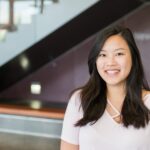
UMBC’s Undergraduate Research and Creative Achievement Day (URCAD) has burst out of the ballroom and onto computer screens around the world. For the second year in a row, the popular undergraduate research forum will be entirely online due to the pandemic, using a video presentation and online discussion tool called VoiceThread. But unlike 2020, no rapid shift is needed. After over a year of largely online learning and research, everyone involved is ready to take full advantage of the virtual medium.
“This event has gone global,” says April Householder ’95, director of undergraduate research and prestigious scholarships. Being online means URCAD leapt from about 2,500 people attending in person in 2019 to 8,000 virtual visits in 2020. “Viewers were coming in from as far away as the U.K., Korea, and South America,” says Householder. She expects that trend will continue this year.
 April Householder, 2018. Photo by Michael Mower.
Having a full week to explore URCAD this year also means viewers will have ample time to browse the available sessions, rather than “rushing from one thing to another,” says Householder, as they used to do at the in-person event. They’ll be able to explore, at their own pace, research on a vast array of topics, from the effects of anti-Asian discrimination during the COVID-19 pandemic to the Black Lives Matter movement, to cancer treatment, skateboarding culture, and online sneaker sales.
Connecting beyond boundaries
In lieu of face-to-face chats, visitors will be able to participate in online discussions with student presenters. Last year a research group in UMBC’s Asian studies department received feedback from researchers in Korea, says Householder. She hopes that this year, opportunities for these kinds of connections will increase with a new feature that enables users who aren’t from UMBC to comment through URCAD’s VoiceThread interface.
Within the UMBC community itself, Householder hopes students, faculty, and staff will take advantage of the opportunity to explore “things outside their disciplinary box.” Artists, scientists, humanists, social scientists, and engineers can all benefit from each others’ feedback, she explains.
Constraints generate creativity
Last year, when students had to quickly pivot from in-person presentations to using VoiceThread, “they had to learn an additional skill on the fly,” says Householder. This year, students are more prepared to take full advantage of all that the online format offers.
Further, due to the constraints of COVID, student researchers have become even more creative in using technology not just to display their research, but to pursue their research at a time when in-person interviews, fieldwork, and traditional performances aren’t possible. Students learned to do interviews online, adjusted their sample sizes, and navigated lab research within physical distancing guidelines. They also responded to the pandemic by examining the changes in society and in themselves.
One advantage of the online format is that the presentations are available to view in perpetuity. “We now have an archive of the event so we can use it as a teaching tool for future generations of URCAD presenters and mentors,” Householder says.
She finds this addition of an expanded archive and URCAD’s global reach to be fitting developments as the event marks its 25th anniversary. To celebrate the milestone, URCAD will feature a special video “fireside chat” with founders Diane Lee, Kathy Sutphin, Elizabeth Pennington, and Janet McGlynn.

Klaudine Wakasa. Image courtesy of Wakasa.
Viewers will also hear a keynote by Klaudine Wakasa ‘08, financial economics, who serves as a strategy advisor for clean technology ecosystems, consulting with international governments.
UMBC students, faculty, staff, and alumni, and the general public, are invited to view these special sessions, and hundreds of available students presentations at urcad.umbc.edu, April 19-25, 2021. Featured below are a few student presentations that give a glimpse into the range of what will be available. Each has been shaped in some way by the COVID-19 pandemic—in topic, approach, or format.
“COVID-19 telehealth and telerehabilation reflections: Understanding the stroke survivor and caregiver perspectives”
Frances Watson ‘21, computer science, conducted research on telehealth and telerehabilitation services during COVID-19 through UMBC’s Bodies in Motion Lab. “I am investigating the stroke survivor and caregiver perspectives to understand how socioeconomic disparities affect this population,” Watson explains.

Frances Watson. Photo courtesy of Watson.
Watson has so far conducted 20 interviews with rehabilitation specialists about their experience with telehealth appointments, alongside her graduate mentor, human-centered computing Ph.D. student Adegboyega Akinsiku. She is also currently interviewing stroke survivors and caregivers.
“The COVID-19 pandemic not only changed how we conduct these interviews, but also the analysis of them,” says Watson. “We conducted and continue to conduct these interviews on teleconferencing platforms such as Cisco Webex and Zoom, allowing us to video-record them. In comparison, when we were in person we would have an audio recording device present. Now we can rewatch the video recordings for our data analysis.”
The fact that her research technique adjusted to match the format of the telehealth appointments themselves “has proven very useful” in surfacing insights, she says.
Watson was previously able to gain research experience through the Stanford SURF program. As a Center for Women in Technology Scholar and Undergraduate Research Award (URA) Scholar, she also knows the power of research opportunities in developing an identity and career pathway as a STEM researcher, as well as the value of peer support. This has motivated her leadership on campus, including as Student Government Association president in spring 2020.
“this is it: A poetic response to the anti-Asian racism during the COVID-19 pandemic”
Just after the pandemic started last March, Calista Ogburn ’21, health administration and policy, felt hurt and angry as she heard about rising anti-Asian hate crimes and racism. Then she herself had an upsetting encounter at a Home Depot. “In that moment, standing in the Home Depot aisle next to the grills, I knew I had to write a poetry collection,” she says.
It was a process that involved many nights of tears, processing heavy emotions. “Reliving past experiences of racism and microaggressions in addition to writing responses to news headlines of anti-Asian racism was utterly exhausting,” she says. She wrote around the clock, and after publication she was gratified to learn “how my poetry has supported others during this turbulent time.”
 Poetry collection “this is it.” Image courtesy of Ogburn.
Ogburn does not intend to pursue a career in poetry, but she says, “I hope it remains my best friend.” Ogburn will present poetry from her collection “this is it” at URCAD. “My hope,” she previously shared with UMBC Magazine, “is that these poems can touch those who are feeling loss, loneliness, or the combined grief and rage of experiencing racism.”
 Calista Ogburn poses with her books of poetry. Photo from calista-ogburn.com.
“Modeling radio emission from tidal disruption events”
Omar French ’21, physics and mathematics, came to UMBC to become a theoretical physicist and he will be leaving soon to do just that. He found COVID-19 increased demands on his faculty mentors’ time, requiring him to move forward with his work more independently than before.
“I’m sure most people can agree that controlling one’s work is much more gratifying than the contrary, but of course, it’s a bit like being in the wilderness,” says French. “It forces you to think for yourself and to be confident in what you’re doing.”
 Omar French. Photo courtesy of French
French’s research on supermassive black holes has yielded insights. “Perhaps the most remarkable technical thing I’ve learned is that the mass of supermassive black holes central to inactive galaxies can be estimated reasonably from measuring only a few factors,” he explains.
After graduating, French will begin a physics Ph.D. program at University of Colorado Boulder. He describes the past year challenging, but also as a period that helped him grow as a scientist more than any other time of his life. As a result, he is heading off to graduate skill with new skills and a critical eye.
“The obedient body: Researching trained and culturally informed movement biases”
It was during a gender and women’s studies course that URA Scholar Gretta Zinski ’22, dance, read something that rocked her world. She says it was fascinating to learn about how the different social conditioning that men and women experience is reflected in how each gender moves. “The excerpt inspired me to assess my own habits, interests, and biases in an attempt to figure out what were my own thoughts and what I had been taught about my own femininity and beliefs,” she says.
Unfortunately, COVID kept the scope of Zinski’s project smaller than she would have liked, but she was still able to access fascinating findings. “Biases do affect our behavior, which translates into movement,” she says. “The physiological connections between the body and the mind were so interesting to me.”
 Still image from Zinski’s dance film project, courtesy of Zinski.
Zinski plans to continue her research and use it to plan bias deconstruction workshops. Of her pandemic research experience, she says, “I learned so much about myself and how to work on my own. This is going to be a very important skill for me and my future career as a self-employed artist.”
“Performing traditional Chinese folk songs”
International travel may have been largely shut down this year, but that didn’t stop URA Scholar Mark Beachy ’21, Asian studies, from exploring China. “When I sing traditional Chinese folk songs I am transported to China and I am experiencing the stories from long ago that are told through the lyrics and music. And it brings me great joy to do that and to share it with others,” he says.
 Mark Beachy. Photo courtesy of Beachy.
Beachy’s URCAD presentation features a video performance of the folk song “Jasmine.” He painstakingly edited together his vocal performance with accompaniment from a pianist in Illinois and a guzheng player in China. Beachy found both musicians online. “When singing traditional Chinese folk songs or any song it is important to connect with the other musicians in order to give the audiences an authentic performance of music that deserves respect,” he says.
Beachy returned to college in his 40s after a career as a professional actor and a writer of musicals, wanting to learn something new. Though not of Chinese descent, he has a passion for Chinese culture, language, and history.
His eventual goal is to teach English to Chinese speakers, and he hopes music can be a helpful teaching tool. “Music is a great way to learn a language,” he says. After graduating, he plans to earn a master’s degree at UMBC in Teaching English as a Second Language.
“Interpretation of models of care in residential communities for older adults”
“I am passionate about working with an underserved population and providing elders with quality care,” says Sydney Siegel ‘20, management of aging services. Siegel graduated in Fall 2020 from UMBC’s Erickson School and now works in an assisted living community. Her URCAD project is an analysis of models of care that older adults can experience. “The models of care I studied are about enhancing quality of life and quality of care, something I hope all aging services strive for,” she says.
Interviewing older people proved to be a challenge during the COVID-19 pandemic. In addition to many care facilities being inaccessible, staff members caring for older adults were incredibly busy. However, Siegel found ways to complete interviews online. “I made great connections and heard wonderful stories from participants,” she shares.
Siegel, a URA scholar, credits Erickson School faculty mentor Louise M. Murray with helping her grow in the field. “I definitely felt imposter syndrome when I started the research, but I learned to see my inexperience as a good thing, Siegel says. “Learning is so powerful and I feel grateful to have learned so much.” She looks forward to continuing to use research to inform care she provides for older adults.
“Optimizing in-situ longevity of silver nanoplates”
As a first-year student who started college in the midst of a pandemic, Dariush Aligholizadeh ‘24, biochemistry and computer science, did not have a typical introduction to UMBC. He didn’t want that to affect his ability to get started with research right away, but it was a lot to manage. “I was trying to adjust to college life while also trying to conduct research safely and securely within COVID-19 restrictions,” he says.

Dariush Aligholizadeh. Image courtesy of Aligholizadeh.
Aligholizadeh was able to find a compelling in-person research opportunity in a lab that employed strict physical distancing. His project involved synthesizing silver nanoplates “for their ability to reflect radiation and light to very high degrees.” He explains, “Basically, I make tiny triangles that kill cancer.” And his research experience proved highly gratifying.
“Every aspect of chemistry is in its own way beautiful, and watching these textbook principles come to life in my project is like watching magic happen. I take simple grains of silver salts and they come together in these beautiful sharp triangular structures, almost as if they were put together by hand,” he explains.
 Electron microscope image of nanoplates. Courtesy of the Devadas Lab.
Aligholizadeh believes his research experience has already improved his skills in calculus, biology, and organic chemistry, and helped solidify his plans to eventually become a medical doctor. He has also found that the challenges of COVID have required him to improve his time-management and online communication skills. Still, he looks forward to learning in-person again when it’s safe to do so.
The UMBC community and general public can see these presentations and many more at urcad.umbc.edu, April 19-25, 2021.
Featured image: Calista Ogburn, 2018. Photo by Marlayna Demond ’11 for UMBC.
Article written by Karen Stysley for UMBC News.
]]>
UMBC’s Undergraduate Research and Creative Achievement Day (URCAD) has burst out of the ballroom and onto computer screens around the world. For the second year in a row, the popular undergraduate...
https://umbc.edu/stories/urcad-2021-showcases-creativity-resilience-of-umbc-student-researchers/
https://beta.my.umbc.edu/api/v0/pixel/news/119658/guest@my.umbc.edu/b0fdbef5295bf80807456fdcff41891f/api/pixel
arts-and-culture
asianstudies
cahss
chembiochem
cnms
coeit
community
csee
dance
ericksonschool
mathstat
page1
physics
policy-and-society
saph
science-and-technology
undergradresearch
UMBC News & Magazine
https://beta.my.umbc.edu/groups/umbc-news-magazine
https://assets1-beta.my.umbc.edu/system/shared/avatars/groups/000/001/943/24435aa6207c452e7bc15cc74b42c7bb/xsmall.png?1748556657
https://assets1-beta.my.umbc.edu/system/shared/avatars/groups/000/001/943/24435aa6207c452e7bc15cc74b42c7bb/original.png?1748556657
https://assets2-beta.my.umbc.edu/system/shared/avatars/groups/000/001/943/24435aa6207c452e7bc15cc74b42c7bb/xxlarge.png?1748556657
https://assets2-beta.my.umbc.edu/system/shared/avatars/groups/000/001/943/24435aa6207c452e7bc15cc74b42c7bb/xlarge.png?1748556657
https://assets3-beta.my.umbc.edu/system/shared/avatars/groups/000/001/943/24435aa6207c452e7bc15cc74b42c7bb/large.png?1748556657
https://assets1-beta.my.umbc.edu/system/shared/avatars/groups/000/001/943/24435aa6207c452e7bc15cc74b42c7bb/medium.png?1748556657
https://assets2-beta.my.umbc.edu/system/shared/avatars/groups/000/001/943/24435aa6207c452e7bc15cc74b42c7bb/small.png?1748556657
https://assets1-beta.my.umbc.edu/system/shared/avatars/groups/000/001/943/24435aa6207c452e7bc15cc74b42c7bb/xsmall.png?1748556657
https://assets2-beta.my.umbc.edu/system/shared/avatars/groups/000/001/943/24435aa6207c452e7bc15cc74b42c7bb/xxsmall.png?1748556657
UMBC News & Magazine
0
0
false
Mon, 12 Apr 2021 03:46:42 -0400
UMBC volleyball makes program history, returns to NCAA tournament for the first time since ‘98

“History-making” is a term that’s become synonymous with UMBC athletics over the last few years, and UMBC women’s volleyball has exemplified that spirit this spring. For the first time in program history, UMBC women’s volleyball earned a share of the America East regular season title, splitting the honor with the UAlbany. Then, on April 2, the team traveled to Albany to take on the Great Danes for the America East Championship, and they delivered.
The Retrievers knew they needed to leave it all on the court to clinch the win. After five grueling sets and with an audience of screaming fans for the first time this season, UMBC ultimately came out on top. At 3-2, they won their first America East Championship in program history.
 UMBC women’s volleyball holds the America East banner after winning the 2020-21 Championship.
“For us, it is not enough to just win the conference. Our goal as a team coming into the season was to win the conference, go to the tournament, and push as far as we can,” says head coach Cristina Robertson.
“Everyone expected the reigning champions to win, but our young team was eager to prove them wrong,” says Emily Ferketic ’23, physics. “When we were down, we reminded ourselves in the huddle that no matter what happened, we wanted to go down fighting,” she shares, and that tenacity paid off.
 The Retrievers get their hands on the America East trophy for the first time in program history.
The win guaranteed UMBC its first automatic bid to the NCAA tournament since 1998. This past Sunday, the Retrievers learned they’ll be taking on No.20 Pepperdine University for the first round of tournament play in Omaha, Nebraska. The match is scheduled for noon on Wednesday, April 14, and will air nationally on ESPN3.
A transformative year
UMBC has one of the youngest teams in the nation in this year’s tournament, but the university’s first-year players have already made a huge impact on the team. Darina Kumanova ’24, emergency health services, was named to First Team All-Conference and Rookie of the Year, the first first-year student in program history to be named to the First Team. Kumanova also earned a spot on the All-Rookie Team.
As a new student from Bulgaria, Kumanova had more to contend with than just what happened on the court.
“It has been a tough season for me – coming to a foreign country, adjusting to a new lifestyle, meeting new people, speaking a foreign language, working hard in the gym, as well as in the classroom,” she says, “but it was worth it to be America East Champions.”
 Kumanova jumps for one of her 22 kills against UAlbany.
Anouk Van Noord, psychology, joins Kumanova with First Team All-Conference accolades. A senior with a 3.88 GPA, Van Noord also landed a spot on the All-Academic Team. She was named America East Player of the Week during the final weekend of the season. A graduating senior, Van Noord knew how high the stakes were.
“The first day we met UMBC’s new Athletics Director, Brian [Barrio], in 2020, he showed us an empty photo frame on his wall. He told us that he is saving it for when we win the America East championship,” she says. “I am so proud to graduate from UMBC in May with that spot filled on his wall.”
More America East honors
Asyia Miller ’24, biological sciences, was voted Setter of the Year, just the second in program history. The first-year contributor also earned Second Team All-Conference and All-Rookie Team honors. Miller finished second in the league in assists per set.
“It’s amazing to see the support that all student-athletes at UMBC have for each other. The unity of the entire athletics program shows how special being a Retriever is and how proud everyone is to be a Retriever,” says Miller.
 Michela De Marzi ’24, biochemistry, (#3) and Miller (#7), goes for a block.
Rounding out the player honors, Ferketic was named Top 10 in the conference in blocks and earned a spot on the All-Academic Team, with a 4.0 GPA.
Robertson and her staff earned America East Coaching Staff of the Year honors. Led by Robertson, the team racked up the most conference wins in a season since 2013. This is the first Coaching Staff Award of the Year the program has earned since 1994.
“My goal when I took over this program was to establish this program as a perennial America East championship contender and that is what we are building here,” says Roberts. “We have worked hard to establish a positive team culture and winning atmosphere, and the results are beginning to show.”
Fans can watch the first game of tournament play on April 14 on ESPN3. Follow @UMBCathletics for complete coverage and cheer on our Retrievers using #RetrieverNation on social media.
Banner image: Beste Ayhan ’24, undergraduate studies, celebrates an emotional win over UAlbany. All photos courtesy of UMBC Athletics.
]]>
“History-making” is a term that’s become synonymous with UMBC athletics over the last few years, and UMBC women’s volleyball has exemplified that spirit this spring. For the first time in program...
https://umbc.edu/stories/umbc-volleyball-makes-program-history-returns-to-ncaa-tournament-for-the-first-time-since-98/
https://beta.my.umbc.edu/api/v0/pixel/news/119659/guest@my.umbc.edu/3899a3c50909a229994a8d10efd2e76a/api/pixel
athletics
community
UMBC News & Magazine
https://beta.my.umbc.edu/groups/umbc-news-magazine
https://assets1-beta.my.umbc.edu/system/shared/avatars/groups/000/001/943/24435aa6207c452e7bc15cc74b42c7bb/xsmall.png?1748556657
https://assets1-beta.my.umbc.edu/system/shared/avatars/groups/000/001/943/24435aa6207c452e7bc15cc74b42c7bb/original.png?1748556657
https://assets2-beta.my.umbc.edu/system/shared/avatars/groups/000/001/943/24435aa6207c452e7bc15cc74b42c7bb/xxlarge.png?1748556657
https://assets2-beta.my.umbc.edu/system/shared/avatars/groups/000/001/943/24435aa6207c452e7bc15cc74b42c7bb/xlarge.png?1748556657
https://assets3-beta.my.umbc.edu/system/shared/avatars/groups/000/001/943/24435aa6207c452e7bc15cc74b42c7bb/large.png?1748556657
https://assets1-beta.my.umbc.edu/system/shared/avatars/groups/000/001/943/24435aa6207c452e7bc15cc74b42c7bb/medium.png?1748556657
https://assets2-beta.my.umbc.edu/system/shared/avatars/groups/000/001/943/24435aa6207c452e7bc15cc74b42c7bb/small.png?1748556657
https://assets1-beta.my.umbc.edu/system/shared/avatars/groups/000/001/943/24435aa6207c452e7bc15cc74b42c7bb/xsmall.png?1748556657
https://assets2-beta.my.umbc.edu/system/shared/avatars/groups/000/001/943/24435aa6207c452e7bc15cc74b42c7bb/xxsmall.png?1748556657
UMBC News & Magazine
0
0
false
Wed, 07 Apr 2021 14:40:02 -0400
Rising Together—Software that Empowers the Community

Since 2009, as part of its Alumni Awards celebration, the UMBC Alumni Association names one “Rising Star” recipient each year who exemplifies early career and professional achievement. In the coming weeks, we will spend some time with awardees from the past decade to see where they are now—and how they’ve grown in their fields while maintaining ties to UMBC. In this installment, UMBC Rising Stars and Fearless coworkers Delali Dzirasa and Kelsey Krach discuss their Retriever networks and the responsibility of working in the civic tech space.
When Delali Dzirasa ’04, computer engineering, founded Fearless 12 years ago, he ran it out of his mother’s basement. A year later, when Dzirasa joined forces with John Foster ’04, computer engineering, their first proper office was a shared cubicle at bwtech, UMBC’s business and technology research park. Their vision for the software company was to provide digital services, but specifically tools that empower communities and create good change. “Software with a soul,” Dzirasa, CEO, says.
And their methods caught the attention of the Retriever community. In 2011, Dzirasa won the Rising Star award from the UMBC Alumni Association, and in 2019 Fearless project manager and designer Kelsey Krach ’14, anthropology, won the same award for her contributions to human centered design. Krach, now based in California, joined Dzirasa virtually to discuss the fulfillment of working on technology in co-creation with the community who will use it, and how the Fearless culture is changed and strengthened with each added team member. Reflecting on the years since their respective awards, Dzirasa and Krach see their professional and personal growth as possible only through the support they received from their UMBC communities.
Here’s a little secret they both share—as members of Retriever-filled families, neither Dzirasa nor Krach initially saw themselves going to UMBC, but the campus won them over as high schoolers and the pair can’t help but hype their alma mater.
So much more than software
Delali Dzirasa: Some folks might ask, “Well, what in the world does a software company have to do with community partnerships and service?”
Kelsey Krach: Fearless is so much more than a digital services firm. Honestly, it’s one of the reasons I was drawn to come work there, because we do so much in the Baltimore community, like partnering with the Downtown [Partnership’s] BOOST Program and some other community organizations.
Dzirasa: Fearless is actually based in Baltimore because of the Downtown Partnership, so they’re very much a part of our story. Black-Owned and Occupied Storefront Tenancy (BOOST) is a program of the Downtown Partnership where they’re looking to increase Black-owned founders and entrepreneurs. I think it just really speaks to entrepreneurs that might have the passion, might have the energy, but need a little bit of support to get going.
Krach: What type of help did you receive in your early stages? I feel like that’s one of the reasons why you spend time doing this work.
 Dzirasa, standing second from left, and Foster, right, with members of the Fearless team. Photo courtesy of Fearless.
Dzirasa: Fearless started off at UMBC, and so UMBC is always going to be part of our story. My brothers and I had a bunch of little side hustles and businesses growing up but never really knew the formal side of entrepreneurship, and UMBC started a fantastic entrepreneurship program while I was there, so I attended those courses.
When Fearless was born, our first cube—not even an office, but our first cubicle—was at UMBC in the bwtech Incubator on campus. So UMBC has been there, whether we needed advice, whether we needed partners, whether we needed someone to be able to get direction from.
I don’t know that I feared it not working, right? I think entrepreneurs have to have a healthy dose of delusion. I think if there was a fear it was—will we be like everybody else? Or would we have the courage to stand out and try to do things a little bit differently?
A Fearless culture
Krach: I’ve been at Fearless for three years, and I’ve seen a lot of growth happening, especially over the past couple of years. I think what’d be really interesting to talk about are maybe two things, how do we keep this community camaraderie as we continue to grow and how do we make sure that as people come into the company we are maintaining excitement around the community work that we do?
Dzirasa: I don’t think that we will keep the culture, and I don’t think that’s a bad thing. Every time we add a new person into Fearless, the culture is different. That’s because new people bring new ideas and new interests and new energy, and they create something that wasn’t here before that we all get to benefit from. What I think will remain consistent are the values, our internal culture code, like “create belonging, take initiative, open dialogue, make impact.”
 Fearless team members at a company picnic wearing their signature purple. Photo courtesy of Fearless.
Krach: I think that’s a great way to explain it, and I think when we talk about the community aspect of Fearless, what I really love, too, is that we have things built into our work, like our community hours, a certain number of hours a year we get compensated for doing some of this community-based work. I remember even before we had those community hours, a group of people at Fearless went out to serve breakfast at a local food shelter in Baltimore. I thought, “Wow, these are amazing people who want to wake up with me at 5 o’clock in the morning.”
Dzirasa: A question I ask myself often is have we done a good job as a company giving space for people to do community work, or have we just done a good job of attracting people that already care about humanity and the world and just get out of their way? I think it’s a little bit of both but probably more the latter.
Kelsey, in your case and all you’ve done, whether it be serving food or supporting mental health institutions and initiatives or Code for Baltimore—we didn’t create or enable that. That’s you. You were going to do those things anyway. So I think we’ve been able to do a good job of getting a collection of great humans and just kind of getting out of the way and helping them to amplify their message and what it is that they’re doing.
 Women in Tech panel that Krach, third from right, spoke on. Photo courtesy of Krach.
Krach: I think this topic leads into our role in the civic tech space. People are like, “Well, let’s just build this piece of technology and that will fix problems.” But we know you need to have communal co-creation from the people it’s going to affect. We can’t just assume that they’ll want to use the thing that’s created.
Dzirasa: That’s right. What civic tech is—is you’ve got civic and you’ve got tech and they come together and they co-create and they solve problems together. I think that’s something that allows us to both bring an air of authenticity in what we’re doing, but it also ensures that there is accountability for everyone to solve the problem together.
Keeping Retriever ties
Krach: UMBC has had such a fundamental effect on me and…I’m at a loss for words, actually, to talk about what UMBC has done for me. I couldn’t even imagine having another type of university experience.
Dzirasa: UMBC means a lot. I mean, not just from personal and professional, but it’s a bit of a family thing. I met my wife at UMBC. Both my brothers went to UMBC, so our whole family went there. Then there are the personal relationships I made on campus, Dr. Freeman Hrabowski, Greg Simmons, Kim Leisey, and so many people that are at UMBC who were instrumental in my journey, like Vivian Armor, who directs the Alex. Brown Center for Entrepreneurship. Any time there’s an opportunity to participate or give a talk or support students, I jump at the opportunity.
 Dzirasa accepting his Rising Star award in 2011.
Krach: I laughed when you said your whole family went to UMBC. My mom and dad went to UMBC. My younger sister went to UMBC at the same time I was there. My aunt went to UMBC and works there, so I definitely get that family feeling. In fact, I did not want to go to UMBC because of that.
Dzirasa: We share that.
Krach: I was a very rebellious younger person, and I was just like, “No, I’m not going to go to UMBC.” I wanted to go as far away as possible. Then my mom was just like, “Just please visit and then you can say definitively.” I shadowed a friend of mine from high school who was going to UMBC, and I totally fell in love.
 Krach in front of the A.O.K. Library. Photo courtesy of Krach.
Dzirasa: We’re like the same person. Same thing, I resisted it. It was the last place on earth I wanted to go to. But then I absolutely loved it, and I couldn’t have imagined a different world for myself.
Krach: My liberal arts education set me up to be a critical thinker going into the tech space. My job is to think about the big picture. How is what we’re doing with our piece of technology actually solving the problem for whomever we’re trying to help?
I’ve been able to go back to the Sondheim Scholars Program and teach them about human-centered design and how that can be applied in policy and how technology is related to the policies that we implement. It’s all so connected in my brain. It’s funny because I’m like, “How do people not see all of these things are connected?”
How have you grown since receiving the Rising Star award?
Dzirasa: All right, let me set the stage. I received the award about 10 years ago. My guess is that every single person in our company could fit in the first row or two in the Library Gallery, where they held the ceremony. That’s certainly not the case now!
A less visible area I’ve seen growth is in something I’m not inherently good at, so it’s something that I’m continuing to work at, which is how to build systems. But at Fearless, we’ve been able to bring along amazing people that are really smart—a heck of a lot smarter than I am in their respective areas—who contribute so much to the organization. So it’s really finding what am I uniquely gifted at, leaning into that lane, but really trusting other people to do what it is that they do so well.
 When the company was at their original bwtech location, they were called Fearless Solutions. Photo courtesy of Fearless.
Kelsey, you received your Rising Star award more recently in 2019. Can you talk about what has changed in your own life personally and professionally?
Krach: I had a big shift personally with moving from Baltimore to California right before I got that award—our ceremony was in the Linehan Concert Hall. I’ve been so lucky to continue working with Fearless in a remote capacity, so a big piece for me has been growth around building a new life here. One of the most beautiful parts of this move is that Oakland reminds me a lot of Baltimore in the sense of the people and community.
Professionally, I’ve been able to dig in more to being a product manager and thinking more about what is the value we’re providing. What problems are we focusing on with our technology, and how are we helping the government make smart decisions about what they want to implement. I want to make sure that we’re not just putting Band-aids on stuff but instead we’re ripping off the Band-aids and getting to these deep wounds that exist.
 Krach accepts her Rising Star award in 2019. Photo by Marlayna Demond ’11.
Delali, one last question—what was something you learned at UMBC that you still use in your daily life?
Dzirasa: I feel like UMBC taught me how to build community, how to help put some of the pieces in place that build culture. What about you?
Krach: For me, it’s like what have I not used? But, really, one person who stands out for me is Vivian Armor, who you mentioned earlier, and the entrepreneurship classes that I took while at UMBC. That combined with my cultural anthropology background took me to this level of thinking about structure and agency and what it means to build the technology in order to help individuals accomplish their goals. And to ask ourselves, is our tech creating a foundation for equitable spaces?
Dzirasa: For me, it goes back to what we talked about: how do we empower people like you who already care about humanity and are awesome humans and let them just do amazing things? Even through the lens of equity, if you’re a woman founder or a founder of color or whatever it is who has a particular experience that traditionally isn’t in the marketplace, if we help those companies to be really successful, they then have a lived experience of how to do that. They become a story…an example that people can point to and say, “Oh, I can do that, too.”
Do you know a UMBC alum who should be recognized for the great work they’re doing? Nominate them for an Alumni Award by filling out this form by May, 3, 2021.
]]>
Since 2009, as part of its Alumni Awards celebration, the UMBC Alumni Association names one “Rising Star” recipient each year who exemplifies early career and professional achievement. In the...
https://umbc.edu/stories/rising-together-software-that-empowers-the-community/
https://beta.my.umbc.edu/api/v0/pixel/news/119660/guest@my.umbc.edu/7f722479695c8d3aa90a772e825ac521/api/pixel
alumni
alumni-awards
anthropology
computer-engineering
rising-star
UMBC News & Magazine
https://beta.my.umbc.edu/groups/umbc-news-magazine
https://assets1-beta.my.umbc.edu/system/shared/avatars/groups/000/001/943/24435aa6207c452e7bc15cc74b42c7bb/xsmall.png?1748556657
https://assets1-beta.my.umbc.edu/system/shared/avatars/groups/000/001/943/24435aa6207c452e7bc15cc74b42c7bb/original.png?1748556657
https://assets2-beta.my.umbc.edu/system/shared/avatars/groups/000/001/943/24435aa6207c452e7bc15cc74b42c7bb/xxlarge.png?1748556657
https://assets2-beta.my.umbc.edu/system/shared/avatars/groups/000/001/943/24435aa6207c452e7bc15cc74b42c7bb/xlarge.png?1748556657
https://assets3-beta.my.umbc.edu/system/shared/avatars/groups/000/001/943/24435aa6207c452e7bc15cc74b42c7bb/large.png?1748556657
https://assets1-beta.my.umbc.edu/system/shared/avatars/groups/000/001/943/24435aa6207c452e7bc15cc74b42c7bb/medium.png?1748556657
https://assets2-beta.my.umbc.edu/system/shared/avatars/groups/000/001/943/24435aa6207c452e7bc15cc74b42c7bb/small.png?1748556657
https://assets1-beta.my.umbc.edu/system/shared/avatars/groups/000/001/943/24435aa6207c452e7bc15cc74b42c7bb/xsmall.png?1748556657
https://assets2-beta.my.umbc.edu/system/shared/avatars/groups/000/001/943/24435aa6207c452e7bc15cc74b42c7bb/xxsmall.png?1748556657
UMBC News & Magazine
0
0
false
Wed, 07 Apr 2021 12:57:31 -0400
Meet “The Terminator”: UMBC-led research connects solar cycle with climate predictions in a new way

The solar cycle involves periodic changes in activity on the Sun’s surface, and a new way of thinking about it reveals connections between solar activity and weather patterns on Earth. New research in Earth & Space Scienceled by Robert Leamon, research scientist at the Goddard Planetary Heliophysics Institute, a UMBC partnership with NASA, describes the discovery of a solar cycle phenomenon the authors have dubbed “the terminator.”
The researchers found that a La Niña weather pattern in the Pacific Ocean quickly follows a terminator event. La Niña and El Niño patterns affect everything from the likelihood of severe hurricanes to the success of the growing season. This means the ability to predict these patterns on the scale of about a decade could help communities and governments prepare for natural disasters, shifting crop supply and prices, and more. Organizations like NOAA currently offer weather pattern predictions about one year out, but access to decade-scale forecasts would be a huge advance.

Robert Leamon. Photo courtesy Robert Leamon.
The terminator
Leamon and co-authors Scott McIntosh and Daniel Marsh, both at the National Center for Atmospheric Research, define the terminator as the precise point where any remnants of activity from the previous cycle disappear from the sun’s surface. After “termination,” there is a dramatic increase in solar activity in the new cycle. Activity associated with two consecutive cycles usually overlaps for a few years, but the two cycles’ sunspots are distinguishable from each other based on their magnetic polarity (north vs. south). The polarity of the Sun reverses direction each cycle.
Previously, scientists defined the transition from one solar cycle to the next as the “solar minimum,” where overall solar activity is at its lowest point. However, this definition is imprecise. The terminator gives researchers a new way to think about the end of the solar cycle, and a more precise way to predict the timing of ensuing weather patterns.
Based on continuously collected cosmic ray data from an observatory in Finland, the new study demonstrates that a terminator event has consistently occurred about one year after the traditional “solar minimum” during each solar cycle for the last 60 years. In fact, data in the paper, which has been in the works since 2017, accurately predicted the next La Niña in 2020.
The name for the phenomenon was an easy choice, according to Leamon. “We’ve been calling this the terminator for a few years, because it indicates the death of a solar cycle,” he says. “And, because it’s predictable, it will, as always, ‘be back.’”
A “cycling” solution
Not all solar cycles are exactly the same length. They can range from about nine to 14 years, averaging around 11 years. So, Leamon used a creative, athletics-inspired technique to compare the timing of the sequence of events in each cycle. When reviewing his stats from a 100-mile bike ride in 2017, he noticed that each 25-mile lap got a little slower, but there were always the same speed-ups and slow-downs around certain features on the course, like hills. So, if he plotted the laps by distance, rather than time, all the hills lined up. Why not do the same for the solar cycle?
 Using a GPS watch to track a 100-mile bike race inspired the technique Robert Leamon employed in his new research. Here he competes in an Ironman triathlon. Photo courtesy Robert Leamon.
While the solar cycle doesn’t technically have a “distance” measurement, it’s possible to divide the length of each sun cycle into 100 equal parts, then plot the cycles on top of each other to compare their features.
“It’s one of those things… You just have a moment of inspiration and think, why don’t I try that?” Leamon says. “That’s how this study came to be. Rather than plotting the cycles by time, do it as distance.” And when you do that, he says, “all sorts of things start to line up.”
Hidden signals
This technique revealed that the transition away from the solar minimum is quite abrupt, rather than the smooth curves depicted in many explanatory charts of the solar cycle. “It’s not a smooth transition. There’s actually a sharp jump in solar activity and a sharp drop in cosmic rays right when solar activity picks up,” Leamon explains.
The relative abundance of cosmic rays entering Earth’s atmosphere is one of the ways that scientists can measure solar activity. When solar activity is limited, the magnetic fields associated with Earth and the Sun are simple and largely aligned. That creates an uninterrupted path for more cosmic rays to reach Earth. However, with high solar activity, the magnetic fields are complex. “Swiss cheese is perhaps a good analogy,” Leamon says. “There’s more stuff to scatter incoming particles off of. So at solar maximum, there’s a smaller number of cosmic rays hitting the Earth.”
Other researchers may have considered the irregular increase and decrease of solar activity as just noise in the data, but mapping the cycles by “distance” allowed Leamon to see that it was a consistent phenomenon. “One man’s noise is another man’s signal,” he says with a smile. “So don’t over-smooth things,” he says, or you’ll risk missing essential information.
Diagrams of the general weather trends during La Niña and El Niño events. Courtesy of the Australian Bureau of Meteorology. (Scroll left and right to see the full image for each weather pattern.)
Think outside the sky
Leamon acknowledges a concern that some people will try to use his study as evidence that climate change is caused by the Sun, not humans. That argument has long been made by deniers of human-caused climate change. But Leamon is clear that it misinterprets his findings.
When we talk about global warming, he says, “we’re only talking about the troposphere—the bottom few miles of the atmosphere where we live. But one of the consequences of a warming troposphere is a colder stratosphere,” which extends about 32 miles above Earth’s surface. By keeping more heat closer to the surface, that heat doesn’t escape and warm the stratosphere—and a colder stratosphere intensifies the solar cycle changes by increasing electrical conductivity in the upper atmosphere.
In fact, “since the 1950s there’s been a noticeable cooling of the stratosphere to go along with the warming of the troposphere,” Leamon says. That correlates with the beginning of seismic shifts in the U.S. standard of living, energy use, and other factors that have contributed to human-caused climate change. So, it’s fair to say that the Sun is a factor in the climate, but its role has intensified because of human activity, Leamon explains.
Science for the people
Leamon has additional research under review that offers further details about events during the solar cycle. His upcoming work also takes advantage of the new way of looking at the data inspired by his bike ride. Combined with the current results, the goal is to generate knowledge that both satisfies our innate curiosity about the workings of the solar system and helps people and communities navigate a changing world.
“If further research can establish that changes on the Sun are truly causing variability in the oceans, then we may be able to improve our ability to predict El Niño and La Niña events,” Leamon says.“That could help us understand how the Earth system varies on the scale of a season to a decade, and how predictable those variations are—giving us a firmer grasp on the complex bridge between weather and climate.”
Banner image: An image of a terminator event on the Sun in 2011. The three different colors (added by researchers) represent three temperatures. Photo courtesy of NASA Solar Dynamics Observatory.
]]>
The solar cycle involves periodic changes in activity on the Sun’s surface, and a new way of thinking about it reveals connections between solar activity and weather patterns on Earth. New...
https://umbc.edu/stories/meet-the-terminator-umbc-led-research-connects-solar-cycle-with-climate-predictions-in-a-new-way/
https://beta.my.umbc.edu/api/v0/pixel/news/119661/guest@my.umbc.edu/5a065cfefd2c5073e7de40a2580e669c/api/pixel
gphi
research
science-and-technology
UMBC News & Magazine
https://beta.my.umbc.edu/groups/umbc-news-magazine
https://assets1-beta.my.umbc.edu/system/shared/avatars/groups/000/001/943/24435aa6207c452e7bc15cc74b42c7bb/xsmall.png?1748556657
https://assets1-beta.my.umbc.edu/system/shared/avatars/groups/000/001/943/24435aa6207c452e7bc15cc74b42c7bb/original.png?1748556657
https://assets2-beta.my.umbc.edu/system/shared/avatars/groups/000/001/943/24435aa6207c452e7bc15cc74b42c7bb/xxlarge.png?1748556657
https://assets2-beta.my.umbc.edu/system/shared/avatars/groups/000/001/943/24435aa6207c452e7bc15cc74b42c7bb/xlarge.png?1748556657
https://assets3-beta.my.umbc.edu/system/shared/avatars/groups/000/001/943/24435aa6207c452e7bc15cc74b42c7bb/large.png?1748556657
https://assets1-beta.my.umbc.edu/system/shared/avatars/groups/000/001/943/24435aa6207c452e7bc15cc74b42c7bb/medium.png?1748556657
https://assets2-beta.my.umbc.edu/system/shared/avatars/groups/000/001/943/24435aa6207c452e7bc15cc74b42c7bb/small.png?1748556657
https://assets1-beta.my.umbc.edu/system/shared/avatars/groups/000/001/943/24435aa6207c452e7bc15cc74b42c7bb/xsmall.png?1748556657
https://assets2-beta.my.umbc.edu/system/shared/avatars/groups/000/001/943/24435aa6207c452e7bc15cc74b42c7bb/xxsmall.png?1748556657
UMBC News & Magazine
0
0
false
Mon, 05 Apr 2021 22:07:03 -0400
Kizzmekia Corbett ’08 talks to CNN about Meyerhoff Scholars, vaccine hesitancy

Kizzmekia Corbett ’08, M16, biological sciences and sociology, is the lead scientist of the research team that developed the Moderna COVID-19 vaccine at the National Institute of Allergy and Infectious Disease (NIAID). She returned to campus April 2 for an interview with CNN. From a lab in the Interdisciplinary Life Sciences Building, Corbett spoke about the impact of UMBC and the Meyerhoff Scholars Program on her success.
“Had I not been exposed to Dr. Hrabowski and the Meyerhoff Program…I’m not even so sure that I would be a scientist. It’s really about exposure and resources given to people,” Corbett told CNN. In particular, encounters at UMBC that led her to double major in biological sciences and sociology uniquely prepared her for this moment, when the country is witnessing both an urgent need for cutting-edge science and the effects of widespread health disparities.
The juxtaposition of the reckoning around racial discrimination and the pandemic’s disproportionate effect on people of color “really came together and put a burden on me in so many ways, and it made me more motivated around what I needed to do as far as getting this vaccine out,” Corbett told CNN. “I think as I have looked back on the pandemic, and my work and my team’s work in the pandemic, I feel like it was my purpose, almost.”
It’s about listening
Corbett also understands the importance of approaching vaccine hesitancy with empathy. “I think there is really nothing that you say. It’s really about listening,” she said in the interview. “There is a subset of people who just haven’t been listened to around their health issues and around technology, really. And I just felt like it was time for me to sit down and empathize with an entire group of people who had been ignored.”
Corbett is hopeful for a new generation of diverse scientists. “I think it’s been exciting to be able to be an inspiration,” she says. “I’m happy to be visible if it means that more people understand the science behind this vaccine and for vaccines to come.”
A conversation between Corbett and President Freeman Hrabowski was also featured at the 2nd Annual African Americans in Health Care Awards, presented by Kaiser Permanente and the Reginald F. Lewis Museum of African American History and Culture. Corbett was also featured in the Lifetime Presents Women Making History special and as one of TIME Magazine’s 100 Next.
Banner image: Capture from CNN interview with Kizzmekia Corbett ’08, M16, in UMBC’s Interdisciplinary Life Sciences Building.
]]>
Kizzmekia Corbett ’08, M16, biological sciences and sociology, is the lead scientist of the research team that developed the Moderna COVID-19 vaccine at the National Institute of Allergy and...
https://umbc.edu/stories/kizzmekia-corbett-08-talks-to-cnn-about-meyerhoff-scholars-vaccine-hesitancy/
https://beta.my.umbc.edu/api/v0/pixel/news/119662/guest@my.umbc.edu/6b628cc91593b66d5bd6ffb7a0f90450/api/pixel
alumni
biology
cahss
cnms
community
policy-and-society
science-and-technology
sociology
UMBC News & Magazine
https://beta.my.umbc.edu/groups/umbc-news-magazine
https://assets1-beta.my.umbc.edu/system/shared/avatars/groups/000/001/943/24435aa6207c452e7bc15cc74b42c7bb/xsmall.png?1748556657
https://assets1-beta.my.umbc.edu/system/shared/avatars/groups/000/001/943/24435aa6207c452e7bc15cc74b42c7bb/original.png?1748556657
https://assets2-beta.my.umbc.edu/system/shared/avatars/groups/000/001/943/24435aa6207c452e7bc15cc74b42c7bb/xxlarge.png?1748556657
https://assets2-beta.my.umbc.edu/system/shared/avatars/groups/000/001/943/24435aa6207c452e7bc15cc74b42c7bb/xlarge.png?1748556657
https://assets3-beta.my.umbc.edu/system/shared/avatars/groups/000/001/943/24435aa6207c452e7bc15cc74b42c7bb/large.png?1748556657
https://assets1-beta.my.umbc.edu/system/shared/avatars/groups/000/001/943/24435aa6207c452e7bc15cc74b42c7bb/medium.png?1748556657
https://assets2-beta.my.umbc.edu/system/shared/avatars/groups/000/001/943/24435aa6207c452e7bc15cc74b42c7bb/small.png?1748556657
https://assets1-beta.my.umbc.edu/system/shared/avatars/groups/000/001/943/24435aa6207c452e7bc15cc74b42c7bb/xsmall.png?1748556657
https://assets2-beta.my.umbc.edu/system/shared/avatars/groups/000/001/943/24435aa6207c452e7bc15cc74b42c7bb/xxsmall.png?1748556657
UMBC News & Magazine
0
0
false
Mon, 05 Apr 2021 16:43:44 -0400
UMBC announces return to vibrant on-campus community for Fall 2021

This week, UMBC announced plans to reopen the campus for the Fall 2021 semester, providing most courses and campus services face-to-face or in a hybrid format.
“I cannot wait to walk across campus and to again see it busy with students, faculty, and staff,” said President Freeman Hrabowski. “It will be very special to reclaim the vibrant campus community life that we have all missed.”
He and Provost Philip Rous have cited ongoing progress in COVID-19 vaccine access and updated public health guidance as key factors in the university’s planning.
 President Hrabowski with Orientation Peer Advisors, summer 2018.
This news comes just over a year after UMBC temporarily moved most teaching and learning, community building, research, and other operations online due to the COVID-19 pandemic.
“We know that our students really miss seeing their friends on campus. And they miss being able to go to in-person events and connect with their professors face-to-face,” says Nancy Young, vice president for Student Affairs.
“We’ve discovered innovative ways to help Retrievers find community and stay connected online during the pandemic,” she shares. “At the same time, we know how meaningful it will be for returning students to connect in person once again, and for incoming students to have opportunities for in-person experiences.”
 Nancy Young (center) with SGA President Mehrshad Devin (left), Communications Director Calista Ogburn (right), and True Grit on campus in July 2020.
The COVID-19 Planning Coordinating Committee has been working with faculty, staff, and student leaders across the university to plan for a fall that offers opportunities to live, learn, and work on campus, with appropriate safety measures in place. Plans also take into account the diverse needs and individual health concerns of UMBC community members.
Classes, housing, and events
Course registration is now open for both undergraduate and graduate students. Most courses will be offered in-person or in a hybrid format. The university will continue to make additions to the Schedule of Classes over the coming months.
UMBC is preparing to reopen residence halls at up to 95 percent occupancy. More information about housing spaces, rates, and adjustments to meet public health guidance will be available soon.
 UMBC students in on-campus housing.
The university is planning a full Fall 2021 calendar of on-campus events open to both residential and off-campus students.

Yvette Mozie-Ross. Image courtesy of Mozie-Ross.
“We are excited to be able to return to offering a fully immersive on-campus experience this fall,” says Yvette Mozie-Ross ’88, health science and policy. She serves as vice provost for enrollment management and planning.
“These experiences help to enrich the academic and social life at UMBC for many of our students,” says Mozie-Ross. “We are also excited to carry forward all that we learned during the pandemic about ways that online learning, support, and community-building resources can complement on-campus courses and services.”
Facilities for recreation, well-being, and learning

Brian Barrio, 2019
Over the past year, UMBC fully renovated the Retriever Activities Center (RAC). The updated space will offer expanded recreation facilities. These include a track, cardio-training, weight-training, spinning, group exercise space, and basketball courts.
The building really has been transformed,” says Brian Barrio, UMBC’s director of Athletics. “There will be something for everyone’s recreational or fitness needs. It is really exciting.”
A brand new student well-being facility is under construction next to Erickson Field. It will soon house UMBC’s health, counseling, restorative services, and spiritual resources.
The university continues to thoughtfully plan for the reopening of additional facilities and community spaces, including the Albin O. Kuhn Library & Gallery, The Commons, performance spaces, and other gathering spaces.
 UMBC Albin O. Kuhn Library in spring 2019.
Ongoing focus on safety, flexibility
“We look forward to a much more active on-campus community this fall,” says President Hrabowski. “At the same time, we know the pandemic is not over. We must continue to be as flexible as possible.”
UMBC will continue to rigorously follow local, state, and federal public health guidance. This includes safety measures regarding testing, symptom tracking, mandatory mask wearing, hygiene, ventilation, physical distancing, and space occupancy, as required.
 Katherine Poteet ’21, global studies and political science, by the library, Fall 2020.
The university strongly encourages all students, faculty, and staff to seek vaccination for COVID-19 once they are eligible. Campus leaders note that current public health guidance indicates increased vaccination will enable more expansion of in-person activities.
 Pres. Freeman Hrabowski receiving a COVID-19 vaccine. He participated in the University of Maryland School of Medicine’s Moderna vaccine trial, 2020. Photo courtesy of UMB.
“We are constantly following the science and public health guidance,” says Young, “and the science says that the more vaccinated our community becomes, the more open we can be.”
“We have been thrilled to hear about expanding access to highly effective COVID-19 vaccines,” she shares. “It’s really been a game-changer for us, to be able to look ahead with optimism for seeing each other again soon, on campus.”
Knowing that individual community members have different situations and concerns, UMBC will continue to emphasize flexibility and responsiveness in meeting diverse student, faculty, and staff needs.
Community members with questions about COVID-19 and the Fall 2021 semester can contact covid19@umbc.edu.
Featured image: UMBC Orientation Peer Advisors in 2018. Photos by Marlayna Demond ’11 for UMBC unless otherwise noted.
]]>
This week, UMBC announced plans to reopen the campus for the Fall 2021 semester, providing most courses and campus services face-to-face or in a hybrid format. “I cannot wait to walk across...
https://umbc.edu/stories/umbc-announces-return-to-vibrant-on-campus-community-for-fall-2021/
https://beta.my.umbc.edu/api/v0/pixel/news/119663/guest@my.umbc.edu/dc9e93506250522a93bf446c63307ce4/api/pixel
campus
community
page1
resilience
studentaffairs
UMBC News & Magazine
https://beta.my.umbc.edu/groups/umbc-news-magazine
https://assets1-beta.my.umbc.edu/system/shared/avatars/groups/000/001/943/24435aa6207c452e7bc15cc74b42c7bb/xsmall.png?1748556657
https://assets1-beta.my.umbc.edu/system/shared/avatars/groups/000/001/943/24435aa6207c452e7bc15cc74b42c7bb/original.png?1748556657
https://assets2-beta.my.umbc.edu/system/shared/avatars/groups/000/001/943/24435aa6207c452e7bc15cc74b42c7bb/xxlarge.png?1748556657
https://assets2-beta.my.umbc.edu/system/shared/avatars/groups/000/001/943/24435aa6207c452e7bc15cc74b42c7bb/xlarge.png?1748556657
https://assets3-beta.my.umbc.edu/system/shared/avatars/groups/000/001/943/24435aa6207c452e7bc15cc74b42c7bb/large.png?1748556657
https://assets1-beta.my.umbc.edu/system/shared/avatars/groups/000/001/943/24435aa6207c452e7bc15cc74b42c7bb/medium.png?1748556657
https://assets2-beta.my.umbc.edu/system/shared/avatars/groups/000/001/943/24435aa6207c452e7bc15cc74b42c7bb/small.png?1748556657
https://assets1-beta.my.umbc.edu/system/shared/avatars/groups/000/001/943/24435aa6207c452e7bc15cc74b42c7bb/xsmall.png?1748556657
https://assets2-beta.my.umbc.edu/system/shared/avatars/groups/000/001/943/24435aa6207c452e7bc15cc74b42c7bb/xxsmall.png?1748556657
UMBC News & Magazine
0
0
false
Tue, 30 Mar 2021 18:27:11 -0400
UMBC celebrates U.S. News Best Grad School rankings in engineering, public affairs
Announced today, 2022 U.S. News Best Graduate School Rankings name several UMBC programs in engineering and public affairs as among the best in the nation.
U.S. News bases these rankings on a combination of quantitative data about over 2,125 programs and expert opinions on program reputations. This feedback is provided through surveys to more than 23,000 deans, program directors, senior faculty, and other leaders.
UMBC has top-100 programs in public affairs and several engineering fields. Engineering is one of a few areas where rankings also reflect the opinions of professionals who hire or work with new graduates.
 UMBC’s ITE (Information Technology and Engineering) building
A growing leader in engineering
UMBC’s engineering programs, overall, tied with engineering colleges at the flagships University of Missouri and University of Kansas at 108th. The ranking has steadily climbed from 111th in the 2019 rankings. This year, UMBC is ranked ahead of both the University of Georgia and Utah State University.
UMBC engineering programs were recognized in five separate categories. For environmental engineering UMBC moved from #58 to #56, and for mechanical engineering UMBC rose from #105 to #101. UMBC’s graduate programs in chemical engineering experienced the most rankings growth, from #84 to #68.
“I am not at all surprised by the higher rankings we see for our chemical, biochemical, and environmental engineering (CBEE) graduate programs,” says Keith J Bowman, dean of the College of Engineering and Information Technology (COEIT). “We have expanded a fantastic team by hiring outstanding new faculty and we have been successful in recruiting extraordinary graduate students.”
 Dean Keith Bowman delivers remarks at the 2019 COEIT Celebration. Photo by Chris Ferenzi Photography.
CBEE Professor Erin Lavik, COEIT’s associate dean for research and faculty development, shares, “Whether it is technologies to enable better, more accessible treatments for diseases or developing solutions to make environmental justice a reality, our CBEE programs prepare students for the future as socially responsible engineers.”
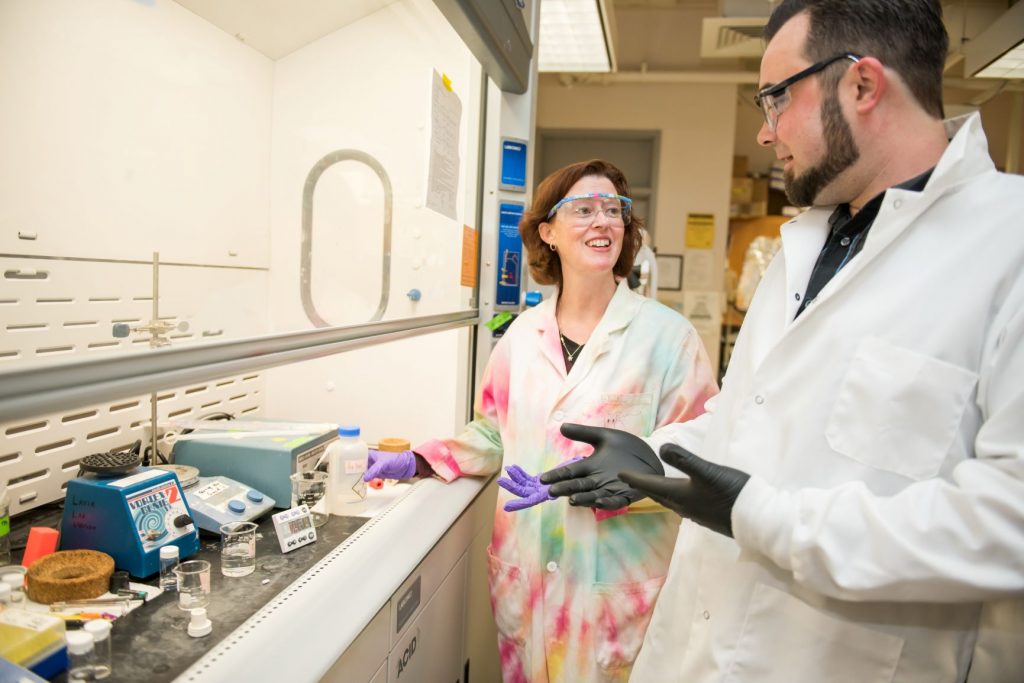 Erin Lavik (left) with graduate student Adam Day (right) in her lab, which works to develop new therapies through polymer synthesis and processing, drug delivery, and stem cell biology, 2018.
Groundbreaking computer engineering research
UMBC also ranked #92 in computer engineering and had a strong ranking in electrical engineering. Highly robust research opportunities for graduate students are a key reason why UMBC has a top-100 ranking in computer engineering.
Tinoosh Mohsenin, computer engineering, leads the Energy Efficient High-Performance Computing Lab (EEHPC), at the forefront of research in the new field of human-autonomy.
 Tinoosh Mohsenin, 2017
Brain activity monitoring is a growing field with medical applications in detection, diagnosis, prevention, and rehabilitation related to brain disorders. Human-autonomy is one of those applications, where people can potentially use brain signals to remotely guide devices. Mohsenin and her students have also worked on a variety of low power artificial intelligence processors that use electroencephalogram (EEG) signals to identify brain artifacts, detect seizures, and monitor stress and an individual’s attention.
“The UMBC graduate school experience has been very rewarding as it encourages graduate students to express and broaden their outlook while also allowing them time to establish these ideas towards a realistic platform,” says Arnab Mazumder, a computer engineering Ph.D. student who works with Mohsenin.

Arnab Mazumder. Photo by Hasib Al Rashid.
“Working in the Energy Efficient High-Performance Computing Lab has been the highlight of my experience at UMBC,” Mazumder says. He and fellow Ph.D. student Hasib Al-Rashid, electrical engineering, have already published several papers and two book chapters on their research. They focus on developing deep learning models and low power wearables to detect brain EEG artifacts and recognizing activity and gestures from people’s physiological data.
“This opportunity has given me a stage to expand and articulate my vision,” says Mazumder. “My goal is to help the public figure out an end-to-end artificial intelligence solution for detection and recognition-related problems, especially in the area of human health monitoring.”
Producing leaders in public affairs
UMBC has offered robust graduate programs in policy sciences for more than four decades and formally established the School of Public Policy in 2014. Today, the school is best known for research in government performance, health disparities, and improving educational outcomes. UMBC also has expertise at the intersection of economics and public policy.

Nancy Miller
“The School of Public Policy draws a diverse and exceptional group of graduate students,” says Nancy Miller, professor and director of the School of Public Policy. “They go on to exciting leadership careers in the public sector, academia, and non-profit sectors.”
Among the School’s prominent alumni is Rear Admiral Sylvia Trent-Adams, Ph.D. ’06, public policy, former principal deputy assistant secretary for health for the United States and now chief strategy officer for the University of North Texas.
 Sylvia Trent-Adams Ph.D. ’06, public policy, accepted UMBC’s Outstanding Alumni Award in Social and Behavioral Sciences in 2017.
Other Ph.D. alumni include Nathaniel Jones, III ’87, mechanical engineering, Ph.D. ’02, health policy, president of College of Alameda; John A. Olszewski Jr., Ph.D. ’17, public policy, Baltimore County executive; and Deborah Trautman, Ph.D. ‘04, public policy, CEO of the American Association of Colleges of Nursing.
The School’s many notable master’s degree alumni include leaders like Qubilah Huddleston, M.P.P. ’17, education policy, who is education policy analyst at the DC Policy Fiscal Institute, and Steve Sharkey, M.P.P. ’06, public policy, director of the Baltimore City Department of Transportation.
Excellence across disciplines
“UMBC has outstanding Ph.D., master’s, and certificate programs across engineering, computing, natural and mathematical sciences, social sciences and education, and the arts and humanities,” says Janet Rutledge, dean of The Graduate School at UMBC. “We are proud of how U.S. News and others recognize the accomplishments of our faculty, students, and alumni.”
 Janet Rutledge at UMBC’s Graduate School commencement, spring 2016.
Banner image: Graduate student Adam Day (left) works with Erin Lavik (right) in her lab, 2018. All photos by Marlayna Demond ’11 for UMBC unless otherwise noted.
]]>
Announced today, 2022 U.S. News Best Graduate School Rankings name several UMBC programs in engineering and public affairs as among the best in the nation. U.S. News bases these rankings on a...
https://umbc.edu/stories/umbc-celebrates-u-s-news-best-grad-school-rankings-in-engineering-public-affairs/
https://beta.my.umbc.edu/api/v0/pixel/news/119664/guest@my.umbc.edu/f97cc3a6bc723f6388b37b60b64b805c/api/pixel
cahss
cbee
coeit
csee
page1
policy-and-society
publicpolicy
rankings
science-and-technology
UMBC News & Magazine
https://beta.my.umbc.edu/groups/umbc-news-magazine
https://assets1-beta.my.umbc.edu/system/shared/avatars/groups/000/001/943/24435aa6207c452e7bc15cc74b42c7bb/xsmall.png?1748556657
https://assets1-beta.my.umbc.edu/system/shared/avatars/groups/000/001/943/24435aa6207c452e7bc15cc74b42c7bb/original.png?1748556657
https://assets2-beta.my.umbc.edu/system/shared/avatars/groups/000/001/943/24435aa6207c452e7bc15cc74b42c7bb/xxlarge.png?1748556657
https://assets2-beta.my.umbc.edu/system/shared/avatars/groups/000/001/943/24435aa6207c452e7bc15cc74b42c7bb/xlarge.png?1748556657
https://assets3-beta.my.umbc.edu/system/shared/avatars/groups/000/001/943/24435aa6207c452e7bc15cc74b42c7bb/large.png?1748556657
https://assets1-beta.my.umbc.edu/system/shared/avatars/groups/000/001/943/24435aa6207c452e7bc15cc74b42c7bb/medium.png?1748556657
https://assets2-beta.my.umbc.edu/system/shared/avatars/groups/000/001/943/24435aa6207c452e7bc15cc74b42c7bb/small.png?1748556657
https://assets1-beta.my.umbc.edu/system/shared/avatars/groups/000/001/943/24435aa6207c452e7bc15cc74b42c7bb/xsmall.png?1748556657
https://assets2-beta.my.umbc.edu/system/shared/avatars/groups/000/001/943/24435aa6207c452e7bc15cc74b42c7bb/xxsmall.png?1748556657
UMBC News & Magazine
0
0
false
Tue, 30 Mar 2021 12:00:00 -0400
 Joshua Slaughter, left, Kaitlynn Lilly, center, and Karan Luthria on campus.
 Joshua Slaughter
 Kaitlynn Lilly
 Gerson Kroiz. Photo courtesy of Kroiz.
 Karan Luthria