Losing Winter
Losing Winter, a new exhibition opening in mid-July at the Maryland Center for History and Culture (MCHC) in Baltimore, examines changes in winter weather patterns through photographs, video, and personal memory.
The brainchild of Lynn Cazabon, professor of art and director of CIRCA, and co-curated for MCHC by UMBC history alumnus Joe Tropea ’06, history and M.A. ’08, historical studies, the exhibit includes images as varied as a news report by a young Oprah Winfrey, “Snowmageddon” in 2010, icy conditions during the Great Fire of Baltimore in 1904, and the 1899 blizzard.
Although the exhibition doesn’t directly address climate change, it’s certainly a subtext, said Cazabon, whose interdisciplinary work has often centered on the intersection of environmental and social issues.
“Things are changing,” she said. “What are we doing about it?”
 Untitled. Winter Survival Class, Ice Rescue. Tim Ford (?-?) 1986. Gelatin silver print, 10 x 8 inch. Tim Ford photographs, the Photography Collections, University of Maryland, Baltimore County. UARC2015-07-01-0091
Winter Memories
Losing Winter was sparked by Cazabon’s own memory of freezing as she ice skated at age 14 in Michigan where she grew up. “That lake, in fact, doesn’t reliably freeze anymore,” she added. The idea percolated further in 2014 while Cazabon was making a film about women who had moved to the Yukon.
Talking about the weather used to be the quintessential conversation starter, she noted. “Now it’s fraught with emotion and worry. The weather is not an innocent topic anymore.”
“It forces us to think about the possibility of climate change. Why is our climate changing?” said Tropea, curator of films and photographs at MCHC.
The MCHC show features Maryland memories while a concurrent mounting of the exhibition at VisArts in Rockville will pair recorded reminiscences by area senior citizens with children’s artwork inspired by those memories. The VisArts exhibition opens in May.
At MCHC, home movies and weather reports from the 1970s, ‘80s and ‘90s will be on display, including a report from Oprah Winfrey, then on the WJZ news staff, interviewing ice skaters at the old Memorial Stadium.
“It’s an experience that takes you through the decades,” Tropea said.
 Snow on Palm Sunday. Park Avenue. A. Aubrey Bodine (1906-1970). March 29, 1942. 5 x 4 inch acetate negative. A. Aubrey Bodine Photo Collection. Baltimore City Life Museum Collection. Maryland Center for History and Culture, B1548-2.
Cazabon said she discovered “little moments of joy” along the way, such as a woman in her 80s recalling street skating in her boots, Baltimore Sun photographer A. Aubrey Bodine’s historic photos of Groundhog Day ceremonies, and old weather forecasts.
One of Tropea’s favorite pieces is 1928 industrial footage taken at the Holtwood Dam over the Susquehanna River. Ice floes rushing toward the bay caused extensive damage near the shoreline before the dam was built, Tropea said. The film, which will be projected on a large wall, depicts ice floes going over the dam and breaking apart as they fall.
“Just watching it makes me feel cold,” Tropea said.
For the MCHC show, Cazabon and Tropea delved into the archives at MCHC as well as in the Special Collections Department of the Albin O. Kuhn Library with the help of Lindsey Loeper ’04, American studies, reference and instruction archivist.
Since Covid-19 restrictions have closed the library to researchers, Loeper collected 35 photos to show the professor and Tropea via video conferencing.
“There were things I’ve never seen before,” she said, noting that the collection has millions of pieces. Among the items she shared were glass negatives and works by well-known photographers such as Marion E. Warren. The oldest photo featured children throwing snowballs in 1914.
 Ice covered ruins of Anderson & Ireland Hardware. Unidentified photographer, February 8, 1904 or after. Photo print, 8.5 x 7 inches. Subject Vertical File. MCHC.
Evolving Exhibit
Cazabon mounted her original Losing Winter exhibition at the National Museum of Contemporary Art in Bucharest, Romania, in 2018. It featured audio memories of past Romanian winters, along with melting ice sculptures by a local artist.
As part of the Losing Winter experience, Cazabon is also working with UMBC’s Imaging Research Center on an augmented reality app to display and allow people to experience the winter memories of others. Cazabon received a 2020-21 Saul Zaentz Innovation Fund grant to produce the app. The exhibition at MCHC will include a display of the app playing memories collected from people in Maryland. Cazabon has been working with MCHC Community Engagement Manager Martha Oster-Beal to host virtual workshops during which memories are shared and recorded.
 Marty Bass WJZ, circa 1978
The yearlong exhibition will be housed on the second floor of MCHC, in gallery space across from the H. Furlong Baldwin Library. Visiting at the hottest time of year, when the exhibit launches, “you might be dreaming of winter,” Cazabon said.
Cazabon said the project keeps evolving. The modular format of her project also makes it adaptable. She invites members of the UMBC community to contact her to participate. She’s open to a variety of memories and opinions.
“The project is designed to evolve with each new site,” she said, adding, “I would like it to be a collection that includes people from around the world.”
— Mary K. Tilghman ’79
 “Baltimore Hucksters,” Roland Freeman (1936- ), 1970. Gelatin silver print, 14 x 11 inch. Roland Freeman photographs, Special Collections, University of Maryland, Baltimore County, P79-42-004.
* * * * * *
MCHC will host participatory virtual workshops for residents to record their memories on April 29 and May 27. Go towww.mdhistory.org/events for details and registration.
For more information on how to participate in the project, visit https://www.losingwinter.net.
* * * *
Header image: Blizzard of 1922, Saturday afternoon. Unidentified photographer, January 28, 1922. Photo print, 10.25 x 13.5 inches. Municipal Museum Collection. Maryland Center for History and Culture, MC1909.
]]>
Losing Winter, a new exhibition opening in mid-July at the Maryland Center for History and Culture (MCHC) in Baltimore, examines changes in winter weather patterns through photographs, video, and...
https://umbc.edu/stories/losing-winter/
https://beta.my.umbc.edu/api/v0/pixel/news/119648/guest@my.umbc.edu/d87048c862e8287538fd7d76a7b58d65/api/pixel
circa
discovery
graduateschool
history
professorsnottomiss
visual-arts
UMBC News & Magazine
https://beta.my.umbc.edu/groups/umbc-news-magazine
https://assets1-beta.my.umbc.edu/system/shared/avatars/groups/000/001/943/24435aa6207c452e7bc15cc74b42c7bb/xsmall.png?1748556657
https://assets1-beta.my.umbc.edu/system/shared/avatars/groups/000/001/943/24435aa6207c452e7bc15cc74b42c7bb/original.png?1748556657
https://assets2-beta.my.umbc.edu/system/shared/avatars/groups/000/001/943/24435aa6207c452e7bc15cc74b42c7bb/xxlarge.png?1748556657
https://assets2-beta.my.umbc.edu/system/shared/avatars/groups/000/001/943/24435aa6207c452e7bc15cc74b42c7bb/xlarge.png?1748556657
https://assets3-beta.my.umbc.edu/system/shared/avatars/groups/000/001/943/24435aa6207c452e7bc15cc74b42c7bb/large.png?1748556657
https://assets1-beta.my.umbc.edu/system/shared/avatars/groups/000/001/943/24435aa6207c452e7bc15cc74b42c7bb/medium.png?1748556657
https://assets2-beta.my.umbc.edu/system/shared/avatars/groups/000/001/943/24435aa6207c452e7bc15cc74b42c7bb/small.png?1748556657
https://assets1-beta.my.umbc.edu/system/shared/avatars/groups/000/001/943/24435aa6207c452e7bc15cc74b42c7bb/xsmall.png?1748556657
https://assets2-beta.my.umbc.edu/system/shared/avatars/groups/000/001/943/24435aa6207c452e7bc15cc74b42c7bb/xxsmall.png?1748556657
UMBC News & Magazine
0
0
false
Fri, 23 Apr 2021 16:18:31 -0400
UMBC’s Anthony Johnson, pulse laser innovator, elected a member of the American Academy of Arts and Sciences
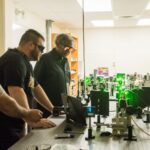
Anthony Johnson, professor of physics and computer science and electrical engineering, and director of UMBC’s Center for Advanced Studies in Photonics Research (CASPR), has received the prestigious honor of election to the American Academy of Arts and Sciences.
The Academy, founded during the American Revolution, “honors excellence and convenes leaders from every field of human endeavor to examine new ideas, address issues of importance to the nation and the world, and”—in the words of its original founders—“work together ‘to cultivate every art and science which may tend to advance the interest, honor, dignity, and happiness of a free, independent, and virtuous people.’”
Being elected as a member is one of the highest honors a scholar can receive. The Academy has elected approximately 13,500 members since its founding in 1780.
The Optical Society also recently recognized Johnson’s more than 40-year career in photonics and his commitment to mentorship with the Stephen D. Fantone Distinguished Service Award.

Anthony Johnson. Photo courtesy Anthony Johnson.
High-impact research
Johnson joined the UMBC faculty in 2003 after launching his career at Bell Labs and then spending eight years at the New Jersey Institute of Technology. In his research, he works on creative applications for ultrashort pulse lasers. These have included shrinking cancerous tumors, optimizing long-distance communications, preventing viruses in seafood from causing food-borne illness, and developing new nanoscale materials.
Mentoring emerging researchers has also been a key priority throughout Johnson’s life and career, and he is well known for his dedication to students and colleagues. “Anthony understands the role of nurturing students, helping them to find their inner spring and to fulfill their potential and their own personal dreams,” says long-time colleague and friend Stephen Fantone.
Commitment to the next generation
At the same time that Johnson received the Optical Society recognition, he was also named to the Committee on Diversity and Inclusion on the Technical Advisory Board of the Institute for Electrical and Electronics Engineers (IEEE). Having benefited as an undergraduate from an internship focused on opportunities for people from underrepresented groups in physics, Johnson has always prioritized diversifying his field.
“There’s still a lot to be done in our professional societies to build up and attract both women and minorities,” Johnson told UMBC News for a story on the Optical Society award. “We still have work to do to expand the opportunities to a broader set of people and bring in new ideas.”
President Freeman Hrabowski is the only other person at UMBC who has been elected to the American Academy of Arts and Sciences.
“Anthony Johnson is a true pioneer, and he has had a profound impact on the world through his research and teaching,” Hrabowski says. “What’s especially significant is his deep commitment to guiding, supporting, and inspiring the next generation of scientists. I can think of no one more deserving of this honor.”
Banner image: Anthony Johnson, right, with students in his laboratory. Photo by UMBC.
]]>
Anthony Johnson, professor of physics and computer science and electrical engineering, and director of UMBC’s Center for Advanced Studies in Photonics Research (CASPR), has received the...
https://umbc.edu/stories/umbcs-anthony-johnson-pulse-laser-innovator-elected-a-member-of-the-american-academy-of-arts-and-sciences/
https://beta.my.umbc.edu/api/v0/pixel/news/119649/guest@my.umbc.edu/c3b591c504a436e6fc306b6ac52e8260/api/pixel
cnms
coeit
community
csee
majoraward
page1
physics
science-and-technology
UMBC News & Magazine
https://beta.my.umbc.edu/groups/umbc-news-magazine
https://assets1-beta.my.umbc.edu/system/shared/avatars/groups/000/001/943/24435aa6207c452e7bc15cc74b42c7bb/xsmall.png?1748556657
https://assets1-beta.my.umbc.edu/system/shared/avatars/groups/000/001/943/24435aa6207c452e7bc15cc74b42c7bb/original.png?1748556657
https://assets2-beta.my.umbc.edu/system/shared/avatars/groups/000/001/943/24435aa6207c452e7bc15cc74b42c7bb/xxlarge.png?1748556657
https://assets2-beta.my.umbc.edu/system/shared/avatars/groups/000/001/943/24435aa6207c452e7bc15cc74b42c7bb/xlarge.png?1748556657
https://assets3-beta.my.umbc.edu/system/shared/avatars/groups/000/001/943/24435aa6207c452e7bc15cc74b42c7bb/large.png?1748556657
https://assets1-beta.my.umbc.edu/system/shared/avatars/groups/000/001/943/24435aa6207c452e7bc15cc74b42c7bb/medium.png?1748556657
https://assets2-beta.my.umbc.edu/system/shared/avatars/groups/000/001/943/24435aa6207c452e7bc15cc74b42c7bb/small.png?1748556657
https://assets1-beta.my.umbc.edu/system/shared/avatars/groups/000/001/943/24435aa6207c452e7bc15cc74b42c7bb/xsmall.png?1748556657
https://assets2-beta.my.umbc.edu/system/shared/avatars/groups/000/001/943/24435aa6207c452e7bc15cc74b42c7bb/xxsmall.png?1748556657
UMBC News & Magazine
0
0
false
Thu, 22 Apr 2021 17:07:29 -0400
UMBC Mock Trial defeats Yale to win first national championship

Looking out her window at the blue sky on Sunday, UMBC Mock Trial President Sydney Gaskins ‘21, political science, remembers thinking, “What a beautiful day to win a national championship.” But she didn’t quite realize exactly what becoming a champion would feel like. Now, she knows.
On the evening of April 18, UMBC defeated Yale University to win the American Mock Trial Association National Championship for the first time in program history.
The final round was a nail-biter for Retriever fans tuning in online. Five of the eleven judges voted for UMBC, five went for Yale, and the final judge stated it was a tie. To determine the winner, the judges tallied the scores from all their final round ballots, which put UMBC ahead of Yale, 1,360 to 1,355. The five-point margin was the second-closest winning margin in AMTA National Championship history.
Confident and prepared
Gaskins has been widely recognized as one of the top mock trial competitors in the country. With her on Sunday (over Zoom) was UMBC’s well-rounded, practiced team, whose combined efforts made the victory possible. Team members included Thomas Azari ‘22, political science; Natalie Murray ‘22, biological sciences; Maria Kutishcheva ‘24, political science and Russian; Zinedine Partipilo Cornielles ‘23, political science and financial economics; Lauren Wotring ‘22, political science; and Thomas Kiley ‘21, political science.
They were assisted by three team members who provided technical support: Sunnah Brooks ‘23, political science; Brinda De Tchappi ‘23, political science; and Poushali Banerjee ’23, health administration and policy.
 Screenshot of the UMBC Mock Trial team from the Opening Round Championship Series. Courtesy of UMBC Mock Trial.
“I’m always confident in my team’s ability,” says Azari. “But I was on the edge of my seat.”
The last time UMBC faced Yale was in the fourth round of the National Championships in 2019. UMBC narrowly lost, with the teams splitting the round’s ballots 2-2. Since Yale had more ballots going into the round, they moved on to the National Championship final that year.
UMBC’s win comes after an undefeated regional season and 8.5 wins at the Opening Round Championship Series (ORCS).
“It was one-hundred percent the right time and our time,” says Gaskins, about their win.
Success requires sacrifice
Mock Trial coach Ben Garmoe ‘13, political science, says the team’s national championship title is a dream come true, reflecting hundreds of hours of hard work. UMBC Mock Trial has made it to the national championship competition in three out of the past four seasons. Even knowing they would be competing with 650 teams this year, and that they’d have to rework their approach for a Zoom environment, they had their eye set on the final from the very beginning.
“The team has given up so much to get to this level,” says Garmoe. “It is a testament to their individual character that they’ve decided that they want to be great at this activity and that they’re willing to commit so much time, dedication, and energy to it.”
 Maryland Governor Larry Hogan (center) congratulates UMBC Mock Trial on winning the 2021 national championship. Photo courtesy of the Office of the Governor.
Their sacrifices paid off by earning the team not just the national title, but also individual honors. Every team member earned all-American titles for competing in the final round of Nationals. Gaskins also earned a double-sided All-American Attorney award for both defense and plaintiff. Azari earned an All-American Attorney award and Murray won an All-American Witness award.
These awards come after Gaskins earned a double-sided All-National Attorney award and Kiley earned an All-National Witness award at ORCS, the semifinal level competition. The four total all-American titles set a UMBC Mock Trial record for the number of all-American awards earned.
UMBC Mock Trial also earned the Spirit of American Mock Trial Association Award, honoring their commitment to the principles of civility, justice, and fair play.
Community members who wish to support the UMBC Mock Trial team can do so directly through this webform.
Article by Morgan Casey ’22, media and communication studies, for UMBC News. Photo by Marlayna Demond ’11 for UMBC.
]]>
Looking out her window at the blue sky on Sunday, UMBC Mock Trial President Sydney Gaskins ‘21, political science, remembers thinking, “What a beautiful day to win a national championship.” But...
https://umbc.edu/stories/umbc-mock-trial-defeats-yale-to-win-first-national-championship/
https://beta.my.umbc.edu/api/v0/pixel/news/119650/guest@my.umbc.edu/7882d237af78006f1a96cdd4b74abff3/api/pixel
cahss
classof2021
community
majoraward
page1
UMBC News & Magazine
https://beta.my.umbc.edu/groups/umbc-news-magazine
https://assets1-beta.my.umbc.edu/system/shared/avatars/groups/000/001/943/24435aa6207c452e7bc15cc74b42c7bb/xsmall.png?1748556657
https://assets1-beta.my.umbc.edu/system/shared/avatars/groups/000/001/943/24435aa6207c452e7bc15cc74b42c7bb/original.png?1748556657
https://assets2-beta.my.umbc.edu/system/shared/avatars/groups/000/001/943/24435aa6207c452e7bc15cc74b42c7bb/xxlarge.png?1748556657
https://assets2-beta.my.umbc.edu/system/shared/avatars/groups/000/001/943/24435aa6207c452e7bc15cc74b42c7bb/xlarge.png?1748556657
https://assets3-beta.my.umbc.edu/system/shared/avatars/groups/000/001/943/24435aa6207c452e7bc15cc74b42c7bb/large.png?1748556657
https://assets1-beta.my.umbc.edu/system/shared/avatars/groups/000/001/943/24435aa6207c452e7bc15cc74b42c7bb/medium.png?1748556657
https://assets2-beta.my.umbc.edu/system/shared/avatars/groups/000/001/943/24435aa6207c452e7bc15cc74b42c7bb/small.png?1748556657
https://assets1-beta.my.umbc.edu/system/shared/avatars/groups/000/001/943/24435aa6207c452e7bc15cc74b42c7bb/xsmall.png?1748556657
https://assets2-beta.my.umbc.edu/system/shared/avatars/groups/000/001/943/24435aa6207c452e7bc15cc74b42c7bb/xxsmall.png?1748556657
UMBC News & Magazine
0
0
false
Tue, 20 Apr 2021 15:50:11 -0400
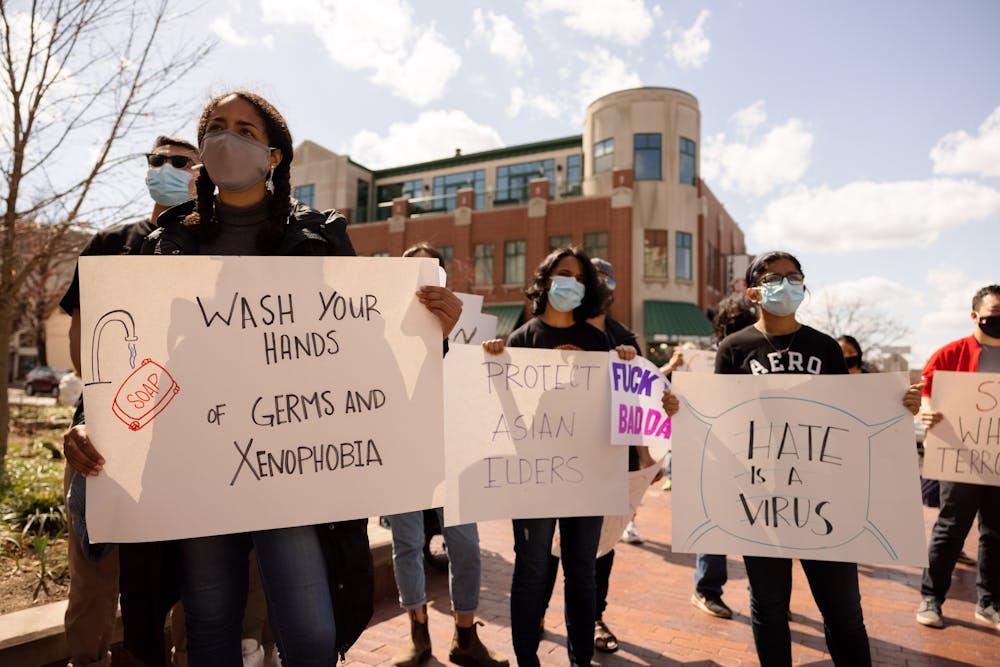
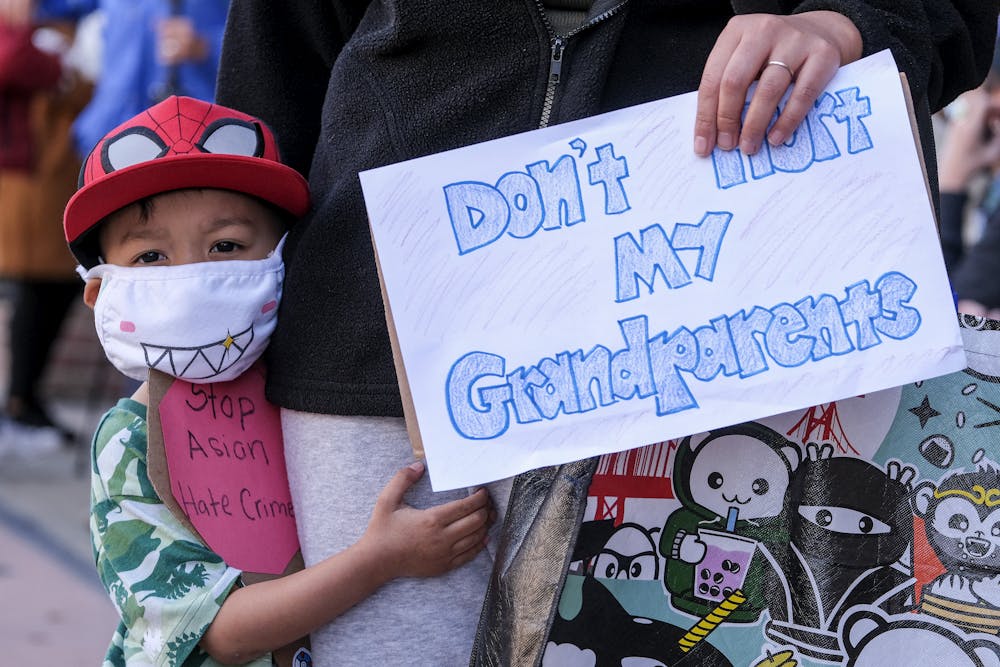
Are America’s schools safe for Asian Americans?

By Charissa S. L. Cheah, professor, psychology, UMBC; Aggie Yellow Horse, Arizona State University, and Kevin A. Gee, University of California, Davis
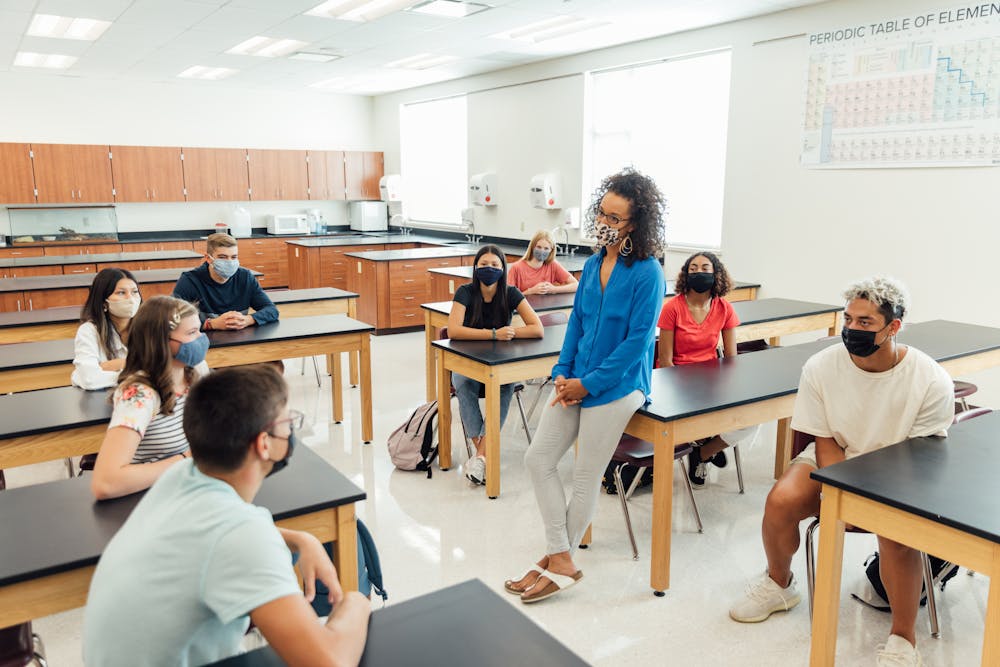
The rise in anti-Asian hate crimes during the pandemic has prompted many Asian American parents to enroll their children in remote learning out of concern for their child’s safety at school. Asian American youths are enrolled in remote learning at much higher rates than other racial groups. Federal data show that 78% of Asian American eighth graders attended school virtually in February 2021, whereas just 59% of Black, 59% of Latino and 29% of white students attended school virtually.
Here, three scholars address school safety for Asian American students.
Are American schools dangerous for Asian American students?
Aggie J. Yellow Horse, assistant professor of Asian Pacific American Studies at Arizona State University.
Data show that many Asian American youths have experienced anti-Asian violence in the past year.
Asian Americans have experienced a great deal of racial harassment amid the COVID-19 pandemic. A recent survey found that 1 in 8 Asian Americans reported experiencing anti-Asian hate incidents in 2020. The victims of that harassment aren’t just adults – they include students.
Since the beginning of the pandemic, more than 3,800 hate incidents targeting Asian Americans and Pacific Islanders have been reported to the Stop AAPI Hate National Reporting Center. Among the incidents early in the pandemic, 16% percent of the targets were Asian American youths ages 12-20.
The majority of the young victims, about 80%, reported being bullied or verbally harassed. In over half the incidents, the perpetrator used anti-Asian hate rhetoric. About 1 in 5 hate incidents happened at school.
National trends before the pandemic suggested that Asian American students were already more likely to experience racial discrimination, such as race-related name-calling, from their peers at school than other categories of students. About 11% of Asian American students reported being called hate-related words, compared with 6.3% of white students in 2015. A separate study found that bullying and physical violence were less of an issue for Asian American students. Only about 7.3% reported being bullied at school in 2017, compared with 23% of white students.
How common race-based harassment against Asian students is can vary based on different factors, such as where students live, their gender, grades or immigration status. For example, a study from California found that Asian American sixth graders in California reported being bullied and victimized at higher rates than other racial groups.
What are the biggest worries for Asian American youth and parents?
Charissa S. L. Cheah, professor of psychology at the University of Maryland, Baltimore County
Many Asian American parents are worried that their children will be the victims of discrimination once school reopens.
Asian American parents are worried about schools reopening. NPR3.38 MB (download)
In one survey, nearly 1 in 2 Chinese American parents and 1 in 2 Chinese American youth reported being directly targeted with COVID-19 racial discrimination in person or online. About 4 in 5 of these parents and their children also reported witnessing racism directed at someone else of their own race either online or in person.
Despite their concerns, some parents may avoid talking to their children about anti-Asian racism to avoid scaring them while they are at school. Even if parents want to have the “race talk” with their children, many struggle with how to talk to their children about the potential racism they might encounter. Some parents may not have been taught these lessons while growing up and are grappling with how to make sense of these experiences.
Anti-Asian racism is also associated with greater depressive symptoms and anxiety in Chinese American parents and their children. A majority of Americans blame China for its mishandling of the coronavirus outbreak. Researchers have found that even thinking that one’s racial or ethnic group is viewed by the general public as a threat to the health of Americans is linked to poorer mental health in both Chinese American parents and youths.
Asian Americans are less likely than non-Hispanic white Americans to seek mental health help. This is due in part to perceived stigma, language barriers and lack of mental health providers of the same ethnicity. These disparities are even greater for Asian American families with fewer financial resources.
Some Asian American parents have also expressed concerns about the ability of schools to maintain appropriate COVID-19-related health and safety measures. They are worried about the health risks that children exposed to others at school might bring home. Asians Americans are more likely to live in a multigenerational household, in which older adults might be at a higher health risk.
Even if parents choose to keep their children home because of one or several of these concerns, they are getting the message that in-person education is superior to virtual education. Being out of physical school could cause Asian Americans to miss out on these opportunities and resources even more. Also, due to the “model minority myth,” which characterizes Asian Americans as successful, the needs of this very diverse group, including a large number of immigrant and refugee Asian families in the U.S., are often overlooked. With 30% of Asian Americans reporting limited English proficiency, these families are more difficult to reach. The fears of being harassed also make some parents reluctant to access educational materials or free meals or even reach out to teachers or counselors for help.
What can schools do to reduce threats to Asian American students?
Kevin Gee, an associate professor in the school of education at the University of California Davis
Helping students build strong and supportive relationships with each other can reduce their physical victimization and buffer the negative effects of discrimination Asian Americans face.
Schools can also create supportive environments by implementing a range of evidence-based approaches, such as building teachers’ cultural knowledge and strengthening teacher-student relationships. Activities like engaging students in class discussions about bullying have been shown to reduce bullying.
Alongside initiatives to build supportive environments, schools should also consider partnering with parents. Directly engaging Asian American parents in anti-bullying initiatives can help reduce victimization. For example, schools can collaborate with parents to craft disciplinary policies on bullying. Schools can also hold workshops to teach parents how to handle and prevent bullying.
In order to reduce threats and eradicate harm, I believe schools will need to consider whether they are doing enough to protect Asian American youth. One landmark case underscores this. In the aftermath of violent attacks on Asian American students at South Philadelphia High School in 2009, a Department of Justice investigation revealed that the school district was “deliberately indifferent” to harassment against Asian students that fueled the attacks.
A key takeaway: Harms against Asian American students can be systemic and require broader structural solutions. When South Philadelphia High School began to do more to promote multicultural awareness and improved systems to report and investigate harassment, the school saw fewer violent incidents.
To make Asian American youth feel safe and protected, schools need to track, report and respond to incidents of hate against Asian Americans, especially among Asian American ethnic subgroups. Subgroup data, often lacking on Asian Americans, can be a powerful tool in revealing potential disparities and highlighting groups that schools need to target for support.
I believe schools also need to invest in longer-term systemic changes such as including a more complete history of Asian Americans in U.S. social studies curricula.
*****
Header image: Eight out of 10 Asian American youths reported being bullied and harassed during the pandemic. RyanJLane/E+ via Getty Images
Charissa S. L. Cheah, Professor of Psychology, University of Maryland, Baltimore County; Aggie Yellow Horse, Assistant Professor of Asian Pacific American Studies, Arizona State University, and Kevin A. Gee, Associate Professor of Education, University of California, Davis
This article is republished from The Conversation under a Creative Commons license. Read the original article.
]]>
By Charissa S. L. Cheah, professor, psychology, UMBC; Aggie Yellow Horse, Arizona State University, and Kevin A. Gee, University of California, Davis The rise in anti-Asian hate crimes during...
https://umbc.edu/stories/are-americas-schools-safe-for-asian-americans/
https://beta.my.umbc.edu/api/v0/pixel/news/119651/guest@my.umbc.edu/78eb0c173831da66c59f0ba2ee6351a7/api/pixel
covid-19
discovery
psychology
the-conversation
UMBC News & Magazine
https://beta.my.umbc.edu/groups/umbc-news-magazine
https://assets1-beta.my.umbc.edu/system/shared/avatars/groups/000/001/943/24435aa6207c452e7bc15cc74b42c7bb/xsmall.png?1748556657
https://assets1-beta.my.umbc.edu/system/shared/avatars/groups/000/001/943/24435aa6207c452e7bc15cc74b42c7bb/original.png?1748556657
https://assets2-beta.my.umbc.edu/system/shared/avatars/groups/000/001/943/24435aa6207c452e7bc15cc74b42c7bb/xxlarge.png?1748556657
https://assets2-beta.my.umbc.edu/system/shared/avatars/groups/000/001/943/24435aa6207c452e7bc15cc74b42c7bb/xlarge.png?1748556657
https://assets3-beta.my.umbc.edu/system/shared/avatars/groups/000/001/943/24435aa6207c452e7bc15cc74b42c7bb/large.png?1748556657
https://assets1-beta.my.umbc.edu/system/shared/avatars/groups/000/001/943/24435aa6207c452e7bc15cc74b42c7bb/medium.png?1748556657
https://assets2-beta.my.umbc.edu/system/shared/avatars/groups/000/001/943/24435aa6207c452e7bc15cc74b42c7bb/small.png?1748556657
https://assets1-beta.my.umbc.edu/system/shared/avatars/groups/000/001/943/24435aa6207c452e7bc15cc74b42c7bb/xsmall.png?1748556657
https://assets2-beta.my.umbc.edu/system/shared/avatars/groups/000/001/943/24435aa6207c452e7bc15cc74b42c7bb/xxsmall.png?1748556657
UMBC News & Magazine
0
0
false
Mon, 19 Apr 2021 15:49:34 -0400
UMBC Event Center partnership launches new chapter in Retriever history with a new name

The UMBC Event Center has become synonymous with high-level athletic play, premier entertainment, and university milestones since opening in 2018. This spring, UMBC has officially announced the beginning of a new chapter for the Event Center—a new name.
The Chesapeake Employers Insurance Arena, a new partnership between UMBC and Chesapeake Employers’ Insurance Company, will open doors for both the university and the facility.
 Tom Phelan (left, next to banner), CEO of Chesapeake Employers’ Insurance Company, poses with UMBC partners.
“The partnership between UMBC and Chesapeake Employers Insurance represents not only an investment in our campus, but also in the region. This is an opportunity to elevate our facility, our University, and our local economy,” says President Freeman Hrabowski.
Partnering for success
In addition to naming rights, this partnership establishes a platform for UMBC and Chesapeake Employers Insurance to engage in additional collaborations, including opportunities for student internships and hiring, and applied research projects.
“We at Chesapeake Employers Insurance are honored to partner with a premier University System of Maryland institution such as UMBC,” says Tom Phelan, CEO of Chesapeake Employers Insurance. “This partnership bridges our corporation with UMBC students, staff, and alumni to form a symbiotic relationship with shared values and a commitment to excellence relevant to education and business.”
 President Freeman Hrabowski presents Tom Phelan with a custom UMBC Retrievers jersey to mark the new partnership.
The 172,000 square-foot facility can accommodate 4,700 patrons for sporting events and nearly 6,000 for other events. Home to both men’s and women’s basketball, and women’s volleyball, all student-athletes are able to use the building’s academic, strength and conditioning, sports medicine, and other athletics’ department services.
“We are building a program where we can celebrate community, while we help welcome new students and prepare them for meaningful careers and welcome alumni home,” says Brian Barrio, director of athletics. “This building, Chesapeake Employers Insurance Arena, is a central part of that vision. And great visions require great partners.”
Featured image: CEO Tom Phelan and President Freeman Hrabowski. All photos by Marlayna Demond ’11 for UMBC. Video by UMBC’s New Media Studio.
Article written by Steve Levy, associate athletic director for athletic communications, and Kait McCaffrey, communications manager, for UMBC News.
]]>
The UMBC Event Center has become synonymous with high-level athletic play, premier entertainment, and university milestones since opening in 2018. This spring, UMBC has officially announced the...
https://umbc.edu/stories/umbc-event-center-partnership-launches-new-chapter-in-retriever-history-with-a-new-name/
https://beta.my.umbc.edu/api/v0/pixel/news/119652/guest@my.umbc.edu/381d6b6f1bc8ebbed8a2c9882b3f4605/api/pixel
athletics
community
page1
UMBC News & Magazine
https://beta.my.umbc.edu/groups/umbc-news-magazine
https://assets1-beta.my.umbc.edu/system/shared/avatars/groups/000/001/943/24435aa6207c452e7bc15cc74b42c7bb/xsmall.png?1748556657
https://assets1-beta.my.umbc.edu/system/shared/avatars/groups/000/001/943/24435aa6207c452e7bc15cc74b42c7bb/original.png?1748556657
https://assets2-beta.my.umbc.edu/system/shared/avatars/groups/000/001/943/24435aa6207c452e7bc15cc74b42c7bb/xxlarge.png?1748556657
https://assets2-beta.my.umbc.edu/system/shared/avatars/groups/000/001/943/24435aa6207c452e7bc15cc74b42c7bb/xlarge.png?1748556657
https://assets3-beta.my.umbc.edu/system/shared/avatars/groups/000/001/943/24435aa6207c452e7bc15cc74b42c7bb/large.png?1748556657
https://assets1-beta.my.umbc.edu/system/shared/avatars/groups/000/001/943/24435aa6207c452e7bc15cc74b42c7bb/medium.png?1748556657
https://assets2-beta.my.umbc.edu/system/shared/avatars/groups/000/001/943/24435aa6207c452e7bc15cc74b42c7bb/small.png?1748556657
https://assets1-beta.my.umbc.edu/system/shared/avatars/groups/000/001/943/24435aa6207c452e7bc15cc74b42c7bb/xsmall.png?1748556657
https://assets2-beta.my.umbc.edu/system/shared/avatars/groups/000/001/943/24435aa6207c452e7bc15cc74b42c7bb/xxsmall.png?1748556657
UMBC News & Magazine
0
0
false
Mon, 19 Apr 2021 12:43:17 -0400
looking for male student as roommate
room for rent
Here is a bedroom available now for summer or fall semester male student
price : $410 /month about(depend on room) + utilities (average $50/month/per month)+ wifi $10/per month
Location: Walking distance to UMBC about 5 minutes.
If interesting, please contact me with your name and your umbc email address;
my e-mail is ; lidimin@gmail.com (please write "Re room")
]]>
Here is a bedroom available now for summer or fall semester male student price : $410 /month about(depend on room) + utilities (average $50/month/per month)+ wifi $10/per month Location:...
https://beta.my.umbc.edu/api/v0/pixel/news/101003/guest@my.umbc.edu/54948f511c890ec95004fa392a6efe6a/api/pixel
International Student and Scholar Services (ISSS)
https://beta.my.umbc.edu/groups/ies
https://assets4-beta.my.umbc.edu/system/shared/avatars/groups/000/000/431/46ad84ea8ba0baeed7c3faf29d1fd4ef/xsmall.png?1693323874
https://assets3-beta.my.umbc.edu/system/shared/avatars/groups/000/000/431/46ad84ea8ba0baeed7c3faf29d1fd4ef/original.jpeg?1693323874
https://assets1-beta.my.umbc.edu/system/shared/avatars/groups/000/000/431/46ad84ea8ba0baeed7c3faf29d1fd4ef/xxlarge.png?1693323874
https://assets1-beta.my.umbc.edu/system/shared/avatars/groups/000/000/431/46ad84ea8ba0baeed7c3faf29d1fd4ef/xlarge.png?1693323874
https://assets4-beta.my.umbc.edu/system/shared/avatars/groups/000/000/431/46ad84ea8ba0baeed7c3faf29d1fd4ef/large.png?1693323874
https://assets3-beta.my.umbc.edu/system/shared/avatars/groups/000/000/431/46ad84ea8ba0baeed7c3faf29d1fd4ef/medium.png?1693323874
https://assets1-beta.my.umbc.edu/system/shared/avatars/groups/000/000/431/46ad84ea8ba0baeed7c3faf29d1fd4ef/small.png?1693323874
https://assets4-beta.my.umbc.edu/system/shared/avatars/groups/000/000/431/46ad84ea8ba0baeed7c3faf29d1fd4ef/xsmall.png?1693323874
https://assets3-beta.my.umbc.edu/system/shared/avatars/groups/000/000/431/46ad84ea8ba0baeed7c3faf29d1fd4ef/xxsmall.png?1693323874
IES Marketplace
0
0
true
Sat, 17 Apr 2021 23:19:52 -0400
UMBC welcomes Jim Ferry as new men’s basketball head coach

The UMBC community is excited to welcome Jim Ferry as the Retrievers’ new head coach of men’s basketball. Ferry is the tenth head coach in UMBC’s history, taking the place of Ryan Odom, who transitioned to Utah State University early last week.
Talking about the interview process, Ferry says, “The sincerity and the love for this place, it just came through. This is one of the fastest-growing universities in the country and I’m excited to be a part of this family and such an outstanding basketball program.”
 BROOKLYN, NY – November 27: The Penn State Nittany Lions take on the Ole Miss Rebels during the NIT Season Tip-off on November 27, 2019 at Barclays Center, Brooklyn, New York. (Photo by Mike Lawrence, courtesy of Penn State Athletics)
Ferry began his tenure as an assistant coach at Penn State in 2017-18 and was an integral part of the offensive resurgence for the Nittany Lions. Ferry joins the Retrievers after most recently serving as PSU’s interim head coach for the 2020-21 season. In his most recent season, Ferry led the Nittany Lions to an 11-4 season and a 7-12 Big Ten record.
“I have a national network of basketball people I talk to and I’ve never heard such unanimously positive thoughts about somebody’s character. And at UMBC, that really matters to us,” says Brian Barrio, director of Athletics. “At the end of the day, winning matters too, and this is a gentleman who has 30 years of winning across college basketball.”
 Ferry officially joins Retriever Nation with a new headshot.
Before his time at PSU, Ferry was the bench boss at Duquesne University. And prior to his five years at Duquesne, Ferry spent ten seasons as head coach at LIU Brooklyn, guiding that program to unprecedented levels of success.
Trading blue and white for black and gold
Ferry will now lead a team that was on track to clinch the America East Championship again this year after taking their share of the regular season title before falling just shy of their opportunity to advance. Fans applauded the players’ dedication and diligence as essential to making a Retriever season possible amid the COVID pandemic.
 Ferry and Greg Simmons converse before on-campus press conference.
“There’s [UMBC’s student-athletes] an extraordinary group of young people who have followed the health and safety rules and who have been working really hard in the classroom to be able to compete on the court and on the field this year, and they continue to represent UMBC exceptionally well,” says Greg Simmons, M.P.P. ’04, public policy, vice president for Institutional Advancement.
Meeting his new players for the first time this week, Ferry talks about the passion of the community and how excited he is to join the ranks of Retriever Nation.
 Ferry meets player Dimitrije Spasojevic ‘22, sociology.
“These guys seem to be really unselfish. They play basketball the right way. You can tell they like each other and they’re a bunch of talented guys,” says Ferry. “I think you’re really going to like the way we play.”
The resounding sentiment from those involved in the recruitment of Ferry is that he’s a natural fit for the UMBC community and Retriever Nation can’t wait to see him in action.
“I would tell Coach that UMBC is a remarkable community of people who come from a broad range of backgrounds with a whole set of skills and abilities and promise. At UMBC, we believe in working together to achieve things that we could not do alone,” says Simmons. “It’s an extraordinary place and we’re excited to have him here.”
Banner image: Jim Ferry, men’s basketball head coach, speaks with Brian Barrio, UMBC Athletics Director. All images by Marlayna Demond ’11 unless otherwise noted. Video produced by Corey Jennings ’10.
Article written by Steve Levy, associate athletic director for athletic communications, and Kait McCaffrey, communications manager, for UMBC News.
]]>
The UMBC community is excited to welcome Jim Ferry as the Retrievers’ new head coach of men’s basketball. Ferry is the tenth head coach in UMBC’s history, taking the place of Ryan Odom, who...
https://umbc.edu/stories/umbc-welcomes-jim-ferry-as-new-mens-basketball-head-coach/
https://beta.my.umbc.edu/api/v0/pixel/news/119653/guest@my.umbc.edu/b45db2696732f1fb601a98efe37fa57b/api/pixel
athletics
community
UMBC News & Magazine
https://beta.my.umbc.edu/groups/umbc-news-magazine
https://assets1-beta.my.umbc.edu/system/shared/avatars/groups/000/001/943/24435aa6207c452e7bc15cc74b42c7bb/xsmall.png?1748556657
https://assets1-beta.my.umbc.edu/system/shared/avatars/groups/000/001/943/24435aa6207c452e7bc15cc74b42c7bb/original.png?1748556657
https://assets2-beta.my.umbc.edu/system/shared/avatars/groups/000/001/943/24435aa6207c452e7bc15cc74b42c7bb/xxlarge.png?1748556657
https://assets2-beta.my.umbc.edu/system/shared/avatars/groups/000/001/943/24435aa6207c452e7bc15cc74b42c7bb/xlarge.png?1748556657
https://assets3-beta.my.umbc.edu/system/shared/avatars/groups/000/001/943/24435aa6207c452e7bc15cc74b42c7bb/large.png?1748556657
https://assets1-beta.my.umbc.edu/system/shared/avatars/groups/000/001/943/24435aa6207c452e7bc15cc74b42c7bb/medium.png?1748556657
https://assets2-beta.my.umbc.edu/system/shared/avatars/groups/000/001/943/24435aa6207c452e7bc15cc74b42c7bb/small.png?1748556657
https://assets1-beta.my.umbc.edu/system/shared/avatars/groups/000/001/943/24435aa6207c452e7bc15cc74b42c7bb/xsmall.png?1748556657
https://assets2-beta.my.umbc.edu/system/shared/avatars/groups/000/001/943/24435aa6207c452e7bc15cc74b42c7bb/xxsmall.png?1748556657
UMBC News & Magazine
0
0
false
Thu, 15 Apr 2021 18:54:54 -0400
UMBC’s Erle Ellis and international team show people have shaped Earth’s ecology for 12,000 years

New research published today in the Proceedings of the National Academy of Sciences (PNAS) shows that land use by human societies has reshaped ecology across most of Earth’s land for at least 12,000 years. The research team, from more than a dozen institutions around the world, compared the history of global land use with current patterns of biodiversity and conservation. Their work revealed that the main cause of the current biodiversity crisis is not human destruction of uninhabited wildlands, but rather the appropriation, colonization, and intensified use of lands previously managed sustainably.
The new data overturn earlier reconstructions of global land use history, some of which indicated that most of Earth’s land was uninhabited even as recently as 1500 CE. Further, this new PNAS study supports the argument that an essential way to end Earth’s current biodiversity crisis is to empower the environmental stewardship of Indigenous peoples and local communities across the planet.
 Erle Ellis. Photo by Marlayna Demond for UMBC.
“Our work shows that most areas depicted as ‘untouched,’ ‘wild,’ and ‘natural’ are actually areas with long histories of human inhabitation and use,” says UMBC’s Erle Ellis, professor of geography and environmental systems and lead author. He notes that they might be interpreted like this because in these areas, “societies used their landscapes in ways that sustained most of their native biodiversity and even increased their biodiversity, productivity, and resilience.”
Mapping 12,000 years of land use
The interdisciplinary research team includes geographers, archaeologists, anthropologists, ecologists, and conservation scientists. They represent the U.S., the Netherlands, China, Germany, Australia, and Argentina, pooling their knowledge and expertise into a large-scale study that required a highly collaborative approach. They tested the degree to which global patterns of land use and population over 12,000 years were associated statistically with contemporary global patterns of high biodiversity value within areas prioritized for conservation.
“Our global maps show that even 12,000 years ago, nearly three-quarters of terrestrial nature was inhabited, used, and shaped by people,” says Ellis. “Areas untouched by people were almost as rare 12,000 years ago as they are today.”
 Global changes in anthromes and populations 10,000 BCE to 2017 CE.
Map courtesy of Erle Ellis.
The cultural practices of early land users did have some impact on extinctions. However, by and large, land use by Indigenous and traditional communities sustained the vast majority of Earth’s biodiversity for millennia. This finding comes at a critical time of heightened need to develop long-term, sustainable answers to our biggest environmental problems.
“The problem is not human use per se,” explains professor and co-author Nicole Boivin, of the Max Planck Institute for the Science of Human History in Jena, Germany. “The problem is the kind of land use we see in industrialized societies—characterized by unsustainable agricultural practices and unmitigated extraction and appropriation.”
To truly understand terrestrial nature today, it is necessary to understand the deep human history of that nature. Outside of a few remote areas, “nature as we know it was shaped by human societies over thousands of years,” says Ellis. He believes that efforts to conserve and restore “won’t be successful without empowering the Indigenous, traditional, and local people who know their natures in ways that scientists are only beginning to understand.”
Supporting Indigenous land use practices

Ancient gateway in Angkor, Cambodia.
Photo by Erle Ellis.
The authors argue that their findings confirm that biodiversity conservation and restoration will benefit by shifting focus from preserving land in a form imagined as “untouched” to supporting traditional and Indigenous peoples whose land use practices have helped sustain biodiversity over the long term.
“This study confirms on a scale not previously understood that Indigenous peoples have managed and impacted ecosystems for thousands of years, primarily in positive ways,” says Darren J. Ranco, associate professor of anthropology and coordinator of Native American research at the University of Maine. “These findings have particular salience for contemporary indigenous rights and self-determination.”
Ranco, a citizen of the Penobscot Indian Nation, notes that indigenous people currently exercise some level of management of about 5% of the world’s lands, upon which 80% of the world’s biodiversity exists. Even so, indigenous people have been excluded from management, access, and habitation of protected lands in places such as the U.S. National Parks.
 Darren J. Ranco. Photo courtesy of Ranco.
“We must also assure that new attempts to protect lands and biodiversity are not just a green-grab of indigenous lands,” says Ranco. “We cannot re-create the worst of colonial policies meant to exclude indigenous people, which would undoubtedly make the situation much worse for the environment and humanity.”
A sustainable future
“Our research demonstrates the connections between people and nature that span thousands of years,” says Torben Rick, study co-author and curator of North American Archaeology at the Smithsonian National Museum of Natural History. “These connections are essential for understanding how we arrived at the present and how to achieve a more sustainable future.”

Rick excavating a roughly 11,000 year old archaeological site on Santa Rosa Island, California.
Photo courtesy of Rick.
This research represents a new form of collaboration across archaeology, global change science, conservation, and scholars of Indigenous knowledge. The co-authors hope this work will open the door to increasing the use of global land use history data by natural scientists, policymakers, activists, and others. Leaders in a range of fields can use these data, they note, to better understand and collaborate with Indigenous, traditional, and local peoples to conserve biodiversity and ecosystems over the long term.
“It is clear that the perspectives of Indigenous and local peoples should be at the forefront of global negotiations to reduce biodiversity loss,” says Rebecca Shaw, chief scientist at World Wildlife Fund and another study co-author. “There is a global crisis in the way traditionally-used land has been transformed by the scale and magnitude of intensive human development. We have to change course if we are to sustain humanity over the next 12,000 years.”
Banner image: Hilltop settlement in drylands, Morocco. Photo by Erle Ellis.
]]>
New research published today in the Proceedings of the National Academy of Sciences (PNAS) shows that land use by human societies has reshaped ecology across most of Earth’s land for at least...
https://umbc.edu/stories/umbcs-erle-ellis-and-international-team-show-people-have-shaped-earths-ecology-for-1200-years/
https://beta.my.umbc.edu/api/v0/pixel/news/119654/guest@my.umbc.edu/cd9af035cbed8256591c8218ff4eb8dc/api/pixel
cahss
cahssresearch
ges
interdisciplinary
international
policy-and-society
UMBC News & Magazine
https://beta.my.umbc.edu/groups/umbc-news-magazine
https://assets1-beta.my.umbc.edu/system/shared/avatars/groups/000/001/943/24435aa6207c452e7bc15cc74b42c7bb/xsmall.png?1748556657
https://assets1-beta.my.umbc.edu/system/shared/avatars/groups/000/001/943/24435aa6207c452e7bc15cc74b42c7bb/original.png?1748556657
https://assets2-beta.my.umbc.edu/system/shared/avatars/groups/000/001/943/24435aa6207c452e7bc15cc74b42c7bb/xxlarge.png?1748556657
https://assets2-beta.my.umbc.edu/system/shared/avatars/groups/000/001/943/24435aa6207c452e7bc15cc74b42c7bb/xlarge.png?1748556657
https://assets3-beta.my.umbc.edu/system/shared/avatars/groups/000/001/943/24435aa6207c452e7bc15cc74b42c7bb/large.png?1748556657
https://assets1-beta.my.umbc.edu/system/shared/avatars/groups/000/001/943/24435aa6207c452e7bc15cc74b42c7bb/medium.png?1748556657
https://assets2-beta.my.umbc.edu/system/shared/avatars/groups/000/001/943/24435aa6207c452e7bc15cc74b42c7bb/small.png?1748556657
https://assets1-beta.my.umbc.edu/system/shared/avatars/groups/000/001/943/24435aa6207c452e7bc15cc74b42c7bb/xsmall.png?1748556657
https://assets2-beta.my.umbc.edu/system/shared/avatars/groups/000/001/943/24435aa6207c452e7bc15cc74b42c7bb/xxsmall.png?1748556657
UMBC News & Magazine
0
0
false
Thu, 15 Apr 2021 17:39:17 -0400
UMBC students set new record in prestigious Goldwater Scholarships for STEM research
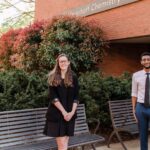
Four UMBC students have been named 2021-2022 Goldwater Scholars, setting a new university record for the most Retrievers to earn this prestigious undergraduate award in a single year. They are Joshua Slaughter ‘22, computer engineering; Kaitlynn Lilly ‘22, physics and mathematics; Gerson Kroiz ‘22, mathematics; and Karan Luthria ‘22, bioinformatics. Their awards make UMBC one of the highest-producing universities for Goldwater Scholars in the nation, directly alongside Harvard, MIT, and Johns Hopkins.
The goal of the Barry Goldwater Scholarship and Excellence in Education Program is to provide the United States with “a continuing source of highly qualified scientists, mathematicians, and engineers” to move the nation forward. UMBC’s prior Goldwater Scholars, including Rhodes Scholar Naomi Mburu ‘18, chemical engineering, have gone on to top graduate programs and promising research careers.
That four UMBC students won awards, from over 1,250 STEM student applicants across the country is remarkable, notes April Householder ’95, director of undergraduate research and prestigious scholarships at UMBC. “Winning the Goldwater means that Slaughter, Lilly, Kroiz, and Luthria join a legacy of scholars who have gone on to become this country’s leading scientists, engineers, and mathematicians,” she says.
“The impact that these students will have in their respective fields is immense,” Householder shares, “and they are ready for the challenge. All four of them had their research internships moved online because of COVID, and they have proved that they are resilient.”
 Joshua Slaughter, left, Kaitlynn Lilly, center, and Karan Luthria on campus.
Slaughter, Lilly, Kroiz, and Luthria are among the 410 winners selected this year from a highly competitive national pool of applicants. They will receive substantial scholarship funding that advances their undergraduate work and supports their educational paths.
The students met each other early in their UMBC careers and are close friends, all involved in the Meyerhoff community—Slaughter, Lilly, and Luthria as scholars, and Kroiz as an affiliate.
The impact of algorithms
Joshua Slaughter actually began doing research at UMBC when he was in high school, starting in environmental science. As he explored his interests, he discovered his fascination with using machine learning to evaluate the replicability and reproducibility of algorithms.
 Joshua Slaughter
Currently, Slaughter works with Distinguished University Professor Tulay Adali, computer science and electrical engineering (CSEE). Their machine learning research has applications in fields like neuroimaging, which uses data-driven algorithms to identify features of neurological disease. Slaughter says that it’s essential to diversify the field of machine learning and that people of all backgrounds need to be involved in the development of algorithms.
“Machine learning algorithms will be crucial in future decision-making. If they are developed without intersectionality being considered, we will have nightmarish outcomes for certain underrepresented populations,” he explains. “That’s a huge reason why I’m pursuing machine learning.”
When Slaughter applied to UMBC, he already had his sights set on the Goldwater. He was researching in the lab when he learned he won the scholarship—working alone due to COVID-19 restrictions. “I screamed,” he said, overjoyed by the news.
In addition to being a Meyerhoff Scholar, Slaughter is in the UMBC Honors College, and a member of the URISE program, which supports undergraduate juniors and seniors who are majoring in the science, engineering and mathematics. He is a member of the National Society of Black Engineers and Tau Beta Pi, the engineering honors society. He has completed research internships at Princeton University and Carnegie Mellon University, has presented his research at conferences, and has published two scientific papers.
Slaughter looks forward to pursuing a Ph.D. after his senior year, and says that receiving the Goldwater Scholarship proves to him that he can succeed in a research career. He’s thankful to UMBC for guiding him, from providing an Undergraduate Research Award to connecting him with internship opportunities.
“UMBC does a great job of putting students first,” says Slaughter. He’s already paying that forward by mentoring high school students in Baltimore and as a CSEE teaching fellow.
STEM role models matter
Kaitlynn Lilly actually applied to the Goldwater program as a sophomore but didn’t receive the award—an experience shared by Slaughter. She says the feedback she received from UMBC faculty and staff throughout the process was instrumental in her resilience and continued growth as a researcher, and earning the scholarship this year was all the more gratifying.
 Kaitlynn Lilly
Lilly’s research focuses on using partial differential equations to understand how large structures, such as bridges, interact with air flow and are impacted by aerodynamics. Lilly currently conducts research with Justin Webster, assistant professor of mathematics. Webster himself received a Goldwater Scholarship in 2007 and knows the impact of receiving the award.
Webster and Lilly are also collaborating with researchers at Carnegie Mellon University. Lilly also has experience working with Carnegie Mellon researchers through an enriching virtual internship last summer, secured after her internship at MIT’s Lincoln Lab was cancelled due to COVID-19.
In addition to conducting research at Carnegie Mellon and UMBC, she has completed internships at the Johns Hopkins Applied Physics Lab and University of Hawaii. This summer, Lilly plans to conduct research at the University of Leiden in the Netherlands.
Beyond the lab, Lilly is committed to volunteering at the local Arbutus Middle School, supporting students one-on-one who need extra help in STEM classes. “I’m a first-generation college student, and having someone that has gone through it tell you that you can do it really matters,” she says. “Being that inspiration for someone else has been very rewarding.”
Lilly, who is also a member of the Honors College, explains that receiving the Goldwater Scholarship confirms to her that “what I’m doing matters.” She plans to pursue her Ph.D. in applied mathematics when she graduates from UMBC next year.
Safer cancer treatment through math
Gerson Kroiz began his UMBC undergraduate experience at 16 years old, passionate to pursue research with public impact. He had his eye on the Goldwater Scholarship early, knowing the doors it could open. Receiving the Goldwater “really validates where I am at, and the hard work that I’ve put into my academic path,” as well as the value of UMBC support for undergraduate researchers, he says.

Gerson Kroiz. Photo courtesy of Kroiz.
Kroiz has refined his research interests through experiences at institutions across the country. This past summer, he completed a virtual internship at UCLA, adding to his resume of internships at the National Institute of Standards and Technology and UMBC.
Today, Kroiz’s research focuses on using machine learning techniques to improve real-time imaging for safer cancer treatments. The technology he studies will help physicians treat people with cancer by “reducing possible side-effects from common cancer treatment methods,” Kroiz explains.
In addition to being an affiliate of the Meyerhoff Scholars program, Kroiz is a member of the Honors College and won an Undergraduate Research Award. He volunteers with UMBC’s Creative Coders program at Arbutus Middle School. There, he helps middle school students learn about computer science through hands-on applications such as game design.
He is also a teaching assistant in mathematics, working with Matthias Gobbert, professor of mathematics and statistics. And Kroiz is vice president of the Korean Student Association, ready to serve as president in the 2021-2022 academic year.
Kroiz plans to pursue his Ph.D. in applied mathematics with a focus in high-performance computing and big data after graduating next year.
Public impact research
As an undergraduate who aspires to become a physician-scientist, Karan Luthria is inspired by the profound impact that lab research can have on patients’ treatment and health outcomes. His research focuses on studying similarities between diseases hoping to identify new avenues for drug repurposing.
 Karan Luthria
Luthria explains that he is looking at “how previously developed drugs can be used to treat different conditions.” Although he has been working on this research since freshman year, and has presented his findings at conferences around the country, he says COVID-19 has brought much attention to the value of drug repurposing.
On the day that the Goldwater Scholarship recipients were announced, Luthria refreshed the award page, awaiting the results. When he finally saw his name appear, “I was humbled,” he says. “Just seeing how I have the potential to make a difference in science and to have my research recognized by the Goldwater Committee is exciting.”
Luthria has held several internships, including at Harvard Medical School, the National Institutes of Health (NIH), and the Johns Hopkins Applied Physics Lab. Maricel Kann, associate professor of biological sciences, is his research mentor at UMBC. He says that Kann and his mentors at Harvard and at the NIH played a particularly important role in supporting him to achieve his career goals and throughout the Goldwater application process.
Outside of the lab, Luthria is a teaching assistant in math and biology, and a tutor in the Chemistry Tutorial Center. He is also the logistics director for HackUMBC, a student organization that plans 24-hour-long hackathons for students to develop technological solutions to problems that matter to them. As a member of HackUMBC, Luthria connects with corporations and campus partners to secure funding that supports the annual event, sharing his passion for collaborative public impact research.
Banner image: Karan Luthria, left; Kaitlynn Lilly, center; and Joshua Slaughter. All photos by Marlayna Demond ’11 for UMBC unless otherwise noted.
]]>
Four UMBC students have been named 2021-2022 Goldwater Scholars, setting a new university record for the most Retrievers to earn this prestigious undergraduate award in a single year. They are...
https://umbc.edu/stories/umbc-students-set-new-record-in-prestigious-goldwater-scholarships-for-stem-research/
https://beta.my.umbc.edu/api/v0/pixel/news/119655/guest@my.umbc.edu/24fe6228731f8b927730cb5c5e7871e6/api/pixel
chembiochem
cnms-csee
coeit
honorscollege
majoraward
mathstat
meyerhoffscholars
page1
physics
science-and-technology
undergradresearch
UMBC News & Magazine
https://beta.my.umbc.edu/groups/umbc-news-magazine
https://assets1-beta.my.umbc.edu/system/shared/avatars/groups/000/001/943/24435aa6207c452e7bc15cc74b42c7bb/xsmall.png?1748556657
https://assets1-beta.my.umbc.edu/system/shared/avatars/groups/000/001/943/24435aa6207c452e7bc15cc74b42c7bb/original.png?1748556657
https://assets2-beta.my.umbc.edu/system/shared/avatars/groups/000/001/943/24435aa6207c452e7bc15cc74b42c7bb/xxlarge.png?1748556657
https://assets2-beta.my.umbc.edu/system/shared/avatars/groups/000/001/943/24435aa6207c452e7bc15cc74b42c7bb/xlarge.png?1748556657
https://assets3-beta.my.umbc.edu/system/shared/avatars/groups/000/001/943/24435aa6207c452e7bc15cc74b42c7bb/large.png?1748556657
https://assets1-beta.my.umbc.edu/system/shared/avatars/groups/000/001/943/24435aa6207c452e7bc15cc74b42c7bb/medium.png?1748556657
https://assets2-beta.my.umbc.edu/system/shared/avatars/groups/000/001/943/24435aa6207c452e7bc15cc74b42c7bb/small.png?1748556657
https://assets1-beta.my.umbc.edu/system/shared/avatars/groups/000/001/943/24435aa6207c452e7bc15cc74b42c7bb/xsmall.png?1748556657
https://assets2-beta.my.umbc.edu/system/shared/avatars/groups/000/001/943/24435aa6207c452e7bc15cc74b42c7bb/xxsmall.png?1748556657
UMBC News & Magazine
0
0
false
Thu, 15 Apr 2021 16:48:32 -0400
Q&A: View from the End of the Road
When the pandemic first hit, many of us found ourselves looking closely at what surrounded us and what confined us. For Brea Souders ’01, visual arts, however, the circumstances drove her to look outward through the screen of her upstate New York window, and to wonder deeply about the lives happening beyond her driveway. End of the Road, the latest in the Albin O. Kuhn Library Gallery’s spring online exhibits, pairs Souders’ images with the poetry of UMBC writer-in-residence Lia Purpura, to create tender appreciations of the details that connect us all, even when we’re apart.
We sat down with Souders and Purpura to learn more about the making of End of the Road, on display now through the end of April.
* * * * *
UMBC Magazine: So, Brea, how did the idea for this series come about for you?
Brea Souders: In late March 2020, I moved from New York City to rural upstate New York. This was the beginning of the pandemic when contact with the outside world was abruptly cut off for many people and would be for the foreseeable future. The house is situated just before the gravel cul-de-sac of a country road and I began to observe people through my window as they wandered back and forth to the end of the road.
So it started in a space of stillness and solitude, which led to focused daily observation. I began to wonder about the people I saw; what brought them to the end of the road and what their stories were. As a photographer it’s second nature to pick up a camera and photograph something that has captured and sustained my attention, especially if it mystifies me in some way, if there is something hidden or unknowleable in what I see. Even if it’s an illusion, the camera draws a line connecting you and your subject and shortens the distance between you.
 Brea Souders, End of the Road 7, 2020. Courtesy of the artist.
UMBC Magazine: What was your mindset at that time, making them, versus where you are now?
Souders: There is solid evidence now that the world will begin to open back up and there are already some signs of that happening, but we’re still very much in this emotional and physical space of isolation and stillness. I’ve been making these pictures for a year now, and the trees are beginning to bud again just the way they did when this all started. It’s reassuring to witness some things just carrying on as they do.
UMBC Magazine: And Lia, you were brought into this exhibit by curator Beth Saunders. What did you feel when you saw Brea’s images for the first time? What was your first impression?
Lia Purpura: When I saw Brea’s photos, immediately they seemed like micro-dramas, these brief moments that enacted a form of inward reflection that’s also a part of the way many people are experiencing COVID times. Artists are able to find the under-seen, under-noticed ways of being and Brea’s work does that.
I love is the way Brea sees, and the different postures of these photos. And by “postures” I mean the place from which the eye is seeing. Postures of discovery. The intimacy, the solitude of the space, the stillness the viewer inhabits. That quiet felt inhabited by a presence, a curious eye.
UMBC Magazine: What was it like to collaborate in this way, pairing Brea’s new images with Lia’s poems from her 2015 book,It Shouldn’t Have Been Beautiful?
Souders: I love the way Lia thinks. She categorized the initial list of poems for our collaboration according to the photographer’s point of view, the subject’s point of view, the seasons, the feeling of walking, and sense of place. That approach deepened the connection between the poems and pictures and informed the selection and sequencing of both.
It was Beth’s idea to organize the images loosely by seasons. As you scroll through, you have a general sense of the seasons, although the window screen and distance impart a greyness to the images and you have the feeling of where am I? What day is it? Which of course is the way many people would describe this past year. The human condition and the seasons are so finely articulated in Lia’s poems. I love her exquisite attention to detail and the quiet observation felt in her work. In some of her poems, it feels as if she is looking through a small window just the way that I am.
Hope
To feel the slightest
breeze come on
but not expect it
to last, though
it is a lifting,
relief
that’s been scarce —
you can’t help
noting
the drop in degrees,
but it might not
be a real change
in weather,
you might overheat it,
or scare it
by speaking its name, so
hold back, learn to say
not just yet,
I won’t rush it
and no, I’m not dying
for a very small sip of
whatever that was
in the trees.
— Lia Purpura
UMBC Magazine: There’s a lot of trust involved in the process, I’m sure.
Purpura: Yes, absolutely! We didn’t know each other at all. I mean, I think Brea had read some of my work, but at the outset is the decision to trust in many things. A person’s aesthetic, their sense of good will, their collaborative ego—with this relationship in place, you can launch all kinds of thoughts and know the other will receive it in open ways.
Souders: Definitely. I felt it immediately, too. Kindred art souls.
UMBC Magazine: Brea, I understand you have a book coming out in June from Saint Lucy Books, and there are even more UMBC connections there (designer Guenet Abraham and publisher/editor Mark Alice Durant, both visual arts professors). What does it mean to see your work embraced so strongly within the UMBC community?
Souders: I’m floored by all the support. It’s a wonderful thing to be able to collaborate with a network of kind people doing exciting, interesting work in their fields. I’m truly honored to be a part of that.
* * * * *
The Albin O. Kuhn Library Gallery will host a Virtual Artist’s Talk: Brea Souders and Lia Purpura in Conversation on April 22 at noon. Visit the Albin O. Kuhn Library Gallery’s website to register for the free talk, and to see End of the Road in its entirety.
Learn more about Brea Souders: eleven years at Saint Lucy Books.
Header image: Brea Souders, End of the Road 5, 2020. Courtesy of the artist.
]]>
When the pandemic first hit, many of us found ourselves looking closely at what surrounded us and what confined us. For Brea Souders ’01, visual arts, however, the circumstances drove her to look...
https://umbc.edu/stories/qa-view-from-the-end-of-the-road/
https://beta.my.umbc.edu/api/v0/pixel/news/119656/guest@my.umbc.edu/8431c3f0305764eb233af6ae20445e46/api/pixel
alumni
aok-library-gallery
discovery
english
spring-2021
visual-arts
UMBC News & Magazine
https://beta.my.umbc.edu/groups/umbc-news-magazine
https://assets1-beta.my.umbc.edu/system/shared/avatars/groups/000/001/943/24435aa6207c452e7bc15cc74b42c7bb/xsmall.png?1748556657
https://assets1-beta.my.umbc.edu/system/shared/avatars/groups/000/001/943/24435aa6207c452e7bc15cc74b42c7bb/original.png?1748556657
https://assets2-beta.my.umbc.edu/system/shared/avatars/groups/000/001/943/24435aa6207c452e7bc15cc74b42c7bb/xxlarge.png?1748556657
https://assets2-beta.my.umbc.edu/system/shared/avatars/groups/000/001/943/24435aa6207c452e7bc15cc74b42c7bb/xlarge.png?1748556657
https://assets3-beta.my.umbc.edu/system/shared/avatars/groups/000/001/943/24435aa6207c452e7bc15cc74b42c7bb/large.png?1748556657
https://assets1-beta.my.umbc.edu/system/shared/avatars/groups/000/001/943/24435aa6207c452e7bc15cc74b42c7bb/medium.png?1748556657
https://assets2-beta.my.umbc.edu/system/shared/avatars/groups/000/001/943/24435aa6207c452e7bc15cc74b42c7bb/small.png?1748556657
https://assets1-beta.my.umbc.edu/system/shared/avatars/groups/000/001/943/24435aa6207c452e7bc15cc74b42c7bb/xsmall.png?1748556657
https://assets2-beta.my.umbc.edu/system/shared/avatars/groups/000/001/943/24435aa6207c452e7bc15cc74b42c7bb/xxsmall.png?1748556657
UMBC News & Magazine
0
0
false
Thu, 15 Apr 2021 12:17:57 -0400
 Marty Bass WJZ, circa 1978
 “Baltimore Hucksters,” Roland Freeman (1936- ), 1970. Gelatin silver print, 14 x 11 inch. Roland Freeman photographs, Special Collections, University of Maryland, Baltimore County, P79-42-004.