Her Science Is the World’s

 Corbett in the Interdisciplinary Life Sciences Building on campus in April 2021. Photo by Marlayna Demond ’11.
Everyone who’s ever met Kizzmekia Corbett ’08, M16, biological sciences and sociology, gets it.
Sue Florence, one of the few Black teachers in the Hillsborough, North Carolina, school district where Corbett went to elementary and middle school, got it. Rhonda Brooks, Corbett’s mother, remembers Florence saying, when Corbett was in third grade, “She’s got a gift. You’d better seek into it.”
Florence’s comments pushed Brooks to make sure expectations were high for Corbett in school, and to encourage—no, require—15-year-old “Kizzy” to find a scholarly internship rather than a position in retail when she wanted a summer job in high school.
So, at her mother’s behest, Corbett got involved in Project SEED, a program that offers research experiences to talented high school students from underrepresented groups in STEM. Her first program mentor was James Morken, who was on the chemistry faculty at University of North Carolina at Chapel Hill at the time.
He got it, too.
“When Kizzy started in my laboratory, she didn’t have much hands-on research experience, but she had loads of curiosity, a drive to learn what she didn’t know, and a very strong work ethic,” Morken says. “It was abundantly clear she would be successful in whatever she chose to do.”
Today, Corbett is an assistant professor of immunology and infectious diseases at the Harvard T.H. Chan School of Public Health, after leading the team behind the successful effort to create a vaccine for COVID-19 at the National Institutes of Health (NIH). Working with the pharmaceutical company Moderna, Corbett’s achievements on the global stage benefit all of us. Now, we get it, too.
“She can do anything”
As a Meyerhoff Scholar and NIH Scholar at UMBC, Corbett worked in Barney Graham’s lab at the Vaccine Research Center at the NIH. He’s also her boss today.
“Kizzmekia’s spirit was noticeable even from a young age,” Graham says. “New people who come into the lab have always quickly realized that she was a person who had bigger things in her future.”
Corbett met Jessica Kelley, a UMBC assistant professor of sociology at the time, when Corbett took her Introduction to Sociology course. “She was a standout in that large lecture class from the beginning,” Kelley recalls. Later, Corbett took Kelley’s course on applied community research, and conducted research with Kelley as part of a National Institute on Aging study on healthy aging in diverse neighborhoods.
 Photos kindly provided by Kizzmekia Corbett, unless otherwise noted.
The work with Kelley inspired Corbett’s double major and her approach to all of her future work. Corbett even became the only undergraduate enrolled in one of Kelley’s graduate-level courses. “She kept the graduate students on their toes,” Kelley says.
“When she’s got her mind set on something, it’s set,” Brooks says. “She can do anything.”
A leading role
Today, Corbett has proven them all right. As the scientific lead of the Vaccine Research Center’s coronavirus team at the NIH, she developed a new technology for the Moderna COVID-19 vaccine and others, and as a result, she has played a leading role in one of the most important measures to end the pandemic. She has also become the first Black woman in the world to create a vaccine.
Anthony Fauci, head of the National Institute of Allergy and Infectious Diseases (NIAID) and one of the most trusted voices about the pandemic around the world, described Corbett as “widely recognized in the immunology community as a rising star,” when he nominated her for TIME magazine’s TIME100 Next list. Based on her leadership of COVID-19 vaccine development at NIAID, he added, “Her work will have a substantial impact on ending the worst respiratory-disease pandemic in more than 100 years.”
People drive the research
Perhaps just as important as her scientific accomplishments, Corbett has burst onto the public stage as the face of a diverse and rising generation of talented scientists who will transform the world. She is a stellar science communicator, explaining the vaccine and the virus in highly accessible ways to media outlets, her family, two U.S. presidents, and more. She is an inspiration to children who may now imagine becoming scientists.
 Corbett visits a lab on campus in April 2021. Photo by Marlayna Demond ’11.
“Dr. Corbett’s voice has been particularly important this year,” Graham says, “and going forward, her ability to inspire and to educate and motivate young people to see science as something feasible and even to see science as something fun will be part of her legacy.”
And yet, amid her newfound celebrity status and her vast scientific acumen, somehow she has managed to remain unabashedly human.
“I am still Kizzy. I’m still the little girl you met when I was 17 and being recruited into the Meyerhoff program,” she told UMBC President Freeman Hrabowski during a conversation in February 2021, when they were both being recognized at the Kaiser Permanente and Reginald F. Lewis Museum 2nd Annual African American Health Care Awards.
“Actually, before a scientist, I’m a Christian, and I’m sassy, and I’m bright, and I’m fashionable…” she says, “and I’m Southern, and I’m empathetic, and I’m all of these things that make me into this person, that make me a better scientist. I think that is the most important part of the story—that people drive the research.”
The genuine thing
First there was Sue Florence. Then there was James Morken and others with the SEED Project. All through her childhood, there was her mother, Rhonda Brooks, cheering her on. Combine that support structure with Corbett’s own deep-seated determination to succeed, and by the time she was looking at colleges, Corbett had lots of options. But when she, her parents, and her grandmother visited UMBC, it felt like home. The first reason? The grain silo along UMBC Boulevard.
“It reminded me of being back at home in the country,” Brooks remembers. When they began touring campus, Brooks thought, “Oh man, this is really her,” but, “I needed her to see it was her. So I didn’t even say anything.” There was no need. By the end of Meyerhoff Selection Weekend in 2004, Kizzy was glowing.
Beyond the welcoming silo were all the welcoming faces. “Everybody was so friendly,” Brooks says. “You think when you go visit campuses that people have to be this way because they’re trying to get students to come, but as a person who’s been in the education field for so long, I can weed out who’s genuine and who isn’t.” And, Brooks says, despite the emphasis on Meyerhoff cohort numbers, of which Kizzy belonged to M16, “it just felt like she would be not just a number.”
Equaling the playing field
In the February conversation with Hrabowski, Corbett recalls her father telling her that she should “go where she would be loved.” UMBC became that place.
Asked to describe the value of the Meyerhoff Scholars Program, she said, “It is simply one word: resources. It is equaling the playing field for people who have generally been under-resourced, and those are communities of color and people from underrepresented minority groups. And the Meyerhoff Program does that.”
 Corbett with fellow Meyerhoff alumni at a 2017 on-campus event. Photo courtesy of Keith Harmon, director, Meyerhoff Scholars Program.
The Meyerhoff Scholars Program, founded in 1989, is considered the gold standard of programs designed to support students from underrepresented groups in STEM. Hundreds of alumni have gone on to standout careers, including U.S. Surgeon General, Baltimore City health commissioner, and professorships at the nation’s top-tier universities.
The Meyerhoff Scholars Program “is a place where every single person was special and would be loved. The goal is not to fail you out, but to lift you up,” Corbett says. And for underrepresented students in STEM, living in a world that too often still doesn’t expect people who look like them to excel as researchers, the Meyerhoff Program “provided a niche for us to just be, to be comfortable, and to just thrive.”
A mother’s touch
It wasn’t always easy, though. Brooks remembers when Kizzy received her first C. “Being on the phone with her just didn’t help,” Brooks remembers. “So I got in my car, and I drove all the way to Maryland. I was trying to tell her it was going to be alright, but it was just heartbreaking, because she never had that C. I told her, it’s gonna be tough—you might get more than one C.”
Even world-class, world-saving scientists sometimes get Cs and need their moms.
And even now, Brooks is ready to support Corbett as she navigates this new chapter in her life. “If she needs me now, if she’s feeling stressed,” Brooks says, “if she picks up the phone, I don’t care what time of night it is, I pick it up.”
On Corbett’s college bedside also sat a Bible—another lasting connection to her family and her faith, which Corbett brings up often in her interviews. Brooks gave each of her children a Bible as they left for college. “I say take this Bible with you. Even if you don’t look at it, keep it next to your bed. I don’t care if you don’t open it. But if you touch it, it will make you feel a whole lot better.”
Corbett and her mother, though apart during the pandemic, have stayed connected by attending online services from the same church in Texas. Their first travel plans post-pandemic? A trip to attend the service in person.
Lifting others up
Whether it’s her faith, an innate empathy, 35 years of experience as a Black woman in the U.S., or other factors, Corbett’s dedication to lifting people up goes far beyond her work in the laboratory. Her commitment to equity has demanded that she speak out to address vaccine hesitancy, especially in communities hit hardest by the virus, and champion the participation of minorities in science and research, both as scientists and as participants in clinical trials.
“She has always, even as a young student, brought an energy and curiosity and love of science that made our lab a better place,” Graham says. “She has also always been very devoted to making things better for people around her, particularly younger people coming behind her.”
Brooks says that Corbett has always had a selfless nature. One day she brought home a classmate who had no place to go after school and asked if she could stay with the family. Brooks was uncertain at first, “but we did it,” she says. “And we’ve been taking kids in ever since.”
Fighting for the public good
Corbett’s study of sociology at UMBC enhanced and sharpened her innate desires to help people and promote fairness into a commitment to consider social factors throughout her scientific career. For example, when the Moderna vaccine was in clinical trials, Corbett pushed hard to make sure that there were more people of color among the study population.
 Corbett at a Rally for Medical Research event in Washington, D.C.
“You have to start things equitably to finish them that way,” she told Hrabowski at the February event. “We slowed down the phase three clinical trial until we got to a point where we felt the numbers were respectable. We wanted 13 percent, to represent the proportion of Black people in the country,” she said, but they didn’t quite make it. Still, she says, “I have other vaccines heading into trials, so we will take care of it then.”
Kelley, her sociology instructor and research mentor at UMBC, reflects on how Corbett has developed over time. “Kizzmekia’s training in both biology and sociology has helped her become both a scientist working at the cutting-edge of vaccine development to provide a universal public good and a humanist who understands that historically and structurally not all groups have had access to these public goods,” she says.
Corbett has faced her own challenges throughout her career, some of which have predictably intensified since she became more of a public figure.
Kizzmekia, whose name is a combination of “Kizzy” from the character in Alex Haley’s Roots and “-mekia” from Brooks’s own imagination, has been teased since childhood and continues to be harassed about her name. When Kizzy showed her mother a particularly hurtful social media post, “I told her, tell them to call your mama,” Brooks recalls, “because your mama chose your name for a reason, because you’re a gift from God to me.”
As a child, even Kizzy’s strong interest in academic success was sometimes looked down upon by her peers, but “she just went beyond,” Brooks says.
 Corbett (center, front) with her NIAID research team, including Olubukola Abiona ’17, M25, biochemistry and molecular biology (center, back).
Corbett has also experienced sexism and racism as a scientist. Brooks says sometimes men have skipped over Corbett and instead approached her boss, but “that’s why I like her boss, [Barney Graham] so much, because he’s always been behind her back,” she says—pointing people right back to Corbett.
Finding your champions
Corbett has taken her mother’s message to heart. “You just have to believe in yourself and believe in your work,” she says. Important, too, is having your own champions. “I always had someone in the space who was looking out for me,” she said—people like Sue Florence, Freeman Hrabowski, and Barney Graham. “Find those people and seek them out. You want someone to be as invested in you, as you are in you.”
High expectations and support from all those people who “got it,” cheering for her and setting the bar high from elementary school onward, combined with Corbett’s inner determination—and a dash of spunk—have fueled her success. If you had met a childhood Kizzy, she would have said, “Hi, I’m Kizzmekia Corbett, and I’m going to be the first Black woman to win the Nobel Prize in Medicine.”
Verbalizing one’s goals is a risk, because people will know if you fail. But it’s also a critical step toward turning them into reality. Little Kizzy knew it as a kid. “It speaks to putting yourself where you want to be, and really speaking the words to the universe,” she told Hrabowski. Even if she hasn’t reached her childhood goal yet, she’s happy with what she’s been able to accomplish so far.
“I haven’t won a Nobel prize, and I don’t know if I will,” she says, “but I think helping to ‘save the world,’ so to speak, is good enough.”
For now.
Read more about other ways Retrievers are giving their time and efforts to help others access the vaccine.
*****
Header image of Corbett on campus in April 2021 by Marlayna Demond ’11.
]]>
Corbett in the Interdisciplinary Life Sciences Building on campus in April 2021. Photo by Marlayna Demond ’11. Everyone who’s ever met Kizzmekia Corbett ’08, M16, biological sciences and...
https://umbc.edu/stories/her-science-is-the-worlds/
https://beta.my.umbc.edu/api/v0/pixel/news/119599/guest@my.umbc.edu/7ce5d4efc33fbc01db43592b40e066b3/api/pixel
biological-sciences
communityimpact
covidresearch
discovery
feature
meyerhoffscholars
mhoff
sociology
spring-2021
UMBC News & Magazine
https://beta.my.umbc.edu/groups/umbc-news-magazine
https://assets1-beta.my.umbc.edu/system/shared/avatars/groups/000/001/943/24435aa6207c452e7bc15cc74b42c7bb/xsmall.png?1748556657
https://assets1-beta.my.umbc.edu/system/shared/avatars/groups/000/001/943/24435aa6207c452e7bc15cc74b42c7bb/original.png?1748556657
https://assets2-beta.my.umbc.edu/system/shared/avatars/groups/000/001/943/24435aa6207c452e7bc15cc74b42c7bb/xxlarge.png?1748556657
https://assets2-beta.my.umbc.edu/system/shared/avatars/groups/000/001/943/24435aa6207c452e7bc15cc74b42c7bb/xlarge.png?1748556657
https://assets3-beta.my.umbc.edu/system/shared/avatars/groups/000/001/943/24435aa6207c452e7bc15cc74b42c7bb/large.png?1748556657
https://assets1-beta.my.umbc.edu/system/shared/avatars/groups/000/001/943/24435aa6207c452e7bc15cc74b42c7bb/medium.png?1748556657
https://assets2-beta.my.umbc.edu/system/shared/avatars/groups/000/001/943/24435aa6207c452e7bc15cc74b42c7bb/small.png?1748556657
https://assets1-beta.my.umbc.edu/system/shared/avatars/groups/000/001/943/24435aa6207c452e7bc15cc74b42c7bb/xsmall.png?1748556657
https://assets2-beta.my.umbc.edu/system/shared/avatars/groups/000/001/943/24435aa6207c452e7bc15cc74b42c7bb/xxsmall.png?1748556657
UMBC News & Magazine
0
0
false
Thu, 10 Jun 2021 14:54:22 -0400
Supporting the Whole Student

 Lewis on campus in 1992. Photo courtesy of Lewis.
“To me, UMBC opened up the world,” says Tamara L. Lewis ’92, psychology. As a student, that meant joining Alpha Kappa Alpha Sorority, Inc., for instance, holding multiple jobs all around campus, and ultimately re-envisioning her career path.
Lewis began her studies focusing on industrial and organizational psychology. However, it was her many on-campus jobs—conference assistant, desk staffer, and student worker in the admissions office—that allowed her to realize that she was actually drawn to counseling. Working across campus let Lewis see how a university can support student success, so she began to explore how she could work with students.
Thirty years later, Lewis still feels a sense of real connection to the campus and actively works to help other alumni engage with students and the institution. And her career pathway has allowed her to continue to support students in the manner she first observed at UMBC.
The need to belong
Academic support has defined many aspects of Lewis’s career and philanthropic life. After UMBC, Lewis received her master’s degree in counseling from Hampton University—UMBC President Freeman Hrabowski’s alma mater. She then began her career in the counseling center at Baltimore City Community College.
“Being in the academic realm got me thinking more about college student experiences,” she shares, and she started thinking about what structures exist to help young people succeed. She drew on lessons learned at UMBC that helped her understand the value of community and support in educating the whole student.
 Lewis speaking at a CBLA event. Photo courtesy of the Alumni Association.
Lewis continued exploring the topic of academic success in her dissertation for her doctorate from Morgan University. After earning both her graduate degrees from Historically Black Colleges and Universities, Lewis understood the advantages of students feeling a sense of belonging while at school. Her own experience, along with research and alumni work, has shown her the importance of making students feel important and valuable within their community.
Carving out space
Creating a space for Black and Latinx alumni to come together came organically through events and outreach supported by UMBC’s Office of Alumni Engagement, says Lewis. What started as a UMBC-hosted evening for Black and Latinx alumni at Baltimore’s Reginald F. Lewis Museum of African American History, would result in the creation of the Chapter of Black and Latino Alumni (CBLA) at UMBC in 2006.
“Tamara was instrumental in creating the CBLA and leading events and initiatives that would speak to and acknowledge the unique experiences of our Black and Latine/x graduates,” says Stanyell Odom, director of Alumni Engagement. “Her love for UMBC is evident in the way she gives back her time, talent, and resources through the CBLA, the Alumni Board and her beloved sorority.”
In 1991, Lewis became a member of Alpha Kappa Alpha Sorority (AKA), one of the first historically Black sororities on campus. She remembers how important it felt to build community within the “small community” of Black students on campus. Through her student work in AKA, as well as her residential life involvement, she saw the value of supporting Black students to do their very best at UMBC, a vision that was shared through the administration, she says.
Now, nearly 30 years after joining her sorority, she continues to connect with members to support UMBC. In 2011, Lewis helped plan the first AKA Homecoming reunion. Anita Jackson ’80, health science and policy, then a member of the Alumni Association Board of Directors, and the Office of Alumni Engagement leveraged connections to the alumni community to make the event a success. AKA members have gathered at Homecoming every year since. The event also fundraises for the UMBC Second Generation Scholarship, which is dedicated to students who show a commitment to the advancement of minorities. In 2020, during the COVID-19 pandemic, the sorority sisters came together virtually in honor of the charter anniversary of their chapter.
“It’s important that people give what they can; even if it’s not money but time,” Lewis says, emphasizing the value of expanding the ways alumni can support the UMBC community.
Integral part of the community
Now, as the state test security officer and the National Assessment of Educational Progress state coordinator for the Maryland State Department of Education (MSDE), Lewis continues to ensure students have everything they need to succeed on standardized testing. The Assessment Branch of MSDE works to create uniform and accessible testing standards so students, educators, and community members can best support students and address any gaps in education. Working in Baltimore City, Lewis understands the value of equitable testing practices so students can use every support available. Her continued curiosity about addressing gaps and building community has made her an integral part of the UMBC alumni community.
As a student, Lewis realized that being an active member of the UMBC community was the best way to get the most of her education. Now, she wants to help current students—who she sees as future alumni—realize how important it is to give back to UMBC when they do graduate. “When I tell people I went to UMBC, they’re impressed,” she says, which just inspires her to give back even more.
— Imani Spence ’16
*****
Header image: Lewis, right, at an AKA Homecoming reunion in 2014. Photo by Marlayna Demond ’11.
]]>
Lewis on campus in 1992. Photo courtesy of Lewis. “To me, UMBC opened up the world,” says Tamara L. Lewis ’92, psychology. As a student, that meant joining Alpha Kappa Alpha Sorority, Inc.,...
https://umbc.edu/stories/supporting-the-whole-student/
https://beta.my.umbc.edu/api/v0/pixel/news/119600/guest@my.umbc.edu/2085d6b424400e388285f53706764f4b/api/pixel
alumni-association
alumni-profile
cbla
homecoming
impact
psychology
spring-2021
UMBC News & Magazine
https://beta.my.umbc.edu/groups/umbc-news-magazine
https://assets1-beta.my.umbc.edu/system/shared/avatars/groups/000/001/943/24435aa6207c452e7bc15cc74b42c7bb/xsmall.png?1748556657
https://assets1-beta.my.umbc.edu/system/shared/avatars/groups/000/001/943/24435aa6207c452e7bc15cc74b42c7bb/original.png?1748556657
https://assets2-beta.my.umbc.edu/system/shared/avatars/groups/000/001/943/24435aa6207c452e7bc15cc74b42c7bb/xxlarge.png?1748556657
https://assets2-beta.my.umbc.edu/system/shared/avatars/groups/000/001/943/24435aa6207c452e7bc15cc74b42c7bb/xlarge.png?1748556657
https://assets3-beta.my.umbc.edu/system/shared/avatars/groups/000/001/943/24435aa6207c452e7bc15cc74b42c7bb/large.png?1748556657
https://assets1-beta.my.umbc.edu/system/shared/avatars/groups/000/001/943/24435aa6207c452e7bc15cc74b42c7bb/medium.png?1748556657
https://assets2-beta.my.umbc.edu/system/shared/avatars/groups/000/001/943/24435aa6207c452e7bc15cc74b42c7bb/small.png?1748556657
https://assets1-beta.my.umbc.edu/system/shared/avatars/groups/000/001/943/24435aa6207c452e7bc15cc74b42c7bb/xsmall.png?1748556657
https://assets2-beta.my.umbc.edu/system/shared/avatars/groups/000/001/943/24435aa6207c452e7bc15cc74b42c7bb/xxsmall.png?1748556657
UMBC News & Magazine
0
0
false
Wed, 09 Jun 2021 19:27:00 -0400
Passing the Baton

When conductor Robert Gerle raised his arms and gave the downbeat to the Overture to Die Meistersinger by Richard Wagner on December 11, 1972, he might not have predicted that the orchestra in front of him—now known as the UMBC Symphony—would become such an important part of UMBC’s culture. The program, which was presented in what then was known as Gymnasium One, continued with Bartók’s The Miraculous Mandarin and Beethoven’s Piano Concerto No. 1.
Gerle, a noted violinist who had taught at Ohio State and Peabody, had been enticed to UMBC—in an era when the nascent department of music didn’t even offer a degree—by the opportunity of starting a string program and building an orchestra. To get enough players on the stage, Gerle’s solution was to engage community members and UMBC students, and so the UMBC Community Orchestra, as it was then known, came into existence.
 Gerle conducting in a photo of a 1972 issue of
 The Retriever.
“In addition to all of these wonderful musical journeys in the orchestra, it was a place to make lasting friendships,” recalls Ronald Mutchnik ’80, music. “Years later, I came back to visit and there was Gerle rehearsing Dvořák’s ‘New World’ Symphony with many of the same people—such was the loyalty he and the symphony engendered.”
When trumpeter Wayne Cameron, who was then conducting UMBC’s wind ensemble as well as the Frederick Symphony, heard of Gerle’s retirement, he approached the department to ask about taking on the orchestra. Time passed, and Cameron, hearing nothing, assumed he had been passed over. Shortly before the start of the fall semester he asked the department chair who had been selected. The chair replied incredulously and said, “Didn’t you hear? We picked you!”
Cameron renamed the UMBC Symphony and increased the number of players from about 55 to about 70. He also broadened the scope of repertoire, introducing more American, contemporary, and lesser-known works. “Conducting the UMBC Symphony was a distinct privilege,” he recalls. “To work with so many talented students and community members was a special delight.”
When Cameron stepped down in 2001, UMBC’s overall enrollment had more than doubled from Gerle’s era, and the symphony’s new conductor, clarinetist, and faculty member E. Michael Richards, opened up more opportunities for student participation. As a result, the number of community players decreased.
Richard Sigwald ’03, music—who played trumpet with the symphony during Richards’ entire tenure of two decades—says, “He challenged students and community members to work together to create an extremely rewarding performance experience. He was extremely passionate when conducting as it was the only time I ever heard him raise his voice. If the brass weren’t at the volume he desired, he would storm off the podium and tell us that he could ‘play louder than all of us on his clarinet.’ Once we performed more to his liking, he would return to the podium and quip my favorite line of his, ‘I’m not angry, I’m excited!'”
 Richards conducting a rehearsal in the Linehan Concert Hall in 2017. Photo by Marlayna Demond ’11.
Violinist Michelle Ko ’10, music, echoes many of Sigwald’s thoughts. “Maestro Richards is so knowledgeable and passionate about the compositions, and it was magical to watch him lead the orchestra.” Ko continues, “Richards had an invaluable impact on my artistic growth and career success.”
A highlight of Richards’ years came in 2016, when the symphony performed Stravinsky’s Firebird suite during UMBC’s 50th Anniversary celebrations, with fireworks going off overhead. Richards jokes that he thought his back was getting singed from the fireballs going off near the stage.
Although retired, Richards looks forward to continuing being part of the university community. In the meantime, the Department of Music has opened a search for a visiting lecturer in orchestral studies to ensure the leadership of the Symphony transitions to experienced and capable hands.
*****
Header image: E. Michael Richards conducting the UMBC Symphony at the Linehan Concert Hall in 2018. Photo by Marlayna Demond ’11.
]]>
When conductor Robert Gerle raised his arms and gave the downbeat to the Overture to Die Meistersinger by Richard Wagner on December 11, 1972, he might not have predicted that the orchestra in...
https://umbc.edu/stories/passing-the-baton/
https://beta.my.umbc.edu/api/v0/pixel/news/119601/guest@my.umbc.edu/29ec58d4c07012a68c35834066d72b58/api/pixel
at-play
campus-life
spring-2021
umbc-symphony
UMBC News & Magazine
https://beta.my.umbc.edu/groups/umbc-news-magazine
https://assets1-beta.my.umbc.edu/system/shared/avatars/groups/000/001/943/24435aa6207c452e7bc15cc74b42c7bb/xsmall.png?1748556657
https://assets1-beta.my.umbc.edu/system/shared/avatars/groups/000/001/943/24435aa6207c452e7bc15cc74b42c7bb/original.png?1748556657
https://assets2-beta.my.umbc.edu/system/shared/avatars/groups/000/001/943/24435aa6207c452e7bc15cc74b42c7bb/xxlarge.png?1748556657
https://assets2-beta.my.umbc.edu/system/shared/avatars/groups/000/001/943/24435aa6207c452e7bc15cc74b42c7bb/xlarge.png?1748556657
https://assets3-beta.my.umbc.edu/system/shared/avatars/groups/000/001/943/24435aa6207c452e7bc15cc74b42c7bb/large.png?1748556657
https://assets1-beta.my.umbc.edu/system/shared/avatars/groups/000/001/943/24435aa6207c452e7bc15cc74b42c7bb/medium.png?1748556657
https://assets2-beta.my.umbc.edu/system/shared/avatars/groups/000/001/943/24435aa6207c452e7bc15cc74b42c7bb/small.png?1748556657
https://assets1-beta.my.umbc.edu/system/shared/avatars/groups/000/001/943/24435aa6207c452e7bc15cc74b42c7bb/xsmall.png?1748556657
https://assets2-beta.my.umbc.edu/system/shared/avatars/groups/000/001/943/24435aa6207c452e7bc15cc74b42c7bb/xxsmall.png?1748556657
UMBC News & Magazine
0
0
false
Wed, 09 Jun 2021 19:08:00 -0400
Innovation and Social Impact
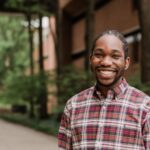
 Helena Mentis
Now more than ever, STEM careers are demanding their workforce keep the social impact of their work at the forefront. Interdisciplinary teams at UMBC are researching methods to support these efforts.
In the past five years, more than 14,000 students in the College of Engineering and Information Technology (COEIT) took courses in the College of Arts, Humanities, and Social Sciences (CAHSS), home to many courses that cultivate socially responsible thinking (SRT). At the same time, faculty in COEIT were also incorporating SRT concepts in their classes. This overlap was identified as an opportunity to collaborate, leveraging strengths of both colleges to imbue the STEM curriculum with an SRT approach.
“We want computing and engineering students to have a deeper understanding of the social impact of their work and how they are integrating SRT into their learning,” explains Helena Mentis, professor of information systems. Mentis is the lead investigator in the joint research project between COEIT and the Center for Social Science Scholarship (CS3) titled Identifying an Interdisciplinary Path to Social Responsibility Education Across the COEIT Curriculum.
 Felipe Filomeno
Felipe Filomeno, associate professor of political science and global studies and CS3 associate director and co-PI, says that the first step of the project is listening to faculty. “We are not imposing a preconceived approach to how social responsibility should be integrated into a STEM education.”
Mentis also emphasizes the importance of alumni in this process—their practical experience can provide students with insights into how industry leaders are implementing SRT. Kara Seidel ’18, psychology, now a language, literacy, and culture doctoral student, is a research assistant on the project. “This project is a great way to get my feet wet in all the fields at once,” shares Seidel. “I’m here to learn and help bring all the pieces together so the team can craft and integrate the research in a way that will be most beneficial in the long run.”
UMBC faculty are also working on addressing the negative social impact of existing technologies, such as the ethics in machine learning and data science.
Jordan Troutman ’21, M29, computer science and mathematics—and a valedictorian for the class of 2021—researches how to eliminate bias in algorithms. Troutman won the 2018 Rutgers RISE 5MP for his research, Fairness in Machine Learning, about how the COMPAS algorithm, which is used in the U.S. court system for recidivism prediction, is twice as likely to falsely classify Black men as more likely to reoffend compared to white men.
 James Foulds
Troutman notes that people inherently give power to computers when they start to depend on them to make very complex human decisions. He wants computer scientists “to understand the impact of how our program—discriminatory or not—can affect the world we live in.”
 Vandana Janeja
Troutman works with James Foulds, assistant professor of information systems, on identifying biases in machine learning technologies. Foulds received the National Science Foundation (NSF) CAREER Award in 2021 to develop technical solutions to resolve practical limitations of fair AI techniques.
Foulds also approaches ethical thinking from the data science perspective with his colleague Vandana Janeja, information systems professor and chair. “Ethics cannot be tacked onto one part of the data life cycle,” says Janeja. “It has to be integrated across the data life cycle and infused into each step of the process of discovering patterns in the data and in context of the data being considered.”
The goal of all this work, Mentis explains, is “to develop the next generation of technologists who have the framework and vocabulary to address the relationships between STEM and society.”
*****
Header image: Jordan Troutman ’21 on campus in spring 2021. All photos by Marlayna Demond ’11.
]]>
Helena Mentis Now more than ever, STEM careers are demanding their workforce keep the social impact of their work at the forefront. Interdisciplinary teams at UMBC are researching methods to...
https://umbc.edu/stories/innovation-and-social-impact/
https://beta.my.umbc.edu/api/v0/pixel/news/119602/guest@my.umbc.edu/eb6706d3ae7cc266cc20ac989836fe9c/api/pixel
cahss
coeit
cs3
discovery
information-systems
sidebar
spring-2021
UMBC News & Magazine
https://beta.my.umbc.edu/groups/umbc-news-magazine
https://assets1-beta.my.umbc.edu/system/shared/avatars/groups/000/001/943/24435aa6207c452e7bc15cc74b42c7bb/xsmall.png?1748556657
https://assets1-beta.my.umbc.edu/system/shared/avatars/groups/000/001/943/24435aa6207c452e7bc15cc74b42c7bb/original.png?1748556657
https://assets2-beta.my.umbc.edu/system/shared/avatars/groups/000/001/943/24435aa6207c452e7bc15cc74b42c7bb/xxlarge.png?1748556657
https://assets2-beta.my.umbc.edu/system/shared/avatars/groups/000/001/943/24435aa6207c452e7bc15cc74b42c7bb/xlarge.png?1748556657
https://assets3-beta.my.umbc.edu/system/shared/avatars/groups/000/001/943/24435aa6207c452e7bc15cc74b42c7bb/large.png?1748556657
https://assets1-beta.my.umbc.edu/system/shared/avatars/groups/000/001/943/24435aa6207c452e7bc15cc74b42c7bb/medium.png?1748556657
https://assets2-beta.my.umbc.edu/system/shared/avatars/groups/000/001/943/24435aa6207c452e7bc15cc74b42c7bb/small.png?1748556657
https://assets1-beta.my.umbc.edu/system/shared/avatars/groups/000/001/943/24435aa6207c452e7bc15cc74b42c7bb/xsmall.png?1748556657
https://assets2-beta.my.umbc.edu/system/shared/avatars/groups/000/001/943/24435aa6207c452e7bc15cc74b42c7bb/xxsmall.png?1748556657
UMBC News & Magazine
0
0
false
Wed, 09 Jun 2021 19:06:42 -0400
Special Edition

Under normal circumstances, print news like UMBC’s student newspaper The Retriever binds the campus community together. College students reach for the paper because they know their friend wrote a feature on the front page, or they spot one of their favorite professor’s research on the second page. In a world that has morphed into a socially distanced, spaced-out reality, it turns out that we’re all still yearning for community.
That was my focus as the editor-in-chief of The Retriever during the 2020 – 2021 school year. Every staff member had to make the UMBC community the priority while reporting on all sorts of serious topics. It was learning on the go. Jokes have roamed Twitter about “BC,” or before coronavirus. “BC” for The Retriever was filled with staff meetings twice a week, production meetings to roll out the paper every other week, and continuous in-person interfacing. When we were forced to scatter up and down the East Coast, our editors continued publishing online and in print. We all worked diligently to produce relevant and informative articles. The staff is filled with resilient and strong people, and I am very proud to have had the opportunity to lead them through this tumultuous time.
Newspaper life is frenetic in general, though, so I was excited to be able to connect with two editors from The Retriever’s past—Juan Carlos Ordóñez ’91, philosophy, and Alex Pyles ’09, English—to get their perspectives. Ordóñez shared his experience leading The Retriever while the paper was daily and production days were filled with all-nighters and lively conversation. Pyles described the impact of the internet and the recession on the paper. Our conversation was filled with friendly anecdotes and plenty of shared experiences even given the 32-year gap between our times of leadership. And though our challenges varied, as did our staffs, we all shared one thing in common: our love for The Retriever and our love for the UMBC community.
 DasSarma in front of the A.O.K. Library. Photo by Marlayna Demond ’11.
Where are they now?
Anjali DasSarma: Hi, everyone, I’m Anjali and I’m about to hand off the editorship at The Retriever, but I’ve been the editor in chief since last April so I had the pandemic year….I’m going to Brown University in the fall and I’m going to be studying journalism and inequity and community distrust. I majored in media communication studies. Can you tell me about your careers and how you got there?
Juan Carlos Ordóñez: I was editor of the paper in ’89 and ’90, so quite a while ago. It’s before the paper was in any sort of digital form, which is kind of interesting. After leaving UMBC, I attended law school. I went to Harvard and practiced law for about seven years in New York City, where I did commercial litigation. I got tired of the rat race. I left New York City, left the practice of law and moved back to Guatemala, where I was born. I did some freelance journalism; I volunteered in a number of community organizations; and I met my wife who was from Oregon. So, around 12 years ago, I moved to Oregon and I ended up getting a job at a think tank. We do tax and budget economic policy at the state level. And I’m the communications director, a position I’ve held ever since I got to Oregon, so it’s been over 10 years now. And I have to say that each of those steps—since I left UMBC, my experience from the paper, especially writing—has been invaluable.
Alex Pyles: I’m Alex, and I was the editor of the paper in ’08 and ’09, which was the recession year, which is not a pandemic year, so I’m not comparing the two. But I went from there, and started working in journalism immediately. I was a freelancer for the Wilmington Delaware News Journal and then I went to the University of Maryland to start my master’s degree in journalism. While I was there, I started working for patch.com as a sports editor [and later on] local editor and city editor roles with the same company. I spent a couple of years with Patch and went from there to the Maryland Daily Record where I covered the Maryland State House for two years. I then spent four years at the Baltimore Sun—two years in the sports department, two years in Metro covering as the political editor for Maryland state government in Baltimore City Hall. I left the paper in 2017 to go back to where I got my master’s degree, the Philip Merrill College of Journalism at UMD, where I was the communications director for about two years. And then I joined the faculty and now lecture in the college teaching audience engagement and digital design and editing investigative projects for the Howard Center for investigative journalism.
Deadlines and all nighters
DasSarma: It’s really helpful to see the framework of where you guys went after the paper. Now, I’d like you both to think back on some of your achievements, or things that really stuck out to you, during your time as an editor.
 Ordóñez, tutoring a school child in a 1987 issue of
 The Retriever.
Ordóñez: This may sound sort of mundane, but I don’t think we ever missed a deadline in terms of publishing the paper or getting the paper out on time. I don’t know how often the paper comes out these days, back then we were weekly.
DasSarma: Well it was bi-weekly before the pandemic and in print, and then I had to make some adjustments given that no one was on campus.
Ordóñez: I can only imagine the obstacles. I just remember we would pull all nighters. Back then we would have to lay it out by hand. We would have to cut it and lay out the whole thing on these big boards because it was a broadsheet. And I remember all nighters on weekends and we would get the paper to the printer early Monday morning and, yeah, I don’t think we ever missed a deadline. So that was kind of an achievement, I would say.
Pyles: I had been the sports editor for two years before I became the editor in 2008. And my memory is a little bit foggy, and I don’t want to take credit for something that I didn’t do, but I remember us more or less redesigning and relaunching the website sometime during my years. When I was editor of the paper we were thinking a lot more about putting more things online but we were still thinking about the website as this place where we just sort of dumped the stories that were in the paper, and we more or less just did it whenever the paper went to production.
DasSarma: I definitely built off of what you guys built, especially with digital. Obviously during the pandemic I had grand plans for cultural changes and inviting people to gather more as a group, but obviously that all disappeared when the pandemic hit. But during the summer, I worked at the Baltimore Sun as the editorial intern and then in the evenings I worked on a contingency plan for Retriever to sort of move to digital and how we would [meet as a staff]. In January the pandemic started getting wild, so we created these regularly branded social media channels to share the things that you really need now. And we publish digitally every day now. And I also created the advisory board, which has some local journalists and local media experts and then we also hired a media lawyer. I think if you’re doing good journalism you’re going to make some people angry. So I wanted to have a lawyer on our side especially as we covered some more sensitive topics.
Challenges faced
DasSarma: So that sort of segues into my next leading question, which is, what are some of the biggest challenges that you all faced? And then how did you overcome them?
Ordóñez: I was managing editor my junior year and I had sort of a fallout with the then-editor. And so I ended up leaving and then at the end of my junior year I applied to be the editor against the incumbent and I prevailed. So I came in and some people left, but I actually managed to retain most of the existing staff. But one of the challenges was that they had ordered this new machine… this massive computer. I mean, it was like three big desks put together where you would sort of type in your stories and it would sort of print out these sheets that you would actually cut out and then lay it out…I was sort of handed the keys and given the password for this brand new machine and it was like, here you go, go figure it out. And fortunately I had a brother who was very tech savvy and helped me through it.
DasSarma: Where was The Retriever located at that point? Has it always been in the University Center for you all?
Ordóñez: I mean, I don’t know if the University Center has changed since then, but we were where there was a cafeteria down below and upstairs were some administrative offices, and we were just right on the very end. And there was kind of a big open space. We had a dark room back then, I mean, that’s not something that you would need these days. So I don’t know what happened to that space.
 Pyles in front of M&T Bank Stadium in Baltimore. Photo by Marlayna Demond ’11.
Pyles: I can tell you what happened to the dark room because I was there when we took it out. It became the business office. Is it still the business office?
DasSarma: Yes it is.
Pyles: And technology is still right next door?
DasSarma: Yes.
Pyles: All right. And then production sort of down the hall to the right, if you’re walking out of one of those offices?
DasSarma: Yes. So I didn’t even get to have the editor in chief office; our ceiling fell down actually. There was water damage and some of it went into the editor in chief office. I imagine it would have been nice to have an office.
Pyles: It was pretty cool at 21 to have an office, like oh, ‘I’m an adult now with the rickety torn chair.’ So I mentioned I was editor as the recession started. In the years when I was the sports editor, the editor in chief at the time said, “My goal is that the Retriever can be independent from the university, accept no SGA funding.” We weren’t close at the time, but working toward it. And the fall of my senior year when I was the editor, there was still national advertising coming in from Verizon and large companies. And we were getting large print advertising in the newspaper and then it just dried up, just like that, it was just gone. And I remember really arguing over a $100 here and there in the budget when we went to submit the next budget to the SGA. I know the paper struggled financially for years after that. So I didn’t solve that problem, and I just got to walk away. But it was stressful and it was sad because it felt like we were moving toward independence and it was taken away.
DasSarma: Yeah. I mean, if it makes you feel any better, we’re definitely on better financial standing, I mean, guess it’s bittersweet, right? Because we’re nowhere near being independent. I don’t know Juan Carlos, if you guys ever discussed anything on those lines.
Ordóñez: Our finances were in pretty good shape. I mean, it’s kind of funny that on paper we were doing great, with a lot of advertising. As editor in chief you’re both responsible for the content and managing staff and then you’re ultimately responsible for the business end of it. So you’re handling all these responsibilities for which you were never really trained and you’re sort of learning as you go. And my strength was definitely as the news editor and then managing editor for a time, and so it was really on the content side where my strengths were. And then on the business side on paper, wow, it looks great. And then only towards the end of the year did it really dawn on me, well, we just haven’t been collecting a lot of that revenue, I mean on paper, it’s supposed to be coming in. So it was more of a shortcoming, I guess, on my end of not staying on top of it.
DasSarma: We haven’t been able to have advertising similar to Alex. People haven’t been spending money right now and especially local businesses; it would have been nice. And I think our advertising has not been our priority. The previous editor in chief trained me as much as she could but also I was inheriting a completely different world. I could go on and on about the challenges, but I also feel really lucky that my staff has been super self-sufficient. I gave them a lot of autonomy in terms of meetings. We do weekly editorial meetings on Zoom but I don’t ever really see the writers anymore. I did one general body meeting at the beginning of the year, last semester, and then one during this semester. But it doesn’t make sense to have everyone in the same room anymore because it’s kind of a waste of time for them.
Ordóñez: Yeah. It must be tough because I mean, one of the things that I remember most about the paper was sort of that social aspect of being in the same room and that sort of comradery, it’s hard to replicate it online.
DasSarma: A lot of our staff is very new and so all they know is the Zoom newsroom. But there is camaraderie. I remember we were even sitting in the newsroom when the WHO declared it a global pandemic. And we were all like, oh no, because I sort of sniffed it out early on and I had been working with administration and requesting our pandemic plan and everything and then we got sent home and the previous editor in chief had to sort of clean up. And then I took over in April and then I was like, oh no, we’re not ready for the next year. But all negatives aside, I want to hear your favorite part of the job or favorite parts.
The bright side
 Ordóñez’s headshot courtesy of the Oregon Center for Public Policy.
Ordóñez: I mentioned it already, but those all nighters that we would pull together, I still remember them really fondly because I was with some of my closest friends in college working together on a deadline so it was work but it was fun at the same time. And that’s really one of the things that I most remember from college actually and I look back fondly. I mean, the Retriever office was where we got our work done but it was also the place we would hang out between classes.
Pyles: When I was a senior the men’s basketball team went to the NCAA tournament for the first time and we covered that. I drove two sports writers and a photographer to Raleigh, North Carolina, to cover the game and the tournament and it’s a memory that I’ll never forget. There was just something about knowing that you have that place to go and to learn and to be around people who talk seriously about how to tell stories. That was really fun and I think that experience helped me realize what I wanted to do for a career.
DasSarma: I’ve always loved talking to people and journalism makes a lot of sense, for people who want to listen to other people and hear their stories. And I think one of my favorite parts is just talking to my editors. I think that they’re the most brilliant people in the world. And when I say I’m editor in chief of this paper, I think so much of this role is so managerial and delegating and talking to everyone.
Lessons learned
DasSarma: What are some lessons that you learned as editor in chief and how have you taken those with you where you’ve gone?
Pyles: I think this is where I really learned how to be a good manager, to be able to work with people and get them to work with me. I remember very early on losing my temper with a writer who had missed deadline after deadline. They happened to be a friend and I lost my temper with them and the story got filed but then we had a conversation later on and he said something that is probably pretty obvious, but I couldn’t see it in my anger. I felt betrayed—how could a friend be missing a deadline? And he said, you’re going to be able to work with people much more effectively if you don’t lose your cool. If you’re able to lead with understanding and kindness and ask more questions than make statements.
Ordóñez: I would share something similar. I think it’s sort of learning from the mistakes I made back then. As a news editor I dealt with just a few reporters; I would give them assignments and then we would talk about the edits and whatnot. But really managing a staff was a whole other ball game for which I was not trained and sort of had to figure out on my own and I made a lot of mistakes in that process. I remember not doing it well, not communicating it well at all, and that was a real learning experience for me. And then another positive experience was just learning how to stick with it. Sometimes it really seemed impossible that we were actually going to get the paper out and as a team we really pushed forward and we always got the paper out on time.
DasSarma: I feel like resiliency is something that I’ve learned in addition to understanding. I think I hold myself to extremely high standards and I learned that people have things going on in their personal lives that are outside of the newsroom, and you have to learn to be more understanding, which is just echoing what you guys are saying. And then of course resiliency and understanding people’s limitations….And responsibility, too, like learning how to stay organized for 40-something people and making sure that things get done on time. And when things go wrong, I take responsibility for everything.
Ordóñez: Well, when I look back at my time in college…without a doubt, my experience at the Retriever was by far the most enriching part of my college experience. I mean I loved my classes, I had a great time and did well. But what I learned for the paper, that practical experience and learning how to write, has carried through my whole life.
Pyles: We talked about some of it certainly, but going through the adversity, not only of the business issues, and you’re trying to think about what a budget looks like, and how to adapt to changing circumstances that are beyond your control, and how to deal with different kinds of people while still putting out a good product. And I think one of my favorite parts of the job was getting to talk to Christopher Corbett—he was faculty advisor—every week. I just loved doing that.
DasSarma: The paper really connects you to the campus, too, in a way that I think it’s totally unique. Having to keep track of everything that’s happening. I think this will probably be my favorite part about being at UMBC.
]]>
Under normal circumstances, print news like UMBC’s student newspaper The Retriever binds the campus community together. College students reach for the paper because they know their friend wrote a...
https://umbc.edu/stories/retrievereditors/
https://beta.my.umbc.edu/api/v0/pixel/news/119603/guest@my.umbc.edu/79865cde62358520838999135b09aef4/api/pixel
alumni
english
mcs
philosophy
spring-2021
the-retriever
then-and-now
UMBC News & Magazine
https://beta.my.umbc.edu/groups/umbc-news-magazine
https://assets1-beta.my.umbc.edu/system/shared/avatars/groups/000/001/943/24435aa6207c452e7bc15cc74b42c7bb/xsmall.png?1748556657
https://assets1-beta.my.umbc.edu/system/shared/avatars/groups/000/001/943/24435aa6207c452e7bc15cc74b42c7bb/original.png?1748556657
https://assets2-beta.my.umbc.edu/system/shared/avatars/groups/000/001/943/24435aa6207c452e7bc15cc74b42c7bb/xxlarge.png?1748556657
https://assets2-beta.my.umbc.edu/system/shared/avatars/groups/000/001/943/24435aa6207c452e7bc15cc74b42c7bb/xlarge.png?1748556657
https://assets3-beta.my.umbc.edu/system/shared/avatars/groups/000/001/943/24435aa6207c452e7bc15cc74b42c7bb/large.png?1748556657
https://assets1-beta.my.umbc.edu/system/shared/avatars/groups/000/001/943/24435aa6207c452e7bc15cc74b42c7bb/medium.png?1748556657
https://assets2-beta.my.umbc.edu/system/shared/avatars/groups/000/001/943/24435aa6207c452e7bc15cc74b42c7bb/small.png?1748556657
https://assets1-beta.my.umbc.edu/system/shared/avatars/groups/000/001/943/24435aa6207c452e7bc15cc74b42c7bb/xsmall.png?1748556657
https://assets2-beta.my.umbc.edu/system/shared/avatars/groups/000/001/943/24435aa6207c452e7bc15cc74b42c7bb/xxsmall.png?1748556657
UMBC News & Magazine
0
0
false
Wed, 09 Jun 2021 18:38:00 -0400
Vaccine Victories
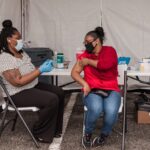
UMBC students and staff have shown their resilience in myriad ways during the pandemic, but maybe nothing showcases the Retriever spirit more than the volunteer hours put in to assist in the region-wide vaccination challenge.
Vaccine hunters Jen Dress, associate director of Campus Life, and Candace Martinez-Doane, assistant director of Leadership and Government, started their journeys by finding appointments for people within their immediate circles. As more people became eligible for vaccines, those circles widened to include more than 600 people they’ve helped register.
Part of their efforts focused on frontline UMBC community members, including over 30 ABM staff, who help maintain and clean UMBC facilities and residential buildings. Dress and Martinez-Doane partnered with UMBC Transit to organize UMBC coach buses to transport the ABM workers to and from their vaccine appointments. Next up on their list is helping 60 Chartwells dining staff members be successfully vaccinated to prepare for fall 2021 operations on campus.
UMBC co-sponsored a pop-up vaccine event with the Lakeland community in south Baltimore. Photos by Marlayna Demond ’11.
UMBC students are also going above and beyond to volunteer their time. Of students in the University System of Maryland, Retrievers led the way attending 30 volunteer shifts at the M&T Bank Stadium mass vaccination site, giving approximately 175 hours of their time. According to Chris Bankert of the State of Maryland’s COVID-19 response team, “UMBC has been doing fantastic work at M&T Bank Stadium, and I have been hearing great feedback from the management staff on site.”
In mid-April, UMBC leveraged its long term partnership with the Lakeland community in south Baltimore to co-sponsor a pop-up vaccine event to serve 100 members of the community. “With deep community connections and strong partners like Casa de Maryland, we were ready to bring health resources to the community,” says Joshua Michael ’10, political science, director of the Baltimore School Partnerships and the Sherman Scholars Program,.
In other ways, Michael notes, Retrievers have adapted to meet the opportunity of the moment. In summer 2020, 15 Sherman Scholars taught math online to 150 Lakeland students. And this fall, 30 UMBC students will provide additional support in mathematics through evening tutoring. “At UMBC,” says Michael, “our humanity has guided us to meet this moment.”
— Morgan Casey ’22 and Randianne Leyshon ’09
A version of this story was originally published by The Retriever.
]]>
UMBC students and staff have shown their resilience in myriad ways during the pandemic, but maybe nothing showcases the Retriever spirit more than the volunteer hours put in to assist in the...
https://umbc.edu/stories/vaccine-victories/
https://beta.my.umbc.edu/api/v0/pixel/news/119604/guest@my.umbc.edu/57081189deeb5db09166d940cd92ef7d/api/pixel
campus-life
covidresearch
sidebar
spring-2021
umbctogether
UMBC News & Magazine
https://beta.my.umbc.edu/groups/umbc-news-magazine
https://assets1-beta.my.umbc.edu/system/shared/avatars/groups/000/001/943/24435aa6207c452e7bc15cc74b42c7bb/xsmall.png?1748556657
https://assets1-beta.my.umbc.edu/system/shared/avatars/groups/000/001/943/24435aa6207c452e7bc15cc74b42c7bb/original.png?1748556657
https://assets2-beta.my.umbc.edu/system/shared/avatars/groups/000/001/943/24435aa6207c452e7bc15cc74b42c7bb/xxlarge.png?1748556657
https://assets2-beta.my.umbc.edu/system/shared/avatars/groups/000/001/943/24435aa6207c452e7bc15cc74b42c7bb/xlarge.png?1748556657
https://assets3-beta.my.umbc.edu/system/shared/avatars/groups/000/001/943/24435aa6207c452e7bc15cc74b42c7bb/large.png?1748556657
https://assets1-beta.my.umbc.edu/system/shared/avatars/groups/000/001/943/24435aa6207c452e7bc15cc74b42c7bb/medium.png?1748556657
https://assets2-beta.my.umbc.edu/system/shared/avatars/groups/000/001/943/24435aa6207c452e7bc15cc74b42c7bb/small.png?1748556657
https://assets1-beta.my.umbc.edu/system/shared/avatars/groups/000/001/943/24435aa6207c452e7bc15cc74b42c7bb/xsmall.png?1748556657
https://assets2-beta.my.umbc.edu/system/shared/avatars/groups/000/001/943/24435aa6207c452e7bc15cc74b42c7bb/xxsmall.png?1748556657
UMBC News & Magazine
0
0
false
Wed, 09 Jun 2021 15:08:12 -0400
An Unprecedented Season
Each week of the 2020 athletic season, Retriever athletes, coaches, and fans held their breath to see what games would be cleared to play. After making it through 2020 with men’s and women’s basketball holding down the proverbial fort, 2021 marked a new year and new development for UMBC sports—all unplayed fall and spring sports would return to action in spring 2021.
Though there was no shortage of challenges when it came to playing in a pandemic (diligent symptom monitoring, regular testing, periods of isolation), student-athletes rose to the occasion and added several new chapters to UMBC record books this year.
Serving success
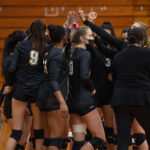
For the first time in program history, UMBC women’s volleyball earned a share of the America East regular season title, splitting the honor with UAlbany. Then, on April 2, the team traveled to Albany to take on the Great Danes for the America East Championship, and they delivered, winning their first America East Championship in program history.
“The first day we met UMBC’s then-new athletics director, Brian Barrio, in 2020, he showed us an empty photo frame on his wall,” says Anouk Van Noord ’21, psychology, a right side hitter. “He told us that he was saving it for when we win the America East championship. I am so proud to graduate from UMBC in May with that spot filled on his wall.”
The Retrievers competed in the first round of NCAA tournament play and ultimately fell to Pepperdine, but they’re just getting started.
“My goal when I took over this program was to establish this program as a perennial America East championship contender and that is what we are building here,” says head coach Cristina Robertson.
Shooting for a win
For the first time since 2007 – 2008, UMBC men’s basketball nabbed the America East Regular Season Title, sharing it with the University of Vermont. UMBC finished the regular season with a 10-4 conference record. The Retrievers ultimately fell during America East playoffs, but the team collected numerous honors on and off the court. Several players were named to All-Conference teams, and Keondre Kennedy ’23, media and communication studies, was named Sixth Man of the Year, the first awardee in program history. Kennedy’s contributions coming off the bench, playing in all 19 games, but starting just two, landed him this honor.
Ryan Odom ended his coaching career at UMBC on a high note, earning the America East’s Coach of the Year honor. Odom announced in early April that he’s continuing his career at Utah State, and Retriever Nation welcomed Jim Ferry from Penn State as UMBC men’s basketball new head coach.
“The sincerity and the love for this place, it just came through,” says Ferry. “This is one of the fastest-growing universities in the country and I’m excited to be a part of this family and such an outstanding basketball program.”
Netting a legacy
Coach Pete Caringi, Jr. has been a force at the helm of UMBC men’s soccer for 30 seasons and to mark such an impressive tenure, his players decided to give him a very appropriate gift— his 300th win. In a double-overtime win against George Washington in February, Caringi improved his overall mark to 300-186-75, a winning percentage of better than 60 percent.
“He is one of the most respected coaches in Maryland, and there’s a reason for that,” says goalkeeper Quantrell Jones ’22, sociology, who was named to the America East Conference Men’s Soccer Second Team in 2021. “He wants to make the players better and wants to win championships, and that all I’ve ever wanted to do.”
Lapping the competition
Though they fell just short of defending their America East Title, UMBC men’s swimming and diving performed impressively at this year’s competition. Niklas Weigelt ’23, economics, was named Most Outstanding Swimmer of the Meet, and Kai Wisner ’21, mechanical engineering, earned the David Alexander Coaches Award.
Women’s swimming and diving also captured second at this year’s America East tournament. Natalija Marin ’21, mechanical engineering, closed out her senior year on a high note, earning the David Alexander Coaches’ Award for accruing the most points over the course of the four America East Championship meets.
Senior captains Vanessa Esposito ’21, psychology, and Abbey Farmer ’21, health administration and policy, share, “This year has thrown so many challenges our team’s way. Just a few weeks ago we did not think we would be competing at our conference championships. To climb all the way up to finish second overall is truly a testament to our women’s team.”
The Retriever swimmers and divers also welcomed new head coach Matt Donovan, former head coach at Long Island University, this spring.
“Matt brings the experience, work ethic, and integrity that this program will need to continue its growth into national prominence,” saysBarrio, director of athletics. “He is a great fit for our UMBC community and I’m excited to connect a leader like Matt with the superb student-athletes we have at UMBC.”
******
Volleyball photos courtesy of America East.
]]>
Each week of the 2020 athletic season, Retriever athletes, coaches, and fans held their breath to see what games would be cleared to play. After making it through 2020 with men’s and women’s...
https://umbc.edu/stories/an-unprecedented-season/
https://beta.my.umbc.edu/api/v0/pixel/news/119605/guest@my.umbc.edu/928a6d2195d9d869a258b27edd3cdf01/api/pixel
at-play
athletics
campus-life
spring-2021
volleyball
UMBC News & Magazine
https://beta.my.umbc.edu/groups/umbc-news-magazine
https://assets1-beta.my.umbc.edu/system/shared/avatars/groups/000/001/943/24435aa6207c452e7bc15cc74b42c7bb/xsmall.png?1748556657
https://assets1-beta.my.umbc.edu/system/shared/avatars/groups/000/001/943/24435aa6207c452e7bc15cc74b42c7bb/original.png?1748556657
https://assets2-beta.my.umbc.edu/system/shared/avatars/groups/000/001/943/24435aa6207c452e7bc15cc74b42c7bb/xxlarge.png?1748556657
https://assets2-beta.my.umbc.edu/system/shared/avatars/groups/000/001/943/24435aa6207c452e7bc15cc74b42c7bb/xlarge.png?1748556657
https://assets3-beta.my.umbc.edu/system/shared/avatars/groups/000/001/943/24435aa6207c452e7bc15cc74b42c7bb/large.png?1748556657
https://assets1-beta.my.umbc.edu/system/shared/avatars/groups/000/001/943/24435aa6207c452e7bc15cc74b42c7bb/medium.png?1748556657
https://assets2-beta.my.umbc.edu/system/shared/avatars/groups/000/001/943/24435aa6207c452e7bc15cc74b42c7bb/small.png?1748556657
https://assets1-beta.my.umbc.edu/system/shared/avatars/groups/000/001/943/24435aa6207c452e7bc15cc74b42c7bb/xsmall.png?1748556657
https://assets2-beta.my.umbc.edu/system/shared/avatars/groups/000/001/943/24435aa6207c452e7bc15cc74b42c7bb/xxsmall.png?1748556657
UMBC News & Magazine
0
0
false
Tue, 08 Jun 2021 19:56:00 -0400
Retrievers Behind the Scenes—Courtney C. Hobson, M.A. ’14

During the pandemic it has become even more important to find ways of engaging students in learning activities beyond the classroom. Fortunately, we have Courtney C. Hobson, M.A. ’14, historical studies, program coordinator for the Dresher Center for the Humanities, to help make these special moments happen.
What is your favorite thing about the work you do at UMBC and why?
As program coordinator, I do exactly what the title says—COORDINATE. This covers a multitude of things such as maintaining budgets, crafting social media posts, and other various administrative tasks. My favorite part of my job is helping to plan and coordinate the Humanities Forum, our free public lecture series. I essentially have a wish list of different artists, professors, writers, etc. who I would love to hear from and/or meet; through the Humanities Forum, sometimes that gets to happen! But mostly, I get to constantly learn new ideas and hear from different perspectives, which has been an enriching experience.
Tell us something people don’t really know or understand about your job.
Coordinating events or programs requires so much multitasking, juggling—any euphemism that you want to apply. It requires the ability to think about both the smaller and bigger picture and prepare for contingencies. You also have to be aware of the various people or groups that you interact with and anticipate their potential needs. Doing all of this and making the experience appear to be seamless is also a skill.
Is there someone in the campus community who has been particularly supportive?
I can’t really pick out one person in particular because I have so many wonderful friends and colleagues at the university. As an alumna of the university, it’s a unique experience to transition from student-professor relationship to colleague or even friend with some of the professors in the History Department; they were my cheerleader when I was a student and continue to be so now.
Learn more about the Humanities Forum at https://dreshercenter.umbc.edu/humanities-forum/current/.
Header image: Hobson works with faculty members during an Humanities Teaching Lab. Both photos courtesy of Hobson.
]]>
During the pandemic it has become even more important to find ways of engaging students in learning activities beyond the classroom. Fortunately, we have Courtney C. Hobson, M.A. ’14, historical...
https://umbc.edu/stories/retrievers-behind-the-scenes-courtney-c-hobson-m-a-14/
https://beta.my.umbc.edu/api/v0/pixel/news/119606/guest@my.umbc.edu/b627151d7d0c43e2bcf476e42a115c33/api/pixel
campus-life
historical-studies
humanities
retrievers-behind-the-scenes
spring-2021
UMBC News & Magazine
https://beta.my.umbc.edu/groups/umbc-news-magazine
https://assets1-beta.my.umbc.edu/system/shared/avatars/groups/000/001/943/24435aa6207c452e7bc15cc74b42c7bb/xsmall.png?1748556657
https://assets1-beta.my.umbc.edu/system/shared/avatars/groups/000/001/943/24435aa6207c452e7bc15cc74b42c7bb/original.png?1748556657
https://assets2-beta.my.umbc.edu/system/shared/avatars/groups/000/001/943/24435aa6207c452e7bc15cc74b42c7bb/xxlarge.png?1748556657
https://assets2-beta.my.umbc.edu/system/shared/avatars/groups/000/001/943/24435aa6207c452e7bc15cc74b42c7bb/xlarge.png?1748556657
https://assets3-beta.my.umbc.edu/system/shared/avatars/groups/000/001/943/24435aa6207c452e7bc15cc74b42c7bb/large.png?1748556657
https://assets1-beta.my.umbc.edu/system/shared/avatars/groups/000/001/943/24435aa6207c452e7bc15cc74b42c7bb/medium.png?1748556657
https://assets2-beta.my.umbc.edu/system/shared/avatars/groups/000/001/943/24435aa6207c452e7bc15cc74b42c7bb/small.png?1748556657
https://assets1-beta.my.umbc.edu/system/shared/avatars/groups/000/001/943/24435aa6207c452e7bc15cc74b42c7bb/xsmall.png?1748556657
https://assets2-beta.my.umbc.edu/system/shared/avatars/groups/000/001/943/24435aa6207c452e7bc15cc74b42c7bb/xxsmall.png?1748556657
UMBC News & Magazine
0
0
false
Tue, 08 Jun 2021 19:37:00 -0400
Creating Technology that Protects Us—Rising Together

Since 2009, as part of its Alumni Awards celebration, the UMBC Alumni Association names one “Rising Star” recipient each year who exemplifies early career and professional achievement. In the coming weeks, we will spend some time with awardees from the past decade to see where they are now—and how they’ve grown in their fields while maintaining ties to UMBC. In this installment, UMBC Rising Stars Isaac Kinde’05, M13, biological sciences, and Christopher Valentino ’02, M.S. ’06, information systems,discuss their roles in the healthcare and defense industries, respectively. Both alumni discovered their passion for their work while at UMBC and aim to harness technology to protect us from disease and cyber warfare.
As we embrace life in a technologically immersive world—scrolling out of habit or relying on a life-saving medical device—there’s a common question many of us have about the tech we’ve come to depend on: How can we best harness it to protect us? From malware and scams, but also from disease and unnecessary pain?
Two UMBC graduates, who previously received Rising Star alumni awards, are diligently working to create and influence technology that innovates and protects us.
Protecting lives with early detection technology
Isaac Kinde ’05, M13, biological sciences, is advancing healthcare technologies that work to protect people from possibly fatal diseases. Kinde is co-founder and vice president for technology assessment at Thrive, an Exact Sciences Company. Thrive was recently acquired by Exact Sciences for up to $2.15 billion assuming successful completion of certain milestones, says Kinde. He and his team work to save lives threatened by cancer by creating early detection technologies.
 Kinde at work in his lab at Thrive Early Detection in Baltimore, Maryland. Photo courtesy of Kinde.
“There’s two million cancer cases in the U.S. annually and 70 percent of those cases don’t have a screening test available,” says Kinde. “If you can find cancers earlier, particularly in the earliest stages, survival can be as high as 90 percent or greater. The technology that my company is developing really leverages decades of research into how cancers work, their biology, as well as method developments in order to exploit that biology.”
Getting an early start
Since being named a Rising Star alum in 2014, Kinde received his M.D.-Ph.D. from the Johns Hopkins University School of Medicine. He was named one of Forbes magazine’s 30 under 30 “Rising Stars Transforming Science and Health.” Kinde also received The Daily Record’s Innovator of the Year award in 2015.
While at UMBC as a Meyerhoff Scholar, Kinde’s appreciation for research blossomed. He said that his first research mentor, Michael Summers, a professor in the Chemistry and Biochemistry department, influenced his love of research after spending a summer in his lab. “I just got hooked and I just didn’t stop doing research. It was a continuous effort until I graduated,” Kinde recalls.
Kinde speaking at the 2014 Alumni Award ceremony, and pictured with President Hrabowski, Mike Summers, and Kenneth Pittman ’80. All photos courtesy of the Alumni Association, unless otherwise noted.
It was his doctoral work at the Vogelstein Lab at Hopkins that helped to propel the technological initiatives at Thrive. “We set out to apply the latest and greatest technologies to identify cancers in their earliest stages. It took new method creation. We had to develop new technologies in order to find the earliest signs of cancer in routine clinical specimens,” Kinde says.
The future of cancer detection technology
Thus, came about the creation of CancerSEEK, a blood test that has shown the ability to detect 65 percent of cancers prior to clinically evident metastasis in individuals without any history of the disease. Kinde noted that a test like CancerSEEK can detect multiple cancers from a single test and do so in real time.
“There was the prototype version [of CancerSEEK] that our academic lab published. Then there was another prototype version that our company collaborated with Hopkins in order to demonstrate how we could work in a real-world setting,” says Kinde. “It’s the first of its kind to demonstrate real world detection and intervention of cancers. We’re preparing to get FDA approval, to do the full clinical validation of the CancerSEEK test.”

K
inde, second from left, with his roommates Andy Windsor, Seth Miller, and Kenneth Gibbs, all fellow Meyerhoff Scholars, at a graduation celebration in 2005. Photo courtesy of Kinde.
Kinde recalls the moment he saw successful Black Americans who were in the top M.D.-Ph.D. programs and top graduate programs while he studied at UMBC as an influential factor in his career progression. In fact, UMBC undergraduate alumni who identify as African American have gone on to pursue and earn more M.D.-Ph.D.s than alumni from any other institution across the country, largely in thanks to the support from the Meyerhoff Scholars Program.
“To me, that said, ‘well, why can’t I do that too?’ As I’ve progressed in my career, it’s the lesson that I remember. It’s something that I want to help future generations of people by being that example that they can look to.”
 Valentino with his family at the 2012 Alumni Award ceremony.
Cybersecurity at the highest levels
Christopher Valentino ’02, M.S. ’06, information systems management, has more than two decades of expertise in domestic and global cybersecurity, which began during his undergraduate tenure at UMBC. Valentino spent 24 years working with Northrop Grumman Corp., a global aerospace and defense technology company, and its predecessor companies.
He started working at Northrop as an intern—working in what he called the “cyber mailroom”—and worked his way up. When he received the UMBC Alumni Association’s Rising Star award in 2012, Valentino was the then-director of contract research and development at Northrop.
“I had a parallel experience of working and going to school at the same time,” says Valentino, “while I was also starting a family. There are things I learned at UMBC as a student that I would not have learned anywhere else. The bottom line is UMBC is a really hard school. And it’s very underappreciated until you actually show up and become part of the institution, and go through the rigor that’s there.”
A leader in influencing cyberspace infrastructures
Nearly 10 years since being named a UMBC rising star, Valentino now serves as the chief strategy officer at Peraton, a next-generation national security company that provides technology solutions to space and intelligence, cyber mission, defense and security, and civil and health customers. Peraton acquired Northrop’s IT services business in February 2021 when Valentino transitioned into being the point person for shaping the future of the company.
“Peraton is a national security company focused on providing capabilities and solutions across the Department of Defense intelligence community—federal, civilian, and Homeland Security. I am responsible for operationalizing our strategy across those businesses,” Valentino says.
Valentino’s work emphasizes the importance of cybersecurity protection at the highest levels. While in his role as vice president of information warfare and cyber survivability at Northrop, Valentino shared insight on how some of the most powerful warfare structures in our country, such as the military and aerospace defenses, work to approach information warfare and how they keep our protections secure in the face of international threats on the Defense & Aerospace Report Podcast last June.
 Valentino speaks at the 2012 Alumni Award ceremony.
“You train as you fight. In this domain, things move fast and things can change. You have to know the right environments to be able to train your mission operators,” Valentino told podcast host Vago Muradian. “From an exercise perspective, you would always go out and train, train, train and then execute. It’s the same thing in information warfare.”
The past, present, and future of tech
In his long tenure in the cyber security field, Valentino is able to appreciate innovative technological protections while understanding that these advancements are interconnected with all the efforts of past researchers.
“The one thing that I can appreciate from being in the industry now for over two decades is that there’s repetition and then there’s innovation in the seams between the repetition,” says Valentino. “There’s a lot of concepts that were new 20-plus years ago that will still be new 20 years from now. Artificial intelligence is probably one that I would point to and say, 20 years ago, we were doing research and trying to apply technologies, and two decades later, we’re still working to operationalize that technology.”

Valentino with Provost Philip Rous, Aryya Gangopadhyay, information systems chair, and Bennett Moe ’88 at the 2012 Alumni Award Ceremony.
Threat protection
Valentino and Kinde’s efforts have created an impactful ripple effect in our understanding of how technology can protect us from threats. Kinde’s work in early detection technology is on track to save more lives ahead of a cancer diagnosis that can be fatal. One blood test may have the potential to accurately detect a variety of different cancers. Valentino, on the other hand, is continuing to fortify the infrastructure and systems that protects our land, air, space, and digital domains from threats.
Whether it be a threat against our immune systems or a threat to our cyber safety, these former UMBC rising stars are raising the bar and redefining what protections in technology look like.
— Adriana Fraser
Read more about other Retrievers rising together and stay tuned for more information about UMBC’s 32nd annual Alumni Awards in October.
]]>
Since 2009, as part of its Alumni Awards celebration, the UMBC Alumni Association names one “Rising Star” recipient each year who exemplifies early career and professional achievement. In the...
https://umbc.edu/stories/creating-technology-that-protects-us/
https://beta.my.umbc.edu/api/v0/pixel/news/119607/guest@my.umbc.edu/52cf200d1a5dba3b9f7d80322938fc88/api/pixel
alumni
alumni-awards
biological-sciences
information-systems
meyerhoff
mhoff
rising-together
UMBC News & Magazine
https://beta.my.umbc.edu/groups/umbc-news-magazine
https://assets1-beta.my.umbc.edu/system/shared/avatars/groups/000/001/943/24435aa6207c452e7bc15cc74b42c7bb/xsmall.png?1748556657
https://assets1-beta.my.umbc.edu/system/shared/avatars/groups/000/001/943/24435aa6207c452e7bc15cc74b42c7bb/original.png?1748556657
https://assets2-beta.my.umbc.edu/system/shared/avatars/groups/000/001/943/24435aa6207c452e7bc15cc74b42c7bb/xxlarge.png?1748556657
https://assets2-beta.my.umbc.edu/system/shared/avatars/groups/000/001/943/24435aa6207c452e7bc15cc74b42c7bb/xlarge.png?1748556657
https://assets3-beta.my.umbc.edu/system/shared/avatars/groups/000/001/943/24435aa6207c452e7bc15cc74b42c7bb/large.png?1748556657
https://assets1-beta.my.umbc.edu/system/shared/avatars/groups/000/001/943/24435aa6207c452e7bc15cc74b42c7bb/medium.png?1748556657
https://assets2-beta.my.umbc.edu/system/shared/avatars/groups/000/001/943/24435aa6207c452e7bc15cc74b42c7bb/small.png?1748556657
https://assets1-beta.my.umbc.edu/system/shared/avatars/groups/000/001/943/24435aa6207c452e7bc15cc74b42c7bb/xsmall.png?1748556657
https://assets2-beta.my.umbc.edu/system/shared/avatars/groups/000/001/943/24435aa6207c452e7bc15cc74b42c7bb/xxsmall.png?1748556657
UMBC News & Magazine
0
0
false
Tue, 08 Jun 2021 16:12:58 -0400
Study Shows AI-Generated Fake Reports Fool Experts

By Priyanka Ranade, doctoral student in Computer Science and Electrical Engineering (CSEE), UMBC; Anupam Joshi, professor, CSEE, UMBC; and Tim Finin, professor, CSEE, UMBC
Takeaways
· AIs can generate fake reports that are convincing enough to trick cybersecurity experts.
· If widely used, these AIs could hinder efforts to defend against cyberattacks.
· These systems could set off an AI arms race between misinformation generators and detectors.
If you use such social media websites as Facebook and Twitter, you may have come across posts flagged with warnings about misinformation. So far, most misinformation – flagged and unflagged – has been aimed at the general public. Imagine the possibility of misinformation – information that is false or misleading – in scientific and technical fields like cybersecurity, public safety and medicine.
There is growing concern about misinformation spreading in these critical fields as a result of common biases and practices in publishing scientific literature, even in peer-reviewed research papers. As a graduate student and as faculty members doing research in cybersecurity, we studied a new avenue of misinformation in the scientific community. We found that it’s possible for artificial intelligence systems to generate false information in critical fields like medicine and defense that is convincing enough to fool experts.
General misinformation often aims to tarnish the reputation of companies or public figures. Misinformation within communities of expertise has the potential for scary outcomes such as delivering incorrect medical advice to doctors and patients. This could put lives at risk.
To test this threat, we studied the impacts of spreading misinformation in the cybersecurity and medical communities. We used artificial intelligence models dubbed transformers to generate false cybersecurity news and COVID-19 medical studies and presented the cybersecurity misinformation to cybersecurity experts for testing. We found that transformer-generated misinformation was able to fool cybersecurity experts.
Transformers
 AI can help detect misinformation like these false claims about COVID-19 in India – but what happens when AI is used to generate the misinformation? AP Photo/Ashwini Bhatia
Much of the technology used to identify and manage misinformation is powered by artificial intelligence. AI allows computer scientists to fact-check large amounts of misinformation quickly, given that there’s too much for people to detect without the help of technology. Although AI helps people detect misinformation, it has ironically also been used to produce misinformation in recent years.
Transformers, like BERT from Google and GPT from OpenAI, use natural language processing to understand text and produce translations, summaries and interpretations. They have been used in such tasks as storytelling and answering questions, pushing the boundaries of machines displaying humanlike capabilities in generating text.
Transformers have aided Google and other technology companies by improving their search engines and have helped the general public in combating such common problems as battling writer’s block.
Transformers can also be used for malevolent purposes. Social networks like Facebook and Twitter have already faced the challenges of AI-generated fake news across platforms.
Critical misinformation
Our research shows that transformers also pose a misinformation threat in medicine and cybersecurity. To illustrate how serious this is, we fine-tuned the GPT-2 transformer model on open online sources discussing cybersecurity vulnerabilities and attack information. A cybersecurity vulnerability is the weakness of a computer system, and a cybersecurity attack is an act that exploits a vulnerability. For example, if a vulnerability is a weak Facebook password, an attack exploiting it would be a hacker figuring out your password and breaking into your account.
We then seeded the model with the sentence or phrase of an actual cyberthreat intelligence sample and had it generate the rest of the threat description. We presented this generated description to cyberthreat hunters, who sift through lots of information about cybersecurity threats. These professionals read the threat descriptions to identify potential attacks and adjust the defenses of their systems.
We were surprised by the results. The cybersecurity misinformation examples we generated were able to fool cyberthreat hunters, who are knowledgeable about all kinds of cybersecurity attacks and vulnerabilities. Imagine this scenario with a crucial piece of cyberthreat intelligence that involves the airline industry, which we generated in our study.
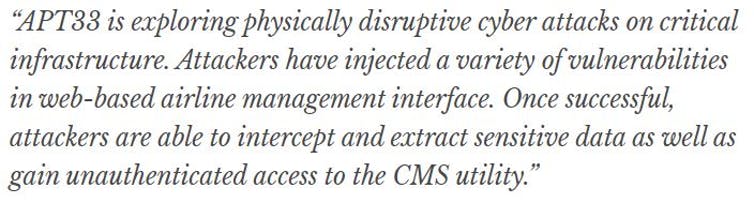 An example of AI-generated cybersecurity misinformation. The Conversation, CC BY-ND
This misleading piece of information contains incorrect information concerning cyberattacks on airlines with sensitive real-time flight data. This false information could keep cyber analysts from addressing legitimate vulnerabilities in their systems by shifting their attention to fake software bugs. If a cyber analyst acts on the fake information in a real-world scenario, the airline in question could have faced a serious attack that exploits a real, unaddressed vulnerability.
A similar transformer-based model can generate information in the medical domain and potentially fool medical experts. During the COVID-19 pandemic, preprints of research papers that have not yet undergone a rigorous review are constantly being uploaded to such sites as medrXiv. They are not only being described in the press but are being used to make public health decisions. Consider the following, which is not real but generated by our model after minimal fine-tuning of the default GPT-2 on some COVID-19-related papers.
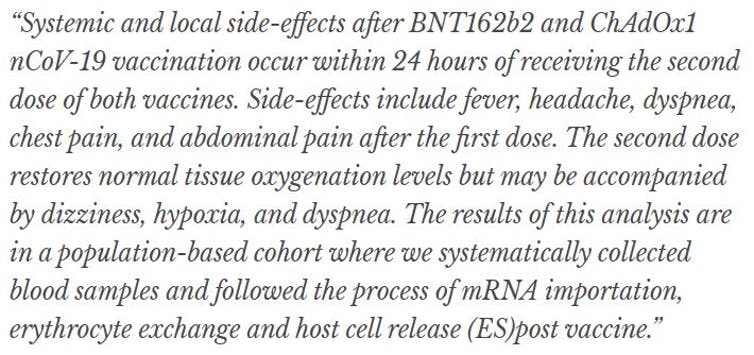 An example of AI-generated health care misinformation. The Conversation, CC BY-ND
The model was able to generate complete sentences and form an abstract allegedly describing the side effects of COVID-19 vaccinations and the experiments that were conducted. This is troubling both for medical researchers, who consistently rely on accurate information to make informed decisions, and for members of the general public, who often rely on public news to learn about critical health information. If accepted as accurate, this kind of misinformation could put lives at risk by misdirecting the efforts of scientists conducting biomedical research.
An AI misinformation arms race?
Although examples like these from our study can be fact-checked, transformer-generated misinformation hinders such industries as health care and cybersecurity in adopting AI to help with information overload. For example, automated systems are being developed to extract data from cyberthreat intelligence that is then used to inform and train automated systems to recognize possible attacks. If these automated systems process such false cybersecurity text, they will be less effective at detecting true threats.
We believe the result could be an arms race as people spreading misinformation develop better ways to create false information in response to effective ways to recognize it.
Cybersecurity researchers continuously study ways to detect misinformation in different domains. Understanding how to automatically generate misinformation helps in understanding how to recognize it. For example, automatically generated information often has subtle grammatical mistakes that systems can be trained to detect. Systems can also cross-correlate information from multiple sources and identify claims lacking substantial support from other sources.
Ultimately, everyone should be more vigilant about what information is trustworthy and be aware that hackers exploit people’s credulity, especially if the information is not from reputable news sources or published scientific work.
*****
Header image: It doesn’t take a human mind to produce misinformation convincing enough to fool experts in such critical fields as cybersecurity. iLexx/iStock via Getty Images
Priyanka Ranade, PhD Student in Computer Science and Electrical Engineering, University of Maryland, Baltimore County; Anupam Joshi, Professor of Computer Science & Electrical Engineering, University of Maryland, Baltimore County, and Tim Finin, Professor of Computer Science and Electrical Engineering, University of Maryland, Baltimore County
This article is republished from The Conversation under a Creative Commons license. Read the original article.
]]>
By Priyanka Ranade, doctoral student in Computer Science and Electrical Engineering (CSEE), UMBC; Anupam Joshi, professor, CSEE, UMBC; and Tim Finin, professor, CSEE, UMBC Takeaways · AIs...
https://umbc.edu/stories/study-shows-ai-generated-fake-reports-fool-experts/
https://beta.my.umbc.edu/api/v0/pixel/news/119608/guest@my.umbc.edu/5dae4c8e8073cdf9c0c22421e580e2b5/api/pixel
artificial-intelligence
csee
cybersecurity
discovery
the-conversation
UMBC News & Magazine
https://beta.my.umbc.edu/groups/umbc-news-magazine
https://assets1-beta.my.umbc.edu/system/shared/avatars/groups/000/001/943/24435aa6207c452e7bc15cc74b42c7bb/xsmall.png?1748556657
https://assets1-beta.my.umbc.edu/system/shared/avatars/groups/000/001/943/24435aa6207c452e7bc15cc74b42c7bb/original.png?1748556657
https://assets2-beta.my.umbc.edu/system/shared/avatars/groups/000/001/943/24435aa6207c452e7bc15cc74b42c7bb/xxlarge.png?1748556657
https://assets2-beta.my.umbc.edu/system/shared/avatars/groups/000/001/943/24435aa6207c452e7bc15cc74b42c7bb/xlarge.png?1748556657
https://assets3-beta.my.umbc.edu/system/shared/avatars/groups/000/001/943/24435aa6207c452e7bc15cc74b42c7bb/large.png?1748556657
https://assets1-beta.my.umbc.edu/system/shared/avatars/groups/000/001/943/24435aa6207c452e7bc15cc74b42c7bb/medium.png?1748556657
https://assets2-beta.my.umbc.edu/system/shared/avatars/groups/000/001/943/24435aa6207c452e7bc15cc74b42c7bb/small.png?1748556657
https://assets1-beta.my.umbc.edu/system/shared/avatars/groups/000/001/943/24435aa6207c452e7bc15cc74b42c7bb/xsmall.png?1748556657
https://assets2-beta.my.umbc.edu/system/shared/avatars/groups/000/001/943/24435aa6207c452e7bc15cc74b42c7bb/xxsmall.png?1748556657
UMBC News & Magazine
0
0
false
Mon, 07 Jun 2021 13:38:59 -0400
 Corbett in the Interdisciplinary Life Sciences Building on campus in April 2021. Photo by Marlayna Demond ’11.
 Corbett visits a lab on campus in April 2021. Photo by Marlayna Demond ’11.

 Corbett with fellow Meyerhoff alumni at a 2017 on-campus event. Photo courtesy of Keith Harmon, director, Meyerhoff Scholars Program.

 Corbett (center, front) with her NIAID research team, including Olubukola Abiona ’17, M25, biochemistry and molecular biology (center, back).