There’s a long history of dances being pilfered for profit – and TikTok is the latest battleground

Jill Vasbinder, Senior Lecturer in Dance, UMBC
In January 2020, 14-year-old Jalaiah Harmon created what would become one of the biggest viral dance sensations on TikTok.
But few users knew that Harmon, who is Black, invented the dance, which she dubbed the Renegade – at least not until a month later, when The New York Times drew attention to her case. That’s because a TikTok user had copied the dance, and it was that TikToker’s rendition that went viral.
Because Harmon didn’t get credit, she wasn’t able to reap the benefits of more views and followers, which, in turn, could have led to collaborations and sponsorships.
Harmon is only the latest in a long list of women and people of color whose choreography and dance work have been pilfered for profit – a story that dates back to the origins of jazz dance in the 19th and early 20th centuries.
But these days, TikTok is the battleground – and it isn’t just Harmon who’s had her work lifted. In June 2021 several popular Black creators were so fed up with having their dances stolen or not credited that they decided to join forces and go on strike, refusing to post new dance content to bring attention to the issue.
Choreographers fight for royalties
Laying claim to a dance isn’t as straightforward as, say, a poet saying they have exclusive rights to a poem they’ve written.
Designed to protect “intangible cultural goods,” copyright, according to the U.S. Copyright Office, gives “Authors and Inventors the exclusive right to their respective Writings and Discoveries.”
Established in the hopes of rewarding innovation and promoting progress, the first U.S. copyright laws, which were established in 1787 and 1790 and based on statutes from Britain, didn’t grant rights to artists and dancers. Only writers were protected.
In fact, the very concept of owning choreography didn’t exist until the 20th century when dancers started to lay claim to their work in court.
In 1909, an Indian dancer named Mohammed Ismail tried to sue white dancer Ruth St. Denis, claiming he was the originator of one of St. Denis’ “Oriental” dances. In 1926, African-American blues singer Alberta Hunter claimed she held the copyright to the popular dance the Black Bottom, an African American social dance. https://www.youtube.com/embed/rQ9qapVmWi4?wmode=transparent&start=0 George White’s Black Bottom became a national sensation.
Hunter performed the Black Bottom in front a white audience in 1925. A year later, the dance appeared in George White’s revue “Scandals,” which ignited the Black Bottom dance craze.
However, little came of Ismail and Hunter’s efforts. More attempts would follow. In 1963, performer Faith Dane sued M&H Company for royalties for her choreography in “Gypsy” and lost. In the 1950s and 1960s, choreographer Agnes de Mille advocated for copyrights specific to choreography because she got very limited royalties for her work on the hit musical “Oklahoma!”
It wasn’t until 1976 that copyright protection was updated to specifically include choreographic works.
A delicate dance with copyright
But this hasn’t exactly led to a windfall of royalties for choreographers.
Congress has established four guidelines to determine whether a work can be granted copyright protection: originality, fixation, idea versus expression and functionality.
In choreography, it’s the fixed “expression” that’s being protected, not the “idea” behind it. This is why New York City Ballet can copyright their choreographed version of “The Nutcracker,” but other artists can create their own versions or expressions of the story as plays, storybooks or choreographed dance.
Artists and scholars still debate what, exactly, it is that a dancer or choreographer is trying to claim as their own. Is it the dance as a work of art, the choreography or the specific performance?
So while creators can apply to register the recorded expression of their idea with the government, many choreographers – perhaps due to so many gray areas in what is eligible for copyright – still don’t realize that they they have something of value that can or should be protected.
George Balanchine, the founding artistic director of New York City Ballet, had a heart attack in 1978. But he did didn’t draw up a will until he was told the dozens of dances he created would generate licensing income that would go to next of kin unless he directed otherwise.
When pop culture pulls from avant-garde
Avant-garde artist Anna Teresa De Keersmaeker’s brief spat with Beyoncé illustrates the tricky nature of determining what constitutes copyright infringement or plagiarism.
In 2011, De Keersmaeker claimed that Beyoncé, in her music video “Countdown,” had plagiarized De Keersmaeker’s dances from two different works – “Rosas danst Rosas” and “Achterland” – without giving her credit. https://www.youtube.com/embed/vlLZExpgBOY?wmode=transparent&start=0 Anna De Keersmaeker’s ‘Rosas danst Rosas.’
Both artists made public statements acknowledging what happened. It seems that though a substantial amount of De Keermaeker’s movement was transposed into “Countdown,” it was also transformed – from a white, elite avant-garde setting to a Black pop culture setting. A case could be made for fair use, the doctrine that permits the unlicensed use of copyright-protected works in certain circumstances. https://www.youtube.com/embed/2XY3AvVgDns?wmode=transparent&start=0 Beyoncé’s ‘Countdown.’
Nonetheless, this episode illustrates the gray areas of what is protected by copyright. Does performing someone else’s dance movements in a new setting – for an audience who may not have any connection or knowledge of its origins – make it OK? Does this make it a new work?
Copyright protection was devised primarily to promote progress. The thinking went that if authors and artist were given control of their work they would create more original work, earn a living from it and continue creating.
But the incentive for progress can also exist outside of copyright protection. This is what dancer-turned-lawyer Jessica Goudreault argued in a 2018 article for the Cardozo Law Review.
She writes that for some dance styles “the field might never evolve without the opportunity to copy,” which “sustains and encourages innovation.”
I would argue that this applies to the dances on TikTok. Without the ability for users to freely imitate the dances, those moves wouldn’t go viral. The creators of the dances would not get their moment in the Sun – however brief it is in social media – and other creators might be less inspired to innovate if they didn’t have the examples of those who came before them.
[Over 106,000 readers rely on The Conversation’s newsletter to understand the world. Sign up today.]
Can copyright protection even work for TikTok?
If TikTokers and choreographers are looking to license a new dance, should they rely solely on the copyright system and all its restrictions? Or is there another way to get credit and promote innovation in dance?
When dance videos are posted to the web, they are, by default, protected under copyright. In theory, this should prevent dancers from having their work used by others without permission.
In reality, it is often difficult to know who made it first and what constitutes fair use. When does doing some dance steps turn them into a new dance piece? Furthermore, discovering the original author or authors of a dance isn’t easy.
That’s because unlike posts on Facebook, Twitter and Instagram, TikTok posts aren’t time-stamped. Posts appear in a user’s feed in order of popularity, not chronologically. Identifying who posted the content first is tricky.
I would suggest that common law copyright is not the right solution here – and that the principles of Open Source might better serve creators.
Open Source, a social movement by computer programmers, is underpinned by licensing criteria that ensures integrity of authorship, among other principles. Open-source licensing could resolve the issue of the correct people receiving credit for their works. This could take the form of an Open-source license – which has yet to be clearly laid out for dance works – or a Creative Commons license with a “CC-BY” designation that requires attribution, but leaves space for copying, adjusting, remixing and innovation. For this to happen, TikTok would need to add a time and date stamp, in addition to a license preference feature.
Perhaps honoring legacies and influences by naming where something came from can begin to heal the damage that’s taken place over the years to people of color and other choreographers who’ve had their work cribbed with nary an acknowledgment or thanks.
* * * * * *
Jill Vasbinder, Senior Lecturer in Dance, University of Maryland, Baltimore County
Header Image: Laying claim to a dance isn’t as straightforward as doing the same for a poem. Tara Moore via Getty Images
This article is republished from The Conversation under a Creative Commons license. Read the original article.
]]>
Jill Vasbinder, Senior Lecturer in Dance, UMBC In January 2020, 14-year-old Jalaiah Harmon created what would become one of the biggest viral dance sensations on TikTok. But few users...
https://umbc.edu/stories/theres-a-long-history-of-dances-being-pilfered-for-profit-and-tiktok-is-the-latest-battleground/
https://beta.my.umbc.edu/api/v0/pixel/news/119580/guest@my.umbc.edu/70ed33510e0db0f21b480404e9e0d5b5/api/pixel
discovery
jill-vasbinder
professorsnottomiss
UMBC News & Magazine
https://beta.my.umbc.edu/groups/umbc-news-magazine
https://assets1-beta.my.umbc.edu/system/shared/avatars/groups/000/001/943/24435aa6207c452e7bc15cc74b42c7bb/xsmall.png?1748556657
https://assets1-beta.my.umbc.edu/system/shared/avatars/groups/000/001/943/24435aa6207c452e7bc15cc74b42c7bb/original.png?1748556657
https://assets2-beta.my.umbc.edu/system/shared/avatars/groups/000/001/943/24435aa6207c452e7bc15cc74b42c7bb/xxlarge.png?1748556657
https://assets2-beta.my.umbc.edu/system/shared/avatars/groups/000/001/943/24435aa6207c452e7bc15cc74b42c7bb/xlarge.png?1748556657
https://assets3-beta.my.umbc.edu/system/shared/avatars/groups/000/001/943/24435aa6207c452e7bc15cc74b42c7bb/large.png?1748556657
https://assets1-beta.my.umbc.edu/system/shared/avatars/groups/000/001/943/24435aa6207c452e7bc15cc74b42c7bb/medium.png?1748556657
https://assets2-beta.my.umbc.edu/system/shared/avatars/groups/000/001/943/24435aa6207c452e7bc15cc74b42c7bb/small.png?1748556657
https://assets1-beta.my.umbc.edu/system/shared/avatars/groups/000/001/943/24435aa6207c452e7bc15cc74b42c7bb/xsmall.png?1748556657
https://assets2-beta.my.umbc.edu/system/shared/avatars/groups/000/001/943/24435aa6207c452e7bc15cc74b42c7bb/xxsmall.png?1748556657
UMBC News & Magazine
0
0
false
Fri, 23 Jul 2021 13:33:23 -0400
Corrie Francis Parks: Artist, Community Builder, and Advocate for Students

Compared to the tropical midsummer heat outside the Montpelier Arts Center in Laurel, Maryland, UMBC visual arts professor Corrie Francis Parks’ latest show “Uncanny Bodies” provides cool respite.
The exhibit’s home is in a dark room, where multiple projectors coat the walls in Parks’ unique animation style through which tiny sand particles are enlarged, diminishing your own size as they dance across your vision. The exhibit is multidimensionally entrancing, meanwhile, the sound design created by visual arts instructor Jason Charney, M.F.A. ’20, imaging and digital arts, is body-encompassing.
 View from inside artist Corrie Francis Parks’ exhibit “Uncanny Bodies” displayed at the Montpelier Arts Center. Photo courtesy of Thom Parks.
Even before her career began as an animator, and now as a professor, Parks has always made a point of creating her artwork through uncharted channels. Parks attributes her animation origins to her mentor and professor David Ehrlich at Dartmouth College. “He became very influential in challenging me to try things differently, like painting on glass which was really interesting to me because it looked different from anything else that was being made,” says Parks, “and I liked having my work stand out.”
Eventually, this path of striving for the unique led to Parks’ remarkable sand animation technique which has been displayed on walls from Disney to Serbia, and currently, at Montpelier Arts Center. And now Parks hopes to play a similar role promoting her own students’ work as her mentor did for her.
Giving students space to develop ideas
“People are interesting, and I see my students as people with really unique ideas that sometimes just need a little push,” says Parks. “As a professor, you’re supposed to do that. You have that authority and experience.” Throughout her past seven years as a professor at UMBC, Parks’ posture has allowed her to develop a reputation as an “above and beyond” professor. Her pride in promoting and developing her students’ talents is evident, her Instagram account @corrieeeee features a collection of her students’ animations, but goes beyond social media, too. “Some of the most influential professors I’ve had,” says Parks, “are the kind of professors who don’t necessarily develop that student-teacher relationship but rather a colleague relationship with their students.”
Camille Ollivierre, a senior visual arts student with a concentration in animation, describes Parks as someone who talks “to us with the same level of respect she would other professors, while still acknowledging we are young adults with much room for growth.”
Where that growth can come from is something that Parks helps her students find.
“She encouraged me to apply for an Undergraduate Research Award grant (URA),” says Ollivierre, “to explore my idea to create paint on glass animation by creating my own multiplane animation camera.” Receiving the URA allowed Ollivierre to work closely with Parks as her mentor. “She encouraged me to push myself further than I thought I was capable of,” says Ollivierre. “Also, since I’m interested in professionally pursuing stop motion animation, I’ve really enjoyed working with someone who has extensive experience using unconventional materials like sand and paint.”
Visual arts major senior Chase Nickoles expands upon Parks’ ability to connect students with new professional experiences. Nickoles found an opportunity to submit the class’s rotoscoping project to be displayed at the Carroll Arts Center in Westminster, Maryland. “Corrie was quick to help as much as possible with the logistics and providing necessary information,” says Nickoles. “Thanks to her help, our project was successfully displayed, pushing me into the Westminster art world as a representative of the piece, and pushing all the students to be seen by a wider circle.”
Constructive classroom communities
Meanwhile, within the classroom, Parks has found ways to connect with students on a level that is accessible and relatable to them—including creating a Discord server for her students to continue building community.
Visual arts senior Aaron Wescott says that “the space Corrie created online for the whole class was amazing, and it really let us bounce ideas off of each other and her. Being able to talk to someone who had genuine experience and talent in the field made me feel comfortable enough to start branching out and grow as an artist, and I even looked forward to talking with her. She is an amazing teacher and colleague.”
For Parks, creating a community that cultivates her students’ abilities is something that comes naturally.
 Angle of Repose. Photo courtesy of Thom Parks.
“The thing that I love about teaching college is we’re all adults, my students are just a few steps behind me in their development as an artist… I’m really happy to share my experience as to what it means to be an artist, I love sharing information,” she says.
Her exhibit, “Uncanny Bodies” is available from now until August 1, 2021. In Parks’ own words “It’s a really enveloping and calming space that is good to go to on a hot day, it’s cool in there. It takes you into a different perspective and it allows you to take a little break from whatever you’re dealing with right now”.
Visit it now and see what it means to be a grain of sand.
]]>
Compared to the tropical midsummer heat outside the Montpelier Arts Center in Laurel, Maryland, UMBC visual arts professor Corrie Francis Parks’ latest show “Uncanny Bodies” provides cool respite....
https://umbc.edu/stories/corrie-parks-artist-community-builder-and-advocate-for-students/
https://beta.my.umbc.edu/api/v0/pixel/news/119581/guest@my.umbc.edu/67f3e4901b2cdb67ad79427879e2f39f/api/pixel
cahss
campus-life
imda
professorsnottomiss
visual-arts
UMBC News & Magazine
https://beta.my.umbc.edu/groups/umbc-news-magazine
https://assets1-beta.my.umbc.edu/system/shared/avatars/groups/000/001/943/24435aa6207c452e7bc15cc74b42c7bb/xsmall.png?1748556657
https://assets1-beta.my.umbc.edu/system/shared/avatars/groups/000/001/943/24435aa6207c452e7bc15cc74b42c7bb/original.png?1748556657
https://assets2-beta.my.umbc.edu/system/shared/avatars/groups/000/001/943/24435aa6207c452e7bc15cc74b42c7bb/xxlarge.png?1748556657
https://assets2-beta.my.umbc.edu/system/shared/avatars/groups/000/001/943/24435aa6207c452e7bc15cc74b42c7bb/xlarge.png?1748556657
https://assets3-beta.my.umbc.edu/system/shared/avatars/groups/000/001/943/24435aa6207c452e7bc15cc74b42c7bb/large.png?1748556657
https://assets1-beta.my.umbc.edu/system/shared/avatars/groups/000/001/943/24435aa6207c452e7bc15cc74b42c7bb/medium.png?1748556657
https://assets2-beta.my.umbc.edu/system/shared/avatars/groups/000/001/943/24435aa6207c452e7bc15cc74b42c7bb/small.png?1748556657
https://assets1-beta.my.umbc.edu/system/shared/avatars/groups/000/001/943/24435aa6207c452e7bc15cc74b42c7bb/xsmall.png?1748556657
https://assets2-beta.my.umbc.edu/system/shared/avatars/groups/000/001/943/24435aa6207c452e7bc15cc74b42c7bb/xxsmall.png?1748556657
UMBC News & Magazine
0
0
false
Fri, 16 Jul 2021 19:43:05 -0400
Forward Progress Begins with Mentorship
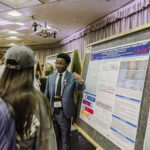
Olumide Fagboyegun ’21, M29, biochemistry, is a recent UMBC graduate and a Meyerhoff Scholar. He will soon begin his Ph.D. in neuroscience at Harvard. Since graduating, he’s reflected on the mentors who have made these steps possible. What, exactly, made them great mentors, he asks. And how can he pass that gift along to future students, particularly other students from underrepresented groups?
Picture this: You’re sitting in a well-lit hotel ballroom at a table draped with a white tablecloth, nervously perspiring. Immediately in front of you is a podium on a stage, and encircling the ballroom are dozens of academics at various stages in their careers, from predoctoral trainees to full professors. One thing that stands out to you—even more imposing than their sheer presence—is the fact that almost all of them are Black. These academics are not only a testament to the fact that if we hold fast to the dream of equity in academia, it’s only a matter of time until it is realized. But for Black students in particular, this kind of experience is incredibly important.
 Headshot courtesy of Fagboyegun
.
My experience as a member of the Meyerhoff Family at UMBC prepared me as a scientist and a scholar through the invaluable mentoring relationships where I was able to see a road to success forged by underrepresented students who went before me.
What makes a good mentor?
All my effective mentoring relationships have begun with one thing: reciprocated belief. My mentors have believed in me and I, in turn, have believed in their abilities to be good mentors for me. Both elements are necessary for an effective mentoring relationship. As a result, they have pushed me to believe in myself—to be better and more confident, in every regard. And I believed in their guidance and their affirmation of my potential.
One close mentor pushed me to improve my networking skills while believing that I would represent my program and my university well wherever I went and with whomever I met. Another mentor believed in my capacity to do good science, and pushed me to reflect on the impact my scientific endeavors can have on society.
It is worth reiterating that mentorship styles are remarkably diverse. One of the characteristics of a good mentor is the ability to see when one’s mentoring style may not be effective for a particular mentee, and to either modify their style, or to identify another mentor who would better meet the mentee’s needs. One of the strengths of the Meyerhoff Scholars Program is its ability to provide a wide range of mentoring styles to make sure that every student can find the support they need and achieve success on their chosen path, be it medical school, industry, or graduate school.
The mentee’s role
We often emphasize the role of the mentor, but the mentee’s role is no less important. New Meyerhoff Scholars start by going through a Summer Bridge program, which emphasizes the concept of the Meyerhoff Family—our scholar and alumni community, focused on mutual support. Through Summer Bridge, students learn to be open-minded to advice from their peers and mentors and to be comfortable proactively asking for help. Importantly, students learn to identify potential areas of self-improvement.
My own path, as a transfer student from Anne Arundel Community College, is less common for a Meyerhoff Scholar. While I did not go through Summer Bridge, I was embraced wholeheartedly by the Meyerhoff Family, and I believed that the mentorship provided in the Meyerhoff Scholars Program would be invaluable.
 Fagboyegun with his fellow M29 cohort members, photo courtesy of the Meyerhoff Program
.
The ripple effects of mentoring
For underrepresented students, mentorship can play a particularly significant role in success.
In a recent piece published in Nature Medicine, Kizzmekia Corbett, ’08, M16, biological sciences and sociology, the leading scientist behind the Moderna COVID-19 vaccine, wrote about her first experience conducting scientific research as a high school student, and the impact, as a young Black woman, of having a Black scientist as her mentor. “This left me with an understanding of the necessity of visible representation in underserved communities, and the realization that one’s approach to mentorship is equally as important as (or arguably more important than) their approach to scientific discovery,” Corbett wrote.
Early in my college career, I was clued into the disparities that are characteristic of science and academia, which persist despite efforts to address them. In academia, these manifest, in part, as resource stratification and disparity in opportunities, including access to networks and mentors.
On a personal level, as a Queer Black student in STEM, not seeing people who share my identity represented can make it feel as though there is no place for me in academia. Underrepresented minority (URM) students are acutely aware that most of the difficulty in forging that place in academia falls on the early URM individuals who attempt it. These individuals then face increasing pressure both internally and externally to succeed and be a model or a trailblazer. After all, insufficient diversity can have far-reaching effects, such as in healthcare disparities, and URM scientists have a strong motivation to address these problems. These pressures, coupled with the already high demands of academia, wear away uniquely on URM scholars.
 Fagboyegun presents his research at Undergraduate R
e
search and Creative Achievement Day in 2019. Photo by Marlayna Demond ’11.
Here, again, the Meyerhoff Scholars Program shines. The Meyerhoff alumni network is remarkably connected, and ensures that graduates will always have peer mentors they are able to rely on, even if they are based in institutions with few other URM scientists, doctors, scholars, or other professionals. The strength of the Meyerhoff Family creates a ripple effect in those new institutions, providing Meyerhoff-style mentoring to URM students and more junior colleagues, which results in a cultural change. As a recent Meyerhoff alumnus, I intend to carry forward this culture change as well.
A vital perspective
The scene I set at the beginning of this essay is my memory from the annual University System of Maryland Summer Bridging Conference, hosted by the Louis Stokes Alliance for Minority Participation (LSAMP) my sophomore year. Such a scene is rare in academia, but it doesn’t have to be. The well-documented outcomes of the Meyerhoff Scholars Program so far suggest that it is entirely possible to permanently change the landscape of science to be much more inclusive of scholars of all identities.
It is worth noting that although a shared identity between a mentor and mentee isn’t necessary for all mentoring relationships, it often results in remarkably positive outcomes, as highlighted by Dr. Corbett in the quote above.
Like many others, I have struggled with the idea that I might not be good enough to pursue a career in academia. However, the mentorship I’ve received through the Meyerhoff Scholars Program, LSAMP, and other initiatives has helped dissuade me of that notion. To achieve this, my mentors often help to place everything “in view” for me: my goals, weaknesses, strengths, accomplishments, and my place in the scientific and non-scientific world. This opportunity to zoom out and see the broader perspective has been vital to my success so far.
We must recognize that mentorship is an essential part of the larger movement to diversify science in pursuit of an equitable society—a scaffold that ensures progress moves ever forward.
— Olumide Fagboyegun ’21, M29, biochemistry
*****
Header image: Fagboyegun presents his research at Undergraduate Research and Creative Achievement Day in 2019. Photo by Marlayna Demond ’11.
]]>
Olumide Fagboyegun ’21, M29, biochemistry, is a recent UMBC graduate and a Meyerhoff Scholar. He will soon begin his Ph.D. in neuroscience at Harvard. Since graduating, he’s reflected on the...
https://umbc.edu/stories/forward-progress-begins-with-mentorship/
https://beta.my.umbc.edu/api/v0/pixel/news/119582/guest@my.umbc.edu/577e23eef905819a36ce61d777b58b2b/api/pixel
alumni
biochemistry
cnms
meyerhoff-alumni
meyerhoff-scholar
meyerhoff-scholarship-program
perspectives
UMBC News & Magazine
https://beta.my.umbc.edu/groups/umbc-news-magazine
https://assets1-beta.my.umbc.edu/system/shared/avatars/groups/000/001/943/24435aa6207c452e7bc15cc74b42c7bb/xsmall.png?1748556657
https://assets1-beta.my.umbc.edu/system/shared/avatars/groups/000/001/943/24435aa6207c452e7bc15cc74b42c7bb/original.png?1748556657
https://assets2-beta.my.umbc.edu/system/shared/avatars/groups/000/001/943/24435aa6207c452e7bc15cc74b42c7bb/xxlarge.png?1748556657
https://assets2-beta.my.umbc.edu/system/shared/avatars/groups/000/001/943/24435aa6207c452e7bc15cc74b42c7bb/xlarge.png?1748556657
https://assets3-beta.my.umbc.edu/system/shared/avatars/groups/000/001/943/24435aa6207c452e7bc15cc74b42c7bb/large.png?1748556657
https://assets1-beta.my.umbc.edu/system/shared/avatars/groups/000/001/943/24435aa6207c452e7bc15cc74b42c7bb/medium.png?1748556657
https://assets2-beta.my.umbc.edu/system/shared/avatars/groups/000/001/943/24435aa6207c452e7bc15cc74b42c7bb/small.png?1748556657
https://assets1-beta.my.umbc.edu/system/shared/avatars/groups/000/001/943/24435aa6207c452e7bc15cc74b42c7bb/xsmall.png?1748556657
https://assets2-beta.my.umbc.edu/system/shared/avatars/groups/000/001/943/24435aa6207c452e7bc15cc74b42c7bb/xxsmall.png?1748556657
UMBC News & Magazine
0
0
false
Fri, 16 Jul 2021 13:21:15 -0400
Major UMBC stream restoration will enhance ecosystems, stormwater management, and the community experience
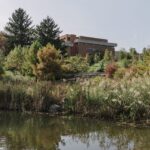
A high-potential green space on the edge of UMBC’s main campus will see big changes in the coming months. A new $1 million grant from the Chesapeake and Atlantic Coastal Bays Trust Fund, combined with about $1.4 million of university investment, will fund a major stream restoration on campus. The stream is a small tributary of the West Branch Herbert Run, and it flows through campus by the Chesapeake Employers Insurance Arena and bwtech@UMBC. The stream is part of the Patapsco River and Chesapeake Bay watersheds.
“This project will not only create and enhance wetland and stream habitats and functions, it will also provide recreational enhancements such as walking trails with stream access and connection to other existing trails,” says Lenn Caron, associate vice president of facilities management.
Additionally, he notes, “the restored stream will elevate UMBC’s aesthetic appeal and provide a pleasant natural environment for members of the campus and local community for recreation, exercise and watershed education.”
Restoring Herbert Run is part of UMBC’s Institutional Management Plan, a stormwater master plan put in place in 2014. The plan empowers UMBC to “make decisions that serve the campus’s interests on a broader scale—on a watershed basis,” rather than addressing stormwater requirements for new construction projects in isolation, explains Larry Hennessey, associate director of design and construction services and the lead on the restoration work. “This is the outcome of many years of stormwater planning.”

Larry Hennessey at UMBC’s community garden. Photo courtesy Larry Hennessey.
Recreating a healthy stream
The need for the restoration is a result of decades of growth at UMBC and in the surrounding community. In a forest, soil absorbs and filters a large percentage of precipitation exactly where it falls, leaving only a small portion to flow into nearby streams. However, development leads to an increase in surfaces that water can’t penetrate, like concrete and building roofs. This generates more runoff that enters streams. Because the natural stream channel didn’t form to handle that much water, the increased runoff quickly erodes the stream banks.
As the bank erodes, “the stream channel becomes so deep that it’s no longer connected to the floodplain,” Hennessey says. The water can’t spread out and seep into adjacent land, so it flows with greater speed and force through the stream, worsening erosion. “It becomes a self-perpetuating problem,” Hennessey says.
The restoration project will “reconnect the stream with the floodplain by raising the streambed and adding natural features in the stream to slow down the flow,” Hennessey explains. “By spreading the water out, when you do get a big storm event, the impacts won’t be concentrated in a small area. The stream will function the way it was intended to function.”

The West Branch Herbert Run on campus prior to the restoration. The height of the bank indicates extensive erosion that separates the stream from the natural floodplain. Photo courtesy Larry Hennessey.
Welcoming visitors—wild and human
Additional benefits of the project abound. Eroded, fast-flowing streams don’t support nearly as much wildlife as healthy streams connected to the floodplain. While it may alarm some observers that the stream restoration involves removing trees, “Lower portions of the trees are left in the stream to create deeper pools and riffles,” Hennessey says. These microhabitats attract animals like frogs, dragonflies, crayfish, and even herons. “This is going to significantly improve our ecosystem,” he explains.
The restoration will also enhance the experience of Herbert Run for humans. The Herbert Run Greenway walking path traverses the Conservation and Environmental Research Area (CERA) and follows the stream as it meanders across the southeast quadrant of campus.
Along the portion of the stream to be restored, concrete stairs lead down to a frequently submerged concrete walkway, and the land beside the stream is clogged with invasive plants. Once the project is finished, however, a healthier streamside and new nature trail dotted with informational signage will greet visitors in this section of the greenway.

Larry Hennessey (rear, blue shirt) with students from the Environmental Task Force, a UMBC student organization that he advises, after one of their stream clean-ups. Photo courtesy Larry Hennessey.
New tech, new strategies
The campus implemented its first stormwater management facilities decades ago by installing ponds near some buildings to collect stormwater runoff. The ponds prevented a rush of fast-flowing water into streams during storms, slowing erosion. These projects focused on stormwater quantity, but did little to address the quality of the runoff. The runoff would deposit sediment in streams, causing more problems.
This challenge is far from unique to UMBC. “The entire Chesapeake Bay is filled with plumes of sediment after a rain event, because this is happening everywhere,” Hennessey says. “The ponds were a good first step, but they didn’t really solve the problem. We still had detrimental effects of the stormwater runoff coming out of the ponds.”
Over time, as technology and understanding of the damage caused by runoff increased, the strategies changed. New projects, like UMBC’s Interdisciplinary Life Sciences Building, include bioretention facilities that both slow the flow of water to streams and use a special medium underground to effectively filter out sediment and other harmful compounds.

Plantings in the Commons Plaza, adjacent to the Interdisciplinary Life Sciences Building, are the aboveground element of a bioretention facility to remediate runoff generated by the building. Photo by Marlayna Demond ’11 for UMBC.
A commitment to sustainability
Hennessey has been with UMBC since 2007 and has a deep personal commitment to landscape stewardship. Previous projects he’s been involved with included landscape conversions, such as from a lawn to a no-mow pollinator meadow, and improving the functionality of older stormwater management installations, like the ponds.
He is excited to see this new project launch after almost a decade of planning. There was some question as to whether the project as originally designed would come to fruition due to funding constraints, but the grant from Chesapeake and Atlantic Coastal Bays Trust Fund removed that barrier.
The project “highlights our goal of continuous improvement, both visually and functionally,” Caron notes. Simpler options, like street-sweeping, might have met environmental requirements, but would not have yielded the same long-term benefits. The decision to pursue a stream restoration on campus, Caron says, “demonstrates our commitment to environmental sustainability.”
Banner image: The UMBC Library Pond and adjacent vegetation, upgraded in 2014, serve as a stormwater management facility on campus. Photo by Marlayna Demond ’11 for UMBC.
]]>
A high-potential green space on the edge of UMBC’s main campus will see big changes in the coming months. A new $1 million grant from the Chesapeake and Atlantic Coastal Bays Trust Fund, combined...
https://umbc.edu/stories/major-umbc-stream-restoration-will-enhance-ecosystems-stormwater-management-and-the-community-experience/
https://beta.my.umbc.edu/api/v0/pixel/news/119583/guest@my.umbc.edu/9bad3800e86fe61efa25b66337641593/api/pixel
campus
community
page1
science-and-technology
sustainability
UMBC News & Magazine
https://beta.my.umbc.edu/groups/umbc-news-magazine
https://assets1-beta.my.umbc.edu/system/shared/avatars/groups/000/001/943/24435aa6207c452e7bc15cc74b42c7bb/xsmall.png?1748556657
https://assets1-beta.my.umbc.edu/system/shared/avatars/groups/000/001/943/24435aa6207c452e7bc15cc74b42c7bb/original.png?1748556657
https://assets2-beta.my.umbc.edu/system/shared/avatars/groups/000/001/943/24435aa6207c452e7bc15cc74b42c7bb/xxlarge.png?1748556657
https://assets2-beta.my.umbc.edu/system/shared/avatars/groups/000/001/943/24435aa6207c452e7bc15cc74b42c7bb/xlarge.png?1748556657
https://assets3-beta.my.umbc.edu/system/shared/avatars/groups/000/001/943/24435aa6207c452e7bc15cc74b42c7bb/large.png?1748556657
https://assets1-beta.my.umbc.edu/system/shared/avatars/groups/000/001/943/24435aa6207c452e7bc15cc74b42c7bb/medium.png?1748556657
https://assets2-beta.my.umbc.edu/system/shared/avatars/groups/000/001/943/24435aa6207c452e7bc15cc74b42c7bb/small.png?1748556657
https://assets1-beta.my.umbc.edu/system/shared/avatars/groups/000/001/943/24435aa6207c452e7bc15cc74b42c7bb/xsmall.png?1748556657
https://assets2-beta.my.umbc.edu/system/shared/avatars/groups/000/001/943/24435aa6207c452e7bc15cc74b42c7bb/xxsmall.png?1748556657
UMBC News & Magazine
0
0
false
Tue, 13 Jul 2021 14:41:41 -0400
Building an Inclusive Workforce—Rising Together

Since 2009, as part of its Alumni Awards celebration, the UMBC Alumni Association names one “Rising Star” recipient each year who exemplifies early career and professional achievement. Prior to our October 2021 award ceremony, we’re spending some time with awardees from the past decade to see where they are now—and how they’ve grown in their fields while maintaining ties to UMBC. In this installment, UMBC Rising Stars Alicia Wilson ’04, political science, Nicole DeBlase ’06, financial economics, and Lauren Mazzoli Zavala ’15, computer science and mathematics, M.S. ’17, computer science, discuss their leadership roles in economic development, finance, and engineering and their concerted efforts to make these career paths more available to women and other underrepresented communities.
“If a woman sets the table, everyone wants to pull up a seat,” says Alicia Wilson ’04, political science. “It’s important for women to set the table—to be in positions of leadership—so they can build a strong team.”
Indeed, the following Rising Star Alumni Award recipients have not just set the table, they’ve helped build it.
UMBC Magazine sat down virtually with three powerhouse women to discuss how their time as UMBC students and scholars impacted their professional trajectories, and how they’re paving the way for the next generation of leaders.
Training up leaders
Economic development, finance, and engineering aren’t career paths traditionally associated with women (yes, even in 2021), however with concerted efforts to recruit, train, and retain young, female graduates—especially those coming out of smaller or lesser-known schools—the tides have been turning. UMBC’s constellation of programs that lift up underrepresented populations in tech or community development have well-situated Retrievers who want to make an impact on the world as well as closer to home.
Left: Wilson (far right) hosted a basketball tournament for South Baltimore youth who had perfect or improved attendance. Right: A visit to Harvard and the Massachusetts Conference for Women with Brown Girl Village (Wilson, center, in gray). Photos courtesy of Wilson.
It’s no accident that a determining factor in who receives the Rising Star Award is someone who demonstrates ongoing involvement and support of UMBC, its students, and alumni.
Wilson, DeBlase, and Zavala are just three of the many success stories coming out of Hilltop Circle and their professional expertise, personal commitment to being viewed as leaders, and overall drive are more than evident, even over a Zoom call.
Opening doors
While their professional successes are evident, the personal successes of these Rising Stars are, in part, intertwined. Seeing firsthand the importance of strong leadership and being a part of a student body where academics are celebrated (“At UMBC, it’s cool to be smart,” says Wilson with a laugh), all three women have made it a point to open doors for other students who may not have taken the traditional route to careers in economics or engineering.
“I feel like I had to work a little harder to make it happen for myself on Wall Street,” says Nicole DeBlase ’06, financial economics, a managing director and lead analyst for Deutsche Bank, focusing specifically on U.S. multi-industry and electrical equipment. “Coming from a non-Ivy League school, I had to exercise my muscles to get my foot in the door. Because of that, I make it a point to help recruit people from state schools, knowing that talent and skill can come from anywhere. I feel like I’ve had a bit of an impact in that way.”
 DeBlase visiting Oshkosh, a company she covers that makes defense vehicles, among other things. Photo courtesy of DeBlase.
The act of paying it forward is not a new concept for UMBC alumni, and each of these Retrievers emphasizes that “community” isn’t just a word splashed across the university’s homepage, but rather a way of life for students and alumni, and something university President Freeman Hrabowski actively nurtures.
“I had never eaten lunch with a university president before Dr. Hrabowski,” remembers Wilson, who was a Sondheim Public Affairs scholar and is now the vice president of economic development at the Johns Hopkins University and Health Systems. “I thought to myself how this must be a special place, because that’s far beyond what I would imagine someone in that position caring about—what some 17-year-old kid from the city thinks.”

In
2018, Wilson was the keynote speaker at the Steve and Marjorie Harvey Foundation’s Girls Who Rule the World summit. Photo courtesy of Wilson.
Wilson’s Baltimore roots are serving her well. In her current role, she leads the development and implementation of Hopkins’ institution-wide strategies and initiatives both within the United States and abroad through investments in real estate, economic and neighborhood development, healthcare, and education.
A school that invests in its students to ensure their personal successes is something worth celebrating, says Wilson, 2009 Rising Star recipient—and it’s perhaps what UMBC most prides itself on.
Lauren Mazzoli Zavala agrees.
 Zavala, right, with her mentee Priyanka Ranade ’18, M.S. ’19, information systems, at Northrop Grumman. Photo by Marlayna Demond ’11.
“The time I spent in UMBC’s Cyber Scholars Program prepped me for the reality that teamwork and collaboration are essential in this industry,” says Zavala,’15, computer science and mathematics, M.A. ’17, computer science. “You can never go into a room with an ego because you can always expect to learn from other people around you. That’s something I quickly picked up as a UMBC scholar and it’s been critical to how I approach my work at Northrop.”
Zavala, who received the Rising Star award in 2017, is now a software engineering manager at Northrop Grumman where she and her team oversee cyber missions as they relate to American troops in different parts of the world.
Showing up
 Zavala, far left, at Northrop’s Cyber Security Raspberry Pi Competition hosted by Northrop Grumman for UMBC Students
.
Photo courtesy of Zavala.
The Center for Women in Technology (CWIT) is a primary example of the investment made in UMBC’s students’ future, in this case, the future of women in technological careers. Established in July 1998 to catapult women’s full participation in all aspects of information technology, CWIT expanded its scope in 2006 to include engineering majors as well. Zavala knows firsthand the importance a scholarship program like CWIT has on an entire student body.
“The Cyber Scholars Program was invaluable to me as a junior,” she adds. “Its partnership with CWIT, as well as Northrop Grumman and other leading companies in cybersecurity, provided students with the network and resources needed to build important connections.”
In a space typically dominated by white men, Zavala remembers joining a group of women to participate in a cyber competition. Though they didn’t end up winning, the lasting memory of being present and bringing some much-needed diversity to the space stayed with her.
“The worst we can do is fail,” she says, emphasizing the importance of showing up and trying. “In my career today, I’m constantly learning from other people, and that includes interns. We’ll lean on them for their creative solutions to very real deadlines and challenges we have to meet at Northrop every day.”
Talented trailblazing
Modeling good leadership results in good leadership, and ultimately, it’s what drives DeBlase, Zavala, and Wilson within their respective jobs—excellence recognizing excellence.
 DeBlase on her first CNBC appearance. Photo courtesy of DeBlase.
“I run a team of four associates, and we have a 50/50 ratio of women versus men,” says DeBlase, who is heavily involved with Deutsche Bank’s recruitment process and is keen on creating opportunities for individuals who have taken a less traditional approach to reaching Wall Street. “Looking for the most talented person to fill a seat is critical, which is why it’s important to seek out those women applicants.”
Programs like Women on Wall Street—perhaps not coincidentally run by Deutsche Bank—allows DeBlase, the 2015 Rising Star awardee, to be up front and center in the recruiting process, ensuring that equal opportunity is given across the board.
In her previous position, recruitment of talented women started early. “When I was at Morgan Stanley, there was a whole initiative around recruiting women,” DeBlase adds. We’d start at the sophomore level and actually do campus outreach.”
Despite the personal successes each woman has experienced in the workforce, there is still larger work to be done, particularly in light of the numerous challenges women have faced during the COVID-19 pandemic.
“There needs to be an evolution with work-life balance and work flexibility to allow women to feel like a career on Wall Street is more sustainable,” says DeBlase. “It’s still challenging for women who enter more senior roles. In a way, COVID has helped my workplace realize that there are opportunities for employees to work from home and strike a healthier work-life balance.”
In a perfect world, a trailblazer won’t be categorized by their gender, but rather by their innovation, talent, and dedication to creating a more inclusive society. Until then, however, it’s programs like CWIT, the Sondheim Program, and Women on Wall Street that will drive change that is both tangible and significant, as seen through the work of these three Rising Stars
With women like Zavala, Wilson, and DeBlase at the helm, change might come sooner than anticipated.
— Nikoletta Gjoni ’09
Read more about other Retrievers rising together and stay tuned for more information about UMBC’s 32nd annual Alumni Awards in October.
]]>
Since 2009, as part of its Alumni Awards celebration, the UMBC Alumni Association names one “Rising Star” recipient each year who exemplifies early career and professional achievement. Prior to...
https://umbc.edu/stories/building-an-inclusive-workforce-rising-together/
https://beta.my.umbc.edu/api/v0/pixel/news/119584/guest@my.umbc.edu/6b2d4c053e354944d978a9415528a3f5/api/pixel
alumni
alumni-awards
cahss
cnms
coeit
computer-science
financial-economics
mathematics
political-science
rising-together
UMBC News & Magazine
https://beta.my.umbc.edu/groups/umbc-news-magazine
https://assets1-beta.my.umbc.edu/system/shared/avatars/groups/000/001/943/24435aa6207c452e7bc15cc74b42c7bb/xsmall.png?1748556657
https://assets1-beta.my.umbc.edu/system/shared/avatars/groups/000/001/943/24435aa6207c452e7bc15cc74b42c7bb/original.png?1748556657
https://assets2-beta.my.umbc.edu/system/shared/avatars/groups/000/001/943/24435aa6207c452e7bc15cc74b42c7bb/xxlarge.png?1748556657
https://assets2-beta.my.umbc.edu/system/shared/avatars/groups/000/001/943/24435aa6207c452e7bc15cc74b42c7bb/xlarge.png?1748556657
https://assets3-beta.my.umbc.edu/system/shared/avatars/groups/000/001/943/24435aa6207c452e7bc15cc74b42c7bb/large.png?1748556657
https://assets1-beta.my.umbc.edu/system/shared/avatars/groups/000/001/943/24435aa6207c452e7bc15cc74b42c7bb/medium.png?1748556657
https://assets2-beta.my.umbc.edu/system/shared/avatars/groups/000/001/943/24435aa6207c452e7bc15cc74b42c7bb/small.png?1748556657
https://assets1-beta.my.umbc.edu/system/shared/avatars/groups/000/001/943/24435aa6207c452e7bc15cc74b42c7bb/xsmall.png?1748556657
https://assets2-beta.my.umbc.edu/system/shared/avatars/groups/000/001/943/24435aa6207c452e7bc15cc74b42c7bb/xxsmall.png?1748556657
UMBC News & Magazine
0
0
false
Fri, 09 Jul 2021 20:53:57 -0400
UMBC launches Faculty Expert Search tool to connect scholars with the public and each other
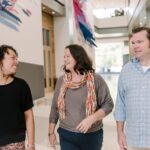
Every day UMBC faculty are hard at work testing antivirals in the lab, untangling the impacts of healthcare policy, and processing satellite data on Earth’s atmosphere. They are developing best practices for K-12 teaching, remediating water contaminants, and exploring how actors express intimacy on stage. But how can journalists, students, or the general public learn who these faculty are and what they study? And how can faculty connect with each other for innovative research collaborations?
Anyone seeking UMBC experts can now find them through a new online tool that makes searches fast and easy.
“UMBC has some of the nation’s leading experts in fields ranging from artificial intelligence and quantum computing to health equity and public history. But it can be challenging for potential research partners to identify exactly the right contact for a given project,” says Karl V. Steiner, vice president for research. “We are excited that this online tool will give current and future partners new ways to learn about and collaborate with talented researchers and scholars across our UMBC community.”
 Karl Steiner (left) and Aryya Gangopadhyay at the Pi Squared opening in 2018.
How it works
On the Faculty Expert Search site, users can enter a name or a research topic to identify UMBC experts, and then connect with those who most closely match their needs. Possible uses include fellow faculty seeking research collaborators, prospective graduate students looking for faculty in their areas of interest, journalists looking for experts on topics in the news, and community groups interested in project partners.
In response to search terms, the tool displays micro-profiles. These include faculty names, titles, departments, and brief bios, plus photos if available. Clicking on “view profile” will reveal contact information. It will also display additional information the faculty member chooses to add to their profile, such as research interests, teaching expertise, classes taught, and publications.
 Weihong Lin (right), professor of biological sciences, with Rishit Patel ’19 (left) and Kayla Lemons-Valdez, Ph.D. ’20, biological sciences (center), in 2018.
Faculty can update their profiles at any time, so the site is continuously growing. Currently, the database features tenured and tenure-track faculty and lecturers, and some research faculty, and there is interest in making it more inclusive over time.
Visibility and connections
“A comprehensive, searchable database of faculty experts highlights the diversity and vibrancy of scholarly activities in our institution,” says Preminda Jacob, associate dean of the College of Arts, Humanities, and Social Sciences. Jacob, who is also an associate professor of visual arts, was a leading force behind the development of the Faculty Expert Search tool.
 Preminda Jacob (left) and Andrea Lorick (right) at the Center for Art, Design, and Visual Culture, 2016.
“Within our campus, this site will further interdisciplinary research by connecting scholars with common interests,” Jacob says. “External to UMBC, it has the potential to strengthen our research community’s international networks and community partnerships. It encourages the public to connect with faculty experts who could serve as speakers, collaborators, contributors to publications, and mentors.”
Users can access the Faculty Expert Search tool through UMBC’s homepage, under Research.
Faculty seeking to update a profile can use this step-by-step guide. Community members looking for contacts not included in this tool can continue to use the main UMBC.edu search function. Journalists interested in interviewing UMBC experts can also contact news@umbc.edu.
Featured image: Mercedes Burns, Maggie Holland, and Chris Swan (l-r) are part of the NSF-funded Interdisciplinary Consortium for Applied Research in Ecology and Evolution (ICARE). Photos by Marlayna Demond ’11 for UMBC.
]]>
Every day UMBC faculty are hard at work testing antivirals in the lab, untangling the impacts of healthcare policy, and processing satellite data on Earth’s atmosphere. They are developing best...
https://umbc.edu/stories/umbc-launches-faculty-expert-search-tool-to-connect-scholars-with-the-public-and-each-other/
https://beta.my.umbc.edu/api/v0/pixel/news/119585/guest@my.umbc.edu/6cd7d30accaeb781aa0698210358bff8/api/pixel
arts-and-culture
interdisciplinary
page1
policy-and-society
research
science-and-technology
UMBC News & Magazine
https://beta.my.umbc.edu/groups/umbc-news-magazine
https://assets1-beta.my.umbc.edu/system/shared/avatars/groups/000/001/943/24435aa6207c452e7bc15cc74b42c7bb/xsmall.png?1748556657
https://assets1-beta.my.umbc.edu/system/shared/avatars/groups/000/001/943/24435aa6207c452e7bc15cc74b42c7bb/original.png?1748556657
https://assets2-beta.my.umbc.edu/system/shared/avatars/groups/000/001/943/24435aa6207c452e7bc15cc74b42c7bb/xxlarge.png?1748556657
https://assets2-beta.my.umbc.edu/system/shared/avatars/groups/000/001/943/24435aa6207c452e7bc15cc74b42c7bb/xlarge.png?1748556657
https://assets3-beta.my.umbc.edu/system/shared/avatars/groups/000/001/943/24435aa6207c452e7bc15cc74b42c7bb/large.png?1748556657
https://assets1-beta.my.umbc.edu/system/shared/avatars/groups/000/001/943/24435aa6207c452e7bc15cc74b42c7bb/medium.png?1748556657
https://assets2-beta.my.umbc.edu/system/shared/avatars/groups/000/001/943/24435aa6207c452e7bc15cc74b42c7bb/small.png?1748556657
https://assets1-beta.my.umbc.edu/system/shared/avatars/groups/000/001/943/24435aa6207c452e7bc15cc74b42c7bb/xsmall.png?1748556657
https://assets2-beta.my.umbc.edu/system/shared/avatars/groups/000/001/943/24435aa6207c452e7bc15cc74b42c7bb/xxsmall.png?1748556657
UMBC News & Magazine
0
0
false
Wed, 07 Jul 2021 16:57:45 -0400
Connecting Interdisciplinary Narrative Research with Public Need
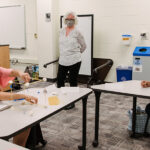
What if I told you a story? Would you listen? Over the last year and a half, as the world has faced major social justice and environmental issues, many people have questioned their roles in our shared past, present, and future. But, by talking and listening to stories different from our own, we can find a greater understanding of our diverse lives and some answers to challenging issues.
Now in its third year, UMBC’s Interdisciplinary CoLab: Summer Internship has given nine students from a variety of majors an opportunity to have hands-on experience in this type of humanities-based narrative research. Students were divided equally into three public-facing research projects focusing on civil rights, urban forests, and radical literature. Each team created a digital, audio, or print product that fit a specific need of a community or campus partner in real-time. The research was designed to introduce or strengthen students’ ability to collaborate and their story-gathering/telling skills such as archival research, oral histories, and technical writing.
The UMBC Interdisciplinary CoLab program is a partnership between The Provost’s Interdisciplinary Activities Advisory Committee, the Dresher Center for the Humanities, and the Office of Summer, Winter, & Special Programs.
 Students gathered for CoLab research training that covered three areas: civil rights, urban forests, and radical literature.
BLM & Civil Rights oral histories
Nancy Kusmaul, associate professor of social work, was excited to hear her students discuss the Black Lives Matter (BLM) movement during the protests about George Floyd’s murder. But something was missing. Students were aware of BLM and the Civil Rights movement but they didn’t seem to see a connection between them. “I knew I had found an opportunity for students to listen to the past to build a link to the present,” shares Kusmaul, who led a CoLab project on these topics. “Because the CoLab experience focuses on our local communities, what better place to start than Baltimore City.”
Deysi Chitic-Amaya ’23, media and communication studies, was drawn to the project because of the focus on the Civil Rights and Black Lives Matter movements in Baltimore. “We can understand the roots of these global movements by learning how they have changed and influenced the lives and work of people in Baltimore’s communities and neighborhoods,” says Chitic-Amaya, who, with other students, spent the summer conducting virtual oral history interviews with community activists.
There were a few roadblocks. Many of the Civil Rights activists had passed away or were not available, but Kusmaul connected with Baltimore County historian Louis S. Diggs, Baltimore radio host Marc Steiner, and members of the grass-roots, member-led Baltimore organization, Organizing Black.
 Nancy Kusmaul, far right, works with her student researchers.
The student researchers learned interview skills using humanities-based research methods. These skills showed them how to listen across differences and how to approach sensitive topics and difficult questions. “I’ve learned how to interview individuals who are different from me whether it be race, gender, age, etc.,” shares Chitic-Amaya.
After the virtual interviews were completed the students transcribed them and deciphered the experiences between the two movements. The oral histories will be added to the Albin O. Kuhn Library Digital Collections with an explanatory essay and a podcast.
“I hope to come away with greater skills in humanities research methods,” says Chitic-Amaya of her time in the CoLab. “I want to be able to approach future projects with a more open-minded perspective that may help to produce something new and innovative.”
Urban forest data stories
Baltimore stories are not only about collecting oral histories. They also include the stories of the green spaces—and the data surrounding them—in and around Baltimore and how those stories shape the way people live and recreate in the city. It can be overwhelming to know where and how to begin or how to improve existing conservation efforts, but for citizen conservationists, wherever they might be, help is on its way.
Led by UMBC’s Jennifer Maher, associate professor of English, the CoLab participants worked in collaboration with the Baltimore non-profit organization Baltimore Green Space to develop a digital and print urban forest health research protocol manual. The manual will be used as a tool to train citizen and professional conservationists.

The team jumped right into creating a technical narrative with information about urban forests that was previously gathered by Baltimore Green Space through a collaborative project between Matt Baker, professor of geography and environmental system, the USDA Forest Service, and Johns Hopkins University. Community land stewards, alumni, and current students involved in the Summer Forest Patch Project, a collaborative project between UMBC and Howard County Community College, were also part of the collaboration.
“Technical writing is an occupation that the Bureau of Labor and Statistics identifies as growing faster than average,” explains Maher. “Students were not only helping to foster community-based science and civic engagement in Baltimore and beyond but also gaining marketable skills and professional experience.”
UMBC’s student conservationists learned how to weave data to present a factual and engaging narrative that will train both those already engaged in urban forest health and budding conservationists how to better collect data and share the information with the general public and policymakers. The technical narrative presents the information in a persuasive manner that could encourage more participation in urban health anywhere.
 Tevyur Mosely ’22, M30, biological sciences, took part in research based on data from Baltimore Green Space.
Tevyur Mosley ’22, M30, biological sciences, had a big reveal: “I was introduced to the idea that citizens can engage in community-based research that they can then share with their local officials to influence policy.”
Radical literature multimedia exhibition
Unlike the other CoLabs, the students in the Radical Literature in the First Half of the 20th Century group did not interview people. Instead, they learned to uncover stories hidden in the archives of the Albin O. Kuhn Library & Gallery Special Collections department, studying magazines, pamphlets, and essays that narrate the politics and ideas of the socialist movement.
This was a treasure hunt of sorts. Students sifted through and searched scanned documents for key narratives in order to ultimately design an online exhibition that includes a historical timeline, digital stories, research essays, and a video telling the story of the collection. Kate Drabinski, lecturer of gender, women’s, and sexuality studies, who led the group, said that while completing the program virtually had its challenges, seeing the students learn to collaborate from afar was really rewarding.
“As much as we’ve all been working online over the past year, doing this kind of intensive, daily collaboration was a different beast altogether,” she said. “This posed specific challenges, but also opportunities to learn how to work as a team remotely…and how to work with archival documents to do research, and get others excited about using the collection.”
To provide researchers with different perspectives on the socialist movement, “the collection features works of famous authors such as Friedrich Engels and Angela Davis, as well as many niche pieces from small, politically affiliated publishers and both local and national political organizations,” the students explain in their online exhibit. Now curious minds around the world can also discover the breadth and depth of the archive in a more visual and accessible way.
Learning on the job
The summer CoLab internships are not only an opportunity for students across colleges to develop the social and technical skills of working in interdisciplinary teams, but also to explore different fields. CoLab organizers Carole McCann, special assistant to the provost for interdisciplinary activities, and Donald Snyder, lecturer in media and communication studies, designed the program to have a lasting impact on students’ careers. Through public humanities and social science research methods, students are responsible for projects from conception to completion, strengthening their professional communication and project management skills.
“The CoLab experience is about students gaining professional research experience while learning how to appreciate their own skills and that of others,” says McCann. “They learn to meet the expectations of clients and community partners, to tell effective stories for the general public. And doing all of that in real-time.”
To learn more about the CoLab program, visit https://iaac.umbc.edu/co-lab/.
Photos by Marlayna Demond ’11 for UMBC Magazine.
]]>
What if I told you a story? Would you listen? Over the last year and a half, as the world has faced major social justice and environmental issues, many people have questioned their roles in our...
https://umbc.edu/stories/connecting-interdisciplinary-narrative-research-with-public-need/
https://beta.my.umbc.edu/api/v0/pixel/news/119586/guest@my.umbc.edu/f47f4c2ccb8de98ea2843b2e0810b765/api/pixel
discovery
professorsnottomiss
UMBC News & Magazine
https://beta.my.umbc.edu/groups/umbc-news-magazine
https://assets1-beta.my.umbc.edu/system/shared/avatars/groups/000/001/943/24435aa6207c452e7bc15cc74b42c7bb/xsmall.png?1748556657
https://assets1-beta.my.umbc.edu/system/shared/avatars/groups/000/001/943/24435aa6207c452e7bc15cc74b42c7bb/original.png?1748556657
https://assets2-beta.my.umbc.edu/system/shared/avatars/groups/000/001/943/24435aa6207c452e7bc15cc74b42c7bb/xxlarge.png?1748556657
https://assets2-beta.my.umbc.edu/system/shared/avatars/groups/000/001/943/24435aa6207c452e7bc15cc74b42c7bb/xlarge.png?1748556657
https://assets3-beta.my.umbc.edu/system/shared/avatars/groups/000/001/943/24435aa6207c452e7bc15cc74b42c7bb/large.png?1748556657
https://assets1-beta.my.umbc.edu/system/shared/avatars/groups/000/001/943/24435aa6207c452e7bc15cc74b42c7bb/medium.png?1748556657
https://assets2-beta.my.umbc.edu/system/shared/avatars/groups/000/001/943/24435aa6207c452e7bc15cc74b42c7bb/small.png?1748556657
https://assets1-beta.my.umbc.edu/system/shared/avatars/groups/000/001/943/24435aa6207c452e7bc15cc74b42c7bb/xsmall.png?1748556657
https://assets2-beta.my.umbc.edu/system/shared/avatars/groups/000/001/943/24435aa6207c452e7bc15cc74b42c7bb/xxsmall.png?1748556657
UMBC News & Magazine
0
0
false
Tue, 06 Jul 2021 21:07:55 -0400
Leaving a Legacy of Support for UMBC’s Hispanic/Latinx Community

Ana María Schwartz Caballero, associate professor of modern languages, linguistics, and intercultural communication, is retiring from UMBC after more than 25 years of service. “This was a very difficult decision but it was the right time for me to retire,” says Schwartz Caballero. “UMBC has been my home for many years.”
Schwartz Caballero joined UMBC in 1984 as a lecturer for Spanish language classes in the modern languages and linguistics department. She became an assistant professor in 1996, received tenure as associate professor in 2002, and chaired the department from 2006 – 2012. Schwartz Caballero was one of the first faculty members to teach Spanish to heritage Spanish speakers.
The many programs, initiatives, associations, and committees she has led and participated in have helped establish a network of support and guidance for the success of UMBC’s Hispanic/Latinx community. And her legacy will continue to have an impact as faculty and students she has mentored carry on her work.
In a recent farewell event honoring Schwartz Caballero, President Freeman Hrabowski thanked her for being the voice for so many in the Latinx/Hispanic community on campus, in Baltimore City, and the State of Maryland. “Ana María has changed the culture of UMBC,” shares Hrabowski. “She has brought such rich diversity, and she has broadened our thinking about the world.”
 Schwartz Caballero’s headshot by Marlayna Demond ’11.
Language learning research
Schwartz Caballero began her career at UMBC as a graduate assistant in the education department while completing her Ph.D. in second language education at the University of Maryland College Park. Soon after graduation, she became a Spanish and second language pedagogy instructor in what is now UMBC’s modern languages, linguistics, and intercultural communication (MLLI) department.
Her research focused on heritage Spanish speakers, language teaching, learning strategies, and curriculum development. In 2002, Schwartz Caballero’s co-authored textbook, Noticias: An Advanced Intermediate Content-Based Course, presented educators with a new approach to teaching Spanish. Instead of a grammar-centered, isolated approach, Schwartz Caballero found students learned Spanish best by reading current Spanish-language media articles from Spanish-language speaking countries. This way students learn grammar structure in context while at the same time learning about the culture and current events.
Schwartz Caballero has developed local, state, and national level professional development courses and instructional materials for Spanish language teachers. She has also provided research-based strategies for the integration and application of the National Standards for Foreign Language Learning.
Understanding heritage speakers
In addition to her research on teaching Spanish as a foreign language, Schwartz Caballero’s work has helped develop best practices to support the learning needs of heritage Spanish speakers learning Spanish and other subjects. As a Spanish language heritage speaker herself from Cuba, Schwartz Caballero has a personal understanding of the complex needs heritage speakers face in the classroom.
 Schwartz Caballero with Ana Oskoz, the current chair of MLLI, on UMBC’s Immigrant Recognition Day in 2017. Photo courtesy of Schwartz Caballero.
She knows Hispanic/Latinx students who come to the U.S. as refugees, like she did when she left Cuba as a teenager, and those who immigrate or are born in the U.S. must grapple with their own diverse social-cultural identities in a country that often homogenizes their languages, race, cultures, and experiences. Her work has helped prepare student teachers and in-service educators with the skills necessary to support the learning needs of heritage Spanish speakers in a variety of contexts.
Schwartz Caballero also teaches educators how to be advocates. “Being an advocate for students,” she says, “can be the difference between a student graduating or dropping out. It is as important as their academic success.” She notes that teachers need to learn about the challenges Latinx/Hispanic students face beyond the classroom. Schwartz Caballero advocates educators to be understanding of a number of Latinx/Hispanic students who are often balancing work, family responsibilities, and financial hardships that hamper their success and can delay graduation.
Schwartz Caballero has been the faculty advisor to UMBC’s undergraduate Latino/Hispanic Union since 1997 and a founding member of the Latinx/Hispanic Admissions Advisory Group which develops best practices in recruitment and admissions.
Working with doctoral students
In addition to her work with undergraduate students, Schwartz Caballero also worked with many graduate and doctoral students, helping them navigate the field and prepare for the next steps of their careers. For many doctoral students, she was also a compassionate ear, a cheerleader, and like family in the most challenging of times—she helped them find solutions to move forward. Adriana Medina, M.A. ’99, intercultural communication, Ph.D. ’04, language, literacy, and culture, one of many doctoral students Schwartz Caballero has advised, credits Schwartz Caballero for her own success in the classroom. “Ana María has been such a fantastic role model as an educator,” shares Medina. “She is empathetic, compassionate, generous, and also tough at times while also encouraging you. Now, I have been able to be that for my students.”
“Ana María knew who I was, she knew my name, and my department. She made me feel so welcome…we are her legacy.”
María Célleri, assistant professor in gender, women’s, and sexuality studies
Luis Carcamo, M.A. ’95, intercultural communication, remembers how Schwartz Caballero “showed me the ropes of how teaching is done.” Now, in his 25th year of teaching, Carcamo has taken what he learned at UMBC to the southernmost tip of Latin America. “My city is the last city in South America. Ana María’s teachings reached not only the rest of the U.S. but also the rest of our America,” shares Carcamo.
In 2007, UMBC’s Chapter of Black and Latino Alumni awarded Schwartz Caballero with the Legends of Excellence Award: 40 Years of Inspiring African American and Latino Students.
Supporting faculty
Schwartz Caballero has worked tirelessly alongside Hispanic/Latinx faculty and UMBC leadership to recruit and retain Latinx/Hispanic faculty and support UMBC’s diversity initiatives. She was co-chair, with Philip Rous, provost and senior vice president for academic affairs, of UMBC’s Executive Committee on the Recruitment and Retention of Underrepresented Minority Faculty, and has been the president of the Hispanic-Latino Faculty Association for 10 years.
Through the Executive Committee, founded in 2011, UMBC has hosted 20 fellows from diverse backgrounds, including five who identify as Latinx. Two of these fellows are now UMBC faculty members, Fernando Tormos-Aponte, assistant professor of public policy, and Erika Fountain, assistant professor of psychology.
 Schwartz Caballero at a 2019 Humanities Forum with (l-r) Thania Muñoz
,
María Martha Manni,
Mayra Santos-Febres, Tania Lizarazo, and María Célleri. Photo courtesy of Schwartz Caballero.
As the lead organizer for the Hispanic Heritage Month speaker, part of the Dresher Center for the Humanities Forum, Schwartz Caballero has helped bring Latinx/Hispanic scholars to UMBC annually for more than a decade.
“Ana María has raised the issue of diversity and inclusion in relation to Hispanic/Latinx folks in meetings, public forums, and anywhere she could,” says Jessica Berman, director of the Dresher Center for the Humanities. “She worked tirelessly to bring issues facing Hispanic/Latinx people forward, especially through many years of arranging speakers for Hispanic Heritage Month.” Berman notes how Schwartz Caballero’s dedication to fundraise for and organize the speakers elevated the event and led to its inclusion as a permanent part of the fall Humanities Forum.
These efforts have drawn Hispanic/Latinx faculty to UMBC who are leading research across all of UMBC’s academic divisions, including economics, engineering, MLLI, psychology, and more.
Many of the Latinx/Hispanic faculty recall Schwartz Caballero as the first person they met when they came for an interview. She would often pick up faculty at the airport and guide them through their visit. Once they joined UMBC, Schwartz Caballero became a valuable resource, advocate, and supporter. María Célleri, assistant professor in gender, women’s, and sexuality studies, remembers her first week on campus in 2019 during Commencement week. “I didn’t know what was going on but Ana María knew who I was, she knew my name, and my department. She made me feel so welcome,” recalls Célleri. “I love her genuine commitment. We are her legacy.”
“Ana María’s teachings reached not only the rest of the U.S. but also the rest of our America.”
Luis Carcamo, M.A. ’95
Faculty also acknowledge her strong voice on their behalf and her example as a leader in her department, across campus, and beyond. “As a woman, it was very inspiring to hear Ana María, the voice of a strong woman in academia,” shares Renée Lambert-Brétière, associate professor of linguistics and French. “I thank her and I aspire to be like her and be a strong voice.”
In 2020, Schwartz Caballero received the UMBC Marilyn E. Demorest Award for Faculty Advancement.
Building on a legacy
Faculty have also valued her honest feedback and direction through different phases of their career by encouraging them to pursue leadership positions in their field, on campus, and in the community. Within the last year alone, María Cristina Sanchez, professor of the practice in mechanical engineering, has become the inaugural director of the Engineering & Computing Education Program, and Felipe Filomeno, associate professor of political science and global studies, has become the inaugural associate director of the Center for Social Science Research. Tormos-Aponte has recently received over $400,000 from the William T. Grant Foundation to conduct research on the policy impact of the Black Lives Matter Movement on youth.
Headshots of Sanchez, Filomeno, and Tormos-Aponte.
Sanchez has been collaborating with Schwartz Caballero in UMBC’s Hispanic/Latinx Faculty Association and in several committees preparing to further the work along with her colleagues. “A lot of us are in the place that we are because of Ana María,” shares Sanchez. “We will try to continue what she started.”
Service to the community
Schwartz Caballero has also worked closely with the Latinx/Hispanic community beyond campus. For 20 years she has been the UMBC representative in the Maryland State Department of Education for world languages. She is the commissioner of the Baltimore City Mayor’s Hispanic Commission. In 2016, her oral story was part of the Smithsonian’s Anacostia Community Museum “Gateways” bilingual exhibition about the Latinx experience in the U.S.
Her dedication to the Hispanic/Latinx community has received national recognition. In 2014, she was awarded the Hispanic Heritage Leadership Award from the National Football League and the Hispanic Heritage Foundation. The award included a $2,000 donation to UMBC’s Esperanza Fund, a scholarship for UMBC undergraduate and graduate students of Latinx or Hispanic ancestry and/or students committed to the advancement of minorities especially of Latinx or Hispanic descent.
UMBC’s broader outlook
Schwartz Caballero is excited for the future of UMBC and the growth of its Latinx/Hispanic community. She played a large part in creating the pathways that are helping Latinx/Hispanic students and faculty learn and contribute to the campus and regional community. “There are more Latinx/Hispanic faculty, staff, and students than when I started. But there is still so much to do,” says Schwartz Caballero. “I know many will continue the work and will also create new opportunities for UMBC to embrace and uplift the Latinx/Hispanic faculty, staff, and students.”
“Ana María has been, and continues to be, the North Star as we develop and evolve our plans to recruit Hispanic and Latinx students to UMBC,” says Dale Bittinger, assistant vice provost of undergraduate admissions, orientation, and school partnerships, and chair of the Hispanic/Latinx Admissions Advisory Group. “She is an invaluable resource and advocate whose teaching extends beyond the classroom. Her work and commitment to students is another example of why UMBC is such a special place.”
*****
Header image courtesy of Schwartz Caballero, her with students at graduation in 2014.
]]>
Ana María Schwartz Caballero, associate professor of modern languages, linguistics, and intercultural communication, is retiring from UMBC after more than 25 years of service. “This was a very...
https://umbc.edu/stories/leaving-a-legacy-of-support-for-umbcs-hispanic-latinx-community/
https://beta.my.umbc.edu/api/v0/pixel/news/119587/guest@my.umbc.edu/2f918cd0333c2988d38fceabb07d5a49/api/pixel
campus-life
hispanic-heritage-leadership-award
latino-hispanic-faculty-association
mlli
professorsnottomiss
spanish
spanish-language
umbc-hispanic-and-latino-student-admissions-advisory-group
UMBC News & Magazine
https://beta.my.umbc.edu/groups/umbc-news-magazine
https://assets1-beta.my.umbc.edu/system/shared/avatars/groups/000/001/943/24435aa6207c452e7bc15cc74b42c7bb/xsmall.png?1748556657
https://assets1-beta.my.umbc.edu/system/shared/avatars/groups/000/001/943/24435aa6207c452e7bc15cc74b42c7bb/original.png?1748556657
https://assets2-beta.my.umbc.edu/system/shared/avatars/groups/000/001/943/24435aa6207c452e7bc15cc74b42c7bb/xxlarge.png?1748556657
https://assets2-beta.my.umbc.edu/system/shared/avatars/groups/000/001/943/24435aa6207c452e7bc15cc74b42c7bb/xlarge.png?1748556657
https://assets3-beta.my.umbc.edu/system/shared/avatars/groups/000/001/943/24435aa6207c452e7bc15cc74b42c7bb/large.png?1748556657
https://assets1-beta.my.umbc.edu/system/shared/avatars/groups/000/001/943/24435aa6207c452e7bc15cc74b42c7bb/medium.png?1748556657
https://assets2-beta.my.umbc.edu/system/shared/avatars/groups/000/001/943/24435aa6207c452e7bc15cc74b42c7bb/small.png?1748556657
https://assets1-beta.my.umbc.edu/system/shared/avatars/groups/000/001/943/24435aa6207c452e7bc15cc74b42c7bb/xsmall.png?1748556657
https://assets2-beta.my.umbc.edu/system/shared/avatars/groups/000/001/943/24435aa6207c452e7bc15cc74b42c7bb/xxsmall.png?1748556657
UMBC News & Magazine
0
0
false
Fri, 02 Jul 2021 18:53:28 -0400
NASA, Dept. of Energy grant prestigious research awards to UMBC physics Ph.D. students
Noah Sienkiewicz is working alongside NASA and UMBC colleagues to design and build HARP2, an instrument that will launch on NASA’s PACE mission in 2024. Nathan Myers is partnering with top scientists across the country at Los Alamos National Laboratory in New Mexico on innovative quantum computing research. And both physics Ph.D. students have just received highly competitive grants that will help them take their work even further.
Myers received an Office of Science Graduate Student Research award from the U.S. Department of Energy (DOE), which will fund an 11-month experience at Los Alamos. Sienkiewicz received a Future Investigators in NASA Earth and Space Science and Technology (FINESST) Fellowship, which will fund his Ph.D. thesis work at UMBC for up to the next three years.
Fresh ideas
Myers is looking forward to infusing fresh ideas from Los Alamos scientists into his research on non-linear quantum systems. His work fits into the field of quantum thermodynamics, which is critical to the future of computing. The non-linear quantum systems he explores have the potential to be much faster than the already super-fast linear quantum systems that researchers have modeled and begun to fabricate.
Myers had already planned to pursue this area of research, but “now we’ll have the resources and the collaboration with all the researchers at Los Alamos, which is one of the foremost quantum computing research centers in the U.S.,” he says. “So it’s pretty exciting.”

Nathan Myers (left) and Sebastian Deffner at Myers’s master’s graduation. Photo courtesy Nathan Myers.
Begin with the end in mind
Sebastian Deffner, assistant professor of physics and Myers’s mentor, has gone the extra mile to make sure he is in a strong position for the future. In addition to supporting his students’ research, Deffner also helps his mentees develop “related skills, in terms of how to write and apply for these funding opportunities, awards, and grants, and just how to build your network and get in contact with people,” Myers says.
In fact, “When I was first starting research,” Myers says, “one of the first conversations we had was, ‘So, when you graduate, what are some of the places where you might be interested in working? And who can we talk to, to start that process as early as possible?”
Los Alamos was on Myers’s list. Deffner connected Myers with Yigit Subasi, a Los Alamos scientist, and their conversation revealed significant overlap between their research interests. They were coming at the same questions from different angles. So, they collaborated on the proposal for the DOE funding to blend their ideas and work on a breakthrough together.
“Winning this award will give Nathan a unique opportunity to interact with and learn from world-leading experts at a top-tier research location,” Deffner says. “The potential impact on his scientific career can hardly be overestimated, and I hope that this will set a new benchmark for the excellence of our graduate education at UMBC.”

The Los Alamos National Laboratory is perched at 7,355 feet, atop the Pajarito Plateau in the Jemez Mountains in northern New Mexico. Photo courtesy LANL.
The full arc
Sienkiewicz started his UMBC career in a research rotation with Zhibo Zhang, associate professor of physics. He then rotated to work with Vanderlei Martins, professor of physics and director of UMBC’s Earth and Space Institute, who is now his Ph.D. advisor. Zhang gave Sienkiewicz an introduction to computational techniques. And with Martins, he learned how to apply those techniques to data that address the most fundamental physics describing an instrument or phenomenon.
Those two experiences informed Sienkiewicz’s path forward. Now he wants to be involved in “the full arc” of atmospheric research projects— “to make sure the whole process is interconnected and well-informed,” starting with design, and progressing through testing and data processing.
These days, Sienkiewicz is working on both HARP2 and the original HARP, which he helped develop before it launched successfully in fall 2019. In the morning, he analyzes incoming HARP data. Then, in the afternoon, he uses what he observed to inform decisions about HARP2. Both instruments have the potential to inform how climate models account for clouds and tiny particles in the air called aerosols, such as dust, smoke, and other airborne chemicals.

Bands of cirrus clouds above Australia. Clouds are one of the hardest factors for climate models to account for. Data collected by HARP and HARP2 should help. Photo: NASA.
“My goals are to straddle that line between someone who runs code all day and someone who goes into the lab and does the testing,” Sienkiewicz says. It’s a rarer path among atmospheric physicists, but one that offers exciting opportunities. In particular, Sienkiewicz’s comprehensive perspective will be beneficial in the planning process for NASA’s next decade, he believes.
A childhood dream
Both HARP and HARP2 are examples of polarimeters, which will be a major focus of NASA experiments over the next 10 years. Sienkiewicz hopes to stay involved in their development after he graduates, in 2023 or 2024, by transitioning to a role at NASA proper just in time for the PACE mission launch that will carry HARP2 into space.
Through UMBC’s strong connections with the space agency, “I’ve gotten to be more exposed to actual NASA work, and sit in meetings with NASA officials,” Sienkiewicz says. “So, as far as the childhood dream of ‘I want to work for NASA,’ I feel like it’s been a great stepping stone to doing that and having direct interaction with those people and building a network.”

Just after the HARP launch in 2019, Sienkiewicz (far left) and other UMBC students listen to Vanderlei Martins (right) as he offers an impromptu lesson in atmospheric physics. Photo by Sarah Hansen, M.S. ’15.
Support at every level
With Sienkiewicz focused on space and climate science and Myers on quantum computing, their physics research could hardly be farther apart. But they actually have a lot in common.
Sienkiewicz and Myers began their graduate studies at UMBC at the same time. “We sat shoulder to shoulder in the first-year grad student office in 2017,” Sienkiewicz says. “Especially in that first year, our whole cohort really stuck together and helped each other a lot.”
They became friends and housemates. Even as their research trajectories diverged, living in the same house during a pandemic exposed them to each other’s work in new ways. “I’ve probably learned more about quantum thermodynamics in the last year than I ever have, because I hear him in the other room going on and on about anyons,” Sienkiewicz says with a smile.
Their personal camaraderie speaks to a larger graduate student support network in physics at UMBC. For both Myers and Sienkiewicz, the application process for their awards was a group effort, with multiple rounds of feedback from faculty, peers, and staff at UMBC’s Joint Center for Earth Systems Technology (JCET).
In addition to the DOE award, Myers is also funded by the private sector arm of NASA, Paraton, and benefits from a National Science Foundation grant awarded to Deffner. Sienkiewicz received a Graduate Assistant in Areas of National Need award from the U.S. Department of Education in his first year, and, later, a JCET fellowship.
“Getting the funding opportunities through UMBC and making those connections has been instrumental to my progress,” Sienkiewicz says. “Our department really supports students by keeping them funded and showing them opportunities. They help set us up for success.”
Banner image: Two scientists work on the HARP polarimeter in a clean room at UMBC. Sienkiewicz helped fabricate the HARP satellite, including time in the clean room, and now is working on HARP2. Photo by Marlayna Demond ’11 for UMBC
]]>
Noah Sienkiewicz is working alongside NASA and UMBC colleagues to design and build HARP2, an instrument that will launch on NASA’s PACE mission in 2024. Nathan Myers is partnering with top...
https://umbc.edu/stories/nasa-dept-of-energy-grant-prestigious-research-awards-to-umbc-physics-ph-d-students/
https://beta.my.umbc.edu/api/v0/pixel/news/119588/guest@my.umbc.edu/fb5190cb8d681163d2c9d465666b0f5c/api/pixel
cnms
esi
gradresearch
graduateschool
page1
physics
science-and-technology
UMBC News & Magazine
https://beta.my.umbc.edu/groups/umbc-news-magazine
https://assets1-beta.my.umbc.edu/system/shared/avatars/groups/000/001/943/24435aa6207c452e7bc15cc74b42c7bb/xsmall.png?1748556657
https://assets1-beta.my.umbc.edu/system/shared/avatars/groups/000/001/943/24435aa6207c452e7bc15cc74b42c7bb/original.png?1748556657
https://assets2-beta.my.umbc.edu/system/shared/avatars/groups/000/001/943/24435aa6207c452e7bc15cc74b42c7bb/xxlarge.png?1748556657
https://assets2-beta.my.umbc.edu/system/shared/avatars/groups/000/001/943/24435aa6207c452e7bc15cc74b42c7bb/xlarge.png?1748556657
https://assets3-beta.my.umbc.edu/system/shared/avatars/groups/000/001/943/24435aa6207c452e7bc15cc74b42c7bb/large.png?1748556657
https://assets1-beta.my.umbc.edu/system/shared/avatars/groups/000/001/943/24435aa6207c452e7bc15cc74b42c7bb/medium.png?1748556657
https://assets2-beta.my.umbc.edu/system/shared/avatars/groups/000/001/943/24435aa6207c452e7bc15cc74b42c7bb/small.png?1748556657
https://assets1-beta.my.umbc.edu/system/shared/avatars/groups/000/001/943/24435aa6207c452e7bc15cc74b42c7bb/xsmall.png?1748556657
https://assets2-beta.my.umbc.edu/system/shared/avatars/groups/000/001/943/24435aa6207c452e7bc15cc74b42c7bb/xxsmall.png?1748556657
UMBC News & Magazine
0
0
false
Fri, 02 Jul 2021 15:38:45 -0400
House for rent near UMBC
There will be bedrooms available for summer break or fall semester student(lease 9 months or longer)
price : $410 /month about(depend on room) + utilities (average $50/month/per month)+ wifi $10 about /per month
Location: Walking distance to UMBC about 5 minutes.
If interesting, please contact me with your name and your umbc email address;
my e-mail is ; lidimin@gmail.com (please write "Re room" and brief intraduce yourself)
]]>
There will be bedrooms available for summer break or fall semester student(lease 9 months or longer) price : $410 /month about(depend on room) + utilities (average $50/month/per month)+...
https://beta.my.umbc.edu/api/v0/pixel/news/102402/guest@my.umbc.edu/2e9e575b2732f4644ac7fd329c55c80b/api/pixel
International Student and Scholar Services (ISSS)
https://beta.my.umbc.edu/groups/ies
https://assets4-beta.my.umbc.edu/system/shared/avatars/groups/000/000/431/46ad84ea8ba0baeed7c3faf29d1fd4ef/xsmall.png?1693323874
https://assets3-beta.my.umbc.edu/system/shared/avatars/groups/000/000/431/46ad84ea8ba0baeed7c3faf29d1fd4ef/original.jpeg?1693323874
https://assets1-beta.my.umbc.edu/system/shared/avatars/groups/000/000/431/46ad84ea8ba0baeed7c3faf29d1fd4ef/xxlarge.png?1693323874
https://assets1-beta.my.umbc.edu/system/shared/avatars/groups/000/000/431/46ad84ea8ba0baeed7c3faf29d1fd4ef/xlarge.png?1693323874
https://assets4-beta.my.umbc.edu/system/shared/avatars/groups/000/000/431/46ad84ea8ba0baeed7c3faf29d1fd4ef/large.png?1693323874
https://assets3-beta.my.umbc.edu/system/shared/avatars/groups/000/000/431/46ad84ea8ba0baeed7c3faf29d1fd4ef/medium.png?1693323874
https://assets1-beta.my.umbc.edu/system/shared/avatars/groups/000/000/431/46ad84ea8ba0baeed7c3faf29d1fd4ef/small.png?1693323874
https://assets4-beta.my.umbc.edu/system/shared/avatars/groups/000/000/431/46ad84ea8ba0baeed7c3faf29d1fd4ef/xsmall.png?1693323874
https://assets3-beta.my.umbc.edu/system/shared/avatars/groups/000/000/431/46ad84ea8ba0baeed7c3faf29d1fd4ef/xxsmall.png?1693323874
IES Marketplace
0
0
true
Thu, 01 Jul 2021 22:07:41 -0400


