Ocean exploration to environmental justice: UMBC students seize on unique summer opportunities
When COVID struck, students, families, and educators nationwide worried about the impact it would have on learning experiences and career opportunities. Throughout summer 2021, UMBC students have proven that with tenacity and support they can still access meaningful internships.
“We, as a UMBC community, are committed to the career success of our students,” says Christine Routzahn, director of the UMBC Career Center. “Internships provide students with opportunities to apply the skills, theories, and concepts they learn in the classroom while gaining valuable connections and career readiness. Working with our incredible employer partners and alumni, we’ve connected UMBC student talent with valuable, career-building experiences across industries.”
Goal #1: Secure that internship

Sandra Naylor. Photo courtesy of Naylor.
When Sandra Naylor ‘21, financial economics, was looking to transfer from community college to a four-year university, she had her sights set on securing an internship at a well-known company where she could gain hands-on experience in finance. She knew that UMBC had a strong Career Center that could connect her with these opportunities and she jumped at every chance to get her name in front of hiring managers.
“I came to UMBC specifically because I knew that they have really good connections,” says Naylor. Her two top priorities were her grades and accessing career opportunities. She shares, “I started going to meet and greets, and coffee chats to get my face out there as much as possible.”
Naylor attended a workshop at Morgan Stanley, which highlighted the company’s core values, including diversity, and she knew it was a company that could be a great fit for her. With the Career Center’s support, she secured an internship.
Her experience has largely been online, but that hasn’t limited her chances to build skills and network. “I am constantly in meetings and connecting with people,” she says. That includes regular meetings with her mentor, who is an executive director at Morgan Stanley. Senior management has also invited interns to meet at the company’s Baltimore offices.

Sandra Naylor’s photo appears on the Morgan Stanley building in Times Square, New York City. Photo courtesy of Naylor.
As she’d hoped, Naylor says that her internship has expanded her understanding of the finance industry. She particularly enjoyed deep dives designed to help interns understand how their work connects to the firm’s larger goals and initiatives—the kinds of work she might pursue in a finance career.
Find mentors who help you shine
Monika Arumalla, M.P.S,‘21, data science, has spent more than six months interning at BGE in Baltimore, and she will continue her internship through the fall. Like Naylor, Arumalla was eager to utilize the UMBC Career Center’s strong connections. She uploaded her résumé to UMBCworks during her first semester.

Monika Arumalla. Photo courtesy of Arumalla.
The energy company BGE approached Arumalla, inviting her to interview for a co-op—a type of work-based opportunity popular in engineering and technical fields, that’s often full-time, with hands-on projects. A committee interviewed Arumalla, asking her technical questions to assess her knowledge and approach to data science.
After hiring Arumalla, BGE onboarded her virtually, due to COVID. Still, “I’ve had constant interactions with my supervisor,” she says. “From day one, they made sure I was getting what I needed,” including helping her learn the company’s systems and processes.
Arumalla has been impressed with BGE’s office culture, which she describes as prioritizing safety, diversity, and inclusion. She has been able to connect with managers and leaders on her team, who have given her a sense of support and access to the tools she needs to complete her work.
That work included one particular project where she had a major impact. BGE call center agents are currently scattered across the region, primarily working remotely. Arumalla was asked to help determine how to support these agents in the event that they are affected by power outages in their home areas. The BGE team wanted fresh eyes on the project, and Arumalla came up with a solution that impressed her team.

Monika Arumalla working in her office space at home. Photo courtesy of Arumalla.
A few weeks later, she presented her idea to senior leadership at BGE. “My supervisor gave me an opportunity to showcase the work, something I’ll cherish,” she says. “Even as an intern, they always help me shine.”
See the impact of your work
Grace Tugado ‘23, chemical engineering, has spent her summer interning at SeeTrue Technology, which develops microcapillary needles for a range of biomedical needs, from IVF therapy to stem cell research. SeeTrue Technology is located on the UMBC campus, and is supporting Tugado’s internship through the Maryland Technology Internship Program.
Tugado learned about the internship from a professor and was excited by the opportunity to expand her biotech skills. For the first few days at SeeTrue she shadowed her mentor through the process of making the needles, and asked questions along the way.

Grace Tugado working in the SeeTrue Technology lab. Photo by Marlayna Demond ’11 for UMBC.
“There was a little bit of a learning curve,” says Tugado, who will also be a McNair Scholar this fall. Thanks to her prior research through UMBC’s STEM BUILD Program, she was able to make the most of each new challenge as a learning experience, without feeling discouraged.
One of the most rewarding parts of her internship at SeeTrue has been connecting with scientists, including her mentor Kinneret Rand-Yadin, founder and CEO of SeeTrue Technology. She’s also had the opportunity to connect with people who are using the needles. Receiving their feedback has impacted how she sees her work.
“It’s rewarding to think that labs around the world could potentially use the needles I’ve created,” she says. Tugado plans to continue interning at SeeTrue Technology through the fall semester.
Learn from people who have been there
Leaving nothing to chance Chi-Chi Onyekonwu ‘22, economics, worked with the UMBC Career Center team to apply for several summer opportunities. She was thrilled to be placed in her top choice, an economics research internship through the University of Chicago’s Leadership Alliance Summer Research Early Identification Program (held virtually this year).

Chi-Chi Onyekonwu. Photo courtesy of Onyekonwu.
The program helps students prepare for a Ph.D. in economics, explains Onyekonwu. It fosters interns’ connections with economics Ph.D.s, supports their research, and organizes lectures and other events.
Onyekonwu has worked with a group of six other economics research interns, including Seth Thomas ‘22, financial economics and global studies, and Lexi Smith ‘23, history and economics, on a project about global economies. Onyekonwu’s group studied global corporate transparency, and she also pursued an individual project focused on Italy’s economy. In addition to writing a research paper, she presented her work at a national symposium in July.
One of Onyekonwu’s favorite aspects of the program was connecting with 40 other economics students from around the world who were research interns at the University of Chicago this summer. Onyekowu plans to pursue a Ph.D. in economics after graduating from UMBC, and she valued the chance to grow her network.
“The first-hand accounts from people who have already gone through the process of getting their Ph.D., and hearing the mistakes they have made and what things have worked for them, has been the best part of the program,” she says.
Jump on a good opportunity
Terence Lesigues ‘23, biological sciences, first heard about interning at the Johns Hopkins University Applied Physics Laboratory (APL) through an email from UMBC’s Career Center in January. He’s glad he clicked on it. Within a few months, Lesigues was accepted into the program and identified a few particularly interesting projects to work on—not just during the summer, but for the coming year as well.
As a pre-med student with an interest in neuroscience, Lesigues joined a research group focused on brain analytics using machine learning. “We’re developing a deep learning algorithm to segment the brain at a micro level, including blood vessels and axons. With this, we can better understand the etiologies of neurological diseases, such as Alzheimer’s and schizophrenia,” he explains.

Terence Lesigues in front of the Johns Hopkins Applied Physics Lab. Photo courtesy of Lesigues.
“My lab at UMBC focuses on the neurobiological aspects of chemical sensory systems in the nose,” he notes. “This internship has allowed me to branch out and explore additional topics.”
While his internship is primarily virtual, Lesigues goes into APL once a week to meet with his cohort in person. Working remotely has not hindered his ability to make meaningful connections with professionals and his peers. Lesigues explains that he meets with his mentors each day, including for team-building activities, and also connects regularly with other interns.
Looking back, Lesigues says that he is grateful that he responded when the APL opportunity hit his inbox, and that he took the chance on applying. He encourages other students to keep an eye on Career Center messages and reach out to as many people as they can to get their foot in the door.
Gain experience in something you care about
Jaden Burke ‘24, political science, and Samara Pyfrom ‘24, M32, environmental science and geography both interned with the Chesapeake Bay Foundation, which focuses on conserving and protecting the Chesapeake Bay.
Pyfrom is the foundation’s diversity, equity, inclusion, and justice intern—a position she found on UMBCworks. Within the department of human resources, she works to provide data to the Chesapeake Bay Foundation’s board to support their planning and decision-making. She has also developed events that allow her fellow interns to network and has traveled to engage with interns across the organization.

Samara Pyfrom and Jaden Burke in front of oyster shells. Photo courtesy of Pyfrom.
Pyfrom is interested in scientific and environmental justice. She notes that climate change disproportionately impacts communities of color in the United States.
“My mentor has really centered this internship around my passions and helping me grow,” she says. “I’ve met with some litigation lawyers at the Chesapeake Bay Foundation and learned about how they approach environmental justice and work with corporations that misuse communities.”

Jaden Burke and Samara Pyfrom. Photo courtesy of Pyfrom.
Burke has supported community environmental education programs through his internship, including facilitating a trip for high school teachers to learn about oysters. He spent one week at the foundation’s Clagatt Farm, which he describes as the most physically challenging week of his internship.
Clagatt Farm has a community-supported agriculture program offering produce baskets each week of the summer. The organic farm connects community members to the local environment in meaningful ways, and Burke valued the chance to contribute to their work. Plus, he shares, “The networking opportunities have been valuable.”
Dive into unique opportunities
Adam Lees ‘21, biological sciences, remembers the day that he received an email from Routzahn about a highly unique opportunity to intern aboard the OceanX marine research vessel while it traveled from Portugal to Norway. “This program definitely jumped to the top of my list,” Lees says.

Adam Lees aboard the OceanX marine research vessel. Photo courtesy of Lees.
Fast forward a few months later, and Lees found out that he was one of about 15 interns selected for the research voyage. “I couldn’t believe it,” he says. The international group of interns—half from the U.S.—included students focused on biology as well as science communications.

Adam Lees, right, and his fellow interns. Photo courtesy of Lees.
Aboard the OceanX, Lees supported marine biologists and other scientists conducting research. Each day, he would have breakfast with the other interns before heading to lectures and shadowing scientists. He particularly enjoyed hands-on opportunities to send cameras and data collection tools deep into the ocean to gather samples.
Lees found most rewarding the friendships and connections that he made with others aboard the OceanX, from institutions all around the world. “Talking to scientists on OceanX and seeing what they do, how long it took them to get here, and what they do day to day was so helpful for me,” Lees explains.

A water sample collected by OceanX. Photo courtesy of Lees.
The OceanX has three dry labs filled with computers and servers, and one large wet lab that scientists use to study live samples. In addition to the students and scientists, the boat included a crew of about 35, from a person in charge of the computers and servers to a chef.

The OceanX vessel. Photo courtesy of Lees.
“The internship was inspiring and motivating,” Lees says, particularly having a front-row seat to science being conducted for the first time. “I can’t wait to be in school again now that I know what’s out there and what I can continue to work toward.”
Banner image: Grace Tugado, right, working in the SeeTrue Technology lab with her mentor Kinneret Rand-Yadin. Photo by Marlayna Demond ’11 for UMBC.
]]>
When COVID struck, students, families, and educators nationwide worried about the impact it would have on learning experiences and career opportunities. Throughout summer 2021, UMBC students have...
https://umbc.edu/stories/ocean-exploration-to-environmental-justice-umbc-students-seize-on-unique-summer-opportunities/
https://beta.my.umbc.edu/api/v0/pixel/news/119572/guest@my.umbc.edu/8648de9c519f0ec73297773038d6cdf2/api/pixel
biology
cahss
careercenter
cbee
cnms
coeit
community
datascience
economics
ges
globalstudies
history
mcnairscholars
page1
politicalscience
UMBC News & Magazine
https://beta.my.umbc.edu/groups/umbc-news-magazine
https://assets1-beta.my.umbc.edu/system/shared/avatars/groups/000/001/943/24435aa6207c452e7bc15cc74b42c7bb/xsmall.png?1748556657
https://assets1-beta.my.umbc.edu/system/shared/avatars/groups/000/001/943/24435aa6207c452e7bc15cc74b42c7bb/original.png?1748556657
https://assets2-beta.my.umbc.edu/system/shared/avatars/groups/000/001/943/24435aa6207c452e7bc15cc74b42c7bb/xxlarge.png?1748556657
https://assets2-beta.my.umbc.edu/system/shared/avatars/groups/000/001/943/24435aa6207c452e7bc15cc74b42c7bb/xlarge.png?1748556657
https://assets3-beta.my.umbc.edu/system/shared/avatars/groups/000/001/943/24435aa6207c452e7bc15cc74b42c7bb/large.png?1748556657
https://assets1-beta.my.umbc.edu/system/shared/avatars/groups/000/001/943/24435aa6207c452e7bc15cc74b42c7bb/medium.png?1748556657
https://assets2-beta.my.umbc.edu/system/shared/avatars/groups/000/001/943/24435aa6207c452e7bc15cc74b42c7bb/small.png?1748556657
https://assets1-beta.my.umbc.edu/system/shared/avatars/groups/000/001/943/24435aa6207c452e7bc15cc74b42c7bb/xsmall.png?1748556657
https://assets2-beta.my.umbc.edu/system/shared/avatars/groups/000/001/943/24435aa6207c452e7bc15cc74b42c7bb/xxsmall.png?1748556657
UMBC News & Magazine
0
0
false
Fri, 20 Aug 2021 15:09:30 -0400
Nursing home residents and staff are traumatized from the pandemic—collaborative care can help with recovery

By Nancy Kusmaul, associate professor, Social Work UMBC
For older adults, social isolation may have dredged up past traumas that are difficult to come back from. And for those living in nursing homes that have been the center of outbreaks throughout the COVID-19 pandemic, these new traumas can make resuming care as usual even more difficult.
Older adults more vulnerable to COVID-19 stayed home out of fear. People in nursing homes were further isolated when the Centers for Medicare & Medicaid Services required nursing homes to stop outside visitation and group activities in the interest of public safety. Full closure lasted six months, with gradual reopening. Some states chose to keep more restrictive measures in place for much longer.
Not only did residents lose their right to visitors and contact with the rest of the world, but nursing home staff were covered in personal protective equipment that made it harder to connect because of communication challenges. In addition, staff were busier than ever because of staff shortages and greater care demands, leaving little time to provide social support.
Isolation, emotional neglect and fear of life-threatening disease can be traumatic in their own right. Furthermore, they can exacerbate past traumas that caregivers may not be aware of.
I am an associate professor of social work at the University of Maryland, Baltimore County, and my research focuses on quality of life and care in nursing homes. As nursing homes begin recovering from COVID-19, it will be important to address both the trauma residents and staff endured during the pandemic, as well as past traumas they may have endured.
What is trauma?
Psychological trauma results from exposure to abuse, disasters, violence and other harmful or life-threatening events that are often out of one’s control. These events can have lasting adverse effects on mental, physical, social, emotional or spiritual well-being. People with a history of trauma report more distress and pain in medical settings, and are more likely to be anxious, depressed and distrustful when receiving medical care. These factors make it more difficult for them to engage with providers and respond to care.
Trauma-informed care is especially relevant to older adults. They have a greater risk of having experienced something traumatic by virtue of the fact that they have been around longer. Older adults are also likely to have experienced potentially traumatic loss of their loved ones or physical abilities. Furthermore, many older people grew up during a time when trauma and other mental health challenges were often not addressed due to heavy stigma. These unresolved issues may resurface when faced with the additional challenges of aging, including end of life.
What is trauma-informed care?
Trauma-informed care is an approach that takes a person’s past traumatic experiences into consideration when providing care and creates services that minimize re-traumatization. It’s currently used in a variety of settings, such as education, mental health, health care and criminal justice. https://www.youtube.com/embed/fWken5DsJcw?wmode=transparent&start=0 Trauma-informed care recognizes that life experiences play a role in an individual’s health and well-being.
It’s particularly useful when there are power differentials between clients and providers. These include situations where the provider can control which programs or services a client can access, or by the type of report they provide on the client’s progress. Organizations that are trauma-informed work to flatten their power structure, meaning that hospitals, social service agencies and nursing homes give their patients and clients the ability to choose how they receive services.
Organizations also work to make their clients and staff feel safer in a variety of ways:
- Ensuring the safety of their care settings. This is not always easy or one size fits all. For example, locked doors will make some people feel safer and others less safe.
- Fostering trust through transparency. Organizations will hold high expectations for care, but also give their staff the tools to work independently and make decisions without micromanaging.
- Offering opportunities to connect with people in similar situations. This may include social events, mentoring and group therapy or self-help.
- Collaborating in service provision. This involves a “doing with,” rather than serving or “doing for” mentality. For example, instead of scheduling an appointment on a client’s behalf, staff may provide contacts at local agencies and help the client to call and set up services on their own.
- Empowering clients and staff. Clients and staff have a voice in deciding how they want to work with each other. This could include having a variety of times that services are available, virtual or in-person meetings and the ability to choose their provider.
- Respectful of identity. Organizations take into account cultural, historical and gender issues that may have affected how someone has previously been treated. This is particularly important when working with older adults, who may have had a lifetime of discrimination and past trauma.
Trauma-informed care is still in its early stages when it comes to older adults. End-of-life and hospice care settings are in the process of implementing it, and it is required but not yet fully integrated in nursing homes.
Trauma-informed care starts with staff
The COVID-19 pandemic has had significant psychosocial effects on older adults in nursing homes and in the community. Residents and families need to trust nursing homes again. Care that incorporates the principles of trauma-informed care and takes each individual’s unique life experiences into account is essential for older adults with potentially traumatic life experiences, especially in light of the potential trauma caused by a global pandemic.
For older adults in long-term care settings, organizations can take steps to ensure that residents feel safe both from the threat of disease and isolation. This starts with supporting their staff.
Trauma-informed nursing homes need to ensure their that workers have access to personal protective equipment and health care to mitigate disparities. Racial and ethnic minorities are over-represented among direct care workers and may need trauma-informed care themselves to be able to provide trauma-informed care to residents. Without trauma-informed care at all levels, staff will burn out and shortages will worsen.
Nursing home staff that feel supported in their efforts are essential to collaborative, quality care. Trauma-informed care goes both ways.
*****
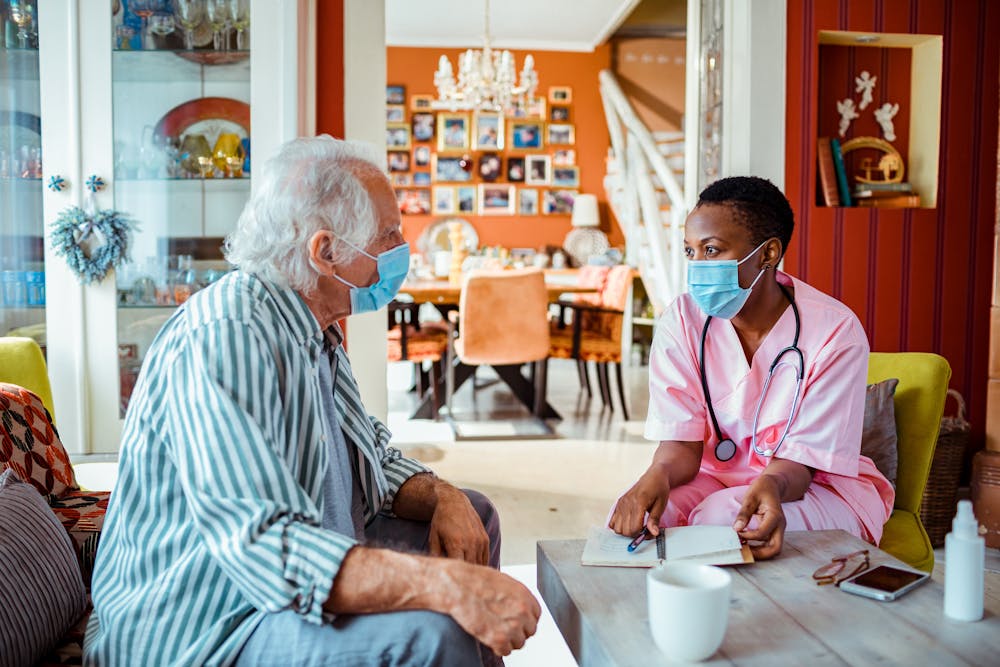
Header image: Trauma-informed care ensures that both patients and staff feel supported in their care decisions. Owen Franken/Corbis Documentary via Getty Images
Nancy Kusmaul, Associate Professor of Social Work, University of Maryland, Baltimore County
This article is republished from The Conversation under a Creative Commons license. Read the original article.
]]>
By Nancy Kusmaul, associate professor, Social Work UMBC For older adults, social isolation may have dredged up past traumas that are difficult to come back from. And for those living in...
https://umbc.edu/stories/nursing-home-residents-and-staff-are-traumatized-from-the-pandemic%e2%81%a0-collaborative-care-can-help-with-recovery/
https://beta.my.umbc.edu/api/v0/pixel/news/119573/guest@my.umbc.edu/fc151ef1d953f7435940a5cd500f564f/api/pixel
covid-19
elder-care
perspectives
social-work
the-conversation
UMBC News & Magazine
https://beta.my.umbc.edu/groups/umbc-news-magazine
https://assets1-beta.my.umbc.edu/system/shared/avatars/groups/000/001/943/24435aa6207c452e7bc15cc74b42c7bb/xsmall.png?1748556657
https://assets1-beta.my.umbc.edu/system/shared/avatars/groups/000/001/943/24435aa6207c452e7bc15cc74b42c7bb/original.png?1748556657
https://assets2-beta.my.umbc.edu/system/shared/avatars/groups/000/001/943/24435aa6207c452e7bc15cc74b42c7bb/xxlarge.png?1748556657
https://assets2-beta.my.umbc.edu/system/shared/avatars/groups/000/001/943/24435aa6207c452e7bc15cc74b42c7bb/xlarge.png?1748556657
https://assets3-beta.my.umbc.edu/system/shared/avatars/groups/000/001/943/24435aa6207c452e7bc15cc74b42c7bb/large.png?1748556657
https://assets1-beta.my.umbc.edu/system/shared/avatars/groups/000/001/943/24435aa6207c452e7bc15cc74b42c7bb/medium.png?1748556657
https://assets2-beta.my.umbc.edu/system/shared/avatars/groups/000/001/943/24435aa6207c452e7bc15cc74b42c7bb/small.png?1748556657
https://assets1-beta.my.umbc.edu/system/shared/avatars/groups/000/001/943/24435aa6207c452e7bc15cc74b42c7bb/xsmall.png?1748556657
https://assets2-beta.my.umbc.edu/system/shared/avatars/groups/000/001/943/24435aa6207c452e7bc15cc74b42c7bb/xxsmall.png?1748556657
UMBC News & Magazine
0
0
false
Tue, 17 Aug 2021 14:23:09 -0400
House for rent near UMBC
There will be bedrooms available for summer break or fall semester student(lease 9 months or longer)
price : $410 /month about(depend on room) + utilities (average $50/month/per month)+ wifi $10/per month
Location: Walking distance to UMBC about 5 minutes.
If interesting, please contact me with your name and your umbc email address;
my e-mail is ; lidimin@gmail.com (please write "Re room")
]]>
There will be bedrooms available for summer break or fall semester student(lease 9 months or longer) price : $410 /month about(depend on room) + utilities (average $50/month/per month)+...
https://beta.my.umbc.edu/api/v0/pixel/news/111574/guest@my.umbc.edu/9d911cde803b39d00db7e64124c805de/api/pixel
International Student and Scholar Services (ISSS)
https://beta.my.umbc.edu/groups/ies
https://assets4-beta.my.umbc.edu/system/shared/avatars/groups/000/000/431/46ad84ea8ba0baeed7c3faf29d1fd4ef/xsmall.png?1693323874
https://assets3-beta.my.umbc.edu/system/shared/avatars/groups/000/000/431/46ad84ea8ba0baeed7c3faf29d1fd4ef/original.jpeg?1693323874
https://assets1-beta.my.umbc.edu/system/shared/avatars/groups/000/000/431/46ad84ea8ba0baeed7c3faf29d1fd4ef/xxlarge.png?1693323874
https://assets1-beta.my.umbc.edu/system/shared/avatars/groups/000/000/431/46ad84ea8ba0baeed7c3faf29d1fd4ef/xlarge.png?1693323874
https://assets4-beta.my.umbc.edu/system/shared/avatars/groups/000/000/431/46ad84ea8ba0baeed7c3faf29d1fd4ef/large.png?1693323874
https://assets3-beta.my.umbc.edu/system/shared/avatars/groups/000/000/431/46ad84ea8ba0baeed7c3faf29d1fd4ef/medium.png?1693323874
https://assets1-beta.my.umbc.edu/system/shared/avatars/groups/000/000/431/46ad84ea8ba0baeed7c3faf29d1fd4ef/small.png?1693323874
https://assets4-beta.my.umbc.edu/system/shared/avatars/groups/000/000/431/46ad84ea8ba0baeed7c3faf29d1fd4ef/xsmall.png?1693323874
https://assets3-beta.my.umbc.edu/system/shared/avatars/groups/000/000/431/46ad84ea8ba0baeed7c3faf29d1fd4ef/xxsmall.png?1693323874
ISSS Marketplace
0
0
true
Mon, 16 Aug 2021 21:54:42 -0400
The Rocky Yet Rewarding Road of Graduate Research
One Halloween evening, a young Amanda Belunis watched her dad arrange dry ice in the kitchen sink. Belunis and her brother thought the chilling fog spilling from the countertop was awesome. Now a third-year chemistry graduate student on her way to a Ph.D. at UMBC, Belunis is conducting her own experiments in a research group under William LaCourse, professor of chemistry and dean of the College of Natural and Mathematical Sciences.
In her latest project, Belunis is investigating chemicals called per- and polyfluorinated alkyl substances (PFAS) in water from sinks, drinking fountains, and outdoor sources. While PFAS, often found in household surfaces like nonstick cookware, might not be as noticeable as dry ice, they are much more prevalent in our environment and can cause toxicity such as liver damage and hormonal effects in humans and animals.
“Some people call PFAS ‘forever chemicals’ because they are not easily degraded and persist for long times in the environment,” says Lee Blaney, associate professor of chemical, biochemical, and environmental engineering, who oversees other PFAS research projects in his own lab at UMBC. Because “PFAS can contaminate the water supplies used by towns and cities,” Blaney and his team are also focused on developing new techniques to measure and treat PFAS in water to safeguard public health.
In her daily life in the lab Belunis works steadily on, knowing her research can have real life applications that will protect people. Even when challenges arise, she has a team of mentors and fellow students to help guide her and celebrate her wins.
Starting the climb
While tackling PFAS projects and working towards a Ph.D. in chemistry are new steps for Belunis, seeing science in the world around her is already familiar.
Raised in Branchburg, New Jersey, Belunis was surrounded by family with science backgrounds—her father has a Ph.D. in food science and both her father and brother have degrees in chemistry. But, scientific or otherwise, Belunis’s parents were always ready to support her goals.
 Belunis analyzing sample collection from the sink in the LaCourse lab.
“They never told me I can’t accomplish a dream,” she remembers. “They don’t understand everything, but always listen, and not all parents do that.”
Belunis’s interest in higher education soared after taking chemistry herself in high school. “My teacher made me fall in love with chemistry and realize all the possibilities that are out there.”
This led her to a degree in forensic chemistry at Towson University. While there, she learned about the LaCourse research group at UMBC whose projects utilized science for outside applications, from detecting counterfeit currency to assessing the authenticity of vanilla.
Learning the ropes
Belunis knew graduate school would be difficult, but she was surprised at the intensity of the challenge. “I don’t want to make it seem like it’s all fine and dandy; it’s a lot of hard work,” she maintains. “You’re basically working on a project from scratch.”
Belunis works through most of her challenges in the LaCourse lab, located in the left wing of the Robert and Jane Meyerhoff Chemistry Building. Right at the corner of the second floor, the lab is filled with countertops and fume hoods for prepping solutions and lined with drawers stocked with glassware and scientific instrument parts.
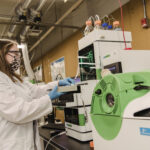
Left, solution bottles for liquid chromatography. Right, final samples being placed for analysis.
But Belunis doesn’t always don a lab coat. Her time is split between “hands-on” work, like preparing samples and using instruments, and “sit-down” work like data analysis. Before starting any experiment at the bench, she reviews research papers and discusses background information with LaCourse. “A lot of analytical chemistry is sitting at your desk with your laptop looking through the literature and making sure your experiments are sound,” she says.
Starting her PFAS project took extra background work as Belunis evaluated the reliability of an Environmental Protection Agency (EPA) instrument method for determining PFAS in drinking water. “EPA methods are very meticulous; there’s a lot of tiny details that go into everything and that was a learning curve for me,” she recalls.
After dedicated deskwork in her corner of the LaCourse lab, Belunis collected local water samples (including from the laboratory’s sink) and added PFAS standards for reference. Adding a known amount of the chemical in question is called “spiking” in analytical chemistry and helps calculate the original, unknown amount of the PFAS. Then she poured the samples through large syringes conditioned with reagents, special chemicals used for separating the PFAS from water and other components of the sample. This process, called solid phase extraction, concentrates PFAS to make them easier to detect.
Tackling additional challenges
Another crucial side of analytical chemistry is troubleshooting instruments that analyze chemicals. For this, Beluniswalked downstairs to the Molecular Characterization and Analysis Complex (MCAC) to use ultra-high performance liquid chromatography-tandem mass spectrometry, a two-part instrument that can separate PFAS from water and detect PFAS by mass. But Belunis realized the autosampler, the part that sends the PFAS sample into the instrument, needed to be free from plastics to avoid interference with the PFAS. She worked with the MCAC and laboratory company PerkinElmer, and received custom-made autosampler tubing.
“It was my first time connecting with outside instrument professionals—that was a skill to build,” Belunis recalls.
When the instrument finished processing each sample, Belunis worked with a computer program to examine graphical results with peaks, called chromatograms, and translated the peaks into numbers to report the method’s reliability.
Belunis’s current method is EPA-acceptable; she found that different PFAS were separated and detected with accuracy and precision in each of the water samples. This showed the EPA method is sufficient for detecting PFAS levels—toxic and non-toxic—in drinking water.
Navigating steep slopes
Achieving accomplishments during a research trek is fulfilling, but relief is hard to embrace when there’s another hill to climb, Belunis says. “I try my best to remember why I started grad school and why I want to be here to stay motivated.”
Just as a hiker might climb with a partner on a mountain expedition, Belunis is not alone in her graduate school journey. She’s often supported and encouraged by fellow LaCourse graduate students Ciara Pitman and Kayry Segarra. They focus on helping each other become better rather than competing against each other, a skill that Pitman attributes to the lab’s group meetings.
 From left to right: Belunis, Segarra, and Pitman meet for a group collaboration meeting, a weekly occurrence in the LaCourse lab.
“I think our group meetings are probably much different from other labs,” she explains. “Not only do we discuss our updates, but we bring problems to the group. I like that there’s many different perspectives on solving the problems, so we’re prepared to answer whatever questions come our way later.”
LaCourse supports this environment as he values working together with students rather than students only working for him. “I’m only a guide for this research—I want students to learn lessons,” he says.
Belunis says LaCourse’s mentorship has helped her think carefully about her projects before taking action. “Be willing to be an independent thinker and be willing to be wrong,” she says about being a successful “LaCoursian” researcher. Pitman agrees, adding, “[LaCourse] wants to help us think through the problem because analytical chemistry is about problem solving.”
Reaching the summit
While not as dramatic as watching dry ice float out of a sink, the work Belunis has invested in studying harmful chemicals in everyday life has been worthwhile despite the obstacles.
“This topic is relevant because PFAS are everywhere,” she says. “I like the environmental side of analytical chemistry, so it’s been a great project to work on.” Belunis will continue problem solving in her thesis by developing a method for detecting PFAS in aquaculture. This will help explore if humans are exposed to PFAS through seafood.
Belunis concludes that mental strength is key for continuing graduate education. “You’re not going to know everything, but as long as you have a mindset of ‘Things are hard now, but I’m going to make it,’ you’ll be okay.”
— Karis Barnett ’21, M29, chemistry
*****
Header image: Belunis using liquid chromatography-tandem mass spectrometry (LC-MS/MS) for sample analysis. All photos by Marlayna Demond ’11.
]]>
One Halloween evening, a young Amanda Belunis watched her dad arrange dry ice in the kitchen sink. Belunis and her brother thought the chilling fog spilling from the countertop was awesome. Now a...
https://umbc.edu/stories/the-rocky-yet-rewarding-road-of-graduate-research/
https://beta.my.umbc.edu/api/v0/pixel/news/119574/guest@my.umbc.edu/b140c62f194db313e1de4d893ab0c157/api/pixel
campus-life
chemistry
cnms
graduateschool
research
UMBC News & Magazine
https://beta.my.umbc.edu/groups/umbc-news-magazine
https://assets1-beta.my.umbc.edu/system/shared/avatars/groups/000/001/943/24435aa6207c452e7bc15cc74b42c7bb/xsmall.png?1748556657
https://assets1-beta.my.umbc.edu/system/shared/avatars/groups/000/001/943/24435aa6207c452e7bc15cc74b42c7bb/original.png?1748556657
https://assets2-beta.my.umbc.edu/system/shared/avatars/groups/000/001/943/24435aa6207c452e7bc15cc74b42c7bb/xxlarge.png?1748556657
https://assets2-beta.my.umbc.edu/system/shared/avatars/groups/000/001/943/24435aa6207c452e7bc15cc74b42c7bb/xlarge.png?1748556657
https://assets3-beta.my.umbc.edu/system/shared/avatars/groups/000/001/943/24435aa6207c452e7bc15cc74b42c7bb/large.png?1748556657
https://assets1-beta.my.umbc.edu/system/shared/avatars/groups/000/001/943/24435aa6207c452e7bc15cc74b42c7bb/medium.png?1748556657
https://assets2-beta.my.umbc.edu/system/shared/avatars/groups/000/001/943/24435aa6207c452e7bc15cc74b42c7bb/small.png?1748556657
https://assets1-beta.my.umbc.edu/system/shared/avatars/groups/000/001/943/24435aa6207c452e7bc15cc74b42c7bb/xsmall.png?1748556657
https://assets2-beta.my.umbc.edu/system/shared/avatars/groups/000/001/943/24435aa6207c452e7bc15cc74b42c7bb/xxsmall.png?1748556657
UMBC News & Magazine
0
0
false
Mon, 09 Aug 2021 18:49:41 -0400
Taxing bachelors and proposing marriage lotteries – how superpowers addressed declining birthrates in the past

By Amy Froide, professor of history, UMBC
There’s growing awareness – and concern – about declining birthrates in the U.S. and other countries around the world.
Falling birth rates are usually seen as a sign of societal decline, a nation’s diminishing power, and the eclipse of marriage and family values. Rarely are they put into any kind of historical context. But birthrates are cyclical and have gone up and down throughout history.
While some people might assume that the decision to have a child is a personal or private one, individuals and couples also respond to external forces. Economic, social and cultural factors heavily influence birth rates. As a historian who has researched the uptick of single people in the 17th and 18th centuries, I’m familiar with how governments and societies have traditionally responded to low marriage and birthrates with various persuasion techniques.
In the 1690s, England and France entered into a 120-year period of continuous hot and cold warfare. The two nations were also superpowers that engaged in trade, established colonies and fought wars on multiple continents.
Maintaining healthy population numbers was a top concern, seen as a crucial element for ensuring economic and military might. So each country advanced a number of pronatalist strategies to encourage marriage and births.
Marriage loses its luster
In the 17th century – a period when marriage and fertility were more closely connected than they are today – the English were primarily concerned about low marriage rates.
Demographic historians E.A. Wrigley and R.S. Schofield reconstructed England’s population trends from 1541 to 1871 to show how, thanks to a relatively late age at first marriage and high rates of people who never married, birthrates in England declined. From 1600 to 1750 the average Englishwoman did not marry until age 26 and the average man at age 28. This age at first marriage began to fall only after 1750 with the advent of the Industrial Revolution.
Perhaps more importantly, anywhere from 13% to 27% of those English people born between 1575 and 1700 never married. This was highest in the last decades of the 17th century.
Various factors account for the high percentage of people never marrying: war, colonization and outbreaks of illnesses, such as the plague. Literature from England’s Restoration also reveals a negative attitude toward marriage among elite men.
So when the English government passed the Marriage Duty Act in 1695 to raise money to fight the French, it simultaneously addressed revenue needs and fertility concerns.
The marriage duty tax levied fees on births, marriages and deaths. But it also gave people an incentive to get married by taxing bachelors over the age of 25 and childless widowers. Women weren’t usually taxed because the government assumed men were largely behind the decline in marriage.
Pushing spinsters into motherhood
Cultural pressure also served to persuade or encourage women to marry.
Emerging at the same time as the marriage duty tax were the first literary and visual depictions of the “old maid” archetype, a portrayal of never-married women that was always disparaging.
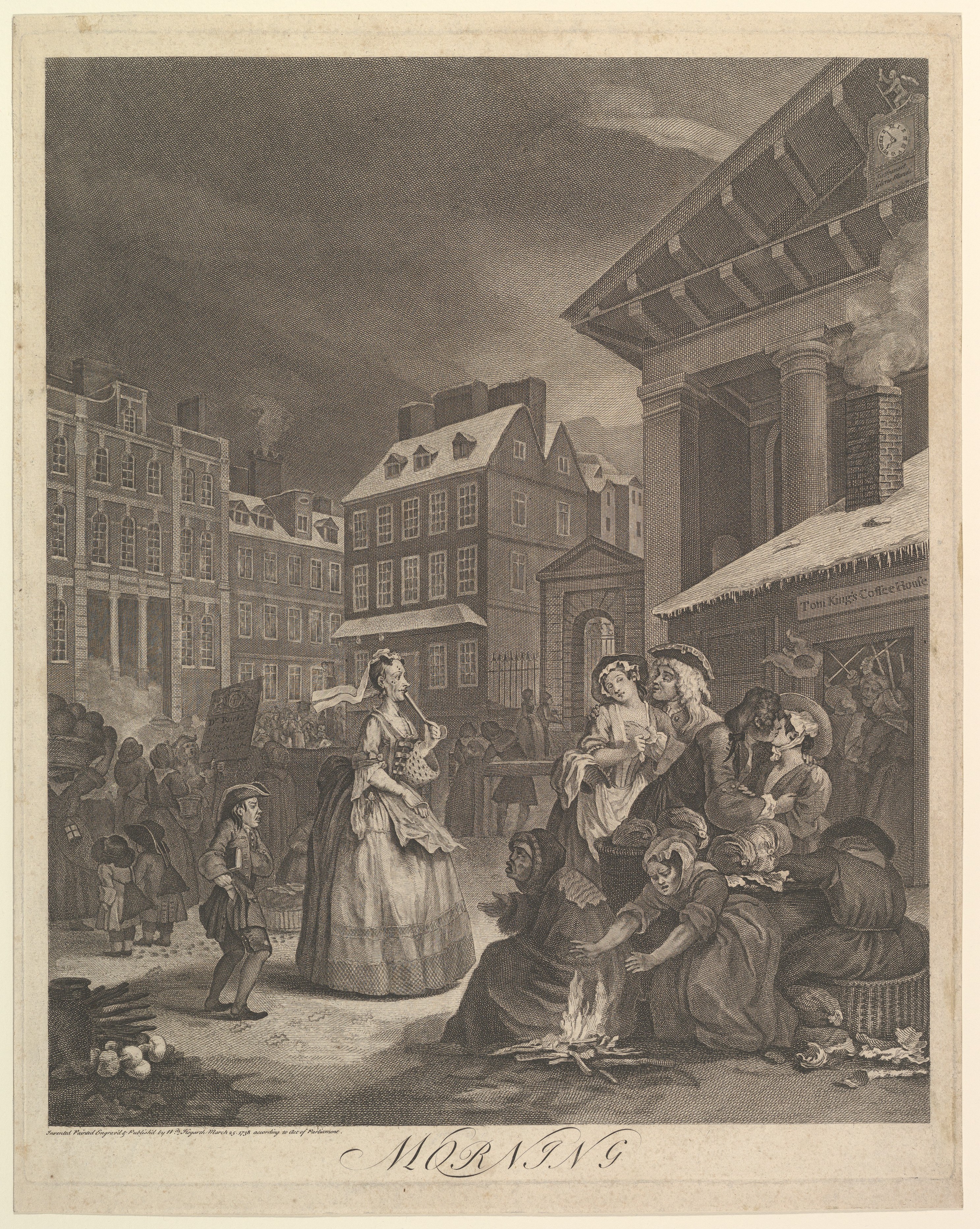
A classic example is William Hogarth’s print “Morning” from his “Four Times of the Day” series. It features a censorious, unpartnered, unattractive woman who is deemed to be past her prime.
Literary satirists also suggested marital lotteries to partner off undesirable spinsters. A 1710 proposal for “The Love Lottery: Or, a Woman the Prize” responded directly to the marriage duty tax. The author proclaimed that instead of taxing marriages “they shou’d have propos’d to help’d ‘em to Matches.” He suggested a lottery in which “maids and widows” could venture 10 shillings and the prize would be a husband or a dowry.
This proposal was one of many that appeared between the 1690s and 1730s. For example, 1734’s “A Bill for a Charitable Lottery for the Relief of the Distressed Virgins in Great Britain” stated that “for the necessary encouragement of propagation, which we ought particularly to attend to upon the prospect of an approaching war, that all the Virgins in Great Britain from 15 to 40 should be disposed of [gotten rid of] by lottery.”
Although framed as prospective legislation, the proposed bill appeared in print only.
Saving babies for France
France differed from England by focusing more directly on increasing births. Although French writers contemplated various reasons for what they perceived to be low birthrates, high infant mortality was seen as a major issue.
In the 1750s Parisian midwife Madame du Coudray capitalized on the French government’s pronatal stance and offered her services to Louis XV to train the country’s midwives in order to improve France’s live birth rates.
Du Coudray, herself unmarried and biologically childless, reproduced something else for France: what she called her machine – and what we might call a mannequin – on which midwives could practice different techniques used during difficult or dangerous births. Historian Nina Gelbart estimates that du Coudray and her disciples trained tens of thousands of midwives in successful delivery techniques.
 France’s ‘national midwife,’ Madame du Coudray, invented an instructional mannequin to improve birthrates. Frédéric Bisson/flickr, CC BY
Pronatalism today
Substitute 21st-century U.S. and China for 18th-century England and France and you’ll see the same sort of handwringing over birthrates in these two nations today.
In both countries, a resurgence of policies aimed at getting people to have more babies has already begun. China ended its one-child policy in 2016. After a disappointingly low jump in birthrates, it has recently begun to encourage three-child families.
It’s unlikely the U.S. will see the equivalent of a national midwife like du Coudray – or, to use today’s parlance, a “reproduction czar.” But the U.S. Congress is finally talking seriously about increasing funding for child care. And beginning in July 2021, the IRS started issuing monthly child tax credit checks to most parents in the U.S.
Today’s policies are more of a carrot than the stick approach pursued by England with its marriage duty tax; instead of taxing bachelors to encourage marriage, the U.S. is providing a credit to existing parents.
It’s less likely that we’ll see single women openly derided as contemporary spinsters for choosing not to have children – although, as I’ve written, Americans still tend to stigmatize women who choose to stay single and childless.
But if the past is any guide, 21st-century superpowers will continue to engage in pronatalist strategies, because marriage, family and reproduction are still seen as the cornerstones of societal and political power.
*****
Header image: In England, children were seen as a way to replenish the military and sustain the economy. Universal Images Group via Getty Images
Amy Froide, Professor of History, University of Maryland, Baltimore County
This article is republished from The Conversation under a Creative Commons license. Read the original article.
]]>
By Amy Froide, professor of history, UMBC There’s growing awareness – and concern – about declining birthrates in the U.S. and other countries around the world. Falling birth rates are...
https://umbc.edu/stories/taxing-bachelors-and-proposing-marriage-lotteries-how-superpowers-addressed-declining-birthrates-in-the-past/
https://beta.my.umbc.edu/api/v0/pixel/news/119575/guest@my.umbc.edu/8366b0cbe66460b99cc32acd2b64b1f7/api/pixel
cahss
discovery
history
professorsnottomiss
the-conversation
UMBC News & Magazine
https://beta.my.umbc.edu/groups/umbc-news-magazine
https://assets1-beta.my.umbc.edu/system/shared/avatars/groups/000/001/943/24435aa6207c452e7bc15cc74b42c7bb/xsmall.png?1748556657
https://assets1-beta.my.umbc.edu/system/shared/avatars/groups/000/001/943/24435aa6207c452e7bc15cc74b42c7bb/original.png?1748556657
https://assets2-beta.my.umbc.edu/system/shared/avatars/groups/000/001/943/24435aa6207c452e7bc15cc74b42c7bb/xxlarge.png?1748556657
https://assets2-beta.my.umbc.edu/system/shared/avatars/groups/000/001/943/24435aa6207c452e7bc15cc74b42c7bb/xlarge.png?1748556657
https://assets3-beta.my.umbc.edu/system/shared/avatars/groups/000/001/943/24435aa6207c452e7bc15cc74b42c7bb/large.png?1748556657
https://assets1-beta.my.umbc.edu/system/shared/avatars/groups/000/001/943/24435aa6207c452e7bc15cc74b42c7bb/medium.png?1748556657
https://assets2-beta.my.umbc.edu/system/shared/avatars/groups/000/001/943/24435aa6207c452e7bc15cc74b42c7bb/small.png?1748556657
https://assets1-beta.my.umbc.edu/system/shared/avatars/groups/000/001/943/24435aa6207c452e7bc15cc74b42c7bb/xsmall.png?1748556657
https://assets2-beta.my.umbc.edu/system/shared/avatars/groups/000/001/943/24435aa6207c452e7bc15cc74b42c7bb/xxsmall.png?1748556657
UMBC News & Magazine
0
0
false
Mon, 09 Aug 2021 15:02:57 -0400
UMBC graduates more Black students who go on to earn doctorates in natural sciences and engineering than any other U.S. college
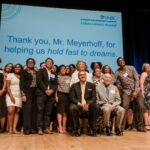
As a trifecta of crises upended life in 2020, the need for a diverse scientific and medical community grew ever more clear. George Floyd’s murder elicited worldwide protests against racial injustice. COVID-19 affected all of our lives and had an outsize impact on Black and brown communities. And COVID-19’s economic fallout only exacerbated extreme wealth inequality.
At the same time, while some Black and brown people were reluctant to take the vaccine because of a negative history with the medical establishment, there was no one better than Kizzmekia Corbett ’08, M16, biological sciences and sociology, to reach out to “vaccine inquisitive” folks, as she describes them. Corbett rose to fame in 2020 as the lead of the NIH team developing the Moderna vaccine and as the first Black woman in the world to create a vaccine.

Kizzmekia Corbett, who led the team that developed the Moderna COVID-19 vaccine, talks to CNN in UMBC’s Interdisciplinary Life Sciences Building in April 2021. Photo by Marlayna Demond ’11 for UMBC.
Representation matters
It is in this context that UMBC President Freeman Hrabowski and Peter Henderson, senior advisor to the president, published their latest article in Issues in Science and Technology, “Nothing succeeds like success,” which addresses the persistent and urgent need to diversify the group of professionals in STEMM (science, technology, engineering, mathematics, and medicine).
“When we have greater diversity of representation, we also have greater diversity of information, knowledge, lived experience, and perspectives—each of which enhances discovery and innovation,” Hrabowski and Henderson write. “When the science and engineering community looks like the United States, we find greater trust in and support for that community across groups in the population.”
The Meyerhoff Scholars Program at UMBC, and its more than a dozen replications elsewhere, have made great strides in supporting the success of underrepresented students in STEMM. Hrabowski and Henderson argue that the U.S. should frame the need for a diverse scientific workforce as a national priority and invest in it accordingly. Programs like the Meyerhoff Scholars that have proven their ability to move the needle, they write, should be short-listed for that investment, because “nothing succeeds like success.”
Impressive outcomes
“According to NSF data, UMBC is the number one baccalaureate institution for African American undergraduates who go on to earn Ph.D.s in the natural sciences and engineering, as well as doctorates in the life sciences, mathematics, and computer science,” Hrabowski and Henderson report. And, “according to the Association of American Medical Colleges, UMBC is the number one baccalaureate institution for African American undergraduates who go on to earn M.D./Ph.D.s.”
At the same time, “Over the past 30 years, our six-year completion rate [at UMBC for all students] has doubled, and the gap in completion rates between white and Black students has disappeared,” they write.
At UMBC, more than 1,400 undergraduate Meyerhoff Scholars, all of whom are committed to diversity in STEMM, have earned their undergraduate degrees. More than 800 of those have earned advanced degrees, and 300 more are currently completing graduate programs at top institutions across the country.
 Meyerhoff Scholars at an annual dinner. Photo by Marlayna Demond ’11 for UMBC.
A role model
And yet, this powerful example of progress exists in a nation that has seen minimal growth, and, in some fields, a backslide in minority participation in STEMM in the last decade, Hrabowski and Henderson explain. But programs like Meyerhoff have shown that big change is possible, and how to make it happen.
For example, for over 30 years the program has offered academic, social, and financial support. UMBC instructors have also invested time in completing significant course redesigns that shift the focus from “weeding out” to promoting success, and end up helping all students. More recently, an increased focus on faculty diversity has taken shape and begun to have an impact. Those efforts have led to impressive outcomes and a profound culture shift.
The Meyerhoff Scholars program has inspired several other student success initiatives at UMBC that offer various forms of support for students, including a cohort model that enhances a sense of belonging. For example, STEM BUILD is an NIH-funded program designed to help diversify the biomedical sciences. Programs in other fields, such as the Sondheim Public Affairs Scholars and the Linehan Artist Scholars, also follow some of the same principles.
Other institutions have taken note. Programs at Pennsylvania State University and University of North Carolina at Chapel Hill have replicated the principles of the Meyerhoff Scholars with great success. UC San Diego and UC Berkeley have begun their own replication efforts. And programs at other institutions with similar principles, such as University of Florida and the historically Black Howard University, have also seen dramatic change in their graduation rates for underrepresented students in science, technology, engineering, and math.
 A student conducts research at UC San Diego, which launched a replication of the Meyerhoff Scholars, called the Pathways to STEM (PATHS), in 2019. Photo by UCSD Jacobs School of Engineering, CC-BY-2.0 license.
Investing in the future
In early 2021, a group of scientists wrote in Sciencerecommending the formation of a new National Science and Engineering Diversity Initiative (NSEDI). They suggested NSEDI should allocate $10 billion per year for several years to improve diversity in science. “These and any other funds that target increasing diversity should be allocated judiciously,” Hrabowski and Henderson argue. “Financial resources should flow to institutions that most successfully contribute to greater diversity—regardless of institutional type.”
In the end, “producing scientists is about more than increasing the numbers. It is about changing attitudes and transforming the lives of people,” Hrabowski and Henderson write. “It is about showing our society what is possible when we invest in the talent of all our youth.”
As the pandemic, widening economic inequality, and rising demands for racial justice demonstrate, there is still much work to be done. “The message is clear,” Hrabowski and Henderson declare. “Investing in young people, replicating best practices of effective programs, and committing substantially more money to support Black and minority scientists can indeed move the needle and also tackle fundamental scientific and public health problems for humankind.”
Banner image: Scores of Meyerhoff Scholar alumni and current students with President Hrabowski (seated front, left) and Robert Meyerhoff (seated front, right). Photo by Marlayna Demond ’11 for UMBC.
Learn more about the Meyerhoff Scholars Program Ripple Effect.
]]>
As a trifecta of crises upended life in 2020, the need for a diverse scientific and medical community grew ever more clear. George Floyd’s murder elicited worldwide protests against racial...
https://umbc.edu/stories/umbc-graduates-more-black-students-who-go-on-to-earn-doctorates-in-natural-sciences-and-engineering-than-any-u-s-college/
https://beta.my.umbc.edu/api/v0/pixel/news/119576/guest@my.umbc.edu/87bcee8fec0db5047333fd9d6d9e353a/api/pixel
cnms
coeit
diversityandinclusion
hrabowski
meyerhoffscholars
page1
science-and-technology
UMBC News & Magazine
https://beta.my.umbc.edu/groups/umbc-news-magazine
https://assets1-beta.my.umbc.edu/system/shared/avatars/groups/000/001/943/24435aa6207c452e7bc15cc74b42c7bb/xsmall.png?1748556657
https://assets1-beta.my.umbc.edu/system/shared/avatars/groups/000/001/943/24435aa6207c452e7bc15cc74b42c7bb/original.png?1748556657
https://assets2-beta.my.umbc.edu/system/shared/avatars/groups/000/001/943/24435aa6207c452e7bc15cc74b42c7bb/xxlarge.png?1748556657
https://assets2-beta.my.umbc.edu/system/shared/avatars/groups/000/001/943/24435aa6207c452e7bc15cc74b42c7bb/xlarge.png?1748556657
https://assets3-beta.my.umbc.edu/system/shared/avatars/groups/000/001/943/24435aa6207c452e7bc15cc74b42c7bb/large.png?1748556657
https://assets1-beta.my.umbc.edu/system/shared/avatars/groups/000/001/943/24435aa6207c452e7bc15cc74b42c7bb/medium.png?1748556657
https://assets2-beta.my.umbc.edu/system/shared/avatars/groups/000/001/943/24435aa6207c452e7bc15cc74b42c7bb/small.png?1748556657
https://assets1-beta.my.umbc.edu/system/shared/avatars/groups/000/001/943/24435aa6207c452e7bc15cc74b42c7bb/xsmall.png?1748556657
https://assets2-beta.my.umbc.edu/system/shared/avatars/groups/000/001/943/24435aa6207c452e7bc15cc74b42c7bb/xxsmall.png?1748556657
UMBC News & Magazine
0
0
false
Fri, 06 Aug 2021 20:00:12 -0400
Hurricanes, well-being, and AI: START Awards set up UMBC researchers for success

Soon, Steve Guimond and his students will begin exploring a new angle of his hurricane research. They want to better understand the fundamental physics that drives hurricanes. Specifically, they want to know how small disturbances in a hurricane’s wind flow, similar to a strong gust on a windy day, may affect its overall structure and intensity. The findings could have implications for hurricane forecasting.
A new, $682,000 National Science Foundation (NSF) grant in collaboration with the New Jersey Institute of Technology will fund the team’s work, which primarily involves developing, running, and analyzing complex numerical models on supercomputers. However, Guimond might never have received the grant if he hadn’t received a UMBC Strategic Award for Research Transitions (START) first.
In 2018, the NSF rejected a related proposal from Guimond, who is an associate research professor with UMBC’s physics department and the Joint Center for Earth Systems Technology, a partnership with NASA. The proposal outlined a broad research program using two different methods to learn more about hurricanes: remote sensing and numerical modeling. “The START funding helped us evaluate those two sides of the project,” he says.
The START program funded initial research that was carried out by Guimond, Devin Protzko ’20, physics and mathematics, and Badrul Hasan, a Ph.D. student in mechanical engineering. They gathered preliminary data showing that the modeling path had significant potential, so they wrote a fresh NSF proposal with a narrower focus. It won approval. The small START grant, Guimond says, “was key to helping us identify the most fruitful path for follow-on funding from NSF.”

A simulation of a “large eddy,” an instance of turbulence, in a rapidly intensifying hurricane. Running this kind of simulation is part of Steve Guimond’s research. Animation courtesy Steve Guimond.
Turbulence in focus
The NSF proposal will support work to understand the role of turbulence in how or whether hurricanes intensify. Guimond’s team will also look at the value of using numerical hurricane models with very high resolution. High resolution is important because a hurricane’s “gusts” appear and disappear very quickly. They also generally take up very little physical space. Because they’re so ephemeral, you can’t simulate them precisely or accurately with current models. And if you can’t simulate them, you can’t figure out their role in overall hurricane development. High resolution models would make those simulations possible, which can feed back into improved forecasts in the future.
The fact that Guimond has the chance to do this work exemplifies START’s goal. The program, funded by UMBC’s Office of the Vice President for Research, offers a maximum of $25,000 to UMBC faculty who wish to pursue new avenues of research. The hope is that the funds will put them in a stronger position for much larger external grants from places like NSF—exactly what happened for Guimond.

Steve Guimond. Courtesy Steve Guimond.
A first step
A new cohort of UMBC faculty will receive START funding this summer. Lira Yoon, associate professor of psychology, hopes to follow a similar path to Guimond. Yoon will collect initial data on how Asian Americans regulate their emotions in response to overt racism, and how or whether the strategies they practice affect their well-being. This work is particularly relevant given the sharp rise in anti-Asian discrimination during the pandemic. Yoon is also working on a project to help long-term care workers better manage their stress, another group impacted heavily by the pandemic.
“I’m eager to start a new line of research examining the effects of racial discrimination on psychological well-being, particularly in Asian Americans,” Yoon shares. “Although the ultimate solution to the problems resulting from racial discrimination lies at the policy and systems levels, understanding mechanisms operating at an individual level could help mitigate the adverse effects of discrimination.”
“This project will be the first step in that direction,” she says, “and it will provide preliminary data to secure external funding for future larger-scale research.”

Lira Yoon. Photo courtesy Lira Yoon.
Real-world impact
Maryam Rahnemoonfar, information systems, is another member of the new START cohort. Her team is developing algorithms for use on drones flying over affected areas after natural disasters. The goal is for the drones to relay important information about conditions on the ground in real time. Her team has created a unique dataset, called FloodNet, that can train the algorithms to recognize disaster impacts—for example, roads that are flooded or blocked by debris.
With a previous AI for Earth grant from Microsoft, more than 20 students at all levels in Rahnemoonfar’s research group spent more than a thousand hours creating the FloodNet dataset. Input from first responders and the Federal Emergency Management Administration (FEMA) guided their work, plus mentoring from faculty and more advanced students. Team members labeled each pixel in images to teach the artificial intelligence (AI) system what a flooded road or damaged building looks like.
“It was a very difficult and challenging task, but we are the first in the world to prepare this sophisticated dataset,” Rahnemoonfar says.
Already, German authorities have requested (and been granted) access to the FloodNet set of labeled images to help them respond to recent catastrophic flooding in the country. The FloodNet dataset is the first and only dataset of its kind that can be used for training AI systems in the wake of natural disasters.

Maryam Rahnemoonfar. Courtesy Maryam Rahnemoonfar.
Saving time, saving lives
With the new START funding, Rahnemoonfar’s team hopes to improve the algorithm that evaluates how much damage buildings have sustained, on a scale from none to total destruction. Rahnemoonfar also hopes to build an interface where a person can ask the AI system a verbal question and get a useful answer. Her team is developing this ability for data already collected, “but when a new hurricane happens, we hope that while a drone is flying you can ask and get answers to these questions in real time,” she says.
To save time—of the essence during disaster response—Rahnemoonfar’s graduate students are working on adding a layer to the algorithms that would allow the AI to learn on its own, with a minimal training dataset.
“Now that we have developed this AI system, for any new hurricane that happens, we don’t need to label data again,” she says. “With the algorithm that we are developing, with very few labeled images we can get insights for any new hurricane.”
A ripple effect
The START program has a ripple effect beyond UMBC faculty. Many of the awardees involve students in their work, enhancing the students’ UMBC experience and helping set them up for success later on. Students in Guimond’s group, for example, get first-hand experience with NASA scientists and facilities.
Also, by helping researchers hone their projects and, as a result, future proposals, START increases their chance of success with applying for larger grants. Like Guimond, Rahnemoonfar is already looking to use the START support to lead to bigger research awards.
“The START program enables UMBC faculty members (and with them, UMBC students) to move in new directions with their scholarly work,” shares Don Engel, associate vice president for research. “We are proud of the success past recipients have found in turning their proposed ideas into longer-term initiatives.”
Banner image: Hurricane Matthew bears down on Haiti in 2016. Image by NASA Goddard Space Flight Center.
]]>
Soon, Steve Guimond and his students will begin exploring a new angle of his hurricane research. They want to better understand the fundamental physics that drives hurricanes. Specifically, they...
https://umbc.edu/stories/hurricanes-well-being-and-ai-start-awards-set-up-umbc-researchers-for-success/
https://beta.my.umbc.edu/api/v0/pixel/news/119577/guest@my.umbc.edu/ebb9d64242a961e91d0ab1a2c8ab62ed/api/pixel
cahss
cnms
coeit
is
jcet
physics
psychology
research
science-and-technology
UMBC News & Magazine
https://beta.my.umbc.edu/groups/umbc-news-magazine
https://assets1-beta.my.umbc.edu/system/shared/avatars/groups/000/001/943/24435aa6207c452e7bc15cc74b42c7bb/xsmall.png?1748556657
https://assets1-beta.my.umbc.edu/system/shared/avatars/groups/000/001/943/24435aa6207c452e7bc15cc74b42c7bb/original.png?1748556657
https://assets2-beta.my.umbc.edu/system/shared/avatars/groups/000/001/943/24435aa6207c452e7bc15cc74b42c7bb/xxlarge.png?1748556657
https://assets2-beta.my.umbc.edu/system/shared/avatars/groups/000/001/943/24435aa6207c452e7bc15cc74b42c7bb/xlarge.png?1748556657
https://assets3-beta.my.umbc.edu/system/shared/avatars/groups/000/001/943/24435aa6207c452e7bc15cc74b42c7bb/large.png?1748556657
https://assets1-beta.my.umbc.edu/system/shared/avatars/groups/000/001/943/24435aa6207c452e7bc15cc74b42c7bb/medium.png?1748556657
https://assets2-beta.my.umbc.edu/system/shared/avatars/groups/000/001/943/24435aa6207c452e7bc15cc74b42c7bb/small.png?1748556657
https://assets1-beta.my.umbc.edu/system/shared/avatars/groups/000/001/943/24435aa6207c452e7bc15cc74b42c7bb/xsmall.png?1748556657
https://assets2-beta.my.umbc.edu/system/shared/avatars/groups/000/001/943/24435aa6207c452e7bc15cc74b42c7bb/xxsmall.png?1748556657
UMBC News & Magazine
0
0
false
Fri, 06 Aug 2021 17:56:40 -0400
UMBC, State of Maryland launch Maryland Institute for Innovative Computing at cyber summit

Governor Larry Hogan yesterday announced the launch of the Maryland Institute for Innovative Computing (MIIC) at UMBC during a cybersecurity summit in Annapolis.
The MIIC will address pressing challenges related to computing, analytics, and workforce in state agencies, with a focus on cybersecurity, artificial intelligence, and data science. UMBC faculty, students and staff will work with MIIC partners to provide expertise on the complex process of recovering from cyberattacks. They will also offer technical guidance to inform policy decisions for leveraging data safely, securely, and ethically.
The partnership will also include talent from higher education institutions within the University System of Maryland and across the state, and partners in the public and private sectors.
“Maryland is showing the way by creating this innovative partnership that brings together experienced faculty and students who are eager to apply the knowledge they have acquired, with state agencies that need support facing pressing challenges,” says Anupam Joshi, director of UMBC’s Center for Cybersecurity, and professor and chair of computer science and electrical engineering. “UMBC is proud to lead the way in partnership with the state, staying true to our motto of inclusive excellence.”
As part of the MIIC, UMBC will utilize Computing Innovation Rapid Response Teams to develop real-time solutions to IT and data concerns in state agencies. These teams will include undergraduate and graduate students trained and deployed through internships and capstone courses.
Another component of the collaboration, the MIIC Innovation Lab and Challenge Fund, will use an evidence-based approach to understand how government agencies can innovate in the computing space and can replicate successful approaches.
The collaboration will also leverage the highly successful Maryland Technology Internship Program to develop a comprehensive computing and technology workforce development strategy.
Cybersecurity summit
The summit drew participation from top federal, state, and private sector cybersecurity leaders, includingAnne Neuberger, deputy assistant to President Biden and deputy national security advisor for cyber and emerging technology. The event opened with remarks fromGovernor Hogan. Three panels followed, focusing on the national cybersecurity agenda, the state cybersecurity ecosystem, and the role of the private sector.
UMBC President Freeman Hrabowski and Dean Keith J Bowman of UMBC’s College of Engineering and Information Technologymoderated panels. UMBC alumna Tina Williams-Koroma ‘02, computer science, president and CEO of TCecure, participated as a panelist.
.@UMBC President Freeman Hrabowski moderated our first panel on a national cybersecurity agenda and federal-state partnerships, which included perspectives from the White House, Congress, the NSA, and FBI. pic.twitter.com/wbcE3stuYg
— Governor Larry Hogan (@GovLarryHogan) July 29, 2021
“There is no greater threat to the safety and security of Americans right now than the cyber vulnerabilities of the systems that support our daily lives, from our drinking water and our power supply, to our railroads and air traffic controls,” said Governor Hogan, in a statement ahead of the summit. “As the cyber capital of America, Maryland is proud to host this summit,” including “an open and productive discussion of our coordinated cybersecurity goals and initiatives as we work to protect the American people.”
Developing cyber talent
Bowman described UMBC’s role in cybersecurity workforce development within Maryland, nurturing talent and giving students opportunities to pursue related careers. He highlighted the Maryland Center for Computing Education, which is housed at UMBC and works to engage K-12 students in computing and support teacher development.
“During my four years at UMBC, our College has benefited from support for both our academic programs and research from the Governor and state,” he said. “That support has enabled us to recruit, retain, and invest in outstanding faculty and staff that are developing Maryland’s next generation of engineering and computing professionals.”
UMBC is a National Cybersecurity Center of Excellence for both education and research and one of the top producers of cyber talent for the National Security Agency. The university is also home to the Cyber Dawgs team, which won the National Collegiate Cyber Defense Competition in 2017 and the Mid-Atlantic Collegiate Cyber Defense Competition in 2021.
Banner image: President Hrabowski (right) with Governor Hogan (center) and Anne Neuberger (left) at the July 2021 cyber summit. Photo by Maryland GovPics, Flickr CC by 2.0.
]]>
Governor Larry Hogan yesterday announced the launch of the Maryland Institute for Innovative Computing (MIIC) at UMBC during a cybersecurity summit in Annapolis. The MIIC will address...
https://umbc.edu/stories/umbc-state-of-maryland-launch-maryland-institute-for-innovative-computing-at-cyber-summit/
https://beta.my.umbc.edu/api/v0/pixel/news/119578/guest@my.umbc.edu/720692562494c0d6d4105d9f50fba7ff/api/pixel
coeit
csee
cybersecurity
page1
science-and-technology
UMBC News & Magazine
https://beta.my.umbc.edu/groups/umbc-news-magazine
https://assets1-beta.my.umbc.edu/system/shared/avatars/groups/000/001/943/24435aa6207c452e7bc15cc74b42c7bb/xsmall.png?1748556657
https://assets1-beta.my.umbc.edu/system/shared/avatars/groups/000/001/943/24435aa6207c452e7bc15cc74b42c7bb/original.png?1748556657
https://assets2-beta.my.umbc.edu/system/shared/avatars/groups/000/001/943/24435aa6207c452e7bc15cc74b42c7bb/xxlarge.png?1748556657
https://assets2-beta.my.umbc.edu/system/shared/avatars/groups/000/001/943/24435aa6207c452e7bc15cc74b42c7bb/xlarge.png?1748556657
https://assets3-beta.my.umbc.edu/system/shared/avatars/groups/000/001/943/24435aa6207c452e7bc15cc74b42c7bb/large.png?1748556657
https://assets1-beta.my.umbc.edu/system/shared/avatars/groups/000/001/943/24435aa6207c452e7bc15cc74b42c7bb/medium.png?1748556657
https://assets2-beta.my.umbc.edu/system/shared/avatars/groups/000/001/943/24435aa6207c452e7bc15cc74b42c7bb/small.png?1748556657
https://assets1-beta.my.umbc.edu/system/shared/avatars/groups/000/001/943/24435aa6207c452e7bc15cc74b42c7bb/xsmall.png?1748556657
https://assets2-beta.my.umbc.edu/system/shared/avatars/groups/000/001/943/24435aa6207c452e7bc15cc74b42c7bb/xxsmall.png?1748556657
UMBC News & Magazine
0
0
false
Fri, 30 Jul 2021 13:54:13 -0400
UMBC economics students win 2021 iOme Challenge, a national competition for innovating retirement policy
UMBC’s Heather Quach ‘23, financial economics, and Victor Li ‘23, financial economics and computer science, have won the 2021 iOme (I Owe Me) Challenge, a national competition that invites students’ ideas for solving financial and retirement challenges.
Their winning essay is titled“Improving Retirement: The Role of Education and Innovation.” It focuses on the three “pillars of retirement”—Social Security, employer-sponsored retirement plans, and individual savings plans—and introduces the fourth pillar of health as heavily influencing retirement options.
Li and Quach found that awareness and access to the four pillars are greater with higher levels of education. Their research proposes innovative financial education solutions designed to shift retirement savings behavior to help people of all ages prepare for retirement.

Victor Li.
Photograph courtesy of Li.
“The process was rigorous, with reading dozens of journal articles and compressing all the knowledge into 5,000 words,” explains Li. “I could not believe it after Heather called to inform me that we had won.”

Heather Quach.
Photo courtesy of Quach.
This national competition raises awareness among college students about the impact of retirement security on society’s social and economic well-being. Quach and Li both have a longstanding interest in these areas. Quach serves in UMBC’s Volunteer Income Tax Assistance (VITA) program and Li is a member of UMBC’s Investment Club.
Their proposals “lay out a commonsense plan to improve financial education and promote greater personal savings,” shares Cindy Hounsell, president of the Women’s Institute for a Secure Retirement (WISER), the competition sponsor.
Innovative mentoring
Li and Quach, from Rockville and Glen Burnie, Maryland, respectively, are UMBC’s second iOme Challenge winners. Evan Avila ‘20, economics and political science, was the 2018 iOme winner for his paper, “Rethinking Millennial Retirement: Policy Recommendations for a Gig Economy.”
Avila went on to receive the distinguished 2019 Harry S. Truman Scholarship. He is currently working for the IRS in the Statistics of Income Division. There he researches topics that rely on income tax data, such as retirement trends, wealth inequality, and interstate migration.

L to R: Doug Lamdin, Cindy Hounsell, Evin Avila.
Photo courtesy of WISER.
Douglas Lamdin, professor of economics, mentored Li and Quach, as well as Avila. “I’m thankful for Professor Lamdin’s assistance through the process,” Li shares. “I’m certain that his research and field experience, along with guiding students in the previous years, were crucial to our success.”
The team split a $5,000 prize and presented their paper virtually at this summer’s WISER 2021 iOme Challenge forum, New Perspectives: An Intergenerational Discussion on Retirement Solutions. Lamdin received a $1,000 honorarium from WISER as the mentor of the winning team. With his support, UMBC has become one of just three universities to win the iOme Challenge twice.
Beyond the classroom
Lamdin notes that Li and Quach’s essays stood out in part for their discussion of health as an important component of a rewarding and financially comfortable retirement. He suggests that exploring the role of health in retirement through this research project extended their learning in valuable ways.
 Doug Lamdin. Photo courtesy of Lamdin.
“The iOME Challenge is an opportunity for UMBC students to further develop their research, writing, and presentation skills in the context of an important real-world topic,” says Lamdin. “It’s something that can only happen when you go beyond the classroom.”
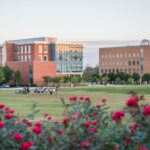
Banner image: Public Policy building (left) and Physics building (right) at UMBC. Photo by Marlayna Demond ’11.
]]>
UMBC’s Heather Quach ‘23, financial economics, and Victor Li ‘23, financial economics and computer science, have won the 2021 iOme (I Owe Me) Challenge, a national competition that invites...
https://umbc.edu/stories/umbc-economics-students-win-2021-iome-challenge-a-national-competition-for-innovating-retirement-policy/
https://beta.my.umbc.edu/api/v0/pixel/news/119579/guest@my.umbc.edu/91b1259a78c44aa656765ce5ddfd3aec/api/pixel
cahss
cahssresearch
csee
economics
policy-and-society
UMBC News & Magazine
https://beta.my.umbc.edu/groups/umbc-news-magazine
https://assets1-beta.my.umbc.edu/system/shared/avatars/groups/000/001/943/24435aa6207c452e7bc15cc74b42c7bb/xsmall.png?1748556657
https://assets1-beta.my.umbc.edu/system/shared/avatars/groups/000/001/943/24435aa6207c452e7bc15cc74b42c7bb/original.png?1748556657
https://assets2-beta.my.umbc.edu/system/shared/avatars/groups/000/001/943/24435aa6207c452e7bc15cc74b42c7bb/xxlarge.png?1748556657
https://assets2-beta.my.umbc.edu/system/shared/avatars/groups/000/001/943/24435aa6207c452e7bc15cc74b42c7bb/xlarge.png?1748556657
https://assets3-beta.my.umbc.edu/system/shared/avatars/groups/000/001/943/24435aa6207c452e7bc15cc74b42c7bb/large.png?1748556657
https://assets1-beta.my.umbc.edu/system/shared/avatars/groups/000/001/943/24435aa6207c452e7bc15cc74b42c7bb/medium.png?1748556657
https://assets2-beta.my.umbc.edu/system/shared/avatars/groups/000/001/943/24435aa6207c452e7bc15cc74b42c7bb/small.png?1748556657
https://assets1-beta.my.umbc.edu/system/shared/avatars/groups/000/001/943/24435aa6207c452e7bc15cc74b42c7bb/xsmall.png?1748556657
https://assets2-beta.my.umbc.edu/system/shared/avatars/groups/000/001/943/24435aa6207c452e7bc15cc74b42c7bb/xxsmall.png?1748556657
UMBC News & Magazine
0
0
false
Fri, 30 Jul 2021 00:44:18 -0400
Is the isss@umbc.edu email working?
I tried sending an email to isss@umbc.edu last week regarding an I20 issue but did not get a response. I sent a follow up email two days ago as well. Has anyone tried this email and got a response? Thanks.
]]>
I tried sending an email to isss@umbc.edu last week regarding an I20 issue but did not get a response. I sent a follow up email two days ago as well. Has anyone tried this email and got a...
https://beta.my.umbc.edu/api/v0/pixel/news/111308/guest@my.umbc.edu/20850f28c43d4023d6d05e5b4e875357/api/pixel
International Student and Scholar Services (ISSS)
https://beta.my.umbc.edu/groups/ies
https://assets4-beta.my.umbc.edu/system/shared/avatars/groups/000/000/431/46ad84ea8ba0baeed7c3faf29d1fd4ef/xsmall.png?1693323874
https://assets3-beta.my.umbc.edu/system/shared/avatars/groups/000/000/431/46ad84ea8ba0baeed7c3faf29d1fd4ef/original.jpeg?1693323874
https://assets1-beta.my.umbc.edu/system/shared/avatars/groups/000/000/431/46ad84ea8ba0baeed7c3faf29d1fd4ef/xxlarge.png?1693323874
https://assets1-beta.my.umbc.edu/system/shared/avatars/groups/000/000/431/46ad84ea8ba0baeed7c3faf29d1fd4ef/xlarge.png?1693323874
https://assets4-beta.my.umbc.edu/system/shared/avatars/groups/000/000/431/46ad84ea8ba0baeed7c3faf29d1fd4ef/large.png?1693323874
https://assets3-beta.my.umbc.edu/system/shared/avatars/groups/000/000/431/46ad84ea8ba0baeed7c3faf29d1fd4ef/medium.png?1693323874
https://assets1-beta.my.umbc.edu/system/shared/avatars/groups/000/000/431/46ad84ea8ba0baeed7c3faf29d1fd4ef/small.png?1693323874
https://assets4-beta.my.umbc.edu/system/shared/avatars/groups/000/000/431/46ad84ea8ba0baeed7c3faf29d1fd4ef/xsmall.png?1693323874
https://assets3-beta.my.umbc.edu/system/shared/avatars/groups/000/000/431/46ad84ea8ba0baeed7c3faf29d1fd4ef/xxsmall.png?1693323874
ISSS Marketplace
1
2
true
Wed, 28 Jul 2021 15:42:24 -0400
 Sandra Naylor. Photo courtesy of Naylor.
 Monika Arumalla. Photo courtesy of Arumalla.
 Monika Arumalla working in her office space at home. Photo courtesy of Arumalla.
 Grace Tugado working in the SeeTrue Technology lab. Photo by Marlayna Demond ’11 for UMBC.
 Samara Pyfrom and Jaden Burke in front of oyster shells. Photo courtesy of Pyfrom.
 Jaden Burke and Samara Pyfrom. Photo courtesy of Pyfrom.
 Adam Lees aboard the OceanX marine research vessel. Photo courtesy of Lees.
 Adam Lees, right, and his fellow interns. Photo courtesy of Lees.
 A water sample collected by OceanX. Photo courtesy of Lees.
 The OceanX vessel. Photo courtesy of Lees.