The Alumni Awards Return

Something that has become clear in 2021 is that when celebration is called for—-go all in, in a safe, socially distant fashion, of course. In this spirit, UMBC is excited to announce the 32nd annual Alumni Awards, hosted by the UMBC Alumni Association Board of Directors. While the in-person ceremony may be smaller than past years, there are multiple ways to watch and interact virtually.
More alumni than ever are being celebrated this year. In addition to the past categories, the Board is honoring a cohort of Retrievers whose work impacted pandemic response on local, national, and global stages. Likewise, the Rising Star category couldn’t be contained to a single alum, so three bright stars are highlighted.
“They are entrepreneurs, leaders, educators, creators, artists, and explorers,” says Stanyell Odom, director of Alumni Engagement. “They’ve stepped forward to lead us during a time where sound leadership was required to get us through some of the most difficult days of our generation.”
Meet the 2021 award recipients
In the Rising Star category, the Alumni Board recognizes Christine Osazuwa ’11, interdisciplinary studies. Osazuwa uses her skills to highlight the intersection of diversity, music, marketing, and technology, and even living overseas, she finds ways to continue mentoring UMBC students.
Also in the Rising Star category are Michael Berardi ’19, media and communications studies, and Deep Patel ’19, biological sciences and financial economics—cofounders of OCA Mocha, an Arbutus coffee shop that emphasizes community-arts. They’ve found a myriad ways to serve the community even during a pandemic.
From left: Christine Osazuwa, Michael Berardi, and Deep Patel. All headshots provided by the awardees.
To learn more about the recipients of the 32nd Alumni Awards, you can read about the Outstanding Faculty awardee Dr. Michael Summers in multiple stories. Summers is the Robert E. Meyerhoff Chair for Excellence in Research and Mentoring and a professor of chemistry and biochemistry at UMBC.
Meet Dr. Michael Hassett, M.P.P. ’17, Ph.D. ’19, public policy, the recipient of the Distinguished Service Award, a budget analyst for the National Oceanic and Atmospheric Administration and president and founding member of Friends of Tonga, Inc. Friends of Tonga received a 2021 Literacy Award from the Library of Congress for their implementation of highly successful practices in literacy promotion.
Michael Summers, left, and Michael Hassett, right.
Outstanding alumni are recognized in multiple categories. Engineering & Information Technology honors Dr. Scott Banta ’97, chemical engineering. From the Humanities, meet Sean Pang ’09, English, M.A. ’11, education. Natural & Mathematical Sciences celebrates Dr. Kizzmekia Corbett ’08, M16, biological sciences and sociology, scientific lead of the Vaccine Research Center’s coronavirus team.
From left: Scott Banta, Sean Pang, and Kizzmekia Corbett.
Baltimore City middle school teacher Theresa Bruce ’09, political science and social work, is the recipient for Social & Behavioral Sciences. Visual & Performing Arts honors Tewodross Melchishua Williams M.F.A. ’00, intermedia and digital arts, founder of the film and digital media studio collective Visual Jazz and associate professor and program coordinator of visual communication and digital media arts program at Bowie State University.
Theresa Bruce and Tewodross Melchishua Williams.
The Alumni Association Board of Directors is also taking the opportunity to give special recognition to four alumnae closely tied to the pandemic response: Moderna vaccine lead Dr. Kizzmekia Corbett ’08, M16, biological sciences and sociology; Baltimore City Health Commissioner Letitia Dzirasa ’03, M11, biological sciences; and National Institutes of Health investigator Kaitlyn Sadtler ’11, biological sciences; and special advisor to the senior vice chancellor of Academic and Student Affairs of the University System of Maryland Dr. Kate Tracy, M.A. ’01, Ph.D. ’03, psychology.
From left: Letitia Dzirasa, Kaitlyn Sadtler, and Kate Tracy.
Please join the ceremony online on October 20, starting at 6:30 pm.
*****
Header image: Photo of the 2021 UMBC Alumni Awardees. L-R: Dr. Michael Summers, Deep Patel ’19, Michael Berardi ’19, Tewodross Melchishua Williams, M.F.A. ’00, Dr. Michael Hassett, M.P.P. ’17, Ph.D. ’19, Dr. Kaitlyn Sadtler ’11, Freeman Hrabowski, Sean Pang ’04, M.A. ’11, Dr. Kate Tracy, M.A. ’01, Ph.D. ’03, Dr. Scott Banta ’97, Dr. Letitia Dzirasa ’03, M11, Theresa Bruce ’09, and UMBC Alumni Association President Brian Frazee ’11, M.P.P. ’12. Not pictured: Dr. Kizzmekia Corbett ’08, M16, and Christine Osazuwa ’11. Photo by Marlayna Demond ’11.
]]>
Something that has become clear in 2021 is that when celebration is called for—-go all in, in a safe, socially distant fashion, of course. In this spirit, UMBC is excited to announce the 32nd...
https://umbc.edu/stories/the-alumni-awards-return/
https://beta.my.umbc.edu/api/v0/pixel/news/119543/guest@my.umbc.edu/93252a450d2192e0d57c2d2bb3160785/api/pixel
alumni
alumni-awards-2021
cahss
cnms
communityimpact
fall-2021
impact
UMBC News & Magazine
https://beta.my.umbc.edu/groups/umbc-news-magazine
https://assets1-beta.my.umbc.edu/system/shared/avatars/groups/000/001/943/24435aa6207c452e7bc15cc74b42c7bb/xsmall.png?1748556657
https://assets1-beta.my.umbc.edu/system/shared/avatars/groups/000/001/943/24435aa6207c452e7bc15cc74b42c7bb/original.png?1748556657
https://assets2-beta.my.umbc.edu/system/shared/avatars/groups/000/001/943/24435aa6207c452e7bc15cc74b42c7bb/xxlarge.png?1748556657
https://assets2-beta.my.umbc.edu/system/shared/avatars/groups/000/001/943/24435aa6207c452e7bc15cc74b42c7bb/xlarge.png?1748556657
https://assets3-beta.my.umbc.edu/system/shared/avatars/groups/000/001/943/24435aa6207c452e7bc15cc74b42c7bb/large.png?1748556657
https://assets1-beta.my.umbc.edu/system/shared/avatars/groups/000/001/943/24435aa6207c452e7bc15cc74b42c7bb/medium.png?1748556657
https://assets2-beta.my.umbc.edu/system/shared/avatars/groups/000/001/943/24435aa6207c452e7bc15cc74b42c7bb/small.png?1748556657
https://assets1-beta.my.umbc.edu/system/shared/avatars/groups/000/001/943/24435aa6207c452e7bc15cc74b42c7bb/xsmall.png?1748556657
https://assets2-beta.my.umbc.edu/system/shared/avatars/groups/000/001/943/24435aa6207c452e7bc15cc74b42c7bb/xxsmall.png?1748556657
UMBC News & Magazine
0
0
false
Mon, 18 Oct 2021 18:14:28 -0400
UMBC’s GRIT-X talks return for Homecoming 2021, highlighting research with a public impact

A hush fell over the excited audience in UMBC’s Proscenium Theatre last weekend, as Baltimore City Health Commissioner Letitia Dzirasa ‘03, biological sciences, stepped into the spotlight to present the first GRIT-X talk after a year hiatus for the event. Her topic particularly resonated in this moment: how data analysis is essential to addressing healthcare inequities.
Dzirasa was one of eight UMBC community members, including faculty and alumni, who spoke about their work, providing online and in-person audiences a glimpse of UMBC’s local, national, and global impact.
“We have such a diverse set of expertise within our UMBC community, with direct relevance to some of the most pressing issues within today’s society, including the impact of climate change on the environment, UMBC’s contribution to understanding and fighting the COVID-19 pandemic, and the importance of interpersonal human-to human interactions,” explains Karl V. Steiner, vice president for research at UMBC.
“We were especially thrilled to bring this showcase back to campus as part of this year’s homecoming activities, since last year the pandemic forced us to cancel the event,” Steiner shared. “It was great to be in the Performing Arts and Humanities Building.”
Watch the GRIT-X talks
More than a dashboard: The heightened role of data in driving equity
Dzirasa’s talk emphasized the interdisciplinary nature of her work, and how statistics and biological sciences play an important role in answering public health questions. She also described how data inform her work as a public health leader guiding Baltimore through the COVID-19 pandemic.
Nature needs culture: Conservation in the age of humans
Erle Ellis, professor of geography and environmental systems, discussed how human activity has transformed the world, and how the active human management of ecosystems is a defining feature of the past 12,000 years, not just the present. His talk dove into research he published earlier this year, with an international team, in the Proceedings of the National Academy of Sciences. The article and his talk emphasized the importance of empowering the environmental stewardship of Indigenous and local communities globally.
Fleximers: Bending over backwards for a cure
Kathie Seley-Radtke, professor of chemistry and biochemistry, has been studying coronaviruses since the early 2010s. Her GRIT-X presentation focused on her work to develop fleximers—distinctive compounds that interfere with virus replication, and whose flexible structure allows them to adjust shape and remain effective as viral variants evolve over time.
Stressing connections: Designing for affective awareness
Andrea Kleinsmith, associate professor of information systems, discussed her work to develop systems that support stress awareness and reflection, including with emergency responders. She shared a personal experience to illustrate the importance of addressing the effects and emotional impact of high stress situations.
Start small but start: The story behind a unique climate-observing site in Maryland
Belay Demoz, professor of physics, talked about an observation station in Beltsville, Maryland that conducts climate-related research. Demoz is known for his leadership in cultivating a diverse generation of climate scientists and prioritizing a culture of mentorship. He explained that who collects the data can impact research findings, which highlights the importance of collaboration among diverse researchers.
The math that explains the pandemic
Zoë McLaren, associate professor of public policy, is a health economist who uses statistical data analysis to inform health and economic policy, particularly related to combating infectious disease epidemics. In her GRIT-X talk, McLaren discussed “exponential growth” and “flattening the curve”—two concepts unfamiliar to much of the public prior to the COVID-19 pandemic, but which are now commonly used terms. These two concepts highlight the important role that mathematics and statistics play in understanding policies related to the pandemic.
Parenting: Looking for answers within and across cultural borders
Charissa Cheah, professor of psychology, presented her work understanding how parents around the world care for their children and teach them about culture. Culture is both big and abstract, as well as small and personal, Cheah explained, and parents have an important role in helping their children develop cultural competencies. Cheah is known for her research on how Chinese American parents and children have witnessed, experienced, and coped with discrimination due to COVID-19.
Saving our environment from the past: A story of chemicals and fish
Upal Ghosh, professor of chemical, biochemical, and environmental engineering, talked about his work understanding toxic pollutants and how they impact the environment. Even though some of the pollutants were banned from use 50 years ago, these contaminants can still be found in fish and wildlife today. Ghosh’s work also includes creative approaches to removing dangerous pollutants from waterways so they can’t cause further harm.
Learn more about past and future GRIT-X talks through UMBC’s Research and Creative Achievement site.
Banner image: Letitia Dzirasa presenting at GRIT-X. Photo by Kiirstn Pagan.
]]>
A hush fell over the excited audience in UMBC’s Proscenium Theatre last weekend, as Baltimore City Health Commissioner Letitia Dzirasa ‘03, biological sciences, stepped into the spotlight to...
https://umbc.edu/stories/umbcs-grit-x-talks-return-for-homecoming-2021-highlighting-research-with-a-public-impact/
https://beta.my.umbc.edu/api/v0/pixel/news/119544/guest@my.umbc.edu/976859d86fd533e50b43827aea37bfb5/api/pixel
cahss
cbee
chembiochem
cnms
coeit
community
ges
is
page1
physics
psychology
publicpolicy
research
UMBC News & Magazine
https://beta.my.umbc.edu/groups/umbc-news-magazine
https://assets1-beta.my.umbc.edu/system/shared/avatars/groups/000/001/943/24435aa6207c452e7bc15cc74b42c7bb/xsmall.png?1748556657
https://assets1-beta.my.umbc.edu/system/shared/avatars/groups/000/001/943/24435aa6207c452e7bc15cc74b42c7bb/original.png?1748556657
https://assets2-beta.my.umbc.edu/system/shared/avatars/groups/000/001/943/24435aa6207c452e7bc15cc74b42c7bb/xxlarge.png?1748556657
https://assets2-beta.my.umbc.edu/system/shared/avatars/groups/000/001/943/24435aa6207c452e7bc15cc74b42c7bb/xlarge.png?1748556657
https://assets3-beta.my.umbc.edu/system/shared/avatars/groups/000/001/943/24435aa6207c452e7bc15cc74b42c7bb/large.png?1748556657
https://assets1-beta.my.umbc.edu/system/shared/avatars/groups/000/001/943/24435aa6207c452e7bc15cc74b42c7bb/medium.png?1748556657
https://assets2-beta.my.umbc.edu/system/shared/avatars/groups/000/001/943/24435aa6207c452e7bc15cc74b42c7bb/small.png?1748556657
https://assets1-beta.my.umbc.edu/system/shared/avatars/groups/000/001/943/24435aa6207c452e7bc15cc74b42c7bb/xsmall.png?1748556657
https://assets2-beta.my.umbc.edu/system/shared/avatars/groups/000/001/943/24435aa6207c452e7bc15cc74b42c7bb/xxsmall.png?1748556657
UMBC News & Magazine
0
0
false
Fri, 15 Oct 2021 18:16:16 -0400
Welcome Home, Retrievers!

Nothing is sweeter than a Homecoming that truly feels like coming home. And after a year’s hiatus, Retrievers streamed onto campus Saturday, October 9, with family and friends in tow to celebrate. Eager to reconnect with each other and campus, alumni, students, and friends took part in carnival games, rides, and food trucks—with everything pausing for one of the most anticipated moments of every Homecoming: the puppy parade.
It wouldn’t be a UMBC Homecoming without an opportunity to promote the passion and achievements of our faculty and alumni. In the Proscenium Theatre, Grit X presenters delved into compelling aspects of UMBC’s impact in the areas of research, scholarship, and creative achievement.
We are ready for @UMBC’s GRIT-X event – starting at 2:00 pm in the Proscenium Theatre at the PAHB. The stage is set for some thought-provoking presentations by faculty and alumni. pic.twitter.com/RqIOflW1PF
— Karl Steiner UMBC VPR (@KarlSteiner11) October 9, 2021
Cutouts of President Freeman Hrabowski and True Grit welcomed attendees to the Alumni + Friends tent, but seen almost as frequently around the bustling field was the real Dr. Hrabowski and everyone’s favorite campus comfort dog, Chip. (We all need a little extra comfort from Chip these days as we think about saying goodbye to President Hrabowski at the end of this school year!)
So many campus groups collaborated to create a safe Homecoming experience for everyone to enjoy. “Homecoming 2021 was the perfect example of how the UMBC community comes together to support one another,” says Jess Wyatt, assistant director of Alumni Engagement and one of the lead coordinators for the event. “Despite having no idea what the landscape would look like, we were able to plan and execute an event that allowed our alumni, students, and greater campus community to come together around a shared love of UMBC.”
 Wyatt pictured here with her own #FutureRetriever at the Homecoming Ice Cream Social. Photo by Kiirstn Pagan for UMBC.
Homecoming is also a time to welcome our cohort of #FutureRetrievers! We’re so excited to look forward to your 2039 graduation ceremony!
As the evening wound down on Erickson Field, the Down and Dirty Dawg Band and the UMBC Dance Team led the way to the Retriever Soccer Park, where the men’s team battled rival Stony Brook University. The men’s team did not ultimately triumph, but the stands were packed with fans rejoicing in the chance to once again cheer on the Retrievers together.
-
 UMBC men’s soccer plays against Stony Brook. Photo courtesy of Ian Feldman ’21 for UMBC.
-
 Fans giving it their all at the October 9 Homecoming game. Photo courtesy of Kiirstn Pagan for UMBC.
And finally the return of yet another favorite tradition, the Erickson Field bonfire.
Homecoming may be over, but UMBC is still welcoming Retrievers home. On Wednesday, October 20, the Alumni Association Board of Directors will honor the 2021 Alumni Award recipients.
*****
Header image of the fall 2021 carnival by Kiirstn Pagan for UMBC.
]]>
Nothing is sweeter than a Homecoming that truly feels like coming home. And after a year’s hiatus, Retrievers streamed onto campus Saturday, October 9, with family and friends in tow to celebrate....
https://umbc.edu/stories/welcome-home-retrievers/
https://beta.my.umbc.edu/api/v0/pixel/news/119545/guest@my.umbc.edu/b248248639bf98957814a76e9221af9f/api/pixel
alumni
campus-life
chip
grit-x
homecoming-2021
mens-soccer
UMBC News & Magazine
https://beta.my.umbc.edu/groups/umbc-news-magazine
https://assets1-beta.my.umbc.edu/system/shared/avatars/groups/000/001/943/24435aa6207c452e7bc15cc74b42c7bb/xsmall.png?1748556657
https://assets1-beta.my.umbc.edu/system/shared/avatars/groups/000/001/943/24435aa6207c452e7bc15cc74b42c7bb/original.png?1748556657
https://assets2-beta.my.umbc.edu/system/shared/avatars/groups/000/001/943/24435aa6207c452e7bc15cc74b42c7bb/xxlarge.png?1748556657
https://assets2-beta.my.umbc.edu/system/shared/avatars/groups/000/001/943/24435aa6207c452e7bc15cc74b42c7bb/xlarge.png?1748556657
https://assets3-beta.my.umbc.edu/system/shared/avatars/groups/000/001/943/24435aa6207c452e7bc15cc74b42c7bb/large.png?1748556657
https://assets1-beta.my.umbc.edu/system/shared/avatars/groups/000/001/943/24435aa6207c452e7bc15cc74b42c7bb/medium.png?1748556657
https://assets2-beta.my.umbc.edu/system/shared/avatars/groups/000/001/943/24435aa6207c452e7bc15cc74b42c7bb/small.png?1748556657
https://assets1-beta.my.umbc.edu/system/shared/avatars/groups/000/001/943/24435aa6207c452e7bc15cc74b42c7bb/xsmall.png?1748556657
https://assets2-beta.my.umbc.edu/system/shared/avatars/groups/000/001/943/24435aa6207c452e7bc15cc74b42c7bb/xxsmall.png?1748556657
UMBC News & Magazine
0
0
false
Thu, 14 Oct 2021 15:27:27 -0400
UMBC’s Reem Hannun to co-lead urban air quality study with NOAA Climate Award

Over time, U.S. environmental regulations have successfully reduced emissions from combustion, such as car engines. That has decreased these emissions’ negative impact on air quality, particularly in urban areas. However, emissions from consumer products such as cleaning supplies, fragrances, inks, adhesives, and more are on the rise, and their effects on air quality are poorly understood.
Not only are there many more different compounds to investigate, but the compounds’ sources are dispersed. Rather than coming from tailpipes or power plants, these emissions can seep out of homes, building ventilation systems, and anywhere else the products are used.
“There’s a lot of uncertainty around this new class of molecules, and they’ve been shown to contribute more and more to poor air quality than traditional emissions. So, if we want to have a better understanding of air quality, now and as climate continues to change, we really need to be able to understand how the chemistry changes with this new class of emissions,” says Reem Hannun, assistant research scientist with UMBC’s Joint Center for Earth Systems Technology (JCET). “It’s a new, interesting dynamic.”

Reem Hannun on a NASA research plane. Photo courtesy Reem Hannun.
An “airborne” campaign
To improve understanding of these emerging air pollutants, the National Oceanic and Atmospheric Administration has funded a proposal co-led by Hannun and Jen Kaiser, an atmospheric scientist at Georgia Tech, for $550,000. The project is part of NOAA’s Atmospheric Emissions and Reactions Observed from Megacities to Marine Areas (AEROMMA) campaign.
The team will capture measurements of many of the polluting molecules, called volatile chemical products, or VCPs, using specialized instruments flown on research aircraft over several of the country’s largest cities. Hannun and UMBC colleague Jason St. Clair will bring their expertise with the instruments to the project. Kaiser’s team offers expertise in modeling and data analysis.
While previous studies have looked at some of the same specific compounds in isolated areas, “This will be the most spatially comprehensive look at these compounds in cities around the United States,” Hannun says.
Getting the whole picture
In addition to detecting many different emerging VCPs, the campaign, delayed due to the pandemic and now set to launch in 2023, will measure the presence of formaldehyde. Formaldehyde is a particularly pertinent compound to examine, because VCPs and the better-understood class of volatile organic compounds (VOCs) produce formaldehyde as a byproduct when they break down through a series of chemical reactions in the air.
“So it’s really useful, because formaldehyde provides an integrated perspective; it can tell us something about the sum of a diverse array of emitted VCPs and VOCs,” Hannun says. “We can use formaldehyde to kind of simplify this really complex series of chemical reactions.”

The NOAA WP-3D aircraft. The AEROMMA instruments will fly on this plane above several of the largest U.S. cities to collect data about the presence of pollutants in air. Photo by NOAA.
“AEROMMA is an exciting opportunity to better understand the urban air quality impacts of a new class of volatile organic compounds, and I believe our formaldehyde measurements will be a great contribution to the overall project,” adds St. Clair. “I’m looking forward to working with Jen and Reem on this project.”
Overall, the team is interested in the long-term effects of VCPs on the formation of ozone and particulates—two key indicators of air quality. “The main goal is to get a better understanding of the chemistry,” Hannun says. To do that, it’s important to know what molecules are in the air at a given moment, and also how they break down over time. “Being able to measure things like formaldehyde will ensure our understanding of that chemical processing,” Hannun explains.
Measuring pollution from space
After the researchers collect the data, they will compare the formaldehyde measurements to the measurements of other VCPs and VOCs during the campaign. If it turns out that formaldehyde is, as expected, a useful proxy for the presence of a range of air pollutants, then it can be applied as a scientific indicator in other situations.
As it turns out, satellites in space can measure formaldehyde. “You can’t make these measurements from aircraft all the time, but if we have satellite measurements of formaldehyde, then we can apply our understanding to broader regions across space and time,” Hannun says.
Measuring formaldehyde from space sounds good to Hannun for another reason. “I get a little air sick,” she says, “so I’m always happy to work with the instrument on the ground and then let somebody else fly with it,” she shares.
Women leading the way
In addition to contributing important science to the field of air quality studies, the AEROMMA project is important for another reason. “This project is co-led by me and Jen Kaiser at Georgia Tech,” Hannun says. “I feel like the field sciences, especially these measurement campaigns, can be really male-dominated, so it’s exciting to be in a woman-led group doing this. I hope that it will encourage more women to do this kind of field work.”
There are other long-term implications. Over time, if the researchers determine that a specific class of VCPs plays a significant role in ozone production, for example, “it could be that in several years this type of work would help put regulations or restrictions on the use of some of these more noxious or deleterious compounds,” Hannun says. And that would allow everyone to breathe a little easier.
Header image: Smog hovers over Los Angeles, one of the U.S. cities with the worst air pollution. Los Angeles is one of the cities the AEROMMA campaign will visit as it collects data about pollutants across the country. Photo by Maciek Lulko, used under CC-BY-NC-2.0.
]]>
Over time, U.S. environmental regulations have successfully reduced emissions from combustion, such as car engines. That has decreased these emissions’ negative impact on air quality, particularly...
https://umbc.edu/stories/umbcs-reem-hannun-to-co-lead-urban-air-quality-study-with-5-5-million-noaa-climate-award/
https://beta.my.umbc.edu/api/v0/pixel/news/119546/guest@my.umbc.edu/11ebb66e377870d3d6e0c7eec7da458e/api/pixel
jcet
research
science-and-technology
UMBC News & Magazine
https://beta.my.umbc.edu/groups/umbc-news-magazine
https://assets1-beta.my.umbc.edu/system/shared/avatars/groups/000/001/943/24435aa6207c452e7bc15cc74b42c7bb/xsmall.png?1748556657
https://assets1-beta.my.umbc.edu/system/shared/avatars/groups/000/001/943/24435aa6207c452e7bc15cc74b42c7bb/original.png?1748556657
https://assets2-beta.my.umbc.edu/system/shared/avatars/groups/000/001/943/24435aa6207c452e7bc15cc74b42c7bb/xxlarge.png?1748556657
https://assets2-beta.my.umbc.edu/system/shared/avatars/groups/000/001/943/24435aa6207c452e7bc15cc74b42c7bb/xlarge.png?1748556657
https://assets3-beta.my.umbc.edu/system/shared/avatars/groups/000/001/943/24435aa6207c452e7bc15cc74b42c7bb/large.png?1748556657
https://assets1-beta.my.umbc.edu/system/shared/avatars/groups/000/001/943/24435aa6207c452e7bc15cc74b42c7bb/medium.png?1748556657
https://assets2-beta.my.umbc.edu/system/shared/avatars/groups/000/001/943/24435aa6207c452e7bc15cc74b42c7bb/small.png?1748556657
https://assets1-beta.my.umbc.edu/system/shared/avatars/groups/000/001/943/24435aa6207c452e7bc15cc74b42c7bb/xsmall.png?1748556657
https://assets2-beta.my.umbc.edu/system/shared/avatars/groups/000/001/943/24435aa6207c452e7bc15cc74b42c7bb/xxsmall.png?1748556657
UMBC News & Magazine
0
0
false
Tue, 12 Oct 2021 21:01:42 -0400
Living Her Values

Kate Tracy, M.A. ’01, Ph.D. ’03, psychology, holds many titles—newest among them is special advisor to the senior vice chancellor of Academic and Student Affairs of the University System of Maryland. But one of her longest-standing and most important descriptors is “Maxine Tracy in a different form,” laughs Tracy. “A feistier version of my grandmother.”
Raised in a small, mid-western town, Tracy looks back on her grandmother Maxine as a source of unconditional love and support. “My grandmother was a caregiver. In many ways, she was the northstar in my compass, and no matter where I roamed or what challenges life has brought, I always felt anchored—in the most positive way—to her. She did what she could where she was for as many as she could in the way that she could. She opened opportunities for a lot of women. And she will always be one of my heroes,” says Tracy, who is honoring the late Maxine with an endowment in her name to the Women’s Center.
Undated photos of Kate Tracy with her grandmother, Maxine. Courtesy of Tracy.
Tracy’s path back to UMBC and eventually to giving is a winding one that includes almost 20 years teaching at the University of Maryland School of Medicine and shadowing President Freeman Hrabowski through a fellowship as an American Council on Education (ACE) Fellow for the 2019 – 2020 school year. That her tenure (and her background in epidemiology and public health) overlapped with the onset of a global pandemic is a coincidence not lost to Tracy. Much like her grandmother taught her, Tracy has spent the past year and half doing what she could in as many ways as she could. Her expertise made her a natural choice for joining the University System of Maryland’s (USM) pandemic response efforts. “It’s been a great privilege to collaborate with USM leadership and the leadership of our system campuses to promote health and safety plans for all the campus communities,” says Tracy.
In those early meetings, Tracy watched the group’s dynamics take shape: “Freeman’s focus was always ‘We need to stay focused on the people,’” she says. “I think he brought that people-centeredness to the conversations and I was like, ‘That’s how I want to lead.’”
Special recognition
And her leadership has not gone unrecognized. On October 20, Tracy will receive a 2021 Alumni Award for Retrievers directly working on the pandemic response. Other recipients of this category include: Moderna vaccine lead Kizzmekia Corbett ’08, M16, biological sciences and sociology; Baltimore City Health Commissioner Letitia Dzirasa ’03, M11, biological sciences; and National Institutes of Health investigator Kaitlyn Sadtler ’11, biological sciences.
Serving as a special advisor for USM, Tracy sees her role as “an important set of eyes and ears and public health expertise” for the system. She starts by channeling all types of news sources. “I digest that data and then try to break it down into simple bullets that I could then share to Chancellor [Jay A.] Perman and Joann Boughman, the senior vice chancellor.” She does all this while continuing to teach and research as professor of epidemiology and public health.
 Headshot of Kate Tracy on campus in fall 2021 by Marlayna Demond ’11.
The USM masking and vaccination requirements that Tracy advised on have kept campus communities at a much lower rate of infection than their surrounding counties. “Our campuses are among the safest places to be and we are part of the solution of keeping Maryland open and the economy humming along,” says Tracy.
UMBC’s success in this endeavor, says Tracy, is because of the groundwork of trust already laid by President Hrabowski. “He has basically permeated that values system to the most basic level of the organization and it just goes all the way up through the top. When you put in the time to build that kind of culture and when you live your values with your decisions—people see that on display all the time, and the community knows they can trust your leadership during times of crisis like a pandemic.”
Women’s Center Director Jess Myers, who nominated Tracy for the award, says “Dr. Tracy’s work in helping understand and navigate testing protocols and products not only benefits UMBC but all the schools in the system and what better reflection is that of #UMBCTogether?”
Giving the difference
 Maxine Tracy’s graduation photo, courtesy of Kate Tracy.
Tracy has seen the impact of seemingly small gestures like her grandmother Maxine’s open door hospitality, for example. In Tracy’s own work, she helped facilitate the successful effort to vaccinate 11,000 girls in Mali against HPV, which ultimately positioned the country to apply for outside assistance to put that vaccine in their national immunization program.
So when she learned the impact her gift could make for the Returning Women Student Scholars + Affiliates program—a cohort that supports adult learners at UMBC—Tracy said it was an easy decision. She visited a RWS event with President Hrabowski just a few weeks after she started her ACE fellowship. Myers remembers the occasion: “It was a very emotional conversation where we had students who were sharing some really deep and personal experiences of being an adult learner and being undocumented or just what it means to be a parent and be a student. So I think that just hit a chord.”
Tracy remembers something similar. “The energy of that event was just so strong and powerful and I was like, ‘I would like to do something with this. I wonder what that looks like?’ After talking with folks in Alumni Engagement, I started thinking about how my grandmother was such a powerful force in my life, and I’ve been a women’s health researcher, so all of these little dots started linking up together.”
The Women’s Center plans to dedicate the Maxine Tracy Endowment to scholarship support for approximately 25 RWS students each year, offering pre-semester orientations, monthly events, and individualized support for adult learners who are often already at the margins of university life, says Myers. “The funding will have a ripple effect in that the funds we’d usually spend to support the RWS program can now be directed to other critical initiatives aimed towards advancing gender equity, social justice, and belonging on campus.”
Planning the next steps
As Tracy considers her ACE fellowship (an immersive educational leadership experience) and her special advisor role at USM, she is thinking through what the next step of her career will look like.
“When I think about taking on leadership roles—and I think this is a value my grandmother brought to me—I think about the ways I watched her all through my life make space for people that she didn’t necessarily understand and that she didn’t necessarily agree with, but she always found a way to make them feel welcome and able to participate,” says Tracy. “I think we desperately need strategies to open up dialogue and conversation and I want to be part of that conversation.”
Read more about other alumni award winners and find out how to register to attend the October 20 ceremony in person or virtually.
*****
Header image: Kate Tracy and Jess Myers outside of the Women’s Center in fall 2021. Photo by Marlayna Demond ’11.
]]>
Kate Tracy, M.A. ’01, Ph.D. ’03, psychology, holds many titles—newest among them is special advisor to the senior vice chancellor of Academic and Student Affairs of the University System of...
https://umbc.edu/stories/living-her-values/
https://beta.my.umbc.edu/api/v0/pixel/news/119547/guest@my.umbc.edu/5b9cd869be9805b1cb61dd5026e352dc/api/pixel
alumni
alumni-awards-2021
communityimpact
psychology
the-womens-center
umbctogether
usm
UMBC News & Magazine
https://beta.my.umbc.edu/groups/umbc-news-magazine
https://assets1-beta.my.umbc.edu/system/shared/avatars/groups/000/001/943/24435aa6207c452e7bc15cc74b42c7bb/xsmall.png?1748556657
https://assets1-beta.my.umbc.edu/system/shared/avatars/groups/000/001/943/24435aa6207c452e7bc15cc74b42c7bb/original.png?1748556657
https://assets2-beta.my.umbc.edu/system/shared/avatars/groups/000/001/943/24435aa6207c452e7bc15cc74b42c7bb/xxlarge.png?1748556657
https://assets2-beta.my.umbc.edu/system/shared/avatars/groups/000/001/943/24435aa6207c452e7bc15cc74b42c7bb/xlarge.png?1748556657
https://assets3-beta.my.umbc.edu/system/shared/avatars/groups/000/001/943/24435aa6207c452e7bc15cc74b42c7bb/large.png?1748556657
https://assets1-beta.my.umbc.edu/system/shared/avatars/groups/000/001/943/24435aa6207c452e7bc15cc74b42c7bb/medium.png?1748556657
https://assets2-beta.my.umbc.edu/system/shared/avatars/groups/000/001/943/24435aa6207c452e7bc15cc74b42c7bb/small.png?1748556657
https://assets1-beta.my.umbc.edu/system/shared/avatars/groups/000/001/943/24435aa6207c452e7bc15cc74b42c7bb/xsmall.png?1748556657
https://assets2-beta.my.umbc.edu/system/shared/avatars/groups/000/001/943/24435aa6207c452e7bc15cc74b42c7bb/xxsmall.png?1748556657
UMBC News & Magazine
0
0
false
Tue, 12 Oct 2021 20:42:15 -0400
UMBC’s Yonathan Zohar to lead $10 million partnership to scale land-based salmon aquaculture
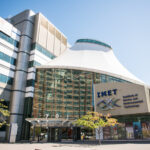
The U.S. Department of Agriculture (USDA) has awarded $10 million, the maximum allowable amount, to a set of projects, led by UMBC’s Yonathan Zohar, targeted to solve specific aquaculture challenges.
For decades, Zohar, professor and chair of marine biotechnology, has made steady progress toward making large-scale, sustainable land-based aquaculture—raising fish on land—a reality. Sustainable Aquaculture Systems Supporting Atlantic Salmon, known as SAS2, will address a range of remaining hurdles hindering the success of these emerging aquaculture platforms. SAS2 includes several academic and federal research institutions and nine industry partners from across the U.S., plus partners in Iceland and Norway.
“The mission is to enable an innovative, effective, and sustainable U.S. Atlantic salmon production platform that will transform the U.S. food and aquaculture systems and secure and increase high-quality and affordable seafood production for the world,” says Zohar, director of the Aquaculture Research Center at the Institute of Marine and Environmental Technology (IMET) on Baltimore’s Inner Harbor.
Land-based aquaculture systems are self-contained, avoiding the risks of environmental pollution or farmed fish escaping and interbreeding with wild stocks. They can be built anywhere, reducing the carbon footprint and cost of transporting fish. The water composition (salt and other minerals) can be optimized for different species, based on their natural habitat. Controlled light and temperature cycles ensure optimal year-round fish performance and production and entrain spawners to breed at different times of year, resulting in fish coming to market size year-round.
As demand for seafood continues to rise, innovative systems like this pave the way for producing a much greater quantity of seafood in a more sustainable way.

Yonathan Zohar observes a tank at the Aquaculture Research Center, located at the Institute of Marine and Environmental Technology.
Filling the knowledge gaps
SAS2 builds on another Zohar-led project, the Recirculating Aquaculture Salmon Network, or RAS-N. “RAS-N has been developing a prioritized list of the challenges we need to address and where we should invest resources. It asks: What are the gaps in knowledge? What are the main hurdles in technology, biology, and engineering?” Zohar explains. “And now, with SAS2, we’re taking that information and implementing it.”
Two-thirds of the project funding is dedicated to research. The remaining third is split evenly between education/workforce development and extension/community engagement. Professionals from all of these areas are co-directors on the grant.
SAS2 includes 17 objectives, each addressing a particular remaining challenge to the large-scale implementation of land-based salmon aquaculture. For example, one priority is developing a domestic brood stock, so aquaculture facilities in the U.S. aren’t solely dependent on importing salmon eggs from Europe. Another objective is biologically treating the tons of solid waste (fish poop) the facilities produce and converting it to fuel-grade biogas. Others focus on developing environmentally responsible feeds and ensuring optimal fish quality.

Yonathan Zohar (l) and Jorge Gomezjurado (r) at IMET’s Aquaculture Research Center.
From research to workforce
Also, Zohar says, “Workforce development is a huge bottleneck, because with these facilities popping up like mushrooms, there aren’t enough skilled workers available with the right kind of training.” These huge facilities rely on skilled technicians that can think creatively to troubleshoot problems on the spot. Aquaculture industry leaders, such as George Nardi, vice president for aquaculture services at Innovasea, are partners on the grant to assist with this and other parts of the work.
“I was impressed with the breadth of the workforce development in this proposal—everywhere from high school to university,” Nardi said at a kickoff meeting for SAS2. “My experience tells me that in aquaculture we need a great variety of skillsets to succeed,” he added. “And this project, with the enormous amount of talent surrounding it, is going to help the industry move forward.”
Extending the impact
In addition to UMBC, the other primary academic partner is the University of Maine, whose Aquaculture Research Institute is a leader in aquaculture on the East Coast.
“The Aquaculture Research Institute (ARI) at UMaine is excited to continue working with UMBC and implementing the lessons learned from the RAS-N network,” says Debbie Bouchard, director of the ARI. “Working with other institutions on the grant, we are focusing on integrated workforce development pathways that incorporate not only industry priorities and results from the research objectives, but also diversity and inclusion values that are important to advancing a sustainable RAS industry and rural development.”
The team’s collaborative and transdisciplinary approach to the project will create opportunities to transform the industry by addressing key bottlenecks that thus far have created challenges in scaling up land-based aquaculture. Both RAS-N and SAS2 “have always been stakeholder-driven,” Zohar says. “We are not in the ivory tower of academia telling businesses ‘you should do this and that.’ Instead, it’s us asking the industry, ‘What do you need to ensure success?’.”
Extension is an important part of the project, too. As aquaculture facilities can take up a significant physical footprint, “One of our objectives is community engagement, being totally transparent and keeping a dialogue going.” That is happening already as AquaCon, another industry partner on the grant, works with Zohar and other colleagues to implement salmon aquaculture facilities on Maryland’s Eastern Shore.
Poised to succeed

Fish in a tank at IMET’s Aquaculture Research Center in Baltimore.
The new $10 million grant is part of a National Institute of Food and Agriculture (NIFA) program, which includes everything from corn to beef. The fact that an aquaculture project was selected and awarded the maximum amount indicates the priority the federal government has placed on innovative, sustainable food production strategies for the future.
“The goals are for it to be transformative, to be collaborative, to be synergistic, and to cross boundaries,” Zohar says. “The USDA program is called sustainable agriculture systems, so it takes a systems approach and goes from basic science to the translational.”
“It’s an exciting time for aquaculture in Maine and the nation,” Bouchard says. “I’m looking forward to seeing all the great things that are going to come out of this over the next five years.”
Banner image: The Institute of Marine and Environmental Technology in Baltimore. All photos by Marlayna Demond ’11 for UMBC.
]]>
The U.S. Department of Agriculture (USDA) has awarded $10 million, the maximum allowable amount, to a set of projects, led by UMBC’s Yonathan Zohar, targeted to solve specific aquaculture...
https://umbc.edu/stories/umbcs-yonathan-zohar-to-lead-10-million-partnership-to-scale-land-based-salmon-aquaculture/
https://beta.my.umbc.edu/api/v0/pixel/news/119548/guest@my.umbc.edu/a9a7bdd008bdf9b18acb51467a8dfd0e/api/pixel
cnms
majoraward
marinebiotech
research
science-and-technology
UMBC News & Magazine
https://beta.my.umbc.edu/groups/umbc-news-magazine
https://assets1-beta.my.umbc.edu/system/shared/avatars/groups/000/001/943/24435aa6207c452e7bc15cc74b42c7bb/xsmall.png?1748556657
https://assets1-beta.my.umbc.edu/system/shared/avatars/groups/000/001/943/24435aa6207c452e7bc15cc74b42c7bb/original.png?1748556657
https://assets2-beta.my.umbc.edu/system/shared/avatars/groups/000/001/943/24435aa6207c452e7bc15cc74b42c7bb/xxlarge.png?1748556657
https://assets2-beta.my.umbc.edu/system/shared/avatars/groups/000/001/943/24435aa6207c452e7bc15cc74b42c7bb/xlarge.png?1748556657
https://assets3-beta.my.umbc.edu/system/shared/avatars/groups/000/001/943/24435aa6207c452e7bc15cc74b42c7bb/large.png?1748556657
https://assets1-beta.my.umbc.edu/system/shared/avatars/groups/000/001/943/24435aa6207c452e7bc15cc74b42c7bb/medium.png?1748556657
https://assets2-beta.my.umbc.edu/system/shared/avatars/groups/000/001/943/24435aa6207c452e7bc15cc74b42c7bb/small.png?1748556657
https://assets1-beta.my.umbc.edu/system/shared/avatars/groups/000/001/943/24435aa6207c452e7bc15cc74b42c7bb/xsmall.png?1748556657
https://assets2-beta.my.umbc.edu/system/shared/avatars/groups/000/001/943/24435aa6207c452e7bc15cc74b42c7bb/xxsmall.png?1748556657
UMBC News & Magazine
0
0
false
Thu, 07 Oct 2021 14:04:50 -0400
UMBC’s Haleemat Adekoya, education advocate, is named 2021–22 MHEC student commissioner
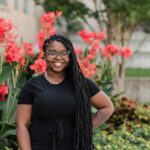
Haleemat Adekoya ‘22, political science, is serving as the 2021–22 student member of the Maryland Higher Education Commission (MHEC). The appointment recognizes Adekoya’s community-engaged work connecting students to resources and leading enrichment and leadership opportunities at both K–12 and university levels.
Adekoya is serving as a voting member of MHEC, which is responsible for establishing policies for public and private colleges and universities across the state of Maryland. She is representing students on MHEC’s Education Policy Committee and Outreach, Grants, and Financial Assistance Committee.
 Photo courtesy of UMBC’s department of education.
“Representing Maryland’s students is a responsibility that I take very seriously,” says Adekoya. “This work is not about me—it’s a collaboration with students. It’s about building relationships where I trust them to provide information about their challenges and needs and they trust me to take their concerns to the board and advocate for change.”
Bridging gaps
Prior to becoming MHEC student commissioner, Adekoya served as an intern at the Maryland State Department of Education (MSDE), with the Student, Family, and School Support Committee in 2020–2021. The committee’s work helped implement the state superintendent’s mental health initiative in the Baltimore area. Adekoya informed the design of K–12 programs that enhanced student learning and increased family engagement.
The internship required Adekoya to learn how to listen to and collaborate with teachers, policymakers, community leaders, support service providers, students, and families to meet the needs of Maryland’s public schools—experience she’ll apply to her work with MHEC. She notes that many community members may not be aware of the resources available to them and policymakers may not know the intricacies of schools’ widely variable daily needs. She hopes to help bridge that gap.
“Maryland schools would benefit from the Full-Service Community Schools model to more effectively continue addressing issues of inclusion, equity, and diversity,” Adekoya suggests. “I believe that education is the most powerful tool to change the world.”

Adeokoya (L) with Lee (R).
Photo courtesy of Marlayna Demond ’11.
“Haleemat is such a strong and compassionate leader. One of the things that inspires me most about her is her commitment to others,” shares her mentor Jasmine Lee, director of inclusive excellence in UMBC’s Division of Student Affairs.
“She’s not a leader because she’s ‘ahead of the pack’…but instead because she is concerned about everyone making it,” says Lee. “She seems to move from the front to the back, and throughout the middle, empowering everyone to move at their own pace.”
Mentor mindset
While new to this high level of state leadership, Adekoya for years gained experience as a leader in a range of education-focused organizations. In high school, she co-founded Dare2Be, a non-profit empowerment and mentorship program for Baltimore County and Baltimore City girls ages 9–18. She also served as a student member of the Baltimore County Board of Education.
Celebration of Teaching Reception: Dr. Hrabowski and I discussed the importance of teachers and teachers of color! I had great conversations with Atom Zerfas, math teacher at Pikesville HS; Haleemat Adekoya, UMBC student & former SMOB; Dr. Allen, UMBC Professor & Hampton Alumna. pic.twitter.com/YpN2i1Wy7W
— Dr. Darryl L. Williams (@BCPS_Sup) March 5, 2020
Adekoya (bottom left) with Dr. Darryl L. Williams, BCPS superintendent, during UMBC’s Celebration of Teaching event in early March 2020.
Inspired by the impact of her work in these roles, Adekoya came to UMBC determined to expand mentoring opportunities for students, which she sees as a powerful way to support students. She joined UMBC’s African Students Association and began Amowara, which pairs first- and second-year students with third- and fourth-year members who can guide them through the academic, professional, and social life at UMBC.
Adekoya also wanted to continue working with Baltimore City youth. She joined UMBC’s Sherman STEM Teacher Scholars Program. After working as a math tutor and coach at Lakeland Elementary/Middle School, the program selected her as a leader for its virtual summer math initiative.

Adekoya teaching virtually during the summer math initiative.
Screenshot courtesy of Catalina Dansberger Duque.
She also worked as a leader for Elev8 Baltimore Freedom Schools, an initiative providing middle school students with academic, health, and community support. There, Adekoya helped develop a summer enrichment curriculum for ten Baltimore City Public Schools. She also served as an academic mentor for the Baltimore City Summer Academic Mentorship Program and in various other community-based organizations.
Advocacy and policy
These leadership experiences have helped Adekoya, who is also a Jacqueline C. Hrabowski Scholar, begin moving toward her long-term career goal of becoming an educator and working on education advocacy and policy both in the U.S. and in Nigeria, where she was born. After completing her year as MHEC commissioner and graduating from UMBC, she hopes to begin UMBC’s masters of arts in teaching and continue her work at MSDE and MHEC.

Lee (left) with Adekoya (R).
Photo courtesy of Marlayna Demond ’11.
“I see all of my work as a way of helping create a more inclusive and equitable future,” shares Adekoya. “Rather than consider myself someone speaking for all Black people or all students, I see these roles as opportunities to pass around my mic and amplify others’ voices. I want to make space for those coming after me.”
Banner image: Haleemat Adekoya. Photo courtesy of Marlayna Demond ’11 for UMBC.
]]>
Haleemat Adekoya ‘22, political science, is serving as the 2021–22 student member of the Maryland Higher Education Commission (MHEC). The appointment recognizes Adekoya’s community-engaged work...
https://umbc.edu/stories/umbcs-haleemat-adekoya-education-advocate-is-named-2021-22-mhec-student-commissioner/
https://beta.my.umbc.edu/api/v0/pixel/news/119549/guest@my.umbc.edu/20b4b4b1907985244ef0f00da45c40a8/api/pixel
cahss
community
education
policy-and-society
politicalscience
shermanscholars
UMBC News & Magazine
https://beta.my.umbc.edu/groups/umbc-news-magazine
https://assets1-beta.my.umbc.edu/system/shared/avatars/groups/000/001/943/24435aa6207c452e7bc15cc74b42c7bb/xsmall.png?1748556657
https://assets1-beta.my.umbc.edu/system/shared/avatars/groups/000/001/943/24435aa6207c452e7bc15cc74b42c7bb/original.png?1748556657
https://assets2-beta.my.umbc.edu/system/shared/avatars/groups/000/001/943/24435aa6207c452e7bc15cc74b42c7bb/xxlarge.png?1748556657
https://assets2-beta.my.umbc.edu/system/shared/avatars/groups/000/001/943/24435aa6207c452e7bc15cc74b42c7bb/xlarge.png?1748556657
https://assets3-beta.my.umbc.edu/system/shared/avatars/groups/000/001/943/24435aa6207c452e7bc15cc74b42c7bb/large.png?1748556657
https://assets1-beta.my.umbc.edu/system/shared/avatars/groups/000/001/943/24435aa6207c452e7bc15cc74b42c7bb/medium.png?1748556657
https://assets2-beta.my.umbc.edu/system/shared/avatars/groups/000/001/943/24435aa6207c452e7bc15cc74b42c7bb/small.png?1748556657
https://assets1-beta.my.umbc.edu/system/shared/avatars/groups/000/001/943/24435aa6207c452e7bc15cc74b42c7bb/xsmall.png?1748556657
https://assets2-beta.my.umbc.edu/system/shared/avatars/groups/000/001/943/24435aa6207c452e7bc15cc74b42c7bb/xxsmall.png?1748556657
UMBC News & Magazine
0
0
false
Thu, 07 Oct 2021 11:15:17 -0400
UMBC and IMET faculty reveal a hidden world in the Chesapeake Bay
The waters of the Chesapeake Bay teem with microscopic organisms—swimming single-celled plankton known as dinoflagellates. But how can we peer into the depths to see them?
That’s the question driving a new creative project led by Lisa Moren, professor of visual arts at UMBC and artist-in-residence at the University of Maryland Center for Environmental Science’s Institute of Marine and Environmental Technology (IMET), and IMET associate research professor Tsvetan Bachvaroff.

Dinoflagellate image from Under the Bay courtesy of Lisa Moren.
Moren and Bachvaroff have developed “Under the Bay,” an augmented reality app that allows users a glimpse into the lives of the dinoflagellates. Bringing the project to life are close collaborators Marc Olano, associate professor of computer science and director UMBC’s game development track, and Baltimore-based composer Dan Deacon.

Screen shot from Under the Bay courtesy of Lisa Moren.
This project brings together experts from divergent fields, whose work generally takes very different forms, to create something fully unique. Moren, a multi-disciplinary artist, works with emerging media, public space and works-on-paper. Bachvaroff’s research focuses on the evolution and biology of dinoflagellates, which are often associated with “red tides” or harmful algal blooms. Olano is known for innovations in game design, while Deacon is known globally for electronic music involving large-scale audience interaction.
Public demonstration
In a first public demonstration of Under the Bay on October 9, from 1 to 4 p.m., participants will download the project app and hold their phones over water in the Inner Harbor near IMET (701 East Pratt Street). Dozens of animated microorganisms, typically too small for the human eye to see, will appear on their screens—beautiful, large, and vibrantly changing in color.

Dinoflagellate image from Under the Bay courtesy of Lisa Moren.
Moren has produced a teaser trailer for the event, viewable here on Vimeo.
A unique experience for each user
Under the Bay’s screen animations will change color when conditions in the Bay change, while stories and music will connect memory, science, and anecdotal observation. When the Bay water is healthy, the organisms appear swimming and billowing over their field of view like happy jellyfish. When the water is unhealthy, the organisms become shriveled like discarded plastic bags in the water.

Under the Bay co-creator Lisa Moren. Image courtesy of Lisa Moren.
“Under the Bay will tell a unique story for every user, changing over time, over seasons, but always from the viewpoint of the water itself,” says Moren. “The microscopic dinoflagellate species represented in augmented reality are hundreds of millions of years old, and because they are at the very bottom of the food chain, they are important to all marine life.”
Live sensors in the Chesapeake Bay direct how the organisms appear and how their stories are told. In addition to undulating forms and color, originally composed music by Deacon will change in pitch and tempo based on the water conditions. Stories will describe the amazing survival strategies of these unicellular creatures that make their own light, food and energy when water conditions are favorable. When severe oxygen deprivation occurs in the water, voiceover stories of survival become choppy, fragmented, even choking.
The app will also provide users with basic information about Chesapeake Bay health, including oxygen levels, salinity, and temperatures. Users will be able to select past dates to compare the health of the Bay at various times.
 Dinoflagellate image from Under the Bay courtesy of Lisa Moren.
The eight audio stories created for Under the Bay, including music by Dan Deacon, are also available as separate podcasts. The podcasts present the original stories, which will be heard in the app in modified versions based on the changing conditions of the Bay.
The narrators of the stories describe the Chesapeake Bay from multiple perspectives, sharing personal observation intertwined with scientific knowledge, unpacking recent political events, and advocating for diversity. Some episodes invoke evocative imagery of microbes as faeries and the planet as a living organism that inhales and exhales. Other occasional topics include cryonics, meditation, the origins of the Internet, monuments, protests, U.S. elections, and algae blooms, all conveying a world out of balance.
Worldwide launch
Following the public demonstration and alpha test on October 9, Moren anticipates exhibiting a beta version of Under the Bay at UMBC’s Center for Art, Design and Visual Culture in January and February 2022, and then the final version at an additional art exhibition in downtown Baltimore in March and April 2022. With the launch of Under the Bay for iOS and Android devices in March 2022, the app will be freely available worldwide.
Development of Under the Bay has been supported by the Saul Zaentz Innovation Fund at The Johns Hopkins University and by the Robert W. Deutsch Foundation.
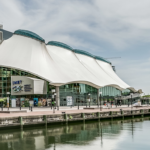
Header image: Institute of Marine and Environmental Technology. Image courtesy of IMET.
]]>
The waters of the Chesapeake Bay teem with microscopic organisms—swimming single-celled plankton known as dinoflagellates. But how can we peer into the depths to see them? That’s the question...
https://umbc.edu/stories/umbc-and-imet-faculty-reveal-a-hidden-world-in-the-chesapeake-bay/
https://beta.my.umbc.edu/api/v0/pixel/news/119550/guest@my.umbc.edu/e622991cb4a62ff4325212ddec9c4980/api/pixel
arts-and-culture
cahss
coeit
csee
imet
visualarts
UMBC News & Magazine
https://beta.my.umbc.edu/groups/umbc-news-magazine
https://assets1-beta.my.umbc.edu/system/shared/avatars/groups/000/001/943/24435aa6207c452e7bc15cc74b42c7bb/xsmall.png?1748556657
https://assets1-beta.my.umbc.edu/system/shared/avatars/groups/000/001/943/24435aa6207c452e7bc15cc74b42c7bb/original.png?1748556657
https://assets2-beta.my.umbc.edu/system/shared/avatars/groups/000/001/943/24435aa6207c452e7bc15cc74b42c7bb/xxlarge.png?1748556657
https://assets2-beta.my.umbc.edu/system/shared/avatars/groups/000/001/943/24435aa6207c452e7bc15cc74b42c7bb/xlarge.png?1748556657
https://assets3-beta.my.umbc.edu/system/shared/avatars/groups/000/001/943/24435aa6207c452e7bc15cc74b42c7bb/large.png?1748556657
https://assets1-beta.my.umbc.edu/system/shared/avatars/groups/000/001/943/24435aa6207c452e7bc15cc74b42c7bb/medium.png?1748556657
https://assets2-beta.my.umbc.edu/system/shared/avatars/groups/000/001/943/24435aa6207c452e7bc15cc74b42c7bb/small.png?1748556657
https://assets1-beta.my.umbc.edu/system/shared/avatars/groups/000/001/943/24435aa6207c452e7bc15cc74b42c7bb/xsmall.png?1748556657
https://assets2-beta.my.umbc.edu/system/shared/avatars/groups/000/001/943/24435aa6207c452e7bc15cc74b42c7bb/xxsmall.png?1748556657
UMBC News & Magazine
0
0
false
Tue, 28 Sep 2021 18:25:23 -0400
UMBC to lead climate-focused NSF data science institute through $13M award
Tens of millions of people live in areas that are at risk for flooding due to climate change, sea level rise, and melting of glaciers. UMBC’s Maryam Rahnemoonfar and a team of researchers are using data science, machine learning, and artificial intelligence (AI) to analyze enormous volumes of climate data, and Arctic and Antarctic observations in ways that could help populations prepare for and respond to these risks.
Rahnemoonfar, associate professor of information systems, is the principal investigator on a new five-year, $13 million grant from the National Science Foundation’s Harnessing the Data Revolution (HDR) Big Idea program. Through the grant, she will launch and direct iHARP, the NSF HDR Institute for Harnessing Data and Model Revolution in the Polar Regions.

Maryam Rahnemoonfar.
“It is so exciting to be selected as one of the five HDR institutes in the nation, however, this comes with huge responsibility,” she says. “We are the first data science and machine learning institute in the world that is dedicated to research in polar regions.”
Data science meets climate science
Climate scientists rely on data that are incredibly challenging to disentangle, Rahnemoonfar explains. AI offers solutions to analyzing these large datasets, providing sophisticated models that make the most use of the quantity and quality of data available.
 Maryam Rahnemoonfar, right, discussing the imaging iHARP research.
The researchers involved with this grant will reduce uncertainties in projecting sea level rise by combining physics modeling, machine learning techniques, and data analysis. The results of their work will inform policymaking to address national and global priorities related to the climate crisis. Further, Rahnemoonfar notes, the team will investigate novel data science techniques that can be applied to other disciplines encountering challenges related to complex data.
Tackling challenges together
This project builds on research from Rahnemoonfar’s prior collaborative project, Intelligent Solutions for Navigating Big Data from the Arctic and Antarctic, supported by a 2018 NSF grant and a 2019 Amazon Machine Learning Research Award. The team will continue this work on a larger scale.
“I am proud of our strong convergence team with many members who are leaders in their fields, including our domain scientists and data scientists, and I am thrilled to lead this effort,” says Rahnemoonfar. She is working with co-PIs Jianwu Wang, associate professor of information systems at UMBC; Mathieu Morligehm at Dartmouth College; Shashi Shekhar at the University of Minnesota; and Jan Lenaerts at the University of Colorado Boulder.

Jianwu Wang.
Project collaborators have expertise in computer and information science, electrical engineering, civil and environmental engineering, Earth science, atmospheric science, oceanic science, mathematics, statistics, physics, geology, glaciology, and data science. An interdisciplinary approach, supported by the nimble nature of information systems, is essential to the team’s success, says Vandana Janeja, chair and professor of IS at UMBC.
“Dr. Rahnemoonfar’s ground-breaking climate change research involves a highly multidisciplinary team within IS and across multiple institutions,” says Janeja. “This grant is an example of our faculty’s bold research agenda and strong teams. This type of work has both led to wide community impacts and also translated into curriculum innovations with strong student engagement.”
In addition to working with UMBC faculty, Rahnemoonfar will lead a group of researchers from institutions across the country, as well as government and industry researchers. These partners include the University of Colorado Boulder, Dartmouth College, University of Minnesota, University of Alaska Fairbanks, Bowie State University, Amherst College, University of Texas at Austin, NASA Universities Space Research Association, NASA Jet Propulsion Laboratory, NVIDIA, IBM, and Amazon.
Educational impact
The grant will also involve dozens of undergraduate and graduate students and postdoctoral researchers. Rahnemoonfar and her team will engage students from underrepresented groups by working with UMBC’s Center for Women in Technology and similar programs, as well as the Baltimore’s Women in Machine Learning and Data Science chapter, which she currently leads.
 Jianwu Wang (left), Maryam Rahnemoonfar, and Masoud Yari.
Additionally, the project will support educational and outreach activities, with an eye toward workforce development. This includes programming for K-12 and college students, and lectures and training opportunities for data science and domain science professionals. Students will work alongside partners including NASA, Amazon, and IBM, and will have internship opportunities with federal and industry partners.
The research teams also plan to develop museum exhibits to help public audiences access their work.
Impact of multidisciplinary teams
“This major multi-institutional NSF award reflects so much hard work and ingenuity. National programs like iHARP, with its focus on some of the great challenges our society is facing, add to UMBC’s growing reputation for innovation and excellence in public impact research,” says Karl V. Steiner, vice president for research at UMBC.
“The College is experiencing extraordinary research growth. This is made possible by both the development of multidisciplinary teams and our increased focus on leadership development,” says Keith J Bowman, dean of the College of Engineering and Information Technology. “This project team, and others recently funded or pending, benefit from the tremendous faculty talent we have recruited in the last several years.”
The solutions that are developed through this work will have applications beyond environmental issues. Rahnemoonfar anticipates the team’s research will impact the future of medicine, autonomous driving, and remote sensing, and that the students working on the project will become the next generation of experts addressing these global issues.
In addition to Rahnemoonfar and Wang, the UMBC team also includes Janeja; Aryya Gangopadhyay, professor of information systems; Masoud Yari, research assistant professor in information systems; Karen Chen, assistant professor of information systems; Osman Gani, assistant professor of information systems; and Don Engel, associate vice president for research development, and assistant professor of computer science and electrical engineering.
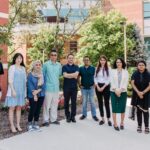
Banner image: Some of the iHARP research team. All photos by Marlayna Demond ’11 for UMBC.
]]>
Tens of millions of people live in areas that are at risk for flooding due to climate change, sea level rise, and melting of glaciers. UMBC’s Maryam Rahnemoonfar and a team of researchers are...
https://umbc.edu/stories/climate-focused-data/
https://beta.my.umbc.edu/api/v0/pixel/news/119551/guest@my.umbc.edu/265099189831df53c8a57f8ccc53a50a/api/pixel
coeit
is
majoraward
page1
research
science-and-technology
UMBC News & Magazine
https://beta.my.umbc.edu/groups/umbc-news-magazine
https://assets1-beta.my.umbc.edu/system/shared/avatars/groups/000/001/943/24435aa6207c452e7bc15cc74b42c7bb/xsmall.png?1748556657
https://assets1-beta.my.umbc.edu/system/shared/avatars/groups/000/001/943/24435aa6207c452e7bc15cc74b42c7bb/original.png?1748556657
https://assets2-beta.my.umbc.edu/system/shared/avatars/groups/000/001/943/24435aa6207c452e7bc15cc74b42c7bb/xxlarge.png?1748556657
https://assets2-beta.my.umbc.edu/system/shared/avatars/groups/000/001/943/24435aa6207c452e7bc15cc74b42c7bb/xlarge.png?1748556657
https://assets3-beta.my.umbc.edu/system/shared/avatars/groups/000/001/943/24435aa6207c452e7bc15cc74b42c7bb/large.png?1748556657
https://assets1-beta.my.umbc.edu/system/shared/avatars/groups/000/001/943/24435aa6207c452e7bc15cc74b42c7bb/medium.png?1748556657
https://assets2-beta.my.umbc.edu/system/shared/avatars/groups/000/001/943/24435aa6207c452e7bc15cc74b42c7bb/small.png?1748556657
https://assets1-beta.my.umbc.edu/system/shared/avatars/groups/000/001/943/24435aa6207c452e7bc15cc74b42c7bb/xsmall.png?1748556657
https://assets2-beta.my.umbc.edu/system/shared/avatars/groups/000/001/943/24435aa6207c452e7bc15cc74b42c7bb/xxsmall.png?1748556657
UMBC News & Magazine
0
0
false
Tue, 28 Sep 2021 16:01:00 -0400
Remembering Dr. Robert P. Burchard
It is with sorrow that we note the passing of Dr. Robert P. Burchard, professor emeritus of biological sciences. Bob believed in the potential of the young university that he joined during its first year. A campus leader for decades, he served as president of the faculty senate, interim chair of his department, and as interim dean of the College of Arts and Sciences.
Bob arrived on campus in January 1967, fresh from the Peace Corps, where he had taught microbiology in Nigeria and had conducted research on tsetse flies. He was at that time a young scholar, having earned a B.A. from Brown University in 1960, an M.Sc. from Brown in 1962, and his Ph.D. at the University of Minnesota in 1965. He recalled that creating UMBC’s new biology curriculum from scratch was invigorating: “It was a great experiment. And we were excited about what we were doing. There was a sense that we were all a part of a pioneering educational experience.”
He soon became a popular figure not only in his own department, but also across the campus, building relationships with faculty staff, and students. During the Vietnam War, he participated in teach-ins. In 1981, the UMBC student body voted him “Most Outstanding Teacher.”
An energetic advocate for campus beautification and the natural environment, Bob wrote frequent letters to The Retriever Weeklyencouraging students to take more pride in the campus’s appearance, and tirelessly urged the administration to improve the university’s landscape. In the 1990s, he partnered with Sandy Parker, chair of geography and environmental systems, to preserve Pig Pen Pond, now a centerpiece of the 50-acre Conservation and Environmental Research Area (CERA).
“Bob was the epitome of the academic and scholar—a great department citizen,” recollects Bob’s colleague of more than thirty years, Philip Farabaugh, professor of biological sciences. “He had a deep commitment to the department and to UMBC, and served both the department as interim chair and the university as acting dean of the old College of Arts and Sciences. I know that he worked very hard in those posts and made a great difference in the development of the department and university. Bob was also a scholar in the true sense of the word. He was devoted to the study of his research organisms, the gliding bacteria, and was well regarded by his scientific peers. He was also a gentleman in the truest sense of that word. He was invariably kind and was someone you could rely and depend on. He made the department a better place.”
Although Bob’s research focused on microbiology—he continued to publish into the 2000s—he believed in a broad education for all members of the university, including its faculty and staff. “I’m part of a university community,” he said. “We’re here not only to further our own academic interests, but to broaden our horizons. There’s pleasure in learning something new. I would like to think that all our faculty are renaissance scholars.”
Wendy Salkind, emeritus professor of theatre who served as chair of her department during Bob’s tenure as interim dean, recalls, “Bob consistently appeared at the performances of theatre, dance, and music, he attended gallery openings, and he always spoke about the importance of integrating the arts into the life of the campus. He worked tirelessly with each of the arts departments to educate himself about the challenges that were created in a university that, early on, did not have sophisticated arts facilities. He wanted to know how the students learned, why the topics were selected for the public, and he applauded with delight the successes of the students who excited their audiences with performances and showings.”
When Diane Lee, director of the Wisdom Institute and former vice-provost and dean of undergraduate education, considered going into administration, she turned to Bob Burchard for advice. “As I was making the decision whether or not to go into administration, I asked him to reflect on his decision to go into administration. Long story short, he said he realized that he could continue to make a difference, and maybe one with wider impact than at the department or classroom level.”
She adds, reflecting on Bob’s character, “Bob Burchard was one of those people who gave sage advice, but importantly when I think of Bob it was his desire to make a difference and contribute to the lives of others. So that is how I recall Bob Burchard. Trustworthy, smart, thoughtful, kind, honest, a person of integrity, all those good qualities wrapped up into one very, very fine person and terrific educator.”
A philanthropist at heart, Bob became a consistent donor to the university. “I grew up in an environment where you give when you can,” he said. “I wanted to give back to an institution that has supported me.” He and his wife, Ann Burchard ’82, became members of the 1966 Society, which recognizes donors who have included the University in their estate plans, and were regular contributors to the annual fund.
Bob’s family suggests that contributions in his memory be made to CARE, to the Albin O. Kuhn Library & Gallery, or to the arts or sciences at UMBC. A celebration of life service may be planned for the near future.
President Freeman Hrabowski
Provost Philip Rous
Dean of the College of Natural and Mathematical Sciences William LaCourse
]]>
It is with sorrow that we note the passing of Dr. Robert P. Burchard, professor emeritus of biological sciences. Bob believed in the potential of the young university that he joined during its...
https://umbc.edu/stories/remembering-dr-robert-p-burchard/
https://beta.my.umbc.edu/api/v0/pixel/news/119552/guest@my.umbc.edu/ac5255953ea959e84d97a727d3cc7e50/api/pixel
in-memorium
rss
UMBC News & Magazine
https://beta.my.umbc.edu/groups/umbc-news-magazine
https://assets1-beta.my.umbc.edu/system/shared/avatars/groups/000/001/943/24435aa6207c452e7bc15cc74b42c7bb/xsmall.png?1748556657
https://assets1-beta.my.umbc.edu/system/shared/avatars/groups/000/001/943/24435aa6207c452e7bc15cc74b42c7bb/original.png?1748556657
https://assets2-beta.my.umbc.edu/system/shared/avatars/groups/000/001/943/24435aa6207c452e7bc15cc74b42c7bb/xxlarge.png?1748556657
https://assets2-beta.my.umbc.edu/system/shared/avatars/groups/000/001/943/24435aa6207c452e7bc15cc74b42c7bb/xlarge.png?1748556657
https://assets3-beta.my.umbc.edu/system/shared/avatars/groups/000/001/943/24435aa6207c452e7bc15cc74b42c7bb/large.png?1748556657
https://assets1-beta.my.umbc.edu/system/shared/avatars/groups/000/001/943/24435aa6207c452e7bc15cc74b42c7bb/medium.png?1748556657
https://assets2-beta.my.umbc.edu/system/shared/avatars/groups/000/001/943/24435aa6207c452e7bc15cc74b42c7bb/small.png?1748556657
https://assets1-beta.my.umbc.edu/system/shared/avatars/groups/000/001/943/24435aa6207c452e7bc15cc74b42c7bb/xsmall.png?1748556657
https://assets2-beta.my.umbc.edu/system/shared/avatars/groups/000/001/943/24435aa6207c452e7bc15cc74b42c7bb/xxsmall.png?1748556657
UMBC News & Magazine
0
0
false
Tue, 28 Sep 2021 13:01:14 -0400


