Scientists may be underestimating Arctic ecosystem changes, new UMBC research shows

The Arctic climate is changing, and it’s important to understand how. But scientists may be consistently misinterpreting a common metric used to determine how Arctic ecosystems are shifting in response to climate change. A new paper in Ecological Applications by Fred Huemmrich, research scientist at UMBC’s Joint Center for Earth Systems Technology, shows that researchers may not appreciate the limitations of the Normalized Difference Vegetation Index (NDVI), leading to inaccurate interpretations, and likely an overall underestimate, of Arctic change.
NDVI is “one of the clearest indicators we have of ecological change related to climate change in tundra and boreal forest regions,” Huemmrich says. And yet, “there are limitations to what NDVI can tell us about ecological change.”
Dead or alive?
One of NDVI’s main advantages is that it can be determined using data collected by satellites. That’s particularly beneficial for Arctic research, because collecting data on the ground is difficult in remote areas and harsh conditions.
By looking at light reflected from the surface, NDVI can tell you how much of the surface is covered with plants versus non-living substances like rocks and ice. Plants absorb a lot of visible light (for photosynthesis), but still reflect infrared light. Non-living substances reflect about the same amount of infrared and visible light.
So, “NDVI highlights the difference between reflectance in visible light and the infrared,” Huemmrich explains. “And if it’s small, you’re looking at things that aren’t green. And if it’s big, you’re looking at things that are green. That’s it. And it works.”

Fred Huemmrich conducts research in the Arctic tundra on a cold, blustery day. Photo courtesy Fred Huemmrich.
The wrong question
But there’s a catch. Based on Huemmirch’s research, NDVI “saturates” at higher levels of plant cover. So, while NDVI is excellent at reporting a change from 20 percent to 40 percent plant cover, it may not show a change from 70 percent to 90 percent plant cover. It also may not show changes from one type of plant cover to another, such as from a scrub landscape to a woodland, if the total plant cover remains the same.
Many studies have not accounted for these limitations, Huemmrich says, leading researchers to ask questions about why ecosystems in certain regions of the Arctic are responding differently to similar levels of climate change. To Huemmrich, that’s the wrong question.
“To me, it suggests that there very well may be more ecological change going on at high latitudes than we are perceiving, if we’re leaning on NDVI as the metric we’re using to detect these changes,” Huemmrich says.
Time to reevaluate
As a graduate student in the 1990s, Huemmrich studied NDVI. However, “I never dreamed that 25 years later, people would still be using NDVI.” Yet, seeing how today’s climate scientists still rely heavily on NDVI, and may not consider its limitations, concerned him and drove him to publish his latest paper.
Huemmrich believes many analyses may need to be reconsidered based on his publication. For example, at the transition between tundra and forest, NDVI has shown little change. However, “It’s not that things aren’t changing at the tree line,” Huemmrich says, “it’s just that NDVI isn’t very sensitive to those changes. So what’s happening at the tree line probably needs to be reevaluated.”
Because NDVI works well in some situations and poorly in others, “What you really need to do is know what your starting point is for this change,” he says. If the ecosystem under study begins below 50 percent plant cover, NDVI could be very helpful. But if total plant cover is already above 50 percent, NDVI may not be the most useful metric.

One of the remote locations in the Arctic where Fred Huemmrich’s research takes place. Photo courtesy Fred Huemmrich.
Crucial changes
Huemmrich is an investigator on NASA’s Arctic-Boreal Vulnerability Experiment (ABoVE), which looks at ecosystem change at high latitudes. His project specifically is investigating Arctic “greening” (an increase in plant cover over time), which is heavily reliant on metrics like NDVI. With about 300 leading investigators, and over 1,000 people involved in ABoVE overall, it’s critical that these researchers understand when it’s useful to apply metrics like NDVI, and when to use other metrics.
The Arctic is changing. Those changes affect local wildlife populations and the Indigenous communities that often rely on them. Arctic climate change also affects major environmental shifts around the world, from rising seas to global wind patterns. Using the right metrics in the right way to study these ecosystems is crucial to understanding Arctic climate, Huemmerich notes, because that understanding can affect policy to protect the planet.
Header image: Boreal forest meets the alpine tundra ecosystem in Rocky Mountain National Park. Photo by Tim Lumley, used under CC BY-NC-ND 2.0.
]]>
The Arctic climate is changing, and it’s important to understand how. But scientists may be consistently misinterpreting a common metric used to determine how Arctic ecosystems are shifting in...
https://umbc.edu/stories/scientists-may-be-underestimating-arctic-ecosystem-changes-new-umbc-research-shows/
https://beta.my.umbc.edu/api/v0/pixel/news/119533/guest@my.umbc.edu/308108718e01df1a5a7b5a0be9b5e4f6/api/pixel
jcet
research
science-and-technology
UMBC News & Magazine
https://beta.my.umbc.edu/groups/umbc-news-magazine
https://assets1-beta.my.umbc.edu/system/shared/avatars/groups/000/001/943/24435aa6207c452e7bc15cc74b42c7bb/xsmall.png?1748556657
https://assets1-beta.my.umbc.edu/system/shared/avatars/groups/000/001/943/24435aa6207c452e7bc15cc74b42c7bb/original.png?1748556657
https://assets2-beta.my.umbc.edu/system/shared/avatars/groups/000/001/943/24435aa6207c452e7bc15cc74b42c7bb/xxlarge.png?1748556657
https://assets2-beta.my.umbc.edu/system/shared/avatars/groups/000/001/943/24435aa6207c452e7bc15cc74b42c7bb/xlarge.png?1748556657
https://assets3-beta.my.umbc.edu/system/shared/avatars/groups/000/001/943/24435aa6207c452e7bc15cc74b42c7bb/large.png?1748556657
https://assets1-beta.my.umbc.edu/system/shared/avatars/groups/000/001/943/24435aa6207c452e7bc15cc74b42c7bb/medium.png?1748556657
https://assets2-beta.my.umbc.edu/system/shared/avatars/groups/000/001/943/24435aa6207c452e7bc15cc74b42c7bb/small.png?1748556657
https://assets1-beta.my.umbc.edu/system/shared/avatars/groups/000/001/943/24435aa6207c452e7bc15cc74b42c7bb/xsmall.png?1748556657
https://assets2-beta.my.umbc.edu/system/shared/avatars/groups/000/001/943/24435aa6207c452e7bc15cc74b42c7bb/xxsmall.png?1748556657
UMBC News & Magazine
0
0
false
Fri, 05 Nov 2021 18:04:01 -0400
Alumni Leaders Featured in Savoy Magazine

The fall 2021 issue of Savoy Magazine highlights several noteworthy members of the UMBC community, including a number of alumni and President Freeman Hrabowski. In keeping with the magazine’s theme of “Most Influential Black Corporate Directors,” the issue brings Black UMBC superstars to the forefront—and highlights the impact they are making in their fields.
For example, alumna Alicia Wilson ’04, political science, vice president for Economic Development for Johns Hopkins University,discussesthe importance of choosing your closest advisors. Kimberly Ellison-Taylor ’93, information systems management, founder and chief executive officer at KET solutions, is distinguished as one of 2021’s most influential black corporate directors for her work a board member for EverCommerce. Stephanie Hill ’86, computer science and economics, is praised for her work as senior vice president of Enterprise Business Transformation at Lockheed Martin.
 Alumna Alicia Wilson ’04, political science, (right) shares some advice with student Sydney Fryer ’22, psychology, outside the Retriever Activities Center at UMBC.
Savoy also features an extensive piece on the impact of the Meyerhoff Scholars Program, its staff and many impressive alumni. Featured community members include Moderna COVID-19 vaccine developerKizzmekia Corbett ’08, M16, biological sciences and sociology; Anna Gifty Opoku-Agyeman ’19, M26, mathematics; former U.S. Surgeon General Jerome Adams ’97, M4, biochemistry and molecular Biology; Michael Summers, the Robert E. Meyerhoff Chair for Excellence in Research and Mentoring at UMBC; Rhodes Scholar Naomi Mburu ’18, M26, chemical engineering; Darian Cash ’02, M10; and Kyla McMullen’05, M13, computer science. Learn more about the impact of the Meyerhoff Program here.
Hrabowski was honored in different ways throughout the issue for the impact he has had on higher education across the country, including his role in building the Meyerhoff Program, a proven model for increasing diversity among future leaders in science, engineering, and related fields.
Read more at Savoy Magazine online.
* * * * *
Header Image: UMBC alumna Kizzmekia Corbett ’08, M16, who developed the COVID-19 vaccine. Photo by Marlayna Demond ’09, for UMBC Magazine.
]]>
The fall 2021 issue of Savoy Magazine highlights several noteworthy members of the UMBC community, including a number of alumni and President Freeman Hrabowski. In keeping with the magazine’s...
https://umbc.edu/stories/alumni-leaders-featured-in-savoy-magazine/
https://beta.my.umbc.edu/api/v0/pixel/news/119534/guest@my.umbc.edu/156fcc30f80c6388dd1ab49d5ceb04d8/api/pixel
stories
UMBC News & Magazine
https://beta.my.umbc.edu/groups/umbc-news-magazine
https://assets1-beta.my.umbc.edu/system/shared/avatars/groups/000/001/943/24435aa6207c452e7bc15cc74b42c7bb/xsmall.png?1748556657
https://assets1-beta.my.umbc.edu/system/shared/avatars/groups/000/001/943/24435aa6207c452e7bc15cc74b42c7bb/original.png?1748556657
https://assets2-beta.my.umbc.edu/system/shared/avatars/groups/000/001/943/24435aa6207c452e7bc15cc74b42c7bb/xxlarge.png?1748556657
https://assets2-beta.my.umbc.edu/system/shared/avatars/groups/000/001/943/24435aa6207c452e7bc15cc74b42c7bb/xlarge.png?1748556657
https://assets3-beta.my.umbc.edu/system/shared/avatars/groups/000/001/943/24435aa6207c452e7bc15cc74b42c7bb/large.png?1748556657
https://assets1-beta.my.umbc.edu/system/shared/avatars/groups/000/001/943/24435aa6207c452e7bc15cc74b42c7bb/medium.png?1748556657
https://assets2-beta.my.umbc.edu/system/shared/avatars/groups/000/001/943/24435aa6207c452e7bc15cc74b42c7bb/small.png?1748556657
https://assets1-beta.my.umbc.edu/system/shared/avatars/groups/000/001/943/24435aa6207c452e7bc15cc74b42c7bb/xsmall.png?1748556657
https://assets2-beta.my.umbc.edu/system/shared/avatars/groups/000/001/943/24435aa6207c452e7bc15cc74b42c7bb/xxsmall.png?1748556657
UMBC News & Magazine
0
0
false
Thu, 04 Nov 2021 18:36:32 -0400
NASA awards $72 million for new UMBC-led Earth science research partnership
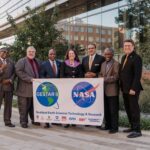
NASA has announced a major award of $72 million over three years for the new Goddard Earth Sciences Technology and Research (GESTAR) II center. UMBC serves as the lead for a national consortium and will receive over $38 million. Morgan State University serves as the primary partner. Colorado State University, Arizona State University, and Pennsylvania State University are also close partners in the program, as are Northrop Grumman Corporation, Earth Resources Technology, Inc., and the non-profit Southeastern Universities Research Association.
“This award is a massive win for UMBC, for the University System, and—with Morgan State as a key partner—for Maryland as a whole,” says Jay Perman, chancellor of the University System of Maryland. “The sheer size of the award, supporting the work of over a hundred researchers and students, demonstrates NASA’s faith in UMBC as consortium leader.”
“And,” Perman adds, “I know the entire UMBC community welcomes an even tighter connection to Goddard and an even more prominent role in answering some of the biggest questions in earth and atmospheric science.”
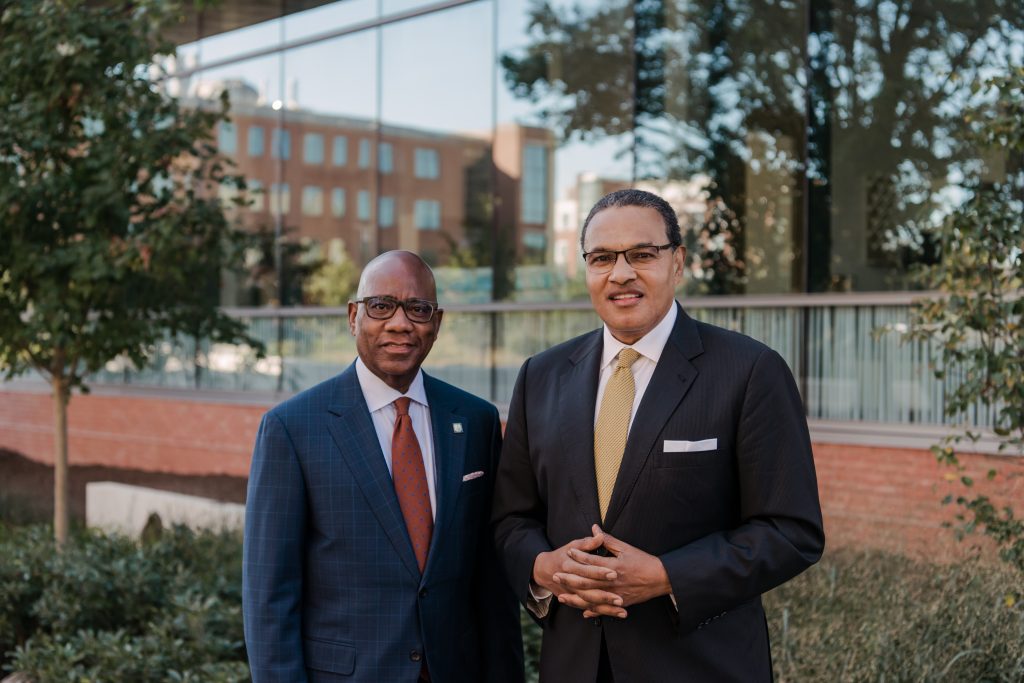
David K. Wilson (left) and Freeman A. Hrabowski.
Connecting colleagues and students
The GESTAR II consortium will support over 120 researchers, creating extensive opportunities for breakthroughs in earth and atmospheric science research. Participants will carry out observational, experimental, and theoretical research in support of NASA strategic earth science mission objectives.The large scale of this work will also enable students at all levels to contribute to the research.
“I am absolutely delighted that this new cooperative GESTAR II award will further strengthen and expand the mutually beneficial partnership between NASA Goddard and UMBC, which was first launched a quarter-century ago,” says Karl Steiner, UMBC’s vice president for research. “Together with our partner institutions, especially Morgan State University, we are looking forward to the exciting scientific and educational opportunities that lie ahead.”
“Morgan brings more than a decade of experience working with NASA, and we look forward to partnering with UMBC and other collaborators in GESTAR II to produce cutting-edge, world-class Earth science in support of our national space program,” adds Willie E. May, vice president for research and economic development at Morgan State. “We are also very excited about what this partnership will mean for our students—more exposure, new educational pursuits, and access to longer-term employment opportunities.”
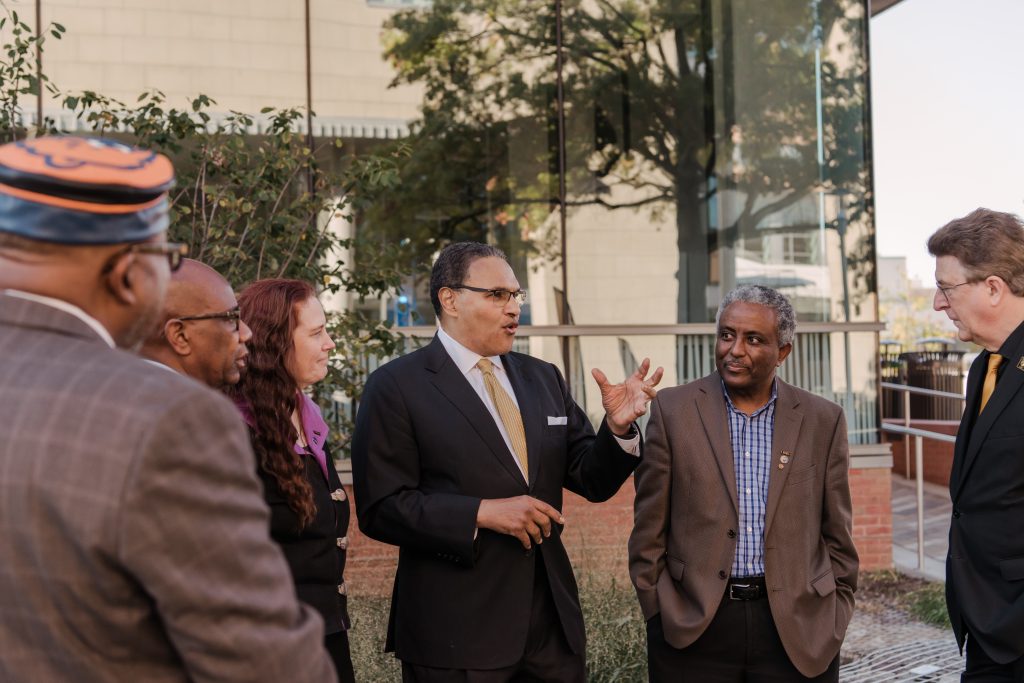 Left to right: Willie E. May, David K. Wilson, Margo Young, Freeman A. Hrabowski, Belay Demoz, Karl Steiner. May and Wilson are from Morgan State U.
Reaching beyond
Like UMBC’s Joint Center for Earth Systems Technology (JCET), GESTAR II will create opportunities for undergraduate and graduate students to conduct research with and be mentored by NASA scientists and engineers. Some of these researchers might also teach courses or offer workshops to students from participating institutions.
This builds on the work of scientists like Belay Demoz, director of JCET and the incoming director of GESTAR II. Demoz has been recognized for his ongoing commitment to mentoring students from all backgrounds in climate science. His scientific and mentoring work is driven by his early life in Eritrea, which was struggling with drought and other climate-induced challenges that continue today.
“So much of what we are able to do at UMBC is tied to the dreams of our current and future students to reach beyond ourselves,” says Keith J Bowman, dean of UMBC’s College of Engineering and Information Technology. “UMBC’s NASA centers help drive our aspirations as a university to have an impact that reaches beyond our campus, beyond our state, and even beyond our planet.”
 Belay Demoz, director of JCET and incoming director of GESTAR II. Photo by Marlayna Demond ’11 for UMBC.
Advancing high-impact research
This fall, funding for JCET will sunset after two-and-a-half highly productive decades. The new GESTAR II award will enable ongoing projects to continue, while also creating opportunities for expansion under a new structure.
JCET-supported researchers have examined ice shelf collapse, air quality, humans’ role in climate change, how boreal forests are responding to rising temperatures, and more. JCET also supported scientists and engineers who launched UMBC’s first CubeSat, the Hyper-Angular Rainbow Polarimeter (HARP), named AIAA Small Satellite Mission of the Year in 2020.
Many of these investigators’ work will continue through GESTAR II. Demoz describes the consortium partners as “powerhouses in earth science research and administration.”
“The collaboration between Morgan and UMBC serves as a model for how two research universities, operating in a highly competitive space, can join in common purpose, pooling intellectual capital, resources, and expertise for the greater advancement of earth science and technology,” says David K. Wilson, president of Morgan State.
 President David K. Wilson and Vice President Willie E. May of Morgan State. Photo by Marlayna Demond ’11 for UMBC.
NASA’s next generation
Bringing together students and researchers from UMBC, Morgan State, NASA, and other institutions creates the opportunity for innovation and major advances in earth science. It also creates a pipeline of students from a wide range of backgrounds who are prepared to pursue careers at NASA and elsewhere, using the skills they’ve gained through learning from and with NASA team members.
“GESTAR II embodies UMBC’s collaborative, multidisciplinary approach to research and highlights the importance of research partnerships,” says Bill LaCourse, dean of UMBC’s College of Natural and Mathematical Sciences. “Only through inclusive excellence, which GESTAR II exemplifies, can we hope to unravel the mysteries of the universe and understand the world around us.”
“I am deeply grateful to everyone, especially our colleagues at Morgan State, who helped make this new partnership a reality,” says Freeman Hrabowski, president of UMBC. “I am looking forward to seeing what breakthroughs in earth science will come from the collaborative work of the scientists, engineers, and students who participate in GESTAR II.”
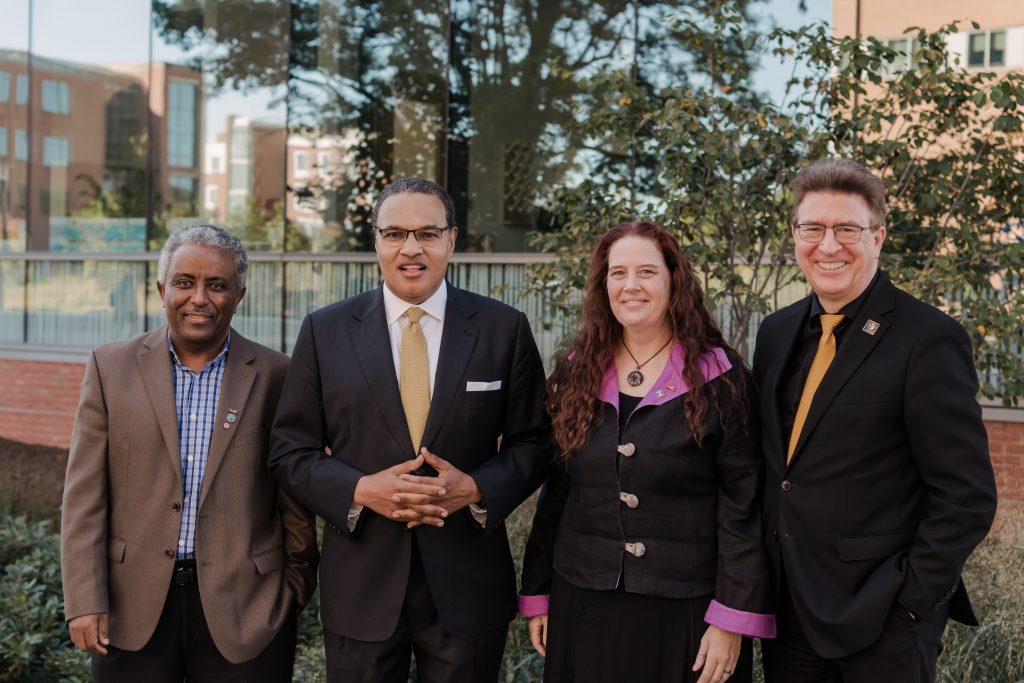 Left to right: Belay Demoz, Freeman A. Hrabowski, Margo Young, and Karl Steiner. Photo by Marlayna Demond ’11 for UMBC.
Banner image: UMBC and Morgan State colleagues gather to celebrate the new GESTAR II award outside UMBC’s Interdisciplinary Life Sciences Building. From left to right: Willie E. May, Daniel Laughlin, David K. Wilson, Margo Young, Freeman A. Hrabowski, Belay Demoz, Karl V. Steiner. Photo by Marlayna Demond ’11 for UMBC.
]]>
NASA has announced a major award of $72 million over three years for the new Goddard Earth Sciences Technology and Research (GESTAR) II center. UMBC serves as the lead for a national consortium...
https://umbc.edu/stories/nasa-awards-72-million-for-new-umbc-led-earth-science-research-partnership/
https://beta.my.umbc.edu/api/v0/pixel/news/119535/guest@my.umbc.edu/285b654a3ffa370e6294db86f58a222a/api/pixel
cnms
coeit
jcet
majoraward
page1
research
science-and-technology
UMBC News & Magazine
https://beta.my.umbc.edu/groups/umbc-news-magazine
https://assets1-beta.my.umbc.edu/system/shared/avatars/groups/000/001/943/24435aa6207c452e7bc15cc74b42c7bb/xsmall.png?1748556657
https://assets1-beta.my.umbc.edu/system/shared/avatars/groups/000/001/943/24435aa6207c452e7bc15cc74b42c7bb/original.png?1748556657
https://assets2-beta.my.umbc.edu/system/shared/avatars/groups/000/001/943/24435aa6207c452e7bc15cc74b42c7bb/xxlarge.png?1748556657
https://assets2-beta.my.umbc.edu/system/shared/avatars/groups/000/001/943/24435aa6207c452e7bc15cc74b42c7bb/xlarge.png?1748556657
https://assets3-beta.my.umbc.edu/system/shared/avatars/groups/000/001/943/24435aa6207c452e7bc15cc74b42c7bb/large.png?1748556657
https://assets1-beta.my.umbc.edu/system/shared/avatars/groups/000/001/943/24435aa6207c452e7bc15cc74b42c7bb/medium.png?1748556657
https://assets2-beta.my.umbc.edu/system/shared/avatars/groups/000/001/943/24435aa6207c452e7bc15cc74b42c7bb/small.png?1748556657
https://assets1-beta.my.umbc.edu/system/shared/avatars/groups/000/001/943/24435aa6207c452e7bc15cc74b42c7bb/xsmall.png?1748556657
https://assets2-beta.my.umbc.edu/system/shared/avatars/groups/000/001/943/24435aa6207c452e7bc15cc74b42c7bb/xxsmall.png?1748556657
UMBC News & Magazine
0
0
false
Thu, 28 Oct 2021 18:45:11 -0400
UMBC’s Tinoosh Mohsenin develops COVID-Matter framework to determine severity of respiratory disease
When COVID-19 upended daily life a year and a half ago, scientists and engineers worldwide responded with new research on detecting, tracking, and managing cases. UMBC’s Tinoosh Mohsenin, associate professor of computer science and electrical engineering, has partnered with Mohammad Sajadi, associate professor at the Institute of Human Virology at University of Maryland, Baltimore (UMB) to develop COVID-Matter. It’s a technology to identify respiratory disease, associated symptoms, and their severity.
COVID-Matter collects a broad range of complex physiological data and then applies machine learning techniques to understand the data and assess the severity of a patient’s respiratory disease. The data collected include the sound and frequency of a patient’s speech, cough, and breathing sounds.
From these sounds, the tool can extract important information, such as breathing rate, used to identify shortness of breath. The framework can also include facial recognition and patients’ reported levels of fatigue and confusion, to further improve its accuracy.
 Tinoosh Mohsenin, center, with her two Ph.D. students who are working on COVID-Matter. Photo courtesy of Mohsenin.
Real-time, accessible solutions
The research team recently published a peer-reviewed conference paper describing their reconfigurable software-hardware machine learning framework for automatic detection of respiratory symptoms. They’ve also contributed a chapter in Healthcare Technology Solutions for Pandemics – A Roadmap, to be published by Springer Nature.
“Our vision is to provide a machine learning detection framework that can provide early detection for anyone and anywhere,” explains Mohsenin. “The globally collected data from such a framework can be used to study the spread of COVID-19 as well as other viral respiratory diseases among different populations and locations, and to inform and educate the population about how these diseases spread in real time.”
Sajadi says that this COVID-Matter technology will be helpful to him in his practice of medicine. “Being an infectious diseases physician, since the start of the pandemic I have fielded many questions from COVID-19 patients from around the world,” he explains. “When I am talking to a patient, one of my main concerns is determining when they should seek more intensive medical help such as a trip to the ER. A tool such as the one we are developing would be extremely helpful in these situations.”
Using AI to analyze symptoms
The technology will be accessible on smartphones and tablets, which will make it easier for patients to send real-time symptom updates to their physicians. By applying artificial intelligence to analyze symptoms and determine disease severity, physicians can determine if the patient’s symptoms need to be assessed in-person or if virtual care is more appropriate. This enables patients to avoid unnecessary doctor’s office visits, and could potentially help free up medical resources without negatively impacting patient care.
 A diagram of the COVID-Matter technology. Image courtesy of Mohsenin.
“Our goal in this research is to allow machine learning models running on general computing processors, such as those found in smartphones and tablets, to assess patients in a way similar to what doctors do at triage and telemedicine,” says Mohsenin. “We want to use passively recorded audio and video and self-declared information to bring proactive healthcare to users’ fingertips. This tool will help users to estimate the urgency and necessity of whether they need to be further examined at a clinic or a specialized facility.”
Making this technology available independent of a medical facility “is critical for early assessment of respiratory symptoms,” she explains, which could help limit future disease spread.
Improving public health
The research team also includes researchers from the University of Maryland School of Medicine and received funding through the Accelerated Translational Incubator Pilot (ATIP) Program. Through a grant competition hosted by the UMB Institute for Clinical and Translational Research, the ATIP award provides seed funding for researchers at UMB and in the community to address issues related to COVID-19 and to improve public health.
ATIP brings together faculty at UMBC and UMB for high-impact multidisciplinary research collaborations. “This is the first time I am working with engineers and it has been an eye-opening experience, from learning the vocabulary to understanding the tremendous potential of AI-based projects. It is something I have enjoyed very much,” says Sajadi.
“With the inputs that we receive from Dr. Sajadi we have been able to improve our machine learning models and assess our overall goals,” says Mohsenin. “Together, we have made significant progress.”
Banner image: Tinoosh Mohsenin. Photo by Marlayna Demond ’11 for UMBC.
]]>
When COVID-19 upended daily life a year and a half ago, scientists and engineers worldwide responded with new research on detecting, tracking, and managing cases. UMBC’s Tinoosh Mohsenin,...
https://umbc.edu/stories/umbcs-tinoosh-mohsenin-develops-covid-matter-framework-to-determine-severity-of-respiratory-disease/
https://beta.my.umbc.edu/api/v0/pixel/news/119536/guest@my.umbc.edu/89fe4f5d5cb469e6cec8058e48fe7d17/api/pixel
coeit
csee
science-and-technology
UMBC News & Magazine
https://beta.my.umbc.edu/groups/umbc-news-magazine
https://assets1-beta.my.umbc.edu/system/shared/avatars/groups/000/001/943/24435aa6207c452e7bc15cc74b42c7bb/xsmall.png?1748556657
https://assets1-beta.my.umbc.edu/system/shared/avatars/groups/000/001/943/24435aa6207c452e7bc15cc74b42c7bb/original.png?1748556657
https://assets2-beta.my.umbc.edu/system/shared/avatars/groups/000/001/943/24435aa6207c452e7bc15cc74b42c7bb/xxlarge.png?1748556657
https://assets2-beta.my.umbc.edu/system/shared/avatars/groups/000/001/943/24435aa6207c452e7bc15cc74b42c7bb/xlarge.png?1748556657
https://assets3-beta.my.umbc.edu/system/shared/avatars/groups/000/001/943/24435aa6207c452e7bc15cc74b42c7bb/large.png?1748556657
https://assets1-beta.my.umbc.edu/system/shared/avatars/groups/000/001/943/24435aa6207c452e7bc15cc74b42c7bb/medium.png?1748556657
https://assets2-beta.my.umbc.edu/system/shared/avatars/groups/000/001/943/24435aa6207c452e7bc15cc74b42c7bb/small.png?1748556657
https://assets1-beta.my.umbc.edu/system/shared/avatars/groups/000/001/943/24435aa6207c452e7bc15cc74b42c7bb/xsmall.png?1748556657
https://assets2-beta.my.umbc.edu/system/shared/avatars/groups/000/001/943/24435aa6207c452e7bc15cc74b42c7bb/xxsmall.png?1748556657
UMBC News & Magazine
0
0
false
Tue, 26 Oct 2021 19:20:06 -0400
UMBC alumnus Kafui Dzirasa is named an HHMI Investigator, elected to the National Academy of Medicine

Kafui Dzirasa ‘01, M8, chemical engineering, recently earned two highly prestigious honors distinctive even among leaders in the medical and life sciences: an HHMI Investigator award and election to the National Academy of Medicine.
Dzirasa is the K. Ranga Rama Krishnan Associate Professor of psychiatry and behavioral sciences at Duke University. He earned both his MD and his PhD in neurobiology and neurosciences at Duke. Today, he examines the role of the brain’s electrical activity in psychiatric illness, including depression, bipolar disorder, and addiction, with the goal of creating mechanisms to disrupt these disorders.
Achievement and service
Dzirasa is one of 100 new members elected to the National Academy of Medicine this year. The announcement recognizes his “seminal contributions to the neuroscience of emotion and mental illness” as well as his pioneering research methods. It also honors his “contributions to society through science policy and advocacy, a commitment to mentoring, and support for efforts to build a diverse and inclusive scientific workforce,” carrying forward the values of UMBC’s Meyerhoff Scholars Program.
Election to the National Academy of Medicine recognizes leaders in health and medicine who have demonstrated both outstanding professional achievement and a commitment to service. The National Academy of Medicine has more than 2,200 elected members worldwide, with new members limited to 100 per year.
 Kafui Dzirasa presents a GRIT-X talk at UMBC, 2017.
Answering tough questions
Last month, Dzirasa was also named a Howard Hughes Medical Institute (HHMI) Investigator. He joins a cohort of 33 new Investigators from across the U.S. Each was selected for their ability to “dive deep into tough questions” and address some of the most challenging issues in biomedical research.
HHMI is investing about $300 million in Dzirasa and the other members of the new cohort. The institute also recently announced a plan to invest $2 billion in work to accelerate inclusion and equity throughout the academic science pipeline—a goal championed by Dzirasa, other Meyerhoff alumni, and UMBC President Freeman Hrabowski.
There are approximately 250 HHMI Investigators across the U.S., including UMBC’s Michael Summers, Robert E. Meyerhoff Chair for Excellence in Research and Mentoring and Distinguished University Professor. His chemistry lab focuses on understanding how HIV-1 and other retroviruses assemble and how they package their genetic material. The long-term goal is to make possible new therapeutic approaches to treat AIDS and other diseases.
————
Kafui Dzirasa received the award for UMBC Outstanding Alumnus in Engineering and Information Technology in 2017. Meet UMBC’s newest alumni award winners, celebrated earlier this month.
Header image: Kafui Dzirasa at the UMBC Alumni Awards, 2017. Photos by Marlayna Demond ’11 for UMBC.
]]>
Kafui Dzirasa ‘01, M8, chemical engineering, recently earned two highly prestigious honors distinctive even among leaders in the medical and life sciences: an HHMI Investigator award and election...
https://umbc.edu/stories/umbc-alumnus-kafui-dzirasa-is-named-an-hhmi-investigator-elected-to-the-national-academy-of-medicine/
https://beta.my.umbc.edu/api/v0/pixel/news/119537/guest@my.umbc.edu/2e9f3cb261c9c3b91733d0ed5948916f/api/pixel
alumni
cbee
coeit
community
science-and-technology
UMBC News & Magazine
https://beta.my.umbc.edu/groups/umbc-news-magazine
https://assets1-beta.my.umbc.edu/system/shared/avatars/groups/000/001/943/24435aa6207c452e7bc15cc74b42c7bb/xsmall.png?1748556657
https://assets1-beta.my.umbc.edu/system/shared/avatars/groups/000/001/943/24435aa6207c452e7bc15cc74b42c7bb/original.png?1748556657
https://assets2-beta.my.umbc.edu/system/shared/avatars/groups/000/001/943/24435aa6207c452e7bc15cc74b42c7bb/xxlarge.png?1748556657
https://assets2-beta.my.umbc.edu/system/shared/avatars/groups/000/001/943/24435aa6207c452e7bc15cc74b42c7bb/xlarge.png?1748556657
https://assets3-beta.my.umbc.edu/system/shared/avatars/groups/000/001/943/24435aa6207c452e7bc15cc74b42c7bb/large.png?1748556657
https://assets1-beta.my.umbc.edu/system/shared/avatars/groups/000/001/943/24435aa6207c452e7bc15cc74b42c7bb/medium.png?1748556657
https://assets2-beta.my.umbc.edu/system/shared/avatars/groups/000/001/943/24435aa6207c452e7bc15cc74b42c7bb/small.png?1748556657
https://assets1-beta.my.umbc.edu/system/shared/avatars/groups/000/001/943/24435aa6207c452e7bc15cc74b42c7bb/xsmall.png?1748556657
https://assets2-beta.my.umbc.edu/system/shared/avatars/groups/000/001/943/24435aa6207c452e7bc15cc74b42c7bb/xxsmall.png?1748556657
UMBC News & Magazine
0
0
false
Tue, 26 Oct 2021 13:53:56 -0400
Future of college will involve fewer professors

By Patricia A. Young, professor of literacy, culture, and instructional design & technology, UMBC
At a large private university in Northern California, a business professor uses an avatar to lecture on a virtual stage.
Meanwhile, at a Southern university, graduate students in an artificial intelligence course discover that one of their nine teaching assistants is a virtual avatar, Jill Watson, also known as Watson, IBM’s question-answering computer system. Of the 10,000 messages posted to an online message board in one semester, Jill participated in student conversations and responded to all inquiries with 97% accuracy.
At a private college on the East Coast, students interact with an AI chat agent in a virtual restaurant set in China to learn the Mandarin language.
These examples provide a glimpse into the future of teaching and learning in college. It is a future that will involve a drastically reduced role for full-time tenured or tenure-track faculty who teach face to face.
I forecast this future scenario and other trends in my 2021 book “Human Specialization in Design and Technology: The Current Wave for Learning, Culture, Industry and Beyond.” As a researcher who specializes in educational technology, I see three trends that will further shrink the role of traditional college professors.
1. The rise of artificial intelligence
According to a 2021 Educause Quick Poll report on AI, many institutions of higher education find themselves more focused on the present limited use of AI – for tasks such as detecting plagiarism or proctoring – and not so much the future of AI.
AI’s use in higher education has largely been concerned with digital assistants and chat agents. These technologies focus on the teaching and learning of students.
In my view, universities should broaden their use of AI and conduct experiments to improve upon its usefulness to individual learners. For example, how can colleges use AI to improve student learning of calculus or help students become stronger writers?
However, most universities are slow to innovate.
According to a 2021 poll, some of the challenges to acquiring AI included lack of technical expertise, financial concerns, insufficient leadership and biased algorithms.
Rensselaer Polytechnic Institute and Massachusetts Institute of Technology are leading the way with new uses of AI. In an immersion lab staged as a food market in China, Rensselaer virtually transports students learning Mandarin Chinese into this market to interact with AI avatars. MIT has devoted millions of dollars to faculty research in AI. One of MIT’s projects – called RAISE, for Responsible AI for Social Empowerment and Education – will support how people from diverse backgrounds learn AI, and human learning in general.
Professors from the baby-boom generation are retiring, and I expect some of their jobs will not be filled. In many cases, these coveted positions will be replaced by part-time and temporary faculty. I believe the rising use of AI will contribute to this trend, with universities relying more on technology than in-person teaching.
2. Erosion of academic tenure
Tenure is a status that grants professors protections against being outright fired without due cause or extraordinary circumstances. However, the pandemic became a means to dismiss, suspend or terminate tenured faculty. For example, the Kansas Board of Regents in January 2021 voted to allow emergency terminations and suspensions – including for tenured faculty – to alleviate financial pressures placed on universities by the pandemic.
News reports continue to show a steady decline in the number of tenured faculty positions. According to an American Association of University Professors report, the proportion of part-time and full-time nontenure-track faculty grew from 55% in 1975 to 70% in 2015. Conversely, the proportion of full-time tenured and tenure-track faculty fell from 45% to 30% in that period.
Universities used the pandemic as a reason to override and diminish the power of shared leadership with faculty. That included voiding faculty handbooks, regulations and employment contracts.
Ultimately, the pandemic was an opportunity for universities to downsize unproductive faculty and keep “active practitioners.”
3. The flipped classroom
The flipped classroom provides students with opportunities to view, listen and learn at their own pace through video instruction outside the classroom. It has been around since at least 2007.
This teaching approach is similar to the way people learn from one another by watching videos on YouTube or TikTok. However, in college the flipped classroom involves prerecorded faculty lectures of course content, whether that be on the causes and effects of the Civil War or the origins of white rice. In class, students build on the professor’s prerecorded lecture and work on activities to assist discussions and expand knowledge. The classroom becomes a place for social interaction and understanding course content. The flipped classroom maximizes instructional time for the professor and students because the lecture comes before the course’s in-class session.
As an example of the operation of a flipped classroom, a professor records a video on a subject area. This allows the same video to be viewed by one student or thousands of students. A human teaching assistant, avatar or chat agent conducts all in-class activities, tests and group work. No additional professors are needed to teach multiple sections of the same course. Professors, in this example, serve a limited role and ultimately will be needed less.
These trends illustrate a profession that I see as being on the cusp of radical transformation.
*****
Header image: Some colleges and universities may be using AI technology to help teach their students. skynesher/E+ via Getty Images
Patricia A. Young, Professor of Literacy, Culture and Instructional Design & Technology, University of Maryland, Baltimore County
This article is republished from The Conversation under a Creative Commons license. Read the original article.
]]>
By Patricia A. Young, professor of literacy, culture, and instructional design & technology, UMBC At a large private university in Northern California, a business professor uses an avatar...
https://umbc.edu/stories/future-of-college-will-involve-fewer-professors/
https://beta.my.umbc.edu/api/v0/pixel/news/119538/guest@my.umbc.edu/1d223f4b753e8a422c2302f53d8caabf/api/pixel
cahss
discovery
education
educational-technology
the-conversation
UMBC News & Magazine
https://beta.my.umbc.edu/groups/umbc-news-magazine
https://assets1-beta.my.umbc.edu/system/shared/avatars/groups/000/001/943/24435aa6207c452e7bc15cc74b42c7bb/xsmall.png?1748556657
https://assets1-beta.my.umbc.edu/system/shared/avatars/groups/000/001/943/24435aa6207c452e7bc15cc74b42c7bb/original.png?1748556657
https://assets2-beta.my.umbc.edu/system/shared/avatars/groups/000/001/943/24435aa6207c452e7bc15cc74b42c7bb/xxlarge.png?1748556657
https://assets2-beta.my.umbc.edu/system/shared/avatars/groups/000/001/943/24435aa6207c452e7bc15cc74b42c7bb/xlarge.png?1748556657
https://assets3-beta.my.umbc.edu/system/shared/avatars/groups/000/001/943/24435aa6207c452e7bc15cc74b42c7bb/large.png?1748556657
https://assets1-beta.my.umbc.edu/system/shared/avatars/groups/000/001/943/24435aa6207c452e7bc15cc74b42c7bb/medium.png?1748556657
https://assets2-beta.my.umbc.edu/system/shared/avatars/groups/000/001/943/24435aa6207c452e7bc15cc74b42c7bb/small.png?1748556657
https://assets1-beta.my.umbc.edu/system/shared/avatars/groups/000/001/943/24435aa6207c452e7bc15cc74b42c7bb/xsmall.png?1748556657
https://assets2-beta.my.umbc.edu/system/shared/avatars/groups/000/001/943/24435aa6207c452e7bc15cc74b42c7bb/xxsmall.png?1748556657
UMBC News & Magazine
0
0
false
Wed, 20 Oct 2021 19:31:47 -0400
Cities worldwide aren’t adapting to climate change quickly enough

By John Rennie Short, professor, public policy, UMBC
Climate change is magnifying threats such as flooding, wildfires, tropical storms and drought. In 2020 the U.S. experienced a record-breaking 22 weather and climate disasters that each caused at least US$1 billion in damage. So far in 2021, the count stands at 18.
I study urban issues and have analyzed cities’ relationship with nature for many years. As I see it, cities are quickly becoming more vulnerable to extreme weather events and permanent shifts in their climate zones.
I am concerned that the pace of climate change is accelerating much more rapidly than urban areas are taking steps to adapt to it. In 1950, only 30% of the world’s population lived in urban areas; today that figure is 56%, and it is projected to rise to 68% by 2050. Failure to adapt urban areas to climate change will put millions of people at risk.
Extreme weather and long-term climate zone shifts
As the Intergovernmental Panel on Climate Change shows in its latest report, released in August 2021, global climate change is widespread, rapid and accelerating. For cities in temperate latitudes, this means more heat waves and shorter cold seasons. In subtropical and tropical latitudes, it means wetter rainy seasons and hotter dry seasons. Most coastal cities will be threatened by sea level rise.
Political analysis, without partisanship
Around the globe, cities will face a much higher probability of extreme weather events. Depending on their locations, these will include heavier snowfalls, more severe drought, water shortages, punishing heat waves, greater flooding, more wildfires, bigger storms and longer storm seasons. The heaviest costs will be borne by their most vulnerable residents: the old, the poor and others who lack wealth and political connections to protect themselves.
Extreme weather isn’t the only concern. A 2019 study of 520 cities around the world projected that even if nations limit warming to 2 degrees Celsius (about 3.6 degrees Fahrenheit) above preindustrial conditions, climate zones will shift hundreds of miles northward by 2050 worldwide. This would cause 77% of the cities in the study to experience a major change in their year-round climate regimes.
 A boy cools off in Seattle’s Yesler Terrace spray park in June 2021 during a record-setting Pacific Northwest heat wave. AP Photo/John Froschauer
For example, the study authors predicted that by midcentury, London’s climate will resemble that of modern-day Barcelona, and Seattle’s will be like current conditions in San Francisco. In short, in less than 30 years, three out of every four major cities in the world will have a completely different climate from the one for which its urban form and infrastructure were designed.
A similar study of climate change impacts on more than 570 European cities predicted that they will face an entirely new climate regime within 30 years – one characterized by more heat waves and droughts, and increased risk of flooding.
Mitigating climate change
Cities’ responses to climate change fall into two broad categories: mitigating (reducing) emissions that drive climate change, and adapting to effects that can’t be averted.
Cities produce more than 70% of global greenhouse gas emissions, mainly from heating and cooling buildings and powering cars, trucks and other vehicles. Urbanization also makes people more vulnerable to climate change impacts.
For example, as cities expand, people clear vegetation, which can increase the risk of flooding and sea level rise. They also create impermeable surfaces that don’t absorb water, such as roads and buildings.
This contributes to flooding risks and produces urban heat islands – zones where temperatures are hotter than in outlying areas. A recent study found that the urban heat island in Jakarta, Indonesia, expanded in recent years as more land was developed for housing, businesses, industry and warehouses.
But cities are also important sources of innovation. For example, the inaugural Oberlander Prize for landscape architecture was awarded on Oct. 14, 2021, to U.S. landscape architect Julie Bargemen for re-imagining polluted and neglected urban sites. And the prestigious Pritzker Architectural Prize went this year to French architects Anne Lacaton and Jean-Phillipe Vassal for creating resilient buildings by transforming existing structures instead of demolishing them to make room for new construction.
Just 25 of the world’s cities account for 52% of total urban greenhouse gas emissions. This means that focusing on these cities can make a huge difference to the arc of long-term warming.
Cities worldwide are pursuing a rich variety of mitigation measures, such as electrifying mass transit, cooling with green buildings and introducing low-carbon building codes. I see these steps as a source of hope in the medium to long term.
The mayors of Los Angeles, Paris and Accra, Ghana, along with Mumbai’s environment minister, talk about how climate change is affecting their cities and what they are doing about it.
Adaptating too slowly
In contrast, adaptation in the shorter term is moving much more sluggishly. This isn’t to say that nothing is happening. For example, Chicago is developing policies that anticipate a hotter and wetter climate. They include repaving streets with permeable materials that allow water to filter through to the underlying soil, planting trees to absorb air pollutants and stormwater runoff, and providing tax incentives to install green roofs as cooling features on office buildings. Similar plans are moving forward in cities around the world.
But reshaping cities in a timely manner can be extremely expensive. In response to levee failures that inundated New Orleans during Hurricane Katrina in 2005, the U.S. government spent more than $14 billion to build an improved flood control system for the city, which was completed in 2018. But many other cities around the world face similar threats, and few of them – especially in developing countries – can afford such an ambitious program.
Time is also a critical resource as the pace of climate change accelerates. In the European Union, about 75% of buildings are not energy efficient. A 2020 report from the European Commission predicted that it would take 50 years to make those buildings more sustainable and resilient to shifting climate conditions.
At best, urban infrastructures that were built for previous climate regimes and less extreme weather events can only be changed at a rate of about 3% per year. At that rate, which would be difficult even for the wealthiest cities in the world to maintain, it will take decades to make cities more sustainable and resilient. And the most vulnerable city dwellers live in fast-growing cities in the developing world, such as Dhaka, Bangladesh, Lagos, Nigeria, and Manila, Philipines, where local governments rarely have enough resources to make the expensive changes that are needed.
Remaking cities worldwide quickly enough to deal with more extreme weather events and new climate regimes requires massive investments in new ideas, practices and skills. I see this challenge as an ecological crisis, but also as an economic opportunity – and a chance to make cities more equitable for the 21st century and beyond.
*****
Header image: Flooding is seen in the Manayunk section of Philadelphia after the remnants of Hurricane Ida, Sept. 2, 2021. AP Photo/Matt Rourke
John Rennie Short, Professor, School of Public Policy, University of Maryland, Baltimore County
This article is republished from The Conversation under a Creative Commons license. Read the original article.
]]>
By John Rennie Short, professor, public policy, UMBC Climate change is magnifying threats such as flooding, wildfires, tropical storms and drought. In 2020 the U.S. experienced a...
https://umbc.edu/stories/cities-worldwide-arent-adapting-to-climate-change-quickly-enough/
https://beta.my.umbc.edu/api/v0/pixel/news/119539/guest@my.umbc.edu/4ecfdc9d0a89955ee4f4e427cbe3d4d7/api/pixel
climate-change
discovery
professorsnottomiss
public-policy
the-conversation
UMBC News & Magazine
https://beta.my.umbc.edu/groups/umbc-news-magazine
https://assets1-beta.my.umbc.edu/system/shared/avatars/groups/000/001/943/24435aa6207c452e7bc15cc74b42c7bb/xsmall.png?1748556657
https://assets1-beta.my.umbc.edu/system/shared/avatars/groups/000/001/943/24435aa6207c452e7bc15cc74b42c7bb/original.png?1748556657
https://assets2-beta.my.umbc.edu/system/shared/avatars/groups/000/001/943/24435aa6207c452e7bc15cc74b42c7bb/xxlarge.png?1748556657
https://assets2-beta.my.umbc.edu/system/shared/avatars/groups/000/001/943/24435aa6207c452e7bc15cc74b42c7bb/xlarge.png?1748556657
https://assets3-beta.my.umbc.edu/system/shared/avatars/groups/000/001/943/24435aa6207c452e7bc15cc74b42c7bb/large.png?1748556657
https://assets1-beta.my.umbc.edu/system/shared/avatars/groups/000/001/943/24435aa6207c452e7bc15cc74b42c7bb/medium.png?1748556657
https://assets2-beta.my.umbc.edu/system/shared/avatars/groups/000/001/943/24435aa6207c452e7bc15cc74b42c7bb/small.png?1748556657
https://assets1-beta.my.umbc.edu/system/shared/avatars/groups/000/001/943/24435aa6207c452e7bc15cc74b42c7bb/xsmall.png?1748556657
https://assets2-beta.my.umbc.edu/system/shared/avatars/groups/000/001/943/24435aa6207c452e7bc15cc74b42c7bb/xxsmall.png?1748556657
UMBC News & Magazine
0
0
false
Wed, 20 Oct 2021 19:18:05 -0400
Viruses are both the villains and heroes of life as we know it

By Ivan Erill, associate professor of biological sciences, UMBC
Viruses have a bad reputation. They are responsible for the COVID-19 pandemic and a long list of maladies that have plagued humanity since time immemorial. Is there anything to celebrate about them?
Many biologists like me believe there is, at least for one specific type of virus – namely, bacteriophages, or viruses that infect bacteria. When the DNA of these viruses is captured by a cell, it may contain instructions that enable that cell to perform new tricks.
The mighty power of bacterial viruse
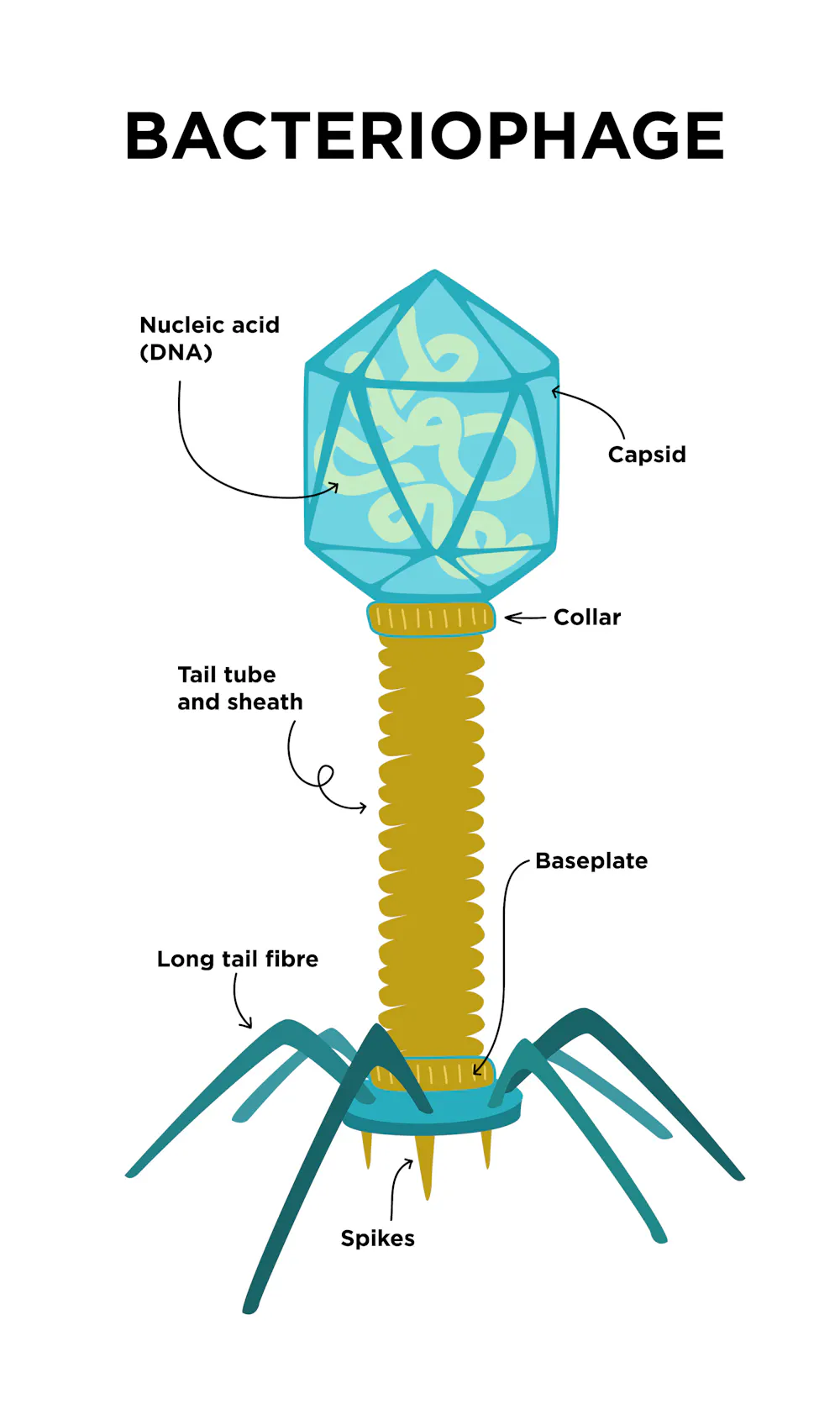
Bacteriophages, or phages for short, keep bacterial populations in check, both on land and at sea. They kill up to 40% of the oceans’ bacteria every day, helping control bacterial blooms and redistribution of organic matter.Bacteriophages are viruses that kill specific types of bacteria.
Bacteriophages are viruses that kill specific types of bacteria.
Their ability to selectively kill bacteria also has medical doctors excited. Natural and engineered phages have been successfully used to treat bacterial infections that do not respond to antibiotics. This process, known as phage therapy, could help fight antibiotic resistance.
Recent research points to another important function of phages: They may be nature’s ultimate genetic tinkerers, crafting novel genes that cells can retool to gain new functions.
Phages are the most abundant life form on the planet, with a nonillion – that’s a 1 with 31 zeroes after it – of them floating around the world at any moment. Like all viruses, phages also have high replication and mutation rates, meaning they form many variants with different characteristics each time they reproduce.
Most phages have a rigid shell called a capsid that is filled with their genetic material. In many cases, the shell has more space than the phage needs to store the DNA essential for its replication. This means that phages have room to carry extra genetic baggage: genes that are not actually necessary for the phage’s survival that it can modify at will.
How bacteria retooled a viral switch
To see how this plays out, let’s take a deeper look at the phage life cycle.
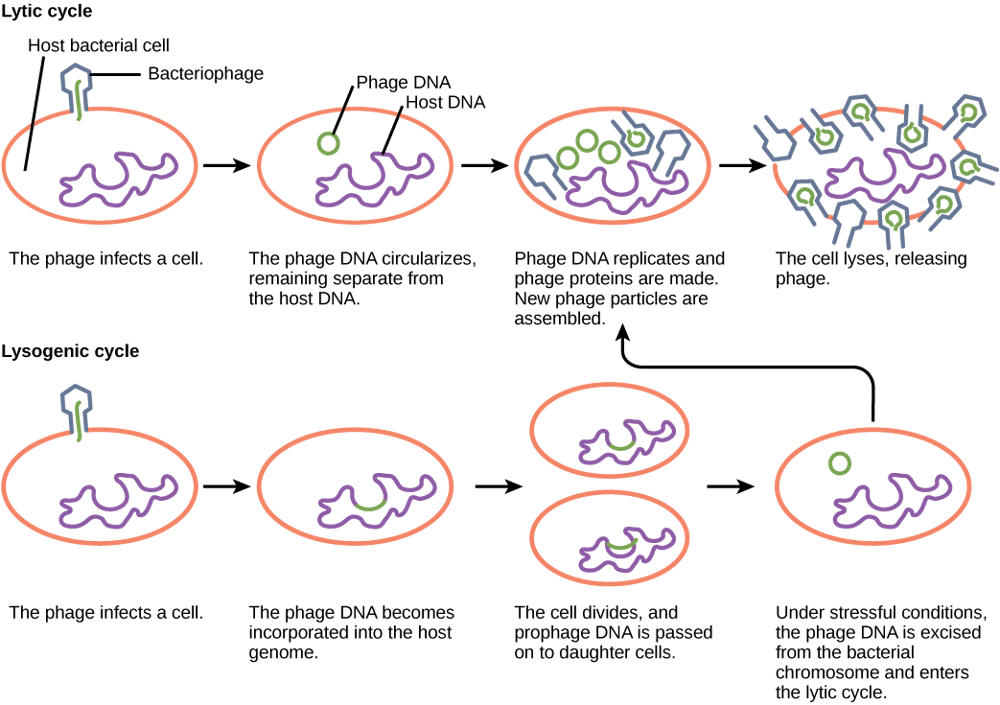
Phages come in two main flavors: temperate and virulent. Virulent phages, like many other viruses, operate on an invade-replicate-kill program. They enter the cell, hijack its components, make copies of themselves and burst out.
Temperate phages, on the other hand, play the long game. They fuse their DNA with the cell’s and may lay dormant for years until something triggers their activation. Then they revert to virulent behavior: replicate and burst out.
Many temperate phages use DNA damage as their trigger. It’s sort of a “Houston, we have a problem” signal. If the cell’s DNA is being damaged, that means the DNA of the resident phage is likely to go next, so the phage wisely decides to jump ship. The genes that direct phages to replicate and burst out are turned off unless DNA damage is detected.
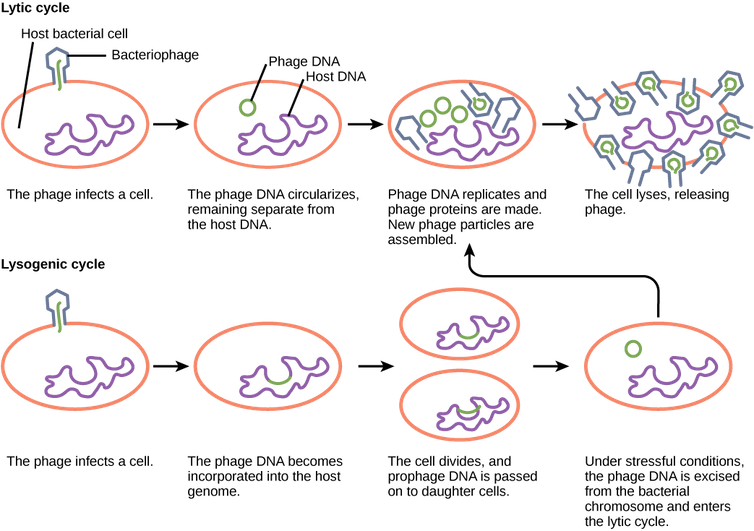 Virulent phages follow the lytic cycle of viral reproduction, destroying their hosts as soon as they complete replication. Temperate phages, on the other hand, follow the lysogenic cycle and stay dormant inside their host’s DNA until they’re triggered to burst out. CNX OpenStax/Wikimedia Commons, CC BY
Bacteria have retooled the mechanisms controlling that life cycle to generate a complex genetic system that my collaborators and I have been studying for over two decades.
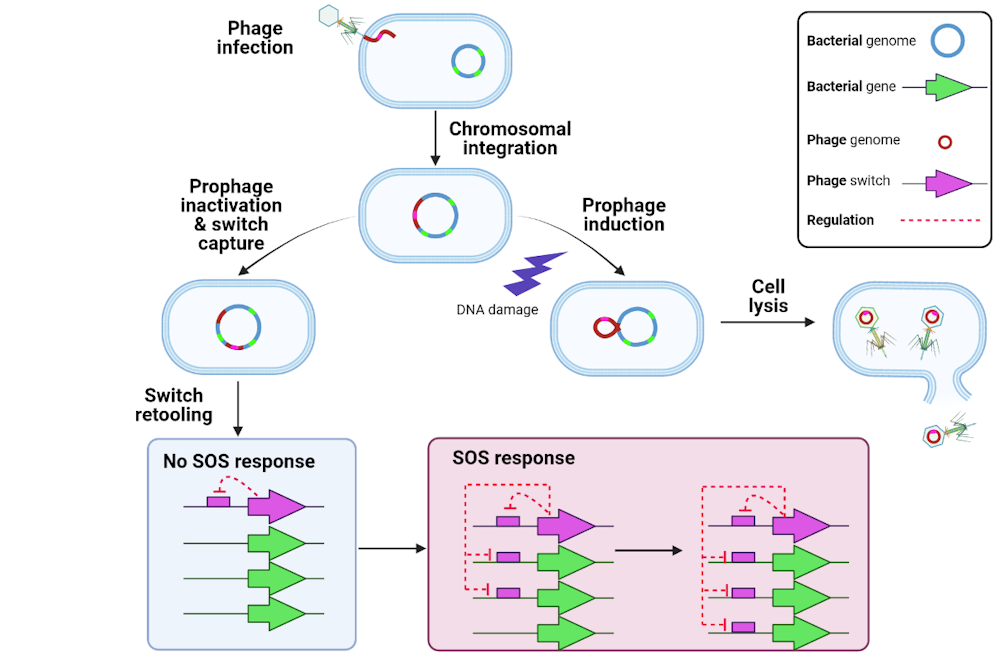
Bacterial cells are also interested in knowing if their DNA is getting busted. If it is, they activate a set of genes that attempt to repair the DNA. This is known as the bacterial SOS response because, if it fails, the cell is toast. Bacteria orchestrate the SOS response using a switch-like protein that responds to DNA damage: It turns on if there is damage and stays off if there isn’t.
Perhaps not surprisingly, bacterial and phage switches are evolutionarily related. This prompts the question: Who invented the switch, bacteria or viruses?
Our previous research and work by other researchers indicates that phages got there first. In our recent report, we discovered that the SOS response of Bacteroidetes, a group of bacteria that comprise up to a half of the bacteria living in your gut, is under control of a phage switch that was retooled to implement the bacteria’s own complex genetic programs. This suggests that bacterial SOS switches are in fact phage switches that got retooled eons ago.
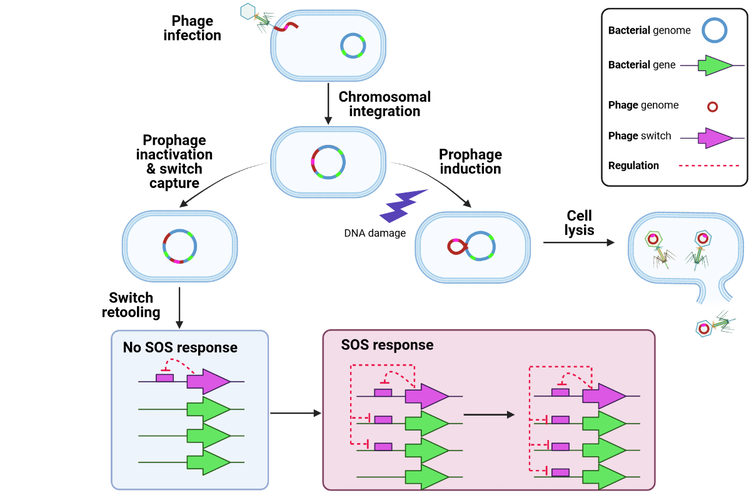 When a temperate phage infects a bacterial cell and integrates its genome with the cell’s DNA, it typically lays dormant until it’s triggered to burst out of the cell. But once the phage’s DNA is part of the bacterium’s, mutations can disrupt the phage’s genetic material and render it inactive. This means that when DNA damage occurs, the phage won’t be able to reform itself and burst out. Over time, the bacterium may adapt the phage’s switch to control its own SOS response genes. Miquel Sánchez-Osuna/Created with BioRender.com, CC BY-NC-ND
It’s not just bacterial switches that appear to be phage inventions. Beautiful detective work has shown that a bacterial gene needed for cell division also arose through “domestication” of a phage toxin gene. And many bacterial attack systems, such as toxins and the genetic guns used to inject them into cells, as well as the camouflage they use to evade the immune system, are known or suspected to have phage origins.
The upside of viruses
OK, you may think, phages are great, but the viruses that infect us are certainly not cool. Yet there is mounting evidence that the viruses that infect plants and animals are also a major source of genetic innovation in these organisms. Domesticated viral genes have been shown, for instance, to play a key role in the evolution of mammalian placentas and in keeping human skin moist.
Recent evidence suggests that even the nucleus of a cell, which houses DNA, could have also been a viral invention. Researchers have also speculated that the ancestors of today’s viruses may have pioneered the use of DNA as the primary molecule for life. Not a small feat.
So while you may be used to thinking of viruses as the quintessential villains, they are arguably nature’s powerhouses for genetic innovation. Humans are likely here today because of them.
*****
Ivan Erill, Associate Professor of Biological Sciences, University of Maryland, Baltimore County
This article is republished from The Conversation under a Creative Commons license. Read the original article.
Header image: Bacteriophages are viruses that infect bacteria and play a potential role in the evolution of life. NANOCLUSTERING/SCIENCE PHOTO LIBRARY/Science Photo Library via Getty Images
]]>
By Ivan Erill, associate professor of biological sciences, UMBC Viruses have a bad reputation. They are responsible for the COVID-19 pandemic and a long list of maladies that have plagued...
https://umbc.edu/stories/viruses-are-both-the-villains-and-heroes-of-life-as-we-know-it/
https://beta.my.umbc.edu/api/v0/pixel/news/119540/guest@my.umbc.edu/29bb77829a9169862afe25cac4be84a0/api/pixel
biological-sciences
cnms
discovery
professorsnottomiss
the-conversation
UMBC News & Magazine
https://beta.my.umbc.edu/groups/umbc-news-magazine
https://assets1-beta.my.umbc.edu/system/shared/avatars/groups/000/001/943/24435aa6207c452e7bc15cc74b42c7bb/xsmall.png?1748556657
https://assets1-beta.my.umbc.edu/system/shared/avatars/groups/000/001/943/24435aa6207c452e7bc15cc74b42c7bb/original.png?1748556657
https://assets2-beta.my.umbc.edu/system/shared/avatars/groups/000/001/943/24435aa6207c452e7bc15cc74b42c7bb/xxlarge.png?1748556657
https://assets2-beta.my.umbc.edu/system/shared/avatars/groups/000/001/943/24435aa6207c452e7bc15cc74b42c7bb/xlarge.png?1748556657
https://assets3-beta.my.umbc.edu/system/shared/avatars/groups/000/001/943/24435aa6207c452e7bc15cc74b42c7bb/large.png?1748556657
https://assets1-beta.my.umbc.edu/system/shared/avatars/groups/000/001/943/24435aa6207c452e7bc15cc74b42c7bb/medium.png?1748556657
https://assets2-beta.my.umbc.edu/system/shared/avatars/groups/000/001/943/24435aa6207c452e7bc15cc74b42c7bb/small.png?1748556657
https://assets1-beta.my.umbc.edu/system/shared/avatars/groups/000/001/943/24435aa6207c452e7bc15cc74b42c7bb/xsmall.png?1748556657
https://assets2-beta.my.umbc.edu/system/shared/avatars/groups/000/001/943/24435aa6207c452e7bc15cc74b42c7bb/xxsmall.png?1748556657
UMBC News & Magazine
0
0
false
Wed, 20 Oct 2021 19:10:54 -0400
After COVID halted global travel, UMBC’s newest Fulbright Scholars begin their journeys
Senior year ended with a surprising turn of events for Dominique Ross ‘21 and Yianni Karabatis ‘21. Both received prestigious Fulbright U.S. Student Program awards for 2021 – 2022. But, like many Fulbright recipients, their Fulbright experiences were initially stalled due to COVID-19. Now, with immunization and continued mask requirements, international travel is once again possible for Fulbright recipients. Karabatis has safely arrived in Greece and Ross will head to Brazil shortly after graduating in December.
Joining them in UMBC’s Fulbright class of 2021 – 2022 are Elijah Claggett ’21, computer science, Japan, research award; Elliott Eig, M.A. ’21, TESOL, Panama, English teaching assistant; and Bryce Moore ’19, modern languages, linguistics, and intercultural communication, Turkey, English teaching assistant.
The Fulbright Program is the U.S. government’s flagship international exchange program. UMBC was named a Fulbright Top Producing Institution in 2019 – 2020. In the last decade, UMBC has received over 60 Fulbright U.S. Student Program awards for research and teaching placements in Africa, Asia and the Pacific, South America, and Europe.
Answering big questions
Yianni Karabatis loves applying math to answer big questions and saw a natural fit in a computer science major. He found that the most difficult questions needed interdisciplinary answers, leading him to explore the design of neural and sensory systems, which draw from biology, mathematics, and computer science.
As a scholar in UMBC’s Louis Stokes Alliance for Minority Participation program, he learned about computer vision (a field of artificial intelligence) and its potential to help provide faster and more accurate information. In computer vision, computers are trained to recognize and analyze specific objects quickly and precisely.
 Yianni Karabatis in an olive tree grove in Crete, Greece. Photo courtesy of Karabatis.
Karabatis found himself inspired by the intersection of computer vision and robotics due to the fields’ collaborative potential to have a public impact, addressing large-scale, long-standing global problems.
Saving olive groves through AI
These interests came together a year ago when Karabatis heard concerning news from Greece. “I read in the news that there is a tree-killing bacterial outbreak disrupting the vascular system of olive trees, and causing them to become dehydrated—first in Southern Italy, then Spain—and it is expected to spread to Greece,” he says.
Having traveled to Greece many times to visit family, Karabatis knew that olive trees are an important part of Greece’s economy. Working with researchers at the Technical University of Crete in Chania, Greece, Karabatis is conducting a pilot study to test the ability of drone-based cameras to detect diseased olive groves using advanced computer imagery.

An aerial picture of a healthy olive tree grove in Crete, Greece.
Photo courtesy of Karabatis.
“Using computer vision techniques, I will create a set of convolutional neural networks to autonomously predict if certain olive trees from aerial images are healthy or unhealthy,” says Karabatis.
He will compare the accuracy of this information to farmers’ observations. The goal is to create a set of high-accuracy models that farmers all over Greece can use for free to determine the health of their groves from above.
“In some cases, all you can do is cut down the infected tree and the surrounding trees,” explains Karabatis. “Olive trees grow slowly, making it a very expensive solution. We can avoid this with early detection and demystify the use of robotics and computer vision in agriculture, benefiting farmers.”
Expanding access to quality healthcare
Dominique Ross has dreamed of living and working in Brazil most of her life. Before transferring to UMBC, she studied abroad in Rio de Janeiro, Brazil, and Cape Town, South Africa. In Cape Town, she shadowed doctors at a local clinic in a racially segregated township. In Rio, she worked with Brazilidade, a social impact business in the Santa Marta favela that seeks to deconstruct favela stereotypes through promoting favela culture and pride. These informally developed, underserved neighborhoods offer low-cost housing to predominantly Afro-Brazilian communities that do not have adequate access to public municipal services.
 Brazilidade at UMBC visiting an intercultural communication class. Photo courtesy of Ross.
“In both of these cities I noticed the connection between race, health, and power,” says Ross. “I realized how health could be a way to measure and understand the effects of oppression on a community and the body.”
Ross empathized. She shares that, as a Black person, she has also been dismissed by doctors. And she’s seen her grandparents, Haitian refugees who came to the U.S. in the 1960s, face the challenges of navigating the U.S. healthcare system.
 Ross (front) with friends on a ferry in Cape Town, South Africa while studying abroad.
Photo courtesy of Ross.
“I became acutely aware that health was not just a person’s biology, but also psychosocial wellbeing, impacted by the places where people lived, learned, and worked,” says Ross. “I decided not to study biomedicine because I wanted to be able to impact larger groups of people. Instead, UMBC made it possible for me to design a global health degree plan through the Individualized Study Program.”
Connecting with communities
When Felipe Filomeno, associate professor of political science and global studies and associate director of the Center for Social Science Research, met Dominique she was already fluent in Portuguese and had experience working in Rio. Filomeno helped Dominique stay fluent by holding their meetings in Portuguese to prepare her to join a research team he helped coordinate.
“I am a Fulbright alumnus,” says Filomeno, “and supporting Dominique has been a way for me to give back to Brazil, my home country, which will surely benefit from her research and community service.”
Ross will return to work in the favelas later this winter before her Fulbright experience begins in the spring in the northern border state of Roraima, Brazil. There Ross will continue a research project she began at UMBC. Her work will focus on the healthcare access, pre- and post-COVID, of Venezuelan migrants who fled to Brazil due to economic and political crisis.
“I want to do this work for my family, my community, and anyone who has ever been prevented from living the healthy life they deserve,” says Ross.
Faculty Fulbright in human-centered computing
Numerous UMBC faculty have also received Fulbright awards to pursue international research and teaching in recent years. Helena Mentis, professor of information systems and director of the Bodies in Motion Lab, received a 2021 Fulbright U.S. Scholar Award to work in Denmark with the University of Copenhagen’s Human-Centered Computing research group.
 Helena Mentis demonstrates gestural tools. Photo by Marlayna Demond ’11 for UMBC.
Mentis arrived in Denmark earlier this fall. She is examining how the profound differences in the public health systems of Denmark and the U.S. shape people’s privacy expectations in using telehealth, including government use of their personal health data. Mentis is working to understand the factors involved in ethical design of communication technology in healthcare. Research data from a very different healthcare system and culture will make her work more generalizable.
“My time in Denmark has been priceless in being able to think about my research in a new cultural context and forge relationships that will be extended to UMBC students in the future,” says Mentis. “This year is also the 75th anniversary of the Fulbright program and 70th anniversary of the program in Denmark. I feel honored to be here during this celebratory time and to reflect on the impact Fulbrighters can have in an intricately connected world.”
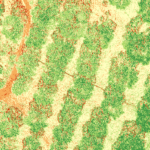
Banner image: An aerial photo of an olive grove in Crete, Greece processed to show olive tree health on a red to green scale. Photo courtesy of Yianni Karabatis.
]]>
Senior year ended with a surprising turn of events for Dominique Ross ‘21 and Yianni Karabatis ‘21. Both received prestigious Fulbright U.S. Student Program awards for 2021 – 2022. But, like many...
https://umbc.edu/stories/after-covid-halted-global-travel-umbcs-newest-fulbright-scholars-begin-their-journeys/
https://beta.my.umbc.edu/api/v0/pixel/news/119541/guest@my.umbc.edu/7a768f9436a67fef06d7ffa6dfab9694/api/pixel
cahss
cahssresearch
coeit
cs3
csee
education
inds
is
mlli
page1
policy-and-society
politicalscience
science-and-technology
UMBC News & Magazine
https://beta.my.umbc.edu/groups/umbc-news-magazine
https://assets1-beta.my.umbc.edu/system/shared/avatars/groups/000/001/943/24435aa6207c452e7bc15cc74b42c7bb/xsmall.png?1748556657
https://assets1-beta.my.umbc.edu/system/shared/avatars/groups/000/001/943/24435aa6207c452e7bc15cc74b42c7bb/original.png?1748556657
https://assets2-beta.my.umbc.edu/system/shared/avatars/groups/000/001/943/24435aa6207c452e7bc15cc74b42c7bb/xxlarge.png?1748556657
https://assets2-beta.my.umbc.edu/system/shared/avatars/groups/000/001/943/24435aa6207c452e7bc15cc74b42c7bb/xlarge.png?1748556657
https://assets3-beta.my.umbc.edu/system/shared/avatars/groups/000/001/943/24435aa6207c452e7bc15cc74b42c7bb/large.png?1748556657
https://assets1-beta.my.umbc.edu/system/shared/avatars/groups/000/001/943/24435aa6207c452e7bc15cc74b42c7bb/medium.png?1748556657
https://assets2-beta.my.umbc.edu/system/shared/avatars/groups/000/001/943/24435aa6207c452e7bc15cc74b42c7bb/small.png?1748556657
https://assets1-beta.my.umbc.edu/system/shared/avatars/groups/000/001/943/24435aa6207c452e7bc15cc74b42c7bb/xsmall.png?1748556657
https://assets2-beta.my.umbc.edu/system/shared/avatars/groups/000/001/943/24435aa6207c452e7bc15cc74b42c7bb/xxsmall.png?1748556657
UMBC News & Magazine
0
0
false
Wed, 20 Oct 2021 16:18:24 -0400
UMBC receives a $1M gift plus $1M in state match to establish the Fred and Virginia Pausch Professorship in Economics
UMBC will establish a new endowed professorship in economics thanks to a $1 million gift from an anonymous graduate and $1 million in matching funds from the Maryland E-nnovation Initiative Fund (MEIF), announced yesterday by Maryland’s Department of Commerce.
The funding will create the Endowed Pausch Professorship in Economics, with a focus on high-impact student mentoring, teaching, and innovative research. Funds invested will generate income each year for the research program of the Pausch Professor.
“Faculty at UMBC devote themselves to helping students grow and build a strong foundation for their future professional endeavors,” says the donor. “Through this mentoring, faculty are intentionally helping students to broaden leadership and entrepreneurship in the field of economics.”

David Mitch, chair and professor of economics, (standing, in a black shirt)
welcomes new students to the department.
Supporting communities
The generous spirit of Fred and Virginia Pausch inspired the creation of the Pausch Professorship. The Pausch family has a legacy of giving, and of creating opportunities for people worldwide through education.
Fred and Virginia Pausch were from Baltimore and Virginia, respectively, and founded Up With Kids Inc., a nonprofit based in Columbia, Maryland. They created the organization to help the region’s immigrant children from non-English speaking countries to learn English. In 1998, the nonprofit built a school for girls in Thailand to help more Thai girls access education beyond elementary school.

Fred (R) and Virginia (L) Pausch.
Photo courtesy of donor.
“That was a major part of his life,” Mrs. Pausch told The Baltimore Sun when her husband died in 2006. “It was very important to him…to be able to help people figure out how to help themselves.”
Fred Pausch’s interest in the welfare of children also led him to volunteer for and then lead the U.S.-China Educational Ventures program. The program sent American teachers to China for a month each summer to lead professional development for educators in China. The participating Chinese educators would then apply their training to teach English to Chinese children.
Sense of purpose
“The Pausch family had one purpose,” says the UMBC donor, “to help as many people as possible in any way they could.”
Sometimes that meant providing scholarships for education and enrichment trips. Other times it involved traveling the world to partner with schools and organizations in need of financial support to meet the needs of hundreds of children. Often, it meant opening their hearts and home to high-achieving high school and college students eligible for unique learning opportunities in the U.S.
 Fred Pausch, front and center, with some of the students he has supported over the years. Photo courtesy of donor.
“Funding this professorship is a way to honor their work and invest in a university that is dedicated to the next generation of leaders,” says the donor.
Kimberly Moffitt, interim dean of UMBC’s College of Arts, Humanities, and Social Sciences (CAHSS) and professor of language, literacy, and culture, notes that designing the professorship has been a collaborative effort including the donor, faculty, staff, and the Maryland Department of Commerce.

Kimberly Moffitt.
The end result meets the donor’s greatest wish: to help support the teaching and learning of economics at UMBC and to foster strong faculty and student relationships. These supportive relationships reflect the donor’s own experience as a student at UMBC, where they connected with faculty who had a positive life-long impact on their career.
“The process of creating this professorship speaks to the power of collaboration within CAHSS and across UMBC,” says Moffitt. “I am excited to partner with donors and other supporters who are so dedicated to building programs that broaden the reach and impact of UMBC’s teaching and research in the arts, humanities, and social sciences.”

(L to R) Maria Bernedo Del Carpio, assistant professor of economics; UMBC international public policy doctoral students Diego Rojas and Catherine Mata M.A. ‘28, economics; and Tim Gindling, professor of economics.
UMBC alumni and community members interested in learning more about giving to support educational opportunities or research at UMBC can visit the giving website or contact the Office of Institutional Advancement at giving@umbc.edu or 410-455-2902.
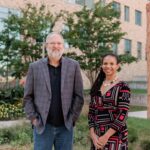
Banner image: Moffitt with Gindling. All photos by Marlayna Demond ’11 unless otherwise noted.
]]>
UMBC will establish a new endowed professorship in economics thanks to a $1 million gift from an anonymous graduate and $1 million in matching funds from the Maryland E-nnovation Initiative Fund...
https://umbc.edu/stories/umbc-receives-a-1m-gift-plus-1m-in-state-match-to-establish-the-fred-and-virginia-pausch-professorship-in-economics/
https://beta.my.umbc.edu/api/v0/pixel/news/119542/guest@my.umbc.edu/cbf8452177e102fed86065d506005276/api/pixel
cahss
community
economics
llc
page1
policy-and-society
publicpolicy
UMBC News & Magazine
https://beta.my.umbc.edu/groups/umbc-news-magazine
https://assets1-beta.my.umbc.edu/system/shared/avatars/groups/000/001/943/24435aa6207c452e7bc15cc74b42c7bb/xsmall.png?1748556657
https://assets1-beta.my.umbc.edu/system/shared/avatars/groups/000/001/943/24435aa6207c452e7bc15cc74b42c7bb/original.png?1748556657
https://assets2-beta.my.umbc.edu/system/shared/avatars/groups/000/001/943/24435aa6207c452e7bc15cc74b42c7bb/xxlarge.png?1748556657
https://assets2-beta.my.umbc.edu/system/shared/avatars/groups/000/001/943/24435aa6207c452e7bc15cc74b42c7bb/xlarge.png?1748556657
https://assets3-beta.my.umbc.edu/system/shared/avatars/groups/000/001/943/24435aa6207c452e7bc15cc74b42c7bb/large.png?1748556657
https://assets1-beta.my.umbc.edu/system/shared/avatars/groups/000/001/943/24435aa6207c452e7bc15cc74b42c7bb/medium.png?1748556657
https://assets2-beta.my.umbc.edu/system/shared/avatars/groups/000/001/943/24435aa6207c452e7bc15cc74b42c7bb/small.png?1748556657
https://assets1-beta.my.umbc.edu/system/shared/avatars/groups/000/001/943/24435aa6207c452e7bc15cc74b42c7bb/xsmall.png?1748556657
https://assets2-beta.my.umbc.edu/system/shared/avatars/groups/000/001/943/24435aa6207c452e7bc15cc74b42c7bb/xxsmall.png?1748556657
UMBC News & Magazine
0
0
false
Wed, 20 Oct 2021 13:06:19 -0400
 Fred Huemmrich conducts research in the Arctic tundra on a cold, blustery day. Photo courtesy Fred Huemmrich.
  One of the remote locations in the Arctic where Fred Huemmrich’s research takes place. Photo courtesy Fred Huemmrich.