How to Chill Out
With Joella Lubaszewski ’10, theatre, UMBC’s coordinator in fitness and wellness
In the hustle and bustle of exams, family dinners, and everyday life, it can be easy to forget to take time for yourself—time that isn’t spent thinking about the errands you need to run or the emails cluttering your inbox. One could argue that Ferris Bueller said it best when he reminded us, “Life moves pretty fast. If you don’t stop and look around once in a while, you could miss it.”
A great way to reconnect, relax, and recenter is through yoga. UMBC’s coordinator in fitness and wellness, Joella Lubaszewski ’10, theatre, has spent hundreds of hours getting certified so she can teach you the art of finding your calm.
Tools of the Trade:
- A willingness to try (seriously, that’s it): “There are a lot of different types of yoga and ways to practice, you don’t necessarily need anything special,” says Lubaszewski.
- Optional: Yoga mat and yoga blocks.
Step 1: Get Started!
So frequently people seem to think they need to have a certain level of flexibility or balance to get started (or the right wardrobe), but Lubaszewski wants to assure newbies this is not the case.
“I think anybody can do yoga in some capacity,” says Lubaszewski. “There are a lot of different kinds of yoga. Maybe you’re never going to put your foot behind your head, that doesn’t mean you’re not doing yoga. Maybe for you it’s more of the meditation or the act of practicing.”
She encourages those who are new to try a few studios and a few classes before throwing in the towel—the RAC offers quite a few options, too. Having trouble getting started? Try journaling or reading beforehand to ease yourself into the class and center your focus.
Step 2: Find Your Space
Wouldn’t it be cool to have a full yoga studio in your home? Yes. Is that feasible? Maybe not, but it’s okay to dream big. The good news is you don’t need a fancy space or equipment to get started. The rise of online classes has made it easier than ever to take a virtual class from virtually anywhere.
“Some days your practice will be just from your bed in your pajamas and some days it will be on the floor, it just depends on what you need that day,” says Lubaszewski.
The important thing is finding a space that’s yours. One of the biggest challenges that comes with starting is focusing on your practice. You may find that you concentrate better when you’re in an in-person class with others, a live video with an instructor, a pre-recorded class you can do at your own speed, or even just working through your own flow.
Step 3: Find What Works for You
If you’re trying yoga for the first time and can’t seem to get the hang of it, you’re not the only one. Lubaszewski recalls that when she first started practicing she admits she thought it was, “a little boring,” but as she integrated it into her regular routine, she fell in love with it.
You don’t need to have a reason to start or set an intention to start your practice that day. “It’s such a personal thing; if you have a clear reason and intention, sure, you can think about that. If you don’t, maybe you’ll figure it out along the way, but it’s not a problem if you don’t,” she assures new students.
Step 4: Turn Your Brain Off
“I say this during savasana [the final resting pose of almost every class]—try not to think that as soon as class is over you’re going to get changed and go to the grocery store and run your errands,” Lubaszewski encourages. “Just stop, don’t think for a minute.”
We know this one is easier said than done, but if you’re really going to let yourself relax, you’re going to have to channel your inner Elsa and “let it go.” There are so few occasions when we’re actually encouraged not to think, but this helps to reflect on the work you just did and capture the last vestiges of peace before returning to real life.
 Through recurring events like Mindfulness Mondays, UMBC students and staff are encouraged to find ways to breathe and relax. Here, RAC fitness instructor Erica Sligh ’20, biological sciences, leads a yoga class next to the Library Pond in 2019.
Brain still stuck on a hamster wheel of thoughts? Lubaszewski suggests making an inventory of all the things you can feel—your legs on the mat, your arms at your sides, the fabric of your clothes, etc.
Step 5: Practice Makes Perfect
Even after over a decade of practice, Lubaszewski still doesn’t consider herself an expert (hence why it’s called a practice). For her, the appeal is that you can do it every day but still find new and different ways to suit your needs.
“One of the reasons I really love yoga is that it can be whatever you need, when you need it. Sometimes it’s sitting down for an intense 90-minute workout, sometimes it’s 30 seconds of just breathing because you’re feeling overwhelmed.”
Step 6: Recapture Your Peace Throughout the Day
As you start to condition yourself to take time throughout the day, it can get easier to recapture some of those feelings of peace, even without rolling out your mat.
“It can be easy to wake up and jump into all the things you have to do,” says Lubaszewski, “but giving yourself permission to stop and focus for a second can calm you down and change the trajectory of your day.”
*****
All photos by Marlayna Demond ’11.
]]>
With Joella Lubaszewski ’10, theatre, UMBC’s coordinator in fitness and wellness In the hustle and bustle of exams, family dinners, and everyday life, it can be easy to forget to take time...
https://umbc.edu/stories/how-to-chill-out/
https://beta.my.umbc.edu/api/v0/pixel/news/119523/guest@my.umbc.edu/30b616998c15522f27391813a75e6433/api/pixel
campus-life
fall-2021
how-to
rac
theatre
yoga
UMBC News & Magazine
https://beta.my.umbc.edu/groups/umbc-news-magazine
https://assets1-beta.my.umbc.edu/system/shared/avatars/groups/000/001/943/24435aa6207c452e7bc15cc74b42c7bb/xsmall.png?1748556657
https://assets1-beta.my.umbc.edu/system/shared/avatars/groups/000/001/943/24435aa6207c452e7bc15cc74b42c7bb/original.png?1748556657
https://assets2-beta.my.umbc.edu/system/shared/avatars/groups/000/001/943/24435aa6207c452e7bc15cc74b42c7bb/xxlarge.png?1748556657
https://assets2-beta.my.umbc.edu/system/shared/avatars/groups/000/001/943/24435aa6207c452e7bc15cc74b42c7bb/xlarge.png?1748556657
https://assets3-beta.my.umbc.edu/system/shared/avatars/groups/000/001/943/24435aa6207c452e7bc15cc74b42c7bb/large.png?1748556657
https://assets1-beta.my.umbc.edu/system/shared/avatars/groups/000/001/943/24435aa6207c452e7bc15cc74b42c7bb/medium.png?1748556657
https://assets2-beta.my.umbc.edu/system/shared/avatars/groups/000/001/943/24435aa6207c452e7bc15cc74b42c7bb/small.png?1748556657
https://assets1-beta.my.umbc.edu/system/shared/avatars/groups/000/001/943/24435aa6207c452e7bc15cc74b42c7bb/xsmall.png?1748556657
https://assets2-beta.my.umbc.edu/system/shared/avatars/groups/000/001/943/24435aa6207c452e7bc15cc74b42c7bb/xxsmall.png?1748556657
UMBC News & Magazine
0
0
false
Mon, 22 Nov 2021 20:45:32 -0500
Retriever Nation Meets Bachelor Nation

At first glance, Justin Glaze ’16 seems like the quintessential UMBC alum—a graduate in business technology administration but a minor in fine arts, a track & field athlete who went on to work at T. Rowe Price. But if he looks a little more familiar than most Retrievers, it’s probably because you’ve seen so many of his facial expressions as the runner-up on season 17 (with Katie Thurston) of ABC’s The Bachelorette. Glaze sat down with UMBC Magazine to discuss the behind-the-scenes friendship of so many of the men on set and how they still keep in touch daily. He also shares some UMBC memories, like forming an unexpected connection with President Freeman Hrabowski and eventually hanging his own art in the Hrabowski’s family home.
UMBC Magazine: So, you were the runner-up on the most recent season of The Bachelorette. How’d that happen?
Justin Glaze: In November 2020, during Tayshia’s season, I was in my house eating Ben & Jerry’s—and it was COVID so you couldn’t really go out and do anything. I was single as a Pringle. I was in a group chat with some people that watch the show and we were kind of joking about applying. It just so happened to be [an episode with] an art group date, and I was like, “Wait a minute. If I was on this date right now, I feel like I’d crush this.”
So I thought, “If it’s a short application and I can knock it out during a commercial break, why not?” Less than a week later, I got an email from a casting producer from ABC and two months later, I was getting casted.
UMBC Magazine: We loved watching the bromance develop this season. Can you share a bit about your relationship with the other guys?
Justin Glaze: Oh yes, but I don’t know where to start. But take Michael A., for example. He’s taught me no matter what life throws your way, no matter what you’re going through, to keep pushing forward. He’s experienced almost all that life has to offer, and so that’s invaluable to have as a close friend, to be able to bounce ideas off of and to kind of keep you grounded. We’ve all been able to lean on each other through tough times though. I’m super grateful for the house of guys that I had.
UMBC Magazine: How did your time at UMBC prepare you for this experience?
Justin Glaze: At UMBC I learned about creating a strong social circle and staying true to myself, which were crucial elements of my time on the show. Being a student-athlete at UMBC, you’re all joined together through the unity of sports and the togetherness of cheering for each other, whatever team you’re on.
Obviously UMBC’s a fantastic academic school and that, in my opinion, is what should come first and foremost, but you have to be involved in something. It really helps you to branch out and feel included and have that tight-knit feel, which I think helped me get through college.
The other thing I felt strongly about on the show was something reinforced to me at UMBC: Stay true to yourself. Be comfortable with who you are. As long as you know who you are, you have a strong support system who knows who you are, that’s what’s most important.
UMBC Magazine: How did you end up choosing UMBC?
Justin Glaze: UMBC is huge on inclusivity and diversity, and so it felt like a natural fit for me, but I did consider transferring because I was thinking about using my art skills to study architecture. But at a meet-and-greet my freshman year with Dr. Hrabowski, I thought, “You know what? Let me go shoot my shot and introduce myself.”
To no one’s surprise, he was super friendly—asked what my grades were like, what my major was, what I was interested in. I told him my thoughts about transferring, and he was like, “Okay, well, how about at the end of the semester, shoot me an email, we’ll set some time up, and we’ll figure something out.” I’m like, “There’s no way. I’m just a freshman, one of however many thousand.”
Long story short, I ended up meeting with him and to this day, he’s been probably one of my biggest mentors. He introduced me to the job I’m at now and took me under his wing for the remaining four years and beyond, and so he’s played a huge role in my experience.
UMBC Magazine: What’s your fondest memory with President Hrabowski?
Justin Glaze: Every time I met with him, he served me a big slice of humble pie. He gives me that tough love that I need, and that’s what I love about him. He shoots it straight and he sees the potential in me. He has this drive to always improve himself and be better, and that is something that really resonates with me.
I have to say, it’s also pretty cool that I have a couple pieces of commissioned artwork I’ve done that he has hung up in his house.
UMBC Magazine: Wait, what? Tell us more.
Justin Glaze: I was definitely nervous, because for all my art clients, I want to give my best, but especially him—after all he’s done for me—I wanted to give my best work. I was very grateful that he had the trust in me to create some artwork for some special people in his family. So yeah, it was an honor.
UMBC Magazine: How have you been managing the return to normal life after you came back from the show?
Justin Glaze: I was a bit naïve as to what it would be like. I expected a little bit of it, but I didn’t expect the magnitude that it is. It’s still new to me how to navigate it. I’m the type of person, I’ll talk to anybody, so when people come up to me, gym, grocery store, out in public, I don’t want people to be nervous. I’m a normal, nice guy. I’ll talk to people, take pictures. It doesn’t bother me.
The biggest thing is just coming to grips with people’s expectations of you. It’s been tough trying to find that balance of staying true to who you are but also knowing that being true to who you are can be perceived in so many different ways.
UMBC Magazine: If the season was in a post-COVID era and you were able to bring Katie [the eponymous bachelorette] to Baltimore for a hometown visit, what places or activities would you have done with her?
Justin Glaze: For the best view, I would have taken her to Federal Hill to overlook the harbor. I think that would have been a really nice place to chat and talk about home with that view. Katie is really into animals, so I would have taken her to the aquarium, maybe through the zoo. Definitely would have taught her how to pick crabs.
UMBC Magazine: If you had the chance to do it all over again, would you?
Justin Glaze: Without hesitation. The good, the bad. All of it. 100%.
*****
Interview conducted by Tsai-Ann Yawching.
All photos courtesy of Corey Jennings ’10.
]]>
At first glance, Justin Glaze ’16 seems like the quintessential UMBC alum—a graduate in business technology administration but a minor in fine arts, a track & field athlete who went on to work...
https://umbc.edu/stories/retriever-nation-meets-bachelor-nation/
https://beta.my.umbc.edu/api/v0/pixel/news/119524/guest@my.umbc.edu/3cd5c36487641af9a2164929235abcf2/api/pixel
alumni
at-play
business-technology-administration
communityimpact
fall-2021
fine-arts
track-and-field
UMBC News & Magazine
https://beta.my.umbc.edu/groups/umbc-news-magazine
https://assets1-beta.my.umbc.edu/system/shared/avatars/groups/000/001/943/24435aa6207c452e7bc15cc74b42c7bb/xsmall.png?1748556657
https://assets1-beta.my.umbc.edu/system/shared/avatars/groups/000/001/943/24435aa6207c452e7bc15cc74b42c7bb/original.png?1748556657
https://assets2-beta.my.umbc.edu/system/shared/avatars/groups/000/001/943/24435aa6207c452e7bc15cc74b42c7bb/xxlarge.png?1748556657
https://assets2-beta.my.umbc.edu/system/shared/avatars/groups/000/001/943/24435aa6207c452e7bc15cc74b42c7bb/xlarge.png?1748556657
https://assets3-beta.my.umbc.edu/system/shared/avatars/groups/000/001/943/24435aa6207c452e7bc15cc74b42c7bb/large.png?1748556657
https://assets1-beta.my.umbc.edu/system/shared/avatars/groups/000/001/943/24435aa6207c452e7bc15cc74b42c7bb/medium.png?1748556657
https://assets2-beta.my.umbc.edu/system/shared/avatars/groups/000/001/943/24435aa6207c452e7bc15cc74b42c7bb/small.png?1748556657
https://assets1-beta.my.umbc.edu/system/shared/avatars/groups/000/001/943/24435aa6207c452e7bc15cc74b42c7bb/xsmall.png?1748556657
https://assets2-beta.my.umbc.edu/system/shared/avatars/groups/000/001/943/24435aa6207c452e7bc15cc74b42c7bb/xxsmall.png?1748556657
UMBC News & Magazine
0
0
false
Mon, 22 Nov 2021 20:15:12 -0500
Reframing the Question

What if the answer wasn’t the goal? What if the joy was found in asking a better question? Individualized Study instructors Stephen Freeland and Eric Brown eagerly invite their students to delve into the mystery and wonder of the world, balancing that awe with an intrepid curiosity that doesn’t accept surface-level explanations. What can we learn about ourselves, they ask, when we don’t expect a ready-made answer to our questions?
Stephen Freeland and Eric Brown ’93, M1, interdisciplinary studies, stand off to either side of the Fine Arts classroom. Playfully adversarial, the two Leos know how to pull each other’s levers. The question on the whiteboard asks the students in Brown’s Human Context of Science and Technology class to reconsider life as they know it: the origins of life, the evolution of life, the label “intelligent life”—and not just here on our blue marble, but in galaxies far, far away.
Freeland and Brown are not scared away by “what if” questions. Freeland, an evolutionary biologist, and Brown, with a background in the history of science, both find their homes in UMBC’s Department of Individualized Study (INDS). The pair seems like they would thrive under the interrogation of any 4-year-old’s barrage of “whys.” But this childlike curiosity isn’t aimless (it never is). Instead, the colleagues of almost a decade take great pleasure in finding ways to question established scientific norms and help students eschew culturally constructed labels that might accidentally shield them from further scientific discovery.
Some of the students eagerly step into the scrum. Being asked to question something as fundamental to her biology studies as the moment of the origin of life clearly takes Emma Galambos ’23, psychology, aback.
As she wraps her head around what Freeland is positing, Galambos peppers him with questions about a basic tenet in most biology textbooks. Developed as an idea in the 1960s, the “RNA World” hypothesis states that life began with a simple RNA molecule that could copy itself without help from other molecules, like DNA and proteins. And somewhere in this RNA-only universe, the origin of life happened. It’s a commonly featured point on famous graphs that claim to explain the pre-biotic origins of the universe.
Freeland thinks, to put it simply, this is rubbish. But despite Freeland’s extensive background in evolutionary biology, Galambos has a few things to push back on—which is something Brown actively fosters with his students.
“I was taught the RNA World hypothesis in previous courses, that RNA was the precursor for life,” says Galambos, reflecting on the exchange after the class concluded. Currently an EMT who plans to attend nursing school after graduation, Galambos says, “I’ve been taught that there was a distinct origin of life and Dr. Freeland’s concept goes against this idea, but I find his explanations and ideas very fascinating.” Brown facilitates the in-class conversation by occasionally prodding Freeland to expound on his alternative take.
Freeland goes on to outline his proposal on the board with a few simple x-y axes, changing what looks like a sharp vertical upswing into a more nuanced diagonal line (to indicate there may have been one or more stages before RNA, from which RNA later evolved). “Something that grows out of the natural way I do science, and what has made me a scientist,” says Freeland, INDS director, “is to imagine the counterfactual. You imagine what it isn’t, in order to see more clearly what it is.”
He’s currently trying to publish a paper that questions the dominant paradigm of the RNA World hypothesis while also working on a review for a different manuscript that criticizes the well-accepted theory. He emphasizes the word trying, “as it’s sort of proven to be strangely unpublishable,” he says with a wry smile, “at least within the U.S.”
Regardless of any professional hurdles, the joy that Freeland and Brown bring to this scientific tug-of-war is evident in their ease with each other and the way they eagerly invite the students into the mystery and wonder of the world with reverence—and a healthy dose of skepticism.
The alien problem
Similarly unpublishable to an extent is genuine scientific inquiry into the existence of extraterrestrial life. Not that it’s stopping Avi Loeb, chair of Harvard’s astronomy department. Loeb is the jumping off point for Freeland and Brown’s classroom conversation: how does a well-respected astrophysicist earn the ire and interest of colleagues across the globe? Belief in aliens is the short answer, and the slightly longer version is by sincerely positing the likelihood of communicative life near and far using an equation developed in 1961 by Frank Drake.
Brown jots a formula on the board. Known as the Drake equation, it attempts to solve for the numbers of technologically advanced civilizations in the galaxy, using factors like the average number of planets in the Milky Way that can potentially support life per star that has planets, the fraction of planets with life that actually go on to develop intelligent life, the length of time for which such civilizations release detectable signals into space, etc.
It’s more of a thought experiment than a mathematical formula, but it’s had broad implications for how astrophysicists consider extraterrestrial life. Brown wraps up the exchange with what could be a loaded question to his colleague: “So, your estimation then is that there’s a lot of life in the galaxy?”
“Yes,” Freeland gamely replies. “But I’m growing more careful to say that there has been a lot of life in the galaxy.”
“It could be a cosmic graveyard out there,” Brown follows up. “Yes, life comes about and then life disappears. It could be that one of these terms in the Drake equation is a really, really small number.”
There are other even more banal and prosaic reasons we haven’t discovered signs of life elsewhere, says Freeland. We haven’t tried.
“Our state of actual scientific knowledge about our own cosmic backyard and neighboring planets is minimal, zero,” says Freeland. “Our species has only conducted three full experiments to test for the existence of life outside of Earth, and they were all on Mars and they were all in 1977. One of those three is still up for debate because by the standards that they began the experiment, it demonstrated there was life. The consensus was to re-explain the outcome.”
“All of that is to say,” says Freeland, “don’t mistake this: there is an absence of evidence, not an evidence of absence. That would be my biggest point to you.”
Upsetting the established balance
Freeland and Brown are using the example of extraterrestrial life as a starting point in their discussion, but they’re not just interested in the possibility of little green people arriving in spaceships—although they wouldn’t turn them away. Freeland and Brown see the opportunity to open students’ minds to question self-reinforcing patterns: something is “discovered,” then put in a textbook, then taught for decades, and now it is true. This could be said about well-regarded theories of the origin point of life to other entrenched systems like white patriarchy, Freeland gives as an example.
“It comes to this vicious circle where we’ve created a culture that can’t remember to see it other than the way our culture sees it,” says Freeland. “And as time goes on, it actually gets progressively harder and harder for alternatives to penetrate that.”
“Part of the reason why I don’t believe in capital T truth,” Brown addresses his students, “is because I think humans are good at tricking ourselves into believing that we have discovered the truth about the world. And then, in 100 years when that’s no longer the truth, we’re also very good at telling retroactive stories about how those people were just mistaken.”
So what is true?
Brown’s and Freeland’s shared astrological sign popped up earlier in the class when they asked the students if they put any stock in the zodiac. The students were wary of aligning themselves with the stars, but Freeland and Brown are quite happy to explore what the social ramifications are of always hearing about being a Leo actually contributing to their natural sense of self-assurance. In this way, something becomes (lowercase-t) “true,” a truth defined by shared experience as opposed to objectivity.
Many things students dutifully copy from lectures and textbooks and assume are truthful building blocks are actually obsolete concepts at this point, Brown and Freeland point out. Like scientific discoveries of old, it’s difficult for society to adjust to new information. Galileo was sentenced to life imprisonment for his heliocentric views—in our age maybe that looks like a denied tenure package or rejected manuscripts for questioning the scientific norm.
“What’s interesting about this to me,” says Brown, “is that it seems so anti-scientific, that I can’t believe something or I can’t argue something because this other proposed theory has won the current approval, even if I have evidence otherwise. Ought it not be that it’s the evidence that guides you?”
“The danger here,” replies Freeland, “is if we mistake the model that we are using and the labels that we’ve all grown familiar with—if we mistake them for objective reality…then we’re never going to see past those labels.” Freeland points to UMBC’s Kevin Omland, professor of biological sciences and expert on the evolutionary biology of birds, to make his point. “Omland is finding that actually the more we study, the less there is an objective line to say where one species begins and another one ends. That’s not to say that labels can’t be useful, but they mean different things, depending on what question you’re asking.”
Freeland brings that back around to his own research—debunking the moment of the origin of life. Pointing again to his alternative theory, the diagonal line representing gradual interplay of RNA and DNA, Freeland says, “what is interesting to me about that diagonal line is that there’s nowhere on that to call the moment of the origin of life. The origin of life is actually a seamless part of the unraveling of the universe, the way that time and energy can make the universe go. That’s a much more interesting universe, really.”
Asking better questions
What purpose is there in asking big questions we’ll (probably) never know the answers to? Aristotle famously addresses this human tendency in the first sentence of Metaphysics: “All men by nature desire understanding.” For some, that understanding leads down an unfamiliar but fulfilling path that might make your colleagues—or your students—uncomfortable with the destination.
Galambos says that Brown doesn’t hesitate to share “that a student changed his perception or will continue to ask the student further questions about how they got to the idea” because he seems naturally intrigued by his students’ responses. Freeland and Brown are not alone in their mission to revive and share their students’ natural curiosity about the world—or at the very least help them learn how to ask better questions. It’s one of the pillars of UMBC’s mission to welcome all students to our community of inquiring minds.
“And the further I go,” says Freeland of his 25-plus year research career, “the more I’m convinced, like all good research, what you learn is where the question was wrong, and the question gets better rather than getting an answer.”
*****
Illustrations by Michelle Rudman.
]]>
What if the answer wasn’t the goal? What if the joy was found in asking a better question? Individualized Study instructors Stephen Freeland and Eric Brown eagerly invite their students to delve...
https://umbc.edu/stories/reframing-the-question/
https://beta.my.umbc.edu/api/v0/pixel/news/119525/guest@my.umbc.edu/71ccfeb14d3d99a86e0ae738404bd3fe/api/pixel
cahss
discovery
fall-2021
feature
illustration
inds
psychology
UMBC News & Magazine
https://beta.my.umbc.edu/groups/umbc-news-magazine
https://assets1-beta.my.umbc.edu/system/shared/avatars/groups/000/001/943/24435aa6207c452e7bc15cc74b42c7bb/xsmall.png?1748556657
https://assets1-beta.my.umbc.edu/system/shared/avatars/groups/000/001/943/24435aa6207c452e7bc15cc74b42c7bb/original.png?1748556657
https://assets2-beta.my.umbc.edu/system/shared/avatars/groups/000/001/943/24435aa6207c452e7bc15cc74b42c7bb/xxlarge.png?1748556657
https://assets2-beta.my.umbc.edu/system/shared/avatars/groups/000/001/943/24435aa6207c452e7bc15cc74b42c7bb/xlarge.png?1748556657
https://assets3-beta.my.umbc.edu/system/shared/avatars/groups/000/001/943/24435aa6207c452e7bc15cc74b42c7bb/large.png?1748556657
https://assets1-beta.my.umbc.edu/system/shared/avatars/groups/000/001/943/24435aa6207c452e7bc15cc74b42c7bb/medium.png?1748556657
https://assets2-beta.my.umbc.edu/system/shared/avatars/groups/000/001/943/24435aa6207c452e7bc15cc74b42c7bb/small.png?1748556657
https://assets1-beta.my.umbc.edu/system/shared/avatars/groups/000/001/943/24435aa6207c452e7bc15cc74b42c7bb/xsmall.png?1748556657
https://assets2-beta.my.umbc.edu/system/shared/avatars/groups/000/001/943/24435aa6207c452e7bc15cc74b42c7bb/xxsmall.png?1748556657
UMBC News & Magazine
0
0
false
Mon, 22 Nov 2021 19:43:08 -0500
Women leaders from UMBC, Morgan State, and UMD receive $3M Mellon grant to diversify senior leadership in higher ed

The Andrew W. Mellon Foundation has granted UMBC, Morgan State University, and the University of Maryland, College Park (UMD) $3 million to launch Breaking the M.O.L.D. (Mellon/Maryland Opportunities for Leadership Development). Many existing faculty leadership programs in higher education focus on leadership in STEM fields, the organizers note. This program will develop a pipeline to higher ed leadership for scholars in the arts and humanities. It will focus on interested faculty members at the rank of associate and full professor, particularly women faculty and Black, Hispanic, and American Indian/Alaska Native faculty.
Breaking the M.O.L.D. is also unique in its design with six women in senior leadership serving as principal investigators (PI), five of whom are Black. UMBC’s Kimberly Moffitt, interim dean of UMBC’s College of Arts, Humanities, and Social Sciences (CAHSS) and professor of language, literacy, and culture, serves as the project’s lead PI. Joining her in leading UMBC’s implementation of Breaking the M.O.L.D. will be Patrice McDermott, vice provost for faculty affairs.
Leading Morgan State’s implementation will be PI Patricia Williams Lessane, associate vice president for Academic Affairs and associate professor of sociology and anthropology, and Co-PI Charlene Chester, assistant dean for the James H. Gilliam College of Liberal Arts (CLA). At UMD, Psyche Williams-Forson, professor and chair of American studies, will serve as PI. Bonnie Thornton Dill, dean of the College of Arts and Humanities (ARHU) and professor in the Harriet Tubman Department of Women, Gender, and Sexuality Studies, will serve as co-PI.
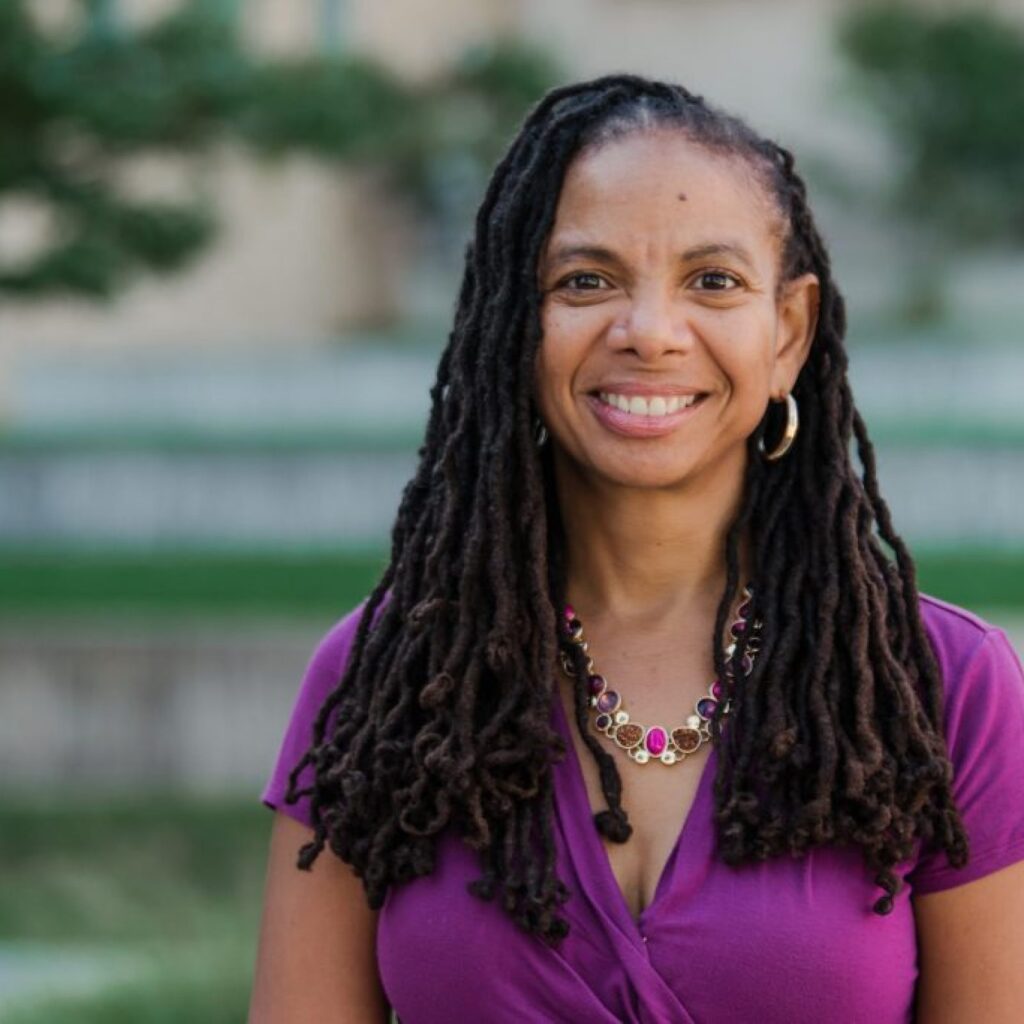
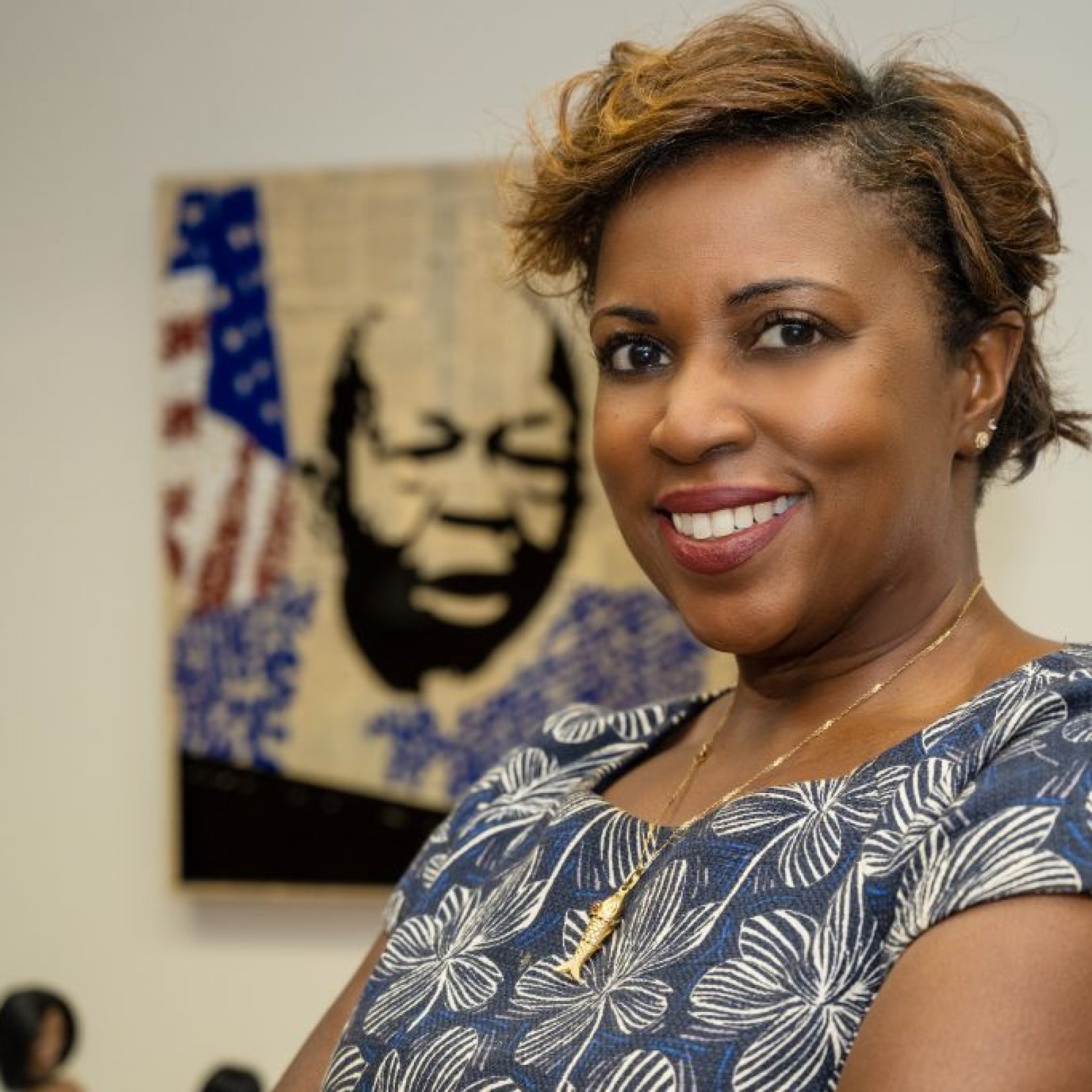
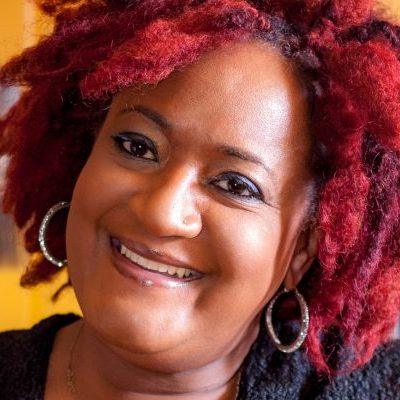
L to R: Lessane (photo courtesy of Morgan State), Moffitt, Psyche Williams-Forson (photo courtesy of UMD)
A structural answer
“The many health, social justice, economic, and political challenges facing our society today place important demands on higher education institutions,” says UMBC’s Kimberly Moffitt.She points out that colleges and universities must shift how they approach engaging with societal problems, which often means reflecting on how higher ed itself works.
“This experienced team of diverse senior leaders has an opportunity to create a structural answer to elevate diverse leaders from the arts and humanities,” says Moffitt. “This will enable faculty to apply distinct knowledge, skills, and perspectives to address our communities’ needs as leaders at their respective institutions.”
Breaking the M.O.L.D.
As a minority-serving institution (MSI), Historically Black College and University (HBCU), and predominantly white institution (PWI), respectively, UMBC, Morgan State, and UMD are uniquely positioned to collaboratively lead this charge.
This ambitious project will include two cohorts of faculty—associate and full professors—guided by senior faculty over a three-year period. Participants will engage in skill-building seminars, learn key leadership skills from experts who hold senior leadership positions at the three universities, and take part in leadership experiences with their faculty mentors. The cohorts will travel to each campus to gain insights on how PWIs, HBCUs, and MSIs create different pathways to senior leadership.
 Some of UMBC’s 2015-19 postdoctoral fellows (L to R): Keisha Allen, assistant professor of education; Emily Yoon Perez, English; Lisa Cassell, assistant professor of philosophy; Noor Zaidi, assistant professor of history; Camee Maddox-Wingfield, assistant professor of sociology, anthropology, and public health policy; Moffitt.
This work builds on the success of previous initiatives, such as UMBC’s Postdoctoral Fellows for Diversity program. That program has brought 20 talented postdoctoral fellows to UMBC, in fields ranging from dance to history. It provides extensive mentoring and other support to enable postdocs to transition to faculty positions. Seventeen have already done so, including 11 at UMBC.
It also builds on UMD’s ADVANCE Program, a year-long professional development program that prepares faculty for leadership positions in their department, college, or the university.
 2019 postdoctoral fellows (L to R): Blake Francis, philosophy; Perez; Fernando Tormos-Aponte, public policy and political science.
One goal, three approaches
Breaking the M.O.L.D. will offer a flexible model that can be adapted to meet the diversity challenges and needs of individual campuses, while including all faculty from the arts and humanities who are committed to supporting diversity and inclusion in the academy.
UMBC’s CAHSS faculty includes dozens of scholars who identify as Black, Hispanic, American Indian or Alaska Native, but only ten hold the title of full professor. Most are associate professors. And just a handful serve in leadership positions, such as department chair or roles in the dean’s or provost’s office. While women, broadly, are more represented among CAHSS faculty, most women in CAHSS are associate professors.
As a result of these factors, UMBC’s Breaking the M.O.L.D. program will focus on supporting the leadership of Black, Hispanic, American Indian or Alaska Native, and women faculty in the arts and humanities while also being open to others committed to diversifying academic leadership. UMD and Morgan State’s approaches will be similar, but tailored to their institutions.
Investing in and nurturing tomorrow’s leaders
Morgan State will develop and implement a Summer Leadership Academy to address the unique, historical barriers that often impede the ascension of women, Black, Hispanic, and American Indian and Alaska Native faculty in the arts and humanities, with a focus on Black women faculty. The academy will help Morgan State faculty further develop leadership skills, balance research and leadership responsibilities, and navigate the higher education landscape. They will also explore the role of HBCUs in higher education.
“Leaders beget leaders. It is through this model initiative that we are creating the infrastructure and blueprint for our diverse faculty to thrive,” says Lessane. “Humanities scholars are needed in senior executive leadership positions because they understand the value of human-centered education and its impact as a driving force in equitable scientific and technological innovation, business enterprise, and social justice reform during volatile, unprecedented times.”
Diverse voices at the leadership table
UMD’s ARHU faculty will tackle barriers Black women faculty face to access and succeed in leadership positions, as well as support Black, Hispanic, American Indian and Alaska Native faculty more broadly. In ARHU, approximately 15% of the tenured and tenure-track faculty identify with one of the groups above, with the majority at the associate professor rank. Currently, fewer than ten Black women serve in mid-level leadership positions and only two at the senior executive leadership level.
“As a Black woman serving at the senior executive level in a PWI, I’m keenly aware of the importance of having the voices of diverse people at the leadership table,” says Thornton Dill. “I see this project as an opportunity to expose program participants to the knowledge and experiences of other underrepresented minorities in administration as they develop their own strategies and approaches to higher education leadership.”
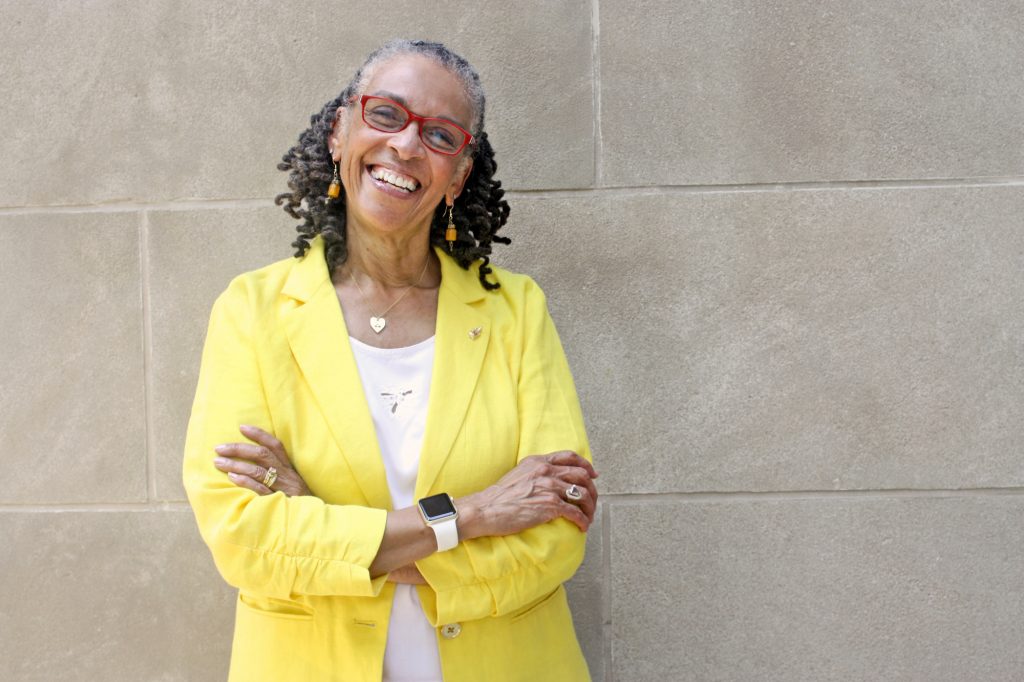
Bonnie Thornton Dill
(Photo courtesy of UMD)
As a recently promoted professor and long-time chair of American studies, Williams-Forson knows the experience of being at the associate professor rank while in mid-level leadership. “Those who advance to administration without research support, mentoring, or networking can find themselves unable to see beyond mid-level leadership positions like chair and director,” she says. “With this project we hope not only to provide greater opportunities for promotion, but also to expose faculty to the myriad senior-level leadership roles across the campus.”
The whole scholar
In addition to developing a network of diverse faculty equipped with the tools and resources to guide and grow universities, Breaking the M.O.L.D will invest in strengthening the links between leadership and scholarship. The intersectionality of the problems that communities face locally, nationally, and globally requires diverse leaders with humanities and arts perspectives who are empowered to create and share knowledge in new, high-impact ways.
 UMBC postdoctoral fellows with Moffitt and Tim Gindling, professor of economics.
Often, women, Black, Hispanic, American Indian, and Alaska Native faculty lack access to the social capital, financial resources, or time needed to advance their scholarly work. This program seeks to remove these barriers by providing funding for research, writing, conferences, and projects, and creating opportunities for partnership, innovation, and career development.
All of these elements are key components of leadership pathways, as is mentorship. In Breaking the M.O.L.D., tenured faculty leaders will provide guidance and resources to ensure participants receive the support they need to move their scholarship forward while growing their leadership skills and opportunities.
Reshaping institutions
Beyond working with faculty as future higher ed leaders, this program also seeks to reshape institutional structures. Ultimately, it aims to disrupt systemic practices that have left women, Black, Hispanic, American Indian, and Alaska Native arts and humanities faculty out of university leadership. The partners plan to combine information gathered over the three years of the program with current research on inclusive excellence to design tools that will help universities rethink their recruitment processes for faculty leaders.
Through a variety of leadership presentations and exercises, the three institutions will design a path to develop truly inclusive leadership by disrupting implicit bias and other forms of exclusion present in job descriptions, search and selection processes, hiring, and professional development. The resources they develop will be made available to other universities across Maryland and the nation, and to academic search firms and those who chair leadership searches, who often initiate the vetting process for arts and humanities faculty. By sharing these resources, the partners hope to enhance equity in academic hiring nationwide.
“Universities and colleges are at a crossroad to reimagine academia by cultivating diverse leaders with important leadership skills, such as imagination, compassion, and understanding,” says Moffitt. “These new leaders will become the next generation of stewards leading innovation in teaching and scholarship, and reshaping university structures to go beyond the status quo.”
For further coverage see Morgan State and College Park‘s news sites.
Banner image: UMBC postdoctoral fellows and Moffitt. (All photos by Marlayna Demond ’11 for UMBC unless otherwise noted.)
]]>
The Andrew W. Mellon Foundation has granted UMBC, Morgan State University, and the University of Maryland, College Park (UMD) $3 million to launch Breaking the M.O.L.D. (Mellon/Maryland...
https://umbc.edu/stories/women-leaders-from-umbc-morgan-state-and-umd-receive-3m-mellon-grant-to-diversify-senior-leadership-in-higher-ed/
https://beta.my.umbc.edu/api/v0/pixel/news/119526/guest@my.umbc.edu/e43f3af76a92fd745b84a93b021ec800/api/pixel
arts-and-culture
cahss
cahssresearch
dreshercenter
economics
education
english
history
llc
majoraward
mlli
page1
philosophy
policy-and-society
politicalscience
publicpolicy
saph
UMBC News & Magazine
https://beta.my.umbc.edu/groups/umbc-news-magazine
https://assets1-beta.my.umbc.edu/system/shared/avatars/groups/000/001/943/24435aa6207c452e7bc15cc74b42c7bb/xsmall.png?1748556657
https://assets1-beta.my.umbc.edu/system/shared/avatars/groups/000/001/943/24435aa6207c452e7bc15cc74b42c7bb/original.png?1748556657
https://assets2-beta.my.umbc.edu/system/shared/avatars/groups/000/001/943/24435aa6207c452e7bc15cc74b42c7bb/xxlarge.png?1748556657
https://assets2-beta.my.umbc.edu/system/shared/avatars/groups/000/001/943/24435aa6207c452e7bc15cc74b42c7bb/xlarge.png?1748556657
https://assets3-beta.my.umbc.edu/system/shared/avatars/groups/000/001/943/24435aa6207c452e7bc15cc74b42c7bb/large.png?1748556657
https://assets1-beta.my.umbc.edu/system/shared/avatars/groups/000/001/943/24435aa6207c452e7bc15cc74b42c7bb/medium.png?1748556657
https://assets2-beta.my.umbc.edu/system/shared/avatars/groups/000/001/943/24435aa6207c452e7bc15cc74b42c7bb/small.png?1748556657
https://assets1-beta.my.umbc.edu/system/shared/avatars/groups/000/001/943/24435aa6207c452e7bc15cc74b42c7bb/xsmall.png?1748556657
https://assets2-beta.my.umbc.edu/system/shared/avatars/groups/000/001/943/24435aa6207c452e7bc15cc74b42c7bb/xxsmall.png?1748556657
UMBC News & Magazine
0
0
false
Thu, 18 Nov 2021 14:00:02 -0500
UMBC wins prestigious APLU award for global engagement strategy

The Association of Public Land-Grant Universities (APLU) has honored UMBC with its 2021 Gold Award in Leadership and Pervasiveness for Internationalization. UMBC is the only North American university to receive this prestigious Gold Award. This honor affirms the collective, intentional work behind UMBC’s global engagement strategy.
 Staff from UMBC’s Center for Global Engagement, with David Di Maria holding the 2021 Gold Award.
Working toward a vision
APLU’s driving purpose is to strengthen and advance the work of public universities, from improving college access to promoting public impact research. “In our increasingly globally linked world, internationalization of campuses is critically important for the excellence of education, research, and community engagement work,” said APLU President Peter McPherson.
APLU asserts that to be successful, today’s universities can’t simply note the importance of global engagement and inclusivity. They also need to have campus leadership committed to creating a campus culture that reflects this value. And UMBC President Freeman Hrabowski agrees.
“It’s important for institutions to have a clear understanding of their values, and also to find ways to assess whether they are living up to those values,” Hrabowski says. “At UMBC, we take this seriously, and that includes our focus on growing international inclusivity.”
 President Hrabowski (front, center) with UMBC’s senior leaders and Center for Global Engagement staff.
The Leadership and Pervasiveness Award for Internationalization reflects two years of work engaging over 400 members of the UMBC community, who together envisioned the future of UMBC’s global interconnections. In addition to faculty, staff, and other stakeholders in the UMBC community, contributors also include UMBC students.
“I am inspired by the engaged energy within the UMBC community to position the university as a significant contributor to education, research, and community engagement in a global environment,” says Antonio Moreira, vice provost for Academic Affairs.
Global access
UMBC’s internationalization work has been multifaceted, with a focus on making global engagement more accessible for all community members. And it’s produced results.
In 2019, UMBC launched Dawg Days Abroad to help new Retrievers build their community through an abroad experience before their first UMBC semester. UMBC is also a Fulbright Top-Producing Institution and has one of the nation’s highest proportions of U.S. Student Program applicants earning Fulbright awards—reflecting both the quality of applicants and the support students receive throughout the application process.
 Brian Souders, M.A. ‘19, TESOL, and Ph.D. ’09, language, literacy and culture, UMBC’s Fulbright program advisor, second from the left, celebrates with UMBC’s 2019 – 2020 Fulbright U.S. Student recipients.
At the same time, this fall UMBC welcomed a record number of international students to the university. This trend is particularly meaningful given the current challenges that international students face in studying at U.S. universities.
The UMBC community recently came together to celebrate International Education Week, which included events on topics from international community-building through art and finding community away from home, to common challenges in learning a new language and how to apply for a passport.
Success through partnership
David Di Maria, associate vice provost for international education, shares that UMBC’s internationalization process has also heavily focused on partnership—strengthening relationships with other institutions that prioritize global engagement.
Among UMBC’s many robust international partnerships are collaborations with universities in Japan and the U.K. to launch the International Cybersecurity Center of Excellence and a partnership with the University of Limpopo in South Africa that supports both joint research and academic mobility. The Bahama Oriole Project, funded by the National Science Foundation, offers students unique international research opportunities. Additionally, UMBC faculty have leveraged technology to offer Collaborative Online International Learning (COIL) and virtual exchange programs with partners around the globe.
“Internationalization at UMBC does not occur in a vacuum,” says Di Maria. “This award is an honor shared by all.”
 David Di Maria holds UMBC’s 2021 APLU Gold Award in Leadership and Pervasiveness for Internationalization.
Photo: 2021 Gold Award. All photos by Marlayna Demond ’11 for UMBC.
]]>
The Association of Public Land-Grant Universities (APLU) has honored UMBC with its 2021 Gold Award in Leadership and Pervasiveness for Internationalization. UMBC is the only North American...
https://umbc.edu/stories/umbc-wins-prestigious-aplu-award-for-global-engagement-strategy/
https://beta.my.umbc.edu/api/v0/pixel/news/119527/guest@my.umbc.edu/a5a36ae2e141dfc01f1836cf5c7b1c9c/api/pixel
community
diversityandinclusion
international
page1
rankings
staff
UMBC News & Magazine
https://beta.my.umbc.edu/groups/umbc-news-magazine
https://assets1-beta.my.umbc.edu/system/shared/avatars/groups/000/001/943/24435aa6207c452e7bc15cc74b42c7bb/xsmall.png?1748556657
https://assets1-beta.my.umbc.edu/system/shared/avatars/groups/000/001/943/24435aa6207c452e7bc15cc74b42c7bb/original.png?1748556657
https://assets2-beta.my.umbc.edu/system/shared/avatars/groups/000/001/943/24435aa6207c452e7bc15cc74b42c7bb/xxlarge.png?1748556657
https://assets2-beta.my.umbc.edu/system/shared/avatars/groups/000/001/943/24435aa6207c452e7bc15cc74b42c7bb/xlarge.png?1748556657
https://assets3-beta.my.umbc.edu/system/shared/avatars/groups/000/001/943/24435aa6207c452e7bc15cc74b42c7bb/large.png?1748556657
https://assets1-beta.my.umbc.edu/system/shared/avatars/groups/000/001/943/24435aa6207c452e7bc15cc74b42c7bb/medium.png?1748556657
https://assets2-beta.my.umbc.edu/system/shared/avatars/groups/000/001/943/24435aa6207c452e7bc15cc74b42c7bb/small.png?1748556657
https://assets1-beta.my.umbc.edu/system/shared/avatars/groups/000/001/943/24435aa6207c452e7bc15cc74b42c7bb/xsmall.png?1748556657
https://assets2-beta.my.umbc.edu/system/shared/avatars/groups/000/001/943/24435aa6207c452e7bc15cc74b42c7bb/xxsmall.png?1748556657
UMBC News & Magazine
0
0
false
Wed, 17 Nov 2021 19:23:21 -0500
UMBC students take second place in national ChemE Jeopardy competition for second year in a row

Last weekend, a team of four UMBC students earned second place in a national Jeopardy competition hosted by the American Institute of Chemical Engineers (AIChE). This year, the national competition took place in Boston at the 2021 AIChE Annual Student Conference.
UMBC’s team includes John Laporte ‘22, Sumana Peddibhotla ‘22, Erin Huber ‘22, and Max Bobbin ‘23, all chemical engineering majors. Laporte is the captain of the UMBC AIChE Jeopardy team, and Huber is the president of the UMBC chapter of AIChE.
 The UMBC AIChE Jeopardy team with one of their advisors, Neha Raikar.
A competitive atmosphere
Huber explains that when she competed for the first time last year, the AIChE Jeopardy contest was completely virtual. “While it was fun participating virtually, getting to compete in-person this year was a lot more exciting,” she says. “There is definitely more of a competitive atmosphere when you are in the same room as all the people you are competing against.”
The UMBC team made it to the national competition after an intense round at the semi-final national competition against the University of Southern California (USC).
Huber says that she enjoyed connecting with students on other teams during the competition. “The semi-final was a super intense game, and both teams were competitive. Even after we won, both teams were so in awe of each other’s skills that we ended up hanging out and grabbing dinner together,” she shares. “The camaraderie among the students that attended both the competition and the conference is something that I will always remember.”
Earning their spot
Leading up to the national competition, the UMBC team regularly practiced virtually and in-person with fellow chemical, biochemical, and environmental engineering students. Laporte says that the team practices at least once a week, and as the competition approached, the team increased practices to three times each week, meeting twice in person and once online. They earned a spot at the national competition after winning the Mid-Atlantic Regional Competition in spring 2021. Approximately fifty teams competed from across the country this year, organized into nine AIChE student chapter regions.
In the national competition finals, UMBC competed against Iowa State University and the University of Iowa, which won the event. The UMBC ChemE Jeopardy team will continue practicing at least once a week to begin preparing for next year’s competition in January 2022.
The team is advised by Neha Raikar, lecturer of chemical, biochemical, and environmental engineering (CBEE), and Mariajose Castellanos, principal lecturer of CBEE.
Banner image: The UMBC AIChE Jeopardy team at the national competition in Boston. Photos courtesy of Huber.
]]>
Last weekend, a team of four UMBC students earned second place in a national Jeopardy competition hosted by the American Institute of Chemical Engineers (AIChE). This year, the national...
https://umbc.edu/stories/umbc-students-take-second-place-in-national-cheme-jeopardy-competition-for-second-year-in-a-row/
https://beta.my.umbc.edu/api/v0/pixel/news/119528/guest@my.umbc.edu/760720a5d1b37ce88939f69eb7190066/api/pixel
cbee
coeit
community
science-and-technology
UMBC News & Magazine
https://beta.my.umbc.edu/groups/umbc-news-magazine
https://assets1-beta.my.umbc.edu/system/shared/avatars/groups/000/001/943/24435aa6207c452e7bc15cc74b42c7bb/xsmall.png?1748556657
https://assets1-beta.my.umbc.edu/system/shared/avatars/groups/000/001/943/24435aa6207c452e7bc15cc74b42c7bb/original.png?1748556657
https://assets2-beta.my.umbc.edu/system/shared/avatars/groups/000/001/943/24435aa6207c452e7bc15cc74b42c7bb/xxlarge.png?1748556657
https://assets2-beta.my.umbc.edu/system/shared/avatars/groups/000/001/943/24435aa6207c452e7bc15cc74b42c7bb/xlarge.png?1748556657
https://assets3-beta.my.umbc.edu/system/shared/avatars/groups/000/001/943/24435aa6207c452e7bc15cc74b42c7bb/large.png?1748556657
https://assets1-beta.my.umbc.edu/system/shared/avatars/groups/000/001/943/24435aa6207c452e7bc15cc74b42c7bb/medium.png?1748556657
https://assets2-beta.my.umbc.edu/system/shared/avatars/groups/000/001/943/24435aa6207c452e7bc15cc74b42c7bb/small.png?1748556657
https://assets1-beta.my.umbc.edu/system/shared/avatars/groups/000/001/943/24435aa6207c452e7bc15cc74b42c7bb/xsmall.png?1748556657
https://assets2-beta.my.umbc.edu/system/shared/avatars/groups/000/001/943/24435aa6207c452e7bc15cc74b42c7bb/xxsmall.png?1748556657
UMBC News & Magazine
0
0
false
Tue, 16 Nov 2021 13:42:05 -0500
HackUMBC 2021 brings together 1,400 creative students from 26 countries to solve challenges in their communities
Last weekend, nearly 1,400 students from 90 institutions across 26 countries, including Egypt, Switzerland, and Ethiopia, participated in hackUMBC’s annual fall hackathon. The 36-hour event encouraged students to collaborate with each other to develop projects addressing a range of real-world challenges.
Participants primarily connected with each other online, through Discord. UMBC students also had the opportunity to attend a limited number of in-person events, with social distancing and masking in place. They vied for a total of $7,300 in prize money through awards from Best Hack overall to Best Financial Hack, Best Data Driven Application, Best Use of Google Cloud, and more.
 Karan Luthria. Photo by Marlayna Demond ’11 for UMBC.
HackUMBC President Karan Luthria ‘22, bioinformatics, was pleased with the event’s ability to attract both virtual and in-person participants from around the world. “It’s challenging to engage with virtual participants, but we did it successfully,” he says. This includes many first-time hackers curious to connect with a like-minded community, Luthria notes.
Inspired hacks
UMBC students participated in each of the three winning teams at the hackathon. The first place team developed Babel Fish, which allows people to use their phones to translate voice recordings into audio recordings in other languages. John Hair ‘24, computer engineering; Nolan Smith ‘24, mechanical engineering; Gerald Watson II ‘24, computer science; and Nyle Pope ‘24, computer science were inspired by a device in The Hitchhiker’s Guide to the Galaxy. They decided to try to create a simple version of this technology during the hackathon.
The hack that received second place is a social media app called Adventure Addict. The app allows people to create interactive stories, where readers can choose the path that the story takes at various points. According to a video overview, Adventure Addict “creates a connection between the author and the reader that is unparalleled.” As readers consume and interact more with stories and content, the app recommends additional authors, posts, and stories that the reader might find of interest. The Adventure Addict team includes UMBC student David House ‘16, psychology, M.P.S. ‘21, data science, as well as a Maryland high school student, and students studying at universities in India and Canada.
 Students at hackUMBC. Photo courtesy of Luthria.
In third place was a team that developed Status Bar, a device that culls through the day’s headlines and displays top highlights on a table top screen. The Status Bar can also provide a range of other highlights of value to the user, from weather updates to the prices of popular video games, in real time. UMBC students Tamoor Hamid, Ezekiel Ajayi, Avi Singh, Craig Stone, all studying computer engineering and graduating in 2022, developed Status Bar.
Awards were provided through robust sponsorship from over a dozen companies, including diamond sponsors T. Rowe Price, Northrop Grumman, and General Dynamics Mission Systems.
Community connections
Beyond the top three prize winners, several notable projects focused on ideas for improving the UMBC community. For example, Retriever Helper provides an interactive map allowing users to more easily find locations (specific rooms, floors, and buildings) on UMBC’s campus, to view the operating hours of UMBC’s dining options, and to read a feed from UMBC’s student newspaper, The Retriever.
Kristina Eyombo ‘25, computer science, and Dan Hyatt ‘25, bioinformatics, collaborated on the project. Eyombo learned all the JavaScript, HTML, and CSS required to execute the project within that weekend.
“Something we aim for at hackUMBC is to welcome all first-time hackers, regardless of major or background, to bring out their creativity to find solutions to real-world problems,” Luthria shares.

The hackUMBC logo. Image courtesy of hackUMBC.
Another UMBC-focused project included Fetch&Retrieve, which hopes to decrease waste by helping students give away things they no longer need.
Whether they produce projects geared toward UMBC or broader issues, “It is always amazing to see students from across UMBC and the globe come together over a weekend for a time of learning, collaborating, and brainstorming,” says Luthria. “I hope hackUMBC inspires more students to be a part of the hackathon community and continue to spend their weekends bringing ideas to life.”
Read more about past hackathon events.
Banner image: The Interdisciplinary Life Sciences Building. Photo by Marlayna Demond ’11 for UMBC.
]]>
Last weekend, nearly 1,400 students from 90 institutions across 26 countries, including Egypt, Switzerland, and Ethiopia, participated in hackUMBC’s annual fall hackathon. The 36-hour event...
https://umbc.edu/stories/hackumbc-2021-brings-together-1400-creative-students-from-26-countries-to-solve-challenges-in-their-communities/
https://beta.my.umbc.edu/api/v0/pixel/news/119529/guest@my.umbc.edu/96025d0a58a95ff8ba8219525389b241/api/pixel
coeit
community
csee
datascience
meche
page1
psychology
science-and-technology
UMBC News & Magazine
https://beta.my.umbc.edu/groups/umbc-news-magazine
https://assets1-beta.my.umbc.edu/system/shared/avatars/groups/000/001/943/24435aa6207c452e7bc15cc74b42c7bb/xsmall.png?1748556657
https://assets1-beta.my.umbc.edu/system/shared/avatars/groups/000/001/943/24435aa6207c452e7bc15cc74b42c7bb/original.png?1748556657
https://assets2-beta.my.umbc.edu/system/shared/avatars/groups/000/001/943/24435aa6207c452e7bc15cc74b42c7bb/xxlarge.png?1748556657
https://assets2-beta.my.umbc.edu/system/shared/avatars/groups/000/001/943/24435aa6207c452e7bc15cc74b42c7bb/xlarge.png?1748556657
https://assets3-beta.my.umbc.edu/system/shared/avatars/groups/000/001/943/24435aa6207c452e7bc15cc74b42c7bb/large.png?1748556657
https://assets1-beta.my.umbc.edu/system/shared/avatars/groups/000/001/943/24435aa6207c452e7bc15cc74b42c7bb/medium.png?1748556657
https://assets2-beta.my.umbc.edu/system/shared/avatars/groups/000/001/943/24435aa6207c452e7bc15cc74b42c7bb/small.png?1748556657
https://assets1-beta.my.umbc.edu/system/shared/avatars/groups/000/001/943/24435aa6207c452e7bc15cc74b42c7bb/xsmall.png?1748556657
https://assets2-beta.my.umbc.edu/system/shared/avatars/groups/000/001/943/24435aa6207c452e7bc15cc74b42c7bb/xxsmall.png?1748556657
UMBC News & Magazine
0
0
false
Thu, 11 Nov 2021 15:54:03 -0500
International Education Week 2021 (Nov 12-19)
Let's bring the world to UMBC!
Join us for guest speakers, lectures, workshops and fun activities all week long to support international education efforts at UMBC!
Events will take place both in person (on-campus) and virtually
%20IEW%20Schedule%202021%20(11%20x%2017%20in)%20(1).png) ]]>
Join us for guest speakers, lectures, workshops and fun activities all week long to support international education efforts at UMBC! Events will take place both in person (on-campus) and...
https://cge.umbc.edu/iew/
Photo
https://assets1-beta.my.umbc.edu/system/shared/attachments/8d3990853cfec44171f60fb97c944b3b/6a0a8d5f/news/000/114/990/79304cca1ad8a247a9bafffd5f4db436/FINAL (1.0) IEW Schedule 2021 (11 x 17 in) (1).png?1636658177
https://beta.my.umbc.edu/api/v0/pixel/news/114990/guest@my.umbc.edu/39d969bd2eb6fc0f92250bb4399c6a86/api/pixel
International Education Week
https://beta.my.umbc.edu/groups/iew
https://assets4-beta.my.umbc.edu/system/shared/avatars/groups/000/001/526/85153144817f7683d85f0e6a1bbd4fa2/xsmall.png?1756474962
https://assets2-beta.my.umbc.edu/system/shared/avatars/groups/000/001/526/85153144817f7683d85f0e6a1bbd4fa2/original.png?1756474962
https://assets4-beta.my.umbc.edu/system/shared/avatars/groups/000/001/526/85153144817f7683d85f0e6a1bbd4fa2/xxlarge.png?1756474962
https://assets3-beta.my.umbc.edu/system/shared/avatars/groups/000/001/526/85153144817f7683d85f0e6a1bbd4fa2/xlarge.png?1756474962
https://assets3-beta.my.umbc.edu/system/shared/avatars/groups/000/001/526/85153144817f7683d85f0e6a1bbd4fa2/large.png?1756474962
https://assets2-beta.my.umbc.edu/system/shared/avatars/groups/000/001/526/85153144817f7683d85f0e6a1bbd4fa2/medium.png?1756474962
https://assets3-beta.my.umbc.edu/system/shared/avatars/groups/000/001/526/85153144817f7683d85f0e6a1bbd4fa2/small.png?1756474962
https://assets4-beta.my.umbc.edu/system/shared/avatars/groups/000/001/526/85153144817f7683d85f0e6a1bbd4fa2/xsmall.png?1756474962
https://assets3-beta.my.umbc.edu/system/shared/avatars/groups/000/001/526/85153144817f7683d85f0e6a1bbd4fa2/xxsmall.png?1756474962
International Education Week
https://assets4-beta.my.umbc.edu/system/shared/thumbnails/news/000/114/990/1b4c1afae2a4477623cf0c6b148a5dbe/xxlarge.jpg?1636658585
https://assets3-beta.my.umbc.edu/system/shared/thumbnails/news/000/114/990/1b4c1afae2a4477623cf0c6b148a5dbe/xlarge.jpg?1636658585
https://assets3-beta.my.umbc.edu/system/shared/thumbnails/news/000/114/990/1b4c1afae2a4477623cf0c6b148a5dbe/large.jpg?1636658585
https://assets4-beta.my.umbc.edu/system/shared/thumbnails/news/000/114/990/1b4c1afae2a4477623cf0c6b148a5dbe/medium.jpg?1636658585
https://assets4-beta.my.umbc.edu/system/shared/thumbnails/news/000/114/990/1b4c1afae2a4477623cf0c6b148a5dbe/small.jpg?1636658585
https://assets1-beta.my.umbc.edu/system/shared/thumbnails/news/000/114/990/1b4c1afae2a4477623cf0c6b148a5dbe/xsmall.jpg?1636658585
https://assets3-beta.my.umbc.edu/system/shared/thumbnails/news/000/114/990/1b4c1afae2a4477623cf0c6b148a5dbe/xxsmall.jpg?1636658585
4
0
true
Thu, 11 Nov 2021 14:16:17 -0500
Thu, 11 Nov 2021 14:23:35 -0500
Body of Work
]]>
Join us for guest speakers, lectures, workshops and fun activities all week long to support international education efforts at UMBC! Events will take place both in person (on-campus) and...
https://cge.umbc.edu/iew/
Photo
https://assets1-beta.my.umbc.edu/system/shared/attachments/8d3990853cfec44171f60fb97c944b3b/6a0a8d5f/news/000/114/990/79304cca1ad8a247a9bafffd5f4db436/FINAL (1.0) IEW Schedule 2021 (11 x 17 in) (1).png?1636658177
https://beta.my.umbc.edu/api/v0/pixel/news/114990/guest@my.umbc.edu/39d969bd2eb6fc0f92250bb4399c6a86/api/pixel
International Education Week
https://beta.my.umbc.edu/groups/iew
https://assets4-beta.my.umbc.edu/system/shared/avatars/groups/000/001/526/85153144817f7683d85f0e6a1bbd4fa2/xsmall.png?1756474962
https://assets2-beta.my.umbc.edu/system/shared/avatars/groups/000/001/526/85153144817f7683d85f0e6a1bbd4fa2/original.png?1756474962
https://assets4-beta.my.umbc.edu/system/shared/avatars/groups/000/001/526/85153144817f7683d85f0e6a1bbd4fa2/xxlarge.png?1756474962
https://assets3-beta.my.umbc.edu/system/shared/avatars/groups/000/001/526/85153144817f7683d85f0e6a1bbd4fa2/xlarge.png?1756474962
https://assets3-beta.my.umbc.edu/system/shared/avatars/groups/000/001/526/85153144817f7683d85f0e6a1bbd4fa2/large.png?1756474962
https://assets2-beta.my.umbc.edu/system/shared/avatars/groups/000/001/526/85153144817f7683d85f0e6a1bbd4fa2/medium.png?1756474962
https://assets3-beta.my.umbc.edu/system/shared/avatars/groups/000/001/526/85153144817f7683d85f0e6a1bbd4fa2/small.png?1756474962
https://assets4-beta.my.umbc.edu/system/shared/avatars/groups/000/001/526/85153144817f7683d85f0e6a1bbd4fa2/xsmall.png?1756474962
https://assets3-beta.my.umbc.edu/system/shared/avatars/groups/000/001/526/85153144817f7683d85f0e6a1bbd4fa2/xxsmall.png?1756474962
International Education Week
https://assets4-beta.my.umbc.edu/system/shared/thumbnails/news/000/114/990/1b4c1afae2a4477623cf0c6b148a5dbe/xxlarge.jpg?1636658585
https://assets3-beta.my.umbc.edu/system/shared/thumbnails/news/000/114/990/1b4c1afae2a4477623cf0c6b148a5dbe/xlarge.jpg?1636658585
https://assets3-beta.my.umbc.edu/system/shared/thumbnails/news/000/114/990/1b4c1afae2a4477623cf0c6b148a5dbe/large.jpg?1636658585
https://assets4-beta.my.umbc.edu/system/shared/thumbnails/news/000/114/990/1b4c1afae2a4477623cf0c6b148a5dbe/medium.jpg?1636658585
https://assets4-beta.my.umbc.edu/system/shared/thumbnails/news/000/114/990/1b4c1afae2a4477623cf0c6b148a5dbe/small.jpg?1636658585
https://assets1-beta.my.umbc.edu/system/shared/thumbnails/news/000/114/990/1b4c1afae2a4477623cf0c6b148a5dbe/xsmall.jpg?1636658585
https://assets3-beta.my.umbc.edu/system/shared/thumbnails/news/000/114/990/1b4c1afae2a4477623cf0c6b148a5dbe/xxsmall.jpg?1636658585
4
0
true
Thu, 11 Nov 2021 14:16:17 -0500
Thu, 11 Nov 2021 14:23:35 -0500
Body of Work

Artist, educator, community and cultural worker, and curator: Kimberley Acebo Arteche identifies themself with all of these labels. But their path as an artist was a considerable diversion from their original plan to enter the field of medicine.
“I come from a Filipino family and the expectation is always that the children either become nurses, doctors, or pharmacists,” says Arteche ’11, visual arts. Their mother worked at Howard University Hospital, mostly with other Filipino nurses, and Arteche’s high grades in science pushed them in that direction.
 Photo by Jamie Cardenas
, c
ourtesy of Arteche.
It was at UMBC that Arteche, now the co-director of the Berkeley Art Center, decided to delve into other ways of exploring their identity and visibility. Joining the Filipino American Student Association freshman year was one step, another was their role as a founding member of the campus hip-hop dance group Major Definition.“I did struggle a little bit trying to navigate what my identity was as an autonomous person outside of my parents home. I started dancing and that led me into a few years of training with a dance company in DC called Culture Shock,” they say.
This exposure to folks pursuing arts pushed Arteche to switch majors and they began their journey down a new path: photography—finishing a visual arts major in only a year and a half.
Independent study
 Headshot of Gonzalves. Courtesy of Marlayna Demond.
Coincidentally, Arteche’s graduation in 2011 was the same year UMBC established the Asian studies program. It felt like such bad timing, Arteche remembers. “I’ve had been looking for this kind of education in this kind of history for so long!’” they say. Arteche even emailed American Studies Professor Theodore S. Gonzalves to ask if she should try to get a second degree at UMBC, this time in Asian studies. He offered to meet with her regularly instead.
Gonzalves, currently the interim director of the Smithsonian Asian Pacific American Center, introduced Arteche to Filipino American literature and had them read America Is in the Heart, a book by Carlos Bulosan about the struggles of Filipino migrant laborers in the 1930s and 1940s. Gonzalves and Arteche also discussed Carlos Villa, an artist, educator, and community arts organizer and the first person in the United States to teach a Filipino American arts course.
From these conversations, Arteche situated themself in the greater historical and colonialist context of America. “What came out of that was me finally realizing that, although my family had just immigrated to the U.S., my history here in the United States is so much longer,” they say.
Rethinking the gallery
After getting their M.F.A at San Francisco State, Arteche teaches there while also working at the Berkeley Art Center, and pursuing their own art. “For me, all of that informs each other. I’m teaching two classes now [and] one of them is the intermediate darkroom class. My focus is also on decolonizing photography, because our history of photography, in the European American Western canon, is about documenting indigenous peoples and like using that as a tool for colonialism.”
While at the Berkeley Art Center, Arteche aims to break down ideas of art being within the “white cube gallery with crisp white walls.” One of their art exhibitions is Bodyless, which features colorful and bright dusters suspended in spaces as if being worn, but, as expected by the title: without a body inside the dress.
Dusters, Arteche says, are very significant to their community. “They’re the dresses that you wear at home. A lot of times your grandma doesn’t even wear underwear underneath the dresses, because they’re at home, they’re doing physical domestic care work,” Arteche says. As the only one pursuing arts in their family, and a self proclaimed black sheep, Arteche has been digging into family history to understand oral histories and experiences.
They collected dusters from their own family members and created Bodyless, the experience of being seen as a body in space but not being seen as a full human. “You see the outline of a body. That also is very similar for me, as a person of color in art spaces. When I got out of grad school, so much of me being affiliated with white art spaces was so that I could check off these diversity boxes.”
They noted that they value being conscious about equity within art spaces. “[With] my role at Berkeley Art Center, we have been very conscious to not underpay artists. [I try to be] very intentional, like in all of the layers of all the work that I do, to make sure that each decision we make also sets people up to be well and be healthy.”
Reclaiming our bodies
Most recently, the San Francisco Arts Commission awarded Arteche funding for their work, an upcoming project called Kundiman ng Katawan. “It touches on these really tense political histories in the Philippines like the [Ferdinand] Marcos dictatorship, and also just how colonialism has compromised our relationship to our bodies, and how we feel like success and wealth and freedom is tied to how much money we can make and that also kind of puts our bodies at this way where it’s really just a tool for capitalism. I’m unpacking all of those things in this project that’s going to premiere next year,” they say.
As for their future, they hope to move towards taking on larger art commissions, and having their work acquired by museum collections. “Artistically, my goal is to make art that makes folks question their relationship to culture and question their relationship to history, in whatever that means for them,” Arteche says.
— Anjali DasSarma ‘21
*****
Header image: Arteche at a speaking engagement. Photo by Minoosh Zomordinia, courtesy of Arteche.
]]>
Artist, educator, community and cultural worker, and curator: Kimberley Acebo Arteche identifies themself with all of these labels. But their path as an artist was a considerable diversion from...
https://umbc.edu/stories/body-of-work/
https://beta.my.umbc.edu/api/v0/pixel/news/119530/guest@my.umbc.edu/fd82c27c19fa05405da87c08588ef5bc/api/pixel
alumni
alumni-profile
asianstudies
cahss
communityimpact
fall-2021
fasa
filipinoamericanstudentassociation
majordefinition
UMBC News & Magazine
https://beta.my.umbc.edu/groups/umbc-news-magazine
https://assets1-beta.my.umbc.edu/system/shared/avatars/groups/000/001/943/24435aa6207c452e7bc15cc74b42c7bb/xsmall.png?1748556657
https://assets1-beta.my.umbc.edu/system/shared/avatars/groups/000/001/943/24435aa6207c452e7bc15cc74b42c7bb/original.png?1748556657
https://assets2-beta.my.umbc.edu/system/shared/avatars/groups/000/001/943/24435aa6207c452e7bc15cc74b42c7bb/xxlarge.png?1748556657
https://assets2-beta.my.umbc.edu/system/shared/avatars/groups/000/001/943/24435aa6207c452e7bc15cc74b42c7bb/xlarge.png?1748556657
https://assets3-beta.my.umbc.edu/system/shared/avatars/groups/000/001/943/24435aa6207c452e7bc15cc74b42c7bb/large.png?1748556657
https://assets1-beta.my.umbc.edu/system/shared/avatars/groups/000/001/943/24435aa6207c452e7bc15cc74b42c7bb/medium.png?1748556657
https://assets2-beta.my.umbc.edu/system/shared/avatars/groups/000/001/943/24435aa6207c452e7bc15cc74b42c7bb/small.png?1748556657
https://assets1-beta.my.umbc.edu/system/shared/avatars/groups/000/001/943/24435aa6207c452e7bc15cc74b42c7bb/xsmall.png?1748556657
https://assets2-beta.my.umbc.edu/system/shared/avatars/groups/000/001/943/24435aa6207c452e7bc15cc74b42c7bb/xxsmall.png?1748556657
UMBC News & Magazine
0
0
false
Wed, 10 Nov 2021 18:36:10 -0500
Q&A: Celebrating our Veterans

In honor of National Veterans Week, we’re chatting with UMBC senior media and communications major Alexandra Hulett, a veteran of the United States Army. Behind the scenes these days, you might find Hulett filming or editing promotional videos of student events and campus engagements for her video production internship with the Office of Institutional Advancement, building off skills she first put to work in the Army.
Can you tell us a little bit about your work before you came to UMBC?
When I joined the Army I worked as a combat photographer/videographer. The last position I held before I transitioned out was an instructor for basic still photography at the Defense Information School on Fort George G. Meade, Maryland. I trained new Soldiers and Marines on the technical skills they needed for their careers.
Why did you decide to take the path of service?
There was always a nagging desire in me to join the military. It was after I found out that the Army has an occupation that combined my love for photography and videography that I decided to join and embark on a 9-year ride to places like Afghanistan and Germany.
How do you bring those experiences into your role as a student today?
The experiences I had in the military have been so invaluable to me as a student now. I gained the self-confidence and work ethic that I needed to help me persevere through the many challenges that life (and school) has thrown at me. Also, I learned that teamwork is critical because no one gets very far without the support of others.
 A selfie of Hulett in Afghanistan, 2012.
What do you most enjoy about being a student? What is most challenging?
I love being able to learn new things and engage with my professors. I enjoy the many places UMBC has to offer for places to study and relax between my classes. The most challenging thing about college to me is making friends as I am much older than a typical student with different life experiences and lifestyles that make it hard to relate to others.
What do you hope to do after you graduate?
I plan to stay in Baltimore with my husband and dog and continue to pursue video editing as my career.
What would you like other students to know about what it’s like to be a veteran?
It can be difficult for veterans to interact and make connections with other non-veteran students. Personally, I deal with this internal balancing act of blending in while still trying to put myself out there and meet others. I would challenge other students to befriend the veterans in your classes. We’re a fiercely loyal bunch and experts at knowing how to have a good time.
Learn more about UMBC Veteran Services here.
Header Image: Retired U.S. Army Col. Martin Downie, former Commandant at the Defense Information School, Fort George G. Meade, Md. and Hulett. All photos courtesy of Hulett.
]]>
In honor of National Veterans Week, we’re chatting with UMBC senior media and communications major Alexandra Hulett, a veteran of the United States Army. Behind the scenes these days, you might...
https://umbc.edu/stories/qa-celebrating-our-veterans/
https://beta.my.umbc.edu/api/v0/pixel/news/119531/guest@my.umbc.edu/e6ae93a80abf7127c3732a0d57d82a67/api/pixel
campus-life
veteran
veterans
UMBC News & Magazine
https://beta.my.umbc.edu/groups/umbc-news-magazine
https://assets1-beta.my.umbc.edu/system/shared/avatars/groups/000/001/943/24435aa6207c452e7bc15cc74b42c7bb/xsmall.png?1748556657
https://assets1-beta.my.umbc.edu/system/shared/avatars/groups/000/001/943/24435aa6207c452e7bc15cc74b42c7bb/original.png?1748556657
https://assets2-beta.my.umbc.edu/system/shared/avatars/groups/000/001/943/24435aa6207c452e7bc15cc74b42c7bb/xxlarge.png?1748556657
https://assets2-beta.my.umbc.edu/system/shared/avatars/groups/000/001/943/24435aa6207c452e7bc15cc74b42c7bb/xlarge.png?1748556657
https://assets3-beta.my.umbc.edu/system/shared/avatars/groups/000/001/943/24435aa6207c452e7bc15cc74b42c7bb/large.png?1748556657
https://assets1-beta.my.umbc.edu/system/shared/avatars/groups/000/001/943/24435aa6207c452e7bc15cc74b42c7bb/medium.png?1748556657
https://assets2-beta.my.umbc.edu/system/shared/avatars/groups/000/001/943/24435aa6207c452e7bc15cc74b42c7bb/small.png?1748556657
https://assets1-beta.my.umbc.edu/system/shared/avatars/groups/000/001/943/24435aa6207c452e7bc15cc74b42c7bb/xsmall.png?1748556657
https://assets2-beta.my.umbc.edu/system/shared/avatars/groups/000/001/943/24435aa6207c452e7bc15cc74b42c7bb/xxsmall.png?1748556657
UMBC News & Magazine
0
0
false
Wed, 10 Nov 2021 17:11:07 -0500


 Through recurring events like Mindfulness Mondays, UMBC students and staff are encouraged to find ways to breathe and relax. Here, RAC fitness instructor Erica Sligh ’20, biological sciences, leads a yoga class next to the Library Pond in 2019.