I’m a Black sociologist, and a mom – by listening to other Black mothers, I’ve learned about their pandemic struggles and strengths
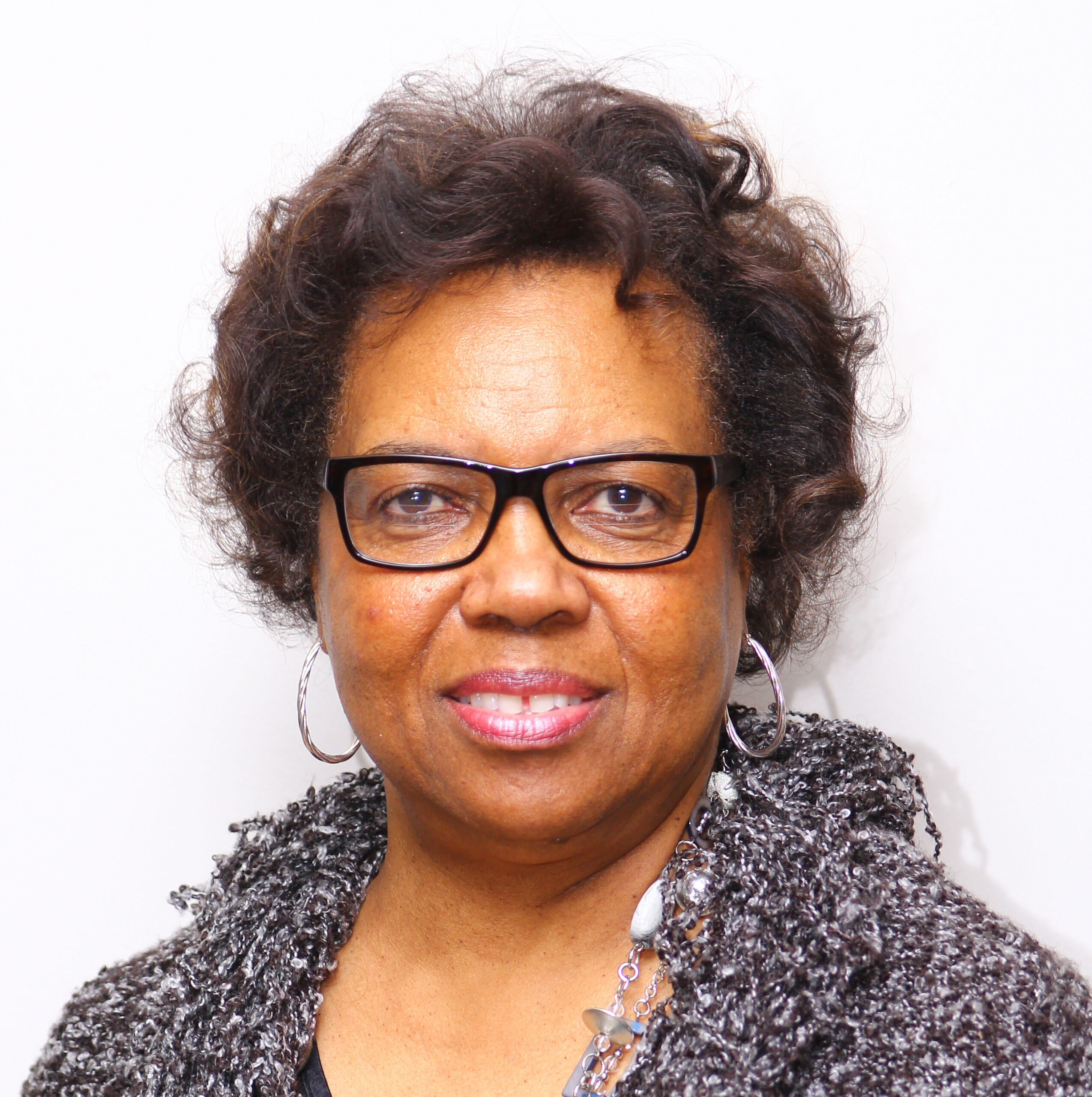
By Loren Henderson, associate professor, Sociology, UMBC
I spent the 2020 spring break week setting up to teach my college courses online while helping to care for my 14-month-old grandchild, whose daycare had closed. At the same time, I couldn’t help thinking, being the sociologist I am, of the devastating consequences of COVID-19 I saw for women like me, Black mothers, whom I have studied for over a decade.
Social science research can influence policy. Sharing Black mothers’ stories in their own voices may ultimately lead to more compassionate policies. My work is part of a small body of descriptive research, mostly by researchers of color, countering negativity and victim-blaming in earlier studies of Black families.
My research partner, sociologist BarBara Scott, lives in Chicago, where I grew up. In our studies of Black mothers there, we’ve explored parenting in violent communities and living with inadequate health care. In 2019, before COVID-19 hit, we were preparing to study parenting practices.
But when lab conditions change, scientists need to reorganize their work. I am a social scientist and society is my lab, where the pandemic dramatically altered the conditions of my research.
We adjusted, preparing to interview remotely instead of in person. We added new questions to investigate, like: How were Black mothers coping with pandemic conditions? How did the murder of George Floyd and the resulting protests affect them? Our research would now include the pandemic and the country’s racial upheaval, highly unusual factors complicating Black mothers’ already challenging lives.
Researching with rapport
The first challenge was finding participants. We put up fliers in and around schools, churches, the YWCA and other places Black moms go when not at work. Even in the best of times, though, they face practical barriers to joining a research project. Child care responsibilities might be theirs alone. Taking time off from work means their paychecks take a hit not nearly covered by the $25 gift cards we offered.
But they called. Some just wanted to sign up after looking me up on their phones. Others, who may have known that the federal government oversees studies involving people, asked why I was studying them and what I would do with their information. I knew that if any of the women thought talking with me might bring embarrassment or other trouble, they might be less forthcoming or decide not to participate. My findings would be much less credible.
I assured the moms that I would keep their responses confidential and that they had a right to leave the study whenever they wanted to.
None of them did. We signed up enough moms for two focus groups of five to seven participants each. I ran group meetings and conducted 12 one-on-one interviews via video conferencing.
To start our 60- to 90-minute sessions, I introduced myself and got the mothers talking with an ice breaker question like, “What is the farthest place from your current neighborhood that you’ve been?”
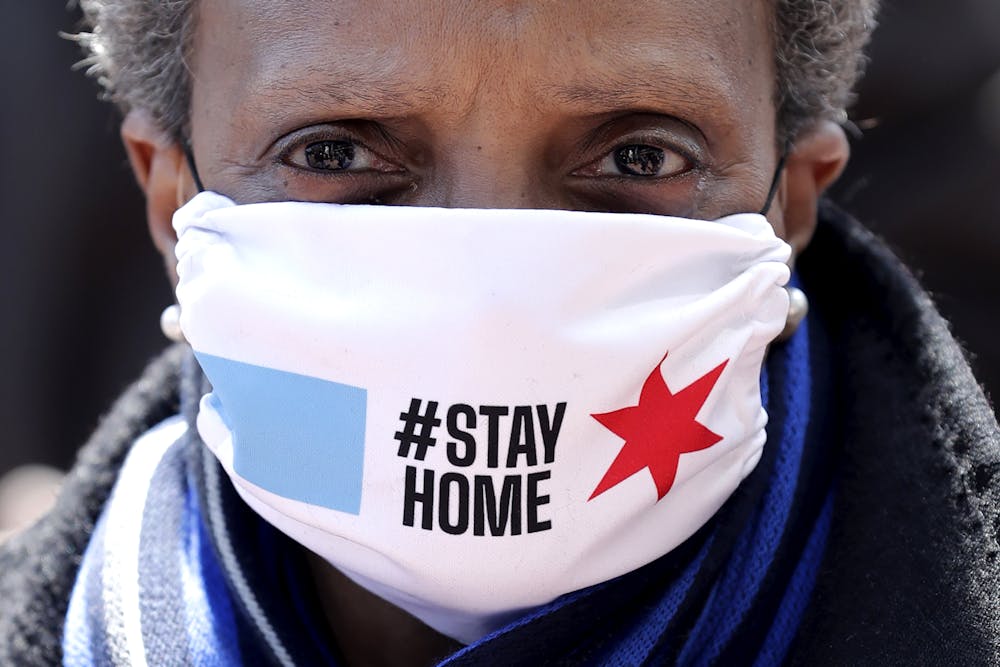
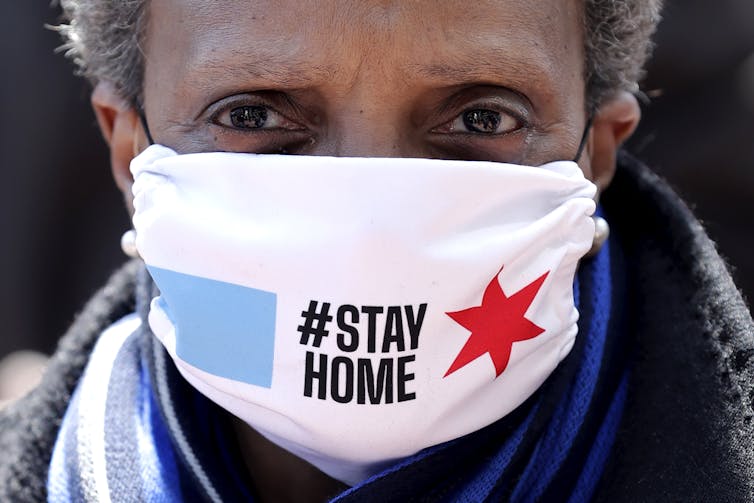 Many Black mothers were front-line workers who couldn’t heed the message on Chicago Mayor Lori Lightfoot’s mask in the early days of the pandemic. AP Photo/Nam Y. Huh
I also tell them that I have a Black mom, and that I am one. And then, because my skin tone is fair, I mention that I have an Italian father. I didn’t want to be mistaken for white; the moms might feel less comfortable discussing certain topics with me. But after realizing that I’m Black too, a few of them said things like, “I knew there was something about you!”
I share my belief in centering – and that’s the word I use – Black mothers’ lived experiences and exploring their parenting from a strength perspective. That’s when I got a lot of smiling and nodding.
No time for racism
Black mothers don’t need a pandemic to face impossible choices. But it took a pandemic for others to see that. As nearly everyone else stayed home to stop the spread of COVID-19, it became obvious that Black women were more likely than any one else to be essential workers in front-line jobs. And despite risking COVID-19 infection to keep their jobs, Black workers were more likely to lose them anyway during the pandemic.
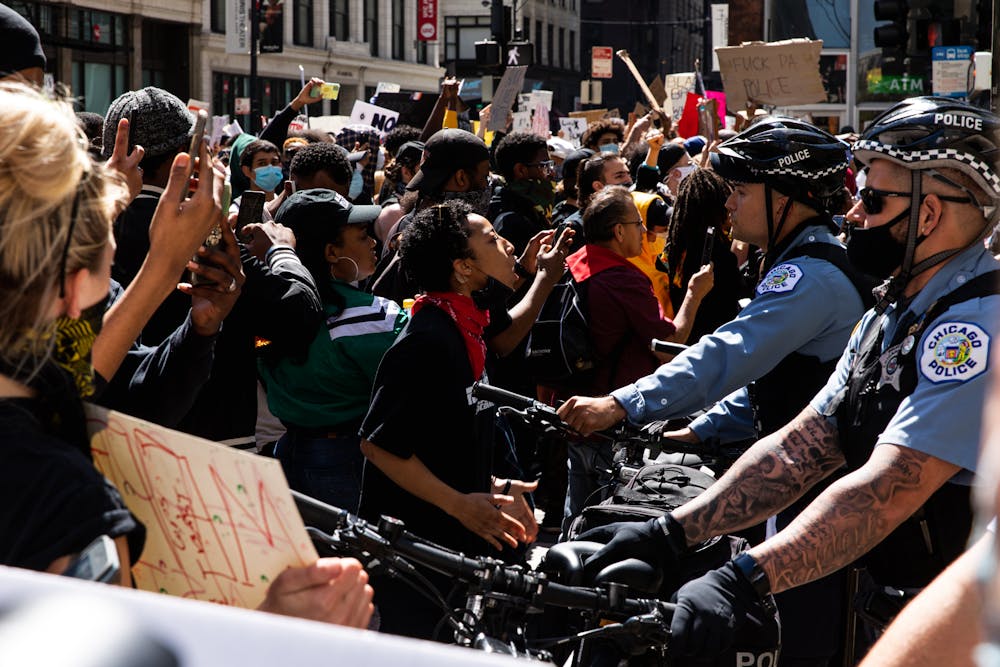
I asked the mothers about the pandemic’s effect on their lives. They talked about the trickiness of trying to isolate or distance in small or crowded homes. They hated being unable to get masks and hand sanitizer when stores closed during the George Floyd protests, which none of them attended.
I asked why they didn’t go, given their stated frustrations with racism affecting their lives. Some didn’t want to risk getting sick. But most of these Black mothers told me they don’t dwell on racism, saying things like, “Yeah, racism is bad, but I got things to do.”
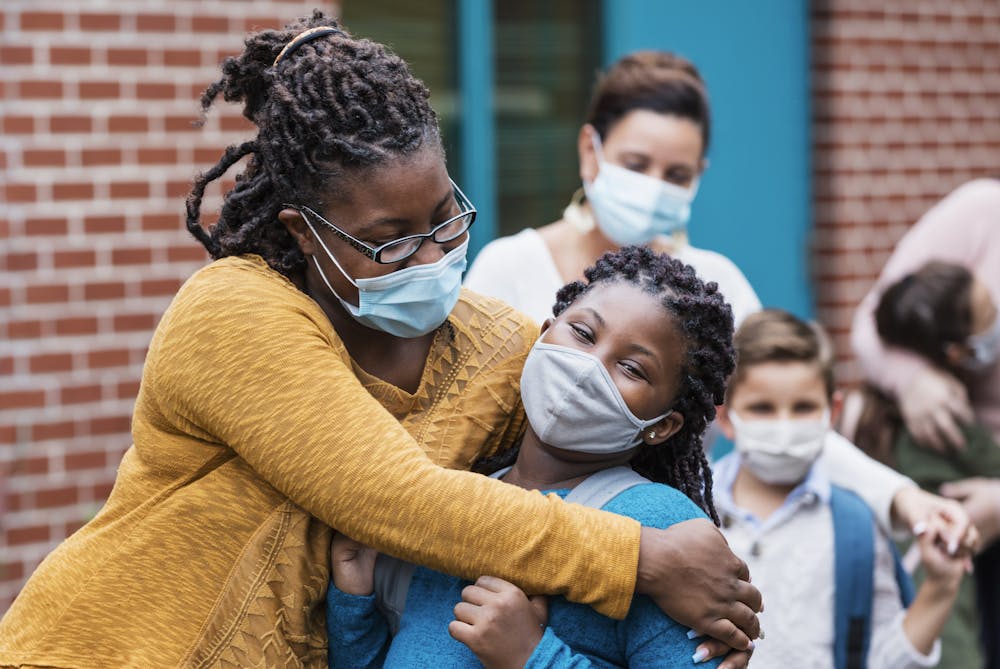
And so they did those things. While at work, they sent their kids text reminders to go to remote school if it was available, or if it was not, to study. The moms came home from long shifts and helped with homework, worrying about their kids falling behind academically. The mothers worried about getting COVID-19 and losing custody of kids if they became too sick to parent well.
Keeping the conversation flowing
The qualitative research I do is about words and meanings, not just numbers and statistics. It allows me to explore the lives of Black moms in depth.
In my interviews, I don’t ask closed-ended questions – the kind where the answer is simply yes or no, true or false, or limited to a set of multiple-choice answers. For example, if a participant can only respond to the question, “How safe is your community?” with the options “very safe,” “somewhat safe,” or “not safe,” that’s a closed-ended question.
In qualitative research, however, questions are often open-ended. Participants decide what a question means to them, then answer in any way they choose. I’ve been asking the Black mothers questions like: “How do you feel about Chicago as a place to live and raise your children? How do you feel about working and raising your children during the COVID-19 pandemic?”
Reading the transcribed interviews later, I look for general thoughts, or themes, in the mothers’ collective responses. For example, when I asked about violence, the overall sentiment was that it was around, but avoidable. One participant told me, “You have to know where [to go] and where not to go, when to go and when not to go.” And she called Chicago “a great place,” with “great opportunities” for anyone who wanted to be there.
This response was common: The moms know that Chicago can be violent, but many focus on the positive aspects of the city. My theory is that this is their conscious or unconscious way of explaining why they stay in a violent community. That question has come often enough – usually from those with far more options – to hang over the heads of these Black moms, even if no one asks them directly.
A related sentiment the moms had was that moving away is pointless since violence “is everywhere.” They may simply want to stay close to the generations of family and community ties they have. But it’s also true that moving isn’t affordable for many of these mothers.
Identifying these themes helps me present a picture of Black mothers’ lives as a corrective to the earlier research. Documenting their experiences as the center of my research gives them a voice and validates their lives as worthy of exploration.
******
Header image: When schools shut down to prevent the spread of COVID-19, moms took on the burden of supporting students at home. AP Photo/Shafkat Anowar
Loren Henderson, Associate Professor of Sociology, University of Maryland, Baltimore County
This article is republished from The Conversation under a Creative Commons license. Read the original article.
]]>
By Loren Henderson, associate professor, Sociology, UMBC I spent the 2020 spring break week setting up to teach my college courses online while helping to care for my 14-month-old grandchild,...
https://umbc.edu/stories/im-a-black-sociologist-and-a-mom-by-listening-to-other-black-mothers-ive-learned-about-their-pandemic-struggles-and-strengths/
https://beta.my.umbc.edu/api/v0/pixel/news/119436/guest@my.umbc.edu/c7c85e15e203808a64f4d1b94dcc5c0b/api/pixel
covid-19
discovery
magazine
sociology
the-conversation
webfeature
UMBC News & Magazine
https://beta.my.umbc.edu/groups/umbc-news-magazine
https://assets1-beta.my.umbc.edu/system/shared/avatars/groups/000/001/943/24435aa6207c452e7bc15cc74b42c7bb/xsmall.png?1748556657
https://assets1-beta.my.umbc.edu/system/shared/avatars/groups/000/001/943/24435aa6207c452e7bc15cc74b42c7bb/original.png?1748556657
https://assets2-beta.my.umbc.edu/system/shared/avatars/groups/000/001/943/24435aa6207c452e7bc15cc74b42c7bb/xxlarge.png?1748556657
https://assets2-beta.my.umbc.edu/system/shared/avatars/groups/000/001/943/24435aa6207c452e7bc15cc74b42c7bb/xlarge.png?1748556657
https://assets3-beta.my.umbc.edu/system/shared/avatars/groups/000/001/943/24435aa6207c452e7bc15cc74b42c7bb/large.png?1748556657
https://assets1-beta.my.umbc.edu/system/shared/avatars/groups/000/001/943/24435aa6207c452e7bc15cc74b42c7bb/medium.png?1748556657
https://assets2-beta.my.umbc.edu/system/shared/avatars/groups/000/001/943/24435aa6207c452e7bc15cc74b42c7bb/small.png?1748556657
https://assets1-beta.my.umbc.edu/system/shared/avatars/groups/000/001/943/24435aa6207c452e7bc15cc74b42c7bb/xsmall.png?1748556657
https://assets2-beta.my.umbc.edu/system/shared/avatars/groups/000/001/943/24435aa6207c452e7bc15cc74b42c7bb/xxsmall.png?1748556657
UMBC News & Magazine
0
0
false
Fri, 29 Apr 2022 16:59:01 -0400
Fri, 29 Apr 2022 16:59:01 -0400
How to be a Retriever!

By Charis Lawson ’20 and Randianne Leyshon ’09
Although still a young university, UMBC has unique long-standing traditions, made especially dear to students and alumni because so many of them were conceived and implemented by students themselves. The engaged student body and alumni eager to reconnect with their alma mater have worked to co-create a community culture that celebrates all Retrievers. Yes, there’s a lot of black and gold involved…but that’s only the tip of the iceberg on how to be a Retriever!
Free Hour
On Mondays, Wednesdays, and Fridays from 12-1 pm not a single class is in session. However, it would completely miss the mark to assume that nothing happens during this “Free Hour.” These three hour-long blocks are time for community, relaxation, and opportunity. Commuting students, who might not have a chance to engage in campus activities throughout the day, visit clubs. Busy students with hectic schedules might take some time to grab food or rest their eyes. Student organizations use this time to promote their upcoming events and put on attention-grabbing displays in the breezeway.
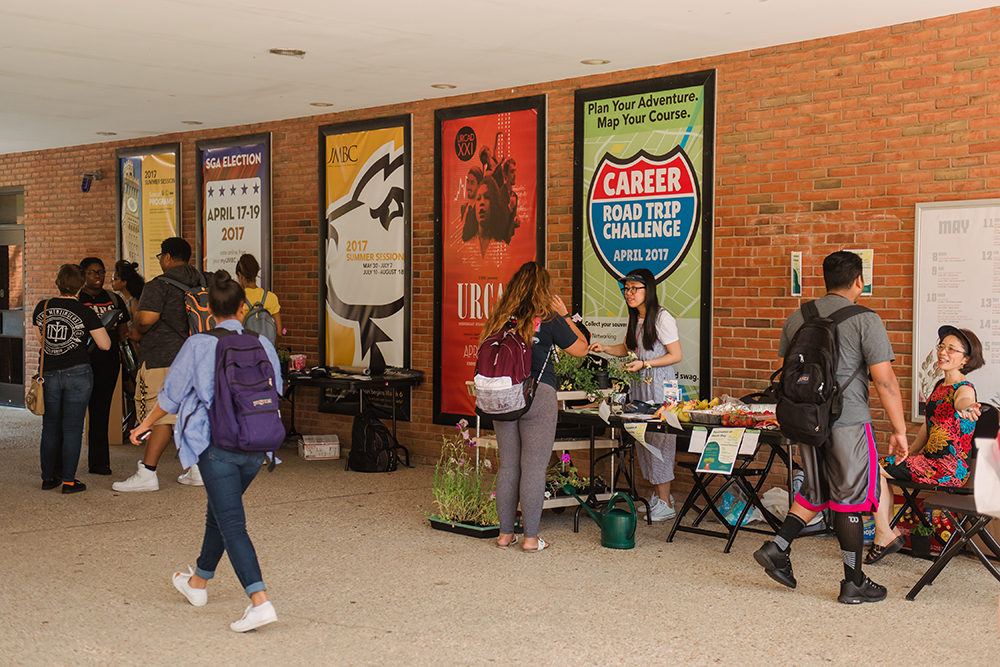 Student groups take the most of Free Hour in the breezeway.
“Free Hour” has been a constant fixture in the UMBC academic calendars since 1970. It came into being after the Student Union made the case for the fixed schedule to the Faculty Senate. Despite having to move classes around and the increased lack of classroom space, this has remained an important tradition that gives time for advising opportunities, learning outside the classroom, and self-care.
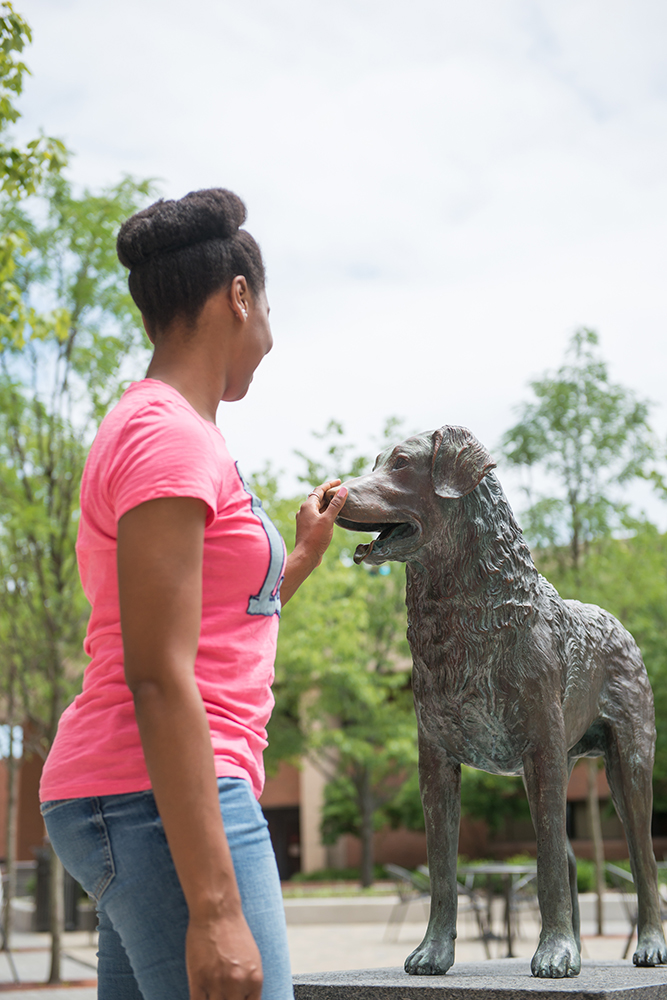
Rubbing True Grit’s Nose
While True Grit’s face might be splashed across campus, perhaps the most prominent representation of the university’s mascot is a 500-pound bronze cast sculpture which graces the plaza between the Administration Building and the Retriever Athletic Center. True Grit has a storied history that current students and alumni connect with by rubbing the pup’s now golden nose—often they’ll visit the Chesapeake Bay Retriever statue after Convocation when their academic journeys begin or after Commencement as they enter a new chapter in their lives. His nose also gets a lot of attention during finals, when students make sure to touch him for good luck.
UMBC commissioned artist and alumna Paulette Raye ’87, philosophy, to create the sculpture. Raye modeled her creation after Nitty Gritty, a local champion Chesapeake Bay Retriever. But as for how True Grit got his name? It was the model’s father, True Grit, who offered up a strong and bold moniker that UMBC students felt described their own pluck.
Homecoming
There are few UMBC traditions that encapsulate the Retriever spirit as holistically as Homecoming. Since 1976, Homecoming has been an annual multi-day event with an array of different community-building activities. Throughout the week, the student events board (seb) invites a comedian, a carnival takes place on Erickson field, everyone stops to watch the puppy parade, and fans gather to cheer on our athletic teams. As students, alumni, staff, and their families gather for the “Big Game” there are fun activities like face painting, Retriever-themed freebies, and tailgating on Lot 17 (now known as the Stadium Lot.)
As the student body evolves, so does Homecoming. In 2005, Thomas Locastro ’12, biological sciences, suggested and organized a community bonfire—which is now a centerpiece event of Homecoming.
Quadmania
What better way to celebrate the nearing end of the academic year than with a spring fling weekend of fun activities. Hosted entirely by seb, Quadmania features live music (including a major headliner), an outdoor festival, free food, games, and fantastic fun times all weekend long.
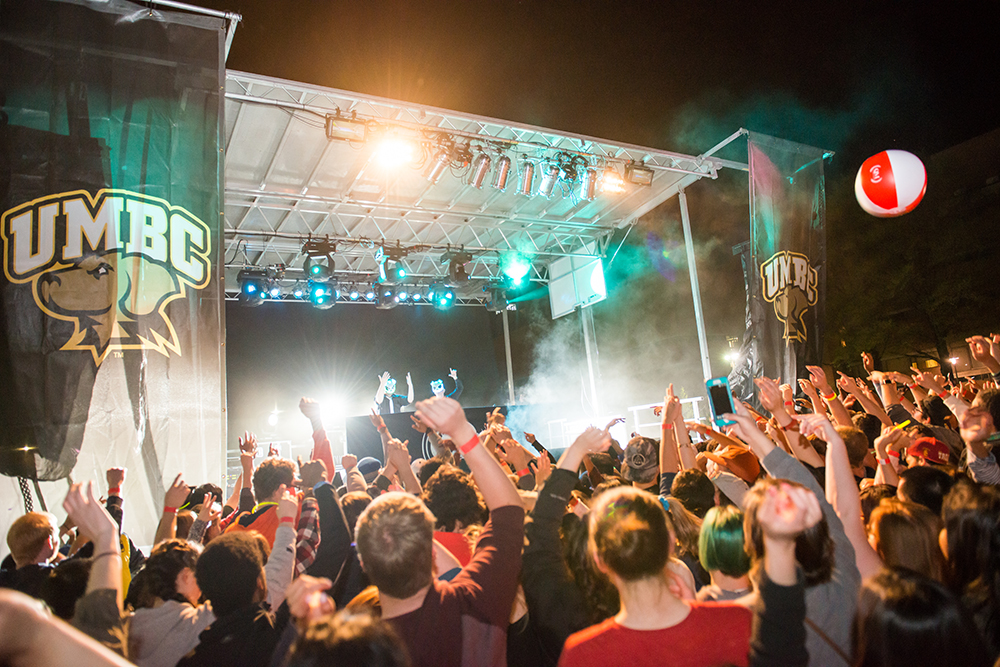 Students with hands in the air at a concert held on the Quad, a signature event for Quadmania.
Quadmania began in 1981 as a musical concert with food and games on the Quad outside of what is now The Commons—it quickly became a cornerstone UMBC social event for students, alumni, and the surrounding community.
Pangea is another homegrown musical tradition at UMBC. Established in 2015, the Welcome Week event allows cultural student organizations to showcase what they do during the year and recruit new members.
Mysteries about the tunnels
 John Zahor—director of operations and maintenance, who oversees the plumbing, electrical, painting, and architecture shops at UMBC—and Craig Goodwin, director of design and construction, in the tunnels.
Winding below campus lays an intricate maze of tunnels. As a freshman, the existence of these tunnels is most likely unknown. However, as time passes and familiarity with the campus grows, so do conversations about the tunnels. Students who have had the opportunity to go down there proudly trade stories cementing the tunnels into Retriever lore. Just as there are hidden entrances into the tunnels in nearly every building, the ways in which you get to go down there are equally diverse and mysterious.
While the primary use for the tunnels is practical things like fresh airflow to the buildings, there are many other uses that give students an opportunity to explore the expansive halls. Carrying props for a performance happening in PAHB, transporting cumbersome materials needed for an engineering project, or moving all of the necessary materials for a program like Alternative Spring Break may be options to get access to the tunnels. After finally checking the underground tunnels of the to-do list, the only logical next step is to find a way to get invited to the Admin Roof.
Alma Mater
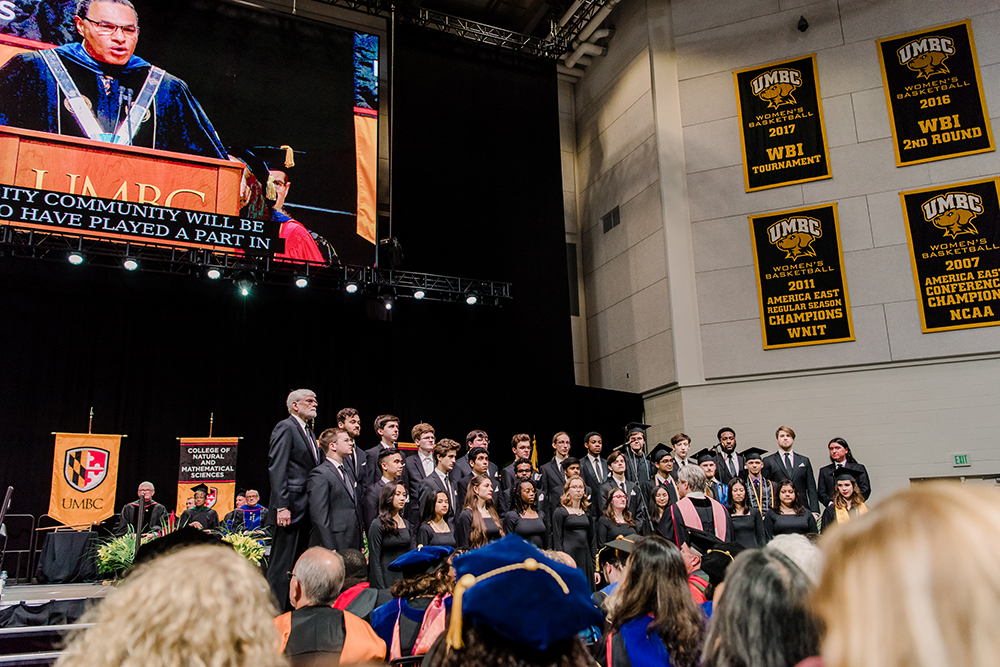
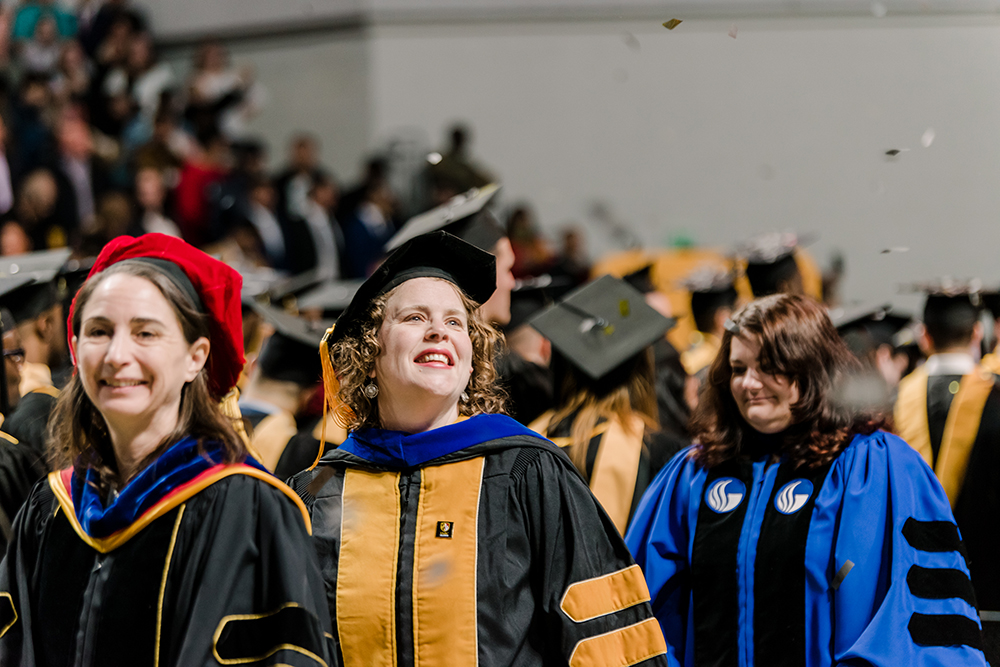 The UMBC Chorus prepares to sing, and faculty and staff smile at graduation ceremony.
UMBC’s alma mater debuted in 2006 in conjunction with the 40th anniversary festivities. The tune is American Hymn by Matthias Keller, and the lyrics and arrangement are by Jari Villanueva, former director of UMBC’s pep band. Sung with gusto at Convocation and Commencement, this newer tradition helps create solidarity among current students and alumni.
Alma Mater
Hail alma mater! OUR UMBC,
Boldly bearing your colors, the whole world to see,
Striving together in true unity,
Black, gold forever we’re reminded of thee,
Proudly we hail to thee, OUR UMBC!
Throughout the ages, OUR UMBC,
Songs and memories still echo with true clarity,
Knowledge and wisdom and truth we found here,
Friendships we treasure that will last through the years,
Proudly we hail to thee, OUR UMBC!
Midnight breakfast
Right before finals, students step away from their work, push aside their mounting stress, and file towards D-hall (the True Grits dining hall). While D-hall is usually full, nothing compares to the crowds present during Midnight Breakfast. For once, no one seems to mind the winding lines, as students use the time to connect with friends and appreciate the free, all-you-can-eat breakfast. Friends group up to take pictures in the photo booth, tables are cleared to make room for the DJ and a dance floor, individuals draw on the posters covering the tables as they eat.
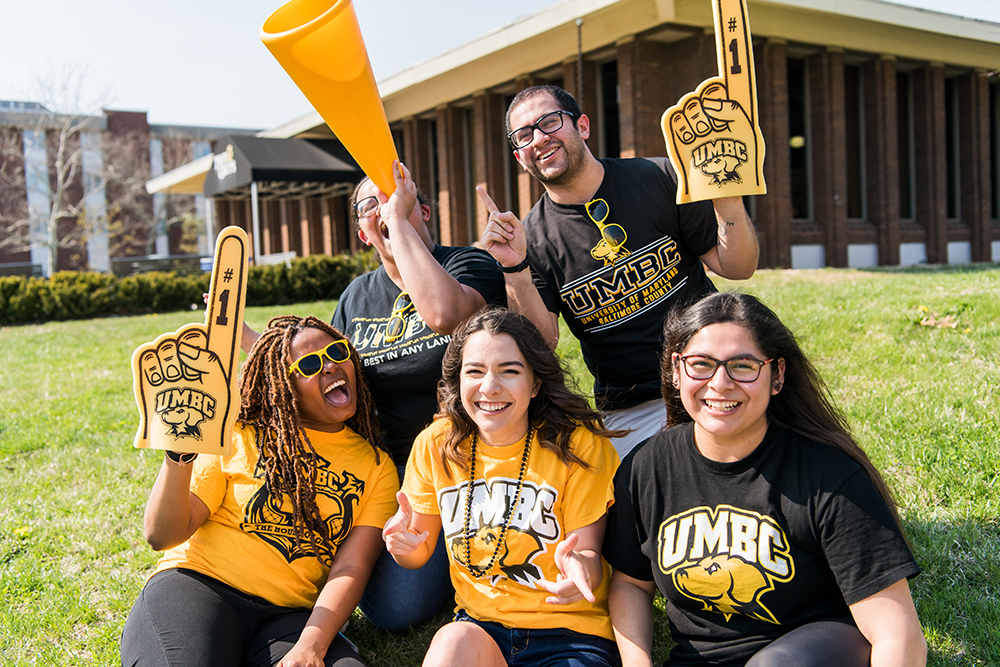 Student Welcome Week leaders pose in front of True Grit’s.
Midnight Breakfast, put on by the Residential Student Association usually takes place from 10 pm -2 am. It’s been a tradition valued by students as a time to relieve stress as the semester concludes. Many lucky students even get their hands on a free T-shirt, a staple of many UMBC events.
Election Extravaganza
As a school that is known for embracing its “nerdy” culture, it comes as no surprise that UMBC has a tradition surrounding elections. As presidential elections roll around, The Commons is filled with events taking place on all three floors. During Election Night Extravaganza, there are games, stress-relieving activities, a watch party, food, prizes. UMBC pulls out all of the stops to celebrate democracy and civic engagement.
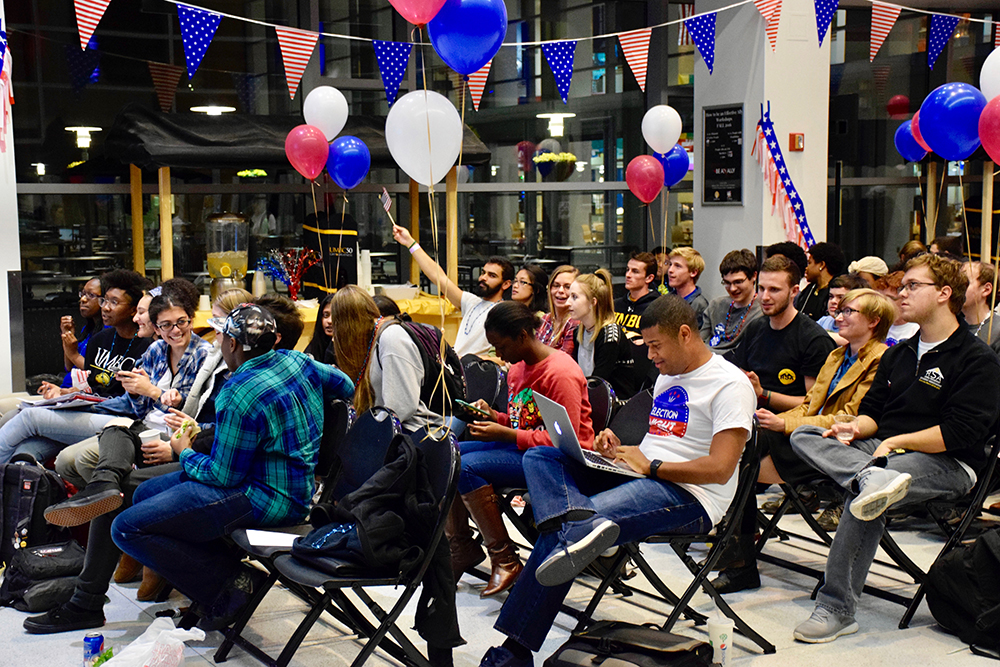 Students watch for election returns during Election Night Extravaganza, photo courtesy of SGA.
The Center for Democracy and Civic Life, Student Government Association, and Graduate Student Association all come together to host a night of community during something that can feel isolating or divisive. Since 2004, through the Election Night Extravaganza, UMBC has been making space for students to get more politically informed, engage in discussions, or simply relax with their friends.
Officer Chip
Nothing stops the flow of foot traffic on Academic Row like Officer Chip. With a love for belly rubs, Chip is unlike most campus officials. This pup (in reality a brown lab, and not a Chesapeake Bay Retriever—we don’t hold it against her) was welcomed to campus in 2019 as the 4th university comfort dog in the nation. Officially, her duties include accompanying Sgt. Jamie Cheatem to crisis situations to provide comfort and support. She attends wellness events like lunchtime walks in the RAC and provides stress relief at various finals events. She’s also part of the campus police ride along program.
 Every time Officer Chip walks down Academic Row, she draws an adoring crowd.
Although she’s still somewhat new to campus, she’s stolen all our hearts. She’s popular on social media and in person, and has done more than her part to help UMBC maintain community, creating a cozy sense of place on her walks about campus and providing a much needed relief from the stress of living in a pandemic.
*****
All photos by Marlayna Demond ’11, unless otherwise noted.
]]>
By Charis Lawson ’20 and Randianne Leyshon ’09 Although still a young university, UMBC has unique long-standing traditions, made especially dear to students and alumni because so many of...
https://umbc.edu/stories/what-makes-a-retriever/
https://beta.my.umbc.edu/api/v0/pixel/news/119437/guest@my.umbc.edu/df9db30a56fa254029bacefe1e7c822a/api/pixel
campus-life
magazine
umbc
UMBC News & Magazine
https://beta.my.umbc.edu/groups/umbc-news-magazine
https://assets1-beta.my.umbc.edu/system/shared/avatars/groups/000/001/943/24435aa6207c452e7bc15cc74b42c7bb/xsmall.png?1748556657
https://assets1-beta.my.umbc.edu/system/shared/avatars/groups/000/001/943/24435aa6207c452e7bc15cc74b42c7bb/original.png?1748556657
https://assets2-beta.my.umbc.edu/system/shared/avatars/groups/000/001/943/24435aa6207c452e7bc15cc74b42c7bb/xxlarge.png?1748556657
https://assets2-beta.my.umbc.edu/system/shared/avatars/groups/000/001/943/24435aa6207c452e7bc15cc74b42c7bb/xlarge.png?1748556657
https://assets3-beta.my.umbc.edu/system/shared/avatars/groups/000/001/943/24435aa6207c452e7bc15cc74b42c7bb/large.png?1748556657
https://assets1-beta.my.umbc.edu/system/shared/avatars/groups/000/001/943/24435aa6207c452e7bc15cc74b42c7bb/medium.png?1748556657
https://assets2-beta.my.umbc.edu/system/shared/avatars/groups/000/001/943/24435aa6207c452e7bc15cc74b42c7bb/small.png?1748556657
https://assets1-beta.my.umbc.edu/system/shared/avatars/groups/000/001/943/24435aa6207c452e7bc15cc74b42c7bb/xsmall.png?1748556657
https://assets2-beta.my.umbc.edu/system/shared/avatars/groups/000/001/943/24435aa6207c452e7bc15cc74b42c7bb/xxsmall.png?1748556657
UMBC News & Magazine
0
0
false
Thu, 28 Apr 2022 18:23:29 -0400
Thu, 28 Apr 2022 18:23:29 -0400
Diaper Need Emerges as Health Indicator During Pandemic
By Lauren A. Clay, associate professor, Emergency Health Services, UMBC and Emily Belarmino, University of Vermont
The Research Brief is a short take about interesting academic work.
The big idea
During the first year of the COVID-19 pandemic, more than a third of Massachusetts households with a child under 5 didn’t have enough diapers to change their child as often as needed, according to our survey. A baby without enough diapers might have more doctor visits for diaper rash and urinary tract infections. But we also found a link between diaper need and other concerns, like depression and chronic illness, that are less obvious and seemingly unrelated.
Our data for this study came from an online survey of Massachusetts residents led by The Greater Boston Food Bank from October 2020 and to January 2021. To compile, analyze and interpret the data, we had help from former food bank volunteer and Harvard biostatistics student Nick Birk, along with the food bank’s epidemiologist, Rachel Zack.
We looked at more than 3,000 responses from participants in the food bank’s survey. Of those, we selected the 353 respondents who reported having a child age 4 or under using diapers. We then asked them specifically, “If you have children in diapers, do you ever feel that you do not have enough diapers to change them as often as you would like?”
We found that 36% of families with young children went without enough diapers during the pandemic.
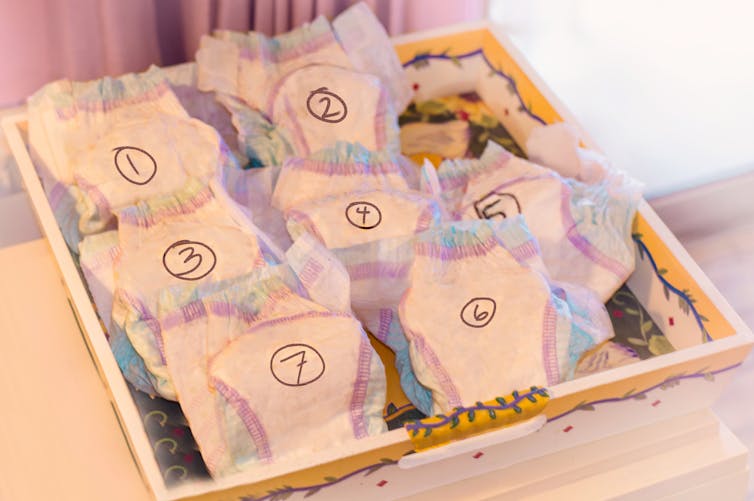
But diaper need is about more than bare baby bottoms. We found that in households with the greatest diaper need there is also a greater likelihood of other significant concerns. For example, we found that people who reported diaper need were also more likely to report symptoms of depression or living in a home where someone had a chronic illness.
Previous research has highlighted the stress of needing but being unable to get diapers for a baby. The link between diaper need and chronic illness adds substantial evidence that households dealing with health issues are more likely to struggle with other hardships like food insecurity and unmet medical needs.
Among those at greater risk of not having enough diapers are parents or caregivers under 26 years of age, Latino parents or caregivers and people with less than a high school education. This might be related to the relatively limited resources these parents and caregivers have to draw upon to meet their daily needs.
Why it matters
Diapers are an essential child care need and a significant expense for families with young children. The National Diaper Bank Network defines “diaper need” as “lacking a sufficient supply of diapers to keep an infant or child clean, dry and healthy.” The group estimates that the average cost of a month’s supply of diapers is US$80-$100. Public aid programs for families with low incomes generally do not provide diapers.
We had previously identified links between diaper need and food-related hardship. Our newer study sheds light on the situation during the COVID-19 pandemic and brings more income-related findings, such as the fact that diaper need is more common in households where someone lost a job. We also found more need for diapers in households with a 2019 income of less than $50,000 than in those with higher incomes. Speaking of income, our findings show that pandemic diaper need persisted despite most U.S. households’ receiving federal economic stimulus payments and diaper banks’ expanding distribution. Without these factors, there might have been more families in the state without enough diapers.
What still isn’t known
We used mathematical weighting to get data representing the Massachusetts population. But we haven’t yet looked into diaper need in other states or nationally.
It’s also not yet clear what the most effective solutions are for families lacking enough diapers for their babies. We have not measured the effectiveness of diaper banks or other diaper distribution models. Legislation proposed in Massachusetts would create a diaper distribution program or give qualifying families $30 to purchase diapers each month.
Congress also has considered creating federal funding for diaper distribution programs, in 2019 and again in 2021. And in February, lawmakers proposed allowing families to cover the cost of diapers with health savings or flexible spending accounts. If these programs become reality, studying their impact and effectiveness could prove useful.
Previous research already has found, however, that providing diapers to families needing them has benefits beyond the obvious. In a 2017 study of families with low incomes, life in their households improved when they received diapers from a local diaper bank. Parents reported more positive moods, along with improved health and happiness of their children. Diaper distribution increased family members’ attendance at school, work and child care centers. And families were also able to divert household finances toward other basic needs, including utilities and medical care.
*****
Emily Belarmino, Assistant Professor of Public Health Nutrition, University of Vermont and Lauren A. Clay, Associate Professor of Emergency Health Services, University of Maryland, Baltimore County
Header image: Thirty-six percent of surveyed families with young children said they did not have enough diapers during the pandemic. Tony Arruzza/Corbis Documentary via Getty Images
This article is republished from The Conversation under a Creative Commons license. Read the original article.
]]>
By Lauren A. Clay, associate professor, Emergency Health Services, UMBC and Emily Belarmino, University of Vermont The Research Brief is a short take about interesting academic work. The...
https://umbc.edu/stories/diaper-need-emerges-as-health-indicator-during-pandemic/
https://beta.my.umbc.edu/api/v0/pixel/news/119438/guest@my.umbc.edu/4648ec6af089822fb818f11d83cb77e1/api/pixel
covid-19
discovery
emergency-health-services
magazine
the-conversation
webfeature
UMBC News & Magazine
https://beta.my.umbc.edu/groups/umbc-news-magazine
https://assets1-beta.my.umbc.edu/system/shared/avatars/groups/000/001/943/24435aa6207c452e7bc15cc74b42c7bb/xsmall.png?1748556657
https://assets1-beta.my.umbc.edu/system/shared/avatars/groups/000/001/943/24435aa6207c452e7bc15cc74b42c7bb/original.png?1748556657
https://assets2-beta.my.umbc.edu/system/shared/avatars/groups/000/001/943/24435aa6207c452e7bc15cc74b42c7bb/xxlarge.png?1748556657
https://assets2-beta.my.umbc.edu/system/shared/avatars/groups/000/001/943/24435aa6207c452e7bc15cc74b42c7bb/xlarge.png?1748556657
https://assets3-beta.my.umbc.edu/system/shared/avatars/groups/000/001/943/24435aa6207c452e7bc15cc74b42c7bb/large.png?1748556657
https://assets1-beta.my.umbc.edu/system/shared/avatars/groups/000/001/943/24435aa6207c452e7bc15cc74b42c7bb/medium.png?1748556657
https://assets2-beta.my.umbc.edu/system/shared/avatars/groups/000/001/943/24435aa6207c452e7bc15cc74b42c7bb/small.png?1748556657
https://assets1-beta.my.umbc.edu/system/shared/avatars/groups/000/001/943/24435aa6207c452e7bc15cc74b42c7bb/xsmall.png?1748556657
https://assets2-beta.my.umbc.edu/system/shared/avatars/groups/000/001/943/24435aa6207c452e7bc15cc74b42c7bb/xxsmall.png?1748556657
UMBC News & Magazine
0
0
false
Thu, 28 Apr 2022 14:44:38 -0400
Thu, 28 Apr 2022 14:44:38 -0400
Lucky in Love
St. Patrick’s Day might not be known as a day celebrating love and lifelong devotion, and True Grit’s may not come to mind as the most romantic place to eat, but for Marcie and David Zisow the booth in UMBC’s dining hall was just perfect.
The Zisows will celebrate their 50th wedding anniversary later this year, but on March 17, 2022, the couple took the time to mark the 53rd anniversary of their first conversation. “We’ve always celebrated both dates,” say Marcie and David, who first spoke to each other at a shared table in UMBC’s commissary (predating True Grit’s by several decades). She was eating a tuna sandwich packed by her mother, and he had a homemade PB&J. Marcie ’72, French, M.A. ’84, instructional development systems, a retired educator, and David ‘71, mathematics, a retired OB-GYN, laugh now at how that day played out.
“We are Jewish,” says Marcie, “but my mother, she always wanted us to wear green on St. Patrick’s Day. So I put on this ugly green plaid skirt. I really did look ugly, but that’s all I had that was green.” David admits that he was looking for a date to the mixer that Saturday night as a rebound from his previous UMBC girlfriend.
 An undated photo of David and Marcie Zisow, provided by the family.
The conversation did not start off well. As Marcie retells it, “At one o’clock the whole table gets up to go to their next class, and he stays there. He was making me nervous. He starts talking, and the next thing I know, he’s asking me to the dance.” Marcie knew of David, a pre-med student who had recently starred in UMBC’s musical production of “Stop the World, I Want to Get Off.” (“She didn’t even come see it,” David says as an aside. “I didn’t have a ride!” responds Marcie in what must be a 53-year-old conversation.)
Marcie says now, in retrospect, she surprised herself by being brutally honest with David. “What you have to understand is, I grew up in a Jewish community, in a Jewish household. I never had to say anything to anybody about being Jewish, we all understood. So I told him, ‘I don’t date people who aren’t Jewish.'” David immediately erased her fears but sharing his own Jewish heritage with her. Marcie said she didn’t waste a minute, but ran to the nearest payphone to call the girlfriend she was supposed to ride to the mixer with to cancel their plans.
Looking back, David can’t believe their luck. “The dance was an amazing evening. We just had such a good time together. We were so in tune with one another. I knew she was the one.”
The Surprise
The Zisows have been telling this tale to their four grown children for so long, that Jamie Silverman, their youngest, can tell it by heart as well. She was inspired to create a surprise celebration for her parents, recreating their meet-cute, albeit at True Grits and with slightly upgraded fare from their home-brought sandwiches. UMBC Dining immediately offered up their services, including baking an anniversary cake, playing music from the ’60s and ’70s, and creating a slideshow of Zisow pictures to show on the screens of the dining hall.
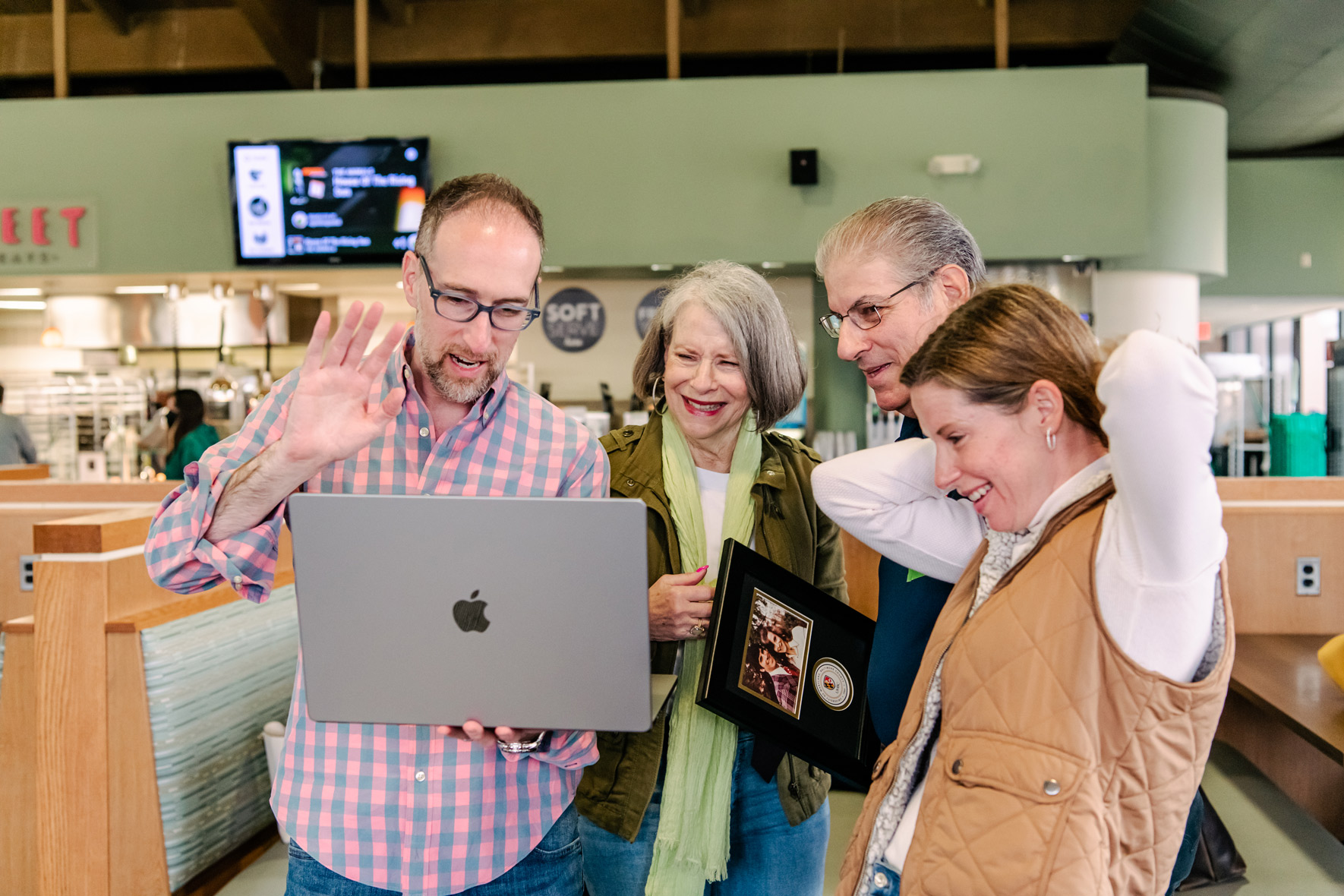
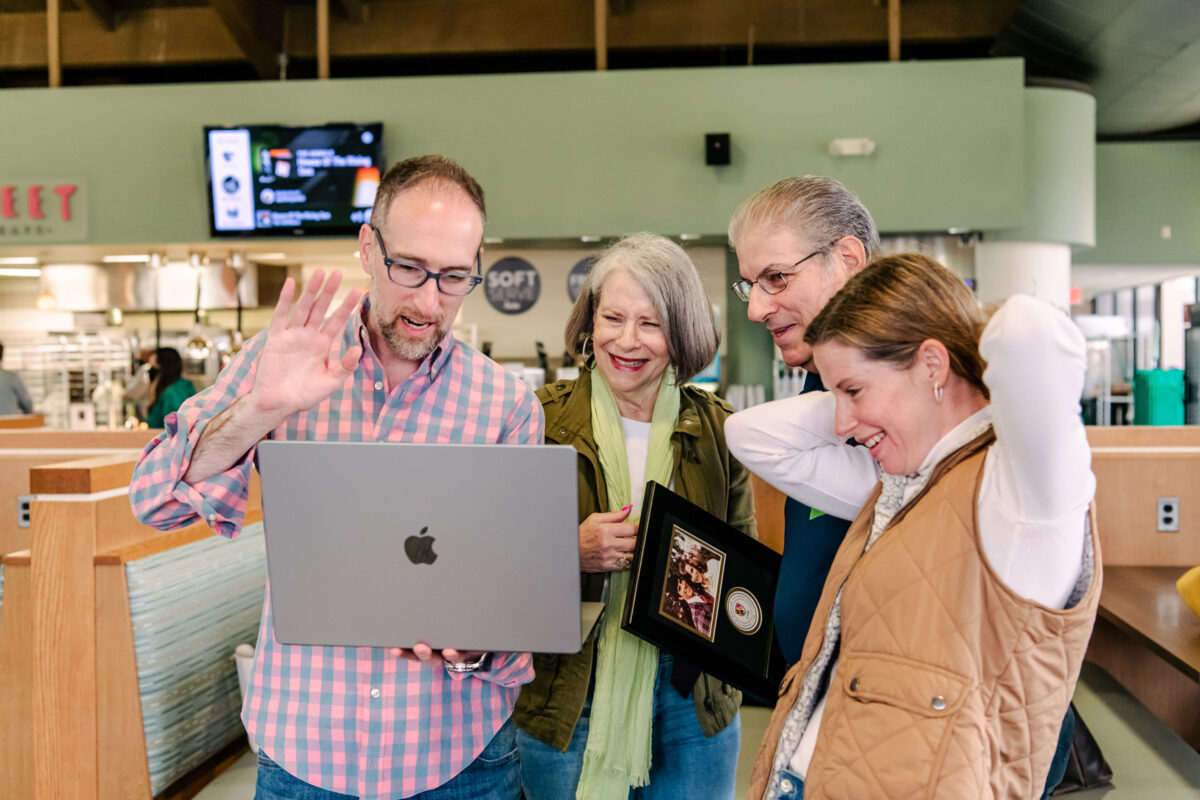 Marcie and David, with their children Brad and Jamie in True Grit’s, chatting with other family members on Zoom.
Silverman eventually had to reveal to her parents the big surprise before she drove them to campus. Arriving during a spring shower didn’t dampen their enthusiasm for the date though, and both alums had big smiles on their faces when they saw the lunch set up.
Going steady for 50+ years
The Zisows reminisce fondly on UMBC, not just for allowing them to meet, but because of how formative their time here was. “This is an old story,” says David. “When you’re the son of immigrants, you’re kind of an outsider. You’re raised differently. You have different attitudes. When I came to UMBC, I found a group of people that were completely accepting. So in the theater group, I was the med-school nerd. But that was okay.”
For Marcie, UMBC left her with lifelong friendships, but also with a career she couldn’t have imagined. When she started college, she wanted to be a hairdresser, but her father strongly encouraged her to apply for a teaching scholarship that would require two years of teaching following graduation. “I didn’t want to be a teacher because my sister was a teacher, but then it turned out that I loved it. I taught for over 20 years,” she says. Eventually Marcie returned to UMBC to earn her master’s in 1984.
Seated at a booth in the dining hall, enjoying chicken Caesar salads while Zooming with their two children who couldn’t make the in-person event, the Zisows are feeling pretty lucky. “We just took a chance,” says David. “I just knew from that moment that she was the girl for me. And then a couple weeks later I asked her to go steady, and the rest is history, as they say.”
*****
All photos by Marlayna Demond ’11, unless otherwise noted.
]]>
St. Patrick’s Day might not be known as a day celebrating love and lifelong devotion, and True Grit’s may not come to mind as the most romantic place to eat, but for Marcie and David Zisow the...
https://umbc.edu/stories/lucky-in-love/
https://beta.my.umbc.edu/api/v0/pixel/news/119439/guest@my.umbc.edu/c6151e77fc9054be188e4ed9dcb55fb8/api/pixel
alumni
dining-hall
french
instructional-development-systems
magazine
mathematics
UMBC News & Magazine
https://beta.my.umbc.edu/groups/umbc-news-magazine
https://assets1-beta.my.umbc.edu/system/shared/avatars/groups/000/001/943/24435aa6207c452e7bc15cc74b42c7bb/xsmall.png?1748556657
https://assets1-beta.my.umbc.edu/system/shared/avatars/groups/000/001/943/24435aa6207c452e7bc15cc74b42c7bb/original.png?1748556657
https://assets2-beta.my.umbc.edu/system/shared/avatars/groups/000/001/943/24435aa6207c452e7bc15cc74b42c7bb/xxlarge.png?1748556657
https://assets2-beta.my.umbc.edu/system/shared/avatars/groups/000/001/943/24435aa6207c452e7bc15cc74b42c7bb/xlarge.png?1748556657
https://assets3-beta.my.umbc.edu/system/shared/avatars/groups/000/001/943/24435aa6207c452e7bc15cc74b42c7bb/large.png?1748556657
https://assets1-beta.my.umbc.edu/system/shared/avatars/groups/000/001/943/24435aa6207c452e7bc15cc74b42c7bb/medium.png?1748556657
https://assets2-beta.my.umbc.edu/system/shared/avatars/groups/000/001/943/24435aa6207c452e7bc15cc74b42c7bb/small.png?1748556657
https://assets1-beta.my.umbc.edu/system/shared/avatars/groups/000/001/943/24435aa6207c452e7bc15cc74b42c7bb/xsmall.png?1748556657
https://assets2-beta.my.umbc.edu/system/shared/avatars/groups/000/001/943/24435aa6207c452e7bc15cc74b42c7bb/xxsmall.png?1748556657
UMBC News & Magazine
0
0
false
Thu, 28 Apr 2022 13:32:00 -0400
Thu, 28 Apr 2022 13:32:00 -0400
New Carnegie Fellow Derek Musgrove examines Black political movements in the U.S., 1980 – 1997
Readers of The New York Times opened their papers today to see a full-page announcement of the 2022 Andrew Carnegie Fellows, including UMBC’s George Derek Musgrove ‘97, history. Musgrove, an associate professor of history, is one of 28 scholars across the U.S. to receive the prestigious award this year, from nearly 300 nominations.
Meet the 2022 #CarnegieFellows! Through humanities and social sciences research, these scholars are helping us better understand the past, the enduring challenges we face, and how we can create a better future for us all. Congratulations, fellows!
]]>
Readers of The New York Times opened their papers today to see a full-page announcement of the 2022 Andrew Carnegie Fellows, including UMBC’s George Derek Musgrove ‘97, history. Musgrove, an...
https://umbc.edu/stories/new-carnegie-fellow-derek-musgrove-examines-black-political-movements-in-the-u-s-1980-1997/
https://beta.my.umbc.edu/api/v0/pixel/news/119440/guest@my.umbc.edu/0bc9e4d193b6ef4cef10358785e4978e/api/pixel
cahss
cahssresearch
community
dreshercenter
history
news
page1
policy-and-society
UMBC News & Magazine
https://beta.my.umbc.edu/groups/umbc-news-magazine
https://assets1-beta.my.umbc.edu/system/shared/avatars/groups/000/001/943/24435aa6207c452e7bc15cc74b42c7bb/xsmall.png?1748556657
https://assets1-beta.my.umbc.edu/system/shared/avatars/groups/000/001/943/24435aa6207c452e7bc15cc74b42c7bb/original.png?1748556657
https://assets2-beta.my.umbc.edu/system/shared/avatars/groups/000/001/943/24435aa6207c452e7bc15cc74b42c7bb/xxlarge.png?1748556657
https://assets2-beta.my.umbc.edu/system/shared/avatars/groups/000/001/943/24435aa6207c452e7bc15cc74b42c7bb/xlarge.png?1748556657
https://assets3-beta.my.umbc.edu/system/shared/avatars/groups/000/001/943/24435aa6207c452e7bc15cc74b42c7bb/large.png?1748556657
https://assets1-beta.my.umbc.edu/system/shared/avatars/groups/000/001/943/24435aa6207c452e7bc15cc74b42c7bb/medium.png?1748556657
https://assets2-beta.my.umbc.edu/system/shared/avatars/groups/000/001/943/24435aa6207c452e7bc15cc74b42c7bb/small.png?1748556657
https://assets1-beta.my.umbc.edu/system/shared/avatars/groups/000/001/943/24435aa6207c452e7bc15cc74b42c7bb/xsmall.png?1748556657
https://assets2-beta.my.umbc.edu/system/shared/avatars/groups/000/001/943/24435aa6207c452e7bc15cc74b42c7bb/xxsmall.png?1748556657
UMBC News & Magazine
0
0
false
Tue, 26 Apr 2022 15:28:59 -0400
Tue, 26 Apr 2022 15:28:59 -0400
“Parenting in Privilege or Peril,” a new book by UMBC’s Pamela R. Bennett, explores barriers to the “American dream”

The notion of the “American dream”—that hard work can lead to social and economic mobility—has existed in the United States for centuries, and it has been disputed for almost as long. Pamela Bennett’s new book, Parenting in Privilege or Peril: How Social Inequality Enables or Derails the American Dream (Teachers College Press, 2021), takes on this idea. Bennett, associate professor of public policy, explores some of the social, educational, and economic factors that impact the decisions that middle- and working-class parents make in hopes that their children can attain the “American dream.”
Bennett co-authored the book with Amy Lutz, associate professor of sociology at Syracuse University, and Lakshmi Jayaram, founder of the Inquiry Research Group LLC and research associate with the University of Central Florida.
“We designed a research project to investigate the role that culture and social inequality play in the educationally relevant parenting strategies of working- and middle-class parents,” explains Bennett.
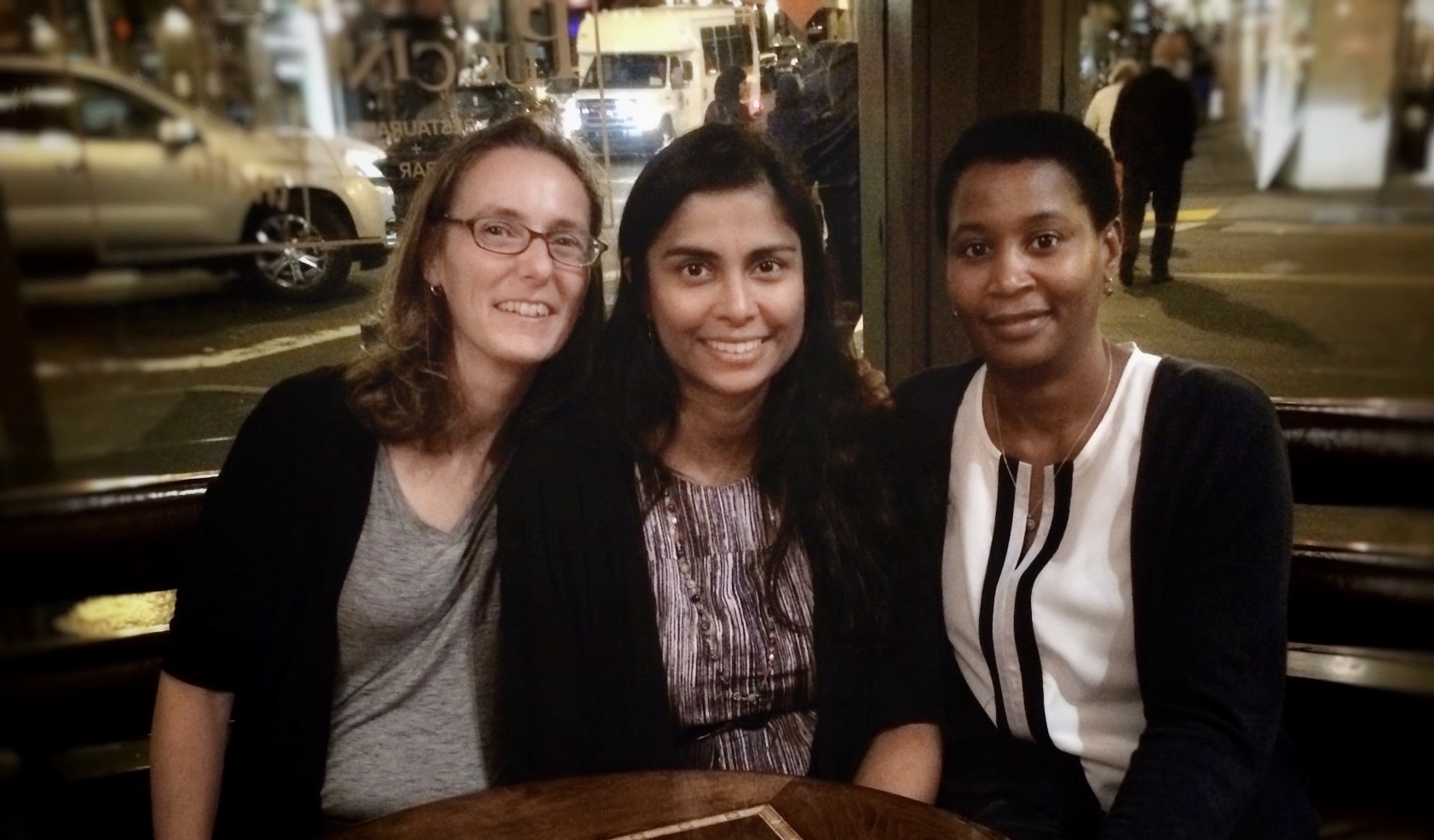
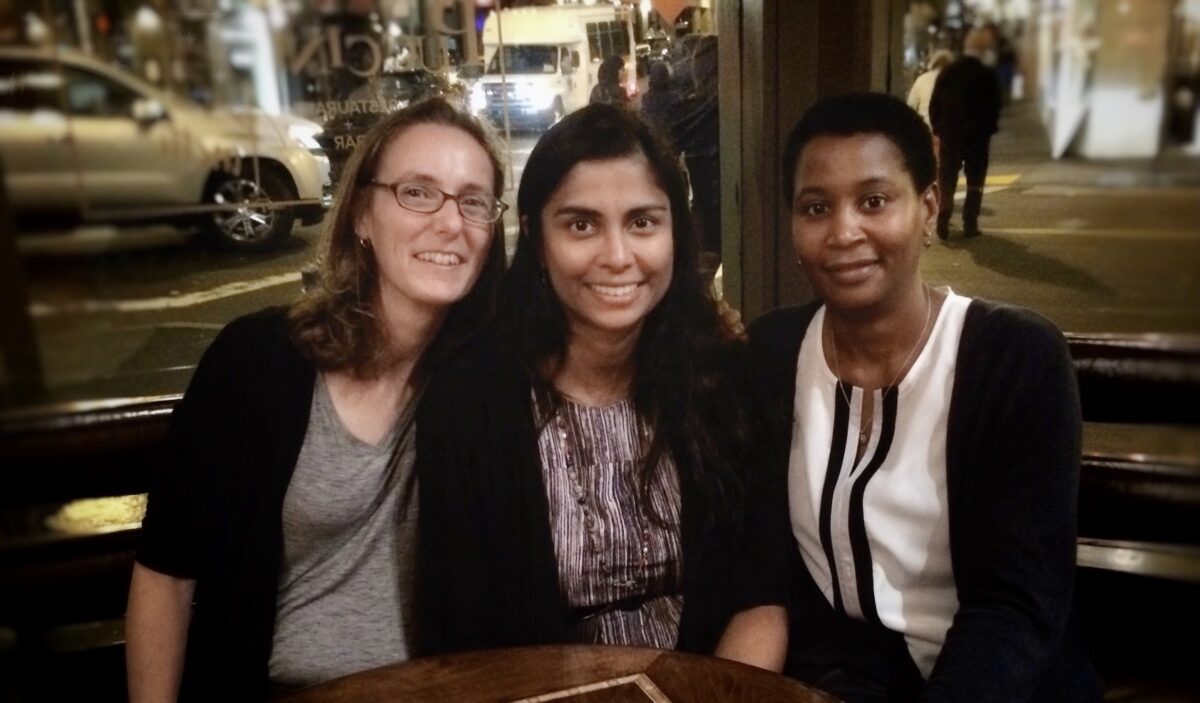 L-R: Amy Lutz, Lakshmi Jayaram, and Bennett at an American Sociological Association meeting. Photo courtesy of Bennett.
After interviewing 50 parents from two public schools in a northern U.S. city, they found that middle- and working-class parents generally engaged in two types of parenting: defensive and strategic parenting.
Beyond the parent interviews, family survey data, census data, local police data, school climate data, and social network data provided further details about the economic resources parents had access to and the social conditions that impacted their wellbeing.
Defensive and strategic parenting
These two parenting approaches emerged when the researchers explored parents’ “values, orientations, and expectations” for their children’s educational journey as a pathway to achieve the “American dream.” Parents shared their lived experiences within their neighborhoods and schools, as well as work, social, and educational networks.
The data show both middle- and working-class parents share a goal of having college-educated children. However, the resources accessible to each group vary widely, as do the social conditions in which they live, which ultimately influence how the parents approach this goal.
Middle-class families with large social networks and economic resources were more likely to practice “strategic parenting” by making key decisions leading to their child’s academic improvement, new skill development, and variety of extracurricular activities. Their decisions were influenced by access to many choices and to safe neighborhoods and schools that helped parents nurture their children. This social context encourages adolescent independence and the personal growth needed to attend college.
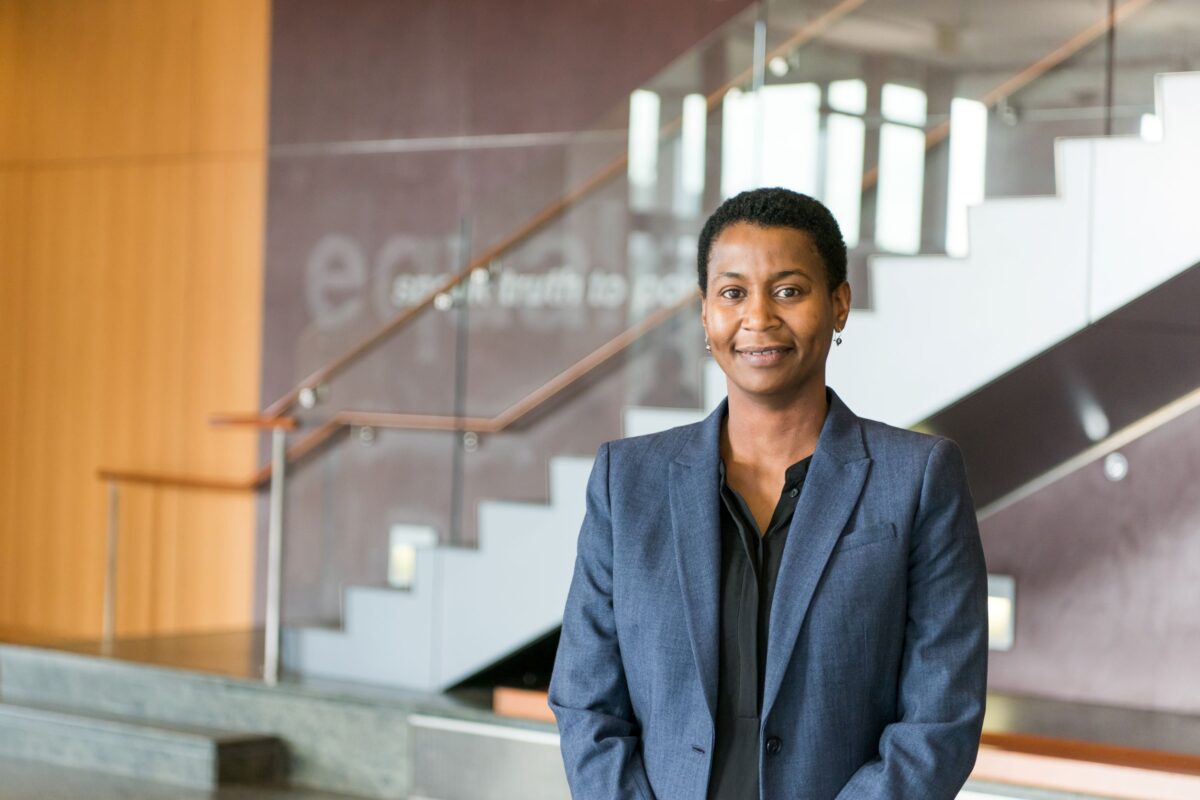 Pamela Bennett.
On the other hand, working-class parents in the study had more limited access to financial, social, and enrichment resources. They also had to consider how their child would engage in a world where neighborhoods and schools contain serious safety concerns. These safety concerns lead some parents to heavily monitor their teenagers’ interactions with peers and other adults and to shield them against actions that might limit their opportunities.
In this way, working-class parents generally practiced “defensive parenting,” making decisions that protected their children from harm while also working toward their social mobility.
Public impacts
The researchers hope this study can inform education policy designed to close the gap between working- and middle-class families’ access to the “American dream.” One key way to achieve this, Bennett suggests, is increasing neighborhood safety and access to academic enrichment activities.
Bennett’s work on social inequality in higher education and racial residential segregation spans two decades. This new book comes on the heels of several recent articles she has co-authored on topics related to affirmative action and collegiate outcomes, college entrance exams and academic performance, and talent loss among Blacks and Latinos following affirmative action bans. She and Amy Lutz will soon publish a new article, in Harvard Educational Review, on whether state bans differently affect the willingness of Black, White, Latinx, and Asian Americans to apply to selective colleges.
Recently, Bennett spoke about college access and affordability on Marketplace, a public radio show heard by more than 14 million listeners each week. She recommended hotlines for students and their families to ask questions about financial aid and direct support with completing FAFSA applications, particularly for first-generation college students. “The stakes are talent loss, frankly, for the country,” Bennett said.
Feature image: Pamela Bennett. All photos by Marlayna Demond ’11 unless otherwise indicated.
]]>
The notion of the “American dream”—that hard work can lead to social and economic mobility—has existed in the United States for centuries, and it has been disputed for almost as long. Pamela...
https://umbc.edu/stories/parenting-in-privilege-or-peril-a-new-book-by-umbcs-pamela-r-bennett-explores-barriers-to-the-american-dream/
https://beta.my.umbc.edu/api/v0/pixel/news/119441/guest@my.umbc.edu/7a4a624080d5c5f0d06f7033857bd28d/api/pixel
cahss
cahssresearch
cs3
news
policy-and-society
politicalscience
UMBC News & Magazine
https://beta.my.umbc.edu/groups/umbc-news-magazine
https://assets1-beta.my.umbc.edu/system/shared/avatars/groups/000/001/943/24435aa6207c452e7bc15cc74b42c7bb/xsmall.png?1748556657
https://assets1-beta.my.umbc.edu/system/shared/avatars/groups/000/001/943/24435aa6207c452e7bc15cc74b42c7bb/original.png?1748556657
https://assets2-beta.my.umbc.edu/system/shared/avatars/groups/000/001/943/24435aa6207c452e7bc15cc74b42c7bb/xxlarge.png?1748556657
https://assets2-beta.my.umbc.edu/system/shared/avatars/groups/000/001/943/24435aa6207c452e7bc15cc74b42c7bb/xlarge.png?1748556657
https://assets3-beta.my.umbc.edu/system/shared/avatars/groups/000/001/943/24435aa6207c452e7bc15cc74b42c7bb/large.png?1748556657
https://assets1-beta.my.umbc.edu/system/shared/avatars/groups/000/001/943/24435aa6207c452e7bc15cc74b42c7bb/medium.png?1748556657
https://assets2-beta.my.umbc.edu/system/shared/avatars/groups/000/001/943/24435aa6207c452e7bc15cc74b42c7bb/small.png?1748556657
https://assets1-beta.my.umbc.edu/system/shared/avatars/groups/000/001/943/24435aa6207c452e7bc15cc74b42c7bb/xsmall.png?1748556657
https://assets2-beta.my.umbc.edu/system/shared/avatars/groups/000/001/943/24435aa6207c452e7bc15cc74b42c7bb/xxsmall.png?1748556657
UMBC News & Magazine
0
0
false
Tue, 26 Apr 2022 13:10:00 -0400
Tue, 26 Apr 2022 13:10:00 -0400
The College Tour series on Amazon spotlights the UMBC student experience
The College Tour—hosted by Alex Boylan of “The Amazing Race” and a team of award-winning producers—offers prospective college students and their families an opportunity to get a first-hand glimpse of colleges and universities across the country, with students as the tour guides. Through interviews with students, prospective students from around the world explore academic, social, cultural, and campus life at these institutions. The latest season highlights UMBC in a full, hour-long episode.
The show’s producers visited campus in fall 2021 to film authentic stories about what it is like to be a UMBC student. Retrievers share their favorite elements of the UMBC experience. Twenty undergraduate and graduate students across a range of majors describe how they decided to attend UMBC, what student organizations and activities they are involved with on campus, and how they have been supported and inspired during their time as students.
The episode also takes viewers all around UMBC, including to academic buildings and common spaces where students might connect with friends, without needing to travel to campus. Students take viewers to the Dance Cube in the Performing Arts and Humanities Building, for a walk down Academic Row, to play foosball in the Game Room in The Commons, and to connect with friends at OCA Mocha, just off campus.
Showcasing student stories
Through this episode, students tell the UMBC story—and their own stories—in a brand new way. Students featured in the video wrote their own scripts to share their stories as artists, innovators, entrepreneurs, international students, transfer students, student leaders, scholar-athletes, and more.
Giuliana Weiss ‘22, computer science and theater, shares how being tutored in UMBC’s Writing Center was their inspiration to become a tutor to support other students. “Even from my first semester at UMBC, it was clear to me that UMBC prioritizes its students,” said Weiss, in the segment about their UMBC experience.
In addition to the students who spoke on camera, more than 250 members of the campus and surrounding Catonsville and Arbutus communities supported the project as extras and production volunteers.
Mohamed Galal, M.A. ‘25, TESOL, found a community at UMBC that welcomed him and his family when they moved to Maryland from Egypt, and helped his daughter get settled at a local public school. “At UMBC you find professors that provide support, and a friendly classroom environment,” says Galal. “This personal and academic support made me feel at home away from home.”
Watch the episode.
Banner image: Levi Lewis ’22, English and media and communication studies, (center) during filming for The College Tour. Photo by Marlayna Demond ’11 for UMBC.
]]>
The College Tour—hosted by Alex Boylan of “The Amazing Race” and a team of award-winning producers—offers prospective college students and their families an opportunity to get a first-hand glimpse...
https://umbc.edu/stories/the-college-tour-series-on-amazon-spotlights-the-umbc-student-experience/
https://beta.my.umbc.edu/api/v0/pixel/news/119442/guest@my.umbc.edu/140506cf561c2b20b5b045e353641097/api/pixel
cahss
campus
cnms
coeit
community
page1
UMBC News & Magazine
https://beta.my.umbc.edu/groups/umbc-news-magazine
https://assets1-beta.my.umbc.edu/system/shared/avatars/groups/000/001/943/24435aa6207c452e7bc15cc74b42c7bb/xsmall.png?1748556657
https://assets1-beta.my.umbc.edu/system/shared/avatars/groups/000/001/943/24435aa6207c452e7bc15cc74b42c7bb/original.png?1748556657
https://assets2-beta.my.umbc.edu/system/shared/avatars/groups/000/001/943/24435aa6207c452e7bc15cc74b42c7bb/xxlarge.png?1748556657
https://assets2-beta.my.umbc.edu/system/shared/avatars/groups/000/001/943/24435aa6207c452e7bc15cc74b42c7bb/xlarge.png?1748556657
https://assets3-beta.my.umbc.edu/system/shared/avatars/groups/000/001/943/24435aa6207c452e7bc15cc74b42c7bb/large.png?1748556657
https://assets1-beta.my.umbc.edu/system/shared/avatars/groups/000/001/943/24435aa6207c452e7bc15cc74b42c7bb/medium.png?1748556657
https://assets2-beta.my.umbc.edu/system/shared/avatars/groups/000/001/943/24435aa6207c452e7bc15cc74b42c7bb/small.png?1748556657
https://assets1-beta.my.umbc.edu/system/shared/avatars/groups/000/001/943/24435aa6207c452e7bc15cc74b42c7bb/xsmall.png?1748556657
https://assets2-beta.my.umbc.edu/system/shared/avatars/groups/000/001/943/24435aa6207c452e7bc15cc74b42c7bb/xxsmall.png?1748556657
UMBC News & Magazine
0
0
false
Fri, 22 Apr 2022 14:24:44 -0400
Fri, 22 Apr 2022 14:24:44 -0400
Incoming President Surprises an Excited Campus
Earlier in the month, on the day when news rolled out about the appointment of UMBC’s next president, the woman who will take over for retiring president Freeman Hrabowski hopped a plane and made a surprise visit to Baltimore. Valerie Sheares Ashby, current dean of Duke University’s Trinity School of Arts & Sciences, may not officially start her role until August 1, but she’s already making a splash on campus.
“I showed up today, on the day of the announcement, because there was no way I was not going to show up in Freeman Hrabowski’s office to honor him,” Sheares Ashby told a group of campus leaders the morning of April 4th.
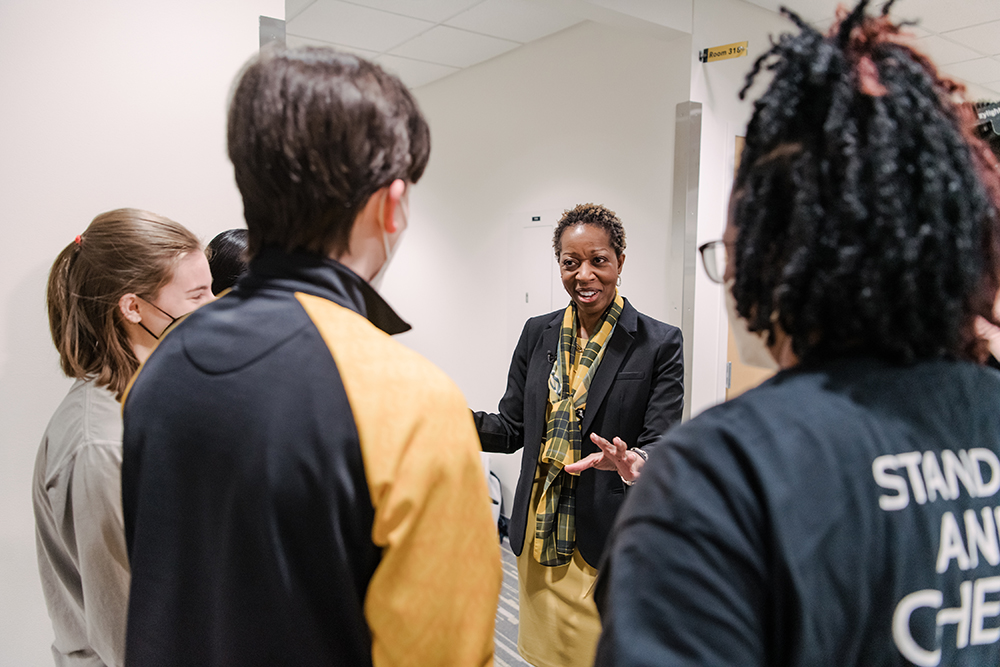
Sheares Ashby spent the rest of her two-day visit exploring campus and meeting students, faculty, staff, and civic leaders—much of the time with Hrabowski as her guide. With each new person she met, she shared her growing excitement about joining the UMBC community.
“It is a real honor,” she said. “The biggest compliment I have received today is, ‘Oh, this is perfect for you.’”
Here are some highlights from announcement week:
"I've been the first and only many times woman, the first person of color, the first woman person of color. I am accustomed to only and first, so it's the nature of the world is in which I live in," Valerie Sheares Ashby said. https://t.co/tNAzkLcXI2
— UMBC (@UMBC) April 6, 2022
“When I get nervous about following Freeman, I think, you know, they are already doing the work,” Valerie Sheares Ashby said. “It is well established what their principles and values are. And those are mine.” https://t.co/0UIG3pPR2o
— UMBC (@UMBC) April 4, 2022
Glad to see Dr. Ashby, UMBC's next president, is enjoying what will be her new view at #UMBC starting August 1! And you know it wouldn't be a visit with President Hrabowski without a quick selfie. pic.twitter.com/qLJutagdlR
— UMBC (@UMBC) April 5, 2022
Congratulations to Dr. Valerie Sheares Ashby and @UMBC. I am confident that Dr. Ashby will continue to uphold the university’s commitment to academic excellence and innovation and am excited about how she will lead the university forward. https://t.co/OEdCPqjjAF
— Speaker Adrienne A. Jones (@SpeakerAJones) April 4, 2022
Learn more about our incoming president and planned celebration events for President Hrabowski at president.umbc.edu.
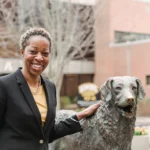
Header image and portrait of Valerie Sheares Ashby with True Grit by Marlayna Demond ’11.
]]>
Earlier in the month, on the day when news rolled out about the appointment of UMBC’s next president, the woman who will take over for retiring president Freeman Hrabowski hopped a plane and made...
https://umbc.edu/stories/incoming-president-surprises-an-excited-campus/
https://beta.my.umbc.edu/api/v0/pixel/news/119443/guest@my.umbc.edu/5fbd4759009f60a92283bcc1b1a2860c/api/pixel
campus-life
umbc-history
webfeature
UMBC News & Magazine
https://beta.my.umbc.edu/groups/umbc-news-magazine
https://assets1-beta.my.umbc.edu/system/shared/avatars/groups/000/001/943/24435aa6207c452e7bc15cc74b42c7bb/xsmall.png?1748556657
https://assets1-beta.my.umbc.edu/system/shared/avatars/groups/000/001/943/24435aa6207c452e7bc15cc74b42c7bb/original.png?1748556657
https://assets2-beta.my.umbc.edu/system/shared/avatars/groups/000/001/943/24435aa6207c452e7bc15cc74b42c7bb/xxlarge.png?1748556657
https://assets2-beta.my.umbc.edu/system/shared/avatars/groups/000/001/943/24435aa6207c452e7bc15cc74b42c7bb/xlarge.png?1748556657
https://assets3-beta.my.umbc.edu/system/shared/avatars/groups/000/001/943/24435aa6207c452e7bc15cc74b42c7bb/large.png?1748556657
https://assets1-beta.my.umbc.edu/system/shared/avatars/groups/000/001/943/24435aa6207c452e7bc15cc74b42c7bb/medium.png?1748556657
https://assets2-beta.my.umbc.edu/system/shared/avatars/groups/000/001/943/24435aa6207c452e7bc15cc74b42c7bb/small.png?1748556657
https://assets1-beta.my.umbc.edu/system/shared/avatars/groups/000/001/943/24435aa6207c452e7bc15cc74b42c7bb/xsmall.png?1748556657
https://assets2-beta.my.umbc.edu/system/shared/avatars/groups/000/001/943/24435aa6207c452e7bc15cc74b42c7bb/xxsmall.png?1748556657
UMBC News & Magazine
0
0
false
Wed, 20 Apr 2022 20:42:48 -0400
Wed, 20 Apr 2022 20:42:48 -0400
Get Your Steps in with Dr. Hrabowski

Many of President Freeman Hrabowski’s working hours are spent at his desk on the phone speaking to organizations that can help better the education of his students, but as often as possible, he’ll take a lap around the campus that has shaped him as much as he’s shaped it.
To be a Retriever in any of the last 30-plus years is to have a “Freeman story.” For many people, it’s pretty similar. President Hrabowski saw you on Academic Row and asked your major and where you went to high school. President Hrabowski got on your elevator and asked your major and where you went to high school. President Hrabowski stopped by your lunch table in The Commons and—you guessed it—asked your major and where you went to high school.
You’d think he might get tired of hearing the answers, but instead, they seem to animate him. He has rejoinders for any response and is indefatigable as he strides around the campus he’s watched grow up for more than three decades.


These are the liturgies of life at UMBC under the leadership of President Freeman Hrabowski. He’s always going to say, “Enjoy the food, I was cooking all night.” He’s going to offer you his elbow to bump instead of his hand (he was doing this cold-avoiding precaution well before COVID-19). He’s going to ask if you’ve thought about getting a Ph.D. He’s going to say “focus, focus, focus” and “keep hope alive.” No matter how many times he repeats these things, they never sound trite—and that’s where the magic comes in. He means them each and every time.
Out of Office
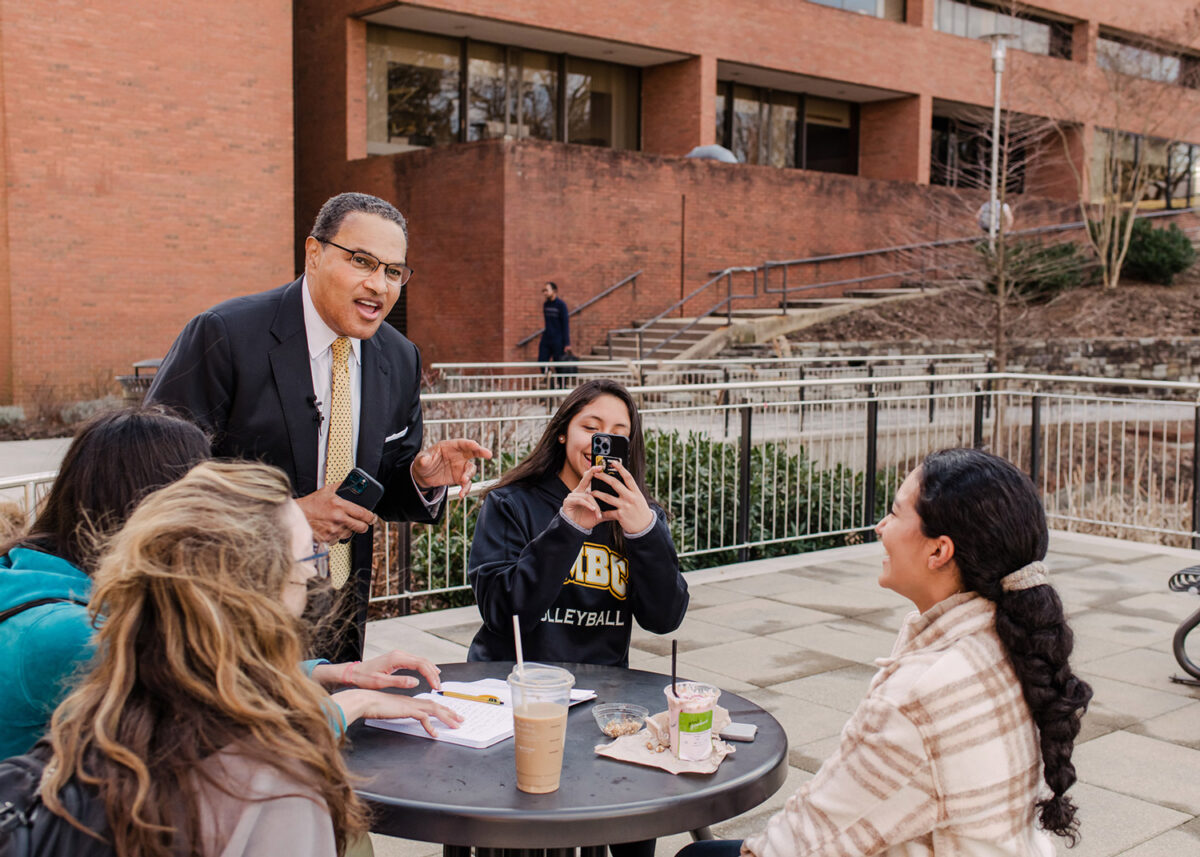
On an exceptionally sunny afternoon this February, Hrabowski walks down the packed corridor of Academic Row. Seemingly every student is outside on this summer-gift of a winter’s day. Chatting with folks like he usually does, an eager student yells out from the University Center terrace “I love you, Freeman!” drawing out all the vowels. His reception among students is closer to that of a celebrity—selfies abound. Staff step up shyly to tell him that he’s the reason they’ve stayed at UMBC for 20 years. He asks a table of students the usual questions and along the way discovers it’s someone’s special day. Without skipping a beat, Hrabowski croons “Happy Birthday” to her, entirely at home.
President’s Day
One of the unsung roles of a president is listening to the complaints and suggestions of students and staff. Hrabowski does this task not only ungrudgingly but often and methodically. By a matter of coincidence, a recent student focus group took place on President’s Day. Hrabowski made it clear to the dozen students (all recent transfers) assembled that he had one hour before he needed to head to Annapolis to speak at the Maryland State House about how we learn and talk about our nation’s founding president. For that hour, he made himself fully present and available, taking notes about registration frustrations, organic chemistry woes, study abroad hopes, and a plethora of other topics.
For each student, he had a resource to give them and encouraged them to follow up with him about their progress. “The thing a president does,” he told the students with a laugh, “is point you to other people who can help you.”
Let’s Go on a Walk
Most of Hrabowski’s days do not include hours-long walks, but as often as possible, he’ll show his guests around a campus that has made its mark on him as much as he has on it. You could nearly measure Hrabowski’s tenure by counting the rings on the trees that wrap around the loop, lending their growing shade to the walking path each year—those trunks and branches were part of an early initiative of his to shape the landscape of campus to be more welcoming.
He’ll make sure to bring guests to the meditative spot in front of a statue of his good friend and mentor, the late philanthropist Walter Sondheim. He’ll want to show visitors the new Performing Arts and Humanities Building (PAHB). One story he shares is that when legislators would come to campus early in his presidency, he’d take them to the Fine Arts Building Recital Hall so that they could experience the sound of the flushing toilets next to the auditorium, audible even during productions. The PAHB offers multiple (soundproof) performing venues and is LEED Gold certified, heightening the visibility of the arts and humanities as major components of campus and community life.
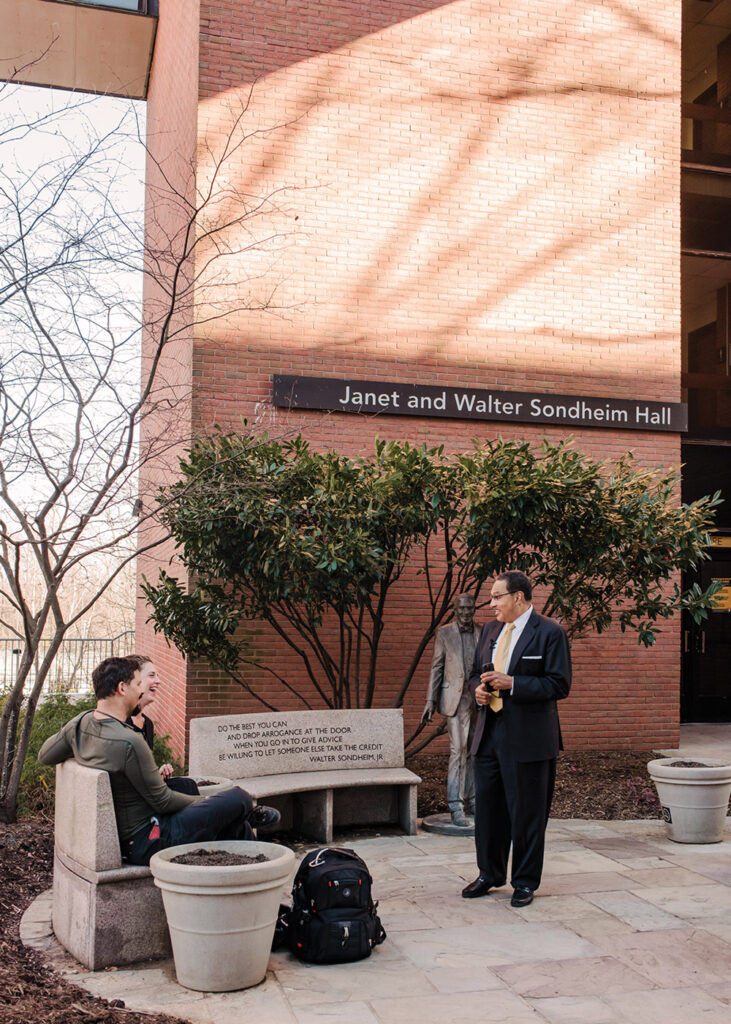
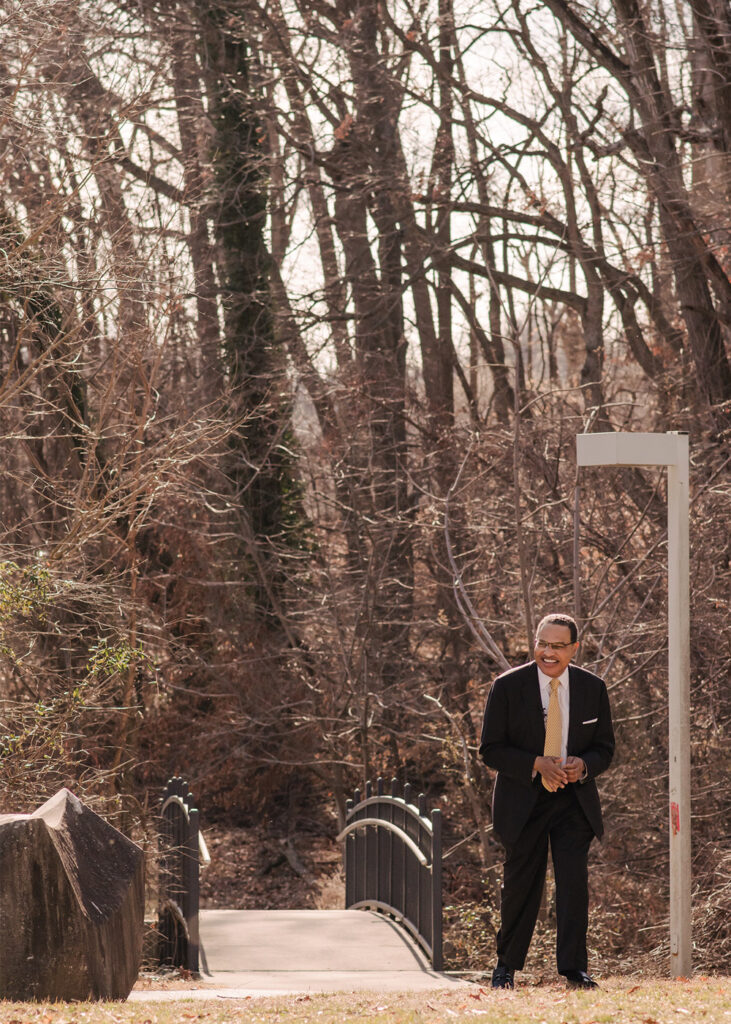
A Break on the Knoll
“Go placidly amid the noise and the haste and remember what peace there may be in silence.” In a virtual Meyerhoff Scholars Program Family Meeting, Hrabowski quotes Max Ehrmann’s “Desiderata,” a poem he memorized 60 years ago. For someone whose role does not offer many moments of silence, Hrabowski does take free seconds throughout the day. When he finds them, he says the shortest prayer, “God help me. God help us.” If he finds a whole minute free, he closes his eyes and meditates. “The hardest thing for any human is not to have a thought,” he says.
In an ideal world, like this perfect day in February, Hrabowski can make the trek down to the Knoll and Joseph Beuys Sculpture Park, across the loop from the UMBC Stadium Complex. The Knoll is a preserved woodland that’s remained undeveloped due to community members continually advocating for campus green space. He pauses here, at peace and temporarily still under the dappled shade.
Interrupting Class
The next stop is the Interdisciplinary Life Sciences Building (ILSB)—a state-of-the-art space for collaborative research and teaching. Hrabowski taps on the door of a class in a large lecture hall to listen in on discussion of math counter examples. His eagerness to be in the classroom is palpable. Hrabowski frequently says, “I have so much more to learn.” Despite the administrative duties he’s called to perform, perhaps the staying power of more than 30 years at a university is an authentic life-long desire for learning. It’s what makes his repeated interactions with students impactful instead of trite—he’s truly curious about the world around him.
Stopping for Research
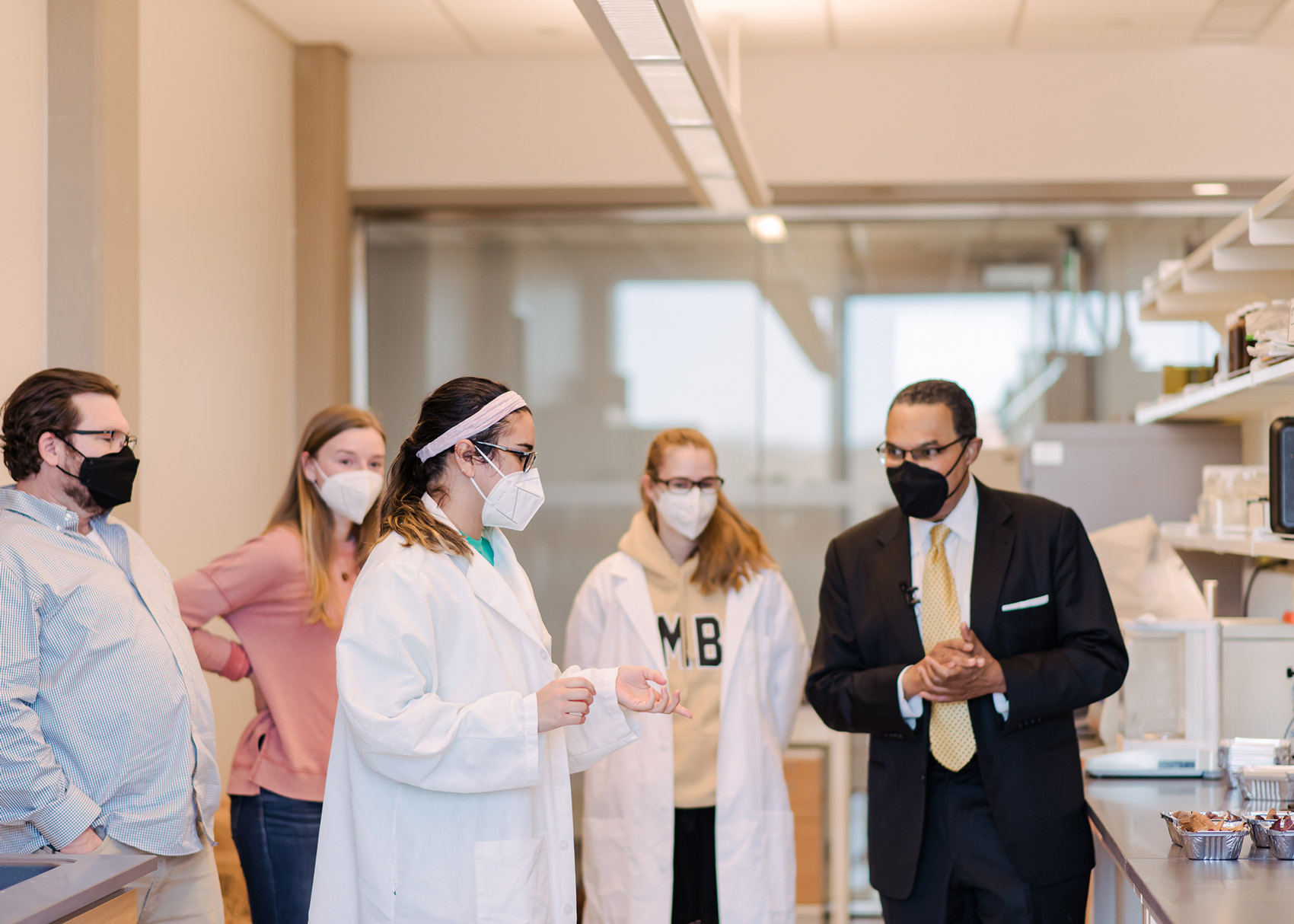
Walking into Professor Chris Swan’s Geography and Environmental Systems lab on the second floor of the ILSB, Hrabowski quips about the tray of leaves on the counter, “Are you heating that up for food or science?” “For science,” the students reassure him as they explain the leaf litter they’re working with. After collecting the specimens from streams on campus, “we measure the functional diversity and the rate of decomposition.”
“And why is this important?” Hrabowski asks genuinely, the constant wheels of learning turning in his head. Swan’s research group responds that they’re establishing the importance of biodiversity to better understand invasive diseases that have decimated some ash and oak species—questions that ultimately might help keep more of UMBC’s many trees alive and healthy.
Making Campus Inviting
It’s nearly 70 degrees outside, and we’re closing in on our step goal. Hrabowski shows no sign of slowing down. He doesn’t need a drink of water, he doesn’t need a break. He stops only to congratulate a group of women’s lacrosse players throwing a ball around the Quad for their explosive win earlier that week (17-9 against American University).
As he makes his way back to the Admin building and his desk and messages waiting for him, Hrabowski recounts an early walk in his tenure as UMBC president. He was showing then Maryland Governor William Donald Schaefer around campus. He wanted the governor to know how well UMBC functioned with the state support it received but also how it could function so much better with more investment. “And for years,” says Hrabowski, “Schaefer told people, ‘That young president walked the hell outta me all over campus,’” laughing that he just had to say “yes” to all of Hrabowski’s requests because he was too out of breath from the vigorous walk to say anything else.
But the results of that and other fruitful conversations over the past three decades are evident everywhere. Students may take The Commons for granted, or the Knoll or even lounge spaces in the library, but all of those spaces are intentional, says Hrabowski.
The campus changes he’s most proud of are those that encourage community. “There are more spaces where you can sit and commune, talk to people, reflect,” says Hrabowski. “In the early years, people would come to campus and then leave. Not all, but those who were not residential. Now there are so many places where people can just study, laugh, get to know other people, and build community over time.” In his eyes, these places of invitation are the crowning achievement of the physical campus.
Up to the 10th Floor
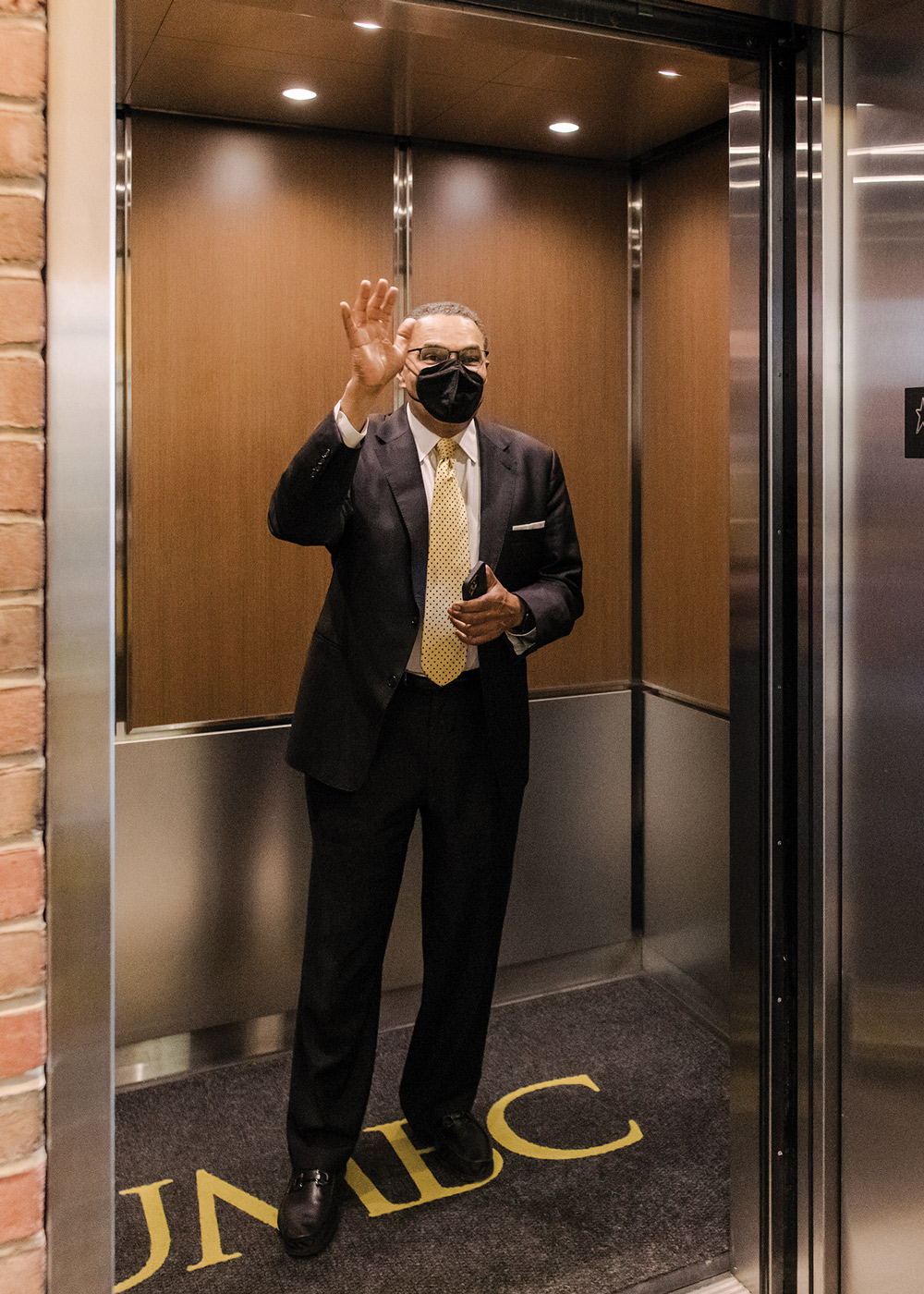
As he enters the elevator to take him to his office, he waves joyfully. The next part of his day will be very different from his crowd-pleasing walk but no less important. He’ll make the case for increased funding to the National Science Foundation. He’ll moderate a Chronicle of Higher Education virtual panel on the importance of resources for our growing population of first-generation students. He’ll make phone calls to put UMBC on the radar of state legislators and other folks in a position to give his students a better education.
He’ll forget to drink more than several cups of tea provided by his executive assistant as he endlessly and eagerly promotes a university that has shaped him as much as he has shaped it. He will do and say the same things over and over again without them sounding trite, because he believes in the power of words. And most of all, he believes we will keep hope alive.
*****
All photos by Marlayna Demond ’11.
]]>
Many of President Freeman Hrabowski’s working hours are spent at his desk on the phone speaking to organizations that can help better the education of his students, but as often as possible,...
https://umbc.edu/stories/get-your-steps-in-with-dr-hrabowski/
https://beta.my.umbc.edu/api/v0/pixel/news/119444/guest@my.umbc.edu/e6fd5aeb9721e2a0604ba41c4aea6788/api/pixel
campus-life
feature
freeman-hrabowski
magazine
spring-2022
spring-2022-special-issue
UMBC News & Magazine
https://beta.my.umbc.edu/groups/umbc-news-magazine
https://assets1-beta.my.umbc.edu/system/shared/avatars/groups/000/001/943/24435aa6207c452e7bc15cc74b42c7bb/xsmall.png?1748556657
https://assets1-beta.my.umbc.edu/system/shared/avatars/groups/000/001/943/24435aa6207c452e7bc15cc74b42c7bb/original.png?1748556657
https://assets2-beta.my.umbc.edu/system/shared/avatars/groups/000/001/943/24435aa6207c452e7bc15cc74b42c7bb/xxlarge.png?1748556657
https://assets2-beta.my.umbc.edu/system/shared/avatars/groups/000/001/943/24435aa6207c452e7bc15cc74b42c7bb/xlarge.png?1748556657
https://assets3-beta.my.umbc.edu/system/shared/avatars/groups/000/001/943/24435aa6207c452e7bc15cc74b42c7bb/large.png?1748556657
https://assets1-beta.my.umbc.edu/system/shared/avatars/groups/000/001/943/24435aa6207c452e7bc15cc74b42c7bb/medium.png?1748556657
https://assets2-beta.my.umbc.edu/system/shared/avatars/groups/000/001/943/24435aa6207c452e7bc15cc74b42c7bb/small.png?1748556657
https://assets1-beta.my.umbc.edu/system/shared/avatars/groups/000/001/943/24435aa6207c452e7bc15cc74b42c7bb/xsmall.png?1748556657
https://assets2-beta.my.umbc.edu/system/shared/avatars/groups/000/001/943/24435aa6207c452e7bc15cc74b42c7bb/xxsmall.png?1748556657
UMBC News & Magazine
0
0
false
Tue, 19 Apr 2022 14:38:34 -0400
Tue, 19 Apr 2022 14:38:34 -0400
Four tips from UMBC faculty on what to do and see at Undergraduate Research and Creative Achievement Day
UMBC’s annual Undergraduate Research and Creative Achievement Day—known on campus as URCAD—has long been a must-see event. It’s a chance for community members to get a glimpse of what students have dedicated hours to exploring and creating throughout the year. This year, many wondered if the event would be in person, as COVID cases dipped, but URCAD XXVI will again be online, for the third year in a row, starting today. Why? Going virtual has boosted access and engagement.
During the pandemic, what was once a day-long in-person event shifted gears. The new online URCAD format that launched in 2020 spanned a full week. The virtual format enables community members to easily browse projects, performances, and creative works of all types. With VoiceThread, student researchers upload poster presentations, performances, and visual artwork, adding commentary and responding to questions from the online audience over a period of days rather than hours.
For each of the past two years, audiences have tuned in from nations around the world at all hours of the day, yielding unprecedented engagement.
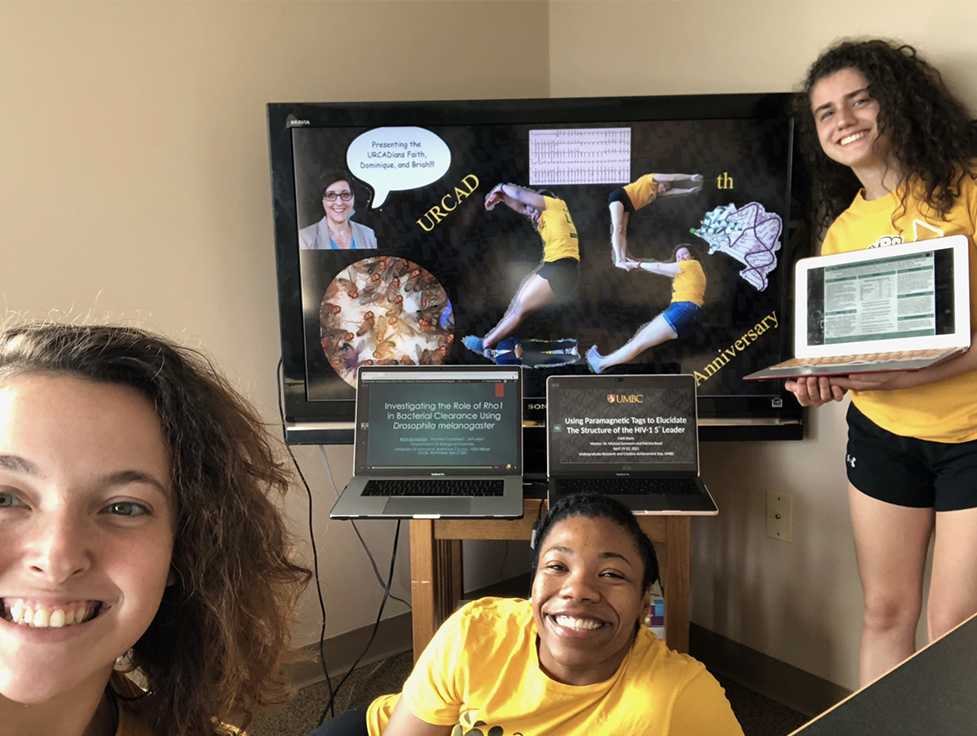 Faith Davis, left, the winner of the 2021 URCAD selfie contest, with her roommates and their URCAD presentations. Photo courtesy of Davis.
This year the event will take place April 18 – 24. Student creativity is on display, not just in the work itself but in how each presenter uses the online format to their advantage. Many share their work in ways that wouldn’t be possible at an in-person event with physical posters and more traditional presentations and performances.
Here are four tips from faculty whose students have participated in URCAD in years past on how to navigate this exciting event.
#1 Set aside more time than you expect. You’ll use every minute.
“Because you’ll be blown away by the depth and creativity of everyone’s projects, give yourself time to fully experience presentations, from start to finish,” says Lia Purpura, writer in residence at UMBC. “As when attending any big conference—pace yourself.”
Consider starting by taking the time to explore the full list of URCAD projects, which is available by student name and department. You can search for specific terms that interest you, or peruse “sneak peeks” of highlighted projects.
#2 Post a comment or question—it makes a huge difference.
“Interact with the presenters via VoiceThread. Since this year is virtual, the presentations will be live over several days and presenters will have a chance to answer questions and take comments within the VoiceThread platform,” explains Corrie Parks, assistant professor of visual arts.
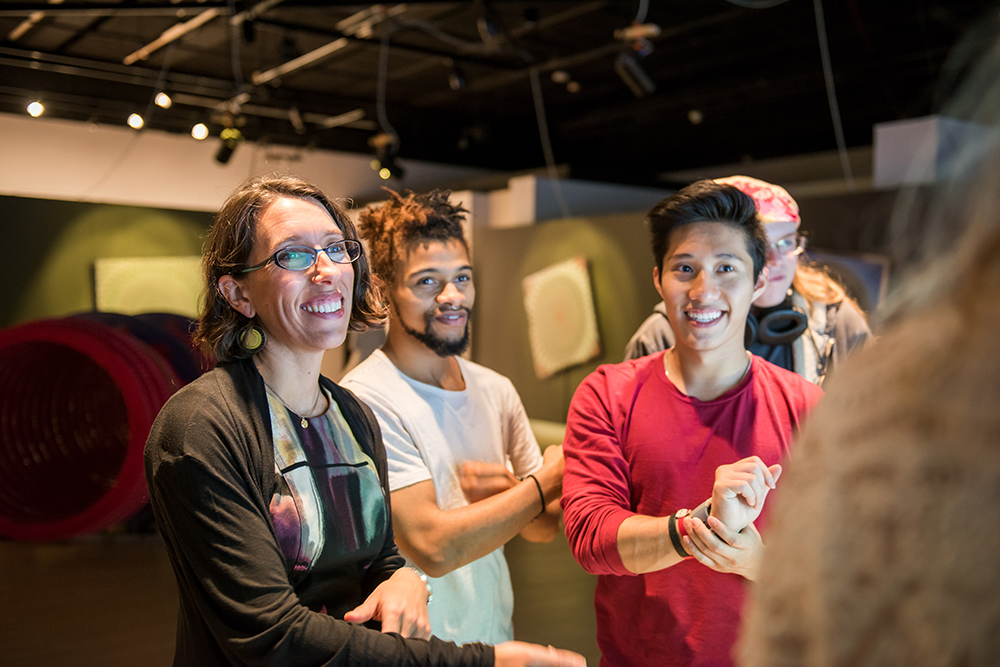
Corrie Parks, visual arts, smiles with students at an art exhibit.
Parks’ students often share their animations through URCAD. “As a presenter, it’s a great encouragement to get a question or comment, because then they know someone is watching their presentation,” she shares. Instructions on how to use VoiceThread are available through an online visitor guide.
#3 Seek out projects on topics that are new to you.
URCAD is a great chance for people interested in the same topic to connect with each other. It’s also a wonderful opportunity to explore something that’s entirely new.
Marc Olano, associate dean of academic programs and learning for UMBC’s College of Engineering and Information Technology, says, “Don’t forget the creative achievement pieces. There can be a lot of focus on the research side of the Undergraduate Research and Creative Achievement Day, but the artistic work is well worth checking out!”
Olano is also director of the game development track in computer science, so it’s no surprise when he shares, “I am, of course, partial to the games!”
#4 Always catch the keynote speaker. They offer relatable advice.
“The keynote is with no doubt a highlight of the event. It usually is a perfect combination of inspiring work accomplishments and career advice at the personal and professional level,” says Fernando Vonhoff, assistant professor of biological sciences.
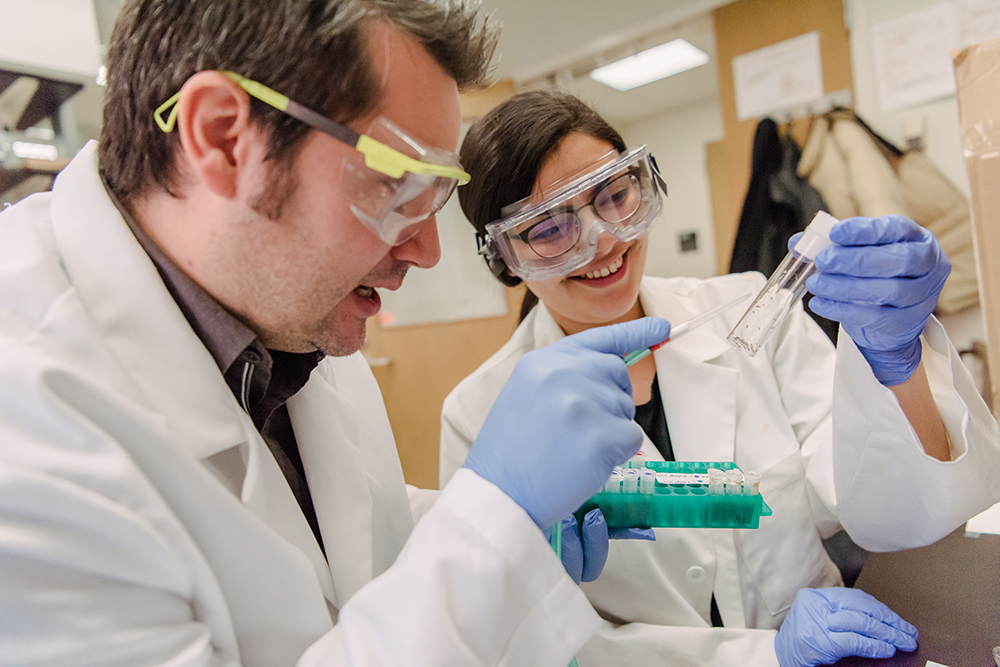
Fernando Vonhoff, biological sciences, works with a student in his lab.
“It is encouraging for anyone to hear from people who had to work hard and overcome all kinds of challenges to get where they are now,” Vonhoff says. “Most importantly, we get a realistic feeling that we can do it, too.”
This year’s keynote speaker is Kaitlyn Sadtler’11, biological sciences, introduced by President Freeman Hrabowski. Sadtler is an Earl Stadtman tenure-track investigator at the National Institute of Biomedical Imaging and Bioengineering, a division of the NIH, and a UMBC Alumni Award winner.
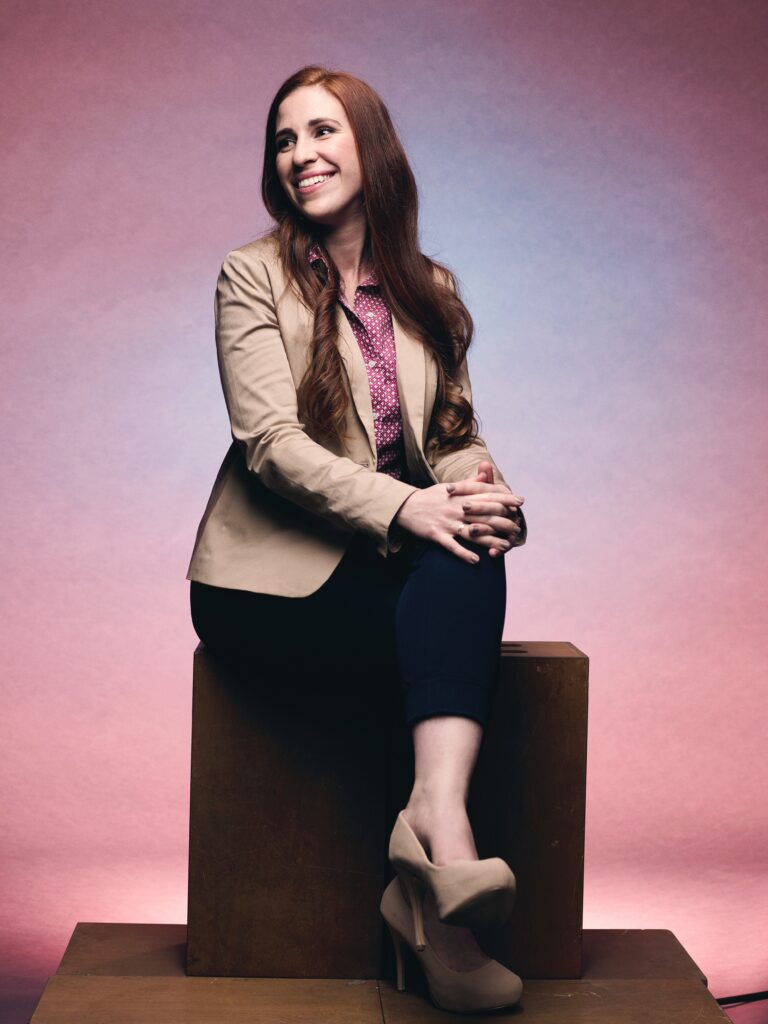 Portrait of Kaitlyn Sadtler by Bret Hartman/TED, provided by Sadtler.
Sadtler will discuss her work studying SARS-CoV-2 infections as well as her path from student to scientist.
Participants and attendees alike are invited to share their URCAD advice, experience, and congratulations to students via #UMBCurcad.
Featured image: An illuminated signboard welcomes people to URCAD. All photos by Marlayna Demond ’11 for UMBC, unless otherwise noted.
]]>
UMBC’s annual Undergraduate Research and Creative Achievement Day—known on campus as URCAD—has long been a must-see event. It’s a chance for community members to get a glimpse of what students...
https://umbc.edu/stories/four-tips-from-umbc-faculty-on-what-to-do-and-see-at-undergraduate-research-and-creative-achievement-day/
https://beta.my.umbc.edu/api/v0/pixel/news/119445/guest@my.umbc.edu/7ec7e74d20bd918f45a91667460b063b/api/pixel
arts-and-culture
cahss
cnms
coeit
news
research
science-and-tech
urcad
UMBC News & Magazine
https://beta.my.umbc.edu/groups/umbc-news-magazine
https://assets1-beta.my.umbc.edu/system/shared/avatars/groups/000/001/943/24435aa6207c452e7bc15cc74b42c7bb/xsmall.png?1748556657
https://assets1-beta.my.umbc.edu/system/shared/avatars/groups/000/001/943/24435aa6207c452e7bc15cc74b42c7bb/original.png?1748556657
https://assets2-beta.my.umbc.edu/system/shared/avatars/groups/000/001/943/24435aa6207c452e7bc15cc74b42c7bb/xxlarge.png?1748556657
https://assets2-beta.my.umbc.edu/system/shared/avatars/groups/000/001/943/24435aa6207c452e7bc15cc74b42c7bb/xlarge.png?1748556657
https://assets3-beta.my.umbc.edu/system/shared/avatars/groups/000/001/943/24435aa6207c452e7bc15cc74b42c7bb/large.png?1748556657
https://assets1-beta.my.umbc.edu/system/shared/avatars/groups/000/001/943/24435aa6207c452e7bc15cc74b42c7bb/medium.png?1748556657
https://assets2-beta.my.umbc.edu/system/shared/avatars/groups/000/001/943/24435aa6207c452e7bc15cc74b42c7bb/small.png?1748556657
https://assets1-beta.my.umbc.edu/system/shared/avatars/groups/000/001/943/24435aa6207c452e7bc15cc74b42c7bb/xsmall.png?1748556657
https://assets2-beta.my.umbc.edu/system/shared/avatars/groups/000/001/943/24435aa6207c452e7bc15cc74b42c7bb/xxsmall.png?1748556657
UMBC News & Magazine
0
0
false
Mon, 18 Apr 2022 20:45:15 -0400
Mon, 18 Apr 2022 20:45:15 -0400
 Parenting didn’t stop when the pandemic started. kali9/E+ via Getty Images
 Many Black mothers were front-line workers who couldn’t heed the message on Chicago Mayor Lori Lightfoot’s mask in the early days of the pandemic. AP Photo/Nam Y. Huh
 None of the Black moms in the study went to the protests George Floyd’s death spurred in 2020. Natasha Moustache/Getty Images News via Getty Images
 Homes without enough diapers were also more likely to have depression and chronic illness among family members.