<?xml version="1.0"?>
<News hasArchived="false" page="1" pageCount="1" pageSize="10" timestamp="Fri, 24 Apr 2026 09:25:10 -0400" url="https://beta.my.umbc.edu/groups/instructional-technology/posts.xml?tag=ecar">
<NewsItem contentIssues="true" id="145116" important="false" status="posted" url="https://beta.my.umbc.edu/groups/instructional-technology/posts/145116">
<Title>National IT Survey Highlights Teaching and Learning Trends</Title>
<Tagline>Please complete the survey if you&#8217;re selected this year</Tagline>
<Body>
<![CDATA[
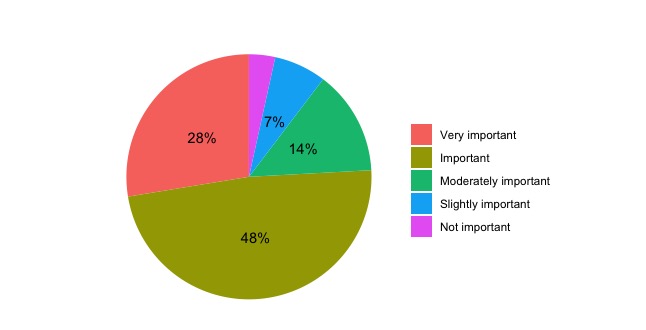
    <div class="html-content">Since 2006, <a href="https://www.educause.edu/" rel="nofollow external" class="bo">EDUCAUSE</a>, the professional association for IT in higher education, has conducted an annual survey of students about their technology usage and preferences and, beginning in 2014, a survey of faculty on similar topics. <a href="https://www.educause.edu/ecar/research-publications/2023/students-and-technology-report-flexibility-choice-and-equity-in-the-student-experience/introduction-and-key-findings" rel="nofollow external" class="bo">In 2023</a>, nearly 2,000 students from across 10 U.S. institutions participated in the study.<br><br>With the exception of 2014, UMBC has <a href="https://doit.umbc.edu/about/metrics/undergrads-and-it/" rel="nofollow external" class="bo">participated</a> every year in this ongoing research. The resulting longitudinal data have helped us <a href="https://doit.umbc.edu/news/?id=71974" rel="nofollow external" class="bo">benchmark trends</a>, such as <a href="https://doit.umbc.edu/itnm/post/64256/" rel="nofollow external" class="bo">the increasing ubiquity of smart devices</a>. These insights have, in turn, led to advancements, <a href="https://doit.umbc.edu/post/125428/" rel="nofollow external" class="bo">including the adoption of phone-based responseware</a>.<br><br>As with previous administrations of these surveys, this year we will randomly select 25% of UMBC students and faculty to participate. If you are among those selected, you will receive an invitation later this week. Please complete the survey to help us better understand and support your needs. Your feedback is invaluable in helping us enhance technology services and support.<br><br>Reflecting on the insights gained from previous years’ participation, the results of the 2023 surveys offer valuable perspectives on student and faculty preferences.<br><br><div>The 2023 Student and Faculty surveys were deployed beginning last September. The results revealed student preference shifting toward online and hybrid instructional options. On a Likert scale ranging from strongly agree to strongly disagree, 30% of respondents expressed a preference for online learning, 40% disagreed with this sentiment, and the remaining 30% were neutral. Furthermore, 88% of respondents either agreed or strongly agreed that students should have the autonomy to choose the instructional modality that best suits them.</div><div><strong><br></strong></div><div><strong>Figure 1: Every student should be able to participate in course activities in whatever ways work best for them (Students)</strong></div><p><span><span><img src="https://lh7-rt.googleusercontent.com/docsz/AD_4nXc-lJF4LodWYmzQ1H6cCdfnzobeFBstCOmCEgUkK8TgZhv4j4M2Yp-7ZrS8EkA5PGNqPZCAtiTkju4M_oaiDID0Jjrb7XahpTAeDA6pQs5XTBlWnDIePuv0dnZCA0E9VN6DKB-S_Mk9C4lsOMnlX3PrH8CM?key=s8Uk1zce7au4l6aqS0k5aA" width="624" height="319" style="max-width: 100%; height: auto;"></span></span></p><div>Students often choose alternatives to traditional face-to-face instruction due to various external factors, such as family and work commitments or accessibility limitations with campus-based instruction. For these individuals, the absence of alternative formats can pose an insurmountable barrier to accessing higher education opportunities, both generally and, more specifically, at UMBC. Our faculty respondents acknowledge this individual preference for instructional format, with 76% identifying flexibility in teaching modality as either “Important” or “Very Important”.<strong><br></strong></div><div><strong><br></strong></div><div><strong>Figure 2: How important is policy supporting flexibility in teaching modality? (Faculty)</strong></div><p><span><span><img src="https://lh7-rt.googleusercontent.com/docsz/AD_4nXebGJwibJ7eYbWppM-rINfS-kB-rYONNOrTPTIvt9CsXNOIq0z0UtQ0aF8SoVZMLKcCesiSlEFVBVCXRaO40CcENa6fqOeIKoZfYX6M562yy-C-fMgDqq3TF52i2fBffl3HW3OySLc1KJei69Wo8GdelTk?key=s8Uk1zce7au4l6aqS0k5aA" width="624" height="319" style="max-width: 100%; height: auto;"></span></span></p>Flexibility in instructional modality was also a principal theme highlighted by EDUCAUSE when providing their survey <a href="https://www.educause.edu/ecar/research-publications/2023/students-and-technology-report-flexibility-choice-and-equity-in-the-student-experience/reflections-and-next-steps" rel="nofollow external" class="bo">reflections and next steps</a>. <br>Image by <a href="https://www.freepik.com/free-vector/round-background-with-person-filling-out-form_1078424.htm#query=survey&amp;position=2&amp;from_view=search&amp;track=sph" rel="nofollow external" class="bo">Freepik</a><br></div>
]]>
</Body>
<Summary>Since 2006, EDUCAUSE, the professional association for IT in higher education, has conducted an annual survey of students about their technology usage and preferences and, beginning in 2014, a...</Summary>
<Website>https://doit.umbc.edu/post/145116/</Website>
<TrackingUrl>https://beta.my.umbc.edu/api/v0/pixel/news/145116/guest@my.umbc.edu/68a3d481b212ab759eb657f3dea35bd7/api/pixel</TrackingUrl>
<Tag>doit</Tag>
<Tag>ecar</Tag>
<Tag>educause</Tag>
<Tag>survey</Tag>
<Group token="instructional-technology">Instructional Technology</Group>
<GroupUrl>https://beta.my.umbc.edu/groups/instructional-technology</GroupUrl>
<AvatarUrl>https://assets2-beta.my.umbc.edu/system/shared/avatars/groups/000/001/164/dec3b026b81ee6d890a8f82f75c94a2e/xsmall.png?1446126703</AvatarUrl>
<AvatarUrl size="original">https://assets1-beta.my.umbc.edu/system/shared/avatars/groups/000/001/164/dec3b026b81ee6d890a8f82f75c94a2e/original.png?1446126703</AvatarUrl>
<AvatarUrl size="xxlarge">https://assets2-beta.my.umbc.edu/system/shared/avatars/groups/000/001/164/dec3b026b81ee6d890a8f82f75c94a2e/xxlarge.png?1446126703</AvatarUrl>
<AvatarUrl size="xlarge">https://assets1-beta.my.umbc.edu/system/shared/avatars/groups/000/001/164/dec3b026b81ee6d890a8f82f75c94a2e/xlarge.png?1446126703</AvatarUrl>
<AvatarUrl size="large">https://assets1-beta.my.umbc.edu/system/shared/avatars/groups/000/001/164/dec3b026b81ee6d890a8f82f75c94a2e/large.png?1446126703</AvatarUrl>
<AvatarUrl size="medium">https://assets4-beta.my.umbc.edu/system/shared/avatars/groups/000/001/164/dec3b026b81ee6d890a8f82f75c94a2e/medium.png?1446126703</AvatarUrl>
<AvatarUrl size="small">https://assets3-beta.my.umbc.edu/system/shared/avatars/groups/000/001/164/dec3b026b81ee6d890a8f82f75c94a2e/small.png?1446126703</AvatarUrl>
<AvatarUrl size="xsmall">https://assets2-beta.my.umbc.edu/system/shared/avatars/groups/000/001/164/dec3b026b81ee6d890a8f82f75c94a2e/xsmall.png?1446126703</AvatarUrl>
<AvatarUrl size="xxsmall">https://assets3-beta.my.umbc.edu/system/shared/avatars/groups/000/001/164/dec3b026b81ee6d890a8f82f75c94a2e/xxsmall.png?1446126703</AvatarUrl>
<Sponsor>Instructional Technology</Sponsor>
<ThumbnailUrl size="xxlarge">https://assets3-beta.my.umbc.edu/system/shared/thumbnails/news/000/145/116/5ecfe17c34d737ec6000dab0ecc1768b/xxlarge.jpg?1730125856</ThumbnailUrl>
<ThumbnailUrl size="xlarge">https://assets4-beta.my.umbc.edu/system/shared/thumbnails/news/000/145/116/5ecfe17c34d737ec6000dab0ecc1768b/xlarge.jpg?1730125856</ThumbnailUrl>
<ThumbnailUrl size="large">https://assets2-beta.my.umbc.edu/system/shared/thumbnails/news/000/145/116/5ecfe17c34d737ec6000dab0ecc1768b/large.jpg?1730125856</ThumbnailUrl>
<ThumbnailUrl size="medium">https://assets2-beta.my.umbc.edu/system/shared/thumbnails/news/000/145/116/5ecfe17c34d737ec6000dab0ecc1768b/medium.jpg?1730125856</ThumbnailUrl>
<ThumbnailUrl size="small">https://assets4-beta.my.umbc.edu/system/shared/thumbnails/news/000/145/116/5ecfe17c34d737ec6000dab0ecc1768b/small.jpg?1730125856</ThumbnailUrl>
<ThumbnailUrl size="xsmall">https://assets4-beta.my.umbc.edu/system/shared/thumbnails/news/000/145/116/5ecfe17c34d737ec6000dab0ecc1768b/xsmall.jpg?1730125856</ThumbnailUrl>
<ThumbnailUrl size="xxsmall">https://assets2-beta.my.umbc.edu/system/shared/thumbnails/news/000/145/116/5ecfe17c34d737ec6000dab0ecc1768b/xxsmall.jpg?1730125856</ThumbnailUrl>
<PawCount>7</PawCount>
<CommentCount>0</CommentCount>
<CommentsAllowed>true</CommentsAllowed>
<PostedAt>Mon, 28 Oct 2024 11:19:02 -0400</PostedAt>
<EditAt>Mon, 28 Oct 2024 11:49:45 -0400</EditAt>
</NewsItem>

<NewsItem contentIssues="true" id="128337" important="false" status="posted" url="https://beta.my.umbc.edu/groups/instructional-technology/posts/128337">
<Title>Students' Interest Shifts Toward Hybrid and Online Learning</Title>
<Tagline>Key Findings: Modality Preferences and Access Demands</Tagline>
<Body>
<![CDATA[
    <div class="html-content">Based on a national survey of undergraduates and IT, 18% of UMBC respondents stated a preference for courses that are mostly to fully online (compared to 33% nationally). That preference for online learning is up from approximately 6% pre-pandemic.  Additionally, 53% of UMBC students (compared with 41% nationally) indicated a preference for all or mostly face-to-face(F2F) instruction. By contrast, in 2018 and 2019 versions of the same survey, an average of 69% of UMBC respondents preferred all or mostly F2F instruction.<br><br>More than 800 students from a <a href="https://www.educause.edu/ecar/research-publications/2022/students-and-technology-report-rebalancing-the-student-experience/methodology-and-acknowledgments" rel="nofollow external" class="bo">nationally representative sample</a> responded to the 2022 “Undergraduates and IT” survey, which was  administered by the Educause Center for Applied Research (<a href="http://www.educause.edu/ecar" rel="nofollow external" class="bo">ECAR</a>) in collaboration with <a href="https://www.ipsos.com/en-us/solutions/public-affairs/knowledgepanel" rel="nofollow external" class="bo">Ipsos KnowledgePanel</a>. UMBC has participated every year <a href="https://doit.umbc.edu/about/metrics/undergrads-and-it/" rel="nofollow external" class="bo">since 2006</a>. ECAR data have been beneficial to inform decision making, particularly amidst the pandemic. Additionally, our involvement has provided critical insights for <a href="https://doit.umbc.edu/news/?id=71974" rel="nofollow external" class="bo">benchmarking trends</a> such as <a href="https://doit.umbc.edu/itnm/post/64256/" rel="nofollow external" class="bo">the increasing ubiquity of smart devices</a>, which has, in turn, allowed for advancements such as <a href="https://doit.umbc.edu/post/125428/" rel="nofollow external" class="bo">the adoption of phone-based responseware</a>.<br><br>Interestingly, the ECAR  findings echo those of <a href="https://doit.umbc.edu/itnm/post/99554/" rel="nofollow external" class="bo">DoIT’s spring 2022 faculty survey</a>, which indicated a shift in pre/post-pandemic teaching preference away from traditional face-to-face models. Additionally, based on their experiences with online and blended courses, 72% of students indicated they were just as or more likely to take a course with a similar modality again in the future. <br><br>Technology limitations, including network reliability and device access were principal themes highlighted by EDUCAUSE for <a href="https://library.educause.edu/resources/2022/10/2022-students-and-technology-report-rebalancing-the-student-experience" rel="nofollow external" class="bo">their national responses</a>, as was a general shift in instructional modality preference away from mostly face-to-face. <br><br>The ECAR results show two thirds of UMBC respondents with adequate internet connectivity either always or very often, while 23% only had adequate access sometimes. The majority of users (86%) struggled at least occasionally to find an internet connection, and half of respondents indicated that at some point their primary device lost connectivity to the internet during class, an exam, or another synchronous activity. Student connectivity can also impact other related domains, such as academic integrity, accommodations, and testing, as highlighted by <a href="https://doit.umbc.edu/post/119088/" rel="nofollow external" class="bo">a recent faculty survey</a>.<br><br>Only 1% of survey respondents did not own a computer. The primary device for two thirds of users was a laptop, while another 19% use a desktop. Although half of those surveyed indicated using a smartphone as their secondary device, none use one as their primary solution. Only one in five respondents indicated encountering difficulties running required software on their device due to compatibility, memory, or other issues. Notably, nearly half of the students self-resolved the IT difficulties they encountered with their own knowledge and personal troubleshooting abilities, which is almost twice the rate of our institutional peer group. This outcome may be attributable to UMBC’s use of on-demand support <a href="https://wiki.umbc.edu/display/faq/Find+Help" rel="nofollow external" class="bo">FAQs</a> along with show-and-tell screencasting.<br><br>As in years past, a 25% sample of the university’s undergraduate student population was conducted, and the survey was deployed toward the end of the Spring 2022 term using direct messaging through <a href="http://my.umbc.edu/" rel="nofollow external" class="bo">myUMBC</a>. Response rates were lower this year than in past deployments, perhaps indicating a general survey fatigue associated with pandemic-related data gathering. Nonetheless, response rates were sufficient for reliable and valid conclusions, while our data aligned with and generally reflect those of our peer institutions. <br><br><div>~By <a href="https://doit.umbc.edu/itnm/staff/penniston/" rel="nofollow external" class="bo">Tom Penniston</a></div><div><br></div><div>Image by <a href="https://www.freepik.com/free-vector/round-background-with-person-filling-out-form_1078424.htm#query=survey&amp;position=2&amp;from_view=search&amp;track=sph" rel="nofollow external" class="bo">Freepik</a></div></div>
]]>
</Body>
<Summary>Based on a national survey of undergraduates and IT, 18% of UMBC respondents stated a preference for courses that are mostly to fully online (compared to 33% nationally). That preference for...</Summary>
<Website>https://doit.umbc.edu/post/128337/</Website>
<TrackingUrl>https://beta.my.umbc.edu/api/v0/pixel/news/128337/guest@my.umbc.edu/54c06a7757d1e5e0887df6f312894c1f/api/pixel</TrackingUrl>
<Tag>ecar</Tag>
<Tag>hybrid</Tag>
<Tag>online</Tag>
<Tag>penniston</Tag>
<Tag>survey</Tag>
<Tag>technology</Tag>
<Tag>trends</Tag>
<Group token="instructional-technology">Instructional Technology</Group>
<GroupUrl>https://beta.my.umbc.edu/groups/instructional-technology</GroupUrl>
<AvatarUrl>https://assets2-beta.my.umbc.edu/system/shared/avatars/groups/000/001/164/dec3b026b81ee6d890a8f82f75c94a2e/xsmall.png?1446126703</AvatarUrl>
<AvatarUrl size="original">https://assets1-beta.my.umbc.edu/system/shared/avatars/groups/000/001/164/dec3b026b81ee6d890a8f82f75c94a2e/original.png?1446126703</AvatarUrl>
<AvatarUrl size="xxlarge">https://assets2-beta.my.umbc.edu/system/shared/avatars/groups/000/001/164/dec3b026b81ee6d890a8f82f75c94a2e/xxlarge.png?1446126703</AvatarUrl>
<AvatarUrl size="xlarge">https://assets1-beta.my.umbc.edu/system/shared/avatars/groups/000/001/164/dec3b026b81ee6d890a8f82f75c94a2e/xlarge.png?1446126703</AvatarUrl>
<AvatarUrl size="large">https://assets1-beta.my.umbc.edu/system/shared/avatars/groups/000/001/164/dec3b026b81ee6d890a8f82f75c94a2e/large.png?1446126703</AvatarUrl>
<AvatarUrl size="medium">https://assets4-beta.my.umbc.edu/system/shared/avatars/groups/000/001/164/dec3b026b81ee6d890a8f82f75c94a2e/medium.png?1446126703</AvatarUrl>
<AvatarUrl size="small">https://assets3-beta.my.umbc.edu/system/shared/avatars/groups/000/001/164/dec3b026b81ee6d890a8f82f75c94a2e/small.png?1446126703</AvatarUrl>
<AvatarUrl size="xsmall">https://assets2-beta.my.umbc.edu/system/shared/avatars/groups/000/001/164/dec3b026b81ee6d890a8f82f75c94a2e/xsmall.png?1446126703</AvatarUrl>
<AvatarUrl size="xxsmall">https://assets3-beta.my.umbc.edu/system/shared/avatars/groups/000/001/164/dec3b026b81ee6d890a8f82f75c94a2e/xxsmall.png?1446126703</AvatarUrl>
<Sponsor>Instructional Technology</Sponsor>
<ThumbnailUrl size="xxlarge">https://assets2-beta.my.umbc.edu/system/shared/thumbnails/news/000/128/337/2b64e5de985c471408a38e9c3fdffbae/xxlarge.jpg?1665414579</ThumbnailUrl>
<ThumbnailUrl size="xlarge">https://assets1-beta.my.umbc.edu/system/shared/thumbnails/news/000/128/337/2b64e5de985c471408a38e9c3fdffbae/xlarge.jpg?1665414579</ThumbnailUrl>
<ThumbnailUrl size="large">https://assets4-beta.my.umbc.edu/system/shared/thumbnails/news/000/128/337/2b64e5de985c471408a38e9c3fdffbae/large.jpg?1665414579</ThumbnailUrl>
<ThumbnailUrl size="medium">https://assets3-beta.my.umbc.edu/system/shared/thumbnails/news/000/128/337/2b64e5de985c471408a38e9c3fdffbae/medium.jpg?1665414579</ThumbnailUrl>
<ThumbnailUrl size="small">https://assets2-beta.my.umbc.edu/system/shared/thumbnails/news/000/128/337/2b64e5de985c471408a38e9c3fdffbae/small.jpg?1665414579</ThumbnailUrl>
<ThumbnailUrl size="xsmall">https://assets2-beta.my.umbc.edu/system/shared/thumbnails/news/000/128/337/2b64e5de985c471408a38e9c3fdffbae/xsmall.jpg?1665414579</ThumbnailUrl>
<ThumbnailUrl size="xxsmall">https://assets3-beta.my.umbc.edu/system/shared/thumbnails/news/000/128/337/2b64e5de985c471408a38e9c3fdffbae/xxsmall.jpg?1665414579</ThumbnailUrl>
<PawCount>5</PawCount>
<CommentCount>0</CommentCount>
<CommentsAllowed>true</CommentsAllowed>
<PostedAt>Thu, 13 Oct 2022 15:45:39 -0400</PostedAt>
</NewsItem>

</News>