Group Recognition in Social Networking Systems, MS...
Full Title: Group Recognition in Social Networking Systems, MS Defense by Nagapradeep Chinnam
MS Thesis Defense
Group Recognition in Social Networking Systems
Nagapradeep Chinnam
1:30pm Tuesday, 17 May 2011, ITE 325
Recent years have seen an exponential growth in the use of social networking systems, enabling their users to easily share information with their connections. A typical Facebook user, as an example, might have 300-400 connections which include relatives, friends, business associates and casual acquaintances. Sharing information with a such a large and diverse set of people without violating social norms or privacy can be challenging. Allowing users to define groups and restrict information sharing by group reduces the problem but introduces new ones: managing groups and their members, relations and information sharing policies. This thesis addresses the problem of maintaining group membership.
We describe a system that learns to classify a user's new connections into one or more existing groups based on the connection's attributes and relations. We demonstrate the approach using data collected from real Facebook users. The two major tasks are identifying the relevant features for the classification and selecting the learning mechanism that best suits the task. Another significant challenge is posed by hierarchical and overlapping groups. We show that our system classifies new connections into these groups with high accuracy even with only 10-20% of labeled data.
Committee:
Dr. Tim Finin (chair)
Dr. Anupam Joshi
Dr. Tim Oates
]]>
Full Title: Group Recognition in Social Networking Systems, MS Defense by Nagapradeep Chinnam MS Thesis Defense Group Recognition in Social Networking Systems Nagapradeep Chinnam 1:30pm...http://www.cs.umbc.edu/2011/05/group-recognition-in-social-networking-systems-ms-defense-by-nagapradeep-chinnam/https://beta.my.umbc.edu/api/v0/pixel/news/6914/guest@my.umbc.edu/23a0d58a1c611dc41c0b7e548eb1499d/api/pixelcomputer-sciencegraduatenewsresearchtalksComputer Science and Electrical Engineeringhttps://beta.my.umbc.edu/groups/cseehttps://assets3-beta.my.umbc.edu/system/shared/avatars/groups/000/000/099/d117dca133c64bf78a4b7696dd007189/xsmall.png?1314043393https://assets1-beta.my.umbc.edu/system/shared/avatars/groups/000/000/099/d117dca133c64bf78a4b7696dd007189/original.png?1314043393https://assets1-beta.my.umbc.edu/system/shared/avatars/groups/000/000/099/d117dca133c64bf78a4b7696dd007189/xxlarge.png?1314043393https://assets4-beta.my.umbc.edu/system/shared/avatars/groups/000/000/099/d117dca133c64bf78a4b7696dd007189/xlarge.png?1314043393https://assets3-beta.my.umbc.edu/system/shared/avatars/groups/000/000/099/d117dca133c64bf78a4b7696dd007189/large.png?1314043393https://assets1-beta.my.umbc.edu/system/shared/avatars/groups/000/000/099/d117dca133c64bf78a4b7696dd007189/medium.png?1314043393https://assets2-beta.my.umbc.edu/system/shared/avatars/groups/000/000/099/d117dca133c64bf78a4b7696dd007189/small.png?1314043393https://assets3-beta.my.umbc.edu/system/shared/avatars/groups/000/000/099/d117dca133c64bf78a4b7696dd007189/xsmall.png?1314043393https://assets3-beta.my.umbc.edu/system/shared/avatars/groups/000/000/099/d117dca133c64bf78a4b7696dd007189/xxsmall.png?1314043393Computer Science and Electrical Engineering40falseSat, 14 May 2011 09:08:41 -0400Sat, 14 May 2011 09:08:41 -0400Community Detection in Twitter, MS defense by Mohit...
Full Title: Community Detection in Twitter, MS defense by Mohit Kewalramani, 1pm Mon 5/16
MS Thesis Defense
Community Detection in Twitter
Mohit Kewalramani
1:00pm Monday, 16 May 2011, ITE 346
Twitter has evolved into a source of social, political and real time information in addition to being a means of mass-communication and marketing. Monitoring and analyzing information on Twitter can lead to invaluable insights, which might otherwise be hard to get using conventional media resources. An important task in analyzing highly networked information sources like twitter is to identify communities that are formed. A community on twitter can be defined as a set of users that are more similar to other members than to non-members.
We present a technique to devise a similarity metric between any two users on twitter based on the similarity of their content, links and metadata. The link structure on Twitter can be characterized using the twitter notion of followers, being followed and the @Mentions, @Reply and @RT tags in tweets. Content similarity is characterized by the words in the tweets combined with the hash-tags they are annotated with. Meta-data similarity includes similarity based on other sources of user information such as location, age and gender. We then use this similarity metric to cluster users into communities using spectral and bottom-up agglomerative hierarchical clustering. We evaluate the performance of clustering using different similarity measures on different types of datasets. We also present a heuristic to find communities in twitter that take advantage of the network characteristics of twitter.
Committee:
Dr. Tim Finin (chair)
Dr. Anupam Joshi
Dr. Tim Oates
]]>
Full Title: Community Detection in Twitter, MS defense by Mohit Kewalramani, 1pm Mon 5/16 MS Thesis Defense Community Detection in Twitter Mohit Kewalramani 1:00pm Monday, 16 May 2011,...http://www.cs.umbc.edu/2011/05/community-detection-in-twitter-ms-defense-by-mohit-kewalramani-1pm-mon-516/https://beta.my.umbc.edu/api/v0/pixel/news/6859/guest@my.umbc.edu/4a200655689815516c0cb3802823660c/api/pixelcomputer-scienceeventsgraduatenewsresearchtalksComputer Science and Electrical Engineeringhttps://beta.my.umbc.edu/groups/cseehttps://assets3-beta.my.umbc.edu/system/shared/avatars/groups/000/000/099/d117dca133c64bf78a4b7696dd007189/xsmall.png?1314043393https://assets1-beta.my.umbc.edu/system/shared/avatars/groups/000/000/099/d117dca133c64bf78a4b7696dd007189/original.png?1314043393https://assets1-beta.my.umbc.edu/system/shared/avatars/groups/000/000/099/d117dca133c64bf78a4b7696dd007189/xxlarge.png?1314043393https://assets4-beta.my.umbc.edu/system/shared/avatars/groups/000/000/099/d117dca133c64bf78a4b7696dd007189/xlarge.png?1314043393https://assets3-beta.my.umbc.edu/system/shared/avatars/groups/000/000/099/d117dca133c64bf78a4b7696dd007189/large.png?1314043393https://assets1-beta.my.umbc.edu/system/shared/avatars/groups/000/000/099/d117dca133c64bf78a4b7696dd007189/medium.png?1314043393https://assets2-beta.my.umbc.edu/system/shared/avatars/groups/000/000/099/d117dca133c64bf78a4b7696dd007189/small.png?1314043393https://assets3-beta.my.umbc.edu/system/shared/avatars/groups/000/000/099/d117dca133c64bf78a4b7696dd007189/xsmall.png?1314043393https://assets3-beta.my.umbc.edu/system/shared/avatars/groups/000/000/099/d117dca133c64bf78a4b7696dd007189/xxsmall.png?1314043393Computer Science and Electrical Engineering40falseTue, 10 May 2011 14:41:31 -0400Tue, 10 May 2011 14:41:31 -0400MS defense: Lohr on Semantic Light, 2:15 Thu 5/12
MS Thesis Defense
Semantic Light: Building Blocks
Charles Lohr
2:15pm Thursday, 12 May 2011, ITE 346
The concept of Semantic Light is simply that lighting systems can be aware of what they are lighting. This offers a number of potential advantages over conventional lighting in quality and efficiency. Semantic Light requires fine grained control of the output of many lights and requires sensors to take in information about what is being lit. It uses this information to control the output lighting in great detail. By running various algorithms, Semantic Light can provide information to the user and has a number of applications including augmented reality.
Traditional lighting that is currently in wide use has limited control of quality and quantity of the light produced. Few lights for large-scale use are intended to control their output in any kind of detailed manner. Most area lighting only has a switch that must be manually turned on or off. While there are many commercial systems that allow for more fine grained control, they are typically limited to remote control, motion control and extra manual controls. These systems can be wasteful, or they may provide inappropriate amounts of light, or they may be on when no one is using them.
While other Semantic Lighting systems may focus on "green" or powern saving aspects, we concentrate instead on innovative roles Semantic Light could play as well as on the technology to make it possible to fill those roles. By emphasizing new utility and maximizing our speed to prototype, we have made several tradeoffs that will cause our system to be less efficient than it could be, even less efficient than traditional lighting systems. The ideas and concepts covered, however, could be adapted to different underlying technologies to produce a product that could provide considerable power saving over conventional lighting.
It is important to think of the many concepts covered as primary building blocks, rather than a complete commercial system. A number of refinements and extensions will be needed to produce a commercial viable product. We demonstrate all of the needed building blocks in a concise, prototyped system.
Committee:
Mark Olano
Yelena Yesha
Zary Segall (advisor)
]]>
MS Thesis Defense Semantic Light: Building Blocks Charles Lohr 2:15pm Thursday, 12 May 2011, ITE 346 The concept of Semantic Light is simply that lighting systems can be aware of what they...http://www.cs.umbc.edu/2011/05/ms-defense-lohr-on-semantic-light-215-thu-512/https://beta.my.umbc.edu/api/v0/pixel/news/6850/guest@my.umbc.edu/d8daff0b42ceee5f20f1d080c613229d/api/pixelcomputer-scienceeventsgraduatenewsresearchtalksComputer Science and Electrical Engineeringhttps://beta.my.umbc.edu/groups/cseehttps://assets3-beta.my.umbc.edu/system/shared/avatars/groups/000/000/099/d117dca133c64bf78a4b7696dd007189/xsmall.png?1314043393https://assets1-beta.my.umbc.edu/system/shared/avatars/groups/000/000/099/d117dca133c64bf78a4b7696dd007189/original.png?1314043393https://assets1-beta.my.umbc.edu/system/shared/avatars/groups/000/000/099/d117dca133c64bf78a4b7696dd007189/xxlarge.png?1314043393https://assets4-beta.my.umbc.edu/system/shared/avatars/groups/000/000/099/d117dca133c64bf78a4b7696dd007189/xlarge.png?1314043393https://assets3-beta.my.umbc.edu/system/shared/avatars/groups/000/000/099/d117dca133c64bf78a4b7696dd007189/large.png?1314043393https://assets1-beta.my.umbc.edu/system/shared/avatars/groups/000/000/099/d117dca133c64bf78a4b7696dd007189/medium.png?1314043393https://assets2-beta.my.umbc.edu/system/shared/avatars/groups/000/000/099/d117dca133c64bf78a4b7696dd007189/small.png?1314043393https://assets3-beta.my.umbc.edu/system/shared/avatars/groups/000/000/099/d117dca133c64bf78a4b7696dd007189/xsmall.png?1314043393https://assets3-beta.my.umbc.edu/system/shared/avatars/groups/000/000/099/d117dca133c64bf78a4b7696dd007189/xxsmall.png?1314043393Computer Science and Electrical Engineering10falseMon, 09 May 2011 14:02:16 -0400CSEE Research Review awards and pictures
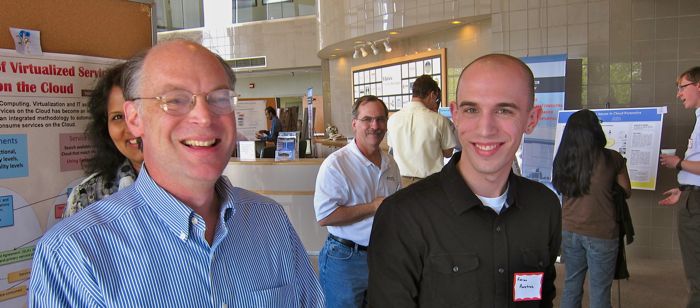
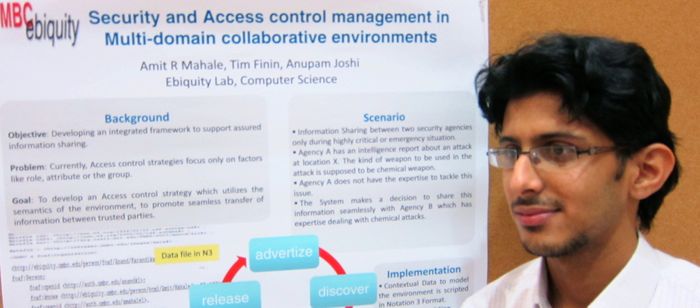
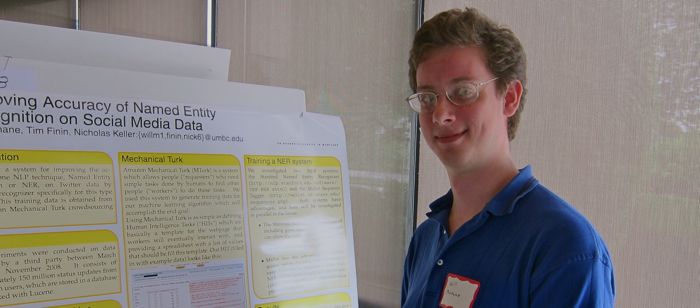
The 2011 research review event was the largest to date, with more than eighty people attending. You can see pictures from the poster session and some of the presentations online.
The CRR-11 program committee selected students for best research based on submitted papers.
]]>
2011 CSEE Research Review photos · program · posters · location · call for papers The 2011 research review event was the largest to date, with more than eighty people attending. You can see...http://www.cs.umbc.edu/2011/05/csee-research-review-awards-and-pictures/https://beta.my.umbc.edu/api/v0/pixel/news/6846/guest@my.umbc.edu/457a0c7ba3b6c9eef670ba5943b227ab/api/pixelcomputer-engineeringcomputer-sciencecseeelectrical-engineeringeventsgraduatenewsresearchundergraduateComputer Science and Electrical Engineeringhttps://beta.my.umbc.edu/groups/cseehttps://assets3-beta.my.umbc.edu/system/shared/avatars/groups/000/000/099/d117dca133c64bf78a4b7696dd007189/xsmall.png?1314043393https://assets1-beta.my.umbc.edu/system/shared/avatars/groups/000/000/099/d117dca133c64bf78a4b7696dd007189/original.png?1314043393https://assets1-beta.my.umbc.edu/system/shared/avatars/groups/000/000/099/d117dca133c64bf78a4b7696dd007189/xxlarge.png?1314043393https://assets4-beta.my.umbc.edu/system/shared/avatars/groups/000/000/099/d117dca133c64bf78a4b7696dd007189/xlarge.png?1314043393https://assets3-beta.my.umbc.edu/system/shared/avatars/groups/000/000/099/d117dca133c64bf78a4b7696dd007189/large.png?1314043393https://assets1-beta.my.umbc.edu/system/shared/avatars/groups/000/000/099/d117dca133c64bf78a4b7696dd007189/medium.png?1314043393https://assets2-beta.my.umbc.edu/system/shared/avatars/groups/000/000/099/d117dca133c64bf78a4b7696dd007189/small.png?1314043393https://assets3-beta.my.umbc.edu/system/shared/avatars/groups/000/000/099/d117dca133c64bf78a4b7696dd007189/xsmall.png?1314043393https://assets3-beta.my.umbc.edu/system/shared/avatars/groups/000/000/099/d117dca133c64bf78a4b7696dd007189/xxsmall.png?1314043393Computer Science and Electrical Engineering10falseMon, 09 May 2011 06:45:52 -0400Mon, 09 May 2011 06:45:52 -0400MS defense: Mahale on Group Centric Information...
Full Title: MS defense: Mahale on Group Centric Information Sharing, 10am Tue
MS Thesis Defense
Group Centric Information Sharing
using Hierarchical Models
Amit Mahale
10:00am Tuesday, 10 May 2011, ITE 346, UMBC
Traditional security policies are often based on the concept of “need to know” and are typified by predefined and often rigid specifications of which principals and roles are pre-authorized to access what information. A recommendations of the 9/11 commission was to find ways to move from this traditional perspective toward one that emphasizes the “need to share”. Ravi Sandhu and his colleagues have developed the Group centric secure information sharing model (gSIS) as a new model that is more adaptible to highly dynamic situations requiring information sharing. We present an implementation of gSIS and demonstrate its usefulness to usecases in information sharing in social media. Our contributions include the prototype implementation, extension to the model such as hierarchical groups and necessary and sufficient conditions, and the use of the semantic Web language OWL for representing the central gSIS concepts and associated data. Our framework uses a pragmatic approach of using semantic web technology to represent and reason about the hierarchy and procedural method to compute access decisions relying on the gSIS semantics.
Thesis Committee:
Dr. Tim Finin (chair)
Dr. Anupam Joshi
Dr. Yelena Yesha
Dr. Laura Zavala
]]>
Full Title: MS defense: Mahale on Group Centric Information Sharing, 10am Tue MS Thesis Defense Group Centric Information Sharing using Hierarchical Models Amit Mahale 10:00am Tuesday,...http://www.cs.umbc.edu/2011/05/ms-defense-mahale-on-group-centric-information-sharing-10am-tue/https://beta.my.umbc.edu/api/v0/pixel/news/6834/guest@my.umbc.edu/e90ca681916052b7056dee7badbec24a/api/pixeleventsgraduatenewsresearchtalksComputer Science and Electrical Engineeringhttps://beta.my.umbc.edu/groups/cseehttps://assets3-beta.my.umbc.edu/system/shared/avatars/groups/000/000/099/d117dca133c64bf78a4b7696dd007189/xsmall.png?1314043393https://assets1-beta.my.umbc.edu/system/shared/avatars/groups/000/000/099/d117dca133c64bf78a4b7696dd007189/original.png?1314043393https://assets1-beta.my.umbc.edu/system/shared/avatars/groups/000/000/099/d117dca133c64bf78a4b7696dd007189/xxlarge.png?1314043393https://assets4-beta.my.umbc.edu/system/shared/avatars/groups/000/000/099/d117dca133c64bf78a4b7696dd007189/xlarge.png?1314043393https://assets3-beta.my.umbc.edu/system/shared/avatars/groups/000/000/099/d117dca133c64bf78a4b7696dd007189/large.png?1314043393https://assets1-beta.my.umbc.edu/system/shared/avatars/groups/000/000/099/d117dca133c64bf78a4b7696dd007189/medium.png?1314043393https://assets2-beta.my.umbc.edu/system/shared/avatars/groups/000/000/099/d117dca133c64bf78a4b7696dd007189/small.png?1314043393https://assets3-beta.my.umbc.edu/system/shared/avatars/groups/000/000/099/d117dca133c64bf78a4b7696dd007189/xsmall.png?1314043393https://assets3-beta.my.umbc.edu/system/shared/avatars/groups/000/000/099/d117dca133c64bf78a4b7696dd007189/xxsmall.png?1314043393Computer Science and Electrical Engineering40falseSun, 08 May 2011 16:11:09 -0400Sun, 08 May 2011 16:11:09 -0400CSEE Research Review Friday May 6
The CSEE department will hold its annual research review this Friday from 9:30am to 4:00pm at the UMBC Technology Center at South Campus. Faculty, research staff and students from all of the department's programs present and discuss their latest research results. The Research Review is open to the public and is a good way for prospective collaborators and students to find out about the research our department is doing and meet and network with current faculty and students. There is ample free parking and refrehsments and lunch are provided. Directions: Take Gun Road off Rolling Road (Rt. 166) or take the UMBC “Satellite” Shuttle to South Campus.
]]>
The CSEE department will hold its annual research review this Friday from 9:30am to 4:00pm at the UMBC Technology Center at South Campus. Faculty, research staff and students from all of the...http://www.cs.umbc.edu/2011/05/csee-research-review-friday-may-6/https://beta.my.umbc.edu/api/v0/pixel/news/6751/guest@my.umbc.edu/a17bee92987bb985273548f782dc1da7/api/pixelcseeeventsgraduatenewsresearchundergraduateComputer Science and Electrical Engineeringhttps://beta.my.umbc.edu/groups/cseehttps://assets3-beta.my.umbc.edu/system/shared/avatars/groups/000/000/099/d117dca133c64bf78a4b7696dd007189/xsmall.png?1314043393https://assets1-beta.my.umbc.edu/system/shared/avatars/groups/000/000/099/d117dca133c64bf78a4b7696dd007189/original.png?1314043393https://assets1-beta.my.umbc.edu/system/shared/avatars/groups/000/000/099/d117dca133c64bf78a4b7696dd007189/xxlarge.png?1314043393https://assets4-beta.my.umbc.edu/system/shared/avatars/groups/000/000/099/d117dca133c64bf78a4b7696dd007189/xlarge.png?1314043393https://assets3-beta.my.umbc.edu/system/shared/avatars/groups/000/000/099/d117dca133c64bf78a4b7696dd007189/large.png?1314043393https://assets1-beta.my.umbc.edu/system/shared/avatars/groups/000/000/099/d117dca133c64bf78a4b7696dd007189/medium.png?1314043393https://assets2-beta.my.umbc.edu/system/shared/avatars/groups/000/000/099/d117dca133c64bf78a4b7696dd007189/small.png?1314043393https://assets3-beta.my.umbc.edu/system/shared/avatars/groups/000/000/099/d117dca133c64bf78a4b7696dd007189/xsmall.png?1314043393https://assets3-beta.my.umbc.edu/system/shared/avatars/groups/000/000/099/d117dca133c64bf78a4b7696dd007189/xxsmall.png?1314043393Computer Science and Electrical Engineering20falseTue, 03 May 2011 09:31:21 -0400Tue, 03 May 2011 09:31:21 -0400Playing to Program helps teach programming concepts
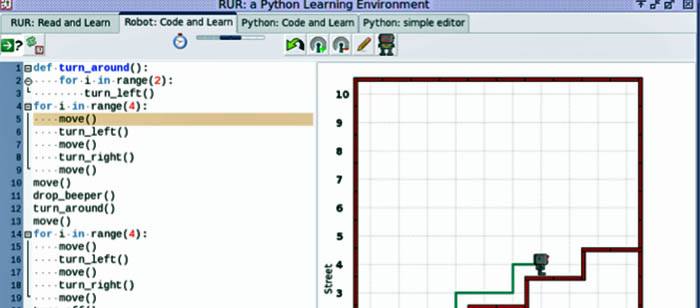
A group of CSEE students from the Maple lab is developing Playing to Program (PtP) as an intelligent tutoring system to teach programming concepts. PtP uses the open source RUR-PLE visual programming environment for Python and automatically selects and loads problems from a catalogue which the student then attempts to solve. The student's work is analyzed for correctness and the results used to update a model of her understanding of programming concepts and ability to solve complex problems. That model is then used to select the next problem to present, resulting in an adaptive learning process.
The PtP project involves both undergraduate and graduate students and is led by Professor Marie desJardins. You can get more information on PtP and download the prototype code at the PtP Google code site. CSEE undergraduate students Amy Ciavolino, Eliana Feasley, and Robert Deloatch will present the work this Friday morning at the CSEE Research Review based on a recent paper accepted at the Second Symposium on Educational Advances in Artificial Intelligence. Graduate student David Walser also recently completed a MS thesis on Problem Selection of Program Tracing Tasks in an Intelligent Tutoring System and Visual Programming Environment which will be available later in May.
]]>
A group of CSEE students from the Maple lab is developing Playing to Program (PtP) as an intelligent tutoring system to teach programming concepts. PtP uses the open source RUR-PLE visual...http://www.cs.umbc.edu/2011/05/playing-to-program-helps-teach-programming-concepts/https://beta.my.umbc.edu/api/v0/pixel/news/6725/guest@my.umbc.edu/e2986b93d8b95e333bdc728cb19a2d7f/api/pixelcomputer-sciencenewsresearchundergraduateComputer Science and Electrical Engineeringhttps://beta.my.umbc.edu/groups/cseehttps://assets3-beta.my.umbc.edu/system/shared/avatars/groups/000/000/099/d117dca133c64bf78a4b7696dd007189/xsmall.png?1314043393https://assets1-beta.my.umbc.edu/system/shared/avatars/groups/000/000/099/d117dca133c64bf78a4b7696dd007189/original.png?1314043393https://assets1-beta.my.umbc.edu/system/shared/avatars/groups/000/000/099/d117dca133c64bf78a4b7696dd007189/xxlarge.png?1314043393https://assets4-beta.my.umbc.edu/system/shared/avatars/groups/000/000/099/d117dca133c64bf78a4b7696dd007189/xlarge.png?1314043393https://assets3-beta.my.umbc.edu/system/shared/avatars/groups/000/000/099/d117dca133c64bf78a4b7696dd007189/large.png?1314043393https://assets1-beta.my.umbc.edu/system/shared/avatars/groups/000/000/099/d117dca133c64bf78a4b7696dd007189/medium.png?1314043393https://assets2-beta.my.umbc.edu/system/shared/avatars/groups/000/000/099/d117dca133c64bf78a4b7696dd007189/small.png?1314043393https://assets3-beta.my.umbc.edu/system/shared/avatars/groups/000/000/099/d117dca133c64bf78a4b7696dd007189/xsmall.png?1314043393https://assets3-beta.my.umbc.edu/system/shared/avatars/groups/000/000/099/d117dca133c64bf78a4b7696dd007189/xxsmall.png?1314043393Computer Science and Electrical Engineering50falseMon, 02 May 2011 12:59:49 -0400Mon, 02 May 2011 12:59:49 -0400CSEE students at the Graduate Research Conference
Twenty CSEE graduate students had oral or poster presentations at the 2011 GRC and CSEE alumnus Dr. Ralph Semmel gave a the keynote address. We have some photographs from the event.
Three of our graduates students were also honored by receiving awards for making outstanding presentations.
Varish Mulwad received an award for an outstanding oral presentation on his dissertation research on "Generating Knowledge from Tables".
Vast amounts of information are available in structured forms like spreadsheets, database relations, and tables found in documents and on the Web. We describe a framework for automatically understanding and interpreting information encoded in tables and generating knowledge from it. To accurately interpret a table, our framework maps every column header to class (or property wherever appropriate) from appropriate ontologies, link the data values to existing entities from a knowledge base (or map them as values of a property wherever appropriate) and identify and discover relations between various columns. Of the many domains where this work will be useful, we explore the application of this in two important domains — the medical research domain and the open government data. We also present preliminary results evaluating our framework against tables obtained from Google Squared, Wikipedia and a Google dataset.
Kavita Krishnaswamy received an award for an outstanding oral presentation on her thesis research on "Path planning a roboticarm efficiently".
Individuals with physical disabilities need assistance because of their lack of physical strength. In order to provide a solution, we propose to build an assistive robot to provide physical assistance services for individuals with disabilities in real-time through the Internet. For an assistive robotic arm with a collaborative mode of control, given the initial arm configuration we will attempt to increase the speed of response times for the user requesting physical assistance by calculating the paths of reach to the possible target goals before the time of command. The specific aims of our research project are to a) determine the trajectory path of a human arm to perform tasks; b) identify the paths of frequent use; and c) analyze ways to improve path planning performance. In the first stage, we will investigate the most frequently requested tasks of physical assistance in cases where a robotic arm will be preferred over a personal assistant. For example, if the target task is eating, we may calculate the percentage of volunteering participants picking up a fork, returning the fork, reaching for a cup, and returning the cup. In this study, we utilize the TUM kitchen data set from the Technische Universität München for motion tracking data analysis. With the collected information, we will compute the statistics of the motions to identify paths of frequent use and design the architecture with caching. We anticipate an increase in performance and time will be saved for the computation of path planning. We will begin implementing and testing the new strategies for the proposed architecture.
Akshya Iyengar received an award for an outstanding poster presentation for her thesis research on "Estimating Temporal Boundaries of Events using Social Media Data".
Social media websites like Twitter, Flickr and YouTube generate a high volume of user generated content as a major event occurs. Our goal is to automatically determine as accurately as possible when the event starts and when it ends by analyzing the volume and content of social media data. We describe a technique that estimates the temporal boundaries of anticipated events like wildfires and hurricanes and helps to monitor changes as events unfold. Estimating these temporal boundaries segments the event"related data into three major phases: the buildup to the event, the event itself, and the post"event effects and repercussions. The technique can also detect the presence and scope of significant sub"events occurring during the course of an event. For events that transpire over time and space, such as the dispersal of an oil spill, a hurricane or a spreading wildfire, we can analyze how event progressed, traveled geographically and major sub"events that occurred within the event. When applied to natural disasters and man-made disturbances, the derived data can help organizations involved in mediation efforts to track and analyze evolving events.
]]>
Twenty CSEE graduate students had oral or poster presentations at the 2011 GRC and CSEE alumnus Dr. Ralph Semmel gave a the keynote address. We have some photographs from the event. Three of our...http://www.cs.umbc.edu/2011/04/csee-students-at-the-graduate-research-conference/https://beta.my.umbc.edu/api/v0/pixel/news/6690/guest@my.umbc.edu/078fcf7db2cd759511253af3b5adddc8/api/pixeleventsgraduatenewsresearchComputer Science and Electrical Engineeringhttps://beta.my.umbc.edu/groups/cseehttps://assets3-beta.my.umbc.edu/system/shared/avatars/groups/000/000/099/d117dca133c64bf78a4b7696dd007189/xsmall.png?1314043393https://assets1-beta.my.umbc.edu/system/shared/avatars/groups/000/000/099/d117dca133c64bf78a4b7696dd007189/original.png?1314043393https://assets1-beta.my.umbc.edu/system/shared/avatars/groups/000/000/099/d117dca133c64bf78a4b7696dd007189/xxlarge.png?1314043393https://assets4-beta.my.umbc.edu/system/shared/avatars/groups/000/000/099/d117dca133c64bf78a4b7696dd007189/xlarge.png?1314043393https://assets3-beta.my.umbc.edu/system/shared/avatars/groups/000/000/099/d117dca133c64bf78a4b7696dd007189/large.png?1314043393https://assets1-beta.my.umbc.edu/system/shared/avatars/groups/000/000/099/d117dca133c64bf78a4b7696dd007189/medium.png?1314043393https://assets2-beta.my.umbc.edu/system/shared/avatars/groups/000/000/099/d117dca133c64bf78a4b7696dd007189/small.png?1314043393https://assets3-beta.my.umbc.edu/system/shared/avatars/groups/000/000/099/d117dca133c64bf78a4b7696dd007189/xsmall.png?1314043393https://assets3-beta.my.umbc.edu/system/shared/avatars/groups/000/000/099/d117dca133c64bf78a4b7696dd007189/xxsmall.png?1314043393Computer Science and Electrical Engineering100falseSat, 30 Apr 2011 13:02:26 -0400Sat, 30 Apr 2011 13:02:26 -0400Bmore video on the UMBC Games, Animation and...
Full Title: Bmore video on the UMBC Games, Animation and Interactive Media programs
Bmore has a short video report on the UMBC GAIM programs that features CSEE Professor Marc Olano, VART Professor Neal McDonald and several GAIM students.
“The video game industry may not be Maryland’s equivalent of film in Los Angeles or country music in Nashville, but it is a force. Companies such as Zynga, Firaxis, Big Huge Games, and Day 1 Studios are all based here and are responsible for some of the industry’s most interesting titles. We’re also lucky to have a robust gaming program at UMBC, where students on the creative and technical ends of the game creation process learn side-by-side how to conceptualize and create the games of tomorrow.”
]]>
Full Title: Bmore video on the UMBC Games, Animation and Interactive Media programs Bmore has a short video report on the UMBC GAIM programs that features CSEE Professor Marc Olano, VART Professor...http://www.cs.umbc.edu/2011/04/bmore-video-on-the-umbc-games-animation-and-interactive-media-programs/https://beta.my.umbc.edu/api/v0/pixel/news/6645/guest@my.umbc.edu/cbe34a271eed5ed59060b35a710b41e8/api/pixelgaim-games-gamenewsundergraduateComputer Science and Electrical Engineeringhttps://beta.my.umbc.edu/groups/cseehttps://assets3-beta.my.umbc.edu/system/shared/avatars/groups/000/000/099/d117dca133c64bf78a4b7696dd007189/xsmall.png?1314043393https://assets1-beta.my.umbc.edu/system/shared/avatars/groups/000/000/099/d117dca133c64bf78a4b7696dd007189/original.png?1314043393https://assets1-beta.my.umbc.edu/system/shared/avatars/groups/000/000/099/d117dca133c64bf78a4b7696dd007189/xxlarge.png?1314043393https://assets4-beta.my.umbc.edu/system/shared/avatars/groups/000/000/099/d117dca133c64bf78a4b7696dd007189/xlarge.png?1314043393https://assets3-beta.my.umbc.edu/system/shared/avatars/groups/000/000/099/d117dca133c64bf78a4b7696dd007189/large.png?1314043393https://assets1-beta.my.umbc.edu/system/shared/avatars/groups/000/000/099/d117dca133c64bf78a4b7696dd007189/medium.png?1314043393https://assets2-beta.my.umbc.edu/system/shared/avatars/groups/000/000/099/d117dca133c64bf78a4b7696dd007189/small.png?1314043393https://assets3-beta.my.umbc.edu/system/shared/avatars/groups/000/000/099/d117dca133c64bf78a4b7696dd007189/xsmall.png?1314043393https://assets3-beta.my.umbc.edu/system/shared/avatars/groups/000/000/099/d117dca133c64bf78a4b7696dd007189/xxsmall.png?1314043393Computer Science and Electrical Engineering40falseWed, 27 Apr 2011 21:42:27 -0400PhD student Yasaman Haghpanah scores a DC hat trick
CSEE Ph.D. student Yasaman Haghpanah achieved a Doctoral Consortium hat trick by being invited to participate in upcoming doctoral consortium events at the top three conferences in her research area: IJCAI, AAMAS, and AAAI. Doctoral Consortia have become common in computer science research communities and provide an opportunity for a group of Ph.D. students to discuss and explore their research interests and career objectives with a panel of established, senior researchers in their research area. Students must apply to participate in a doctoral consortium and the selection process is usually quite competitive. Her dissertation research is developing and evaluating a trust model for supply chain management systems using multi-agent systems techniques. Yasaman is a member of the Maple Laboratory, directed by Professor Marie desJardins.
Yasaman also had a paper accepted to the 2011 Workshop on Agent Mediated Electronic Commerce which is collocated with AAMAS in Taipei. On top of all that, as part of the AAMAS Doctoral Consortium, she will also be spending two months in Rotterdam on an extended stay at Wolf Ketter's Learning Agents Research Group at the Erasmus Research Institute of Management, Erasmus Universiteit Rotterdam.
]]>
CSEE Ph.D. student Yasaman Haghpanah achieved a Doctoral Consortium hat trick by being invited to participate in upcoming doctoral consortium events at the top three conferences in her research...http://www.cs.umbc.edu/2011/04/phd-student-yasaman-haghpanah-scores-a-dc-hat-trick/https://beta.my.umbc.edu/api/v0/pixel/news/6633/guest@my.umbc.edu/8d9b1babd45dc1163ce0a1e2e8d386b4/api/pixelcomputer-sciencegraduatenewsresearchComputer Science and Electrical Engineeringhttps://beta.my.umbc.edu/groups/cseehttps://assets3-beta.my.umbc.edu/system/shared/avatars/groups/000/000/099/d117dca133c64bf78a4b7696dd007189/xsmall.png?1314043393https://assets1-beta.my.umbc.edu/system/shared/avatars/groups/000/000/099/d117dca133c64bf78a4b7696dd007189/original.png?1314043393https://assets1-beta.my.umbc.edu/system/shared/avatars/groups/000/000/099/d117dca133c64bf78a4b7696dd007189/xxlarge.png?1314043393https://assets4-beta.my.umbc.edu/system/shared/avatars/groups/000/000/099/d117dca133c64bf78a4b7696dd007189/xlarge.png?1314043393https://assets3-beta.my.umbc.edu/system/shared/avatars/groups/000/000/099/d117dca133c64bf78a4b7696dd007189/large.png?1314043393https://assets1-beta.my.umbc.edu/system/shared/avatars/groups/000/000/099/d117dca133c64bf78a4b7696dd007189/medium.png?1314043393https://assets2-beta.my.umbc.edu/system/shared/avatars/groups/000/000/099/d117dca133c64bf78a4b7696dd007189/small.png?1314043393https://assets3-beta.my.umbc.edu/system/shared/avatars/groups/000/000/099/d117dca133c64bf78a4b7696dd007189/xsmall.png?1314043393https://assets3-beta.my.umbc.edu/system/shared/avatars/groups/000/000/099/d117dca133c64bf78a4b7696dd007189/xxsmall.png?1314043393Computer Science and Electrical Engineering200falseWed, 27 Apr 2011 08:12:30 -0400Wed, 27 Apr 2011 08:12:30 -0400