talk: Physical Layer Wireless Network Modeling and...
Full Title: talk: Physical Layer Wireless Network Modeling and SimulationEE Graduate Seminar
Physical Layer Wireless Network Modeling and Simulation
and my Technical Publishing Experience
Jon R. Ward
EE PhD Student, UMBC and
the Johns Hopkins University/Applied Physics Laboratory
11:30 – 12:45, Friday, 17 February 2012, ITE 237
Jon Ward, and coauthors Jack Burbank and Bill Kasch, recently wrote a book for IEEE Press/Wiley entitled "An Introduction to Network Modeling and Simulation for the Practicing Engineer." In this talk, Jon will provide a biographical summary of his UMBC research, the path that led to the book, and the technical publishing process. The talk will then transition to a technical discussion that highlights physical layer wireless network modeling and simulation from Chapter 3 of the book.
Jon R. Ward, PE graduated from NCSU in 2005 with an MSEE. He currently works at The Johns Hopkins Applied Physics Laboratory (JHU/APL) on projects focusing on wireless network design and interference testing of standards-based wireless technologies such as IEEE 802.11, IEEE 802.15.4, and IEEE 802.16. He has experience in wireless network modeling and simulation (M&S) and in test and evaluation (T&E) of commercial wireless equipment. He is currently a student at the University of Maryland, Baltimore County (UMBC), pursuing a Ph.D. degree in electrical engineering.
Host: Prof. Joel M. Morris
]]>
Full Title: talk: Physical Layer Wireless Network Modeling and Simulation EE Graduate Seminar Physical Layer Wireless Network Modeling and Simulation and my Technical Publishing Experience...
http://www.csee.umbc.edu/2012/02/talk-physical-layer-wireless-network-modeling-and-simulation/
https://beta.my.umbc.edu/api/v0/pixel/news/12169/guest@my.umbc.edu/4782d9be4c43cb9f39374b671c1e30a2/api/pixel
computer-engineering
electrical-engineering
graduate
news
research
talks
Computer Science and Electrical Engineering
https://beta.my.umbc.edu/groups/csee
https://assets3-beta.my.umbc.edu/system/shared/avatars/groups/000/000/099/d117dca133c64bf78a4b7696dd007189/xsmall.png?1314043393
https://assets1-beta.my.umbc.edu/system/shared/avatars/groups/000/000/099/d117dca133c64bf78a4b7696dd007189/original.png?1314043393
https://assets1-beta.my.umbc.edu/system/shared/avatars/groups/000/000/099/d117dca133c64bf78a4b7696dd007189/xxlarge.png?1314043393
https://assets4-beta.my.umbc.edu/system/shared/avatars/groups/000/000/099/d117dca133c64bf78a4b7696dd007189/xlarge.png?1314043393
https://assets3-beta.my.umbc.edu/system/shared/avatars/groups/000/000/099/d117dca133c64bf78a4b7696dd007189/large.png?1314043393
https://assets1-beta.my.umbc.edu/system/shared/avatars/groups/000/000/099/d117dca133c64bf78a4b7696dd007189/medium.png?1314043393
https://assets2-beta.my.umbc.edu/system/shared/avatars/groups/000/000/099/d117dca133c64bf78a4b7696dd007189/small.png?1314043393
https://assets3-beta.my.umbc.edu/system/shared/avatars/groups/000/000/099/d117dca133c64bf78a4b7696dd007189/xsmall.png?1314043393
https://assets3-beta.my.umbc.edu/system/shared/avatars/groups/000/000/099/d117dca133c64bf78a4b7696dd007189/xxsmall.png?1314043393
Computer Science and Electrical Engineering
2
1
true
Wed, 15 Feb 2012 20:07:08 -0500
talk: Programming Model for Data Intensive Parallel...
Full Title: talk: Programming Model for Data Intensive Parallel Applications
A Scalable, Fault Tolerant Programming Model for
Developing Data Intensive Parallel Applications
Tyler A. Simon
Faculty Research Scientist
UMBC Center for Hybrid Multicore Productivity Research
1:00pm Friday 17 February 2012, ITE 325b
Future exascale computing systems will have to execute a single program on the order of 10^8-10^9 individual, low powered processing elements. These processors need to be fed data efficiently and reliably through the duration of a parallel computation. The current methods for explicit message passing between processors provide little in terms of fault tolerance support and the overheads of system level and application checkpoint/restart incur unreasonable overheads for exascale class computing systems.
We propose the development of novel autonomic execution model and an Adaptive Runtime Resource for Intensive Applications (RRIA), which improves application reliability, scalability and performance while freeing the programmer from explicit message passing. Experiments were conducted to evaluate ARRIA's capabilities on data intensive applications, those where the majority of execution time is spent reading and writing either to local or remote memory locations. In our approach, we focus on managing data movement both on a compute node and across a cluster of nodes for the application during runtime. We use a hybrid "threaded data parallel" model in which message passing is hidden entirely from the programmer and parallel tasks are bundled and farmed to a dynamic resource pool for execution.
Tyler Simon is a Faculty Research Assistant and PhD student working for the Center for Hybrid Multicore Productivity Research in the Computer Science and Electrical Engineering Department at the University of Maryland Baltimore County. He is also a computational scientist at the NASA Center for Climate Simulation at Goddard Space Flight Center. Tyler is interested in the theoretical and practical aspects of concurrency and parallel computation in general. His research is focused on what can be done with the effective application of distributed, parallel algorithms in high performance computing environments, particularly in parallel numerical methods and data movement.
Host: Yelena Yesha
]]>
Full Title: talk: Programming Model for Data Intensive Parallel Applications A Scalable, Fault Tolerant Programming Model for Developing Data Intensive Parallel Applications Tyler A. Simon...
http://www.csee.umbc.edu/2012/02/talk-programming-model-for-data-intensive-parallel-applications/
https://beta.my.umbc.edu/api/v0/pixel/news/12100/guest@my.umbc.edu/c4cfcb9581dc6294ad7c5b261c643380/api/pixel
big-data
news
parallel
programming-languages
research
talks
Computer Science and Electrical Engineering
https://beta.my.umbc.edu/groups/csee
https://assets3-beta.my.umbc.edu/system/shared/avatars/groups/000/000/099/d117dca133c64bf78a4b7696dd007189/xsmall.png?1314043393
https://assets1-beta.my.umbc.edu/system/shared/avatars/groups/000/000/099/d117dca133c64bf78a4b7696dd007189/original.png?1314043393
https://assets1-beta.my.umbc.edu/system/shared/avatars/groups/000/000/099/d117dca133c64bf78a4b7696dd007189/xxlarge.png?1314043393
https://assets4-beta.my.umbc.edu/system/shared/avatars/groups/000/000/099/d117dca133c64bf78a4b7696dd007189/xlarge.png?1314043393
https://assets3-beta.my.umbc.edu/system/shared/avatars/groups/000/000/099/d117dca133c64bf78a4b7696dd007189/large.png?1314043393
https://assets1-beta.my.umbc.edu/system/shared/avatars/groups/000/000/099/d117dca133c64bf78a4b7696dd007189/medium.png?1314043393
https://assets2-beta.my.umbc.edu/system/shared/avatars/groups/000/000/099/d117dca133c64bf78a4b7696dd007189/small.png?1314043393
https://assets3-beta.my.umbc.edu/system/shared/avatars/groups/000/000/099/d117dca133c64bf78a4b7696dd007189/xsmall.png?1314043393
https://assets3-beta.my.umbc.edu/system/shared/avatars/groups/000/000/099/d117dca133c64bf78a4b7696dd007189/xxsmall.png?1314043393
Computer Science and Electrical Engineering
1
0
true
Tue, 14 Feb 2012 10:11:41 -0500
Google Map Maker University Mapping Contest
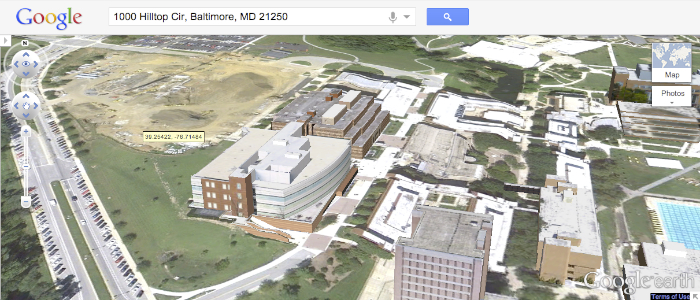
Google is holding a contest to encourage students in the US and Canada to use Google Map Maker to improve the maps of their campus areas. You can add 2.5D and 3D models of building and interior floor plans. Registration started on Monday February 13 and the contest runs through March 9.
"Be a part of a university mapping contest open for US and Canadian students who currently study at a university in these two countries! From February 13, 2012 to March 9, 2012, improving the maps of your campus can give you a chance to be a local hero and the highest scoring entries will win prizes like Samsung Galaxy tablets, Samsung Android phones, Google Map Maker messenger bags, and more!
Submit your entry for a chance to win and help your university at the same time! Join together with up to three other student mappers to add high quality edits like university buildings, walking paths, public spaces, or restaurant hangouts near your campus using Google Map Maker, and your efforts could win a grand prize package worth more than $5,000 USD for your team."
Google maps and Google Earth now support Web GL, "a software library that extends the capability of the JavaScript programming language to allow it to generate interactive 3D graphics within any compatible web browser." The new interface requires Chrome 14 or Firefox 8 (beta), Windows Vista/7 or Mac OS 10.6+ or Linux and a graphics card that supports WebGL.
See the contest site for the full details.
]]>
Google is holding a contest to encourage students in the US and Canada to use Google Map Maker to improve the maps of their campus areas. You can add 2.5D and 3D models of building and interior...
http://www.csee.umbc.edu/2012/02/google-map-maker-university-mapping-contest/
https://beta.my.umbc.edu/api/v0/pixel/news/12094/guest@my.umbc.edu/fbca3c3e87ce8af8f2f99ae14fa268ea/api/pixel
news
undergraduate
Computer Science and Electrical Engineering
https://beta.my.umbc.edu/groups/csee
https://assets3-beta.my.umbc.edu/system/shared/avatars/groups/000/000/099/d117dca133c64bf78a4b7696dd007189/xsmall.png?1314043393
https://assets1-beta.my.umbc.edu/system/shared/avatars/groups/000/000/099/d117dca133c64bf78a4b7696dd007189/original.png?1314043393
https://assets1-beta.my.umbc.edu/system/shared/avatars/groups/000/000/099/d117dca133c64bf78a4b7696dd007189/xxlarge.png?1314043393
https://assets4-beta.my.umbc.edu/system/shared/avatars/groups/000/000/099/d117dca133c64bf78a4b7696dd007189/xlarge.png?1314043393
https://assets3-beta.my.umbc.edu/system/shared/avatars/groups/000/000/099/d117dca133c64bf78a4b7696dd007189/large.png?1314043393
https://assets1-beta.my.umbc.edu/system/shared/avatars/groups/000/000/099/d117dca133c64bf78a4b7696dd007189/medium.png?1314043393
https://assets2-beta.my.umbc.edu/system/shared/avatars/groups/000/000/099/d117dca133c64bf78a4b7696dd007189/small.png?1314043393
https://assets3-beta.my.umbc.edu/system/shared/avatars/groups/000/000/099/d117dca133c64bf78a4b7696dd007189/xsmall.png?1314043393
https://assets3-beta.my.umbc.edu/system/shared/avatars/groups/000/000/099/d117dca133c64bf78a4b7696dd007189/xxsmall.png?1314043393
Computer Science and Electrical Engineering
3
1
true
Tue, 14 Feb 2012 01:29:14 -0500
talk: Self-Powered In-Vitro Biosensing Microsystem
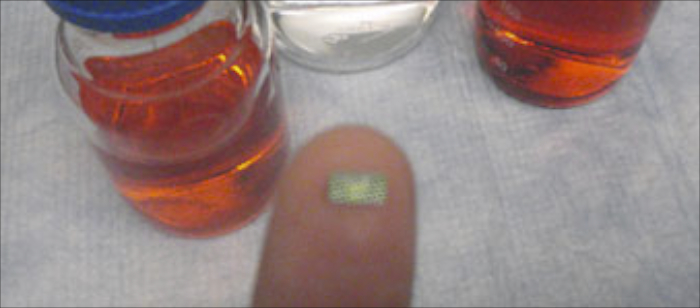
A Self-Powered In-Vitro Biosensing Microsystem
Dr. Gymama Slaughter
Computer Science and Electrical Engineering
University of Maryland, Baltimore County
11:30am-12:45pm Friday, 10 February 2012, ITE 237
Recent studies on biofuel cells have shown that energy can be harvested from biological compounds. Because of the recent biofuel cell discoveries, it possible to use inertial power scavenging design by converting interstitial glucose into energy through the coupling of enzymes and three-dimensional nanowire arrays. This talk will discuss our own contribution to identifying a pathway to embed sensing by eliminating the need for a potentiostat circuit and an external power source.
The self-powered biosensing microsystem consist of massively dense 3D nanowire cell structures fused with an energy harvesting circuit that maximizes power and energy densities while maintaining short ion transport distances, thus leading to dramatic improvement in both speed and energy efficiency of biofuel cells. Not only is such a paradigm extremely fast because of absence of a potentiostat circuit, but it is also extremely energy-efficient since the device operates at low voltage and current levels. As a result, the biosensing microsystem generates a drive signal in real-time and periodically powers an electrical device by generating and accumulating electrical power as a result of the catalysis of glucose.
Gymama Slaughter received her B.S. in Chemistry in 2001, M.S. in Chemical Engineering in 2003, and a Ph.D. in Computer Engineering from the Virginia Commonwealth University in 2005. She then joined Virginia State University as an Assistant Professor in Computer Engineering and Director of the Center for Biosystems and Engineering University. Finally, she joined the UMBC as Assistant Professor in Computer Engineering in August 2010.
Dr. Slaughter is currently the Director of the Bioelectronics Laboratory Group and oversees research and research outreach programs in the BEL Group. She develops and applies sensor-processor platforms, focusing on innovative contributions to identifying a pathway to embed sensing and processing functions in the same device to eliminate bottlenecks arising from communication between the sensor, transducer, and processor, thus, resulting in ultra-fast and ultra-low power devices.
Her research has been supported by the NSF for her diabetes research that focuses on the design and development of glucose biosensor, especially in relationship to monitoring blood glucose in diabetics. Her research interests include biosensors, microsensors, microfabrication technology, and BioMEMS and design.
Host: Prof. Joel M. Morris
]]>
A Self-Powered In-Vitro Biosensing Microsystem Dr. Gymama Slaughter Computer Science and Electrical Engineering University of Maryland, Baltimore County 11:30am-12:45pm Friday, 10 February...
http://www.csee.umbc.edu/2012/02/talk-self-powered-in-vitro-biosensing-microsystem/
https://beta.my.umbc.edu/api/v0/pixel/news/11975/guest@my.umbc.edu/ec1f4a18449e26d1d6a1986f92048140/api/pixel
computer-engineering
graduate
news
research
talks
Computer Science and Electrical Engineering
https://beta.my.umbc.edu/groups/csee
https://assets3-beta.my.umbc.edu/system/shared/avatars/groups/000/000/099/d117dca133c64bf78a4b7696dd007189/xsmall.png?1314043393
https://assets1-beta.my.umbc.edu/system/shared/avatars/groups/000/000/099/d117dca133c64bf78a4b7696dd007189/original.png?1314043393
https://assets1-beta.my.umbc.edu/system/shared/avatars/groups/000/000/099/d117dca133c64bf78a4b7696dd007189/xxlarge.png?1314043393
https://assets4-beta.my.umbc.edu/system/shared/avatars/groups/000/000/099/d117dca133c64bf78a4b7696dd007189/xlarge.png?1314043393
https://assets3-beta.my.umbc.edu/system/shared/avatars/groups/000/000/099/d117dca133c64bf78a4b7696dd007189/large.png?1314043393
https://assets1-beta.my.umbc.edu/system/shared/avatars/groups/000/000/099/d117dca133c64bf78a4b7696dd007189/medium.png?1314043393
https://assets2-beta.my.umbc.edu/system/shared/avatars/groups/000/000/099/d117dca133c64bf78a4b7696dd007189/small.png?1314043393
https://assets3-beta.my.umbc.edu/system/shared/avatars/groups/000/000/099/d117dca133c64bf78a4b7696dd007189/xsmall.png?1314043393
https://assets3-beta.my.umbc.edu/system/shared/avatars/groups/000/000/099/d117dca133c64bf78a4b7696dd007189/xxsmall.png?1314043393
Computer Science and Electrical Engineering
1
0
true
Wed, 08 Feb 2012 20:52:15 -0500
Computer Science Professor of Practice Position
UMBC invites applications for a non-tenure track position in Computer Science at the rank of Professor of the Practice to begin August 2012. All CS areas will be considered, but we are especially interested in security related areas. Applicants should have a Ph.D. or equivalent stature by virtue of experience. Ideal candidates will have a history of research, publication, teaching, and industry experience. Duties include teaching both graduate and undergraduate courses and helping develop cyber security programs. For best consideration, apply by March 15, 2012. Reviews will begin immediately and applications will be accepted until the position is filled. For more information and to apply, see http://bit.ly/UMBCPoP. UMBC is an AA/EOE.
]]>
UMBC invites applications for a non-tenure track position in Computer Science at the rank of Professor of the Practice to begin August 2012. All CS areas will be considered, but we are especially...
http://www.csee.umbc.edu/2012/02/computer-science-professor-of-practice-position/
https://beta.my.umbc.edu/api/v0/pixel/news/11872/guest@my.umbc.edu/56f5977f9618e95f98f7548f1fbb5569/api/pixel
jobs
news
Computer Science and Electrical Engineering
https://beta.my.umbc.edu/groups/csee
https://assets3-beta.my.umbc.edu/system/shared/avatars/groups/000/000/099/d117dca133c64bf78a4b7696dd007189/xsmall.png?1314043393
https://assets1-beta.my.umbc.edu/system/shared/avatars/groups/000/000/099/d117dca133c64bf78a4b7696dd007189/original.png?1314043393
https://assets1-beta.my.umbc.edu/system/shared/avatars/groups/000/000/099/d117dca133c64bf78a4b7696dd007189/xxlarge.png?1314043393
https://assets4-beta.my.umbc.edu/system/shared/avatars/groups/000/000/099/d117dca133c64bf78a4b7696dd007189/xlarge.png?1314043393
https://assets3-beta.my.umbc.edu/system/shared/avatars/groups/000/000/099/d117dca133c64bf78a4b7696dd007189/large.png?1314043393
https://assets1-beta.my.umbc.edu/system/shared/avatars/groups/000/000/099/d117dca133c64bf78a4b7696dd007189/medium.png?1314043393
https://assets2-beta.my.umbc.edu/system/shared/avatars/groups/000/000/099/d117dca133c64bf78a4b7696dd007189/small.png?1314043393
https://assets3-beta.my.umbc.edu/system/shared/avatars/groups/000/000/099/d117dca133c64bf78a4b7696dd007189/xsmall.png?1314043393
https://assets3-beta.my.umbc.edu/system/shared/avatars/groups/000/000/099/d117dca133c64bf78a4b7696dd007189/xxsmall.png?1314043393
Computer Science and Electrical Engineering
1
0
true
Mon, 06 Feb 2012 15:59:34 -0500
talk: Innovating for Society: Realizing the Promise...
Full Title: talk: Innovating for Society: Realizing the Promise and Potential of Computing
Innovating for Society: Realizing the
Promise and Potential of Computing
Dr. Farnam Jahanian
Directorate for Computer and Information Science and Engineering
National Science Foundation
10:30am Thursday, 9 February 2012, ITE 456, UMBC
The computing discipline is at the center of an ongoing societal transformation. The explosive growth of scientific and social data, wireless connectivity at broadband speeds for billions of mobile endpoints, and seamless access to computational resources in the “cloud” are transforming the way we work, learn, play, and communicate. Advances in computation and data-enabled techniques will continue to accelerate the pace of scientific discovery and engineering innovation, with the impact becoming more pervasive throughout society for decades to come. Dr. Jahanian will focus his talk on some of the technological and societal trends that are shaping our future and providing new opportunities for foundational research and education. He will describe how these advances influence the portfolio of the Computer and Information Science and Engineering Directorate at NSF and, therefore, also serve as key drivers of economic competitiveness and are crucial to achieving national priorities.
Farnam Jahanian serves as the National Science Foundation Assistant Director for the Computer and Information Science and Engineering (CISE) Directorate. He guides CISE, with a budget of over $635 million, in its mission to uphold the nation’s leadership in computer and information science and engineering through support of fundamental and transformative advances that are a key driver of economic competitiveness and that are crucial to achieving national priorities. Dr. Jahanian is also co-chair of the Networking and Information Technology Research and Development (NITRD) Subcommittee of the National Science and Technology Council Committee on Technology, providing overall coordination for the activities of 15 government agencies.
Dr. Jahanian is on leave from the University of Michigan, where he holds the Edward S. Davidson Collegiate Professorship and served as Chair for Computer Science and Engineering from 2007 – 2011 and as Director of the Software Systems Laboratory from 1997 – 2000. His research on Internet infrastructure security formed the basis for the Internet security company Arbor Networks, which he co-founded in 2001. He served as Chairman of Arbor Networks until its acquisition by Tektronix Communication in 2010. Dr. Jahanian holds a master's degree and a Ph.D. in Computer Science from the University of Texas at Austin. He is a Fellow of the Association for Computing Machinery (ACM), the Institute of Electrical and Electronic Engineers (IEEE), and the American Association for the Advancement of Science (AAAS).
Host: Prof. Anupam Joshi
]]>
Full Title: talk: Innovating for Society: Realizing the Promise and Potential of Computing Innovating for Society: Realizing the Promise and Potential of Computing Dr. Farnam Jahanian...
http://www.csee.umbc.edu/2012/02/talk-innovating-for-society-realizing-the-promise-and-potential-of-computing/
https://beta.my.umbc.edu/api/v0/pixel/news/11859/guest@my.umbc.edu/c6b1bdb935d1adb17d43279d4b05f065/api/pixel
news
research
talks
Computer Science and Electrical Engineering
https://beta.my.umbc.edu/groups/csee
https://assets3-beta.my.umbc.edu/system/shared/avatars/groups/000/000/099/d117dca133c64bf78a4b7696dd007189/xsmall.png?1314043393
https://assets1-beta.my.umbc.edu/system/shared/avatars/groups/000/000/099/d117dca133c64bf78a4b7696dd007189/original.png?1314043393
https://assets1-beta.my.umbc.edu/system/shared/avatars/groups/000/000/099/d117dca133c64bf78a4b7696dd007189/xxlarge.png?1314043393
https://assets4-beta.my.umbc.edu/system/shared/avatars/groups/000/000/099/d117dca133c64bf78a4b7696dd007189/xlarge.png?1314043393
https://assets3-beta.my.umbc.edu/system/shared/avatars/groups/000/000/099/d117dca133c64bf78a4b7696dd007189/large.png?1314043393
https://assets1-beta.my.umbc.edu/system/shared/avatars/groups/000/000/099/d117dca133c64bf78a4b7696dd007189/medium.png?1314043393
https://assets2-beta.my.umbc.edu/system/shared/avatars/groups/000/000/099/d117dca133c64bf78a4b7696dd007189/small.png?1314043393
https://assets3-beta.my.umbc.edu/system/shared/avatars/groups/000/000/099/d117dca133c64bf78a4b7696dd007189/xsmall.png?1314043393
https://assets3-beta.my.umbc.edu/system/shared/avatars/groups/000/000/099/d117dca133c64bf78a4b7696dd007189/xxsmall.png?1314043393
Computer Science and Electrical Engineering
0
0
true
Mon, 06 Feb 2012 13:04:53 -0500
Mon, 06 Feb 2012 13:04:53 -0500
2012 Google Summer of Code program announced

If you have good programming skills and are looking for an interesting alternative to the usual summer internship, you might check out the Google Summer of Code program. It pays student developers $5000 stipends to write code for various open source projects over the summer. Over the past seven years, it's brought together over 6,000 students with over 300 open source projects to create millions of lines of code.
A set of open source projects (aka mentoring organizations) will be selected and announced in mid-March. Students apply to work on one of more of these and each mentoring organization ranks the students interested in working with them. Google facilitates the final selection and pairing. The mentoring organization works closely with the student to define tasks, check progress, help solve problems, etc. Typically the student works remotely, interacting with his or her mentor via email, chat, skype, etc.
Students can submit applications via the Google Summer of Code 2012 site from March 26 to April 6. Google says that that the best applications they receive are from students who took the time to interact with one of the participating mentoring organizations and discuss their ideas before submitting an application. About 1,100 students are expected to be funded this year.
You can get more information on the 2012 GSoC site, an associated Google+ page, or by subscribing to a mailing list.
]]>
If you have good programming skills and are looking for an interesting alternative to the usual summer internship, you might check out the Google Summer of Code program. It pays student developers...
http://www.csee.umbc.edu/2012/02/2012-google-summer-of-code-program-announced/
https://beta.my.umbc.edu/api/v0/pixel/news/11803/guest@my.umbc.edu/cd3a67fc1f1745f6b1c4a3e6fa92c0cb/api/pixel
computer-engineering
computer-science
electrical-engineering
graduate
internship
internships
jobs
news
undergraduate
Computer Science and Electrical Engineering
https://beta.my.umbc.edu/groups/csee
https://assets3-beta.my.umbc.edu/system/shared/avatars/groups/000/000/099/d117dca133c64bf78a4b7696dd007189/xsmall.png?1314043393
https://assets1-beta.my.umbc.edu/system/shared/avatars/groups/000/000/099/d117dca133c64bf78a4b7696dd007189/original.png?1314043393
https://assets1-beta.my.umbc.edu/system/shared/avatars/groups/000/000/099/d117dca133c64bf78a4b7696dd007189/xxlarge.png?1314043393
https://assets4-beta.my.umbc.edu/system/shared/avatars/groups/000/000/099/d117dca133c64bf78a4b7696dd007189/xlarge.png?1314043393
https://assets3-beta.my.umbc.edu/system/shared/avatars/groups/000/000/099/d117dca133c64bf78a4b7696dd007189/large.png?1314043393
https://assets1-beta.my.umbc.edu/system/shared/avatars/groups/000/000/099/d117dca133c64bf78a4b7696dd007189/medium.png?1314043393
https://assets2-beta.my.umbc.edu/system/shared/avatars/groups/000/000/099/d117dca133c64bf78a4b7696dd007189/small.png?1314043393
https://assets3-beta.my.umbc.edu/system/shared/avatars/groups/000/000/099/d117dca133c64bf78a4b7696dd007189/xsmall.png?1314043393
https://assets3-beta.my.umbc.edu/system/shared/avatars/groups/000/000/099/d117dca133c64bf78a4b7696dd007189/xxsmall.png?1314043393
Computer Science and Electrical Engineering
13
1
true
Sun, 05 Feb 2012 00:10:30 -0500
talk: An Integrated Machine Learning Framework for...
Full Title: talk: An Integrated Machine Learning Framework for Analyzing Protein-Ligand Interaction Data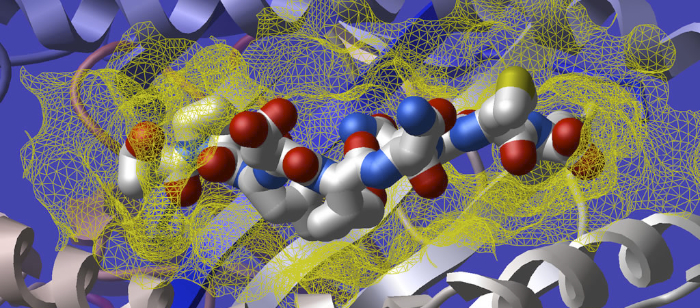
CSEE Colloquium
An Integrated Machine Learning Framework for Analyzing Protein-Ligand Interaction Data
Dr. Huzefa Rangwala
Assistant Professor, Computer Science & Engineering
George Mason University
1:00 p.m., Friday, February 10, 2012, ITE 325B, UMBC
Proteins have a vast influence on the molecular machinery of life. Stunningly complex networks of proteins perform innumerable functions in every living cell. Small organic molecules (a.k.a. ligands) can bind to different proteins and modulate (inhibit/activate) their functions. Understanding these interactions provides insight into the underlying biological processes and is useful for designing therapeutic drugs.
In this talk I will describe our work related to the analysis of information associated with proteins and their interacting molecule partners (protein-ligand activity matrix). The underlying hypothesis of our approach is that by extracting information from protein-ligand activity matrix, we are drawing bridges between the structure of chemical compounds (chemical space) and the structure of the proteins and their functions (biological space). I will present an approach used for mining relational data, especially when the data is sparse and high dimensional. I will also present methods that are based on the principles of multi-task learning and semi-supervised learning.
Huzefa Rangwala is an Assistant Professor at the department of Computer Science & Engineering, George Mason University. He holds affiliate positions with the Department of Bioengineering and the Department of Bioinformatics & Computational Biology. He received his Ph.D. in Computer Science from the University of Minnesota in the year 2008. His core research interests include bioinformatics, machine learning, and high performance computing. Specifically, he is working on developing new data mining algorithms and applying them to the fields of genomics, structural bioinformatics, drug discovery and social media analysis.
Host: Dr. Marie desJardins
]]>
Full Title: talk: An Integrated Machine Learning Framework for Analyzing Protein-Ligand Interaction Data CSEE Colloquium An Integrated Machine Learning Framework for Analyzing Protein-Ligand...
http://www.csee.umbc.edu/2012/02/talk-an-integrated-machine-learning-framework-for-analyzing-protein-ligand-interaction-data/
https://beta.my.umbc.edu/api/v0/pixel/news/11827/guest@my.umbc.edu/488321c392a7f8f6764ef2b6705347e8/api/pixel
news
research
talks
Computer Science and Electrical Engineering
https://beta.my.umbc.edu/groups/csee
https://assets3-beta.my.umbc.edu/system/shared/avatars/groups/000/000/099/d117dca133c64bf78a4b7696dd007189/xsmall.png?1314043393
https://assets1-beta.my.umbc.edu/system/shared/avatars/groups/000/000/099/d117dca133c64bf78a4b7696dd007189/original.png?1314043393
https://assets1-beta.my.umbc.edu/system/shared/avatars/groups/000/000/099/d117dca133c64bf78a4b7696dd007189/xxlarge.png?1314043393
https://assets4-beta.my.umbc.edu/system/shared/avatars/groups/000/000/099/d117dca133c64bf78a4b7696dd007189/xlarge.png?1314043393
https://assets3-beta.my.umbc.edu/system/shared/avatars/groups/000/000/099/d117dca133c64bf78a4b7696dd007189/large.png?1314043393
https://assets1-beta.my.umbc.edu/system/shared/avatars/groups/000/000/099/d117dca133c64bf78a4b7696dd007189/medium.png?1314043393
https://assets2-beta.my.umbc.edu/system/shared/avatars/groups/000/000/099/d117dca133c64bf78a4b7696dd007189/small.png?1314043393
https://assets3-beta.my.umbc.edu/system/shared/avatars/groups/000/000/099/d117dca133c64bf78a4b7696dd007189/xsmall.png?1314043393
https://assets3-beta.my.umbc.edu/system/shared/avatars/groups/000/000/099/d117dca133c64bf78a4b7696dd007189/xxsmall.png?1314043393
Computer Science and Electrical Engineering
1
0
true
Fri, 03 Feb 2012 16:07:17 -0500
Using data visualization techniques to support...
Full Title: Using data visualization techniques to support digital forensics
UMBC Cyber Defense Lab Research Meeting
Using data visualization techniques to support digital forensics
Tim Leschke
11:00am-12:15pm, Friday, Feb 3, 2012
ITE Room 228
Digital forensic examiners explore large datasets in search of evidence of a crime. In order to keep pace with the growing amount of data that is subject to a forensic examination, digital forensic examiners need to be more selective about the data they examine. One way to be selective about data is to focus attention at data that has changed-over-time. We present Change-Link, a data exploration tool which allows the user to see directories that have changed within an operating system. Our novel contributions are 1) the development of a segmented-box-and-whisker icon for representing change to individual directories, and 2) the first data visualization tool developed specifically for the domain of digital forensic data. We show that by using Change-Link to view change to a directory-tree structure, digital forensic examiners can enhance their ability to perform forensic examinations.
Tim Leschke is a Ph.D. student in the Computer Science program at UMBC.
Host: Professor Alan Sherman
]]>
Full Title: Using data visualization techniques to support digital forensics UMBC Cyber Defense Lab Research Meeting Using data visualization techniques to support digital forensics Tim...
http://www.csee.umbc.edu/2012/01/using-data-visualization-techniques-to-support-digital-forensics/
https://beta.my.umbc.edu/api/v0/pixel/news/11670/guest@my.umbc.edu/1fd19283b4b1e403362e356149042212/api/pixel
cybersecurity
graduate
news
research
talks
Computer Science and Electrical Engineering
https://beta.my.umbc.edu/groups/csee
https://assets3-beta.my.umbc.edu/system/shared/avatars/groups/000/000/099/d117dca133c64bf78a4b7696dd007189/xsmall.png?1314043393
https://assets1-beta.my.umbc.edu/system/shared/avatars/groups/000/000/099/d117dca133c64bf78a4b7696dd007189/original.png?1314043393
https://assets1-beta.my.umbc.edu/system/shared/avatars/groups/000/000/099/d117dca133c64bf78a4b7696dd007189/xxlarge.png?1314043393
https://assets4-beta.my.umbc.edu/system/shared/avatars/groups/000/000/099/d117dca133c64bf78a4b7696dd007189/xlarge.png?1314043393
https://assets3-beta.my.umbc.edu/system/shared/avatars/groups/000/000/099/d117dca133c64bf78a4b7696dd007189/large.png?1314043393
https://assets1-beta.my.umbc.edu/system/shared/avatars/groups/000/000/099/d117dca133c64bf78a4b7696dd007189/medium.png?1314043393
https://assets2-beta.my.umbc.edu/system/shared/avatars/groups/000/000/099/d117dca133c64bf78a4b7696dd007189/small.png?1314043393
https://assets3-beta.my.umbc.edu/system/shared/avatars/groups/000/000/099/d117dca133c64bf78a4b7696dd007189/xsmall.png?1314043393
https://assets3-beta.my.umbc.edu/system/shared/avatars/groups/000/000/099/d117dca133c64bf78a4b7696dd007189/xxsmall.png?1314043393
Computer Science and Electrical Engineering
2
0
true
Tue, 31 Jan 2012 10:26:37 -0500
Streaming video from UMBC Global Game Jam
A group of nearly 40 participants assembled yesterday afternoon at the UMBC 2012 Global Game Jam site. The Global Game Jam is an annual event where small teams design and create computer games over the course of one weekend. The teams will upload their final games to a central site by 3:00pm EST Sunday. Here’s a video stream live from the GAIM lab in 005 ECS.
If you are on campus tomorrow around 3:00pm, stop by the GAIM lab and see the final UMBC games demonstrated.
]]>
A group of nearly 40 participants assembled yesterday afternoon at the UMBC 2012 Global Game Jam site. The Global Game Jam is an annual event where small teams design and create computer games...
http://www.csee.umbc.edu/2012/01/streaming-video-from-umbc-global-game-jame/
https://beta.my.umbc.edu/api/v0/pixel/news/11616/guest@my.umbc.edu/e2443ff060fb01858cb4237e5a455130/api/pixel
gaim
games
news
undergraduate
Computer Science and Electrical Engineering
https://beta.my.umbc.edu/groups/csee
https://assets3-beta.my.umbc.edu/system/shared/avatars/groups/000/000/099/d117dca133c64bf78a4b7696dd007189/xsmall.png?1314043393
https://assets1-beta.my.umbc.edu/system/shared/avatars/groups/000/000/099/d117dca133c64bf78a4b7696dd007189/original.png?1314043393
https://assets1-beta.my.umbc.edu/system/shared/avatars/groups/000/000/099/d117dca133c64bf78a4b7696dd007189/xxlarge.png?1314043393
https://assets4-beta.my.umbc.edu/system/shared/avatars/groups/000/000/099/d117dca133c64bf78a4b7696dd007189/xlarge.png?1314043393
https://assets3-beta.my.umbc.edu/system/shared/avatars/groups/000/000/099/d117dca133c64bf78a4b7696dd007189/large.png?1314043393
https://assets1-beta.my.umbc.edu/system/shared/avatars/groups/000/000/099/d117dca133c64bf78a4b7696dd007189/medium.png?1314043393
https://assets2-beta.my.umbc.edu/system/shared/avatars/groups/000/000/099/d117dca133c64bf78a4b7696dd007189/small.png?1314043393
https://assets3-beta.my.umbc.edu/system/shared/avatars/groups/000/000/099/d117dca133c64bf78a4b7696dd007189/xsmall.png?1314043393
https://assets3-beta.my.umbc.edu/system/shared/avatars/groups/000/000/099/d117dca133c64bf78a4b7696dd007189/xxsmall.png?1314043393
Computer Science and Electrical Engineering
4
0
true
Sat, 28 Jan 2012 21:32:27 -0500