The Princeton Review recognizes UMBC’s Video Game...
Full Title: The Princeton Review recognizes UMBC’s Video Game Design program
UMBC has earned an honorable mention on The Princeton Review’s recently released list: “Top Schools to Study Video Game Design for 2012.” The recognition places UMBC among schools like Georgia Institute of Technology, UC Santa Cruz, and Northeastern University.
Released annually, the list features 50 schools from around the country, including their “top ten” undergraduate and graduate schools in this category. This year, the University of Southern California secured first place for their undergraduate game design program. The rankings were based on a survey administered by The Princeton Review during the 2011-2012 academic year that consulted administrators at 150 schools and universities. The winning schools were judged on the quality of their curriculum, faculty, facilities, and infrastructure, as well as their scholarship, financial aid, and career opportunities.
“We salute the schools on our list this year for their commitment to this burgeoning field and the innovative programs they offer. For students aspiring to work in this more than $10.5 billion industry and for the companies that will need their creative talents and skills, we hope this project will serve as a catalyst for many rewarding connections,” says Robert Franek, The Princeton Review’s Senior VP/Publisher in a press release.
Both UMBC’s Computer Science and Electrical Engineering Department and its Visual Arts Department offer programs for students interested in pursuing a career in video game development. Artists can concentrate on “Animation and Interactive Media,” while computer programmers can pursue the “Game Development” track within the Computer Science major. In addition, UMBC has a Game Development club, and has been a host site of the International Development Association’s Global Game Jam for the past four years.
To see a comprehensive list of winners, visit The Princeton Review’s website.
]]>
Full Title: The Princeton Review recognizes UMBC’s Video Game Design program UMBC has earned an honorable mention on The Princeton Review’s recently released list: “Top Schools to Study Video...
http://www.csee.umbc.edu/2012/03/the-princeton-review-recognizes-umbcs-video-game-design-program/
https://beta.my.umbc.edu/api/v0/pixel/news/12584/guest@my.umbc.edu/eab21adb5138baffc93731713151c093/api/pixel
news
Computer Science and Electrical Engineering
https://beta.my.umbc.edu/groups/csee
https://assets3-beta.my.umbc.edu/system/shared/avatars/groups/000/000/099/d117dca133c64bf78a4b7696dd007189/xsmall.png?1314043393
https://assets1-beta.my.umbc.edu/system/shared/avatars/groups/000/000/099/d117dca133c64bf78a4b7696dd007189/original.png?1314043393
https://assets1-beta.my.umbc.edu/system/shared/avatars/groups/000/000/099/d117dca133c64bf78a4b7696dd007189/xxlarge.png?1314043393
https://assets4-beta.my.umbc.edu/system/shared/avatars/groups/000/000/099/d117dca133c64bf78a4b7696dd007189/xlarge.png?1314043393
https://assets3-beta.my.umbc.edu/system/shared/avatars/groups/000/000/099/d117dca133c64bf78a4b7696dd007189/large.png?1314043393
https://assets1-beta.my.umbc.edu/system/shared/avatars/groups/000/000/099/d117dca133c64bf78a4b7696dd007189/medium.png?1314043393
https://assets2-beta.my.umbc.edu/system/shared/avatars/groups/000/000/099/d117dca133c64bf78a4b7696dd007189/small.png?1314043393
https://assets3-beta.my.umbc.edu/system/shared/avatars/groups/000/000/099/d117dca133c64bf78a4b7696dd007189/xsmall.png?1314043393
https://assets3-beta.my.umbc.edu/system/shared/avatars/groups/000/000/099/d117dca133c64bf78a4b7696dd007189/xxsmall.png?1314043393
Computer Science and Electrical Engineering
3
0
true
Thu, 01 Mar 2012 11:34:31 -0500
In the News: driverless cars and digital intersections

The buzz about driverless cars erupted after Google received a patent for the technology in December of last year. Since then, the project has been steadily moving forward. A few days ago, Google started testing their vehicles on Nevada roads, following approval by the state’s Legislative Commission. With the inevitability of autonomous transportation creeping closer, measures to ensure its realization are being pursued by more companies than just Google.
Peter Stone, a professor of computer science at the University of Texas at Austin, and his team are working on developing a “smart” intersection that would manage the flow of driverless cars, reports techworld.com.
According to Stone’s project, intersections would be equipped with a manager that would coordinate traffic in an efficient and mathematical way. Techworld reports:
‘"When a car gets close to the intersection, it calls ahead and says, 'I want to go through the intersection.' The intersection manager says either yes or no. It keeps track of the reservations it grants and makes sure it doesn't give permission to other cars that would conflict with them," Stone said.’
To learn more, check out the full article: “Scientists develop computer-controlled intersections for self-driving cars.”
]]>
The buzz about driverless cars erupted after Google received a patent for the technology in December of last year. Since then, the project has been steadily moving forward. A few days ago, Google...
http://www.csee.umbc.edu/2012/03/in-the-news-driverless-cars-and-digital-intersections/
https://beta.my.umbc.edu/api/v0/pixel/news/12581/guest@my.umbc.edu/a03af63dbc34e82bfb92ce7a54125991/api/pixel
in-the-news
news
Computer Science and Electrical Engineering
https://beta.my.umbc.edu/groups/csee
https://assets3-beta.my.umbc.edu/system/shared/avatars/groups/000/000/099/d117dca133c64bf78a4b7696dd007189/xsmall.png?1314043393
https://assets1-beta.my.umbc.edu/system/shared/avatars/groups/000/000/099/d117dca133c64bf78a4b7696dd007189/original.png?1314043393
https://assets1-beta.my.umbc.edu/system/shared/avatars/groups/000/000/099/d117dca133c64bf78a4b7696dd007189/xxlarge.png?1314043393
https://assets4-beta.my.umbc.edu/system/shared/avatars/groups/000/000/099/d117dca133c64bf78a4b7696dd007189/xlarge.png?1314043393
https://assets3-beta.my.umbc.edu/system/shared/avatars/groups/000/000/099/d117dca133c64bf78a4b7696dd007189/large.png?1314043393
https://assets1-beta.my.umbc.edu/system/shared/avatars/groups/000/000/099/d117dca133c64bf78a4b7696dd007189/medium.png?1314043393
https://assets2-beta.my.umbc.edu/system/shared/avatars/groups/000/000/099/d117dca133c64bf78a4b7696dd007189/small.png?1314043393
https://assets3-beta.my.umbc.edu/system/shared/avatars/groups/000/000/099/d117dca133c64bf78a4b7696dd007189/xsmall.png?1314043393
https://assets3-beta.my.umbc.edu/system/shared/avatars/groups/000/000/099/d117dca133c64bf78a4b7696dd007189/xxsmall.png?1314043393
Computer Science and Electrical Engineering
1
0
true
Thu, 01 Mar 2012 10:27:57 -0500
Thu, 01 Mar 2012 10:27:57 -0500
He dances, he climbs, he teaches Computer Science: Meet Max
 Meet Max, a Teaching Assistant who loves climbing mountains, swing dancing, and Artificial Intelligence.
“I’ve never been bored in my life,” says Maksym Morawski (call him Max), a Computer Science graduate student who spends most of his free time scaling mountains.
Originally from Silver Spring, Max moved to Baltimore in 2006 to study Computer Science as an undergraduate. In the 4th grade, while others kids were busy building volcanoes for their science projects, Max and his computer scientist dad were putting together a computer that compared different algorithms for computing prime numbers. So choosing his major in college, explains Max, was a no-brainer.
Now a second year graduate student pursuing a Master’s in Computer Science, Max is working on a thesis that looks at predicting connections in social networks, like Facebook. A computer scientist with a sociological streak, Max’s project uses computers to understand how people interact with one another based on e-mail data sets taken from corporations.
Max’s foray into teaching began in 2010 when he became a Teaching Assistant for CMSC 202. He says his favorite part about being a TA are the discussions—where he actually gets to get up and teach and get his students excited about Computer Science. His dose of teacherly advice is as follows: “Program for fun.” If you don’t practice and enjoy programming, he explains, you will never be as good as someone who lives and breathes it.
Throughout his years at UMBC, Max’s on-campus involvement has extended past teaching. An avid dancer (he frequents Mobtown Ballroom in Baltimore City), he founded UMBC’s Swing Dancing club. He also helped conceive Project X, the club that sponsored a campus-wide scavenger hunt in 2008 and 2009 that included tasks like jumping into the Inner Harbor and high-fiving Freeman Hrabowski (which prompted a not-so-enthusiastic e-mail from the UMBC president). The prize for the hunt was an amalgamation of candy that was procured from the “Spot” using late-night meals over a series of weeks, explains Max.
But, Max’s favorite thing to do is the hobby he took up in high school: exploring mountains. A frequenter of Earth Treks—a climbing center in Columbia–Max had plans to climb frozen waterfalls in New York State this winter. His dream job, he says half-jokingly, is to be a mountaineering guide. Though, he may also consider a job in academia: “I would love to be a teacher,” he says.
]]>
Meet Max, a Teaching Assistant who loves climbing mountains, swing dancing, and Artificial Intelligence. “I’ve never been bored in my life,” says Maksym Morawski (call him Max), a Computer...
http://www.csee.umbc.edu/2012/03/he-dances-he-climbs-he-teaches-computer-science-meet-max/
https://beta.my.umbc.edu/api/v0/pixel/news/12574/guest@my.umbc.edu/498f269d35da4eb06c42278efa49177f/api/pixel
news
Computer Science and Electrical Engineering
https://beta.my.umbc.edu/groups/csee
https://assets3-beta.my.umbc.edu/system/shared/avatars/groups/000/000/099/d117dca133c64bf78a4b7696dd007189/xsmall.png?1314043393
https://assets1-beta.my.umbc.edu/system/shared/avatars/groups/000/000/099/d117dca133c64bf78a4b7696dd007189/original.png?1314043393
https://assets1-beta.my.umbc.edu/system/shared/avatars/groups/000/000/099/d117dca133c64bf78a4b7696dd007189/xxlarge.png?1314043393
https://assets4-beta.my.umbc.edu/system/shared/avatars/groups/000/000/099/d117dca133c64bf78a4b7696dd007189/xlarge.png?1314043393
https://assets3-beta.my.umbc.edu/system/shared/avatars/groups/000/000/099/d117dca133c64bf78a4b7696dd007189/large.png?1314043393
https://assets1-beta.my.umbc.edu/system/shared/avatars/groups/000/000/099/d117dca133c64bf78a4b7696dd007189/medium.png?1314043393
https://assets2-beta.my.umbc.edu/system/shared/avatars/groups/000/000/099/d117dca133c64bf78a4b7696dd007189/small.png?1314043393
https://assets3-beta.my.umbc.edu/system/shared/avatars/groups/000/000/099/d117dca133c64bf78a4b7696dd007189/xsmall.png?1314043393
https://assets3-beta.my.umbc.edu/system/shared/avatars/groups/000/000/099/d117dca133c64bf78a4b7696dd007189/xxsmall.png?1314043393
Computer Science and Electrical Engineering
27
13
true
Thu, 01 Mar 2012 08:11:17 -0500
In the News: Forno on cloud security

Military personnel are facing an increasing security threat posed by their smart phones and other mobile devices, argues an article on DefenseSystems.com. While the potential of mobile devices to leak personal secrets has been a cause for concern for all, the issue has the potential to be devestating for soldiers who could unwittingly leak crucial information to the enemy through compromised networks.
In the article, our very own Richard Forno, graduate program director for cybersecurity, shares his own concerns about cloud safety:
“One key area of emerging concern is data-in-motion within a cloud — i.e., ensuring that data is protected as it transits and/or exists in multiple servers at the same time, and by extension, the issue of ‘availability’ of data in a cloud environment,” Forno said. “The more moving parts you have to deal with, the easier it is to gum up the works, inadvertently cause self-inflicted problems, or make it easier for an adversary to do the same thing.”
Check out the entire article: "Smart phones pose emerging security threat."
]]>
Military personnel are facing an increasing security threat posed by their smart phones and other mobile devices, argues an article on DefenseSystems.com. While the potential of mobile devices to...
http://www.csee.umbc.edu/2012/02/in-the-news-forno-on-cloud-security/
https://beta.my.umbc.edu/api/v0/pixel/news/12511/guest@my.umbc.edu/4336881324ce10d73632781c6fc76ce8/api/pixel
faculty-and-staff
news
Computer Science and Electrical Engineering
https://beta.my.umbc.edu/groups/csee
https://assets3-beta.my.umbc.edu/system/shared/avatars/groups/000/000/099/d117dca133c64bf78a4b7696dd007189/xsmall.png?1314043393
https://assets1-beta.my.umbc.edu/system/shared/avatars/groups/000/000/099/d117dca133c64bf78a4b7696dd007189/original.png?1314043393
https://assets1-beta.my.umbc.edu/system/shared/avatars/groups/000/000/099/d117dca133c64bf78a4b7696dd007189/xxlarge.png?1314043393
https://assets4-beta.my.umbc.edu/system/shared/avatars/groups/000/000/099/d117dca133c64bf78a4b7696dd007189/xlarge.png?1314043393
https://assets3-beta.my.umbc.edu/system/shared/avatars/groups/000/000/099/d117dca133c64bf78a4b7696dd007189/large.png?1314043393
https://assets1-beta.my.umbc.edu/system/shared/avatars/groups/000/000/099/d117dca133c64bf78a4b7696dd007189/medium.png?1314043393
https://assets2-beta.my.umbc.edu/system/shared/avatars/groups/000/000/099/d117dca133c64bf78a4b7696dd007189/small.png?1314043393
https://assets3-beta.my.umbc.edu/system/shared/avatars/groups/000/000/099/d117dca133c64bf78a4b7696dd007189/xsmall.png?1314043393
https://assets3-beta.my.umbc.edu/system/shared/avatars/groups/000/000/099/d117dca133c64bf78a4b7696dd007189/xxsmall.png?1314043393
Computer Science and Electrical Engineering
2
0
true
Tue, 28 Feb 2012 09:11:07 -0500
CSEE Professor Dr. Tulay Adali Named IEEE Signal...
Full Title: CSEE Professor Dr. Tulay Adali Named IEEE Signal Processing Society Distinguished Lecturer Congratulations to CSEE Professor Tulay Adali, who has been named a 2012 IEEE Signal Processing Society Distinguished Lecturer. Nominated by the Machine Learning for Signal Processing Technical Committee, Dr. Adali is one of only five Distinguished Lecturers appointed this year.
The position commits Dr. Adali to travel around to world to present her current research, which focuses on data-driven and complex-valued signal processing and their applications in medical image analysis.
Her lectures will revolve around the following topics:
- Data-driven Analysis and Fusion of Medical Imaging Data
- Complex-valued Adaptive Signal Processing: When and How to Take Noncircularity into Account
- ICA, ISA, and IVA: Theory, Connections, and Applications in Medical Image Analysis
- Optimization in the Complex Domain using Wirtinger Calculus: Applications to ICA
- Joint Blind Source Separation: Applications in Medical Image Analysis
“My research group,theMachine Learning for Signal Processing Lab [MLSP-Lab], has been conducting research in two of the most active areas in my field: data-driven signal processing and medical image analysis and fusion,” explains Dr. Adali. “I am looking forward to telling a wider audience than I have in the past about the exciting research results we have, as well as better introducing these important areas to new audiences.”
The appointment will last from January 1, 2012 until the end of December 2013.
]]>
Full Title: CSEE Professor Dr. Tulay Adali Named IEEE Signal Processing Society Distinguished Lecturer Congratulations to CSEE Professor Tulay Adali, who has been named a 2012 IEEE Signal...
http://www.csee.umbc.edu/2012/02/csee-professor-dr-tulay-adali-named-ieee-signal-processing-society-distinguished-lecturer/
https://beta.my.umbc.edu/api/v0/pixel/news/12510/guest@my.umbc.edu/6f52047aeb65c1c5986ece0ffb9a456a/api/pixel
faculty-and-staff
news
other
Computer Science and Electrical Engineering
https://beta.my.umbc.edu/groups/csee
https://assets3-beta.my.umbc.edu/system/shared/avatars/groups/000/000/099/d117dca133c64bf78a4b7696dd007189/xsmall.png?1314043393
https://assets1-beta.my.umbc.edu/system/shared/avatars/groups/000/000/099/d117dca133c64bf78a4b7696dd007189/original.png?1314043393
https://assets1-beta.my.umbc.edu/system/shared/avatars/groups/000/000/099/d117dca133c64bf78a4b7696dd007189/xxlarge.png?1314043393
https://assets4-beta.my.umbc.edu/system/shared/avatars/groups/000/000/099/d117dca133c64bf78a4b7696dd007189/xlarge.png?1314043393
https://assets3-beta.my.umbc.edu/system/shared/avatars/groups/000/000/099/d117dca133c64bf78a4b7696dd007189/large.png?1314043393
https://assets1-beta.my.umbc.edu/system/shared/avatars/groups/000/000/099/d117dca133c64bf78a4b7696dd007189/medium.png?1314043393
https://assets2-beta.my.umbc.edu/system/shared/avatars/groups/000/000/099/d117dca133c64bf78a4b7696dd007189/small.png?1314043393
https://assets3-beta.my.umbc.edu/system/shared/avatars/groups/000/000/099/d117dca133c64bf78a4b7696dd007189/xsmall.png?1314043393
https://assets3-beta.my.umbc.edu/system/shared/avatars/groups/000/000/099/d117dca133c64bf78a4b7696dd007189/xxsmall.png?1314043393
Computer Science and Electrical Engineering
1
0
true
Tue, 28 Feb 2012 08:24:43 -0500
talk: Spectrum Wars: LightSquared vs. GPS, 11:30am Fri 2/2
EE Graduate Seminar
Spectrum Wars: LightSquared vs. GPS
Professor Chuck LaBerge
Professor of the Practice, CSEE Dept/UMBC
11:30am-12:45pm Friday, 2 March 2012, ITE 231
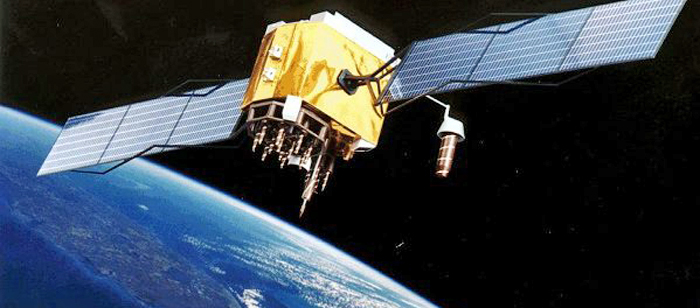
The radio-frequency spectrum is a limited resource. Within the US, commercial use of the spectrum is administered by the Federal Communications Commission (FCC), while government use of the spectrum is administered by the National Telecommunications and Information Administration. Currently, the regulatory community is locked in a battle about spectrum utilization in the vicinity of 1.5 GHz. This struggle pits millions of users of GPS technology for position and time information against technical innovators desiring to bring 4G wireless communications to millions of users in underserved populations. So who wins the spectrum wars?
The talk will outline the technologies involved, and provide a time-line of the regulatory actions to date. There are some innovative things going on here, and some simple analysis will show why there are points of contention. A final resolution cannot be provided at this time, because the issue is currently an open discussion in FCC. And, as might expected, there are financial and political ramifications as well.
This talk will provide an interesting insight into how the 'real world' works.
Dr. LaBerge is Professor of the Practice of Electrical and Computer Engineering in the CSEE at UMBC, where he teaches a wide variety of courses ranging from Introductory Circuits to Error Correcting Codes. From 1975-2008, he was employed by Bendix, which became AlliedSignal, which became Honeywell through a series of corporate mergers. He retired in July 2008 as the Senior Fellow for Communications, Navigation, and Surveillance in Honeywell's Aerospace Research and Technology Center.
Dr. LaBerge has worked on precision landing systems and a wide variety of aeronautical radios and applications. He's recognized as an expert in issues involving interference to aeronautical systems. His technical, writing, and editorial contributions have received numerous citations from regulatory bodies, and he was the winner of the Best Paper of Conference at the 2000 IEEE/AIAA Digital Avionics Systems Conference.
Dr. LaBerge is a Senior Member of IEEE, a member of Tau Beta Pi, and an inductee in the Order of the Engineer. He received his BES-EE and MSE-EE, degrees, both with Honors, from The Johns Hopkins University and the PhD. in Electrical Engineering from UMBC. His three kids are older than his students. He's been married to his patient wife for almost 38 years.
Host: Prof. Joel M. Morris
]]>
EE Graduate Seminar Spectrum Wars: LightSquared vs. GPS Professor Chuck LaBerge Professor of the Practice, CSEE Dept/UMBC 11:30am-12:45pm Friday, 2 March 2012, ITE 231 The...
http://www.csee.umbc.edu/2012/02/talk-spectrum-wars-lightsquared-vs-gps-1130am-fri-22/
https://beta.my.umbc.edu/api/v0/pixel/news/12680/guest@my.umbc.edu/2c87dc0cdc2dd9074612b8d6d57591f4/api/pixel
electrical-engineering
graduate
news
research
talks
Computer Science and Electrical Engineering
https://beta.my.umbc.edu/groups/csee
https://assets3-beta.my.umbc.edu/system/shared/avatars/groups/000/000/099/d117dca133c64bf78a4b7696dd007189/xsmall.png?1314043393
https://assets1-beta.my.umbc.edu/system/shared/avatars/groups/000/000/099/d117dca133c64bf78a4b7696dd007189/original.png?1314043393
https://assets1-beta.my.umbc.edu/system/shared/avatars/groups/000/000/099/d117dca133c64bf78a4b7696dd007189/xxlarge.png?1314043393
https://assets4-beta.my.umbc.edu/system/shared/avatars/groups/000/000/099/d117dca133c64bf78a4b7696dd007189/xlarge.png?1314043393
https://assets3-beta.my.umbc.edu/system/shared/avatars/groups/000/000/099/d117dca133c64bf78a4b7696dd007189/large.png?1314043393
https://assets1-beta.my.umbc.edu/system/shared/avatars/groups/000/000/099/d117dca133c64bf78a4b7696dd007189/medium.png?1314043393
https://assets2-beta.my.umbc.edu/system/shared/avatars/groups/000/000/099/d117dca133c64bf78a4b7696dd007189/small.png?1314043393
https://assets3-beta.my.umbc.edu/system/shared/avatars/groups/000/000/099/d117dca133c64bf78a4b7696dd007189/xsmall.png?1314043393
https://assets3-beta.my.umbc.edu/system/shared/avatars/groups/000/000/099/d117dca133c64bf78a4b7696dd007189/xxsmall.png?1314043393
Computer Science and Electrical Engineering
1
0
true
Tue, 28 Feb 2012 00:37:54 -0500
4th Annual Global Game Jam Returns to UMBC
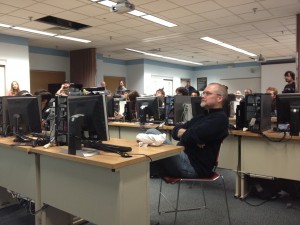 Game enthusiasts of all stripes hunkered behind computer screens in the UMBC GAIM Lab for the 4th annual Global Game Jam—a fast-paced weekend where teams around the world conceive and creative video games around a common theme. The three-day event, which took place Friday, January 27th through the 29th, drew nearly forty participants ranging from undergraduate and graduate students, alumni, and even current game developers.
Dr. Marc Olano, professor of Computer Science and Electrical Engineering and Neal McDonald, assistant professor of Animation & Interactive Media, have been running the jam at the UMBC site since its inception four years ago. “It’s intense but I think people have a lot of fun,” says Olano, who is also the director of the Computer Science Program’s Game Development Track.
The weekend follows a strict itinerary. At 5 p.m. on Friday, a video keynote kicks off the competition and the secret theme is announced. From that point on, participants have until 3 p.m. on Sunday to complete a game from start to finish. Factor in eating and sleeping, and it’s not much time. “Three days is an extremely short period of time,” says Olano. “In terms of wall-clock time,” he says, “it’s a little less than two days.”
In previous years, themes included “As long as we’re together, there will always be problems,” or more simply, “extinction.” But this year, a theme was chosen that could be equally relatable to the nearly 11,000 participants from countries like Canada, Sweden, Brazil, France, Italy, Hungry, Israel, and Japan (to name a few). Instead of a phrase, this year’s theme was apicture: Ouroboros–a snake eating its own tail–which Wikipedia describes as a representation of “the perpetual cyclic renewal of life.”
Some teams were inspired by this idea of reincarnation, including the team responsible for Bit Exhaust, a game developed for the Microsoft Windows Phone platform. Reminiscent of Space Invaders, though graphically and conceptually more sophisticated, Bit Exhaust turns conquered foes into allies and visa versa. “What we took from the theme was rebirth and cyclic life,” reads the game description on the Game Jam Website. “Enemies and allies are constantly switching sides as you kill them and they die.”
Bit Exhaust was the recipient of an award from Next Century Corporation, whose sponsorship allowed the Global Game Jam to be a free (and catered) event for all participants.
 Even Microsoft sweetened the deal with the promise of a free phone for teams who chose to develop games for their windows phone platform (not surprisingly, six of the ten teams opted to do just that). In addition, Microsoft offered up two prizes to phone-based games: second place to Bit Exhaust, and first place to Survive the Serpent, a literal take on the event’s theme. The 2-D maze game features a character who must escape being eaten by a snake by outsmarting it into biting its own tail.
Each year the People’s Choice Award is given to the game that’s voted the best overall by its peers. This year the winner was Snake ‘N Bake, a two-player game where a snake must help a cupcake make it to the oven before the tasty confection gets hit by a fireball.
Though individual sites—like UMBC—can offer prizes, Olano stresses that the Global Game Jam is not a competition. “They really want it to be more about cooperation than about competitiveness,” he says of the event’s sponsor, the International Development Association (IGDA). It’s not uncommon, he says, for teams to help each other out during the three-day fest.
Olano says he is definitely planning to host the Global Game Jam again next year, which will again put UMBC among other local hosts including Shady Grove, American University, and George Mason University. The Global Game Jam is the largest gam jam event in the world, according to its website. “This year there were 246 locations around the world,” says Olano, and the number will only grow.
]]>
Game enthusiasts of all stripes hunkered behind computer screens in the UMBC GAIM Lab for the 4th annual Global Game Jam—a fast-paced weekend where teams around the world conceive and creative...
http://www.csee.umbc.edu/2012/02/4th-annual-global-game-jam-returns-to-umbc/
https://beta.my.umbc.edu/api/v0/pixel/news/12474/guest@my.umbc.edu/eb07e1d958f77dfa849e31038df752b3/api/pixel
news
Computer Science and Electrical Engineering
https://beta.my.umbc.edu/groups/csee
https://assets3-beta.my.umbc.edu/system/shared/avatars/groups/000/000/099/d117dca133c64bf78a4b7696dd007189/xsmall.png?1314043393
https://assets1-beta.my.umbc.edu/system/shared/avatars/groups/000/000/099/d117dca133c64bf78a4b7696dd007189/original.png?1314043393
https://assets1-beta.my.umbc.edu/system/shared/avatars/groups/000/000/099/d117dca133c64bf78a4b7696dd007189/xxlarge.png?1314043393
https://assets4-beta.my.umbc.edu/system/shared/avatars/groups/000/000/099/d117dca133c64bf78a4b7696dd007189/xlarge.png?1314043393
https://assets3-beta.my.umbc.edu/system/shared/avatars/groups/000/000/099/d117dca133c64bf78a4b7696dd007189/large.png?1314043393
https://assets1-beta.my.umbc.edu/system/shared/avatars/groups/000/000/099/d117dca133c64bf78a4b7696dd007189/medium.png?1314043393
https://assets2-beta.my.umbc.edu/system/shared/avatars/groups/000/000/099/d117dca133c64bf78a4b7696dd007189/small.png?1314043393
https://assets3-beta.my.umbc.edu/system/shared/avatars/groups/000/000/099/d117dca133c64bf78a4b7696dd007189/xsmall.png?1314043393
https://assets3-beta.my.umbc.edu/system/shared/avatars/groups/000/000/099/d117dca133c64bf78a4b7696dd007189/xxsmall.png?1314043393
Computer Science and Electrical Engineering
3
0
true
Mon, 27 Feb 2012 08:17:10 -0500
talk: Using Static Analysis to Diagnose Misconfigured...
Full Title: talk: Using Static Analysis to Diagnose Misconfigured Open Source Systems Software
Using Static Analysis to Diagnose
Misconfigured Open Source Systems Software
Ariel Rabkin, UC Berkeley
1:00pm Monday 5 March 2012, ITE 325b UMBC
Ten years ago, few software developers worked on distributed systems. Today, developers often run code on clusters, relying on large open-source software stacks to manage resources. These systems are challenging to configure and debug. Fortunately, developments in program analysis have given us new tools for managing the complexity of modern software. This talk will show how static analysis can help users configure their systems. I present a technique that builds an explicit table mapping a program's possible error messages to the options that might cause them. As a result, users can get immediate feedback on how to resolve configuration errors.
Ari Rabkin is a PhD student in Computer Science at UC Berkeley working in the AMP lab. His current research interest is the software engineering and administration challenges of big-data systems. He is particularly interested in applying program analysis techniques to tasks like log analysis and configuration debugging. His broader interests focus on systems and security, including improving system usability by making systems easier to understand, the connections between computer science research and technology policy, developing program analysis techniques that work acceptably well on large, complex, messy software systems.
Host: Anupam Joshi
See http://csee.umbc.edu/talks for more information
]]>
Full Title: talk: Using Static Analysis to Diagnose Misconfigured Open Source Systems Software Using Static Analysis to Diagnose Misconfigured Open Source Systems Software Ariel Rabkin, UC...
http://www.csee.umbc.edu/2012/02/using-static-analysis-to-diagnose-misconfigured-open-source-systems-software/
https://beta.my.umbc.edu/api/v0/pixel/news/12457/guest@my.umbc.edu/4bfe61c1801493608302c3961aa0d712/api/pixel
cybersecurity
news
research
talks
Computer Science and Electrical Engineering
https://beta.my.umbc.edu/groups/csee
https://assets3-beta.my.umbc.edu/system/shared/avatars/groups/000/000/099/d117dca133c64bf78a4b7696dd007189/xsmall.png?1314043393
https://assets1-beta.my.umbc.edu/system/shared/avatars/groups/000/000/099/d117dca133c64bf78a4b7696dd007189/original.png?1314043393
https://assets1-beta.my.umbc.edu/system/shared/avatars/groups/000/000/099/d117dca133c64bf78a4b7696dd007189/xxlarge.png?1314043393
https://assets4-beta.my.umbc.edu/system/shared/avatars/groups/000/000/099/d117dca133c64bf78a4b7696dd007189/xlarge.png?1314043393
https://assets3-beta.my.umbc.edu/system/shared/avatars/groups/000/000/099/d117dca133c64bf78a4b7696dd007189/large.png?1314043393
https://assets1-beta.my.umbc.edu/system/shared/avatars/groups/000/000/099/d117dca133c64bf78a4b7696dd007189/medium.png?1314043393
https://assets2-beta.my.umbc.edu/system/shared/avatars/groups/000/000/099/d117dca133c64bf78a4b7696dd007189/small.png?1314043393
https://assets3-beta.my.umbc.edu/system/shared/avatars/groups/000/000/099/d117dca133c64bf78a4b7696dd007189/xsmall.png?1314043393
https://assets3-beta.my.umbc.edu/system/shared/avatars/groups/000/000/099/d117dca133c64bf78a4b7696dd007189/xxsmall.png?1314043393
Computer Science and Electrical Engineering
1
0
true
Sun, 26 Feb 2012 12:25:32 -0500
Wed, 29 Feb 2012 22:25:32 -0500
talk: Self-sustainable Cyber-physical System Design
Self-sustainable Cyber-physical System Design
Dr. Nilanjan Banerjee
University of Arkansas Fayetteville
1:00pm Tuesday 13 March 2012, ITE 325b UMBC
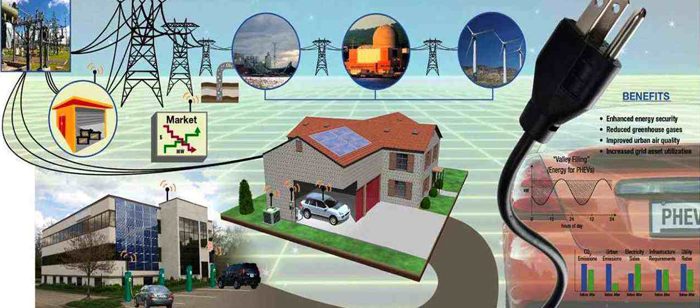
Renewable energy can enable diverse self-sustainable cyber-physical systems with applications ranging from healthcare to off-grid home energy management. However, there are several challenges that need to be addressed before such systems can be realized. For instance, how do we balance the small and often variable energy budgets imposed by renewables with system functionality? How can we design sensitive physical sensors and efficient harvesting circuits for mW energy sources such as sound and indoor light? For systems such as off-grid homes that interact with humans, how do we balance demand and supply while being cognizant to usability needs?
In this talk, I will present techniques that address these challenges. Specifically, I will propose a Hierarchical Power Management paradigm that combines platforms with varied energy needs to balance energy consumption and functionality, the design of an efficient harvester for sound scavenging, and sensitive ECG sensors. I will also present a measurement study that reveals the energy management challenges faced by off-grid home residents. Finally, I will conclude with the design of a solar replayer platform that allows immense flexibility in evaluating solar panel driven systems, and works for a wide range of panels.
Nilanjan Banerjee is an Assistant Professor in the department of Computer Science and Computer Engineering at University of Arkansas Fayetteville. He graduated with a M.S. and a Ph.D. from the University of Massachusetts at Amherst in 2009 and a BTech. (Hons.) from IIT Kharagpur in 2004. He has won the Yahoo! Outstanding dissertation award at UMass, a best undergraduate thesis award at IIT Kharagpur, and an Outstanding Researcher award at University of Arkansas. He is a 2011 NSF Career awardee and has won three other NSF awards (including the NSF I-Corp grant). His research interests span renewable energy driven systems, healthcare systems, and mobile systems.
Host: Anupam Joshi
See http://csee.umbc.edu/talks for more information
]]>
Self-sustainable Cyber-physical System Design Dr. Nilanjan Banerjee University of Arkansas Fayetteville 1:00pm Tuesday 13 March 2012, ITE 325b UMBC Renewable energy can enable diverse...
http://www.csee.umbc.edu/2012/02/talk-self-sustainable-cyber-physical-system-design/
https://beta.my.umbc.edu/api/v0/pixel/news/12456/guest@my.umbc.edu/10781512f4d6c51fb19c6d20dc6a4708/api/pixel
cybersecurity
news
research
talks
Computer Science and Electrical Engineering
https://beta.my.umbc.edu/groups/csee
https://assets3-beta.my.umbc.edu/system/shared/avatars/groups/000/000/099/d117dca133c64bf78a4b7696dd007189/xsmall.png?1314043393
https://assets1-beta.my.umbc.edu/system/shared/avatars/groups/000/000/099/d117dca133c64bf78a4b7696dd007189/original.png?1314043393
https://assets1-beta.my.umbc.edu/system/shared/avatars/groups/000/000/099/d117dca133c64bf78a4b7696dd007189/xxlarge.png?1314043393
https://assets4-beta.my.umbc.edu/system/shared/avatars/groups/000/000/099/d117dca133c64bf78a4b7696dd007189/xlarge.png?1314043393
https://assets3-beta.my.umbc.edu/system/shared/avatars/groups/000/000/099/d117dca133c64bf78a4b7696dd007189/large.png?1314043393
https://assets1-beta.my.umbc.edu/system/shared/avatars/groups/000/000/099/d117dca133c64bf78a4b7696dd007189/medium.png?1314043393
https://assets2-beta.my.umbc.edu/system/shared/avatars/groups/000/000/099/d117dca133c64bf78a4b7696dd007189/small.png?1314043393
https://assets3-beta.my.umbc.edu/system/shared/avatars/groups/000/000/099/d117dca133c64bf78a4b7696dd007189/xsmall.png?1314043393
https://assets3-beta.my.umbc.edu/system/shared/avatars/groups/000/000/099/d117dca133c64bf78a4b7696dd007189/xxsmall.png?1314043393
Computer Science and Electrical Engineering
0
0
true
Sun, 26 Feb 2012 11:33:07 -0500
talk: Correlation Aware Optimizations for Analytic Databases

Correlation Aware Optimizations for Analytic Databases
Hideaki Kimura, Brown University
1:00pm Friday 9 March 2012, ITE 325b, UMBC
Recent years have seen that the analysis of large data-sets is crucially important in a wide range of business, governmental, and scientific applications. For example, research projects in astronomy need to analyze petabytes of image data taken from telescopes. Providing a fast and scalable analytical data management system for such users has become increasingly important.
The major bottlenecks for analytics on such big data are disk- and network-I/O. Because the data is too large to fit in RAM, each query causes substantial disk I/O. Traditional database systems provide indexes to speed up disk reads, but many analytic queries do not benefit from indexes because data is scattered over a large number of disk blocks and disk seeks are prohibitively expensive. Furthermore, such huge data sets need to be partitioned and distributed over hundreds or many thousands of nodes. When a query requires more than one data at once, such as a query involving a JOIN operation, the data management system must transmit a large amount of data over the network. For example, the Shuffle phase in Map-Reduce systems copies file blocks over the network and causes a significant bottleneck in many cases.
Our approach to tackling these challenges in big data analytics is to exploit correlations. I will describe our correlation-aware indexing, replication, and data placement which make big data analytics faster and more scalable.
Finally, if time allows, I will also introduce another on-going project to develop a scalable transactional processing system on modern hardware in collaboration with Hewlett-Packard Laboratories.
Hideaki Kimura is a doctoral candidate in the Computer Science Department at Brown University. His main research interests are in data management systems. His dissertation research with Prof. Stan Zdonik is on correlation-based optimizations for large analytic databases. He also worked on transaction processing systems exploiting modern hardware at HP Labs.
Host: Anupam Joshi
See http://csee.umbc.edu/talks for more information
]]>
Correlation Aware Optimizations for Analytic Databases Hideaki Kimura, Brown University 1:00pm Friday 9 March 2012, ITE 325b, UMBC Recent years have seen that the analysis of large data-sets...
http://www.csee.umbc.edu/2012/02/talk-correlation-aware-optimizations-for-analytic-databases/
https://beta.my.umbc.edu/api/v0/pixel/news/12455/guest@my.umbc.edu/9e4ae62c0113e4823027125c54914b20/api/pixel
analytics
big-data
map-reduce
news
research
talks
Computer Science and Electrical Engineering
https://beta.my.umbc.edu/groups/csee
https://assets3-beta.my.umbc.edu/system/shared/avatars/groups/000/000/099/d117dca133c64bf78a4b7696dd007189/xsmall.png?1314043393
https://assets1-beta.my.umbc.edu/system/shared/avatars/groups/000/000/099/d117dca133c64bf78a4b7696dd007189/original.png?1314043393
https://assets1-beta.my.umbc.edu/system/shared/avatars/groups/000/000/099/d117dca133c64bf78a4b7696dd007189/xxlarge.png?1314043393
https://assets4-beta.my.umbc.edu/system/shared/avatars/groups/000/000/099/d117dca133c64bf78a4b7696dd007189/xlarge.png?1314043393
https://assets3-beta.my.umbc.edu/system/shared/avatars/groups/000/000/099/d117dca133c64bf78a4b7696dd007189/large.png?1314043393
https://assets1-beta.my.umbc.edu/system/shared/avatars/groups/000/000/099/d117dca133c64bf78a4b7696dd007189/medium.png?1314043393
https://assets2-beta.my.umbc.edu/system/shared/avatars/groups/000/000/099/d117dca133c64bf78a4b7696dd007189/small.png?1314043393
https://assets3-beta.my.umbc.edu/system/shared/avatars/groups/000/000/099/d117dca133c64bf78a4b7696dd007189/xsmall.png?1314043393
https://assets3-beta.my.umbc.edu/system/shared/avatars/groups/000/000/099/d117dca133c64bf78a4b7696dd007189/xxsmall.png?1314043393
Computer Science and Electrical Engineering
0
0
true
Sun, 26 Feb 2012 10:41:18 -0500